The importance of phosphate in your garden (Wally Richards)

Phosphorus stimulates budding and blooming. Plants need phosphorus to produce fruits, flowers, and seeds. It also helps make your plants more resistant to disease.

Phosphorus helps plants gain more energy from sunlight and with cloudy, hazy skies we are seeing too often; plants need all the advantages possible to gain energy from sunlight.

Phosphorus doesn’t dissolve like nitrogen. The soil will hang onto phosphorus, not releasing it into water.

Phosphate is needed by all life forms but if taken in too greater quantities it becomes harmful.

In the distant past phosphorus was obtain from manures especially bird or bat droppings called guano.

Phosphorus is also obtained from Reactive Rock Phosphate which is a hard phosphatic rock. In most soils it dissolves very slowly.

To make the rock phosphate more readily available to plants man discovered a process of using sulfuric acid early in the 1900’s, and a new agricultural fertiliser was created called Super or Super Phosphate.

It became a boon to agriculture and farming with tons of Super been spread to cause fast growth in fields and crops.

Unfortunately like a number of discoveries such as DDT and Asbestos, there was a hidden price to pay. Super phosphate kills soil life because its acidic and with their demise leads to unhealthy plants.

Not only that, it was also found that Super laden plants and grasses caused health problems in stock including cancers.

I read a very interesting book years ago called ‘Cancer, Cause and Cure’ written by an Australian farmer, Percy Weston.

Percy observed the results of the introduction of Super on his farm and the Malays that occurred.

For many years now I have not used any chemical fertilisers or chemical sprays including any herbicides anywhere on my property.

For a while I noticed, that even though I obtained good healthy crops and plants, there was some factor that appeared to be missing and the crops are not as lush as I felt they could be.

I often thought that I am not getting sufficient phosphorus in my composts and mulches.

This caused me to do a bit of research on the Internet and found to my delight a company in New Zealand called Sieber Technologies Ltd who make a product called BioPhos.

They take the reactive rock phosphate and break it down naturally with micro organisms making it as readily available to plants as Super is.

The company sent me a email booklet and it showed trials that proved that not only did BioPhos work as well as Super, but actually better as it did not have a ‘peak’ growth on application

 and gave a much longer sustained release of phosphorus to plants.

Instead of killing soil life it actually supplies new micro organisms to the soil which carry on breaking the natural phosphorus down, meaning that only one application is needed per year unless you are cropping during the winter as well.

Some rose growers and rose societies recommend using BioPhos for better, healthier roses.

BioPhos contains phosphate, potassium, sulphur and calcium at the rates of P10:K8:S7:Ca28.

BioPhos is Bio Certified for organic growing.

It is pH neutral and used at the following rates; New beds work in 100 grams per square metre, the same with lawns but water in to settle.

Side dressing plants; seedlings 8 grams (a teaspoon ) around base of the plant or in the planting hole. Same for potatoes (which do well with phosphorus) Sowing beans peas etc sprinkle down row with seeds.

Roses and similar sized plants 18 grams or a tablespoon full around plant or in planting hole.

Established fruit trees etc, spread at the rate of 100 grams per square metre around drip line or where feeder roots are. Apply to vegetable gardens in spring and a further application in autumn if growing winter crops.

Can be applied to container plants also.

Apply to tomatoes when planting or side dress existing plants.

A number of gardeners over the years have obtained BioPhos and applied it around their gardens; then a few weeks later many have phoned me to say what a big difference the product has made to their gardens.

I presume one of two things has happened or maybe both of the following:

The gardens and plants were lacking in phosphate and the introduction of it gave a noticeable difference to the plants.

Or the plants were able to obtain more energy from the sun and hence creating a growth spurt.

BioPhos is a must for root and bulb crops such as potatoes, carrots and garlic.

I have now completed a third session of gardening with Rodney Hide which likely aired this coming week then available after that on replay at…..

https://realitycheck.radio/replays/real-talk-show-replays/

THIS WEEKS SPECIAL:  BIOPHOS  two 1.3kilo pouches for $30.00 free shipping (No PO Boxes or outer Islands) Saving you $8.00 shipping costs Normal one 1.3 pouch is $15.00 plus $8.00 shipping total $23.00

or out big 10kilo bag for $38.00 and free shipping saving you $16.00 shipping North Island or $19.00 shipping South Island (No PO Boxes or outer Islands)
That is into a carton for shipping and you could add a few more non bulk items into the same carton.

Order on our Mail Order Web site at http://www.0800466464.co.nz/

In Plant Nutrition area..


In Remarks please state This Weeks Special..
Phone 0800 466464
Garden Pages and News at www.gardenews.co.nz
Shar Pei pages at  www.sharpei.co.nz
Mail Order products at www.0800466464.co.nz


New Zealand Bill of Rights Act 1990. Part II of the Act covers a broad range of Civil and Political Rights. As part of the right to life and the security of the person, the Act guarantees everyone:

1The right not to be deprived of life except in accordance with fundamental justice (Section 8)

2The right not to be subjected to torture or to cruel, degrading, or disproportionately severe treatment or punishment (Section 9)

3The right not to be subjected to medical or scientific experimentation without consent (Section 10)

4The right to refuse to undergo any medical treatment (Section 11)

 Furthermore, the New Zealand Bill of Rights Act 1990 guarantees everyone: Freedom of Thought, Conscience, and Religion.
This includes the right to freedom of thought, conscience, religion, and belief,
INCLUDING THE RIGHT TO ADOPT AND HOLD OPINIONS WITHOUT INTERFERENCE (Section 1)

For more articles & with a health focus go here

Image by Annette Meyer from Pixabay


GROWING HIGH HEALTH VEGETABLES (Wally Richards)

I have always enjoyed growing different plants that are not commonly available.

This is one of the aspects that makes gardening more enjoyable and exciting when you have successes.

Three vegetables that I have grown in the past and am writing about are not rare but not common for many gardeners.

The first of these is called Chayote or more commonly known as Choko.

Originating from Mexico where the vines grow prolifically they have little financial value there likely because they are so prolific.

Specialist fruit and vegetable shops or flea markets are likely to have chokos for sale at this time of the year for about a dollar each.

Most people likely do not know the fruit and by pass them where people from Asia are likely to be the main buyers.

Choko are a member of the gourd family; Cucurbitaceae, along with melons, cucumbers and squash.

In Asia they are commonly diced up and used in stir fries and soups.

The fruit does not need to be peeled to be cooked or fried in slices. Most people regard it as having a very mild flavor by itself.

It is commonly served raw with seasonings (e.g. salt, butter and pepper) or in a dish with other salad vegetables and/or flavorings. It can also be boiled, stuffed, mashed, baked, fried, or pickled in escabeche sauce.

Both fruit and seed are rich in amino acids and vitamin C.

The fresh green fruit are firm and without brown spots or signs of sprouting. Smaller ones are more tender. I actually I like the fruit raw eaten like an apple they are crisp and refreshing.

The tuberous part of the root is starchy and eaten like a yam (can be fried).

The leaves and fruit have diuretic, cardiovascular and anti-inflammatory properties, and a tea made from the leaves has been used in the treatment of arteriosclerosis, hypertension, and to dissolve kidney stones. So a very versatile, interesting plant.

They are easy to grow and the older fruit will start shooting from the base then all you need to do is place the fruit sideways, half buried in compost with the shoot upwards.

Start off in a container where it will root up and then protect in a glasshouse or similar (even a window sill) till spring when it can be planted out.

It must be planted in a free draining situation, sunny and a degree of protection from frosts.

Spray the vine with Vaporgard for frost protection in winter and cover with frost cloth when there is two or more frosts in a row.

The first season from experience I found no fruit but a lot of growth and some winter damage.

The next season I once again thought all it wanted to do was grow but as the day light hours shortened small flowers and fruit started forming. The fruit grow rapidly and within a week or so a baby fruit becomes bigger than your fist.

For the health and mineral benefits we have; Nutritional value per 100 g (3.5 oz)

Energy 80 kJ (19 kcal): Carbohydrates 4.51 g : Sugars 1.66 g : Dietary fiber 1.7 g : Fat 0.13 g : Protein 0.82 g.

Vitamins are Thiamine (B1) (2%) 0.025 mg: Riboflavin (B2) (2%) 0.029 mg: Niacin (B3) (3%) 0.47 mg: Pantothenic acid (B5)(5%) 0.249 mg: Vitamin B6 (6%) 0.076 mg: Folate (B9) (23%) 93 g.

That is an impressive range of B vitamins making 43% of total them there is Vitamin C (9%) 7.7 mg: Vitamin E (1%) 0.12 mg: Vitamin K (4%) 4.1 g

The Trace metals are Calcium (2%) 17 mg: Iron (3%) 0.34 mg: Magnesium (3%) 12 mg: Phosphorus (3%)18 mg: Potassium (3%) 125 mg: Zinc (8%) 0.74 mg

Health wise how good is that? So easy to grow and eat raw to obtain full benefits of the vitamins and minerals.

Next we have a less common one called Jerusalem Artichokes which is a root vegetable from the Helianthus tuberosus family, also called sunroot, sunchoke, earth apple or topinambour, it is a species of sunflower native to eastern North America.

Grown from tubers it can be successfully grown any where that has reasonable drainage and sun light.

Grown in a container, waste area, vegetable garden or flower garden it will thrive.

In a container it grows about a metre or so tall in open ground from a couple of metres to 3 or 4 metres tall dependent on soil and growing conditions.

 In autumn it produces smaller sunflower blooms and dies back about this time of the year when you can start harvesting the tubers.

The nobbly tubers contain about 10% protein, no oil, and a surprising lack of starch. However, it is rich in the carbohydrate inulin (76%), which is a polymer of the monosaccharide fructose.

Tubers stored for any length of time will convert their inulin into its component fructose.

Jerusalem artichokes have an underlying sweet taste because of the fructose, which is about one and a half times sweeter than sucrose.

Jerusalem artichokes have also been promoted as a healthy choice for type 2 diabetics, because fructose is better tolerated by people who are type 2 diabetic.

It has also been reported as a folk remedy for diabetes.

Temperature variances have been shown to affect the amount of inulin the Jerusalem artichoke can produce. When not in tropical regions, it has been shown to make less inulin than when it is in a warmer region.

You can find recipes for the tubers on the Internet, steamed or baked and excellent for soups. They have a nutty, earthly taste a bit like Gin seng.

Nutritional value per 100 g (3.5 oz) is Energy 304 kJ (73 kcal): Carbohydrates 17.44 g: Sugars 9.6 g: Dietary fiber 1.6 g : Fat 0.01 g: Protein 2 g.

Vitamins; Thiamine (B1) (17%) 0.2 mg: Riboflavin (B2) (5%) 0.06 mg: Niacin (B3) (9%) 1.3 mg: Pantothenic acid (B5) (8%) 0.397 mg: Vitamin B6 (6%) 0.077 mg: Folate (B9) (3%) 13 g: Vitamin C (5%) 4 mg: Trace metals Calcium (1%)14 mg: Iron (26%) 3.4 mg:

Magnesium (5%)17 mg Phosphorus (11%) 78 mg: Potassium (9%) 429 mg

Last and the most uncommon of all is yacon (Smallanthus sonchifolius, syn.: Polymnia edulis, P. sonchifolia) a species of perennial daisy traditionally grown in the northern and central Andes from Colombia to northern Argentina for its crisp, sweet-tasting, tuberous roots.

The peeled roots are lovely to eat raw, sweet to the taste without the side effects of sugar..

The tubers contain fructooligosaccharide, an indigestible polysaccharide made up of fructose.

Fructooligosaccharides taste sweet, but pass through the human digestive tract unmetabolised, hence have very little caloric value.

Moreover, fructooligosaccharides have a prebiotic effect, meaning they are used by beneficial bacteria that enhance colon health and aid digestion.

Easy to grow, plants grow about 1.5 metres tall large leaves with a texture like Borage harvest, roots in autumn.

If you can obtain a starter tuber of yacon its well worth growing.End….

Here is a link that I received recently that you maybe interested in especially in regards to the current select committee on the Therapeutic Products Bill.

This bill which has in the past been defeated twice before could mean that you are not allowed to grow healthy vegetables by some Govt committee if the bill is passed.

Also concerning article from the same writer:

https://hatchardreport.com/are-we-going-backwards-or-rushing-ahead/

We will carry on last week’s special on BioPhos for another week  as proving very popular.


Phone 0800 466464
Garden Pages and News at www.gardenews.co.nz
Shar Pei pages at  www.sharpei.co.nz
Mail Order products at www.0800466464.co.nz


New Zealand Bill of Rights Act 1990. Part II of the Act covers a broad range of Civil and Political Rights. As part of the right to life and the security of the person, the Act guarantees everyone:

1The right not to be deprived of life except in accordance with fundamental justice (Section 8)

2The right not to be subjected to torture or to cruel, degrading, or disproportionately severe treatment or punishment (Section 9)

3The right not to be subjected to medical or scientific experimentation without consent (Section 10)

4The right to refuse to undergo any medical treatment (Section 11)

 Furthermore, the New Zealand Bill of Rights Act 1990 guarantees everyone: Freedom of Thought, Conscience, and Religion.
This includes the right to freedom of thought, conscience, religion, and belief,
INCLUDING THE RIGHT TO ADOPT AND HOLD OPINIONS WITHOUT INTERFERENCE (Section 1)


Image by Silvia from Pixabay

Facebook Censors Climate and Atmospheric Science Journal Study on Antarctica

stuartbramhall's avatarThe Most Revolutionary Act

By Paul Homewood

[Ed: Interesting the factcheckers cite a USA Today article to counter a peer-reviewed scientific journal]

This post came up on my Facebook today:

image

https://www.facebook.com/william.dunn.1238/posts/pfbid036joG1b82T95G59BVS3uTQT1wYL26XMEBFVyMWto8CdzfBhTWBQ7YecGyr9GREWxol

When you click on SEE WHY, this comes up:

image

And this is the story the Facebook censors don’t want you to see:

May be an image of arctic and text that says "ANTARCTICA JUST SET NEW EW COLD RECORD 35° F BELOW ZERO ANTARCTICA HASN'T WARMED IN 70 YEARS 10000oaks.com"

Quite why Facebook would want to rely on the USA Today for its source of science is a mystery. Perhaps they should have actually checked what real scientists are saying:

image

Abstract

The Antarctic continent has not warmed in the last seven decades, despite a monotonic increase in the atmospheric concentration of greenhouse gases.

In this paper, we investigate whether the high orography of the Antarctic ice sheet (AIS) has helped delay warming over the continent. To that end, we contrast the Antarctic climate response to CO2-doubling with present-day orography to the response with a flattened AIS. To corroborate our…

View original post 151 more words

Meet King Charles, The Great Resetter (Corbett)

From corbettreport.com
Watch at the link, transcript included.

While most of the the public’s attention is falling on the obvious issues—the monarchy’s increasing irrelevance to the 21st century, the colossal waste of taxpayer resources that go towards the upkeep of the world’s richest family and their multiple palaces, the dark history of slavery and other colonial abuses for which royals of the far-distant past are responsible—few are aware of just how dark the history of the royal family is, or just how twisted Charles’ vision for the future of the United Kingdom—and, indeed the world—really is.

WATCH AT THE LINK

Photo: screenshot, corbettreport.com

The Royals Deal Extensively in $17 Trillion Depleted Uranium Trade – Enough Money to End World Hunger

What a farce is the so called royal, fiasco. I’m finding it somewhat nauseating this week, listening to half of Christendom fawning at the feet of a family they consider godly leaders, but that clearly condones pedophilia and thinks nothing of profiteering from the death industry aka weaponry. To the tune of seventeen trillion pounds, as noted, in the article below, enough to end world hunger. If you weren’t aware, see what DU does to the unborn next generation. In light of those thoughts I’m posting again the info on their said investments. Granted it is from 2014 but I doubt anything has changed…do watch the latest Corbett Report on topic. EWR


From namastepublishing.co.uk

Many people are wondering what really caused Fukushima. While we can look into the geologic studies that were taken prior to the Daiichi event, outlining the active 200 meter fault line that Honshu Island rests right on top off, we are obliged as citizens to look even deeper, more so with the admission of an anonymous U.S. government nuclear official that radiation leaking from the plant just 100 meters away is “astronomical.”

Uranium can be mined for some medical purposes and to make electricity, but its main purpose was and is to fuel nuclear warfare against the world. Just six mines provide 85 percent of the world’s uranium and guess who owns the mineral rights to that land?

It may be surprising to realize it is none other than the Queen of England.

She is not alone in her fear-mongering. Our own government has helped to perpetrate warfare using this substance well before Fukushima. U.S. government officials still insist that the use of depleted uranium in missiles, shells, bullets and armor plating did not contribute to Gulf War Syndrome. And the Rand Corporation helped to promote that lie.

The truth of the matter is that the Queen is sitting on $17 trillion pounds of uranium investments—enough money to end world hunger, fuel the world’s energy needs with non-nuclear, clean sources and definitely stop the poverty in her own country. Draconian laws have been passed both in the U.K. and in the U.S. to protect nuclear energy.

Help us speak truth to power. Donate what you can afford to support NationofChange.

In the U.S., we are subject to the Energy Reorganization Act of 1974, which was put forth by nuclear energy companies and supported by theNuclear Regulatory Commission and the Department of Energy.

There is an extensive list of laws governed by regulatory and institutional agencies that uphold nuclear energy in the U.K. as well.

Since the presidency of George W. Bush and prior, utilizing United Nations weapons inspectors, we have engaged in the fleecing of Middle Eastern and African countries for their uranium deposits. Africa, specifically, has been raped by the warmongering Monarchy.

Nuclear radiation expert Jay M. Gould told the world the about the extent of this combative totalitarianism in his book, “The Enemy Within: the High Cost of Living Near Nuclear Reactors” that the British royal family, especially the Queen herself. She privately owns investments in uranium through Rio Tinto Zinc., the mining company, originally named Rio Tinto Mines. Ronald Walter Rowland, the Queen’s “buccaneer,”allegedly created this entity for the British Royal family in the late 1950s.

Furthermore, without the book “Royal Fortune,” which led to royal palace scrutiny, nobody would have known about the Queen’s Civil List “surplus.” The £35 million would have followed centuries of Civil List surpluses into the royals Swiss accounts. This is where she hid her uranium investments and the spoils of her ultranationalist, perhaps anti-human agenda….

Source:
http://www.nationofchange.org/queen-england-deals-extensively-depleted-uranium-trade-1393604116

Photo:SAC Matthew ‘Gerry’ Gerrard RAF/© MoD Crown Copyright 2016, OGL v1.0OGL v1.0, via Wikimedia Commons

Bill Gates discusses ‘intentionally caused’ virus outbreaks, playing us again as he and his billionaire friends ‘predict’ a collapse of our food supply

A timely revisit (remember this was right on the eve of the plandemic) so they’ve since paid farmers in various places to plow under their crops & food production plants have mysteriously burned down … still think the plague was accidental? still think the ‘treatment’s’ safe & effective?

Pam Vernon's avatarEnvironmental Health Watch NZ

A collapse of our food supply, note, not theirs. They are busy preparing their bolt holes and places of refuge for when the SHTF. These are the ‘sustainable’ lie people who pledged their plan would make things better on planet earth.

A video here from Ice Age Farmer on Youtube. If you listen at 4 minutes in you will see Bill Gates (current promoter of depop via his $$$vaccines) telling us about an epidemic … ‘either naturally caused or intentionally caused’ … so they play us some more. Firstly we have the NZ vaccinologist with her supposed slip of the tongue, a 27 years prior pandemic prediction by the Simpsons, a book with a prediction of the same some 39 years prior and now we have Bill with ‘intentionally caused’ pandemics. I’m not making this up. Please do watch the entire video, it contains important information.

See the curious…

View original post 432 more words

Bill Gates — After Reaping Huge Profits Selling BioNTech Shares — Trashes Effectiveness of COVID Vaccines

Bill the eugenicist – plain as day isn’t it? Nothing to do with health whatsoever EWR

From childrenshealthdefense.org

Bill Gates, long recognized as one of the world’s foremost proponents of vaccines, raised some eyebrows at a recent talk in Australia when he admitted there are “problems” with current COVID-19 vaccines.

Bill Gates, long recognized as one of the world’s foremost proponents of vaccines, raised some eyebrows at a recent talk in Australia when he admitted there are “problems” with current COVID-19 vaccines.

Speaking at Australia’s Lowy Institute as part of a talk entitled “Preparing for Global Challenges: In Conversation with Bill Gates,” the Microsoft founder made the following admission:

“We also need to fix the three problems of [COVID-19] vaccines. The current vaccines are not infection-blocking. They’re not broad, so when new variants come up you lose protection, and they have very short duration, particularly in the people who matter, which are old people.”
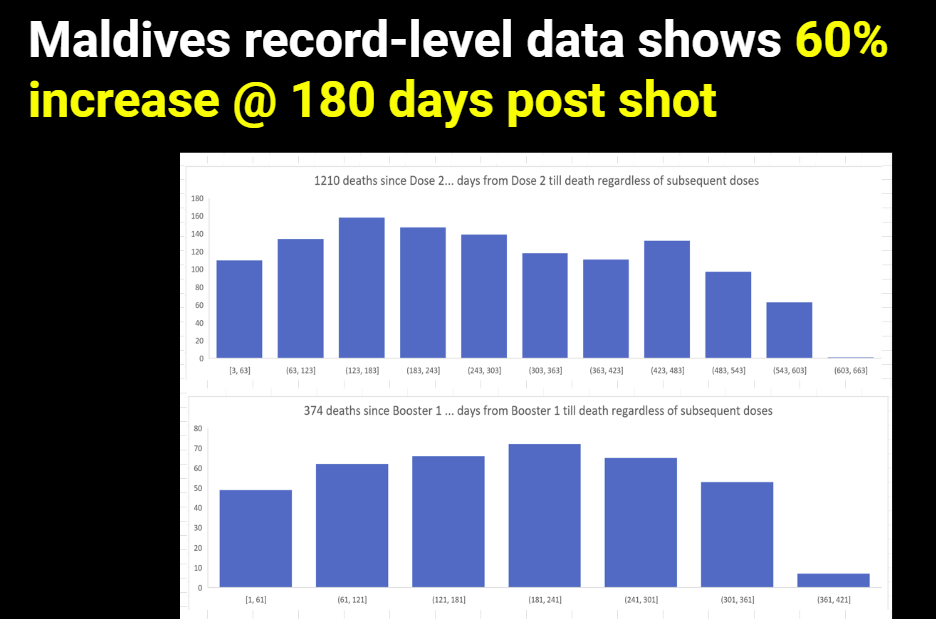
Such statements came as a surprise to some in light of Gates’ longstanding support of — and investments in — vaccine manufacturers and organizations promoting global vaccination. However, they were the latest in a string of developments in recent weeks that have increasingly called the COVID-19 vaccines, in particular, into question.

READ AT THE LINK

5 reasons to believe global population is one billion people less than it was in January 2020

stuartbramhall's avatarThe Most Revolutionary Act

TheCOVIDBlog.com

The general consensus was that there were 7.84 billion people on Earth in January 2020. The United Nations reported that the global population eclipsed the 8 billion mark in November 2022. As of publishing, Worldometer has the current global population at 8.028 billion.

There have been 40 million births and 20 million deaths, for a net population growth of 20 million thus far in 2023, according to the same source.

[…]

As of March 2023, there are two jobs available in the U.S. for every one unemployed worker. You don’t even need the ADP Workforce Vitality Reports to know that wages have been at all-time highs since Q4 2021. Just look around your local area, and you’ll see McDonald’s, Kum and Go, Circle K, Walmart, and all those former minimum wage jobs hiring at $15 per hour and up. They are forced to offer…

View original post 1,423 more words

Merck Partnered with Moderna in 2019 to Vaccinate America’s Farms Using mRNA Technology

From mercola.com. As previously noted Dr Mercola’s posts have a 48 hour limit then they are archived to subbed readers. The article is reproduced here in its entirety, with no source link. If you are interested in his articles you can sub for free and each has a link halfway down the article to download in pdf form. Finally, beware they are weaponizing your food. And have been doing so for some time. EWR

Story at-a-glance

  • For the last couple of years, I’ve recommended not eating pork due to its high linoleic acid (LA) content, but there’s an even bigger reason to avoid it now. Since 2018, pork producers have been using customizable mRNA-based “vaccines” on their herds
  • The very first RNA-based livestock vaccine, a swine influenza (H3N2) RNA shot licensed in 2012, was developed by Harrisvaccines. The company followed up with an avian influenza mRNA shot in 2015. Harrisvaccines was acquired by Merck Animal Health later that year
  • CureVac developed an mRNA-based rabies shot for pigs in 2016
  • The swine vaccine platform Sequivity, introduced in 2018, was developed by Merck in partnership with Moderna. Sequivity can produce endlessly customized “vaccines,” none of which undergo safety testing
  • Americans have been eating pork treated with gene therapy for nearly five years already, and even more of our meat supply is about to get the same treatment. mRNA-lipid nanoparticle shots for avian influenza are in the works, as are mRNA shots for cows. Lobbyists for the Cattlemen’s Association recently confirmed they intend to use mRNA “vaccines” in cattle, which might affect both dairy and beef
  • Missouri House bill 1169 would require labeling of products that can alter your genes. It would also require companies to share information about the potential transmissibility of gene-altering interventions, and asserts that fully informed consent must be given for all vaccines, gene therapies and medical interventions

For the last couple of years, I’ve recommended not eating pork due to its high linoleic acid (LA) content, but there’s an even bigger reason to avoid it now. Since 2018,1 pork producers have been using customizable mRNA-based “vaccines” on their herds, and this has slipped completely under the radar. I myself just found out about it. As described on Merck’s animal health website:2

“A revolutionary swine vaccine platform, SEQUIVITY harnesses RNA particle technology to create customized prescription vaccines against strains of influenza A virus in swine, porcine circovirus (PCV), rotavirus and beyond. It’s supported by a sophisticated dashboard filled with comprehensive data and insights …

Sequivity is a custom swine vaccine platform … Sequivity only targets swine pathogen gene sequences of interest. Doesn’t replicate or cause disease, delivering pathogen information to the immune system … There’s no need to transfer or handle live material like autogenous, killed or modified live vaccines …

Targets existing and evolving swine pathogens, including diseases not covered by conventional swine vaccines. Allows for the creation of multivalent formulations by blending RNA particles to target multiple swine pathogens in one shot.”

First RNA ‘Vaccine’ for Livestock Licensed in 2012

Merck was not alone in developing veterinary mRNA shots, however. They weren’t even first on the scene, although they later acquired the company that started it all.

The very first RNA-based livestock vaccine, a swine influenza (H3N2) RNA shot, was licensed over a decade ago in 2012, and was developed by Harrisvaccines.3,4 The company followed up with an avian influenza mRNA shot in 2015.5 Harrisvaccines was acquired by Merck Animal Health later that year.6,7

CureVac developed an mRNA-based rabies shot for pigs in 2016.8 (On a side note, they began conducting human rabies shot trials in 2020 in response to the World Health Organization’s goal to achieve “zero human rabies deaths by 2030.”9)

In 2016, Bayer also partnered with BioNTech to develop mRNA “vaccines” for both livestock and pets,10,11 but it doesn’t appear they ever launched anything. So, in retrospect, it appears Americans have been eating pork treated with gene therapy for the past five years, and even more of our meat supply is about to get contaminated with the same treatment.
In addition to the avian influenza RNA shot for chickens licensed in 2015, newer mRNA-lipid nanoparticle shots for avian influenza are also in the works.12 Iowa State University is also working on an mRNA shot for cows, and lobbyists for the Cattlemen’s Association recently confirmed they intend to use mRNA “vaccines” in cattle,13,14 which might affect both dairy and beef.

Merck and Moderna: Partners in mRNA Jab Race Since 2015

The same year Merck purchased Harrisvaccines (2015), it also entered into a partnership with Moderna to develop a number of undisclosed mRNA “vaccines.” It was slated to be a three-year collaboration, with a one-year optional extension, in which Merck would perform research and development and commercialization of five potential products using Moderna’s mRNA technology. As reported by Genetic Engineering & Biotechnology News at the time:15

“Moderna has agreed to design and synthesize the mRNA product candidates directed against selected targets through its mRNA Therapeutics™ platform.

The platform builds on the discovery that modified mRNA can direct the body’s cellular machinery to produce nearly any protein of interest — ranging from native proteins to antibodies and other entirely novel protein constructs with therapeutic activity inside and outside of cells.”

Endless Customization, Zero Safety Testing
Sequivity, introduced in 2018, was one of the products that came out of that partnership. As explained by Merck (both on its website and in the video above), Sequivity is not so much a single vaccine as it is a platform that can be endlessly customized — all without additional safety analyses over and beyond the initial ridiculously inadequate testing. As noted by Zoetis, the largest producer of veterinary drugs and vaccines:16
“Sequivity has safety and efficacy studies based on the platform with a historical initial isolate, not likely the isolate that customers would be requesting in their product.”
Sequivity is customized as follows:17
Pathogen is collected and sent to a diagnostic lab.
The gene of interest is sequenced and sent electronically to Sequivity analysts.
A synthetic version of the gene of interest is synthesized and inserted into the RNA production platform.
The RNA particles released from incubated production cells are harvested and formulated into a customized “vaccine.”
Using this platform, a customized “vaccine” can be created in as little as eight weeks. Now, what could go wrong by not testing every new shot for safety?
In my view, there are any number of safety hazards, as every pathogen has distinct effects, and tricking the animal’s body to produce that pathogen (or a pathogenic portion of that pathogen, as done with SARS-CoV-2) can have wildly unexpected side effects.
We’ve clearly seen this with the SARS-CoV-2 spike protein in humans. Pfizer’s own documentation lists 158,000 recorded side effects, and many of these diseases and conditions have never before been reported in response to a vaccine.
I reviewed this evidence in “Newly Released Pfizer Documents Reveal COVID Jab Dangers” and “CDC Aware of Hundreds of Safety Signals for COVID Jab.” Yet despite the obvious risks, the U.S. Food and Drug Administration has gone ahead and authorized updated COVID shots to be released on an annual basis without additional safety testing, and apparently safety testing of mRNA shots used in animals was foregone nearly five years ago!
The risk of dangerous side effects is one of the reasons why not all conventional vaccines work out. Some simply cause too many problems. Now we’re to believe that the possibility for dangerous side effects doesn’t exist just because we’re forcing the body to produce the antigen internally? If anything, the possibility for problems is higher than ever, as exposure to the antigen is continuous for a long period of time, possibly for the life of the animal.
Even Organic Pork Producers Can Use mRNA Shots
Unfortunately, due to search engines now only providing a short list of curated and heavily censored content, it’s been impossible to determine how many pork producers in the U.S. use Sequivity.
Without that data, I recommend erring on the safe side and avoiding pork altogether, including organic pork, as organic standards do not have any rules on the use of vaccines, mRNA-based or otherwise.18
Seeing how the Sequivity platform has been around for nearly five years already, it seems reasonable to assume nearly all large-scale swine producers have made this transition.
What Do the Cells in mRNA-Treated Meat Contain?
The question now is, how do mRNA shots affect the meat? For now, this is speculative, as we do not know whether veterinary mRNA shots are substituting uridine with pseudouridine, as was done in the COVID shots. But if they do, then one of the obvious concerns would be that the mRNA might end up in the final meat product that you eat because this substitution makes it extremely difficult to destroy. As explained by Dr. Peter McCullough:19
“Natural RNA is made of two purines adenine and guanine and two pyrimidines cytosine and uracil.
The replacement of uracil with its ribose ring (uridine) with N-1-methyl-pseudouridine, a synthetic product makes the genetic code for the Wuhan Spike protein better stabilized on lipid nanoparticles, long-lasting, and very efficient in terms of evading cellular destruction and able to undergo repeat reading by ribosomes for continued protein synthesis.
Morais et al20 indicate that both Pfizer and Moderna chose development strategies replacing all uridine units with pseudouridine, making the entire strand completely ‘unnatural’ to the human body. Thus vaccine consultants, companies, and patients unfortunately gambled on how long mRNA would be active within the human body.
Fertig et al21 found lipid nanoparticles with mRNA were measurable in plasma for — 15 days. Recently, Castruita et al22 demonstrated mRNA in blood out to 28 days. Röltgen et al23 have found mRNA in lymph nodes 60 days after injection.
None of these studies demonstrated complete clearance of mRNA from a group of patients.
This is worrisome since injections are recommended in some populations just a few months apart implying there will be stacking of long-lasting mRNA in the body without adequate opportunity for clearance and elimination.
We will look back for many years and ask: how could so many people readily accept injections of heavily modified synthetic genetic code giving the body instructions to manufacture a disease promoting and lethal protein engineered in a biosecurity lab in Wuhan, China?
Repeated administrations of mRNA studded with apparently indestructible pseudouridine may have changed the course of lives forever.”
If mRNA shots can cause significant disease in humans, how has it affected our pork supply for the last five years? And how will it affect beef and chicken in the future? Can consuming genetically manipulated meat affect your health? These are questions that currently do not have answers and must be thoroughly and comprehensively investigated.
Big Ag Didn’t Tell Us What They Were Doing
One of the most frustrating aspects of this is that the industry didn’t tell us they were using novel gene therapy to spin up customized “vaccines” in weeks without any safety testing. The only reason many of us became aware of this issue in recent weeks was because attorney Tom Renz started warning about it.
Missouri House bill 1169 would require labeling of products that have the ability to alter your genetics. It would also require companies to share information about the potential transmissibility of gene altering interventions.
In an April 2, 2023, Substack article, he wrote:24
“I have been talking about gene therapy vaccines being introduced into the food supply without providing people informed consent on my Twitter account … as well as pushing Missouri HB1169 which is our best bet of stopping this happening.
This is a nightmare scenario whereby people’s genetics are potentially altered with ‘factory foods’ without them even knowing. Let me begin by putting to rest any questions as to whether this can happen. The idea of vaccines in food has been around for a long time …
Here is an article published in the NIH25 (you know — by our government) talking about foods ‘under application’ to be genetically modified to become edible vaccines — FROM 2013 … The fact that food can be altered to act as a vaccine is not disputable.
Which foods and in what ways is more of a question. It is claimed that beef, pork, etc. cannot transfer vaccination from the meat to the consumer of the meat. At initial glance that would make sense (cow DNA and people DNA is quite different and an mRNA designed for cows would probably not be able to transfer directly to people), but that is NOT the whole story.
You have to remember that the additives in the mRNA vaccines are by no means ‘proven safe’ and we don’t even actually know what all is in these shots … Ultimately the mRNA jabs still have not undergone long-term testing because long-term testing can take 10-20 years and they have not existed that long so any claims about the safety or efficacy of the stuff that’s in them are garbage at best.
What we do know about the mRNA vaccines is that they do not stop the spread of disease26 … and really do not help in any way with anything. We also do know that these jabs were demonstrated, in vitro, to alter the genetic makeup of some cells and I would say it is incredibly likely that they do the outside the Petri dish.
Given that we are now talking about a new level of genetic engineering with unknown effects and no long-term studies, do the potential genetic changes the mRNA injections facilitate pose a long-term risk to humans that ingest the altered food? Before you say no, wouldn’t you prefer it be tested rather than being the subject of the experiment?”
Support Missouri House Bill 1169
As noted by Renz, Missouri House Bill 116927 would require labeling of products that can alter your genes. It also asserts that fully informed consent must be given for all vaccines, gene therapies and medical interventions, and would require companies to share information about the potential transmissibility of gene-altering interventions.
The pushback by industry against this bill has been enormous, which should tell you something. It doesn’t ban anything; it only requires transparency. That, apparently, is a serious threat to industry, and the most obvious reason for that is because they’d have to admit that all sorts of foods can have gene altering effects.
Not only might this destroy Big Ag, but it would also decimate any surreptitious attempts by Big Pharma to use the food supply as a tool to distribute vaccines unbeknownst to consumers. As noted by Renz, “Big pharma DOES NOT WANT people to know they are going to use food to alter their genetics.” Farmers are also being set up as the fall guys, and they need to be made aware of this.
“The lobbyists opposing this bill … are pushing to shut this bill down because factory mega-farmers like Bill Gates,28 the CCP, and others want to put vaccines in your food,” Renz continues.29 “These guys are supporting the big money but this will come at the expense of the family farmers.
The problem is that the major factory-farmers like Gates have legal teams that can set up defense shields against the torts that may come if the food supply starts poisoning people … 
Meanwhile, the small farmers will be at risk of being sued if it turns out that the food they are selling is unsafe despite the fact that most of them will not necessarily know what is happening.
If the corn growers, soybean, cattle, and pork associations actually cared about the farmers they would be demanding the seed companies and vaccine manufacturers indemnify the small farmers for these products rather than opposing a bill that would force them to tell the farmers what they are doing.
The corruption regarding this bill is amazing. Ultimately the labeling requirement would likely serve to protect farmers from being sued because the makers of seed and vaccines would have to make sure the farmers knew if they were putting potential gene therapies into their products. The opposition from the ag lobby is not to help the farmers, it is to help their own pockets.”
As noted by Renz, if this bill is passed in Missouri, it could help protect the food supply of the entire United States. In the meantime, I recommend avoiding all pork products, including organic ones, as they not only have high levels of the omega-6 fat, linoleic acid, because of the grains they are fed, but virtually all have been contaminated with the mRNA vaccines for the past five years.

Think Globally, Act Locally
National vaccine policy recommendations in the U.S. are made at the federal level but vaccine laws are made at the state level. It is at the state level where your action to protect your vaccine choice rights can have the greatest impact.
It is critical for EVERYONE to get involved now in standing up for the legal right to make voluntary vaccine choices in America because those choices are being seriously threatened.
Not only are lobbyists representing drug companies, medical trade associations and public health officials trying to persuade legislators to strip all vaccine exemptions from public health laws, but global political operatives lobbying the United Nations and World Health Organization are determined to take away the human right to autonomy and protection of bodily integrity.
We must take action to defend our constitutional republic and civil liberties, including the right to autonomy, in America. That includes reforming oppressive mandatory vaccination laws and stopping the digital health ID that will make vaccine passports a reality for us, our children and grandchildren if we don’t take action today.
Signing up to use the free online Advocacy Portal sponsored by the National Vaccine Information Center at www.NVICAdvocacy.org gives you immediate, easy access to your own state and federal legislators on your smartphone or computer so you can make your voice heard.
NVIC will keep you up to date on the latest bills threatening to eliminate — or expand — your legal right to make vaccine choices and give you guidance about what you can do to support or oppose those bills. So, please, as your first step, sign up for the NVIC Advocacy Portal.
CLICK HERE TO JOIN!
Share Your Story With Your Legislators and People You Know
If you or a family member has suffered a serious vaccine reaction, injury or death, please talk about it. If we don’t share information and experiences with one another, everybody feels alone and afraid to speak up.
If you want to protect your legal right to say “no” to vaccines you do not believe are safe or effective, make an appointment to personally talk with someone you have elected to office at the local, state and federal level or write a letter in your own words stating your concerns.
Attend school board and city council and town hall meetings in your community that will impact your right to know and freedom to make decisions about how you or your children will live and stay healthy. If you have a different perspective on a story about vaccination that appears in your local newspaper, write a letter to the editor.
I must be frank with you: You have to be brave because there is a lot of censorship of conversations that challenge “official” narratives about vaccination. You likely will be strongly criticized for daring to talk about the “other side” of the vaccine story and for defending your informed consent rights. Be prepared for it and have the courage to stand your ground.
Only by sharing our perspective and what we know to be true will the public conversation about vaccination open up so people are not afraid to talk about it.
While our rights are being threatened, the vaccine injured are being swept under the carpet and treated like nothing more than statistically acceptable “collateral damage” of one-size-fits-all mandatory vaccination laws. Way too many people are being put at risk for injury and death and there is nothing scientific or moral about that. We should not be treating human beings like guinea pigs.

Internet Resources Where You Can Learn More
I encourage you to visit the four websites of the National Vaccine Information Center (NVIC), at www.NVIC.org, a nonprofit charity that has been educating the public about the need to prevent vaccine injuries and deaths since 1982. The information you get on their websites is fully referenced and will help you become an effective vaccine choice advocate in your community:
NVIC.org — This website was established in 1995 and is the oldest and largest consumer operated website publishing information on diseases and vaccines on the internet. Learn about vaccine reactions, injuries and deaths and the history and current status of vaccine science, policy, law and ethics in the U.S. on more than 2,000 web pages.
NVICAdvocacy.org — This communications and advocacy network, established in 2010, is your gateway to taking action to protect your right to make vaccine choices where you live.
TheVaccineReaction.org — This weekly journal newspaper published by NVIC since 2015 is dedicated to encouraging an “enlightened conversation about vaccination, health and autonomy.”
MedAlerts.org — This is a user-friendly search engine for the federal Vaccine Adverse Event Reporting System (VAERS) established under the 1986 National Childhood Vaccine Injury Act and sponsored by NVIC since 2006. Search for descriptions of vaccine injuries and deaths reported to VAERS on this popular website.
Find A Doctor Who Will Listen and Care
If your doctor or pediatrician refuses to provide medical care to you or your child unless you agree to get vaccines you don’t want, I strongly encourage you to have the courage to find another doctor. Harassment, coercion and refusal to provide medical care to someone declining one or more doses of government recommended vaccines is a violation of the informed consent ethic.
Unfortunately, it is becoming routine among members of the medical establishment to be reluctant to share vaccine decision-making power with patients and parents of minor children, especially during the aggressive push for all Americans to get COVID shots.
There are doctors out there who respect the precautionary and informed consent principles, so take the time to locate a doctor who treats you with compassion and is willing to listen and respect the health care choices you make for yourself or your child.

Sources and References

Photo: EWR

Wally Richards & Rodney Hide on Reality Check Radio with Gardening Basics – (must hear)

If you’re new to growing your own food (and even if you’re not) this info is gold. Wally shares from 50 odd years of down to earth gardening experience – easy to follow, from ‘go’ to ‘woah’ … basic and practical. You can also phone Wally on his 0800 number for practical advice.

Listen at the link below:

Wally Richards: Grow Your Gardening Game

THE IMPORTANCE OF POTASSIUM AND MAGNESIUM IN YOUR GARDEN (Fruit + Flower Power – Wally Richards)

Potassium often referred to as Potash because the ash from wood burn containers a good amount of potassium and magnesium sulphate is often referred to as Epsom Salts are two important elements in gardening.

A long time ago I realised the importance of these two and so I created a product which combined them, in a prill form, 55% potassium and 45% magnesium and called it Wallys Fruit and Flower Power which is one of the many uses of these two elements.

Plants like us, if they do not get sufficient minerals in their diet, they will be adversely affected and do poorly.

Potassium deficiency will show as soft limp plant growth, poor flowering, taste decline in fruit, and general loss of vigor.

I am often asked what is wrong with plants which, don’t seem as good as they could be, even though they are fed well and watered right.

Often the reason is insufficient Potassium.

Then there is fruit, especially citrus which are lacking in juice and flavor.

Tomatoes and cucumbers that don’t have that home grown flavor that one would hope to have.

Plants that have poor flowering or don’t flower at all. Once again the problem can be insufficient Potassium.

Magnesium is involved in chlorophyll production, which converts sunlight into sugars and is involved in activating enzymes.

Because of its role in chlorophyll, the first symptoms of magnesium deficiency show up as yellowing, usually between the veins of the older leaves. In severe deficiencies, the entire leaf will turn yellow or red and then brown, with symptoms progressing up the plant.

There are numerous plants that show this tendency, citrus, Daphne, rhododendrons, tomatoes, passion fruit and roses to name a few.

Once the yellowing starts to appear then already the plant is having problems and even when magnesium is supplied, it takes several weeks before the lovely dark green colour is restored.

During this time the plant is weakened, as the chlorophyll is not working to its full potential which makes the plant more susceptible to diseases and pests.

The amount of energy created from sun light is affected and plant growth is reduced.

During drought conditions, plants suffer and one important aspect to assist in this is Potassium.

It regulates water absorption and retention, influences the uptake of some nutrients and helps to increase disease resistance.

As the weather cools and winter approaches, plants feel the chill like we do, but plants cant put on a jersey like we can.

The plant’s protection from chills and frosts comes from having adequate Potassium in their diet.

Thus us gardening commentators always suggest to gardeners to supply potash to their plants as winter starts to approach and to avoid using nitrogen fertilisers which only increases sappy growth.

Commercial growers of plants and orchardists use the two elements to ensure their plants have sufficient Potassium and magnesium in their diet.

These two vital elements are blended together in the right balance as required for plants.

For the home gardener we supply Fruit and Flower Power in three pack sizes. 1.25 Kilos, and 2.5 kilos

and a bulk bag which is 12.5 kilos making it the best purchase if you have storage room.

The 1.25 kilos comes nicely packaged in a stand up pouch with a 50 gram (50ml) scoop.

It is used at the rate initial rate of 50 grams (one scoop, just below level full) per square metre around the base of the plant or around the drip line.

Use for any plant that is flowering, fruiting, showing lack of vigor or yellowing in foliage.

Now this next bit might surprise many; but the monthly requirement is 25 grams (half scoop) per square metre.

This should be applied while plants are flowering, fruiting, during dry times and going into winter. Outside of these times a 2-3 monthly dose should be fine.

For fruiting a dose at 50 grams should be applied prior to flowering followed by the 25 grams till harvest. For the likes of tomatoes and cucumbers, apply over fruiting period for best flavor.

I get a lot of complaints that citrus fruit are dry and lack flavor so this will fix the problem.

A number of fertilisers mixes do not contain sufficient potassium, likely because it is a more expensive element which is a pity as it should be at least ample for general gardening use.

Now is a good time to apply Fruit and Flower power around your gardens and repeat each month with a small sprinkling.

It will help to keep your leaves green and the plants will gain more energy from the sun even considering its shorter day lights hours as we head into winter.

It will firm up sappy growth from summer feeding of fertilisers and plant foods.

Also other precautions you should take going into winter include:

Protecting your vulnerable plants from frost by using the Spray on Frost Protection; Vaporgard.

Mulches used to overcome dry conditions in summer should be removed from under plants to allow the soil to breath and dry out quicker during wet periods.

This helps prevent root rots and loss of valuable plants.

A spray of Perkfection over plants that could be affected with wet soil is a good help to prevent root damage through wet feet.

Spray vegetables and preferred plants with Magic Botanic Liquid (MBL) each week. (It helps them grow healthier and faster.

Side dress vegetable plants with a sprinkling of BioPhos.

Brassicas (Cabbage etc) that have caterpillars should be sprayed with Wallys Super Neem Tree Oil with Raingard added to prevent the oil washing off with watering or rain.

Reduce the amount of water you are giving container plants indoors and tender plants in glasshouses.

They do not need so much water now and wet feet intensifies the cold and can be fatal.

Any Questions any time just phone me or email me with your contact phone number.

THIS WEEKS  Special is a 12.5 kilo bag of  FRUIT and FLOWER POWER normal price is $60.00 plus shipping but till next Sunday we will pay the shipping to your home saving $16.00 North Island and $19.00 South Island. (No PO Boxes or outer Islands)

Order on our Mail Order Web site at http://www.0800466464.co.nz/18-bulk-goods?p=3

In Remarks please state This Weeks Special..

The 12.5 Kilo bag will be in a carton which can fit other products from our mail order web site but not other bulk goods.
You will have 10% off any other products you purchase (Not other bulk products)

I will phone you when we receive the order and arrange the free shipping and your preferred method of payment.

Regards

Wally Richards


Phone 0800 466464
Garden Pages and News at www.gardenews.co.nz
Shar Pei pages at  www.sharpei.co.nz
Mail Order products at www.0800466464.co.nz


New Zealand Bill of Rights Act 1990. Part II of the Act covers a broad range of Civil and Political Rights. As part of the right to life and the security of the person, the Act guarantees everyone:

1The right not to be deprived of life except in accordance with fundamental justice (Section 8)

2The right not to be subjected to torture or to cruel, degrading, or disproportionately severe treatment or punishment (Section 9)

3The right not to be subjected to medical or scientific experimentation without consent (Section 10)

4The right to refuse to undergo any medical treatment (Section 11)

 Furthermore, the New Zealand Bill of Rights Act 1990 guarantees everyone: Freedom of Thought, Conscience, and Religion.
This includes the right to freedom of thought, conscience, religion, and belief,
INCLUDING THE RIGHT TO ADOPT AND HOLD OPINIONS WITHOUT INTERFERENCE (Section 1)

Just 0.3% of Scientists agree Humanity is causing Climate Change; NOT 97% as falsely spread by the UN

From expose-news.com

You have likely heard that 97% of scientists agree on human-driven climate change. The overwhelming majority of scientists take no view on the question of whether climate change is man-made, for it is beyond our present knowledge to answer.

Only 0.3% of science papers state humans are the cause of climate change. And when surveyed, only 18% of scientists believed that a large amount – or all – of additional climate change could be averted.

There is no scientific evidence or method that can determine how much of the temperature change since 1900 was caused by humans. We know that temperature has varied greatly over the millennia. We also know that for virtually all of that time, global warming and cooling were driven entirely by natural forces.

“97% Consensus” — What Consensus?

By Gregory Wrightstone, Executive Director CO2 Coalition

You have likely heard that 97% of scientists agree on human-driven climate change. You may also have heard that those who don’t buy into the climate-apocalypse mantra are “science deniers.” The truth is that a whole lot more than 3% of scientists are sceptical of the party line on climate. A whole lot more.

The many scientists, engineers and energy experts that comprise the CO2 Coalition are often asked something along the lines of: “So you believe in climate change, then?” Our answer? “Yes, of course we do: it has been happening for hundreds of millions of years.” It is important to ask the right questions. The question is not, “Is climate change happening?” The real question of serious importance is, “Is climate change now driven primarily by human actions? That question should be followed up by “is our changing climate beneficial or harmful to ecosystems and humanity?”

READ AT THE LINK

Photo: pixabay.com

An Update

Just a heads up, I won’t be posting (much) for a couple weeks. I’ve a lot of other priorities to tend to right now including maintenance of the other site. Whew.

And it’s all moving so fast at this point in time. Some truly horrifying news coming across our radars isn’t there? (See what the Dalai Lama’s up to! Sick). And the Davos boys are very busy (trying to exterminate us with a smile). It’s difficult to know just what to post! Am tending to post on the roots of the rot that go way back. On topic, I watched this old doco last night on Hurricane Katrina by Greg Palast. It reminded me (on a smaller scale obviously) of the recent flooding here and the lies going down.

Anyway, thanks to all who read and feed back from time to time. All appreciated. I’ll be back. And do keep an ear on Reality Check Radio. They’re all sharing now on those items folk told thought a decade back were conspiracy!! That is good news! … Pam.

Image by Luis Ricardo Rivera from Pixabay

FOOD AND HEALTH (Wally Richards)

The father of medicine; Hippokrát s ho Kôios; (c. 460 – c. 370 BC) apparently said the historic words;

‘Let Food be Thy Medicine and Let Medicine be Thy Food’

Fairly logical and common sense; if you eat healthy you will be healthy.

But what is healthy food and where do you get it from?

Vegetables and fruit that are grown naturally in fertile soil which is teaming in soil life (Earth worms, microbes and beneficial fungi) is a healthy base to start with for grow in.

Vegetable plants that receive adequate sunlight, chemical free water and natural nutrients and are allowed to grow at their own pace will be rich in goodness and taste great.

Vegetables that are grown in a chemical environment of man made fertilisers and with chemical controls; forced to grow quickly with applications of nitrogen’ will not have the health attributes of the above instead it will be fairly tasteless.

This produce is likely contain several chemical residues from sprays that were used to kill insect pests (Chemical insecticides) and prevent plant diseases (Chemical fungicides).

Lets look at each of these aspects; plants do best when they grow at their own speed which allows them to take up minerals and elements available in the growing medium.

They have a vital relationship with the soil life that helps provide the plants with moisture and nutrients in a form that the roots can take up.

Beneficial soil fungi attach to the plants roots sending out microscopic strands which collect moisture and nutrients and pass them to the roots in exchange for some carbohydrates.

This can increase the root catchment area of the plant by up to 800%.

The bigger the root system the bigger and healthier the plant.

Microbes in the soil break down organic matter which makes it more available to the plants and their ability to take up.

Nitrogen is vital to plant growth and when it is available naturally in the soil from actions of the soil life and from nitrogen brought down from the atmosphere with rain; the plant grows strong and steadily.

As opposed to synthetic nitrogen fertiliser?

Synthetic nitrogen fertiliser is any solid or liquid substance that is more than five per cent nitrogen by dry weight and is applied to land as a source of nitrogen nutrition for plants.

Examples include manufactured urea, diammonium phosphate, Nitrophoska and sulphate of ammonia.

These compounds force plants to grow fast and unnaturally which means they have less chance of taking up beneficial elements that are available.

They are weak through forced sappy growth and thus vulnerable to attack by insects and diseases.

They are lacking in flavour and fairly tasteless.

If a plant or fruit you eat has good flavour and tastes great that means it has excellent nutritional values.

If on the other hand you have to apply garnishes or condiments to obtain a favorable taste then the health benefits are minimal.

Growing vegetables and fruit commercially is a very expensive occupation these days and one that has a myriad of problems which include weather, cost of fertilisers, chemical sprays, labor, diesel and returns to pay for all the outgoings.

Also the more crops that can be grown in a year means more produce to sell hence the faster the vegetables are grown and ready for harvest the better they are off .

The produce has to be perfect on the supermarket shelves, no holes or blemishes thus the crop needs to be sprayed regularly with chemical sprays to control pests and diseases.

The vegetable absorb these chemical poisons through their foliage and the run off into the soil is taken up by the vegetables roots.

NZ Food Safety does annual checks to find out what chemicals are in local grown foods as well as imported foods.

See https://www.mpi.govt.nz/dmsdocument/36612-FRSP-2017-2019-Plant-based-foods-survey-interim-report

Have a look and be amazed and note the glyphosate (Roundup and other trade names) is not even tested for and yet one of the most used chemicals in horticulture?

The 2015-2016 survey did however have glyphosate in relationship to wheat see:

https://www.mpi.govt.nz/dmsdocument/19922-The-20152016-Report-on-Pesticides-in-Fresh-and-Frozen-Produce-A-survey-under-the-Food-Residues-Surveillance-Programme-FRSP-

There was in the past some discussion about people intolerance to gluten which is a health concern but it was also suggested that some of this was an intolerance to glyphosate?

My point being that in commercially grown produce that is not organically certified there is likely to be a number of chemical poisons that you are taking into your elf through your food chain.

So your fresh (not so fresh actually days old from harvest) produce at supermarkets is not as healthy as it is promoted to be. Fast grown, lacks taste and goodness and may contain a number of nasty chemicals.

A reader past me an article recently from their archives written by Chris Wheeler, former head of New Zealand’s foremost organic farm lobby group, the Soil & Health Association. Written in 2000…

See here https://truthwatchnz.is/cancer-related/cancer-the-poisons-in-our-food-nz-medicine-s-apparent-unofficial-wall-of-silence-around-the-pesticide-issue

The guts of the article is how chemicals used in horticulture food crops have a strong connection to cancers and cancer rates in NZ and else where.

Abstract from above article: ‘Who can seriously say there is really any serious interest in lowering breast cancer rates, or, for that matter, ANY cancer rates in New Zealand?

Certainly not our clapped out Ministry of Health, the Cancer Society, the breast cancer surgeons and oncologists or the farcical Australia New Zealand Food Authority who ‘police’ what contaminants are allowed into our daily diet.

They recently INCREASED for goodness sake(!) the allowable levels of the now well-established carcinogenic herbicide Roundup/glyphosate in our food just to help Monsanto’s sales figures.’

Home grown vegetables and fruit grown naturally with minerals added such as those found in Wallys Unlocking your Soil and Magic Botanic Liquid (MBL) taste great and are full of health giving nutrients for you and your family.

As it is very hard to avoid chemicals in the environment and our food chain then the answer is to get them out of your body by using any of the detox methods available.

Leaving chemical residues in cells and fat tissue can certainly lead to health issues.

Do detox regularly and grow some good healthily stuff in your garden or in containers to reap the health benefits.

  • You are what you eat.

THIS WEEKS  Special is a 10kilo bag of Unlocking your Soil normal price is $50.00 plus shipping till next Sunday we will pay the shipping to your home saving $16.00 North Island and $19.00 South Island. (No PO Boxes or outer Islands)

Order on our Mail Order Web site at http://www.0800466464.co.nz/18-bulk-goods?p=3

In Remarks please state This Weeks Special..

Unlocking your Soil is mineral rich from crushed rocks and organic materials, place a little in planting hole or sprinkle a little to side dress food plants.

The 10Kilo bag will be in a carton which can fit other products from our mail order web site but not other bulk goods.

I will phone you when we receive the order and arrange the free shipping and your preferred method of payment.

Regards

Wally Richards

Phone 0800 466464
Garden Pages and News at www.gardenews.co.nz
Shar Pei pages at  www.sharpei.co.nz
Mail Order products at www.0800466464.co.nz


New Zealand Bill of Rights Act 1990. Part II of the Act covers a broad range of Civil and Political Rights. As part of the right to life and the security of the person, the Act guarantees everyone:

1The right not to be deprived of life except in accordance with fundamental justice (Section 8)

2The right not to be subjected to torture or to cruel, degrading, or disproportionately severe treatment or punishment (Section 9)

3The right not to be subjected to medical or scientific experimentation without consent (Section 10)

4The right to refuse to undergo any medical treatment (Section 11)

 Furthermore, the New Zealand Bill of Rights Act 1990 guarantees everyone: Freedom of Thought, Conscience, and Religion.
This includes the right to freedom of thought, conscience, religion, and belief,
INCLUDING THE RIGHT TO ADOPT AND HOLD OPINIONS WITHOUT INTERFERENCE (Section 1)

RELATED: See our pages here on glyphosate

Photo: pixabay.com


Food – The Ultimate Weapon Of The Ruling (not) Elite

The original link to this article at Info Clearing House is now gone. It’s from 2008 and an interesting to read in light of the current regime. I can find nothing (quick search) about William online, let me know if you can. I expect his enlightening info would’ve been hoovered carefully from the internet by now, classed as disinfo. Some time ago I did see his Robert McNamara depop quote but could not find a reference to that anywhere either. EWR


By William Bowles

19/04/08 “Creative-i ” — –Using food as a weapon is as old as the siege but today’s barbarians have upped the anté by several orders of magnitude.

“…There are only two possible ways in which a world of 10 billion people can be averted. Either the current birth rates must come down more quickly. Or the current death rates must go up. There is no other way. There are, of course, many ways in which the death rates can go up. In a thermonuclear age, war can accomplish it very quickly and decisively. Famine and disease are nature’s ancient checks on population growth, and neither one has disappeared from the scene … To put it simply: Excessive population growth is the greatest single obstacle to the economic and social advancement of most of the societies in the developing world.” — Speech to the Club of Rome by Robert McNamara, Oct. 2, 1979

“Overpopulation and rapid demographic growth of Mexico is already today one of the major threats to the national security of the United States. Unless the U.S.-Mexico border is sealed, we will be up to our necks in Mexicans for whom we cannot find jobs.” —Robert McNamara, then World Bank president, March 19, 1982

McNamara’s thinly veiled genocidal utterances took place over thirty years ago, echoing the wealthy and the privileged’s fear of the ’great unwashed’ when ‘over-population’ was the buzzword. So not much has changed has it, we’re hearing the same, tired old messages being rolled out once again by the ruling elites and their spin doctors. McNamara’s cries of fear about being up to his neck in Mexicans is exactly same as the current bogey doing the rounds in Europe, only now they’re Africans.

Thus the current explosions in Haiti, Eygpt, Ivory Coast, Ethiopia, the Philippines, Indonesia and elsewhere over the rocketing price of basic foodstuffs such as cooking oil and rice prompted the BBC to describe them as first and foremost “a potential threat to Western security” (BBC News 24, 13 April, 2008), never mind the threat to human life, but then it reveals exactly where the BBC’s head is at, protecting the status quo.

To add insult to injury, the crétin Gordon Brown has the damn nerve to say,

“Rising food prices threaten to roll back progress we have made in recent years on development. For the first time in decades, the number of people facing hunger is growing.”

Progress? What planet does our glorious leader live on? Standards of living have been falling for everybody (except the rich who, as a consequence, have just gotten even richer by stealing even more from the poor), since the 1970s when the ‘neo-liberal’ agenda was initiated and not only have the poorest been the hardest hit but we’ve seen millions of the formerly ‘middle classes’ dumped unceremoniously back where they ‘belong’, with the poor. Social status doesn’t put food on the table. So much for the capitalist ‘good life’.

These are the facts: real wages in the US have fallen since the 1970s. It’s reckoned that around 40 million Americans now live under the ‘official’ poverty level, but at least they can still eat something, not so the millions of people in the so-called developing world who already immiserated by so-called free trade, have been hit with a double whammy, nay, a quintuple whammy.

Whammy #1: ‘Free Trade’

The poor countries of the world have been ‘persuaded’ that growing food for export so as to earn foreign currency which they then have to use to buy imported food (guess where from?), is better than growing food in their back yard. And to make sure they live up to their end of the ‘bargain’, under WTO ‘rules’ they get punished if they try to control imports.

Countries grew their own food which not only fed them but also created employment, now grow food and things like flowers, for export in order to ‘earn’ the precious dollar which obviously they have to spend on importing the food they once grew. Worse, the subsidized food imports wipe out what remains of indigenous agriculture, it simply can’t compete. What an insane setup! It only makes sense when you realize that the managers who setup this ‘deal’ work for BIg Business, they call the shots. If it were a ‘Mafia’ deal it would be called criminal extortion.

Of course, we in the West with our wealth subsidize the production of food, so the poor of the planet get hit with a whammy within a whammy. Not having the resources to subsidize their own food production, as the cost of importing food rises but not the price they get for exporting food to us, they are truly caught between a rock and a barren place.

And it’s the same IMF and World Bank policies which created the latest crisis to hit the poor of our planet, that are responsible for creating such an unequal relationship in the first place.

Whammy #2: Energy

And of course to grow all these crops for export needs lots of energy and lots of water, and lots of fertilizer, and lots of pesticides, all of which must be bought with precious foreign currency (and until recently, only dollars would be accepted). With oil now selling at over $113 a barrel, the cost of producing anything has shot through the roof. The winners: The Big Oil Cartels. No need to tell you who the losers are.

But the actual cost of producing the oil hasn’t risen much at all, the entire responsibility for these increases has to be placed where it belongs, on the commodities speculators and the Big Five oilcos. In other words, on all those grimy gamblers in investment corps and pension fund managers. It’s the system.

Whammy #3: ‘Bio-fuels’

The latest addition to the armoury of food used as a weapon and perhaps the most obvious example to date, is converting production from food staples to so-called bio-fuels.

For rather than us just using less energy, we buy it from the poor of the planet in the form of ‘bio-fuels’. Brilliant isn’t it. What poor country needs to produce ethanol? It has no possible use except perhaps to make moonshine.

But we knew that this would happen and everybody told our cretinous, criminal leaders what would happen. They’re too busy producing wheat for export to feed all those damn cows, cows that we turn into hamburgers for our consumption, but now, instead of producing wheat for export to make burgers, we’re producing ethanol to put in our automobiles. Either way it’s madness!

And in any case, as a leaked EU report shows, bio-fuels do nothing to halt the production of greenhouse gases (they may even increase it), the entire ‘bio-fuels’ thing is one gigantic scam, largely to do with what is the most profitable crop to grow (see ‘Industry asks for biofuels policy U-turn).

Whammy #4: Water

Fact: It takes 1,000-2,000 litres of water to produce 1 kilo of wheat

Fact: It takes 10,000-13,000 litres of water to produce 1 kilo of meat (Source: FAO)

And guess what gets produced the most, largely for Western consumption—burgers. And not surprisingly, the ‘neo-liberal’ agenda has seen the enforced privatization of water across the planet along with other key resources formerly held in communal ownership.

Whammy #5: Climate Change

Predictably, climate change impacts on those least able to deal with it, the poor. And lest we forget, the majority of the planet’s population are poor. The connectedness between everything must surely be apparent to you, the reader, the fact that messing up the biosphere the way we have been doing for the past two hundred years reverberates throughout the planet. And our political elites call themselves civilized!

Meanwhile, back in the land of the powerful, we’re busy planning for endless war in order to preserve our privilege, so even as our glorious leaders pontificate on about this or that crisis facing us, they’re spending billions on developing robots to shit bombs on the planet’s poor from a comfortable armchair some distance from the scene of the ‘action’.

“UAV Market to Top $13 Billion by 2014

Washington, D.C. (PRWEB) April 14, 2008 — The global war on terrorism has prompted the United States to pump significant amounts of money into its Unmanned Aerial Vehicle (UAV) programs, asserts Forecast International analyst Larry Dickerson.” — www.aviationtoday.com/webinars/2008_0417.html

How can anybody in his or her right mind not view these people and the entire class in whose interests they work so tirelessly, not see them not only as war criminals but as destroyers of life! These are truly barbarians in every sense of the word, for they destroy everything of beauty and value including entire countries in order to preserve their piece of the action.

No wonder the Hollywood obsession with ‘saving the planet’ but when will we see a movie about saving ourselves and our home from these predatory mass murderers?

So why is it that we turn away from the carnage ostensibly wrought in our name? After all, people give generously to so-called charities, so it’s not that people don’t care about the plight of others.

Again, I come back to the corporate/state media for surely without their active complicity in covering up the endless atrocities being committed would we stand for it? I think not, but then I’m an eternal optimist about the real nature of the human spirit once we stop fearing and start thinking and feeling.

The major reason is the media’s (never mind the politicians) failure to connect events with the underlying economics that drives them to act the way they do. Thus the ‘credit-crunch’ is so misnamed in order to hide the fact that it’s the economic and political policies of our governments in cahoots with Big Business that created the crisis in the first place (as it has all previous crises).

The ‘credit-crunch’ is merely symptomatic of a sick system that needs to be replaced poste haste.

The issue is really quite simple, as long as we have ruling elites joined at the hip to Big Capital, running the show, they will never, not in a million years entertain the idea of doing away with the present economic system—which is the cause of all our miseries—and replacing it with a saner and more modest way of earning a buck, there’s too much at stake and for so few, dammit! Only we, the so-called people can do that, they won’t even begin to change things unless we either force them to or failing that, get rid of them.

Image by Pexels from Pixabay

Feijoa Fizz

I found this last feijoa season on fb courtesy of the Canterbury Herb Society. I did try it & it’s nice (& super easy). I’m no longer on fb so figured I’d share it here. Folk may like to try it with all the feijoas everywhere now. Not a fan of white sugar I used raw organic…copied anyway, straight from the CHS post …

Don’t waste those FEIJOA SKINS, they contain so many really valuable vitamins and minerals and are approximately half the weight of the Feijoa.

Here’s a really easy RECIPE for FEIJOA FIZZ and such cool way to make the most of them.

Ingredients:

Feijoa skins chopped

2 tbsp white sugar

1 tbsp brown sugar

water

Method:

Place feijoa skins in a 1L container and add white sugar and fill up with water then cover.

Leave this for about two days till it begins to be a bit fizzy.

Throw away the skins and pour into a 1L bottle with 1T brown sugar and fill up with water. Leave in a warm place for one day. Then refrigerate.

More recipes to follow, like our page, @CANHERBSOC to keep in the loop!

Image by Chesna from Pixabay

When The Jackboots Are Heard- Then It’s Too LATE!

THE EARTH DOLLAR….”FABIAN SOCIALIST GLOBAL CAKE IS ABOUT 95% BAKED”

A must read! This was posted in 2009. The big plan that JA & any of her successors after her are signed up to & if they’re not they’re gone by yesterday. And by the way the original Fabian logo was a wolf in sheep’s clothing! Doesn’t that tell you all?  See our Agenda 21/30 pages for NZ … Dr Naomi Jacobs has outlined the history of FS in detail (download her pdf/book).  My expanded version can be read at this link (apologies for any confusion … I should have just linked this in the first place)
https://truthwatchnz.is/all-categories/agenda-21-30/fabian-influence-on-council-developments-in-nz-important-info

EWR

centurean2's avatarCenturean2\'s Weblog

Key Influences on Changes in the last Millennium
Influences on NSW Council Policies
“The Obedience of Australia” – Peter Jones 1993

FABIAN INFLUENCE ON COUNCIL DEVELOPMENTS IN NEW ZEALAND
“COMMUNIST” COUNCILS IN NEW ZEALAND and their hidden Fabian Socialist 2006
“Draft Ten Year Plan” to confiscate all freehold properties through rate
rises and taxes By John Christian © John Christian April 2006

A The Basis of Local Government
B City of London Corporation
C The Beginning of Socialism in London
D Fabian Society
E Fabian Society “Five Year Plan”
F Fabian Society Privatization of the World
G “Sovietization” of Local Government in New Zealand
H Communist “Sustainable Development”
I World Conservation Bank
J Communist “SmartGrowth”
K Bribery of Local Government Politicians
L Pauperization of Pensioners and the Middle Class
M Borrowing Powers of Councils and the Stealing of Ratepayer’s Properties

This ‘paper’ is written in the public interest, and may…

View original post 7,520 more words

The consequences of those many poisons in our food

This article is by Chris Wheeler, former head of New Zealand’s foremost organic farm lobby group, the Soil & Health Association. From 2000, the article was in my own archives. I could find little to anything of this author’s material now although I note he did co author a book.

READ MORE AT THE LINK

Image by jacqueline macou from Pixabay

Ardern’s been appointed to an international role promoting govt & media censorship: are we surprised?

I am not surprised. Truther blogs and websites will likely be gone before long I’d guess. Well those at least who don’t follow the ‘one source of truth’ … still holding the mouthpiece you see. As I pointed out on Ardern’s recent resignation, Young Global Leaders are greatly rewarded for the paths of destruction they create…

READ AT THE LINK

Fake Food Companies Get Green Light to Fast Track GE ‘Foods’

Note: I’ve added two related links below, one is a James Corbett video ...EWR

Dr. Mercola Interview Begins at 3:40

Video Link

Story at-a-glance

  • September 12, 2022, U.S. President Joe Biden signed an “Executive Order on Advancing Biotechnology and Biomanufacturing Innovation for a Sustainable, Safe and Secure American Bioeconomy.” This executive order makes biotechnology a national priority across agencies and branches of government. Similar legislation has been introduced in the U.K.
  • In late March 2023, Biden expanded on this premise in a “Bold Goals for U.S. Biotechnology and Biomanufacturing” report. According to this plan, the food industry is now to be led by biotech, and the “improvements” we can look forward to are more lab-grown meats and bioengineered plant foods
  • Rather than investing taxpayer dollars in regenerative agriculture, which is what could really solve our problems, government is instead backing a whole new industry of fake foods, from lab-grown meats to large-scale insect production
  • Two cell-based lab-grown meat companies have now received the green light to produce and sell fake chicken in the U.S.
  • Meanwhile, a Food Hazards Identification report by the British Food standards Agency and Food Standards Scotland, published in March 2023, warns there are “considerable gaps in knowledge” when it comes to cell-based meat production, and many potential hazards

September 12, 2022, U.S. President Joe Biden signed an “Executive Order on Advancing Biotechnology and Biomanufacturing Innovation for a Sustainable, Safe and Secure American Bioeconomy.”1

This executive order makes biotechnology a national priority across agencies and branches of government. As noted in this order, biotechnology will also be used to “improve” food security, sustainability, and agricultural innovation in the U.S.:

“The Secretary of Agriculture, in consultation with the heads of appropriate agencies as determined by the Secretary, shall submit a report assessing how to use biotechnology and biomanufacturing for food and agriculture innovation, including by improving sustainability and land conservation; increasing food quality and nutrition; increasing and protecting agricultural yields; protecting against plant and animal pests and diseases; and cultivating alternative food sources.”

Support of Bioengineered Fake Food Is Now White House Policy

In late March 2023, Biden expanded on this premise in a “Bold Goals for U.S. Biotechnology and Biomanufacturing” report.2 According to this plan, the food industry is now to be led by biotech, and the “improvements” we can look forward to are more lab-grown meats and bioengineered plant foods.

In the featured video above, I discuss this rapidly advancing trend, and the true geopolitical incentives behind it, because the U.S. is not alone in moving in this direction. A similar plan is detailed in the U.K.’s Genetic Technology and Precision Breeding Act of 2023.3 Specific goals highlighted in Biden’s “Bold Goals” report include:4

• Increasing agricultural productivity by 28% in the next decade

• Reducing food waste by 50% by 2030

• Reducing methane emissions from agriculture by 30% by 2030 by:

1. Capturing biogases from manure management systems

2. Reducing methane emissions from ruminant livestock

3. Reducing methane emissions from food waste in landfills

As reported by Food Dive:5

“While advocates and some companies have been working to reduce methane emissions from food, cut down on food waste, increase capacity for producing alternative proteins and use bioengineering to make healthier and hardier crops and animals, goals like these have never before come from the White House …

The federal government is providing more evidence that it intends to do more than just talk about big goals. A day before the report came out, FDA gave its second tacit approval to a company using biotechnology to grow meat from cells in bioreactors.

While neither … is creating meat for consumers yet, this action shows that the federal government is moving toward making cultivated meat a reality.”

Government Supports a Failed Strategy

Among the many problems with this plan is the fact that taxpayers will now be paying for government’s funding of private corporations involved in the fake food industry. The end result is predictable. What we’ll have is a repeat of what happened with farm subsidies.

Rather than subsidizing the most nutritious foods, government farm subsidies go almost exclusively to large monoculture farms growing genetically engineered corn, soy and other basic ingredients used in processed foods. As a result, the processed food industry has grown on our dime while public health has deteriorated.

The same thing will happen here. Instead of investing in regenerative agriculture, which is what could really solve our problems, government is backing a whole new industry of fake foods, from lab-grown meats to large-scale insect production.

Cultivated Meats Get Green-Light

At present, two cell-based lab-grown meat companies have received the green light to produce and sell fake chicken in the U.S. The first, Upside Foods (previously Memphis Meats), received FDA approval for its cell-based lab-grown chicken in November 2022.6 According to the FDA’s November 14, 2022, memo:7

“We have no questions at this time about UPSIDE’s conclusion that foods comprised of or containing cultured chicken cell material resulting from the production process … are as safe as comparable foods produced by other methods.”

Dr. Uma Valeti, CEO and founder of Upside Foods, called the approval “a watershed moment in the history of food” and a “major step toward a new era in meat production.” The company has a 53,000-square-foot facility in the San Francisco Bay Area capable of producing 400,000 pounds of fake meat per year.

In March 2023, Eat Just — which has been selling its lab-grown chicken in Singapore since 2020 — also received FDA approval. The company is currently building a commercial-scale facility in the U.S. that will house 10 250,000-liter bioreactors.8 Vítor Espírito Santo, senior director of Eat Just’s cellular agriculture division, told Food Dive:9

“The Singapore approval was a big, big deal. But it’s undeniable that the U.S., the FDA approval, is something that we were looking forward [to] for many years, and I think it’s a big game changer for the industry.

We have two countries now. Hopefully now this keeps happening in more and more jurisdictions, and cultivated meat can become a reality worldwide.”

Safety Data Is Sorely Lacking

While the U.S. government is moving full speed ahead with approvals for lab-grown meats, a Food Hazards Identification report10 by the British Food standards Agency (FSA) and Food Standards Scotland, published in March 2023, warns there are “considerable gaps in knowledge” when it comes to cell-based meat production. As reported by Food Safety News March 24, 2023:11

“The purpose of the report was to identify hazards in the cultivated meat production process to help inform the FSA risk assessment process for authorization. It was also important that products do not pose any microbiological or chemical concerns. The research was based on a review of scientific literature in 2020.

There was little or no data on the final analytical composition of products, key toxicology data, nutrition profiles, product stability, allergy risk, and any recorded adverse effects when consumed by animals or humans …

The FSA report found there are several stages of development for producing cultured meat and at each one, different chemicals, biologics, media formulations, additives, and supplements are used. The contamination risk of each input needs to be assessed, as any undesirable components that remain in the final product need to be at an acceptable exposure level or be food-grade and safe.”

Examples of Potential Hazards

https://rumble.com/embed/v28jyho/?pub=4 Video Link

Potential problem areas identified by the FSA include:12,13

Contaminated reagents, air or water bathsPoorly cleaned or maintained equipment
Failing to follow cleaning protocols when culturing cellsFailing to follow good laboratory practices (GLP) and/or good manufacturing practices (GMP)
Use of antibiotics, fungicides and/or chemicals that are toxic to humans in the productionConsumption of viruses used in the manufacturing process
Cross-contamination of one cell line into another due to concomitant use of multiple cell linesOther cross-contamination risks, such as “poor maintenance of equipment, poor cleaning regimes, incorrect storage of cells, working with multiple cell lines in one area, using the wrong cells and incorrect labeling”
New diseases and/or allergic reactions to new proteins due to using cell lines of animals not common in the local dietNutritional deficiencies, “as the nutrition profile could be different from what it is replacing”

As noted in the report:14

“There are many stages of development for producing cultured meat … from taking a cell line from a small vial or biopsy and increasing the culture volume stepwise in stages (proliferation), until a commercial sized bioreactor can be seeded, to differentiating the cells to final desired cell type.

Then [they are] maturing them, usually on a scaffold, to increase the protein content, and then detaching/grinding the cells with/from their scaffold to produce a final product that can be used to make meat like cells. At each stage, different chemicals, biologics, media formulations, additives and supplements are used to ensure a successful culture.”
Contamination can occur at any of these steps. Each additive also poses potential risks, both known and unknown, as various byproducts are created in the process. In the video above, I review some of the many potential dangers associated with fake meats.
Considering the multistep processing cultivated meats undergo, it’s simply not possible for it to be as safe as conventional meat, where the primary contamination risks are limited to slaughter, processing, packaging, distribution and storage. With fake meats, hazardous contamination can occur at any point during manufacturing, in addition to these conventional “weak points.” 
Fake Meat Is Ultraprocessed Greenwashed Junk Food
Synthetic meat is the epitome of ultraprocessed food,15 and it seems naïve to think it won’t have health effects similar to other ultraprocessed junk foods. Obesity,16 Type 2 diabetes, cardiovascular disease, cancer and depression are but a few examples of conditions known to be promoted and exacerbated by a processed food diet.17,18,19,20,21
Ultraprocessed foods already account for up to one-third of total diet-related greenhouse gas emissions. So, how is expanding the manufacturing and consumption of even more ultraprocessed foods going to lower greenhouse gas emissions?
Synthetic foods will likely be an even bigger driver or chronic ill health and early death. Ultraprocessed foods are also completely counterproductive to environmentally “green” and sustainable goals.
For example, ultraprocessed foods already account for 17% to 39% of total diet-related energy use, 36% to 45% of total diet-related biodiversity loss and up to one-third of total diet-related greenhouse gas emissions.22 So, how is expanding the manufacturing and consumption of even more ultraprocessed foods going to lower greenhouse gas emissions? As noted in a September 2022 Journal of Cleaner Production paper:23
“Ultraprocessed foods are fundamentally unsustainable products; they have been associated with poor health and social outcomes and require finite environmental resources for their production … are responsible for significant diet-related energy, [and] greenhouse gas emissions.”
And, for all the lip service paid to “equity,” increasing consumption of processed foods will actually worsen economic inequalities, as it redirects money away from small farmers and independent homesteaders to transnational corporations that rely on underpaid workers.


Be Part of the Solution

Video Link

Ultimately, the answer to food safety and food security lies not in a biotech-centered food system that is controlled from the top down, but rather in a decentralized system that connects communities with farmers who grow real food in sustainable ways and distribute that food locally.

Strategies that can get us there were covered in the Children’s Health Defense’s March 4, 2023, Attack on Food symposium (video above). Food Sovereignty was primarily covered in Session 3, which begins at three hours and 45 minutes.

For example, Dr. John Day and Beverly Johannson shared tips on how to grow your own food and preserve the food you grow. Other helpful strategies include buying food from local farmers and farmers markets, and creating independent food hubs that cut out the middlemen.

The final session of the symposium dealt with larger societal solutions to fight back against the war on food. U.S. Rep. Thomas Massie highlighted core vulnerabilities in the U.S. food supply, which fell apart during the pandemic when farmers had to euthanize animals because they couldn’t get them processed.

Four meatpackers control 85% of the meat that’s processed in the U.S. One of them is owned by China, one by Brazil and the other two are multinational corporations. Food prices are going up while farmers are going broke. In 2017, Massie introduced the Processing Revival and Intrastate Meat Exemption (PRIME) Act,24 but the bill hasn’t moved since its introduction in the House.

The PRIME Act would allow farmers to sell meat processed at smaller slaughtering facilities and allow states to set their own meat processing standards, because small slaughterhouses do not have an inspector on staff — a requirement that only large facilities can easily fulfill — they’re banned from selling their meat. The PRIME Act would lift this regulation without sacrificing safety, as random USDA inspections could still occur.

“If a farmer wants to sell pork, beef or lamb to a consumer, as long as that consumer and that farmer and that processor are all in the same state, they’re not crossing state lines, they keep the federal government out of that transaction,” he said.

Massey has also introduced legislation to protect access to raw milk (HR 4835, the Interstate Milk Freedom Act of 202125).26 The bill was introduced at the end of July 2021, as an amendment to the 2018 Farm bill. Contact your representatives and urge them to support these bills.

SOURCE

– Sources and References

RELATED:
GMOs for Thee not for Me (Corbett)
13 Common GMO Foods to Avoid

Image by Photo Mix from Pixabay

Goldman Sachs asks in biotech research report: ‘Is curing patients a sustainable business model?’ – straight from the corporate horse’s mouth

Pam Vernon's avatarEnvironmental Health Watch NZ

Here you have it from the horse’s own mouth so to speak. This explains why the cure for cancer is so elusive & why the natural remedies folk have tried that really work are suppressed, whilst chemo for instance has a minuscule 4% success rate.  EWR

From cnbc.com

“While this proposition carries tremendous value for patients and society, it could represent a challenge for genome medicine developers looking for sustained cash flow.”

Goldman Sachs analysts attempted to address a touchy subject for biotech companies, especially those involved in the pioneering “gene therapy” treatment: cures could be bad for business in the long run.

“Is curing patients a sustainable business model?” analysts ask in an April 10 report entitled “The Genome Revolution.”

“The potential to deliver ‘one shot cures’ is one of the most attractive aspects of gene therapy, genetically-engineered cell therapy and gene editing. However, such treatments offer a very…

View original post 53 more words

Two must-hear interviews at NZ’s Reality Check Radio: Lynda Wharton & Aly Cook

Lynda is founder of The Health Forum NZ. Aly Cook has begun a petition seeking a Royal Commission of Inquiry regarding the safety & efficacy of the jab. It has nearly 20K signatures so far. I listened to both of these quite long interviews … so well worth the listen. Non-Kiwis, you can listen (as we all do) online. Issues aired include those mainstream are not willing to cover (not without bias anyway). EWR

Links here:

https://realitycheck.radio/replays/real-talk-show-replays/

GRASS GRUBS: NOW IS THE TIME (Wally Richards)

I am often asked is it the best time to do certain things in the garden and more often than not when asked it is not the best time. Gardeners sometimes miss the boat and only later when the damage is done or the plants are out of season, that they look for the solution.

When I had a garden centre I would have newby gardeners coming in during the spring looking for daffodil bulbs/plants, cause they saw them flowering in people’s gardens.

This also applied to tulips and other spring flowering bulbs. Now is the time to buy your spring bulbs and plant them.

Lawn problems caused by grass grubs are noticed in the spring when patches of lawn die.

Treatment then is a total waste of time and money because the grubs are in most cases deep below the surface in cocoons waiting for the right conditions to emerge as beetles.

Any treatment applied in the spring may catch a small amount of grubs and not worth the expense.

What has happened is way back in October through to about December (maybe January) the grass grub beetles were on the wing chewing up the foliage of your plants in the evening and laying up to 300 eggs per female back into your lawn or gardens.

As these eggs are laid deep in the soil and when the grubs emerge they start eating the roots of the grasses (or some other plants) this is way down about 200 mm under the soil. The grubs are small and the damage done is not great.

The grubs grow and keep working their way upwards as the roots are eaten out at the lower depths.

If the soil becomes dry during a summer drought, the grubs go into a semi dormant state waiting for the moisture to return.

This normally happens with the autumn rains and the grubs wake up and start feeding again getting closer and closer to the soil surface.

Now if we cut a square in the lawn with a spade about 50mm deep we are likely to find a number of the white grubs in the area we have lifted.

These grubs curl up when disturbed. Any greasy looking caterpillars found are the porina.

If you lift turf in different areas of the lawn you can see where the worst problems are in other words where the most grass grubs are.

These are likely to be found in areas where there has been past problems or in areas near where lights shine at night, because the beetles are attracted to lights in the early evening when they are in flight.

You may find that in some areas in the turf you lift there are either no grubs or only say under 6 per square foot. In other areas you may find lots of grubs in a square foot. Its those areas you should concentrate your efforts as that is where damage will occur and be noticed.

There are currently two non chemical treatments available.

The liquid one is Wallys 3 in 1 for Lawns.

The product consists of Eucalyptus oil and Tea Tree oil along with natural plant foods in the form of manures and seaweed/fish extracts.

Available in 1 litres containers which cover 50 square metres of lawn or gardens.

Follow the instructions for mixing with water and it is best applied to the lawn in a device called a Lawnboy.

After application the lawn is further lightly watered with the hose or a sprinkler to wash the oils off the grass and down into the top 6 to 10cm of the lawn. It is there that it does its job.

Often lawns are the home of garden slugs which emerge out of the soil and thatch to invade our gardens during moist times. The product knocks them out also.

Worms will happily live underneath the oil layer in the top soil without any known adverse effects.

Worms that are near the surface when applied may not fair so well.

This means it is best to apply the product when the soil is moist but not after a good amount of rain which tends to bring worms to the surface.

I have found that these oils will control other soil insects such as eel worm, centipedes, root mealy bugs, porina etc.

Even the likes of earwigs and slaters can be given the old hurry on if they are causing problems.

The manufacturer informed me that the oils act as an irritant to the pests and they succumb as a result.

Imaginative gardeners may find this product an interesting tool in assisting in the control of some pests such as wire worm in the soil by treating the area a few weeks before planting (say) their new seasons potatoes.

The product is only recommended for lawn use and ideally should only be used for the control of pests in the lawn areas.

Used for any other purpose is not recommended but being two natural oils I cannot see any health concerns as you are not likely to spray over any food crops and eat them without first washing as normal.

Being a oil based product, it can of course burn foliage and grass if applied in sunlight.

For lawn applications it is recommended to use early in the morning or late afternoon and washing in with the hose, the oils off the foliage and into the soil.

Safe for your children and pets unlike the previous mention products.

The other natural product is Wallys Neem Tree Powder.

I suggest powder as it is less easy picked up when mowing the lawn.

Once again after you have done your spade tests on where the most grass grubs are then you really only need to treat those areas.

Spread the powder at 50 to 100 grams per square metre onto a recently mowed lawn and when the soil is moist.

Lightly water to settle the powder off the grasses and get it down to the soil surface.

If you have a roller or can hire one then roll the areas treated to press the powder into the soil.

It will breakdown and release the Neem properties which will be taken up by the roots of the grasses.

Thus when Mr Grass Grub takes a bite of the root he gets some Neem into his gut and it turns off his ability to eat any more. Thus he starves to death.

Most effective and safe for children, pets and soil life.

Now is the time to treat Grass Grubs

If your lawn problem just involves porina caterpillars then the most effective and less expensive treatment is applications of Wallys Super Neem Tree Oil applied late in the day on a freshly mowed lawn.

You should use a lawnboy to drench the grasses at the rate of 5 mls of Wallys Super Neem Oil per Litre of water or a boom spray nozzle on your back pack sprayer.

You are looking to get a coating of the Neem Oil to the base of the grasses where the porina is going to feed that night. Once they get some Neem in their gut they will stop eating and starve to death.

Treatment for porina can be done anytime of the year as they are a all year round pest.

FOOT NOTE:

Each week along with the gardening article I am going to make a product on a special price for you, for one week only.

The special will end the following Sunday when I dispatch the new article.

This week it will be  Wallys Neem Tree Powder 1kilo Normally $15.00 this week only $10.00

Also Wallys Neem Tree Powder 3 kilo bag Normally $28.00 This week only $20.00

Order on the Mail Order Web site at www.0800466464.co.nz  (any problems registering then phone me)

In the comment place please put the words NEEM SPECIAL so I know to deduct the special off you order before I phone you to arrange payment and any freight costs.

Remember Freight is free  in North Island for Orders of $100 or more (excluding bulk items) South Island it is orders of $150.00 or more for free shipping. (excluding bulk items)


Phone 0800 466464
Garden Pages and News at www.gardenews.co.nz
Shar Pei pages at  www.sharpei.co.nz
Mail Order products at www.0800466464.co.nz


New Zealand Bill of Rights Act 1990. Part II of the Act covers a broad range of Civil and Political Rights. As part of the right to life and the security of the person, the Act guarantees everyone:

1The right not to be deprived of life except in accordance with fundamental justice (Section 8)

2The right not to be subjected to torture or to cruel, degrading, or disproportionately severe treatment or punishment (Section 9)

3The right not to be subjected to medical or scientific experimentation without consent (Section 10)

4The right to refuse to undergo any medical treatment (Section 11)

 Furthermore, the New Zealand Bill of Rights Act 1990 guarantees everyone: Freedom of Thought, Conscience, and Religion.
This includes the right to freedom of thought, conscience, religion, and belief,
INCLUDING THE RIGHT TO ADOPT AND HOLD OPINIONS WITHOUT INTERFERENCE (Section 1)

Blue light is slowly destroying your retina

I’m posting this for folk who are not aware of the dangers of the blue light in our screens. I’ve been aware for some time & purchased the blue blockers however I recently came across info to block this at the screen. I’ll add the post I found with many free or paid options. I’ve downloaded the one called Eye Saver. I’ll keep you posted. (Update: what I’m liking about Eye Saver is the little timers you can opt into … those ergonomic breaks for eyes, body, fresh air, exercise etc … breaks I frequently forget to time myself on). Check them out…see also Dr Mercola’s article on eye health … EWR

9 Free Blue Light Filters For Desktop Windows PC, Apple Mac And Chrome Browser

Effects of Blue Light on Eye Health

People are exposed to blue light via everyday technology, Blue light exposure has been shown to impact health. Some studies also suggest that chronic blue light exposure may represent a risk for the development of age-related macular degeneration and other pathologies. Animal studies have shown that age-related macular degeneration can be induced by blue-light exposure.

One epidemiological study has also shown a positive correlation between sunlight exposure – a natural source of blue light- and increased risk of early age-related macular changes in humans. However, this particular association of effects from blue light is difficult to assess in humans and warrants further study.

READ MORE

https://www.geckoandfly.com/21437/blue-light-filter/

RELATED:

Deep-Down Support for Healthy Eyes and Vision for All Ages

Image by Rudy and Peter Skitterians from Pixabay

Nanobots will live in our brains in the 2030s, says Google boss

Looking pretty familiar now isn’t it?

Pam Vernon's avatarEnvironmental Health Watch NZ

Web Log: Engineering director Ray Kurzweil predicts what future holds for AI and humans

Thu, Oct 19, 2017, 07:35 Marie Boran Ray Kurzweil’s prediction rate has been rated 86 per cent accurate to date

Ray Kurzweil’s prediction rate has been rated 86 per cent accurate to date

Ray Kurzweil is director of engineering at Google but he is better known for writing best-selling books outlining the future of artificial intelligence.

He has made 147 predictions on the future of technology including the ubiquity of wearable devices and the move from desktops and laptops to smartphones and tablets. In fact, his prediction rate has been rated 86 per cent accurate.

With this in mind, fans were excited to see Kurzweil answer their questions in a live streaming interview session last week where he elaborated on his predictions.

Computer vision

Kurzweil thinks true AI will arrive when narrow fields within machine learning, computer vision and so on get broader and broader until there “won’t really…

View original post 105 more words

What is Terrain Therapy?

From Dr Sam Bailey @ drsambailey.com

If you’ve not come across NZ MD, Dr Sam Bailey yet, check out her website & video channels (link above). In short, true health is not found in a bottle of pharmaceutical pills as most of us have been trained to believe. Featured here is Dr Bailey’s book by the above name, actually originally by Dr Urlic Williams a former Whanganui MD and Surgeon who latterly trained in Naturopathy, eventually forsaking the former for the latter. Dr Bailey has brought his valuable guide to good health to us in a slightly modernized form. A must read. EWR


Excerpt below from her description … the book titled ‘Terrain Therapy: How To Achieve Perfect Health Through Diet, Living Habits & Divine Thinking‘:

“You don’t have to do anything to get better; all you need is to stop doing what’s wrong and making yourself sick.”

If you are looking for perfect health while avoiding doctors, drugs and surgery, then this book unlocks the secrets for success. It contains the distilled health wisdom of the visionary 20th century physician, Dr. Ulric Williams. His principles of achieving good health are timeless and remarkably simple. Physical health stems from correct dietary practices as well as healthy thoughts and a spiritual connection.
The body’s symptoms should not be mistaken for disease ‘entities’ – rather they are attempts to heal itself. These healing crises provide the opportunity for complete cure through natural methods. There is no need to consult “experts” or buy expensive health products. Learn effective fasting techniques and establish your best diet with easy suggestions, including nearly 400 recipes.

“I didn’t cure you, only God can heal. Actually what I did was to teach you how to cure yourself, and that will be useful to you all your life.” – Dr. Ulric Williams

SOURCE

About sprayers and spraying in your garden (Wally Richards)

Gardeners and horticulturists can at times take things for granted as we are often doing certain chores and don’t stop to realise that what we do and why we do it, is not common knowledge with everyone who gardens or are attempting to garden.

One of these is spraying plants for whatever reason we spray; whether it be for pest control, disease control, weed control or other reasons.

Lets start off with sprayers of which there are many types and I have four types that I use for different reasons and times.

Firstly I have a Back Pack sprayer which is hand pumped and holds about 16 litres of spray.

This one is only used for weed killing and the compound I use in it is Ammonium sulphamate that I dissolve into water at the rate of 200 grams per litre of water.

I add to this Raingard at the rate of 1mil per litre of water.

The best time to spray weeds is on a nice sunny day in full sun light and ideally when the soil is on the dry side.

If you are using any other non chemical weed killers then a sunny day with dry soil is a must for success.

If you are using chemical herbicides you should add Raingard to the spray as it will increase the effectiveness of the herbicide by 50% and apply it also ideally on a sunny day and drier soil.

The reason is that when soil is dry plants are moisture seeking and will take the spray more readily into their foliage.

The sprayer that you use for weed killers should be clearly written on ‘WEED KILLERS ONLY’

failure to do this will often lead to tragic loses in your gardens.

I have had many instances when someone else has used a sprayer that had been used to kill weeds and used the sprayer on plants for insect problems. (It works you kill the plants and the insects disappear, not so nice for your cherished plants)

This is particularly so with chemical herbicides because rinsing the sprayer out after use will not remove all the chemical as they impregnate into the plastic and if you were to use the same sprayer with say an insecticide in it and spray roses,

tomatoes, beans and various other plants, it will cause herbicide damage to the foliage and in some cases kill the plants.

If you have small weed killing jobs to do then what ever you are going to use, put it into a Trigger Sprayer that you mark ‘WEED KILLERS ONLY’

I actually have several 1 litre Trigger Sprayers that I use for different applications and as I do not use Raingard in the Trigger Sprayers I can store what spray has not been used in a shed out of direct sun light for future use..

If Raingard or VaporGard has been used in a sprayer then any spray not used should be either discarded or put into a container for future use so that you can wash out the sprayer immediately and run some clean water though it to make sure filters and jets are cleared of any residue.

So discard the contents, part fill with clean water and give a good shake.

Tip this water out and again part fill the sprayer with clean water and open the nozzle of the sprayer to make a jet and jet spray some of the water through the nozzle.

This will help ensure that the sprayer will be ready for use next time you want to use it.

Failure to do some often means time wasted as you try to clean residues from the sprayer so it will work.

Many products that have been diluted with water will keep for a time if stored out of sunlight, they may slump which means they fall to the bottom and there is more water above the product. A good shake normally remixes the product with the water.

Sometime I will add a little more of the product to the sprayer and also more water as to label instructions to top up the sprayer and overcome any possibility of the product deterioration while stored.

Besides the Back Pack Sprayer and several trigger spray bottles I also have two other pump up sprayers for spraying.

One is a 2 litre pump up sprayer the other is a 5 litre sit on the ground pump up sprayer.

Those are for the jobs that are bigger than what a Trigger sprayer would be used for and yet not enough to use the pack pack size.

Most spraying of any product except weed killers should be done at the end of the day when the sun is going down towards dusk and direct sunlight off the plant’s foliage.

This is particularly important if using any oil products such as Wallys Neem Tree Oil.

Also if using Super Pyrethrum on its own or with the Neem Oil as pyrethrum has a short life when exposed to UV which is in fact about two hours.

Also pyrethrum can affect honey bees and by dusk most of them should be back home in their hives.

Next morning when the sun comes up the Pyrethrum will be gone within a couple of hours.

Now here is a very important point which many do not realise when spraying chemical herbicides.

NEVER spray on a still calm day. Many people think that is the best time to spray when in fact it is the worst.

I learnt that when I obtained my Chemical Handlers certificate years ago and here is the reason why;

When it is calm tiny spray droplets are lifted up in to the air from conventional air currents (warm air rises) and these deadly droplets rise up and will at sometime drop onto what ever is below, your place? Down the road? Who knows but very damaging to what ever plant they land on.

The ideal time to spray is when there is a nice mild breeze, this will force the spray droplets down onto the target weeds.

Another good idea if your sprayer has a wand you can make a spray shield out of a two litre plastic ice cream container.

In the centre of the container make a hole that is big enough to fit over your wand when the nozzle is removed.

Place the end of the wand through the hole and put the nozzle back on.

You place this over the weeds you want to spray and pull the trigger. All the spray will stay inside the ice cream container.

So even on a windy day or calm day you can spray your weed killers safely.

We have now listed on our mail order web site at www.0800466464.co.nz One Litre Trigger Spray bottles for $6.00 each

(See under Disease Control top of first page)

If you are ordering other gardening items from the web site then add a Trigger or two to your order.

On their own the freight cost does not make them a good buy but when freight (if applicable) is on other products the  trigger sprays can hitch a ride on that freight.

You get 10% off the price so that makes them only $5.40 each a good buy at that price.

Problems ring me at 0800 466464
Phone 0800 466464
Garden Pages and News at www.gardenews.co.nz
Shar Pei pages at  www.sharpei.co.nz
Mail Order products at www.0800466464.co.nz


New Zealand Bill of Rights Act 1990. Part II of the Act covers a broad range of Civil and Political Rights. As part of the right to life and the security of the person, the Act guarantees everyone:

1The right not to be deprived of life except in accordance with fundamental justice (Section 8)

2The right not to be subjected to torture or to cruel, degrading, or disproportionately severe treatment or punishment (Section 9)

3The right not to be subjected to medical or scientific experimentation without consent (Section 10)

4The right to refuse to undergo any medical treatment (Section 11)

 Furthermore, the New Zealand Bill of Rights Act 1990 guarantees everyone: Freedom of Thought, Conscience, and Religion.
This includes the right to freedom of thought, conscience, religion, and belief,
INCLUDING THE RIGHT TO ADOPT AND HOLD OPINIONS WITHOUT INTERFERENCE (Section 1)

Image by Renate Köppel from Pixabay

Research Exposes How our Water is Making us Depressed, Sick

On topic do have a listen to the replay at Reality Check Radio of Paul Brennan’s excellent interview with Mary Byrne from Fluoride Free NZ. Link here. Take a look also at fluoride under ‘categories’ drop down box here at the site for our previous articles on topic. EWR


From naturalsociety.com

Adding to the evidence that backs many U.S. communities’ decisions to end water fluoridation, a recent study has found that fluoride within our water supply may be fueling thyroid issues experienced by millions of Americans, leading to depression and more.

After analyzing 98% of GP practices in England, the study found specifically that rates of hypothyroidism (an underactive thyroid) were 30% more likely in areas that fluoridated their water. In the study, it equated to approximately 15,000 needlessly suffering from the ailment.

As mentioned, hypothyroidism is an issue that affects millions – often without anyone knowing it. It’s an issue that can lead to depression, weight gain, fatigue, aching muscles, weakness, and much more. While there are a number of causes of hypothyroidism, as well as numerous hypothyroidism natural treatments, this recent study suggests that limiting fluoride ingestion is one many should consider.

The study abstract’s findings concluded:

“Findings We found that higher levels of fluoride in drinking water provide a useful contribution for predicting prevalence of hypothyroidism. We found that practices located in the West Midlands (a wholly fluoridated area) are nearly twice as likely to report high hypothyroidism prevalence in comparison to Greater Manchester (non-fluoridated area)”

Professor Stephen Peckham, of the University’s Centre for Health Service Studies (CHSS), said that research was ‘observational,’ and thus no definitive conclusions should be drawn about cause and effect. He also notes how other sources of fluoride were not taken into account, such as toothpaste, food, or other drinks.

In the end, professor Peckham does say that a switch to other approaches to protecting tooth health should be considered.

You can Prevent Fluoridate Ingestion, and Prevent Any Potential Damage

In the guise of protecting and strengthening our teeth, the U.S. government has been adding fluoride to public water supplies for decades. But due to health toxicity and health concerns, many communities have voted to end fluoridation locally. However, if your city hasn’t made the shift yet, don’t worry; you can still avoid ingesting this substance.

While helping to end water fluoridation is the most official way to end fluoride consumption, there are numerous measures you can take to not only avoid fluoride, but reverse the damage it might have done.

Start by investing in a high quality water filtration system that removes fluoride. The filter will note if it filters our fluoride or not, but if you don’t want to look, you can’t go wrong with a reverse osmosis system. Just be sure to add in some apple cider vinegar or Himalayan sea salt to re-mineralize the water.

Additionally, you can utilize selenium, tamarind, and especially iodine to combat fluoride exposure. A compound in the spice turmeric has even been found to attenuate neurotoxicity induced by fluoride, meaning that the spice turmeric can prevent and even reverse damage from exposure to toxic fluoride.

Tell us what you think about water fluoridation – have you fought for your right to drink clean water?

Additional Sources:

Thyroid.org

Photo: pixabay.com

The dark history of the Monsanto Corporation Part 2 (think ‘Roundup’)

Part 1 go here. I’m reviewing all the old archives I’ve saved over the past 10 years. So many now have gone from the internet, some found again after a bit of searching. Some very interesting reads along the way too, in light of what has happened over the past three years. I’ll be posting more … and in case you still think Roundup’s a great and ‘safe as’ product this one is a must read…note also Monsanto morphed of course into Bayer. Check out our Glyphosate pages in main menu. … EWR


Continuing from Part 1:
Over Monsanto’s 110-year history (1901-2013), Monsanto Co (MON.N), the world’s largest seed company, has evolved from primarily an industrial chemical concern into a pure agricultural products company. MON profited $2 billion dollars in 2009, but their record profits fell to only $1 billion in 2010 after activists exposed Monsanto for doing terribly evil acts like suing good farmers and feeding uranium to pregnant women. Below is the second half of a timeline detailing Monsanto’s dark history:

1953: Toxicity tests on the effects of 2 PCBs showed that more than 50% of the rats subjected to them DIED, and ALL of them showed damage.

1954: Monsanto partnered with German chemical giant Bayer to form Mobay and market polyurethanes in the USA.

1955: Monsanto acquired Lion Oil refinery, increasing its assets by more than 50%. Stockholders during this time numbered 43,000. Monsanto starts producing petroleum-based fertilizer.

1957: Monsanto moved to the suburban community of Creve Coeur, having finally outgrown its headquarters in downtown St. Louis, Missouri.

1957-1967: Monsanto was the creator of several attractions in Disney’s Tommorrowland. Often they revolved around the the virtues of chemicals and plastics. Their “House of the Future” was constructed entirely of plastic, but it was NOT biodegradable. “After attracting a total of 20 million visitors from 1957 to 1967, Disney finally tore the house down, but discovered it would not go down without a fight. According to Monsanto Magazine, wrecking balls literally bounced off the glass-fiber, reinforced polyester material. Torches, jackhammers, chain saws and shovels did not work. Finally, choker cables were used to squeeze off parts of the house bit by bit to be trucked away.”

1959: Monsanto sets up Monsanto Electronics Co. in Palo Alto, begins producing ultra-pure silicon for the high-tech industry, in an area which would later become a Superfund site.

1960: Edgar Queeny turned over the chair of Monsanto to Charles Thomas, one of the founders of the research and development laboratory so important to Monsanto. Charlie Sommer, who had joined Monsanto in 1929, became president. According to Monsanto historian Dan Forrestal, “Leadership during the 1960s and early 1970s came principally from … executives whose Monsanto roots ran deep.” Under their combined leadership Monsanto saw several important developments, including the establishment of the Agricultural Chemicals division with focus on herbicides, created to consolidate Monsanto’s diverse agrichemical product lines.

1961-1971: Agent Orange was a mixture of 2,4,5-T and 2,4-D and had very high concentrations of dioxin. Agent Orange was by far the most widely used of the so-called “Rainbow Herbicides” employed in the Herbicidal Warfare program as a defoliant during the Vietnam War. Monsanto became one of 10-36 producers of Agent Orange for US Military operations in Vietnam. Dow Chemical and Monsanto were the two largest producers of Agent Orange for the U.S. military. The Agent Orange produced by Monsanto had dioxin levels many times higher than that produced by Dow Chemicals, the other major supplier of Agent Orange to Vietnam. This made Monsanto the key defendant in the lawsuit brought by Vietnam War veterans in the United States, who faced an array of debilitating symptoms attributable to Agent Orange exposure. Agent Orange is later linked to various health problems, including cancer. U.S. Vietnam War veterans have suffered from a host of debilitating symptoms attributable to Agent Orange exposure. Agent Orange contaminated more than 3,000,000 civilians and servicemen. According to Vietnamese Ministry of Foreign Affairs, 4.8 million Vietnamese people were exposed to Agent Orange, resulting in 400,000 deaths and disabilities, plus 500,000 children born with birth defects, leading to calls for Monsanto to be prosecuted for war crimes. Internal Monsanto memos show that Monsanto knew of the problems of dioxin contamination of Agent Orange when it sold it to the U.S. government for use in Vietnam. Look at what the “EFFECTS” of agent orange look like… keep in mind it was used to remove leaves from the trees where AMERICAN SOLDIERS were breathing, eating, sleeping.

1962: Public concern over the environment began to escalate. Ralph Nader’s activities and Rachel Carson’s book Silent Spring had been influential in increasing the U.S. public’s awareness of activities within the chemical industry in the 1960s, and Monsanto responded in several ways to the pressure.

1962: Monsanto’s European expansion continued, with Brussels becoming the permanent overseas headquarters.

1964: Monsanto changed its name to Monsanto Company in acknowledgment of its diverse product line. The company consisted of 8 divisions, including petroleum, fibers, building materials, and packaging. Edward O’Neal became chairperson (came to Monsanto in 1935: with the acquisition of the Swann Corporation) was the first chair in Monsanto history who had not first held the post of president.

1964: Monsanto introduced “biodegradable” detergents.

1965: While working on an ulcer drug in December, James M. Schlatter, a chemist at G.D. Searle & Company, accidentally discovers aspartame, a substance that is 180x sweeter than sugar yet has no calories.

1965: AstroTurf (fake grass) was co-invented by Donald L. Elbert, James M. Faria, and Robert T. Wright, employees of Monsanto Company. It was patented in 1967 and originally sold under the name “Chemgrass”. It was renamed AstroTurf by Monsanto employee John A. Wortmann after its first well-publicized use at the Houston Astrodome stadium in 1966.

1965: The evidence of widespread contamination from PCBs and related chemicals has been accumulating and internal Monsanto papers show that Monsanto knew about the PCB dangers from early on.

1967: Monsanto entered into a joint venture with IG Farben = the German chemical firm that was the financial core of the Hitler regime, and was the main supplier of Zyklon-B gas to the German government during the extermination phase of the Holocaust; IG Farben was not dissolved until 2003.

1967: Searle began the safety tests on aspartame that were necessary for applying for FDA approval of food additives. Dr. Harold Waisman, a biochemist at the University of Wisconsin, conducts aspartame safety tests on infant monkeys on behalf of the Searle Company. Of the 7 monkeys that were being fed aspartame mixed with milk, 1 monkey DIED and 5 other monkeys had grand mal seizures.

1968: Edgar Queeny dies, leaving no heirs. Edward J. Bock (who had joined Monsanto in 1941 as an engineer) become a member of the board of directors in 1965, and became president of Monsanto in 1968.

1968: With experts at Monsanto in no doubt that Monsanto’s PCBs were responsible for contamination, Monsanto set up a committee to assess its options. In a paper distributed to only 12 people but which surfaced at the trial in 2002, Monsanto admitted “that the evidence proving the persistence of these compounds and their universal presence as residues in the environment is beyond question … the public and legal pressures to eliminate them to prevent global contamination are inevitable”. Monsanto papers seen by The Guardian newspaper reveal near panic. “The subject is snowballing. Where do we go from here? The alternatives: go out of business; sell the hell out of them as long as we can and do nothing else; try to stay in business; have alternative products”, wrote the recipient of one paper.

1968: Monsanto became the first organization to mass-produce visible LEDs, using gallium arsenide phosphide to produce red LEDs suitable for indicators. Light Emitting Diodes (LEDs) ushered in the era of solid-state lights. From 1968 to 1970, sales doubled every few months. Their products (discrete LEDs and seven-segment numeric displays) became the standards of industry. The primary markets then were electronic calculators, digital watches, and digital clocks.

1969: High overhead costs and a sluggish national economy led to a dramatic 29% decrease in earnings.

1969: Monsanto wrote a confidential Pollution Abatement Plan which admitted that “the problem involves the entire United States, Canada and sections of Europe, especially the UK and Sweden”.

1969: Monsanto produces Lasso herbicide, better known as Agent Orange, which was used as defoliant by the U.S. Government during the Vietnam War. “[Lasso’s] success turns around the struggling Agriculture Division,” Monsanto’s web page reads.

1970s: Monsanto was a pioneer of optoelectronics in the 1970s. Although Bock had a reputation for being a committed Monsanto executive, several factors contributed to his volatile term as president. Sales were up in 1970, but Bock’s implementation of the 1971 reorganization caused a significant amount of friction among members of the board and senior management. In spite of the fact that this move, in which Monsanto separated the management of raw materials from Monsanto’s subsidiaries, was widely praised by security analysts, Bock resigned from the presidency in February 1972.

1970: Cyclamate (the reigning low-calorie artificial sweetener) is pulled off the market in November after some scientists associate it with cancer. Questions are also raised about safety of saccharin, the only other artificial sweetener on the market, leaving the field wide open for aspartame.

December 18, 1970: Searle Company executives lay out a “Food and Drug Sweetener Strategy” that they feel will put the FDA into a positive frame of mind about aspartame. An internal policy memo describes psychological tactics Monsanto should use to bring the FDA into a subconscious spirit of participation” with them on aspartame and get FDA regulators into the “habit of saying Yes.”

1971: Neuroscientist Dr. John Olney (whose pioneering work with monosodium glutamate MSG was responsible for having it removed from baby foods) informs Searle that his studies show that aspartic acid (one of the ingredients of aspartame) caused holes in the brains of infant mice. One of Searle’s own researchers confirmed Dr. Olney’s findings in a similar study.

1972: The use of DDT was banned by U.S. Congress, due in large part to efforts by environmentalists, who persisted in the challenge put forth by Rachel Carson’s book Silent Spring in 1962, which sought to inform the public of the side effects associated with the insecticide, which had been much-welcomed in the fight against malaria-transmitting mosquitoes.

1973: Monsanto developed and patented the glyphosate molecule in the 1970s. Monsanto began manufacturing the herbicide Roundup, which has been marketed as a “safe”, general-purpose herbicide for widespread commercial and consumer use, even though its key ingredient, glyphosate, is a highly toxic poison for animals and humans.

1973: After spending tens of millions of dollars conducting safety tests, the G.D. Searle Company applies for FDA approval and submits over 100 studies they claim support aspartame’s safety. One of the first FDA scientists to review the aspartame safety data states that “the information provided (by Searle) is inadequate to permit an evaluation of the potential toxicity of aspartame”. She says in her report that in order to be certain that aspartame is safe, further clinical tests are needed.

1974: Attorney Jim Turner (consumer advocate who was instrumental in getting cyclamate taken off the market) meets with Searle representatives in May to discuss Dr. Olney’s 1971 study which showed that aspartic acid caused holes in the brains of infant mice.

1974: The FDA grants aspartame its first approval for restricted use in dry foods on July 26.

1974: Jim Turner and Dr. John Olney file the first objections against aspartame’s approval in August.

1975: After a 9-month search, John W. Hanley, a former executive with Procter & Gamble, was chosen as president. Hanley also took over as chairperson.

1976: The success of the herbicide Lasso had turned around Monsanto’s struggling Agriculture Division, and by the time Agent Orange was banned in the U.S. and Lasso was facing increasing criticism, Monsanto had developed the weedkiller “Roundup” (active ingredient: glyphosate) as a replacement. Launched in 1976, Roundup helped make Monsanto the world’s largest producer of herbicides. RoundUp was commercialized, and became the world’s top-selling herbicide. Within a few years of its 1976 launch, Roundup was being marketed in 115 countries.

The success of Roundup coincided with the recognition by Monsanto executives that they needed to radically transform a company increasingly under threat. According to a recent paper by Dominic Glover, “Monsanto had acquired a particularly unenviable reputation in this regard, as a major producer of both dioxins and polychlorinated biphenyls (PCBs) – both persistent environmental pollutants posing serious risks to the environment and human health. Law suits and environmental clean-up costs began to cut into Monsanto’s bottom line, but more seriously there was a real fear that a serious lapse could potentially bankrupt the company.” According to Glover, Roundup “Sales grew by 20% in 1981 and as the company increased production it was soon Monsanto’s most profitable product (Monsanto 1981, 1983)… It soon became the single most important product of Monsanto’s agriculture division, which contributed about 20% of sales and around 45% of operating income to the company’s balance sheet each year during the late 1980s and early 1990s. Today, glyphosate remains the world’s biggest herbicide by volume of sales.”

1976: Monsanto produces Cycle-Safe, the world’s first plastic soft-drink bottle. The bottle, suspected of posing a cancer risk, is banned the following year by the Food and Drug Administration.

1976: Turner & Olney’s petition on March 24 triggers an FDA investigation of the laboratory practices of aspartame’s manufacturer, G.D. Searle. The investigation finds Searle’s testing procedures shoddy, full of inaccuracies and “manipulated” test data. The investigators report they “had never seen anything as bad as Searle’s testing.”

January 10, 1977: The FDA formally requests the U.S. Attorney’s office to begin grand jury proceedings to investigate whether indictments should be filed against Searle for knowingly misrepresenting findings and “concealing material facts and making false statements” in aspartame safety tests. This is the first time in the FDA’s history that they request a criminal investigation of a manufacturer.

January 26, 1977: While the grand jury probe is underway, Sidley & Austin, the law firm representing Searle, begins job negotiations with the U.S. Attorney in charge of the investigation, Samuel Skinner.

March 8, 1977: G. D. Searle hires prominent Washington insider Donald Rumsfeld as the new CEO to try to turn the beleaguered company around. A former Member of Congress and Secretary of Defense in the Ford Administration, Rumsfeld brings in several of his Washington cronies as top management. Donald Rumsfeld followed Searle as CEO, and then as President of Searle from 1977-1985.

July 1, 1977: Samuel Skinner leaves the U.S. Attorney’s office on July 1st and takes a job with Searle’s law firm. (see Jan. 26th)

August 1, 1977: The Bressler Report, compiled by FDA investigators and headed by Jerome Bressler, is released. The report finds that 98 of the 196 animals died during one of Searle’s studies and weren’t autopsied until later dates, in some cases over one year after death. Many other errors and inconsistencies are noted. For example, a rat was reported alive, then dead, then alive, then dead again; a mass, a uterine polyp, and ovarian neoplasms were found in animals but not reported or diagnosed in Searle’s reports.

December 8, 1977: U.S. Attorney Skinner’s withdrawal and resignation stalls the Searle grand jury investigation for so long that the statue of limitations on the aspartame charges runs out. The grand jury investigation is dropped. (borderline treason)

1979: The FDA established a Public Board of Inquiry (PBOI) in June to rule on safety issues surrounding NutraSweet.

1980: September 30, FDA Board of Inquiry comprised of 3 independent scientists, confirmed that aspartame “might induce brain tumors”. The Public Board of Inquiry concludes NutraSweet should not be approved pending further investigations of brain tumors in animals. The board states it “has NOT been presented with proof of reasonable certainty that aspartame is safe for use as a food additive.” The FDA had actually banned aspartame based on this finding, only to have Searle Chairman Donald Rumsfeld (Ford’s Secretary of Defense 1975-1977, Bush’s Secretary of Defense 2001-2006) vow to “call in his markers,” to get it approved in 1981.

1980: Monsanto established the Edgar Monsanto Queeny safety award in honor of its former CEO (1928–1960), to encourage accident prevention.

January 1981: Donald Rumsfeld, CEO of Searle, states in a sales meeting that he is going to make a big push to get aspartame approved within the year. Rumsfeld says he will use his political pull in Washington, rather than scientific means, to make sure it gets approved.

May 19, 1981: 3 of 6 in-house FDA scientists who were responsible for reviewing the brain tumor issues, Dr. Robert Condon, Dr. Satya Dubey, and Dr. Douglas Park, advise against approval of NutraSweet, stating on the record that the Searle tests are unreliable and not adequate to determine the safety of aspartame.

1981: Ronald Reagan is sworn in as President of the United States. Reagan’s transition team, which includes Donald Rumsfeld, CEO of G. D. Searle, hand picks Dr. Arthur Hull Hayes Jr. to be the new FDA Commissioner. On January 21, the day after Ronald Reagan’s inauguration, GD Searle re-applied to the FDA for approval to use aspartame in food sweetener, and Reagan’s new FDA commissioner, Arthur Hayes Hull, Jr., appointed a 5-person Scientific Commission to review the board of inquiry’s decision. It soon became clear that the panel would uphold the ban by a 3-2 decision, but Hull then installed a 6th member on the commission, and the vote became deadlocked. He then personally broke the tie in aspartame’s favor. Hull later left the FDA under allegations of impropriety, served briefly as Provost at New York Medical College, and then took a position with Burston-Marsteller, the chief public relations firm for both Monsanto and GD Searle. Since that time Hull has never spoken publicly about aspartame.

July 15, 1981: In one of his first official acts, Dr. Arthur Hayes Jr., the new FDA commissioner, overrules the Public Board of Inquiry, ignores the recommendations of his own internal FDA team and approves NutraSweet for dry products. Hayes says that aspartame has been shown to be safe for its’ proposed uses and says few compounds have withstood such detailed testing and repeated close scrutiny. G.D. Searle gets FDA approval for aspartame (NutraSweet). Monsanto completes its acquisition of Searle in 1985.

1982: Monsanto GMO scientists genetically modify a plant cell for the first time!

1982: Some 2,000 people are relocated from Times Beach, Missouri, which was found to be so thoroughly contaminated with dioxin, a by-product of PCB manufacturing, that the government ordered it evacuated. Dioxins are endocrine and immune system disruptors, cause congenital birth defects, reproductive and developmental problems, and increase the incidence of cancer, heart disease and diabetes in laboratory animals. Critics say a St. Louis-area Monsanto chemical plant was a source but Monsanto denies any connection.

October 15, 1982: The FDA announces that GD Searle has filed a petition that aspartame be approved as a sweetener in carbonated beverages and other liquids.

July 1, 1983: The National Soft Drink Association (NSDA) urges the FDA to delay approval of aspartame for carbonated beverages pending further testing because aspartame is very unstable in liquid form. When liquid aspartame is stored in temperatures above 85°F degrees Fahrenheit, aspartame breaks down into known toxins Diketopiperazines (DKP), methyl (wood) alcohol, and formaldehyde.

July 8, 1983: The National Soft Drink Association drafts an objection to the final ruling which permits the use of aspartame in carbonated beverages and syrup bases and requests a hearing on the objections. The association says that Searle has not provided responsible certainty that aspartame and its’ degradation products are safe for use in soft drinks.

August 8, 1983: Consumer Attorney, Jim Turner of the Community Nutrition Institute and Dr. Woodrow Monte, Arizona State University’s Director of Food Science and Nutritional Laboratories, file suit with the FDA objecting to aspartame approval based on unresolved safety issues.

September, 1983: FDA Commissioner Hayes resigns under a cloud of controversy about his taking unauthorized rides aboard a General Foods jet. (General foods is a major customer of NutraSweet) Burson-Marsteller, Searle’s public relation firm (which also represented several of NutraSweet’s major users), immediately hires Hayes as senior scientific consultant.

Fall 1983: The first carbonated beverages containing aspartame are sold for public consumption.

1983: Diet Coke was sweetened with aspartame after the sweetener became available in the United States.

November 1984: Center for Disease Control (CDC) “Evaluation of consumer complaints related to aspartame use.” (summary by B. Mullarkey)

1985: Monsanto purchased G.D. Searle, the chemical company that held the patent to aspartame, the active ingredient in NutraSweet. Monsanto was apparently untroubled by aspartame’s clouded past, including a 1980 FDA Board of Inquiry, comprised of three independent scientists, which confirmed that it “might induce brain tumors”. The aspartame business became a separate Monsanto subsidiary, the NutraSweet Company.

1986: Monsanto found guilty of negligently exposing a worker to benzene at its Chocolate Bayou Plant in Texas. It is forced to pay $100 million to the family of Wilbur Jack Skeen, a worker who died of leukemia after repeated exposures.

1986: At a congressional hearing, medical specialists denounce a National Cancer Institute study disputing that formaldehyde causes cancer. Monsanto and DuPont scientists helped with the study, whose author provided results to the Formaldehyde Institute industry representatives nearly six months before releasing the study to the EPA, labor unions, and the public.

1986: Monsanto spends $50,000 against California’s anti-toxics initiative, Proposition 65. The initiative prohibits the discharge of chemicals known to cause cancer or birth defects into drinking water supplies.

1987: Monsanto conducted the first field tests of genetically engineered (GMO) crops.

1987: Monsanto is one of the companies named in an $180 million settlement for Vietnam War veterans exposed to Agent Orange.

1987: Monsanto consolidated its AstroTurf management, marketing, and technical activities in Dalton, Georgia, as AstroTurf Industries, Inc.

November 3, 1987: U.S. hearing, “NutraSweet: Health and Safety Concerns,” Committee on Labor and Human Resources, Senator Howard Metzenbaum, chairman.

1988: A federal jury finds Monsanto Co.’s subsidiary, G.D. Searle & Co., negligent in testing and marketing of its Copper 7 intrauterine birth control device (IUD). The verdict followed the unsealing of internal documents regarding safety concerns about the IUD, which was used by nearly 10 million women between 1974 and 1986.

1990: EPA chemists allege fraud in Monsanto’s 1979 dioxin study, which found exposure to the chemical doesn’t increase cancer risks.

1990: Monsanto spends more than $405,000 to defeat California’s pesticide regulation Proposition 128, known as the “Big Green” initiative. The initiative is aimed at phasing out the use of pesticides, including Monsanto’s product alachlor, linked to cancer and global warming.

1990: With the help of Roundup, the agriculture division of Monsanto was significantly outperforming Monsanto’s chemicals division in terms of operating income, and the gap was increasing. But as Glover notes, while “such a blockbuster product uncorks a fountain of revenue”, it “also creates an uncomfortable dependency on the commercial fortunes of a single brand. Monsanto’s management knew that the last of the patents protecting Roundup in the United States, its biggest market, would expire in the year 2000, opening the field to potential competitors. The company urgently needed a strategy to negotiate this hurdle and prolong the useful life of its ‘cash cow’.”

1991: Monsanto is fined $1.2 million for trying to conceal discharge of contaminated waste water into the Mystic River in Connecticut.

1993: By April, the Department of Veterans Affairs had only compensated 486 victims, although it had received disability **CLAIMS** from 39,419 veteran soldiers who had been exposed to monsanto’s Agent Orange while serving in Vietnam. No compensation has been paid to Vietnamese civilians and though some compensation was paid to U.S. veterans, according to William Sanjour, who led the Toxic Waste Division of the U.S. Environmental Protection Agency (EPA), “thousands of veterans were disallowed benefits” because “Monsanto studies showed that dioxin [as found in Agent Orange] was not a human carcinogen.” An EPA colleague discovered that Monsanto had apparently falsified the data in their studies. Sanjour says, “If [the studies] were done correctly, they would have reached just the opposite result.”

1994: the first of Monsanto’s biotech products to make it to market was not a GMO crop but Monsanto’s controversial GMO cattle drug, bovine growth hormone – called rBGH or rBST, Monsanto granted regulatory approval for its first biotech product, a dairy cow hormone. Monsanto developed a recombinant version of BST, brand-named Posilac bovine somatropin (rBST/rBGH), which is produced through a genetically engineered GMO E. coli bacteria. Synthetic Bovine Growth Hormone (rBGH), approved by the FDA for commercial sale in 1994, despite strong concerns about its safety. Since then, Monsanto has sued small dairy companies that advertised their products as free of the artificial hormone, including Ben & Jerry’s ice cream and most recently bringing a lawsuit against Oakhurst Dairy in Maine.

1995: Genetically engineered canola (rapeseed) which is tolerant to Monsanto’s Roundup herbicide was first introduced to Canada. Today 80% of the acres sown are genetically modified canola.

1995: Monsanto is sued after allegedly supplying radioactive material for a controversial study which involved feeding radioactive iron to 829 pregnant women.

1995: Monsanto ranked 5th among U.S. corporations in EPA’s Toxic Release Inventory, having discharged 37 million pounds of toxic chemicals into the air, land, water and underground. Monsanto was ordered to pay $41.1 million to a waste management company in Texas due to concerns over hazardous waste dumping.

1995: The Safe Shoppers Bible says that Monsanto’s Ortho Weed-B-Gon Lawn Weed Killer contains a known carcinogen, 2,4 D. Monsanto officials argue that ‘numerous studies have found no link to cancer’.

1996: Monsanto introduces its first biotech crop, Roundup Ready soybeans, which tolerate spraying of Roundup herbicide, and biotech BT cotton engineered to resist insect damage.

As Monsanto had moved into biotechnology, its executives had the opportunity to create a new narrative for Monsanto. They begun to portray genetic engineering as a ground-breaking technology that could contribute to feeding a hungry world. Monsanto executive Robb Fraley, who was head of the plant molecular biology research team, is also said to have hyped the potential of GMO crops within the company, as a once-in-a-generation opportunity for Monsanto to dominate a whole new industry, invoking the monopoly success of Microsoft as a powerful analogy. But, according to Glover, the more down-to-earth pitch to fellow executives was that “genetic engineering offered the best prospect of preserving the commercial life of Monsanto’s most important product, Roundup in the face of the challenges Monsanto would face once the patent expired.”

Monsanto eventually achieved this by introducing into crop plants genes that give resistance to glyphosate (the active ingredient in Roundup). This meant farmers could spray Roundup onto their fields as a weedkiller even during the growing season without harming the crop. This allowed Monsanto to “significantly expand the market for Roundup and, more importantly, help Monsanto to negotiate the expiry of its glyphosate patents, on which such a large slice of Monsanto’s income depended.” With glyphosate-tolerant GMO crops, Monsanto was able ìto preserve its dominant share of the glyphosate market through a marketing strategy that would couple proprietary “Roundup Ready” seeds with continued sales of Roundup.

1996-1999: Monsanto sold off its plastics business to Bayer in 1996, and its phenylalanine facilities to Great Lakes Chemical Corporation (GLC) in 1999. Much of the rest of its chemicals division was spun off in late 1997 as Solutia. This helped Monsanto distance itself to some extent not only from direct financial liability for the historical core of its business but also from its controversial production and contamination legacy.

1997: Monsanto introduces new GMO canola (rapeseed), GMO cotton and GMO corn (maize), and buys foundation seed companies.

1997: Monsanto spins off its industrial chemical and fibers business into Solutia Inc. amid complaints and legal claims about pollution from its plants. Solutia was spun off from Monsanto as a way for Monsanto to divest itself of billions of dollars in environmental cleanup costs and other liabilities for its past actions – liabilities that eventually forced Solutia to seek Chapter 11 bankruptcy. According to a spokesman for Solutia, “(Monsanto) sort of cherry-picked what they wanted and threw in all kinds of cats and dogs as part of a going-away present,” including $1 billion in debt and environmental and litigation costs. Some pre-bankruptcy Solutia equity holders allege Solutia was set up fraudulently as it was always doomed to fail under the financial weight of Monsanto’s liabilities.

1997: The New York State Attorney General took Monsanto to court and Monsanto was subsequently forced to stop claiming that Roundup is “biodegradable” and “environmentally friendly”.

1997: The Seattle Times reports that Monsanto sold 6,000 tons of contaminated waste to Idaho fertilizer companies, which contained the carcinogenic heavy metal cadmium, believed to cause cancer, kidney disease, neurological dysfunction and birth defects.

1997: Through a process of mergers and spin-offs between 1997 and 2002, Monsanto made a transition from chemical giant to biotech giant. Monsanto’s corporate strategy led them for the first time to acquire seed companies. During the 1990s Monsanto spent $10 billion globally buying up seed companies – a push that continues to this day. It has purchased, for example, Holden’s Foundations Seeds, Seminis – the largest seed company not producing corn or soybeans in the world, the Dutch seed company De Ruiter Seeds, and the big cotton seed firm Delta & Pine. As a result, Monsanto is now the world’s largest seed company, accounting for almost a quarter of the global proprietary seed market.

1998: Monsanto introduces Roundup Ready corn (maize).

1998: In the UK, Monsanto purchased the seed company Plant Breeding International (PBI) Cambridge, a major UK based cereals and potato breeder, which Monsanto then merged with its existing UK agri-chemicals and GMO research businesses to form Monsanto UK Ltd. Monsanto UK has carried out field trials of glyphosate-tolerant sugar / fodder beet, glyphosate-tolerant oilseed rape, and glyphosate-tolerant and male sterility / fertility restorer oilseed rape.

1998: “Survey of aspartame studies: correlation of outcome and funding sources,” unpublished: Ralph G. Walton found 166 separate published studies in the peer reviewed medical literature, which had relevance for questions of human safety. The 74 studies funded by industry all (100%) attested to aspartame’s safety, whereas of the 92 non-industry funded studies, 84 (91%) identified a problem. 6 of the 7 non-industry funded studies that were favorable to aspartame safety were from the FDA, which has a public record that shows a strong pro-industry bias.

1999: After international criticism, Monsanto agrees not to [PUBLICLY] commercialize “Terminator” seeds.

1999: Monsanto opens its Beautiful Sciences exhibit at Disneyland.

1999: Monsanto sells their phenylalanine facilities to Great Lakes Chemical Corporation (GLC) for $125 million. In 2000, GLC sued Monsanto because of a $71 million dollar shortfall in expected sales.

2000: 5 pesticide companies, including Monsanto, controlled over 70% of all patents on agricultural biotechnology. Monsanto had the largest share of the global GMO crops market.

2000: Since the inception of Plan Colombia, the US has spent hundreds of millions of dollars in funding aerial sprayings of Monsanto’s Roundup herbicides in Colombia. The Roundup is often applied in concentrations 26x higher than what is recommended for agricultural use. Additionally, it contains at least one surfactant, Cosmo-Flux 411f, whose ingredients are a trade secret, has never been approved for use in the US, and which quadruples the biological action of the herbicide. Not surprisingly, numerous human health impacts have been recorded in the areas affected by the sprayings, including respiratory, gastrointestinal and skin problems, and even death, especially in children. Additionally, fish and animals will show up dead in the hours and days subsequent to the herbicide sprayings.

2000-2002: Monsanto merges with Pharmacia & Upjohn, and changes its name to Pharmacia Corporation. Monsanto Company restructures in deal with Pharmacia & Upjohn Inc; separates agricultural and chemicals businesses and becomes stand-alone agricultural company. By 2000 the current Monsanto had emerged from various transactions, including a merger for a time with Pharmacia, as a legally different corporation from the Monsanto that had existed from 1901-2000. This was despite the fact that both Monsantos shared not just the same name, but the same corporate headquarters near St. Louis, Missouri, and many of the same executives and other employees, not to mention much of the responsibility for liabilities arising out of its former activities.

2001: Retired Monsanto chemist William S. Knowles was named a co-winner of the Nobel Prize in Chemistry for his research on catalytic asymmetric hydrogenation, which was carried out at Monsanto beginning in the 1960s until his 1986 retirement.

2001: Monsanto GMO crops accounted for 91% of the total area of GMO crops planted worldwide.

2002: Monsanto entered into an important agreement with DuPont. As a result of this “agreement” both companies agreed to drop a raft of outstanding patent lawsuits against one another and to share their patented GMO crops technologies. Some commentators see this ‘agreement’ as constituting a pseudo-merger by stealth of the two companies’ GMO crops monopolies which are too large to be permitted to merge.

August 13, 2002: Monsanto had sales of $4,673,000,000. Based on 2001 figures Monsanto was the second biggest seed company in the world, and the third biggest agrochemical company. The infamous agrochemical and biotechnology division, still known as Monsanto, was spun off as a nominally separate company with Pharmacia originally retaining an 85% share. Monsanto Company became completely separate and independent from Pharmacia on August 13, 2002, when Pharmacia distributed its remaining Monsanto shares to Pharmacia’s stockholders.

2002: Events in Argentina also affected the company in other ways: Monsanto’s Argentine unit lost $154 million in the 2002 fiscal year, due to the collapse of the Argentine economy and a deepening recession which forced the government to default on most of its public debt, and devalue the peso in January 2002. The government also converted what was a dollar economy into a peso economy and, as a result, Monsanto received devalued pesos for products it had sold in dollars, slashing its sales income.

2002: The Washington Post ran an article entitled, “Monsanto Hid Decades Of Pollution, PCBs Drenched Alabama Town, But No One Was Ever Told” about PCBs. Monsanto share price plummeted in the second half of 2002 following its sell off by former parent company Pharmacia and this was compounded by the departure of Monsanto’s CEO at the end of 2002.

December 2002: CEO Hendrik Verfaillie resigned after he and the board agreed that his performance had been disappointing and the company had faced extensive criticism for failing to deal more honestly and effectively with its difficulties. “This is a company that has been optimistic on the borderline of LYING,” said Sergey Vasnetsov, senior analyst with Lehman Brothers in New York. “Monsanto has been feeding us these FANTASIES for two years, and when we saw they weren’t real, its stock price fell.”

2003: Jury fines Monsanto and its former chemical subsidiary, Solutia, Inc. (now owned by Pharmacia Corp.), agreed to pay $600 million in August to settle claims brought by more than 20,000+ residents of Anniston, Alabama – over the severe contamination of ground and water by tons of PCBs dumped in the area from the 1930s until the 1970s. Court documents revealed that Monsanto was aware of the contamination decades earlier.

2003: Solutia, Inc. (now owned by Pharmacia Corp.) files Chapter 11 bankruptcy.

2004: Monsanto forms American Seeds Inc holding company for corn and soybean seed deals and begins brand acquisitions.

2004-2005: Monsanto filed lawsuits against many farmers in Canada and the U.S. on the grounds of patent infringement, specifically the farmers’ sale of seed containing Monsanto’s patented genes. In some cases, farmers claimed the seed was unknowingly sown by wind carrying the seeds from neighboring crops, a claim rejected in Monsanto Canada Inc. v. Schmeiser. These instances began in the mid to late 1990s, with one of the most significant cases being decided in Monsanto’s favor by the Canadian Supreme Court. By a 5-4 vote in late May 2004, that court ruled that “by cultivating a plant containing the patented gene and composed of the patented cells without license, the appellants (canola farmer Percy Schmeiser) deprived the respondents of the full enjoyment of the patent.” With this ruling, the Canadian courts followed the U.S. Supreme Court in its decision on patent issues involving plants and genes.

2005: Monsanto has patent claims on breeding techniques for pigs which would grant them ownership of any pigs born of such techniques and their related herds. Greenpeace claims Monsanto is trying to claim ownership on ordinary breeding techniques. Monsanto claims that the patent is a defensive measure to track animals from its system. They furthermore claim their patented method uses a specialized insemination device that requires less sperm than is typically needed.

2005: Environmental, consumer groups question safety of Roundup Ready crops, say they create “super weeds,” among other problems.

2006: In January, the South Korean Appeals Court ordered Dow Chemical and Monsanto to pay $62 million in compensation to about 6,800 people.

2006: Organic farmers, concerned about the impact of GMO alfalfa on their crops, sued Monsanto (Monsanto Company vs. Geertson Seed Farms). In response, in May 2007, the California Northern District Court issued an injunction order prohibiting farmers from planting Roundup Ready alfalfa until the US Department of Agriculture (USDA) completed a study on the genetically engineered crop’s likely environmental impact. As a result, the USDA put a hold on any further planting of Roundup Ready alfalfa.

2006: the Public Patent Foundation filed requests with the United States Patent and Trademark Office to revoke 4 patents that Monsanto has used in patent lawsuits against farmers. In the first round of reexamination, claims in all 4 patents were rejected by the Patent Office in 4 separate rulings dating from February through July 2007. Monsanto has since filed responses in the reexaminations.

2006-2007: Monsanto buys several regional seed companies and cotton seed leader Delta and Pine Land Co. – Competitors allege Monsanto gaining seed industry monopoly.

2007: Monsanto’s biotech seeds and traits (including those licensed to other companies) accounted for almost 90% of the total world area devoted toGMOseeds.

2007: California Northern District Court issued an injunction order prohibiting farmers from planting Roundup Ready alfalfa until the U.S. Department of Agriculture (USDA) completed a study on the genetically engineered crop’s likely environmental impact. As a result, the USDA put a hold on any further planting of Roundup Ready alfalfa.

2007: USDA Dairy Survey estimated rBGH use at 15.2% of operations and 17.2% of cows.

2008: Monsanto sells Posilac business to Eli Lilly (polio vaccine manufacturer) amid consumer and food industry concerns about the dairy cow hormone supplement.

2008: Acquires sugarcane breeding companies, and a Dutch hybrid seed company.

2008-2009: U.S. Department of Justice says it is looking into monopolistic power in the U.S. seed industry.

2009: Monsanto posts record net sales of $11.7 billion and net income of $2.1 billion for fiscal 2009.

2009: Monsanto announces a project to improve the living conditions of 10,000 small cotton and corn farmers in 1,100 villages in India (keep in mind that 100,000 small cotton farmers in India commit suicide by drinking Roundup AFTER massive GMO crop failures bankrupted their families); donates cotton technology to academic researchers.

2010: Monsanto introduces their new brand Genuity

2010: Farmers in South Africa report 80% of the GMO corn was SEEDLESS at harvest time!

2010: Monsanto was named company of the year by Forbes magazine in January.

2010: Demand for milk without using synthetic hormones has increased 500% in the US since Monsanto introduced their rBST product. Monsanto has responded to this trend by lobbying state governments to ban the practice of distinguishing between milk from farms pledged not to use rBST and those that do.

2011: Monsanto posts net income of $1 billion for fiscal 2010. OUCH! a 50% loss from 2009.

Today, over 80% of the worldwide area devoted to GMO crops carries at least one genetic trait for (Monsanto’s Roundup) herbicide tolerance. Herbicides account for about one-third of the global pesticide market. Monsanto’s glyphosate-resistant (Roundup Ready) seeds have reigned supreme on the biotech scene for over a decade – creating a near-monopoly for Monsanto’s Roundup herbicide – which is now off patent. Roundup is the world’s biggest selling pesticide and it has helped make Monsanto the world’s 5th largest agrochemical company.

The Future of GMO Crops: Wheat for Humans

Monsanto’s strategy is based around genetically modifying SUBSIDIZED commodity crops, and refining technologies which it already has commercialized. Monsanto is continuing to develop genetically modified traits that can be stacked in a single seed product, along with Roundup Ready tolerance to provide continuing sales for the herbicide.

The most important new product Monsanto is trying to introduce is RoundUp Ready wheat. This has caused an unexpected level of debate in the USA, generally because it is the first major GMO crop which would be used predominantly for products to be consumed by humans rather than as animal feed. Wheat is also a vital export crop for the USA, which currently holds 26-28% of the world market share. The EU was the fourth largest importer of U.S. wheat overall in 2001, and although this position may diminish due to new EU rules on imports, it would nevertheless be extremely serious for the USA to virtually lose the EU market for its wheat, which is a real possibility if GMO wheat is commercialized.

As well as wheat, Monsanto is mainly concentrating on different traits in crops which it has already worked with. The majority of its field trials in the USA during the last two years have involved corn, altered to exhibit various traits.

Monsanto is also involved in a joint venture with Cargill Renessen, which is currently developing the following GMO crops: Improved-oil soybeans for feed, Three kinds of improved-energy corn (maize) for feed Healthier oil for food uses, Improved-protein soybeans for feed, High-starch/ethanol corn (maize), Processor Preferred soybeans.

Herbicide-tolerant (RoundUp Ready) varieties continue to play a large part in Monsanto’s plans, showing that although these are extremely easy to reject due to their obvious benefits to corporations and lack of benefits to humans, Monsanto believes that there is still a large potential for their GMOs.

SOURCE

http://bestmeal.info/monsanto/company-history.shtml#timeline  (now a DEAD link)

Watching our environment … our health … and corporations … exposing lies and corruption