

Geoengineering Affects You, Your Environment, and Your Loved Ones
https://geoengineeringwatch.org/
https://www.patreon.com/ElanaFreeland/home
Tag Archives: Poison

What the ruling group has been doing to the human food supply for a very long time
“…they truly believe that most humans are too dumb to connect the dots”
3 Scary Grocery Store Truths – Are You Destroying Your Health at the Grocery Store Without Knowing It?
There’s some information about your grocery store food, which you deserve to know.
Many people shop at the grocery store and aren’t aware of what the ruling group has been doing to the human food supply for a very long time.
Continue reading What the ruling group has been doing to the human food supply for a very long time
It’s All in Your Head: The Link Between Mercury Amalgams and Illness (1993)
By Hal A. Huggins – 30 Q&As – Book Review & Summary
A five-year-old silver filling contains 27 percent mercury instead of the 50 percent it started with. A twenty-year-old filling can contain less than 5 percent. Nearly half the mercury has departed within five years, and the person carrying the filling is where it went. Autopsy work published in the Journal of Prosthetic Dentistry found brain mercury concentrations correlating linearly with the number of amalgam surfaces in the mouth.
Continue reading It’s All in Your Head: The Link Between Mercury Amalgams and Illness (1993)
This is not normal
Lest you think these ‘clouds’ are normal, I’ve existed since the 50s so I can assure you nothing like this appeared in our skies prior to the last decade or two. Go here to learn the contents of these ‘clouds’.
Continue reading This is not normal
This Mass Acceptance of Tyrannical Evil Is Directly Related to the Intentional Dumbing Down of the Masses
“I have barely mentioned all that is coming; this given the gross weather manipulation, the spraying of toxic poisons, deadly injections, the total surveillance state, programmable digital currency, plotted and staged wars, depopulation efforts, democide, genocide, famine, intentional water and energy ‘shortages,’ and the ever-increasing hyper-inflationary environment….
Either disobey, dissent, do not comply with this tyranny, and learn to live as an individual, or be relegated to being a slave in the technocratic prison state being built around you.“

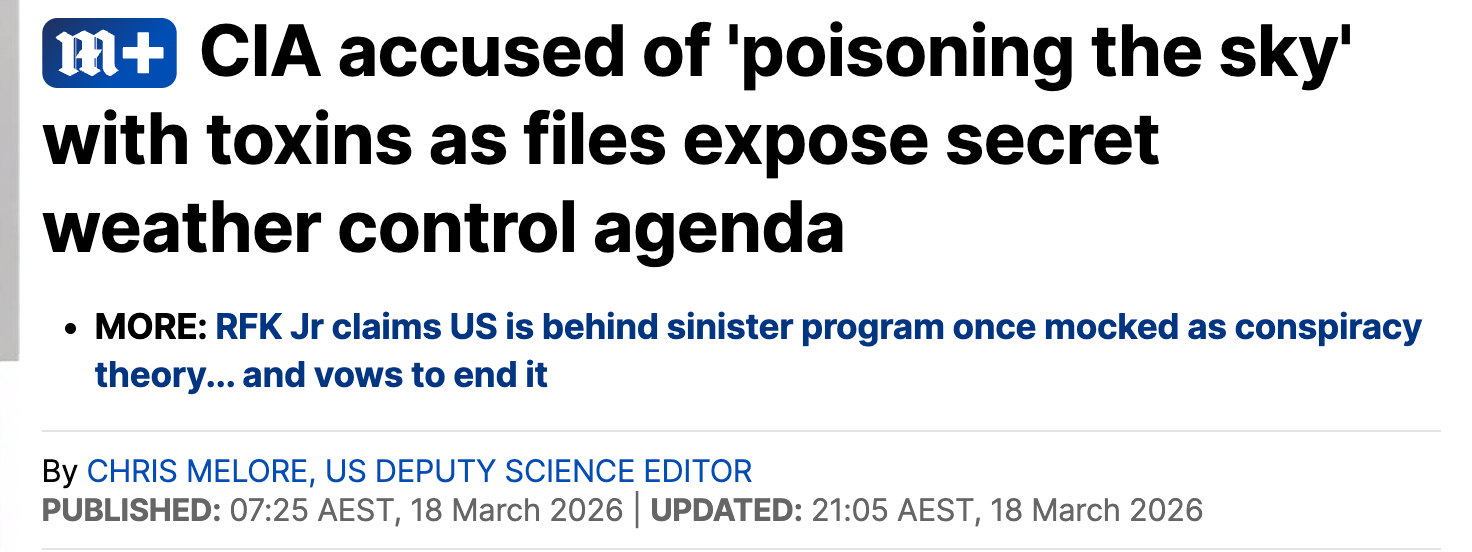
Secret CIA files expose secret weather control agenda

Will Big Food get rid of food dyes?
Will hell freeze over?
Note it all relies on voluntary compliance. Key words right there. All the ‘will theys’, ‘might theys’ are simply rhetoric to get you thinking they’re onto it. To cut right to the chase, watch The Corporation doco. (And peruse our Corporations page at the main menu). Explains it all. Corporations lie with impunity. They pretty much do whatever they like and get away with it. They are in the doco likened to a psychopathic personality. They fit the profile! A law unto themselves, if you oppose their destructive activities they will sue you for loss of profits. Note also, this benefits the globalists who desire a weakened population that will be more easily controlled. Explain why else they continue to be permitted to add known POISONS to your food supply. Not conspiracy. Watch the doco here. EWNZ

A Pfizer Whistleblower Who Recently Took Her Own Life Said the ‘Vaccine’ Given to the Public Was Not the One Promoted by Professionals
“The Pfizer vaccine that the population received, that you may have received, is not the one from the clinical trial with the 95% efficacy announced by all the politicians, journalists, and TV doctors. You were administered a product for which there were absolutely no results, neither of efficacy nor of tolerance.” Christine Cotton, (Pfizer Whistleblower)
Continue reading A Pfizer Whistleblower Who Recently Took Her Own Life Said the ‘Vaccine’ Given to the Public Was Not the One Promoted by Professionals
The real story behind NZ’s use of 1080 is “a sinister tale of corruption and bureaucratic indifference” said a British film maker back in 2002
A repost from thegrafboys.blogspot
“Poison use a sinister tale” – The Press 2002
The following article appeared in the Christchurch Press in January 2002.
What’s intriguing is how the British team quickly identified indicators of an industry built on poison, and how their story echoes the voice of 1000’s of New Zealanders across the country – even after the ERMA reassessment of 1080 poison in 2007…Poison use ‘a sinister tale’.

Censored from NZ Television – Ivon Watkins Dow’s release of deadly 245T from 1962-81 in New Plymouth
Birth defects documented by a local midwife… NZ was the last country in the world to manufacture this dangerous substance 245T…
Continue reading Censored from NZ Television – Ivon Watkins Dow’s release of deadly 245T from 1962-81 in New Plymouth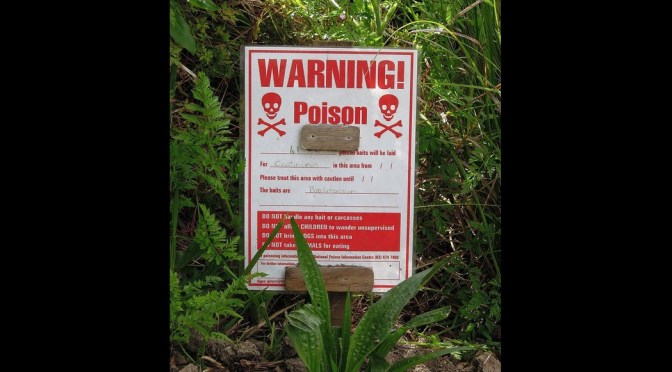
There’s an Even Worse Poison than 1080 – It’s Brodifacoum
This article was originally published here in 2023 … EWNZ
“The Ministry of Primary Industries stipulates a withholding period of 4 months for 1080 poison. For brodifacoum it is 3 years i.e. 36 months after poisoning.“
by Tony Orman
Government use of 1080 poison in New Zealand is controversial and seems to command the headlines ahead of other poisons.
But there is a much worse poison – it is called brodifacoum.
Brodifacoum is widely used by regional councils and government agencies such as the Department of Conservation. Typical of its widespread use is Ulva Island near Stewart Island where the Department of Conservation is currently undertaking rodent eradication.
I have come across brodifacoum poisoning notices in the central North Island when trout fishing, accompanied by my Labrador dog. In one case I asked a farmer why the regional council was using brodifacoum for possums. He didn’t know and added that possum numbers were very light anyhow.
Because of the extreme danger to my dog, I didn’t go fishing. Besides, trout fishing a river into whichever toxic baits will have fallen or on the banks, doesn’t make for an enjoyable day’s fishing!
Such cavalier attitude of regional councils – and the Department of Conservation – belies the lethal nature of brodifacoum.
Comparison
How does it compare to 1080?
Both poisons have a ”withholding period” which means a time must elapse after the toxin’s use before stock can be safely grazed or game animals such as deer, taken for home consumption.
The Ministry of Primary Industries stipulates 4 months for 1080 poison. For brodifacoum it is 3 years i.e. 36 months after poisoning.
The extensive withholding time for brodifacoum is due to its known long-term persistence in the environment and animal bodies.
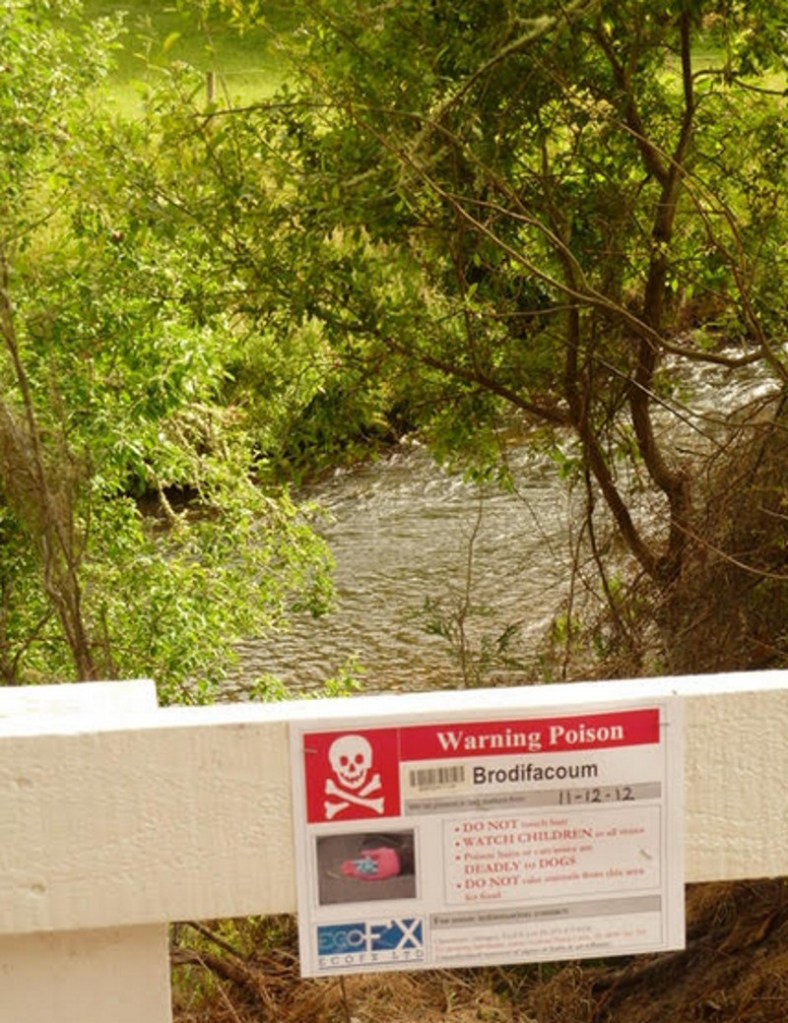
What is brodifacoum?
Brodifacoum is an anticoagulant, which causes the animal to die slowly and painfully from internal bleeding. As cruel as death over two or three days is by 1080, by brodifacoum it is far more prolonged, in the case of rats within 4 to 8 days and larger animals such as possums, up to 21 days.
1080 requires a user to have a licence to use the toxin but no licence is needed for brodifacoum, for example rat poison sold over shop counters, to anyone, young or adult with no controls whatsoever.
Secondary Poisoning
Brodifacoum and 1080 have another similarity, called “secondary poisoning”. In other words a dead poisoned animal remains toxic and any bird or other creature scavenging the dead body, takes in poison and dies.
Scientists C.T. Eason and E.B. Spurr in 1995 in a study “The Toxicity and Sub-lethal Effects of Brodifacoum said insectivorous birds (e.g. bush robins, fantails) are likely to be exposed to brodifacoum by eating invertebrates that have fed on toxic baits; i.e., they are likely to be at risk from secondary poisoning. Predatory birds (especially the Australasian harrier, New Zealand falcon, and morepork) might also be at risk from secondary poisoning by eating birds, small mammals, or invertebrates that have fed on toxic baits.
Predators are greatly at risk. Both poisons are very slow to kill, and especially so with brodifacoum. An animal be mouse, bird or insect, on taking the poison, slowly dies and in its distressed, weakening state, naturally and quickly attracts the attention of predators among them native birds such as bush falcons, hawks, moreporks, pukekos and wekas.

Ecological history is littered with instances following poisoning. For example scientists Eason and Spurr said the “entire weka population on Tawhitinui Island, Pelorus Sound, Marlborough Sounds was exterminated mainly by direct consumption of rat bait (Talon) intended for ship rat control.”
The two scientists said “indigenous New Zealand vertebrates most at risk from feeding directly on cereal-based baits containing brodifacoum are those species that are naturally inquisitive and have an omnivorous diet (birds such as weka, kaka, kea, and robins). The greatest risk of secondary poisoning is to predatory and scavenging birds (especially the Australasian harrier, New Zealand falcon, southern black-backed gull, morepork, and weka)”
The duo added “the risk from brodifacoum will be at its greatest when saturation baiting techniques, such as aerial sowing, are used in eradication programmes.” Such as Ulva Island where DoC is “aerially sowing” brodifacoum.
Seven years later in 2002, Spurr and Eason along with two other scientists produced a study “Assessment of risks of brodifacoum to non-target birds and mammals in New Zealand”.
The quartet of scientists described brodifacoum as “highly toxic to birds and mammals” and listed victims such as the Australasian harrier (Circus approximans) and morepork (Ninox novaeseelandiae), other native birds such as the pukeko (Porphyrio melanomas), weka (Gallirallus australis), southern black-backed gull (Larus dominicanus), and kiwi (Apteryx spp.) and introduced mammals, including game animals e.g. deer.
Dead Dotterels
Other studies have identified the lethal nature of brodifacoum.
Landcare Research scientist Penny Fisher said “because brodifacoum persists in the environment, other birds may suffer secondary poisoning from eating animals that have ingested poison” and cited “a high mortality of New Zealand dotterels following an aerial brodifacoum operation at Tawharanui Regional Park in North Auckland, in 2004. At least 50% of the dotterels in the area at time of operation disappeared or were found dead. Sand-hoppers-common food item of NZ dotterels —ate baits and accumulated brodifacoum and provided a potential route for transmission of the toxin to dotterels.”
Two dead eels found in a Southland waterway had brodifacoum in the gut contents of one and that “suggests the eel had recently ingested food containing brodifacoum, probably through scavenging the carcass of a poisoned possum.”
Freshwater Residues
Brodifacoum similar to 1080, leaves residues.
In 2005 a paper in the New Zealand Journal of Marine and Freshwater Research, Volume 39, told of freshwater crayfish (koura) with significant 1080 concentrations and 1080 residues in eel tissue that were on average 12 times higher than the PMAV (provisional maximum acceptable level).
The INTERNATIONAL PROGRAMME ON CHEMICAL SAFETY Health and Safety Guide No. 93 said of brodifacoum “as a technical material — is highly toxic for fish”.
Processing poisons for wild animal control/eradication is Orillion a State Owned Enterprise governed through a Board of Directors appointed by the New Zealand Government. Orillion’s safety data sheet for brodifacoum says “may cause long lasting harmful effects to aquatic life.”
Therein lies a threat to not only valued sports fishes such as trout and juvenile salmon migrating downstream to sea, but also native fish such as eels and galaxids.
Sodium fluoroacetate, also known as compound 1080, is the poison around which controversy swirls. Brodifacoum is little known but is surreptitiously used by the Department of Conservation and councils.
1080 is ecologically destructive and damaging to the ecosystem – but brodifacoum is far worse.
Footnote: Environmentalist Tony Orman has spent a lifetime in the outdoors and has had some two dozen books published among them “New Zealand the Beautiful Wilderness”
RELATED
Brodifacoum Worse Poison than 1080
Header Photo: Wikipedia – By Squidonius – Own work, CC BY-SA 3.0, https://commons.wikimedia.org/w/index.php?curid=17253187

A mother & 3 children poisoned in 2016 by 1080 poison dust said the NZ hospital had no idea what to do!
“So the NZ authorities have been bombarding our forests & farms with this Class 1A Ecotoxin for well nigh 60 years, and the hospitals still don’t know what to do?!!! Don’t have a plan in place at all? Doesn’t that sound well … not too intelligent?“
A repost on 1080: READ AT THE LINK
Image by Usman Yousaf from Pixabay

Fluoride and IQ: The American Silence
Note: NZ is equally silent on this topic Kiwis. Up and down ‘Clean and Green’ folk are resisting the fascist installation of this so called ‘option’ into their water supplies. It really aint rocket science. If folk want fluoride they can add it themselves. Instead we are all forced to purchase expensive filters to get rid of the poison … that is if we can even find a filter that does this. (See our Fluoride pages at the main menu)… EWNZ
From Lies are unbekoming @ substack
Preface
In 2024, American researchers can sequence DNA from single cells, track neuron firing patterns in real time, and detect chemical signatures on distant exoplanets. The National Institutes of Health funds over 50,000 research grants annually, investigating everything from rare “genetic” disorders affecting dozens of people to the optimal spacing of highway rest stops. Yet in the seventy-nine years since America began adding fluoride to public water supplies, not one published study has examined whether this practice affects American children’s intelligence.
This absence becomes more peculiar when you consider the context. Researchers in Canada, just miles from our northern border, recently found that children exposed to fluoridated water during fetal development scored 4.5 IQ points lower than unexposed children. Mexican scientists documented similar deficits. Chinese researchers have published dozens of studies on fluoride and cognition. The 2024 National Toxicology Program review identified 72 human studies examining fluoride’s impact on intelligence—52 found harmful effects. None were conducted in the United States.
The silence isn’t accidental. It’s architectural.
What first caught my attention wasn’t the Canadian findings themselves but a footnote in the NTP review: “No studies evaluating IQ were conducted in the United States.” A simple statement of fact that raises profound questions. The country that pioneered water fluoridation, that exports this practice as public health gospel, has never checked whether it affects our children’s cognitive development. We’ve been running a population-wide “experiment” for nearly eight decades without measuring one of its most crucial potential outcomes.
This essay examines that structured absence and the shape of the silence itself. Why do certain questions become unaskable within scientific institutions? How does a research blind spot this large persist for this long? And what does this tell us about how public health orthodoxies protect themselves from empirical challenge?
The answer involves more than fluoride. It’s about how scientific communities develop collective blind spots, how research priorities get set by non-scientific forces, and how certain questions become professionally dangerous to ask. The absence of American IQ studies isn’t a gap in our knowledge—it’s a feature of how that knowledge gets produced.
Section 1: The Absent Evidence
Fifty-two studies found that fluoride exposure lowers children’s intelligence. Studies from China, India, Mexico, Canada, Iran, Egypt, and other nations have tested thousands of children, measuring their cognitive abilities against their fluoride exposure levels. The results follow a remarkably consistent pattern: higher fluoride, lower IQ.
The National Toxicology Program spent eight years reviewing this evidence. Their 2024 monograph runs 296 pages, examining studies dating back decades and including sophisticated recent research using individual-level biomarkers and prospective cohort designs. Their conclusion: “moderate confidence” that fluoride is associated with lower IQ in children. In the cautious language of systematic reviews, “moderate confidence” is significant—it means the available evidence indicates a real effect.
Here’s what makes the American absence extraordinary: we have ideal conditions for conducting such research. We have fluoridated and non-fluoridated communities side by side. We have sophisticated research infrastructure, from university laboratories to the Centers for Disease Control. We have detailed health records, standardized testing data, and the National Health and Nutrition Examination Survey that already measures fluoride levels in Americans’ bodies. Everything needed for rigorous studies exists—except the studies themselves.
The recent North American research makes “foreign studies don’t apply here” arguments untenable. The MIREC study in Canada found that a 1 mg/L increase in maternal urinary fluoride was associated with a 4.49-point decrease in boys’ IQ scores. The ELEMENT study in Mexico found nearly identical results. These weren’t ecological studies comparing different regions with potential confounding factors. They measured individual fluoride exposure using biomarkers, controlled for numerous variables including maternal education and socioeconomic status, and used standardized IQ tests administered by trained psychologists.
The Canadian study is particularly relevant because it included both fluoridated and non-fluoridated communities, used the same water fluoridation levels as the United States (0.7 mg/L), and studied a population demographically similar to Americans. When the study was published in JAMA Pediatrics in 2019, the editor took the unusual step of including an editor’s note about the extra scrutiny it received due to its potential impact on public health policy. The study withstood that scrutiny.
American health agencies haven’t ignored this research entirely. The NTP review itself represents years of work by American scientists. But they’re reviewing everyone else’s data. The systematic exclusion of American populations from fluoride-IQ research isn’t explicable by ordinary scientific priorities.
The National Institute of Environmental Health Sciences funds research on countless chemical exposures—air pollution, pesticides, heavy metals, flame retardants, phthalates. Many affect far fewer Americans than fluoridated water, which reaches over 200 million people. Major American universities conduct sophisticated studies on neurodevelopmental toxins. When they study fluoride, they analyze data from other countries. Dr. Philippe Grandjean of Harvard co-authored the influential 2012 meta-analysis of Chinese fluoride studies. American researchers are clearly capable of this research—they just don’t conduct it on American children.
Section 2: The International Findings
The evidence from outside America’s borders tells a consistent story. Of the studies the NTP reviewed, the majority found inverse associations—higher fluoride exposure, lower intelligence scores. Not a single well-conducted study found that fluoride improved cognitive function.
The Chinese studies, which comprise the largest portion of this literature, have been dismissed by some as poor quality research from rural areas with industrial pollution. This criticism held more weight before recent high-quality studies from North America confirmed the same pattern. Many Chinese studies compared populations with different naturally occurring fluoride levels in drinking water, eliminating concerns about industrial contamination. A 2003 study by Xiang and colleagues tested 512 children, controlling for lead exposure and parental education. They found a clear dose-response relationship: each 1 mg/L increase in water fluoride corresponded to a 2.5-point decrease in IQ.
The Mexican ELEMENT study brought methodological rigor that should satisfy any skeptic. Researchers followed 299 mother-child pairs, measuring fluoride in maternal urine during pregnancy and in children’s urine at age 6-12. They tested children’s cognitive abilities using multiple validated instruments, including the Wechsler Abbreviated Scale of Intelligence. The results showed that a 0.5 mg/L increase in maternal urinary fluoride predicted a 2.5-point lower IQ in children.
What makes ELEMENT particularly compelling is its location. Mexico City doesn’t fluoridate its water, but fluoride occurs naturally in the groundwater and residents consume fluoridated salt. This creates a range of exposures similar to what Americans experience through water fluoridation plus dietary sources. The mothers’ urinary fluoride levels (0.90 mg/L average) were comparable to those found in pregnant women in fluoridated U.S. communities.
The Canadian MIREC study addressed one of the last refuges of skepticism—that perhaps these findings only applied to developing countries or populations with unusual fluoride sources. The Maternal-Infant Research on Environmental Chemicals study followed 512 mother-child pairs through pregnancy and early childhood, measuring fluoride in maternal urine during pregnancy and testing children’s IQ at ages 3-4. Canada’s water fluoridation program is essentially identical to America’s. The same companies provide the same chemicals at the same concentrations to communities on both sides of the border.
MIREC’s results were striking not just for their magnitude but their sex-specific pattern. Boys appeared more vulnerable than girls to prenatal fluoride exposure. This aligns with known patterns of male vulnerability to various neurodevelopmental toxins and suggests a biological mechanism rather than confounding. The researchers measured fluoride in drinking water, maternal urine, and children’s urine, allowing them to examine different exposure windows and routes. If fluoride affects Canadian children’s intelligence, there’s no biological reason American children would be immune.
The consistency across diverse populations suggests something fundamental about fluoride’s biological activity. Whether the exposure comes from naturally high groundwater in China, fluoridated salt in Mexico, or treated municipal water in Canada, the association with reduced IQ persists. The effect sizes vary—from 2 to 7 IQ points depending on exposure levels and study design—but the direction remains constant.
The NTP review found adverse effects at water fluoride levels of 1.5 mg/L and above, with some studies suggesting effects at lower levels. The U.S. recommended level is 0.7 mg/L, but this considers only fluoride from water, not total exposure from all sources. When researchers measure total fluoride exposure using urinary biomarkers, many individuals in fluoridated communities exceed levels associated with cognitive effects in studies.
Fluoride crosses the placenta and blood-brain barrier. It accumulates in brain tissue. Animal studies document altered neurotransmitter levels, increased oxidative stress, and structural changes in brain regions crucial for learning and memory. The biological plausibility strengthens these epidemiological findings.
Section 3: The American Silence
The absence of American fluoride-IQ studies doesn’t result from oversight or incompetence. It emerges from a complex interplay of institutional, economic, and political forces that make such research professionally hazardous and practically difficult.
Start with the timeline. The U.S. Public Health Service endorsed water fluoridation in 1950, before the first controlled trials were complete. This premature endorsement created institutional momentum that became self-reinforcing. By the time questions about cognitive effects emerged, thousands of communities had fluoridated their water, dental organizations had staked their credibility on the practice, and opposition to fluoridation had been successfully branded as anti-science conspiracy thinking.
The dental establishment plays a central role in maintaining this research void. The American Dental Association, which generates significant revenue from its Seal of Acceptance program for fluoride-containing products, has long promoted fluoridation as one of the “ten great public health achievements of the 20th century.” Questioning fluoride’s safety challenges not just a policy but a professional identity built over seven decades.
Federal agencies face their own constraints. The CDC’s Oral Health Division promotes water fluoridation. The same agency that would normally investigate potential adverse effects has an institutional commitment to the intervention. This conflict of interest isn’t hidden—it’s structural. Research funding reveals clear priorities. The National Institute of Dental and Craniofacial Research had a 2023 budget of $516 million with numerous studies on fluoride’s dental mechanisms but none on cognitive effects.
Individual researchers face powerful disincentives. Dr. Phyllis Mullenix discovered this in the 1990s when her research on fluoride’s neurotoxicity in rats led to her dismissal from the Forsyth Dental Center. Those who question fluoridation risk being labeled anti-fluoridationists, grouped with conspiracy theorists, and potentially damaging their careers.
The immediate threat of litigation creates a formidable barrier. Any researcher proposing to study fluoride’s cognitive effects must consider the legal ramifications. If their study finds harm, they could be subpoenaed in lawsuits against water utilities and municipalities. Their methodology would be scrutinized by armies of lawyers. Their personal communications could become public record. The prospect deters even well-intentioned scientists from entering this minefield.
Grant reviewers and journal editors operate within this same framework. A research proposal to study fluoride’s cognitive effects in American children would face skeptical review. Why study something already deemed safe? Even if funded and conducted, publishing such research would prove challenging. Journal editors, aware of the political implications, would subject it to extraordinary scrutiny.
The precautionary principle, typically applied to environmental chemicals, inverts when it comes to fluoride. Usually, we demand proof of safety before widespread exposure. With fluoride, we demand proof of harm before questioning the exposure. This reversed burden of proof makes sense only when you understand fluoridation as public health orthodoxy rather than scientific hypothesis.
The absence becomes self-justifying. Health agencies cite the lack of American studies showing harm as evidence of safety. But they don’t fund such studies. When pressed about international findings, they emphasize differences between American and foreign populations, different fluoride sources, or methodological limitations. The solution—conducting rigorous American studies—remains unmentioned.
Section 4: The Cost of Not Knowing
Every day, approximately 200 million Americans drink fluoridated water. If international findings apply here—and there’s no biological reason they wouldn’t—we’re accepting a population-wide IQ reduction of 2 to 5 points. The implications ripple through every aspect of society.
A 5-point IQ reduction shifts the entire bell curve leftward. The number of people with intellectual disabilities (IQ below 70) increases by 57%. The number of gifted individuals (IQ above 130) decreases by 43%. These aren’t abstract statistics—they represent real children who struggle in school, adults who can’t reach their potential, innovations that don’t happen.
The economic implications are staggering. Economists estimate that a 1-point IQ increase corresponds to roughly 2% higher lifetime earnings. A 5-point decrease means 10% lower earnings across an entire population. For a median household, that’s $6,000 less per year, $240,000 over a working lifetime. Aggregated across millions of affected individuals, the economic loss reaches hundreds of billions annually.
Educational systems bear immediate costs. Children with lower IQs require more educational support, more remedial instruction, more special education services. School districts in fluoridated communities might be spending millions on special education services that could be prevented by addressing a single environmental exposure.
The competitive implications extend internationally. China, which has extensively studied fluoride’s cognitive effects, has been reducing fluoride exposure in affected regions. European countries that rejected fluoridation decades ago may have been protecting their populations’ cognitive capacity while Americans accepted gradual impairment. In a knowledge economy, even small differences in population-level cognitive ability translate to significant competitive advantages.
Environmental justice adds another dimension. Low-income families can’t afford bottled water or sophisticated filtration systems. They depend on tap water for drinking and formula preparation. If that water contains fluoride at levels that impair cognition, poverty becomes self-perpetuating through biological mechanisms.
The prenatal window of vulnerability identified in recent studies raises particular concerns. Pregnant women receive no guidance about fluoride consumption. Women conscientiously avoiding alcohol and limiting caffeine unknowingly expose their developing babies to a potential neurotoxin through ordinary tap water consumption.
The uncertainty itself carries costs. Parents who learn about international fluoride studies face an impossible choice: accept potential cognitive risks or spend thousands on bottled water and filtration. The absence of American research leaves everyone guessing.
Like fluoride, lead was once considered beneficial at low doses. Like fluoride, lead’s neurotoxicity was dismissed until evidence became overwhelming. The difference is we eventually studied lead’s effects on American children. The research led to action that prevented millions of cases of cognitive impairment. Without American studies, we’re making population-level decisions based on assumptions rather than evidence.
Section 5: Breaking the Silence
The path forward doesn’t require abandoning water fluoridation tomorrow. It requires something more radical: actually studying its effects on American children. The research design isn’t complicated. The funding, compared to other public health initiatives, would be modest. The primary obstacle is will.
A comprehensive American study would follow pregnant women and their children in fluoridated and non-fluoridated communities. Researchers would measure fluoride exposure through multiple pathways—water, dietary sources, dental products. They would assess children’s cognitive development using validated instruments at multiple ages. They would control for confounding factors like socioeconomic status, parental education, and other environmental exposures. The MIREC and ELEMENT studies provide proven templates.
The National Children’s Study, despite its cancellation, demonstrated that large-scale longitudinal research on environmental influences is feasible in the United States. Its planned methodology could be adapted for a focused fluoride investigation. For a fraction of what was spent planning that study, we could definitively answer whether fluoride affects American children’s cognitive development.
Independent funding would be essential. Neither dental organizations nor anti-fluoridation groups should control the research. A consortium of foundations concerned with children’s health and environmental justice could provide neutral support. The study design should be transparent, pre-registered, and subject to external oversight. The results, whatever they show, should be published without interference.
Congress could mandate such research through the reauthorization of environmental health programs. The NIH could designate fluoride as a priority for neurodevelopmental research. The EPA, which regulates fluoride as a contaminant, could require cognitive assessments as part of its regulatory review. Multiple pathways exist if institutional will emerges.
The research should examine not just whether fluoride affects IQ but which populations are most vulnerable. Do certain genetic variants increase susceptibility? Are there critical windows of exposure? What levels, if any, are genuinely safe for neurodevelopment? These aren’t anti-fluoridation questions—they’re basic public health inquiries that should have been answered decades ago.
Beyond individual studies, we need institutional reform. The separation between dental and public health agencies on fluoride research must end. Environmental health researchers should have the freedom to study fluoride like any other chemical exposure without political consequences. Journal editors should evaluate fluoride research based on methodology, not politics.
The broader lesson extends beyond fluoride. When public health interventions become orthodoxies, when questioning them becomes professionally dangerous, science stops functioning. The absence of American fluoride-IQ studies represents a failure of scientific culture as much as specific institutions. Recovering that culture means creating space for uncomfortable questions, even about practices we’ve long considered beneficial.
Other countries provide models. The European Food Safety Authority conducts ongoing reviews of fluoride exposure and safety. Several nations have implemented biomonitoring programs that track population-level fluoride exposure. These approaches treat fluoride as a chemical requiring continued vigilance rather than a solved problem requiring only promotion.
The cognitive stakes demand urgency. Every year without American studies means another cohort of children potentially exposed during critical developmental windows. If international findings apply here, we’re accepting preventable cognitive impairment on a massive scale. If they don’t apply, we should have evidence showing why American biology differs from Canadian or Mexican biology.
The scientific method offers a way forward: form hypotheses, test them rigorously, follow the evidence. The hypothesis that water fluoridation at current levels doesn’t affect American children’s cognitive development is eminently testable. The fact that we haven’t tested it after 79 years reveals more about our institutions than our science.
Yet even if we had the perfect study design, independent funding, and institutional support, one question remains: Why would institutions that benefit from the current arrangement ever allow such research to proceed? The answer requires examining not just the barriers to research, but who profits from maintaining them.
Section 6: The Unasked Question
The lead industry knew for decades that their product damaged children’s brains. Internal documents from the 1950s show company scientists discussing cognitive impairment while their executives funded studies designed to obscure these effects. Government agencies, dependent on industry information and reluctant to challenge a major economic sector, avoided asking obvious questions until the evidence became undeniable. By then, millions of children had been exposed.
The fluoride situation follows a disturbingly similar pattern, with one crucial difference: instead of industry adding a neurotoxin for profit, government adds it for public health. This reversal doesn’t eliminate the structural dynamics that perpetuate potentially harmful exposures. It intensifies them.
Consider what the Canadian and Mexican studies mean if their findings apply to American populations. A 4-point IQ reduction shifts millions of people from one cognitive category to another. The person who might have become an engineer becomes a technician. The potential teacher becomes a clerk. The would-be entrepreneur becomes a lifetime employee. These aren’t dramatic impairments—affected individuals still function, work, vote, consume. But multiply these subtle shifts across 200 million people and you’ve transformed a society.
Modern governance depends on extraordinary complexity that favors those who design systems over those who navigate them. Tax codes run thousands of pages. Financial regulations require advanced degrees to understand. Healthcare policies bewilder even educated consumers. A population with reduced analytical capacity struggles to challenge these structures, not through conspiracy but through cognitive load. The complexity becomes its own protection against reform.
The economic implications align troublingly well with institutional needs. Researchers have documented that lower IQ correlates with increased impulse purchasing, higher debt accumulation, and reduced savings rates. A 2019 Federal Reserve study found that a 1-point IQ decrease corresponds to roughly 2% more credit card debt. Scale that across a population and you have billions in additional consumer spending, financed through debt that generates massive profits for financial institutions.
Political scientists have observed similar patterns in civic engagement. Lower cognitive capacity correlates with decreased political participation, increased reliance on partisan cues over policy analysis, and greater susceptibility to emotional manipulation. These aren’t moral failings—they’re predictable outcomes of reduced processing power applied to complex decisions.
Every institution needs some highly capable individuals to design and manage systems, but too many critical thinkers create friction. A workforce where most people can follow procedures but fewer can evaluate them might be economically optimal from a management perspective. Nobody plans this distribution, but policies that slightly reduce population-wide cognitive capacity create it naturally.
The information ecosystem reveals another alignment of interests. Social media companies have perfected algorithms that exploit cognitive limitations—shortened attention spans, emotional reasoning, confirmation bias. These manipulations work better on people with reduced analytical capacity. Educational institutions face their own perverse incentives. Schools receive additional funding for special needs students requiring remediation but not for gifted programs that challenge high performers.
Federal agencies demonstrate through their behavior what they actually prioritize. The EPA regulates thousands of chemicals, often based on limited evidence of potential harm. Yet fluoride, added deliberately to water supplies, receives special deference. Research funding reveals priorities more honestly than policy statements. The NIH funds thousands of studies on environmental neurotoxins but none on fluoride’s cognitive effects in Americans.
Here’s where the liability dynamic becomes systemic rather than merely financial. The fear of lawsuits doesn’t just deter individual researchers—it shapes entire institutional cultures. Water utilities don’t merely avoid funding cognitive research; they develop organizational blindness to the question. Municipal lawyers don’t just defend against lawsuits; they advise against any action that might acknowledge uncertainty. Insurance companies don’t just calculate risks; they create incentive structures that reward ignorance over investigation.
This dynamic—where ignorance protects against liability—perverts normal scientific incentives. In most fields, researchers compete to make discoveries. With fluoride, institutional survival depends on not discovering. The potential damages from millions of children with documented IQ loss could reach hundreds of billions. Under these circumstances, not knowing becomes an institutional imperative, embedded in hiring practices, research priorities, and organizational culture.
None of this requires conscious conspiracy. Each actor pursues their institutional interests within a system that happens to reward cognitive impairment. The banker profits from impulsive borrowers. The bureaucrat benefits from compliant citizens. The educator receives funding for remedial programs. Nobody has to coordinate because the incentives align naturally.
The self-concealing nature of cognitive impairment makes this particularly insidious. A population with reduced analytical capacity is less able to recognize and articulate that reduction. They can’t identify patterns they can’t perceive. They can’t question complexities they can’t grasp. The system becomes self-perpetuating, not through suppression but through incapacity.
The historical parallel with lead is instructive but incomplete. With lead, once the cognitive effects became undeniable, society mobilized to remove it. With fluoride, the cognitive effects documented internationally trigger no similar response. The difference might be that lead exposure was largely corporate-driven while fluoride exposure is government-driven. Admitting error becomes exponentially harder when the error is official policy rather than corporate malfeasance.
The absence of American fluoride-IQ studies isn’t a mystery—it’s a choice. A choice made by institutions that prioritize orthodoxy over inquiry, by researchers who value careers over questions, by agencies that confuse promotion with protection. The international evidence demands American verification or refutation. The stakes demand immediate action. The silence has lasted long enough.
Seventy-nine years into this experiment, it’s time to check the results.
References
Bashash, M., Thomas, D., Hu, H., Martinez-Mier, E. A., Sanchez, B. M., Basu, N., … & Téllez-Rojo, M. M. (2017). Prenatal fluoride exposure and cognitive outcomes in children at 4 and 6–12 years of age in Mexico. Environmental Health Perspectives, 125(9), 097017.
Bassin, E. B., Wypij, D., Davis, R. B., & Mittleman, M. A. (2006). Age-specific fluoride exposure in drinking water and osteosarcoma (United States). Cancer Causes & Control, 17(4), 421-428.
Choi, A. L., Sun, G., Zhang, Y., & Grandjean, P. (2012). Developmental fluoride neurotoxicity: A systematic review and meta-analysis. Environmental Health Perspectives, 120(10), 1362-1368.
Green, R., Lanphear, B., Hornung, R., Flora, D., Martinez-Mier, E. A., Neufeld, R., … & Till, C. (2019). Association between maternal fluoride exposure during pregnancy and IQ scores in offspring in Canada. JAMA Pediatrics, 173(10), 940-948.
National Research Council. (2006). Fluoride in drinking water: A scientific review of EPA’s standards. Washington, DC: The National Academies Press.
National Toxicology Program. (2024). NTP monograph on the state of the science concerning fluoride exposure and neurodevelopment and cognition: A systematic review. Research Triangle Park, NC: National Toxicology Program. NTP Monograph 08.
Xiang, Q., Liang, Y., Chen, L., Wang, C., Chen, B., Chen, X., & Zhou, M. (2003). Effect of fluoride in drinking water on children’s intelligence. Fluoride, 36(2), 84-94.
Yu, X., Chen, J., Li, Y., Liu, H., Hou, C., Zeng, Q., … & Wang, A. (2018). Threshold effects of moderately excessive fluoride exposure on children’s health: A potential association between dental fluorosis and loss of excellent intelligence. Environment International, 118, 116-124.
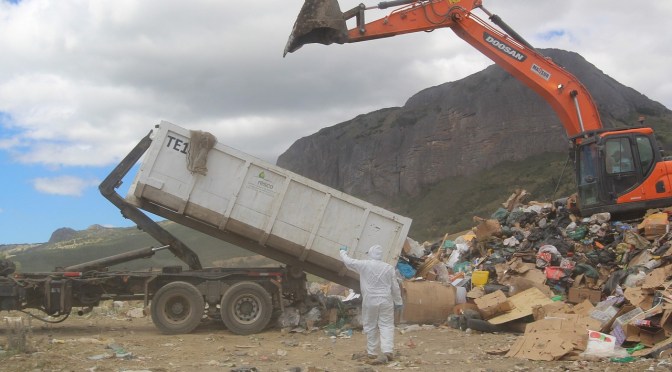
Is there 1080 in your landfill? According to a 2019 OIA request DoC alone has buried 100 tonnes in NZ’s landfills
“It is common practice to dump excess 1080 pellets after 1080 drops have finished (Re Stewart Island dump, see article).When 1080 toxin was first discovered in ground water the source of the toxin was traced to a landfill site above. Un-spread 1080 baits had been buried in the landfill and the toxin had leached out of the baits and seeped down into the ground water where it remained as toxic as the day it was dumped. No breakdown of the poison had taken place over all that time” … these are only DoC’s figures … “OSPRI has traditionally dropped more 1080 poison than DoC. Regional Councils account for around 12% of 1080 use too.”
READ AT THE LINK
Image by Heamna Manzur from Pixabay

The real reason they are culling your animals – it’s multi layered
A repost of this important info, introducing an article from Jenese James. It makes some sense of the massive killing sprees of wildlife with poisons, particularly down under in ‘guinea pig’ NZ. Sprees that are inconsistent with the ‘sustainable’ and ‘conservation’ mantras. Read on…
Just this week the UK Telegraph has been warning us of the next possible plandemic, with their eye this time on your pet cat that might be putting us all in danger:
Experts have long regarded pigs as one of the greatest zoonotic threats to public health because their cells allow viruses to mix and mutate, creating new strains capable of causing human pandemics. This is how the 2008/09 H1N1 swine flu pandemic started and it is suspected that pigs in Haskell country, Kansas may have triggered the 1918 Spanish Flu pandemic which is estimated to have killed between 50 and 100 million people. Now a new study suggests that pet cats could be just as dangerous – and could provide the bridge that allows H5N1 bird flu to mutate and jump to humans.
We should be very afraid and be looking to getting rid of our pets, or so they’d have us believe. Meanwhile the Guardian is hyping it up by warning all pregnant women who contract bird flu will die!
They’ve actually been targeting cats in NZ and elsewhere for some time now.
NZ’s Tokoroa is hiring a shooter to cull feral cats – watch out for your cat
1080 to be used by Aussie govt to kill 2 million feral cats using aerially dropped 1080-laced sausages
We’ve also been targeting possums, deer, birds, rabbits, tahr and other animals considered by our conservation authorities to be pests.
READ AT THE LINK
https://truthwatchnz.is/all-categories/agenda-21-30/drumming-up-bird-flu-targeting-your-pets

What DOC doesn’t want you to know about 1080 Poison (leaked report from 2014)
Another repost from 2016… EWNZ

Forest & Bird Say 1080’s as Safe to Eat as a Packet of Crisps … and DOC says it’s Deadly to Dogs?
Here is a repost from 2016 … on the topic of poisons and the general ignorance of folk concerning their hidden effects … remember the ‘safe and effective’ mantra that wasn’t? EWNZ

NZ’s Silent Forests – Where have all the Birds Gone? (Send us your stories)
I’m posting out our page on the disappearing bird populations. If you have noticed the same in your area do send us details via the contact page. We can raise awareness by adding them. You can retain anonymity on request. EWNZ
Here is a link to the page:
Image credit: envirowatchnz ‘Poisoning the Birds’

In 2002 in NZ a Landcare scientist estimated the likely death toll from an Otago 1080 drop to be around 10,000 birds
And DoC claims 1080 targets non native species?
Read a quote from DoC’s own website:
1080 targets predators
New Zealand is unusual, because apart from bats, there are no native land mammals. This means we can control introduced mammalian predators without negatively impacting populations of native species.
1080 targets introduced predators such as rats and possums. Stoats are also controlled through scavenging of poisoned rat carcasses. SOURCE

Would they have us believe that of these 10K deaths, none were natives? Other drops indicate otherwise (read at the link below).

Pfizer knew there’s an 80% miscarriage rate
From Exposing the Darkness @ substack
“There’s a section in the Pfizer documents where there’s an 80% miscarriage rate…”
“…Pfizer knew that babies in utero were being exposed to the vaccine. In their words the babies were dying through “transplacental exposure.”
“…They knew that they were poisoning breast milk, and that the lipid nanoparticles, the mRNA, and presumably the spike was getting onto the breast milk, and causing convulsions, and deaths.”
“ They knew that newborns would have (some of them) air sacs between their tiny lungs and their tiny chest walls. And this would cause respiratory distress. They knew it. It’s in the Pfizer documents.”
SHORT (or longer) VIDEO AT THE LINK

NZ’s Gene Technology Bill – Guy Hatchard PhD & Andrew Bridgen | FTI NYE Clip
From FreeNZ
Guy Hatchard PhD talks with Liz Gunn & Andrew Bridgen during the Freedom Train International Live broadcast about the Gene Technology Bill being introduced in New Zealand and the negative impacts it will have on our health, wellbeing and freedom.
Guy’s article on his website: “Major Alert: New Zealand Government is Enshrining ‘Medical Mandates’ in Law” – https://hatchardreport.media/new-zealand-government-is-enshrining-medical-mandates-in-law/
Website: www.hatchardreport.com
VIDEO: The Gene Technology Bill — What Kiwis Need to Know: https://www.youtube.com/watch?v=K5b2skQADT4

Biden Administration and ‘Mr. Monsanto’ Continue to Bully Mexico into Accepting GMO Corn
by Derrick Broze
From The Last American Vagabond @ substack
EWNZ comment: Of course Monsanto & its poisons never ever went away, as per corporate MO they just morph into another in this case Bayer. They continue, with impunity, to poison us via the food chain. What’s left of it ie as they busily create a famine to expunge us completely. As the saying goes they don’t grasp that we are seeds and burying us in the ground isn’t going to work. Hopefully Mexico can maintain its stance. Not hopeful unfortunately as these corporate bullies simply sue the pants off the non compliant. They are intent on destroying everything. All purity gone. All pure food sources gone. It’s fake meat, bugs and processed everything that they intend for us. If you still think glyphosate (their infamous poison) is harmless as advertised read here.
The Biden administration and Tom “Mr. Monsanto” Vilsack have emerged victorious in their effort to use the U.S.-Mexico-Canada Agreement (USMCA) to force Mexico to accept U.S. grown genetically engineered corn.
On Friday, an international trade panel ruled in favor of the United States in their ongoing dispute with Mexico over an attempted ban on imports of American genetically modified (GM) corn.
The Mexican Department for the Economy said it disagreed with the ruling but would follow it. The Mexican government has been attempting to limit the introduction of GM corn to their country because they believe it poses an unreasonable risk to the domestic corn supply, and thus the health of the country’s numerous indigenous communities and farmers who depend on corn.
“The Mexican government does not agree with the panel’s finding, given that it considers that the measures in question are aligned with the principles of protecting public health and the rights of Indigenous communities,” Mexico’s Economy Department told the Associated Press. “Nonetheless, the Mexican government will respect the ruling.”
The U.S. government celebrated the decision. Ambassador Katherine Tai said the ruling “underscores the importance of science-based trade policies”.
The decision was the latest in an ongoing legal battle between the Mexican and American governments over Mexico’s previous calls for banning imports of U.S. GM corn for human consumption. In 2020, former Mexican President Andrés Manuel López Obrador (AMLO) announced plans to ban GE corn for human consumption. This plan was later watered down, but the country did continue their fight against cross-pollination of their world-renowned corn seeds.
In February 2023, AMLO issued a decree announcing an immediate ban on the use of GM corn for dough and tortillas. The order also called on Mexican government agencies to phase out the use of GM corn for other food uses, including animal feed, which is where a majority of Mexico’s current imports of US GM corn ends up.
Mexico is currently the leading importer of GM corn from the US. This fact alone makes Mexico’s efforts to ban or reduce the presence of GM corn a huge potential financial loss for the American industry growing and exporting GM crops.
For the Mexican farmers who have been cultivating corn for an estimated 8,000 years, GM corn represents a significant threat. GM corn can spread via the birds, bees, and wind, resulting in cross-pollination between traditional crops and GM versions.
In response to Mexico’s initiatives, the US established the dispute panel in August 2023, accusing Mexico of violating the terms of the US-Mexico-Canada Agreement launched under the first Trump administration. The US brought six legal claims against Mexico, including charges that Mexico’s process for determining that GM corn poses a risk was insufficient and not scientifically sound.
The USMCA dispute panel found in favor of the US on all legal claims, stating that, “Mexico’s measures are not based on science and undermine the market access that Mexico agreed to provide in the USMCA.”
Under the USMCA, Mexico has 45 days to comply with the Panel’s findings.
Mexico’s President Claudia Sheinbaum Responds to the Ruling
One day after the trade panel ruling, Mexico’s recently elected President Claudia Sheinbaum stated that the incoming Mexican Congress will pass a ban on the planting of GM corn.
“We must protect Mexico’s biodiversity in our country. As we say: without corn, there is no country,” Sheinbaum stated.
On the 23rd, Sheinbaum was again asked about the decision by the panel and how Mexico would respond.
“Transgenic corn cannot be sown here in Mexico. There are already decrees, but now we want to take it to the Constitution,” Sheinbaum stated. “And let it be very clear that in Mexico it is forbidden to sow transgenic corn.”
Sheinbaum noted that while she was Secretary of the Environment in Mexico City there was a decree that GM corn cannot be sown in the city. She noted that the Mexico City government made efforts to save native-corn in genetic banks.
Sheinbaum also noted that because of the nature of the corn it makes the farmers less dependent on biotech corporations.
“A part of the corn is saved, that seed is saved and is resown and used in the next harvest. This is very important because it does not depend on the farmer to buy the seed from a transnational company,” she stated. “So, preserving the corn in Mexico, not transgenic, is something mandatory.”
The Mexican Government’s Arguments for Banning GM Corn
The USMCA panel’s main conclusions repeatedly attack Mexico’s ability to decide which products constitute a threat to its peoples and culture. The panel refused to accept Mexico’s national sovereignty and introduction of a “zero risk” policy as legitimate reasons for apparently violating the terms of the USMCA.
Mexico’s agencies found that consumption of GM corn in Mexico could impact human health, and GM corn poses a risk to native corn of “transgenic contamination”. The nation implemented the zero risk policy precisely because “the presence of contaminants and toxins in GM corn grain, such as transgenic proteins and glyphosate, has been well documented.”
“In addition, the adverse health effects of these contaminants and toxins have been scientifically demonstrated,” the Mexican government has previously stated. The government said that it “cannot be coerced into ignoring the independent scientific evidence that indicates the harmful effects of transgenic proteins and pesticide residues in GM corn”.
America’s southern neighbor said current international standards, recommendations, and guidelines are based on industrial agriculture in the U.S. and Canada, and do not address the risks of transgenic contamination and uncontrolled spread of GM to Mexico’s native corn.
Mexico said there was concern about GM corn and Mexico’s native non-GM corn varieties growing together in the same small fields and milpas, a traditional crop growing system which is intrinsic to indigenous ways of life in Mexico.
The Mexican government argued that it was acting in defense of their vast indigenous population for which corn is a part of diet, culture, and spiritual practices. Numerous national and international treaties, as well as national and state laws, were cited by the Mexican government in an effort to show that defending indigenous people is a tightly held legal commitment.
The US government responded by stating that Mexico’s claims of legal obligations to indigenous peoples were actually “vague, highly generalized concepts” such as “protecting the cultural heritage of Indigenous peoples and communities.” The US argued that these “vague concepts” do not constitute a concrete legal obligation.
Biden and Mr. Monsanto Win… For Now
The most strongly worded statement from the Mexican government came in response to the well-known revolving door relationship between U.S. government agencies and the industries they are supposed to regulate. In this case, the incestuous relationships between U.S. regulators and those who work for pesticide companies and producers of GM seeds.
In their rejection of the U.S. governments demands about GM corn, the Mexican government said they would not place the “economic interests of U.S. biotech corporations ahead of people’s health in Mexico”.
Indeed, the decision was praised by members of the biotech industry. John Crowley, CEO of the biotech industry trade group BIO, celebrated the ruling as a “monumental victory for the future innovation of agricultural production technologies.”
The perfect example of this relationship between regulators and lobbyists for the biotech industry is the current US Agriculture Secretary Tom Vilsack, former Governor of Iowa and former president and CEO of the US Dairy Export Council. Secretary Vilsack was appointed by the Biden administration after previously serving as Secretary of Agriculture during the Obama administration.
Vilsack cheered the decision by the dispute panel, calling it a “thorough and impartial assessment” which concluded that “Mexico’s approach to biotechnology was not based on scientific principles or international standards”. Vilsack said the ruling was a victory for “countries around the world growing and using products of agricultural biotechnology to feed their growing populations and adapt to a changing planet.”
Vilsack is notable for being given the nickname “Mr. Monsanto” in reference to his work helping the biotech giant Monsanto Inc, now owned by Bayer. In 2001 the Biotechnology Innovation Organization named Vilsack “BIO Governor of the Year” for “his support of the industry’s economic growth and agricultural biotechnology research” while serving as Iowa’s Governor.
In 2016, Politico reported on Vilsack’s role in accelerating the approval of GM crops during the Obama administration:
“Progressives say they are also disappointed that during Vilsack’s seven-and-a-half-year tenure, the Agriculture Department sped up approval of controversial GMO crops, backed trade deals they say cost Americans’ jobs and cleared changes to let poultry slaughter facilities police themselves, among a slew of initiatives favoring big producers.”
The Organic Consumer Association also reported on the various GM food products approved during Vilsack’s tenure. According to the OCA, while Vilsack was USDA Secretary from 2009 to 2017 he approved more new GM crops than any Secretary before him or since. Here are just a couple examples:
- Monsanto’s Roundup Ready sugar beets: A judge ruled that inevitable contamination would cause the “potential elimination of farmer’s choice to grow non-genetically engineered crops, or a consumer’s choice to eat non-genetically engineered food.”
- Monsanto’s Roundup Ready alfalfa: The first genetically modified perennial crop. By the end of the Obama administration, it had gone wild, costing American alfalfa growers and exporters millions of dollars in lost revenue. Vilsack’s long-term relationships with the biotech industry should be a warning sign for the Mexican government, and a clear sign of where his allegiances remain.
Vilsack’s habit of moving between government and industry continued during his absence from government under Donald Trump. Forbes recently reported:
“In February 2017, Vilsack joined an organization that the agriculture department helps fund, called the U.S. Dairy Export Council. As its chief executive and president, Vilsack promoted dairy products overseas. He also communicated with the Department of Agriculture, reaching out to his successor, Sonny Perdue. The work paid well, as revolving-door positions often do. During the four years Vilsack led the organization, he earned an estimated $3.6 million.”
There are questions surrounding Vilsack’s ownership of a farm and conflicts of interest with farming programs he oversees at the USDA. Forbes notes that the majority of Vilsack’s $4 million net worth comes from his farm which gives him “personal insight into the ag industry—and potential conflicts of interest as the head of the USDA.”
One clear example is the Conservation Reserve Program which pays farmers to refrain from planting and harvesting on sensitive land. In the first months back in the White House under Biden, Vilsack announced an expansion of the program and raised the rates it pays to farmers. Vilsack has reportedly collected thousands of dollars of subsidies from his farm as part of the program.
The Mexican Government Continues to Oppose GM Crops
Despite the US government’s repeated claims that Mexico’s policies on GM crops are not based in science, the Mexican government has offered numerous studies and reports outlining their view.
For example, in March 2023, Mexico’s National Council for Science and Technology (CONACYT) hosted an online webinar laying out the science behind the nation’s decision to ban imports of GM corn. The webinar itself was a response to repeated claims by the U.S. government that Mexico positions to GM corn are not based on science.
CONACYT, the Mexican government’s senior science department, organized several presentations from Mexican scientists detailing the health concerns surrounding GM food and the herbicide glyphosate which is typically sprayed on GM corn produced by Bayer, formerly Monsanto.
During his presentation, Alejandro Espinoza Calderón, director of Mexico’s biosecurity agency Intersecretarial Commission for Biosafety and Genetically Modified Organisms (Cibiogem), noted that,
“Mexico has a rich store of exceptionally healthy varieties of corn. It is alarming to find that 90 percent of tortillas were shown to have traces of both glyphosate and transgenics. The biosecurity of Mexico is of utmost importance.”
National University biologist Ana Laura Wegier Briuolo, a biologist at Mexico’s National University made it clear that “without healthy corn we cannot have healthy people.”
During the webinar Dr. Omar Arellano, from the National University’s Ecology and Natural Resources Department, shared data from Mexico, Argentina, and the United States, detailing how glyphosate impacts human health. “The science is much clearer now than it was twenty years ago,” Arellano stated.
The Last American Vagabond Substack is a reader-supported publication. To receive new posts and support my work, consider becoming a free or paid subscriber.

Now Pushed Fake Meat Is All About Controlling the Food Supply
From Dr Mercola
Story at-a-glance
- I spoke with “Tea Time,” a program by Children’s Health Defense, about the dangers of fake meat products to help raise awareness about this latest assault on human health
- Fake food — including lab-grown meat, animal-free dairy and plant-based meat — is the globalists’ latest attempt to control the food supply
- The globalists are trying to replace animal husbandry with lab-grown meat, which will allow private companies to effectively control the human population
- The idea that animals must be removed from agriculture to save the planet is flawed; animals are an integral, and necessary, part of the restorative process
- Fake meat is an ultraprocessed mixture of chemicals, GE ingredients, pesticides and toxic linoleic acid that will promote chronic disease
Editor’s Note: This article is a reprint. It was originally published March 12, 2023.
At face value, fake meat sounds like the perfect solution to end world hunger, protect animal welfare and save the planet from environmental destruction. Even a brief look below the surface reveals a much more nefarious reality, however.
To help raise awareness about this latest assault on human health, I recently spoke with host Polly Tommey on “Tea Time,” a program by Children’s Health Defense, about the dangers of fake meat products.1
Fake Meat Is All About Controlling the Food Supply
Fake food — including lab-grown meat, animal-free dairy and plant-based meat — is the globalists’ latest attempt to control the food supply. Former U.S. Secretary of State and national security adviser Henry Kissinger once said, “Control oil and you control nations; control food and you control people.”2 Controlling people is their whole agenda.
The globalists have long held a monopoly on the grain industry with their patented genetically modified organisms (GMOs). In the early 2010s, not many people knew about GMOs. In 2011, we started to educate the public about their dangers, as they posed a major threat to public health and the environment.
In 2012, a ballot initiative was launched in California to require mandatory labeling of genetically engineered (GE) foods and food ingredients. The initiative was narrowly defeated due to massive donations from multinational corporations, but we won in the long term because awareness of GMOs in the food supply significantly increased. Now, most health-conscious people avoid GE/GMOs.
A similar trend is now occurring with fake food. The globalists are trying to replace animal husbandry with lab-grown meat, which will allow private companies to effectively control the entire food supply.
Fake Meat Is Even Worse Than CAFOs
Many people are aware of the pitfalls of concentrated animal feeding operations (CAFOs) — unnatural diets of GMO grains, crowded conditions, inhumane treatment, excessive pollution and rampant spread of disease. CAFOs are bad — but the new fake food era is going to be even worse.
With their patented fake meat products, the globalists will have unprecedented control over people’s health.3 It sounds noble to try to provide for the entire world’s population using animal-free methods, but it’s a deception.
Will Harris is a regenerative farming pioneer who runs White Oak Pastures in Bluffton, Georgia. He produces high-quality grass fed products, including beef and other animal products, in a way that’s good for consumers, the environment and the financial health of his business. While the globalists are spinning the idea that animal foods are destroying the planet, when raised regeneratively the way Harris does, this is far from the truth.
It’s the fake foods that will ultimately jeopardize the environment. “We are sequestering 3.5 pounds of carbon dioxide equivalent for every pound of grass fed beef we sell. Ironically, the same environmental engineers did an analysis on Impossible Burgers,” Harris said on “The Joe Rogan Experience.” “They’re emitting 3.5 pounds of carbon dioxide equivalent.”4

Save This Article for Later – Get the PDF Now
Regenerative Farming Beats Fake Foods
Impossible Foods, along with Beyond Meat, is a major player in the fake meat marketplace. It claimed to have a better carbon footprint than live animal farms and hired Quantis, a group of scientists and strategists, to prove its point. According to the executive summary, its product reduced environmental impact between 87% and 96% in the categories studied, including land occupation and water consumption.5
This, however, compares fake meat to meat from CAFOs, which are notoriously destructive to the environment and nothing like Harris’ farm. Harris commissioned the same analysis by Quantis for White Oaks and published a 33-page study showing comparisons of White Oaks Pastures’ emissions against conventional beef production.6
While the manufactured fake meat reduced its carbon footprint up to 96% in some categories, White Oaks had a net total emission in the negative numbers as compared to CAFO-produced meat.
Further, grass fed beef from White Oak Pastures had a carbon footprint that was 111% lower than a typical U.S. CAFO, and its regenerative system effectively captured soil carbon, which offset the majority of emissions related to beef production.7
“The WOP [White Oak Pastures] system effectively captures soil carbon, offsetting a majority of the emissions related to beef production,” the report stated. “In the best case, the WOP beef production may have a net positive effect on climate. The results show great potential.”8
So, the idea that animals must be removed from agriculture to save the planet is entirely flawed. In fact, animals are an integral, and necessary, part of the restorative process.
What Is Fake Meat?
Fake meat is marketed as a health food, but it’s nothing more than a highly ultraprocessed mixture of chemicals. Impossible Foods, for instance, uses genetic engineering to insert the DNA from soy plants into yeast, creating GE yeast with the gene for soy leghemoglobin.9
Impossible Foods refers to this compound as “heme,” but technically plants produce non-heme iron, and this is GE yeast-derived soy leghemoglobin.10 Heme iron only occurs in meat and seafood. Impossible Foods’ GE heme is used in their fake meat burgers as a color additive that makes the product appear to “bleed” like real meat.
The health effects of GE heme are unknown, but this didn’t stop the U.S. Food and Drug Administration from approving soy leghemoglobin in 2019. The Center for Food Safety (CFS) filed a lawsuit challenging the approval, which they called “unusually rapid”11 and risky for public health.
In their lawsuit, CFS points out that soy leghemoglobin is produced using synthetic biology, or “genetic engineering on steroids,” which does not shuffle DNA pieces between species but instead constructs new biological parts, devices and systems that do not exist in the natural world.12
The reason why Impossible Foods turned to synthetic biology to produce GE soy leghemoglobin is because it couldn’t extract enough of the substance directly from soybean roots to produce its fake meat products on an industrial, mass-produced scale. The FDA GRAS for soy leghemoglobin is 526 pages long, if that gives you any idea of the industrialized complexity of this so-called GRAS “health” food.13
Beyond Meat is similarly industrially processed. Beyond Burger patties contain 22 ingredients. Among them are expeller-pressed canola oil, pea protein isolate, cellulose from bamboo, modified food starch and methylcellulose14 — hardly “health” foods. To morph these ingredients into a patty that resembles meat require further processing.
It’s revealing, too, that while truly natural foods cannot be patented, Impossible Foods holds at least 14 patents, with about 100 more pending.15
Impossible Foods’ Fake Meat Is Loaded with Glyphosate, LA
Considering that many ingredients in fake meat products are made from GE soy,16 it’s not surprising that they’re also contaminated with the herbicide glyphosate. Consumer advocacy group Moms Across America (MAA) commissioned Health Research Institute Labs (HRI Labs), an independent laboratory that tests both micronutrients and toxins found in food, to determine how much glyphosate is in the Impossible Burger and its competitor, the Beyond Burger.
The total result of glyphosate and AMPA, the main metabolite of glyphosate, in the burgers was 11.3 parts per billion (ppb) in the Impossible Burger and 1 ppb in the Beyond Burger.17
When the concerning results were revealed, Impossible Foods engaged in a smear campaign to try and discredit MAA, labeling the group of moms “an anti-GMO, anti-vaccine, anti-science, fundamentalist group that cynically peddles a toxic brew of medical misinformation and completely unregulated, untested, potentially toxic quack ‘supplements’ …”18
The glyphosate in fake meat is one issue. The excess amounts of omega-6 fat in the form of linoleic acid (LA) are another. In my opinion, this metabolic poison is the primary contributor to rising rates of chronic disease. It’s important to realize that fake meat alternatives do not contain healthy animal fats. All the fat comes from industrial seed oils like soy and canola oil, which are top sources of LA.
Eliminating ultraprocessed foods from your diet is essential to keeping your LA intake low, and this includes fake meat.
‘Precision Fermentation’ Isn’t Natural Either
Fake food companies want you to believe their products are natural because they’re made with components of plants, even though nothing like them exists in nature. Precision fermentation is another term used by the biotech industry to piggyback off the popularity of truly health-promoting natural fermentation.
Precision fermentation, however, is nothing like its natural counterpart. What is perhaps most disturbing about the use of precision fermentation is that companies are allowed to claim that it’s natural.
Metabolic engineering is a major subset of precision fermentation, which involves methods such as next-generation sequencing, high-throughput library screening, molecular cloning and multiomics “to optimize microbial strains, metabolic pathways, product yields, and bioprocess scale-up.”19 It sounds just like something down on the farm, doesn’t it?
Whether it’s called precision fermentation, gene editing, GMO or something else, don’t fall for the hype that it’s good for you or the planet.
Where Should You Get Your Meat?
If fake meat isn’t healthy, and CAFO meat isn’t a good choice either, a reasonable question is where can you find meat that’s beneficial for your health and the planet? The answer is to get to know a farmer in your area. Visit the farm and view how the animals are being raised.
Get to know the resources available to you within your local community. The community will naturally validate the vendors who are raising food the right way. If you can’t find a local farm for ruminant animals like cows, buffalo or lamb, look for certified organic options at your local grocery store. However, it’s best to stay local and find a source of real, whole food near you.
As much as you can, plant a garden for vegetables, grow fruit trees and even raise chickens if it’s allowed in your area. For the food you can’t source on your own, lean on your community to fill in the gaps.
Just as was the case with GMOs, raising awareness about the dangers of fake meat is also important, especially in this early and aggressively expanding phase. Tell your social circle that to save the planet and support your health, it’s necessary to skip all the fake meat alternatives and opt for real food instead.
When you shop for food, know your farmer and look for regenerative, biodynamic and/or grass fed farming methods, which are what we need to support a healthy, autonomous population.
Sources and References
- 1 Children’s Health Defense, Fake Meat Dangers with Dr. Joseph Mercola February 27, 2023
- 2, 3 Children’s Health Defense, Fake Meat Dangers with Dr. Joseph Mercola February 27, 2023, 6:40
- 4 Youtube, The Joe Rogan Experience, Will Harris, Episode 1893
- 5 Impossible Food, Environmental Life Cycle Analysis: Impossible Burger 2.0, March 20th, 2019 (Archived)
- 6, 7, 8 Quantis, Carbon Footprint Evaluation of Regenerative Grazing at White Oaks Pastures
- 9 Impossible Foods, Heme (Archived)
- 10 Hemachromatosis Help
- 11 Center for Food Safety, The risky additive that makes Impossible Burgers appear to “bleed”
- 12 Center for Food Safety August 18, 2020
- 13 FDA, GRAS Notification for Soy Leghemoglobin Protein Preparation Derived From Pichia Pastoris
- 14 Business Insider June 7, 2019
- 15 Medium May 25, 2020
- 16 Food Chemistry June 15, 2014
- 17 Moms Across America July 8, 2019
- 18 Impossible, The Unofficial Correction of “Moms Across America” May 18, 2019
- 19 Current Opinion in Food Science October 2022, Volume 47, 100881
Image credit: Pixabay.com

Despite NZ Govt’s directive the Whangarei DC recently resolved NOT to chemically fluoridate the city’s water supply
Some good news for a change! From those medical professionals who do actually adhere to the Hippocratic Oath. Meanwhile in the US folk are still being told ‘Trust the Science’. Unfortunately, some NZ Councils are falling in line). EWNZ
From nzdso.com
Defying the Directive: Whangarei Council Fluoride Decision
We are encouraged and heartened by a recent vote taken by the Whangarei District Council resolving NOT to chemically fluoridate the city’s water supply despite the direction given by the former Director General of Health (DGoH) Dr Ashley Bloomfield and now being continued by the current DGoH Dr Diana Sarfati.
The councillors of Whangarei who voted NO are to be commended for having listened to their constituents and having taken it upon themselves to look at the science and human rights issues rather than just trusting and obeying the words of the Ministry of Health.
No engagement
Despite many approaches from concerned individuals, groups and councils, the Ministry of Health and Dr Sarfati have refused to engage in discussion or conversation, instead referring those asking questions to out-of-date reports, ignoring the questions altogether or doubling down on their threatening behaviour.
If the science is so settled in their favour, the Ministry of Health should be able to engage in a polite public discussion, answer questions and defend their actions. They should be able to explain why the risk of neurotoxicity to children in the US that has caused a Federal Court to rule that action must be taken, does not apply to New Zealand children.
Perhaps Dr Reti could provide the different science he believes in such that he can discount the US neurotoxicology report?
If the benefits are so large and the risks so small that it is justified to override right 11 (Right to refuse to undergo medical treatment) of the NZ Bill of Rights, it should be straightforward to provide a BORA analysis. However, it is over a year since Dr Sarfati was ordered by the courts to produce one and it is yet to be provided.
Not once has Dr Sarfati been seen publicly justifying her actions and threats to councils. She continues to hide behind her officials and lawyers (all funded by the taxpayer, of course).
Unanswered Questions
Despite repeated requests the MoH has not been able to point to any research that shows the combination of fluoride and chlorine in NZ water has been proven to be safe, particularly for iodine-dependent tissues such as the thyroid gland and female breast.
Despite several inquiries it is still not clear who the official provider of the medical treatment (water fluoridation) is. The MoH says it has no provider-consumer relationship with the recipients of the medication, so it is not responsible, while the local councils say they are following orders and are not medically responsible. Meanwhile, the Health and Disability Commissioner (HDC) has just answered an OIA enquiry, saying it too has no responsibility for protecting our rights against compulsory medical treatment with fluoridation chemicals. That’s strange as the law says exactly that. Another agency throwing up its hands.
The impacts of fluoridated water discharged into the environment also appear not to have been considered and many questions remain unanswered.
Benefits, Risks, Alternatives
In ordinary times when a doctor or health practitioner is helping a person to make a medical decision, they would consider the benefits, risks and alternatives.
Current research shows the benefits of community water fluoridation in a time when fluoride is readily available (to those who want it) from other sources (such as toothpaste or a visit to the dental nurse) are minimal to non-existent.
Current research also shows that the harm from ingested fluoride on developing brains is serious, as per the US Government’s National Toxicology Program (NTP) report recently released under court order.
There are far better ways of obtaining the outcome that, presumably, we all want – healthy teeth for all New Zealanders. These include avoiding sugary drinks, eating better, optimising levels of micronutrients and healthy bacteria, brushing teeth, and attending to dental problems early.
Moving On
We urge other councils to take a closer look at the science and human rights issues involved, listen to their communities and (take similar actions) push back against over-reach, community harm and commercial agreements.
Thank you very much to the courageous councillors of Whangarei.
Image Credit: pixabay.com

Chemtrails: Citizens vs Government, 2015 California (PART 2) (In case you still think it’s conspiracy)
Check out our sister site truthwatchnz.is for other news
From Agent131711 @ substack
We, the People [world wide including NZ!] have had enough of the GeoEngineering…

No matter how many PSYOPs they employ, nothing will make us believe this is normal:

(2 minute video watch at the link)
Before we get into the second half of this presentation, let me say that, despite what the media tells you, many highly credentialed whistleblowers have come forward, such as Doctor Bill Deagle, a military doctor, who warned the public about this spraying program:
Maybe you think Dr. Bill is a nut; perhaps he just wanted attention and his life destroyed (and ultimately, death). How about testimony from Alfred Webre, a former United Nations representative:
If you think both of them are crazy, check out my Substack post showing military whistleblower, Kristen Meghan:
GO TO THE LINK FOR PART 2

8 Common Sources of Heavy Metals in Food
When you’re buying food for yourself and your family, you probably glance over the Nutrition Facts panel to make sure you’re making a healthy choice. You may even look at the fine print in the ingredients list, to see if there are any artificial additives or preservatives you want to avoid. What you won’t see listed on the label however, is how much toxic heavy metals you may consume per serving. Yet that is exactly what may be inside.
What we eat and drink is one of the primary points of exposure for heavy metals. These toxins make their way into the food chain thanks to decades of industrial pollutants entering the soil and water.
In the past, many experts believed this wasn’t a cause for concern. The idea was that the human body is perfectly capable of dealing with trace amounts of heavy metals via its detoxification pathways. But they were missing the big picture.
11 Of The Most Faked Foods In The World | Big Business | Insider Business
Hate to break it to you, but your truffle oil wasn’t made from truffles. Your vanilla extract? Well, that’s probably just a lab-made derivative of crude oil. And your shaker of Parmesan cheese? It probably has wood pulp inside. You might feel the companies behind these food products are using deceptive packaging — but it’s legal. However, there’s a whole other level of trickery that’s completely illegal: food fraud. That’s when criminals bottle up corn syrup and call it 100% honey, or when they pass off cheap mozzarella as pure Parmigiano-Reggiano. Globally, the fraudulent food industry could be worth $40 billion. It hurts legitimate producers, funds criminal activities, and can even harm consumers. We head around the world to uncover how producers get away with food deception and how we can spot the real stuff.
0:00 Intro
1:08 Truffles
3:44 Maple Syrup
5:19 Wasabi
7:42 Parmesan Cheese
11:15 Vanilla
12:58 Caviar
14:40 Honey
17:30 Olive Oil
20:04 Wagyu Beef
22:20 Coffee
24:05 Saffron
25:58 How criminals get away with selling fakes
WHO admits aspartame causes cancer (read more from Corbett)
Welcome to New World Next Week – the video series from Corbett Report and Media Monarchy that covers some of the most important developments in open source intelligence news. This week:
Story #1: W.H.O. Says Aspartame Might Be Linked to Cancer, Officials Say It’s Safe
Aspartame Sweetener ‘Possibly’ Cancer-Causing, WHO Agency Reports
https://news.un.org/en/story/2023/07/1138732
READ MORE AT THE LINK:
How Many Forever Chemicals Are in Your Contact Lenses?
Story at-a-glance
- Mamavation, in partnership with Environmental Health News, had 18 different brands of contact lenses tested for organic fluorine, a marker for PFAS
- All the contact lenses tested positive for fluorine, at levels ranging from 105 to 20,700 parts per million (ppm)
- While 44% of the contact lenses tested contained fluorine at a level over 4,000 ppm, 22% contained more than 18,000 ppm
- A large population-based study conducted in China found exposure to PFAS increased the risk of visual impairment
- PFAS is likely used in contact lenses to make them soft and allow oxygen to flow through, but the chemicals are linked to reproductive and developmental problems, cancer, liver disease and more
Toxic polyfluoroalkyl or perfluoroalkyl chemicals, collectively known as PFAS, may be lurking in your contact lenses. The compounds, which have been dubbed “forever chemicals” because they break down so slowly, have been linked to reproductive and developmental problems,1 cancer, obesity,2 nonalcoholic fatty liver disease (NAFLD)3 and more.
PFAS is known for making surfaces slippery, hence their widespread use in nonstick cookware. They’re also found in many other consumer products, however, including food takeout containers, food packaging, stain- and grease-resistant products, furniture and personal care products. Many people are unaware these chemicals are in products they use daily, including contact lenses, which may spend up to 16 hours next to your eye each day.
Contact Lenses ‘Almost Pure PFAS’
Mamavation, in partnership with Environmental Health News, has been investigating PFAS in everyday products such as clothes, food and makeup.4 Many social media users had asked the wellness blog if soft contact lenses contain PFAS, so they sent 18 different brands to a laboratory certified by the U.S. Environmental Protection Agency to test for organic fluorine, a marker for PFAS.
All the contact lenses tested positive for fluorine, at levels ranging from 105 to 20,700 parts per million (ppm). While 44% of the contact lenses tested contained fluorine at a level over 4,000 ppm, 22% contained more than 18,000 ppm.5 The contact lenses with the highest organic fluorine levels were:6
- Alcon Air Optix Colors with Smartshield Technology (20,700 ppm)
- Alcon Total30 Contact Lenses for Daily Wear (20,400 ppm)
- Alcon Air Optix (No Hydraglide) for Astigmatism (20,000 ppm)
What does this mean in terms of your health? Pete Myers, chief scientist for Environmental Health Sciences, said:7
“The presumption that these organic fluorine levels measured in contact lenses are safe is laughable. Last summer the EPA issued health advisories in drinking for four common PFAS, ranging from 0.004 parts per trillion (ppt) to 2000 ppt. EPA considers exposure beneath these thresholds to be safe for drinking water.
While comparing drinking levels in water to concentrations in contact lenses is like comparing apples to oranges, it’s worth noting that all of the contact lenses tested exceeded 100 ppm, which is equivalent to 100,000,000 ppt, or 50,000 times higher than the highest level deemed safe in drinking water by the EPA.”
Manufacturers don’t have to disclose when PFAS are used in their products. It’s legal to claim the contents are a “trade secret.”8 But according to Scott Belcher, a North Carolina State University researcher and scientific adviser on the testing, fluoropolymers are likely.
He told The Guardian fluoropolymer PFAS “have the properties that your eyes want … It wants to get oxygen and doesn’t want bacteria to grow like crazy, and it wants lenses to be smooth and comfortable.”9 Fluoropolymers likely make contact lenses soft and allow oxygen to flow through them,10 but the convenience of having smooth contact lenses comes at a price.
A 2020 review into the chemicals found “their production and uses should be curtailed except in cases of essential uses,” given their extreme persistence in the environment, toxic emissions associated with their production and use, and a high likelihood that they contribute to human exposure to PFAS.11
PFAS Exposure May Harm Your Vision
Little is known about how the eyes may absorb PFAS, but the chemicals are known to be absorbed via the skin, leading to immunotoxicity.12 Further, The Guardian reported, “PFAS also break down into different types of PFAS once in the environment, so it is possible that the polymers turn into dangerous forms of the chemicals once in the eye or contact packaging, but no studies have been done.”13
Linda Birnbaum, scientist emeritus and former director of the National Institute of Environmental Health Sciences and National Toxicology Program, further told Mamavation:14
“Your eyes are one of the most sensitive parts of your body. Therefore, it’s concerning to see the presence of organic fluorine, which is likely a type of PFAS, found in all soft contact lens products tested. What about the idea of doing no harm? Do we have proof these products are safe? A lack of safety studies does not qualify as ‘safety,’ which is what is happening here.”
Research that has been done on PFAS and vision is cause for concern. A large population-based study conducted in China found exposure to PFAS increased the risk of visual impairment.15 The researchers suggested PFAS may induce oxidative stress, with a detrimental effect on the eyes.
“PFASs are proven pro-oxidants and exposure to these emerging pollutants elicits DNA damage, lipid peroxidation, generation of reactive of species (ROS), and inhibition of anti-oxidant enzymes, as well as triggers signaling cascades like apoptosis,” they explained.16 Military members who were exposed to PFAS on military bases have also suffered from a number of eye conditions, including myopia, hyperopia, astigmatism and presbyopia.17
Download this Article Before it Disappears
Using PFAS Contacts May Leave You ‘Permanently Contaminated’
More than 98% of Americans have PFAS in their blood.18 But using contacts made from the material daily could leave you permanently contaminated. According to Terrence Collins, director of the Institute for Green Sciences at Carnegie Mellon University:19
“Fluoropolymers improve the technical performance of contact lenses at attractive price performances and customers are naturally attracted. But the other key performances for safe and sustainable chemical products, the health, environmental and fairness performances, are not given adequate attention by manufacturers, legislators, or regulators.
If you use fluoropolymer-containing contact lenses, you are likely to become permanently contaminated. No one today can tell you that fluoropolymer exposures are safe because no jurisdiction has been demanding the development and scrutiny of appropriate safety testing.
Your body cannot process fluoropolymers to safe products to protect you and nature is just as helpless when you throw the lenses away. But we know enough about PFAS chemicals to guess and fear that fluoropolymers in human cells or in the environment are anything but a pretty safety picture. I advise that such contact lenses be rigorously avoided.”
The environmental ramifications are also cause for alarm, considering more than 45 million Americans wear contact lenses — and up to 46% of them wear disposable varieties that are trashed daily. Every year, 2.5 billion contact lenses — about 44,000 pounds’ worth — are thrown away or end up in wastewater treatment plants after they’re flushed down a toilet or sink.20
In the environment, PFAS have devastating effects, to the extent that consuming a single serving of freshwater fish annually equates to a month of drinking water contaminated with PFOS — one type of PFAS — at a concentration of 48 parts per trillion.21
PFAS does not break down in water or soil and can be carried over great distances by wind or rain, according to the U.S. Department of Health and Human Services’ Agency for Toxic Substances and Disease Registry (ATSDR).22
PFAS Exposure Linked to Significant Health Risks
If your contact lenses contain PFAS, you may want to reconsider using them. Exposure to high levels of PFAS is also known to affect the immune system, and evidence from both human and animal studies shows that such exposure may reduce your resistance to infectious disease.23 The EPA also acknowledges that PFAS exposure is harmful and states that peer-reviewed scientific studies have shown exposure to PFAS may cause:24
| Reproductive effects such as decreased fertility or increased high blood pressure in pregnant women | Developmental effects or delays in children, including low birth weight, accelerated puberty, bone variations or behavioral changes |
| Increased risk of some cancers, including prostate, kidney and testicular cancers | Reduced ability of the body’s immune system to fight infections, including reduced vaccine response |
| Interference with the body’s natural hormones | Increased cholesterol levels and/or risk of obesity |
Liver disease is another known risk. PFAS are endocrine-disrupting chemicals that accumulate in body tissues, such as the liver, and are known to accelerate metabolic changes that lead to fatty liver.
“This bioaccumulation,” researchers wrote in Environmental Health Perspectives, “coupled with the long half-lives of many PFAS, leads to concern about the potential for PFAS to disrupt liver homeostasis should they continue to accumulate in human tissue even if industrial use is abated.”25
How Else Can You Be Exposed to PFAS?
In addition to contact lenses, PFAS can be found in water, soil, air and food. It’s in your home, including in household products like stain- and water-repellant fabrics, cleaning products, nonstick cookware and paint — and likely in your drinking water.26
Fast food containers and wrappers, microwave popcorn bags, pizza boxes and candy wrappers27 are also common PFAS sources. One study released by consumer watchdog groups Safer Chemicals, Healthy Families and Toxic-Free Future even revealed high levels of fluorine in five of 17 paper products that come in contact with food at Whole Foods Market — four of which were containers in the salad and hot food bar.28
Testing by Mamavation has also found evidence of PFAS in pasta and tomato sauces, sports bras, tampons and dental floss.29 Since the chemicals migrate into food and contaminate compost piles and landfills after disposal, the use of PFAS leads to unnecessary long-term exposure to harmful chemicals for humans, wildlife and the environment, especially since PFAS-free packaging options are widely available.
Tips for Avoiding PFAS
PFAS has no taste or smell but is widespread in the environment and in consumer products. You’ll want to filter your drinking water to avoid this common route of exposure. Also avoid products that are stain-resistant, waterproof or nonstick, as most contain PFAS.
Regarding contact lenses, you can avoid PFAS exposure by using glasses instead. To further reduce your exposure, the Environmental Working Group recommends avoiding:30
| Items that have been pretreated with stain repellants and opt out of such treatments when buying new furniture and carpets. |
| Water- and/or stain-repellant clothing. One tipoff is when an item made with artificial fibers is described as “breathable.” These are typically treated with PTFE. |
| Items treated with flame retardant chemicals, which includes a wide variety of baby items, padded furniture, mattresses and pillows. Instead, opt for naturally less flammable materials such as leather, wool and cotton. |
| Fast food and carry out foods, as the wrappers are typically treated with PFAS. |
| Microwave popcorn. PFAS may not only be present in the inner coating of the bag, it also may migrate to the oil from the packaging during heating. Instead, use “old-fashioned” stovetop popcorn. |
| Nonstick cookware and other treated kitchen utensils. Healthier options include ceramic and enameled cast iron cookware, both of which are durable, easy to clean and completely inert, which means they won’t release any harmful chemicals into your home. A newer type of nonstick cookware called Duralon uses a nonfluoridated nylon polymer for its nonstick coating. While this appears to be safe, your safest bet is still ceramic and enameled cast iron. |
| Oral-B Glide floss and any other personal care products containing PTFE or “fluoro” or “perfluoro” ingredients. |
Sources and References
- 1, 21 EWG January 17, 2023
- 2 Environ Health Perspect 123:A107–A111, Madrid Statement
- 3 Environmental Health Perspectives April 27, 2022
- 4 Environmental Health Perspectives February 14, 2022
- 5, 7, 17, 19, 20 Mamavation, Indications of PFAS ‘Forever Chemicals’ in Contact Lenses — Report, April 18, 2023
- 6, 8, 9, 13 The Guardian May 9, 2023
- 10, 14, 29 Environmental Health Perspectives April 26, 2023
- 11 Environ. Sci. Technol. 2020, 54, 20, 12820–12828
- 12 Food and Chemical Toxicology February 2020, Volume 136
- 15, 16 Environment International April 2020, Volume 137
- 18 Environ Health Perspect. 2007 Nov; 115(11): 1596–1602
- 22 Politico May 14, 2018
- 23 ATSDR, What are the health effects of PFAS?
- 24, 27 U.S. EPA, Our Current Understanding of the Human health and Environmental Risks of PFAS
- 25 Environmental Health Perspectives April 27, 2022, Intro
- 26 Environmental Science and Technology Letters August 9, 2016
- 28 Eater December 11, 2018
- 30 EWG’s Guide to Avoiding PFCS (PDF)
Image by Martin Slavoljubovski from Pixabay

Decades of Parkinson’s Data Buried, Deadly Chemical Exposed
From Dr Mercola @ mercola.com
Note: Due to heavy censorship Dr Mercola’s articles are archived to paid sub within 48 hours so the link below may no longer lead to the actual article
Story at-a-glance
- Paraquat is an herbicide and registered desiccant that has been used on American farms since 1964. A desiccant is a chemical that speeds up the ripening of the crop and dries it out, which facilitates harvesting and allows it to be harvested sooner than were the crop left to dry naturally
- Fifty countries have banned paraquat due to its extreme toxicity and adverse effects on health. A single sip is lethal to a human. A considerable body of evidence also links paraquat to Parkinson’s disease
- As of mid-March 2023, 2,998 lawsuits filed by farmers with Parkinson’s disease had been consolidated in Illinois federal court. The first bellwether trial is scheduled to begin in October 2023. Class actions have also been filed with state courts in California, Florida, Pennsylvania and Washington. The first state court trial is scheduled to begin in September 2023 in California
- The discovery process has unearthed a trove of documents showing Syngenta knew as early as the 1960s that paraquat posed neurological risks and kept the evidence from regulators
- Research shows paraquat becomes exponentially more hazardous in combination with plant lectins, as the lectins help shuttle paraquat into your brain, where it induces the neuronal degeneration seen in Parkinson’s disease. Many of the foods treated with paraquat are high-lectin foods, such as peas, beans and potatoes, so strive to buy organic whenever possible
Paraquat is an herbicide and registered desiccant that has been used on American farms since 1964. A desiccant is a chemical that speeds up the ripening of the crop and dries it out, which facilitates harvesting and allows it to be harvested sooner than were the crop left to dry naturally.
Desiccation is also used to improve profits, as farmers are penalized when the grain contains moisture. The greater the moisture content of the grain at sale, the lower the price they get.
While 50 countries have banned paraquat due to its extreme toxicity and adverse effects on health (a single sip is lethal to a human1), the chemical remains legal in the U.S., provided farmers receive training on its application. Proper application doesn’t ensure its safety, however, as recent lawsuits by thousands of farmers make clear.
Paraquat Linked to Parkinson’s Disease
A considerable body of evidence2 links paraquat to Parkinson’s disease and, as of mid-March 2023, 2,998 lawsuits filed by farmers with Parkinson’s disease had been consolidated in Illinois federal court. The first bellwether trial is scheduled to begin in October 2023.3
The farmers are suing Syngenta, the lead manufacturer, and Chevron, a key distributor, arguing the herbicide caused their disease, and that the manufacturer was aware of this risk and concealed it from the public.
The discovery process has unearthed a trove of documents4 showing Syngenta has indeed known that paraquat poses neurological risks and feared the possibility of lawsuits for decades.
Most of the paraquat lawsuits are taking place in Illinois federal court, but class actions have also been filed with state courts in California, Florida, Pennsylvania, and Washington. The first state court trial is scheduled to begin in September 2023 in California.5 As reported by the Miller & Zois law firm, which is handling paraquat cases in all 50 U.S. states:6
“Parkinson’s disease is a progressive neurodegenerative disorder of the brain that affects primarily the motor system, the part of the central nervous system that controls movement.
The characteristic symptoms of Parkinson’s disease are its ‘primary’ motor symptoms: resting tremor; bradykinesia (slowness in voluntary movement and reflexes); rigidity; and postural instability. There is currently no cure for Parkinson’s disease.
Existing treatments do not slow or stop their progression; such treatments are capable only of temporarily and partially relieving motor symptoms. These treatments also have unwelcome side effects the longer they are used.
Paraquat is a toxic chemical that is a highly effective plant killer. Unfortunately, the same properties that make paraquat toxic to plant cells also make it highly damaging to human nerve cells and create a substantial risk to anyone who uses it.
Oxidative stress is a major factor in — if not the precipitating cause of — the degeneration and death of dopaminergic neurons which is the primary pathophysiological cause of Parkinson’s disease.
Paraquat is designed to injure and kill plants by creating oxidative stress, which causes or contributes to causing the degeneration and death of plant cells. Similarly, Paraquat injures and kills animals by creating oxidative stress, which causes the degeneration and death of animal cells.
The causal link between Paraquat and Parkinson’s disease is well established. Hundreds of animal studies involving various routes of exposure have found that paraquat creates oxidative stress that results in pathophysiology consistent with that seen in human Parkinson’s disease.
Many epidemiological studies have also found an association between Paraquat exposure and Parkinson’s disease, including multiple studies finding a two- to five-fold or greater increase in the risk of Parkinson’s disease in populations with occupational exposure to paraquat compared to populations without such exposure.”
Attorneys working on these cases have also highlighted recent research7 linking paraquat exposure to end stage renal disease,8 so it’s possible that the litigation effort against Syngenta might expand even further.
Syngenta Obfuscated the Evidence
In a June 2, 2023, article9 in The Guardian, journalist and author Carey Gillam reviews evidence from the paraquat lawsuits showing Syngenta has known about the chemical’s risk to human health for decades, and went out of its way to bury that evidence.
Some of the research10 out there suggests lifetime exposure to paraquat raises your risk of Parkinson’s by as much as 250% (odds ratio 2.5), primarily through oxidative stress. In the 2020 book, “Ending Parkinson’s Disease: A Prescription for Action,” four leading neurologists also cite paraquat as a causative factor for the condition.11
Not surprisingly, Syngenta relied on the same strategies developed and perfected by the tobacco industry in years past. While independent researchers kept linking paraquat to Parkinson’s disease, Syngenta sowed doubt by maintaining the evidence was “fragmentary” and “inconclusive,” even though it wasn’t.
Indeed, internal documents obtained during the discovery process reveals Syngenta knew that paraquat accumulated in the human brain and could permanently impair the central nervous system.12,13,14 As reported by Gillam:15
“Though it worked to publicize research that supported paraquat safety, Syngenta kept quiet about a series of in-house animal experiments that analyzed paraquat impacts in the brains of mice, according to company records and deposition testimony.
Scientists who study Parkinson’s disease have established that symptoms develop when dopamine-producing neurons in a specific area of the brain called the substantia nigra pars compacta (SNpc) are lost or otherwise degenerate. Without sufficient dopamine production, the brain is not capable of transmitting signals between cells to control movement and balance.
The Syngenta scientist Louise Marks did a series of mouse studies between 2003 and 2007 that confirmed the same type of brain impacts from paraquat exposure that outside researchers had found. She concluded that paraquat injections in the laboratory mice resulted in a ‘statistically significant’ loss of dopamine levels in the substantia nigra pars compacta.”
Download this Article Before it Disappears
Jeopardizing Human Health for Profit
The company withheld these and other internal research results from regulators and denounced the validity of independent science showing neurological effects.
Worse, when Syngenta met with U.S. Environmental Protection Agency (EPA) officials in 2013 to update the agency on its internal research, the company claimed studies showed paraquat, even at high doses, did NOT reduce dopamine-producing neurons, directly contradicting Marks’ findings.16
Similarly, in a follow-up presentation to the EPA in 2017,17 Syngenta claimed that paraquat had “no effect” in the brain and that a “causal relationship between paraquat and Parkinson’s was not supported.”
During a recent deposition, Dana Dixon, lead for product safety operations at Syngenta, was asked point blank if the information presented to the EPA was a lie. Dixon claimed they were “not hiding” Marks’ results, but rather chose to “focus on other studies” that refuted it.18
Syngenta ‘Swat Team’ Beat Down Negative Reports
At one point, Syngenta also worked behind the scenes to keep a highly regarded scientist involved in the study of Parkinson’s off the EPA’s advisory panel, and internal documents show company officials wanted to make sure the effort could not be traced back to them.19
As reported by Gillam, Syngenta also had a special “swat team” tasked with the immediate rebuttal of any new reports of adverse effects:20
“… files reveal an array of tactics, including enlisting a prominent UK scientist and other outside researchers who authored scientific literature that did not disclose any involvement with Syngenta …
[M]isleading regulators about the existence of unfavorable research conducted by its own scientists; and engaging lawyers to review and suggest edits for scientific reports in ways that downplayed worrisome findings.
The files also show that Syngenta created what officials called a ‘Swat team’ to be ready to respond to new independent scientific reports that could interfere with Syngenta’s ‘freedom to sell’ paraquat.
The group, also referred to as ‘Paraquat Communications Management Team,’ was to convene ‘immediately on notification’ of the publication of a new study, ‘triage the situation’ and plan a response, including commissioning a ‘scientific critique.’
A key goal was to ‘create an international scientific consensus against the hypothesis that paraquat is a risk factor for Parkinson’s disease,’ the documents state.”
In internal company documents from 2003, Syngenta officials discussed the need for a “coherent strategy across all disciplines focusing on external influencing, that proactively diffuses the potential threats that we face,” including influencing the future work by external researchers.
They also hired external scientists to write papers in support of paraquat without disclosing their relationship with the company. Ghostwriting scientific studies was also a tactic employed by Monsanto, to hide known dangers associated with its Roundup herbicide.
Lawyers Played Central Role in Obfuscation of Evidence
As detailed by Gillam, corporate defense lawyer Jeffrey Wolff also appears to have played a central role in the obfuscation of evidence. He instructed Syngenta scientists on how to take notes and manage communications to ensure the company would be able to claim attorney-client privilege in the case of litigation.
For example, action notes taken were to be labeled “Work Product Doctrine Material Confidential” and carry an attorney-client privilege statement.21 Wolff also had an active role in editing various scientific statements, reports and presentations to hide or downplay negative internal findings.
For example, a 2009 internal presentation by a company scientist on paraquat and Parkinson’s disease was reviewed by Wolff, who objected to a statement that said a majority of cases were related to environmental causes. Instead, Wolff suggested the presentation state that the “great majority of PD cases are idiopathic or of unknown cause.”
In another case, Wolff recommended removing the written admission that paraquat caused loss of neurons in the substantia nigra pars compacta from a scientific slide show, and instead only mention it verbally during the presentation. As reported by Gillam, the heavy involvement of lawyers is also straight out of the tobacco industry’s dirty playbook:22
“The involvement of lawyers with the scientists at Syngenta appears similar to highly criticized practices by the tobacco industry in the 1970s and ’80s that downplayed the dangers of smoking, said Thomas McGarity, former EPA legal adviser and co-author of the 2008 book titled ‘Bending Science: How Special Interests Corrupt Public Health Research.’
‘It looks like the paraquat maker has adopted nearly every strategy we outlined in our book about bending science,’ McGarity said. ‘Science matters. We have to be able to depend on science,’ he said.
‘When it is perverted, when it is manipulated, then we get bad results. And one result is that pesticides that cause terrible things like Parkinson’s remain on the market.’”
Lectins in Food Shuttle Paraquat Into the Brain
Disturbingly, animal research shows paraquat becomes exponentially more hazardous in combination with plant lectins. The cruel irony here is that paraquat is widely used as an herbicide and desiccant on lectin-rich crops in particular, including wheat, soybeans, potatoes, cereal grains and beans.
“Plant lectins help shuttle paraquat into your brain, where it induces the neuronal degeneration seen in Parkinson’s disease.“
According to the study23 in question, published in the journal NPJ Parkinson’s Disease in 2018, plant lectins help shuttle paraquat into your brain, where it does the most damage. As reported by the authors:
“Increasing evidence suggests that environmental neurotoxicants or misfolded α-synuclein generated by such neurotoxicants are transported from the gastrointestinal tract to the central nervous system via the vagus nerve, triggering degeneration of dopaminergic neurons in the substantia nigra pars compacta (SNpc) and causing Parkinson’s disease (PD).
We tested the hypothesis that gastric co-administration of subthreshold doses of lectins and paraquat can recreate the pathology and behavioral manifestations of PD in rats …
These data demonstrate that co-administration of subthreshold doses of paraquat and lectin induces progressive, L-dopa-responsive parkinsonism that is preceded by gastric dysmotility. This novel preclinical model of environmentally triggered PD provides functional support for Braak’s staging hypothesis of idiopathic PD.”
Here again, we see the central role of the substantia nigra pars compacta, the very area of the brain that Syngenta scientist Marks found to be adversely impacted by paraquat. What’s more, the combination of paraquat and lectins could well be the underlying mechanism behind “idiopathic” Parkinson’s, which Wolff wanted listed as the primary “cause.”
Paraquat in Food Supply Puts Your Health at Risk
This also means that farmers aren’t the only ones at risk. Direct exposure is only one way by which paraquat can cause harm. Ingestion through food is the other, and oftentimes, that food is also high in lectins, which multiplies the danger. Reporting on the 2018 findings, Medical News Today wrote:24
“[P]araquat, once in the stomach, causes alpha-synuclein to be misfolded and then helps it travel to the brain. Scientists believe that alpha-synuclein runs along the vagus nerve, which itself runs between the stomach and the brain.
In fact, recent studies have shown that the vagus nerve has a direct connection with the substantia nigra, making it a prime suspect in Parkinson’s disease. This direct link also helps explain why digestive problems often precede the motor symptoms of Parkinson’s by several years.
To investigate, the researchers fed rats small doses of paraquat for 7 days. They also fed them lectins … As expected, they identified Parkinson’s-related changes … As study co-author Prof. Thyagarajan Subramanian explains:
‘We were able to demonstrate that if you have oral paraquat exposure, even at very low levels, and you also consume lectins … then it could potentially trigger the formation of this protein — alpha-synuclein — in the gut. Once it’s formed, it can travel up the vagus nerve and to the part of the brain that triggers the onset of Parkinson’s disease.’
This series of experiments demonstrates how the interplay between two ingested compounds can conspire to create and then transport toxic protein structures from the gut to the brain.”
Take-Home Message
The take-home message here is that foods treated with paraquat may be just as hazardous as direct exposure on a farm. Paraquat is considered one of the “best” drying options for legumes in particular, which are also particularly high in lectins.
As a result, many foods that vegetarians and vegans rely on may pose significant health hazards — and in more ways than one, as lectins are also problematic in and of themselves. In February 2022, I posted an interview with Dr. Steven Gundry, author of “The Plant Paradox,” in which we reviewed the health hazards of lectins.
As explained by Gundry, plant lectins can wreak havoc on your health by attaching to your cell membranes, causing inflammation, damage to your nerves and cell death. Some can also interfere with gene expression and disrupt endocrine function.
So, while lectins can cause severe health problems in and of themselves, by spraying paraquat on lectin-rich crops, those crops are made exponentially more hazardous, as the lectins act as transport vehicles for the toxic herbicide.
You can reduce lectin concentration by pressure cooking, for example, but if you’re starting out with contaminated food, you’re dealing with extra-toxic kinds of lectins. To avoid or at least minimize these hazards, it’s important to buy organic beans, peas, potatoes and other high-lectin foods from a reputable source, ideally a local farmer you can trust.
The other take-home message from all this is that chemical companies are among the least trustworthy sources out there. Like Monsanto before them, Syngenta officials have spent decades hiding the dangers of paraquat, while untold numbers of people got sick, suffered and died.
As noted by Bruce Blumberg, professor of developmental and cell biology at the University of California, Irvine, in response to the revelations about Syngenta’s obfuscation of evidence:25
“It is highly unethical for a company not to reveal data they have that could indicate that their product is more toxic than had been believed. [These companies are] trying to maximize profits and they jeopardize public health, and it shouldn’t be allowed. That is the scandal.”
Sources and References
- 1 EPA Paraquat Risk Message
- 2 NIH February 11, 2011
- 3, 5 Drug Watch April 18, 2023
- 4, 13 The New Lede Paraquat Papers Media Library
- 6, 8 Lawsuit Information Center Paraquat Lawsuit June 1, 2023
- 7 Environmental Health December 12, 2022; 21 Article number 127
- 9, 11, 12, 15, 16, 18, 20, 21, 22 The Guardian June 2, 2023
- 10 Environmental Health Perspectives June 2011; 119(6): 866-872
- 14 The New Lede Paraquat Papers October 20, 2022
- 17 Paraquat Research Program Update February 6, 2017
- 19, 25 The Guardian October 20, 2022
- 23 NPJ Parkinsons Disease 2018; 4: 30
- 24 Medical News Today December 10, 2018
Image by emersonbegnini from Pixabay


You must be logged in to post a comment.