“Before the recently held elections, Gunn was contacted by a whistle-blower and given documentation showing that tens of thousands of New Zealanders’ deaths are linked to the injections”
Former TV presenter Liz Gunn published a video update yesterday describing an instance of one clinic in New Zealand where 30 people received a covid injection and all 30 of them have died, within the same time frame.
Liz Gunn (Elizabeth Cooney) became internationally renowned for her support for the family in the Baby W case, where two parents objected to the use of covid-vaccinated blood in transfusions. The parents were unsuccessful in their court action to oppose health authorities seeking guardianship to allow surgery to go ahead. At the end of June 2023, Gunn launched a political party called the New Zealand Loyal Party.
Before the recently held elections, Gunn was contacted by a whistle-blower and given documentation showing that tens of thousands of New Zealanders’ deaths are linked to the injections. “This is just one of the sites recording this type of information in New Zealand,” she said. “We don’t know how many further databases like this are in the country,” she added.
She explained that because the number of deaths is usually less than the number of those suffering from ill effects of the injections, then the extrapolation of the numbers that have been injured and killed “starts to become, frankly, eye-watering.”
An estimated 15% to 20% of obese individuals have none of the metabolic derangements associated with obesity, such as high blood sugar, high blood fats, high blood pressure and Type 2 diabetes. This has led to the idea that you can be obese yet in good health
According to recent research, “metabolically healthy obesity” (MHO) is a fallacy. Obese individuals, even without metabolic risk markers, are at increased risk of diabetes and heart disease
High body mass index (BMI) in combination with normal glucose and lipid levels, and the absence of high blood pressure, is not sufficient for MHO classification. Rather, it’s the behavior of the adipose tissue that matters. People with normally sized adipocytes (cells that store fat), have far fewer obesity complications compared to those who have enlarged and inflamed adipocytes
Where you store most of your fat also matters. Obese individuals with large visceral fat stores, meaning the fat is primarily stored around their internal organs, are far more likely to develop Type 2 diabetes than those whose fat stores are distributed more evenly around their body
Obesity is a state of energy deficiency due to inhibited mitochondrial respiration, which causes calories to be stored as fat instead of being burned for fuel. The solution is to optimize your mitochondrial function and raise your metabolic rate
Can you be fat and still be fit? An estimated 15% to 20% of obese individuals have none of the metabolic derangements associated with obesity, such as high blood sugar, high blood fats, high blood pressure, Type 2 diabetes and other risk factors for cardiovascular disease.1
This phenomenon has led to the idea that you can be obese yet in good health. But according to recent research,2,3,4 this popular belief — known as “metabolically healthy obesity” (MHO) — is a fallacy. As reported by studyfinds.org:5
“The myth of being ‘fat but fit’ is, again, being debunked by a new study. Researchers found that obese individuals, even if they appear healthy, have an increased risk of diabetes and … are still 50% more susceptible to coronary heart disease.”
No Such Thing as ‘Fat and Fit’ According to professor Matthias Blüher, who presented the findings at the 2023 Meeting of the European Association for the Study of Diabetes,6 high body mass index (BMI) in combination with normal glucose and lipid levels, and the absence of high blood pressure, is not sufficient for MHO classification. Rather, it’s the behavior of the adipose cells that matters. People who have normally sized adipocytes (cells that store fat), have far fewer obesity complications compared to those who have enlarged and inflamed adipocytes. Dysfunctional adipocytes can result in fibrosis and the release of harmful molecules that contribute to organ damage. Fat-secreted hormones, known as adipokines, can also directly affect cells in your vascular system, leading to atherosclerosis.
Where you store most of your fat may also be key. Obese individuals with large visceral fat stores, meaning the fat is primarily stored around their internal organs, are far more likely to develop Type 2 diabetes than those whose fat stores are distributed more evenly around their body, the study found. Other studies have also confirmed this.7 What this means in practical terms is that obese patients still need to focus on losing weight and may need other preventive treatments as well. In an October 3, 2023, press release, Blüher explained:8 “So there is still a residual increased risk for those people living with obesity, even with what we would call metabolically healthy obesity. Even in the absence of other cardiometabolic risk factors, increased fat mass and adipose tissue dysfunction contribute to a higher risk of Type 2 diabetes and cardiovascular disease. Therefore, weight management and recommendations for weight loss are still important for people living with metabolically healthy obesity.” Other Studies Concur Other recent research has come to the same conclusion. A prospective cohort study of 381,363 British participants, published in 2021, found that:9 “Compared with people who were not obese at baseline, those with MHO had higher incident HF [heart failure] (HR [hazard ratio] 1.60 …) and respiratory disease (HR 1.20 …). The associations of MHO were generally weaker for fatal outcomes and only significant for all-cause (HR 1.12 …) and HF mortality rates (HR 1.44 …). However, when compared with people who were metabolically healthy without obesity, participants with MHO had higher rates of incident diabetes (HR 4.32 …), ASCVD [atherosclerotic cardiovascular disease] (HR 1.18 …), HF (HR 1.76 …), respiratory diseases (HR 1.28 …) and all-cause mortality (HR 1.22 …) … Conclusions/interpretation: Weight management should be recommended to all people with obesity, irrespective of their metabolic status, to lower risk of diabetes, ASCVD, HF and respiratory diseases. The term ‘MHO’ should be avoided as it is misleading and different strategies for risk stratification should be explored.”
Excess Calorie Intake Is Not the Cause of Weight Gain
In the Energy Balance Podcast above, independent health researchers Jay Feldman and Mike Fave explain why eating too much and exercising too little is not the reason for weight gain. Jay is one of the best teachers of the Bioenergetic view of health. I would strongly encourage you to listen to his YouTube channel, but watch the oldest ones first so you can get grounded in the basics.
Obesity is a state of energy DEFICIENCY due to inhibited mitochondrial respiration, which causes calories to be stored as fat instead of being burned for fuel. The solution, therefore, is not to eat less and exercise more. Rather, it’s to optimize your mitochondrial function and raise your metabolic rate.
This inefficient burning of fuel (metabolizing of food) is why people who are obese typically also struggle with other health issues, such as low energy, fatigue, an inability to maintain focus, digestive problems and poor immune function.
The Bioenergetic View of Energy
As explained by Feldman, “energy,” in terms of the human body, primarily refers to your ATP level. So, ATP equals energy. The conventional view is that calories equal energy, but that’s a misconception, because calories come from three primary substrates (fat, glucose and protein), and they do not produce the same amount of ATP calorie for calorie.
Another major misconception is that when you’re gaining weight, you’re converting all your fuel (from food) into ATP and simply don’t need any more (typically because you’re not active enough), and so the excess energy is stored as body fat instead of being burned.
What actually happens is that you have a problem converting the fuel you consume into energy, so the fuel gets stored as body fat instead. In other words, you’re not producing enough energy and are in an energy-deficient state. So, it’s not excess ATP/energy that gets stored. It’s the fuel that is stored, and it’s stored because your body cannot efficiently metabolize it.
The end result is excess body fat AND insufficient energy, which in turn forces your body to downregulate other systems, such as your thyroid activity and reproductive hormones — anything that is not essential for survival.
You’re also cursed with perpetual hunger because the hunger signal is predominantly regulated by energy availability. This in turn leads to overeating, resulting in a vicious cycle of low energy and weight gain.
Decreased Energy Causes Obesity
A study10 was recently published in the International Journal of Molecular Sciences, attributing obesity to broken mitochondria. As noted by the authors:
“An important component of the pathogenesis of the metabolic syndrome is mitochondrial dysfunction, which is associated with tissue hypoxia, disruption of mitochondrial integrity, increased production of reactive oxygen species, and a decrease in ATP, leading to a chronic inflammatory state that affects tissues and organ systems.”
In the podcast, Feldman cites an earlier study, published in 2003 in the Journal of Theoretical Biology, titled “Decreased Energy Levels Can Cause and Sustain Obesity.” An excerpt from the abstract reads:11
“Current theories consider obesity a result of overeating and sedentary life style and most efforts to treat or prevent weight gain concentrate on exercise and food intake. This approach does not improve the situation as may be seen from the steep increase in the prevalence of obesity.
This encouraged us to reanalyze existing information and look for biochemical basis of obesity … We began with the contradictory information: in obesity, more calories are consumed than used up, suggesting that obese people should have excess energy.
On the other side, obese people experience fatigue and decreased physical endurance that indicates diminished energy supply in the body. The result of our work is a chain of metabolic events leading to obesity.
The crucial event is the inhibition of the TCA [tricarboxylic acid] cycle at the step of aconitase. It disturbs energy metabolism and results in ATP deficiency with simultaneous fat accumulation.
Further steps in obesity development are the consequences of diminished energy supply: inhibition of beta-oxidation, leptin resistance, increase in appetite and food intake and a decrease in physical activity.
Thus, our theory shows that obesity does not have to be caused by overeating and sedentary life-style but may be the result of the ‘obese’ change in metabolism which is forcing people to overeat and save energy to sustain metabolic functions of cells. This ‘obese’ change is caused by environmental factors that activate chronic low-grade inflammatory process in the body …”
The screenshot below can be helpful. On the left is what normal metabolism looks like. The food you eat is turned into fuel, some of which is burned for energy and some of which is stored as body fat. When needed, body fat is also burned as fuel and converted into energy.
On the right is the “obese” metabolism. The primary differences here are the dotted arrows. The food consumed is turned into fuel, but very little of that fuel is converted into energy. Most of it is instead shuttled into fat storage, and because the metabolism is so inefficient, the stored fat is not released and burned for energy.
Many Normal Weight People Have Deranged Metabolism Too
As explained by Feldman, not only do obese individuals have this deranged metabolism, but many normal weight people do too. People who exercise a lot, or fast, or eat a low-carb diet may appear to have healthy metabolism because they’re not overweight, but the real reason they’re not overweight is because they’re forcing the conversion of fuel to energy through STRESS.
So, while they may not accumulate body fat, they still struggle with an energy deficiency, which can present as fatigue, brain fog, low mood, hormonal dysfunction and more.
As noted by Feldman, the bioenergetic solution to these problems is to improve the conversion of fuel to energy, “which means you have the energy available to properly function in terms of all your organ systems — your digestion, your reproductive systems, cognitive function, all of that.”
Endotoxin and PUFAs Decimate Mitochondrial Energy Production
One key strategy to optimize your mitochondrial energy production is to remove blocks in the electron transport chain so that electrons can move smoothly forward, without accumulating and backing up.
Endotoxin (lipopolysaccharide or LPS) and other bacterial toxins are among the biggest culprits when it comes to things that hinder mitochondrial energy production. These toxins can directly impair electron transport through the complexes of the electron transport chain. They can also impair certain enzymes in the Krebs cycle.
The primary solution for obesity and most other conditions is to raise your metabolic rate, and a key strategy for that is to remove blocks in the electron transport chain. Endotoxin and polyunsaturated fats (PUFAs) are two key culprits that need to be eliminated.
Poor digestion is frequently associated with negative gram bacteria in your gut that produce endotoxin, and this will inhibit your ability to convert food to energy, resulting in increased body fat. So, it’s important to reduce your endotoxin load. Aside from poor digestion, excess endotoxin is also a common culprit in degenerative conditions, metabolic syndrome, diabetes and fatty liver. To reduce your endotoxin load:
Rebalance your gut microbiome by reintroducing beneficial bacteria (probiotics and prebiotics). One of the best and least expensive ways to do this is to eat a serving of fermented vegetables each day.
Temporarily go on a low-fiber diet and avoid fiber supplements as it can feed undesirable bacteria. Avoid all vegetables temporarily and use fruit juice as your source of calories until your gut microbiome improves. Once it improves you can gradually add in whole fruits.
Once your microbiome is balanced and symptoms of poor gut function have resolved, you can slowly reintroduce starches like white rice and, if tolerated, progress to very well-cooked vegetables. Always cut back if you have signs of indigestion like belching, bloating or gas as this suggests you are not digesting those carbs yet.
Another effective blocker of mitochondrial energy production is polyunsaturated fat (PUFA). These are your processed seed oils, canola oil being among the worst of the worst. Seed oils are loaded with linoleic acid, an omega-6 PUFA, which appears to be one of the primary drivers of chronic diseases, in part due to its detrimental impact on your mitochondrial function and energy production.
So, you’ll want to severely limit your consumption of PUFAs. In addition to not cooking with them, this also means abstaining from processed foods, most of which are loaded with these harmful fats.
Rescue Remedies
While there are no magic pills to fix slow metabolism or low energy production, there are some that can help. I’ve previously written about the usefulness of niacinamide, for example. Another helpful one is methylene blue, which can both accept and donate electrons.
So, if you have blocks in the electron transport chain where most of the ATP is produced, say endotoxin or PUFAs, methylene blue can bypass those blocks, allowing your mitochondrial to produce energy anyway.
How to Gauge Your Metabolic Rate
According to the rate-of-living theory, the higher your metabolic rate — which means the quicker the electrons move from food toward oxygen, which is the final acceptor of electrons — the faster you’ll age because there’ll be higher oxidative stress.
However, deeper analysis reveals the exact opposite. The truth is, the higher your metabolic rate, the slower you age, because a high metabolism creates fewer reactive oxygen species (ROS) that can damage your tissues.
Your metabolism is high when electrons move rapidly and easily through the mitochondrial electron transport chain, which results in optimal energy production. When electrons are impeded from moving forward, they can back up, leak through the mitochondrial electron transport chain and start moving backward, where they combine with oxygen to create excessive ROS.
So, for optimal health, you want high energy production and that means a high metabolic rate. You can gauge your metabolic rate using your pulse, body temperature and calorie counting. These are not exact sciences, but can give you a general idea of where you’re at. Signs of low metabolism include:
A body temperature below 97.8 degrees Fahrenheit upon waking, and/or 98.6 degrees F in the afternoon. You can also check your temperature before and after a meal. If your temperature drops after breakfast (compared to what it was in the morning), this could be a sign of less than optical metabolism as well.
A resting pulse below mid-70 to low-80s, depending on your level of fitness. The greater your cardiovascular fitness, the lower your pulse rate will be, independent of your metabolic state, because your stroke volume is higher. The stroke volume is the amount of blood your heart pumps with each beat. When you’re very fit, your heart can push greater amounts of blood per beat.
Assess how many, or how few, calories you can consume without adding to your weight. If you should be burning 3,000 calories a day, but you’re maintaining your weight on 2,200 calories a day, then your metabolism is likely low. Conversely, if you can maintain your weight when you add more calories, your metabolic rate is likely high, and the extra food will oftentimes improve your sleep, relaxation, energy and recovery
Recently on a TV debate, Chris Hipkins and Chris Luxon both said vaccine injured should not be compensated. Hipkins implied that ACC was in place to compensate the injured, but our experience is that ACC is going out of its way to decline any claims for medical conditions or death related to the vaccine.
Following this, on Cam Slater’s show on Reality Check Radio (RCR), he asked his buddies whether they knew anyone who had been injured by covid vaccination and whether the injured should be compensated. It was interesting listening, and their comments are probably representative of, or could be extrapolated to, the wider NZ population.
Every one of his buddies knew one or several people with new and often debilitating medical conditions following covid injections. It is often said all Kiwis are connected by only a few degrees of separation, and this gives us sad hope that we will all realise very soon what a health and societal disaster interweaves us all.
From OUTRAGED HUMAN@ Substack, posted by Dr Ana Mihalcea MD PhD“This is one of the most important whistleblowing research articles I have read to date. I have downloaded every link provided, and so should you. Outraged human has given us a systematic reveal of how nanotechnology is part of the 2030 Agenda – one of the most secretive part. The science we see was presented in 2007! Brilliant, must read and share. Take the time to study this, it is about YOUR LIFE! This is what we have been finding in the blood! We have been right all along!” Dr Mihalcea
Note Kiwis: This plan to lift NZ’s ban on ‘gene editing and genetic modification to unlock enormous benefits for climate change, agriculture and health science’ they say … it indicates where we are headed. All the research demonstrating the dangers of GMOs falls on deaf ears of course. Corporations rule and they have no interest at all in what benefits you. Under Clarke’s watch 20+ years back GM corn crops were planted and allowed to mature in NZ … how many crops did they contaminate? We’ll never know. Read Nicky Hager’s ‘Seeds of Distrust’ … (and here) more lies from your esteemed leaders. EWNZ
“A National government will end New Zealand’s ban on gene editing and genetic modification to unlock enormous benefits for climate change, agriculture and health science, National’s Science, Innovation, and Technology spokesperson Judith Collins says.
“New Zealand can be a world leader in reducing agricultural emissions and benefit from other innovations in health, nutrition and the environment with gene technology rules that are fit-for-purpose,” says Ms Collins.”
I received a link to download a video this morning that I think needs to be shared widely so if you haven’t seen it please watch it and please share through your networks. It is a large file to I have loaded it to my website. Please click on either photo to be re-directed there.
Note Kiwis: The Nats plan to lift NZ’s ban on ‘gene editing and genetic modification to unlock enormous benefits for climate change, agriculture and health science’ they say … so you know where we are headed. All the research demonstrating the dangers of GMOs falls on deaf ears of course. Corporations rule and they have no interest at all in what benefits you. Under Clarke’s watch 20+ years back GM corn crops were planted and allowed to mature in NZ … how many crops did they contaminate? We’ll never know. Read Nicky Hager’s ‘Seeds of Distrust’ … more lies from your esteemed leaders. EWNZ
From globalresearch.ca
Severe health risks of Genetically Modified Organisms (GMO) are not new. Studies by scientists among others in France, Germany, Austria, since at least the 1990s, pointing to several levels of health dangers to mankind abound. A recent study released by Egyptian researchers found that rats fed a GMO diet suffer from infertility, among other health issues. In the US similar studies were muzzled by Monsanto and the Monsanto staffed FDA. In a 2011 paper the Institute for Responsible Technology – IRT refers to 19 animal studies linking GMOs to mostly liver and kidney organ disruption.
In the early 2000 the first Russian studies revealed reduction in fertility and birth defects in hamsters and rats. In a 2013 Russian study, scientist have discovered that mammals that eat GMO foodstuffs have difficulties to reproduce. The study concluded that “Campbell hamsters that have a fast reproduction rate were fed for two years with ordinary soya beans which are widely used in agriculture and those contain different percentages of GMOs. Another group of hamsters, the control group, was fed with pure soya [found in Serbia, as 95% of soya in the world is transgenic].”
According to Dr. Alexei Surov, who led the study on behalf of the National Association for Gene Security,
“We selected several groups of hamsters, kept them in pairs in cells and gave them ordinary food as always. We did not add anything for one group, but the other was fed with soya that contained no GMO components, while the third group [was fed] with some content of GMOs and the fourth one with increased amounts of GMOs….. Originally everything went smoothly. However, we noticed quite a serious effect when we selected new pairs from their cubs and continued to feed them as before. These pairs’ growth rate was slower, and [they] reached their sexual maturity slowly. When we got some of their cubs, we formed the new pairs of the third generation. We failed to get cubs from these pairs which were fed with GMO foodstuffs. It was proven that these pairs lost their ability to give birth to their cubs.”
Sterilization from GMOs is not an accident. Henry Kissinger, the protégé of the Rockefeller Foundation and one of the driving forces – still today – of the Bilderberg Society, not only is the author of the infamous proclamation in the early seventies:
‘Who controls the food supply controls the people; who controls the energy can control whole continents; and who controls money can control the world;’
he also said,
‘Depopulation should be the highest priority of foreign policy towards the Third World.’
I expect this is why it’s now so popular. Haven’t seen a cigarette in ages. Those who would depopulate you are working hard at it … EWNZ
A new study offers more reasons why young males might want to think twice before grabbing an e-cigarette.
Working with rats, Turkish scientists found that vaping not only shrinks the size of male rats’ testicles, but slashes sperm counts and sinks the sex drive. The same thing happened with regular cigarettes, only the effects were more pronounced with regular tobacco products.
Vaping was already connected with a higher risk of infertility, lung injury and poor mental health.
France plans to vaccinate 64 million ducks across 2,700 farms against bird flu, at a cost of $105 million
The vaccination campaign, which is mandatory for farms with more than 250 ducks or those raising ducks for meat or foie gras, was launched in response to the country’s repeated outbreaks of bird flu since 2020
Birds vaccinated for bird flu may not show signs of illness but could still transmit the virus, causing further circulation of the disease
As a result, the U.S. restricted the importation of poultry from France, as well as live ducks, duck eggs and untreated duck products from the European Union, Iceland, Switzerland, Liechtenstein and Norway
Bird flu is being painted as the next big pandemic, and the U.S. is testing avian flu vaccines for use in poultry and people
France plans to vaccinate 64 million ducks across 2,700 farms against bird flu. The vaccination campaign, which is mandatory for French farms with more than 250 ducks or those raising ducks for meat or foie gras, was launched in response to the country’s repeated outbreaks of bird flu since 2020.
If even a single case of the disease is found, an entire farmed population may be culled. Hundreds of millions of birds have already been killed as a result in the last two years.1
Officials have also turned up the fear-mongering, suggesting avian influenza could mutate, infect humans and turn into the next pandemic.2 The shots are estimated to cost $105 million, 85% of which will be paid by France3 — and that’s without factoring in the economic losses from import restrictions.
US Restricts French Poultry Imports
Due to the use of bird flu vaccines, the U.S. Department of Agriculture’s Animal and Plant Health Inspection Service (APHIS) announced it restricted the importation of poultry from France, as well as live ducks, duck eggs and untreated duck products from the European Union, Iceland, Switzerland, Liechtenstein and Norway.4 According to APHIS:5
“These restrictions are due to increased risk of introducing Highly Pathogenic Avian Influenza (HPAI) into the United States … The restrictions … the result of France’s decision to vaccinate commercial meat ducks against HPAI. France’s decision to vaccinate presents a risk of introducing HPAI into the United States.
The United States does not currently allow the import of poultry from countries affected with HPAI or from flocks that have been vaccinated by HPAI. Vaccination of poultry against HPAI virus may mask HPAI virus circulating in poultry. Vaccinated birds may not show signs of HPAI infection, which could lead to the export of infected live animals or virus-contaminated products to the United States.”
Japan’s Agriculture Ministry also announced plans to suspend imports of poultry products from France due to the vaccination campaign.6 It’s interesting to note that, compared with chickens, ducks are typically resistant to avian influenza virus and don’t show symptoms.7
Duck and foie gras trade group CIFOG was in favor of the shots nonetheless, stating, “This vaccination plan … is a world-first: its goal is to protect all farmed birds and should put an end to the preventive slaughter of animals, which no one wants to live with anymore.”8 Yet, others weren’t receptive to the idea. One farmer told French news outlet AFP that her clients were “calling to tell me they don’t want meat from vaccinated ducks.”9
USDA Is Testing Bird Flu Vaccines
Most countries have been hesitant to vaccinate poultry against bird flu because it can hide symptoms of the illness, allowing the virus to circulate further.10 But the U.S., despite restricting imports of vaccinated poultry from France, has already begun avian influenza vaccination trials. In an April 2023 news release, the U.S. Department of Agriculture stated:11
“ARS [Agricultural Research Service] researchers are currently testing several vaccine candidates … Should the trials be successful, and should USDA elect to continue development, the next step is identifying manufacturers interested in vaccine production. Once one or more manufacturers are identified, there are 20 discrete stages to complete before vaccine delivery.
These stages begin with feasibility work by the manufacturer and culminates with product label submission and review. General timeframes are 2.5-3 years; however, in emergency situations manufacturers may expedite development, resulting in a shortened timeframe to licensure.
From vaccine development to production timelines, to dissemination to flocks, there are many factors that make implementing a vaccine strategy a challenge and it would take time to deliver an effective vaccine.
In a best case scenario, USDA estimates an 18-24 month timeline before having a vaccine that matches the currently circulating virus strain, is available in commercial quantities, and can be easily administered to commercial poultry.”
Further, back in 2015, the USDA granted a conditional license to Harrisvaccines for its RNA avian influenza vaccine against HPAI.12
Nearly 15 years ago, I wrote my New York Times best-selling book “The Great Bird Flu Hoax.” President George Bush spent over $7 billion and warned that more than 2 million Americans could die.13 But no one in the U.S. died from bird flu, which was a fraud. Yet, here we are today, with governments still warning that bird flu could be the next big pandemic in humans.
Historically, natural avian influenza (H5N1) hasn’t posed a threat to mankind, but then scientists started tinkering with it, creating a hybrid with human pandemic potential.14 Some of that research has been undertaken in Pentagon-funded biolabs in Ukraine.15
Bill Gates and Dr. Anthony Fauci, former director of the National Institutes of Allergy and Infectious Diseases (NIAID) have also funded gain-of-function research on H5N1.16 One scientist whose work on H5N1 has been funded by both Fauci and Gates is Yoshihiro Kawaoka, Ph.D.17
In one experiment, Kawaoka mixed bird flu virus with the Spanish flu virus, resulting in a highly lethal respiratory virus with human transmission capability. Kawaoka has also played around with mixtures of H5N1 and the 2009 H1N1 (swine flu) virus, creating an airborne hybrid capable of evading the human immune system, effectively rendering humans defenseless against it.18,19,20
Further, in a March 30, 2022, CenterPoint interview, former director for the U.S. Centers for Disease Control and Prevention, Dr. Robert Redfield, more than hinted at the possibility of a coming bird flu pandemic, stating, “I believe the great pandemic is still in the future, and that’s going to be a bird flu pandemic for man. It’s going to have significant mortality in the 10% to 50% range. It’s gonna be trouble.”21
Meanwhile, bird flu is also affecting mammals at a rate not previously seen, including skunks, bears, seals, foxes, minks and even dolphins.22 Gavi, which was founded by the Gates Foundation in partnership with WHO, is using this as propaganda for why “bird flu vaccines need urgent R&D.”23 According to Gavi:
“In general, bird flu doesn’t infect people easily — the virus binds to receptors in the upper airways of birds that are not as common in mammalian upper airways, which means it is much harder for infected mammals to spread it. Those affected tend to have been in close contact with the animals, such as farm workers, and it doesn’t easily spread between people.
However, the fact that the current global H5N1 bird flu outbreak has caused such large die-offs and has started to spread in small mammals means that some scientists are concerned that the virus could evolve to spread more easily among human beings, potentially triggering another pandemic.”
Given the increasing rhetoric from globalists that a bird flu pandemic is coming, if we do end up with a lethal human bird flu, there’s every reason to suspect it was manmade. There’s also every reason to suspect a bird flu vaccine will be either ineffective, hazardous or both.
Bird Flu Shots in the Works for People ‘Just in Case’
Even though “bird flu doesn’t infect people easily,”24 and human cases are “very rare”25 with low risk of transmission, three vaccine manufacturers — GSK, Moderna and CSL Seqirus — are developing or ready to test bird flu shots in people. A fourth company, Sanofi, said they have existing bird flu vaccine strains and “stand ready” to ramp up production.26
The Coalition for Epidemic Preparedness Innovations (CEPI), which was founded in 2017 by the Bill & Melinda Gates Foundation, World Economic Forum and Wellcome, among others, is already setting the stage for a rush on bird flu shots. “We could potentially have a much worse problem with vaccine hoarding and vaccine nationalism in a flu outbreak than we saw with COVID,” Dr. Richard Hatchett, CEPI’s chief executive, told Reuters.27
Why should you be wary of CEPI’s warning? As The Highwire reported, “CEPI is a global syndicate of public-private organizations whose mission is to highlight pandemic threats, continuously prepare for the next “Disease X,” and advance vaccines.”28
Moderna already launched trials of an mRNA pandemic flu shot targeting avian influenza and also said it could produce such vaccines “very quickly” if an outbreak occurs.29
What Would Work to Stop Bird Flu?
The World Health Organization has blamed avian flu outbreaks on wild birds, not those raised on concentrated animal feeding operations (CAFOs).30 Richard Webby, director of the World Health Organization’s Collaborating Center for Studies on the Ecology of Influenza in Animals, told NPR in 2022:
“We don’t know exactly what it is about it, but it does seem just to be able to grow and transmit better in wild birds. Wild birds are the perfect mechanism to spread a virus because they, of course, fly everywhere.”
It does seem strange to describe wild birds as the “perfect mechanism to spread a virus” without also pointing out that quick viral spread is virtually guaranteed on every CAFO, where birds are literally on top of each other. Yet, admitting this would necessitate sweeping changes to an industry that depends on raising large numbers of animals in close quarters.
“The USDA and the industry desperately want to blame wild birds, backyard flocks and dirty shoes rather than looking in the mirror and realizing this is nature’s way of screaming ‘Enough!,'” Joel Salatin, owner of Polyface farm and a pioneer in sustainable agriculture, writes.31 The solution to stopping avian flu in poultry doesn’t lie with vaccines and pharmaceuticals, it lies with ingenuity and a return to tradition, including smaller flocks. Salatin explains:32
“If our current ag policy is insane, what is a better alternative? My first suggestion is to save the survivors and begin breeding them. That’s a no-brainer. If a flock gets HPAI, let it run its course. It’ll kill the ones it’ll kill but in a few days the survivors will be obvious.
Keep those and put them in a breeding program. The beautiful thing about chickens is that they mature and propagate fast enough so that in a year you can move forward two generations. That’s relatively fast. Let survival determine tomorrow’s genetic pool.”
The next step involves raising poultry in optimal flock sizes, which, according to Salatin, is about 1,000 chickens or fewer. “An elderly poultry industry scientist visited our farm once and told me that if houses would break up chickens into 1,000-bird groups it would virtually eliminate diseases,” he says.
Finally, respecting nature is an essential part of the process, which means letting animals live the way they were meant to — outdoors, in fresh air and sunlight. As Salatin puts it, you’ve got to “treat the chickens like chickens” if you want them to be healthy and disease-free:33
“In addition to proper flock size, give them fresh pasture in which to run and scratch. Not dirt yards. Not little aprons around a CAFO. With mobile shelter, on our farm we move the flocks every day or so to fresh pasture. That keeps them on new ground that’s been host free for an extended period of rest. They don’t sleep, eat, and live every moment of every day on their toilet.”
Here is an empirical analysis, comparing two kinds of fire. — Alas, seeing is believing. The Globalists now have the technology to microwave our neighborhoods to dust.
Note: many of us have been saying this for a very long time … dismissed by the masses as conspiracy theory. Now conspiracy fact. EWNZ
The Rise of the Global Police State
Story at-a-glance
The United Nation’s Sustainable Development Goals are not about sustainability. They’re tools to facilitate the implementation of a One World Government
The term the globalist alliance uses to describe its network is a “global public-private partnership,” or G3P. The G3P is composed of most of the world’s governments, intergovernmental organizations, global corporations, major philanthropic foundations, nongovernmental organizations (NGOs) and civil society groups. Collectively, they are the “stakeholders” that are implementing the SDGs
While SDG16 claims to advance “peaceful and inclusive societies” and “justice for all,” this goal is really about consolidating authority, exploiting threats to advance regime hegemony, and implementing a centrally controlled global system of digital identity (digital ID)
A digital identity is not merely a form of identification. Your “identity” is who you are, and a digital identity will keep a permanent record of your choices and behaviors, 24/7. Universal adoption of digital identity will enable the G3P global governance regime to establish a behavioral-based system of reward and punishment
The COVID pandemic was used to redefine human rights and to get people used to the idea that the rights of individuals are conditional and can be ignored or suspended “for the greater good.” The United Nations’ Charter establishes a global governance regime that stands against freedom, justice and peace, and all of the UN’s SDGs need to be understood within this context
At this point in time, it’s crucial to realize that the United Nations’ Sustainable Development Goals (SDGs) are part of the plan to implement a One World Government, where the entire world will be run by unelected bureaucrats beholden to technocratic ideals.
In a two-part Unlimited Hangout investigative series,1,2 independent journalists Iain Davis and Whitney Webb expose how Sustainable Development Goal No. 16 (SDG16), which claims to advance “peaceful and inclusive societies” and “justice for all,” is really about consolidating authority, exploiting threats to advance regime hegemony, and forcing a “centrally controlled global system of digital identity3 (digital ID) upon humanity.”
As explained in Part 1,4 the term the globalist alliance of technocrats use to describe its network is a “global public-private partnership,” or G3P:
“The G3P is toiling tirelessly to create the conditions necessary to justify the imposition of both global governance ‘with teeth’ and its prerequisite digital ID system. In doing so, the G3P is inverting the nature of our rights. It manufactures and exploits crises in order to claim legitimacy for its offered ‘solutions.’
The G3P comprises virtually all of the world’s intergovernmental organizations, governments, global corporations, major philanthropic foundations, non-governmental organizations (NGOs) and civil society groups. Collectively, these form the ‘stakeholders’ implementing sustainable development, including SDG16.”
The following chart, sourced from IanDavis.com,5 illustrates how the G3P operates.
What SDG16 Is Really About
The central objective of SDG16 is to strengthen the UN-led regime, and of all the subgoals included in this SDG, the establishment of “a legal identity for all” (SDG16.9), is the most crucial, as other goals rely on the use of digital identity. As noted by Davis and Webb:6
“Universal adoption of SDG16.9 digital ID will enable the G3P global governance regime’s to establish a worldwide system of reward and punishment. If we accept the planned model of digital ID, it will ultimately enslave us in the name of sustainable development …
SDG16.9 ‘sustainable development’ means we must use digital ID … Otherwise we will not be protected in law, service access will be denied, our right to transact in the modern economy will be removed, we will be barred from participating as ‘citizens’ and excluded from so-called ‘democracy.’”
Understanding Digital Identity
The World Economic Forum (WEF), founded by Schwab, has for years promoted the implementation of digital identity. The problem with calling it “digital ID” is that people misunderstand it to be something it’s not. There’s a huge difference between identity and identification.7
Identification refers to documents that prove you are who you say you are. A digital identity is NOT merely a form of identification. Your “identity” is who you actually are, and a digital identity will keep a permanent record of your choices and behaviors, 24/7.
Your identity encompasses everything that makes you unique, and that’s what the globalist cabal is really after. Step out of line, and every social media interaction, every penny spent and every move you’ve ever made can be used against you.
Indeed, having access to everyone’s digital identity is the key to successful manipulation and control of the global population. The graphic below, from the WEF, illustrates their idea of how your digital identity will interact with the world.
Everything you can think of is to be connected to your digital identity, and your behavior, beliefs and opinions will dictate what you can and cannot do within society. It will unlock doors where someone like you is welcome, and lock the ones where you’re not.
If you think the idea of vaccine passports is insane, wait until your access to critical infrastructure and services is dependent not just on your vaccination status, but also what books you’ve bought, what ideas you’ve shared, and who you’ve given money or emotional support to.
Interoperability Will Link Disparate Systems Together
As people are coming to understand the threat of a One World Government, resistance against digital ID and the social credit score that comes with it has started to mount. The G3P’s answer to that dilemma is the construction of an interoperable system that can link disparate digital ID systems together. As explained by Davis and Webb:8
“This ‘modular platform’ approach is designed to avoid the political problems that the official issuance of a national digital ID card would otherwise elicit.
Establishing SDG16.9 global digital ID is crucial for 8 of the 17 UN SDGs. It is the linchpin at the center of a global digital panopticon that is being devised under the auspices of the UN’s global public-private partnership ‘regime.’”
You Have No Rights, Only Permits, Under the New World Order
You may be wondering where human rights enter into all of this. If your digital ID records every move you make, which can then be used against you, won’t that violate some of your basic rights as a free human being? Well, that depends on how human rights are defined — and who defines them. Davis and Webb explain:9
“… the Universal Declaration of Human Rights … was first accepted by all members of the United Nations on December 10, 1948. The preamble of the Declaration recognizes that the ‘equal and inalienable rights’ of all human beings are the ‘foundation of freedom, justice and peace in the world.’
After that, ‘inalienable rights’ are never again mentioned in the entire Declaration. ‘Human rights’ are nothing like ‘inalienable rights.’
Inalienable rights, unlike human rights, are not bestowed upon us by any governing authority. Rather, they are innate to each of us. They are immutable. They are ours in equal measure. The only source of inalienable rights is Natural Law, or God’s Law.
No one — no government, no intergovernmental organization, no human institution or human ruler — can ever legitimately claim the right to grant or deny our inalienable rights. Humanity can claim no collective authority to grant or deny the inalienable rights of any individual human being.
Beyond the preamble, the UN’s Universal Declaration of Human Rights (UDHR) concerns itself exclusively with ‘human rights.’ But asserting, as it does, that human rights are some sort of expression of inalienable rights is a fabrication — a lie.
Human rights, according to the UDHR, are created by certain human beings and are bestowed by those human beings upon other human beings. They are not inalienable rights or anything close to inalienable rights.
Article 6 of the UDHR and Article 16 of the UN’s 1966 International Covenant on Civil and Political Rights … both decree: ‘Everyone has the [human] right to recognition everywhere as a person before the law.’
Note: We put ‘[human]’ in brackets … to alert readers that these documents are NOT referring to inalienable rights. While the respective Articles 6 and 16 sound appealing, the underlying implications are not.
Both articles mean that ‘without legal existence those rights may not be asserted by a person within the domestic legal order.’ As we shall see, the ability to prove one’s identity will become a prerequisite for ‘legal existence.’ Thus, in a post-SDG16 world, persons without UN-approved identification will be unable to assert their ‘human rights’ …
Article 29.3 of the UDHR states: ‘These [human] rights and freedoms may in no case be exercised contrary to the purposes and principles of the United Nations.’
In plain English: We are only allowed to exercise our alleged human ‘rights’ subject to the diktats of governments, intergovernmental organizations and other UN ‘stakeholders.’ The bottom line, then, is that what the UN calls ‘human rights’ are … government and intergovernmental permits by which our behavior is controlled.”
COVID Was an Opportunity to Reset the Playing Field
Our behavior is also controlled through censorship and control of information. In its “COVID-19 and Human Rights” document,10 published in April 2020, the UN presents human rights as policy tools and openly admits that “securing compliance” with health measures that severely restrict (or outright eliminate) human rights will depend on “building trust,” and that includes censoring that which might undermine trust in authorities.
Censorship of “misinformation” and “disinformation” is also required under the proposed International Treaty on Pandemic Prevention, Preparedness and Response, which places the World Health Organization at the center of all pandemic-related agendas, and in the proposed amendments to the International Health Regulations (IHRs). Importantly, both of these instruments will be binding. As noted by Davis and Webb:11
“The current proposed amendments12 to the IHR illustrate how ‘crises’ provide unique opportunities for the UN and its partners to control populations — through purported ‘human rights’ — by exploiting those ‘rights’ as ‘a powerful set of tools.’
Here is one example of the proposals being put forth: The WHO wishes to remove the following language from IHR Article 3.1: ‘The implementation of these Regulations shall be with full respect for the dignity, human rights and fundamental freedoms of persons.’
It intends to replace that regulatory principle with: ‘The implementation of these Regulations shall be based on the principles of equity, inclusivity, coherence and in accordance with the common but differentiated responsibilities of their States Parties, taking into consideration their social and economic development.’
This proposed amendment signifies that the UN and its partners wish to completely ignore the UN’s own Universal Declaration of Human Rights whenever any of these agencies declares a new ‘crisis’ or identifies a new ‘international threat.’ This exemplifies the ‘course-correction’ the UN envisioned would arise from the ‘unique opportunity’ presented by the COVID-19 crisis.”
The UN Has Already Assumed Authority; No One Granted It
Right now, the WHO appears to be set up to become the de facto global government, but the UN is also a contender, and it has openly assumed this authority.
For example, in its “UN System Task Team on the Post-2015 UN Development Agenda” document,13 published in 2013, it states that “A global governance regime, under the auspices of the UN, will have to ensure that the global commons will be preserved for future generations.”
“The United Nation’s Charter establishes a global governance regime that stands against freedom, justice and peace, and all of the UN’s SDGs need to be understood within this context.”
As noted by Davis and Webb:14
“The UN calls itself a ‘global governance regime.’ It is arbitrarily assuming the authority to seize control of everything (‘the global commons’), including humans, both by enforcing its Charter — citing its misnamed ‘Human Rights’ declaration — and by fulfilling its ‘Sustainable Development’ agenda.
Note that the ‘global governance regime’ will ultimately ‘translate into better national and regional governance.’ This means that the role of each national government is merely to ‘translate’ global governance into national policy. Electing one political party or another to undertake the translation makes no material difference. The policy is not set by the governments we elect.
As nation-states one by one implement SDG-based policies, the regime further consolidates its global governance. And since the ‘global governance regime will be critical to achieve sustainable development,’ the two mechanisms — global governance and sustainable development — are symbiotic.
Again, by the UN’s own admission, inalienable rights are the ‘foundation of freedom, justice and peace in the world.’ Yet the UN’s entire Charter-based human rights framework comprehensively rejects the principle of inalienable and immutable rights.
The UN Charter is, therefore, an international treaty that establishes a global governance regime which stands firmly against ‘freedom, justice and peace in the world.’ All of the UN’s ‘sustainable development’ projects should be understood in this context …
You may wonder what Sustainable Development Goal 16 … has to do with protecting the planet and its inhabitants from the predicted ‘climate disaster.’ The answer is: nothing at all. But then, ‘climate change’ is merely the proffered rationale that purportedly legitimizes and lends urgency to sustainable development.
Establishing firm global governance — in effect, a world dictatorship — through the implementation of SDGs is the United Nations’ real objective. ‘Climate change’ is just the excuse.”
‘One Health’ — The Global Takeover of Everything
The pandemic treaty and IHR amendments, once enacted, will form the foundation for the WHO’s legal authority to act as a global governing body. Both are broadly focused on pandemic preparedness, planning and response, but there are built in loopholes that can easily be invoked by the WHO to turn it into a de facto global dictatorship.
The central instrument that will allow for the vast expansion of the WHO’s power is something called the One Health Joint Plan of Action, officially launched in October 2022 by the WHO, the Food and Agriculture Organization of the United Nations (FAO), the United Nations Environment Program (UNEP) and the World Organization for Animal Health (WOAH).
This initiative amounts to multiple globalist organizations synchronizing their plans, while at the same time combining their resources and power.
The “One Health”15,16 agenda recognizes that a broad range of human and environmental aspects can impact health and therefore fall under the “potential” to cause harm. For example, this is how the WHO will be able to declare climate change as a health emergency and subsequently require climate lockdowns.
The graphic17 below illustrates how the WHO’s scope of control is expanded under the One Health agenda to cover vast aspects of everyday life.
On paper, the One Health Joint Plan of Action “seeks to improve the health of humans, animals, plants and the environment, while contributing to sustainable development.”18 Its five-year plan, which spans 2022 to 2026, intends to expand capacities in six key areas, including health care systems, the environment and food safety.
The plan includes a technical document that covers a set of actions intended to advance One Health at global, regional and national levels. As reported by the WHO:19
“These actions notably include the development of an upcoming implementation guidance for countries, international partners, and non-state actors such as civil society organizations, professional associations, academia and research institutions.”
In other words, the goal is to create health, environmental and food safety rules to be followed on a global scale.
The Endgame and How to Stop It
In an April 16, 2023, Substack article,20 Jessica Rose, a postdoctoral researcher in biology, tried to make sense of the last three years. Starting at the end, she believes the endgame is the “conversion of the majority of human beings into workers … like ants.”
To get there, the globalists must dehumanize us, systematically chip away at the human spirit, render us infertile and destroy all notions of bodily autonomy and national sovereignty. The plan has worked well so far, but cracks are beginning to show. More and more people are starting to put the puzzle pieces together, as Rose attempts to do in her article.
The COVID pandemic was the set-up, Rose suggests. It was geared to “test compliance levels” and set the scene for the next act, which was to normalize all things abnormal. The trans movement, which completely overwhelmed the social consciousness in a single year, is a continuation and expansion of that “normalization of the abnormal” phase.
It’s also a major component of the agenda to dehumanize and sterilize the population. After all, trans youth — who are also among the most brainwashed individuals in society right now — are the future of humanity. A brand-new report by legal experts backed by the United Nations is also seeking to normalize pedophilia,21 which would further dehumanize and de-spirit our youth for generations to come.
Adding insult to injury, the report was published March 8, 2023, “in recognition” of International Women’s Day. Never mind the fact that young girls and women are the primary victims of this sick mindset.
The “manmade climate change” hysteria and subsequent war on carbon is another fabricated “emergency” that is unhinged from science and reality. And the UN’s SDGs are perfectly tailored to enable the endgame. Under these goals, human freedom, human health and quality of life are sacrificed to “protect the environment and save the planet.”
As Rose notes, if the WHO pandemic treaty goes through, we can expect to be locked down indefinitely under the guise of “some climate catastrophe, likely linked to some ‘deadly pathogen’ passed to humans via some insect vector like mosquitoes.”
By then, central bank digital currencies (CBDCs) will also be in place, which will enable the unelected totalitarian regime to enforce whatever restrictions the WHO and its funders dream up, be it related to the food you’re allowed to eat based on your carbon footprint, the drugs you’re forced to take, what causes you’re allowed to fund, what businesses you’re allowed to buy from, when and how far you’re allowed to travel or anything else.
“A practical way I can think of to stop the endgame from being realized is to stop the CBDC,” Rose writes. “Use cash. Insist upon it. Do not give business to stores that only use cashless systems. Supply equals demand, so demand the use of CASH.”
Other Strategies to Reclaim Our Freedoms
Other ways to prevent the WHO’s power grab, include the following:
I wrote an article on pollination and published in February this year as a number of gardeners were concerned that fruit was not setting and in particular zucchini and pumpkins and now we have a new season in front of us it would be a good time to repeat the subject.
Besides there are a lot more new subscribers to my weekly email due I think to the gardening sessions I do with Rodney Hide on Radio Reality Check through the Internet. https://realitycheck.radio/
So here we go……..
Most plants flower to produce seeds so their line will continue through their off-spring.
When it comes to our gardening efforts we want plants such as tomatoes, zucchini and pumpkins to produce fruit which in every case contain the seeds for the next generation of those plants.
When pollination does not happen then the fruit will only develop a little and then rot.
Pollination is the act of transferring pollen grains from the male anther of a flower to the female stigma.
The goal of every living organism, including plants, is to create offspring for the next generation.
One of the ways that plants can produce offspring is by making seeds.
Every year I receive enquiries about what is wrong with my zucchini/pumpkin/melon/cucumber?
They flower and the fruit appears and then it goes yellow and rots?
The reason is that the female stigma did not receive a few grains of pollen from the male flower anther.
When it comes to the likes of pumpkins, melons and zucchini I always hand pollinate to be sure of a fruit set.
Best done in the morning where you check your plants for female flowers.
That is the flower that has the embryo fruit behind the petals.
When you find one or more then you look for a young male flower (which does not have the embryo fruit) but has anther that is covered with pollen.
I prefer to pick the male flower and remove the petals exposing the anther.
Then I rub the anther against the stigma and thus pollinating it and setting the fruit.
Bees, bumble bees and some other flying insects may do this for you as there is a little nectar that the flowers produce to encourage the flying insects to visit and move pollen from flower to flower.
Now things don’t always work as you would like them to work and sometimes a fruiting plant does not produce any flowers.
This can happen if the plant does not get enough direct sunlight, there is not sufficient energy to produce flowers.
It can also happen if the plant is well feed and well watered instead of flowering it will vegetate producing lots of new foliage minus any flowers.
I call them Fat Cats, well feed and very lazy.
It could also mean that there is a lack of potash so it pays to sprinkle some Wallys Fruit and Flower Power onto the soil at the time flowering should start.
NOTE This… any Curcubitaceae family member which is a large family that includes melons, cucumbers, zucchini and squashes you can take male pollen from say a pumpkin flower and fertilize a female zucchini flower to set the fruit.
Then we have Self-pollinating, self-fertile and self-fruitful all mean the same thing.
You can plant a self-fertile tree and expect it to pollinate itself and set fruit alone (for example, peaches, cherries, apricots).
Self-fertilization, fusion of male and female gametes (sex cells) produced by the same individual.
Self-fertilization occurs in bisexual organisms, including most flowering plants, numerous protozoans, and many invertebrates.
Tomatoes are not pollinated by bees instead it is air movement on a sunny day that will do the job.
In a glasshouse or even outdoors its a good idea in the middle of a sunny day give the plants a gentle shake to set the fruit.
To grow tomatoes in the cooler months or though winter you need types that will produce pollen in the colder times to have fruit set.
Summer growing tomatoes will survive with protection but may not produce fruit.
Winter ones are Russian Red and Sub Arctic Plenty (from Kings Seeds) World’s earliest tomato.
Bred for the U.S. Greenland military bases to endure extremely cold climates.
Producing concentrated clusters of medium, good flavored, red fruit that ripen almost simultaneously.
A very small plant with compact habit so excellent for anyone interested in growing in pots. Determinate.
Blossom end Rot on tomatoes is the dark patch under the fruit that is the result of lack of moisture to move the calcium at fruit set time.
The fruit sets but the bottom has the dark patch.
After picking the bottom part can be cut off and the rest of the tomato eaten.
If not done the whole tomato will rot on vine or in a container after picking.
Tomatoes grown in containers are prone to this problem as they dry out quickly in hot weather and need watering like two or three times a day.
A large saucer under the container that is full of water will help.
Corn is another one that depends on lots of sun and a bit of a breeze to move the pollen from the male stalks at the top down onto the ‘silks’ of the female cobs.
Planting lots of sweet corn plants in groups but not too close to each other will help.
On a still sunny day you can shake the plants to allow the pollen to drift down onto the silks.
Corn varieties will easily cross pollinate if grown near to each other so keep your pop corn, ornamental corn and maize types well away from your sweet corn.
To sum up with fruiting vegetables and fruit we want them to be pollinated and set fruit for our food chain.
But in our flower garden the reverse applies we don’t want the flowers to be pollinated because once that happens the petals fall off and a seed pod forms.
If like on lilies, you were to carefully cut off the male anthers to prevent pollination then your flowers would last a lot longer.
Once the flowers on a plant have set then if you cut them off the plant (we call it dead heading) then the plant is likely to produce more flowers as it wants to produce seeds.
We do that with roses to encourage a second flush and not only do we cut off the dead flowers and the rose hips (that’s the seed pod) we cut back the stem a little to encourage new growth which can also produce new flowers.
Some gardeners use a small soft brush to collect pollen from male flowers to fertilise the females and that is a nice way of achieving fruit set.
Fruit trees that flower but produce no mature fruit maybe because of a lack of pollinators such as honey bees or bumble bees it pays to use a brush between some of the flowers on a sunny day to set some fruit on the lower branches.
Idea of planting flowering plants to attract honey bees may bring then to your bee loving plants but not to your fruit tree as bees are selective and generally speaking will work one type of flower only at any given time.
Bumble Bees are not so selective and will work several different types of flowers as available.
Figs are very different: The crunchy little things that you notice when eating a fig are the seeds, each corresponding to one flower.
Such a unique flower requires a unique pollinator. All fig trees are pollinated by very small wasps of the family Agaonidae.
The pollinators of fig tree flowers are tiny gall wasps belonging to several genera of the hymenopteran family Agaonidae.
Gravid female gall wasps enter a developing syconium through a minute pore (the ostiole) at the end, opposite the stem.
The wasp is long gone by the time the fig crosses your lips. Figs produce a chemical called “ficin” that breaks down the wasp bodies.
Nature is so resourceful.
Phone 0800 466464 Garden Pages and News at www.gardenews.co.nz Shar Pei pages at www.sharpei.co.nz Mail Order products at www.0800466464.co.nz New Zealand Bill of Rights Act 1990. Part II of the Act covers a broad range of Civil and Political Rights. As part of the right to life and the security of the person, the Act guarantees everyone:
1The right not to be deprived of life except in accordance with fundamental justice (Section 8)
2The right not to be subjected to torture or to cruel, degrading, or disproportionately severe treatment or punishment (Section 9)
3The right not to be subjected to medical or scientific experimentation without consent (Section 10)
4The right to refuse to undergo any medical treatment (Section 11)
Furthermore, the New Zealand Bill of Rights Act 1990 guarantees everyone: Freedom of Thought, Conscience, and Religion. This includes the right to freedom of thought, conscience, religion, and belief, INCLUDING THE RIGHT TO ADOPT AND HOLD OPINIONS WITHOUT INTERFERENCE (Section 1)
“Why don’t the elected politicians that we elect to parliament or congress keep their election promises? – ANSWER: they can’t!”
” Our decisions on monetary matters, social welfare matters, energy matters, food matters, internal matters, external matters, all are being dictated to us”.
Barry Smith, Postscript, 1992, pp 36, 38
The late Barry Smith, a NZ evangelist and investigative writer uncovered the new world order plan back in the 1970s. Some of the older folk among us will recall his tours NZ wide as he faithfully shared this information with us, writing his first book called ‘Warning’ followed by many more, outlining in detail their plan as it unfolded. That was pre internet days. He gave up a secure teaching job to do this and brought his family with him. He eventually traveled globally reaching many thousands of people. You can find three excellent videos of an interview he had with the UK program ‘Revelation’. I’ve added a small clip from that below. You can find the full version at the One World Govt / New World Order page. See also the Agenda 21/30 pages in particular this one for NZ. There are pages there also with videos of politicians and other prominent folk speaking out about the plan. See Rosa Koire and the late Joan Veon. Barry was invited to Parliament early on to speak with a politician there who had heard his information. He was sworn to anonymity on that. Below the video I have added pages from his book called ‘Postscript’. In it he describes why politicians never keep their promises. I will add more information he shared in future posts.
EWNZ
By Barry Smith: ‘Post Script’ (1992), pages 36-42.
No Farmers no Food: Watch the full documentary here
Story at-a-glance
A war against farmers has emerged, threatening to push them off the land they’ve farmed for generations
As small and mid-sized farms close their doors, governments and corporate entities can scoop up the land
Those in control of the land control the food supply and, along with it, the people
Much of this threat is cloaked under Agenda 2030, which includes 17 sustainable development goals with 169 specific targets to be imposed across the globe, in every country, by 2030
The push to eat insects is part of this plan; in 2021, the European Commission authorized mealworms as food, releasing a news release touting “the growing role that insects will play as part of a healthier, more sustainable diet”
Are green policies around the world, targeting everything from too much nitrogen to protection of endangered species, all part of a plan to get small farmers off the land, paving the way for totalitarian control of the food supply — and insects as part of your daily diet?
These and other tough questions are posed by Roman Balmakov, Epoch Times reporter and host of Facts Matter, in “No Farmers, No Food: Will You Eat the Bugs?”1 Balmakov says:2
“The people in charge of some of the most powerful organizations on the planet have determined that agriculture, specifically animal agriculture is to blame for global warming, and global warming is to blame for the high prices of food as well as food shortages.
And so by switching our diets from beef, chicken and pork, to crickets and mealworms, we’ll be able to stop temperatures from rising, lower the price of food and possibly to even save the planet.”
But in interviews with farmers around the world, including in Holland and Sri Lanka, a very different story is told, one that began with a decades-old environmental policy.
Agenda 2030 Threatens Farmers
In 1972, a United Nations meeting about climate change was held to come up with a plan to manage the planet in a sustainable manner. This led to the creation of Agenda 21 (Agenda for the 21st Century)3 — the inventory and control plan for all land, water, minerals, plants, animals, construction, means of production, food, energy, information, education and all human beings in the world.
Agenda 21 is now more commonly referred to as Agenda 2030, the year the plan’s goals are slated to be met. In 2019, the World Economic Forum (WEF) entered into a strategic alliance with the United Nations, which called for the U.N. to “use public-private partnerships as the model for nearly all policies that it implements, most specifically the implementation of the 17 sustainable development goals.”4
Agenda 2030 is composed of these 17 sustainable development goals with 169 specific targets, including ending poverty and achieving gender equality, to be imposed across the globe, in every country, by 2030.
“Very comprehensive document if you read it,” says international journalist Alex Newman. “We’re talking hundreds of pages governing really every facet of life, everything from education to land use policy to economics to law. Every area of life was found there.” But hidden underneath these green-sounding initiatives, Newman says, may be a more sinister motive:5
“There is absolutely no way for the sustainable development goals to be implemented, to be tracked, to be monitored, without the total obliteration of individual freedom. Some of the goals sound nice — ending hunger, who could possibly be against ending hunger? The problem is, when you set a nebulous goal like that, it requires total power from the state to be able to accomplish that.
And of course, they will never accomplish that, right? There is no way to literally eradicate all poverty from the face of the Earth, but it gives government and global institutions, like the U.N., an easy excuse to basically do whatever they want under the guise of meeting these goals.”
Is the Nitrogen Crisis Real? Dutch farmers are in crisis as their government has stepped up plans to move them off the land. You can hear about this in-depth via Dutch investigative journalist Elze van Hamelen’s report and podcast for The Solari Report — Dutch Farmers and Fishermen: The People Who Feed Us.6 “In 2021, the European Union’s Natura 2000 network released a map of areas in the Netherlands that are now protected against nitrogen emissions. Any Dutch farmer who operates their farm within 5 kilometers of a Natura 2000 protected area would now need to severely curtail their nitrogen output, which in turn would limit their production,” Balmakov explains.7 Dutch dairy farmer Nynke Koopmans with the Forum for Democracy believes the nitrogen problem is made up. “It’s one big lie,” she says. “The nitrogen has nothing to do with environmental. It’s just getting rid of farmers.” Another farmer said if new nitrogen rules go into effect, he’d have to reduce his herd of 58 milking cows down to six. Nitrogen scientist Jaap C. Hanekamp was working for a government committee to study nitrogen, tasked with analyzing the government’s nitrogen model. He told Balmakov:8
“The whole policy is based on the deposition model about how to deal with nitrogen emissions on nature areas. And I looked at the validation studies and show that the model is actually crap. It doesn’t work. And doesn’t matter. They still continue using it, which is, in a sense, unsettling. I mean, really, can we do such a thing in terms of policy? Use a model which doesn’t work? It’s never about innovation, it’s always about getting rid of farmers.”
The Ultimate Agenda: No Land Ownership for the People
As farmers shut down, the government can swoop in and take the land, which may be what the agenda is really about. According to Eva Vlaardingerbroek, former member of Forum for Democracy and a political commentator:9
“I’ve always said that the nitrogen crisis is, first of all, a made-up crisis. It’s manufactured, and the only solution that has ever been proposed is forced expropriation. So, it is the government that will take hold of their land … We have a housing crisis in the Netherlands, as you know, this is a very tiny country. We have a lot of people, and we have a growing population because of immigration. And we need places to house those immigrants.
And I think that that’s partly why the government wants that land. They need houses, and they need to build houses, which is funny, because apparently building houses is also what emits nitrogen. But that’s not the people they’re coming after. They’re coming, specifically, after the farmers because they want the land. So that is the ultimate goal.”
But it’s not only farmers in the Netherlands who are being affected. In 2020, California became the first U.S. state to commit to a 30 by 30 goal, pledging to put 30% of its land and water under government control by 2030. But as Margaret Byfield, executive director of American Stewards of Liberty, says, this paves the way for private land ownership to disappear:10
“The concept in America is self-rule. We the People will rule our government and our Founding Fathers understood that the small landholder is the most important part of the state. The idea was that the land would be distributed among the people so they could always control their government. California has developed a 30 by 30 plan. They’re pushing 30 by 30 in the state …
The ultimate agenda is that there is no ownership of land so that we don’t own anything. We either own property, or we are property. That’s really what we’re fighting from the global governance perspective. They have to eliminate our ability to control our government, which means they have to take our land.”
Other seemingly sustainable government regulations may also be wrapped up in this plan. Rep. Doug LaMalfa, farmer and California representative, explains:11 “A lot of this came about in the early ‘70s Clean Water Act, Clean Air Act, which were good things, you know, the Endangered Species Act, but it’s been abused from what the original intent was. Congress did not intend for it to be abused the way it is and manipulated. The way it is these days, when they wrote those bills, they would have never passed them.” The Globalists Have It All Planned Out Much of the new world order’s plans are based on crisis management, and the idea that a great crisis will occur that will lead to the great transition, where globalists will swoop in to save the day, transforming society into the promised paradise. “At some point down the line, the narrative changed to be around climate,” Balmakov says. Prior to this, it was the Cold War, but this changed after a 1991 Club of Rome meeting. Both the Rockefellers and early WEF affiliations can be tied back to the Club of Rome, a think tank that aligned with neo-Malthusianism — the idea that an overly large population would decimate resources — and was intending to implement a global depopulation agenda. “They came up with this incredible document where they actually said, We need a new justification for this all-powerful state,” Newman says. “So, the new excuse is going to be because the environment is going to be harmed and because climate is going to hurt us.”12 Balmakov continues: “I could not believe what I just heard, that world leaders really laid out this globalist plan in plain English in a physical book, way back in 1991. I went on Amazon. And there it was. ‘The First Global Revolution,’ which states, and I quote, ‘In searching for a common enemy to unite us, we came up with the idea that pollution, the threat of global warming, water shortages, famine, and the like, would fit the bill. And therefore, the real enemy is humanity itself.’” Reading between the lines, the key players in this globalist agenda become clear. Newman says:13 “The World Economic Forum was actually a critical part of implementing this U.N. agenda. Some years ago, they became a strategic partner of the U.N. in the implementation of agenda 2030. And then you start looking at the connections between the World Economic Forum and China. Klaus Schwab and Xi Jinping, they’re like old buddies. They put out press releases about how much they love each other. So, you’ve got the super capitalists, represented by the World Economic Forum, and then on the government side, you have communists. after Agenda 2030 was adopted, become the Party of China, put out through all their propaganda organs.
… you had Javier Solana, the head of NATO, saying this was going to be the next great leap forward, right? The last great leap forward in China killed millions of people. Why would we want another one of those? That’s crazy.
So, you have communists and super capitalists all coming together and working on this one, sustainable development agenda. And that should make us all pause and say, ‘Wait a minute, that doesn’t make sense on the surface. What’s going on here?’”
Bring On the Bugs
Globalists suggest eating bugs will protect the planet by eliminating the need for livestock, cutting down on agricultural land use and protecting the environment.14 The U.N.’s Food and Agriculture Organization also encourages the consumption of insects and insect-based foods.15
In June 2021, WEF also published an article, categorized under “food security,” in which they promote the use of insects, writing we “need to give insects the role they deserve in our food systems.”16 They justify this proposal by saying it will address an impending food crisis.
In 2021, the European Commission authorized mealworms as food, releasing a news release touting “the growing role that insects will play as part of a healthier, more sustainable diet, as well as the benefits for the environment for years to come.”17 Victor Davis Hanson, a military historian and almond farmer, notes:18
“There’s this top-down globalist idea that certain Western countries have diets that they do not approve of. In other words, they’re more meat-based. And they feel that humans don’t need meat-based protein. And they want to either force people to follow their paradigms, or they want to buy or accumulate farmland. And that’s how they’re going to farm it. It’s sort of like the Soviet Union or Mao’s Cultural Revolution. It’s top down. And it results in disasters.”
Without Farmers, There’s No Food
If government and corporate entities are able to take control of the land, they can control the food supply and, with it, the people.
“Everywhere you look small and medium sized farms being gobbled up by these corporate mega farms, because they can’t keep up anymore. They can’t comply with these endless streams of regulations that are coming down,” Newman says.
“We’re seeing that in China now where these giant mechanized corporate, big government-controlled mega farms are displacing all these little small family farms that families have been farming for hundreds of years — in some cases longer.”19 Without land, people lose their autonomy, freedom and independence. Hanson says:20
“When the American nation was founded, 95% of the people were homestead citizens. They had their own land, and they were completely independent, autonomous. They raised their own food. They were outspoken, they were economically viable. Farming serves two purposes. It doesn’t just produce food, but it produces citizens.”
Ultimately, the war against farmers is a war on the whole of humanity, one that threatens what it means to be free. “We are headed into, I think, a time of very significant food shortages. Can we expect to see massive increases in food prices next year? Oh, no question about it,” Newman says, adding:21
“I think the end goal of the war on farmers that we’re seeing, which is guided at every step by the sustainable development goals and Agenda 2030, is going to be a total consolidation of agriculture, a total consolidation of the food supply. And as every communist tyrant of the last 100 years understood, if you control the food, you control the people. That’s ultimately the end goal.”
Just a short reminder in case you cherish hopes for positive change in Kiwi land. Remember ‘they’ infiltrated NZ away back in the ’60s. So we have another round here of the National wing of the WEF/UN/Global corporation parading as a government, maintaining for Kiwis an illusory democracy with an associated illusion of choice at the polls.
I note with interest the recent substack article (Cramner’s) titled: New Zealand appoints its Chief Restructuring Officer … quoting the new CEO as saying …” that a country is not a corporate but that there are similarities.” And of course NZ isa corporation as demonstrated long ago in Wake Up NZ’s post. We are a SEC registered corporation. However most Kiwis don’t want to know this. So also are our DCs... they are the points where the UN Agenda 21/30 plan rolls out locally. All those consultation meetings where they pretend to take your wishes into account. Remember too, the bottom line of a corporation is to maximize profit. Period. You are of little if any concern. You will understand that if you watch The Corporation doco.
Same bird different wings folks.
Watch while your new ‘leaders’ tweak a few things whilst keeping the New World Order ship right on course, fooling (some of) you yet again with more climate scams, land grabs, ‘safe and effectives’ and all things depop.
And thanks to Warren for this appropriate quote:
The illusion of freedom will continue as long as it’s profitable to continue the illusion. At the point where the illusion becomes too expensive to maintain, they will just take down the scenery, they will pull back the curtains, they will move the tables and chairs out of the way and you will see the brick wall at the back of the theater. ~ Frank Zappa
The 20th Century saw a great global uprising against European imperialism as the former colonial countries shook off their shackles and rose up for independence. More than a half century later, global inequality is sharper than ever before. To understand the current predicament of the vast majority of the world’s people, we must understand the intervening decades. Matt Kennard and Claire Provost’s book, Silent Coup: How Corporations Overthrew Democracy, looks inside the international architecture of global corporate governance that exists to flout and crush any attempts by the former colonial world to enact development on their own terms. Matt Kennard joins The Chris Hedges Report for a look at this intriguing and essential history. Studio Production: Adam Coley, David Hebden, Cameron Granadino Post-Production: Adam Coley The Real News is an independent, viewer-supported, radical media network. Watch The Chris Hedges Report live YouTube premiere on The Real News Network every Friday at 12PM ET: https://therealnews.com/chris-hedges-… Listen to episode podcasts and find bonus content at The Chris Hedges Report Substack: https://chrishedges.substack.com/ The Real News is an independent, viewer-supported, radical media network. Help us continue producing The Chris Hedges Report by following us and making a small donation: Donate to TRNN: https://therealnews.com/donate-yt-chr Sign up for our newsletter: https://therealnews.com/nl-yt-chr Like us on Facebook: https://facebook.com/therealnews Follow us on Twitter: https://twitter.com/therealnews
LEDs emit nonanalog light that typically has excessive blue frequencies. Regular exposure, especially after sunset, will contribute to worsening of sleep and an increase in disease
When using LEDs, you might end up with increased cellular damage and decreased repair and regeneration
You have cells in your retina responsible for producing melatonin, which regenerates the retina during the night. If you use LED lights after sunset, you reduce the regenerative and restoring capacities of your eyes, raising your risk for macular degeneration, a leading cause of blindness
LED light can exacerbate chronic disease of all kinds by promoting mitochondrial dysfunction and suppressing energy production in your cells
LED light, including that from electronic screens, suppresses melatonin production, thereby disrupting sleep, which also has far-reaching health consequences
Editor’s Note: This article is a reprint. It was originally published January 30, 2019.
The amount and quality of light you’re exposed to every day can have an enormous impact on your health. The healthiest light, of course, is natural sunlight, which has a number of benefits beyond the making of vitamin D in your skin. Unfortunately, most of us spend very little time outdoors during the daytime, thereby missing this important health component.
What’s worse, most have replaced their incandescent light bulbs — which most closely resemble full spectrum analog natural sunlight — with energy-saving light-emitting diode (LED) lights, which have a number of detrimental biological effects.
LEDs emit a large amount of aggressive blue light that generates high amounts of reactive oxygen species (ROS) and oxidative stress, and are devoid of near-infrared light that would help counteract some of that damage.
Here, I review some of the top dangers of LED lights, and provide guidance for how to remediate these issues to protect your health. Above, I’ve also included my October 2016 interview with Dr. Alexander Wunsch, a world class expert on photobiology, in which he reveals the hidden dangers of LED lighting that most people are completely unaware of.
The main problem with LEDs comprises two aspects: First, they emit excessive amounts of blue wavelengths, which are embedded in other wavelengths and therefore invisible to the naked eye and, second, their spectrum lacks the counterbalancing healing and regenerative near-infrared frequencies. They have very little red in them, and no infrared, which is the wavelength required for repair and regeneration.
When you are exposed to these higher amounts of blue light frequencies they catalyze excess ROS formation that contributes to biologic damage. So, when using LEDs, you end up with increased cellular damage and decreased repair and regeneration. The end result, as one would expect, is a higher risk for chronic disease and an impaired ability to heal.
Danger No. 1: LED Lighting Deteriorates Vision
As mentioned, virtually all LED lighting bulbs have no near-infrared frequencies to balance their blue light frequencies. The near-infrared frequencies are especially valuable for healing and affect your health in a number of important ways. In your eyes, near-infrared helps priming your retinal cells for repair and regeneration.
In addition, LEDs emit an excess of digital blue light, that in combination with a deficiency of the near infrared frequencies, generates ROS. Taken together, this explains why LEDs are so harmful for your eyes in particular.
You probably know that blue light in the evening reduces your melatonin production in your pineal gland. But you also have cells in your retina that are responsible for producing melatonin in order to help regenerate your retina during the night.
If you use LED lights after sunset, you reduce the regenerative and restoring capacities of your eyes. Needless to say, with less regeneration you end up with degeneration. In this case, the degeneration can lead to age-related macular degeneration, which is the primary cause of blindness among the elderly.
Lack of sunlight exposure during the day has also been implicated in the massive rise in myopia (nearsightedness).1 Sunlight releases dopamine in your retina, slowing the growth of your eye and therefore possibly slowing the elongation of the eye and changes to your sight.2
Blue light also reduces your production of melatonin which, beyond impeding sleep, also increases your risk of insulin resistance, which also raises your risk of myopia.3
Danger No. 2: LED Light Exacerbates Chronic Disease
Importantly, LED light affects your mitochondrial function and may exacerbate health problems rooted in mitochondrial dysfunction, including metabolic disorder and cancer.
Chromophores are molecules that absorb light. There’s an optical tissue window ranging from 600 to 1,400 nanometers, which means it is almost completely covered by the near-infrared part of the light spectrum. This optical tissue window allows the radiation to penetrate an inch or more into bodily tissues.
Chromophores are found in your mitochondria and in activated water molecules. In your mitochondria, there’s also a specific molecule called cytochrome c oxidase that is involved in the energy production within the mitochondria. Adenosine triphosphate (ATP) — cellular energy — is the end product.
ATP is the fuel your cells need for all of their varied functions, including ion transport, synthesizing and metabolism. Your body produces your body weight in ATP every day. And, while you can survive for several minutes without oxygen, were all ATP production to suddenly stop, you’d die within 15 seconds. This is why lighting is so important.
Light is a sorely misunderstood and overlooked part of the equation for biological energy production, specifically at the mitochondrial ATP level. Since the cytochrome c oxidase is responsible for an increased production of ATP, the cell has a better supply of energy, which allows it to perform better, and this is true no matter where the cell resides.
This means liver cells with more ATP will be able to detoxify your body more efficiently; fibroblasts in your skin will be able to synthesize more collagen fibers and so on, because ATP is crucial for all cellular functions.
The key take-home message here is that your body’s energy production involves not just food intake. You also need exposure to certain wavelengths of light in order for your metabolism to function optimally. This is yet another reason why sun exposure is so vitally important for optimal health, and why LED light bulbs are best avoided.
LED light, including that from electronic screens, also suppresses melatonin production, thereby disrupting sleep, and this too can have far-reaching consequences for your health. Light-sensitive cells in your eyes track blue light, which in turn triggers different processes in your suprachiasmatic nucleus, a small region in your brain’s hypothalamus.
Among them is relaying to your pineal gland the news that when there is a lot of blue light, the production of melatonin should stop to facilitate wakefulness. Under normal conditions, as the sun sets and blue light decreases, production of melatonin increases, which helps you fall asleep.
However, if you’re exposed to unopposed blue enriched LED light, especially if it is bright, in the evening this sequence is interrupted, resulting in sleep problems. Indeed, research4 confirms that “blue light from LEDs elicits a dose-dependent suppression of melatonin in humans.”
Looking at a tablet for even two hours in the evening is enough to suppress your body’s natural nighttime rise of this hormone,5 and research6,7 shows using an electronic device within one hour of bedtime can delay falling asleep for more than an hour.
Another study8 that compared melatonin profiles in individuals exposed to standard room light (<200 lux) versus dim light (<3 lux) found exposure to room light before bedtime shortened the time of elevated melatonin levels by about 90 minutes.
That means it may take you an extra hour and a half before you’re sleepy enough to fall asleep once you’re in bed. Combine room light and electronic displays right before bed and it’s easy to see how sleep may remain elusive for hours on end.
Most of us enjoy watching TV in the evening as a form of relaxation before bed. I certainly do and watch many great Netflix documentaries. The key here is most TVs can’t filter out blue light, but if you use a computer monitor as your TV screen you can use Iris; simply install the blue light filtering software on your computer. This will allow you to safely watch TV at night without suppressing your melatonin.
For Optimal Health, Address Your Daily Light Exposure
The good news is that you can remedy all of these health dangers by modifying your light environment and resynchronizing your body to the natural cycles of light and dark. Here are four key considerations:
1. Replace LEDs in key areas with incandescent light bulbs — While LEDs are indeed more energy efficient, the price you pay in terms of your health far outweigh such cost savings.
In areas where you spend most of your time during the day and evening, such as your kitchen, dining room, living room and office, swap out your LEDs for regular incandescent light bulbs, and leave the LEDs for areas such as hallways, closets, garage and porch, where your exposure to them is minimal.
The key here is KEY areas. You do NOT need to replace all the LED bulbs in your home, only the ones you use all the time. In my case that is my kitchen, bedroom and bathroom. All the other rooms have LEDs that are virtually never turned on, but when they are turned on and someone forgets to turn them off, not much electricity is wasted.
2. Get bright, natural light exposure during the day — Light intensity is important, as it synchronizes your master body clock, comprised of a group of cells in your brain called the suprachiasmatic nuclei. These nuclei synchronize to the light-dark cycle of your environment when certain wavelengths of light enter your eyes.
To get good sleep, you need properly aligned circadian rhythms, and step No. 1 is to make sure you get a sufficient dose of bright light exposure during the daytime. Your pineal gland produces melatonin roughly in approximation to the contrast of bright sun exposure in the day and complete darkness at night.
If you’re in darkness all day long, your body can’t appreciate the difference and will not optimize melatonin production. Ideally, to help your circadian system reset itself, get at least 10 to 15 minutes of light first thing in the morning. This will send a strong message to your internal clock that day has arrived, making it less likely to be confused by weaker light signals later on. Then, around solar noon, get another “dose” of 30 to 60 minutes’ worth of sunlight.
3. Avoid blue enriched light at night — Melatonin acts as a marker of your circadian phase or biological timing. Normally, your brain starts progressively increasing the hormone melatonin around 9 or 10 p.m., which makes you sleepy. Somewhere between 50 and 1,000 lux is the activation range within which light will begin to suppress melatonin production.
However, wavelength is also important. Red and amber lights will not suppress melatonin while blue, green and white lights will. So, be sure to avoid the blue light wavelength after sunset. This includes artificial light, and light emitted by electronics such as your TV, computer and other electronic screens.
There are a number of ways to avoid blue enriched light in the evening depending on your lifestyle and personal preferences, including the following suggestions. You can also learn more by reviewing my 2014 interview with researcher Dan Pardi.
• Turn off or dim all lights after sunset, and avoid watching TV or using light emitting electronics for at least one hour before bedtime (ideally two hours or more).
• After sundown, shift to a low-wattage bulb with yellow, orange or red light if you need illumination. A salt lamp illuminated by a 5-watt bulb is an ideal solution that will not interfere with your melatonin production.
• If using a computer, smartphone or tablet, install blue light-blocking software like Iris,9 or use amber colored glasses that block blue light.10 Studies11,12,13 have confirmed that when using blue-blocking glasses,14 people produce as much melatonin as they do in dim light, even if they’re in a lit room or using light emitting technology.
Other studies15 have shown that people using blue-blocking glasses had major improvements in both sleep quality and mood. Shift workers who use them before bedtime (i.e., in the morning when it’s bright out) also report improved sleep.16
4. Sleep in darkness — Once it’s time to go to sleep, make sure your bedroom is as dark as possible. Exposure to room light during sleep has been shown to suppress melatonin by more than 50%,17 but even a small amount of light can decrease your melatonin. Simply closing your eyes is not enough as light can penetrate your eyelids.
If blackout shades are too great an investment, a sleep mask can do the job for far less money. Also keep in mind that digital alarm clocks with an LED display could have a detrimental effect, so either swap out your clock, or cover the display.
Alternatives include a sun alarm clock, which wakes you up by gradually increasing the intensity of light, thereby simulating sunrise, or a talking alarm clock,18 designed for the visually impaired.
You may think you know what transhumanist propaganda WEF minion Yuval Noah Harari is spreading, but if you haven’t read his book you don’t know the half of it! And so, in the increasingly illustrious tradition of previous editions of the “I Read” series, today on The Corbett Report podcast I present to you a summary and synopsis of Yuval Noah Harari’s 2016 tome, Homo Deus: A Brief History of Tomorrow. Strap in, folks. This one takes some weird twists and turns.
The term, ‘Revelation of the method’ was coined by the late James Shelby Downard, to explain the alchemical processing of a society by its controllers. Revelation of the method is when they tell us through books, publications, movies and news releases what they’re doing. In their minds, if we don’t recognise this, that’s not their problem, it’s ours. Revelation of the method is also a form of mockery.
This comes from expose-news.com. Unbelievable moves to shut them down from pulling Paypal to the bank keeping THEIR funds! Those still asleep ask yourself, what do they not want you to know? EWNZ
Read their newsletter copied below & consider supporting them in some way… financially and/or sharing their call for help, they are a reliable source of truth:
“ This is the same situation as is playing out in Auckland. We also have wildlinks and buffer zones, and SEA’s (significant ecological areas) were added to all types of properties and vegetation – including weeds. If it looked green on the map they slapped an SEA on it. The tracks in the core of our forest (eg our biggest regional park) are now marked permanently closed. And they are opening only a few tracks around the outside. A group of lobbyists/environmentalists and a councillor have formed an ngo group and submitted to parliament that they should control all scientific and education work linked to the park. And are requesting all funding and powers to enter private property.” Finally remember :
The UN Agenda 21/Sustainable Development is the action plan to inventory and control all land, all water, all minerals, all plants, all animals, all construction, all means of production, all information, all energy, and all human beings in the world.
In a letter to shareholders in April 2023, the CEO of JP Morgan, Jamie Dimon, said that seizing private citizens’ property under eminent domain — where government takes over private property for public use — may be the way to go to control climate change.
The reason for such a radical move, he said, is because time is short for achieving affordable, reliable, decarbonized energy growth and economic security. In other words, for him, climate change initiatives just aren’t happening quickly enough for the general public to maintain property ownership rights.
“We need to do more, and we need to do so immediately,” Dimon said. To do this, “governments, businesses and non-governmental organizations” need to consider invoking policies such as eminent domain because “we simply are not getting the adequate investments fast enough for grid, solar, wind and pipeline initiatives.”
NZ approved GM potatoes some time back. I’ve contacted two ‘healthy’ pork and chicken suppliers who said they can’t guarantee non GM because the feed is not labeled GM or not. Under Helen Clarke’s watch GM Corn was grown & harvested in NZ at around 2000/2001. We’re not GM free by any stretch of the imagination. EWNZ
GMOs, or genetically modified organisms, are an increasingly controversial topic. The food industry is all-in with GMO because it allows them to modify plants so they are resistant to pesticides, grow faster or bigger, or are disease or drought resistant.
On paper, GMO foods seem like a technological advancement. But when you take a look at the research that evaluates their safety, and the chemicals they come with, a darker side is revealed.
Why Should You Avoid GMO Food?
Despite the fact that many companies claim GMO food is perfectly safe, there’s a growing body of research that raises concerns. Animal studies have found that GMO food can cause organ damage, immune system disorders, infertility, intestinal problems, and even accelerate physical aging (1).
This is where skeptics will say, “this doesn’t mean anything because they’re not human studies.” Even so, there’s still one big glaring issue: most GMO foods are riddled with pesticides because they were specifically developed to be resistant to these toxic chemicals.
Governments and tech giants enact censorship through laws like Canada’s Online News Act, prompting Meta and Google to ban news content. The bill has been in the works for the last five years, again proving that online censorship is not something that sprang up in response to COVID.
Story at-a-glance
September 19, 2023, the U.K. passed a new law to censor online content. The Online Safety Bill has been described as “one of the most far-reaching attempts by Western democracy to regulate online speech”
The bill has been in the works for the last five years, again proving that online censorship is not something that sprang up in response to COVID
In addition to stricter regulations on pornography and content that promotes suicide and self-harm, “vaccine misinformation” and any other material that may be “harmful to health” is also barred under the bill
The European Union’s Digital Services Act (DSA) also recently took effect, and it too requires online companies to actively police their platforms
September 29, 2023, the Canadian Radio-television and Telecommunications Commission (CRTC) also announced all “online streaming services that offer podcasts” must now register and conform to regulatory controls
If you think freedom of speech has gone down the tubes, you haven’t seen the half of it yet. September 19, 2023, the U.K. passed a new law to “regulate” (read, censor) online content. The so-called Online Safety Bill has been described as “one of the most far-reaching attempts by Western democracy to regulate online speech.”1
Interestingly, the bill has been in the works for the last five years,2 again proving that online censorship is not something that sprang up in response to COVID. Governments have been steadily moving in this direction for a long time.
As reported by The New York Times,3 the bill forces online platforms to “proactively screen for objectionable material and to judge whether it is illegal, rather than requiring them to act only after being alerted to illicit content.”
September 8, 2023, the Fifth Circuit Court of Appeals upheld part of the lower court’s injunction, banning the White House, surgeon general, the Centers for Disease Control and Prevention, and the FBI from influencing social media companies to remove “disinformation.”4
Unfortunately, the appellate court also reversed, vacated and modified other parts of the original injunction,5 leaving the door wide open for certain federal agencies to continue their censorship activities.
Importantly, officials from the Cybersecurity and Infrastructure Security Agency (CISA) were excluded,6 even though CISA has played a major, if not central, role in the government’s censorship of Americans.
CISA partnered with the Election Integrity Partnership (EIP), later renamed the Virality Project,7 and in an Atlantic Council interview, EIP head Alex Stamos openly admitted that the partnership was set up to outsource censorship that the government could not do due to “lack of legal authorization.”8
Chances are, other Western countries have been using similar kinds of censorship schemes up to this point. Now, however, the U.K. and EU have enshrined censorship in law, requiring companies to do their dirty work.
This is because, of course, someone will have to decide what kind of information is “legal” and what’s not, and that decision is most likely going to come either from the government, or some unelected deep state organization like the World Health Organization.
If a similar law makes its way to the U.S., it would effectively constitute an end run around the Constitution, because the Constitution does not allow the government to outsource freedom of speech restrictions, which is basically what the Online Safety Bill does.
New Law Assumes Precognitive Abilities
Lorna Woods, a professor of internet law at the University of Essex, who helped draft the law, told The New York Times:9
“At its heart, the bill contains a simple idea: that providers should consider the foreseeable risks to which their services give rise and seek to mitigate — like many other industries already do.”
One wonders whether she’s talking about the endless warnings companies place on their products, like “Warning: Coffee may be hot!” or “Do not hold the wrong end of a chainsaw,” “Do not operate while sleeping,” or “Do not drive with sunshield in place.”10 But can anyone truly foresee the risks of sharing information?
Sure, those who champion the bill highlight the risks of sharing pornography and information that might promote suicide, self-harm or eating disorders. That kind of information must either be restricted, using age-verification and other measures, or eliminated.
Few ought to have qualms about that, but we can be sure that that’s not the primary aim of this bill. Ultimately, it will be used to stifle or ban information that is inconvenient to those in power. “Vaccine misinformation,” for example, will be barred under the new bill, along with any other material that may be “harmful to health.”11
The World Health Organization’s pandemic treaty and the International Health Regulation (IHR) amendments designate the WHO as the final arbiter of truth regarding health.
But who decides what might harm health? Those in power, of course, whether we can identify them or not. We know, however, that the World Health Organization’s pandemic treaty and the International Health Regulation (IHR) amendments designate the WHO as the final arbiter of truth regarding health.
Considering the WHO is owned by its funders, with Bill Gates topping that list, we can be assured that things like holistic health and accurate dietary information will end up on the chopping block, as it already has.
Incidentally, many argue that “anti-vaxxers” must be censored lest they profit from their misinformation, but recent research12 actually found that “Contrary to expectations, websites promoted in pro-vaccine venues do more to monetize attention than those promoted in anti-vaccine venues.” In other words, pro-vaccine sources are profiting from their information sharing to a far greater degree than those sharing information that is derogatory.
We’ve also seen how the bill is already being used to silence specific individuals, such as Russell Brand, who is being accused of sexual improprieties and other abuses by four women he allegedly accosted between 2006 and 2013. Curiously, these accusations only arose after he started supporting Robert F. Kennedy Jr.’s presidential campaign and warning about the global coup underway.
In September 2023, Dame Caroline Dinenage, chairwoman of the British Commons’ Culture, Media and Sport Select Committee — whose husband was commander in the British Army’s psy-ops division13 — wrote a letter14 to Rumble asking them to demonetize Brand’s channel.15
By then, he’d already been demonetized by YouTube, based on the sexual abuse allegations levied against him.16 YouTube reportedly justified their action saying Brand had violated its “creator responsibility policy.”
As noted by The Gray Zone,17 “This marks the first time a content creator has been financially punished by the company for reasons other than the videos published on the site.” A spokesperson for YouTube confirmed that the platform will now “take action” “if a creator’s off-platform behavior harms our users, employees or ecosystem.”
Rumble’s chief executive Chris Pavlovski refused to demonetize Brand, stating, “We regard it as deeply inappropriate and dangerous that the U.K. parliament would attempt to control who is allowed to speak on our platform or to earn a living.”18
That refusal may ultimately lead to Rumble being banned in the U.K. under the new law. It’s even been suggested that Rumble executives may be at risk of being arrested should they visit the U.K.19 Brand, for his part, has accused the British government of “bypassing judicial process.” Speaking in a live stream, Brand said:
“You know I’ve been demonetized on YouTube. You are aware that the government wrote to social media platforms to demand that I be further censored.
In a sense, the bypassing of judicial process, right to punitive measures, financial ones, seems like an interesting stance for a government minister to be suggesting to a big tech platform.
What we appear to be looking at here are a set of collaborating institutions that have an agenda, and pursue that agenda, even when in pursuing it they have to bypass, obstruct, or absolutely ignore existing judicial or regulatory bodies by moving straight to punitive measures.”
It doesn’t matter how you feel about Brand, or whether you believe the accusations against him. The danger inherent in these punitive measures should be self-evident to everyone.
Anyone can falsely accuse you of something and effectively destroy your ability to make a living if government and/or tech companies have the ability to act as judge and jury. Is that really the kind of society we want?
Many Companies Will Not Be Able to Comply
It’s quite clear that many companies will not be able to comply with the new law. The Wikimedia Foundation, for example, which operates Wikipedia, has already said it’ll be unable to do so, and may be blocked in the U.K. as a result.
This isn’t a great loss, per se, considering Wikipedia is an information warfare tool, but countless other information brokers will likely find that they are unable to predict the “foreseeable risks” of the information shared on their platform.
Compliance failures can cost companies up to $22.3 million, or up to 10% of global revenue, whichever is higher. Company executives can also be held criminally liable if they fail to comply with investigative efforts and/or fail to comply with rules related to child safety and the sexual exploitation of children.
Considering the liabilities, those who decide to abide by the new law will likely follow the rule of “better safe than sorry” and use their censorship powers with an excessively heavy hand.
In the end, what we may be left with is state-sponsored propaganda and videos of puppies and kittens. Everything else will be too risky to keep on the platform, because who knows what information might become inconvenient next?
EU Requires Platforms to Police Speech Too
The new U.K. law is not alone in requiring censorship. The European Union’s Digital Services Act (DSA) also recently took effect, and it too requires online companies to actively police their platforms. As reported by The Verge:20
“Starting on August 25th, 2023, tech giants like Google, Facebook, Amazon, and more must comply with sweeping legislation that holds online platforms legally accountable for the content posted to them …
Under the new rules, online platforms must implement ways to prevent and remove posts containing illegal goods, services, or content while simultaneously giving users the means to report this type of content.”
On the upside, the DSA also bans targeted advertising and restricts ads targeting children. It also requires platforms to be more transparent about how their algorithms work, and requires “very large” platforms — any online company with more than 45 million monthly EU users — to allow users to opt out of profiling and personalization engines.
This includes Amazon, Apple, Facebook, Google, Instagram, LinkedIn, Pinterest, Shapchat, TikTok, Twitter, YouTube, Bing and several others.21
On the other hand, the law also requires very large platforms to share data with researchers and authorities, and to cooperate with “crisis response requirements.” The Digital Services Coordinator and the EU Commission will also have the power to “require immediate actions where necessary to address very serious harms.”
Compliance failures can cost a company up to 6% of their global revenue, and repeated refusal to comply with rules or requests for action can result in suspension of the platform within the EU.
Canada Announces New Rules for Streaming Services
Canada is also upping the ante. September 29, 2023, the Canadian Radio-television and Telecommunications Commission (CRTC) announced all “online streaming services that offer podcasts” must now register and conform to regulatory controls. As reported in an official press release:22
“Today, the CRTC is advancing its regulatory plan to modernize Canada’s broadcasting framework and ensure online streaming services make meaningful contributions to Canadian and Indigenous content …
First, the CRTC is setting out which online streaming services need to provide information about their activities in Canada.
Online streaming services that operate in Canada, offer broadcasting content, and earn $10 million or more in annual revenues will need to complete a registration form by November 28, 2023 …
Second, the CRTC is setting conditions for online streaming services to operate in Canada. These conditions take effect today and require certain online streaming services to provide the CRTC with information related to their content and subscribership.
The decision also requires those services to make content available in a way that is not tied to a specific mobile or Internet service. A third consultation is ongoing. It considers contributions traditional broadcasters and online streaming services will need to make to support Canadian and Indigenous content.”
Large-Enough Content Providers Must Register as Well
Initially, the CRTC promised that content providers who simply upload their podcasts to available broadcasting services would not be impacted, but that turned out to be another bait-and-switch. What’s more, the CRTC conveniently didn’t mention this detail in its press release. For those details, you have to read through the actual regulatory policy.23 As reported by independent journalist Michael Shellenberger, October 2, 2023:24
“For months, representatives of Prime Minister Justin Trudeau’s government insisted that their plans to regulate Big Tech social media platforms wouldn’t impact independent news outlets or podcasters … But it turns out that the government is, in fact, going to regulate content providers, not just Big Tech social media platforms.
The government regulator, the Canadian Radio-television and Telecommunications Commission (CRTC), announced on Friday that it would require registration by independent content producers, including online news companies and ‘individuals that host podcasts on their own websites.’
The CRTC says that the law only covers media companies with $10 million or more per year in revenue and that the information it is demanding is minimal … But, notes Canadian legal analyst Michael Geist, ‘The takeaway from the decision is obvious: registration is the first step toward regulation … In fact, the rationale for the CRTC to include many of the services is that without such information, it is not well positioned to regulate.’
The Liberal Party plainly misled the public into thinking that platforms would only be regulated, not content providers. There are many independent media companies with over $10 million annually in revenue that will be forced to register.”
Canada’s Online News Act
Earlier this year, Canada also rolled out its new Online News Act,25 which requires “dominant platforms” to “compensate news businesses when their content is made available on their services.” As a result, Facebook and Instagram ended up eliminating Canadians’ ability to view any news on its platform, regardless of where the news originates from. As explained by Facebook, June 1, 2023:26
“In order to comply with the Online News Act, we have begun the process of ending news availability in Canada … News links and content posted by news publishers and broadcasters in Canada will no longer be viewable by people in Canada …
News publishers and broadcasters outside of Canada will continue to be able to post news links and content, however, that content will not be viewable by people in Canada … People in Canada will no longer be able to view or share news content on Facebook and Instagram, including news articles and audio-visual content posted by news outlets.”
Synchronized Censorship Push
What we’re seeing is a synchronized push for more radical censorship, upheld by law, and while it’s currently focused in the EU, Britain and Canada, we can be sure that it’s coming to the U.S. as well.
It would be here already were it not for our Constitution, which is slowing things down. Still, the noose is tightening with each passing day, as the U.S. government is working overtime to figure out how to circumvent the highest law of the land.
There are no easy answers to this problem. One basic suggestion, however, would be to withdraw support from censorship-based platforms like YouTube, and support free speech platforms like Rumble instead.
Oncologists are reporting an alarming rise in post-jab “turbo cancers,” a term coined to describe incredibly rapid-growing cancers in people who have received one or more COVID jabs
Turbo cancers are showing up in young people, many under the age of 30, with no family history of cancer. They’re also showing up in pregnant women and young children
Most turbo cancers are Stage 3 or 4 by the time they’re diagnosed, yet symptoms only arose days or weeks ago. They grow and spread so rapidly, many patients die before treatment can even begin. Most turbo cancers are also resistant to conventional treatment
There are several possible mechanisms of the COVID shots that can lead to cancer in susceptible individuals. The primary one is the modification of the mRNA used. Pseudouridine was inserted to stabilize the RNA. The resulting protein can easily get misfolded, and protein misfolding is a hallmark of Alzheimer’s, Parkinson’s and heart failure
The pseudouridine insertion can also suppress your innate immune surveillance by dampening the activity of toll-like receptors, and reduced cancer surveillance is a downstream effect of that
In a September 22, 2023, Highwire interview (video above), Canadian oncologist and cancer researcher Dr. William Makis discussed the alarming rise in post-jab “turbo cancers,” a term coined to describe incredibly rapid-growing cancers in people who have received one or more COVID jabs.
One example of this is detailed in a September 2023 case report1 co-written by Dr. Peter McCullough. It describes the rapid deterioration of a 56-year-old man who within days of his COVID shot developed Bell’s palsy, which progressed into an aggressive tumor on his ear and face. As noted in the abstract:2
“The malignancy was of cutaneous origin and the case showed symptoms consistent with Bell’s palsy and trigeminal neuralgia beginning four days post-vaccination … In this study we describe all aspects of this case and discuss possible causal links between the rapid emergence of this metastatic cancer and mRNA vaccination.
We place this within the context of multiple immune impairments potentially related to the mRNA injections that would be expected to potentiate more aggressive presentation and progression of cancer.
The type of malignancy we describe suggests a population risk for occurrence of a large variety of relatively common basaloid phenotype cancer cells, which may have the potential for metastatic disease. This can be avoidable with early diagnosis and adequate treatment.
Since facial paralysis/pain is one of the more common adverse neurological events following mRNA injection, careful inspection of cutaneous/soft tissue should be conducted to rule out malignancy.
An extensive literature review is carried out, in order to elucidate the toxicity of mRNA vaccination that may have led to the death of this patient. Preventive and precise routine clinical investigations can potentially avoid future mortalities.”
Another case report,3 published in November 2021, described the remarkably rapid progression of angioimmunoblastic T cell lymphoma in a 66-year-old man, mere days after he got his third Pfizer shot.
Ironically, he got the shot to protect him during chemotherapy, and in eight days, the cancer just exploded and spread like wildfire. According to Makis, that kind of progression would normally take a couple of years, or at most a few months.
Turbo Cancers — A New COVID Era Phenomenon
As noted by Makis, we’re now seeing the emergence of rapid-growing cancers of the breast, colon, esophagus, kidney, liver, pancreas, bile duct, brain, lung and blood — including exceedingly rare types of cancer.
But that’s not all. These cancers are showing up in young people, many under the age of 30, with no family history of cancer. They’re showing up in pregnant women and young children. Equally odd is the fact that most are Stage 3 or 4 by the time they’re diagnosed, yet symptoms only arose days or weeks ago.
The cancers grow and spread so rapidly, many of these patients die before treatment can even begin. Most of them are also resistant to conventional treatment and don’t respond. “I’ve never seen cancer behave like this,” Makis says, and he should know, having diagnosed 20,000 cancer patients in his career so far.
Makis first caught wind of this phenomenon when he started tracking the sudden deaths of Canadian doctors, who had to take the full battery of COVID shots to keep their jobs. Within months, there was a rash of sudden deaths among them, many due to heart attacks and dying in their sleep. But there was also a large group of doctors who developed aggressive cancers.
Makis points out that when you look at Go Fund Me pages asking for donations for cancer treatment, a large portion of these people are in professions that were mandated to take the shots, such as medical professionals and school teachers, police officers, fire fighters, military personnel and airline crews.
Potential Mechanisms of Action
When asked how the COVID shots might be causing these turbo cancers, Makis describes several possible mechanisms that can lead to cancer in susceptible individuals. The primary one is the modification of the mRNA used.
The COVID shots do not contain the identical mRNA found in the SARS-CoV-2 virus. The mRNA has been genetically manipulated in a process called “codon optimization,” where pseudouridine is inserted to stabilize the RNA and prevent rapid breakdown.4
The reason codon optimization was used is because it’s difficult to get your body to produce a given protein by injecting mRNA. Not only is it rapidly destroyed, but for the injection to work, they also need higher levels of protein expression than is naturally possible.
They bypassed this problem by making substitutions in the genetic instructions. You can swap out certain nucleotides (three nucleotides make up a codon) and still end up with the same protein in the end, but the increased efficiency comes at a terrible cost.
When substituting parts of the code in this way, the resulting protein can easily get misfolded, and this has been linked to a variety of chronic diseases,5 including Alzheimer’s, Parkinson’s disease and heart failure.6
As explained by Makis, the pseudouridine insertion can also suppress your innate immune surveillance by dampening the activity of toll-like receptors, and one downstream effect of that is reduced cancer surveillance.
The more mRNA shots you take, the greater the immune system damage, the greater your risk of impaired cancer surveillance and hence, the greater your risk of turbo cancer.
Other possible mechanisms include:
• Genomic integration of the modified mRNA through reverse transcription, which might disrupt tumor suppressor genes.
• Tumors may so be promoted by the presence of an SV40 promoter in the DNA contaminants.
• The liposomal nanoparticles (LNPs) spread the mRNA systemically, to all tissues, with severe impacts on your immune function. We now know that some individuals continue to produce spike protein for at least six months, and when your body is repeatedly (let alone continuously) exposed to the same antigen, it creates tolerance.
As a result, you become more prone to infection because your immune system no longer puts up a fight against the antigen. However, the same antibodies that target infections also target cancer cells, so your cancer risk goes up as well.
• Plasmid DNA can also be taken up by gut bacteria, causing them to become a source of constant antigen (spike protein) production.
Within the first year of the rollout of the COVID shots, all-cause mortality started rising in countries around the world, and again, it’s younger, working-age people who are dying at unprecedented rates.
The good news is that booster uptake has cratered in the last six months. In Canada, only 5% to 6% have gotten boosted. The bad news is that the avalanche of cancers is likely to continue long term.
Cancer deaths are also likely to continue going up, because if we don’t know the exact mechanism behind them, we cannot treat them, Makis notes, and both chemo and radiation are proving useless. They don’t work against these rapid-onset cancers.
A key take-home here is that the more mRNA shots you take, the greater the immune system damage, the greater your risk of impaired cancer surveillance and hence, the greater your risk of turbo cancer.
Cancer isn’t the only hazard the jabbed face. In the video above, John Campbell, a retired nurse educator, reviews the case report7 of a 76-year-old man with Parkinson’s disease who died three weeks after receiving his third COVID-19 shot. The autopsy revealed massive heart and brain damage.
The first jab he got was AstraZeneca’s adenoviral vector shot. The subsequent two were by Pfizer. As noted by Campbell, while some argue that heart and brain damage is a risk of COVID infection but not the shots, this case report conclusively demonstrated that this damage was caused by the shots, and not natural infection. As reported in the abstract:8
“… histopathological analyses of the brain uncovered previously unsuspected findings, including acute vasculitis … as well as multifocal necrotizing encephalitis of unknown etiology with pronounced inflammation including glial and lymphocytic reaction.
In the heart, signs of chronic cardiomyopathy as well as mild acute lympho-histiocytic myocarditis and vasculitis were present. Although there was no history of COVID-19 for this patient, immunohistochemistry for SARS-CoV-2 antigens (spike and nucleocapsid proteins) was performed.
Surprisingly, only spike protein but no nucleocapsid protein could be detected within the foci of inflammation in both the brain and the heart, particularly in the endothelial cells of small blood vessels.
Since no nucleocapsid protein could be detected, the presence of spike protein must be ascribed to vaccination rather than to viral infection. The findings corroborate previous reports of encephalitis and myocarditis caused by gene-based COVID-19 vaccines.”
Is Fertility Being Affected as Well?
Recent research also confirms earlier reports9 of menstrual breakthrough bleeding among pre-, peri- and postmenopausal women, the implications of which are still unknown. As reported by Medical Xpress, October 2, 2023:10
“Research by the Norwegian Institute of Public Health, Norway, suggests that COVID-19 vaccines or the body’s response to them can lead to unexpected vaginal bleeding in women. This phenomenon was observed in women across different reproductive stages.
In a paper,11 ‘Unexpected vaginal bleeding and COVID-19 vaccination in nonmenstruating women,’ published in Science Advances, the team of public health researchers detail their findings that raise the possibility that the spike protein of the SARS-CoV-2 virus, which is targeted by the vaccines, might be involved in this phenomenon …
The study included approximately 22,000 participants, aged 32 to 64, from the Norwegian Mother, Father and Child Cohort Study (MoBa) and the Senior cohort, ages 65 to 80.
Unexpected vaginal bleeding was reported in 3.3% of postmenopausal women, 14.1% of perimenopausal women, and 13.1% of premenopausal women, more than three times the expected rates. Around half of the women who reported unexpected vaginal bleeding experienced it within 28 days after a COVID-19 vaccination.”
Importantly, the study found that only 31% of women who reported abnormal bleeding patterns sought medical care for it, and even fewer sought medical help when the bleeding occurred after their COVID shot. As a result, this side effect is not being captured by health care-related databases.
Got the Jab? Take Action to Safeguard Your Health
If you already got one or more jabs and now have concerns about your health, what can you do? Well, first and foremost, never take another COVID booster, another mRNA gene therapy shot or regular vaccine. You need to end the assault on your system.
If you developed symptoms you didn’t have before your shot, I would encourage you to seek out expert help. In light of the frequency of turbo cancers, postmenopausal women with breakthrough bleeding after their COVID jab would probably be wise to get evaluated to rule out endometrial cancer.
At present, the Front Line COVID-19 Critical Care Alliance (FLCCC) seems to have one of the best treatment protocols for post-jab injuries. It’s called I-RECOVER and can be downloaded from covid19criticalcare.com.12
Dr. Pierre Kory, who cofounded the FLCCC, has transitioned to treating the vaccine injured more or less exclusively. For more information, see DrPierreKory.com. Dr. Peter McCullough is also investigating post-jab treatments, which you can find on PeterMcCulloughMD.com.
The World Health Council has also published lists of remedies that can help inhibit, neutralize and eliminate spike protein, which most experts agree is the primary culprit. I covered these in my 2021 article, “World Council for Health Reveals Spike Protein Detox.”
In my most recent article on New Zealand’s Jab mandates and exemptions for healthcare workers (which can be read here and here, and which included source documents and links thereof), and following upon my discussion with lawyer Liz Lambert of the legal processes at issue, I formulated a series of questions.
When the jab mandates for healthcare workers were lifted, were all those healthcare workers who had been terminated for not getting the jab offered their jobs back?Answer: Another Official Information Act request has been made to address this issue, and a response has been delayed. I know of one physician who, refusing to receive a third jab, was fired from her District Health Board job while on vacation, but rehired upon her return after the mandates had been lifted. I know of another physician in similar circumstances as well.
Were any religious exemptions granted? If so, by whom? How many?Answer: No, there were none.
Of the temporary medical exemptions (9B) granted, the vast majority were given for those who had an ‘active’ covid infection. Who made the decisions about the other exemptions for adverse events, for example?Answer: The Director General of Health Ashley Bloomfield made the ultimate decisions along with a Panel of Six up until late July 2022 (please see Appendices One and Two in Source Documents). At this juncture Ayesha Verrall took over that role, and also took over the position of Minister for Covid Response from Chris Hipkins in June of that year. She had control of both medical (9B) and Service Disruption (12A) exemptions.
Were Significant Service Disruption (SSD) exemptions contingent upon medical exemptions having been granted for those who fell under this category? Answer: No. SSD exemptions were granted to those who did not necessarily have medical exemptions. I know of one physician who remained unjabbed but continued to practice, albeit via telehealth (remotely, not face to face). He did not apply for a medical exemption but he assumes that his administrative chiefs applied for an SSD to cover him. Two of my psychiatric colleagues in Wellington were terminated without having been given the option of telehealth.
“’You’ll own nothing and be happy’? David Webb has gone through the 50-year history of all the legal constructs that have been put in place to technically enable that to happen.” [Oct 2 interview titled “The Great Taking: Who Really Owns Your Assets?”]
The derivatives bubble has been estimated to exceed one quadrillion dollars (a quadrillion is 1,000 trillion). The entire GDP of the world is estimated at $105 trillion, or 10% of one quadrillion; and the collective wealth of the world is an estimated $360 trillion. Clearly, there is not enough collateral anywhere to satisfy all the derivative claims. The majority of derivatives now involve interest rate swaps, and interest rates have shot up. The bubble looks ready to pop.
Who were the intrepid counterparties signing up to take the other side of these risky derivative bets? Initially, it seems, they were banks –led by four mega-banks, JP Morgan Chase, Citibank, Goldman Sachs and Bank of America. But according to a 2023 book called The Great Taking by veteran hedge fund manager David Rogers Webb, counterparty risk on all of these bets is ultimately assumed by an entity called the Depository Trust & Clearing Corporation (DTCC), through its nominee Cede & Co. (See also Greg Morse, “Who Owns America? Cede & DTCC,” and A. Freed, “Who Really Owns Your Money? Part I, The DTCC”). Cede & Co. is now the owner of record of all of our stocks, bonds, digitized securities, mortgages, and more; and it is seriously under-capitalized, holding capital of only $3.5 billion, clearly not enough to satisfy all the potential derivative claims. Webb thinks this is intentional.
Premiered Sep 30, 2023 LAHAINA Craig “Pasta” Jardula talks with the people of Maui in the wake of the Lahaina Fire. They share their stories about the night of the fire, their opinions on the Government’s response, and their journey moving forward. Craig also explores the community aid camps where Locals are directly helping Locals, providing basic necessities to thousands of people impacted by the fire.
Several years ago in the place where I was living; I had given over the back yard to a flock of chickens which made it awkward to grow vegetables in that area.
Being a back section down a long driveway I decided to construct a raised garden in the end of the turning bay. A good spot facing North-West, so sunny much of the day and also near the house with a wooden fence a metre away making it nice and sheltered.
I had a cocktail kiwi fruit vine growing on the fence and did not realise that would be a problem down the track.
I wanted a raise garden that would be about waist high so easy to work without bending.
Besides a high garden was less likely to have weed seeds blown into it.
I also did not want to spend a lot of money so I decided to build it out of corrugated, galvanised roofing steel.
I purchased 3 new lengths of roofing steel 1.8 metres long and 845mm wide for about $109 at today’s prices.
I also purchased two 100×75 x1800 fence posts ($30.00) that I cut both in half making them 900mm long.
As the posts are tanalised I did not want the chemicals leaching out into the garden and poisoning the vegetables so after cutting them I gave them two coats of acrylic paint all over to seal in the chemicals.
This done and dry I laid one sheet of galvanised steel onto the painted posts at each end of the steel.
The steel was flush with the bottom of the posts and thus drilled and then screwed on using roofing screws.
I also did the same with another sheet of steel and the other two cut posts.
I now had two long sides of my new raised garden.
The third sheet of steel I cut in half so that would be the two ends of the raised garden.
Making it 900mm wide a nice width to work on from one side and easy when access to both sides.
Simply drilled and screwed the two ends in place and sat the structure on the ground which was a gravel/stone area.
Now became the task of filling the raised garden up and I did this as I would a compost heap.
Pruning bits and and cut branches at the bottom onto the shingle then lawn clippings, spent potting mix, kitchen scraps, screwed up newspaper,
saw dust untreated, weeds not in seed, compost out of compost bin in fact anything organic.
Once the level got up to about 600mm or about two thirds of the way to the top I then placed some sheets of cardboard over the fill and on top of the cardboard placed a layer of chicken manure (could be any animal manure that is available) sheep manure pellets, then a sprinkling of Wallys Ocean Solids, Wallys BioPhos and Wallys Calcium & Health.
Thats the food done for the plants and over this I placed a layer (about 8 cm deep) of my favorite purchased compost, Value Compost which is available from Bunnings and some switched on garden shops.
This left a distance from the top of the growing medium to the top of the sides of the steel of about 20 odd cm.
Now with one long side facing the sunny north and though the steel nicely warming up the growing medium and the gap of 20 cm above the growing medium which means the wind passes over and we have created a micro climate.
This was so good that seedlings of silverbeet I planted took only about 3 to 4 weeks before I had good size leaves to harvest.
In fact every thing grew so quickly and healthy.
The four posts protruding a bit above the roofing steel were great to put a nail partly into each and then place netting over the garden which kept butterflies and birds/cats out of the garden.
My first season was great but the following season when I planted up nothing grew, plants sat there like they were sulking.
It took me a while to sort out the problem which I found that when I dug down into the growing medium I came across the most dense mat of fibrous roots that I had ever seen.
The cocktail Kiwi vine had become massive, spreading out all over the place to the point the neighbor complained about all this vegetation in his area.
The vine had found that there was a massive amount of food nearby and sent its roots across and then upwards to collect all this wonderful food I had placed there.
It completely ruined my raised garden but as every thing was screwed together It was simple to unscrew and remove the posts and roofing steel which I moved to my next place of residence and assembled again but this time on concrete.
A good lesson learnt if you are going to have a raised garden of any type you must place it on concrete or a solid concrete pad.
It only needs to be 40-50mm thick to prevent invading roots from any plants/shrubs/trees within many metres of the raised garden.
There is no safe distance that I am aware of other than about 10 metres from plants and likely 50 metres or more from established trees.
So put your concrete pad down on the ground and then place the raised garden on top of that.
Maybe a double layer of Black Polythene film which is what I call builders plastic that comes in packs 2mX5m and 200um thickness might work as long as it covers the area and has no holes in it to let any roots in.
I prefer the concrete pad. At my current place I have the same original raised garden posts and roofing steel now over 15 years old and placed on an asphalt area.
There is another advantage with this construction which is you can (where there is room) take one end off and with another two new sheets of roofing steel and another post cut in half and painted extend the size on the raised garden to double.
If doing this I would place a brace across between the now two central posts to stop any bowing effect from the fill.
People that do not have the room to construct the perfect raised garden can purchase lower type steel or wooden ones from the likes of Mitre 10, Bunnings or Trade Tested (on line).
There are nice small ones 60cmx 60cm and 41cm tall for about $50.00 and larger ones about 12cmx 120cm and 41cm tall for about $90.00.
I have several of those and they work a treat for growing any vegetable plants in just be sure they are placed onto concrete to prevent root invasion.
After a crop is harvested you can put over the medium a layer of cardboard smoothing any weeds and then animal manure and other goodies covered with Value Compost ready to replant a new crop of seed or seedlings.
New Zealand Bill of Rights Act 1990. Part II of the Act covers a broad range of Civil and Political Rights. As part of the right to life and the security of the person, the Act guarantees everyone:
1The right not to be deprived of life except in accordance with fundamental justice (Section 8)
2The right not to be subjected to torture or to cruel, degrading, or disproportionately severe treatment or punishment (Section 9)
3The right not to be subjected to medical or scientific experimentation without consent (Section 10)
4The right to refuse to undergo any medical treatment (Section 11)
Furthermore, the New Zealand Bill of Rights Act 1990 guarantees everyone: Freedom of Thought, Conscience, and Religion. This includes the right to freedom of thought, conscience, religion, and belief, INCLUDING THE RIGHT TO ADOPT AND HOLD OPINIONS WITHOUT INTERFERENCE (Section 1)
The following day, Wednesday 20 September, Charles “The Great Reset” King arrived in Paris for three days of pageantry and politics. He was met by French President Emmanuel Macron, who had skipped the UN General Assembly to make himself available.
In Part 3 “Monopoly Board”, the National Party’s stealthy social engineering agenda is teased out through a re-examination of Chris Luxon’s rhetoric on how he’d fix the nation if he were Prime Minister. The reader is steered to a proposed ‘Social Investment Fund’, stashed in the bowels of National’s website, to show the structural racketeering put in play by institutions, individuals, and interests with a history of engineering crises and controlling crisis rituals to deploy ‘solutions’.
The Luxon National Government intends to spearhead the roll out of a social impact bond market, that has been piloted by Crown entities and have been trialled elsewhere, and were developed by global banks — such as Goldman Sachs, Merrill Lynch, Morgan Stanley, Bank of America, and JP Morgan Chase — who were among the culprits that caused the Global Financial Crisis of 2007-2008. The social impact bond market is designed to harvest the digital data of humans that receive any kind of public services, program assistance, or welfare payments in order to manage the impacts caused by the global oligarchy (without admitting their culpability).
Ironically, Mr Luxon claims to be passionate about combating modern slavery. Yet, he doesn’t appear to have studied the structural racketeering practised by banking cartels. The dirty secret of banking is that banks across the world operate as market monopolizing cartels to maintain an artificial scarcity of cash, while supplying an abundance of manufactured credit. Conspicuously, the looming Central Bank Digital Currencies (CBDCs) is one of the elephants in the election debate room.
With CBDCs under development, central banks are poised to be at the center of a financial transaction control grid, with programmable money as a means of social control. Critics foresee that such digital money will be used as a medium to enforce social credit scoring, a carbon credit and taxation system, and block-chained social impact bond contracts for public services, program assistance, or welfare payments.
Indeed, as former Māori Television editor, Steve ‘Snoopman’ Edwards pointed out in part 1: “Operation Overwealth”, the computing chip is not only the new instrument of empire expansion. The chip is also set to collectivize all previous instruments of expansion, including slavery, feudalism, and credit creation, in the ongoing Third Hundred Years’ War — that began as a struggle over the control of oil in 1899.
Indeed, in 2020, a central banker explained at an annual meeting of the IMF-World Bank the key advantage that CBDC’s had over cash, was the capacity to have absolute control over how people used money since the digital currency would be programmable. This virtual meeting took place on the 33rd anniversary of the 1987 Wall Street Crash. The totalitarian ‘solution’ to the next crash was signaled.
Crucially Luxon’s mentor, former Prime Minister John Key, mentioned in the escalation of public debt borrowing that occurred while the Corona Tumble Weed turned NZ’s cities into ghost towns (without stating the matter so colorfully), was essentially on a national scale what his government did for Christchurch following the earthquakes of 4 September 2010 and 22 February 2011. Key, like Jacinda Ardern, are narcissists who gas-lit New Zealanders during these crises that they oversaw, and were both rewarded with honorary doctorates for their machinations.
The Christchurch Rebuild meta-data, revealed that big corporate interests — foreign and domestic — worked hand-in-glove with central and local government as a hidden ‘brotherhood’, signalling their cooperation to collude by embedding the number 13 and its multiples in key numbers, as game theory could predict.
The deeper context examined here reveals that a reset of critical structural forces such as technological innovations was really about the struggles, tensions and impacts of organizing systems, to determine whether access to the world’s valued resources is restricted or open. Thus, epic ‘chess games’ are inflicted to re-set the arc of history. As such, a brand manager-turned-political lawmaker, with a narcissistic ego, will be a useful idiot for the global power élite if he becomes prime minister.



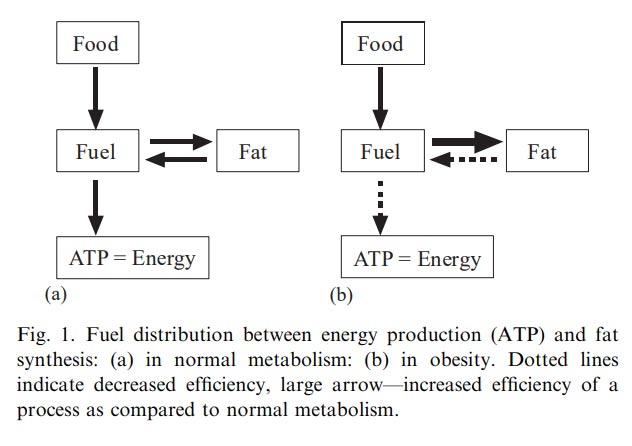






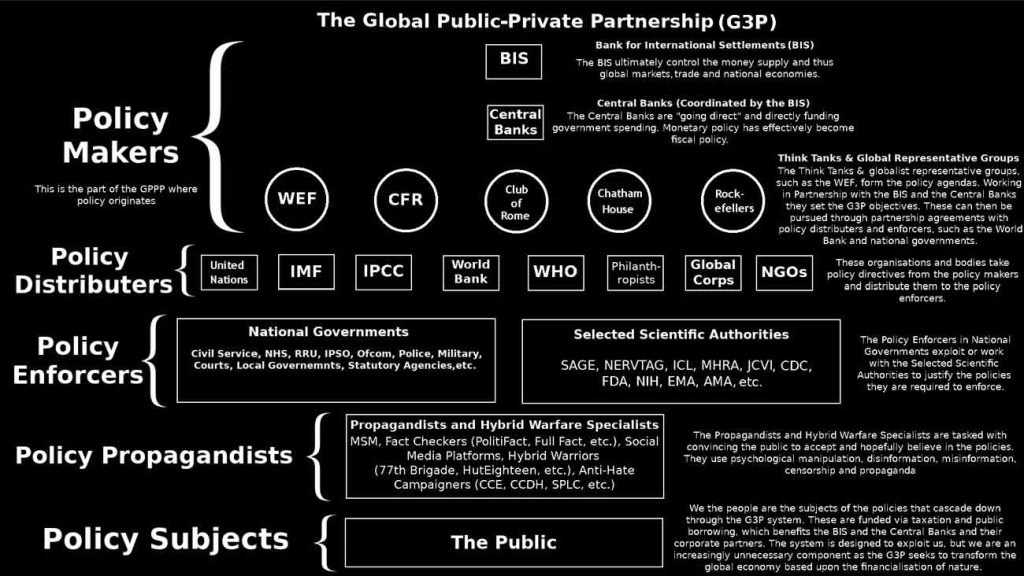

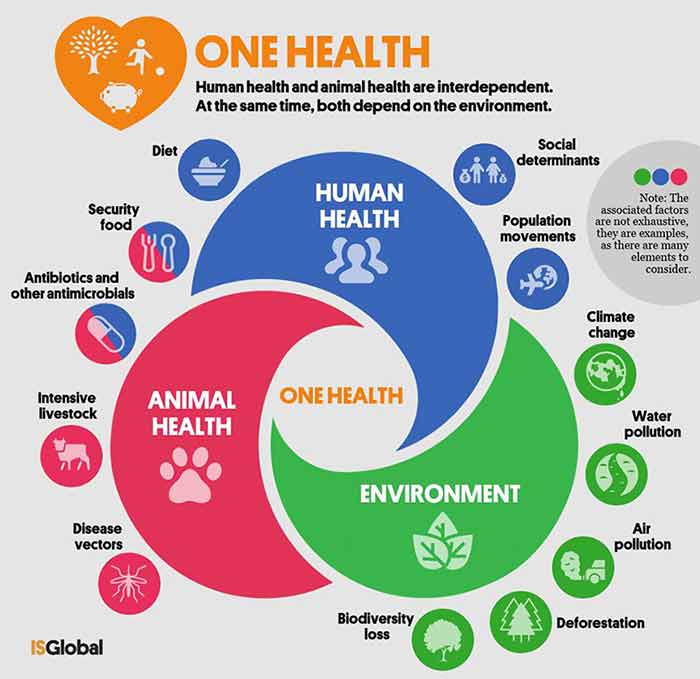

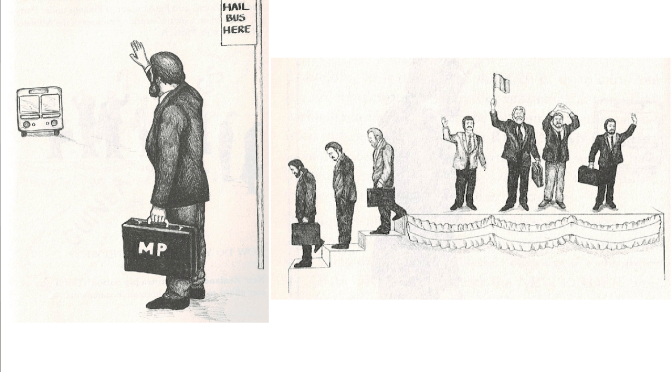

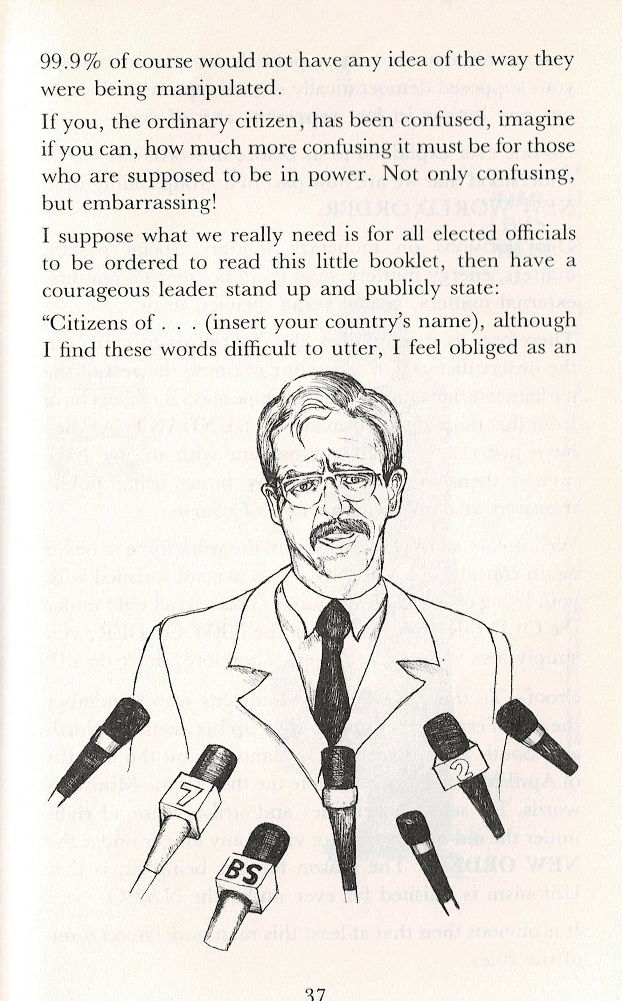
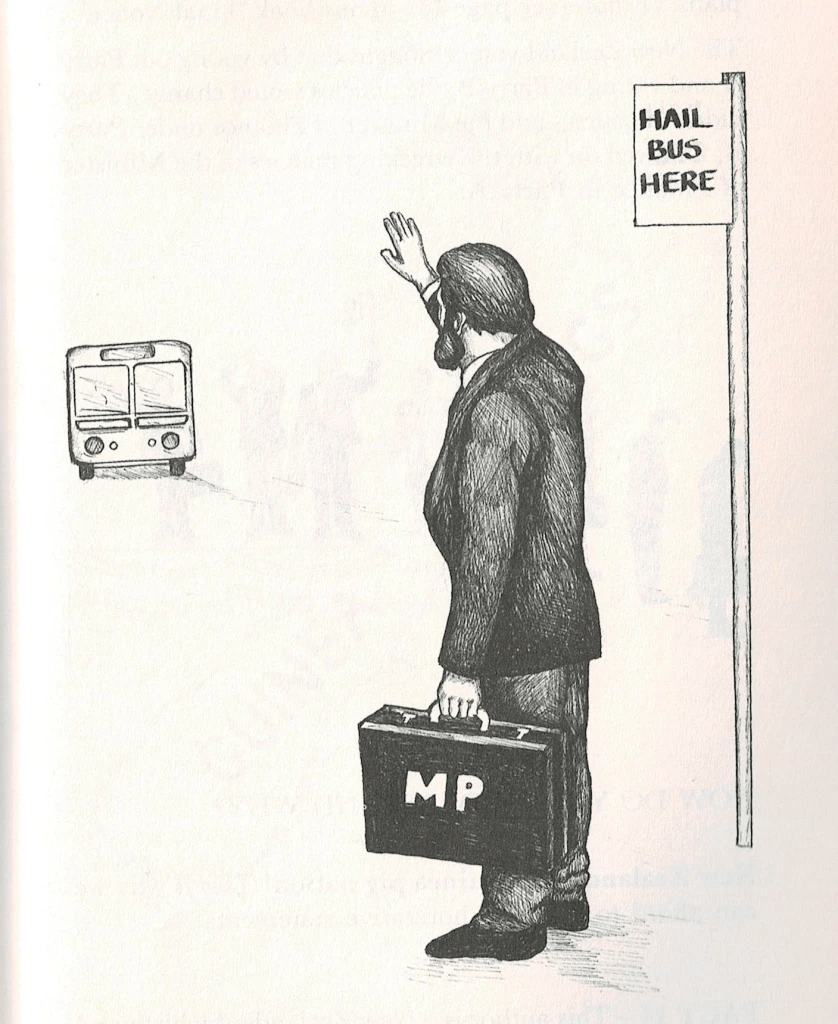
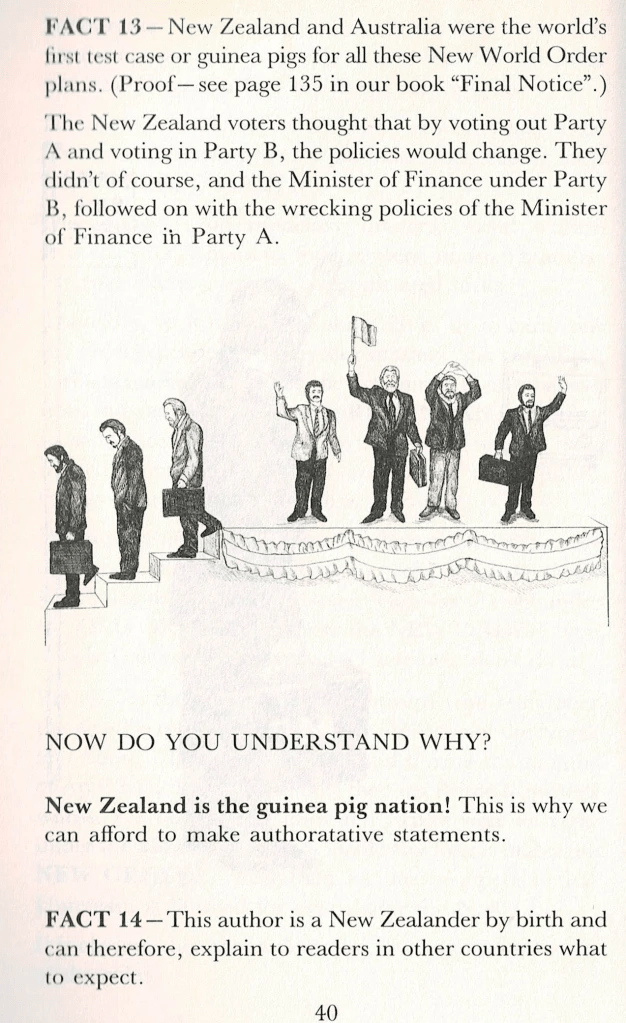


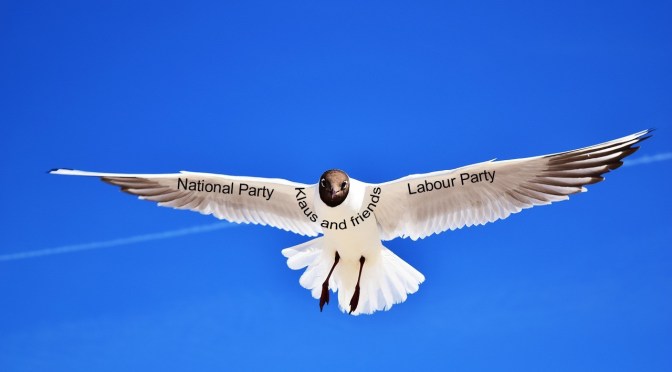
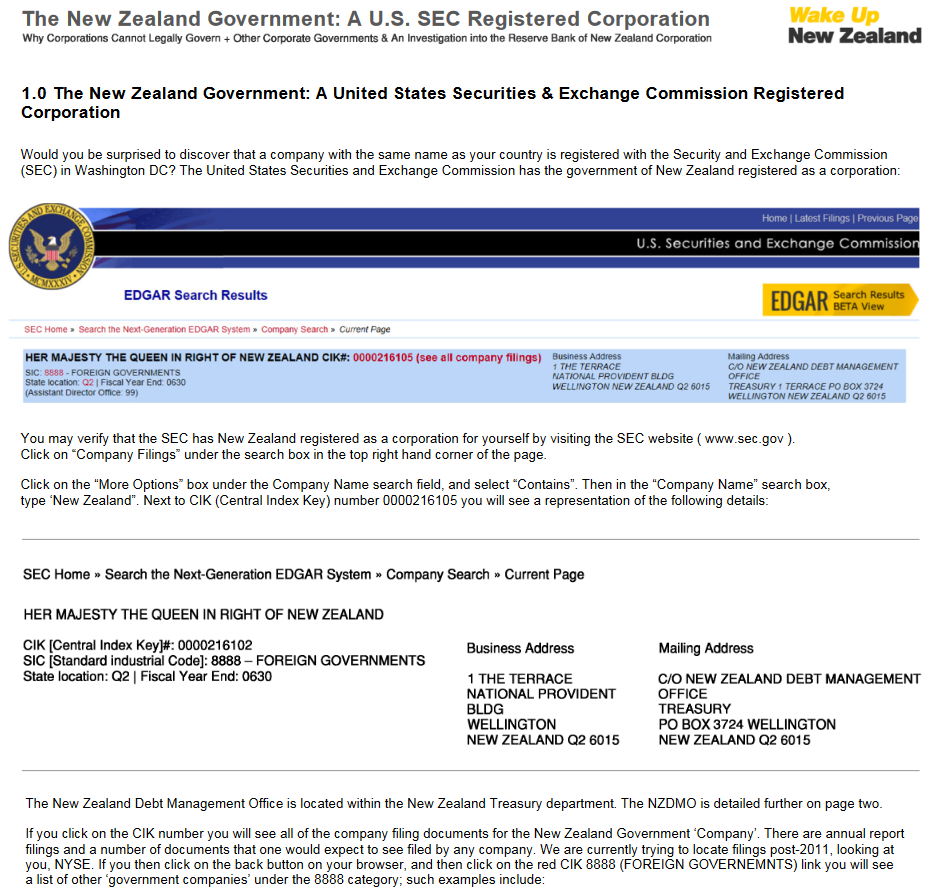






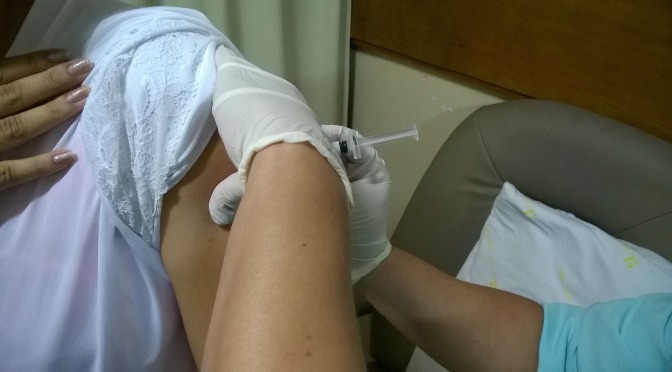


You must be logged in to post a comment.