
Potatoes contain vitamins, minerals, starch ….. eating potatoes fight cancer, increase glucose loading capacity, reduce plasma cholesterol and triglyceride levels… Porous and dry soil helps potatoes grow well. Using old plastic paint buckets to grow potatoes is a great idea, it’s easy to make and saves money. You use 2 old plastic paint buckets, 1 of which you cut holes around 4 sides to later harvest potatoes, then punch holes for drainage. Next, you stack the old paint bucket that has been cut on the remaining one. It is better to plant the potatoes in the sand so that they germinate and then plant them in an old paint bucket After 3-4 months you can already harvest the first batch of potatoes and have a delicious and nutritious meal from the potatoes. Follow us: Facebook: https://www.facebook.com/5T1TV Twitter: https://twitter.com/namtrinhhau Pinterest: https://www.pinterest.com/ideas2034/ Instagram: https://www.instagram.com/john_ideas_…
Category Archives: News

3 Top Micronutrients for Cardiovascular Health
Story at-a-glance
- Brown University researchers conducted a study to determine which micronutrients are best for your heart
- They unveiled an up-to-date evidence-based map that quantifies the impact of micronutrients on cardiovascular outcomes
- Out of 27 micronutrients, three — omega-3 fats, folate and coenzyme Q10 (CoQ10) — came out on top
- Omega-3 fats decreased mortality from cardiovascular disease, while also reducing heart attacks and coronary heart disease events
- Folic acid, the synthetic version of folate, or vitamin B9, reduced stroke risk, while CoQ10 decreased all-cause mortality events
- Most, but not all, of the micronutrients studied showed “moderate- to high-quality evidence” of reducing risk factors for cardiovascular disease
Heart disease is the No. 1 cause of death in the U.S., killing one person every 34 seconds.1 Your diet plays a prominent role in your heart health, but the role of individual micronutrients continues to be debated. Brown University researchers conducted a study to determine which micronutrients are best for your heart.2
They unveiled an up-to-date evidence-based map that quantifies the impact of micronutrients on cardiovascular outcomes. Out of 27 micronutrients, three — omega-3 fats, folate and coenzyme Q10 (CoQ10) — came out on top.
Micronutrients Benefit Cardiometabolic Health
Micronutrients are vitamins and minerals that your body needs to function optimally. Deficiencies in micronutrients can lead to a range of acute and chronic conditions. In terms of heart health, Brown University researchers conducted a systematic review and meta-analysis involving 884 trials. The study, published in the Journal of the American College of Cardiology, evaluated 27 types of micronutrients used by 883,627 participants.3
“For the first time, we developed a comprehensive, evidence-based integrative map to characterize and quantify micronutrient supplements’ potential effects on cardiometabolic outcomes,” study author Dr. Simin Liu, professor of epidemiology and medicine at Brown University, said in a news release. “Our study highlights the importance of micronutrient diversity and the balance of health benefits and risks.”4
Most, but not all, of the micronutrients showed “moderate- to high-quality evidence” of reducing risk factors for cardiovascular disease. Those that were beneficial included:5
| Folic acid (folate) | Vitamin D | Magnesium | Zinc |
| Alpha-lipoic acid | Coenzyme Q10 | Melatonin | Catechin |
| Curcumin | Flavanol | Genistein | Quercetin |
The study was unique in that it took a comprehensive look at micronutrient supplementation, including phytochemicals and antioxidants. Liu explained:6
“Research on micronutrient supplementation has mainly focused on the health effects of a single or a few vitamins and minerals. We decided to take a comprehensive and systematic approach to evaluate all the publicly available and accessible studies reporting all micronutrients, including phytochemicals and antioxidant supplements and their effects on cardiovascular risk factors as well as multiple cardiovascular diseases.”
3 Micronutrients to Support Heart Health
While beta carotene supplementation increased all-cause mortality, omega-3 fats, folate and CoQ10 were highly protective. Here are more details about how these important micronutrients affect your heart health.
1. Omega-3s — The study found omega-3 fats decreased mortality from cardiovascular disease, while also reducing heart attacks and coronary heart disease events.7 This mirrors previous studies, which have also found beneficial effects of omega-3s on heart health. Omega-3 fats derived from krill oil, for instance, have been found to reduce triglyceride levels and help reduce cardiovascular risk.8
Further, people with Type 2 diabetes who used omega-3 supplements had a lower incidence of hospitalization with heart failure — a form of heart disease in which the heart experiences ventricular dysfunction — in another study.9
An omega-3 index test is one of the most important annual health screens that everyone needs, and it’s a more important predictor of your heart disease risk than your cholesterol levels. Even research supported by the National Institutes of Health suggests an omega-3 test is a good predictor of overall health and all-cause mortality.10,11
That study measured the omega-3 index in 2,500 participants and found those with the highest omega-3 index had lower risks of heart problems and lower total mortality. The omega-3 index measures of the amount of eicosapentaenoic acid (EPA) and docosahexaenoic acid (DHA) in the membranes of your red blood cells (RBC). Your index is expressed as a percent of your total RBC fatty acids.
The omega-3 index has been validated as a stable, long-term marker of your omega-3 status, and it reflects your tissue levels of EPA and DHA. An omega-3 index over 8% is associated with the lowest risk of death from heart disease, while an index below 4% places you at the highest risk of heart disease-related mortality.
The ideal sources for EPA and DHA include cold-water fatty fish, like wild-caught Alaskan salmon, sardines, herring and anchovies. If you do not eat these fish on a regular basis, consider taking a krill oil supplement.
In addition, be aware that your omega-6 to omega-3 ratio should be about 1-to-1 or possibly up to 4-to-1, but most Americans consume far too many omega-6 fats and not enough omega-3. For optimal heart health, in addition to increasing your omega-3, it’s important to cut down on industrially processed seeds oils, often referred to as “vegetable oils,” found in most processed foods.
2. Folate — The Journal of the American College of Cardiology study revealed that folic acid reduced stroke risk.12 Folic acid is the synthetic version of folate, or vitamin B9, and it’s the most important dietary determinant of homocysteine. Elevated levels of homocysteine (Hcy) are a risk factor for coronary artery disease and are found in most patients with vascular disease.13 According to a literature review published in Advances in Therapy:14
“Several mechanisms have been proposed for Hcy’s pathogenesis related to vascular disease. Hcy can cause endothelial injury, dysfunction of DNA, proliferation of smooth muscle cells, oxidative stress, decreased function of glutathione peroxidase, impaired nitric oxide synthase, and inflammation.”
Evidence suggests that daily folic acid supplementation lowers homocysteine levels. “In fact, it has been shown that folic acid supplementation of 0.5 to 5.0 mg can lower Hcy levels by 25% and, thus, may decrease the risk of cardiovascular disease … Given that folic acid is cheap and effective, this should be a viable option for patients with high-risk for cardiovascular adverse events,” the researchers explained.15
In an animal study, folic acid was also found to prevent age-related structure changes and dysfunction of the heart that may lead to heart failure.16 It reduced cellular senescence, a hallmark of aging. The best way to increase your levels of this important micronutrient is to eat foods rich in natural folate, such as asparagus, avocados, Brussels sprouts, broccoli and spinach.
3. CoQ10 — CoQ10 decreased all-cause mortality events, according to the Journal of the American College of Cardiology study.17 Ubiquinol — the reduced, electron-rich form of CoQ10 that your body produces naturally — plays an important role in the electron transport chain of your mitochondria, where it facilitates the conversion of energy substrates and oxygen into the biological energy (adenosine triphosphate, or ATP) needed by your cells for life, repair and regeneration.
It’s a fat-soluble antioxidant, meaning it works in the fat portions of your body, such as your cell membranes, where it mops up potentially harmful byproducts of metabolism known as reactive oxygen species (ROS). As such, ubiquinol and CoQ10 supplements help protect your mitochondrial membranes from oxidative damage.
Many conditions, including heart disease, appear to be rooted in mitochondrial dysfunction.18 CoQ10 is used by every cell in your body, but especially your heart cells. Cardiac muscle cells have about 5,000 mitochondria per cell.19 For further comparison, mitochondria make up about 35% of the volume of cardiac tissue and only 3% to 8% of the volume of skeletal muscle tissue.20
In other research, CoQ10 has been found to help improve atrial fibrillation (AFib).21 AFib is an abnormal, often rapid, heart rhythm that occurs when the atria, your heart’s upper chambers, beat out of sync with the ventricles, the heart’s lower chambers. It’s a common symptom in those with heart failure or heart disease. In addition, CoQ10 influences several other aspects of heart health, including:
- High blood pressure — CoQ10 acts directly on your endothelium, dilating your blood vessels and lowering blood pressure.22,23 CoQ10 also decreases aldosterone, a hormone that makes you retain salt and water.24,25 When aldosterone goes down, excess salt and water are excreted through your kidneys, often causing your blood pressure to go down.
- Systemic inflammation — Supplementing with 60 milligrams (mg) to 500 mg of CoQ10 for eight to 12 weeks can significantly reduce tumor necrosis factor alpha (TNF-α), IL-6 and C-reactive protein (CRP);26,27 three measures of widespread inflammation.
- Stroke — Systemic inflammation, oxidative stress and nerve cell damage play a role in the development of stroke. Research suggests supplementing with CoQ10 can reduce ischemic lesions and improve outcomes in patients who have been treated with a statin drug after having a stroke (statins reduce CoQ10 levels in your body).28
Your body can naturally make CoQ10, but genetic alterations in metabolism, poor diet, oxidative stress, chronic conditions and aging can all interfere with CoQ10 production and lead to CoQ10 deficiency. Statin drugs can also deplete CoQ10.
Ubiquinol production ramps up from early childhood until your mid- to late 20s. By the time you hit 30, it begins to decline.29 Young people are able to use CoQ10 supplements quite well, but older people do better with ubiquinol, as it’s more readily absorbed.
A Personalized Approach Is Best
There’s no one-size-fits-all approach when it comes to supporting your heart health. Indeed, the featured study researchers noted that “an optimal nutritional strategy to promote cardiometabolic health will likely involve personalized combinations of these nutrients.”30
However, healthy diet, exercise, stress reduction and heart-based connections — i.e., strong and positive relationships — are key to heart and overall health. As mentioned, I also believe an omega-3 index test is one of the most important annual health screenings you can receive.
GrassrootsHealth makes testing easy through its D*Action+Omega-3 consumer-sponsored research project.31 You can find the GrassrootsHealth omega-3 index test kit on the GrassrootsHealth website.32

The serious health dangers of EMF
Siim Land Interviews Dr. Mercola About ‘EMF*D’
Note: Due to censorship of Dr Mercola’s articles he archives them to paid sub soon after publishing. I’ve therefore published this in its entirety however you may find the source link will no longer work. EWR
Story at-a-glance
- Electromagnetic fields (EMFs) cause massive mitochondrial dysfunction, thus raising the risk for, and worsening, chronic and degenerative diseases
- A perfect storm of DNA and cellular protein and membrane destruction is created when you aren’t burning fat for fuel (which creates excess superoxide) and then get exposed to EMFs
- By creating doubt and controversy, the wireless industry effectively prevents the public from knowing the truth and demanding safer products. Another wireless industry strategy that prevents the problem from becoming public knowledge is the capturing of our federal regulatory agencies
- Elon Musk’s Starlink project, which was slated to deploy up to 42,000 satellites into orbit around the earth, will blanket the entire planet with 5G internet frequencies. You won’t be able to escape it
- Based on the studies already done on previous generations of wireless, we know it’s harmful, and 5G is only going to make matters worse, as it will dramatically increase our exposures
I was recently interviewed by Siim Land about my new book, “EMF*D,” described by Siim as “the most comprehensive guide … to everything you need to know about EMF.”
In it, I explain what electromagnetic fields (EMFs) are, the different types of EMFs you’re exposed to, the harms associated with exposure, the concerns surrounding 5G and, ultimately, how to protect yourself and limit your exposure.
As I explain in the interview, the thing that catalyzed me to write “EMF*D” was my deep appreciation of the impact of mitochondrial function in health and disease. Once I realized how EMFs impact mitochondrial function — because it’s very clear that EMF causes massive mitochondrial dysfunction — the danger our wireless society poses became very clear to me.
I also read a study1 stressing the importance of mitochondrial numbers for improving senescent cells — cells that are, in a manner of speaking, “senile” and have stopped reproducing properly. Instead, senescent cells produce inflammation, contributing to old age and, ultimately, death.
The fewer mitochondria you have, and the more dysfunctional they are, the faster you’ll age and the more prone you’ll be to chronic degenerative disease. By inducing mitochondrial dysfunction, our wireless world may well be driving us all into an early grave.
Cellphone Industry Hides Truth by Manufacturing Doubt
Considering the research data now available, you’d think everyone would understand and accept the fact that EMF is a serious health danger, yet many are still completely in the dark. With “EMF*D,” I hope to help more people understand this biological threat.
In 2011, the World Health Organization’s International Agency for Research on Cancer (IARC) classified radiofrequency EMFs as “possibly carcinogenic to humans.”2 Then, in 2018, the U.S. National Toxicology Program published two lifetime exposure studies conclusively showing cellphone exposure causes cancer.
The NTP’s findings were also duplicated by the Italian Ramazzini Institute just a couple of months later. In the wake of these studies, Fiorella Belpoggi, principal investigator and director of the Ramazzini Institute, urged the IARC to upgrade RF-EMF to “probably carcinogenic” or higher.3
Now, just like smoking cigarettes, EMF exposure takes decades before its effects become evident (and even then, the health problem might not be directly linkable to EMF exposure), and this is a significant part of the problem as it allows the telecom industry to — just like the tobacco industry before it — whitewash concerns, manipulate research and prevent proper safety studies from being done.
There’s no doubt cellphone manufacturers are aware that EMFs from cellphones contribute to health problems, though. The evidence has been published for decades, and new research is constantly being added.
However, by downplaying positive findings and saying that findings of harm are inconclusive — in other words, by creating doubt and controversy — they effectively prevent the public from knowing the truth and demanding safer products.
Wireless Industry Is Even Worse Than the Tobacco Industry
Another wireless industry strategy that prevents the problem from becoming public knowledge is the capturing of our federal regulatory agencies, which the tobacco industry wasn’t even capable of.
The U.S. Environmental Protection Agency, the Surgeon General and the Centers for Disease Control and Prevention all warned people about smoking, yet the tobacco industry continued successfully selling cigarettes for another 20 or 30 years. The wireless industry, on the other hand, has captured the federal regulatory agencies, which prevents those warnings from being issued in the first place.
For example, the chief lobbyist for the wireless industry, Tom Wheeler, was appointed by President Obama to be the head of the Federal Communications Commission, which is a most egregious example of the fox guarding the hen house. Not surprisingly, then, in December 2019 the FCC announced they’re going to fund rural 5G deployment to the tune of $9 billion!4
The telecom industry has engaged in a vast and illegal fraud where, for decades, basic telephone rate payers — wire line customers — have funded the deployment of wireless in general, and now 5G in particular, through their phone bills.
This illegal redirection of funds amounts to about $1 trillion over the past 15 years, and without this money, 5G would not have been possible in the first place. Were the wireless industry forced to pay its fair share of infrastructure costs, 5G simply wouldn’t be economically feasible as a consumer product.
What’s so Great About 5G?
What exactly is 5G and why do some people want it? In short, it’s all about improving speed. Compared to 4G, 5G is 100 times faster. On a side note, you can determine what your bandwidth is by pulling up fast.com on your cellphone’s browser. If you’re on 4G, your bandwidth is probably not going to exceed 10 megabytes per second (mb/s). If you’re on 5G, it’s going to be between 500 and 800 mb/s.
So, the primary benefit of 5G is noticeably faster speed. The vast majority of people simply don’t need this kind of bandwidth, but it has great applications for commercial uses such as self-driving cars.
The problem is, 5G may end up making the earth uninhabitable for many who are already struggling with electrosensitivity, and the countless others for whom 5G may prove to be the thing that tips them over the edge into electrohypersensitivity syndrome.
Elon Musk’s Starlink project, which was slated to deploy up to 42,000 satellites into low earth orbit, will blanket the entire planet with 5G internet. You won’t be able to escape it, no matter how far into the wilderness you go.
5G Is a Prescription for Biological Disaster
Then there are the long-term dangers of 5G, which we still do not have a complete picture of. There has not been a single safety study done on 5G. Studies using 2G, 3G and 4G, however, including the NTP and Ramazzini studies, clearly show there’s cause for concern.
5G is more complex, as it uses a variety of frequencies, which makes it a potentially greater threat. The frequency of 4G is typically around 2 to 5 gigahertz (GHz), while 5G will be around 20 to 30 GHz, initially.
Eventually, it may go as high as 80 GHz, which will cause problems for people trying to remediate exposures because there are currently no inexpensive meters that can measure frequencies that high.
Based on the studies already done on previous generations of wireless, we know it’s harmful, and 5G is only going to make matters worse, as it will dramatically increase our exposures. 5G requires what essentially amounts to a mini cellphone tower outside every fifth or sixth house on every block.
We also have studies showing the impact of millimeter waves, which is what 5G is using, on insects, animals and plants, and those hazards are well-documented. So, it doesn’t just pose a problem for human health, but for the ecosystem as a whole.
Martin Pall, Ph.D., wrote an excellent paper explaining how EMFs affect your voltage gated calcium channels (VGCCs) — channels in the outer plasma membrane of your cells. Each VGCC has a voltage sensor, a structure that detects electrical changes across the plasma membrane and opens the channel. EMFs work through the voltage sensor to activate the channel and radically increase intracellular calcium levels into dangerous ranges.
Similar channels are found in most biological life, including animals, insects, plants and trees. So, flooding the planet with these frequencies will undoubtedly have serious biological consequences across the ecosystem. As such, it’s an existential threat to humanity.
One biological consequence is arrhythmia (irregular heartbeat). Other potential consequences include autism and Alzheimer’s. Heart and neurological problems top the list because your heart and brain have the greatest density of VGCCs. Men’s testes also have a very high density of VGCCs and, indeed, we have evidence showing EMFs increase men’s risk of infertility.
Everything points to these frequencies being a prescription for biological disaster, and between skyrocketing autism, Alzheimer’s and infertility rates, how can a society be sustained? It can’t. It will be extinguished.
We Don’t Need Wireless 5G
In reality, we can still get the bandwidth of 5G without 5G wireless. The alternative would be to deploy fiber optic cable. It’s faster, safer and less expensive.
Unfortunately, the money originally set aside to implement nationwide fiber optics was rerouted and illegally used to build the wireless infrastructure instead. This is why a group called The Irregulators5 are now suing the FCC to put a stop to the illegal subsidy to the wireless industry.
Wireline customers paid for an upgrade to fast and safe fiber optic wiring across the nation, but now we’re getting harmful 5G wireless instead. This lawsuit has the potential to alter the telecommunications industry from the ground up, and may be the “weapon” we need to halt to the 5G rollout in the U.S.
The Importance of EMF Avoidance to Protect Your NAD+ Level
Along with practical remediation strategies, “EMF*D” also covers things you can do to protect yourself on a biochemical level. A perfect storm of DNA and cellular protein and membrane destruction is created when you aren’t burning fat for fuel (which creates excess superoxide) and then get exposed to EMFs.
This causes a radical increase in nitric oxide release that nearly instantaneously combines with superoxide to create enormous levels of peroxynitrate, which triggers a cascade of destructive events to your cellular and mitochondrial DNA, membranes and proteins.
Although all biologic damage is of concern, it is the DNA strand breaks that are most concerning as they will lead to a radical increase in inflammation and virtually all degenerative diseases.
The good news is your body has the ability to repair this damaged DNA with a family of enzymes called poly ADP ribose polymerase or PARP It is a very effective repair system and works wonderfully to repair the damage as long as it has enough fuel in the form of NAD+.
The bad news is many of us are running low on this fuel. When excess peroxynitrate activates PARP to repair the DNA damage, it consumes NAD+, and if you run out, you can’t repair the damage. This appears to be a central cause for most of the diseases we now see in the modern world.
Optimizing your NAD+ levels may be the single most important strategy for improving your mitochondrial health. The first step is to reduce NAD+ consumption by the correct diet (low in processed foods and net carbohydrates and higher in healthy fats), along with EMF avoidance, as recent research shows NAD+ levels dramatically drop when exposed to EMFs.
Time restricted eating is also very helpful, as is exercise, both of which are powerful, inexpensive and safe ways to boost your NAD+ level.
Helpful Strategies to Limit EMF Damage
In “EMF*D” I also cover the Nrf2 pathway and the importance of minerals such as magnesium to limit the biological damage caused by EMFs. As explained in this interview, upregulating your Nrf2 pathway activates genes that have powerful antioxidant effects, thus helping protect against EMF damage, while magnesium — which is a natural calcium channel blocker — helps reduce the effects of EMF on your VGCCs.
On a side note, molecular hydrogen tablets are an excellent source of ionic elemental magnesium. Each tablet provides about 80 milligrams of ionic elemental magnesium.
Addressing EMF Pollution — A 21st Century Health Imperative
There’s no doubt in my mind that EMF exposure is an important lifestyle component that needs to be addressed if you’re concerned about your health, which is why I spent three years writing “EMF*D.”
My aim was to create a comprehensive and informative guide, detailing not only the risks, but also what you can do to mitigate unavoidable exposures. If you know or suspect you might already be developing a sensitivity to EMFs (full-blown hypersensitivity can often strike seemingly overnight), mitigating your exposures will be particularly paramount.
Many sufferers become obsessed with finding solutions, as the effects can be severely crippling. My book can be a valuable resource in your quest for relief.
The EMF Experts website6 also lists EMF groups worldwide, to which you can turn with questions, concerns and support. Should you need help remediating your home, consider hiring a trained building biologist to get it done right.
Brian Hoyer, a leading EMF expert7 and a primary consultant for “EMF*D” also has a company called Shielded Healing that can provide a thorough analysis of the EMF exposure in your home, and help you devise a remediation plan.
Breaking News: New Zealand Govt Report Admits You May Die or Fall Ill After Pfizer mRNA Vaccination … But Does Advise People Not to Worry
Time series analysis of New Zealand data supports a relationship between mRNA vaccination and death that is consistent with a German autopsy study.
On 14th December 2022, Medsafe (NZ Medicines and Medical Devices Safety Authority) released its 46th report into the safety of Covid vaccines entitled “Adverse events following immunisation with COVID-19 vaccines”. The report covered safety signals up to 30th November 2022.
This report contained new advice about the risk of death following mRNA vaccination. Medsafe’s assessment began as follows:
“By chance, some people will experience new illnesses or die from a pre-existing condition shortly after vaccination, especially if they are elderly. Therefore, part of our review process includes comparing natural death rates to observed death rates following vaccination, to determine if there are any specific trends or patterns that might indicate a vaccine safety concern.”
The report comes after months of speculation concerning record levels of excess all cause mortality in New Zealand affecting all ages, currently running at 15% above historical levels.
After dropping the bombshell news, Medsafe goes through an entirely bogus and unscientific process designed to reassure the public that there is nothing to worry about. Medsafe compares the number of deaths reported to CARM (Centre for Adverse Reactions Monitoring) within 21 days of vaccination to the background rate of deaths from natural causes. In doing so, it omits to mention (but does so elsewhere) that CARM reports are voluntary and massively underreported by an estimated factor of 20 times. As a result there is nothing at all reassuring about this safety report.
Are There Other Reasons to Be Concerned? Yes, Many:
1. Medsafe reports, “There have been no deaths reported for the Vaxzevria or Nuvaxovid vaccines.” So why are they happening after the Pfizer vaccine?
2. Autopsies are not routinely performed in New Zealand following deaths proximate to vaccination. A recently published German study Autopsy-based histopathological characterization of myocarditis after anti-SARS-CoV-2-vaccination reports 16% of deaths within 20 days of mRNA vaccination exhibit definitive causal symptoms of acute myocarditis, a known adverse effect of Pfizer Covid vaccination. So why is there no concerted effort here in NZ to investigate by routinely performing autopsies?
3. The Ministry of Health has consistently refused/omitted to record vaccine status on death certificates or make CARM reporting mandatory. This makes it very difficult to scientifically and reliably investigate any causal relationship between mRNA vaccination and death or serious illness. On the 17th December 2021 the director of the Covid immunisation programme wrote to me on behalf of Dr. Ashley Bloomfield, Director General of Health, saying “An accurate measurement of all adverse events is not required”.
In the light of today’s Medsafe admission, that’s damning. Incredibly Dr. Bloomfield has just been appointed the inaugural chair of a new public policy impact institute at the University of Auckland, proposing to translate and apply research into policies that directly impact communities—but he doesn’t subscribe to accuracy??? Most people do, especially academics.
4. Medsafe argues that temporal correlation between deaths and vaccination does not prove a causal relationship between them. They, along with epidemiologist Professor Michael Baker, suggest that Covid infection or pre-existing health conditions are more likely to be causally connected to deaths following vaccination. There are in fact other relevant analyses which can determine whether there is a relationship between mRNA vaccination and proximate deaths. Among these, powerful techniques of time series analysis can discover whether deaths are consistently occurring during specific intervals of time after vaccination. This would provide strong support for a causal relationship.
Among the world’s nations, New Zealand is in a unique position to undertake this sort of analysis. In 2021 New Zealand had very few Covid infections (almost none) but the majority of the population were vaccinated over a period of eight months. Therefore deaths recorded during much of 2021 in New Zealand cannot be ascribed to any effect of Covid infection.
Preliminary data from 2021 has been analysed to investigate the proposition that mRNA vaccination resulted in deaths. This shows there is a significant (p=0.045) relationship between number of vaccines administered by week and weekly deaths at a lag of one week. In other words, there is a statistically significant increased chance of dying within a few days of vaccination. Download the study here. Despite the preliminary nature of the data in this study, the findings of this study are consistent with the findings of German autopsies. Therefore there should be more rigorous study of stored data to further test these findings
There are other simple methods to analyse death data. For example taking the date of inoculation for each individual as a notional point in time around which all death data can be assessed for entire cohorts of individuals. This would reveal whether death rates before and after inoculation differ.
5. The time series analysis does not preclude the possibility that other deaths at longer time intervals after an inoculation date may be occurring as a result of mRNA vaccination. Unprecedented rates of all cause mortality suggest this is likely to be the case. Unfortunately, the New Zealand Ministry of Health is not releasing data on causes of hospitalisation by category of illness. There is evidence we have previously reported based on US defence personal data and insurance statistics, and on UK ONS data, indicating that incidence of neurological disorders, cancers, cardiac events, and strokes have increased.
Medsafe’s position on vaccine safety has clearly shifted during the two months since it last published a safety report, but has it realised the importance of more reliable causal assessments? Apparently not. The NZ public is being kept in the dark about vaccine safety as it has been for the last two years. Bland assurances of safety continue without foundation in fact.
Can mRNA Vaccination Be a Trigger Event for Death if You Are Already Sick or Elderly?
The wording of the December 14th Medsafe warning is strange and ambiguous: “..some people will experience new illnesses or die from a pre-existing condition shortly after vaccination, especially if they are elderly”. So are the elderly especially liable to die after vaccination because of vaccination or because they are elderly? We aren’t told.
Aside from the obviously elevated rates of excess all cause deaths, anecdotal reports from rest home staff suggest this is the case. Emergency vehicles and helicopters are answering more frequent calls. Hospitals are overwhelmed and unable to cope. Whistleblowers among nurses are talking about overflowing cardiac wards. A top UK cardiologist has suggested that the evidence of harm is overwhelming and irrefutable. Funeral home workers in New Zealand and overseas have spoken publicly about strange rubbery clots in arteries which have been confirmed by experienced pathologists in the USA. Statistically improbable increases in life insurance claims data have been noted. Sudden unexplained deaths have a high profile in the media. The message is consistent—something unprecedented and very concerning is going on.
Despite having multiple sources of data and methods of analysis available to it. Medsafe has relied for two years on a single obviously flawed method of comparing CARM data to background rates, despite admitting CARM data is underreported. How strange is that? This deficiency is fatal to Medsafe’s claims of safety. It is scientifically unjustifiable and it wouldn’t meet publication criteria.
There is no possible justification for omitting to use more reliable forms of causal investigation. Medsafe has avoided public accountability by refusing to debate the issues publicly, omitting publication of key health data, massaging published data, and unforgivably accusing critics of spreading disinformation. These approaches are worthy of a dictatorship but not a modern democracy.
Photo: pixabay.com
The official NZ Guide for reporting potential ‘terrorists’
Should you have suspiciously acting neighbours, associates or whomever, the NZ Secret Service has compiled a little booklet for you to peruse in deciding whether they should be reported to the authorities or not. This will make NZ a safer place to live.
Note this website does not support or promote violence in any way.
Link below:
Image by Sabine van Erp from Pixabay

A Christmas message from Wally Richards
Here it is Christmas day and I am writing this short weekly article today because I was too busy yesterday mowing lawns and tidying up gardens for Christmas.
So I hope you are having a pleasant day and a chance to hopefully forget the woes of the past year.
As the Chinese say, ‘Have an Interesting Life’ which some take as a curse because an interesting life is not an easy one.
It is full of problems as well as good times which in comparison a life without the ups and downs is very boring.
As us gardeners know, problems are just challenges in the garden, things to resolve and sort out.
Having successes against the odds is wonderful and very satisfying.
I always get a thrill when seeds I have sown burst forth as young seedlings out of the growing media.
Life has been born anew.
As I wrote a week or two ago this summer so far has been dismal with too many cloudy skies and too few blue skies.
I see today in Marton we have some blue in between the clouds so that means some direct sunlight.
That will make the farmers & commercial growers happy as they are looking for growth.
I am happy to say that my first vine ripened tomatoes were picked this week and were delicious.
That’s a lot better than paying between $7.99 and $8.49 a kilo from Supermarkets.
I have been eating and giving away cucumbers both telegraph and green types which I see are selling for $2.00 to $2.90 each.
Lettuce at this time of the year should be about a dollar each but no they are closer to $4.00 each.
So hopefully if you have been following my articles over the last period of time you will also be enjoying your own salad crops. More possibly so if you have a glasshouse.
This now is my third year of growing garlic and no garlic rust thanks to the cell strengthening products.
I scoured seed/cloves from about 3-4 places for planting and the best certainly was the big fat cloves which I can feel in the soil have produced good size bulbs.
A few have started to flower so cut the flower spike off so all the goodness will go into the bulbs.
No hurry to lift them yet so will leave until the tops show signs of dying back.
Sprays weekly with Magic Botanic Liquid (MBL) with Mycorrcin added will help produce better crops on all vegetables.
I smiled the other night about the shortage of strawberries this time of the year that I saw on the News.
I have big beautiful strawberries rich in flavour available as a dessert every couple of nights of the week.
That’s thanks to regular sprays of Mycorrcin and MBL along with an occasional feed of My Secret Strawberry food.
I have to go harvest a few shortly to put on the pavlova.
When we purchased this place in Marton a few years ago I was so surprised that an old 1920 house on a quarter acre section did not have one fruit tree, not even a standard (must have) lemon tree.
Well on last count I have now 36 fruit trees and two brambles.
(Some were in 100 litre drums from Palmerston North) moved here and are still sitting happily in their drums which makes them easy to move around. In the open ground I added more varieties of fruit trees and ones in their third season are now producing nice small crops.
I will have to keep them under control in time to come; so there is not a jungle of fruit trees.
On the back by the rear fence is a giant macrocarpa, must be many years old and along the same fence line on the other side are some ornamental deciduous trees which send up suckers all over the place.
This means that no open ground vegetable gardens as they would be robbed of goodness during first season.
Instead all vegetable gardens are raised and on concrete to prevent robber roots.
My challenge this year is to have as much vegetables growing all year round to ensure food safety as much as possible, plus far better taste and healthier to eat than the chemically grown expensive vegetables from the supermarket.
Also I will once again try to establish a passion fruit vine, this time in a lean to glasshouse I have.
It has been about 50 years since I last had a successful passion fruit vine growing in a place I lived.
Not that I don’t try every so often.
Mind you 50 years ago in Palmerston North it was a different world with hot blue sky summers and frosty cold winters.
I saw on social media this week a picture of young children in the middle of the road somewhere in suburbia on trikes, bikes and on foot playing from back in 1950’s and the caption said : “We had no idea how good we had it and no clue that we were the last ones.”
Never a truer Analogy of then and now.
It is hard to believe how much things have changed and obviously to us that have lived in the best times that the now is like a different planet and people.
Where did this thing called Woke come from?
I remember back when people used to dance such as foxtrots and rock and Roll now the dancing looks like semaphore signaling?
I suppose they might have seen a clip of young people doing what was called ‘Hand Jive’ while sitting around a dance hall. I was thinking back recently to a house in Domain Street where I grew up in, it was a little cottage house on a very small section with only enough room for me to have a small vegetable garden.
But in the house there was a coal range which supplied hot water, heating with cooking top and oven.
All of that for most of the day from a shovel full of clean burning cheap coal.
The best scones ever came out of that oven and a kettle or soup would be kept hot on the steel top.
The house has long gone and along with neighboring homes for a motel complex now.
Enough reminiscing instead keep gardening and hoping that the year ahead will be an improvement on recent past.
“Where there’s life there’s hope” is attributed to J.R.R. Tolkien whose character Samwise Gamgee declared it in The Lord of the Rings. In another of Tolkien’s famous quotes, “A single dream is more powerful than a thousand realities.”
Merry Christmas and I will catch up with you before the New Year.
Phone 0800 466464
Garden Pages and News at www.gardenews.co.nz
Shar Pei pages at www.sharpei.co.nz
Mail Order products at www.0800466464.co.nz
New Zealand Bill of Rights Act 1990. Part II of the Act covers a broad range of Civil and Political Rights. As part of the right to life and the security of the person, the Act guarantees everyone:
1The right not to be deprived of life except in accordance with fundamental justice (Section 8)
2The right not to be subjected to torture or to cruel, degrading, or disproportionately severe treatment or punishment (Section 9)
3The right not to be subjected to medical or scientific experimentation without consent (Section 10)
4The right to refuse to undergo any medical treatment (Section 11)
Furthermore, the New Zealand Bill of Rights Act 1990 guarantees everyone: Freedom of Thought, Conscience, and Religion.
This includes the right to freedom of thought, conscience, religion, and belief,
INCLUDING THE RIGHT TO ADOPT AND HOLD OPINIONS WITHOUT INTERFERENCE (Section 1)
Image by Aline Ponce from Pixabay

Seasons Greetings
Wishing all our followers
everywhere
a peaceful, united
and blessed Christmas season…!!
however and wherever
you celebrate

EWR
You may like this beautiful version of Pō Marie(Silent Night):
Photo: pixabay.com

Banks Freeze Funds of Pro-Free Speech Video Platform Bitchute
Comments by Brian Shilhavy
Editor, Health Impact News
As our regular readers know, Health Impact News is committed to publishing the truth and exposing evil, wherever that path leads, as I own 100% of the Health Impact News network with no debt and no investors. I also do not derive any personal income from Health Impact News, as my income comes from my online store, Healthy Traditions.
Therefore, we can publish anything we want, and we can afford to lose readers who are offended by the Truth. Of course that has been happening in mass since 2020, not only because of Big Tech censorship, but also because we do not support either political party in the United States, and therefore expose evil from both the Right and Left political spectrum. This has led to many on the Right, especially Trump supporters, to attack us and stop reading our articles.
When it comes to publishing video content, since YouTube has no longer been an option for some time now, we have found Bitchute to be the best platform, mainly because we can turn off comments there to silence the trolls, mostly from the Right, and because Bitchute doesn’t seem to take a political position one way or another. When it comes to searching for videos that may be banned elsewhere, Bitchute is the best platform, by far. Based out of the U.K., Bitchute has been our safest place to publish video content.
READ AT THE LINK
Banks Freeze Funds of Pro-Free Speech Video Platform Bitchute

Is your website on ‘the list’?
Not this list.
The censors have been busily deleting, blocking or shadow banning online articles in the ‘awful’ event you may be led astray by the ‘antis’. In NZ’s case, they cannot have you thinking for yourself when your nation has only one source of truth … woe betide anybody whose toe crosses that line.
So here we have: “A collection of hosts files and filter lists to make the world a better place”.
I happened across this list the other day actually quite by chance. On it are all three of my WP sites, this one that you are reading, plus here and here. They are classified as anti-V (you know that word) when in fact two of them have nothing whatsoever to do with Vs. Cast your eye down the very very long list and you will see the scope of forbidden topics in fact spreads far wider that the V. Another thing I’ve noticed are little bright red exclamation marks next to my site links … not safe to visit! The author does invite you to get in touch & make a case for not being on the ‘list’ … but as with most things nowadays, the onus of ‘proof’ is placed on the ‘recipient’ and not on the accuser, where it should be.
Recently when listening to Dr Mercola (another heavily censored MD) I heard him describing a very old article of his from two decades ago that he discovered is totally scrubbed from the internet. He could not find it anywhere. (No point in posting his links as he now takes his posts down after 48 hours & places them in a paid archive). Max Igan also who has his finger on the button, notes how article after article is being removed. I certainly have found that searching for material now in any search engine is pretty futile really. It’s clearly all geared to mainstream propaganda only. I would suggest when saving links that folk copy the entire article for safekeeping. Many articles I’ve only posted links for (out of courtesy in that the reader can go to the original source) are now dead. Videos follow the same pattern as YT is now reserved for material only JA would approve of.
And the libraries, well they’ve been culling those for a good while now too. (See here also). With the histories gone we’ll be all set for the coming reset.
The Enzed Govt doesn’t appear to just tinker with shadow banning and the like… back in early 2019 they hired a security firm with your tax dollars to spy on folk (EWR included) who didn’t want 1080 poison contaminating their water supplies. People who decline the consumption of this ‘harmless’ green ‘candy’ are classed as that other forbidden word that starts with ‘t’. If you’re a fan of the ‘candy’ by the way, read here.
On that concluding note, you persons that give birth … well those birth pains, like free speech, are set to be a thing of the past!
Thanks to coming ‘womb factories’.
View THE list
RELATED: Banks Freeze Funds of Pro-Free Speech Video Platform Bitchute
Image by Amber Clay from Pixabay

Can you help the REAL (aka raw) milk farmers?
I was forwarded an email recently appealing for help for these farmers. Those who buy real milk aka by the newbies as ‘raw’ (ie non-treated to the extent all the goodness has gone) will be aware of the tough time these farmers have had in recent years as the system imposes more and more costs to stay afloat. Not difficult to see the agenda in light of the push toward fake food world wide. I’m copying their letter below (or see info at the link). If you are able to help I know that will be gratefully appreciated. EWR
From westonaprice.org
The New Zealand Ministry for Primary Industry (MPI) has brought criminal charges against as many as 16 farmers for violations of that country’s Raw Milk for Sale to Consumers Regulations 2015 (the “2015 regulations”). As far as is known, none of the cases have actually gone to trial. At least five farmers have settled their cases by pleading guilty to a reduced number of charges and agreed to pay fines of as much as $50,000; in two other court actions where the farmers had plead guilty to violations of the raw milk laws, judges discharged the cases without convictions. Most of these farmers, whether or not they had to pay fines, owe tens of thousands of dollars in attorney fees. Of these seven farmers, only one remains in the business of selling raw milk for human consumption. An attorney representing one of the farmers has been unable to find evidence that any of the charged farmers made anyone ill with the milk they produced.
ACTION TO TAKE
A GiveSendGo fund has been set up to help pay legal expenses for five of the prosecuted farmers (listed on the fund page). None of these farmers became rich selling raw milk—they were dedicated to producing healthy food for their customers and community. Please be there for them and help the farmers recover some of the losses they have suffered due to the unjust government enforcement actions.
To donate please go to this link, https://www.givesendgo.com/G9HAN
Thanks for whatever help you can give.
MORE BACKGROUND
The 2015 regulations were the catalyst for the prosecution against the dairies. The farmers are being prosecuted for a violation of laws designed to put them out of business. In addition to having to register with MPI, dairy farmers under the new regulations are required to:
The 2015 regulations had little to do with science and protecting the public health. Many farmers, believing that they would not be able to afford the cost of compliance with the new rules, distributed milk through contractual arrangements such as limited partnerships and herdshare agreements—arrangements they thought would exempt them from the new rules. When MPI saw that not many farms were registering, it launched a sting operation, “Operation Caravan”, against the unregistered raw milk farmers, leading to the ongoing criminal prosecutions.
The 2015 regulations have been a big success for MPI in driving raw milk farmers out of business. Shortly before the ministry issued the new regulations, there were upwards of 200 dairies selling raw milk; today there are around 25.
Please help the Weston A. Price Foundation restore nutrient-dense foods to the human diet through education, research and activism. westonaprice.org
Photo: pixabay.com

Other News this Week
(Note: the beach scene is for your dreams … not reality right now in Enzed with rain ‘predicted’ right up to Christmas)…
Baby W within a global context
A short read on that unmentionable topic
Why are UN soldiers in Britain?
New World Next Year 2023 (Corbett)
Image by PublicDomainPictures from Pixabay
Biotech’s Dark Promise: Involuntary Cannibalism for All
A reminder of what’s really going on with all of those ‘mad scientists’

Posted on:
Saturday, July 28th 2018 at 9:30 am
Written By:
” Technological progress is like an axe in the hands of a pathological criminal.” ~ Albert Einstein
Whereas the quote above could easily be dismissed as the ‘progress-denying’ sentiment of a disgruntled anti-GMO activist, the fact is that it came from a scientist representing the very epitome of Western rationality and accomplishment.
Perhaps Einstein was reflecting on the inevitable existential consequences of the so-called “technological imperative”–whatever can be done, will be done. Fundamentally amoral and irrational economic and political forces drive technology’s feverish pace, infusing a certain arbitrary cruelty and disequilibrium into everything it touches.
In our continual drive to ‘improve upon Nature’ in the name of much-hyped, ‘life-saving’ biotechnological innovations, the line between humane and inhumane eventually is crossed, and there seems no going back. Biopollution from defective or dangerous GMO genes, for example…
View original post 236 more words

GM purple tomatoes may soon appear in your local grocery store (without human safety testing)
From gmwatch.org
Dr Ray Seidler explains why caution is needed
Recently the US Department of Agriculture (USDA) approved the commercial production and sale of a new purple coloured genetically modified (GM) tomato, known as the “purple tomato”. The US Food and Drug Administration, which is responsible for food safety, has yet to approve it.[1] Here, once again, we have an unnecessary food product, genetically engineered for patent protection – a financially motivated concept – and without human safety testing.
Anthocyanins are a group of water-soluble phenolic pigments that give the tomato its purple colour. It is not a dominant group of compounds in red tomatoes. The purple tomato is genetically engineered to cause over-expression of this particular group of polyphenolic anthocyanin pigments.
There are already numerous (heritage) varieties of natural purple tomatoes, so why would we need another one that is genetically engineered? The heritage varieties have anthocyanins mostly concentrated in their skin, whereas the GM variety has them all the way through the fruit – hence the unusually high levels.
The producers of the purple tomato are quoted as saying, “The tomatoes may… mark a turning point for genetically modified foods nationwide. The engineered trait is meant to entice the shopper, not the farmer.” The inventors, Professors Cathie Martin and Jonathan Jones, have formed a private spinout company, Norfolk Plant Sciences, to sell the GM tomato seeds.
The USDA Animal and Plant Health Inspection Service (APHIS), “has determined that Norfolk Plant Sciences’ “modified tomato is unlikely to pose an increased plant pest risk relative to its [non-GM] comparator”. Increased risk of being a plant pest is the wrong issue to evaluate risk assessments of GM foods and doesn’t come close to representing the whole spectrum of risks from cultivated GM crops, but that is what the USDA regulation requires. If they are not a plant pest, the USDA thinks they must be OK for environmental release and can be grown commercially.
When consumed in moderation, anti-inflammatory compounds like anthocyanins can have health benefits. But too much of a good thing may not be good. It has been demonstrated that over-consumption of anthocyanins (e.g. when taken as pill supplements) may cause kidney, liver, and thyroid hormone health effects. Anthocyanins are part of a group of compounds called polyphenols, which may also limit or interfere with iron absorption.
The average American consumes around 12.5 milligrams of these antioxidants per day. The anthocyanin content from the GM tomato averages about 500mg/100gm of fresh fruit, some 40 times more than the daily average consumption. One hundred grams of tomato is less than half a cup. Other naturally purple coloured fruits (sweet cherries, blackberries, strawberries, red raspberries, black grapes) contain anthocyanins in the range of 3-143mg/100gm, up to 160-fold less than the GM purple tomato.
A mini-review from Harvard University and University of Melbourne scientists asserts the need for increased regulation and guidelines for polyphenol consumption and supplementation in order to ensure that consumers remain safe and informed about polyphenols (like anthocyanins). When taken in pill form it may be easily possible to exceed safe levels, potentially causing serious ailments. For example, one commercial pill formulation prepared from sour cherries recommends two pills, with a resulting daily dose of 40mg of anthocyanins. This 40mg per day might be a concern to the Harvard scientists, but it represents only 8% of the 500mg level found in 0.4 cups of the fresh GM tomato.
The US Food and Drug Administration allows health claims for antioxidant nutrients with an established Recommended Daily Intake (RDI) – for example, vitamins A and C. But polyphenols are not a vitamin and nor do they have an RDI. Polyphenols are often sold as nutritional supplements (pills), which are minimally regulated in the US, meaning a greater number of functional claims can be made. There are currently no regulatory recommendations for the quantity of consumption of polyphenols in foods.
The potential for the consumption of deleterious levels of polyphenols is especially of concern with supplements (pills) and may happen through over-indulgence in certain foods. Some manufacturers recommend pill intakes over 100-fold higher than those currently associated with a Western diet. In some cases, supplementation trials of antioxidants have been associated with adverse effects, including increased mortality or stroke. The current lack of “nutritional supplement” regulations in the US may contribute to overhyped claims, potentially resulting in over consumption of pills or overconsumption of a fad food like the new GM purple tomato at potentially harmful levels.
In the US, stickers are placed on many foods, especially fresh vegetables and fruits, indicating how they were produced. If it is labelled with 5 digits beginning with an 8, it ain’t great: It’s genetically engineered and likely contains pesticides. If it is labelled with 4 digits beginning with a 3 or 4, close the door and walk away (it’s conventionally grown and probably contains pesticides). If it is labelled with 5 digits beginning with a 9, it should be fine (it’s organic).[2] A non-GMO label means it’s been tested and found not to contain genetically engineered genes.
Lastly, we should not forget that Jackson County, Oregon, where I live, is one of eight GMO-free counties in the United States. Despite a challenge to the original 2014 ordinance that prohibits the planting of GM seeds and passed by County voters by a margin of 2:1, subsequent legal challenges failed and the ordinance stands. This means no GM purple tomato seeds can be legally planted in Jackson County, Oregon. However, we should also not forget that the purple tomato can be sold in local stores. Limited distribution in the US is expected in 2023.
I advise shoppers to treat GM purple tomatoes with caution.
GMWatch editor’s notes
1. In the FDA’s mind, it does “approve” foods for sale. However, with GM foods, the FDA doesn’t approve these foods as safe in its own estimation. It only undertakes a voluntary (voluntary to the company applicant) review of a GM food and sends a “no questions” letter to the company applying to sell the GM food if it has no further questions. In the letter, it reminds the company that it is the company’s responsibility, not that of the FDA, to only to put safe foods on the market.
2. According to US-based Jeffrey Smith of the Institute for Responsible Technology, the numbers system is “a voluntary system created by a produce marketing association to help with inventory control, in case any company wants to label products as GMOs. It hasn’t ever been used, to my knowledge. In an interview with the association, they said it was never designed for consumer identification.” CBAN also notes on their website: “There is no code for GMOs. The code number ‘8’ is NO LONGER USED FOR GMOS: The International Federation for Produce Standards set aside a number (8) for identifying GM foods but it was not being used and was changed in 2015 to identify conventionally produce (not organic) food. The code number ‘9’ denotes organic produce: This code distinguish between organic and conventionally produced fresh fruits and vegetables. Organic food is produced without the use of any genetically modified organisms. Organic produce is identified with a number that begins with ‘9’: for example, 4011 identifies a conventionally grown papaya and 94011 identifies an organically grown papaya. But organic food is already identified with the national Canada Organic standard logo.”
Dr Ray Seidler has taught and conducted research at five major US universities. He spent half his career as a professor of microbiology at Oregon State University and another 16 years as a senior research scientist at the US Environmental Protection Agency (EPA). While at the EPA he headed the US’s first genetically engineered organism risk assessment program. He has published over 150 peer reviewed articles on various aspects of environmental microbiology. He is currently retired.
Photo: gmwatch.org
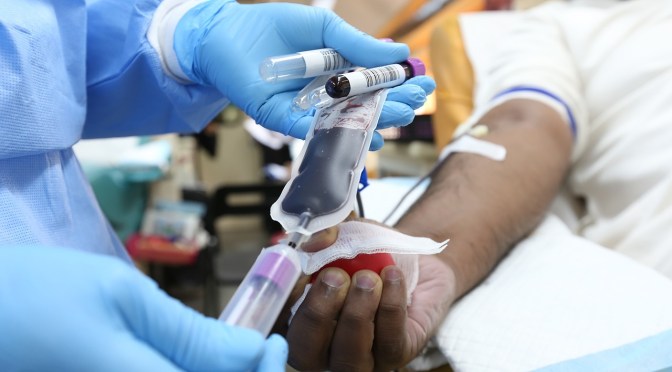
The Hepatitis-C contaminated blood scandal that affected citizens in Australia and New Zealand over 20 years ago and is still yet to be investigated
Liz Gunn of FreeNZ Media speaks with Charles MacKenzie, President of “Infected Blood Australia”, about the Hepatitis-C contaminated blood scandal that affected citizens in Australia and New Zealand over 20 years ago and is still yet to be investigated.
Infected Blood Australia supports Baby Will and the Savage-Reeves family’s right to choose un-jabbed direct donor blood.
For more information – https://www.infectedbloodaustralia.com
Image by Ahmad Ardity from Pixabay

Canada is now euthanizing 10,000 of its citizens a year – and some of the horrific stories of its ultra-permissive policy will horrify you
“Canadian army veteran and Paralympian Christine Gauthier [in a battle to obtain a stairlift for her home] was offered an extraordinary alternative. A Canadian official told her in 2019 that if her life was so difficult and she so ‘desperate’, the government would help her to kill herself. ‘”
And so the cull continues … EWR
From dailymail.co.uk
Winston Churchill famously reassured the U.S. that its long northern border was ‘guarded only by neighbourly respect and honourable obligations’.
And generations of US leaders have tended to agree – there’s nothing to worry about from solid and reliably uncontroversial Canada.
Anyone who ever thought that the compassionate response to extreme human suffering is a society that helps people find permanent release from their pain may want to look at some of the horror stories coming out of Canada recently.
To be clear, euthanasia laws in the US are nothing like those of its neighbor to the north. But American acceptance of the practice has been growing for decades despite warnings that legalized suicide is a slippery slope toward a calamitous debasement of human life.
Canada, a country that prides itself on its open-mindedness and tolerance, has the most permissive rules on euthanasia in the world – and the results have been frankly terrifying.
Last year, more than 10,000 people in Canada – astonishingly that’s over three percent of all deaths there – ended their lives via euthanasia, an increase of a third on the previous year. And it’s likely to keep rising: next year, Canada is set to allow people to die exclusively for mental health reasons.
Only last week, a jaw-dropping story emerged of how, five years into an infuriating battle to obtain a stairlift for her home, Canadian army veteran and Paralympian Christine Gauthier was offered an extraordinary alternative.
A Canadian official told her in 2019 that if her life was so difficult and she so ‘desperate’, the government would help her to kill herself. ‘I have a letter saying that if you’re so desperate, madam, we can offer you MAiD, medical assistance in dying,’ the paraplegic ex-army corporal testified to Canadian MPs.
READ AT THE LINK
Photo: unsplash.com

GROWING WOES IN THE GARDEN (Wally Richards
Comment: Note, those that wield the weather weaponry, that also are paying farmers world wide to plow in their crops … would not want the herd to be successfully growing their own food. Saving the planet? I don’t think so …I received recently a fruit and veg update from one of the local supermarkets (who incidentally are on the pig’s back so to speak with the plandemic and lockdowns – recording ‘excess profits’). Here’s an excerpt:
Kia ora,
A couple of weeks ago, we got in touch to let you know what was happening on our growers’ farms, orchards and paddocks, and what that means for you. As we all gear up for holiday shopping, we thought we’d share another update on how we’re working directly with Kiwi growers to get the very best fresh fruit and veg into our stores.
A rainy December:
With rainy weather and limited sunshine across the country, particularly in the upper North Island, many of our local growers are facing challenges with crops ripening up, and with getting the right conditions for harvesting.
We have direct relationships with our growers, and we’re talking to them every day to help find solutions to these challenges. But you might notice supply looking a little lighter in your local Countdown. Thanks in advance for your understanding.
It goes on with other dismal statements and predictions … watch this space.
EWR
Here is Wally’s article anyway … and do keep gardening with that Kiwi can-do attitude! Same applies to anywhere on the planet of course 🙂
For most of the country it was a dismal spring and now we are into the first month of summer things have not improved much. Weather and conditions do vary across New Zealand depending on your region and even your own property if you have a micro-climate, but overall there is thread of similar.
I spoke this week to an agriculture/farm supplier representative and he said that growers and farmers were complaining about growth of plants and pasture. So lets look at the facts, we are only about 10 days away from the longest day which means we are hitting 16 plus hours of day light which should mean maximum growth of plants with blue skies.
But we are not getting nice blue skies, lots of cloudy or overcast days and a fair bit of rain as well.
Temperatures for this time of the year are not great either and not our more normal warm temperatures day and night.
So lack of direct sun light and fluctuating temperatures do not bode well for plant growth.
Wet feet and lower soil temperatures is another plant growth factor.
Plants need adequate moisture, adequate nutrition, suitable temperatures, long hours of direct sunlight and CO2 to grow.
Currently the planet’s CO2 levels are about 416 ppm.
You may not be aware of this but some commercial growers have in their glasshouses CO2 generators to increase the growth of their crops.
Most experts agree that 1,500 ppm is the maximum CO2 level for maximum plant growth, although any CO2 level between 1,000ppm and 1,500ppm will be very good. So a low amount of 416ppm is only half of what gives good growth.
Here is an interesting fact…The amount of CO2 in the atmosphere was reduced by about 90% during the last 150 million years. If this trend continues CO2 will inevitably fall to levels that threaten the survival of plants, which require a minimum of 150 ppm to survive.
Does that ring any bells?
Half of the world’s oxygen is produced via phytoplankton photosynthesis. The other half is produced via photosynthesis on land by trees, shrubs, grasses, and other plants.
You know the old saying? ‘Breath out and make a plant happy’
I am surprised at the slow growth of vegetable plants in my gardens at this time of the year.
In my glasshouses growth is better as they offer better protection from the environment so tomatoes are doing great, cucumbers and good but chili plants are slow.
Chili love hot temperatures to really grow well.
Seeds sown in raised gardens are slow to germinate or rot out because of lower soil temperatures.
Outside seedlings of lettuce, carrots and pak choy are slow and that is how it is in my part of Marton.
Home gardeners will keep on growing their plants no matter what the conditions are like and do what we can to improve the results.
I would suggest a weekly spray of molasses and Magic Botanic Liquid (MBL) to help improve vegetable growth. About a table spoon of molasses dissolved in a litre of hot water then 10mils of MBL added.
Give a small side dressing of Wallys BioPhos once a month.
If you have access to manure make up a compost tea by placing any animal manures into a plastic rubbish tin and filling two thirds full with non-chlorinated water.
Place about 50mils of Bio Magnus Fish fertiliser into the brew (This has live beneficial microbes which will increase their populations in the brew) You can further increase their population growth by adding Mycorrcin or molasses to the brew.
Stir and airate regularly, get a paddle to stir and a jug to fill and lift up high over the barrel then pour contents back into the brew. This gets oxygen into the brew.
Every so often take out some of the brew and water into the soil by where your plants are growing.
Add more manure and other components with more non-chlorinated water and you have a neat home made fertiliser for your crops.
Here is a interesting thing to do, take a plastic 2 litre cordial bottle, half fill with non chlorinated water, add to this about 10mil of Bio Magnus Fish fertiliser and a teaspoon of molasses, place cap on and give contents a shake.
Place outside some where in sun light and check often.
The populations of microbes will rapidly grow and the bottle will balloon and if left will explode when the plastic fractures.
When the bottle has expanded a bit then release pressure by removing cap.
Pour contents of bottle into your gardens for great benefit to the plants.
You as a home gardener can do things to help increase the growth of your crops which is not available for commercial growers to do.
Their answer is to apply dressings of nitrogen to the soil to force growth which is a problem for them currently as Nitrogen fertilisers are in short supply and what is available is much more expensive than normal.
So if you think $10 a cabbage is bad worry about it more when its $20 or $30.
There is currently a world shortage of food which as the months go by appears to be getting worse.
I have read calls for people overseas that have lawns to dig them up and plant vegetables.
Of course in many places and even here in NZ having a lawn is not a thing when the sections are small and the house takes most of the land you own anyway.
Woe is the loss of the good old quarter acre section which with a few chickens you could supply about 50% plus of your food chain for a small family.
Even though currently the growing conditions are not as good as normal for this time of the year at least they are better than they will be in a few months time.
For those that have room now is the time to start planting winter crops of brassicas, cabbage etc, if you like leeks they should already be in.
About every 2-3 weeks plant another small planting of the crops such as two or three of each so you have succession to harvest in winter.
If you are looking for a gift for Christmas then a copy of my Down to Earth Gardening Guide or my Glasshouse Gardening for New Zealand might be an idea.
I will autograph and place a message with the persons name/names in the book.
A gardener recently during a phone conversation told me of an old Chinese Saying:
To be happy for one day, Get Drunk.
To be happy for one week, Get Married.
To be happy for life, Get a Garden.
Phone 0800 466464
Garden Pages and News at www.gardenews.co.nz
Shar Pei pages at www.sharpei.co.nz
Mail Order products at www.0800466464.co.nz
New Zealand Bill of Rights Act 1990. Part II of the Act covers a broad range of Civil and Political Rights. As part of the right to life and the security of the person, the Act guarantees everyone:
1The right not to be deprived of life except in accordance with fundamental justice (Section 8)
2The right not to be subjected to torture or to cruel, degrading, or disproportionately severe treatment or punishment (Section 9)
3The right not to be subjected to medical or scientific experimentation without consent (Section 10)
4The right to refuse to undergo any medical treatment (Section 11)
Furthermore, the New Zealand Bill of Rights Act 1990 guarantees everyone: Freedom of Thought, Conscience, and Religion.
This includes the right to freedom of thought, conscience, religion, and belief,
INCLUDING THE RIGHT TO ADOPT AND HOLD OPINIONS WITHOUT INTERFERENCE (Section 1)
Image by Eszter Miller from Pixabay

Other news this week

NZ Court has ruled guardianship of Baby Will to the authorities
The NZ Herald reports on the judge’s ruling … “…the safety of the vaccine has been proven medically and by the courts”.
This outcome is sad & disturbing, yet unsurprising … a precedent is being set…
LINK TO THE ARTICLE HERE:
For background story & further independent updates go here
WHAT YOU CAN DO: Voices for Freedom Updates on the Info & Recommendations for Action
You could also consider contacting Herald and asking them to publish the peer reviewed studies proving the safety of the vaccine.
Note: Anyone who has the scientific research data illustrating that “the safety of the vaccine has been proven medically and by the courts” we would be very keen to see it. EWR
Photo: pixabay.com
A vulnerable baby, the NZ Govt and a parental right of choice are under scrutiny
Little NZ baby Will Savage is in need of a heart operation. His parents wishing to ‘err on the side of caution’ desire non covid-vaxxed blood for him and even have donors lined up to supply. Starship Hospital medics are saying jabbed blood or no op for him.
Te Whatu Ora Health NZ have applied for guardianship of Will.
You can read/watch more on this at the links here.
DAILY UPDATES ON BABY WILL AT THIS LINK
RELATED Articles from NZDSOS Doctors:
Parental Concerns About Covid-Vaccinated Blood Donations : Response to Dr Nikki Turner
A Challenge to NZ Blood: What’s The Issue With Blood From Vaccinated Donors?
What’s The Issue with Blood from Vaccinated Donors?
From Guy Hatchard
Unfounded Prejudice is Gripping the Nation. Misleading Government Publicity is to Blame
Below is a link to mainstream’s reporting on this case that is currently before the Court :
Decision in baby blood guardianship case reserved
Photo: pixabay.com

December Gardening (Wally Richards)
This week I received two emails which maybe of interest to some gardeners. The first was from a gardening couple, which read:
Hi Wally, Your advice and weekly email’s worked great. I got first in the Veggie Section and my wife won in the Rose categories. Jerry.
What can I say? If you use natural products that enhance the soil, giving the plants all the possible minerals that they may need to be healthy and stop using chemicals that are harmful to both soil, plants and yourself.
Over the years I have received a few similar stories about how gardeners have turned their gardens into award winners by simply observing and using the above information.
The second email is of concern this time of the year and it read;
Hi Wally, I have a problem with a brown beetle infestation. I was finding the leaves of my newly planted plum trees and almond tree were getting stripped bare almost. I wasn’t sure what it was but think the culprit is this brown beetle.
I have since found hundreds (literally) in one of my raised beds and quite a few wherever I have placed the garden mix I bought a month ago.
Is there something I can do to get rid of these beasties? They are now attacking my raspberry plants and feijoa trees. Because they are in the soil – and potentially quite deep (some of them were 20cm deep) – I’m not sure how to fight them. Please help!
The writer sent me an amazing photograph which shows hundreds of these brown beetles drowning in a container of water, along with photos of her plants badly damaged.
The beetle is the Grass Grub beetle and this is the time of the year that they emerge from pupating deep in the soil to feast on the foliage of a number of plants, mate and lay eggs back in lawns for future generations.
In my first book, Wally’s Down to Earth Gardening Guide, I suggest a trap to aid control of these pests.
Here is an extract from the book:
‘Grass grub adults emerge in October, and are active until about mid-December, depending on weather conditions and exactly where they are in New Zealand. The cooler the temperature, the later they emerge.
The adults will start to emerge in mild conditions, when the soil temperature reaches about 10 degrees they then mate, fly, eat and lay eggs in the short space of time between dusk and early evening.
As they tend to fly towards light, you are most likely to know they’re there when the flying beetles hit your lighted window panes.
This very attraction for the light has become one of our best weapons in controlling the pest in its adult stage. You can set up a grass grub beetle trap by placing a trough, such as the one used when wall-papering, directly underneath a window near a grassed area.
Fill the trough with water to about two-thirds of its capacity, then place a film of kerosene on top of the water. Put a bright light in the window, the beetles fly towards the lit window, hit the glass and fall into the trough.
The kerosene acts as a trap, preventing the fallen beetles from climbing out.
You can extend this method to areas away from the house by using a glass tank, such as might be used for an aquarium.
Place the empty tank into a tray containing several inches of water (and the kerosene), and position a light inside the glass tank.
By adding a sheet of ply or something similar over the top of the tank, you will ensure that the light shines only through the sides of the tank above the waiting water and kerosene.
It is better to use a dome-shaped battery-powered light rather than an ordinary torch for this job as the bigger light makes the trap more effective.
If the tray and tank are raised off the ground and placed on something like a table, you will get an even better result.
However you set up your beetle trap, this is a very good method to dispose of the pests. Simply get rid of all the beetles caught the next morning.
Run this system (call it Wally’s Grass Grub Beetle Catcher, if you like) from just before dusk to about 2 or 3 hours after sunset.’
Spraying the plants that are been attacked with Wallys Super Neem Tree Oil will help to also control the populations.
This should be done late in the day after the sun is off the plants. When a beetle chews on a leaf they get some Neem into their gut and that shuts off their ability to eat.
Problem arises, if there are hundreds of beetles then there needs to be hundreds of bites.
With the likelihood of more beetles emerging every day it is an on going battle over the next month or two.
Another way is to go outside just after dark with a torch and check your plants for beetles.
If you see a good number on any plant then a spray at that time with Wallys Super Neem Tree Oil and Wallys Super Pyrethrum added, sprayed to hit the beetles rather than the plant itself.
Another very good natural spray to use late in the day is a solution of Wallys 3 in 1 for Lawns.
This is a combination of Eucalyptus oil and Tea Tree oil, nice to use and deadly on pests.
If you repeat your nightly spraying and use a light trap also, then you will make a big dent in the grass grub beetle populations and thus suffer less damage to your plants and lawns.
The season is still poor weather wise which helps keep insect populations lower than normal but care should be taken with your potatoes and tomatoes by placing Neem Tree Granules on the soil in the root zone and spraying the plants occasionally with Wallys Super Neem tree Oil.
Visit your local garden center to obtain some good ideas for Xmas Presents.
Phone 0800 466464
Garden Pages and News at www.gardenews.co.nz
Shar Pei pages at www.sharpei.co.nz
Mail Order products at www.0800466464.co.nz
New Zealand Bill of Rights Act 1990. Part II of the Act covers a broad range of Civil and Political Rights. As part of the right to life and the security of the person, the Act guarantees everyone:
1 The right not to be deprived of life except in accordance with fundamental justice (Section 8)
2 The right not to be subjected to torture or to cruel, degrading, or disproportionately severe treatment or punishment (Section 9)
3 The right not to be subjected to medical or scientific experimentation without consent (Section 10)
4 The right to refuse to undergo any medical treatment (Section 11)
Furthermore, the New Zealand Bill of Rights Act 1990 guarantees everyone: Freedom of Thought, Conscience, and Religion.
This includes the right to freedom of thought, conscience, religion, and belief,
INCLUDING THE RIGHT TO ADOPT AND HOLD OPINIONS WITHOUT INTERFERENCE (Section 1)

Canada is advertising for ‘body removal agents’ to respond to ‘sudden and unexpected deaths’
From Mark Crispin Miller
If you want to work, and don’t mind heavy lifting, Vancouver, B.C. has a job for you!

READ FURTHER AT THE LINK:
https://markcrispinmiller.substack.com/p/if-you-want-to-work-and-dont-mind
News from Underground by Mark Crispin Miller is a reader-supported publication. To receive new posts and support my work, consider becoming a free or paid subscriber.
Image by vishnu vijayan from Pixabay

Now repealed, the amended Covid-19 Public Health Response Bill basically nullified many aspects of NZ’s Bill of Rights
Note: I withdrew an earlier post on this topic, as Martin Harris from Uncensored kindly corrected me on the fact that the Bill had been repealed. However, I am reposting the item in revised form for the following reasons…
At the time this amendment passed in Parliament there was great consternation (and understandably) about our impending loss of freedoms. Although, as pointed out, it has now been repealed, I do not see this as now history.
A few months back we posted an article on bomb scares in NZ schools, several in fact, that alluded to the powers of the Department of Education in such an event & I quote:
If a disease is classified as notifiable, this means health practitioners and laboratories are required to notify Medical Officers of Health of cases of a notifiable disease.
Medical Officers of Health then have powers to manage the disease on a case-by-case basis, including the ability to:
- formally initiate contact tracing of contacts of cases of coronavirus
- issue mandatory directions such as restricting movement and travel
- apply for court orders such as for treatment
- issue administrative 72-hour detention orders (urgent public health orders).
If you read the article you will see that indeed parents were separated from their children, one parent marched off school grounds by law enforcement.
Another item of interest that floats on the periphery is that of advertisements seen in May/June this year by NZSIS for surveillance officers and more recently in November, for contact tracers.
In light of the above plus other developments at G20 around the introduction of vaccine passports, I consider it pertinent to be very watchful.
Below is the original piece posted earlier, including Martin Harris’s information on the repeal of the amendment:
The COVID-19 Public Health Response Bill (read it and check for yourself) gives the Prime Minister Jacinda Ardern the power to decide when the new rules must …
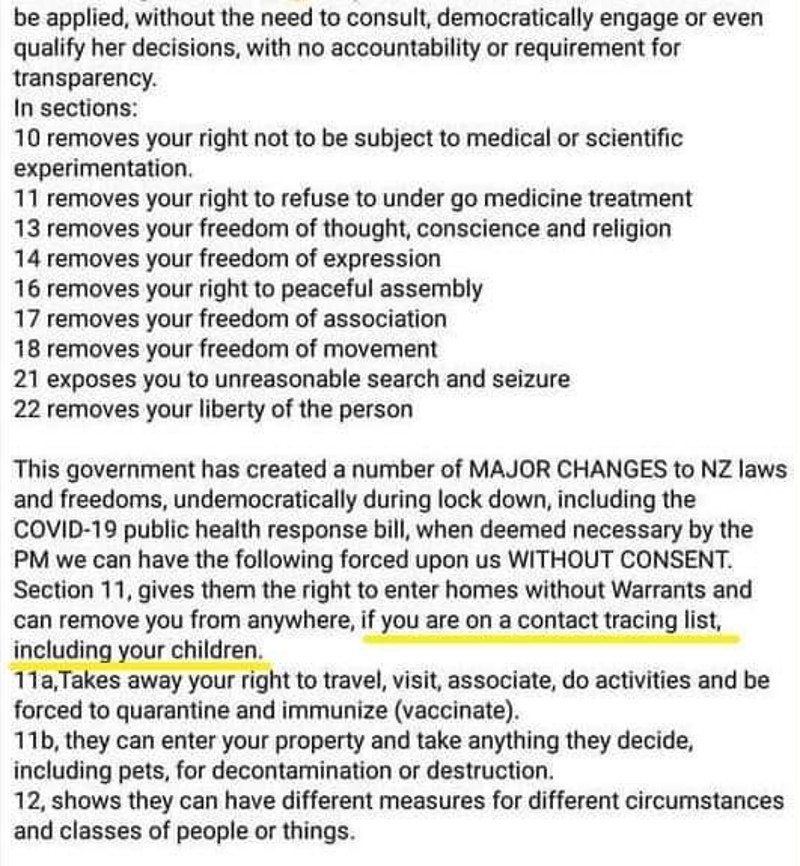
Martin Harris wrote: “The bill is repealed two years following its enactment and this has already been enabled, thus it is no longer in effect.
Part 1
Preliminary provisions
3 Repeal of this Act
This Act is repealed on the earlier of—
(a) the date that is 2 years after the date of its commencement; and
(b) a date appointed by the Governor-General by Order in Council.”
Read it for yourself:
https://www.legislation.govt.nz/bill/government/2020/0246/latest/LMS344138.html
RELATED:
It’s Worse Than We Thought, What ‘THEY’ Just Declared!!!
ACT NOW NEW ZEALAND! COVID BILL “DEEPLY CONCERNING”: HUMAN RIGHTS COMMISSION
Image by OpenClipart-Vectors from Pixabay

The NZ Security Intelligence Service has been advertising for Surveillance Officers and Contact Tracers
For those of you who have your eye on the ball so to speak, these are job opportunities not commonly seen in our ‘freedom loving democracy’ of NZ. Any items concerning surveillance are generally described as necessary for the safety of citizens. Not too many years ago this site and others were being watched by a security agency contracted by DoC. Anybody who does not agree with their methods of pest control are not looked kindly upon and are considered a threat to the safety of others it would appear. Similarly the ads below for surveillance staff highlight that a part of their role is protecting New Zealand and its citizens.
QUOTE: ” … together, we’re doing extraordinary things to protect New Zealand and New Zealanders.”
Please make of these ads what you will. Some of the role descriptions would easily, in my opinion, win a prize for gobbledegook. Very difficult to discern just exactly what the job entails.
The first two ads noted in May & June 2022, and the last two in November 2022:
SURVEILLANCE OFFICER



POSITION 2
Description
Our work is secret, but the reason for our success isn’t. It’s our people. And we’re just like you. We’re ordinary people. But together, we’re doing extraordinary things to protect New Zealand and New Zealanders.
This new position is at the centre of our dynamic, exciting and fast moving operational function, directly supporting NZSIS security and intelligence missions.
The role: Your focus in this role is to plan and coordinate surveillance deployments, ensuring resources are used effectively to maximise the delivery of priority intelligence outcomes.
You’ll achieve this by representing the Surveillance Unit across the Intelligence Community and partners – initiating, enhancing and maintaining relationships to support our purpose to achieve successful and coordinated operational results.
You will lift our operational capability by contributing to surveillance training objectives as well as undertake research and development to support the delivery of new capabilities.
We’re looking for someone with:
- Experience planning and/or coordinating operationally deployed teams within an intelligence, security, law enforcement, defence or similar environment
- Operational planning knowledge and an understanding of operational risk assessments
- Knowledge of the domestic security environment
- Excellent relationship management skills and ability to collaborate and build strong partnerships
- Sound judgement, critical thinking and initiative in dynamic situations
- You may also need to be available to work flexible hours at short notice
We offer our people comprehensive benefits, flexible working and great work-life balance. Join us and let us help you become Beyond Ordinary.
Applications close on 28 June 2022.
To be eligible for employment within the NZIC you must have been a NZ citizen for at least 10 years. Alternatively you must hold a current NZ Residency Class Visa and ideally have been a citizen of UK, USA, Canada or Australia for at least 10 years.
You must be able to obtain and maintain a Top Secret Special (TSS) security clearance. Ordinarily to obtain this level of clearance candidates must have a 15 year checkable background in countries where meaningful and reliable checks can be undertaken. Where requisite checks are unable to be made, the candidate application may not be able to be progressed.
Use this online tool to self-check your eligibility for a TSS security clearance. Please note that this tool is not part of the formal security clearance process: http://www.protectivesecurity.govt.nz/eligibility-tool
The NZIC treats all applications for employment in the strictest confidence and we ask that you maintain a similar level of confidentiality. You are expected to exercise discretion during the recruitment process and throughout your career.
Our Covid-19 vaccination policy requires all employees to be fully vaccinated. You will be required to provide evidence regarding your vaccinations status.
Pasted from <https://www.trademe.co.nz/a/jobs/government-council/other/auckland/auckland-city/full-time/listing/3638578238?bof=YiVw0Lv2>

Apply now
Location Wellington
Job type: Full time
Duration: Permanent
Pay and benefits + Kiwisaver & Health Insurance
Description
Do you:
- lead by example and have a hands-on approach to team success?
- drive collaboration and find pathways to achieve successful outcomes?
The NZSIS Operational Solutions Unit is seeking Operational Capability Officers. Our OCOs are at the forefront of leading the delivery of new or improved operational capabilities to ensure that NZSIS collection efforts are effective, relevant and sustainable in a fast changing world.
The role:
What do we mean by operational capability? For us, it is the ability for our people to achieve operational objectives. Those objectives may involve work such as the successful use of technical and digital capabilities, management of human sources, and better exploitation of data or deployment of surveillance assets. The primary people we enable are our NZSIS intelligence operators.
Success in this role would see you delivering operational capability that gives staff better intelligence from existing and new accesses, or even from targets that were previously too hard.
The two main areas of work are:
- developing, maintaining and enhancing productive relationships with partners in pursuit of generating enhanced operational capability;
- establishing and undertaking research, development, coordination, delivery and integration to ensure our operational units are best equipped to conduct intelligence operations.
OCOs can work across both of these areas but may express preference for a specific team. Roles are based in Wellington and Auckland.
To be successful in this role you will be:
- collaborative and willing to use your initiative to deliver operational capability work streams in a new and growing team;
- at the forefront of implementing and embedding new processes and systems, and continuously improving them;
- ensuring processes are fit for purpose leading to the delivery of genuinely new innovative operational capability that balances assurance and rapid implementation for our operational staff;
- flexible and adaptable, contributing your intelligence background and problem solving aptitude to helping shape how we deliver new operational capability;
- working on multiple varied workstreams – which might be centred around new equipment, a new relationship, new policy or agreement, or even a new way of collaboration – all in the pursuit of enhanced operational capability.
The ideal candidate will drive innovation and be able to multi-task and plan. You will enjoy working under pressure and have pride in delivering solutions that directly enable our operational staff. This role works alongside, and has access to, a new team of like-minded colleagues who will have significant input in deciding the best way, or alternative ways, to deliver. Additionally, you will build a strong level of trust with established teams and become a respected knowledge source and problem solver.
Key attributes:
- Driven to collaborate, partner and independently plan and deliver on work streams
- Be prepared to travel domestically and internationally in pursuit of operational capability planning or relationship building
- A dedicated, highly motivated team member displaying initiative and willing attitude
- Comfortable with breaking new ground, change and embedding new processes and systems
- Your background should include experience in an intelligence context, operational /project management or planning, exposure to intelligence collection, relationship management and problem solving
What we offer:
A range of benefits that include professional development and working with a group of people who are passionate about protecting and advancing New Zealand’s way of life. The work is interesting and most importantly, the outcomes from your work will have a direct impact on the security and well-being of New Zealand.
For more information about the role and how to apply, visit our website today!
Pasted from <https://www.trademe.co.nz/a/jobs/it/project-management/wellington/wellington/full-time/listing/3847908999>
Contact Tracers Work from Home- job post
Alpha Personnel Recruitment Ltd
New Zealand
•Temporarily remote
Full-time, Part-time
You must create an Indeed account before continuing to the company website to apply
Apply on company site
Temporarily remote (COVID-19)
Full Job Description
Are you looking for a phone based role where you can work from home’ An excellent opportunity has arisen for someone with experience in medical administration, general administration, customer service, retail or hospitality to assist with Covid 19 contact tracing. This role is home based so you will need reliable internet and computer to work on. You will also need to be confident with computer packages and apps so you can set up your computer with what is required for the role. A work phone is provided. We are looking for someone to work full time hours Monday to Friday 8am – 4.30pm and also a couple of part time staff available same hours 2-3 days a week (week days). For this role you will need to be available for 3 months or longer and be available to work through the Christmas/New Year period.
Duties include:
- Phone and email management and liaison with Government departments to obtain information
- Excel Spreadsheet updating
- Interviewing (remotely) stood down staff who have tested positive for covid19
- Other adhoc duties as required
To be considered you would have:
- Excellent communication skills and a calm nature
- Good attention to detail and the ability to work well in a team
- Intermediate to Advanced MS office and the ability to pick up new systems quickly
- Flexibility to come into work with short notice when required around other commitments
- A can-do attitude and the ability to problem solve
- The flexibility to work longer term on a month by month basis
If you are available to start asap working longer term on a month by month basis and you want to make a difference apply now to be considered.
Pasted from <https://nz.indeed.com/Contact-Tracing-jobs?vjk=c35fb5de843c4f7c>
RELATED
‘Contact Tracing’: A Panopticon Grid Of Total Surveillance
Contact Tracing: When Game Night Turned Into A Nightmare
Coronavirus: New Zealand considering $100m contact tracing ‘CovidCard’
Image by Gerd Altmann from Pixabay
G20 and the next pandemic (Dr. John Campbell)
Note: the NZ Govt is the only source of truth in NZ hence the little notice on the video screen directing you where to go to obtain that truth EWR
Argentina, Australia, Brazil, Canada, China, France, Germany, Japan, India, Indonesia, Italy, Mexico, Russia, South Africa, Saudi Arabia, South Korea, Turkey, United Kingdom, United States, and European Union. https://www.consilium.europa.eu/en/pr…
https://www.whitehouse.gov/briefing-r…
Part 22 We recognize that the extensive COVID-19 immunization is a global public good Section 23 We recognize the need for strengthening local and regional health product manufacturing capacities We support the WHO mRNA Vaccine Technology Transfer hub We acknowledge the importance of shared technical standards and verification methods, to facilitate seamless international travel, interoperability, and recognizing digital solutions and non-digital solutions, including proof of vaccinations. Establishment of trusted global digital health networks, that should capitalize and build on the success of the existing standards and digital COVID-19 certificates.
Part 24 The COVID-19 pandemic has accelerated the transformation of the digital ecosystem and digital economy. We recognize the importance of digital transformation in reaching the SDGs. We also reaffirm the role of data for development, economic growth and social well-being. G20 update
https://www.g20.org/wp-content/upload…
“Endeavour to move towards interoperability of systems including mechanisms that validate proof of vaccination, whilst respecting the sovereignty of national health policies, and relevant national regulations such as personal data protection and data-sharing.” Indonesia’s Minister of Health Budi Gunadi Sadikin
https://twitter.com/TimHinchliffe/sta…
G20 countries should adopt digital health certificate using WHO standards Let’s have a digital health certificate acknowledged by WHO — if you have been vaccinated or tested properly — then you can move around (next World Health Assembly in Geneva) WHO seem to be on it already
https://www.who.int/publications/i/it…
Digital documentation of COVID-19 certificates: vaccination status: technical specifications and implementation guidance, 27 August 2021 Use of scan codes Klaus Schwab, World Economic Forum (WEF) Chair Attended From a doctor in Austria It is currently a very emotional situation in my hospital (and in general in hospitals in Austria) because many of us in the health care sector are more or less forced to get a fourth vaccine dose. Even in my case as a physician who has received three doses and one infection just 6 months ago. The rule is that if the last vaccination is more than one year and/or the last infection is more than 6 months ago you either have to test all 72 hours or to get an additional vaccine dose; if not you are at risk of having to pay 500 to 3600 Euros and may even get fired.
Vaccine passports
https://lc.org/newsroom/details/11172…
RELATED:
It’s Worse Than We Thought, What ‘THEY’ Just Declared!!! (Neil McCoy-Ward)

Uncovered Mexican Study Confirms GM Soy Causes Harm to Pancreas
Note: it’s difficult to know whether or not you are eating GM products in NZ because there’s no requirement to label them. Soy is largely GM. Personally I avoid soy unless it’s organic, similarly corn I avoid. GM corn crops were slipped into NZ under Helen Clarke’s watch back in 2000 or thereabouts. Read Seeds of Distrust by Nicky Hager. Also Hard to Swallow by Jeffrey Smith. I made a few inquiries a few years back to the producers of poultry and pork and neither could guarantee non-GM as their feed was unlabeled. EWR
From Sustainable Pulse
In a new revelation reported by GMWatch it has been found that a rat feeding study published in 2008 found that GM soy harms the pancreas, confirming earlier findings in mice.
Source: GMWatch By Claire Robinson
In 2002 and 2003 the Italian scientist Manuela Malatesta published two groundbreaking studies showing damage to the pancreas of mice fed GM soybeans for long-term periods of up to eight months. The GM-fed mice also suffered damaged liver and testes function.
Malatesta paid dearly for her efforts, as she was forced out of her job at the university where she’d worked for ten years and was unable to obtain funding to follow up her experiments.
Malatesta’s studies are well known to those who have followed the troubled history of animal feeding studies with GM foods. But what is less well known is that the pancreatic studies were followed up a few years later in the 2008 study by Mexican researchers – who confirmed her findings.
GM soy is one of the most widely grown GM crops in the world and accounts for over 90% of US-grown soy. It is engineered to survive being sprayed with toxic glyphosate weedkiller. It is not known whether the adverse effects associated with the GM soy diet in either study was caused by the GM crop or the weedkiller, or both.
Pancreas damage
The Mexican study was of a shorter duration – up to 30 days instead to Malatesta’s eight months – and was in rats. The study was led by Ana M. Calderón de la Barca of the Mexican government’s food research agency CIAD.
Calderón de la Barca’s team found that GM soy protein isolate harmed the pancreas, as evidenced by the damaged structure and function of pancreatic cells called acinar cells – specialised structures that synthesise, store, and secrete digestive enzymes. The control group of rats eating non-GM soy protein isolate showed no such effects.
Some of the changes in the GM soy protein-fed rats reflected the symptoms of pancreatitis – inflammation of the pancreas, a disease that, in humans, affects digestion and can cause nausea, vomiting and severe pain.
Analysis at a molecular level supported the histological findings of pancreatitis caused by the GM soy. A known marker for pancreatitis is pancreatitis-associated protein (PAP). An increase in PAP messenger RNA (mRNA) and consequent increase in PAP protein indicates acute pancreatitis, a form of the disease in which the pancreas becomes inflamed over a short period of time.
“Recovery” not reassuring
The GM-fed rats started showing harmful changes to the pancreatic acinar cells as soon as five days after starting the GM soy diet. However, they recovered after 30 days, while still on the GM soy diet, as the changes in pancreatic cells returned to normal. The researchers interpreted this phenomenon as “a mild pancreatic injury with an adaptive response”.
GMWatch does not find this recovery reassuring, as we don’t believe it makes sense to injure the body’s organs, even temporarily, just by eating food. The researchers agree – they pointed out in their conclusion that there’s no way of knowing what would happen if the rats – or the humans that they are supposed to represent in such studies – continued eating GM soy over the long term. They might similarly recover, or they might not.
Importance of microscopic examination of organs
Animal growth and protein efficiency (amount of weight the animal puts on for each unit of protein eaten) for both non-GM and GM soybean diets did not show differences. This is a similar finding to those of previous studies, including Monsanto’s own study, conducted to support commercialisation of GM soy.
The Monsanto “safety assurance” study concluded that the nutritional value of GM soy was equal to that of non-GM soy, though interestingly it also found damage to pancreatic cells in the rats fed unprocessed GM soy (inflammation and death of acinar cells), which, however, the authors dismissed as unrelated to the GM diet.
The Mexican study, as well as Malatesta’s and others, show the importance of looking at GM-fed animals’ organs on the microscopic (histopathological) level, as this is where otherwise invisible harm can show up.
Safeguards may be removed from new experimental GM foods
It’s useful to remind ourselves of these studies as governments and GMO industry lobbyists move to remove safeguards from a new experimental generation of GM foods and crops amid claims that they are safe. Assurances that new GM gene-edited foods, crops and animals, unlike the first generation GM crops tested by the Mexican team, don’t contain foreign genes or DNA are lies. Gene-edited GMOs can unintendedly incorporate fragments of foreign DNA in their genome, which can persist in the final product, or they can be contaminated by foreign DNA present in materials used in tissue culture. In addition, gene editing can be used to deliberately insert foreign DNA.
However, the risks of new GM gene-edited foods and crops are not confined to the insertion of foreign DNA, but can result from the most apparently small and simple gene “edit”, the gene disruption type known as SDN-1, as a scientific review shows.
As far as we know, no one has carried out an animal feeding study with new gene-edited foods, crops, and animal products such as meat and dairy. So their safety profile remains unknown.
SOURCE
Photo: Sustainable Pulse

HOW SCIENTISTS TRICKED MOSQUITOES INTO DELIVERING VACCINES TO HUMANS
Remember this 2017 post? .. consent? This is outrageous… EWR
AUSTRALIA AND NEW ZEALAND TO BE TEST SITES FOR GM INSECT TRIALS COURTESY OF DARPA!
From responsibletechnology.org
Originally posted by MSN on October 2nd, 2022
Scientists have managed to turn one of the deadliest insects into a vaccine delivery system. According to new reports from NPR, a clinical trial for a system meant to use mosquitoes to deliver vaccines has been underway in the United Kingdom. The findings of the trial have been published in Science Translational Medicine.
According to the paper, scientists were able to genetically modify parasites to deliver malaria vaccines through mosquito bites. It’s an intriguing proposition to use mosquitos to deliver vaccines. It sounds horrific on paper and even more horrific when you see the photos featured in a report on the trial from NPR.
Those photos can be seen in the original report and show the results of trial participants being bitten hundreds of times. To get the desired effect of the mosquitos delivering the vaccine, scientists loaded them with genetically modified parasites known as Plasmodium falciparum. In the past, scientists have tried to do something similar. However, this is the first time CRISPR has been used to accomplish it.
The result is basically 1,000 small flying syringes, a researcher told NPR. And based on the photos featured in that same report, it does look like that, as one image shows a participant’s arm wholly covered in welts from the mosquito bites they suffered. The biggest problem with using mosquitos to deliver vaccines for malaria, though, is the effectiveness.
According to the study’s results, 14 of 26 participants who were exposed to malaria contracted the illness. That means the mosquito vaccine delivery system is only around 50 percent effective. But, that doesn’t mean this was a failure — it just means that some improvements need to be made. It’s also important to realize that the scientists don’t intend to release swarms of genetically modified mosquitos, either.
Instead, they want to use the mosquitos to deliver vaccines in a more controlled fashion. The researchers told NPR that releasing a massive number of these mosquitos is an intriguing proposition. But, doing so would raise very deep questions about medical consent and bioethics as they couldn’t control who was inoculated and exposed.
SOURCE
https://responsibletechnology.org/scientists-tricked-mosquitoes-into-delivering-vaccines-to-humans/

Glyphosate and Roundup: All Roads Lead to Cancer – New Study
From GM Watch via Sustainable Pulse
(Note: article is from Feb 2022)
New findings add to other observations linking glyphosate and Roundup to cancer. Report: Claire Robinson
Glyphosate and Roundup lead to changes in gene regulatory microRNAs (miRNAs or miRs) linked with cancer, newly published data show. The analysis, of a type known as small RNA profiling, was conducted in liver tissue from rats exposed to glyphosate and Roundup MON 52276, an EU-approved formulation, over 90 days.
In the new results, Roundup MON 52276 was found to reduce the levels of miR-22 and miR-17, whereas glyphosate decreased the level of miR-30 and increased the amount of miR-10. These changes in miRNAs are important because they are known to alter the expression of crucial cell growth regulator genes, which can lead to the development of cancer.
A gene function that is central to multiple cellular processes, p53, is a particular target of these miRNAs. The miRNA changes can lead to alterations in p53 gene expression, as has been found in multiple types of cancer in humans.
The link between the changes in miRNAs and p53 gene expression is consistent with the findings within the same study showing gene expression changes in Roundup- and glyphosate-exposed rats. The gene expression changes strongly imply a p53 pathway DNA damage response. DNA damage is a major risk factor for cancer development.
Furthermore, increases in miR-10 have been found in other studies to be associated with leukemia, a blood cancer. The increase in mir-10 caused by glyphosate exposure in the experimental animals may provide one mechanism by which users of Roundup have succumbed to another blood cancer, known as non-Hodgkin lymphoma. These results could strengthen the legal cases of the cancer sufferers in the US who are suing Bayer/Monsanto because they believe that exposure to Roundup caused their disease. Three such cases have already been decided in favour of the plaintiffs.
Study lead Dr Michael Antoniou of King’s College London said, “The new data showing changes in miRNA patterns add yet more evidence to the cancer-causing potential of glyphosate and Roundup. What is more, our results show that it is not just Roundup, which is a mixture of glyphosate with various additives, that has carcinogenic potential, but also glyphosate alone.”
Previously reported findings
The new data confirm and build on previously reported findings that were published as a pre-print in April 2021, which GMWatch reported on. The study with the additional findings has now passed peer review and is published in the prestigious journal, Toxicological Sciences.
The pre-print version of the study had reported that glyphosate and glyphosate-based herbicides such as Roundup activate mechanisms involved in cancer development, including DNA damage – and these effects occur at doses assumed by regulators to have no adverse effects. The data suggest that the DNA damage was caused by oxidative stress, a destructive imbalance in the body that can cause a long list of diseases. Oxidative stress is the likely cause of the damage seen to the liver, leading to an inflammatory (immune type) response, which in turn can cause DNA damage.
Crucially, the study found that the isolated active ingredient of Roundup – glyphosate – damaged DNA. This finding, according to the EU’s pesticide law, should result in a ban on glyphosate and all its formulations.
All these findings are carried over into the peer-reviewed version of the study.
How the study was done
The study builds on the findings of a previous one by the same authors. In the previous study, the researchers had compared the effects in rats of MON 52276 with those of its “active ingredient”, glyphosate, tested alone. The findings showed that glyphosate and Roundup herbicide, given at doses that regulators say are safe, resulted in the animals suffering gut microbiome disturbances and oxidative stress, with indications that the liver was affected and possibly damaged.
In the current followup study, the researchers analysed the liver tissue from the same rats to see if damage had indeed occurred.
The researchers carried out some of the standard tests that regulators require the pesticide industry to conduct to gain market authorisation for their products – namely blood biochemistry and kidney and liver histopathology (microscopic examination of tissue).
They also carried out in-depth tests (molecular profiling) that are not demanded by regulators or typically carried out by the industry. One type of test looked for adverse effects at a profound molecular level of biological functioning through analysis of gene expression (transcriptomics) and epigenetics (DNA methylation) in the liver and kidneys. Another type of test, using specialised genetically engineered cell lines, was intended to highlight changes in function linked with cancer formation.
In addition, the researchers carried out tests that can detect direct damage to DNA.
Roundup causes fatty liver disease – confirmed
The standard tests, histopathology and blood biochemistry analysis, found adverse effects from the Roundup treatment, namely a dose-dependent and statistically significant increase in fatty liver disease and liver cell death.
The finding of fatty liver disease from exposure to the MON 52276 formulation of Roundup confirmed the same researchers’ previous observation that an ultra-low dose of another Roundup formulation, Roundup Grand Travaux Plus, administered to the same strain of Sprague-Dawley rats over a 2-year period, caused non-alcoholic fatty liver disease.
An increase in liver and kidney lesions was also detected in animals treated with glyphosate, although this did not reach statistical significance. However, the authors commented that an experiment of longer duration using more animals may have resulted in statistical significance.
Non-standard tests most revealing
Worryingly for public health, it was the non-standard molecular profiling tests that are not required by pesticide regulators that were most revealing.
First, Roundup was found to alter the expression of 96 genes in the liver specifically linked to DNA damage and oxidative stress, as well as disruption of circadian rhythms or “body clocks”. The most affected genes in liver also had their expression similarly altered in kidneys. Crucially, a core set of genes whose expression was altered by Roundup was similarly changed in the glyphosate-treated animals. This strongly suggests that the key changes in gene function reflective of oxidative stress and DNA damage was due to glyphosate and not the additional substances (adjuvants) present in the Roundup formulation.
Second, direct DNA damage to the liver was found to increase with glyphosate exposure.
These findings potentially constitute a bombshell that could end the authorisation of glyphosate in the EU. That’s because the EU pesticide regulation (1107/2009) has what’s known as hazard-based cut-off criteria. This means that if a pesticide active ingredient is shown to cause a certain type of harm to health at whatever dose, it must be banned. One of the named types of harm is damage to DNA. The discovery that glyphosate alone damages DNA in a living animal should, if regulators follow the law, result in a ban on the chemical.
Third, both glyphosate and Roundup were found to cause epigenetic changes known as DNA methylation. Epigenetics describes layers of molecular structures associated with DNA that control the underlying function of genes. The defining feature of epigenetic changes is that they can alter how genes work but do not involve changes to the actual DNA sequence. These types of changes were found at over 5,000 genomic sites for glyphosate and over 4,000 for Roundup. This is a concern because such alterations are typically found at high frequency in cancer tissues.
All findings lead to same conclusion
The researchers performed further laboratory tests in mouse cell lines, which are designed to highlight effects that can lead to cancer formation. Glyphosate and three Roundup formulations were assessed in these tester cell lines. It was found that two formulations of Roundup herbicide, but not glyphosate, activated oxidative stress and misfolded protein responses, both clear markers of carcinogenicity.
Commenting on the totality of the data, Dr Antoniou said, “No matter what molecular measurements we undertook, they all led to the same conclusion: that is, both glyphosate and Roundup are potential carcinogens.”
Other studies, including the industry ones submitted to support regulatory approval of glyphosate, have also found that glyphosate causes cancer in experimental animals. Based on studies in animals and humans, as well as mechanistic data, in 2015 the International Agency for Research on Cancer (IARC) classified glyphosate as a probable human carcinogen.
Other implications of the new study
1. Ending animal testing is not yet feasible
Interestingly, in the new study, glyphosate was shown to damage DNA in living animals but not in the cell culture system. This shows that in vitro lab tests using isolated cells cannot fully substitute for evaluations in a living animal because certain effects will be missed. This is because animals (including humans) are whole organisms whose complexity cannot be replicated in a flask, petri dish, or test tube. While many people (GMWatch included) would like to see an end to animal testing, as long as pesticides and other chemicals are allowed to be released into the environment, such a move would put public health at risk.
2. Roundup is more toxic than glyphosate
In summary, in general Roundup was found to be more toxic than glyphosate, confirming and building on previous observations. However, taken together, the results from the various assays conducted show that both glyphosate and Roundup herbicides activate mechanisms involved in cancer development, causing gene expression changes reflecting oxidative stress and DNA damage. Also, glyphosate alone was clearly able to induce DNA damage.
These findings directly challenge the global regulatory practice of only assessing the isolated declared active ingredient (glyphosate) and not the complete commercial formulations (Roundup) as sold and used.
The study further highlights the power of in-depth molecular profiling “omics” methods to detect changes that are missed by relying solely on conventional biochemical and histopathological measurements conducted in standardised industry tests on pesticide active ingredients. The study paves the way for future investigations by identifying gene expression changes and altered DNA methylation sites, which can serve as biomarkers and potential predictors of negative health outcomes resulting from exposure to glyphosate-based herbicides.
3. Results could allow survey of human population for glyphosate herbicide exposure
Commenting on the implications of the results for human exposure monitoring, study lead Dr Michael Antoniou said, “The biomarkers we identified (such as the miRNA and gene expression changes) can be tested for in people, but we don’t know if this particular pattern of biomarkers is unique to glyphosate-based herbicide exposure. Thus the biomarkers would need to be correlated with a history of exposure to glyphosate-based herbicides and measurements of glyphosate in urine.
“If high levels of glyphosate were found in the urine, and this correlated with the biomarkers identified in the new study and the person’s history of glyphosate herbicide exposure, this would indicate that exposure to glyphosate-based herbicides might be responsible for any health effects that are both indicated by our findings and found in the person. These findings should be tested first by investigations of herbicide applicators, as their exposure can be high and details of the particular herbicides used are often recorded, which would enable clearer results to be obtained.”
4. “Safe” and “no effect” doses were shown to be harmful
In the 90-day rat feeding study, different groups of animals were fed three different doses of glyphosate and the glyphosate-equivalent dose of Roundup MON 52276. The lowest dose was the concentration that regulators assume to be safe to ingest on a daily basis over a lifetime (the EU acceptable daily intake or ADI: 0.5 mg per kg of bodyweight per day). The middle dose was the dose that EU regulators concluded had no observable adverse effect (the “no observable adverse effect” level or NOAEL) in industry-sponsored rat feeding studies (50 mg per kg of bodyweight per day). The highest dose was 175 mg, the dose that US regulators concluded had no observable adverse effect.
Adverse effects were found from Roundup exposure at all dose levels in a dose-dependent fashion. These findings show that the glyphosate ADI for the EU – and that of the USA, which is even higher – is not safe to ingest. Likewise, it shows that the EU and US regulators were only able to conclude that glyphosate had “no observable adverse effect” at the levels mentioned above because the tests that they require industry to carry out are insufficiently sensitive.
Study supports plaintiffs in Roundup-cancer litigation
Summarising the implications of the study for the Roundup-cancer litigation in the US, Dr Antoniou said, “Our results are the first to simultaneously show glyphosate and Roundup toxicity in a whole mammalian animal model system and provide a mechanism – oxidative stress – by which DNA damage has been observed in other systems, such as mammalian tissue culture cells.
“These findings show that glyphosate and Roundup score positive in various tests of carcinogenicity – transcriptome/epigenome/miRNA changes, oxidative stress, protein misfolding, and DNA damage – in a living animal (rat) that is accepted as a surrogate for human health effects. In my view, this strengthens the argument that exposure to Roundup herbicides can lead to the type of cancer suffered by the plaintiffs in many of the court cases – non-Hodgkin lymphoma.”
SOURCE
FOR FURTHER ARTICLES ON THE LINK BETWEEN GLYPHOSATE & CANCER:
https://sustainablepulse.com/?s=cancer
Photo: GM Watch

Fluoridation of water is promoted as a health measure when the science indicates multiple toxicities
From Dr Sam Bailey
Warning! Fluoride In Your Water
Fluoridation of water is promoted as a health measure when the science indicates multiple toxicities. I spoke with one of the unsung New Zealand heroes, Kane Titchener who has volunteered his time to combat the authorities’ attempts to poison our water supplies.
Here is what he said about:
- The relationship of fluoridation to vaccination
- The effects of fluoride on the brain and IQ
- Why your typical doctor or dentist doesn’t know much about fluoride
- How to protect yourself against fluoride toxicity
- What kind of toothpaste is best for your family
and much more!
Learn even more here Fluoride Free NZ
Worldwide Fluoride Action Network
For kiwis: Buy one of the fantastic Fluoride Free NZ booklets for $20 + postage – please email auckland@fluoridefree.org.nz
References:
- Cochrane Review: Water fluoridation for the prevention of dental caries
- Harvard review paper: Developmental Fluoride Neurotoxicity: A Systematic Review and Meta-Analysis
- NTP Draft Report September 2019, SYSTEMATIC REVIEW OF FLUORIDE EXPOSURE AND NEURODEVELOPMENTAL AND COGNITIVE HEALTH EFFECTS
- Dr Sam Bailey Video: Can Soft Drinks Be Healthy?
- Dr Sam Bailey Video: The Hidden Secrets of Water
- Jon Rappoport Interview: Make The Criminals Squirm
- Jon Rappoport Interview: The Virus Cover Story
- Bashash Study (2017): Prenatal Fluoride Exposure and Cognitive Outcomes in Children at 4 and 6-12 Years of Age in Mexico
- Green et al (2019): Association Between Maternal Fluoride Exposure During Pregnancy and IQ Scores in Offspring in Canada
- Till et al (2020): Fluoride exposure from infant formula and child IQ in a Canadian birth cohort
- Goodman et al (2022): Iodine Status Modifies the Association between Fluoride Exposure in Pregnancy and Preschool Boys’ Intelligence
- NZ herald 2014: ‘Fluoride is safe and effective’
- Fluoride Free NZ Water Tips
- Childsmile program Scotland
- Fluoride levels in tea
- To buy one of the fantastic Fluoride Free NZ booklets for $20 + postage – please email auckland@fluoridefree.org.nz
- JAMA Pediatrics Editors’ Summary 12min Podcast
SOURCE

ENCOURAGING CHILDREN TO GARDEN
We need to encourage our children and grandchildren to appreciate Nature by including them in some gardening activities.
I believe that young children have a natural infinity with plants and insects when they are allowed to explore our gardens.
Children learn many things by mimicking their parents and are often keen at a young age to assist in various gardening activities.
I remember as a toddler spending many hours in the garden collecting caterpillars off the cabbages and feeding them to our chooks.
I also can still remember how good it felt to be part of Nature back then and the same feeling pertains today when I work or wander around gardens.
Plants that ‘move’ have a fascination for children and a great one for this is Mimosa pudica, the Sensitive Plant, which folds up its leaves when touched.
They are easy to germinate from seed, grown as a pot plant for a windowsill. (Available Kings Seeds)
Nice pink flowers also. As the plant matures it has thorns on the branches which incidentally are another attraction for children.
Cacti with their prickles often appeal to young boys and I had a small collection when I was young and still keep a few.
Two awesome plants for children to grow are Giant sunflowers and Giant pumpkins.
Giant Sunflowers; these extra tall sunflowers will grow up to 5 metres tall.(17 odd feet) Grown in full sun in soil that has excellent drainage and lots of manure.
The giant pumpkins can be monsters which in some cases will weigh over 1000 pounds at maturity. (Half a ton)
If I was going to grow giant pumpkin, here is what I would do:
Obtain the Giant pumpkin seeds from a seed supplier. (Atlantic Giant is the type of seed you need again Kings Seeds)
Pick an all-day-sunny area, then dig a hole about a spade depth and width, chop up the bottom of the hole, so the soil is loose, then fill the hole with chook manure to about two thirds full.
(Other manure could be used if chook manure is not obtainable, but chook is best)
Fill the rest of the hole with a good compost and soil mix, 50/50 making a small mound about 12cm tall above the filled in hole.
Place three seeds in the mound and wet them down with Magic Botanic Liquid (MBL), (20 ml of MBL to 1 litre of water.)
Water the mount to keep moist with plain water and then every 2 weeks with the MBL.
Overseas the biggest record vegetables have been achieved with products very similar or the same as MBL. Spraying the foliage of your Giants every 2 weeks with MBL (10 ml to a litre) will also assist in a bigger healthier plant.
When the seeds germinate select the two smaller ones and carefully remove letting the best one grow on.
After your pumpkin is established and growing well, give them a drink using Wallys Cucumber Booster, once a week.
This is a high nitrogen product that is a combination of sulphate of ammonia and potassium nitrate, which you dissolve in water.
Cucumber Booster is excellent for any plants that enjoys a boost of nitrogen after establishment. It is used for growing cucumbers, pumpkins, zucchini and gourds.
The MBL and Cucumber Booster can be combined for watering into the soil near the base of the plant.
Because of the weather patterns we are experiencing, after you plant your seed, cut off the base of a 2 to3 litre plastic fruit juice bottle and place this over the mound, with the cap removed.
This will give your seed and seedling its own little glasshouse. This is removed once the seedlings germinate prior to culling out the two.
With the Giant Sunflower a tall strong stake should be put in the ground at seed planting time on the edge of a mound as described previously..
This will be needed later to give extra support to the plant.
Another interesting thing to do is once the sunflower gets up about a metre tall, plant 3 or 4 climbing bean seeds at the base of the plant.
These will grow up the sunflower and also provide extra nitrogen for the sunflower.
It is a lot of fun plus a great way to get the children away from the TV and video games, showing them there is more to life than a screen.
Some garden centres run competitions for the tallest sunflower and the biggest pumpkin with various prizes for the winners.
Aphids are likely to be found on your roses at this time and they can easily be controlled with a safe spray of Wallys Super Pyrethrum. Spray very late in the day just before dusk to obtain the best results.
Stone fruit trees that had the curly leaf disease will now be producing new leaves free of the problem. The damaged leaves will fall off over time.
You can if you like, spray the newer leaves a couple of times with potassium permanganate and Raingard just to be sure, but if the disease has finished for the season the sprays will not make much difference.
A spray of Vaporgard without the potassium permanganate would be more effective in allowing the tree’s remaining leaves to gain more energy from the sun, which is needed to produce a good crop.
Codlin Moths will start to be on the wing about now so obtain a pheromone trap from your garden centre so you can monitor the best time to spray.
A number of gardeners have found that a spray of Super Neem Tree Oil and Raingard over the young apples, applied about 5-7 days after an influx of moths into the traps, has resulted in only a very small scar on the mature apple, where the grub took its first and only bite.
(Note Wallys Super Neem Tree Oil has been cleared by EPA to sell again, just waiting on the new approved labels to arrive later this month)
Repeat spray 7 days later and then wait for another influx of moths before repeating.
Add Raingard or MBL to the spray to assist and extend the control period.
Tomatoes should be doing well if in a sunny, sheltered spot. Only remove laterals on a sunny day when it is not humid or moist.
Spray the wound immediately with Liquid Copper to prevent disease entering the wound resulting in the possible loss of the plant.
Ensure that the tomato plants are well supported on stakes during windy times. If you are concerned about blights spray the plants with Perkfection as a preventative, once a month. The same applies for your potatoes.
For general health of any plants, especially roses and food crops, a two weekly spray of MBL and Mycorrcin works wonders. Spray both the soil and the foliage.
Avoiding the use of chemical sprays and fertilisers is a must for healthy gardens and plants.
Phone 0800 466464
Garden Pages and News at www.gardenews.co.nz
Shar Pei pages at www.sharpei.co.nz
Mail Order products at www.0800466464.co.nz
New Zealand Bill of Rights Act 1990. Part II of the Act covers a broad range of Civil and Political Rights. As part of the right to life and the security of the person, the Act guarantees everyone:
1The right not to be deprived of life except in accordance with fundamental justice (Section 8)
2The right not to be subjected to torture or to cruel, degrading, or disproportionately severe treatment or punishment (Section 9)
3The right not to be subjected to medical or scientific experimentation without consent (Section 10)
4The right to refuse to undergo any medical treatment (Section 11)
Furthermore, the New Zealand Bill of Rights Act 1990 guarantees everyone: Freedom of Thought, Conscience, and Religion.
This includes the right to freedom of thought, conscience, religion, and belief,
INCLUDING THE RIGHT TO ADOPT AND HOLD OPINIONS WITHOUT INTERFERENCE (Section 1)
Image by Raksa R85mm from Pixabay

New Large Scale Biomonitoring Results Show Increasing Herbicide Exposure in Pregnant Women
From Sustainable Pulse
The average level of dicamba herbicide in the urine of pregnant women has increased more than 3-fold since 2017, the year widespread planting of dicamba-tolerant GMO crops began, Heartland Health Research Alliance (HHRA) reported on Tuesday.
Dicamba levels in urine have risen dramatically compared to levels of 2,4-D. In 2010-2014, the average level of 2,4-D in urine (0.4 ug/L) was twice the average level of dicamba (0.2 ug/L). But by 2020-2022, the average level of dicamba (0.68 ug/L) exceeded the 2,4-D average (0.575 ug/L) by 18%, despite a 45% increase in the average level of 2,4-D in urine in 2020-2022 since 2010-2014.
Both herbicides are classified as “possible” carcinogens and are known to increase the risk of reproductive problems and adverse birth outcomes.
The percent of urine samples with detectable levels of dicamba rose 50% from 2010-2014 to 2020-2022 as a result of the widespread planting of dicamba-tolerant crops.
Of the 16 pesticide analytes that HHRA testing is able to detect, 5 were in found in 99%-100% of the samples, including 2,4-D. Since 2010, most people in the Midwest have been exposed to 7 or more of these 16 pesticide analytes on a near-daily basis.
The above new evidence of rising herbicide exposures was presented on Tuesday at the annual meeting of the American Public Health Association in Boston. The “Assessing Herbicide Impacts on Reproduction, Birth Outcomes & Children’s Development” session highlighted evidence pointing to rising risk of herbicide-driven adverse birth outcomes.
HHRA now has glyphosate and glufosinate results from the analytical lab they are working with, the Centre de Toxicologie du Québec (CTQ) in Canada for around 700 hundred samples spanning 2010 through mid-2022. HHRA also has data from CTQ for another 13 pesticide analytes from about 150 samples collected from 2010 through spring 2022. These results include the levels of 2,4-D and dicamba in the urine of pregnant women.
HHRA’s new biomonitoring data point to four preliminary findings.
- The average level of dicamba in the urine of pregnant women has increased 3.4-fold just since widespread planting of dicamba-tolerant seeds began in 2017.
- Recent increases in farmer reliance on glufosinate (Liberty-brand herbicide) is now leading to possibly significant exposures to glufosinate and its primary metabolite 3-MPPA (3-MethylPhosphonicoPropionic Acid).
- Some good news — the levels of 8 out of 10 synthetic pyrethroid and organophosphate insecticide analytes have fallen over the last decade or so, including about a 50% decline in the primary metabolite of the organophosphate insecticide chlorpyrifos.
- Based on HHRA’s data spanning 17 pesticide analytes, the average person in the Midwest over the last two decades has been exposed on most days to at least 7 pesticide analytes.
HHRA is highlighting the new data on dicamba and glufosinate because, these are the first, significant datasets collected worldwide on levels of these herbicides in human urine. Such data are essential for regulators, farmers, and the pesticide industry to accurately quantify pesticide risks and when determining whether steps are warranted to reduce exposures.
SOURCE
New Large Scale Biomonitoring Results Show Increasing Herbicide Exposure in Pregnant Women
Photo: Sustainable Pulse

You must be logged in to post a comment.