A peer-reviewed reanalysis of the Henry Ford Birth Cohort Study, published on 9 December 2025, shows that vaccinated children had significantly higher rates of chronic diseases compared to unvaccinated children.
The reanalysis, authored by John W. Oller, Jr., PhD; Daniel Broudy, PhD and Nicolas Hulscher, MPH, asserts that the original study’s statistical methods obscured large proportional differences in the data.
According to the reanalysis, vaccinated children were sicker across all 22 chronic disease categories listed, with autism-associated neurodevelopmental conditions occurring at 549% higher rates and childhood cancer at 54% higher rates in the vaccinated cohort.
The study followed 18,468 children between 2000 and 2016 from birth until 31 December 2017 to evaluate the health outcomes of vaccinated compared to unvaccinated children.
The study, referred to as the Lamerato et al study, has never been published in a journal. However, at the Senate hearing, Attorney Aaron Siri, who had received a copy of the study in early 2020, revealed data from the study: (view the X item at expose-news.com)
Siri testified at the Senate hearing, “The study began by explaining it set out to reduce vaccine hesitancy by assuring parents the CDC vaccine schedule is safe. Instead, these researchers found that the vaccinated children have 4.29x the rate of asthma, 3.03x the rate of atopic disease, 5.96x the rate of autoimmune disease and 5.53x the rate of neurodevelopmental disorders, which included 3.28x developmental delay and 4.47x speech disorder. All of these findings were statistically significant.”
“There were also other conditions for which there were numerous cases in the vaccinated group but zero in the unvaccinated group, hence a rate cannot be calculated, including brain dysfunction, ADHD, learning disabilities, intellectual disabilities and tics,” Siri added. “for example, there were 262 cases of ADHD in the vaccinated group and none in the unvaccinated group.”
Related: Aaron Siri’s written submission to ‘How the Corruption of Science has Impacted Public Perception and Policies Regarding Vaccines’, Senate Permanent Subcommittee on Investigations, 5 September 2025
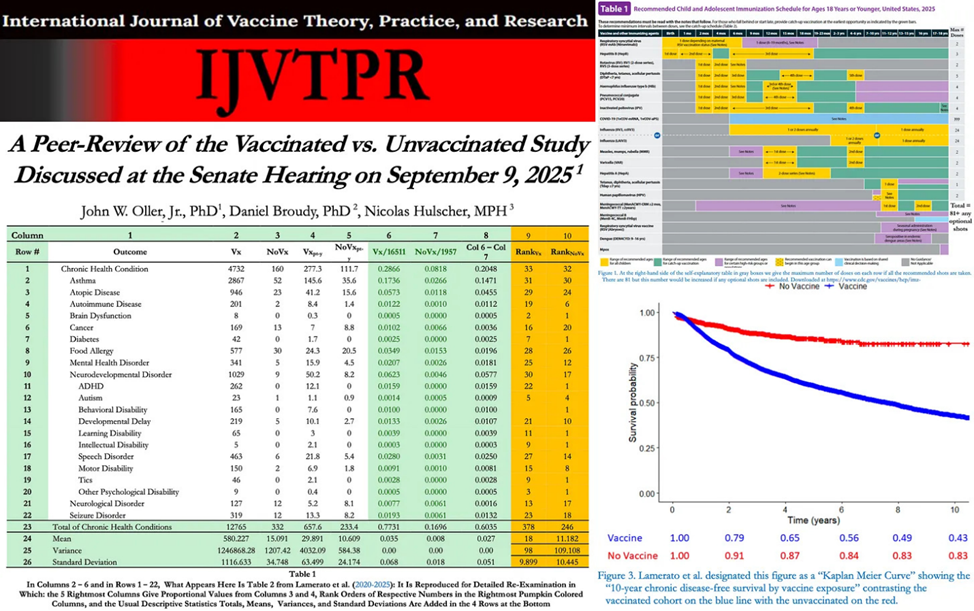
On 9 December, John Oller, Daniel Broudy and Nicolas Hulscher published their reanalysis of the data collected by the Lamerato et al study. The difference between the two studies is the way the data is analysed. The Lamerato et al study used odds-ratio modelling, a statistical approach that masked large disparities. Oller et al used a comparison of proportions per cohort approach. The same data analysed in different ways produced dramatically different results.
The abstract of the Oller et al study said:
Of the 22 chronic disease conditions studied, proportional contrasts always favour the unvaccinated. The most dramatic contrasts occurred in asthma, autism, autoimmunity, ADHD, brain dysfunction, mental health disorders, behavioural disability, developmental delay, learning disability, intellectual disability, speech disorder, motor disability, tics, other disability disorder, neurological disorder, and seizure disorder. At ten years of follow-up, 57% of the vaccinated cohort had at least one chronic disorder, compared with 17% in the unvaccinated.A Peer-Review of the Vaccinated vs. Unvaccinated Study Discussed at the Senate Hearing on September 9, 2025. (2025). International Journal of Vaccine Theory, Practice, and Research , 4(1), 1609-1646. https://doi.org/10.56098/vse7qq65
The following is Joel Smalley’s summary of Oller et al’s reanalysis. Smalley also posted a short video on Substack to explain the difference between the original study and the reanalysis. We are unable to embed videos uploaded onto Substack. You can watch the video by following THIS link.
Key Results
A peer-reviewed reanalysis of the Henry Ford Birth Cohort Study (18,468 children, 2000-2016) comparing vaccinated (16,511, median 18 vaccines) vs unvaccinated (1,957) children found:
Headline findings:
All 22 chronic disease categories showed higher rates in vaccinated children
Autism-associated neurodevelopmental conditions: 549% higher in vaccinated group
Childhood cancer: 54% higher in vaccinated group
By age 10: 57% of vaccinated children had developed at least one chronic disease vs only 17% of unvaccinated
Most elevated conditions included:
Autoimmune disease: 12× higher
Neurodevelopmental disorders: 13.5× higher
Speech disorders: 9× higher
Asthma: 6.5× higher
Several conditions appeared only in vaccinated children: ADHD, diabetes, brain dysfunction, behavioural disability, learning disability, intellectual disability, and tics.
Hulscher argues that the original study’s statistical methods (odds-ratio modelling) masked these disparities, particularly where the unvaccinated group had zero cases.
“Smartphone ownership at age 12 is associated with higher depression risk, increased obesity risk, and a greater likelihood of insufficient sleep. The younger people acquire smartphones, the worse their health outcomes become, a pattern that continues affecting health throughout the lifespan.“
(NaturalHealth365) Walk through any public space and the scene repeats everywhere: babies in strollers staring at glowing screens, teenagers unable to look up from their devices, and adults compulsively checking phones every few minutes. What began as a convenient communication tool has become a constant companion that most people interact with for well over 4 hours daily, rarely questioning what this exposure is doing to bodies and brains at every age.
A major study published in Pediatrics, analyzing over 10,000 adolescents, has delivered results that extend far beyond childhood concerns. Smartphone ownership at age 12 is associated with higher depression risk, increased obesity risk, and a greater likelihood of insufficient sleep. The younger people acquire smartphones, the worse their health outcomes become, a pattern that continues affecting health throughout the lifespan.
Hidden health crisis emerging at every age, study data confirms
Researchers from the Adolescent Brain Cognitive Development Study followed 10,588 participants, comparing health outcomes between 12-year-olds who owned smartphones (6,739 children) and those who didn’t (3,849 children). Depression risk increased by 31%, obesity risk jumped 40%, and insufficient sleep risk climbed 62% compared to children without smartphones.
The age at which someone gets their first smartphone shows a troubling trend: for every year earlier a child receives one, their risk of obesity increases by 9% and their risk of inadequate sleep rises by 8%. Early smartphone exposure appears to set long-lasting patterns that continue into adulthood.
Among youth who didn’t own smartphones at age 12, those who acquired devices during the following year had 57% higher odds of clinical-level psychopathology and a 50% higher likelihood of insufficient sleep, even after controlling for baseline mental health and sleep patterns.
But children aren’t the only ones affected. Adults spending excessive time on smartphones show similar health deterioration: disrupted sleep architecture, increased anxiety and depression, sedentary behavior contributing to metabolic dysfunction, and postural problems causing chronic pain.
Alarming cancer connection scientists can no longer ignore
Smartphones emit radiofrequency electromagnetic fields, raising serious questions about cancer risk across the lifespan. The International Agency for Research on Cancer classified radiofrequency electromagnetic fields as “possibly carcinogenic to humans” based on increased glioma risk associated with wireless phone use.
Children’s developing brains absorb more radiation than adult brains. Research published in Environmental Research found that children’s brains absorb 2-3 times more radiation than adults’, and the young, thin skull’s bone marrow absorbs roughly 10 times higher local doses. But adults face cumulative exposure risks. Someone who started using cell phones at age 15 and continues through age 65 accumulates 50 years of daily radiation exposure.
France has banned Wi-Fi in nursery schools and limited it in elementary schools, and Belgium has outlawed marketing phones to children under age 7. Yet despite these precautions, smartphone use continues to rise across all age groups, with very little discussion of the potential long-term health effects.
Simple strategies to protect yourself from device-related damage
Protecting yourself and your family from the health impacts of heavy smartphone use takes some intentional habits, but small shifts make a big difference.
Cut back on daily exposure: Instead of being “always on,” choose specific times to check your phone. Use built-in screen-time tools to set limits and create phone-free zones, like during meals, before bed, or when you’re spending time with others.
Lower radiation exposure: Use a speakerphone or a wired headset rather than holding the phone against your head. Turn off Wi-Fi and cellular data when you don’t need them, and avoid sleeping with your phone next to you. When you can, switch your device to airplane mode.
Reduce physical strain: Give your body breaks. Step away from screens regularly to undo the stress on your posture they cause. Simple stretches can help reverse “tech neck” and tight shoulders. If you’re sitting for long periods, stand and move at least every 30 minutes.
Protect your sleep: Keep screens out of the bedroom. Try to stop scrolling at least two hours before bed, so your body can naturally produce melatonin. If nighttime screen use is unavoidable, blue-light-blocking glasses can help.
Support detox pathways: Lower your overall toxic load by eating clean, staying hydrated, and moving your body daily. You can also support liver function and cellular repair with targeted supplements if needed.
Understand the cancer prevention connection
Chronic inflammation, disrupted circadian rhythms, electromagnetic field exposure, and sedentary behavior all contribute to disease processes, including cancer. These risk factors accumulate over decades of smartphone use.
Jonathan Landsman’s Stop Cancer Docu-Class brings together 22 holistic experts, researchers, doctors, and nutritionists, revealing evidence-based approaches to cancer prevention. Learn how environmental toxins and electromagnetic field exposure affect cancer risk, which lab tests detect early cancer markers years before conventional diagnosis, natural protocols for strengthening immune surveillance against abnormal cell growth, and how reducing toxic burden and supporting detoxification pathways lowers cancer risk.
Bottom line: Smartphone use harms health at every age, damaging mental health, disrupting metabolism and sleep, and exposing users to radiation that accumulates over time. Getting smartphones younger makes everything worse, but adults who’ve used phones for decades face their own serious risks. Protect your long-term health by cutting back on usage, keeping phones away from your body, and supporting your body’s ability to detoxify and repair cellular damage.
The constant exposure creates oxidative stress, which is a known precursor to chronic diseases like cancer, neurological disorders, and heart conditions.
Beyond the physical, 5G interferes with the body’s natural energy field and disrupts brainwave patterns, leading to anxiety, insomnia, and cognitive decline. In essence, 5G doesn’t just connect devices – it disconnects us from health, harmony, and higher consciousness. —-
As the scale of what has been done to humanity continues to evolve, the mind may struggle. In becoming increasingly distressed, many people run and hide under a psychological rock of denial or willful deaf-, dumb- and blindness. This may be fine for them, briefly, even as their peers start to suffer ‘befuddling’ health collapse or even die suddenly or horribly around them.
But one solution for those of us trying to navigate the enormity of this crime against humanity, or even working to stop it, is to focus on understanding the various elements of the crime, one aspect at a time. Clearly, to us anyway, ‘public health’ has been taken over by very dark interests and is being used to advance biowarfare on a large segment of the global population.
Superficially, the military and medicine may seem to be the antithesis of each other. One sends people to kill and be killed, and the other uses doctors and nurses to save lives. But there are plenty of clues that they can be bedfellows.
The same labs, researchers, investors and grant money work on ‘dual purpose’ innovations, for instance the souped-up pathogen and its own vaccine. Public Health is often called the 4th Service, having legislated authority to invade people’s homes and bodily autonomy in some circumstances, defined (and ideally limited) by health orders. Its leaders have military titles like Director-General, even uniforms in some countries.
Quasi-militarisitic staff can quarantine and forcibly test and administer treatments against people carrying, or merely at risk of, some diseases – even at the point of a gun.
Largely we accept all this, for the ‘greater good’, based on historic infectious disease outbreaks, and a deep primal fear of contagion. But the covid era has seen gross abuses of state power, led by bureaucrats suffering a lethal combination of fear and power craziness, and medical ethics have gone down the toilet. Worse still, the public health system has been the vehicle of choice to administer biowarfare against the people who trusted it.
What is Biowarfare?
Biological warfare (BW) is defined as the intentional use of harmful biological organisms, such as bacteria, viruses, and fungi, or their products, to inflict damage on humans, animals, or plants during warfare. It is categorized as a form of Weapons of Mass Destruction (WMD) due to its potential to cause mass casualties.
A euphemism for biowarfare research, “gain-of-function research” is defined as scientific studies undertaken “to increase the pathogenicity and transmissibility of microbes“. Pathogenicity means the severity of disease that an organism can cause. Transmissibility means the capacity of an organism to transmit between individuals.
Alongside covid-19, we have written about biowarfare in relation to a number of other scenarios being marketed to the public recently, including Mpox, Bird Flu and Disease X.
Recent Biowarfare History
The Biological Weapons Convention was ratified by multiple nations in 1975, prohibiting the “development, production, acquisition, transfer, stockpiling and use of biological and toxin weapons“. The convention was immediately violated by many nations and lack of enforcement has allowed biowarfare research to proceed unhindered, renamed ‘gain-of-function’ to obscure the industry and its criminal activities from public attention.
As early as 2002 Dr Anthony Fauci, as Director of the US National Institute of Allergy and Infectious Diseases (NIAID), a division of the National Institutes of Health (NIH), admitted to his involvement in biowarfare research, including collaborations with Soviet Union defectors.
(Click on the image below for the video)
Biowarfare activities proved highly profitable for Dr Fauci and his partners at universities, health agencies, military agencies and research institutes worldwide. The business model is creation of engineered viruses which are then patented so that resulting countermeasures (diagnostics, vaccines, therapeutics) can generate profit to the patent owner. Learn more about the history and evolution of biological weapons from biowarfare experts Professor Francis Doyle (Part 1) and Dr Meryl Nass (Part 2).
NIH owns hundreds of vaccine patents and often profits from the sale of products it supposedly regulates. High level officials, including Dr. Fauci, receive yearly emoluments of up to $150,000 in royalty payments on products that they help develop and then usher through the approval process. ~ The Real Anthony Fauci, 2021, Robert F Kennedy Jr
A Rotten Pipeline
RFK Jr and other authors have followed the last decade’s biowarfare links between China and the US.
Although the modern use of pathogens as weapons goes back a while, spawned from cruel experiments on captives of Germany and Japan in World War 2, Dr David Martin explains here how for hundreds of years quarantine and the fear of conatgion have been used to control the masses and as an economic weapon.
The escalating emphasis on biological weapons by the world superpowers since the early Cold War was illuminated further by a large whistleblower release (into private hands) late last year. After successful decryption, this treasure trove of data, contracts and confidential reports was used to make a series of short documentary essays by our friends at Pure Media Australia.
They chart the path from an early Soviet program to attack the blood of the enemy using microbes all the way forward to designing the Wuhan bioweapon and it’s wicked icing on the cake, the covid-19 genetic injections. In particular, they lay out the sequence of the various open reading frames (sequences of DNA and RNA that encode for specific proteins) discovered, extracted or designed by the bioweapon researchers in the US, Communist China and the former USSR which all make their way, via SARS and MERS, into the world’s best known Coronavirus and its misnamed vaccines.
Of particular use to the Americans was the flood of Russian bioweapon workers who transferred their knowledge on the collapse of the Soviet Union beginning in 1989.
To further zoom in on some specifics, patents expert and bioweapons investigator Dr David Martin has reported on a 2011 collusion between Dr Fauci’s NIAID, the Wellcome Trust, the Gates Foundation, the Rockefeller Foundation and the Chinese Centers for Disease Control and Prevention. The group established a mandate that by 2020 the world would ‘accept a universal vaccine’.
Dr Martin quoted bioweapons researcher Peter Daszak who claimed at a 2016 workshop on Developing Medical Countermeasures (MCMs) for Coronaviruses, that:
“Until an infectious disease crisis is very real, present, and at an emergency threshold, it is often largely ignored. To sustain the funding base beyond the crisis, he said, we need to increase public understanding of the need for MCMs such as a pan-influenza or pan-coronavirus vaccine.
A key driver is the media, and the economics follow the hype. We need to use that hype to our advantage to get to the real issues. Investors will respond if they see profit at the end of process.“
Dr Martin alleges that as far back as 1966 the Wellcome Trust began funding research on Coronaviruses. It is no coincidence that Jeremy Farrar left the Wellcome Trust to take his position as Chief Science Officer at the World Health Organization (WHO) in 2023.
In a display of remarkable prophesy, the Global Preparedness Monitoring Board, a collaboration between WHO and the World Bank, warned in September 2019 that public money must be channeled towards preventing the threat of “a lethal respiratory pathogen (whether naturally emergent or accidentally or deliberately released)“.
Recent incidents involving smallpox, anthrax and bird flu in some of the top US laboratories remind us of the fallibility of even the most secure laboratories, reinforcing the urgent need for a thorough reassessment of biosafety.
Covid as a Biowarfare Weapon of Mass Destruction
Dr Fauci’s status gave him the means to circumvent this moratorium. NIAID and USAID collaborated with bioweapons researchers Dr Peter Daszak at EcoHealth Alliance and Dr Ralph Baric at University of North Carolina Chapel Hill, to transfer Dr Fauci’s coronavirus research to Dr Shi Zhengli at the Wuhan Institute of Virology.
As early as January 2020 the late Professor Francis Boyle, an international law professor and biowarfare expert, warned that the SARS-CoV-2 virus is a genetically modified biowarfare agent. Thankfully, despite appropriating many billions of taxpayer dollars, gain-of-function research remains extremely crude and the overall mortality rate of Covid-19 sits within the realm of influenza, mainly harming the already infirm and dying.
Not only was Covid treatable, but at least 50% of people had sufficient immunity from a previous common cold to prevent noticeable illness. It can also be said that Covid was not unusually lethal, since the mortality burden was only as bad as a normal flu season.
In an infamously fraudulent paper published in Science in March 2020 The Proximal Origin of SARS-CoV-2, scientists collaborating with Anthony Fauci tried to discredit the evidence for laboratory manipulation. Dr Fauci has since been accused of directing the deletion of official government records, apparently hoping to erase evidence of his leadership in gain-of-function research.
One of the earliest scientists to identify laboratory manipulation of the spike protein of SARS-CoV-2 was friend and colleague of NZDSOS, esteemed London oncologist/immunologist/vaccine developer Professor Angus Dalgleish. Medical journals refused to publish his findings in what was at that time, a bewildering act of censorship. We have since learned that censorship and propaganda are a necessary feature of the biowarfare program, without which the world cannot be convinced that naturally occurring viruses are an existential threat, and patented products the only solution.
Shortly before his untimely death in January 2025, Professor Boyle signed a legal affidavit asserting that “COVID-19 injections, also known as “COVID-19 nanoparticle injections” and “mRNA nanoparticle injections,” are “biological weapons and weapons of mass destruction“.
Many thousands of virologists, vaccinologists and other scientists are engaged in highly lucrative biowarfare research through programs funded via collaborations between military, pharmaceutical, non governmental and medical research agencies.
Although easy to detect by often bizarre and deceitful behaviours, few will admit to biowarfare involvement openly. No doubt buoyed by the impunity of their funders Dr Fauci, Jeremy Farrar and Bill Gates, two key players in the biowarfare industrial complex have made public admissions:
Dr Ralph Baric from University of North Carolina Chapel Hill, known as the “coronavirus hunter”, published in 2016 that his gain-of-function research on SARS-like coronavirus was “poised for human emergence“. His laboratory has been implicated in multiple laboratory acquired infections (lab-leaks).
Speaking to New York University virologist Professor Vincent Racaniello in 2020, zoologist Dr Peter Daszak of EcoHealth Alliance admitted to collecting hundreds of SARS-like viruses from bats in China, and manipulating their spike proteins to improve their ability to infect humans.
Meanwhile, evidence is now overwhelming that this narrative supports criminal activity, aimed at driving up profit and shifting power into the hands of those responsible. Population health is collateral damage at best, or deliberately harmed at worst. A September 2025 article in the Journal of American Physicians and Surgeons summarises the evidence, including:
Origins of SARS-CoV-2 and SARS-CoV-2 Modified mRNA Biologics/Vaccines
Suppression of Information and Early Vaccine Development
Defense Medical Epidemiology Database Abnormalities
Autoimmune and Immunological Dysfunction
Hypersensitivity and Cytokine Storms
Cardiovascular Adverse Events
Reproductive and Pregnancy-Related Risks
VAERS Safety Signals and Vaccine Contamination Concerns
Surge in Aggressive Cancers
Aberrant Protein Production
Biopsychosocial and Ethical Considerations
The Future of mRNA Biologics: Promise, Risks, and Ethical Imperatives
Violations
In conclusion the authors state:
“The COVID-19 pandemic response violated core principles of public health, medical freedom, and bodily autonomy, amplifying the devastating effects of SARS-CoV-2 and its modified mRNA biologics/vaccines.
The overwhelming evidence of SARS-CoV-2’s gain-of-function origins, coupled with the catastrophic health impacts of modified mRNA COVID-19 biologics/vaccines and the unchecked expansion of next-generation mRNA biologics, paints a chilling picture of deliberate design and systemic harm. Engineered viral features and vaccines that devastate immunological, cardiovascular, reproductive, and neurological systems have driven staggering morbidity and mortality, with effects unlikely to be accidental.
Coordinated efforts to obscure these truths, enabled by liability shields and legislative failures, have worsened a global health disaster. The surge in autoimmune diseases, aggressive cancers, pregnancy losses, cardiovascular fatalities, societal fragmentation, and the looming risks of advanced mRNA platforms demand an immediate halt to mRNA vaccine and biologic use, comprehensive investigations into the motives behind this unprecedented violation of public trust, and robust measures to restore safe therapeutics and ethical public health practices.
Humanity deserves accountability, transparency, and a resolute commitment to preventing such engineered calamities in the future.“
On 2 September 2025, the Florida Chapter of NZDSOS partner, the World Council for Health, declared mRNA injections to be weapons of mass destruction. They endorse the mRNA Bioweapons Prohibition Act written by Dr Joseph Sansone and introduced to the Minnesota State Legislature in April 2025 recognising that mRNA products “violate existing state bioweapons and weapons of mass destruction laws“.
As predicted by Dr Joseph Sansone, momentum is building as the public become increasingly aware that they have been terribly harmed by the criminal activities of a small cartel posing as “experts”. Evidence is also now clear, even as the Pfizer contract remains unavailable for public scrutiny, that New Zealand authorities acted unlawfully in approving, let alone mandating, the dangerous Pfizer product for use on the population.
However, much of the above focuses only on the mad scientist-modified RNA aspect of the designer bioweapons. There is the now-obvious contamination with DNA plasmids (and probably other things) in the completely different product to the one trialed briefly on humans before the worlds’ regulators approved it en masse, and the widespread embalmers white clots, of which a thorough scientific analysis is currently in peer review.
It would seem the last thing Medsafe and its overseas equivalents were interested in was ensuring any safe product, let alone turning a seeing eye to Pfizer’s obvious bait and switch of Process 2 for Process 1. So they allowed – mandated even – a completely untested product onto the world’s population. Not a single Western public health entity called this out.
As within other elements of the military and intelligence apparatus, deception is a clear technique of the biowarfare-public health complex. With more than half the planet potentially having been genetically altered, it is up to us all not to get fooled again.
A recent study confirming the herbicide’s carcinogenic potential has been the subject of fierce criticism. However, this criticism is based on flawed scientific grounds, Le Monde has reported.
The recent publication of a study indicating an increased risk of various tumors in laboratory rats exposed to glyphosate has sparked numerous comments on social media and in the press, aimed at downplaying or denigrating this research.
These results, published on June 10 in the journal Environmental Health, only confirm the conclusions of the International Agency for Research on Cancer (IARC), which estimated in 2015 that the studies available at the time provided “sufficient evidence” of glyphosate’s carcinogenicity in animals.
The attacks on this study, led by the Ramazzini Institute in Bologna, Italy, offer an exemplary array of the sleight of hand of “doubt manufacturing,” a rhetoric aimed at undermining confidence in scientific results, often used to delay or fight regulatory decisions.
“The journal is unknown, so the study is flawed.”
Eric Billy, an immuno-oncology researcher, was among the most vocal critics of the Ramazzini Institute study (which was actually an international study with authors from all over the world not just the Ramazzini Institute), which he deemed “flawed.” In a series of messages published on June 14 on his X and Bluesky accounts, which received numerous retweets, this employee of the pharmaceutical company Novartis first accused its authors of having “chosen a more lenient journal to avoid criticism,” explaining that he would have expected to read this article in the journals “Nature, Science, or Cell,” which he believes are of higher quality.
WHY IT IS IRRELEVANT
Environmental Health, published by the SpringerNature group, is actually one of the most influential journals in its field. Its citation rate places it 32nd out of 687 indexed journals covering the fields of public health, environmental health, or occupational health, according to the 2024 ranking by scientific publisher Elsevier. Prestigious journals like Nature or Science do not generally publish tests like the one conducted by the Ramazzini Institute.
“A number of reliable and high-quality toxicity studies, like the one you share with us, are published in specialized journals,” explains Meagan Phelan, spokesperson for publications published under the Science banner. “Although these are essential elements of substance assessment, these tests are not considered conceptual advances and, as such, Science does not generally publish them.”
“Exposed animals live as long as others”
The Ramazzini study did not reveal any significant difference in mortality between rats exposed to glyphosate and unexposed control rats. This point was highlighted by Mr. Billy to put the study’s conclusions into perspective. And it hit the mark: it was later reported in Le Figaro, which saw it as the “first lesson” of this work.
WHY IT’S MORE COMPLICATED
The fact that the study did not reveal any significant differences in survival rates between the two groups was not presented by the Ramazzini researchers as a result in itself. Their protocol was, in fact, designed to detect the carcinogenic potential of a product, not its effect on the animals’ survival: all of them were sacrificed two-thirds of the way through their lives, at the age of 104 weeks. Now, it’s easy to understand that if human smokers were compared to non-smokers, the mortality differences would be small if all individuals were euthanized at the age of 50.
In reality, the absence of a mortality difference between groups of animals over the duration of the test is mainly a guarantee of the quality of the study, for statistical reasons. An animal that dies prematurely will have been exposed for a shorter time to the substance tested, and the probability of tumors developing in its group will therefore be reduced. Its statistical weight in the analysis will therefore be different. A high survival rate in each group, both treated and control, guarantees the “maintenance of statistical power” of the experiment, according to the good practice guides in toxicology (maintained by the OECD).
“The chosen rodent strain is not appropriate.”
Several commentators have also criticized the Ramazzini Institute researchers’ choice of the so-called “Sprague-Dawley” rat strain. Eric Billy argues that the use of this type of rat “has already been strongly criticized by the scientific community due to an abnormally high frequency of spontaneous tumor lesions compared to other rodent strains,” recalling that this strain was used by Gilles-Eric Séralini in his famous and controversial study on GMOs.
WHY THIS IS INCORRECT
In reality, the high rates of spontaneous tumors observed in the “Sprague-Dawley” strain only concern certain sites (tumors of the mammary gland, pituitary gland, etc., found at comparable rates in the treated and control groups). Furthermore, the researchers have at their disposal an abundant literature to take into account the specific characteristics of this strain.
Not only is the “Sprague-Dawley” strain not problematic in itself, but it is the most widely used. In 2024, researchers showed that more than 55% of the 263 carcinogenicity studies of active ingredients conducted in recent years on rats used this strain. The carcinogenicity of Ruxolitinib, a drug substance marketed by Novartis, was, for example, tested on this strain. As for Dr. Séralini’s study (published in 2012, before being retracted and then republished), the choice of strain was not, in itself, among the criticisms made. As summarized by IARC experts in 2015, it was the entire protocol implemented that was criticized.
“The doses tested are unrealistic”
Like several other critical voices, Eric Billy is surprised by the high doses of glyphosate to which rats were exposed in the Ramazzini Institute study, stating that “even the lowest dose tested far exceeds actual human [dietary] exposure” and that “the other two doses are therefore a hundred and a thousand times higher than this human exposure.” The same argument and the same figure are used in Le Figaro.
WHY IT IS IRRELEVANT
This argument is frequently raised to challenge the relevance of the results of animal studies. However, millions of humans exposed for decades cannot be compared to a hundred rats exposed for 24 months. The purpose of these tests is to characterize the carcinogenic potential of substances, not to assess the risks faced by the population at actual exposure levels (sometimes much higher than dietary exposure, for people living near farms, farm workers, etc.).
In fact, the Glyphosate has already been associated with an increased risk of certain lymphomas in farmers in four meta-analyses and one pooled study—the highest levels of evidence in epidemiology. Animal studies allow us to interpret these results, suggesting that these associations are indicative of a causal link. And even if we give credence to the “too high dose” argument, the objection remains unfounded.
The Ramazzini study indeed examined the effects of glyphosate at considerably lower doses than all previous similar studies. In the seven studies selected by European authorities during their latest assessment of the herbicide molecule, the lowest doses tested were 12 to 420 times higher than in the Ramazzini study, and the highest exposures were 10 to 33 times higher.
“The route of exposure is not adequate.”
In the Ramazzini study, the animals were exposed to glyphosate through drinking water, not food. Mr. Billy maintains that this is inadequate, arguing that humans are more likely to be exposed through food.
WHY IT IS IRRELEVANT
Among the animal studies on glyphosate submitted to health authorities or evaluated by IARC, none has been deemed inadmissible because it opted for a similar exposure route. Drinking water is, moreover, considered acceptable for assessing “food or environmental chemicals, including pesticides,” just like diet, according to OECD Good Practice Guide No. 451.
This false controversy is a classic argument. In 1953, the Sloan Kettering Institute’s first work on the carcinogenic potential of tobacco involved observing the development of tumors on the shaved skin of rodents after smearing it with cigarette tar extracts. The American Tobacco Company criticized the scientists’ use of a “high concentration of smoke extracts—entirely different from the smoke a person might inhale from a cigarette,” while stating that “all scientists agree that there is no known relationship between skin cancers in mice and lung cancers in humans.”
Like the Ramazzini researchers, those at the Sloan Kettering Institute were not seeking to exactly mimic human exposure to the agent being tested (no one smears cigarette tar on themselves), but to test its carcinogenic potential.
“The number of animals is insufficient”
In his critical thread, Eric Billy makes a calculation estimating that, to achieve greater statistical robustness, the Ramazzini researchers should have used at least three times as many rats, or 160 to 220 individuals per group.
WHY THIS IS INCORRECT
Such requirements are fanciful. No chronic toxicity or carcinogenicity study of glyphosate conducted on rats has ever enrolled so many animals. All studies similar to those of Ramazzini one have included around 50 rats per group. And for good reason: this is the threshold recommended by the OECD guidance document.
“In this case, it is completely ridiculous to require more animals per group,” asserts American biostatistician Christopher Portier, former director of the US National Toxicology Program, whose work is an authority on the subject. According to this specialist, an expert witness for plaintiffs in several ongoing trials in the United States, the Ramazzini researchers “managed to demonstrate a statistically significant trend toward an increase in certain tumors in the treated animals, even though there were only 50 per group. Why would the experiment be repeated with more animals to gain more statistical power?”
In reality, it is when a statistically significant effect is not found that it is possible to argue that the number of animals is too small, and that it may be useful to increase statistical power. “The only disadvantage of having 50 rats per group, rather than 160 or 220, is ‘missing’ an effect, certainly not seeing an effect that doesn’t exist,” concludes Mr. Portier.
This article benefited from discussions with researchers at the Ramazzini Institute and critical review by three researchers (INRAE and INSERM) involved in toxicology work involving animal studies.
What is the “manufacturing of doubt”?
As science historians Naomi Oreskes (Harvard University) and Erik Conway (NASA) have shown in a landmark book (Merchants of Doubt, 2012), the “manufacturing of doubt” was developed in the 1950s by tobacco companies to deny or relativize the effects of cigarettes.
This rhetoric turns science against itself, by distorting the intellectual tools at the heart of scientists’ approaches (methodical doubt, demands for rigor, distrust of claims perceived as spectacular, etc.). It is thus very effective on members of the scientific and medical communities who do not work directly on the targeted subjects, as well as on audiences attached to rationality and the defense of scientific values, or even journalists who sometimes repeat such circulating arguments without thinking twice.
A highly effective propaganda technique, “manufacturing doubt” sometimes requires lengthy explanations to unmask, especially since it sometimes mixes legitimate criticisms with others based on untruths, misinterpretations, or simply erroneous considerations. It constitutes a toolbox constantly used for decades by a variety of industrial sectors wishing to protect their activities from any health or environmental regulation.
A world-renowned oncologist has issued a chilling warning after uncovering evidence that the Covid mRNA “booster” shots have caused huge waves of cancer deaths among those who received the injections.
The warning was issued by Dr. Angus Dalgleish, a professor of oncology at St George’s University of London and a leading vaccine researcher.
Dr. Dalgleish is sounding the alarm over the surging numbers of cancer deaths currently being recorded among those who received the so-called “boosters.”
In a new statement, Dalgleish warns that cancer cases and related deaths are now skyrocketing among those who received the injections.
The highly respected oncologist explains that the mRNA shots “suppress the immune system” and “drive” the surging cancer cases.
He asserts that the Covid mRNA “booster” program may have been one of the greatest medical missteps in modern history.
Dalgleish, who is celebrated globally for his contributions to HIV/AIDS research, has been one of the leading voices in raising concerns about the safety of the injections.
He is now warning the public directly about his alarming findings linking the mRNA shots to devastating cancer spikes.
His critique is based on a series of alarming observations regarding the impact of the boosters on the immune system.
Dalgleish is particularly concerned about how the shots were rolled out for public use and the horrific consequences they have had on the health of millions.
According to Dr. Dalgleish, the boosters were initially introduced based on the premise of falling antibody levels.
While it’s normal for antibody levels to decrease following vaccination or infection, this drop was misinterpreted as a sign that additional boosters were needed.
However, Dalgleish stresses that the real defense against infections lies not in antibodies, but in T cells.
T cells are a more long-lasting and critical component of the immune system.
The booster shots, he argues, not only failed to improve immunity but actually suppressed T-cell immunity.
This suppression left people more vulnerable to infections.
Furthermore, Dalgleish points out that the boosters targeted an extinct strain of the Covid virus that had “already left the planet.”
This rendered them essentially useless against newer, more contagious variants that emerged, Dalgleish explains.
This failure to adapt the boosters to evolving strains further undermined the effectiveness of the “vaccination” strategy.
With the “boosters” ineffective against the virus, the only thing left they could do was cause harm.
What Dr. Dalgleish found to be particularly troubling was the harmful shift in how the immune system responded to the “boosters.”
Instead of providing robust protection, the injections switched antibodies from a “protective” mode to a “tolerizing” state.
This effectively made the body more susceptible to infections.
This issue became even more pronounced in cancer patients, he noted.
Dalgleish observed a dramatic increase in cancer relapses post-booster.
His early observations were met with hostility and silencing, as he was dismissed by institutions that labeled his warnings as “anecdotal.”
Now, global data has confirmed Dalgleish’s findings.
Recent national data from Japan shows a significant rise in cancer cases that can be directly linked to the “vaccine” program.
“The cancer incidence has gone up in Japan, just due to the ‘vaccine’ program,” Dalgleish explains.
He notes that the official data from Japan is more “trusted” than other nations because the government doesn’t “fiddle” with the statistics.
Dalgleish added that the Japanese data appears to show that cancer deaths are emerging roughly two years after people received mRNA “booster” injections.
This confirmation from worldwide scientific communities has validated his claims, as he explained:
The cover-up surrounding these findings has been a source of immense frustration for Dr. Dalgleish.
He revealed that he was bullied, censored, and ignored by the very institutions that should have prioritized patient safety.
The guiding principle of “first, do no harm” was, in his view, abandoned as patients were pressured into receiving boosters.
However, these mRNA injections ultimately worsened their outcomes, Dalgleish notes.
Now that the truth is coming to light, Dalgleish is calling for accountability.
Meanwhile, a leading biochemist has issued a warning over surges in colon cancer cases among children who received Covid mRNA “vaccines.”
Dr. Jessica Rose, a respected researcher known for her in-depth analyses of vaccine safety data, says the evidence now shows a disturbing correlation between the mRNA rollout and skyrocketing colon cancer cases.
As Slay News reported, Rose analyzed data from the U.S. Centers for Disease Control and Prevention’s (CDC) Vaccine Adverse Event Reporting System (VAERS).
According to Rose, VAERS data reveals a staggering “8,300% increase in colon cancer” that is directly linked to the Covid mRNA “vaccine” rollout timeframes.
Scientists around the world are now confirming that the boosters did significant damage to immune responses and contributed to the acceleration of deadly cancers.
What was once dismissed as reckless or anecdotal is now undeniable.
The consequences are becoming impossible to ignore.
Travelling about the NZ countryside recently I noticed the familiar yellow fields I used to think were attractive. Until I discovered they’d been sprayed with Roundup, the herbicide that farmers tell me, is so harmless you could drink it.
Manawatu field sprayed with Herbicide
Sounds a bit like the ‘safe and effective’ mantra. Well it turns out Roundup is far from either of those terms. Why will farmers not read the independent research? Or follow the precautionary principle. Any doubt whatsoever about safety? wait until it is proven safe.
Roundup is manufactured by Bayer (formerly Monsanto… read their history … who have morphed into oblivion) and one of its ingredients so harmful to us all is glyphosate. There is a ton of independent research now (including law suits) that should make you avoid it at all costs. US Legal firm Wisner Baum helped negotiate over $11 billion in settlements against Bayer, securing multi-billion dollar jury verdicts for its clients. They state at their website:
Roundup is a widely used herbicide whose active ingredient is glyphosate. The International Agency for Research on Cancer (IARC) — part of the World Health Organization — classifies glyphosate as a probable human carcinogen. Thousands of people across the U.S. have alleged that long‑term exposure to glyphosate (in Roundup and similar products) caused them to develop non‑Hodgkin lymphoma (NHL) and other serious illnesses.
A NZ tertiary agricultural textbook has long instructed farmers to spray Roundup on their fields then plow it under. The text book is called Pasture Doctor and can be found on Amazon here. (Small wonder farmers still think it’s safe. Why would the University lie to them? ) There used to be a preview option of that book from which I screenshot the pages recommending spraying, however that option has now disappeared. (I lost the screenshots some time ago unfortunately). Of note, it was a University lecturer who told me in the 1980s that corporations would one day control governments. Predictive programming at its finest.
The Seralini Rats
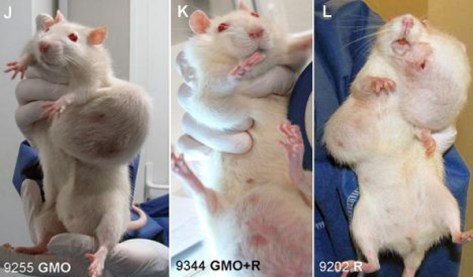
Professor Seralini (from France) conducted a two year experiment (2011) examining glyphosate and GMO food, his team fed transgenic corn to lab rats that produced in them multiple tumours. But of course Monsanto produced ‘evidence’ claiming the rats they used were the wrong kind, casting aspersions on the whole study. (Refuted here). Wiki predictably called it the Seralini ‘affair’. I would prefer to believe the Professor any day. You can watch the 12 minute Seralini video below. There is a transcript at the source on YouTube.
A French court ruled in 2009 that Monsanto has lied about the safety of Roundup (ie it is not biodegradable as claimed, a bit like the claims made about deadly 1080).
US Tertiary level lecturer of 55 years experience in agriculture, Professor Emeritus of Plant Pathology (Dr Don Hubert) calls Glyphosate one of the most toxic substances on the planet.
The Physicians & Scientists for Global Responsibility (PSGR) supply a long list of research citing concerns about glyphosate here.
“We don’t want to wait until we have exposed enough people to a chemical in order to prove that it’s carcinogenic. When we hit that point, we have hit a failure in the regulatory process.” – Dr. Lynn Goldman, National Research Council Report Review Committee Member
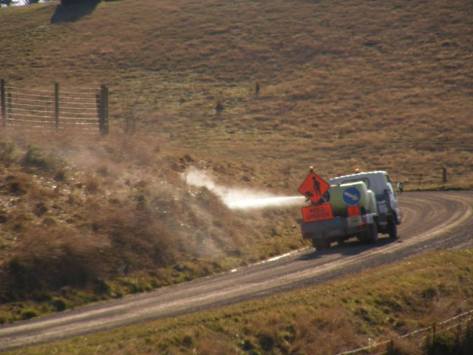
Many Councils in NZ spray the roadsides with glyphosate. (Photo credit: Marian Sutherland)
For some time I and other interested folk appealed to the local Rangitikei District Council asking them to drop the use of glyphosate/Roundup on Council lands, streets, parks and so on. There were some concessions made about signage warning the public of spraying and so on but as to ceasing altogether they declined. There was evidence cited of the use of steam in Auckland to combat weeds which was only minimally dearer than Roundup. No go. I approached a person spraying for Council one time and asked why he didn’t wear protective clothing as recommended by the manufacturer. He told me he didn’t want to scare the public.
To educate yourself on the long list of studies and the experts who have spoken out against glyphosate and Roundup check out these pages (glyphosate is in other herbicides as well, check the labels, and consider organic alternatives if you must spray) :
Links between Glyphosate and a Multitude of Cancers that are “Reaching Epidemic Proportions” from GlobalResearch.ca
Search in ‘categories’ for ‘glyphosate’ (categories is found at the top left hand side of the news page). Alternatively type glyphosate into the search box (top right hand side).
A major peer-reviewed study has concluded that chronic illness and deadly diseases, such as cancer, are virtually non-existent in people “who’ve never received a vaccine in their life.”
The study compares rates of chronic disorders – such as heart disease, diabetes, cancer, developmental disabilities, and autism – among unvaccinated Americans with those vaccinated with a varying number of vaccines.
The team of researchers, led by scientist Joy Garner, found that unvaccinated people have far lower rates of illness and death.
The study’s lead author also notes that vaccine trials use faulty baselines, as their control groups do not consist of wholly unvaccinated individuals.
“Because 99.74% of the U.S. population is vaccine-exposed, published national disease rates invariably reflect the frequency of observed negative outcomes arising from exposure to vaccines,” Garner explains.
In the “Abstract” section of the study, the author notes that “those refusing vaccines are thriving while those accepting them are being injured and met with a multiplicity of grave injuries as well as sudden unexpected death.”
However, the journal has scrubbed the study’s paper without explanation.
A copy of the study’s paper has now been published by Slay News here.
The apparent cover-up of the study has meant that the findings have gone unreported in the media.
However, renewed attention has been brought to the study following a recent interview between attorney Greg Glaser and Dr. Lee Merritt which highlights the findings.
Glaser, the general counsel for Physicians for Informed Consent, notes that the study shows “the unvaccinated are the healthiest people on the planet.”
The cohort study analyzed “unvaccinated” Americans.
The group of “unvaccinated” only included those who have never received a single “vaccine” in their lifetime.
The strict criteria also meant those whose mothers did not receive any “vaccines” while they were in the womb.
The study notes in the “Abstract” section:
“The null hypothesis, that no significant difference would be found between vaccinated vs. unvaccinated persons in heart disease, diabetes, digestive disorders, eczema, asthma, allergies, developmental disabilities, birth defects, epilepsy, autism, ADHD, cancers, and arthritis, is rejected with overwhelming statistical confidence and power in every single contrast.”
In fact, Glaser notes that “the unvaccinated today are as healthy as children were in the 1950s before all the shots.”
“I participated in a control group survey where we looked at the health of the genuinely unvaccinated children who’ve never received a vaccine in life and adults who’ve never received a vaccine,” Glaser says.
“There’s approximately 100,000 adults in America who’ve never received a vaccine in their entire life.”
“We looked at the unvaccinated and compared [them to vaccinated Americans and the] unvaccinated are virtually entirely healthy for life,” Glaser adds.
“Their chronic illness rate among [unvaccinated] children is approximately 2%.
“That means 98% of all children who are unvaccinated are healthy for life.
“Like, they don’t have anything,” he notes.
“They don’t have ADHD, diabetes, obesity, asthma, epilepsy, cancer.
“We found zero of these things, with the exception of some minor [ADHD].
“Like, you’d find, like, maybe a little bit of ADHD, but then it was just that one condition.
“Whereas in the vaccinated group, you find that multiple children have many conditions, and the conditions are severe.”
“I participated in a control group survey where we looked at the health of the genuinely unvaccinated children who’ve never received a vaccine in life and adults who’ve never received a vaccine.
“Can you believe it? They’re out there.
“There’s approximately 100,000 adults in America who’ve never received a vaccine in their entire life.
“Dr. Merritt, you have done your homework. That is correct.
“Yeah [that means even their mothers didn’t receive a ‘vaccine,’ including the vitamin K shot].
“And, and that’s very important.
“The vitamin K shot has benzyl alcohol, which a baby’s liver cannot handle, and it also has a spike of aluminum, which is also not good for a baby.
“And so what we did is we compared the health of these two groups.
“Our national data on just people’s illnesses, diabetes, heart disease, other forms of chronic illness that just make life really hard.
“And we looked at the unvaccinated and compared that, and the unvaccinated are virtually entirely healthy for life.
“Their chronic illness rate among the children is approximately 2 percent.
“That means 98 percent of all children who are unvaccinated are healthy for life.
“Like, they don’t have anything.
“They don’t have ADHD, diabetes, obesity, asthma, epilepsy, cancer.
“We found zero of these things, with the exception of some minor.
“Like, you’d find, like, maybe a little bit of ADHD, but then it was just that one condition.
“Whereas in the vaccinated group, you find that multiple children have many conditions, and the conditions are severe.
“And so the data was clear to us that the unvaccinated are the healthiest people on the planet.
“And the way it made sense to me was that I looked at our national data from the 1950s and it matched the unvaccinated.
“Like, basically, the unvaccinated today are as healthy as children were in the 1950s before all the shots.”
John Lodge, the bass guitarist and one of the primary singers and songwriters for the Moody Blues, is recuperating from what is described as a “serious medical issue” during the Christmas holiday. A January 11, 2024, post on hisFacebook page noted he is “already well on the mend.” However, the unidentified health issue has forced the postponement of his “Performs Days of Future Passed” U.S. tour that was planned for February and March.
Nothing to do with the S&E of course… nothing at all…note they include autism & infertility as possible outcomes … folk have been raising alarms on this for years while now it’s a handy go to for letting the aforesaid ‘treatment’ off the hook…
Startling new report finds hormone-warping chemicals in 99 PERCENT of food sold in American stores – which may raise risk of cancer, autism and infertility
Forever chemicals’ linked to cancer are found in virtually every food product sold in American stores, a shocking report suggests.
It comes amid growing fears about the massive amounts of chemicals being ingested by Americans every year – and whether it is related to a mystery spike in cancers among young people.
Note: see comments for an update on Sec. Austin … who seemingly was killed in Ukraine? … read & judge for yourself.Check out our sister site truthwatchnz.is for other news
Sheffield Eagles full-back Quentin Laulu-Togaga’e “recovering from heart attack”; footballer Tom Holmes “diagnosed with rare form of cancer”; ITV soap “Emmerdale” adds cancer storyline
More celebrities sidelined dramatically in just the last few days—and a sampling of the “rare”conditions now afflicting countless tots and babies (none famous, or related to celebrities)
Indianapolis Colts owner Jim Irsay undergoing treatment for “severe respiratory illness”
These first two items reconfirm what we (who pay attention) have unhappily observed since early 2020—that cultural rebelliousness (Stern’s raunchy humor, RATM’s loud dissidence) does not make you anti-authoritarian (if you’ve been stupefied with fear).
Though he’s never felt sicker, Stern credits the “vaccine,” without which he’d feel even worse, he thinks (if one can use that verb with so feral a Covidian).
Guatemalan pop star Ricardo Arjona, German TV journalist Dunja Hayali both retire; Piers Morgan tests positive for “Covid,” blames the un-jabbed; NZ actor Martin Henderson’s “scary” illness; more
More updates on the elephant in that global room so to speak ….
From Mark Crispin Miller @ substack
Coach Mike McCarthy has “acute appendicitis” (like Colbert); ESPN’s Kirk Herbstreit’s son Zak, 20, in hospital with “heart condition”; Philly sports reporter Jamie Apody “seems to have disappeared”
Jesse Montana, friend of reality TV star Ariana Madix, has a brain tumor; “Former Fox 5 reporter [San Diego] battles rare cancer”
Pope Francis announced at a seminar this week that he was diagnosed with “very acute infectious bronchitis.”
The pontiff made the announcement at the Vatican’s “Ethics in Health Management” seminar on Thursday, joking to the audience, “As you can see, I am alive.”
“Thank God it wasn’t pneumonia. It is a very acute, infectious bronchitis. I do not have a fever anymore, but am still on antibiotics and such,” Pope Francis told the health care professionals in attendance.
Note Kiwis: The Nats plan to lift NZ’s ban on ‘gene editing and genetic modification to unlock enormous benefits for climate change, agriculture and health science’ they say … so you know where we are headed. All the research demonstrating the dangers of GMOs falls on deaf ears of course. Corporations rule and they have no interest at all in what benefits you. Under Clarke’s watch 20+ years back GM corn crops were planted and allowed to mature in NZ … how many crops did they contaminate? We’ll never know. Read Nicky Hager’s ‘Seeds of Distrust’ … more lies from your esteemed leaders. EWNZ
From globalresearch.ca
Severe health risks of Genetically Modified Organisms (GMO) are not new. Studies by scientists among others in France, Germany, Austria, since at least the 1990s, pointing to several levels of health dangers to mankind abound. A recent study released by Egyptian researchers found that rats fed a GMO diet suffer from infertility, among other health issues. In the US similar studies were muzzled by Monsanto and the Monsanto staffed FDA. In a 2011 paper the Institute for Responsible Technology – IRT refers to 19 animal studies linking GMOs to mostly liver and kidney organ disruption.
In the early 2000 the first Russian studies revealed reduction in fertility and birth defects in hamsters and rats. In a 2013 Russian study, scientist have discovered that mammals that eat GMO foodstuffs have difficulties to reproduce. The study concluded that “Campbell hamsters that have a fast reproduction rate were fed for two years with ordinary soya beans which are widely used in agriculture and those contain different percentages of GMOs. Another group of hamsters, the control group, was fed with pure soya [found in Serbia, as 95% of soya in the world is transgenic].”
According to Dr. Alexei Surov, who led the study on behalf of the National Association for Gene Security,
“We selected several groups of hamsters, kept them in pairs in cells and gave them ordinary food as always. We did not add anything for one group, but the other was fed with soya that contained no GMO components, while the third group [was fed] with some content of GMOs and the fourth one with increased amounts of GMOs….. Originally everything went smoothly. However, we noticed quite a serious effect when we selected new pairs from their cubs and continued to feed them as before. These pairs’ growth rate was slower, and [they] reached their sexual maturity slowly. When we got some of their cubs, we formed the new pairs of the third generation. We failed to get cubs from these pairs which were fed with GMO foodstuffs. It was proven that these pairs lost their ability to give birth to their cubs.”
Sterilization from GMOs is not an accident. Henry Kissinger, the protégé of the Rockefeller Foundation and one of the driving forces – still today – of the Bilderberg Society, not only is the author of the infamous proclamation in the early seventies:
‘Who controls the food supply controls the people; who controls the energy can control whole continents; and who controls money can control the world;’
he also said,
‘Depopulation should be the highest priority of foreign policy towards the Third World.’
This release reports increased trends of cancer incidence that suddenly accelerated after the vaccine rollout began. First, we consider what the media are currently reporting about rising cancer incidence and then what they could have investigated but haven’t.
Welcome to New World Next Week – the video series from Corbett Report and Media Monarchy that covers some of the most important developments in open source intelligence news. This week:
Story #1: W.H.O. Says Aspartame Might Be Linked to Cancer, Officials Say It’s Safe
Organic fruits and vegetables cost more than conventional ones — sometimes a lot more. But if you want to avoid pesticide exposure, is it always necessary to choose organic? Or are some conventional fruits and veggies less contaminated? In this article, we go in depth into the Environmental Working Group’s US-based report on the 12 dirtiest and 15 “cleanest” items of produce, to help you make smart decisions to protect yourself and your loved ones from harmful pesticides.
The agricultural industry is addicted to pesticides, and the entire world is paying the price. The US Environmental Protection Agency (EPA) reports that global pesticide use in 2012 amounted to approximately six billion pounds. Unfortunately, they haven’t published a report since then, but the number likely hasn’t improved and may have gotten worse.
While the term “pesticide” implies that these chemicals target and kill “pests,” a better name would be “biocides” (destroyers of life) because they do a lot more than poison pests.
Pesticides poison insects and pollinators; contaminate soil, water, and air; and can cause harm to farmworkers, agricultural communities, and people who eat produce sprayed with pesticides.
How common is it for US produce to have pesticide contamination? “Nearly 75% of nonorganic fresh produce sold in the US contains residues of potentially harmful pesticides,” according to the Environmental Working Group (EWG).
In this article, we’re going to review the most and least pesticide-contaminated produce, so you can make more informed fruit and vegetable purchases.
NZ has for many years sprayed glyphosateextensively over farmlands as recommended in NZ’s Ag text books. Farmers (Councils and just about everybody else) believe it is harmless. EWNZ
New research from the UC Berkeley School of Public Health in the U.S. shows that childhood exposure to the world’s most widely used weed killer, glyphosate, is linked to liver inflammation and metabolic disorder in early adulthood, which could lead to liver cancer, diabetes, and cardiovascular disease later in life.
The study of 480 mother-child duos from the Salinas Valley, California—a rich agricultural region that locals call “The World’s Salad bowl”—was published in Environmental Health Perspectives, a journal of the National Institute of Environmental Health Sciences.
The researchers, led by Brenda Eskenazi, director of the UC Berkeley School of Public Health’s Center for Environmental Research and Community Health (CERCH), examined the agricultural use of glyphosate near the homes of the mothers during pregnancy and in the children up to age 5 years; and also measured glyphosate and AMPA, a degradation product of glyphosate and amino-polyphosphonates, in their urine (collected from mothers during pregnancy and from children at ages 5, 14, and 18 years). They assessed liver and metabolic health in the children when they were 18 years old.
The authors reported that higher levels of glyphosate residue and AMPA in urine in childhood and adolescence were associated with higher risk of liver inflammation and metabolic disorders in young adulthood. In addition, the investigators found that agricultural glyphosate use near participants’ homes from birth and up through age five was associated with metabolic disorders at age 18. They reported that diet was likely a major source of glyphosate and AMPA exposure among study participants, as indicated by higher urinary glyphosate or AMPA concentrations among those adolescents who ate more cereal, fruits, vegetables, bread, and in general, carbohydrates.
Glyphosate Box
Glyphosate Residue Free Certification for Food Brands – Click Here
Test Your Food and Water at Home for Glyphosate – Click Here
Test Your Hair for Glyphosate and other Pesticides – Click Here to Find Our Your Long-Term Exposure
Glyphosate is used routinely on genetically modified crops such as corn, soybeans and wheat, as well as oats, legumes and other produce. It is also present in many lawn care products for home and commercial use.
The debate over the impact of glyphosate and AMPA on human health has been contentious. In 2015, the International Agency for Research on Cancer (IARC) classified glyphosate as “probably carcinogenic to humans,” but the U.S. Environmental Protection Agency reports no evidence of human health risk. However, most previous glyphosate research has focused on glyphosate’s potential carcinogenicity. This is the first time that researchers have examined the potential connection between early life exposure to glyphosate—whose use has markedly increased over the past two decades—and metabolic and liver disease, both of which are increasing among children and young adults.
The impetus for this study came from Salinas physician Charles Limbach, who was alarmed by the growing number of local youths with liver and metabolic diseases. Dr. Limbach wondered if the increasing public exposure to glyphosate might be a factor. He teamed up with Paul J. Mills, a UC San Diego professor and author of a previous study showing an association between higher levels of glyphosate residue and AMPA in adults and non-alcoholic fatty liver disease. The two men then approached Professor Eskenazi, who is also the founder of the Center for the Health Assessment of Mothers and Children of Salinas (CHAMACOS), the longest running longitudinal birth cohort investigation on the health effects of pesticides and other environmental exposures among children in a farmworker community. The CHAMACOS researchers reached back into their “library” of frozen biological samples from mother and child dyads, along with more than 20 years of exposure data and health records.
“The study’s implications are troubling,” said Dr. Ana Maria Mora, a CERCH investigator and coauthor, “as the levels of the chemicals found in our study participants are within the range reported for the general U.S. population.”
Professor Eskenazi recommends that the use of glyphosate should be limited to essential use while further studies are conducted. “There’s no reason why anyone should be using glyphosate on their lawn,” she said. “It shouldn’t be sold over the counter in a nursery.”
The study published in Environmental Health Perspectives was funded by NIH, NIEHS, NIDA, and the EPA. Additional support came from The Solomon Dutka Fund in the New York Community Trust and The Westreich Foundation.
Clean Green NZ of course loves glyphosate. A well used Ag text book called Pasture Doctor advocates spraying the fields which stock will graze on. Try and tell NZ farmers it’s a likely carcinogen (as close as the authorities will get to describing it as dangerous) … they don’t want to know. Read our Glyphosate pages and articles, particularly the work of Prof Séralini. EWNZ
It’s been a little over five years since I last visited Brussels, Belgium as an invited guest of the European Parliament to testify about my 20 years of researching and reporting on the world’s most widely used herbicide – glyphosate. The chemical is best known as the active ingredient in Monsanto’s Roundup brand.
The Parliament subsequently voted to ban glyphosate, and the European Commission only narrowly missed confirming that sentiment when Germany’s agriculture minister contradicted German leadership by casting the deciding vote that kept glyphosate on the market. (A few months later German-based Bayer bought Monsanto. Just a coincidence, right?)
But the renewal came with a caveat – the license would be reviewed again after five years, and that is where the European Union sits now, once again locked into a debate over both the safety of glyphosate and what the agricultural industry says is the necessity of glyphosate.
So here I am again – back in Brussels as a new vote looms later this year. The battle lines are drawn as they always seem to be: independent scientists, health advocates and environmentalists are advocating for a ban based on evidence the chemical can cause cancer and other health problems, while the chemical companies that profit from glyphosate sales and industry-backed farm groups are pushing for continued uninterrupted use, saying the concerns lack valid science and that glyphosate is essential to agriculture.
I was fortunate to be invited back to Brussels as part of a group associated with a new, award-winning documentary film called Into the Weeds, which presents many of the grim details laid out in my two books (Whitewash and The Monsanto Papers). The saga is one of corrupted regulators that favor corporate science over independent research; the overwhelming amount of independent scientific evidence tying glyphosate to myriad health and environmental harms; and the devastation wrought on countless human lives. (Disclosure: Filmmaker Jennifer Baichwal bought the documentary rights to the books and lists me in credits as “story consultant.”)
The film screened Wednesday evening in Brussels to a packed house; earlier our group spent time at the European Parliament, the EU’s lawmaking body.
In an address opening the film, Anja Hazekamp, a Member of the European Parliament (MEP) who supports a glyphosate ban, said the next months will be “crucial.” She called on the European Commission to “finally start protecting humans, animals and the environment.”
“Despite all the evidence that glyphosate is a threat for the health of animals, humans and the environment, the European Commission keeps reauthorizing this terrible pesticide,” Hazekamp said. “At the end of this year the European Commission will finally make a long-term decision on glyphosate, and it is therefore of paramount importance that the facts presented in this documentary are finally taken on board by the European Commission and the other policy makers.”
Accompanying the film to Brussels was scientist Chris Portier, a former director of the National Center for Environmental Health at the US Centers for Disease Control and Prevention, and a former director of the Agency for Toxic Substances and Disease Registry. Prior to CDC, Portier was with the National Institute of Environmental Health Sciences where he served as director of the Environmental Toxicology Program.
Glyphosate Box
Glyphosate Residue Free Certification for Food Brands – Click Here
Test Your Food and Water at Home for Glyphosate – Click Here
Test Your Hair for Glyphosate and other Pesticides – Click Here to Find Our Your Long-Term Exposure
Portier participated as an expert during the World’s Health Organization’s cancer agency review of glyphosate in 2015 that classified glyphosate as probably carcinogenic to humans.
In Brussels he told attendees to the film screening how regulators repeatedly have bent the rules to ignore or twist scientific findings in ways that allow them to keep glyphosate on the market. He reiterated what he has said countless times – that extensive scientific evidence ties the chemical to cancer. Portier has been an expert witness for plaintiffs in multiple lawsuits against Monsanto brought by people alleging they developed cancer due to Roundup exposure.
More than a cancer concern
Also speaking in Brussels as part of the group supporting the film was scientist Daniele Mandrioli, coordinator of research on glyphosate at the Ramazzini Institute of Bologna, Italy.
Mandrioli said new research results show various harmful health effects from glyphosate exposure at levels currently considered to be safe by European standards.
Mandrioli told members of the European Parliament that the ongoing “Global Glyphosate Study” has recently confirmed in humans prior alarming findings found in animals – that glyphosate can have disruptive effects on sexual development in newborns. Among the observations were disruptions to the endocrine system, including increased testosterone levels in females exposed to glyphosate. The researchers found an “elongation of anogenital distance, which anticipates different potential problems” correlated with hormone imbalance in newborns that could impair development, Mandrioli said.
As well, glyphosate exposure at doses considered safe trigger alterations in the microbiome, impacting beneficial gut bacteria and fungi at doses considered safe.
“When disrupted, many metabolic conditions, many diseases, have been connected with these alterations,” Mandrioli said in a press conference before meetings at Parliament. The evidence is “solid,” he said.
“We are providing evidence for the all the global population,” he said.
Also in Brussels with our group was Dewayne “Lee” Johnson, the California groundskeeper who sprayed large quantities of RangerPro, a highly concentrated version of Roundup, and who became the first plaintiff to win a court case alleging the glyphosate-based products cause cancer. I chronicle Johnson’s battles – against cancer and against Monsanto – in my second book, and his story is featured in the new film.
Johnson shared his experiences with Parliament members and in a panel discussion after the film, urging action to protect people from having to endure the injustice that comes with cancers that could be prevented.
It is a miracle of modern medicine that Johnson, the father of two teenage sons, is still alive. Before the 2018 trial against Monsanto, doctors told him he would certainly be dead within 18 months. When I first met him several years ago, he was in near-constant agony as cancerous lesions covered his entire body, and even the slightest movement of clothing across his fragile skin burned like fire. He told me then that he was determined to outlive his dire diagnosis, and so far, through a combination of regular radiation and chemo treatments, Johnson has thwarted death just as he thwarted Monsanto’s efforts to beat his argument that exposure to the company’s weed killer caused his disease.
Still, he has lost too many days and nights – years – struggling through immense pain and fear, and with the knowledge that his family lives with the fact that they could lose him all too soon. His story is heart-breaking, noted by the tears shed in the audience at the screening Wednesday night.
But he is only one of too many who have suffered and continue to suffer.
In the months ahead, Europe has a chance to change that.
A new study has found that some commonly consumed beverages such as fruit juice and artificial soda contain levels of toxic metals including arsenic, cadmium, and lead that exceed federal drinking water standards.
Researchers from Tulane University, Louisiana, measured 25 different toxic metals and trace elements in 60 soft beverages, including single fruit juice, mixed fruit juice, plant-based milk, artificial soda, and tea.
The drinks were purchased in New Orleans and are commercially available in supermarkets across the United States.
Researchers found that five of the 60 beverages tested contained levels of a toxic metal above federal drinking water standards.
Two mixed juices had levels of arsenic above the 10 microgram/liter standard. Meanwhile, a cranberry juice, a mixed carrot and fruit juice, and an oat milk each had levels of cadmium exceeding the three parts per billion standard.
What Are Arsenic and Cadmium?
Arsenic is a naturally occurring tasteless, colorless, and odorless, chemical element that can be found in the environment, including in food and water, according to the Centers for Disease Control and Prevention (CDC). The element persists in the environment and does not deteriorate.
The U.S. Environmental Protection Agency (EPA) adopted a 10 parts per billion (ppb), or 10 microgram/liter standard for arsenic in public drinking water in 2001, replacing the old standard of 50 microgram/liter.
However, long-term exposure to high levels of arsenic can result in skin disorders, an increased risk for diabetes, high blood pressure, and several types of cancer, according to the CDC.
Cadmium, meanwhile, is another naturally occurring element used in products such as batteries, pigments, metal coatings, and plastics but also found in plant and animal foods, according to the CDC.
When consumed in large amounts, cadmium can cause stomach issues and when inhaled at high levels, it can lead to lung damage or death. Cadmium is considered a cancer-causing agent.
“Exposure to low levels of cadmium in air, food, water, and particularly in tobacco smoke over time may build up cadmium in the kidneys and cause kidney disease and fragile bones,” the CDC notes.
Fruit Juices, Plant-Based Milks Contain Higher Levels
In total, 7 of the 25 elements measured by researchers in their study exceeded drinking water standards in some of the drinks, including nickel, manganese, boron, cadmium, strontium, arsenic, and selenium, while lead was detected in more than 93 percent of the 60 samples, although the majority contained levels below one part per billion.
The highest level (6.3 micrograms/kg) was found in a lime sports drink, though that is still below standards for drinking water set by the EPA and the World Health Organization.
Overall, mixed fruit juices and plant-based milks, including oat and almond milk, contained higher levels of toxic metals than other drinks analyzed in the study, researchers said.
Researchers did not identify the specific brands they studied but noted that they can be purchased at local supermarkets and retail stores.
The findings of the study, titled, “Toxic metals and essential elements contents in commercially available fruit juices and other non-alcoholic beverages from the United States,” were published in the Journal of Food Composition and Analysis.
A repost and update of this old article from 2017. The video was censored from NZ television.
“Also disturbing are the birth defects documented by a local midwife, and the fact that Ivon Watkins Dow continued to manufacture 2-4-5-T in New Zealand until 1987, making us the last country in the world to manufacture the dangerous substance.” The Green Party NZ
“Outbreaks of rare diseases and tumours are appearing in clusters around New Zealand, close to chemical factories. Why doesn’t the Government want to investigate? Simon Jones discovers what the authorities don’t want you to know…“
Dioxin is featuring right now with the train spill in the US and the town of Palestine in Ohio. It has all the appearances of cover up of course. Listen to this young woman speaking out on that. (Isn’t it curious that these folks were supplied with a free digital health tracking device a week prior to the spill?)
In preparing this I spent some considerable hours finding a copy of the doco and one that would allow me to upload to an alternative platform. Also to locate the original info as most of the links were either faulty (wrong info) or dead. It’s advisable now to keep entire copies of material rather than just links. If you have related info now missing from the article do please let me know in comments or via the contact form. Be sure to read to the end, there’s interesting NZ info now also deleted from the net. EWR
Additional Historical Info: This piece copied from disarmsecure.org back in 2013 is now absent from the net. The new website (if you follow the source link at the end) does not appear to have the original pdf I’ve quoted from. Hopefully it can still be located …. somewhere. Let me know if you have a link. There are some unfinished sentences unfortunately but you will get the gist of the information which concerns the alleged production of Agent Orange at the New Plymouth plant …. EWR ….
“In November 1990 NZ undertook a ‘national trial inspection’ to determine the feasibility of a small country inspecting a chemical plant to verify non-production of CW agents and compliance with a CWC. The mock inspection was carried out at the Ivon Watkins-Dow (now Dow-Elanco) herbicide plant suspected of producing defoliant for the Vietnam war in 1967. The ‘inspection’ was said to be successful in that the ‘inspectors’ were able to satisfy themselves that no CWE agents were being produced.
252 Ironically this inspection took place within a few months of the Select Committee announcing that it was unable to determine whether military defoliant production had taken place at that very same plant in the ’60s. The trial inspection report was presented to the Committee on Disarmament in Geneva in February 1991 by the NZ permanent representative to the CD. In the course of his speech the representative, a professional diplomat, made the following astonishing Statement New Zealand does not have, and has never had chemical weapons. We do not allow chemical weapons to be stationed on our territory.
253
More untruths could hardly be squeezed into two such small sentences. New Zealand does have chemical weapons – on board RNZN ships, if nowhere else. New Zealand has had chemical weapons – in both World Wars. New Zealand has taken no steps to prevent stationing of CW agents, and the NZ Nuclear Free Zone, disarmament and Arms Control Act makes no reference to CW at all. There is no agreement with the US to prevent it bringing chemical weapons into its Deepfreeze base at Christchurch airport, and New Zealand has relinquished any inspection rights over those facilities
New Zealand and the CWC
New Zealand is now a signatory to the CWC, one of several arms control agreements which New Zealand is realistically capable of violating. New Zealand has both owned and used chemical weapons of the sort soon to be banned by the CWC, as summarized below, and for all we know could still ageing stocks of such weapons in the future. The facts about the history of New Zealand’s ownership and use of chemical weapons are still not clear. However research undertaken in the NZ National Archives over the past 12 months `and already summarized in this report
discloses the following CWC-relevant activities as a minimum:
1 New Zealand forces used chemical weapons in Belgium and France during World War I on about the same scale, relatively speaking, as did British forces, and about as indiscriminately. Toxic phosgene and non-toxic tear gas seem to have been the main agents used. In at least one instance NZ artillery seems to have bombarded a town containing civilians.
2 New Zealand apparently first became interested in acquiring its own reserve stocks of gas shell about the time the Geneva Protocol on gas warfare was signed in 1925. Whether such stocks were then actually acquired I
3 New Zealand actively supported retention of the ‘right’ of chemical retaliation when the question of banning CW entirely was raised at the 1932 Disarmament Conference.
4 During World War 2 New Zealand was involved in research, development and production of CW weaponry.
5 During World War II New Zealand acquired a considerable quantity of chemical weapons. Some may have accompanied the 3rd Division to the Pacific. The main stockpile was stored at Belmont between 1942 and 1946, and included l 12770 rounds of 25-pounder mustard shell 15 300 gas bombs for’4.2-inch mortar.
6 The ultimate fate of this CW arsenal is not clear. Some may have been transferred to US forces, in the Pacific. In 1946 some 1500 tons of 25 pounder shells and 20 tons of mortar bombs were dumped off Cape Palliser. This would be equal to about 135 000 shells and 2200 gas bombs. A further 200 tons were dumped in Hauraki Gulf. Other gas munitions may have been dumped as late as 1957.
7 RNZN ships apparently continue to carry tear gas munitions for riot control operations ‘in aid of the civil power’. A cursory examination of the text of the CWC indicates that the following obligations are possibly pertinent with respect to New Zealand, given that New Zealand has been involved in CW and preparations for CW to at least the extent described above.
Science and opinion have become increasingly conflated, in large part because of corporate influence. As we explain in “Science for Sale,” an investigative series by the Center for Public Integrity and co-published with Vice.com, industry-backed research has exploded — often with the aim of obscuring the truth — as government-funded science dwindles. Read more.
The lawyer, Darrell Grams, explained that Ford had been losing lawsuits filed by former auto mechanics alleging asbestos in brakes had given them mesothelioma, an aggressive cancer virtually always tied to asbestos exposure. Grams asked Paustenbach, then a vice president with the consulting firm Exponent, if he had any interest in studying the disease’s possible association with brake work. A meeting cemented the deal.
Paustenbach, a prolific author of scientific papers who’d worked with Grams on Dow Corning’s defense against silicone breast-implant illness claims, had barely looked at asbestos to that point. “I really started to get serious about studying asbestos after I met Mr. Grams, that’s for sure,” Paustenbach testified in a sworn deposition in June 2015. Before that, he said, the topic “wasn’t that interesting to me.”
Thus began a relationship that, according to recent depositions, has enriched Exponent by $18.2 million and brought another $21 million to Cardno ChemRisk, a similar firm Paustenbach founded in 1985, left and restarted in 2003. All told, testimony shows, Ford has spent nearly $40 million funding journal articles and expert testimony concluding there is no evidence brake mechanics are at increased risk of developing mesothelioma. This finding, repeated countless times in courtrooms and law offices over the past 15 years, is an attempt at scientific misdirection aimed at extricating Ford from lawsuits, critics say.
“They’ve published a lot, but they’ve really produced no new science,” said John Dement, a professor in Duke University’s Division of Occupational and Environmental Medicine and an asbestos researcher for more than four decades. “Fifteen years ago, I thought the issue of asbestos risk assessment was pretty much defined. All they’ve accomplished is to try to generate doubt where, really, little doubt existed.”
The glut of corporate-financed science has yielded mixed results. Exponent had a role in jury trials won by Ford in St. Louis and Pittsburgh last year, for example, and in a trial Ford lost in Tennessee. Judges have noted the infusion of controversy into a subject that for many years was not controversial in the least. A veteran asbestos judge in Wayne County, Michigan, wrote in an opinion that he’d never encountered the argument that “the science was not there” on mesothelioma and brakes until he heard a case involving an Exponent witness.
The discord over brakes bankrolled by Ford “has, in certain cases, tipped the scales for the defendants with juries,” said plaintiffs’ lawyer Jon Ruckdeschel. “More frequently, it has been used by industry lawyers to increase the costs and burdens on the courts and sick mechanics by creating a tidal wave of pre-trial litigation regarding the ‘science.’ ”
A troubling history
Over the past decade 109 physicians, scientists and academics from 17 countries have signed legal briefs affirming that asbestos in brakes can cause mesothelioma. The World Health Organization and other research and regulatory bodies maintain that there is no safe exposure level for asbestos and that all forms of the mineral — including the most common one, chrysotile, found in brakes — can produce mesothelioma.
Worries about brakes as a source of disease go back decades. A 1971 Ford memo shows that while the company didn’t believe brake dust unleashed by mechanics contained significant amounts of asbestos, it already was exploring alternatives to asbestos brake linings. One of them, made of metal and carbon, performed well, the memo says, “but the cost penalty is severe ($1.25/car just for front-end brakes).”
A Ford spokeswoman declined to comment for this article. In its 2014 annual report, the company said, “Most of the asbestos litigation we face involves individuals who claim to have worked on the brakes of our vehicles over the years. We are prepared to defend these cases, and believe that the scientific evidence confirms our long-standing position that there is no increased risk of asbestos-related disease as a result of exposure to the type of asbestos formerly used in the brakes on our vehicles.” Ford announced recently that it earned a record pretax profit of $10.5 billion in 2015.
Dennis Paustenbach (ICIJ.org)
A written statement to the Center for Public Integrity delivered on behalf of Paustenbach by a public-relations firm says, “Dennis was viewed as one of the leading risk assessment experts in the country, and was contacted by Ford because of his experience and expertise in this field. … As Dennis and others learned more about brake dust, it was clear that while there was considerable data on the subject, the scientific information had never been synthesized and analyzed.”
His conclusion after reviewing the scientific literature, according to the statement: “There is no credible study that has shown an increased risk of disease in auto mechanics.”
An Exponent vice president declined to comment. On its website, the 49-year-old firm, originally known as Failure Analysis Associates, says, “We evaluate complex human health and environmental issues to find cost-effective solutions. … By introducing a new way of thinking about an existing situation, we assist clients to overcome seemingly insurmountable obstacles.”
A Center review of abstracts on the National Institutes of Health’s PubMed website turned up 10 articles on asbestos brakes co-authored by scientists affiliated with Exponent or Cardno ChemRisk since 2003. (The latter was known simply as ChemRisk until it was acquired by Brisbane, Australia-based Cardno in 2012). None of the articles reported an elevated risk of mesothelioma among vehicle mechanics.
Many physicians and scientists say, however, that these papers muddy the waters by drawing overly broad conclusions from earlier studies of workers who might have had no contact with asbestos brakes. “In the asbestos area the whole literature has been so warped by publications just supporting litigation,” said Dement, of Duke. “It has a real negative impact on pushing the science forward.” Dement said he has, on rare occasions, consulted for plaintiffs in the past 10 or 15 years, earmarking nearly all fees for the university.
In a 2007 article, two researchers at George Washington University — one of whom, David Michaels, now heads the U.S. Occupational Safety and Health Administration — reported finding six “litigation-generated” papers on asbestos and auto mechanics published from 1997 through 2001. In the ensuing five years, 20 such papers were published. All told, 18 of the 26 papers published from 1997 through 2006 were “written by experts primarily associated with defendants, while eight were written by experts who work primarily for plaintiffs … Sponsorship by parties involved in litigation leads to an imbalance in the literature … whoever is willing to fund more studies will have more studies published.”
Craig Biegel, a retired corporate defense lawyer in Oregon who represented plaintiffs later in his career, did an update of the Michaels paper as part of his doctoral dissertation. Biegel searched the National Library of Medicine’s PubMed website using the words “asbestos” and “brake.” He found 27 articles written from 1998 to 2015 by experts known to work for industry; all, he said, showed either no elevated risk of mesothelioma among mechanics or minimal asbestos exposures.
He found 10 articles written by plaintiffs’ experts; all showed an association between the disease and brake work. And he found 11 articles written by foreign scientists, who, as far as he knew, were not involved in litigation. All but one showed an association or documented high asbestos exposures.
“As far as I’m concerned, both sides in a lawsuit do the same thing: They both fund research to obtain evidence for trial, not to advance science,” said Biegel, who once defended asbestos property-damage claims for a Fortune 500 company he declined to identify. “The only difference is that defense counsel have almost unlimited industry money and plaintiffs’ counsel do not want to spend their own money.”
Ford’s knowledge of asbestos
There are several ways microscopic asbestos fibers can be sent airborne and enter the human body during brake work. Over time, friction wears down brake linings and pads — many of which contained asbestos prior to the mid-1990s and some of which still do — and they need to be replaced. A mechanic who opened a brake drum would find it filled with fine dust from the decayed lining. The easiest and most common way to clean it out was to use compressed air, a technique that generates grayish, fiber-bearing clouds that can trigger disease years later if the worker is not properly protected. Many weren’t.
Other opportunities for exposure: filing, grinding or sanding brakes, or cleaning up work areas.
Ford wasn’t the only U.S. automaker to use asbestos brakes. General Motors and Chrysler did as well and found themselves in court as a result. Of the so-called Big Three, however, only Ford continues to get hit with mesothelioma lawsuits; GM and Chrysler are immune by virtue of their 2009 bankruptcies. “The extent of our financial exposure to asbestos litigation remains very difficult to estimate,” Ford said in its 2014 annual report. “Annual payout and defense costs may become significant in the future.”
Documents show Ford was mindful of concerns about asbestos brakes by the late 1960s. An unpublished report by an industrial hygienist with Ford of Britain in 1968 said that while brake linings at the time contained between 40 and 60 percent asbestos, field tests indicated dust that collected in brake drums had a low asbestos content because much of the material decomposed after repeated braking. Consequently, he wrote, there was no evidence that blowing out the drums presented a “significant hazard to health.”
The hygienist added, “It would be helpful, however, for clinical examinations to be made of some repair mechanics with long experience of brake cleaning to confirm this view. It would also be desirable to include in Service manuals a general instruction that inhalation of dust during brake cleaning should be minimised.”
A 1970 Ford memo titled “Asbestos Emissions from Brake Lining Wear” included a bibliography of 40 articles on the cancer-causing effects of asbestos, dating to 1954. And the same 1971 memo bemoaning the $1.25 cost of asbestos-free brakes noted that the state of Illinois was considering banning the use of asbestos in brake linings, beginning with the 1975 model year.
Labor Secretary Elizabeth Dole holds up a photo during a news conference in Washington, Thursday, July 27, 1989, showing alleged asbestos violations at the Friction Division Products Inc. plant in Trenton, New Jersey. The Occupational Safety and Health Administration had proposed fining the brake-shoe manufacturing company $2.7 million for exposing workers to potentially deadly levels of asbestos. Bob Daugherty/AP
In 1973, Ford began telling its own employees to use “an industrial type vacuum cleaner” to remove dust from brake drums. “Under no circumstances shall compressed air blowoff be used to clean brakes and brake drums,” the company said. It first told its dealers about what it called “a potential health hazard” in 1975.
In a court filing, Ford said it began putting “caution” labels on packages of asbestos-containing brakes and clutches in 1980; many mesothelioma victims who have sued the company say they never saw such labels. In the same document Ford said it began a “complete phase-out of asbestos-containing brake products” in the 1983 model year, starting with its Ranger pickup truck. A decade later, only Ford Mustangs and certain limousines were equipped with asbestos brakes; some asbestos-containing parts for older model-year vehicles were available until 2001through dealerships and authorized distributors.
That was the year lawyer Grams reached out to toxicologist Paustenbach to gauge his interest in studying mesothelioma in ex-mechanics. “I contacted Dr. Paustenbach because he is one of the leading professional experts in the world,” Grams, who no longer represents Ford, said in a brief phone interview. Grams said he had read none of the recent deposition testimony about the relationship between Ford and its two brake consultants, Cardno ChemRisk and Exponent.
In his curriculum vitae, Paustenbach, president of Cardno ChemRisk, says he is “a board-certified toxicologist and industrial hygienist with nearly 30 years of experience in risk assessment, environmental engineering, ecotoxicology and occupational health.” The 181-page CV shows he has worked on topics ranging from arsenic in wine to heavy metals in hip implants; authored or co-authored 271 peer-reviewed articles; and given 440 presentations at conferences. He is regularly retained as a defense expert in asbestos litigation and other toxic-tort cases.
Paustenbach offered a window into his thinking in a 2009 article written by a University of Virginia business professor.
“Without a doubt, a large percentage of environmental and occupational claims are simply bogus, intended only to extract money from those who society believes can afford to ‘share the wealth,’” Paustenbach told his interviewer. He said, “The vast majority of cases that I’ve seen were fraudulent with respect to the scientific merit and billions upon billions of dollars are redistributed annually inappropriately — at least from a scientific standpoint.
“… Nonetheless,” Paustenbach said, “I am a firm believer in the wisdom of juries and support giving generous awards to those that have been truly harmed by bad corporate behavior.”
In a 2010 letter to Dolores Nuñez Studier, a lawyer in the Ford general counsel’s office, Paustenbach claimed his firm’s papers had “changed the scientific playing field in the courtroom. You know this better than anyone as you have seen the number of plaintiff verdicts [in asbestos cases] decrease and the cost of settlement go down over time.”
In the letter, which surfaced in the discovery phase of a lawsuit, Paustenbach complained that the fee structure in place between Ford and Chemrisk was “out of date” and too low.
“Dolores, currently, you are among our largest clients,” he wrote. “And, Ford has certainly been a loyal supporter. The Big 3 [automakers] were the foundation of the firm during our formative years, and for this reason, I have tried to go the extra mile to satisfy your needs.”
Asked to explain the letter during a 2014 deposition, Paustenbach said he was merely emphasizing to Studier that “we invested in scientific research to answer questions that remained unanswered in the courtroom for many, many years …. And I was pretty proud of that.” He said he didn’t feel it was fair for his firm to lose money “when, in fact, I was so committed to getting the science straight.”
Creating doubt
The World Health Organization estimates that 107,000 people die each year from asbestos-related diseases. “Exposure to asbestos, including chrysotile, causes cancer of the lung, larynx and ovaries, and also mesothelioma (a cancer of the pleural and peritoneal linings) [and] asbestosis (fibrosis of the lungs),” the WHO says. “No threshold has been identified for the carcinogenic risk of asbestos, including chrysotile.”
OSHA says, “There is no ‘safe’ level of asbestos exposure for any type of asbestos fiber. Asbestos exposures as short in duration as a few days have caused mesothelioma in humans.”
Taking the WHO and OSHA statements at face value, the case against asbestos would seem to be closed: Even someone with very low exposure to the mineral should worry.
In papers published over the past 15 years, however, scientists with Exponent, Cardno ChemRisk and other consulting firms have questioned whether brake mechanics truly are at heightened risk of developing mesothelioma, the disease that has fueled litigation against Ford and others.
A 2004 Exponent paper funded by Ford, GM and Chrysler, for example, concluded that “employment as a motor vehicle mechanic does not increase the risk of developing mesothelioma.” An update of that paper in 2015 found the same result. Each paper was a meta-analysis — an agglomeration of the results of multiple studies that, taken individually, may be too weak to indicate an effect.
In a deposition last October, Exponent’s Mary Jane Teta, a co-author of both meta-analyses, defended her firm’s findings. “I disagree when they say there is no safe level [of asbestos],” she testified. “I know the level of chrysotile … experienced by vehicle mechanics is safe.”
In his statement to the Center, Paustenbach wrote, “It is implausible that nearly 20 epidemiology studies” – on which he bases his legal opinions – “would conclude that there is no increased risk of mesothelioma for the time period during which brakes contained chrysotile asbestos if that were not the appropriate conclusion.”
The studies Paustenbach cites, however, are fraught with limitations, such as small sample sizes, vague job classifications and lack of exposure data. And not all of them found, as he put it, “no increased risk of mesothelioma” among mechanics. In a 1989 paper, for example, a Danish researcher who studied causes of death among auto mechanics reported finding a single case of mesothelioma among her subjects, where none would have been expected in the general population. As with other cancers, she wrote, this number was “too small to state or rule out a potentially increased risk.”
A co-author of another paper, Kay Teschke of the University of British Columbia, testified in a 2012 deposition that her research was being mischaracterized.
“Vehicle mechanics do many different things in their day; some might work on engines, some might only work on wheel alignment,” Teschke testified. “And when you dilute the [asbestos] exposure in that way, you can’t find the relationship with the job … It doesn’t mean that people in that job are somehow immune to the effects of the exposure … “
Christian Hartley, a lawyer in Mount Pleasant, South Carolina, who has represented about 100 mesothelioma victims in brake cases, said the papers used in the defense of such lawsuits “push all this data together that’s totally incomparable. That’s what gets reported in the literature and is used to persuade judges and some experts. It’s very misleading to think we have any kind of real handle on what a typical mechanic has for exposure.”
Dr. David Egilman, a clinical professor of family medicine at Brown University and editor of the International Journal of Occupational and Environmental Health, argues that the papers are deceptive by design. Many reanalyze previously published studies of workers described as mechanics who may have had no contact with asbestos brakes, he said. The effect, Egilman said, is to dilute the cancer data so the overall risk appears low.
Egilman, who consults for asbestos plaintiffs, spends much of his time rebutting Paustenbach and other industry-funded researchers. “They can throw a lot of things at the wall and hope something sticks with the jury,” he said. “It forces people like me or other scientists to try to clean up each thing that was thrown at the wall, one at a time. And by the end of the day, that could be confusing to a jury or judge.”
Egilman said the body of work underwritten by Ford and other asbestos defendants is being used to try to deprive sick workers, or their families, of compensation. “Some courts have adopted it as a standard,” he said.
More broadly, the industry-funded papers can confuse the public – and even government experts.
In 2009, the National Cancer Institute published a fact sheet on its website stating there was no evidence brake work was associated with an increased risk of mesothelioma or lung cancer. The 2004 meta-analysis funded by the automakers was cited as a reference.
Dr. Arthur Frank, chair of the Department of Environmental and Occupational Health at Drexel University, was incredulous.
“What is truly ironic about such a statement is that it is incontrovertible that asbestos, including chrysotile, the type of asbestos found in brakes, does, in fact, cause lung cancer and mesothelioma,” Frank wrote in a letter to the institute’s director obtained by the Center for Public Integrity through a Freedom of Information Act request. “Since we have not banned asbestos in this country, those who might read this statement could well think asbestos brakes are safe, putting at risk both professional and ‘shade tree’ mechanics, and their family members.”
Frank said the meta-analysis cited by the institute was “unreliable and should not serve as the basis for any statement by the NCI.”
Then-NCI Director Dr. John Neiderhuber replied that he had discussed Frank’s critique with an in-house expert who agreed that the language on the website should be amended. The new statement, posted less than two weeks after Frank sent his letter, read that while studies of cancer risks among auto mechanics were limited, “the overall evidence suggests that there is no safe level for asbestos exposure.” The citation of the 2004 paper was deleted.
The brake studies have had global reach. The “chrysotile-is-safe” argument has been used to stave off asbestos bans and preserve markets in developing nations such as India and China, where building materials and other products containing asbestos are widely used.
“The real nefarious part of this research … is that a lot of people who live in those countries are continuing to be exposed under uncontrolled conditions to asbestos,” Egilman said. “That’s the real horror story here.”
Ronnie Stockton’s auto repair shop in Jackson, Tenn. (Courtesy of the Stockton family)
Ronnie and Joyce Stockton. Courtesy of the Stockton family
A Ford loss in Tennessee
While the brake papers and the experts who write them have contributed to defense verdicts in mesothelioma cases, things occasionally go the other way.
Ronnie Stockton operated an auto repair shop 100 feet from his home in Jackson, Tennessee, for 30 years and specialized in brake jobs, often on Ford vehicles. He’d attended training classes in which instructors recommended that paper masks be worn around brake dust but never heard a “full description of what asbestos did,” he said in a recent interview. “We wasn’t warned it could kill you when you swept it up and didn’t wear the mask.”
As it turned out, Stockton’s wife, Joyce, was the one who got sick. She used to help her husband sweep out the shop. She kept the books and washed Ronnie’s dusty clothes. One night in December 2010 she lay down in bed and felt her chest tighten. “I thought I was having a heart attack,” she said. A biopsy confirmed that she had mesothelioma, to that point merely a strange word she’d heard in lawyers’ TV commercials. “I would sit in front of the television trying to learn how to pronounce it, not ever knowing I had the disease,” she said.
The Stocktons sued Ford and went to trial in August. Two Exponent scientists were among the defense experts.
In his closing argument after nearly two weeks of testimony, Ruckdeschel, the Stocktons’ lawyer, said Ford’s experts had “spun the literature” on asbestos. “They’re not taking what the studies say; they’re putting a spin on it.”
If independent research had shown no connection between brake work and mesothelioma, Ruckdeschel said, “they wouldn’t have had to go and pay Exponent to write all the papers to say, ‘Well, we’ve reanalyzed the data, and there really isn’t any evidence.’ ”
Defense lawyer Samuel Tarry urged jurors not to be swayed by the millions of dollars Ford had invested in the papers. It “shouldn’t come as any surprise that over time it costs a lot of money to defend these cases and to publish research where it can be critiqued and criticized and start discussions,” he said. Tarry recounted the testimony of Exponent’s Mark Roberts, who “told you that the majority of mesotheliomas in women are unrelated to asbestos. … He explained that all of us have a background risk, not just for mesothelioma but for any type of cancer …. They can happen naturally. They can happen with an environmental insult.”
After deliberating about two days, the jury returned a $4.65 million verdict in the Stocktons’ favor. It assigned 71 percent of the liability to Ford and 29 percent to brake manufacturer Honeywell, which had been brought into the case on Ford’s motion. Ford has asked for a new trial.
Latisha Strickland was the jury foreman. She’d wanted to assign 100 percent of the blame to Ford but agreed to the 71-29 split to avoid a hung jury.
“I felt ashamed — I had compromised what I thought it should be,” Strickland, a home-school teacher, said in a telephone interview. “You couldn’t give me the Powerball lottery to go through the amount of surgeries this woman [Joyce Stockton] has gone through.”
Strickland said she was especially put off by the 1971 memo showing Ford decided not to spend $1.25 per vehicle to replace front-end asbestos brakes.
Note: Due to censorship of Dr Mercola’s articles he archives them to paid sub soon after publishing. I’ve therefore published this in its entirety however you may find the source link will no longer work. EWR
Story at-a-glance
Electromagnetic fields (EMFs) cause massive mitochondrial dysfunction, thus raising the risk for, and worsening, chronic and degenerative diseases
A perfect storm of DNA and cellular protein and membrane destruction is created when you aren’t burning fat for fuel (which creates excess superoxide) and then get exposed to EMFs
By creating doubt and controversy, the wireless industry effectively prevents the public from knowing the truth and demanding safer products. Another wireless industry strategy that prevents the problem from becoming public knowledge is the capturing of our federal regulatory agencies
Elon Musk’s Starlink project, which was slated to deploy up to 42,000 satellites into orbit around the earth, will blanket the entire planet with 5G internet frequencies. You won’t be able to escape it
Based on the studies already done on previous generations of wireless, we know it’s harmful, and 5G is only going to make matters worse, as it will dramatically increase our exposures
I was recently interviewed by Siim Land about my new book, “EMF*D,” described by Siim as “the most comprehensive guide … to everything you need to know about EMF.”
In it, I explain what electromagnetic fields (EMFs) are, the different types of EMFs you’re exposed to, the harms associated with exposure, the concerns surrounding 5G and, ultimately, how to protect yourself and limit your exposure.
As I explain in the interview, the thing that catalyzed me to write “EMF*D” was my deep appreciation of the impact of mitochondrial function in health and disease. Once I realized how EMFs impact mitochondrial function — because it’s very clear that EMF causes massive mitochondrial dysfunction — the danger our wireless society poses became very clear to me.
I also read a study1 stressing the importance of mitochondrial numbers for improving senescent cells — cells that are, in a manner of speaking, “senile” and have stopped reproducing properly. Instead, senescent cells produce inflammation, contributing to old age and, ultimately, death.
The fewer mitochondria you have, and the more dysfunctional they are, the faster you’ll age and the more prone you’ll be to chronic degenerative disease. By inducing mitochondrial dysfunction, our wireless world may well be driving us all into an early grave.
Cellphone Industry Hides Truth by Manufacturing Doubt
Considering the research data now available, you’d think everyone would understand and accept the fact that EMF is a serious health danger, yet many are still completely in the dark. With “EMF*D,” I hope to help more people understand this biological threat.
In 2011, the World Health Organization’s International Agency for Research on Cancer (IARC) classified radiofrequency EMFs as “possibly carcinogenic to humans.”2 Then, in 2018, the U.S. National Toxicology Program published two lifetime exposure studies conclusively showing cellphone exposure causes cancer.
The NTP’s findings were also duplicated by the Italian Ramazzini Institute just a couple of months later. In the wake of these studies, Fiorella Belpoggi, principal investigator and director of the Ramazzini Institute, urged the IARC to upgrade RF-EMF to “probably carcinogenic” or higher.3
Now, just like smoking cigarettes, EMF exposure takes decades before its effects become evident (and even then, the health problem might not be directly linkable to EMF exposure), and this is a significant part of the problem as it allows the telecom industry to — just like the tobacco industry before it — whitewash concerns, manipulate research and prevent proper safety studies from being done.
There’s no doubt cellphone manufacturers are aware that EMFs from cellphones contribute to health problems, though. The evidence has been published for decades, and new research is constantly being added.
However, by downplaying positive findings and saying that findings of harm are inconclusive — in other words, by creating doubt and controversy — they effectively prevent the public from knowing the truth and demanding safer products.
Wireless Industry Is Even Worse Than the Tobacco Industry
Another wireless industry strategy that prevents the problem from becoming public knowledge is the capturing of our federal regulatory agencies, which the tobacco industry wasn’t even capable of.
The U.S. Environmental Protection Agency, the Surgeon General and the Centers for Disease Control and Prevention all warned people about smoking, yet the tobacco industry continued successfully selling cigarettes for another 20 or 30 years. The wireless industry, on the other hand, has captured the federal regulatory agencies, which prevents those warnings from being issued in the first place.
For example, the chief lobbyist for the wireless industry, Tom Wheeler, was appointed by President Obama to be the head of the Federal Communications Commission, which is a most egregious example of the fox guarding the hen house. Not surprisingly, then, in December 2019 the FCC announced they’re going to fund rural 5G deployment to the tune of $9 billion!4
The telecom industry has engaged in a vast and illegal fraud where, for decades, basic telephone rate payers — wire line customers — have funded the deployment of wireless in general, and now 5G in particular, through their phone bills.
This illegal redirection of funds amounts to about $1 trillion over the past 15 years, and without this money, 5G would not have been possible in the first place. Were the wireless industry forced to pay its fair share of infrastructure costs, 5G simply wouldn’t be economically feasible as a consumer product.
What’s so Great About 5G?
What exactly is 5G and why do some people want it? In short, it’s all about improving speed. Compared to 4G, 5G is 100 times faster. On a side note, you can determine what your bandwidth is by pulling up fast.com on your cellphone’s browser. If you’re on 4G, your bandwidth is probably not going to exceed 10 megabytes per second (mb/s). If you’re on 5G, it’s going to be between 500 and 800 mb/s.
So, the primary benefit of 5G is noticeably faster speed. The vast majority of people simply don’t need this kind of bandwidth, but it has great applications for commercial uses such as self-driving cars.
The problem is, 5G may end up making the earth uninhabitable for many who are already struggling with electrosensitivity, and the countless others for whom 5G may prove to be the thing that tips them over the edge into electrohypersensitivity syndrome.

Elon Musk’s Starlink project, which was slated to deploy up to 42,000 satellites into low earth orbit, will blanket the entire planet with 5G internet. You won’t be able to escape it, no matter how far into the wilderness you go.
5G Is a Prescription for Biological Disaster
Then there are the long-term dangers of 5G, which we still do not have a complete picture of. There has not been a single safety study done on 5G. Studies using 2G, 3G and 4G, however, including the NTP and Ramazzini studies, clearly show there’s cause for concern.
5G is more complex, as it uses a variety of frequencies, which makes it a potentially greater threat. The frequency of 4G is typically around 2 to 5 gigahertz (GHz), while 5G will be around 20 to 30 GHz, initially.
Eventually, it may go as high as 80 GHz, which will cause problems for people trying to remediate exposures because there are currently no inexpensive meters that can measure frequencies that high.
Based on the studies already done on previous generations of wireless, we know it’s harmful, and 5G is only going to make matters worse, as it will dramatically increase our exposures. 5G requires what essentially amounts to a mini cellphone tower outside every fifth or sixth house on every block.
We also have studies showing the impact of millimeter waves, which is what 5G is using, on insects, animals and plants, and those hazards are well-documented. So, it doesn’t just pose a problem for human health, but for the ecosystem as a whole.
Martin Pall, Ph.D., wrote an excellent paper explaining how EMFs affect your voltage gated calcium channels (VGCCs) — channels in the outer plasma membrane of your cells. Each VGCC has a voltage sensor, a structure that detects electrical changes across the plasma membrane and opens the channel. EMFs work through the voltage sensor to activate the channel and radically increase intracellular calcium levels into dangerous ranges.
Similar channels are found in most biological life, including animals, insects, plants and trees. So, flooding the planet with these frequencies will undoubtedly have serious biological consequences across the ecosystem. As such, it’s an existential threat to humanity.
One biological consequence is arrhythmia (irregular heartbeat). Other potential consequences include autism and Alzheimer’s. Heart and neurological problems top the list because your heart and brain have the greatest density of VGCCs. Men’s testes also have a very high density of VGCCs and, indeed, we have evidence showing EMFs increase men’s risk of infertility.
Everything points to these frequencies being a prescription for biological disaster, and between skyrocketing autism, Alzheimer’s and infertility rates, how can a society be sustained? It can’t. It will be extinguished.
We Don’t Need Wireless 5G
In reality, we can still get the bandwidth of 5G without 5G wireless. The alternative would be to deploy fiber optic cable. It’s faster, safer and less expensive.
Unfortunately, the money originally set aside to implement nationwide fiber optics was rerouted and illegally used to build the wireless infrastructure instead. This is why a group called The Irregulators5 are now suing the FCC to put a stop to the illegal subsidy to the wireless industry.
Wireline customers paid for an upgrade to fast and safe fiber optic wiring across the nation, but now we’re getting harmful 5G wireless instead. This lawsuit has the potential to alter the telecommunications industry from the ground up, and may be the “weapon” we need to halt to the 5G rollout in the U.S.
The Importance of EMF Avoidance to Protect Your NAD+ Level
Along with practical remediation strategies, “EMF*D” also covers things you can do to protect yourself on a biochemical level. A perfect storm of DNA and cellular protein and membrane destruction is created when you aren’t burning fat for fuel (which creates excess superoxide) and then get exposed to EMFs.
This causes a radical increase in nitric oxide release that nearly instantaneously combines with superoxide to create enormous levels of peroxynitrate, which triggers a cascade of destructive events to your cellular and mitochondrial DNA, membranes and proteins.
Although all biologic damage is of concern, it is the DNA strand breaks that are most concerning as they will lead to a radical increase in inflammation and virtually all degenerative diseases.
The good news is your body has the ability to repair this damaged DNA with a family of enzymes called poly ADP ribose polymerase or PARP It is a very effective repair system and works wonderfully to repair the damage as long as it has enough fuel in the form of NAD+.
The bad news is many of us are running low on this fuel. When excess peroxynitrate activates PARP to repair the DNA damage, it consumes NAD+, and if you run out, you can’t repair the damage. This appears to be a central cause for most of the diseases we now see in the modern world.
Optimizing your NAD+ levels may be the single most important strategy for improving your mitochondrial health. The first step is to reduce NAD+ consumption by the correct diet (low in processed foods and net carbohydrates and higher in healthy fats), along with EMF avoidance, as recent research shows NAD+ levels dramatically drop when exposed to EMFs.
Time restricted eating is also very helpful, as is exercise, both of which are powerful, inexpensive and safe ways to boost your NAD+ level.
Helpful Strategies to Limit EMF Damage
In “EMF*D” I also cover the Nrf2 pathway and the importance of minerals such as magnesium to limit the biological damage caused by EMFs. As explained in this interview, upregulating your Nrf2 pathway activates genes that have powerful antioxidant effects, thus helping protect against EMF damage, while magnesium — which is a natural calcium channel blocker — helps reduce the effects of EMF on your VGCCs.
On a side note, molecular hydrogen tablets are an excellent source of ionic elemental magnesium. Each tablet provides about 80 milligrams of ionic elemental magnesium.
Addressing EMF Pollution — A 21st Century Health Imperative
There’s no doubt in my mind that EMF exposure is an important lifestyle component that needs to be addressed if you’re concerned about your health, which is why I spent three years writing “EMF*D.”
My aim was to create a comprehensive and informative guide, detailing not only the risks, but also what you can do to mitigate unavoidable exposures. If you know or suspect you might already be developing a sensitivity to EMFs (full-blown hypersensitivity can often strike seemingly overnight), mitigating your exposures will be particularly paramount.
Many sufferers become obsessed with finding solutions, as the effects can be severely crippling. My book can be a valuable resource in your quest for relief.
The EMF Experts website6 also lists EMF groups worldwide, to which you can turn with questions, concerns and support. Should you need help remediating your home, consider hiring a trained building biologist to get it done right.
Brian Hoyer, a leading EMF expert7 and a primary consultant for “EMF*D” also has a company called Shielded Healing that can provide a thorough analysis of the EMF exposure in your home, and help you devise a remediation plan.
In 1923 three of America’s largest corporations formed a company to add tetraethyl lead to petrol. They omitted to mention it included lead and simply called their additive ‘ethyl’.
Almost immediately, production workers began to exhibit the discoordination and confusion that mark those severely poisoned by lead. Bill Bryson records that almost immediately, the Ethyl Corporation embarked on a global policy of calm but unyielding denial that would serve it well for decades.
In 2020 the world’s largest pharmaceutical corporations introduced biotech experimental injections derived from risky gene therapy research, they called them ‘vaccines’ because vaccines are universally recognised as safe and effective. Their products were neither. Even early recipients had high rates of injury, death, and pregnancy complications. Simultaneously, the manufacturing corporations obfuscated and hid this data and launched a global campaign of public relations and political lobbying on a scale never before seen in the field of public health.
If you think this is a conspiracy theory, think again. Time you looked at our Ministry of Health statistics with an open mind.
The latest MoH data on Covid deaths shows that 53% of the New Zealand population are boosted but account for 71% of Covid deaths, whereas 16% are unvaccinated and account for just 12% of deaths.
Still births per 1,000 in 2021 are up 10% compared to pre-pandemic rates and our birth rate per 1,000 population is down 10%.
Our hospitals and emergency services are still overwhelmed and no one knows quite why. Overseas rates of cancer, cardiac events, and respiratory conditions are up where data is published, but the New Zealand figures are not being made available. Why?
All cause mortality has reached record levels in 2022, at one point 26% above historical levels. The number of excess all-cause deaths greatly exceeds the number attributed to Covid.
“I wouldn’t be running out to get myself boosted. I don’t think it would be particularly useful. I don’t see any evidence to suggest it is going to benefit me.”
And yet MPs are sitting and considering a Bill to allow coroners to avoid recording a cause of death, while MoH is gearing up to regularise mRNA vaccination. In other words, parliament feels that less investigation is called for, not more. Why?
You are possibly also unaware that the origins of the Covid virus are increasingly well understood. A published scientific study has uncovered multiple microbiological signatures of synthetic genetic splicing in the Covid viral DNA, while even heavily pro-vaccine publications like Propublica have located a smoking gun in Chinese documents. Covid-19 came from a lab accident in Wuhan.
I needn’t remind you that the lab leak origin of Covid was labelled a conspiracy theory last year by Te Punaha Matatini. Nor that government with cross party support has poured millions into saturation advertising and MSM coverage telling the public that mRNA technology is safe and effective. It isn’t.
Little has been said recently about the Ardern doctrine that the government should be ‘our one source of truth’. The folly and naivete of this pronouncement from the lectern is now obvious. Science is a process that cannot be rushed to conclusions, it can only be based on evidence. We should not have insisted that the whole population be coerced to participate in experimental biotech interventions.
The purchase agreement we signed with Pfizer included the rider that the government acknowledges that the long term outcome of mRNA vaccination is unknown. The implications of this never filtered down into our pandemic policy. The government chose to endorse safety without evidence. The long term health outcomes of mRNA vaccination and pandemic policy remain unknown.
Repeated representations to government to include vaccination status on death certificates have been ignored. Without this, meaningful research into the effect of pandemic policies is impossible. The implication of a cover up is hard to avoid.
The absence of meaningful public debate, the suppression of a free press, the cancellation of dissenting expert opinion, and the politicisation of science are all hallmarks of a repressive state overreaching itself. It does no credit to New Zealand and endangers the future of our civil society. Time to wake up.
Do I think the condition of society is terminal? No. It is wildly out of balance, completely polarised, and financially strapped, but these are still things that hopefully can be fixed. So why have they happened?
Consumers Can Switch to Bidets if They Are Unhappy
Yesterday I wandered glumly around my local supermarket, morosely looking at price tags. Toilet paper which pre-pandemic sold for $8.50 for 18 rolls, was now selling for $18.50 for 24 rolls. Despite the bigger package, you can’t disguise the fact that this is a wicked price increase of 63%. Callously a supermarket spokesperson joked New Zealand consumers can switch to bidets if they are unhappy.
This price increase, and many others like it (too many), is more a reflection of how corporations have come to regard customers than it is related to any underlying economic conditions. The global and local economy has slipped into a predatory frame of mind.
Economic decisions are taken by individuals. The current economic downturn implies that individual decision-makers have become more isolated from the needs of their fellows. Society is not a reality TV show where the winner takes all, the individual and social interest need to remain balanced. So how have we lost this perspective?
Mind-body Balance is Fundamental to Health
Balance of mind is supported by balance of body—balance of physiological processes. Loss of a balanced perspective involves a loss of physiological balance. Traditional systems of healthcare like Indian ayurveda, Chinese medicine, and many others regard balance as a fundamental of health. Ayurveda seeks to maintain physiological balance through herbal and other interventions. It identifies three fundamental components of physiological (and incidentally mental) balance: Transport, Transformation, and Structure.
RNA, in one form or another, touches nearly everything in a cell. RNA carries out a broad range of functions, from translating genetic information into the molecular machines and structures of the cell to regulating the activity of genes during development, cellular differentiation, and changing environments.
Note these RNA responsibilities: Translating, Regulating Activity, and Maintaining Structure. Which run exactly parallel to the ayurvedic components of balance.
You can see where this is going. Change the way the RNA works in our trillions of cells, and how much have you interfered with balance? Not just physiological balance, but crucially balance of mind. Body and mind are intimately connected; they are not separate but are two sides of one coin.
It is widely accepted that drugs affect mental processes, so why is it not routine to test the possible mental effects of novel medical interventions?
Consumption of Psychotropic Drugs Has Been Normalised Despite Questions About Safety
When a close friend was studying at Auckland University, they were asked to write an essay on the morality of drug use with reference to the philosophy of John Stuart Mill. Mill combined philosophy with economics. He believed that the individual is free to choose what makes them happy unless it interferes with social well-being. According to Mill’s philosophy, the question was asked whether individual drug taking was right or wrong.
My friend argued that individual drug taking should be considered a social ill because of the conditions under which drugs are supplied lead to a lot of undesirable effects on families and healthcare systems. The paper was awarded a low mark. Faculty expected that students would decide that drug taking was an acceptable individual choice.
This story had a happy ending, my friend appealed their mark which was raised on independent review. The bad taste in the mouth remained for me—we live in a society where the consumption of psychotropic drugs, both legal and illegal, has been normalised despite questions about safety.
In other words, mental and physiological balance has been put aside in favour of the superman philosophy. Any sign of trouble, dodge into a phone booth, pop a pill, and emerge ready to save the world. Naturally, our response to the pandemic had to be a pill or an injection. The fundamentals of health—diet, lifestyle, rest, exercise, and happiness had already been relegated to a distant second place by our fascination with all things pharmaceutical and even labelled conspiracy theories.
The Rush to Vaccinate Turned Out to Be a Fatal Mistake
According to medical orthodoxy, vaccination should have been an individual and social good, one of which Mill would have approved. However, mRNA injections involve a novel technology which resets fundamental physiological processes. Novel mRNA vaccines upset balance throughout the body, including our circulatory, reproductive, and respiratory systems. The blood-brain barrier and the placenta are breached, and the heart and mind are affected.
The solely pharmaceutical paradigm of health could be out of place in the adverse effect post-pandemic landscape. Those damaged by mRNA adverse reactions are facing an uphill struggle to source effective treatments and meaningful compensation. Reportedly some adverse effect sufferers are being offered additional risky experimental ‘remedies’.
In the USA, the drug Humira, an immune system suppressant sometimes used in the treatment of Crohn’s disease, has been offered to some. Humira’s label highlights the risk of serious infections leading to hospitalization or death, including TB, bacterial sepsis, invasive fungal infections and infections due to opportunistic pathogens. It also features cancers, notably lymphoma and hepatosplenic T-cell lymphoma. Other warnings listed on Humira’s label include severe allergic reactions, hepatitis b reactivation, neurological reactions, blood reactions, worsening congestive heart failure and lupus-like syndrome—out of the frying pan into the fire.
Some of these adverse reactions sound depressingly similar to those which can follow mRNA vaccination. There is a reason for this. Humira belongs to a class of medicines called biologic drugs. It is made from a synthetic (bioengineered) antibody. It belongs to a group of medicines called ‘anti-TNF’ drugs or therapies. This is because it works by suppressing a protein in the body called TNF-alpha (tumour necrosis factor-alpha). Your body naturally produces TNF-alpha as part of its immune response, in order to help fight infections by temporarily causing inflammation in affected areas.
In other words, Humira takes over control of our natural immune response by blocking a key pathway in the chain of events which originates with the DNA to RNA transfer of information. Sound familiar? We need to exit from a biotechnology paradigm which seeks to re-engineer the relationship between our DNA and the immune system it orchestrates—a relationship we depend on every second of the day.
The ultimate sources of mental balance, of philanthropy, kindness, security, understanding, and happiness are no doubt tied to our bodily processes. If these are irreversibly altered, recovering from social polarisation might be difficult, but history records remarkable regeneration following great ups and downs. It is perhaps right to assume that such will eventually be the case.
However, if we are to secure our individual and collective future, we will need to wake up from our fatal fascination with an exclusively pharmaceutical dream of health—it is becoming a nightmare. We need Global Legislation Outlawing Biotechnology Experimentation—GLOBE. We have no desire to be lab rats or drug addicts.
It’s not surprising that glyphosate, the so-called active ingredient in Bayer-Monsanto’s Roundup weedkiller, is found in foods made with glyphosate-tolerant GMO crops like corn, soy and canola. But why is glyphosate herbicide showing up in non-GMO and organic foods too?
In the first episode of Fork the System, GMO/Toxin Free USA staffer Nomi Carmona hosts a conversation with Henry Rowlands, founder of The Detox Project and Sustainable Pulse, about the results of the most comprehensive glyphosate testing of food products ever conducted in the United States. The Detox Project’s most recent report, The Poison in Our Daily Bread, shines a light on the true levels of cancer-causing glyphosate contamination in essential foods, like whole grain and whole wheat breads, sold by some of the top grocery stores in the country, including Whole Foods Market, Amazon, Walmart, and Target.
What more can we do to avoid carcinogenic glyphosate in our food? As consumers and as activists, what can we do to help beat back the rising glyphosate contamination of our food supply? Listen to Fork the System episode 1 to find out…
You must be logged in to post a comment.