Reposting some of the older material that is still relevant today, perhaps moreso in light of the global pollution we now have .. EWNZ
Here is a video by South Canterbury Skywatch (NZ). Rainwater analyses world wide, it’s been found, have high concentrations of Aluminium, Barium, Strontium and even Titanium. Alarmingly, these high concentrations are also being found in New Zealand’s rainwater. These three elements have also been found in the fallout from weather modification programs (aka chemtrails), so they are in the air we breathe. And, as is pointed out in this video ‘we were not designed to breathe these materials’. Their presence in our water is not a natural occurrence. Soil Biologist Frances Mangels tells us there should be no heavy metals in rainwater. Mangels has been investigating the cumulative effects of these metals on animal and plant life at Mt Shasta California. In this video you will hear Mangels speak. Do pause and consider:
“… we were not designed to breathe these materials …”
Aluminum has been scientifically linked with Alzheimer’s Disease. “Aluminum has been long known to be neurotoxic, with mounting evidence that chronic exposure is a factor in many neurological diseases, including dementia, autism, and Parkinson’s disease.” Dr Mercola
And Barium? “Ingesting large amounts of barium can cause changes in heart rhythm, paralysis and possibly death.”
Aluminum Oxide Particles, Arsenic, Bacilli and Molds, Barium Salts, Barium Titanates, Cadmium, Calcium, Chromium, Desiccated Human Red Blood Cells, Ethylene Dibromide, Enterobacter Cloacal, Enterobacteriaceae, Human white Blood Cells-A (restrictor enzyme used in research labs to snip and combine DNA), Lead, Mercury, Methyl Aluminum, Mold Spores, Mycoplasma, Nano-Aluminum-Coated Fiberglass, Nitrogen Trifluoride, Known as CHAFF), Nickel, Polymer Fibers, Pseudomonas Aeruginosa, Pseudomonas Florescens, Radioactive Cesium, Radio Active Thorium, Selenium, Serratia Marcscens, Sharp Titanium Shards, Silver, Streptomyces, Stronthium, Sub-Micron Particles, (Containing Live Biological Matter), Unidentified Bacteria, Uranium, Yellow Fungal Mycotoxins
If you think geoengineering aka chemtrails are a hoax, the practice of weather modification has in fact been in motion for more than 60 years and is very well documented (ClimateViewer.com). Just not covered or acknowledged by mainstream media, or our governments. It is covert, however on top of all the scientific evidence now of soil and water contamination, there are also many whistleblowers who have exposed the practice.
“Once again another rain test showing contaminants of Aluminum, Barium and Strontium. These samples were taken in September and its a follow up on the samples i had tested in 2014.
You can find an article on
“NORTHLAND NEW ZEALAND CHEMTRAILS WATCH” https://chemtrailsnorthnz.wordpress.com/
Also links to the other test article and many, many more can also be seen here.
To Listen to more from retired USDA Biologist, Francis Mangels you can find the 42minute video clip here: https://youtu.be/9jf_nVLGDTo
Time for a repost of this article from 2007, as the drops continue, in spite of the clear scientific evidence it is not beneficial to our ecosystem.
“We have audited Department of Conservation scientific research and produced an 88-page monograph reviewing more than 100 scientific papers.
The results are startling and belie most of the department’s claims.
First, there is no credible scientific evidence showing that any species of native bird benefits from the dropping of tonnes of 1080 into our forest ecosystems
Second, considerable evidence exists that DoC’s aerial 1080 operations are doing serious harm“Quinn and Patricia Whiting-O’Keefe
Scientists, Quinn and Patricia Whiting-O’Keefe: “Poison facts belie the claims”
NZ drops into its forests about 4,000 KG of pure 1080 per year, enough to kill 20 million people [Photo: Clyde Graf, from a 1080 drop at Makarora]There is now a familiar litany of scientifically insupportable claims about what great things aerial 1080, a universal poison, is doing for our forest ecosystems. The people of New Zealand have a right to know the truth about what the scientific evidence shows.
We have audited Department of Conservation scientific research and produced an 88-page monograph reviewing more than 100 scientific papers.
The results are startling and belie most of the department’s claims.
The oxymoron that DOC’s signage is
First, there is no credible scientific evidence showing that any species of native bird benefits from the dropping of tonnes of 1080 into our forest ecosystems, as claimed by the department and Kevin Hackwell. There is certainly no evidence of net ecosystem benefit.
1080 is killing large numbers of native species
We have repeatedly challenged DoC and Mr Hackwell, a representative of the Forest and Bird Society, to come forward with the hard scientific evidence for their “dead forest” claims. They have not.
Second, considerable evidence exists that DoC’s aerial 1080 operations are doing serious harm, as one would expect, given that 1080 is toxic to all animals. It kills large numbers of native species of birds, invertebrates and bats.
Moreover, most native species are completely unstudied. In addition considerable evidence shows there are chronic and sublethal effects to vertebrate endocrine and reproductive systems, possibly including those of humans.
Considerable evidence demonstrates that DoC’s aerial 1080 operations are doing serious harm. Photos: Upper (Tomtit in hand) by Clyde Graf Lower (multiple dead birds) by Jim Hilton:
Dead birds found over a few acres, after 270,000 hectare aerial 1080 poison drop, Kahurangi National Park, 2014. This was the first year of DoC’s “Battle for our Birds” drops.
Third, DoC claims that one can drop food laced with 1080, a universal poison (World Health Organisation classification “1A extremely hazardous”) indiscriminately into a semi-tropical forest ecosystem and only negatively affect one or two target “pest” species. That is counterintuitive and scientifically improbable.
Fourth, as far as we can determine no other country in the world is doing (or has ever done) anything remotely similar – mass poisoning of a semi-tropical ecosystem on the scale that the department is now doing to ours.
Fifth, and perhaps most disturbing, is that what the department-sponsored research shows has been habitually misrepresented – entirely unjustifiable assertions regarding 1080’s benefits and lack of harm.
Statements like those of Mr Hackwell that the forests will be “dead” without poisoning them with 1080, and from John McLennan (Landcare Research) and Al Morrison (then Director General of DoC) that 1080 is existentially necessary to Kiwis is pure demagoguery and scientific nonsense.
What is at risk by continuation of this extraordinary practice – and it is unique in the world – is the ecological integrity of our forest ecosystems, our reputation as an environmentally sane and responsible country, and our existence as a society in which reason and rationality can triumph over bureaucratic prerogative and budgetary gain.
Since Galileo Galilee first discovered the moons of Jupiter in the 17th century, the way to resolve this kind of disagreement has been to do the experiment and examine the evidence, and that is precisely what we urge everyone to do.
Don’t believe DoC. Don’t believe Mr Hackwell. Don’t believe us – believe the evidence. To that end we will provide a copy of our report and the source scientific research papers to all who would like to read them.
* Quinn and Patricia Whiting-O’Keefe are retired scientists.
For the info of international readers… today is Waitangi Day in NZ, the anniversary of the signing in 1840 of the Treaty of Waitangi, now a public holiday here. There’s much controversy currently going on nation wide regarding the absence of PM Luxon at Waitangi this week (hmmm)… although denying it, it’s likely due to the Treaty Principles Bill currently before Parliament. Says he won’t approve it but allowed its introduction? And we have David Seymour present who is currently trying to change the said Treaty with his Bill, without any input from or consultation with the Crown’s signatories/partners … Māori. Smell a rat? I personally am with the deductions made by Australia’s Dr Jeremy Walker regarding Seymour’s connections to the Atlas Network.
And his proposed bill, it’s all having the desired effect, inciting racial division which, after all, has always been the ace card of empires.
He’s not being well received and IMHO rightly so. Plenty of coverage of the day on Youtube anyway if you’re curious to learn more, here’s one … and Claudia Orange here in her book excerpt explains the Treaty versions in both languages. EWNZ
Governor William Hobson was caught by surprise. Summoned ashore late in the morning of February 6, he arrived in plain clothes but having snatched up his plumed hat. Several hundred Māori were waiting for him in the marquee, and several hundred others stood around outside. Many had arrived since the meeting the previous day, including some high-ranking women. Only James Busby and about a dozen Europeans had turned up, among them the Catholic Bishop Pompallier. Hobson, nervous and uneasy, more than once expressed concern that the meeting could not be considered a “regular public meeting” since the proper notice had not been given. He would not allow discussion, but would be prepared to take signatures.
On the table lay a tidily written treaty in te reo Māori – Te Tiriti o Waitangi – copied overnight on parchment by one of the missionaries, Richard Taylor. Rangatira were invited to come forward and sign. Just as Hone Heke was about to do so, William Colenso asked Hobson if he thought that the chiefs really understood what they were signing. “If the Native chiefs do not know the contents of this treaty it is no fault of mine,” replied Hobson. “I have done all that I could . . . They have heard the treaty read by Mr. Williams.”
Colenso agreed, but pointed out that it had not been explained adequately; he was afraid that they had not been made fully aware of the situation in which they would by their so signing be placed. Later the chiefs would hold the missionaries accountable, whereas their agreement needed to be “their very own act and deed”. Impatiently, Hobson brushed the protest aside, saying, “I think that the people under your care will be peaceable enough: I’m sure you will endeavour to make them so.”
The signing went ahead, while two rangatira kept up a running challenge in the traditional manner. Busby called each rangatira by name, probably from a list of those who had signed the 1835 Declaration of Independence. When each had signed, Hobson shook his hand, saying “He iwi tahi tātou.” According to Colenso this meant “We are [now] one people”, but Felton Mathew thought it meant “We are brethren and countrymen.” The expression greatly pleased the rangatira, who also shook hands with each of the official party; it was probably either Williams or Busby who told Hobson to express himself in this way. Both men must have known that the words would have a special meaning, especially for those who were Christian: Māori and British would be linked, under the guardianship of the Queen and as followers of Christ.
That afternoon, over 40 rangatira put their names or their moko on the parchment, affirming the agreement known as the Treaty of Waitangi/Te Tiriti o Waitangi. As the signing was drawing to an end, someone gave a signal for three thundering cheers for the Governor and Queen Wikitoria (Victoria). Patuone presented Hobson with a greenstone mere “expressly” for the Queen, and the meeting closed with Hobson retiring to the Herald, taking Patuone with him to dine. Colenso was left to distribute gifts – two blankets and some tobacco – to each person who had signed.
Several hundred New Zealand Company settlers had arrived in the Cook Strait region in January and February 1840. In March they had set up a form of government at Port Nicholson (Wellington) which, they claimed, derived its legality from authority granted by the local “sovereign chiefs”. The flag of an independent New Zealand, made on the company’s ship Tory, flew above the settlement, and a provisional constitution had been drawn up.
The chiefs at the left of this lithograph from the 1840s are Mananui Te Heuheu and his brother Iwikau. Mananui objected to Iwikau’s signing the Treaty. To the right is Apihai Te Kawau, who invited Hobson to set up his capital in Auckland. The image is taken from the Illustrated History by Claudia Orange.
Hearing of these moves, Hobson reasoned that the settlers were assuming powers of government that were the prerogative of the Crown. On May 21, he proclaimed sovereignty over the whole of the country: over the North Island on the basis of cession by chiefs who had signed the Treaty of Waitangi, and over the South Island and Stewart Island on the basis that Cook had “discovered” them. At this stage, Hobson held only the copy of Te Tiriti signed in the north, and one signed at Waikato Heads and Manukau Harbour. As for the South Island, he doubted that its “uncivilised” Māori were capable of signing any treaty. He had taken measures he deemed necessary under the circumstances, using Cook’s “discovery”, which his instructions had allowed him to use, if necessary.
Unaware of Hobson’s actions, Bunbury also proclaimed sovereignty: on June 5 at Stewart Island, by right of Cook’s discovery; and on June 17 at Cloudy Bay, by right of cession of the South Island by several ‘independent’ chiefs. The Colonial Office approved Hobson’s proclamations, which were published in the London Gazette on October 2, 1840. This was the only requirement at the time to validate sovereignty being acquired. Treaty meetings had continued after the proclamations; on September 3, the last signature was put on a copy of Te Tiriti, somewhere near Kāwhia, the copy not arriving back to Hobson until April 1841. 542 rangatira, among them 12 or more women of rank, had signed at about 50 meetings.
The differences between the two texts were crucial to a full Māori understanding – or the lack of it
Hobson had kept British officials informed throughout the signing process and had sent them copies of the Treaty. In October, he dispatched a final report, together with ‘certified’ copies of Te Tiriti and one English Treaty copy which was headed ‘translation’. He said nothing about any variations between the two texts, although it had already become apparent in April that there were differences in meaning, and therefore in Māori understanding of what they had agreed to. Hobson was aware of this.
The differences that affected the meaning were important:
ARTICLE 1 By the Treaty in English, Māori leaders gave the Queen “absolutely and without reservation all the rights and powers of Sovereignty which the said Confederation or Individual Chiefs respectively exercise or possess . . . over their respective Territories as the sole sovereigns thereof.”
By Te Tiriti in te reo, they gave the Queen “te Kawanatanga katoa o ratou wenua” – the governance or government of their land.
ARTICLE 2 By the Treaty in English, Māori leaders and people, collectively and individually, were confirmed in and guaranteed “the full exclusive and undisturbed possession of their Lands and Estates, Forests, Fisheries, and other properties . . . so long as it is their wish and desire to retain the same in their possession.”
By Te Tiriti in te reo, they were confirmed and guaranteed “te tino Rangatiratanga o o ratou wenua o ratou kainga me o ratou taonga katoa” – the unqualified exercise of their chieftainship – over their lands, settlements, and all their valued possessions.
ARTICLE 3 The Treaty in English extended to Māori the Queen’s “royal protection and imparts to them all the Rights and Privileges of British Subjects.”
By Te Tiriti in te reo, in consideration of the agreement to the government of the Queen, the rights and privileges of British subjects – “nga tikanga katoa rite tahi ki ana mea ki nga tangata o Ingarani” – were extended to all the Māori of New Zealand.
The differences between the two texts were crucial to a full Māori understanding – or the lack of it. Only 39 chiefs signed a copy of the Treaty in English, which almost certainly had a copy of the printed Tiriti in te reo with it to enable the missionary at Waikato Heads to read it to Māori. Apart from that, all Māori leaders signed a copy of the Māori language Tiriti, which did not convey the full meaning of the English text, especially the extent of sovereign powers. Only some would have been able to read Te Tiriti, even if they had been given the chance. Explanations at meetings with potential signatories might have helped, given that discussion was essential to Māori in the customary building of relationships; but the records that exist show negotiators did not comment on differences in meaning. Their aim was to secure rangatira agreement. The complexities of sovereignty, as they were increasingly being recognised under international law, were not brought up.
Thus the differences between the Māori and English texts laid the basis for different British (and later colonial) and Māori understandings of the agreement, and for the debate over interpretation that was to continue.
Excellent informative article from wakeupkiwi.com. I’ve added a PS regarding a short online class for this Thursday 23 January about protecting yourself. It arrived in my inbox today… EWNZ
In recent years, a number of brave individuals have alerted us to the fact that we’re all being monitored and manipulated by big data gatherers such as Google and Facebook, and shed light on the depth and breadth of this ongoing surveillance.
Among them is social psychologist and Harvard professor Shoshana Zuboff.
Her book, “The Age of Surveillance Capitalism,” is one of the best books I have read in the last few years. It’s an absolute must-read if you have any interest in this topic and want to understand how Google and Facebook have obtained such massive control of your life.
In recent years, a number of brave individuals have alerted us to the fact that we’re all being monitored and manipulated by big data gatherers such as Google and Facebook, and shed light on the depth and breadth of this ongoing surveillance.
This came in my email today and because it relates to this post, I’m adding it in the event folk may wish to register and learn. Here is the intro & a link (from Glen Meder) :
We as a species have reached an important crossroads:
Are we going to use modern technology to…
Enslave and control humans in ways never before imaginable… OR
Become the most powerful, and free, decentralized society ever…
It sounds like a silly question, I mean, I bet I could already guess what you would choose.
But unfortunately, most people do not realize that they are making this choice every day! (And even worse, they are making the WRONG choice every day.)
You see, the power-seekers are placing us in a walled garden of surveillance technology.
Your new smartphone? Your work laptop? Your smart tv? They are all spying on you.
Sometimes people are shocked when I tell them that Facebook, Google, and other Big Tech companies are spying on them. This shows me that a lot of people are still completely unaware of what’s really going on…
In the Totalitarian Surveillance State, there are 4 Stages of Control…
1. AI Algorithms, Censorship, and Propaganda
Google, Facebook, and almost every Big Tech company censors information. Even worse than that, they spread state-approved propaganda through their platforms. It’s like going to a library that only allows information on one-side of an opinion. But what’s worse is that this library knows everything about you, including your hot buttons and how to manipulate you.
2. Digital IDs
Digital IDs will completely eliminate online privacy. With Digital IDs in place, we will be forced to identify ourselves before using anything that is connected to the internet. It would be similar to having an account to an online service, like Netflix. To access the internet, you would have to verify that it is actually you using the internet, and not someone else.
3. Central Bank Digital Currencies
With a Central Bank Digital Currency in place, there would be no financial privacy. Every transaction you make would be tracked. CBDCs are much more than financial tracking tools though, they are specifically designed to punish and control any “opposition”. This was proven when Justin Trudeau froze the bank accounts of peaceful protesters in 2022. With a CBDC, the Government could “seize” all of your assets with the click of a button.
4. Social Credit Systems
Finally, a Social Credit System is the fourth stage of control. Every action you take will be judged and determined as good or bad. Who defines good or bad? The person who controls the social credit system. Any opposition will be punished to the fullest extent. If you fall far enough on a social credit system, then you will be blacklisted. This punishment can extend to house arrest. As well as social, geographical, and financial isolation.
As you read this message, the pieces of this system are being put in place.
But… I don’t want you to be scared. My mission is not to scare people, or fearmonger, instead, I want you to be aware of what is going on that way you have the right to consent.
The right to stand up and say that you will not accept this future, and the right to protect your privacy and freedom for our future generations to come.
I am holding a class, this Thursday at 11am CT (12pm ET / 10am MT / 9am PT) titled “The End of Privacy? Understanding the Globalist Agenda”.
In the class, we will cover the 4 stages I mentioned in this email, as well as actionable steps that you can take today to ensure your privacy and freedom today.
Watch for the Liverpool Care Pathway also. Nil by mouth often without telling the patient’s family. I am aware from feedback and my own observations that the ‘protocol’ if you could call it that, is used here in NZ. It’s been said it’s no longer used . It is a forerunner I’d guess to what’s happening now. Dr Vernon Coleman has also warned us what is coming along the lines of euthanasia. EWNZ
A prominent expert is warning the public that the Canadian government is now euthanizing mentally ill and disabled citizens as part of a “eugenics” agenda that has been thinly disguised as “assisted suicide.”
The chilling warning was issued by Kelsi Sheren, a military veteran-turned-anti-euthanasia activist.
Specifically, Sheren is sounding the alarm about Canada’s taxpayer-funded Medical Assistance in Dying (MAiD) program.
During a whistleblowing new interview with Triggernometry, Sheren said:
“MAiD is medical assistance in dying, but let’s call it what it is.
“It’s eugenics. It’s not MAiD. It’s eugenics.
“And the reason I say that so emphatically is because the statistics around who is using medical assistance and dying versus who is being euthanized are radically different.”
MAiD was originally launched by the Canadian government in 2016 to help terminally ill patients end their suffering.
However, Sheren is among several experts warning that MAiD has morphed into something more sinister.
The “assisted suicide” program has now become a system that increasingly targets people with mental health challenges, disabilities, and other non-terminal conditions.
Essentially, the citizens targeted for euthanasia are those requiring long-term care who are considered a burden on Canada’s taxpayer-funded socialized healthcare system.
“We had a girl in British Columbia last year… walked into Vancouver hospital,” Sheren continues.
“She was suicidal…
“She was met by the doctors who told her she couldn’t see psychiatrists for six months…
“And then she was then sat down while the nurse put her hand on her knee and said, ‘Have you heard of MAID?’ to a vulnerable person who just expressed that she was suicidal.”
Sheren asserts that this practice is the same eugenics program pioneered by the Nazis.
The controversial historical practice aims to “improve” society by controlling who gets to live or reproduce.
In recent years, Canada’s liberal government has expanded the euthanasia laws to include people who might be struggling with depression, anxiety, or other treatable conditions.
“Today we bring you an urgent warning for all inhabitants of planet Earth. It’s not just the fires. We must stop the deliberate climate engineering / geoengineering / weather weaponization destruction of our biosphere or we all perish.
If we do not stop these planet-destroying schemes, farms will fail, crop yields will plummet and much of humanity will starve. This will lead to revolts, revolutions, violence and financial collapse.
This seems to be precisely what the globalists want to achieve. They are pushing mass human extermination to make way for the robots. And in today’s broadcast, we feature a clip of a WEF speaker who admits all this right on camera.” Mike Adams
– Globalist Depopulation Strategy Exposed (0:00)
– Interview with Dane Wiggington on Geoengineering (6:36)
– The Role of AI and Depopulation (36:13)
– The Impact of Geoengineering on California Fires (36:44)
– The Broader Implications of Geoengineering (50:58)
– The Role of AI in Depopulation and Energy Consumption (53:57)
– The Impact of Geoengineering on Agriculture and Food Production (1:09:17)
– The Broader Implications of Geoengineering on Global Stability (1:15:37)
– The Need for a Comprehensive Approach to Sustainability (1:16:28)
– The Urgent Need to Address the Environmental Crisis (1:17:03)
– Impact of UV Radiation on Global Gardens (1:17:24)
– Human Responsibility and Beyond (1:20:44)
– Mouse Utopia Experiment and Historical Parallels (1:22:25)
– Call to Action and Takeaways (1:27:06)
– Venus Syndrome and Climate Engineering (1:29:24)
– Chemical Ice Nucleation and Weather Control (1:30:50)
Don’t “vaccination,” and the Blitzkrieg that incinerated all Pacific Palisades, PROVE that we are in the hands of psychopaths? You better believe it.
“Those who literally CAN’T BELIEVE what the authorities have done to them and all the rest of us had better wake up fast, because their self-protective blindness has us all at risk”
The authors of the worst atrocities in modern history have always grasped the chilling paradox that they were largely shielded from exposure by the very heinousness of what they’d done, and/or what they were doing. In other words, the perpetrators were, and are, protected from exposure not so much by mass indifference (although that, surely, is a factor) as by mass incredulity—a sort of sentimental chauvinism, shielding us from guilty knowledge (and, therefore, complicity) by the authoritarian conviction that those in power on our side certainly would never do such things, whereas the Enemy (of course) does little else.
The maintenance of that mass delusion has required two strategies, one practical, one psychological.
I personally do not advocate any process or procedure contained in any of my Blogs. Information presented here is not intended to provide legal or lawful advice, nor medical advice, diagnosis, treatment, cure, or prevent any disease. Views expressed are for educational purposes only.
Key points
A new comprehensive film on CBDCs, origins of Bitcoin and the tokenization of all assets worldwide.
Almost every central bank in the world is currently rolling out a Central Bank Digital Currency (CBDC). These are programmable versions of our current national currencies that can restrict what goods you can buy and where you can buy them. With CBDCs, your money can be switched off altogether.
CBDC is about total control
CBDCs represent not only a fundamental revolution in our system of money, but also a devolution or degradation of money. At its core, money has four fundamental characteristics: it is transportable, divisible, readilyacceptable, and it is a store of value. CBDCs eliminate two of these attributes. For if money can be programmed as to how and where it can be used by a central authority, it is no longer readily acceptable. And if it can be turned off or lose its value within a certain time period—something several central banks have openly proposed to encourage spending UNCLEAR—it ceases to be a store of value.
This movie is an in depth inquiry into the direction we are headed if central banks get their way. Extraordinary power over so many people and what do to about it. 1:12:53 minshttps://cbdctheendofmoney.com
What man does not fix, man gets to keep
The film is an opportunity to inform everyone you know, soonest possible. TY!
Thanks for reading Our Greater Destiny Blog! This post is public so feel free to share it.
Unstitching what happened to the New Zealand teachers who were sacked as a result of the NZ COVID-19 Public Health Response (Vaccinations) Order 2021 is proving a long and depressing task. But it is essential. This post continues the conversation about what went on behind the scenes when, on Nov 15th 2021, Covid-19 Response Minister Chris Hipkins declared all teaching staff should be ‘vaccinated’.
Brief Background to the NZ ‘No Jab, No Job’ Mandates:
I’ve explained previously about how the NZ Government secretly worked with the biggest commercial companies behind the scenes during August and Sept 2021. The ‘pilot scheme’ took place over 6 weeks and involved analysing various coercive strategies, or ‘nudges’, in order to get the maximum numbers of Kiwi folk compliant with the experimental injections. The subsequent ‘staff consultation period’ then, was a sham…
WEF-associated Presidents and Prime Ministers are falling like dominoes, first in Ireland, now Canada, Germany, France, UK. Long gone in NZ and elsewhere.
EWNZ comment: clearly with each domino fall they have another schooled in WEF ways to replace them, however, every fall is worth celebrating nevertheless.
Here are two PARTIAL lists of WEF Young Global Leaders, as the WEF has become more cagey about who it has been training:
Just this week the UK Telegraph has been warning us of the next possible plandemic, with their eye this time on your pet cat that might be putting us all in danger:
Experts have long regarded pigs as one of the greatest zoonotic threats to public health because their cells allow viruses to mix and mutate, creating new strains capable of causing human pandemics. This is how the 2008/09 H1N1 swine flu pandemic started and it is suspected that pigs in Haskell country, Kansas may have triggered the 1918 Spanish Flu pandemic which is estimated to have killed between 50 and 100 million people. Now a new study suggests that pet cats could be just as dangerous – and could provide the bridge that allows H5N1 bird flu to mutate and jump to humans.
We should be very afraid and be looking to getting rid of our pets, or so they’d have us believe. Meanwhile the Guardian is hyping it up by warning all pregnant women who contract bird flu will die!
They’ve actually been targeting cats in NZ and elsewhere for some time now.
We’ve also been targeting possums, deer,birds, rabbits, tahr and other animals considered by our conservation authorities to be pests. They even reward children these days for their efforts in killing them.Then there’s the NZ poultry farm in the South Island that recently had to have its birds culled to the tune of 80,000 plus.
In NZ here we have Pest Free NZ (PFNZ). It fuels the production of 1080 poison a lucrative business. Here begins the unravelling.
The poison 1080 is a deadly poison NZ uses with impunity (has done for 60+ years) claiming it is harmless, breaks down in water and targets pests… it doesn’t. It is a very dangerous poison and Doctors are deterred from reporting 1080 poisoning of humans as one MD found out following the death of a hiker that he reported in 2006. The NZ lab lost her heart!
(To learn more about NZ’s favourite poison go here and here. Particularly informative is the Graf Boys’ award winning doco called ‘Poisoning Paradise’. Also, find ‘1080 poison’ in the categories drop down box, top left of page, here.)
To throw some light on all of this seemingly senseless culling and the endless hype about yet another ‘flu’ strain that looms ready to kill us all, I draw your attention to an excellent article by Jenese James written in 2018. She uncovers the underlying agenda to much of this.
Jenese describes NZ’s Pest Free agenda in her article, Who is driving PFNZ?:
There is much more to this story that you can research yourself but the core thing here is that NZ is part of a much bigger extremist idea under the guise of protecting biodiversity – or purism as I call it – where everything and anything non native and not productive to human use will be destroyed
What is driving the Pest Free NZ Agenda and the hysteria in eradicating non native species. Answer – International agreements and a global agenda [Agenda 21, 2030] to purge all non native species of animals and plants around the world…
All over the world the word has gone out that all creatures great and small that are not indigenous to that land will be terminated. Its not just New Zealand..
So in the mix of the plandemic threats from lamestream, and the culling of both wild and pet animals, you will see what is really afoot. Do read the whole article.
The plandemic of course kills (pun intended) more than one bird with one stone. They get the next human cull with the new speedily produced, untested, EUA jab designed for whatever deadly disease presents itself (especially targeting those ‘miscreants’ who declined the first one) and they eradicate all of the food sources you may draw on in the coming famine that they will have created by destroying farmers, Bill Gates is hogging all the farm land, promoting fake meat production and targeting all good food like raw milk and home gardens. NZ is currently working on the GM front to feed us unlabeled GM poison without even consulting us. We’ve gotten used to that.
On reflection they are actually killing three birds with that one stone. It’s long been rumoured that another long term agenda the poisoners have is that of clearing the environment for mining. You can read about that in the following two articles which go into the purpose of all those recent man made disasters we’re now seeing world wide. It is all interrelated! One of the purposes of those is land grab:
So it’s multi purpose, multi layered rape and pillage by the corporates. All cleverly hidden ‘behind the green mask’, to quote Rosa Koire.
UN Agenda 21/Sustainable Development is the action plan implemented worldwide to inventory and control all land, all water, all minerals, all plants, all animals, all construction, all means of production, all energy, all education, all information, and all human beings in the world. INVENTORY AND CONTROL.—-Rosa Koire
Which leads us to the recent revelations about David Seymour’s corporate links to the Atlas Network. You can learn about that here. In more ways than one it is also ‘cui bono?’
They wish to deceive we the public into thinking they have our best interests at heart. Saving native species, saving us from so called man made global warming by herding us into 15 minute ‘smart’ cities, ensuring we own nothing and are happy.
Fortunately folk have woken up to the agenda & are pushing back.
“Whether we’re fighting for Te Tiriti or against new coal mines, for tax reform and fair pay, to protect Te Taiao or even just to keep NZ’s stop-smoking programme on track – we all face the same well-funded and well-organised ideological opposition”.
Further to our previous article revealing David Seymour’s links to the Atlas Network, I came across this one recently at Substack by Torfrida Orme (posted at Tapatahi Substack) and was intrigued to see Seymour’s Waitangi 2024 interview with Mihingarangi Forbes. It’s earlier on in the piece with relation to the Treaty Principles Bill, soon after it was introduced.
In it he shifts uncomfortably when asked ‘does the Act Party have any links to the Atlas Network?’ (@ 13 mins this topic begins)
He replies ‘no’, but resorts to the now time-worn and fizzled go-to … ‘conspiracy theory’. Trying unsuccessfully to heap shame on Mihingarangi for descending to such ‘low quality’ information, casting aspersions upon her journalistic ability. Her ability IMO towers well above today’s lamestream endeavours.
Seymour’s own links to Atlas are easily-verifiable by his historical job stints at two Canadian Atlas-affiliated think tanks.
Because we appear to have a repeat scenario such as happened in Australia, particularly with regard to the Treaty Principles Bill here and Aussie’s referendum with respect to an indigenous voice in Parliament. (Video links all in the article). Rather than promoting equality for all, it is becoming more apparent that he really is inciting racial division. Going by the Aussie playbook at least. Race is another time-worn tactic. It is the ace card of those who seek to divide and rule. It’s how GB retained control over so many millions in India for so long.
“In all our varied campaigns we are up against the same powerful groups trying to keep hold of their resources. It’s in their interest that we are fragmented.”
The last thing these corporate pariahs want is environmentalists messing up their mining plans. Isn’t it all making sense now?
The article below by Torfrida Orme is a must read IMO.
Remember (quote):
“we all face the same well-funded and well-organised ideological opposition”.
EWNZ
ATLAS – how a right-wing global network is building influence in Aotearoa
Over the last six months it’s become so much clearer what we’re up against.
Whether we’re fighting for Te Tiriti or against new coal mines, for tax reform and fair pay, to protect Te Taiao or even just to keep NZ’s stop-smoking programme on track – we all face the same well-funded and well-organised ideological opposition.
As we plunge into fight-back, it’s worth spending some time to find out more about this opposition, why it seems to have appeared now and how it functions.
There are some aspects of the source article we don’t agree with however the main thrust is Seymour’s links to Atlas and their agenda. Re climate change. We do recognize there is a change in climate however who is behind that, in our opinion, is not you & I and our alleged use of ‘fossil fuels’, rather it is the well documented practice of weather modification. (Read Elana Freeland’s books on topic and if you can’t do that at least visit our geoengineering pages, main menu). See also Sen Malcolm Roberts exposé. The other aspect I have reservations about is the Fabian Socialists. Barry Smith spoke often of them (including the Mont Pelerin Society). Their original logo is a wolf in sheep’s clothing. Read more here. It is quite a web we have to negotiate to get to the truth of things, even moreso in the past few years. There will always be differences of opinion and it’s best we don’t play into the hands of those who seek to maintain rule over us, by building walls in response to their divisive tactics. Rather we need, now more than ever, to put aside those differences (agree to disagree) and unite. They are a few thousand, we are a few billion. They are culling us and intend to continue. EWNZ
IMO a must see. A not too long doco style presentation of just how Schwab operates & what he has in view for all useless eaters. Not what he calls us openly but we know that’s how we’re classified hence the drive for depop. These characters have infiltrated all govts (corporations in actuality) and they mean for us to own nothing, parading that concept as being inclusive… sharing is caring and all that. Nothing could be further from the truth … it is communism in new garb. Make no mistake, it is tyrannical and evil.. EWNZ
Description Stakeholder Capitalism is an investigative documentary series about our undemocratic transition away from free-market capitalism to a global, authoritarian political system called Stakeholder Capitalism. Enacted in 2020, Stakeholder Capitalism replaces both Shareholder Capitalism (free-market) and State Capitalism (communism) with a single, universal system that is governed by the World Economic Forum’s exclusive elite members, including the presidents of Russia and China.
In the first episode ‘Our New Political System’, former TV producer and tech entrepreneur, Richard Jeffs, discovers what Stakeholder Capitalism is and how its Inclusive and Sustainable policies are changing our society. Richard also investigates how the ESG corporate credit score forces us to adopt Stakeholder Capitalism.
Please tell us what you think and join the debate by signing up to Yellow.Forum for FREE by clicking on the button in the header.
This article is also available as a PDF to download, print, and share.
Alarming Developments in Australia Following Their Gene Deregulation
To win the debate about the Gene Technology Bill, we have to expose the unscientific and misleading claims being parroted by politicians to gain public acceptance of an egregious takeover of our food choices and medical rights.
To do so, we have to not only make clear submissions to the Health Select Committee. But more importantly, persuade our friends, colleagues and contacts of the potential impact and the need for action.
Our task is made clear by a comment from David Farrar, prolific National supporter and Kiwiblogger-in-chief, that needs deconstructing and examination for misinformation. He quotes Judith Collins speaking at the first reading of the Bill as follows:
“Our current regulations for genetically modified organisms are some of the most backward looking in the world. New Zealand has lagged behind other countries, such as Australia, Canada, and England, which have safely embraced these technologies for the benefit of their people and their economies.
“Despite gene technologies having been in use in New Zealand since the 1970s, the restrictive rules and time-consuming processes we have imposed on researchers have made testing and embracing innovation outside the lab all but impossible. But no more. This Government has listened to our research, primary industry, and medical communities and the frustrations that they have felt over many years. Today, New Zealand moves into the present with a safe enabling regulatory regime. The legislation will enable the sorts of innovation that will benefit New Zealand while effectively managing risks to the health and safety of people and the environment.”
Farrar then adds his 25c “After 25 years of dithering, we finally have a Government that is not letting hysteria trump science. Amazing that this legislation has been introduced in the first year of office – rather than just another working group.”
Misinformation:‘other countries have safely embraced these technologies for the benefit of their people and their economies’
The Gene Technology Bill is the New Zealand version of an international push by commercial interests to free up genetic experimentation from any last fetters of regulation. The massive profits made during the pandemic under emergency deregulation and government mandated participation have set a new benchmark for industry greed. Our Bill is far ahead of the rest of the world in terms of permissiveness. In a world of corporate giants from the food and pharmaceutical sectors seeking to push the envelope, New Zealand’s proposed out-on-a-limb laissez faire stance is a welcome development and something they have actually had a hand in creating.
We have seldom seen a more brazen claim than the use of the word ‘safely’ after 30 million excess deaths have been attributed to the pandemic during the last five years. Whether they come from a gene altered pathogen or a genetic vaccine is largely irrelevant here. As to citing England as a country accepting Gene Technology, a few days ago we pointed to the growing tide of public protest in the UK about the first use of anti-methane medicine Bovaer for cows and the sale of their milk and butter in supermarkets.
In the EU, proposed gene technology legislation has stalled due to disquiet among member states and in any case includes the precautionary principle which says that new technology must be proved safe before use, something that our Gene Technology Bill rejects. Nor does it liberalise research on microbes or animals as our Bill does.
Misinformation: ‘safe enabling regulatory regime’ that mostly classifies gene editing as safe, but supposedly can identify and mitigate any level of risk
A key plank of the government’s contention is the idea that gene editing has become more exact and therefore the need for testing, regulation, labelling, etc is reduced and in many if not most cases eliminated. This is not based on any valid scientific principle. Accuracy does not equate with safety. Just because you can achieve something more accurately does not guarantee its safety. A sniper trains every day to hit the target, but this does not make assassination a safer prospect.
As a result of serious adverse effects, the prospects for gene therapy dimmed in the 90s and early 2000s, but in 2008 new supposedly more exact gene editing techniques using CRISPR/cas gene scissors were developed. Research efforts stepped up and PR went back into overdrive—gene technology and medicine, according to this new narrative, now being promoted by our government, was going to be safe and effective. Today we know this to be false, as a paper published in November 2022 by the Karolinska Institute shows. CRISPR/cas techniques lead to unpredictable on-target genetic rearrangement which can interfere with vital cellular gene repair mechanisms.
During the pandemic, the supposed action of mRNA COVID-19 vaccines was outlined in great detail for the public and indeed, novel genetic instructions were ported into billions of an injected individual’s cells successfully by mRNA vaccines, but the outcome itself was not as predicted. The vaccines did not stop first infections, transmission or repeated infections. In theory the injected vaccine agents would be cleared up within days after having elicited the required protective immune memory. This didn’t happen.
More worrying: investigative journalist Alex Berenson formerly of the NY Times reports scientists at prestigious Yale University have announced the imminent publication of a study that has found concentrations of COVID-19 spike protein in the blood of individuals two years after mRNA vaccination, suggesting the genetic sequences in the vaccine may have integrated into the DNA of recipients to the detriment of their health.
These and many many other studies published during the last year in learned journals which we have reported reveal there are unexpected and unpredictable classes of serious risk to health with gene technology that can only be detected years after the event with careful research. Genetic material can reproduce and perpetuate itself in a way that chemicals cannot.
The misery of gene technology safety has been greatly simplified and altered for public consumption by corporations, scientists and politicians with vested interests. In reality the interior of the cell contains great complexity with trillions of elements involved. In this situation accuracy is not possible, always there are off target effects.
Moreover there are the ever present risks of lab accidents. A 2022 study of the Prevalence of Accident Occurrence Among Scientific Laboratory Workers found: “Among 220 participants recruited in the study, 99 participants (45.0%) have had accidents during their lab works. 59.6% have been exposed once, 32.3% between two and four times, only 1.0% between four and six times, and 7.1% more than six times.”
What sort of gene technology projects might be approved?
The Gene Technology Bill owes much of its content to Australian legislation so we decided to look over the ditch and see just how it all works or rather doesn’t work. The Australian Office of the Gene Technology Regulator has just issued an Invitation to comment on Clinical trials of controlled infection with seasonal influenza viruses (DIR 210). The project has been submitted for approval by the Doherty Institute, a subsidiary of the University of Melbourne. Its principal purpose is described as follows:
“The initial aim is to evaluate the safety and infectivity of recombinant seasonal human influenza viruses in healthy volunteers. These GM viruses will then be used to assess the effectiveness of therapeutic drugs or vaccine candidates to prevent and control influenza infection.”
In other words the lab is to make gene altered versions of the flu and then test out various genetic drugs and/or vaccines on human volunteers over a five year period. It does sound eerily similar to what went on at Wuhan Virology Lab for the five years prior to the COVID-19 pandemic, but then the Gene Regulator is there to put us right. They have already rated the project as posing ‘negligible to moderate risks to human health or safety’. In other words, whatever the public submits to the regulator, the project, which creates new viruses, is likely to be a shoo in for a rubber stamp. You might like to reflect that there is a big difference between the words ‘negligible’ and ‘moderate’. This points to the highly arbitrary and misleading risk classification process being used in Australia which is akin to pinning the tail on a donkey. You can dive into the details here.
The project at the Doherty Institute has at least reached the desk of the gene regulator. If you have enough money, it needn’t actually ever come near the regulator or his desk. An article in the UK Guardian on Dec 10 2024 is entitled “Moderna’s mRNA vaccines to be exempt from advisory committee scrutiny under $2bn Morrison-era deal“. It reports Australians will be offered respiratory mRNA vaccines from next year under a confidential $2bn onshore manufacturing deal struck with Moderna. The agreement exempts Moderna’s mRNA vaccines from assessment by the Pharmaceutical Benefits Advisory Committee (PBAC), a government memorandum has revealed. The contract signed with the American pharmaceutical company commits successive Australian governments to buying locally produced Moderna vaccines for at least a decade. They will be manufactured at a specially built plant at Melbourne’s Monash University. The memorandum which is raising alarmed red flags even among researchers says the Moderna vaccines “will not go through the PBAC process and therefore will not be listed as designated vaccines on the National Immunisation Program”.
Our Minister of Science, Innovation and Technology Judith Collins no doubt realises what is going on in Australia and approves. She has cited Australian legislation as the lead we are following. The Gene Technology Bill sets the stage for our newly appointed government regulator to dust off his rubber stamp in a similar fashion and expose us all to unquantifiable risk.
Protection from civil and criminal liability
Despite the bogus claims of safety, the Gene Technology Bill seems to anticipate that there might be a few problems so they have included Clause 187—Protection from civil and criminal liability to remove any responsibility as follows:
This protects most persons from civil and criminal liability for any act that the person does or omits to do in the performance of their functions or duties under this Bill. It applies to the following persons:
the Regulator
an employee or agent of the Regulator
an enforcement officer
a member of the Technical Advisory Committee or the Māori Advisory Committee
a member of any subcommittee of those committees.
The person is protected from civil and criminal liability, however it may arise, for any act that the person does or omits to do under a requirement of this Act or simply if they are believed to be acting in good faith in the course of their duties under the Act.
Short version: the government is washing its hands of any liability.
Just reflect for a moment that the Consumer Guarantees Act (CGA) in New Zealand is part of the everyday fabric of our lives. We rely upon it. The CGA guarantees that products must be:
Safe
Of acceptable quality
Fit for their intended purpose
Match the description given
Match the sample or demonstration model
In acceptable condition when received
If a product doesn’t meet these guarantees, consumers can claim a refund, repair, or replacement. The Gene Technology Bill completely bypasses these provisions. Of course those damaged by gene technology will not be able to be refunded or repaired, perhaps the government envisions they will be replaced as happened with vaccine mandates.
So will we know what we are eating or being subjected to?
The Gene Technology Bill includes clauses which repeal and replace all provisions of previous legislation relating to gene technology. A global search of the Bill reveals that the word ‘labelling’ appears zero times. Any previous legal requirement that the presence of genetically modified content be identified on food labels is thereby rescinded. We won’t know what we are eating. This bypasses the need for traceability in the food chain which has formed a protective envelope over public health for a hundred years. No more.
I am sure many of you, like all of us at the Hatchard Report, are becoming more alarmed at the content of the Gene Technology Bill, but our hope lies with the vast majority of Kiwis who care about their food choices. This Bill has been rushed into Parliament without any clear understanding of its clauses. A sober look at the Bill reveals its glaring flaws and misconceptions. Our hope is that clear simple facts will create public pressure and sink the bill. We have until midnight on February 17th to make ;submissions to the Health Select Committee. More importantly, discussing the implications with friends and lobbying MPs directly can create a stir.
This will require steady hands, clear heads and a willingness to discuss the issues with our peers. The key points needing emphasis in submissions and discussions are as follows:
Gene technology content in foods will no longer be identified in labels. We will not know what we are eating.
Without labelling and traceability through the food chain any adverse effects cannot be identified or assessed overturning the lessons of food safety learned during the last 100 years. People with allergies are especially at risk.
Gene technology is imprecise and subject to off target effects affecting health.
Gene tech manufacturing processes are plagued by rogue genetic contamination.
Genetically modified organisms can spread without limit and cannot be recalled or remediated as we found out during the pandemic.
Claims of safety and effectiveness are totally misleading, gene technology is known to produce both short and long term adverse off-target effects.
The Bill provides provision for the government to reimpose vaccine mandates whenever it decides to do so.
The Bill abandons the precautionary principle and allows for the implementation, release and consumption of experimental gene technology products before they are proven safe.
The Bill does not specify how the regulator will assess any risk. The pandemic shows how far off such assessments can be.
Claims of economic and health benefits from gene technology have been wildly exaggerated. Most projects fail. Projects will be mostly funded by the government and be a drain on the public purse. NZ’s economy will be better served by fostering our traditional strengths in farming. Overseas farmers have found patented gene technologies to be costly and no more productive than prior methods. Widespread implementation of gene technology in New Zealand is likely to face consumer backlashes and close our overseas markets.
In his comment, David Farrar believes that the existing HSNO legislation and the precautionary principle it enshrines have allowed ‘hysteria to trump science’. Nothing could be further from the truth, five COVID-19 pandemic years should have taught us the dangers of funding gene research while abandoning precaution.
Good luck with your submissions. This is winnable if we all stand together and speak out. People don’t just care about their food, they rely on it for health and well being.
More detailed information and extra scientific references are available in our articles here , here, here, here and here
A group of eminent scientists from the prestigious Yale University is sounding the alarm after a long-term study found that Covid mRNA “vaccines” remain in the bodies of recipients and continue to cause harm for years after the last injection.
Shockingly, the researchers found that the genetic material from the “vaccines” can integrate into human DNA.
The unpublished study is led by world-renowned Yale scientist Dr. Akiko Iwasaki.
The findings have sent shockwaves through the scientific community as they conflict with the “safe and effective” dogma that has been pushed by health officials, doctors, politicians, and the corporate media.
During their study, the researchers analyzed people who had received at least one shot of a Covid mRNA “vaccine” but had never been infected with COVID-19.
This was to rule out the possibility that the virus could have caused genetic material traces in the bloodstream.
As we’ve seen before with other vaccine side effects, such as myocarditis, the virus has often been blamed.
The researchers found that uninfected patients who had received an mRNA shot still had spike protein in their bloodstream years after their last injection.
Dr. Iwasaki found evidence of the spike protein still being present 700 days after the recipient received the last shot.
Several of the other recipients had received their last injection over 450 days prior and still had “vaccine” spike protein in their bodies.
In addition, the Yale researchers also found a drop in CD4 T cells (key immune system regulators).
The drop in CD4 T cells indicates that “vaccinated” individuals are suffering long-term immunosuppression.
These findings reveal that genetic material from the Covid mRNA injections is integrating with human DNA.
According to Alex Berenson, the integration with human DNA explains the prolonged presence of spike protein in the bloodstream in vaccinated individuals.
The fact that the study was led by Dr. Iwasaki is also notable.
Iwasaki had previously advocated for the vaccine and dismissed safety concerns as “absurd.”
During the pandemic, she also publicly supported vaccine mandates.
However, these new findings may have shifted her perspective on the issue.
Yale researchers are reportedly facing pressure to suppress the findings due to their explosive implications.
The study from the highly respected team of scientists could collapse the “safe and effective” narrative propagated by the government and media.
According to Midwestern Doctor, Yale officials revealed that there is a “battle going on” to suppress the study and prevent it from being published.
“A battle is going on behind the scenes over publishing it,” the doctor revealed.
“We wanted to wait until Yale buried it to reveal what had been leaked to us (and thereby prove incriminating vaccine data was suppressed) so that we would not interfere with the normal publication process (which is often critical for these types of things to be accepted by the scientific community).
“In this case, given the people involved and the data given, this study will prove ‘long vax’ is a real condition and that the vaccine needs to be immediately pulled (which hence puts Yale in a very awkward position if they publish it).”
The Yale scientists are reportedly planning to publish their study on an unreviewed pre-print server.
Meanwhile, leading medical experts have been raising the alarm after a new study proved that vaccinated people can pass on the genetic material from the mRNA injections to people who have never received a shot.
As Slay News reported, the major new peer-reviewed study has confirmed that unvaccinated people can suffer from the harmful side effects of Covid mRNA “vaccines” by just being around people who have received the injections.
The study finally confirms the existence of “vaccine shedding” – an issue previously shot down by health officials as a “conspiracy theory.”
Alarmingly, the study found that unvaccinated people suffer vaccine harms even if they are “indirectly exposed” to those who received Covid mRNA shots.
A study titled, “Menstrual Abnormalities Strongly Associated with Proximity to COVID-19 Vaccinated Individuals,” was just published in the peer-reviewed International Journal of Vaccine Theory, Practice, and Research.
The team of top American researchers behind the study was led by Professor Jill Newman and Dr. Sue E. Peters.
One of the authors of the study wrote:
“After more than a year of censorship from the medical journals, our landmark study and manuscript have been published demonstrating significant circumstantial evidence that something is being shed from the COVID-19 vaccinated population to the unvaccinated population.
“It is far beyond time for these toxic injections to be withdrawn from the market.”
Reacting to the study’s alarming findings, esteemed physician Dr. Pierre Kory wrote on X:
“The most puzzling thing we’ve seen with the vaccine is its ability to ‘shed’ and harm those who never got it.
“A peer-reviewed study just validated the thousands of shedding reports sent to us.”
Dr. Kory also detailed the “vaccine shedding” phenomenon during an interview on American Thought Leaders.
The author of this nauseating piece of propaganda, is Joel Abrams. He also wrote this patronising piece of bs called “A recipe for trustworthy journalism” which included this not-to -be-missed video (1m 40 secs) where a woman in a kitchen tries to promote the metaphor of cooking-up a ‘news’ article by dumbing-down its ingredients…
The Cook Islands prime minister, Mark Brown, was recently in Aotearoa for a week-long tour of community halls and churches.
His mission? To convince the large Cook Island population living here of the benefits of deep sea mining.
Teuila Fuatai was at the first meeting in Māngere.
With his bright blue shirt and neck ‘ei or flower garlands, Prime Minister Mark Brown looked right at home in Māngere’s Enuamanu Hall.
Brown sat centre-stage, flanked by Bishop Tutai Pere (chair of the government’s Seabed Minerals Authority advisory committee), Tou Travel Ariki (the kaumaiti nui or president of the House of Ariki, the body of high chiefs that advises the Cook Islands parliament), and Alex Herman (the government’s now outgoing Seabed Minerals commissioner), among others.
As one person observed, it was “an intimidating line-up” of the country’s political, religious and cultural leaders.
There to listen was a largely elderly crowd of over a hundred Cook Islanders who’ve made New Zealand their home.
Brown was undoubtedly the main attraction for this audience. He spoke convincingly of the anticipated benefits of deep-sea mining, about university scholarships for young Cook Islanders, and infrastructure basics like good roads and better air access to the pā enua or outer islands, where the cost and availability of flights remain a major issue.
The message from more than two hours of speeches and presentations was clear: A future with mining in the Cook Islands will give us and our people options that we don’t have right now.
“There were a lot of examples around how this industry was leading to ‘firsts’ for our country,” said one attendee, Charlotte Samuela. “Like it’s the first time we’re getting to look at the deep sea, or the first time we’re leading our own research mission as Cook Islanders.”
Charlotte grew up in Rarotonga and now works as a theatre nurse in Auckland. Like many others there, she wanted to know more about how the government planned to manage environmental concerns.
“There was less emphasis on the potential impacts, or really what the research simply can’t tell us yet, which is what I would’ve liked.”
But deep-sea mining is an emerging industry, with very little available long-term research on its impacts, something the government representatives themselves acknowledged.
Still, the Cook Islands government has granted three mining companies exploratory research licenses in the Cook Islands’ exclusive economic zone (EEZ). These companies are hoping to identify, and eventually access, vast deposits of rare earth minerals. It’s a plan that is dividing Cook Islanders at home and overseas.
(Photo: Cook Islands Seabed Minerals Authority) Cook Islands prime minister Mark Brown spent a week in Aotearoa in November talking to NZ-based Cook Islanders about deep sea mining in their home country. He’s pictured here in Dunedin.
Mandatory medical activity authorisations:for a human medicine that is or contains gene technology that has been approved by at least two recognised overseas gene technology regulators.
Emergency authorisations: when there is an actual or imminent threat to the health and safety of people or to the environment, for example, threat from a disease outbreak, or an industrial spillage. The Minister responsible for the Gene Technology Act (the Minister) will have the power to grant an emergency authorisation.
These clauses bypass the medical choice provisions of the NZ Bill of Rights.
They violate the conclusions of Phase 1 of the Royal Commission on the pandemic which found that vaccine mandates hurt people and the economy.
They pre-empt the findings of Phase Two of the Royal Commission which has yet to examine the safety of Covid vaccines produced via gene editing.
It empowers the Minister to make health decisions affecting all Kiwis on the say-so of foreign gene regulators of his choice.
The Bill is being passed under Fast Track legislation designed to prevent public discussion of its controversial provisions and adequate understanding of its impact by MPs. There is no time sensitive need for this.
The Bill ignores the experience and lessons of the last five years of the pandemic which has been a gene technology disaster responsible for 30 million deaths worldwide. Its logic is therefore incomprehensible even to well-informed observers, but it appears to find echoes in a dark history:
“The sun shines” wrote Christopher Isherwood in his 1930s Berlin Stories“and Hitler is the master of this city. The sun shines, and dozens of my friends are in prison, possibly dead.” As are too many of my friends recently, young and old alike.
Following the 1933 Nazi acquisition of power, Germany underwent a rapid and sweeping revolution that reached deep into the fabric of daily life. At the beginning, it occurred quietly and out of sight of most of the population. At its core was ‘enabling’ legislation that empowered the government and its appointees (read: regulators) to take far reaching decisions on behalf of the whole population. Its core aim was Gleichschaltung—coordination—designed to bring citizens, government ministries, universities, cultural and social institutions inline with Hitler’s extreme beliefs and attitudes.
Today we are facing efforts aimed at global coordination of technology, including biotechnology, food tech and information technology. The NZ government appears very willing to play a leading role in this revolution, whatever the implications. We have reported on these previously at length (here, here, here and here).
In addition to the prospect of government reimposition of medical mandates, the Bill does not require labelling of gene altered foods. As this flies in the face of all the canons of food safety and traceability established over the last 100 years, the only possible motivations are either a desire to deny consumers any right to preferences, or a wish to avoid any safety monitoring or culpability. Not only will we be unable to exercise medical autonomy, but we will no longer know what we are eating. This is an extraordinary and frightening prospect and not just for those who struggle with allergies. Food choice is not the prerogative of the government or bioscientists no matter how sure of themselves.
Something absolutely fundamental and personal is being taken away from us.
This Bill is being promoted and steered by Judith Collins, with the full support and encouragement of the Prime Minister Chris Luxon and the leader of the ACT Party David Seymour. Collins is a lawyer and long time Parliamentarian, she will fully understand the import of the Bill. As a previous leader of the National Party who lost an election, it is hard to escape the suggestion that Collins may be taking satisfaction from the imposition of her will on those who rejected her leadership. We have all heard stories of waiters who piss in the awkward customer’s beer and laugh behind their backs. I am sorry to draw such a gross comparison, but my sense of outrage demands it.
VIDEO CLIP AT ARTICLE LINK (Luxon & Collins’ celebratory speech)
The Gene Technology Bill seeks to institute a revolution, it spits in the face of the public who suffered during the pandemic and who voted in a new government with the thought that things might change. Instead we appear to have more of the same or worse. The refusal of Health NZ to publish up to date health statistics such as those for cancer incidence, speaks volumes about a government determined to avoid any accountability, even at the expense of public health. For the record, US insurance data reveals that cancer incidence has had a steady and unremitting upward trajectory since the introduction of Covid vaccines. Ignored by our government and worse: covered up.
There is a time for everything and a season for every purpose under Heaven. A time to be born and a time to die, Now is the time to lobby your MP and let them know exactly what you think. Time to make our voice heard. Please write to your MP before the summer break brings consideration to a close and put a note in your diary to follow up afterwards. This fight is winnable.
Guy Hatchard PhD was formerly a senior manager at Genetic ID a global food testing and safety company (now known as FoodChain ID). You can subscribe to his websites HatchardReport.com and GLOBE.GLOBAL for regular updates by email.
Some good news for a change! From those medical professionals who do actually adhere to the Hippocratic Oath. Meanwhile in the US folk are still being told ‘Trust the Science’. Unfortunately, some NZ Councils are falling in line). EWNZ
Defying the Directive: Whangarei Council Fluoride Decision
We are encouraged and heartened by a recent vote taken by the Whangarei District Council resolving NOT to chemically fluoridate the city’s water supply despite the direction given by the former Director General of Health (DGoH) Dr Ashley Bloomfield and now being continued by the current DGoH Dr Diana Sarfati.
The councillors of Whangarei who voted NO are to be commended for having listened to their constituents and having taken it upon themselves to look at the science and human rights issues rather than just trusting and obeying the words of the Ministry of Health.
No engagement
Despite many approaches from concerned individuals, groups and councils, the Ministry of Health and Dr Sarfati have refused to engage in discussion or conversation, instead referring those asking questions to out-of-date reports, ignoring the questions altogether or doubling down on their threatening behaviour.
If the science is so settled in their favour, the Ministry of Health should be able to engage in a polite public discussion, answer questions and defend their actions. They should be able to explain why the risk of neurotoxicity to children in the US that has caused a Federal Court to rule that action must be taken, does not apply to New Zealand children.
Perhaps Dr Reti could provide the different science he believes in such that he can discount the US neurotoxicology report?
If the benefits are so large and the risks so small that it is justified to override right 11 (Right to refuse to undergo medical treatment) of the NZ Bill of Rights, it should be straightforward to provide a BORA analysis. However, it is over a year since Dr Sarfati was ordered by the courts to produce one and it is yet to be provided.
Not once has Dr Sarfati been seen publicly justifying her actions and threats to councils. She continues to hide behind her officials and lawyers (all funded by the taxpayer, of course).
Unanswered Questions
Despite repeated requests the MoH has not been able to point to any research that shows the combination of fluoride and chlorine in NZ water has been proven to be safe, particularly for iodine-dependent tissues such as the thyroid gland and female breast.
Despite several inquiries it is still not clear who the official provider of the medical treatment (water fluoridation) is. The MoH says it has no provider-consumer relationship with the recipients of the medication, so it is not responsible, while the local councils say they are following orders and are not medically responsible. Meanwhile, the Health and Disability Commissioner (HDC) has just answered an OIA enquiry, saying it too has no responsibility for protecting our rights against compulsory medical treatment with fluoridation chemicals. That’s strange as the law says exactly that. Another agency throwing up its hands.
The impacts of fluoridated water discharged into the environment also appear not to have been considered and many questions remain unanswered.
Benefits, Risks, Alternatives
In ordinary times when a doctor or health practitioner is helping a person to make a medical decision, they would consider the benefits, risks and alternatives.
Current research shows the benefits of community water fluoridation in a time when fluoride is readily available (to those who want it) from other sources (such as toothpaste or a visit to the dental nurse) are minimal to non-existent.
Current research also shows that the harm from ingested fluoride on developing brains is serious, as per the US Government’s National Toxicology Program (NTP) report recently released under court order.
There are far better ways of obtaining the outcome that, presumably, we all want – healthy teeth for all New Zealanders. These include avoiding sugary drinks, eating better, optimising levels of micronutrients and healthy bacteria, brushing teeth, and attending to dental problems early.
Moving On
We urge other councils to take a closer look at the science and human rights issues involved, listen to their communities and (take similar actions) push back against over-reach, community harm and commercial agreements.
Thank you very much to the courageous councillors of Whangarei.
He spoke up very loudly early on in the plandemic and put his colleagues on notice about administering the treatment hailed as ‘safe and effective’ but which he had noted, was killing people. Do watch his clip – he is bold and specific in his announcement…
“Stop forcing these vaccines on people who are getting killed by them!”
Before long many of these white coats, I now refer to them as, start filing out one by one.
They are no longer to be trusted.
He doesn’t blame them however and explains that they are powerfully persuaded by Big pHarma and peer/colleague pressure.
Notice how lamestream headlines in caps the anti vax rhetoric. Anything to divert your attention from his real message.
“We are rightly appalled by the genetic effects of radiation: how then can we be indifferent to the same effect in chemicals that we disseminate widely in our environment”.
She also accused the chemical industry of:
“poisoning humanity with the consent of scientists whose knowledge and concept of toxicity dates back to the Stone Age, and we have become the victims of cancer, nerve paralysis, genetic mutations, and…are now in no better situation than Borgia’s guests”.
The veracity of her remarks are borne-out by the severe decline in the health and sustainability of all ecosystems in the decades since then, due largely to changes in agricultural practices which include the subject of this article, namely the use of acidic fertilisers and the use of the ensuing waste product, fluoride, as unregistered, illegal medical treatment for tooth decay in humans with little success but with disastrous adverse effects on all ecosystems.
From before the date of Carson’s comments our environment has been subjected to 30kgs of fluoride per tonne of acidic phosphate fertiliser; augmented by the toxic waste from production at the rate of 1 mg/litre of public drinking water, including that used in food preparation, and preparing infant formula. In addition to fluoride there are significant levels of accumulative heavy metals adding to the neurotoxic load on many metabolic systems in the whole food chain hence environmental, animal and human health, particularly that of the developing child.
ALL Regulatory Authorities have the fundamental obligation, a fiduciary obligation, to act in the interests of the population who have delegated authority to do so.
The history of water fluoridation is rife with the illegal use of this delegated authority by the Ministry of Health (MoH) and therein lie several significant failures including failure to provide ALL relevant information.
Fluoride is shown to harm the brain and reduce IQ.
An excellent short doco about fluoride use in New Zealand’s drinking water, can be found here.
This has resulted in the misleading of Parliament and the people and in courts making decisions based on lack of full disclosure, decisions that demand constitutional judicial review because-
Fluoride is a byproduct of the agrichem industry, and defined as a hazardous substance.
In addition:
a) MoH has taken on sole administration in this matter when:
it has neither the authority, expertise nor knowledge to administer what is an environmental and animal health issue: in fact evidence in the promulgation of this FA suggests they have no expertise or knowledge of the many adverse effects of their pollution of public water supplies for the last 60 years with fluoride and other ecotoxic Hazardous Substances (HS) from the fertiliser industry all of which are accumulative and potentiate each other.
[ii] This role belongs to the Environmental Protection Authority (EPA) which is the case in the USA, and which has had no role in the promulgation of this FA and failed to provide ALL relevant information to Parliament or courts. EPA have also failed to inform MoH this FA is outside their remit, exceeding their powers..
[iii] The Ministry of Primary industries (MPI) has also failed in their duty to provide relevant information in a matter that has serious repercussions in animal food and health and hence human health issues; this demonstrates the serious lack of competence to fulfil their obligations, including failure to perform due diligence to safeguard the health and safety of the food chain; and to inform MoH this FA contravenes the statutes which MPI administer.
The failure to perform due diligence applies to all areas of government from the Attorney General and Crown Law Office, who drafted the legislation and failed to ensure principles of Constitutional and Administrative Law have been followed, down to local government decision makers,
There is also the complete failure to ensure there is no inconsistency with many other statutes and international Charters and Conventions, especially those relevant to the special needs of the child.
Unlucky for some….
This is why we need to concentrate our efforts on constitutional judicial review of all decisions made and taking into account all the decision makers in this issue of environmental and public health violations.
Informed Heart is a reader-supported publication. To receive new posts and support my work, consider becoming a free or paid subscriber.
This stack is I believe, the last bastion of Agent131711, he’s been removed from various venues already. Exposing too many untruths? EWNZ
RECYCLING IS A SCAM! How Big Plastic Fooled Us All: a 40+ YEAR SCANDAL
I don’t throw around the word “scam” but when it comes to Plastic “Recycling”, this is some next-level-Enron-sh*t that is going to blow your mind and equally make you livid that you spent all those years peeling labels. I have Carpal tunnel from my mom making my 9-year-old-self soak and scrub off labels in the late 1980s (I’m joking…but for real, those labels were a pain in the… hand.
So yeah, the government essentially created the plastic industry during WWII and this is what ultimately led to the birth of Big Plastic. Now keep in mind, Plastics are produced from what? Natural Gas and Crude Oil. Who regulates natural gas? The government. Who owned oil? Rockefeller. [insert DUN, DUN, DUNNNNNNNN! sound effect]
The problem was that, unlike glass, plastic didn’t break, so people were not becoming repeat-plastic customers so, in order for this to be a goldmine, the industry needed people to keep buying more and more and more plastic. What they did was so incredibly diabolical that it will make you wonder how on earth they can ever utter the phrase “climate change”… be sure to send this article to your mother who made you prep the recyclables… (30 second video)
“Edward Dowd, world-renowned data expert has just issued a red alert after uncovering evidence that reveals excess deaths are continuing to skyrocket in children who received” the safe & effective treatment.
A world-renowned data expert has just issued a red alert after uncovering evidence that reveals excess deaths are continuing to skyrocket in children who received Covid mRNA “vaccines.”
According to an alarming warning from leading Wall Street data analyst Ed Dowd, excess child deaths are still accelerating and show no sign of slowing down.
Dowd is a former executive at the world’s largest investment firm BlackRock and is considered one of America’s leading data experts.
Through his expert analysis of insurance industry data, Dowd has become a prominent figure in investigations into the impact of the global Covid vaccination campaign.
Dowd is currently a founding partner with Phinance Technologies a global macro alternative investment firm.
The team at Phinance, which includes a handful of high-level scientists, data analysts, and financial experts, has been investigating surges in deaths and injuries following the Covid “vaccine” rollout.
During a new interview on “The Jimmy Dore Show,” Dowd produced shocking data showing that excess child deaths are still surging higher, long after the Covid mRNA “vaccines” were first released almost four years ago.
Dowd made the discovery while analyzing the official data from the UK government’s Office for National Statistics (ONS).
“The UK has a problem,” Down warns.
However, while the deaths were identified in UK data, the trend is most likely reflected in other nations with a similar mass vaccination protocol, including the United States, Canada, Australia, and much of Europe.
Dowd’s data shows that excess deaths for children aged one to fourteen have surged higher each year since the Covid mRNA “vaccines” were rolled out in 2021.
According to Dowd, excess deaths for children in this age group spiked by a staggering 22% in 2023 – the last full year of data.
Dowd notes that this trend didn’t start until “the magic juice started to be issued to children later in 2021.”
The data shows that deaths were actually lower than expected in 2020 but started surging in 2021.
According to Dowd’s findings, each year’s data shows:
2020: 9 percent fewer deaths than expected
2021: 7 percent fewer deaths than expected
2022: 16 percent MORE deaths than expected
2023: 22 percent MORE deaths than expected
As Dowd notes, while the “vaccines” were rolled out for public use in early 2021, they were authorized for children later in the year.
Although the data for 2024 isn’t yet complete, Dowd reveals that, so far, the official figures show that the surging death trend has continued through this year.
“Figures from the Office for National Statistics show about 10% more deaths (across all age groups) than expected since April this year,” Down adds.
Yet, despite the clear correlation with the mass vaccination campaign, UK health officials insist that “circulatory diseases and diabetes are … behind the increase.”
WATCH: (click on image for video at rumble)
The revelation comes as Dowd and his team continue to uncover alarming data exposing the impact of the Covid mRNA “vaccines” on public health.
As Slay News previously reported, Dowd recently exposed the shocking number of sudden and unexpected deaths caused by the Covid mRNA “vaccines” around the world.
Dowd revealed that up to 15 million people have now been killed by the injections globally.
During an interview with Bret Weinstein, former professor of evolutionary biology, Dowd dropped bombshell figures for the number of vaccinated people who have died suddenly and unexpectedly.
“So five billion people on the planet got a vaccine of some sort,” Down told Weinstein.
“If you apply the range of the death rate in the US that I gave you earlier, you get a range of globally 7.3 million to 15 million died from the vaccine.”
Dowd’s upper-range numbers align with figures produced by leading expert Denis Rancourt, a former professor of physics at the University of Ottawa.
Rancourt estimates that 17 million people have been killed by the Covid shots.
However, despite the alarming nature of the death toll figures, Down revealed that the situation is far direr.
Dowd continued by detailing the number of people left injured and disabled from the injections.
“Disabilities, when you look at the ratio of four to one, you multiply the 7 million and the 15, approximately 15 million times four, you get a range of 29 to 60 million disabled globally.
“And then injuries, if you take 18% of the vaccinated, just using the Pfizer [trial data], so that again, this could be money, but we get a range of at the high end, 900 million, 500 million at the low end injured.
“500 million to 900 million who had an injury that has not disabled.”
To review the long lists of ‘Died Suddenly’ world wide see the substack of Dr Mark Crispin Miller (NY University) who is documenting them. More recently the listings of children began to increase.
“Clown world” doesn’t even begin to describe the absurdity gripping certain corners of the medical establishment. It’s hard to fathom, but one of the newest and most heavily promoted initiatives for healthcare professionals is to get involved in combating climate change. Yes, climate change. At a time when the very foundations of healthcare are crumbling—longer wait times, skyrocketing costs, and millions struggling to see a doctor and get good care—this has somehow become a top priority for some medical leaders.
Go ahead and Google “doctors and climate change.” You’ll find an avalanche of articles from supposedly respected organizations promoting this agenda. Medical journals are also full of articles on “climate and healthcare.” Many are suggesting that doctors should shift their focus from immediate patient care to becoming warriors in the battle against a phenomenon as complex as Earth’s climate.
Let’s be clear: the climate has been evolving for billions of years. To suggest that human beings can wield complete control over such vast systems is, frankly, ludicrous. Of course, we should care for our environment responsibly and strive to make it as clean and non-polluting as possible—but making climate change a healthcare priority? That’s insane.
Misaligned Priorities
The state of healthcare today is nothing short of a disaster in many Western countries. Patients face unprecedented barriers to accessing basic care. Chronic conditions—largely preventable through proper lifestyle interventions—are skyrocketing. Yet, rather than addressing these glaring issues, medical schools and healthcare organizations are diverting attention to training “climate-savvy” doctors.
A piece from CNN highlights this perfectly. Published just a few months ago, it encapsulates this new movement.
The article discusses a new program designed to “mint certified experts in climate medicine.” This program claims to prepare doctors to combat “climate-driven health effects”. Medical schools are also rushing to include climate change in their curriculums— all while basic courses on nutrition and metabolic health remain glaringly absent from medical education.
One anecdote in the piece described a doctor motivated by a serious summer heatwave. Another highlighted an oncologist inspired by a patient who passed away during a winter storm. Tragic weather events, sure—but natural disasters have occurred since the dawn of time. Meanwhile, real medical emergencies—including our failing healthcare system and metabolic health catastrophe (patients battling obesity, diabetes, heart disease, and other lifestyle-related inflammatory diseases)—are being sidelined.
Who Suffers?
Ultimately, it’s the patients who pay the price for these misplaced priorities as doctors’ attention shifts away from where it should be. Instead of focusing on what truly matters—helping individuals improve their health through real evidence-based interventions, giving our patients better access to care, adequately staffing healthcare facilities, encouraging lifestyle changes, and campaigning against the corporate-driven establishment that creates a toxic food environment and pharma-happy culture—leaders are chasing an agenda far removed from patient needs and would truly benefit the general public.
This is why so many people have dismal experiences with healthcare, and suffering continues to escalate. The system is failing because those at the top prioritize flashy, ideological campaigns over fixing what’s broken.
Stay Grounded
I urge you to stay grounded. I know you are sensible—after all, that’s why you’re here. While the above may seem somewhat amusing, it’s actually a travesty for healthcare. Let’s focus on what truly matters: improving the system, empowering our patients, and addressing the root causes of our health crises.
Keep calling out their nonsense. Don’t let them fool you or divert your attention.
In 1996, Henry Lamb exposed the UN’s plan to take over the world using a book the UN had published the year before. The title of the book is ‘Our Global Neighbourhood’.
Written by 28 “experts” the book describes a global taxation scheme to fund the UN’s operations; a standing UN army; an Economic Security Council; UN authority over the global commons, expanded authority for the Secretary-General and much more. By 1996, some of the plans had already been implemented. As the years have gone by, more and more of the plan has been and is being rolled out.
In 1996, Lamb gave a t talk on the Convention on Biological Diversity and the Wildlands Project at the Granada Forum.
“All of the conspiracy theories that you’ve ever heard about ‘One World Government’, about the UN takeover of the world, all of those conspiracies have now been laid to rest,” he said. “There’s nothing conspiratorial about it. It’s all published!”
“The UN-funded Commission on Global Governance began meeting in 1992, in earnest … and last fall released their final report. It is entitled ‘Our Global Neighbourhood’,” he said.
After briefly describing the 1995 document, he goes on to talk about Agenda 21, the Biodiversity Treaty, The Wildlands Project and the Global Biodiversity Assessment.
If the video above is removed from YouTube, you can watch it on Rumble HERE and BitChute HERE. Hyperlinks to some of the documents referred to above can be found HERE.
In the video above, Lamb also mentioned topics on which we have previously published articles: Agenda 21, the Biodiversity Treaty, The Wildlands Project, Global Biodiversity Assessment and the 30×30 plan. See our articles HERE, HERE, HERE, HERE, HERE and HERE.
For this article, we are focusing on the first document Lamb mentioned: ‘Our Global Neighbourhood’.
Our Global Neighbourhood is the report of the Commission on Global Governance issued in 1995. The Commission on Global Governance, an international commission of 28 people, was established in 1992 to suggest new ways in which the international community might cooperate to further an agenda of global security.
The report presented the Commission’s conclusions and recommendations for discussion at the General Assembly of the United Nations’ 50th-anniversary session. Divided into seven chapters, the report served as “a call to action,” encouraging world leaders and non-governmental actors to work together toward achieving the goals expressed by the commission.
In 1996, Henry Lamb published ‘A Summary Analysis’ which is 22 pages. The following is a summary of Lamb’s analysis. You can read his full analysis HERE.
A Summary of Henry Lamb’s Analysis of Our Global Neighbourhood
The Commission on Global Governance released its recommendations in preparation for a World Conference on Global Governance, scheduled for 1998, where official world governance treaties were expected to be adopted for implementation by the year 2000.
The Commission’s proposals included expanding the authority of the United Nations (“UN”) to provide global taxation, a standing UN army, an Economic Security Council, UN authority over the global commons and an end to the veto power of permanent members of the Security Council.
Other proposals include the establishment of a new parliamentary body of “civil society” representatives (“NGOs”), a new “Petitions Council”, a new Court of Criminal Justice, binding verdicts of the International Court of Justice and expanded authority for the UN Secretary-General.
The Commission consisted of 28 people, carefully selected for their prominence, influence, and ability to effect the implementation of the recommendations. It was endorsed by the UN Secretary-General and funded through various trust funds and foundations.
The Commission on Global Governance has released its recommendations in preparation for a World Conference on Global Governance, scheduled for 1998, where official world governance treaties are expected to be adopted for implementation by the year 2000.
‘Our Global Neighbourhood’, was published by Oxford University Press in 1995 and reflects the work of dozens of different agencies and commissions over several years.
Background and Formation of the Commission
The Commission on Global Governance was established in 1992 with 28 members and funding from the UNDP, nine national governments and private foundations.
The Commission was formed after a report on global governance opportunities was presented in April 1991, in Stockholm, by Ingvar Carlsson, then Prime Minister of Sweden, and Shirdath Ramphal, Secretary General of the Commonwealth.
The report was initially requested by former West German Chancellor Willy Brandt, who called a group of international leaders to Konigswinter, Germany in January 1990.
The Commission’s co-chairmen, Ingvar Carlsson and Shirdath Ramphal, met with UN Secretary-General Boutros Boutros-Ghali in April 1992 to secure his endorsement of the effort.
Members of the Commission
1. Ingvar Carlsson, Sweden Prime Minister of Sweden 1986-91, and Leader of the Social Democratic Party in Sweden.
2.Shirdath Ramphal, Guyana Secretary-General of the Commonwealth from 1975 to 1990, President of the IUCN, Chairman of the Steering Committee of the Leadership in Environment and Development Program; Chairman, Advisory Committee, Future Generations Alliance Foundation, Chancellor, University of the West Indies, and the University of Warwick in Britain, member of five international commissions in the 1980s, and author of Our Country, The Planet, written especially for the Earth Summit.
3. Ali Alatas, Indonesia Minister for Foreign Affairs of the Republic of Indonesia since 1988; permanent representative to the United Nations.
4. Abdlatif Al-Hamad, Kuwait Director-General and Chairman of the Arab Fund for Economic and Social Development in Kuwait. Former Minister of Finance and Minister of Planning; member of the Independent Commission on International Development Issues; Board member of the Stockholm Environment Institute.
5. Oscar Arias, Costa Rica President of Costa Rica from 1986 to 1990; drafted the Arias Peace Plan which was awarded the Nobel Peace Prize; founded the Arias Foundation for Peace and Human Progress.
6. Anna Balletbo i Puig, Spain Member of the Spanish Parliament since 1979; member of the Committee on Foreign Affairs and on Radio and Television; Executive Committee of the Socialist Party in Catalonia; General Secretary of the Olof Palme International Foundation; President of Spain’s United Nations Association; and activist on women’s issues since 1975.
7. Kurt Biedenkopf, Germany Minister-President of Saxony since 1990; member of the Federal Parliament; Secretary General of the Christian Democratic Union of Germany.
8. Allan Boesak, South Africa Minister for Economic Affairs for the Western Cape Region; Director of the Foundation for Peace and Justice; Chairman of the African National Congress (ANC); President of the World Alliance of Reformed Churches and a Patron of the United Democratic Front.
9. Manuel Camacho Solis, Mexico Former Minister of Foreign Affairs and Mayor of Mexico City; Mexico’s Secretary of Urban Development and Ecology.
10. Bernard Chidzero, Zimbabwe Minister of Finance; Deputy Secretary-General of UNCTAD; Chairman of the Development Committee of the World Bank and the IMF; and member of the World Commission on Environment and Development.
11. Barber Conable, a former United States President of the World Bank, is mentioned alongside his roles as Chairman of the Committee on US-China Relations and Senior Advisor to the Global Environment Facility.
12. Jacques Delors, President of the European Commission since 1985, is noted for his positions as Minister for Economics, Finance and Budget, and Mayor of Clichy.
13. Jiri Dienstbier, Chairman of the Free Democrats Party in the Czech Republic, also served as Deputy Prime Minister of Foreign Affairs.
14. Enrique Iglesias, President of the Inter-American Development Bank since 1988, held various positions including Minister of External Relations and Executive Secretary of the UN Economic Commission for Latin America.
15. Frank Judd, a member of the House of Lords in the United Kingdom, served as Under-Secretary of State for Defence, Minister for Overseas Development, and Director of Oxfam.
16. Hongkoo Lee, Deputy Prime Minister of the Republic of Korea, held positions as Minister of National Unification, Ambassador to the United Kingdom, and Professor of Political Science at Seoul National University.
17. Wangari Maathai, founder of the Green Belt Movement in Kenya, also served as Chair of the National Council of Women of Kenya and spokesperson for non-government organizations at the 1992 Earth Summit in Rio.
18. Sadako Ogata, United Nations High Commissioner for Refugees since 1991, held positions as Director of the International Relations Institute and Chairman of the Executive Board of UNICEF.
19. Olara Otunnu, President of the International Peace Academy in New York, served as Foreign Minister of Uganda and Chaired the UN Commission on Human Rights.
20. I.G. Patel, Chairman of the Aga Khan Rural Support Programme, held various positions including Governor of the Reserve Bank of India, Chief Economic Adviser to the Indian Government, and Deputy Administrator of the United Nations Development Program.
21. Celina Vargas do Amaral Peixoto, Director of the Getulio Vargas Foundation, also served as Director-General of the Brazilian National Archives and Director of the Centre of Research and Documentation on Brazilian History.
22. Jan Pronk, Minister for Development Co-operation in the Netherlands, held positions as Vice Chairman of the Labor Party, Member of Parliament, and Deputy Secretary-General of UNCTAD.
23. Qian Jiadong, Deputy Director-General of the China Centre for International Studies, served as Ambassador and Permanent Representative in Geneva to the United Nations and Ambassador for Disarmament Affairs.
24. Marie-Angelique Savane, Director of the Africa Division of the UN Population Fund, held positions as Director of the UNFPA in Dakar, Advisor to the UN High Commissioner for Refugees, and President of the Association of African Women for Research and Development.
25. Adele Simmons, President of the John D. and Catherine T. MacArthur Foundation, served as a member of the Council on Foreign Relations, the UN High Level Advisory Board on Sustainable Development, and President Carter’s Commission on World Hunger.
26. Maurice Strong is a prominent figure from Canada, holding multiple positions including Chairman and CEO of Ontario Hydro, Chairman of the Earth Council, and Secretary-General of Earth Summits I and II. He is also a member of the World Commission on Environment and Development, and his work is featured in the November/December 1995 issue of Ecologic.
27. Brian Urquhart, from the United Kingdom, is a Scholar-in-Residence at the Ford Foundation’s International Affairs Program and has served as the United Nations Under-Secretary-General for Special Political Affairs from 1972 to 1986. Urquhart is also a member of the Independent Commission on Disarmament and Security Issues.
28. Yuli Vorontsov, from Russia, has held various diplomatic positions including Ambassador to the United States, Ambassador to the United Nations, and Advisor to President Boris Yeltsin on Foreign Affairs. Vorontsov has also served as Ambassador to Afghanistan, France and India.
The Reasoning for Global Governance
The Commission believed that world events, advances in technology and global awareness of environmental catastrophe create a climate in which the people of the world would recognise the need for global governance.
According to the report, global governance “does not imply world government or world federalism,” but rather a new system of governance that employs a variety of methods, without giving the governed an opportunity to vote on the outcome.
The foundation for global governance is based on the belief that the world is ready to accept a “global civic ethic” based on core values such as respect for life, liberty, justice and equity, and that governance should be underpinned by democracy and the rule of enforceable law.
However, the report’s definition of “respect for life” is not limited to human life, but rather means equal respect for all life, consistent with the biocentric view that all life has equal intrinsic value.
[We have previously published articles to explain that “equity” is not the same as “equality.” In fact, the two concepts are fundamentally different. See HERE and HERE.]
Core Values and Principles
The Commission’s proposals were based on a set of core values that prioritise human security, environmental protection and global governance. These core values have been emerging in UN documents since the late 1980s and have dominated international conferences, agreements and treaties since 1992, including Agenda 21 adopted in Rio de Janeiro.
The Commission on Global Governance emphasised the importance of extending respect for life to all living beings, not just humans, and noted that the impulse to possess territory is a powerful one that must be overcome.
It also highlighted the need to balance national sovereignty with international responsibility, stating that although states are sovereign, they are not free to do whatever they want and that global rules of custom constrain their freedom.
Maurice Strong, a member of the Commission, suggests that sovereignty cannot be exercised unilaterally by individual nation-states and that it will yield to the imperatives of global environmental cooperation.
The Commission proposed sweeping changes to the UN based on the core value of “justice and equity,” which aims to reduce disparities and bring about a more balanced distribution of opportunities around the world.
It also emphasised the importance of “mutual respect,” defined as “tolerance,” and noted that individual achievement and personal responsibility may be counter to this value.
The UN’s World Core Curriculum, authored by former Assistant Secretary-General of the United Nations Robert Muller, aims to promote a global approach to education and encourage students to become “true planetary citizens.”
The Commission’s proposals also institutionalised the value of “caring,” which aims to encourage cooperation to help those in need and defines “integrity” as the adoption and practice of core values and the absence of corruption. It believed that as the world adopts these core values, a “global ethic” will emerge, which will embody a set of common rights and responsibilities and provide a framework for effective global governance.
A Global Ethic and Human Security
The proposed global ethic would bestow upon all people certain rights, including a secure life, an opportunity to earn a fair living and equal access to the global commons.
The Commission noted that the effectiveness of this global ethic will depend on the ability of people and governments to transcend narrow self-interests and agree on a set of common rights and responsibilities.
The Commission on Global Governance emphasised that the right to a “secure life” encompasses not only freedom from war but also protection from chronic threats such as hunger, disease and repression, as well as sudden disruptions in daily life.
Human security was considered a goal as important as state security, marking a significant expansion of the United Nations’ responsibilities, which would now include the security of individuals within member states.
The Commission also highlighted the importance of environmental security, emphasising the need to control human activities that harm the planet’s life support systems and applying the “precautionary principle” to mitigate these risks.
Economic Security and Global Governance
The right to earn a “fair living” has far-reaching implications, including the need for fair distribution of natural resources, elimination of extreme income disparities, and the creation of job opportunities for all people.
The Commission proposed the establishment of an Economic Security Council to oversee global economic governance and ensure that all people have the opportunity to earn a fair living.
The Trusteeship Council would be given the mandate to exercise trusteeship over the global commons, including the administration of environmental treaties and the levying of user fees, taxes and royalties for permits to use the global commons.
The global commons are defined as the atmosphere, outer space, the oceans and related environment and life-support systems that contribute to the support of human life.
Restructuring the UN System and UN Army
The Commission’s recommendations for achieving global governance involved enforcing core values through a global bureaucracy, which would be established through a revitalised and restructured United Nations system.
The UN Security Council, the supreme organ of the United Nations system, would be reformed to have 23 members, with the permanent members’ veto power phased out and the remaining members serving as “standing members” until a full review of member status can be conducted.
New principles for the Security Council’s actions would be established, including the right to a secure existence for all people, the prevention of conflict and war and the elimination of conditions that generate security threats.
The Security Council would be empowered to intervene in the affairs of sovereign states when the security of individuals is in jeopardy, including military intervention as a last resort, and would be authorised to raise a standing army, known as the United Nations Volunteer Force.
The United Nations Volunteer Force would be a small, highly trained, well-equipped force of 10,000 troops, available for rapid deployment anywhere in the world, under the exclusive authority of the UN Security Council and the day-to-day command of the UN Secretary-General.
The Trusteeship Council, an original principal organ of the United Nations system, would be reconstituted to have authority over the global commons, with a fixed number of members, including qualified members from “civil society,” such as accredited NGOs.
The Commission proposed a significant shift in the UN system, giving unelected, self-appointed environmental activists a position of governmental authority on the governing board of the agency controlling the use of the atmosphere, outer space, the oceans and biodiversity.
The Economic and Social Council (“ECOSOC”) would be retired, and its agencies and programmes would be shifted to the Trusteeship Council, which would ultimately be governed by a special body of environmental activists chosen from accredited NGOs appointed by delegates to the General Assembly.
The United Nations Environment Programme (“UNEP”), along with all environmental treaties under its jurisdiction, would be governed by this special body, and the environmental work programme of the entire UN system would be authorised and coordinated by it.
Enforcement would come from an upgraded Security Council and the new Economic Security Council (“ESC”), described as an “Apex Body,” that would have the standing concerning international economic matters that the Security Council has in peace and security matters.
The ESC would be a deliberative, policy body that works by consensus without veto power by any member, and its responsibilities would include continuously assessing the overall state of the world economy, providing a long-term strategic policy framework to promote sustainable development and securing consistency between the policy goals of international economic institutions.
The ESC would also study proposals for financing public goods by international revenue raising, address long-term threats to security and promote sustainable development, with a focus on issues such as shared ecological crises, economic instability, rising unemployment, mass poverty and environmental sustainability.
The Commission recommended that the ESC have no more than 23 members, be headed by a new Deputy Secretary-General for Economic Co-operation and Development, and use Purchase Power Parity (“PPP”) to measure the gross domestic product (“GDP”) of all member nations.
The ESC would have authority over telecommunications and multimedia, and businesses that use the airwaves and satellites would be subject to its policies, to provide a measure of global public service broadcasting not linked to commercial interests.
The World Trade Organisation (“WTO”) and the International Labour Organisation (“ILO”) would be brought under the authority of the new ESC, which would aim to promote open and stable trade based on multilaterally agreed rules to raise the living standards of the poor and achieve environmental sustainability.
Global Governance of Trade, Development and Migration
The Commission on Global Governance emphasised the need for a system of global governance to oversee the global information society through a common regulatory approach, with the World Trade Organisation (“WTO”) giving preferential treatment to poor countries in license allocations and creating rules to counter national monopolies.
The Economic Security Council (“ESC”) is expected to address various global issues, including tariffs and quotas, technical and product standards, social provision and labour markets, competition policy, environmental control, investment incentives, corporate taxation and intellectual property law.
The ESC aims to centralise and consolidate policymaking for world trade, the international monetary system and world development, with a broad consensus on elements such as environmental sustainability, financial stability and a strong social dimension to policy.
To deal with third-world debt, the Commission recommended establishing a system similar to corporate bankruptcy, where a state’s affairs are managed by the international community, allowing for a fresh start.
The ESC is expected to facilitate technology transfer, crucial for development in developing countries, and establish immigration policies to address the inconsistency in government treatment of migration.
Environmental policies will be under the authority of the Trusteeship Council, with implementation and enforcement coordinated through UN organisations and non-governmental organisations (“NGOs”) such as the World Conservation Union (“IUCN”), the World Resources Institute (“WRI)” and the World Wide Fund for Nature (“WWF”).
The Role of NGOs
The Commission on Sustainable Development (“CSD”), created as a result of the 1992 United Nations Conference on Environment and Development, would serve as the focal point for coherence and coordination of UN programmes, providing political leadership in implementing Agenda 21 and achieving sustainable development.
The Commission recognised the importance of NGOs and institutions as partners with government and businesses in achieving economic progress and sustainable development, citing the contributions of organisations such as the IUCN, WRI, and WWF.
The Commission emphasised the importance of involving civil society in global governance, leading to more people-focused and productive programmes and projects. To achieve this, the Commission proposed the creation of two new bodies: the Assembly of the People and the Forum of Civil Society, which would provide a platform for representatives of NGOs to participate in global governance.
The Assembly of the People would consist of representatives elected by national legislatures, with the possibility of direct election by the people in the future.
The Forum of Civil Society would comprise 300-600 representatives of accredited NGOs, meeting annually before the UN General Assembly to provide considered views on global governance.
The Commission recognised the essential role of NGOs in global governance, which is a demonstrated fact of life, and sought to institutionalise their participation through legal status.
The idea of NGO participation in global governance dates back to the founding of the UN, with Julius Huxley playing a key role in establishing the International Union for Conservation of Nature (“IUCN”) in 1948.
The IUCN has been instrumental in promoting NGO participation in global governance, with 980 accredited NGOs as of 1994, and has created influential organisations such as the WWF and the WRI.
These NGOs have been involved in shaping major environmental documents and have a significant presence in global and regional conferences, including the UN Conference on Environment and Development (“UNCED”).
The Commission noted that there are 28,900 known international NGOs, many of which are directly involved in advancing the agenda of global governance, and have significant resources and national constituencies.
The participation of NGOs in global governance is not limited to international conferences but is also being applied to domestic policy, with national NGOs playing a key role in shaping the domestic agenda on global issues.
The structure of “civil society” participation in global governance is revealed in various documents from UN organisations, the IUCN, WWF and the WRI, often described as “Public-Private Partnerships.”
These partnerships involve the creation of “boards” or “councils” representing the interests of all “stakeholders,” but are often dominated by well-prepared NGOs.
At the local level in the USA, NGOs are frequently full-time professionals, funded through the Environmental Grantmakers Association or the federal government, and coordinate with regional and national NGOs.
The NGOs that set the US national agenda are often the same ones accredited to the UN or members of the IUCN and ultimately aim to establish a “Bioregional Council” with authority over local land and resource use decisions.
The Commission recommended the creation of a “Right of Petition” available to international civil society, which would allow NGOs to petition the UN directly through a Council for Petitions.
This Council would be a high-level panel of five to seven persons, independent of governments, appointed by the Secretary-General with approval of the General Assembly, and would make recommendations to the Secretary-General, the Security Council and the General Assembly.
Although this mechanism had not been formally incorporated into the UN system in 1996, it was being used, as seen in the example of the Greater Yellowstone Coalition petitioning the World Heritage Committee of UNESCO to intervene in a private company’s plans to mine gold near Yellowstone Park.
International Law and Global Governance
The Commission aimed to remedy the historical limitations of international law by developing and drafting proposed international law through the UN International Law Commission and the IUCN’s Environmental Law Centre.
The Commission recommended that treaties and agreements include binding adjudication by the World Court and that all nations accept compulsory jurisdiction of the World Court, with the WTO being a step in this direction.
Even in 1996, the WTO had a system where members agreed to accept WTO decisions and not seek bilateral resolution of disputes, ensuring compliance with global rules.
Also by 1996, the International Law Commission (“ILC”) had developed statutes for a new International Criminal Court, which would have an independent prosecutor to investigate alleged crimes, acting independently without instructions from governments or other sources.
The Commission recognised that implementing international standards could face opposition from internal political processes within nation-states and populist action, citing the example of the Biodiversity Treaty that was not ratified by the US Senate due to grassroots opposition.
The Commission noted that accredited NGOs and their affiliates are seen as “expanding democracy” through civil society participation, while non-accredited civil society activity is viewed as “political pressure” and “populist action.”
Financing Global Governance Through Global Taxation Schemes
The Commission proposed a fresh look at globally redistributive tax principles to finance global governance, suggesting a more sustainable approach to managing the global commons, particularly environmental issues.
The UN’s annual expenditures in 1996 were around $11 billion, with the cost of implementing Agenda 21 estimated at $600 billion per year, which in a Globalist’s mind highlights the need for a more robust financing system.
The Commission proposed establishing practical, small-scale schemes of global financing to support specific UN operations while avoiding giving the UN direct taxing power and instead relying on member nations’ assessments and voluntary contributions.
The Commission noted that the United States had often withheld payment to influence UN policy and that the UN has no power to enforce payment of assessments or voluntary contributions, constraining the exercise of the General Assembly’s collective authority.
The Commission on Global Governance suggested that user charges, levies and taxes should be agreed upon globally and implemented through a treaty or convention to generate revenue for the United Nations. The Law of the Seas treaty served as an example, authorising a UN organisation to charge application fees and royalties to companies mining the sea bed, despite the United States not having ratified the treaty.
The Commission proposed various global revenue-raising schemes, including charging for the use of common global resources, corporate taxation of multinational companies and a tax on international monetary exchange, as suggested by Nobel Prize winner James Tobin.
The Commission says “It would be appropriate to charge for the use of some common global resources. Another idea would be for corporate taxation of multinational companies.”
The favoured scheme was first advanced by Nobel Prize winner, James Tobin. He has proposed a tax on international monetary exchange which would yield an estimated $1.5 trillion per year.
“Charges for use of the global commons have a broad appeal on grounds of conservation and economic efficiency as well as for political and revenue reasons.”
The Commission supports a $2 per barrel tax on oil, which automatically escalates to $10 per barrel in 10 years.
“A carbon tax introduced across a large number of countries or a system of traded permits for carbon emissions would yield very large revenues indeed.”
As well as charging for the use of the global commons, and taxation on multinational companies, monetary exchange, oil and carbon, other recommended global revenue sources included a surcharge on airline tickets, charges for ocean maritime transport, user fees for ocean fishing and special fees for activities in Antarctica and geostationary satellites.
The Commission supported the concept of global taxation and urged the evolution of a consensus to realise this concept.
Implementation and the Future of Global Governance
By 1996, many of the Commission’s recommendations had already been incorporated into treaties, agreements and proposals, with some already implemented, and the General Assembly was scheduled to hold a World Conference on Governance in 1998.
The Commission called for preparatory work to develop documents on global governance, which will be adopted at the 1998 Conference and ratified for implementation by the year 2000.
Only accredited NGOs would be allowed to participate in the preparatory work, and only delegates appointed by the President of the United States would be able to cast votes on issues affecting Americans. The same would apply to all countries.
The NGO machinery of global governance is active in America, promoting the global governance agenda through various means, including agitation, lobbying and discrediting dissenting voices.
By 1996, the US national media was already portraying dissenting voices as right-wing-extremist, militia-supporting fanatics, leaving many American citizens unaware of the progress of the global governance agenda.
The United States is the only remaining power strong enough to influence the UN, and 1996 may be the last opportunity to avoid or influence the shape of global governance, Lamb said.
Lamb added that the Commission on Global Governance’s recommendations, if implemented, would lead to a dramatic transformation of society, creating a global neighbourhood managed by a worldwide bureaucracy under the authority of a small group of appointed individuals. This bureaucracy would be policed by thousands of individuals paid by accredited NGOs, certified to support a specific belief system that many people find unacceptable.
Survivors speak of that horrendous day, those who barely escaped with their lives. Who can forget that NZ’s official rescuers decided not to go?
Civil Defense had morphed into NEMA just 10 days prior. You can read about that at this link. We were on the ‘eve’ literally of many changes that would come with the ensuing 4 year event that has changed lives forever. It has also changed life as we knew it.
60 Minutes Australia also report on the aftermath for the surviving victims:
There are many more videos on YT that tell the stories of respective survivors.
Image Credit: By GNS Science (formerly Institute of Geological and Nuclear Sciences Ltd.) – GeoNet: Whakatane, archived from the original on 9 December 2019, CC BY 3.0 nz, https://commons.wikimedia.org/w/index.php?curid=84750271
This totally makes sense. Drawing attention here to the Atlas Network & the Mont Pelerin Society. Perchance you are wondering who they are, I’ve included videos below the article, interviews on topic from Central News UTS and discussions with Dr Jeremy Walker (Australia) who has written extensively on topic. He is also interviewed by DOC Studios @ Youtube, with a particular focus on NZ. Shining a light on Seymour’s connection to the network. EWNZ
“…why those opposing the bill should be taking every opportunity to hammer home to the public the corporate ties held by Seymour and his backers and their intention to extract Aotearoa’s resources and siphon the profits to the wealthy here in New Zealand and to international corporations.It’s not about equality, it’s about opening up New Zealand to corporate exploitation.”
David Seymour’s Treaty principles bill is now in select committee phase, and open for submissions.
National and New Zealand First claim they won’t support it going further, but public opposition will need to be clear and overwhelming to ensure it doesn’t proceed.
If the bill went to referendum, current polling suggests it would have a good chance of passing, with 36 percent of the public supporting redefining the Treaty principles, and 30 percent undecided.
For those opposed, there are a few important things to consider, writes Ryan Ward.
We can expect an all-out propaganda campaign in favour of the bill.
This will be led by right-wing lobbying groups like Hobson’s Pledge, the Taxpayer’s Union, Groundswell, and others. Hobson’s Pledge has already indicated they have tens of thousands of submissions in favour of the bill ready to go and will be soliciting many more. They and other lobbying groups will also blitz the media with ads and messaging in favour of the bill.
David Seymour has been laying the groundwork for this campaign all along. His consistent and careful messaging surrounding the bill has framed its goal as providing equal rights to all New Zealanders, rather than giving special rights to different groups depending on their ancestry.
He has repeated this message over and over. According to Seymour, it’s about democracy and fairness.
This political messaging will be extremely difficult to counter using the predominant oppositional messaging which focuses on the bill’s racism or ignorant interpretation of the translation or meaning of the Treaty.
It will not be enough to loudly proclaim that the bill is racist toward Māori (it is very much so) or that Seymour is ignorant of the true meaning of the Treaty (he is not).
As evidenced by his dismissal of expert opinion and the haka and protest in parliament, and his minimisation of the hīkoi last week (possibly the largest protest in New Zealand’s history), Seymour is unmoved by factual argument or large shows of public disapproval. (A petition against his bill currently has just over 290,000 signatures, more than the 246,000 people who supported Act in the last election.)
By framing his bill in terms of “equality for all”, David Seymour has shrewdly tapped into the existing racial biases that have successfully torpedoed recent attempts to provide more representation and equity for Māori.
Much of the campaign messaging in the last election by Act, National, and New Zealand First railed against ideas of “co-governance” and unequal treatment of Māori at the expense of the rest of New Zealand. Seymour and his backers will continue to use this divisive rhetoric to turn the public against Māori and in favour of the bill. The recent Voice referendum in Australia and our own recent election results indicate that the public is very vulnerable to this type of dishonest and divisive political messaging.
Getting sucked into the race-war rhetoric that Seymour and his backers are trafficking in has been a losing strategy so far. It puts the opposition on the defensive: the disingenuous arguments about equality for all New Zealanders seem to place Seymour and his bill on an obvious moral high ground and are very difficult to counter effectively.
As Seymour said at the bill’s first reading: “The challenge for people who oppose this bill is to explain why they are so opposed to those basic principles.” We already know how difficult it is to win against such disingenuous framing.
Those opposing the bill need to find another political message that will resonate with the public. A simple message that can’t be co-opted by leveraging entrenched racial biases and relying on the public to understand complex legal and translational arguments.
A recent editorial in the Spinoff by Rupert O’Brien pulls the curtain back on Seymour’s dissembling language of equality and provides an offensive rather than a defensive oppositional rhetorical strategy.
O’Brien notes that while most of the discussion and analysis of the bill has been related to whether it accurately interprets the meaning of Te Tiriti, the real motive behind the bill is related to Act and its backers’ long-term strategy of deregulating business and opening up New Zealand to corporate investment, extraction, and exploitation.
As O’Brien writes, Act and their benefactors “know that it [Te Tiriti] stands as a major obstacle in their goal of deregulation and promoting laissez-faire economics.”
“They aim to achieve deregulation by, in part, turning government departments into state-owned enterprises (corporatising) and subsequently selling these as going concerns on the private market (privatising) . . .
“The Treaty principles have proved a significant roadblock to both corporatisation and privatisation in the past and present a clear threat to any plans of future development of public assets to the private sector.”
This is likely the real, though unspoken, reason that Seymour and his backers are pushing so hard to redefine the Treaty principles. By framing the bill as a means for equality for all New Zealanders, and then inflaming the race-war rhetoric that results from the justified outrage from Māori, Seymour can avoid discussing the real reasons behind the bill and his ties to domestic and international corporate interests that will profit handsomely from opening up Aotearoa to unregulated corporate development. Industries such as gas and mining have been long stymied by the legal interpretation and enforcement of the Treaty.
Focusing on the race war stops the public from “following the money”, as the saying goes.
But the money has been followed. And it leads to domestic and international right-wing lobbying and funding groups whose main goal is to enact policy that results in upwards wealth transfer and corporate exploitation. Many of Act’s largest donors are individuals such as Graeme Hart and the Gibbs family, who profited handsomely from the privatisation of New Zealand’s public sector in the 1990s under National.
There is a reason why Seymour desperately wants to keep the real motivations for his Treaty principles bill secret. The public generally don’t look favourably on politicians and political agendas that are blatantly in favour of corporate interests at the expense of the rest of us. If the real reason for the bill were made clear and widely known, the current framing would crumble, and the equality-race-war rhetoric would no longer likely be an effective strategy to win public support for the bill.
This is why an oppositional strategy focused only on the race-war rhetoric will fail, and why those opposing the bill should be taking every opportunity to hammer home to the public the corporate ties held by Seymour and his backers and their intention to extract Aotearoa’s resources and siphon the profits to the wealthy here in New Zealand and to international corporations.
It’s not about equality, it’s about opening up New Zealand to corporate exploitation.
By making this crystal clear to the public, and focusing relentlessly on a simple oppositional message, we can unite Aotearoa and turn the tide against Seymour and his reinterpretation of the Treaty principles.
Ryan Ward is a Senior Lecturer in the Department of Psychology at the University of Otago.
Further info from Dr Jeremy Walker who has written extensively on topic drawing the public attention to the Atlas Group (posted @ Central News UTS) :
Further resources and tips on Atlas from Dr Jeremy Walker. Please disseminate where useful. Some tips on research methods for researching the Atlas Network’s global reach and organisation in specific countries and regions. A key insight was provided to me by Mirowski and Plewhe’s (2009) Road from Mont Pelerin, which defines a “neoliberal” as one of the membership of the global Mont Pelerin Society and/or of the thinktanks of the Atlas Network (p. 4). That book focuses mainly on the ‘economic ideas’ of Hayek, Friedman et al. in Western countries, but as my book More Heat than Life (2020) shows, these ‘ideas’ were paid for by oil money from the beginning, and promoted by oil money via the ever-growing network of thinktanks modelled on the original, the IEA (London) which almost from the beginning was supported by Big Oil, uranium, banking etc, as its seems most of the later clone ‘thinktanks’ are or were where we have any data. The senior exec directors of Atlas orgs are often MPS members. DeSmog has a list of MPS members including the date they were admitted as at 2013. You will find Alan Gibbs under the UK section. https://www.desmog.com/wp-content/uploads/files/Mont%20Pelerin%20Society%202013-membership-listing_Redacted.pdf
There is plenty to learn from searching the Atlas site itself. You should also use Wayback to explore deleted material from individual websites. On the basis of that list a team of researchers based at DeMontford has compiled this very important database which: “contains the name and roles of board members, supervisory board members, academic advisory boards, and CEO’s of all think tank organisations that are part of the Atlas Network/Atlas Economic Research Foundation between January 2021 and December 2022. The dataset covers each continent under separate sections for individual continent analysis. https://figshare.dmu.ac.uk/articles/dataset/Atlas_Think_Tank_Main_Employers/22217050?file=39486961
Search for academic literature on neoliberalism, Mont Pelerin Society, and the names in the MPS directory, but Atlas Network as such as very limited exposure. As far as I know no one has published on the basis of this archive, like the MPS records, at the Hoover Institution. https://oac.cdlib.org/findaid/ark:/13030/c80k2f0h/
DeSmog has the best resources on various thinktanks and the hacks that work for them, but yet to fully incorporate the Atlas dimension as they have only recently grasped this. Eg. ‘the Koch network’ is more or less on overlap of the US Atlas orgs, as oil billionaire Charles Koch has been on the Atlas board to my knowledge since 1987, and is a key funder of George Mason University where the head office is based. Also useful is SourceWatch, LittleSis https://www.desmog.com/databases/
Robert Brulle’s paper’s on the funding of climate denial orgs in the US is very useful, although likewise confined to the US and not cognisant until recently that nearly all the orgs named are in fact Atlas affiliates, spinoff orgs, and/or staffed and funded by the same set of ‘philanthropies’, including Donor’s Trust (set up by Atlas HQ to disguise donors identities) and the various Scaife and Koch foundations, as well as others named in Jane Mayer’s Dark Money (Olin, Bradley). https://scholar.google.com/citations?hl=en&user=PlB0bM4AAAAJ&view_op=list_works&sortby=pubdate
Below are links to an online version of my book, and two subsequent pieces showing the method above used in the Australian context and some of the sources in the bibliography may be useful. Walker, J (2023) Silencing the Voice: the fossil-fuelled Atlas Network’s campaign against constitutional recognition of Indigenous Australia, Cosmopolitan Civil Societies,15(2). (Open Access) https://epress.lib.uts.edu.au/journals/index.php/mcs/article/view/8813
A quick post to apologize. I’m having difficulties with the WP editor/s grrr. Wouldn’t save, wouldn’t embed, on and on… I deleted each time but forgot that each time, an email would go out.
Couldn’t even reply to the person (bastrazu) who complained, or approve their comment. None of this has been intentional.
Perpetual leases are land grabs in poor disguise. Lands taken from Māori over 100 years back, tied up in perpetual leases that are handed down from generation to generation so the owners cannot their lands back short of spending millions to recover improvements made. In this video the whānau of a man who went off to fight for NZ in WW1 returned to find their lands taken. Some of his descendants are now homeless! This is not a one off exceptional story. If you care to watch the video the same pattern repeats over in the Taranaki. Keen to hear from the ‘one rule for all’ brigade. The government has no will to correct this. As the woman from this whānau points out, the land was taken by the stroke of a pen, it could be returned by the same. EWNZ











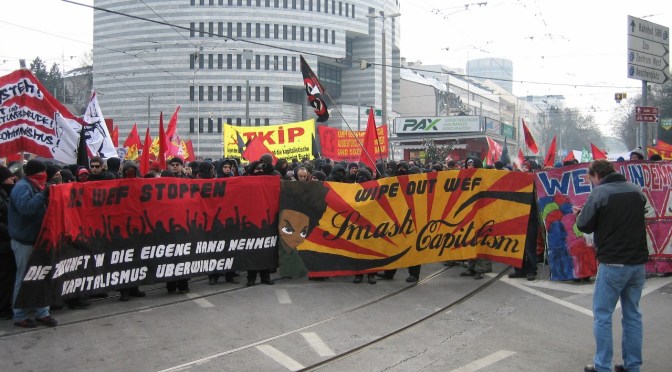
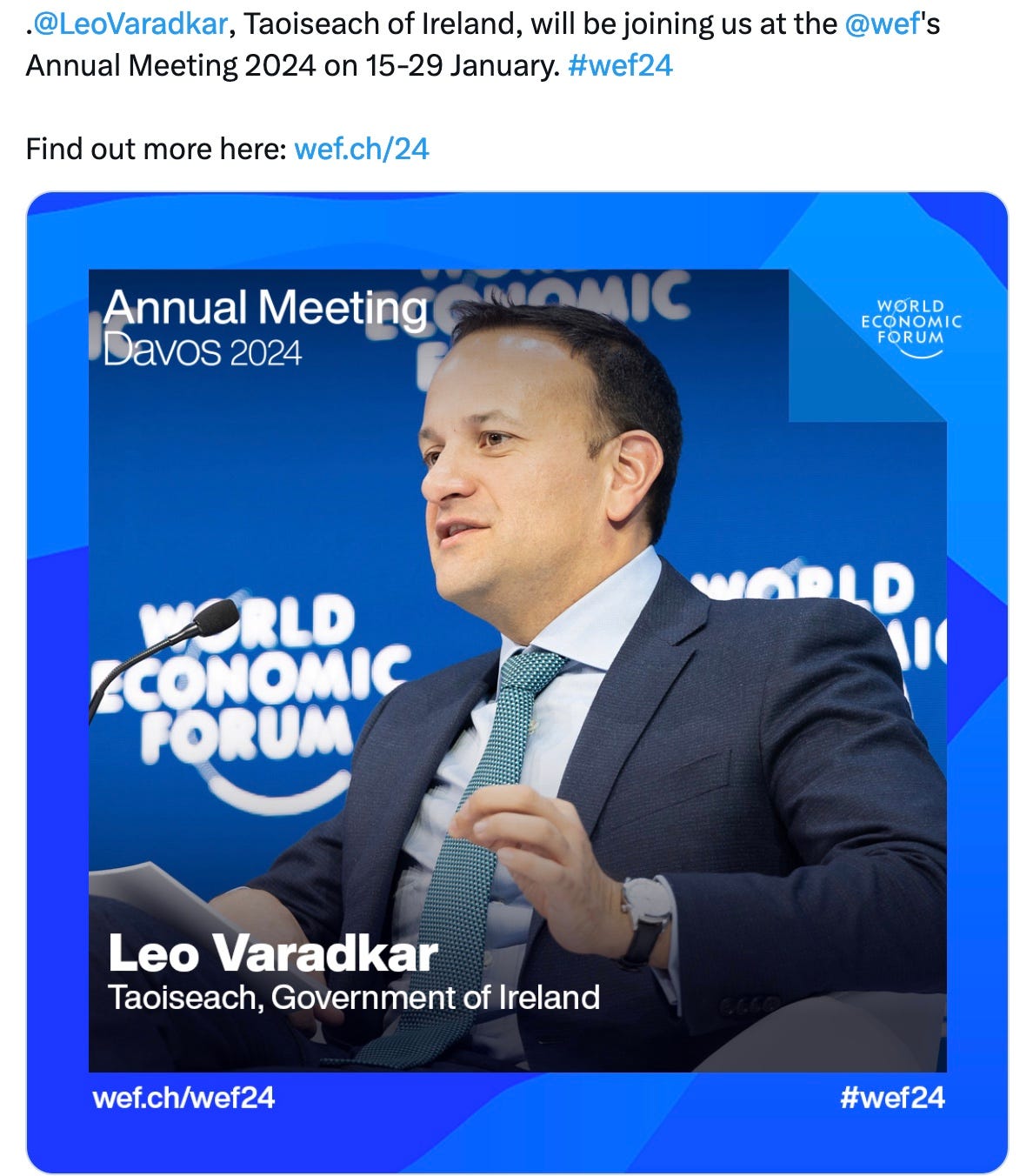


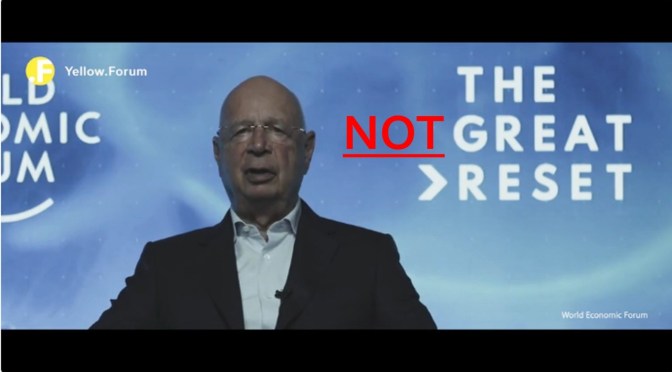






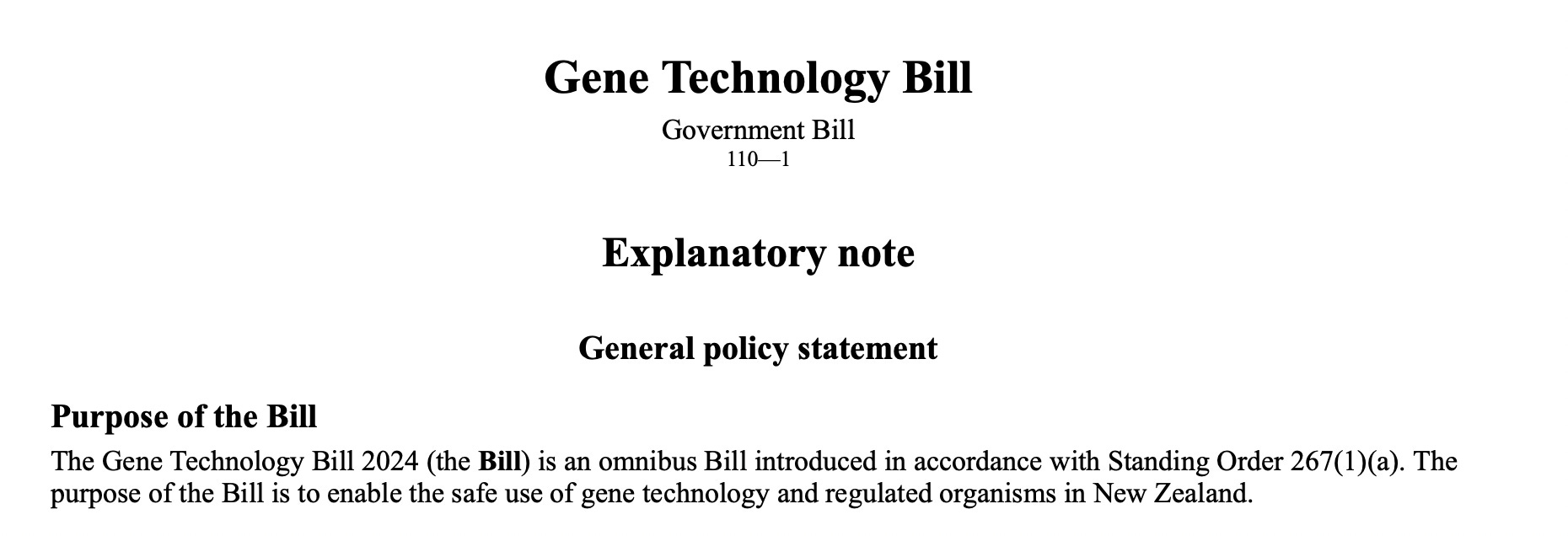
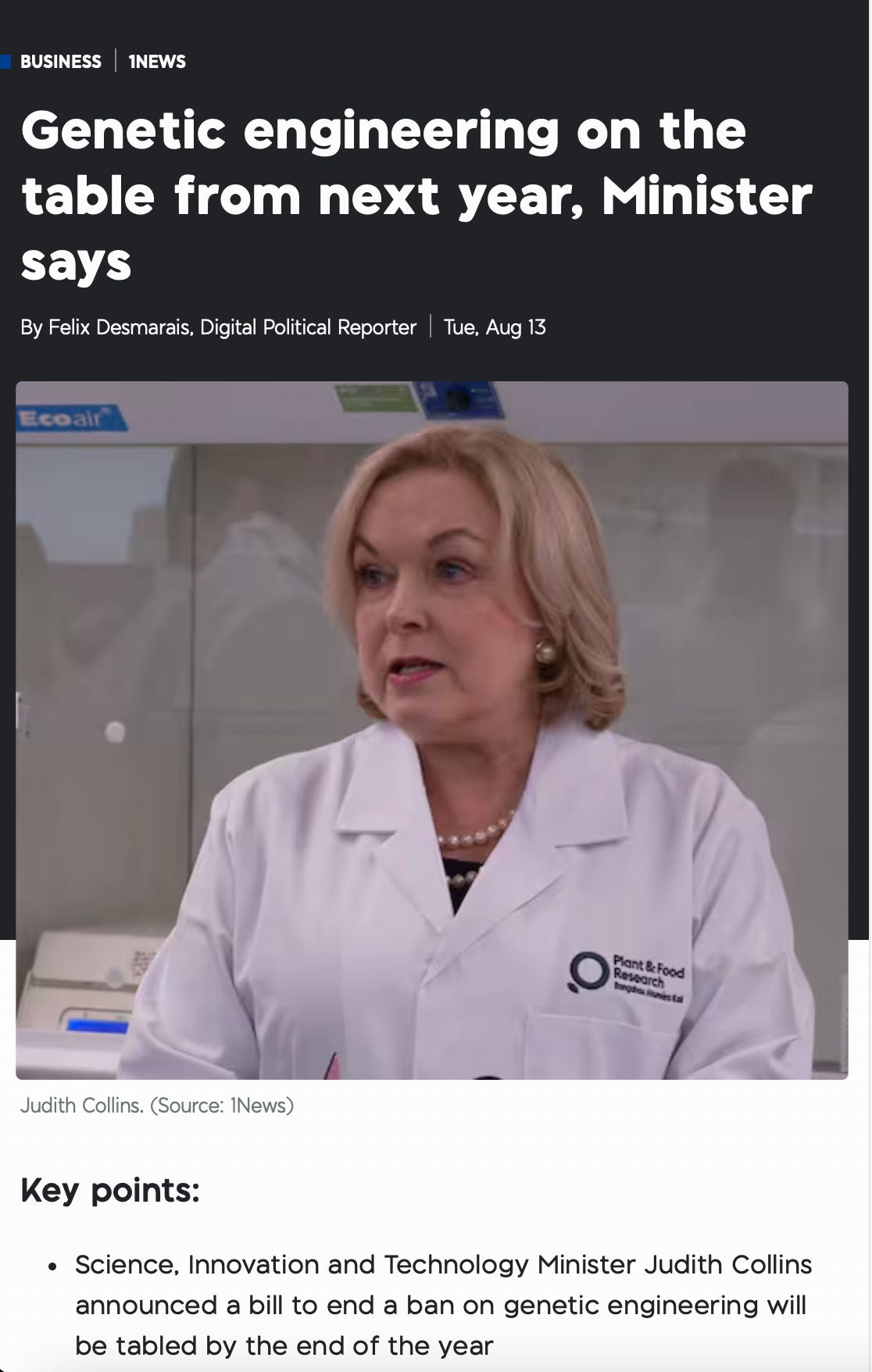



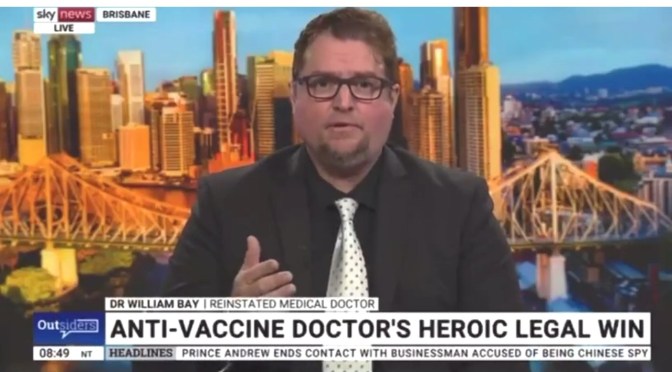

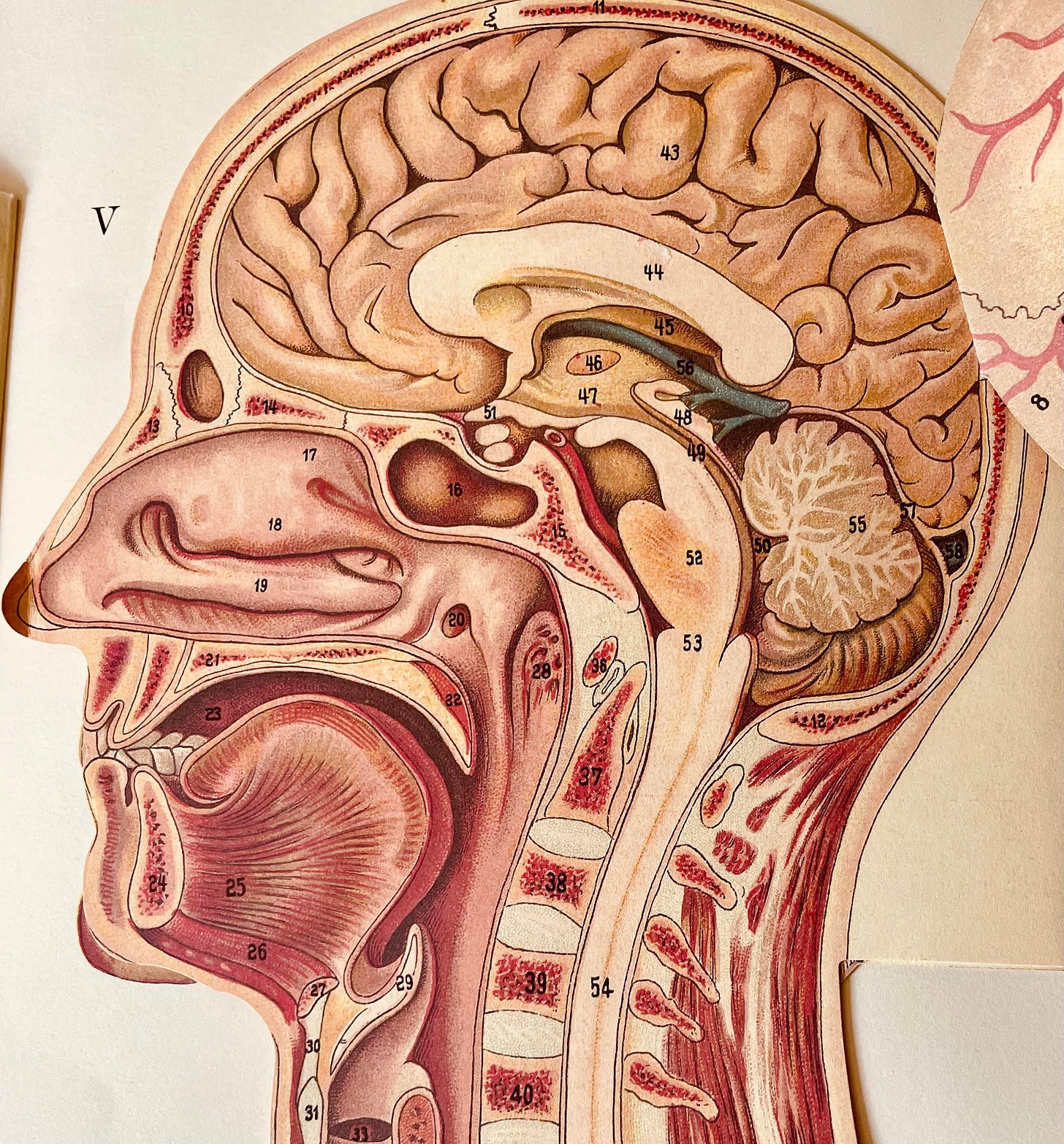
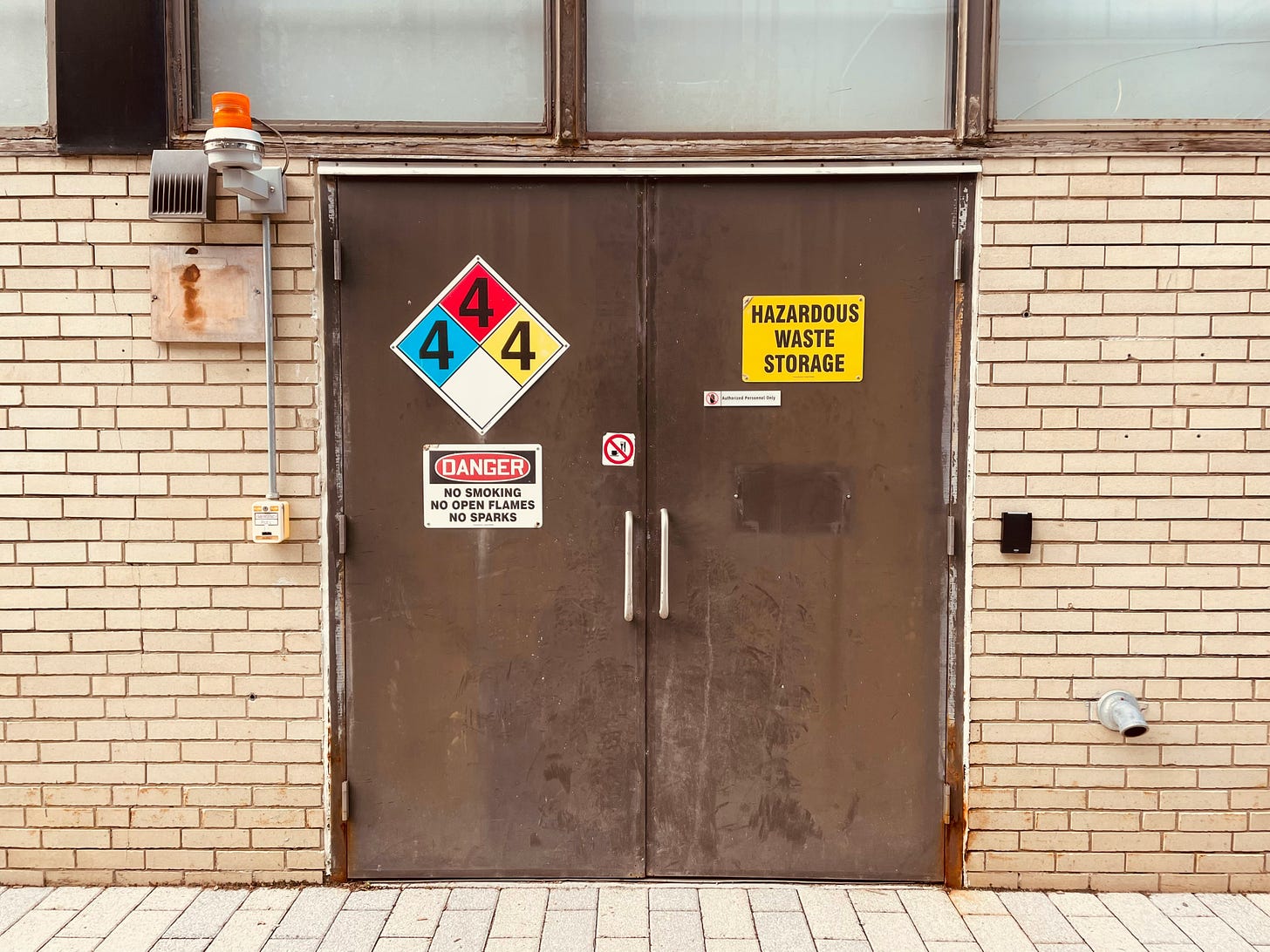






You must be logged in to post a comment.