An OIA HNZ00023978 dated 2 August 2023 asked the following question:
“According to the legislation at the time in 2021, there were operational exemptions available for those who were not getting vaccinated against Covid 19. Your website outlines the process of applying for an operating exemption under clause 12a. How many requests were received? How many were approved by the ministry?”
Matt Hannant, Interim Director, Prevention, National Public Health Service, Te Whatu Ora replied:
“From 13 November 2021 to 26 September 2022, a total of 478 applications for Significant Service Disruption exemption (SSD) were received. 103 applications were granted, covering approximately 11,005 workers. Please note that it is not possible to provide the exact number of workers that were covered by SSDs. This is because it was possible for an organisation to submit an application to cover more than one worker.”
So exactly how many Ministry of Health staff and associated contractors benefitted from the vaccine exemptions?
I have made enquiries and found some staff prepared to leak information. One source has told me that 95 consultants in the Dunedin region alone benefitted from vaccine exemptions. Another source has pointed to a group of doctors working in Northland who arranged among themselves to remain unvaccinated. The total appears to run to hundreds and possibly more.
It seems that those granted exemptions were restrained by gag orders.
In part 1, “Operation Overwealth”, the career trajectory of former Air New Zealand CEO Chris Luxon was examined in parallel with tectonic geo-political shifts over the course of the last half century, corresponding with Luxon’s life-span. Scholarly sources were presented to show that oligarchs can only exist in societies with great economic inequality. But also, that the super-rich use their immense wealth to steer the political trajectories of whole societies, while thriving in crises.
In this part, former Māori Television editor, Steve ‘Snoopman’ Edwards, demonstrates how New Zealand was reset in the mid-1980s to reforge the nation as a crisis-ridden society for benefit of a civil oligarchy. The archipelago was re-engineered from a centrally-planned inefficient economy controlled by Wellington bureaucrats, into a tollbooth economy centrally-planned by Big Finance, Big Agencies, and Big Think-Tanks — delivering financial impoverishment for most.
As he noted in part 1, Luxon’s participation in a business delegation to Switzerland in 2017, was sponsored by the New Zealand Initiative. In 2012, this think tank was incorporated as the result of a merger between the New Zealand Institute and the New Zealand Business Roundtable. The Business Roundtable was the most notorious of the domestic think-tanks that colluded to privatize state assets, while its members inflicted economic warfare to impoverish the population in cahoots with state managers at the Reserve Bank, which was established by statute in 1933.
This High Flyers Club exposé also proves how the Reserve Bank, in collusion with Treasury and with the domestic and international banking cartel — only let interest rates fall through thresholds once state managers had inflicted desired policies, or once such measures had the intended results and would (or had) cause(d) the inflation rate to drop toward a desired margin. On Don Brash’s watch as the Reserve Bank Governor for 13 years and 33 weeks, he oversaw this inflation targetting regime; a scheme to suppress wages and salaries to deliver big businesses big profits.
This deep dive shows why the nation is an expensive place to live. Snoopman traces the sell-off of state commercial trading entities, infrastructure and services to local and foreign corporations, to demonstrate these wealth transfers transformed Kiwis into neo-feudal peasants — eternally paying taxes, tolls, and tickets to oligarchs.
Kiwis are shown to be cast like hapless players in a New Zealand Edition of Monopoly, where the game is periodically updated by the game’s ‘owners’, to suit the wealthy players, particularly ‘the banker’. Ergo, economic impoverishment is key to undermining all rights, including freedom of speech, association and movement.
Therefore, part 2 “High Flyers Club” of this six-part series, Lux Luthor Redux, climbs far above the clouds to metaphorically cruise at 33,000 feet over the South Pacific archipelago to show Luxon has benefited from the Halcyon Days of the Heist of New Zealand Monopoly Board, when the oligarchy reforged itself and grew richer.
Coercion at its finest. Are we surprised? For many years Big Pharma’s been foisting their poison on places like Pakistan. With a lot of help from Billy boy. Remember the globalists have infiltrated most governments so they get to dictate from afar. EWNZ
This legislation pending in one province harks back to the bad old days of Pakistan’s mask mandate—enforced by the police with Taser Guns
This would seem to be a step toward dealing firmly with the “vaccine hesitancy” rife in Pakistan (although the people in that country own a lot of guns).
(For a video, from 2020, on the torturous enforcement of Pakistan’s mask mandate, scroll down.)
KARACHI, Pakistan (AP) — Authorities in one Pakistan province are turning to a controversial new tactic in the decades-long initiative to wipe out polio: prison.
Last month, the government in Sindh introduced a bill that would imprison parents for up to one month if they fail to get their children immunized against polio or eight other common diseases.
Experts at the World Health Organization and elsewhere worry the unusual strategy could further undermine trust in the polio vaccines, particularly in a country where many believe false conspiracies about them and where dozens of vaccinators have been shot and killed.
Adding to the problems faced by experts trying to persuade people of the vaccines’ safety: The oral vaccines themselves now cause most polio cases worldwide.
WHO’s polio director in the Eastern Mediterranean warned the new law could backfire.
“Coercion is counterproductive,” said Dr. Hamid Jafari.
He said health workers have typically succeeded in raising immunization rates in vaccine-hesitant areas by figuring out the reasons for people’s refusal and addressing those concerns, like bringing in a trusted political or religious leader to talk with people.
“My own sense is that Pakistan wants to have this legislation in their back pocket in case they need it,” Jafari said. “I would be surprised if there’s a willingness to actually enforce these coercive measures.”
Under COVID, Pakistan has used “coercive measures” to enforce compliance with “health measures”—as in the spring of 2020, when the cops zapped unmasked Pakistanis with electric shocks:
There are two basic theories for the origin of crude oil: biotic and abiotic.
The origin of petroleum or natural gas may seem like a strange debate to have but determining whether this fuel is a fossil fuel or not is important.
If these fuels are truly fossil fuels, then they are limited in supply and alternative energy resources would need to be created at some point.
If they are not fossil fuels and are created through some form of abiogenesis – a natural process from non-living matter – then the need to develop alternative fuels is diminished.
The biotic theory is that oil and gas drilled out of the earth come from the remains of plants and animals trapped underground millions of years ago. These “fossil fuels” took aeons to form and we are using them up far faster than they can be replenished.
The abiotic theory is an opposing view that has substantial evidence to back it up. This theory goes back centuries and includes as its prominent champions Dimitri Mendeleev, best known for inventing the periodic table.
I wrote a bit about tomato growing recently and since then I have realized there are more things worth knowing to be successful and have a great crop.
There hundreds of different tomato types available world wide, red fruit, black fruit, even green fruit that are green when fully ripe.
Sizes vary from the size of a marble up to fruit weighing over one kilo.
All tomatoes can be brought down to two growth types, Indeterminate which are a vine and they continue to grow and produce tomatoes till winter ends their lives.
Grown in a glasshouse hydroponically I have seen a plant about 10 meters long with the last meter or so flowering and fruiting.
Indeterminate tomatoes need support of stakes or wires to keep them upright otherwise they tend to end up growing along the ground.
Examples would be Early Girl, Big Beef, Grosse Lisse and Money Maker.
Determinate tomato varieties grow to a predetermined height which is about a meter tall.
They need less support and are often referred to as ‘Bush Tomatoes’ as they form a bush about a meter tall and wide.
Laterals can be removed or left. They are not as long lived as the Indeterminate in most types.
Examples would be Russian Red and Scoresby Dwarf.
If you do not have a glasshouse then choose a spot where it is very sunny most of the day and sheltered from wind.
Against a wall facing north is ideal.
If you only have less favorable spots then grow Russian Red or Scoresby Dwarf.
I some times hear people say that you should not grow tomatoes in the same spot every year in case of disease build up in the soil.
Yes and no; as I know of gardeners growing their tomato plants in the same spot for over 25 years and outside of seasonal conditions no problems.
I think a problem can occur when chemicals are used along with chlorinated water to water the plants which kills the soil life and leads to the build up of pathogens in the soil.
The normal problems that occur are the following:
Collar rot which is when a rot sets in some where on the trunk of the plant cutting off the roots from the foliage which progressively wilts as the disease takes hold.
Caused by removing laterals, leaves and even fruit when the air is humid.
The moisture in the air carries the disease to the wound, where it enters the plants and sets up shop somewhere on the trunk.
More likely to happen in a glasshouse where the air is moist for a while after watering.
Only remove laterals etc when its sunny and the air is drier. It is also good practice to have some copper spray made up in a trigger sprayer and spray the wound as soon as it is created.
Blossom end Rot is another problem that often occurs to tomatoes that are grown in containers.
It is seen as the fruit heads to maturity as a black patch on the base of the fruit.
It is caused by lack of moisture at the time the fruit are setting.
Sometimes it can also be a lack of calcium so if you give the plants a little Dolomite that will ensure the calcium is present.
Then its a matter of ensuring the growing medium has sufficient moisture.
That may mean in container plants watering three times on a hot sunny day.
In a glasshouse when the temperatures are high you can see that the top foliage of the tomatoes are drooping.
This can happen even when the growing medium has sufficient moisture.
The plants are perspiring more moisture out through the foliage than the roots can take up fast enough to make up the loss of moisture.
The foliage like us perspire to help cool us down in hot conditions.
You can spray the foliage over and under with Wallys Vaporgard to reduce moisture loss by about 30-40%.
In the area of the tomato where the foliage is drooping can be also where there are flowers wanting to set their fruit which also leads to Blossom End Rot.
Setting of fruit is not done by bees although Bumble Bees flying near tomato flowers on a sunny day can set fruit caused by the vibration of their wings.
If you had a tuning fork you could make it vibrate and hold it near the flowers on a sunny day to set the fruit.
Normally out doors there is a bit of air movement on a sunny day which allows the pollination to take place.
In a glasshouse there may not be the same air movement so best on a sunny day when the flowers are open you tap the plant or the stake to make the plant vibrate and thus set all the fruit.
Split fruit on plants is caused by uneven watering.
Papery brown patches on the fruit is caused by strong sun effectively cooking the fruit. Thus you need to provide some shade cloth if that is happening.
Blotchy ripening and also lack of flavour is caused by insufficient potash which means you have not applied Wallys Secret Tomato Food with Neem to the plants.
This brand of food has a good amount of potash and gardeners that use it remark on how great their tomatoes are.
White fly are a big problem with tomato plants both in a glasshouse and outside.
Using Wallys Secret Tomato food with Neem Granules mix will help not only good growth but the Neem smell helps to disguise the smell of the tomato plants.
Wallys Neem Granules also on the soil, adds to that smell disguise aspect.
This season in my glasshouse as well as having Neem Granules on top of the growing medium I am going to hang some little bags of naphthalene crystals (From Wallys Cat Repellent) in the glasshouse to create an even greater smell.
Wallys Yellow Sticky White Fly traps are also another means of catching the adult white fly that may approach the tomatoes to lay their eggs.
Hanging off the stake above the plant is ideal and lifted higher as the tomato plants grow upwards.
In a glasshouse some hanging near door and vents can catch a lot of pest insects.
The tomato psyllid we have written about in the past can be easily controlled by using Wallys Cell Strengthening products. For more information on that just email me..
Phone 0800 466464 Garden Pages and News at www.gardenews.co.nz Shar Pei pages at www.sharpei.co.nz Mail Order products at www.0800466464.co.nz New Zealand Bill of Rights Act 1990. Part II of the Act covers a broad range of Civil and Political Rights. As part of the right to life and the security of the person, the Act guarantees everyone:
1The right not to be deprived of life except in accordance with fundamental justice (Section 8)
2The right not to be subjected to torture or to cruel, degrading, or disproportionately severe treatment or punishment (Section 9)
3The right not to be subjected to medical or scientific experimentation without consent (Section 10)
4The right to refuse to undergo any medical treatment (Section 11)
Furthermore, the New Zealand Bill of Rights Act 1990 guarantees everyone: Freedom of Thought, Conscience, and Religion. This includes the right to freedom of thought, conscience, religion, and belief, INCLUDING THE RIGHT TO ADOPT AND HOLD OPINIONS WITHOUT INTERFERENCE (Section 1)
A taxpayer-funded health clinic operating within Lawrence High School in Fairfield, Me., is reportedly secretly drugging its students with antidepressants without telling their parents about it – and if you say anything about it, the school might call Child Protective Services (CPS) on you.
This is what allegedly happened to Eric Sack, the father of a girl who attends Lawrence High School. The child was reportedly sent home with a secret baggy filled with prescription antidepressant drugs like Zoloft that came from the school’s Bulldog Health Center, which is a federally funded School Based Health Center (SBHC).
Many people still haven’t woken up to the fact that we are in the fight of our lives, mainly because the aggressors are agencies that we’ve long trusted. But make no mistake, they’ve turned against us and soon life as you know it will become unrecognizable. The worst part? They won’t care if you live or die Dr Mercola
Story at-a-glance
In 1967, the CIA’s covert use of the National Student Association to spread counter messages to communism was revealed by a college dropout named Michael Wood. The revelation sent shock waves through the U.S., and as journalists started to pull at the strings, the CIA’s covert propaganda operations unraveled
Journalists discovered the CIA had set up nonprofit foundations to funnel taxpayer money into philanthropic foundations that then sent the CIA’s “donations” to organizations that had joined the CIA’s payroll to promote government-sponsored propaganda
These included youth organizations and student groups, church groups, public radio and news organizations. Sen. Wayne Morse, D-Ore., slammed the CIA’s covert propaganda activities, arguing the agency had created a “credibility chasm” within public opinion — a gap that could not and would not be bridged unless the government made clear that it would “fill the chasm with the truth”
The CIA was never reined in and is more involved in propaganda activities today than ever before
While many still have not realized it, we are at war, and the aggressors are government intelligence and security agencies that have turned their weapon of choice — information — against their own citizens
The video above features a 1967 CBS special report titled “In the Pay of the CIA: An American Dilemma,”1 hosted by Mike Wallace. It examines how the Central Intelligence Agency (CIA) was secretly paying students, labor organizations, broadcasting networks and other organizations to do their bidding.
CBS News correspondents interview several of the people who at the time had received secret CIA payments, and the implications these activities have for the American way of life.
Gloria Steinem, for example, who headed the Independent Research Service, was paid by the CIA to send American students to attend and represent American values at communist youth festivals overseas, as was Philip Sherburne, former president of the National Student Association.
In 1967, the CIA’s covert use of the National Student Association to spread countermessages to communism was revealed by a college dropout named Michael Wood.2 The revelation sent shockwaves through the U.S., and as journalists started to pull at the strings, the extent of the CIA’s propaganda operations started to unravel.
A Condensed History
The National Security Act of 1947, signed by President Truman, created the CIA, the National Security Council, the Office of Secretary of Defense and the U.S. Air Force.3 As explained by the Office of the Historian,4 the Act “was a major reorganization of the foreign policy and military establishments of the U.S. government.”
The CIA was an outgrowth of the World War II era Office of Strategic Services and several small post-war intelligence organizations, and as noted by Wallace:
“Since the beginning, the CIA has suffered a personality split, because in addition to intelligence, the Security Act of 1947 orders the CIA to ‘perform other functions and duties as directed by the President and his National Security Council.’ That phrase has become a sort of blank check, authorizing CIA excursions into everything from simple propaganda to the overthrow of unfriendly governments.”
Wallace goes on to explain how the CIA ended up with fingers in so many pies. First, it set up several nondescript nonprofit foundations, the function of which were to funnel taxpayer money from the CIA to other, real foundations involved in real-world philanthropy.
However, in return for CIA funds, these foundations “agreed to become conduits for central intelligence,” and funneled the exact dollar amounts received on to other organizations that, in the 1940s, ’50s and ’60s, joined the CIA’s payroll to promote government-sponsored propaganda.
The CIA has corrupted the stream of truth … It must be removed from all activities, except the very limited activity of what we know as intelligence activity, the field of spying and espionage. ~ Sen. Wayne Morse, 1967
These included not only youth organizations and student groups, but also church groups, public radio and news organizations. Sen. Wayne Morse slammed the CIA’s covert propaganda activities, arguing the agency had created a “credibility chasm” within public opinion — a gap that could not and would not be bridged unless the government made clear that it would “fill the chasm with the truth.”
“The CIA has corrupted the stream of truth, objectivity and academic learning,” Morse told CBS News, “and it must be removed from all activities, except the very limited activity of what we know as intelligence activity, the field of spying and espionage.”
Another senator, Eugene McCarthy, was also critical of the CIA’s use of students and church groups to manipulate public opinion. He also said he felt there was “empire building” going on within the CIA — a statement that rings all the more true today.
Sen. John Stennis, member of the CIA Watchdog Subcommittee, defended the CIAs actions, reminding the CBS audience about the climate in which the agency was founded. In 1954, the U.S. Congress passed a bill outlawing communism, and the CIA was still basically protecting American liberty and democracy.
Former CIA director Allen Dulles also defended the agency’s behavior, citing the need to manage the threat of communism. The counterargument presented by critics was that by using covert propaganda techniques, the U.S. government was using the same strategies as the enemy, thereby undermining the idea of America being a country dedicated to free speech and the diversity of ideas.
At the end of the day, the overarching message of the CBS News report was that the CIA needed to change with changing times, clean up its act and get out of the covert propaganda business, as its interventions were harming the American image of being a free and open country.
Operation Mockingbird Is Alive and Well
Unfortunately, the CIA was never reined in, and its propaganda activities have only expanded and become more sophisticated over time. The 1976 Church Investigation exposed how the CIA had corrupted the media by paying journalists to promote the agency’s narratives.
The program, called Operation Mockingbird, was officially dismantled, but while the operational name may have been retired, there’s plenty of evidence to suggest the CIA never discontinued its media influence.5
In fact, we have evidence the CIA is controlling mainstream media to this day, and it’s doing so with unprecedented efficiency, as it can now push its narratives out through the three global news agencies, which are responsible for crafting and curating most of the news disseminated worldwide.
The only thing that has changed, really, is the CIA’s narrative. Whereas in the past it was dedicated to undermining communism, today, the CIA is a disinformation fountainhead for an unelected global Deep State that is hellbent on implementing a technocratic, totalitarian One World Government, the tyranny of which makes communism pale in comparison.
The CIA is now neck-deep in a global psyop to ensure the successful implementation of The Great Reset and the Fourth Industrial Revolution — two terms that describe different aspects of the same agenda of enslavement. And the CIA is not alone in this endeavor.
The FBI is also in on the action, as are most of the world’s intelligence agencies. They’re all pushing the same Great Reset and Fourth Industrial Revolution narratives, the aim of which is the technocratic control of the global population. That’s why we’re seeing the same narratives playing all over the world, including the Orwellian argument that we must censor to protect democracy.
While many still have not realized it, we are at war. The aggressors are government intelligence and security agencies that have turned their weapon of choice — information — against their own citizens.
And, while the organizations doing the CIA’s dirty work may have changed, the basic organizational structure is the same as it was in 1967. Taxpayer money gets funneled through various federal departments and agencies into the hands of nongovernmental agencies that carry out censorship activities as directed. As recently reported by investigative journalists Alex Gutentag and Michael Shellenberger:6
“The Anti-Defamation League (ADL), the Center for Countering Digital Hate (CCDH), and the Institute for Strategic Dialogue (ISD) are nongovernmental organizations, their leaders say.
When they demand more censorship of online hate speech, as they are currently doing of X, formerly Twitter, those NGOs are doing it as free citizens and not, say, as government agents.
But the fact of the matter is that the US and other Western governments fund ISD, the UK government indirectly funds CCDH, and, for at least 40 years, ADL spied on its enemies and shared intelligence with the US, Israel and other governments.
The reason all of this matters is that ADL’s advertiser boycott against X may be an effort by governments to regain the ability to censor users on X that they had under Twitter before Musk’s takeover last November.
Internal Twitter and Facebook messages show that representatives of the US government, including the White House, FBI, Department of Homeland Security (DHS), as well as the UK government, successfully demanded Facebook and Twitter censorship of their users over the last several years.”
Censorship by Proxy
What we have now is government censorship by proxy, a deeply anti-American activity that has become standard practice, not just by intelligence and national security agencies but federal agencies of all stripes, including our public health agencies.
September 8, 2023, the Fifth Circuit Court of Appeals upheld a lower court’s injunction banning the White House, the surgeon general, the Centers for Disease Control and Prevention and the FBI from influencing social media companies to remove so-called “disinformation.”7
According to the judges’ decision,8 “CDC officials provided direct guidance to the platforms on the application of the platforms’ internal policies and moderation activities” by telling them what was, and was not, misinformation, asking for changes to platforms’ moderation policies and directing platforms to take specific actions.
“Ultimately, the CDC’s guidance informed, if not directly affected, the platforms’ moderation decisions,” the judges said, so, “although not plainly coercive, the CDC officials likely significantly encouraged the platforms’ moderation decisions, meaning they violated the First Amendment.”
Unfortunately, as mentioned earlier, the U.S. government is not acting alone. Governments around the world and international organizations like the World Health Organization are all engaged in censorship, and when it comes to medical information, most Big Tech platforms are taking their lead from the WHO. And, if the WHO’s pandemic treaty9 is enacted, then the WHO will have sole authority to dictate truth. Everything else will be censored.
YouTube to Ban All Types of Medical ‘Misinformation’
YouTube, for example, which censored medical information that went against CDC guidance during the COVID pandemic, recently announced it is committed to eliminating virtually all medical “misinformation” that contradicts the WHO:10
“While specific medical guidance can change over time as we learn more, our goal is to ensure that when it comes to areas of well-studied scientific consensus, YouTube is not a platform for distributing information that could harm people.
Moving forward, YouTube will streamline dozens of our existing medical misinformation guidelines to fall under three categories – Prevention, Treatment, and Denial.
These policies will apply to specific health conditions, treatments, and substances where content contradicts local health authorities or the World Health Organization (WHO) … Here’s what the framework will look like:
• Prevention misinformation: We will remove content that contradicts health authority guidance on the prevention and transmission of specific health conditions, and on the safety and efficacy of approved vaccines. For example, this encompasses content that promotes a harmful substance for disease prevention.
• Treatment misinformation: We will remove content that contradicts health authority guidance on treatments for specific health conditions … Examples include content that encourages unproven remedies in place of seeking medical attention for specific conditions, like promoting caesium chloride as a treatment for cancer.
• Denial misinformation: We will remove content that disputes the existence of specific health conditions. This covers content that denies people have died from COVID-19 …
In applying our updated approach, cancer treatment misinformation fits the framework — the public health risk is high as cancer is one of the leading causes of death worldwide, there is stable consensus about safe cancer treatments … and it’s a topic that’s prone to misinformation.
Starting today and ramping up in the coming weeks, we will begin removing content that promotes cancer treatments proven to be harmful or ineffective, or content that discourages viewers from seeking professional medical treatment.”
The UN’s War on Misinformation
The United Nations is also deeply engaged in fighting the “‘infodemic’ of misinformation,”11 and has enlisted a cadre of “rapid response” fact checkers to counter undesirable views, wherever they appear.
The UN his also partnered with private businesses, telecommunications companies, civil society groups, media and individual journalists to combat misinformation.
The UN secretary-general António Guterres’ has even gone on record saying “hate speech” is a “weapon of war” that must be brought under control to achieve the UN’s peacekeeping aims. In July 2022, he made the following remarks to the Security Council, clearly demonstrating that the UN views censorship as a necessity for world peace:12
“The United Nations must play a more deliberate role as an information actor in conflict environments. We must be seen as a trusted source of information by providing engaging, factual content, facilitating inclusive dialogue, demanding the removal of harmful speech, calling leaders to account and promoting the voices of peace and unity.”
Just what is “harmful speech”? Why, anything that counters the globalist narrative — “the voices of unity” — of course. In classic Orwellian doublespeak, UN leadership is calling dissent (i.e., “hate speech”) “a weapon of war,” when in reality, censorship is the weapon.
This kind of rhetoric alone tells you that we are in fact at war, and the public has been declared the enemy of the globalist cabal, the members of which have infiltrated all the key national agencies and international organizations now being used to browbeat us into compliance with a slave agenda.
In the video above, under-secretary-general for the UN’s global communications talks about how “social media is being weaponized to provoke the worst in human nature” (there’s that war lingo again), and how the UN is “pushing Big Tech” to “bring balance to our information systems.”
In other words, Big Tech is being pushed to give the technocrats a battlefield edge by eliminating the “weapons” of everyday people (who greatly outnumber them), namely their voices.
(Click on image below to go to X link)
Why Are We Being Censored?
While globalists and technocrats would have you believe that censorship is all about protecting people by making sure everything they see is accurate and truthful, the exact opposite is actually happening. The Deep State players (whether they recognize themselves as belonging to that exclusive club or not) are the ones spreading false information to lull you into compliance with an agenda that is so utterly horrifying that no sane, rational person would ever go along with it.
I’m talking about The Great Reset, the Fourth Industrial Revolution, the UN’s Sustainable Development Goals, the 2030 Agenda, the One Health agenda. These and several other terms all refer to one comprehensive, worldwide plot to create a global slave society under the rule of a centralized world government run by unelected technocrats.
Everything we’ve seen and experienced over the last three years are part of that agenda, including the global push for vaccine mandates. It’s no surprise then, to find out that 14 of the 17 Sustainable Development Goals involve compulsory vaccinations. As noted in the August 2021 issue of Globalization and Health:13
“Immunization directly impacts health (SDG3) and brings a contribution to 14 out of the 17 Sustainable Development Goals (SDGs), such as ending poverty, reducing hunger, and reducing inequalities. Therefore, immunization is recognized to play a central role in reaching the SDGs, especially in low- and middle-income countries (LMICs).”
Nothing is happening by accident. It’s all part of a movement toward a global totalitarianism centered on the control and suppression of populations. But to get there, they must control the flow of information. Truthtellers cannot be tolerated because, again, there are billions of us, and only thousands, perhaps tens of thousands, of them.
Once the technocratic system of control is fully in place, 24/7 surveillance and artificial intelligence-driven algorithms will keep people in check, but until then, the globalists need our cooperation to install and implement the prerequisite surveillance and control systems. Keeping people from understanding the big picture is the greatest weapon in their arsenal.
There’s also plenty of evidence indicating they’d prefer to have far fewer of us around, and preventing you from accessing truthful information about health and medicine will ensure you get and stay sick (which is profitable for them) and ultimately die sooner rather than later (which is the goal).
Once you understand the grand plan, you can see how it’s being implemented in pieces, and why all this censorship is needed, from their point of view. At that point you have a decision to make. Go along with their program to own you and all of your descendants, in perpetuity, or take ownership of your own life and peacefully move in the opposite direction, toward decentralized, uncensored, privacy-based systems of all kinds.
As I always recommend, watch the doco The Corporation – this was my big eye opener as to why all the corruption now. Their bottom line is profit… and lying is their acceptable norm. It is on our ‘corporations’ page. Find it on YT… they also have a website. Essential viewing IMO… EWNZ
Some critics assume that drug companies suddenly became “crooked” and “dishonest” with the production of the covid 19 “vaccines.” But that’s not true. Dr. Vernon Coleman first exposed the drug companies in a book published nearly half a century ago.
Drug company staff have been deceitful, misleading and dangerous for decades and the industry has been institutionally corrupt and devious for many, many years.
EWNZ note: Since posting this this morning I see a post on topic from Prof Mark Crispin Miller (NYU) so am adding it for your perusal. He strongly recommends watching it:
As predicted, the fledgling “freedom” parties are self-destructing. This was inevitable, since history tells us the time, cost, and complexity of infrastructure needed to build a political party from scratch is almost insurmountable: It takes many years and millions of dollars and, still, failure is still the most likely outcome with even the best of efforts and support.
Also, any party that cannot get past 5% of the Party Vote, or get at least one MP through the Electorate Vote, is a wasted option. In fact, as explained by Roger below, a protest vote can end up being a vote for those you most dislike!
No matter how sensible their policies may be, or how much you might like their people, if a party can’t get past these critical voter thresholds, they must step aside and actively encourage voters to support the party that best represents our interests and is the most likely to get at least several MPs into Parliament.
“On the Unchartered Territory Podcast, Dan Astin-Gregory and Sam X discussed globalisation, deglobalisation, centralisation, decentralisation and localisation.”
“….the term “BRICS” was coined a couple of decades ago by Jim O’Neill who was the Chief Economist at Goldman Sachs”.
They talked about a move away from the dominance of America, Sam said, “They even painted in investment vehicles around this very name and the idea potential for BRICS currency … The theory being that [ ] what these inside bankers were looking at was that the empiristic nature of the American Empire was becoming too obvious.”
To commemorate the 150th anniversary of Goldman Sachs’ founding in 1869, the company published a series of articles. One of the articles titled ‘With GS Research Report, “BRICs” Are Born’ stated:
In 2001, Goldman Sachs’ Global Investment Research Division publishes the report, “Build Better Global Economic BRICs,” coining the acronym for the four countries that would reshape the world economy – Brazil, Russia, India and China.
Other BRICs-oriented research would follow from Goldman Sachs in the ensuing years, including 2003’s paper, “Dreaming with BRICs: The Path to 2050,” which posited that the BRICs countries could overtake the largest Western economies by the year 2039.”
READ AT THE LINK
If you enjoy our posts, check out our sister site truthwatchnz.is
ViAqua Therapeutics, an Israeli-based biotechnology startup, has secured $8.25 million in funding for its oral RNA-based shrimp vaccine
The vaccine targets white spot syndrome virus (WSSV), which leads to a 15% reduction in global shrimp production each year
ViAqua plans to administer its RNA-based product via coated feed; the RNA molecules can inhibit gene expression, silencing disease-affected genes
Shrimp lack an adaptive immune system, the type that “remembers” exposures to infectious agents, so it’s long been assumed that shrimp cannot be vaccinated; now it’s becoming clear that shrimp do have some defense against viruses, which is only beginning to be understood
The risks of tinkering with shrimp genetics, and using mRNA shots in pigs, cattle and other animals intended for food, are completely unknown
Shrimp are slated to become the latest food source exposed to messenger ribonucleic acid (mRNA) vaccines, courtesy of ViAqua Therapeutics, an Israeli-based biotechnology startup. The company has secured $8.25 million in funding from venture capitalists for its oral RNA-based shrimp vaccine, which is intended to target white spot syndrome virus (WSSV).
With plans to administer its RNA-based product via coated feed, ViAqua suggests the RNA molecules can inhibit gene expression, silencing disease-affected genes with every meal.1 WSSV is a devastating condition in shrimp, leading to a 15% reduction in global shrimp production each year — an annual loss of about $3 billion.2
ViAqua says challenge tests show its RNA-based formulation improved shrimp survival against WSSV, but at what cost? The use of mRNA in the food supply is controversial for good reason — no one knows what the long-term consequences will be.
RNA Vaccines Coming for Shrimp
ViAqua is using RNA interference (RNAi) particles, provided as a feed supplement, to manipulate gene expression in shrimp, one of the most widely consumed forms of seafood worldwide. In a 2022 proof of concept study that used a polyanhydride nanoparticle delivery platform to deliver RNA to shrimp orally, it’s stated:3
“RNA interference (RNAi) in invertebrates is an antiviral cellular mechanism by which a trigger, such as double-stranded RNA (dsRNA) or small interfering RNA (siRNA) starts sequence-specific degradation of target mRNA, thereby preventing viral gene expression.
… In aquaculture systems, the concept of RNAi-based vaccines has been championed for several reasons: (a) RNAi works as an antiviral immune response in shrimp; (b) it is pathogen-specific; and (c) it generates a long-term protective immune response.”
The study found that the “nanovaccine” was about 80% effective in protecting against WSSV in shrimp, when administered via reverse gavage to “mimic an oral route.”4 ViAqua has brought the potential for oral delivery to the next level, with plans to begin producing its RNAi capsule products in India in 2024.5 Shai Ufaz, ViAqua’s chief executive officer, stated:6
“Oral delivery is the holy grail of aquaculture health development due to both the impossibility of vaccinating individual shrimp and its ability to substantially bring down the operational costs of disease management while improving outcomes … We are excited to bring this technology to market to address the need for affordable disease solutions in aquaculture.”
Can Shrimp Be Vaccinated?
Shrimp lack an adaptive immune system, the type that “remembers” exposures to infectious agents so it can mount a better response the next time it comes around. Because of this, it’s long been assumed that shrimp cannot be vaccinated. According to the Global Seafood Alliance:7
“Scientific literature on shrimp has often adopted terms and approaches from mammalian immunology, but not always in a correct way. Such is the case in the use of the term “vaccination” in crustaceans. The principle of vaccination is based on two key elements of the immune system: specificity and memory. These two properties are not recognized in the immune systems of shrimp and other invertebrates.”
However, while shrimp don’t have adaptive immunity in the traditional sense, it’s becoming clear that they do have some defense against viruses, which is only beginning to be understood. In 2008, researchers with Australia’s University of Queensland explained, “There is mounting evidence for specific immune memory in crustaceans, including shrimp,” adding:8
“It has been widely assumed that no such adaptive systems exist in invertebrates, thus vaccines have not been routinely developed and used in shrimp aquaculture. Invertebrates were considered to rely solely on an innate immune system characterized by generalized immune responses to conserved molecular structures of invading pathogens such as bacteria and fungi.
Some of these pathways are relatively well understood, involving an array of pattern recognition receptors interacting with serine proteases to initiate encapsulation, phagocytosis and an antimicrobial cascade based on the phenoloxidase enzyme system.
However, what is becoming more apparent is that the diversity and sophistication of innate responses in invertebrates is far greater than previously assumed. The invertebrate immune response to viruses is particularly poorly understood.”
ViAqua’s RNAi product claims to “enhance resistance to viral infections” in shrimp,9 and they have plans to develop additional mRNA vaccines for fish and other biotechnology products targeting additional shrimp viruses and other pathogens.10
But shrimp pathogens of one kind or another are virtually guaranteed to persist in the intensive aquaculture farms where many shrimp are raised. Further, the risks of tinkering with shrimp genetics are completely unknown.
The media has been pretty quiet about the up-and-coming genetic manipulation of shrimp. This seems to be par for the course. Few are aware that, since 2018, pork producers have been using customizable mRNA-based “vaccines” on their herds — as it largely slipped by under the radar.11
It wasn’t until attorney Tom Renz began promoting new legislation in Missouri (House Bill 1169,12 which he helped write) that would require labeling of mRNA products that it began to receive attention.13 In an April 1, 2023, tweet, Renz stated:14
“BREAKING NEWS: the lobbyists for the cattleman and pork associations in several states have CONFIRMED they WILL be using mRNA vaccines in pigs and cows THIS MONTH. WE MUST SUPPORT MISSOURI HB1169. It is LITERALLY the ONLY chance we have to prevent this … NO ONE knows the impacts of doing this but we are all potentially facing the risk of being a #DiedSuddenly if we don’t stop this.”
Even though the bill asks only for transparency — not a ban of the mRNA-based shots — industry pushback has been enormous. They don’t want you to know that they’re using mRNA and similar products, because then they’d have to admit that the resulting foods may have gene-altering effects. And it’s not just pork, either.
Cattle Groups Urge Caution Over mRNA
The first RNA-based livestock vaccine, a swine influenza (H3N2) RNA shot developed by Harrisvaccines was licensed in 2012.15 The company followed up with an avian influenza mRNA shot in 2015.16
Concerns that mRNA injections could end up “in the global protein supply chain” also prompted warnings from cattle producers and calls for mandatory country of origin labeling (MCOOL) so consumers can choose meat from countries that don’t allow mRNA shots in meat animals.17
In an April 2023 news release, Ranchers-Cattlemen Action Legal Fund United Stockgrowers of America (R-CALF USA), a nonprofit that represents interests of independent U.S. cattle producers, shared concerns about the use of mRNA shots in cattle and other meat animals. Max Thornsberry, DVM, R-CALF’s animal health committee chair, met with medial doctors and a molecular biologist before briefing the R-CALF USA board:18
“Thornsberry reported that some researchers have found that mRNA and its coded virus is likely passed from an injected human to a noninjected human, and to humans who have consumed dairy products or meat from an mRNA-injected animal.
He said that because the research on mRNA is still in its infancy, no one really knows the full impact it has on either humans or animals, particularly its long-term impact. He said this itself warrants more extensive mRNA research focused on safety, heightened public vigilance, and greater transparency.”
In a commentary, R-CALF CEO Bill Bullard also urged caution regarding mRNA injections, stating:19
“It’s not a vaccine as we typically understand vaccines. So, for the rest of this discussion, I’ll refer to it as an injection. It’s an injection of a laboratory-produced substance into humans or livestock that is coded with a particular virus, such as COVID-19, that produces an immune response against the particular virus.
And what does mRNA do? Well, it hijacks living cells, tricking them into producing some level of immunity against human viruses like COVID-19 and livestock viruses such as foot-and-mouth disease or lumpy skin disease. It does this by rewriting the instructions from the body’s DNA. And what are the potential risks to humans and livestock?
The truthful answer is we don’t yet know the long-term effects of mRNA injections in either humans or livestock.
… There is great concern that living cells excrete the mRNA over time and the mRNA can then be transferred to animals and humans that have never received the mRNA injection. It is believed, for example, that humans can contact mRNA by eating meat from livestock that have received the injection.
The reason mRNA is an issue today is that pharmaceutical firms have found that it takes very little of it to hijack a cell, and it can be produced cheaper than typical virus vaccines.”
Is it possible that mRNA or RNAi nanoparticles could persist in the meat and shrimp you’re eating? Penny Riggs, associate research professor of functional genetics at Texas A&M, stated, “The estimate is that half of the mRNA from a vaccine is gone in about 20 hours, and completely destroyed within a few days.”20
However, Thornsberry cited21 one study, published in Biomedicines, that found mRNA from injections can be detected in blood 15 days post-shot.22
The proof-of-concept study for the shrimp RNA nanovaccine also found the particles persisted long after administration: “The nanoparticles localized to tissue target replication sites for WSSV and persisted through 28 days post-administration.”23 Again, the consequences of consuming these nanoparticles remains to be seen.
Antibiotic Resistance Widespread in Shrimp
Farm-raised seafood is among the most contaminated foods you can eat, shrimp included. Antibiotics are commonly used on farmed shrimp in an attempt to slow down pathogens.24 Not surprisingly, shrimp is often contaminated with antibiotic-resistant bacteria as a result.
One investigation by CBC News Marketplace found 17% — nine of the 51 packages of shrimp imported from Vietnam, Thailand, China, India and Ecuador — were contaminated with antibiotic-resistant bacteria.25 Among them, all but one showed resistance to multiple antibiotics.
Investigators purchased imported shrimp labeled “organic” as well as some with the “Best Aquaculture Practices” certification, which maintains that farmers only use antibiotics minimally.
So, while shrimp can be a healthy addition to your diet, it’s important to avoid farm-raised shrimp, which is the type served in most restaurants and the variety that’s slated to receive a gene-altering nanoparticle vaccine in its feed. When it comes to purchasing high-quality shrimp, look for those that are either wild caught or locally produced.
The World Health Organization’s pandemic treaty, the amendments to the International Health Regulations (IHRs) and the global One Health agenda are all part of a soft coup, a global power grab
The globalists’ plan for our future can be summarized as “global dominion by the few and total control of the masses”
The technocratic cabal has control over most if not all Western governments, as well as the bureaucratic structure of the WHO; 85% of its funding comes from private entities, so it’s owned by private interests
Based on the current treaty draft and proposed IHR amendments, it’s clear that mRNA-based vaccinations will be mandatory under the WHO’s power structure, and these vaccines will be made in 100 days by skipping human trials and shaving safety and efficacy testing down to the bare bones
Under the treaty, as currently written, nations will be required to surveil and censor social media. The WHO’s narrative will be the only one allowed
In this September 1, 2023, Highwire interview,1 Dr. Meryl Nass, a biowarfare and epidemics expert, exposes the threat posed by the World Health Organization’s pandemic treaty and the amendments to the International Health Regulations (IHRs), which add to and further strengthen the WHO’s powers under the treaty. The WHO’s One Health agenda is also part of this power grab.
Nass also recently published an article, “The WHO’s Proposed Treaty Will Increase Manmade Pandemics,”2,3 in which she reviews the history of biological warfare and the role of gain-of-function research, where we are right now, and what the globalists’ plan for our future is. It’s imperative everyone understand what the plan is, because we can only stop it by rejecting it en masse.
Nass Persecuted by Lawless State Medical Board
But first, Nass provides an update on her personal situation. In January 2022, the Maine medical board suspended Nass’ medical license for spreading “COVID misinformation” and prescribing ivermectin. They also ordered her to undergo a psychological evaluation by a board-selected psychologist.4 Nass refused.
As she points out in the interview, “misinformation” refers to information that may be mistaken or inaccurate, but being wrong is not a crime — no matter how badly government wants you to think it is.
We have the First Amendment — freedom of speech — for a reason. Government does not have the legal right to suppress our speech, and the medical board is a state government agency. So, by censoring doctors like Nass and punishing them for speaking their minds and sharing medical and scientific data, they are actually the ones breaking the law.
Nass didn’t, because there’s no law against sharing information, even if it is suspected of being incorrect, or can be proven to be wrong. And, in this case, the board is actually punishing her for sharing truths.
So, in mid-August 2023, Nass sued the Maine medical board, and every board member in their personal capacity, for violating her free speech rights.5
“Telling me that I can’t talk about the vaccine or I can’t talk about the treatment of COVID or masks or distancing, even when the things that I was saying were based on published medical literature, that is a First Amendment violation,” Nass said in a statement.
“The state government and the federal government are not allowed to restrict the speech of people. So we are looking for a jury trial to see whether the Board of Licensure in Medicine is guilty of a malicious, political prosecution and targeting of me.”
The Plan in Broad Strokes
So, what is the globalists plan for our future? Summarized into as few words as possible: global dominion by the few and total control of the masses.
As explained by Nass, the COVID pandemic showed us that the technocratic cabal has control over most if not all Western governments. World Economic Forum (WEF) founder Klaus Schwab has even bragged about how his Young Global Leaders have “penetrated” governments of the world.6
The technocratic cabal also has control over the bureaucratic structure of the WHO. Eighty-five percent of the WHO’s funding comes from private entities, most of which is earmarked for specific programs. “So, the WHO is already owned by private interests,” Nass says.
According to the WHO, the reason the COVID pandemic got so bad is because nations failed to cooperate. Hence, the reasoning goes, we need an international treaty that centralizes pandemic response powers to the WHO. The problem, of course, is that most nations did follow the WHO’s irrational and unscientific recommendations. Its ineptitude — whether intentional or not — is what destroyed economies and resulted in needless deaths.
Based on the current treaty draft and proposed IHR amendments, it’s clear that mRNA-based vaccinations will be mandatory under the WHO’s power structure, and these vaccines will be made in 100 days rather than 10 years by skipping human trials and shaving safety and efficacy testing down to the bare bones.
The WHO will also decide which medications can be used in medical emergencies, and which you cannot have. In other words, the WHO director-general will decide the health care for every person in every member state, and your local doctor will be required to follow his edicts. You’ll have no medical freedom or bodily autonomy anymore.
Nations will also be forced to implement massive nationwide biosurveillance programs to identify potential pathogens with pandemic potential. This will include swabbing and testing humans, domesticated animals, farm animals, wildlife, farms, factories, wastewater and more, and the chances of finding a pathogen with pandemic potential if searching for it in every nook and cranny of the world are 100%.
The WHO director-general will then have the sole authority to declare a pandemic, or even potential pandemic, at which point all decision-making powers fall under the WHO. However, there are no standards that must be met before a public health emergency can be declared.
The way these documents are written, the director-general can even act on what amounts to hearsay. He doesn’t have to have proof that a pandemic is imminent or in progress. He can act on suspicion. Even more disturbing, the treaty will be in force all the time, so the director-general doesn’t even need to declare an emergency. He will have the authority to dictate public health even when there’s no pandemic. That’s how far-reaching this treaty is.
Nations will also be required to surveil and censor social media. The WHO’s narrative will be the only one allowed. YouTube has already implemented this policy, even though the treaty is not even in place yet.
The History of Biological Warfare and How We Got Here
Nass also reviews the history of biological weapons and why we’re in a situation now where most of the pandemics that have occurred are basically the result of biological weapons development.
In 1969, President Nixon announced the U.S. would end its offensive biowarfare program. This was a strategic rather than altruistic move, because the U.S. was far ahead of other nations when it came to chemical and nuclear weapons. By banning biological weapons, which are relatively simple and inexpensive to create, the U.S. would gain a strategic advantage on the global stage.
Nixon initiated the first global treaty to prevent the creation and use of biological weapons in 1972. The Biological Weapons Convention took effect three years later, in 1975. However, in 1973, genetic engineering was discovered, which suddenly allowed the U.S. to gain a technological advantage that would allow us to make better and more precise biological weapons.
The problem with the Biological Weapons Convention is that there’s no enforcement. To be effective and verifiable, a nation needs to be able to challenge another nation and have the right to carry out inspections, and add sanctions in cases of noncompliance. But this enforcement method was not included, and the U.S. has blocked all efforts to add enforcement articles to the treaty since 1991. So, as explained by Nass:7
“Under the guise of preparing their defenses against biowarfare and pandemics, nations have conducted ‘dual-use’ (both offensive and defensive) research and development, which has led to the creation of more deadly and more transmissible microorganisms. And employing new verbiage to shield this effort from scrutiny, biological warfare research was named ‘gain-of-function’ research.”
SARS-CoV-2, for example, appears to be the direct result of gain-of-function research. As noted by Nass, it has “unusual homologies (identical short segments of nucleotides) to human tissues and the HIV virus, which may have caused or contributed to the late autoimmune stage of illness, an impaired immune response and ‘long COVID.’”
As such, SARS-CoV-2 is a biological weapon. David Martin, Ph.D., has also done many interviews, speeches and lectures exposing COVID-19 as a biological warfare crime. https://rumble.com/embed/v2oem0q/?pub=4Video Link
Are We Funding Public Health or Bioweapons Development?
As noted in Nass’ article, funding for natural epidemics, such as seasonal influenza, has been lumped together with biodefense funding, which hides the cost of our nation’s bioweapons development, because in reality, “biodefense” is “bioweapons development.”
And, while bioweapons development is dangerous and violates the international treaty, biodefense is useless and a complete waste of money, so it’s a lose-lose proposition for taxpayers.
In March 2023, former CDC director Dr. Robert Redfield testified before Congress stating that gain-of-function research had never, to his knowledge, resulted in a single beneficial drug, vaccine or therapeutic.8
In other words, while they conduct this research under the guise of “defense,” all gain-of-function research is biological weapons research and has no beneficial public health applications.
The pandemic treaty promotes the proliferation of biological weapons, and opens the door wide to biological weapons research and testing. It will take us in the opposite direction of where we need to go to prevent future pandemics.
The WHO treaty makes matters even worse by requiring member nations to look for pathogens with pandemic potential, and when they find them, to share them, and any research done on them, with everyone else.
So, the WHO treaty quite literally promotes the proliferation of biological weapons, and opens the door wide to biological weapons research and testing. This will also remove the ability to cast blame on any particular nation for starting a pandemic (read unleash a biological weapon), as everyone is working with the same pathogens.
The treaty also requires nations to eliminate administrative hurdles to gain-of-function research on pathogens with pandemic potential, when we really need far more stringent regulations on this type of work, if we’re going to engage in it at all.
So, the WHO treaty will move us in the complete opposite direction of where we actually need to go if we want to prevent future pandemics. To prevent them, we need to stop gain-of-function research, because that’s the greatest pandemic threat out there.
Pandemic Preparedness Is a Smokescreen
Similarly, the idea that the world can prepare ahead of time for a global pandemic is “a smokescreen behind which lies a fascist approach to social management,” Nass writes. She adds:9
“There’s no known way to prevent pandemics, and the methods that governments are spending money on are actually going to make this problem a great deal worse.
The concept of a ‘response’: withholding cheap, available generic drugs in favor of the warp speed development of patentable drugs and vaccines, which will undergo minimal testing and have no liability, is another disaster in the making.”
Our Health Agencies Are Selling Us Out
Importantly, the U.S. government — including our health agencies — have been central in developing and writing these documents, which strips us of our sovereignty as a nation, bodily autonomy as a people, along with freedom, human rights and democracy in general.
Indeed, the IHR amendments specifically remove the need to respect “human rights, dignity and freedom of persons” during public health emergencies. This deletion did not go unnoticed, however, and after severe criticism, language “guaranteeing” human rights was inserted into the latest draft (the Bureau draft) of the pandemic treaty.
The bottom line is, our health agencies are not protecting us. They’re controlled by private, globalist interests, and they’re selling us out.
We also see this in the way the U.S. health agencies like the Centers for Disease Control and Prevention and Food and Drug Administration refused to course correct once it became clear that the COVID shots were not preventing infection or transmission, and were causing historically high rates of injuries.
Instead, they doubled down and imposed mandates, and started fiddling with database algorithms to hide the extent of injuries and deaths. Likewise, the WHO is working on an international vaccine passport, even though the entire premise for it has been eliminated. If the shots don’t prevent infection or transmission, then what good does proof of “vaccination” do?
Same with the masks. No matter how much scientific evidence was thrown at them, health authorities refused to admit that masks don’t work and pushed for wearing two or three masks instead. And what can we say about the worldwide recommendation to treat only advanced-stage infection? It’s medicine 101 to treat a condition as early as possible, especially when it comes to infections.
As noted by Nass, “There can be no question about it: Our health agencies are guilty of malfeasance, misrepresentation and deliberate infliction of harm on their own populations.”
All the basic rules of medicine were tossed out during COVID, and under the pandemic treaty, common sense and basic medical facts will be ousted forever. Nass goes through much more in her article, so I urge you to read it10 in its entirety.
The Timeline
The IHR amendments will only require a 50% vote of whoever is in the room at the time of the vote, which will take place at the World Health Assembly’s annual meeting, May 22 through 24, 2024.11 The amendments will take effect 10 months later for any nation that does not opt out.
Nations that have not officially opted out will then be bound by the new terms laid out in the amendments. The pandemic treaty will also be voted on during that meeting. It will require two-thirds vote in favor by the members that are in the room and will go into effect as soon as 30 nations have ratified it.
Thirty days after that, the treaty will go into effect for all the nations that have signed on. Any nation that has not signed the treaty will be excluded from its terms. Those who sign the treaty must wait three years before they can get out.
Door To Freedom
To prevent this nightmare, Nass has founded a new organization called Door To Freedom (doortofreedom.org), which seeks to educate people around the world about what the pandemic treaty and IHR amendments will change life as we know it, and strip us of every vestige of freedom.
Door To Freedom has created a poster to explain the impacts the pandemic treaty and IHR amendments will have. Please download this poster and share it with everyone you know. Also put it up on public billboards and places where communities share information.
Other Action Items
While the situation seems incredibly bleak, Nass insists there are many things we can do to prevent the WHO’s power grab, including the following:
• Call your congressman or congresswoman and urge them to sponsor H.R.79 — The WHO Withdrawal Act,12 introduced by Rep. Andy Biggs, which calls for defunding and exiting the WHO. At the time of this writing, it has 51 cosponsors, all of them Republicans. We cannot get this bill passed without Democrats, so we need to get them to understand what’s at stake.
The Sovereignty Coalition is making it easier for everyone to make their voices heard. Its Help the House Defund the WHO page will allow you to contact all of your elected representatives with just a few clicks. Simply fill out the required field, click submit, and your contact information will be used to match you with your elected representatives.
• Also urge your congressman or congresswoman to sponsor H.R.1425,13 which would require the pandemic treaty to be approved by the Senate. It currently has 27 cosponsors.
• Share Door To Freedom’s educational poster15 everywhere you can, and direct them to doortofreedom.org for more information. Also share, share, share information about the IHR amendments and how they will destroy national sovereignty, and increase surveillance and censorship. You can find a quick summary here.
This release reports increased trends of cancer incidence that suddenly accelerated after the vaccine rollout began. First, we consider what the media are currently reporting about rising cancer incidence and then what they could have investigated but haven’t.
Many gardeners will know the trick of planting a tomato plant deep into the soil right up to if not beyond the first set of leaves.
The reason is that the plant will create roots all the way up the trunk which is buried, making for a bigger root system and a better plant.
In fact later on the trunk that is above the soil level will likely produce bumps which are the beginnings of aerial roots
and like potatoes you could mound up around the base of the tomato to have those bumps become more roots.
Now with a seed potato planted it will send up a shoot or shoots; which if they are stretch, then new tubers will be produced
all the way up making for a much bigger harvest of new potatoes.
To achieve this you dig a trench about one to two spade depths putting the dug out soil next to the trench which we will use later on.
The seed potato should have produced small shoots from the eyes and if they have not done so just put them some where in the kitchen and they will soon sprout,
just like the ones you buy to eat. (Temperature change to warm initiates shoots.)
Once they have some sprouts you put them outside in a sheltered sunny spot to ‘green up’ the sprouts which hardens them up.
Done correctly the sprouts will be green and about 1 to 2 cm long.
Then the seed potatoes are placed at the bottom of the trench about 20 to 25cm apart.
Under each seed potato place a few sheep manure pellets, a level teaspoon of BioPhos, a table spoon of gypsum and
level table spoon of Wallys Neem Tree Powder. (The Neem powder helps prevent damage from soil insects like wire worm)
As many of the green shoots should be pointing upwards and then you just cover so the shoots are hidden using the soil at the side of the trench.
Check every day and as soon as you see the green leaves of the shoots poking above the soil once again with a little soil just cover them.
You keep repeating this until you get level with the surrounding soil and then you likewise keep covering forming a mound.
Continue mounding, keeping the foliage covered as they poke through till the mound is about 20 to 25 cm tall above the level of the surrounding soil.
You have then stretched the shoots so they are about 40 to 50 cm long and all the way up that distance should be your new potatoes to harvest.
If you dont cover soon enough and the foliage gets between 4 to 6 cm out of the ground then you have lost the plot and you will only get the potatoes below that;
so waste of time continuing to cover any more.
You let the foliage grow and ideally spray it with Magic Botanic Liquid once a week till harvest.
Now if you grew potatoes last season and found that when you harvested you only had potatoes about the size of marbles which were re-shooting or if you had
reasonable size tubers to harvest but they had dark rings inside when you cut them in half, then it means you have psyllid problems in your back yard.
The cell strengthening products we talked about last week for tomatoes will solve the problem for you.
What you do is this: when you do the second covering of the sprouts in the trench you give each plant a drink of the Wallys Silicon and Boron Soil Drench about 200mils per plant.
Apply again the same amount when you do the 4th covering of the sprouts and that is it for that product.
Once you have finished mounding and you are going to let the tops grow free; then you spray weekly over the foliage with Wallys Silicon Cell Strengthening spray
with Wallys Silicon Super Spreader added (which drives the former into the plant)
If you have it, add also Magic Botanic Liquid to the spray.
The spray made up keeps well so use a trigger spray bottle and after wetting the foliage with the spray just leave it handy to use next time till all is gone,
then make up a fresh batch.
Later on when the crop is mature and you harvest one or two plants and find they are good you can harvest the whole crop if you want the ground for other vegetables
or if not you can leave the crop in the ground to harvest as required but if you do this then cut the tops off and cover the stubble so nothing is exposed
to any psyllid attack.
If you do not have garden space to grow a few potatoes then you can always grow some in buckets or plastic bags (PB24 or bigger is ideal)
To do it you place a layer of Daltons ‘Value Compost’ at the bottom of the container and then the products as mentioned above.
Once again you keep covering as the foliage comes though with more compost and treat the container and coverings just as explained above in the trench method.
The best potato variety to grow in the containers is Swift.
Once you have reached the top of the container and allow the foliage to grow you may need to support the container with bricks or similar so it does not get
blown over with the wind.
Watering is important in containers or open ground as potatoes need to be kept moist while growing but not happy if too wet.
There are some novel ways potatoes can be grow and one that comes to mind is in a barrel with some compost and goodies at the bottom of the barrel and only
covered with more compost once after the sprouts come though.
After that you use polystyrene balls (like used in Bean Bags) to keep covering the foliage till its near the top of barrel.
At that time you need to put a cover over the barrel made out of plywood with a hole for the foliage to grow through.
The cover will lift as the new potatoes displace the polystyrene balls but you should if successful end up with perfect clean potatoes and a barrel full.
Obviously if this is the case you will need to remove surplus polystyrene balls on a calm day.
New Zealand Bill of Rights Act 1990. Part II of the Act covers a broad range of Civil and Political Rights. As part of the right to life and the security of the person, the Act guarantees everyone:
1The right not to be deprived of life except in accordance with fundamental justice (Section 8)
2The right not to be subjected to torture or to cruel, degrading, or disproportionately severe treatment or punishment (Section 9)
3The right not to be subjected to medical or scientific experimentation without consent (Section 10)
4The right to refuse to undergo any medical treatment (Section 11)
Furthermore, the New Zealand Bill of Rights Act 1990 guarantees everyone: Freedom of Thought, Conscience, and Religion. This includes the right to freedom of thought, conscience, religion, and belief, INCLUDING THE RIGHT TO ADOPT AND HOLD OPINIONS WITHOUT INTERFERENCE (Section 1)
If you enjoy our posts, check out our sister site truthwatchnz.is
There are, I fear, still some people around who don’t realise that the conspirators don’t want us travelling anywhere – for any reason.
They want to stop us travelling because the oil is running out (oh, yes it is, I’m afraid) and they want to keep as much of it as they can for their limousines, yachts, tanks and jet fighters. Oh, and for heating and lighting their mansions, too. They know darned well that solar power and wind power aren’t going to satisfy their needs.
Every day comes new signs of how they’re going to stop us travelling.
1. Airport problems are now commonplace (and reported with glee by the mainstream media which always promotes the Great Reset and is consequently keen to discourage travel) and airline travellers who aren’t accustomed to long delays probably haven’t travelled much recently. If the software for air traffic control isn’t down then the software for controlling tickets or baggage will be down. If there isn’t a strike of air crew then there will be a baggage handlers strike. And remember that in my book ‘They want your Money and your Life’ I warned that, if advice from climate change cultists and the inevitable Imperial College is followed, most airports will be closed by 2030. The few remaining large airports will remain until 2050 and then they will go.
2. Roads have become a maze of hazards. Pointless and dangerous speed bumps are now recognised as being pointless and dangerous but they are still there – wrecking cars and breaking backs. Potholes are breeding. Stupid chicanes cause traffic hold-ups and make life miserable (and actually increase the use of fuel and pollution). Crazy 20 mph speed limits increase accidents, increase fuel use and increase pollution.
3. Scientists have proved that introducing penalties for drivers who travel into town and city centres makes no difference to pollution. It is, we now know, all about raising money and stopping travel. Banning older cars from the centre of cities does a great deal of harm (especially to the poor who can’t afford sparkling new mayoral limousines) but no good to air quality.
4. Car park prices are soaring. In some towns in the UK, it now costs over £30 a day to park a car for a day’s shopping or strolling. Car park spaces are so small that many cars won’t fit into them. The rules are so bent that motorists are often fined even when they can prove that they have a valid parking ticket (that’s happened to me twice, and the complaints procedures are so lengthy and complex that motorists tend to give in and pay up). Many car parks now only accept payment with an app (there are over 30 different apps and you have to have the correct one on your smartphone, if you have a smartphone). Electric cars are now so heavy that councils claim that multi-storey car parks are no longer safe. They are knocking them down and selling them for big money (with planning permission, of course) to developers.
5. Train travel is impossible because of constant strikes. Ticket offices are being closed so the elderly, the disabled and the millions without smartphones won’t be able to go anywhere.
6. Bus services are being abandoned faster than you can say “Any more fares please?’” And travel without an app is becoming increasingly difficult.
7. Bicycles, of course, are now the only approved mode of transport. Narrow roads are turned into single-lane highways where huge areas of tarmac are marked as reserved for bicycles. Absurd rules about allowing nearly 5 feet when overtaking a cyclist mean that it is impossible for cars to go past bicycles on some smaller roads. The result is long queues of traffic – and a massive increase in the use of fuel and the resulting air pollution. Cyclists with cameras on their helmets are applauded by the police and while criminals of all kinds are ignored, motorists are constantly targeted.
8. Hotels have become unbearable. Heating is turned down to protect the environment from non-existent climate change. The hot water is tepid to protect the environment from non-existent climate change. And towels and sheets are changed irregularly to protect the environment from non-existent climate change And, that’s in five-star hotels. Hotels now often have just half the number of staff members required to look after guests.
For more about how our future will be defined by the conspirators and the collaborators read ‘They want your money and your life’ by Vernon Coleman.
Featured image: A hand scanning a smart ticket on a mobile phone at a National Rail station ticket barrier. Source: National Rail
True to form spring started on the 1st September across New Zealand and with it a surge in gardeners visiting gardening shops and buying up plants and stuff to get under way in their gardens.
Now at the beginning of the season is a good time to review previous articles on the Tomato/potato psyllid that has ruined many a crop in the past few years as the pests have spread across most of New Zealand from humble beginnings (from Australia) in 2006.
My first realization of a problem was about 2009 when a crop of late potatoes was harvested to find that the tubers were only as big as marbles and re-shooting.
At the time I suspected it was too much nitrogen in the growing medium as the tops were big and the crop surprisingly little.
The tomatoes growing near by showed some yellowing and up curling leaves but other than that a reasonable crop.
I then moved to another location in Palmerston North which was a good sized warehouse with accommodation above it.
The outside was mainly concrete with a high concrete block wall on the boundary of the warehouse next door.
This created a micro-climate trapping heat between the two story warehouse and the two storey concrete block wall with a tennis court size area of concrete in between. An ideal area for psyllids to thrive in.
I dont know if I brought them (Psyllids) from my previous location or they came in on seedlings I purchased but they were there and thriving.
Tomato plants started out ok but soon lower leaves were curling up and going yellow.
Later these plants would get a fungus growth up and down the trunks and die.
A Tamarillo I planted grew up to about 6 foot tall in the container I planted it in and then leaves started going yellow from the bottom up, then falling off till there were no leaves.
New sprouts appeared at the place the leaves had been then they too frizzled up and the whole plant died all in one season.
Using Neem products helped but did not eliminate the pests so I tried quarantine cloth which the mesh is to small for the adult psyllid to pass through.
That helped a lot but did not solve the problem as the pests carried on feeding on my capsicum, chili, okra and pepino plants where the damage was smaller than usual size fruit.
I see on the Internet suggestions of various chemical insecticides along with natural ones for control but as far as I can see and from feed back;
they help but do not control or eradicate.
Quarantine cloth helped but was awkward.
So I consulted my friend from the Australian company, NutriTech and he told me that by making the cells in the plant walls so tough with silica it would prevent the young nymphs from feeding after they hatch out of their eggs.
The program involved given the young plants a drink of the Wallys Silicon and Boron Soil drench done at planting time and again two weeks later.
That’s it for that product as too much boron can cause toxicity. The boron is used to ensure the uptake of the silica by the plant’s roots.
At the same time as planting the seedlings you spray them with Wallys Silicon Cell Strengthening Spray with Wallys Silicon Super Spreader added which drives the previous spray into the plant.
This I made up in a handy trigger sprayer to which I added Magic Botanic Liquid as well for the many benefits MBL provides.
The products keep well in the Trigger so you use weekly until all is used up then make a fresh lot.
Spray the plants weekly till they get to over a metre tall then you can drop back to a two weekly spray.
Once the plants are taller than you then a monthly spray is all that you need to do.
Now what happened was this; hundreds of eggs were laid by the many adult females that started off in the new season.
The eggs hatched but the nymphs could not feed on the tough walls of the leaves and branches/trunk so their lives were short and they starved to death.
The adults lived their life span but also could not feed on the tough plants so they also died early and within about a month there were no more Psyllids in my glasshouses or outside.
Completely wiped them out of my property.
I also noticed a strange thing, the leaves of the tomato plants were double if not triple the size of what they normally would be.
The reason is that silica helps the plant gather more energy from the sun and as a result of that the plant grows larger leaves and bigger, better flavored fruit.
So a double win situation no psyllids and really big tomato plants with the best crop of tomatoes that I can recall. (Of course I was also applying my, Wallys Secret Tomato Food).
It also meant once again after a period of not having many tomatoes because of the psyllids I then had tomatoes of the best type to give away again.
I used the same products on a young Tamarillo plant I purchased and it grew and produced a small crop first season.
To be sure I also treated the capsicum and chili plants with the cell strengthening products and they did splendidly also.
The following year I did not need to use the products as there was no psyllids in my neck of the woods.
One thing you have to watch out for is plants you purchase, tomatoes etc that they do not have any adult psyllids or eggs on them as that is the most likely way you will start a psyllid problem in your back yard.
They could come from next door also but as insects are lazy they dont travel far unless they have to.
It has always been white fly that is a curse on tomato plants as well as many other plants.
If you are putting Wallys Neem Tree Powder in the planting hole and Wallys Neem Tree Granules on top of the growing medium/soil that helps a lot with controlling white fly.
Also the Wally Yellow Sticky White Fly traps should be used tied to the stake above each tomato plant and raised as the plant gets taller.
It is amazing how many hundreds of insect pests get lured to the traps and come to a sticky end.
The traps are available in packs of five, double sided so you can peel the cover off one side and when that is covered in insects use the other side.
The Silicon cell strengthening spray can be used on other plants to increase leaf sizes and I would add molasses to the spray as well which also helps make for larger leaves on plants.
Like the bigger the Solar Panel the more electricity and with plants the bigger the leaves the more energy is produced so the plant grows much better.
It can help over come the dimming of the skies that prevent us from growing food crops.
New Zealand Bill of Rights Act 1990. Part II of the Act covers a broad range of Civil and Political Rights. As part of the right to life and the security of the person, the Act guarantees everyone:
1The right not to be deprived of life except in accordance with fundamental justice (Section 8)
2The right not to be subjected to torture or to cruel, degrading, or disproportionately severe treatment or punishment (Section 9)
3The right not to be subjected to medical or scientific experimentation without consent (Section 10)
4The right to refuse to undergo any medical treatment (Section 11)
Furthermore, the New Zealand Bill of Rights Act 1990 guarantees everyone: Freedom of Thought, Conscience, and Religion. This includes the right to freedom of thought, conscience, religion, and belief, INCLUDING THE RIGHT TO ADOPT AND HOLD OPINIONS WITHOUT INTERFERENCE (Section 1)
Canada has enacted a new law called the Online News Act that forces social media companies to compensate domestic news organizations for content shared on their platforms. To comply with the new law, Meta banned all news — both national and international news stories — from appearing in Facebook and Instagram feeds in Canada as of June 1, 2023
Google is also blocking all Canadian news from its search, news and discover products in Canada as of June 29, 2023
According to a citizen journalist, X (formerly Twitter) and the Anti-Defamation League (ADL) are working together to censor people on the platform. The ADL has also been influencing crowdfunding platforms like GoFundMe to deplatform certain users
The ADL is using artificial intelligence software to comb through podcasts and video-game streams for “extremist” keywords. This suggests ADL is surveilling the online activities of private citizens even if those activities have nothing to do with the ADL’s political and social causes
While Elon Musk has called himself a “free speech absolutist” and promised X would be a free speech platform, evidence suggests otherwise. X CEO Linda Yaccarino is the chairman of the World Economic Forum’s Taskforce on Future of Work and sits on the WEF’s Media, Entertainment and Culture Industry Governors Steering Committee. She has stated that “lawful but awful” posts will be “deamplified,” and that the company policy is one of “freedom of speech, not reach.” X is also actively recruiting applicants for various censorship positions for the upcoming election in 2024
Censorship is ramping up at a rapid clip, and much of it is clearly directed by the U.S. federal government, despite a federal judge’s order prohibiting federal agencies and officials from communicating with social media companies about content moderation.1
In recent days, several news stories have highlighted governments’ and Big Tech’s intent to increase censorship. There’s even a rumor that Google will ban independent media from its search results altogether.2 I’ve not been able to confirm this, but considering everything else going on, would anyone really be surprised if it were true?
Google, Meta Ban News in Canada
For example, Canada has enacted a new law called the Online News Act that forces social media companies to compensate domestic news organizations for content shared on their platforms. While that may not sound like censorship, it has the same effect, as social media companies are now automatically removing all news links.3
To comply with the new law, Meta banned all news — both national and international news stories — from appearing in Facebook and Instagram feeds in Canada as of June 1, 2023.4
Google is also blocking all Canadian news from its search, news and discover products in Canada as of June 29, 2023.5 In other words, if you live in Canada, you cannot get any news whatsoever unless you subscribe or go to the news source in question directly.
X/Twitter Colludes With Anti-Defamation League to Censor
In other news, X (formerly Twitter) and the Anti-Defamation League (ADL) are working together to censor X users, according to citizen journalist Kyle Clifton (his X account is Kyle Undercover).6
In a series of five videos7 (which you can view here), ADL director of development Courtney Kravitz and the ADL community manager for Arizona, Sarah Kader, discuss a variety of tactics the ADL is using to suppress and censor online speech.
In video No. 1, Kravitz explains that outright bans are not ideal, as it forces people to seek out alternative platforms. Hence a “balance” must be struck between preventing them from “run[ning] to this dark place where they are just with like-minded people” and preventing them from “spewing hate and disinformation.”
It appears the ADL prefers tactics like shadow-banning instead, where the reach of an account or post is severely limited. “Everyone should have freedom of speech, but not freedom of reach,” Kravitz tells Kyle. Interestingly enough, Musk himself used that same line in the summer of 2022.8
In video No. 2, Kravitz admits the ADL has urged Elon Musk to not reverse the ban on certain users, and in video No. 3, Kader explains how the ADL is using novel artificial intelligence software to comb through podcasts and video-game streams for “extremist” keywords.
As noted by Life Site News,9 the admission that ADL is scouring the audio streams of online gamers “suggests ADL has … interest in combing through the online activities of private citizens not involved in political and social causes …” Is that really something the ADL should be doing?
In video No. 4, Kravitz admits the ADL has also been influencing crowdfunding platforms like GoFundMe to deplatform certain users, telling them that “extremists” are using their payment processing services to “fund their evil stuff.”
And, in video No. 5, Kader explains how the Arizona ADL has set up a Law Enforcement Advisory Council to identify and address online “hate.” The Advisory Council is made up of “local police departments and other law enforcement agencies all around the state.” Some key questions here, of course, are: What is hateful speech, and who decides what words are considered hateful?
In recent years, we’ve seen how this “anti-hate” narrative has been used to justify the removal of people providing truthful information about COVID and the COVID jabs, for example. Somehow, medical information was deemed “hateful.”
X Censorship Squad Are Anything but Free-Speech Minded
While Musk has called himself a “free speech absolutist” and promised X would be a free speech platform, the people he’s hired are not freedom-loving free speech advocates. Quite the contrary.
X CEO Linda Yaccarino is the chairman of the World Economic Forum’s Taskforce on Future of Work. She’s also part of the WEF’s Media, Entertainment and Culture Industry Governors Steering Committee.
Yaccarino has publicly asserted that she has autonomy from Musk.10 A more important question is, does she have autonomy from the WEF, or is she using X to further the WEF’s agenda?
Either way, Yaccarino has stated that “lawful but awful” posts will be “deamplified,” read, shadow banned and demonetized.11 And, like Musk, she has stressed that the company policy is one of “freedom of speech, not reach” to protect “brand safety” for advertisers. And, indeed, under Yaccarino’s watch, big advertisers are once again returning to the platform.
X Is Gearing Up for Election Censorship
X is also actively recruiting applicants for various censorship positions,12 including an “Elections Team Lead,” which flies in the face of Musk’s statement that “Free speech is essential for a functioning democracy.”13
X censorship recruiter Aaron Rodericks is also working against Musk’s stated vision by promoting Kate Starbird,14 a former Twitter employee and chief architect of the 2020 election censorship campaign in which 100% of the top “repeat misinformation spreaders” were Conservatives.15
As noted in Michael Shellenberger’s testimony before the House Select Committee on the Weaponization of the Federal Government in March 2023:16
“Kate Starbird, who runs the University of Washington disinformation lab, has for years been funded primarily by U.S. government agencies to do social media narrative analytics of political groups, or insurgency movements, of interest or concern to U.S. military intelligence or diplomatic equities.
Starbird acknowledged that the censorship focus of CISA and EIP [Election Integrity Partnership] moved from ‘foreign, inauthentic’ social media users to ‘domestic, authentic’ social media users between 2016 to 2020.”
Starbird is also one of the 23 members of the Cybersecurity and Infrastructure Security Agency’s (CISA) Cybersecurity Advisory Committee, launched in December 1, 2021.17
European Union Tightens Censorship Nose
In related news, X has also rolled out a new feature that allows users to report posts that violate the European Union’s new law (the Digital Services Act or DSA) against expression of political dissent, pro-Russian propaganda and other “fake news.”18 The new EU law took effect August 25, 2023.19
The new EU Digital Services Act will force all major online platforms to censor medical information and election information.
Other online platforms required to meet DSA requirements for content moderation or risk heavy fines include Facebook, TikTok, YouTube, Instagram, LinkedIn, Pinterest, Snapchat, Amazon, Booking, AliExpress, Google Shopping, Zalando, Apple, Google’s app stores, Google Maps, Wikipedia, Google Search and Bing.20 As reported by Politico:21
“These large platforms will have to stop displaying ads to users based on sensitive data like religion and political opinions. AI-generated content like manipulated videos and photos, known as deepfakes, will have to be labeled.
Companies will also have to conduct yearly assessments of the risks their platforms pose on a range of issues like public health, kids’ safety and freedom of expression. They will be required to lay out their measures for how they are tackling such risks.
‘These 19 very large online platforms and search engines will have to redesign completely their systems to ensure a high level of privacy, security and safety of minors with age verification and parental control tools,’ said [EU’s Internal Market Commissioner Thierry] Breton.
External firms will audit their plans. The enforcement team in the Commission will access their data and algorithms to check whether they are promoting a range of harmful content — for example, content endangering public health or during elections. Fines can go up to 6 percent of their global annual turnover and very serious cases of infringement could result in platforms facing temporary bans.”
The key words there are “content endangering public health” and “elections.” That tells you the EU will force all of these platforms to censor medical information and election information.
X Implementing New Identification Rules
X is also pushing us deeper into surveillance state tyranny by requiring XBlue subscribers to submit a selfie and a government-issued ID to verify their identity.22 X will store this personal information for 30 days and share it with an Israeli identification verification company called AU10TIX.
For now, non-blue users are not required to verify their identities, but I suspect it’s only a matter of time. Eventually, you’ll have to have a digital identity to use the internet at all, and every move you make online will be tracked as part of your social credit score. X is simply paving the way.
CCDH Feigns Innocence
In 2021, it became apparent that the U.S. government was basing many of its censorship decisions on information from an obscure U.K.-based group called the Center for Countering Digital Hate (CCDH). Its “Disinformation Dozen” report,23 published March 24, 2021, has without question been one of the most widely cited “justifications” for censorship over these past two years.
The problem is that this report was itself an example of gross misinformation. The CCDH claimed 12 individuals were responsible for 73% of vaccine misinformation on social media, including Facebook, yet an investigation by Facebook revealed the so-called “disinformation dozen” were responsible for just 0.05% of all views of vaccine-related content on the platform.24
Yet, even after Facebook set the record straight, the federal government continued to cite the CCDH report as the reason for why they wanted the people listed in it censored by Big Tech.
Sen. Elizabeth Warren demanded that Amazon ban my book, “The Truth About COVID,” based on the CCDH’s false statements about me, and the U.S. Department of Homeland Security (DHS) even relied on it to identify “domestic threat actors,”25 meaning domestic terrorists.
Put simply, the DHS has tagged me as a domestic terrorist based on the fabrications of a shadowy intelligence-connected group that in a rational society would have no credibility whatsoever.
This is the intelligence community’s version of Nancy Pelosi’s “wrap-up smear” tactic,26 which is when a politician feeds false information to the media and then uses those media reports to support their false claims.
August 3, 2023, House Judiciary Chairman Jim Jordan, R-Ohio, launched an investigation into the CCDH’s potential role in the Biden administration’s censorship regime.
The group was ordered to hand over records to the Judiciary Committee detailing its interactions with the U.S. government and the executive branch by August 17.27 As reported by The Washington Post that day:28
“On Thursday [August 17], the CCDH responded with a full-throated defense of its research and communications with government officials, dismissing Jordan’s allegations as ‘confusion about the organization’ in a letter.
Related documents, which were exclusively viewed by The Washington Post, show that the organization has worked with government officials from both parties …
Jordan also has released internal communications from Meta, which he has dubbed ‘the Facebook Files,’ citing the CCDH’s research. The emails … show that the White House discussed the CCDH’s coronavirus research with Facebook executives as it pressured the company to take a tougher line against vaccine falsehoods.
Nadgey Louis-Charles, a House Judiciary spokesperson, recently told The Post that these emails expose the ‘extent to which the Biden White House used the work of the CCDH to try to censor speech.’”
Free Speech Without Reach Is Not Freedom
The CCDH’s fabrications have been used by a long list of government actors and representatives, including members of Congress, state attorneys general and even President Biden himself, all of whom publicly called for retaliatory actions to be taken against us.
As a result, we’ve been censored on social media, delisted by Google Search, and demonetized on YouTube. We’ve been deplatformed and cut off from online payment processors, our websites have been cyberattacked and, in several cases, taken down completely — and we’ve been debanked, all for the “crime” of sharing Constitutionally-protected views and published science.
At the end of the day, the so-called “problem” of misinformation and disinformation is pure nonsense. In a free society, people debate issues and bring varying viewpoints to the table. “Misinformation” is a completely fabricated problem, made up by the very people who seek to control the public discourse for their own aims.
The technocratic cabal driving this global censorship movement know they must silence dissenting viewpoints because what they intend to impose on us is so heinous, if people understand what they’re doing, they’ll never be able to achieve their goals.
So, it’s not just “democracy” that hangs in the balance. Basic freedoms, human rights and life as we know it will be taken from us, and the only way to stop it is by waking people up to reality through information sharing. The very survival of humanity now depends on our ability to maintain free speech, which is why we must keep pushing back against all forms of censorship.
Many have been misled to believe that vaping is healthier than cigarette smoking, but chemical analyses have found e-cigarette liquids, aerosols, cartridges and the heating coils within the e-cig tank can contain many toxic and carcinogenic ingredients
Carcinogenic compounds found in e-cigs include diethylene glycol, volatile organic compounds (VOCs), nitrosamines, polycyclic aromatic hydrocarbons and radioactive polonium-210
Polonium-210 is often found in traditional tobacco products because tobacco plants absorb it from soil and high-phosphate fertilizer. While cigarette smoke contains a wide variety of toxins, the presence of polonium appears to be one of the primary reasons why cigarette smoking causes lung cancer. Since polonium is also found in e-cigs, they too may cause lung cancer in long-term users
E-cigs also contain toxic metals and metalloids, including lead, chromium, nickel, manganese, aluminum, antimony, arsenic, cadmium, cobalt, copper, iron, selenium, tin and zinc
When heated, the chemicals in e-liquids also produce a variety of toxic degradation products, including aldehydes such as acrolein, formaldehyde and acetaldehyde
Many have been misled to believe that vaping is far healthier than cigarette smoking, but nothing could be further from the truth. As noted in one scientific review,1 e-cigs may be a safer option than conventional cigarettes, but they’re “not that safe.” Chemical analyses have found e-cigarette liquids, aerosols, cartridge, and the heating coils within the e-cig tank can contain many toxic ingredients, including:2,3,4
Antifreeze chemicals such as propylene glycol and diethylene glycol, the latter of which has been linked to cancer5
Volatile organic compounds (VOCs), associated with throat irritation, headaches, liver, kidney and central nervous system damage, and, potentially, cancer6
2-chlorophenol, which is classified as “harmful if inhaled”7
Nitrosamines, which have been linked to cancer, Non-Hodgkin lymphoma, Alzheimer’s and Parkinson’s disease, fatty liver disease and DNA damage8
Polycyclic aromatic hydrocarbons, which has been linked to cancer, cataracts and damage of the liver and kidneys9
Radioactive polonium-210, a recognized carcinogen
E-cigs also contain toxic metals and metalloids, including lead, chromium, nickel, manganese, aluminum, antimony, arsenic, cadmium, cobalt, copper, iron, selenium, tin and zinc.10,11
In one test,12 nearly half the vapor samples were found to have lead concentrations above the limits set by the U.S. Environmental Protection Agency. As noted by the researchers, the heating coils are made of nickel, chromium and several other metals, making this the most obvious source of contamination. However, the source of the lead remains a mystery. Arsenic was also detected in 10 of the 56 devices tested.
Toxic Degradation Products
When heated, the chemicals in e-liquids also produce a variety of toxic degradation products, including aldehydes such as:13
Acrolein, used as a chemical weapon during World War I and later as an herbicide
Formaldehyde (embalming fluid)
Acetaldehyde, a carcinogen. It’s thought to contribute to cancer by damaging your DNA and preventing DNA repair14
A study commissioned by Japan’s Health Ministry found both acetaldehyde and formaldehyde in the vapor produced by several types of e-cig devices,15 and at least one brand had more than 10 times the level of carcinogens found in a traditional cigarette.
The Clean Air Act of 1990 defines formaldehyde and acrolein as hazardous air pollutants subject to regulation by the Environmental Protection Agency. As noted by the EPA:16
“At concentrations exceeding usual outdoor levels, aldehyde inhalation can alter breathing patterns by narrowing airway openings (airway constriction). It can also damage cells lining the airways, prompting white blood cells to enter the lungs.”
E-cigarette aerosols also contain organic byproducts such as carbonyls, carbon monoxide and free radicals, albeit at lower concentrations than tobacco smoke.17 The U.S. Food and Drug Administration has noted that second-hand smoke or vapor from e-cigs may contain at least 10 chemicals that are on California’s proposition 65 list of reproductive toxins and carcinogens.18 So, vaping does not mean you’re not exposing others to toxic second-hand smoke.
Polonium Is the Main Reason Cigarette Smoking Causes Cancer
Polonium-210 is often found in traditional tobacco products19 because tobacco plants absorb it (as well as other radioactive materials) from the soil. High-phosphate fertilizer used on tobacco crops also contains it and adds to the plants’ uptake.
While cigarette smoke contains a wide variety of toxins, the presence of polonium appears to be one of the primary reasons why cigarette smoking causes lung cancer. The fact that polonium-210 is also found in e-cigarettes raises the very definite possibility, then, that they too may cause lung cancer.
As explained in a 2022 analysis of the polonium-210 content of conventional cigarette smoke and the IQOS Heets cigarette (an electronic smoking device that uses real tobacco rather than an e-liquid):20
“Polonium-210 (210Po) and lead-210 (210Pb) are natural radionuclides of the uranium (238U) decay series, which are present within and on the surface of tobacco leaves.
A large part of the 210Po and 210Pb activity in tobacco originates from the capture of radon-222 (222Rn) progeny aerosols by the trichomes of leaves, whilst a smaller part originates from root transfer.
Owing to the significant volatility of Po and Pb in aerosol particles, both radionuclides are present in mainstream cigarette smoke, 210Po, as an energetic α-particle emitter, has readily been recognized as a potential carcinogenic component of the tobacco smoke.
As early as 1964, Radford and Hunt hypothesized that the presence of 210Po in tobacco smoke, and its preferential localization in the bronchial epithelium, would be a cause of lung cancer … 210Po in tobacco smoke commits an effective radiation dose to the lung, which could be close to the annual dose limit of 1 mSv for heavy smokers.”
As noted in an August 10, 2023, Conversation article,21 it’s extremely difficult to assess the health risks of vaping for the fact that there are so many different devices and e-liquids on the market. Chemicals can also behave differently when heated and can have synergistic effects with other chemicals.
Contamination issues also complicate matters. For example, a 2019 study22,23 found 27% of the 75 single-use and refillable vaping cartridges tested contained microbial agents and 81% contained glucan, a substance found in the cell walls of most fungi.
Exposure to these impurities has been associated with asthma, chronic obstructive lung disease, reduced lung function and inflammation of the lungs. They also found endotoxin, and concentrations were higher in fruit-flavored products, suggesting raw materials used in production may be the source of contamination.
Flavors can contain more than 35 different chemicals,24 none of which is listed on the label, and they too may have toxic interactions with each other. Many of the health hazards associated with vaping appear to be related to flavor chemicals in particular, and “fun” flavors is what’s attracting many children and teens to take up the habit. The Conversation reports:25
“One example is benzaldehyde (an almond flavoring). When this is inhaled, it impairs the immune function of lung cells. This could potentially reduce a vaper’s ability to deal with other inhaled toxins, or respiratory infections.
Benzaldehyde is one of only eight banned e-liquid ingredients in Australia. The list is so short because we don’t have enough information on the health effects if inhaled of other flavoring chemicals, and their interactions with other e-liquid ingredients.”
Illegal Vaping Products Are Flooding the Market
In January 2020, the FDA finalized its enforcement policy on unauthorized flavored cartridge-based e-cigs that appeal to children. In a press announcement,26 the agency warned that companies must immediately cease manufacture, distribution and sale of all flavored cartridge-based e-cigarettes, with the exception of tobacco flavor and menthol.
As of August 8, 2016, all cartridge-based e-cigarette products are required to apply for and receive premarket authorization from the FDA’s tobacco authority.27 Since then, the FDA has received some 26 million applications,28 a volume the agency simply hasn’t been able to handle.
As a result, illegal products have flooded the market. Many manufacturers never even bother to apply for authorization. They simply cash in for as long as they can. What’s more, since the FDA’s policy only applies to cartridge-based vaping products, sale of disposable products, which were foolishly exempted from the flavor ban, have skyrocketed by 1,500% since early 2020 alone.29
According to the FDA, it has rejected all but 23 premarket review applications received so far, and all the approved products were for traditional tobacco flavors intended for adult smokers.30
To rein in the rise of illegal vaping products, the FDA also recently ramped up its enforcement efforts, issuing warning letters to 1,500 manufacturers and 120,000 retailers for selling illegal products or selling to customers under 21.31 It also fined a dozen e-cig manufacturers around $19,000 each,32 and ordered an import ban on three disposable brands (Elf Bar, Esco Bar and Breeze).33
In October 2022, the Justice Department also launched lawsuits against half a dozen e-cig manufacturers on the FDA’s behalf.34 Still, the three import brands banned and the six manufacturers sued are but a drop in the bucket, as there are hundreds of brands selling unauthorized/illegal products.
Tobacco- and Menthol-Flavored E-cigs Aren’t Safe Either
It’s important to recognize that just because tobacco- and menthol-flavored e-cigs are excluded from the FDA’s ban, that doesn’t mean they’re “safe.” The ban on flavored e-cigs has more to do with curbing vaping among children and teens than it has with safety.
According to a 2017 study35 published in the Environmental Health journal, which assessed the contents of aerosols from tobacco- and menthol-flavored e-cigs, these flavors contained several toxic compounds, including nicotine, fine particles, nanoparticles, carbonyls, and VOCs such as benzene and toluene.
Vaping Associated With Serious Health Risks
According to a 2021 scientific review, the harmful effects of vaping include:36
• Respiratory complications resulting from:
◦ Respiratory irritation and abnormalities in respiratory function
◦ Lung edema
◦ Airway epithelial injury and lung injury
◦ Sustained tissue hypoxia
• Cardiovascular health risks, resulting from:
Cytotoxicity
Oxidative stress
Increased inflammatory markers
Impaired endothelial function
Increased platelet aggregation
Increased arterial stiffness
One of the largest studies conducted on the health effects of vaping, presented at the 2019 American College of Cardiology’s Annual Scientific Session,37 found that adult e-cig smokers have a significantly higher chance of heart disease and mental health problems than nonsmokers, even after controlling for known risk factors such as body mass index and high blood pressure. Compared to nonsmokers, vapers were:
34% more likely to have a heart attack
25% more likely to have coronary artery disease
55% more likely to suffer from depression or anxiety than nonsmokers with the same risk factors
How to Make Quitting Smoking Easier
Whether you’re smoking combustible cigarettes or e-cigs, please consider quitting. I believe the “secret” to quitting smoking is to work on other aspects of your health first, which will make quitting mentally and physically easier.
Exercise, for example, is an important part of this plan. Research has shown that people who engage in regular strength training double their success rate at quitting smoking compared to those who don’t exercise.38 Healthy eating is another crucial factor to improving your health and strengthening your ability to quit. In short, if you want to quit, here are three basic tips to get started:
• Develop a well-rounded exercise regimen — This is your ally to fighting disease and to quitting smoking. Strength training is an important part, but also remember to incorporate high-intensity interval exercises, core-strengthening exercises, stretching and regular non-exercise movement like walking, along with cutting back on sitting.
• Find a healthy emotional outlet — Many use exercise, meditation or relaxation techniques for this, and these are all great. I also recommend incorporating Emotional Freedom Techniques (EFT). This can help clear out emotional blockages from your system (some of which you might not even realize are there), thus restoring your mind and body’s balance and helping you break the addiction and avoid cravings.
Once you are regularly doing these three things, then you can begin to think about quitting smoking. At this point many are ready to try quitting “cold turkey.” And, again, if you’re a parent, talk with your children about the risks of smoking, smokeless tobacco and e-cigarettes. The easiest path to not smoking is to avoid starting in the first place.
On the 8th of July 2021 the New Zealand government decided to finally give into the pressure to legislate for mandatory fortification of wheat flour with folic acid. Several times before the government had been asked to do this, but given the relatively small number of people who stand to benefit from this type of mass medication, the action had always been hard to justify.
Just overviewing latest updates from various sources this morning here are a few items of particular interest. The Gab issue was bound to eventually happen. With Jacinda, our once source of truth, currently lecturing in propaganda abroad in sunnier (?) climes this comes as no surprize. What other platforms will be next as they scramble to keep the sleeping remainder from waking up.
We want to keep you informed about an important development involving Gab and its commitment to preserving the principles of free speech and open discourse. Our platform, which is based in the United States, has recently received a censorship demand from a foreign country – New Zealand…. ” read at the link above
Some folk who follow Substack journos may have seen the info on Karen Kingston who has gone missing. (Read on her background at the link). She recently posted a distressed message online about being hunted by CIA because of her whistleblowing activities concerning Pfizer. Read the family statement about her current missing status here.
Finally, StopTheCrime website has sent out a notification regarding UK Column’s latest updates describing them as ‘outstanding and horrific’. I’ve not yet listened, feedback welcome for those who have. The show notes are under the video with many links if you are pressed for time.
WARNINGS
UK COLUMN Outstanding/Horrific
Edition of Wed 09/Aug/23
LISTEN – WATCHThis is From my friend in Wales
PLEASE WATCH THE ENTIRE UK COLUMN: PREPARE THESE PLANS ARE COMING HERE.
Can’t of course be the unmentionable ‘safe & effective’ … it’s one or more of the many curious suggestions below … even pickled vegetables. Funny that. EWNZ
“Science,” as reported by the press worldwide, offers many explanations for the rising global spike in sudden deaths—”explanations” fashioned to distract us from what’s really causing it.








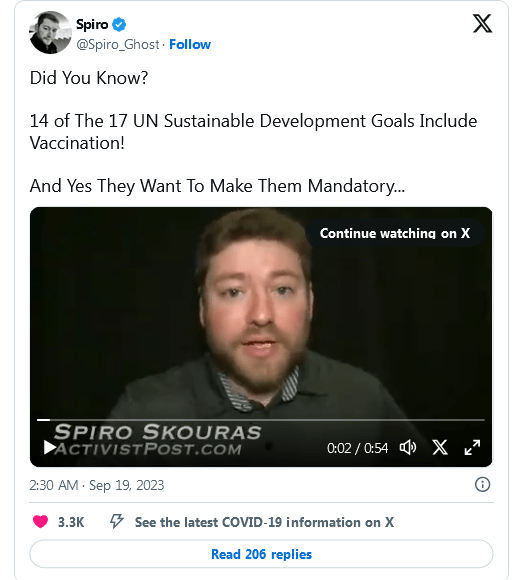





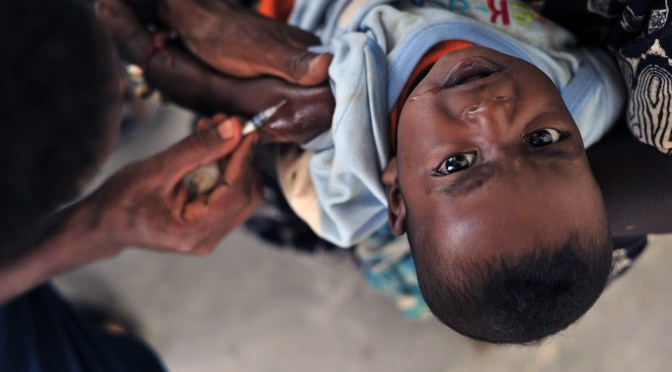







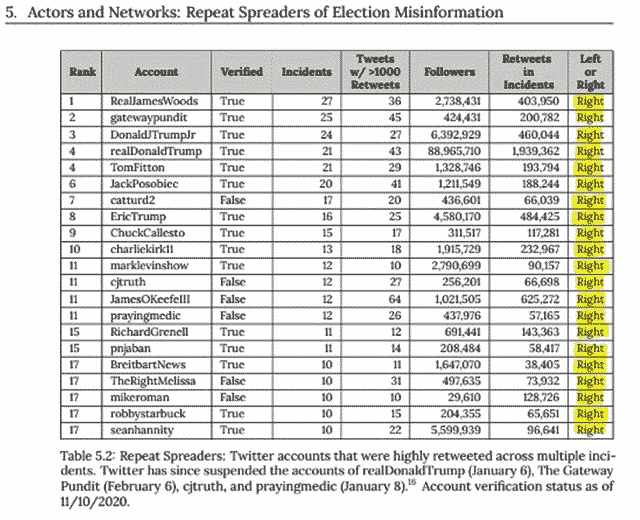





You must be logged in to post a comment.