An article here from psychologytoday.com, Mark Bekoff PhD, on the use of 1080 in NZ. Use would be a polite word given NZ has been literally slathered with this deadly poison for over 50 years. It’s killing everything and not just pests. EWR
New Zealand continues to have major animal welfare issues. A growing number of people are extremely concerned with their war on wildlife, the goal of which is to kill all invasive “pests,” including rats, possums, stoats, and other invasive animals by 2050, using the horrific poison 1080 (sodium fluoroacetate)—which also kills numerous non-target nonhuman animals (animals) including cows and native kea—along with other brutal methods including trapping, snaring, shooting, and possum stomping. Michael Morris rightly notes that in this war “there are issues with the recruitment of children for killing, humiliation of combatants, questionable economic motives for the ‘war,’ deception by government agencies, lack of consultation, a lack of consideration of alternatives, the use of excessive suffering, and unrealistic expectations.”
In addition to adults taking part in this widespread massacre, youngsters also are being trained to harm and to kill non-native animals in school-sanctioned programs. The Jane Goodall Institute New Zealand has called for a ban on school possum hunts. It also should be noted that as of May 2015, New Zealand declared all animals to be sentient beings and continues to rank among countries with the highest levels of domestic violence.
I’ve listed a number of essays in the reference section that deal with what’s happening in a place that many people call “a country of peaceful people.” A native New Zealander told me, “Millions of nonhumans numerous humans would surely disagree with this picture of the country I deeply love. The government is recklessly destroying countless lives and gorgeous landscapes.”
New Zealand’s continuing war on wildlife is one of the most inhumane assaults on nonhuman animals and a wide variety of pristine landscapes, air, and water. It’s clear that public safety has been put at risk by the use of 1080, including reprehensible aerial poisoning operations. I continually receive emails from people who are appalled at the barbaric way in which millions of animals are killed, and beautiful environments are destroyed by environmental poisons, including some messages from people who are all for getting rid of non-native species, but who are deeply concerned and put off by the brutal and inhumane slaughter of these sentient beings.
I recently learned of a report by Dr. Jan Wright written when she was Parliamentary Commissioner for the Environment, called “Evaluating the use of 1080: Predators, poisons and silent forests,” that sets the current stage for the use of 1080 and other brutal environmental poisons. She continues to work to make parts of New Zealand pest and predator-free. I’ve also learned that many New Zealanders don’t know about this one-sided and misleading essay about this highly condemned poison that causes deep and enduring pain before the animals finally die. Dr. Wright’s report is accessible for free online.
On page 52 of this biased and uninformed report, we read,
“A recent report commissioned by the National Animal Welfare Advisory Committee (NAWAC) rated the relative humaneness of 1080 and other pest control techniques used in New Zealand.159 The results of the NAWAC report form the basis of the humaneness assessments in this report. The NAWAC report rated 1080 as moderately humane.” 1
In a review of the toxicology and ecotoxicology of 1080, Dr. Charles Eason and his colleagues note that compared to the negative ecological impacts of 1080, “the animal welfare implications have received comparatively less attention.” They also write, “In carnivores, and notably in dogs, central nervous system disturbances are marked, and poisoned dogs run uncontrollably, retch and vomit, and appear distressed and agitated with prolonged involuntary muscle contractions exacerbated by convulsions and seizures prior to death from respiratory failure.” Reading the above once made me ill, so I caution you that what happens to animals who ingest 1080 isn’t “pretty,” as a number of people, including a middle-schooler, told me.
What does “moderately humane” really mean?
Being poisoned with 1080 clearly makes for a horrific way to die. It’s “colorless, odorless, and tasteless and is therefore easily ingested by companion animals as well as native species. Its victims—intended or otherwise—experience a slow, agonizing death.” So, it’s time to stop the meaningless talk about 1080 being “moderately humane” or that it amounts to “killing with kindness.”
“Killing with kindness,” a phrase put forth by Nicola Toki, the Threatened Species Ambassador of New Zealand’s Department of Conservation (DoC), is a misleading and troublesome oxymoron that covers up the hate and violence with which possums and other animals are vilified as “the enemy.” It’s a perversion of the word “kindness.”
It’s clear that the phrase “moderately humane” basically means it’s OK to allow other animals to endure human-caused, horrific pain and suffering before they die. In many instances, it’s what the complacent science of animal welfare is all about—we do the best we can to reduce suffering, but in the end, it’s perfectly OK to cause pain, allowing them to suffer and die intentionally. Welfarism patronizes millions upon millions of animals and doesn’t really protect them, and whenever you see the word “welfare” in the literature, you can be pretty sure something unpleasant is being done to animals.2
The bottom line for welfarists is that they’re trying to make life marginally better for animals in the arenas in which animals are exploited, leaving unquestioned the human practices that cause tremendous animal suffering. Welfarism is a salve for our conscience.
This is the basic reason why Jessica Pierce and I wrote The Animals’ Agenda: Freedom, Compassion, and Coexistence in the Human Age in which we put forth the science of animal well-being in which the life of every single individual matters. This isn’t an animal rights position. Rather, it’s a matter of decency to treat other animals with respect, dignity, and compassion. And this is precisely what the rapidly growing interdisciplinary field of compassionate conservation is all about.
So, this means that even if there are millions of so-called pests, it’s not OK to kill them, because each of their individual lives matters because they are alive. They’re not unfeeling objects with whom we can do whatever we like. Each and every individual cares about how they’re treated. Nonetheless, Dr. Wright and others clearly think it’s just fine to intentionally do things that they know will cause deep pain and suffering.
Calling 1080 “moderately humane” is humane-washing taken to the extreme.
Would 1080 supporters give 1080 to dogs?
It’s also useful to ask those who favor using 1080 if they would give it to dogs and other companion animals. I know some would, however reprehensible this might be. Dogs and cats can harm other animals—they can be “pests” according to some people—and cause environmental damage, so it’s a fair question.
If some people wouldn’t expose these animals to 1080 and other environmental poisons, then why would they allow other sentient beings to experience 1080-induced pain and death? While there are no systematic accounts of dog poisoning due to 1080, around 254 dogs were reported to have been killed by 1080 between 1960 and 1976. Dogs are extremely susceptible to being poisoned.
Along these lines, Dr. Wright writes, “It must be extremely upsetting to lose a cherished dog to 1080, but only eight dogs have died this way in the last four years. The sad reality is that many many more will die on roads each year, and no one is proposing a moratorium on traffic. It is important to keep risks in perspective.”
This is easy for her to say, but people who lose dogs or other animals to 1080 don’t like it one bit, and they’re deeply affected by their losses. Eight dogs are eight too many. For an update on the number of dogs who are actually harmed or killed by 1080 please see note 3. They aren’t spared from the horrific effects of 1080, but some people like to downplay the real numbers.
It’s high time to stop using 1080 and other environmental poisons once and for all: “Cruelty can’t stand the spotlight,”
“In New Zealand, flawed policies to exterminate entire species from our nation are revealing just how important it is that psychology, sociology, history, and ethics, as a few examples, take a greater role in environmental debate and policy.”
“New Zealand stands alone in the world for its widespread and growing use of the super toxin ‘1080’, spread by helicopter over hundreds of thousands of hectares of conservation land, rolling hills, and even into waterways and drinking water catchments.” —Reihana Robinson, The Killing Nation: New Zealand’s State-Sponsored Addiction to Poison 1080
I hope that as more and more people become aware of the wide-ranging effects not only on targeted individuals but also on other animals and their homes, they will work hard to stop its use once and for all. Jane Goodall is right on the mark when she notes, “There are more humane ways of dealing with ‘invasive species’ than 1080.” And, going a step further, there are many who favor using more humane non-lethal alternatives, because, in reality, the violent, lethal methods that are used to get rid of non-natives other than 1080 also are brutally inhumane, and they don’t really work. They’re not close to being expressions of compassion and empathy, the animals surely aren’t being killed “softly,” and they don’t help to develop a culture of coexistence between humans and nonhumans.
It’s also hypocritical to declare nonhumans to be sentient beings and then sanction war on them using violent methods that knowingly cause intense and prolonged suffering and death. And using violence against other animals can become addictive and have long-term effects.
New Zealand can easily become a global model for banning the use of 1080 and other horrific environmental poisons and adopting nonlethal methods for dealing with the problems at hand. And, educators should stop teaching children that it’s OK to harm and to kill other animals because this also doesn’t work and establishes a horrific model for future generations. It’s good that not all youngsters want to partake in killing for fun and games.
I look forward to New Zealand and other countries replacing violent and ineffective wars on other animals with respect and compassion for who these nonhuman beings truly are. It’s the decent thing to do. Clearly, declaring other animals to be sentient beings means absolutely nothing to those people who continue to brutalize millions of animals in what some ironically call “a country of peaceful people.”


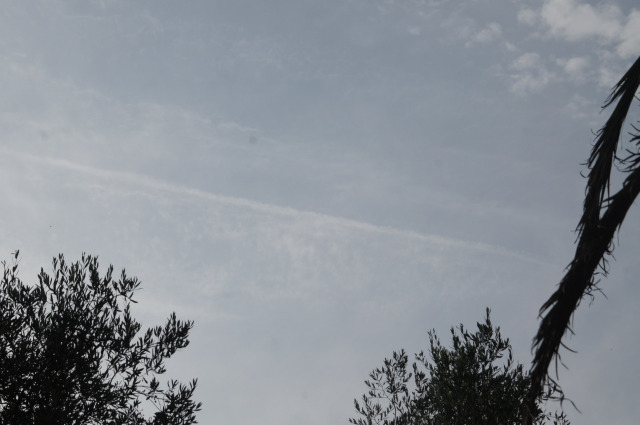 Taken at 6.43pm from Whangarei looking westward and showing what looks like an obvious aerosol trail among what looks like sheet of aerosol material comprised of aerosol from trails sprayed earlier.
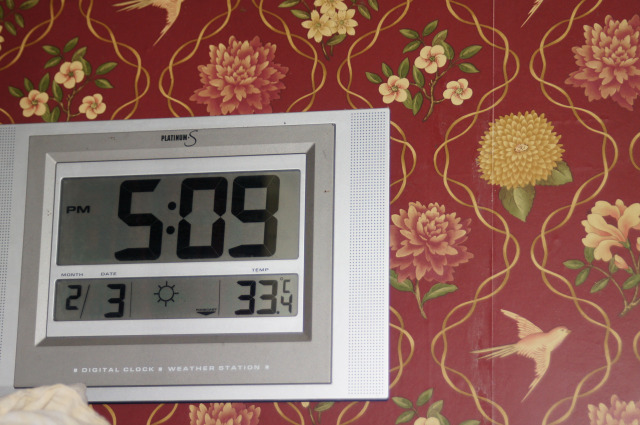 Before the first photo was taken. Showing the temperature inside a house in Whangarei which does not have air conditioning. It was a scorcher of a day here.
 Aerosol Soup. A photo taken at about 7.15 pm, 3/2/2020. Looking up from Whangarei, Woodhill. It is apparent aerosol trails have been sprayed in parallel.
 Looking westward from Whangarei at about 8.32pm on 3rd of Feb 2020. Aerosol trails in parallel































You must be logged in to post a comment.