—The CDC (US Centers for Disease Control) admits the coronavirus test is flawed. That’s the overview and the takeaway—
As my readers know, I’ve described why the widespread diagnostic test for the coronavirus is insufficient, misleading, useless, and deceptive.
That test, used all over the world where it is available, is called the PCR.
It DIAGNOSES patients. “Yes, you have the virus.” “No you don’t.”
A very alert reader sent me a link to a US Centers for Disease Control (CDC) document about the test. The CDC establishes the guidelines for how the test should be done, and what the results mean.
Here is a CDC paragraph about results. I suggest you read it several times.
“Positive [test] results are indicative of active infection with 2019-nCoV but do not rule out bacterial infection or co-infection with other viruses. The agent detected may not be the definite cause of disease. Laboratories within the United States and its territories are required to report all positive results to the appropriate public health authorities.”
I’m going to blow past the blatant contradiction in that CDC paragraph and cut to the chase.
The key line in that paragraph is: “The agent detected [the coronavirus] may not be the definite cause of disease.”
BANG.
CDC: Yeah, you see, folks, ahem, the test could say the coronavirus is there in somebody’s body, but the virus may not be causing disease…
On one level, the CDC is admitting the test could turn up false positives: the test could SAY a patient has the coronavirus, but he really doesn’t.
This isn’t a footnote stuck at the bottom of a report. It’s right there near the top of the section about the meaning of the test.
On a deeper level, the CDC is saying straight out, IF THE TEST SHOWS A CORONAVIRUS IS PRESENT, THAT DOESN’T MEAN IT’S CAUSING DISEASE.
Well, yes, I’ve pointed out that the test has an inherent problem. At best, it might show that a virus is present in the patient’s body. But the test is incapable of determining HOW MUCH virus is ACTIVELY REPLICATING in the patient’s body.
TODAY I HAD A CONVERSATION WITH THE ‘NATIONAL POISONS CENTRE ….
The signs at 1080 poison aerial drops tell you to contact the National Poisons Centre if you suspect poisoning, and they give you an 0800 number to ring. Just so you are clear about this… however, contacting the National Poisons Centre will get you absolutely nowhere!!
Joel Lund of Wanaka asked a GP the other day what he would do if someone presented with poisoning symptoms after an aerial 1080 poison drop. The doctor replied he would contact the National Poisons Centre. This sounds like a sensible response, one would have thought. Think again!!!
I had a number of questions for the National Poisons Centre about 1080 poisoning, given that so many of us live around 1080 drop zones and are potentially exposed to the substance many times over
I asked the person who answered the phone at the National Poisons Centre if she was the correct person to be talking to. She said she was.
I explained that we are about to experience another 1080 poison drop in our area (Wanaka) and asked if there were testing kits available here.
She replied “I don’t know, and I don’t know if I could find the answer”.
I asked how many methods there are for testing for 1080 poisoning.
She replied “I’m not too sure”.
I asked “How quickly can they test for 1080 and get a result?”
She replied, “They wouldn’t test the person. They would probably get some history. They probably wouldn’t do a blood test. I don’t know if there is a blood test.” She said they can’t test for every poison.
I asked how accurate the testing was. At this point she seemed to realize she was out of her depth and said she would talk to the resident toxicologist.
She came back on the line and said that there is a test available but it is not widely available. It is a urine test and is only any use within the first 24 hours after poisoning. She said it is “affiliated to a woman at Lincoln University” but wouldn’t/couldn’t tell me who that is. She said it is mostly used for testing workers’ urine levels when they have been working with 1080 poison.
She said that the toxicologist said “1080 doesn’t stay in your body very long”. We then had a discussion about whether it can be found in skin and bone and hair, as in animals including mammals, but she seemed stuck on the fact they only tested humans and seemed rather unreceptive to the idea humans are also mammals.
***********
(Ross & McCoskery (2012) found residues of 1080 in the bones of poisoned deer carcasses 213 days after death…the study ended then so no one knows how long 1080 stays in bone.
Ross, J, McCoskery, H 2012. Deer carcass breakdown monitoring. Report prepared for the Animal Health Board. Wellington, New Zealand. 7 pp.)
***********
She said if you get poisoned they will just treat the symptoms. They won’t be bothered with what kind of poison it is. She was a bit incoherent and I had to keep asking her to slow down.
Is that a worry or what?!!!
I asked for the name of the ‘resident toxicologist’.
“Michael” she said.
“Michael who? ” I said
“We’re not allowed to give out surnames”, she said.
I asked if I could speak to him please.
She said “No you can’t”
*****************************************
So there we have it. If you get poisoned by 1080 do not expect the authorities to confirm it is 1080. Just hope you survive. If the Kochummen family who ate wild pork are anything to go by you will probably be treated for botulism.
*******************************************
Sodium monofluoroacetate (1080) is a poison which is dropped indiscriminately from the air in New Zealand at the rate of approximately 4 tonnes of pure poison annually. (The baits contain 0.15% pure poison). It kills human beings at the rate of 0.5 to 2 mgs per kg bodyweight (LD50 – Negherbon).
THIS YEAR ALONE WE ARE THROWING ENOUGH 1080 POISON ON NZ TO KILL 85 MILLION PEOPLE – AND WE DON’T EVEN TEST OUR FOOD FOR 1080 RESIDUES!
NOR DO WE HAVE A READILY AVAILABLE TEST FOR 1080 POISON IN THE HUMAN BODY!!!
Photo: HeliOtago Rescue Helicopter, ZK-IME, loading 1080 from a Cromwell Transport truck in Westland
This post on changed laws in the US reminds me of NZ’s situation with 1080 that allows the long slow cruel death a vet has described as 2+ days of slow electrocution. The NZ authorities tweaked the Animal Welfare act to exempt the spreaders of aerially dropped 1080 poison from prosecution for cruelty. Same thing really isn’t it? Cruel but it’s deemed ‘okay’ because they are killing off everything non native for the biodiversity program we were signed up to under Agenda 21 now Agenda 2030. A truly ‘sustainable’ (not) practice. Unless of course it’s your pet dog, cat or other animal. EWR
“According to The Washington Post, the PACT Act “outlines exemptions for humane euthanasia; slaughter for food; recreational activities such as hunting, trapping and fishing; medical and scientific research; ‘normal veterinary, agricultural husbandry, or other animal management practice’; and actions that are necessary ‘to protect the life or property of a person.’”
Of course animal cruelty to dogs and cats by private citizens should be dealt with severely. But what about the billions of animals tortured each year on America’s factory farms? Or how about the tens of thousands of animals, including dogs and cats, who are tested on and mistreated in laboratories?
Can we actually say we’re cracking down on animal cruelty when we still allow SeaWorld to keep cetaceans captive and force them to perform? Or permit insanely cruel practices like fur trapping and bow hunting?”
“So, Massey, couldn’t work out that “FROTHY PINK FLUID” is consistent with 1080 poisoning?”
From Clyde Graf:
So, as expected, the Department of Conservation has come out with porkies, again, trying to divert attention from its recent aerial operation and the hundreds of poisoned rats, and other animals that washed up on West Coast beaches. Drowning they say. Ha! Is DOC not aware that rats are great swimmers? They even have the tag name Water Rats. They don’t drown by accident or by Pied Piper fantasy stories, made up by desperate DOC staff.
The pathology report for the weka that was found dead, released this week from Massey (known for its creative alternatives to poisoning incidents – like the sea slugs that poisoned many dogs at Auckland’s Takapuna Beach after the aerial poisoning operation across Rangitoto Island, near Auckland) shows that the endemic bird died with “BOTH LUNGS EXUDING FROTHY PINK FLUID”!!!!
The weka’s Pathology report from Massey is included, below.
The finding is typical of animals that die of 1080 poisoning. But no, in this case, and as expected, the findings were “unknown cause of death”.
So, Massey, couldn’t work out that “FROTHY PINK FLUID” is consistent with 1080 poisoning???
For Heavens sake, when will these govt organisations actually show some independence? Oh, that’s right, they can’t! There is NO independence when it comes to 1080 poisoning incidences in New Zealand.
Recent information from Animal Control Products Ltd is that DoC buy between 30% and 50% of their 1080 product every year, that OSPRI and regional councils account for another 40%, and (presumably) ZIP and Predator Free NZ account for the rest…. between 10% and 30%.
As DoC have produced maps showing they intend to be covering 1.124 million ha with aerial 1080 this year, at a rate of 1.5 to 2 kgs per ha, and even if they account for a 50% buy-up of the poison, we can safely assume a total of about 4,000 tonnes of 1080 poison baits will be spread on our land this year.
That is 6,000kgs of pure 1080 poison (at the standard 0.15% pure poison per bait rate).. So at an LD50 of 0.5mg per kg bodyweight that means 35mg can kill a 70kg human being. That works out to be theoretically enough 1080 dropped on NZ this year to poison 171,428,571 x 70kg people, with half of them, 85,714,285, having a lethal dose!
LD50 : [ Based on fatal or near-fatal cases of human poisonings, the dangerous dose for humans is 0.5-2.0 mg/kg BW (Negherbon 1959)]
(LD50 stands for Lethal Dose 50 – killing with poison is not an exact science so an LD50 is used, which means that one can assume 50% of the people poisoned will die. It doesn’t mean the other 50% get off scot-free!)
Photo credit: supplied by Carol Sawyer
If you are new to NZ’s 1080 poisoning program here is a good article to start with …
A must watch also is Poisoning Paradise, the doco made by the GrafBoys (banned from screening on NZ TV, yet a 4x international award winner). Their website is tv-wild.com. Their doco is a very comprehensive overview with the independent science to illustrate the question marks that remain over the use of this poison. Check out also 1080science.co.nz for the independent science.
And ‘long’ it has been. What the Herald failed to mention is that her Doctor suspected 1080 poisoning which is why he asked for her heart to be tested. Please read our earlier article on this … the Doctor was in effect stone walled which confirms Dr Baycroft’s information (see below).
Have you ever heard of a lab losing a human heart before?
This is horrible beyond imagination for this family. And it sounds extremely suspicious doesn’t it? This family was paid absolutely no respect in this. Not by the authorities anyway. Remember what retired Doctor Charles Baycroft has told us recently… ‘if you die from 1080 poisoning nobody will know’ because Doctors he said are not allowed to look for it, and they are bullied into not testing. Word has it that the leaves in the area where Whitney walked that day were smeared with 1080 gel, a highly concentrated application.
The NZ authorities do not practice the precautionary principle with the spreading of 1080 poison people. In fact they are now legally allowed to drop it into your waterways without the previously required consents, even though the manufacturer’s warning says take care not to drop it into the waterways. Whilst they continue to claim it is harmless, there is much independent research that says otherwise. (See 1080science for further independent info). In light of that, in my opinion it is safer to follow the precautionary principle, that is, proceed as if there were a possible risk to your health rather than assume there is none. EWR
The family of an American backpacker whose heart went missing after she died suddenly in Queenstown last month face a long wait.
The Auckland District Health Board is investigating the disappearance of 23-year-old Whitney Robie’s heart from LabPlus, the hospital’s pathology laboratory.
Miss Robie collapsed while watching TV at Deco Backpackers in Queenstown on May 15 and died shortly afterwards despite efforts to revive her.
The NZ authorities do not practice the precautionary principle with the spreading of 1080 poison. In fact they are now legally allowed to drop it into your waterways without the previously required consents, even though the manufacturer’s warning says take care not to drop it into the waterways. Whilst they continue to claim it is harmless, there is much independent research that says otherwise. (See 1080science for further independent info). In light of that, in my opinion it is safer to follow the precautionary principle, that is, proceed as if there were a possible risk to your health rather than assume there is none. Since 1080 is a known teratogen I believe it is particularly important for pregnant mothers or even those who think they may be or who could be pregnant, to distance themselves from an area where 1080 is being distributed, particularly aerially because of the drift of the dust over long distances. I believe these are the concerns being raised here, and particularly also with regard to warning tourists of the risks of drinking the water, who may not be able to read the signs (if there indeed are any). Finally, of particular concern is the topography of Milford Sound. When it rains as per the above image, “all of the steep landscape can be considered a streambed”. EWR.
Re: Response to email on 31st July 2019 from John McCutcheon (MSI) to the community andstakeholders, regarding the impending 1080 drop into the public water supply water catchment area of Milford Sound
The key issue:
DOC has issued its intentions to drop a VTA (1080) between Aug 1st and Dec 2019 in the Cleddau/Milford Sound area, including the Bowen River valley, which is the water catchment for the public water supply of Milford Sound.
How might this affect the public water supply and its consumers in the Milford Sound area?
It won’t, if the drop is aborted in the Bowen River valley water catchment area.
However, if the drop in the catchment area goes ahead, I believe that – on reading the information and links below, both DOC & Milford Sound Infrastructure (MSI –the local public water supply company) should act in good faith, and with the prudent exercise of ethical responsibility, to make sure that an alternate water supply is arranged during and after the 1080 drop. Also, adequatesignage should be supplied about the drop –which seems to be the responsibility of Workplace NZ.
Why?
The alternative supply should be offered until testing is carried out and levels of 1080 found to be below the government standard for tests (set at 2 parts per billion, though under 3.5 parts per billion is deemed safe by the EPA.) Note: No human trials have been carried out to know if this level is indeed correct)
Failing the delivery of an alternate water supply, responsibility lies with us – the end operators and consumers, along with WorkSafe NZ – to place signs at all water outlets where human consumption could reasonably be expected to take place. For example, all tourist vessels, port and airport facilities, and all lodgings should have 1080 danger signs erected where water (including tea or coffee) is to be offered during and after aerial operations in the Bowen River catchment area, until post-drop test results are available.
I have now received an email (dated 1 Aug 2019) from Renee Cubitt (Health Protection Officer Public Health South, Southern DHB) where she states:
“… Mitigation measures are discussed between the water supplier and the applicant andmonitoring includes testing the water before consumption. Water samples tested for 1080 toxin residue in New Zealand are tested to a very low level of detection. Alternative suppliesare arranged before results are cleared(highlight added). In our view the risk to those consuming drinking water is extremely low – and most likely nil.”
But as recognised in this statement, some risk – however small – exists, so an alternative water supply should be offered.
What regulates these requests to drop 1080 and relevant mitigation of risk?
The Ministry of Health is responsible for ensuring that the provisions of the HSNO Act are complied with where it is necessary to protect public health. The Public Health Unit (PHU) is empowered by the Ministry of Health to approve permission and attach conditions to interested parties applying a VTA (Vertebrate Toxic Agent) in a public place. This applies especially to drops into (or near) a public water supply. Public Health South (PHS) processes and approves permissions for VTA use in the Fiordland area, in so doing, sets minimum standards for the intended dispersal area in the Milford Sound public water supply catchment area.
Permission is required because VTAs (of which 1080 is one) are toxic to humans through acute poisoning and chronic exposure. 1080 is considered a hazardous substance, for good reason. (See link to 1080 effects at p7.)
The PHU have issued a Model Permission Statement (see p32 onwards) with examples – one of which focuses on a VTA to be dropped into a public water supply. (Case study 2 at p63.)
Some things that stand out for me with the model PHU permissions:
Full disclosure to users is expected, with signs and warnings – which would logically be placed at the point of possible consumption. (See conditions 19 & 20 p47 of VTA permission guide.)
An alternate water supply should be offered, if requested, until testing has been completed. (See Case example – Condition 25 p68 note ii and conditions 25 – 32 of VTA permission guide.)
I see the above two points as meeting a legal and moral duty to protect tourists (and locals) from potentially drinking contaminated water.
It should be noted that, according to the opening segment of condition 30 (p57) of the VTApermission guide:
Mitigation shall be mutually agreed in writing between the applicant and water supply managers and involve either or both of the following [emphasis added]:
No 1080 shall be applied within 200 m of the water supply intakes. For flowing surface watercourses, the 200 m exclusion shall be extended to 400 m upstream of the point of intake. (p57)
If an interim water supply is available, the affected water supply shall be temporarily disconnected until such time as water testing finds no VTA contamination above 50 percent of the Ministry’s PMAV*, in accordance with the requirements of the Drinking-water Standards of New Zealand. (p57)
The first point above is modified (example given in condition (30 pg57) by:
In steep areas, the exclusion area may need to be increased to avoid bait falling in to the waterway [emphasis added].
Local conditions affecting the toxicity of any drop in this area
Let’s be honest, the whole Milford Sound area has extremely steep gradients.
Bowen River valley and public water supply catchment area (see red circled area)
Figure 1: (Map clipped 4 July 2019 from the onlineDOC map.)
Fiordland is a unique area in terms of its topography and rainfall. The Bowen River catchment valley is rather like a giant granite bath, with very little top soil, and average rainfall of 7000mm per annum.
During rainfall, all of the steep landscape can be considered a streambed.
Figure 2: Milford steep gradient waterways during heavy rain in Milford Sound (Photo: Sacha Stevenson)Contrasting the 2D nature of the 2017 GPS flight path map for the 1080 drop in this area with the reality of the length of the Bowen River and its many, many feeder streams (via a camping map) also gives perspective to the special nature of this landscape and its potential for major 1080 runoff into the waters feeding our drinking water supply.
Figure 3: Flight path for 2017 drop (from EPA Report) Figure 4: Topography (from Camping Map)
This unique topography, together with winter temperatures, ice and snow melt, will likely increase the risk of 1080 arriving at the intake area intact, and at the same time and breaking down much more slowly. According to TBFree: “How 1080 Breaks Down in Soil and Water”:
“Biodegradation of 1080 is faster in warmer conditions (20degC), but still occurs at 5degC. Atcooler temperatures rates of degradation are slower…..”
Imagine the perfect storm: A huge rain soon after the drop and all the aerially dispersed 1080 pellets wash straight into the streams and make their way to the public water supply intake around the same time. This poison then, being a deadly toxin at single digit parts per billion, arrives to be consumed by a pregnant woman, above the levels that the mother and child can metabolize safely.
Is it possible that 1080 might get to the intake before it breaks down? Considering the nature of the topography here, the winter temperatures and the international exposure of our iconic location, ALL options of mitigating risks should be enacted.
The 2017 DOC report (at p6) reported a positive 1080 test at 1ppb for the Bowen River (ie a fairly small risk). However, as discussed above, different conditions (eg heavy rain around the time of the drop) may adversely affect that risk level.
“Urgent samples for 24-hour turnaround testing may be sent unfrozen to the testinglaboratory, but they must be chilled to 4°C and placed on ice as soon as possible after collection.”
Looking closer at Landcare’s testing regime (at 4.0): “Results will be available no later than 9.30 a.m.
on the following day.” This means, at a minimum, no water should be drunk in Milford for 24hrs.
The precautionary principle
The HSNO Act (at s7) is predicated on a precautionary approach, especially where there is uncertainty about the effects of a course of action, which there must be in this case.
“The specific characteristics and risk profile of each VTA operation is different, depending onthe VTA being used, the terrain and factors such as public use patterns and/or proximity to dwellings and water supplies. The Model Permit Conditions may need to be modified in order to adequately manage the level of the risk to public health.[From page iii, emphasis added]
“The Model Permit Conditions are intended as astarting point. They should not be applied as ageneralised standard ‘set’ of conditions. They provide a framework that officers can adjust in order to meet local needs. However, officers need to ensure that they fully consider the various risks and characteristics of each specific proposed VTA operation in order to determine the appropriate Model Permit Conditions to be used and how such conditions might need to be modified to adequately manage the public health risks posed by that particular operation.” [From page 2, emphasis added]
Guidelines are not the law. They are a mechanism for giving effect to the law – and to its precautionary approach.
Milford Sound – a major tourist attraction
Milford Sound is one of NZ’s iconic tourist locations. We have somewhere between 500 to 5,000 guests per day visiting the Fiord, hosted by various companies across the different seasons. The large majority of tourists are foreign nationals, many of whom don’t speak or read English very well.
Until at least the 24th July 2019, Milford Sound Infrastructure acknowledged they hadn’t been notified of the impending drop. Since the community was notified by MSI on the 31st July, we can assume we now have at least 2 months until the scheduled drop begins, as per the guidelines:
The notice must be given sufficiently prior to, but within two months of, the proposed application of the VTA (PHU VTA Permission – condition 27 Notification)
I understand that some of the companies here are planning to make bottled water available for their staff, but none of them (as far as I know) are planning to offer bottled water to the tourists, or even to put notices up in the terminal or on the vessels to warn them of the 1080 drop – so they can at least make an informed choice as to whether they will consume the potentially contaminated water or not.
I believe in ‘free will’ and I can understand some people believe the Government/DOC scientists when they say the water will be safe to drink.
However, around 3% of 1080 tests in water have come back positive for 1080 over the years, with at least 4 positive tests in drinking water, albeit in low concentrations. (See TBFree, p3.)
Knowing that 1080 is teratogenic (may cause birth defects) and with my partner being pregnant, I wouldn’t wish her to have any exposure whatsoever to 1080. I assume no foreign national in her position would wish to be exposed to that risk either. (See MOH Guidelines p7 re known 1080 effects.)
I am disappointed that neither DOC, MSI Milford Sound Infrastructure, or MST Milford SoundTourism NZ (the port operational company that operate the terminal and dock facilities) are planning to at least inform the tourists that the water they may drink in the terminal and on board the vessels may potentially have a birth defect causing agent in it.
It is probably true that signs will likely be erected along the road into Milford, as we have seen done in various locations around NZ. But it is wrong to conclude that because those signs are at rest areas etc, that foreigners will equate that with the drinking water supply inthe terminal and on the vesselsetc, as being also potentially contaminated. One must remember that many visitors can’t read English for a start, plus many come from areas where it is obvious that one doesn’t drink from any tap water.
Is it obvious here?
I would expect the duty of care and a minimum standard would mean that we’d firstly err on the side of caution. I would also assume that foreign governments would want us to set the minimum standard bar rather high when it comes to looking after the health and welfare of their citizens. As we would hope they do for our citizens when they’re abroad.
We know that the US and China for example, among others, take the safety of their citizens travelling overseas very seriously.
Do we need reminding that there is no antidote to 1080 poisoning?
It really seems easy to avoid the vast majority of the risks in this case. Just don’t drop 1080 in the water catchment area: meaning no 1080 to be aerially dropped in the Bowen River valley area of Milford Sound.
If DOC is so determined to go-ahead with the poison drop in the catchment area, then full disclosure to tourists should be made and an alternate drinking water supply offered (as per the model PHU statement example of 1080 in a public water supply).
It’s embarrassing that we call our country ‘Open and Inclusive’ ‘Clean Green’ etc and yet treat foreigners with this sort of disrespect.
I would like to add, I have no issue with the normal supply and delivery of water in Milford Sound. As long as I’ve worked here, MSI and MST have both operated with professionalism and worked to fix any issues with the greatest of haste.
A final point
If the aerial drop in the Bowen River catchment area is aborted, there would be no risk to the public water supply.
If you are concerned, please speak up and send your concerns to DOC and MSI.
A must watch also is Poisoning Paradise, the doco made by the GrafBoys (banned from screening on NZ TV, yet a 4x international award winner). Their website is tv-wild.com. Their doco is a very comprehensive overview with the independent science to illustrate the question marks that remain over the use of this poison. There are links also on our 1080 resources page to most of the groups, pages, sites etc that will provide you with further information.
Check out the 1080 pages at the main menu, particularly the sub tab, ‘suspected 1080 poisoning cases’. Finally, remember what the retired MD Charlie Baycroft said recently …‘if you die from 1080 poisoning, nobody will know because the Ministry of Health is bullying NZ Doctors into not testing for 1080′. EWR
Impending Milford Sound 1080 drop (Southland Cleddau area)
By Sacha Stevenson
1080 – It’s nothing new to most Kiwis. Opinions are divided.
The last aerial drop of 1080 here was only two years ago. Before the last drop (although I wasn’t working in Milford at the time) there was some community consultation, including a Q & A session with the Department of Conservation (DoC) – the lead agency involved with the drop in this region. I understand some local workers and one Iwi objected, but the drop went ahead anyway, including into the public water supply catchment area.
The next drop in the Southland Cleddau/Milford Sound area is scheduled for between Aug 1st and Dec 2019 and, just like the Sept 2017 drop, this again includes dropping 1080 into the water supply.
(See map below clipped 4 July 2019 from the online DOC map.)
In my opinion, the community here has not had an honest open forum to voice their say on the next scheduled drop (and every opinion is valid) but much worse, even if we get to have our say, chances are high that the tourists will be left uninformed.
There are many aspects to this topic, many already discussed. One of the main aspects here being in regards to the Public Health Unit (PHU) VTA Permission and conditions statement and its lack of implementation here in Milford Sound, and the effect it may have on locals and tourists. I’m not a lawyer, but I see this as a legal and moral failing in our duty to protect tourists (and locals).
The Ministry of Health (the Ministry) is responsible for ensuring that the provisions of the Hazardous Substances & New Organisms (HSNO) Act are complied with where it is necessary to protect public health. The Public Health Unit (PHU) is legislated by the Ministry of Health, to approve permission and attach conditions to interested parties applying a VTA (Vertebrate Toxic Agent) in a public place. This applies especially to drops into (or near) a public water supply. Public Health South (PHS) processes and approves permissions for the Fiordland area.
Permission is required because VTAs (of which 1080 is one) are toxic to humans through acute poisoning and chronic exposure. 1080 is considered a hazardous substance, for good reason. (See link to 1080 effects at p7.)
Some things stand out for me with the model PHU permissions:
1) Full disclosure to users is expected, with signs and warnings (which would logically be placed at the point of possible consumption)(see conditions 19 & 20 pg47 of VTA permission guide.)
2) An alternate water supply should be offered, if requested, until testing has been completed. (Case example – Condition 25 p67 note ii and conditions 25 – 32 of VTA permission guide.)
Bowen River valley and public water supply catchment area (see red circled area)
Figure 1: (Map clipped 4 July 2019 from the online DOC map.)
Milford Sound is one of NZ’s iconic tourist locations. We have between 500 to 5000 guests per day visiting the Fiord, hosted by various companies across the different seasons. The large majority of tourists are foreign nationals, many of whom don’t speak or read English very well.
However, I’ve had contact with the public water supply company in the last week, confirming that they’ve had no warning about the upcoming use of 1080. (As at 24th July)
Not a good start.
Despite the lack of communication from DoC (the lead agency for this particular drop) and from the aerial application contractor, many of the workers here in Milford know the drop is now imminent.
I understand that some of the companies here are planning to make bottled water available for their staff, but none of them (as far as I know) are planning to offer bottled water to the tourists, or even to put notices up in the terminal or on the vessels to warn them of the 1080 drop – so they can choose for themselves whether they would like to drink the tap water or not.
Knowing that 1080 is teratogenic (may cause birth defects) and with my partner being pregnant, I wouldn’t wish her to have any exposure whatsoever to 1080. I assume no foreign national in her position would wish to be exposed to that risk either. (See MOH Guidelines p7 re known 1080 effects.)
I am shocked that it appears that no one in Milford, including DoC, Milford Sound Tourism NZ (MST – the port operational company), Milford Sound Infrastructure ((MSI – the public water supply company), or the tourist companies providing vessels and the drinking water aboard them, is planning to at least inform the tourists that the water they may drink in the terminal and on board the vessels may potentially have a birth defect causing agent in it.
It is probably true that signs will likely be erected along the road into Milford, as we have seen done in various locations around NZ. But it is wrong to conclude that because those signs are at the rest areas, that foreigners will equate that with the drinking water in the terminal and on the boats being also potentially contaminated. One must remember, that many visitors can’t read English for a start, plus many come from areas where it is obvious that one doesn’t drink from any tap. Is it obvious here?
I would expect the duty of care and a minimum standard would mean that we’d firstly err on the side of caution. I would also assume that foreign governments would want us to set the minimum standard bar rather high when it comes to looking after the health and welfare of their citizens. As we would hope they do for our citizens when they’re abroad.
We know that the US and China for example, among others, take the safety of their citizens travelling overseas very seriously.
To add to the issues, Fiordland is a unique area in terms of its topography and rainfall. The Bowen River catchment valley is rather like a giant granite bath, with very little top soil, and average rainfall of 7000mm per annum. Together with winter temperatures, ice and snow melt, this will likely increase the risk of 1080 arriving at the intake at the same time and breaking down much more slowly. Further, according to TBFree HYPERLINK “https://ospri.co.nz/assets/Uploads/Documents/How-1080-Breaks-Down-in-Soil-Water.pdf” NZ:
“Biodegradation of 1080 is faster in warmer conditions (20degC), but still occurs at 5degC. At cooler temperatures rates of degradation are slower…..”
“Urgent samples for 24-hour turnaround testing may be sent unfrozen to the testing laboratory, but they must be chilled to 4°C and placed on ice as soon as possible after collection.”
Looking closer at Landcare’s testing regime (at 4.0): “Results will be available no later than 9.30 a.m. on the following day.” This means, at a minimum, no water should be drunk in Milford for 24hrs.
Do we need reminding that there is no antidote to 1080 poisoning?
It really seems easy to avoid the vast majority of the risks in this case. Just don’t drop 1080 in the water catchment area, meaning no 1080 to be aerially dropped in the Bowen River valley area of Milford Sound.
If DOC is so determined to go-ahead with the poison drop in the catchment area, then full disclosure to tourists should be made and an alternate drinking water supply offered (as per the model PHU statement example of 1080 in a public water supply).
It’s embarrassing that we call our country ‘Open and Inclusive’, ‘Clean Green’ etc and yet treat foreigners with this sort of disrespect.
Also of interest, according to the above Cleddau report; NO non-target species monitoring was undertaken. The water quality testing (pg 6 of DOC’s operational report 5.2.2) revealed the presence of 1080 at 1ppb.
I can tell you that as of writing, we have quite a few Kea (approx 20) hanging out in and around the village here in Milford.
Kea in Milford Sound, down near Deep Water Basin, May 2019 (Photo: Sacha Stevenson)
Plenty of Wekas here as well, plus I’ve seen the odd NZ Falcon eating road kill on the drive into Milford.
Weka at Deep Water Basin July 2019 (Photo: Sacha Stevenson)
I wonder how they will fare with the ‘Clean Green’ 1080 pellets raining down in the near future. Will anyone know if they’ve been affected?
To conclude: yes, opinions on the use of 1080 differ here, but no locals I’ve talked to think tourists shouldn’t at least be fully informed of what might be in their drinking water, to allow them their ‘Free Will’ to drink the local water or not.
Increase the peace
S Stevenson
Skipper – Milford Sound
An update to this article can be found at this link.
RELATED: EWR links to articles on 1080 in water. Search for other articles on 1080 poison at the categories drop down box at the left of the news page.
If you are new to the 1080 poisoning program, here is a good article to start with …
A must watch also is Poisoning Paradise, the doco made by the GrafBoys (banned from screening on NZ TV, yet a 4x international award winner). Their website is tv-wild.com. Their doco is a very comprehensive overview with the independent science to illustrate the question marks that remain over the use of this poison. There are links also on our 1080 resources page to most of the groups, pages, sites etc that will provide you with further information.
Check out the 1080 pages at the main menu, particularly the sub tab, ‘suspected 1080 poisoning cases’. Finally, remember what the retired MD Charlie Baycroft said recently …‘if you die from 1080 poisoning, nobody will know because the Ministry of Health is bullying NZ Doctors into not testing for 1080′. EWR
Probably botulism or another unidentified neuro-toxin again? It could never be 1080 because that is just a deadly chemical weapon that is not supposed to harm the people of NZ. The MOH says that “there is no evidence”. There is no evidence because the Ministry of Non-health does not allow the evidence to be looked for. There is plenty of evidence that 1080 efficiently kills people, causes abortions, causes stillbirths, and causes birth defects and no evidence that it does not. There are no valid clinical trials of 1080 or other poisons because they are POISONS. The only place where people do experiments in which people are exposed to poisons is New Zealand. Other countries have heard about the precautionary principle and medical ethics but the people of New Zealand don’t seem to have been provided with that news. All we get here is false propaganda, published by a tame media, controlled by self-serving bureaucrats in dysfunctional and corrupted government enterprises. When people who are potentially exposed to poisons become ill the cause of illness is ASSUMED TO BE DUE TO POISONING UNTIL CONCLUSIVELY PROVEN OTHERWISE. That is how medicine is practiced in most countries. In New Zealand we already know that the people are potentially exposed to 1080 and other poisons but our Ministry of NOT-Health policy is that people are presumed to NOT BE POISONED by this exposure unless it can be proven beyond any doubt that they have been poisoned. Just to make sure that the PROOF CANNOT BE FOUND the appropriate investigations are also prohibited. This is called a catch 22 conspiracy. People are told that exposure to a deadly poison cannot harm them “because there is no evidence”. There is no evidence because it is not allowed to be looked for. The evidence is not allowed to be looked for because the people have been told that the poison cannot harm them. Without any intent to insult any specific employee of any government enterprise, it has always been generally agreed that any doctor who is competent and capable would never work for the government.
More miracles here from the corporates: this time it isn’t DoC … getting really hard to believe anything they say these days isn’t it? …
IS HONEY GIANT “COMVITA” TELLING THE TRUTH?
By Carol Sawyer
On September 21, 2018, Benita Martin sent a question to Comvita:
“Please advise what tests for 1080 are undertaken on your honey? I’m worried about the bees that were found on the 1080 poisoned cows and your hives are closest to the location.”
“Comvita uses Analytica Laboratories to undertake Sodium monofluoroacetate (1080) testing. Analytica are an IANZ accredited laboratory who perform a wide variety of bee product testing on behalf of the Apiculture industry.
Comvita undertook 1080 testing on a range of honey samples which were taken from honey harvested between September 2017 – March 2018 including honey from 1080 drop zones. No traces of 1080 were detected in any samples which is inline with all scientific literature which suggests the risk of contamination to bees and their products appeared to be negligible.
‘Low risk’ is a category we assign to this residue in our testing schedule, and best reflects where no verified evidence of cross contamination is known to occur. This is consistent with research we have seen elsewhere which indicated 1080 is not attractive to bees and poses no threat.”
What happened between March 2018 and June 2018? Did Analytica lose their testing equipment?! Is Comvita telling the truth?
If you still imagine a corporation or it’s representatives wouldn’t lie to you you need to watch The Corporation movie. You’ll find it if you scroll down our ‘Corporations’ page at the main menu. An excellent exposé of the way of corporations that will not only surprize you but will explain an awful lot of things that are going on today. When you’ve done that, do explore our 1080 pages at the main menu. There have been other posts about the contamination of honey by 1080. Use the search box or the categories drop down box at the left of the news page.
NINETEEN Doctors. If nothing else gets your interest about 1080 poison that certainly should.
These medical professionals who are against excessive use of poisons in our environment are neither violent, extreme activists nor conspiracy theorists as DoC and the media would have you believe. To confirm this you simply must read the independent information. To begin with at least, here is a list of 19 Doctors … why would they spend their valuable time warning both yourself & the authorities about the perceived dangers of 1080 in your water supply if there wasn’t any?
In efforts to prevent the last Hunua Ranges drop this was taken to court by Sue Grey, lawyer where it was noted that DoC’s lawyers asked the judge that their scientist NOT be cross examined. The lawyers were granted their request & the drop went ahead. See the Court approval here.
BELOW IS THE LETTER PREPARED BY DOCTORS WHO WERE CONCERNED ABOUT 1080 POISON BEING DEPOSITED IN DRINKING WATER
Open letter to the Government, Friday, 21st September 2018.
As doctors, we are extremely concerned about the health risk of depositing poisoned bait over 22,500 hectares of the Hunua water catchment area. Specifically, we are concerned about Sodium Fluoroacetate (SMFA / 1080), a known deadly poison which is known to cause sub-lethal effects on reproduction and is classified as a teratogen, having potential to contaminate the Auckland water supply.
There is no effective antidote for 1080 poisoning in humans.
We are extremely concerned that public officials are not adopting a far more precautionary approach to the safety of the Auckland water catchment, especially when the effects of 1080, a highly soluble poison, is not quantifiably able to be tested on how it affects the health of humans.
Studies show that 1080 affects the reproductive organs, the cardiac system, and respiratory system in mammals. There is no safe minimal level known and water testing and sampling after aerial 1080 application cannot prudently protect the public from risk of exposure from this poison.
As doctors, we are responsible for the health of individuals and communities. Therefore, we ask the government to immediately stop the usage of sodium fluoroacetate which has potential to contaminate the New Zealand water supply.
Signed,
Dr Ulrich Doering MBChB, Dipl O+G, FRNZCGP
Dr Roger Leitch MBChB, FRNZCGP
Dr Mogens Poppe FRNZCGP FRACGP
Dr Janine Budden MBChB, FRNZCGP
Dr Caroline Wheeler MBChB
Dr Ron Goedeke
Dr Tessa Jones MBChB, Dipl Obs, FRNZCGP, FACNEM, FAARM
Dr. Charles M. Baycroft BSc; MD. FRNZCGP, Dip MSM, QBE.
Dr Donald Palmer MBChB, Dipl O+G, FRNZCGP
Dr Jocelyn Lydford MD
Dr Kamal Karl MBBS, FRNZCGP, FACNEM, FNZCAM, FACCS
Dr Avani Karl
Dr Rick Coleman MB ChB, Dip Obst, FRNZCGP
Dr Helen Proctor
Dr Richard Drexel
Dr Tim Ewer, MB ChB, MMedSci, MRCP, FRACP, FRNZCGP, Dip Occ Med
A must watch also is Poisoning Paradise, the doco made by the GrafBoys (banned from screening on NZ TV, yet a 4x international award winner). Their website is tv-wild.com. Their doco is a very comprehensive overview with the independent science to illustrate the question marks that remain over the use of this poison. There are links also on our 1080 resources page to most of the groups, pages, sites etc that will provide you with further information to make your own informed decision on this matter.
For further 1080 articles on this site use ‘categories’ at the left of the page.
Note: Taranaki is soon to be re 1080’d (2019). See details below the Stuff article on that.
I am noticing in discussions around aerial 1080 drops, folk are saying they’ve not heard of any health effects happening. What you need to know however, is when it comes to testing for 1080 there are parameters around time frames for that (as you will see in the Putaruru family’s ordeal in the links below). A retired NZ Medical Doctor has been concerned enough to inform the public that Doctors are bullied into NOT testing for 1080 poisoning. So in his words last September 2018 “if you die from 1080 poisoning, nobody will know [that it was 1080] …”. You should also read our page on suspected 1080 poisonings to see the foot dragging & cover up that is exhibited by our esteemed authorities.
From stuff.co.nz
A former DOC ranger says he’s concerned about 1080 reaching Taranaki’s water supply following aerial drops of the toxin in Egmont National Park.
Barry Ovenden, who has helped conduct 1080 operations in the park in 2002 and 2010, said there had been a lack of public consultation about the poison reaching rivers which run off the mountain and supply the region with fresh water.
“If the drop goes perfectly then there shouldn’t be any problem, the risk is if someone say drops a bucket of it into a stream,” he said.
“By the time DOC have tested that water 24 hours later, the water is already on the way to the tap.”
Ovenden said there hasn’t been a history of negative effects – like sickness – from people drinking 1080 contaminated water in Taranaki, but cautioned the effects were still relatively unknown.
“DOC test the water supply after the first significant rainfall after the drops, but there’s no long term testing,” he said.
Unlike many stalwart anti-1080 campaigners Ovenden said 1080 was still very effective, but there were other means of controlling pests in the park.
“DOC could conduct that aerial operation on the ground,” he said.
“Sure it would be more expensive, but it wouldn’t be dangerous.
“They (DOC) are dictating to the public of Taranaki that this is the only way.”
However, DOC refutes any claims 1080 poses a danger to our water supply and the government’s environmental watchdog Landcare Research backs up the department’s claims.
According to Landcare’s protocol for sampling and testing water for 1080 there is no evidence water had been contaminated in a study of 76 samples done in 2007.
The report also states that contamination in waterways from 1080 is “highly improbable if current safety procedures are followed”.
The Ministry of Health recommends that water should not be used for drinking if 1080 is found to be above two parts per billion, whereas 70 of the 76 samples done by Landcare were below one part per billion.
DOC spokesperson Herb Christophers said the department simply wouldn’t use 1080 if it was contaminating people’s waterways.
“We base everything we do on the science that supports 1080’s use,” he said.
“There is just no evidence to say it poisons our waterways.”
As for conducting the 1080 operation on the ground, in a more targeted approach to pest control, DOC’s bio-diversity planner Bill Fleury has previously said it would cost 25 times the cost of using 1080 to control pests manually in the park.
Fleury said possums had a small territory and trappers would have to physically trap every hectare in the park to have the same effect as dropping 1080.
“The problem with doing that from the ground is that pests can move back into an area you’ve just baited and nullify any progress you’ve just made,” he said.
1080 is dropped in the the park every six years and this year’s drop is yet to commence as DOC need several fine weather days.
Following this year’s drop DOC will drop 1080 every three years, but at half the dosage.
You’ll note in here that a time period of March-August 2019 is identified. The job is different to 2016, with Kaitake being separate as contributing to a joint project with TRC – Towards a Predator Free Taranaki project. This Kaitake project is intended to start earlier in March (hence the reference to that in the link), with the main cone being later in 2019. This Kaitake timeframe may be what you are hearing, or timings may have changed since the last communication with your friends in November 2018.
Letters are to be sent shortly to more of the community which will include more detail around each part of the job.
Thanks
Sean
NOTE: For further articles on 1080 use categories at left of the news page.
If you are new to the 1080 poisoning program here is a good article to start with …
A must watch also is Poisoning Paradise, the doco made by the GrafBoys (banned from screening on NZ TV, yet a 4x international award winner). Their website is tv-wild.com. Their doco is a very comprehensive overview with the independent science to illustrate the question marks that remain over the use of this poison. There are links also on our 1080 resources page to most of the groups, pages, sites etc that will provide you with further information to make your own informed decision on this matter.
If you are pro poisoning of the environment, EnvirowatchRangitikei is not the place to espouse your opinions. Mainstream would be the place to air those. This is a venue for sharing the independent science you won’t of course find there.
This is dated 2014. As always with detection of possible environmental contamination, the various industries tend to set the bar low enough to eliminate any public concern. Certainly this one does not look too thorough. All due respect to the small players that are of course powerless to stop the fall out from that disaster that still goes on… amidst the endless rounds of denial & cover up by the perpetrators.
From postmanproductions.wordpress.com … TRANSCRIPT concerning the testing of the birds for possible radiation from Fukushima:
“Mutton birds fly every six years all around the world to the northern hemisphere which includes off the coast of Fukushima. At the moment Ngai Tahu are doing testing … they are only testing the wing tips, and only doing thirty birds, and what they really need to be doing is testing the organs … they are actually testing the chicks of parents that may not have ever been to Fukushima, so they’ll have to keep doing it … that’s the mutton bird island you can see over here …. ”
Listen further to the video which does get difficult to hear because of background noise in the location.
NOTE: Periodically & randomly the facebook share option will disappear from posts on the front (this) page. If it is not appearing, click on the heading of the article to go to its own page, usually the share button will show up there. (All else failing copy & paste the url to your facebook page).
Didn’t we just know with a partner like Lockheed Martin (& now ACC as well) that there was more to Mahia’s Rocket Lab than innocent research? Doubtless, Mahia residents will have had nil consultation on this and as to Winston Peters’ ‘disarmament and arms control minister’ label, all I can say to that is, ‘what a crock’. All adds up given the big weapons fest Key hosted before departing for wealthier climes, having wrecked everything here prior …. thanks to thecontrail.com for the alert on this.
Its latest mission may be inadvertently exposing New Zealand to the militarisation of space, writes Ollie Neas.
Rocket Lab made history on Sunday as its first ever mission for NASA made orbit from the Mahia Peninsula. The mission was the first dedicated launch of miniature satellites, or CubeSats, for NASA by a commercial launch provider.
But this was not the only reason the Educational Launch of Nanosatellites (ELaNa)-19 was historic. It was also the first time a satellite for a US defence agency was launched from New Zealand.
Although described as an “educational” mission, ELaNa-19 included a satellite that will conduct research for the Defense Advanced Research Projects Agency, or DARPA, the Pentagon agency which develops cutting-edge technology for the US military.
DARPA’s involvement with this satellite, called the SHFT-1, has not been publicly disclosed by Rocket Lab. Nor does it appear to have been disclosed to the minister for economic development, David Parker, who approved the launch.
This launch is set to be followed by another for DARPA in early 2019 as part of a US Department of Defense programme to demonstrate that it can launch satellites rapidly in the increasingly contested space environment.
These developments come after The Spinoff revealed the extent of Rocket Lab’s work for US defence agencies last month, and signal New Zealand’s creeping involvement in US programmes to enhance its military capabilities in space.
A defence and security expert says these launches expose the risk of New Zealand inadvertently militarising space, and could also undermine New Zealand’s national security.
The SHFT-1 is described in Rocket Lab press releases as a NASA Jet Propulsion Laboratory satellite. But NASA’s own Orbital Debris Risk Assessment Plan for the mission indicates that the SHFT-1 is in fact a project of the DARPA Strategic Technology Office (STO), though it was designed by NASA.
The STO focuses on “technologies that enable fighting as a network to increase military effectiveness, cost leverage, and adaptability”. DARPA’s mission generally is to “maintain and advance the capabilities and technical superiority of the United States military”.
A DARPA spokesperson told The Spinoff that the SHFT-1 will measure radio frequencies to improve the performance of over-the-horizon radar ( OTHR).
OTHR is a type of radar system that can detect targets over long distances by bouncing radio waves off the ionosphere, which is a layer of the atmosphere. Its military uses include detecting missiles and stealth aircraft.
But there is no mention of DARPA or OTHR in the Ministry of Business, Innovation and Employment’s briefing to the economic development minister David Parker, who approved the launch, although one paragraph of the briefing is redacted.
Released under the Official Information Act, this briefing simply describes the SHFT-1 as a NASA JPL satellite that will “study high-frequency signals to support research into galactic background emissions”.
MBIE advised the Parker that it had not identified any national interest concerns from the ELaNa-19 satellites and the New Zealand Intelligence Community identified no risks to national security. Parker’s office declined to confirm to The Spinoff whether he was personally aware that the SHFT-1 is part of a DARPA project, but responded that the minister was briefed on the launch.
“The Minister is satisfied that all the payloads, including the SHFT-1, are to be used to advance science and for research and development purposes and that the mission and purpose of the payloads is not contrary to our national interest,” his office said.
The Outer Space and High-Altitude Activities Act allows the minister to veto a satellite if it is not in the national interest. Although it prohibits the launch of weapons of mass destruction, it does not preclude the use of space for military purposes generally.
MBIE was asked to comment on whether it informed the minister about DARPA’s involvement, but said it would be treating The Spinoff’s questions as an Official Information Act request. Rocket Lab, which provided comment for The Spinoff’s last article, did not reply to a request for comment about the SHFT-1.
Little has been revealed publicly about the broader SHFT programme, which stands for the Space-based High Frequency Testbed. But public records show that US federal government contracts for the programme have been awarded to the defence and weapons contractor Raytheon, the scientific research institute SRI International, and Systems & Technology LLC, a company specialising in “advanced research and development for defense, intelligence and homeland security applications”.
The second DARPA satellite to be launched from New Zealand is called the R3D2 and is part of a joint programme between DARPA and the Office of the Secretary of Defense.
Last month The Spinoff revealed that Rocket Lab would be launching this satellite but until now it was not known whether the launch would be from Rocket Lab’s New Zealand launch site on the Mahia Peninsula, its yet-to-be-constructed site in the US, or some other site entirely.
DARPA now confirms that the launch will be from the Mahia Peninsula and likely in February or March 2019. Rocket Lab has not publicised this launch in any way and has declined two invitations from The Spinoff to comment on it.
David Parker’s office says that he has been informed about DARPA’s interest in the launch but has not considered an application for the R3D2 satellite. “Each application for a payload permit is considered on a case-by-case basis against the requirements in the Outer Space and High-altitude Activities Act,” his office said.
DARPA spokesperson Jared Adams says that the R3D2, which stands for RF Risk Reduction Deployment Demonstration, will demonstrate a new type of “membrane reflect-array antenna”.
“The demo seeks to prove a smaller, faster to launch and cheaper capability, providing increased communication coverage typically covered by geo-communications satellites. The R3D2 effort is in partnership with, and sponsored by, the Office of the Secretary of Defense as part of an effort to demonstrate rapid acquisition of small satellite and launch capabilities.”
It is not clear whether other satellites will be included on this launch. But the US Department of Defense will pay Rocket Lab US$6.5 million, which is close to the US$6.95 million for the whole NASA ELaNa-19 mission.
The US Department of Defense has actively pursued rapid launch capabilities in recent years as other nations challenge its dominance in space. Responding to these challenges, the Trump Administration announced plans in August to create a dedicated Space Force as a sixth branch of the US military.
Rocket Lab’s two DARPA launches indicate that New Zealand is to play a role in US space initiatives. Terry Johanson, a lecturer at Massey University’s Centre for Defence and Security Studies, says that this may pose risks to New Zealand’s national security.
“Some of the threats are from our own cooperation with a larger partner who wants to push their own national interest, which may not necessarily align to what our national interests are in maintaining the non-militarisation of space,” he said.
“An opponent of America could see New Zealand as a more vulnerable area in which to target indirectly America’s space programme or defence program. For example, Russia, North Korea or China could potentially undertake operations here to sabotage the American defense programme.”
Johanson also suggests the government may not have full information about what is being launched from New Zealand due to the Technology Safeguards Agreement, the treaty signed to allow for the transfer of US rocket technology to New Zealand.
The agreement requires the US to provide a written statement about spacecraft it proposes to launch from New Zealand, but precludes New Zealand from launching any spacecraft that the US deems contrary to its laws or policies.
Last Thursday Winston Peters, who is the disarmament and arms control minister, announced that New Zealand will chair the Missile Technology Control Regime in 2019.
“New Zealand’s emerging space industry makes it particularly relevant at this time that we contribute to the effective international control of sensitive missile-related technologies,” Peters said.
Note: it costs over $400 to test for 1080 the article points out … similarly when I last looked it cost over $500 to test for glyphosate. This of course makes it cost prohibitive for the average person. It is also quite bizarre given the tonnage of 1080 (4,000 pa) that is dropped on our ‘clean green’ (the pellets are green) country.
A TEST FOR 1080 POISON IN HONEY FOUND – BUT IS IT ANY USE ?
By Carol Sawyer
A couple of weeks ago I shared a comment from beekeeper David Brown of Kati Kati, Bay of Plenty. David said :
“Bees have an average foraging range of 3 km and many of us put our hives in or near the bush to collect the lovely bush honey. The bees not only collect the nectar, they also collect sap and resin extracted by the trees and surrounding foliage. They need water as well. ……
The 1080 dust will be collected and taken back to the hive as a food for their young larvae.
1080 that is taken up by the plants is taken back to the hive in the form of nectar and resin that will be converted into honey and propolis
The water has many uses throughout the hive.
Are we putting 1080 into our honey that we feed our kids ?
“Are we putting 1080 into propolis products, which it’s said has many healing and medical uses ?”
I spoke to David Brown yesterday and he pointed out that beeswax products are also an issue.
It takes 7 gms of honey to make 1 gm of wax, he said, so if 1080 is present in the honey, the 1080 poison will be at 7 times greater concentration in the wax. We use beeswax to make lip balms, body lotions and cosmetics, and beeswax candles.
Another beekeeper who has long held concerns about 1080 in honey, Roy Arbon from Greymouth on the West Coast of the South Island, concurs with David Brown on this and, as he pointed out to me, beeswax candles are burnt in churches!
Roy Arbon has been trying to find out where he can get honey tested for 1080 residue. It has taken him three months and he says he has contacted every laboratory in the country. There are only five laboratories apparently. Even the government-owned lab, Asure Quality, has no test for 1080. (Interestingly, Roy tells me Asure Quality test all the NZ honey headed for the European Union.)
Eventually the government-owned Institute of Environmental Science and Research (ESR) put Roy onto another Crown research institute, Landcare Research, and they have a test for 1080 in honey. Roy says they can test for 1080 in honey down to 0.005mcgs per kg. This costs $422 plus GST.
Scientist Sean Weaver, formerly of Victoria University, said in the film “Poisoning Paradise” that 1080 is an endocrine disruptor in parts per TRILLION.
0.005 mcgs per kg is 5 parts per BILLION. Therefore they need to be measuring in parts per trillion to satisfactorily prove the honey is safe for human consumption.
“Endocrine disruptors are chemicals that can interfere with endocrine (or hormone) systems at certain doses. These disruptions can cause cancerous tumors, birth defects, and other developmental disorders. Any system in the body controlled by hormones can be derailed by hormone disruptors.” – Wikipedia
Surely the honey industry, as a whole, needs to look at this question seriously and demand to be notified well in advance of any 1080 drops in their area so they can move their hives. (1) I am sure there are many conscientious beekeepers who do just that, but it appears from a glance at comments on the NZ Beekeepers’ forum that quite a number are not aware of, or concerned about, the danger.
(1) However, Roy Arbon says “most departments dropping 1080 do notify the beekeeper if the beekeeper has his hives registered under the American Foul Brood Pest Management Plan (AFB PMP) and everyone is supposed to”, but, he continues, where, for example, do you move 450 hives?!! Good question.
Don Mac posted this comment in NZ Beekeepers Forum on April 23, 2015 :
“There has been a documented connection between 1080 and poisoning of bees. Back in 1988 ‘jam bait’ containing 1080 for possum control was used around the Te Kuiti area. Unknown to the manufacturer the supplier of the raw material used sugar in a batch that attracted bees who took it back to the hives. Inspection of honey comb showed green cells from the dye used in the jam bait to prevent birds eating it.
“Wallaceville testing found 2.2mg/kg of 1080 in the green honey, but were unable to find the 1080 in the dead bees”. Pictures from John Bassett, retired beekeeper from the Te Kuiti area.
Today no sugar or sweeteners are used in vertebrate toxic baits for rats, possums and mustelids .”
Don Mac has been incorrectly informed. I spoke to Bill Simmons, Sales and Marketing Executive, Animal Control Products, Whanganui, a year ago. ( ACP , now trading as Orillion, is the government-owned factory that produces NZ’s 1080 baits and other poison products). He assured me sweeteners are still used in 1080 baits. “How else would we attract possums ?! ” he said. He wouldn’t tell me the exact sugar percentage but said, cryptically, that it was in two figures and it wasn’t a three – which means, I presume, that the baits are between 20% and 30% sugar and will therefore be attractive to bees.
ACP ( trading as Orillion ) safety data sheets state :
Synonyms: 1080 pellets
Active Ingredient: Sodium fluoroacetate 0.04% -0.2%
Other Ingredients:
(a, b, c, e, f) Cereals, sugars and binders
(d) Fishmeal, fish oil and binder
So you can see they mention sugars.
******************************************************
“Hungry Bees 1080 Poison Risk to New Zealand Honey Says DoC” – Film by The Graf Boys
Below are the photographs Don Mac mentions, plus photos of beehives near 1080 poison signs in various parts of the country – Ruapuke, Kaikoura, Collingwood and Coromandel.
OLD 1080 STOCK SOLUTION, DDT, CHEMICALS GO OFF IN A SHIP TO FRANCE?!
When it’s not being sprayed round the Palmerston North Landfill, that is. What happens if the ship sinks?!
George Robinson has worked in the pest control industry all his life. When he left the Manawatu/Wanganui (Horizons) Regional Council he had a gagging order put on him, but the time period is now up.
This is the story he told me, and I first posted it in January, 2017 :
They used to use (up to 2008-2009 that he knows of) 20% 1080 stock solution and dilute it to a field solution to put it on the green-dyed carrots, for rabbits. He said they had back packs and had it running down their arms, legs, backs….. They used to find dead birds everywhere, blackbirds especially. They were told it all dissolved in water and broke down.
They were sent to conferences run by NZ Pest Management Officers’ Institute. George says “I believe it was the Food Safety Authority that policed the regulations then”. He remembers one where Charles Eason (now CEO of the Cawthron Institute, but formerly senior manager with Landcare Research and a Professor at Lincoln University) spoke and told them “three pisses and the 1080 is gone from your system”.
They had a big holding tank and the stock solution could be held for up to 7 or 8 years before it was no good, but a man from a waste removal transport company would come along and pump out the holding tank. He would take it down to the Palmerston North landfill and spread it all over the ground, driving round in a circle. George says this guy was a straight-up sort of chap who was amazed that he was given permission to do it.
There was a facility in France where some of the stuff collected went – old farm chemicals such as DDT, etc. It goes on a ship which “must be a very toxic shipload”, George said. (I have been told recently that that facility in France is no longer used… I’m not sure where it goes now – Note 29 July, 2018).
He said that at present, Horizons are using Brodificoum on pastureland amongst stock, for possum control. He said it has killed stock but that the worst thing is that it accumulates in the liver and remains in the sheeps’ livers for 36 months. He said Horizons are using the High Strength version.
He himself has a CSL (Controlled Substance Licence).
He says Horizons must be one of the biggest users of Brodificoum. He rang Affco to see if they tested and they said they did random testing, and the Ministry of Primary Industries also assured him they did random testing. He said to them ” Why don’t you test the stock from the paddocks where you use Brodificoum?” but they didn’t want to know!
He said the Ministry of Health used to police the regulations but now that duty has gone to the Ministry of Primary Industries.
He said Horizons have a whole lot of operations, all doing the same thing – killing rats and possums. He said they will be killing birds as well and that the sheep and other livestock “hoover it up”. He said the bait stations are 1.8 metres off the ground, but the deer and cattle can reach them, and the possums are messy eaters and get it all over the ground, so the sheep can get it too.
George left Horizons because he was arguing with them about their 10 year plan for Brodifacoum pest control, and says he was forced out because he was against it.
He said the Greater Wellington Council is using Brodifacoum too. They used it on Tawaiti Station (a safari hunting operation on the East Coast). It killed a few deer and as they were going to sell some, they thought they had better test them for Brodifacoum. They found so much Brodifacoum in them that they shot around 70 deer and burnt the carcasses!
So this department overseeing the health of the public can’t find 32 years of vaccine safety research? Time to get reading the independent research to date isn’t it? As many folk already are.
The 1986 National Childhood Vaccine Injury Act started the process to fully absolve pharmaceutical companies from liability for the injuries and deaths their vaccine products cause. In addition, the 1986 Act also removed the normal market forces and legal repercussions which exist to ensure safer vaccine products. By giving economic immunity to Big Pharma, it removed any incentive for those companies to maintain, improve on and guarantee the safety of their vaccines.
Instead, the 1986 Act put the US Health and Human Services (HHS) in charge of doing continued safety and quality monitoring of the vaccines comprising America’s recommended vaccine schedule. HHS was tasked with two jobs: to end infectious disease and to reduce the risk of vaccine injury. Specifically, the 1986 Act states in subsection a, that HHS shall:
“promote the development of childhood vaccines that result in fewer and less serious adverse reactions than those vaccines on the market…” and to “make or assure improvements in…the manufacturing, testing, warning, field surveillance, adverse reaction reporting and researching on vaccines in order to reduce the risk of adverse reactions to vaccines.”
There was also a deadline for HHS to adhere to when applying the above mandated criteria. The 1986 Act states:
“Within 2 years after December 22, 1987, and periodically thereafter, the Secretary shall prepare and transmit…a report describing the actions taken pursuant to subsection a…”
Last year, Informed Consent Action Network (ICAN) sent a Freedom of Information Act (FOIA) request to HHS asking for any documents related to the work done by HHS pursuant to the mandate laid out in the 1986 Act. In short, the FOIA request asked for any reports HHS has given the US Congress over the last 32 years that show they are making vaccines safer. After HHS was unable to produce the requested documents, ICAN, along with Robert F. Kennedy Jr., filed a lawsuit. The lawsuit gave HHS three options:
To give all the information as requested in the original FOIA request
To give a credible explanation why HHS can’t disclose the information; or
To admit HHS doesn’t have any documents which would show they have done what they were tasked to do
In the end, HHS recently settled with what is called a court ordered stipulation, admitting the following:
Having heard recently of NZ GPs advising pregnant mothers to vaccinate I’m posting this for you to consider. Ask your Doctor to show you the research that tells you it’s been tested thoroughly on pregnant women. It would seem there will be little if anything to show you. You may be the guinea pig perhaps. This article is from an Dr Mercola’s website. From the article:
Drug companies did not test the safety and effectiveness of giving influenza or Tdap vaccine to pregnant women before the vaccines were licensed in the U.S
Check it out for yourself. EnvirowatchRangitikei
Story at-a-glance
In decades past, women were as a general rule told to avoid toxic exposures during pregnancy, such as cigarette smoke, alcohol, household cleaning products, radiation, medications and other toxic exposures
Today, pregnant women face a set of difficult questions and choices about keeping themselves and their babies healthy, as they’re increasingly being told to get a variety of vaccines during pregnancy
In 2006, the CDC strengthened recommendations that all pregnant women, healthy or not, should get a flu shot in any trimester. As of 2011, a pertussis-containing Tdap shot is also recommended for all pregnant women
The time-honored rule of avoiding any potential toxic exposure that might interfere with the normal development of the fetus has been suspended and replaced with an assumption that vaccination during pregnancy is safe
There’s absolutely NO sound science backing the assumption that vaccination during pregnancy is safe. On the contrary, there is a lack of available science and testing in this area.
By Barbara Loe Fisher
It was 1977 when I found out I was going to become a Mom. I instinctively knew I needed to be careful while I was pregnant, especially during the first two trimesters when the major organ systems of the fetus develop at a rapid rate. In the 1960s, there had been a lot of publicity about babies dying or being born without arms or legs because women had taken a drug (Thalidomide) for morning sickness in the first or second trimester of pregnancy1 and I wanted to make sure I did everything I could to protect my health and the health of my baby before and after he was born.
Mothers to be in my generation were told to take extra vitamins and eat nutritious food but, most of all, to avoid anything that could harm the developing fetus like alcohol, cigarette smoke, medications, radiation, household cleaning products and other toxic exposures. Some of us were aware of the risks of heavy anesthesia during delivery and signed up for Lamaze classes to prepare for a drug-free birth, which many obstetricians discouraged, and we chose to breastfeed, even though a lot of pediatricians were pushing formula and bottles back then.
Today, pregnant women face a different set of difficult questions and choices about keeping themselves and their babies healthy. Among them are whether or not to get vaccinations during pregnancy that public health officials, obstetricians and pediatricians say will protect pregnant women and their newborns from getting sick with influenza and B. pertussis whooping cough.
Toxic Exposures & Assumption of Safety – Is It A Good Idea?
Although since the 1970s, public health officials have recommended influenza vaccinations for pregnant women in the second or third trimester,2 relatively few obstetricians promoted the vaccine until the past decade when, in 2006, the Centers for Disease Control (CDC) strengthened recommendations that all pregnant women, healthy or not, should get a flu shot in any trimester.3
Then, in 2011, a pertussis containing Tdap shot was recommended for all pregnant women, preferably after 20 weeks gestation.4 Both current vaccine recommendations are5, 6, 7 endorsed by the American College of Obstetricians and Gynecologists (ACOG),8, 9 the American Academy of Pediatrics (AAP) and other medical trade associations.10, 11
With these recommendations, the time-honored rule of avoiding any potential toxic exposure that might interfere with the normal development of the fetus has been suspended and replaced with an assumption that vaccination during pregnancy is safe. But what is the scientific evidence documenting that this assumption is a well-informed one?
Glaring Lack of Safety Testing
You have to look no further than information in the vaccine manufacturer product inserts and posted online by the U.S. Food and Drug Administration (FDA) and Centers for Disease Control (CDC) to quickly answer that question.
FACT: Drug companies did not test the safety and effectiveness of giving influenza or Tdap vaccine to pregnant women before the vaccines were licensed in the U.S.12, 13 and there is almost no data on inflammatory or other biological responses to these vaccines that could affect pregnancy and birth outcomes.14
Gardasil, the HPV (Human Papillomavirus) vaccine on the Centers for Disease Control and Prevention’s (CDC) list of recommended inoculations for teenagers, has been the subject of debate worldwide since it was fast-tracked for approval in the US in 2006. The Merck-manufactured drug was developed to prevent infections caused by HPV, which is a group of 150 related viruses — 15 of which are linked to cervical cancer. At the heart of the controversies are questions around the need for the vaccine, the efficacy of the vaccine and the fast-growing number of reports of severe reactions to the vaccine. The latter question has moved to the forefront of the debate as safety testing concerns have been raised and the number of vaccine-injured children has grown.
Gardasil- A Case of Insufficient Testing?
Despite no recorded outbreak of cervical cancer nor change in sexual behavioral risks among teenagers, Gardasil vaccine was studied for less than two years prior to its approval. This was particularly curious since the cancer the vaccine purports to prevent does not present itself for 20-30 years.
And, while the drug was tested only on women aged 16-23 before it became the first licensed HPV vaccine in the United States, today it is recommended for boys and girls as young as 10 years old.
Moreover, Gardasil was not tested on people with health problems nor in combination with all the other vaccines routinely administered to American adolescents, such as Tdap and meningococcal vaccines.
Although the CDC claims that sufficient testing has been done, The National Vaccine Information Center discovered the opposite from independent research on the combination of Gardasil and Menactra (a meningococcal vaccine), if given on the same day. Respiratory problem reports increased by 114%, cardiac problems by 118%, neuromuscular and coordination problems by 234%, convulsions by 301%, and injuries caused by falls after unconsciousness shot up by 674%.
Time for a reblog of this one, with a launch that’s happened this week. I still fail to see what is celebratory about a ‘partnership’ with one of the largest weapons traders on the planet. The corporation is so big that it is the equivalent almost, of a private second government. The average household in America has what he calls a ‘Lockheed Martin tax’. The sum of around $260 is taken from all pockets to pay this company basically to spy on Americans through the NSA & CIA, even tracking packages in the US postal. As well as all this of course they make ballistic missiles among other weaponry to sell to foreign governments. Read more on that here.
The new rocket launch-pad at Mahia NZ … Photo Credit: Wikipedia
Rocket Lab is an American aerospace corporation launching out of New Zealand SOURCE
Did you know that NZ now has a rocket base? This news seems to have flown under the radar for many. I only noticed it myself a month or so ago. The base is actually situated in Mahia on the East Coast of the North Island, however it was originally planned for the South Island at Kaitorete Spit near Christchurch, also near Birdling Flat and the Radar/Haarp Station there (more on NZ Haarp here and here). The length of time obtaining consents appears to have been the deciding factor about a change in tack. Rocket Lab noted one thing that prevented it from launching close to Christchurch which was the need for a cultural impact assessment from the council. A decision was made to locate…
So, at 2:20 min on this video the family’s lawyer states “as far as we know the original meat samples were only tested for botulism, they weren’t tested for 1080 so we don’t believe at this stage that 1080 can be excluded”!
The Putaruru family incorrectly diagnosed with botulism poisoning is now clear for ACC cover after an urgent meeting with the family spokesperson, family lawyer, and the Waikato DHB chief. Click on the video for the full story …
Rural families all across New Zealand are being exposed to 1080 poison, and increased risks of bacteria from decomposing animal carcasses, in their drinking water. In August, two councillors from Waikato Regional Council presented concerns to the Waikato District Health Board’s Medical Officers of Health, after many community members were unwittingly drawing water that had 1080 poison bait dropped directly into it. The Department of Conservation, one of the government agencies that undertake aerial 1080 poisoning operations, failed to appropriately inform the local residents.
A video covering several different incidents includes testimony from a Hawkes Bay family explaining how they were exposed to the poison while walking through a local forest. When they visited their hospital they were informed there wasn’t much that could be done, as there was no test immediately available for 1080 poisoning.
When aerial operations are undertaken, poison bait is dropped directly into streams within the operational areas. Landcare Research states in their water testing protocol that “water samples taken within 8 hours of bait application are expected to provide the greatest likelihood of detecting any residual 1080.” One of the conditions set by the Medical Officer of Health is that the poison operator provide mitigation if it’s requested by household occupiers or managers of huts/camping grounds, until any water contamination is proved clear via water testing.
Pukaha – Mt Bruce is a 942 hectare, un-fenced wildlife project situated in the Wairarapa Region of the North Island of New Zealand. It claims great success in the recovery of re-introduced bird species like kiwi – but the dark truth is, that kiwi are dying in large numbers, and the decline is directly pointing to pesticides like the aerially spread 1080 poison, or their failure to kill targeted species. This clip investigates the claims and catastrophes that are Mt Bruce …
On the raw milk debacle, from one of my favourite Kiwi bloggers who tells it like it is … big pharma is intent on blocking our access to healthy options it seems.
Monsanto faces many lawsuits these days as folks awaken to the real hazards with the products they peddle. Here they are being challenged to disprove the research …. “Livingston High School graduate Dr. V.A. Shiva Ayyadurai … is attempting to alert the public to the hazards of unregulated GMOs through a drastic challenge: if Monsanto can disprove his research, which shows that GMO soy contains high levels of formaldehyde and a depletion of glutathione, Ayyadurai will sign over his $10 million building in Cambridge, Massachusetts … ”
“Ayyadurai, an MIT graduate who holds the first U.S. patent for email, has exposed a lack of acceptable testing standards for Monsanto’s GMOs through research published in the peer-reviewed journal Agricultural Sciences…”





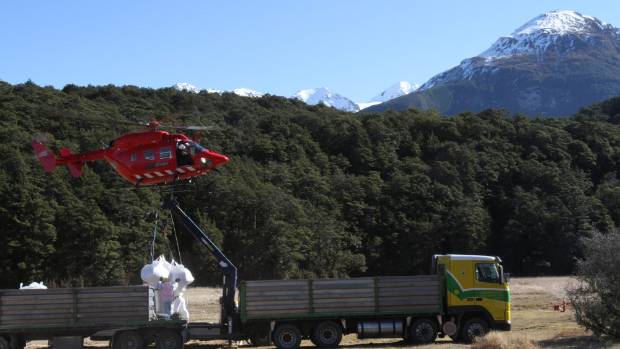



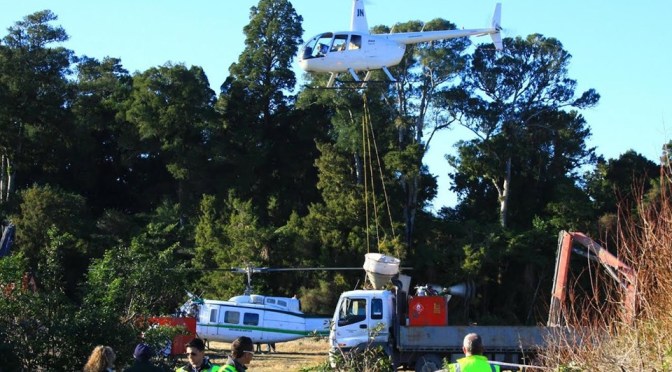


![Milford_Sound_vertical_water_ways[1]](https://envirowatchnz.com/wp-content/uploads/2019/08/milford_sound_vertical_water_ways1.jpg?w=474)


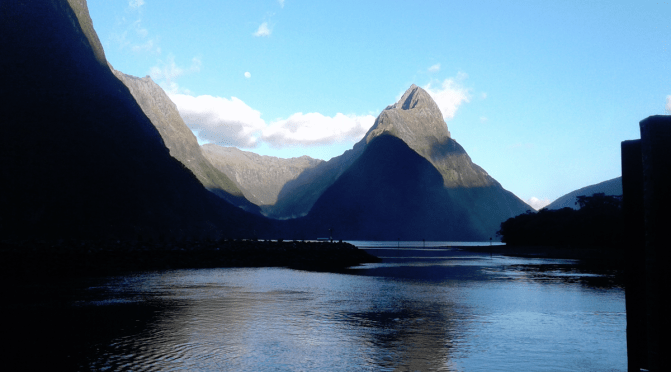
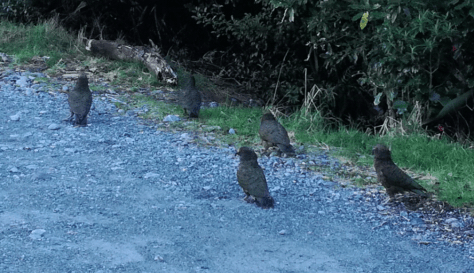
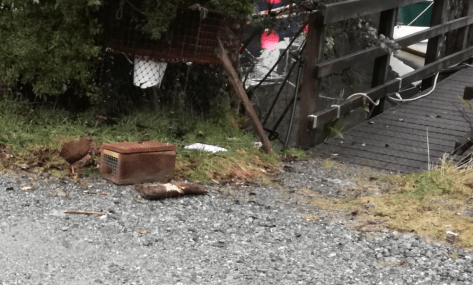

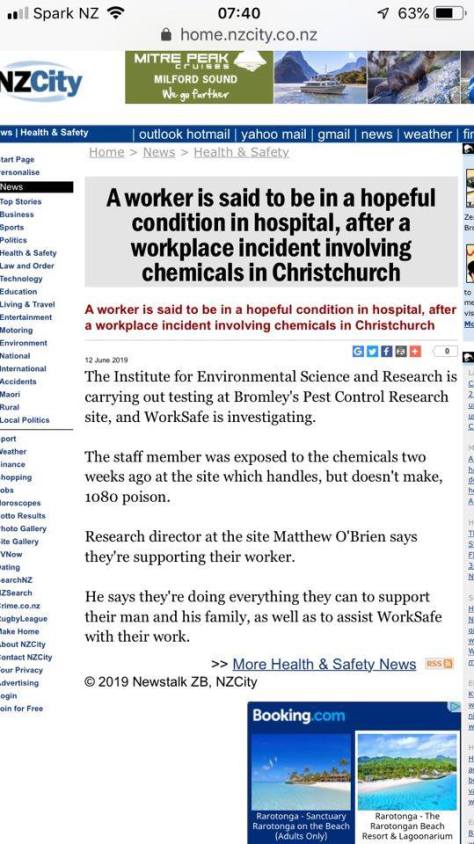
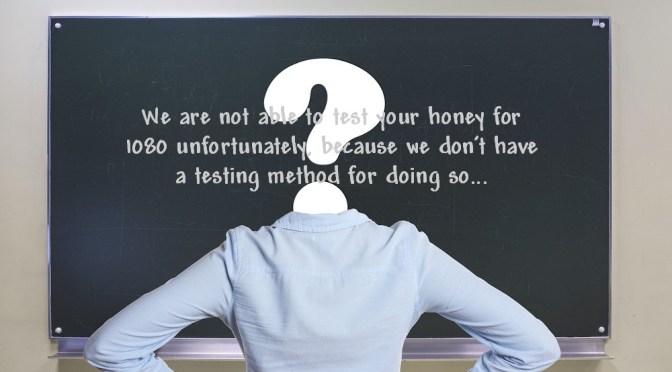



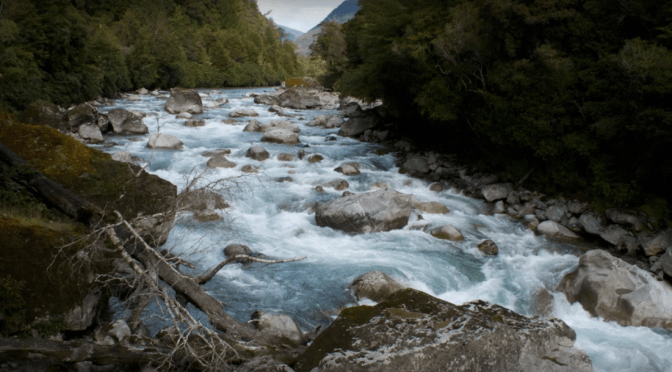


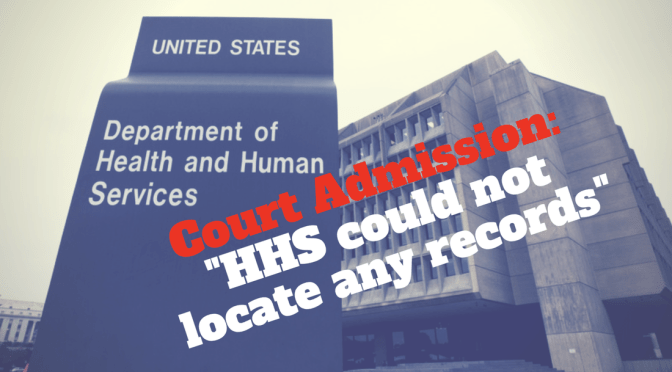



 efficacy of the vaccine and the fast-growing number of reports of severe reactions to the vaccine. The latter question has moved to the forefront of the debate as safety testing concerns have been raised and the number of vaccine-injured children has grown.

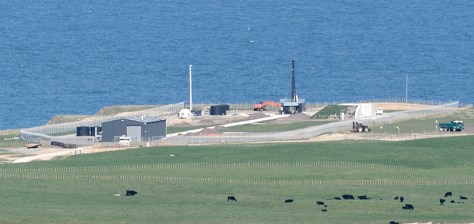 The new rocket launch-pad at Mahia NZ … Photo Credit:

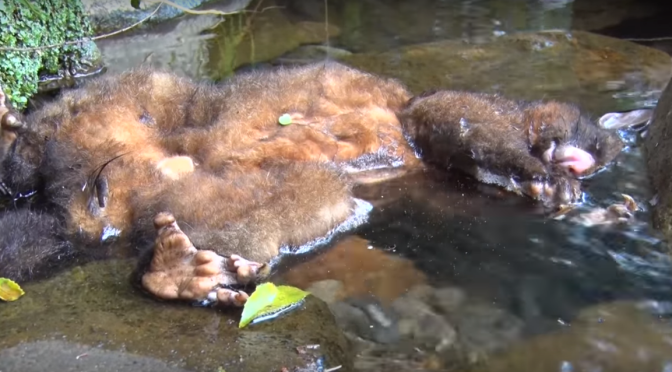


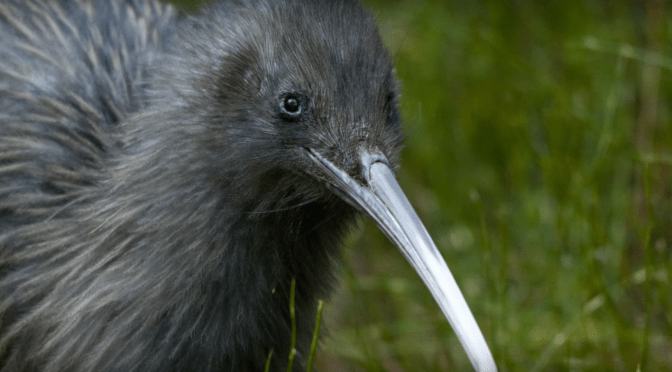


You must be logged in to post a comment.