Tag Archives: Seeds

Seed Germination time (Wally Richards)

SPRING SALE (See below the article) and SEED GERMINATION TIME article

There are two basic places to germinate seeds, one is where they will ultimately grow and mature the other is in suitable containers to germinate and then to transplant out into open ground or larger containers latter on.

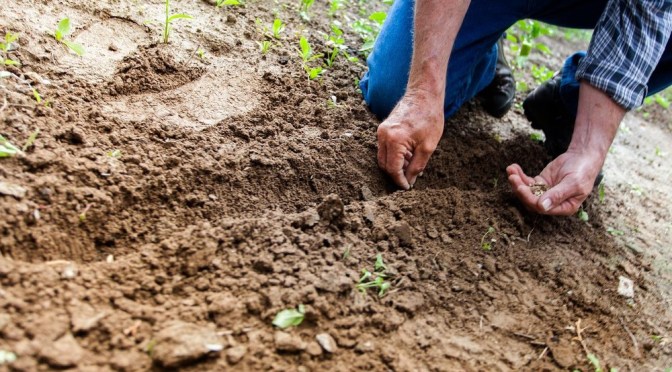
Firstly it is always best to plant any seed in the spot where it will grow and mature.

The reason for this is because when a seed germinates it will send down a tap root and if in open ground in a friable soil that root can be very long.

If on the other hand we germinate in a container or seedling tray that root will be limited in the depth of the tray and growing medium.

It is not practical to grow every thing at the maturity site, especially when we are getting an early start or growing out of season.

There are some seed types which should only be grown in their maturity site and only planted when conditions are favorable.

I often see seedlings for sale in punnets of plants which should never be offered this way because novice gardeners, that know no better, may purchase and have poor results..

The worst example of this is root crops such as carrots and parsnips which should only be direct sown as in any other form they will not produce a normal root. An exception to this is a newer carrot that is round in shape and does not produce a long edible root.

Beetroot and onions are seedlings that will transplant but are better to direct sow. (Direct sow means planting seed where they will mature) Spring onion is an exception.

Corn, beans and peas should all be direct sown and you will get far better crops if you do so.

Larger seeds are easy to handle and can be placed where you want them to grow without having to thin out later on. Silverbeet is another one that would be best direct sown.

If you want to start off seeds early in open ground try this method.

Make a trench about 100mm deep and the same wide, mow your lawn and collect the clippings which you then pack fresh into the bottom of your trench.

(Note if the grasses are in seed in the lawn it maybe best not to use the clippings to prevent moving grass weeds to your garden)

Pack firmly to about 80mm then sprinkle a little compost over the clippings to cover.

Next sprinkle Wallys Calcium & Health and Unlocking your Soil along the trench along with foods such as chook manure, sheep manure pellets, blood & bone, Bio Boost and Neem Tree Granules.

Once again cover lightly with weed free compost (Purchased)

Next sow your seeds such as peas, beans, sweet corn etc.

Once the seeds are spaced out along the row then spray them with Magic Botanic Liquid (MBL) at 20 mls per litre. This really speeds up germination. Then cover the seeds with more compost and water down using a fine rose watering can with MBL added.

For those that have problems with either cats, birds or late frosts then make some hoops out of No8 wire and place them along the row with a clearance of about 200mm in the middle of the row.

Place crop cover over the hoops and on one side cover with soil and on the other side with lengths of old timber or similar.

That allows you to easily take off to tend to the plants as needed.

The heat from the grass clippings will warm the soil which greatly helps germination.

Once well developed then you can remove the hoops and cover and store for future use.

Now lets look at doing similar but in seedling trays or by using cell packs or punnets.

If you keep the punnets and cell packs that you have purchased in the past then these are good value to use.

Wash them out in hot water so they are nice and clean.

To fill I use only purchased compost of high quality such as from Daltons or Oderings.

I have found that seed raising mixes are a gimmick and most of the ones I have looked at are too expensive and do not work as well as a good quality compost for most seed germination projects.

Think about this; outside in Nature we find all sorts of soils types even straight gravel or sand where seeds do not appear to have much trouble germinating, without any special mixes from mankind.

One important aspect to consider when germinating in seedling trays is to have heat from a heat pad.

Some garden shops, pet supplies and brew shops have heat pads which can be used for germination.

I place a sheet of polystyrene block on a bench to direct the heat upwards then sit the seed trays on the heat pad.

If you go to wholesale fish outlets or fish departments of supermarkets you will likely find used polystyrene trays free or for a few dollars.

You can sit your heat pad in the tray and being white it will provide lots of good reflected light.

If the pad you buy is a higher temperature than you require then cover the pad with sand and keep the sand moist. Sit your seedling trays on the sand.

Fill your seedling tray or cell packs to about two thirds full with purchased compost as above.

Carefully sprinkle a few seeds over the compost keeping them apart so they each have their own space.

Spray then seeds with MBL and Mycorrcin mixed together in a trigger sprayer with non chlorinated water. Once the compost and seeds are wet then cover seeds with more compost (You can sieve it if you like) and wet down with your spray.

Now you spray the tray at least twice a day to keep the compost moist using the same trigger mix.

Once a few seeds have germinated and before they start stretching for light get them out into natural light from overhead such as on a bench in a glasshouse.

If you do not have a suitable place then place your polystyrene box outside with a sheet of glass over it.

The seedlings will need spraying still but off the heat pad a lot less. Make sure the seedlings are in good

light but not strong sun light to burn them.

If you are worried about them at night you can bring the polystyrene box inside or onto a porch.

When the seedlings are big enough to handle prick them out and pot them into small pots once again using the compost.

WELCOME TO SPRING PROMOTION

As many of you are aware this time of the year we try to offer some specials for you to use during the coming growing season.

The following specials will start today 13th August and finish on Thursday 31st August at Midnight.

Any orders must be placed on our mail order web site at www.0800466464.co.nz

ALSO MOST IMPORTANT…PLACE THE WORD SPRING in the CUSTOMER MESSAGE BOX

This allows me to sort out the various discounts and add any shipping before I phone you to organise mode of payment for the order. (Credit/Debit Card payment over phone which is the best and fastest way alternatively I email you the details for a bank transfer)

While on the phone I can also answer any questions you may have. (Its called service which is not common these days)

Here are the offerings:

25% off Neem Oil, Neem Granules and Neem Powder

20% off all other items except for BULK items

Of the above: North Island if your order comes to $100 or more after discount then free shipping. (Not including Bulk items)

South Island in your order comes to $150 or more after discount then free shipping. (Not including Bulk items)

10% off Bulk Items such as 10kilo bags BioPhos,  Ocean Solids and Unlocking Your Soil. These bulk products will incur shipping at cost.

These are 10kg North Island $16.00  South Island $19.00

Up to 25 kg North Island $19.00  South Island $25.00

We do not send to PO Boxes or outer Islands such as Waiheke or Stewart Islands But will send to the Ferry depot servicing those Islands

Phone 0800 466464
Garden Pages and News at www.gardenews.co.nz
Shar Pei pages at  www.sharpei.co.nz
Mail Order products at www.0800466464.co.nz


New Zealand Bill of Rights Act 1990. Part II of the Act covers a broad range of Civil and Political Rights. As part of the right to life and the security of the person, the Act guarantees everyone:

1The right not to be deprived of life except in accordance with fundamental justice (Section 8)


2The right not to be subjected to torture or to cruel, degrading, or disproportionately severe treatment or punishment (Section 9)


3The right not to be subjected to medical or scientific experimentation without consent (Section 10)

4The right to refuse to undergo any medical treatment (Section 11)

 Furthermore, the New Zealand Bill of Rights Act 1990 guarantees everyone: Freedom of Thought, Conscience, and Religion.
This includes the right to freedom of thought, conscience, religion, and belief,
INCLUDING THE RIGHT TO ADOPT AND HOLD OPINIONS WITHOUT INTERFERENCE (Section 1)

Image by onehundredseventyfive from Pixabay

The NZ Government has been in secret talks to progress the allowing of GE seeds to be imported and sold in NZ

From GE-Free New Zealand

Secret Talks to Allow GE Seeds Without Regulation Threatens NZ Farmers

Canadian Agriculture Minister Marie-Claude Bibeau has approved the adoption of Gene Edited (GE) seeds without any regulation, health or safety assessments, traceability or liability and only voluntary disclosure. The deregulation of GE seeds includes the U.S., Japan, Australia, Argentina and Brazil, as cited by National Newswatch Canada. [1]

The article indicates that the New Zealand Government has been in closed door talks to “progress allowing GE seeds to be imported and sold in New Zealand, the UK and the European Union”.

“GE Free NZ has written to the Minister to clarify if this statement is correct,” said Claire Bleakley, president of GE Free NZ. “If this is true, the Government has breached its “duty of care” and opened up dangerous economic and safety issues that GE regulation protects, through these secret talks.”

The agreement threatens to destroy the important point of difference that has benefited our economy and exports from Aotearoa New Zealand to the world based on our world-leading standards for clean, safe, natural, GE Free and organic food.

Gene Editing has been around for only 10 years. The GE seeds have not undergone any long term environmental or health safety testing, even though laboratory studies have shown deleterious mutations and altered gene function called “off target effects”. [2]

This is a direct threat to New Zealand exporters who sell their products as non-GMO.

“This is killing the goose that lays the golden egg for New Zealand exports,” said Jon Carapiet, spokesman for GE Free NZ.

Consumers want certainty around food safety and the choice to avoid the unknown environmental and health effects of GE. New Zealand exporters can guarantee that all products are GE Free and and underpins our economic wellbeing.

Un regulated, Untested and unlabelled novel GE products betrays consumers at home and abroad and destroys the integrity of the food system to produce organic and GMO-free food.

This adds to concerns of excess pesticides in the environment and in foods that negatively impact people and natural ecosystems.

The Government must be called to account as to why they have led secret talks into the deregulation and release of GE without public consultation.

References:
[1] https://www.nationalnewswatch.com/2023/05/08/organic-groups-not-happy-with-gene-edited-crops-decision/#.ZFspRy1h39A
[2] https://www.gefree.org.nz/documents/advanced-gene-editing-technologies-gmo-2-0/
Ends:
Jon Carapiet- spokesman 0210507681
Claire Bleakley – president – 027 348 6731/ 06 3089842

For other articles with a health focus go here.

Image by Gerd Altmann from Pixabay

The dark history of the Monsanto Corporation Part 2 (think ‘Roundup’)

Part 1 go here. I’m reviewing all the old archives I’ve saved over the past 10 years. So many now have gone from the internet, some found again after a bit of searching. Some very interesting reads along the way too, in light of what has happened over the past three years. I’ll be posting more … and in case you still think Roundup’s a great and ‘safe as’ product this one is a must read…note also Monsanto morphed of course into Bayer. Check out our Glyphosate pages in main menu. … EWR


Continuing from Part 1:
Over Monsanto’s 110-year history (1901-2013), Monsanto Co (MON.N), the world’s largest seed company, has evolved from primarily an industrial chemical concern into a pure agricultural products company. MON profited $2 billion dollars in 2009, but their record profits fell to only $1 billion in 2010 after activists exposed Monsanto for doing terribly evil acts like suing good farmers and feeding uranium to pregnant women. Below is the second half of a timeline detailing Monsanto’s dark history:

1953: Toxicity tests on the effects of 2 PCBs showed that more than 50% of the rats subjected to them DIED, and ALL of them showed damage.

1954: Monsanto partnered with German chemical giant Bayer to form Mobay and market polyurethanes in the USA.

1955: Monsanto acquired Lion Oil refinery, increasing its assets by more than 50%. Stockholders during this time numbered 43,000. Monsanto starts producing petroleum-based fertilizer.

1957: Monsanto moved to the suburban community of Creve Coeur, having finally outgrown its headquarters in downtown St. Louis, Missouri.

1957-1967: Monsanto was the creator of several attractions in Disney’s Tommorrowland. Often they revolved around the the virtues of chemicals and plastics. Their “House of the Future” was constructed entirely of plastic, but it was NOT biodegradable. “After attracting a total of 20 million visitors from 1957 to 1967, Disney finally tore the house down, but discovered it would not go down without a fight. According to Monsanto Magazine, wrecking balls literally bounced off the glass-fiber, reinforced polyester material. Torches, jackhammers, chain saws and shovels did not work. Finally, choker cables were used to squeeze off parts of the house bit by bit to be trucked away.”

1959: Monsanto sets up Monsanto Electronics Co. in Palo Alto, begins producing ultra-pure silicon for the high-tech industry, in an area which would later become a Superfund site.

1960: Edgar Queeny turned over the chair of Monsanto to Charles Thomas, one of the founders of the research and development laboratory so important to Monsanto. Charlie Sommer, who had joined Monsanto in 1929, became president. According to Monsanto historian Dan Forrestal, “Leadership during the 1960s and early 1970s came principally from … executives whose Monsanto roots ran deep.” Under their combined leadership Monsanto saw several important developments, including the establishment of the Agricultural Chemicals division with focus on herbicides, created to consolidate Monsanto’s diverse agrichemical product lines.

1961-1971: Agent Orange was a mixture of 2,4,5-T and 2,4-D and had very high concentrations of dioxin. Agent Orange was by far the most widely used of the so-called “Rainbow Herbicides” employed in the Herbicidal Warfare program as a defoliant during the Vietnam War. Monsanto became one of 10-36 producers of Agent Orange for US Military operations in Vietnam. Dow Chemical and Monsanto were the two largest producers of Agent Orange for the U.S. military. The Agent Orange produced by Monsanto had dioxin levels many times higher than that produced by Dow Chemicals, the other major supplier of Agent Orange to Vietnam. This made Monsanto the key defendant in the lawsuit brought by Vietnam War veterans in the United States, who faced an array of debilitating symptoms attributable to Agent Orange exposure. Agent Orange is later linked to various health problems, including cancer. U.S. Vietnam War veterans have suffered from a host of debilitating symptoms attributable to Agent Orange exposure. Agent Orange contaminated more than 3,000,000 civilians and servicemen. According to Vietnamese Ministry of Foreign Affairs, 4.8 million Vietnamese people were exposed to Agent Orange, resulting in 400,000 deaths and disabilities, plus 500,000 children born with birth defects, leading to calls for Monsanto to be prosecuted for war crimes. Internal Monsanto memos show that Monsanto knew of the problems of dioxin contamination of Agent Orange when it sold it to the U.S. government for use in Vietnam. Look at what the “EFFECTS” of agent orange look like… keep in mind it was used to remove leaves from the trees where AMERICAN SOLDIERS were breathing, eating, sleeping.

1962: Public concern over the environment began to escalate. Ralph Nader’s activities and Rachel Carson’s book Silent Spring had been influential in increasing the U.S. public’s awareness of activities within the chemical industry in the 1960s, and Monsanto responded in several ways to the pressure.

1962: Monsanto’s European expansion continued, with Brussels becoming the permanent overseas headquarters.

1964: Monsanto changed its name to Monsanto Company in acknowledgment of its diverse product line. The company consisted of 8 divisions, including petroleum, fibers, building materials, and packaging. Edward O’Neal became chairperson (came to Monsanto in 1935: with the acquisition of the Swann Corporation) was the first chair in Monsanto history who had not first held the post of president.

1964: Monsanto introduced “biodegradable” detergents.

1965: While working on an ulcer drug in December, James M. Schlatter, a chemist at G.D. Searle & Company, accidentally discovers aspartame, a substance that is 180x sweeter than sugar yet has no calories.

1965: AstroTurf (fake grass) was co-invented by Donald L. Elbert, James M. Faria, and Robert T. Wright, employees of Monsanto Company. It was patented in 1967 and originally sold under the name “Chemgrass”. It was renamed AstroTurf by Monsanto employee John A. Wortmann after its first well-publicized use at the Houston Astrodome stadium in 1966.

1965: The evidence of widespread contamination from PCBs and related chemicals has been accumulating and internal Monsanto papers show that Monsanto knew about the PCB dangers from early on.

1967: Monsanto entered into a joint venture with IG Farben = the German chemical firm that was the financial core of the Hitler regime, and was the main supplier of Zyklon-B gas to the German government during the extermination phase of the Holocaust; IG Farben was not dissolved until 2003.

1967: Searle began the safety tests on aspartame that were necessary for applying for FDA approval of food additives. Dr. Harold Waisman, a biochemist at the University of Wisconsin, conducts aspartame safety tests on infant monkeys on behalf of the Searle Company. Of the 7 monkeys that were being fed aspartame mixed with milk, 1 monkey DIED and 5 other monkeys had grand mal seizures.

1968: Edgar Queeny dies, leaving no heirs. Edward J. Bock (who had joined Monsanto in 1941 as an engineer) become a member of the board of directors in 1965, and became president of Monsanto in 1968.

1968: With experts at Monsanto in no doubt that Monsanto’s PCBs were responsible for contamination, Monsanto set up a committee to assess its options. In a paper distributed to only 12 people but which surfaced at the trial in 2002, Monsanto admitted “that the evidence proving the persistence of these compounds and their universal presence as residues in the environment is beyond question … the public and legal pressures to eliminate them to prevent global contamination are inevitable”. Monsanto papers seen by The Guardian newspaper reveal near panic. “The subject is snowballing. Where do we go from here? The alternatives: go out of business; sell the hell out of them as long as we can and do nothing else; try to stay in business; have alternative products”, wrote the recipient of one paper.

1968: Monsanto became the first organization to mass-produce visible LEDs, using gallium arsenide phosphide to produce red LEDs suitable for indicators. Light Emitting Diodes (LEDs) ushered in the era of solid-state lights. From 1968 to 1970, sales doubled every few months. Their products (discrete LEDs and seven-segment numeric displays) became the standards of industry. The primary markets then were electronic calculators, digital watches, and digital clocks.

1969: High overhead costs and a sluggish national economy led to a dramatic 29% decrease in earnings.

1969: Monsanto wrote a confidential Pollution Abatement Plan which admitted that “the problem involves the entire United States, Canada and sections of Europe, especially the UK and Sweden”.

1969: Monsanto produces Lasso herbicide, better known as Agent Orange, which was used as defoliant by the U.S. Government during the Vietnam War. “[Lasso’s] success turns around the struggling Agriculture Division,” Monsanto’s web page reads.

1970s: Monsanto was a pioneer of optoelectronics in the 1970s. Although Bock had a reputation for being a committed Monsanto executive, several factors contributed to his volatile term as president. Sales were up in 1970, but Bock’s implementation of the 1971 reorganization caused a significant amount of friction among members of the board and senior management. In spite of the fact that this move, in which Monsanto separated the management of raw materials from Monsanto’s subsidiaries, was widely praised by security analysts, Bock resigned from the presidency in February 1972.

1970: Cyclamate (the reigning low-calorie artificial sweetener) is pulled off the market in November after some scientists associate it with cancer. Questions are also raised about safety of saccharin, the only other artificial sweetener on the market, leaving the field wide open for aspartame.

December 18, 1970: Searle Company executives lay out a “Food and Drug Sweetener Strategy” that they feel will put the FDA into a positive frame of mind about aspartame. An internal policy memo describes psychological tactics Monsanto should use to bring the FDA into a subconscious spirit of participation” with them on aspartame and get FDA regulators into the “habit of saying Yes.”

1971: Neuroscientist Dr. John Olney (whose pioneering work with monosodium glutamate MSG was responsible for having it removed from baby foods) informs Searle that his studies show that aspartic acid (one of the ingredients of aspartame) caused holes in the brains of infant mice. One of Searle’s own researchers confirmed Dr. Olney’s findings in a similar study.

1972: The use of DDT was banned by U.S. Congress, due in large part to efforts by environmentalists, who persisted in the challenge put forth by Rachel Carson’s book Silent Spring in 1962, which sought to inform the public of the side effects associated with the insecticide, which had been much-welcomed in the fight against malaria-transmitting mosquitoes.

1973: Monsanto developed and patented the glyphosate molecule in the 1970s. Monsanto began manufacturing the herbicide Roundup, which has been marketed as a “safe”, general-purpose herbicide for widespread commercial and consumer use, even though its key ingredient, glyphosate, is a highly toxic poison for animals and humans.

1973: After spending tens of millions of dollars conducting safety tests, the G.D. Searle Company applies for FDA approval and submits over 100 studies they claim support aspartame’s safety. One of the first FDA scientists to review the aspartame safety data states that “the information provided (by Searle) is inadequate to permit an evaluation of the potential toxicity of aspartame”. She says in her report that in order to be certain that aspartame is safe, further clinical tests are needed.

1974: Attorney Jim Turner (consumer advocate who was instrumental in getting cyclamate taken off the market) meets with Searle representatives in May to discuss Dr. Olney’s 1971 study which showed that aspartic acid caused holes in the brains of infant mice.

1974: The FDA grants aspartame its first approval for restricted use in dry foods on July 26.

1974: Jim Turner and Dr. John Olney file the first objections against aspartame’s approval in August.

1975: After a 9-month search, John W. Hanley, a former executive with Procter & Gamble, was chosen as president. Hanley also took over as chairperson.

1976: The success of the herbicide Lasso had turned around Monsanto’s struggling Agriculture Division, and by the time Agent Orange was banned in the U.S. and Lasso was facing increasing criticism, Monsanto had developed the weedkiller “Roundup” (active ingredient: glyphosate) as a replacement. Launched in 1976, Roundup helped make Monsanto the world’s largest producer of herbicides. RoundUp was commercialized, and became the world’s top-selling herbicide. Within a few years of its 1976 launch, Roundup was being marketed in 115 countries.

The success of Roundup coincided with the recognition by Monsanto executives that they needed to radically transform a company increasingly under threat. According to a recent paper by Dominic Glover, “Monsanto had acquired a particularly unenviable reputation in this regard, as a major producer of both dioxins and polychlorinated biphenyls (PCBs) – both persistent environmental pollutants posing serious risks to the environment and human health. Law suits and environmental clean-up costs began to cut into Monsanto’s bottom line, but more seriously there was a real fear that a serious lapse could potentially bankrupt the company.” According to Glover, Roundup “Sales grew by 20% in 1981 and as the company increased production it was soon Monsanto’s most profitable product (Monsanto 1981, 1983)… It soon became the single most important product of Monsanto’s agriculture division, which contributed about 20% of sales and around 45% of operating income to the company’s balance sheet each year during the late 1980s and early 1990s. Today, glyphosate remains the world’s biggest herbicide by volume of sales.”

1976: Monsanto produces Cycle-Safe, the world’s first plastic soft-drink bottle. The bottle, suspected of posing a cancer risk, is banned the following year by the Food and Drug Administration.

1976: Turner & Olney’s petition on March 24 triggers an FDA investigation of the laboratory practices of aspartame’s manufacturer, G.D. Searle. The investigation finds Searle’s testing procedures shoddy, full of inaccuracies and “manipulated” test data. The investigators report they “had never seen anything as bad as Searle’s testing.”

January 10, 1977: The FDA formally requests the U.S. Attorney’s office to begin grand jury proceedings to investigate whether indictments should be filed against Searle for knowingly misrepresenting findings and “concealing material facts and making false statements” in aspartame safety tests. This is the first time in the FDA’s history that they request a criminal investigation of a manufacturer.

January 26, 1977: While the grand jury probe is underway, Sidley & Austin, the law firm representing Searle, begins job negotiations with the U.S. Attorney in charge of the investigation, Samuel Skinner.

March 8, 1977: G. D. Searle hires prominent Washington insider Donald Rumsfeld as the new CEO to try to turn the beleaguered company around. A former Member of Congress and Secretary of Defense in the Ford Administration, Rumsfeld brings in several of his Washington cronies as top management. Donald Rumsfeld followed Searle as CEO, and then as President of Searle from 1977-1985.

July 1, 1977: Samuel Skinner leaves the U.S. Attorney’s office on July 1st and takes a job with Searle’s law firm. (see Jan. 26th)

August 1, 1977: The Bressler Report, compiled by FDA investigators and headed by Jerome Bressler, is released. The report finds that 98 of the 196 animals died during one of Searle’s studies and weren’t autopsied until later dates, in some cases over one year after death. Many other errors and inconsistencies are noted. For example, a rat was reported alive, then dead, then alive, then dead again; a mass, a uterine polyp, and ovarian neoplasms were found in animals but not reported or diagnosed in Searle’s reports.

December 8, 1977: U.S. Attorney Skinner’s withdrawal and resignation stalls the Searle grand jury investigation for so long that the statue of limitations on the aspartame charges runs out. The grand jury investigation is dropped. (borderline treason)

1979: The FDA established a Public Board of Inquiry (PBOI) in June to rule on safety issues surrounding NutraSweet.

1980: September 30, FDA Board of Inquiry comprised of 3 independent scientists, confirmed that aspartame “might induce brain tumors”. The Public Board of Inquiry concludes NutraSweet should not be approved pending further investigations of brain tumors in animals. The board states it “has NOT been presented with proof of reasonable certainty that aspartame is safe for use as a food additive.” The FDA had actually banned aspartame based on this finding, only to have Searle Chairman Donald Rumsfeld (Ford’s Secretary of Defense 1975-1977, Bush’s Secretary of Defense 2001-2006) vow to “call in his markers,” to get it approved in 1981.

1980: Monsanto established the Edgar Monsanto Queeny safety award in honor of its former CEO (1928–1960), to encourage accident prevention.

January 1981: Donald Rumsfeld, CEO of Searle, states in a sales meeting that he is going to make a big push to get aspartame approved within the year. Rumsfeld says he will use his political pull in Washington, rather than scientific means, to make sure it gets approved.

May 19, 1981: 3 of 6 in-house FDA scientists who were responsible for reviewing the brain tumor issues, Dr. Robert Condon, Dr. Satya Dubey, and Dr. Douglas Park, advise against approval of NutraSweet, stating on the record that the Searle tests are unreliable and not adequate to determine the safety of aspartame.

1981: Ronald Reagan is sworn in as President of the United States. Reagan’s transition team, which includes Donald Rumsfeld, CEO of G. D. Searle, hand picks Dr. Arthur Hull Hayes Jr. to be the new FDA Commissioner. On January 21, the day after Ronald Reagan’s inauguration, GD Searle re-applied to the FDA for approval to use aspartame in food sweetener, and Reagan’s new FDA commissioner, Arthur Hayes Hull, Jr., appointed a 5-person Scientific Commission to review the board of inquiry’s decision. It soon became clear that the panel would uphold the ban by a 3-2 decision, but Hull then installed a 6th member on the commission, and the vote became deadlocked. He then personally broke the tie in aspartame’s favor. Hull later left the FDA under allegations of impropriety, served briefly as Provost at New York Medical College, and then took a position with Burston-Marsteller, the chief public relations firm for both Monsanto and GD Searle. Since that time Hull has never spoken publicly about aspartame.

July 15, 1981: In one of his first official acts, Dr. Arthur Hayes Jr., the new FDA commissioner, overrules the Public Board of Inquiry, ignores the recommendations of his own internal FDA team and approves NutraSweet for dry products. Hayes says that aspartame has been shown to be safe for its’ proposed uses and says few compounds have withstood such detailed testing and repeated close scrutiny. G.D. Searle gets FDA approval for aspartame (NutraSweet). Monsanto completes its acquisition of Searle in 1985.

1982: Monsanto GMO scientists genetically modify a plant cell for the first time!

1982: Some 2,000 people are relocated from Times Beach, Missouri, which was found to be so thoroughly contaminated with dioxin, a by-product of PCB manufacturing, that the government ordered it evacuated. Dioxins are endocrine and immune system disruptors, cause congenital birth defects, reproductive and developmental problems, and increase the incidence of cancer, heart disease and diabetes in laboratory animals. Critics say a St. Louis-area Monsanto chemical plant was a source but Monsanto denies any connection.

October 15, 1982: The FDA announces that GD Searle has filed a petition that aspartame be approved as a sweetener in carbonated beverages and other liquids.

July 1, 1983: The National Soft Drink Association (NSDA) urges the FDA to delay approval of aspartame for carbonated beverages pending further testing because aspartame is very unstable in liquid form. When liquid aspartame is stored in temperatures above 85°F degrees Fahrenheit, aspartame breaks down into known toxins Diketopiperazines (DKP), methyl (wood) alcohol, and formaldehyde.

July 8, 1983: The National Soft Drink Association drafts an objection to the final ruling which permits the use of aspartame in carbonated beverages and syrup bases and requests a hearing on the objections. The association says that Searle has not provided responsible certainty that aspartame and its’ degradation products are safe for use in soft drinks.

August 8, 1983: Consumer Attorney, Jim Turner of the Community Nutrition Institute and Dr. Woodrow Monte, Arizona State University’s Director of Food Science and Nutritional Laboratories, file suit with the FDA objecting to aspartame approval based on unresolved safety issues.

September, 1983: FDA Commissioner Hayes resigns under a cloud of controversy about his taking unauthorized rides aboard a General Foods jet. (General foods is a major customer of NutraSweet) Burson-Marsteller, Searle’s public relation firm (which also represented several of NutraSweet’s major users), immediately hires Hayes as senior scientific consultant.

Fall 1983: The first carbonated beverages containing aspartame are sold for public consumption.

1983: Diet Coke was sweetened with aspartame after the sweetener became available in the United States.

November 1984: Center for Disease Control (CDC) “Evaluation of consumer complaints related to aspartame use.” (summary by B. Mullarkey)

1985: Monsanto purchased G.D. Searle, the chemical company that held the patent to aspartame, the active ingredient in NutraSweet. Monsanto was apparently untroubled by aspartame’s clouded past, including a 1980 FDA Board of Inquiry, comprised of three independent scientists, which confirmed that it “might induce brain tumors”. The aspartame business became a separate Monsanto subsidiary, the NutraSweet Company.

1986: Monsanto found guilty of negligently exposing a worker to benzene at its Chocolate Bayou Plant in Texas. It is forced to pay $100 million to the family of Wilbur Jack Skeen, a worker who died of leukemia after repeated exposures.

1986: At a congressional hearing, medical specialists denounce a National Cancer Institute study disputing that formaldehyde causes cancer. Monsanto and DuPont scientists helped with the study, whose author provided results to the Formaldehyde Institute industry representatives nearly six months before releasing the study to the EPA, labor unions, and the public.

1986: Monsanto spends $50,000 against California’s anti-toxics initiative, Proposition 65. The initiative prohibits the discharge of chemicals known to cause cancer or birth defects into drinking water supplies.

1987: Monsanto conducted the first field tests of genetically engineered (GMO) crops.

1987: Monsanto is one of the companies named in an $180 million settlement for Vietnam War veterans exposed to Agent Orange.

1987: Monsanto consolidated its AstroTurf management, marketing, and technical activities in Dalton, Georgia, as AstroTurf Industries, Inc.

November 3, 1987: U.S. hearing, “NutraSweet: Health and Safety Concerns,” Committee on Labor and Human Resources, Senator Howard Metzenbaum, chairman.

1988: A federal jury finds Monsanto Co.’s subsidiary, G.D. Searle & Co., negligent in testing and marketing of its Copper 7 intrauterine birth control device (IUD). The verdict followed the unsealing of internal documents regarding safety concerns about the IUD, which was used by nearly 10 million women between 1974 and 1986.

1990: EPA chemists allege fraud in Monsanto’s 1979 dioxin study, which found exposure to the chemical doesn’t increase cancer risks.

1990: Monsanto spends more than $405,000 to defeat California’s pesticide regulation Proposition 128, known as the “Big Green” initiative. The initiative is aimed at phasing out the use of pesticides, including Monsanto’s product alachlor, linked to cancer and global warming.

1990: With the help of Roundup, the agriculture division of Monsanto was significantly outperforming Monsanto’s chemicals division in terms of operating income, and the gap was increasing. But as Glover notes, while “such a blockbuster product uncorks a fountain of revenue”, it “also creates an uncomfortable dependency on the commercial fortunes of a single brand. Monsanto’s management knew that the last of the patents protecting Roundup in the United States, its biggest market, would expire in the year 2000, opening the field to potential competitors. The company urgently needed a strategy to negotiate this hurdle and prolong the useful life of its ‘cash cow’.”

1991: Monsanto is fined $1.2 million for trying to conceal discharge of contaminated waste water into the Mystic River in Connecticut.

1993: By April, the Department of Veterans Affairs had only compensated 486 victims, although it had received disability **CLAIMS** from 39,419 veteran soldiers who had been exposed to monsanto’s Agent Orange while serving in Vietnam. No compensation has been paid to Vietnamese civilians and though some compensation was paid to U.S. veterans, according to William Sanjour, who led the Toxic Waste Division of the U.S. Environmental Protection Agency (EPA), “thousands of veterans were disallowed benefits” because “Monsanto studies showed that dioxin [as found in Agent Orange] was not a human carcinogen.” An EPA colleague discovered that Monsanto had apparently falsified the data in their studies. Sanjour says, “If [the studies] were done correctly, they would have reached just the opposite result.”

1994: the first of Monsanto’s biotech products to make it to market was not a GMO crop but Monsanto’s controversial GMO cattle drug, bovine growth hormone – called rBGH or rBST, Monsanto granted regulatory approval for its first biotech product, a dairy cow hormone. Monsanto developed a recombinant version of BST, brand-named Posilac bovine somatropin (rBST/rBGH), which is produced through a genetically engineered GMO E. coli bacteria. Synthetic Bovine Growth Hormone (rBGH), approved by the FDA for commercial sale in 1994, despite strong concerns about its safety. Since then, Monsanto has sued small dairy companies that advertised their products as free of the artificial hormone, including Ben & Jerry’s ice cream and most recently bringing a lawsuit against Oakhurst Dairy in Maine.

1995: Genetically engineered canola (rapeseed) which is tolerant to Monsanto’s Roundup herbicide was first introduced to Canada. Today 80% of the acres sown are genetically modified canola.

1995: Monsanto is sued after allegedly supplying radioactive material for a controversial study which involved feeding radioactive iron to 829 pregnant women.

1995: Monsanto ranked 5th among U.S. corporations in EPA’s Toxic Release Inventory, having discharged 37 million pounds of toxic chemicals into the air, land, water and underground. Monsanto was ordered to pay $41.1 million to a waste management company in Texas due to concerns over hazardous waste dumping.

1995: The Safe Shoppers Bible says that Monsanto’s Ortho Weed-B-Gon Lawn Weed Killer contains a known carcinogen, 2,4 D. Monsanto officials argue that ‘numerous studies have found no link to cancer’.

1996: Monsanto introduces its first biotech crop, Roundup Ready soybeans, which tolerate spraying of Roundup herbicide, and biotech BT cotton engineered to resist insect damage.

As Monsanto had moved into biotechnology, its executives had the opportunity to create a new narrative for Monsanto. They begun to portray genetic engineering as a ground-breaking technology that could contribute to feeding a hungry world. Monsanto executive Robb Fraley, who was head of the plant molecular biology research team, is also said to have hyped the potential of GMO crops within the company, as a once-in-a-generation opportunity for Monsanto to dominate a whole new industry, invoking the monopoly success of Microsoft as a powerful analogy. But, according to Glover, the more down-to-earth pitch to fellow executives was that “genetic engineering offered the best prospect of preserving the commercial life of Monsanto’s most important product, Roundup in the face of the challenges Monsanto would face once the patent expired.”

Monsanto eventually achieved this by introducing into crop plants genes that give resistance to glyphosate (the active ingredient in Roundup). This meant farmers could spray Roundup onto their fields as a weedkiller even during the growing season without harming the crop. This allowed Monsanto to “significantly expand the market for Roundup and, more importantly, help Monsanto to negotiate the expiry of its glyphosate patents, on which such a large slice of Monsanto’s income depended.” With glyphosate-tolerant GMO crops, Monsanto was able ìto preserve its dominant share of the glyphosate market through a marketing strategy that would couple proprietary “Roundup Ready” seeds with continued sales of Roundup.

1996-1999: Monsanto sold off its plastics business to Bayer in 1996, and its phenylalanine facilities to Great Lakes Chemical Corporation (GLC) in 1999. Much of the rest of its chemicals division was spun off in late 1997 as Solutia. This helped Monsanto distance itself to some extent not only from direct financial liability for the historical core of its business but also from its controversial production and contamination legacy.

1997: Monsanto introduces new GMO canola (rapeseed), GMO cotton and GMO corn (maize), and buys foundation seed companies.

1997: Monsanto spins off its industrial chemical and fibers business into Solutia Inc. amid complaints and legal claims about pollution from its plants. Solutia was spun off from Monsanto as a way for Monsanto to divest itself of billions of dollars in environmental cleanup costs and other liabilities for its past actions – liabilities that eventually forced Solutia to seek Chapter 11 bankruptcy. According to a spokesman for Solutia, “(Monsanto) sort of cherry-picked what they wanted and threw in all kinds of cats and dogs as part of a going-away present,” including $1 billion in debt and environmental and litigation costs. Some pre-bankruptcy Solutia equity holders allege Solutia was set up fraudulently as it was always doomed to fail under the financial weight of Monsanto’s liabilities.

1997: The New York State Attorney General took Monsanto to court and Monsanto was subsequently forced to stop claiming that Roundup is “biodegradable” and “environmentally friendly”.

1997: The Seattle Times reports that Monsanto sold 6,000 tons of contaminated waste to Idaho fertilizer companies, which contained the carcinogenic heavy metal cadmium, believed to cause cancer, kidney disease, neurological dysfunction and birth defects.

1997: Through a process of mergers and spin-offs between 1997 and 2002, Monsanto made a transition from chemical giant to biotech giant. Monsanto’s corporate strategy led them for the first time to acquire seed companies. During the 1990s Monsanto spent $10 billion globally buying up seed companies – a push that continues to this day. It has purchased, for example, Holden’s Foundations Seeds, Seminis – the largest seed company not producing corn or soybeans in the world, the Dutch seed company De Ruiter Seeds, and the big cotton seed firm Delta & Pine. As a result, Monsanto is now the world’s largest seed company, accounting for almost a quarter of the global proprietary seed market.

1998: Monsanto introduces Roundup Ready corn (maize).

1998: In the UK, Monsanto purchased the seed company Plant Breeding International (PBI) Cambridge, a major UK based cereals and potato breeder, which Monsanto then merged with its existing UK agri-chemicals and GMO research businesses to form Monsanto UK Ltd. Monsanto UK has carried out field trials of glyphosate-tolerant sugar / fodder beet, glyphosate-tolerant oilseed rape, and glyphosate-tolerant and male sterility / fertility restorer oilseed rape.

1998: “Survey of aspartame studies: correlation of outcome and funding sources,” unpublished: Ralph G. Walton found 166 separate published studies in the peer reviewed medical literature, which had relevance for questions of human safety. The 74 studies funded by industry all (100%) attested to aspartame’s safety, whereas of the 92 non-industry funded studies, 84 (91%) identified a problem. 6 of the 7 non-industry funded studies that were favorable to aspartame safety were from the FDA, which has a public record that shows a strong pro-industry bias.

1999: After international criticism, Monsanto agrees not to [PUBLICLY] commercialize “Terminator” seeds.

1999: Monsanto opens its Beautiful Sciences exhibit at Disneyland.

1999: Monsanto sells their phenylalanine facilities to Great Lakes Chemical Corporation (GLC) for $125 million. In 2000, GLC sued Monsanto because of a $71 million dollar shortfall in expected sales.

2000: 5 pesticide companies, including Monsanto, controlled over 70% of all patents on agricultural biotechnology. Monsanto had the largest share of the global GMO crops market.

2000: Since the inception of Plan Colombia, the US has spent hundreds of millions of dollars in funding aerial sprayings of Monsanto’s Roundup herbicides in Colombia. The Roundup is often applied in concentrations 26x higher than what is recommended for agricultural use. Additionally, it contains at least one surfactant, Cosmo-Flux 411f, whose ingredients are a trade secret, has never been approved for use in the US, and which quadruples the biological action of the herbicide. Not surprisingly, numerous human health impacts have been recorded in the areas affected by the sprayings, including respiratory, gastrointestinal and skin problems, and even death, especially in children. Additionally, fish and animals will show up dead in the hours and days subsequent to the herbicide sprayings.

2000-2002: Monsanto merges with Pharmacia & Upjohn, and changes its name to Pharmacia Corporation. Monsanto Company restructures in deal with Pharmacia & Upjohn Inc; separates agricultural and chemicals businesses and becomes stand-alone agricultural company. By 2000 the current Monsanto had emerged from various transactions, including a merger for a time with Pharmacia, as a legally different corporation from the Monsanto that had existed from 1901-2000. This was despite the fact that both Monsantos shared not just the same name, but the same corporate headquarters near St. Louis, Missouri, and many of the same executives and other employees, not to mention much of the responsibility for liabilities arising out of its former activities.

2001: Retired Monsanto chemist William S. Knowles was named a co-winner of the Nobel Prize in Chemistry for his research on catalytic asymmetric hydrogenation, which was carried out at Monsanto beginning in the 1960s until his 1986 retirement.

2001: Monsanto GMO crops accounted for 91% of the total area of GMO crops planted worldwide.

2002: Monsanto entered into an important agreement with DuPont. As a result of this “agreement” both companies agreed to drop a raft of outstanding patent lawsuits against one another and to share their patented GMO crops technologies. Some commentators see this ‘agreement’ as constituting a pseudo-merger by stealth of the two companies’ GMO crops monopolies which are too large to be permitted to merge.

August 13, 2002: Monsanto had sales of $4,673,000,000. Based on 2001 figures Monsanto was the second biggest seed company in the world, and the third biggest agrochemical company. The infamous agrochemical and biotechnology division, still known as Monsanto, was spun off as a nominally separate company with Pharmacia originally retaining an 85% share. Monsanto Company became completely separate and independent from Pharmacia on August 13, 2002, when Pharmacia distributed its remaining Monsanto shares to Pharmacia’s stockholders.

2002: Events in Argentina also affected the company in other ways: Monsanto’s Argentine unit lost $154 million in the 2002 fiscal year, due to the collapse of the Argentine economy and a deepening recession which forced the government to default on most of its public debt, and devalue the peso in January 2002. The government also converted what was a dollar economy into a peso economy and, as a result, Monsanto received devalued pesos for products it had sold in dollars, slashing its sales income.

2002: The Washington Post ran an article entitled, “Monsanto Hid Decades Of Pollution, PCBs Drenched Alabama Town, But No One Was Ever Told” about PCBs. Monsanto share price plummeted in the second half of 2002 following its sell off by former parent company Pharmacia and this was compounded by the departure of Monsanto’s CEO at the end of 2002.

December 2002: CEO Hendrik Verfaillie resigned after he and the board agreed that his performance had been disappointing and the company had faced extensive criticism for failing to deal more honestly and effectively with its difficulties. “This is a company that has been optimistic on the borderline of LYING,” said Sergey Vasnetsov, senior analyst with Lehman Brothers in New York. “Monsanto has been feeding us these FANTASIES for two years, and when we saw they weren’t real, its stock price fell.”

2003: Jury fines Monsanto and its former chemical subsidiary, Solutia, Inc. (now owned by Pharmacia Corp.), agreed to pay $600 million in August to settle claims brought by more than 20,000+ residents of Anniston, Alabama – over the severe contamination of ground and water by tons of PCBs dumped in the area from the 1930s until the 1970s. Court documents revealed that Monsanto was aware of the contamination decades earlier.

2003: Solutia, Inc. (now owned by Pharmacia Corp.) files Chapter 11 bankruptcy.

2004: Monsanto forms American Seeds Inc holding company for corn and soybean seed deals and begins brand acquisitions.

2004-2005: Monsanto filed lawsuits against many farmers in Canada and the U.S. on the grounds of patent infringement, specifically the farmers’ sale of seed containing Monsanto’s patented genes. In some cases, farmers claimed the seed was unknowingly sown by wind carrying the seeds from neighboring crops, a claim rejected in Monsanto Canada Inc. v. Schmeiser. These instances began in the mid to late 1990s, with one of the most significant cases being decided in Monsanto’s favor by the Canadian Supreme Court. By a 5-4 vote in late May 2004, that court ruled that “by cultivating a plant containing the patented gene and composed of the patented cells without license, the appellants (canola farmer Percy Schmeiser) deprived the respondents of the full enjoyment of the patent.” With this ruling, the Canadian courts followed the U.S. Supreme Court in its decision on patent issues involving plants and genes.

2005: Monsanto has patent claims on breeding techniques for pigs which would grant them ownership of any pigs born of such techniques and their related herds. Greenpeace claims Monsanto is trying to claim ownership on ordinary breeding techniques. Monsanto claims that the patent is a defensive measure to track animals from its system. They furthermore claim their patented method uses a specialized insemination device that requires less sperm than is typically needed.

2005: Environmental, consumer groups question safety of Roundup Ready crops, say they create “super weeds,” among other problems.

2006: In January, the South Korean Appeals Court ordered Dow Chemical and Monsanto to pay $62 million in compensation to about 6,800 people.

2006: Organic farmers, concerned about the impact of GMO alfalfa on their crops, sued Monsanto (Monsanto Company vs. Geertson Seed Farms). In response, in May 2007, the California Northern District Court issued an injunction order prohibiting farmers from planting Roundup Ready alfalfa until the US Department of Agriculture (USDA) completed a study on the genetically engineered crop’s likely environmental impact. As a result, the USDA put a hold on any further planting of Roundup Ready alfalfa.

2006: the Public Patent Foundation filed requests with the United States Patent and Trademark Office to revoke 4 patents that Monsanto has used in patent lawsuits against farmers. In the first round of reexamination, claims in all 4 patents were rejected by the Patent Office in 4 separate rulings dating from February through July 2007. Monsanto has since filed responses in the reexaminations.

2006-2007: Monsanto buys several regional seed companies and cotton seed leader Delta and Pine Land Co. – Competitors allege Monsanto gaining seed industry monopoly.

2007: Monsanto’s biotech seeds and traits (including those licensed to other companies) accounted for almost 90% of the total world area devoted toGMOseeds.

2007: California Northern District Court issued an injunction order prohibiting farmers from planting Roundup Ready alfalfa until the U.S. Department of Agriculture (USDA) completed a study on the genetically engineered crop’s likely environmental impact. As a result, the USDA put a hold on any further planting of Roundup Ready alfalfa.

2007: USDA Dairy Survey estimated rBGH use at 15.2% of operations and 17.2% of cows.

2008: Monsanto sells Posilac business to Eli Lilly (polio vaccine manufacturer) amid consumer and food industry concerns about the dairy cow hormone supplement.

2008: Acquires sugarcane breeding companies, and a Dutch hybrid seed company.

2008-2009: U.S. Department of Justice says it is looking into monopolistic power in the U.S. seed industry.

2009: Monsanto posts record net sales of $11.7 billion and net income of $2.1 billion for fiscal 2009.

2009: Monsanto announces a project to improve the living conditions of 10,000 small cotton and corn farmers in 1,100 villages in India (keep in mind that 100,000 small cotton farmers in India commit suicide by drinking Roundup AFTER massive GMO crop failures bankrupted their families); donates cotton technology to academic researchers.

2010: Monsanto introduces their new brand Genuity

2010: Farmers in South Africa report 80% of the GMO corn was SEEDLESS at harvest time!

2010: Monsanto was named company of the year by Forbes magazine in January.

2010: Demand for milk without using synthetic hormones has increased 500% in the US since Monsanto introduced their rBST product. Monsanto has responded to this trend by lobbying state governments to ban the practice of distinguishing between milk from farms pledged not to use rBST and those that do.

2011: Monsanto posts net income of $1 billion for fiscal 2010. OUCH! a 50% loss from 2009.

Today, over 80% of the worldwide area devoted to GMO crops carries at least one genetic trait for (Monsanto’s Roundup) herbicide tolerance. Herbicides account for about one-third of the global pesticide market. Monsanto’s glyphosate-resistant (Roundup Ready) seeds have reigned supreme on the biotech scene for over a decade – creating a near-monopoly for Monsanto’s Roundup herbicide – which is now off patent. Roundup is the world’s biggest selling pesticide and it has helped make Monsanto the world’s 5th largest agrochemical company.

The Future of GMO Crops: Wheat for Humans

Monsanto’s strategy is based around genetically modifying SUBSIDIZED commodity crops, and refining technologies which it already has commercialized. Monsanto is continuing to develop genetically modified traits that can be stacked in a single seed product, along with Roundup Ready tolerance to provide continuing sales for the herbicide.

The most important new product Monsanto is trying to introduce is RoundUp Ready wheat. This has caused an unexpected level of debate in the USA, generally because it is the first major GMO crop which would be used predominantly for products to be consumed by humans rather than as animal feed. Wheat is also a vital export crop for the USA, which currently holds 26-28% of the world market share. The EU was the fourth largest importer of U.S. wheat overall in 2001, and although this position may diminish due to new EU rules on imports, it would nevertheless be extremely serious for the USA to virtually lose the EU market for its wheat, which is a real possibility if GMO wheat is commercialized.

As well as wheat, Monsanto is mainly concentrating on different traits in crops which it has already worked with. The majority of its field trials in the USA during the last two years have involved corn, altered to exhibit various traits.

Monsanto is also involved in a joint venture with Cargill Renessen, which is currently developing the following GMO crops: Improved-oil soybeans for feed, Three kinds of improved-energy corn (maize) for feed Healthier oil for food uses, Improved-protein soybeans for feed, High-starch/ethanol corn (maize), Processor Preferred soybeans.

Herbicide-tolerant (RoundUp Ready) varieties continue to play a large part in Monsanto’s plans, showing that although these are extremely easy to reject due to their obvious benefits to corporations and lack of benefits to humans, Monsanto believes that there is still a large potential for their GMOs.

SOURCE

http://bestmeal.info/monsanto/company-history.shtml#timeline  (now a DEAD link)

The dark history of the Monsanto Corporation Part 1 (think ‘Roundup’)

I’m reviewing all the old archives I’ve saved over the past 10 years. So many now have gone from the internet, some found again after a bit of searching. Some very interesting reads along the way too, in light of what has happened over the past three years. I’ll be posting more … and in case you still think Roundup’s a great and ‘safe as’ product this one is a must read…note also Monsanto morphed of course into Bayer. Check out our Glyphosate pages in main menu. Part 2 tomorrow… EWR


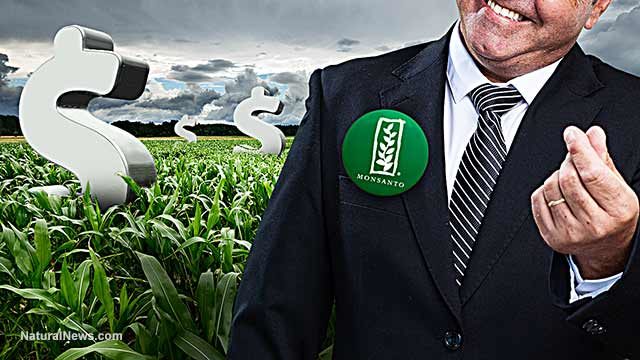
Monsanto is the world’s leading producer of the herbicide “Roundup”, as well as producing 90% of the world’s genetically modified (GMO) seeds.

Over Monsanto’s 110-year history (1901-2013), Monsanto Co (MON.N), the world’s largest seed company, has evolved from primarily an industrial chemical concern into a pure agricultural products company. MON profited $2 billion dollars in 2009, but their record profits fell to only $1 billion in 2010 after activists exposed Monsanto for doing terribly evil acts like suing good farmers and feeding uranium to pregnant women. Below is a timeline of Monsanto’s dark history.

Monsanto, best know today for its agricultural biotechnology GMO products, has a long and dirty history of polluting this country and others with some of the most toxic compounds known to humankind. From PCBs to Agent Orange to Roundup, we have many reasons to question the motives of this evil corporation that claims to be working to reduce environmental destruction and feed the world with its genetically engineered GMO food crops. Monsanto has been repeatedly fined and ruled against for, among many things: mislabeling containers of Roundup, failing to report health data to EPA, plus chemical spills and improper chemical deposition.

The name Monsanto has since, for many around the world, come to symbolize the greed, arrogance, scandal and hardball business practices of many multinational corporations. A couple of historical factoids not generally known: Monsanto was heavily involved during WWII in the creation of the first nuclear bomb for the Manhattan Project via its facilities in Dayton Ohio and called the Dayton Project headed by Charlie Thomas, Director of Monsanto’s Central Research Department (and later Monsanto President) and it operated a nuclear facility for the federal government in Miamisburg, also in Ohio, called the Mound Project until the 80s.

Monsanto Company History Overview

Monsanto is a US based agricultural and pharmaceutical monopoly, Monsanto Company is a producer of herbicides, prescription pharmaceutical drugs, and genetically engineered (GMO) seeds. The global Monsanto corporation has operated sales offices, manufacturing plants, and research facilities in more than 100 countries. Monsanto has the largest share of the global GMO crops market. In 2001 its crops accounted for 91% of the total area of GMO crops planted worldwide. Based on 2001 figures Monsanto was the second biggest seed company in the world, and the third biggest agrochemical company.

Historically Monsanto has been involved with the production of PCBs, DDT, dioxins and the defoliant / chemical weapon ‘Agent Orange’ (sprayed on American troops and Vietnamese civilians during the Vietnam War). Originally a chemical company, Until the late 1990s Monsanto was a much larger ‘lifesciences’ company whose business covered chemicals, polymers, food additives and pharmaceuticals, as well as agricultural products.

All of these other chemical business areas have now been demerged or sold off. Monsanto sold its chemical business in 1997 to build a presence in biotechnology, developing NON-ORGANIC GMO soybeans and corn (classified as a pesticide and banned in the EU) to resist the poisonous effects of its Roundup herbicide. Monsanto’s key business areas are now agrochemicals, seeds and traits (including GMO crops), Monsanto also produced NutraSweet, a GMO sugar substitute. Monsanto recently sold it’s GMO bovine growth hormones monopoly to Eli Lilly, and sold it’s aspartame business to Pfizer.

Monsanto’s business is currently run in two parts: Agricultural Productivity, and Seeds and Genomics. The Agricultural Productivity segment includes Roundup herbicide and other agri-chemicals, and the Animal Agriculture business. The Seeds and Genomics segment consists of seed companies and related biotechnology traits, and a technology platform based on plant genomics. In reality of course these two segments are inseparable, since the agri-chemicals are becoming increasingly dependent on the seeds segment for sales.

Monsanto’s Early 20th-Century Origins

Monsanto traces its roots to John Francisco Queeny, a purchaser for a wholesale drug house at the turn of the century, who formed the Monsanto Chemical Works in St. Louis, Missouri, in order to produce the artificial sweetener saccharin for Coca-Cola.

John Francis Queeny (August 17, 1859 – March 19, 1933) started work at age 12 for a wholesale drug company, Tolman and King. He attended school for 6 years until the Great Chicago Fire forced him, at the age of 12, to look for full-time employment, which he found with Tolman and King for $2.50 per week.

In 1891, he moved to St. Louis to work for Meyer Brothers Drug Company. John was inducted into the Knights of Malta order. His first business, a sulfur refinery in East St.Louis, was destroyed by fire on its first day of operation in 1899. The process of refining beet sugar in 1900, led to Monsanto Corporation’s first artificial sweetener, the following year. Butter substitute, MSG and partially hydrogenated vegetable shortening were all soon to follow.

John Francis Queeny married Olga Mendez Monsanto with whom he had two children, one of whom was Edgar Monsanto Queeny, who would later serve as Chairman. n 1901, John then established his own chemical company to produce the sweetener, saccharin, which was only available in Germany at that time. He named the company Monsanto after his wife´s maiden name, Olga Monsanto Queeny.

Queeny was a member of the Missouri Historical Society and was a director of the Lafayette-South Side Bank and Trust Company. “He was also known for his many philanthropic endeavors.” [Final Resting Place, p. 83, The St. Louis Portrait, p. 221]

Knight of Malta John F. Queeny: Founder of Monsanto

According to the Count in Venice, John Francis Queeny (founder of The Monsanto Company) was a Knight of Malta. Irish-American ROMAN Catholic Queeny (1859-1933) founded Monsanto in 1901 within the Jesuit stronghold of St. Lewis – hosting the Black Pope’s Saint Louis University since 1818.

This is the same year J. P. Morgan, Papal Knight of the Order of Saints Maurice and Lazarus, founded U.S. Steel Corporation and in 1911 would appoint Knight of Malta John A. Farrell as its president. Interesting: Queeny, Morgan and Farrell were all wicked, pope-serving, White Gentiles – not a Jew in the mix!

Robert B. Shapiro was Monsanto’s CEO from 1995 to 2000. The devil’s Great Conspiracy for world government must always appear to be led by Jews, never by the Pope of Rome using select, Masonic “Court Jews” as his underlings!

Once the manufacturer of the now outlawed DDT and Agent Orange during Francis Cardinal Spellman’s CIA-directed Vietnam War, the company also developed and now markets bovine growth hormone, further poisoning the food chain here in America. It is most intriguing that Europe – the pope’s Revived Holy Roman Empire deceptively called “The European Union” – refuses to purchase beef produced in the United States!

Upon purchasing G. D. Searle and Company in 1985, Monsanto, via its NutraSweet Company, is the manufacturer of Aspartame, the notorious neuro-toxin sold to the public as an artificial sweetener. Aspartame is the “artificial sweetener” in the soft drink “Diet Pepsi,” Pepisico once employing JFK assassin / FBI liaison to the Warren Commission and Knight of Malta Cartha D. DeLoach.

Monsanto also has strong ties to The Walt Disney Company, with financial backing from the Order’s Bank of America founded in Jesuit-ruled San Francisco by Italian-American ROMAN Catholic Knight of Malta Amadeo Giannini in 1904. Disney owns ABC Television Network and its Director Emeritus is Roy Disney (brother of the late Walt Disney) who was inducted into the Knights of St. Gregory during the same ceremony with Fox Network owner Rupert Murdoch. ABC and Fox are both controlled by Rome through brother Knights of the Order of St. Gregory!

World War I: Petrochemicals

While prior to World War I America relied heavily on foreign supplies of chemicals, the increasing likelihood of U.S. intervention meant that the country would soon need its own domestic producer of chemicals. Looking back on the significance of the war for Monsanto, Queeny’s son Edgar remarked, “There was no choice other than to improvise, to invent and to find new ways of doing all the old things. The old dependence on Europe [Hitler’s IG Farben in Nazi Germany] was, almost overnight, a thing of the past.” Among other problems, Monsanto researchers discovered that pages describing German chemical processes had been ripped out of library books. Monsanto developed several pharmaceutical products, including phenol as an antiseptic, in addition to acetylsalicyclic acid, or aspirin.

Under Edgar Queeny’s direction Monsanto, now the Monsanto Chemical Company, began to substantially expand and enter into an era of prolonged growth. Acquisitions expanded Monsanto’s product line to include the new field of petrochemical plastics and the manufacture of phosphorus.

Postwar Expansion & New Leadership

Largely unknown by the public, Monsanto experienced difficulties in attempting to market consumer goods. However, attempts to refine a low-quality detergent led to developments in grass fertilizer, an important consumer product since the postwar housing boom had created a strong market of homeowners eager to perfect their lawns.

Under Hanley, Monsanto more than doubled its sales and earnings between 1972 and 1983. Toward the end of his tenure, Hanley put into effect a promise he had made to himself and to Monsanto when he accepted the position of president, namely, that his successor would be chosen from Monsanto’s ranks. Hanley and his staff chose approximately 20 young executives as potential company leaders and began preparing them for the head position at Monsanto. Among them was Richard J. Mahoney. When Hanley joined Monsanto, Mahoney was a young sales director in agricultural products. In 1983 Hanley turned the leadership of the company over to Mahoney. Wall Street immediately approved this decision with an increase in Monsanto’s share prices.

1976, Monsanto announced plans to phase out production of polychlorinated biphenyl (PCB).

In 1979 a lawsuit was filed against Monsanto and other manufacturers of agent orange, a defoliant used during the Vietnam War. Agent orange contained a highly-toxic chemical known as dioxin, and the suit claimed that hundreds of veterans had suffered permanent damage because of the chemical. In 1984 Monsanto and seven other manufacturers agreed to a $180 million settlement just before the trial began. With the announcement of a settlement Monsanto’s share price, depressed because of the uncertainty over the outcome of the trial, rose substantially.

Also in 1984, Monsanto lost a $10 million antitrust suit to Spray-Rite, a former distributor of Monsanto agricultural herbicides. The U.S. Supreme Court upheld the suit and award, finding that Monsanto had acted to fix retail prices with other herbicide manufacturers.

In August 1985, Monsanto purchased G. D. Searle, the “NutraSweet” firm. NutraSweet, an artificial sweetener, had generated $700 million in sales that year, and Searle could offer Monsanto an experienced marketing and a sales staff as well as real profit potential – not to mention the fact that Searle’s CEO Secretary of Defense Donald Rumsfeld was well-connected among a cabal of corrupt politicians in Washington DC. Since the late 1970s the company had sold nearly 60 low-margin businesses and, with two important agriculture product patents expiring in 1988, a major new cash source was more than welcome. What Monsanto didn’t count on, however, was the controversy surrounding Searle’s intrauterine birth control device called the Copper-7.

Soon after the acquisition, disclosures about hundreds of lawsuits over Searle’s IUD surfaced and turned Monsanto’s takeover into a public relations disaster. The disclosures, which inevitably led to comparisons with those about A. H. Robins, the Dalkan Shield manufacturer that eventually declared Chapter 11 bankruptcy, raised questions as to how carefully Monsanto management had considered the acquisition. In early 1986 Searle discontinued IUD sales in the United States. By 1988 Monsanto’s new subsidiary faced an estimated 500 lawsuits against the Copper-7 IUD. As the parent company, Monsanto was well insulated from its subsidiary’s liabilities by the legal “corporate veil”.

Toward the end of the 1980s, Monsanto faced continued challenges from a variety of sources, including government and public concern over hazardous wastes, fuel and feedstock costs, and import competition. At the end of the 99th Congress, then President Ronald Reagan signed a $8.5 billion, five-year cleanup superfund reauthorization act. Built into the financing was a surcharge on the chemical industry created through the tax reform bill. Biotechnology regulations were just being formulated, and Monsanto, which already had types of genetically engineered bacteria ready for testing, was poised to be an active participant in the GMO biotech field.

In keeping with its strategy to become a leader in the health field, Monsanto and the Washington University Medical School entered into a five-year research contract in 1984. Two-thirds of the research was to be directed into areas with obviously commercial applications, while one-third of the research was to be devoted to theoretical work. One particularly promising discovery involved the application of the bovine growth factor, MARKETED as a way to greatly increase milk production.

In the burgeoning low-calorie sweetener market, challengers to NutraSweet were putting pressure on Monsanto. Pfizer Inc., a pharmaceutical company, was preparing to market its product, called alitame, which it claimed was far sweeter than NutraSweet and better suited for baking.

In an interview with Business Week, senior vice-president for research and development Howard Schneiderman commented, “To maintain our markets – and not become another steel industry – we must spend on research and development.” Monsanto, which has committed 8% of its operating budget to research and development, far above the industry average, hoped to emerge in the 1990s as one of the leaders in the fields of biotechnology and pharmaceuticals that are only now emerging from their nascent stage.

By the end of the 1980s, Monsanto had restructured itself and become a producer of specialty chemicals, with a focus on biotechnology products. Monsanto enjoyed consecutive record years in 1988 and 1989 – sales were $8.3 billion and $8.7 billion, respectively. In 1988 the Food and Drug Administration (FDA) approved Cytotec, a drug that prevents gastric ulcers in high-risk cases. Sales of Cytotec in the United States reached $39 million in 1989.

The Monsanto Chemical Co. unit prospered with products like Saflex, a type of nylon carpet fiber. The NutraSweet Company held its own in 1989, contributing $180 million in earnings, with growth in the carbonated beverage segment (which Monsanto originated from since 1901 seed money from Coca-Cola to produce carcinogenic Saccharin). Almost 500 new products containing NutraSweet were introduced in 1989, for a total of 3,000 products.

Monsanto continued to invest heavily in research and development, with 7% of sales allotted for R&D. The investment began to pay off when the research and development department developed an all-natural fat substitute called Simplesse. The FDA declared in early 1990 that the Simplesse product was “generally recognized as safe” (GRAS) for use in frozen desserts. That year, the NutraSweet Company introduced Simple Pleasures frozen dairy dessert. Monsanto hoped to see Simplesse used eventually in salad dressings, yogurt, and mayonnaise.

Despite these successes, Monsanto remained frustrated by delays in obtaining FDA approval for bovine somatotropin (BST), a hormore chemical MARKETED to increase milk production in cows that causes mastitis (pus milk). Opponents to BST said it would upset the balance of supply and demand for milk, but Monsanto countered that BST would provide high-quality food supplies to consumers worldwide.

The final year of the 1980s also marked Monsanto’s listing for the first time on the Tokyo Stock Exchange. Monsanto officials expected the listing to improve opportunities for licensing and joint venture agreements.

Monsanto’s Early 1990s Transitional Period

Monsanto had expected to celebrate 1990 as its 5th consecutive year of increased earnings, but numerous factors – the increased price of OIL due to the Persian Gulf War, a recession in key industries in the United States, and droughts in California and Europe — prevented Monsanto from achieving this goal. Net income was $546 million, a dramatic drop from the record of $679 the previous year. Nonetheless, subsidiary Searle, which had experienced considerable public relations scandals and headaches in the 1980s, had a record financial year in 1990. The subsidiary had established itself in the global pharmaceutical market and was beginning to emerge as an industry leader. The Monsanto Chemical Co., meanwhile, was a $4 billion business that made up the largest percentage of Monsanto’s sales.

Monsanto continued to work at upholding hypocritical “The Monsanto Pledge”, a 1988 declaration to reduce emissions of toxic substances. By its own estimates, Monsanto devoted $285 million annually to environmental expenditures. Furthermore, Monsanto and the Environmental Protection Agency (EPA) agreed to a cleanup program at Monsanto’s detergent and phosphate plant in Richmond County, Georgia.

Monsanto restructured during the early 1990s to help cut losses during a difficult economic time. Net income in 1991 was only $296 million, $250 million less than the previous year. Despite this showing, 1991 was a good year for some of Monsanto’s newest products. Bovine somatotropin finally gained FDA approval and was sold in Mexico and Brazil, and Monsanto received the go-ahead to use the fat substitute, Simplesse, in a full range of food products, including yogurt, cheese and cheese spreads, and other low-fat spreads. In addition, the herbicide Dimension was approved in 1991, and scientists at Monsanto controversially tested genetically engineered (GE or GMO) plants in field trials.

Furthermore, Monsanto expanded internationally, opening an office in Shanghai and a plant in Beijing, China. Monsanto also hoped to expand in Thailand, and entered into a joint venture in Japan with Mitsubishi Chemical Co.

Monsanto’s sales in 1992 hit $7.8 million. However, as net income dropped 130% from 1991 due to several one-time aftertax charges, Monsanto prepared itself for challenging times. The patent on NutraSweet brand sweetener expired in 1992, and in preparation for increased competition, Monsanto launched new products, such as the NutraSweet Spoonful, which came in tabletop serving jars, like sugar. Monsanto also devoted ongoing research and development to Sweetener 2000, a high-intensity product.

In 1992, Monsanto denied that it planned to sell G. D. Searle and Co., pointing out that Searle was a profitable subsidiary that launched many new products. However, to decrease losses, Monsanto did sell Fisher Controls International Inc., a subsidiary that manufactures process control equipment. Profits from the sale were used to buy the Ortho lawn-and-garden business from Chevron Chemical Co.

Monsanto Reinvents Itself in the 1990s

Monsanto expected to see growth in its agricultural, chemical, and biotechnological divisions. In 1993, Monsanto and NTGargiulo joined forces to produce a (GMO) genetically altered tomato. As the decade progressed, biotechnology played an increasingly important role, eventually emerging as the focal point of Monsanto’s operations. The foray into biotechnology, begun in the mid-1980s with a $150-million investment in a genetic engineering lab in Chesterfield, Missouri, had been faithfully supported by further investments in the ensuing years. Monsanto’s efforts finally yielded tangible success in 1993, when BST was approved for commercial sale after a frustratingly slow FDA approval process. In the coming years, the development of further biotech products moved to the forefront of Monsanto’s activities, ushering in a period of profound change. Fittingly, the sweeping, strategic alterations to Monsanto’s focus were preceded by a change in leadership, making the last decade of the 20th century one of the most dynamic eras in Monsanto’s history.

Toward the end of 1994, Mahoney announced his retirement, effective the following year in March 1995. As part of the same announcement, Mahoney revealed that Robert B. Shapiro, Monsanto’s president and chief operating officer, would be elected by Monsanto’s board of directors as his successor. Shapiro, who had joined Searle in 1979 before being named executive vice-president of Monsanto in 1990, did not waver from exerting his influence over the company he now found himself presiding over. At the time of his promotion, Shapiro inherited a company that ranked as the largest domestic ACRYLIC manufacturer in the world, generating $3 billion of its $7.9 billion in total revenues from chemical-related sales. This dominant side of Monsanto’s business, representing the foundation upon which it had been built, was eliminated under Shapiro’s stewardship, replaced by a resolute commitment to biotech.

Between the mid-1980s and the mid-1990s, Monsanto had spent approximately $1 billion on developing its biotech business. Although biotech was regarded as a commercially unproven market by some industry analysts, Shapiro pressed forward with the research and development of biotech products, and by the beginning of 1996 he was ready to launch Monsanto’s first biotech product line. Monsanto began marketing herbicide-tolerant GMO soybeans, genetically engineered to resist Monsanto’s PATENTED Roundup herbicide, and insect-resistant GMO BT cotton, beginning with 2,000,000 acres of both crops. By the fall of 1996, there were early indications that the first harvests of genetically engineered crops were performing better than expected (yet WORSE results than traditional and organic crops). News of the encouraging results prompted Shapiro to make a startling announcement in October 1996, when he revealed that Monsanto was considering divesting its chemical business as part of a major reorganization into a life-sciences company.

By the end of 1996, when Shapiro announced he would spin-off the chemical operations as a separate company, Monsanto faced a future without its core business, a $3 billion contributor to Monsanto’s annual revenue volume. Without the chemical operations, Monsanto would be reduced to an approximately $5-billion company deriving half its sales from agricultural products and the rest from pharmaceuticals and food ingredients, but Shapiro did not intend to leave it as such. He foresaw an aggressive push into biotech products, a move that industry pundits generally perceived as astute. “It would be a gamble if they didn’t do it,” commented one analyst in reference to the proposed divestiture. “Monsanto is trying to transform itself into a high-growth agricultural and life sciences company. Low-growth cyclical chemical operations do not fit that bill.” Spurring Shapiro toward this sweeping reinvention of Monsanto were enticing forecasts for the market growth of plant biotech products. A $450 million business in 1995, the market for plant biotech products was expected to reach $2 billion by 2000 and $6 billion by 2005. Shapiro wanted to dominate this fast-growing market as it matured by shaping Monsanto into what he described as the main provider of “Agricultural Biotechnology”.

As preparations were underway for the spin-off of Monsanto’s chemical operations into a new, publicly owned company named Solutia Inc., Shapiro was busy filling the void created by the departure of Monsanto’s core business. A flurry of acquisitions completed between 1995-1997 greatly increased Monsanto’s presence in life sciences, quickly compensating for the revenue lost from the spin-off of Solutia. Among the largest acquisitions were Calgene, Inc., a leader in plant biotech, which was acquired in a two-part transaction in 1995 and 1997, and a 40% interest in Dekalb Genetics Corp., the second-largest seed-corn company in the United States. In 1998, Monsanto acquired the rest of DeKalb, paying $2.3 billion for the Illinois-based company.

By the end of the 1990s, Monsanto bore only partial resemblance to the Monsanto company that entered the decade. The acquisition campaign that added dozens of biotechnology companies to its portfolio had created a new, dominant force in the promising life sciences field, placing Monsanto in a position to reap massive rewards in the years ahead. For example, a rootworm-resistant strain under development had the potential to save $1 billion worth of damages to corn crops per year. Monsanto’s pharmaceutical business also faced a promising future, highlighted by the introduction of a new arthritis medication named Celebrex in 1999. During its first year, Celebrex registered a record number of prescriptions. As Monsanto entered the 21st century, however, there were two uncertainties that loomed as potentially serious obstacles blocking its future success. The acquisition campaign of the mid- and late-1990s had greatly increased Monsanto’s debt, forcing Monsanto to desperately search for cash. Secondly, there was growing opposition to genetically altered crops at the decade’s conclusion, prompting the United Kingdom to ban the yields from GMO crops for a year. A great part of Monsanto’s future success depended on the resolution of these two issues.

Monsanto’s Financial History & Corporate Instability

Monsanto had a difficult time during 2002. Its share price had been steadily falling and, in spite of an upturn in sales in the fourth quarter, total sales for 2002 were only $4,673m, compared to $5,462m for 2001. The primary causes, according to the company, were lower volumes of RoundUp sales in the U.S. due to drought, lower prices for RoundUp due to it going off-patent and facing increased competition from competitors, and lower sales of RoundUp and seeds in Latin America.

Events in Argentina also affected the company in other ways: Monsanto’s Argentine unit lost $154 million in the 2002 fiscal year, due to the collapse of the Argentine economy and a deepening recession which forced the government to default on most of its public debt, and devalue the peso in January 2002. The government also converted what was a dollar economy into a peso economy and, as a result, Monsanto received devalued pesos for products it had sold in dollars, slashing its sales income.

In December 2002, CEO Hendrik Verfaillie resigned after he and the board agreed that his performance had been disappointing and the company had faced extensive criticism for failing to deal more honestly and effectively with its difficulties. ‘This is a company that has been optimistic on the borderline of lying,’ said Sergey Vasnetsov, senior analyst with Lehman Brothers in New York. ‘Monsanto has been feeding us these fantasies for two years, and when we saw they weren’t real,’ its stock price fell.

In 2009, Monsanto profited about $2 billion. After much controversy… in 2010, Monsanto profits dove 50% to about $1 billion. GMO crops are massively failing, some even seedless at harvest time. Subsidized crops are LOSING MONEY annually. The USDA is calling it a “yield-drag” but we all know the GMOs do NOT outperform organic crops… unless you’re an accountant for Monsanto.

No matter what weaknesses Monsanto has, it is worth bearing in mind the following: Global sales of Roundup herbicide exceed those of the next 6 leading herbicides combined. Monsanto holds the #1 or #2 position in key corn and soybean markets in North America, Latin America, and Asia. Monsanto also holds a leading position in the European wheat market. Monsanto is the world leader in biotechnology crops. Seeds with Monsanto traits accounted for more than 90% of the acres planted worldwide with herbicide-tolerant or insect-resistant traits in 2001.

Timeline of Monsanto’s Dark History

1901: Monsanto was founded in St. Louis, Missouri by John Francis Queeny, a 30-year veteran of the pharmaceutical industry. Queeny funded the start-up with capital from Coca-Cola (saccharin). Founder John Francis Queeny named Monsanto Chemical Works after his wife, Olga Mendez Monsanto. Queeny’s father in law was Emmanuel Mendes de Monsanto, wealthy financier of a sugar company active in Vieques, Puerto Rico and based in St. Thomas in the Danish West Indies.

1902: Monsanto manufactures its first product, the artificial sweetener Saccharin, which Monsanto sold to the Coca-Cola Company. The U.S. government later files suit over the safety of Saccharin – but loses.

1904: Queeny persuaded family and friends to invest $15000, Monsanto has strong ties to The Walt Disney Company, it having financial backing from the Order’s Bank of America founded in Jesuit-ruled San Francisco by Italian-American Roman-Catholic Knight of Malta Amadeo Giannini.

1905: Monsanto company was also producing caffeine and vanillin and was beginning to turn a profit.

1906: The government’s monopoly on meat regulation began, when in response to public panic resulting from the publication of Upton Sinclair’s The Jungle, Teddy Roosevelt signed legislation mandating federal meat inspections. Today, Salatin claims that agricultural regulation favors multinational corporations such as ConAgra and Monsanto because the treasonous science that supports the USDA regulatory framework is paid for by these corporations, which continue to give large grants to leading schools and research facilities.

1908: John Francis Queeny leaves his part-time job as the new branch manager of another drug house the Powers-Weightman-Rosegarten Company to become Monsanto’s full-time president.

1912: Agriculture again came to the forefront with the creation of the DeKalb County Farm Bureau, one of the first organizations of its kind. In the 1930s the DeKalb AgResearch Corporation (today MONSANTO) marketed its first hybrid seed corn.

1914–1918: During WWI, cut off from imported European chemicals, Monsanto was forced to manufacture it’s own, and it’s position as a leading force in the chemical industry was assured. Unable to import foreign supplies from Europe during World War I, Queeny turned to manufacturing his own raw materials. It was then his scientists discovered that the Germans, in anticipation of the war, had ripped out vital pages from their research books which explained various chemical processes.

1915: Business expanded rapidly. Monsanto sales surpass the $1,000,000 mark for the first time.

1917: U.S. government sues Monsanto over the safety of Monsanto’s original product, saccharin. Monsanto eventually won, after several years in court.

1917: Monsanto added more and more products: vanillin, caffeine, and drugs used as sedatives and laxatives.

1917: Bayer, The German competition cut prices in an effort to drive Monsanto out of business, but failed. Soon, Monsanto diversified into phenol (a World War I -era antiseptic), and aspirin when Bayer’s German patent expired in 1917. Monsanto began making aspirin, and soon became the largest manufacturer world-wide.

1918: With the purchase of an Illinois acid company, Monsanto began to widen the scope of its factory operations.

Mar 15, 1918: More than 500 of the 750 employees of the Monsanto Chemical Works, which has big contracts for the Government, went on strike, forcing the plant to dose down.

Aug 15, 1919: Thereafter much of it was declared surplus, and a contract was entered into with the Monsanto Chemical Co., of St. Louis, Mo., by which contract the Director of Sales authorized the Monsanto Co. to sell for the United States its surplus phenol, estimated at 27521242 pounds, for a market price to be fixed from time to time by the representative of the contracting officer of the United States, but with a minimum price of 9 cents a pound.

1919: Monsanto established its presence in Europe by entering into a partnership with Graesser’s Chemical Works at Cefn Mawr near Ruabon, Wales to produce vanillin, salicylic acid, aspirin and later rubber.

1920s: In its third decade, Monsanto expanded into basic industrial chemicals like sulfuric acid and other chemicals.

Jan 5, 1920: The petitioner was authorized to sell two tracts of land in the Common Fields of Cahokia, St. Clair County, containing 2.403 acres and 3.46 acres respectively, to the Monsanto Chemical Works for the sum of $1500.

1920-1921: A postwar depression during the early 1920s affected profits, but by the time John Queeny turned over Monsanto to Edgar in 1928 the financial situation was much brighter.

1926: Environmental policy was generally governed by local governments, Monsanto Chemical Company founded and incorporated the town of Monsanto, later renamed Sauget, Illinois, to provide a more business friendly environment for one of its chemical plants. For years, the Monsanto plant in Sauget was the nation’s largest producer of polychlorinated biphenyls (PCBs). And although polychlorinated biphenyls (PCBs) were banned in the 1970s, they remain in the water along Dead Creek in Sauget.

1927: Monsanto had over 2,000 employees, with offices across the country and in England.

1927: Shortly after its initial listing on the New York Stock Exchange, Monsanto moved to acquire 2 chemical companies that specialized in rubber. Other chemicals were added in later years, including detergents.

1928: John Queeny’s son Edgar Monsanto Queeny takes over the Monsanto company. Monsanto had gone public, a move that paved the way for future expansion. At this time, Monsanto had 55 shareholders, 1,000 employees, and owned a small company in Britain.

1929: Monsanto acquires Rubber Services Laboratories. Charlie Sommer joined Monsanto, and later became president of Monsanto in 1960.

October 1929: The folks at Monsanto Co. fished through their records, but they couldn’t find out why the company’s symbol is MTC. Monsanto went public in October 1929, just a few days before the great stock market crash. Some symbols are holdovers from the 19th century, when telegraph operators used single-letter symbols for the most active stocks to conserve wire space, says the New York Stock Exchange. Mergers, acquisitions and failure have caused many single-letter symbols to change

1929: Monsanto began production of PCBs (polychlorinated biphenyls) in the United States. PCBs were considered an industrial wonder chemical – an oil that would not burn, was impervious to degradation and had almost limitless applications. Today PCBs are considered one of the gravest chemical threats on the planet. PCBs, widely used as lubricants, hydraulic fluids, cutting oils, waterproof coatings and liquid sealants, are potent carcinogens and have been implicated in reproductive, developmental and immune system disorders. The world’s center of PCB manufacturing was Monsanto’s plant on the outskirts of East St. Louis, Illinois, which has the highest rate of fetal death and immature births in the state.

Monsanto produced PCBs for over 50 years and they are now virtually omnipresent in the blood and tissues of humans and wildlife around the globe – from the polar bears at the north pole to the penguins in Antarctica. These days PCBs are banned from production and some experts say there should be no acceptable level of PCBs allowed in the environment. The U.S. Environmental Protection Agency says, “PCB has been demonstrated to cause cancer, as well as a variety of other adverse health effects on the immune system, reproductive system, nervous system and endocrine system.” But the evidence of widespread contamination from PCBs and related chemicals has been accumulating from 1965 onwards and internal company papers show that Monsanto knew about the PCB dangers from early on.

The PCB problem was particularly severe in the town of Anniston in Alabama where discharges from the local Monsanto plant meant residents developed PCB levels hundreds or thousands of times the average. As The Washington Post reported, “for nearly 40 years, while producing the now-banned industrial coolants known as PCBs at a local factory, Monsanto Co. routinely discharged toxic waste into a west Anniston creek and dumped millions of pounds of PCBs into oozing open-pit landfills. And thousands of pages of Monsanto documents : many emblazoned with warnings such as ‘CONFIDENTIAL: Read and Destroy’ : show that for decades, the corporate giant concealed what it did and what it knew.”

Ken Cook of the Environmental Working Group says that based on the Monsanto documents made public, Monsanto “knew the truth from the very beginning. They lied about it. They hid the truth from their neighbors.” One Monsanto memo explains their justification: “We can’t afford to lose one dollar of business.” Eventually Monsanto was found guilty of conduct “so outrageous in character and extreme in degree as to go beyond all possible bounds of decency so as to be regarded as atrocious and utterly intolerable in civilized society”.

1930s: DeKalb AgResearch Corporation (today MONSANTO) marketed its first **HYBRID** seed corn (maize).

1933: Incorporated as Monsanto Chemical Company

1934: “I recognized my two selves: a crusading idealist and a cold, granitic believer in the law of the jungle” – Edgar Monsanto Queeny, Monsanto chairman, 1943-63, “The Spirit of Enterprise”

1935: Edward O’Neal (who became chairperson in 1964) came to Monsanto with the acquisition of the Swann Corporation. Monsanto goes into the soap and detergents industry, starts producing phosphorus.

1938: Monsanto goes into the plastic business (the year after DuPont helped ban hemp because it was superior to their new NYLON product made from Rockefeller OIL). Monsanto became involved in plastics when it completely took over Fiberloid, one of the oldest nitrocellulose production companies, which had a 50% stake in Shawinigan Resins.

1939: Monsanto purchased Resinox, a subsidiary of Corn Products, and Commercial Solvents, which specialized in phenolic resins. Thus, just before the war, Monsanto’s plastics interests included phenol-formaldehyde thermosetting resins, cellulose and vinyl plastics.

1939-1945: Monsanto conducts research on uranium for the Manhattan Project in Dayton, Ohio. Dr. Charles Thomas, who later served as Monsanto’s chairman of the board, was present at the first test explosion of the atomic bomb. During World War II, Monsanto played a significant role in the Manhattan Project to develop the atom bomb. Monsanto operated the Dayton Project, and later Mound Laboratories in Miamisburg, Ohio, for the Manhattan Project, the development of the first nuclear weapons and, after 1947, the Atomic Energy Commission.

1940s: Monsanto had begun focusing on plastics and synthetic fabrics like polystyrene (still widely used in food packaging and other consumer products), which is ranked 5th in the EPA’s 1980s listing of chemicals whose production generates the most total hazardous waste. From the 1940s onwards Monsanto was one of the top 10 US chemical companies.

1941: By the time the United States entered World War II, the domestic chemical industry had attained far greater independence from Europe. Monsanto, strengthened by its several acquisitions, was also prepared to produce such strategic materials as phosphates and inorganic chemicals. Most important was Monsanto’s acquisition of a research and development laboratory called Thomas and Hochwalt. The well-known Dayton, Ohio, firm strengthened Monsanto at the time and provided the basis for some of its future achievements in chemical technology. One of its most important discoveries was styrene monomer, a key ingredient in synthetic rubber and a crucial product for the armed forces during the war. Edward J. Bock joined Monsanto in 1941 as an engineer – he rose through the ranks to become a member of the board of directors in 1965 and president in 1968.

1943: Massive Texas City plant starts producing synthetic rubber for the Allies in World War II.

1944: Monsanto began manufacturing DDT, along with some 15 other companies. The use of DDT in the U.S. was banned by Congress in 1972.

1945: Following WW2, Monsanto championed the use of chemical pesticides in agriculture, and began manufacturing the herbicide 2,4,5-T, which contains dioxin. Monsanto has been accused of covering up or failing to report dioxin contamination in a wide range of its products.

1949: Monsanto acquired American Viscose from England’s Courtauld family.

1950: Monsanto began to produce urethane foam – which was flexible, easy to use, and later became crucial in making automobile interiors.

SOURCE (a now dead link):

http://bestmeal.info/monsanto/company-history.shtml#timeline

RELATED DOCO (must watch): Genetically Modified Food – The World According to Monsanto

Photo: Prof Séralini – https://www.gmoseralini.org/en/

Gardening: beating the veggie shortages … (Wally Richards)

It is certainly interesting times we are living in … there are also some gardening problems to overcome. Recently I went looking for some vegetable seedlings and seed packets of vegetables that I wished to add to my gardens at this time.

I was after cauliflower seedlings to grow and harvest in winter and some onion seeds to sow now. I had to visit several gardening places before I found the items I required. This means that a lot of people have woken up to the fact that fresh produce in the supermarkets are several times dearer currently than they would normally be in March. In fact in March there should be a glut of cheap fruit and vegetables available from spring and summer crops. There isn’t. The supermarkets are now starting to import vegetables that are normally available in abundance from NZ growers. There Isn’t. Imported produce is much more expensive than local grown hence if you are paying $5 for a small cabbage now soon you will be paying $10 or more. I was talking recently to a check out operator at local supermarket than was saying there are several customers that are not at all friendly now. I can understand why, people with limited money for buying food can’t afford all the groceries that they are used to buying; their budget just does not stretch that far. Hence they can be grumpy and even a bit nasty to the Supermarket staff. The same people are in a Catch 22 they don’t have the money to grow their own produce and/or don’t have land that can be used for gardening. Readers of my columns are good gardeners, in the main, and even if on a budget they are able to grow a reasonable amount of their own food which is not only a big saving but also much more healthy for us gardeners.

There are problems that are currently happening and one of these is as I found; a shortage of seeds and seedlings in many gardening outlets. Cabbage and cauliflower seedlings I have purchased recently have caterpillar eggs on the leaves and if you don’t rub them off they will be eaten alive not too long after planting. So check leaves for the little lightly yellow eggs and rub them off before you plant. I use Wally Neem Granules when I plant cabbages etc a little in the bottom of the planting hole and more on the soil surface by the seedlings. This has a very good control of the caterpillars and even though I have caterpillar eggs on my plants and holes on the leaves there is not any caterpillars on the foliage. The holes are made by hungry birds not caterpillars. It is even worse on my silverbeet which young seedlings I planted have either disappeared or they have damaged foliage. More mature silverbeet will likely have a lot of leaf damage from birds feeding. The best way to keep birds off silverbeet and brassicas is to use what I call Crop Cover or what shops call, Bug Mesh. Either laid loose over crops or supported over crops with hoops made from ridged plastic irrigation pipe or number 8 wire. The crop cover is good for many seasons and will keep birds and just about all pests off your crops include neighborhood cats. Old curtain netting could be used instead of the more durable crop cover.

When you buy vegetable seedlings look for the smaller, fresher ones not the over grown ones which have likely been stressed and will go to seed prematurely. Even if you take them home to grow on a bit to make handling easier, then do so. First thing I do when I get punnets home is plunge them into a bucket of water than I have thrown some sheep manure pellets into some time ago. I hold them down into the liquid manure and watch them bubble away. This not only gives them a good soaking of the mix but some nature liquid food as well. Let them drain and place in full sun till you are ready to plant them. Water as need be in the meantime and prior to planting plunge them into the bucket again. Seedlings will pull apart better when the mix is wet and they have ample wet mix on the roots when you plant. After planting give them a watering with the hose to bed them in. Then you can put your crop cover over them if you are going to use this method.

I wrote recently a quick way of converting some existing lawn area into a productive vegetable patch. For those that missed it here it is again:

If you want to convert a part of your lawn to vegetable growing then mow the chosen area (a sunny area is best by far) as short as possible (called scalping). Around the lawn edge of this area dig a small trench about half a spade depth. The soil and grass from this trench can be stacked some where for future use. The trench will assist with drainage and as a mowing strip between the vegetable garden and the existing lawn. Place the lawn clippings caught in the catcher over the scalped area. (Extra food for your vegetables crops) Now cover the scalped lawn area that has the lawn clippings with a layer of cardboard or alternatively several layers of news paper. You can find cardboard from recycling places, super markets etc. Sprinkle any animal manure you can get hold of or blood & bone with sheep manure pellets. A sprinkling of Wallys BioPhos and Wally Ocean solids will complete the nutrient requirements. Then over this place a layer of purchased compost which I prefer Daltons as it does not container green waste and thus herbicide problems. This layer need only be about 5cm thick just deep enough to plant seeds or seedlings in.’ end……..

The problem that we all have had this season is the lack of direct sunlight. Called ‘Dimming’ the sun is obscured by hazy skies or too much cloud and not enough ‘Blue Skies’. Plants are slow to grow, flower buds don’t form or don’t open and solar panels don’t make much power as they do in direct sunlight. Can’t help with solar panels other than wash them to make better use of the light available. For plants provide them with Liquid Sunlight by dissolving a tablespoon of molasses into a litre of hot water and when cooled down add some Magic Botanic Liquid and spray foliage of your plants. Repeat every few days. Likely you will notice the leaves will get much bigger and that is good. It may attract ants if they are a problem where you are so then make up some of our Granny Mins Ant Bait and use that to kill the ants. (Old recipe and lots better than most baits and cheaper also).

Off Topic..With the flooding and forest waste problems I wonder why they don’t control burn it? I think they used to in the past as the ashes are great for planting more trees. (Of course they are not allowed/// something about CO2? Workers not allowed to take it for fire wood apparently and logging companies say too expensive to do. (Lot more expensive the damage it does). Also they used to dredge rivers to make them deeper so more water could flow without flooding surrounding areas. (oops not allowed to, upsets river life: PC gone mad). Simple remedies that we used to use. Burn the slash and dredge the rivers!


Phone 0800 466464
Garden Pages and News at www.gardenews.co.nz
Shar Pei pages at  www.sharpei.co.nz
Mail Order products at www.0800466464.co.nz

New Zealand Bill of Rights Act 1990. Part II of the Act covers a broad range of Civil and Political Rights. As part of the right to life and the security of the person, the Act guarantees everyone:

1The right not to be deprived of life except in accordance with fundamental justice (Section 8)
2The right not to be subjected to torture or to cruel, degrading, or disproportionately severe treatment or punishment (Section 9)

3The right not to be subjected to medical or scientific experimentation without consent (Section 10)
4The right to refuse to undergo any medical treatment (Section 11)  
Furthermore, the New Zealand Bill of Rights Act 1990 guarantees everyone: Freedom of Thought, Conscience, and Religion. This includes the right to freedom of thought, conscience, religion, and belief, INCLUDING THE RIGHT TO ADOPT AND HOLD OPINIONS WITHOUT INTERFERENCE (Section 1)

Image by Mark Valencia from Pixabay

10 Incredible Benefits of Quinoa

Quinoa is a highly valuable nutrient-rich food that is gluten-free and a rich source of protein. Its benefits include weight loss, improved heart health, detoxification of the body, and improved digestive health. It also helps in regulating diabetes and reducing gallstones.

It can be used like many common grains or ground into a powder or flour. It has a very low content of fat and can be added to diets around the world as a healthy alternative to many other similar foods.

Quinoa is an interesting form of pseudocereal that is not technically a grain or a traditional cereal. It is a crop that has been grown for thousands of years and is grown mainly for its edible seeds. Related to spinach and beetroots, it is becoming a major food in America, Europe, China, and Canada, despite the fact that it has to be imported in these parts.

It is an ancient cereal that was cultivated in the Andes for the last 7,000 years. The scientific name is Chenopodium quinoa, and it is a species of goosefoot. It generally grows to a height between 1m to 3m in length, producing grains every year that can grow in various colors such as white, yellow, pink, orange, red, brown, and black. The grains can be consumed whole as well as in the form of flour. It is primarily grown in South America, in the Andean region, including countries like Ecuador, Peru, Colombia, and Bolivia. [1]

READ AT THE LINK

Image by we-o_rd35ghczdq1090c5m from Pixabay

GERMINATING SEEDS (Wally Richards)

There are two basic places to germinate seeds, one is where they will ultimately grow and mature the other is in suitable containers to germinate and then to transplant out into open ground or larger containers latter on.

Firstly it is always best to plant any seed in the spot where it will grow and mature.

The reason for this is because when a seed germinates it will send down a tap root and if in open ground in a friable soil that root can be very long.

If on the other hand we germinate in a container or seedling tray that root will be limited in the depth of the tray and growing medium.

It is not practical to grow every thing at the maturity site, especially when we are getting an early start or growing out of season.

There are some seed types which should only be grown in their maturity site and only planted when conditions are favorable.

I often see seedlings for sale in punnets of plants which should never be offered this way because novice gardeners, that know no better, may purchase and have poor results..

The worst example of this is root crops such as carrots and parsnips which should only be direct sown as in any other form they will not produce a normal root.

An exception to this is a carrot that is round in shape and does not produce a long edible root.

Beetroot and onions are seedlings that will transplant but are better to direct sow. (Direct sow means planting seed where they will mature) Spring onion is an exception.

Corn, beans and peas should all be direct sown and you will get far better crops if you do so.

Larger seeds are easy to handle and can be placed where you want them to grow without having to thin out later on. Silverbeet is another one that would be best direct sown.

If you want to start off seeds early in open ground try this method.

Make a trench about 100mm deep and the same wide, mow your lawn and collect the clippings which you then pack fresh into the bottom of your trench.

(Note if the grasses are in seed in the lawn it maybe best not to use the clippings to prevent moving grass weeds to your garden)

Pack firmly to about 80mm then sprinkle a little compost over the clippings to cover.

Next sprinkle Wallys Calcium and Health or garden lime and Wallys Unlocking Your Soil along the trench along with foods such as chook manure, sheep manure pellets, blood & bone, Bio Boost and Neem Tree Powder.

Once again cover lightly with weed free compost (Purchased)

Next sow your seeds such as peas, beans, sweet corn etc. (Peas are hardy but others will depend where you are in NZ to when you start)

Once the seeds are spaced out along the row then spray them with Magic Botanic Liquid (MBL) at 20 mls per litre. This really speeds up germination.

Then cover the seeds with more compost and water down using a fine rose watering can with MBL added.

For those that have problems with either cats, birds or late frosts then make some hoops out of No8 wire and place them along the row with a clearance of about 200mm in the middle of the row.

Place crop cover over the hoops and on one side cover with soil and on the other side with lengths of old timber or similar.

That allows you to easily take off to tend to the plants if needed. The heat from the grass clippings will warm the soil which greatly helps germination.

Once well developed then you can remove the hoops and cover and store for future use.

Now lets look at doing similar but in seedling trays or by using cell packs or punnets.

If you keep the punnets and cell packs that you have purchased in the past then these are good value to use.

Wash them out in hot water so they are nice and clean.

To fill I use only purchased compost of high quality such as from Daltons or Oderings.

I have found that seed raising mixes are a gimmick and most of the ones I have looked at are too expensive and do not work as well as a good quality compost for most seed germination projects.

Think about this; outside in Nature we find all sorts of soils types even straight gravel or sand where seeds do not appear to have much trouble germinating, without any special mixes from mankind.

One important aspect to consider when germinating in seedling trays is to have heat from a heat pad.

Some garden shops, pet supplies and brew shops have heat pads which can be used for germination.

I place a sheet of polystyrene block on a bench to direct the heat upwards then sit the seed trays on the heat pad.

If you go to wholesale fish outlets or fish departments of supermarkets you will likely find used polystyrene trays free or for a few dollars.

You can sit your heat pad in the tray and being white it will provide lots of good reflected light.

If the pad you buy is a higher temperature than you require then cover the pad with sand and keep the sand moist. Sit your seedling trays on the sand.

Fill your seedling tray or cell packs to about two thirds full with purchased compost as above.

Carefully sprinkle a few seeds over the compost keeping them apart so they each have their own space.

Spray then seeds with MBL and Mycorrcin mixed together in a trigger sprayer with non chlorinated water.

Once the compost and seeds are wet then cover seeds with more compost (You can sieve it if you like) and wet down with your spray.

Now you spray the tray at least twice a day to keep the compost moist using the same trigger mix.

Once a few seeds have germinated and before they start stretching for light get them out into natural light from overhead such as on a bench in a glasshouse.

If you do not have a suitable place then place your polystyrene box outside with a sheet of glass over it.

The seedlings will need spraying still but off the heat pad a lot less. Make sure the seedlings are in good light but not strong sun light to burn them.

If you are worried about them at night you can bring the polystyrene box inside or onto a porch.

When the seedling are big enough to handle prick them out and pot them into small pots once again using the compost or plant out in your garden.

If you spray the seedlings a couple of days before planting out then you do not need to harden them off.

Phone 0800 466464
Garden Pages and News at www.gardenews.co.nz
Shar Pei pages at  www.sharpei.co.nz
Mail Order products at www.0800466464.co.nz


New Zealand Bill of Rights Act 1990. Part II of the Act covers a broad range of Civil and Political Rights. As part of the right to life and the security of the person, the Act guarantees everyone:

1 The right not to be deprived of life except in accordance with fundamental justice (Section 8)

2 The right not to be subjected to torture or to cruel, degrading, or disproportionately severe treatment or punishment (Section 9)

3 The right not to be subjected to medical or scientific experimentation without consent (Section 10)

4 The right to refuse to undergo any medical treatment (Section 11)

 Furthermore, the New Zealand Bill of Rights Act 1990 guarantees everyone: Freedom of Thought, Conscience, and Religion.
This includes the right to freedom of thought, conscience, religion, and belief,
INCLUDING THE RIGHT TO ADOPT AND HOLD OPINIONS WITHOUT INTERFERENCE (Section 1)

Image by StockSnap from Pixabay

Tips for Planting plants (Wally Richards)

Gardeners are buying and planting plants now for the coming season.

This may range from seedlings of vegetables, annual flowering plants, fruiting plants and ornamental shrubs and trees.

There are a number of traps and tips which if known will make for a more successful growing season and thus more pleasure for yourself.

Lets start off with seedlings which will likely come in cell packs (each plant has its own little growth space with normally 6 cells to a pack.)

Then there is the punnets where a number of seedlings share the same growing area.

The first thing to do when looking for vegetable seedlings to grow is to see how old the plants are?

If they are on the large size in their cell/punnet then give them a miss as more than likely they have been stressed and may go to seed a couple of months after you plant them. A total waste of time and garden space.

This does not apply to flowering/fruiting vegetables such as tomato, capsicum etc as the bigger they are the further advanced they are to maturity the better.

It applies to brassicas, lettuce and such like.

Also don’t be silly enough to buy root crops in punnets such as beetroot, onions, carrots, parsnips, spring onions as they will never be any where near as good as the ones you grow from seed, planted where they will mature.

Big seeds such as beans, pumpkin should also only be grown directly from seed.

The results will be ten times better than transplants which for crops such as carrots are laughable as they will never become a nice specimen if they were grown from transplants.

The secret to seed growing in an area that they will mature in; is that they get their initial tap root or roots out and those roots do not get disturbed by transplanting.

With the likes of carrots either buy the seed that is on a seed tape or later on thin out the crop which gives you some baby carrots for salads.

I look for the younger smaller plants that are likely the freshest ones from the growers nursery.

These will likely have been kept moist in their growing medium and hence stress free.

Even if they are a bit too small to transplant that is ok; you can grow them on outside in a sheltered, sunny spot. While they are getting bigger you do not want to over water them or let them dry out.

Over watering makes them soft, under watering can lead to stress.

If you can pick the time and day that you plant out, best time is before rain or later in the day when the sun is going down.

If you are really smart you spray any plants you are going to transplant a few days before disturbing them with a spray of Vaporgard and Magic Botanic Liquid combined. (Spray for total coverage)

How many of you have planted out seedlings to see them lay down for several days on the soil till they pick them selves up and start to show growth? We have all experienced that I am sure.

Well the few days before transplanting spray of Vaporgard means that moisture loss through the foliage at transplant time is minimal and the seedlings sit up like little soldiers and start growing immediately.

This is very important: Before you try to remove the seedlings from their punnet or cell pack you plunge it into a bucket of water and watch them bubble.

This removes all air from the growing medium and also gives the seedlings a nice drink.

You then carefully tap out the seedlings without damaging the foliage.

They should, being so wet, slide out nicely.

Next we inspect the foliage for any pest insects or eggs.

In some cases you may have several seedlings in a cell pack or punnet that have their roots intertwined with each other.

You have two options you can plant the plug with more than one seedling and in a couple of weeks time cut the smaller ones off at soil level allowing the best fellow to grow to maturity.

Or in your bucket of water you can carefully separate the seedlings and have a lot more to plant out.

Down in; under water, they will tease out and separate nicely with minimal root disturbance.

But now maybe you have more seedlings than you need for one crop and one harvest.

No problem you put all the extra seedlings to]gether in a clump and and plant them it the garden.

Being in a clump they will not grow much but will hold so that in say a couple of weeks you can lift, divide under water and plant a second crop. (An old trick which I have held surplus for several weeks in that manner)

Soil preparation is important unless you do what I do.

Clear the area of weeds and then sprinkle what goodies you like to use over the area such as animal manures, sheep pellets, blood & bone, Ocean Solids, Wallys Unlocking your Soil, BioPhos and Wallys Calcium and Health.

Now spread a layer of purchased compost over the area to the depth of 3-4 cm.

I prefer Daltons compost as it is herbicide free and nice to work with.

Into this layer you can plant your seeds or seedlings.

Spacing is important so you do not have over crowding.

Keep moist with daily light waterings and spray the plants with Magic Botanic Liquid (MBL) each week.

Lets upscale to plants such as shrubs, vines and trees which once again you are either buying in a pot or plastic bag.

Follow the advise as for the seedlings but when you remove the plant from its grow container have a good look at the root system.

If the plant has been in the container for a while the roots will have filled the container and spiraled around the base of it.

If left like that and placed into a planting hole you may wonder months or even years later why has that plant not grown?

Simple the roots can not get out from the clump they formed in the container.

Some gardeners try to tease the roots out and that can help a little but really a waste of effort.

You take your secateurs and at the four cardinal points you cut the root spiral the depth of your blade.

Roots are like branches, you cut the end off a branch and that branch will create new branches back to the trunk.

You cut the roots and the plant makes a lot of new roots and that is what you want for growth.

It is a busy time ahead so get cracking with small plantings now followed by more each month.

Thank you for the many ‘Get Well’ emails I received in regards my virus/cold, getting better now but it does take a while. I saw on the TV channel, Al Jazeera TV News Channel that there is now good evidence that America released the initial Corona virus and have also done the same with the Monkey Pox virus.

Problems ring me at 0800 466464
Email wallyjr@gardenews.co.nz
Web site www.gardenews.co.nz

Phone 0800 466464
Garden Pages and News at www.gardenews.co.nz
Shar Pei pages at  www.sharpei.co.nz
Mail Order products at www.0800466464.co.nz

New Zealand Bill of Rights Act 1990. Part II of the Act covers a broad range of Civil and Political Rights. As part of the right to life and the security of the person, the Act guarantees everyone:

1The right not to be deprived of life except in accordance with fundamental justice (Section 8)

2The right not to be subjected to torture or to cruel, degrading, or disproportionately severe treatment or punishment (Section 9)

3The right not to be subjected to medical or scientific experimentation without consent (Section 10)

4The right to refuse to undergo any medical treatment (Section 11)

 Furthermore, the New Zealand Bill of Rights Act 1990 guarantees everyone: Freedom of Thought, Conscience, and Religion.
This includes the right to freedom of thought, conscience, religion, and belief,
INCLUDING THE RIGHT TO ADOPT AND HOLD OPINIONS WITHOUT INTERFERENCE (Section 1)

GROW YOUR OWN SEEDS (Wally Richards)

Raising plants from seeds is a great sense of achievement for most gardeners and when the seeds are the ones you collected for free it is even better.

All plants that you have growing in your gardens seed at sometime, with some plants that maybe years away but with annual plants it is at maturity each year.

Annual plants that are left to seed and die back will have produced fertile seeds if pollination has occurred successfully.

If these seeds are left to fall naturally to the soil then at some ideal time for them, they will germinate and produce seedlings.

Two things prevent this happening the first being; you removing the dying plants before they can distribute seed or in the case of many vegetables you have harvested before the crop goes to seed and removed flowering vegetables before they set seed.

When you have left something to flower and drop fertile seeds; then later on if you don’t recognize those seedlings as preferred plants, you may kill them thinking they are weeds.

It is a learning curve to know what is a wanted plant and an unwanted plant but with a little close observation you can score a lot of free plants by allowing mature plants to seed.

When plants produce seed pods that are drying out, then more than likely there are fertilised seeds in the pods which you can harvest for sowing sometime.

This applies to a wide range of plants from roses with rose hips, natives, ornamentals, flowers, vegetables and fruit.

How many of us have eaten a ripe plum off their tree and spat out the stone?

Months or maybe even years later up pops a plum seedling which will eventually grow into another plum tree, similar or even different from your named plum tree.

There are a number of fruits that we buy that have seeds, which we can collect at no extra cost.

This includes tomatoes, capsicums, beans, peas, pumpkin, passion fruit, melons, apples, citrus, stone fruit, figs, even strawberries (which are not a fruit as their seeds are on the outside.)

I have at some time grown all in the list from purchase fruit (Fruit, the definition is one that has seeds inside, which includes beans, capsicum etc).

If you come across a special fruit or one that is more difficult to get the seed of from seed packets then you should certainly save the seed and plant them some time.

Whether it is successful or not it really does not matter as its free and a bit of a challenge.

Recently we found two Asian foods one type of snake bean and two types of bitter melon.

I collected a few seeds from them and with the snake bean just sat the whole bean on a late afternoon windowsill to dry out and mature the seeds inside.

They are now all growing happily in one of my glasshouses and later we shall find out if they have come true to form.

Sometime ago I found Dragon Fruit for sale and now have a big specimen which should be approaching flowering time soon and also a number of baby ones.

Collecting some seed from fruit you have grown or purchased is just the matter of removing them from the fruit, laying on a bit of paper towel to allow to dry. Once they are dry you can either plant them or store them.

The best way to store is to write on the paper towel what they are then place inside a sealed glass jar and then into the fridge where they can wait till you are ready to plant.

Several types of seeds can be stored in the same jar. The fridge storage means they will keep very well for a long period of time.

I have tomato seed over 30 years old that will still give me about 20 to 50% strike rate.

The fridge also gives the seeds a false winter so when they come out they will think its spring and germinate better as a result.

Spring is normally the best time to bring out seeds you wish to sprout as the day light hours are extending and many seeds relate to that.

Self sown seeds lay dormant until the conditions are ideal for them to sprout, that means light hours, temperature and moisture levels.

When they germinate they send down (in most cases) a long tap root just as the trunk sprouts upwards.

This long tap root has secondary roots formed off it making the plant sturdy and deep rooting.

This enables the plant to gather food & moisture better than transplants.

So where possible sow your seeds where the plant is going to grow to maturity.

Seeds germinated in cell packs don’t have the advantage of deep rooting but they do have the advantage of less root disturbance when transplanting.

Punnet grown seedlings will suffer the most root damage when you separate the seedlings, but another aspect comes into play, the damaged roots will be quicker to produce side roots and also generate a bigger root system.

Normally this time of the year germinating seeds is not a problem as the soil temperatures are supposed to be over 10 degrees.

In a glasshouse where the air temperature is warm seeds in containers will germinate better as long as adequate moisture is applied to the medium.

Before you cover your seeds spray them with a solution of Magic Botanic Liquid (MBL) at 20 ml per litre of water. This natural product stimulates the germination to kick in.

When germinating in trays or cell packs use a good compost such as Daltons or Oderings as the base then with a sieve you sieve some of the same mix to make a nice layer of friable smaller particles.

It’s onto this you spread your seeds, spray with MBL and cover by sieving more compost.

In the garden sieve the soil for a seed raising bed. Forget the seed raising mixes they are a waste of time as well as being too expensive when compared to the herbicide free two brands I have mentioned.

Keeping seeds of your favorite vegetables is very important because seed strains disappear overnight as seed companies replace varieties.

Also certain companies want to control all the food seeds in the world and they buy up smaller seed companies then provide only the seeds they have sole rights to.

One of these companies has in certain countries persuaded the Governments to pass laws making the collection of one’s own seeds illegal.

This has made life for the native farmers intolerable and to compound matters often the seeds that are then sold to them are not suitable for their growing conditions and result in either poor or no crops.

Can’t happen in NZ you say? Us older gardeners know that plenty excellent named varieties of vegetables have disappeared and the newer varieties are not half as good.

Happy Gardening.

IT STARTS WITH SEEDS … and how to save them (Wally Richards)

We’re a week behind with Wally’s newsletter. This is from last week, so this week’s will follow shortly. EWR

Nearly all plants start with seeds and the main functions of any plant is to reproduce itself by all means possible, which with many plants means flowering and seeding.

Think about that for a moment; the only purpose of a plant is to reproduce, it does not grow for show, to be eaten, to bathe in sun light, to convert carbon dioxide into oxygen, to provide health benefits.

They do all those things but as far as the plant is concerned it just wants to produce more of its own species and with each generation in a natural setting to become a stronger better specimen. If all conditions to grow in are good then a plant will germinate from seed slowly move to maturity and then flower to produce seeds and die if an annual, or have a rest if a perennial, to repeat again flowering in its next cycle.

A few such as bananas, no longer produce seeds in its fruit though you can see where the seeds used to be in the cross section of some bananas. By the way there are over a thousand different types of bananas in 50 sub groups. Bananas sucker or produce off sets which over time would form a clump. Gardeners break up clumps and plant separately each sucker. Bananas flower and as the flower emerges it produces ‘hands’ which are the banana fruit-to-be.

As gardeners your most important job is to either encourage seeds from the plants that you want and prevent seeds on any plants you do not want. When a plant’s life is threatened it will immediately go to seed even if it is still a baby plant. We see that in summer in waste areas such as gravel driveways where weed seeds germinate and grow and if there is not going to be any rain for some time (plants know this) they will quickly go to seed while there is still enough moisture to do so before they dehydrate and die. They are only a small replica of what they would be in better conditions. The seeds will remain in the dust and dirt waiting for rains to come and then germinate. In gardens where you are watering regularly the same weeds (they realise this) will grow to normal maturity before flowering and seeding. The old proverb applies ‘One year seeding is seven years weeding’.

There are major changes happening in the human world the beginnings of which are now seen, broken supply chains, manufacture closures and hyper inflation. Not good outlooks but you can prepare yourself to have the basics of life, Food, Water and Shelter.

More people are gardening and I am sure more will join us as the cost of food sources rise.

Which brings us back to the topic, Seeds.

The knowledge here is not new but was learned thousands of years ago and is even mentioned in the Bible. You grow a crop shall we say of lettuce, a quick and easy crop to grow all year round, fast to grow in summer with long daylight hours, but slow to grow in winter when we are down to about only 8 hours of sunlight a day. You plant ten lettuces, if you have chicken manure available you put a nice blob of it into the planting hole, put a little soil over it and in with your seedling. I have never seen lettuce grow so fast (in the summer time) with a half a cup of chicken manure in the root zone. Spray the crop every week or two with Magic Botanic Liquid (MBL) it will about double the size of the harvest.

Then you watch the crop’s progress as they head to maturity and you select one which you think is the best of the crop. You do not harvest that lettuce instead you let it stay on long after its fellows have been eaten so it goes to flower and then seeds. You will harvest more seeds than you are likely able to use in a life time if you harvest all.

When the seeds are dry you place them in a plastic bag with their type and date on the bag and you put that bag into a glass jar sealed with lid and into the fridge. You may have a dozen or more varieties of seeds in your jar, each named in their own plastic bags. Keep a few out to sow directly back into your garden or germinate to transplant. (Always best to direct sow)

Now you are going to do the same again; pick the best plant and let it go to seed, collect the seed and plant some for the third crop. Now that you have a new fresh supply of seeds you can give away to family and friends most of the seeds collected from the first crop. It pays to keep a small amount with the date. You are going to repeat the above and likely dependent on conditions where you are, you may have four or more crops a year.

Now an amazing thing happens; you will find that after a few crop cycles using the new seed from the latest crop that you have created a new strain of that plant which has adapted to your growing conditions and will be very superior to the initial plants.

If you are a miser and you only let the worst plant go to seed and you repeat that process crop after crop you will end up with some poor specimens. Vegetable crops that take longer to mature and seed will mean likely only two crops in a year and thus it will be much longer to get to your own superior strain.

Happy Gardening..

Phone 0800 466464
Garden Pages and News at http://www.gardenews.co.nz
Shar Pei pages at http://www.sharpei.co.nz
Mail Order products at http://www.0800466464.co.nz

Photo: pixabay.com

The Technocratic, Transhumanist Total Takeover of Food

The Ice Age Farmer

100K subscribers
To understand the meat shortages and push for fake meat, we must appreciate the technocrats’ agenda for a totalitarian, transhumanist future — and use of FOOD as a weapon to achieve it. Christian looks more deeply into the genesis of this agenda, the history of Rockefeller takeover of agriculture and seeds, the more recent marriage of Big Ag and Big Tech (“AgTech”), and the new AI systems being deployed to achieve “perfect information awareness” — and total control. Subscribe via DLive for more livestreams! http://dlive.tv/iceagefarmer FULL SHOW NOTES: SUBSCRIBE on bitchute: http://bitchute.com/iceagefarmer SUPPORT THE SHOW: http://patreon.com/iceagefarmer http://paypal.me/iceagefarmer JOIN THE CONVERSATION: http://iceagefarmer.com/discord IAF RESOURCES: ⇒ GDD: Growing Degree Days tool: how much colder has 2019 been for you? http://iceagefarmer.com/gdd ⇒ IAF Wiki – read history, understand cycles, know what’s coming: http://wiki.iceagefarmer.com/wiki/His… ⇒ Maps from previous cycles: http://wiki.iceagefarmer.com/wiki/Str… ⇒ Crop Loss Map http://map.iceagefarmer.com ⇒ Join the email list – stay connected: http://iceagefarmer.com/mail *** SUPPORTERS – I recommend (because I use personally) *** STORED FOOD (+ more) @ MyPatriotSupply: http://iceagefarmer.com/prep BUY SEEDS @ TRUE LEAF MARKET: http://iceagefarmer.com/trueleaf EMP-proof Solar: mention IAF save $250 http://Sol-ark.com BEST CBD: http://bignuggetfarm.com 10% code: IAF2018 ⇒ More books: http://amazon.com/shop/iceagefarmer ⇒ Stored food: http://iceagefarmer.com/prep ___

6 survival gardening crops

Thanks to Deep South Homestead for this gardening information … growing your own vegetables …

105K subscribers
There are 6 crops that Deep South must grow each year. Danny shows you what they are and tells a little about how to grow them. Onions, Garlic, potatoes, winter squash or pumpkins, sweet potatoes, and sugar cane. #survivalgardeningcrops #globalfoodshortages #cropsyoumustgrow▶ ▬ EMAIL ▬ To contact me via email, go to: deepsouthhomestead@gmail.com ▶▬ MAILING ADDRESS▬ Deep South Homestead P.O. Box 462 Wiggins, MS. 39577 ▶▬ PAYPAL account:▬ paypal.me/deepsouthhomestead (If you wish to support projects on our homestead, use this account) ▶ VISIT Deep South Homestead’s WEBSITE Visit http://www.deepsouthhomestead.com/https://www.etsy.com/shop/deepsouthho… We offer seeds, plants and 2 books written by Danny: Sweet Potato Manual and English Pea Manual. These books show how to plant, grow, harvest, cook and preserve these vegetables. The books include pictures that show step by step. ▶To Order Deep South Homestead TSHIRTS : https://www.bonfire.com/store/deep-so… PORCH TIME tshirts and CRAZY DAZES Tshirts are available too. ▶▬ Patreon: All proceeds here goes to our building project — CANDY CORN CABIN — Our Off Grid Cabin https://www.patreon.com/deepsouthhome…▶▬ CABIN Wish List: https://www.amazon.com/hz/wishlist/ls… ▬ Some of my links below are affiliate links, which means if you make a purchase, I make a small commission at no extra cost to you. 🙂 Thanks for helping our homestead. ▶▬ Deep South Homestead’s AMAZON LINK: ▬ https://amzn.to/2XMw40m (affiliate link*). ▶▬ Growerssolution.com promo code: DeepSouth This is a 10% discount, valid on everything except shade cloth and EvyAnn. It is unlimited use (overall) but 1 use per customer. ▶▬ LOOKING for a Water Filtration System : Alexa Pure and MY Patriot Supply http://www.waterwithdeepsouth.com/ Stainless Spigot: https://amzn.to/2RKLfmJ▶▬ Herbal Coffee http://www.teeccino.com/healthyheart/189/ At the checkout use the codeword deepsouthhomestead10 ▶Visit HOSS TOOL (affiliate link): For ALL your Garden Tools and SEEDS http://www.shareasale.com/r.cfm?B=862…▶ Visit GreenStalk Vertical Planters __ You get $10 off you order using our link. code word Deepsouth http://lddy.no/7pg9▶My Patriot Supply : http://www.WaterWithDeepSouth.com Survival Meals and Gear ▶▬ Gurney’s : http://bit.ly/2Sg3fo6 Fruit Trees and Seeds Promo Code 25DeepSouth ▶ DoTerra Essential Oils: We use these oils for health, cooking, and garden pests control. Check out my link: https://www.doterra.com/US/en/site/de…▶CLICK THE SUBSCRIBE BUTTON ABOVE…AND TAP THE BELL TOO…SO YOU WILL BE NOTIFIED EACH TIME WE UPLOAD A NEW VIDEO! THANKS! https://www.youtube.com/c/deepsouthho…▶Any Questions contact me at deepsouthhomestead@gmail.com ▶ ▬ SOCIALIZE WITH US▬ ▶ FACEBOOK Page: Deep South Homestead https://www.facebook.com/deepsouthhom…▶ FACEBOOK Private Group: Deep South Homestead GATHERING PLACE https://www.facebook.com/groups/13623…▶ INSTAGRAM: https://www.instagram.com/deepsouthho…▶ PATREON: All proceeds here goes to our building project — CANDY CORN CABIN — Our Off Grid Cabin https://www.patreon.com/deepsouthhome…▶ Brighteon.com https://www.real.video/5820368049001▶ Wanda’s channel CRAZY DAZES: https://www.youtube.com/channel/UCEdG… a ▶ Danny’s BIBLE channel — ALL GOD’S CHILDREN https://www.youtube.com/channel/UCv6K…▶ ▬ COMMENTS▬ If you have any questions or comments, please post them in the comments below. I’m happy to answer questions, and I look forward to hearing from you! THANKS FOR WATCHING!

Image by Couleur from Pixabay

Seeds of Death: Unveiling the Lies of GMOs

Published on May 23, 2013

Visit http://prn.fm/ The world’s leading Scientists, Physicians, Attorneys, Politicians and Environmental Activists expose the corruption and dangers surrounding the widespread use of Genetically Modified Organisms in the new feature length documentary, “Seeds of Death: Unveiling the Lies of GMOs”. Senior Executive Producer / Writer / Director: Gary Null PhD Executive Producer/Writer/Co-Director: Richard Polonetsky Producers: Paola Bossola, Richard Gale, James Spruill, Patrick Thompson, Valerie Van Cleve Editors: James Spruill, Patrick Thompson, Richie Williamson, Nick Palm Music: Kevin MacLeod (Incompetech.com), Armando Guarnera Graphics: Jay Graygor

What do Monsanto and Pinocchio have in common and how to overcome it?

From naturalnews.com

By 

We are constantly faced with never ending lies from the biotech industry that GMOs are safe to eat. These lies will never end because the purpose of the biotech industry is to make money, make their shareholders happy and not to care about anyone’s health.

We know what happened to our servicemen in Viet Nam as well as the Vietnamese that were subjected to the fumes of Agent Orange. Even today, those Viet Nam servicemen are still being treated for their exposure to Agent Orange and the children of the Vietnamese exposed to Agent Orange are still dealing with their birth defects.

Today, in 2014, the cornfields in the contiguous United States are being sprayed with 2-4-D, the active ingredient in Agent Orange. Yet, despite what happened in Viet Nam, just from the fumes, Monsanto vehemently says that there is no danger in eating this. They are so full of shit their back teeth are brown.

So, in an effort to once and for all give people a heads up, the following is a comprehensive guide to readily discern what a GMO is. But, before getting into that, let me spell it out very simply. GMO means Genetically Modified Organism.

This means that the seed was not made by God but some f***ed up scientist in a lab, who’s chief inner desire is to continue to receive his high salary and keep his job. And these guys are no different that the Nazi scientists that spent only 5 to 7 years in prison for treating 6 million people like today’s lab rats and then getting hired by the U.S. and European pharmaceutical industries to create drugs to treat diseases, largely enhanced by crap foods bearing no nutrients.

READ MORE

https://www.naturalnewsblogs.com/monsanto-pinocchio-common-overcome/

Photo: NaturalNews.com

Why the sale of raw apricot kernels in Australia & NZ was banned in 2015

Newshub.co.nz reported in 2015 that the sale of apricot kernels had been banned in both Australia and NZ. The article claims there is no credible evidence that these kernels can cure cancer. Must be they didn’t research this too well as there are many health professionals including Medical Doctors who have had success with the healing properties of these and even other seeds in fact. Using nature’s products was once mainstream medicine until the Flexner Report and the Rockefellers’ overturning of all things natural in favour of pharmaceutical chemical alternatives with lucrative profits to the aforementioned.  Following are several links for your you to consider. If you proceed to one of those videos at Youtube (click on the Youtube icon at bottom right hand of the screen), you will see multiple videos of personal testimonies of success with laetrile for cancer (found in apricot kernels & other seeds), including testimonies by Medical Doctors…. (you will also find the odd debunking video of course as is the custom, however examine the evidence for yourself).

Here is a short video clip from a Medical Doctor for one:

And here is another longer lecture if you’re interested to find out more on a topic that is not the quackery some would have you believing.

Published on Dec 31, 2015

Written and Narrated by G. Edward Griffin. This is a video adaptation of a documentary filmstrip which explains the scientific rationale for Laetrile therapy. It presents evidence that cancer, like scurvy or pellagra, is a deficiency disease. It is not caused by the presence of some mysterious virus or X- factor, but by the lack of an essential food factor which, increasingly, is deleted from the menus of modern man. The native diets of those cultures where cancer is rare is examined and found to be 200 times more rich in this substance than the diet of industrialized society. The missing food factor is called amygdalin or vitamin B17, but in its concentrated and purified form developed specifically for cancer therapy, it is known as Laetrile. A theoretical model for the biological action of Laetrile is presented. Included are dramatic case histories of terminal cancer patients who have recovered using Laetrile therapy. Based upon the book of the same name. 60-min. video. Re-mastered in 2011 to upgrade image quality. For more information, or to order a DVD of this program, visit http://www.realityzone.com/worwitcanv…


For further information reading wise, visit the link and read the following book called “Alive and Well” by  Philip E. Binzel, Jr., M.D.

ALIVE AND WELL
One Doctor’s Experience with Nutrition in the Treatment of Cancer Patients

READ THE BOOK AT THE LINK:

http://www.whale.to/m/binzel.html#BoringStatistics

And visit our cancer pages also at the main menu for more ideas about researching other methods people have found successful in addressing their health anomalies. What have you got to lose?  EnvirowatchRangitikei

Next Story No Yard? No Problem: 5 DIY Garden Projects For People Who Don’t Have Space For A Garden

From collective-evolution.com

Gardening can be such a rewarding hobby for you, your family, your neighbours and some friends as well as there is much to benefit from. Aside from being rewarding for your mind and soul, it is also physically rewarding because you actually get to harvest the “fruits of your labor.”

Being able to grow your own food means that you have COMPLETE control over what you are putting into you and your family’s bodies. You get to pick the seeds, the soil and the water that is being used to grow your fruits and veggies. That means completely organic, GMO free, fresh food could be right at your fingertips!

The majority of the produce in your local grocery store has traveled for a long time to get from where it was harvested to your grocery store and then eventually, your kitchen table. Did you know that fresh fruits and vegetables lose many of their nutrients during this traveling process? Not to mention all of the resources that it takes for this food to actually travel to you.

To be able to grow even some of your own fresh fruits and vegetables ensures that you are getting quality, wholesome, nutrient rich food, and you are doing your part for the environment as well.

Now imagine if everyone adopted some of these simple gardening practices, how amazing would that be? This not only brings us one step closer to becoming self-sufficient, but it also will majorly cut down all of the emissions from the big trucks and planes that are transporting this produce. So here are 5 simple gardening projects for people who don’t have a garden!

READ MORE

http://www.collective-evolution.com/2014/04/05/no-yard-no-problem-5-diy-garden-projects-for-people-who-dont-have-space-for-a-garden/

GM Food Crops Illegally Growing in India: The Criminal Plan to Change the Genetic Core of the Nation’s Food System

The GM Contamination Register database is run by Genewatch and Greenpeace and contains cases of genetically modified (GM) contamination dating from 1997. The authors of a 2014 paper, published in the International Journal of Food Contamination, analysed 400 or so cases in the database by crop and country.

GM rice accounted for about a third of contamination cases, despite the fact there is officially no GM rice grown anywhere in the world. They also focused on cases of contamination arising from unauthorised GM crops: those without any authorisation for commercial growing anywhere in the world. Nine cases were discovered of GM contamination of these unauthorised (non-commercialised) GM crops that haven’t undergone any environmental or food safety analysis. The authors argue that once GM contamination has happened, it can be difficult to contain.

Don Westfall, biotech industry consultant and vice-president of Promar International back in 2001, was at the time quoted by the Toronto Star (9 January 2001) as saying that the hope of the GM industry is that over time the market is so flooded with genetically modified organisms (GMOs) that there’s nothing you can do about it; you just sort of surrender.

It is not just a vague hope. It is an intentional strategy.

READ MORE

https://www.globalresearch.ca/gm-food-crops-illegally-growing-in-india-the-criminal-plan-to-change-the-genetic-core-of-the-nations-food-system/5617473

6 Things You Didn’t Know About Watermelon

By Dr. Mercola

In the US, July is National Watermelon Month, so named not only because a cool, refreshing slice of watermelon represents the epitome of summer, but also because watermelon harvests peak this month.1

Watermelon is now the most-consumed melon in the US (followed by cantaloupe and honeydew). This cousin to cucumbers, pumpkins, and squash is thought to have originated in Egypt close to 5,000 years ago, where it is depicted in hieroglyphics.

watermelons-961128_1280


Today, upwards of 300 watermelon varieties are grown in the US and Mexico (although only about 50 are popular).2 You may think you know everything there is to know about this summertime fruit, but allow me to surprise you… watermelon is more than just delicious… it’s a super-healthy addition to your diet (in moderation, of course).

You just need to be careful when eating any melon, including watermelon to follow the advice of Wayne Pickering in my interview. Eat melon alone or leave it alone because it will make your stomach groan. So ideally, no food 30 minutes before or after eating melons.

Most people throw away the watermelon rind, but try putting it in a blender with some lime for a healthy, refreshing treat.6 Not only does the rind contain plenty of health-promoting and blood-building chlorophyll, but the rind actually contains more of the amino acid citrulline than the pink flesh.7

READ MORE

Links between Glyphosate and a Multitude of Cancers that are “Reaching Epidemic Proportions” – plus other Monsanto/GMO/Glyphosate Updates

Links between Glyphosate and a Multitude of Cancers that are “Reaching Epidemic Proportions”

(globalresearch.com) The original sanctioning and testing of glyphosate for commercial use was seriously flawed: for example, see thisthisthis, and this which highlight the non-transparent, secretive and seriously compromised processes that smack of regulatory delinquency at best and outright fraud at worst in order to protect and benefit the interests of rich agribusiness.
Read more: http://www.globalresearch.ca/links-between-glyphosate-and-a-multitude-of-cancers-that-are-reaching-epidemic-proportions/5486711


Greenpeace: Chinese Farmers Are Illegally Growing GMO Corn

(ecowatch.com) A Greenpeace East Asia investigation into corn production in Liaoning Province, one of China’s major breadbaskets, has found that 93 percent of random field samples and 20 of 21 samples from grain markets and supermarkets in the area tested positive for illegal genetically engineered (GE) contamination.
Read More: http://ecowatch.com/2016/01/06/china-illegal-gmo-corn/?utm_source=EcoWatch+List&utm_campaign=9b3f65e5cf-Top_News_1_7_2016&utm_medium=email&utm_term=0_49c7d43dc9-9b3f65e5cf-86010973


Venezuela Bans GMO Crops, Passes One of World’s Most Progressive Seed Laws

(ecowatch.com) Venezuela approved a new law on Dec. 23, 2015, that imposes one of the world’s toughest regulations on genetically modified organisms (GMOs).

The anti-GMO and anti-patenting seed law was approved by the National Assembly of Venezuela in its final session. Today, the new opposition coalition—the Roundtable of Democratic Unity—will take over.
Read More: http://ecowatch.com/2016/01/05/venezuela-bans-gmos/?utm_source=EcoWatch+List&utm_campaign=102862baf1-Top_News_1_10_2016&utm_medium=email&utm_term=0_49c7d43dc9-102862baf1-86010973


Monsanto and Gates Foundation Pressure Kenya to Lift Ban on GMOs

(ecowatch.com) Kenya is on the verge of reversing its ban on genetically modified organisms (GMOs). The East African country—which has banned the import and planting of GMOs since 2012 due to health concerns—may soon allow the cultivation of GMO maize and cotton after being pushed for approval by pro-GMO organizations including Monsanto, the agribusiness giant and world’s largest seed company.

http://ecowatch.com/2016/01/07/kenya-gmo-ban/?utm_source=EcoWatch+List&utm_campaign=9b3f65e5cf-Top_News_1_7_2016&utm_medium=email&utm_term=0_49c7d43dc9-9b3f65e5cf-86010973


Monsanto Scraps $90 Million GM Corn Facility Plans Due to Declining Profits

(naturalsociety.com) After the recent press release from Monsanto announcing that the company will cut about 3600 jobs globally, more news of the biotech company’s failure rises to the surface.

Plans to construct a $90 million GM corn processing plant in Independence, Iowa have reportedly been scrapped due to a ‘struggling farm economy.’ [1]
Read more: http://naturalsociety.com/monsanto-scrap-90-million-gm-corn-production-facility-67305/#ixzz3yDWf2KmK


Greenpeace Finds Illegal GMO Corn Crops in China

(naturalsociety.com) Greenpeace said in a report released last Wednesday that farmers in northeast China are illegally growing genetically modified corn. [1]

The environmental group led an 8-month investigation last year into what it describes as large-scale production of GMO corn in the northeastern province of Liaoning, a major breadbasket region. GMO strains of corn were found in 93% of field tests and in 20 of 21 samples from grain markets and supermarkets.
Read more: http://naturalsociety.com/illegal-gmo-corn-crops-china-greenpeace-67328/#ixzz3yE3ZzcOr
Follow us: @naturalsociety on Twitter | NaturalSociety on Facebook


Taiwan Bans GMOs in Schools, Mandates Strict Label Laws

(ecowatch.com) Another country is taking action on genetically modified organisms (GMOs). Taiwan has banned schools across the nation from serving GMOs to students, citing health and safety concerns.

On Dec. 14, 2015, Taiwanese legislature passed amendments to the School Health Act to stamp out raw genetically modified ingredients as well as processed food containing GMOs.
Read More: http://ecowatch.com/2016/01/13/taiwan-ban-gmos-schools/?utm_source=EcoWatch+List&utm_campaign=c31898d992-Top_News_1_13_2016&utm_medium=email&utm_term=0_49c7d43dc9-c31898d992-86010973

Brazil Slaps Nestle, Pepsi, and Others for Hiding GMO Ingredients

(naturalsociety.com) Six major food manufacturers – including Nestle, PepsiCo, and Mexican baking company Grupo Bimbo – have been slapped with fines by the Brazilian Ministry of Justice, which alleges the companies failed to include labels indicating the use of genetically modified ingredients.

The fines range from $277,400 to just over $1 million, for an estimated total of $3 million.
Read more:http://naturalsociety.com/brazil-fine-nestle-pepsi-hiding-gmo-ingredients/#ixzz3yE4vylk9


Huge: Berkeley, CA Joins in Suing Monsanto for Toxic PCB Chemical Pollution

Through a unanimous vote by its City Council, the city of Berkeley, California has decided to hold Monsanto legally liable for polluting the land and water with PCBs (polychlorinated biphenyls). [1]The council’s 6-0 vote means that Berkeley is joining Oakland, San Jose, San Diego and Spokane, Washington, in filing suits against Monsanto, the agricultural biotech company based in St. Louis, Missouri.
Read more: http://naturalsociety.com/berkeley-ca-suing-monsanto-toxic-pcb-chemical-pollution-30/#ixzz3yE5YGlGw


EnvirowatchRangitikei


Keep your heirloom seeds … they’re gold … Monsanto is buying up the heirloom companies

Keep your heirloom seed… Monsanto, creator of carcinogenic glyphosate/roundup that kiwis love, (also, DDT, Agent Orange & Aspartame) are about controlling the food supply.

Kissinger: “Control oil and you control nations; control food and you control the people.”

pig-139712__180

GE feed is already being fed to some of our farm animals … it is unlabeled as GE so farmers can give no guarantee it’s not

They’ve been doing it by increments for decades. Once they own all the seed companies, you will have no other option than buying their genetically modified seed which we already know is dangerous to health. GE feed is already fed to some of our NZ animals … so it is in our food… be aware and treasure your organic/heirloom seed like gold.

Some history here … in the late 1980s a bill was passed in NZ (now world-wide) called Plant Variety Rights (PVR) or Plant Breeders’ Rights (PBR). This allowed companies to emasculate seeds, removing their ability to reproduce by removing the reproductive organs. This meant of course that you couldn’t save seed from the resultant plants and would be forced to return to the store and buy another packet of seeds next season. Now pumpkin-233851_1280what good could transpire from such an arrangement except profits for the …. yes …. the corporation?  Corporations are about profits not the well being of populations. They are not averse to suing poor farmers for saving seed, something they’ve done for thousands of years. How helpful is that for struggling farmers from struggling nations? Already in poorer nations the promise by Monsanto of greater yields with their emasculated seed (aka genetically modified) have fallen flat and these farmers find themselves in very great debt instead, many committing suicide. 

Just ten companies own 67% of the world’s proprietary seed market, and of that, Monsanto owns 23% and DuPont 15%. Need I say more? Do take the time to research this topic for yourself. You can read the full article on Monsanto at permaculture.co.uk:

” … Monsanto is buying heirloom seed companies. They are also buying the trademarks to a number of heirloom seeds. This means that you may think you are supporting an heirloom seed company but in reality the company is owned by Monsanto… “

 http://www.permaculture.co.uk/articles/monsanto-buys-heirloom-seed-suppliers


Use categories for further related articles (at left of any page).  EWR

GMO dangers revealed by former U.S. government scientist

(NaturalHealth365) “Since 1996, when genetically modified organisms (GMOs) were first introduced, we have seen a dramatic rise in the rates of food allergies, autism, reproductive disorders and digestive problems. Of course, companies like Monsanto, DuPont and Syngenta – which own approximately half of the entire proprietary seed market – would have you believe that GMO dangers don’t exist. Yet, nothing could be further from the truth……..

One of the biggest lies connected to GMO technology exposed Agricultural technology corporations, like Monsanto, continue to push the notion that the use of GMO seeds will reduce the need for toxic chemicals in farming. Yet, in the past 5 years, due to the development of weed-resistant crops – farmers have been required to spray more herbicides on their fields – in an effort to kill the weeds. This is having a devastating effect on our environment and human health”. – See more at the source:

http://www.naturalhealth365.com/gmo-dangers-soil-scientist-digestive-disorders-1329.html#sthash.m1F83kya.dpuf