Tag Archives: Environment

For those still not convinced, according to public records, the U.S. has been actively modifying weather since the 1940s

Posting this here today so you can access the doco ‘Just Look Up’, featured by Jonathan Otto. It is only available for a couple of days. Particularly for those who still think it’s conspiracy. EWNZ


From Jonathan’s newsletter (includes recommendations for detoxing):

Here’s a moment from the Just Look Up film that stopped me cold:

Weather modification isn’t a future theory at all.

It’s not some sci-fi concept that just “showed up” in recent years…

According to public records, the U.S. has been actively modifying weather since the 1940s

And by the 1960s, almost every state had an ongoing program.

Planes releasing specific materials into cloud systems…

Programs designed to increase rainfall in dry regions…

Projects aimed at shaping storms over targeted areas.

And it wasn’t limited to America.

The World Meteorological Organization has documented that dozens of countries have weather modification programs running today…

After more than seven decades of worldwide use.

So if you’ve ever looked up and felt like something about the sky has changed…

You’re NOT imagining things.

You’re noticing a real, documented human footprint in the atmosphere…

One that rarely gets discussed in the mainstream story of climate and health.

Because once you accept that humans have been altering clouds for generations…

You can’t help but ask the next question:

What has that been doing to our weather over time… to our ecosystems… and to us?

That’s exactly why I personally Executive Produced Just Look Up, directed by my good friend Ariana Victor.

The world premiere is happening right now, at no cost, for only a few days.

>>> Watch the world premiere of Just Look Up here

Inside the film, you’ll discover:

  • The real history of weather modification (and how widespread it became)
  • The difference between accidental contrails and deliberate cloud engineering
  • How artificial clouds can trap heat, disrupt rainfall, and alter ecosystems
  • The military origins behind early atmospheric programs
  • And. SO. Much. More!

Everything you’re reading here is explored in much greater depth in the documentary …

With firsthand interviews, evidence, and voices that have been ignored for far too long.

But the premiere window is short.

Watch it while you still can!

>>> Click here to watch Just Look Up right now!

On top of that…

YOU can be part of the solution by using proven, natural protocols today (even if you’ve never detoxed before).

We created the Just Look Up Impact Kit to help you protect your health and restore balance in a changing world.

Inside the Impact Kit, you’ll get access to exclusive deleted scenes and extended expert interviews…

Revealing what’s really happening in our atmosphere…

And simple, natural ways to detox your body from heavy metals and environmental toxins.

(If you’re intrigued, read on, because I’ll tell you how you can get your Impact Kit discounted today.)

Inside the Impact Kid, you get:

  • Own the Full Film for Life
  • Extended Expert Interviews
  • Exclusive Deleted Scenes
  • 14 Expert Masterclasses

PLUS over $1,500 worth of bonuses

Including complete masterclasses on parasite cleansing, gut renewal, and living clean in a toxic world.

So many people today feel helpless about what’s happening in our skies.

But today, I want you to know that YOU can be part of the solution…

And it isn’t too late to protect yourself…and create the change…

We need for a healthier future.

Pam, you can get started TODAY…with the resources inside the Impact Kit.

By taking action today, you can get everything inside the Impact Kit for just $197 $97.

This offer expires Monday, December 8th at 11:59 PM PST.

>>> Check out the Impact Kit HERE.

To your health,


Jonathan Otto

RELATED

NZ’s Silent Forests – Where have all the Birds Gone? (Send us your stories)

I’m posting out our page on the disappearing bird populations. If you have noticed the same in your area do send us details via the contact page. We can raise awareness by adding them. You can retain anonymity on request. EWNZ

Here is a link to the page:

Image credit: envirowatchnz ‘Poisoning the Birds’

Two Bills that Signify a Profound New Direction for NZ

“They propose comprehensively changing the nation’s legislative and political environment by embedding rigid legal frameworks that prioritise individual and property rights, constrain regulatory powers, and reduce the government’s ability to implement environmental protections, social safeguards, and Tiriti-based initiatives.”


Note this article is from December 2024 … submissions for both Bills are now closed.
It’s been said that the Principles Bill is dead in the water (so why have they allowed it in the first place? Inciting division and wasting money?) However my concern is, as highlighted in the article, that it will (among other things) affect our ability to protect the environment. The environment has been a big issue for NZ given 60+ years of poisoning with 1080, and the possible agenda behind that. All the while trumpeting to the world we are clean and green! All info to be mindful of anyway going forwards. EWNZ


From E_TANGATA

New Zealand stands at a pivotal moment in its constitutional development. Not one but two key bills, both driven by the Act Party, signify a profound new direction for the country, writes Melanie Nelson.

Much has been said about the significant impacts of the Principles of the Treaty of Waitangi Bill.

Meanwhile, its long-standing companion, the Regulatory Standards Bill, is advancing quietly through government processes, with limited public awareness, minimal media coverage, and little parliamentary debate.

Consultation on the proposed Regulatory Standards Bill opened on November 19, the day the hīkoi arrived at parliament. The consultation period ends the week after submissions close on the Treaty principles bill.

Both bills, if progressed, will result in significant constitutional reforms with profound implications for New Zealand.

They propose comprehensively changing the nation’s legislative and political environment by embedding rigid legal frameworks that prioritise individual and property rights, constrain regulatory powers, and reduce the government’s ability to implement environmental protections, social safeguards, and Tiriti-based initiatives.

Restricting legislative freedom: A legal straitjacket in the making?

The focus on the Treaty principles bill has overshadowed its dull but dangerous regulatory cousin.

The Regulatory Standards Bill is the brainchild of the Business Roundtable (now the New Zealand Initiative). The Act Party has tried three times, since 2006, to introduce a version of this bill — failing each time it was put under scrutiny, as its dangerous consequences became clear.

Yet, this latest attempt seems to be sailing through with little to no scrutiny so far.

Emeritus Professor Jane Kelsey, reflecting on these previous attempts, said that “if the Business Roundtable and Act had their way, these directives and guidelines would have become a legal straitjacket.”

She described the proposals as “meta-regulation”, intended to govern how legislation is created.

The Roundtable’s 2001 report, Constraining Government Regulation, included the first draft of that meta-regulation, called the Regulatory Responsibility Bill.

Act adopted the bill, and in 2006 it was drawn from the ballot in the name of Roger Douglas. This is the same year that Act first introduced a version of its Treaty principles bill. The Regulatory Responsibility Bill was blocked by Labour, then subsequently revived in 2009 by Act’s Rodney Hide and National’s Bill English, through a Regulatory Responsibility Taskforce.

Reintroduced as the Regulatory Standards Bill in 2011, it failed to pass amid opposition from the Legislative Advisory Committee, Treasury, and others, who criticised its focus on property rights, the expansion of judicial roles, and its proposed creation of a set of constitutional rights that conflicted with the New Zealand Bill of Rights.

Then, with National’s support, David Seymour reintroduced the bill in 2021 but, again, ultimately failed. MPs condemned it as “a dangerous constitutional shift,” undermining public and collective rights and threatening parliamentary sovereignty.

They highlighted its “political choices”, which enshrined Act’s ideology in place of alternative principles such as Te Tiriti o Waitangi, international obligations, community wellbeing, or climate and environmental protection.

Nonetheless, Act is finally poised to achieve its goal. The bill is included in the Act-National coalition agreement, as a bill to be passed.

The coalition government’s bill is based, with some proposed changes, on the Regulatory Standards Bill 2021. It outlines how all new legislation and regulation — and after 10 years all existing legislation (excluding Treaty settlements) — should adhere to a specific set of libertarian principles.

These principles include selected elements of the rule of law, equality before the law, individual freedoms, property rights, restrictions on government, and constraints on taxes and charges.

Preliminary advice (available here) on the Regulatory Standards Bill has been provided by the Ministry for Regulation, David Seymour’s newly established ministry, set up this year as part of the coalition agreement. The advice notes:

“Of significance is that the proposals do not include a principle related to the Treaty/te Tiriti and its role as part of good law-making, meaning that the Bill is effectively silent about how the Crown will meet its duties under the Treaty/te Tiriti in this space.”

The regulatory bill also proposes to establish a Regulatory Standards Board. The Board would consider complaints from the public about existing regulation (including legislation) which is inconsistent with one or more of the bill’s principles.

This could include complaints about laws, or their implementation through regulatory systems. That might mean complaints about laws that recognise collective Māori rights, on the basis that they are inconsistent with individualistic rights and equality before the law. Or complaints about environmental protections, on the basis that they are inconsistent with unrestricted property rights. Or complaints about social safeguards, on the basis they are inconsistent with equality before the law and the principles on imposition of taxes and levies.

The Board could also initiate its own reviews, or at the direction of the Minister for Regulation. It would provide non-binding recommendations to Ministers who would then be required to publicly justify any departures from the principles.

Overall, the regulatory bill’s principles are very similar to the distinctive libertarian interpretations of the terms contained in the Treaty principles bill — interpretations that differ significantly from common usage.

Together, these bills propose embedding Act’s ideological worldview in the heart of New Zealand’s constitutional framework, limiting legislative flexibility, executive decision-making, and judicial interpretation.

Constitutional collisions ahead?

While distinct in focus, the two constitutional bills have the potential to significantly intersect. The Regulatory Standards Bill shapes how legislation and regulation are developed and implemented, and it determines the foundational values these are based on. It potentially also influences how laws are interpreted by the courts.

Meanwhile, the Principles of the Treaty of Waitangi Bill is concerned with how legislation is interpreted.

Individually or together, these bills would entrench libertarian preferences in New Zealand’s constitutional framework. They would also obstruct the consideration of Te Tiriti in future lawmaking, interpretation and the delivery of public services.

Should only the Regulatory Standards Bill be enacted, common law might still mandate consideration of the current Treaty principles in legislative interpretation unless explicitly excluded. This would create constitutional tensions, as the regulatory bill’s individualistic, property-focused framework conflicts with the collective rights and interests of iwi and hapū upheld by Te Tiriti and its common law principles.

It may have been this conflict that prompted efforts to redefine the Treaty principles in legislation, to make them run parallel to the libertarian rights outlined in the Regulatory Standards Bill.

As a nation, we are now being asked to submit feedback on both sets of sweeping constitutional changes without fully grasping the impact of these extensive proposals on our lives and the country.

New Zealanders must ask themselves whether they want a minor party’s libertarian ideology to shape the boundaries of legislation, government action, and judicial interpretation, even after Act is no longer in power.

The Regulatory Standards Bill and the Principles of the Treaty of Waitangi Bill, individually or together, would fundamentally reshape New Zealand’s economic, social, environmental, and political landscapes.

Written submissions on the Principles of the Treaty of Waitangi Bill are now closed. No special expertise is required to make a submission on either bill.

Melanie Nelson (Pākehā) is a consultant, educator, writer and podcaster on cross-cultural issues, and a licensed Māori language translator and interpreter. She is a graduate of Te Panekiretanga o te Reo Māori / Institute of Excellence in the Māori Language and holds a master’s degree in Māori Language Excellence — Te Tohu Paerua o te Reo Kairangi.

E-Tangata, 2024

They propose comprehensively changing the nation’s legislative and political environment by embedding rigid legal frameworks that prioritise individual and property rights, constrain regulatory powers, and reduce the government’s ability to implement environmental protections, social safeguards, and Tiriti-based initiatives.

SOURCE

Image by Gerd Altmann from Pixabay

Mining industry representatives have embedded themselves & the vast resources of their companies into Cook Island communities

From E-TANGATA
By Teuila Fuatai

Playing the Long Game

The Cook Islands prime minister, Mark Brown, was recently in Aotearoa for a week-long tour of community halls and churches.

His mission? To convince the large Cook Island population living here of the benefits of deep sea mining.

Teuila Fuatai was at the first meeting in Māngere.

With his bright blue shirt and neck ‘ei or flower garlands, Prime Minister Mark Brown looked right at home in Māngere’s Enuamanu Hall.

Brown sat centre-stage, flanked by Bishop Tutai Pere (chair of the government’s Seabed Minerals Authority advisory committee), Tou Travel Ariki (the kaumaiti nui or president of the House of Ariki, the body of high chiefs that advises the Cook Islands parliament), and Alex Herman (the government’s now outgoing Seabed Minerals commissioner), among others.

As one person observed, it was “an intimidating line-up” of the country’s political, religious and cultural leaders.

There to listen was a largely elderly crowd of over a hundred Cook Islanders who’ve made New Zealand their home.

Brown was undoubtedly the main attraction for this audience. He spoke convincingly of the anticipated benefits of deep-sea mining, about university scholarships for young Cook Islanders, and infrastructure basics like good roads and better air access to the pā enua or outer islands, where the cost and availability of flights remain a major issue.

The message from more than two hours of speeches and presentations was clear: A future with mining in the Cook Islands will give us and our people options that we don’t have right now.

“There were a lot of examples around how this industry was leading to ‘firsts’ for our country,” said one attendee, Charlotte Samuela. “Like it’s the first time we’re getting to look at the deep sea, or the first time we’re leading our own research mission as Cook Islanders.”

Charlotte grew up in Rarotonga and now works as a theatre nurse in Auckland. Like many others there, she wanted to know more about how the government planned to manage environmental concerns.

“There was less emphasis on the potential impacts, or really what the research simply can’t tell us yet, which is what I would’ve liked.”

But deep-sea mining is an emerging industry, with very little available long-term research on its impacts, something the government representatives themselves acknowledged.

Still, the Cook Islands government has granted three mining companies exploratory research licenses in the Cook Islands’ exclusive economic zone (EEZ). These companies are hoping to identify, and eventually access, vast deposits of rare earth minerals. It’s a plan that is dividing Cook Islanders at home and overseas.

Read more at the LINK


 (Photo: Cook Islands Seabed Minerals Authority)
 Cook Islands prime minister Mark Brown spent a week in Aotearoa in November talking to NZ-based Cook Islanders about deep sea mining in their home country. He’s pictured here in Dunedin.

Curiously, (US) Palestinian residents were offered free digital ID health tracking devices one week before the derailment/explosion

The unfolding of this major issue is curious indeed. Listen at the Cinema Shogun YT channel as some dots are joined. This is info that raises huge red flags… coincidences?

We’ve been asked to swallow quite a lot of coincidences in recent times. This one will make you gag. Could they really have used this little town as a trial run for their useful health tracking devices? If you know the history of such experiments you’ll know that this is entirely possible (see here, here and here also).

On topic Mike Adams has posted info today about where the toxic chemical water from said environmental ‘accident’ is going.

RELATED:

Eight alarming cover-ups and contradictions re: East Palestine

43,000+ animals now dead in Ohio, mysterious symptoms emerging, huge interview with Resistance Chicks

Here’s where they’re dumping all that solid waste from East Palestine—and here’s how we can (all) detox from dioxin poisoning

ANOTHER FIRE, BIG SPILL OF HYDROFLUORIC ACID INTO WATER NEAR TENNESSEE, MISSISSIPPI BORDER

EAST PALESTINE: AMERICAN CHERNOBYL

Ohio Community Fights Back Against Globalists: “We’re Dying Slowly – They’re Poisoning us Slowly”

(Thanks to flying cuttlefish picayune for this video link).

Photo: screenshot

Other recent news (you won’t see in lamestream)

Catching up here … so much has been happening, globally & here in (not) ‘clean green’ EnZed. EWR

ANIMAL FOOD TAMPERING – They Are ALTERING REPRODUCTION In Many Different Farm Animals NOT JUST CHICKENS

Company Genetically Engineers Fruit Flies To Be “Biofactories” For Fake Meat Production

The whole world is watching Switzerland and Thailand!

Interview with weapons expert

Mislabeling those unmentionable deaths for 50 yrs

See what can happen if you hold the ‘wrong’ views

Our Politicians Believe They Can Do No Wrong

What funeral directors know that you don’t

The Ministry of Health has announced that covid vaccination for 6 mth to 4 yr olds is now available in NZ (must read!)

Kent Chamberlin, PHD Presents on 5G Health and Environmental Effects

Kent Chamberlin, PHD Presents on 5G Health and Environmental Effects and the findings of the New Hampshire Commission on 5G

Kent Chamberlin, PHD, Professor & Chair Emeritus​, Dept. of Electrical & Computer Engineering, University of New Hampshire

On November 1, 2020, the New Hampshire Commission to Study the Environmental and Health Effects of Evolving 5G Technology has released its final report to  New Hampshire Governor Christopher T. Sununu, Speaker of the House  Stephen J. Shurtleff,  President of the Senate Donna Soucy summarizing its findings that safety assurances for 5G have “come into question because of the thousands of peer-reviewed studies documenting deleterious health effects associated with cellphone radiation exposure.”

The majority of the New Hampshire Commission voted to support 15 recommendations to the New Hampshire Governor. Recommendations include: support an independent study of 5G health effects; reduce public exposure to cell phones, wireless devices and replace Wi-Fi with wired- non wireless networks-  in schools and libraries; ensure cell network infrastructure antenna setbacks from schools and homes; measure levels of cell network radiation; establish wireless radiation limits to protect trees and insects; establish more sophisticated measurement protocols to include high data rates; require software changes to reduce radiation exposure into the body; establish wireless radiation-free zones; and call on the US Federal Communications Commission to do an environmental assessment on the impact of 5G and wireless infrastructure expansion.

The report referred to the FCC as a “captured agency with undue industry influence,” citing the Harvard Press Book “Captured Agency: How the Federal Communications Commission is Dominated by the Industries it Presumably Regulates,” which compares the wireless industry to the tobacco industry.

READ MORE & LISTEN AT THE LINK:

https://ehtrust.org/kent-chamberlin-phd-presents-on-5g-health-and-environmental-effects/?fbclid=IwAR26mfKbEyAGonp07HJSFWnbilhUv3LiMtqL-i7ddqmSaKxjl4-2BQPcON0

Photo: pixabay.com

Studies That Show Dangers Of GMOs And What Their Makers Do To Hide Them From You | Jeffrey Smith | The Real Truth About Health (video)

Read article plus video at the link:

From theplantstrongclub.org

The biotech industry’s claim that genetically modified (GM) foods are safe is shattered in this groundbreaking lecture. Safety assessments on GM crops are not competent to identify the health problems, and industry research is rigged to avoid finding problems.

This lecture is for anyone wanting to understand GM technology, to learn how to protect themselves, or to share their concerns with others. It is presented in the clear, accessible style that made Jeffrey Smith’s Seeds of Deception the world’s best-selling book on genetically engineered foods.

The leading consumer advocate promoting healthier non-GMO choices, Jeffrey Smith’s meticulous research documents how biotech companies continue to mislead legislators and safety officials to put the health of society at risk and the environment in peril. His work expertly summarizes why the safety assessments conducted by the FDA and regulators worldwide teeter on a foundation of outdated science and false assumptions, and why genetically engineered foods must urgently become our nation’s top food safety priority.

READ MORE

https://theplantstrongclub.org/2021/04/17/studies-that-show-dangers-of-gmos-and-what-their-makers-do-to-hide-them-from-you-jeffrey-smith-the-real-truth-about-health/

RELATED:

GLYPHOSATE

Warning sounded: multiple poison operations currently on NZ’s west Coast Sth Island, includes 1080 & cyanide

A Facebook post from:

Ecocide Awareness NZ

Environmental Conservation Organization · Community · News & Media Website

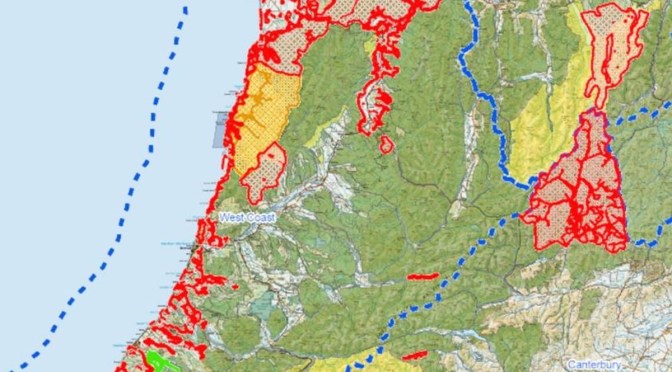
“Admin are extremely concerned for public health and safety now that almost the entire West Coast of South Island is currently covered in deadly pesticides – mainly 1080, and also cyanide and others poisons, aerial and distributed by hand. From Kohaihai Bluff, North of Oparara River, all the way down to Wanganui Bluff, near Poerua River, around Hari Hari – there are multiple poison operations in and around the coasts, rivers, estuaries and forests. And astonishingly, even more are planned. This presents a high risk of contamination of drinking water and our food chains. As New Zealanders travel around our country during the Christmas holidays, often for the first time – we URGE people to be aware, to take precautions and to share your knowledge of the pesticide risks with others. Remember: 1080 poison has NO ANTIDOTE. If you have internet coverage where you are – much of the West Coast sadly does not – check Dept of Conservation Pesticide Summary interactive maps, alongside the regional councils and Ospri websites. If you do not have access to the internet, please visit your local council and DoC office (if they are open to the public) and insist that the staff find out whether an area is contaminated. Do NOT rely on signage as this is often missing, unhelpful and/or illegible.”
____________________________________________________________________________

Below is an image of the areas being poisoned. To find the interactive map at DoC’s website go to this link: https://www.doc.govt.nz/nature/pests-and-threats/pesticide-summaries/ (Once you have selected the appropriate area, you will be asked to tick the ‘agree’ box bottom right hand corner before accessing the map).

Keep NZ families environmentally safe: please Sign a petition to stop councils spraying glyphosate

This petition is from Organic NZ. Councils NZ wide are spraying the probable carcinogen (IARC) glyphosate. For further info on this widely used toxic herbicide see our glyphosate pages here (not the sub tabs also for videos etc.) EWR
________________________________________________________________________

organicnz.org.nz

Soil & Health launches glyphosate campaign

posted in: Campaigns, Glyphosate |

The Soil and Health Association are calling for councils to stop spraying glyphosate to keep New Zealand families safe.

‘The public increasingly understand that it is no longer acceptable to be exposed to glyphosate-based herbicides,’ says Soil & Health spokesperson Jodie Bruning,

We are working with US based Non-Toxic Neighbourhoods who have had significant success helping councils transition affordably to non-toxic urban management.

The importance of glyphosate science

Public health scientists think it is bizarre that the findings of the most prestigious cancer agency in the world were rejected by New Zealand’s Environmental Protection Authority (the EPA).

The International Agency for Research on Cancer (IARC) determined that glyphosate probably causes cancer in humans. The IARC also found that glyphosate (and it’s commercial formulations) definitely causes cancer in laboratory animals – placing our pets at risk too.

 In 2016 the EPA produced what scientists consider to be a flawed cancer review to discredit the findings of the EPA’s own cancer authority.  New Zealand professors and scientists remain ‘mystified’ and have spoken repeatedly (here and here and here) about the EPA’s frozen stance on glyphosate. An Official Information [ENQ-35127-N5J6C7]request has found that the EPA has never conducted a formal risk assessment of glyphosate or the commercial formulation.

Glyphosate is not just a cancer risk. Scientific studies show that glyphosate-based herbicides, including Roundup, may not only probably cause cancer but cause oxidative stress and disrupt endocrine system function which can set the stage for disease and delays.

Chemical companies are paying out for the damage caused

Following the IARC decision, cases in the U.S. have awarded the claimants damages against Monsanto (since 2018, owned by Bayer). The court cases uncovered evidence that showed how Monsanto took action to limit and distort public knowledge. Punitive damages were awarded for ‘reprehensible’ conduct. The jury trials are now under appeal with Bayer claiming the verdict of regulators across the world upholds Bayer’s stance. Unfortunately, as scientists have illustrated (in Europe and the USA), regulatory agencies relied on ghostwritten industry studies and ignored data that the IARC considered important.

In June 2020 Bayer proposed a settlement of USD$8.8-10.9 billion to settle over 125,000 U.S. lawsuits to resolve Roundup litigation. Bayer has framed the complex settlement proposal as an end to ‘uncertainty’. The proposal contained no admission that glyphosate-based herbicides caused the cancer claimed by cancer sufferers, many former farmers, who see the proposal as a slap in the face. The settlement proposal may restrict future claimants from a jury trial. New Zealand doesn’t face the same court cases here because the ACC covers such cases as accidents.

Why isn’t New Zealand taking action?

Ignoring the calls of scientists, New Zealand councils refer to the New Zealand Environmental Protection Authority (NZ EPA) to claim that glyphosate is a ‘low toxicity herbicide’. The hazard rating given by the NZ EPA provides a legal rationale that it is safe enough to spray in public places. This is wrong!

It is evident from operations in Auckland and Christchurch that councils and contractors need to make a lot of changes in order to shift away from glyphosate dependency – like any addiction – shifting to a new mindset isn’t always easy. Much of the management and contract negotiation are out of the public eye – so it is difficult for the public to understand what is going on. Councils don’t appear to be undertaking properly accountable trials with new technologies and recording and documenting trial methods, how they cope with and reduce over time the weed seed banks, and making this information public. We know non-toxic alternatives and management regimes can never neatly replace toxic chemical use. Shift away from addiction requires a change in mindset and operations.

We also understand that councils struggle to adopt the precautionary principle. This would help deal with uncertainty (which is always present). Councils may not be comfortable weighing the risk to families, and particularly babies and children, with the risk of complaints from irate rate-payers or staff worried about the stress on physical assets. These are value-based decisions, and are an important part of making any decision to protect health or the environment.

SIGN THE PETITION AT THE ORGANIC NZ PAGE, LINK BELOW:

LINK: https://organicnz.org.nz/sign-the-glyphosate-petition-here/?fbclid=IwAR2vNmOE_as_evVdbr685aOSvQThIHtVPMfPJ41b-A_I_2ZPxcVyE2XklqE

Photo: organic.org.nz

NZ Activist Awards 2020 “Levelling The Playing Field”

“For too long we have seen government, corporate and Big Pharma sponsorship of the very issues against human rights that we are fighting against. New Zealand is promoted as a clean green country, but we all know it is very far from that!”


22 Feb 2020

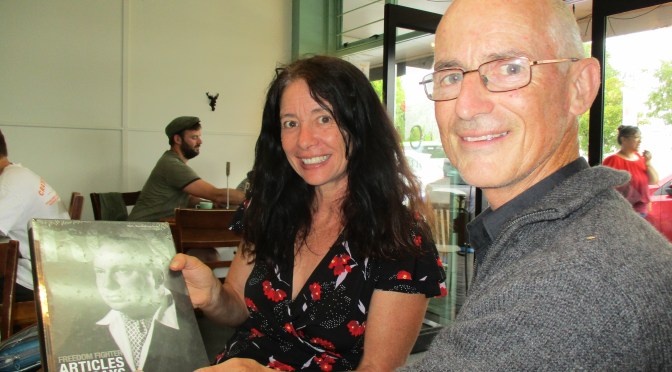
The Levelling the Playing Field NZ Activist of the Year Awards 2020 season today began with a presentation at Lake Taupo.

Prominent Environmental Lawyer and Co-Leader of the Outdoor Party, Sue Grey was the first recipient of the award for 2020.

Sue is currently touring the country raising awareness of the dangers of 5G technology with councils and has also worked to expose the dangers of 1080 poisoning of the environment by Department of Conservation.

nigel and sue awards
Sue Grey receiving her award in Taupo from the organizer, Nigel Gray

The NZ Activist Awards began last year when Human Rights Activist Nigel Gray saw a need to, as he puts it “level the playing field”.

“For too long we have seen government, corporate and Big Pharma sponsorship of the very issues against human rights that we are fighting against. New Zealand is promoted as a clean green country, but we all know it is very far from that!” Nigel explained.

This year we have expanded the award from just one presentation last year to twenty four separate presentations so this is just the beginning!” To qualify, Activists must keep within the law when they speak out, but this award applies to activism of all kinds whether environmental, human rights or against some of the more barbaric practices such as electro-convulsive shock or poisoning our forests. It is intended that these awards expand each year to where they will be the most prestigious awards in New Zealand to receive.

Very often Activists have been labelled and slandered however these are out-standing citizens who fight to maintain some level of morality, some decency and some hope for a brighter future for all of us. These are people we should all be proud of, and this award is a validation of their effort to make the country a better place.

The award presented the hardcover book “Freedom Fighter ARTICLES AND ESSAYS” from the L Ron Hubbard Series.

Nigel Gray gained some notoriety for his prediction of the Kaikoura earthquake in November 14th 2016, eight days before it happened.

lake taupo nigel
Lake Taupo, Location of NZ Activist Awards 2020 Presentation

Selling our water – 427 million litres at $943 (Māori Television)

From teaomaorinews 

A South Island iwi hope their freshwater spring will gain environmental protection after a local council granted a water bottling company consent to take 208 million litres a year for $470.

Already in the Tasman district, four water bottling companies have consent to take water from the area – at more than 427 million litres at a cost of $943.

In 2005, Tasman District Council gave Kahurangi Virgin Water Ltd consent to extract water near Te Waikoropupu Springs, which has one of the clearest freshwater in the world.

The company has yet to take any water from the sacred site and have applied for an extension. Local iwi Ngāti Tama was initially involved with the original resource consent but were not consulted about the extension and took the council to the High Court.

Ngāti Tama spokesperson Margaret Little says the springs need to be preserved and their court action was funded by the iwi’s Treaty settlement.

“The settlement has given us the financial backing to take them to court whereas before it would have been really difficult,” Little says.

Earlier this month, the Government announced it will consider giving the springs the highest level of conservation protection and grant it the same status as a national park.

Ngāti Tama says commercial demands from irrigation, farming and consent to take water from the Waikoropupu catchment are putting the resource under threat.

Andrew Yuill a local scientist and co-applicant along with Ngāti Tama say Te Waikoropupu is worth protecting for all New Zealanders.

“The clarity of the water was measured at a sight path of 63 metres which is almost unheard of. It has been a taonga for millions of years. It has its own life-force its own mauri and it is something which I respect greatly.”

Community Relations Manager Chris Choat from the Tasman District Council says the decision from the High Court means the council will now have to reconsider Kahurangi Virgin Water Limited’s application for a resource consent to draw water near the Te Waikoropupu Springs.

Below is a breakdown of how much water each company can take and the annual cost. Information provided by Tasman District Council.

New Zealand Mineral Water

  • Consent to take, 18 million litres per year at a cost of $190. B Reilly
  • Consent to take, 331,240,000 litres per year at a cost of $370. Johnstone
  • Consent to take – 76,388,000 litres per year at a cost of $190. Thompson
  • Consent to take – 1,820,000 litres per year at a cost of $193.

https://teaomaori.news/native-affairs–selling-our-water-427-million-litres-943?fbclid=IwAR28MV8EahBUba6RZZXPRggDZu0x2lg9IHucqI5neJysbFReul0wehO11n8


Photo: Te Waikoropupu Springs, NZ, Māori Television screenshot

Has even one MP asked why DoC staff feel so threatened they need $11 million of public money to protect them against the NZ public? (Sue Grey, Lawyer)

From Sue Grey, LLB(Hons), BSc (Biochemistry and Microbiology), RSH Dip PHI

A few questions we need to be asking …

“I wonder if even one MP asked why DoC staff feel so threatened that they need $11 million of public money to protect their staff against the NZ public they are supposed to represent when New Zealanders generally love the Outdoors?

https://www.rnz.co.nz/news/national/391220/department-of-conservation-gets-11m-to-protect-staff-from-anti-1080-protesters

I wonder why they went ahead anyway and gave them more of our money to build more barriers between us, and more money to spread yet more poison – despite all the evidence of cruelty, breaches of the Wildlife and Animal Welfare Act and that it is not achieving their stated objective? If poison is the answer, surely we are asking the wrong question. .


http://suegrey.co.nz/index.php/2019/11/03/i-wonder/

Did you know NZ is signed on to a UN plan that requires among other things high density (forced) urbanisation, a reduction in private property rights & depopulation?

“For New Zealanders, Agenda 21 means the complete destruction of a way of life that most people see as positive.”

Agenda 21 and the Draft NZ Biodiversity Strategy

From stovouno.org

By Barbara McKenzie

The current New Zealand government has produced a raft of measures to implement the United Nations Agenda 21, including the draft Biodiversity Strategy, the Zero Carbon Bill, the Oil and Exploration Bill, and the One Billion Trees Fund.

AGENDA 21

In 1992 Agenda 21 was adopted in Rio de Janeiro at the UN Earth Summit Conference on Environment and Development. It is defined by the United Nations as a ‘comprehensive plan for action to be taken globally, nationally, and locally by organizations of the United Nations system, governments and major groups in every area in which humans impact the environment.’ New Zealand is signatory to this (ostensibly non-binding) international treaty with over 100 other countries.

‘The UN’s Agenda 21 is definitely comprehensive and global — breathtakingly so. Agenda 21 proposes a global regime that will monitor, oversee, and strictly regulate our planet’s oceans, lakes, streams, rivers, aquifers, sea beds, coastlands, wetlands, forests, jungles, grasslands, farmland, deserts, tundra, and mountains. It even has a whole section on regulating and “protecting” the atmosphere. It proposes plans for cities, towns, suburbs, villages, and rural areas. It envisions a global scheme for healthcare, education, nutrition, agriculture, labor, production, and consumption — in short, everything; there is nothing on, in, over, or under the Earth that doesn’t fall within the purview of some part of Agenda 21.’ (William Jasper, Your Hometown and the United Nations Agenda 21)

Agenda 21 is the culmination and ultimate expression of a number of UN Conferences and UN-drafted pacts and declarations to do with the place of humanity in the environment, and the management of humanity overall.  Almost all of these have been signed by New Zealand.  They  are dominated by two assumed, overriding and non-negotiable values – debate of the first never arises, and of the second is never permitted:

  • The precedence of ‘biodiversity’ over all other rights, even of human life;
  • The non-negotiability of the catastrophic anthropogenic global warming narrative.

The United Nations vision includes the following priorities:

  • High-density (forced) urbanisation
  • Reduction or elimination of private property rights
  • Reduction of population

See: A Critical Analysis of Agenda 21 – United Nations Program of Action 

or in brief: Agenda 21 in One Easy Lesson

The American Wildlands Project

The American Wildlands Project, (now calling itself the Wildlands Network) is an implementation of UN policies on biodiversity and human habitat. It proposes to set up to one-half of America into core wilderness reserves and interconnecting corridors, all surrounded by interconnecting buffer zones. No human activity would be permitted in the core reserves and corridors, and only highly regulated activity would be permitted in the buffer zones. Human settlement would be in high density cities.  The purpose of the corridors is to allow large animals like bison to roam free, including migration across the continent.

Ratification of the United Nations Convention of Biological Diversity was defeated in the US Senate, when the concept of the Wildlands Project formed the bsis for the convention.   A number of American states have taken steps to ban Agenda 21 and the local body network ICLEI, specifically set up to ensure implementation of Agenda 21 (most cities in New Zealand belong to ICLEI).

The principles of Agenda 21 and the Wildlands Project are being enacted by Local Bodies and the Environmental Protection Agency (EPA). People are jailed and/or heavily fined for interfering with the slightest trickle of water on their property; small towns are startled to find high-rise, high density developments out of all keeping approved; farmers and other rural dwellers are being forced off their land through taxation or zoning.  Powers of eminent domain have been extended to allow councils to agree with developers to confiscate private land, in order to build pack and stack subdivisions, also used to take land for projects such as bike paths.

‘Individual rights will have to take a back seat to the collective.’ Harvey Ruvin, Vice Chairman, ICLEI. The Wildlands Project

Note: the term Agenda 21 is no longer used by the UN and governments, because of the negative connotations it has acquired. Instead they talk of sustainability and resilience: the UN’s Sustainable Development Goals are in fact Agenda 21 goals.

See also: Michael Coffman, Background to the Wildlands Project, and a couple of horror stories

New Zealand

New Zealand has had a policy of preserving native forest, and protecting native fauna, and generally caring for the environment, independent of the United Nation.  About 30% of New Zealand is forested, on public or private land – this is far more than most industrialised countries.  National parks also include large tracts of non-forested land which are protected from development. Cities have extensive reserves.  Many suburban sections in hilly towns like Wellington, even modest ones,  have small tracts of native bush.

New Zealanders have a very close physical connection with nature and the outdoors, perhaps through pursuits like tramping, skiing, beach activities; for many people this connection is largely through time spent in their own backyards. Most New Zealanders live in houses of one or two stories with a garden, usually consisting of lawns, flowers, shrubs.

The effect of the implementation of Agenda 21 on lifestyle will be far more dramatic  in New Zealand than in Turkey, for example, where even quite small towns consist of apartment buildings. It will also entail the loss of the eco-system provided by the suburban and small-town lifestyle.

For New Zealanders, Agenda 21 means the complete destruction of a way of life that most people see as positive.

READ MORE

https://stovouno.org/2019/09/21/agenda-21-and-the-draft-nz-biodiversity-strategy/


Dead Bird Nests Contain 36 Different Pesticides, Including DDT

In ‘clean green’ NZ (not) of course our authorities can kill off 10,000 birds in one drop with 1080 poison (link below article), and believe it or not, they are ‘saving our birds’. EWR

From achnews.org

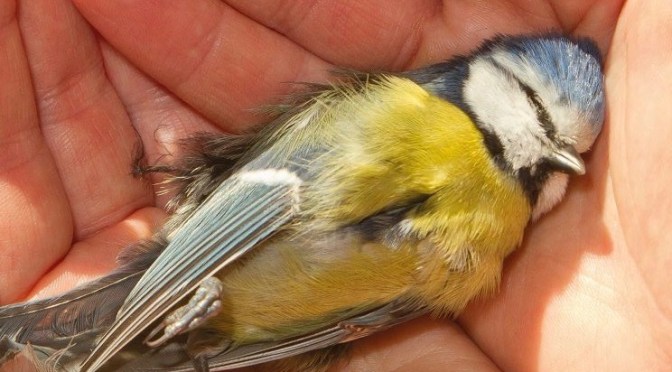
In Brussels and Florence, people began to express concern over the rising finds of dead newborn birds (tits) in their nests.

When these concerned people notified the bird conservation association Vogelbescherming Vlaanderen and the ecological gardening association Velt, they began a crowd-funded investigation. Over 1000 people sent in dead tits and nests, which were analyzed and a report was published with shocking results.

“We found a total of 36 different pesticides in 95 mesh nests,” Geert Gommers, a pesticide expert said in a statement.

The birds’ nests revealed traces of 36 different fungicides, herbicides, insecticides and biocides. The alarm came when they found traces of DDT, an insecticide banned since 1974, in 89 of the 95 nests examined.

“That DDT is still present in our environment after all this time is worrying,” the statement read.

READ MORE

(NOTE there is a link to the report in the article however the report is not in English, you may have to use google translate):

http://achnews.org/2019/09/16/dead-bird-nests-contain-36-different-pesticides-including-ddt/?fbclid=IwAR2h5uHa2HsF4FW1Y57czEpwjFVo-1oaAKSxNuDYjgzgJNqgouZCUgNfzc4

RELATED:  A NZ LANDCARE SCIENTIST ESTIMATES THE LIKELY DEATH TOLL FROM AN OTAGO 1080 DROP IN 2002 TO BE AROUND 10,000 BIRDS … https://envirowatchrangitikei.wordpress.com/2018/10/14/a-nz-landcare-scientist-estimates-the-likely-death-toll-from-an-otago-1080-drop-in-2002-to-be-around-10000-birds/


Photo: Report at https://drive.google.com/file/d/1yYwh7Av-AZk9uDjDUZdbiw328Cl7u8d2/view

Glyphosate Herbicides Now Banned or Restricted in 18 Countries Worldwide – Sustainable Pulse Research

Following the recent bans on the use of glyphosate-based herbicides by cities and institutions in the U.S., including Key West, Los Angeles, the University of California and Miami, Sustainable Pulse decided to research which countries around the world have banned or restricted the use of the world’s most used herbicide.

This research has led to the discovery that there is a growing swell of government level support worldwide for bans on glyphosate-based herbicides for both health and environmental reasons.

17 countries have now banned or restricted the use of this carcinogenic herbicide.

Previous research by Sustainable Pulse on the number of countries that have banned GM Crops has reached millions of people and we look forward to our latest research reaching an even wider audience. Sustainable Pulse welcomes additions or edits to the list below from readers and experts from around the Globe.

Africa:

Malawi: Malawi’s Ministry of Agriculture, Irrigation and Water Development announced the suspension of import permits for glyphosate in April 2019.

Asia:

Vietnam: Vietnam announced that it banned the import of all glyphosate-based herbicides with in March 2019 following a cancer trial verdict from San Francisco

Sri Lanka: In 2015 a full import ban on all glyphosate-based herbicides was put in place by the then newly elected President Maithripala Sirisena. This ban was partly lifted in July 2018 but only for use on tea and rubber plantations.

READ MORE

https://sustainablepulse.com/2019/05/28/glyphosate-herbicides-now-banned-or-restricted-in-17-countries-worldwide-sustainable-pulse-research/#.XXsuGejVKdE

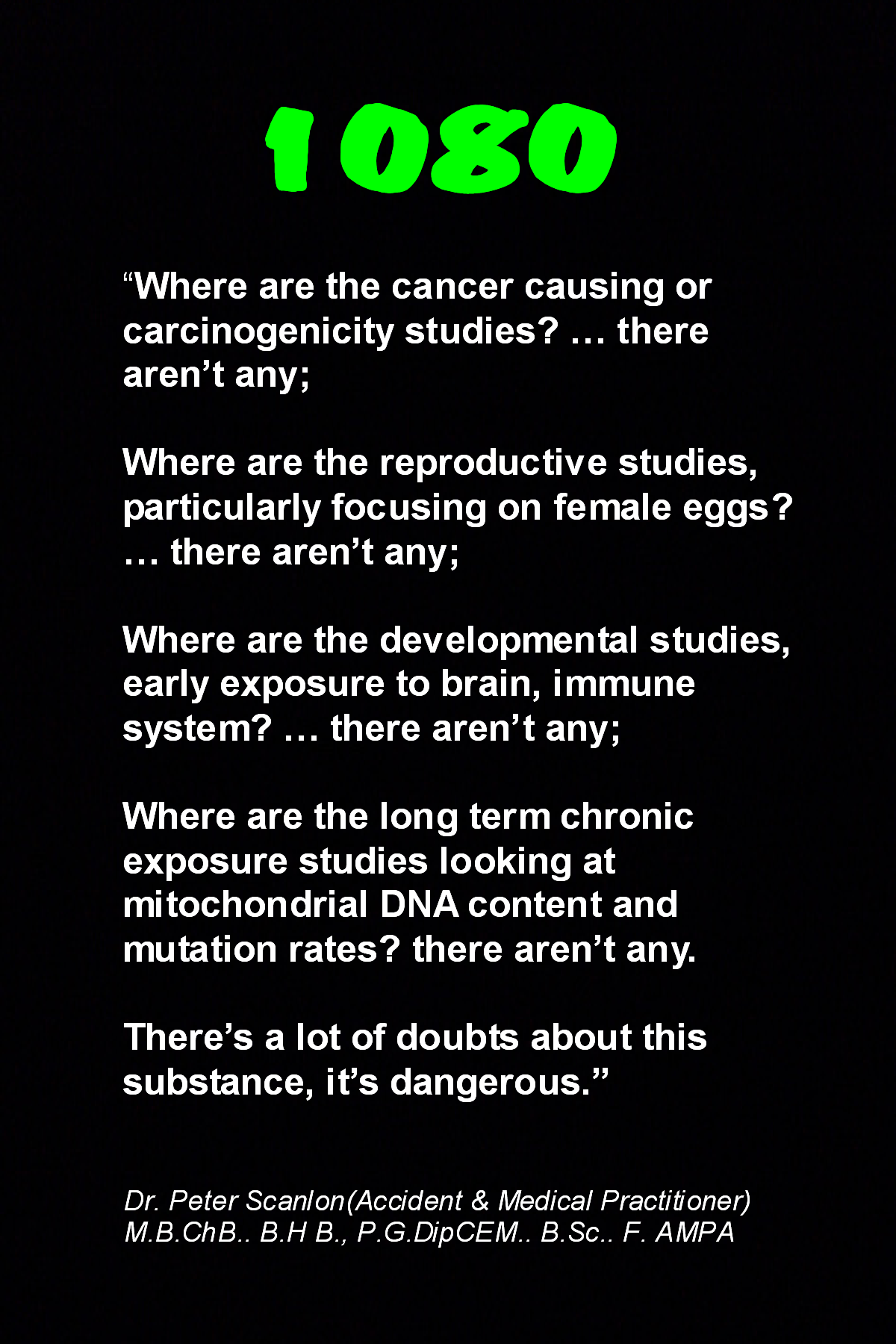
1080 – where are the cancer causing or carcinogenicity studies?

For further info and to hear the late Dr Scanlon discussing the issues highlighted below go to this article: IN 2009 TWO MIDWIVES URGED THEIR PREGNANT PATIENTS TO LEAVE TOWN BEFORE A 1080 DROP – HEAR THE LATE DR SCANLON SPEAK ON THE LACK OF RESEARCH ON THE POTENTIAL RISKS TO THE UNBORN

dr scanlon 1080 .png

Plans for 34,500 new homes at Pukekohe… looking like Agenda 21/30 pack & stack housing

A NZ Herald article tells us we have 34,500 homes being built for folk in Pukekohe & Drury over the next 30 years. From what I am seeing it looks like typical Agenda 21/30 pack and stack housing, packing you into the A21 Smart Cities (see also the NZ page). To learn more about those watch the video below where in the US the plan is a bit further along. In it you will see that some will be ready wired to the smart grid. (A brief update at 1/6/20 I was told recently of a new house, part of new state house rebuilds … where the house will not function apart from wifi … in the event of a power outage the tenant will not be able to exit their garage). With 5G  (further video at link) this all makes sense. These corporates have deprived New Zealanders of a great proportion of our once state-owned asset, State housing, bulldozing them still as we speak. Key sold off some 21% of our state housing I heard recently, see the article on the land banking that went on in Tamaki and elsewhere under his watch. And so with the real estate under them gone for a song to the property developers via their public private partnerships (listen to Joan Veon at the link, see this NZ link also), the homeless, victims of our manufactured housing crisis are currently sleeping in cars, garages, sheds you name it, while the current NZ corporation parading as a government prepares for you the compact city living apartments that superficially may look great but be aware they have a different agenda in mind. Watch the video of one of NZ’s developers who was all but gifted the Horowhenua pensioner housing with property thrown in courtesy of the local council. He was speaking in a NZ Herald interview on one of his high rise housing developments on Auckland’s waterfront. In it he speaks about garages under the apartments. The apartments are safe he said because they have 24/7 surveillance, his words, and when questioned about car spaces he replied ‘people are not ready yet to be car less’ so garages are included at this stage. All looks pretty benign but be aware they envision you will be on bicycles and out of cars (notice all the cycle ways … they’re not really about your health folks). They of course will remain in their cars, same as they remain in their private jets to attend those scam climate conventions or their G7 summits in top class locations. They only pay lip service to the great ideas they are foisting upon you, it is you who won’t be.

READ THE HERALD ARTICLE below about Drury & Pukekohe plans

https://www.nzherald.co.nz/business/news/article.cfm?c_id=3&objectid=12256215

The NZ Herald interview with NZ property developer & a car less future:

https://www.nzherald.co.nz/business/news/video.cfm?c_id=1503079&gal_cid=1503079&gallery_id=149812

RELATED
THE ‘BENEFITS OF CLOSER LIVING FOR KIWI HOMEBUYERS’, A GROWING TREND THAT HAS ITS ORIGINS IN UN AGENDA 21/30


Below are two videos that show you the pack and stack housing in the US where it is being rolled out with vigor.

https://www.youtube.com/watch?v=GhukioARSuM

Published on Jul 7, 2018

SUBSCRIBED 89K


Here are links to many other videos on the stack and pack topic
https://www.youtube.com/results?search_query=pack+n+stack+smart+housing+agenda+21

NOTE the images below and the similarities of NZ’s plan (drawing) to photos of those being built in the US & elsewhere. The Agenda 21 plan is to eventually eliminate private property. And particularly the single family homes. So in the videos you will see single family homes with these huge complexes right adjacent and towering over them. The plan for these apartment blocks is that they will become state owned. Socialist state in plain sight if you study it carefully. (Watch the videos, read the info. There is a series of basic info at this link ).

Header Photo:  Auckland Council

Other photos: screen shots from the videos featured

The Agenda 21 Course – Lesson 2, the basics

The second video in the Agenda 21 Course from the site of that name. Discovering the nuts and bolts of the the globalist plan to create a world government. See previous videos on topic at the Agenda 21/30 page, and/or at the link below

Lesson Two: Getting America to Buy the Scam Called Agenda 21

Lesson 2: Getting America to Buy the Scam Called Agenda 21

sunflower fieldThis is the second lesson in a series of ten lessons on Agenda 21, commonly known as Sustainable Development. Today you will learn how…

Indoctrination is used to soften up the American citizen to make them receptive to the transformation of a free world into a socialist, sustainable development world. Think of all the commercial and nature shows you have seen pushing the green agenda; think of all the articles our biased media create pushing the green agenda, even various churches push the 3 E’s.

READ MORE

http://www.agenda21course.com/lesson-2-get

Dr Samuel Epstein interviewed by Dr Mercola on cancer prevention

An interview with Dr Samuel Epstein on cancer prevention. I was first alerted to this Dr over ten years ago in my earlier research, having come across his book ‘The Politics of Cancer’. Very interesting man who warned of all the environmental factors influencing our chances of developing cancer … not listened to of course as it is not industry / profit friendly advice. Educate yourself however while you still can.

https://www.youtube.com/watch?list=PL5DE91521EDE9ECFD&time_continue=31&v=KCqPRY1mHkU

Published on Apr 14, 2010

http://articles.mercola.com/sites/art… Natural health physician and Mercola.com founder Dr. Joseph Mercola and Dr. Samuel Epstein discuss about several pressing health dangers that receive little attention, including: Nanoparticles used in cosmetics, rBGH milk, Meats, The lack of prevention in the new Obama cancer plan. Part 1

‘Biocidal Aotearoa’ – Hear an interview with NZ MD Fiona McQueen on 1080 (On the Brink Radio)

An excellent and informative interview. Fiona McQueen (MBChB, MD, FRACP) wrote The Quiet Forest, The Case Against Aerial 1080 in 2017. She graduated from the University of Otago in Medicine in 1980 and has worked as a consultant rheumatologist within the NZ public health system for the last 26 years. She completed an MD in Immunology in 1996 and was made Professor of Rheumatology in 2009. She has had a distinguished international academic career and has been active in research and teaching. She has had a life-long passion for tramping and experiencing the NZ bush, especially the alpine regions of the South Island. This has led to a deep interest in conservation. (Information cited from her book).

To listen click on the orange button below.

“NZ’s Predator Free 2050 program .. not .. well informed by scientific knowledge or conservation best practice” say two conservation academics

NZ’s very controversial Predator Free 2050 program is driven by “international agreements and a global agenda to purge all non native species of animals and plants around the world”.

A paper published by Professor Wayne Linklater and Dr Jamie Steer (July 2018) in Conservation Letters: A Journal of the Society for Conservation Biology  (cited at the Wiley Online Library*) concludes that the Government’s Predator Free 2050 program “has not been well informed by scientific knowledge or conservation best practice. It also misdirects attention” they say “from more fundamental and direct threats to biodiversity protection and recovery”.

Associate Professor Wayne Linklater from Victoria University’s School of Biological Sciences, considered by many to be the “founder of modern pest management in New Zealand” was recently awarded the 2018 Peter Nelson Memorial Trophy by New Zealand’s Biosecurity Institute in recognition of his research in pest management.

Dr Jamie Steer is a  Senior Biodiversity Advisor for Greater Wellington Regional Council. He has a Doctor of Philosophy in Environmental Science from the University of Auckland, a Master of Science in Ecology and Biodiversity, and a Bachelor of Science in Biology. He is a former member of the Ecological Society of New Zealand and a current Associate of the New Zealand Centre for Human-Animal Studies.

I’m sure you will agree that these two academics are well qualified to be commenting on NZ’s Predator Free agenda. DoC have purportedly discussed with them the concerns outlined in their research paper, however DoC is undeterred. Bear in mind they are tasked with selling to the public a global agenda signed up to historically to rid every nation in the world of any and all non native species, plant and animal.

You can read the research paper at the link:

Predator Free 2050: A flawed conservation policy displaces higher priorities and better, evidence‐based alternatives

Abstract

New Zealand’s policy to exterminate five introduced predators by 2050 is well‐meant but warrants critique and comparison against alternatives. The goal is unachievable with current or near‐future technologies and resources. Its effects on ecosystems and 26 other mammalian predators and herbivores will be complex. Some negative outcomes are likely. Predators are not always and everywhere the largest impact on biodiversity. Lower intensity predator suppression, habitat protection and restoration, and prey refugia will sometimes better support threatened biodiversity.

READ THE ENTIRE PAPER AT THE SOURCE:

https://onlinelibrary.wiley.com/doi/full/10.1111/conl.12593


*”Conservation Letters is a scientific journal publishing empirical and theoretical research with significant implications for the conservation of biological diversity. The journal welcomes submissions across the biological and social sciences – especially interdisciplinary submissions – that advance pragmatic conservation goals as well as scientific understanding”.  SOURCE


“The most toxic chemical we’ve ever had in our environment” – Dr Don Huber

From greenmedinfo.com

When one of our world renowned professors uses the term “horrifying” in speaking about the widespread use of a chemical in our food supply, the prudent person would sit up and take notice.

That’s exactly the word Dr. Don Huber used. But are we listening? Calling glyphosate“the most toxic chemical we’ve ever had in our environment, he says that “future historians may well look back upon our time and write, not about how many pounds of pesticides we did or did not apply, but about how willing we were to sacrifice our children and jeopardize future generations for the massive experiment we call genetic engineering that is based on failed promises and flawed science, just to benefit the bottom line of a commercial enterprise.”

http://www.greenmedinfo.com/blog/roundup-herbicide-most-toxic-chemical-environment

Photo: EnvirowatchRangitikei ©

Six EU Countries Call for Glyphosate Exit Plan: New Carcinogenicity Study and Focus on Alternatives

From sustainablepulse.com

Sustainable Pulse has been made aware of a letter sent on December 19 by the Ministers of Environment or Agriculture of France, Belgium, Luxembourg, Slovenia, Malta and Greece to the European Commission calling for a new study on the carcinogenic potential of glyphosate and also a study to identify alternatives to the World’s most used herbicide.

The letter was sent to the European Commission by Nicolas Hulot, Minister for ecologic and inclusive transition (France), Denis Ducarme, Federal Minister for Middle classes, SMEs, Agriculture and Social inclusion (Belgium) Carole Dieschbourg, Minister for the Environment (Luxemburg) Josè A. Herrera, Minister for the Environment (Malta) Dejan Zidan, Minister for Agriculture (Slovenia) and Evangelos Apostolo, Minister of Agriculture (Greece).

The letter states;

“The renewal of the authorization of glyphosate for 5 years was voted during the appeal committee of November 27th. While taking note of this vote, we, Ministers of Environment or Agriculture of France, Belgium, Luxembourg, Slovenia, Malta and Greece underline our concerns about the risks associated with the use of products containing this substance. As a matter of fact, a European citizen’s initiative signed by more than one million people called for a ban of this substance.

The European Parliament has expressed its support for the adoption of necessary measures to phase out the active substance glyphosate in the European Union by 15 December 2022 at the latest. The European Parliament also asked for the extension of specific restrictions of use of glyphosate for weeding and pre-harvest desiccation. We wish to recall that our countries are in favor of the ban of these uses, which are the main sources of residues that can be found in food.

READ MORE

https://sustainablepulse.com/2017/12/28/six-european-countries-call-for-glyphosate-exit-plan-new-carcinogenicity-study-and-focus-on-alternatives/#.WkVpdVWWbIU

Fukushima– the untouchable eco-apocalypse no one is talking about

This article is from 2016 but nothing has changed in terms of the general silence…

From wakingtimes.com

The most important ecological crisis of the world has ever seen has been underway since March 11th, 2011, yet there is nary a mention of it in the corporate media, and no political body in the world is championing its resolution.

Widespread Denial and Willful Ignorance

The media, politicians and the world at large seem to be engaging in extreme denial regarding Fukushima. A survey of mainstream media coverage of the fallout of this event reveals the trend of covering this story as a human interest affair, not as the immediate threat it truly is.

The effects on nature are already being seen, yet even among the environmentalist factions of media, there is strong denial of the damage already done and of what is to come as the crisis approaches its sixth year. Some 300 tons of radioactive water are dumped into the Pacific Ocean each day, and signs are showing that this catastrophe is gravely affecting sea-life and wildlife in and around the Pacific.

The FDA maintains that there is no  evidence of contamination by Fukushima borne radionuclides in the American food supply, yet this opinion is contested by some independent researchers. A report by the Fairewinds Energy Education says that cancer is on the rise in areas around the failed power plant, and that millions will die in coming years as a result.

“[T]he second report received from Japan proves that the incidence of thyroid cancer is approximately 230 times higher than normal in Fukushima Prefecture… So what’s the bottom line? The cancers already occurring in Japan are just the tip of the iceberg. I’m sorry to say that the worst is yet to come.” [Source]

http://www.wakingtimes.com/2016/10/24/fukushima-untouchable-eco-apocalypse-no-one-talking/

A pollution problem you probably weren’t aware of – concern expressed by an Akaroa resident, a problem dubbed an “international embarrassment” by Victoria University Law Lecturer

Here is a topic that’s slipped somewhat under the radar and is affecting beautiful Akaroa in the South Island … the pollution from cruise ships. An Akaroa reader affected by this issue to the extent they sometimes wear a mask, contacted me recently saying they’d tried both government and media channels with a largely ‘not interested’ response. Turns out the issue’s been written about by a University lecturer Dr Bevan Marten (link below the reader’s piece) who says:

New Zealand’s lack of action over air pollution from shipping is an international embarrassment… Dr Bevan Marten

Copy of WP_20171120_004
Cruise ships in Akaroa’s harbour with engines pumping all day [Photo supplied]
So from Akaroa:

It is with a heavy heart I farewell the winter … cold, clear, cleansing southerly winds blowing through the harbour heads straight from the Antarctic.

Today, as dawn breaks , the onslaught of mighty tourism blows through the heads. Just one of 80 ships to visit this season.

Another season of poisonous sulphurous emissions … 12 hours day … often 2 or 3 ships per day … 7am to 7pm.

The air is sharp … stings the throat … wear a mask outside and keep windows closed.

Because of the shallowness of the harbour these floating cities moor out in the open harbour. The engines are pumping all day, swinging 360 degrees on their mooring to stay facing the prevailing winds.

The sediment disturbance turns the harbour a milky grey.

What does this do to the Hector dolphins, the paua beds?

Atmospheric pollution. Ocean pollution.

Seven pm and the engines ramp up for departure. The smoke spreads, the sediment spreads. The bilge water pumps out into our harbour.

Gone … ’til tomorrow. Here til March 2018…

Our council bans woodburners in Chch for home heating. Our council plans to have electric cars. Why bother?

Six months of poison pumping into our air negates all such clever initiatives.

24282037_1655573811159365_1908002011_n
Swinging 360 degrees on their mooring what are these cruise ships doing to the marine life – the hector dolphins and paua? [Photo: supplied]


NZ’s ignoring dark cruise ship undercurrent

Dr Bevan Marten is a Senior Lecturer in Victoria University of Wellington’s School of Law, specialising in maritime and transport law. He is scathing about the damage those gleaming white cruise ships are doing to the environment.

New Zealand’s lack of action over air pollution from shipping is an international embarrassment. This is true of both the country’s commitment to addressing global climate change and the safeguarding of local air quality. Walking along Auckland’s waterfront, that gleaming white cruise ship may look spotless but the fumes coming out of its funnel might be anything but. It’s time to tell the Government to get serious.

Larger ships mostly burn “bunker” fuel, a grade of oil closer to Marmite than anything the local service station will pour you. It’s also a key source of pollutants such as sulphur dioxides, nitrogen oxides and particulate matter.

Sulphur dioxide in particular creates a risk to human health, despite not having the telltale smog we associate with the problems faced in cities like Beijing. And while we have largely removed sulphur dioxide emissions from road vehicles and some industries, shipping remains a major source of this pollutant.

The global community has long acknowledged this issue. In 1997, countries agreed to Annex VI of the International Convention on the Prevention of Pollution from Ships (known as MARPOL, short for marine pollution). In addition to rules improving ship engine efficiency, this included a promise to reduce the maximum sulphur content of ships’ fuel to 3.5 percent in 2012 and 0.5 percent in 2020. Between 2006 and 2014, special emission control areas covering much of Northern Europe and North America entered into force, bringing sulphur content there down to just 0.1 percent.

Although 86 other countries are party to the Annex VI agreement, New Zealand has never signed up. This makes us a real outlier internationally. The only other OECD countries in this position are Iceland, Israel and Mexico. The only other countries in the South Pacific Commission to ignore it are Fiji and the Solomon Islands.

READ MORE

https://www.newsroom.co.nz/@future-learning/2017/03/12/8540/cruise-ships-leave-dark-wake


Developments in Chemical Biotechnology Continue to Threaten Environmental and Human Health

Following our recent approval in clean green, GE free Enzed of GM potato crops this is a bit of a farce given Helen Clarke (Labour note for those who are rejoicing at the other wing of the same bird that’s currently now in) approved the growing to harvest of GM corn in 2000 or thereabouts. It was uncovered, having already been planted, then ordered to be pulled up by Clarke who then flip flopped after a bit of corporate persuasion. So here it is again, some 17 odd years later … yes it is farcical. They’ve been tampering with the genes of all sorts including animals, all along. This kind of food has already been independently researched & found seriously wanting. Eat it at your own risk I would say. EnvirowatchRangitikei

Story at-a-glance

  • Corporate GMO propaganda is hitting the big screen. Forty-five scientists, academics and writers have signed a statement calling the food industry-funded film, “Food Evolution,” a piece of corporate propaganda that misrepresents the GMO issue
  • EPA has approved RNAi corn for human consumption, which is based on “gene silencing” technology. Research suggests RNA may have the ability to silence genes inside your body as well
  • A new generation of GMO crops resistant to dicamba is wreaking havoc across the U.S., as neighbors to farms growing dicamba-resistant crops report massive crop destruction from dicamba drift

By Dr. Mercola

Pesticides are taking a major toll on health across the globe. According to a recent United Nations (UN) report,1 pesticides are responsible for 200,000 acute poisoning deaths each year, and chronic exposure has been linked to cancer, Alzheimer’s, Parkinson’s disease, hormone disruption, developmental disorders and sterility.2

In 2015, the International Agency for Research on Cancer (IARC), a research arm of the World Health Organization and the “gold standard” in carcinogenicity research, found glyphosate — the active ingredient in Roundup, the most widely used herbicide in the world — is a probable human carcinogen.3,4 As of July 2017, glyphosate is listed as a known carcinogen under California’s Proposition 65,5 which means products containing glyphosate must carry a cancer warning label.

Pesticides like Roundup also threaten the health of the soil, thereby threatening the very future of agriculture itself, as healthy soils are key for growing food.6 So grave are the concerns over the health and environmental effects of pesticides, the UN’s report proposes a global treaty to phase them out and transition to a more sustainable agricultural system.

All of this is terrible news for the chemical industry in general, and Monsanto in particular. Last year, Monsanto accepted a $66 billion takeover bid from Bayer AG,7,8,9 which would make the new entity the largest seed and pesticide company in the world. The merger is expected to be finalized by the end of 2017. However, as noted in the Bloomberg video report above, suspicions of carcinogenicity now pose a serious threat to this deal.

Court Will Determine Roundup’s Role in Cancer

Plaintiffs10 in a class-action lawsuit against Monsanto claim Roundup caused or contributed to their non-Hodgkin lymphoma.11,12 The outcome of this lawsuit may influence Bayer’s decision to acquire Monsanto or back out of the deal. The U.S. Environmental Protection Agency’s (EPA) reevaluation of glyphosate’s toxicity may also have a bearing on the planned merger, although it will not influence the litigation against Monsanto.

U.S. District Court Judge Vince Chhabria, who presides over multi-district litigation currently involving 310 cancer victims’ lawsuits against Monsanto, has stated that the scientific evidence presented at trial is what will settle the question of whether glyphosate can cause cancer — not the determination by the IARC or the EPA. According to Bloomberg:13

“Chhabria has allowed the plaintiffs wide latitude to collect evidence on Monsanto’s health-effects research over the years, which the plaintiffs hope will show the company manipulated the data.

In March he unsealed dozens of Monsanto’s confidential documents for the public to see. The records show internal deliberations on how to present the science on glyphosate’s health impacts and manage a global public-relations campaign to assure consumers and regulators that Roundup is safe.”

EPA Has a History of Protecting Chemical Industry

The litigation has brought to light evidence showing how the EPA has colluded with Monsanto to protect the company’s interests. For example, email correspondence reveals Jess Rowland — who was the associate director of the EPA’s Office of Pesticide Programs and a key author of the EPA’s controversial glyphosate report — helped stop a glyphosate investigation by the Agency for Toxic Substances and Disease Registry (part of the U.S. Department of Health and Human Services) on Monsanto’s behalf.14,15

READ MORE


https://articles.mercola.com/sites/articles/archive/2017/08/01/chemical-biotechnology-threatens-environmental-human-health.aspx


Maggie Barry’s questionable facts on pest eradication

Metiria Turei challenged the National Government’s woeful funding of the Department of Conservation and claimed that since 2008 there had been a cut in real terms of $422 million dollars. This concern was expressed in the context of Environment Commissioner Jan Wright’s recent report that stated that 80% of New Zealand’s native bird species were in bad shape and 35% were in serious trouble (close to extinction). Some populations are so small that grandparents are forced to mate with grandchildren and inbreeding within many populations is a major concern.

True to form, Maggie Barry resorted to a personal attack:

“I guess because the member has never been anywhere near Government she doesn’t understand very much about the budget process. The increase in spending in DoC is at $107 million dollars this year, it has been a 20% increase since 2008. The member’s wilful misrepresentation of the figures is pretty pathetic, even by that member’s standards.”

While it must be acknowledged that the Government is embarking on a limited pest eradication programme, this should be regarded in the context of cuts and severe underfunding over previous years. It is the Minister of Conservation who is misrepresenting the facts as Kevin Hague found out in 2016 through Parliamentary Library research.

The following can easily be found through simple Google searches:

  • 2009, DoC had to cut its budget by $54 million, or $13.5 million over four years. This meant almost 200,000 hectares of planned pest eradication did not go ahead.
  • 2011, one hundred jobs were cut from the department to keep within the restricted budget.
  • 2012-13, a further $11.5 million was cut from the the department’s funding, over and above the previous cuts.
  • 2013, there were 140 more job losses (330 since 2009, around 15% of the workforce).
  • 2016, an associate professor in the school of accounting and commercial law at Victoria University noted that the Vote Conservation for the 16/17 year was $41.8 million less than the previous year.
  • 2017, $21 million over 4 years for pest eradication and $76 million to spend on tourist infrastructure.

READ MORE

http://localbodies-bsprout.blogspot.co.nz/2017/06/maggie-barrys-fake-facts.html

Former Australian Politician Ann Bressington EXPOSES UN’s AGENDA 21

“I first stumbled across Agenda 21 in about 2008, and quite frankly, my first reaction was to dismiss what I was reading, because I didn’t believe that any government in Australia would take us down this road. Then I began to see a legislative pattern emerging in Parliament which concerned me greatly, and I also started to see the tenor of legislation that we were passing. I did air those concerns in Parliament and was dismissed and ignored. The words “Agenda 21”, ladies and gentlemen, were never meant to be spoken, and if they were, then of course it would be dismissed as a Conspiracy Theory, because if people knew Agenda 21 and what it stood for, there’s plenty of information out there where they could actually learn what the end game was, and governments didn’t want that to be known. My Dad always said to me that people only lie for two reasons. One reason is because you’re ashamed of what you’re doing, and the second reason is that you don’t want people to be warned just before you screw them. And I honestly believe that these secrets have been kept for both of those reasons.”  Anne Bressington

(Full Transcript Below)

Ann Bressington EXPOSES AGENDA 21 CLUB OF ROME
and ORIGINS OF THE RELIGION OF ANTHROPOGENIC GLOBAL WARMING AGW

[Ann Bressington]
— Australia and myself are hearing on a regular basis about the pressure that our farmers and food producers are under. But let me just make the point that these policies come from a far away place. And you’re going to have to bear with me know for a few minutes while I read my speech and I will read it because otherwise I will be up here for hours. I get a bit carried away with this although I have contained it to as a smaller speech as I could do. But we are in trouble and we all need to pull together on this. And first of all I’d just like to thank people who have been supporting Flag Australia in their push to get this word out there Leon Byne Don’t Sell Australia Short Facebook Campaign, who has now over 7 and a 1/2 thousand members (now 23 and ½), all concerned about the same thing. Sean Perry, from FiveAA talk back who has allowed Peter and myself many many times to go on there for hours at a time, to get these issues aired and discussed and we’ll actually be having Lord Monckton on there tomorrow night from 7 o’clock to midnight, so that people can ring in and ask questions and have a discussion about this so FiveAA have been behind us which is great. And also the Southern Argus Newspaper they have been so supportive of getting the message out there of our stress that our primary producers are under. And we really can’t thank all of those people enough.
So now I’ll start to read. And again thank you all for coming here today. I also want to thank the many people that are behind the scenes who have helped to educate me on the global issues and how they are being implemented at a state level, so that I can be an effective elected member of your parliament and while I’m speaking to you today, I’m going to quote a number of people from various influential positions on the international stage. And I’ll leave it up to you to make up your mind, if you want to continue to head in the direction that we’re going.
[Ann Bressington]
I first stumbled across Agenda 21 in about 2008, and quite frankly, my first reaction was to dismiss what I was reading, because I didn’t believe that any government in Australia would take us down this road. Then I began to see a legislative pattern emerging in Parliament which concerned me greatly, and I also started to see the tenor of legislation that we were passing. I did air those concerns in Parliament and was dismissed and ignored. The words “Agenda 21”, ladies and gentlemen, were never meant to be spoken, and if they were, then of course it would be dismissed as a Conspiracy Theory, because if people knew Agenda 21 and what it stood for, there’s plenty of information out there where they could actually learn what the end game was, and governments didn’t want that to be known. My Dad always said to me that people only lie for two reasons. One reason is because you’re ashamed of what you’re doing, and the second reason is that you don’t want people to be warned just before you screw them. And I honestly believe that these secrets have been kept for both of those reasons.
Ladies and gentlemen, the origins of the environmental movement as we see it began back in 1968 when the Club of Rome was formed. The Club of Rome has been described as a crisis think tank, which specializes in crisis creation. The main purpose of this think tank was to formulate a crisis that would unite the world and condition us to the idea of global solutions to local problems. In a document called “The First Global Revolution”, authored by Alexander King and Bertrand Schneider, on pgs. 104 & 105 it is stated: “In searching for a new enemy to unite us, we came up with the idea that pollution, the threat of global warming, water shortages, famine and the like would fit the bill. … All these dangers, of course, will be caused by human intervention that will require a global response.” That’s the origin of global warming, ladies and gentlemen. In 1975 Australia agreed to bring in a new economic order via the Lima Declaration on the Second Conference of the United Nations Industrial Development Organization. The outcome of this was, as I said, the Lima Declaration, which was the blueprint for the redeployment of tools, jobs and manufacturing to the developing nations, leaving countries like Australia short of technology, a manufacturing base and jobs. Blind Freddy can now see what the outcome of that has been for our country with the unworkable Trade & Tariffs Agreements, hand in hand with this that followed as a matter of course. This is now a reality, with around 90% of our agriculture and manufacturing just gone. Australia signed the Lima Declaration, and hundreds of others, with the support of all major political players: Whitlam, Fraser, Hawk, Keeting, Houston, Howard, Rudd, the Democrats, the Greens, and even the Nationals. It has been put to me that all of these treaties were the foundation for the roll out of Agenda 21, and it seems that Australia has been moved around the global chessboard, and our so-called leaders with either complicit or naive to the long-term consequences, and now we’re almost at checkmate. Sorry.
In 1992 former President of the United States, George Bush, Sr. said: “Effective execution of Agenda 21 will require profound reorientation of human society, unlike anything the world has ever experienced – a major shift in the priorities of both governments and individuals, and an unprecedented redeployment of human and financial resources. This shift will demand that a concern for the environmental consequences of every human action will be integrated into individual and collective decision-making at every level.”
Cutting through the code, I want everyone to consider what the words “profound reorientation of all human society and unprecedented redeployment of human and financial resources” actually means. For everyone here tonight not familiar with Agenda 21, I would suggest that this is the beginning of your learning curve, not the end.
[Ann Bressington]
In 1992 Maurice Strong, Secretary General of the UN Earth Summit and member of the Club of Rome, said: “It is clear that current life styles and consumption patterns of the affluent middle class, involving high meat intake, consumption of large amounts of frozen convenience foods, use of fossil fuels, ownership of motor vehicles, small electrical appliances, home and workplace air conditioning and suburban housing are not sustainable.” Put those statements together with the previous ones and it must become clear that Agenda 21 is about controlling every aspect of our lives: How we eat, what we eat, how much we eat, how we move around, food production, the amount of food and where we even live.
Dixy Ray, former Washington State Governor and Asst. Secretary for Oceans and International Environmental & Scientific Affairs stated: “Agenda 21 seeks to establish a mechanism for transferring the wealth from citizens to the Third World. Fear of environmental crisis would be used to create a world government and UN central direction.”
From a report in the 1976 UN’s Habitat One Conference: “Land cannot be treated as an ordinary asset, controlled by individuals and subject to the pressures and inefficiencies of the market. Private land ownership is also a principal instrument of accumulation and concentration of wealth -therefore contributes to social injustice.” In other words, ladies and gentlemen, if you work hard and you exercise good financial management and invest in property, you are contributing to social injustice.
In a report from the President’s Council on Sustainable Development: “We need a new collaborative decision process that leads to better decisions, more rapid change, and more sensible use of human, natural, and financial resources in achieving our goals.” And at the same time, Harvey Ruvin, Vice Chair of the Wildlands Project says: “Individual rights will have to take a back seat to the collective.” J. Gary Lawrence, advisor to President Clinton’s Council on Sustainable Development: “Participating in a UN-advocated planning process would very likely bring out many of the conspiracy-fixated groups and individuals in our society.” And here we are. “This segment of our society, who fear One World Government and UN invasion, through which our individual freedoms will be stripped away, would actively work to defeat any elected official who joined the conspiracy by undertaking Agenda 21. So we will call our process something else. We will call it comprehensive planning, or growth management, or Smart Growth. We ended up with Sustainable Development.”
[Ann Bressington]
The redeployment of human and financial resources has now become visible to us all via the cuts to services and programs to assist the sick, the young, the elderly, and of course, the creation of another level of poverty, now identified by the term “the working poor”. I was speaking to a person last week, and he said to me: “If Hitler was still around, he’d be sitting back thinking, ‘I didn’t need bullets for a global takeover.’ And he’d be right.”
We see daily cash grabbing by new taxes called levies, supposedly because we’re cash strapped in this State, and at the same time see big projects spending that does not fit with message that we’re in financial crisis. But we, the people, have to tighten our belt, while the government seems absolutely unaware and unconcerned of the amount of debt that it is accumulating. This in turn means that taxes, levies, fines and other penalties increase, as well as the cost of living rising exponentially, and the ordinary citizen’s ability to exist well is compromised with almost every law that we pass.
We’re constantly paying for so-called services that we don’t receive. This is wealth redistribution at the grassroots level, redeployment of financial resources, ensuring only hardship for citizens that just really want to get on with their lives.
The Parliament has also ventured into the rights of people to own and retain their property and manage it without government interference: In particular, the laws around water allocation, natural resource management, The Native Vegetation Act, The Development & Planning Act, which are all equally toxic to our food producers, as they are to our long-term security, we city dwellers. Everyone needs to remember, we all pay a Natural Resource Management levy on our tax rates. So this is not just going to affect the food producers. The intrusions into our property that Peter was talking about that land producers are going through will roll out into the suburbs and into the city, because they have the authority to do that.
We already have fiddled in Parliament with land titles of people in rural areas, and I’m talking about the Burroughs from McLaren Vale legislation that passed, and the buzz words used to justify that was “Heritage Status” – at the same time that our right to own and manage our land, have access to water, produce adequate food to ensure that our only option is not to consume often toxic and substandard food from places like China. This government has been working overtime to take away our rights to Common Law through many pieces of legislation. Common Law is what guarantees us an ability to correct injustices. This coming year, I promise you, you will also hear debate over a number of pieces of legislation that will further erode our Common Law rights, and you have to get behind me, ladies and gentlemen, to stop this from going through.
As Agenda 21 became more and more apparent to me, I began using the line in Parliament that government was now declaring war on its own citizens, and that goes back as far as 2008. This, of course, led me to being labeled a conspiracy theorist. But here we are now, openly talking about Agenda 21 and the ramifications we will see in a short period of time if this is not stopped in its tracks.
Let me just say that I often hear that we cannot stop what is happening. Two-party preferred system, vote Labor, vote Liberal, what does it matter? And in fact, that’s probably true for the House of Assembly, because that’s where government’s formed. But, ladies and gentlemen, here in South Australia we have the Legislative Council, the house of review. And, my friends, that is where the true power does lie. And the last thing that governments want you to understand is that no matter who is in power, the Legislative Council is there for checks and balances. And when the Legislative Council isn’t overly influenced by the major parties, legislation can be blocked.
[Ann Bressington]
Remember, on most of these policies that I’ve spoken about here today, there has been bi-partisan support for everything that has gone through. When the major parties join together, then the Cross benchers and minor parties, basically our vote is null and void. The way to avoid that is to make sure that when the major parties do join together they don’t have the numbers. For way too long now we the people have been asleep at the wheel, and it is time to wake up and participate in the democratic process. And to do that you need to understand the parliamentary and political system that you are trying to rein in. In 1972 the Club of Rome published the alarmist “Limits to Growth” document, warning of worldwide overpopulation, the need for sustainable development. This was the beginning of the slow process of social engineering and programming people to accept that the planet is struggling to sustain life.
On the 8th of October 1973, the New York Times reported a quote from Ted Turner, also Club of Rome: “The social experiment in China, under Chairman Mao’s leadership, is one of the most important and successful in human history.”
In 1987 Mikhail Gorbachev, also a member of Club of Rome, said: “We are moving toward a New World Order, the world of communism, and we shall never turn off that road.” He also quoted in 1996 Monetary and Economic Review, page 5: “The environmental crisis will be the international disaster that will unlock the New World Order, One World Government.”
In 1992 came the Earth Summit, which produced the document called The Earth Charter. This document was co-written by Maurice Strong, long-time globalist, elitist, member of Club of Rome, and Mikhail Gorbachev. Both Strong and Gorbachev stated that it was hoped that this document would be adopted as the New Ten Commandments, with environmentalism as the new One World Religion. Out of this summit came Agenda 21.
Ted Turner, who is also a member of the Club of Rome, was quoted as saying in 1996 that total population of 250-300 million people is ideal. That means a reduction of 95% from present levels would be even more ideal. Anyone who abhors the China one-child policy is simply a dumb-dumb.
[Ann Bressington]
In 1998 the Baltimore Sun reported on July 7th most of Ted Turner’s first donation to the UN of $22 million went to programs that seek to stall population. Another goal of the depopulation process is that the upcoming generation will submit to sterilization to save Mother Earth.
Ladies and gentlemen, everything I’ve said here tonight can be verified by document searches, and it is now time for us all to take off our blinkers and encourage our neighbors to take off their blinkers. And it’s also time for you to demand that every person you elect fully understands this policy that is being rolled out by local, state and federal government at a concerning rate. We’re not talking about decades; we’re talking about only years before this is fully implemented. And everyday another law is introduced to produce the end game of Agenda 21 being fully implemented.
So the question that Lord Monckton asked, “Carbon tax, Climate Change, and Agenda 21: Can democracy survive all three?” needs to be answered, and answered now. And you need to find out from your elected members what they know of Agenda 21, and if they don’t know it, educate them. And if they don’t know it, then push them to understand what they are voting on in Parliament, because this is crossroads.
[Ann Bressington]
I thank you all for your time and attention and I would now like to take the opportunity to introduce Lord Christopher Monckton, thank you.
Ann Bressington – Exposes Agenda 21, the United Nation

The Aerial Application of 1080 Poison That is Banned in the U.S. Due to the Extreme Hazard to Human Health and Environment, is Practically Open Slather in NZ

possum-667897_1280

 “Aerial application of 1080 poison is banned in the U.S. due to the extreme hazard to human health and to the environment.”

U.S. Environmental Protection Agency.

From safe.org.nz
“There’s controversy In Paradise. New Zealand is proud of its clean, green and pure image. However the use of 1080 poisoning as the main weapon in the war against animals regarded as ‘pests’ is controversial.

A cruel and indiscriminate poison, 1080 is used to kill unwanted animals which include possums, feral cats, rabbits, rats and stoats. Its use in New Zealand has been a contentious issue since it was first employed as a pesticide in 1954. Research has shown that the use of this poison is extremely cruel, and dangerous to non-target animals.”

Find out more about the extensive use of 1080 in New Zealand, including:

What is 1080?
1080 targets
Quick Facts

http://safe.org.nz/issue/1080


Find further articles on 1080 under ‘categories’ top left of any page, &/or check out our 1080 page for links to further info.

EnvirowatchRangitikei