A group of eminent scientists from the prestigious Yale University is sounding the alarm after a long-term study found that Covid mRNA “vaccines” remain in the bodies of recipients and continue to cause harm for years after the last injection.
Shockingly, the researchers found that the genetic material from the “vaccines” can integrate into human DNA.
The unpublished study is led by world-renowned Yale scientist Dr. Akiko Iwasaki.
The findings have sent shockwaves through the scientific community as they conflict with the “safe and effective” dogma that has been pushed by health officials, doctors, politicians, and the corporate media.
During their study, the researchers analyzed people who had received at least one shot of a Covid mRNA “vaccine” but had never been infected with COVID-19.
This was to rule out the possibility that the virus could have caused genetic material traces in the bloodstream.
As we’ve seen before with other vaccine side effects, such as myocarditis, the virus has often been blamed.
The researchers found that uninfected patients who had received an mRNA shot still had spike protein in their bloodstream years after their last injection.
Dr. Iwasaki found evidence of the spike protein still being present 700 days after the recipient received the last shot.
Several of the other recipients had received their last injection over 450 days prior and still had “vaccine” spike protein in their bodies.
In addition, the Yale researchers also found a drop in CD4 T cells (key immune system regulators).
The drop in CD4 T cells indicates that “vaccinated” individuals are suffering long-term immunosuppression.
These findings reveal that genetic material from the Covid mRNA injections is integrating with human DNA.
According to Alex Berenson, the integration with human DNA explains the prolonged presence of spike protein in the bloodstream in vaccinated individuals.
The fact that the study was led by Dr. Iwasaki is also notable.
Iwasaki had previously advocated for the vaccine and dismissed safety concerns as “absurd.”
During the pandemic, she also publicly supported vaccine mandates.
However, these new findings may have shifted her perspective on the issue.
Yale researchers are reportedly facing pressure to suppress the findings due to their explosive implications.
The study from the highly respected team of scientists could collapse the “safe and effective” narrative propagated by the government and media.
According to Midwestern Doctor, Yale officials revealed that there is a “battle going on” to suppress the study and prevent it from being published.
“A battle is going on behind the scenes over publishing it,” the doctor revealed.
“We wanted to wait until Yale buried it to reveal what had been leaked to us (and thereby prove incriminating vaccine data was suppressed) so that we would not interfere with the normal publication process (which is often critical for these types of things to be accepted by the scientific community).
“In this case, given the people involved and the data given, this study will prove ‘long vax’ is a real condition and that the vaccine needs to be immediately pulled (which hence puts Yale in a very awkward position if they publish it).”
The Yale scientists are reportedly planning to publish their study on an unreviewed pre-print server.
Meanwhile, leading medical experts have been raising the alarm after a new study proved that vaccinated people can pass on the genetic material from the mRNA injections to people who have never received a shot.
As Slay News reported, the major new peer-reviewed study has confirmed that unvaccinated people can suffer from the harmful side effects of Covid mRNA “vaccines” by just being around people who have received the injections.
The study finally confirms the existence of “vaccine shedding” – an issue previously shot down by health officials as a “conspiracy theory.”
Alarmingly, the study found that unvaccinated people suffer vaccine harms even if they are “indirectly exposed” to those who received Covid mRNA shots.
A study titled, “Menstrual Abnormalities Strongly Associated with Proximity to COVID-19 Vaccinated Individuals,” was just published in the peer-reviewed International Journal of Vaccine Theory, Practice, and Research.
The team of top American researchers behind the study was led by Professor Jill Newman and Dr. Sue E. Peters.
One of the authors of the study wrote:
“After more than a year of censorship from the medical journals, our landmark study and manuscript have been published demonstrating significant circumstantial evidence that something is being shed from the COVID-19 vaccinated population to the unvaccinated population.
“It is far beyond time for these toxic injections to be withdrawn from the market.”
Reacting to the study’s alarming findings, esteemed physician Dr. Pierre Kory wrote on X:
“The most puzzling thing we’ve seen with the vaccine is its ability to ‘shed’ and harm those who never got it.
“A peer-reviewed study just validated the thousands of shedding reports sent to us.”
Dr. Kory also detailed the “vaccine shedding” phenomenon during an interview on American Thought Leaders.
The author of this nauseating piece of propaganda, is Joel Abrams. He also wrote this patronising piece of bs called “A recipe for trustworthy journalism” which included this not-to -be-missed video (1m 40 secs) where a woman in a kitchen tries to promote the metaphor of cooking-up a ‘news’ article by dumbing-down its ingredients…
The Cook Islands prime minister, Mark Brown, was recently in Aotearoa for a week-long tour of community halls and churches.
His mission? To convince the large Cook Island population living here of the benefits of deep sea mining.
Teuila Fuatai was at the first meeting in Māngere.
With his bright blue shirt and neck ‘ei or flower garlands, Prime Minister Mark Brown looked right at home in Māngere’s Enuamanu Hall.
Brown sat centre-stage, flanked by Bishop Tutai Pere (chair of the government’s Seabed Minerals Authority advisory committee), Tou Travel Ariki (the kaumaiti nui or president of the House of Ariki, the body of high chiefs that advises the Cook Islands parliament), and Alex Herman (the government’s now outgoing Seabed Minerals commissioner), among others.
As one person observed, it was “an intimidating line-up” of the country’s political, religious and cultural leaders.
There to listen was a largely elderly crowd of over a hundred Cook Islanders who’ve made New Zealand their home.
Brown was undoubtedly the main attraction for this audience. He spoke convincingly of the anticipated benefits of deep-sea mining, about university scholarships for young Cook Islanders, and infrastructure basics like good roads and better air access to the pā enua or outer islands, where the cost and availability of flights remain a major issue.
The message from more than two hours of speeches and presentations was clear: A future with mining in the Cook Islands will give us and our people options that we don’t have right now.
“There were a lot of examples around how this industry was leading to ‘firsts’ for our country,” said one attendee, Charlotte Samuela. “Like it’s the first time we’re getting to look at the deep sea, or the first time we’re leading our own research mission as Cook Islanders.”
Charlotte grew up in Rarotonga and now works as a theatre nurse in Auckland. Like many others there, she wanted to know more about how the government planned to manage environmental concerns.
“There was less emphasis on the potential impacts, or really what the research simply can’t tell us yet, which is what I would’ve liked.”
But deep-sea mining is an emerging industry, with very little available long-term research on its impacts, something the government representatives themselves acknowledged.
Still, the Cook Islands government has granted three mining companies exploratory research licenses in the Cook Islands’ exclusive economic zone (EEZ). These companies are hoping to identify, and eventually access, vast deposits of rare earth minerals. It’s a plan that is dividing Cook Islanders at home and overseas.
(Photo: Cook Islands Seabed Minerals Authority) Cook Islands prime minister Mark Brown spent a week in Aotearoa in November talking to NZ-based Cook Islanders about deep sea mining in their home country. He’s pictured here in Dunedin.
Mandatory medical activity authorisations:for a human medicine that is or contains gene technology that has been approved by at least two recognised overseas gene technology regulators.
Emergency authorisations: when there is an actual or imminent threat to the health and safety of people or to the environment, for example, threat from a disease outbreak, or an industrial spillage. The Minister responsible for the Gene Technology Act (the Minister) will have the power to grant an emergency authorisation.
These clauses bypass the medical choice provisions of the NZ Bill of Rights.
They violate the conclusions of Phase 1 of the Royal Commission on the pandemic which found that vaccine mandates hurt people and the economy.
They pre-empt the findings of Phase Two of the Royal Commission which has yet to examine the safety of Covid vaccines produced via gene editing.
It empowers the Minister to make health decisions affecting all Kiwis on the say-so of foreign gene regulators of his choice.
The Bill is being passed under Fast Track legislation designed to prevent public discussion of its controversial provisions and adequate understanding of its impact by MPs. There is no time sensitive need for this.
The Bill ignores the experience and lessons of the last five years of the pandemic which has been a gene technology disaster responsible for 30 million deaths worldwide. Its logic is therefore incomprehensible even to well-informed observers, but it appears to find echoes in a dark history:
“The sun shines” wrote Christopher Isherwood in his 1930s Berlin Stories“and Hitler is the master of this city. The sun shines, and dozens of my friends are in prison, possibly dead.” As are too many of my friends recently, young and old alike.
Following the 1933 Nazi acquisition of power, Germany underwent a rapid and sweeping revolution that reached deep into the fabric of daily life. At the beginning, it occurred quietly and out of sight of most of the population. At its core was ‘enabling’ legislation that empowered the government and its appointees (read: regulators) to take far reaching decisions on behalf of the whole population. Its core aim was Gleichschaltung—coordination—designed to bring citizens, government ministries, universities, cultural and social institutions inline with Hitler’s extreme beliefs and attitudes.
Today we are facing efforts aimed at global coordination of technology, including biotechnology, food tech and information technology. The NZ government appears very willing to play a leading role in this revolution, whatever the implications. We have reported on these previously at length (here, here, here and here).
In addition to the prospect of government reimposition of medical mandates, the Bill does not require labelling of gene altered foods. As this flies in the face of all the canons of food safety and traceability established over the last 100 years, the only possible motivations are either a desire to deny consumers any right to preferences, or a wish to avoid any safety monitoring or culpability. Not only will we be unable to exercise medical autonomy, but we will no longer know what we are eating. This is an extraordinary and frightening prospect and not just for those who struggle with allergies. Food choice is not the prerogative of the government or bioscientists no matter how sure of themselves.
Something absolutely fundamental and personal is being taken away from us.
This Bill is being promoted and steered by Judith Collins, with the full support and encouragement of the Prime Minister Chris Luxon and the leader of the ACT Party David Seymour. Collins is a lawyer and long time Parliamentarian, she will fully understand the import of the Bill. As a previous leader of the National Party who lost an election, it is hard to escape the suggestion that Collins may be taking satisfaction from the imposition of her will on those who rejected her leadership. We have all heard stories of waiters who piss in the awkward customer’s beer and laugh behind their backs. I am sorry to draw such a gross comparison, but my sense of outrage demands it.
VIDEO CLIP AT ARTICLE LINK (Luxon & Collins’ celebratory speech)
The Gene Technology Bill seeks to institute a revolution, it spits in the face of the public who suffered during the pandemic and who voted in a new government with the thought that things might change. Instead we appear to have more of the same or worse. The refusal of Health NZ to publish up to date health statistics such as those for cancer incidence, speaks volumes about a government determined to avoid any accountability, even at the expense of public health. For the record, US insurance data reveals that cancer incidence has had a steady and unremitting upward trajectory since the introduction of Covid vaccines. Ignored by our government and worse: covered up.
There is a time for everything and a season for every purpose under Heaven. A time to be born and a time to die, Now is the time to lobby your MP and let them know exactly what you think. Time to make our voice heard. Please write to your MP before the summer break brings consideration to a close and put a note in your diary to follow up afterwards. This fight is winnable.
Guy Hatchard PhD was formerly a senior manager at Genetic ID a global food testing and safety company (now known as FoodChain ID). You can subscribe to his websites HatchardReport.com and GLOBE.GLOBAL for regular updates by email.
Some good news for a change! From those medical professionals who do actually adhere to the Hippocratic Oath. Meanwhile in the US folk are still being told ‘Trust the Science’. Unfortunately, some NZ Councils are falling in line). EWNZ
Defying the Directive: Whangarei Council Fluoride Decision
We are encouraged and heartened by a recent vote taken by the Whangarei District Council resolving NOT to chemically fluoridate the city’s water supply despite the direction given by the former Director General of Health (DGoH) Dr Ashley Bloomfield and now being continued by the current DGoH Dr Diana Sarfati.
The councillors of Whangarei who voted NO are to be commended for having listened to their constituents and having taken it upon themselves to look at the science and human rights issues rather than just trusting and obeying the words of the Ministry of Health.
No engagement
Despite many approaches from concerned individuals, groups and councils, the Ministry of Health and Dr Sarfati have refused to engage in discussion or conversation, instead referring those asking questions to out-of-date reports, ignoring the questions altogether or doubling down on their threatening behaviour.
If the science is so settled in their favour, the Ministry of Health should be able to engage in a polite public discussion, answer questions and defend their actions. They should be able to explain why the risk of neurotoxicity to children in the US that has caused a Federal Court to rule that action must be taken, does not apply to New Zealand children.
Perhaps Dr Reti could provide the different science he believes in such that he can discount the US neurotoxicology report?
If the benefits are so large and the risks so small that it is justified to override right 11 (Right to refuse to undergo medical treatment) of the NZ Bill of Rights, it should be straightforward to provide a BORA analysis. However, it is over a year since Dr Sarfati was ordered by the courts to produce one and it is yet to be provided.
Not once has Dr Sarfati been seen publicly justifying her actions and threats to councils. She continues to hide behind her officials and lawyers (all funded by the taxpayer, of course).
Unanswered Questions
Despite repeated requests the MoH has not been able to point to any research that shows the combination of fluoride and chlorine in NZ water has been proven to be safe, particularly for iodine-dependent tissues such as the thyroid gland and female breast.
Despite several inquiries it is still not clear who the official provider of the medical treatment (water fluoridation) is. The MoH says it has no provider-consumer relationship with the recipients of the medication, so it is not responsible, while the local councils say they are following orders and are not medically responsible. Meanwhile, the Health and Disability Commissioner (HDC) has just answered an OIA enquiry, saying it too has no responsibility for protecting our rights against compulsory medical treatment with fluoridation chemicals. That’s strange as the law says exactly that. Another agency throwing up its hands.
The impacts of fluoridated water discharged into the environment also appear not to have been considered and many questions remain unanswered.
Benefits, Risks, Alternatives
In ordinary times when a doctor or health practitioner is helping a person to make a medical decision, they would consider the benefits, risks and alternatives.
Current research shows the benefits of community water fluoridation in a time when fluoride is readily available (to those who want it) from other sources (such as toothpaste or a visit to the dental nurse) are minimal to non-existent.
Current research also shows that the harm from ingested fluoride on developing brains is serious, as per the US Government’s National Toxicology Program (NTP) report recently released under court order.
There are far better ways of obtaining the outcome that, presumably, we all want – healthy teeth for all New Zealanders. These include avoiding sugary drinks, eating better, optimising levels of micronutrients and healthy bacteria, brushing teeth, and attending to dental problems early.
Moving On
We urge other councils to take a closer look at the science and human rights issues involved, listen to their communities and (take similar actions) push back against over-reach, community harm and commercial agreements.
Thank you very much to the courageous councillors of Whangarei.
He spoke up very loudly early on in the plandemic and put his colleagues on notice about administering the treatment hailed as ‘safe and effective’ but which he had noted, was killing people. Do watch his clip – he is bold and specific in his announcement…
“Stop forcing these vaccines on people who are getting killed by them!”
Before long many of these white coats, I now refer to them as, start filing out one by one.
They are no longer to be trusted.
He doesn’t blame them however and explains that they are powerfully persuaded by Big pHarma and peer/colleague pressure.
Notice how lamestream headlines in caps the anti vax rhetoric. Anything to divert your attention from his real message.
“We are rightly appalled by the genetic effects of radiation: how then can we be indifferent to the same effect in chemicals that we disseminate widely in our environment”.
She also accused the chemical industry of:
“poisoning humanity with the consent of scientists whose knowledge and concept of toxicity dates back to the Stone Age, and we have become the victims of cancer, nerve paralysis, genetic mutations, and…are now in no better situation than Borgia’s guests”.
The veracity of her remarks are borne-out by the severe decline in the health and sustainability of all ecosystems in the decades since then, due largely to changes in agricultural practices which include the subject of this article, namely the use of acidic fertilisers and the use of the ensuing waste product, fluoride, as unregistered, illegal medical treatment for tooth decay in humans with little success but with disastrous adverse effects on all ecosystems.
From before the date of Carson’s comments our environment has been subjected to 30kgs of fluoride per tonne of acidic phosphate fertiliser; augmented by the toxic waste from production at the rate of 1 mg/litre of public drinking water, including that used in food preparation, and preparing infant formula. In addition to fluoride there are significant levels of accumulative heavy metals adding to the neurotoxic load on many metabolic systems in the whole food chain hence environmental, animal and human health, particularly that of the developing child.
ALL Regulatory Authorities have the fundamental obligation, a fiduciary obligation, to act in the interests of the population who have delegated authority to do so.
The history of water fluoridation is rife with the illegal use of this delegated authority by the Ministry of Health (MoH) and therein lie several significant failures including failure to provide ALL relevant information.
Fluoride is shown to harm the brain and reduce IQ.
An excellent short doco about fluoride use in New Zealand’s drinking water, can be found here.
This has resulted in the misleading of Parliament and the people and in courts making decisions based on lack of full disclosure, decisions that demand constitutional judicial review because-
Fluoride is a byproduct of the agrichem industry, and defined as a hazardous substance.
In addition:
a) MoH has taken on sole administration in this matter when:
it has neither the authority, expertise nor knowledge to administer what is an environmental and animal health issue: in fact evidence in the promulgation of this FA suggests they have no expertise or knowledge of the many adverse effects of their pollution of public water supplies for the last 60 years with fluoride and other ecotoxic Hazardous Substances (HS) from the fertiliser industry all of which are accumulative and potentiate each other.
[ii] This role belongs to the Environmental Protection Authority (EPA) which is the case in the USA, and which has had no role in the promulgation of this FA and failed to provide ALL relevant information to Parliament or courts. EPA have also failed to inform MoH this FA is outside their remit, exceeding their powers..
[iii] The Ministry of Primary industries (MPI) has also failed in their duty to provide relevant information in a matter that has serious repercussions in animal food and health and hence human health issues; this demonstrates the serious lack of competence to fulfil their obligations, including failure to perform due diligence to safeguard the health and safety of the food chain; and to inform MoH this FA contravenes the statutes which MPI administer.
The failure to perform due diligence applies to all areas of government from the Attorney General and Crown Law Office, who drafted the legislation and failed to ensure principles of Constitutional and Administrative Law have been followed, down to local government decision makers,
There is also the complete failure to ensure there is no inconsistency with many other statutes and international Charters and Conventions, especially those relevant to the special needs of the child.
Unlucky for some….
This is why we need to concentrate our efforts on constitutional judicial review of all decisions made and taking into account all the decision makers in this issue of environmental and public health violations.
Informed Heart is a reader-supported publication. To receive new posts and support my work, consider becoming a free or paid subscriber.
This stack is I believe, the last bastion of Agent131711, he’s been removed from various venues already. Exposing too many untruths? EWNZ
RECYCLING IS A SCAM! How Big Plastic Fooled Us All: a 40+ YEAR SCANDAL
I don’t throw around the word “scam” but when it comes to Plastic “Recycling”, this is some next-level-Enron-sh*t that is going to blow your mind and equally make you livid that you spent all those years peeling labels. I have Carpal tunnel from my mom making my 9-year-old-self soak and scrub off labels in the late 1980s (I’m joking…but for real, those labels were a pain in the… hand.
So yeah, the government essentially created the plastic industry during WWII and this is what ultimately led to the birth of Big Plastic. Now keep in mind, Plastics are produced from what? Natural Gas and Crude Oil. Who regulates natural gas? The government. Who owned oil? Rockefeller. [insert DUN, DUN, DUNNNNNNNN! sound effect]
The problem was that, unlike glass, plastic didn’t break, so people were not becoming repeat-plastic customers so, in order for this to be a goldmine, the industry needed people to keep buying more and more and more plastic. What they did was so incredibly diabolical that it will make you wonder how on earth they can ever utter the phrase “climate change”… be sure to send this article to your mother who made you prep the recyclables… (30 second video)
“Edward Dowd, world-renowned data expert has just issued a red alert after uncovering evidence that reveals excess deaths are continuing to skyrocket in children who received” the safe & effective treatment.
A world-renowned data expert has just issued a red alert after uncovering evidence that reveals excess deaths are continuing to skyrocket in children who received Covid mRNA “vaccines.”
According to an alarming warning from leading Wall Street data analyst Ed Dowd, excess child deaths are still accelerating and show no sign of slowing down.
Dowd is a former executive at the world’s largest investment firm BlackRock and is considered one of America’s leading data experts.
Through his expert analysis of insurance industry data, Dowd has become a prominent figure in investigations into the impact of the global Covid vaccination campaign.
Dowd is currently a founding partner with Phinance Technologies a global macro alternative investment firm.
The team at Phinance, which includes a handful of high-level scientists, data analysts, and financial experts, has been investigating surges in deaths and injuries following the Covid “vaccine” rollout.
During a new interview on “The Jimmy Dore Show,” Dowd produced shocking data showing that excess child deaths are still surging higher, long after the Covid mRNA “vaccines” were first released almost four years ago.
Dowd made the discovery while analyzing the official data from the UK government’s Office for National Statistics (ONS).
“The UK has a problem,” Down warns.
However, while the deaths were identified in UK data, the trend is most likely reflected in other nations with a similar mass vaccination protocol, including the United States, Canada, Australia, and much of Europe.
Dowd’s data shows that excess deaths for children aged one to fourteen have surged higher each year since the Covid mRNA “vaccines” were rolled out in 2021.
According to Dowd, excess deaths for children in this age group spiked by a staggering 22% in 2023 – the last full year of data.
Dowd notes that this trend didn’t start until “the magic juice started to be issued to children later in 2021.”
The data shows that deaths were actually lower than expected in 2020 but started surging in 2021.
According to Dowd’s findings, each year’s data shows:
2020: 9 percent fewer deaths than expected
2021: 7 percent fewer deaths than expected
2022: 16 percent MORE deaths than expected
2023: 22 percent MORE deaths than expected
As Dowd notes, while the “vaccines” were rolled out for public use in early 2021, they were authorized for children later in the year.
Although the data for 2024 isn’t yet complete, Dowd reveals that, so far, the official figures show that the surging death trend has continued through this year.
“Figures from the Office for National Statistics show about 10% more deaths (across all age groups) than expected since April this year,” Down adds.
Yet, despite the clear correlation with the mass vaccination campaign, UK health officials insist that “circulatory diseases and diabetes are … behind the increase.”
WATCH: (click on image for video at rumble)
The revelation comes as Dowd and his team continue to uncover alarming data exposing the impact of the Covid mRNA “vaccines” on public health.
As Slay News previously reported, Dowd recently exposed the shocking number of sudden and unexpected deaths caused by the Covid mRNA “vaccines” around the world.
Dowd revealed that up to 15 million people have now been killed by the injections globally.
During an interview with Bret Weinstein, former professor of evolutionary biology, Dowd dropped bombshell figures for the number of vaccinated people who have died suddenly and unexpectedly.
“So five billion people on the planet got a vaccine of some sort,” Down told Weinstein.
“If you apply the range of the death rate in the US that I gave you earlier, you get a range of globally 7.3 million to 15 million died from the vaccine.”
Dowd’s upper-range numbers align with figures produced by leading expert Denis Rancourt, a former professor of physics at the University of Ottawa.
Rancourt estimates that 17 million people have been killed by the Covid shots.
However, despite the alarming nature of the death toll figures, Down revealed that the situation is far direr.
Dowd continued by detailing the number of people left injured and disabled from the injections.
“Disabilities, when you look at the ratio of four to one, you multiply the 7 million and the 15, approximately 15 million times four, you get a range of 29 to 60 million disabled globally.
“And then injuries, if you take 18% of the vaccinated, just using the Pfizer [trial data], so that again, this could be money, but we get a range of at the high end, 900 million, 500 million at the low end injured.
“500 million to 900 million who had an injury that has not disabled.”
To review the long lists of ‘Died Suddenly’ world wide see the substack of Dr Mark Crispin Miller (NY University) who is documenting them. More recently the listings of children began to increase.
“Clown world” doesn’t even begin to describe the absurdity gripping certain corners of the medical establishment. It’s hard to fathom, but one of the newest and most heavily promoted initiatives for healthcare professionals is to get involved in combating climate change. Yes, climate change. At a time when the very foundations of healthcare are crumbling—longer wait times, skyrocketing costs, and millions struggling to see a doctor and get good care—this has somehow become a top priority for some medical leaders.
Go ahead and Google “doctors and climate change.” You’ll find an avalanche of articles from supposedly respected organizations promoting this agenda. Medical journals are also full of articles on “climate and healthcare.” Many are suggesting that doctors should shift their focus from immediate patient care to becoming warriors in the battle against a phenomenon as complex as Earth’s climate.
Let’s be clear: the climate has been evolving for billions of years. To suggest that human beings can wield complete control over such vast systems is, frankly, ludicrous. Of course, we should care for our environment responsibly and strive to make it as clean and non-polluting as possible—but making climate change a healthcare priority? That’s insane.
Misaligned Priorities
The state of healthcare today is nothing short of a disaster in many Western countries. Patients face unprecedented barriers to accessing basic care. Chronic conditions—largely preventable through proper lifestyle interventions—are skyrocketing. Yet, rather than addressing these glaring issues, medical schools and healthcare organizations are diverting attention to training “climate-savvy” doctors.
A piece from CNN highlights this perfectly. Published just a few months ago, it encapsulates this new movement.
The article discusses a new program designed to “mint certified experts in climate medicine.” This program claims to prepare doctors to combat “climate-driven health effects”. Medical schools are also rushing to include climate change in their curriculums— all while basic courses on nutrition and metabolic health remain glaringly absent from medical education.
One anecdote in the piece described a doctor motivated by a serious summer heatwave. Another highlighted an oncologist inspired by a patient who passed away during a winter storm. Tragic weather events, sure—but natural disasters have occurred since the dawn of time. Meanwhile, real medical emergencies—including our failing healthcare system and metabolic health catastrophe (patients battling obesity, diabetes, heart disease, and other lifestyle-related inflammatory diseases)—are being sidelined.
Who Suffers?
Ultimately, it’s the patients who pay the price for these misplaced priorities as doctors’ attention shifts away from where it should be. Instead of focusing on what truly matters—helping individuals improve their health through real evidence-based interventions, giving our patients better access to care, adequately staffing healthcare facilities, encouraging lifestyle changes, and campaigning against the corporate-driven establishment that creates a toxic food environment and pharma-happy culture—leaders are chasing an agenda far removed from patient needs and would truly benefit the general public.
This is why so many people have dismal experiences with healthcare, and suffering continues to escalate. The system is failing because those at the top prioritize flashy, ideological campaigns over fixing what’s broken.
Stay Grounded
I urge you to stay grounded. I know you are sensible—after all, that’s why you’re here. While the above may seem somewhat amusing, it’s actually a travesty for healthcare. Let’s focus on what truly matters: improving the system, empowering our patients, and addressing the root causes of our health crises.
Keep calling out their nonsense. Don’t let them fool you or divert your attention.
In 1996, Henry Lamb exposed the UN’s plan to take over the world using a book the UN had published the year before. The title of the book is ‘Our Global Neighbourhood’.
Written by 28 “experts” the book describes a global taxation scheme to fund the UN’s operations; a standing UN army; an Economic Security Council; UN authority over the global commons, expanded authority for the Secretary-General and much more. By 1996, some of the plans had already been implemented. As the years have gone by, more and more of the plan has been and is being rolled out.
In 1996, Lamb gave a t talk on the Convention on Biological Diversity and the Wildlands Project at the Granada Forum.
“All of the conspiracy theories that you’ve ever heard about ‘One World Government’, about the UN takeover of the world, all of those conspiracies have now been laid to rest,” he said. “There’s nothing conspiratorial about it. It’s all published!”
“The UN-funded Commission on Global Governance began meeting in 1992, in earnest … and last fall released their final report. It is entitled ‘Our Global Neighbourhood’,” he said.
After briefly describing the 1995 document, he goes on to talk about Agenda 21, the Biodiversity Treaty, The Wildlands Project and the Global Biodiversity Assessment.
If the video above is removed from YouTube, you can watch it on Rumble HERE and BitChute HERE. Hyperlinks to some of the documents referred to above can be found HERE.
In the video above, Lamb also mentioned topics on which we have previously published articles: Agenda 21, the Biodiversity Treaty, The Wildlands Project, Global Biodiversity Assessment and the 30×30 plan. See our articles HERE, HERE, HERE, HERE, HERE and HERE.
For this article, we are focusing on the first document Lamb mentioned: ‘Our Global Neighbourhood’.
Our Global Neighbourhood is the report of the Commission on Global Governance issued in 1995. The Commission on Global Governance, an international commission of 28 people, was established in 1992 to suggest new ways in which the international community might cooperate to further an agenda of global security.
The report presented the Commission’s conclusions and recommendations for discussion at the General Assembly of the United Nations’ 50th-anniversary session. Divided into seven chapters, the report served as “a call to action,” encouraging world leaders and non-governmental actors to work together toward achieving the goals expressed by the commission.
In 1996, Henry Lamb published ‘A Summary Analysis’ which is 22 pages. The following is a summary of Lamb’s analysis. You can read his full analysis HERE.
A Summary of Henry Lamb’s Analysis of Our Global Neighbourhood
The Commission on Global Governance released its recommendations in preparation for a World Conference on Global Governance, scheduled for 1998, where official world governance treaties were expected to be adopted for implementation by the year 2000.
The Commission’s proposals included expanding the authority of the United Nations (“UN”) to provide global taxation, a standing UN army, an Economic Security Council, UN authority over the global commons and an end to the veto power of permanent members of the Security Council.
Other proposals include the establishment of a new parliamentary body of “civil society” representatives (“NGOs”), a new “Petitions Council”, a new Court of Criminal Justice, binding verdicts of the International Court of Justice and expanded authority for the UN Secretary-General.
The Commission consisted of 28 people, carefully selected for their prominence, influence, and ability to effect the implementation of the recommendations. It was endorsed by the UN Secretary-General and funded through various trust funds and foundations.
The Commission on Global Governance has released its recommendations in preparation for a World Conference on Global Governance, scheduled for 1998, where official world governance treaties are expected to be adopted for implementation by the year 2000.
‘Our Global Neighbourhood’, was published by Oxford University Press in 1995 and reflects the work of dozens of different agencies and commissions over several years.
Background and Formation of the Commission
The Commission on Global Governance was established in 1992 with 28 members and funding from the UNDP, nine national governments and private foundations.
The Commission was formed after a report on global governance opportunities was presented in April 1991, in Stockholm, by Ingvar Carlsson, then Prime Minister of Sweden, and Shirdath Ramphal, Secretary General of the Commonwealth.
The report was initially requested by former West German Chancellor Willy Brandt, who called a group of international leaders to Konigswinter, Germany in January 1990.
The Commission’s co-chairmen, Ingvar Carlsson and Shirdath Ramphal, met with UN Secretary-General Boutros Boutros-Ghali in April 1992 to secure his endorsement of the effort.
Members of the Commission
1. Ingvar Carlsson, Sweden Prime Minister of Sweden 1986-91, and Leader of the Social Democratic Party in Sweden.
2.Shirdath Ramphal, Guyana Secretary-General of the Commonwealth from 1975 to 1990, President of the IUCN, Chairman of the Steering Committee of the Leadership in Environment and Development Program; Chairman, Advisory Committee, Future Generations Alliance Foundation, Chancellor, University of the West Indies, and the University of Warwick in Britain, member of five international commissions in the 1980s, and author of Our Country, The Planet, written especially for the Earth Summit.
3. Ali Alatas, Indonesia Minister for Foreign Affairs of the Republic of Indonesia since 1988; permanent representative to the United Nations.
4. Abdlatif Al-Hamad, Kuwait Director-General and Chairman of the Arab Fund for Economic and Social Development in Kuwait. Former Minister of Finance and Minister of Planning; member of the Independent Commission on International Development Issues; Board member of the Stockholm Environment Institute.
5. Oscar Arias, Costa Rica President of Costa Rica from 1986 to 1990; drafted the Arias Peace Plan which was awarded the Nobel Peace Prize; founded the Arias Foundation for Peace and Human Progress.
6. Anna Balletbo i Puig, Spain Member of the Spanish Parliament since 1979; member of the Committee on Foreign Affairs and on Radio and Television; Executive Committee of the Socialist Party in Catalonia; General Secretary of the Olof Palme International Foundation; President of Spain’s United Nations Association; and activist on women’s issues since 1975.
7. Kurt Biedenkopf, Germany Minister-President of Saxony since 1990; member of the Federal Parliament; Secretary General of the Christian Democratic Union of Germany.
8. Allan Boesak, South Africa Minister for Economic Affairs for the Western Cape Region; Director of the Foundation for Peace and Justice; Chairman of the African National Congress (ANC); President of the World Alliance of Reformed Churches and a Patron of the United Democratic Front.
9. Manuel Camacho Solis, Mexico Former Minister of Foreign Affairs and Mayor of Mexico City; Mexico’s Secretary of Urban Development and Ecology.
10. Bernard Chidzero, Zimbabwe Minister of Finance; Deputy Secretary-General of UNCTAD; Chairman of the Development Committee of the World Bank and the IMF; and member of the World Commission on Environment and Development.
11. Barber Conable, a former United States President of the World Bank, is mentioned alongside his roles as Chairman of the Committee on US-China Relations and Senior Advisor to the Global Environment Facility.
12. Jacques Delors, President of the European Commission since 1985, is noted for his positions as Minister for Economics, Finance and Budget, and Mayor of Clichy.
13. Jiri Dienstbier, Chairman of the Free Democrats Party in the Czech Republic, also served as Deputy Prime Minister of Foreign Affairs.
14. Enrique Iglesias, President of the Inter-American Development Bank since 1988, held various positions including Minister of External Relations and Executive Secretary of the UN Economic Commission for Latin America.
15. Frank Judd, a member of the House of Lords in the United Kingdom, served as Under-Secretary of State for Defence, Minister for Overseas Development, and Director of Oxfam.
16. Hongkoo Lee, Deputy Prime Minister of the Republic of Korea, held positions as Minister of National Unification, Ambassador to the United Kingdom, and Professor of Political Science at Seoul National University.
17. Wangari Maathai, founder of the Green Belt Movement in Kenya, also served as Chair of the National Council of Women of Kenya and spokesperson for non-government organizations at the 1992 Earth Summit in Rio.
18. Sadako Ogata, United Nations High Commissioner for Refugees since 1991, held positions as Director of the International Relations Institute and Chairman of the Executive Board of UNICEF.
19. Olara Otunnu, President of the International Peace Academy in New York, served as Foreign Minister of Uganda and Chaired the UN Commission on Human Rights.
20. I.G. Patel, Chairman of the Aga Khan Rural Support Programme, held various positions including Governor of the Reserve Bank of India, Chief Economic Adviser to the Indian Government, and Deputy Administrator of the United Nations Development Program.
21. Celina Vargas do Amaral Peixoto, Director of the Getulio Vargas Foundation, also served as Director-General of the Brazilian National Archives and Director of the Centre of Research and Documentation on Brazilian History.
22. Jan Pronk, Minister for Development Co-operation in the Netherlands, held positions as Vice Chairman of the Labor Party, Member of Parliament, and Deputy Secretary-General of UNCTAD.
23. Qian Jiadong, Deputy Director-General of the China Centre for International Studies, served as Ambassador and Permanent Representative in Geneva to the United Nations and Ambassador for Disarmament Affairs.
24. Marie-Angelique Savane, Director of the Africa Division of the UN Population Fund, held positions as Director of the UNFPA in Dakar, Advisor to the UN High Commissioner for Refugees, and President of the Association of African Women for Research and Development.
25. Adele Simmons, President of the John D. and Catherine T. MacArthur Foundation, served as a member of the Council on Foreign Relations, the UN High Level Advisory Board on Sustainable Development, and President Carter’s Commission on World Hunger.
26. Maurice Strong is a prominent figure from Canada, holding multiple positions including Chairman and CEO of Ontario Hydro, Chairman of the Earth Council, and Secretary-General of Earth Summits I and II. He is also a member of the World Commission on Environment and Development, and his work is featured in the November/December 1995 issue of Ecologic.
27. Brian Urquhart, from the United Kingdom, is a Scholar-in-Residence at the Ford Foundation’s International Affairs Program and has served as the United Nations Under-Secretary-General for Special Political Affairs from 1972 to 1986. Urquhart is also a member of the Independent Commission on Disarmament and Security Issues.
28. Yuli Vorontsov, from Russia, has held various diplomatic positions including Ambassador to the United States, Ambassador to the United Nations, and Advisor to President Boris Yeltsin on Foreign Affairs. Vorontsov has also served as Ambassador to Afghanistan, France and India.
The Reasoning for Global Governance
The Commission believed that world events, advances in technology and global awareness of environmental catastrophe create a climate in which the people of the world would recognise the need for global governance.
According to the report, global governance “does not imply world government or world federalism,” but rather a new system of governance that employs a variety of methods, without giving the governed an opportunity to vote on the outcome.
The foundation for global governance is based on the belief that the world is ready to accept a “global civic ethic” based on core values such as respect for life, liberty, justice and equity, and that governance should be underpinned by democracy and the rule of enforceable law.
However, the report’s definition of “respect for life” is not limited to human life, but rather means equal respect for all life, consistent with the biocentric view that all life has equal intrinsic value.
[We have previously published articles to explain that “equity” is not the same as “equality.” In fact, the two concepts are fundamentally different. See HERE and HERE.]
Core Values and Principles
The Commission’s proposals were based on a set of core values that prioritise human security, environmental protection and global governance. These core values have been emerging in UN documents since the late 1980s and have dominated international conferences, agreements and treaties since 1992, including Agenda 21 adopted in Rio de Janeiro.
The Commission on Global Governance emphasised the importance of extending respect for life to all living beings, not just humans, and noted that the impulse to possess territory is a powerful one that must be overcome.
It also highlighted the need to balance national sovereignty with international responsibility, stating that although states are sovereign, they are not free to do whatever they want and that global rules of custom constrain their freedom.
Maurice Strong, a member of the Commission, suggests that sovereignty cannot be exercised unilaterally by individual nation-states and that it will yield to the imperatives of global environmental cooperation.
The Commission proposed sweeping changes to the UN based on the core value of “justice and equity,” which aims to reduce disparities and bring about a more balanced distribution of opportunities around the world.
It also emphasised the importance of “mutual respect,” defined as “tolerance,” and noted that individual achievement and personal responsibility may be counter to this value.
The UN’s World Core Curriculum, authored by former Assistant Secretary-General of the United Nations Robert Muller, aims to promote a global approach to education and encourage students to become “true planetary citizens.”
The Commission’s proposals also institutionalised the value of “caring,” which aims to encourage cooperation to help those in need and defines “integrity” as the adoption and practice of core values and the absence of corruption. It believed that as the world adopts these core values, a “global ethic” will emerge, which will embody a set of common rights and responsibilities and provide a framework for effective global governance.
A Global Ethic and Human Security
The proposed global ethic would bestow upon all people certain rights, including a secure life, an opportunity to earn a fair living and equal access to the global commons.
The Commission noted that the effectiveness of this global ethic will depend on the ability of people and governments to transcend narrow self-interests and agree on a set of common rights and responsibilities.
The Commission on Global Governance emphasised that the right to a “secure life” encompasses not only freedom from war but also protection from chronic threats such as hunger, disease and repression, as well as sudden disruptions in daily life.
Human security was considered a goal as important as state security, marking a significant expansion of the United Nations’ responsibilities, which would now include the security of individuals within member states.
The Commission also highlighted the importance of environmental security, emphasising the need to control human activities that harm the planet’s life support systems and applying the “precautionary principle” to mitigate these risks.
Economic Security and Global Governance
The right to earn a “fair living” has far-reaching implications, including the need for fair distribution of natural resources, elimination of extreme income disparities, and the creation of job opportunities for all people.
The Commission proposed the establishment of an Economic Security Council to oversee global economic governance and ensure that all people have the opportunity to earn a fair living.
The Trusteeship Council would be given the mandate to exercise trusteeship over the global commons, including the administration of environmental treaties and the levying of user fees, taxes and royalties for permits to use the global commons.
The global commons are defined as the atmosphere, outer space, the oceans and related environment and life-support systems that contribute to the support of human life.
Restructuring the UN System and UN Army
The Commission’s recommendations for achieving global governance involved enforcing core values through a global bureaucracy, which would be established through a revitalised and restructured United Nations system.
The UN Security Council, the supreme organ of the United Nations system, would be reformed to have 23 members, with the permanent members’ veto power phased out and the remaining members serving as “standing members” until a full review of member status can be conducted.
New principles for the Security Council’s actions would be established, including the right to a secure existence for all people, the prevention of conflict and war and the elimination of conditions that generate security threats.
The Security Council would be empowered to intervene in the affairs of sovereign states when the security of individuals is in jeopardy, including military intervention as a last resort, and would be authorised to raise a standing army, known as the United Nations Volunteer Force.
The United Nations Volunteer Force would be a small, highly trained, well-equipped force of 10,000 troops, available for rapid deployment anywhere in the world, under the exclusive authority of the UN Security Council and the day-to-day command of the UN Secretary-General.
The Trusteeship Council, an original principal organ of the United Nations system, would be reconstituted to have authority over the global commons, with a fixed number of members, including qualified members from “civil society,” such as accredited NGOs.
The Commission proposed a significant shift in the UN system, giving unelected, self-appointed environmental activists a position of governmental authority on the governing board of the agency controlling the use of the atmosphere, outer space, the oceans and biodiversity.
The Economic and Social Council (“ECOSOC”) would be retired, and its agencies and programmes would be shifted to the Trusteeship Council, which would ultimately be governed by a special body of environmental activists chosen from accredited NGOs appointed by delegates to the General Assembly.
The United Nations Environment Programme (“UNEP”), along with all environmental treaties under its jurisdiction, would be governed by this special body, and the environmental work programme of the entire UN system would be authorised and coordinated by it.
Enforcement would come from an upgraded Security Council and the new Economic Security Council (“ESC”), described as an “Apex Body,” that would have the standing concerning international economic matters that the Security Council has in peace and security matters.
The ESC would be a deliberative, policy body that works by consensus without veto power by any member, and its responsibilities would include continuously assessing the overall state of the world economy, providing a long-term strategic policy framework to promote sustainable development and securing consistency between the policy goals of international economic institutions.
The ESC would also study proposals for financing public goods by international revenue raising, address long-term threats to security and promote sustainable development, with a focus on issues such as shared ecological crises, economic instability, rising unemployment, mass poverty and environmental sustainability.
The Commission recommended that the ESC have no more than 23 members, be headed by a new Deputy Secretary-General for Economic Co-operation and Development, and use Purchase Power Parity (“PPP”) to measure the gross domestic product (“GDP”) of all member nations.
The ESC would have authority over telecommunications and multimedia, and businesses that use the airwaves and satellites would be subject to its policies, to provide a measure of global public service broadcasting not linked to commercial interests.
The World Trade Organisation (“WTO”) and the International Labour Organisation (“ILO”) would be brought under the authority of the new ESC, which would aim to promote open and stable trade based on multilaterally agreed rules to raise the living standards of the poor and achieve environmental sustainability.
Global Governance of Trade, Development and Migration
The Commission on Global Governance emphasised the need for a system of global governance to oversee the global information society through a common regulatory approach, with the World Trade Organisation (“WTO”) giving preferential treatment to poor countries in license allocations and creating rules to counter national monopolies.
The Economic Security Council (“ESC”) is expected to address various global issues, including tariffs and quotas, technical and product standards, social provision and labour markets, competition policy, environmental control, investment incentives, corporate taxation and intellectual property law.
The ESC aims to centralise and consolidate policymaking for world trade, the international monetary system and world development, with a broad consensus on elements such as environmental sustainability, financial stability and a strong social dimension to policy.
To deal with third-world debt, the Commission recommended establishing a system similar to corporate bankruptcy, where a state’s affairs are managed by the international community, allowing for a fresh start.
The ESC is expected to facilitate technology transfer, crucial for development in developing countries, and establish immigration policies to address the inconsistency in government treatment of migration.
Environmental policies will be under the authority of the Trusteeship Council, with implementation and enforcement coordinated through UN organisations and non-governmental organisations (“NGOs”) such as the World Conservation Union (“IUCN”), the World Resources Institute (“WRI)” and the World Wide Fund for Nature (“WWF”).
The Role of NGOs
The Commission on Sustainable Development (“CSD”), created as a result of the 1992 United Nations Conference on Environment and Development, would serve as the focal point for coherence and coordination of UN programmes, providing political leadership in implementing Agenda 21 and achieving sustainable development.
The Commission recognised the importance of NGOs and institutions as partners with government and businesses in achieving economic progress and sustainable development, citing the contributions of organisations such as the IUCN, WRI, and WWF.
The Commission emphasised the importance of involving civil society in global governance, leading to more people-focused and productive programmes and projects. To achieve this, the Commission proposed the creation of two new bodies: the Assembly of the People and the Forum of Civil Society, which would provide a platform for representatives of NGOs to participate in global governance.
The Assembly of the People would consist of representatives elected by national legislatures, with the possibility of direct election by the people in the future.
The Forum of Civil Society would comprise 300-600 representatives of accredited NGOs, meeting annually before the UN General Assembly to provide considered views on global governance.
The Commission recognised the essential role of NGOs in global governance, which is a demonstrated fact of life, and sought to institutionalise their participation through legal status.
The idea of NGO participation in global governance dates back to the founding of the UN, with Julius Huxley playing a key role in establishing the International Union for Conservation of Nature (“IUCN”) in 1948.
The IUCN has been instrumental in promoting NGO participation in global governance, with 980 accredited NGOs as of 1994, and has created influential organisations such as the WWF and the WRI.
These NGOs have been involved in shaping major environmental documents and have a significant presence in global and regional conferences, including the UN Conference on Environment and Development (“UNCED”).
The Commission noted that there are 28,900 known international NGOs, many of which are directly involved in advancing the agenda of global governance, and have significant resources and national constituencies.
The participation of NGOs in global governance is not limited to international conferences but is also being applied to domestic policy, with national NGOs playing a key role in shaping the domestic agenda on global issues.
The structure of “civil society” participation in global governance is revealed in various documents from UN organisations, the IUCN, WWF and the WRI, often described as “Public-Private Partnerships.”
These partnerships involve the creation of “boards” or “councils” representing the interests of all “stakeholders,” but are often dominated by well-prepared NGOs.
At the local level in the USA, NGOs are frequently full-time professionals, funded through the Environmental Grantmakers Association or the federal government, and coordinate with regional and national NGOs.
The NGOs that set the US national agenda are often the same ones accredited to the UN or members of the IUCN and ultimately aim to establish a “Bioregional Council” with authority over local land and resource use decisions.
The Commission recommended the creation of a “Right of Petition” available to international civil society, which would allow NGOs to petition the UN directly through a Council for Petitions.
This Council would be a high-level panel of five to seven persons, independent of governments, appointed by the Secretary-General with approval of the General Assembly, and would make recommendations to the Secretary-General, the Security Council and the General Assembly.
Although this mechanism had not been formally incorporated into the UN system in 1996, it was being used, as seen in the example of the Greater Yellowstone Coalition petitioning the World Heritage Committee of UNESCO to intervene in a private company’s plans to mine gold near Yellowstone Park.
International Law and Global Governance
The Commission aimed to remedy the historical limitations of international law by developing and drafting proposed international law through the UN International Law Commission and the IUCN’s Environmental Law Centre.
The Commission recommended that treaties and agreements include binding adjudication by the World Court and that all nations accept compulsory jurisdiction of the World Court, with the WTO being a step in this direction.
Even in 1996, the WTO had a system where members agreed to accept WTO decisions and not seek bilateral resolution of disputes, ensuring compliance with global rules.
Also by 1996, the International Law Commission (“ILC”) had developed statutes for a new International Criminal Court, which would have an independent prosecutor to investigate alleged crimes, acting independently without instructions from governments or other sources.
The Commission recognised that implementing international standards could face opposition from internal political processes within nation-states and populist action, citing the example of the Biodiversity Treaty that was not ratified by the US Senate due to grassroots opposition.
The Commission noted that accredited NGOs and their affiliates are seen as “expanding democracy” through civil society participation, while non-accredited civil society activity is viewed as “political pressure” and “populist action.”
Financing Global Governance Through Global Taxation Schemes
The Commission proposed a fresh look at globally redistributive tax principles to finance global governance, suggesting a more sustainable approach to managing the global commons, particularly environmental issues.
The UN’s annual expenditures in 1996 were around $11 billion, with the cost of implementing Agenda 21 estimated at $600 billion per year, which in a Globalist’s mind highlights the need for a more robust financing system.
The Commission proposed establishing practical, small-scale schemes of global financing to support specific UN operations while avoiding giving the UN direct taxing power and instead relying on member nations’ assessments and voluntary contributions.
The Commission noted that the United States had often withheld payment to influence UN policy and that the UN has no power to enforce payment of assessments or voluntary contributions, constraining the exercise of the General Assembly’s collective authority.
The Commission on Global Governance suggested that user charges, levies and taxes should be agreed upon globally and implemented through a treaty or convention to generate revenue for the United Nations. The Law of the Seas treaty served as an example, authorising a UN organisation to charge application fees and royalties to companies mining the sea bed, despite the United States not having ratified the treaty.
The Commission proposed various global revenue-raising schemes, including charging for the use of common global resources, corporate taxation of multinational companies and a tax on international monetary exchange, as suggested by Nobel Prize winner James Tobin.
The Commission says “It would be appropriate to charge for the use of some common global resources. Another idea would be for corporate taxation of multinational companies.”
The favoured scheme was first advanced by Nobel Prize winner, James Tobin. He has proposed a tax on international monetary exchange which would yield an estimated $1.5 trillion per year.
“Charges for use of the global commons have a broad appeal on grounds of conservation and economic efficiency as well as for political and revenue reasons.”
The Commission supports a $2 per barrel tax on oil, which automatically escalates to $10 per barrel in 10 years.
“A carbon tax introduced across a large number of countries or a system of traded permits for carbon emissions would yield very large revenues indeed.”
As well as charging for the use of the global commons, and taxation on multinational companies, monetary exchange, oil and carbon, other recommended global revenue sources included a surcharge on airline tickets, charges for ocean maritime transport, user fees for ocean fishing and special fees for activities in Antarctica and geostationary satellites.
The Commission supported the concept of global taxation and urged the evolution of a consensus to realise this concept.
Implementation and the Future of Global Governance
By 1996, many of the Commission’s recommendations had already been incorporated into treaties, agreements and proposals, with some already implemented, and the General Assembly was scheduled to hold a World Conference on Governance in 1998.
The Commission called for preparatory work to develop documents on global governance, which will be adopted at the 1998 Conference and ratified for implementation by the year 2000.
Only accredited NGOs would be allowed to participate in the preparatory work, and only delegates appointed by the President of the United States would be able to cast votes on issues affecting Americans. The same would apply to all countries.
The NGO machinery of global governance is active in America, promoting the global governance agenda through various means, including agitation, lobbying and discrediting dissenting voices.
By 1996, the US national media was already portraying dissenting voices as right-wing-extremist, militia-supporting fanatics, leaving many American citizens unaware of the progress of the global governance agenda.
The United States is the only remaining power strong enough to influence the UN, and 1996 may be the last opportunity to avoid or influence the shape of global governance, Lamb said.
Lamb added that the Commission on Global Governance’s recommendations, if implemented, would lead to a dramatic transformation of society, creating a global neighbourhood managed by a worldwide bureaucracy under the authority of a small group of appointed individuals. This bureaucracy would be policed by thousands of individuals paid by accredited NGOs, certified to support a specific belief system that many people find unacceptable.
This article from The People’s Voice is ‘fact checked’ internet wide which would usually tell us it’s likely true. Basically they’ve (re) set their sights on the over 70s with view to expunging them. It is of course no secret that those whose lip service is sustainable development, long for the elimination of we ‘useless eaters’. ‘What to do with us’ asks Schwab’s adviser, Yuval Noah Harari. Drugs and pc games he reckons.
Note, the overpopulation myth is required to keep this evil agenda going of course. It really is a myth and most folk have bought into it unfortunately.
“In The Affordable Care ACT in the U.S.A., it says that every 5 years, the elderly will get “end of life counseling.” I think this is when they are convinced that their life is not worth living, they are a burden, and they may as well be gone. It is required, so nobody can escape it.”
Survivors speak of that horrendous day, those who barely escaped with their lives. Who can forget that NZ’s official rescuers decided not to go?
Civil Defense had morphed into NEMA just 10 days prior. You can read about that at this link. We were on the ‘eve’ literally of many changes that would come with the ensuing 4 year event that has changed lives forever. It has also changed life as we knew it.
60 Minutes Australia also report on the aftermath for the surviving victims:
There are many more videos on YT that tell the stories of respective survivors.
Image Credit: By GNS Science (formerly Institute of Geological and Nuclear Sciences Ltd.) – GeoNet: Whakatane, archived from the original on 9 December 2019, CC BY 3.0 nz, https://commons.wikimedia.org/w/index.php?curid=84750271
I personally do not advocate any process or procedure contained in any of my Blogs. Information presented here is not intended to provide legal or lawful advice, nor medical advice, diagnosis, treatment, cure, or prevent any disease. Views expressed are for educational purposes only.
Another bank outage just left millions Of Americans w/out money
Dec 06.24
A catastrophic bank failure wiped out the life savings of thousands of American families this month, after a fintech bank operator went belly-up and disappeared with the money of its customers. Court documents suggest that up to 10 million accounts were affected, but regulators say there is nothing they can do to solve the problem. The U.S. banking system is crumbling, and today, we are going to reveal another facet of the ongoing collapse. 14:47 mins
Synapse Collapse: The Unfolding Nightmare
The fintech banking operator Synapse has imploded, leaving up to 10 million accounts drained and families financially annihilated. As regulators stand idly by, shrugging off responsibility, and nearly $300 million in deposits hang in limbo, the cracks in the U.S. banking system have split wide open. It’s time to face the grim reality: the system is failing, and millions are paying the price. https://amg-news.com/breaking-another-bank-outage-has-just-left-millions-of-americans-without-money-epic-economist-video/
Release the ‘Bond’ Age
Not only is there an almost total lack of knowledge about how our monetary system currently works or even how it worked historically, a dangerous misunderstanding has been fostered — intentionally, it would seem. As a result, the actions we take (in the hope of fixing our economy) are likely to have precisely the opposite effect. This is the inevitable — and anticipated — final stage of that Great Reset transition, however things unfold.
Whether the system collapses of its own accord (as Ponzi Schemes do), or is intentionally collapsed at an opportune moment (as those bankers have often done) — or is unintentionally collapsed, the result of actions taken by well-meaning yet uncomprehending politicians — the results will be (essentially) the same: a massive contraction of the money supply and an equally massive transfer of assets from those without money to those with money. Continue at https://wdavidward.substack.com/p/be-released-from-the-bond-age
For those that that haven’t figured this out yet aren’t going to make it.
The matrix control system
For we wrestle not against flesh and blood is why I published The Matrix series Part I and Part II. To make sense of what’s going on in society requires an understanding of the influence non-physical interdimensional beings have on planet Earth. TY!
Thanks for reading Our Greater Destiny Blog! This post is public so feel free to share it.
This totally makes sense. Drawing attention here to the Atlas Network & the Mont Pelerin Society. Perchance you are wondering who they are, I’ve included videos below the article, interviews on topic from Central News UTS and discussions with Dr Jeremy Walker (Australia) who has written extensively on topic. He is also interviewed by DOC Studios @ Youtube, with a particular focus on NZ. Shining a light on Seymour’s connection to the network. EWNZ
“…why those opposing the bill should be taking every opportunity to hammer home to the public the corporate ties held by Seymour and his backers and their intention to extract Aotearoa’s resources and siphon the profits to the wealthy here in New Zealand and to international corporations.It’s not about equality, it’s about opening up New Zealand to corporate exploitation.”
David Seymour’s Treaty principles bill is now in select committee phase, and open for submissions.
National and New Zealand First claim they won’t support it going further, but public opposition will need to be clear and overwhelming to ensure it doesn’t proceed.
If the bill went to referendum, current polling suggests it would have a good chance of passing, with 36 percent of the public supporting redefining the Treaty principles, and 30 percent undecided.
For those opposed, there are a few important things to consider, writes Ryan Ward.
We can expect an all-out propaganda campaign in favour of the bill.
This will be led by right-wing lobbying groups like Hobson’s Pledge, the Taxpayer’s Union, Groundswell, and others. Hobson’s Pledge has already indicated they have tens of thousands of submissions in favour of the bill ready to go and will be soliciting many more. They and other lobbying groups will also blitz the media with ads and messaging in favour of the bill.
David Seymour has been laying the groundwork for this campaign all along. His consistent and careful messaging surrounding the bill has framed its goal as providing equal rights to all New Zealanders, rather than giving special rights to different groups depending on their ancestry.
He has repeated this message over and over. According to Seymour, it’s about democracy and fairness.
This political messaging will be extremely difficult to counter using the predominant oppositional messaging which focuses on the bill’s racism or ignorant interpretation of the translation or meaning of the Treaty.
It will not be enough to loudly proclaim that the bill is racist toward Māori (it is very much so) or that Seymour is ignorant of the true meaning of the Treaty (he is not).
As evidenced by his dismissal of expert opinion and the haka and protest in parliament, and his minimisation of the hīkoi last week (possibly the largest protest in New Zealand’s history), Seymour is unmoved by factual argument or large shows of public disapproval. (A petition against his bill currently has just over 290,000 signatures, more than the 246,000 people who supported Act in the last election.)
By framing his bill in terms of “equality for all”, David Seymour has shrewdly tapped into the existing racial biases that have successfully torpedoed recent attempts to provide more representation and equity for Māori.
Much of the campaign messaging in the last election by Act, National, and New Zealand First railed against ideas of “co-governance” and unequal treatment of Māori at the expense of the rest of New Zealand. Seymour and his backers will continue to use this divisive rhetoric to turn the public against Māori and in favour of the bill. The recent Voice referendum in Australia and our own recent election results indicate that the public is very vulnerable to this type of dishonest and divisive political messaging.
Getting sucked into the race-war rhetoric that Seymour and his backers are trafficking in has been a losing strategy so far. It puts the opposition on the defensive: the disingenuous arguments about equality for all New Zealanders seem to place Seymour and his bill on an obvious moral high ground and are very difficult to counter effectively.
As Seymour said at the bill’s first reading: “The challenge for people who oppose this bill is to explain why they are so opposed to those basic principles.” We already know how difficult it is to win against such disingenuous framing.
Those opposing the bill need to find another political message that will resonate with the public. A simple message that can’t be co-opted by leveraging entrenched racial biases and relying on the public to understand complex legal and translational arguments.
A recent editorial in the Spinoff by Rupert O’Brien pulls the curtain back on Seymour’s dissembling language of equality and provides an offensive rather than a defensive oppositional rhetorical strategy.
O’Brien notes that while most of the discussion and analysis of the bill has been related to whether it accurately interprets the meaning of Te Tiriti, the real motive behind the bill is related to Act and its backers’ long-term strategy of deregulating business and opening up New Zealand to corporate investment, extraction, and exploitation.
As O’Brien writes, Act and their benefactors “know that it [Te Tiriti] stands as a major obstacle in their goal of deregulation and promoting laissez-faire economics.”
“They aim to achieve deregulation by, in part, turning government departments into state-owned enterprises (corporatising) and subsequently selling these as going concerns on the private market (privatising) . . .
“The Treaty principles have proved a significant roadblock to both corporatisation and privatisation in the past and present a clear threat to any plans of future development of public assets to the private sector.”
This is likely the real, though unspoken, reason that Seymour and his backers are pushing so hard to redefine the Treaty principles. By framing the bill as a means for equality for all New Zealanders, and then inflaming the race-war rhetoric that results from the justified outrage from Māori, Seymour can avoid discussing the real reasons behind the bill and his ties to domestic and international corporate interests that will profit handsomely from opening up Aotearoa to unregulated corporate development. Industries such as gas and mining have been long stymied by the legal interpretation and enforcement of the Treaty.
Focusing on the race war stops the public from “following the money”, as the saying goes.
But the money has been followed. And it leads to domestic and international right-wing lobbying and funding groups whose main goal is to enact policy that results in upwards wealth transfer and corporate exploitation. Many of Act’s largest donors are individuals such as Graeme Hart and the Gibbs family, who profited handsomely from the privatisation of New Zealand’s public sector in the 1990s under National.
There is a reason why Seymour desperately wants to keep the real motivations for his Treaty principles bill secret. The public generally don’t look favourably on politicians and political agendas that are blatantly in favour of corporate interests at the expense of the rest of us. If the real reason for the bill were made clear and widely known, the current framing would crumble, and the equality-race-war rhetoric would no longer likely be an effective strategy to win public support for the bill.
This is why an oppositional strategy focused only on the race-war rhetoric will fail, and why those opposing the bill should be taking every opportunity to hammer home to the public the corporate ties held by Seymour and his backers and their intention to extract Aotearoa’s resources and siphon the profits to the wealthy here in New Zealand and to international corporations.
It’s not about equality, it’s about opening up New Zealand to corporate exploitation.
By making this crystal clear to the public, and focusing relentlessly on a simple oppositional message, we can unite Aotearoa and turn the tide against Seymour and his reinterpretation of the Treaty principles.
Ryan Ward is a Senior Lecturer in the Department of Psychology at the University of Otago.
Further info from Dr Jeremy Walker who has written extensively on topic drawing the public attention to the Atlas Group (posted @ Central News UTS) :
Further resources and tips on Atlas from Dr Jeremy Walker. Please disseminate where useful. Some tips on research methods for researching the Atlas Network’s global reach and organisation in specific countries and regions. A key insight was provided to me by Mirowski and Plewhe’s (2009) Road from Mont Pelerin, which defines a “neoliberal” as one of the membership of the global Mont Pelerin Society and/or of the thinktanks of the Atlas Network (p. 4). That book focuses mainly on the ‘economic ideas’ of Hayek, Friedman et al. in Western countries, but as my book More Heat than Life (2020) shows, these ‘ideas’ were paid for by oil money from the beginning, and promoted by oil money via the ever-growing network of thinktanks modelled on the original, the IEA (London) which almost from the beginning was supported by Big Oil, uranium, banking etc, as its seems most of the later clone ‘thinktanks’ are or were where we have any data. The senior exec directors of Atlas orgs are often MPS members. DeSmog has a list of MPS members including the date they were admitted as at 2013. You will find Alan Gibbs under the UK section. https://www.desmog.com/wp-content/uploads/files/Mont%20Pelerin%20Society%202013-membership-listing_Redacted.pdf
There is plenty to learn from searching the Atlas site itself. You should also use Wayback to explore deleted material from individual websites. On the basis of that list a team of researchers based at DeMontford has compiled this very important database which: “contains the name and roles of board members, supervisory board members, academic advisory boards, and CEO’s of all think tank organisations that are part of the Atlas Network/Atlas Economic Research Foundation between January 2021 and December 2022. The dataset covers each continent under separate sections for individual continent analysis. https://figshare.dmu.ac.uk/articles/dataset/Atlas_Think_Tank_Main_Employers/22217050?file=39486961
Search for academic literature on neoliberalism, Mont Pelerin Society, and the names in the MPS directory, but Atlas Network as such as very limited exposure. As far as I know no one has published on the basis of this archive, like the MPS records, at the Hoover Institution. https://oac.cdlib.org/findaid/ark:/13030/c80k2f0h/
DeSmog has the best resources on various thinktanks and the hacks that work for them, but yet to fully incorporate the Atlas dimension as they have only recently grasped this. Eg. ‘the Koch network’ is more or less on overlap of the US Atlas orgs, as oil billionaire Charles Koch has been on the Atlas board to my knowledge since 1987, and is a key funder of George Mason University where the head office is based. Also useful is SourceWatch, LittleSis https://www.desmog.com/databases/
Robert Brulle’s paper’s on the funding of climate denial orgs in the US is very useful, although likewise confined to the US and not cognisant until recently that nearly all the orgs named are in fact Atlas affiliates, spinoff orgs, and/or staffed and funded by the same set of ‘philanthropies’, including Donor’s Trust (set up by Atlas HQ to disguise donors identities) and the various Scaife and Koch foundations, as well as others named in Jane Mayer’s Dark Money (Olin, Bradley). https://scholar.google.com/citations?hl=en&user=PlB0bM4AAAAJ&view_op=list_works&sortby=pubdate
Below are links to an online version of my book, and two subsequent pieces showing the method above used in the Australian context and some of the sources in the bibliography may be useful. Walker, J (2023) Silencing the Voice: the fossil-fuelled Atlas Network’s campaign against constitutional recognition of Indigenous Australia, Cosmopolitan Civil Societies,15(2). (Open Access) https://epress.lib.uts.edu.au/journals/index.php/mcs/article/view/8813
‘Since early October, the WHO and U.S. health authorities, including the FDA, NIH, CDC, and BARDA, have been actively discussing the pandemic potential of H5N1, a highly pathogenic avian influenza virus’. (Brett Hawes, ONWARD @ substack).
I expect we’ll be needing a ‘safe & effective’ for that?
“Imagine the government leasing your land to someone else, against your wishes, and with an endless right of renewal. You remain the owner in name only. You can’t use it, you can’t cancel the lease and you can’t charge a market rent. For over a century, Māori landowners have had to live with perpetual leases they never agreed to … how does that not create stress, bitterness, hurt, anger, hopelessness … and despite decades of opposition, successive governments have failed to bring them to an end.
If a group of Remuera land owners went to their member of Parliament and said my land’s been leased for a hundred and twenty years, I didn’t agree to it, I can’t stop it, there’d be some outrage. There might be a law change”.
This scenario is a seldom told story. It wasn’t in our educational texts. This and others like it (witness the land-locked Māori lands that cannot be accessed) have been tucked away under tomes of verbiage that those who would control us prefer we didn’t know. An underlying agenda of dividing the populace ensures we don’t unite. Listen with an open mind and have a heart for those affected. Nobody has the will to correct this situation. Lands taken illegally then tied up in long term (perpetual) leases that the owners cannot extricate themselves from. They even pay for the administration of this monstrosity of illegalities. How so? It is unjust. It is not right. And remember, those affected who try to tell the world, they are immediately accused of wanting special treatment. In this instance it should be one rule for all.
Note: I’ve reposted this story because the original attempt at adding explanatory text (among other things!) failed. For those who watched the original, thank you… for those who didn’t, the info may surprise you. EWNZ
A quick post to apologize. I’m having difficulties with the WP editor/s grrr. Wouldn’t save, wouldn’t embed, on and on… I deleted each time but forgot that each time, an email would go out.
Couldn’t even reply to the person (bastrazu) who complained, or approve their comment. None of this has been intentional.
Perpetual leases are land grabs in poor disguise. Lands taken from Māori over 100 years back, tied up in perpetual leases that are handed down from generation to generation so the owners cannot their lands back short of spending millions to recover improvements made. In this video the whānau of a man who went off to fight for NZ in WW1 returned to find their lands taken. Some of his descendants are now homeless! This is not a one off exceptional story. If you care to watch the video the same pattern repeats over in the Taranaki. Keen to hear from the ‘one rule for all’ brigade. The government has no will to correct this. As the woman from this whānau points out, the land was taken by the stroke of a pen, it could be returned by the same. EWNZ
EXTREMELY IMPORTANT: Our Food Is About To Be Poisoned With NEW “Transgenic Edible Vaccines”
They’re Being Funded Right Now BY TAXPAYERS, mRNA Food Vaccine FACTORIES. Kamala Harris Administration has been using US Tax Payer money to fund the development.
Rep. Thomas Massie: “…Does the term ‘Transgenic Edible Vaccines’ sound far-fetched? Well, it’s not. We are funding it. In fact scientists from the University of California, Riverside funded with your tax payer dollars, have been studying whether they can turn edible plants such as lettuce and spinach into mRNA vaccine factories, thereby creating a Transgenic Edible Vaccine…I don’t think this is a good idea. I don’t think the American people should be funding this…”
Analysis: ACT’s bill can be seen as the culmination of moves over several decades by the Crown to use Treaty principles to rewrite te Tiriti and justify its own power, writes Jane Kelsey.
Analysis: ACT Party leader David Seymour has said the goal of his Treaty Principles Bill is to stimulate an overdue conversation on te Tiriti o Waitangi/Treaty of Waitangi. At that level at least he has succeeded.
His proposal to rewrite te Tiriti through new legislation has certainly triggered debate – to the point where the most profound constitutional question of all has been asked on the floor of parliament: did Māori cede sovereignty when they signed te Tiriti in 1840?
But the debate has also exposed deep ignorance, among political leaders and many others, about te Tiriti and the more recent concept of Treaty “principles”.
Prime Minister Christopher Luxon fell back on Governor Hobson’s unilateral proclamations of sovereignty in 1840, which relied on what Māori scholar Margaret Mutu calls “the English draft of Hobson’s that Māori never agreed to”.
Meanwhile, Labour leader Chris Hipkins accepts there was no Māori cession of sovereignty, but that somehow the Crown has sovereignty now.
Beyond parliament, inflammatory and easily discredited disinformation about te Tiriti has circulated widely, backed by those who also advocate for the Treaty Principles Bill and its aim to cement into law a fundamental rewriting of te Tiriti.
A very familiar modus operandi that became more glaringly obvious during and after 2020. EWNZ
Giving an apology on behalf of the state is tricky business. Here’s Connie Buchanan with a summary of how to do the bare minimum.
Stay in your own house. Be where you make the rules and feel most at ease. Where there’s plenty of room for you, but limited space for others.
Invite a mere handful of the thousands of survivors who are owed the apology. Put these few in another room of your house. Give them time to respond to the apology that you haven’t yet delivered. Five minutes each. Do not, yourself, go and sit in that room. It was bad enough having to read their horrible stories in the very long report.
While they are responding to the things you haven’t said yet, get ready to deliver the apology. Wear your normal suit like it’s a normal work day. Stand in your normal spot, surrounded by your normal crew. When you’re ready, bring them in from the other room. Make them be quiet. Make them listen. Make them obey the rules of your house. Keep the rest of the thousands at bay on a one-way live stream.
Folk may recall an issue around the time of the experimental injection rollout that many of the injected found their injection sites were magnetic. (See here also). All quickly dismissed as ‘conspiracy theory’ the usual go-to of those who would hide the truth from you.
Anyway I also recall the magnetism noted in supermarket meat. So reading posts like this one from Exposing the Darkness @ Substack comes as no surprise at all. (What does suprise us these days?) So… Canada’s already injecting their pigs and shrimps… (note the US has been injecting pigs with DNA & RNA since 2017) … what else aren’t they telling us?
While Canada and now also NSW Australia are injecting mRNA into their livestock, Carter County Meats in Montana has taken a stand that they will not be coerced into injecting mRNA gene therapy into their livestock.
U.S. Democrats VOTED DOWN a bill that would have forced all meat products to clearly be labeled if injected mRNA vaccines. DNA and RNA have been in vaccines for pigs in the U.S. since 2017.
I’m adding a related post (in terms of what ‘they’ are doing to the animals) from a NZ writer at substack, Ursula Edgington. Her stack is called Informed Heart. Ursula has noted the application of IOB to the animals. They are (not so) cleverly moved around the paddocks with the use of electronic ‘nudges’….
Famously, Harari wrote about the Internet of Things and how humans are now “hackable animals”. And in The Internet of Bodies is Here (2000) – a report published by (who else?) the World Economic Forum – the authors warn us that:
Recent technological advancements have ushered in a new era of the “internet of bodies” (IoB), with an unprecedented number of connected devices and sensors being affixed to or even implanted and ingested into the [human] body.
Eeeek! No thanks. But it was part of NASA’s Internet of Animals, more specifically cows, that first ‘benefitted’ from the 5G technology in the UK. In New Zealand, the dairy sector contributes $billions to the economy and is one of its most dominant goods export sectors (e.g. China). So it made sense that NZ would be early adopters of a tech that nudges, pings and shocks cows to respond in certain ways to improve output.
This is referring to hospitals in the US and their consent forms. Still in my opinion worth noting going forwards, remembering the sway of big pharma upon all things medical. And given we followed that nation’s protocols if you like during the 4 year plandemic. A nurse is speaking out here about the term ‘Biogenics’ being added into consent forms you will be asked to sign. Turns out that agreeing to the term ‘Biogenics’ means your consent includes any vaccine or other treatment they consider necessary for you, even when you are not conscious enough to know. In which case, according to the nurse, you could well receive a flu shot for instance (as others have discovered) whilst you are under anesthetic. You must therefore add to the form and sign any wish you may have to not receive any particular treatment.
Listen to the nurse speaking at the link below from Exposing the Darkness at Substack:
Max speaks extensively on all global events, joining dots regarding the UN, WEF global agendas. If pressed for time, to hear info on the weird ship seen off the coast of Spain, go to 11 mins. He speaks about the anomalies around the unprecedented flooding recently experienced there.
Known as disaster capitalism, worldwide disasters, including earthquakes, are frequently surrounded with such events. They do all tend to follow a familiar pattern. (I’m adding some links below, including NZ’s). And the weird ship … one was also seen off NZ’s coast (the Anadarko) at the time of the Christchurch earthquake in 2011.





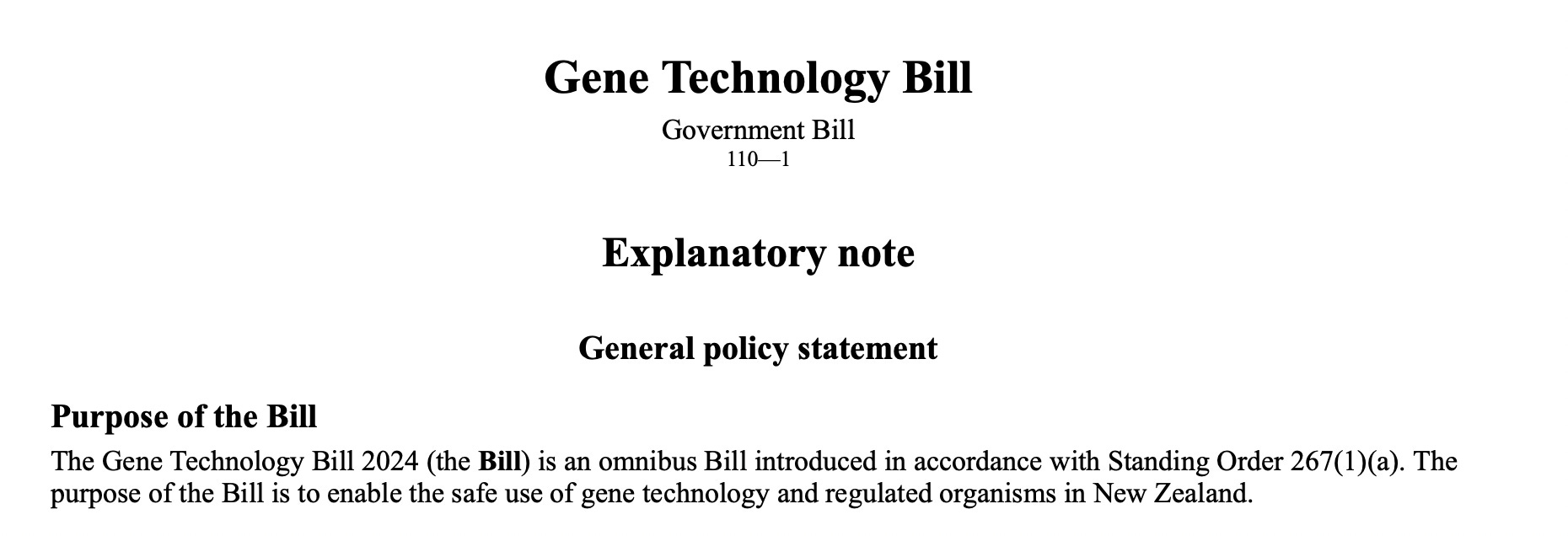
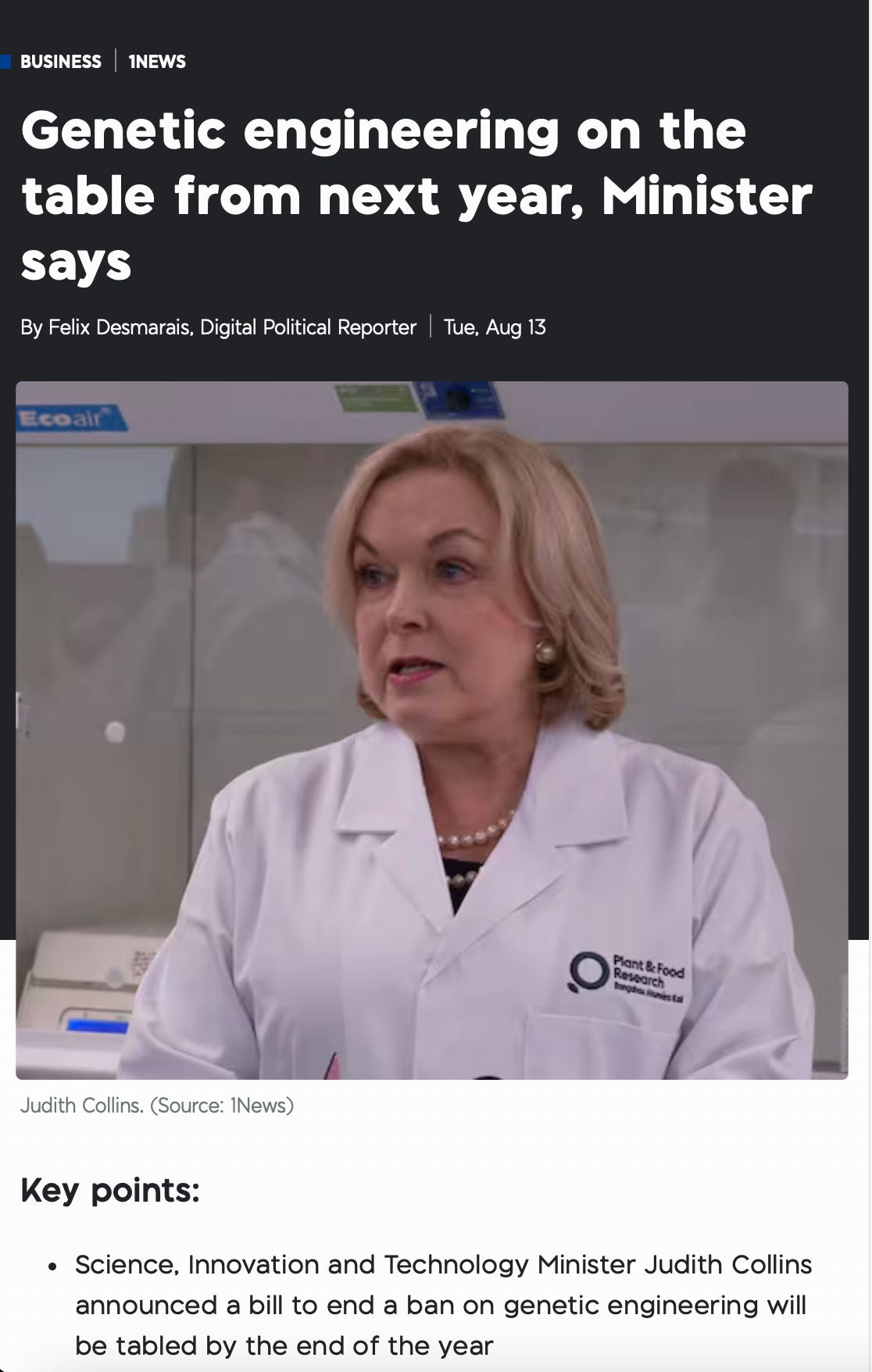



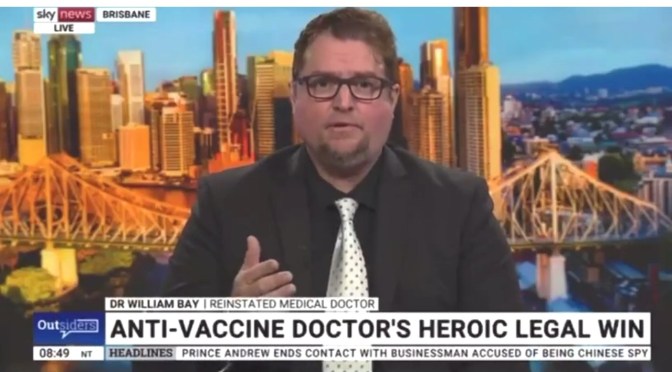

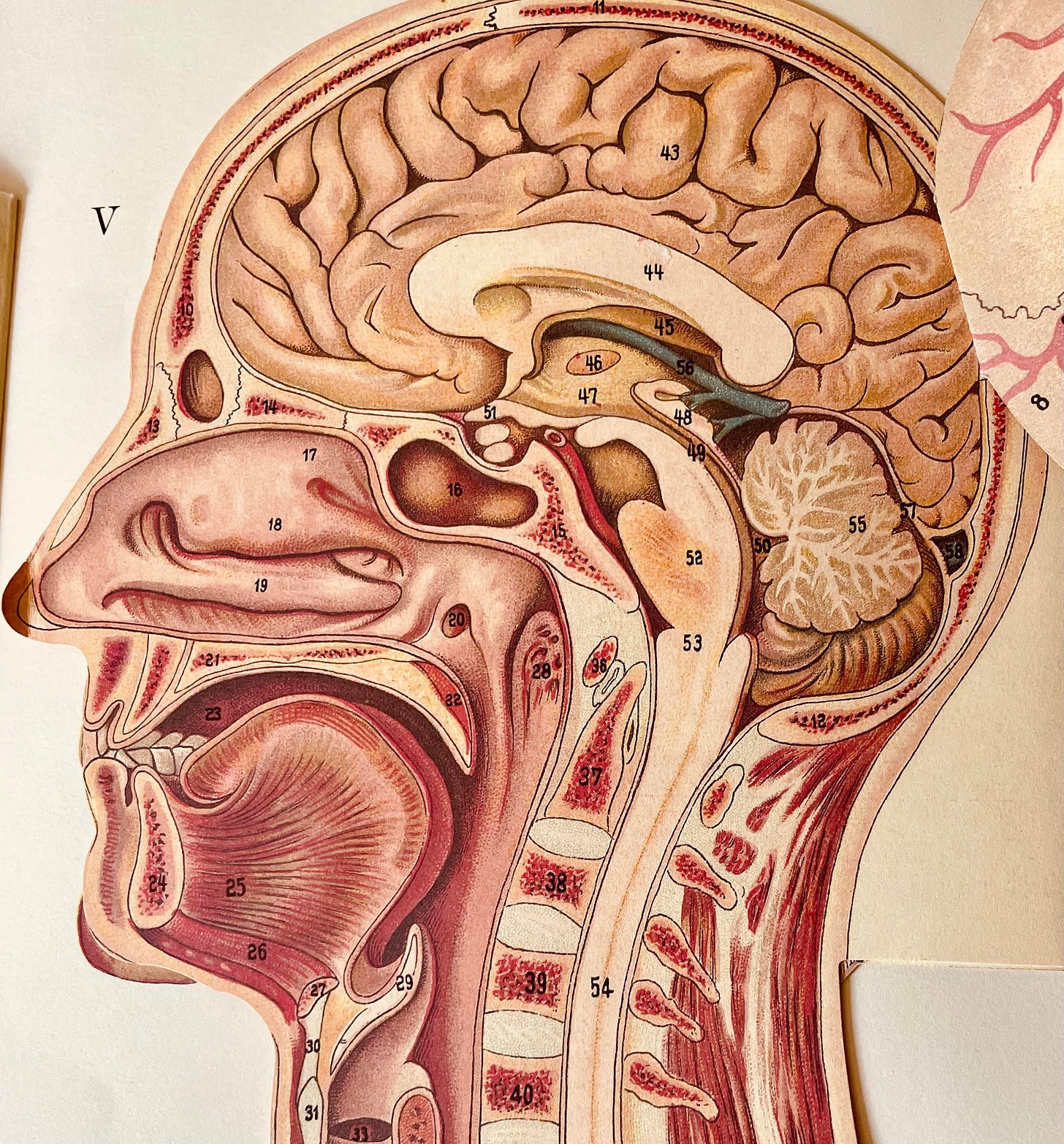
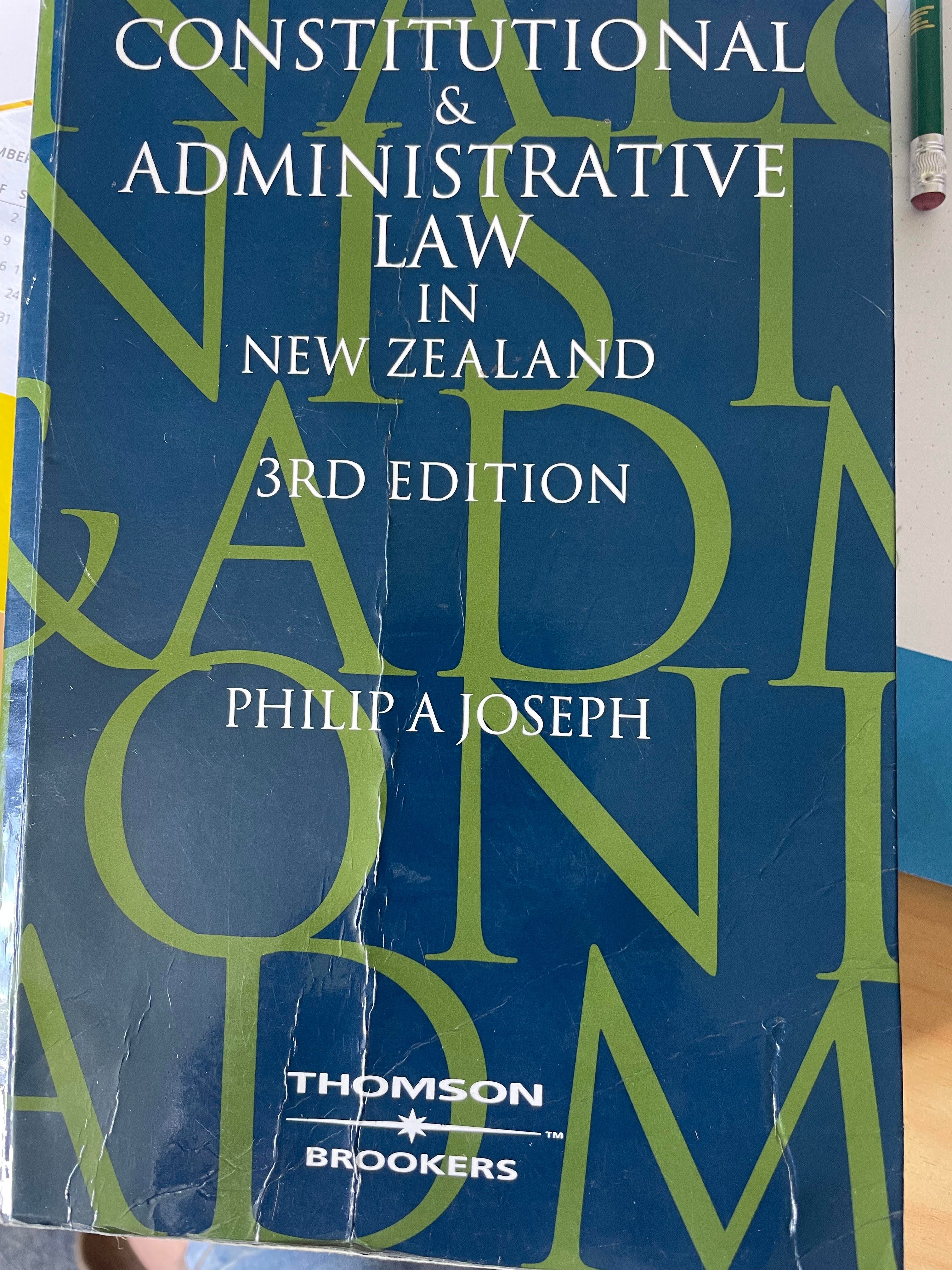


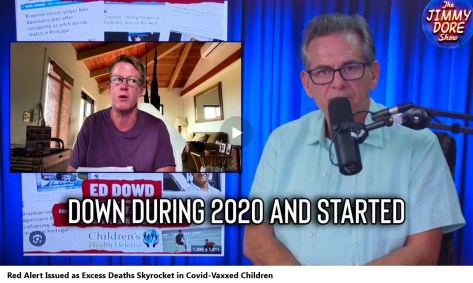
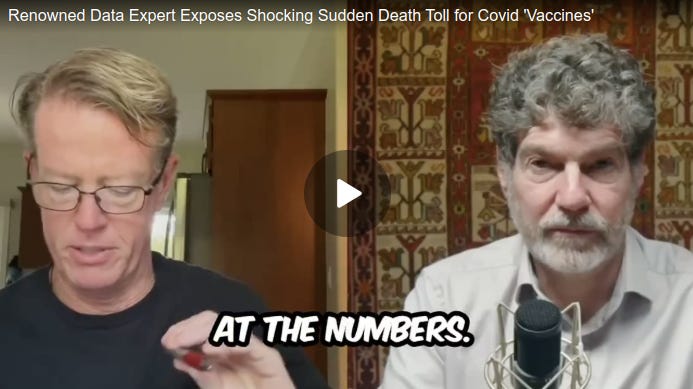

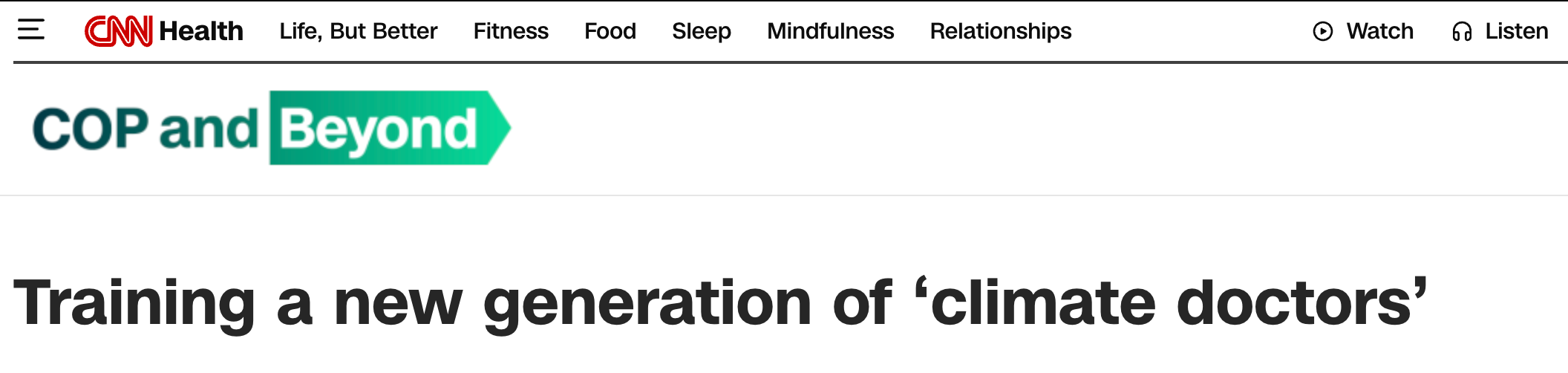














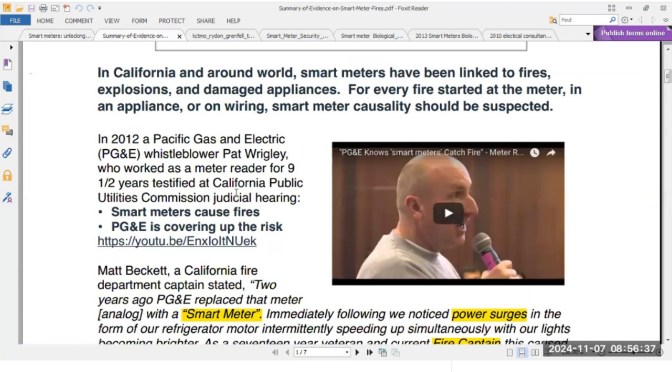

You must be logged in to post a comment.