Category Archives: News

Time to plant new season’s strawberries (Wally Richards)

New seasons strawberry plants are now available in garden centres. The nurseries that grow the plants lift them after the autumn rains have moistened the soil sufficiently, then they are distributed to garden centres.

I find that the sooner you can get your new strawberry plants into their new beds the better results you have in the first season.

Like all things planted it is root establishment that is so important.

When planting place about a teaspoon of Unlocking Your Soil in the planting hole with a pinch of BioPhos for each strawberry plant.

Gardeners with existing beds of strawberries will likely have a number of runners that have rooted in nicely, these can be used for new season plants..

If the existing strawberry bed is not congested with old and new plants and there is ample room still for all the plants to grow and produce, then you can get away with not lifting the runners or only lifting those that are too close to existing plants.

Strawberries are easy to grow and can be grown in open ground or containers.

In open ground the most practical way is to make a bed with wood surrounds 16 to 20 cm tall and have a hinged frame over the bed that has either plastic bird netting or wire netting over the lid.

The whole frame needs to only sit on the soil so it can be moved if required.

If using tanalised timber for the surround then after cutting to size; paint all the wood with a couple of coats of acrylic paint to prevent chemicals leeching into the soil.

Strawberries can be grown in troughs about 16 to 20 cm wide and similar depth then as long as required. I like to hang these off the top rail of a fence.

Special strawberry planters made from clay or plastic are not very good and your results are likely to be poor. (Thats the types where plants are placed in holes around the container as well as on top.)

Polystyrene boxes with holes in the bottom are also ideal containers for good crops if they have a rooting depth of 15cm or more.

The growing medium should be a good compost such as Daltons or Oderings to which you can add untreated sawdust and a little clean top soil or vermicast. (Worm casts from a worm farm)

A mix of about 75% compost, 20% sawdust and 5% vermicast is good value.

Mix the above in a wheelbarrow then place a layer of the mix 5 cm deep in the base of the trough or container.

Now sprinkle a layer of chicken manure, some potash, BioPhos, Unlocking Your Soil and Ocean Solids. Horse manure is also very good.

If you do not have chicken manure available use sheep manure pellets and blood & bone.

Cover with more compost mix to a depth suitable for planting your new strawberry plants.

A similar process can be applied to a open bed with a frame, though the frame height may need to be taller than previously suggested.

Ensure that the soil at the base of the frame is free of most weeds and then place a layer or two of cardboard over the soil. This will help prevent weeds from coming up in the bed, then fill as suggested.

There are a number of different varieties of strawberry plants available to the home gardener, sometimes the older varieties such as Tioga and Redgaunlet (both are hard to come by now replaced with the newer varieties such as Chandler, Pajaro and Seascape.

Different varieties will do better or worse in different climates so choose the ones most suited to your area of the country.

Strawberry types include:

Strawberry Baby Pink ™ Producing stunning beautiful pink flowers followed by small to medium red fruit with sweet traditional flavour. Large bunches of berries ripening over a long period.

Habit – Compact strong growing strawberry. Size – Give these small to medium plants close spacing.

Pollination – Self-fertile. Unknown if short day, neutral or long day type.

Strawberry Camarosa; Large to very large medium dark red fruit. Firm medium red flesh with excellent flavour. Conical shape.

High resistance to wet weather. Habit – Suitable for Northern and Central districts. Vigorous growth habit.Size – Give these vigorous plants wide spacing.

Pollination – Self-fertile. Short day type – flowers are initiated by short day lengths.

Harvest – Fruit ripen 20-35 days from flowering depending on climate, with light crops in early summer, followed by a main crop in December – January. Yield is very good.

Strawberry Chandler; Small to very large medium red fruit. Firm light red flesh with very good flavour. Conical shape. High resistance to wet weather.

Habit – Suitable for Northern and Central districts. Multi-crowned growth habit.

Size – Give these multi crowned plants medium spacing. Pollination – Self-fertile. Short day type – flowers are initiated by short day lengths.

Harvest – Fruit ripen 20-35 days from flowering depending on climate, with light crops in early summer followed by a main crop in December – January. Yield is very good.

Strawberry Sundae ™ Large red fruit with excellent flavour. Firm red flesh in an oval shape.

Habit – Suitable for Northern and Central districts. Vigorous growth habit. Size – Give these vigorous plants wide spacing.Pollination – Self-fertile. Short day type – flowers are initiated by short day lengths.

Harvest – Fruit ripen 20-35 days from flowering depending on climate, with light crops in early summer followed by a main crop in December – January. Yield is average.

Strawberry Supreme ™ Very large bright red fruit. Very firm red flesh with excellent flavour. Conical shape. Good resistance to wet weather. Habit – Suitable for Northern and Central districts.

Moderately strong growth habit. Size – Give these small to medium sized plants close spacing.

Pollination – Self-fertile. Short day type – flowers are initiated by short day lengths.

Harvest – Fruit ripen 20-35 days from flowering depending on climate, with light crops in early summer followed by a main crop in December – January. Yield is very good.

Strawberry Temptation™ Medium bright red shiny fruit with excellent flavour. Pale firm flesh.

Habit – Compact strong growing strawberry. Tough and resilient in relation to pest and diseases.

Size – Give these medium plants close spacing.

Pollination – Self-fertile. Only NZ bred Day Neutral strawberry which means they will set fruit regardless of how long or short the days are making this an ideal fruiter national wide.

Will extend the North Island season. Harvest – Consistent high yields of berries ripening over a long period from October to March.

To enhance your strawberries and increase the crop yields by 200 to 400% drench the bed with Mycorrcin after planting and repeat again in a couple of months time.

 Spray the plants with Mycorrcin every two weeks till end of season. Make up in a trigger sprayer it keeps so leave by strawberry bed and spray as required. MBL can be added to the spray.

For bigger berries you may like to try Wallys Secret Strawberry Food.

Special this week till next Sunday

one 250ml Mycorrcin $19.00 and one 1kg Wallys Secret Strawberry Food $18.00  Total $37.00 with free shipping on this to your home saving you $8.50 shipping fee

Both products can be used on other flowering and fruiting plants.

Order at www.0800466464.co.nz  put on WEEKLY SPECIAL in remarks box and I will phone you in regards to payment method.
Phone 0800 466464
Garden Pages and News at www.gardenews.co.nz
Shar Pei pages at  www.sharpei.co.nz
Mail Order products at www.0800466464.co.nz


New Zealand Bill of Rights Act 1990. Part II of the Act covers a broad range of Civil and Political Rights. As part of the right to life and the security of the person, the Act guarantees everyone:

1The right not to be deprived of life except in accordance with fundamental justice (Section 8)

2The right not to be subjected to torture or to cruel, degrading, or disproportionately severe treatment or punishment (Section 9)

3The right not to be subjected to medical or scientific experimentation without consent (Section 10)

4The right to refuse to undergo any medical treatment (Section 11)

 Furthermore, the New Zealand Bill of Rights Act 1990 guarantees everyone: Freedom of Thought, Conscience, and Religion.
This includes the right to freedom of thought, conscience, religion, and belief,
INCLUDING THE RIGHT TO ADOPT AND HOLD OPINIONS WITHOUT INTERFERENCE (Section 1)

NZ’s dirtiest political secret: the bloodless coup of 1986

Timely revisit of history…

Pam Vernon's avatarEnvironmental Health Watch NZ

June 2017: Seventeen years ago a little-known conference of constitutional experts revealed New Zealand’s dirtiest political secret: that in 1986 the NZ Parliament seized control of the country in a bloodless coup, declaring themselves sovereign above the people in a technical but highly significant move. Nearly two decades later, the position has never been rectified…

APRIL 2000: New Zealanders have fewer Constitutional rights than the citizens of Mongolia: that’s the disturbing revelation as delegates gather for a major Constitutional conference in Wellington this month. They’ll be debating whether we need a written Constitution, and whether New Zealand needs to become a Republic but, as IAN WISHART reports, it’s throwing up some embarassing information about our current Parliamentary system:

READ MORE

https://investigatemagazine.co.nz/20804/nzs-dirtiest-political-secret-the-bloodless-coup-of-1986/?fbclid=IwAR34PZPd8SU77dFVwrgXD_OeOOpfgV21CD9DaTtRVGMDvNfZKk4wLHyHndM

Photo: Investigate Magazine

View original post

Currently on the table again, Hamilton NZ proposed 20 minute cities back in 2020

The internet is abuzz with the so-called ‘conspiracy theory’ of 15 minute cities in NZ.

Long sold out lamestream media is pumping that line again or should I say ‘still’. As I noted recently, the headline, ‘Censorship is the last bastion of those without an arguement’ … one could easily substitute ‘propaganda’ there for ‘censorship’. Both familiar words now aren’t they?

Turns out Hamilton DC was touting 20 minute cities back in 2020… interesting timing. Right when folk were locked down (for two weeks+) to flatten the curve. They looked at it back then, assisted by Waikato University (their 2021 report and video at the link). The video is all the way from the UK, host for the Oxford 15 minute city there that folk are pushing back against (check out the videos in that link, looks more like a military check point there than an eco friendly paradise… they detain a woman trying to drive to work). See here also.

Hamilton Council hosted a meeting on topic this week apparently and a large crowd turned up. Was that because it’s such a great idea or because they smell a rat? The Twitter comment from DemocracyNZ notes concern about lack of consultation (nothing new note for District Councils NZ wide):

Then there is the proposed Sunfield suburb in Auckland. (Be sure to watch the videos there). It does look so very benign, solar powered, an electric shuttle and all those lovely gardens (that they’ve been pushing on small towns anyway for years. Witness Foxton and the big 1.5 mill spend there when folk said they weren’t consulted & they only wanted clean water). Gardens are nice but all those dollars for developers and Councils now knee deep in debt? How sustainable is that? It really doesn’t all add up does it?

As Stuff asks (debunking ‘conspiracies’): Convenient street planning or open-air police state … on the surface 15 minute cities could be really great, however I don’t like the look of those checkpoints to be honest.

RELATED:

PREPARE for the Indefinite Climate Lockdown Coming!

15-minute cities in New Zealand: A visualisation

A 15 mins city (Manatu Hauora)

‘Consultation’ & the little known Delphi technique – promoting the illusion of democracy & helping you think you’ve had a say

Speak Up Now, It is Almost Too Late

From hatchardreport.com

The World Health Organisation has announced an agreement with the European Union to develop a digital health certificate. WHO has stated that they will use the “EU Digital COVID Certificate” as a model to establish a global digital health certificate otherwise known as a vaccine passport (you can follow the reaction on Twitter here).

This brings to mind the conditions imposed on daily life during pandemic lockdowns which were enforced using vaccine passports. Restrictions on movement and participation which are now known to have had an overwhelmingly damaging effect on society. An article in the authoritative UK Daily Telegraph on 4th June headlines “Painful lockdowns a global policy failure that must never be repeated“. According to new research, we will be suffering drastic effects on the economy, educational outcomes, and mental and physical health for years to come as a result.

READ AT THE LINK

Speak Up Now, It is Almost Too Late

Photo: hatchardreport.com

A censored dream from 2009

Jo-Blogs's avatarRed Sky in the morning

Can you think of an elephant in the nation’s living room right now? They’re trying to hide the elephant but it’s getting glaringly obvious when they start censoring dreams. I can even tell you the colour of the elephant. Can you see it? I believe it’s a white elephant.

It’s a better analogy than us getting a lemon because elephants are huge.

Two years after the Covid vaccine rollout no-one’s talking about the elephant except to say they’re fed up and not getting any more booster shots. Pfizer should have been called Pfizzer or Fizzer because everyone caught Covid. It turns out Pfizer released something they didn’t know would work.

Senior Pfizer executive Janine Small admitted that the drug company did not know whether its Covid vaccine prevented transmission of the virus when it began rolling out the shots globally.

Pfizer did not know whether Covid vaccine stopped transmission…

View original post 405 more words

‘You will know them by their fruits’

This time next royal holiday weekend, we may not be able to write such opinion pieces as this.

There’s certain alarm right now at the regime’s new proposals to shut folk up & stop them speaking their minds, let alone speaking uncomfortable truths. And today we hear of our ‘dearly departed Ardern’s’ new title (that apparently may or may not be accepted?).

Ardern is now in sunnier climes lecturing at Harvard on this her apparent favourite topic, censorship, her mission in NZ done and dusted she’s moved on, far from the clamour of the thousands of injured. The globalists always look after their own, witness the new title, and remember Sirs Douglas & Key also notorious for their treasonous exploits? As the good book says, you will know them by their fruits.

And so, the loyal carry on the agenda with further plans for shutting down truth, repackaged as ‘disinformation’. Watch next for the 15 minute cities. Aussie’s Coffs Harbour folk are pushing back on this one as more and more begin to wake up to the scam.

Remember the grapefruit doesn’t fall far from the tree.

Exclusive: Hundreds of diplomatic files on King Charles censored

Some light reading for King’s Birthday Weekend…

From declassifieduk.com

The Foreign Office is keeping secret a cache of documents about the former Prince of Wales that were due for declassification. An ex-government minister tells Declassified the secrecy is “outrageous”.

More than 200 files on overseas trips made by the former Prince of Wales stretching back to the 1970s have been censored from public view. 

Written by British diplomats stationed around the world, they are believed to contain extensive commentary on the new monarch’s past life as heir to the throne.

Over half of the records contain references to his first wife, the late Princess Diana.

The papers cover visits by the couple to almost every continent, including their honeymoon cruise around the Mediterranean on the royal yacht.

One file about their 1983 visit to Australia, which Netflix featured in The Crown, will remain classified until 2070. By then Charles would be 121 years old.

Under UK transparency laws, government departments must release their records to the public between 20 and 30 years after they were written. 

Civil servants can keep files closed for longer only with the approval of the Lord Chancellor, the government’s justice secretary Brandon Lewis.

Some censorship decisions are scrutinised by an advisory council, whose members have at times included an aide to King Charles.

Only the titles of the 212 sealed files are shown on a database hosted by the National Archives, which was analysed by Declassified.

View the full list of secret Foreign Office files on King Charles III

Historians say the trove could shed light on the role Charles played in British foreign policy during the end of Empire and the Cold War. 

One of the oldest documents contains a Foreign Office briefing for Charles’ visit to the Bahamas during their independence ceremony from Britain in 1973. 

Although his mother remained head of state, the Caribbean nation now plans to hold a referendum on becoming a republic.

Three files on Prince Andrew are also closed. They cover trips he made with his then wife to the US and Mauritius in the late 1980s. 

‘No reason to be kept secret’

Norman Baker, a former government minister, told Declassified: “It is outrageous that so many files from so long ago regarding Charles have been kept from public view. It is contrary to the spirit of the Freedom of Information Act and the Public Records Act.” 

Baker, who wrote the book And What Do You Do?: What The Royal Family Don’t Want You To Know, added: “I am calling for the National Archives to conduct an investigation of this matter with a view to releasing some or nearly all of these documents. 

“There’s no reason for these to be kept secret. The normal excuse given is that it’s to uphold the dignity of the crown. But the dignity of the crown is upheld by them not behaving in an undignified manner.”

Many of the secret papers relate to trips by Charles to repressive Arab monarchies in the Middle East. Diplomats appeared to notice Charles had an interest in Islamic culture and considered how to cultivate his curiosity. 

A file from 1989 is titled: “Interest in the Gulf by the Prince of Wales: potential benefits for relations between the Gulf and the UK.” Charles is known to have visited Gulf regimes like Saudi Arabia at crucial moments in negotiations on arms deals worth billions of pounds to British business.

In preparation for a visit to the Gulf in 1986, diplomats compiled “briefs on Defence Sales and Conversational topics” to guide Charles on discussing arms deals. The paper is sealed until 2049.

Diplomats even drew up a document titled “Visit by the Prince of Wales to Israel” in 1986. Its existence is curious because Charles has never travelled to the country. 

He privately expressed criticism of Israel and the “Jewish lobby” in a letter sent to a friend that year while journeying through other parts of the Middle East.

Another Foreign Office file concerns the King’s “interest in Romania” after the fall of its Communist dictatorship in 1989. 

Charles, who is distantly related to Romanian royalty, has purchased property and swathes of land in Transylvania – home of the mythical vampire Dracula.

Family secrets

Professor Philip Murphy, an historian and author of Monarchy and the End of Empire, commented: “The palace is terribly risk averse. They don’t really understand a lot of this is already in the public domain. All we’re really adding is thick archival description. 

“That’s why there’s sort of a duty to push back against them, because I don’t think officials are prepared to do that and politicians aren’t – they’re worried about getting honours. So historians and journalists have really got to do that.”

Murphy believes it was easier in the 1990s for him to access records on the royal family, as a Conservative minister William Waldegrove introduced a “gentleman’s agreement” to relax the classification of historical files.

Tony Blair’s Labour government then passed the Freedom of Information Act, which codified a right of access to certain records. Ironically, Murphy said: “The shutters came down again because the palace panicked.”

Historians face a further struggle to access the royal family’s own records, which are kept in a tower at Windsor Castle where researchers should be allowed access to papers from previous reigns. 

Baker commented: “It is very difficult to get in, even for me as a Privy Counsellor. There’s only a small room, which holds about four researchers at any one time, which is absurd given the size of Windsor Castle. 

“There’s no index to what is available. You have to ask for things and hope that by throwing a dart at a dart board with a blindfold on, you hit something.”

Murphy agreed, saying: “They make it quite tricky for historians to work with them.”

In theory, letters from Queen Elizabeth II’s own collection are now eligible to be transferred to the Royal Archives following her death last month aged 96.

Declassified asked to view letters between the late Queen and Sultan Qaboos of Oman, an Arab autocrat backed by Whitehall.

However, Royal Archives manager Bill Stockting told Declassified they have “not yet accessioned the records of Her late Majesty’s reign” and could not say when they would become available.

A Foreign Office spokesman said: “Under the terms of the Public Records Act 1958, historical records can be legitimately withheld.”

The National Archives declined to comment.

RELATED:

Charles of Arabia: How Britain’s next king bolsters autocratic Gulf regimes

Thousands of historic British government files censored after ‘independent’ watchdog approves over 99% of secrecy requests

Image by Tayeb MEZAHDIA from Pixabay

Other news this week

The 2005 International Health Regulations (IHR)
Five minutes to midnight (Max Igan)
WHO power grab (Dr John Campbell)
Door Opening to Mass Medical Experimentation on Humanity

Other
Crimes Against Humanity Trials Begin In New Zealand
Elon, Gates & Soros
Latest from NZ Doctors (SOS)
Latest from Dr Guy Hatchard
Britons are dying by the tens of thousands
The Battle For Your Child’s Innocence
Estimated death rate >1,000 higher than the acceptable safe limit

Photo: pixabay.com


The Dirty Dozen & Clean Fifteen: The Most & Least Pesticide-Contaminated Fruits and Vegetables

From foodrevolution.org

Summary

Organic fruits and vegetables cost more than conventional ones — sometimes a lot more. But if you want to avoid pesticide exposure, is it always necessary to choose organic? Or are some conventional fruits and veggies less contaminated? In this article, we go in depth into the Environmental Working Group’s US-based report on the 12 dirtiest and 15 “cleanest” items of produce, to help you make smart decisions to protect yourself and your loved ones from harmful pesticides.

The agricultural industry is addicted to pesticides, and the entire world is paying the price. The US Environmental Protection Agency (EPA) reports that global pesticide use in 2012 amounted to approximately six billion pounds. Unfortunately, they haven’t published a report since then, but the number likely hasn’t improved and may have gotten worse.

While the term “pesticide” implies that these chemicals target and kill “pests,” a better name would be “biocides” (destroyers of life) because they do a lot more than poison pests.

Pesticides poison insects and pollinators; contaminate soil, water, and air; and can cause harm to farmworkers, agricultural communities, and people who eat produce sprayed with pesticides.

[Read More: Pesticides in Food: What You Should Know and Why it Matters

How common is it for US produce to have pesticide contamination? “Nearly 75% of nonorganic fresh produce sold in the US contains residues of potentially harmful pesticides,” according to the Environmental Working Group (EWG).

In this article, we’re going to review the most and least pesticide-contaminated produce, so you can make more informed fruit and vegetable purchases.

READ AT THE LINK

How the modern corporation was invented in England – a power grab to this day

From declassifieduk.org

The joint-stock corporation is an economic instrument which, in its modern form, was established in England—and it was here, too, that the company became unleashed from the state and began a power grab which continues to this day.

During a period of rapid commercial growth in 16th century England, the Muscovy Company was granted a charter by Queen Mary Tudor in 1555, giving it a monopoly over trade routes to Russia. 

The company had recently been founded by various London merchants and its governor was Venetian explorer Sebastian Cabot. 

At the time, companies needed a charter from the Crown to operate, and this licence for operations was time-limited and subject to the caprice of the King or Queen. It was not a right to form a corporation then, it was a privilege. 

Chartered companies were organised as partnerships or guilds, which were owned by closed groups such as families or associations of businessmen. 

But the Muscovy Company popularised what would prove a revolutionary innovation: it was able to raise enough money to finance the long journey to Russia by selling tradable shares. 

“Joint-stock” companies, as they became known, was a new concept in English law.

The corporate form has existed as far back as the Roman Republic, and likely before. Despite coming to rule much of the world, the Roman Republic always had a small bureaucracy. One of the major reasons was its use of private businesses, in the form of societas publicanor

These ancient economic instruments were recognised as an entity separate from its owners and had shares representing ownership interests. 

The form developed further with the advent of modern banking with the House of Medici in Renaissance Florence, which saw the birth of what we now call a holding company

But the modern corporation, as we understand it, really began its journey in 16th century England with Muscovy’s joint-stock model. It was not a coincidence it so decisively took off then: it proved particularly well suited to the grand voyages of the so-called Age of Discovery

Age of Discovery

In 1498, Portuguese explorer Vasco da Gama had sailed around the Cape of Good Hope at the southern tip of Africa and arrived in India. 

The journey marked the beginning of a new era in European history, when navigators set out on voyages around the world seeking new and exotic riches to be sold back home. 

The joint-stock model allowed businesses to sell stock in their companies to investors, who would pay in cash up front in return for a slice of future profits down the line. 

At the time, these trading companies had high up-front costs in terms of preparing their ships and missions. The profits from their long trips, meanwhile, were far from being immediately realised. If they came at all, they may be banked possibly years down the line: many of the voyages involved going half way around the globe and back again. 

The joint-stock company ushered in a new era of global commerce. It was this model that propelled the signature corporation of the next 200 years, the East India Company, to global power. Founded on New Years Eve of 1600, it was given a charter by Queen Elizabeth I that gave just over 200 men control of a trading territory that covered a majority of the earth.

Limited Liability

But as chartered companies expanded their empires around the world, there was a constraint on the corporate form that was holding it back from realising its true potential. This was the legal concept of unlimited liability, which meant owners of companies were liable for losses incurred by the company. 

At the opening of the 19th century there was a strong push in the business community to introduce limited liability, which would restrict the losses incurred by investors only to the capital they had invested. 

Unlimited liability was proving a restriction on firms ability to raise capital. Business leaders argued that if British dominance was to be maintained it would have to introduce limited liability into law. The UK government, meanwhile, was worried about losing business to foreign countries where limited liability had been enacted.

Prominent liberals like John Stuart Mill were also arguing that limited liability would open up the world of business to the poor because it would lower their risks. 

Legislation was introduced incrementally. The Limited Liabilities Act of 1855 explicitly allowed for limited liability for British corporations for the first time. The Joint Stock Companies Act of 1856 added to this, allowing business to obtain limited liability with “a freedom amounting to a licence”.

This, slightly modified, was subsumed into the more sweeping Companies Act of 1862. Almost 25,000 limited liability companies were incorporated between 1856-62. In the three years following the 1862 Act, new issues averaged £100m a year.

Commercial laws

In the 19th century Britain’s economy was the most important in the world, and efforts to free the corporate model, which was driving much of its growth, continued apace. 

A major force behind the changes was the advent of the railway, which required huge amounts of capital upfront to design and build the new networks. The Liverpool-Manchester line was established in 1830 and was the world’s first regular passenger railway. By 1830, chartered joint-stock companies had built 2,000 miles of track.

Another restriction on the corporate form which was soon dispensed in this period was with the need to get a charter from the Crown or parliament to operate. The Joint Stock Companies Act of 1844 allowed companies to become incorporated by a routine act of registration rather than having to obtain permission from the state. This effectively unleashed the corporations from any kind of direct state control. 

The company form developed in Britain as a result of legislative reforms, responding to technological innovation and expanding corporate empires. But the changes established in 19th century Britain, and the debates surrounding it, have coloured the institution ever since. The limited liability public companies we see now are not much different to the model finalised in that period. 

By the end of the 19th century, in Britain, this new economic instrument had reached close to its final form and was basically independent of the state. It was the first autonomous institution in many centuries, creating a rival power centre to the government, which has now become arguably more powerful. 

Britain was the pioneer in setting companies free from state control. From there, they have cannibalised the state that created it in the UK, but also around the world. 

Silent Coup: How Corporations Overthrew Democracy is out this month from Bloomsbury Academic.

Read related posts at the link:

SOURCE BELOW


Image by jorono from Pixabay

Fluoride Lawsuit Against EPA: Alleged Corruption, Shocking Under Oath Federal Statements

Thanks flyingcuttlefish for this link:

From zerohedge.com

Authored by Christy Prais via The Epoch Times (emphasis ours),

In this series, we explore the contentious findings surrounding fluoridation of the U.S. public water supply and answer the question of whether water fluoridation poses a risk and what we should do about it.

Previously: A confounding factor in the fluoride debate is the arsenic that contaminates the industrial sources of fluoride added to public water systems.

A groundbreaking federal lawsuit could ban fluoride from drinking water, overturning a decades-long program aimed at preventing cavities that has been challenged by mounting evidence of harm.

The Fluoride Action Network (FAN) sued the Environmental Protection Agency (EPA) under the Toxic Substances Control Act in 2017, and it appears to be nearing its conclusion. Under the act, citizens can challenge the EPA in court when the agency rejects a petition to ban or regulate a toxic substance. The FAN’s suit is the first in the 44-year history of the act to actually get to trial.

The lawsuit has included pointed testimony from leading experts on environmental toxins and admissions from both EPA and Centers for Disease Control and Prevention (CDC) officials that fluoride could be linked to specific harms. The lawsuit has also revealed government interference in crucial scientific findings.

READ AT THE LINK

https://www.zerohedge.com/medical/fluoride-lawsuit-against-epa-alleged-corruption-shocking-under-oath-federal-statements

Photo: pixabay.com

Podcast: Dr. Rob Williams on geoengineering, the history of weather modification, and what’s really going on up there

Clare Swinney's avatarNORTHLAND NEW ZEALAND CHEMTRAILS WATCH

From TerrainTheory.net Dr Williams is an environmentalist and co-founder of OurGeoengineeringAge.org, an organization taking an evidence-based approach to exploring “our planet’s most pressing yet under-reported global environmental issue.”

In this conversation with Rob we discuss:

  • The history of geoengineering
  • How OGA came to be
  • What’s really going on up there
  • The chemistry and physics behind weather modification
  • The difference between contrails and “chemtrails”
  • What we can do about it

Learn more about Rob at OurGeoengineeringAge.org and at ThePeakFlow.com

Terrain Theory episodes are not to be taken as medical advice. You are your own primary healthcare provider.

More: https://www.terraintheory.net/blogs/podcast/episode-68-dr-rob-williams-on-geoengineering-the-history-of-weather-modification-and-whats-really-going-on-up-there

View original post

Nearly 13,000 chemicals used in cosmetics & only 10% tested for safety – Here are the 10 most hazardous products

“The average fragrance product tested contained 14 secret chemicals not listed on the label. Among them are chemicals associated with hormone disruption and allergic reactions, and many substances that have not been assessed for safety in personal care products.” EWG

Story at-a-glance

From mercola.com

  • An analysis of personal care and cleaning products found the top 10 most hazardous products include a children’s shampoo, JLo Glow perfume, Kaboom with OxiClean, Axe body spray and Organix Shampoo
  • Over-the-counter products are not inherently safe as there are nearly 13,000 chemicals used in cosmetics and only 10% have been tested for safety. This loophole was created by the Fair Packaging and Labeling Act, which does not force companies to disclose trade secrets
  • The Environmental Working Group found perfumes typically contain a dozen or more potentially hazardous chemicals, some of which are derived from petroleum. This chemical cocktail may be responsible for the rising number of adverse events reported after exposure to personal care products
  • Look for products without dangerous chemicals, including parabens, “fragrance,” triclosan and toluene, or consider making your own products at home from safe and natural ingredients

Editor’s Note: This article is a reprint. It was originally published October 24, 2018.

Unfortunately, just because it’s sold over-the-counter does not mean a product is safe for you. In fact, of the nearly 13,000 chemicals used in cosmetics, only 10% have been tested for safety. While the U.S. Food and Drug Administration (FDA) has the authority to regulate ingredients in cosmetics and personal care products, they often do not exercise it.1

Adding insult to injury, the FDA tasks companies manufacturing and marketing cosmetics with ensuring their safety. Not only is this an obvious conflict of interest, but “neither the law nor FDA regulations require specific test to demonstrate the safety of individual products or ingredients.”2

So, while cosmetic companies are responsible for substantiating safety, there are no required tests and the companies do not have to share safety data. In fact, the FDA isn’t even authorized to order recalls of hazardous chemicals from the market.

Cosmetic3 companies may also fall back on a loophole in the Fair Packaging and Labeling Act,4 which allows companies to withhold information relating to “trade secrets,” under which fragrances and flavor ingredients fall.5

Participating with Environmental Defense and other U.S. groups, the Breast Cancer Prevention Partners (BCPP) tested personal care products and cleaning products sold at major Canadian retailers in order to identify undisclosed fragrance ingredients.6 A lack of federal regulation in Canada and the U.S. results in an increased risk of exposure to consumers.

Your Right to Know

The Campaign for Safe Cosmetics, a project of the BCPP, is a broad-based national coalition of nonprofit organizations whose mission it is to protect the health of consumers by securing reforms necessary to eliminate dangerous chemicals linked to adverse health effects.7

The research project was triggered by scientific literature and prior product testing indicating chemicals linked to cancer, birth defects, endocrine disruption and other adverse effects were used heavily in beauty, personal care and cleaning products.

However, despite research evidence, there continues to be a lack of legislatively mandated labeling requirements, leaving consumers uninformed of the dangers in products they bring into their homes every day. For this test, BCPP and their partners purchased 140 different beauty, personal care and cleaning products for testing.

Of particular concern were products marketed to children, women of color and products marketed by celebrities as “good for the environment” or “green.” One of the more concerning results was that many of the personal care products tested contained more hazardous chemicals than the cleaning products.8

Millions of dollars and countless hours of lobbying have been poured into the industry’s fight against legislatively mandated ingredient disclosure. Fragrance is a big business as they are used in personal care products and cleaning products.

The value of the North American flavor and fragrance market is nearly $6 billion and forecast to reach $7.42 billion by 2020.9

Top 10 Most Hazardous Products Tested

The fragrance industry has nearly 4,000 fragrance chemicals at its disposal, which companies are not mandated to disclose. BCPP hired two independent third-party testing laboratories. The first assessed volatile organic compounds and the other performed two-dimensional gas chromatography on a subset of 32 products, including shampoo, deodorant, multipurpose cleaners and lotions.

There was an average of 136 chemicals in the cleaning products and an average of 146 in personal care products. The team then compared the product name against the type of chemicals triggering hormone disruption, asthma, developmental toxins and cancer.

From this data they ranked the top 10 products with the most hazardous chemicals in terms of the highest number linked to these health effects.10 The products making the top 10 dangerous products directly from the BCPP report were:11

Just for Me Shampoo — A children’s shampoo, from a hair-relaxing kit marketed to kids of color by Strength of Nature.
JLo Glow Perfume — A fine fragrance made by Coty and endorsed by music, television and film icon Jennifer Lopez.
Kaboom with OxiClean Shower Tub & Tile Cleaner — Marketed as a “great cleaner that is safe and friendly to use,” made by Church & Dwight Co.
Olay Luminous Tone Body Lotion — Made by Procter & Gamble and marketed for its antiaging qualities.
Axe Phoenix Body Spray — A body spray made by Unilever and marketed to young men using an overtly sexual ad campaign.
Marc Jacobs Daisy Perfume — Another Coty fragrance carrying the famous designer’s name and using beatific, radiant young girls in its marketing campaigns.
Taylor Swift Wonderstruck Perfume — A Revlon fine fragrance endorsed by the beloved pop country singer Taylor Swift.
Organix (OGX) Shampoo — A Johnson & Johnson product marketed as part of a “green/sustainable” line of products to young women.
Formulation 64-RP — An industrial cleaner and disinfectant used by custodians firefighters and others.
White Linen Perfume — Created by Estée Lauder in 1978, marketed as “a beautiful perfume” for women young and old.

While these were the top 10 products, it is important to remember the team conducted tests on 140 personal care and cleaning products, the lowest of which, yellow soap, had 46 chemicals. Other cleaning products such as Kaboom with OxiClean Shower, Tub and Tile Cleaner had 229. Of the 25 personal care products tested, only three had less than 100 and none had less than 75.

Perfumes Tied to Chronic Disease

Are perfumes really the scent of danger? The Environmental Working Group (EWG) found the most popular perfumes, colognes and body sprays may contain trace amounts of natural essence, but they typically contain dozen or more potentially hazardous chemicals. Some of the synthetic chemicals are derived from petroleum.

In an independent laboratory test, the Campaign for Safe Cosmetics12 found 38 secret chemicals in 17 leading fragrances including top offenders from American Eagle, Coco Chanel, Britney Spears and Giorgio Armani. Following an analysis of the data, EWG commented:13

“The average fragrance product tested contained 14 secret chemicals not listed on the label. Among them are chemicals associated with hormone disruption and allergic reactions, and many substances that have not been assessed for safety in personal care products.”

Makers of these popular perfumes often use marketing terms such as “floral,” “exotic” or “musky” without disclosing the complex cocktail of synthetic chemicals used to create the scent.

The average fragrance product tested by the Campaign for Safe Cosmetics contains 14 chemicals not listed on the label, among those associated with hormone disruption, allergic reactions and substances without safety testing.

Undisclosed ingredients also include chemicals that accumulate in the human tissue, such as diethyl phthalates, found in nearly 97% of Americans and linked to sperm damage.

Their report14 also found the FDA was similarly uninformed, as a review of government records revealed a vast majority of the chemicals used in fragrances were not assessed for safety when used in spray-on personal care products.

Phthalates Continue To Be Used in Personal Care Products

However, it isn’t only the undisclosed chemicals under the generic label “fragrance” that are cause for concern. Some chemicals listed included ultraviolet protector chemicals associated with hormone disruption and nearly 24 chemical sensitizers responsible for triggering allergic reactions.

Some manufacturing companies are moving toward restricting or eliminating certain chemicals from fragrances, such as phthalates.15 Although phthalates are only one chemical of concern in fragrances, this is a step in the right direction.

Findings from a multicenter study made a strong correlation between a mother’s exposure to phthalates during pregnancy and changes to the development in a baby boy’s genitals.

Another study at an infertility clinic demonstrated exposure was correlated to DNA damage in sperm and a third study in children aged 4 to 9 linked behavioral problems to higher maternal exposure to low molecular-weight phthalates.16

Adverse Event Reports on the Rise

While FDA regulation is weak at best, it is completely ineffective when adverse effects are not reported. The FDA has an adverse event reporting system containing information on product complaints submitted to the FDA. The database is designed to support safety surveillance programs and includes symptoms, product information and patient outcome.17

The FDA Center for Food Safety and Applied Nutrition (CFSAN) adverse event reporting system was made publicly available in 2016.18 An analysis of events dated between 2004 and 2016, including voluntary submissions by consumers and health care professionals, showed over 5,000 events reported, at an average of 396 events per year.

However, the average number hides a growing trend. For instance, in 2015 there were 706 events reported and in 2016 there were over 1,500. The three most commonly reported products were hair care, skin care and tattoos. The authors of the report suggest more surveillance is needed, saying:19

“Unlike devices, pharmaceuticals and dietary supplements, cosmetic manufacturers have no legal obligation to forward adverse events to the FDA; CFSAN reflects only a small portion of all events. The data suggests that consumers attribute a significant portion of serious health outcomes to cosmetics.”

The spike in adverse effects reported to the FDA in 2016 occurred only after the agency appealed to consumers and physicians to report events related to products manufactured by Chaz Dean Cleansing Conditioners under the brand name Wen.20

When adverse event complaints are made to a manufacturer they are not legally obligated to pass the reports to the FDA. Following an investigation, the FDA uncovered another 21,000 complaints made to Chaz Dean.21 It is highly likely adverse effects are commonly reported to the manufacturer and not to the FDA, indicating the total numbers in the CFSAN system are underreported.

Avoid These Toxic Chemicals in Your Personal Care Products

Despite over 21,000 consumer complaints to the contrary, Guthy-Renker, WEN’s marketing company, told NPR:22

“We welcome legislative and regulatory efforts to further enhance consumer safety across the cosmetic products industry. However, there is no credible evidence to support the false and misleading claim that WEN products cause hair loss.”

Until control improves over chemicals used in personal care products, safety testing and regulation protecting the consumer, it’s important you read the label on every personal care and cosmetic product you purchase. Here’s a list of some of the more hazardous chemicals found in many personal care products:23,24

Parabens — This chemical, found in deodorants, lotion, hair products and cosmetics, is a hormone disruptor mimicking the action of the female hormone estrogen, which can drive the growth of human breast tumors. A study published in 2012 found parabens from antiperspirants and other cosmetics appear to increase your risk of breast cancer.25
BHA and BHT — These chemicals are used as preservatives in makeup and moisturizers and are suspected endocrine disruptors.26
Synthetic colors — FD&C or D&C are the labels used to represent artificial colors. The letters are preceded by a color and number, such as D&C Red 27. The colors are derived from coal tar or petroleum sources and are suspected carcinogens. They are also linked to ADHD in children.
Fragrance — This is a large category of chemicals protected as proprietary information, and manufacturers do not have to release the chemical cocktails used to produce the scents in fabric sheets, perfumes, shampoos, body washes — anything having an ingredient called “fragrance.”
Formaldehyde-releasing preservatives — While adding formaldehyde is banned as it is a known carcinogen, manufacturers have found other chemicals act as preservatives and release formaldehyde. Chemicals such as quaternium-15, diazolidinyl urea, methenamine and hydantoin are used in a variety of cosmetics and slowly release formaldehyde as they age.
Sodium lauryl sulfate and sodium laureth sulfate — These are surfactants found in more than 90% of cleaning products and personal care products to make the product foam. They are known to irritate your eyes, skin and lungs and may interact with other chemicals to form nitrosamines, a known carcinogen.
Toluene — Toluene is made from petroleum or coal tar, and found in most synthetic fragrances and nail polish. Chronic exposure is linked to anemia, lowered blood cell count, liver or kidney damage, and may affect a developing fetus.
Triclosan — This antibacterial ingredient found in soaps and other products has been linked to allergies, endocrine disruption, weight gain and inflammatory responses, and may aggravate the growth of liver and kidney tumors.
Propylene glycol — This small organic alcohol is used as a skin conditioning agent and found in moisturizers, sunscreen, conditioners, shampoo and hairspray. It has also been added to medications to help your body absorb the chemicals more quickly and to electronic cigarettes. It is a skin irritant, is toxic to your liver and kidneys, and may produce neurological symptoms.27,28,29

Prevent Exposure by Making Your Own

Your skin is an excellent drug delivery system, so what goes on your body is as important as what goes in your mouth. Chemicals you ingest may be filtered through a health gut microbiome, a protection you don’t get when they are absorbed through your skin.

Consider preventing exposure by making many of your own personal care products at home and consulting the EWG Skin Deep searchable database30 to help you find personal care products free of potentially dangerous chemicals. Products bearing the “USDA 100% Organic” seal are among your safest bets if you want to avoid potentially toxic ingredients.

Seek out recipes to make your own homemade bath and handwashing products that don’t contain additional by-products and preservatives. For instance, coconut oil is a healthy skin moisturizer with natural antibacterial properties. Coconut oil may also be used as a leave in conditioner on your hair — be sure to start with very little.

Consider a 25% dilution of apple cider vinegar and water to wash your hair. Spritz your hair with the solution and leave it in for five minutes before thoroughly rinsing. You may have to tweak the dilution for your hair type as apple cider vinegar is a conditioning agent.

Sources and References

SOURCE

Photo: AVAKAphoto @ pixabay.com

Renewed concerns about NZ’s approval of Syngenta’s GE Golden Rice with no evidence of safety data required

From GE-Free New Zealand

Press Release from GE-Free NZ 20/04/2023

“The FSANZ rubber stamping of novel GE foods without any evidence of safety is highly suspect and poses a direct threat to the integrity and safety of the food chain, the environment, farmers and consumers”
Claire Bleakley – GE-Free New Zealand

There are renewed concerns about the approval by Food Standard Australia NZ (FSANZ) of GE Golden Rice, following a ruling by The Philippine Supreme Court that Syngenta must “cease and desist” any commercialisation and propagation of the GE rice.

The Philippine Supreme Court has required independent risk and impact assessments to be undertaken and for consent from the farmers and indigenous peoples before progressing. [1]

But the GE Golden Rice has already been approved by Food Standard Australia NZ (FSANZ). In 2017 Food Standards Australia New Zealand approved the entry of Genetically Engineered Golden Rice into the human food chain.

“This is an important decision and acknowledges the concerns of MASIPAG and the civil society organisations who took this case,” said Claire Bleakley, president of GE-Free NZ.

FSANZ are charged with upholding safeguards for public health and consumer protection in an effective and transparent way and should enable consumers to make informed choices, [2]

However FSANZ approved the rice without any evidence of safety or traceability and acknowledged that the rice would offer no advantage to the public. [3]

Despite calls at the time for the safety data to be provided [4] the Food Safety Minister, Hon Damien O’Connor, said FSANZ did not require safety tests only industry assurance of safety. [5]

“The FSANZ rubber stamping of novel GE foods without any evidence of safety is highly suspect and poses a direct threat to the integrity and safety of the food chain, the environment, farmers and consumers,” said Bleakley

“FSANZ must recall the GE Rice approval in light of this significant decision by the Philippine Supreme Court which signals the legal basis for safety data to be part of genuine regulation.”

References

[1] https://masipag.org/2023/04/supreme-court-issues-writ-of-kalikasan-on-golden-rice-and-bt-eggplant-masipag-continues-to-call-for-action-to-end-commercialization/

[2] https://www.legislation.gov.au/Details/C2011C00117

[3] https://press.gefree.org.nz/press/20180123.htm

[4] https://www.gefree.org.nz/assets/pdf/Provitamin-Rice-A1138-20.12.17.pdf

[5] https://www.gefree.org.nz/assets/pdf/MIN18-0163-Bleakley-GM-rice-5mar18.pdf

Claire Bleakley – President 027 3486731
Jon Carapiet – Spokesman 021 0507681

SOURCE

Image by Nabajyoti Sarmah from Pixabay

Childhood Exposure to Glyphosate Linked to Liver Inflammation and Metabolic Disorder

NZ has for many years sprayed glyphosate extensively over farmlands as recommended in NZ’s Ag text books. Farmers (Councils and just about everybody else) believe it is harmless. EWNZ

From sustainablepulse.com

New research from the UC Berkeley School of Public Health in the U.S. shows that childhood exposure to the world’s most widely used weed killer, glyphosate, is linked to liver inflammation and metabolic disorder in early adulthood, which could lead to liver cancer, diabetes, and cardiovascular disease later in life.

The study of 480 mother-child duos from the Salinas Valley, California—a rich agricultural region that locals call “The World’s Salad bowl”—was published in Environmental Health Perspectives, a journal of the National Institute of Environmental Health Sciences.

The researchers, led by Brenda Eskenazi, director of the UC Berkeley School of Public Health’s Center for Environmental Research and Community Health (CERCH), examined the agricultural use of glyphosate near the homes of the mothers during pregnancy and in the children up to age 5 years; and also measured glyphosate and AMPA, a degradation product of glyphosate and amino-polyphosphonates, in their urine (collected from mothers during pregnancy and from children at ages 5, 14, and 18 years). They assessed liver and metabolic health in the children when they were 18 years old.

The authors reported that higher levels of glyphosate residue and AMPA in urine in childhood and adolescence were associated with higher risk of liver inflammation and metabolic disorders in young adulthood. In addition, the investigators found that agricultural glyphosate use near participants’ homes from birth and up through age five was associated with metabolic disorders at age 18. They reported that diet was likely a major source of glyphosate and AMPA exposure among study participants, as indicated by higher urinary glyphosate or AMPA concentrations among those adolescents who ate more cereal, fruits, vegetables, bread, and in general, carbohydrates.

Glyphosate Box

Glyphosate Residue Free Certification for Food Brands – Click Here

Test Your Food and Water at Home for Glyphosate – Click Here

Test Your Hair for Glyphosate and other Pesticides – Click Here to Find Our Your Long-Term Exposure

Glyphosate is used routinely on genetically modified crops such as corn, soybeans and wheat, as well as oats, legumes and other produce. It is also present in many lawn care products for home and commercial use.

The debate over the impact of glyphosate and AMPA on human health has been contentious. In 2015, the International Agency for Research on Cancer (IARC) classified glyphosate as “probably carcinogenic to humans,” but the U.S. Environmental Protection Agency reports no evidence of human health risk. However, most previous glyphosate research has focused on glyphosate’s potential carcinogenicity. This is the first time that researchers have examined the potential connection between early life exposure to glyphosate—whose use has markedly increased over the past two decades—and metabolic and liver disease, both of which are increasing among children and young adults.

The impetus for this study came from Salinas physician Charles Limbach, who was alarmed by the growing number of local youths with liver and metabolic diseases. Dr. Limbach wondered if the increasing public exposure to glyphosate might be a factor. He teamed up with Paul J. Mills, a UC San Diego professor and author of a previous study showing an association between higher levels of glyphosate residue and AMPA in adults and non-alcoholic fatty liver disease. The two men then approached Professor Eskenazi, who is also the founder of the Center for the Health Assessment of Mothers and Children of Salinas (CHAMACOS), the longest running longitudinal birth cohort investigation on the health effects of pesticides and other environmental exposures among children in a farmworker community. The CHAMACOS researchers reached back into their “library” of frozen biological samples from mother and child dyads, along with more than 20 years of exposure data and health records.

“The study’s implications are troubling,” said Dr. Ana Maria Mora, a CERCH investigator and coauthor, “as the levels of the chemicals found in our study participants are within the range reported for the general U.S. population.”

Professor Eskenazi recommends that the use of glyphosate should be limited to essential use while further studies are conducted. “There’s no reason why anyone should be using glyphosate on their lawn,” she said. “It shouldn’t be sold over the counter in a nursery.”

The study published in Environmental Health Perspectives was funded by NIH, NIEHS, NIDA, and the EPA. Additional support came from The Solomon Dutka Fund in the New York Community Trust and The Westreich Foundation.

SOURCE

WET FEET IN THE GARDEN (Wally Richards)

With some areas experiencing a lot of rain lately it is a good time to look at how to prevent damage and losses in your gardens.

There is a range of plants we call bog plants and they just love living in wet soil and even in water which makes many of them suitable to use in aquariums for your fish to enjoy.

But even in an aquarium oxygen is needed so we place an air stone connected to an air pump to bubble away under water and aerate the water.

If we did not do this the oxygen in the water would be used up and then the fish would suffocate and likely even the plants would die as the water became stagnant.

By the way if you want to remove the chlorine from a bucket of chlorinated water simply put an air stone connected to an air pump and let it bubble away and within about 12 hours or less the water will be free of the poisonous chlorine.

Very wet soil loses the oxygen and that becomes deadly for the roots of plants.

Some plants are fairly hardy against wet feet where others soon have root rot happen and when enough roots are damaged the plant dies.

It does not matter if some of the roots are in very wet soil or water as long as there are more roots that are above the wet area.

I can give a good example of this as one place I lived in years ago would be a lake of water in the back section during wet winters.

Many attempts of growing ornamentals were hopeless so I planted a twisted willow in the corner which was the wettest area and it very quickly grew.

Then I also planted a couple of cabbage trees both of which took off and as these and the willow grew they helped greatly in taking up the surface water.

After a season I was able to plant a few other native plants that were able to survive as the area was less wet.

My citrus were a problem so I cut some 200 litre drums in half, drilled some large 4-5cm holes in the sides about 10cm above the base.

This meant in dry times there would be a nice reservoir of water to keep the citrus happy.

I then dug a hole so the bottom third of the drum would be buried in the surrounding soil.

This made them stable in windy times when the citrus gained some height.

It also allowed the roots later on to venture out of the drum and into the surrounding soil.

The result of this was that in the middle of winter when the back yard was a a lake of water the citrus were happy as Larry.

When I came to move to another place I lifted the drums (with a lot of effort) and was surprised at the large roots that had grown out of the holes on the sides.

As a good part of the root system was above water the citrus was not affected by wet feet.

The alternative to this would have been to make mounds about half a metre tall and plant citrus trees in these.

Years later after another move to where we are now in Marton the same citrus trees are happily living in the same drums sitting either on soil in the lawn or on concrete.

Of course every few years I need to take them out of the containers and root prune them.

That would not be needed if you had the roots venturing out into surrounding soil.

The very worst thing that you can have in wet winters is any type of mulch around any plants that don’t like wet feet.

Mulches are great in dry summers to conserve soil moisture but deadly in winter as the soil can not breathe and too much wetness is retained.

I remember a few years ago having a phone call from a lady who wanted to know why her very expensive ornamental trees were dying.

She planted then in the spring and in summer she had a pile of old carpet after re-carpeting the home.

So she put that on the soil under her precious ornamentals to suppress weeds and retain moisture.

Worked a treat till the wet times came and the soil became saturated and the expensive plants started to die.

I told her that she had to quickly do two things which was firstly remove the carpets and then spray the foliage with Wallys PerKfection at the high rate 9 mils per litre of water and then at 4mils per litre a month later and repeat once a month till into spring making a total of 6, once a month sprays.

Perkfection assists in recovery from/or prevention of, the following problems, Black spot, Downy Mildew, Phytophthora Root rot, Canker, heart rot, damping off, crown rot, leaf blight, silver leaf, late blight, collar rot, pink rot, brown rot, Armillaria, and gummy stem rot.

It is magic on Buxus for the dreaded Buxus disease that kills the plants.

It has brought back Buxus from near dead to their formal glory and after which I would suggest a maintenance spray bi-monthly at 5 mils per litre of water.

Perkfection is systemic so you dont need full coverage of foliage just a good amount of it.

Another way of improving drainage is like we used to do in days gone by when gardeners would in winter dig their vegetable garden over, mounding up the clods as they went leaving a ditch around the garden about one and a half spade deep.

They would then sprinkle garden lime over the clods for the frosts to take in and break the clods down.

In spring when it was time to plant, the clods would break up into a fine tilth with little effort using a rake.

Now days we dont dig but the idea of a trench around the garden or around a citrus tree just about 12 cm out from the drip line is very practical.

This allows excess water to drain into the ditch were sunlight and wind will evaporate it quickly.

An interesting thing happens sometimes where a water sensitive plant like a citrus, years old suddenly one season shows signs of wet feet.

The reason is often a result of a change of direction with surface water flows which maybe caused by some construction or even a new concrete path or driveway.

The previous flow place is changed to where the citrus is growing and the soil is much wetter than previously.

Remember to frost protect sensitive plants with spray on frost protection, Vaporgard.

I read an interesting article on the Net which you may also find interesting; whether its true or not is up to you to determine.

https://truthwatchnz.is/all-categories/agenda-21-30/hawke-s-bay-is-apparently-in-need-of-a-managed-retreat-agenda-2030-and-the-depopulation-of-the-east-coast

This weeks special is Perkfection 250ml bottle $18.00 or a 1litre container $38.00 free shipping on either size, no discount on either size. Shipping to your home no PO Boxes or outer Islands like Stewart or Waiheke

Offer ends next Sunday.

Problems ring me at 0800 466464
Email wallyjr@gardenews.co.nz
Web site www.gardenews.co.nz

Phone 0800 466464
Garden Pages and News at www.gardenews.co.nz
Shar Pei pages at  www.sharpei.co.nz
Mail Order products at www.0800466464.co.nz


New Zealand Bill of Rights Act 1990. Part II of the Act covers a broad range of Civil and Political Rights. As part of the right to life and the security of the person, the Act guarantees everyone:

1The right not to be deprived of life except in accordance with fundamental justice (Section 8)

2The right not to be subjected to torture or to cruel, degrading, or disproportionately severe treatment or punishment (Section 9)

3The right not to be subjected to medical or scientific experimentation without consent (Section 10)

4The right to refuse to undergo any medical treatment (Section 11)

 Furthermore, the New Zealand Bill of Rights Act 1990 guarantees everyone: Freedom of Thought, Conscience, and Religion.
This includes the right to freedom of thought, conscience, religion, and belief,
INCLUDING THE RIGHT TO ADOPT AND HOLD OPINIONS WITHOUT INTERFERENCE (Section 1)

$50 Trillion For What? Kennedy Dumbfounds Biden Climate Peddler In Fiery Exchange Over ‘Carbon Neutrality’

From zerohedge.com

Biden Deputy Secretary of Energy David Turk highlighted the absurdity of the climate grift this week during a Senate Appropriations Subcommittee hearing, when Sen. John Kennedy (R-LA) couldn’t get a straight answer out of him over the cost of going ‘carbon neutral.’

In a tense exchange, Kennedy repeatedly attempted to get Turk to give a straightforward answer to just how much American taxpayers will have to pay to achieve the Biden administration’s goal of reaching US carbon neutrality by 2050.

When Kennedy asked whether some of the “experts” Turk referred to earlier were correct in a $50 trillion estimate, Turk nodded his head, and said “It’s gonna cost trillions of dollars, there’s no doubt about it.”

“f we spend $50 trillion to become carbon neutral by 2050 in the United States of America, how much is that going to reduce world temperatures?” Kennedy replied. The conversation continued (transcription via the Daily Caller)

Turk: “So, every country around the world needs to get its act together. Our emissions are about 13% of global emissions right now…”

Kennedy: “Yeah, but if you could answer my question. If we spend $50 trillion to become carbon neutral in the U.S. by 2050, you’re the Deputy Secretary of Energy, give me your estimate of how much that is going to reduce world temperatures.”

Turk: “So, first of all, it’s a net cost. It’s what, um, benefits we’re having from getting our act together and reducing all of those costs and climate benefits…”

Kennedy: “Let me ask you. Maybe I’m not being clear. If we spend $50 trillion to become carbon neutral by 2050 in the United States of America, how much is that going to reduce world temperatures?

Turk: “This is a global problem, so we need to reduce our emissions and we need to do everything to, uh…”

Kennedy: “How much of we do our part is it going to reduce global temperatures?”

Turk: “So, we’re 13% of global emissions…”

Kennedy: “You don’t know, do you? You don’t know, do you?”

A fully flabbergasted Turk then says “In my heart of hearts, there is no way the world gets its act together on climate change unless the U.S. leads.”

Watch (with full exchange here)

Asenergy expert David Blackmon writes in the Daily Caller;

And there we have it. Americans are being asked to accept the force-feeding of an incredibly radical set of policies with a price tag that is unprecedented in global history to achieve a “carbon neutrality” goal, whose benefits are so nebulous, negligible and wholly reliant on the cooperative actions of other countries beyond U.S. control that they cannot be measured in any reliable way.

Instead, we are being told by senior political appointees forcing those policies into being that we should simply trust them because they think it is the right thing to do in their “heart of hearts.”

This is madness. For some context, $50 trillion is an amount that exceeds the gross domestic product of the U.S., China, India, Germany and Japan, combined. It is a number that drastically exceeds total U.S. national debt. It is more than 135 times the $369 billion in green energy subsidies contained in last year’s Orwellian-named Inflation Reduction Act (IRA).

That is five new IRAs each year for the next 27 years. Madness.

Madness indeed.

FOR FULL ARTICLE & TWITTER POSTS:

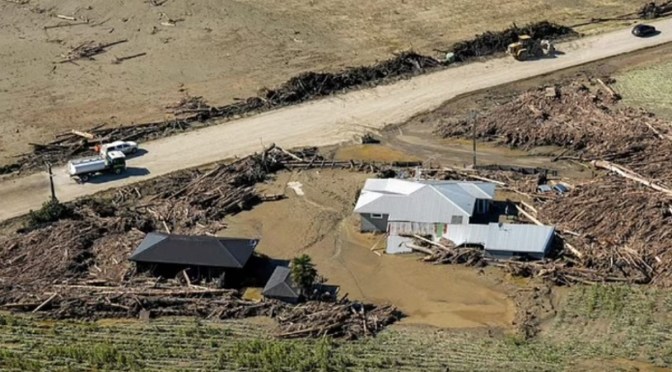
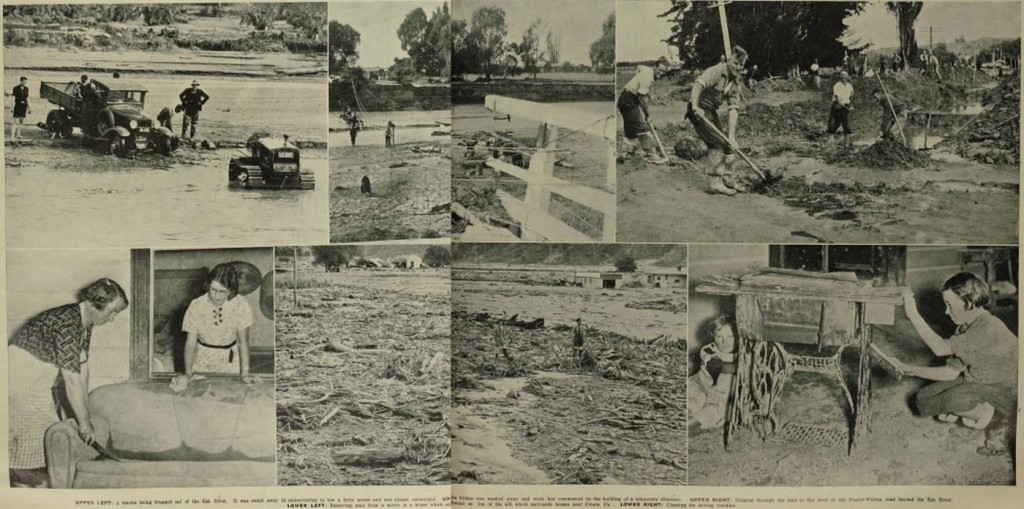
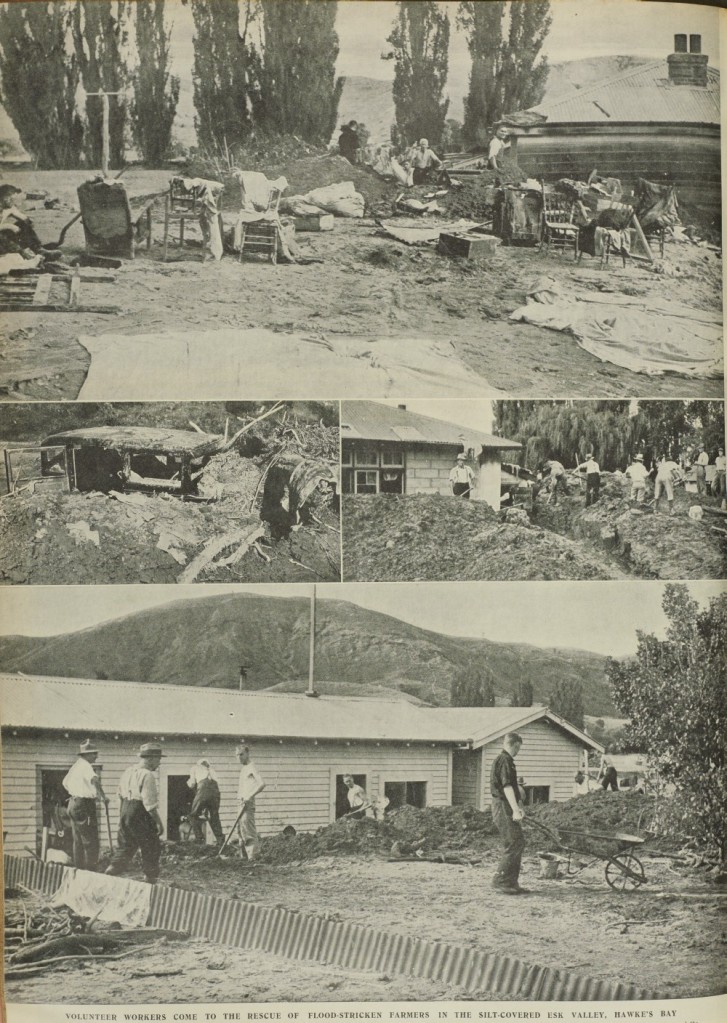
WEF is recommending ‘Managed Retreat’ for Hawke’s Bay

As I type, NZ is warning of yet another orange rain warning for Hawke’s Bay.

The WEF recently cited Hawke’s Bay (with all that recent flooding) for ‘managed retreat’ a new fancy name for relocating you, a name that as always with the globalists, is designed to keep your eyes off their real intent. Into the (not) ‘Smart Cities’ you go. We must ‘build back better’. Yeah right.

Have you cottoned on yet? It’s sustainable development for us (electric vehicles, eating bugs and so on) … whilst they continue to fly to Davos in private jets. No bugs on their menus. Charles takes his own food, organic at that. All that talk about owning nothing is for us not them.

This all is why they have been working to shut down small rural communities for decades. I watched it first hand. It is why roads are in a state of continual disrepair. Plans for the East Coast have been percolating for quite a long time.

Calling out the climate change hoax, (courtesy of weather manipulation tech) designed specifically to usher in the New World Order.

READ MORE

Robert Deutsch: EMFs Steer Another Potentially Destructive Weather System Towards New Zealand

Thanks to Clare Swinney for the weather updates. Batten down the hatches!

Clare Swinney's avatarNORTHLAND NEW ZEALAND CHEMTRAILS WATCH

The aggressive use of weather modification technology continues. Be prepared. A storm front is heading for New Zealand and as Robert Deutsch shows in the first few minutes of this video, it appears to be a cyclonic system that was steered in our direction using massive beams of electromagnetic radiation and a multitude of atmospheric aerosols deployments.

Robert Deutsch uses his personal knowledge and screen shots from Windy.com, http://www.bom.gov.au/, and MIMIC TPW (http://tropic.ssec.wisc.edu/real-time/mtpw2/product.php?color_type=tpw_nrl_colors&prod=ausf&timespan=24hrs&anim=html5), among other sources, to provide a disturbing picture of what is predicted to occur over this weekend around New Zealand. It is weather that will suit the goals of the World Economic Forum…

In this video, Deutsch is again asking for Kiwis to use litmus paper to test their rainwater and advise him of their results. When doing this, bear in mind that while pure distilled water has a pH of 7.0, which is ‘neutral’, unpolluted rainwater…

View original post 172 more words

Center of Storm Approaching NZ Had 90-Degree Angles

Clare Swinney's avatarNORTHLAND NEW ZEALAND CHEMTRAILS WATCH

Today, using satellite imagery of water vapour, WeatherWatchTV‘s meteorologist, Philip Duncan, pointed to the center of the low pressure system over the Tasman Sea, which is approaching New Zealand. While it clearly has an angular appearance, as the screenshot below shows, Duncan remained tight-lipped about it. This phenomenon can not be explained away as a ‘natural’ or a ‘normal’ occurrence and is probably evidence of strategic manipulation using weather modification technology.

See the report here:

Possibly related:

Former Chief Meteorologist at KTKA-TV, Scott Stevens, of the now archived website Weatherwars.Info, wrote of the appearance of clouds with straight lines in 2004:“The oddest clouds, the most altered clouds, are found under the westerlies-the steering currents that drive our weather at these latitudes.” Look at the archived Weatherwars.Info at the WaybackMachine for more examples of strange clouds in conjunction with an interpretation of what is occurring, from a…

View original post 41 more words

There’s an Even Worse Poison than 1080 – It’s Brodifacoum

by Tony Orman

Government use of 1080 poison in New Zealand is controversial and seems to command the headlines ahead of other poisons.

But there is a much worse poison – it is called brodifacoum.

Brodifacoum is widely used by regional councils and government agencies such as the Department of Conservation. Typical of its widespread use is Ulva Island near Stewart Island where the Department of Conservation is currently undertaking rodent eradication.

I have come across brodifacoum poisoning notices in the central North Island when trout fishing, accompanied by my Labrador dog. In one case I asked a farmer why the regional council was using brodifacoum for possums. He didn’t know and added that possum numbers were very light anyhow.

Because of the extreme danger to my dog, I didn’t go fishing. Besides, trout fishing a river into whichever toxic baits will have fallen or on the banks, doesn’t make for an enjoyable day’s fishing! 

Such cavalier attitude of regional councils – and the Department of Conservation – belies the lethal nature of brodifacoum.

Comparison

How does it compare to 1080?

Both poisons have a ”withholding period” which means a time must elapse after the toxin’s use before stock can be safely grazed or game animals such as deer, taken for home consumption.

The Ministry of Primary Industries stipulates 4 months for 1080 poison. For brodifacoum it is 3 years i.e. 36 months after poisoning.

The extensive withholding time for brodifacoum is due to its known long-term persistence in the environment and animal bodies.

Brodifacoum warning notices by a King Country trout stream – photo Tony Orman

What is brodifacoum?

Brodifacoum is an anticoagulant, which causes the animal to die slowly and painfully from internal bleeding. As cruel as death over two or three days is by 1080, by brodifacoum it is far more prolonged, in the case of rats within 4 to 8 days and larger animals such as possums, up to 21 days.

1080 requires a user to have a licence to use the toxin but no licence is needed for brodifacoum, for example rat poison sold over shop counters, to anyone, young or adult with no controls whatsoever.

Secondary Poisoning

Brodifacoum and 1080 have another similarity, called “secondary poisoning”. In other words a dead poisoned animal remains toxic and any bird or other creature scavenging the dead body, takes in poison and dies.

Scientists C.T. Eason and E.B. Spurr in 1995 in a study “The Toxicity and Sub-lethal Effects of Brodifacoum said insectivorous birds (e.g. bush robins, fantails) are likely to be exposed to brodifacoum by eating invertebrates that have fed on toxic baits; i.e., they are likely to be at risk from secondary poisoning. Predatory birds (especially the Australasian harrier, New Zealand falcon, and morepork) might also be at risk from secondary poisoning by eating birds, small mammals, or invertebrates that have fed on toxic baits.

Predators are greatly at risk. Both poisons are very slow to kill, and especially so with brodifacoum. An animal be mouse, bird or insect, on taking the poison, slowly dies and in its distressed, weakening state, naturally and quickly attracts the attention of predators among them native birds such as bush falcons, hawks, moreporks, pukekos and wekas.

Bush robins are at risk from brodifacoum – photo Tony Orman

Ecological history is littered with instances following poisoning.  For example  scientists Eason and Spurr said the “entire weka population on Tawhitinui Island, Pelorus Sound, Marlborough Sounds was exterminated mainly by direct consumption of rat bait (Talon) intended for ship rat control.”

The two scientists said “indigenous New Zealand vertebrates most at risk from feeding directly on cereal-based baits containing brodifacoum are those species that are naturally inquisitive and have an omnivorous diet (birds such as weka, kaka, kea, and robins). The greatest risk of secondary poisoning is to predatory and scavenging birds (especially the Australasian harrier, New Zealand falcon, southern black-backed gull, morepork, and weka)”

The duo added “the risk from brodifacoum will be at its greatest when saturation baiting techniques, such as aerial sowing, are used in eradication programmes.” Such as Ulva Island where DoC is “aerially sowing” brodifacoum.

Seven years later in 2002, Spurr and Eason along with two other scientists produced a study “Assessment of risks of brodifacoum to non-target birds and mammals in New Zealand”.

The quartet of scientists described brodifacoum as “highly toxic to birds and mammals” and listed victims such as the Australasian harrier (Circus approximans) and morepork (Ninox novaeseelandiae), other native birds such as the pukeko (Porphyrio melanomas), weka (Gallirallus australis), southern black-backed gull (Larus dominicanus), and kiwi (Apteryx spp.) and introduced mammals, including game animals e.g. deer.

Dead Dotterels

Other studies have identified the lethal nature of brodifacoum.

Landcare Research scientist Penny Fisher said “because brodifacoum persists in the environment, other birds may suffer secondary poisoning from eating animals that have ingested poison” and cited “a high mortality of New Zealand dotterels following an aerial brodifacoum operation at Tawharanui Regional Park in North Auckland, in 2004. At least 50% of the dotterels in the area at time of operation disappeared or were found dead. Sand-hoppers-common food item of NZ dotterels —ate baits and accumulated brodifacoum and provided a potential route for transmission of the toxin to dotterels.”

Two dead eels found in a Southland waterway had brodifacoum in the gut contents of one and that “suggests the eel had recently ingested food containing brodifacoum, probably through scavenging the carcass of a poisoned possum.”

Freshwater Residues

Brodifacoum similar to 1080, leaves residues.

In 2005 a paper in the New Zealand Journal of Marine and Freshwater Research, Volume 39, told of freshwater crayfish (koura) with significant 1080 concentrations and 1080 residues in eel tissue that were on average 12 times higher than the PMAV (provisional maximum acceptable level).

The INTERNATIONAL PROGRAMME ON CHEMICAL SAFETY Health and Safety Guide No. 93 said of brodifacoum “as a technical material — is highly toxic for fish”.

Processing poisons for wild animal control/eradication is Orillion a State Owned Enterprise governed through a Board of Directors appointed by the New Zealand Government. Orillion’s safety data sheet for brodifacoum says “may cause long lasting harmful effects to aquatic life.”

Therein lies a threat to not only valued sports fishes such as trout and juvenile salmon migrating downstream to sea, but also native fish such as eels and galaxids.

Sodium fluoroacetate, also known as compound 1080, is the poison around which controversy swirls. Brodifacoum is little known but is surreptitiously used by the Department of Conservation and councils.

1080 is ecologically destructive and damaging to the ecosystem – but brodifacoum is far worse.

Footnote: Environmentalist Tony Orman has spent a lifetime in the outdoors and has had some two dozen books published among them “New Zealand the Beautiful Wilderness”

Header Photo: Wikipedia – By Squidonius – Own work, CC BY-SA 3.0, https://commons.wikimedia.org/w/index.php?curid=17253187

The NZ Government has been in secret talks to progress the allowing of GE seeds to be imported and sold in NZ

From GE-Free New Zealand

Secret Talks to Allow GE Seeds Without Regulation Threatens NZ Farmers

Canadian Agriculture Minister Marie-Claude Bibeau has approved the adoption of Gene Edited (GE) seeds without any regulation, health or safety assessments, traceability or liability and only voluntary disclosure. The deregulation of GE seeds includes the U.S., Japan, Australia, Argentina and Brazil, as cited by National Newswatch Canada. [1]

The article indicates that the New Zealand Government has been in closed door talks to “progress allowing GE seeds to be imported and sold in New Zealand, the UK and the European Union”.

“GE Free NZ has written to the Minister to clarify if this statement is correct,” said Claire Bleakley, president of GE Free NZ. “If this is true, the Government has breached its “duty of care” and opened up dangerous economic and safety issues that GE regulation protects, through these secret talks.”

The agreement threatens to destroy the important point of difference that has benefited our economy and exports from Aotearoa New Zealand to the world based on our world-leading standards for clean, safe, natural, GE Free and organic food.

Gene Editing has been around for only 10 years. The GE seeds have not undergone any long term environmental or health safety testing, even though laboratory studies have shown deleterious mutations and altered gene function called “off target effects”. [2]

This is a direct threat to New Zealand exporters who sell their products as non-GMO.

“This is killing the goose that lays the golden egg for New Zealand exports,” said Jon Carapiet, spokesman for GE Free NZ.

Consumers want certainty around food safety and the choice to avoid the unknown environmental and health effects of GE. New Zealand exporters can guarantee that all products are GE Free and and underpins our economic wellbeing.

Un regulated, Untested and unlabelled novel GE products betrays consumers at home and abroad and destroys the integrity of the food system to produce organic and GMO-free food.

This adds to concerns of excess pesticides in the environment and in foods that negatively impact people and natural ecosystems.

The Government must be called to account as to why they have led secret talks into the deregulation and release of GE without public consultation.

References:
[1] https://www.nationalnewswatch.com/2023/05/08/organic-groups-not-happy-with-gene-edited-crops-decision/#.ZFspRy1h39A
[2] https://www.gefree.org.nz/documents/advanced-gene-editing-technologies-gmo-2-0/
Ends:
Jon Carapiet- spokesman 0210507681
Claire Bleakley – president – 027 348 6731/ 06 3089842

For other articles with a health focus go here.

Image by Gerd Altmann from Pixabay

Spotlight Again on World’s Most Widely Used Weed Killer, Defended as Always by the Chemical Companies

Clean Green NZ of course loves glyphosate. A well used Ag text book called Pasture Doctor advocates spraying the fields which stock will graze on. Try and tell NZ farmers it’s a likely carcinogen (as close as the authorities will get to describing it as dangerous) … they don’t want to know. Read our Glyphosate pages and articles, particularly the work of Prof Séralini. EWNZ


From sustainablepulse.com

It’s been a little over five years since I last visited Brussels, Belgium as an invited guest of the European Parliament to testify about my 20 years of researching and reporting on the world’s most widely used herbicide – glyphosate. The chemical is best known as the active ingredient in Monsanto’s Roundup brand.

Source: UnSpun By Carey Gillam

The Parliament subsequently voted to ban glyphosate, and the European Commission only narrowly missed confirming that sentiment when Germany’s agriculture minister contradicted German leadership by casting the deciding vote that kept glyphosate on the market. (A few months later German-based Bayer bought Monsanto. Just a coincidence, right?)

But the renewal came with a caveat – the license would be reviewed again after five years, and that is where the European Union sits now, once again locked into a debate over both the safety of glyphosate and what the agricultural industry says is the necessity of glyphosate.

So here I am again – back in Brussels as a new vote looms later this year. The battle lines are drawn as they always seem to be: independent scientists, health advocates and environmentalists are advocating for a ban based on evidence the chemical can cause cancer and other health problems, while the chemical companies that profit from glyphosate sales and industry-backed farm groups are pushing for continued uninterrupted use, saying the concerns lack valid science and that glyphosate is essential to agriculture.

I was fortunate to be invited back to Brussels as part of a group associated with a new, award-winning documentary film called Into the Weeds, which presents many of the grim details laid out in my two books (Whitewash and The Monsanto Papers). The saga is one of corrupted regulators that favor corporate science over independent research; the overwhelming amount of independent scientific evidence tying glyphosate to myriad health and environmental harms; and the devastation wrought on countless human lives. (Disclosure: Filmmaker Jennifer Baichwal bought the documentary rights to the books and lists me in credits as “story consultant.”)

The film screened Wednesday evening in Brussels to a packed house; earlier our group spent time at the European Parliament, the EU’s lawmaking body.

A “crucial” time

The screening coincided with #STOPGlyphosate Week, a campaign by various environmental groups, including Pesticide Action Network Europe.

In an address opening the film, Anja Hazekamp, a Member of the European Parliament (MEP) who supports a glyphosate ban, said the next months will be “crucial.” She called on the European Commission to “finally start protecting humans, animals and the environment.”

“Despite all the evidence that glyphosate is a threat for the health of animals, humans and the environment, the European Commission keeps reauthorizing this terrible pesticide,” Hazekamp said. “At the end of this year the European Commission will finally make a long-term decision on glyphosate, and it is therefore of paramount importance that the facts presented in this documentary are finally taken on board by the European Commission and the other policy makers.”

Accompanying the film to Brussels was scientist Chris Portier, a former director of the National Center for Environmental Health at the US Centers for Disease Control and Prevention, and a former director of the Agency for Toxic Substances and Disease Registry. Prior to CDC, Portier was with the National Institute of Environmental Health Sciences where he served as director of the Environmental Toxicology Program.

Glyphosate Box

Glyphosate Residue Free Certification for Food Brands – Click Here

Test Your Food and Water at Home for Glyphosate – Click Here

Test Your Hair for Glyphosate and other Pesticides – Click Here to Find Our Your Long-Term Exposure

Portier participated as an expert during the World’s Health Organization’s cancer agency review of glyphosate in 2015 that classified glyphosate as probably carcinogenic to humans.

In Brussels he told attendees to the film screening how regulators repeatedly have bent the rules to ignore or twist scientific findings in ways that allow them to keep glyphosate on the market. He reiterated what he has said countless times – that extensive scientific evidence ties the chemical to cancer. Portier has been an expert witness for plaintiffs in multiple lawsuits against Monsanto brought by people alleging they developed cancer due to Roundup exposure.

More than a cancer concern

Also speaking in Brussels as part of the group supporting the film was scientist Daniele Mandrioli, coordinator of research on glyphosate at the Ramazzini Institute of Bologna, Italy.

Mandrioli said new research results show various harmful health effects from glyphosate exposure at levels currently considered to be safe by European standards.

Mandrioli told members of the European Parliament that the ongoing “Global Glyphosate Study” has recently confirmed in humans prior alarming findings found in animals – that glyphosate can have disruptive effects on sexual development in newborns. Among the observations were disruptions to the endocrine system, including increased testosterone levels in females exposed to glyphosate. The researchers found an “elongation of anogenital distance, which anticipates different potential problems” correlated with hormone imbalance in newborns that could impair development, Mandrioli said.

As well, glyphosate exposure at doses considered safe trigger alterations in the microbiome, impacting beneficial gut bacteria and fungi at doses considered safe.

“When disrupted, many metabolic conditions, many diseases, have been connected with these alterations,” Mandrioli said in a press conference before meetings at Parliament. The evidence is “solid,” he said.

“We are providing evidence for the all the global population,” he said.

Also in Brussels with our group was Dewayne “Lee” Johnson, the California groundskeeper who sprayed large quantities of RangerPro, a highly concentrated version of Roundup, and who became the first plaintiff to win a court case alleging the glyphosate-based products cause cancer. I chronicle Johnson’s battles – against cancer and against Monsanto – in my second book, and his story is featured in the new film.

Johnson shared his experiences with Parliament members and in a panel discussion after the film, urging action to protect people from having to endure the injustice that comes with cancers that could be prevented.

It is a miracle of modern medicine that Johnson, the father of two teenage sons, is still alive. Before the 2018 trial against Monsanto, doctors told him he would certainly be dead within 18 months. When I first met him several years ago, he was in near-constant agony as cancerous lesions covered his entire body, and even the slightest movement of clothing across his fragile skin burned like fire. He told me then that he was determined to outlive his dire diagnosis, and so far, through a combination of regular radiation and chemo treatments, Johnson has thwarted death just as he thwarted Monsanto’s efforts to beat his argument that exposure to the company’s weed killer caused his disease.

Still, he has lost too many days and nights – years – struggling through immense pain and fear, and with the knowledge that his family lives with the fact that they could lose him all too soon. His story is heart-breaking, noted by the tears shed in the audience at the screening Wednesday night.

But he is only one of too many who have suffered and continue to suffer.

In the months ahead, Europe has a chance to change that.

SOURCE

The Plan (REPORT FROM IR0N MOUNTAIN)

If you learn the plan you can make sense of what is happening now. This little known report from 1963 explains for instance why we have wars. Or rather, why ‘they’ must have continuing war. WW3 will be the last as wars will no longer be necessary. By then the world will all be under tight control. Sounding familiar?

WATCH BELOW OR READ THE DOCUMENT ITSELF (LINK HERE)

For articles with a health focus go here

Image by Jerzy Górecki from Pixabay

And Then They Came for the Books…

From Truthstream Media

A look inside what is happening with digitized books and who can access them. There’s clearly more to the quiet disappearance of hard copies than meets the eye. Brilliant research as always by Truthstream Media.

WATCH AT THE LINK:

For articles with a health focus go here

Image by Rafael Juárez from Pixabay

The importance of phosphate in your garden (Wally Richards)

Phosphorus stimulates budding and blooming. Plants need phosphorus to produce fruits, flowers, and seeds. It also helps make your plants more resistant to disease.

Phosphorus helps plants gain more energy from sunlight and with cloudy, hazy skies we are seeing too often; plants need all the advantages possible to gain energy from sunlight.

Phosphorus doesn’t dissolve like nitrogen. The soil will hang onto phosphorus, not releasing it into water.

Phosphate is needed by all life forms but if taken in too greater quantities it becomes harmful.

In the distant past phosphorus was obtain from manures especially bird or bat droppings called guano.

Phosphorus is also obtained from Reactive Rock Phosphate which is a hard phosphatic rock. In most soils it dissolves very slowly.

To make the rock phosphate more readily available to plants man discovered a process of using sulfuric acid early in the 1900’s, and a new agricultural fertiliser was created called Super or Super Phosphate.

It became a boon to agriculture and farming with tons of Super been spread to cause fast growth in fields and crops.

Unfortunately like a number of discoveries such as DDT and Asbestos, there was a hidden price to pay. Super phosphate kills soil life because its acidic and with their demise leads to unhealthy plants.

Not only that, it was also found that Super laden plants and grasses caused health problems in stock including cancers.

I read a very interesting book years ago called ‘Cancer, Cause and Cure’ written by an Australian farmer, Percy Weston.

Percy observed the results of the introduction of Super on his farm and the Malays that occurred.

For many years now I have not used any chemical fertilisers or chemical sprays including any herbicides anywhere on my property.

For a while I noticed, that even though I obtained good healthy crops and plants, there was some factor that appeared to be missing and the crops are not as lush as I felt they could be.

I often thought that I am not getting sufficient phosphorus in my composts and mulches.

This caused me to do a bit of research on the Internet and found to my delight a company in New Zealand called Sieber Technologies Ltd who make a product called BioPhos.

They take the reactive rock phosphate and break it down naturally with micro organisms making it as readily available to plants as Super is.

The company sent me a email booklet and it showed trials that proved that not only did BioPhos work as well as Super, but actually better as it did not have a ‘peak’ growth on application

 and gave a much longer sustained release of phosphorus to plants.

Instead of killing soil life it actually supplies new micro organisms to the soil which carry on breaking the natural phosphorus down, meaning that only one application is needed per year unless you are cropping during the winter as well.

Some rose growers and rose societies recommend using BioPhos for better, healthier roses.

BioPhos contains phosphate, potassium, sulphur and calcium at the rates of P10:K8:S7:Ca28.

BioPhos is Bio Certified for organic growing.

It is pH neutral and used at the following rates; New beds work in 100 grams per square metre, the same with lawns but water in to settle.

Side dressing plants; seedlings 8 grams (a teaspoon ) around base of the plant or in the planting hole. Same for potatoes (which do well with phosphorus) Sowing beans peas etc sprinkle down row with seeds.

Roses and similar sized plants 18 grams or a tablespoon full around plant or in planting hole.

Established fruit trees etc, spread at the rate of 100 grams per square metre around drip line or where feeder roots are. Apply to vegetable gardens in spring and a further application in autumn if growing winter crops.

Can be applied to container plants also.

Apply to tomatoes when planting or side dress existing plants.

A number of gardeners over the years have obtained BioPhos and applied it around their gardens; then a few weeks later many have phoned me to say what a big difference the product has made to their gardens.

I presume one of two things has happened or maybe both of the following:

The gardens and plants were lacking in phosphate and the introduction of it gave a noticeable difference to the plants.

Or the plants were able to obtain more energy from the sun and hence creating a growth spurt.

BioPhos is a must for root and bulb crops such as potatoes, carrots and garlic.

I have now completed a third session of gardening with Rodney Hide which likely aired this coming week then available after that on replay at…..

https://realitycheck.radio/replays/real-talk-show-replays/

THIS WEEKS SPECIAL:  BIOPHOS  two 1.3kilo pouches for $30.00 free shipping (No PO Boxes or outer Islands) Saving you $8.00 shipping costs Normal one 1.3 pouch is $15.00 plus $8.00 shipping total $23.00

or out big 10kilo bag for $38.00 and free shipping saving you $16.00 shipping North Island or $19.00 shipping South Island (No PO Boxes or outer Islands)
That is into a carton for shipping and you could add a few more non bulk items into the same carton.

Order on our Mail Order Web site at http://www.0800466464.co.nz/

In Plant Nutrition area..


In Remarks please state This Weeks Special..
Phone 0800 466464
Garden Pages and News at www.gardenews.co.nz
Shar Pei pages at  www.sharpei.co.nz
Mail Order products at www.0800466464.co.nz


New Zealand Bill of Rights Act 1990. Part II of the Act covers a broad range of Civil and Political Rights. As part of the right to life and the security of the person, the Act guarantees everyone:

1The right not to be deprived of life except in accordance with fundamental justice (Section 8)

2The right not to be subjected to torture or to cruel, degrading, or disproportionately severe treatment or punishment (Section 9)

3The right not to be subjected to medical or scientific experimentation without consent (Section 10)

4The right to refuse to undergo any medical treatment (Section 11)

 Furthermore, the New Zealand Bill of Rights Act 1990 guarantees everyone: Freedom of Thought, Conscience, and Religion.
This includes the right to freedom of thought, conscience, religion, and belief,
INCLUDING THE RIGHT TO ADOPT AND HOLD OPINIONS WITHOUT INTERFERENCE (Section 1)

For more articles & with a health focus go here

Image by Annette Meyer from Pixabay


Facebook Censors Climate and Atmospheric Science Journal Study on Antarctica

stuartbramhall's avatarThe Most Revolutionary Act

By Paul Homewood

[Ed: Interesting the factcheckers cite a USA Today article to counter a peer-reviewed scientific journal]

This post came up on my Facebook today:

image

https://www.facebook.com/william.dunn.1238/posts/pfbid036joG1b82T95G59BVS3uTQT1wYL26XMEBFVyMWto8CdzfBhTWBQ7YecGyr9GREWxol

When you click on SEE WHY, this comes up:

image

And this is the story the Facebook censors don’t want you to see:

May be an image of arctic and text that says "ANTARCTICA JUST SET NEW EW COLD RECORD 35° F BELOW ZERO ANTARCTICA HASN'T WARMED IN 70 YEARS 10000oaks.com"

Quite why Facebook would want to rely on the USA Today for its source of science is a mystery. Perhaps they should have actually checked what real scientists are saying:

image

Abstract

The Antarctic continent has not warmed in the last seven decades, despite a monotonic increase in the atmospheric concentration of greenhouse gases.

In this paper, we investigate whether the high orography of the Antarctic ice sheet (AIS) has helped delay warming over the continent. To that end, we contrast the Antarctic climate response to CO2-doubling with present-day orography to the response with a flattened AIS. To corroborate our…

View original post 151 more words

Meet King Charles, The Great Resetter (Corbett)

From corbettreport.com
Watch at the link, transcript included.

While most of the the public’s attention is falling on the obvious issues—the monarchy’s increasing irrelevance to the 21st century, the colossal waste of taxpayer resources that go towards the upkeep of the world’s richest family and their multiple palaces, the dark history of slavery and other colonial abuses for which royals of the far-distant past are responsible—few are aware of just how dark the history of the royal family is, or just how twisted Charles’ vision for the future of the United Kingdom—and, indeed the world—really is.

WATCH AT THE LINK

Photo: screenshot, corbettreport.com

The Royals Deal Extensively in $17 Trillion Depleted Uranium Trade – Enough Money to End World Hunger

What a farce is the so called royal, fiasco. I’m finding it somewhat nauseating this week, listening to half of Christendom fawning at the feet of a family they consider godly leaders, but that clearly condones pedophilia and thinks nothing of profiteering from the death industry aka weaponry. To the tune of seventeen trillion pounds, as noted, in the article below, enough to end world hunger. If you weren’t aware, see what DU does to the unborn next generation. In light of those thoughts I’m posting again the info on their said investments. Granted it is from 2014 but I doubt anything has changed…do watch the latest Corbett Report on topic. EWR


From namastepublishing.co.uk

Many people are wondering what really caused Fukushima. While we can look into the geologic studies that were taken prior to the Daiichi event, outlining the active 200 meter fault line that Honshu Island rests right on top off, we are obliged as citizens to look even deeper, more so with the admission of an anonymous U.S. government nuclear official that radiation leaking from the plant just 100 meters away is “astronomical.”

Uranium can be mined for some medical purposes and to make electricity, but its main purpose was and is to fuel nuclear warfare against the world. Just six mines provide 85 percent of the world’s uranium and guess who owns the mineral rights to that land?

It may be surprising to realize it is none other than the Queen of England.

She is not alone in her fear-mongering. Our own government has helped to perpetrate warfare using this substance well before Fukushima. U.S. government officials still insist that the use of depleted uranium in missiles, shells, bullets and armor plating did not contribute to Gulf War Syndrome. And the Rand Corporation helped to promote that lie.

The truth of the matter is that the Queen is sitting on $17 trillion pounds of uranium investments—enough money to end world hunger, fuel the world’s energy needs with non-nuclear, clean sources and definitely stop the poverty in her own country. Draconian laws have been passed both in the U.K. and in the U.S. to protect nuclear energy.

Help us speak truth to power. Donate what you can afford to support NationofChange.

In the U.S., we are subject to the Energy Reorganization Act of 1974, which was put forth by nuclear energy companies and supported by theNuclear Regulatory Commission and the Department of Energy.

There is an extensive list of laws governed by regulatory and institutional agencies that uphold nuclear energy in the U.K. as well.

Since the presidency of George W. Bush and prior, utilizing United Nations weapons inspectors, we have engaged in the fleecing of Middle Eastern and African countries for their uranium deposits. Africa, specifically, has been raped by the warmongering Monarchy.

Nuclear radiation expert Jay M. Gould told the world the about the extent of this combative totalitarianism in his book, “The Enemy Within: the High Cost of Living Near Nuclear Reactors” that the British royal family, especially the Queen herself. She privately owns investments in uranium through Rio Tinto Zinc., the mining company, originally named Rio Tinto Mines. Ronald Walter Rowland, the Queen’s “buccaneer,”allegedly created this entity for the British Royal family in the late 1950s.

Furthermore, without the book “Royal Fortune,” which led to royal palace scrutiny, nobody would have known about the Queen’s Civil List “surplus.” The £35 million would have followed centuries of Civil List surpluses into the royals Swiss accounts. This is where she hid her uranium investments and the spoils of her ultranationalist, perhaps anti-human agenda….

Source:
http://www.nationofchange.org/queen-england-deals-extensively-depleted-uranium-trade-1393604116

Photo:SAC Matthew ‘Gerry’ Gerrard RAF/© MoD Crown Copyright 2016, OGL v1.0OGL v1.0, via Wikimedia Commons

Bill Gates discusses ‘intentionally caused’ virus outbreaks, playing us again as he and his billionaire friends ‘predict’ a collapse of our food supply

A timely revisit (remember this was right on the eve of the plandemic) so they’ve since paid farmers in various places to plow under their crops & food production plants have mysteriously burned down … still think the plague was accidental? still think the ‘treatment’s’ safe & effective?

Pam Vernon's avatarEnvironmental Health Watch NZ

A collapse of our food supply, note, not theirs. They are busy preparing their bolt holes and places of refuge for when the SHTF. These are the ‘sustainable’ lie people who pledged their plan would make things better on planet earth.

A video here from Ice Age Farmer on Youtube. If you listen at 4 minutes in you will see Bill Gates (current promoter of depop via his $$$vaccines) telling us about an epidemic … ‘either naturally caused or intentionally caused’ … so they play us some more. Firstly we have the NZ vaccinologist with her supposed slip of the tongue, a 27 years prior pandemic prediction by the Simpsons, a book with a prediction of the same some 39 years prior and now we have Bill with ‘intentionally caused’ pandemics. I’m not making this up. Please do watch the entire video, it contains important information.

See the curious…

View original post 432 more words