

I wonder, is the new Hawke’s Bay crop going to be pine trees? RNZ reports that “since 2020, IKEA has converted six Central Hawke’s Bay farms into pine forestry, which they believe makes them the largest forestry owner in the district.”
Continue reading Now McCain is sticking it to New ZealandersCategory Archives: Corporations
About corporations
Kraft Heinz sticking it to New Zealanders
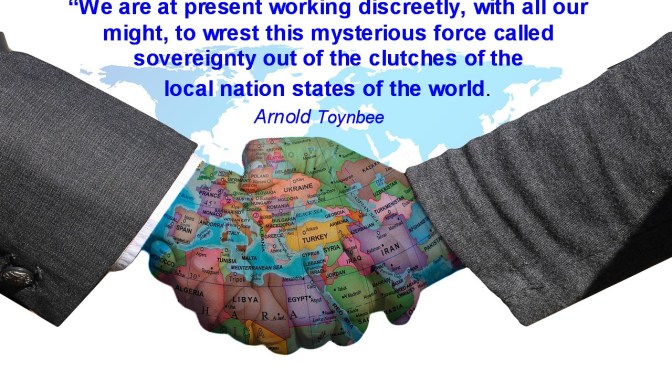
As has been pointed out here many times, the plan is to make us interdependent. The global village (that really isn’t). And right now that is becoming more obvious as the war grinds on. We once were fully self sufficient but as Arnold Toynbee said in 1931:
“We are at present working discreetly, with all our might, to wrest this mysterious force called sovereignty out of the clutches of the local nation states of the world. And all the time we are denying with our lips what we are doing with our hands.”
The New Normal—health Services Are Forming an Alliance With Big Pharma and Big Tobacco
By Guy Hatchard
In our article “Some Hard Sobering Truths Are Beginning to Sink in” we reported that Health Services in highly vaccinated countries are beginning to realise that more people are falling sick than ever before.
Continue reading The New Normal—health Services Are Forming an Alliance With Big Pharma and Big Tobacco
Why in 2018 were the heads of NZ’s Dept. of Conservation & Hong Kong’s Goldman Sachs touring parts of Fiordland in a six-helicopter entourage?
“What were the heads of DoC and the ‘bank that rules the world’ out purveying pristine South Island sights for? And what does Goldman Sachs have to do with the conservation of NZ’s flora and fauna? As we found out last century, the predatory funding of the banking fraternity comes with conditions. Doesn’t bode well in my opinion.”
Continue reading Why in 2018 were the heads of NZ’s Dept. of Conservation & Hong Kong’s Goldman Sachs touring parts of Fiordland in a six-helicopter entourage?
As you shop this Christmas, a History of Successful Boycotts & the impact they can make
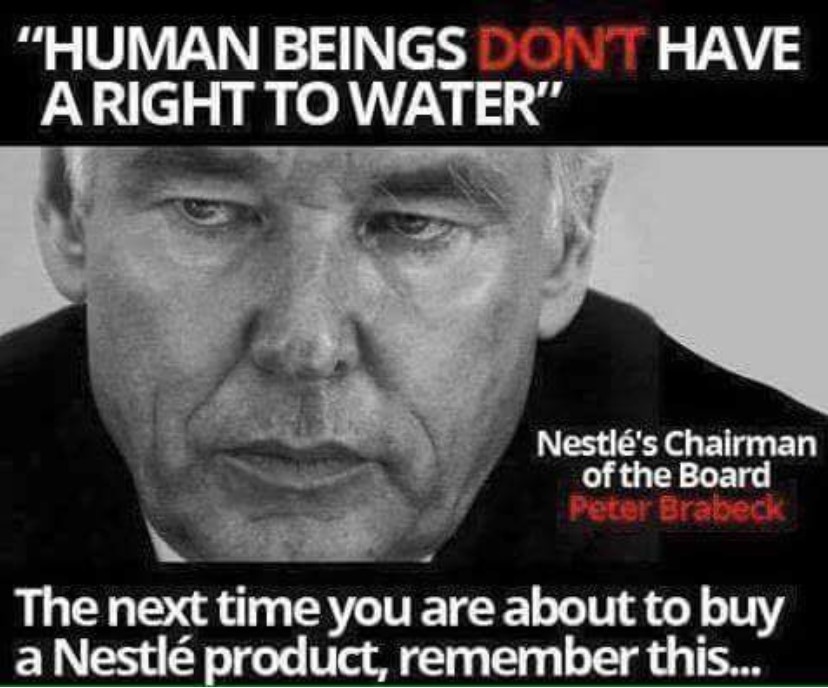
On topic with Christmas shopping in full swing. One to boycott is Nestlé whose ‘good neighbour’ policy deems that human beings don’t have a right to water. You can read more articles on Nestlé here. It features in the article below also.
The article below is from ethicalconsumer.org
History of Successful Boycotts
These examples of successful boycott calls show the big impact this campaign tactic can have.
Campaigners have long used boycotting as a tactic to help them achieve their goals. It’s helped create progress around issues like racial justice, human rights and fair treatment of other animals.
This list contains examples of companies changing their practices following a boycott campaign. However, it’s worth noting that companies rarely confirm whether their decisions to change their activities were a direct result of campaigners’ efforts.
Historical boycotts
Boycotting as a campaigning technique has a long history.
One of the earliest examples of a successful campaign was the boycott in England of sugar produced by slaves. In 1791, after Parliament refused to abolish slavery, thousands of pamphlets were printed encouraging the boycott. Sales of sugar dropped by between a third and a half. By contrast sales of Indian sugar, untainted by slavery, rose tenfold in two years. In an early example of fair trade, shops began selling sugar guaranteed to have been produced by ‘free men’.
Perhaps the most famous boycott was against South Africa in opposition to the apartheid. South African exiles and their supporters called for a boycott of products from South Africa in 1959 – in protest against the racial segregation enforced by white colonial politicians and discrimination and violence against Black people in the country. The boycott initially focused on fruit and vegetables, but later targeted chains like Marks & Spencer and Next – causing some companies to pull South African products from their shelves. For the next 35 years, the boycott was a central part of the anti-apartheid campaign. After decades of grassroots organising – as well as pressure from international leaders – apartheid was ended in 1994.
The Alabama bus boycott is another famous historical example. In 1955 Rosa Parks refused a bus driver’s order to leave a row of four seats in the “colored” section and move to the back of the bus after the white section had filled up. Her defiance sparked a successful boycott of buses in the area, with residents instead carpooling, riding in Black-owned cabs, or walking, some as far as 20 miles. It caused the bus company’s profits to crash, as dozens of public buses stood idle for months. The company lost between 30,000 and 40,000 bus fares each day during the boycott.
Recent examples of successful boycott campaigns
The boycotts listed below are presented in reverse chronological order, with the most recent first.
Sabra boycott success – November 2024
In the US, the brand Sabra hummus was owned 50/50 by PepsiCo and The Strauss Group. The Strauss Group is Israel’s second biggest food company and according to the Palestinian Boycott, Divestment and Sanction (BDS) movement it “provides financial support to the Israeli Defense Forces. Palestinian rights campaigners called for a boycott of Sabra since at least 2011. In November 2024 following an intensified period of campaigning against the brand, it was announced that The Strauss Group was selling its stake in Sabra, leaving PepsiCo as the sole owner of the Sabra hummus brand.
This appears to be a significant milestone/ partial boycott campaign success. However, PepsiCo also owns Sodastream which is subject to a BDS boycott too. It’s worth noting that in the UK Sabra was not owned by Sabra/PepsiCo, but instead by Osem Ltd, an Israeli company which is ultimately owned by Nestle. As Nestle faces several boycott calls, Sabra hummus still features on our list of active boycotts.
AXA boycott success – August 2024
The Stop AXA Assistance to Israeli Apartheid coalition called for a boycott of AXA over its investments in Israeli banks and Elbit Systems (Israel’s largest weapons manufacturer) since at least 2019. According to the BDS movement, over 10,000 people and 230 organisations have signed the pledge to boycott AXA. Among the campaign’s activities include holding an AXA Global Day of Action on 25 April 2022, seeing supporters globally contacting AXA Customer Services to demand the company end its complicity in Israeli apartheid.
On 21 August 2024 the Stop AXA Assistance to Israeli Apartheid coalition shared the news that AXA had sold its investments in all major Israeli banks and Elbit Systems, Israel’s largest military company. While a major milestone for the campaign, it continues to call for a boycott of the company until it fully divests from other complicit companies, and as such AXA still features on our list of active boycotts.
Barclays boycott success – June 2024
Barclays invests over £1bn in arms companies supplying Israel with weapons and military technology. The company’s sponsorship of major music festivals including Download, Latitude, and Isle of Wight was cancelled in June after protests by artists and fans. A spokesperson for Barclays told the Guardian, “Barclays was asked and has agreed to suspend participation in the remaining Live Nation festivals in 2024.
Pret boycott success – May 2024
According to the UK activist organisation Palestine Solidarity Campaign (PSC), in 2022, coffee chain Pret signed a franchise agreement with Israel-based companies and committed to opening 40 stores in Israel over the next decade. In 2024 PSC threatened a boycott of Pret, arguing that “to invest in Israel as it conducts a genocide in Gaza and operates a system of apartheid over all Palestinians was unjustifiable and reprehensible.”
In June 2024 the Grocer reported that Pret has gone back on this agreement, worth millions of pounds, and would not open stores in Israel. Pret cited as the cause for its cancellation of the contract “ongoing travel restrictions” preventing it from conducting the checks and training needed to set Pret up in a new market.
Baillie Gifford boycott success – May 2024
Scotland-based investment firm Baillie Gifford was dropped as a sponsor by multiple arts and literary events in May over concerns that its activities are linked to Palestinian human rights abuses. In 2023 the firm was listed as one of the top 50 European investors in illegal Israeli settlements. Baillie Gifford has investments in companies linked to the Israeli state and illegal settlements, including a travel company, construction company, and US tech company that has Israeli subsidiaries.
Over 700 authors, from Naomi Klein to Sally Rooney, signed a statement by Fossil Free Books (FFB) demanding that Baillie Gifford cease its investments in fossil fuels and companies that profit from “Israeli apartheid, occupation and genocide” and calling for a boycott of the company until that happened. The company’s sponsorship of several literary festivals including the Hay Festival, Edinburgh International Book Festival, and book festivals in Borders, Wimbledon, Cheltenham, Cambridge, Stratford, Wigtown, and Henley festivals were cancelled.
Russia boycott success – April 2024
The Russia boycott gained faster brand buy-in than perhaps any boycott campaign in history. To date, over 1,000 brands have curtailed operations in Russia, from Airbnb to Blackrock and Sainsbury’s.
Following the Russian invasion of Ukraine, on March 7th 2022 Ukrainian President Volodymyr Zelensky called for an international “boycott of Russian exports, in particular the rejection of oil and oil products from Russia.” Subsequently, Ukraine’s Culture Minister called for a boycott of Russia in December 2022. The Yale School of Management continues to track companies that are still operating in Russia.
Twitter/X boycott success – January 2024
Twitter/X has lost half its advertising revenue since Musk’s takeover in 2022, with over 500 advertisers stopping spending on the platform. In 2022, the coalition ‘Stop Toxic Twitter’, composed of around 60 organisations, wrote an open letter asking Twitter’s top 20 advertisers to “cease all advertising on Twitter globally” while the platform failed to take the increase in harmful and inaccurate content seriously, for example by moderating more thoroughly to reduce the amount of these posts on the site.
Read more about other boycott calls of X/Twitter and Tesla.
Puma boycott success – December 2023
The Boycott Puma campaign was launched by Palestinian athletes in 2018 after 200 Palestinian sports clubs sent a letter to the company urging it to end its sponsorship of the Israel Football Association (IFA). The IFA includes teams based in illegal Israeli settlements on Palestinian territories. In December 2023, Puma announced it would not renew its sponsorship of the Israeli Football Association. According to the BDS movement, “Over the course of the 5-year campaign, groups around the world participated in numerous global days of action and occupied PUMA offices and shops. Sports teams, athletes, artists, ended contracts with PUMA and retailers removed its products from their stores… We thank the many groups around the world that worked tirelessly and relentlessly to force PUMA to end its complicity with Israel’s apartheid regime and in its Gaza genocide.”
Read more about the Puma / Israel boycott in our article.
Klook boycott success – August 2023
Global travel company Klook published an animal welfare policy and committed to no longer selling tickets to circuses, shows, performances and photo experiences that featured animals. This followed a boycott campaign by the organisation World Animal Protection (WAP) over the sale of ‘cruel’ wildlife attractions by companies including Klook. WAP said “Though the policy is not perfect, this is a huge win toward ending wildlife cruelty in the tourism industry!”
G4S boycott success – June 2023
The BDS campaign against G4S was launched by Palestinian prisoners’ rights and human rights organisations in 2012. G4S provided services to prisons that held Palestinian political prisoners without trial, who were subject to torture. It also provided various types of services or support to illegal Israeli settlements, the apartheid wall, the Israeli military and police academy.
The campaign pressure led to high profile divestment from G4S by the Church of Sweden, the United Methodist Church, the world’s largest philanthropic organisation Bill and Melinda Gates Foundation, a Kuwaiti investment fund, UN agencies, trade unions, universities, restaurants and more.
In 2016 G4S divested from Israel’s prison system, military checkpoints and illegal settlements which campaigners say was a result of this pressure. It still however held shares in Policity, Israel’s police academy. G4S finally made the commitment in June 2023 to sell these shares, and the BDS movement claims this was linked to pressure from shareholders about Palestinian human rights.
House of Fraser boycott success – October 2022
According to animal rights group Peta, House of Fraser decided to ban the sale of fur across all its brands including Flannels and Sports Direct in October 2022. The campaign group had called for a boycott of the brand, which used fur including from racoons and rabbits, since 2020. Four Paws UK and Humane Society International also supported the campaign, and examples of campaign activities include activists singing “12 Days of Cruelty” outside a store front at Christmas and over 150,000 people calling on the company to drop fur.
Pillsbury boycott success – June 2022
General Mills (which owns brands including Pillsbury) announced it was selling its stake in a company based in an illegal Israeli settlement. The campaign group American Friends Service Committee (AFSC) called for a boycott of Pillsbury in 2020 due to its operating in the Israeli settlement of Atarot, and the UN named the company in its list of companies in violation of Palestinian rights in February 2020.
Air France boycott success – June 2022
Animal rights campaign group Peta announced that Air France would ban the transport of monkeys as soon as its existing contract ended, following a campaign that spanned 10 years. Peta began the boycott call in 2012, and it continued up until 2022 when Air France was the only known major European airline still shipping monkeys to laboratories for experimentation, on journeys that could last over 30 hours.
The campaign involved demonstrations around the globe, on-flight protests, discussions with the company’s leadership, shareholder activism, disruption of executives’ speeches, and bold advertisements like billboards at airports. Celebrities from Dr Jane Goodall to Peter Gabriel got behind the campaign.
MORE BOYCOTTS AT THE LINK
Header image credit: Jakayla Toney on Unsplash
Hugo Chavez – Why America Wants To Attack Venezuela
From Global GeoPolitics @ substack
Succinctly put by the late Hugo Chavez. You could ask, he says, the many other presidents he mentions, but they are all dead.
Click on the image for the video @ substack

RELATED:
Act Of War: Trump Announces Full Blockade Of Venezuela, Finally Admits It’s About Seizing Their Oil
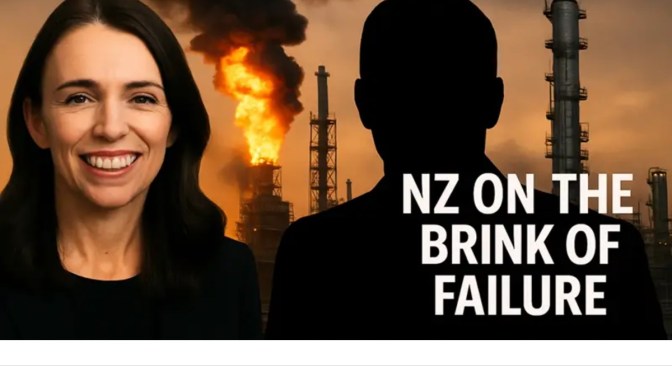
New Zealand’s Refinery Destruction Was Not Policy – It Was Economic Sabotage
From Mykeljon Winckel @ elocal
via Robin Westenra @ seemorerocks substack
New Zealand today stands in the jaws of a recession deeper and more structural than anything we have seen in decades. Businesses are folding. Workers are fleeing. Families are giving up hope. And yet, somehow, among all the noise, one catastrophic act of economic vandalism continues to escape the national reckoning it deserves:
The deliberate destruction of New Zealand’s only oil refinery at Marsden Point.
Not downgraded. Not mothballed. Destroyed — with no replacement, no transition plan, and no economic modelling worthy of the name.
This was not incompetence. This was government-induced economic terrorism against the long-term interests of the New Zealand people.
And it began under Prime Minister Jacinda Ardern.
The Refinery That Anchored a Nation
Marsden Point wasn’t just an industrial site — it was the beating heart of New Zealand’s energy security. Built in 1964, expanded repeatedly, and modernised as recently as 2018 with a $365 million Te Mahi Hou project, the refinery produced:
- NZ’s petrol
- NZ’s diesel
- NZ’s jet fuel
- NZ’s bitumen
- NZ’s chemical feedstocks
- NZ’s industrial gases
- NZ’s fertiliser inputs
It reduced emissions. It added resilience. It protected our sovereignty.
And then, with ideological zeal dressed up as climate virtue, Ardern’s government backed its closure. Not because it was failing — but because Wellington wanted “alignment with global decarbonisation trends,” a phrase now exposed as vacuous marketing gibberish.
The government knew — yes, knew — that New Zealand would become 100% dependent on imported refined fuels. They knew that we would lose:
- 60 days of crude storage, replaced by just 8 days of refined fuel reserves
- All domestic bitumen production
- All domestic jet fuel resilience
- All domestic ability to refine crude in an emergency
They knew a natural disaster could sever our lifeline. They knew a geopolitical conflict could choke our supply. They knew global refiners could charge whatever they wanted.
And they did it anyway.
“We now only have 8 days of fuel reserves compared to 60 days when Marsden Point was operational… New Zealand is totally reliant on imported fuels… We are without fuel security for the first time in 60 years.”
Ardern’s Legacy: Dependency and Decline
New Zealand is now one shipping delay away from grounded aircraft, immobilised logistics, and a nationwide economic choke-hold. This is not hypothetical — basic supply-chain maths confirms it.
And four years later, the current government under Prime Minister Christopher Luxon has done nothing to reverse or even question this national insanity.
Political cowardice has replaced political leadership. Corporate appeasement has replaced national resilience. And ordinary New Zealanders — the workers, the truckers, the small businesses — are paying the price.
The Economic Reality: Cheap Energy Builds Nations
Every wealthy nation has one thing in common:
Abundant, cheap, reliable domestic energy.
Not imported fragility. Not ideological wish-casting. Not the childish delusion that a country can “transition” by destroying what sustains it.
The closure of Marsden Point was not a transition. It was a surrender — a forced de-industrialisation. A deliberate kneecapping of national capability.
New Zealand now imports bitumen, jet fuel, and diesel from overseas refineries operating under far poorer environmental and labour standards — including, in some cases, the use of child labour in raw material supply chains.
This is what the so-called “clean energy transition” looks like: pollution exported, sovereignty surrendered, illusion maintained.
A nation without energy security is not a nation. It is a client state.
Karl Barkley: One Citizen Doing More Than the Entire Government
While Parliament sleeps, one man — Karl Barkley, engineer and farmer — is fighting to restore what politicians destroyed.
His letter speaks for millions:
“We now only have 8 days of fuel reserves compared to 60 days when Marsden Point was operational… New Zealand is totally reliant on imported fuels… We are without fuel security for the first time in 60 years.”
He has launched KIWI REFINING COMPANY LTD with a vision to bring the refinery back to life, under public ownership, for the public good.
A single citizen, doing the work Cabinet refuses to touch.
Because he understands what the political class either cannot — or will not — accept:
A nation without energy security is not a nation. It is a client state.
The Truth: We Are on the Brink of National Failure
New Zealand is:
- Losing skilled workers at record rates
- Watching businesses collapse weekly
- Facing rising energy bills and grid instability
- Running a government addicted to debt and slogans
- Led by politicians who refuse to confront the damage already done
Cheap domestic energy is the foundation of economic recovery. We had it. We destroyed it. And we were told this was progress.
It was not progress. It was sabotage.
The Question for Every New Zealander
Who authorised this? Who benefits from a dependent, weakened New Zealand? Who gains when we cannot refine our own fuel, build our own roads, or power our own industries?
And why — four years later — has no government lifted a finger to fix it?
Final Word
This is not politics. This is survival.
Marsden Point must be rebuilt. Energy security must be restored. And the politicians who orchestrated or tolerated this national vandalism must be held accountable.
New Zealand cannot chart a prosperous future while running on imported fumes.
And we cannot stay silent while our leaders dismantle the economic foundations our children and grandchildren will rely on.
Enough is enough.
US DOJ to Investigate Meatpacking Oligopoly
From Dean Henderson
In a move that was long overdue, on November 7th President Trump ordered the Department of Justice to launch an antitrust investigation into what Sen. Mike Rounds (R-SD) called the “meatpacking oligopoly”.
Four giant multinational corporations have come to control the vast majority of beef processing in the US. They are Brazilian firm JBS, Cargill, Brazilian-owned National Beef and Tyson Foods.
According to Farm Action, ranchers have gone from earning 70 cents of every beef dollar in 1970 to earning only 37 cents today. Meanwhile the Big Four packers have gone from controlling 36% of the market in 1980 to processing 85% of all cattle today.
A statement issued from the White House read,
“For too long, a handful of giant meat packers have squeezed America’s cattle producers, shrunk herds, and jacked up prices at the grocery store. By examining whether these companies have violated antitrust laws through coordinated pricing or capacity restrictions, this investigation will root out any illegal collusion, restore fair competition, and protect our food security…Two of these companies, including the largest meat packer in the world, are either foreign-owned or have significant foreign ownership and control.”
Things are not much better for swine and poultry producers. Four corporations (JBS, Tyson, Hormel and WH Group) control 70% of US hog processing, while four (Tyson, JBS, Wayne Sanderson and Perdue Farms) also control 60% of poultry processing.
The Brazilian JBS is owned by the Batista brothers. Earlier this year they donated a record $5 million to Trump’s inaugural committee while doubling their PAC spending. This year also saw JBS listed on the New York Stock Exchange, which will only increase their access to capital and further consolidate their growing market share.
Cargill is a private corporation owned by the Minneapolis-based Cargill and MacMillan families. They control 50% of the global grain trade and own more Mississippi River ports and cargo ships than any other corporation. They also monopolize the trade in Brazilian orange juice, Moroccan sulphur, Filipino rice and the global egg and fertilizer industries just to name a few.
Tyson Foods is an Arkansas company which purchased Iowa Beef Packers in 2001 to become one of the Big Four beef processors. Their control over pork and poultry processing increased under AR Gov. and US President Bill Clinton, whose political career was heavily funded by Don Tyson and Winthrop Rockefeller’s International Paper. Their brands include Hillshire Farms, Ballpark, Sara Lee and Bryan.
Kansas City-based National Beef is owned by another Brazilian multinational called Marfrig. They bought Farmland Industries in 1992 and are run by the powerful dos Santos family. They worked closely with Archer Daniels Midland (ADM) to create PlantPlus foods. ADM is in turn tied to the Brazilian/Swiss Bunge and Born families. Bunge is one of the top four grain traders in the world.
WH Group is based in Hong Kong and is the largest pork producer and processor in the world. They own Smithfield Foods in the US and were a pioneer in funding inhumane hog confinement systems that now dot the US landscape. Despite myths that Smithfield is “Chinese-owned”, it was Goldman Sachs that funded is meteoric rise. As of 2013 Goldman Sachs still held a controlling 5.2% share.
Much of the inflation in the US economy can be attributed to concentration of power within nearly every industry. The era of deregulation ushered in by President Ronald Reagan must be reversed. Cartels must be broken up using antitrust laws. And there is no better place to start than the food processing industry.
Dean Henderson is the author of seven books, including, Big Oil & Their Bankers in the Persian Gulf, Illuminati Agenda 21, Nephilim Crown 5G Apocalypse and Royal Bloodline Wetiko & The Great Remembering. Subscribe free to his Left Hook column at deanhenderson.substack.com
Image by congerdesign from Pixabay

From Tobacco to Vaccines: the Playbook Perfected
In December 1953, tobacco executives gathered at the Plaza Hotel in Manhattan to confront an existential crisis. The scientific evidence linking cigarettes to lung cancer was becoming undeniable. From this meeting emerged what would become known as the Frank Statement—a masterpiece of manufactured doubt that appeared in 448 newspapers reaching 43 million Americans. “We believe the products we make are not injurious to health,” they declared, announcing the creation of the Tobacco Industry Research Committee. This wasn’t mere denial; it was the birth of industrialized epistemic capture.
The tobacco industry’s genius wasn’t in refuting science but in corrupting it from within. They created their own research institutes, funded friendly scientists, ghostwrote papers, and transformed medical journals into marketing vehicles. They manufactured a “controversy” where none existed, keeping their product on the market for decades after its dangers were known. By the time of the 1998 Master Settlement Agreement, tobacco had killed millions while generating trillions in profits.
Yet tobacco’s playbook, brilliant as it was, contained a fatal flaw: addiction itself became evidence of harm. Smokers trying to quit, yellowed teeth, blackened lungs—the damage was visible, undeniable, personal. The industry could delay recognition but never prevent it entirely. They created customers who defended their addiction but ultimately knew they were addicts.
Pharmaceutical companies studying this model recognized both its power and its limitations. What if, instead of selling a product that visibly harms, you sold one that prevents invisible future harm? What if, instead of creating addicts who might someday want to quit, you created true believers who would enforce the product on others? What if the customers themselves became your most passionate marketers, your most vigilant police, your most faithful evangelists?
The transformation from tobacco’s playbook to vaccine orthodoxy represents an evolution in control so perfect that those trapped within it will violently defend their imprisonment. Where tobacco created dependence, vaccines create devotion. Where cigarettes generated customers, vaccines generate congregations. The innovation wasn’t just in the product but in the systematic transformation of medicine into theology, patients into prophets, and public health into public faith.
The Tobacco Template
The Brown & Williamson documents, leaked in 1994, revealed the architecture of deception in stunning detail. “Doubt is our product,” wrote one executive, “since it is the best means of competing with the ‘body of fact’ that exists in the minds of the general public.” The strategy was elegant: you don’t need to prove your product safe, merely maintain enough uncertainty to prevent action. Fund research that asks the wrong questions. Create institutes with academic-sounding names. Transform “no evidence of harm” into “evidence of no harm.”
The Tobacco Institute, founded in 1958, perfected the art of institutional capture. They didn’t just buy scientists; they bought entire departments. Harvard’s tobacco-friendly research wasn’t corruption—it was investment. The Council for Tobacco Research distributed over $282 million to 1,000 scientists at 350 institutions. They created what historian Robert Proctor calls “agnotology”—the deliberate production of ignorance. Studies examined everything except what mattered. Research into genetic predisposition to cancer, the role of personality in disease, atmospheric pollution—anything to deflect from cigarettes as the cause.
Most brilliantly, they corrupted language itself. “Safe cigarettes” became “reduced harm products.” “Addiction” became “habituation.” “Cancer-causing” became “statistical association.” They pioneered what Orwell predicted: controlling language to control thought. When Philip Morris’s own research showed cigarettes were carcinogenic, they classified it as “privileged attorney-client communication,” hiding science behind legal doctrine.
The pharmaceutical industry observed this infrastructure and recognized its potential. But where tobacco had to build its scientific apparatus from scratch, pharma could colonize existing institutions. Medical schools already existed; they just needed funding. Journals already published; they just needed advertising revenue. Regulatory agencies already governed; they just needed revolving doors. The Centers for Disease Control, founded in 1946, had originally focused on malaria. By the 1980s, it had become the Vatican of vaccination, its leaders rotating seamlessly between government and pharmaceutical posts.
The 1986 National Childhood Vaccine Injury Act marked pharma’s improvement on tobacco’s template. Where tobacco fought liability in court for decades, vaccines achieved complete legal immunity preemptively. Where cigarette makers faced thousand of lawsuits, vaccine manufacturers faced none. The legislation created a captive market through mandates while eliminating the primary mechanism—litigation—through which tobacco’s crimes were eventually exposed.
The Genius of Prevention vs. Treatment
Tobacco’s fundamental weakness was temporal: harm followed use, inevitably and visibly. A smoker’s cough today predicted cancer tomorrow. The causation, while denied, was ultimately undeniable. But vaccines operate in the realm of counterfactuals—preventing diseases most people would never get anyway. You cannot see a disease that didn’t happen. You cannot prove a negative. This invisibility of benefit, combined with delayed and diffused harm, creates the perfect product.
Consider the numbers that should shock but don’t: in 1970, autism affected 1 in 10,000 children. Today it’s 1 in 36. The childhood vaccine schedule expanded from 3 vaccines to 72 doses during this same period. Correlation isn’t causation, the defenders cry, yet when tobacco critics pointed to correlation between smoking and lung cancer, the same defenders called it proof. The difference isn’t scientific—it’s theological. Vaccines occupy sacred space in the medical pantheon where questioning becomes heresy.
The genius manifests in how adverse events are interpreted. When a child regresses into autism after vaccination, it’s coincidence—even when it happens 277 times every single day. When thousands of parents report identical patterns of immediate regression following MMR vaccines, they’re dismissed as confused, emotional, or attention-seeking. The Vaccine Adverse Event Reporting System captures perhaps 1% of actual injuries, yet even this fragment is dismissed as “unverified” and “anecdotal.” Tobacco never achieved such perfect invisibility of harm.
Prevention creates its own epistemological bubble. To question vaccines, you must imagine alternate realities: What if my child wouldn’t have gotten measles anyway? What if the decrease in disease came from sanitation, not vaccination? What if the risk of injury exceeds the risk of disease? These questions require complex probabilistic thinking that can always be countered with fear. One photo of a child with measles—a disease that killed 400 Americans annually before vaccination—justifies injecting millions with dozens of doses whose cumulative effects have never been studied.
The masterstroke is making the absence of disease proof of vaccine necessity rather than success. Polio is gone, therefore we must continue vaccinating. Measles is rare, therefore we must maintain vigilance. The logic is circular and unassailable: vaccines work because disease is absent; disease is absent because vaccines work. Anyone pointing out that scarlet fever and typhoid disappeared without vaccines is ignored. The counterfactual nature of prevention makes the product intellectually unfalsifiable and emotionally irresistible.
Manufacturing Consensus Through Credentials
Where tobacco had to create scientific controversy, vaccines inherited scientific authority. The white coat that once advertised Camels now administers vaccines, but with a crucial difference: the doctor genuinely believes. Medical schools, two-thirds of whose department chairs have pharmaceutical ties, produce graduates who’ve never seen measles but have seen their careers destroyed for questioning vaccines. They emerge from training $200,000 in debt and epistemologically lobotomized—capable of complex technical procedures but incapable of questioning foundational assumptions.
The American Academy of Pediatrics, which receives millions from vaccine manufacturers, publishes guidelines that become gospel. Doctors who deviate face not just professional consequences but personal ones—ostracism from their community, investigation by medical boards, loss of hospital privileges. Dr. Bob Sears was brought before the California medical board not for harming patients but for writing medical exemptions. Dr. Paul Thomas had his license suspended for publishing data showing his unvaccinated patients were healthier. The message is clear: apostasy will be punished.
This manufactured consensus extends through every medical institution. The CDC’s Advisory Committee on Immunization Practices, which sets vaccine schedules, is staffed by members with pharmaceutical ties so extensive they require special waivers. The Institute of Medicine, tasked with investigating vaccine safety, declares vaccines “safe and effective” before beginning their reviews. Medical journals, dependent on pharmaceutical advertising and reprint purchases, publish industry ghostwritten studies while rejecting research showing harm. The peer review process, supposedly science’s quality control, becomes an enforcement mechanism for orthodoxy.
The brilliance lies in making dissent appear not just wrong but impossible. “The science is settled” becomes a thought-terminating cliché that prevents investigation. “Vaccines save lives” becomes an axiom requiring no evidence. When Dr. William Thompson, senior CDC scientist, admitted they destroyed data showing MMR vaccines increased autism risk in African American boys, the confession vanished from mainstream discourse. When the documentary “Vaxxed” tried to present his evidence, it was pulled from the Tribeca Film Festival after pharmaceutical pressure. Consensus isn’t manufactured through evidence but through the systematic exclusion of counter-evidence.
Medical students learn immunology from textbooks written by vaccine patent holders. They memorize antibody responses while never studying the unvaccinated. They recite vaccine schedules while never questioning why American children, the most vaccinated population in history, have the worst health outcomes in the developed world. The consensus they join isn’t scientific—it’s theological, complete with saints (Salk, Sabin), miracles (polio’s disappearance), and excommunication for heretics.
The Parent as Enforcer
Tobacco created individual users who might pressure friends to smoke. Vaccines create something far more powerful: parents who believe refusing vaccination is child abuse. The transformation of customers into enforcement agents represents pharma’s greatest innovation. A mother who vaccinates doesn’t just consume; she evangelizes, monitors, reports. She becomes an unpaid agent of pharmaceutical surveillance, policing other mothers with religious zeal.
The mechanism is profound: parents make irreversible decisions about their children’s bodies, injecting them with dozens of substances they don’t understand based on trust in authority. This trust, once given, becomes psychologically impossible to withdraw. To question vaccines after vaccinating your children means confronting the possibility you harmed them. The cognitive dissonance is unbearable. Better to defend the practice with increasing fervor than face that abyss.
Social media amplifies this enforcement. Mothers post vaccination photos like religious sacraments—their infant surrounded by syringes, band-aids on tiny thighs, captions about “protecting the community.” They join groups dedicated to mocking “anti-vaxxers,” sharing memes that portray vaccine-hesitant parents as child killers. They demand unvaccinated children be excluded from schools, parks, birthday parties. They’ve become willing agents of pharmaceutical apartheid, enforcing segregation with moral certainty.
The school system institutionalizes parental enforcement. Mandatory vaccination for school attendance turns every parent into a compliance officer. Those seeking exemptions must navigate bureaucratic labyrinths, submit to ideological re-education, endure public humiliation. California’s SB277 eliminated personal belief exemptions entirely, forcing parents to choose between education and bodily autonomy. Parents who comply become invested in the system’s legitimacy—admitting coercion would mean admitting their own violation.
The genius is that enforcement appears grassroots rather than corporate. When a mother demands unvaccinated children be banned from her child’s classroom, she’s not seen as a pharmaceutical agent but a concerned parent. When parents organize to eliminate vaccine exemptions, they appear as citizen activists rather than corporate pawns. The industry doesn’t need lobbyists when it has millions of parents convinced that forced vaccination is child protection. Every parent becomes a salesperson, every playground a marketplace, every conversation a potential conversion.
The Liturgy of Vaccination
Vaccination has achieved what tobacco never could: sacred status. The ritual begins before birth with maternal vaccines, continues through “well-baby” visits scheduled with religious regularity, and extends through school, college, employment. Each injection is a sacrament in the church of public health, complete with ceremonial elements that bypass rational thought and engage primitive belief.
The white coat serves as priestly vestment, the syringe as sacred implement. The vaccine schedule becomes holy writ, deviation from which constitutes mortal sin. Parents bring their children to the altar of the examination table, where they’re held down—sacrificial offerings to the god of prevention. The brief pain, the tears, the fever that follows—all transformed into signs of protection rather than harm. “It means it’s working,” parents are told, teaching them to interpret injury as benefit.
Language itself becomes liturgical. “Safe and effective” is repeated like a mantra, requiring no evidence, permitting no question. “Vaccines save lives” functions as a creed, recited without thought. “Herd immunity” becomes a moral imperative, transforming individual medical decisions into collective obligations. Those who refuse are not just wrong but selfish, dangerous, evil. They threaten not just physical health but the moral fabric of society.
The ritual calendar of vaccination creates temporal structure similar to religious observances. Two months, four months, six months, twelve months—each appointment a station of the cross in the passion of prevention. Parents who miss appointments receive calls, letters, threats. The schedule itself, increasing from 3 vaccines in 1970 to 72 doses today, is never questioned. Like prayers added to a rosary, each new vaccine joins the liturgy without examining the cumulative effect.
The transformation of vaccination into sacrament makes rational discussion impossible. You cannot debate the Eucharist with someone who believes it’s literally Christ’s body. You cannot discuss vaccine risk with someone who believes vaccines are miracles. The religious framework precludes evidence-based discussion. Faith, not facts, drives the ritual. Parents who refuse vaccines aren’t making medical decisions—they’re committing blasphemy.
This liturgical framework explains why evidence doesn’t matter. When studies show unvaccinated children are healthier, they’re dismissed like Protestant criticisms of Catholic doctrine. When vaccine court pays billions in damages, it’s ignored like church abuse settlements. The faithful don’t need evidence; they have belief. The vaccine liturgy, performed millions of times daily across the world, reinforces itself through repetition, ritual, and the powerful psychology of sunk cost.
When Damage Strengthens Belief
Tobacco’s model collapsed when harm became undeniable. But vaccines achieve something paradoxical: harm strengthens belief. When a child regresses into autism after vaccination, the parents face two possibilities: they injured their child, or it’s coincidence. The psychological pressure to choose coincidence is overwhelming. Accepting vaccine injury means confronting not just personal guilt but social exile. Better to become vaccination’s fiercest advocate than its victim.
This psychological trap creates the perfect product—one where injury increases advocacy. Parents of vaccine-injured children who accept the injury often become the movement’s most passionate critics. But those who deny it become its most zealous defenders. They must, to maintain their sanity. Every defense of vaccines becomes a defense of their own choices. Every attack on vaccine critics becomes an attack on their own doubts. The more their child suffers, the more fiercely they must believe the suffering is unrelated to vaccines.
Autism organizations exemplify this phenomenon. Autism Speaks, founded by grandparents of an autistic child, focuses exclusively on genetics, early intervention, and acceptance—never prevention. They receive millions from pharmaceutical companies and promote vaccination despite autism’s correlation with vaccine schedule expansion. Parents seeking answers are diverted into fundraising walks, awareness campaigns, and genetic studies—anything but examining the environmental trigger staring them in the face.
The medical system reinforces this denial through careful language. Children don’t become autistic after vaccination; they “manifest symptoms that were always present.” They don’t regress; they “enter a developmental phase.” The regression parents observe—loss of speech, eye contact, bowel control—is reframed as revelation of underlying conditions. Parents who insist their child changed immediately after vaccination are told they’re mistaken, confused, seeking someone to blame. Their testimony is invalidated, their experience denied.
The financial structure deepens the trap. Parents spending $50,000 annually on autism therapies cannot afford—economically or psychologically—to refuse further vaccines for younger siblings. Schools require vaccination for special education services. Therapy centers mandate compliance. Insurance covers autism treatment but not vaccine injury. The system ensures that accepting vaccine causation means losing support systems. Parents must choose between truth and survival. Most choose survival, and their choice strengthens the system that harmed them.
The Perfect Crime
Pharmaceutical companies have achieved what tobacco executives could only dream of: a product mandated by law, immune from liability, that transforms its victims into advocates. The crime is perfect because the criminals are sanctified, the victims silenced, and the witnesses blinded. Where tobacco faced journalists, lawyers, and scientists united in opposition, vaccines enjoy protection from the very institutions meant to provide oversight.
The legal immunity granted by the 1986 National Childhood Vaccine Injury Act created moral hazard on an unprecedented scale. Manufacturers can’t be sued regardless of negligence, fraud, or contamination. The vaccine court, which has paid over $4 billion in damages, operates in secrecy with special masters instead of juries. Cases take years, require proving causation to standards impossible to meet, and cap damages below actual costs. Most families never file claims, unaware the system exists. Those who do are bound by gag orders, their stories buried in sealed settlements.
The media, dependent on pharmaceutical advertising (70% of news advertising revenue), won’t investigate vaccine harm. Journalists who try face editorial rejection, career destruction, personal attacks. Del Bigtree, Emmy-winning producer of “The Doctors,” was blacklisted after producing “Vaxxed.” Sharyl Attkisson, five-time Emmy winner, was pushed out of CBS after reporting on vaccine injuries. The message is clear: investigate anything but vaccines. The result is information darkness where even parents of injured children don’t recognize patterns hidden in plain sight.
The regulatory capture surpasses tobacco’s wildest achievements. Julie Gerberding, CDC director who oversaw vaccine schedule expansion, became president of Merck’s vaccine division. Scott Gottlieb moved from FDA commissioner to Pfizer board member. The revolving door doesn’t just spin; it’s motorized. The agencies meant to protect public health have become pharmaceutical subsidiaries, their function inverted from protection to promotion.
The perfection of the crime lies in its invisibility. Tobacco harm was eventually undeniable—lung cancer, emphysema, death. But vaccine harm hides behind complexity, delayed onset, and diagnostic manipulation. Autism is genetic. SIDS is unexplained. Autoimmune diseases are environmental. Allergies are hygiene-related. Each condition with exploding prevalence is explained by everything except the obvious: the 72 injections every child receives. The crime is so perfect that victims thank their assailants, witnesses deny what they’ve seen, and investigators refuse to investigate.
This is the playbook perfected: create a product that prevents invisible disease, causes deniable harm, generates its own enforcement, and transforms medicine into religion. Where tobacco took decades to build its apparatus of deception, vaccines inherited and improved it. Where cigarettes faced eventual justice, vaccines enjoy perpetual immunity. The student has surpassed the teacher, creating not just addiction but devotion, not just customers but congregations, not just profit but power. The tobacco playbook was impressive. The vaccine playbook is perfect.
References
“Agnotology.” Lies are Unbekoming, April 2023.
“Epistemic Capture.” Unbekoming, September 2025.
“The Post-Truth Era: Reality vs. Perception.” UNO Magazine, Issue 27, March 2017. Developing Ideas by LLORENTE & CUENCA.
“The War on Knowing.” Unbekoming, July 2025.
I appreciate you being here.
If you’ve found the content interesting, useful and maybe even helpful, please consider supporting it through a small paid subscription. While 99% of everything here is free, your paid subscription is important as it helps in covering some of the operational costs and supports the continuation of this independent research and journalism work. It also helps keep it free for those that cannot afford to pay.
Please make full use of the Free Libraries.
Unbekoming Interview Library: Great interviews across a spectrum of important topics.
Unbekoming Book Summary Library: Concise summaries of important books.
Stories
I’m always in search of good stories, people with valuable expertise and helpful books. Please don’t hesitate to get in touch at unbekoming@outlook.com
Baseline Human Health
Watch and share this profound 21-minute video to understand and appreciate what health looks like without vaccination.

Spy My Media: Pfizer’s top owners — Blackrock, Vanguard & State Street — are top shareholders of parent companies that own Annalect, hired by NZ’s Govt to spy on Kiwis’ social media
Another excellent and informative read about ‘the club’ that you’re not part of … note, the NZ corporation (aka govt) was spying on this site a few years back keeping tabs on pesky environmentalists (Archives link). Lest you think they wouldn’t! … (other posts on NZ spying) … EWNZ
From Steve Snoopman @ Substack
In this exposé, Steve Snoopman shows the Blackrock-Vanguard-State Street Connection behind New Zealand Government’s out-sourcing of social snooping to the same big three Monopoly Board Players that own Pfizer.
The company hired by the NZ Government to monitor New Zealanders’ social media accounts, produce data analytics and ‘social listening’ reports for the Department of Prime Minister and Cabinet (DPMC) is called Annalect New Zealand.
Annalect is part of the New York-based Omnicom Group — whose top three owners are Vanguard, Blackrock and State Street — and who are also the top three shareholders of Pfizer, the primary pharmaceutical company that has supplied the New Zealand Government with its Covid-19 mRNA-nano ‘vaccine’, Cominarty.
During the Corona Plandemic, one of Omnicom’s advertising agency, Clemenger BBDO, created the NZ Government’s ‘Unite Against Covid-19’ campaign, which contained four functions of ideology that are essential for successful propaganda to brainwash a population.
Key Finding: Under the ‘corporate umbrella’ of Omnicom Media Group (OMG), the NZ Government has been able to manipulate the thoughts, feelings and understandings of the archipelago’s captive population by out-sourcing social snooping to Omnicom, whose top three owners reveal the ‘Blackrock-Vanguard-State Street Connection’ to Pfizer.
This dispatch was originally published 5 May, 2022 on Snoopman News.
READ MORE AT THE LINK
RELATED
Photo Credit: pixabay.com
Speculators, Cartels & Myths of Scarcity
From Dean Henderson
Establishment economists love to pretend that inflation is a product of supply and demand. But today’s high prices are instead the product of increasing economic concentration of power amongst greedy landlords, industry cartels and Wall Street/City of London speculators.
Back in 2013, as if to justify his Libyan crusade, President Obama echoed the prevailing “peak oil” myth, stating that “we must accept the new reality that from here on out, demand for oil will always exceed supply”. It was music to the ears of the Rockefeller/Rothschild energy cartel and tax-dodger oil traders in Zug, Switzerland alike. Both know full well that oil companies pay around $18/barrel to get crude out of the ground.
Big Oil rings up its usual quarterly record profit, speculators led by Goldman Sachs and Morgan Stanley tack on another $50/barrel and people get gouged at the gas pump. Governments “tighten their belts”, economies contract and the myth of scarcity (root word: scare) encourages a race to the bottom for the global masses, alongside an historical concentration of power and wealth by the well-fed and fueled global elite.
A day after Obama’s endorsement of concentrated corporate power and casino capitalism, the US Department of Energy reported that the main US oil stage depot at Cushing, Oklahoma was holding 41.9 million barrels of crude oil, very near its capacity of 44 million barrels. In other words, the US is awash in crude oil.
Here in South Dakota, the USDA announced that farmers plan to plant an additional 850,000 acres of corn- the most since 1931. According to a March 10 bulletin from USDA, Brazil’s corn crop is 2 million tons higher than last year. Yet corn futures on the Chicago Mercantile Exchange trade at record prices.
According to the same USDA report, “U.S. wheat ending stocks for 2010/11 are projected higher this month on reduced export prospects. Projected exports are lowered 25 million bushels with increased world supplies of high quality wheat, particularly in Australia, and a slower-than-expected pace of U.S. shipments heading into the final quarter of the wheat marketing year.” Yet wheat futures hover near record highs.
There is nothing alarming in the report about supplies of beef, poultry, eggs, milk, sugar or rice either. Yet food prices continue to skyrocket.
The global elite know that both food and energy are paramount to life. Control over these two most basic needs means control over people.
After the 2008 acquisitions of Swift, Smithfield and National Beef Packers by Brazilian meat-packer JBS, there are three conglomerates that control over 80% of beef-packing in the US – Tyson, Cargill and JBS. These same companies control most of the burgeoning cattle feedlot industry centered in SW Kansas and SE Colorado. They also dominate the pork, chicken and turkey industries. Cargill is the largest grain processor on the planet, handling a full one-half of global grain supplies.
Four giant companies are making a play to own not just all the oil, but virtually all energy sources on the planet. In my book, Big Oil & Their Bankers…I dub them the Four Horsemen – Royal Dutch/Shell, Exxon Mobil, Chevron Texaco and BP Amoco.
These companies control crude oil from the Saudi well-head to the American gas pump and profit from every step of processing, shipping and marketing in between. While reactionary Republicans blame environmentalists for the lack of US oil production, it was these oil giants who capped permitted wells in Texas and Louisiana and moved production to the Middle East – where Bangladeshi, Filipino and Yemeni workers are paid $1/day to work the oil rigs.
Royal Dutch/Shell and ExxonMobil are the heaviest and most vertically integrated of the Four Horsemen. These behemoths have led the charge towards horizontal integration within the energy industry, investing heavily in natural gas, coal and uranium resources.
With the fall of the Berlin Wall, Eastern Europe, Russia, the Balkans and Central Asia were opened to Big Oil. According to Kurt Wulff of oil investment firm McDep Associates, the Four Horsemen, romping in their new Far East pastures, saw asset increases from 1988-94 as follows: Exxon Mobil-54%, Chevron Texaco-74%, Royal Dutch/Shell-52% and BP Amoco-54%. The Rockefeller/Rothschild Oil Cartel had more than doubled its collective assets in six short years.
Russia and Central Asia contain over half of the world’s natural gas reserves. Royal Dutch/Shell has led the way in tapping these reserves, forming a joint venture with Uganskneftegasin at a huge Siberia gas field in which Shell owns a 24.5% stake. Shell has been the world’s #1 producer of natural gas since 1985, often via a joint venture with Exxon Mobil.
In the US retail natural gas sector Chevron Texaco owns Dynegy, while Exxon Mobil owns Duke Energy. Both were key players – alongside Enron – in the 2000 natural gas spikes that battered the economy of California and led to the bankruptcy of that state’s main utility provider, Pacific Gas & Electric. Exxon Mobil has extensive interests in power generation facilities around the world including full ownership of Hong Kong-based China Light & Power.
During the 1970s Big Oil invested $2.4 billion in uranium exploration. They now control over half the world’s uranium reserves, key to fueling nuclear power plants. Chevron Texaco and Shell even developed a joint venture to build nuclear reactors.
Exxon Mobil is the leading coal producer in the US and has the second largest coal reserves after Burlington Resources, the former BN railroad subsidiary which in 2005 was bought by the DuPont family-controlled ConocoPhillips. Royal Dutch/Shell owns coal mines in Wyoming through its ENCOAL subsidiary and in West Virginia through Evergreen Mining. Chevron Texaco owns Pittsburgh & Midway Coal Mining.
Seven of the top fifteen coal producers in the US are oil companies, while 80% of US oil reserves are controlled by the nine biggest companies. Both Royal Dutch/Shell and ExxonMobil are hastily buying up more coal reserves.
Concentration of power across the energy spectrum is not limited to the US. In Columbia, Exxon Mobil owns huge coal mines, BP Amoco owns vast oilfields and Big Oil controls all of the country’s vast non-renewable resources. In 1990 Exxon Mobil imported 16% of its US-bound crude from Columbia.
The Four Horsemen have invested heavily in other mining ventures as well. Shell holds long term contracts with several governments to supply tin through its Billiton subsidiary, which has mines in places like Brazil and Indonesia, where it is that country’s largest gold producer. Billiton merged with Australia’s Broken Hill Properties to become the world’s biggest mining conglomerate – BHP Billiton.
Shell also enjoys cozy relations with the world’s 2nd largest mining firm – Rio Tinto – through historically interlocked directorates. Holland’s Queen Juliana and Lord Victor Rothschild are the two largest shareholders of Royal Dutch/Shell.
Shell recently began investing heavily in the aluminum industry. Shell Canada is Canada’s top sulphur producer. Shell controls timber interests in Chile, New Zealand, Congo and Uruguay and a vast flower industry with farms in Chile, Mauritius, Tunisia and Zimbabwe.
Recently, Shell’s BHP Billiton tentacle announced a $38.6 billion hostile takeover attempt of Canada’s Potash Corp. BHP Billiton already owns Anglo Potash and Athabasca Potash. Ownership of Potash Corp. would give them control over 30% of the global potash market. Potash is a necessary component in growing any agricultural crop.
BP Amoco, through its ARCO subsidiary, has become one of the world’s top six producers of bauxite, from which aluminum is derived. It has mines in Jamaica and other Caribbean nations.
Chevron Texaco controls over 20% of the huge AMAX mining group, the leading producer of tungsten in the US with extensive holdings in South Africa and Australia.
Exxon Mobil owns Superior Oil and Falconbridge Mining, Canada’s largest producers of platinum and nickel, respectively. Exxon also owns Hecla Mining, one of the world’s top copper and silver producers, and Carter Mining, one of the top five phosphate producers in the world, with mines in Morocco and Florida. Phosphates are needed to process uranium, while phosphoric acid is key to petrochemical production, which the Four Horsemen also control.
Another vehicle for Four Horsemen hegemony in the energy sector is the joint venture. For decades before Chevron merged with Texaco in 2001, the companies had marketed petroleum products in 58 countries under the Caltex brand. They also operated Amoseas and Topco as joint ventures before merging.
Caltex owns refineries in South Africa, Bahrain and Japan. In the Philippines, Caltex and Shell control 58% of the oil sector. When Philippine strongman Ferdinand Marcos introduced martial law in 1972, Caltex Vice President Frank Zingaro commented, “Martial law has significantly improved the business climate.”
Exxon and Mobil also shared many joint ventures around the world prior to their 1999 merger, including PT Stanvac, Indonesia. Royal Dutch/Shell and Exxon Mobil established a North Sea joint venture called Shell Expro in 1964, while in 1972 Shell tied up with Mitsubishi in Brunei to supply oil to Japan.
Shell owns 34% of Petroleum Development Oman in partnership with Exxon Mobil. Saudi ARAMCO, the Iranian Consortium, Iraqi Petroleum Company, Kuwait Oil Company and the ADCO in the United Arab Emirates all represent(ed) Four Horsemen collusion.
In Iran, Iraq and Libya these cartels were nationalized. That’s why the Rockefeller/Rothschild Oil Cartel billed US taxpayers to invade Iraq and Libya, while continuing to threaten Iran. The first oil contract in Iraq went to Royal Dutch/Shell. The 2nd goes to BP and the 3rd to Exxon Mobil. You get the picture.
Both food and energy are paramount to life. That’s why Congress should shut down speculator casinos like the Chicago Mercantile Exchange and the NYMEX, while nationalizing the Four Horsemen and the monopoly food processors. We should form a US Energy Company and a US Food Processing Company which would focus on renewable energy and healthier diversified diet.
All things are possible if we show political will and are not scared. We should reject “peak oil” and its companion myth of food scarcity and tackle the real problems – concentration of corporate power and speculation.
Dean Henderson is the author of seven books, including, Big Oil & Their Bankers in the Persian Gulf, Illuminati Agenda 21, Nephilim Crown 5G Apocalypse and Royal Bloodline Wetiko & The Great Remembering. Subscribe free to his Left Hook column at deanhenderson.substack.com
Subscribe to Dean Henderson
Launched 2 years ago
Dean Henderson returns to the web with biting insight on the global workings of the bloodline Crown elite.
Image by Alessandro D’Andrea from Pixabay
11 Of The Most Faked Foods In The World | Big Business | Insider Business
Hate to break it to you, but your truffle oil wasn’t made from truffles. Your vanilla extract? Well, that’s probably just a lab-made derivative of crude oil. And your shaker of Parmesan cheese? It probably has wood pulp inside. You might feel the companies behind these food products are using deceptive packaging — but it’s legal. However, there’s a whole other level of trickery that’s completely illegal: food fraud. That’s when criminals bottle up corn syrup and call it 100% honey, or when they pass off cheap mozzarella as pure Parmigiano-Reggiano. Globally, the fraudulent food industry could be worth $40 billion. It hurts legitimate producers, funds criminal activities, and can even harm consumers. We head around the world to uncover how producers get away with food deception and how we can spot the real stuff.
0:00 Intro
1:08 Truffles
3:44 Maple Syrup
5:19 Wasabi
7:42 Parmesan Cheese
11:15 Vanilla
12:58 Caviar
14:40 Honey
17:30 Olive Oil
20:04 Wagyu Beef
22:20 Coffee
24:05 Saffron
25:58 How criminals get away with selling fakes
How Corporations Rule the World
The 20th Century saw a great global uprising against European imperialism as the former colonial countries shook off their shackles and rose up for independence. More than a half century later, global inequality is sharper than ever before. To understand the current predicament of the vast majority of the world’s people, we must understand the intervening decades. Matt Kennard and Claire Provost’s book, Silent Coup: How Corporations Overthrew Democracy, looks inside the international architecture of global corporate governance that exists to flout and crush any attempts by the former colonial world to enact development on their own terms. Matt Kennard joins The Chris Hedges Report for a look at this intriguing and essential history. Studio Production: Adam Coley, David Hebden, Cameron Granadino Post-Production: Adam Coley The Real News is an independent, viewer-supported, radical media network. Watch The Chris Hedges Report live YouTube premiere on The Real News Network every Friday at 12PM ET: https://therealnews.com/chris-hedges-…
Listen to episode podcasts and find bonus content at The Chris Hedges Report Substack: https://chrishedges.substack.com/
The Real News is an independent, viewer-supported, radical media network. Help us continue producing The Chris Hedges Report by following us and making a small donation:
Donate to TRNN:
https://therealnews.com/donate-yt-chr Sign up for our newsletter: https://therealnews.com/nl-yt-chr Like us on Facebook: https://facebook.com/therealnews Follow us on Twitter: https://twitter.com/therealnews

The Great Oil Conspiracy: It has been known since the end of WWII that oil is not a fossil fuel; it is abiotic
There are two basic theories for the origin of crude oil: biotic and abiotic.
The origin of petroleum or natural gas may seem like a strange debate to have but determining whether this fuel is a fossil fuel or not is important.
If these fuels are truly fossil fuels, then they are limited in supply and alternative energy resources would need to be created at some point.
If they are not fossil fuels and are created through some form of abiogenesis – a natural process from non-living matter – then the need to develop alternative fuels is diminished.
The biotic theory is that oil and gas drilled out of the earth come from the remains of plants and animals trapped underground millions of years ago. These “fossil fuels” took aeons to form and we are using them up far faster than they can be replenished.
This fossil fuel theory is, however, just that – a theory. There are many features of the fossil-origin theory which still apparently puzzle some scientists. So, what if the whole theory is wrong?
The abiotic theory is an opposing view that has substantial evidence to back it up. This theory goes back centuries and includes as its prominent champions Dimitri Mendeleev, best known for inventing the periodic table.
READ AT THE LINK
RELATED
How & Why Big Oil Conquered The World
Interview 1717 – James Corbett on ESG and the Big Oil Conspiracy

How Vanguard Conquered the World
by James Corbett
corbettreport.com
September 24, 2023
So, you’ve watched How BlackRock Conquered the World and you’re now aware of how this financial behemoth with trillions of dollars of assets under management has taken over vast swaths of the economy. You know how BlackRock is one of the top institutional investors in seemingly every major Fortune 500 company, and you understand how Fink and the gang are leveraging this incredible wealth to wield political and social power, directing industry and ultimately steering the course of civilization.
And since you did watch that podcastumentary to the very end, you’ll also remember how I pointed out that the top institutional investor in most of these companies is not BlackRock, but The Vanguard Group.
READ AT THE LINK
For posts on other topics, check out our sister site truthwatchnz.is
Image by Garik Barseghyan from Pixabay

Forestry companies buying vast amounts of New Zealand’s land
From rnz.co.nz
Originally posted here in 2020 … note the role of forestry going forwards. The Gabrielle floods & the devastation they caused. The poisoning of the land. The sucking up of our water resources. Barry Smith (NZ evangelist, investigative journalist) cited long ago, ’80s and earlier, that NZ was marked out for pine trees. Each country in the planned Old World Order, would have one product only… hence enforcing the global village concept … each country requires the other for its product … NO self sufficiency... thinly disguised lockdown basically. Remember the Arnold Toynbee quote – International Affairs, p.809, November 1931 … EWNZ
“We are at present working discreetly, with all our might, to wrest this mysterious force called sovereignty out of the clutches of the local nation states of the world. And all the time we are denying with our lips what we are doing with our hands.” …
A foreign-owned forestry company has bought up more than 77,000 hectares of forests in just four years to become the third largest landowner in New Zealand.
Australia-based New Forests Asset Management runs several investment funds here through several subsidiaries.
RNZ journalist Kate Newton has been investigating who owns New Zealand for several months.
She says the speed at which New Forests amassed the land is astonishing.
“They have gone from owning nothing in 2015, as far as we can tell, to now owning 77 and a half thousand hectares. they had an Overseas Investment Office approval just go through last month to buy another piece of land,” Newton says.
New Forests calls itself a “sustainable real assets investment manager offering leading-edge strategies in forestry, land management, and conservation”.
It has more than $5 billion Australian in assets under management globally with investments in Australia, New Zealand, US and Southeast Asia.
READ MORE
Photo credit: rnz.co.nz
How the modern corporation was invented in England – a power grab to this day
From declassifieduk.org
The joint-stock corporation is an economic instrument which, in its modern form, was established in England—and it was here, too, that the company became unleashed from the state and began a power grab which continues to this day.
During a period of rapid commercial growth in 16th century England, the Muscovy Company was granted a charter by Queen Mary Tudor in 1555, giving it a monopoly over trade routes to Russia.
The company had recently been founded by various London merchants and its governor was Venetian explorer Sebastian Cabot.
At the time, companies needed a charter from the Crown to operate, and this licence for operations was time-limited and subject to the caprice of the King or Queen. It was not a right to form a corporation then, it was a privilege.
Chartered companies were organised as partnerships or guilds, which were owned by closed groups such as families or associations of businessmen.
But the Muscovy Company popularised what would prove a revolutionary innovation: it was able to raise enough money to finance the long journey to Russia by selling tradable shares.
“Joint-stock” companies, as they became known, was a new concept in English law.
The corporate form has existed as far back as the Roman Republic, and likely before. Despite coming to rule much of the world, the Roman Republic always had a small bureaucracy. One of the major reasons was its use of private businesses, in the form of societas publicanor.
These ancient economic instruments were recognised as an entity separate from its owners and had shares representing ownership interests.
The form developed further with the advent of modern banking with the House of Medici in Renaissance Florence, which saw the birth of what we now call a holding company.
But the modern corporation, as we understand it, really began its journey in 16th century England with Muscovy’s joint-stock model. It was not a coincidence it so decisively took off then: it proved particularly well suited to the grand voyages of the so-called Age of Discovery.
Age of Discovery
In 1498, Portuguese explorer Vasco da Gama had sailed around the Cape of Good Hope at the southern tip of Africa and arrived in India.
The journey marked the beginning of a new era in European history, when navigators set out on voyages around the world seeking new and exotic riches to be sold back home.
The joint-stock model allowed businesses to sell stock in their companies to investors, who would pay in cash up front in return for a slice of future profits down the line.
At the time, these trading companies had high up-front costs in terms of preparing their ships and missions. The profits from their long trips, meanwhile, were far from being immediately realised. If they came at all, they may be banked possibly years down the line: many of the voyages involved going half way around the globe and back again.
The joint-stock company ushered in a new era of global commerce. It was this model that propelled the signature corporation of the next 200 years, the East India Company, to global power. Founded on New Years Eve of 1600, it was given a charter by Queen Elizabeth I that gave just over 200 men control of a trading territory that covered a majority of the earth.
Limited Liability
But as chartered companies expanded their empires around the world, there was a constraint on the corporate form that was holding it back from realising its true potential. This was the legal concept of unlimited liability, which meant owners of companies were liable for losses incurred by the company.
At the opening of the 19th century there was a strong push in the business community to introduce limited liability, which would restrict the losses incurred by investors only to the capital they had invested.
Unlimited liability was proving a restriction on firms ability to raise capital. Business leaders argued that if British dominance was to be maintained it would have to introduce limited liability into law. The UK government, meanwhile, was worried about losing business to foreign countries where limited liability had been enacted.
Prominent liberals like John Stuart Mill were also arguing that limited liability would open up the world of business to the poor because it would lower their risks.
Legislation was introduced incrementally. The Limited Liabilities Act of 1855 explicitly allowed for limited liability for British corporations for the first time. The Joint Stock Companies Act of 1856 added to this, allowing business to obtain limited liability with “a freedom amounting to a licence”.
This, slightly modified, was subsumed into the more sweeping Companies Act of 1862. Almost 25,000 limited liability companies were incorporated between 1856-62. In the three years following the 1862 Act, new issues averaged £100m a year.
Commercial laws
In the 19th century Britain’s economy was the most important in the world, and efforts to free the corporate model, which was driving much of its growth, continued apace.
A major force behind the changes was the advent of the railway, which required huge amounts of capital upfront to design and build the new networks. The Liverpool-Manchester line was established in 1830 and was the world’s first regular passenger railway. By 1830, chartered joint-stock companies had built 2,000 miles of track.
Another restriction on the corporate form which was soon dispensed in this period was with the need to get a charter from the Crown or parliament to operate. The Joint Stock Companies Act of 1844 allowed companies to become incorporated by a routine act of registration rather than having to obtain permission from the state. This effectively unleashed the corporations from any kind of direct state control.
The company form developed in Britain as a result of legislative reforms, responding to technological innovation and expanding corporate empires. But the changes established in 19th century Britain, and the debates surrounding it, have coloured the institution ever since. The limited liability public companies we see now are not much different to the model finalised in that period.
By the end of the 19th century, in Britain, this new economic instrument had reached close to its final form and was basically independent of the state. It was the first autonomous institution in many centuries, creating a rival power centre to the government, which has now become arguably more powerful.
Britain was the pioneer in setting companies free from state control. From there, they have cannibalised the state that created it in the UK, but also around the world.
Silent Coup: How Corporations Overthrew Democracy is out this month from Bloomsbury Academic.
Read related posts at the link:
SOURCE BELOW
10 hazardous food additives that are banned in Europe but completely legal in the US — including suspected carcinogens and chemicals linked to low sperm counts
From dailymail.co.uk
(thanks to flying cuttlefish picayune for this link)
- The US permits certain risky additives such as food dyes that the EU does not
- Additives like potassium bromate and titanium dioxide could cause cancer
- US farmers rinse poultry in chlorinated water, a practice that is banned in the UK
Americans may be unwittingly exposed to carcinogens and harmful chemicals in their food because of lax food ingredient laws
It might surprise many Americans that food manufacturers are technically allowed to infuse products with additives that are banned in many parts of the world because they come with some significant health risks such as a higher liklihood of cancer or lower sperm counts affecting fertility.
Potassium bromate, for instance, is ubiquitous in many store-bought breads. But it can irritate the nose, throat, and lungs and cause shortness of breath and wheezing.
READ AT THE LINK
Image by WOKANDAPIX from Pixabay

NZ Streams Drying Up Under Onslaught of Pine Trees
Damaging the environment in more ways than one witness the recent flooding on the East Coast & Hawke’s Bay. So much for the ‘sustainable development’ rhetoric spouted by our government and councils. EWR
From NZFFA
by Ben Hope
Late last year, research commissioned by Federated Farmers and Beef + Lamb New Zealand (B+LNZ), found 54 percent of New Zealanders want carbon farming, i.e planting pine trees where fossil fuel emissions can be offset with new pine forests, to be strongly limited. Relating to this was that over 65 per cent of people oppose foreign companies buying New Zealand farms to offset their emissions by planting monocultures of pines. Under the lax foreign investment rules, foreign speculators get approval with ease.
Other statistics from research late 2022 shows more than 52,000ha of land was purchased by forestry interests in 2021 – a 36 percent increase on the previous two years and up from 7,000ha in 2017. Since then, more land has been purchased by foreign speculators.
While government has done nothing to address public concerns, the purpose of carbon farming, i.e. converting productive sheep and beef farms to pines, has already been achieved. Beef + Lamb (B+LNZ) says this is far more than the 25,000ha a year of exotics that the Climate Change Commission has suggested are needed to achieve New Zealand’s climate change objectives.
B+LNZ is forecasting significant economic damage to New Zealand’s red meat sector, rural communities and the economy as a result of the conversion of productive land into carbon farms. “However, the scale of change is far in excess of what is needed, and the Climate Change Commission agrees with us on this. This will have significant long-term implications for rural communities and the wider New Zealand economy.”
Research also showed that 61 percent of people support greater incentives to plant native forests over pine trees.
Government Snoozes
New Zealand is currently the only country in the world to allow 100 percent offsetting of fossil fuel emissions within the ETS. The European Union only allows 10 percent and California (US) eight percent.
The New Zealand Government seems asleep.
This relates to rivers and streams. How much water does a pine tree drink a day? The basic rule for drinking pine is 10 gallons of water for every single inch of tree diameter. That means a 12-inch plant will absorb nearly 120 gallons of water. There are also records that average pine trees can absorb up to 150 gallons of water a day when there is unlimited water.
Dry Streams
Where pines have been planted in watersheds, streams often run dry whereas before pines, there was year round flow. The NZ Federation of Freshwater Anglers warned – five years ago – that the issue of encouraging and allowing monocultures of pines needed to stop. At the time the Labour-led coalition government had embarked on its “billion trees” programme. NZFFA called for caution and foresight in the new government’s ambitious “one million trees” policy so as to avoid monocultures of pines.
NZFFA said monocultures of pine trees in many parts of New Zealand had been an environmental disaster with depleted stream flows and heavy deposition off logs, slash and silt into rivers, coastlines and estuaries following clear felling logging.
The Federation said the emphasis should be strongly on native trees, and not pines.

This stream flowed all year round with a consistent flow to make it a valuable spawning stream and a quality fishing water. Pines were planted decades ago and now the stream is virtually dry in summer and increasingly so as the growing pines increasingly take water. The basic rule for drinking pine is 10 gallons of water for every single inch of tree diameter. That means a 12-inch plant will absorb nearly 120 gallons of water. There are also records that average pine trees can absorb up to 150 gallons of water a day when there is unlimited water.

The trend to allow a Pharma-controlled govt to silence your doctor & dictate basic components of your medical care is happening globally
From mercola.com
NOTE: Due to censorship Dr Mercola’s articles are archived to paid sub soon after publication, in which case the source link may no longer work. The article however is republished here in its entirety. EWR
Story at-a-glance
- The 2023 omnibus appropriations bill includes 19 lines that could give the U.S. Food and Drug Administration the power to ban off-label use of approved medications
- If the little-noticed provision is passed, doctors’ ability to freely treat patients, and patients’ ability to use all available treatments after making an informed decision, will be lost
- The amendment puts the FDA, and by proxy Big Pharma, at the helm of powerful health care decisions that should be made on an individual, personalized level between a patient and their health care provider
- In California, law AB 2098, which went into effect January 1, 2023, gives the state power to take away doctors’ medical licenses if they spread “misinformation” that goes against the standard COVID-19 rhetoric
- The trend to allow a Pharma-controlled government to silence your doctor and dictate basic components of your medical care is not confined to the U.S. — it’s happening globally
In the U.S., 1 in 5 prescriptions is written for an off-label use.1 While sometimes this allows medications to be overused or misused, it also protects doctors’ ability to freely treat patients, and patients’ ability to use all available treatments after making an informed decision.
That 20% of medications are used off-label also indicates “a degree of freedom physicians currently have that will be foreclosed,” notes English comedian and actor Russell Brand,2 if a little-noticed provision in the omnibus spending bill is passed. “Literally, this will mean that your doctor will not be able to do what’s best for you because they’ll work for Big Pharma now,” Brand says.3
19 Lines in 4,155-Page Bill Could Change Practice of Medicine
The 2023 omnibus appropriations bill — a 4,155-page tome involving $1.7 trillion in spending — includes 19 lines that could give the U.S. Food and Drug Administration the power to ban off-label use of approved medications. In a commentary for The Wall Street Journal, Dr. Joel Zinberg wrote:4
“Physicians routinely prescribe drugs and employ medical devices that are approved and labeled by the Food and Drug Administration for a particular use. Yet sometimes physicians discern other beneficial uses for these technologies, which they prescribe for their patients without specific official sanction.
The new legislation amends the Food, Drug and Cosmetic Act, or FDCA, to give the FDA the authority to ban some of these off-label uses of otherwise approved products. This unwarranted intrusion into the physician-patient relationship threatens to undermine medical innovation and patient care.”
FDA Wants Power to Regulate Practice of Medicine
“The new provision was enacted at the FDA’s urging,” Zinberg says,5 in response to a 2021 legal ruling that limited the FDA’s power to meddle with the practice of medicine. In March 2020, the FDA banned the use of electric shock devices for particular uses, namely to treat patients engaging in self-harm or aggressive behaviors that could harm others.
The devices are FDA approved, and while the FDA banned their use for certain contexts, it still allowed them to be used for smoking addiction and other purposes.6 This led to a lawsuit — Judge Rotenberg Education Center v. FDA — in which the Judge Rotenberg Education Center, a school for people with severe behavioral and intellectual conditions, sued the FDA over the ban.
The court ruled in the school’s favor, stating that the FDA’s ban violated federal law because it interfered with health care practitioners’ authority to practice medicine. As it stands, the FDA does not have the power to ban medical devices for a particular use.
The school’s attorney, Mike Flammia, who also represented students’ parents in favor of the device’s use, told CNN the decision “protects what all of us cherish, and that is the ability to go to our doctor and have our doctor decide what is the best treatment.”7
As it stands, Section 360f of the FDCA8 only gives the FDA authority to ban a medical device if it poses “an unreasonable and substantial risk of illness or injury.” It can ban the device outright, but it can’t pick and choose when it can and can’t be used.
“Barring a practitioner from prescribing or using an otherwise approved device for a specific off-label indication would violate another FDCA section, which bars the FDA from regulating the ‘practice of medicine,'” Zinberg says.9 The FDA is trying to change that.
Pharma — Not Your Doctor — Would Dictate Medical Decisions
The omnibus amendment would change Section 360f so that the FDA could ban a medical device if it poses an unreasonable risk for “one or more intended uses” while leaving it approved for others. “Since the new provision lets the FDA skirt the ban on interfering with the practice of medicine by banning devices for particular uses, the agency will likely claim this as a precedent allowing it to ban off-label uses of drugs as well,” according to Zinberg.10
This puts the FDA, and by proxy Big Pharma, at the helm of powerful health care decisions that should be made on an individual, personalized level between a patient and their health care provider.
Remember that in 1992, the Prescription Drug User Fee Act (PDUFA) was created, which allows the FDA to collect fees from the drug industry. “With the act, the FDA moved from a fully taxpayer funded entity to one supplemented by industry money,” a BMJ article written by investigative journalist Maryanne Demasi explains.11
Now, significant portions of regulatory agencies’ budgets come from the pharmaceutical industry that these agencies are supposed to regulate. In 1993, after PDUFA was passed, the FDA collected about $29 million in net PDUFA fees. This increased 30-fold — to $884 million — by 2016.12
It’s also revealing that at the FDA, 9 out of 10 of its former commissioners between 2006 and 2019 went on to work for pharmaceutical companies.13 As Brand noted:14
“What they’re looking for is a crafty, sly, insidious way to be able to intercede in your relationship with your physician. And as usual, it’s for your ‘safety’ and for your ‘benefit’ … Why would you want Big Pharma and a regulatory body that they fund interfering in your relationship with your doctor about your health?
Have they not found enough ways to extract revenue from you, to put your health second, to put your well-being way, way behind their profits and their list of priorities? Why is the bias moving even further in that direction? … This is not about medicine. This is about licensing. This is about profits, patents, the ability to extract revenue.”
Patients Suffer When Pharma’s in Control
During the pandemic, it became clear how patients suffer when health agencies are allowed to dictate what medications doctors are allowed to prescribe to their patients. Ivermectin — a generic medication that doctors had success treating COVID-19 with early on — was quickly vilified, as were the doctors who attempted to prescribe it for COVID-19 patients.
In his book, “The War on Ivermectin: The Medicine That Saved Millions and Could Have Ended the COVID Pandemic,” Dr. Pierre Kory details Big Pharma’s suppression of this drug when it was found to work against COVID-19. When he and colleagues first spoke out about the drug’s potential, however, he was naïve. He said during our 2022 interview:15
“I worked a lot and I got deeply expert on ivermectin. But what happened in the next few months is that everything started going sideways, and I could not figure it out. I saw hit pieces … The thing is, I didn’t know. I didn’t know that what I was really doing — bringing forth data supporting the efficacy of a generic drug — that is poking the bear.
And when I say poking the bear, what is anathema to the pharmaceutical industry and their whole business model is they cannot have generic off-patent drugs become standard of care. It obliterates the market for their pricing new pills.
I didn’t know I was stepping into a war. In the history of pharma, I don’t think any single medicine threatened as many [drug] markets and campaigns. The only other medicine that did that was hydroxychloroquine, but they already killed hydroxychloroquine in 2020.
I was coming out now with ivermectin, and it threatened hundreds of billions of dollars in perpetuity for these insanely lethal vaccines, monoclonal antibodies, remdesivir, paxlovid, molnupiravir — all of the markets for their novel new pills to enter. I mean, I don’t think any medicine has ever threatened that much of a market.”
‘A Problem for Many Reasons’
If the FDA is allowed to ban medications for certain uses, we’ll see more of what happened with ivermectin. It’s a “problem for many reasons,” Zinberg explains:16
“The statute gives the FDA the power, without any public input, to prevent patients’ access to off-label therapies even though their physicians and their patients have found the treatments to be beneficial or even essential.
… Allowing the FDA to ban certain off-label uses will impair clinical progress. Off-label use enables physicians to assess their patients’ unique circumstances and use their own evolving scientific knowledge in deciding to try approved products for new indications.
If the treatment proves useful, formal studies are performed and published. If enough evidence accumulates, the treatment becomes the standard of care, even if the manufacturer didn’t submit the product for a separate, lengthy and costly FDA review.
… Substituting regulators’ wisdom for the cost-benefit judgment of physicians and their patients will discourage attempts to use approved products in new and beneficial ways and deprive patients of valuable treatments. Congress should reconsider this ill-advised legislation.”
California Law Also Shackles Doctors’ Freedoms
In California, regulators are also interfering with the practice of medicine. Law AB 2098, which was signed into law September 30, 202217 and went into effect January 1, 2023,18 gives the state power to take away doctors’ medical licenses if they spread “misinformation” that goes against the standard COVID-19 rhetoric.
Specifically, those who “disseminate or promote misinformation or disinformation related to COVID-19, including false or misleading information regarding the nature and risks of the virus, its prevention and treatment; and the development, safety, and effectiveness of COVID-19 vaccines” could be “disciplined,” which includes loss of their medical license.19
It’s akin to putting shackles on their wrists, forcing them to conform to a narrative intent on pushing dangerous gene therapies and ineffective medications. It’s also a potential warning of darker things to come.
What constitutes “misinformation” or “disinformation” worthy of taking away a person’s medical license? It’s anyone’s guess, really, but doctors afraid of being punished are likely to steer clear of anything that could possibly fit under this definition — to the detriment of their patients.
Bill 2098 itself is packed with misinformation and ignores the scientific truths about COVID-19,20 such as the fact that prior infection with COVID-19 results in natural immunity — immunity that’s superior to that achieved via a COVID-19 shot.21
The bill, if it passes, will stop doctors from practicing medicine the way they deem best for the individual patient. It will also stop dissent — even when dissent is necessary and beneficial, and coming from people with expertise. And that’s precisely the point.22 In December 2022, Physicians for Informed Consent sued the state of California, arguing that AB 2098 violates the U.S. Constitution.
According to a news release, “The lawsuit argues that the State has weaponized the vague phrase ‘misinformation,’ thereby unconstitutionally targeting physicians who publicly disagree with the government’s public health edicts on COVID-19.”23
This Shift Isn’t Just for the US
It’s important to note that the trend to let a Pharma-controlled government silence your doctor and dictate basic components of your medical care is not confined to the U.S. — it’s happening globally.
Proposed amendments to the 2005 International Health Regulations (IHR), for instance, aim to erase the concepts of human dignity, human rights and fundamental freedoms from the equation.24 The first principle in Article 3 of the 2005 IHR states that health regulations shall be implemented “with full respect for the dignity, human rights and fundamental freedoms of persons.” The amendment strikes that sentence.
Instead, international health regulations will be based on “principles of equity, inclusivity and coherence” only. This means they can force you to undergo whatever medical intervention they deem to be in the best interest of the collective.
Individuals won’t matter. Human dignity will not be taken into consideration. Human rights will not be taken into consideration, and neither will the concept that human beings have fundamental freedoms that cannot be infringed. Autonomy over your body will be eliminated. You’ll have no right to make personal health decisions.
While it may start slowly, such as with Pharma’s quiet move to ban off-label usage of medications for certain uses, it will soon expand, chipping away at your sovereignty until it’s gone. This is why it’s imperative to share this knowledge and support measures that protect our human rights and individual freedoms.
RELATED: Rogue Medical Boards Driving a Pharmaceutical Industry Agenda: California’s Bill AB2098
Sources and References
- 1, 4, 5, 9, 10, 16 The Wall Street Journal Jauary 12, 2023
- 2 YouTube, Russell Brand January 23, 2023, 5:30
- 3 YouTube, Russell Brand January 23, 2023, 2:08
- 6, 7 CNN July 16, 2021
- 8 GovInfo 21 U.S.C. 360f – Banned devices
- 11, 12 BMJ 2022;377:o1538
- 13 YouTube, John Campbell, WHO, YouTube and funding November 7, 2022, 9:15
- 14 YouTube, Russell Brand January 23, 2023, 3:45-5:40
- 15 Bitchute, Dr. Mercola Interviews Dr. Pierre Kory, The War on Ivermectin October 5, 2022
- 17 FastDemocracy AP 2098
- 18 Spectrum News November 26, 2022
- 19, 20, 22 Common Sense April 12, 2022
- 21 N Engl J Med 2022; 387:21-34 DOI: 10.1056/NEJMoa2203965
- 23 GlobeNewswire December 7, 2022
- 24 James Roguski Substack December 16, 2022
Photo: pixabay.com
CEO of major food brand issues dire warning
From iceagefarmer.com
https://www.wfaa.com/video/news/local/man-in-court-battle-with-the-state-of-texas-over-euthanizing-his-deer-due-to-zombie-deer-disease/287-80755632-a088-49ef-9b08-5ccb6971fd6e
https://www.msn.com/en-us/news/us/texas-parks-and-wildlife-threatens-to-euthanize-deer-at-north-texas-ranch-over-chronic-wasting-disease/ar-AAWvoBs
https://news.yahoo.com/deer-tested-chronic-wasting-disease-020036807.html
https://www.msn.com/en-us/news/us/cwd-confirmed-in-2-middle-tennessee-deer/ar-AAWziur
https://goldrushcam.com/sierrasuntimes/index.php/news/local-news/38101-new-bacterial-outbreak-confirmed-at-two-eastern-sierra-fish-hatcheries-california-department-of-fish-and-wildlife-reports?tmpl=component
https://www.theguardian.com/environment/2022/apr/27/canada-open-pen-salmon-farms-federal-judge
https://finance.yahoo.com/news/oceana-canada-finds-capelin-critically-115100178.html
https://www.theguardian.com/science/2022/apr/28/egg-factory-avian-flu-chickens-culled-workers-fired-iowa
https://www.digitaljournal.com/life/colorado-man-becomes-the-first-person-in-us-to-test-positive-for-bird-flu/article
https://twitter.com/HansonFarms1991/status/1521278377906294785
https://twitter.com/isufarmer/status/1521845627772194819
https://www.wifr.com/2022/04/25/corn-soybean-planting-illinois-delayed-by-cold-temperatures-rain/
https://twitter.com/ArlanFF101/status/1521225683137048576/photo/1
Canada: no grains because CO2
https://www.producer.com/news/feds-target-cereals-as-major-emitter/
Ireland: Kill sheep because CO2
https://uk.news.yahoo.com/northern-ireland-faces-loss-1-070018611.html
Australia: total control over food
https://content.legislation.vic.gov.au/sites/default/files/bills/591044exi1.pdf
https://xyz.net.au/2022/04/psychopath-daniel-andrews-plans-to-starve-victorians/
Food Plant Fires Conspiracy”
https://www.dailydot.com/debug/food-processing-plant-fires-conspiracy/
https://thecountersignal.com/fire-erupts-in-california-food-processing-plant/
https://www.independent.co.uk/news/uk/home-news/fire-bakery-minerva-road-park-royal-b2071183.html?src=rss
https://www.theepochtimes.com/food-processing-plants-hoping-to-rise-from-ashes-after-fires-disrupt-operations_4443268.html
CLAIM: Coca-Cola paid NAACP to call scientists who link soda pop to obesity “racist”
A former lobbyist at Coca-Cola has come forward with bombshell information about the junk food corporation’s deceptive, racist, and potentially criminal behavior.
Calley Means, who worked on behalf of The Coca-Cola Company in years past, says the multinational purveyor of poison “food” paid the NAACP (National Association for the Advancement of Colored People) to slander as “racist” any and all scientists, researchers, or other “opponents” whose work exposed Coke products as toxic.
Coke also paid off willing parties to produce pseudoscience “debunking” the link between soft drink consumption and diseases like obesity and diabetes. (Related: Ten years ago, Coca-Cola tried to boost sales by marketing its high-fructose corn syrup [HFCS]-laden junk food soft drinks as healthy for breakfast.)
“Early in my career, I consulted for Coke to ensure sugar taxes failed and soda was included in food stamp funding,” Means recently revealed. “I say Coke’s policies are evil because I saw inside the room.”
“The first step in playbook was paying the NAACP and other civil rights groups to call opponents racist. Coke gave millions to the NAACP and the Hispanic Federation – both directly and through front groups like the American Beverage Association (ABA).”
In 2011 when the idea of soda taxes really started to gain legislative traction, Coke amped up the slander and bribery agenda. Means says the conversations he heard within the walls of Coca-Cola corporate were “depressingly transactional.”
“We (Coke) will give you money,” Means recalls about the typical conversations that would take place internally between Coke and its target allies. “You need to paint opponents of us as racist.”
As silly as it all sounds, these tactics worked. As the Farm Bill for 2011-2013 was being negotiated and finalized, thousands of articles flooded the news cycle that helped Coke avert soda taxes and possible removal from the food stamp program.
Aggressive lobbying and slander allowed Coke to lie to the public that soda pop is “one of the cheapest ways to get calories”
Means says Coca-Cola also partnered with the Food and Drug Administration (FDA) to funnel money into “academia,” which used it to produce “research” claiming that soda taxes would harm low-income populations.
“I watched as the FDA funneled money to professors at leading universities – as well as think tanks on the left and right – to create studies showing soda taxes hurt the poor,” Means says.
“They also paid for studies that say drinking soda didn’t cause obesity.”
Coke was also able to get away with making the false and ludicrous claim that its soft drink products are “one of the cheapest ways to get calories,” which Means describes as “a flagrantly inaccurate statement when factoring in the health consequences.”
It was none other than the ABA that aided Coke in purveying the lie that taxing soda pop would hurt not just poor people but also “local businesses” while “unfairly targeting one product.”
The United States Department of Agriculture (USDA) is also complicit in this racket, having put forth more lies claiming that “there are no bad foods, only bad diets.”
The entire regulatory structure of the United States has clearly been co-opted by Big Industry, which is steering all the “science” in its own favor. Coca-Cola is just one example among many of what an absolute joke this entire system has become – and that some would argue always was.
“The word ‘racist’ has lost all its meaning,” wrote a commenter about Coke’s flagrant abuse of the English language. “The word has been so overused that it lost its meaning.”
More news stories like this one can be found at RaceWar.news.
SOURCE
https://citizens.news/687867.html
Sources for this article include:
Obesity and corporate greed | DW Documentary
Not to spoil your holiday season, but a good reminder of how the system actually works against you. Being corporately controlled of course it’s inevitable. So is emphasized the need to be proactive. It was by falling ill that I suddenly had time to explore the vagaries and dishonesty of the corporation that is in reality, psychopathic by nature. Don’t believe me? Watch The Corporation movie. That was my biggest eye opener. They even target your babies. A familiar theme currently. As a social sciences student in the ’80s, the University I attended told us that ‘in the future’ corporations would control governments. Predictive programming at its finest! See how well Unis are funded by the corporates. Search ‘Otago University, Bill Gates’ and see for yourself … EWR
Doctors predict that by 2030, half of the world’s population will be overweight or obese. An epidemic of obesity is causing a rapid rise in diabetes, cardiovascular disease, and cancer. It’s becoming the biggest health challenge worldwide. Why has no country managed to stop this epidemic? The food industry and government authorities say it’s due to a lack of individual self-discipline. Is this true? Or is it the result of collective failure — a symptom of a liberal society that abhors obesity, yet produces people who are overweight. Is society itself to blame for this situation? Around the world, politicians, priests, doctors, and average people are standing up to multinational food corporations. They want to take back control of their nutrition and their bodies — and they’re using the law, scientific evidence, and political activism to correct the claim that people who are obese have only themselves to blame. These critics focus on sugary drinks that can be as addictive as some hard drugs; misleading advertising directed at children and low-income people; governments that turn a blind eye to junk-food companies; and lobbying that pushes the limits of legality. These people say that a “hostile takeover” of our food has been underway for four decades, and they’re demanding new legislation to put a stop to it. This documentary investigates how Chile is leading the way in this struggle. Which country will be the next to confront the big food corporations in the name of public health?

Secret “Paraquat Papers” Reveal Corporate Tactics to Protect Weed Killer Linked to Parkinson’s Disease
The poisoners are still at it … corporations rule … EWR
From The New Lede
Posted at Sustainable Pulse
For decades, Swiss chemical giant Syngenta has manufactured and marketed a widely used weed killing chemical called paraquat, and for much of that time the company has been dealing with external concerns that long-term exposure to the chemical may cause the dreaded, incurable brain ailment known as Parkinson’s disease.
Syngenta has repeatedly told customers and regulators that scientific research does not prove a connection between its weed killer and the disease, insisting that the chemical does not readily cross the blood-brain barrier, and does not affect brain cells in ways that cause Parkinson’s.
But a cache of internal corporate documents dating back to the 1950s obtained by The New Lede in a reporting collaboration with the Guardian suggests that the public narrative put forward by Syngenta and the corporate entities that preceded it has at times contradicted the company’s own research and knowledge.
And though the documents reviewed do not show that Syngenta’s scientists and executives believed that paraquat can cause Parkinson’s, they do show a corporate focus on strategies to protect product sales, refute external scientific research and influence regulators.
In one defensive tactic, the documents lay out how the company worked behind the scenes to try to keep a highly regarded scientist from sitting on an advisory panel for the US Environmental Protection Agency (EPA). The agency is the chief US regulator for paraquat and other pesticides. Company officials wanted to make sure the efforts could not be traced back to Syngenta, the documents show.
And the documents show that insiders feared they could face legal liability for long-term, chronic effects of paraquat as long ago as 1975. One company scientist called the situation “a quite terrible problem,” for which “some plan could be made….”
That prediction of legal consequences has come to pass. Thousands of people who allege they developed Parkinson’s because of long-term chronic effects of paraquat exposure are now suing Syngenta. Along with Syngenta, they are also suing Chevron USA, the successor to a company that distributed paraquat in the US from 1966 to 1986. Both companies deny any liability and continue to maintain that scientific evidence does not support a causal link between paraquat and Parkinson’s disease.
“Recent thorough reviews performed by the most advanced and science-based regulatory authorities, including the United States and Australia, continue to support the view that paraquat is safe,” Syngenta said in a statement.
Chevron issued a statement saying that the company and predecessors had no role in causing the plaintiffs’ illnesses, and it “will vigorously defend against the allegations in the lawsuits.”
As part of a court-ordered disclosure in the litigation, the companies provided plaintiffs’ lawyers with decades of internal records, including hand-written and typed memos, internal presentations, and emails to and from scientists, lawyers and company officials around the world. And though the files have not yet been made public through the court system, The New Lede and the Guardian reviewed hundreds of pages of these documents.
Among the revelations from the documents: Scientists with Syngenta predecessor Imperial Chemical Industries Ltd. (ICI) and Chevron Chemical were aware in the 1960s and 70s of mounting evidence showing paraquat could accumulate in the human brain.
Photo: sustainablepulse.com
The global and local economy has slipped into a predatory frame of mind
hatchardreport.com
A Fatal Fascination With Pharmaceutical Interventions
Earlier this week Leighton Smith asked me if I thought the structure of society was breaking down. Before the week is through, the UK Chancellor Kwasi Kwarteng is out after just 38 days in office (exit right). He suggested that the uber wealthy needed more money to manage and the common man a lot less in difficult times. The UK papers, both left, and right, have had a field day suggesting PM Liz Truss has lost her balance of mind.
Do I think the condition of society is terminal? No. It is wildly out of balance, completely polarised, and financially strapped, but these are still things that hopefully can be fixed. So why have they happened?
Consumers Can Switch to Bidets if They Are Unhappy
Yesterday I wandered glumly around my local supermarket, morosely looking at price tags. Toilet paper which pre-pandemic sold for $8.50 for 18 rolls, was now selling for $18.50 for 24 rolls. Despite the bigger package, you can’t disguise the fact that this is a wicked price increase of 63%. Callously a supermarket spokesperson joked New Zealand consumers can switch to bidets if they are unhappy.
This price increase, and many others like it (too many), is more a reflection of how corporations have come to regard customers than it is related to any underlying economic conditions. The global and local economy has slipped into a predatory frame of mind.
Economic decisions are taken by individuals. The current economic downturn implies that individual decision-makers have become more isolated from the needs of their fellows. Society is not a reality TV show where the winner takes all, the individual and social interest need to remain balanced. So how have we lost this perspective?
Mind-body Balance is Fundamental to Health
Balance of mind is supported by balance of body—balance of physiological processes. Loss of a balanced perspective involves a loss of physiological balance. Traditional systems of healthcare like Indian ayurveda, Chinese medicine, and many others regard balance as a fundamental of health. Ayurveda seeks to maintain physiological balance through herbal and other interventions. It identifies three fundamental components of physiological (and incidentally mental) balance: Transport, Transformation, and Structure.
RNA, in one form or another, touches nearly everything in a cell. RNA carries out a broad range of functions, from translating genetic information into the molecular machines and structures of the cell to regulating the activity of genes during development, cellular differentiation, and changing environments.
Note these RNA responsibilities: Translating, Regulating Activity, and Maintaining Structure. Which run exactly parallel to the ayurvedic components of balance.
You can see where this is going. Change the way the RNA works in our trillions of cells, and how much have you interfered with balance? Not just physiological balance, but crucially balance of mind. Body and mind are intimately connected; they are not separate but are two sides of one coin.
It is widely accepted that drugs affect mental processes, so why is it not routine to test the possible mental effects of novel medical interventions?
Consumption of Psychotropic Drugs Has Been Normalised Despite Questions About Safety
When a close friend was studying at Auckland University, they were asked to write an essay on the morality of drug use with reference to the philosophy of John Stuart Mill. Mill combined philosophy with economics. He believed that the individual is free to choose what makes them happy unless it interferes with social well-being. According to Mill’s philosophy, the question was asked whether individual drug taking was right or wrong.
My friend argued that individual drug taking should be considered a social ill because of the conditions under which drugs are supplied lead to a lot of undesirable effects on families and healthcare systems. The paper was awarded a low mark. Faculty expected that students would decide that drug taking was an acceptable individual choice.
This story had a happy ending, my friend appealed their mark which was raised on independent review. The bad taste in the mouth remained for me—we live in a society where the consumption of psychotropic drugs, both legal and illegal, has been normalised despite questions about safety.
In other words, mental and physiological balance has been put aside in favour of the superman philosophy. Any sign of trouble, dodge into a phone booth, pop a pill, and emerge ready to save the world. Naturally, our response to the pandemic had to be a pill or an injection. The fundamentals of health—diet, lifestyle, rest, exercise, and happiness had already been relegated to a distant second place by our fascination with all things pharmaceutical and even labelled conspiracy theories.
The Rush to Vaccinate Turned Out to Be a Fatal Mistake
According to medical orthodoxy, vaccination should have been an individual and social good, one of which Mill would have approved. However, mRNA injections involve a novel technology which resets fundamental physiological processes. Novel mRNA vaccines upset balance throughout the body, including our circulatory, reproductive, and respiratory systems. The blood-brain barrier and the placenta are breached, and the heart and mind are affected.
The solely pharmaceutical paradigm of health could be out of place in the adverse effect post-pandemic landscape. Those damaged by mRNA adverse reactions are facing an uphill struggle to source effective treatments and meaningful compensation. Reportedly some adverse effect sufferers are being offered additional risky experimental ‘remedies’.
In the USA, the drug Humira, an immune system suppressant sometimes used in the treatment of Crohn’s disease, has been offered to some. Humira’s label highlights the risk of serious infections leading to hospitalization or death, including TB, bacterial sepsis, invasive fungal infections and infections due to opportunistic pathogens. It also features cancers, notably lymphoma and hepatosplenic T-cell lymphoma. Other warnings listed on Humira’s label include severe allergic reactions, hepatitis b reactivation, neurological reactions, blood reactions, worsening congestive heart failure and lupus-like syndrome—out of the frying pan into the fire.
Some of these adverse reactions sound depressingly similar to those which can follow mRNA vaccination. There is a reason for this. Humira belongs to a class of medicines called biologic drugs. It is made from a synthetic (bioengineered) antibody. It belongs to a group of medicines called ‘anti-TNF’ drugs or therapies. This is because it works by suppressing a protein in the body called TNF-alpha (tumour necrosis factor-alpha). Your body naturally produces TNF-alpha as part of its immune response, in order to help fight infections by temporarily causing inflammation in affected areas.
In other words, Humira takes over control of our natural immune response by blocking a key pathway in the chain of events which originates with the DNA to RNA transfer of information. Sound familiar? We need to exit from a biotechnology paradigm which seeks to re-engineer the relationship between our DNA and the immune system it orchestrates—a relationship we depend on every second of the day.
The ultimate sources of mental balance, of philanthropy, kindness, security, understanding, and happiness are no doubt tied to our bodily processes. If these are irreversibly altered, recovering from social polarisation might be difficult, but history records remarkable regeneration following great ups and downs. It is perhaps right to assume that such will eventually be the case.
However, if we are to secure our individual and collective future, we will need to wake up from our fatal fascination with an exclusively pharmaceutical dream of health—it is becoming a nightmare. We need Global Legislation Outlawing Biotechnology Experimentation—GLOBE. We have no desire to be lab rats or drug addicts.
SOURCE
https://hatchardreport.com/a-fatal-fascination-with-pharmaceutical-interventions/

“Shrinkflation” – How Food Companies Implement Massive Price Hikes Without You Ever Noticing
From Wake Up New Zealand (source, ZeroHedge)
Do you ever get the sense that your favorite steak at that Quick Service Restaurant of your choice keeps getting thinner and thinner all while your check size at the end of the night continues getting larger and larger. Well, it is.
How else are publicly traded chains going to continue to deliver margin growth to wall street in the midst of rising labor costs, rising commodity costs and shrinking customer traffic?
Related: Shrinkflation – Real Inflation Much Higher Than Reported
As a study in the U.K. just revealed, shrinking portion sizes among food manufacturers is actually way more common than you might think and you probably never even noticed it. In fact, according to data from the Office for National Statistics, over 2,500 consumer products in the U.K. shrunk in size over the past five years despite being sold for the same price.
But it’s not just food manufacturers that are shrinking portions while maintaining price as many consumers goods items from chocolate to coffee to toilet paper are all experiencing the same trends.
READ AT THE LINK
http://www.wakeupkiwi.com/news-articles-93.shtml#Shrinkflation
Photo: Wake Up New Zealand

How Bayer/Monsanto has been systematically undercutting science & making large investments to build propaganda that attacks non-GMO activists & organizations (IRT)
From Institute for Responsible Technology
Bayer versus the planet.
CRIMES AGAINST HUMANITY.
Bayer has been in the news recently (rightfully so) for – you guessed it – poisoning the planet. We have stood against Bayer/Monsanto for twenty years and it’s high time they stand accountable for their planetary injustice.
This week you may have seen that the CDC released a report which stated 80% of urine samples taken from Americans contained glyphosate, “Roundup”.
What you likely didn’t hear is that Bayer/Monsanto has been systematically undercutting science and making large investments to build propaganda that attacks organizations like IRT, GM Watch, NonGMO Project, and other non-GMO activists.
In a 2019 Huff Post article, Bayer stated they, “no longer provided support for the Genetic Literacy Project” – a misinformation website designed to produce content devaluing other scientific studies which are not pro-GMO.

The article (again dated in 2019) points out how Bayer leveraged its many resources to suppress evidence of the health and environmental damage caused by glyphosate and challenged the World Health Organization’s determination that it’s probably “cancer-causing.”
During the Monsanto trials, a secret company email targeted our founder Jeffrey Smith. The subject line was “Whack-a-Mole,” an internal Monsanto joke about how they attack those who expose the true dangers of their products. They even had a large budget-item called “Let Nothing Go,” funding used to suppress all evidence that GMOs, glyphosate, and Gene Editing cause dangerous side effects. Jeffrey’s extensive reporting over two decades was one of their familiar targets.
Their lies and attacks continue. The latest is pretending that gene edited GMOs are safe. And they’ve paid all sorts of organizations and scientists to repeat the lie. Tragically, numerous governments have been tricked, and now allow gene edited GMOs to be introduced into our food supply and environment without any safety checks or even notifying regulators This poses an unprecedented threat to each of us, and future generations. The time to act is now.
SOURCE:
IRT Newsletter:
https://archive.aweber.com/newsletter/awlist6265886/MTUxNzY0NTM=/bayer-versus-the-planet.htm
Photo: hpgruesen @ pixabay.com
How Queen Elizabeth II profits from the arms trade
As Britain and the Commonwealth celebrate the Queen’s birthday this weekend ….
“Britain’s Queen Elizabeth II is one of the world’s richest women, worth £17 billion. Her investments in the arms trade include firms that produce the uranium used in depleted uranium (DU) shells. The deployment of these shells by the US military in its attack on the Iraqi city of Fallujah in 2004 is believed to be the cause of a huge increase in cases of cancer and birth defects.”
TEXT BY HEATHCOTE WILLIAMS. EDITING AND NARRATION BY ALAN COX. http://www.youtube.com/user/Babylonroyal
NZ electricity companies drained water off the hydro lakes to keep prices high
From seemorerocks.is
Jacinda Adern likes to play pretend that we are all going to be driving electric cars (or at least those who have not been eliminated or forced into poverty) without once asking the question where all this electricity is going to come from.
The answer is either COAL or the economy will be collapsed (and NOT ONLY from attacks on the farming industry).
READ MORE
Photo: RNZ / Alexander Robertson

How Modern Medicine Became a Monopoly
Today I give you the true story about how modern medicine became the only show in town. This is an important lesson to know, because it will help you to understand the business of medicine better, and the unsavory and corrupt beginnings of our current system of medicine.
When you are sick and go to the doctor, you take it for granted that you are going to the person who knows what to do to help you get better. When the doctor diagnoses what your problem is, and then pulls out his or her prescription pad and writes you a prescription for a drug that will take care of the problem, you then feel relieved.
But how would you feel if the doctor’s prescription was for an herbal or homeopathic remedy, or instead of a prescription the doctor gave you nutritional advice, and/or performed acupuncture on you?
These days, you might like this second scenario better. With the growing popularity of integrative medicine, more and more people are embracing a holistic model of medicine. But not too long ago, there were no choices, and any health provider who didn’t practice the modern medicine approach was labeled a quack and run out of town as soon as possible.
Modern medicine often calls itself “Traditional Medicine,” and other systems of medicine “Alternative.” But modern medicine has been around a little over 100 years, while traditional medical systems such as Chinese and Ayurvedic Medicine have been around a few thousand years. Even more recent medical systems have been around as long or longer than modern medicine—Homeopathy has been around over 200 years; and Chiropractic and Naturopathic medicine have been around over 100 years. And of course, people have been using herbs and dietary remedies since the beginning of recorded history.
So how did it come to be that modern medicine grabbed such a stronghold on the field of healing, essentially becoming a monopoly called Health, Incorporated?
Let’s take a look.
READ MORE
Image by Steve Buissinne from Pixabay

You must be logged in to post a comment.