Tag Archives: processed food

What if your body knows how to heal, but the system doesn’t want you to trust it? (The White Coat deception)

From Dr Mercola

Story at-a-glance

  • In my interview with Dr. Patrick Gentempo, we discussed how true health care involves developing self-trust and personal judgment rather than blindly following medical authorities. Understanding your body’s natural healing abilities helps make informed decisions about treatments and interventions
  • While emergency medical care is vital for acute conditions, the current health care system often emphasizes crisis management and quick fixes rather than promoting everyday wellness and prevention
  • Fear disrupts self-trust and decision-making in health care choices. Developing a personal health philosophy helps you evaluate treatments based on evidence and individual experience rather than external pressure
  • Your body’s cellular energy production, particularly through mitochondrial health, plays a key role in overall wellness. Avoiding toxins and making lifestyle changes significantly improves natural healing capacity
  • Making health decisions should combine logical analysis of scientific evidence with intuitive understanding of your body. Small, consistent changes in daily habits often lead to significant health improvements

Download interview transcript | Download my FREE podcast

In my recent interview with Dr. Patrick Gentempo, a longtime friend and respected chiropractor, we discussed the importance of knowing your own health philosophy. We explored topics such as self-trust, fear and the role of curiosity in guiding you toward good decisions. Our conversation highlighted how easy it is to get swept up in a system that emphasizes quick fixes instead of true healing.

You might think a prescribed drug or an invasive procedure is the only answer because that is the message coming from some powerful voices. Yet, genuine “health care” is not just a set of steps or pills. It involves your choices, your beliefs and your willingness to understand what your body truly needs. Gentempo described his early days in chiropractic care, where he frequently encountered patients who assumed that a doctor always knew best.

Those same individuals often had no real sense of their own ability to heal. In many cases, they simply replaced their inner wisdom with a blind trust in practitioners wearing white coats. Gentempo’s point is one I have voiced time and again — each of you should take a more active role in your own health. Part of that means understanding that most so-called “health care” is actually designed to handle crises and emergencies, rather than promote day-to-day well-being.

There is certainly a place for emergency interventions. If you experience a broken bone or life-threatening infection, going to a hospital is clearly the right move. But as you will see, making wise decisions in everyday life often prevents these problems or at least lessens their severity.


Throughout my professional journey, I have found that the best outcomes happen when you trust your own judgment enough to consider alternative approaches. Gentempo agrees. He shared a story of being nearly pushed into knee surgery, only to pause and remember his core belief that the body is self-healing and self-regulating. This pause gave him room to explore a natural path — one that ultimately led to a full recovery without surgery.

Embracing Self-Trust and Personal Choice

During our conversation, we also focused on how fear disrupts your ability to trust yourself. I have often seen people become so caught up in what they are told by experts that they lose sight of their own experiences and gut feelings. Gentempo explained that, without a personal philosophy, you naturally adopt someone else’s. That point deserves your attention. It means your choices come not from a place of conviction but from pressure or habit.

When you decide to live by your own philosophy, you begin to ask questions. You might wonder: Does a proposed treatment align with how you view health, or does it only address a symptom? Have you looked for credible data and then checked how it resonates with your experiences?

This shift might involve saying “no” to a recommendation or stepping away from a risky drug. It often feels unusual, especially if you are used to following directions without challenging them. Yet, in the long run, this approach could save you from unneeded therapies and help you find better solutions.

During our discussion, Gentempo recalled times in his practice when he saw the direct power of self-healing. He watched patients who tried conservative, noninvasive options before resorting to surgery. Many of them improved. This reminded me of a key study in the New England Journal of Medicine showing that certain knee surgeries were no better than sham procedures.1

It underscores how assumptions about standard care don’t always hold up. You deserve to know such information to avoid getting swept into fear-based decisions. The moment you break free from that cycle of dread, you become much better equipped to evaluate the merits of any treatment. You move from being told what to do to deciding what to do. That is the essence of real self-trust.


Questioning the ‘Health Care’ Label

A large part of my conversation with Gentempo centered on the way our society approaches health. We both find it troubling that so much money and energy goes into a system better described as “sick care.” Despite massive health care spending, many people remain unwell or become sicker as they age.

You look around and see countless advertisements for drugs, along with stories from neighbors and friends who juggle multiple prescriptions. That seems perfectly normal in our current age, but it does not reflect what true health looks like. In a genuine health care system, the priority would be to help you stay healthy in the first place. Rather than constantly placing you in a reactive stance, it would center on prevention and healthy lifestyle habits.

Gentempo pointed out that medication-based care does not automatically become “bad.” If you encounter an acute crisis, pharmaceutical or surgical interventions are often lifesaving. The issue arises when prescriptions and procedures are used for mild or chronic conditions without considering simpler, safer solutions. This over-reliance on medicine leads to a cycle where people keep adding more drugs to handle side effects, and no one ever addresses the root cause.

I have spent many years showing readers how to handle common health concerns through smart, natural methods. Whether it is taking steps to optimize your vitamin D levels or learning how to manage stress before it spirals, you have options beyond the standard sick-care path. I urge you to remain curious and look for ways to maintain vitality. Do not wait for permission to try something as basic as healthy eating, proper sleep or a thoughtful supplement routine.

Save This Article for Later – Get the PDF Now
Download PDF

Crafting a Health Philosophy That Fits You

As Gentempo explains, forming a personal health philosophy means taking the time to decide what you believe about the nature of your body and how it heals. Some of you likely feel quite certain that the human body, given proper support, is incredibly resilient. You believe your energy and overall function improves with simple steps like removing toxins, eating real foods and staying active.

Others still cling to the assumption that a doctor’s prescription or a scalpel is always required to correct any health issue. Gentempo and I suggest you consider how your current beliefs were formed. Did you develop them through your own experience and valid research, or have you absorbed them from the environment around you? If you learn to “audit” your beliefs, you keep the good ones and discard those that do not serve you anymore.

In our interview, we also discussed how people feel lost when they have no guiding philosophy at all. That leaves you vulnerable to picking up any passing idea or commercial message that seems official.

When you have a clear sense of what health means to you — when you know how you think your body should be cared for — other people’s claims become easier to evaluate. You may say, “That lines up with my philosophy,” or “This goes against how I understand health,” and proceed from there.

Deciding on your own philosophy does not mean you go it alone and never accept outside help. Rather, you become the ultimate judge. You gather insights from various sources, verify the evidence, then see if it resonates with your view of reality. If it does, you might adopt it. If not, you discard it without feeling guilty. A personal philosophy is not a set of unchanging rules; it shifts as new knowledge emerges.

Old Assumptions and New Insights

We talked about how easy it is to repeat old assumptions without checking if they are still correct. Maybe you have believed something like “saturated fats are harmful” or “any government-approved drug must be 100% safe.” As Gentempo and I noted, you then look back and find that many modern ideas turned out to be mistaken. Studies challenging long-held beliefs pop up regularly, yet people keep following the same paths out of habit or fear.

An example is the use of seed oils, which contain linoleic acid. You’ve likely seen repeated claims that these are “heart-healthy” alternatives, when in reality they’re mitochondrial poisons. You might have grown up with the notion that vegetable oils in processed foods were better for you, only to learn now that butter, ghee and coconut oil are healthier options.

In my conversation with Gentempo, I pointed out that changing your perspective does not make you weak or indecisive. It means you are growing and staying open to the idea that new information should replace outdated ideas. Science itself evolves, and so do you. The important thing is to stay active in the process, so you are not letting others make choices for you while you remain on the sidelines.

Mitochondria and the Role of Energy

One of the standout parts of our interview was discussing how health is tied to energy production within your cells. I have written extensively about mitochondria, the tiny power plants that convert nutrients into usable fuel, including in my book “Your Guide to Cellular Health: Unlocking the Science of Longevity and Joy.” As Gentempo and I both noted, many everyday toxins weaken this energy process, leaving you feeling drained or vulnerable to illness.

We also discussed the importance of removing known mitochondrial toxins. It is not enough to merely add good things, such as better foods and more movement, if you are still bombarding your cells with harmful substances.

That is like trying to sail a boat with an anchor dragging along the ocean floor. By freeing yourself from that anchor — say, by cutting out seed oils and reducing your exposure to endocrine-disrupting chemicals — you allow your body to generate energy more efficiently.

Gentempo’s philosophy rests on the idea that your body has an innate capacity for self-healing. I share that view. Through the years, many of the successes I have witnessed happened when patients embraced their responsibility to nurture their body’s innate wisdom. That meant exercising, eating foods free of damaging additives and learning how to lower stress. It also meant staying curious instead of simply following the loudest or most “official” voice.

We recognize that tension often arises when you decide to break from the crowd. For example, during COVID-19 mandates, many people were torn between what made sense to them and what was required by policy. It was not our role in that discussion to dictate what is right for you. Rather, we suggest making decisions that are consistent with your core beliefs and the data you have gathered. That way, you avoid letting outside pressures force you into unwise or harmful choices.

Carrying the Lessons Forward

For me, interviewing Gentempo served as a reminder that the pursuit of health is not just about strict rules or scientific papers. It is about learning how to align what you know logically with what you feel intuitively. Studies and data hold great value, and I often cite them to support various points. Yet, you are the only one living in your body, experiencing your daily routine and coping with your unique challenges.

Gentempo explained that your mindset, emotions and choices build your energetic field. And that, in turn, influences your physical reality. I support this view, especially after working with tens of thousands of individuals over the years who drastically improved their health by shifting daily habits — often starting with small, seemingly simple changes. They began by choosing to think differently about what health really means.

Our conversation finished on a hopeful note. Both of us see a massive need for a more authentic view of health, one driven by self-trust and curiosity rather than fear. This is your opportunity to make decisions that line up with what works for your body and your circumstances. As you do, you might spark curiosity in friends, family or even strangers who see you living with more freedom and vitality.

Expanding Your Creative, Joyful Self

At the heart of everything we discussed is the idea that your life is meant to be creative, joyful and free from unnecessary fear. I shared how your energy levels affect not only your physical strength but also your spirit. When you connect to that source of energy — whether you call it your spirit, soul or simply your vital spark — you find that making the right health choices becomes easier.

Gentempo and I agree that real joy comes from living in alignment with your deepest truths. If you ever doubt whether your life can improve, I encourage you to consider the rapid transformations I have seen. Some people overcame serious health problems simply by questioning old assumptions and trusting themselves enough to try a different path. They created a ripple effect — changing not just their own health story, but also influencing others who noticed their results.

My hope is that you recognize how important it is to keep learning and growing. Stay curious about new findings in health, but always run them through your personal filter. Rely on your philosophy of wellness, continue refining your choices and remain open to future discoveries. Let that process fill you with the energy and clarity needed to embrace a life of true health and joy.

Moving Forward with Confidence and Vitality

As we wrapped up our interview, Gentempo shared the importance of embracing your own judgment and not being afraid to refine it as you learn. You are not stuck with a single belief system forever; you are free to change it when new evidence or personal experiences point you toward a better route.

You have a chance, right now, to take your health into your own hands by reflecting on the discussion I had with Gentempo. We covered everything from the power of your personal philosophy to the practical considerations of living in a system that often treats medicine as a universal cure-all. The message is not that you should reject every medical intervention, but that you need to see yourself as the central figure in your health journey.

I am thankful for the time I got to spend with Gentempo, as it reinforced the core principles I have championed for decades: Focus on prevention, respect your body’s natural intelligence and do not let fear drive you. Instead, examine studies, seek expert opinions and, if you come to a different conclusion than the mainstream, realize that might be the best choice you ever make.

Elevating Your Health with Purpose

As my conversation with Gentempo explains, your health is best served by your own wisdom, guided by solid facts and a willingness to adapt. Neither of us suggests living in a bubble or ignoring doctors. Instead, we want to encourage you to become a partner in your own care — one who weighs information carefully and doesn’t forget the power you hold over your daily habits.

Through this collaboration between your knowledge and your intuition, you tap into a higher level of healing and growth. Recognize that “health care” should not be limited to an endless series of prescriptions. Rather, it is a dynamic, ongoing practice of fueling your body well, giving it enough rest and choosing safe, evidence-based interventions when necessary.

I invite you to read more about the ideas we touched on. Explore Gentempo’s website, gentempo.com.2 Look up peer-reviewed studies on subjects that interest you. Pay attention to experts you trust, but always match their advice to your own situation. If something feels off or leads to negative outcomes for people you care about, dig deeper. Ask questions. Adjust your approach. That is how true learning happens.

I hope you use these insights to push past fear or confusion and step boldly into a life driven by your own inner compass. Like Gentempo, I believe you will find that once you tune in to your body’s capabilities — you unlock not just a healthier version of yourself but also a more joyful and meaningful life overall.

– Sources and References
 

SOURCE

Photo credit: pixabay.com


Now Pushed Fake Meat Is All About Controlling the Food Supply

From Dr Mercola

Video Link

Story at-a-glance

  • I spoke with “Tea Time,” a program by Children’s Health Defense, about the dangers of fake meat products to help raise awareness about this latest assault on human health
  • Fake food — including lab-grown meat, animal-free dairy and plant-based meat — is the globalists’ latest attempt to control the food supply
  • The globalists are trying to replace animal husbandry with lab-grown meat, which will allow private companies to effectively control the human population
  • The idea that animals must be removed from agriculture to save the planet is flawed; animals are an integral, and necessary, part of the restorative process
  • Fake meat is an ultraprocessed mixture of chemicals, GE ingredients, pesticides and toxic linoleic acid that will promote chronic disease

Editor’s Note: This article is a reprint. It was originally published March 12, 2023.

At face value, fake meat sounds like the perfect solution to end world hunger, protect animal welfare and save the planet from environmental destruction. Even a brief look below the surface reveals a much more nefarious reality, however.

To help raise awareness about this latest assault on human health, I recently spoke with host Polly Tommey on “Tea Time,” a program by Children’s Health Defense, about the dangers of fake meat products.1

Fake Meat Is All About Controlling the Food Supply

Fake food — including lab-grown meat, animal-free dairy and plant-based meat — is the globalists’ latest attempt to control the food supply. Former U.S. Secretary of State and national security adviser Henry Kissinger once said, “Control oil and you control nations; control food and you control people.”2 Controlling people is their whole agenda.

The globalists have long held a monopoly on the grain industry with their patented genetically modified organisms (GMOs). In the early 2010s, not many people knew about GMOs. In 2011, we started to educate the public about their dangers, as they posed a major threat to public health and the environment.

In 2012, a ballot initiative was launched in California to require mandatory labeling of genetically engineered (GE) foods and food ingredients. The initiative was narrowly defeated due to massive donations from multinational corporations, but we won in the long term because awareness of GMOs in the food supply significantly increased. Now, most health-conscious people avoid GE/GMOs.

A similar trend is now occurring with fake food. The globalists are trying to replace animal husbandry with lab-grown meat, which will allow private companies to effectively control the entire food supply.

Fake Meat Is Even Worse Than CAFOs

Many people are aware of the pitfalls of concentrated animal feeding operations (CAFOs) — unnatural diets of GMO grains, crowded conditions, inhumane treatment, excessive pollution and rampant spread of disease. CAFOs are bad — but the new fake food era is going to be even worse.

With their patented fake meat products, the globalists will have unprecedented control over people’s health.3 It sounds noble to try to provide for the entire world’s population using animal-free methods, but it’s a deception.

Will Harris is a regenerative farming pioneer who runs White Oak Pastures in Bluffton, Georgia. He produces high-quality grass fed products, including beef and other animal products, in a way that’s good for consumers, the environment and the financial health of his business. While the globalists are spinning the idea that animal foods are destroying the planet, when raised regeneratively the way Harris does, this is far from the truth.

It’s the fake foods that will ultimately jeopardize the environment. “We are sequestering 3.5 pounds of carbon dioxide equivalent for every pound of grass fed beef we sell. Ironically, the same environmental engineers did an analysis on Impossible Burgers,” Harris said on “The Joe Rogan Experience.” “They’re emitting 3.5 pounds of carbon dioxide equivalent.”4

Save This Article for Later – Get the PDF Now

Download PDF

Regenerative Farming Beats Fake Foods

Impossible Foods, along with Beyond Meat, is a major player in the fake meat marketplace. It claimed to have a better carbon footprint than live animal farms and hired Quantis, a group of scientists and strategists, to prove its point. According to the executive summary, its product reduced environmental impact between 87% and 96% in the categories studied, including land occupation and water consumption.5

This, however, compares fake meat to meat from CAFOs, which are notoriously destructive to the environment and nothing like Harris’ farm. Harris commissioned the same analysis by Quantis for White Oaks and published a 33-page study showing comparisons of White Oaks Pastures’ emissions against conventional beef production.6

While the manufactured fake meat reduced its carbon footprint up to 96% in some categories, White Oaks had a net total emission in the negative numbers as compared to CAFO-produced meat.

Further, grass fed beef from White Oak Pastures had a carbon footprint that was 111% lower than a typical U.S. CAFO, and its regenerative system effectively captured soil carbon, which offset the majority of emissions related to beef production.7

“The WOP [White Oak Pastures] system effectively captures soil carbon, offsetting a majority of the emissions related to beef production,” the report stated. “In the best case, the WOP beef production may have a net positive effect on climate. The results show great potential.”8

So, the idea that animals must be removed from agriculture to save the planet is entirely flawed. In fact, animals are an integral, and necessary, part of the restorative process.

What Is Fake Meat?

Fake meat is marketed as a health food, but it’s nothing more than a highly ultraprocessed mixture of chemicals. Impossible Foods, for instance, uses genetic engineering to insert the DNA from soy plants into yeast, creating GE yeast with the gene for soy leghemoglobin.9

Impossible Foods refers to this compound as “heme,” but technically plants produce non-heme iron, and this is GE yeast-derived soy leghemoglobin.10 Heme iron only occurs in meat and seafood. Impossible Foods’ GE heme is used in their fake meat burgers as a color additive that makes the product appear to “bleed” like real meat.

The health effects of GE heme are unknown, but this didn’t stop the U.S. Food and Drug Administration from approving soy leghemoglobin in 2019. The Center for Food Safety (CFS) filed a lawsuit challenging the approval, which they called “unusually rapid”11 and risky for public health.

In their lawsuit, CFS points out that soy leghemoglobin is produced using synthetic biology, or “genetic engineering on steroids,” which does not shuffle DNA pieces between species but instead constructs new biological parts, devices and systems that do not exist in the natural world.12

The reason why Impossible Foods turned to synthetic biology to produce GE soy leghemoglobin is because it couldn’t extract enough of the substance directly from soybean roots to produce its fake meat products on an industrial, mass-produced scale. The FDA GRAS for soy leghemoglobin is 526 pages long, if that gives you any idea of the industrialized complexity of this so-called GRAS “health” food.13

Beyond Meat is similarly industrially processed. Beyond Burger patties contain 22 ingredients. Among them are expeller-pressed canola oil, pea protein isolate, cellulose from bamboo, modified food starch and methylcellulose14 — hardly “health” foods. To morph these ingredients into a patty that resembles meat require further processing.

It’s revealing, too, that while truly natural foods cannot be patented, Impossible Foods holds at least 14 patents, with about 100 more pending.15

Impossible Foods’ Fake Meat Is Loaded with Glyphosate, LA

Considering that many ingredients in fake meat products are made from GE soy,16 it’s not surprising that they’re also contaminated with the herbicide glyphosate. Consumer advocacy group Moms Across America (MAA) commissioned Health Research Institute Labs (HRI Labs), an independent laboratory that tests both micronutrients and toxins found in food, to determine how much glyphosate is in the Impossible Burger and its competitor, the Beyond Burger.

The total result of glyphosate and AMPA, the main metabolite of glyphosate, in the burgers was 11.3 parts per billion (ppb) in the Impossible Burger and 1 ppb in the Beyond Burger.17

When the concerning results were revealed, Impossible Foods engaged in a smear campaign to try and discredit MAA, labeling the group of moms “an anti-GMO, anti-vaccine, anti-science, fundamentalist group that cynically peddles a toxic brew of medical misinformation and completely unregulated, untested, potentially toxic quack ‘supplements’ …”18

The glyphosate in fake meat is one issue. The excess amounts of omega-6 fat in the form of linoleic acid (LA) are another. In my opinion, this metabolic poison is the primary contributor to rising rates of chronic disease. It’s important to realize that fake meat alternatives do not contain healthy animal fats. All the fat comes from industrial seed oils like soy and canola oil, which are top sources of LA.

Eliminating ultraprocessed foods from your diet is essential to keeping your LA intake low, and this includes fake meat.

‘Precision Fermentation’ Isn’t Natural Either

Fake food companies want you to believe their products are natural because they’re made with components of plants, even though nothing like them exists in nature. Precision fermentation is another term used by the biotech industry to piggyback off the popularity of truly health-promoting natural fermentation.

Precision fermentation, however, is nothing like its natural counterpart. What is perhaps most disturbing about the use of precision fermentation is that companies are allowed to claim that it’s natural.

Metabolic engineering is a major subset of precision fermentation, which involves methods such as next-generation sequencing, high-throughput library screening, molecular cloning and multiomics “to optimize microbial strains, metabolic pathways, product yields, and bioprocess scale-up.”19 It sounds just like something down on the farm, doesn’t it?

Whether it’s called precision fermentation, gene editing, GMO or something else, don’t fall for the hype that it’s good for you or the planet.

Where Should You Get Your Meat?

If fake meat isn’t healthy, and CAFO meat isn’t a good choice either, a reasonable question is where can you find meat that’s beneficial for your health and the planet? The answer is to get to know a farmer in your area. Visit the farm and view how the animals are being raised.

Get to know the resources available to you within your local community. The community will naturally validate the vendors who are raising food the right way. If you can’t find a local farm for ruminant animals like cows, buffalo or lamb, look for certified organic options at your local grocery store. However, it’s best to stay local and find a source of real, whole food near you.

As much as you can, plant a garden for vegetables, grow fruit trees and even raise chickens if it’s allowed in your area. For the food you can’t source on your own, lean on your community to fill in the gaps.

Just as was the case with GMOs, raising awareness about the dangers of fake meat is also important, especially in this early and aggressively expanding phase. Tell your social circle that to save the planet and support your health, it’s necessary to skip all the fake meat alternatives and opt for real food instead.

When you shop for food, know your farmer and look for regenerative, biodynamic and/or grass fed farming methods, which are what we need to support a healthy, autonomous population.

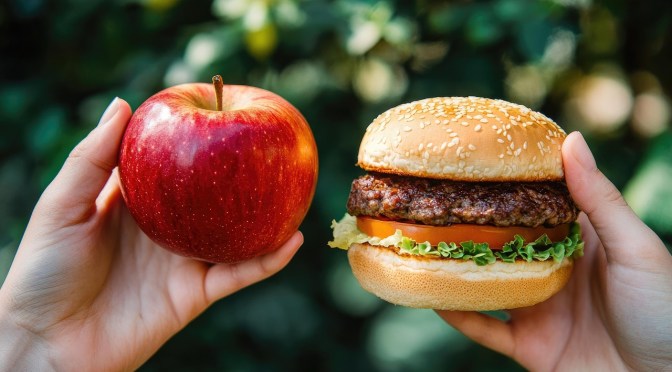
SOURCE

Image credit: Pixabay.com

Sugar Coated — A Doco on How the Sugar Industry Managed to Dupe the World for Decades

Story at-a-glance

  • Thousands of studies spanning many decades show excess sugar damages your health, yet the sugar industry successfully buried the evidence and misdirected the public with manipulated science
  • “Sugar Coated” investigates the sugar industry’s once secret PR campaign, showing it normalized excessive consumption by deflecting evidence implicating sugar as a cause of ill health
  • The manufactured uncertainty and lack of scientific consensus is what has allowed the sugar industry to thrive while health statistics have tanked
  • A 2016 paper examined the links between funding and study outcomes. Of the 60 studies, the 26 that found no link between sugary drinks and obesity or diabetes were all funded by the beverage industry; of the 34 that did find a relationship, only one had received industry funding
  • Seventy-four percent of packaged foods contain added sugars, which hide under 61 different names, many of which are unfamiliar

By Dr. Mercola

Thousands of studies spanning many decades show excess sugar damages your health,1 yet the sugar industry successfully buried the evidence and misdirected the public with manipulated science. According to the sugar industry, sugar is a harmless source of energy and may even be an important part of a healthy “balanced” diet.

Dr. Cristin Kearns, a dentist and fellow at the University of California, made headlines when she published a paper2 detailing the sugar industry’s historical influence on dietary recommendations. Evidence also shows how the sugar industry influenced the scientific agenda of the National Institute of Dental Research (now the National Institute of Dental and Cranial Research), which back in 1971 created a national caries program, downplaying any links between sugar consumption and dental caries.3

The documentary, “Sugar Coated” — which features Kearns, investigative journalist Gary Taubes, author of “The Case Against Sugar,” and Dr. Robert Lustig, a leading expert on sugar metabolism and obesity — investigates the sugar industry’s once secret PR campaign, showing how it normalized excessive consumption by deflecting evidence implicating sugar as a cause of ill health. As noted in the film’s summary:4

“In order to continue sweetening the world’s food supply, thus securing continued profits, the sugar industry turned to the very same deceptions and tactics lifted from the tobacco industry. Using big sugar’s own internal documents on this strategy, ‘Sugar Coated’ reveals the well-oiled tricks of the trade to confuse the public about what is really driving the global pandemic of obesity, diabetes and heart disease.”

WATCH THE DOCO AT THE LINK:


https://www.youtube.com/watch?v=3xbac4P7l84

Cancer Diagnosis? … What you need to know : From a man who recovered from stage 3 colon cancer

START HERE! What every cancer patient needs to know

In this 11 minute video I share some of the most important things I’ve learned… Things I wish someone had told me when I was first diagnosed in December 2003.

English closed captions are available on this video, just click play, then the “cc” icon.
Huge thanks to Kate Dillon who took the time to transcribe it.

Since then, fabulous readers of this blog have translated the transcription into DutchSpanish, SwedishGermanRussianRomanian, and Polish!

You’ve watched this video, now what?

If you or someone you know has cancer, download my free guide 20 Questions for Your Oncologist. It will equip you with the most critical questions to ask before starting any treatment.

I created a 10-part coaching program for cancer patients, caregivers and anyone who is serious about prevention called SQUARE ONE. This is normally a paid program but…

September 12th-21st, 2017 I’m putting the entire program online for free!

Go here to register and get free access to the course!

This site has hundreds of free articles about healing and preventing cancer with nutrition and natural therapies. Everything you need to know is right here!

If you want to know the details of my diagnosis, check out my FAQ page.

Learn from my 50+ interviews with inspiring survivors who’ve healed cancer here.

Use the search bar! Search for things like: your cancer type, vitamin D, vitamin C, aloe, chemo, radiation, turmeric, etc.

READ MORE

https://www.chrisbeatcancer.com/what-every-new-cancer-patient-needs-to-know/

High levels of aluminum in 80 percent of people tested for toxicity

This is in our rain water Kiwis. We’re not exempt. Check that here. And some of  the other sources here.  Google how to detox yourself from this hideous substance that accumulates in your brain (as well as other parts of your body) found typically in the brains of Alzheimer’s patients. Be aware & protect yourself. Get rid of those items like aluminum cookware among other things. The sources are many.
EnvirowatchRangitikei

from NaturalHealth365.com

(NaturalHealth365) Aluminum, which performs no identifiable function in the human body, is not a nutrient. Yet, most of us consume this neurotoxic substance – or inhale its fumes, or apply it to our skin – on a daily basis.

According to Analytical Research Labs, a whopping 80 percent of people tested have excessively high aluminum levels – a disturbing statistic, given that metal toxicities are associated with a wide range of chronic disease conditions.

We are living in the “age of aluminum”

Aluminum – the third most prevalent element on the planet – already exists naturally, in the environment – but, just to be clear – has ZERO benefit inside the human body.  This cheaply-produced metal has literally dozens of commercial uses – leading concerned natural health experts and environmentalists to dub the present day the “age of aluminum.”

Sadly, aluminum is used in cookware, soda cans and packaging for processed foods – not to mention: aluminum foil.  An ingredient in many over-the-counter antacids such as Rolaids, aluminum is also found in various cosmetics and hygiene products, particularly antiperspirants.

Disturbingly, exposure to aluminum begins almost immediately after birth – aluminum is used as an adjuvant in vaccines given to newborns.  In fact, the number of aluminum-containing vaccines children receive has quadrupled over the past 40 years, with children typically receiving 17 aluminum-spiked injections in the first 18 months of life.

Finally, aluminum is used liberally in the foods we eat, including kitchen staples such as cocoa, salt, flour and baking powder. Aluminum is even found in municipal tap water – which is a very good reason why we should purify our drinking water as a top health priority.

http://www.naturalhealth365.com/aluminum-toxicity-2260.html

RELATED:

Aluminum Toxicity Kills 66 Yr Old Man.

should the link not work for this article go to vaxxter.com & type in the heading. Note also fluoride assists with the absorption by our bodies of aluminum. Recently our Enzed govt/corporation announced it would be assisting our Councils financially ($11 mill) with the delivery costs of fluoride to our drinking water. Having long ago cut their subsidy for community housing.  Something to think about.

12074705_10153544718077931_8105691546625535833_n.jpg

Check out our FluorideChemicals pages. Educate yourself. Stay informed. Question everything. Our world is controlled by corporations that have no allegiance to public health and every allegiance to profits.

A Breast Cancer Survivor Who Declined Chemo & Mastectomy Enrages Her Doctor

https://www.youtube.com/watch?v=BnilABNL2Zw

From truthkings.com

When Theresa DiNallo was diagnosed with breast cancer, her world was turned upside down. Like most women who are diagnosed with the deadly illness, life changes drastically. According to BreastCancer.org, 12% of all women will develop breast cancer.  246,660 new cases are expected this year alone. Breast cancer is serious business to those diagnosed with it as well as a profitable business to pharmaceutical companies.

“After completing a mammogram, they called me and put it very delicately, saying they think there is a mass in a certain area,” DiNallo told news-herald.com. “That’s when I immediately got scared and I remember being petrified the whole time.”

Theresa was diagnosed with invasive ductal carcinoma. Theresa was immediately confronted with all the generic options, such as chemotherapy, she, however, chose to be more forward-thinking and started investigating. One of her first findings was that poor nutrition and alcohol use highly increased cancer risks. She also noted that fat-free, sugar-free and low-fat diet items were laden with dangerous chemicals. Of course, the medical world gave her the “there is no definite cause” company line.

READ MORE 

For other links visit our Cancer pages. Educate yourself on this plague on humanity, there are alternatives people have used successfully that mainstream medicine will not encourage. Chemo has a mere 3% success rate.

EnvirowatchRangitikei

Largest Cancer Study Ever Stuns Experts – They Were Wrong! Dr Mercola

By Dr. Mercola

Is it possible that chromosomal damage is simply a marker for cancer and not the actual cause of the disease? Compelling evidence suggests this is the case, and in the featured lecture, orthopedic surgeon Dr. Gary Fettke reviews some of this evidence.

Having battled cancer himself, Fettke came to realize the influence of nutrition on cancer, and the importance of eating a diet high in healthy fats and low in net carbohydrates (total carbs minus fiber, i.e. non-fiber carbs). Fettke is not the only one promoting the metabolic model of cancer.

Earlier this year I interviewed Travis Christofferson, author of a phenomenal book called “Tripping Over the Truth: The Return of the Metabolic Theory of CancerIlluminates a New and Hopeful Path to a Cure,” on this topic.

The Metabolic Model of Cancer

The Cancer Genome Atlas project that began in 2006 set out to sequence the genomes of cancer cells. It was the largest government project ever conceived, involving 10,000 times the amount of genetic sequencing done by the Human Genome Project. Alas, the results didn’t conform to their original expectations…

Read more: headings include…

Cancer Cells Are Metabolically Limited to Feed on Sugar

Processed Food Diet Is a Major Cancer Promoter

What Cancer Requires for Growth

The Importance of Diet for Successful Cancer Treatment

General Nutrient Ratio Guidelines for Mitochondrial Health and Cancer Prevention

and more …

SOURCE:  http://articles.mercola.com/sites/articles/archive/2016/06/11/nutrition-influences-cancer.aspx?utm_source=dnl&utm_medium=email&utm_content=art1&utm_campaign=20160611Z3&et_cid=DM107636&et_rid=1524404823