
RELATED:
Food Crisis’ Silver Lining: End Meat – Oxford Prof Admits
“Watch as the conversation quickly shifts from real problems to using this crisis as leverage for technocratic control over what ends up on your plate.”
Tag Archives: Food
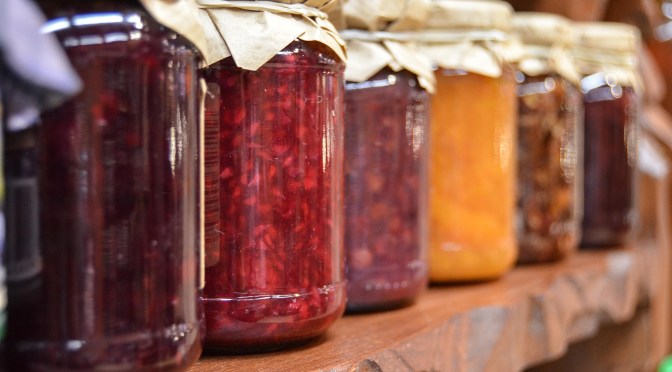
Feeding Your Family When the Shelves Go Bare
From Unbekoming @ substack
With everything going on in the world — rising geopolitical instability, the real risk of fuel shortages and rationing, and the domino effect that fuel disruption has on food supply — I thought this essay could come in handy. It is not out of the question that we need to start planning for possible hunger. Not as a theoretical exercise. As a practical one.
Continue reading Feeding Your Family When the Shelves Go Bare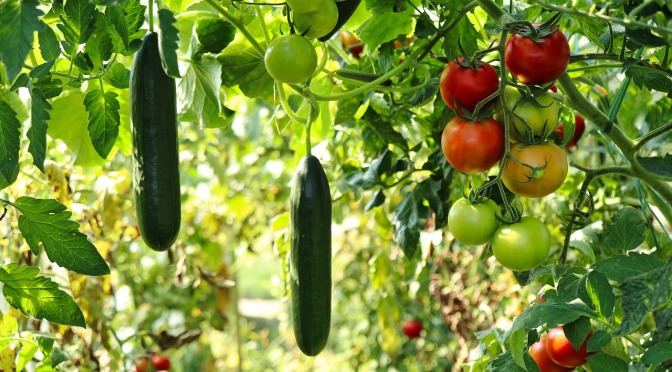
Buy local, grow your own as decisions taken overseas challenge our Kiwi way of life
Buying local or growing your own has long been the mantra of those who foresaw this manufactured event in one form or another … “who controls the food supply controls the people; who controls the energy can control whole continents; who controls money can control the world” Henry Kissinger
Continue reading Buy local, grow your own as decisions taken overseas challenge our Kiwi way of life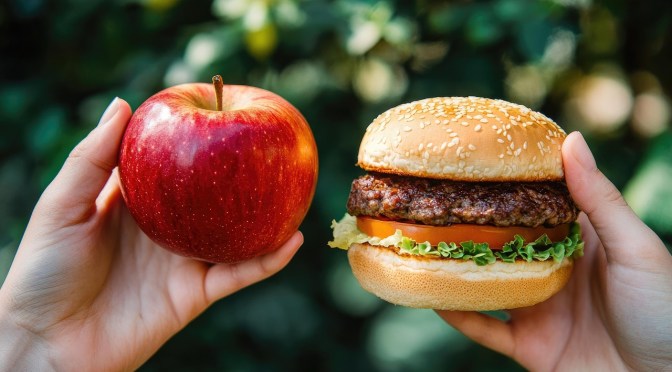
Taking Back Control of Our Health and Well Being
By Dr Guy Hatchard
The Millbank Quarterly (a multidisciplinary journal of health and health policy) published an article on 2 February 2026 entitled “From Tobacco to Ultraprocessed Food: How Industry Engineering Fuels the Epidemic of Preventable Disease“. The authors explain how ultra processed foods (UPFs) and beverages are specifically designed to heighten chemical rewards in order to develop addictive eating behaviours among consumers that bypass the constraints of our normal appetites.
Continue reading Taking Back Control of Our Health and Well Being
‘Cloned Meat’ to Flood Canadian Food Supply Without Safety Reviews or Labeling
EWNZ comment: this should surely wake up folk who are still oblivious to what is going on these days. One has to ask, why no labeling? And what are they hiding? There is abundant documentation on the hazards of GM foods. If they are so great then there should be no problem whatsoever about labels! This all from the same nation that is genociding its own citizens.
“The process begins by creating a genetically identical copy of a “desirable” animal. That clone is then bred normally, and its offspring enter the food chain, indistinguishable from traditional meat, except consumers are never told what they’re buying.“
“Cloned meat” is about to enter Canadian grocery stores without safety testing, disclosure, or labeling of any kind, after Health Canada quietly dismantled its 22-year policy that protected the public food supply from such products.
The Canadian government’s previous policy treated cloned products as novel foods requiring pre-market review.
The decision removes all oversight and allows cloned “meat” and “milk” products, and the offspring of cloned animals, to be sold to millions of Canadians with no indication whatsoever of their lineage.
The move immediately set off alarm bells in the United States.
The U.S. Food and Drug Administration (FDA) approved cloned meat back in 2008 and allowed it to flood the food supply without labels.
Many Americans are only now discovering that they have likely been eating cloned products for years.
Online, the reaction has been explosive, with users calling the situation unacceptable and demanding transparency.
Some say they likely purchased cloned products unknowingly, blasting regulators for failing consumers and hiding the true origins of what is being sold on store shelves.
Opposition to cloned meat spans ethical, religious, and safety concerns.
Critics warn of serious animal-welfare issues, pointing to high rates of clone miscarriages, deformities, suffering, and death.
Others warn about potential contamination from antibiotics or hormones used on sick clones, animals that would never survive long enough to enter the food chain directly, but whose offspring do.
Ethical concerns also run deep, with many uncomfortable about the technology itself or warning that its normalization could open the door to attempts at human cloning.
Cloned meat is banned entirely in Europe.
In Europe, cloning farm animals and selling products from their offspring is illegal.
However, Canada is moving in the opposite direction.
Beginning next year, cloned animals and their descendants will no longer be considered novel foods, eliminating all safety assessments and all labeling requirements.
The process begins by creating a genetically identical copy of a “desirable” animal.
That clone is then bred normally, and its offspring enter the food chain, indistinguishable from traditional meat, except consumers are never told what they’re buying.
The decision has sparked strong backlash from producers like duBreton, a major Certified Humane and organic pork supplier.
The company issued a warning to Canadians:
“People have the right to choose for themselves.
“Quietly changing the definition of a novel food takes that choice away.”
Health Canada’s justification mirrors the FDA’s longstanding position that regulators claim cloned meat and milk are “not materially different” from traditional products and therefore do not require labels.
In the U.S., regulators expect that it is mostly the offspring of clones, not the clones themselves, that end up in the food supply.
But without mandatory labeling, American consumers have no reliable way to know whether their purchases come from cloned lineage.
Consumer advocates argue that the lack of transparency is unacceptable and that regulators are pushing cloned meat into stores without giving the public any meaningful way to make informed choices.
The Center for Food Safety blasted the FDA’s stance, saying:
“FDA’s decision flies in the face of massive public opposition to animal cloning, widespread scientific concerns about the risks of eating food from clones, and troubling animal cruelty and ethical concerns associated with the cloning process.
“The FDA admitted in its own risk assessment that a vast quantity of animal clones are unhealthy and would not be suitable for the food supply.”
Meanwhile, cloning technology continues to advance rapidly.
Scientists have successfully cloned rhesus monkeys, including a healthy clone named Retro born in 2020, hailed by researchers as a breakthrough that “turned impossible to possible.”
Last year, China successfully cloned Tibetan goats using the same technique used to clone Dolly the Sheep in 1996.
Now, Canada is preparing to introduce cloned meat into grocery stores without telling the public.
For millions of consumers on both sides of the border, cloned meat is here, and regulators don’t plan to warn you.
READ MORE – Real Meat Much Healthier Than Fake Plant-Based ‘Alternatives,’ Study Finds

The Great Poisoning and The Great Weakening Agendas – How To Protect Yourself and Your Family
From Jason Christoff
“We have a population that has been poisoned for at least 100 years straight, on an ever-increasing scale, with the end goal being the complete theft of all public assets, or as many assets as the ruling group can get away with. “
The great weakening is something I’ve written and talked about extensively. The great poisoning is something Catherine Austin Fitts has talked about extensively. They’re both basically the same concept. We’re all living inside what’s often referred to as 5th generation warfare, which is a major advancement above conventional warfare strategy.
For anyone who doesn’t understand 5th generation warfare, please allow me to explain. In regular warfare (from 4th generation warfare backwards), we would see an invading force (usually motivated by theft) coming into an area they don’t yet govern, with the intention of enriching themselves via the resources of that invaded area. Within old style conventional warfare, the assets that the invading force were targeting to steal, often get destroyed. That’s the big drawback of conventional warfare. If you’re going to start a war and steal other people’s resources, which aren’t rightfully yours (and you’re going to risk everything involved with that) you certainly don’t want those prized resources getting destroyed as you’re invading.
Obviously, this older method of war isn’t so profitable in many situations, where the war itself destroys the assets that you’re trying to steal. That’s where 5th generation warfare comes into play and why it’s so popular today.
In 5th generation warfare, you use psychological manipulation, mind control, brainwashing and behavior modification to trick the people you’re targeting….to destroy themselves and destroy every form of strength they could ever use to resist your invasion. After that (which can often take decades to accomplish), with the public’s wealth and assets intact, you send in the cleanup crew to fully take over the area. You make the people too weak, too dumb, too fat, too addicted and too apathetic to fight back…..even if their full enslavement is implemented right in front of them.
Just an FYI update…. you’re now living in the last stages of a 5th generation warfare takeover attempt. In conventional warfare, you would always know that you were being invaded because of the bombs, the infantry, the barbwire, the missiles, the tanks and the explosions. With 5th generation warfare it’s the ever-growing number of Starbucks stores, the Coca-Cola trucks, the vaccine clinics, the chemtrails, the toxic beauty care products, the Teflon pans, the fluoride toothpaste, the mercury teeth fillings, the mammograms, the pesticide laden nonorganic food everywhere at the grocery store etc. With 5th generation warfare, it’s all about a gradual slow-motion slide into a full-spectrum weakening operation of the human body, mind, soul, spirit and bank account.
The great weakening is a government and media endorsed living model…..based on perpetual pleasure seeking, self-gratification, gluttony and hedonism. The vast majority of people in the Western world today (especially in Canada, Australia, the UK and the United States) are excessively overweight, brain damaged, weak, diseased and financially broke. (living pay cheque to pay cheque, where one small financial emergency could wipe them out completely) This is all by design.
No human can end up this broken if they live within their natural habitat. This is all socially engineered. This is the result of “the mind control based great weakening”. Well over 50% of Western populations are too overweight, sick, broke and apathetic to defend themselves……as is the goal of any 5th generation warfare operation. The overweight, wheel chaired, handicapped, brain damaged, toxic and addicted population isn’t natural. What we see in our cities today is the result of 5th gen warfare.
Oddly enough, this 5th gen warfare model has been applied more to the United States population than any other country, simply because the US contains the most asset wealth to steal. 70% of US adults are now obese or overweight. 50% of US children are now in the same boat. Most are addicted to cycles of perpetual self-destruction, using their bodies as disposable fun factories from which they extract max perpetual pleasure……using a very wide array of the state and media sponsored fun chemicals. (caffeine, alcohol, junk food, narcotics, medical narcotics, sugar, tobacco, screen entertainment etc.)
But that’s not the only way “the great weakening” has been implemented, upon a completely uninformed population. Most people genuinely believe that they’re just living a great, sedated, fun and distraction-based lifestyle. Most folks equate their absolute destruction via poison as “the good life“. The person poisoning themselves the most on social media is adored and admired. The public poisoners who celebrate their love of poisons get the most likes, comments and shares…..via their never-ending alcohol selfies. The average person (especially in the US) doesn’t know that the cleanup crew is about to be sent in.
The US government (for example) isn’t sending the national guard, to many major American cities, to fight crime. That’s the easily digestible excuse, handcrafted so that the average TV watcher cheers on and endorses what was always planned to occur. The complete collapse (financial to begin) is coming and that’s when the national guard in the US will take full control of everybody, regardless if democrat or republican. This isn’t a blue vs red political party issue either. A population this unhealthy can’t survive and was never intended to survive. The US is the most asset laden country on the planet and its population is 70% obese and overly medicated. What did you think was going to happen and do you really think this is all one big accident? Please, people…….it’s no accident. The great poisoning is now about to transform into THE GREAT TAKING…..as is clearly outlined in the documentary of the same name. The asset theft has been going on a long time and is about to accelerate dramatically. It will be like taking candy from a baby, literally.
As I review where we all sit right now, please keep in mind that this is a) all by design b) was purposely socially engineered over the last 100 years and c) is now too severe to fix or remedy. What’s coming is coming. Solutions and safe positions will only be available to people who know what’s happening and why it’s happening.
Let’s quickly review. We have a population that has been poisoned for at least 100 years straight, on an ever-increasing scale, with the end goal being the complete theft of all public assets, or as many assets as the ruling group can get away with. The younger the person is, the sicker they are in general. (mostly because they’ve received the most injected poison of our population) The school system has purposely dumbed down the children, where many have lost their will to live, their genetic self-preservation mechanisms are almost extinguished. Seniors are being purposely euthanized in our hospitals. Canada’s MAID program (Medical Assistance in Dying) is expanding its reach. MAID is now being offered to more and more people, as they simply enter Canadian hospitals looking for basic medical care. If you’re weak and poisoned (and are still walking above ground), the system is being continually engineered to flush you right down the toilet. Saying that, there are obvious solutions that will end in you making it through all this with flying colors.
Logically, if the ruling group’s agenda is poisoning and weakening….the solution is health and strengthening. Simple stuff. What’s really important to understand is that most people are poisoning and weakening themselves because they’re under mind control. Now, if you think that’s far-fetched, please consider this, If you click here, you can watch a mind control expert brainwash 75% of the people he was targeting, to murder another person……….LIVE on camera. If you click here, you can watch another mind control expert brainwash another person to forget his own name. If you click here, you can watch another mind control expert brainwash a lady named Carol, to believe she’s a man named Bob. Brainwashing you to poison yourself is a snap.
The mind control experts cited above use the same brainwashing tactics that your social engineers use to trick you to poison and weaken yourself. This is why it’s so hard for most people to stop poisoning themselves and why their addictions seem so strong……..because we’re all being brainwashed and mentally manipulated to poison and weaken ourselves every day.
This way, as we take ourselves out, we believe that there’s something personally wrong with us. We believe our dysfunction and failure in life is organic to us. We blame ourselves and think we’re broken. Blaming ourselves is perfect for the mind control experts who puppeteer our addictions and failures into us from behind our screens. The truth is that there’s nothing wrong with us whatsoever. If we succumb to the media mind control and become weak, addicted, overweight and broke……we’re actually working as designed.
Free will, determination and self-control have very little to do with becoming stronger and healthy. The first thing you’ll need to know, in order to break free, is to fully understand how mind control works. With this key knowledge you can brainwash yourself into a better life……as your social engineers try to continually brainwash you into a terrible life. You can indeed win the mind control battle, which most people don’t even know is raging all around them.
That’s where your new life starts. Their agenda is weakening and poisoning. Your personal agenda will now be strengthening and health. It’s that simple. But again, you need to learn the basics of mind control, brainwashing, psychological manipulation and behavior modification……before you begin your journey upwards into the stronger and healthier version of you. This is all I teach. All my programs and writings are dedicated to making my students stronger and healthier, on all levels. Let me tell you how I will do this for you.
I’ll make you stronger financially by showing you everything you need to know to start your own business, as a Certified Overcoming Self Sabotage Coach. I know that scares you. That’s why I’ll first teach you how to brainwash that fear out of you. It’s easy. All our beliefs are programs, and you can change your programs at any time. I’ll make you super strong with your health as well. You’ll lose weight, tone up and get in super shape. I have diets, exercise programs and healthy living guides all ready to go for you. I know that scares you too. That’s why I’ll first brainwash that fear out of you as well. I’ll make you strong on all levels. Even though I know all that’s really scary, to change into a super powerful version of yourself in a very short amount of time, I actually have a very large brainwashing library….so you can reprogram yourself into any super strong version of yourself that you desire. You can use mind control for positive changes as well. That’s what I do and teach. That’s what I’ll teach you to do as well. After that, you’ll go out and teach others how to do the same. We strengthen the world as a team. That’s how we win.
Are you ready to step into a strong and healthy version of yourself…….and have someone like me guide you every step of the way? If you said yes, just click here or email me at info@jchristoff.com. This one-of-a-kind program starts this Saturday (Oct 25th 2025) and we’re already 81% full, with only 19 spots left of the 100 we offer. It’s close to opening day and I would love to see you in our opening day online ceremony. Anyone can afford to join because of our new payment plan. This program is rapid, effective and super entertaining. Come work with me LIVE online from anywhere in the world. I hope to see you this Saturday. Let’s get better together.

Recent Articles
Are Politics Really a Form of Entertainment Wrestling for the Masses?
The Good Life Finally Found Her and Then She Destroyed It…….Here’s Why
2 Different Ladies Both Destroying the Good in Their Lives – Here’s Why

Uncover more truths in Jason’s popular Coaching Classes. Click below to find out more.
Photo Credit: Jason Christoff
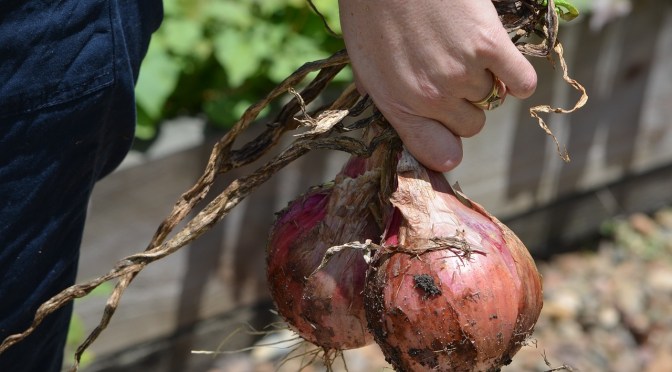
The USDA Wants Americans To Register Their Gardens In A National Database, Including Your Windowsill Or Balcony (2022)
“As the world teeters on the verge of nuclear war and economic collapse, remember that in times of war and economic downturns, food is more valuable than gold.”
EWNZ Note: Remember Kissinger’s statement:
If you control the food, you control a nation. If you control the energy, you control a region. If you control the money, you control the world.
From The WinePress @ substack
The following report was first published on October 10th, 2022, on winepressnews.com.
The United States Department of Agriculture (USDA) is encouraging people to legally register their community and backyard gardens into a national registry, where anyone can join.
The initiative is called the People’s Garden Initiative, which was created to build a “more diverse and resilient local food system to empower communities to address issues like nutrition access and climate change,” the USDA says.
“The simple act of planting a garden can have big impacts – from building a more diverse and resilient local food system to empowering communities to address issues like nutrition access and climate change.”
The USDA says there are 5 types of gardens that qualify for this project:
- Food – indoor and outdoor gardens, “to increase access and consumption of fresh fruits and vegetables in urban and rural areas.”
- Wildlife Habitat – Areas designed to increase the number of animals and insects, namely pollinators such as bees.
- Conservation – preservation of natural resources like soil, water, air, and so on.
- Beautification – an objectively pretty garden, by “rethink[ing] the planting of seasonal annuals and instead design a space with native species of flowering plants to enhance the biodiversity of your community and build a healthier ecosystem.”
- Education and Training – gardens can fall under on the previously mentioned 4, but solely created for teaching and internship.
The USDA clarifies that these gardens can be any shape or size.
“You can plant a home garden in your yard or in a small space like a windowsill or balcony.”
Every garden registered can currently be publicly viewed online, per an interactive map that displays all gardens around the nation.
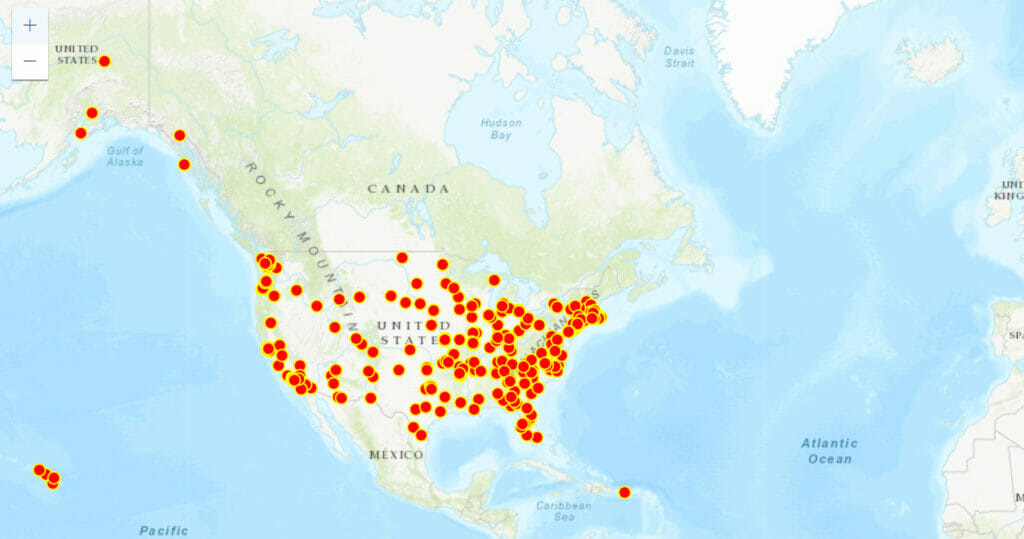
Each dot can be clicked on to learn more specifics about a registered garden, such as the type and pictures of the garden.
According to a press release from the USDA published on September 9th, those who register will also be featured in USDA communications, and sent a swanky sign showing their registration.
Secretary of Agriculture Tom Vilsack said:
“We welcome gardens nationwide to join us in the People’s Garden effort and all it represents.
“Local gardens across the country share USDA’s goals of building more diversified and resilient local food systems, empowering communities to come together around expanding access to healthy food, addressing climate change and advancing equity.
“We encourage existing gardens and new gardens to join the movement. Growing local food benefits local communities in so many ways, and we offer technical resources to help. Also, it’s a great way to connect with your local USDA team members.”
The press release notes that this project actually began in 2009. So, it would appear the USDA is attempting to make a renewed effort for this project. “It’s named for the “People’s Department,” former President Abraham Lincoln’s nickname for USDA, which was established during his presidency in 1862,” the USDA added.
But not everyone is on board with this idea.
Matt Agorist of The Free Thought Project is pessimistic about this initiative, explaining that the USDA has never been in favor of people’s health. He cites an example of a group of physicians in 2020 who sent a whopping myriad of evidence to the USDA in a bid to reduce their recommended levels of sugar intake – levels these doctors thought was too high already, but settled on a reduced rate. In short, the USDA did not consider it and rejected the plea.
Agorist wrote,
“Now, this same organization is claiming that it wants you to register your vegetable garden so it can place you in a database and put your healthy food source on a map — for your health, of course. You also get a cool sign for your front yard too.
“While a handful of folks inside the USDA may have well-meaning intentions behind this program, the behemoth organization’s track record and history clearly indicate that the overwhelming majority of them do not care about your health. Not only do they not care about your health but most of their farm and food budget goes toward subsidizing products that directly harm your health.
“So, skepticism over a national garden database run by this organization is entirely warranted. As the world teeters on the verge of nuclear war and economic collapse, remember that in times of war and economic downturns, food is more valuable than gold.”
The WinePress News is a reader-supported publication. To receive new posts and support my work, consider becoming a free or paid subscriber.
AUTHOR COMMENTARY
Please don’t do this. I, like Agorist, am quite pessimistic about initiatives such as this.
WinePress readers already know that the government and tech giants love to database our info already, and now registering your garden – even down to your windowsill plants (!) – they want to have on record. Absolutely not. But this type of thing certainly fits right in line with the coming CBDCs, social credit scores, carbon calculators, food IDs, and so forth. Right now it’s optional. But how long before it becomes mandatory?

IMF Chief Kristalina Georgieva Urges Governments To Implement Carbon Tax To Reduce Emissions

United Nations Advocates Tracking Food With Tokenization, Blockchain And AI Databases To Reduce ‘Food Fraud’
With the food shortage narrative in play, it certainly could present an opportunity for the government to try and craft a narrative as to why Americans need to register their gardens, as to know who is buying what, what food crops are which, whose hogging up too much water, who is impoverished in nearby towns, how much excess you have, and on and on.
In the early days of the Russia-Ukraine conflict, many nations were already racing to get these very same types of agendas in place for the time they wish to roll them out. I suspect that when the famine gets to be a legitimate and obvious problem to the broad masses, coupled with a grand economic collapse – something I have been warning about for some time – that is when they might roll this type of thing out. Admittedly, some of this is speculative on my end.
Do you realize that most states still to this day still ban the commercial sale of raw milk and dairy products? I cannot go to the store and eat and drink what I want: I need the government’s approval, as they are “all-knowing.” And those that do want to sell raw milk and dairy, for example, if they are allowed to do it, have to have their practices registered, inspected, and datalogged, but still cannot sell it on the grocery store shelves in most states, but through these convoluted backdoor channels and red tape, most consumers will never notice and realize. And the states that do allow the commercial sale of raw milk and dairy, had to lobby and plead with the government to be allowed to do it!

North Carolina Tries To Pass Law To Make It Illegal For “Independent Owners” To Consume Raw Milk From Their Own Cows To Prevent Spread Of Bird Flu
So, lest anyone think that I am not a “patriot” and whining about nothing, then I suggest you chew on that apple and think about what I just said… And that is just one example. If you cannot eat and drink what you want, and plant and pasture whatever you want, without the government’s permission, then you do not have freedom. PERIOD. No president, governor, politician, or media tell-a-vision prophet will admit this truth to you, on either side.
Ecclesiastes 5:18 Behold that which I have seen: it is good and comely for one to eat and to drink, and to enjoy the good of all his labour that he taketh under the sun all the days of his life, which God giveth him: for it is his portion. [19] Every man also to whom God hath given riches and wealth, and hath given him power to eat thereof, and to take his portion, and to rejoice in his labour; this is the gift of God. [20] For he shall not much remember the days of his life; because God answereth him in the joy of his heart.
But you see, that is not part of the new paradigm. America has an odd fusion of communism and fascism for a puppet government. This will be the framework for this “Great Reset.” “You’ll own nothing, and be happy” – as the masses live in these smart cities, packed in like sardines, physically connected to the grid; where everything is serviced and run through by the major corporations working in tandem with the government.
The bottom line is this: do NOT EVER register your garden with the government. Simple as that.

‘Money Faileth:’ A Repeat Of Biblical History Forecasting The Collapse Of World Economies Forcing Societies Into Deeper Enslavement
Thanks for reading The WinePress News! This post is public so feel free to share it.
Photo credit: pixabay.com

Sustainable practices?
I was sitting outside in NZ’s Northland sunshine, December 2024. All year round, it’s the warmest district in the country and has a wealth of orange orchards. The temperature was 24 deg and set to get warmer. I was eating an orange however, that had traveled all the way to NZ from 7798 miles away. Grown in the US of A. I don’t generally buy imported oranges on principle, however someone else had brought me these. Similarly, I also had in my fridge, some Australian oranges. Those had traveled 2583 miles to get here. How big were those carbon footprints? Good luck with those calculations. Generally speaking, it would appear, according to the Davos boys, we shouldn’t be traveling too far or buying stuff that traveled a long way?
Now Northland is known for its orange orchards. It is one of the two leaders in our citrus industry. The other district is Gisborne. Twenty years ago I lived in the Eastern Bay of Plenty, which is near there, during which time we had free access to a local orchard to pick all the oranges we wanted. Why? Because the owner told us the supermarkets weren’t interested in buying them and to pick and sell them themselves was not cost effective at all. Meanwhile, just down the road the local supermarket sold fruit from, you guessed it, Australia and the US. So we would drive to town to shop, passing multiple orange orchards with beautiful ripe oranges falling on the ground and frequently going to waste.
Check out Davos and their ‘sustainable menu’. No mention of where they sourced their fruit from.
Can you see the hypocrisy? And the scam that it is?

Why are there high concentrations of Aluminum, Barium and Strontium in New Zealand’s rainwater?
Reposting some of the older material that is still relevant today, perhaps moreso in light of the global pollution we now have .. EWNZ
Here is a video by South Canterbury Skywatch (NZ). Rainwater analyses world wide, it’s been found, have high concentrations of Aluminium, Barium, Strontium and even Titanium. Alarmingly, these high concentrations are also being found in New Zealand’s rainwater. These three elements have also been found in the fallout from weather modification programs (aka chemtrails), so they are in the air we breathe. And, as is pointed out in this video ‘we were not designed to breathe these materials’. Their presence in our water is not a natural occurrence. Soil Biologist Frances Mangels tells us there should be no heavy metals in rainwater. Mangels has been investigating the cumulative effects of these metals on animal and plant life at Mt Shasta California. In this video you will hear Mangels speak. Do pause and consider:
“… we were not designed to breathe these materials …”
Aluminum has been scientifically linked with Alzheimer’s Disease. “Aluminum has been long known to be neurotoxic, with mounting evidence that chronic exposure is a factor in many neurological diseases, including dementia, autism, and Parkinson’s disease.” Dr Mercola
And Barium? “Ingesting large amounts of barium can cause changes in heart rhythm, paralysis and possibly death.”
Here is a list from StopSprayingCalifornia.com outlining all the other ingredients found present in chemtrails from independent testing:
Aluminum Oxide Particles, Arsenic, Bacilli and Molds, Barium Salts, Barium Titanates, Cadmium, Calcium, Chromium, Desiccated Human Red Blood Cells, Ethylene Dibromide, Enterobacter Cloacal, Enterobacteriaceae, Human white Blood Cells-A (restrictor enzyme used in research labs to snip and combine DNA), Lead, Mercury, Methyl Aluminum, Mold Spores, Mycoplasma, Nano-Aluminum-Coated Fiberglass, Nitrogen Trifluoride, Known as CHAFF), Nickel, Polymer Fibers, Pseudomonas Aeruginosa, Pseudomonas Florescens, Radioactive Cesium, Radio Active Thorium, Selenium, Serratia Marcscens, Sharp Titanium Shards, Silver, Streptomyces, Stronthium, Sub-Micron Particles, (Containing Live Biological Matter), Unidentified Bacteria, Uranium, Yellow Fungal Mycotoxins
If you think geoengineering aka chemtrails are a hoax, the practice of weather modification has in fact been in motion for more than 60 years and is very well documented (ClimateViewer.com). Just not covered or acknowledged by mainstream media, or our governments. It is covert, however on top of all the scientific evidence now of soil and water contamination, there are also many whistleblowers who have exposed the practice.
EnviroWatchNZ
Video Information from South Canterbury Sky Watch:
Published on Jan 4, 2016
“Once again another rain test showing contaminants of Aluminum, Barium and Strontium. These samples were taken in September and its a follow up on the samples i had tested in 2014.
You can find an article on
“NORTHLAND NEW ZEALAND CHEMTRAILS WATCH”
https://chemtrailsnorthnz.wordpress.com/
Also links to the other test article and many, many more can also be seen here.
To Listen to more from retired USDA Biologist, Francis Mangels you can find the 42minute video clip here:
https://youtu.be/9jf_nVLGDTo
…………………..2014………….……………..
https://chemtrailsnorthnz.wordpress.c…
………………….2015…………..……………
https://chemtrailsnorthnz.wordpress.c…
Websites mentioned in video:
http://globalskywatch.com/chemtrails/…
http://www.rense.com/general21/conf.htm
Audio:
Kevin MacLeod (incompetech.com)
Licensed under Creative Commons: By Attribution 3.0
http://creativecommons.org/licenses/b…
“Echoes Of Time”

“Bird flu is a complete rerun of the COVID script,” only now it’s your food supply, not your freedom, under siege
From mercola.com
Story at-a-glance
- Public health officials are responding to bird flu (H5N1) using strategies similar to COVID-19, including extensive PCR testing and fearmongering, leading to significant food supply disruptions and price increases
- Since 2022, over 150 million birds have been killed due to H5N1, with 41.4 million culled between December 2024 and January 2025 alone, resulting in soaring egg prices
- The USDA has spent $1.25 billion on compensation to affected farmers, while granting Zoetis a conditional license for a bird flu vaccine for chickens despite CDC stating H5N1 is low risk to humans
- Studies show chickens can develop natural immunity to H5N1, suggesting mass culling is unnecessary, while evidence indicates that depopulation efforts actually increase the risk of chicken-to-human transmission
- Health authorities are pursuing mRNA vaccine development, with HHS giving Moderna $590 million for human H5N1 shots, despite concerns about vaccine effectiveness and safety, and the risk of creating vaccine-resistant strains
You’ve noticed the news about a bird flu health crisis — sick birds, egg shortages, price hikes. The empty shelves, constant updates and confusing directives likely stir up memories of COVID. But there’s a reason why bird flu, or H5N1, feels like a repeat performance. For starters, officials have been warning about a coming bird flu pandemic for years, but every instance of fearmongering about a lethal bird flu has turned out to be false.
That’s why I wrote “The Great Bird Flu Hoax” in 2009. Now, bird flu is making headlines again as outbreaks occur in birds, other animals and even humans across the U.S. If it seems like déjà vu, you’re not imagining it; it’s deliberate. Dr. Clayton Baker, an internal medicine physician and author with the Brownstone Institute, cuts through the noise: “Bird flu is a complete rerun of the COVID script,” only now it’s your food supply, not your freedom, under siege.1
Consider bird flu a set of calculated steps — pages from a playbook you’ve seen before. Those tasked with solving these crises — public health officials — often fuel them, a tactic rooted in years of “pandemic preparedness” groundwork. But this time, your groceries are the new battlefield. Clayton explains:2
“Last time, with COVID, the pandemic-planning bioterrorists directly blackmailed us by taking away our civil rights, in order to coerce us to accept their unsafe and ineffective vaccines. This time, with bird flu, the pandemic planning bioterrorists are indirectly blackmailing us by targeting our food, in order to coerce us to accept more of their unsafe and ineffective vaccines into our food supply and those who supply it.”
Understanding Bird Flu Basics
What exactly is bird flu? H5N1 is a virus that typically affects birds such as chickens and ducks. The World Health Organization explains it’s been present in wild bird populations for decades, sometimes crossing over to farm animals or, in rare cases, humans.3 The U.S. Department of Agriculture (USDA) reports that since 2022, more than 150 million birds have been killed due to H5N1, with 41.4 million culled between December 2024 and January 2025 alone.4,5
Authorities are testing flocks extensively, eliminating entire groups if even one bird tests positive. The ramifications extend far beyond the barnyard to your everyday routine. With tens of millions of chickens lost, eggs and poultry have become scarcer and costlier. Egg prices are expected to increase 20.3% in 20256 and reached a 45-year peak in January.7
Further, vaccines are likely to be introduced into your food supply, altering what you consume without your consent. For instance, the USDA granted a conditional license to pharmaceutical company Zoetis for its bird flu vaccine, labelled for use in chickens.8 According to Baker, the CEO of Zoetis, formerly a subsidiary of Pfizer, has “close ties to Pfizer, BlackRock, and the Gates Foundation, all well-established bad actors during the COVID era.”
Further, many aren’t aware that in 2012, scientists genetically modified the wild H5N1 virus in a lab to create a pandemic strain that could spread through the air, raising concerns about unintended releases and lab leaks, a risk that feels all too familiar in the post-COVID era.9
The COVID Playbook — Same Game, Different Field
Recall the COVID pandemic for a moment. You likely remember scientists altering a virus in a lab, its subsequent escape and the sudden restrictions that kept you on lockdown awaiting a shot. As Baker notes, COVID’s SARS-CoV-2 emerged from lab manipulation under the guise of pandemic preparedness, leaking in 2019, and bird flu is tracing a parallel path.
A 2012 report in The Guardian details similar experiments with H5N1, including how scientists manipulated the virus to become airborne and able to spread via droplets from coughs or sneezes.10 Bird flu shifts the focus from lockdowns to your food supply. Baker explains that instead of confining you, authorities are culling flocks to create food shortages that pressure you into accepting vaccines.
The approach remains consistent — craft a virus, develop an injection, then instill fear to ensure compliance. During COVID, PCR testing was rampant, even though PCR tests detect minute, non-threatening traces of the virus, leading to false positives and raising alarm unnecessarily.
Today, they’re applying the same tactic to poultry, relying on misleading PCR tests as they ramp up testing for bird flu. They’re testing not only birds but also milk and farmers relentlessly, stacking up misleading positive results to sustain the tension. Baker explains that this isn’t conspiracy theory — it’s pattern recognition:11
“To perpetuate the mass slaughter and worsen food shortages, ‘public health’ authorities are performing indiscriminate PCR testing for the virus among the animal population and farmers, knowing full well this will generate countless false positives …
Authorities are using this excessive testing along with media-generated fear-mongering and governmental abuse of power, to prolong the mass slaughter of farm animals and the food shortages. The mass slaughter of farm animals and resulting food shortages are being used to blackmail the population into mass acceptance of the vaccines in their food supply, in exchange for a return to normal life.”

Save This Article for Later – Get the PDF Now
Why This Hurts You and Your Food
Eliminating over 150 million birds doesn’t halt the H5N1 virus — it reduces your food availability. Yet, the USDA has invested $1.25 billion in indemnity and compensation payments to farmers affected by bird flu since 2022.12 This means your tax dollars are directly funding a strategy that isn’t working.
In fact, it’s making things worse. As Nicolas Hulscher, an epidemiologist with the University of Michigan School of Public Health, points out, this massive expenditure not only incentivizes farmers to comply with the mass killing of their animals but also represents a serious misuse of taxpayer money, triggering a cascade of severe downstream consequences.13
One of the most immediate consequences you’re experiencing is the skyrocketing price of eggs. This makes a basic food staple less affordable for everyone. Further, Hulscher highlights a disturbing connection between mass culling and chicken-to-human transmission of H5N1. A study published in The New England Journal of Medicine found that 100% of poultry-linked human H5N1 cases were traced back to these depopulation efforts.14
So, the very actions intended to “protect” public health are increasing the risk of human infection. Perhaps most concerning is the fact that mass culling isn’t even necessary. Hulscher cites three separate studies demonstrating that chickens can survive H5N1 infection and develop natural immunity. This natural immunity then helps to limit future spread of the virus. This evidence suggests a far more effective and less costly approach than the current mass slaughter.
Hulscher argues that the USDA’s current biosecurity strategies are clearly failing, especially given the continuous reinfection of farms by wild mallard ducks. He calls for the USDA to be transparent about their testing methods to end the unnecessary culling of healthy birds, and to allow natural immunity to develop as a more sustainable solution.
Bird Flu Shots on the Horizon
Bird flu shots are now front and center. In addition to the USDA’s conditional license for Zoetis’ bird flu vaccine for chickens, the U.S. Department of Health and Human Services agreed to give Moderna $590 million to develop an mRNA vaccine for H5N1 in humans — even though the U.S. Centers for Disease Control and Prevention said bird flu is a low risk to people.15
Dr. Robert Malone draws parallels to the COVID-19 pandemic response, particularly regarding the use of mRNA technology:16
“No evidence exists that any influenza vaccine will provide anything even close to sterilizing immunity (complete protection from infection, replication, and spread). In other words, what we can reliably predict is that the Moderna product that you are paying for will provide yet another leaky influenza vaccine with the added risks associated with current mRNA vaccine technology.”
Why, Malone asks, aren’t they exploring other options, like breeding poultry that are naturally resistant to H5N1? It’s a valid point, especially considering H5N1’s prevalence in wild birds — it’s not going away. He echoes Hulscher’s criticisms of mass culling, pointing out its failures: the virus continues to spread, egg prices are through the roof and there’s even an increased risk of the virus jumping from chickens to the people handling them.
And remember, all this is costing you — $1.25 billion of your tax money has been spent on this ineffective strategy. Malone warns that the USDA’s current policies, including mass culling and the upcoming use of these leaky mRNA vaccines, could make things worse.
They could lead to the evolution of vaccine-resistant strains of H5N1, which could then spread back into wild birds and even infect humans. There’s also the fact that influenza viruses, like H5N1, mutate rapidly. So, even if an mRNA shot is developed for one strain, it won’t work against the next. This would lead to the promotion of ongoing booster shots, another page from the COVID playbook.
What You Can Do to Stop the Playbook
The first step to break free from this destructive cycle is understanding that it exists. From there, urge officials to stop mass flock culls. “It traumatizes farmers, wastes resources, creates food shortages, is inhumane in the extreme to animals, and does nothing to stop the virus. Let the flocks develop natural immunity,” Baker says.17
He also advises ending the use of PCR testing for bird flu in animals and humans, noting, “Willy-nilly PCR testing creates innumerable false positives, which fuels the … hysteria, paralyzes decision-makers, and promotes population-wide blackmail.” Baker recommends an overhaul on leadership as well, including removing USDA and CDC heads stuck on this flawed approach and disbanding the Office of Pandemic Preparedness and Response Policy.
While cleaning house, Baker calls for investigations into the USDA Southeast Poultry Research Lab in Athens, Georgia, and the Kawaoka Bird Flu Lab at the University of Wisconsin, which are involved in gain-of-function research on H5N1. Multiple accidents involving H5N1 have been reported at the University of Wisconsin lab over the years.18 Meanwhile, oppose hasty shot rollouts while supporting natural immunity and breeding H5N1-resistant flocks instead.
The unfolding bird flu narrative serves as a chilling echo of the COVID-19 pandemic, starkly illustrating a playbook dusted off and redeployed. From the familiar refrains of fearmongering and questionable testing to the push for pharmaceutical interventions and the disregard for natural solutions, the patterns are undeniable.
This time, the battlefield has shifted from our civil liberties to our dinner tables, with food security now under siege through policies that are less about genuine public health and more about control and corporate gain.
To break free from this déjà vu, you must recognize this pattern for what it is: a calculated strategy playing out once more. The lesson from COVID is clear: unquestioning compliance with top-down directives leads to predictable and detrimental outcomes. It’s time to demand transparency, challenge the prevailing narrative, advocate for evidence-based solutions like natural immunity and, ultimately, refuse to let history, or rather, the playbook, repeat itself.
Sources and References
- 1, 2, 11, 17 Brownstone Institute February 18, 2025
- 3 World Health Organization, Influenza (avian and other zoonotic)
- 4, 7, 12 Think Global Health February 12, 2025
- 5, 8 Zoetis February 14, 2025
- 6 USDA Economic Research Service, Food Price Outlook, 2025
- 9 Science June 22, 2012
- 10 The Guardian June 21, 2012
- 13 Focal Points February 18, 2025
- 14 The New England Journal of Medicine December 31, 2024
- 15, 16 Who is Robert Malone? February 20, 2025
- 18 USA Today April 11, 2023
RELATED: Bird Flu Pandemic of 2025
Brought to You by The New World Order
Image by Nicky ❤️🌿🐞🌿❤️ from Pixabay
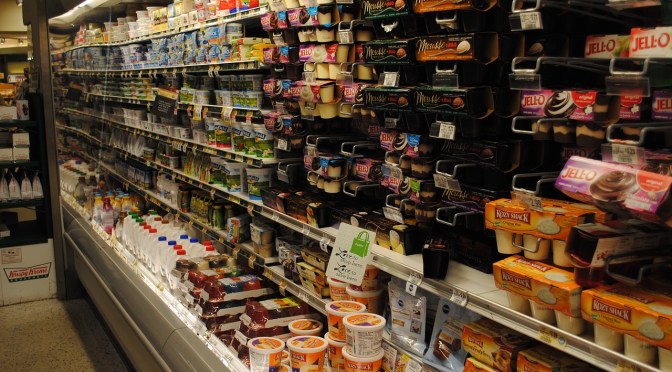
Major Health Alert: the Extraordinary Genetically Modified Invasion of Our Supermarkets by Stealth
Pixabay.com

Scientists Are Developing mRNA Foods To Replace Injections (in case you plan on declining)
“Not just for food, but for high-value products as well, like pharmaceuticals.”
Note: Don’t fool yourself into thinking they’ll label it …EWNZ
The following report was first published on September 17th, 2021, on winepressnews.com.
Scientists are actively creating new foods that are similar to the current Covid vaccines in use, as a way to replace traditional inoculation. Both Pfizer and Moderna Covid vaccines use messenger RNA (mRNA) technology that rewrites a person’s genetic code to fight disease. Moderna refers to this technology as an “app,” “software,” “operating system,” and more.
Currently, mRNA tech used in the Covid vaccines must be stored at cold temperatures to work, or they lose their stability.
However, researchers at the University of California-Riverside are testing ways for this mRNA tech to be functional under normal temperatures. In this case, if they are successful, they would then design plant-based mRNA food for public consumption.
For further development and functionality, the researchers received a $500,000 grant courtesy of the National Science Foundation.
The team seeks to accomplish three goals: first, attempt to successfully carry and transport DNA containing the same mRNA vaccine tech into plant cells, where they can replicate.
From there, the team wants to see if these newly cultured plants can replicate enough to generate sufficient mRNA to replace the traditional injection via syringe. Finally, the group of researchers will establish what the proper dosage will be for the masses to consume to effectively replace vaccinations.
Juan Pablo Giraldo, an associate professor in UCR’s Department of Botany and Plant Sciences, said in a university release:
“Ideally, a single plant would produce enough mRNA to vaccinate a single person.
“We are testing this approach with spinach and lettuce and have long-term goals of people growing it in their own gardens. Farmers could also eventually grow entire fields of it.”
In order for this to work properly, the plant’s chloroplasts are key, says Giraldo and a team of scientists from UC-San Diego and Carnegie Mellon University. Chloroplasts are tiny organs inside plant cells that aid in the conversion of sunlight into usable energy.
“They’re tiny, solar-powered factories that produce sugar and other molecules which allow the plant to grow. They’re also an untapped source for making desirable molecules,” Giraldo added.
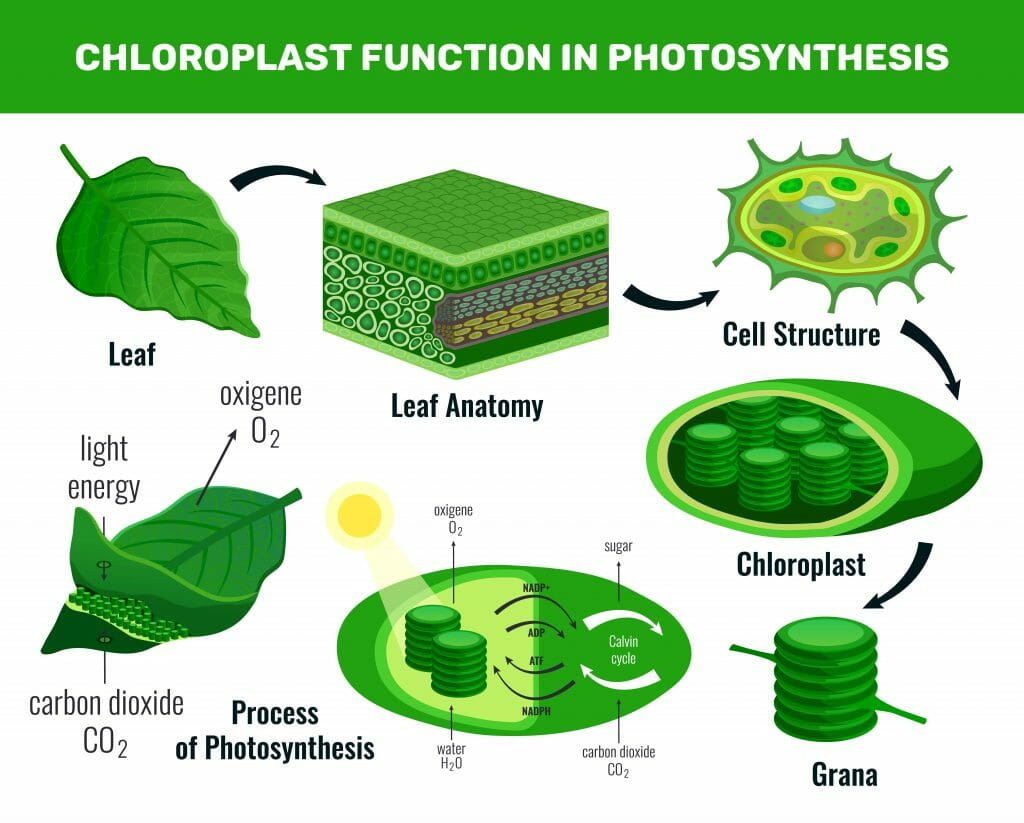
Previous studies have been reported to have shown gene expression, which is not a natural part of the plant. This was discovered when Giraldo and his team successfully injected genetic material into the chloroplasts.
Professor Nicole Steinmetz of UC-San Diego worked with Giraldo and the team to utilize nanotechnology to help deliver even more genetic material – identical to how the Covid vaccines work, not just the Moderna or Pfizer ones either.
“Our idea is to repurpose naturally occurring nanoparticles, namely plant viruses, for gene delivery to plants. Some engineering goes into this to make the nanoparticles go to the chloroplasts and also to render them non-infectious toward the plants,” Steinmetz explained.
Giraldo added:
“One of the reasons I started working in nanotechnology was so I could apply it to plants and create new technology solutions. Not just for food, but for high-value products as well, like pharmaceuticals.”
AUTHOR COMMENTARY
In light of these new ambitions to put mRNA technology into food, it gives a whole new perspective to the saying, “You are what you eat:” If you eat GMOs, you are a GMO.
As far as I am aware of, I have not heard much on this line of development, but that is not to say mRNA foods won’t become more mainstream and commercialized at some point. Whatever the case, don’t consume them, don’t get injected with this technology.
Proverbs 4:14 Enter not into the path of the wicked, and go not in the way of evil men. [15] Avoid it, pass not by it, turn from it, and pass away.
Photo Credit: The WinePress

NZ’s Gene Technology Bill – Guy Hatchard PhD & Andrew Bridgen | FTI NYE Clip
From FreeNZ
Guy Hatchard PhD talks with Liz Gunn & Andrew Bridgen during the Freedom Train International Live broadcast about the Gene Technology Bill being introduced in New Zealand and the negative impacts it will have on our health, wellbeing and freedom.
Guy’s article on his website: “Major Alert: New Zealand Government is Enshrining ‘Medical Mandates’ in Law” – https://hatchardreport.media/new-zealand-government-is-enshrining-medical-mandates-in-law/
Website: www.hatchardreport.com
VIDEO: The Gene Technology Bill — What Kiwis Need to Know: https://www.youtube.com/watch?v=K5b2skQADT4

Major Alert: New Zealand Government is Enshrining ‘Medical Mandates’ in Law
Collins, Seymour & Luxon want more GE food & without labels … what could go wrong? EWNZ
From FreeNZ @ Substack
Important Article From Guy Hatchard – HatchardReport.com
There is a revolution in progress and it is not a bloodless revolution. The Gene Technology Bill introduced to Parliament this week includes the following provisions:—
- Mandatory medical activity authorisations:for a human medicine that is or contains gene technology that has been approved by at least two recognised overseas gene technology regulators.
- Emergency authorisations: when there is an actual or imminent threat to the health and safety of people or to the environment, for example, threat from a disease outbreak, or an industrial spillage. The Minister responsible for the Gene Technology Act (the Minister) will have the power to grant an emergency authorisation.
These clauses bypass the medical choice provisions of the NZ Bill of Rights.
They violate the conclusions of Phase 1 of the Royal Commission on the pandemic which found that vaccine mandates hurt people and the economy.
They pre-empt the findings of Phase Two of the Royal Commission which has yet to examine the safety of Covid vaccines produced via gene editing.
It empowers the Minister to make health decisions affecting all Kiwis on the say-so of foreign gene regulators of his choice.
The Bill is being passed under Fast Track legislation designed to prevent public discussion of its controversial provisions and adequate understanding of its impact by MPs. There is no time sensitive need for this.
The Bill ignores the experience and lessons of the last five years of the pandemic which has been a gene technology disaster responsible for 30 million deaths worldwide. Its logic is therefore incomprehensible even to well-informed observers, but it appears to find echoes in a dark history:
“The sun shines” wrote Christopher Isherwood in his 1930s Berlin Stories “and Hitler is the master of this city. The sun shines, and dozens of my friends are in prison, possibly dead.” As are too many of my friends recently, young and old alike.
Following the 1933 Nazi acquisition of power, Germany underwent a rapid and sweeping revolution that reached deep into the fabric of daily life. At the beginning, it occurred quietly and out of sight of most of the population. At its core was ‘enabling’ legislation that empowered the government and its appointees (read: regulators) to take far reaching decisions on behalf of the whole population. Its core aim was Gleichschaltung—coordination—designed to bring citizens, government ministries, universities, cultural and social institutions inline with Hitler’s extreme beliefs and attitudes.

Today we are facing efforts aimed at global coordination of technology, including biotechnology, food tech and information technology. The NZ government appears very willing to play a leading role in this revolution, whatever the implications. We have reported on these previously at length (here, here, here and here).
In addition to the prospect of government reimposition of medical mandates, the Bill does not require labelling of gene altered foods. As this flies in the face of all the canons of food safety and traceability established over the last 100 years, the only possible motivations are either a desire to deny consumers any right to preferences, or a wish to avoid any safety monitoring or culpability. Not only will we be unable to exercise medical autonomy, but we will no longer know what we are eating. This is an extraordinary and frightening prospect and not just for those who struggle with allergies. Food choice is not the prerogative of the government or bioscientists no matter how sure of themselves.
Something absolutely fundamental and personal is being taken away from us.
This Bill is being promoted and steered by Judith Collins, with the full support and encouragement of the Prime Minister Chris Luxon and the leader of the ACT Party David Seymour. Collins is a lawyer and long time Parliamentarian, she will fully understand the import of the Bill. As a previous leader of the National Party who lost an election, it is hard to escape the suggestion that Collins may be taking satisfaction from the imposition of her will on those who rejected her leadership. We have all heard stories of waiters who piss in the awkward customer’s beer and laugh behind their backs. I am sorry to draw such a gross comparison, but my sense of outrage demands it.
VIDEO CLIP AT ARTICLE LINK (Luxon & Collins’ celebratory speech)
The Gene Technology Bill seeks to institute a revolution, it spits in the face of the public who suffered during the pandemic and who voted in a new government with the thought that things might change. Instead we appear to have more of the same or worse. The refusal of Health NZ to publish up to date health statistics such as those for cancer incidence, speaks volumes about a government determined to avoid any accountability, even at the expense of public health. For the record, US insurance data reveals that cancer incidence has had a steady and unremitting upward trajectory since the introduction of Covid vaccines. Ignored by our government and worse: covered up.
There is a time for everything and a season for every purpose under Heaven. A time to be born and a time to die, Now is the time to lobby your MP and let them know exactly what you think. Time to make our voice heard. Please write to your MP before the summer break brings consideration to a close and put a note in your diary to follow up afterwards. This fight is winnable.
Guy Hatchard PhD was formerly a senior manager at Genetic ID a global food testing and safety company (now known as FoodChain ID). You can subscribe to his websites HatchardReport.com and GLOBE.GLOBAL for regular updates by email.
He is the author of ‘Your DNA Diet: Leveraging the Power of Consciousness To Heal Ourselves and Our World. An Ayurvedic Blueprint For Health and Wellness’.
A clip from our recent interview with two former NZDF personnel.
Further Reading:

Subscribe to The FreeNZ Editorial
By FreeNZ · Hundreds of paid subscribers
New Zealand during the Covid era
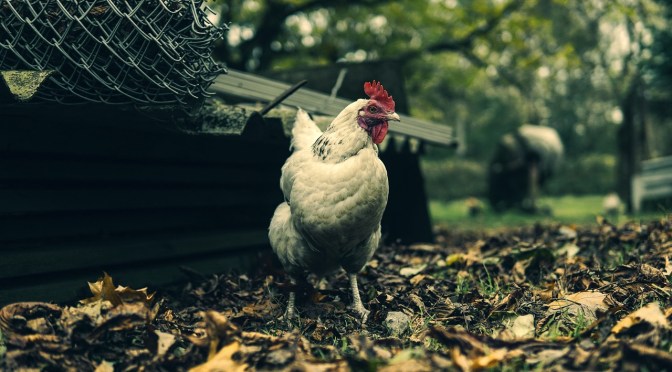
The removal of poultry and eggs from your food supply (as NZ authorities poise to cull 80K chickens)
‘Since early October, the WHO and U.S. health authorities, including the FDA, NIH, CDC, and BARDA, have been actively discussing the pandemic potential of H5N1, a highly pathogenic avian influenza virus’. (Brett Hawes, ONWARD @ substack).
I expect we’ll be needing a ‘safe & effective’ for that?
READ AT THE LINK
Image by pixabay.com

Why Has Bill Gates Spent $113 Million on Nebraska Farmland? (and why is he borrowing against it?)
EWNZ Comment: all that stands out for me about this man is the smirk we saw on his face when he said in the midst of ‘their’ plandemic that destroyed countless people’s lives … ‘wait until we see the next one [fake ‘virus’] … that, and 47K crippled children …. he is no philanthropist ..
“Gates doesn’t simply receive rent checks from his Nebraska farmland. He’s also using it to borrow staggering sums of money.”
From expose-news .com
In 2017, the Canadian board made the decision to sell a significant portion of its American farmland portfolio, which amounted to half a billion dollars and included all 22,830 acres of its land in Nebraska. The purchaser and financial details of these seemingly ordinary Nebraska farms remained undisclosed until recently, it has now been revealed that the individual behind this purchase is none other than Bill Gates and over the past six years, Gates has has invested more than $113 million in purchasing farmland in Nebraska.
Gates’ ownership of farmland is structured through over 20 shell companies located across the country. Some of these entities trace back to a P.O. Box in Kirkland, Washington, where Cascade Asset Management, responsible for managing all of Gates’ investments, is headquartered. Bill Gates’ Nebraska neighbors don’t know he owns the soybean field down the road.
Here’s the story of his spending spree, including the massive loan he took out against his land by Destiny Herbers of Flatwater Press.
READ AT THE LINK

“Hello, I’d like to eat a genetically modified animal today”
Kiwis (in case you think we’re GE free) go here for up to date info on topic for NZ … that clean green paradise (not) in the Sth Pacific … (see also here, here, here and here) … EWNZ
From Jon Rappoport @ Substack
I found an interesting section in an FDA report, “GMO Crops, Animal Food, and Beyond.” The information is listed as current as of August 2022.
Are There GMO Animals in the Food Supply? Yes. FDA has approved an application allowing the sale of the AquAdvantage Salmon to consumers. The AquAdvantage Salmon has been genetically modified to reach an important growth point faster. FDA has also approved an alteration in the GalSafe pig for human food consumption and potential therapeutic uses. The GalSafe pig was developed to be free of detectable alpha-gal sugar on its cell surfaces. People with Alpha-gal syndrome (AGS) may have allergic reactions to alpha-gal sugar found in red meat (e.g., beef, pork, and lamb). FDA has determined that food from the AquAdvantage Salmon and the GalSafe pig are as safe and nutritious to eat as food from non-GMO salmon and pigs.
Sounds wonderful. Shall we try a bit of each? I’ve ways wanted to eat salmon that was engineered to grow faster than usual.
Perhaps we should read a piece in the Alaska Beacon first. Title: “Pushback continues against genetically modified salmon being raised at Indiana farm.” October 10, 2023.
Engineered by biotech company AquaBounty Technologies Inc., the “AquAdvantage” salmon is the first such altered animal to be cleared for human consumption in the United States.
In 2018, the federal agency greenlit AquaBounty’s sprawling Indiana facility, which as of last December was raising roughly 492 metric tons of salmon from eggs imported from Canada but is capable of raising more than twice that amount. The company is currently making improvements to its Indiana production facility. Once completed, salmon harvests are expected to increase.
During the 2023 Farm Aid concert site, organizers from Block Corporate Salmon traveled an hour north to AquaBounty’s salmon growing facility where they sought to raise awareness about the “risks and harms” of genetically engineered fish.
“AquaBounty misrepresents its system to raise salmon in tanks that they claim will be recirculating water,” said Jaydee Hanson, Policy Director of Center for Food Safety. “In fact, their operations literally mine water, foul it with salmon feces, and dump it into the nearest river. They have a serious problem of illness in their chronically inflamed fish. They are not disclosing how many antibiotics they use. Consumers don’t need sick fish like these.”
Earlier, in 2022, Block Corporate Salmon also released “AquaBounty Exposed,” a report that outlined allegedly concerning conditions at AquaBounty’s Albany facility.
Former employee Braydon Humphrey, who spoke at last month’s news conference, shared more than 60 pages of photos and videos that he claims detail how AquaBounty “regularly violated food and worker safety standards, ignored animal welfare concerns, and caused environmental damage unbeknownst to the public and its investors.”
“I was deeply disturbed by what I witnessed during my time at AquaBounty,” said Humphrey, who worked as a tech at the Indiana facility from December 2018 to January 2020. “Among other atrocities, we saw high mortalities in densely packed fish tanks—including common instances of AquAdvantage salmon dying from ruptured stomachs, caused by their artificially fast growth rate.”
—Waiter? I’ll pass on the salmon. How about the rattlesnake fang sushi instead? I think it’ll be safer.
And now, on to the GalSafe GMO pigs. Approved for people with meat allergies. Sort of.
A publication called The Counter brings up rather disturbing facts.
FDA only evaluated [the pig producer] Revivicor’s claim that GalSafe pigs are, in fact, free of alpha-gal and safe to eat. But because Revivicor did not provide data or make claims related to food allergies, FDA didn’t “evaluate food safety specific to those with [alpha-gal syndrome].” In other words, GalSafe pigs aren’t expected to trigger reactions in people with red meat allergies, but FDA has not scrutinized any allergy-related guarantees. “People with an alpha-gal allergy that would like to consume meat from these pigs but have questions should talk to their doctor,” an agency spokesperson said in an emailed statement. This caveat is worrisome for some consumer interest advocates, who believe that FDA jumped the gun with its approval.
“It shouldn’t have been approved until they had adequately addressed the allergenicity of the product,” said Jaydee Hanson, policy director for the Center for Food Safety.
Eating the GMO pigs might be a problem for people with allergies. Or it might not.
Very good. Glad we got that straight.
Another brilliant decision from the FDA.
When I eat GMO bacon or GMO salmon—I have a special microscope that allows me to make that determination—I drop the meat in a vat full of a propriety poison I manufacture in my garage. It removes any trace of GMO problems. So far, only one of my arms has fallen off from the poison.
It’s a trade-off.
Or Love your GMOs. Assume They’re good for you.
— Jon Rappoport
Episode 57 of Rappoport Podcasts—“Aaron Rodgers and the death of television! Rodgers, Jimmy Kimmel, Jeffrey Epstein, COVID, Fauci, ESPN, Disney, Taylor Swift, ‘Mr. Pfizer’—it’s one big ball of wax; Let’s melt it down and see what it looks like”—is now posted on my substack. It’s a blockbuster. To listen, go here. To learn more about this episode of Rappoport Podcasts, go here.
Subscribe to Jon Rappoport
Thousands of paid subscribers
The Hottest Takes on Culture
Image by Dmitry Grushin from Pixabay

Lamestream highlights a ‘startling new report’ they say ‘could explain mystery spike in cancers’
Nothing to do with the S&E of course… nothing at all… note they include autism & infertility as possible outcomes … folk have been raising alarms on this for years while now it’s a handy go to for letting the aforesaid ‘treatment’ off the hook…
Check out our sister site truthwatchnz.is for other news
From the Daily Mail
Startling new report finds hormone-warping chemicals in 99 PERCENT of food sold in American stores – which may raise risk of cancer, autism and infertility
Forever chemicals’ linked to cancer are found in virtually every food product sold in American stores, a shocking report suggests.
The watchdog Consumer Reports tested 85 everyday items for the presence of phthalates and bisphenols, two types of PFAS chemicals used to make plastics….
It comes amid growing fears about the massive amounts of chemicals being ingested by Americans every year – and whether it is related to a mystery spike in cancers among young people.
READ THE FULL ARTICLE HERE

More tips on dealing with pests in the garden (Wally Richards)
The tomato/potato psyllid has caused a few headaches for gardeners when the populations of this relatively new pest build up and they affect not only potatoes and tomatoes but also a number of other host plants such as tamarillo, capsicum,, chili and peppino. The nymphs are so small and you need a magnifying glass to see them clearly, so you may have a small population of psyllids in your back yard and not realise the problem.
To find out if you have psyllids then you can do so by planting a potato either into your vegetable garden or into say a 20cm pot or bucket. Take a potato from the kitchen that has started to sprout and plant it as above. It only has to be into a hole about 8cm deep and covered with soil or growing medium. We are going let the plant grow to maturity and then harvest what tubers have formed underneath. If the tubers are small about the size of a marble and likely re-shooting; that will tell you that you have psyllids and they attacked the potato foliage when it was still young and growing. If on the other hand the tubers harvested are of a good size but when cut them in half, there are dark rings inside or what we call Zebra lines, then yes you have psyllids and they attacked the plant later after the tubers had grown to a reasonable size.
That means next season when you grow potatoes or tomatoes you need to use controls so that you have a harvest of eatable produce.With potatoes the easy way is to plant very early your seed potatoes like back in July so that the crop is harvested before October. That should allow you to get an ok crop. With tomatoes you need to use Wallys Cell Strengthening kit of products to make the tomato plant cells so tough that the psyllid nymphs can not piece the plant to feed and inject in the toxin that causes all the problems.
Club Root is a disease that affects the brassica family causing the roots to become very distorted and so bad that they cant supply moisture and nutrients to the foliage above. So when you plant your cabbages etc and they grow quite happily at the start, then the growth slows down and comes to a stop normally before the plant has reached maturity unless it is a miniature, fast growing variety. Its a frustrating disease which is soil born and often it has got into your garden when planting purchased (or given) any seedlings that were grown in club infested soil. Once you have it then I am told it takes up to 25 years to eradicate; that is as long as, during that time, there are no host plants grown in the contaminated area. It does not affect other plants such as silverbeet, beans etc only members of the brassica family which includes swedes. It affects brassicas such as Brussels sprouts, cabbages, cauliflowers, kale, turnips, swedes and radishes, their ornamental relatives such as Cheiranthus (wallflowers), Matthiola (stocks), Aubrieta (aubretia), and cabbage-family weeds such as Capsella bursa-pastoris (shepherd’s purse). In the past steam cleaning the soil was the only known control for it. Other methods can be used such as heavily liming the soil and using a soil drench of potassium permanganate. They can help get quick maturing crops to harvest. If you have the dread disease in the soil then here is a suggestion to maybe help eradicate it.
What you do is plant a cabbage seedling into a 20 litre pot, then in the middle of your vegetable garden you sit the pot on top of some bricks so that it is not in contact with the soil. The idea here is that rain and watering will wash down into the soil below the smell of the cabbage and that will activate the dormant club root spores to swim up to where the roots of the cabbage are. But as the plant is above the soil and not in contact with the soil then the spores have no where to latch onto and colonise. So they fizz and die. If you have a big area you may need a few cabbages in pots spread through out the area to try and activate all the spores in the soil. The following season you could test plant a few cabbages into the area and see if they grow and if they are free of the disease. Otherwise try again the same trick of activating the spores.
Moths are a problem in our gardens because of the eggs they lay and the caterpillars that hatch out to feast on fruit and plants. There are codlin moths which affect apples, pears and walnuts and they are every where in NZ. Then there are Guava Moths which are so far in the more northerly parts of the North Island and they affect all fruit including citrus and nuts. Finally another one called the army worm which is so far mainly in Northland but is likely to build up populations and head south to other gardens. It eats the foliage of just about every thing and is causing a lot of headaches to both commercial and home gardeners. If you can eliminate the three moths before they get to lay their eggs then your plants are fairly safe from damage. Moths are attracted by smell to find their host plants or to feed on nectar for energy. Thus a trap can be used to lure them in and kill them. In my recent book ‘Gardening with Wally Richards’ I have a chapter on moth control and part of that is this simple to make trap to catch and kill them.
Take one litre of hot water add a100 grams of sugar, one teaspoon of marmite, half a tablespoon of Cloudy Ammonia and half a tablespoon of Vanilla essence:
Mix well and divide the mix between two plastic milk or soft drink bottles.
Punch some holes in the side of the bottles just above the level of the mix.
Place on a stand about a couple of metres away from the tree.
At about waist height like on a small folding table.
When a number of moths are caught dispose of them and make up a new solution.
Cloudy Ammonia used to be common once upon a time from a grocery store if not so easy to find try hardware stores, there are two chains in NZ and they may have. (Bunnings and Mitre 10).
TWENTY FIVE PERCENT OFF SALE
Till the end of January we are discounting the following products by 25% to help you gain control of Insect pests and improve your soil quality.
Orders must be placed on www.0800466464.co.nz using the Code 25% in the remarks place.
I will phone you after receiving the order and deduct the 25% off the items below and also give you 10% off most other items except for bulk items.
FREIGHT: shipping charged on orders under $100 (After discounts) North Island In other words order of $100 plus after discount and not bulk items free shipping.
South Island $150.00 plus after discounts for free shipping.
Exception is for Rural delivery a charge of $3.15 on each parcel sent no matter if rest is free shipping or not.
Here are the 25% discount items:
Wallys Neem Tree Granules 1kg normal price $15.00 save $3.75 making it $11.25
Wallys Neem Tree Granules 3kg normal price $28.00 save $7.00 making it $21.00
Wallys Neem Tree Granules 10kg normal price $80.00 save $20.00 making it $60.00
Wallys Neem Tree Granules 20kg normal price $160.00 save $40.00 making it $120.00
Wallys Neem Tree Powder 1kg normal price $15.00 save $3.75 making it $11.25
Wallys Neem Tree Powder 3kg normal price $28.00 save $7.00 making it $21.00
Wallys Neem Tree Powder 10kg normal price $80.00 save $20.00 making it $60.00
Wallys Neem Tree Powder 20kg normal price $160.00 save $40.00 making it $120.00
Wallys Super Neem Tree oil 125 ml normal price $18.00 save $4.50 making it $13.50
Wallys Super Neem Tree oil 250 ml normal price $24.00 save $6.00 making it $18.00
Wallys Super Neem Tree oil 1 litre normal price $60.00 save $15.00 making it $45.00
Wallys Super Pyrethrum 100 ml normal price $28.00 save $4.20 making it $23.80
Wallys Super Fish Fertiliser 1Litre normal price $16.00 save $4.00 making it $12.00
Wallys Mycorrcin 250ml normal price $20.00 save $5.00 making it $15.00
Wallys Mycorrcin 500ml normal price $35.00 save $8.75 making it $26.25
Wallys Mycorrcin 1 Litre normal price $55.00 save $13.75 making it $41.25
Orders must be placed on www.0800466464.co.nz using the Code 25% in the remarks place.
Phone 0800 466464
Garden Pages and News at www.gardenews.co.nz
Shar Pei pages at www.sharpei.co.nz
Mail Order products at www.0800466464.co.nz
New Zealand Bill of Rights Act 1990. Part II of the Act covers a broad range of Civil and Political Rights. As part of the right to life and the security of the person, the Act guarantees everyone:
1The right not to be deprived of life except in accordance with fundamental justice (Section 8)
2The right not to be subjected to torture or to cruel, degrading, or disproportionately severe treatment or punishment (Section 9)
3The right not to be subjected to medical or scientific experimentation without consent (Section 10)
4The right to refuse to undergo any medical treatment (Section 11)
Furthermore, the New Zealand Bill of Rights Act 1990 guarantees everyone: Freedom of Thought, Conscience, and Religion.
This includes the right to freedom of thought, conscience, religion, and belief,
INCLUDING THE RIGHT TO ADOPT AND HOLD OPINIONS WITHOUT INTERFERENCE (Section 1)

Beware of Forever Chemicals Causing Cancer to Spread
Check out our sister site truthwatchnz.is for other news
From mercola.com
“PFAS is found in water, soil, air and food. It’s in your home, including in household products like stain- and water-repellant fabrics, cleaning products, nonstick cookware and paint — and likely in your drinking water…fast food containers and wrappers, microwave popcorn bags, pizza boxes and candy wrappers are common culprits. “
Story at-a-glance
- Per- and polyfluoroalkyl chemicals (PFAS) may promote cancer metastasis, according to a study by researchers at the Yale School of Public Health
- Researchers immersed two types of colorectal cancer cells in a PFAS solution for up to seven days; metabolic changes signaling cancer metastasis were observed, along with increased cell motility
- Not only was the cells’ migration ability boosted, but they had a tendency to spread and penetrate membranes
- PFAS may lead to altered gene expression and epigenetic changes that in turn cause inflammation, endocrine disruption and changes in metabolism and cell signaling that promote carcinogenesis
- Other research shows exposure to PFAS may worsen the prognosis of patients with colorectal cancer
Per- and polyfluoroalkyl chemicals (PFAS) may accelerate the progression of colorectal cancer, according to a study by researchers at the Yale School of Public Health.1 The finding could even explain why firefighters, who regularly come into contact with PFAS in firefighting foam, are also more likely to develop and die from cancer, including colorectal cancer.2
PFAS are known as “forever chemicals” because of their persistence in the environment and ability to bioaccumulate in people and wildlife. In the human body, PFAS have half-lives of two to five years.3 Due to their ability to repel oil, dirt and water, they’re widely used in consumer products including nonstick cookware, stain-resistant fabric and firefighting foams.
As endocrine-disrupting chemicals, PFAS are known to affect hormones and metabolism, interfering with fertility, growth and development.4 However, PFAS may also contribute to cancer, including promoting its spread.5
PFAS Could Promote Cancer Metastasis
Perfluorooctanoic acid (PFOA), one type of PFAS, is categorized as carcinogenic to humans by the International Agency for Research on Cancer, while perfluorooctanesulfonic acid (PFOS) is considered possibly carcinogenic to humans.6
Due to chemical exposures on the job, firefighters have higher levels of PFAS in their bodies than the general population, and they’re also more likely to develop colorectal cancer. About 80% of these cancer cases are believed to be due to environmental exposures.7
“We look at patterns that occur within an exposed group of people or a diseased group of people, then try to generate a hypothesis as to why somebody may develop a disease or have progression of disease,” study author Caroline Johnson, Ph.D., associate professor of epidemiology, said.8
For the study, researchers immersed two types of colorectal cancer cells in a PFAS solution for up to seven days. Metabolic changes signaling cancer metastasis were observed, along with increased cell motility. “It doesn’t prove it’s metastasis, but they have increased motility, which is a feature of metastasis,” Johnson said.9
Not only was the cells’ migration ability boosted, but they had a tendency to spread and penetrate membranes. According to a news release from Yale School of Public Health:10
“In another experiment, researchers grew the cells as a flat, two-dimensional layer, then drew a scratch down the middle, separating half of the cells from the other half. When they added PFAS, the cell lines grew and migrated back together again … Metabolomic analysis revealed the spheroids were producing a variety of fatty acids, amino acids, and signaling proteins in patterns previously linked to metastasis.
Small-chain fatty acids, which can protect against tumors and inflammation, were downregulated.”
The study used PFAS exposure levels similar to those in firefighters and others who have increased exposure, such as people living near military bases, landfills, airports and wastewater treatment plants. The researchers intend to conduct additional studies to see if lower levels of PFAS exposure, such as what an average person might be exposed to on a daily basis, have similar effects.
PFAS Exposure May Worsen Colorectal Cancer Prognosis
Other research shows exposure to PFAS may worsen the prognosis of patients with colorectal cancer.11 Every quantile increase in PFAS mixtures was associated with a 4.67% increase in the numbers of metastatic lymph nodes in colorectal cancer patients.
Further, the number of metastatic lymph nodes in patients with serum PFOA concentrations in the 95th percentile was 27% higher than in those with concentrations at the threshold level.12 Some evidence also suggests that PFOS exposure leads to gastrointestinal inflammation that contributes to ulcerative colitis, a precursor to colorectal cancer.13
PFAS may lead to altered gene expression and epigenetic changes that in turn cause inflammation, endocrine disruption and changes in metabolism and cell signaling that promote carcinogenesis.14 Writing in Frontiers in Toxicology, researchers explained, “Current literature suggests a link between long-term PFOS exposure, lipid metabolism dysregulation, inflammation, microbiome dysfunction and the etiology of colorectal cancer.”15
Download this Article Before it Disappears
PFAS Exposure Increases Thyroid Cancer Risk
Exposure to PFAS has previously been linked to thyroid cancer. Researchers looked into associations between plasma PFAS levels and thyroid cancer diagnosis. Using data from 88 patients with thyroid cancer and 88 matched controls without thyroid cancer, the team measured levels of eight PFAS, finding a significant association.
“There was a 56% increased rate of thyroid cancer diagnosis per doubling of linear perfluorooctanesulfonic acid (n-PFOS) intensity,” according to the study.16 Another analysis was conducted on a subgroup of 31 patients who were diagnosed with thyroid cancer a year or more after enrolling in the study.
This analysis also found an association between exposure to PFOS and thyroid cancer risk, as well as exposure to several other PFAS, including branched perfluorooctanesulfonic acid, perfluorononanoic acid, perfluorooctylphosphonic acid and linear perfluorohexanesulfonic acid.17
PFAS may contribute to cancer via multiple mechanisms, incuding causing changes in epigenetics, immunosuppression, oxidative stress and inflammation or via hormone and metabolomic pathways. An accumulation of epigenetic events induced by PFAS exposure can “synergistically amplify tumorigenicity and cancer progression,” the team explained, adding that immune system suppression and chronic inflammation also likely play a role:18
“PFOS and PFOA have been found to be immunotoxic in epidemiological and animal studies. Suppression of the immune system can affect the body’s response to foreign antigens, including those on tumor cells.
PFOS exposures are inversely associated with decreased anti-mumps and anti-rubella antibodies and reduced antibody response to tetanus and diphtheria among children, demonstrating the ability of PFOS to cause systemic immunosuppression.
Chronic inflammation, which can drive cancer development, has been linked with PFOS exposures … Finally, PFOS activates peroxisome proliferator-activated receptors, which contributed to development and regulation of thyroid cancers.”
Additional Health Risks of PFAS Exposure
Exposure to high levels of PFAS is known to cause significant health problems, including damage to the immune system, and evidence from both human and animal studies shows that such exposure may reduce your resistance to infectious disease.19 It may also harm vision health — a concerning finding since PFAS are often found in contact lenses.20
A large population-based study conducted in China found exposure to PFAS increased the risk of visual impairment,21 possibly by inducing oxidative stress. “PFASs are proven pro-oxidants and exposure to these emerging pollutants elicits DNA damage, lipid peroxidation, generation of reactive of species (ROS), and inhibition of anti-oxidant enzymes, as well as triggers signaling cascades like apoptosis,” they explained.22
Military members who were exposed to PFAS on military bases have also suffered from a number of eye conditions, including myopia, hyperopia, astigmatism and presbyopia.23 The U.S. Environmental Protection Agency also acknowledges that PFAS exposure is harmful and states that peer-reviewed scientific studies have shown exposure to PFAS may cause:24
| Reproductive effects such as decreased fertility or increased high blood pressure in pregnant women | Developmental effects or delays in children, including low birth weight, accelerated puberty, bone variations or behavioral changes |
| Increased risk of some cancers, including prostate, kidney and testicular cancers | Reduced ability of the body’s immune system to fight infections, including reduced vaccine response |
| Interference with the body’s natural hormones | Increased cholesterol levels and/or risk of obesity |
PFAS are also known to accelerate metabolic changes that lead to fatty liver. “This bioaccumulation,” researchers wrote in Environmental Health Perspectives, “coupled with the long half-lives of many PFAS, leads to concern about the potential for PFAS to disrupt liver homeostasis should they continue to accumulate in human tissue even if industrial use is abated.”25
Further, PFAS exposure may be causing inflammation and oxidative stress in youth, thus contributing to a variety of diseases such as obesity, insulin resistance, increased risk for fatty liver disease and potentially cancer.26,27
Where Are PFAS Found?
The ubiquitous nature of PFAS is part of what makes them so toxic. There are more than 9,000 PFAS,28 and exposure is so widespread that PFAS have been found in 97% of Americans.29 PFAS is found in water, soil, air and food. It’s in your home, including in household products like stain- and water-repellant fabrics, cleaning products, nonstick cookware and paint — and likely in your drinking water.30
Fast food containers and wrappers, microwave popcorn bags, pizza boxes and candy wrappers31 are common culprits. They’re also found in pasta and tomato sauces, sports bras, tampons and dental floss,32 as well as Thinx period underwear.33
PFAS on farmland is another major issue — one that’s been called a “slow-motion disaster”34 — due to the use of toxic human waste sludge as fertilizer. An estimated 20 million acres of U.S. farmland may be contaminated with PFAS as a result.35
While foods grown with PFAS-contaminated sewage sludge are not labeled as such, your best bet for avoiding them is to support sustainable agriculture movements in your area. Make it a point to only buy food from a source you know and trust, one using safe, nontoxic organic or biodynamic farming methods. Eating mostly fresh, whole foods will also help you cut down on exposure to these chemicals in food packaging.
Filtering your drinking water is also important to remove PFAS. The New Jersey Drinking Water Quality Institute recommends using granulated activated carbon “or an equally efficient technology” to remove chemicals such as PFOA and PFOS from your drinking water. Activated carbon has been shown to remove about 90% of these chemicals.36
Reverse osmosis can also remove some — but not all — PFAS.37 You can find additional helpful tips to reduce your exposure to forever chemicals in EWG’s “Guide to Avoiding PFAS.”38
| Pretreated or stain-repellent treatments — Opt out of these treatments on clothing, furniture and carpeting. Clothing advertised as “breathable” is typically treated with polytetrafluoroethylene, a synthetic fluoropolymer. |
| Products treated with flame retardant chemicals — This includes furniture, carpet, mattresses and baby items. Instead, opt for naturally less flammable materials such as leather, wool and cotton. |
| Fast food and carry-out foods — The containers are typically treated. |
| Microwave popcorn — PFAS may be present in the inner coating of the bag and may migrate to the oil from the packaging during heating. Instead, use “old-fashioned” stovetop non-GMO popcorn. |
| Nonstick cookware and other treated kitchen utensils — Healthier options include ceramic and enameled cast iron cookware, both of which are durable, easy to clean and completely inert, which means they won’t release any harmful chemicals into your home. |
| Personal care products containing PTFE, “fluoro” or “perfluoro” ingredients such as Oral B Glide floss — The EWG Skin Deep database is an excellent source to search for healthier personal care options.39 |
– Sources and References
- 1, 5 Environ. Sci. Technol. 2023, 57, 50, 21016–21028
- 2 Science Alert December 18, 2023
- 3 Science of the Total Environment June 25, 2023, Volume 879, 163081
- 4, 27 CNN March 20, 2023
- 6, 7, 8, 9, 10 Yale School of Public Health December 11, 2023
- 11, 12 Environ Res. 2024 Jan 1;240(Pt 1):117529. doi: 10.1016/j.envres.2023.117529. Epub 2023 Oct 26
- 13 Front Toxicol. 2023; 5: 1244457
- 14 Front Toxicol. 2023; 5: 1244457., Figure 1
- 15 Front Toxicol. 2023; 5: 1244457., Conclusion
- 16 eBioMedicine October 24, 2023, Findings
- 17 Newswise October 16, 2023
- 18 eBioMedicine October 24, 2023
- 19 ATSDR, What are the health effects of PFAS?
- 20 The Guardian May 9, 2023
- 21 Environment International April 2020, Volume 137
- 22 Environment International April 2020, Volume 137, discussion
- 23 Mamavation, Indications of PFAS ‘Forever Chemicals’ in Contact Lenses — Report, April 18, 2023
- 24, 31 U.S. EPA, Our Current Understanding of the Human health and Environmental Risks of PFAS
- 25 Environmental Health Perspectives April 27, 2022, Intro
- 26 Environmental Health Perspectives February 22, 2023
- 28 CDC. Per- and Polyfluoralkyl Substances September 15, 2022
- 29 NIH, National Institute of Environmental Health Sciences, PFAS
- 30 Environmental Science and Technology Letters August 9, 2016
- 32 Environmental Health Perspectives April 26, 2023
- 33 NPR January 19, 2023
- 34 The Maine Monitor March 13, 2022
- 35 The Guardian May 8, 2022
- 36 New Jersey Drinking Water Quality Institute, Recommendation on Perfluorinated Compound Treatment Options for Drinking Water, June 2015
- 37 TIME March 15, 2023
- 38 EWG’s Guide to Avoiding PFAS
- 39 Environmental Working Group Skin Deep Database

Unlock the Power of 10 Key Nutrients for Optimal Health
Check out our sister site truthwatchnz.is for other news
From mercola.com
Story at-a-glance
- While I do not recommend relying on supplements for your daily nutrition, depending on your state of health, there may be instances where you need one or more supplements to address a nutritional deficiency or ailment
- Ten of the most popular nutritional supplements include ashwagandha, berberine, B vitamins, including B12, collagen, creatine, omega-3, magnesium, vitamin D and NAD+ precursors such as niacinamide
- Some nutritional deficiencies are so widespread, thanks to soil depletion and reliance on processed foods, that just about everyone can benefit from supplementation. This is the case for magnesium and B vitamins in particular
While I do not recommend relying on supplements for your daily nutrition, depending on your state of health, there may be instances where you need one or more supplements to address a nutritional deficiency or ailment.
Some nutritional deficiencies are so widespread, thanks to soil depletion and reliance on processed foods, that just about everyone can benefit from supplementation. In this article, I will review 10 of the most popular nutritional supplements that may be helpful for many.
Ashwagandha
Ashwagandha is an adaptogenic herb, meaning it helps your body adapt to stress by balancing your immune system, metabolism and hormonal systems. The root contains the highest concentration of active ingredients that modulate hormones, including thyroid hormone, estrogen, progesterone and testosterone.
Naturally occurring steroids called withanolides in ashwagandha also suppress pathways responsible for several inflammation-based illnesses such as arthritis, asthma, hypertension, osteoporosis and cancer.
Ashwagandha also supports sexual and reproductive health in both men and women. In men, it helps boost testosterone levels, and has been shown to improve semen quality in infertile men.
In women, ashwagandha’s ability to rebalance hormones (including thyroid hormone, estrogen and progesterone) has been shown to improve polycystic ovary syndrome and relieve menopausal symptoms.
Ashwagandha also has natural pain reliever (analgesic) and rejuvenating properties, and can promote general health when used regularly. While some adaptogens are stimulants in disguise, this is not the case with ashwagandha. It can give your morning exercise routine a boost, and when taken prior to bed it can help you get a good night’s sleep as well.
Berberine
Berberine — a yellow-colored alkaloid compound found in several different plants, including European barberry, goldenseal, goldthread, Oregon grape and tree turmeric — has antibacterial, anti-inflammatory, antiproliferative, antidiarrheal, antineoplastic, antidiabetic and immune-enhancing1 properties.
It has a long history of use in traditional medicine, including traditional Chinese medicine, and many integrative health practitioners swear by berberine as a general health supplement due to its ability to address such a wide variety of maladies.2
For example, it’s effective against a wide range of bacteria, protozoa and fungi, and is commonly used to treat gastrointestinal issues, including traveler’s diarrhea and that from food poisoning. Having similar mechanisms of action as the drug metformin, berberine can also be used as an oral hypoglycemic for Type 2 diabetics.3 Other ailments berberine has been shown to protect against and/or treat include:4
| High blood pressure | Fatty liver disease |
| Obesity | Digestive issues |
| Neurological diseases such as Alzheimer’s and Parkinson’s | Cancer |
| Anxiety, depression and post-traumatic stress disorder (PTSD) |
Many of berberine’s health benefits5 have been linked to its ability to activate adenosine monophosphate-activated protein kinase (AMPK).6 AMPK is an enzyme inside your body’s cells. It’s sometimes referred to as a “metabolic master switch” because it plays an important role in regulating metabolism.7
Low AMPK has been linked to insulin resistance, mitochondrial dysfunction, obesity, neurodegeneration and chronic inflammation — all of which lay the groundwork for a wide variety of serious chronic diseases.
According to many studies, berberine is well-tolerated.8 However, it can interfere with some medications, including oral chemotherapy, high blood pressure medications, blood thinners, cholesterol medications, immunosuppressive drugs, and pharmaceutical diabetes treatments.
Women who are pregnant or breastfeeding should avoid berberine. Other side effects can include constipation, diarrhea, low blood sugar, nausea and vomiting.
Download this Article Before it Disappears
Vitamin B12
Vitamin B12 (cobalamin) is known as “the energy vitamin.” Your body requires it for a variety of functions, including energy production, blood formation, DNA synthesis and myelin formation.
It also plays an important role in neurological function, and deficiency can culminate in a range of mental health symptoms, from irritability and depression to dementia and even psychosis. For more details, see “Vitamin B12 to Help Combat Mental Illness.”
Low B12 also increases inflammation and oxidative stress by raising homocysteine. High homocysteine, in turn, is associated with cardiovascular disease and decreased immune response. Vitamins B6, B9 (folate) and B12 break down homocysteine.9
Recent research10 suggests B12 may also be a key player in cellular regeneration, speeding up tissue repair. More specifically, the study found that vitamin B12 is a limiting factor for tissue repair. In other words, to optimize tissue regeneration, you need sufficient amounts of B12 in your system.
The two ways you become deficient are through a lack of vitamin B12 in your diet, or through your inability to absorb it from the food you eat. Vitamin B12 is present in natural form only in animal sources of food, which is one of the reasons I advise against a no-animal-food, vegan diet.
B12-rich foods include beef and beef liver (grass-fed beef is highly preferable to the grain-fed variety), lamb, snapper, venison, salmon, shrimp, scallops, organic pastured poultry and eggs.
Warning signs of B12 deficiency include brain fog, memory lapses, mood swings, apathy, fatigue, muscle weakness and tingling in the extremities. Unfortunately, B12 deficiency may not present itself for several years, so by the time you notice symptoms, you may be quite deficient.
When it comes to supplementation, your best alternatives include injectable B12 and sublingual drops or spray. Most oral supplements tend to be ineffective, as vitamin B12 is poorly absorbed.
You also want to make sure you’re taking methylcobalamin, not cyanocobalamin (which is the most commonly found B12). When taken sublingually (either by tablet or spray), it goes straight into your bloodstream.
If you take it as an oral supplement, you have to rely on a glycoprotein produced in your stomach called intrinsic factor, which binds to the B12 and shuttles it into the intestine to the end of the small intestine where it’s absorbed. As you get older, you lose the ability to produce intrinsic factor, making you more likely to suffer from B12 deficiency.
Other B Vitamins
The other B vitamins are also important, and if you eat a lot of processed food, you’re virtually guaranteed to be deficient in several of them. Case in point: in mid-October 2023, Moms Across America (MAA) tested 10 fast food brands for B vitamins,11 and none of them contained either B9 or B12. Levels of B3 (niacin) were also abysmal.
The recommended daily allowance (RDA) of niacin is 14 mg per day for women and 16 mg for men. To meet that RDA, a woman would need to consume 333 servings of Chick-fil-A chicken sandwiches (at a serving size of 210 grams) and a man would need to eat 380 servings.
Chipotle’s carnitas bowl with everything, which had the highest amount of B3, still requires you to eat eight servings if you’re a woman and nine servings if you’re a man, to meet your RDA of niacin. Personally, I believe a B complex is a good option for most people, as you really need all the B vitamins, not just one or two.
Niacinamide
I also recommend taking 50 mg of niacinamide (aka nicotinamide, a form of niacin or vitamin B3) two to three times a day, as it plays a vital role in producing energy in your mitochondria.
Without it, your mitochondria simply cannot make energy efficiently. Niacinamide is also a precursor to NAD+, which is also tightly correlated with total ATP production. NAD+ also acts as fuel for longevity proteins called sirtuins.
Because of its effects on energy production and NAD+, niacinamide can be useful in the prevention and/or treatment of a long list of chronic conditions, including obesity,12,13 insulin resistance and diabetes,14 neurodegeneration15 and neurological conditions such as Alzheimer’s and ischemic stroke,16,17 heart failure,18,19 leaky gut,20,21 glaucoma,22,23 declining testosterone levels,24,25 cancer,26,27 kidney disease,28 alcoholic- and nonalcoholic liver disease,29,30 and even COVID-19.31
Your NAD levels dramatically decline with age. It’s also used up by DNA repair enzymes and enzymes involved in inflammation and immunity, such that chronic inflammation, or acute illness in old age, can rapidly result in depletion. For more details, see “The Crucial Role of NAD+ in Optimal Health.”
Collagen
Collagen is the most common and abundant of your body’s proteins. One of its primary purposes is to provide structural scaffolding for your various tissues to allow them to stretch while still maintaining tissue integrity.
As a compound of essential amino acids, there’s only one way to get collagen. Your body can’t produce it, so you must obtain it through your diet. Historically, traditional diets provided ample collagen in the form of broth made from boiled chicken feet or beef bones. These are by far your best alternatives.
If you decide to use a collagen supplement, make sure your collagen supplement is certified “100% Organic” by the U.S. Department of Agriculture (USDA) to minimize the risk of contaminants associated with concentrated animal feeding operations (CAFOs).
Moreover, collagen supplements can be either unhydrolyzed (undenatured) or hydrolyzed (denatured). The processing that most collagen supplements undergo to become hydrolyzed can also result in questionable byproducts that are best avoided.
My personal preference is to use a less denatured (unhydrolyzed) organic collagen supplement, as it has a more balanced amino acid profile. That said, I still believe the natural approach is best. Making homemade bone broth using bones and connective tissue from grass fed, organically raised animals isn’t very complicated and will produce the best results. Another alternative is to take glycine, as nearly one-third of the amino acids in collagen is glycine.
Glycine helps reduce inflammation and oxidative damage, as it inhibits the consumption of nicotinamide adenine dinucleotide phosphate (NADPH). NADPH is used as a reductive reservoir of electrons to recharge antioxidants once they become oxidized.
Glycine also has cell-protective, and antistress effects,32 and has been shown to extend lifespan in animal studies and mitigate chronic disease and disability, thereby increasing healthspan. You need at least 12 grams of glycine daily for optimal collagen turnover, plus another 3 grams per day to form glutathione. So, a therapeutic dose of glycine would be around 15 grams, unless you’re also getting collagen from food or a supplement.
Creatine
Creatine is commonly used by athletes to improve performance, as it’s immediately used by your body to convert ADP to ATP and supply energy muscles need for contraction.
Creatine also helps provide energy to your brain and may improve cognitive performance. It also appears to have protective effects in cases of mild traumatic brain injury. Of the roughly 20 different formulations of creatine on the market, creatine monohydrate is the one that has been studied most frequently and therefore has the strongest evidence of health benefits.
Creatine appears to work by increasing proteins that create muscle fibers33 and raising insulin-like growth factor,34 a hormone that increases muscle mass. Data also suggest that creatine may help lower blood sugar levels.
It is important to choose creatine from a reputable manufacturer. Clinical trials that have lasted up to five years have reported no adverse effects in healthy individuals.35 However, it is important to stay within the recommended dose.
Some people find that creatine makes them feel bloated.36 Some people are sensitive to using creatine and feel bloated if they don’t drink enough water with the supplement. However, most of the time it goes away in just a few hours. Factors that affect bloating include how much water you drink, the intensity of your workout and your diet.
Keep in mind that it’s not guaranteed that you will build muscle from using creatine. Consider creating specific goals for using the supplement so you are not disappointed. If you’re a vegan or a vegetarian, you might consider using creatine to help protect brain health.
Omega-3
Omega-3 fats are essential for healthy cell membrane function, and higher omega-3 levels have been consistently linked to better health and longer life spans. The omega-3 fats EPA and DHA protect health and promotes longevity by:
| Thinning your blood, which discourages inappropriate clotting that can lead to a stroke or heart attack |
| Lowering serum triglyceride levels |
| Helping to lower blood pressure, in part by improving the health of the lining of your blood vessels so that they can relax better |
| Anti-inflammatory effects — For example, provided you have enough EPA and DHA in your membranes, when an inflammatory insult occurs, metabolites of the EPA and DHA — resolvins and protectins — will be synthesized. As their names imply, these metabolites help protect against and resolve inflammation. If you do not have sufficient omega-3, the inflammatory response persists longer and can become chronic |
| Helping the mitochondrial membrane process energy — Improving the fluidity and flexibility of the mitochondrial membrane allows enzymes and the other proteins embedded in the membrane to operate more smoothly |
| Adding structural stability to mitochondrial membranes — When loaded with omega-3, the membrane allows these agents to move freely, allowing everything to work as it should |
While most use fish oil to increase their omega-3 level, this isn’t the best choice, as most are synthetic ethyl esters, which are very different from the triglyceride and phospholipid forms of omega-3 found in sea food.
Ideally, you’d want to get most of your omega-3 from cold-water fatty fish like wild-caught Alaskan salmon, sardines, herring and mackerel, for example. If you opt for a supplement, krill oil, which delivers omega-3 primarily in the phospholipid form, makes it a superior choice to fish oil.
As for dosing, research37 has shown that an omega-3 index greater than 8% is associated with the lowest risk of death from heart disease while an index below 4% places you at the highest risk of heart disease-related mortality.
I recommend taking a maximum of 1 gram of omega-3 per day. Higher amounts could be risky, in my view, because EPA and DHA are both polyunsaturated fats (PUFAs) and, like linoleic acid (LA), are susceptible to oxidation and the production of dangerous aldehyde metabolites.
Magnesium
Magnesium is the fourth most abundant element in your body38 and one of the seven essential minerals we cannot live without.39 It’s involved in hundreds of biochemical reactions in the body,40 and deficiency can contribute to significant health problems.41
It is necessary for the healthy functioning of most cells, and especially your heart and muscles.42 Low levels can impede both cellular metabolic function and mitochondrial function.
According to one scientific review43,44 that included studies dating as far back as 1937, low magnesium may actually be the greatest predictor of heart disease. Research published in 201745 shows even subclinical magnesium deficiency can compromise cardiovascular health. My favorite form of magnesium is L-threonate, as it appears to make its way into your brain the best.
Vitamin D
Last but not least, vitamin D. Ideally, you would get most of your vitamin D from sensible sun exposure. Depending on where you live, this may not be possible however, so oral supplementation may be necessary for at least part of the year.
The ideal dose for most adults of normal weight is 6,000 IUs a day; 7,000 IUs if you’re overweight; and 8,000 IUs a day if you’re obese. At those dosages, most people can reach a minimum blood level of 40 ng/mL (100 nmol/L),46 which is the lower cutoff for sufficiency. Other research suggests you may need as much as 9,122 IUs per day to reach 40 ng/mL.47
Most definitely, the conventional claim that you only need a few hundred IUs per day — which is still touted by medical professionals in media48 — is completely inaccurate and is based on a statistical error49 that for some reason has never been officially corrected.
Your best bet is to get your vitamin D level tested twice a year. Based on the evaluation of healthy populations that get plenty of natural sun exposure, the optimal range for general health appears to be somewhere between 60 and 80 ng/mL (150 to 200 nmol/L).
Taking oral vitamin D together with vitamin K2 and magnesium is also recommended, as you need 244% more oral vitamin D if you’re not also taking magnesium and vitamin K2.50 In other words, if you take all three in combination, you need far less oral vitamin D in order to achieve a healthy vitamin D level.
– Sources and References
- 1 Supplements in Review, July 18, 2017
- 2 Health. What Is Berberine?
- 3, 4 Doctormurray.com Berberine
- 5 Self Hacked, Berberine Benefits
- 6 Diabetes 2006 Aug; 55(8): 2256-2264
- 7 Am J Physiol. 1999 Jul;277(1 Pt 1):E1-10
- 8 Frontiers in Pharmacology 2021; 12: 653887
- 9 PLoS ONE 5(9): e12244
- 10 Nature Metabolism 2023; 5: 1911-1930
- 11 Moms Across America October 18, 2023
- 12 Journal of Nutritional Biochemistry September 2022; 107: 109056
- 13 Haidut.me May 31, 2023
- 14 Nutrients June 2022; 14(11): 2219
- 15 Haidut.me May 11, 2023
- 16 Cell Reports April 20, 2023; 42(5): 112372
- 17 Phys.org April 27, 2023
- 18 Nature Cardiovascular Research February 13, 2023; 2: 174-191
- 19 Haidut.me March 3, 2023
- 20 Nutrients 2023; 15(1): 174
- 21 Lifespan January 11, 2023
- 22 JAMA Ophthalmology 2022;140(1):11-18
- 23 Haidut.me December 9, 2021
- 24 Nature Aging 2022; 2: 105-114
- 25 Haidut.me March 31, 2022
- 26 Nature Metabolism 2022; 4: 711-723
- 27 Haidut.me July 14, 2022
- 28 Nat Metab March 2023; 5(3): 357-359
- 29 Exp Mol Pathol April 2016; 100(2): 303-306
- 30 NMN.com April 7, 2016
- 31 Metabolism December 2020; 295(52): 17986-17996
- 32 RayPeat.com Gelatin Stress and Longevity
- 33 Journal of Physiology, 2006;573(2): 525-534
- 34 International Journal of Sports Nutrition and Exercise Metabolism, 2008;18(4): 389-398
- 35 Journal of the International Society of Sports Nutrition, 2007;4(6) Medical Safety of Creatine Supplementation para 2, 3
- 36 Tactical Elite, Does Creatine Make You Bloated?
- 37 Preventive Medicine July 2004; 39(1):212-20
- 38 Austin Journal of Nutrition and Food Sciences, 2014;2(10)
- 39 Michigan Medicine, University of Michigan, March 28, 2018
- 40, 42 NIH.gov Magnesium Fact Sheet for Professionals
- 41 Open Heart 2018;5:e000668, Magnesium in human biology
- 43 PR Newswire, January 31, 2013
- 44 New Hope Network, January 31, 2013
- 45 Open Heart November 7, 2017
- 46 Dermato-Endocrinology 2017; 9(1) article e1300213
- 47, 49 J. Prev Med Public Health July 2017; 50(4):278-281
- 48 Healthline June 5, 2023
- 50 GrassrootsHealth Magnesium and Vitamin K2 Combined Important for Vitamin D Levels

FROM WALLY RICHARDS
As we close the door on the year 2023 and look to a new year in front of us and interesting times that lay ahead.
Let us hope that people are not so naive as they now know better; the world is not like we thought it was; from our comfort zone and it has been a bit of a rude awaking for many.
Readers that have followed my gardening articles for sometime will have seen how I encourage people to grow as much of their food, vegetables and fruit as able and to do so naturally with all the minerals and elements available and without harmful chemicals. Why? Good for your health and pocket.
By growing as much of your own healthy food as possible you are upsetting the pharmaceutical companies as well as the companies that make harmful chemicals and fertilisers.
I have also suggested that fertiliser companies, chemical companies and pharmaceutical companies appear to work hand in hand.
A food chain that has little goodness but ample chemical poisons is a money earner for the health sector and the pharmaceutical companies.
A book has recently been released which goes into detail about how this is done. Title is:
Sickening Profits: The Global Food System’s Poisoned Food and Toxic Wealth by Colin Todhunter.
Want some interesting New Year reading then go to https://www.globalresearch.ca/sickening-profits-global-food-system-poisoned-food-toxic-wealth/5844502
This new e-book begins by examining how the modern food system is being shaped by the capitalist imperative for profit, with specific focus on the situation in Ukraine, and discusses the role of the world’s most powerful investment management firm, BlackRock.
It then goes on to describe how people (not least children) are being sickened by corporations and a system that thrives on the promotion of ‘junk’ (ultra-processed) food laced with harmful chemicals and the use of toxic agrochemicals.
It’s a highly profitable situation for investment firms like BlackRock, Vanguard, State Street, Fidelity and Capital Group and the food conglomerates they invest in.
But BlackRock and others are not just heavily invested in the food industry. They also profit from illnesses and diseases resulting from the food system by having stakes in the pharmaceuticals sector as well. A win-win situation.
The book goes on to describe how lobbying by agri-food corporations and their well-placed, well-funded front groups ensures this situation prevails.
They continue to capture policy-making and regulatory space at international and national levels and promote the notion that without their products the world would starve.
Moreover, they are now pushing a fake-green, ecomodernist narrative in an attempt to roll out their new proprietary technologies in order to further entrench their grip on a global food system that produces poor food, illness, environmental degradation, the eradication of smallholder farming, the undermining of rural communities, dependency and dispossession.
The final chapter looks at the broader geopolitical aspects of food and agriculture in a post-COVID world characterised by food inflation, hardship and multi-trillion-dollar global debt. End.
My comment is ‘Forewarned is Forearmed’
Radiation the effects on all life forms which is another worry in regards to bees and other insects pollinating our plants and food crops… Here is an interesting study….
On December 19, 2023, in the journal New Phytologist, French researchers published a study on yet another aspect of the decline of life on Earth. The study link is:
See https://nph.onlinelibrary.wiley.com/doi/full/10.1111/nph.19422
The populations of bees and other pollinators have declined so much that flowering plants that required insects in order to reproduce efficiently have evolved in less than 25 years to become better self-pollinators and to not need insects to reproduce.
Field pansies from seeds collected in the late 1990s and early 2000s were grown next to pansies from seeds collected in 2021.
Self-pollination rates were 27% higher in the plants grown from the newer seeds. The flowers were smaller.
The petals were shorter. The labella — the landing platforms that attract insects — were smaller. The flowering time was shorter. Fewer flowers opened per day.
The nectar spurs were shorter, there were fewer nectar guides, and the flowers produced less nectar.
More bumblebees visited the flowers that grew from the old seeds than from the new seeds.
The authors warned of cascading effects on insect populations:
“These decreases in nectar production may then reinforce pollinator declines if nectar levels fall below those necessary to sustain wild bee populations. Environmental changes may thus present a double jeopardy to pollinator populations, as they become victims of both the changes themselves and of plant trait evolution.”
The authors listed only pollution, habitat destruction, and alien species as causes of pollinator collapse.
I (Arthur Firstenberg) have sent the authors a letter, with links to literature reviews, informing them that RF radiation is the biggest cause of insect decline.
I have invited them to join the coalition of scientists, organizations and individuals that we are forming to address the global radiation emergency.
From Arthur Firstenberg
President, Cellular Phone Task Force
Author of The Invisible Rainbow: A History of Electricity and Life
Which is a book well worth reading.
All the best for the New Year
Wally Richards
Phone 0800 466464
Garden Pages and News at www.gardenews.co.nz
Shar Pei pages at www.sharpei.co.nz
Mail Order products at www.0800466464.co.nz
New Zealand Bill of Rights Act 1990. Part II of the Act covers a broad range of Civil and Political Rights. As part of the right to life and the security of the person, the Act guarantees everyone:
1The right not to be deprived of life except in accordance with fundamental justice (Section 8)
2The right not to be subjected to torture or to cruel, degrading, or disproportionately severe treatment or punishment (Section 9)
3The right not to be subjected to medical or scientific experimentation without consent (Section 10)
4The right to refuse to undergo any medical treatment (Section 11)
Furthermore, the New Zealand Bill of Rights Act 1990 guarantees everyone: Freedom of Thought, Conscience, and Religion.
This includes the right to freedom of thought, conscience, religion, and belief,
INCLUDING THE RIGHT TO ADOPT AND HOLD OPINIONS WITHOUT INTERFERENCE (Section 1)
Image by Lubos Houska from Pixabay
Eat More Purple Foods for Cancer Prevention and a Healthier Gut and Heart
From Dr Mercola
Story at-a-glance
- Polyphenols are natural plant chemicals with powerful antioxidant properties that help combat inflammation, cardiovascular disease, cancer, dementia, osteoporosis, insulin resistance and more
- Polyphenols help protect your heart health by enhancing bioactivity of flavonoids in the lining of your blood vessels; reducing clumping of platelets in your blood; scavenging free radicals and lowering inflammation
- Animal research found purple potatoes lowered proinflammatory interleukin-6 — a protein known to promote colon cancer — nearly sixfold compared to the control diet in pigs
- A drawback of potatoes is they’re high in starch. By cooling cooked potatoes in the refrigerator, a significant portion of the starch will transform into gut-healthy digestive resistant starch
- Other research shows polyphenols help inhibit proliferation of colon cancer cells and induce cancer cell apoptosis (programmed cell death) through oxidant-mediated mechanisms
Editor’s Note: This article is a reprint. It was originally published October 9, 2017.
Polyphenols1,2 (also known as phenolics) are phytochemicals, natural plant chemicals with powerful antioxidant properties. There are over 8,000 identified polyphenols found in foods such as tea, wine, chocolates, fruits and vegetables. Antioxidants — which in addition to polyphenols include carotenoids and allyl sulfides — help protect your cells from free radical damage, thereby controlling general aging and disease potential.
If your body does not get adequate protection, free radicals can cause cellular damage and dysfunction, raising your risk for chronic diseases such as heart disease, cancer and Alzheimer’s disease, just to name a few.
Polyphenols can be broken down into four general categories — flavonoids, stilbenes, lignans and phenolic acids — with additional subgroupings3 based on the number of phenol rings they contain, and on the basis of structural elements that bind these rings to one another.
As a general rule, foods contain complex mixtures of polyphenols, with higher levels found in the outer layers of the plants, such as the skin.4 Polyphenols give fruits, berries and vegetables their vibrant colors and contribute to the bitterness, astringency, flavor, aroma and oxidative stability of the food.
The Role of Polyphenols in Human Health
In the human body, polyphenols have diverse biological functions and properties, including:5,6
| Fighting cancer cells7,8,9,10 and inhibiting angiogenesis11 (the growth of blood vessels that feed a tumor) | Protecting your skin against ultraviolet radiation |
| Fighting free radicals and reducing inflammation | Promoting brain health12 |
| Reducing the appearance of aging | Protecting against dementia and Alzheimer’s disease13,14 |
| Modulating your gut microbiome. Polyphenols have a prebiotic effect, nourishing beneficial bacteria15,16,17,18 | Improving bone metabolism, reducing your risk for osteoporosis19,20 |
| Promoting normal blood pressure and protecting your cardiovascular system, thereby lowering your risk for cardiovascular disease.21,22 Flavonoid polyphenols help to reduce the clumping of platelets in your blood and improve the function of your cells that line your arteries and veins23 | Supporting normal blood sugar levels,24 stabilizing fat metabolism and reducing insulin resistance, thereby lowering your risk for Type 2 diabetes |
As noted in a 2010 scientific review in the journal Nutrients:25
“Research in recent years strongly supports a role for polyphenols in the prevention of degenerative diseases, particularly cancers, cardiovascular diseases and neurodegenerative diseases … Recent studies have revealed that many of these diseases are related to oxidative stress from reactive oxygen and nitrogen species.
Phytochemicals, especially polyphenols, are the predominant contributor to the total antioxidant activities of fruits, rather than vitamin C.
Polyphenols have been found to be strong antioxidants that can neutralize free radicals by donating an electron or hydrogen atom … Polyphenols … complement and add to the functions of antioxidant vitamins and enzymes as a defense against oxidative stress caused by excess reactive oxygen species (ROS).
Although most of the evidence of the antioxidant activity of polyphenols is based on in vitro studies, increasing evidence indicates they may act in ways beyond the antioxidant functions in vivo. Modulation of cell signaling pathways by polyphenols may help significantly to explain the mechanisms of the actions of polyphenol-rich diets.”
How Polyphenols Protect Your Heart Health
The research supporting polyphenols in the prevention and treatment of cardiovascular disease is particularly well-documented.26 For example, higher intakes of fruit-based flavonoids (specifically anthocyanin-rich foods — fruits and berries with a blue, red or dark purple hue — and those high in flavanones, particularly citrus fruits like grapefruit, lemons and oranges) has been found to lower the risk of nonfatal myocardial infarction and ischemic stroke in men.27
Keep in mind that to reap these benefits, you need to eat the whole fruit, not fruit juice, which is simply too high in fructose for optimal health. Excessive fructose is associated with insulin resistance and associated health problems, including diabetes and heart disease. Here’s a sampling of other studies showing how polyphenols helps protect your heart health:
- A systematic review of 14 studies found intake of six classes of flavonoids: flavonols, anthocyanidins, proanthocyanidins, flavones, flavanones and flavan-3-ols, can significantly decrease your risk of heart disease28
- Researchers have long puzzled over how flavonoids help prevent heart disease, but a study29 published last year suggests it has to do with the fact that metabolism of flavonoids enhances their bioactivity in endothelial cells, which form the lining of your blood vessels
- Flavonoids also help to reduce the clumping of platelets in your blood.30 Platelet clumping is one potential precursor in heart attacks and angina
- As antioxidants, polyphenols scavenge free radicals and reduce inflammation in your body
- Polyphenols also inhibit vascular endothelial growth factor (VEGF), which causes complications with atherosclerotic plaques in the arteries, a factor in cardiovascular disease31
Download this Article Before it Disappears
Organic Foods Have Higher Polyphenol Content
How a plant is grown can influence its healing potential by altering the concentration of plant chemicals in it, including its antioxidant content. As noted in a 2004 paper,32 agricultural practices and industrial processes can reduce the health effects of the polyphenols in the food.
Previous research33 shows organically and sustainably grown foods contain statistically higher levels of polyphenols compared to conventionally grown varieties, so whenever you can, try to stick to organic.
Herbs and spices are another great source of polyphenols, so you can’t really go wrong by adding them liberally to your cooking. Berries of all sorts are also an excellent source. Foods that are naturally blue or purple in color are a tipoff that they contain higher amounts of polyphenols. Examples include blueberries, mulberries and purple potatoes, the latter of which were investigated for their ability to lower your risk of cancer and other chronic diseases.
Purple Potatoes May Lower Risk for Colon Cancer
The study34,35 in question investigated the effects of purple potatoes in pigs fed a high-calorie diet, which has been linked to an increased risk of colon cancer. Pigs were fed one of three diets for 13 weeks:
- High-calorie diet
- High-calorie diet supplemented with raw or baked purple potatoes, rich in phenolic acids and anthocyanins — antioxidant compounds shown to have anticancer properties36
- Standard control diet
Compared to the control diet, the high-calorie diet was (as expected) found to increase the level of interleukin-6 (IL-6), a proinflammatory protein known to promote cancer in the colon. The potato-supplemented diet, on the other hand, lowered IL-6 nearly sixfold compared to the control group. According to the authors:
“Anti-IL-6 therapeutics are available for treating colon cancer; however, they are expensive and induce negative side effects. Thus, whole foods could be a better way to combat low-grade chronic colonic inflammation and colon cancer. Whole plant foods have been shown to decrease chronic diseases due to the potential of anti-inflammatory dietary compounds acting synergistically.
We observed that supplementation of HCD [high-calorie diet] with anthocyanin-containing purple-fleshed potatoes, even after baking, suppressed HCD-induced IL-6 expression and … IL-6-related proteins … Our results highlight the importance of IL-6 signaling in diet-linked induction/prevention of colonic inflammation/cancer and demonstrate the potential of a food-based approach to target IL-6 signaling.”
Other research confirms the anticancer benefits of polyphenols, especially for colon cancer. A study37 published last year found polyphenols helped inhibit the proliferation of colon cancer cells and induce cancer cell apoptosis (programmed cell death) through oxidant-mediated mechanisms.
How to Boost Health Effects of Potatoes
A drawback of potatoes is they’re high in starch. By raising your blood sugar, starchy foods contribute to insulin resistance and, ultimately, Type 2 diabetes. Interestingly, by cooking a normally digestible starch such as potato and then cooling it in the refrigerator will alter its chemistry through a process called retrogradation, transforming much of the starch into digestive-resistant type starch.38
As its name implies, digestive-resistant starch refers to low-viscous dietary fibers that resist digestion in the small intestine and slowly ferment in your large intestine. In one study, refrigerating cooked potatoes for 24 hours increased resistant starch by 57%.39
Digestive-resistant starches act as prebiotics, feeding healthy bacteria and improving fat oxidation. In one study, replacing 5% of daily carbohydrates with digestive-resistant starch from whole foods like cooked and chilled potato or underripe banana raised post-meal fat burning by as much as 30%.40
Resistant starch also adds significant bulk to your stools and help you maintain regular bowel movements. And, since they’re indigestible, resistant starches do not result in blood sugar spikes. In fact, research suggests resistant starches actually help improve insulin regulation, thereby reducing your risk of insulin resistance.41,42,43,44
Health Benefits of Mulberry
Mulberries are also rich in polyphenols and other antioxidants. As far back as the Roman Empire, mulberries were used to treat diseases of the mouth, throat and lungs. Native Americans discovered them to have a laxative effect and used them to treat dysentery.45 I planted two twigs a few years back and now I have a mini forest of mulberry shrubs and harvest about 10 gallons of mulberries a year.
Nutritionally, mulberries contain an assortment of high-powered nutrients, such as vitamins A, B complex, C, E and K, each bringing their own constituents for health. They also contain iron, potassium and magnesium. One of the most beneficial resources in mulberries is resveratrol, said to “promote heart health and overall vitality.” According to the Institute for Traditional Medicine:46
“Traditionally, mulberry fruit has been used as a medicinal agent to nourish the yin and blood, benefit the kidneys and treat weakness, fatigue, anemia and premature graying of hair. It is also used to treat urinary incontinence, tinnitus, dizziness and constipation in the elderly and the anemic.”
In addition to historical uses, modern research has found mulberries can help improve your:
- Digestive health — Mulberry contains 25% soluble fiber and 75% insoluble fiber. Both of these dietary fibers can help improve overall digestive health by promoting regular bowel movement and lowering your risk of stomach diseases47
- Blood vessel health — Mulberry can help keep your blood vessels healthy thanks to its resveratrol content. This antioxidant helps increase the production of nitric oxide, which allows your vessels to relax48
- Blood sugar control — Mulberry contains a special antioxidant called DNJ (1-deoxynojirimycin) that inhibits an enzyme in your gut that breaks down carbohydrates into sugar. Since it lowers the amount of sugar going into your system, it is considered beneficial for diabetics who want to control their condition49
- Liver health — According to one study, mulberry can help prevent the buildup of fatty deposits around your liver, which can lower your risk of various hepatic diseases50
Make Polyphenol-Rich Foods Part of Your Daily Diet
It is generally recognized that polyphenols are powerful nutrients that protect your health by fighting against free radicals and preventing damage from oxidation. Free radicals are highly reactive molecules that steal electrons from important tissues like your DNA, proteins and cell membranes.
The loss of an electron, in turn, oxidizes these cells, which makes them unstable and easily breakable. As this free radical damage continues, cells can no longer perform properly; tissues begin to degrade and disease sets in.
That said, free radicals are not all bad, and you don’t want to eliminate all of them. They actually serve as important signaling molecules and play a role in your immune system, attacking foreign invaders and pathogenic bacteria. Eliminating most of them, or aiming for complete eradication, can lead to the opposite problem of actually creating more damage.
Free radicals are a natural byproduct of breathing; antioxidants mop up the excess and leave the rest to fulfill their other functions. This fine balancing act can be easily tipped to the point of either too much or too little. A diet rich in organic fruits, vegetables and nuts will typically supply you with the antioxidants needed to walk this fine line.
One reason why a varied diet of real food works better than simply taking antioxidant supplements is the fact that the isolated antioxidant may not be the exact one your body needs at that moment.
Fruits and veggies, on the other hand, contain a wide array of plant compounds, not just antioxidants such as polyphenols, creating a synergistic effect where the total benefit is far greater than the sum of its parts. Simple ways to increase the intake of antioxidants in your diet include:
- Juicing a wide variety of vegetables
- Eating fresh berries and nuts
- Liberally adding fresh herbs and spices to your cooking
Sources and References
- 1 FoodWatch, Polyphenols
- 2, 6 Global Healing Center, Polyphenols
- 3 About Health, Polyphenols
- 4, 5, 12 Oxidative Medicine and Cellular Longevity 2009 Nov-Dec; 2(5): 270–278
- 7 Pharmacological Research. 2012 Jun;65(6):565-76
- 8 Oxidative Medicine and Cellular Longevity 2015, 1-14
- 9 National Cancer Institute, Tea and Cancer Prevention
- 10 Rev Physiol Biochem Pharmacol. 2007;159:79-113
- 11, 22, 31 Molecular Nutrition and Food Research March 2015: 59(3); 401-412
- 13 Curr Pharm Biotechnol. 2014;15(4):330-42
- 14 Oxidative Medicine and Cellular Longevity 2013, 1-18
- 15 Microbiology and Immunology, 56(11), 729-739
- 16 Research in Microbiology November 2006: 157(9); 876-884
- 17 Microbial Ecology in Health and Disease July 11, 2009: 3(6); 1990
- 18 Crit Rev Food Sci Nutr. 2012;52(10):936-48
- 19 Polyphenol Antioxidants and Bone Health: A Review, ISBN: 978-953-51- 0296-0
- 20 Nutrition Research June 2009; 29(7): 437-456
- 21, 26 Bratisl Lek Listy 2012;113(8):476-80
- 23 The American Journal of Clinical Nutrition January 2005; 81(1): 292S-297S
- 24 Pacific College of Oriental Medicine August 1, 2014
- 25 Nutrients December 2010; 2(12): 1231–1246
- 27 American Journal of Clinical Nutrition August 3, 2016, doi: 10.3945/ ajcn.116.133132
- 28 The British Journal of Nutrition 2014 Jan 14;111(1):1-11
- 29 The Journal of Nutrition February 3, 2016, doi: 10.3945/ jn.115.217943
- 30 The American Journal of Clinical Nutrition, 81(1), 292S-297S
- 32 American Journal of Clinical Nutrition May 2004: 79(5); 727-747
- 33 Journal of Agricultural and Food Chemistry 2003: 51; 1237-1241 (PDF)
- 34 Journal of Nutritional Biochemistry May 2017; 43: 11-17
- 35 Medical News Today September 23, 2017
- 36 Nutrition Journal September 6, 2016; 15: 99
- 37 Journal of Nutrition and Food Sciences February 29, 2016; 6: 468
- 38 Digestive Health Institute May 10, 2013
- 39, 40 Eat This, How to Lose Weight Eating Resistant Starch
- 41 Livescience February 27, 2013
- 42 Advances in Nutrition November 2013: 4; 587-601
- 43 Time Magazine May 6, 2016
- 44 Complementary Therapies in Medicine 2015 Dec;23(6):810-5
- 45 Gardenerdy, Mulberry Facts
- 46 Institute for Traditional Medicine, Mulberry
- 47 Journal of Zhejiang University, 2010 Dec;11(12):973-80
- 48 Organic Facts, 8 Benefits of Mulberries
- 49 Journal of Agricultural and Food Chemistry 2001 Sep;49(9): 2408-13
- 50 Journal of the Science of Food and Agriculture 2011 Dec;91(15): 2740-8
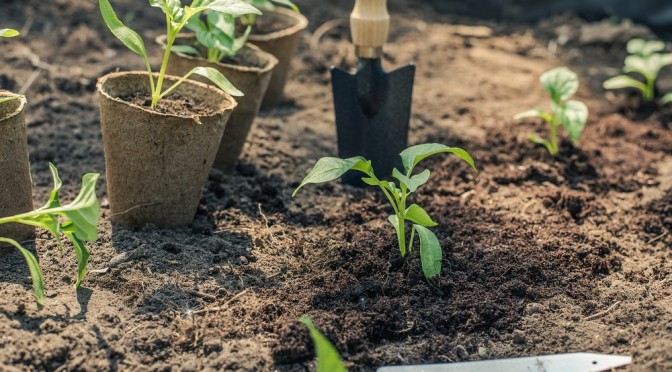
Gardening: What to plant & when (Wally Richards)
With a great number of first time gardeners growing their own vegetables, a question that I am often asked is; when is the best time to plant various crops?
This is a difficult question to answer as conditions vary greatly in different parts of the country.
To make matters more complicated, you can have a situation where the growing conditions can be different just half a mile away which is a result of what we call micro-climates.
A gardener with a good micro-climate; as a result of the terrain, or by established trees, making a sheltered hot spot which can be planting out a month or more before it is safe for another gardener to do so, a bit further down the road.
When you buy packets of seeds you will find on the packet the average best sowing times for various regions.
This information is general and unless you know your own growing conditions, succession sowings should be made about 2 to 4 weeks apart.
If the early plantings fail through weather conditions, your later ones will be more successful, as the weather settles.
Over a period of years you will become a better judge of when to sow and plant out.
A gardening diary giving weather conditions each week and sowing times will make a great reference for the future plantings.
Keen gardeners like to beat nature and grow plants out of the normal season so they can have early crops and this can be done with a glasshouse, or the use of plastic film over wire hoops to warm the garden soil and protect the germinated seedlings from adverse weather conditions.
Early plantings can also be assisted by placing plastic bottles over the individual plants after cutting the bottom off and removing the cap.
The most important aspect is when not to plant out seedlings of vegetables.
Late plantings of vegetables towards the end of autumn means they have only a small window of growth, which is progressively slowing down day by day.
In mid winter growth can reduce to zero and immature crops will just sit waiting for better times.
As the daylight hours extend and the soil warms, they then get a growth spurt but because of the previous conditions the plants feel their lives have been threatened and will only grow on a bit and then go to seed. (Bolt)
Thus the crop is a failure, a waste of time and money. Crops of winter vegetables are planted in summer to grow to near maturity as winter sets in.
In doing so they will mature ready for use in winter and hold nicely over the cold winter months.
For instance leek seedlings will be planted out in December through to February for succession, winter harvesting.
Brassicas, such as winter cabbage and Brussel sprouts will be planted out later in January through till March, dependent on varieties (maturity times) and succession requirements.
The worst problem with brassicas grown for winter is that the young plants have to face the problem of the white butterfly’s caterpillars when the pests are most active.
By placing Neem Tree Granules in the planting hole and sprinkling some onto the soil, around the plants will greatly assist in control.
Refresh the granules every 6 weeks with a few more onto the soil.
Stress on vegetables that are not grown for their fruit (cabbages etc as apposed to say tomatoes) can make them go to seed prematurely.
Two ways this can happen, one is purchasing seedlings that are in punnets and have become root bound and likely have suffered stress through inadequate waterings.
Always look for the very young fresh seedlings of non fruiting plants to purchase, even if you need to grow them on in their punnets till they are of a nice size to plant out.
The next problem can occur during the spring when weather conditions fluctuate from nice warm sunny days to cold miserable days.
The plant’s growth responds to the sunny warm days and then they sulk in the cold windy days.
This stress of change, makes the plants believe that conditions are not good and their lives are threaten, so all they want to do then is reproduce themselves, so then they go to seed.
Often not straight away as they have to reach a certain level of maturity to be able to flower and thus several gardeners have contacted me recently to ask why their early spring plantings have gone to seed.
Either of the above can be the cause of bolting.
A number of gardeners also like to do late plantings if they live in areas not prone to early frosts.
Late plantings of sweet corn in January can often result in a second harvest of cobs before winter sets in.
Tomatoes sown from seed in December and January should give you more ripe fruit after your earlier plantings have finished.
You do not even have to sow seed, as you can strike the laterals (side shoots) to make a new young plant, once it has rooted up.
To do this; fill a small pot two thirds full of compost and fill the balance to the top with sand or fine pumice.
Remove a lateral which should be about 6cm long and place it into the sand to about the depth of the sand.
Moisten down and keep moist. When the plant stands up and shows some new growth then the early roots have formed.
If you spray the laterals with Vaporgard a day before you remove them off the parent plant, you will have a new young tomato plant quicker.
When removing laterals off tomatoes or old leaves, it is most important that you do not do this during humid or moist times as a disease can enter the wound and you lose a good plant.
Remove laterals on a nice sunny day when the air is dry and as you remove each lateral, spray the wound with Liquid Copper.
It is still not too late to plant seeds of summer crops unless you live in an area prone to early frosts.
Keep the soil moist at all times using non chlorinated water. (Put a filter onto your tap to remove the chlorine) it makes the world of difference and your crops will grow quicker and healthier.
Gardeners that use tank water or are fortunate to live in a town/city that does not dose the water supply with this chemical poison, do not have to worry about a filter.
If you do not have room for a vegetable plot then use containers or planter boxes to grow as many vegetables as possible.
Fill the containers with a good purchased compost, not potting mix.
Much better for your health and pocket.
Phone 0800 466464
Garden Pages and News at www.gardenews.co.nz
Shar Pei pages at www.sharpei.co.nz
Mail Order products at www.0800466464.co.nz
New Zealand Bill of Rights Act 1990. Part II of the Act covers a broad range of Civil and Political Rights. As part of the right to life and the security of the person, the Act guarantees everyone:
1The right not to be deprived of life except in accordance with fundamental justice (Section 8)
2The right not to be subjected to torture or to cruel, degrading, or disproportionately severe treatment or punishment (Section 9)
3The right not to be subjected to medical or scientific experimentation without consent (Section 10)
4The right to refuse to undergo any medical treatment (Section 11)
Furthermore, the New Zealand Bill of Rights Act 1990 guarantees everyone: Freedom of Thought, Conscience, and Religion.
This includes the right to freedom of thought, conscience, religion, and belief,
INCLUDING THE RIGHT TO ADOPT AND HOLD OPINIONS WITHOUT INTERFERENCE (Section 1)
Photo: pixabay.com
Save the earth and better yourself: 8 reasons why growing your own food is the best decision you will ever make (Wally Richards)
Hello Readers
It has been a very busy week with the pre-sales of my new book ‘Gardening with Wally Richards’ and to date over 200 copies have been spoken for which is wonderful.
The books purchased will start being sent out on the 11th December.
Below is an article I wrote sometime ago and the information is very important for you and your family.
Save the earth and better yourself: 8 reasons why growing your own food is the best decision you will ever make.
I received an email article from Natural News.com which echoes much of what I have been encouraging people to do for many years.
The following is what they have to say:
(Natural News) Have you ever thought of growing your own fruits and vegetables? If not, now is the time to start considering it.
It may seem tedious and overwhelming, but in reality it is actually easy and simple. You can start by growing them in your backyard, or if you do not have any yard, consider container gardening in your balcony, patio, or on a windowsill.
Still not convinced? Here are eight reasons on why you should start growing your own food.
1/ Have a healthier family – Nothing can beat the freshness of fruits and vegetables that are homegrown.
Serving your family fresh fruits and vegetables is one of the most valuable things you and your family can do to be healthy.
Fruits and vegetables grown in your backyard are the best because you harvest them straight from your garden and eat them fresh.
Another proven health benefit of homegrown produce was shown in a study published in the Journal of the American Dietetic Association.
Results of the study showed that preschool children who almost always ate homegrown produce were more than two times likely to eat five servings of fruits and vegetables per day than those kids who rarely or never ate homegrown produce.
2/ Spend less on groceries – Growing your own food will help you save money and ensure you food security as you will not have to buy fruits and vegetables from the supermarket.
Most fruits and vegetables from the supermarket have already lost their nutritional value as they have been stored for a long time.
With less than a dollar, you can buy a packet of seeds and start planting your own produce.
3/ Help the environment – By growing your own produce, you are already helping the environment in different ways.
One way is growing your food without using pesticides and herbicides.
This lessens air and water pollution. You will also help reduce the use of fossil fuels.
Moreover, pollution from the transportation of fresh produce from around the world to the supermarket will also be lessened.
4/ Increase your physical activity – Since you will be doing all the planting, weeding, watering, and harvesting, you are also exercising at the same time.
Remember to warm up and stretch your muscles before and after gardening though!
Exercising also helps you relax, de-stress, refresh your mind, inhale fresh air, and get vitamin D.
5/ Indulge in more tasty food – Nothing beats the freshness of picked out fruits and vegetables straight from the backyard.
A study found that homegrown tomatoes are sweeter and richer in nutrients than those sold in the supermarket.
6/ Have a sense of accomplishment – Witnessing the seed you planted grow and become the food that you and your family can enjoy is satisfying.
Home gardening helps you thrive, nourish your family, and improve health.
There is a sense of accomplishment and self-satisfaction in growing your own food.
7/ No more worries on food safety – Because you know how your plants are grown, you don’t have to worry about food safety.
With backyard gardening, you have control over the chemicals and products used during the growing process.
8/ Reduce food waste – You are less likely to throw away food. You’ll only pick what you need.
And, you wouldn’t want your time, effort, and hard work go to waste, right? End.
During the week a lady gardener rang with a couple of questions and during the conversation she told me that a friend had given her a freshly cut broccoli out of their garden. That night she cooked the broccoli and added it to the evening meal.
Her husband wanted to know what the name of the delicious vegetable that looked like a broccoli was.
He could not remember ever eating any vegetable that tasted so good.
He was told it was their friend’s Home Grown Broccoli. He wished that they were able to buy vegetables that tasted that good.
Goodness equals Taste, you grow a few vegetables without chemicals in your garden using only natural plant foods and minerals and picked fresh the taste is amazing.
Not only is the taste amazing your body is getting the minerals and nutritional goodness that you need to be healthy.
Your savings are immense, no need to purchase sauces and condiments that you need to put into your meals to make the bland food appear tasty (they are just chemical sugars, salts and fats anyway and bad for your health).
You save on health related costs, doctors, pharmacy products, time off work or school and possible hospital costs.
Often children with behavior aspects will improve.
Besides you cannot put a cost on poor health which is the ultimate cost of eating a food chain that lacks in fundamental goodness replaced by a list of chemical poisons likely as long as your arm.
Our conventional food chain is Insidious.
If you are not familiar with the meaning of the word it is: proceeding in a gradual, subtle way, but with very harmful effects.
Conventionally grown produce not only lacks in taste and goodness it goes off far quicker than natural home grown produce.
The reason is that it is already going off before it was even harvested.
They are weak plants having grown and sustained by chemical poisons.
Example strawberries conventionally grown look great, big berries but bland to the taste so we have to slice them and sprinkle icing sugar over them to make them taste good.
Home grown and they are sweet as; picked ripe off the plant. Plus they are full of minerals and antioxidants to make your immune system strong and you healthy.
Tomatoes conventionally grown lacking in flavour and bland need salt to make them appealing.
Home grown wow taste the difference.. Now thats a real tomato.
Another important aspect is that home grown produce is very filling and you dont need to eat much before you feel satisfied.
The reason is because your body has received its requirements and is happily utilizing the bounty of nutrients to fortify your organs and immune system.
Conventional food chain you eat a big meal and afterwards you still feel hungry.
Its not long before you are munching on some chippies or something to try and satisfy your hunger feelings.
Reason is your body has not received its list of needs for being healthy and is calling out for them so you stuff some more rubbish in and the best you achieve is being over weight and sickly.
You would excise to get rid of the fat but you dont have the energy (except for the sugars you consume) and besides you feel lethargic with the poisons your body is trying to cope with.
Not feeling so good best see the doctor who can prescribe some pharmaceutical chemicals to your Pandora’s box of chemicals.
Once upon a time the medical person would have inquired on your diet and likely suggested more fruit and vegetables but that was 50 odd years ago when the commercially grown produce had a lot more goodness than today.
Wallys formula: The more goodness (nutritional values) equals greater taste.
Home grown using natural elements means very healthy you and family.
You can be healthy and happy.
Phone 0800 466464
Garden Pages and News at www.gardenews.co.nz
Shar Pei pages at www.sharpei.co.nz
Mail Order products at www.0800466464.co.nz
New Zealand Bill of Rights Act 1990. Part II of the Act covers a broad range of Civil and Political Rights. As part of the right to life and the security of the person, the Act guarantees everyone:
1The right not to be deprived of life except in accordance with fundamental justice (Section 8)
2The right not to be subjected to torture or to cruel, degrading, or disproportionately severe treatment or punishment (Section 9)
3The right not to be subjected to medical or scientific experimentation without consent (Section 10)
4The right to refuse to undergo any medical treatment (Section 11)
Furthermore, the New Zealand Bill of Rights Act 1990 guarantees everyone: Freedom of Thought, Conscience, and Religion.
This includes the right to freedom of thought, conscience, religion, and belief,
INCLUDING THE RIGHT TO ADOPT AND HOLD OPINIONS WITHOUT INTERFERENCE (Section 1)
Image by Alexander Fox | PlaNet Fox from Pixabay

In Spite of Billions of Dollars in Lawsuits EU Commission Votes to Keep Glyphosate Another 10 Years
No surprises really, in light of their blatant denial of all Prof Seralini’s work! (and many others). You cannot believe a word from lying Monsanto cum Bayer … EWNZ

Article posted at mercola.com
Despite a growing block of opposition to it, the European Union has voted to give glyphosate another 10 years of life for use with crops grown with chemicals like Roundup.
Originally a Monsanto product, Bayer now owns Roundup, along with billions of dollars in lawsuits of consumers claiming the herbicide caused their cancers. “Bayer bought Monsanto for $63 billion in 2018 and … announced it would pay up to $10.9 billion to settle about 125,000 filed and unfiled claims,” Yahoo! said.
The EU’s extension of glyphosate’s approval for another 10 years could still be challenged, as Greenpeace vowed to continue pushing to get it banned. While proponents argue that there is nothing to fear with glyphosate, and “no viable alternatives,” Greenpeace insists it is carcinogenic, citing studies supporting their stance. It also is harmful to bees, Greenpeace says.
SOURCE:
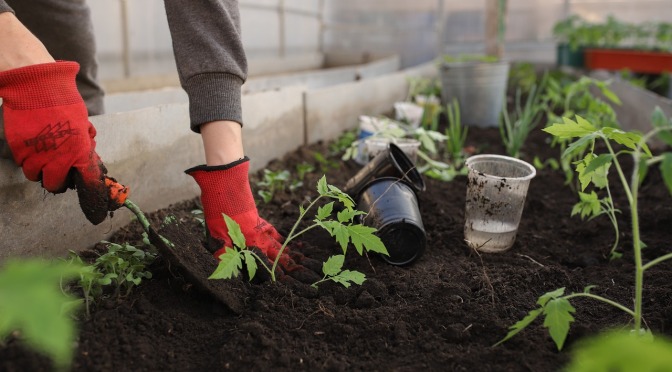
‘GARDENING WITH WALLY RICHARDS’ (Wally’s new book, release – 8 Dec 2023)
It’s been a busy spring with lots of new and not so new gardeners returning to grow some vegetables and flowers for pleasure.
Doing the gardening show with Rodney Hide on Radio Reality Check has increased the phone calls to my 0800 number with a number of people saying that they have listened to the pod recordings and have been encouraged to get back into Nature and the garden.
A few have told me the likes of ‘I have been gardening for 50 years but have learnt so much from listening to you’.
That has amazed me and made me think that the information about gardening that I write about and talk about is in some cases, news to some experienced gardeners several years older than my self.
Maybe I just have learnt a few methods along the way that others have not thought of or used to make gardening easier and more enjoyable.
Which brings me to a valid point, Gardening should be a pleasure, not a chore.
Even mowing the lawn gives a certain amount of pleasure; as well as a but of exercise.
The pleasure comes when you finish mowing and you look at the lawns and they look so much better from your efforts, which is your reward.
Years ago when I used to be invited to judge gardens for various areas and awards, I often saw beautiful gardens spoilt by a shabby lawn which marked them down.
Where a great looking lawn increased the value of average gardens.
The lawn is to a garden what the frame is to a picture.
Well as I am getting older by the day, like everyone else, I felt maybe its time I wrote another gardening book.
So over the last few months I have been working on this new book which I have called ‘Gardening with Wally Richards’.
I have endeavored to write about various problems and methods that have happened since I wrote my original book, ‘Wallys Down to Earth Gardening Guide’ in 2006
and then the revised edition in 2011 the later is now out of print and the original is nearly out of print.
The new book is based on some of the articles that I have written over the last 20 odd years and more so on recent publications.
I know that a number of gardeners keep my weekly articles for future reference and the new book puts the ones I consider the most important ones into a neat 200 page book.
Talking to the printers about having the book printed by early December as some may like to have it for Christmas and it would be a suitable gift for friends and family.
They said printing is no problem but getting the binders to bind the book this time of the year is more of a problem cause they will be busy doing new school books for next year.
So I opted to just have 500 books printed as my printer said they will be ready on 8th December to pick up.
Here is what you will find in my book:
FOREWORD page 9
MY JOURNEY Page 10
CHAPTER One Page 15 Gardening from past to present.
CHAPTER Two Page 29 The Tomato/Potato Psyllid
CHAPTER Three Page 39 Potato growing and Potato psyllid
CHAPTER Four Page 44 Garlic Rust
CHAPTER Five Page 50 Moths, Codlin, Guava and Army Worm
CHAPTER Six Page 57 Curly Leaf Disease in Stone Fruit
CHAPTER Seven Page 61 Raised Gardens
CHAPTER Eight Page 68 Pollination
CHAPTER Nine Page 74 Gardening with Cardboard
CHAPTER Ten Page 78 Magic in The Garden
CHAPTER Eleven Page 85 Germinating Seeds
CHAPTER Twelve Page 90 HEALTHY VEGETABLES
CHAPTER Thirteen Page 95 IRON VIS COPPER
CHAPTER Fourteen Page 100 Growing food in Containers
CHAPTER Fifteen Page 103 Your Food and Your Health go Hand in Hand
CHAPTER Sixteen Page 109 Weeds
CHAPTER Seventeen Page 117 Getting a better garden
CHAPTER Eighteen Page 120 Companion Planting
CHAPTER Nineteen Page 126 CO2 Carbon Dioxide
CHAPTER Twenty Page 131 Sunlight
CHAPTER Twenty One Page 135 Apple cider vinegar
CHAPTER Twenty Two Page 138 Citrus trees
CHAPTER Twenty Three Page 147 Germinating Seeds
CHAPTER Twenty four Page 152 Vital Calcium
CHAPTER Twenty five Page 158 Composting
CHAPTER Twenty six Page 162 Strawberries
CHAPTER Twenty Seven Page 166 Buxus Disease
CHAPTER Twenty Eight Page 171 Spraying
CHAPTER Twenty Nine Page 175 Health and Gardening
CHAPTER Thirty Page 179 Potassium Permanganate
CHAPTER Thirty One Page 184 House Plants
CHAPTER Thirty two Page 189 Perkfection
CHAPTER Thirty Three Page 193 Some Bits and Tips
As with all my books I autograph and put in a message and the name of the person the book is for.
If giving to another person a very short message of your choice along with their name/s which I am happy to cater for.
Or for yourself a message such as Happy Gardening….your name and my signature.
You place an order on our mail order web site at www.0800466464.co.nz
You cannot pay for it on the web site as I prefer to talk to my customers and I phone you and sort out all the details including payment method.
With only 500 copies printed I expect them to be snapped up quickly and orders after 500 will be catered for with another printing in the new year.
r.r.p as we publishers say is just $25.00 a copy
Phone 0800 466464
Garden Pages and News at www.gardenews.co.nz
Shar Pei pages at www.sharpei.co.nz
Mail Order products at www.0800466464.co.nz
New Zealand Bill of Rights Act 1990. Part II of the Act covers a broad range of Civil and Political Rights. As part of the right to life and the security of the person, the Act guarantees everyone:
1The right not to be deprived of life except in accordance with fundamental justice (Section 8)
2The right not to be subjected to torture or to cruel, degrading, or disproportionately severe treatment or punishment (Section 9)
3The right not to be subjected to medical or scientific experimentation without consent (Section 10)
4The right to refuse to undergo any medical treatment (Section 11)
Furthermore, the New Zealand Bill of Rights Act 1990 guarantees everyone: Freedom of Thought, Conscience, and Religion.
This includes the right to freedom of thought, conscience, religion, and belief,
INCLUDING THE RIGHT TO ADOPT AND HOLD OPINIONS WITHOUT INTERFERENCE (Section 1)
Image by Ekaterina Ershova from Pixabay

8 Common Sources of Heavy Metals in Food
When you’re buying food for yourself and your family, you probably glance over the Nutrition Facts panel to make sure you’re making a healthy choice. You may even look at the fine print in the ingredients list, to see if there are any artificial additives or preservatives you want to avoid. What you won’t see listed on the label however, is how much toxic heavy metals you may consume per serving. Yet that is exactly what may be inside.
What we eat and drink is one of the primary points of exposure for heavy metals. These toxins make their way into the food chain thanks to decades of industrial pollutants entering the soil and water.
In the past, many experts believed this wasn’t a cause for concern. The idea was that the human body is perfectly capable of dealing with trace amounts of heavy metals via its detoxification pathways. But they were missing the big picture.

MYCORRCIN: GETTING A FAR BETTER GARDEN (Wally Richards)
I was asked a very interesting question a while back which went like this, ‘How come my parents and grandparents had such bountiful gardens?
Everything thrived and I never saw any great problems with pests and diseases, but on the other hand I have to use fertilisers and sprays just to maintain a mediocre garden. What’s gone wrong?
Well the answer as I see it was the difference in gardening, in days gone by people did not buy fertilisers and plant foods, instead they made their own compost and most people had their own chickens that were given all the kitchen scraps.
This was recycled into manure by the chickens and when the runs were mucked out this goodness went into the compost or directly into the soil.
The micro-organisms and beneficial fungi in the soil would be found in abundance along with lots of worms of course.
Then people started using chemical fertilisers and these destroy the beneficial soil life.
Also watering your gardens with chlorinated water kills the soil life and gets rid of the worms.
This means plants don’t feed as well, valuable nutrients are lost as there is not the metabolisms there to make them soluble for the plants.
The plants are not so healthy and they then get attacked by pests and diseases.
The answer is to reverse the spiral and there is a product called Wallys Mycorrcin which does the following; an organic product which promotes beneficial microbes to assist in the composting of organic matter into humus.
It stimulates Mycorrhizal fungi which act as an extension to the plant’s roots assisting in the collection of nutrients and moisture.
Mycorrhizal fungi can increase the root zone of a plant by up to 800% collecting nutrients and moisture.
Mycorrhizal fungi collects and delivers to the roots of plants which the plant thanks by giving back some carbohydrates.
A perfect relationship in a happy healthy garden.
Mycorrcin Improves calcium uptake, stimulates the growth of feeder roots and microbes responsible for mineralization.
Improving Calcium availability and uptake.
Inhibits soil pathogens, containing defense proteins such as bacteriocin like substances which inhibit soil pathogens.
Promotes balanced growth of both roots and canopy.
Aids plants in increased growth rates, heavier crop yields, warms soil, reduces disease problems, revitalizes soils and microbe activity that have become poorly due to chemical fertilisers and sprays.
A must for preferred plants such as roses, annuals, vegetables, fruit and lawns as well as other ornamentals.
Soil drench applied before planting, 1ml per litre of water of non chlorinated water over a sq.M.
Sprayed at 5ml per litre over existing plants and on the soil around the plant. (Ideally every 14 days) Available in a 250 ml, 500ml bottle and 1 litre containers.
Ideal to add to Magic Botanic Liquid to spray regularly over preferred plants and food crops.
By using Wallys Mycorrcin we stimulate the beneficial organisms and they convert the available food into soluble forms for the plants.
You use less food and get better results.
Here are a few examples, root mass of a grape vine cutting 800% bigger than the control plant from just dipping in Mycorrcin for a few minuets before planting.
Roses that were treated during the summer were in full bloom with lots of new buds, lush healthy foliage, no sign of disease and for the first time ever fragrance from the flowers was noticed.
Other roses on the same property, in a better location, were not treated and at the time of this report, end of March (Auckland) these ones had finished flowering and looked a mess from black spot.
The manufacturer of Mycorrcin took his wife to see a planting of 18 month old olive trees in a trial area that were treated with the product.
The wife told her husband off, because their 10 year old olive tree at home was not a patch on these big healthy trial plants.
You can increase the yield of your strawberry plants by 200 to 400 plus percent with a weekly spray of Mycorrcin..
Do you want a really terrific garden? The answer lays in the soil and Mycorrcin.
Use on your container plants too because they will really benefit from it.
If you have fallen leaves rake them up and spread them over the soil in bare gardens or under trees and shrubs and spray them with Mycorrcin, it breaks them down in about 4 months.
Use in the compost heap for better compost, faster.
This product is going to help change your garden into a great garden and save you money in sprays and fertilisers.
Phone 0800 466464
Garden Pages and News at www.gardenews.co.nz
Shar Pei pages at www.sharpei.co.nz
Mail Order products at www.0800466464.co.nz
New Zealand Bill of Rights Act 1990. Part II of the Act covers a broad range of Civil and Political Rights. As part of the right to life and the security of the person, the Act guarantees everyone:
1The right not to be deprived of life except in accordance with fundamental justice (Section 8)
2The right not to be subjected to torture or to cruel, degrading, or disproportionately severe treatment or punishment (Section 9)
3The right not to be subjected to medical or scientific experimentation without consent (Section 10)
4The right to refuse to undergo any medical treatment (Section 11)
Furthermore, the New Zealand Bill of Rights Act 1990 guarantees everyone: Freedom of Thought, Conscience, and Religion.
This includes the right to freedom of thought, conscience, religion, and belief,
INCLUDING THE RIGHT TO ADOPT AND HOLD OPINIONS WITHOUT INTERFERENCE (Section 1)

Growing giants by encouraging your children to garden (Wally Richards)
We need to encourage our children and grandchildren to appreciate Nature by including them in some gardening activities. I believe that young children have a natural infinity with plants and insects when they are allowed to explore our gardens.
Children learn many things by mimicking their parents and are often keen at a young age to assist in various gardening activities.
I remember as a toddler spending many hours in the garden collecting caterpillars off the cabbages and feeding them to our chooks.
I was given my own little spade and wheelbarrow when I was about three and had a lot of fun moving the weeds my mum removed from gardens
to the compost bin or to feed them to the chooks.
I can still remember how good it felt to be part of Nature back then and the same feeling pertains today when I work or wander around my gardens.
It was about that time, when I was given my own little plot of ground to grow plants in.
Seeds would be planted and I would be taught which seedlings were weeds and which were plants.
My own little watering can would nurture the baby plants till maturity.
A great ado would be made when one of my cabbages, silverbeet or lettuces was harvested for the evening meal.
Even though I hated eating silverbeet back then, I had to enjoy my own grown silverbeet, because I grew it!
It was the fuss that the adults made, that gave me a feeling of importance and likely kept me gardening for the rest of my life.
Plants that move have a fascination for children and a great one for this is Mimosa pudica, the Sensitive Plant, which folds up its leaves when touched.
They are easy to grow from seed as a pot plant for a windowsill. Nice pink flowers also.
As the plant matures it has thorns on the branches which incidentally are another attraction for children.
(Available from Kings Seeds..https://www.kingsseeds.co.nz/products/sensitive-plant)
Cacti with their prickles often appeal to young boys and I had a small collection when young and still keep a few.
Two awesome plants for children to grow are the super giant sunflowers and pumpkins.
Called My Giant Sunflower these extra tall sunflowers will grow up to 5 metres tall (17 odd feet). Grown in full sun in soil that has excellent drainage.
The giant pumpkin is called My Giant Pumpkin and these monsters can weigh over 1000 pounds at maturity (half a ton).
Some garden centres run competitions for the tallest sunflower and the biggest pumpkin with various prizes for the winners. Check your garden centres.
Designed for children but may also be open to big kids like me. The seed packets contain information on growing and recording the progress of your plants.
Another interesting aspect is to encourage the children to give their giant plant a personal name after it is established.
Naming the plant makes the giant more personal and helps the children to have respect for plants and nature.
If I was going to grow either of these giants, here is what I would do: In an all-day-sunny area, I would dig a hole about a spade depth and width, chop up the bottom of the hole, so the soil is loose, then fill the hole with chook manure to about two thirds full.
(Other manure could be used if chook manure is not obtainable, but chook is best).
Fill the rest of the hole with a good compost and soil mix, 50/50 making a small mound about 12cm tall above the filled in hole.
Place one seed in the middle of the mound and wet it down with Magic Botanic Liquid (MBL), (20 ml of MBL to 1 litre of water).
Water the mount to keep moist with plain water and then every 2 weeks with the MBL.
Overseas the biggest record vegetables have been achieved with products very similar or the same as MBL.
Spraying the foliage of your Giants every 2 weeks with MBL (10 ml to a litre) will also assist in a bigger healthier plant.
After your plants are established and growing well, give them a drink using Cucumber Booster, once a week.
This is a high nitrogen product that is a combination of sulphate of ammonia and potassium nitrate, which you diluted in water.
Cucumber Booster is excellent for any plants that enjoys a boost of nitrogen after establishment.
It is used for growing cucumbers, pumpkins, zucchini and gourds.
The MBL and Cucumber Booster can be combined for watering into the soil near the base of the plant.
Because of the weather patterns we are experiencing, after you plant your seed, cut off the base of a 2 to3 litre plastic fruit juice bottle and place this over the mound with the cap removed. This will give your seed and seedling its own little glasshouse.
This is removed once the seedling starts to fill the bottle and needs more room.
With the Giant Sunflower a tall strong stake should be put in the ground at seed planting time on the edge of the mound.
This will be needed later to give extra support to the plant.
Another interesting thing to do is once the sunflower gets up about a metre tall, plant 3 or 4 climbing bean seeds at the base of the plant.
These will grow up the sunflower and also provide extra nitrogen for the sunflower.
It is a lot of fun plus a great way to get the children way from the TV and video games, showing them there is more to life than a screen.
AROUND THE GARDEN
Aphids are likely to be found on your roses at this time and they can easily be controlled with a safe spray of Wallys Super Pyrethrum
and Wallys Super Neem Tree Oil combined. Spray very late in the day just before dusk to obtain the best results.
Stone fruit trees that had the curly leaf disease will now be producing new leaves free of the problem.
The damaged leaves will fall off over time. You can if you like, spray the newer leaves a couple of times with Liquid Copper Nutrient just to be sure, but if the disease has finished for the season the sprays will help build up resistance for next season.
A few sprays of molasses at a tablespoon per litre of water will give the tree some extra carbs and help hold the crop.
Codlin Moths will start to be on the wing about now so obtain a pheromone trap from your garden centre or from our Mail Order site at www.0800466464.co.nz
so you can monitor the best time to spray. A number of gardeners have found that a spray of Wallys Neem Tree Oil with Raingard over the young apples, applied about 5-7 days after an influx of moths into the traps, has resulted in only a very small scar on the mature apple, where the grub took its first and only bite.
Repeat spray 14 days later and then wait for another influx of moths before repeating.
Tomatoes should be doing well if in a sunny, sheltered spot. Only remove laterals on a sunny day when it is not humid or moist.
Spray the wound immediately with Liquid Copper to prevent disease entering the wound resulting in the possible loss of the plant.
Ensure that the tomato plants are well supported on stakes during windy times.
If you are concerned about blight spray the plants with Perkfection as a preventative, once a month. The same applies for your potatoes.
For general health of any plants, especially roses and food crops, a two weekly spray of MBL and Mycorrcin works wonders.
Spray both the soil and the foliage.
Avoiding the use of chemical sprays and fertilisers is a must for healthy plants.
Had the case of a lady this week that used a common chemical rose spray on her roses for aphids and found that the roses shed many of their leaves a few days later.
Plants hate poisons as they kill all the beneficial things in nature.
I have a saying that if you work with Nature, you will have great gardens, if you try to work against nature, you have chemical warfare.
Happy, Healthy Gardening.
Phone 0800 466464
Garden Pages and News at www.gardenews.co.nz
Shar Pei pages at www.sharpei.co.nz
Mail Order products at www.0800466464.co.nz
New Zealand Bill of Rights Act 1990. Part II of the Act covers a broad range of Civil and Political Rights. As part of the right to life and the security of the person, the Act guarantees everyone:
1The right not to be deprived of life except in accordance with fundamental justice (Section 8)
2The right not to be subjected to torture or to cruel, degrading, or disproportionately severe treatment or punishment (Section 9)
3The right not to be subjected to medical or scientific experimentation without consent (Section 10)
4The right to refuse to undergo any medical treatment (Section 11)
Furthermore, the New Zealand Bill of Rights Act 1990 guarantees everyone: Freedom of Thought, Conscience, and Religion.
This includes the right to freedom of thought, conscience, religion, and belief,
INCLUDING THE RIGHT TO ADOPT AND HOLD OPINIONS WITHOUT INTERFERENCE (Section 1)

You must be logged in to post a comment.