Category Archives: Food

Why Medieval Bread Was A Superfood While Your Modern Bread Makes You Sick

Thanks to Steve for this video. It really makes sense now. Why the store bought bread disagrees with the gut. This goes right back to medieval days and the origins of bread ingredients. EWNZ

Medieval Way @ Youtube

There’s a significant issue with the bread we consume today. While bread was once a fundamental part of civilizations, sustaining families and armies, modern bread often causes gut issues, blood sugar spikes, and leaves us feeling unsatisfied. This food history explores how the bread industry has changed, contrasting today’s offerings with the traditional bread that nourished our ancestors. We conduct a food industry case study, examining how the history of bread, including ancient grains and sourdough, shows a stark difference from what we find on shelves now.

SOURCE

Image by Edar from Pixabay

Food is Your Best Medicine – Challenging Medical Convention

By Henry G. Bieler, M.D. – 30 Q&As – Unbekoming Book Summary

In 1966, when Dr. Henry G. Bieler published “Food Is Your Best Medicine,” he wasn’t just challenging medical convention—he was declaring war on the entire foundation of modern medicine. Here was a physician with over fifty years of practice, who had delivered thousands of babies and treated tens of thousands of patients, calmly stating that Louis Pasteur’s germ theory told only part of the story. Germs, Bieler argued, were merely scavengers feeding on toxic waste already present in the body, not invaders causing disease. The real culprit was toxemia—an accumulation of poisons from improper diet that turned the body’s internal environment into a breeding ground for illness. While his colleagues were prescribing from what he called pharmaceutical directories “rivaling the Manhattan telephone directory in size,” Bieler had abandoned drugs entirely, treating everything from childhood fevers to diabetes with carefully selected foods and therapeutic fasting. This wasn’t the ranting of a fringe theorist but the measured conclusion of a physician who had tried orthodox medicine on himself when his own health collapsed, found it wanting, and discovered through personal experimentation that dietary reform could accomplish what drugs couldn’t.

The journey that led Bieler to reject pharmaceutical medicine began with his own failing health. As an overworked young physician after World War I, he developed severe asthma, kidney problems, and ballooned to 210 pounds despite following conventional treatments. Then came the revelation: a chance meeting with a doctor versed in chemical pathology who explained that disease resulted from the body’s desperate attempts to eliminate toxic wastes through any available channel. The liver, Bieler learned, was the body’s master chemist, designed to filter and neutralize poisons—but when overwhelmed by improper foods, it failed, forcing the endocrine glands to direct toxins through emergency exits: the skin (producing rashes and boils), the mucous membranes (creating colds and catarrh), or the lungs (causing asthma and bronchitis). These weren’t diseases to be suppressed but healing crises to be supported. Within five minutes of understanding this concept, Bieler knew his path. He discarded all medicines, reformed his diet, and watched his weight normalize to 155 pounds while his ailments vanished permanently. The body, he realized, possessed three magnificent lines of defense—the intestines that screened what entered the bloodstream, the liver that filtered and neutralized toxins, and the endocrine glands that created emergency elimination routes when the first two failed. Disease symptoms were simply evidence of these emergency eliminations in action.

What made Bieler’s approach revolutionary wasn’t just his rejection of drugs but his detailed understanding of how specific foods created specific diseases. Proteins that were overheated transformed from hydrophilic (water-loving) to hydrophobic (water-repelling) colloids, becoming indigestible and putrefying in the intestines to create poisons that caused everything from arthritis to cancer. Table salt—that seemingly innocent seasoning—was actually an inorganic corrosive that stimulated the adrenals while damaging the kidneys. Ice cream, he controversially claimed, underwent molecular breakdown when frozen, and upon melting in the stomach became perfect food for putrefactive bacteria, potentially contributing to polio epidemics during summer months. But Bieler didn’t just identify problems; he offered solutions. The sodium-rich squash family could rebuild exhausted livers. Potassium-rich leafy greens supported the pancreas in diabetics. Properly conducted fasting gave organs the “chemical rest” needed to discharge accumulated toxins—the bowel clearing in 24 hours, the blood in three days, the liver in five. He treated patients not with one-size-fits-all diets but by identifying their body type (adrenal, thyroid, or pituitary), determining their specific toxemia, and prescribing exact foods as medicine. A political boss with heart failure who could only digest food between 11 AM and 2 PM. A diabetic controlled without insulin through vegetable broths. Case after case of children recovering from serious illness through fasting on diluted juices while their fever burned up toxins.

The implications of Bieler’s work extend far beyond his era, challenging not just medical practice but our entire relationship with illness and healing. If disease truly originates from internal toxemia rather than external invasion—if symptoms represent the cure rather than the problem—then suppressing them with drugs drives illness deeper while adding pharmaceutical poisons to an already toxic system. Every parent reaching for fever reducers, every doctor prescribing antibiotics for colds, every routine tonsillectomy that removes the body’s defensive organs—all become suspect. Yet Bieler’s message wasn’t one of despair but of empowerment. The body, he demonstrated through thousands of cases, possesses extraordinary self-healing capabilities when given proper materials and freed from toxic burdens. Perhaps most remarkably, his work suggests that the chronic diseases plaguing modern society—the cancers, diabetes, heart disease that have increased eightfold while infectious diseases declined—stem not from mysterious causes requiring ever-more-powerful drugs, but from the accumulation of dietary mistakes that could be corrected through food. In an age where medical costs spiral beyond reach and pharmaceutical solutions create as many problems as they solve, Bieler’s half-century-old wisdom offers something radical: the possibility that our kitchens might be more powerful than our pharmacies, that fasting might accomplish what surgery cannot, and that the body’s symptoms—those inconvenient eruptions we’re taught to suppress—might actually be nature’s magnificent attempt to heal us, if only we’d stop interfering.

With thanks to Henry Bieler.

Food Is Your Best Medicine: The Pioneering Nutrition Classic: Bieler M.D., Henry G.

Leave a comment

Share

Deep Dive Conversation Library (Bonus for Paid Subscribers Only)

This deep dive is based on the book:

Discussion No.141:

Insights and reflections from “Food is Your Best Medicine”

Thank you for your support.

Analogy

Imagine your body as a magnificent mansion with an elaborate plumbing and waste management system. Over time, the residents keep flushing harmful substances down the drains – grease, chemicals, debris. Initially, the main sewage line (your liver) filters and processes everything efficiently. But as more toxic waste accumulates, this main line becomes clogged.

The mansion’s emergency system activates – waste begins backing up through secondary outlets: bathroom vents start leaking (skin eruptions), air ducts begin emitting foul odors (respiratory problems), and moisture appears on windows (mucous discharge). The maintenance crew (endocrine glands) works overtime, frantically redirecting waste through any available opening. Eventually, they install powerful fans (fever) to burn off the toxic fumes.

Most repair services would just spray air freshener (drugs) to mask the smell or patch the visible leaks (surgery). But the wise master plumber understands that the solution isn’t treating each backup location – it’s to stop putting harmful substances down the drains and flush the system clean with pure water (fasting). Once cleared, only appropriate materials (proper food) should enter the system. The mansion’s own sophisticated filtration system can then maintain itself perfectly, as it was designed to do, without need for constant emergency repairs.

The One-Minute Elevator Explanation

Your body is brilliantly designed with three defensive barriers against disease. First, your intestines screen what enters your bloodstream. Second, your liver filters and neutralizes toxins. Third, when overwhelmed, your glands create emergency exits through skin, lungs, and mucous membranes – producing what we call “symptoms.”

But here’s the revelation: disease isn’t an attack from outside germs – it’s your body’s attempt to expel internal poisons from wrong foods. That fever? Your body burning toxins. That rash? Poisons exiting through skin. That mucous? Toxic waste taking an emergency exit.

Modern medicine suppresses these symptoms with drugs, driving toxins deeper. But suppressing a smoke alarm doesn’t put out the fire. The real solution is breathtakingly simple: stop creating the poisons through proper food choices, and let your body clean itself through occasional fasting. Your liver is a better chemist than any pharmaceutical company – it just needs the right raw materials.

[Elevator dings]

Want to explore further? Research “toxemia theory of disease,” study the differences between organic and inorganic minerals, and investigate why traditional cultures that eat unprocessed foods have virtually no chronic disease.

12-Point Summary

1. Disease originates from internal toxemia, not external germs. Disease results from accumulation of toxic wastes in the blood and tissues due to improper diet, poor digestion, and inadequate elimination. Germs are merely scavengers that feed on these toxins and damaged cells – they’re present because of disease, not the cause of it. While Pasteur’s germ theory led to control of infectious diseases, it missed the crucial role of the body’s internal chemical environment. The dramatic rise in chronic degenerative diseases despite modern antibiotics proves that killing germs doesn’t address the root cause. True healing requires eliminating the toxic soil in which germs thrive through proper diet and fasting.

2. The body possesses three magnificent lines of defense. The first line is the digestive system, particularly the small intestine’s millions of villi that selectively absorb nutrients while rejecting toxins through vomiting or diarrhea. The second line is the liver, the master chemical laboratory that filters blood, neutralizes poisons, and manufactures bile for waste elimination. The third line consists of the endocrine glands – thyroid, adrenals, and pituitary – which become hyperactive when the liver fails, directing toxins to emergency elimination routes. Each defensive line has specific capabilities and limitations; when one fails, the next activates, but at a cost of increasing tissue damage.

3. Vicarious elimination creates the symptoms we call disease. When primary elimination organs (liver and kidneys) become overloaded, the body must use substitute channels to expel toxins or die. The lungs might substitute for kidneys, causing respiratory diseases; the skin might replace the liver, producing rashes, boils, or acne; mucous membranes might become emergency exits, creating catarrhal conditions. The specific disease depends on which organs are used and what type of toxins are being eliminated. These emergency channels become damaged by the caustic poisons passing through them, creating the pathology we recognize as specific diseases.

4. Fever is nature’s incinerator, not an enemy to suppress. Fever represents the body’s attempt to literally burn up toxic waste products poisoning the system. The liver’s internal temperature can reach 110°F while oxidizing poisons, while the mouth registers 105°F. This intense heat destroys toxic materials that would otherwise damage organs. Suppressing fever with drugs prevents this natural detoxification and drives toxins deeper into tissues, often causing serious complications like meningitis or mastoiditis. Animals instinctively fast when feverish, allowing complete focus on toxin combustion – humans should follow this wisdom rather than reaching for fever reducers.

5. Proteins must be properly prepared and consumed to nourish rather than poison. Raw or lightly cooked proteins maintain their hydrophilic (water-attracting) colloidal structure, making them easily digestible and their wastes readily eliminated. Excessive heating transforms them into hydrophobic (water-repelling) colloids that putrefy in the intestines, creating toxic wastes the liver cannot neutralize. These putrefactive poisons cause conditions from arthritis to cancer depending on where they accumulate. Excess protein, contrary to previous belief, isn’t eliminated but stored in tissues, creating chronic overacidity. The “protein mania” in modern diet creates more disease than malnutrition ever did.

6. The liver functions as the body’s master chemist and guardian. Performing over 500 functions, the liver filters all blood from the intestines before it enters general circulation, neutralizes poisons, manufactures bile, stores nutrients, and produces vital proteins. When functioning properly, it keeps blood pure by oxidizing and eliminating toxins as harmless bile salts. When overwhelmed by poor diet, alcohol, drugs, or emotional stress, it cannot filter poisons from blood, leading to systemic toxemia. Most disease conditions improve dramatically when liver function is restored through fasting and proper diet, proving its central role in health.

7. Individual body types determine disease tendencies and treatment needs. The adrenal type – stocky, strong, with great physical endurance – handles heavy proteins well but develops high blood pressure and kidney problems when toxic. The thyroid type – tall, slender, nervous, and artistic – eliminates toxins through skin and mucous membranes, developing respiratory and skin conditions. The pituitary type – well-proportioned, intelligent, creative – may develop diabetes or mental disturbances under stress. Understanding your type helps predict disease patterns and customize dietary treatment, as each type has different nutritional needs and toxic elimination patterns.

8. Childhood diseases stem from inherited and acquired toxemia, not infections. The first-born child inherits the mother’s accumulated toxins through placental blood, often taking three years to eliminate these birth poisons. Subsequent children receive cleaner maternal blood, explaining why middle children in large families often show superior health. Childhood diseases – measles, mumps, whooping cough – are attempts to eliminate specific toxemias: starch toxins cause mucous diseases; protein toxins create rheumatism or tonsillitis; fat toxins produce skin conditions. The symptoms indicate which elimination route the body is using to expel inherited and dietary poisons.

9. Common foods become poisons through improper selection and preparation. Table salt is an inorganic corrosive that stimulates adrenals while damaging kidneys, not a food. Coffee and stimulants whip exhausted glands for false energy, leading to eventual breakdown. Sugar and refined starches ferment into acids, creating mucous conditions. Pasteurized milk’s heat-damaged proteins putrefy in intestines. Ice cream’s frozen then melted structure provides ideal food for putrefactive bacteria. Most processed foods contain preservatives, additives, and altered molecules the liver cannot recognize or properly process, adding to toxic burden rather than providing nutrition.

10. Vegetables serve as specific medicines for different toxic conditions. Different vegetables provide specific minerals needed by various organs – sodium-rich squash family vegetables rebuild exhausted livers; potassium-rich leafy greens support the pancreas; calcium from stalks strengthens structure. These organic minerals neutralize acid toxemia from excessive proteins, sugars, and starches. Vegetable broths provide concentrated therapeutic minerals while resting digestive organs. Raw vegetables supply enzymes and roughage; cooked vegetables break down cellulose walls for better mineral absorption. Traditional cultures unknowingly used vegetables as medicine – Italians with zucchini, various cultures with therapeutic soups – achieving healing through food.

11. Fasting provides the chemical rest necessary for healing. Fasting stops food intake, halting digestive processes and production of new metabolic wastes, allowing organs to discharge accumulated toxins. The bowel clears in 24 hours, blood in three days, liver in five days – but only without food intake. This “chemical rest” is more important than bed rest, as the liver can focus entirely on neutralizing disease toxins rather than processing food. Short repeated fasts are safer than extended ones for gradual detoxification. The type of liquid consumed during fasting – fruit juices for starch toxins, vegetable broths for protein toxins – should match the specific toxemia.

12. Drugs add insult to injury by suppressing symptoms while increasing toxic burden. Drugs suppress the body’s elimination attempts while adding their own toxic burden to an already poisoned system. Antibiotics whip exhausted adrenals for temporary improvement while weakening future defense capacity. Fever reducers prevent natural toxin burning. Pain relievers mask warning signals. Anti-inflammatory drugs stop the body’s attempt to burn out poisons through inflammation. Each drug requires liver detoxification, further overwhelming this already overtaxed organ. The temporary relief drugs provide comes at the cost of driving disease deeper and creating drug-induced illnesses – a devil’s bargain that transforms acute conditions into chronic diseases.

The Golden Nugget

The most profound idea that the fewest people would know is that the small lymphocytes act as “messenger cells” carrying thyroid hormone containing iodine to enable all cell reproduction and multiplication in the body. Without these tiny white blood cells serving as delivery vehicles for thyroid hormone, no cell in your body could divide or reproduce – not for growth, not for repair, not for daily replacement. This explains why cancer might result from oversaturation of lymphocytes with amino acids and iodine creating abnormal localized growth, why thyroid-depressing drugs like Thalidomide caused birth defects by preventing fetal cell reproduction, and why the thymus gland in children is positioned right next to the thyroid for easy iodine impregnation during rapid growth years. This single mechanism – lymphocytes as hormone carriers enabling cell division – underlies all growth, all healing, all cancer, and all developmental defects, yet remains virtually unknown despite controlling life itself at the cellular level.

30 Questions & Answers

1. What is Dr. Bieler’s fundamental theory about the true cause of disease, and how does it differ from Pasteur’s germ theory?

Dr. Bieler believes disease is caused by toxemia – a buildup of toxic wastes in the body resulting from improper diet, poor digestion, and inadequate elimination. These toxins impair cellular function and create the conditions where germs can multiply. In contrast to Pasteur’s theory that germs from outside invade and cause disease, Bieler sees germs as scavengers that feed on toxic wastes and damaged cells already present. He emphasizes that the chemical background on which germs feed is more important than the germs themselves. Disease is actually the body’s attempt to rid itself of these morbific (toxic) matters through various elimination channels.

Bieler points out that while modern medicine has successfully suppressed infectious diseases through antibiotics and immunizations, chronic disorders like cancer, heart disease, and diabetes have increased eightfold. He argues that treating symptoms with drugs only adds more toxins to an already poisoned system, whereas proper food selection and fasting can eliminate the underlying toxemia and restore health naturally.

2. What are the body’s three lines of defense against disease, and what organs are involved in each?

The first line of defense is the digestive system, primarily the small intestine with its millions of villi. These finger-like projections can accept beneficial nutrients or reject harmful substances through vomiting or diarrhea. The intestine serves as the initial barrier, preventing toxic materials from entering the bloodstream and protecting the body from harmful foods and poisons.

The second line of defense is the liver, which acts as the body’s master chemical laboratory and detoxification center. It filters the blood, neutralizes poisons, manufactures bile to eliminate wastes, and transforms nutrients into usable forms. When functioning properly, the liver keeps the general circulation pure by preventing toxins from entering the bloodstream. The third line consists of the endocrine glands – particularly the thyroid, adrenals, and pituitary – which become hyperactive when the liver fails, attempting to direct toxins to alternative elimination routes through skin, lungs, and mucous membranes.

3. What is “vicarious elimination” and why does the body resort to it?

Vicarious elimination occurs when the body’s primary elimination organs (liver through bowels, kidneys through bladder) become congested and cannot properly eliminate toxins. The body then uses substitute or “vicarious” channels to expel these poisons to prevent death from toxic overload. For example, the lungs may take over some kidney functions, resulting in bronchitis or pneumonia from the irritation. The skin might substitute for the liver, causing various skin diseases, boils, or acne.

The specific disease that develops depends on which substitute channel is used and the chemistry of the toxins being eliminated. The mucous membranes might eliminate toxins causing catarrh, the skin might produce rashes or boils, or the lungs might develop respiratory conditions. These emergency elimination routes become damaged by the caustic toxins passing through them, creating the symptoms and pathology we recognize as specific diseases. The body resorts to this desperate measure because accumulated toxins must be eliminated or the person dies.

4. How does Dr. Bieler explain the role of toxemia in creating illness?

Toxemia is the presence of toxic wastes in the blood and tissues, resulting from poor dietary choices, improper food combinations, and the use of processed foods filled with artificial additives. These toxins come from incomplete digestion of proteins (creating putrefaction), improper breakdown of sugars and starches (creating fermentation and acids like acetic acid), and the consumption of harmful substances like excess salt, sugar, and stimulants. When the liver cannot neutralize all these poisons, they accumulate in the bloodstream.

This toxic blood must discharge its poisons somewhere, leading to inflammation and damage in whatever organs are used for emergency elimination. The specific symptoms and disease names we recognize are simply descriptions of which organs are being damaged by this toxic elimination process. Bieler emphasizes that symptoms like fever, inflammation, and discharge are actually the body’s “terrific attempt” to burn up and eliminate these waste products. Rather than suppressing these symptoms with drugs, which adds more toxins, the solution is to stop creating toxemia through proper diet and to assist elimination through fasting.

5. Why does Dr. Bieler believe the liver is so critical to health, and what happens when it becomes impaired?

The liver is the body’s master chemist, performing over 500 different functions including filtering blood, producing bile, storing nutrients, manufacturing proteins, and most crucially, neutralizing toxins. Bieler calls it the second line of defense because every drop of blood from the intestines must pass through the liver before entering general circulation. A healthy liver can oxidize, neutralize, and eliminate poisons, keeping the bloodstream pure. It produces sodium cholate bile salts that help eliminate toxic waste products.

When the liver becomes congested from overwork, poor diet, or toxic overload, it cannot properly filter poisons from the blood. These toxins then circulate throughout the body, stimulating the endocrine glands to hyperactivity as they attempt emergency elimination through other organs. This leads to various diseases depending on which organs are affected. An impaired liver also cannot properly metabolize cholesterol, proteins, and fats, leading to accumulation of these substances in harmful forms throughout the body. Bieler emphasizes that most endocrine disturbances clear up when the liver is restored to normal function through proper diet.

6. What are the main endocrine glands discussed, and how do they act as the third line of defense?

The three main endocrine glands are the adrenals (controlling oxidation and life processes), the thyroid (regulating metabolism and elimination through mucous membranes), and the pituitary (the master gland coordinating the others). Though tiny – the thyroid weighs about an ounce, the adrenals are lima bean-sized, and the pituitary is half an inch long – these glands have enormous power through their hormone secretions. They act as biochemical messengers directing body processes.

When the liver fails to filter toxins, these glands become hyperactive, attempting to direct poisons into alternative elimination channels. The thyroid directs elimination through skin and mucous membranes, potentially causing conditions from colds to skin diseases. The adrenals attempt to burn up toxins through hyperoxidation, often producing fever. The pituitary coordinates this emergency response. This hyperfunction eventually exhausts the glands, leading to chronic disease states. The specific gland that responds most strongly determines the type and location of disease symptoms.

7. How does Dr. Bieler classify people into different body types based on their dominant endocrine glands?

The adrenal type has a thick, stocky build with heavy bones, wide shoulders, and a large chest. These individuals have coarse features, thick skin that tans easily, and abundant body hair. They possess great physical strength and endurance, with powerful digestive systems able to handle heavy proteins. They’re natural leaders, aggressive and pioneering, but prone to high blood pressure, arteriosclerosis, and kidney problems when toxic. Their strong adrenals make them resistant to infections but vulnerable to degenerative diseases.

The thyroid type is tall and slender with long bones, delicate features, and fine hair. They have quick movements, rapid speech, and nervous energy. These individuals are sensitive, artistic, and emotionally expressive but lack physical stamina. When toxic, they develop respiratory problems, skin conditions, and nervous disorders because their thyroid directs elimination through mucous membranes and skin. The pituitary type has refined, well-proportioned features suggesting nobility, with excellent development of sex characteristics. They’re intelligent and creative but prone to exhaustion and may develop diabetes or mental disturbances under stress.

8. What is Dr. Bieler’s explanation for why the first-born child often has more health problems?

Nature attempts to cleanse the mother’s blood by sidetracking impurities into the developing infant’s body. The first-born receives the highest concentration of the mother’s accumulated toxins through the placental blood supply. The baby is born with a body full of toxins from the mother’s blood and intestines full of meconium (oxidized black bile). This inherited toxemia is so severe that even with optimal care, it typically takes three years to eliminate these birth poisons.

These concentrated toxins in the first-born can manifest as various diseases depending on their type and concentration. Severe protein acid toxemia might result in childhood cancers, leukemia, or rheumatic conditions. Starch toxemia leads to mucous diseases and respiratory problems. With subsequent pregnancies, the mother’s blood becomes progressively cleaner, which is why middle children in large families often show unusual physical and mental vigor. However, by the tenth or twelfth child, the mother’s glandular exhaustion creates different problems. This theory explains why first-borns are often the most difficult to feed and rear.

9. How does the digestion process work, particularly the role of the villi in the small intestine?

Digestion begins with enzymes in saliva breaking down starches, continues in the stomach where proteins are initially processed, and reaches its crucial stage in the small intestine. The 26-foot-long small intestine is lined with millions of microscopic, finger-like projections called villi that are constantly in motion, swinging back and forth. These villi create a surface area equivalent to a tennis court, maximizing absorption capacity. Each villus contains blood vessels and lymph vessels surrounded by specialized cells.

The villi act as sophisticated selection mechanisms, determining what substances enter the bloodstream. They absorb amino acids from proteins, simple sugars from carbohydrates, fatty acids from fats, and various minerals and vitamins. Importantly, the villi can reject harmful substances, triggering vomiting or diarrhea as protective responses. This selective absorption makes the intestines the body’s first line of defense. The health and vitality of the villi determine how well nutrients are absorbed and toxins are rejected, making proper food selection crucial for maintaining this defensive barrier.

10. What is the difference between hydrophilic and hydrophobic colloids, and why does this matter for protein digestion?

Hydrophilic colloids are protein molecules that attract and hold water, remaining in their natural, easily digestible state. These are found in raw or lightly cooked proteins. The primitive human liver is designed to handle these water-loving colloids, easily neutralizing their waste products with sodium from the liver’s stores and eliminating them as harmless sodium cholates in the bile. The kidneys also efficiently remove nitrogen wastes from hydrophilic proteins as urea.

Hydrophobic colloids are proteins that have been altered by excessive heat, causing them to repel water and become difficult to digest. When proteins are overcooked, their molecular structure changes irreversibly. These water-repelling proteins putrefy easily in the intestines, creating toxic waste products the liver cannot properly neutralize. This leads to disease conditions in both children and adults. The more protein is heated, the more its beneficial hydrophilic form converts to the harmful hydrophobic form, explaining why rare meats and raw milk are more healthful than their thoroughly cooked counterparts.

11. Why does Dr. Bieler consider fever beneficial rather than harmful?

Fever represents the body’s attempt to burn up and oxidize toxic waste products that are poisoning the system. In strong, healthy children with properly functioning endocrine glands, toxins are often completely consumed in the liver through this burning process. The liver’s internal temperature during fever can reach 110 degrees Fahrenheit while the mouth registers 105 degrees. This intense heat literally incinerates the poisonous materials, preventing them from damaging other organs.

Rather than being something to suppress with aspirin or other fever-reducing drugs, fever is nature’s healing mechanism. Suppressing fever with drugs prevents this natural detoxification, drives toxins deeper into the body, and can lead to serious complications like middle-ear disease, mastoiditis, or meningitis. Animals instinctively fast when feverish, allowing their bodies to focus entirely on burning up toxins. Bieler recommends supporting fever through fasting on water or diluted juices, allowing it to complete its cleansing work. The fever breaks naturally once the toxins are eliminated.

12. What is Dr. Bieler’s controversial theory about the connection between ice cream and polio?

Bieler theorizes that ice cream’s freezing process causes molecular breakdown of the cream’s structure. When this frozen mixture melts in the stomach, it releases dead cell material that becomes food for putrefactive bacteria. The resulting toxic acids from this putrefaction, when not fully eliminated by the liver and kidneys, emerge through the mucous membranes of the nose and sinuses. The polio virus specifically feeds on these putrefactive excretions.

Most children experience only mild symptoms – fever, malaise, slight neck stiffness – and recover quickly. However, in extremely toxic children with weak adrenal glands, the virus can invade the sinus membranes. Since the brain membranes are adjacent to the sinuses, the virus easily spreads to the brain and spinal cord, causing paralysis. This explains why polio epidemics peak during July and August, the height of ice cream season, and why only about 3% of infected children develop paralysis – those with the highest toxemia and weakest adrenals. Dr. Sandler’s experiment in Asheville, where eliminating sweets including ice cream reduced polio cases by 90%, supports this theory.

13. How does excessive salt consumption affect the body according to Dr. Bieler?

Salt (sodium chloride) is a corrosive inorganic substance that acts as a stimulant drug rather than a food. In small doses, the body can eliminate it through sweat and urine. In larger doses, it accumulates in tissues and blood, creating hyperchloremia – an overstimulated state. When sweating suddenly lowers blood salt levels, the resulting hypochloremia causes depression and weakness. This creates addiction-like cycles where people need salt to feel “normal” again.

Bieler notes that salt was historically used for embalming and continues to “mummify the living” through salad dressings and processed foods. It stimulates the adrenal glands, creating false energy while depleting them. Excess salt hardens the liver and kidneys, contributing to sclerosis. It irritates all tissues, particularly the sensitive kidney filters, leading to inflammation and high blood pressure. The body needs organic sodium from vegetables like squash and cucumber, not inorganic table salt. Bieler observes that hay fever sufferers almost always have histories of excessive salt consumption.

14. What is Dr. Bieler’s approach to treating diabetes without insulin?

Bieler considers insulin a toxic substance that damages blood vessels, noting that patients can tolerate insulin injections for about 25 years before arterial deterioration causes death. Instead, he treats adult diabetics through diet alone, placing them on complete bed rest while consuming only cooked non-starchy vegetables liquefied as soup – particularly celery, parsley, zucchini, and string beans. These potassium-rich vegetables support the depleted pancreas, whose chief chemical element is potassium.

The patient remains on this regime until urine tests show no sugar, usually taking one to four days. Bed rest conserves energy, allowing the liver and pancreas to work without acids from exertion. Once sugar-free, the patient gradually resumes activity on a careful diet, monitored for sugar return. When sugar reappears, the vegetable broth fast is repeated, usually requiring half the time to clear. The goal is finding an individual diet that maintains the patient sugar-free while providing adequate energy. Though diabetics remain somewhat impaired, this approach controls the condition without toxic drugs.

15. Why does Dr. Bieler oppose the routine removal of tonsils and appendix?

The tonsils are lymphatic organs strategically placed where the mucous membrane of the throat is thinnest, making them ideal emergency exits for toxic waste products, particularly those from protein putrefaction. When removed, the body loses two valuable safety valves for eliminating poisons. The apparent improvement after tonsillectomy results mainly from the enforced fasting when the throat is too sore to swallow, not from the surgery itself.

After tonsil removal, the body must find other lymphatic tissue areas for vicarious elimination, including lymph nodes in the nose, throat, sinuses, stomach, bowel, and particularly the appendix. This explains why appendicitis often follows tonsillectomy – the appendix becomes overworked trying to compensate for the lost tonsils. Removing these organs doesn’t address the underlying toxemia causing the inflammation; it merely eliminates the body’s defensive mechanisms. Bieler advocates treating the cause – dietary toxemia – rather than removing the organs attempting to protect the body through emergency elimination.

16. What role do amino acids and proteins play in building and maintaining the body?

Amino acids are the fundamental building blocks of all body tissues, obtained by breaking down dietary proteins during digestion. Like the 26 letters of the alphabet forming thousands of words, approximately two dozen amino acids combine in millions of different patterns to create the body’s proteins. These form everything from calcium proteins in bones, sodium proteins in the liver, potassium proteins in the pancreas, to phosphorus proteins in brain and nerves. Even vitamins and trace elements are protein-based.

The liver assembles useful amino acids into essential body proteins and eliminates harmful ones through bile. Each person’s unique protein configuration gives them an individual scent (recognizable to dogs) and biochemistry. Cell multiplication depends on amino acids combined with thyroid hormone iodine, carried by lymphocytes to enable growth and repair. During embryonic life and tissue repair, cells reproduce rapidly; in adults, the rate slows except when healing injuries. The body cannot grow, develop, or repair damage without adequate proper proteins, though excess proteins create toxic conditions leading to disease.

17. How does Dr. Bieler explain the evolution and function of the kidney?

The kidney evolved when ancient fish developed lungs and moved from sea to land, requiring a new mechanism to maintain their bodies’ water-salt balance. Fish maintained their internal sea through their gills; land animals needed kidneys to preserve this same mildly salty internal environment. Our blood serum still contains salts identical to seawater, keeping our cells literally bathed in the ancient ocean. This explains why we never truly left our oceanic origins.

The kidney filters 150-180 quarts of blood daily, producing only 1-2 quarts of urine by reabsorbing needed substances and eliminating waste. Its remarkable structure includes an outer zone containing tiny globes that filter water, a middle zone of tubules surrounded by veins for reabsorption, and an inner pelvis that drains to the bladder. The kidney receives the body’s cleanest arterial blood, unlike the liver which processes impure venous blood. Beyond waste removal, the kidney regulates blood pressure, maintains water balance, and enables complex thought – leading one scientist to credit it with humanity’s transformation “from fish to philosopher.”

18. What is the difference between organic and inorganic minerals in terms of body absorption?

Organic minerals are those transformed by plants from inorganic soil elements through photosynthesis and the energy of sunlight. These minerals are bound in complex colloidal molecules that the liver can recognize, process, and utilize. Vegetables absorb inorganic minerals through their roots and convert them into organic compounds the human body can assimilate – sodium from squash, potassium from leafy greens, calcium from stems and stalks. These organic forms are non-toxic and essential for health.

Inorganic minerals, like table salt (sodium chloride) or mineral supplements, cannot be properly utilized by the liver. The body treats them as foreign substances, either struggling to eliminate them or suffering from their accumulation in tissues. This is why Bieler emphasizes getting minerals from whole foods rather than supplements. The liver never evolved mechanisms to handle inorganic minerals directly from the earth – it requires the plant kingdom to pre-process these elements into bioavailable forms. Even when the same chemical formula exists, the organic version from food has entirely different effects than the inorganic version from a bottle.

19. What are Dr. Bieler’s two methods for weight reduction, and when is each appropriate?

The first method is total fasting – consuming only water while allowing the body to burn stored fat for energy. This dramatic approach can result in losing 2.5 pounds daily initially, then about one pound per day. Hunger disappears after two days as the body shifts to consuming its reserves. However, this is dangerous if the obesity is toxic bloat rather than normal fat, as the liver’s massive toxic discharge during fasting can precipitate a dangerous crisis with severe vomiting, diarrhea, and dehydration.

The second method involves special diets tailored to the individual’s specific toxemia and metabolic type. This might include vegetable broths for liver congestion, specific proteins for certain deficiencies, or careful food combinations. Bieler emphasizes gradual detoxification through repeated short fasts rather than extended ones, which don’t overstrain damaged organs. The safest approach is determining whether obesity stems from toxic bloat or true fat accumulation, then selecting the appropriate method. Both require medical supervision and understanding that obesity developed over months or years cannot be safely resolved in weeks.

20. How does improper protein digestion lead to disease conditions?

When proteins aren’t properly digested, they undergo putrefaction in the intestines instead of breaking down into useful amino acids. This creates toxic waste products including phenol, indole, skatole, and other poisons that the liver cannot fully neutralize. These putrefactive acids enter the bloodstream and seek elimination through various organs. If eliminated through joints, they cause arthritis and rheumatism; through the heart valves, rheumatic heart disease; through the skin, boils and carbuncles.

Excess proteins saturate body tissues, disturbing nitrogen metabolism and creating chronic overacidity. The body stores these excess proteins rather than eliminating them as previously believed, leading to cellular congestion. Protein toxemia is particularly dangerous for children, potentially causing conditions from tonsillitis to leukemia depending on concentration. The type of protein matters too – overheated proteins forming hydrophobic colloids putrefy more readily than raw or rare proteins. Bieler notes that meat-eating children often develop rheumatism, while those consuming excessive dairy products suffer from chronic mucous conditions.

21. What is Dr. Bieler’s treatment approach for the common cold, and why does he oppose typical remedies?

Bieler treats colds as catarrhal inflammation resulting from toxic elimination through mucous membranes, not as infections to suppress. Treatment requires complete rest – both muscular and glandular – achieved through fasting on water or diluted fruit juices and vegetable broths. This removes all strain from the overworked liver, allowing it to process accumulated toxins. The specific liquid antidote depends on the toxemia’s chemistry – fruit juices for starch/sugar toxins, vegetable broths for protein toxins.

Common cold remedies are harmful because they suppress symptoms while adding more toxins to an already overloaded liver. Antibiotics violently stimulate exhausted adrenal glands, providing temporary improvement but weakening the body’s future defense capacity. Fever-reducers prevent the body’s natural toxin-burning process. Decongestants drive toxins deeper into tissues rather than allowing elimination. Bieler follows Hippocrates’ wisdom: “If you feed a cold, you will have to starve a fever,” emphasizing that continued eating during a cold prolongs illness and invites complications. The cold is actually the cure – the body’s attempt to eliminate poisons through mucous membranes.

22. How do vegetables act as therapeutic “antidotes” to various toxic conditions?

Vegetables provide alkaline minerals that neutralize acid toxemia from excessive proteins, sugars, and starches. Different vegetables supply specific minerals needed by various organs – sodium for the liver, potassium for the pancreas and salivary glands, calcium for bones and structure. When the body becomes overburdened with acid wastes from poor diet, alkaline vegetables restore chemical balance. Their organic minerals are readily absorbed and utilized, unlike inorganic supplements.

Specific vegetables treat specific conditions: the sodium-rich squash family helps rebuild exhausted livers; potassium-rich leafy greens support the pancreas in diabetes; calcium from stalks and stems strengthens structure. Vegetable broths provide concentrated minerals while giving digestive organs rest from solid food. Raw vegetables supply enzymes and roughage for intestinal health, while cooked vegetables break down cellulose walls, making minerals more available. Bieler prescribes vegetables as medicine, using precise combinations as antidotes for particular toxic states, much like Hippocrates’ therapeutic soups.

23. What is the significance of the sodium-rich squash family (zucchini, cucumber, melon) in liver health?

The squash-cucumber-melon family contains the highest concentration of organic sodium in the vegetable kingdom. This organic sodium is essential for the liver’s detoxification processes, particularly in manufacturing sodium cholate bile salts that neutralize and eliminate toxins. When the liver becomes exhausted from overwork, its sodium reserves deplete, impairing its ability to process poisons. These vegetables provide the exact form of sodium the liver needs to rebuild its reserves and restore function.

Italians traditionally used zucchini as a cure-all, unknowingly utilizing its liver-supporting properties. Bieler frequently prescribes zucchini broth for liver congestion, finding it superior to any medication for restoring hepatic function. The organic sodium from these vegetables differs completely from toxic table salt – it’s non-irritating and immediately usable by the liver. Summer squash, crookneck squash, and zucchini are particularly valuable because they can be easily digested even by severely ill patients. This vegetable family represents nature’s specific medicine for the liver, the body’s master detoxifier.

24. Why does Dr. Bieler believe milk should be consumed raw rather than pasteurized?

Raw milk contains enzymes, vitamins, and proteins in their natural hydrophilic (water-loving) colloidal state, making them easily digestible and assimilable. The gentle body temperature of the cow ensures these delicate nutrients remain intact. Raw milk from healthy cows fed proper food provides complete nutrition – proteins, fats, carbohydrates, vitamins, and minerals in perfect balance. Babies on raw breast milk have sweet breath, odorless stools, and no digestive problems.

Pasteurization heats milk to temperatures that destroy enzymes, alter proteins into hydrophobic (water-repelling) colloids, and diminish vitamin content. These denatured proteins putrefy easily in the intestines, creating toxic waste products found in the urine. Even the “mildest” pasteurized milk causes offensive odors in infant stools, urine, and breath, indicating putrefaction. The heat-altered proteins become foreign to the body’s chemistry, leading to mucous conditions, allergies, and digestive problems. Bieler notes that calves fed pasteurized milk often die, demonstrating how this processing destroys milk’s life-supporting properties.

25. How does Dr. Bieler explain cholesterol’s role in the body, contrary to popular belief?

Cholesterol is not a villain but a vital substance serving as the mother of important hormones including sex hormones and vitamin D. It helps form brain and nerve tissue, assists in fat digestion, and acts as a protective lubricant for blood vessel walls. The body manufactures cholesterol as needed, regardless of dietary intake, because it’s essential for life. The liver produces it, and every cell can synthesize it for local needs.

The real problem isn’t cholesterol itself but the body’s impaired ability to metabolize it properly when the liver is toxic or the thyroid is underactive. Cholesterol accumulates in arteries not because people eat too much of it, but because damaged liver function prevents proper processing. Toxic blood damages arterial walls, and cholesterol deposits form as attempted repairs, like patches on worn spots. Rather than avoiding dietary cholesterol, which the body needs, the solution is improving liver function through proper diet and eliminating the toxemia that impairs cholesterol metabolism.

26. What is “chemical rest” and why is it more important than physical rest during illness?

Chemical rest means stopping all food intake, thereby halting digestive processes and the production of metabolic wastes. This allows organs to discharge accumulated toxins without new poisons being added. During illness, the liver diverts all its power to neutralizing disease toxins, as evidenced by fever. Forcing it to also digest food overwhelms its capacity, prolonging illness and inviting complications. Chemical rest through fasting gives the liver, kidneys, and other organs opportunity to cleanse themselves of toxic accumulations.

Physical rest, while helpful, doesn’t address the core problem of chemical toxicity. A person can lie in bed while continuing to poison themselves with food their body cannot properly process during illness. Animals instinctively refuse food when sick, achieving chemical rest naturally. The bowel clears toxins in 24 hours of fasting, the blood in three days, the liver in five days. This internal cleansing is impossible while food continues entering the system. Hippocrates understood this, making fasting his primary treatment, recognizing that the chemistry of disease required chemical solutions.

27. How did Dr. Bieler’s own health crisis lead to his revolutionary approach to medicine?

As an overworked young physician following World War I, Bieler developed severe asthma, kidney problems, and obesity, weighing 210 pounds. He tried all orthodox medical treatments – drugs, stimulants, various therapies – but nothing helped and he grew progressively worse. This personal crisis forced him to question everything he’d been taught about disease and treatment. Meeting a doctor versed in chemical pathology opened his eyes to how nutritional problems cannot be solved with drugs.

Within five minutes of their discussion, Bieler understood he’d been suffering from overstimulation by both improper foods and harmful medicines. He discarded all drugs and dietary errors, his weight dropped to a healthy 155 pounds, and his ailments disappeared permanently. This transformation through diet alone seemed magical to an orthodox practitioner. The experience launched his fifty-year study of food as medicine, leading him to treat thousands of patients successfully without drugs, proving that proper nutrition could accomplish what pharmaceuticals couldn’t.

28. What role do stimulants like coffee play in damaging the endocrine system over time?

Coffee and other stimulants create false energy by whipping the endocrine glands, particularly the adrenals, forcing them to produce hormones beyond their normal capacity. Initially, young people with strong kidneys can eliminate coffee’s toxic acids. But as kidneys deteriorate with age, these acids accumulate drop by drop in the system. People feel fatigued and depressed from this toxic buildup, so they drink more coffee for temporary relief, creating a vicious cycle of stimulation and exhaustion.

This pattern of whipping tired glands for false energy eventually causes their breakdown. The adrenals become exhausted, unable to maintain normal oxidation and immunity. The thyroid grows erratic, alternating between hyper and hypofunction. The overtaxed pituitary loses its coordinating ability. Bieler compares it to continuously whipping tired horses – they may run briefly but eventually collapse. The sense of wellbeing from stimulants masks the truth of progressive glandular destruction. Once these glands fail, recovery is difficult if not impossible, leading to chronic fatigue, immune dysfunction, and premature aging.

29. Why does Dr. Bieler believe most childhood diseases result from dietary mistakes rather than germs?

Children’s diseases manifest through common symptoms – fever, malaise, mucous discharge, skin rashes, vomiting – all indicating the blood is charged with poison from dietary toxemia. This toxemia comes from improper digestion of proteins (causing putrefaction), starches and sugars (causing fermentation), or fats (producing toxic fatty acids). The specific disease depends on which toxins predominate and which elimination route the body uses. Starch toxemia creates mucous diseases; protein toxemia causes conditions from tonsillitis to rheumatic fever; fat toxemia produces skin conditions.

Germs are present but only as scavengers feeding on toxic wastes and damaged cells – they cannot thrive without this poisonous environment. The child who develops disease already has the toxic soil in which germs can multiply. Those eating proper foods maintain clean internal environments where pathogenic organisms cannot flourish. Bieler notes that formula-fed babies have foul-smelling stools indicating putrefaction, while breast-fed babies have sweet-smelling elimination, demonstrating how diet creates or prevents the conditions for disease. Childhood diseases are the body’s attempts to eliminate inherited and acquired toxemia through various emergency channels.

30. What is Dr. Bieler’s explanation for how the body maintains its water balance, and what is metabolic water?

The body maintains the same mildly salty water concentration that existed in the ancient seas where life began. Water enters through drinking and eating high-water-content foods, while the kidneys regulate the concentration by filtering 150-180 quarts of blood daily but producing only 1-2 quarts of urine. They reabsorb needed water and minerals while eliminating excess. This precise regulation keeps our internal sea stable despite varying intake.

Metabolic water is produced when the body oxidizes fats, sugars, and starches, creating water as an end product along with carbon dioxide. This internally-generated water can be reabsorbed and used by the body. The bull seal demonstrates this dramatically – during months at breeding grounds, he neither eats nor drinks yet continues passing urine, surviving entirely on metabolic water from oxidizing his fat stores. Desert animals like the antelope and kangaroo rat obtain all their water from plants plus metabolic water, with some passing no urine for months during dry seasons, reabsorbing it all to maintain water balance.

I appreciate you being here.

If you’ve found the content interesting, useful and maybe even helpful, please consider supporting it through a small paid subscription. While 99% of everything here is free, your paid subscription is important as it helps in covering some of the operational costs and supports the continuation of this independent research and journalism work. It also helps keep it free for those that cannot afford to pay.

Please make full use of the Free Libraries.

Unbekoming Interview Library: Great interviews across a spectrum of important topics.

Unbekoming Book Summary Library: Concise summaries of important books.

Stories

I’m always in search of good stories, people with valuable expertise and helpful books. Please don’t hesitate to get in touch at unbekoming@outlook.com

Baseline Human Health

Watch and share this profound 21-minute video to understand and appreciate what health looks like without vaccination.

SOURCE

Image by Adrian from Pixabay

The USDA Wants Americans To Register Their Gardens In A National Database, Including Your Windowsill Or Balcony (2022)

“As the world teeters on the verge of nuclear war and economic collapse, remember that in times of war and economic downturns, food is more valuable than gold.”

EWNZ Note: Remember Kissinger’s statement:

If you control the food, you control a nation. If you control the energy, you control a region. If you control the money, you control the world.


From The WinePress @ substack

The following report was first published on October 10th, 2022, on winepressnews.com.

The United States Department of Agriculture (USDA) is encouraging people to legally register their community and backyard gardens into a national registry, where anyone can join.

The initiative is called the People’s Garden Initiative, which was created to build a “more diverse and resilient local food system to empower communities to address issues like nutrition access and climate change,” the USDA says.

“The simple act of planting a garden can have big impacts – from building a more diverse and resilient local food system to empowering communities to address issues like nutrition access and climate change.”

The USDA says there are 5 types of gardens that qualify for this project:

  • Food – indoor and outdoor gardens, “to increase access and consumption of fresh fruits and vegetables in urban and rural areas.”
  • Wildlife Habitat – Areas designed to increase the number of animals and insects, namely pollinators such as bees.
  • Conservation – preservation of natural resources like soil, water, air, and so on.
  • Beautification – an objectively pretty garden, by “rethink[ing] the planting of seasonal annuals and instead design a space with native species of flowering plants to enhance the biodiversity of your community and build a healthier ecosystem.”
  • Education and Training – gardens can fall under on the previously mentioned 4, but solely created for teaching and internship.

The USDA clarifies that these gardens can be any shape or size.

“You can plant a home garden in your yard or in a small space like a windowsill or balcony.”

Every garden registered can currently be publicly viewed online, per an interactive map that displays all gardens around the nation.

Each dot can be clicked on to learn more specifics about a registered garden, such as the type and pictures of the garden.

According to a press release from the USDA published on September 9th, those who register will also be featured in USDA communications, and sent a swanky sign showing their registration.

Secretary of Agriculture Tom Vilsack said:

“We welcome gardens nationwide to join us in the People’s Garden effort and all it represents.

“Local gardens across the country share USDA’s goals of building more diversified and resilient local food systems, empowering communities to come together around expanding access to healthy food, addressing climate change and advancing equity.

“We encourage existing gardens and new gardens to join the movement. Growing local food benefits local communities in so many ways, and we offer technical resources to help. Also, it’s a great way to connect with your local USDA team members.”

The press release notes that this project actually began in 2009. So, it would appear the USDA is attempting to make a renewed effort for this project. “It’s named for the “People’s Department,” former President Abraham Lincoln’s nickname for USDA, which was established during his presidency in 1862,” the USDA added.

But not everyone is on board with this idea.

Matt Agorist of The Free Thought Project is pessimistic about this initiative, explaining that the USDA has never been in favor of people’s health. He cites an example of a group of physicians in 2020 who sent a whopping myriad of evidence to the USDA in a bid to reduce their recommended levels of sugar intake – levels these doctors thought was too high already, but settled on a reduced rate. In short, the USDA did not consider it and rejected the plea.

Agorist wrote,

“Now, this same organization is claiming that it wants you to register your vegetable garden so it can place you in a database and put your healthy food source on a map — for your health, of course. You also get a cool sign for your front yard too.

“While a handful of folks inside the USDA may have well-meaning intentions behind this program, the behemoth organization’s track record and history clearly indicate that the overwhelming majority of them do not care about your health. Not only do they not care about your health but most of their farm and food budget goes toward subsidizing products that directly harm your health.

“So, skepticism over a national garden database run by this organization is entirely warranted. As the world teeters on the verge of nuclear war and economic collapse, remember that in times of war and economic downturns, food is more valuable than gold.”

The WinePress News is a reader-supported publication. To receive new posts and support my work, consider becoming a free or paid subscriber.


AUTHOR COMMENTARY

Please don’t do this. I, like Agorist, am quite pessimistic about initiatives such as this.

WinePress readers already know that the government and tech giants love to database our info already, and now registering your garden – even down to your windowsill plants (!) – they want to have on record. Absolutely not. But this type of thing certainly fits right in line with the coming CBDCs, social credit scores, carbon calculators, food IDs, and so forth. Right now it’s optional. But how long before it becomes mandatory?

IMF Chief Kristalina Georgieva Urges Governments To Implement Carbon Tax To Reduce Emissions

IMF Chief Kristalina Georgieva Urges Governments To Implement Carbon Tax To Reduce Emissions

The WinePress

Read full story

United Nations Advocates Tracking Food With Tokenization, Blockchain And AI Databases To Reduce 'Food Fraud'

United Nations Advocates Tracking Food With Tokenization, Blockchain And AI Databases To Reduce ‘Food Fraud’

The WinePress

Read full story

With the food shortage narrative in play, it certainly could present an opportunity for the government to try and craft a narrative as to why Americans need to register their gardens, as to know who is buying what, what food crops are which, whose hogging up too much water, who is impoverished in nearby towns, how much excess you have, and on and on.

In the early days of the Russia-Ukraine conflict, many nations were already racing to get these very same types of agendas in place for the time they wish to roll them out. I suspect that when the famine gets to be a legitimate and obvious problem to the broad masses, coupled with a grand economic collapse – something I have been warning about for some time – that is when they might roll this type of thing out. Admittedly, some of this is speculative on my end.

Do you realize that most states still to this day still ban the commercial sale of raw milk and dairy products? I cannot go to the store and eat and drink what I want: I need the government’s approval, as they are “all-knowing.” And those that do want to sell raw milk and dairy, for example, if they are allowed to do it, have to have their practices registered, inspected, and datalogged, but still cannot sell it on the grocery store shelves in most states, but through these convoluted backdoor channels and red tape, most consumers will never notice and realize. And the states that do allow the commercial sale of raw milk and dairy, had to lobby and plead with the government to be allowed to do it!

North Carolina Tries To Pass Law To Make It Illegal For "Independent Owners" To Consume Raw Milk From Their Own Cows To Prevent Spread Of Bird Flu

North Carolina Tries To Pass Law To Make It Illegal For “Independent Owners” To Consume Raw Milk From Their Own Cows To Prevent Spread Of Bird Flu

Read full story

So, lest anyone think that I am not a “patriot” and whining about nothing, then I suggest you chew on that apple and think about what I just said… And that is just one example. If you cannot eat and drink what you want, and plant and pasture whatever you want, without the government’s permission, then you do not have freedom. PERIOD. No president, governor, politician, or media tell-a-vision prophet will admit this truth to you, on either side.

Ecclesiastes 5:18 Behold that which I have seen: it is good and comely for one to eat and to drink, and to enjoy the good of all his labour that he taketh under the sun all the days of his life, which God giveth him: for it is his portion. [19] Every man also to whom God hath given riches and wealth, and hath given him power to eat thereof, and to take his portion, and to rejoice in his labour; this is the gift of God. [20] For he shall not much remember the days of his life; because God answereth him in the joy of his heart.

But you see, that is not part of the new paradigm. America has an odd fusion of communism and fascism for a puppet government. This will be the framework for this “Great Reset.” “You’ll own nothing, and be happy” – as the masses live in these smart cities, packed in like sardines, physically connected to the grid; where everything is serviced and run through by the major corporations working in tandem with the government.

The bottom line is this: do NOT EVER register your garden with the government. Simple as that.

‘Money Faileth:’ A Repeat Of Biblical History Forecasting The Collapse Of World Economies Forcing Societies Into Deeper Enslavement

‘Money Faileth:’ A Repeat Of Biblical History Forecasting The Collapse Of World Economies Forcing Societies Into Deeper Enslavement

The WinePress

Read full story

Thanks for reading The WinePress News! This post is public so feel free to share it.

Photo credit: pixabay.com

Consumer Reports testing finds ‘forever chemicals’ in baby formula

From ewg.org

The toxic “forever chemicals” known as PFAS contaminated “almost all” of the popular baby formula brands tested recently by Consumer Reports, it says in a new report.

These results are troubling. The study analyzed 41 popular baby formula brands, including well-known names like Enfamil and Similac, startups like Bobbie, and a range of store and imported brands, for the presence of chemicals like arsenic, lead, BPA, acrylamide and PFAS.  

Because the study tested just one sample per brand, more research is needed to be certain which ones contain forever chemicals.   

Even more concerning is that many of the PFAS compounds detected have not been thoroughly studied, leaving uncertainty about their potential health risks, especially for infant safety.

PFAS are everywhere, from cookware and food packaging to waterproof clothing and cosmetics. They contaminate water, food such as baby formula, soil, air and household dust, contributing to widespread exposure. 

Consumer Reports’ scientists detected PFAS in most of the formula samples, with one particularly concerning compound standing out: PFOS, detected in several samples. It is one of the most notorious PFAS, formerly an ingredient in 3M’s Scotchgard. It was phased out in the U.S. under pressure from the Environmental Protection Agency after revelations of PFOS health hazards

The EPA now regulates PFOS in drinking water with a maximum contaminant level of 4 parts per trillion, due to its classification as a carcinogen.

Because of its known toxicity and potential long-term health impacts, the presence of PFOS in any baby formula is especially alarming. PFAS don’t break down in the environment, and they build up in the human body over time. The Centers for Disease Control and Prevention has detected PFAS in the blood of 99 percent of Americans, including newborn babies

EWG’s PFAS map shows PFOS contamination in nearly half of the nation’s drinking water. Without any information to the contrary, it’s possible to surmise that some of the PFOS Consumer Reports detected comes from contaminated water used for the formula.

This possible source of PFOS in formula raises urgent questions about manufacturing processes and the need for stronger industry oversight and stricter safety standards to protect infants from exposure to hazardous chemicals.

PFAS exposure risks for babies and children

Babies and young children, whose bodies are still developing, are particularly vulnerable to PFAS exposure, which can have lifelong consequences. Their small size, growing organs and developing immune systems make them especially susceptible to the harmful effects of these bioaccumulative chemicals, which remain in the body for years. 

Even small amounts of PFAS in formula can add to cumulative exposure, putting infants’ growth and health at risk. 

Research has found PFAS in umbilical cord blood and breast milk, revealing direct prenatal and early-life exposure. Babies born with PFAS in their cord blood are more likely to have elevated cholesterol and triglyceride levels – biomarkers linked to future heart disease. PFAS exposure also disrupts bile acids, which are essential for digestion and metabolism, so the risk of chronic health issues may go up as these children grow.

Even very low doses of PFAS can also weaken babies’ immune systems, making them more prone to infection and reducing vaccine effectiveness. PFAS exposure has also been linked to thyroid dysfunction, which can impair growth and brain development. In the gut, PFAS may alter the balance of microbial cells, disrupting digestion and weakening immune defenses.

As children age, the damage from early PFAS exposure continues to unfold. Research links PFAS to cognitive challengeslung issues and metabolic disorders, including altered glucose regulation in adulthood.

The need for stronger regulation

PFAS pollution has caused a widespread public health crisis. Over 143 million Americans are exposed because of their drinking water. These forever chemicals have contaminated the water supply at 8,865 sites in all 50 states, the District of Columbia, and two U.S. territories. 

Yet despite mounting evidence of harm, our government mostly fails to regulate PFAS contamination of food, including baby formula.

Following Consumer Reports’ alarming findings, the Food and Drug Administration announced plans to strengthen oversight of the baby formula industry. The agency pledged to increase testing for heavy metals and other contaminants in formula, a welcome step.

But it remains unclear whether tests for PFAS will be included or whether the FDA will establish safe limits for these toxic chemicals in infant nutrition. Without stronger regulations, children will continue to be at risk of harm from this insidious threat.

We urgently need stricter regulations and greater accountability from industries that have allowed PFAS to infiltrate everyday life.

Consumer Reports’ findings are a wake-up call for regulators and manufacturers to prioritize infant safety by eliminating PFAS from formula and strengthening oversight.

What parents need to know

No parent should have to worry whether their baby’s formula contains toxic chemicals. Parents can take practical steps to help reduce their baby’s exposure, including

  • Using filtered water when preparing powdered formula. Since PFAS can contaminate tap water, a water filter can help reduce exposure. The most effective option is a reverse osmosis system installed under the sink or at the tap, but these systems can be costly. Fortunately, many countertop pitcher filters have also proven effective in lowering PFAS levels, according to EWG tests.
  • Pushing for stronger regulations. Parents can make their voices heard by supporting consumer safety initiatives that demand the FDA set stricter standards for PFAS and other contaminants in baby formula. Greater oversight and enforcement are essential to protecting infant health. 

No family should face the burden of toxic exposure from essential nutrition. By taking steps to reduce risk and advocating for stricter safety measures, parents can help protect their children’s health and push for long-overdue industry accountability.

SOURCE

Photo Credit: ewg.org

More Than Half Of UK Government Nutrition Advisors Are Paid By Food Companies – US Is No Better – BlackRock Invests In Them All

Surprised? ….

From The Winepress @ substack

“There has been an explosion of suffering and death from diet-related disease in the UK so I don’t think it’s credible to claim that the committee has been very effective,” said a London professor.

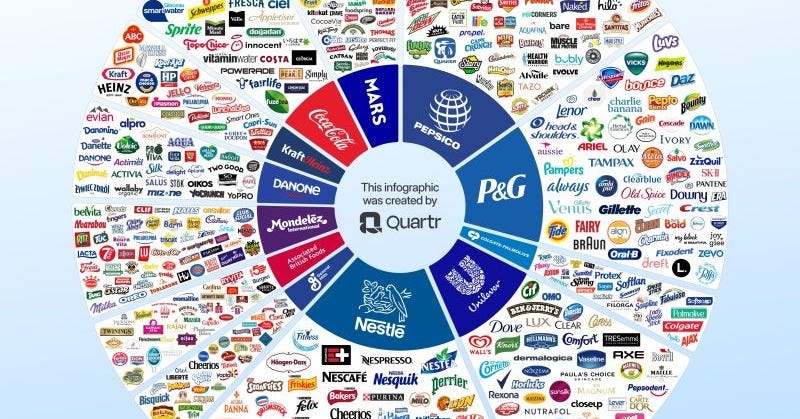
This chart by Quartr illustrates the brands within 12 of the largest ...

The following report was first published on winepressnews.com on January 8th, 2025. The following report is by the BMJ Group, first published on September 12th, 2024:

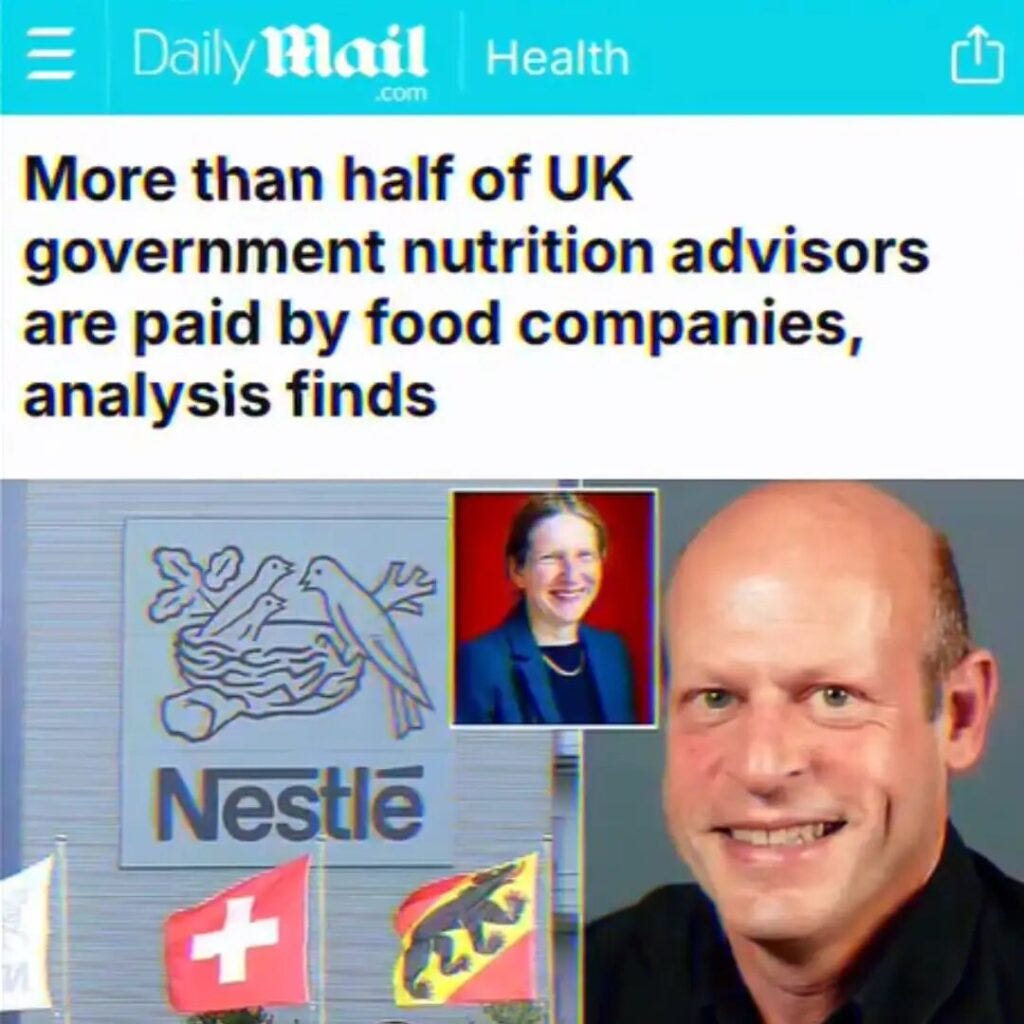
More than half of the experts on the UK government’s nutrition advisory panel have links to the food industry, reveals an investigation by The BMJ today.

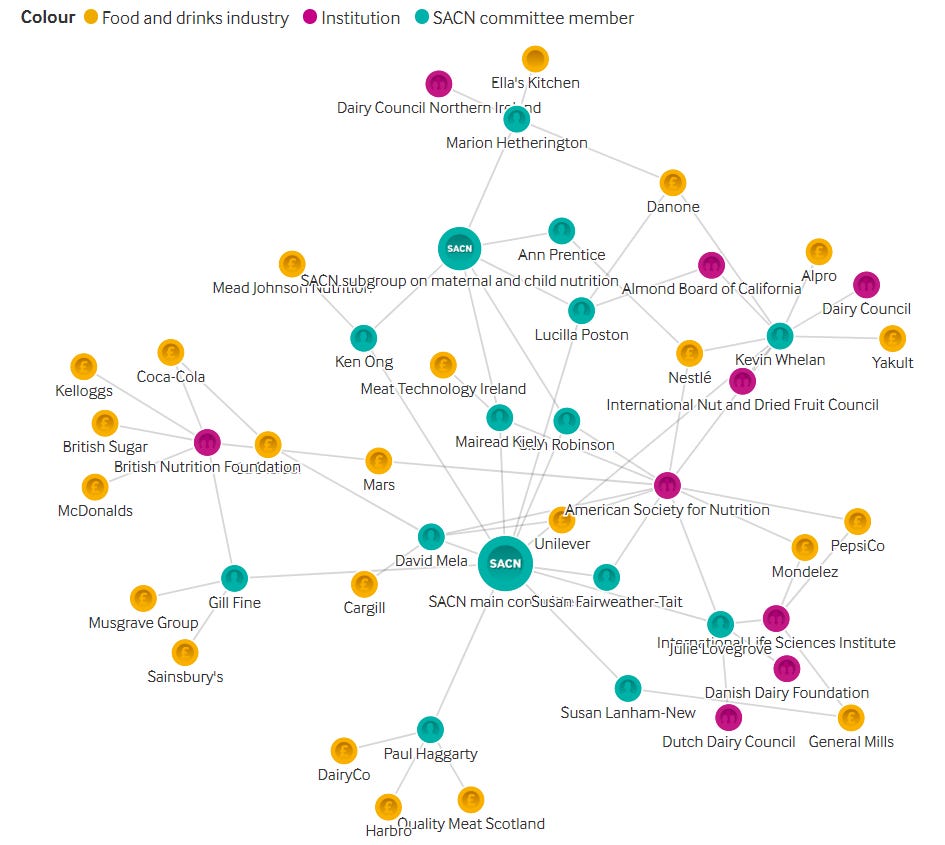
At least 11 of the 17 members of the Scientific Advisory Committee on Nutrition (SACN) have conflicts of interest with the likes of Nestle, sugar manufacturer Tate and Lyle, and the world’s largest ice cream producer, Unilever, reports freelance journalist Sophie Borland.

And at least six out of the 11 members of SACN’s Subgroup on Maternal and Child Nutrition have ties to food firms, including baby food manufacturers and formula milk brands.

SACN is a powerful group of people appointed as independent experts to advise the government, which in turn influences policy, explains Borland. Since being set up in 2000 it has produced high profile guidelines on daily salt and sugar intake, vitamin D supplements, and feeding babies.

But there is concern that both SACN – and the previous governments reviewing its recommendations – have not done enough to curb rising obesity levels and food-related ill health.

The BMJ looked at the interests declared by SACN members – in publicly available documents published on the government website – within the past three years.

Among them is David Mela, a retired senior scientist from Unilever, who has done consultancy work for Unilever, Tate and Lyle, Coca Cola’s Israel franchise CBC Israel, and Cargill, which produces cocoa and chocolate products among other things.

Another member, Julie Lovegrove, is chair of an expert group at the International Life Sciences Institute (ILSI) Europe, whose member companies include Pepsico, Cadbury’s US owner Mondelez, and General Mills, the American firm behind Cheerios and Haagen Dazs.

Members of SACN’s Maternal and Child Nutrition subgroup include Ann Prentice, a council member of the Nestle Foundation, and Marion Hetherington who has undertaken work for Danone and baby food brand Ella’s Kitchen, the latter on an unpaid basis. The group’s chair, Ken Ong, has also received research funding from Mead Johnston Nutrition, which makes formula milk.

The Department for Health and Social Care (DHSC) responded on behalf of SACN and all members named in this article, saying SACN members are required to declare any potential conflicts of interest annually – and new ones at the first appropriate committee meeting, which are included in the minutes and published on the SACN website.

It added: “No members of the committee are directly employed by the food and drink industry, and all have a duty to act in the public interest and to be independent and impartial.”

But Chris van Tulleken, associate professor at University College London and author of a best-selling book on ultra-processed food, says: “Even small financial conflicts affect behaviour and beliefs in subtle or unconscious ways,” while Rob Percival, head of policy at the Soil Association, says: “We’re concerned that the committee and its integrity might be undermined by those ties to the food industry.”

Experts tell The BMJ the make-up of SACN needs to be reviewed in light of members’ ties to the food industry. However, Kat Jenner, director of the Obesity Health Alliance, says these ties are partly a result of the lack of money in relevant research.

Alison Tedstone, former chief nutritionist for Public Health England, also suggests that refusing to allow experts with industry ties on SACN would “diminish” its expertise and could delay future legislation.

Yet Van Tulleken insists: “Despite two decades of work from a conflicted SACN there has been an explosion of suffering and death from diet-related disease in the UK so I don’t think it’s credible to claim that the committee has been very effective.

“There are some excellent independent experts but they are a minority and in my view their work has been hampered by conflicts of interest with the industry that has created this health crisis. SACN must become independent of the food industry.”

The WinePress News is a reader-supported publication. To receive new posts and support my work, consider becoming a free or paid subscriber.

SOURCE

Image Credit: pixabay.com

The Truth About Saturated Fat (Mercola)

Heart

From Dr Joseph Mercola

Story at-a-glance

  • For several decades, saturated fat was wrongly blamed for heart disease, while vegetable oils quietly caused a surge in obesity, inflammation, and chronic metabolic disorders
  • Newly appointed FDA commissioner Dr. Marty Makary is now leading efforts to revise outdated dietary guidelines that were built on cherry-picked data from Ancel Keys’ Seven Countries Study
  • A 2016 BMJ-published reanalysis found replacing saturated fat with linoleic acid-rich vegetable oils increased cardiovascular deaths, despite lowering cholesterol
  • Investigative journalist Dr. Maryanne Demasi faced vicious backlash after exposing the flawed science behind saturated fat demonization in her documentary “Heart of the Matter”
  • Industrial seed oils like canola and soybean are now linked to mitochondrial damage, inflammation, and chronic illness — while saturated fat is finally being recognized as metabolically supportive

For decades, the dominant narrative insisted that saturated fat was deadly — even though the actual data never proved it. As a result, the health advice shifted toward seed oils and processed margarine, which quietly ushered in new health problems, from metabolic disease to obesity and inflammatory disorders — all while the original hypothesis remained unchallenged by mainstream medicine.

Now, for the first time, high-ranking officials are openly criticizing these outdated guidelines. So, if you still believe that butter, beef, and full-fat cheese clog your arteries and are damaging your health, it’s time to relearn everything you know about these fat sources.

New FDA Commissioner Aims to End the 70-Year War on Saturated Fat

On July 14, 2025, Dr. Marty Makary, the newly appointed U.S Food and Drug Administration (FDA) commissioner, along with Sec. Robert F. Kennedy, Jr. of the Department of Health and Human Services and Sec. Brooke Rollins of the Department of Agriculture, held a press conference addressing their plans to significantly overhaul the U.S. dietary guidelines.1

•One of the primary areas that they will work on is revising the guidelines on saturated fat — During the press conference, Makary highlighted how the changes to the food guidelines will be made based on scientific findings. He mentions that the demonization of saturated fat began with a flawed study — the Seven Countries Study by Ancel Keys.

•Why the Seven Countries Study was significantly flawed — The study, which started in 1958 and continued until 1983, explored the heart health of different populations in several prominent Western countries. According to Keys’ hypothesis, there is a significant link between saturated fat and heart disease. When he published his data, it showed perfect correlations between cardiovascular disease and the dietary consumption of fat.2

However, there was just one problem with the research — Keys cherry-picked the data. He selectively chose the countries that fit his hypothesis while ignoring data from 16 other countries that went against his recommendations.3 Had he chosen a different set of countries, the data would have been the opposite — that increasing the percent of calories from fat actually reduces the number of deaths from coronary heart disease.

•Despite the methodological flaws in his data, the medical community accepted Keys’ study — This led to the promulgation of “low-fat, low-cholesterol” foods as healthy. Butter, coconut oil, red meat, dairy, and eggs were all shunned, while polyunsaturated fats (PUFs) like margarine, vegetable oils, and shortening were popularized.

•The medical establishment “locked arms and walked off a cliff together” — This was how Makary described the shift from saturated fat to polyunsaturated fat — basically, the health community back then took a look and decided that Keys’s study was gospel truth — despite many experts contesting his hypothesis and many studies4,5 showing the opposite.

“The medical establishment started with a robust debate in the New England Journal of Medicine among academics of the National Academy. But that debate ended in the 1970s because there was groupthink,” Makary said.

“Well, that dogma still lives large and you see remnants of it in the food guidelines that we are now revising. So, we’re going to ensure that the new guidelines are based on science and not medical dogma.”6

To see the tide finally turning and the government health agencies taking the lead on these monumental changes is something I applaud. Over the past couple of decades, I’ve published countless articles about the flaws in Keys’ study — and why saturated fats are not to be feared, as they are actually integral to your health.

Documentary Exposed the Flaws and Received Fierce Backlash

Just like me, Maryanne Demasi, Ph.D., has been speaking out about the erroneous demonization of saturated fat for a long time. Several years ago, I wrote about a two-part documentary she produced called “Heart of the Matter,” which aired on the Australian Broadcasting Corporation’s show (ABC) Catalyst in 2014. I was extremely impressed by the film, as it did an excellent job of exposing the cholesterol/saturated fat myths and its financially links to cholesterol-lowering drugs called statins.

In her recent Substack post, Demasi detailed the severe backlash she received after she released the documentary, and her thoughts on these recent developments from the U.S. government agencies. “It was a stunning moment — not because the criticism was new, but because it was coming from someone in an official position to do something,” she said.7

•“Heart of the Matter” focused on two primary points — The first part examined the demonization of saturated fat, while the second part dwelled on the widespread use of statins.

“The medical dogma was firmly entrenched: saturated fat raised cholesterol, and cholesterol caused heart disease. But the science behind it was shaky — built on cherry-picked data and upheld more by consensus than by critical evaluation,” she said.

•The findings were supported by some of the top experts in the field of cardiovascular health — Among the interviewees featured were Dr. Michael Eades, an early advocate for low-carb, high-fat diets, cardiologists Dr. Stephen Sinatra and Dr. Ernest Curtis, nutritionist Dr. Jonny Bowden, and science journalist Gary Taubes. All of these experts voiced their concerns regarding the warnings against saturated fat. Demasi said:

“Eades, for instance, highlighted the absurdity of the prevailing narrative: ‘You very seldom see the words ‘saturated fat’ in the public press when they’re not associated with artery clogging. So it’s like it’s all one term — ‘artery clogging saturated fats.’’

And Taubes, author of Good Calories Bad Calories, known for his meticulous dismantling of diet dogma, cut to the core: ‘There’s no compelling evidence that saturated fat is involved in heart disease.’”

To present both sides equally, the documentary also featured experts who vigorously defended the warnings against saturated fat. Robert Grenfell, the director of the National Heart Foundation, and Professor David Sullivan, a cardiologist, shared their thoughts in the film.

•Still, the backlash was overwhelming — Demasi describes it as “immediate, vicious, and unrelenting.” The media not only turned against her, but they also went against the experts who challenged the saturated fat dogma. And even though no factual inaccuracies were found, ABC still pulled both episodes from its website.

Save This Article for Later – Get the PDF Now

Download PDF

Numerous Experts Have Sounded the Alarm on Keys’ Flawed Research

The fact that Ancel Keys’ hypothesis was purely observational and could not establish causation has long been raised by many health experts — even during the first years when the Seven Countries study came out. According to Demasi, John Yudkin, a British physiologist and nutritionist warned that sugar, not fat, was the real cause of heart disease. However, he was mocked and marginalized by Keys, who considered Yudkin his fiercest opponent.8

Yudkin was the first, but he wasn’t the only one — numerous researchers like Uffe Ravnskov and Malcolm Kendrick, also publicly challenged Keys’ hypothesis, co-authoring publications that exposed the flaws of this study. Many others soon followed, which Demasi outlined in her blog post.

•“Saturated fat is not the major issue” — In 2013, cardiologist Dr. Aseem Malhotra published a commentary on the BMJ, saying that the flawed advice from Keys caused people to aggressively lower cholesterol — which may have led to higher rates of heart disease.

“The mantra that saturated fat must be removed to reduce the risk of cardiovascular disease has dominated dietary advice and guidelines for almost four decades. Yet scientific evidence shows that this advice has, paradoxically, increased our cardiovascular risks,” Malhotra wrote.9

•”The Big Fat Surprise” — Nina Teicholz wrote her best-selling exposè in 2014,10 which helped bring the issue to public attention. Her deeply researched book challenged the conventional wisdom on dietary fats, especially saturated fat. “Teicholz documented how weak science, political pressure, and food industry lobbying created a false consensus that demonised fat and distorted public health policy,” Demasi remarked.11

•“Re-evaluation of the traditional diet-heart hypothesis” — In 2016, a group of researchers published a landmark re-analysis of the Minnesota Coronary Experiment in the BMJ, to evaluate the accuracy of Keys hypothesis. They found that when saturated fat was replaced with linoleic acid (LA) from vegetable oils, cholesterol levels were lowered — but paradoxically led to an increase in deaths, particularly from cardiovascular disease.

“Findings from the Minnesota Coronary Experiment add to growing evidence that incomplete publication has contributed to overestimation of the benefits of replacing saturated fat with vegetable oils rich in linoleic acid,” the researchers concluded.12

The Cholesterol Hypothesis Is a ‘Professional Litmus Test’

The plans to overhaul the U.S. dietary guidelines give hope to many researchers like Demasi, who have long raised their concerns about this flawed science — but were ostracized as a result.

“For the first time, real change may be coming — not from the margins, but from the very top of the U.S. health establishment…

It’s taken decades. The cholesterol hypothesis wasn’t just a scientific claim — it became a professional litmus test. To challenge it was to risk your funding, your career, your credibility. Many of us paid that price. Even now, entrenched interests remain,” she wrote.

•But why was the myth allowed to persist in the first place? Apparently, it’s all because of the food and drug industry. In a video podcast, Dr. Paul Saladino and Teicholz discussed how the low-fat, low-cholesterol myth rapidly led to dramatic changes in the food and drug industries — changes that have proven to be highly lucrative, financially speaking.13

•Acknowledging that saturated fat is healthy means to relinquish big industry profits — The Big Food industry is raking in millions of dollars from the low-fat and low-cholesterol (yet highly processed) foods, including industrial vegetable oils. To admit that these “healthier options” are actually decimating public health would lead to great financial losses. The healthy alternative is real food — however, there’s no big industry profits to be made from that.

•Moreover, statin sales and other Big Pharma profit areas would suffer — The whole point of prescribing statins was to lower cholesterol, but if the notion that cholesterol is bad would be overturned, then what would be the point of taking these drugs?

Personally, I believe that statins are among the most overprescribed — and unnecessary — medications on the market today. Not only do the harms far outweigh the benefits, but they’re also ineffective. In fact, in “Heart of the Matter,” the experts repeatedly say that statins only lengthen a life by a few days and, despite their hype and popularity, are shockingly ineffective for all but a few people. Learn more about these drugs in my article, “Statins Do More Harm Than Good.”

Vegetable Oils Undermine Your Health

Perhaps the worst effect of the demonization of saturated fats — including butter, tallow, lard, and coconut oil — is that it paved the way for vegetable oils like soybean, canola, and corn oil, which are loaded with linoleic acid, a polyunsaturated fat (PUF), to become a standard part of the modern diet.

Today, Americans consume LA at levels that would have been unimaginable a century ago. In the 1860s, we only consumed 2 grams of LA per day; that number has now increased to close to 30 grams per day for most people. It now makes up 15% to 25% of a typical American’s caloric intake. And the cost of this overload? Your cells become more vulnerable to oxidative stress.

•Excessive LA causes your mitochondria to break down — The mitochondria, which are the powerhouse of your cells, responsible for creating energy, are significantly damaged because of this fat. LA transforms into oxidized linoleic acid metabolites (OXLAMs), dangerous byproducts that damage DNA, disrupt energy production, and drive chronic inflammation throughout your body.

OXLAMs have been linked to not just heart disease, but nearly every chronic disease now plaguing the developed world, such as obesity, Type 2 diabetes, and even neurodegeneration.

•LA stays in your body for years — You don’t simply eliminate it; instead, it LA embeds in your body fat, where it continues to inflict damage even after you clean up your diet. I recommend reading my paper published in Nutrients to understand how this happens — and how you can reverse it. My paper also expounds on the long-term biological effects of this metabolic disruptor.

View the Full Study Here

•Unfortunately, LA is rampant in the food supply — Even if you stop using seed oils, or don’t eat fried foods and fast food, you could still end up eating large amounts of LA mainly because it’s cleverly hidden in so many packaged products where you’d least expect it.

Lowering your intake of industrial seed oils starts with knowing where they hide. I recommend downloading my Health Coach app, which will be out soon. It has a unique feature called Seed Oil Sleuth™, which will help identify every hidden source of seed oils in your meals. It also calculates your daily LA intake to the nearest tenth of a gram.

Saturated Fat Is Not the Enemy — Misinformation Is

So how do you undo the damage of 70 years of misguided health policy? The good news is there are ways to help revert the damage, and it starts by focusing on the root cause — removing industrial seed oils loaded with linoleic acid (LA). Carefully read labels, even in so-called “healthy” snacks; remember, these harmful fats are lurking everywhere.

Once you’ve cleaned up all the unhealthy fats in your diet, start rebuilding your health with saturated fats from clean animal sources, which are stable and nourishing. Choose healthy options like grass fed butter, ghee, beef tallow, and coconut oil, which support your mitochondria, don’t oxidize easily, and provide steady energy. For more healthy lifestyle strategies to eliminate LA from your diet, I recommend reading “Linoleic Acid, Mitochondria, Gut Microbiome, and Metabolic Health — A Mechanistic Review.”

These new developments in the U.S. food supply are certainly a breath of fresh air, and if Makary and others who are part of the “Make America Healthy Again” (MAHA) campaign follow through, we may finally get dietary guidelines that reflect biological truth, not industry agendas. As Demasi concludes:

“[W]e may finally be seeing the collapse of one of the most destructive public health myths in modern history … For those of us who’ve waited decades, it’s not vindication we want (although that would be nice) — it’s change.”14

Frequently Asked Questions (FAQs) About the War on Saturated Fat

Q: Why is the war on saturated fat finally ending?

A: For decades, saturated fat was wrongly blamed for heart disease due to flawed research like Ancel Keys’ Seven Countries Study. Now, top U.S. health officials, including FDA Commissioner Dr. Marty Makary, are acknowledging these mistakes and working to revise the dietary guidelines based on current science, not outdated dogma.

Q: What was wrong with the original research that demonized saturated fat?

A: Keys’ study selectively included countries that supported his hypothesis and ignored those that didn’t. This cherry-picking created a false link between fat and heart disease, leading to widespread promotion of low-fat, high-seed oil diets that have been harmful to public health.

Q: How have vegetable oils impacted health since replacing saturated fats?

A: Vegetable oils like soybean, corn, and canola are loaded with linoleic acid (LA), which damages mitochondria, promotes inflammation, and contributes to chronic diseases like obesity, diabetes, and neurodegeneration. These oils now make up 15% to 25% of caloric intake in the average American diet.

Q: What role did media and government play in spreading misinformation?

A: Mainstream media and government agencies endorsed and enforced the cholesterol hypothesis without fully examining the evidence. Whistleblowers like Maryanne Demasi, Ph.D., were attacked for speaking out, and even accurate documentaries were censored to protect the status quo.

Q: What changes are being proposed for the U.S. dietary guidelines?

A: Upcoming revisions may eliminate the cap on saturated fat and elevate full-fat foods like butter and dairy. Officials aim to base the guidelines on actual science, not outdated industry-driven dogma.

SOURCE

8 Common Sources of Heavy Metals in Food

When you’re buying food for yourself and your family, you probably glance over the Nutrition Facts panel to make sure you’re making a healthy choice. You may even look at the fine print in the ingredients list, to see if there are any artificial additives or preservatives you want to avoid. What you won’t see listed on the label however, is how much toxic heavy metals you may consume per serving. Yet that is exactly what may be inside.

What we eat and drink is one of the primary points of exposure for heavy metals. These toxins make their way into the food chain thanks to decades of industrial pollutants entering the soil and water.

In the past, many experts believed this wasn’t a cause for concern. The idea was that the human body is perfectly capable of dealing with trace amounts of heavy metals via its detoxification pathways. But they were missing the big picture.

Image by 6653167 from Pixabay

‘Cultured’ or ‘Vegetarian Meat’ Is Neither Meat Nor Vegetarian

From The Kingston Report @ substack

“Cultured meats” are new, multi-species biosynthetic organisms that are grown in a lab and often use embryonic cells as “starter material.”

Originally posted July 17, 2023: In early June, Stew Peters and I exposed many of the lies Americans are being told about the current food supply, specifically the lack of disclosures regarding the lab-grown manufacturing of ‘meat’ using many of the same multi-species gene-editing technologies and biotechnology reagents found in the COVID-19 mRNA nanoparticles that are known toxins to humans and other biological life forms.

You can watch the Stew Peters interview interview here.

It’s probably of no surprise that the general takeaway from SynBio (synthetic biology) market research firms is that farmers, ranchers, and many consumer are against the use of synthetic biology in their food supply, water supply, and even in medicine.

Americans Don’t Want to Ingest Biosynthetic Multi-Species ‘Meat’

Folks don’t want to ingest or be injected with biosynthetic multi-species organisms or gene-editing nanotechnologies (that include plastics, metals and engineered nanoparticles). If people were given informed consent on the multi-species engineered nanoparticle contents of synthetic ‘meat’ and the risks to their health, they would never agree to ingest or be injected with these harmful and quite frankly, gross new organisms.

READ AT THE LINK

Image by -Rita-👩‍🍳 und 📷 mit ❤ from Pixabay
11 Of The Most Faked Foods In The World | Big Business | Insider Business

Hate to break it to you, but your truffle oil wasn’t made from truffles. Your vanilla extract? Well, that’s probably just a lab-made derivative of crude oil. And your shaker of Parmesan cheese? It probably has wood pulp inside. You might feel the companies behind these food products are using deceptive packaging — but it’s legal. However, there’s a whole other level of trickery that’s completely illegal: food fraud. That’s when criminals bottle up corn syrup and call it 100% honey, or when they pass off cheap mozzarella as pure Parmigiano-Reggiano. Globally, the fraudulent food industry could be worth $40 billion. It hurts legitimate producers, funds criminal activities, and can even harm consumers. We head around the world to uncover how producers get away with food deception and how we can spot the real stuff.

0:00 Intro
1:08 Truffles
3:44 Maple Syrup
5:19 Wasabi
7:42 Parmesan Cheese
11:15 Vanilla
12:58 Caviar
14:40 Honey
17:30 Olive Oil
20:04 Wagyu Beef
22:20 Coffee
24:05 Saffron
25:58 How criminals get away with selling fakes

10 Popular Fast Foods Tested Found Loaded With Antibiotics, Hormones, Heavy Metals & Few Nutrients

From mercola.com

VIDEO LINK

Story at-a-glance

  • Most chain restaurants rely on beef and chicken from concentrated animal feeding operations (CAFOs), where veterinary drugs are routinely used, and of 10 fast food meals sampled and tested, all but two tested positive for veterinary drugs
  • Six of the 10 fast food samples (Taco Bell, Dunkin’, Wendy’s, Domino’s, Burger King and McDonald’s) contained a veterinary antibiotic ionophore called monensin, which is not approved for human use as it can cause severe harm
  • Of 43 school lunches tested, 95% had detectable levels of glyphosate, a carcinogenic and endocrine-disrupting weed killer linked to liver inflammation, metabolic disorder, cardiovascular disease and cancer
  • 100% of the school lunches tested contained heavy metals at levels up to 6,293 times higher than the maximum levels allowed in drinking water. Cadmium and lead were found at the highest levels
  • Of 21 fast food meals tested for essential minerals, none met the recommended daily requirements of calcium, potassium, manganese, copper, zinc and iron, and none of the 10 fast food meals tested for B vitamins contained detectable levels of B9 or B12. Vitamin B3 (niacin) levels were also exceptionally low

While high amounts of linoleic acid (LA) is one of the primary reasons why processed foods and fast food are so bad for your health, contaminants like veterinary drugs, antibiotics, hormones and heavy metals — combined with inferior amounts of essential nutrients — are other highly-ranked reasons to steer clear of.

8 of 10 Fast Food Meals Contain Veterinary Drugs

In September 2023, Moms Across America (MAA) submitted food samples from 10 fast food chains to the Health Research Institute, a nonprofit laboratory that tests food for nutrient content, contaminants and toxins. Each food sample was tested for the presence of 104 of the most common veterinary drugs and hormones. You can read the certificate of analysis here.1

Fast food restaurants sampled included McDonald’s, Starbucks, Subway, Chick-fil-A, Burger King, Taco Bell, Chipotle, Dunkin’, Wendy’s and Domino’s. Of these, only Chipotle and Subway tested negative for veterinary drugs.

This isn’t all that surprising, considering most chain restaurants rely on beef and chicken from concentrated animal feeding operations (CAFOs), where veterinary drugs are routinely used. As explained by MAA:2

“Due to large, industry, confined animal feeding operation conditions, which include extremely close quarters, unsanitary spaces, and high incidence of disease, most of America’s nonorganic meat comes from livestock that is heavily treated with antibiotics, growth hormones, and an anti-parasitic which is also a known aviary contraceptive.”

6 of 10 Contain Potentially Risky Antibiotics

Six of the 10 fast food samples (Taco Bell, Dunkin’, Wendy’s, Domino’s, Burger King and McDonald’s)3 contained a veterinary antibiotic ionophore called monensin, which is not approved for human use as it can cause severe harm. The sample with the highest concentration (Taco Bell) contained 0.64 micrograms (mcg). The “acceptable” daily intake is 12.5 mcg/kg of body weight per day.

Monensin also has a number of side effects in animals, including anorexia, diarrhea, depression, ataxia, degeneration of heart and skeletal muscles, necrosis and death.

The antibiotic ionophore narasin, which has the same side effects in animals as monensin, was found in 4 of the 10 samples (Wendy’s, Dunkin’, Domino’s and Starbucks). The highest concentration, 1.53 mcg, was found in a Wendy’s cheeseburger. The three others contained only trace concentrations. The “acceptable” daily intake is 5 mcg/kg per day.

Both monensin and narasin are toxic to dogs and horses and can cause paralysis of the hind legs at extremely low levels. They can also cause acute cardiac rhabdomyocyte degeneration and necrosis in beef and dairy cattle. The reason they’re used in cattle is because they encourage weight gain. MAA commented on these findings:4

“Moms Across America is gravely concerned about our population, especially children, unknowingly eating unprescribed antibiotic ionophores livestock, even at low levels, consistently because of potential damage to the microbiome as well as the risk of antibiotic-resistant bacteria growth.

We question if the side effects of these ionophores in dogs and horses, leaving their hind legs dysfunctional, might be related to millions of Americans presenting with restless leg syndrome and neuropathy, conditions unknown to most humans just a generation or two ago … Until proven safe, we urge our regulatory agencies, such as the USDA and FDA, to disallow the use of these drugs in our livestock.”

Download this Article Before it Disappears

Download PDF

‘Fowl Contraceptive’ Detected in Chick-fil-A Sandwich

The Chick-fil-A chicken sandwich was found to contain nicarbazin,5 an antiparasitic drug and fowl contraceptive that causes infertility in certain poultry, such as pigeons and geese. In fact, it’s used to control geese and pigeon populations.

In chickens, it’s used to control certain types of infections and fatten them up. Side effects of the drug include increased sensitivity to heat stress, degenerative processes in the liver and kidneys, and death.

In 2009, the British Soil Association sought to have nicarbazin banned in the U.K., as evidence proving the drug would not cause genetic damage, mutations, birth deformities or malformations was lacking. As a result, a European review board was unable to establish a safe level of residue in chickens and eggs.6

Despite open questions, the European Commission and the UK’s Veterinary Medicines Directorate continued to allow routine use of the drug in the poultry industry by using a legal loophole. In the U.S., nicarbazin has been an approved veterinary drug for use as an anticoccidial agent in broiler chickens since 1955.7

The Chick-fil-A sandwich contained 0.36 mcg of nicarbazin and the “acceptable” level is 200 mcg/kg per day.8 The seemingly wide safety margin does not mean there’s nothing to worry about though. As noted by MAA executive director Zen Honeycutt:

“The impact of millions of Americans, especially children and young adults, consuming a known animal contraceptive daily is concerning. With infertility problems on the rise, the reproductive health of this generation is front and center for us, in light of these results.

These are veterinary drugs and hormones … so the only studies that I have found, and that you will find, will be for animals. [They’re] not authorized for humans, and yet they’re being allowed [into the food supply]. Some people are consuming this food every day, so we don’t know how much they are accumulating in their body.”

John Fagan, chief scientist at the Health Research Institute, also noted that the FDA’s acceptable levels are really only meaningful when we’re talking about acute poisoning. In the case of fast food, which some people eat three times a day, the concern is chronic poisoning from the accumulation of toxins over time.9

School Lunches Loaded With Pesticides

VIDEO LINK

In September 2022, MAA also tested 43 school lunches for the presence of not only hormones and veterinary drugs, but also pesticides, heavy metals and nutritional content.10 The results there were even more concerning.

Ninety-five percent of the school lunch items had detectable levels of glyphosate, a carcinogenic and endocrine-disrupting weed killer routinely used on GMO grains that has been linked to liver inflammation, metabolic disorder, cardiovascular disease and cancer, including liver cancer and Non-Hodgkin’s lymphoma.11,12

The highest levels of glyphosate were found in beef taco with soft wheat tortilla (286.77 nanograms per gram) and pizza (156.14 ng/g). As noted by MAA, these levels are highly concerning:13

“If consumed regularly, results with Total Effective Glyphosate above 25 ng/g could have harmful effects. These are levels that, if routinely fed to rats, cause them to show symptoms of Non-Alcoholic Fatty Liver Disease (NAFLD).

NAFLD is life-threatening and is an epidemic in the USA. These levels of glyphosate in school lunches would be expected to have similar effects on children.

Levels lower than 25 ng/g can be expected to contribute to NAFLD and other pathologies because a child will eat more than one thing during the day that contains glyphosate, and the levels of glyphosate would be cumulative.”

Other toxic pesticides found in the school meals include:

  • Thiabendazole, which has immune suppressing effects, was found in 27.9% of the samples.
  • Piperonal butoxide, present in 18 of the 43 samples (41%), is a developmental toxin that causes birth defects and neurodevelopment disruptions.
  • Pyrimethanil, detected at 595.04 ppb on an apple, has been shown to cause thyroid tumors in animals.

School Meals: Drugs, Heavy Metals, but Few Nutrients

Nine of the 43 school lunches also contained four types of veterinary drugs and hormones, and a shocking 100% of meals contained heavy metals at levels up to 6,293 times higher than the maximum levels allowed in drinking water. Levels ranged from 0.5 ppb to 94.4 mcg/kg.

The highest levels of heavy metals were cadmium and lead, found at up to 46.8 mcg/kg (cadmium) and 94.4 mcg/kg (lead). Meanwhile, most of the meals were “abysmally low” in essential nutrients. As reported by the MAA:

“An advisor has calculated the contribution that the sample food would make to a person’s nutritional requirements, assuming that they ate a 4 oz portion (standardly used in nutritional analysis) and assuming that this food contributed ¼ of their nutrition for the day.

‘The nutritional items are consistently very deficient in Copper and are also consistently deficient (but to a lesser extent) in calcium, potassium, and phosphorous. Magnesium, zinc, and manganese are deficient in many of the samples, roughly 50%. The only mineral that is consistently meeting or exceeding requirements is iron. That is good but it is not enough!’ …

Without proper nutrients, our children’s brains will not function properly, and their bodies will not be developed as needed. Often children with learning and behavioral issues are deficient in just one or two minerals or vitamins; when those nutrients are added to their diet, their mental, physical, and behavioral issues subside. Even violent behavior is discontinued. Our children must have proper nutrient-dense food.”

Fast Food Cannot Sustain You

After completing the veterinary drug analysis on 10 fast food meals, MAA went on to test 21 fast food brands for essential minerals, and the top 10 brands for B vitamins.

“The testing was conducted out of concern for America’s skyrocketing mental and physical health crisis,” Honeycutt writes in her October 18, 2023, report.14

“Eighty-five million Americans eat fast food every day. Fast food companies often supply a significant portion of the 30 million school meals served to our children each day.

The quality of the food, including the contamination of agrochemicals and lack of nutrients due to toxic chemical inputs, contributes to our mental and physical health issues. One in five Americans have a mental illness, and 54% of our children have a chronic health issue.

For many impoverished children, school meals are the only food they consume each day. Numerous studies have linked toxins in the food supply and lack of nutrition to conditions such as autism, depression, aggression, suicide, and homicides. This report will … disclose the mineral, vitamin B, and calorie levels in the top 20 fast food restaurants/ school lunch suppliers.”

Based on the micronutrient testing done on school lunches in 2022 (above), you can probably guess what this nutritional testing revealed. The mineral content of the fast food tested did not meet the recommended daily requirements of calcium, potassium, manganese, copper, zinc and iron.

For example, the recommended daily allowance (RDA) of copper is 900 mcg per day, and Chick-fil-A’s chicken nuggets contain just 1.4 mcg of copper per gram. To meet the RDA, an adult would need to consume nearly nine servings of nuggets.

Signs of copper deficiency include fatigue, poor concentration and low mood. Also, “children with autism and violent behavior often have an imbalance of copper,” Honeycutt writes.

Fast Food Nearly Devoid of B Vitamins

Even worse, zero amounts of vitamin B9 or B12 were detected in the top 10 fast food samples, and deficiencies in these B vitamins can lead to fatigue, digestive issues, heart problems, nervous system disorders and erratic behavior. Indeed, vitamin B12 (cobalamin) is known as “the energy vitamin.” Your body requires it for energy production.

It also plays an important role in neurological function, and deficiency can culminate in a range of mental health symptoms, from irritability and depression to dementia and even psychosis. You can learn more about vitamin B12’s role in mental health in this November 6, 2022 article.

Warning signs of B12 deficiency include brain fog, memory lapses, mood swings, apathy, fatigue, muscle weakness and tingling in the extremities. Unfortunately, B12 deficiency may not present itself for several years, so by the time you notice symptoms, you may be quite deficient.

The fact that NONE of the top 10 fast foods contained B12 is rather remarkable when you consider B12-rich foods include beef, seafood, chicken and eggs. Beef and chicken are staples in fast food, yet fast food beef and chicken provide no B12 at all! If that doesn’t convince you that fast food meat is nowhere near the same as grass fed organic meat, I don’t know what will.

A woman would need to consume 333 servings of Chick-fil-A chicken sandwiches and a man would need to eat 380 servings to meet the RDA for niacin.

Levels of B3 (niacin) were also abysmal. The RDA for women is 14 mg per day and for men it’s 16 mg. To meet that RDA, a woman would need to consume 333 servings of Chick-fil-A chicken sandwiches (at a serving size of 210 grams) and a man would need to eat 380 servings.

Chipotle’s carnitas bowl with everything, which had the highest amount of B3, still requires you to eat eight servings if you’re a woman and nine servings if you’re a man, to meet your RDA of niacin. As reported by MAA:15

“On average, adults would need to consume between 64-73 servings of the top 10 fast foods to get proper vitamin B3 nutrition per day. Alternatively, a portion of liver (pasture-raised, ideally) or a can of tuna (SafeCatch) would supply enough vitamin B3 or niacin for proper nutrition for a day. Clearly, cheap fast food is not as cheap as it seems when one factors in the value of the nutrients provided in the purchase.”

Sources and References

Image by Robert Owen-Wahl from Pixabay
mRNA Vaccines Now Headed for Shrimp

Story at-a-glance

  • ViAqua Therapeutics, an Israeli-based biotechnology startup, has secured $8.25 million in funding for its oral RNA-based shrimp vaccine
  • The vaccine targets white spot syndrome virus (WSSV), which leads to a 15% reduction in global shrimp production each year
  • ViAqua plans to administer its RNA-based product via coated feed; the RNA molecules can inhibit gene expression, silencing disease-affected genes
  • Shrimp lack an adaptive immune system, the type that “remembers” exposures to infectious agents, so it’s long been assumed that shrimp cannot be vaccinated; now it’s becoming clear that shrimp do have some defense against viruses, which is only beginning to be understood
  • The risks of tinkering with shrimp genetics, and using mRNA shots in pigs, cattle and other animals intended for food, are completely unknown

Shrimp are slated to become the latest food source exposed to messenger ribonucleic acid (mRNA) vaccines, courtesy of ViAqua Therapeutics, an Israeli-based biotechnology startup. The company has secured $8.25 million in funding from venture capitalists for its oral RNA-based shrimp vaccine, which is intended to target white spot syndrome virus (WSSV).

With plans to administer its RNA-based product via coated feed, ViAqua suggests the RNA molecules can inhibit gene expression, silencing disease-affected genes with every meal.1 WSSV is a devastating condition in shrimp, leading to a 15% reduction in global shrimp production each year — an annual loss of about $3 billion.2

ViAqua says challenge tests show its RNA-based formulation improved shrimp survival against WSSV, but at what cost? The use of mRNA in the food supply is controversial for good reason — no one knows what the long-term consequences will be.

RNA Vaccines Coming for Shrimp

ViAqua is using RNA interference (RNAi) particles, provided as a feed supplement, to manipulate gene expression in shrimp, one of the most widely consumed forms of seafood worldwide. In a 2022 proof of concept study that used a polyanhydride nanoparticle delivery platform to deliver RNA to shrimp orally, it’s stated:3

“RNA interference (RNAi) in invertebrates is an antiviral cellular mechanism by which a trigger, such as double-stranded RNA (dsRNA) or small interfering RNA (siRNA) starts sequence-specific degradation of target mRNA, thereby preventing viral gene expression.

… In aquaculture systems, the concept of RNAi-based vaccines has been championed for several reasons: (a) RNAi works as an antiviral immune response in shrimp; (b) it is pathogen-specific; and (c) it generates a long-term protective immune response.”

The study found that the “nanovaccine” was about 80% effective in protecting against WSSV in shrimp, when administered via reverse gavage to “mimic an oral route.”4 ViAqua has brought the potential for oral delivery to the next level, with plans to begin producing its RNAi capsule products in India in 2024.5 Shai Ufaz, ViAqua’s chief executive officer, stated:6

“Oral delivery is the holy grail of aquaculture health development due to both the impossibility of vaccinating individual shrimp and its ability to substantially bring down the operational costs of disease management while improving outcomes … We are excited to bring this technology to market to address the need for affordable disease solutions in aquaculture.”

Can Shrimp Be Vaccinated?

Shrimp lack an adaptive immune system, the type that “remembers” exposures to infectious agents so it can mount a better response the next time it comes around. Because of this, it’s long been assumed that shrimp cannot be vaccinated. According to the Global Seafood Alliance:7

“Scientific literature on shrimp has often adopted terms and approaches from mammalian immunology, but not always in a correct way. Such is the case in the use of the term “vaccination” in crustaceans. The principle of vaccination is based on two key elements of the immune system: specificity and memory. These two properties are not recognized in the immune systems of shrimp and other invertebrates.”

However, while shrimp don’t have adaptive immunity in the traditional sense, it’s becoming clear that they do have some defense against viruses, which is only beginning to be understood. In 2008, researchers with Australia’s University of Queensland explained, “There is mounting evidence for specific immune memory in crustaceans, including shrimp,” adding:8

“It has been widely assumed that no such adaptive systems exist in invertebrates, thus vaccines have not been routinely developed and used in shrimp aquaculture. Invertebrates were considered to rely solely on an innate immune system characterized by generalized immune responses to conserved molecular structures of invading pathogens such as bacteria and fungi.

Some of these pathways are relatively well understood, involving an array of pattern recognition receptors interacting with serine proteases to initiate encapsulation, phagocytosis and an antimicrobial cascade based on the phenoloxidase enzyme system.

However, what is becoming more apparent is that the diversity and sophistication of innate responses in invertebrates is far greater than previously assumed. The invertebrate immune response to viruses is particularly poorly understood.”

ViAqua’s RNAi product claims to “enhance resistance to viral infections” in shrimp,9 and they have plans to develop additional mRNA vaccines for fish and other biotechnology products targeting additional shrimp viruses and other pathogens.10

But shrimp pathogens of one kind or another are virtually guaranteed to persist in the intensive aquaculture farms where many shrimp are raised. Further, the risks of tinkering with shrimp genetics are completely unknown.

Download this Article Before it Disappears

Download PDF

mRNA Shots Already Used in Pork

The media has been pretty quiet about the up-and-coming genetic manipulation of shrimp. This seems to be par for the course. Few are aware that, since 2018, pork producers have been using customizable mRNA-based “vaccines” on their herds — as it largely slipped by under the radar.11

It wasn’t until attorney Tom Renz began promoting new legislation in Missouri (House Bill 1169,12 which he helped write) that would require labeling of mRNA products that it began to receive attention.13 In an April 1, 2023, tweet, Renz stated:14

“BREAKING NEWS: the lobbyists for the cattleman and pork associations in several states have CONFIRMED they WILL be using mRNA vaccines in pigs and cows THIS MONTH. WE MUST SUPPORT MISSOURI HB1169. It is LITERALLY the ONLY chance we have to prevent this … NO ONE knows the impacts of doing this but we are all potentially facing the risk of being a #DiedSuddenly if we don’t stop this.”

Even though the bill asks only for transparency — not a ban of the mRNA-based shots — industry pushback has been enormous. They don’t want you to know that they’re using mRNA and similar products, because then they’d have to admit that the resulting foods may have gene-altering effects. And it’s not just pork, either.

Cattle Groups Urge Caution Over mRNA

The first RNA-based livestock vaccine, a swine influenza (H3N2) RNA shot developed by Harrisvaccines was licensed in 2012.15 The company followed up with an avian influenza mRNA shot in 2015.16

Concerns that mRNA injections could end up “in the global protein supply chain” also prompted warnings from cattle producers and calls for mandatory country of origin labeling (MCOOL) so consumers can choose meat from countries that don’t allow mRNA shots in meat animals.17

In an April 2023 news release, Ranchers-Cattlemen Action Legal Fund United Stockgrowers of America (R-CALF USA), a nonprofit that represents interests of independent U.S. cattle producers, shared concerns about the use of mRNA shots in cattle and other meat animals. Max Thornsberry, DVM, R-CALF’s animal health committee chair, met with medial doctors and a molecular biologist before briefing the R-CALF USA board:18

“Thornsberry reported that some researchers have found that mRNA and its coded virus is likely passed from an injected human to a noninjected human, and to humans who have consumed dairy products or meat from an mRNA-injected animal.

He said that because the research on mRNA is still in its infancy, no one really knows the full impact it has on either humans or animals, particularly its long-term impact. He said this itself warrants more extensive mRNA research focused on safety, heightened public vigilance, and greater transparency.”

In a commentary, R-CALF CEO Bill Bullard also urged caution regarding mRNA injections, stating:19

“It’s not a vaccine as we typically understand vaccines. So, for the rest of this discussion, I’ll refer to it as an injection. It’s an injection of a laboratory-produced substance into humans or livestock that is coded with a particular virus, such as COVID-19, that produces an immune response against the particular virus.

And what does mRNA do? Well, it hijacks living cells, tricking them into producing some level of immunity against human viruses like COVID-19 and livestock viruses such as foot-and-mouth disease or lumpy skin disease. It does this by rewriting the instructions from the body’s DNA. And what are the potential risks to humans and livestock?

The truthful answer is we don’t yet know the long-term effects of mRNA injections in either humans or livestock.

… There is great concern that living cells excrete the mRNA over time and the mRNA can then be transferred to animals and humans that have never received the mRNA injection. It is believed, for example, that humans can contact mRNA by eating meat from livestock that have received the injection.

The reason mRNA is an issue today is that pharmaceutical firms have found that it takes very little of it to hijack a cell, and it can be produced cheaper than typical virus vaccines.”

Is it possible that mRNA or RNAi nanoparticles could persist in the meat and shrimp you’re eating? Penny Riggs, associate research professor of functional genetics at Texas A&M, stated, “The estimate is that half of the mRNA from a vaccine is gone in about 20 hours, and completely destroyed within a few days.”20

However, Thornsberry cited21 one study, published in Biomedicines, that found mRNA from injections can be detected in blood 15 days post-shot.22

The proof-of-concept study for the shrimp RNA nanovaccine also found the particles persisted long after administration: “The nanoparticles localized to tissue target replication sites for WSSV and persisted through 28 days post-administration.”23 Again, the consequences of consuming these nanoparticles remains to be seen.

Antibiotic Resistance Widespread in Shrimp

Farm-raised seafood is among the most contaminated foods you can eat, shrimp included. Antibiotics are commonly used on farmed shrimp in an attempt to slow down pathogens.24 Not surprisingly, shrimp is often contaminated with antibiotic-resistant bacteria as a result.

One investigation by CBC News Marketplace found 17% — nine of the 51 packages of shrimp imported from Vietnam, Thailand, China, India and Ecuador — were contaminated with antibiotic-resistant bacteria.25 Among them, all but one showed resistance to multiple antibiotics.

Investigators purchased imported shrimp labeled “organic” as well as some with the “Best Aquaculture Practices” certification, which maintains that farmers only use antibiotics minimally.

So, while shrimp can be a healthy addition to your diet, it’s important to avoid farm-raised shrimp, which is the type served in most restaurants and the variety that’s slated to receive a gene-altering nanoparticle vaccine in its feed. When it comes to purchasing high-quality shrimp, look for those that are either wild caught or locally produced.

SOURCE

Sources and References

If you enjoy our posts, check out our sister site truthwatchnz.is

Image by magdus from Pixabay
Famines are not a natural phenomenon: control the food, control the people

From mypatriotsupply.com

Henry Kissinger famously said, “Who controls the food supply controls the people; who controls the energy can control whole continents; who controls money can control the world.”

History shows us this is true – especially when it comes to controlling food.

Many people would like to believe that famines are a natural phenomenon. Unfortunately, this is seldom the case.

Time and time again, famines are man-made and the result of political agendas.

Alex de Waal, author of Mass Starvation: The History and Future of Famine, says, “Famine is a very specific political product of the way in which societies are run, wars are fought, governments are managed. The single overwhelming element in causation —in three-quarters of the famines and three-quarters of the famine deaths—is political agency. Yet we still tend to be gripped by this idea that famine is a natural calamity.”

It is a difficult pill to swallow – that one’s own country would allow their people to starve, and in some cases, purposely. And yet, history doesn’t lie.

Let’s take a look back at some of the worst man-made famines in history to better prepare ourselves for this sad possibility.

READ AT THE LINK

https://www.mypatriotsupply.com/blogs/scout/control-the-food-control-the-people

RELATED: Food Supply Shutdown: Deer, fish, pigs euthanized; crops not planted

Photo: pixabay.com

World food supply panic as India imposes ban on rice exports

“Who controls the food supply controls the people; who controls the energy can control whole continents; who controls money can control the world.” Henry Kissinger

Search that quote & top of the list will be one of those fake fact checks that tell you Kissinger said no such thing. Of course. Liars all IMO.

Watch as the food continues to disappear, after all they’ve paid farmers to plow under their crops. Check out Ice Age Farmer… he has his finger on that pulse. Were these psychos in any way interested in supplying you with good food they would be promoting home gardens. Instead they find ways to punish home gardeners. EWNZ


From brighteon.com

India exports 40 percent of the world’s excess rice supply, providing rice supplies, in part, to billions of people. And India has just banned non-Basmati rice exports, causing a “rice panic” to unfold across Asia.

Combined with the wheat export crisis in Ukraine (due to malfeasance on the part of the USA and NATO), the world is now facing scarcity and food inflation across TWO food staples: Wheat and rice.

Meanwhile, engineered drought (geoengineering weaponization) in the Midwest is devastating corn crops there, creating a third crop crisis that only adds to the danger of global hunger and famine.

Get the full report in today’s broadcast

SEE ALSO HERE

Photo: pixabay.com

Fresh Greens in Winter (Wally Richards)

Like to grow some fresh, highly nutritious greens this time of the year when sunlight hours are short and stuff is slow to grow?

This is also a way to be able to have emergency healthy food when things are not so good.

How you achieve this is to sprout seeds for eating, often referred to as ‘Sprouts’.

In the past sprouts were done in an Agee preserving jar with a screen sieve.

You would place a few seeds into the jar and cover with non chlorinated water and sit on window sill in kitchen.

Each day you would tip the water out using the sieve like screen to stop the seeds falling out.

Fresh water would be added and the above would be repeated daily till the seeds had sprouted and reached a nice size which you then used in sandwiches or salads.

Very nutritious and very simple to do.

Nowadays its even easier with a four tier seed sprouter from Egmont Seeds.

Called Mr Fothergills Kitchen Seed Sprouter they sell for $20.00.

On web at https://www.egmontseeds.co.nz/index.php?main_page=advanced_search_result&search_in_description=1&keyword=sprouter

 You have 4 sprouting levels which means you can sprout 4 different types of seeds or mixes at any one time.

A small amount of seeds is placed in each level and water is applied to the top tier, then because of sprouter outlet caps in the base of each level

(which can be adjusted to allow a amount of water flow to next level) the water works its way down through the tiers..

Then finally the water ends up in the reservoir where you can either dispose of it or use it a second time round.

Doing this alone with the sprouter on the kitchen window sill will give you very nutritious greens to add to your winter diet.

But you can change then into super sprouts by adding a few mils of Magic Botanic Liquid (MBL)to the non-chlorinated water.

MBL is rich in humate and fulvic acid along with minerals and elements which the sprouting seeds will absorb as they germinate and grow.

Incredibly good for your health and great for those wishing to trim up a bit before summer.

One of the problems is that our traditional Super Market food chain is poor in nutritional values unless you are growing a good amount of vegetables yourself naturally.

This means when you cook up a meal from supermarket produce and have to add condiments to make it taste ok (Home grown produce tastes great and does not need condiments to fool you body into accepting it).

So you eat a full meal of supermarket produce and when you are finished you are likely to still feel a bit hungry.

Actually you are not hungry but that is the feeling you get as your body is saying, ‘Thanks for the stuff but where are the minerals and elements that I need to work properly?’

So inadvertently you pig out on potato chips or something to squash the feeling of having not eaten enough.

Now you are going to put on some extra pounds and your body still is not satisfied as he needs nutrition not food stuffing.

Sprouting seeds with MBL is a excellent way to get the goodness your body needs to be healthy, it is in the same top food tier as ‘Smoothies’ and wheat grass juice (done with minerals).

Now to get the seeds to sprout we go and have a look at Kings Seeds at https://www.kingsseeds.co.nz/results.html?q=seeds+for+sprouting

They have a good range of seeds and seed mixes most of which are certified organic.

Examples from their web site are:

Alfalfa: Our most popular sprout with a delicious nutty flavour. Excellent for gourmet salads, omelettes and sandwiches.

High in fibre, vitamins, minerals and proteins. Research has found Alfalfa fibre pushes cholesterol out of the arteries while its saponins also scrub and dissolve it.

The sprouts are many times more nutritious if exposed to the sunlight about the fifth day after germination. They can then be harvested.

Organic Energy mix: Alfalfa, Flax, Rocket, Broccoli Raab, Red Clover and Fennel.

A tasty, aromatic and invigorating blend that stimulates the body and digestive system.

As the Flax and Rocket are both mucilaginous-forming seeds when germinating, particular care needs to be shown to rinse and drain well in the first few days.

At harvest, the Fennel sprout will not be as developed as the others but both its seed husk and sprout should be used.

Organic High Health mix:A tasty nutritious mix of different brassica including Green Broccoli, Pak Choi, and Tuscan Black Kale.

High in vitamins and soluble fibre for cleansing the digestive system and building resistance to bowel and bladder disease. Seeds are easy to sprout reaching maturity using rinse and drain method in 6-10 days.

Organic Vita plus blend: Alfalfa 40% Red Clover 30% Daikon Radish 10% Radish 10% Broccoli Raab 10%

Highly nutritious blend of sprouts, rich in minerals, amino acids and antioxidants combining the mild tastes of Alfalfa and Red Clover with the spicy bite of Broccoli Raab, Radish Daikon and Radish.

Organic Stir Fry Combo: Contains Chickpea (Cicer arietinum) , Lentil (Lens culinaris), Mung (Vigna radiata).

Delicious, succulent and nutty sprout blend to stir fry in Asian dishes or to eat raw in salads and sandwiches.

Easily digested and highly nutritious with heaps of Vitamins B1 and B2, Iron, Potassium, Folic Acid and Protein.

Soluble fibre helps break down cholesterol, lower blood pressure and regulate blood sugars.

Initially soak seeds for several hours then drain. Rinse 3-4 times daily for 3-4 days. Harvest when sprouts are length of the seed (15mm) and store in fridge in a covered container.

Note; seeds which are mucilaginous-forming seeds when germinating you toss the water and MBL mix and do a fresh lot to get rid of the mucilaginous.

Otherwise be healthy this winter with tasty heath treats from sprouts.

Note Store unused seeds in a glass jar with lid in the fridge where they will keep happily for years ready to use any time.

Special for this week is 500 mils Magic Botanic Liquid (MBL) free shipping to your home saving you $8.50 courier.

Order at https://www.0800466464.co.nz/15-plant-nutrition

I will phone you when we receive the order to do payment.

Put in Remarks place THIS WEEKS SPECIAL
Special ends next Sunday

Phone 0800 466464
Garden Pages and News at www.gardenews.co.nz
Shar Pei pages at  www.sharpei.co.nz
Mail Order products at www.0800466464.co.nz


New Zealand Bill of Rights Act 1990. Part II of the Act covers a broad range of Civil and Political Rights. As part of the right to life and the security of the person, the Act guarantees everyone:

1The right not to be deprived of life except in accordance with fundamental justice (Section 8)

2The right not to be subjected to torture or to cruel, degrading, or disproportionately severe treatment or punishment (Section 9)

3The right not to be subjected to medical or scientific experimentation without consent (Section 10)

4The right to refuse to undergo any medical treatment (Section 11)

 Furthermore, the New Zealand Bill of Rights Act 1990 guarantees everyone: Freedom of Thought, Conscience, and Religion.
This includes the right to freedom of thought, conscience, religion, and belief,
INCLUDING THE RIGHT TO ADOPT AND HOLD OPINIONS WITHOUT INTERFERENCE (Section 1)

Image by Stefan Schweihofer from Pixabay
The Dirty Dozen & Clean Fifteen: The Most & Least Pesticide-Contaminated Fruits and Vegetables

From foodrevolution.org

Summary

Organic fruits and vegetables cost more than conventional ones — sometimes a lot more. But if you want to avoid pesticide exposure, is it always necessary to choose organic? Or are some conventional fruits and veggies less contaminated? In this article, we go in depth into the Environmental Working Group’s US-based report on the 12 dirtiest and 15 “cleanest” items of produce, to help you make smart decisions to protect yourself and your loved ones from harmful pesticides.

The agricultural industry is addicted to pesticides, and the entire world is paying the price. The US Environmental Protection Agency (EPA) reports that global pesticide use in 2012 amounted to approximately six billion pounds. Unfortunately, they haven’t published a report since then, but the number likely hasn’t improved and may have gotten worse.

While the term “pesticide” implies that these chemicals target and kill “pests,” a better name would be “biocides” (destroyers of life) because they do a lot more than poison pests.

Pesticides poison insects and pollinators; contaminate soil, water, and air; and can cause harm to farmworkers, agricultural communities, and people who eat produce sprayed with pesticides.

[Read More: Pesticides in Food: What You Should Know and Why it Matters

How common is it for US produce to have pesticide contamination? “Nearly 75% of nonorganic fresh produce sold in the US contains residues of potentially harmful pesticides,” according to the Environmental Working Group (EWG).

In this article, we’re going to review the most and least pesticide-contaminated produce, so you can make more informed fruit and vegetable purchases.

READ AT THE LINK

FOOD AND HEALTH (Wally Richards)

The father of medicine; Hippokrát s ho Kôios; (c. 460 – c. 370 BC) apparently said the historic words;

‘Let Food be Thy Medicine and Let Medicine be Thy Food’

Fairly logical and common sense; if you eat healthy you will be healthy.

But what is healthy food and where do you get it from?

Vegetables and fruit that are grown naturally in fertile soil which is teaming in soil life (Earth worms, microbes and beneficial fungi) is a healthy base to start with for grow in.

Vegetable plants that receive adequate sunlight, chemical free water and natural nutrients and are allowed to grow at their own pace will be rich in goodness and taste great.

Vegetables that are grown in a chemical environment of man made fertilisers and with chemical controls; forced to grow quickly with applications of nitrogen’ will not have the health attributes of the above instead it will be fairly tasteless.

This produce is likely contain several chemical residues from sprays that were used to kill insect pests (Chemical insecticides) and prevent plant diseases (Chemical fungicides).

Lets look at each of these aspects; plants do best when they grow at their own speed which allows them to take up minerals and elements available in the growing medium.

They have a vital relationship with the soil life that helps provide the plants with moisture and nutrients in a form that the roots can take up.

Beneficial soil fungi attach to the plants roots sending out microscopic strands which collect moisture and nutrients and pass them to the roots in exchange for some carbohydrates.

This can increase the root catchment area of the plant by up to 800%.

The bigger the root system the bigger and healthier the plant.

Microbes in the soil break down organic matter which makes it more available to the plants and their ability to take up.

Nitrogen is vital to plant growth and when it is available naturally in the soil from actions of the soil life and from nitrogen brought down from the atmosphere with rain; the plant grows strong and steadily.

As opposed to synthetic nitrogen fertiliser?

Synthetic nitrogen fertiliser is any solid or liquid substance that is more than five per cent nitrogen by dry weight and is applied to land as a source of nitrogen nutrition for plants.

Examples include manufactured urea, diammonium phosphate, Nitrophoska and sulphate of ammonia.

These compounds force plants to grow fast and unnaturally which means they have less chance of taking up beneficial elements that are available.

They are weak through forced sappy growth and thus vulnerable to attack by insects and diseases.

They are lacking in flavour and fairly tasteless.

If a plant or fruit you eat has good flavour and tastes great that means it has excellent nutritional values.

If on the other hand you have to apply garnishes or condiments to obtain a favorable taste then the health benefits are minimal.

Growing vegetables and fruit commercially is a very expensive occupation these days and one that has a myriad of problems which include weather, cost of fertilisers, chemical sprays, labor, diesel and returns to pay for all the outgoings.

Also the more crops that can be grown in a year means more produce to sell hence the faster the vegetables are grown and ready for harvest the better they are off .

The produce has to be perfect on the supermarket shelves, no holes or blemishes thus the crop needs to be sprayed regularly with chemical sprays to control pests and diseases.

The vegetable absorb these chemical poisons through their foliage and the run off into the soil is taken up by the vegetables roots.

NZ Food Safety does annual checks to find out what chemicals are in local grown foods as well as imported foods.

See https://www.mpi.govt.nz/dmsdocument/36612-FRSP-2017-2019-Plant-based-foods-survey-interim-report

Have a look and be amazed and note the glyphosate (Roundup and other trade names) is not even tested for and yet one of the most used chemicals in horticulture?

The 2015-2016 survey did however have glyphosate in relationship to wheat see:

https://www.mpi.govt.nz/dmsdocument/19922-The-20152016-Report-on-Pesticides-in-Fresh-and-Frozen-Produce-A-survey-under-the-Food-Residues-Surveillance-Programme-FRSP-

There was in the past some discussion about people intolerance to gluten which is a health concern but it was also suggested that some of this was an intolerance to glyphosate?

My point being that in commercially grown produce that is not organically certified there is likely to be a number of chemical poisons that you are taking into your elf through your food chain.

So your fresh (not so fresh actually days old from harvest) produce at supermarkets is not as healthy as it is promoted to be. Fast grown, lacks taste and goodness and may contain a number of nasty chemicals.

A reader past me an article recently from their archives written by Chris Wheeler, former head of New Zealand’s foremost organic farm lobby group, the Soil & Health Association. Written in 2000…

See here https://truthwatchnz.is/cancer-related/cancer-the-poisons-in-our-food-nz-medicine-s-apparent-unofficial-wall-of-silence-around-the-pesticide-issue

The guts of the article is how chemicals used in horticulture food crops have a strong connection to cancers and cancer rates in NZ and else where.

Abstract from above article: ‘Who can seriously say there is really any serious interest in lowering breast cancer rates, or, for that matter, ANY cancer rates in New Zealand?

Certainly not our clapped out Ministry of Health, the Cancer Society, the breast cancer surgeons and oncologists or the farcical Australia New Zealand Food Authority who ‘police’ what contaminants are allowed into our daily diet.

They recently INCREASED for goodness sake(!) the allowable levels of the now well-established carcinogenic herbicide Roundup/glyphosate in our food just to help Monsanto’s sales figures.’

Home grown vegetables and fruit grown naturally with minerals added such as those found in Wallys Unlocking your Soil and Magic Botanic Liquid (MBL) taste great and are full of health giving nutrients for you and your family.

As it is very hard to avoid chemicals in the environment and our food chain then the answer is to get them out of your body by using any of the detox methods available.

Leaving chemical residues in cells and fat tissue can certainly lead to health issues.

Do detox regularly and grow some good healthily stuff in your garden or in containers to reap the health benefits.

  • You are what you eat.

THIS WEEKS  Special is a 10kilo bag of Unlocking your Soil normal price is $50.00 plus shipping till next Sunday we will pay the shipping to your home saving $16.00 North Island and $19.00 South Island. (No PO Boxes or outer Islands)

Order on our Mail Order Web site at http://www.0800466464.co.nz/18-bulk-goods?p=3

In Remarks please state This Weeks Special..

Unlocking your Soil is mineral rich from crushed rocks and organic materials, place a little in planting hole or sprinkle a little to side dress food plants.

The 10Kilo bag will be in a carton which can fit other products from our mail order web site but not other bulk goods.

I will phone you when we receive the order and arrange the free shipping and your preferred method of payment.

Regards

Wally Richards

Phone 0800 466464
Garden Pages and News at www.gardenews.co.nz
Shar Pei pages at  www.sharpei.co.nz
Mail Order products at www.0800466464.co.nz


New Zealand Bill of Rights Act 1990. Part II of the Act covers a broad range of Civil and Political Rights. As part of the right to life and the security of the person, the Act guarantees everyone:

1The right not to be deprived of life except in accordance with fundamental justice (Section 8)

2The right not to be subjected to torture or to cruel, degrading, or disproportionately severe treatment or punishment (Section 9)

3The right not to be subjected to medical or scientific experimentation without consent (Section 10)

4The right to refuse to undergo any medical treatment (Section 11)

 Furthermore, the New Zealand Bill of Rights Act 1990 guarantees everyone: Freedom of Thought, Conscience, and Religion.
This includes the right to freedom of thought, conscience, religion, and belief,
INCLUDING THE RIGHT TO ADOPT AND HOLD OPINIONS WITHOUT INTERFERENCE (Section 1)

RELATED: See our pages here on glyphosate

Photo: pixabay.com


Feijoa Fizz

I found this last feijoa season on fb courtesy of the Canterbury Herb Society. I did try it & it’s nice (& super easy). I’m no longer on fb so figured I’d share it here. Folk may like to try it with all the feijoas everywhere now. Not a fan of white sugar I used raw organic…copied anyway, straight from the CHS post …

Don’t waste those FEIJOA SKINS, they contain so many really valuable vitamins and minerals and are approximately half the weight of the Feijoa.

Here’s a really easy RECIPE for FEIJOA FIZZ and such cool way to make the most of them.

Ingredients:

Feijoa skins chopped

2 tbsp white sugar

1 tbsp brown sugar

water

Method:

Place feijoa skins in a 1L container and add white sugar and fill up with water then cover.

Leave this for about two days till it begins to be a bit fizzy.

Throw away the skins and pour into a 1L bottle with 1T brown sugar and fill up with water. Leave in a warm place for one day. Then refrigerate.

More recipes to follow, like our page, @CANHERBSOC to keep in the loop!

Image by Chesna from Pixabay

The consequences of those many poisons in our food

This article is by Chris Wheeler, former head of New Zealand’s foremost organic farm lobby group, the Soil & Health Association. From 2000, the article was in my own archives. I could find little to anything of this author’s material now although I note he did co author a book.

READ MORE AT THE LINK

Image by jacqueline macou from Pixabay
WEEDS – A NEW WAY TO DEAL TO THEM (Wally Richards)

This week I received a book from an old friend of mine, Julia Sich which she has written and called ‘Julia’s Guide to Edible weeds and Wild Green Smoothies’.

Many of you will know the ‘Weed Lady’ through her previous book and workshops.

In your gardens you will likely have a number of plants we call ‘weeds’ which are of benefit to your diet and health.

The definition of a ‘weed’ is simply ‘a plant that is growing where we do not want it to grow’.

Many of the plants we grow for food or for their flowers; when allowed to self seed they become weeds.

I recommend that you obtain a copy of Julia’s book and learn to your benefit, many of the plants you pull out, kill and compost which could be better off been cultivated and consumed.

The book is available in two formats as a down load E Book or as a printed publication.

The web site is https://www.juliasedibleweeds.com/

and the book is available for NZ$19.95 for the Ebook OR $34.95 plus postage for the printed version.

The book gives you both the common names and the Botanical names as well as coloured pictures to assist in identification.

Each weed has a written description along with its nutritional values and how to use them for your benefit.

Mind you if the Government had its way it would ban the use of these natural plants and their ancient uses if favour of Big Pharma’s bottom line. (Therapeutic Products Bill)

Pharmaceutical companies hate natural remedies even though many of their concoctions were originally derived from plant’s properties.

If you have the knowledge such as given in Julia’s book then you can look after your own well being as our fore fathers did from all races on the planet. (And at no expense if out of the weeds in your gardens)

We have to read and learn about the advantages of these plants but in Nature animals know what is best for them as far as their well being is concerned.

For instance if you place cattle into a paddock that has a wide range of plants including weeds, the cattle will consume the ones that they need for better health beside eating a lot of grass.

Which is an interesting point in so much as grass is also very good for your health and in particular, wheat grass and barley grass.

That is if you apply all the known minerals and element to the growing medium.

Reason is that grasses will take up all the minerals available where other plants such as tomatoes only require 56 of the known 114 mineral and elements.

That is why some farmers will apply what we sell as Ocean Solids to their paddocks to the great benefit of their stock’s health.

I remember a farmer telling me one time about his practice of spraying diluted sea water over his paddocks which was much to the annoyance of his farming neighbour,

because a certain amount of the sea spray would fall onto the neighbors side of the fence and when the neighbour let his stock into that paddock they would rush over to the  area by the fence line and demolish the mineral rich grasses growing there.

Julia mentions ‘your’s truly’ in her book and in particular in regards to ‘Smoothies’

I presume many of you have or still do on occasions, if not regularly, go out and pick a range of greens and put them into a high speed blender with a banana and wizz up a very beneficial brew.

The banana addition takes away some of the unpleasant taste of some plants and makes your drink very palatable.

Julia tells the story of how smoothies solved health issues that she once had as I found the same many years ago when I first started making smoothies from as many different plants as I could get my hands on.

Some plants are nice to eat raw and have flavors that make them appealing such as salad crops.

The rest including grasses are better taken raw in a smoothie.

Besides being of great benefit to your health another very good reason to find out what weeds you can eat is the unusual weather that has affected New Zealand recently.

Here is a update from a Food Producer in the Hawke’s Bay: ‘Hi everyone, food producer here. Just wanted to write an easily digestible post so people can understand how severe the destruction in H.B is for the whole of N.Z

The media aren’t really discussing it fully and people I speak to can’t seem to wrap their heads around how serious this is for us as a country.

What’s been lost: It’s called the fruit bowl for a reason, not just grapes and apples but also pears, onions, corn, carrots, blueberries, strawberries, honey, dairy, beef, sheep products including wool and also apiaries, nurseries and seed banks.

Wineries and orchards have had heritage trees and vines utterly wiped out. We’re talking 30-40-year-old plants gone. Countless bee hives and fields of crops buried under a metre of silt.

These aren’t just for fresh produce but also wine, vinegar, honey, bread and processed fruit and vegetables for things from muesli bars to ice cream and condiments.

The layer of silt now covering the once fertile land has been completely smothered. There’s so much cleaning up to be done before people can replant and fertilize it will take years to get back even close to normal.

In that time we’ll see massive shortages of all the above, affecting almost all food items you can think of.

A very apt warning and not only in NZ but also in many major food producing areas of the world, either through Floods or Droughts millions of acres of crops have been lost..

Think about that. You might want to start cultivating a few weeds for a ‘Rainy Day’.

Of course as we have seen this spring and summer a lack of blue skies with nice fluffy white clouds which has also greatly affected us home gardens as well as commercial growers.

Direct sun shine is what all plants use to create carbohydrates which is the energy that makes them grow, flower and produce seeds.

Hazy skies and cloud cover that prevents direct sunlight being available for plants and solar panels is a very big concern.

In 2006 this matter was brought up at the United Nations and the speech about it can be heard here

VIDEO LINK

Well worth 18 minuets of your time to be better informed. (Now days they talk about ‘Planet Shading’ which would be a bit like a ‘Nuclear Winter’ no sun plants don’t grow.

Playing with weather or the ability to produce or prevent weather patterns is a fact and now days it is harder to determine what is natural and what is man made.

If severe weather events we have experienced are not natural then a lot of people that have been badly affected would not be very happy for sure.

Phone 0800 466464
Garden Pages and News at www.gardenews.co.nz
Shar Pei pages at  www.sharpei.co.nz
Mail Order products at www.0800466464.co.nz


New Zealand Bill of Rights Act 1990. Part II of the Act covers a broad range of Civil and Political Rights. As part of the right to life and the security of the person, the Act guarantees everyone:

1The right not to be deprived of life except in accordance with fundamental justice (Section 8)

2The right not to be subjected to torture or to cruel, degrading, or disproportionately severe treatment or punishment (Section 9)

3The right not to be subjected to medical or scientific experimentation without consent (Section 10)

4The right to refuse to undergo any medical treatment (Section 11)

 Furthermore, the New Zealand Bill of Rights Act 1990 guarantees everyone: Freedom of Thought, Conscience, and Religion.
This includes the right to freedom of thought, conscience, religion, and belief,
INCLUDING THE RIGHT TO ADOPT AND HOLD OPINIONS WITHOUT INTERFERENCE (Section 1)

“UK Academics Call For WWII-Style Rationing To Fight Climate Change” – how dumb do they think we are?

Reseachers at the University of Leeds are demanding that governments re-introduce rationing schemes on goods like meat, clothing, and fuel in order to fight of climate change.

In a study published this week, the academics called for a return to World War II-style government rationing, arguing that it has been neglected as a policy option for mitigating so called climate change. They believe rationing could help to reduce greenhouse gas emissions rapidly and fairly…..” Newspunch.com


So how dumb do they think we are? We already know that farmers in certain parts of the world have been paid to plow under their crops. Governments world wide have been systematically destroying our food supplies for some time now.

We also know that dozens of food production plants have mysteriously burned to the ground (and yes they’ve ‘fact checked‘ that… nothing to see here). That for years the greedy monopolizing seed plunderers have been tweaking seeds so they don’t reproduce and you have to buy more. They’ve also been doing their darnedest to take eggs off the menu (and chickens so you can’t produce your own. See here also). Remember the GM golden rice fiasco never worked but they still push it? They want us to eat bugs, lab grown meat and milk and own nothing. Seriously.

For years we’ve pushed back on the climate ruse whilst they continue to peddle the lie.

If these criminals really cared about us all they would be encouraging us to grow food and keep chickens and livestock. They would also stop corporate profiteering and lower the taxes on lower income earners.

As for ‘academics’ … their unis were bought out long ago. As also were the medics. Corporations rule.

Grow your own food peeps.

READ AT THE LINK

Photo: Wikipedia

Wake up call! (Wally Richards)

Our heart felt sympathy to all those that have suffered from the adverse weather events of recent.

It is already past the time that we needed to future proof ourselves and homes against adverse events be it weather, earthquakes or volcanoes.

Comments I saw this week were; ‘Our Government giving away tax payer money to Paris climate aid fund $1.3 billion over next 4 years. Utter stupidity, spend this on nz Infrastructure and recovery.’

A comment from a South Island group was ‘11.5 million dollars from the government for storm relief is AN INSULT…. They gave much more to Ukraine…SHAME on THEM…’

I see ’12/08/2022 ­ Deputy Prime Minister Grant Robertson said New Zealand had provided more than $33m in direct funding towards supporting Ukraine.’

Its nice to help people in other countries but there is an old saying, ‘Charity begins at home’

The meaning is ‘You should take care of your family and other people who live close to you before helping people who are living further away or in another country.’

The extensive damage to commercial food crops should be a wake up call for all of us.

Unfortunately we see the same overseas that major food growing areas in places such as Australia and California have been severely affected by either droughts or flooding.

Combine this with what is happening in Ukraine/Russia with grain and fertiliser exports then you don’t need a crystal ball to see the millions of people world wide that already have food shortages and are starving which is only getting worse by the day.

Crop losses from Pukekohe and Hawkes Bay are going to impact us this coming winter.

Already we see fresh produce is several times more expensive than this time last year.

About $5.00 for a lettuce, $9.00 for a Cauliflower and $9.00 for a kilo of tomatoes.

People on a tight budget cant afford those prices which means their health will suffer.

It is February and still not too late to get a winter garden going for when prices of produce such as a cabbage may no longer be $5.00 but well over $10 a head.

So time to reduce the size of your lawns, plant some vegetables into flower gardens, grab some containers and compost and get growing before it is too late.

If you want to convert a part of your lawn to vegetable growing then mow the chosen area (a sunny area is best by far) as short as possible (called scalping).

Around the lawn edge of this area dig a small trench about half a spade depth. The soil and grass from this trench can be stacked some where for future use.

The trench will assist with drainage and as a mowing strip between the vegetable garden and the existing lawn. Place the lawn clippings caught in the catcher over the scalped area. (Extra food for your vegetable crops).

Now cover the scalped lawn area that has the lawn clippings with a layer of cardboard or alternatively several layers of news paper. You can find cardboard from recycling places, super markets etc.

Sprinkle any animal manure you can get hold of or blood & bone with sheep manure pellets.

A sprinkling of Wallys BioPhos and Wally Ocean solids will complete the nutrient requirements.

Then over this place a layer of purchased compost which I prefer Daltons as it does not contain green waste and thus herbicide problems.

This layer need only be about 5cm thick just deep enough to plant seeds or seedlings in.

I suggest winter varieties of broccoli, cabbage, cauliflower, lettuce, leeks, silverbeet, spring onions and spinach plant now as seedlings.

Sow seeds of carrots, parsnips, celery, bok choi, kohlrabi, onions, radish, swede and broad beans.

Any of the above you don’t normally eat then don’t bother growing them or only grow a few to try them.

Ones that you eat a lot of, then plant a good number of them.

There is no point at this time of the year to grow for succession as later plantings will not fare well with shorter day light hours and are likely to go to seed in the spring.

There is one more product you need and that is Wallys Magic Botanic Liquid (MBL) which you will mix up with water and spray your seedlings weekly and your sown seeds before they are covered with compost.

When your seeds germinate spray their foliage also with MBL.

Your biggest decision will be how much lawn do you want to mow in the future as the bigger the area converted into growing vegetables will be invaluable to your wallet and health.

If you have a lot of lawn area then you could make a number of vegetable plots each about a meter wide with a strip of lawn in between each as a walk way.

One word of caution is try to keep your vegetable plots away from trees or larger shrubs as they will rob the nutrients from the beds. It will be ok for this season but likely not good for the next season.

For those with no lawns but having areas of concrete or cobbles then low raised gardens work a treat.

See Trade Tested for the likes of Raised Garden Bed 120cm x 120cm x 41cm Irons and only $89.00

I have several of these which are Strong and durable hot dip galvanised steel construction and just ordered another two. Forget using wood it is expensive.

Best place on a concrete pad if there are trees or shrubs around.

You fill them about half full of compost and the other goodies as explained previously.

When a crop is harvested then your apply more goodies and cover with fresh compost and plant again.

Money well spent on getting new or existing vegetable plants going will be a big saving when you are struggling to be able to buy supermarket produce.

The health benefits to you and your family are enormous.

The catch word these days is ‘Food Security’, having a good supply of fresh vegetables, the surplus frozen or pickled along with ample non perishable foods in store for a rainy day.

Phone 0800 466464
Garden Pages and News at www.gardenews.co.nz
Shar Pei pages at  www.sharpei.co.nz
Mail Order products at www.0800466464.co.nz


New Zealand Bill of Rights Act 1990. Part II of the Act covers a broad range of Civil and Political Rights. As part of the right to life and the security of the person, the Act guarantees everyone:

1The right not to be deprived of life except in accordance with fundamental justice (Section 8)

2The right not to be subjected to torture or to cruel, degrading, or disproportionately severe treatment or punishment (Section 9)

3The right not to be subjected to medical or scientific experimentation without consent (Section 10)

4The right to refuse to undergo any medical treatment (Section 11)

 Furthermore, the New Zealand Bill of Rights Act 1990 guarantees everyone: Freedom of Thought, Conscience, and Religion.
This includes the right to freedom of thought, conscience, religion, and belief,
INCLUDING THE RIGHT TO ADOPT AND HOLD OPINIONS WITHOUT INTERFERENCE (Section 1)

Photo: pixabay.com

5 peer-reviewed studies show “immunized” chicken egg yolks stop viral infections, as another large chicken farm in Connecticut burns to the ground

Did you hear about a NZ chicken farm burning recently? These people mean business … well documented now that our food supplies are being deliberately destroyed. Okay the NZ one may have been accidental but quite a coincidence when you see how many food production sources have been burned. Watch the Ice Age Farmer at his site of the same name. Farmers paid to plow under their crops. Still think it is conspiracy? EWR


From thecovidblog.com

Either this blogger has Nostradamus-like premonition, or the powers-that-be (“TPTB”) are so hubristically arrogant that their agendas are obvious to any critical thinker.

We wrote the following last week:

Eggs, particularly chicken eggs, may be some sort of superfood that TPTB do not want humans eating because it keeps them healthy. Food for thought (pun intended).

There now appears to be some truth to the foregoing premise – truth that goes a lot deeper than just eating omelettes and Eggs Benedict for good health.

National wholesale egg prices dropped $0.58, to $3.29 per dozen, at the end of January, according to The United States Department of Agriculture (USDA). But that’s still way higher than $1.79 per dozen in December 2021.

We reported last week how numerous farmers are blaming commercial chicken feed for their hens suddenly not laying eggs. The brands Dumors, Producers Pride, and Purina, sold via retail chain Tractor Supply Company, are reportedly the culprits causing the problem. Mike Adams at Natural News, announced that he will be testing those brands for heavy metals and other toxins that may be causing the hens to cease egg production.

RELATED: The Netherlands is now ground zero for global famine agenda as government, Bill Gates create phony nitrogen crisis to destroy the country’s agricultural sector (August 3, 2022)

TPTB want all of humanity eating bugs on a regular basis by the year 2030. The strategy entails both classical conditioning and vilifying real food in favor of bugs and “frankenfoods.”

All of the coincidences with food processing plants and farm animals being destroyed since 2020 are dismissed as “conspiracy theory” by mainstream and social media. But whenever the tentacles of Bill Gates touch anything, it means sinister, evil motives.

READ MORE AT THE LINK BELOW

https://thecovidblog.com/2023/02/08/5-peer-reviewed-studies-show-immunized-chicken-egg-yolks-stop-viral-infections-as-another-large-chicken-farm-in-connecticut

Image by Peggychoucair from Pixabay

The truth about egg shortages

From mercola.com

NOTE: Due to censorship Dr Mercola’s articles are archived to paid sub soon after publication, in which case the source link may no longer work. The article however is republished here in its entirety. EWR

Story at-a-glance

  • Egg prices have more than doubled compared to what they were a year ago, with a median cost of $4.25 for a dozen
  • As of January 2023, more than 58 million birds in 47 states have been killed due to avian flu outbreaks
  • The egg shortage began amidst a series of mysterious fires and other disasters at U.S. food processors
  • Some farmers have stated chicken feed made by Purina may have been altered to contain lower amounts of protein and minerals, leaving chickens unable to lay eggs
  • A report from the Rockefeller Foundation, released in July 2020 and predicting a coming food crisis, calls for the creation of a centralized “nutrition security system”

If the price of eggs has you seriously considering starting your own backyard flock, you’re not alone. Egg prices have more than doubled compared to what they were a year ago, with a median cost of $4.25 for a dozen.1

Many assume rising inflation is to blame, but the official narrative states avian flu, affecting up to 58 million birds, is the more likely cause.2 Another theory has surfaced from chicken farmers who have linked problems with egg laying to a certain brand of chicken feed.3 It’s also curious timing, as the egg shortage began amidst a series of mysterious fires and other disasters at U.S. food processors.

US Pledged to ‘Increase and Disseminate Food Shortages’

It’s relevant to note that in March 2022, President Biden openly stated food shortages are “going to be real.”4 He also said he spoke with European allies about “how we could increase, and disseminate more rapidly, food shortages.”5 Although it’s now been largely scrubbed from the internet, the statement wasn’t corrected by the White House. It circulated on social media, prompting Facebook to immediately flag it as fake news.

Whether the statement was the result of jumbling words or the revelation of something much more sinister is up for debate — as is the series of strange accidents at U.S. food processors that occurred in its wake. Here’s just a sampling:

March 13, 2022 — A Hot Pockets plant in Jonesboro, Arkansas, was shut down after a fire started inside a production line cooler.6
March 16, 2022 — A massive fire at a Walmart fulfillment center in Plainfield, Indiana, caused the closure of the facility. In April, the company announced it would not be reopening the facility, affecting the jobs of 1,132 employees.7
March 28, 2022 — A fire at Maricopa Food Pantry in Maricopa, Arizona, led to the destruction of more than 50,000 pounds of food.8
March 31, 2022 — Rio Fresh, an onion warehouse facility in south Texas, was damaged by a structure fire.9
April 11, 2022 — A fire broke out at East Conway Beef & Pork in Conway, New Hampshire, destroying the building and killing two cows.10
April 13, 2022 — A plane crashed into the Gem State processing facility in Heyburn, Idaho.11
April 13, 2022 — A four-alarm fire occurred at Taylor Farms in Salinas, California, drawing nearly 100 firefighters from 22 fire units. The facility was in the process of restarting operations after being closed for the winter.12
April 18, 2022 — The headquarters of Azure Standard in Dufur, Oregon, was destroyed in a fire. Azure Standard the largest independent distributor of organic and health foods in the U.S.13
February 4, 2023 — A fire at Hillandale Farms in Connecticut, which is owned by one of the largest egg producers in the U.S., killed an estimated 100,000 hens.14

Official Narrative Blames ‘Record’ Levels of Avian Flu

If you’re curious about why egg prices are rising — and egg shortages are occurring in some areas — you need look no further than the record number of chickens killed due to avian flu, according to the U.S. Centers for Disease Control and Prevention.15

Previously, the largest avian flu outbreak recorded occurred in 2015, when 50.5 million birds in 21 states were affected. However, 2022 marked a new record for dead birds in one year, when the number hit 52.7 million.16 By January 2023, more than 58 million birds in 47 states had been impacted in this outbreak.17

“I’m hopeful that this is not the new normal for us,” Richard Webby, director of the World Health Organization’s Collaborating Center for Studies on the Ecology of Influenza in Animals, told NPR.18

While some of the chickens died from the disease, most were culled to prevent further spread of the virus. Webby blamed the outbreak on wild birds, not those raised on concentrated animal feeding operations (CAFOs):19

“We don’t know exactly what it is about it, but it does seem just to be able to grow and transmit better in wild birds. Wild birds are the perfect mechanism to spread a virus because they, of course, fly everywhere.”

It does seem strange to describe wild birds as the “perfect mechanism to spread a virus,” without also pointing out that quick viral spread is virtually guaranteed on every CAFO, where birds are literally on top of each other. Still, it’s plausible that widespread avian flu could have led to chicken shortages and, therefore, egg shortages, which led to increased prices.

Anecdotal reports vary, however, about how severe egg shortages are in different areas. While some have experienced eggs disappearing from grocery store shelves, others haven’t noticed a decrease in supply at their local stores. The U.S. Department of Agriculture states that culling of chickens due to avian flu has led to a 7.5% drop in domestic egg supply each month since the outbreak began in 2022.20

Is Altered Chicken Feed to Blame?

Another theory is also circulating online — and it’s quickly been “fact-checked” and dubbed a conspiracy by the powers that be.21 It comes straight from the farmers’ mouths, however, with many noticing their hens producing significantly fewer eggs than normal.

It was suggested that chicken feed made by Purina may have been altered to contain lower amounts of protein and minerals, leaving chickens unable to lay eggs. Some farmers even stated that their hens began laying again after they switched from commercial feed to locally produced feed.

A spokesperson for Land O’Lakes, parent company of Purina Animal Nutrition, stated there have been no formulation changes to Purina chicken feed products,22 while others have called for an investigation into what could represent a potential public health and national security crisis.

Rockefeller Foundation Predicted Food Crisis

If you gain control of the food supply, you gain control of the people. This is why any threat to food freedom and security should prompt immediate alarm and calls for the protection of localized, regenerative agriculture.

It’s curious that a report from the Rockefeller Foundation, released in July 2020 and predicting a coming food crisis, hasn’t received more attention, however — especially since its solution centered on the creation of a centralized “nutrition security system.”23

A centralized food system benefits no one but those who control it, and puts consumers at risk. Will Harris, a regenerative farming pioneer who runs White Oak Pastures in Bluffton, Georgia, explained:24

“The centralization of food production impoverishes our rural communities as it creates an oligopoly. This centralization of food production is also bad for consumers. This system lacks resilience.

When mega-production facilities that are focused on efficiency break down, consumers’ access to food can become limited, which causes panic. This state of panic allows multinational companies to increase their profits exponentially. When the driving goal of our food production system is efficiency, as opposed to resiliency, consumers suffer.”

Their report, “Reset the Table,”25 was published just one month after the World Economic Forum (WEF) officially announced its plans for a “Great Reset,” and many of the contributors to the Foundation’s paper are WEF members.26 They intend for the current food system to fall apart, so they can then “solve” the problem by introducing a new system based on patented lab-grown synthetic and genetically engineered foods, along with massive insect farms.

‘Resetting the Table’ Puts Food Security at Risk

The Rockefeller Foundation states, “America faces a hunger and nutrition crisis unlike any this country has seen in generations.”27 The Foundation’s “Reset the Table” report calls for “meeting the moment to transform the U.S. food system”28 in order to solve the food crisis. But as The Corbett Report put it:29

“And their proposed solution to this crisis? Subsidies for small farmers? Development of community gardens? A new food sovereignty campaign encouraging people to get their hands dirty and start growing more food themselves?

Of course not. On the contrary, the Rockefeller Foundation wants a further centralization of control over the food supply, including ‘a new, integrated nutrition security system.’ Yes, you read that right, folks: feeding the hungry is now a ‘nutrition security’ problem that can only be solved by massive federal intervention in the food sector.”

If the Rockefeller Foundation having its hands in your ability to purchase the food you need to feed your family doesn’t sit well with you, you’re in good company. A look back at the Rockefeller Foundation’s forays into agriculture reveal why we don’t want history to repeat itself. As Corbett reported:30

“They created the Mexican Agricultural Program, which was criticized from its very inception for trying to standardize and commercialize traditional Mexican farming practices in order to benefit of the Rockefellers and their corporate cronies.

They created the International Basic Economy Corporation in Brazil to industrialize that nation’s agricultural sector, with the explicit aim of hooking its farmers on expensive machinery and Rockefeller petroleum products and finding a sustainable business model in the process.

It was John D. Rockefeller III who, when sitting on the Board of Trustees of the Ford Foundation, convinced his fellow oligarchs to join the ‘Green Revolution’ by founding the Intensive Agriculture District Programme in India, which exacerbated the disparity between rich feudal landowners and poor farming peasants.

And then of course there’s the Rockefeller’s work in Africa, which today takes the form of the Alliance for a Green Revolution in Africa. AGRA’s stated goal is to “elevate the single African voice” on the world stage.

It all sounds nice and fuzzy until you learn that 200 organizations have come together to denounce the alliance and its activities. They claim that the group has not only ‘unequivocally failed in its mission’ but has actually ‘harmed broader efforts to support African farmers.'”

Who and What Else Are Angling to Control Food?

Egg prices reaching unprecedented highs presents a hardship for many working households — but is irrelevant to the likes of Bill Gates — another major player in the quest to control the food supply.

Gates owns more farmland than anyone else in the U.S.31 and was an early backer of fake foods like the Impossible Burger and Beyond Meat.32 The acreage seems earmarked for GE corn and soy crops — the base foods for what will become an increasingly synthetic, ultraprocessed food supply make up of imitation meat and dairy.

The strong recommendation to replace beef with fake meat is also made in Gates’ book,33 a recommendation that stems from an overreaching theme of arrogance and the desire for recolonization and a global empire.

The EAT Forum, co-founded by the Wellcome Trust, also developed a Planetary Health Diet that’s designed to be applied to the global population and entails cutting meat and dairy intake by up to 90%, replacing it largely with foods made in laboratories, along with cereals and plant oils.34

In the U.S., the Board for International Food and Agricultural Development (BIFAD), an advisory board to USAID, is also on board, calling for a global transformation of agriculture and the food supply to include, among other things, “the promotion of insects as sustainable sources of proteins.” Referring to a BIFAD working paper, Corbett explains:35

“USAID’s ‘leverage’ over developing countries — specifically referenced no less than 125 times — gives an insight into the Kissingerian food-as-a-weapon mentality that is the very basis of USAID and its mission. The entire enterprise reeks of a neocolonial landgrab masquerading as ‘philanthropy’ — the kind of territorial taking that people in Africa and elsewhere have been warning about for decades.”

Get Prepared for Survival

At some point in time, the globalist cabal will start using food to control people’s behavior. So, it’s always best to have the resources on hand to survive, including becoming more self-sufficient in the short-term. By creating alternative parallel food systems locally, outside of the globalists’ control, it builds long-term independence. Basic suggestions to build your own food security safety net include:

Secure a potable water source and the means to purify less-than-ideal water sources
Buy shelf-stable and nonperishable foods in bulk
Buy energy backups, such as gas-powered generators and/or solar generator kits like Jackery or Inergy
Get cooking backups such as solar cookers, small rocket stoves, propane-powered camping stoves and 12-volt pots and pans that you can plug into a backup battery
Start a garden and learn some basic food production skills; in terms of fighting back against high egg prices and egg shortages, raising your own flock is by far your best option
Even better, consider joining a community of like-minded individuals who share your concerns about food security and have already developed the skills of growing food. You can contribute your skills to make the community even stronger

RELATED: 5 peer-reviewed studies show “immunized” chicken egg yolks stop viral infections, as another large chicken farm in Connecticut burns to the ground

– Sources and References

Image by Marcin Wąż from Pixabay

They do mean to deprive you of poultry and eggs

From Dr Sam Bailey

Taking Away Your Chickens

While everyone has been distracted by the CV-fraud, many other aspects of the globalists’ agenda have been cooking in the background. One of them is the removal of poultry and eggs from the food supply. 

The so-called Avian Flu is being used as the excuse to cull hundreds of millions of birds. It may be a surprise to some people that this is essentially a reboot of a narrative that was first tested two decades ago. 

In 2005, a publication blew apart the fraudulent science used to invent a non-existent pandemic. Let’s have a look at the paper they don’t want you to know about as they attempt to take away your chickens.

Click on SOURCE below for the video

SOURCE

Note: meanwhile the ‘weather’ has just destroyed NZ’s fruitbowl/s. Same agenda … EWR

RELATED: 5 peer-reviewed studies show “immunized” chicken egg yolks stop viral infections, as another large chicken farm in Connecticut burns to the ground

Chickens to be Registered in the UK

Even more curious developments on those ‘dangerous’ eggs as WEF promises to ban them following scientific discovery that eating them cures covid naturally

Hammering the eggs again. I heard the other day also that tying your shoelaces can have a detrimental effect on your heart. Seriously. It was in mainstream news. Here is one article, if you search for yourself plenty more can be found. I’m wondering why they didn’t warn us of this long ago? Mysterious isn’t it? Anyway, according to the davos boys eggs (& keeping chickens particularly roosters) should be off the menu. EWR

READ AT THE LINK

Image by wilma polinder from Pixabay
Eggs Cause BLOOD CLOTS?

More porkies from the D*a*v*o*s gang? (Just in case you were thinking of getting chickens to combat the current egg shortage) …..

From OFF GRID with DOUG & STACY

An UPDATE @ 1 Feb 2022 (important info)

LISTEN AT THE LINK

Image by Petra from Pixabay

RELATED:

BIRD FLU: the Next Pandemic? (Ice Age Farmer)

Amish WARNING about Chickens and Eggs!

WARNING to BACK YARD Chicken people!!

Increased blot clotting, heart disease risk…and eggs?

OTHER RELATED VIDEOS (Ice Age Farmer)

9 Powerful Health Benefits of Cinnamon: The World’s Most Popular Spice (that your Govt wants to regulate)

Remember to make a submission … sure they don’t listen anyway, however, why roll over & give them free reign? Big Pharma is coming for all that is useful, healthful and free in your life. EWR


From theartofantiaging.com
By Brian Vaszily

The sweet and spicy aroma of cinnamon makes it one of the world’s top spices. It’s been valued for its flavor and powerful health properties since at least 2800 BC.

Modern research has confirmed many important health benefits of cinnamon. Studies show that it contains powerful plant compounds that have an anti-inflammatory and antidiabetic effect. Consuming cinnamon regularly can also help your heart and brain health.

Here’s more about what makes this everyday spice so powerful and the proven benefits for your health.

The Fascinating History of Cinnamon

Cinnamon comes from the bark of Cinnamomum trees. These trees are native to regions of Southeast Asia, South America, and the Caribbean. China, Sri Lanka, Indonesia, and Vietnam are the four top exporters of cinnamon today.

To make the rolled up cinnamon quills you buy in the store, the outer bark of the trees has to be stripped to reveal the inner bark. The inner bark is then shaved and allowed to dry. As it dries, it rolls up into the familiar shape of cinnamon sticks.

To say that cinnamon has been valued since ancient times would be an understatement. It’s mentioned several times in the Bible as part of a sacred anointing oil and was used in ancient Egypt for embalming.

Cinnamon also used to be extremely expensive, even to the point of being an acceptable gift to give royalty. Celyon, the island “homeland” of the most valuable type of cinnamon, passed through many different hands as several countries fought to control the trade for this in-demand spice.

READ AT THE LINK

Image by Дарья Яковлева from Pixabay

CEO of major food brand issues dire warning

From iceagefarmer.com

https://www.wfaa.com/video/news/local/man-in-court-battle-with-the-state-of-texas-over-euthanizing-his-deer-due-to-zombie-deer-disease/287-80755632-a088-49ef-9b08-5ccb6971fd6e
https://www.msn.com/en-us/news/us/texas-parks-and-wildlife-threatens-to-euthanize-deer-at-north-texas-ranch-over-chronic-wasting-disease/ar-AAWvoBs
https://news.yahoo.com/deer-tested-chronic-wasting-disease-020036807.html
https://www.msn.com/en-us/news/us/cwd-confirmed-in-2-middle-tennessee-deer/ar-AAWziur
https://goldrushcam.com/sierrasuntimes/index.php/news/local-news/38101-new-bacterial-outbreak-confirmed-at-two-eastern-sierra-fish-hatcheries-california-department-of-fish-and-wildlife-reports?tmpl=component
https://www.theguardian.com/environment/2022/apr/27/canada-open-pen-salmon-farms-federal-judge
https://finance.yahoo.com/news/oceana-canada-finds-capelin-critically-115100178.html
https://www.theguardian.com/science/2022/apr/28/egg-factory-avian-flu-chickens-culled-workers-fired-iowa
https://www.digitaljournal.com/life/colorado-man-becomes-the-first-person-in-us-to-test-positive-for-bird-flu/article

https://twitter.com/HansonFarms1991/status/1521278377906294785
https://twitter.com/isufarmer/status/1521845627772194819
https://www.wifr.com/2022/04/25/corn-soybean-planting-illinois-delayed-by-cold-temperatures-rain/
https://twitter.com/ArlanFF101/status/1521225683137048576/photo/1

Canada: no grains because CO2
https://www.producer.com/news/feds-target-cereals-as-major-emitter/

Ireland: Kill sheep because CO2
https://uk.news.yahoo.com/northern-ireland-faces-loss-1-070018611.html

Australia: total control over food
https://content.legislation.vic.gov.au/sites/default/files/bills/591044exi1.pdf
https://xyz.net.au/2022/04/psychopath-daniel-andrews-plans-to-starve-victorians/

Food Plant Fires Conspiracy”
https://www.dailydot.com/debug/food-processing-plant-fires-conspiracy/
https://thecountersignal.com/fire-erupts-in-california-food-processing-plant/
https://www.independent.co.uk/news/uk/home-news/fire-bakery-minerva-road-park-royal-b2071183.html?src=rss
https://www.theepochtimes.com/food-processing-plants-hoping-to-rise-from-ashes-after-fires-disrupt-operations_4443268.html

SOURCE

PLANTS AND YOUR HEALTH (Wally Richards)

Readers that have followed my weekly columns and books will be well aware of how I have combined gardening with health.

I know that naturally grown vegetables and fruit will be very beneficial to your health and well being and when you add all the 114 known minerals to the growing media then the same food plants will be super healthy and taste so good.

The minerals can be obtained from using Wallys Unlocking your soil (minerals from rocks) Wallys Ocean Solids (Minerals from the blue waters of the ocean) and Magic Botanic Liquid (MBL which is minerals from prehistoric times).

The most benefit from your produce is obtained by eating raw or only lightly cooked.

The fast way to obtain maximum goodness is by converting healthy foliage into a drink we call ‘smoothies’

This is achieved with a very high speed blender which smashes the molecules of the plant material used allowing for easy assimilation into your body when you drink the green liquid.

Take the leaves of edible plants such as lettuce, carrot tops, celery, wheat or barley grass, silverbeet etc.

There are also a number of weeds that are edible such as Puha or Rauriki, dandelion and Stinging nettles.

Every plant has some beneficial properties even ones that are not normally eaten.

For instance there are about 3 or 4 different coloured carrots you can grow and each one has their own health benefits.

I always add a banana to my smoothies as it gives a nice palatable flavour.

We know that for thousands of years people in different areas of the planet learnt about plants growing in their area which they could use for their health and medical purposes.

I read one time that there is a plant or plants some where on the planet that will cure any ills of humans; in some cases we just have not found that plant yet or have the knowledge of how to use it.

Much of the pharmaceutical medicines was originally found through the old remedies of various plants people had used for generations.

The original chemists had jars of all sorts of dried plants and minerals which they would use to make up the concoctions that added recovery from sickness.

We hear about Chinese medicines, Indian medicines and even Maori medicines most of which were derived from locally grown plants and herbs.

A problem arises as Big Pharma cannot make money out of natural remedies as they cannot be patient. So if you know your herbs and herbal lore the poor pharmaceutical companies are not able to take your money with their concoctions.

Recently we saw during the holiday break our beloved Govt once again trying to implement a bill to ban the traditional use of herbs and plants for your well being. This is their third attempt at doing so and again removing another of your rights to be able to treat yourself and look after your own heath.

Andrew Little (Little brains I think) introduced the Therapeutic products bill see… https://www.beehive.govt.nz/release/therapeutic-products-bill-introduced

The Therapeutic Products Bill replaces the Medicines Act 1981 and Dietary Supplements Regulations 1985 with a comprehensive regulatory regime that is (said to be) fit for the future.

Labour having failed twice in the past to pass legislation because of public outcry are using a different tact to make it happen..’The Bill establishes a new regulator within Manat Hauora – Ministry of Health, headed by an independent statutory officer,

with a wider remit than the medicines regulator Medsafe.’

This person can deem any plant, herb, fruit and vegetable as beneficial to your health and thus ban the use of it, the growing of it and the import of it.

The only benefit of this has to be for the pharmaceutical companies and removes our freedom of choice to take what is traditionally safe natural remedies to what are often not safe pharmaceutical medicines.

In 2017 Labour opted for a prohibited list of 300 common herbal ingredients.

More well know on these included Aloe Vera, Comfrey, Belladonna, Hibiscus, Jasmine, Snowdrop, Juniper, Mustard, Worm wood, Cinnamon, Almond, Grapeseed, Ipomoea, Neem, Eggplant, senna and Valerian.

Many of these plants, herbs and spices like Cinnamon, Mustard are currently sold in shops. So how on earth did they get onto a prohibited list?

The answer lies in attempts to gain control of our food supply.

Natural products that are beneficial to health cannot be patented, but synthetic copies can be.

To make this work, the products that grow in gardens need to be banned.

Already I see Senna which is a natural aid for constipation is not easily obtainable in NZ.

Labour and the Ministry of Health did not make this list up, the list was supplied by the International Coalition of Medicines Regulatory Authorities (ICMRA) of which Medsafe is a member.

ICMRA is largely funded by the pharmaceutical industry whose interests they serve.

If we wish to be able to continue to freely chose herbal medicines and supplements without government interference, we will need to speak up.

Go to this Link https://www.parliament.nz/en/pb/sc/make-a-submission/document/53SCHE_SCF_BILL_130084/therapeutic-products-bill before February 15th.

Write to your MP and complain that the appointment of a regulator amounts to an open ended blank cheque to control the use of products used by more than 50% of our population without fully specifying the principles he should use.

Many of us do not realise what uses there are for many plants we grow in our gardens and while researching for this article I discovered https://medicinalseedkit.com/kit/

Have a look, I was amazed the wealth of information that is there.

For instance Chicory : This is the wild plant that Native Americans used to look for more than any other.

They’d harvest and use chicory to make a natural painkilling extract for a wide range of physical discomforts, especially stiff and achy joints. And so can you!

The root is rich in chicoric acid (CA), a plant compound with potent anti-inflammatory and analgesic properties but no risk of addiction.

If our pharmacies ever run dry, having even a small patch of chicory growing in your own backyard will provide relief. There are many more such as:

Chamomile – The Natural Antibiotic

Evening Primrose – A Natural Remedy for Skin and Nerves

California Poppy – Better Than Sleeping Pills

Feverfew – Nature’s Aspirin for Fevers and Migraines

Knowledge is power over your destiny and well being and it should never be taken away from you by Government regulations not in our interest.

An over reach of power by the Government.

If you want more information try https://hatchardreport.com/category/natural-health/

Make a submission, write to your local MP.

I have on both counts and if you would like a copy of the email I sent to most of the Labour MP’s just ask and I will send you the copy.

You can alter it to suit and use it in your words to the MP’s.

If enough people complain then you maybe we will be still able to still grow your lemon tree (good for colds).

No more broccoli (Some kids will be happy) as it is a great source of antioxidants and may enhance your health by reducing inflammation, improving blood sugar control, boosting immunity, and promoting heart health.

Why Is Broccoli a Superfood? fiber, vitamin C, vitamin K, iron, and potassium.

The list goes on.


Phone 0800 466464
Garden Pages and News at www.gardenews.co.nz
Shar Pei pages at  www.sharpei.co.nz
Mail Order products at www.0800466464.co.nz

New Zealand Bill of Rights Act 1990. Part II of the Act covers a broad range of Civil and Political Rights. As part of the right to life and the security of the person, the Act guarantees everyone:

1The right not to be deprived of life except in accordance with fundamental justice (Section 8)

2The right not to be subjected to torture or to cruel, degrading, or disproportionately severe treatment or punishment (Section 9)

3The right not to be subjected to medical or scientific experimentation without consent (Section 10)

4The right to refuse to undergo any medical treatment (Section 11)

 Furthermore, the New Zealand Bill of Rights Act 1990 guarantees everyone: Freedom of Thought, Conscience, and Religion.
This includes the right to freedom of thought, conscience, religion, and belief,
INCLUDING THE RIGHT TO ADOPT AND HOLD OPINIONS WITHOUT INTERFERENCE (Section 1)

Image by Gerhard from Pixabay


What Is Upcycled Food & Should You Buy It?

Really, this is what we already learned from our grandmothers who lived by ‘waste not want not’. I always smile when I see these ‘revolutionary’ ideas that are really recycled ideas our forbears practiced centuries ago. Recycled now as ‘sustainable’ which also happens to be the globalists’ catch word… a good reminder nevertheless, all that aside … to waste not and want not. Especially right now that the said globalists are paying farmers to plow under their crops. EWR


From foodrevolutionnetwork.org

Summary

There’s a new environmental trend in the food industry, with a funny name: upcycling. Basically, it means taking ingredients that would otherwise have been thrown out, and turning them into or using them in new food products. But are upcycled foods safe? Are they healthy? Can you actually make good food out of those scraps and byproducts? And can it really help save the planet?

Have you ever made bread crumbs out of stale bread, and used them for stuffing? If so, congratulations: You’re an upcycler! Ditto if you’ve turned overripe bananas into banana bread, or vegetable scraps into soup stock.

Your stuffing, banana bread, and soup may have been delicious, but did you also pat yourself on the back for being environmentally conscious and helping fight climate change? By keeping those items in your food supply, you didn’t have to buy more, and you kept them out of landfills.

While many environmental organizations focus on transportation and energy consumption as the main contributors to climate change, the US food system is actually one of the most significant drivers of greenhouse gas emissions. So anything you can do to reduce the carbon footprint of your diet (like eating less or no meat) is a win for the planet.

Upcycling can be simple if you’re doing it in your own kitchen, but it’s also happening at scale, in more and more industrial food settings. Many companies are releasing upcycled food products carrying environmental claims to address growing consumer concerns about planetary health. But upcycling is a fairly new term when applied to food, first gaining popularity in 2021, in the wake of increased concern for the planet that accompanied the COVID-19 pandemic.

So if you see an upcycled certification on a food item, does that mean you should buy it? Is upcycled food good for you or the planet, or just corporate greenwashing? And what are some ways to increase upcycling within your own home economics?

What Does Upcycled Food Mean?

Let’s start by defining the term. Upcycling basically means finding new, higher-value uses for items that would otherwise go to waste. It is distinct from recycling, which is when something is broken down into base materials and then turned into new products (like aluminum cans that are melted and go on to become new aluminum cans, or plastic bottles that become fleece fabric).

Examples of ingredients that can be upcycled include sub-grade produce (i.e., bruised apples, carrots that look like horror movie monsters, and misshapen tomatoes); scraps from food preparation (like onion skins and potato peels); and byproducts from food processing.

The first two categories are pretty straightforward. A tomato that’s too ugly to sell in a grocery store can still taste delicious in a sauce or on a frozen pizza. The Ugly Company turns misshapen fruit into “Hello, I’m Ugly” dried fruit snacks. And discarded scraps can be used as-is in formulations for soup and sauces. But what about byproducts? What do they consist of?

Think of food products that contain ingredients that come from plants — but aren’t the whole plant. For example, fruit juice comes from fruit but leaves behind fiber. Tofu is made from soybeans but consists of just curds. If you’ve ever made tofu at home, you’ve had to deal with (toss or repurpose) the remaining fiber-rich pulp, also known as okara.

So what happens to the parts of those raw ingredients that don’t make it into the product that ends up on the supermarket shelf? At worst, they become garbage in a landfill. At best, until recently, maybe they became compost for farms, ingredients for industrial processes, or feed for livestock.

But these remnants of food production can also live again as ingredients in upcycled foods. The pulp that remains when juice is pressed can add fiber to other foods. The okara left over from making tofu can be turned into veggie patties and other types of faux meat. Upcycling these byproducts can be a way to reduce food waste and help fight climate change by keeping food out of landfills.

READ AT THE LINK (recipes included)

Image by congerdesign from Pixabay