Tag Archives: WHO

Swiss Supermarkets Stop Sales of Glyphosate over Health Concerns

Here is excellent news from Switzerland, joining the ranks of countries that are rejecting the probable carcinogen, glyphosate. This article is from Sustainable Pulse.

“Swiss supermarket giants Coop and Migros have announced that they will no longer sell products that contain glyphosate, following the World Health Organization’s report stating that glyphosate is a probable human carcinogen. They have also announced that they will be exploring non-toxic alternative weed-killers.”

Read the article here: http://sustainablepulse.com/2015/06/03/swiss-supermarkets-stop-sales-of-glyphosate-over-health-concerns/#.VXSEs6id6wI

If you’re not up to speed on glyphosate and its hidden dangers there are links in the article to further information.

For links on the extensive research you could also visit our glyphosate page here: https://envirowatchrangitikei.wordpress.com/glyphosate/

If you’re from or connected with the Rangitikei region you might like to consider signing our petition to stop the use of glyphosate in our towns’ public spaces: https://envirowatchrangitikei.wordpress.com/petition-2/

Note: if you consider ‘probably causes cancer’ is not proof enough to stop using glyphosate, consider now the statistics of cancer deaths which are at one in three. That is very high. Is it not worth erring on the side of caution to try and cut down this awful death rate? Consider reading the book by Dr Samuel Epstein called ‘The Politics of Cancer’. This is very enlightening and will get you to consider more deeply the part environment plays in our protection.

~ envirowatchrangitikei ~

If you live near a cell phone mast … important information; plus, measuring Wi-Fi radiation in your home cheaply

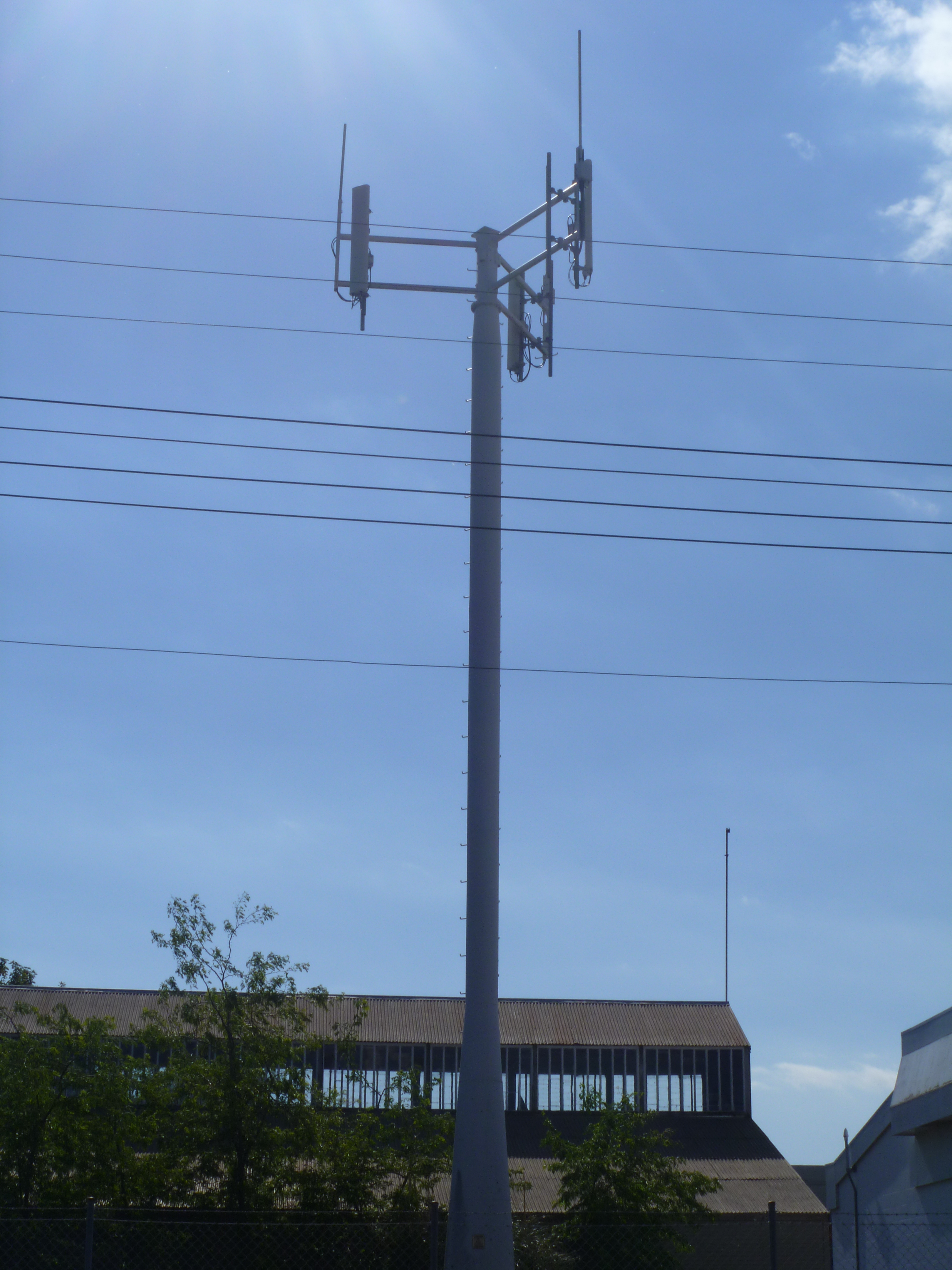
If you have seen the award winning doco on Smart Meters by Josh del Sol, called ‘Take Back Your Power’, you will have heard this story of a young man who occupied a hostel room at his university that was situated near a cell  phone tower or mast. The health effects were very sobering and sadly not uncovered until too late. The story is cited in Katie Singer’s book called ‘An Electronic Silent Spring’.

Lloyd Burrell on his website, electricsense, has provided a review of the book:

Read it HERE: http://www.electricsense.com/9196/emf-electronic-silent-spring-my-review/


MEASURE WI-FI RADIATION IN YOUR HOME … CHEAPLY … also from the electricsense website

This is basically an app for your Android or smartphone that will measure Wi-Fi levels in your home for almost free. On this excellent site Lloyd offers a free report on how to protect yourself from EMFs.

Many folks are experiencing health effects today fromEMFs … and many are not aware of the causes. The industry protects business by concealing the exposure warnings in very fine print. It is not about banning the technology so much as learning how to effectively protect ourselves. Children are particularly vulnerable hence the debate that is going on about Wi-Fi in schools. Educate yourself and read the research … and most importantly learn how to protect yourself and your loved ones. This app would be useful it’s explained, to know where to locate your Wi-Fi access point in your office or home to minimize exposure.

There are links there to purchase the app which is 3 euros, around $3.

Read the article at its source: http://www.electricsense.com/9595/wifi-radiation-readings-app/

Sri Lanka’s New President Puts Immediate Ban on Glyphosate Herbicides … Sustainable Pulse

More on glyphosate … another nation bans it. Since its reclassification by WHO to a class 2A carcinogen, many countries are moving to protect the public:

“Sri Lanka’s newly elected President Maithripala Sirisena announced Friday that the import of the World’s most used herbicide glyphosate will be banned with immediate effect. The release of already imported stocks has also been stopped. Sirisena, a farmer and ex Health Minister,  stated that glyphosate is responsible for the increasing number of chronic kidney disease (CKDu) patients in Sri Lanka and added that the move would protect the Sri Lankan farming community…”

Read the full article here with links to more information on glyphosate: http://sustainablepulse.com/2015/05/25/sri-lankas-new-president-puts-immediate-ban-on-glyphosate-herbicides/#.VWK6qqid6wJ

Will Monsanto’s Roundup Herbicide Soon Be Banned?

From Natural Society … this article recapitulates the progress so far in terms of recent mounting evidence:

“It’s not just the WHO that has raised the alarm over Monsanto’s Roundup and its devastating effects on human and environmental health. Instead, the WHO announcement was simply the most widely reported on Roundup study that we have seen. Sadly, it’s not even the most concerning.

It was back in September of 2014 that the  International Journal of Toxicology published a much more alarming piece on the dangers of Roundup entitled “Glyphosate Commercial Formulation Causes Cytotoxicity, Oxidative Effects, and Apoptosis on Human Cells: Differences With its Active Ingredient.” As you can gather from its name, the study highlighted the multitude of ways in which glyphosate is wreaking havoc on human cells…”

Read more: http://naturalsociety.com/will-monsantos-roundup-herbicide-soon-be-banned/#ixzz3auIKI6A5
Follow Natural Society: @naturalsociety on Twitter | NaturalSociety on Facebook

For an excellent overview of the research go HERE: http://www.greenmedinfo.com/toxic-ingredient/glyphosate-formulations

For more info on glyphosate go HERE: https://envirowatchrangitikei.wordpress.com/glyphosate/

KIWIS

P1150806

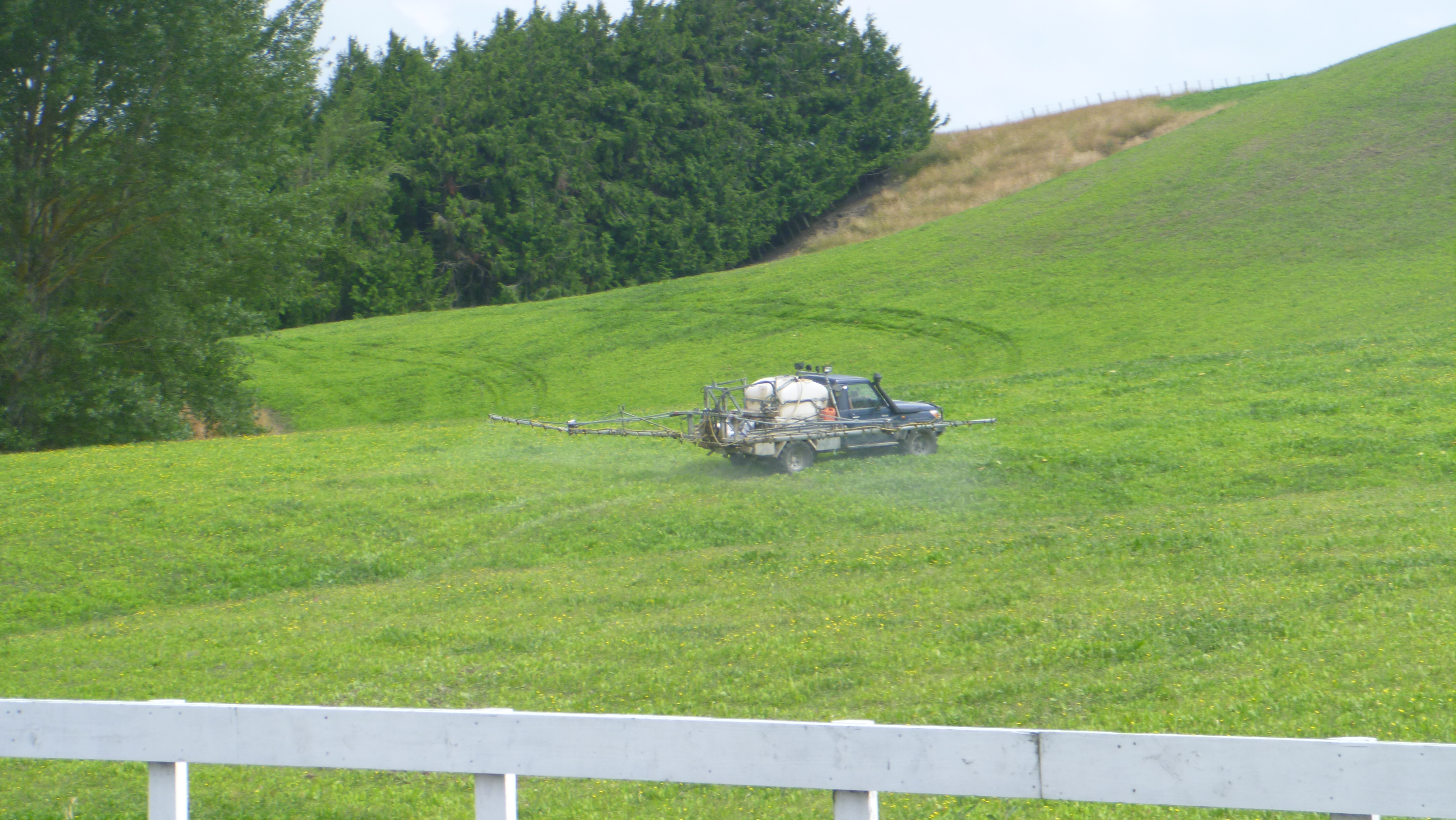
For Kiwis, remember, New Zealand is an avid user of Roundup and glyphosate. It is recommended in our Tertiary Agricultural textbooks, and touted as being completely harmless. Therefore it is sprayed liberally onto pastures and eaten by the stock headed for the market and our consumption. Hence it is found now in human urine, blood and breast milk. It is used by the keepers of our roads and public spaces in towns, by large contractors as well as small.

Educate yourself, read the data and spread the word. There are currently two petitions circulating in NZ, one for Auckland and one for the Rangitikei. I note that one may be coming for all of NZ, the better option really as it is at government level it needs addressing. Councils continue to repeat that glyphosate is government approved. In the meantime however, please consider signing the petitions and stop the ongoing poisoning of our future.

~ Envirowatchrangitikei ~

International Scientists Appeal To U.N. To Protect Humans And Wildlife From EMFs And Wireless

“Today 190 scientists from 39 nations submitted an appeal to the United Nations, UN member states and the World Health Organization (WHO) requesting they adopt more protective exposure guidelines for electromagnetic fields (EMF) and wireless technology in the face of increasing evidence of risk. These exposures are a rapidly growing form of environmental pollution worldwide…”

From Lloyd Burrell at the electricsense website … see more at: http://www.electricsense.com/9556/scientists-appeal-u-n-protect-emfs-wireless/#sthash.Jt1VevrG.dpuf

Video Statement (3 min.) by Martin Blank, PhD

https://www.youtube.com/watch?v=T3AImQ1duNU#t=12

Transcript of Dr. Blank’s presentation: “I’m here with disturbing news about our favorite gadgets: cell phones, tablets, wi-fi, etc.
Putting it bluntly, they are damaging the living cells in our bodies and killing many of us prematurely.

I’m Dr. Martin Blank, from the Department of Physiology and Cellular Biophysics at Columbia University.

It is distressing for me, and more than 160 colleagues, who today are petitioning the United Nations requesting that they address this problem.

We are scientists and engineers, and I am here to tell you – we have created something that is harming us, and it is getting out of control!iphone-545772__180

Before Edison’s lightbulb, there was very little electromagnetic radiation in our environment.
The levels today are very many times higher than natural background levels and are growing rapidly because of all the new devices that emit this radiation.

An example that a lot of us have in our pockets right now is the cell phone. One study shows that as cell phone usage has spread widely, the incidence of fatal brain cancer in younger people has more than tripled.

We are putting cellular antennas on residential buildings, and on top of hospitals, where people are trying to get well.

123Wireless utility meters, and cell towers, are blanketing our neighborhoods with radiation.

It’s particularly frightening that radiation from our telecommunication and powerline technology is damaging the DNA in our cells. It is clear to many biologists that this can account for the rising cancer rates.

Future generations – OUR CHILDREN – ARE AT RISK.

These biologists and scientists are not being heard on the committees that set safety standards. The BIOLOGICAL facts are being ignored, and as a result, the safety limits are much too high. THEY ARE NOT PROTECTIVE!

More protection will probably result from full disclosure of possible conflicts of interest between regulators and industry.

Rising exposure to electromagnetic radiation is a GLOBAL problem. The World Health Organization and
international standard setting bodies are not acting to protect the public’s health and well-being.boy-110762__180

International exposure guidelines for electromagnetic fields must be strengthened to reflect the reality of their impact on our bodies, and in particular, on our DNA.

Although we are still in the midst of a great technological transformation, the time to deal with the harmful biological and health effects is long overdue.

We are really all part of a large biological experiment, without our informed consent.

To protect our children, ourselves, and our ecosystem, we must reduce exposure by establishing more protective guidelines.

And so, today, scientists from around the world are submitting an Appeal to the United Nations, its member states and the World Health Organization, to provide leadership in dealing with this emerging public health crisis.”

– See more at: http://www.electricsense.com/9556/scientists-appeal-u-n-protect-emfs-wireless/#sthash.Jt1VevrG.dpuf

Bees and Glyphosate

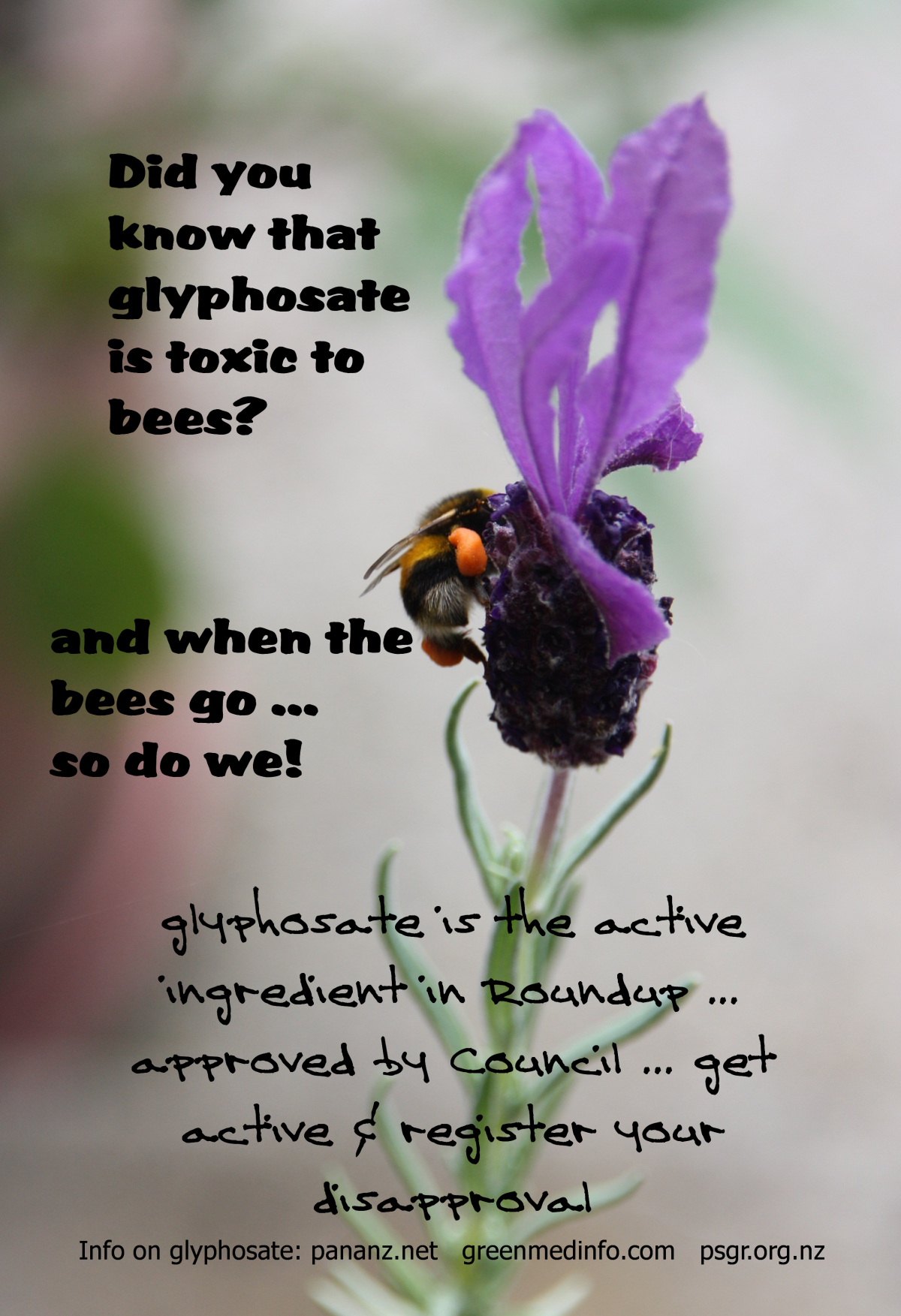
Bee Poster

Currently in the Rangitikei, as in many other places, Roundup is the herbicide of choice for cleaning up weeds. Recently however, the World Health Organization (WHO) has taken recognition of the decades of independent research that warns of its health risk. WHO is warning people of the fact that it probably causes cancer. Check out the Glyphosate page on this site for further information on that.

pesticides_roundup_herbicide_735_250
Roundup, the herbicide of choice that contains glyphosate and is toxic to our bees

Personally I approached the Rangitikei District Council (RDC) twelve months ago to warn them of these dangers and make known to them the vast amount of research that exists linking it with not only cancer but many other illnesses including birth defects. Now, add to this another damning factor … its toxicity to bees. Bees are essential for pollinating our plants. As the poster above conveys,experts confirm that if the bees die off, we humans could well follow. Our toxic environments are destroying the very organisms that ensure the continuation of life on planet earth.

That said, the RDC is not convinced by either the extensive research or any announcements by WHO. Currently in fact, going by the last time I heard them discuss this (March 2015) they are of the opinion that I am the only person in the Rangitikei who is concerned about this. We now have a petition that indicates there are in fact another 97 who are. Good news. If you are connected with the Rangitikei, spend any time visiting, live here or intend to, please consider signing the petition.

Watch for further updates and information on the role of bees in our food chain.

~ Envirowatchrangitikei ~

Colombia gov’t confirms suspension of aerial coca spraying – Reuters

More news on the glyphosate front as more and more people wake up to the toxicity of glyphosate based herbicides. May the trend continue until it is hopefully banned altogether.

“Colombia will suspend aerial fumigation of illegal coca plants in light of a number of studies linking the herbicide involved to cancer, a move that marks the end of a decades-long strategy in the country’s fight against drug trafficking.

Spraying coca leaves, which are used to make cocaine, has been a key part of Colombia’s efforts to curb production of some 300 tonnes of cocaine a year that make it one of the world’s biggest producers of the drug…”

Read the full article: http://www.reuters.com/article/2015/05/15/us-colombia-drugs-idUSKBN0O021G20150515

International Doctors Demand Immediate Ban on Glyphosate Herbicides … from GM Watch

This is from the Feed the World website and via GM Watch, by Claire Robinson.

“The International Society of Doctors for the Environment (ISDE) has written to officials of the EU Parliament and Commission asking for an immediate ban on glyphosate herbicides and four insecticides judged by the World Health Organisation’s cancer agency, IARC, to be probable carcinogens.

The letter states that glyphosate herbicides are associated with health problems such as birth defects, infertility, damage to the nervous system, Parkinson’s disease and several forms of cancer.

The letter adds, “for safeguarding the health of European populations, ISDE states that the rational basis is already strong enough” to justify an immediate and permanent ban…”

Read the article, contains links to the open letter from ISDE: http://feedtheworld.info/doctors-demand-immediate-ban-on-glyphosate-herbicides/ 

Bermuda Bans Glyphosate Indefinitely

Bermuda has joined the ranks of countries banning this ‘probable carcinogen’. WHO’s reclassification of glyphosate to Class 2A is creating a knock on effect around the world. Nations are re thinking the risk involved.

Effective immediately, all importers of glyphosate/Roundup will be notified that the approval for all glyphosate products has been suspended, pending the continuing assessment of the emerging research.” – Jeanne Atherden, Bermuda Minister of Health

Bermuda’s farmers are also backing the Government’s decision stating it “would not have a significant effect on Bermudian agriculture as alternatives can easily be used.”

Read more: http://naturalsociety.com/bermuda-suspends-glyphosate-ridden-roundup-indefinitely/#ixzz3a5o1jCo0
Follow Natural Society: @naturalsociety on Twitter | NaturalSociety on Facebook

http://www.royalgazette.com/article/20150511/NEWS/150519966

German REWE Group removes glyphosate herbicides from its DIY range … from GM Watch

Here’s good news. With the topic now heating up since WHO’s recent announcement that glyphosate ‘probably causes cancer’, this is another good decision for the public.

If you haven’t already signed our petition to ban the use of glyphosate in the Rangitikei’s urban public places, please go to the petition page and consider signing.

” ‘As a responsible company, it is important to regularly review our entire range and seek to protect the environment and nature with alternative and more sustainable options. Toom Baumarkt is constantly and consistently developing a more sustainable portfolio of products,” explains Dominique Rotondi, General Purchasing Manager for toom Baumarkt….’

The 350 ‘toom Baumarkt DIY’ stores belonging to the REWE Group will carry no glyphosate-containing products later than September 30, 2015. From Monday such products cannot be re-ordered for the stores. By the end of 2013 toom Baumarkt had begun to switch the range and had removed about 60 percent of glyphosate-containing products from sale. Toom Baumarkt offers its customers alternative environmentally acceptable products. Thus toom Baumarkt was well ahead of the upcoming decision on the extension of the EU approval for glyphosate.”

Read the article HERE:

http://gmwatch.org/index.php/news/archive/2015-articles/16154-rewe-group-removes-glyphosate-herbicides-from-its-diy-range

The Carcinogenity of Glyphosate … from the Lancet Oncology

It was announced recently, that WHO has concluded that glyphosate ‘probably causes cancer’ …. they have classed it 2A. It is surely well past the time for NZ authorities to reconsider its approval of this widely used herbicide. There comes a point we have to consider prevention and not closing the gate when the horse has already bolted. The damage is already done given this product is now found widely in blood, urine and breast milk, and cancer statistics are one in three. People need to read this research, study it carefully and take action. France’s highest court ruled around six years ago that the product is carcinogenic following the research of Professor Seralini. If you are from the Rangitikei, live in the Rangitikei or have connections with the region, please sign our petition at this link: https://www.toko.org.nz/petitions/ban-the-use-of-carcinogenic-chemical-in-rangitikei-towns-public-places-now-7

Here is a link to the report published in the Lancet Oncology, Volume 16, No. 5, p 490-491, May 2015.

“In March, 2015, 17 experts from 11 countries met at the International Agency for Research on Cancer (IARC; Lyon, France) to assess the carcinogenicity of the organophosphate pesticides tetrachlorvinphos, parathion, malathion, diazinon, and glyphosate (table)…”

If you follow the link, to download the pdf file you’re required to register (it’s free).

Or, here is a link to the pdf:  http://www.thelancet.com/pdfs/journals/lanonc/PIIS1470-2045(15)70134-8.pdf

The Glyphosate Presentation to the Rangitikei District Council Pt. 3 … Outcome

Following on from the RDC meeting in late March 2015 where the topic of eliminating the spraying of glyphosate in urban Rangitikei’s public places was discussed following a report by Council into cost effective alternatives. If you missed the previous parts, follow the links to Part 1 and Part 2 before continuing here.

The Cost Effective Alternative

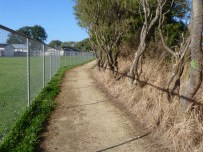
Returning to the Council discussion that day, Cr Ash raised the issue regarding cost effective alternatives to spraying Glyphosate. As outlined there, the alternatives were explored in the Council report however some of the detail was incorrect. It was claimed hot water treatment is fifteen times more expensive than chemical spraying. In fact, a company in Auckland, whose contact details I had supplied prior to the completion of the report, was prepared to present information to Council on their system that can operate at the small margin of 10-15% more than chemical spraying. That price, says the company director,  is set to drop even further by the end of 2015 to be on a par with that of chemical spraying. This option however was never pursued and by all appearances isn’t going to be.  According to the recent Rangitikei Mail article,   Mayor Andy Watson, who was not available for comment,  “endorsed the council’s position based on the commissioned report”. The RDC will only be establishing a no-spray register where those who wish to opt out can, and they take responsibility themselves for keeping that area weed free. A no-spray register is standard practice in many cities. If you wish to avoid any other exposure to public spraying activity, basically you can’t, and I’ve seen folk spraying in fairly high wind around here. I’ve also observed children walking on the regularly used track that they take to school … within minutes of being sprayed. The label on Roundup packaging warns about spraying on calm days and waiting for the product to dry before touching what is sprayed. My initial presentation had also included a request for warning the public of imminent spraying and/or the placing out of signs saying spraying is in progress.  Nobody has been agreeable to this either. Neither the contractors nor RDC.

The Market

One of the bonuses we’ve been told about market competition is that prices will be driven down. In this respect I’ve suggested in previous discussions with those concerned here that surely the Council need only seek quotes for chemical free treatment from several competing contractors then secure the most favourable price. During my own research a contractor in one city who applies a salt solution to hardstand areas, said they were simply told to submit a quote for chemical free treatment. For some reason that remains unclear to me, the RDC prefers to lean favourably towards helping the current contractor, Fulton Hogan,  to continue the status quo, and are not willing to introduce any competition.  Surely this would benefit the rate payers. It is possible a local contractor may go even lower than the current one. The Auckland company is willing to look at working with and training a suitable contractor to establish its system of hot water and foam here in Marton.

In Summary

The important matter for me in all this, is health. There is a very long list of health issues with glyphosate and research clearly states it is a ‘probable carcinogen’. Class 2A. I’m left wondering, are people really interested in figuring out what causes cancer?

Bear in mind also, this product is sprayed all over pastures so it has to be in much of our food. It has been found in blood, urine and even breast milk.  As I pointed out in my presentation, the cancer stats are now ONE  in THREE. So one third of your friends / acquaintances / family will statistically be affected by this terrible

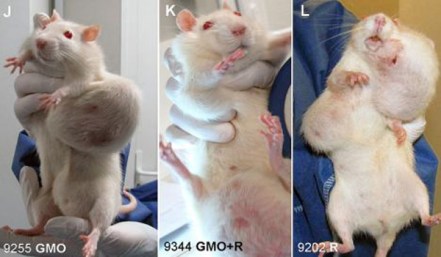
The Seralini Rats
The Seralini Rats

plague, and plague it is. I personally can name three brushes with it in my close family. In one branch of my extended family, three deaths from it. In another, two. Among friends, two deaths. These stats are very high. Common sense should be telling us to err on the side of caution and when an organization like WHO is sounding warnings, why are we not listening? Or should I say, why are they not listening?

So, in summary, should you be interested in curbing the spraying of chemicals in your vicinity, be prepared for possible unpleasantness and vilification. Not for the faint hearted. I have received similar from the contractors themselves, one, when I asked him not to spray near my flat, walked right by me spraying within inches of my feet.  The company has now agreed to a compromise and they are weed whacking again. I am spraying a non toxic spray under the trees, at their request and at my own expense.

For further information on glyphosate visit the glyphosate page on this site. You will find direct links to the extensive research near the bottom of the page. (You can view the actual research reports by the researchers themselves). There is also the very defining video by Professor Seralini illustrating his research conducted for two years on lab rats, after which France’s highest Court ruled Monsanto had deceived the public about the safety of their product.

Pam Vernon

~ EnvirowatchRangitikei ~

The Glyphosate Presentation to the Rangitikei District Council Pt. 2 … Question Time

Following on from the RDC meeting in late March 2015 where the topic of eliminating the spraying of glyphosate in urban Rangitikei’s public places was discussed following a report by Council into cost effective alternatives. If you missed part 1, read it HERE first.

The Outcome

Fast forward to the day of the meeting in March when the outcome was given. Council read out their report, embedded in the Order Paper [on page 26, Council Agenda 26 March 2015 electronic version.compressed (1)] which states, briefly,  that a no spray register will be established so that those who wish to opt out can, and any areas thus opted out of will be kept weed free by that person. There was then some discussion around the issue and other possible options put forward. Cr Sheridan suggested that the no spray areas could be sprayed by the current contractor using a non chemical spray. Mayor, Andy Watson however,  foresaw difficulties price-wise with that, potentially incurring more expense for ratepayers, so the idea was dropped.  Cr Sheridan asked why the report had not addressed the initial health issues raised at the forum in November. CEO Ross McNeill responded that he had only been directed to research what alternative options other Councils used … not the health issues. More discussion ensued and Cr Ash tried to point out the recent findings by WHO and Canterbury University regarding health risks. She was promptly reminded that this was question time, not discussion time. Seconds later (still question time) another Cr expounded on the safety of glyphosate with nods of agreement all around.

So you will see here, the way Council operates, there is no room for discussion or dialogue, except by Council of course, amongst themselves, whilst you sit and listen only. There is no opportunity to correct any misconceptions, or to raise any other issues. Your five (rather four) minutes … is it. There ends your input.

Would it not have been pertinent to research the health issues which, after all, were the point of the whole exercise?  It seems the RDC takes the three monkeys approach (if we don’t look at, hear or speak about the research then we won’t need to be concerned … even if it is by Doctors and Professors). By virtue of one very specific Mayoral direction here,  the whole health issue is effectively sidelined. I feel this is a very lop sided way of interacting with the community … the  very people who elect these representatives. You may or may not agree.

Two Other Questions Raised by Councillors

I should add here, in the mix of the discussion, two other questions were raised by other Crs. One was the cost of preparing the report, specifically … how many hours did it take [waste] in preparation? A very pointed question to which of course I was unable to respond in any way.

So here, a person is vilified for daring to raise health concerns for the public, health concerns the public are unaware of because, as has been established by France’s highest Court, the manufacturer has lied about its safety. Everybody believes it is safe.

It clearly isn’t.The other question was, ‘who else was concerned about this issue or was it just one person?’ [that would be me presumably]. I was unable of course to respond to that either … had I been able to I could have said there were, as far as I knew, at least ten other persons anyway. Quite likely more but we shall see.


An UPDATE here: There are currently, as at 16 July 2015,  111 others who are concerned. If you happen to be concerned also, please sign the petition HERE. You could also ‘like’ our glyphosate FACEBOOK PAGE and stay informed with regular updates on this issue.


~ Watch for Part 3 ~

Pam Vernon  ~ Envirowatchrangitikei ~

Petition to Ban Carcinogenic Chemical in Rangitikei’s Urban Public Places

TO: THE RANGITIKEI DISTRICT MAYOR ANDY WATSON, AND CEO ROSS MCNEILL

We are calling on the Rangitikei District Mayor Andy Watson, and CEO Ross McNeill, to protect the public’s health by banning the use of the carcinogen glyphosate, the active ingredient in Roundup, within the Rangitikei town limits. We want to see the Community housing grounds and parking areas, street verges, berms and roadsides, public parks and walkways designated chemical free zones.

Why is this important?

Recently glyphosate was classified by the World Health Organization (WHO) as a Class 2A carcinogen, meaning, it probably causes cancer.
In 2009 French Professor Séralini’s two year study on glyphosate found it produced large cancerous tumours in rats. Because its effects are cumulative and not immediate (that is they only show up over a long period of time) people generally think it is safe. Dr. Don Huber, an award-winning, international scientist, microbiologist and professor emeritus of plant pathology at Purdue University (US) who has 55+ years experience in research and expertise in the area of plant pathology, says that contrary to the common claim of safety, a large volume of peer-reviewed scientific information clearly demonstrates that Roundup herbicide is chronically toxic to human and animal tissues and leads to cancer, premature death, kidney and liver failure, blood disorders and a host of other diseases.
Glyphosate is many times more toxic than DDT, and there’s also a correlation between Glyphosate use & bee die off.
With our cancer statistics at one in three now and climbing, it is important we protect the public, particularly children, from exposure to this chemical. It is a product most Council contractors use in keeping both urban and rural public areas weed free. There are some Councils however that now use chemical free alternatives, one in particular is hot water and foam. Some of us have already requested of Rangitikei District Council that they consider a chemical free alternative, however they’ve declined, based on their own report that failed to look at the proven cost effectiveness of hot water and foam treatment which is almost equal in cost to chemical spraying.
Our environment has long been subject to frequent spraying of this toxic chemical and France’s highest Court ruled in 2009 that it is not biodegradable as advertised. It has now also been found present in human blood, urine and breast milk. With WHO’s damning conclusions we need to be taking responsibility for protecting our health and making our beautiful district healthy and environmentally friendly for all. The public spraying of this carcinogenic chemical is a violation of our human rights.

Help us make public areas in our Rangitikei towns both glyphosate and chemical free now.

Sign the Petition HERE

Rangitikei Mail reports on Rangitikei District Council’s Spraying decision

Spraying Decision Dismays

By Caroline Brown

A Marton resident says she is disappointed with the council’s decision to continue using a chemical-based herbicide for weed control.

Pam Vernon claims the council has side-stepped health concerns about the main active ingredient of Roundup – glyphosate – and instead focused on cost.

The Rangitikei District Council voted on March 26 to maintain existing methods of weed control and to formally establish no-spray lists. Residents choosing to be on the no-spray list would be responsible for the upkeep of the land.  The council contracts the spraying of urban areas to Fulton Hogan.

The council requested a report on alternative methods to chemical spraying for weeds after Vernon raised her concerns around the safety of current methods in a presentation at the end of last year.

Non-chemical sprays, pastes, gas burning and hot water treatment were investigated in the report as alternative options for the treatment of weeds. The council report indicated that cost was a prohibitive factor to many alternative methods.

At the meeting Cr Cath Ash questioned the report’s indication that hot water treatments were 15 times more expensive than herbicide and suggested the council contact some providers for quotes. Ash said the council had an obligation to consider alternative methods to chemical spraying in light of research by the University of Canterbury into the risks of glyphosate and the World Health Organisation suggesting glyphosate was a potential carcinogen.

Vernon said she also had issue with the report’s conclusion on the cost of hot water treatment. She said she had contacted a provider and was told that while at the moment it would be about 10 to 15 per cent more expensive by the end of this year it would be cost comparable.

Vernon said she decided to make a presentation to the council last year after ongoing issues with spraying around her property. She said it was good to finally have a formal no-spray register, however she did not think it went far enough.

“I believe the council are not really interested in finding another option.”

Mayor Andy Watson was not available for comment but in a statement endorsed the council’s decision based on the commissioned report.


Monsanto Employee Admits an Entire Department Exists to “Discredit” Scientists …Natural Society

From Natural Society … by Christina Sarich …

This article shows what lengths this company will go to to push its poison on people. Not only do they lie, they pull out all stops to stamp out any opposition. The heat has turned up for them with WHO’s latest announcement that Glyphosate probably causes cancer. And still our environmental protection agencies continue to allow people to slather it everywhere… schools, Councils, farmers, contractors.

“Dare to publish a scientific study against Big Biotech, and Monsanto will defame and discredit you. For the first time, a Monsanto employee admits that there is an entire department within the corporation with the simple task of ‘discrediting’ and ‘debunking’ scientists who speak out against GMOs…”

Read more: http://naturalsociety.com/monsanto-employee-admits-an-entire-department-exists-to-discredit-scientists/#ixzz3XLtFZ0nN
Follow Natural Society: @naturalsociety on Twitter | NaturalSociety on Facebook


See our other
Glyphosate pages for more info & links, &/or search categories for further related articles (at left of any page). 

Please also consider liking our FB page &/or following our blog (right of any page) and do spread the word on all the untruths we have been told! Use the share buttons! 

Thank you!

EnvirowatchRangitikei

The Glyphosate Presentation to the Rangitikei District Council Pt.1

Following on from the recent update on the chemical spraying presentation made to the Rangitikei District Council forum in November 2014, and featured in the Central District Times recently,  I’ve offered some thoughts on the Council process. This may be informative for some, and  may also dispel some illusions about our so-called democratic processes.

A few weeks ago at the last Council meeting, March 26th, a verdict was given  by RDC about the presentation … chemical sprays in public spaces. (The terms Glyphosate and Roundup are used interchangeably here. The active ingredient in Roundup is Glyphosate). To bring you up to speed with the original presentation, you can read it at this link … https://envirowatchrangitikei.wordpress.com/2014/12/10/a-presentation-to-council-regarding-chemical-herbicide-spraying-in-public-places/  

The Process

When anyone presents an issue of concern at a Council forum the time limit is five minutes which includes question time, so it is really only four. Bear in mind with an issue this large this is not long. I had to condense my case to the quintessential and speak at top speed. Also bear in mind that in attending Council meetings there is little if any space for actual dialogue around issues. Five minutes is it. The process is not that people friendly (one Cr didn’t hide the fact he found the issue humorous) nor conducive to meaningful interaction or problem resolution. The Mayor, Andy Watson, allowed two questions from the Councilors … one centered around other possible alternatives. These I provided as I’d researched them. The other was not a question, rather it was to tell me that Horizons could provide the correct information about spraying parameters / guidelines / exposure etc. That completed I was duly thanked for my presentation and I sat down. I quietly whispered to  a member of the Community Committee who was also there that day, asking her what happens next (quietly because you’re not supposed to be talking in there … and the Community Committee by the way, is a conduit group between community and Council).  It appears that I should have asked specifically for somebody to get back to me on the issue. Since I hadn’t,  that could well have been the very last I’d have heard about the issue.  Now who ever would know that ‘minor’ technicality about being heard? It could have effectively disappeared into the black hole, forgotten forever. As good fortune would have it however, after I’d left and the meeting continued, Cr Sheridan voted for the matter to be put on the Agenda. It was seconded by Cr Ash. The Council was going to research other NZ Council methods of weed treatment and write a report.

The History

Now, bear in mind here, seven or so months prior, I’d emailed Council citing the research on the health risks of using glyphosate sprays (the herbicide of choice by most councils throughout the country). This research had been dismissed as ‘unproven extrapolation’.  Cr Ash, and myself, had then met with the Mayor to discuss the research and the possibility of using non chemical sprays in the urban areas. He had sent us each away to research weed control methods used by other Councils with the prospect of RDC’s possibly considering  a  non-chemical alternative that was cost-effective … should we find one that is. In addition, information was given regarding how to get this issue onto the agenda using Council protocols. By all appearances, to the uninitiated, a very convoluted process. Because of these prior happenings, I already had a great deal of information on other councils, so later, I emailed contact details for an Auckland contractor with a cost effective hot water treatment.

During the interim I endeavoured to email updates to the Mayor and all Councilors about the surrounding facts on this issue since four minutes had clearly not enabled me to do this.  In addition I kept them up to speed with all the latest research that comes in at quite a steady pace these days. Councilors apparently, have a great deal of information to wade through I’m told,  so there are seldom any responses. Not even an ’email received’ message.

The Research

Anyway, regarding the research (and the case against Glyphosate is mounting) the latest is the World Health Organization’s announcement that Glyphosate probably causes cancer (and I see Dr Oz weighing in on this as well). In addition, Canterbury University has said Glyphosate causes resistance to antibiotics. Neither the

The Seralini Rats
The Seralini Rats

Mayor, the CEO nor the Councilors (bar two) are impressed by WHO’s research, or any of the large body of research that is available on Glyphosate. Not surprising since our Government approves it,  end of story.  Note here, many governments have actually banned it though and France’s highest Court ruled that Monsanto (the manufacturer) has lied about Roundup’s biodegradability.  Sadly, with the way Council works, there has been no opportunity for dialogue on this issue. Still, I do not believe it is rocket science.  I would be placing my money on WHO, Professor Seralini’s evidence and France’s highest Court, as opposed to the wisdom of the Rangitikei District Council in Marton or the NZ government (aka corporation) that says it is GE free by the way and is not. Remember, Monsanto initially tested their lab rats for the required ninety days … not long enough for tumours to develop. Professor Seralini’s team tested them for two years… long enough to grow enormous tumours.

Why is Monsanto not now re-testing for two years themselves to prove to the public their product is safe? And why was it so difficult for Prof Seralini to even get a sample of their Glyphosate-laced GM corn to use in his research?

(Watch the Seralini video HERE or read the damning transcript). Would you buy a used car on the car salesman’s word alone? This is historically what the authorities have done with Roundup. It’s all been on Monsanto’s say so.  Read more about the RDC’s decision in my next post.

Pam Vernon

~ Envirowatchrangitikei ~

Central District Times reports on Glyphosate outcome for urban spraying in the Rangitikei

RDC’s Verdict on Non-Chemical Urban Spraying Option in the Rangitikei 

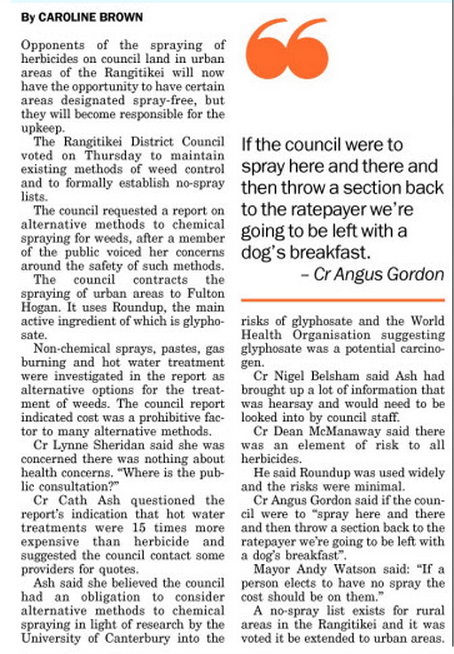
The Central District Times has reported on the outcome of my presentation to the RDC’s forums on 26th March 2015 . You can read the CD Times article at its source HERE, or to enlarge, click on the copy below….the article by Caroline Brown is titled …

URBAN SPRAYS OPTIONAL

Urban Sprays Optional CD Times

I have written a response to this article, not published at this stage (it may or may not be). You can read it here:

Letter to the Editor re ‘Urban Sprays’, 31st March 2015,

This issue was raised with the RDC 12 months ago citing much research deeming glyphosate a probable carcinogen. The response; ‘unproven extrapolation’. Following discussions with the Mayor at my request, he said if a cost effective alternative were found it would be considered. Seven months later I made a presentation to the RDC citing the research again, requesting opt out from chemical sprays in Rangitikei’s urban public places. Two Cnlrs voted it onto the agenda pending a report by Council. I then forwarded contact details for a company in Ak with a proven system costing 10-15% more than glyphosate (not 15x more) set to match glyphosate by end of year. The contact wasn’t followed up. If you decide to opt out of chemical exposure, be prepared for ridicule and unpleasantness.  When RDC discussed this, the Clr for the proposal, in citing the latest announcements from WHO and Canterbury University, was directed to stick to questions not discussion, whilst seconds later a Clr against the proposal, still question time, was allowed to expound on the safety of glyphosate. For more info & if you’re for a chemical free urban Rangitikei, sign the petition at envirowatchrangitikei.wordpress.com or the Sustainable Rangitikei FB page

Please note, the online petition will not be on the websites until this weekend 11th April.

Please consider signing it if you are at all keen to restrict chemical spraying around town where humans, including our children, are exposed. You will find more information on the spraying of Glyphosate in particular, on the Glyphosate page, a sub page to the Chemicals page. Links to the research are there also. For further articles use the categories box at the left of the pages, or scroll to ‘Updates’ at the bottom of the Glyphosate page. Sign up for ongoing updates.

Pam Vernon

~ Envirowatchrangitikei ~

Smart Meters: they AREN’T compulsory … learn why they’re risky in more ways than one

Do you have one of these new meters on …  or worse … in your house? Near where you sleep or work?

The little known information about smart meters … that they carry health and fire risks, will often escalate your power costs (I know of a local instance where a customer’s bill rose from $400 pmth to $1,000 pmnth!) and compromise your privacy. You will have been told prior to their installation (should you have asked questions and many don’t because after all we expect our power companies have our best interests at heart don’t we?) that it was just a standard replacement of your old and less efficient meter. That it will save you money because it won’t require a meter reader.

Copy of Hamilton-Smart-Meter-1bWell, in brief here (and I’ll provide links for you to check this out for yourself) … they are causing fires, headaches, heart problems, sinus problems and potentially, cancer … they emit RF radiation that has been classed by the World Health Organization as a Class B Carcinogen. They operate like a cell phone, transmitting data from your meter to your power company at levels way higher and more frequently than they are telling us.

Corporations are about making money and their bottom line is profits. Hence, you need, in this era, to check out what they tell you. Get independent information from investigation and research done by those who have no other interests or agenda than our collective health. Profits have skewed the playing field and the information we receive from them is not always the whole truth. Read in particular the statement made by Dr David Carpenter, a Harvard Graduate and expert for 18+ years in the field of electromagnetic fields. Smart meters were never thoroughly researched before they were rolled out he says, and yet there is plenty of research that demonstrates the RF radiation they emit is damaging to health. Prolonged exposure to these frequencies increase the risk of cancer, affects reproduction and cause electrical sensitivity.

Follow the links from the Smart Meter page on my site

Be sure to watch Josh Del Sol’s ‘Take Back Your Power’ Doco … it is a prize winning doco and covers everything you need to know. It contains some shocking revelations, particularly about the cancer risk. A university hostel room situated right next to a cell phone mast is shown to have hosted many victims of cancer deaths, year after year. This fact is uncovered by the mother of one of its victims, her young son who died of brain cancer. A heart rending story.

Ok, this is not to scare monger. Nor is it to cause you to think you have to do without these technologies. It is a warning for you to take note and protect your loved ones, and to know there are ways and means of minimizing your exposure. These aspects are only in very fine print on the manufacturers’ info leaflets … they do not want to scare you into not buying. As I continually emphasize, you need to simply do the research, be forewarned and forearmed. Knowledge is power. Be aware also, it is easier to say no to installation beforehand (they are NOT compulsory … a call center person recently admitted this to a customer I know), than to get one removed. Often folks have had to change power companies to do this. Myself included. And what they do is remove the chip that controls remote transmission of data, not the whole meter. If notifying your power company in advance (advised) that you do not consent to a smart meter installation, be succint. Your non-consent is enough and you do not have to provide a hundred reasons why you don’t want one. Another tip: consider investing in your own emf measuring device to measure emissions for yourself. There is information on Lloyd Burrell’s site (and elsewhere) about that.

An excellent site for knowledge about how to protect yourself is Lloyd Burrell’s:   http://www.electricsense.com

Other info & links can be found on the Smart Meter page here on the site plus:

http://www.takebackyourpower.net

NZ info: 

http://www.organicnz.org.nz/node/501

http://www.stopsmartmeters.org.nz (includes info on how to get rid of a smart meter if you already have one). Note stopsmartmeter sites are in other countries also with the relevant ending to the address (uk, au etc)

Sign up at stopsmartmeters NZ and receive regular updates on the latest information on the NZ industry.

Wally Richards’ Weekly Article: For your garden plus updates on Glyphosate, the Bees & Smart Meters

Here is Wally’s latest updates from his Weekly Newsletter page. Check out his website for lots of information & advice on local gardening plus recommended products. This week he’s commented on Big Tobacco, Germany, the bees and Bayer, and on the WHO and glyphosate….
WINTER IS COMING

Now that day light savings has finished we realise that winter is coming and in a number of areas light frosts have already occurred.

From my own experience in Palmerston North and talking to gardeners in other areas including Invercargill, the winters now days are very mild to what we experienced when we were young.

Heavy frosty mornings with frost lasting well into midday but nice sunny blue skies except when we had what we called a black frost.

That was when the frost did not disappear because the day would have heavy clouds, which did not allow the sun to warm the ground. Not nice.

These days in Palmerston North at least we do not have too many frosts in winter and usually the ones we have are light and soon disappear. Outside of the city you do not have to go far to find a good frosting when the conditions are right.

What has changed besides ‘climate change’ is the warmth that a city generates from houses, vehicles and street lighting. Pollution in the air also acts the same as cloud cover trapping heat and preventing frosts to settle. We are more likely to see fogs than frosts.

This bodes well for the more tender plants which would be damaged or killed by a good frost.

It does not help with control of pest insects and plant diseases which a good heavy frost will knock them for a six.

For us gardeners we still need to give more tender plants some protection and later in winter use methods to reduce disease and insect pests.

Now is the time to take action to help your plants survive the winter chills.

Apply Fruit & Flower Power to the root zone of plants that could be damaged, your preferred plants and any tender plants. The potash and magnesium in this product hardens up the foliage, strengthens the root system and helps to maintain nice green foliage.

Apply this month and again monthly for the next two months on evergreen plants but only once on deciduous plants and trees.

Wet weather diseases are caused by lots of rain and insufficient drainage.

The root systems need oxygen and if there is too much water then there is insufficient oxygen, the roots can hold their breath (so to speak) for a while but then they will start rotting.

You will see leaves turning yellow, curling and dropping followed by the plant’s death.

You can assist the plants to withstand wet weather diseases by spraying them with Perkfection Supa once a month for the next 3 months on evergreens such as citrus. One spray on your roses and deciduous trees at this time.

If you can; ensure that the drainage around plants that hate wet feet is improved where possible.

One easy way on established plants such as citrus or around the edge of vegetable gardens is to dig a trench one or two spades deep. On citrus and similar just out beyond the drip line.

Excess water will drain into the trench where wind and sun will evaporate it away quicker.

This is only needed where you know that ponding takes place during rainy times, good free draining areas are not so prone to the problems.

For our final protection of tender plants we can use the ‘spray on frost protection’ called Vaporgard.

Mixed at 15mls per litre in warm water and sprayed over the foliage of tender plants it will give them down to minus 3 degrees frost protection for 3 months within 3 days of application.

This works very well on the first frost but if there are several frosts in a row, night after night then additional protection such as frost cloth will be needed.

The reason for this is the damage to the cells does not have a chance to repair before they are frozen again.

Tender plants that are in containers can be moved to places where they are protected such as under the eaves or under evergreen trees. I now can keep impatiens and petunias in containers going year after year by using all the above suggestions and having them in sheltered areas.

Plants such as capsicums and peppers growing in open ground can be sprayed with Vaporgard under and over foliage and a couple of days later carefully lifted and placed into containers.

Then moved to a glasshouse or protected area like a porch where they will continue to produce for you slowly over winter as long as you keep them a little on the dry side.

Now that the soil is cooler and rains have starting to moisten the gardens; means you can plant your spring bulbs in sunny areas. Container grown bulbs are likely planted already.

Let your strawberries run and root in for a fresh lot of plants later in May.


LATEST NEWS:

Monsanto & Bayer

The latest news is very interesting as chemical company giants, Monsanto and Bayer are taking a hammering as reports about the harm some of their main products are doing to our health and the environment.

The World Health Organisation (WHO) recently placed glyphosate on level 4 meaning its a very probable cause of cancer. (Level 5 means it does definitely cause cancer.)

Monsanto’s cause was not helped by the video of pro-GMO Patrick Moore claiming Monsanto’s glyphosate is “safe to drink,” then walking out of an interview when asked to prove it, has been making the cyber-rounds. But perhaps no one has framed it better than Jeffrey Jaxen, a writer for Before It’s News.

Jaxen calls the Moore interview a “Big Tobacco Moment,” comparing it to the publicly televised statement in 1994, by William Campbell, then-CEO of tobacco giant Phillip Morris, who told Congress, “I believe nicotine is not addictive.”

Jaxen wrote: “When paradigms shift, tyrants fall, or corporations lose their market it is often not from some spectacular event, but by a single, humanizing display.”

If you have not seen it go to:  https://www.organicconsumers.org/news/gmos-big-tobacco-moment-shocks-public-awake

Bayer is loosing its battle; saying their toxic neonicotinoids such as Confidor are safe. Study after study show neonicotinoids are a key culprit in bee declines and are harming other organisms, from earthworms to birds.

Bayer filed a lawsuit against Friends of the Earth Germany in an
effort to shut down their campaign to save the bees. Thanks to the work
of concerned people across Europe, Bayer lost and Friends of the Earth
Germany won. This demonstrates the importance and power of organizing and
when the truth is revealed, people can push back against corporate power,
and win.

On the home front it was reported that Lloyds of London are not covering events
of smart meter fires or health risks associated with wireless devices. 

Likely soon most insurance companies will follow suit as they normally do
when Lloyds makes exclusions..

Are Smart Metres causing fires? According to TV3 news yes; within the
last five months there have been 67 call outs in Canterbury to
malfunctions involving power boxes, and 422 throughout the country.

Smart Meters & Power Surges Causing Fires

Your power company installs a smart meter and then when there is a power surge it can blow up appliances and possibly set your home on fire, which has happened in NZ and overseas.

Then you could find your Insurance company has wavered damage cause by Smart Metres.

Not only that but health problems cause by High Intensity Radio Frequencies are not going to be covered either. See:  https://www.youtube.com/watch?v=dF-djNIb5Oc

People and children sensitive to this radiation can have problems of head aches, nose bleeds, emotional problems and sleeplessness. Makes for more interesting times.

Wally Richards

Wally Richards’ Weekly Column: This Week, WHO’s latest announcement on Glyphosate

Here is Palmerston North’s gardening guru Wally Richards’ weekly garden news & commentary. Wally gives us his thoughts on the latest findings from WHO … “Glyphosate probably causes cancer”. This latest revelation from WHO along with Canterbury University’s findings were presented to the RDC last Thursday, however they remain unconvinced and the status quo remains regarding the liberal use of Roundup (active ingredient is Glyphosate) in Rangitikei’s public spaces. (Remember, this is also sprayed on pastures so glyphosate has to be in our meat and milk!). Read Wally’s articles and further research on the topic. You can sign up for his weekly article, and phone him on the toll free number provided if you have any gardening queries. You can also email him with queries (details at the end of the article). His website is a mine of useful information.

Gardening Articles for week ending 4th APRIL 2015
Written by Wally Richards.

GARDENING CHEMICALS RAISING HEALTH CONCERNS

The news this week coming from the World Health Organisation (WHO) stated that glyphosate the active ingredient in Roundup (and found in other weed killers), ‘probably’ causes cancer.

There has been mounting evidence of this from various science reports and findings over the last few years.

All of which Monsanto denies as they did in the past with Agent Orange as being safe.

The health problems came to light in Vietnam when Agent Orange (and similar) herbicides were used to defoliate jungles causing servicemen and local populations major health issues..

On the 21st March 2015 (The Guardian article said) – Roundup, the world’s most widely used weedkiller, “probably” causes cancer, the World Health Organisation (WHO) has said.

The International Agency for Research on Cancer (IARC) – WHO’s cancer agency – said that glyphosate, the active ingredient in the herbicide made by agriculture company Monsanto, was “classified as probably carcinogenic to humans”.

It also said there was “limited evidence” that glyphosate was carcinogenic in humans for non-Hodgkin’s lymphoma.

Monsanto, the world’s largest seed company, said scientific data did not support the conclusions and called on WHO to hold an urgent meeting to explain the findings. “We don’t know how IARC could reach a conclusion that is such a dramatic departure from the conclusion reached by all regulatory agencies around the globe,” said Philip Miller, Monsanto’s vice-president of global regulatory affairs.

Concerns about glyphosate on food have been widely debated in the US recently, and contributed to the passage in Vermont last year of the country’s first mandatory labeling law for genetically modified food.

The US government considers the herbicide to be safe. In 2013, (Based on information supplied by Monsanto’s scientists) Monsanto requested and received approval from the US Environmental Protection Agency for increased tolerance levels for glyphosate.

Monsanto will fight this tooth and nail because of the many millions of dollars the company makes every year from selling this herbicide.

In March, 2015, 17 experts from 11 countries met at the International Agency for Research on Cancer (IARC; Lyon, France) to assess the carcinogenicity of the organophosphate pesticides tetrachlorvinphos, parathion, malathion, diazinon, and glyphosate (table). These assessments will be published as volume 112 of the IARC Monographs.1

In NZ already we see that some of the above chemicals have already been removed or restricted by EPA and ERMA. Which is very good but there appears to be no controls or restrictions on glyphosate.

We do not even test for the chemical in our food chain and I am sure that if we did the results would be alarming.

Glyphosate does not disappear when it hits the soil (Which was another lie Monsanto told when Roundup was first introduced) Instead it has a soil life of months or years dependent apon what research

you read or on what soil type.

One thing would appear certain is that if land is cleared using glyphosate at the recommended rates and a food crop is planted then that produce will have glyphosate traces in the foliage and even larger concentrations in root crops.

Farming practices that Monsanto recommends make matters even worse; this includes killing pasture grass with glyphosate and immediately putting stock into graze. (Likely spraying while stock is there)

In dairy this means that glyphosate would be in milk, cheese and all by products.

Does Fontera test for glyphosate? I dont think so but it is an interesting question. It could likely mean that traces of glyphosate would be in baby formula?

Then its also in your meat from farm produced stock. The health of the stock is very likely affected also.

As I wrote back in February, Monsanto also encourage farmers to use Roundup as a desiccant, to dry out all of their crops so they could harvest them faster. So Roundup is now routinely sprayed directly on a host of non-GMO crops, including wheat, barley, oats, canola, flax, peas, lentils, soybeans, dry beans, carrots, parsnips, onions, potatoes and sugar cane.

To sum up there is very likely a lot of glyphosate in your food chain coming in small amounts from all those foods we normally eat and no one tests for the chemical!

A few parts per million in your potatoes, onions, meat, breakfast cereals, milk, cooking oils, bread, carrots, sugar etc. Add it up for one day’s meals and maybe thats a lot of parts per million? We do not know because glyphosate is assumed safe according to our Govt departments who presumably only relate to what Monsanto says to the FDA. The fox is guarding the chickens.

Here are some facts:

Glyphosate is a broad-spectrum herbicide, currently with the highest production volumes of all herbicides. It is used in more than 750 different products for agriculture, forestry, urban, and home applications. Its use has increased sharply with the development of genetically modified glyphosate-resistant

crop varieties. Glyphosate has been detected in air during spraying, in water, and in food. There was limited evidence in humans for the carcinogenicity of glyphosate.

Case-control studies of occupational exposure in the USA, 14 Canada,6 and Sweden 7 reported increased risks for non-Hodgkin lymphoma that persisted after adjustment for other pesticides.

The AHS cohort did not show a significantly increased risk of non-Hodgkin lymphoma.

In male CD-1 mice, glyphosate induced a positive trend in the incidence of a rare tumor, renal tubule carcinoma. A second study reported a positive trend for haemangiosarcoma in male mice.

Glyphosate increased pancreatic islet-cell adenoma in male rats in two studies. A glyphosate formulation promoted skin tumors in an initiation-promotion study in mice.

Glyphosate has been detected in the blood and urine of agricultural workers, indicating absorption.

Soil microbes degrade glyphosate to aminomethylphosphoric acid (AMPA).

Blood AMPA detection after poisonings suggests intestinal microbial metabolism in humans. Glyphosate and glyphosate formulations induced DNA and chromosomal damage in mammals, and in human and animal cells in vitro.

One study reported increases in blood markers of chromosomal damage (micronuclei) in residents of several communities after spraying of glyphosate formulations.

Bacterial mutagenesis tests were negative. Glyphosate, glyphosate formulations, and AMPA induced oxidative stress in rodents and in vitro. The Working Group classified glyphosate as “probably carcinogenic to humans”

One of my pet thoughts is the great number of people that have allergies these days compared to say 50 years ago before glyphosate. The chemical in the food chain could well be the cause of a number of these health conditions.

Here is an interesting thought, where trade agreements that allow companies to sue countries if legislation used to protect the populations reduces the profits the company had being making!

Why not have the reverse where a company that supplies a product/chemical that is found to be harmful later on, then that company is totally liable for all the costs involved to that country.

That might have a few chemical companies and pharmaceutical companies change their ways.

Latest news; glyphosate also causes antibiotic resistance in harmful bacteria like Escherichia coli and Salmonella enterica serovar Typhimurium.

My personal opinion, its the worst gardening chemical currently for gardeners health.

Problems ring me at 0800 466464 (Palmerston North 3570606)
Email wallyjr@gardenews.co.nz
Web site www.gardenews.co.nz

WHO Glyphosate Report Ends Thirty Year Cancer Cover Up

From Sustainable Pulse:

“Following on from last week’s Word Health Organization (WHO) report on glyphosate, which confirmed the world’s most used herbicide probably causes cancer, Sustainable Pulse has discovered documents from 1991 that show how the U.S. Environmental Protection Agency (EPA) themselves were fully aware of glyphosate’s carcinogenic potential….”

These revelations are shocking. Please read, educate yourself and protect yourself & your loved ones…

Having attended RDC’s brief discussion on this yesterday, and heard their total endorsement of this toxic product, and refusal to consider the mounting evidence against it I’m left mystified. Presumably intelligent people, some of whom have university degrees, steadfastly refusing to consider the fact that the World Health Organization just MIGHT be right?

For more information and links on Glyphosate and Roundup, visit the Glyphosate page on this site.

Read article at the SOURCE

WHO Declares that Glyphosate Herbicides Probably Cause Cancer

This is not a long article and it illustrates yet again the dangers of this product, dangers it seems nobody wants to consider going by our persistence here in NZ (and elsewhere) in using it:

WHO Declares that Glyphosate Herbicides Probably Cause Cancer

-assessment is by the International Agency for Research on Cancer (IARC)

-IARC reached its decision based on the view of 17 experts from 11 countries, who met in Lyon, France, to assess the carcinogenicity of 5 organophosphate pesticides.

-The IARC’s assessment of the 5 pesticides is published in the latest issue of The Lancet Oncology. (LINK TO LANCET PROVIDED)


LINK TO ARTICLE http://sustainablepulse.com/2015/03/21/who-declares-that-glyphosate-herbicides-probably-cause-cancer/