Tag Archives: potatoes

13 Common GMO Foods to Avoid

NZ approved GM potatoes some time back. I’ve contacted two ‘healthy’ pork and chicken suppliers who said they can’t guarantee non GM because the feed is not labeled GM or not. Under Helen Clarke’s watch GM Corn was grown & harvested in NZ at around 2000/2001. We’re not GM free by any stretch of the imagination. EWNZ

From goodinside.com

GMOs, or genetically modified organisms, are an increasingly controversial topic. The food industry is all-in with GMO because it allows them to modify plants so they are resistant to pesticides, grow faster or bigger, or are disease or drought resistant.

On paper, GMO foods seem like a technological advancement. But when you take a look at the research that evaluates their safety, and the chemicals they come with, a darker side is revealed.

Why Should You Avoid GMO Food?

Despite the fact that many companies claim GMO food is perfectly safe, there’s a growing body of research that raises concerns. Animal studies have found that GMO food can cause organ damage, immune system disorders, infertility, intestinal problems, and even accelerate physical aging (1).

This is where skeptics will say, “this doesn’t mean anything because they’re not human studies.” Even so, there’s still one big glaring issue: most GMO foods are riddled with pesticides because they were specifically developed to be resistant to these toxic chemicals.

READ MORE AT THE LINK

READ OTHER ARTICLES ON GM FOOD HERE

Photo: pixabay.com

GROWING POTATOES AND THE POTATO PSYLLID (Wally Richards)

Many gardeners will know the trick of planting a tomato plant deep into the soil right up to if not beyond the first set of leaves.

The reason is that the plant will create roots all the way up the trunk which is buried, making for a bigger root system and a better plant.

In fact later on the trunk that is above the soil level will likely produce bumps which are the beginnings of aerial roots

and like potatoes you could mound up around the base of the tomato to have those bumps become more roots.

Now with a seed potato planted it will send up a shoot or shoots; which if they are stretch, then new tubers will be produced

all the way up making for a much bigger harvest of new potatoes.

To achieve this you dig a trench about one to two spade depths putting the dug out soil next to the trench which we will use later on.

The seed potato should have produced small shoots from the eyes and if they have not done so just put them some where in the kitchen and they will soon sprout,

just like the ones you buy to eat. (Temperature change to warm initiates shoots.)

Once they have some sprouts you put them outside in a sheltered sunny spot to ‘green up’ the sprouts which hardens them up.

Done correctly the sprouts will be green and about 1 to 2 cm long.

Then the seed potatoes are placed at the bottom of the trench about 20 to 25cm apart.

Under each seed potato place a few sheep manure pellets, a level teaspoon of BioPhos, a table spoon of gypsum and

level table spoon of Wallys Neem Tree Powder. (The Neem powder helps prevent damage from soil insects like wire worm)

As many of the green shoots should be pointing upwards and then you just cover so the shoots are hidden using the soil at the side of the trench.

Check every day and as soon as you see the green leaves of the shoots poking above the soil once again with a little soil just cover them.

You keep repeating this until you get level with the surrounding soil and then you likewise keep covering forming a mound.

Continue mounding, keeping the foliage covered as they poke through till the mound is about 20 to 25 cm tall above the level of the surrounding soil.

You have then stretched the shoots so they are about 40 to 50 cm long and all the way up that distance should be your new potatoes to harvest.

If you dont cover soon enough and the foliage gets between 4 to 6 cm out of the ground then you have lost the plot and you will only get the potatoes below that;

so waste of time continuing to cover any more.

You let the foliage grow and ideally spray it with Magic Botanic Liquid once a week till harvest.

Now if you grew potatoes last season and found that when you harvested you only had potatoes about the size of marbles which were re-shooting or if you had

reasonable size tubers to harvest but they had dark rings inside when you cut them in half, then it means you have psyllid problems in your back yard.

The cell strengthening products we talked about last week for tomatoes will solve the problem for you.

What you do is this: when you do the second covering of the sprouts in the trench you give each plant a drink of the Wallys Silicon and Boron Soil Drench about 200mils per plant.

Apply again the same amount when you do the 4th covering of the sprouts and that is it for that product.

Once you have finished mounding and you are going to let the tops grow free; then you spray weekly over the foliage with Wallys Silicon Cell Strengthening spray

with Wallys Silicon Super Spreader added (which drives the former into the plant)

If you have it, add also Magic Botanic Liquid to the spray.

The spray made up keeps well so use a trigger spray bottle and after wetting the foliage with the spray just leave it handy to use next time till all is gone,

then make up a fresh batch.

Later on when the crop is mature and you harvest one or two plants and find they are good you can harvest the whole crop if you want the ground for other vegetables

or if not you can leave the crop in the ground to harvest as required but if you do this then cut the tops off and cover the stubble so nothing is exposed

to any psyllid attack.

If you do not have garden space to grow a few potatoes then you can always grow some in buckets or plastic bags (PB24 or bigger is ideal)

To do it you place a layer of Daltons ‘Value Compost’ at the bottom of the container and then the products as mentioned above.

Once again you keep covering as the foliage comes though with more compost and treat the container and coverings just as explained above in the trench method.

The best potato variety to grow in the containers is Swift.

Once you have reached the top of the container and allow the foliage to grow you may need to support the container with bricks or similar so it does not get

blown over with the wind.

Watering is important in containers or open ground as potatoes need to be kept moist while growing but not happy if too wet.

There are some novel ways potatoes can be grow and one that comes to mind is in a barrel with some compost and goodies at the bottom of the barrel and only

covered with more compost once after the sprouts come though.

After that you use polystyrene balls (like used in Bean Bags) to keep covering the foliage till its near the top of barrel.

At that time you need to put a cover over the barrel made out of plywood with a hole for the foliage to grow through.

The cover will lift as the new potatoes displace the polystyrene balls but you should if successful end up with perfect clean potatoes and a barrel full.

Obviously if this is the case you will need to remove surplus polystyrene balls on a calm day.

Phone 0800 466464
Garden Pages and News at www.gardenews.co.nz
Shar Pei pages at  www.sharpei.co.nz
Mail Order products at www.0800466464.co.nz


New Zealand Bill of Rights Act 1990. Part II of the Act covers a broad range of Civil and Political Rights. As part of the right to life and the security of the person, the Act guarantees everyone:

1The right not to be deprived of life except in accordance with fundamental justice (Section 8)

2The right not to be subjected to torture or to cruel, degrading, or disproportionately severe treatment or punishment (Section 9)

3The right not to be subjected to medical or scientific experimentation without consent (Section 10)

4The right to refuse to undergo any medical treatment (Section 11)

 Furthermore, the New Zealand Bill of Rights Act 1990 guarantees everyone: Freedom of Thought, Conscience, and Religion.
This includes the right to freedom of thought, conscience, religion, and belief,
INCLUDING THE RIGHT TO ADOPT AND HOLD OPINIONS WITHOUT INTERFERENCE (Section 1)

If you enjoy our posts, check out our sister site truthwatchnz.is

How to grow potatoes in buckets for beginners

DIY Garden Ideas

Potatoes contain vitamins, minerals, starch ….. eating potatoes fight cancer, increase glucose loading capacity, reduce plasma cholesterol and triglyceride levels… Porous and dry soil helps potatoes grow well. Using old plastic paint buckets to grow potatoes is a great idea, it’s easy to make and saves money. You use 2 old plastic paint buckets, 1 of which you cut holes around 4 sides to later harvest potatoes, then punch holes for drainage. Next, you stack the old paint bucket that has been cut on the remaining one. It is better to plant the potatoes in the sand so that they germinate and then plant them in an old paint bucket After 3-4 months you can already harvest the first batch of potatoes and have a delicious and nutritious meal from the potatoes. Follow us: Facebook: https://www.facebook.com/5T1TV Twitter: https://twitter.com/namtrinhhau Pinterest: https://www.pinterest.com/ideas2034/ Instagram: https://www.instagram.com/john_ideas_…

Psyllids in your garden and how to deal with them (Wally Richards)

Psyllidae, called the jumping plant lice or psyllids. (Note much of the following is from Internet research)

They are a family of small plant-feeding insects that tend to be very host-specific, each plant-louse species only feeds on one plant species or feeds on a few closely related plants.

Of current concern to tomato, potato, tamarillo, capsicum and chili gardeners is the new psyllid commonly known as the tomato/potato psyllid.

This psyllid comes from Central and North America where it breeds primarily on potatoes, tomatoes and other plants in the potato family, Solanaceace.

It also breeds on kumara, which is in the bindweed family, Convolvulaceae.

It was first found in New Zealand in 2006 and has spread throughout New Zealand.

This psyllid may transmit a bacterium, Candidatus Liberibacter solanacearum that causes a disease in its host plants.

The tomato potato psyllid occurs on its host plants in gardens, and crops in greenhouses and on farms.

The tomato potato psyllid breeds all year, though the time from egg to adult (generation time) is longer in the winter when it is cold, than in the summer or in a heated greenhouse.

Adult tomato potato psyllids are small insects similar in size to aphids. They have wings and look like small cicadas with a distinctive white band on the abdomen. The two pairs of transparent wings are held over their abdomen.

Tomato potato psyllid eggs are yellow and attached to leaves by a thin short stalk. The eggs may be laid on all parts of the leaf and plant stem, but are often found on the leaf edge where they are most easily seen.

Nymphs hatch from the eggs. They are flat and scale like, and have three pairs of legs and sucking mouthparts.

They settle on young leaves, mainly on the underside. Although they can walk, they spend much of their time motionless with their stylets inserted into the plant feeding on the plant sap.

There are five nymphal stages, each is called an instar. buds. Adults emerge from fifth instar nymphs.

The length of time needed for nymphal development depends on the temperature and is shorter when it is hotter.

The tomato potato psyllid inserts its maxillary stylets into the phloem, (the plant vessels for transmitting sap from the leaves to other parts of the plant.)

The sap has a high volume of water and sugars, more than the insect needs.

It excretes the excess water and sugar, which is called honeydew. The tomato potato psyllid coats the droplet of honeydew with white wax before ejecting it.

Leaves can become covered with these white wax coated droplets that are called psyllid sugars.

Like some other Hemiptera (sucking bugs), the tomato potato psyllid can transmit plant pathogens to plants.

Tomato potato psyllid is the primary vector (transmitter) of a bacterium, Candidatus Liberibacter solanacearum, which causes a disease that may weaken plants and reduce yields and quality of crops.

Plants infested with the psyllid may exhibit symptoms of a disease, psyllid yellows.

The disease symptoms initially appear in response to psyllid feeding and is presumably a physiological reaction to feeding and saliva secretions by the tomato potato psyllid.

On tomatoes, the disease symptoms are the yellowing and stunting of the growing tip and a cupping or curling of the leaves.

Many flowers may fall off the trusses of infected plants and fruit that develop may be small and misshapen.

On potatoes, the foliar symptoms are a stunting and yellowing of the growing tip and the edges of the curled leaves often have a pink blush or purple colour.

After a while infected potatoes develop a scorched appearance and plants may collapse prematurely.

Potato plants that are infected at an early stage, develop numerous small tubers. Tuber quality is also affected when the plants are infected at a later stage.

The disease is referred to as zebra chip because when the affected potatoes are fried they exhibit dark stripes where the areas high in sugar burn.

In New Zealand, the bacterial disease is usually less of a problem on outdoor capsicums, chilli and egg-plant.

Tomato potato psyllid breeds all year, especially in the warmer parts of the country and in greenhouses. In these situations, all life stages may be found all year round. In other areas, non-breeding adults may be found on plants.

Adults feed on leaves and can mate more than once. A female can lay up to 500 eggs over a 21-day period, but in the field it is more likely to be around 200 eggs.

The number of eggs laid also depends upon the host plant. The rate of development of nymphs is dependent on temperature.

The psyllid develops between 15°C and 32°C with optimum development at 27°C.

In a greenhouse with an average temperature of 18°C psyllids takes 33 days to complete their life cycle.

In New Zealand there are to 7-8 generations per year in the Auckland region.

In New Zealand’s winter, the numbers of psyllids are low and development is very slow.

Adults and nymphs can survive short periods of sub-zero temperatures. In New Zealand’s spring numbers on infested plants will begin to build up and reach a peak in late summer/early autumn.

Adult psyllids have wings and in North America can spread long distance by air. In New Zealand, dispersal tends to be more limited, 100 m or more in three days. They will invade new areas and plants, especially in summer.

From my experience its a temperature to numbers game, when given the ideal temperatures.

One adult laying 500 eggs can mean in about a month you have a population of 250,000 adults

Initially sprays will help control but as numbers rapidly increase you would need to spray every day and still lose the battle.

That was the point I reached about 3 years ago and watched my tomato plants and tamarillos die in front of my eyes.

The following season I treated my tomatoes and other host plants with silicon drench and sprays and in one season completely wiped out the psyllids from my glasshouse and gardens.

The silicon treatment which I call the ‘Cell Strengthening Kit’ makes the plant’s cells too tough for the psyllid nymphs to piece and feed and they soon starve to death after hatching.

This breaks the life cycle and there are no new adults to replace the old ones when they die.

Information on the kit is available on our mail order web site at www.0800466464.co.nz

More info on the pest at http://www.gardenews.co.nz/product.html#The%20Potato%20and%20Tomato%20Psyllid%20control%20with%20Cell%20Strengthen%20sprays%20and%20drench

With our Silcon products you can once again grow tomatoes, potatoes and other affected plants.

or phone me for more information.

Phone 0800 466464
Garden Pages and News at www.gardenews.co.nz
Shar Pei pages at  www.sharpei.co.nz
Mail Order products at www.0800466464.co.nz


New Zealand Bill of Rights Act 1990. Part II of the Act covers a broad range of Civil and Political Rights. As part of the right to life and the security of the person, the Act guarantees everyone:

1The right not to be deprived of life except in accordance with fundamental justice (Section 8)

2The right not to be subjected to torture or to cruel, degrading, or disproportionately severe treatment or punishment (Section 9)

3The right not to be subjected to medical or scientific experimentation without consent (Section 10)

4The right to refuse to undergo any medical treatment (Section 11)

 Furthermore, the New Zealand Bill of Rights Act 1990 guarantees everyone: Freedom of Thought, Conscience, and Religion.
This includes the right to freedom of thought, conscience, religion, and belief,
INCLUDING THE RIGHT TO ADOPT AND HOLD OPINIONS WITHOUT INTERFERENCE (Section 1)

Photo: pixabay.com


Growing potatoes (Wally Richards)

Once upon a time when the world was a much better place and people could afford to buy a quarter acre of land and build a house for their family to grow up in and enjoy the benefits of those days 50 to 100 years ago.

(You only have to think back to see how bad things have become in more recent years. )

Well the first thing that a young married man would do with the land would be to plant a crop of potatoes.

This served two purposes it would help break up the earth for future gardens and lawns plus a bounty crop of potatoes to store and use.

Nowadays because of the dread potato psyllid you need to plan and plantings of potatoes and later on tomatoes or use controls to combat the psyllid.

If you had psyllids last season and did not use the Cell Strengthening products you will have worse problems this season.

With potatoes there is a way to get a early crop in and out before the plants are attacked.

Psyllids are temperature controlled and when too hot like over 35 degrees or too cool like under 15 degrees they are slow to reproduce.

When the temperatures are ideal for them they produce in the hundreds and thousands.

When they feed on the foliage they inject a toxin into the potato plants which will prevent the baby tubers from growing bigger than a marble,

or if the tubers have reached a reasonable size then you find in the harvested potatoes dark rings and they taste bad.

Early planting is a way around the problem and the way to do this is:

Dig a trench about one and a half spade depth.

Place your sprouted potato on top of the following at the base of the trench,  about a table spoon of gypsum, quarter a teaspoon of BioPhos a few sheep manure pellets and a sprinkling of Wally Neem Tree Powder.

Sprouts should facing skywards. Use  a little soil to cover the sprouts.

The soil protects against any frosts and possible early emergence of psyllids. 

Now this is most important you need to check frequently the crop and as soon as the new sprouts pop though the cover add a little more soil to re-cover.

You keep doing this till until your trench is filled level with the soil.

Then you start mounding up to keep the sprouts covered.Not only will this be adequate protection from late frosts but will increase the size of your crop.

The new potatoes will form all the way up the haulm of the potatoes you planted as long as you covered the sprouts as they appear.

If you don’t then once the spouts get up a few inches out of the ground you will not obtain any extra potatoes to harvest.

Growing quick maturing potatoes now should have them mature and ready to harvest before the temperatures rise and the psyllids come out to play.

When you stop mounding sprinkle Wallys Neem Tree Powder as a side dressing each side of the row.

When the crop is mature than either lift so the tubers are safe or if you leave them in the ground removed the top foliage and cover the stubble with soil so there is nothing for the psyllids to attack.

Ideally the above could have been done in the middle of winter like in May/June.

The earlier the better.

Any late crop of potatoes planted say about Labour Weekend will likely be doomed to failure once the tops are exposed and before maturity.

To overcome this possibility then you Need to use Wallys Cell Strengthening kit to make the cells of the plants so tough that the nymphs can not piece to feed.

This means about the time of planting the seed potatoes and started covering then a soil drench of Wallys Silicon and Boron soil drench.A send drench can be applied about the time you stop mounding.

Then a weekly spray of the foliage with Wallys Silicon Cell Strengthening Spray with Wallys Super Spreader added which drives the spray into the plants.

Use those products and your should be able to have later crops with no psyllid damage.The same products should be used for your tomatoes, capsicums, chili, garlic and tamarillos. 

I also like to add Magic Botanic Liquid to the cell strengthening spray for greater results.

REMINDER  EARLY BIRD SPRING PROMOTION

For our Early Bird Promotion till the end of July (July 31st cut off) the following applies.Neem Powder Neem Granules all sizes, 1kg, 3kg 10 kg and 20 kg 20% off the mail order web site price.

All other gardening products 15% off the marked prices but excluding bulk items such as 12.5 kilos Fruit & Flower etc.

Shipping if after discounts and excluding bulk items the order is $150 plus North Island or $200 plus South Island Free shipping for those orders.

Under those order sizes shipping at cost to you.

Often the discounts given means that you can get free shipping as the discount covers the shipping costs.

Orders must be placed on line at http://www.0800466464.co.nz

You cant pay on the web site and we phone you after receiving the order to give you your discounts.

Please put in the remarks place ‘Early Bird’ so I know to sort out the discounts before I phone you.

We can then take credit card details over the phone safely or email you details to do a bank transfer.

Regards

Wally Richards
Phone 0800 466464
Garden Pages and News at www.gardenews.co.nz
Shar Pei pages at  www.sharpei.co.nz
Mail Order products at www.0800466464.co.nz

Photo: pixabay.com

ALL OF US CAN GROW FOOD IN CONTAINERS

The Seed Guy

It’s June 12th, and most Families have planted their Gardens by now. Some may have run into issues that are causing them to to plant late. Just to let you know, everyone can grow in containers, even if you live in an apartment or condo. You can also grow vegetables and herbs in containers indoors during the Winter, and have those fresh salads you always crave.

Please Plant a Garden. If you don’t have a big yard, or any yard at all, you can still plant in containers. I feel now more than ever that we will need to grow Home Gardens, and be able to help Feed our Families. We are in a very uncertain time in our Countries history, and we need to be prepared.

There are several types of containers that can be used for growing vegetables including polyethylene plastic bags, clay pots, plastic pots, metallic pots, milk jugs, ice cream containers, bushel baskets, barrels, and planter boxes. It is important to use containers that can accommodate roots of the vegetables you want to grow as the vegetables vary in sizes and rooting depths.

The container needs to have good drainage, and should not contain chemicals that are toxic to plants and human beings. Most vegetables grown in backyard gardens can be grown in containers, although a container’s diameter and depth needs to be considered when selecting what vegetables to grow. The plant density (number of vegetable plants per container) depends on individual plant space requirements, and rooting depth.

It’s best to use one of the potting mixes in vegetable container gardening as they are light, disease-free, weed seed-free, and have good drainage. Some potting mixes have pre-mixed plant nutrients, so read the information on the label about how long the pre-mix will feed your plants before you start applying fertilizers. You can also make your own two bushels of potting mix using the following recipe: Shredded sphagnum peat moss (1 bushel), Vermiculite (1 bushel), Ground limestone (1¼ cups), Phosphate fertilizer either 0-20-0 (½ cup) or 0-45-0 (¼ cup), Slow release granular fertilizer such as 5-10-5 (1 cup).

Container-grown plants require more frequent fertilization than field-grown plants because of the limited space within the container for drawing nutrients. Fertilizers can be mixed with the soil mix before filling the container and can also be applied as a nutrient solution. Nutrient solutions can be made by dissolving soluble fertilizer such as 10-20-10, 12-24-12 or 8-16-8 in water following label directions. The nutrient solution is applied once a day when the plants are watered. How often you water may vary with vegetables, but once a day is adequate.

Leach the unused fertilizer nutrients from the potting mix once a week by applying tap water only. It is also very important to water occasionally with a nutrient solution containing micro nutrients such as copper, zinc, boron, manganese, and iron and follow label directions in order to give plants the right amounts.

Plants grown in containers need frequent watering as the containers dry fast. Watering on a daily basis is necessary to provide adequate moisture for plant growth. Apply enough water to reach the bottom of the container. Allow the excess to drain out through drainage holes. Avoid wetting the leaves when watering as this will encourage development of foliar disease. Try not to allow the containers to dry out completely between watering as this will lead to flower and fruit drop. Do not over water the plants as the container will be waterlogged and the roots will lack oxygen leading to poor growth and eventually, perhaps, the plant’s death.

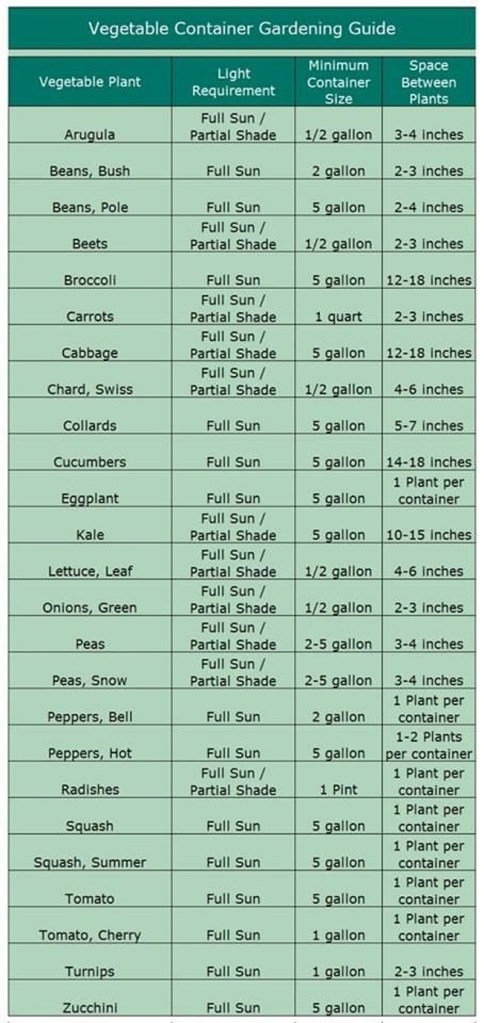
The size of the containers needed will depend a lot on the vegetable or herbs you are planting. Most Herbs can be planted in 1/2 – 1 gallon containers. Cabbages, Cucumbers, Green Beans, Leaf Lettuce, Spinach, Swiss Chard, and Cherry Tomatoes can be planted in 1 gallon containers. Beets, Carrots, Eggplants, Peppers and Radishes need 2 gallon containers. Your regular tomatoes will need 3 gallon containers. (great info from the University of Illinois Extension).

CONTAINER GARDENING GUIDE (The Seed Guy)

If you LIKE US on our Facebook page, you will be on our list for more great Gardening Articles, new Heirloom Seed Offers, and healthy Juice Recipes. https://www.facebook.com/theseedguy/ Thank you, and God Bless You and Your Family. 🙂

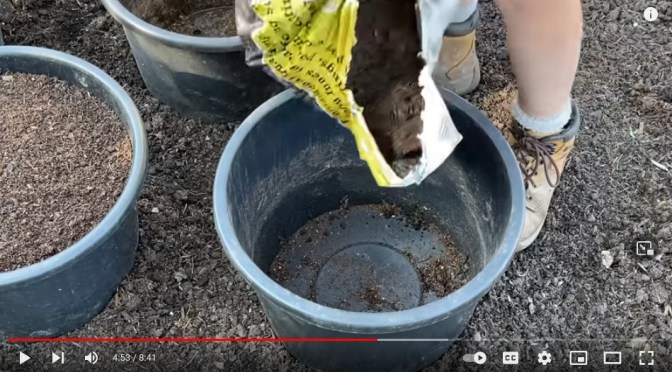
RELATED VIDEO: Homegrown.garden (How to Grow Potatoes in Pots)

Photo: Screenshot Homegrown.garden @ Youtube

Go here for other posts of interest

Grow Potatoes in a Cardboard Box

Going to try this … EWR

Self Sufficient Me 1.59M subscribers

In this video, I show you how to grow potatoes in a cardboard box container as a great gardening hack to recycle, reuse, and be more sustainable.

https://www.youtube.com/watch?v=qUGXSetN5wc

Photo: pixabay.com

Building a Potato Tower with Aly’s Self Sufficient

Watch at THE LINK

Grow your own veg. I’ve just discovered this NZ channel by Aly Cook… read below & sub for good ideas to be self sufficient.

Aly is also a musician, she released a song recently called ‘Hello Hello, Welcome to the New Revolution’ … featured at EWR, you can listen to it here, and hear her story AT THIS LINK.

Description

“Kia Ora my name is Aly Cook I live in Aotearoa (New Zealand) it is one of the more isolated countries on this beautiful planet , something that makes me thankful everyday as I feel it is a privilege to be born and raised in such an amazing place. I love to Garden and do things in an upcycle way, use the things that could go into landfill in a positive way, grow spray and free chemical free veges in containers, cook yummy vegan food, preserve fruit and live in a sustainable way as much as I can. So I hope you enjoy this journey with me . Please subscribe so you can see when my new videos appear.”

Image by Orhan Can from Pixabay

How to ‘sell’ a vaccine to the sleeping masses

I re-titled this video lest folk overlook it & the info it contains. Putting an armed guard around a product you will see, creates immediate demand. They in effect did this with potatoes which apparently folk were not greatly interested in back in the day. Who would’ve thought? Anyway, do watch & learn. They convince us in other ways that some things we simply ‘must have’. It’s from the Corbett Report YT channel. Great info to make you think & consider when you make those important choices regarding your health particularly. EWR

corbettreport 459K subscribers SHOW NOTES: https://www.corbettreport.com/?p=35273 Do you know the story of how the French public were tricked into desiring the potato? No? Well then, grab your forks and dig in! This week’s edition of #PropagandaWatch is served, so get it while it’s piping hot.

Image by MasterTux from Pixabay

First kumara, then potatoes, now pumpkin prices are sky high … the uncomfortable truth about the control of your food supply

“…control food and you control the people …”

Kissinger: “Control oil and you control nations; control food and you control the people.” US strategy deliberately destroyed family farming in the US and abroad and led to 95% of all grain reserves in the world being under the control of six multinational agribusiness corporations….SOURCE

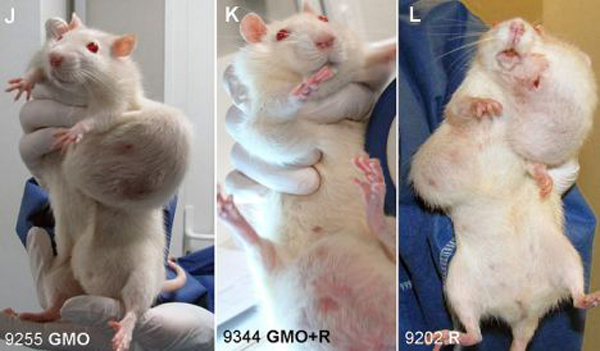
Henry Kissinger is on record as saying that. Now why would  Kissinger want to control people? If you’ve never pondered that question you’ve probably been listening to mainstream media which would’ve told you he never said it and in fact nobody wants to control people & such thoughts are the product of the conspiracy machine. He’s on metabunk as having not said it. Not the place to look for truth. There are sites like that Rat-Tumor-Monsanto-GMO-Cancer-Study-3-Wide2.jpgthat say Professor Seralini’s research on glyphosate (the rats with very large tumours that Monsanto didn’t find because they only tested their rats for the required 90 days) is fiction. If you find something there or on similar sites you can be sure there’s a likelihood it is true.

As Noam Chomsky pointed out, in both “old” and “new” world orders the central goal has pivoted around the issue of control: “Control of the population is the major task of any state that is dominated by particular sectors of the domestic society and therefore functions primarily in their interest …”[1] Such “particular sectors” as referred to are the minority elite, who pursue controlling strategies to “engineer” nation and international affairs in line with their aims. And these aims are for the most part based on greed and power; and the need to keep the masses contented and docile.  SOURCE

Continuing with the food topic, did you notice the sequence of price rises? Here in NZ, first kumara, then potatoes, now pumpkin. I saw a blogger post a pumpkin with $17 on it (NZ) recently. A month ago I bought one for $3. Just as I was telling my family after the potato price hike, buy pumpkins when they’re cheap and add them to your mashed potatoes. (Along with telling them, grow your own potatoes). Did you also notice that in between the potato and the pumpkin price hike came the introduction of … ta da … GM potatoes? Quite strategically done I thought. And you can bet I’m sure those potatoes when they’re grown here in (not) clean green, (not) GE free NZ, that they’ll be cheap as chips no pun intended but it does fit quite nicely – given chips are quite a staple, as are the other items on the now outrageously dear and out-of-the-reach-of-many-families aforementioned staples. Think potato chips for instance, and fish and chips. And finally, yes, it’s the weather that’s created this problem but look who has a hand in the weather as well. It’s well documented.

And finally, whether deliberate or not, you need to read Susan George’s ‘How the Other Half Dies’ (free pdf) on hunger and who’s causing it in the so called undeveloped countries that were very rich in resources when the colonizer ‘found’ them. (For other good reads on topic see our resources page at the main menu. And watch ‘The Corporation’ movie on the Corporations pages for an insight into how corporations work for themselves and not you).

Time to grow your own food and stop supporting corrupt corporations. Or buy from your local farmer market.

EnvirowatchRangitikei

SOURCES:

http://investmentwatchblog.com/kissinger-control-oil-and-you-control-nations-control-food-and-you-control-the-people-us-strategy-deliberately-destroyed-family-farming-in-the-us-and-abroad-and-led-to-95-of-all-grain-reserves/

http://www.truth-out.org/news/item/9769-democratic-unfreedom-social-technique-and-the-manufacture-of-control