Note: Pigeon Post’s channel states “Back soon!” … watch this space …EWNZ
From Pigeon Post @ Youtube
Note: “price of bread up 70%, but the price of flour hasn’t changed … work that one out!”

Note: Pigeon Post’s channel states “Back soon!” … watch this space …EWNZ
From Pigeon Post @ Youtube
Note: “price of bread up 70%, but the price of flour hasn’t changed … work that one out!”
EWNZ comment: Successive governments (aka corporations) sold off a large chunk of our state housing stock! Prime real estate for the greedy corporations. Meanwhile that same lot are creaming accommodation perks off your taxes that they clearly don’t need … they’re not working for you folks, they clearly work for themselves. Their bloated salaries still not enough ? ….
“At least 20 MPs are claiming up to $45,000 a year allowance to stay in their own Wellington homes, a perk that sees the taxpayer help politicians pay off their mortgages.“
From Pigeon Post @ Youtube
In this video I show the just how insane New Zealand house prices have become. They have been manipulated to a price that is so far from reality it can no longer be hidden. It’s obvious that the Ponzi will collapse if immigration returns to normal levels and that’s why Luxon is trying to get as many people into NZ as possible with his fake ‘trade’ deal. Also, this video is for entertainment purposes only…. never take advice from anyone on YOUTUBE!
LINKS – https://www.bnz.co.nz/personal-bankin…
https://www.rbnz.govt.nz/statistics/s…
https://www.rbnz.govt.nz/monetary-pol… trademe.co.nz
Rt Hon Simon Upton
Dear Sir –
This is an open letter as it involves all living in New Zealand.
I am writing to you because of your current position as Parliamentary Commissioner for the Environment, a second term; your earlier position at the OECD responsible for the chemicals program, and prior to that, your former position as a New Zealand politician. You should have considerable knowledge on the subject of 1080.
I believe you should also have considerable influence in wielding authority if and where needed.
Since your early days in the 90’s of being a minister of health or the environment, a great deal of data has become available which contradicts the virtues of 1080. This is a major concern and something I am sure you should be interested in.
I have read some of your presentations and speeches to different organisations and letters to various MP’s on environmental concerns. Also the lack of regulatory infrastructure in place needed to oversee, decide or make recommendations related to the many thousands of chemicals in use today in NZ. That is disturbing and makes me wonder how on earth did 1080 ever get to be accepted to be used in NZ in the first place? It appears NZ has Authorities, NGO’s, government departments such as the EPA or MPI but not one to make immediate approval or refusal decisions on these chemicals – thousands of them in fact.
New Zealand uses 90% of the world supply – tons as opposed to tablespoons by other countries, of a poison with the classification by the World Health Organisation of 1A extremely hazardous, and then drops poison baits out of helicopters over vast areas of land and into water which we drink, to supposedly save our native wildlife. This is the official DOC narrative and is truly astonishing and extraordinary. People wear hazmat suits when around it.
Because no other country uses such quantities or drops huge amounts of 1080 or brodifacoum into the environment and ecosystem there is no scientific evidence available of the sub-lethal and chronic effects on humans, wildlife, insect life, birds, all life except plants and some micro-organisms. How about long-term ecological damage? 1080 is an eco-system poison.
Because of your experience and knowledge, I have questions which I hope you can answer:
Why are reports, books, testimonies by anyone who challenges the DOC narrative ignored? I will mention some below.
Quinn and Pat Whiting-O’Keefe, independent scientists who reviewed more than 100 DOC Scientific Papers say
“There is no credible scientific evidence showing any species of native bird benefits from 1080 drops.” These two have impeccable credentials that cannot be ignored when it comes to evaluating this whole subject. They say a lot more which conflicts with what we are told to believe by our government and related agencies. One of their two reports is immediately below.
https://acrobat.adobe.com/id/urn:aaid:sc:AP:8d386759-9154-4daf-8ae7-368cf9bca4cd
There is another report – 89 pages with a great deal more detail as well by these two.
Independent Scientist Dr. Jo Pollard and her website 1080 Science.
Professor Fiona McQueen, a rheumatologist and environmentalist who wrote The Quiet Forest.
Dr. Koen Margodt’s report which was written as a result of the late Dame Jane Goodall being so concerned about the ethics of 1080, she asked that this be written.
At War With Nature – Corporate Conservation and the Industry of Extinction by the late Bill Benfield as well as The Third Wave.
The Killing Nation, aptly called, by Reihana Robinson; as well as other books.
New Zealand’s Changing Diversity by Jim Hilton and Roger Childs; there are more I have not listed here.
Articles by Marc Bekoff, Ph.D., who worked closely with the late Dame Jane Goodall as co-chair of the ethics committee of the Jane Goodall Institute. Marc has written over 30 books and is known for his work on animal research, animal behaviour and emotions and compassionate conservation. He raises the alarm and questions animal cruelty in NZ with our treatment of wildlife. Marc has many awards to his name.
I must also mention the excellent award winning documentary Poisoning Paradise by the Graf Boys – not allowed to be played on our airwaves. Disturbing detail of wildlife dying; hormone/endocrine disruption concerns stated by Dr Sean Weaver, and human health concerns as well, mentioned by the late Dr. Peter Scanlon. Their website TV Wild has excellent information and videos on it.
As NZ has five times the world statistic of motor neuron disease and various cancers through the roof why have no human health studies been carried out?
Anything that challenges the “inhouse science” of DOC is ignored and never acknowledged. Why?
The WHO stated there is NO acceptable amount of 1080 in water, why did NZ govt ignore and change that?
How have NZ Government and users of 1080 been allowed to ignore data on the original Safety Data Sheet in favour of their own? These are Safety Data Sheet violations. Major violations – 1080 found dumped and exposed on Stewart Island in 2018 (covered by Patrick Gower).
1080 found in ground water and traced to a landfill where the toxin had leached out of the baits. Is this not a serious health and safety issue? (Environmental Health Watch April 6 2019 – Is there 1080 in your landfill …) – this website has a great deal of information on this subject. There are other violations as well.
Are these above not State Sanctioned crimes? Acts of Omission by the State?
Peter Notman, an entomologist, Mike Meads, an invertebrate ecologist, and Dr. Valerie Orchard, a microbiologist were all made redundant when they all raised concerns which did not align with what DOC wanted. “Safe science” is preferred by DOC. Chapter 11 of At War With Nature, is called “Conservation Science – Its How We Get The Message Right” – the late Bill Benfield describes in great detail how this “safe science” came to be and not allowed to be challenged.
Why have there not been prosecutions of individuals? Of Companies/agencies concerned?
There are many more questions which need answering. Is the careless and indiscriminate use of a 1A extremely hazardous toxin which is dropped in huge quantities across our land and waters not environmental terrorism?
Is it not ecocide? Where dying carcasses are left which then creates secondary poisoning on a massive scale? Horrific carnage. Where cruelty of a heinous nature is suffered by all which come into contact with and ingest 1080? Deer right now are having their babies – these babies will watch their mothers thrashing around in agony dying and then starve to death themselves. Other young, starving watching their mothers screaming in pain as they die – what sort of country is this where the Department of Conservation which holds responsibility for the welfare of our wildlife is killing it and rare native species are or have become extinct? Killing the basic on the chain, the insect life – which then kills the birds as their food is gone and they starve to death or die poisoned. Vilifying non-natives and calling them pests? In particular, the possum.
Because NZ does not appear to have the technical ability to test for 1080 correctly, or will not, how many humans have been affected in some way as well?
President Nixon banned it in 1972, in the U.S., the country of origin, because of high toxicity, lethal effects, environmental and safety concerns, cruelty and harm suffered by wildlife, targeted and non-targeted. It was approved in very limited amounts later by President Reagan.
The second reason for banning was the terrorism risk. With huge amounts of 1080 being brought into this country, and held in built-up areas in NZ, surely these are major causes for concern? According to Predator Defense in the U.S. “both the FBI and Canadian Security Intelligence Service list Compound 1080 as a substance that may be sought for use as a possible chemical warfare agent in public water supplies”. This threat cannot be underestimated with daily events happening somewhere. If the U.S. has concerns of terrorism potential, with their guns and weapons, is it not absurd that we here in NZ blindly keep using it, dropping it out of helicopters like confetti year after year? Dangerous? Is not the terrorism threat very real? Should this deadly toxin not be locked up with the equivalent of something such as Fort Knox?
1080 is being dropped in our waters which we drink, by our own government. The hoppers have been filmed spilling the baits carelessly; accidentally, killing farm animals, pets, birds, insects, poisoning the landscape – how can the birds be saved if the insects they rely on for food are poisoned or dead?
The fact that these deadly drops are repeated year after year means a huge failure; on the other hand, if it succeeded then the money supply would dry up and cease as well as the employment of those involved in this cruel activity which is not needed. Is this one reason why after 70 years this practise is still continuing?
Tons of 1080 are being dumped in landfills in and around NZ. Why is it being stockpiled here and then after four years which is the shelf life, it has to be disposed of? How? Where?
With so much government information contradicting testimonies, videos, reports by highly qualified scientists, books written by specialists in their field all following a similar pattern and disagreeing with DOC and related agencies, why have they at the very least not been investigated or shut down? DOC are perpetually being economical with the truth. They even contradict their own data. Do not follow their own policies. What is it going to take to stop this dangerous and failing experiment year after year?
There are alternatives – why are they not being used? Traps, hunters, which are sources of employment – also a possum fur industry.
The possum excuse is that – an excuse; the Tb was from cattle and then possums – thousands were found when tested to have no Tb – (the late Richard Prosser and Nathan Guy – Hansard). Possums made out to be villains by DOC when we are virtually Tb free and children encouraged to kill them? Unconscionable behavior – was that sanctioned? Why not?
Why has a major source of food been taken away from the people? A HIKOI the length and breadth of the country ignored? Thousands of people speaking out against 1080 not listened to. Where is government representation of the people of NZ?
These are some of the many questions that need to be answered as the consequences are unknown and could be deadly.
With daily articles of the threat of war looming in various parts of the world, the public unease at immigrants not embracing NZ values or even an individual living here with a personal grudge, the lack of security and safety involved in storage of this deadly toxin, the large amounts lying around in the open and not buried in NZ, silence by people who should be speaking up and not for fear of consequences like losing their employment, accidents just waiting to happen such as a loaded helicopter crashing into a dam or a truck carrying it falling into a major water supply – millions could die. There is no antidote.
The evidence against the use of sodium monofluoroacetate/1080 and how it is used here in NZ is damning. Why has it not been banned?
How is this not a NATIONAL SECURITY ISSUE?
I would really appreciate a response from you, and also responses from anyone copied directly into this Open Letter.
Sincerely,
Rowena Kaleopa
Copied to Rt Hons Christopher Luxon
Winston Peters
David Seymour
Shane Jones
Mark Mitchell
Tama Potaka
Andre Hoggart
Penny Nelson
Penny Simmonds
Police:
Richard Chambers
Mike Pannett
Copied also to –
Brooks Fahy, Predator Defense
Mark Bekoff, Psychology Today
Dr Jo Pollard
Clyde Graf
The Whiting-O’Keefes
Professor Fiona McQueen
Reihana Robinson
Jim Hilton
Environmental Health Watch NZ
Photo Credit: envirowatchnz.com
From Steve Snoopman @ substack
New Zealand is fast-tracking a far-reaching totalitarian regulatory framework. In this dispatch, Snoopman highlights what lies beneath the genetic engineering jugganaut train that is set to undergo a biggering in a South Pacific archipelago inhabited by endearingly naïve monkeys, who often identify as ‘Kiwis’, and are labelled as such.
In the forthcoming, “The Gene Tech Cosplay of the White Coats”, which is Part 3 of my series, “Lux Luthor’s Secret Worship of Mammon” — I examine how this biggering of the gene tech jugganaut, is but one strand of an imperialist DNA blueprint that is intended to alter the trajectory of human evolution, and that of all life with a biotech paradigm, wherein the Earth is managed by a technocratic empire.
The deadline for providing your feedback on the Gene Technology Bill currently before Parliament is 11.59pm on Monday February 17th. Click the link to feedback.
N.B. An endearing idiosyncrasy of New Zealanders is that they refer themselves as ‘Kiwis’, a flightless nocturnal fat beaky avian creature that eats roots and leaves. Ironically, New Zealand soldiers adopted the Kiwi as a monika during World War I; a conflict that resulted from a conspiracy discussed on Feb. 15 1890 at Nathaniel Rothschild's mansion — to re-invigorate the British Empire.*
New Zealand is fast-tracking a far-reaching regulatory framework to allow the release of genetically engineered organisms, and derivative products of gene editing from laboratory, manufacturing and containment settings into farmlands, market gardens foodstores and medical clinics, pharmacies, hospitals, households, and home gardens.
This rail-roading chess move has been widely criticized by health action networks such as NZ Doctors Speaking Out with Science, and Hapai Hauora, and citizen action groups such as GE FreeNZ, Voices for Freedom and informed individuals such as Jodie Bruning, Guy Hatchard and Mary Hobbs, and has been radically reported on by Reality Check Radio (RCR), the Daily Telegraph NZ and FreeNZ Media.
READ AT THE LINK
“They propose comprehensively changing the nation’s legislative and political environment by embedding rigid legal frameworks that prioritise individual and property rights, constrain regulatory powers, and reduce the government’s ability to implement environmental protections, social safeguards, and Tiriti-based initiatives.”
Note this article is from December 2024 … submissions for both Bills are now closed.
It’s been said that the Principles Bill is dead in the water (so why have they allowed it in the first place? Inciting division and wasting money?) However my concern is, as highlighted in the article, that it will (among other things) affect our ability to protect the environment. The environment has been a big issue for NZ given 60+ years of poisoning with 1080, and the possible agenda behind that. All the while trumpeting to the world we are clean and green! All info to be mindful of anyway going forwards. EWNZ
From E_TANGATA
New Zealand stands at a pivotal moment in its constitutional development. Not one but two key bills, both driven by the Act Party, signify a profound new direction for the country, writes Melanie Nelson.
Much has been said about the significant impacts of the Principles of the Treaty of Waitangi Bill.
Meanwhile, its long-standing companion, the Regulatory Standards Bill, is advancing quietly through government processes, with limited public awareness, minimal media coverage, and little parliamentary debate.
Consultation on the proposed Regulatory Standards Bill opened on November 19, the day the hīkoi arrived at parliament. The consultation period ends the week after submissions close on the Treaty principles bill.
Both bills, if progressed, will result in significant constitutional reforms with profound implications for New Zealand.
They propose comprehensively changing the nation’s legislative and political environment by embedding rigid legal frameworks that prioritise individual and property rights, constrain regulatory powers, and reduce the government’s ability to implement environmental protections, social safeguards, and Tiriti-based initiatives.
Restricting legislative freedom: A legal straitjacket in the making?
The focus on the Treaty principles bill has overshadowed its dull but dangerous regulatory cousin.
The Regulatory Standards Bill is the brainchild of the Business Roundtable (now the New Zealand Initiative). The Act Party has tried three times, since 2006, to introduce a version of this bill — failing each time it was put under scrutiny, as its dangerous consequences became clear.
Yet, this latest attempt seems to be sailing through with little to no scrutiny so far.
Emeritus Professor Jane Kelsey, reflecting on these previous attempts, said that “if the Business Roundtable and Act had their way, these directives and guidelines would have become a legal straitjacket.”
She described the proposals as “meta-regulation”, intended to govern how legislation is created.
The Roundtable’s 2001 report, Constraining Government Regulation, included the first draft of that meta-regulation, called the Regulatory Responsibility Bill.
Act adopted the bill, and in 2006 it was drawn from the ballot in the name of Roger Douglas. This is the same year that Act first introduced a version of its Treaty principles bill. The Regulatory Responsibility Bill was blocked by Labour, then subsequently revived in 2009 by Act’s Rodney Hide and National’s Bill English, through a Regulatory Responsibility Taskforce.
Reintroduced as the Regulatory Standards Bill in 2011, it failed to pass amid opposition from the Legislative Advisory Committee, Treasury, and others, who criticised its focus on property rights, the expansion of judicial roles, and its proposed creation of a set of constitutional rights that conflicted with the New Zealand Bill of Rights.
Then, with National’s support, David Seymour reintroduced the bill in 2021 but, again, ultimately failed. MPs condemned it as “a dangerous constitutional shift,” undermining public and collective rights and threatening parliamentary sovereignty.
They highlighted its “political choices”, which enshrined Act’s ideology in place of alternative principles such as Te Tiriti o Waitangi, international obligations, community wellbeing, or climate and environmental protection.
Nonetheless, Act is finally poised to achieve its goal. The bill is included in the Act-National coalition agreement, as a bill to be passed.
The coalition government’s bill is based, with some proposed changes, on the Regulatory Standards Bill 2021. It outlines how all new legislation and regulation — and after 10 years all existing legislation (excluding Treaty settlements) — should adhere to a specific set of libertarian principles.
These principles include selected elements of the rule of law, equality before the law, individual freedoms, property rights, restrictions on government, and constraints on taxes and charges.
Preliminary advice (available here) on the Regulatory Standards Bill has been provided by the Ministry for Regulation, David Seymour’s newly established ministry, set up this year as part of the coalition agreement. The advice notes:
“Of significance is that the proposals do not include a principle related to the Treaty/te Tiriti and its role as part of good law-making, meaning that the Bill is effectively silent about how the Crown will meet its duties under the Treaty/te Tiriti in this space.”
The regulatory bill also proposes to establish a Regulatory Standards Board. The Board would consider complaints from the public about existing regulation (including legislation) which is inconsistent with one or more of the bill’s principles.
This could include complaints about laws, or their implementation through regulatory systems. That might mean complaints about laws that recognise collective Māori rights, on the basis that they are inconsistent with individualistic rights and equality before the law. Or complaints about environmental protections, on the basis that they are inconsistent with unrestricted property rights. Or complaints about social safeguards, on the basis they are inconsistent with equality before the law and the principles on imposition of taxes and levies.
The Board could also initiate its own reviews, or at the direction of the Minister for Regulation. It would provide non-binding recommendations to Ministers who would then be required to publicly justify any departures from the principles.
Overall, the regulatory bill’s principles are very similar to the distinctive libertarian interpretations of the terms contained in the Treaty principles bill — interpretations that differ significantly from common usage.
Together, these bills propose embedding Act’s ideological worldview in the heart of New Zealand’s constitutional framework, limiting legislative flexibility, executive decision-making, and judicial interpretation.
Constitutional collisions ahead?
While distinct in focus, the two constitutional bills have the potential to significantly intersect. The Regulatory Standards Bill shapes how legislation and regulation are developed and implemented, and it determines the foundational values these are based on. It potentially also influences how laws are interpreted by the courts.
Meanwhile, the Principles of the Treaty of Waitangi Bill is concerned with how legislation is interpreted.
Individually or together, these bills would entrench libertarian preferences in New Zealand’s constitutional framework. They would also obstruct the consideration of Te Tiriti in future lawmaking, interpretation and the delivery of public services.
Should only the Regulatory Standards Bill be enacted, common law might still mandate consideration of the current Treaty principles in legislative interpretation unless explicitly excluded. This would create constitutional tensions, as the regulatory bill’s individualistic, property-focused framework conflicts with the collective rights and interests of iwi and hapū upheld by Te Tiriti and its common law principles.
It may have been this conflict that prompted efforts to redefine the Treaty principles in legislation, to make them run parallel to the libertarian rights outlined in the Regulatory Standards Bill.
As a nation, we are now being asked to submit feedback on both sets of sweeping constitutional changes without fully grasping the impact of these extensive proposals on our lives and the country.
New Zealanders must ask themselves whether they want a minor party’s libertarian ideology to shape the boundaries of legislation, government action, and judicial interpretation, even after Act is no longer in power.
The Regulatory Standards Bill and the Principles of the Treaty of Waitangi Bill, individually or together, would fundamentally reshape New Zealand’s economic, social, environmental, and political landscapes.
Written submissions on the Principles of the Treaty of Waitangi Bill are now closed. No special expertise is required to make a submission on either bill.
Melanie Nelson (Pākehā) is a consultant, educator, writer and podcaster on cross-cultural issues, and a licensed Māori language translator and interpreter. She is a graduate of Te Panekiretanga o te Reo Māori / Institute of Excellence in the Māori Language and holds a master’s degree in Māori Language Excellence — Te Tohu Paerua o te Reo Kairangi.
They propose comprehensively changing the nation’s legislative and political environment by embedding rigid legal frameworks that prioritise individual and property rights, constrain regulatory powers, and reduce the government’s ability to implement environmental protections, social safeguards, and Tiriti-based initiatives.
Image by Gerd Altmann from Pixabay
Thanks to Zara for the link. Note, many more historical articles at the source to bring you up to speed EWNZ
From Guy Hatchard
Currently, there are 19,350 doctors in New Zealand; that’s one for every 264 people. According to Hon. Judith Collins, our Minister for Business Innovation and Enterprise (MBIE), we are all going to live longer and enjoy better health as a result of the massive deregulation contained in the Gene Technology Bill.
In this article, we are going to examine this claim very carefully. If passed, the Bill will change New Zealand irrevocably, we need a deep dive and a proper debate.
This article is also available as a PDF to download, print, and share.
Gene technology in our healthcare system is going to require some extra highly skilled doctors, but how many and how much will it cost us? High profile billionaire biohacker Bryan Johnson, 47, boasts that he only ages 8 months every year. So that is something we could all aim for. Bryan spends just $2 million a year on his health, he has 30 doctors and recently increased his pill intake to 91 pills a day. So the aspirational ratio is about 30 doctors for every person. We could probably accept a few less than that, but we might not live quite as long as Bryan. Probably best to go trial and error. Start with a modest 10 doctors per person and see how long we can all live. A lot of farmers will need to retrain and we might need to import more food. Most people would be doctors.
Joking apart, gene technology is insatiable when it comes to doctors and costs. The astronomical salaries of experts, expensive equipment, CRISPR patent fees and the constant need for testing associated with personalised genetic therapies all add up. If you think that the $10,000 estimate your builder gave you for a veranda renovation is too high, you might baulk at the multi-million dollar costs for your individual gene renovation. But don’t worry, the government is determined to foot the bill on our behalf. A clause in the bill REQUIRES that New Zealand automatically adopt any old gene technology as long as any other two countries have approved it. If it all works out, it is going to be like new dance moves in the 80s, everyone will be doing it. However published science shows this might just be a ridiculous dream, it is time to wake up.
We need an open public debate with published evidence not just misleading PR hype of the type the government is currently pumping out without supporting evidence. For example let’s look at an article in the prestigious journal Nature entitled “Four Success Stories in Gene Therapy“. Nature is absolutely in favour of genetic experimentation, so this recent article should contain the very highest level of evidence that Collins should be presenting to the public for debate.
Collins is very excited about using CAR T cell therapy to treat cancer in New Zealand. According to Nature, CAR T cell therapy costs about NZ$820,000 per shot. 85% of patients go into initial remission but only just over half of them are still in remission at the end of the first year. CAR T cell therapy is not without risk. It can cause severe side effects, including cytokine release syndrome (CRS), a dangerous inflammatory response that ranges from mild flu-like symptoms in less severe cases to multi-organ failure and even death. The article reports that with a combination of newer powerful adjunct drug regimes and vigilance, a TEAM of attending doctors can try to work out how far to push treatment without triggering CRS.
Currently there are about 30,000 new cases of cancer diagnosed in New Zealand each year. From the glowing publicity being pushed out, I suppose Collins wants us to believe that all of them will benefit from CAR T cell therapy. In which case the cost would be $25 billion, a figure that exceeds the current total cost of all healthcare in New Zealand.
So let’s for a minute remember the goal here—HEALTH and specifically less cancer. A report published in the UK Daily Mail based on official cancer statistics is entitled “Under-50s bowel cancer epidemic exposed: Shock figures reveal the exact age group for whom rates are growing quickest“. Bowel cancer rates have been on the increase for some time, but the latest UK figures published for 2022 show that the incidence of bowel cancer among men in their early 40s increased by a staggering 57% between 2019 and 2022. Women in the same 40-44 age bracket saw an increase of 50%. According to the article doctors are completely baffled and seemingly unable to identify a cause.
I know what you are going to say, but forget it. Despite the obvious temporal coincidence between the sudden dramatic rise in cancer and the pandemic, doctors have been quick to reassure us. Professor Pat Price, oncologist and chair of Radiotherapy UK, admitted the unprecedented rapid growth in bowel cancer rates among young people presented “a serious public health challenge,” but she added: “It’s also critical to dispel misinformation. Covid vaccines aren’t causing cancer” (no evidence offered). Phew, I was worried there for a minute. Instead the article offers this theory: “Experts believe poor diets packed with more ultra-processed foods, obesity and a lack of exercise could be responsible for the alarming cancer trend.” Let’s assume this is correct.
The article also reports that New Zealand has the second fastest growth rate of bowel cancer in the world, just behind Iceland.
If that is the case, shouldn’t our government be prioritising an education programme on lifestyle, exercise, healthy diets, fresh foods, etc.? Why would we want to pass a Gene Technology Bill, which allows even more tinkering with traditional foods without any labelling, traceability, safety testing, or liability for inevitable mistakes? It’s a real puzzle.
Studies show education about lifestyle changes would be a very cost effective approach whose effect sizes simply dwarf the meager and inconsistent results of biotechnology reported so far. Multiple studies show lifestyle changes including diet and exercise have a beneficial effect of reduced cancer incidence. Cancer is the number two cause of death after heart disease. A meta-analysis of nine studies entitled Association of Vegetarian and Vegan Diets with Cardiovascular Health: An Umbrella Review of Meta-Analysis of Observational Studies and Randomized Trials found very large effect sizes including a 29% risk reduction for cardiovascular disease (CVD). It reported a 14% reduction in CVD mortality and a 32% reduction in Ischaemic heart disease (IHD) mortality. One of the studies evaluated showed a significant 39% risk reduction for stroke incidence. It doesn’t stop there, we have reported extensively on the effects of meditation not just on cancer (one insurance study showed a 55% reduction in cancer incidence among practitioners of Transcendental Meditation), but also across the board of disease categories. None of this will require more doctors and very little expense. It could put our national health back on track. It should be a no brainer, instead we have the Gene Technology Bill.
The Bill commits New Zealand to use all of the gene therapies of the future. CRISPR gene editing is another of Collins’ favourites that she is promising will revolutionise public health. There are ten thousand single gene mutation heritable illnesses so far identified by science. The so-called promise of CRISPR theory is that all of these should eventually be reversible via a single gene deletion or replacement. So what does the Nature article say about the best and most exciting results from the use of CRISPR so far?
Two of these diseases are sickle cell disease and beta thalassemia. At a recent conference, Vertex Pharmaceuticals and CRISPR Therapeutics announced the results of a clinical trial of beta thalassemia and sickle cell patients treated with CTX001, a CRISPR-Cas9-based therapy. In all, 22 patients have received the treatment over a number of years at a cost of NZ$5 million per patient all of whom initially experienced increased levels of haemoglobin and reduced pain. After one year, only five of the patients had any residual beneficial effects. Vertex paid an additional NZ$85 million in patent fees for the licence to use CRISPR gene editing techniques involved in the treatments.
In summary: improvements are patchy at best, the costs are astronomical, the side effects are very serious and any benefits mostly don’t last very long.
Clearly these results are not going to bring about a revolution in New Zealand healthcare outcomes nor are they conceivably affordable for any but the mega-rich or a small number of beneficiaries of multi-million dollar New Zealand government grants presumably selected through a bruising lottery process. They are more likely to bankrupt our healthcare system and distract from viable proven paths that really could improve public health outcomes.
Is gene technology a healthcare revolution that has become affordable and actually works as Collins hypes? Or is it permanently just around the corner out of reach as it has been for the last 70 years? Or just perhaps, has something else gone terribly wrong as we know happened with biotech during the pandemic to everyone’s cost?
Well first of all, CRISPR gene editing is not as precise as Collins’ and MBIE PR claim. A paper in Nature published in October 2024 is entitled “Gene editing of NCF1 loci is associated with homologous recombination and chromosomal rearrangements” The paper describes attempts by scientists using CRISPR gene therapy to treat deficient chronic granulomatous disease, which is a rare inherited genetic disorder that prevents white blood cells from killing fungi and bacteria. It causes a primary immune deficiency associated with functional defects in neutrophils and macrophages. Mutations in any one of five different genes can cause this condition.
The study’s results reveal a central problem with CRISPR techniques. Most of us imagine that genes are somehow as solid and understandable as the world around us, made up of specific distinct identifiable objects which can be swapped if one becomes defective. Rather like changing a tyre when you have a puncture. Many genetic models or theories, and certainly all popular explanations pretend this is the case. In fact as you reach the very very small time and distance scales of DNA, you have reached an area completely foreign to the waking world of experience. The study revealed that many genes appear almost indistinguishable from one another or homologous. We can imagine that the situation is similar to repeated use of identical sub routines in a complex computer programme, but scaled up by a factor of one trillion. As a result, the CRISPR gene scissors begin to cut up, rearrange or delete other genetic chromosomal structures which were not the intended target, causing unintended consequences and health problems.
This is not because CRISPR has been incorrectly or inaccurately programmed or targeted, but rather the inevitable result of a fundamental property of matter at small time and distance scales—increased similarity in structure and function. The law of least action is in play. At this scale of matter, universal fields, quantum properties and unification play a greater role. Everything begins to look and behave in a confusingly similar fashion. CRISPR gene editing tools are based on the destructive properties of bacteria and when faced with an array of similar targets the derived CRISPR tools revert to type and embark on some random destructive cutting and pasting.
Because genes control all the functions of our physiology from the most fundamental level, the capacity for serious adverse effects is enhanced. This is one important reason for the mind boggling costs and high doctor to patient ratios of gene technology. A lot can go wrong and often does.
As we have reported extensively at GLOBE, in the microscopic physical world, consciousness plays a vital role. The observer enters into physical theory in multiple ways. In fact it plays an essential and leading role in triggering the outcomes of events at the atomic scale. DNA has holistic functions which are closely connected to its ability to support awareness or consciousness, including, in humans, self-reflective states of mind. No one in biotechnology understands how this delicate miracle of life happens, but like a bull in a china shop they are apparently determined to wreak havoc and see what eventuates.
The self-belief in the biotech community and the capacity for exotic experimentation are only matched by the determination to avoid any kind reasonable requirement for labelling, safety testing, containment or difficult ethical questions. Another requirement of the nascent biotech industry is freedom from any sort of liability and the permission to patent genes and genetic processes.
According to Collins, New Zealand will become a world leader in biotechnology experimentation. Certainly we will end up to our detriment as guinea pigs subject to the most permissive regulatory regime in the world, where a government appointee will decide everything for us from what goes into our breakfast cereal to what goes into our pills, without any requirement to inform us on the labels, not even in the small print. Collins is repeating safe and effective and wants to push the Bill through with little or no public debate, but where is her evidence? According to current scientific assessments it is not safe or effective. Biotechnologies are dogged by poor results, serious risks and unaffordable massive costs. So is it Hey Ho and off we go with the Coalition into the brave new world of unrestrained gene editing, or do we, as we do in our personal lives, exercise some common sense. We just have one parting question for Minister Collins. Did she do her homework or did the dog eat it?
In this article we have covered just a few points. There are a lot of concerning provisions in the Bill. Find out more by viewing our YouTube video The Gene Technology Bill. What Kiwis Need To Know and then make a submission to the Health Select Committee by February 17th.
There are many reasons to reject the Gene Technology Bill. We have published suggestions for a submission template. Write to your MP. They need to be quizzed on this egregious Bill. They are trying to get this fast tracked during the holidays.
We do not live in a country where people are willing to let others take away their food choices, their rights, their beliefs and increase exposure to serious long term environmental and health risks.
Photo credit: hatchardreport.com
Why did every company’s legal advisor, all the corporate lawyers including their professional bodies, go along with the covid era legislation? Where was the Human Rights Commission, social justice ‘experts’ and academics whose role and duty was to stand up for ethical, informed consent? Why, three years after the ‘no jab, no job’ mandates, is discrimination still enforced in so many workplaces, staff compensation missing? Here are some reasons why.
“… there’s no better way of exercising the imagination than the study of law. No poet ever interpreted nature as freely as a lawyer interprets the truth.” Jean Giraudoux (1882-1944)
At readers’ request – this is the first of a series of articles on lawfare during the covid era in New Zealand.
Browsing New Zealand lawyers’ websites, you may be forgiven for thinking that large law firms in New Zealand are genuinely Kiwi-run, independent from each other, but of course well-connected. They compete for business, right? But did you know that Large Law Firms Group Ltd is actually a registered company (2155281) incorporated in 2008? The shareholders of which are, you guessed it, the ten largest law firms in NZ. As usual, everything is Hidden in Plain Sight.
Investigating these websites, the directors, partnerships, memberships and ‘charitable’ arms of these law firms, it is clear they are often disingenuous – they are in reality funded by, and servants of ‘them lot’ or GloboCap, a branch of massive corporate entities.
The Large Law Firms Group Ltd consists of (in no particular order):
2. Kensington Swan Holdings Ltd aka ‘Dentons’
4. Budfin Nominees Ltd aka ‘Buddle Findlay’
5. Malcolm Ross Crotty (Partner at Russell McVeaugh)
6. Consensus Nominees Ltd aka ‘Simpson Grierson’
7. Minter Ellison Lawyers NZ Ltd
8. Martin Thomson (DLA Piper Ltd)

The NZLS describes itself as a regulator with:
“…dedicated duties and powers focused on monitoring, regulating and enforcing the rules that apply to lawyers and the way they practise law. We regulate around 15,000 lawyers to ensure New Zealanders can have confidence in the provision of legal services.” (my emphasis)
15,000 is a lot of lawyers in a small population like ours. NZLS’s main regulatory services are:
· Maintaining a public register of lawyers
· Issuing practising certificates and certificates of standing
· Managing the Lawyers Complaints Service
· Managing a Financial Assurance Scheme, including trust account reviews
· Managing the Lawyers’ Fidelity Fund
· Law reform and advocacy activities including submissions on legislation
· Making practice rules: processes for changes in modes of practice
· Providing libraries for lawyers
Has NZLS become another victim of regulatory capture?
David Campbell is a director at Dentons, and conveniently, he is also a Director and Vice President Auckland at the New Zealand Law Society (NZLS). Frazer Barton is president of NZLS and also a partner at Anderson Lloyd. I know it’s perhaps inevitable that senior lawyers are in these roles, but does it really need to be this explicit? Couldn’t we at least have some independents, some retirees?
You see NZLS has a Council of Legal Education (CLE) and an online learning indoctrination platform for professional lawyers to obtain their required hours of continuing professional education. If you have time, its YouTube channel contains interesting communications to its members regarding the covid era tyrannical changes in our Human Rights laws.
The Council says its “…an independent statutory body. The general activities of the Council concern public interest and regulatory matters and centre on the Council’s responsibilities for the quality and provision of education and practical legal training that is required to be undertaken by any person either within New Zealand or from overseas wishing to be admitted as a barrister and solicitor of the High Court of New Zealand.”
But how CAN the CLE be independent and in the public interest, when it is staffed, funded and run by the lawyers it is supposed to audit? Sounds like the UKs MHRA! NZs revolving doors of power, that I have written about before, are flying around at full speed in this sector. For instance, Tiana Apati was until recently President of the NZLS CLE and has now moved to law firm Bankside. Previously she was at the NZ Government’s legal advisors: Crown Law.
Buddle Findlay will be the subject of a further article, but as expected their website looks remarkably similar to other ‘Large Law Firms’ partners, including Diversity, Equity & Inclusion (DEI) targets from the UN Agenda 2030. The latest report on progress provides the usual arbitrary data on gender and ethnicity, alongside stories of support for BigChem-sponsored Environmental Fascism I have written about before too.

It is interesting to note this law firm’s Pro Bono arm, Buddle Findlay Child Health Foundation Trust (CC33151) which declares (unsurprisingly) a modest income/expenditure of approx. NZ$82k per annum (considering the $millions profit there must be for this firm’s activities?) Some funding goes towards paying for medical students’ ‘research’ projects at the University of Auckland. Another box ticked.
“Dentons is a global legal practice providing client services worldwide through its member firms and affiliates.” Here is a worldwide list from its website:

There are international networks too, one firm states how:
“We work closely with legal specialists internationally through our membership of TerraLex. TerraLex is one of the largest legal networks in the world with 141 member firms, providing access to 201 jurisdictions and more than 19,000 legal professionals worldwide. Partners travel regularly across Australia, Asia, the US, the UK and Europe maintaining relationships with our key clients and referrer contacts.” (my emphasis)
Interesting to note that TerraLex Annual Report claims ‘the most productive year to date”. And is holding a Healthcare Conference in January 2025 for its members, sponsored by JP Morgan. In fact, there are many examples of interest in legal aspects of healthcare on these lawyers’ website, for instance this project about the implications of the NZ Privacy Act on data harvesting by eHealth platforms:
Like many of its partners, Minter Ellison published many international articles about the Five Eyes’ compliance with the ‘No Jab, No Job’ totalitarian covid era policies.
There are also numerous references to the Climate Change narrative, including legal guidance around obtaining Carbon Credits and similar.
DLA Piper is perhaps not a familiar NZ name, but is a partnership of global law firms:
“…separately constituted and regulated legal entities which provide legal and other client services in accordance with the relevant laws of the jurisdictions in which they respectively operate.” And their partnerships are extensive:
DLA Piper’s business in Europe, Africa, the Middle East and Asia Pacific is governed by DLA Piper International LLP. The members, partners or other principals of the various entities that provide client services in those regions are members of DLA Piper International LLP, unless they are prevented from doing so due to regulatory restrictions.
Investigations into the directors of these firms and their associated trustees of ‘charities’ reveal anticipated clues into lifestyles and potential conflicts of interest.
READ PART TWO:


“Imagine the government leasing your land to someone else, against your wishes, and with an endless right of renewal. You remain the owner in name only. You can’t use it, you can’t cancel the lease and you can’t charge a market rent. For over a century, Māori landowners have had to live with perpetual leases they never agreed to … how does that not create stress, bitterness, hurt, anger, hopelessness … and despite decades of opposition, successive governments have failed to bring them to an end.
If a group of Remuera land owners went to their member of Parliament and said my land’s been leased for a hundred and twenty years, I didn’t agree to it, I can’t stop it, there’d be some outrage. There might be a law change”.
This scenario is a seldom told story. It wasn’t in our educational texts. This and others like it (witness the land-locked Māori lands that cannot be accessed) have been tucked away under tomes of verbiage that those who would control us prefer we didn’t know. An underlying agenda of dividing the populace ensures we don’t unite. Listen with an open mind and have a heart for those affected. Nobody has the will to correct this situation. Lands taken illegally then tied up in long term (perpetual) leases that the owners cannot extricate themselves from. They even pay for the administration of this monstrosity of illegalities. How so? It is unjust. It is not right. And remember, those affected who try to tell the world, they are immediately accused of wanting special treatment. In this instance it should be one rule for all.
Where are all the ‘one rule’ advocates?
Listen at the LINK
RELATED: Māori locked out of whenua by perpetual leases continue fight against legislation
Note: I’ve reposted this story because the original attempt at adding explanatory text (among other things!) failed. For those who watched the original, thank you… for those who didn’t, the info may surprise you. EWNZ
Image by Monique Berry from Pixabay
From nzdsos.com
A real-world courage under fire situation is playing out in New Zealand. On Monday, 18 December 2023, New Zealand whistle-blower Barry Young had a second appearance in Court to answer police and Ministry of Health (MOH) charges of apparently leaking “vaccine data” on work databases. Mainstream media did not mention the relevant Protected Disclosures (Whistle-blower) Act of 2022 that is a law designed to apparently protect whistle-blowers. It leads one to believe that it provides them with immunity from prosecution when, after no results in reporting to their senior within the Department, they alert the public to what they believe to be a very serious situation.
Barry’s original interview with Liz is not linked here due to the MOH placing a (questionable) injunction on further detailed disclosure of the statistics provided by Barry, despite the fact that — since the release of those revelations — the genie is well and truly out of the bottle and has been widely shared around the world, including in the UK parliament with the UK MP Andrew Bridgen. The MOH also had New Zealanders believe they were undertaking exhaustive work to ensure the privacy of individuals was protected and anonymised. The irony of that doesn’t escape most, who are well aware that New Zealanders had to disclose their vaccine status to anyone who asked, since the experimental gene-based therapy injection arrived on our shores. No trouble with letting the supermarket , the movie theatre, or the local Mall know of such personal details when one is alive — it’s just when one dies that the information needs to be protected at all costs. Why is that? It is also unclear why the MOH are so concerned with “privacy” when the Prime Minister had already publicly confirmed that the information was anonymised.
READ AT THE LINK
Image by jason lawrence from Pixabay
For all our links so far on this topic go here
Dan Picknell, also blowing the whistle, was previously interviewed by Liz Gunn at FreeNZ. Hear him at this link
Dan talks here in this interview with Barry Young … hear their thoughts on this entire scenario. The shocking data that the NZ Govt is continuing to debunk whilst promoting still the notorious ‘safe & effective’.
A point to note, Dan speaks early in the interview about how the Police force has changed. This resonates with revelations from another former Snr Detective who communicated with me a few years back. You can read about that here and here.
WATCH THE INTERVIEW AT THE LINK BELOW
Check out our sister site truthwatchnz.is for other news
It was already dead … given NZ is a corporation, not democratically elected … a corporation’s loyalty is to its shareholders every time … EWNZ
From nzdsos.com
Nadine has an academic background in international relations, politics and development, and international humanitarian law.
Terminated from her job teaching English to refugees and migrants due to the Covid-19 vaccine mandates, she states that she quickly recognised “a very clear playbook script of power and corruption“. With the intent to bring rational discussion into a chaotic and distressing time for New Zealanders trying to navigate “a highly orchestrated operation“, she authored the following two articles which were published in the Daily Telegraph New Zealand:
Referencing the Pfizer contract with the Brazilian government, Nadine explains the relevance to New Zealand when our own Pfizer contract is unavailable for public scrutiny. In order to rollout the products rapidly, Pfizer used standardised templates in their contracts with all governments.
The indemnity clause in the leaked Pfizer contract with Brazil states “Purchaser hereby agrees to indemnify, defend and hold harmless Pfizer, BioNTech, [and] each of their affiliates … from and against any and all suits, claims, actions, demands, losses, damages, liabilities, settlements, penalties, fines, costs and expenses … caused by, arising out of, relating to, or resulting from the vaccine …”. Read more about the leaked Brazilian contract here, including the use of sovereign assets as collateral to guarantee indemnity.
Nadine concludes that the indemnity clause is the reason our government authorities have acted so aggressively and unjustly towards Barry Young, who should in fact be protected by specific whistleblower laws. She discusses the illegal laws passed in order to allow authorities to violate usual and expected protections, likely for the purposes of safeguarding the Pfizer contract. She specifies four New Zealand agencies requiring investigation for dubious decisions apparently connected to financial incentives: The Environmental Protection Agency (EPA), Ministry of Primary Industries (MPI), Medsafe and Worksafe.
She also names specific individuals who violated due diligence, including but not limited to Ayesha Verrall as previous Minister of Health. The Medical Council of New Zealand get a special mention for the pressure they placed on clinicians to transgress basic medical ethics.
Having studied and lived in failed states around the world, Nadine concludes that New Zealand is currently not a functioning democracy and suggests our national assets were likely signed over as collateral for Pfizer’s indemnity. She refers to the 2009 criminal case against Pfizer and contemplates how the fraud which has been executed against New Zealanders might be used in legal cases to negate the Pfizer contract. Court cases which do not involve protecting Pfizer, such as human rights violations caused by lockdowns, are winning in court, whereas breaches involving Pfizer are very hard to win, which appears related to the Pfizer contract.
An inquiry must involve investigating whether the advisory boards, task forces, and disciplinary groups involved in suppressing citizens’ rights were part of the framework to protect Pfizer against liability. Is our current national debt part of a controlled economic demolition through the waiver of sovereign immunity? Is the dismantling of indigenous rights occurring across the globe related to these rights providing a level of protection? Protected assets cannot be sold as collateral.
Barry Young’s whistleblower case would normally be an employer dispute, but because his data leak breaches the indemnification clause in the Pfizer contract, it seems that he must be aggressively silenced and prosecuted. Nadine also suggests that New Zealand is a good testing ground for the globalists with regards to how future data breaches may be dealt with by observing the public, judiciary and government responses.
NZDSOS has long drawn attention to the ‘supra-sovereign’ status of the Pfizer contract, at whose feet the entire edifice of government, its institutions, the police, regulators and judiciary have fallen. Deaths and injuries are ignored, dissenters are punished and life-saving early treatments are suppressed. The lawyer who led the national surrender to this contract, Simon Watt, is now the deputy chair of the Medical Council, in a clear illustration of the triumph of corporate control over medical ethics and public safety.
We highly recommend the interview with Nadine Connock for a New Zealand context. For a global context, her information dovetails well with that of former Assistant Secretary-General of the United Nations, Ramesh Thakur, in this recent interview with Jan Jekielek, in which he describes the use of regulatory bodies to suppress dissent against the biosecurity state.
The solution comes when enough active dissent overpowers the regulators’ capacity for control, and shifts public attention to listen to those being silenced. We encourage all medical, health and legal professionals who are aware that something is very wrong, to join forces with us and speak out, if not for yourself, then for your children and the future of this country.
SOURCE
Understanding the Whistleblower Reaction: Did New Zealand’s Pfizer Contract Kill Our Democracy?
Check out our sister site truthwatchnz.is for other news
From nzdsos.com
Check out our sister site truthwatchnz.is for other news

With the whistleblower vaccination data leak reverberating around the world, the NZ Ministry of Health appears to be in damage control mode and trying to hide the data.
Dr Shane Reti, new Minister of Health has been quoted as saying:
“There are many conspiracy theorists out there who unfortunately disseminate harmful disinformation, however, as Minister and as a physician, the public can and should continue to have confidence in vaccines. I am reassured by experts confirming that there is no evidence supporting the allegations that have been made.”
We are curious which unnamed ‘experts’ are reassuring him and what evidence they are using to provide that reassurance. After a career in general practice, where almost all are usually given, Reti should be already his own expert on vaccines, So why is he now ok jabbing pregnant women, and children for an infection that doesn’t harm them?
Surely the best way to reassure all New Zealanders and people of the world is to release the data and let us all see just how many people who have been vaccinated in New Zealand are now dead nearly 3 years since the rollout began. It would be easy enough to compare vaccinated with unvaccinated since every New Zealander and their vaccination status is on the Covid Immunisation Register (CIR).
[We note that the CIR and NIR (National Immunisation Register) were being merged over the weekend of 2-3 Dec to form the AIR (Aotearoa Immunisation Register). Let’s hope there wasn’t a ‘convenient’ loss of data during that time.]
Mainstream media’s articles continue to repeat that ‘only’ four New Zealanders have died post-covid-vaccination. Never mind that those four were young people who were not at significant risk from covid infection. The death of one healthy not-at-risk person should have been sufficient to halt the rollout.
A curious fact is that all four official deaths have been from myocarditis which, along with anaphylaxis, are the only potentially fatal adverse effects from the vaccine that the MoH appears to recognise in NZ.
This is despite it being increasingly documented that there are many harmful mechanisms at play with this new gene technology/lipid nanoparticle/contamination cocktail.
The four official deaths are as follows:
The first was a 57 year old lady who died of ‘fulminant necrotising eosinophilic myocarditis’. Our understanding is that she had a medical relative which is perhaps why her case got investigated and counted.
The family even agreed to her history being written up because they wanted other people to be aware of the possibility of this serious event. It was submitted to the NEJM in Aug 2021 but was eventually published in J Clinical Immunology in Apr 2022.
“The authors would like to thank the Coroner and family of the deceased in approving and consenting for this manuscript to be submitted. The family wish to increase awareness of fulminant necrotizing eosinophilic myocarditis as a very rare hypersensitivity disorder requiring urgent assessment and treatment.”
The second case was Rory Nairn, age 26, plumber from Dunedin. His family and some health professionals had to push hard to get his death from myocarditis recognised and investigated.
Following his death, health professionals were provided with extra advice and information about myocarditis and reminded to consider and report it. The coroner, Sue Johnson, has still not released her findings about the circumstances of his death, though has confirmed the cause of death was vaccine-induced myocarditis (the risk of which he was not informed about).
The third official death was a teenager and few details are known. This young person’s death was reported in April 2022.
The fourth official vaccine death in NZ was a person whose situation was discussed by the ISMB in Mar and April 2022 and it was decided it was not related to the covid vaccine.
However, the case was discussed again in Nov 2022 after the board ‘received further information which revealed that the person had myocarditis at the time of their death’ which was probably due to the vaccine. We understand that the family of this person had threatened to go public just before the ISMB reconvened.
Despite the minutes of most of the ISMB meetings being publicly available we note the minutes of the meetings of 2 Mar 2022 and 2 Nov 2022 are not, and are being actively kept out of the public domain.
“ In regards to your request for the meeting minutes for 2 March 2022 and 2 November 2022, your request is also refused under section 9(2)(a) of the Act, to protect the privacy of natural persons.
The need to protect the privacy of these individuals is not outweighed by the public interest in the release of this information.”
We do not believe these are the only deaths attributable to covid vaccination in New Zealand. We believe there are likely hundreds, if not thousands, of deaths in NZ that have been fully or partially caused by the Pfizer injection which have been fobbed off. We have provided evidence to government repeatedly.
We have written on several of hundreds of New Zealanders whose deaths have not been adequately investigated nor assessed according to long established principles of pharmacovigilance.
Divya Simon, a healthcare worker age 31, died 5 days after her third covid vaccine in Jan 2022. She died of a coronary artery dissection which is a rare condition, particularly in a young woman with no underlying conditions. The vaccine has been shown to cause weakening of blood vessel walls and could easily lead to dissection (splitting) of an artery. We wrote to coroner Louella Dunn about our concerns in May 2023 and have yet to receive a substantive reply.
Garrett Utting, age 30 died 3.5 weeks after his first injection in Dec 2021. His stated cause of death was ‘unascertained’ or SUDY (Sudden Unexplained Death in the Young) and the coroner was satisfied that his death was due to ‘natural causes’ despite the postmortem not confirming a definitive cause of death.
Isabella Alexander and Georgia O’Neill both died of blood clots within two weeks of their first covid injections but cause of death was put down to a common genetic variation in combination with a contraceptive pill.
The mother of Louis Amos has described what happened to her son’s well-controlled epilepsy after his Pfizer vaccination: increasingly poor control of seizures leading to a fatal seizure.
In addition to the cases we have written about, we have been told numerous stories of, and been shown documents relating to, other people who have died suddenly and/or unexpectedly. Many of these were people in the prime of their lives – previously fit, active, employed and healthy, then suddenly gone.
Pathologists’ reports (if postmortems have even been done) have either not mentioned or discounted vaccination and now, as Coroner’s Reports are finally coming through 2+ years after the fact, it is obvious coroners are discounting the vaccine as well. Apart from appearing to look for myocarditis, it is not clear that anything else has been done to consider the multitude of other harms covid vaccination can cause.
It is a question of trust. Officials from the Ministry of Health are imploring us to trust their pronouncements and their experts.
We ask, WHY should we trust them when they have not shown themselves to be worthy of this. They have cast aside medical ethics, gagged doctors, refused to engage in discussion, delayed and obfuscated OIA responses, not adequately investigated deaths and are now shooting the messenger.
Trust is earned and should no longer be taken for granted. If this government and Ministry of Health want the trust of the people, then earn it! Start with dropping charges against the messenger Barry Young (and all dissenting health workers), showing the full data he was concerned about, answering questions and fronting up for discussions.
From Gary Moller
In recent weeks, there’s been international concern about reports of alarmingly high death rates reported at certain vaccination centres in New Zealand. Whistleblower, Barry Young, has come forward with shocking allegations revealing this disturbing trend. The New Zealand government’s data, which he released into the public domain, raises serious questions about whether these deaths can be attributed to natural causes or if they are, in fact, part of a sinister plot known as democide.
READ MORE AT THE LINK
Photo: pixabay.com
From nzdsos.com
On the 5th of March 2021 Senior Police Constable Dan Picknell, an experienced frontline officer with over 19 years service, raised serious concerns formally with Police Commissioner Andrew Coster about the New Zealand Government’s COVID-19 Health Response, highlighting potential criminality and harms to the New Zealand Public as a result.
Subsequently, senior Constable Dan Picknell had numerous interactions with senior police leaders up until his resignation from New Zealand Police in early June 2022 around the concerns raised, as well as the actions of Commissioner Coster and other Police staff.
During this time NZ Police were not willing to investigate or consider any of the issues identified, in particular harms caused by COVID-19 injections, despite over 66,000 New Zealanders having reported adverse reactions to CARM from minor health issues through to serious injury and death. Any other medical product with this level of harm would have been removed in a very short time.
NZDSOS is very familiar with this pattern of obfuscation and denial from NZ Police, having reported many specific cases of sudden death shortly following COVID-19 injections to them, with a request for investigation. Our communications with Police, and all other agencies, can be found here. Emails obtained by us show that senior Police worked hard (and successfully) to shield Commissioner Coster from knowledge of or responsibility for our reports.
However, senior police staff did make disclosures and comments to Senior Constable Dan Picknell. This led him to believe that Police management had lost sight of NZ Police values and obligations to protect the public and investigate possible crimes.
In October 2023 Dan Picknell sent an email to Commissioner Andrew Coster and the other Senior Police managers he had previously been dealing with, bringing attention to new evidence of Pfizer having provided a different COVID-19 immunisation product to New Zealand than the product that was given Provisional Consent by Medsafe thereby committing fraud, and being a potential reason for the mass injury of many of the recipients of this product in New Zealand.
Dan Picknell asked Commissioner Andrew Coster to provide an answer as to whether or not he would now act in accordance with the law and investigate the concerns raised that affect the majority of Kiwis who have been injected with a misrepresented and very dangerous product.
To date no response has been forthcoming so Dan Picknell has released his email as an open letter so the New Zealand public may be privy to his efforts to prevent any further harm to the people of New Zealand, and for the people of New Zealand to ask why Police have not acted when holding knowledge of serious wrongdoing from at least the 5th of March 2021. We are very grateful to Mr. Picknell for his courage, and committment to the New Zealand people.
Of his letter, he states
“In releasing the letter below dated October 20, 2023 as an open letter, my intention is to raise awareness to the people of New Zealand to the difficulties I have experienced communicating with Senior New Zealand Police over matters of importance and consequence to all Kiwis. To date despite me sending this letter to Police twice I have had no reply.
Because of this I have no confidence in Commissioner Coster’s ability to continue as Commissioner of New Zealand Police. I seek his resignation so that a full and thorough Police investigation and separate independent Public enquiry may be undertaken investigating the concerns I have raised around New Zealand’s COVID-19 response, the ensuing harms caused by the response and the actions or lack of, from those entrusted to protect us and ensure the interests of the New Zealand people are the first and foremost priority above all else.
It is my belief that Commissioner Coster has failed to maintain independence from any Minister of the Crown pursuant to section 16(2)(a)(b)(c) of the Policing Act 2008. This belief is strengthened by the Commissioner’s lack of response or action to legitimate concerns raised by NZDSOS and by comments Inspector Srhoj made when he visited me on behalf of Commissioner Coster and he told me that Police do not investigate Government.
For me Government is made up of Ministers representing the people, and these Ministers are people like the rest of us who like the rest of us can make poor decisions or be subject to coercion, bribery and or criminal activity. Ministers within Government are not exempt from the rule of law or from the consequences of breaking the law.
In the below letter I have made minor amendment from the original letter to protect individuals privacy around health-related comments that were made directly to me by the individuals. I have left the comments in because it highlights a lack of adherence to Police values within the highest levels of NZ Police to make these comments but still have been not prepared to speak up, investigate or take complaints of harm seriously.
There are many good people within NZ Police doing an often thankless job, I support the good work they do on behalf of us all. I do not support the poor leadership currently displayed within NZ Police.”
NZ Police Dan Picknell Open Letter Download
SOURCE
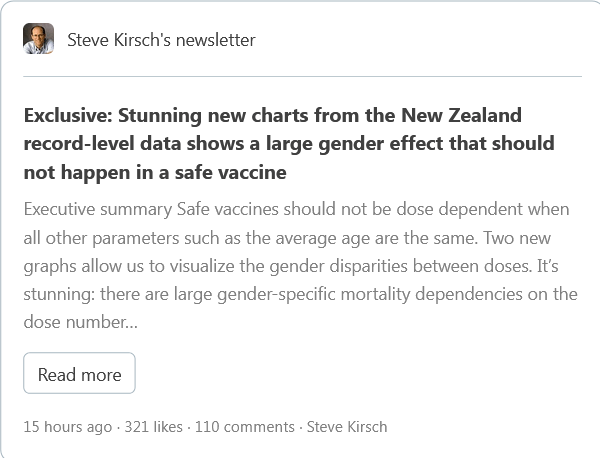
Liz Gunn spoke to Steve about this and more today in an update with Steve in the latest in Steve’s attempts to get someone at the Ministry of Health to respond to his prompts to acknowledge his analysis of this data.
For Steve this is all about saving lives. That’s the motivation. Steve asks for transparency from the Ministry of Health regarding this anonymised data, and yet no expert from the MoH is offering any rebuttal to Steve’s expert analysis.
As Steve points out, “…its a tacit admission that they can’t dispute the analysis of the data.”
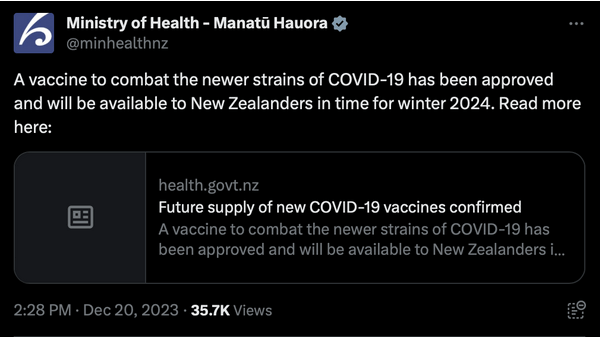
Meanwhile, the MoH seems to be pushing on with their apparent plans, to continue to roll out fresh versions and batches of Covid vaccines in New Zealand.
Steve speaks about the many false claims that have been circulating to try and discredit the validity of this government data.
“Nobody should be arguing against data transparency.”
“The people should have data transparency.”

As Liz Gunn points out towards the conclusion of the interview, every one of the 120 elected officials of New Zealand’s parliament have stayed silent, despite them having had notification from Barry – pre release of the data, and they all have chosen to ignore this critical issue.
So the question remains, with no calls for data transparency from New Zealand’s elected politicians, both Steve and Liz ask “Who are they serving?”
For a full list of links on topic go HERE
via fromrome.info
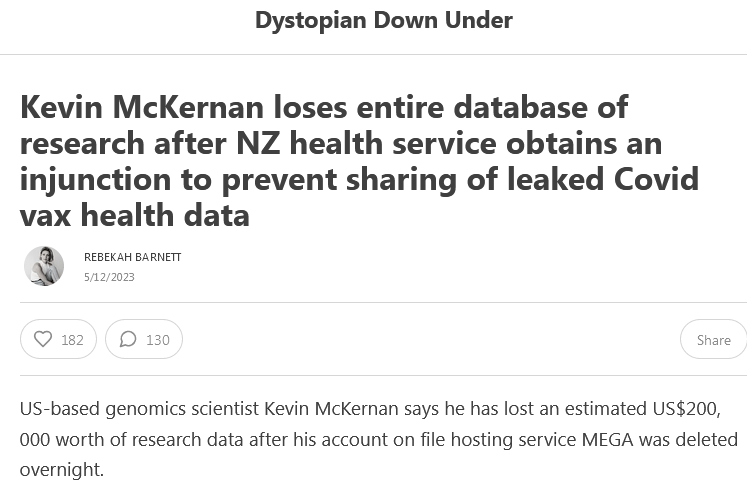
https://news.rebekahbarnett.com.au/p/kevin-mckernan-loses-entire-database
For a list of links on topic go HERE
This week an interview with a Ministry of Health employee under the pseudonym Winston Smith, who leaked data to former journalist and recent political candidate Liz Gunn, caused an international sensation. A data set of four million vaccination records was briefly available for download and scrutiny from vaccine critic Steve Kirsch’s site. Many of you have no doubt watched the hour long interview by Liz Gunn by now. Kirsch independently promised his readers that international statistics experts would be publishing analysis of the data shortly.
The following article is also available as a printable PDF and an audio version.
The Wasabi site hosting the data for download acted rapidly to cancel Steve Kirsch’s account, and YouTube took down the video within minutes (it is still up on Rumble). The Ministry of Health issued a statement, widely reported in the New Zealand press, labelling the leak as misinformation. They announced that they had sacked the whistleblower and called in the police.
Dr. Shane Reti, our newly appointed Minister of Health, issued a statement:“There are many conspiracy theorists out there who unfortunately disseminate harmful disinformation, however, as Minister and as a physician, the public can and should continue to have confidence in vaccines. I am reassured by experts confirming that there is no evidence supporting the allegations that have been made.”
So the government feels that we should all be reassured by unnamed experts who say there is nothing to see here without discussing any specific points in the data leak. If you have been reading our reports here and here, you will know that there is a great deal of evidence published in reputable journals, including from New Zealand, indicating vaccine harm. As a result, we have consistently called for the release of data comparing health outcomes of vaccinated and unvaccinated, but access was consistently denied by the previous government.
It now appears the incoming government is also going to tell us to look the other way.
If health data shows that there is no harm from Covid vaccines why would the government deny access to the relevant data?
In fact, more than two years ago the government granted unfettered access to New Zealand Covid vaccine health data to vaccinologist Dr. Petousis-Harris Co-Director of the Global Vaccine Data Network. She promised to publish data on vaccine safety within months but has published no results since, and has publicly stated that she will not be getting another Covid vaccine. So what do you make of that?
Last week the relative of a friend phoned them with some bad news from Australia. They had been diagnosed with pericarditis. “Don’t worry,” they said “I have seen a specialist and I should be able to come through it OK”. The specialist told them it was “due to a prior Covid infection”, “but I haven’t had Covid, I’ve had the vaccine” responded the patient. “Ah”, said the doctor, “you must have had Covid, it can’t be due to the vaccine.”
You get the picture don’t you? Pericarditis is a recognised adverse effect of mRNA Covid vaccination but medical experts are telling patients it can’t happen. I wonder what our experts are telling Dr. Shane Reti? It is ‘show and tell’ time at medical kindergarten. Can Dr Reti show us the full data or is he going to continue with the absurd and dictatorial ‘one podium of truth’ lie of the last administration?
The whistleblower was reportedly a computer systems programmer at the Ministry of Health who designed the computer payment system for vaccine providers. In the video he appeared visibly distressed by the rate of deaths among those who had received vaccinations. There were a number of charts displayed showing for example that some South Island vaccination sites had been disproportionately affected by deaths subsequent to vaccination. It was immediately clear from the names of the providers that these sites serviced the elderly, an obvious and unfortunate data bias which has garnered some criticisms.
Respected mathematician Igor Chudov, who regularly analyses vaccine data and raises serious concerns about vaccine safety, downloaded the whole leaked data set of four million records and has now published some concerns on Substack under the title: “I analyzed the “Leaked NZ Whistleblower Data” and Suggest to Be Wary of It. Bad Data and Inconsistent Story“, others have also raised concerns.
Clearly the collection of vaccination data by the Ministry of Health has been a little haphazard and contains inconsistencies. There have been indications of this in earlier data, but in general the records leaked stand as authentic if incomplete. Statistically speaking, the main problem is the lack of sufficient data to make exact assessments of safety. In other words, a comparison of health outcomes between the vaccinated and the unvaccinated will be necessary. Precisely the data the Ministry of Health has refused to release. Unfortunately, the whistleblower only had access to data from the vaccinated.
That doesn’t mean the data leak is invalid, a conspiracy theory, or irrelevant. There were some very real and concerning questions raised which need answers. The reaction of the Ministry of Health and the Minister actually points to a conspiracy of silence on their part, not to the whistleblower. We do have whistleblower protection legislation in New Zealand. It states that:“An employee can make a protected disclosure (sometimes called ‘whistle blowing’) when they report serious wrongdoing in the workplace that they reasonably believe is true or likely to be true.”
The whistleblower was in the position that many people holding positions of responsibility in New Zealand now find themselves. We believe he acted responsibly because he disclosed very concerning information that the Ministry of Health has been withholding from public view.
We have unprecedented record high rates of excess deaths and hospitalisation which are continuing long past the peaks of Covid infection yet virtually no one among the media, the medical profession, and the government wants to talk about it. Instead, they are conspiring (yes, I do mean to use the term and don’t do so lightly) to hide the figures that will demonstrate the exact extent of COVID-19 vaccine harm.
This is all the more concerning since a rapidly growing number of recently published scientific papers we have been regularly reporting are pointing to a wide range of long term mRNA Covid harms including heart disease and immune deficiency, cancers, strokes and mental illness.
The message that most resonated with me during the interview was the heartfelt plea from the whistleblower for others to speak up. I encourage all those with inside knowledge to speak up if you haven’t already done so. We can’t continue with the disastrous censorship of health information enforced by the previous government. The health and longevity of the whole population is at stake.
Photo: hatchardreport.com
For a full list of links on topic go HERE
From Steve Kirsch @ substack
As my friend Robert “St. Augustine” Malone has wisely said, “Truth is like a lion: Let it loose and it will defend itself.” The truth has now been set free. Why aren’t you showing us your analysis?
When Health New Zealand’s (HNZ) Oracle DB administrator, Barry Young, sent the entire leadership team of HNZ an email to notify them of a huge safety signal in their own database, they didn’t ask any questions: they fired him immediately.
So Barry released the anonymized data which would expose the truth about what the New Zealand public health records contain without violating anyone’s privacy. 4M of the 12M records.
HNZ then decided to try to stop the truth from getting out. So they contacted Wasabi and MEGA and had them nuke my account and Kevin McKernan’s account even though neither of us had done anything wrong. Kevin lost years of work that cost him hundreds of thousands of dollars to create. This is work relied on by other researchers all over the world.
HNZ failed to stop the distribution of the truth. EPIC FAIL.
So now what?
Barry will likely spend 7 years in prison for the crime of exposing a crime.
![WHEN EXPOSING A CRIME IS TREATED AS COMMITTING A CRIME, YOU ARE BEING RULED BY CRIMINALS. - Edward Snowden [783 x 391] : r/QuotesPorn](https://substackcdn.com/image/fetch/f_auto,q_auto:good,fl_progressive:steep/https%3A%2F%2Fsubstack-post-media.s3.amazonaws.com%2Fpublic%2Fimages%2Fe23a0c4a-09db-42d3-97f6-70cd6df9fd17_783x391.jpeg "WHEN EXPOSING A CRIME IS TREATED AS COMMITTING A CRIME, YOU ARE BEING RULED BY CRIMINALS. - Edward Snowden [783 x 391] : r/QuotesPorn")
HNZ: I have an important message for you.
The only way you can mitigate damages now is to show us your analysis of your own data showing the COVID vaccines are completely safe.
Why are you hiding this? Surely, you have the analysis. Show us all the analyses you did since the start of the vaccine rollout. You have to show us all documents with dates, showing us every safety analysis you did on your own data. If you don’t we’ll get it via FOIA request.
It would be a more efficient use of your time to simply publish all these analyses now, rather than have hundreds of New Zealanders request it.
The only thing you can be sure of is that not a single mainstream media organization in the world will ask you for these analyses. Like you, they want to keep it hidden. So the NZ press, the New York Times, Wall St. Journal, CNN, 60 Minutes… you’re safe from them. They are never going to ask questions. The vaccine will never be unsafe in their eyes. They are all paid to look the other way by their advertisers.
But the public will ask via FOIA and you’ll have to respond. Are you going to fabricate documents that never existed? That would be criminal.
Or are you going to admit you never did a proper analysis of the data just like the California Department of Public Health never bothered to do any analysis either. Admit the truth.
Bottom line: Show us your analysis now, or the people of New Zealand will require it be produced under FOIA.
This reminds me of the opening sequence from The Prisoner:
HNZ: Where am I?
Kirsch (not identified as yet): In New Zealand.
HNZ: What do you want?
Kirsch: Information.
HNZ: Whose side are you on?
Kirsch: We are on the side of truth and transparency. We want information…information… information!!!
HNZ: You won’t get it!
Kirsch: By hook or by crook, we will.
HNZ: Who are you?
Kirsch: I am the world’s most dangerous misinformation superspreader. Type that phrase into Google; I’m the top hit!! I am your worst enemy. The reason I am so dangerous is that I have been calling for data transparency of public health information (that, by the way, is owned by the public). The medical community, health authorities, and mainstream media all seem intent in hiding the truth. They will lose. The truth always wins. Did you know that the people who try to suppress the truth and achieve medical consensus by means of intimidation, censorship, and coercion are always on the wrong side of the issue? There are no counterexamples in history. Think about it.
How about we have a publicly recorded video call with your epidemiologists vs. my epidemiologists so we can expose who is telling the truth and who is killing people? Since you can’t stop the distribution of the public health data, this is your only option if you want to reduce “vaccine hesitancy.”
Thank you for your attention.
The first rule of holes: when you find yourself in one, stop digging.
Maybe you want to consider withdrawing your criminal charges against Barry Young? He did not commit a crime. He relied on the advice of experts including UK Professor Norman Fenton before releasing the data. Of course, you wouldn’t know that because you never asked him. You never even talked to him before having him arrested. Your actions are despicable.
Have a nice day. And thank you for allowing the data to be set free and drawing world attention to the importance of data transparency. And encouraging other health authorities to do the same!
SOURCE
How did they respond? A police raid of course…no surprises there. I’m not holding my breath either … For a full list of links on topic go HERE EWNZ
From nzdsos.com
DON’T HOLD YOUR BREATH.
New Zealand Doctors Speaking Out with Science has been calling out the increasing numbers of post jab deaths for nearly three years since the roll out began. We have calculated numbers in the thousands, with many more suffering serious injuries. We have shown the criteria for causation are satisfied, and that the covid injections can cause death and injury through multiple mechanisms.
Given the coercion, censorship and manipulation that characterised the coronavirus jab campaign, people have a right to know what were the intended effects, and the actual outcomes.
The barrage of injured left to suffer needlessly, at the mercy of a system which ignores their very existence, is something we continuously speak out about daily. The tragedy of those left behind after their loved one(s) died unexpectedly after a Covid vaccination weighs heavily on our hearts.
US data analyst Steve Kirsch has revealed the staggering toll that has been exposed by a then anonymous New Zealand government whistleblower. In Steve’s livestreamed talk there were technical issues, so his presentation proper starts at 23 minutes.
A day prior, NZ media personality and politician Liz Gunn introduced the Ministry of Health database manager to the world. He calls himself Winston Smith in a nod to the ‘hero’ of Orwell’s 1984. His data demonstrated very high mortality after injection, over 30% of recipients dead within a year of being ‘vaccinated’ by some mobile centres (presumably vaccinating into rest homes, which will have a greater annual mortality than the general population’s 0.75%).
Clearly a headline result meant to shock, we would like to have seen the full range of mortality increases across all vaccine centres, and a breakdown by dose number in the presentations, etc. He and Liz followed up with 2 more interviews, discussing the data from similarly narrow perspectives.
In a departure from their mute silence on all negative research, the Ministry of Health has issued a reassuring message to the troops, denying there is a problem and parroting ‘safe and effective’. It’s chief executive, Margie Apa, clearly has put her Bachelor of Communications to good use, receiving a salary of at least $489K yearly and allegedly a 200K bonus at the start to push the jab hard, as did all the other DHB chief executives.
Unsurprisingly, Apa (and the obedient media) reports that the man has been suspended pending an investigation. Like the KGB chasing down underground subversive open mic nights, government have called in the police and are using US specialists to track and remove the data’s public appearances. Sadly, the new Health Minister has inherited the current habit of spin over openness. So we know that the whistleblower is real, and so is the data he has released, presumably, since Apa is not claiming it is faked.
But yes, there are immediate questions about confounders of the data, it is clearly incomplete, there are some mistakes and its final provenance remains unclear. However, Steve’s graphs of the data – NZ deaths following the jabs – in all age groups, show concordance with other countries’ released data. The shots kill and the governments know it. This was already indisputable.
From the Kirsch presentation, in the charts below, the mortality curves after a safe vaccination should be actually a straight line at worst, or ideally trending down if it is effective and the infection is serious, ie no-one is dying from the jab, and fewer people go on to die from an otherwise dangerous infection. Instead there is immediate jab harm which then rises inexorably, peaking around 10 months. This is exactly what UK Office of National Statistics data has been showing consistently, after independent analysis of the sort the UK government ought to have published but has ignored. Here is US Medicare data showing a rising mortality with time after each dose, in those 80 or younger.
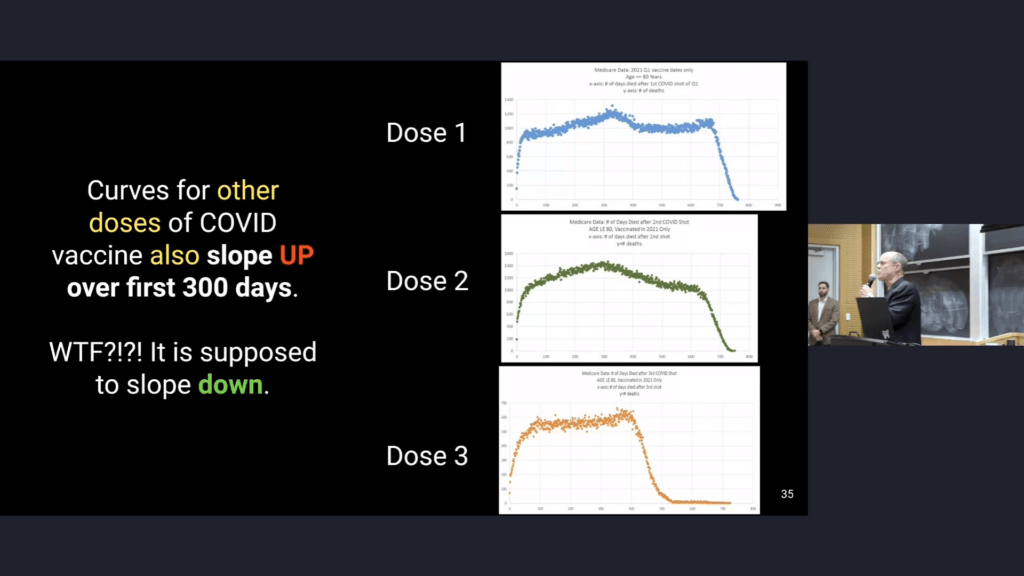
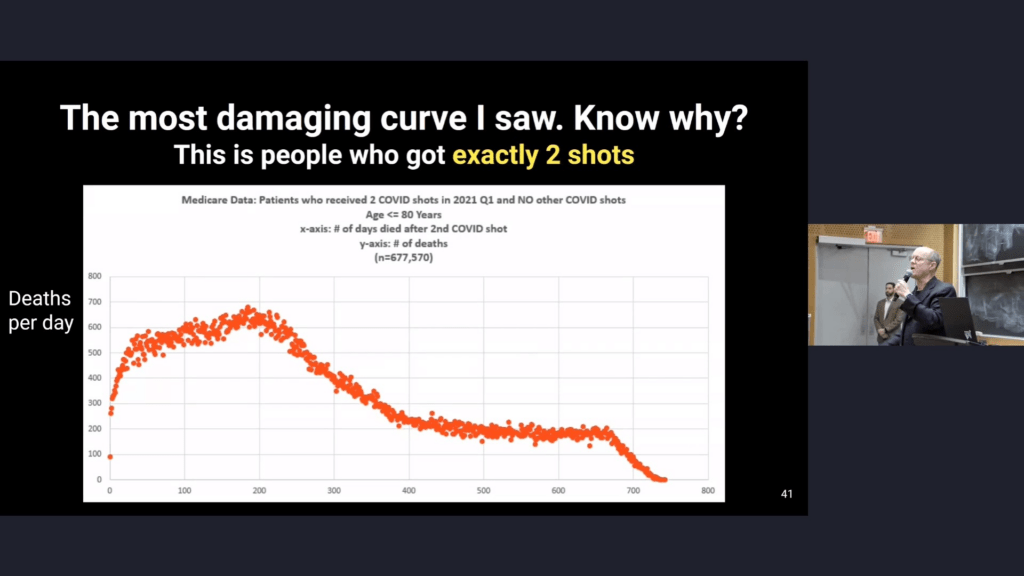
And here is his chart from the NZ release, showing a similar pattern, and triangulating with the lethality assessment of Rancourt et al, and with the apparent peak at 5 months.
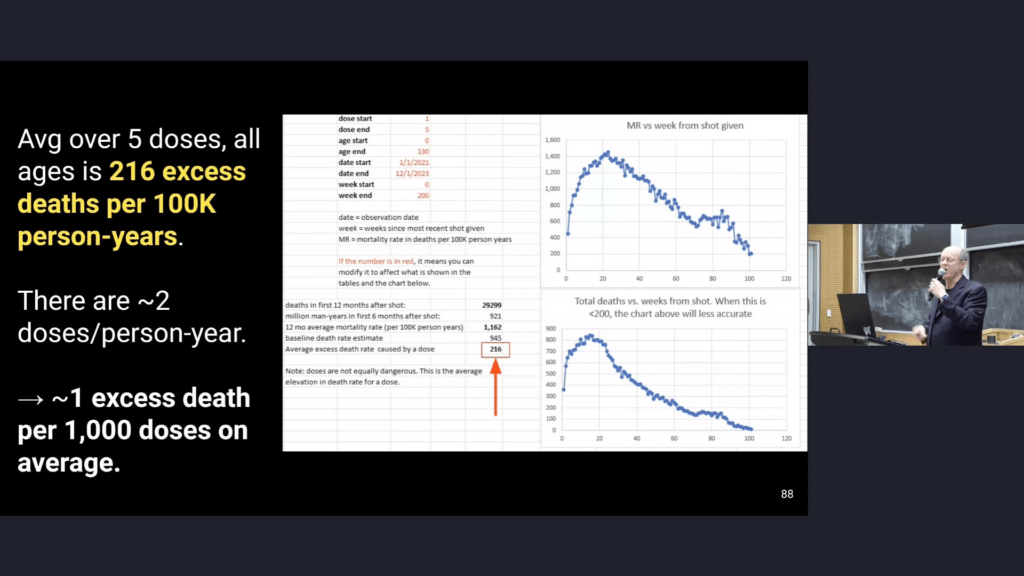
Notably, our first international collaboration in 2021, with the Israeli Peoples Commission, demonstrated exactly that finding in the first country to achieve very heavy vaccine coverage.
This confirms what we have been saying all along: this mRNA gene technology is not safe, it is not effective and it causes serious harm and damage to everyday kiwis. And that the government of the day damn well knew it. It lied to the people, and its own MPs. People like Rory Nairn have paid with their lives.
We have been asking to analyse deaths and vaccine data since September 2021.
There are so many questions that remained unanswered. If the vaccine was so safe, why are there so many excess deaths? If effective, why so much covid? We do not accept that the 2020 lockdown inhibited mortality rates and that what followed was just a normal rebound. That seems like a convenient answer to explain away the sudden rise in deaths which began in early 2021, matching the rollout. Nothing is consistent with the safe hypothesis.
Assuming this data is genuine, the obvious seems now proven: that data was being selectively “released” – propagandised, massaged and hidden more like – by government agencies and its media channels to skew the perception around what is safe and effective. And they are in good company. Pfizer is only now submitting some NZ deaths from 2021 to the VAERS database in the US, over 2 years later.
It’s not as if suspicion hasn’t already been raised about the New Zealand government massaging data. It seems rife, actually. Here is a recent example, of a 76% leap in deaths in 0 to 4 year olds in 2022, from a double-checked OIA result, compared to a completely different number published on an official website. We know which number fits best with the reality of reports on the ground. And reporting from around the world.
If all this information has been sitting in the government databases and those who saw it and were collating it knew the full extent of harm, then criminal charges need to be laid as quickly as possible. Experts will pore over it carefully, and we urge the NZ Police to do the same. Of course there is a chance this is a setup to discredit Liz Gunn and those she shared with. Opinions are a dime a dozen in the twitterverse, but we should get the takes of heavyweight stats professionals like Norman Fenton and Igor Chudov, and a consensus will emerge as the full data is digested. Time will tell.
In conversation with NZDSOS on the initial debate over the data release, John Oller, academic and editor of the peer-reviewed International Journal of Vaccine Theory, Practice and Research, offers this wise reminder:
“My take is that the potential confounders that could be sorted down to the most granular level possible of the individual records, are so completely distributed through the sample, consisting of about 1/3 of the total NZ population, with huge sample sizes for all the various age groups, etc. that have been examined so far, as to be utterly inconsequential with respect to the central question: What was it that started killing so many people after the C-19 vaccines were introduced that was not killing them before the vaccines?
If no one has a plausible answer that excludes the vaccines, all that is left for an answer is that the vaccines caused the rise in all cause mortality (ACM) in all the countries where they were introduced, and soon after they were introduced…. Confounders cannot explain anything new relevant to the issue at stake. The vaccines are killers. Or, what complex of confounding variables can overwhelm the measurable impact of the vaccines in all the countries keeping records… See Beattie’s study* of 145 countries and more to follow soon.”
Whether this data is fake or real – and we want to believe that it is genuine so it can help end this nightmare more quickly – many people want to know the truth about the jabs, and they will find it, one way or another.
NZ Whistleblower Case: NZDSOS Response to MOH Data Release
Photo: pixabay.com
For a full list of links on topic go HERE
UPDATES (latest first):
New Zealand Jab Data Whistleblower interviewed after being released from prison
NZ Whistleblower Arrested for Exposing the Truth: Here’s What They Didn’t Want You to See (Liz Gunn fleeing for safety)
“Winston Smith” arrested by New Zealand police
Watch at the link
For a full list of links on topic go HERE
EWNZ comment: The official data doesn’t lie… and the analyst has a Masters in Science. He is speaking out. Here are just two of his comments:
“The stats clearly say that something is wrong [S.I. data]. The mortality rate is far in excess of normal … not a natural event … ”
“There is no chance this vaccine is not a killer …”
From FreeNZ @ Rumble
ARTICLE LINK:
NZ’s COVID Vaccine Massacre Exposed
The crucial data On New Zealand’s excess deaths from the Covid jabs.
https://nzloyal.org.nz
https://freenz.substack.com


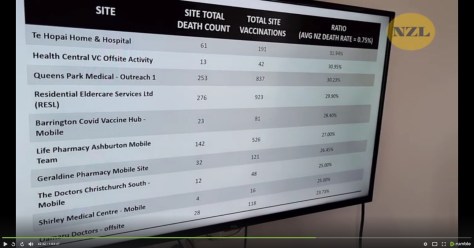
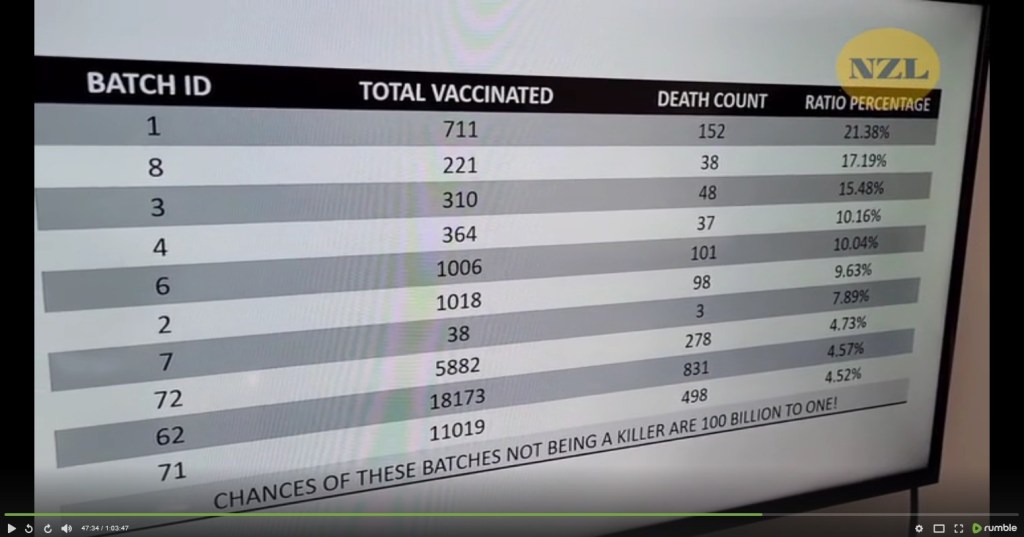
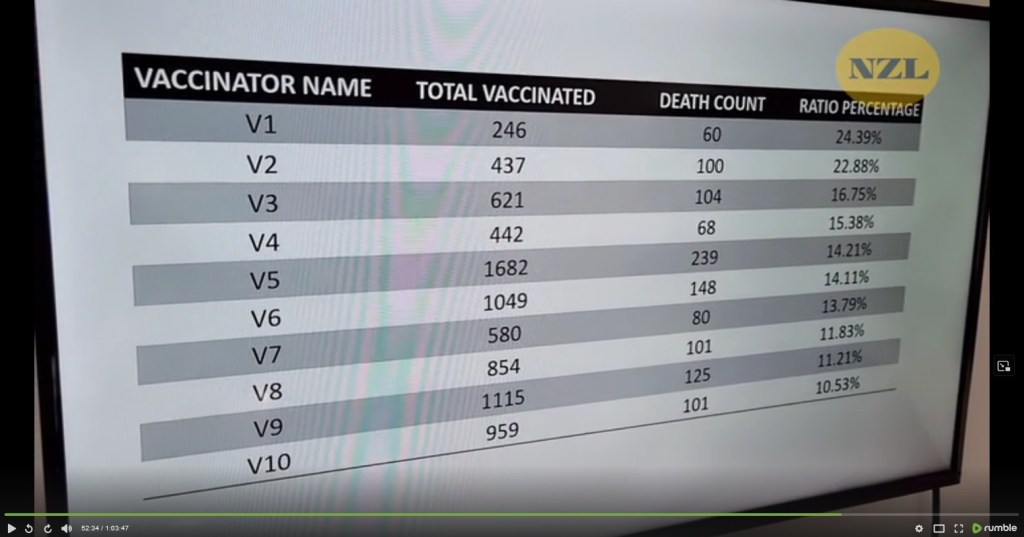
Comment: and meanwhile NZ excess deaths surge and those in charge stay silent … nothing to see here … EWNZ
From hatchardreport.com via expose-news.com
Medsafe, the New Zealand Medicines and Medical Devices Safety Authority, announced last week that it had renewed Pfizer’s provisional consent to distribute its covid “vaccines” in New Zealand for another two years.
Meanwhile, as Dr. Guy Hatchard highlights, pressure is growing on the New Zealand government and the medical establishment to act responsibly to inform the public of risks, end vaccine promotion and repudiate the proposed WHO international health preparedness accord.
photo: pixabay.com
From hatchardreport.com
This article is also available as a PDF document that you can print, download, and share. An audio version is available here.
For the last 90 years, we have been taught that the universe began with a Big Bang, the James Webb telescope has shown that the theory is incorrect. This is another example of the difference between scientific theory and experiment. In the final analysis theory must match experiment, if it doesn’t the theory is incorrect and must be abandoned.
There is of course a crucial difference between the Big Bang theory and the theory of mRNA vaccines, the Big Bang theory hasn’t killed anyone.
The latest available figures of excess deaths in New Zealand show what is happening. The OECD reports for September 2023 and the first week of October, records there were 577 excess deaths up 17% on the long term average. That is a rate of 155 additional deaths per week above what you might expect for the time of year. Last year (2022) for the corresponding period there were 339 excess deaths, 68 per week, up 10% on the long term average. Even this figure was a record. 2023 is 70% higher than that.
READ AT THE LINK
https://hatchardreport.com/alarming-acceleration-in-new-zealand-excess-deaths/
Photo: pixabay.com
From nzdsos.com
Note: (the medics who placed patient care & safety above profits). For non-Kiwi readers, nzdsos are NZ Doctors Speaking Out with Science. EWNZ
“We have seen Liz Gunn’s recent video discussing information shared with her by a whistleblower.
We have not seen the information Liz Gunn discusses though we are not surprised by the allegations. For over 2.5 years we have been discussing, attempting to bring attention to, and asking for an investigation of serious adverse events and deaths potentially caused by covid vaccination.
We have struggled to have confidence that our authorities are assessing these events and deaths thoroughly as our questions have been either ignored or answered superficially. We have also seen evidence that post vaccination deaths and adverse events have not been adequately investigated by CARM/Medsafe/pathologist/Coroner. We are seeing suggestions of evasion and cover-up, especially through analysis of Official Information Act responses.
We were aware:
We have presented a list of dead New Zealanders to authorities on more than one occasion.
We have asked the police to investigate the deaths of children and young people.
We have been met with dismissals, best summarised as deferring back to Medsafe’s assertions of safety.
We have documented the list of letters (with links to each letter) we have written. If the letters have been replied to, the reply is posted as well when it was received. We have written over 60 letters.
We suggest that you at least glance at the list of letters if not read them in full to see how hard we have tried to get action to protect New Zealanders from harms caused by the injection. This includes contacting the police and asking for an urgent investigation into potential contamination in the vaccine vials discovered in late 2021. The latest evidence of actual contamination is posted here, an urgent expert convention at the World Council for Health.
On 24 May 2022 we posted an open letter which was sent to every MP on 3 June 2022. This letter contained a list of New Zealanders whose deaths had (closely) followed covid vaccination. The names were changed but they were all real people and circumstances. (That list is now larger, more children and young people being added).
On 2 June 2022 our lawyer sent a letter directly to the Police Commissioner requesting an urgent investigation into the deaths of 150 named New Zealanders within a month of vaccination, many occurring within 1-2 days.
A dismissive response was received on 15 July 2022 stating that the Police “do not accept the views expressed by NZDSOS and do not intend to respond by way of an investigation of Medsafe or other agencies involved in the administration of the covid-19 vaccine”.
On 18 Jul 2022 our lawyer wrote a second letter to the Director for Police Legal Services, Mr Bill Peoples. We did not receive a reply.
On 10 August 2022 we contacted police again with our request for them to investigate suspicious deaths of named children. On 5th Sept we received a reply stating that they would not be investigating child deaths and would not be providing further information.
We have just sent a further updated open letter summarising the latest scientific evidence of harms. Remember, all the supposedly reassuring data is irrelevant and should be side-lined if evidence of harm emerges.
It is our opinion, consistent with that of Liz Gunn, that members of the recent New Zealand parliament knew of the potential harms and knowingly allowed this new technology to be released upon the public, in many cases insisting that it be used. All 120 members of the former parliament have been informed on multiple occasions of the harm being done to the population and the science to back up our assertions. Not one of them has acted to protect New Zealanders.
We have been urging the public to get involved and ask questions and demand answers because we, and our serious concerns, have been ignored. Following our own, and Liz Gunn’s lead, New Zealanders en masse MUST demand an investigation into the dead and injured victims of the contaminated covid injection.
If this does not occur, the harm will continue and potential solutions will not be addressed.
SOURCE: https://nzdsos.com/2023/10/23/nzdsos-response-liz-gunn/
RELATED:
From seemorerocks.is
Post from NZDSOS on telegram: On 13 September 2023, shortly after NZDSOS filed a case against the Medical Council of NZ, the infamous ‘Guidance Statement’ which ensured that all medical professionals toed the party line and only spoke about the benefits of vaccination, has been revoked.
RELATED LINKS:
OIA request on sudden deaths in NZ
Withdrawal of NZ’s ‘Guidance Statement’ (NZDSOS, VFF)
NZ government’s infamous ‘Guidance Statement’ revoked
READ AT THE LINK
Image by Rob van der Meijden from Pixabay
From NEWZEALANDDOC @ substack
In my most recent article on New Zealand’s Jab mandates and exemptions for healthcare workers (which can be read here and here, and which included source documents and links thereof), and following upon my discussion with lawyer Liz Lambert of the legal processes at issue, I formulated a series of questions.
READ AT THE LINK
Photo: pixabay.com




 Photo by










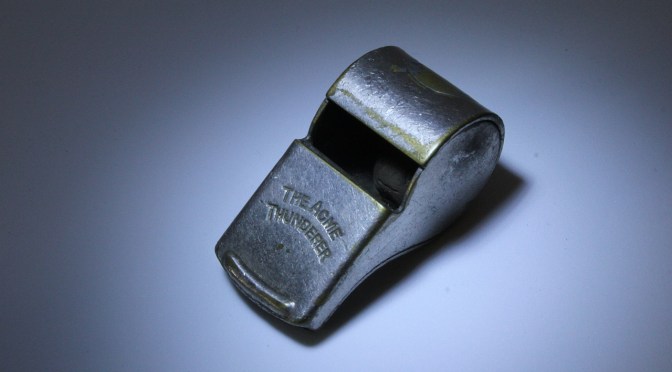

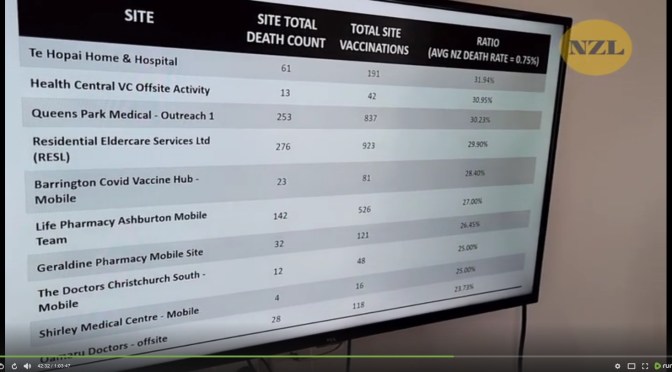



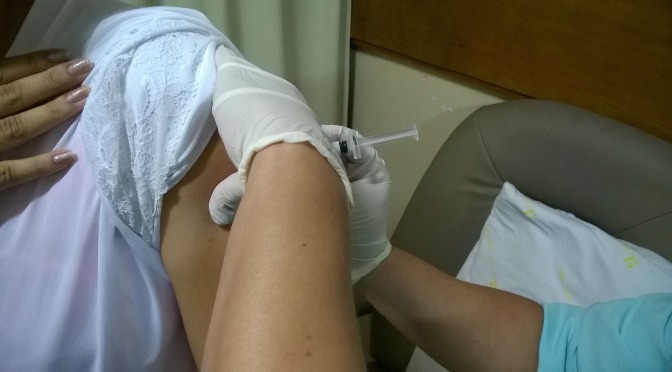

You must be logged in to post a comment.