Tag Archives: GM

They’re deliberately planning to starve us to death (Dr Vernon Coleman)

From Dr Vernon Coleman MB ChB DSc

Back in 2020, in a video which was censored and removed almost before it appeared I warned that the conspirators wanted to starve us and freeze us to death. The video was called `They’re going to starve us and freeze us to death’ and it was published on the 1st July 2020. (You can read the transcript in my book `Covid-19: The Greatest Hoax in History’.)

That was the plan then.

And it is still the plan. It is the reason why energy and food prices and soaring and why food supplies are becoming scarcer. Remember, nothing bad is happening by accident.

Starvation is being created quite deliberately as part of the plan to reduce the world’s population.

Encouraged by cultist-controlled politicians, vast quantities of the world’s crops of corn, soy bean and so on, are being used to make biofuels so that motorists can continue to buy cheap petrol for their motor cars. A while ago, a list of 51 things you and I can do to prevent global warming was published. Number 1 on their list was headed ‘Turn food into fuel’. This, it was claimed, would have a ‘high impact’ on the global warming problem. It was suggested that ethanol is the alternative fuel that ‘could finally wean the US from its expensive oil habit and in turn prevent the millions of tons of carbon emissions that go with it.’

This is dangerous nonsense. When more land is used to grow biofuels, so that ‘green’ motorists can drive around feeling virtuous, there is less land for growing food and an increase in the number of people starving to death.

The demand for biofuels has been soaring for years (despite the knowledge that, as a result, people are starving) and the increased use of biofuel is a major force behind the rise of food prices. If greens keep promoting biofuels then there is going to be a global shortage of food and millions more are going to die as a result.

There are other problems with our food supplies, of course.

Big American seed companies have been busy patenting the rights to many individual seeds. They have done this so that they can force farmers around the world to buy their products. One result has been that small farmers in India are no longer allowed to grow seeds from crops that their families have been planting for generations. If they do, then lawyers for American multinationals will smother them with writs and injunctions.

As a result, the incidence of suicide among small farmers in developing countries is terrifyingly high.

Finally, large modern farms are remarkably (and surprisingly) inefficient. When the fuel used to build tractors, make fertilisers and pesticides and so on is taken into account, it turns out that the energy cost of a kilogram of corn has actually risen in the last few decades. Soil erosion, the loss of pollinators (such as bees) who have been killed by chemicals, evolving chemical resistance by pests and numerous other environmental problems have also reduced farm crops.

The result of all this is that food is becoming scarce and prices are rising. This is not a cyclical change (with prices falling or rising due to changes in the weather). It is a structural change and it is, I fear, permanent.

As far as food prices are concerned, the conditions really are optimum for a ‘perfect storm’. At first glance it appears that things really couldn’t get much worse.

But, actually, they could.

Governments everywhere are preventing people growing their own food, keeping chickens or trying to look after themselves. They don’t want citizens to be independent.

Taxation systems are being used to discourage farmers and the number of farms is disappearing rapidly. In the UK, 13,000 farms have just disappeared and the average British farmer is 59 years old because young people see no future in growing food. `I don’t know what’s wrong with the Government,’ said one naïve farmer earlier this week. `It’s almost as they’re trying to get rid of farmers and close down all the farms.’

Extraordinarily, most farmers have no idea what is going on. Around the world, farmers still assume that they’re dealing with incompetence rather than a malignant conspiracy to destroy everything we hold dear. Farming, health care, energy supplies, education, transport and the economy are all being systematically and deliberately destroyed to take us through Net Zero into the terrifying Great Reset.

`You will own nothing and be happy,’ isn’t just a slogan. It’s the future they have planned for us.

Food rationing takes place more often than people realise. Supermarkets carry three to five days of stock and every slight problem leads to shortages. In 2010 there were 61 food banks in the UK – today there are 2,500 and that isn’t enough. And the UK is supposedly the sixth richest country in the world. Rickets and scurvy are coming back and there is a malnutrition crisis. Millions eat nothing but junk and there is an obesity crisis too. The National Health Service in the UK spends £6.5 billion a year on obesity. Doctors and politicians want more people to be given weight loss drugs which I consider too dangerous to be used as landfill. Naturally, no one agrees with me (though as the side effects become apparent a few people are noticing that there is a huge price to pay for a jab that helps you lose weight without the pain of dieting). Meanwhile, only the wealthiest can afford decent food.

Re-wilding schemes are used to make farming impractical or impossible. Forever chemicals are put into our food to poison us. There are hormones in beef and chlorine in chickens. Even the packaging is dangerous. Would you believe it? (You should). They’re poisoning our air, our water and our food and they’ve even poisoning the damned packaging. It would be easier for them to just shoot us all but they’d have to pay for the bullets. This way we poison ourselves.

American genetic engineers have been ‘modifying’ food for years to make it more profitable. No one knows what effect their modifications will have on the safety of food for human consumption. No one knows what other horrendous side effects there might be. The risks are unbelievably dangerous. So, for example, if every farmer in the world grows the same ‘brand’ of potato and that potato is hit by a deadly disease then there won’t be any potatoes.

For those in Europe and America all this is not yet quite critical.

But for those in many other parts of the world this is already an outright disaster. In some countries nearly half of all children are malnourished. And things are getting worse and will continue to get worse. Rising prices and falling quantities of food available for eating (as opposed to filling petrol tanks) will result in massive starvation around the world. The fake coronavirus hoax, and the consequent economic problems which will devastate economies everywhere, will exacerbate the problem. As a result, the incidence of global starvation is set to rocket.

It’s no good saying that the planet isn’t overcrowded (it isn’t) or that there is plenty of food (there is), for the inescapable fact is that as a result of policies controlled by international organisations controlled by the United States of America, at least five million infants and small children die each year – in a good year. That figure is set to rocket in India, Nigeria and the Congo and elsewhere. The number of people in extreme poverty around the world could soon double to over 200 million.

The racist and elitist policies of the climate change enthusiasts who want us to stop using oil will, if they are successful, be responsible for billions of deaths. And, of course, as I have repeatedly warned, spraying chemicals into the sky to block the sun is making things far, far worse.

The billionaires assume that they know best about everything (because they are rich) and that the end always justifies the means. Their arrogance has also helped them become ever richer. In the last two decades billions of dollars have moved from the middle classes to the billionaire classes. Real wages have been falling and the value of savings, investments and pensions has fallen steadily while the billionaires have got ever richer. It is difficult to avoid the feeling that the conspirators have for years now been on a very effective mission to destroy American and Europe from within.

The unavoidable truth is that everything needs energy and without energy everything stops. The climate change believers have pushed energy costs ever higher and if they are able to understand even the simplest scientific evidence, they must know that renewables will never replace carbon based fuels. However, it is largely thanks to the efforts of bankers and politicians that capital spending on fossil fuels has fallen dramatically and fuel production has dropped 30% since 2020.

The bottom line is that disaster is closer than most people imagine.

NOTE
The above essay is based on Vernon Coleman’s book `Their Terrifying Plan’.

http://www.vernoncoleman.com

SOURCE

RELATED:
Henry Kissinger’s 1974 Plan for
Food Control Genocide

Image by Joachim Schnürle from Pixabay

Other news this week

Scientists in Australia and New Zealand are attempting to use genetic engineering and viruses to make rodents infertile, for “pest control”

Memory problems surge 850% as wireless radiation exposure skyrockets

Who Are the True Rulers of the World?

Internal Pentagon Document Reveals The War Department Wants To ‘Suppress Dissenting Arguments’ Using AI Propaganda

Electric Vehicle ERUPTS in Flames at Colorado Grocery Store Charging Station

Covid injections pose risk of pilots having in-flight seizures even years after having taken a shot

How to Stay Out of the Biometric ID Trap

Top WEF Adviser Yuval Harari Openly Says We ‘Don’t Need The Vast Majority Of The Population’ And Are Working To Get Rid ‘Useless’ People (2022)

Tens of thousands of white-collar jobs are disappearing due to AI

Electric Vehicle ERUPTS in Flames at Colorado Grocery Store Charging Station

Top US Army General Says He Uses ChatGPT To Make Military Decisions. What Could Go Wrong?

Photo Credit: pixabay.com

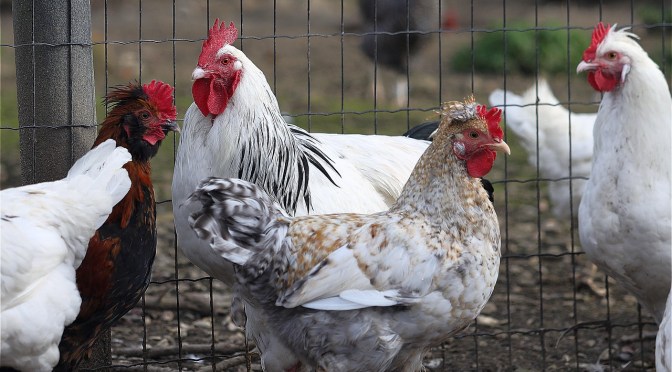
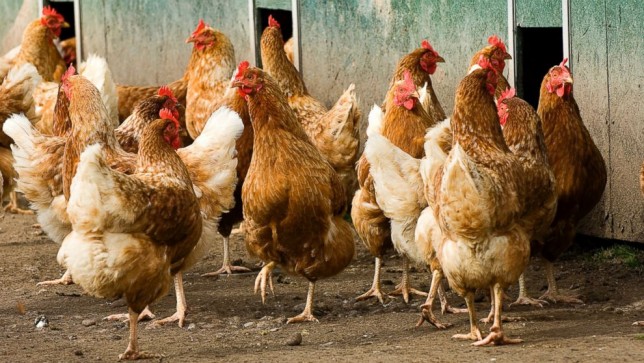
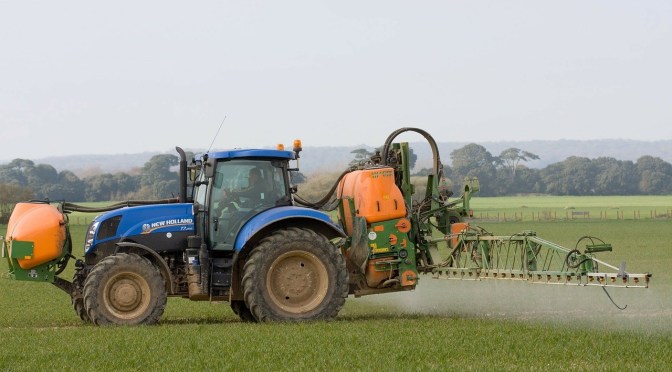
Glyphosate Found in Eggs, Chicken Sold in Grocery Stores Traced to GMO Poultry Feed

Note: some years back (at least 6) I inquired of two NZ companies that produced chickens and pork, whether they fed their produce GM feed. Both replied they couldn’t rule that out as the feed was not labeled GM. EWNZ

Posted on Sep 10 2025 – by Sustainable Pulse

A scientific review in World’s Poultry Science Journal highlights the adverse health effects on avian species from exposure to the widely used weedkiller glyphosate (Roundup) throughout the process of poultry production. The herbicide enters the poultry production system through residues in genetically engineered feed, Beyond Pesticides reported.

An earlier article in Scientific Reports concludes that glyphosate’s (GLP) “widespread application on feed crops leaves residues in the feed,” while residues are “found to be common in conventional eggs acquired from grocery stores.”

In analyzing the biochemical, toxicological and ecological impacts of glyphosate on poultry, particularly chickens, the authors find a wide body of evidence linking glyphosate and its metabolite (breakdown product) aminomethylphosphonic acid (AMPA) to debilitating hazards that extend beyond mortality.

These sublethal effects include disruption of the gut microbiome and gastrointestinal disease; decreased productivity and diminished reproductive health; hepatic and kidney toxicity; growth and developmental impacts, including teratogenicity and embryotoxicity; endocrine disruption and oxidative stress; and impaired immune functions.

The effects of glyphosate, as have long been documented in the scientific literature, range from negative impacts on biodiversity and the environment to food safety risks and human health implications.

Glyphosate Box

Glyphosate Residue Free Certification for Food Brands – Click Here

Test Your Food and Water at Home for Glyphosate – Click Here

Test Your Hair for Glyphosate and other Pesticides – Click Here to Find Our Your Long-Term Exposure

Residues of both glyphosate and AMPA “have been detected in soil, crops, animal feed, poultry, and water sources, prompting scrutiny of their long-term effects,” the authors state.

They continue:

“Studies indicate that glyphosate disrupts enzymatic pathways, particularly by inhibiting the cytochrome P450 system, leading to oxidative stress, endocrine disruption, and mitochondrial dysfunction.

“It has been linked to liver and kidney toxicity, gut microbiota alterations, reproductive harm, developmental defects, and possible carcinogenicity, though regulatory agencies remain divided on its classification as a carcinogen.”

The International Agency for Research on Cancer, a part of the World Health Organization, has classified glyphosate as having cancer-causing properties, as have independent peer-reviewed scientific studies.

The ubiquitous nature of glyphosate residues throughout the environment and within organisms is a result of the widespread application of this toxic chemical in forestry, agriculture, landscaping and gardening.

Over 750 herbicides contain glyphosate as the active ingredient, and it also plays a large role in the production of genetically modified (GM) crops, “with approximately 80% of GM crops bred specifically for GLP tolerance.”

Glyphosate-based herbicide formulations contain not only glyphosate but also other inert (undisclosed) ingredients, such as adjuvants that increase toxicity.

A common adjuvant in glyphosate-based herbicide products is polyethoxylated tallow amine (POEA), which researchers have found can kill human cells, particularly embryonic, placental and umbilical cord cells.

Effects on poultry

Glyphosate residues in animal feed, as well as in water and through other exposure routes, pose risks to both animal and human health, as these residues can bioaccumulate and biomagnify throughout the food chain.

With a high reliance on corn and soybeans in the diets of poultry, GM crops are a significant source of exposure for these animals.

“The presence of GLP residues in poultry feed raises concerns about potential health effects on birds, including disruptions in gut microbiota, oxidative stress, and overall productivity,” the authors write.

They continue:

“Globally, approximately 57% of maize grain and 85% of soybean production are directed towards animal feed. Several studies have investigated the effects of feeding glyphosate-tolerant GM crops to various livestock species.

“Research has included dairy cows, cattle, and chickens, highlighting the potential impact of glyphosate residues on poultry growth performance, immune function, and reproductive health.”

Hepatic and kidney toxicity

Studies show that the kidney and liver are among the first organs to be affected by alimentary poisoning/foodborne illness. Additional research shows glyphosate residues in food can then impact various systems in animals, including the liver, intestine, kidney, and lung, as well as alter enzyme activity.

In a study of hatched chickens exposed to glyphosate alone and in Roundup shows “histopathological alterations in the kidneys and liver, along with imbalances in serum parameters and various biochemical changes in these organs, which could potentially impair their function.”

Oxidative stress

Exposure to glyphosate can induce oxidative stress and lipid, protein, and DNA damage. Previous research shows how glyphosate and AMPA are genotoxic and linked to oxidative damage.

One study shows that glyphosate increases the generation of reactive oxygen species in the liver and small intestine of chickens. Chronic exposure to products containing glyphosate in broiler breeders (stock chickens) weakens eggshells and delays embryo organ growth, with oxidative stress as the cause.

Gastrointestinal toxicity

Glyphosate diminishes the bioavailability of cytochrome (CYP) enzymes, which are crucial for metabolism, in the organs of chickens. One study shows that glyphosate specifically inhibits CYP P450 enzymes in chickens’ livers and small intestines.

Chicks exposed to glyphosate also have compromised liver function and altered lipid metabolism, further causing oxidative stress and deposits of fat in blood and liver tissues due to heightened expression of lipogenesis-related genes, as a result of its disruptive effect on cytochrome P450 enzymes.

Additional studies show disruption of the gut microbiome in livestock and poultry, where glyphosate reduces beneficial bacteria and enhances resistance in pathogenic strains.

These impacts can lead to the onset of chronic gastrointestinal diseases. In a study of the intestinal structure of chicks, glyphosate has been shown to impair the intestines, reduce antioxidant capacity, induce inflammation and cause the downregulation of genes in the small intestine.

Impact on reproduction

Previous research shows that chronic exposure to herbicides containing glyphosate can impact the survival, growth, activity and reproduction of organisms, including chickens.

study of roosters with chronic, subtoxic exposure to glyphosate shows reduced plasma testosterone and a decline in their reproductive peak.

Another study finds “significant effect on the histopathological [diseased tissue] characteristics of the rooster testes as well as sperm motility, the key determinant of rooster sperm quality.”

Additional research shows altered sperm in roosters when fed a diet containing glyphosate that leads to “metabolic disorders in the offspring, most likely due to epigenetic effects.”

Glyphosate implications for productivity and performance

Several studies have classified glyphosate-based herbicide formulations as teratogenic, causing developmental abnormalities in a fetus or embryo, and embryotoxic, causing harm or death to embryos during development.

In a study of quails, glyphosate was found to accumulate inside the eggs, causing damage to lipids (fats) in the brains of the developing embryos. This study also reveals that residues of glyphosate in food also slow plumage development and linger in eggs, muscles and livers of the birds.

Another study of chickens shows “exposure to GLP led to a significant reduction in the expression of key productivity-related genes.”

Exposure directly in the eggs of chickens to glyphosate-based herbicides induces teratogenic effects with negative effects on embryonic growth and development, as well as embryo mortality.

Changes in blood parameters, adverse effects on digestive tract development and reduced body weight are noted in chickens exposed to glyphosate.

Reproductive and developmental impacts regarding eggshell quality and embryo development are also associated with levels of both glyphosate and AMPA within egg yolk.

Yet another study shows that a decline in hatchability is associated with higher levels of glyphosate residues in feed among broiler breeders.

Regulatory deficiencies and the organic solution

Despite mounting scientific evidence that continues to link glyphosate to adverse effects in a wide range of species, current regulations fail to protect health and the environment.

The regulatory processes, such as those utilized by the U.S. Environmental Protection Agency (EPA), also ignore factors that enhance the toxicity of these already harmful chemicals, such as synergy, mixtures and inert ingredients.

“Current safety evaluations mostly concentrate on glyphosate in isolation, overlooking the synergistic toxic effects of commercial formulations and their capacity for bioaccumulation in adipose tissues,” the authors point out.

They continue:

“Furthermore, the heightened toxicity of commercial glyphosate formulations, influenced by co-formulants such as POEA, in conjunction with glyphosate’s interference with gut microbiota, cytochrome P450 enzymes, and endocrine functions, emphasises the necessity for cumulative risk assessments and long-term studies that account for species variability, bioaccumulation, and synergistic effects.”

These inadequacies in the regulation of petrochemical pesticides and synthetic fertilizers support the urgent need for the widespread adoption of safer alternatives.

SOURCE

Image by Franz W. from Pixabay

Now Pushed Fake Meat Is All About Controlling the Food Supply

From Dr Mercola

Video Link

Story at-a-glance

  • I spoke with “Tea Time,” a program by Children’s Health Defense, about the dangers of fake meat products to help raise awareness about this latest assault on human health
  • Fake food — including lab-grown meat, animal-free dairy and plant-based meat — is the globalists’ latest attempt to control the food supply
  • The globalists are trying to replace animal husbandry with lab-grown meat, which will allow private companies to effectively control the human population
  • The idea that animals must be removed from agriculture to save the planet is flawed; animals are an integral, and necessary, part of the restorative process
  • Fake meat is an ultraprocessed mixture of chemicals, GE ingredients, pesticides and toxic linoleic acid that will promote chronic disease

Editor’s Note: This article is a reprint. It was originally published March 12, 2023.

At face value, fake meat sounds like the perfect solution to end world hunger, protect animal welfare and save the planet from environmental destruction. Even a brief look below the surface reveals a much more nefarious reality, however.

To help raise awareness about this latest assault on human health, I recently spoke with host Polly Tommey on “Tea Time,” a program by Children’s Health Defense, about the dangers of fake meat products.1

Fake Meat Is All About Controlling the Food Supply

Fake food — including lab-grown meat, animal-free dairy and plant-based meat — is the globalists’ latest attempt to control the food supply. Former U.S. Secretary of State and national security adviser Henry Kissinger once said, “Control oil and you control nations; control food and you control people.”2 Controlling people is their whole agenda.

The globalists have long held a monopoly on the grain industry with their patented genetically modified organisms (GMOs). In the early 2010s, not many people knew about GMOs. In 2011, we started to educate the public about their dangers, as they posed a major threat to public health and the environment.

In 2012, a ballot initiative was launched in California to require mandatory labeling of genetically engineered (GE) foods and food ingredients. The initiative was narrowly defeated due to massive donations from multinational corporations, but we won in the long term because awareness of GMOs in the food supply significantly increased. Now, most health-conscious people avoid GE/GMOs.

A similar trend is now occurring with fake food. The globalists are trying to replace animal husbandry with lab-grown meat, which will allow private companies to effectively control the entire food supply.

Fake Meat Is Even Worse Than CAFOs

Many people are aware of the pitfalls of concentrated animal feeding operations (CAFOs) — unnatural diets of GMO grains, crowded conditions, inhumane treatment, excessive pollution and rampant spread of disease. CAFOs are bad — but the new fake food era is going to be even worse.

With their patented fake meat products, the globalists will have unprecedented control over people’s health.3 It sounds noble to try to provide for the entire world’s population using animal-free methods, but it’s a deception.

Will Harris is a regenerative farming pioneer who runs White Oak Pastures in Bluffton, Georgia. He produces high-quality grass fed products, including beef and other animal products, in a way that’s good for consumers, the environment and the financial health of his business. While the globalists are spinning the idea that animal foods are destroying the planet, when raised regeneratively the way Harris does, this is far from the truth.

It’s the fake foods that will ultimately jeopardize the environment. “We are sequestering 3.5 pounds of carbon dioxide equivalent for every pound of grass fed beef we sell. Ironically, the same environmental engineers did an analysis on Impossible Burgers,” Harris said on “The Joe Rogan Experience.” “They’re emitting 3.5 pounds of carbon dioxide equivalent.”4

Save This Article for Later – Get the PDF Now

Download PDF

Regenerative Farming Beats Fake Foods

Impossible Foods, along with Beyond Meat, is a major player in the fake meat marketplace. It claimed to have a better carbon footprint than live animal farms and hired Quantis, a group of scientists and strategists, to prove its point. According to the executive summary, its product reduced environmental impact between 87% and 96% in the categories studied, including land occupation and water consumption.5

This, however, compares fake meat to meat from CAFOs, which are notoriously destructive to the environment and nothing like Harris’ farm. Harris commissioned the same analysis by Quantis for White Oaks and published a 33-page study showing comparisons of White Oaks Pastures’ emissions against conventional beef production.6

While the manufactured fake meat reduced its carbon footprint up to 96% in some categories, White Oaks had a net total emission in the negative numbers as compared to CAFO-produced meat.

Further, grass fed beef from White Oak Pastures had a carbon footprint that was 111% lower than a typical U.S. CAFO, and its regenerative system effectively captured soil carbon, which offset the majority of emissions related to beef production.7

“The WOP [White Oak Pastures] system effectively captures soil carbon, offsetting a majority of the emissions related to beef production,” the report stated. “In the best case, the WOP beef production may have a net positive effect on climate. The results show great potential.”8

So, the idea that animals must be removed from agriculture to save the planet is entirely flawed. In fact, animals are an integral, and necessary, part of the restorative process.

What Is Fake Meat?

Fake meat is marketed as a health food, but it’s nothing more than a highly ultraprocessed mixture of chemicals. Impossible Foods, for instance, uses genetic engineering to insert the DNA from soy plants into yeast, creating GE yeast with the gene for soy leghemoglobin.9

Impossible Foods refers to this compound as “heme,” but technically plants produce non-heme iron, and this is GE yeast-derived soy leghemoglobin.10 Heme iron only occurs in meat and seafood. Impossible Foods’ GE heme is used in their fake meat burgers as a color additive that makes the product appear to “bleed” like real meat.

The health effects of GE heme are unknown, but this didn’t stop the U.S. Food and Drug Administration from approving soy leghemoglobin in 2019. The Center for Food Safety (CFS) filed a lawsuit challenging the approval, which they called “unusually rapid”11 and risky for public health.

In their lawsuit, CFS points out that soy leghemoglobin is produced using synthetic biology, or “genetic engineering on steroids,” which does not shuffle DNA pieces between species but instead constructs new biological parts, devices and systems that do not exist in the natural world.12

The reason why Impossible Foods turned to synthetic biology to produce GE soy leghemoglobin is because it couldn’t extract enough of the substance directly from soybean roots to produce its fake meat products on an industrial, mass-produced scale. The FDA GRAS for soy leghemoglobin is 526 pages long, if that gives you any idea of the industrialized complexity of this so-called GRAS “health” food.13

Beyond Meat is similarly industrially processed. Beyond Burger patties contain 22 ingredients. Among them are expeller-pressed canola oil, pea protein isolate, cellulose from bamboo, modified food starch and methylcellulose14 — hardly “health” foods. To morph these ingredients into a patty that resembles meat require further processing.

It’s revealing, too, that while truly natural foods cannot be patented, Impossible Foods holds at least 14 patents, with about 100 more pending.15

Impossible Foods’ Fake Meat Is Loaded with Glyphosate, LA

Considering that many ingredients in fake meat products are made from GE soy,16 it’s not surprising that they’re also contaminated with the herbicide glyphosate. Consumer advocacy group Moms Across America (MAA) commissioned Health Research Institute Labs (HRI Labs), an independent laboratory that tests both micronutrients and toxins found in food, to determine how much glyphosate is in the Impossible Burger and its competitor, the Beyond Burger.

The total result of glyphosate and AMPA, the main metabolite of glyphosate, in the burgers was 11.3 parts per billion (ppb) in the Impossible Burger and 1 ppb in the Beyond Burger.17

When the concerning results were revealed, Impossible Foods engaged in a smear campaign to try and discredit MAA, labeling the group of moms “an anti-GMO, anti-vaccine, anti-science, fundamentalist group that cynically peddles a toxic brew of medical misinformation and completely unregulated, untested, potentially toxic quack ‘supplements’ …”18

The glyphosate in fake meat is one issue. The excess amounts of omega-6 fat in the form of linoleic acid (LA) are another. In my opinion, this metabolic poison is the primary contributor to rising rates of chronic disease. It’s important to realize that fake meat alternatives do not contain healthy animal fats. All the fat comes from industrial seed oils like soy and canola oil, which are top sources of LA.

Eliminating ultraprocessed foods from your diet is essential to keeping your LA intake low, and this includes fake meat.

‘Precision Fermentation’ Isn’t Natural Either

Fake food companies want you to believe their products are natural because they’re made with components of plants, even though nothing like them exists in nature. Precision fermentation is another term used by the biotech industry to piggyback off the popularity of truly health-promoting natural fermentation.

Precision fermentation, however, is nothing like its natural counterpart. What is perhaps most disturbing about the use of precision fermentation is that companies are allowed to claim that it’s natural.

Metabolic engineering is a major subset of precision fermentation, which involves methods such as next-generation sequencing, high-throughput library screening, molecular cloning and multiomics “to optimize microbial strains, metabolic pathways, product yields, and bioprocess scale-up.”19 It sounds just like something down on the farm, doesn’t it?

Whether it’s called precision fermentation, gene editing, GMO or something else, don’t fall for the hype that it’s good for you or the planet.

Where Should You Get Your Meat?

If fake meat isn’t healthy, and CAFO meat isn’t a good choice either, a reasonable question is where can you find meat that’s beneficial for your health and the planet? The answer is to get to know a farmer in your area. Visit the farm and view how the animals are being raised.

Get to know the resources available to you within your local community. The community will naturally validate the vendors who are raising food the right way. If you can’t find a local farm for ruminant animals like cows, buffalo or lamb, look for certified organic options at your local grocery store. However, it’s best to stay local and find a source of real, whole food near you.

As much as you can, plant a garden for vegetables, grow fruit trees and even raise chickens if it’s allowed in your area. For the food you can’t source on your own, lean on your community to fill in the gaps.

Just as was the case with GMOs, raising awareness about the dangers of fake meat is also important, especially in this early and aggressively expanding phase. Tell your social circle that to save the planet and support your health, it’s necessary to skip all the fake meat alternatives and opt for real food instead.

When you shop for food, know your farmer and look for regenerative, biodynamic and/or grass fed farming methods, which are what we need to support a healthy, autonomous population.

SOURCE

Image credit: Pixabay.com

Analysis of Misinformation in the Gene Technology Bill and Suggestions for Submissions and Discussions (Hatchard)

This article is also available as a PDF to download, print, and share.

Alarming Developments in Australia Following Their Gene Deregulation

To win the debate about the Gene Technology Bill, we have to expose the unscientific and misleading claims being parroted by politicians to gain public acceptance of an egregious takeover of our food choices and medical rights.

To do so, we have to not only make clear submissions to the Health Select Committee. But more importantly, persuade our friends, colleagues and contacts of the potential impact and the need for action.

Our task is made clear by a comment from David Farrar, prolific National supporter and Kiwiblogger-in-chief, that needs deconstructing and examination for misinformation. He quotes Judith Collins speaking at the first reading of the Bill as follows:

“Our current regulations for genetically modified organisms are some of the most backward looking in the world. New Zealand has lagged behind other countries, such as Australia, Canada, and England, which have safely embraced these technologies for the benefit of their people and their economies.

“Despite gene technologies having been in use in New Zealand since the 1970s, the restrictive rules and time-consuming processes we have imposed on researchers have made testing and embracing innovation outside the lab all but impossible. But no more. This Government has listened to our research, primary industry, and medical communities and the frustrations that they have felt over many years. Today, New Zealand moves into the present with a safe enabling regulatory regime. The legislation will enable the sorts of innovation that will benefit New Zealand while effectively managing risks to the health and safety of people and the environment.”

Farrar then adds his 25c “After 25 years of dithering, we finally have a Government that is not letting hysteria trump science. Amazing that this legislation has been introduced in the first year of office – rather than just another working group.”

Misinformation: ‘other countries have safely embraced these technologies for the benefit of their people and their economies’

The Gene Technology Bill is the New Zealand version of an international push by commercial interests to free up genetic experimentation from any last fetters of regulation. The massive profits made during the pandemic under emergency deregulation and government mandated participation have set a new benchmark for industry greed. Our Bill is far ahead of the rest of the world in terms of permissiveness. In a world of corporate giants from the food and pharmaceutical sectors seeking to push the envelope, New Zealand’s proposed out-on-a-limb laissez faire stance is a welcome development and something they have actually had a hand in creating.

We have seldom seen a more brazen claim than the use of the word ‘safely’ after 30 million excess deaths have been attributed to the pandemic during the last five years. Whether they come from a gene altered pathogen or a genetic vaccine is largely irrelevant here. As to citing England as a country accepting Gene Technology, a few days ago we pointed to the growing tide of public protest in the UK about the first use of anti-methane medicine Bovaer for cows and the sale of their milk and butter in supermarkets.

In the EU, proposed gene technology legislation has stalled due to disquiet among member states and in any case includes the precautionary principle which says that new technology must be proved safe before use, something that our Gene Technology Bill rejects. Nor does it liberalise research on microbes or animals as our Bill does.

Misinformation: ‘safe enabling regulatory regime’ that mostly classifies gene editing as safe, but supposedly can identify and mitigate any level of risk

A key plank of the government’s contention is the idea that gene editing has become more exact and therefore the need for testing, regulation, labelling, etc is reduced and in many if not most cases eliminated. This is not based on any valid scientific principle. Accuracy does not equate with safety. Just because you can achieve something more accurately does not guarantee its safety. A sniper trains every day to hit the target, but this does not make assassination a safer prospect.

As a result of serious adverse effects, the prospects for gene therapy dimmed in the 90s and early 2000s, but in 2008 new supposedly more exact gene editing techniques using CRISPR/cas gene scissors were developed. Research efforts stepped up and PR went back into overdrive—gene technology and medicine, according to this new narrative, now being promoted by our government, was going to be safe and effective. Today we know this to be false, as a paper published in November 2022 by the Karolinska Institute shows. CRISPR/cas techniques lead to unpredictable on-target genetic rearrangement which can interfere with vital cellular gene repair mechanisms.

During the pandemic, the supposed action of mRNA COVID-19 vaccines was outlined in great detail for the public and indeed, novel genetic instructions were ported into billions of an injected individual’s cells successfully by mRNA vaccines, but the outcome itself was not as predicted. The vaccines did not stop first infections, transmission or repeated infections. In theory the injected vaccine agents would be cleared up within days after having elicited the required protective immune memory. This didn’t happen. 

For example a peer reviewed study conducted by the US CDC and published in the Journal of the Pediatric Infectious Diseases Society on Dec 5th entitled “Protection From COVID-19 Vaccination and Prior SARS-CoV-2 Infection Among Children Aged 6 Months–4 Years, United States, September 2022–April 2023” reports that COVID-19-vaccinated children had an increased incidence of COVID-19 infection compared to the unvaccinated. 

More worrying: investigative journalist Alex Berenson formerly of the NY Times reports scientists at prestigious Yale University have announced the imminent publication of a study that has found concentrations of COVID-19 spike protein in the blood of individuals two years after mRNA vaccination, suggesting the genetic sequences in the vaccine may have integrated into the DNA of recipients to the detriment of their health. 

These and many many other studies published during the last year in learned journals which we have reported reveal there are unexpected and unpredictable classes of serious risk to health with gene technology that can only be detected years after the event with careful research. Genetic material can reproduce and perpetuate itself in a way that chemicals cannot.

The misery of gene technology safety has been greatly simplified and altered for public consumption by corporations, scientists and politicians with vested interests. In reality the interior of the cell contains great complexity with trillions of elements involved. In this situation accuracy is not possible, always there are off target effects.

Moreover there are the ever present risks of lab accidents. A 2022 study of the Prevalence of Accident Occurrence Among Scientific Laboratory Workers found: “Among 220 participants recruited in the study, 99 participants (45.0%) have had accidents during their lab works. 59.6% have been exposed once, 32.3% between two and four times, only 1.0% between four and six times, and 7.1% more than six times.”

What sort of gene technology projects might be approved?

The Gene Technology Bill owes much of its content to Australian legislation so we decided to look over the ditch and see just how it all works or rather doesn’t work. The Australian Office of the Gene Technology Regulator has just issued an Invitation to comment on Clinical trials of controlled infection with seasonal influenza viruses (DIR 210). The project has been submitted for approval by the Doherty Institute, a subsidiary of the University of Melbourne. Its principal purpose is described as follows:

“The initial aim is to evaluate the safety and infectivity of recombinant seasonal human influenza viruses in healthy volunteers. These GM viruses will then be used to assess the effectiveness of therapeutic drugs or vaccine candidates to prevent and control influenza infection.”

In other words the lab is to make gene altered versions of the flu and then test out various genetic drugs and/or vaccines on human volunteers over a five year period. It does sound eerily similar to what went on at Wuhan Virology Lab for the five years prior to the COVID-19 pandemic, but then the Gene Regulator is there to put us right. They have already rated the project as posing ‘negligible to moderate risks to human health or safety’. In other words, whatever the public submits to the regulator, the project, which creates new viruses, is likely to be a shoo in for a rubber stamp. You might like to reflect that there is a big difference between the words ‘negligible’ and ‘moderate’. This points to the highly arbitrary and misleading risk classification process being used in Australia which is akin to pinning the tail on a donkey. You can dive into the details here.

The project at the Doherty Institute has at least reached the desk of the gene regulator. If you have enough money, it needn’t actually ever come near the regulator or his desk. An article in the UK Guardian on Dec 10 2024 is entitled “Moderna’s mRNA vaccines to be exempt from advisory committee scrutiny under $2bn Morrison-era deal“. It reports Australians will be offered respiratory mRNA vaccines from next year under a confidential $2bn onshore manufacturing deal struck with Moderna. The agreement exempts Moderna’s mRNA vaccines from assessment by the Pharmaceutical Benefits Advisory Committee (PBAC), a government memorandum has revealed. The contract signed with the American pharmaceutical company commits successive Australian governments to buying locally produced Moderna vaccines for at least a decade. They will be manufactured at a specially built plant at Melbourne’s Monash University. The memorandum which is raising alarmed red flags even among researchers says the Moderna vaccines “will not go through the PBAC process and therefore will not be listed as designated vaccines on the National Immunisation Program”.

Our Minister of Science, Innovation and Technology Judith Collins no doubt realises what is going on in Australia and approves. She has cited Australian legislation as the lead we are following. The Gene Technology Bill sets the stage for our newly appointed government regulator to dust off his rubber stamp in a similar fashion and expose us all to unquantifiable risk.

Protection from civil and criminal liability

Despite the bogus claims of safety, the Gene Technology Bill seems to anticipate that there might be a few problems so they have included Clause 187—Protection from civil and criminal liability to remove any responsibility as follows:

This protects most persons from civil and criminal liability for any act that the person does or omits to do in the performance of their functions or duties under this Bill. It applies to the following persons:

  1. the Regulator
  2. an employee or agent of the Regulator
  3. an enforcement officer
  4. a member of the Technical Advisory Committee or the Māori Advisory Committee
  5. a member of any subcommittee of those committees.

The person is protected from civil and criminal liability, however it may arise, for any act that the person does or omits to do under a requirement of this Act or simply if they are believed to be acting in good faith in the course of their duties under the Act.

Short version: the government is washing its hands of any liability.

Just reflect for a moment that the Consumer Guarantees Act (CGA) in New Zealand is part of the everyday fabric of our lives. We rely upon it. The CGA guarantees that products must be:

  • Safe
  • Of acceptable quality
  • Fit for their intended purpose
  • Match the description given
  • Match the sample or demonstration model
  • In acceptable condition when received

If a product doesn’t meet these guarantees, consumers can claim a refund, repair, or replacement. The Gene Technology Bill completely bypasses these provisions. Of course those damaged by gene technology will not be able to be refunded or repaired, perhaps the government envisions they will be replaced as happened with vaccine mandates.

So will we know what we are eating or being subjected to?

The Gene Technology Bill includes clauses which repeal and replace all provisions of previous legislation relating to gene technology. A global search of the Bill reveals that the word ‘labelling’ appears zero times. Any previous legal requirement that the presence of genetically modified content be identified on food labels is thereby rescinded. We won’t know what we are eating. This bypasses the need for traceability in the food chain which has formed a protective envelope over public health for a hundred years. No more.

I am sure many of you, like all of us at the Hatchard Report, are becoming more alarmed at the content of the Gene Technology Bill, but our hope lies with the vast majority of Kiwis who care about their food choices. This Bill has been rushed into Parliament without any clear understanding of its clauses. A sober look at the Bill reveals its glaring flaws and misconceptions. Our hope is that clear simple facts will create public pressure and sink the bill. We have until midnight on February 17th to make ;submissions to the Health Select Committee. More importantly, discussing the implications with friends and lobbying MPs directly can create a stir.

This will require steady hands, clear heads and a willingness to discuss the issues with our peers. The key points needing emphasis in submissions and discussions are as follows:

  • Gene technology content in foods will no longer be identified in labels. We will not know what we are eating.
  • Without labelling and traceability through the food chain any adverse effects cannot be identified or assessed overturning the lessons of food safety learned during the last 100 years. People with allergies are especially at risk.
  • Gene technology is imprecise and subject to off target effects affecting health.
  • Gene tech manufacturing processes are plagued by rogue genetic contamination.
  • Genetically modified organisms can spread without limit and cannot be recalled or remediated as we found out during the pandemic.
  • Claims of safety and effectiveness are totally misleading, gene technology is known to produce both short and long term adverse off-target effects.
  • Genetic material is highly mobile, pathways for genetic recombination with human DNA are known to exist.
  • The Bill provides provision for the government to reimpose vaccine mandates whenever it decides to do so.
  • The Bill abandons the precautionary principle and allows for the implementation, release and consumption of experimental gene technology products before they are proven safe.
  • The Bill does not specify how the regulator will assess any risk. The pandemic shows how far off such assessments can be.
  • Claims of economic and health benefits from gene technology have been wildly exaggerated. Most projects fail. Projects will be mostly funded by the government and be a drain on the public purse. NZ’s economy will be better served by fostering our traditional strengths in farming. Overseas farmers have found patented gene technologies to be costly and no more productive than prior methods. Widespread implementation of gene technology in New Zealand is likely to face consumer backlashes and close our overseas markets.

In his comment, David Farrar believes that the existing HSNO legislation and the precautionary principle it enshrines have allowed ‘hysteria to trump science’. Nothing could be further from the truth, five COVID-19 pandemic years should have taught us the dangers of funding gene research while abandoning precaution.

Good luck with your submissions. This is winnable if we all stand together and speak out. People don’t just care about their food, they rely on it for health and well being.

More detailed information and extra scientific references are available in our articles here , here, here, here and here

RELATED

The Risks of Biotechnology Deregulation are Unquantifiable


Photo credit: hatchardreport.com

11 Of The Most Faked Foods In The World | Big Business | Insider Business

Hate to break it to you, but your truffle oil wasn’t made from truffles. Your vanilla extract? Well, that’s probably just a lab-made derivative of crude oil. And your shaker of Parmesan cheese? It probably has wood pulp inside. You might feel the companies behind these food products are using deceptive packaging — but it’s legal. However, there’s a whole other level of trickery that’s completely illegal: food fraud. That’s when criminals bottle up corn syrup and call it 100% honey, or when they pass off cheap mozzarella as pure Parmigiano-Reggiano. Globally, the fraudulent food industry could be worth $40 billion. It hurts legitimate producers, funds criminal activities, and can even harm consumers. We head around the world to uncover how producers get away with food deception and how we can spot the real stuff.

0:00 Intro
1:08 Truffles
3:44 Maple Syrup
5:19 Wasabi
7:42 Parmesan Cheese
11:15 Vanilla
12:58 Caviar
14:40 Honey
17:30 Olive Oil
20:04 Wagyu Beef
22:20 Coffee
24:05 Saffron
25:58 How criminals get away with selling fakes

Genetic Vaccines in Animals/Food Supply

From Sasha Latypova @ substack

RNA particle swine vaccine approved by USDA in 2021

Vaccines based on synthetic nucleic acid materials (DNA/RNA) are already widely used in animals, most of them either recombinant protein or viral vector based products.

Review (Frontiers) of 6 types of animal vaccines containing nucleic acid materials. Notice that all these types start from plasmid DNA either as raw material or the only manufacturing step. This is very significant in the context of “scale up” and what it means for having all sorts of plasmids floating everywhere, and how open this process to weaponization with “stealth” components (aka “contaminants”) like we have seen with Pfizer’s SV40 fiasco.

READ AT THE LINK

Photo: pixabay.com

The Nats will end NZ’s ban on gene editing and genetic modification

Note Kiwis: This plan to lift NZ’s ban on ‘gene editing and genetic modification to unlock enormous benefits for climate change, agriculture and health science’ they say … it indicates where we are headed. All the research demonstrating the dangers of GMOs falls on deaf ears of course. Corporations rule and they have no interest at all in what benefits you. Under Clarke’s watch 20+ years back GM corn crops were planted and allowed to mature in NZ … how many crops did they contaminate? We’ll never know. Read Nicky Hager’s ‘Seeds of Distrust’ … (and here) more lies from your esteemed leaders. EWNZ


“A National government will end New Zealand’s ban on gene editing and genetic modification to unlock enormous benefits for climate change, agriculture and health science, National’s Science, Innovation, and Technology spokesperson Judith Collins says.

“New Zealand can be a world leader in reducing agricultural emissions and benefit from other innovations in health, nutrition and the environment with gene technology rules that are fit-for-purpose,” says Ms Collins.”

READ AT THE LINK

https://www.national.org.nz/national_will_end_ban_on_ge_and_gm_to_benefit_nz

Photo: pixabay.com

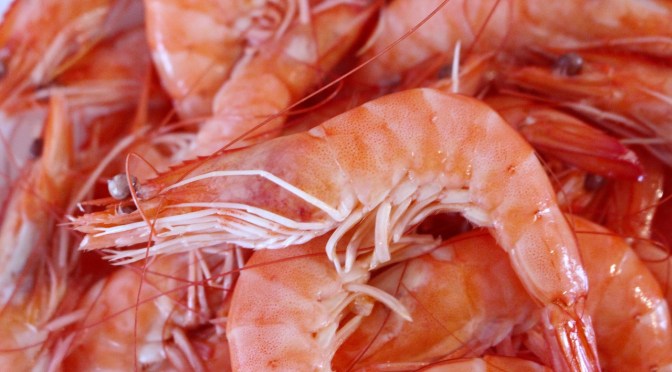
mRNA Vaccines Now Headed for Shrimp

Story at-a-glance

  • ViAqua Therapeutics, an Israeli-based biotechnology startup, has secured $8.25 million in funding for its oral RNA-based shrimp vaccine
  • The vaccine targets white spot syndrome virus (WSSV), which leads to a 15% reduction in global shrimp production each year
  • ViAqua plans to administer its RNA-based product via coated feed; the RNA molecules can inhibit gene expression, silencing disease-affected genes
  • Shrimp lack an adaptive immune system, the type that “remembers” exposures to infectious agents, so it’s long been assumed that shrimp cannot be vaccinated; now it’s becoming clear that shrimp do have some defense against viruses, which is only beginning to be understood
  • The risks of tinkering with shrimp genetics, and using mRNA shots in pigs, cattle and other animals intended for food, are completely unknown

Shrimp are slated to become the latest food source exposed to messenger ribonucleic acid (mRNA) vaccines, courtesy of ViAqua Therapeutics, an Israeli-based biotechnology startup. The company has secured $8.25 million in funding from venture capitalists for its oral RNA-based shrimp vaccine, which is intended to target white spot syndrome virus (WSSV).

With plans to administer its RNA-based product via coated feed, ViAqua suggests the RNA molecules can inhibit gene expression, silencing disease-affected genes with every meal.1 WSSV is a devastating condition in shrimp, leading to a 15% reduction in global shrimp production each year — an annual loss of about $3 billion.2

ViAqua says challenge tests show its RNA-based formulation improved shrimp survival against WSSV, but at what cost? The use of mRNA in the food supply is controversial for good reason — no one knows what the long-term consequences will be.

RNA Vaccines Coming for Shrimp

ViAqua is using RNA interference (RNAi) particles, provided as a feed supplement, to manipulate gene expression in shrimp, one of the most widely consumed forms of seafood worldwide. In a 2022 proof of concept study that used a polyanhydride nanoparticle delivery platform to deliver RNA to shrimp orally, it’s stated:3

“RNA interference (RNAi) in invertebrates is an antiviral cellular mechanism by which a trigger, such as double-stranded RNA (dsRNA) or small interfering RNA (siRNA) starts sequence-specific degradation of target mRNA, thereby preventing viral gene expression.

… In aquaculture systems, the concept of RNAi-based vaccines has been championed for several reasons: (a) RNAi works as an antiviral immune response in shrimp; (b) it is pathogen-specific; and (c) it generates a long-term protective immune response.”

The study found that the “nanovaccine” was about 80% effective in protecting against WSSV in shrimp, when administered via reverse gavage to “mimic an oral route.”4 ViAqua has brought the potential for oral delivery to the next level, with plans to begin producing its RNAi capsule products in India in 2024.5 Shai Ufaz, ViAqua’s chief executive officer, stated:6

“Oral delivery is the holy grail of aquaculture health development due to both the impossibility of vaccinating individual shrimp and its ability to substantially bring down the operational costs of disease management while improving outcomes … We are excited to bring this technology to market to address the need for affordable disease solutions in aquaculture.”

Can Shrimp Be Vaccinated?

Shrimp lack an adaptive immune system, the type that “remembers” exposures to infectious agents so it can mount a better response the next time it comes around. Because of this, it’s long been assumed that shrimp cannot be vaccinated. According to the Global Seafood Alliance:7

“Scientific literature on shrimp has often adopted terms and approaches from mammalian immunology, but not always in a correct way. Such is the case in the use of the term “vaccination” in crustaceans. The principle of vaccination is based on two key elements of the immune system: specificity and memory. These two properties are not recognized in the immune systems of shrimp and other invertebrates.”

However, while shrimp don’t have adaptive immunity in the traditional sense, it’s becoming clear that they do have some defense against viruses, which is only beginning to be understood. In 2008, researchers with Australia’s University of Queensland explained, “There is mounting evidence for specific immune memory in crustaceans, including shrimp,” adding:8

“It has been widely assumed that no such adaptive systems exist in invertebrates, thus vaccines have not been routinely developed and used in shrimp aquaculture. Invertebrates were considered to rely solely on an innate immune system characterized by generalized immune responses to conserved molecular structures of invading pathogens such as bacteria and fungi.

Some of these pathways are relatively well understood, involving an array of pattern recognition receptors interacting with serine proteases to initiate encapsulation, phagocytosis and an antimicrobial cascade based on the phenoloxidase enzyme system.

However, what is becoming more apparent is that the diversity and sophistication of innate responses in invertebrates is far greater than previously assumed. The invertebrate immune response to viruses is particularly poorly understood.”

ViAqua’s RNAi product claims to “enhance resistance to viral infections” in shrimp,9 and they have plans to develop additional mRNA vaccines for fish and other biotechnology products targeting additional shrimp viruses and other pathogens.10

But shrimp pathogens of one kind or another are virtually guaranteed to persist in the intensive aquaculture farms where many shrimp are raised. Further, the risks of tinkering with shrimp genetics are completely unknown.

Download this Article Before it Disappears

Download PDF

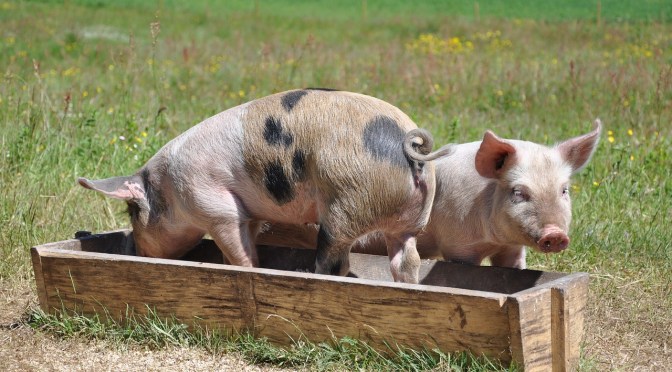
mRNA Shots Already Used in Pork

The media has been pretty quiet about the up-and-coming genetic manipulation of shrimp. This seems to be par for the course. Few are aware that, since 2018, pork producers have been using customizable mRNA-based “vaccines” on their herds — as it largely slipped by under the radar.11

It wasn’t until attorney Tom Renz began promoting new legislation in Missouri (House Bill 1169,12 which he helped write) that would require labeling of mRNA products that it began to receive attention.13 In an April 1, 2023, tweet, Renz stated:14

“BREAKING NEWS: the lobbyists for the cattleman and pork associations in several states have CONFIRMED they WILL be using mRNA vaccines in pigs and cows THIS MONTH. WE MUST SUPPORT MISSOURI HB1169. It is LITERALLY the ONLY chance we have to prevent this … NO ONE knows the impacts of doing this but we are all potentially facing the risk of being a #DiedSuddenly if we don’t stop this.”

Even though the bill asks only for transparency — not a ban of the mRNA-based shots — industry pushback has been enormous. They don’t want you to know that they’re using mRNA and similar products, because then they’d have to admit that the resulting foods may have gene-altering effects. And it’s not just pork, either.

Cattle Groups Urge Caution Over mRNA

The first RNA-based livestock vaccine, a swine influenza (H3N2) RNA shot developed by Harrisvaccines was licensed in 2012.15 The company followed up with an avian influenza mRNA shot in 2015.16

Concerns that mRNA injections could end up “in the global protein supply chain” also prompted warnings from cattle producers and calls for mandatory country of origin labeling (MCOOL) so consumers can choose meat from countries that don’t allow mRNA shots in meat animals.17

In an April 2023 news release, Ranchers-Cattlemen Action Legal Fund United Stockgrowers of America (R-CALF USA), a nonprofit that represents interests of independent U.S. cattle producers, shared concerns about the use of mRNA shots in cattle and other meat animals. Max Thornsberry, DVM, R-CALF’s animal health committee chair, met with medial doctors and a molecular biologist before briefing the R-CALF USA board:18

“Thornsberry reported that some researchers have found that mRNA and its coded virus is likely passed from an injected human to a noninjected human, and to humans who have consumed dairy products or meat from an mRNA-injected animal.

He said that because the research on mRNA is still in its infancy, no one really knows the full impact it has on either humans or animals, particularly its long-term impact. He said this itself warrants more extensive mRNA research focused on safety, heightened public vigilance, and greater transparency.”

In a commentary, R-CALF CEO Bill Bullard also urged caution regarding mRNA injections, stating:19

“It’s not a vaccine as we typically understand vaccines. So, for the rest of this discussion, I’ll refer to it as an injection. It’s an injection of a laboratory-produced substance into humans or livestock that is coded with a particular virus, such as COVID-19, that produces an immune response against the particular virus.

And what does mRNA do? Well, it hijacks living cells, tricking them into producing some level of immunity against human viruses like COVID-19 and livestock viruses such as foot-and-mouth disease or lumpy skin disease. It does this by rewriting the instructions from the body’s DNA. And what are the potential risks to humans and livestock?

The truthful answer is we don’t yet know the long-term effects of mRNA injections in either humans or livestock.

… There is great concern that living cells excrete the mRNA over time and the mRNA can then be transferred to animals and humans that have never received the mRNA injection. It is believed, for example, that humans can contact mRNA by eating meat from livestock that have received the injection.

The reason mRNA is an issue today is that pharmaceutical firms have found that it takes very little of it to hijack a cell, and it can be produced cheaper than typical virus vaccines.”

Is it possible that mRNA or RNAi nanoparticles could persist in the meat and shrimp you’re eating? Penny Riggs, associate research professor of functional genetics at Texas A&M, stated, “The estimate is that half of the mRNA from a vaccine is gone in about 20 hours, and completely destroyed within a few days.”20

However, Thornsberry cited21 one study, published in Biomedicines, that found mRNA from injections can be detected in blood 15 days post-shot.22

The proof-of-concept study for the shrimp RNA nanovaccine also found the particles persisted long after administration: “The nanoparticles localized to tissue target replication sites for WSSV and persisted through 28 days post-administration.”23 Again, the consequences of consuming these nanoparticles remains to be seen.

Antibiotic Resistance Widespread in Shrimp

Farm-raised seafood is among the most contaminated foods you can eat, shrimp included. Antibiotics are commonly used on farmed shrimp in an attempt to slow down pathogens.24 Not surprisingly, shrimp is often contaminated with antibiotic-resistant bacteria as a result.

One investigation by CBC News Marketplace found 17% — nine of the 51 packages of shrimp imported from Vietnam, Thailand, China, India and Ecuador — were contaminated with antibiotic-resistant bacteria.25 Among them, all but one showed resistance to multiple antibiotics.

Investigators purchased imported shrimp labeled “organic” as well as some with the “Best Aquaculture Practices” certification, which maintains that farmers only use antibiotics minimally.

So, while shrimp can be a healthy addition to your diet, it’s important to avoid farm-raised shrimp, which is the type served in most restaurants and the variety that’s slated to receive a gene-altering nanoparticle vaccine in its feed. When it comes to purchasing high-quality shrimp, look for those that are either wild caught or locally produced.

SOURCE

Sources and References

If you enjoy our posts, check out our sister site truthwatchnz.is

Image by magdus from Pixabay

Food – The Ultimate Weapon Of The Ruling (not) Elite

The original link to this article at Info Clearing House is now gone. It’s from 2008 and an interesting to read in light of the current regime. I can find nothing (quick search) about William online, let me know if you can. I expect his enlightening info would’ve been hoovered carefully from the internet by now, classed as disinfo. Some time ago I did see his Robert McNamara depop quote but could not find a reference to that anywhere either. EWR


By William Bowles

19/04/08 “Creative-i ” — –Using food as a weapon is as old as the siege but today’s barbarians have upped the anté by several orders of magnitude.

“…There are only two possible ways in which a world of 10 billion people can be averted. Either the current birth rates must come down more quickly. Or the current death rates must go up. There is no other way. There are, of course, many ways in which the death rates can go up. In a thermonuclear age, war can accomplish it very quickly and decisively. Famine and disease are nature’s ancient checks on population growth, and neither one has disappeared from the scene … To put it simply: Excessive population growth is the greatest single obstacle to the economic and social advancement of most of the societies in the developing world.” — Speech to the Club of Rome by Robert McNamara, Oct. 2, 1979

“Overpopulation and rapid demographic growth of Mexico is already today one of the major threats to the national security of the United States. Unless the U.S.-Mexico border is sealed, we will be up to our necks in Mexicans for whom we cannot find jobs.” —Robert McNamara, then World Bank president, March 19, 1982

McNamara’s thinly veiled genocidal utterances took place over thirty years ago, echoing the wealthy and the privileged’s fear of the ’great unwashed’ when ‘over-population’ was the buzzword. So not much has changed has it, we’re hearing the same, tired old messages being rolled out once again by the ruling elites and their spin doctors. McNamara’s cries of fear about being up to his neck in Mexicans is exactly same as the current bogey doing the rounds in Europe, only now they’re Africans.

Thus the current explosions in Haiti, Eygpt, Ivory Coast, Ethiopia, the Philippines, Indonesia and elsewhere over the rocketing price of basic foodstuffs such as cooking oil and rice prompted the BBC to describe them as first and foremost “a potential threat to Western security” (BBC News 24, 13 April, 2008), never mind the threat to human life, but then it reveals exactly where the BBC’s head is at, protecting the status quo.

To add insult to injury, the crétin Gordon Brown has the damn nerve to say,

“Rising food prices threaten to roll back progress we have made in recent years on development. For the first time in decades, the number of people facing hunger is growing.”

Progress? What planet does our glorious leader live on? Standards of living have been falling for everybody (except the rich who, as a consequence, have just gotten even richer by stealing even more from the poor), since the 1970s when the ‘neo-liberal’ agenda was initiated and not only have the poorest been the hardest hit but we’ve seen millions of the formerly ‘middle classes’ dumped unceremoniously back where they ‘belong’, with the poor. Social status doesn’t put food on the table. So much for the capitalist ‘good life’.

These are the facts: real wages in the US have fallen since the 1970s. It’s reckoned that around 40 million Americans now live under the ‘official’ poverty level, but at least they can still eat something, not so the millions of people in the so-called developing world who already immiserated by so-called free trade, have been hit with a double whammy, nay, a quintuple whammy.

Whammy #1: ‘Free Trade’

The poor countries of the world have been ‘persuaded’ that growing food for export so as to earn foreign currency which they then have to use to buy imported food (guess where from?), is better than growing food in their back yard. And to make sure they live up to their end of the ‘bargain’, under WTO ‘rules’ they get punished if they try to control imports.

Countries grew their own food which not only fed them but also created employment, now grow food and things like flowers, for export in order to ‘earn’ the precious dollar which obviously they have to spend on importing the food they once grew. Worse, the subsidized food imports wipe out what remains of indigenous agriculture, it simply can’t compete. What an insane setup! It only makes sense when you realize that the managers who setup this ‘deal’ work for BIg Business, they call the shots. If it were a ‘Mafia’ deal it would be called criminal extortion.

Of course, we in the West with our wealth subsidize the production of food, so the poor of the planet get hit with a whammy within a whammy. Not having the resources to subsidize their own food production, as the cost of importing food rises but not the price they get for exporting food to us, they are truly caught between a rock and a barren place.

And it’s the same IMF and World Bank policies which created the latest crisis to hit the poor of our planet, that are responsible for creating such an unequal relationship in the first place.

Whammy #2: Energy

And of course to grow all these crops for export needs lots of energy and lots of water, and lots of fertilizer, and lots of pesticides, all of which must be bought with precious foreign currency (and until recently, only dollars would be accepted). With oil now selling at over $113 a barrel, the cost of producing anything has shot through the roof. The winners: The Big Oil Cartels. No need to tell you who the losers are.

But the actual cost of producing the oil hasn’t risen much at all, the entire responsibility for these increases has to be placed where it belongs, on the commodities speculators and the Big Five oilcos. In other words, on all those grimy gamblers in investment corps and pension fund managers. It’s the system.

Whammy #3: ‘Bio-fuels’

The latest addition to the armoury of food used as a weapon and perhaps the most obvious example to date, is converting production from food staples to so-called bio-fuels.

For rather than us just using less energy, we buy it from the poor of the planet in the form of ‘bio-fuels’. Brilliant isn’t it. What poor country needs to produce ethanol? It has no possible use except perhaps to make moonshine.

But we knew that this would happen and everybody told our cretinous, criminal leaders what would happen. They’re too busy producing wheat for export to feed all those damn cows, cows that we turn into hamburgers for our consumption, but now, instead of producing wheat for export to make burgers, we’re producing ethanol to put in our automobiles. Either way it’s madness!

And in any case, as a leaked EU report shows, bio-fuels do nothing to halt the production of greenhouse gases (they may even increase it), the entire ‘bio-fuels’ thing is one gigantic scam, largely to do with what is the most profitable crop to grow (see ‘Industry asks for biofuels policy U-turn).

Whammy #4: Water

Fact: It takes 1,000-2,000 litres of water to produce 1 kilo of wheat

Fact: It takes 10,000-13,000 litres of water to produce 1 kilo of meat (Source: FAO)

And guess what gets produced the most, largely for Western consumption—burgers. And not surprisingly, the ‘neo-liberal’ agenda has seen the enforced privatization of water across the planet along with other key resources formerly held in communal ownership.

Whammy #5: Climate Change

Predictably, climate change impacts on those least able to deal with it, the poor. And lest we forget, the majority of the planet’s population are poor. The connectedness between everything must surely be apparent to you, the reader, the fact that messing up the biosphere the way we have been doing for the past two hundred years reverberates throughout the planet. And our political elites call themselves civilized!

Meanwhile, back in the land of the powerful, we’re busy planning for endless war in order to preserve our privilege, so even as our glorious leaders pontificate on about this or that crisis facing us, they’re spending billions on developing robots to shit bombs on the planet’s poor from a comfortable armchair some distance from the scene of the ‘action’.

“UAV Market to Top $13 Billion by 2014

Washington, D.C. (PRWEB) April 14, 2008 — The global war on terrorism has prompted the United States to pump significant amounts of money into its Unmanned Aerial Vehicle (UAV) programs, asserts Forecast International analyst Larry Dickerson.” — www.aviationtoday.com/webinars/2008_0417.html

How can anybody in his or her right mind not view these people and the entire class in whose interests they work so tirelessly, not see them not only as war criminals but as destroyers of life! These are truly barbarians in every sense of the word, for they destroy everything of beauty and value including entire countries in order to preserve their piece of the action.

No wonder the Hollywood obsession with ‘saving the planet’ but when will we see a movie about saving ourselves and our home from these predatory mass murderers?

So why is it that we turn away from the carnage ostensibly wrought in our name? After all, people give generously to so-called charities, so it’s not that people don’t care about the plight of others.

Again, I come back to the corporate/state media for surely without their active complicity in covering up the endless atrocities being committed would we stand for it? I think not, but then I’m an eternal optimist about the real nature of the human spirit once we stop fearing and start thinking and feeling.

The major reason is the media’s (never mind the politicians) failure to connect events with the underlying economics that drives them to act the way they do. Thus the ‘credit-crunch’ is so misnamed in order to hide the fact that it’s the economic and political policies of our governments in cahoots with Big Business that created the crisis in the first place (as it has all previous crises).

The ‘credit-crunch’ is merely symptomatic of a sick system that needs to be replaced poste haste.

The issue is really quite simple, as long as we have ruling elites joined at the hip to Big Capital, running the show, they will never, not in a million years entertain the idea of doing away with the present economic system—which is the cause of all our miseries—and replacing it with a saner and more modest way of earning a buck, there’s too much at stake and for so few, dammit! Only we, the so-called people can do that, they won’t even begin to change things unless we either force them to or failing that, get rid of them.

Image by Pexels from Pixabay

How Bayer/Monsanto has been systematically undercutting science & making large investments to build propaganda that attacks non-GMO activists & organizations (IRT)

From Institute for Responsible Technology

Bayer versus the planet.

CRIMES AGAINST HUMANITY.

Bayer has been in the news recently (rightfully so) for – you guessed it – poisoning the planet. We have stood against Bayer/Monsanto for twenty years and it’s high time they stand accountable for their planetary injustice.

This week you may have seen that the CDC released a report which stated 80% of urine samples taken from Americans contained glyphosate, “Roundup”.

What you likely didn’t hear is that Bayer/Monsanto has been systematically undercutting science and making large investments to build propaganda that attacks organizations like IRT, GM Watch, NonGMO Project, and other non-GMO activists.

In a 2019 Huff Post article, Bayer stated they, “no longer provided support for the Genetic Literacy Project” – a misinformation website designed to produce content devaluing other scientific studies which are not pro-GMO.

The article (again dated in 2019) points out how Bayer leveraged its many resources to suppress evidence of the health and environmental damage caused by glyphosate and challenged the World Health Organization’s determination that it’s probably “cancer-causing.”

During the Monsanto trials, a secret company email targeted our founder Jeffrey Smith. The subject line was “Whack-a-Mole,” an internal Monsanto joke about how they attack those who expose the true dangers of their products. They even had a large budget-item called “Let Nothing Go,” funding used to suppress all evidence that GMOs, glyphosate, and Gene Editing cause dangerous side effects. Jeffrey’s extensive reporting over two decades was one of their familiar targets.

Their lies and attacks continue. The latest is pretending that gene edited GMOs are safe. And they’ve paid all sorts of organizations and scientists to repeat the lie. Tragically, numerous governments have been tricked, and now allow gene edited GMOs to be introduced into our food supply and environment without any safety checks or even notifying regulators This poses an unprecedented threat to each of us, and future generations. The time to act is now.

TAKE ACTION HERE

SOURCE:

IRT Newsletter:

https://archive.aweber.com/newsletter/awlist6265886/MTUxNzY0NTM=/bayer-versus-the-planet.htm

Photo: hpgruesen @ pixabay.com

Jamie Oliver’s teaming up with Gates the frankenfood advocate

Another person sadly sold out? Should you seriously think the fake food intended by the rich and powerful to feed the starving planet is good please see the glyphosate page (main menu). Particularly as FF 101 watch Jeffrey Smith’s little video clip to give you the short low down on it. And there are multiple other videos for those who wish to dig deeper … in particular watch ‘The World According to Monsanto’ (who haven’t gone away BTW they’ve just morphed into Bayer) … a time worn tactic the name change. EWR

RELATED: The “Golden Rice” Hoax – When Public Relations replaces Science – By Vandana Shiva
_____________________________________________________________________

Jamie Oliver is a well known English chef and media personality who is known for his TV cookery shows and cookbooks along with his global campaign for better food education.

But now, Oliver the “healthy food advocate” has decided to team up with one of Monsanto’s biggest allies, the Bill & Melinda Gates Foundation

The video shows Oliver pledging his support for what GMO pushing Gates has called “a better food system”, which is supposed to get rid of world hunger and global poverty..

READ MORE

LINK: https://newspunch.com/tv-food-activist-jamie-oliver-teaming-up-with-bill-gates-foundation-video/?fbclid=IwAR02hznqApLT33ud-5LMvh0faa_fU2BZeoR9vCRdwulO1-mk_aHcrAVXnFA

Image by Steve Buissinne from Pixabay

It’s believed CV vaccines may contain genetically engineered prions that could cause brain damage that may in turn lead to death

Information from the seemorerocks blogspot:

Excerpt: “The first covid-19 vaccine victim to have suffered brain damage has been reported in India a few months after being vaccinated, which is why test subjects are observed for only one or two months by vaccine producers and regulatory agencies.”

READ MORE

https://robinwestenra.blogspot.com/2020/12/important-information-on-vaccines-that.html?fbclid=IwAR0BSAmFG-TBggPCpQjhewojrB-E49Nua3IeDbWQK3nkYTttEhY4pXhZsiQ

Image by HeungSoon from Pixabay

Bill Gates is on camera saying an RNA vaccine will change your DNA forever

Food For Thought 2.43K subscribers

Image by Arek Socha from Pixabay

Glyphosate Herbicides Now Banned or Restricted in 18 Countries Worldwide – Sustainable Pulse Research

Following the recent bans on the use of glyphosate-based herbicides by cities and institutions in the U.S., including Key West, Los Angeles, the University of California and Miami, Sustainable Pulse decided to research which countries around the world have banned or restricted the use of the world’s most used herbicide.

This research has led to the discovery that there is a growing swell of government level support worldwide for bans on glyphosate-based herbicides for both health and environmental reasons.

17 countries have now banned or restricted the use of this carcinogenic herbicide.

Previous research by Sustainable Pulse on the number of countries that have banned GM Crops has reached millions of people and we look forward to our latest research reaching an even wider audience. Sustainable Pulse welcomes additions or edits to the list below from readers and experts from around the Globe.

Africa:

Malawi: Malawi’s Ministry of Agriculture, Irrigation and Water Development announced the suspension of import permits for glyphosate in April 2019.

Asia:

Vietnam: Vietnam announced that it banned the import of all glyphosate-based herbicides with in March 2019 following a cancer trial verdict from San Francisco

Sri Lanka: In 2015 a full import ban on all glyphosate-based herbicides was put in place by the then newly elected President Maithripala Sirisena. This ban was partly lifted in July 2018 but only for use on tea and rubber plantations.

READ MORE

https://sustainablepulse.com/2019/05/28/glyphosate-herbicides-now-banned-or-restricted-in-17-countries-worldwide-sustainable-pulse-research/#.XXsuGejVKdE

4 Sugar Alternatives That Won’t Poison You


You may think that staying slim and eating healthfully means NO sweets, but guess what? There are natural and delicious sweeteners that won’t wreck your diet, and even have therapeutic ‘side benefits.’

No arena of health and wellness is more debatable than what we should be eating. Looking back through time, the foods that constitute a healthy diet have changed so dramatically, you can literally mark the passage of time by the coming and going of dietary fads.

  • Weight-loss clubs and diet pill popping in the 1970s
  • Cabbage soup and liquid diets in the ‘80s
  • The Zone and blood-type diets (along with lawsuits related to diet pills!) in the ‘90s
  • In the aughts, Atkins and gluten-free
  • In the 2010’s, it’s Paleo, raw, and local

Despite this obsessive focus on what to eat, Americans are fatter and in many ways, unhealthier than ever before[1]. In 2016, two-thirds of the adult population were considered overweight or obese, according to a U.S. Dept. of Health and Human Services study[2]. This health epidemic spans ethnic and cultural boundaries, and is affecting more adults and children every year.

One factor that is contributing to America’s growing problem with weight is our obsession with sugar. You probably don’t need to see the results of a clinical study to believe that the more sugary calories you consume, the greater your risks of obesity[3]. What you may not know, is that what passes for sugar these days is actually a hyper-sweetened extract of one of the cheapest, most heavily-sprayed, GMO-pervasive crops on the planet.

READ MORE

http://www.greenmedinfo.com/blog/4-sugar-alternatives-wont-poison-you?

Genetically Engineered Foods May Cause Rising Food Allergies (Part Two)

See Part One at the link first

Genetically Engineered Corn

The biotech industry is fond of saying that they offer genetically modified (GM) crops that resist pests. This might conjure up the image of insects staying away from GM crop fields. But “resisting pests” is just a euphemism for
contains its own built-in pesticide. When bugs take a bite of the GM plant, the toxin splits open their stomach and kills them.

The idea that we consume that same toxic pesticide in every bite is hardly appetizing. But the biotech companies and the Environmental Protection Agency—which regulates plant produced pesticides—tell us not to worry. They contend that the pesticide called Bt (Bacillus thuringiensis) is produced naturally from a soil bacterium and has a history of safe use. Organic farmers, for example, have used solutions containing the natural bacteria for years as a method of insect control. Genetic engineers simply remove the gene that produces the Bt in bacteria and then insert it into the DNA of corn and cotton plants, so that the plant does the work, not the farmer. Moreover, they say that Bt-toxin is quickly destroyed in our stomach; and even if it survived, since humans and other mammals have no receptors for the toxin, it would not interact with us in any case.

These arguments, however, are just that—unsupported assumptions. Research tells a different story.

Bt spray is dangerous to humans

When natural Bt was sprayed over areas around Vancouver and Washington State to fight gypsy moths, about 500 people reported reactions—mostly allergy or flu-like symptoms. Six people had to go to the emergency room for allergies or asthma.
[1],
[2] Workers who applied Bt sprays reported eye, nose, throat, and respiratory irritation,
[3] and some showed an antibody immune response in linked to Bt.
[4] Farmers exposed to liquid Bt formulations had reactions including infection, an ulcer on the cornea,
[5] skin irritation, burning, swelling, and redness.
[6] One woman who was accidentally sprayed with Bt also developed fever, altered consciousness, and seizures.
[7]

In fact, authorities have long acknowledged that “People with compromised immune systems or preexisting allergies may be particularly susceptible to the effects of Bt.”
[8] The Oregon Health Division advises that “individuals with . . . physician-diagnosed causes of severe immune disorders may consider leaving the area during the actual spraying.”
[9] A spray manufacturer warns, “Repeated exposure via inhalation can result in sensitization and allergic response in hypersensitive individuals.”
[10] So much for the contention that Bt does not interact with humans.

As for being thoroughly destroyed in the digestive system, mouse studies disproved this as well. Mice fed Bt-toxin showed significant immune responses—as potent as cholera toxin. In addition, the Bt caused their immune system to become sensitive to formerly harmless compounds This suggests that exposure might make a person allergic to a wide range of substances.
[11],
[12] The EPA’s own expert advisors said that the mouse and farm worker studies above “suggest that Bt proteins could act as antigenic and allergenic sources.”
[13]
The toxin in GM plants is more dangerous than natural sprays

The Bt-toxin produced in GM crops is “vastly different from the bacterial [Bt-toxins] used in organic and traditional farming and forestry.”
[14] First of all, GM plants produce about 3,000-5,000 times the amount of toxin as the sprays. And the spray form is broken down within a few days to two weeks by sunlight,
[15] high temperatures, or substances on the leaves of plants; and it can be “washed from leaves into the soil by rainfall,”
[16] or rinsed by consumers. A Bt producing GM plant, on the other hand, continuously produces the toxin in every cell where it does not dissipate by weather and cannot be washed off.

The natural toxic produced in bacteria is inactive until it gets inside the alkaline digestive tract of an insect. Once inside, a “safety catch” is removed and the Bt becomes toxic. But scientists change the sequence the Bt gene before inserting it into GM plants. The Bt toxin it produces usually comes
without the safety catch. The plant-produced Bt toxin is
always active and more likely to trigger an immune response than the natural variety.
[17]
Bt-toxin fails safety studies but is used nonetheless

Tests cannot verify that a GM protein introduced into the food supply for the first time will not cause allergies in some people. The World Health Organization (WHO) and UN Food and Agriculture Organization (FAO) offer criteria designed to reduce the likelihood that allergenic GM crops are approved.
[18]They suggest examining a protein for 1) similarity of its amino acid sequence to known allergens, 2) digestive stability and 3) heat stability. These properties aren’t
predictive of allergenicity, but their presence, according to experts, should be sufficient to reject the GM crop or at least require more testing. The Bt-toxin produced in GM corn fails all three criteria.

For example, the specific Bt-toxin found in Monsanto’s Yield Guard and Syngenta’s Bt 11 corn varieties is called Cry1AB. In 1998, an FDA researcher discovered that Cry1Ab shared a sequence of 9-12 amino acids with vitellogenin, an egg yolk allergen. The study concluded that “the similarity . . . might be sufficient to warrant additional evaluation.”
[19] No additional evaluation took place.
[20]

Cry1Ab is also very resistant to digestion and heat.
[21] It is nearly as stable as the type of Bt-toxin produced by StarLink corn. StarLink was a GM variety not approved for human consumption because experts believed that its highly stable protein might trigger allergies.
[22] Although it was grown for use in animal feed, it contaminated the US food supply in 2000. Thousands of consumers complained to food manufacturers about possible reactions and over 300 items were subject to recall. After the StarLink incident, expert advisors to the EPA had called for “surveillance and clinical assessment of exposed individuals” to “confirm the allergenicity of
Bt products.”
[23] Again, no such monitoring has taken place.

Bt cotton triggers allergic reactions

A 2005 report by medical investigators in India describes an ominous finding. Hundreds of agricultural workers are developing moderate or severe allergic reactions when exposed to Bt cotton. This includes those picking cotton, loading it, cleaning it, or even leaning against it. Some at a ginning factory must take antihistamines daily, in order to go to work. Reactions are
only triggered with the Bt varieties.
[24] Furthermore, the symptoms are virtually identical to those described by the 500 people in Vancouver and Washington who were sprayed with Bt. Only “exacerbations of asthma” were in one list and not the other (see table).

Upper respiratory Eyes Skin Overall
Bt Spray Sneezing,
runny nose,
exacerbations of asthma
Watery,
red
Itching, burning, inflammation, red, swelling Fever,
some in hospital
Bt cotton Sneezing,
runny nose
Watery,
red
Itching, burning, eruptions,
red, swelling
Fever,
some in hospital

(We are unaware of similar reports in the US, where 83% of the cotton is Bt. But in the US, cotton is harvested by machine, not by hand.)

The experience of the Indian workers begs the question, “How long does the Bt-toxin stay active in the cotton?” It there any risk using cotton diapers, tampons, or bandages? In the latter case, if the Bt-toxin interfered with healing it could be a disaster. With diabetics, for example, unhealed wounds may be cause for amputation.

Cottonseed is also used for cottonseed oil—used in many processed foods in the US. The normal methods used to extract oil likely destroy the toxin, although cold pressed oil may still retain some of it. Other parts of the cotton plant, however, are routinely used as animal feed. The next part of this series—focused on toxicity—presents evidence of disease and deaths associated with animals consuming Bt cotton plants.

Bt corn pollen may cause allergies

Bt-toxin is produced in GM corn and can be eaten intact. It is also in pollen, which can be breathed in. In 2003, during the time when an adjacent Bt cornfield was pollinating, virtually an entire Filipino village of about 100 people were stricken by a disease. The symptoms included headaches, dizziness, extreme stomach pain, vomiting, chest pains, fever and allergies, as well as respiratory, intestinal, and skin reactions. The symptoms appeared first in those living closest to the field, and then progressed to others by proximity. Blood samples from 39 individuals showed antibodies in response to
Bt-toxin; this supports, but does not prove a link to the symptoms. When the same corn was planted in four other villages the following year, however, the symptoms returned in all four areas—only during the time of pollination.

The potential dangers of breathing GM pollen had been identified in a letter to the US FDA in 1998 by the UK Joint Food Safety and Standards Group. They had even warned that genes from inhaled pollen might transfer into the DNA of bacteria in the respiratory system.
[25] Although no studies were done to verify this risk, years later UK scientists confirmed that after consuming GM soybeans, the foreign inserted genes can transfer into the DNA of gut bacteria. If this also happens with Bt genes, than years after we decide to stop eating GM corn chips, our own gut bacteria may continue to produce
Bt-toxin within our intestines.

Studies show immune responses to GM crops

Studies confirm that several GM crops engineered to produce built-in pesticides provoke immune responses in animals. A Monsanto rat study on Bt corn (Mon 863), that was made public due to a lawsuit, showed a significant increase in three types of blood cells related to the immune system: basophils, lymphocytes, and total white cell counts.
[26]

Australian scientists took an insecticide producing gene (not Bt) from a kidney bean and put it into a pea, in hopes of killing the pea weevil. The peas had
passed the tests normally used to approve GM crops and were on the way to being commercialized. But the developers decided to employ a mouse study that had never before been used on other GM food crops. When they tested the pesticide in its natural state, i.e. the version produced within kidney beans, the protein was not harmful to mice. But that “same” protein, when produced by the kidney bean gene that was inserted into pea DNA, triggered inflammatory responses in the mice, suggesting that it would cause allergies in humans. Somehow, the protein had been changed from harmless to potentially deadly, just by being created in a different plant. Scientists believe that subtle, unpredicted changes in the pattern of sugar molecules that were attached to the protein were the cause of the problem. These types of subtle changes are not routinely analyzed in GM crops on the market.

Experimental potatoes engineered with a third type of insecticide caused immune damage to rats.
[27] Blood tests showed that their immune responses were more sluggish, and organs associated with immune function also appeared to be damaged. As with the peas, the insecticide in its natural state was harmless to the rats. The cause of the health problems was therefore due to some unpredicted change brought about by the genetic engineering process. And like the peas, if the potatoes had been subjected to only the type of tests that are typically used by biotech companies to get their foods on the market, the potatoes would have been approved.

Allergic reactions are a defensive, often harmful immune system response to an external irritant. The body interprets something as foreign, different and offensive, and reacts accordingly. All GM foods, by definition, have something foreign and different. According to GM food safety expert Arpad Pusztai, “A consistent feature of all the studies done, published or unpublished, . . . indicates major problems with changes in the immune status of animals fed on various GM crops/foods.

[28]

In addition to immune responses, several studies and reports from the field provide evidence that GM foods are toxic. In the next article in this series, we look at thousands of sick, sterile and dead animals, linked to consumption of GM crops.

[1] Washington State Department of Health, “Report of health surveillance activities: Asian gypsy moth control program,” (Olympia, WA: Washington State Dept. of Health, 1993).

[2] M. Green, et al., “Public health implications of the microbial pesticide
Bacillus thuringiensis: An epidemiological study, Oregon, 1985-86,”
Amer. J. Public Health 80, no. 7(1990): 848-852.

[3] M.A. Noble, P.D. Riben, and G. J. Cook, “Microbiological and epidemiological surveillance program to monitor the health effects of Foray 48B BTK spray” (Vancouver, B.C.: Ministry of Forests, Province of British Columbi, Sep. 30, 1992).

[4] A. Edamura, MD, “Affidavit of the Federal Court of Canada, Trial Division. Dale Edwards and Citizens Against Aerial Spraying vs. Her Majesty the Queen, Represented by the Minister of Agriculture,” (May 6, 1993); as reported in Carrie Swadener, ”
Bacillus thuringiensis (B.t.),”
Journal of Pesticide Reform, 14, no, 3 (Fall 1994).

[5] J. R. Samples, and H. Buettner, “Ocular infection caused by a biological insecticide,”
J. Infectious Dis. 148, no. 3 (1983): 614; as reported in Carrie Swadener, ”
Bacillus thuringiensis (B.t.)”,
Journal of Pesticide Reform 14, no. 3 (Fall 1994)

[6]M. Green, et al., “Public health implications of the microbial pesticide
Bacilus thuringiensis: An epidemiological study, Oregon, 1985-86,”
Amer. J. Public Health, 80, no. 7 (1990): 848-852.

[7] A. Edamura, MD, “Affidavit of the Federal Court of Canada, Trial Division. Dale Edwards and Citizens Against Aerial Spraying vs. Her Majesty the Queen, Represented by the Minister of Agriculture,” (May 6, 1993); as reported in Carrie Swadener, ”
Bacillus thuringiensis (B.t.),”
Journal of Pesticide Reform, 14, no, 3 (Fall 1994).

[8] Carrie Swadener, ”
Bacillus thuringiensis (B.t.),
Journal of Pesticide Reform 14, no. 3 (Fall 1994).

[9]
Health effects of B.t.: Report of surveillance in
Oregon
, 1985-87. Precautions to minimize your exposure (Salem, OR: Oregon Departmentof Human Resources, Health Division, April 18, 1991).

[10]
Material Safety Data Sheet for Foray 48B Flowable Concentrate (Danbury, CT: Novo Nordisk, February, 1991).

[11]Vazquez et al, “Intragastric and intraperitoneal administration of Cry1Ac protoxin from
Bacillus thuringiensis induces systemic and mucosal antibody responses in mice,”
Life Sciences, 64, no. 21 (1999): 1897-1912; Vazquez et al, “Characterization of the mucosal and systemic immune response induced by Cry1Ac protein from
Bacillus thuringiensis HD 73 in mice,”
Brazilian Journal of Medical and Biological Research 33 (2000): 147-155.

[12] Vazquez et al, ”
Bacillus thuringiensis Cry1Ac protoxin is a potent systemic and mucosal adjuvant,”
Scandanavian Journal of Immunology 49 (1999): 578-584. See also Vazquez-Padron et al., 147 (2000b).

[13] EPA Scientific Advisory Panel, “Bt Plant-Pesticides Risk and Benefits Assessments,” March 12, 2001: 76. Available at:
http://www.epa.gov/scipoly/sap/2000/october/octoberfinal.pdf
[14] Terje Traavik and Jack Heinemann, “Genetic Engineering and Omitted Health Research: Still No Answers to Ageing Questions, 2006. Cited in their quote was: G. Stotzky, “Release, persistence, and biological activity in soil of insecticidal proteins from
Bacillus thuringiensis,” found in Deborah K. Letourneau and Beth E. Burrows,
Genetically Engineered Organisms. Assessing Environmental and Human Health Effects (cBoca Raton, FL: CRC Press LLC, 2002), 187-222.

[15] C. M. Ignoffo, and C. Garcial, “UV-photoinactivation of cells and spores of
Bacillus thuringiensis and effects of peroxidase on inactivation,”
Environmental Entomology 7 (1978): 270-272.

[16] BT: An Alternative to Chemical Pesticides,
Environmental Protection Division, Ministry of Environment, Government of British Columbia, Canada,
http://www.env.gov.bc.ca/epd/epdpa/ipmp/fact_sheets/BTfacts.htm
[17] See for example, A. Dutton, H. Klein, J. Romeis, and F. Bigler, “Uptake of Bt-toxin by herbivores feeding on transgenic maize and consequences for the predator
Chrysoperia carnea,”
Ecological Entomology 27 (2002): 441-7; and J. Romeis, A. Dutton, and F. Bigler, ”
Bacillus thuringiensis toxin (Cry1Ab) has no direct effect on larvae of the green lacewing
Chrysoperla carnea (Stephens) (Neuroptera: Chrysopidae),”
Journal of Insect Physiology 50, no.2-3 (2004): 175-183.

[18] FAO-WHO, “Evaluation of Allergenicity of Genetically Modified Foods. Report of a Joint FAO/WHO Expert Consultation on Allergenicity of Foods Derived from Biotechnology,” Jan. 22-25, 2001;
http://www.fao.org/es/ESN/food/pdf/allergygm.pdf
[19] Gendel, “The use of amino acid sequence alignments to assess potential allergenicity of proteins used in genetically modified foods,”
Advances in Food and Nutrition Research 42 (1998), 45-62.

[20] US EPA, “Biopesticides Registration Action Document (BRAD)—
Bacillus thuringiensis Plant-Incorporated Protectants: Product Characterization & Human Health Assessment,” EPA BRAD (2001b) (October 15, 2001): IIB4,
http://www.epa.gov/pesticides/biopesticides/pips/bt_brad2/2-id_health.pdf
[21] US EPA, “Biopesticides Registration Action Document (BRAD)—
Bacillus thuringiensis Plant-Incorporated Protectants: Product Characterization & Human Health Assessment,” EPA BRAD (2001b) (October 15, 2001): IIB4,
http://www.epa.gov/pesticides/biopesticides/pips/bt_brad2/2-id_health.pdf
[22] “Assessment of Additional Scientific Information Concerning StarLink Corn,” FIFRA Scientific Advisory Panel Report No. 2001-09, July 2001.

[23] EPA Scientific Advisory Panel, “Bt Plant-Pesticides Risk and Benefits Assessments,” March 12, 2001: 76. Available at:
http://www.epa.gov/scipoly/sap/2000/october/octoberfinal.pdf
24 Ashish Gupta et. al., “Impact of Bt Cotton on Farmers’ Health (in Barwani and Dhar District of Madhya Pradesh),”
Investigation Report, Oct-Dec 2005.

25 N. Tomlinson of UK MAFF’s Joint Food Safety and Standards Group 4, December 1998 letter to the U.S. FDA, commenting on its draft document, “Guidance for Industry: Use of Antibiotic Resistance Marker Genes in Transgenic Plants,”
http://www.food.gov.uk/multimedia/pdfs/acnfp1998.pdf; (see pages 64-68).

26 John M. Burns, “13-Week Dietary Subchronic Comparison Study with MON 863 Corn in Rats Preceded by a 1-Week Baseline Food Consumption Determination with PMI Certified Rodent Diet #5002,” December 17, 2002
http://cera-gmc.org/docs/decdocs/05-184-001.pdf, see also Stéphane Foucart, “Controversy Surrounds a GMO,”
Le Monde, 14 December 2004; and Jeffrey M. Smith, “Genetically Modified Corn Study Reveals Health Damage and Cover-up,” Spilling the Beans, June 2005, http://www.seedsofdeception.com/Public/Newsletter/June05GMCornHealthDangerExposed/index.cfm

27 A. Pusztai, et al, “Genetically Modified Foods: Potential Human Health Effects,” in: Food Safety: Contaminants and Toxins (ed. JPF D’Mello) (Wallingford Oxon, UK: CAB International), 347-372, also additional communication with Arpad Pusztai.

28 October 24, 2005 correspondence between Arpad Pusztai and Brian John

SOURCE:

https://responsibletechnology.org/genetically-engineered-foods-may-cause-rising-food-allergies-part-two/


Genetically Engineered Foods May Cause Rising Food Allergies (Part One)

“The allergy study identified irritable bowel syndrome, digestion problems,chronic fatigue, headaches, lethargy, and skin complaints, including acne and eczema, all related to soy consumption. Symptoms of glyphosate exposure include nausea, headaches, lethargy, skin rashes, and burning or itchy skin.”
May 7, 2007

despair-1235582_1280

From responsibletechnology.org

Genetically Engineered Soybeans

The huge jump in childhood food allergies in the US is in the news often[1], but most reports fail to consider a link to a recent radical change in America’s diet. Beginning in 1996, bacteria, virus and other genes have been artificially inserted to the DNA of soy, corn, cottonseed and canola plants. These unlabeled genetically modified (GM) foods carry a risk of triggering life-threatening allergic reactions, and evidence collected over the past decade now suggests that they are contributing to higher allergy rates.

Food safety tests are inadequate to protect public health

Scientists have long known that GM crops might cause allergies. But there are no tests to prove in advance that a GM crop is safe.[2] That’s because people aren’t usually allergic to a food until they have eaten it several times. “The only definitive test for allergies,” according to former FDA microbiologist Louis Pribyl, “is human consumption by affected peoples, which can have ethical considerations.”[3] And it is the ethical considerations of feeding unlabeled, high-risk GM crops to unknowing consumers that has many people up in arms.

The UK is one of the few countries that conducts a yearly evaluation of food allergies. In March 1999, researchers at the York Laboratory were alarmed to discover that reactions to soy had skyrocketed by 50% over the previous year. Genetically modified soy had recently entered the UK from US imports and the soy used in the study was largely GM. John Graham, spokesman for the York laboratory, said, “We believe this raises serious new questions about the safety of GM foods.”[4]

Critics of GM foods often say that the US population is being used as guinea pigs in an experiment. But experiments have the benefit of controls and measurement. In this case, there is neither. GM food safety experts point out that even if a someone tried to collect data about allergic reactions to GM foods, they would not likely be successful. “The potential allergen is rarely identified. The number of allergy-related medical visits is not tabulated. Even repeated visits due to well-known allergens are not counted as part of any established surveillance system.”[5] Indeed, after the Canadian government announced in 2002 that they would “keep a careful eye on the health of Canadians”[6] to see if GM foods had any adverse reactions, they abandoned their plans within a year, saying that such a study was too difficult.

Genetic engineering may provoke increased allergies to soy

The classical understanding of why a GM crop might create new allergies is that the imported genes produce a new protein, which has never before been present. The novel protein may trigger reactions. This was demonstrated in the mid 1990s when soybeans were outfitted with a gene from the Brazil nut. While the scientists had attempted to produce a healthier soybean, they ended up with a potentially deadly one. Blood tests from people who were allergic to Brazil nuts showed reactions to the beans.[7] It was fortunately never put on the market.

The GM variety that is planted in 89% of US soy acres gets its foreign gene from bacteria (with parts of virus and petunia DNA as well). We don’t know in advance if the protein produced by bacteria, which has never been part of the human food supply, will provoke a reaction. As a precaution, scientists compare this new protein with a database of proteins known to cause allergies. The database lists the proteins’ amino acid sequences that have been shown to trigger immune responses. If the new GM protein is found to contain sequences that are found in the allergen database, according to criteria recommended by the World Health Organization (WHO) and others, the GM crop should either not be commercialized or additional testing should be done. Sections of the protein produced in GM soy are identical to known allergens, but the soybean was introduced before the WHO criteria were established and the recommended additional tests were not conducted.

If this protein in GM soybeans is causing allergies, then the situation may be made much worse by something called horizontal gene transfer (HGT). That’s when genes spontaneously transfer from one species’ DNA to another. While this happens often among bacteria, it is rare in plants and mammals. But the method used to construct and insert foreign genes into GM crops eliminates many of the natural barriers that stop HGT from occurring. Indeed, the only published human feeding study on GM foods ever conducted verified that portions of the gene inserted into GM soy ended up transferring into the DNA of human gut bacteria. Furthermore, the gene was stably integrated and it appeared to be producing its potentially allergenic protein. This means that years after people stop eating GM soy, they may still be exposed to its risky protein, which is being continuously produced within their intestines.

Genetic engineering damaged soy DNA, creating new (or more) allergens

Although biotech advocates describe the process of genetic engineering as precise, in which genes—like Legos—cleanly snap into place, this is false. The process of creating a GM crop can produce massive changes in the natural functioning of the plant’s DNA. Native genes can be mutated, deleted, permanently turned on or off, and hundreds may change their levels of protein expression. This collateral damage may result in increasing the levels of an existing allergen, or even producing a completely new, unknown allergen within the crop. Both appear to have happened in GM soy.

Levels of one known soy allergen, trypsin inhibitor, were up to 27% higher in raw GM soy. In addition, although cooking soybeans normally reduces the amount of this protein, the trypsin inhibitor in GM varieties appears to be more heat resistant. Levels in cooked GM soy were nearly as high as those found in raw soy, and up to seven times higher when compared to cooked non-GM soy.[8] This suggests that this allergen in GM soy may be more likely to provoke reactions than when consumed in natural varieties.

Another study verified that GM soybeans contain a unique, unexpected protein, not found in non-GM soy controls. Moreover, scientist tested the protein and determined that it reacted with the antibody called IgE. This antibody in human blood plays a key role in a large proportion of allergic reactions, including those that involve life-threatening anaphylactic shock. The fact that the unique protein created by GM soy interacted with IgE suggests that it might also trigger allergies.

The same researchers measured the immune response of human subjects to soybeans using a skin-prick test—an evaluation used often by allergy doctors. Eight subjects showed a reaction to GM soy; but one of these did not also react to non-GM soy. Although the sample size is small, the implication that certain people react only to GM soy is huge, and might account for the increase in soy allergies in the UK.

Increased herbicides on GM crops may cause reactions

By 2004, farmers used an estimated 86% more herbicide on GM soy fields compared to non-GM.[9] The higher levels of herbicide residue in GM soy might cause health problems. In fact, many of the symptoms identified in the UK soy allergy study are among those related to glyphosate exposure. [The allergy study identified irritable bowel syndrome, digestion problems, chronic fatigue, headaches, lethargy, and skin complaints, including acne and eczema, all related to soy consumption. Symptoms of glyphosate exposure include nausea, headaches, lethargy, skin rashes, and burning or itchy skin. It is also possible that glyphosate’s breakdown product AMPA, which accumulates in GM soybeans after each spray, might contribute to allergies.]

GM soy might impede digestion, leading to allergies

If proteins survive longer in the digestive tract, they have more time to provoke an allergic reaction. Mice fed GM soy showed dramatically reduced levels of pancreatic enzymes. If protein-digesting enzymes are less available, then food proteins may last longer in the gut, allowing more time for an allergic reaction to take place. Such a reduction in protein digestion due to GM soy consumption could therefore promote allergic reactions to a wide range of proteins, not just to the soy. No human studies of protein digestion related to GM soy have been conducted.

Soy linked to peanut allergies

There is at least one protein in natural soybeans that has cross-reactivity with peanut allergies.[10] That means that for some people who are allergic to peanuts, consuming soybeans may trigger a reaction. While it is certainly possible that the unpredicted side effects from genetic engineering soybeans might increase the incidence of this cross-reactivity, it is unlikely that any research has been conducted to investigate this. GM soy was introduced into the US food supply in late 1996. We are left only to wonder whether this had an influence on the doubling of US peanut allergies from 1997 to 2002.

Eating GM foods is gambling with our health

The introduction of genetically engineered foods into our diet was done quietly and without the mandatory labeling that is required in most other industrialized countries. Without knowing that GM foods might increase the risk of allergies, and without knowing which foods contain GM ingredients, the biotech industry is gambling with our health for their profit. This risk is not lost on everyone. In fact, millions of shoppers are now seeking foods that are free from any GM ingredients. Ohio-based allergy specialist John Boyles, MD, says, “I used to test for soy allergies all the time, but now that soy is genetically engineered, it is so dangerous that I tell people never to eat it—unless it says organic.”[11]

Organic foods are not allowed to contain GM ingredients. Buying products that are certified organic or that say non-GMO are two ways to limit your family’s risk from GM foods. Another is to avoid products containing any ingredients from the seven food crops that have been genetically engineered: soy, corn, cottonseed, canola, Hawaiian papaya and a little bit of zucchini and crook neck squash. This means avoiding soy lecithin in chocolate, corn syrup in candies, and cottonseed or canola oil in snack foods.

Fortunately, the Campaign for Healthier Eating in America will soon make your shopping easier. This Consumer Non-GMO Education Campaign is orchestrating the clean out of GM ingredients from foods and the natural products industry. The campaign will circulate helpful non-GMO shopping guides to organic and natural food stores nationwide. The Campaign will provide consumers with regular GM food safety updates that explain the latest discoveries about why, Healthy Eating Means No GMOs.

Safe eating.

This article is limited to the discussion of allergic reactions from GM soybeans. The evidence that GM corn is triggering allergies is far more extensive and will be covered in part 2 of this series.

[1] See for example, Charles Sheehan, “Scientists see spike in kids’ food allergies,” Chicago Tribune, 9 June 2006, http://www.montereyherald.com/mld/montereyherald/living/health/

[2] See for example, Carl B. Johnson, Memo on the “draft statement of policy 12/12/91,” January 8, 1992. Johnson wrote: “Are we asking the crop developer to prove that food from his crop is non-allergenic? This seems like an impossible task.”

[3] Louis J. Pribyl, “Biotechnology Draft Document, 2/27/92,” March 6, 1992, www.biointegrity.org

[4] Ibid.

[5] Traavik and Heinemann, “Genetic Engineering and Omitted Health Research”

[6] “Genetically modified foods, who knows how safe they are?” CBC News and Current Affairs, September 25, 2006.

[7] J. Ordlee, et al, “Identification of a Brazil-Nut Allergen in Transgenic Soybeans,” The New England Journal of Medicine, March 14, 1996.

[8] Stephen R. Padgette et al, “The Composition of Glyphosate-Tolerant Soybean Seeds Is Equivalent to That of Conventional Soybeans,” The Journal of Nutrition 126, no. 4, (April 1996); including data in the journal archives from the same study.

[9] Charles Benbrook, “Genetically Engineered Crops and Pesticide Use in the United States: The First Nine Years”; BioTech InfoNet, Technical Paper Number 7, October 2004.

[10] See for example, Scott H. Sicherer et al., “Prevalence of peanut and tree nut allergy in the United States determined by means of a random digit dial telephone survey: A 5-year follow-up study,” Journal of allergy and clinical immunology, March 2003, vol. 112, n 6, 1203-1207); and Ricki Helm et al., “Hypoallergenic Foods—Soybeans and Peanuts,” Information Systems for Biotechnology News Report, October 1, 2002.

[11] John Boyles, MD, personal communication, 2007.
SOURCE


Genetically Engineered Foods May Cause Rising Food Allergies (Part One)

Big Ag GAG: 29 states quietly pass “preemptive seed laws” that prevent debate and local government autonomy over genetically engineered crops – another attack on democratic debate

Another attack on free speech and democratic debate says Mike Adams, NaturalNews. This is serious folks. We have GE spuds approved here now (the growing of) and how much did we hear about that pre approval? This may not be NZ but be assured the creep is world wide. These folk aim to control the whole food supply & they’re well on target.
EnvirowatchRangitikei

(Natural News) Big Ag has found a way to make genetically modified seeds permanent, by quietly writing in “preemptive seed laws” at the state level. In twenty-nine states, men and women at the local level will no longer be able to discuss, debate, or propose laws on the use of genetically modified seeds. The people will not have any voice in their individual cities and municipalities to protect their fields, crops, property, and water from biotech experimentation.

Corporations that genetically modify seeds have infiltrated the state legislatures to further secure their monopoly and prevent scientific scrutiny of their seed experimentation. By passing “seed preemption laws” they can bar public discourse on seed laws at the local level. This is a new attack on free speech and democratic debate. The corporate interests in the agriculture sector want to shut people up who desire natural, unmodified foods. These same corporate interests have been successful in the past with “ag-gag” laws that bar anyone from photographing the abuses of factory farms. Whistleblowers and journalists who tried to document unsanitary and inhuman animal feeding operations have had the law turned against them. In much the same way, these new “seed preemption laws” turn the law against the voices of the common man and woman working locally for change.

Oregon, California, Texas, Montana and Iowa are just a few of the states that have fallen prey to these new laws. These laws are “designed to block counties and cities from adopting their own rules on the use of seeds, including bans on GMOs” In many parts of the country, decisions on seed use are left up to individual counties, cities, and municipalities. Now, Big Ag is finding ways to snuff out the people’s voices in the matter.

https://www.naturalnews.com/2017-11-17-29-states-quietly-pass-preemptive-seed-laws.html

What’s in our meat? … and is NZ really GE free?

I purchased pork chops recently, and specifically chose the brand that advertises itself as being humane to its animals. Nice grassed grazing (for their chooks and pigs), outdoor huts with lots of hay. Definitely free range which is refreshing in a world where we’re seeing the steady growth of factory farming. The pigs and chooks looked happy indeed.

Not having done too much homework of late on this front, as in I buy organic when I can but mostly restrict my meat intake … I thought I’d better contact the manager and just check, do they feed their animals non GE food?

Well, the reply confirmed my suspicions and of course confirmed for me, no more pork, or any other meat, that’s not organic. Occasionally I obtain produce … vegetables, fruit and eggs, from growers who don’t use sprays of any kind which is next best to organic and less costly. In the instance of the pork, the manager told me he couldn’t rule out that the pigs weren’t eating GE feed as some of their soya feed is sourced from the US which he acknowledged meant it could quite well be GE. So … they are working on getting alternative feed but as yet … no … no guarantees. To recap here, it is definitely great to see farmers treating their animals well, housing them properly with room to roam and forage … definitely a huge improvement on the crates and tightly enclosed concrete and steel pens that occasionally feature on the news when animal activists expose them. So kudos to this farmer on that aspect. However, the GE food is definitely of concern, and especially if the animal is destined for your plate.

A couple of years ago I read a local book called ‘Seeds of Distrust’ by respected local investigative journalist, Nicky Hager. Our country, good old New Zealand, is touted world wide as being amongst other things ‘clean and green’, ‘pristine’, ‘unspoilt’ (the Rangitikei’s official logo), ‘GE free’ and even ‘nuclear free’ (it helps attract business). Interestingly, as an aside on nuclear free, radiation levels have been recorded at danger levels in the South Island. Fukushima possibly? That is definitely worse than what we’re told and definitely not all sorted by any stretch of the imagination.

Anyway, Hager’s book details the events surrounding the planting of GE sweet corn in several locations here in 2000. When this came to light the current Prime Minister at the time, Helen Clarke, ordered these be pulled up. As is the usual with such events, some discussion went on for a time and eventually it turns out, the corn was not pulled up, but was left to come to full harvest. And our threshold of acceptability for GE content was raised as well. Problem solved as it were. Thanks to big-business lobbying (corporate persuasion) and to Helen Clarke, the GE sweet corn plants were allowed to spread their pollen and were harvested for sale in NZ and overseas. The rest of the contaminated seed batch was also approved for planting and the public not told.  Do you still believe everything the Government tells you?

This has been a good reminder for me, don’t buy supermarket meat, or any meat that isn’t organic. Unless you know who bred and killed it. Otherwise you may likely be ingesting GE food.

I’ve replied again to the company that ‘can’t guarantee’ the pigs don’t eat GE feed, with a link to one of Jeffrey Smith’s videos (included below) about what the GE food does to animals’ livers. The animals are reported to smell highly putrid when slaughtered and their livers are obviously diseased. Which does remind me of the recent furore in the South Island when around 200 cows died after eating swedes that are herbicide tolerant. Predictably the link between swedes and these deaths has been all but wiped off the radar but that’s a topic for another post. Herbicide tolerant by the way, means that the crop can be sprayed with herbicide (as is the case with GE crops that are sprayed with glyphosate) killing the weeds but not the crop. The crop retains residues of the herbicide and of course whoever/whatever eats the crop ingests the herbicide as well. This is why glyphosate is being found in human blood, urine and breast milk, even in people who don’t use glyphosate. It is in our environment.

You can learn more about the glyphosate link to GE food on the Glyphosate page here on this site. I plan to include organic and GE sections to the Food page shortly. Another excellent resource, the one that educated me as to what Genetic Engineering of our food is all about, is the book ‘Hard to Swallow’ by Jeffrey Smith (who is featured on the video here).

Monsanto’s New Illegal Poison Kills Neighbors’ Crops — EPA Does Nothing

Predictably Monsanto would have way more up their sleeves than the average gardener or farmer will even know about. Glyphosate is in most supermaket sold herbicides, along with the favourite, Roundup which is the one that gets the most lime light. It is very popular as it is and always was advertised as perfectly harmless. Hence the tertiary agricultural text books in NZ promote it to spray whole fields with. Just bear in mind the product was initially tested by its own manufacturer, Monsanto, when approved. Say no more.

Check out our Glyphosate  and Chemicals pages for further info on that product, then educate yourself on their latest new poison.  

EnvirowatchRangitikei


agriculture-89168_1280.jpg

By Daisy Luther  at naturalblaze.com

Now that glyphosate has been denounced by the World Health Organization, there’s a new spray in town from our friendly neighborhood purveyor of poison, Monsanto. It hasn’t yet been approved, but given the history of blatant collusion between Monsanto and the government, there’s little doubt that it will be.

But there’s a bit of a catch: even though dicamba, the newest toxic ingredient in the Monsanto line-up, hasn’t actually been approved for this use by the EPA, it is already being widely used on genetically modified crops … and the illegal spray is killing the crops of neighboring farmers.

The Environmental Working Group reports:

Farmers in 10 states have now complained that dicamba is hurting their crops, according to a notice issued last week by the Environmental Protection Agency. The reported damage from dicamba has spread from two to 10 states in a matter of weeks, and now includes Alabama, Arkansas, Illinois, Kentucky, Minnesota, Mississippi, Missouri, North Carolina, Tennessee and Texas.

The EPA has done very little in response to the complaints, and some states are beginning to take matters into their own hands to protect their farmers and prevent further crop loss…

Dicamba easily drifts in the air after it’s sprayed, and damages crops when it lands on neighboring fields. More than 100 Missouri farmers have reported damage to their peaches, tomatoes, cantaloupes, watermelons, rice, cotton, peas, peanuts, alfalfa and soybeans.


READ MORE:

http://www.naturalblaze.com/2016/08/monsanto-new-illegal-poison-kills-neighbors-crops-epa-does-nothing.html

Thanks To GMOs, We Are Consuming Highly Toxic Pesticides EVERY SINGLE DAY

SOURCE: We Are Anonymous

More than 90% of all soybean, cotton and corn acreage in the United States is used to grow genetically modified crops. Other popular and FDA approved genetically modified food crops include sugar beets, alfalfa, canola, papaya, summer squash, apples that don’t brown and bruise-free potatoes.

However, if you have been led to believe that genetically modified foods were one of the main reasons why the world was enjoying food with less pesticide residues, you are being misled – the fact is, GMOs replaced one class of harmful pesticides with something more poisonous – neonicotinoids, dicamba, 2,4-D, DDT, glyphosate and its family of products including Round Up – and therefore ended up doing more harm than good.

https://www.youtube.com/watch?v=YrzsNysRghI

READ MORE: http://anonhq.com/thanks-gmos-americans-consuming-highly-toxic-pesticides-every-single-day/

COMMENT:
Lest you are thinking Kiwis, “we’re not affected by this over here”,  as Kiwis who read the mainstream media often do, think again. Our stock is fed GE food (report the Greens) so it’s in our meat. Our pastures are also sprayed liberally with glyphosate (which our stock eats) and we had trial GE corn grow here in ’99 left to harvest with a raised threshold on GE’s acceptable levels, many thanks to Helen Clarke (all kept from the public at the time). It’s coming by increments. And it’s not labeled of course and since much of the corn and soy products found in so much packaged food now (that companies decline to declare the origins of) a very high percentage of that is GM. Search other GMO articles here under categories and check out the Glyphosate pages.

EnvirowatchRangitikei

U.S. Government Planned To “Retaliate & Cause Pain” On Countries Refusing GMOs – Wikileaks

From 

By

(Collective-Evolution) “Studies that link Genetically Modified (GM) food to multiple human health ailments are not the only thing that has millions of people questioning the production of GM food. There is fact that previously classified secret government documents exist which show how the Bush administration developed ways to retaliate against countries that were refusing to use GM seeds, for example. If information about our food needs to be concealed from the public domain, then something has gone seriously wrong with the food industry. It’s great to have an organization like WikiLeaks shed some light into the world that’s been hidden from us for so many years…”

Targeting Certain Countries

“The cables reveal that the State Department was lobbying all over the world for Monsanto and other major biotech corporations. They reveal that American diplomats requested funding to send lobbyists for the biotech industry to meet with politicians and agricultural officials in “target countries.” These included countries in Africa, Latin America, and Europe…”

“This is just one example that clearly shows how giant corporations pretty much dictate government policy. These food corporations are responsible for forcing independent agriculturists to go out of business. They control the world’s seed supply, forcing farmers to become dependent on their seed. Monsanto and corporations like it have created patented GMO seeds and are preventing farmers from seed saving and sharing, resulting in a dependence on their genetically modified product…”

– See more at: http://realitieswatch.com/wikileaks-cables-reveal-u-s-government-planned-to-retaliate-cause-pain-on-countries-refusing-gmos/#sthash.gZzC0NGt.dpuf


Comment:

See our Corporations page for more on how corporations operate. Watch ‘The Corporation’, on that page, for the finer detail of their workings. You’ll be surprized at the far reach of their persuasion & the lengths they go to to maintain control. This is why we need to oppose the TPPA (protest coming up on 14th November). Corporations are about profits and they will guard those to the death almost. They use well paid lawyers in their large armoury of tactics. GMOs are being resisted world wide now that more of the truth is out. Research GMOs for yourself if you’re not up to speed with them. Much of our food, particularly soy and corn is already GM, and it isn’t labeled. It has never been proven safe and there is much data now to cause you to want to refrain.

EnvirowatchRangitikei

World Health Organization Only Requires 90 Days ‘Safety Testing’ on GMOS – Not Long Enough for Tumours to Show

It is well documented what GMOs do to the human body (see videos in this article) let alone the animals. (Liver disease is one effect). However, here we see how Monsanto (and WHO) manage to hoodwink the public by ensuring the testing period required is not long enough for any health effects to emerge … yet. As Prof Seralini discovered in his two year long research with lab rats.  As to the animals, here in NZ our stock (who knows how much) is being fed GE feed. Two producers I’ve contacted here in NZ who are particularly more humane in their animal treatment couldn’t rule out some of the cheaper feed they acquire (making their businesses economically viable) ‘may’ contain GMOs given they are soy products. So … if they admit they possibly are feeding their stock GE food, then what of the larger factory farmed livestock where cost cutting is a primary objective? You can bet your bottom dollar they will be munching on GE feed. The Green Party has drawn this to the public’s attention numerous times.

An excerpt from the Natural Society’s article:

By Christina Sarich

“The WHO could have picked any arbitrary number of months to ensure that GMOs were safe, and make sure that the public wasn’t dining on food that would cause serious damage to their intestines, their livers, their reproductive organs, and their brains. But I suppose just THREE months will do just fine when experimenting with the global food supply and global population.”

Read more about the GMO/Glyphosate connection at our website:https://envirowatchrangitikei.wordpress.com/glyphosate/
Sign our Petition to Restrict the Use of Glyphosate in Rangitikei’s Urban Public Spaces: https://envirowatchrangitikei.wordpress.com/petition-2/

Keep your heirloom seeds … they’re gold … Monsanto is buying up the heirloom companies

Keep your heirloom seed… Monsanto, creator of carcinogenic glyphosate/roundup that kiwis love, (also, DDT, Agent Orange & Aspartame) are about controlling the food supply.

Kissinger: “Control oil and you control nations; control food and you control the people.”

pig-139712__180

GE feed is already being fed to some of our farm animals … it is unlabeled as GE so farmers can give no guarantee it’s not

They’ve been doing it by increments for decades. Once they own all the seed companies, you will have no other option than buying their genetically modified seed which we already know is dangerous to health. GE feed is already fed to some of our NZ animals … so it is in our food… be aware and treasure your organic/heirloom seed like gold.

Some history here … in the late 1980s a bill was passed in NZ (now world-wide) called Plant Variety Rights (PVR) or Plant Breeders’ Rights (PBR). This allowed companies to emasculate seeds, removing their ability to reproduce by removing the reproductive organs. This meant of course that you couldn’t save seed from the resultant plants and would be forced to return to the store and buy another packet of seeds next season. Now pumpkin-233851_1280what good could transpire from such an arrangement except profits for the …. yes …. the corporation?  Corporations are about profits not the well being of populations. They are not averse to suing poor farmers for saving seed, something they’ve done for thousands of years. How helpful is that for struggling farmers from struggling nations? Already in poorer nations the promise by Monsanto of greater yields with their emasculated seed (aka genetically modified) have fallen flat and these farmers find themselves in very great debt instead, many committing suicide. 

Just ten companies own 67% of the world’s proprietary seed market, and of that, Monsanto owns 23% and DuPont 15%. Need I say more? Do take the time to research this topic for yourself. You can read the full article on Monsanto at permaculture.co.uk:

” … Monsanto is buying heirloom seed companies. They are also buying the trademarks to a number of heirloom seeds. This means that you may think you are supporting an heirloom seed company but in reality the company is owned by Monsanto… “

 http://www.permaculture.co.uk/articles/monsanto-buys-heirloom-seed-suppliers


Use categories for further related articles (at left of any page).  EWR

Report Finds Gerber Baby Food Filled With GMOs … Don’t feed this to your baby

Here is some shocking news on baby food and formula. I’m unsure if this brand is sold in NZ however readers from the US will recognize it. A quick search tells me it is sought after by parents outside of the US. A fairly recent report told us NZ baby foods contain 800x more pesticides than those in Europe. Good reason to do some online research before buying. I emphasize online because it tends nowadays to be not 100% reliable to simply ask the companies. Remember the Ribena fiasco? Two fourteen year old High school students discovered in a classroom experiment, the manufacturers, GlaxoSmithKlein had been lying about the Vitamin C content. If you’ve read the information on my website with regard to how corporations operate (see the movie The Corporation on the Corporations page) you will know they are frequently caught lying. Their bottom line is profits not people, health or safety …. a sad reality. Nevertheless the tools are there for us to find out for ourselves. Better still, if you can, grow or buy your own fresh organic food for baby, that is by far the best. You will then know what it contains. Do your homework and protect your precious little ones.

The article is from Natural Society’s website:

 “What kind of person, even as the head of a major food retailer, would want to feed developing children pesticides and questionable genetically modified ingredients?…..”  Read the article HERE

“GM-Free” Domino’s Caught Selling GMO-Laden Pizzas

From NaturalSociety … all too common now, the lying of corporations to sell their wares. So here Dominoes has been caught LYING. People are waking up to their wiles. A good expose of corporations that explains all is the doco ‘The Corporation’. This will clearly set out for you how and why corporations tell bare faced lies. They have no conscience for one but analytically, it goes deeper. To guard your good health you must research the facts. No longer can we rely on these behemoths to be truthful, and neither can we rely on the mainstream media to report the truth either. The thing with the GM developments, and particularly with GM crops that tolerate lashings of glyphosate, WHO has recently announced glyphosate probably causes cancer (which we did already know from mountains of other research including France’s Professor Seralini’s findings) however it is convenient for governments world wide (aside from some) to ignore the facts. For further information on all of the above visit the Corporations page and the Glyphosate page on this site.

Read the NaturalSociety article HERE