A very important piece has just been written by linguistics professor Daniel Brody and his colleague Jun Ueda. It appears in the scholarly online journal Propoganda in Focus, which contains many articles examining manipulative and deceptive messaging. We encourage you to visit and share the site and article, but we reproduce it in full below also.
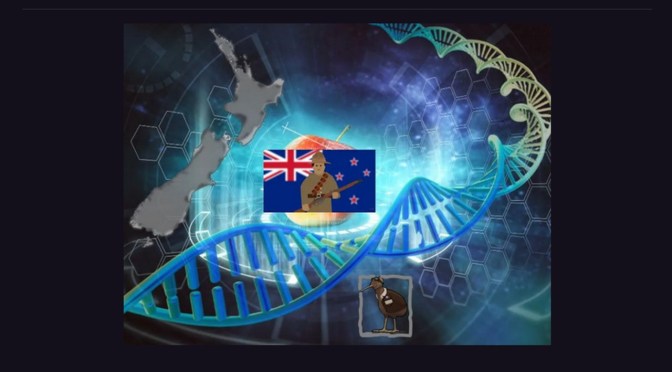
New Zealand is fast-tracking a far-reaching totalitarian regulatory framework. In this dispatch, Snoopman highlights what lies beneath the genetic engineering jugganaut train that is set to undergo a biggering in a South Pacific archipelago inhabited by endearingly naïve monkeys, who often identify as ‘Kiwis’, and are labelled as such.
In the forthcoming, “The Gene Tech Cosplay of the White Coats”, which is Part 3 of my series, “Lux Luthor’s Secret Worship of Mammon” — I examine how this biggering of the gene tech jugganaut, is but one strand of an imperialist DNA blueprint that is intended to alter the trajectory of human evolution, and that of all life with a biotech paradigm, wherein the Earth is managed by a technocratic empire.
The deadline for providing your feedback on the Gene Technology Bill currently before Parliament is 11.59pm on Monday February 17th. Click the link to feedback.
N.B. An endearing idiosyncrasy of New Zealanders is that they refer themselves as ‘Kiwis’, a flightless nocturnal fat beaky avian creature that eats roots and leaves. Ironically, New Zealand soldiers adopted the Kiwi as a monika during World War I; a conflict that resulted from a conspiracy discussed on Feb. 15 1890 at Nathaniel Rothschild's mansion — to re-invigorate the British Empire.*
New Zealand is fast-tracking a far-reaching regulatory framework to allow the release of genetically engineered organisms, and derivative products of gene editing from laboratory, manufacturing and containment settings into farmlands, market gardens foodstores and medical clinics, pharmacies, hospitals, households, and home gardens.
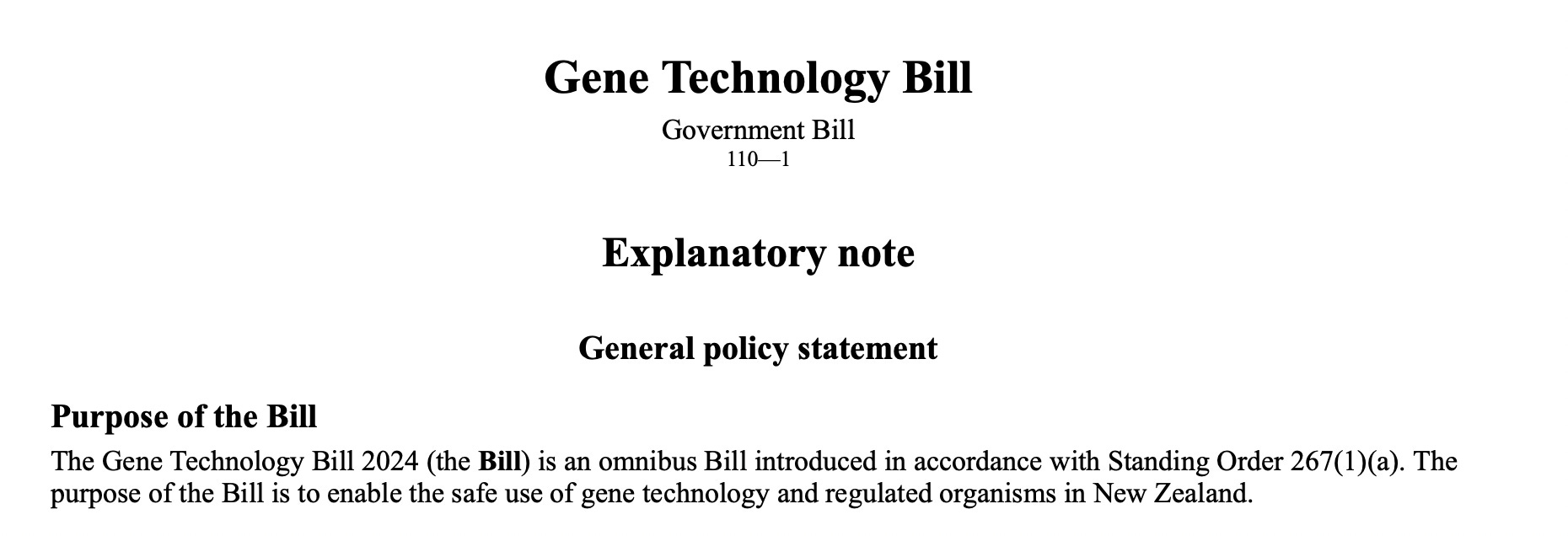
Whangarei, Far North, Kaipara, and Auckland communities share the concerns of many New Zealanders about the controversial Gene Technology Bill, quietly released just days before Christmas 2024.
The Bill proposes removing all ethical considerations and the Precautionary approach to outdoor GE/ GMO applications and the authors of the Bill have failed to adequately consult with the farming sector. In addition, the Bill proposes stripping local councils of their authority and jurisdiction in regard to outdoor GE experiments, field trials, and releases.
Removal of the authority of these councils would destroy what they have worked hard to achieve – much needed additional protection for the biosecurity of particular regions and the wider environment. These were put in place to address significant risks that would be faced by farmers and other ratepayers.
The Northland and Auckland Region, along with the Hastings District, are established GE Free food producing zones that provide protection from outdoor GE field trials, and releases.
“The Northland /Auckland Councils collaborated in a fiscally responsible manner to meet the needs of farmers and other ratepayers, after robust public consultation over a period of many years. “
“The councils wisely prohibit the release of any Genetically Modified Organisms (GMOs) and make any EPA approved outdoor GE experiments and field trials a Discretionary activity, subject to liability provisions including the posting of bonds,” said GE Free Northland spokesman Martin Robinson.
“We fully support council rules without which GM free primary producers, including conventional, IPM, and organic, would be at risk of serious financial consequences, if not the complete loss, of their valuable enterprises, in the case of GE contamination from EPA approved activities,” said Robinson. “We urge concerned Northlanders and Aucklanders to make a submission opposing the Gene Technology Bill by the deadline of 17 January 2025.”
The proposals in the Coalition government’s plans to remove the rights of councils to prohibit GMO activities are in clauses 248 to 253 of the Bill* (1).
“This is a political fight any government would be foolhardy to pick, given the huge backing from the Northland and Auckland communities, the significant biosecurity risks, the concerns of Kiwi farmers, and the importance of our existing valuable GE free status, says GE Free Northland spokesman Martin Robinson.
Councils’ concerns about GE relate mainly to uncertainties over the economic, environmental, biosecurity, and socio-cultural risks, including risks to farmers and other primary producers.*(2)
Without a strict liability regime, unsuspecting third parties and local authorities are at risk of GE contamination. This would result in them being unable to sell their produce on the export market. The issue of liability for any adverse effects of GMOs grown in the area needs to be resolved before any outdoor experiments are permitted in Auckland/Northland Peninsula.
Instead of there being provisions in this Bill to compensate farmers for GE contamination, the opposite is proposed. Farmers and growers whose crops or stock are adversely affected must pay the clean up costs and suffer the losses of cancelled export orders. This would mean the loss of access to key markets and the current non-GMO market premiums they earn.
There has been no economic cost-benefit analysis carried out in the Bill on the effects of GE contamination on our primary sector exports.
“Farmers cannot afford to experiment with their income and livelihood. There’s no hardcore evidence to suggest anything is practical or feasible with this technology. Co-existence between GE and other crops is impossible without significant contamination threshold levels, as documented in North America and other countries.”
“Agriculture in New Zealand is worth around $56 billion in exports. Why would anyone in their right mind want to gamble all of that on something that might not even work and is highly likely to cause irreversible harm,” said horticulturist Zelka Grammer, GE Free Northland chair.
Analysis of the Bill has been carried out by a team of researchers from the University of Canterbury headed by Professor Jack Heinemann. Their area of expertise includes the biosafety of GMOs and risk assessment protocols. *(3) This analysis indicates that a robust scientific case has not been made for the proposed reforms to gene technology law and that we would be much better off sticking with the current laws under the HSNO Act (1996).
The right of communities to decide was confirmed by a landmark Environment Court decision in 2015. This decision gave councils the power, under the RMA, to control the outdoor use of GMOs in their regions.
The National Party’s previous attempt to take away communities’ ability to ban or control GM releases in their territories was strongly opposed by farmers and all councils from South Auckland to Cape Reinga as well as Hastings District Council and its ratepayers.*(4)
GE Free Northland urges NZ First to no longer support the unscientific, unsafe, and economically risky proposals in this Bill, and to respect the right of councils to choose sustainable integrated planning. *(5)
“NZ’s reputation in the global marketplace must be protected. GE crops have failed to perform overseas, with lower yields, higher herbicide use, and the creation of herbicide resistant invasive “super weeds”.
“This combined with ongoing consumer and market aversion to GE food means that this is not the path NZ should go down. We must continue to protect our valuable “Northland, Naturally brand” and high value agricultural economy against GMO contamination,” said Grammer.
The operative Northland “Regional Policy Statement”, Regional Plan, the Auckland Unitary Plan, and the Whangarei and Far North District Plans all have strong precautionary and prohibitive GE/GMO provisions, policies, and rules in place in keeping with the wishes of local farmers and other ratepayers. *(6)
Northland Regional Council is holding a workshop today at Whangārei council chambers in response to widespread concerns about the proposed legislative changes. *(7)
The explanatory notes in the Gene Technology Bill state:
“Subpart 9—Amendments to Resource Management Act 1991 Clauses 246 to 254 amend the Resource Management Act 1991 (RMA). In particular, these clauses— • define genetically modified and Regulator (clause 247): • prohibit a regional council or territorial authority from performing its functions under sections 30 and 31 of the RMA in a manner that treats genetically modified organisms differently from other organisms, including in regional plans, district plans and regional rules (clauses 248 to 253).”
All councils from south Auckland to Cape Reinga in Far North/ Te Tai Tokerau have precautionary and prohibitive GE/GMO provisions, policies, and rules- set up in keeping with the wishes of local farmers and other ratepayers, in order to protect our regions biosecurity, wider environment, economy, and existing GM free farmers/ primary producers, including conventional, IPM, regenerative,and organic.
Hastings District Council has achieved outright prohibition of all outdoor GE/GMO experiments, field trials, and releases for the duration of the District Plan.
*(2)
Whangarei District Council “Genetic Engineering Review” webpage, detailing the good work of the Northland/ Auckland INTER COUNCIL WORKING PARTY ON GMO RISK EVALUATION & MANAGEMENT OPTIONS
“Three major reports commissioned by the working party have identified a range of risks involved with the trialing and release of GMOs. They also include approaches to managing those risks.
GMO Reports [link to documents]
Environmental risks
GMOs becoming invasive and affecting other species including native flora and fauna
the development of herbicide or pesticide resistance creating ‘super-weeds’ or ‘super-pests’
long term effects on ecosystem functioning.
Socio-cultural risks
effects on Maori cultural beliefs of whakapapa, mauri, tikanga
ethical concerns about mixing genes from different species including human genes
concerns about the long term safety of genetically engineered food.
Economic risks
loss of income through contamination (or perceived contamination) of non-GMO food products
negative effects on marketing and branding opportunities such as ‘clean and green’ or ‘naturally Northland’
costs associated with environmental damage such as clean-up costs for invasive weeds or pests.
Associated with these risks are limited liability provisions under the Hazardous Substances and New Organisms (HSNO) Act 1996. “
*(3)
A comprehensive analysis of the Bill by Professor Jack Heinemann, an international expert in the biosafety of organisms created by gene technology, and his colleagues indicates that a robust scientific case has not been made for the proposed “reforms” to gene technology law.
See
Centre for Integrated Research in Biosafety submission to the Parliament Health Select Committee on the Gene Technology Bill 2024.
Despite their reservations about a number of extreme proposals, NZ First supported the first reading of the Bill. Their support of the Bill is at odds with what they signed up to in the Coalition agreement, that is to “Liberalise genetic engineering laws, while ensuring strong protections for human health and the environment”.*
“Coalition Agreement between the National Party and the New Zealand First Party”
Primary Sector
• Liberalise genetic engineering laws while ensuring strong protections for human health and the environment
The Gene Technology Bill in its current form removes strong protections for human health and the environment, as well as undermining our biosecurity and proposing the removal of ethical considerations and the Precautionary approach. NZ First has previously had a strong precautionary GE/GMO policy.
*(6)
Northland operative Regional Plan and RPS provisions
Policy D.1.1 When an analysis of effects on tāngata whenua and their taonga is required – p 235
Policy D.5.32 Precautionary approach to assessing and managing genetically modified organisms -p 275
Policy D.5.33 Adaptive approach to the management of genetically modified organisms -p 275
Policy D.5.34 Avoiding adverse effects of genetically modified organism field trials -p 275
Policy D.5.35 Liability for adverse effects from genetically modified organism activities -p 275
Policy D.5.36 Bonds for genetically modified organism activities -p 276
Policy D.5.37 Risk management plan for genetically modified organism field trials -p 276
Objective F.1.15 Use of genetic engineering and the release of genetically modified organisms – p 294
The Northland RPS includes Precautionary policy 6.1.2 and Method 6.1.5, as well as the GE/GMO issue correctly identified as an Issue of Significance to Northland tangata whenua/ issue of concern to Northland communities…and the specific concerns of Maori regarding the risks of outdoor use of GE/GMOs to indigenous biodiversity
(as directed by Judge Newhook on 12 April 2018, the wording of Policy 6.1.2 and Method 6.1.5 has the following wording
“Policy 6.1.2 – Precautionary approach
Adopt a precautionary approach towards the effects of climate change and introducing genetically modified organisms to the environment where they are scientifically uncertain, unknown or little understood, but potentially significantly adverse.
This is confirmed by method 6.1.5 in the Northland RPS which states that:
“6.1.5 Method- Statutory Plans and Strategies
The regional and district councils should apply 6.1.2 when reviewing their plans or considering options for plan changes and assessing resource consent applications.
Policy D.1.1 of the Proposed Regional Plan includes a reference to genetic engineering. The policy requires effects on tāngata whenua to be addressed in resource consent applications where specified effects or activities are likely, including release of GMO’s to the environment.
*(7)
Northland Regional Council Workshop Wednesday, 12 February 2025 Council Chambers, Rust Avenue,
“12.45 – 1.45pm 3.0 Recent Central Government Legislative Changes
Reporting Officers: GM Environmental Services, Ruben Wylie, and Policy and Planning Manager, Tami Woods”
Further information:
According to an independent study by the New Zealand Institute of Economic Research (NZIER), New Zealand’s primary sector exports could be reduced by $10 – $20 billion annually, if GMOs were to be released into the environment. The report was commissioned by Organics Aotearoa New Zealand (OANZ) to evaluate the cost of proposed regulatory changes governing gene technology. OANZ says that the costs, as well as supposed benefits of deregulating gene technology, need to be carefully considered.
The NZIER study authors note that the proposed changes to the regulations as outlined by Wellington bureaucrats at the Ministry of Business, Innovation & Employment (MBIE), do not include a Regulatory Impact Statement, economic assessment, cost-benefit analysis or address the practicality of “co-existence” of GE and non GE crops..given the known vectors for GMO contamination (seeds, pollen, vegetative material, soils, waterways, machinery, animals, insects, extreme weather events).
The report was commissioned by Organics Aotearoa New Zealand (OANZ) to evaluate the cost of proposed regulatory changes governing gene technology. OANZ says that the costs, as well as supposed benefits of deregulating gene technology, need to be carefully considered.
26 November 2024 OANZ media release
Media Statement: “NZ exports risk multi-billion dollar hit if GMO rules deregulated”
“There is no ban on gene technology in NZ. This misleading hyperbole is used to obscure a failure to engineer products that will have a market or social value that exceeds the cost of compliance with reasonable regulations.”
– Professor Jack Heinemann, Genetics/ Molecular Biology, Canterbury University, and director- Centre for Integrated Research in Biosafety
National Party previous attempts to strip local councils of their authority and jurisdiction, falsely claiming that council plans (Northland, Auckland, Hawke’s Bay, etc) prohibited ethical and humane medical research in the laboratory
Thanks to Zara for the link. Note, many more historical articles at the source to bring you up to speed EWNZ
From Guy Hatchard
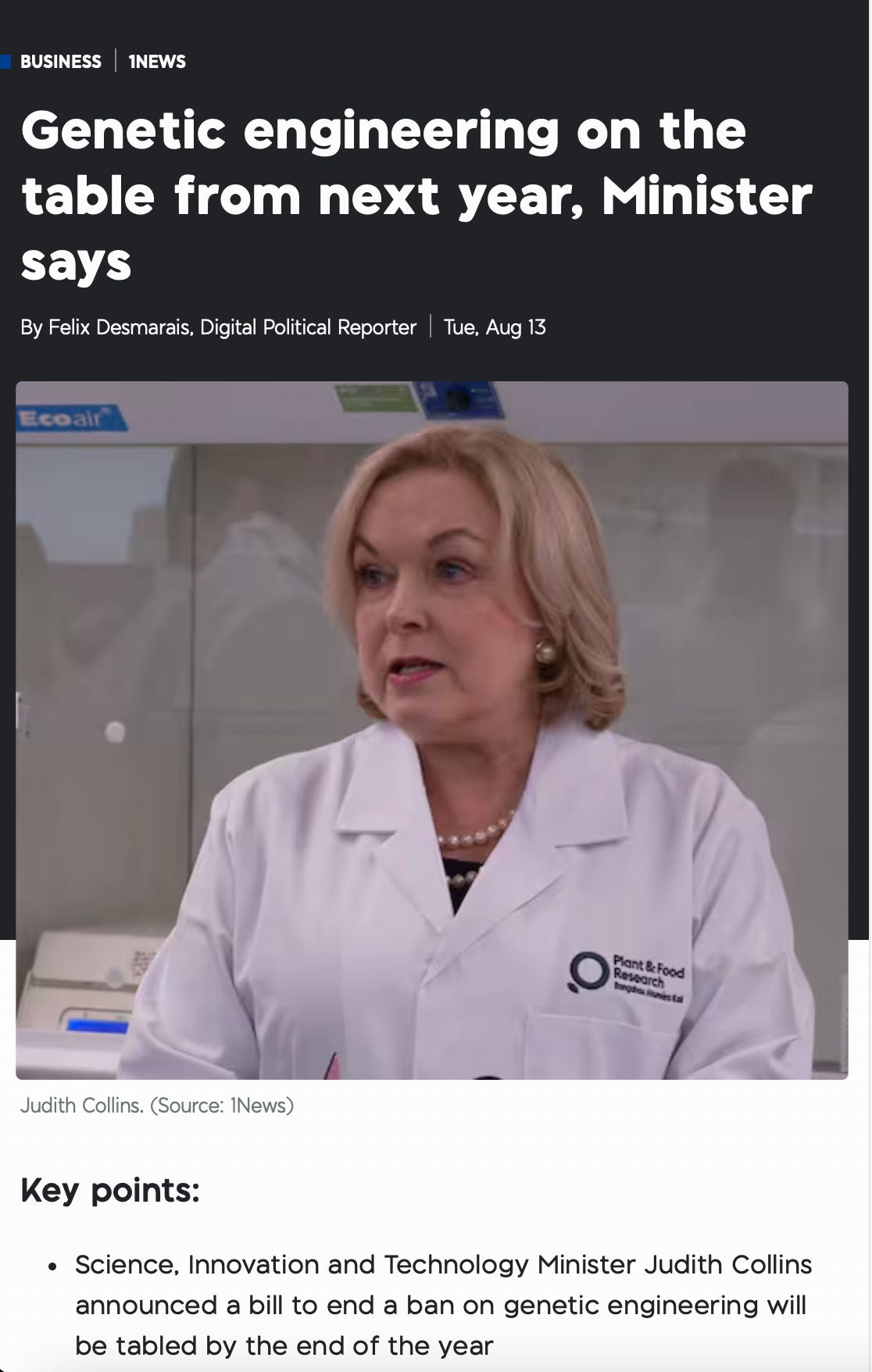
Currently, there are 19,350 doctors in New Zealand; that’s one for every 264 people. According to Hon. Judith Collins, our Minister for Business Innovation and Enterprise (MBIE), we are all going to live longer and enjoy better health as a result of the massive deregulation contained in the Gene Technology Bill.
In this article, we are going to examine this claim very carefully. If passed, the Bill will change New Zealand irrevocably, we need a deep dive and a proper debate.
This article is also available as a PDF to download, print, and share.
Gene technology in our healthcare system is going to require some extra highly skilled doctors, but how many and how much will it cost us? High profile billionaire biohacker Bryan Johnson, 47, boasts that he only ages 8 months every year. So that is something we could all aim for. Bryan spends just $2 million a year on his health, he has 30 doctors and recently increased his pill intake to 91 pills a day. So the aspirational ratio is about 30 doctors for every person. We could probably accept a few less than that, but we might not live quite as long as Bryan. Probably best to go trial and error. Start with a modest 10 doctors per person and see how long we can all live. A lot of farmers will need to retrain and we might need to import more food. Most people would be doctors.
Joking apart, gene technology is insatiable when it comes to doctors and costs. The astronomical salaries of experts, expensive equipment, CRISPR patent fees and the constant need for testing associated with personalised genetic therapies all add up. If you think that the $10,000 estimate your builder gave you for a veranda renovation is too high, you might baulk at the multi-million dollar costs for your individual gene renovation. But don’t worry, the government is determined to foot the bill on our behalf. A clause in the bill REQUIRES that New Zealand automatically adopt any old gene technology as long as any other two countries have approved it. If it all works out, it is going to be like new dance moves in the 80s, everyone will be doing it. However published science shows this might just be a ridiculous dream, it is time to wake up.
Now let’s get serious.
We need an open public debate with published evidence not just misleading PR hype of the type the government is currently pumping out without supporting evidence. For example let’s look at an article in the prestigious journal Nature entitled “Four Success Stories in Gene Therapy“. Nature is absolutely in favour of genetic experimentation, so this recent article should contain the very highest level of evidence that Collins should be presenting to the public for debate.
Collins is very excited about using CAR T cell therapy to treat cancer in New Zealand. According to Nature, CAR T cell therapy costs about NZ$820,000 per shot. 85% of patients go into initial remission but only just over half of them are still in remission at the end of the first year. CAR T cell therapy is not without risk. It can cause severe side effects, including cytokine release syndrome (CRS), a dangerous inflammatory response that ranges from mild flu-like symptoms in less severe cases to multi-organ failure and even death. The article reports that with a combination of newer powerful adjunct drug regimes and vigilance, a TEAM of attending doctors can try to work out how far to push treatment without triggering CRS.
Currently there are about 30,000 new cases of cancer diagnosed in New Zealand each year. From the glowing publicity being pushed out, I suppose Collins wants us to believe that all of them will benefit from CAR T cell therapy. In which case the cost would be $25 billion, a figure that exceeds the current total cost of all healthcare in New Zealand.
So let’s for a minute remember the goal here—HEALTH and specifically less cancer. A report published in the UK Daily Mail based on official cancer statistics is entitled “Under-50s bowel cancer epidemic exposed: Shock figures reveal the exact age group for whom rates are growing quickest“. Bowel cancer rates have been on the increase for some time, but the latest UK figures published for 2022 show that the incidence of bowel cancer among men in their early 40s increased by a staggering 57% between 2019 and 2022. Women in the same 40-44 age bracket saw an increase of 50%. According to the article doctors are completely baffled and seemingly unable to identify a cause.
I know what you are going to say, but forget it. Despite the obvious temporal coincidence between the sudden dramatic rise in cancer and the pandemic, doctors have been quick to reassure us. Professor Pat Price, oncologist and chair of Radiotherapy UK, admitted the unprecedented rapid growth in bowel cancer rates among young people presented “a serious public health challenge,” but she added: “It’s also critical to dispel misinformation. Covid vaccines aren’t causing cancer” (no evidence offered). Phew, I was worried there for a minute. Instead the article offers this theory: “Experts believe poor diets packed with more ultra-processed foods, obesity and a lack of exercise could be responsible for the alarming cancer trend.” Let’s assume this is correct.
The article also reports that New Zealand has the second fastest growth rate of bowel cancer in the world, just behind Iceland.
If that is the case, shouldn’t our government be prioritising an education programme on lifestyle, exercise, healthy diets, fresh foods, etc.? Why would we want to pass a Gene Technology Bill, which allows even more tinkering with traditional foods without any labelling, traceability, safety testing, or liability for inevitable mistakes? It’s a real puzzle.
Studies show education about lifestyle changes would be a very cost effective approach whose effect sizes simply dwarf the meager and inconsistent results of biotechnology reported so far. Multiple studies show lifestyle changes including diet and exercise have a beneficial effect of reduced cancer incidence. Cancer is the number two cause of death after heart disease. A meta-analysis of nine studies entitled Association of Vegetarian and Vegan Diets with Cardiovascular Health: An Umbrella Review of Meta-Analysis of Observational Studies and Randomized Trials found very large effect sizes including a 29% risk reduction for cardiovascular disease (CVD). It reported a 14% reduction in CVD mortality and a 32% reduction in Ischaemic heart disease (IHD) mortality. One of the studies evaluated showed a significant 39% risk reduction for stroke incidence. It doesn’t stop there, we have reported extensively on the effects of meditation not just on cancer (one insurance study showed a 55% reduction in cancer incidence among practitioners of Transcendental Meditation), but also across the board of disease categories. None of this will require more doctors and very little expense. It could put our national health back on track. It should be a no brainer, instead we have the Gene Technology Bill.
So what else is the Gene Technology Bill promising us?
The Bill commits New Zealand to use all of the gene therapies of the future. CRISPR gene editing is another of Collins’ favourites that she is promising will revolutionise public health. There are ten thousand single gene mutation heritable illnesses so far identified by science. The so-called promise of CRISPR theory is that all of these should eventually be reversible via a single gene deletion or replacement. So what does the Nature article say about the best and most exciting results from the use of CRISPR so far?
Two of these diseases are sickle cell disease and beta thalassemia. At a recent conference, Vertex Pharmaceuticals and CRISPR Therapeutics announced the results of a clinical trial of beta thalassemia and sickle cell patients treated with CTX001, a CRISPR-Cas9-based therapy. In all, 22 patients have received the treatment over a number of years at a cost of NZ$5 million per patient all of whom initially experienced increased levels of haemoglobin and reduced pain. After one year, only five of the patients had any residual beneficial effects. Vertex paid an additional NZ$85 million in patent fees for the licence to use CRISPR gene editing techniques involved in the treatments.
In summary: improvements are patchy at best, the costs are astronomical, the side effects are very serious and any benefits mostly don’t last very long.
Clearly these results are not going to bring about a revolution in New Zealand healthcare outcomes nor are they conceivably affordable for any but the mega-rich or a small number of beneficiaries of multi-million dollar New Zealand government grants presumably selected through a bruising lottery process. They are more likely to bankrupt our healthcare system and distract from viable proven paths that really could improve public health outcomes.
So what is the extent of the problems with CRISPR gene editing?
Is gene technology a healthcare revolution that has become affordable and actually works as Collins hypes? Or is it permanently just around the corner out of reach as it has been for the last 70 years? Or just perhaps, has something else gone terribly wrong as we know happened with biotech during the pandemic to everyone’s cost?
Well first of all, CRISPR gene editing is not as precise as Collins’ and MBIE PR claim. A paper in Nature published in October 2024 is entitled “Gene editing of NCF1 loci is associated with homologous recombination and chromosomal rearrangements” The paper describes attempts by scientists using CRISPR gene therapy to treat deficient chronic granulomatous disease, which is a rare inherited genetic disorder that prevents white blood cells from killing fungi and bacteria. It causes a primary immune deficiency associated with functional defects in neutrophils and macrophages. Mutations in any one of five different genes can cause this condition.
The study’s results reveal a central problem with CRISPR techniques. Most of us imagine that genes are somehow as solid and understandable as the world around us, made up of specific distinct identifiable objects which can be swapped if one becomes defective. Rather like changing a tyre when you have a puncture. Many genetic models or theories, and certainly all popular explanations pretend this is the case. In fact as you reach the very very small time and distance scales of DNA, you have reached an area completely foreign to the waking world of experience. The study revealed that many genes appear almost indistinguishable from one another or homologous. We can imagine that the situation is similar to repeated use of identical sub routines in a complex computer programme, but scaled up by a factor of one trillion. As a result, the CRISPR gene scissors begin to cut up, rearrange or delete other genetic chromosomal structures which were not the intended target, causing unintended consequences and health problems.
This is not because CRISPR has been incorrectly or inaccurately programmed or targeted, but rather the inevitable result of a fundamental property of matter at small time and distance scales—increased similarity in structure and function. The law of least action is in play. At this scale of matter, universal fields, quantum properties and unification play a greater role. Everything begins to look and behave in a confusingly similar fashion. CRISPR gene editing tools are based on the destructive properties of bacteria and when faced with an array of similar targets the derived CRISPR tools revert to type and embark on some random destructive cutting and pasting.
Because genes control all the functions of our physiology from the most fundamental level, the capacity for serious adverse effects is enhanced. This is one important reason for the mind boggling costs and high doctor to patient ratios of gene technology. A lot can go wrong and often does.
As we have reported extensively at GLOBE, in the microscopic physical world, consciousness plays a vital role. The observer enters into physical theory in multiple ways. In fact it plays an essential and leading role in triggering the outcomes of events at the atomic scale. DNA has holistic functions which are closely connected to its ability to support awareness or consciousness, including, in humans, self-reflective states of mind. No one in biotechnology understands how this delicate miracle of life happens, but like a bull in a china shop they are apparently determined to wreak havoc and see what eventuates.
The self-belief in the biotech community and the capacity for exotic experimentation are only matched by the determination to avoid any kind reasonable requirement for labelling, safety testing, containment or difficult ethical questions. Another requirement of the nascent biotech industry is freedom from any sort of liability and the permission to patent genes and genetic processes.
Judith Collins’ Gene Technology Bill concedes all of this to the bioscientists clamouring for the freedom to experiment on us.
According to Collins, New Zealand will become a world leader in biotechnology experimentation. Certainly we will end up to our detriment as guinea pigs subject to the most permissive regulatory regime in the world, where a government appointee will decide everything for us from what goes into our breakfast cereal to what goes into our pills, without any requirement to inform us on the labels, not even in the small print. Collins is repeating safe and effective and wants to push the Bill through with little or no public debate, but where is her evidence? According to current scientific assessments it is not safe or effective. Biotechnologies are dogged by poor results, serious risks and unaffordable massive costs. So is it Hey Ho and off we go with the Coalition into the brave new world of unrestrained gene editing, or do we, as we do in our personal lives, exercise some common sense. We just have one parting question for Minister Collins. Did she do her homework or did the dog eat it?
In this article we have covered just a few points. There are a lot of concerning provisions in the Bill. Find out more by viewing our YouTube video The Gene Technology Bill. What Kiwis Need To Know and then make a submission to the Health Select Committee by February 17th.
There are many reasons to reject the Gene Technology Bill. We have published suggestions for a submission template. Write to your MP. They need to be quizzed on this egregious Bill. They are trying to get this fast tracked during the holidays.
We do not live in a country where people are willing to let others take away their food choices, their rights, their beliefs and increase exposure to serious long term environmental and health risks.
Guy Hatchard PhD talks with Liz Gunn & Andrew Bridgen during the Freedom Train International Live broadcast about the Gene Technology Bill being introduced in New Zealand and the negative impacts it will have on our health, wellbeing and freedom.
This article is also available as a PDF to download, print, and share.
Alarming Developments in Australia Following Their Gene Deregulation
To win the debate about the Gene Technology Bill, we have to expose the unscientific and misleading claims being parroted by politicians to gain public acceptance of an egregious takeover of our food choices and medical rights.
To do so, we have to not only make clear submissions to the Health Select Committee. But more importantly, persuade our friends, colleagues and contacts of the potential impact and the need for action.
Our task is made clear by a comment from David Farrar, prolific National supporter and Kiwiblogger-in-chief, that needs deconstructing and examination for misinformation. He quotes Judith Collins speaking at the first reading of the Bill as follows:
“Our current regulations for genetically modified organisms are some of the most backward looking in the world. New Zealand has lagged behind other countries, such as Australia, Canada, and England, which have safely embraced these technologies for the benefit of their people and their economies.
“Despite gene technologies having been in use in New Zealand since the 1970s, the restrictive rules and time-consuming processes we have imposed on researchers have made testing and embracing innovation outside the lab all but impossible. But no more. This Government has listened to our research, primary industry, and medical communities and the frustrations that they have felt over many years. Today, New Zealand moves into the present with a safe enabling regulatory regime. The legislation will enable the sorts of innovation that will benefit New Zealand while effectively managing risks to the health and safety of people and the environment.”
Farrar then adds his 25c “After 25 years of dithering, we finally have a Government that is not letting hysteria trump science. Amazing that this legislation has been introduced in the first year of office – rather than just another working group.”
Misinformation:‘other countries have safely embraced these technologies for the benefit of their people and their economies’
The Gene Technology Bill is the New Zealand version of an international push by commercial interests to free up genetic experimentation from any last fetters of regulation. The massive profits made during the pandemic under emergency deregulation and government mandated participation have set a new benchmark for industry greed. Our Bill is far ahead of the rest of the world in terms of permissiveness. In a world of corporate giants from the food and pharmaceutical sectors seeking to push the envelope, New Zealand’s proposed out-on-a-limb laissez faire stance is a welcome development and something they have actually had a hand in creating.
We have seldom seen a more brazen claim than the use of the word ‘safely’ after 30 million excess deaths have been attributed to the pandemic during the last five years. Whether they come from a gene altered pathogen or a genetic vaccine is largely irrelevant here. As to citing England as a country accepting Gene Technology, a few days ago we pointed to the growing tide of public protest in the UK about the first use of anti-methane medicine Bovaer for cows and the sale of their milk and butter in supermarkets.
In the EU, proposed gene technology legislation has stalled due to disquiet among member states and in any case includes the precautionary principle which says that new technology must be proved safe before use, something that our Gene Technology Bill rejects. Nor does it liberalise research on microbes or animals as our Bill does.
Misinformation: ‘safe enabling regulatory regime’ that mostly classifies gene editing as safe, but supposedly can identify and mitigate any level of risk
A key plank of the government’s contention is the idea that gene editing has become more exact and therefore the need for testing, regulation, labelling, etc is reduced and in many if not most cases eliminated. This is not based on any valid scientific principle. Accuracy does not equate with safety. Just because you can achieve something more accurately does not guarantee its safety. A sniper trains every day to hit the target, but this does not make assassination a safer prospect.
As a result of serious adverse effects, the prospects for gene therapy dimmed in the 90s and early 2000s, but in 2008 new supposedly more exact gene editing techniques using CRISPR/cas gene scissors were developed. Research efforts stepped up and PR went back into overdrive—gene technology and medicine, according to this new narrative, now being promoted by our government, was going to be safe and effective. Today we know this to be false, as a paper published in November 2022 by the Karolinska Institute shows. CRISPR/cas techniques lead to unpredictable on-target genetic rearrangement which can interfere with vital cellular gene repair mechanisms.
During the pandemic, the supposed action of mRNA COVID-19 vaccines was outlined in great detail for the public and indeed, novel genetic instructions were ported into billions of an injected individual’s cells successfully by mRNA vaccines, but the outcome itself was not as predicted. The vaccines did not stop first infections, transmission or repeated infections. In theory the injected vaccine agents would be cleared up within days after having elicited the required protective immune memory. This didn’t happen.
More worrying: investigative journalist Alex Berenson formerly of the NY Times reports scientists at prestigious Yale University have announced the imminent publication of a study that has found concentrations of COVID-19 spike protein in the blood of individuals two years after mRNA vaccination, suggesting the genetic sequences in the vaccine may have integrated into the DNA of recipients to the detriment of their health.
These and many many other studies published during the last year in learned journals which we have reported reveal there are unexpected and unpredictable classes of serious risk to health with gene technology that can only be detected years after the event with careful research. Genetic material can reproduce and perpetuate itself in a way that chemicals cannot.
The misery of gene technology safety has been greatly simplified and altered for public consumption by corporations, scientists and politicians with vested interests. In reality the interior of the cell contains great complexity with trillions of elements involved. In this situation accuracy is not possible, always there are off target effects.
Moreover there are the ever present risks of lab accidents. A 2022 study of the Prevalence of Accident Occurrence Among Scientific Laboratory Workers found: “Among 220 participants recruited in the study, 99 participants (45.0%) have had accidents during their lab works. 59.6% have been exposed once, 32.3% between two and four times, only 1.0% between four and six times, and 7.1% more than six times.”
What sort of gene technology projects might be approved?
The Gene Technology Bill owes much of its content to Australian legislation so we decided to look over the ditch and see just how it all works or rather doesn’t work. The Australian Office of the Gene Technology Regulator has just issued an Invitation to comment on Clinical trials of controlled infection with seasonal influenza viruses (DIR 210). The project has been submitted for approval by the Doherty Institute, a subsidiary of the University of Melbourne. Its principal purpose is described as follows:
“The initial aim is to evaluate the safety and infectivity of recombinant seasonal human influenza viruses in healthy volunteers. These GM viruses will then be used to assess the effectiveness of therapeutic drugs or vaccine candidates to prevent and control influenza infection.”
In other words the lab is to make gene altered versions of the flu and then test out various genetic drugs and/or vaccines on human volunteers over a five year period. It does sound eerily similar to what went on at Wuhan Virology Lab for the five years prior to the COVID-19 pandemic, but then the Gene Regulator is there to put us right. They have already rated the project as posing ‘negligible to moderate risks to human health or safety’. In other words, whatever the public submits to the regulator, the project, which creates new viruses, is likely to be a shoo in for a rubber stamp. You might like to reflect that there is a big difference between the words ‘negligible’ and ‘moderate’. This points to the highly arbitrary and misleading risk classification process being used in Australia which is akin to pinning the tail on a donkey. You can dive into the details here.
The project at the Doherty Institute has at least reached the desk of the gene regulator. If you have enough money, it needn’t actually ever come near the regulator or his desk. An article in the UK Guardian on Dec 10 2024 is entitled “Moderna’s mRNA vaccines to be exempt from advisory committee scrutiny under $2bn Morrison-era deal“. It reports Australians will be offered respiratory mRNA vaccines from next year under a confidential $2bn onshore manufacturing deal struck with Moderna. The agreement exempts Moderna’s mRNA vaccines from assessment by the Pharmaceutical Benefits Advisory Committee (PBAC), a government memorandum has revealed. The contract signed with the American pharmaceutical company commits successive Australian governments to buying locally produced Moderna vaccines for at least a decade. They will be manufactured at a specially built plant at Melbourne’s Monash University. The memorandum which is raising alarmed red flags even among researchers says the Moderna vaccines “will not go through the PBAC process and therefore will not be listed as designated vaccines on the National Immunisation Program”.
Our Minister of Science, Innovation and Technology Judith Collins no doubt realises what is going on in Australia and approves. She has cited Australian legislation as the lead we are following. The Gene Technology Bill sets the stage for our newly appointed government regulator to dust off his rubber stamp in a similar fashion and expose us all to unquantifiable risk.
Protection from civil and criminal liability
Despite the bogus claims of safety, the Gene Technology Bill seems to anticipate that there might be a few problems so they have included Clause 187—Protection from civil and criminal liability to remove any responsibility as follows:
This protects most persons from civil and criminal liability for any act that the person does or omits to do in the performance of their functions or duties under this Bill. It applies to the following persons:
the Regulator
an employee or agent of the Regulator
an enforcement officer
a member of the Technical Advisory Committee or the Māori Advisory Committee
a member of any subcommittee of those committees.
The person is protected from civil and criminal liability, however it may arise, for any act that the person does or omits to do under a requirement of this Act or simply if they are believed to be acting in good faith in the course of their duties under the Act.
Short version: the government is washing its hands of any liability.
Just reflect for a moment that the Consumer Guarantees Act (CGA) in New Zealand is part of the everyday fabric of our lives. We rely upon it. The CGA guarantees that products must be:
Safe
Of acceptable quality
Fit for their intended purpose
Match the description given
Match the sample or demonstration model
In acceptable condition when received
If a product doesn’t meet these guarantees, consumers can claim a refund, repair, or replacement. The Gene Technology Bill completely bypasses these provisions. Of course those damaged by gene technology will not be able to be refunded or repaired, perhaps the government envisions they will be replaced as happened with vaccine mandates.
So will we know what we are eating or being subjected to?
The Gene Technology Bill includes clauses which repeal and replace all provisions of previous legislation relating to gene technology. A global search of the Bill reveals that the word ‘labelling’ appears zero times. Any previous legal requirement that the presence of genetically modified content be identified on food labels is thereby rescinded. We won’t know what we are eating. This bypasses the need for traceability in the food chain which has formed a protective envelope over public health for a hundred years. No more.
I am sure many of you, like all of us at the Hatchard Report, are becoming more alarmed at the content of the Gene Technology Bill, but our hope lies with the vast majority of Kiwis who care about their food choices. This Bill has been rushed into Parliament without any clear understanding of its clauses. A sober look at the Bill reveals its glaring flaws and misconceptions. Our hope is that clear simple facts will create public pressure and sink the bill. We have until midnight on February 17th to make ;submissions to the Health Select Committee. More importantly, discussing the implications with friends and lobbying MPs directly can create a stir.
This will require steady hands, clear heads and a willingness to discuss the issues with our peers. The key points needing emphasis in submissions and discussions are as follows:
Gene technology content in foods will no longer be identified in labels. We will not know what we are eating.
Without labelling and traceability through the food chain any adverse effects cannot be identified or assessed overturning the lessons of food safety learned during the last 100 years. People with allergies are especially at risk.
Gene technology is imprecise and subject to off target effects affecting health.
Gene tech manufacturing processes are plagued by rogue genetic contamination.
Genetically modified organisms can spread without limit and cannot be recalled or remediated as we found out during the pandemic.
Claims of safety and effectiveness are totally misleading, gene technology is known to produce both short and long term adverse off-target effects.
The Bill provides provision for the government to reimpose vaccine mandates whenever it decides to do so.
The Bill abandons the precautionary principle and allows for the implementation, release and consumption of experimental gene technology products before they are proven safe.
The Bill does not specify how the regulator will assess any risk. The pandemic shows how far off such assessments can be.
Claims of economic and health benefits from gene technology have been wildly exaggerated. Most projects fail. Projects will be mostly funded by the government and be a drain on the public purse. NZ’s economy will be better served by fostering our traditional strengths in farming. Overseas farmers have found patented gene technologies to be costly and no more productive than prior methods. Widespread implementation of gene technology in New Zealand is likely to face consumer backlashes and close our overseas markets.
In his comment, David Farrar believes that the existing HSNO legislation and the precautionary principle it enshrines have allowed ‘hysteria to trump science’. Nothing could be further from the truth, five COVID-19 pandemic years should have taught us the dangers of funding gene research while abandoning precaution.
Good luck with your submissions. This is winnable if we all stand together and speak out. People don’t just care about their food, they rely on it for health and well being.
More detailed information and extra scientific references are available in our articles here , here, here, here and here
Mandatory medical activity authorisations:for a human medicine that is or contains gene technology that has been approved by at least two recognised overseas gene technology regulators.
Emergency authorisations: when there is an actual or imminent threat to the health and safety of people or to the environment, for example, threat from a disease outbreak, or an industrial spillage. The Minister responsible for the Gene Technology Act (the Minister) will have the power to grant an emergency authorisation.
These clauses bypass the medical choice provisions of the NZ Bill of Rights.
They violate the conclusions of Phase 1 of the Royal Commission on the pandemic which found that vaccine mandates hurt people and the economy.
They pre-empt the findings of Phase Two of the Royal Commission which has yet to examine the safety of Covid vaccines produced via gene editing.
It empowers the Minister to make health decisions affecting all Kiwis on the say-so of foreign gene regulators of his choice.
The Bill is being passed under Fast Track legislation designed to prevent public discussion of its controversial provisions and adequate understanding of its impact by MPs. There is no time sensitive need for this.
The Bill ignores the experience and lessons of the last five years of the pandemic which has been a gene technology disaster responsible for 30 million deaths worldwide. Its logic is therefore incomprehensible even to well-informed observers, but it appears to find echoes in a dark history:
“The sun shines” wrote Christopher Isherwood in his 1930s Berlin Stories“and Hitler is the master of this city. The sun shines, and dozens of my friends are in prison, possibly dead.” As are too many of my friends recently, young and old alike.
Following the 1933 Nazi acquisition of power, Germany underwent a rapid and sweeping revolution that reached deep into the fabric of daily life. At the beginning, it occurred quietly and out of sight of most of the population. At its core was ‘enabling’ legislation that empowered the government and its appointees (read: regulators) to take far reaching decisions on behalf of the whole population. Its core aim was Gleichschaltung—coordination—designed to bring citizens, government ministries, universities, cultural and social institutions inline with Hitler’s extreme beliefs and attitudes.
Today we are facing efforts aimed at global coordination of technology, including biotechnology, food tech and information technology. The NZ government appears very willing to play a leading role in this revolution, whatever the implications. We have reported on these previously at length (here, here, here and here).
In addition to the prospect of government reimposition of medical mandates, the Bill does not require labelling of gene altered foods. As this flies in the face of all the canons of food safety and traceability established over the last 100 years, the only possible motivations are either a desire to deny consumers any right to preferences, or a wish to avoid any safety monitoring or culpability. Not only will we be unable to exercise medical autonomy, but we will no longer know what we are eating. This is an extraordinary and frightening prospect and not just for those who struggle with allergies. Food choice is not the prerogative of the government or bioscientists no matter how sure of themselves.
Something absolutely fundamental and personal is being taken away from us.
This Bill is being promoted and steered by Judith Collins, with the full support and encouragement of the Prime Minister Chris Luxon and the leader of the ACT Party David Seymour. Collins is a lawyer and long time Parliamentarian, she will fully understand the import of the Bill. As a previous leader of the National Party who lost an election, it is hard to escape the suggestion that Collins may be taking satisfaction from the imposition of her will on those who rejected her leadership. We have all heard stories of waiters who piss in the awkward customer’s beer and laugh behind their backs. I am sorry to draw such a gross comparison, but my sense of outrage demands it.
VIDEO CLIP AT ARTICLE LINK (Luxon & Collins’ celebratory speech)
The Gene Technology Bill seeks to institute a revolution, it spits in the face of the public who suffered during the pandemic and who voted in a new government with the thought that things might change. Instead we appear to have more of the same or worse. The refusal of Health NZ to publish up to date health statistics such as those for cancer incidence, speaks volumes about a government determined to avoid any accountability, even at the expense of public health. For the record, US insurance data reveals that cancer incidence has had a steady and unremitting upward trajectory since the introduction of Covid vaccines. Ignored by our government and worse: covered up.
There is a time for everything and a season for every purpose under Heaven. A time to be born and a time to die, Now is the time to lobby your MP and let them know exactly what you think. Time to make our voice heard. Please write to your MP before the summer break brings consideration to a close and put a note in your diary to follow up afterwards. This fight is winnable.
Guy Hatchard PhD was formerly a senior manager at Genetic ID a global food testing and safety company (now known as FoodChain ID). You can subscribe to his websites HatchardReport.com and GLOBE.GLOBAL for regular updates by email.