Tag Archives: Food

Use This Companion Planting Chart to Help Your Garden Thrive

From livelovefruit.com

Most people plant their gardens with little thought as to what plants grow well together. The secret to an amazing garden, though? Companion planting! 

Companion planting not only takes nutrient uptake into consideration, but it also brings into account crop protection, pest management and positive hosting (aka. increasing the population of beneficial insects that will help manage your harmful pest population). 

For this very reason I created an interactive companion planting chart that will help you plant the perfect garden (and maybe even make your neighbors a little jealous!). But before we get into that, we need to understand what companion planting is, and why it works so successfully!

Image by congerdesign from Pixabay

An Easy Beginner’s Guide to Growing Kale

From gentleworld.org

Any guide to growing kale will start out by telling you it is a cold weather crop, which tastes best after it has been touched by frost.

While cold weather may be kale’s preference, you can grow it during any season and in most climates. The flavor, output and duration from seed to harvest will change depending on the temperature, weather patterns, variety and soil condition, but kale is a hardy crop that is willing to adapt to our expanding desire for it.

With that said, it can tolerate temperatures as low as 20F degrees, but will start to turn bitter and become tough in temperatures over 80F degrees.

If you plan to plant from seed, you may need up to six weeks before your seedlings are ready to plant.

So… let’s get growing!

READ AT THE LINK

An Easy Beginner’s Guide to Growing Kale

Image by azboomer from Pixabay

GROW YEAR ROUND WITH AN UNDERGROUND GREENHOUSE

Excellent info thanks to The Seed Guy @ Facebook. Not an idea I’ve ever seen before. Brilliant if you wish to cover your plants. Becoming a necessity now with all the overhead spraying going on. EWR


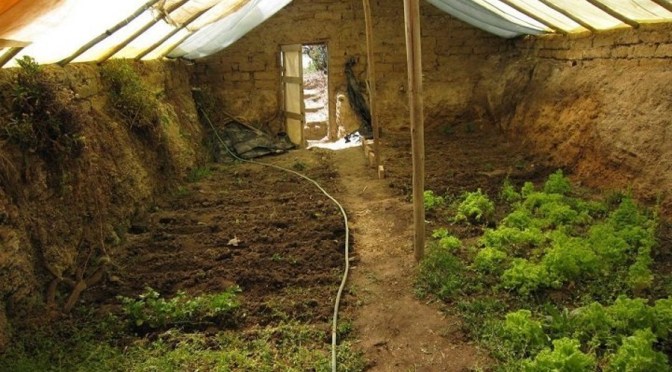
If eating Fresh Vegetables and Fruits Year Round is important to You and Your Family, you might consider building an Underground Greenhouse. It will keep the temperatures warmer in the Winter and help prevent overheating in the Summer; making it possible to grow your garden vegetables year round.

For the vast majority of the country, 4 feet below the surface will stay between 50° to 60°F even if the weather above the ground gets to 10°F or colder. This is what they call the thermal constant, and what the Underground Greenhouse is based on.

The original design for an Underground Greenhouse was invented in Bolivia, and was called a Walipini, an Aymara Indian word which means “a warm place.” A Walipini is a rectangular shaped Greenhouse that is dug down 6-8 feet deep in the ground. The longest area of the rectangle will face towards the south (in the Northern Hemisphere) to take advantage of the most sunlight.

The design of the Underground Greenhouse isn’t that complicated, as it can be as simple as a hole with plastic sheets laid on top. The roof seals in the heat and insulates the area to keep a warm, moist environment for your fruits and vegetables.

The location of your Walipini will depend on how big you want it to be. You’ll need enough space to grow your plants and have a small area to walk into your greenhouse. The bottom of the Greenhouse will need to be at least 5 feet above the water table in your area. The recommended size for an Underground Greenhouse is 8 x 12 feet.

When planning where your Greenhouse will be located, remember that your roof will need to receive light during the winter, also. This means that you will have to make sure that trees or buildings don’t block it during the winter time when the sun is in the South. In most cases, your Underground Greenhouse should be set up East to West, with the roof facing South to take advantage of the Winter Sun.

Once it’s decided where your Underground Greenhouse will be located, you can start digging. Plot out the area above ground to keep track of where you should be digging. While you’re excavating, dig at least 2 feet deeper than your desired depth. Keep your soil close by to help prop up the roof.

The walls of your Underground Greenhouse should have a minimum 6-inch slope from the roof to the floor. This will greatly reduce the amount of crumbling and caving that will occur with the soil. You can also layer the walls with a clay to prevent erosion, or use bricks to stabilize the walls of the building.

While you’re digging the hole, dig an extra 2 feet below the desired depth. You’ll fill this area with stone or gravel and then 8 inches of soil. Ideally, you’d lay larger stones and gravel on the bottom layer and the gravel would become progressively smaller until you reach the soil.

The bottom of the greenhouse should be slightly sloped from the center to the edges. Along the perimeter, you should leave a space of 2-3 feet just filled with gravel. This is designed to help the water drain more easily. Many people have also created open gravel wells in the corners of the greenhouses that allows them to collect the water. This will allow you to draw a bucket into the hole and pull out water if you find you have too much.

Once the floor is filled in with the drainage system, and the soil required for growing, the doors can be installed. Place the door frame at the base of the ramp and fill in the areas around the door as much as possible with dirt and clay. Filling in these gaps will prevent heat loss in your greenhouse.

Many times, people will use 2-inch door frames that have holes drilled into the top middle and bottom of each side. They will then use wooden stakes, dowels or rebar to secure the door frame into the soil wall.

The angle of the roof will make a big difference on the sun’s ability to heat your greenhouse. Ideally, the roof should be facing directly at the winter solstice at a 90 angle. This angle will maximize the heat during the winter solstice and minimize the heat during the summer solstice.

Now, you can use that extra soil that you have left over to create a berm. The berm is basically an extension of the north wall of the greenhouse. This allows you to control the angle of the roof by adding or taking away dirt. Build up the berm to continue the slope that you used on the wall. If you’re using bricks – continue using them on the berm.

The most economical, durable material for your roof is 4-inch PVC pipe. Using PVC elbow pieces, joiners, etc, you can create a flat roof frame that will cover your Underground Greenhouse.

After you’ve created a PVC frame, lay it in place on the top of your hole. Then lay plastic sheeting across the top of the frame and make sure that it extends past the edge of the frame by at least 1 foot. This flap will prevent run off water from the roof from running back into the greenhouse itself.

Once the plastic material is put on top of the roof frame, move inside and tack another layer of plastic wrap along the inside of the roof frame. This internal plastic sheeting will create a 4-inch barrier between the inside and outside of the roof, and will act as an insulator that will keep the heat in more effectively.

You’ll want to make sure that you leave a few inches of plastic hanging down on the lower (south) end of your roof. This will force moisture that collects on the roof to drip off above the drainage system or on top of your plants instead of at the base of the roof. If you allow the moisture to run to the base of the roof frame, it may affect the soil at that location and break down your wall, etc.

Ventilation is always crucial. You have 3 options, such as: Installing two doors, one at each end; installing a vent roughly the size of the door at the top of the back wall; or installing a chimney at the center of the back wall. Good Luck on your Greenhouse.

If you LIKE US on our Facebook page, you will be able to see more of our great Gardening Articles, New Seed Offerings and healthy Juice Recipes. Thank you and God Bless You and Your Family.

SOURCE

The Seed Guy @ Facebook (follow The Seed Guy to purchase seeds if you’re in the US plus more great info on gardening)

https://www.facebook.com/theseedguy

Photo: The Seed Guy @ Facebook

Go here for other posts

STRAWBERRY TIME (Wally Richards)

May is the traditional month when new seasons strawberry plants become available in garden centres.

The nurseries that grow the plants lift them after the autumn rains have moisten the soil sufficiently, then they are distributed to garden centres.

In seasons when the growing beds remain too dry then the plants are not lifted till later, making for late plantings.

I find that the sooner you can get your new strawberry plants into their new beds the better results you have in the first season.

Like all things planted it is root establishment that is so important.

When planting place about a teaspoon of Wallys Unlocking your soil in the planting hole with a pinch of BioPhos for each strawberry plant.

Alternative is broadcast the label amounts over a bed when preparing for planting.

Gardeners with existing beds of strawberries will likely have a number of runners that have rooted in nicely, these can be used for new season plants..

If the existing strawberry bed is not congested with old and new plants and there is ample room still for all the plants to grow and produce,

then you can get away with not lifting the runners or only lifting those that are too close to existing plants.

Strawberries are easy to grow and can be grown in open ground or containers.

In open ground the most practical way is to make a bed with wood surrounds 16 to 20 cm tall and have a hinged frame over the bed that has either

plastic bird netting or wire netting over the lid.

The whole frame needs to only sit on the soil so it can be moved if required.

If using tanalised timber for the surround then after cutting to size; paint all the wood with a couple of coats of acrylic paint to prevent chemicals leeching into the soil.

Strawberries can be grown in troughs about 16 to 20 cm wide and similar depth then as long as required. I like to hang these off the top wooden rail of a fence.

Special strawberry planters made from clay or plastic are not very good and your results are likely to be poor.

(Thats the types where plants are placed in holes around the container as well as on top.)

Polystyrene boxes with holes in the bottom are also ideal containers for good crops if they have a rooting depth of 15cm or more.

The growing medium should be a good compost such as Daltons or Oderings to which you can add untreated sawdust and a little clean top soil or vermicast.

(Worm casts from a worm farm)

A mix of about 75% compost, 20% sawdust and 5% vermicast is good value.

Mix the above in a wheelbarrow then place a layer of the mix 5 cm deep in the base of the trough or container.

Now sprinkle a layer of chicken manure, some potash, BioPhos, Wallys Unlocking your Soil and Ocean Solids. Horse manure is also very good.

If you do not have chicken manure available use sheep manure pellets and blood & bone.

Cover with more compost mix to a depth suitable for planting your new strawberry plants.

A similar process can be applied to a open bed with a frame, though the frame height may need to be taller than previously suggested.

Ensure that the soil at the base of the frame is free of most weeds and then place a layer or two of cardboard over the soil. This will help prevent weeds from coming up in the bed, then fill as suggested.
There are a number of different varieties of strawberry plants available to the home gardener, newer varieties such as Chandler, Pajaro and Seascape and Albion which I especially favour..

The Albion strawberry (Fragaria x ananassa “Albion”) is known for its fruits, which have a uniformly conical shape, bright red color, reliable firmness, and surprisingly sweet taste.

Albion strawberry plants grow quickly to about 12 inches (30.5 cm.)

Different varieties will do better or worse in different climates so choose the ones most suited to your area of the country.

Strawberry types include:

Strawberry Baby Pink ™ Producing stunning beautiful pink flowers followed by small to medium red fruit with sweet traditional flavour. Large bunches of berries ripening over a long period.

Habit – Compact strong growing strawberry. Size – Give these small to medium plants close spacing.

Pollination – Self-fertile. Unknown if short day, neutral or long day type.

Strawberry Camarosa; Large to very large medium dark red fruit. Firm medium red flesh with excellent flavour. Conical shape.

High resistance to wet weather. Habit – Suitable for Northern and Central districts. Vigorous growth habit.Size – Give these vigorous plants wide spacing.

Pollination – Self-fertile. Short day type – flowers are initiated by short day lengths.

Harvest – Fruit ripen 20-35 days from flowering depending on climate, with light crops in early summer, followed by a main crop in December – January. Yield is very good.

Strawberry Chandler; Small to very large medium red fruit. Firm light red flesh with very good flavour. Conical shape. High resistance to wet weather.

Habit – Suitable for Northern and Central districts. Multi-crowned growth habit.

Size – Give these multi crowned plants medium spacing. Pollination – Self-fertile. Short day type – flowers are initiated by short day lengths.

Harvest – Fruit ripen 20-35 days from flowering depending on climate, with light crops in early summer followed by a main crop in December – January. Yield is very good.

Strawberry Sundae ™ Large red fruit with excellent flavour. Firm red flesh in an oval shape.

Habit – Suitable for Northern and Central districts. Vigorous growth habit. Size – Give these vigorous plants wide spacing.Pollination – Self-fertile.

Short day type – flowers are initiated by short day lengths.

Harvest – Fruit ripen 20-35 days from flowering depending on climate, with light crops in early summer followed by a main crop in December – January. Yield is average.

Strawberry Supreme ™ Very large bright red fruit. Very firm red flesh with excellent flavour. Conical shape. Good resistance to wet weather.

Habit – Suitable for Northern and Central districts.

Moderately strong growth habit. Size – Give these small to medium sized plants close spacing.

Pollination – Self-fertile. Short day type – flowers are initiated by short day lengths.

Harvest – Fruit ripen 20-35 days from flowering depending on climate, with light crops in early summer followed by a main crop in December – January. Yield is very good.

Strawberry Temptation™ Medium bright red shiny fruit with excellent flavour. Pale firm flesh.

Habit – Compact strong growing strawberry. Tough and resilient in relation to pest and diseases.

Size – Give these medium plants close spacing.

Pollination – Self-fertile. Only NZ bred Day Neutral strawberry which means they will set fruit regardless of how long or short the days are making this an ideal fruiter national wide.

Will extend the North Island season. Harvest – Consistent high yields of berries ripening over a long period from October to March.

To enhance your strawberries and increase the crop yields by 200 to 400% drench the bed with Wallys Mycorrcin after planting and repeat again in a couple of months time.

Spray the plants with Mycorrcin soon as planted and then every two weeks till end of season. Add Magic Botanic Liquid to the Mycorrcin Spray.

An occasional monthly spray of Wallys Perkfection will help prevent dry berry (Downy Mildew) and other diseases.

For bigger berries you may like to try Wallys Secret Strawberry Food. End

Email me for some interesting Bits of News not available through the Media.

Phone 0800 466464
Garden Pages and News at www.gardenews.co.nz
Shar Pei pages at  www.sharpei.co.nz
Mail Order products at www.0800466464.co.nz

Photo:congerdesign @ pixabay.com

Grow Mushrooms at Home In A 5 Gallon Bucket (Easy – No Sterilization!)

FreshCap Mushrooms

Growing mushrooms can be complicated- but it doesn’t have to be! In this video, I go over one of the simplest methods of growing mushrooms that pretty much anyone can do at home. All you need is: + A 5 Gallon Bucket + Aspen Wood Chips (even from the pet store!) + Oyster Mushroom Grain Spawn Happy growing! Check out the full article here:
https://freshcap.link/bucket-tek-yt
Check out our new growing blog: https://learn.freshcap.com/growing/ Learn About Functional Mushrooms: https://learn.freshcap.com/mushrooms/

WATCH AT THE LINK:

https://www.youtube.com/watch?v=45b2t7fqhjA&t=3s

Photo: congerdesign @ pixabay.com

SOLVING GARDENING PROBLEMS (Wally Richards)

A tip that I was given, which I am going to try myself this spring, is in regards to curly leaf in stone fruit such as nectarines and peaches in the spring.

You simply place a quarter a teaspoon of Condys Crystals (potassium permanganate) per litre of warm water with one mil of Raingard and spray the trees and the soil underneath in spring prior to leaf show and every 10 to 14days later for the couple of months when the disease is active..

The lady gardener that told me swears by it for control.

The potassium permanganate is a oxidizing agent that kills fungi, the Raingard prevents the rain washing it off for up to 14 days.

It is during rain that the disease attacks, lifted up onto new leaves by the splashing water.

Potassium permanganate is locked in the film of Raingard which slowly breaks down under UV.

The potassium permanganate is neutralizing the spores of the curly leaf disease as they come in contact.

You will need to spray to keep the newest leaves protected, as well as the existing ones as they grow larger, so depending on growth rate spray every 7 to 14 days.

If you try this method this year please let me know the results.

Another gardener uses the same on their roses with great results starting with a spray in winter after pruning and a 2 weekly spray during the season of the foliage and soil as required.

A lot of gardeners have glasshouses or tunnel houses to extend the growing season of tomatoes and other plants.

Some grow in the soil in the glasshouses where others will grow in containers.

Soil in a glasshouse can harbor diseases or what we call pathogens. These love a chemical/acidic environment where they can thrive.

Beneficial microbes and fungi love a alkaline, chemical free environment so the use of chlorinated tap water, chemical sprays along with herbicides are going to create problems for your tomatoes and other plants.

Chemical sterilizing the soil with Basamid is no longer an option since the chemical was banned.

I have in the past suggested potassium permanganate with salt as a soil drench but this takes out both the beneficial and the bad.

Some gardeners dig out the soil and replace it with new soil which is not only a lot of hard work but you cannot be sure the new soil will not have its own problems especially weed seeds.

A new product called Terracin is the natural way to clean up soil diseases.

Mix the Terracin at 2ml per litre of water and apply to one SqM of moist soil.

Or mix at 20ml to 10 litre to water over 10 SqM of moist soil.

Terracin uses a combination of a Bacillus amyloliquefaciens BS-1b, a beneficial soil microbe and the enzymes, bacteriocins, secondary Metabolites & signal molecules from the fermentation of Enteroccocus faecium to suppress a broad range of fungal pathogens.

During the next 3 weeks keep the soil moist (not wet) with non-chlorinated water.

After 3 weeks we need to feed and build the populations of beneficial microbes so we apply Mycorrcin to feed them.

Once you have done this its a matter of not using chemicals in the glasshouse including chlorinated water.

A Special filter can be attached to your hose to remove the chlorine which is the same as what I have been using for several years.

The next problem in a glasshouse is the sheltered environment which is very good for insect pests to breed.

During the growing season you have to keep them in control with the following: sticky yellow whitefly traps, Neem Tree Granules, Wallys Neem Tree Oil and Wallys Super Pyrethrum so they will not get completely out of hand.

Fumigating the glasshouse at the end of the season to kill all the pests that are harboring over in cracks and places means a clean start in the new season.

Wallys Sulphur Powder is available for this purpose.

This is ideal for fumigating a glasshouse in winter when there are no crops growing. (May dehydrate and kill plants so empty the house first.)

If you have plants that you are going to pull out anyway then leave them in the house when you burn the sulphur which will kill the pests on them rather than take them outside to affect your other gardens.

To use: Close all vents in the glasshouse.

Place an amount of sulphur onto a steel hearth shovel and light. It is hard to light unless you have a very strong flame.

You can aid this by putting a little mentholated spirits on part of the sulphur and light that.

Once it starts burning it is hard to stop.

Place the burning sulphur in the middle of the house and leave immediately.

Close the door and let the sulphur fumes do their job. Leave house closed for a few days.

The amount of sulphur burnt will depend on size of the glasshouse.

For a house 2.5m x 2.5 m burn about 50 grams of sulphur.

I did this last winter after cleaning all the plants out of my glass houses and once outside it was a sight to see so many whitefly and adult psyllids beating up against the glass trying to escape.

Likely burning sulphur safely in out buildings for cluster flies in winter would be a good way to control them also.

Hen houses for mites when the hens are locked outside then later air the house and dust Sulphur powder over the perches and floor.

   You can make a big difference to your soil, gardens and plants by using Bio Marinus™.

Bio Marinus™ is manufactured by the enzymatic hydrolysis of fish offal, blended with humate, seaweed and biology including Bacillus subtilis, Trichoderma, mycorrhizae fungi etc.

Designed to provide a high quality, cost effective fertiliser.

At only $15.00 a one litre container that includes a range of beneficial microbes…. it is high value at low cost.

Biologically active soils have the ability to retain moisture and release nutrients ensuring greater production, faster rotation and more rapid recovery from stress. To build a healthy biological soil we need products that can feed living organisms.

Biological fertilisers increase nutrient availability and feed important soil organisms, such as earthworms and microorganisms (fungi and bacteria) – all essential for plant and soil health.

Soil health and soil fertility requires much more than NPK fertiliser.

Without the right biology, plants and animals cannot reach their full potential. Biology is essential for the recycling of nutrients and the fixing of atmospheric nitrogen.

Drench your soils now with this great product and see the difference in the health of your gardens this spring.

You can Super Charge Bio Marinus™ by adding some molasses or unrefined sugar to your soil drench mix.

This feeds the microbes and explodes their populations. Caution if adding do not store in a sealed container as the populations will balloon and even explode a plastic container.

Add the molasses dissolved in some hot non chlorinated water then add the Bio Marinus™ and use immediately.

If you have Magic Botanic Liquid (MBL) that can also be added to the brew for even greater results. END

For those that are interested there are BITS ( Items they likely don’t want you to think about)..just email me and ask for them

Phone 0800 466464
Garden Pages and News at www.gardenews.co.nz
Shar Pei pages at  www.sharpei.co.nz
Mail Order products at www.0800466464.co.nz

Photo: pixabay.com

Other News

Vaccine Associated Enhanced Disease (VAED) – What is it? (NZDSOS)

NZ Government Mandates Boosters by Stealth—How to Avoid Them (Hatchard)

With many blissfully unaware, the global food supply has been largely taken over by the oligarchs

Stephen Gee on his experience of NZ Police Brutality at the Wellington protests

Pertinent Messages from Kiwis to Jacinda Ardern

Sue Grey – The Parliament Occupation and what we learned

Garlic planting time (Wally Richards)

Garlic cloves are traditionally planted on the shortest day of the year (which is getting close; the 20th June) to be harvested on the longest day 21st December.

Any time from mid-May to mid-July is good for planting your garlic cloves..

There are ample good reasons to grow garlic; from its health benefits to the aromatic flavoring and taste that the gloves give to your meals.

You could not have garlic bread without garlic!

Garlic used to be an easy crop to grow before the dreaded Garlic Rust struck everyone about 3-4 years ago.

The rust has made garlic growing for commercial and home gardeners much more difficult but there is a solution that I developed and used last year called Cell Strengthening which is

achieved by getting good amounts of silica into the plants while they are growing.

More on this soon.

Planting your garlic cloves around this time and what you harvest 6 months later will depend greatly on what you do at planting time and during the growing season.

The best place to plant is in a sunny sheltered spot. Garlic loves frosts so no protection is needed.

Soil preparation: Garlic prefers a friable soil so that its roots can penetrate and the bulbs can swell easily.

I loosen up the top soil with a rake or hoe to make a fine tilth.

Then sprinkle BioPhos, gypsum, Wallys Unlocking the Soil, Blood & Bone, Sheep Manure pellets (Or chicken manure if you have it) and Wallys Ocean Solids over the area and rake it in.

I then place the cloves about 6cm apart into the soil with their points facing the sky.

Then I cover the cloves carefully with purchased compost such as Daltons or Oderings so that the cloves are covered and buried about 25mm under the compost.

I then sprinkle some Unlocking your soil over the compost.

When the first leaves from the cloves appear above the mulch then make up the Silicon and Boron Cell Strengthening Soil Drench mixed with water and give each plant a drench

over the foliage and into the root zone.

You will repeat this again about a month later.

What we are doing is getting a good amount of silicon into the soil which will be taken up by the roots of the garlic because of the boron additive.

With the foliage up you can now start a spray program by mixing the Silicon Cell Strengthening spray with the Silicon Super Spreader together into a trigger spray with water.

I like to add Magic Botanic Liquid (MBL) to this spray for its many benefits.

The spray once made up keeps well and you only need to shake it each time prior to application over the garlic foliage.

Spray regularly while the garlic is growing once or twice a week.

Now is the time you will apply a mulch over garlic.

Garlic loves mulch and mowed leaves are ideal.

There are ample leaves around at this time of the year and these can be run over with a rotary mower and the resultant shredded leaves layered over the compost.

Alternative would be either pea straw, weed free grass clippings or more good compost.

Make a mulch layer about 5cm thick.

After this keep the area between the garlic bulbs free of weeds.

When the foliage pops through the mulch you then spray regularly with the Silicon Cell Strengthening spray with the Silicon Super Spreader.

Once a week or more often it you are passing.

The Silicon and Boron Soil Drench comes in a 500 mil bottle used at 10mils per litre to cover one sqM of area. (Shake well before using)

The Silicon Cell Strengthen spray is in a 250mil bottle mixed at 5mils into one litre of water with one fifth of a mil of the Silicon Super Spreader added per litre.

(1 mil into 5 litres of water with 25 mils of Cell Strengthening spray) A 1mil pipet is supplied for measuring.

Alternative you can obtain a 500 mil bottle of Cell Strengthening Spray with the spreader already added.

Used at 5 mils per litre of water. I make up the spray in a one litre trigger sprayer and leave it where the garlic is growing and give it a shake and spray.

Using the above products last season there was no sign of any rust during the whole growing time and harvested rust free. (Products are available on our Mail Order web site)

The silicon cell strengthening products are ideal for tomatoes, potatoes and other plants affected by the psyllid. The spray can also help control curly leaf disease on stone fruit.

Traditionally harvesting of garlic is on the longest day of the year ( 21st December).

It is better to wait harvesting till after the all leaves start to go yellow, which often happens around mid-January.

Harvesting earlier might mean the bulbs aren’t as big as they could be.

Harvesting later might mean the bulbs split, or in extreme cases start to deteriorate.

To harvest, use a garden fork or something similar to loosen the soil, and just pull up the plant up gently by its base.

After lifting leave the leaves on, because during the drying process the goodness from the leaves goes in to the bulb, increasing its size and making it even more yummy and nutritious.

Clean off the dirt from the bulb and dry it for a few days lying on a dry surface in a dry area such as a carport, then store it by hanging in a dry place out of the sunlight.

Tying clumps of five or ten together by the leaves and hanging under a carport or shed roof works well.

When dry, the plant tissue is very absorbent and will even absorb moisture from damp air and turn mouldy.

Once nice and dry I prefer to store the bulbs indoors in a cardboard box in a dry room or shed where condensation is not a problem.

If you would like to find out the history of garlic there is an excellent web site at:

http://www.ncbi.nlm.nih.gov/pmc/articles/PMC3249897/

Black aphids are about the only pest to have a go at your garlic as these aphids prefer onions, shallots, garlic and lettuces.

As soon as noticed spray with Wallys Super Neem Tree oil with Super Pyrethrum added.
END.

There are some very interesting BITS if you would like to know about what commentators are asking/saying,  then email me and ask for them.
Phone 0800 466464
Garden Pages and News at www.gardenews.co.nz
Shar Pei pages at  www.sharpei.co.nz
Mail Order products at www.0800466464.co.nz

Photo: stevepb @ pixabay.com

There Are Nearly 1,000 Chemicals in Our Food That Have Never Been Tested for Safety

Why the FDA and the EPA aren’t set up to protect us from contaminants in the food we eat.

In July 2017, The New York Times ran a story titled The Chemicals in Your Mac and Cheese. Researchers, the article explained, had found plasticizers—known as phthalates—in the popular kids’ food. Fewer than two weeks later, the Times reported that traces of the herbicide glyphosate, the main ingredient in Roundup, had been found in Ben & Jerry’s ice cream. Several people asked me: Should we be worried? My answer: Yes, we should, but not just because researchers found plasticizers (which are chemicals that make plastics more durable) in our mac and cheese or herbicide in our ice cream. We should be worried because these kinds of environmental chemical contaminants are literally everywhere, in nearly all our foods. We know they exist in these two foods because researchers specifically looked for them. Roughly 9,000 environmental chemicals on the market end up in our foods, including food additives, colorings, flavorings, pesticides, and food-packaging chemicals. Even though they are ever-present in our environment and our bodies, many are never thoroughly tested for safety—and some are never tested at all.

READ AT THE LINK

https://www.vice.com/en/article/a38gxk/there-are-nearly-1000-chemicals-in-our-food-that-have-never-been-tested-for-safety

Photo: envirowatchrangitikei

12 Perfect Vegetables To Grow in a Shady Garden Space

When we think of vegetable gardening, we’re often convinced that FULL SUN is the only way we’ll be successful. This couldn’t be more wrong! There are plenty of shade friendly plants that will thrive in 2-5 hours of sun. On top of that, there are some plants that won’t LOVE being in shade, but will TOLERATE it, which allows you to squeeze out even more harvests from spaces you might typically ignore in your garden.

WATCH AT THE LINK

Photo: pixabay.com

Back To Eden Gardening Documentary Film – How to Grow a Regenerative Organic Garden (MUST WATCH!)

A timely and amazing doco that is well worth the watch if you are wanting to grow your own food. A necessity with the current, increasing (& planned) shortages. Little weeding or watering. It will revolutionize your gardening! EWR


Dana & Sarah Films 34.8K subscribers

Back to Eden Gardening Documentary Film – Learn how to grow a regenerative organic vegetable garden the best and easiest way! Grow fruits and veggies with less labor, less watering, fewer weeds, and an extremely abundant harvest! Paul Gautschi, featured in the documentary Back to Eden, has popularized the use of free wood chip mulch from tree trimmings in vegetable gardens and orchards. Discover the regenerative organic gardening movement that has made millions of people worldwide love growing their own food by watching the film, streaming online for free!

OFFICIAL WEBSITE: https://www.backtoedenfilm.com BACK TO EDEN DVD: http://www.backtoedenfilm.com/buyback…

SUBSCRIBE: https://www.youtube.com/user/danasara…

FOLLOW ON INSTAGRAM: https://www.instagram.com/backtoedeng… FOLLOW ON FACEBOOK: https://www.facebook.com/BackToEdenGa… Back to Eden shares the story of Paul Gautschi and his lifelong journey walking with God and learning how to get back to the simple, productive organic gardening methods of sustainable provision that were given to man in the garden of Eden. The food growing system that has resulted from Paul Gautschi’s incredible experiences has garnered the interest of visitors from around the world. Never, until now, have Paul’s organic gardening methods been documented and shared like this! You will walk away from Back to Eden Film with the knowledge of how to plant an organic garden and how to grow your own food. Back to Eden gardening is the best gardening technique!

much more info at the link:

WATCH AT THE LINK

How to Grow an Indoor Survival Garden

Growing my own fresh fruits and vegetables is one of my favorite pastimes. I love to harvest the sweet bounty of my labors. Sometimes growing your own food is a requirement for survival and not just a pleasant hobby.

Can I grow food inside of my home? Tomatoes, cucumbers, peppers, herbs, lettuce, and greens can all be grown inside of your home with a little bit of knowledge, the right supplies, and some tender loving care.

My adventure in growing food indoors began this year when the pandemic hit, and I realized that I needed to up my game when it came to growing our own food. I am not new to the home production scene, but suddenly I was driven to make it more than a hobby.

READ MORE

https://theprovidentprepper.org/how-to-grow-an-indoor-survival-garden/?fbclid=IwAR29wk52Y_YQX_1HxdgF0RGPJrEQRuiYbQN91c18iWBtTdioHAOgolpx45s

Photo: jag2020 @ pixabay.com

More on the Food Bill

“The Food Bill” resurfaces again (also here) … some things are introduced ‘gradually’ a hallmark of Fabian Socialism… gradualism. So the Bill looked fairly benign to the folk who 100% trust & don’t bother to look deeper. However you need to examine it within the context of our diminishing rights and freedoms that began around the end of last century with those several notorious plane crashes into buildings. More links to info (historically) in this article … https://envirowatchrangitikei.wordpress.com/food-bill-nz/


Important to know about Codex Alimentarius. Codex Alimentarius is United Nations (UN), WHO (World Health Organization) and FAO (Food and Agriculture Organisation) way of making sure the industry get more protected and that you the consumer get food with more toxins and less nutrients. It has everything to do with international trade and nothing to do with food safety.

– Codex Alimentarius is not about consumer protection.
– Codex is designed to protect the industry (read: Pharmaceutical, Chemotherapy, Biotech, Agrobusiness, etc.) by eliminating natural health products and treatments, and by allowing insanely high residuelevels of toxins.
– Codex is unscientific because it classifies nutrients as toxins.

VIDEOS AT THE LINK

http://www.monsanto.no/index.php/en/environment/gmo/gmo-videos/159-codex-alimentarius?fbclid=IwAR1i9_VoiKb3vtuMg2LBGQVBD27jPp4kKrsOgf5Zgaq-Dowozw2OpMn-cK4

Photo: pixabay.com

Building a Stackable DIY Worm Farm for $30

Epic Gardening 1.66M subscribers

In my last video on vermicomposting, I went through a simple setup of a single-tote worm bin from Uncle Jim’s Worm Farm. Pretty soon, that bin was full and it was time to redesign the system to be more scalable and easier to work with. A 3-tote stackable system has a few advantages: – Bottom tote can be used for drainage of worm juice – Middle and top bins can be swapped out infinitely – Worms will self-separate from castings, making harvesting castings easy – Can hold way more food scraps and worms Overall, a stackable system is simply better than a single-tote system. This video goes through exactly how to build one, with a few modifications that I made note of in the video. There are probably more ways to improve upon this design as well, so let me know in the comments. So far, it’s working wonderfully though! Making a DIY worm bin adds a ton of extra fertility to your garden and is a great way to make use of food scraps 🙂

VIDEO LINK

Photo: screenshot thanks to Epic Gardening

6 Different Ways To Compost, No Matter Where You Live

VIDEO LINK

Epic Gardening 1.66M subscribers

Composting is ESSENTIAL for gardeners, no matter how big or small you’re growing. In today’s video we’ll look at 6 different ways you can compost and their pros and cons. I’ve done every single method and have filmed many in-depth videos on these, so dive deep and up your composting game to EPIC levels.

1. Hot Composting

2. Cold Composting (Passive Composting)

3. Compost Tumblers

4. Worm Composting

5. Bokashi Composting

6. Direct Burying

WATCH AT THE LINK ABOVE

Photo: thanks to jokevanderleij8 @ pixabay.com

5 Container Gardening Options for Apartment Gardeners

Epic Gardening 1.66M subscribers Apartment gardening and balcony gardening is challenging – you’re often limited on space and sun. You may think you “can’t grow much” in your small space garden, but with a few creative container gardening ideas you can still squeeze an impressive amount out of small spaces.

WATCH AND LISTEN AT THE LINK ABOVE

Top 7 Benefits of Magnesium

From thealternativedaily.com

Magnesium is intimately involved in over 600 reactions in the body including the metabolism of food, the transmission of nerve impulses, the synthesis of fatty acids and proteins, muscle movements, gene maintenance and protein formation.

Unfortunately, studies note that about 50 percent of the people in the United States and Europe get far less than the recommended amount of magnesium. It is important to know that magnesium levels in soil are lower than they used to be. Plus, the use of chemicals such as fluoride and chlorine in water make magnesium less available. In addition, daily use of sugar and caffeine also deplete magnesium supplies within the body. In addition, if you live a high-stress life, it is likely that you are magnesium deficient.

READ AT THE LINK

Top 7 Benefits of Magnesium

Photo: thealternativedaily.com

Clean up time in the garden (Wally Richards)

Time flies that’s for sure we are now only about 2 months away from the shortest day and after that has passed we are into a new season of gardening.

Now during this quieter time we can do some tidy ups in preparation for the new season ahead.

Starting for those that have glasshouses or tunnel houses if your summer plants are about finished and ready to remove then it is time to fumigate the house and kill off all the pests that maybe on the old plants and in the nooks and crannies.

The cheapest way to do this is to burn yellow sulphur powder inside the house.

Leave any plants still in the house that are finished as why take them out with likely pests to later infect your outdoor gardens?

The sulphur fumes will likely damage most plants in the house so any that you want to save you should remove their containers or dig them out of the soil and put them in pots.

Move these preferred potted plants to a protected place such as under a carport or on a veranda where they have some protection against the winter chills.

You could spray them with Vaporgard before or after moving them to reduce their shock of being out in the real world.

Close down all your vents leaving the door open for your escape route.

Place about three tablespoons of sulphur powder onto a steel plant such as a spade or hearth shovel.

To light it you need a very strong flame such as one used for burning weeds.

If you do not have then wet a little of the powder with some mentholated spirits and light that.

Once the Sulphur powder starts burning it is hard to put out and all should burn creating sulphur fumes which choke and kill the pests that are inside the house.

Once it starts to burn quickly exit the house and close the door.

Leave the house sealed for a day or two before entering the house which should be safe with only a lingering smell of sulphur.

As it is winter there is no need to open vents or leave the door open to let any pests from outside enter the house.

If you grow in soil or in raised beds in the house you may like to wipe out any possible soil diseases from last growing season.

Some gardeners like to change the soil in the house each winter with the idea that it will remove any soil born diseases.

Outside of a lot of work to do so the only likely advantage is the psychological aspect you gain.

Soil born diseases are very difficult to remove as only a small amount left behind can re-infect the new soil brought in.

Also the new soil brought in may also have diseases in it and so then a waste of time.

In the past injecting steam into the soil was used by commercial growers later to be replaced by chemical sterilization.

For the home gardener this was to use a now banned product called Basamid.

Basamid killed soil diseases, pests and weed seeds and from what I saw in the spring seemed to give the soil a new lease of life as plants seem to take off.

Jeyes Fluid was also another popular disinfectant used to kill bacteria in the soil.

The product is not easily available in NZ anymore but maybe available by mail order.

The problem with Jeyes fluid is that it not only kills the pathogens in the soil but also harms the beneficial microbes which you want for a good healthy soil.

A new natural product is available called Wallys Terracin.

Terracin contains a bacteria that produces antimicrobial compounds which, when introduced to the soil,

resets the existing soil biology.

It contains powerful beneficial microbes that beat up on the pathogens.

As it contains microbes you should only dilute it to the instructions using non chlorinated water as you do not want to kill what you paid for.

Used as a soil drench on lightly moist soil to give the soil a nice soaking as to the instructions on the label.

Two weeks after applying Terracin I suggest that you mix Bio Marinus™ ( manufactured by the enzymatic hydrolysis of fish offal, blended with humate, seaweed and biology including Bacillus subtilis, Trichoderma and other beneficial microbes) with Wallys

Mycorrcin in a watering can using non chlorinated water to dilute.

Once mixed apply to the moist soil immediately as the food content in the Mycorrcin will start the microbes breeding and it would, if left in the watering can, overflow the liquid.

Also if you were to put the two products together into a plastic bottle and seal the bottle will expand like a balloon before it explodes.

Powerful microbes for sure.

Also you may like to apply the same treatments to your vegetable garden or other preferred gardens to increase the microbial soil activity making for significantly healthier plants this coming season.

Remember that once used you do not want to destroy what you have created later on by watering the areas with chlorinated tap water.

See www.0800466464.co.nz for a housing and filter system you can easily connect to an out door tap.

Filtered tap water will make am amazing difference to your gardens and plants.

It means healthier plants with less problems as the soil life is not harmed by chlorine poison.

Also if you do not have a filter in the kitchen for drinking and cooking water then you can easily fill flagons or bottles from the filter outside which is much better for your health and the health of your pets.

With this crazy world currently you want to have the best soil possible so you can feed your family with

highly nutritious foods, home grown.

As always for those that are interested send me an email for other non gardening bits.

Phone 0800 466464
Garden Pages and News at www.gardenews.co.nz
Shar Pei pages at  www.sharpei.co.nz
Mail Order products at www.0800466464.co.nz

16 Reasons To Pick Dandelion Flowers ‘Til Your Fingers Turn Yellow

Fantastic article … lots of things I never would’ve thought Dandelions can do or be … thanks to ruralsprout.com … EWR


It is officially spring when little yellow flowers begin to pop up in the thousands, turning every lawn into a star-studded carpet worthy of applause.

Not everyone thinks the same way though. Much has been written about how to kill this pesky “weed”, to eliminate it from our monocultured green lawns forever.

Instead, what if we embraced the beauty – and medicine – that dandelions have to offer from root, stem and flower?

What if we let the dandelions bloom, unsprayed, to feed bees and wildlife around us?

READ MORE AT THE LINK

https://www.ruralsprout.com/dandelion-flowers/?fbclid=IwAR0X54EocvHe3zQTZ-_DR9-yhSxOv66j448CJsq7rBN9d4ns1WmrXy8uVqo

Photo: pixabay.com

Contamination of U.S. Food Supply Worsens as 50% of Foods Tested Contained Cancer-Causing Glyphosate Herbicide

It is sprayed world wide and they don’t it appears, intend letting up. See our Glyphosate pages (main menu) for further info on glyphosate and the Roundup and other brands (check labels) that contain it. A known ‘probable carcinogen’. EWR


The Poison in Our Daily Bread

by Brian Shilhavy
Editor, Health Impact News

The Detox Project recently published their latest results from the most comprehensive glyphosate testing of food products ever conducted in the U.S., showing that the contamination of the U.S. food supply with the cancer-causing herbicide glyphosate is becoming significantly worse since their first report published 5 years ago.

In our first report nearly five years ago, we found alarming levels of glyphosate residues in 29 bestselling foods from major food companies in the continental United States, as increases in the spraying of more toxic pesticides was skyrocketing across rural America.

In this new report, we disclose the glyphosate residue testing results of 83 foods found in major Big Box, grocery and natural  food stores purchased in Des Moines, Iowa, including Walmart, Whole Foods, Target, Natural Grocers, and Hy-Vee and foods bought online through Amazon.

Incredibly, more than half the foods tested, a total of 45 foods out of 86 products, contained alarming levels of glyphosate,  ranging from 12 parts per billion (ppb) in “sprouted wholegrain bread”6 from Whole Foods to as high 889 ppb in Walmart’s brand chickpeas,7 to 1,040 ppb in Whole Food’s 365 Brand Whole Wheat Sandwich Bread, to the highest level detected of  1,150 ppb in Hy-Vee’s 100% Whole Wheat Bread.

While none of these foods are genetically engineered, they still contain ingredients that are at a high risk of glyphosate  contamination. There is no GMO wheat or chickpeas on the market in North America. For the past two decades, farmers in  the U.S. and Canada have regularly sprayed Monsanto’s (now Bayer) Roundup on wheat, oats, barley and dry bean crops as a ‘pre-harvest drying agent’ to get the harvested crop to market faster.

READ AT THE LINK

Contamination of U.S. Food Supply Worsens as 50% of Foods Tested Contained Cancer-Causing Glyphosate Herbicide

Photo: healthimpactnews.com

How to Grow Ginger in Containers And Get a Huge Harvest

(VIDEO BELOW IN THE ARTICLE)

epicgardening.com
Ginger is a powerful, anti-inflammatory herb that has been used in the culinary world since centuries. The ginger plant forms from a rhizome that grows into a dainty, little flowering perennial. If you want to add flavor and beauty to your food garden, growing ginger is an absolute must. 

Ginger has numerous health benefits and has been used as a medicinal herb since the 16th century. The plant offers quick relief from indigestion, nausea, and can ease common cold and flu symptoms. Truly, ginger is an all-purpose, versatile herb that deserves a place in your garden. 

Read on for our in-depth guide on how to care for and maintain ginger plants!

READ MORE

Ginger Plant: Adding Spice To Your Garden

https://www.youtube.com/watch?v=-mUeNy0rweM

RELATED

GROWING GINGER in a cold climate

Photo: pixabay.com

Grow Potatoes in a Cardboard Box

Going to try this … EWR

Self Sufficient Me 1.59M subscribers

In this video, I show you how to grow potatoes in a cardboard box container as a great gardening hack to recycle, reuse, and be more sustainable.

https://www.youtube.com/watch?v=qUGXSetN5wc

Photo: pixabay.com

Top 11 Leafy Greens (& Their Benefits)

From draxe.com

Diets rich in antioxidants — which help to fight against free radical damage that contributes to aging and disease — are recommended for people of all ages. One group of foods that provides some of the highest contents of antioxidants, in addition to many other essential vitamins and minerals, is leafy greens, such as popular types like kale and spinach.

Researchers have found that a diet inclusive of dark leafy greens can defend the body against experiencing cellular damage, which is associated with health problems, such as:

  • neurodegenerative diseases
  • heart disease
  • diabetes
  • certain types of cancers
  • earlier mortality

Top 11 Leafy Greens

Which are green leafy vegetables?

Leafy greens are considered to be any type of plants with leaves and/or stems that are eaten as vegetables. This category includes various types of salad greens, pot herbs, vegetable greens and microgreens.

Which are the best leafy green vegetables?

“Dark leafy greens” are among the healthiest because a rich/deep green color indicates a high level of antioxidants. While there isn’t necessarily just one type of green veggie that is the best, some of the richest in nutrients include:

  1. Watercress
  2. Kale
  3. Swiss chard
  4. Microgreens (like broccoli, kale and cabbage sprouts)

READ AT THE LINK

https://draxe.com/nutrition/leafy-greens/

How to forage, store and cook acorns

Further to a previous article on acorns, a superfood. Here is some info on how to use them. No doubt you will find further recipes by searching the net yourself. EWR

Insteading

21.5K subscribers Acorns are a super sustainable source of sustenance that you can forage from the forest to your front yard! In this video, Wren discusses the different types of acorns, how to identify a good nut, foraging tips, processing acorn meat, and how to use your acorns to make DELICIOUS food. Let us know if you have any acorn recipes below! NOTE: The labels on the oak leaves at 3:57 are swapped- the left leaf is a white oak and the right leaf is a red oak. Read more in Wren’s Insteading Article https://insteading.com/blog/how-to-ea…

0:00 Intro 0:55 Acorns as a food source 2:55 Foraging Acorns 4:15 Good and Bad Nuts 6:15 White Acorns and Red Acorns 7:00 Acorn Weevil Larvae 7:27 Cracking Nuts 8:04 Sorting and Prepping 9:20 Leaching 10:20 Acorn Flour 11:15 Acorn Recipes 13:55 Additional Resources 14:54 Conclusion

RELATED: How to make acorn coffee

Photo: pixabay.com

Growing Edible Flowers in Your Garden

From almanac.com

So many flowers are not only beautiful but also completely edible, adding color and flavor to salads, soups, pastas, drinks, and desserts. In fact, in ancient times, flowers were grown more for scent and flavor than looks alone. Here are 15 edible flowers that are also easy to grow.

For centuries, humans have foraged or cultivated flowers and flower buds for food, drink, and medicine. Think of squash blossoms in Italian food, chamomile or jasmine tea, and rose petals in Indian food. Some are spicy, and some herb-y, some are fragrant. All are colorful.

Flowers You Can Eat

We’re seeing a renewed interest in edible flowers. There are hundreds of common wild and cultivated plants with petals and buds which are edible. Not only are these flowers pretty in the garden, but they will add color, diversity, and new flavor to your meals.

READ MORE

https://www.almanac.com/growing-edible-flowers-your-garden

Photo: Couleur @ pixabay.com

Acorns: A forgotten superfood

Wouldn’t you know it? I always did wonder about acorns … then found this link a few months back, and saved it intending to post here. Food shortages (albeit man made shortages or should that read cabal made?) part of the new world order plan to shrink our self sufficiency. No way will I ever be eating the coming frankenfood. Watch as trees get removed to improve the five G reception. That’s the plan. I’ve already seen young oaks being chopped locally. Anyway … FYI, the little known usefulness of the humble acorn. Tomorrow I’ll post some acorn recipes. EWR


LISTEN AT THE LINK:

https://www.youtube.com/watch?v=3vi-1s1Bjs4

Marcie Mayer has devoted her work to harvesting, processing and researching acorns. As a superfood, acorns meet many of our food challenges in the 21st century. However, even though oak trees are abundant in so many countries, acorns have been forgotten and have even been mislabelled toxic. In her talk, Marcie Mayer demystifies the role of acorns by highlighting their nutritional, dietary and health value in our lives. She believes that harvesting acorns benefits our environment, our economy and our health.

Photo: MabelAmber @ pixabay.com

Growing food in a raised garden (Wally Richards)

I wrote this article 8 years ago and to this day I have found it to be
the best and less expensive way to make and grow in a raised garden.


Extract from the original article:
I wanted a raised garden that could be worked without bending down and the cheapest way for that would be to use roofing iron. Three new sheets of galvanized iron 1.8 metres long and two 100 x 100 fence posts were also purchased the length of which was half the width of the of the sheets of iron. When you cut the fence post in half and no wastage.
The fence posts are treated with chemicals so to overcome that problem
a couple of coats of acrylic paint was applied all over the wood surface after cutting them in half. The posts are not going to be dug into the ground and the whole raised bed will sit in the ground on concrete.

(Now this is very important that you have a concrete pad to sit the
raised garden on. If not robber roots from plants, shrubs and trees will find your garden and fill it nearly to the top of the soil with feeder roots.
After one season the raised garden will be useless and will grow
nothing.)


Construction was simple; lay the two painted fence posts on the ground
and place one sheet of iron over the posts to completely cover the two
posts. Check to make sure its square fitting and then drill holes of suitable diameter to take the roofing screws. On a roof you would fasten the ridge part of the iron sheet so water would flow down the gully part.
For your raised garden the reverse applies. Screw in the roofing
screws at both ends of the sheet. The reason for using screws as apposed to roofing nails is they are easy to unscrew if you want to move the raised garden or extend it. The same is done on the other long length of iron. You now have two sides so next the ends.

The final sheet of iron is cut in half making it 90cm long, a nice
width to work on from one side or both. The posts are going to be
inside the bed. The two ends are screwed to the fence posts. It is best to assemble where its going to sit which ideally one long side should be facing in a northerly direction..
One very important aspect about where you are going to place the
garden and that is as far away from trees, shrubs or other plants as
possible. (Unless its is on a concrete pad).
If anywhere near say a tree or too close to a drip line, the tree will
send out feeder roots to your raised garden and then upwards to take
all the goodness out. The garden becomes a dense mesh of feeder roots over a couple of seasons and nothing will grow in it. I found this out the hard way as my first raised garden was about a metre away from a fence that had a cocktail kiwi fruit growing on it. Within two seasons it had become a mass of fibrous roots and resulting in a very big vine on the fence. If your raised garden is sitting on concrete no problems.

Now you have the raised garden ready to fill.
Any trimmings of trees and shrubs goes in onto the pad along with any
organic material which can be grass clippings (not sprayed with herbicide for over 18 months) sawdust, newspaper, old spent compost, old potting mixes and even some top soil (which is likely to have weed seeds in it)
filling the raised garden to about half the depth. You can even trample it down and add more to about half full. Over this you put several layers of newspaper. Cover this with purchased compost that is NOT made from green waste.

Daltons & Oderings Composts are two safe ones along with straight
mushroom compost.

The fill will take it to about 35cm from the top of the raised garden. Now you spread some goodies such as Blood & Bone, sheep manure pellets, Neem Tree Granules, Wallys Unlocking your soil, Ocean Solids, chicken manure and cover these with another layer of purchased compost about 5cm deep. This should then be about 20 to 30 cm from the top of the raised garden and ready for you to sow seeds or plant seedlings. After planting you can stretch some netting or crop cover across the bed and hold secure with a nail in each corner post. This will stop birds and cats from getting in and destroying your plantings and if crop cover is used it will stop most insect pests as well including butterflies. Having one long side facing north will heat up the contents through the iron; warming nicely the mix.

The gap between the mix and the top creates a wind break and so you
have your own special micro-climate and plants will grow twice as fast
compared to if they were in open ground. When a crop is harvested just place more goodies into the bed and cover with more compost. You will get years of pleasure and nutrition dense vegetables for your health.
You can easily extend the raised garden with two more 1.8 sheets and
one more post cut in half. Unscrew one end that you want to extend, removing the end section. Unscrew the sides at that end so your new sheets will overlap onto the existing and be screwed on together.
Posts at other end will take the end half sheet and now you have 3.6
metres of raised garden. Fill this as previously. You may need to place a brace across the middle to posts to prevent it bowing outwards.

Happy Raised Gardening.

Mentioned previously in several articles about a pending food shortage
I see this week that The UN has announced a catastrophic world wide
food shortage pending.
I also see that; “Farmers in England have been given taxpayers’ cash to rewild their land, under plans for large-scale nature recovery projects announced by the government. These will lead to vast tracts of land being newly managed to conserve species, provide habitats for wildlife and restore health to rivers
and streams.6/01/2022 The ambition at Rewilding Britain is to see nature recovering across 30% of Britain’s land area by 2030. That’s equivalent to approximately 7 million hectares.”


In NZ we also see Government encouraging tree planting and conservation programs to reduce the land that is farmed. There are moves to apparently introduce Frankenfood: (Perjorative term
for genetically modified food whether it be derived from genetically
engineered plants or animals.)
All sounds like conspiracy stuff but if the arable food growing land
is reduced and major food suppliers like Russia and Ukraine no longer
exporting food stuffs from crops there is a problem. Best you grow as much as you can and also stock up with essentials like flour, rice, pasta and tins of food.
Remember money is only as good as what it can buy and if there is
nothing available to purchase money is useless. Food then becomes very valuable along with fuels.
Also other bits if you email me.
Phone 0800 466464
Garden Pages and News at www.gardenews.co.nz
Shar Pei pages at  www.sharpei.co.nz
Mail Order products at www.0800466464.co.nz

The Nazi doctor, Josef Mengele, known as the Angel of Death, said:
“The more we do to you, the less you seem to believe we are doing
it.”
_NEW ZEALAND BILL OF RIGHTS ACT 1990_. Part II of the Act covers a
broad range of Civil and Political Rights. As part of the right to
life and the security of the person, the Act guarantees everyone:
1The right not to be deprived of life except in accordance with
fundamental justice (Section 8)
2The right not to be subjected to torture or to cruel, degrading, or
disproportionately severe treatment or punishment (Section 9)
3The right not to be subjected to medical or scientific
experimentation without consent (Section 10)
4The right to refuse to undergo any medical treatment (Section 11)
Furthermore, the _New Zealand Bill of Rights Act 1990_ guarantees
everyone: Freedom of Thought, Conscience, and Religion.
This includes the right to freedom of thought, conscience, religion,
and belief,
INCLUDING THE RIGHT TO ADOPT AND HOLD OPINIONS WITHOUT INTERFERENCE
(Section 1)


Regards Wally Richards

How to Grow Celery: Tips, Tricks

From foodrevolution.org

Before it was a culinary staple, celery was used almost exclusively for medicinal purposes from 850 BC through the 17th century. A 2017 phytopharmacological review (study of medicine from plant sources) on celery confirms “…the Apium has emerged as a good source of medicine in treating various diseases.” From weight gain and skin conditions to rheumatic tendencies and chronic pulmonary catarrh (or “fibroid lung”), celery has proven to be a powerful plant for health. If you want to learn more about the health benefits of celery, click here.

Aside from all its health benefits, celery is a relatively easy plant to grow in many different climates. And it makes a great addition to a food garden, requiring very little space. If you’re interested in trying to grow celery, read on to discover the best reasons to grow it and the top tips for a successful growing season.

https://foodrevolution.org/blog/how-to-grow-celery/

Photo: pixabay.com

Horseradish: a vegetable that packs a nutritional wallop & has more vitamin C than most common fruit

Info on how to grow this root vegetable at the link below …
from almanac.com

Horseradish Benefits

Horseradish roots pack a nutritional wallop that few cultivated plants, and certainly no other root crop, can match. The freshly grated root contains more vitamin C than most common fruit, including oranges. The root is rich in calcium, iron, thiamine, potassium, magnesium, trace minerals, and proteins, yet desirably low in phosphorus and sodium. Horseradish is 20 times richer in calcium than the potato (with skin) and contains nearly four times the vitamin C and three times the iron.

READ MORE

https://www.almanac.com/plant/horseradish

Photo: Schnu1 @ pixabay.com

Hemp Milk: A Nutrient-Rich Dairy-Free Alternative

I’m personally not averse to dairy … organic, raw is what I buy when I do, from the farm gate. An option that narrows with the govt raids picking on small producers of healthy food. However, I do try these various options including homemade almond, flaxseed & other milks. Going to try this one. EWR


From Dr Axe @ draxe.com

More and more people are reaching for dairy-free milk options when browsing through the grocery store. Some of the best options, like almond milk and coconut milk, provide important nutrients — including essential fatty acids and calcium. Hemp milk is no different. In fact, it serves as a nutrient-rich plant-based milk with a creamy texture and nutty flavor.

With the current prevalence of cow milk allergy and lactose intolerance, plant-based milk options are becoming more popular. Although milk from hemp seeds is fairly new to the market, it may be an even more nutrient-rich option than other dairy-free options.

READ AT THE LINK

Photo: draxe.com