Tag Archives: fertilizers

Bringing the ocean to your garden (Wally Richards)

The first thing too realize is that plants will take up any minerals or elements that are in the growing medium along with any chemicals.

For instance you avoid growing vegetables next to an older house as there is a likelihood of lead in the soil from lead paints used in the past on the house.

This is even more so for any root crops such as potatoes or carrots because roots store more of the lead than the foliage.

I read also that in old gold fields that planting of big rooting plants such as hemp can be used to take up the minuet gold particles and then later extracted from the mature plant.

This morning I read the latest newsletter from Guy Hatchet in which he says:

As you know, public health is my major concern. Little is possible without robust health.

So the most important question is what alternatives are available to solve the public health crisis?

Our political leaders and the nation’s medical administrators have fallen short of explaining to the public what has gone down,

not so much during the pandemic but post pandemic ­what is happening now.

The long wait lists for surgery and the appalling response times for emergency treatment are not so much a reflection of a health service in disarray,

but primarily the result of a massive increase in illness among the general population.

Heart disease, cancers, strokes, reproductive health issues, neurological illness, mental health episodes,

immunological deficiencies, disability, and excess mortality have been increasing at rates never seen

before. We have repeatedly reported on these. For example the rate of hospitalization for heart disease has increased by 83% and strokes by 40%.

None of these frightening developments have been mentioned during the election campaign.

Guy goes on to suggest: According to scientific studies, what really can improve health outcomes?

Food

Improving diet is a powerful approach.

Many studies show that the benefits of fresh fruit and vegetables for health are not only significant but they are very large studies.

Research published in 2015, with 150,000 participants over 32 years found that vegetarians live longer. Even a tiny 3 per cent increase in protein from plants led to a huge 12 per cent drop in risk of death from cardiovascular-related disease.

A study published by the BMJ found:

“Participants with Covid-19 who reported following ‘plant-based diets’ and ‘plant-based diets with pescatarian elements’ had 73% and 59% lower odds of moderate-to-severe COVID-19 severity, respectively, compared with participants who did not follow these diets.”

I replied back to Guy with the following: Hi Guy

Yes you are right about diet being the key to better health outcomes but produce commercially grown found in supermarkets is not healthy food with good nutritional values; it is unhealthy, force grown and containing numerous chemicals from sprays and fertilizers.

For instance NZFSA in one of their past analysis of food found 23 different chemicals in cucumbers tested; these were from sprays used to protect from diseases and insect pests.

That was one of the worst cases but most others also had too many chemical poisons in the produce.

Commercially grown produce is also relatively tasteless when compared to naturally home grown vegetables, which are delicious to eat and brimming full of minerals and nutrients.

Organic grown is half the answer as it removes the chemical poisons but it does not necessary increase the nutritional values and taste.

The simple test is if the produce tastes really good then it has great health values and you do not need to eat much to feel satisfied.
Regards Wally Richards

I believe that most readers of my columns already know these aspects and hence do grow as much of their own food chain as possible and have better health outcomes as a result, for them and their families.

Putting the goodness into the soil so the plants take it up will not only increase the goodness of the food but the taste will be that much better as well.

We have two products which are from the ocean one of which is Wallys Ocean Solids containing all the known minerals and elements of which there are 114 there of.

Lightly applied to the soil or occasionally diluted and sprayed over the foliage of your plants it will increase the health and goodness of your vegetables.

Then there is our special fertilizer made from the fish of the sea: Bio Marinus™ which is manufactured by the enzymatic hydrolysis of fish offal, blended with humate, seaweed and biology including Bacillus subtilis, Trichoderma, mycorrhizae fungi etc, together with gibberellic acid which promotes growth.

Designed to provide a high quality, cost effective fertilizer.

Use at 30ml per litre of non chlorinated water for soil drench and feeding plants.

15ml per litre of non chlorinated water for foliage spray.

Biologically active soils have the ability to retain moisture and release nutrients ensuring greater production, faster rotation and more rapid recovery from stress.

To build a healthy biological soil we need products that can feed living organisms.

Soil health and soil fertility requires much more than NPK fertilizer.

Without the right biology, plants and animals cannot reach their full potential.

Biology is essential for the recycling of nutrients and the fixing of atmospheric nitrogen.

Bio Marinus™ is produced in Christchurch made with fish from our Southern Oceans and available in one litre containers for the home gardeners.

These we have had the privilege to promote for a few years.

The company has focused its products to the commercial growers and have given me the rights to decant and relabel the product.

Which soon will be labeled as Wallys Fish Fertiliser.

The cost savings of us doing the product has reduced the retail price down by $2.00 to $16.00 a litre.

We also can now supply garden shops with a wholesale price so they can offer their customers the best fish fertilizer in NZ brimming full of goodness and microbes for your gardens.

The product is suitable to add Magic Botanic Liquid (MBL) to the spray but as there is life microbes in the fish fertilizer you need to use it soon after adding or otherwise do not seal the cap as the microbes can grow their populations and balloon the plastic container.

You can use this to advantage by placing the fish fertilizer into a bucket of non chlorinated water and then add some molasses to the brew and grow over night your own billions of beneficial microbes to add to the soils of your garden.

Phone 0800 466464
Garden Pages and News at www.gardenews.co.nz
Shar Pei pages at  www.sharpei.co.nz
Mail Order products at www.0800466464.co.nz


New Zealand Bill of Rights Act 1990. Part II of the Act covers a broad range of Civil and Political Rights. As part of the right to life and the security of the person, the Act guarantees everyone:

1The right not to be deprived of life except in accordance with fundamental justice (Section 8)

2The right not to be subjected to torture or to cruel, degrading, or disproportionately severe treatment or punishment (Section 9)

3The right not to be subjected to medical or scientific experimentation without consent (Section 10)

4The right to refuse to undergo any medical treatment (Section 11)

 Furthermore, the New Zealand Bill of Rights Act 1990 guarantees everyone: Freedom of Thought, Conscience, and Religion.
This includes the right to freedom of thought, conscience, religion, and belief,
INCLUDING THE RIGHT TO ADOPT AND HOLD OPINIONS WITHOUT INTERFERENCE (Section 1)

Image by Pexels from Pixabay

Massive global insect decline could have ‘catastrophic’ environmental impact, study says

NZ, like many places globally, is slathered with hundreds of various poisons. No surprises that our insects are dying. Read Dr Meriel Watts’ book The Poisoning of New Zealand. Glyphosate is NZ’s fave.  As also is the insecticide 1080, dumped annually over our environment by the tonne.

RELATED: THE 1080 INSECTICIDE IS NOT KILLING 50% OF OUR INSECTS SAYS DOC – AND NO LONG TERM MONITORING IN SIGHT

(From CNN) 

Insect populations are declining precipitously worldwide due to pesticide use and other factors, with a potentially “catastrophic” effect on the planet, a study has warned.

More than 40% of insect species could become extinct in the next few decades, according to the “Worldwide decline of the entomofauna: A review of its drivers” report, published in the journal Biological Conservation.

Insect biomass is declining by a staggering 2.5% a year, a rate that indicates widespread extinctions within a century, the report found.
In addition to the 40% at risk of dying out, a third of species are endangered — numbers that could cause the collapse of the planet’s ecosystems with a devastating impact on life on Earth.
The report, co-authored by scientists from the universities of Sydney and Queensland and the China Academy of Agricultural Sciences, looked at dozens of existing reports on insect decline published over the past three decades, and examined the reasons behind the falling numbers to produce the alarming global picture.

Its lead author, Francisco Sanchez-Bayo, of the School of Life and Environmental Sciences at the University of Sydney, called the study the first truly global examination of the issue.
While the focus in the past has been on the decline in vertebrate animal biodiversity, this study stressed the importance of insect life on interconnected ecosystems and the food chain. Bugs make up around 70% of all animal species.

The repercussions of insect extinction would be “catastrophic to say the least,” according to the report, as insects have been at “the structural and functional base of many of the world’s ecosystems since their rise … almost 400 million years ago.”
Key causes of the decline included “habitat loss and conversion to intensive agriculture and urbanization,” pollution, particularly from pesticides and fertilizers, as well as biological factors, such as “pathogens and introduced species” and climate change.

While large numbers of specialist insects, which fill a specific ecological niche, and general insects were declining, a small group of adaptable insects were seeing their numbers rise — but nowhere near enough to arrest the decline, the report found.
READ MORE (INCLUDES VIDEOS)

https://edition.cnn.com/2019/02/11/health/insect-decline-study-intl/index.html?fbclid=IwAR3NhgrllHwK3UOG3cY1-jLYaDy8Yx094qQrZduHSarz83h2sSvQ4F6qd-k

Can we feed the world organically? With some changes to the system, researchers say yes

(Natural News) It’s hard to find fault with consuming organic food, but those who are against it for whatever reason – like synthetic pesticide manufacturers – often claim it is not sustainable and would require too much land to pull off. Now, new research shows just how flawed that particular argument is. Indeed, a worldwide conversion to organic farming could be remarkably sustainable as long as some changes to current food production and consumption habits are made at the same time.

There are a lot of ways that industrial agriculture has increased the availability of food, but this has come at a significant cost to our environment. For example, it has led to an oversupply of reactive nitrogen that pollutes our water and soil, losses in biodiversity, and greenhouse gas emissions. This is in addition to the effects that pesticides and herbicides have on human and animal health.

Organic agriculture, on the other hand, eschews the use of synthetic pesticides and fertilizers. With its focus on crop rotations, closed nutrient cycles, and soil fertility, it is certainly a better choice for the environment, but it tends to have lower yields, thereby requiring more land in order to produce the same amount of food.

Now, researchers from the University of Aberdeen in Scotland, Alpen-Adria University in Austria, ETH Zurich in Switzerland and the Research Institute of Organic Agriculture have written an open-access article in Nature Communications that shows just how organic agriculture could feasibly feed the world after all.

They say that accomplishing this worthwhile endeavor requires just a few complementary changes in our global food system. For example, reducing the amount of arable land that is used to grow animal feed and the drop in livestock and animal-based products that goes along with it could help quite a bit as people consume less meat – something that would also have positive effects on human health.Reducing food waste could also help make this transition a reality. According to the United Nations Food and Agriculture Organization, as much as 40 percent of the food that is produced is wasted around the planet. Taking measures to try to stem this problem could go a long way toward a more efficient use of resources.

READ MORE

https://www.naturalnews.com/2017-11-25-can-we-feed-the-world-organically-with-some-changes-to-the-system-researchers-say-yes.html

The latest ‘100% pure’ lies from the NZ corporation masquerading as a government


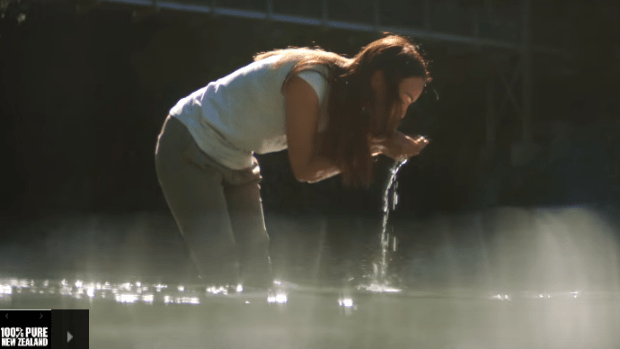
Well it must be getting very bad when mainstream media is concerned about the image of a woman drinking from our toxic (oops 100% pure) rivers. Seriously. Horowhenua has one of the top 10 worst polluted lakes in NZ, so toxic that ingesting it could potentially kill a small child or an animal. Then we can only swim in 40% of our rivers, how ever is the tourist going to discern which 40% they are? Signs up everywhere praps? Drink this but not that? Then there’s the 1080 issue (non issue according to the corporation) with the pellets landing in our drinking water. Ever join any dots about the soaring cancer stats? Isn’t one in 3 or less a bit high? Anyway, a warning to tourists, don’t believe the spin. Our esteemed authorities even dump sewage into the waterways here. Buy bottled water like you do in third world countries, just to be safe. We really are getting into third world status in my opinion with some places bringing home bottles from the water fountains.  Oh, and on the spin, NZ is not the least corrupt nation on the planet at all … sadly that is all spin as well. (See here also). Along with the not so well known fact that we are actually a corporation and not a true government.
EnvirowatchRangitikei

Copy of 534553_274675442608748_921230410_n.jpg
This would be more like the truth from our ‘protective’ authorities who place profits over health, being a corporation and all … a young man contracted trench mouth from oral contact with the water this sign guards

The article anyway, is from stuff.co.nz

New ‘100% Pure’ campaign shows tourist drinking river water

https://www.youtube.com/watch?time_continue=119&v=d3WXJQ0PSS4

While concerns grow about the health of New Zealand’s waterways – including the potential for reputational damage – it has not changed the way the country presents itself to the world.

The latest “100% Pure” campaign, released last week, shows a tourist drinking water from a river, something that would be dangerous in parts of the country.

The Government-funded ad was released last week by Tourism New Zealand (TNZ), and will be broadcast around the world over the next two years.

The campaign is titled “where one journey leads to another”, and anchors on a dream-like video following two tourists tramping, diving and kayaking in various locations throughout New Zealand.

READ MORE

http://www.stuff.co.nz/travel/94662163/new-100-pure-campaign-shows-tourist-drinking-river-water

RELATED:

Swimming in a river? Be ‘vigilant’, scientist says

Why you shouldn’t swim in the Manawatu River or any NZ river

“Be Very Clear – Central Govt, Horizons and Horowhenua DC are Serial Polluters of our Water-Ways” – Film Footage From a District Cr