Category Archives: Gardening

September gardening in NZ (Wally Richards)

There are plenty of chores to attend to at this time of the year as the day light hours increase and plants emerging from their winter rest.

Hardy plants will be showing very good growth now including the plants you do not want commonly referred to as weeds.

Unwanted plants are very valuable if you make use of them and treat them as a fodder crop.

Smaller unwanted plants should be cut off just below soil level with a sharp carving knife or sharp Dutch Hoe.

This removes the root system from the foliage leaving the roots to rot off in the soil providing a rich source of food for the soil life.

The foliage falls onto the bare soil where it is quickly broken down by the soil life providing them with more substance to nurture your preferred plants.

Taller weeds can be cut down with a weed eater such as using the Pivotrim Pro attachment which are available from Mitre10 Mega stores.

(This are far superior to using the roll of weed eater plastic tape which I always found a problem using.)

After cutting down the weeds with the above you can leave the stubble unless you want to clear the ground which means cutting off the weeds below soil level with a sharp carving knife.

Real tough root systems I have used a box cutter on which makes the job a breeze as long as you are careful not to cut yourself.

These methods of weeding enhances your soil or growing medium where chemical herbicides greatly harm the soil life and your plants suffer.

If you have waste areas or cobbles/cracks where weeds flourish then sprinkle salt over the area and lightly water. The weeds are killed and stay weed free for a time.

Another safe to use is mixing Ammonium sulphamate at 200 grams per litre of water and spraying on a sunny day when the soil is on the dry side. Give those conditions weeds are likely to be dead within an hour or two.

Spring temperatures and moisture brings out diseases to attack your plants so sprays of potassium permanganate (Condys Crystals at a quarter teaspoon to a litre of water)

with Raingard added sprayed onto the soil and plants controls a wide range of diseases and fungi nicely.

Note it will stain things like your house & fences if you are not careful, but will wash off over time.

An interesting bit of information you can purify drinking water of harmful bacteria by placing 3 or 4 grains into a litre of water, agitate to make water a light pink and leave for 24 hours before drinking.

Using this method means a large quantity of water can be treated saving the need to boil.

Spray the above potassium permanganate adding Wallys Liquid Copper for protection of curly leaf on stone fruit about every week till disease time is past.

Spray also your roses and other deciduous trees and plants to protect the new spring growth from diseases.

Sprinkle Wallys Neem Tree Granules under your apple trees, roses and citrus trees to reduce pest insect problems.

Use the Cell Strengthening products we wrote about a few weeks ago to strengthen your tomato plants, potatoes and tamarillo so the dreaded psyllid nymphs cant feed and ruin your crops.

If you have concerns about build up of diseases in your soil where you grow tomatoes year after year such as it your glasshouse then treat the soil with Terracin and 3 weeks later with Mycorrcin.

Ensure you store the unused bottle contents in a cool situation out of sunlight as it has live beneficial bacteria which would die if exposed to too much heat such as in a hot shed.

If you do not have any plants in your glasshouse so far, then you can burn sulphur powder inside the house to fumigate it of insect pests that maybe hiding away.

Wet times allows slimes to grow on paths which can be dangerous to walk on causing one to slip and fall. Spray with Wallys Moss & Liverwort Control to kill the slime.

Also ideal to use for moss in lawns and liverwort growing all over the place. To obtain best results adjust the nozzle of the sprayer so it is a bit of a jet which forces the product into the target area.

Does not harm plants if they are sprayed at the same time.

Start spraying strawberry plants 2 weekly with Mycorrcin which will increase your harvests by 200 to 400 %. They will fruit earlier, more fruit, larger berries and a longer cropping season.

Dont forget to also use Wallys Secret Strawberry Food for bigger strawberries.

When planting seedlings place a little Wallys Unlocking Your Soil into the planting along with a little Neem Powder to give your seedlings a good start and some protection from pests.

I favor crop cover (also so sold as Bug Mesh), which is 4 metres wide. By using wire or piping to form hoops place the cover over the hoops to give protection to the young plants or seeds from weather, pests, cats and birds.

Great stuff and reusable season after season.

If you want great gardens this season then use only natural products that will not harm the soil life and earth worms.

This includes putting a 10 micron carbon bonded filter/housing onto your water tap if you have chlorine in your water supply.

I have received many reports from gardeners about how their gardens have greatly improved in health after removing the chlorine from the water they use on the gardens.

It is just common sense, a chemical poison that is added to water to kill microbes is going to do the same to the beneficial microbes in your soil and effect the valuable earth worms.

I even wonder what harm it does to our gut bacteria when people drink chlorinated tap water.

If anyone has any data on this I would be interested.

Phone 0800 466464
Garden Pages and News at www.gardenews.co.nz
Shar Pei pages at  www.sharpei.co.nz
Mail Order products at www.0800466464.co.nz


New Zealand Bill of Rights Act 1990. Part II of the Act covers a broad range of Civil and Political Rights. As part of the right to life and the security of the person, the Act guarantees everyone:

1The right not to be deprived of life except in accordance with fundamental justice (Section 8)

2The right not to be subjected to torture or to cruel, degrading, or disproportionately severe treatment or punishment (Section 9)

3The right not to be subjected to medical or scientific experimentation without consent (Section 10)

4The right to refuse to undergo any medical treatment (Section 11)

 Furthermore, the New Zealand Bill of Rights Act 1990 guarantees everyone: Freedom of Thought, Conscience, and Religion.
This includes the right to freedom of thought, conscience, religion, and belief,
INCLUDING THE RIGHT TO ADOPT AND HOLD OPINIONS WITHOUT INTERFERENCE (Section 1)


In response to Wally’s question on chlorine, search ‘chlorine’ in the search box for our articles here on topic. It is a carcinogen for starters. EWR


Alternative ways to defeat those weeds (Wally Richards)

Chemical herbicides aren’t the only option available. There are a number of other products which are handy weedkillers but which don’t do as much damage as do the chemical herbicide products.

Oils added to water and sprayed over the foliage of plants in certain conditions will dehydrate or bleach the foliage, destroying everything growing above the ground.

Thus any cheap cooking oil mixed with water adding the same amount of dish washing liquid as oil then sprayed over weeds on a hot sunny day when the soil is on the dry side, the foliage of the sprayed plants will begin wilting very quickly – within minutes even.

If it is applied in cooler weather, or when the soil is moist, the killing action will take longer, and might not even work at all.

Ratio to use will depend on several factors; you could start off with say 100 mils of used cooking oil with 100mils of dish washing liquid into a litre of water.

That may dehydrate some weeds and other weeds may need a stronger solution. Of course you can spray it undiluted for maximum effect.

Plants are at their most vulnerable in sunlight on hot sunny days when moisture levels in the soil are low.

It is then that the roots of the plants will be gathering moisture as fast as possible to send upwards to replace the moisture lost through leaf transpiration.

When water is being lost from the leaves faster than it can be replaced, plants will be seen to wilt or droop.

This is most noticeable on hot sunny days, when leaves wilt during the day but come right as the sun goes down and the moisture level of the plant’s cells is replaced.

Foliage that remains starved of moisture for too long will dry out and is unlikely to recover.

You might notice that only parts of a leaf will be affected, perhaps only the tip or the edges. When oil is applied to the foliage in these conditions, all the leaves and stems are likely to wither and die, effectively killing the plant’s foliage.

If the plant is an annual, this will deprive the root system of energy, and it too will wither and die.

If the plant is a perennial, it will have the ability to send up new foliage from it roots, tuber or bulb, and it may well survive.

But if we keep spraying new foliage as it appears, doing the work in ideal hot sunny conditions, the roots or the bulb will eventually run out of energy and fail completely, causing the plant to finally die.

By adopting this method, we’re simply applying the basic principle that no plant can survive indefinitely without foliage as it loses its ability to gather energy from the sun.

If we simply keep cutting the foliage at ground level (as soon after it appears as possible), the plant will eventually die. The well-known Dutch Hoe, with its sharp edges, was designed for just this purpose.

Used against weed seedlings, the hoe would be placed just under the surface of the soil and then pushed forwards so that its sharp edges sliced off the weeds just under the surface, killing annual weeds and knocking back perennial weeds.

The fallen foliage is left on the soil to be re-absorbed back into the soil.

The latter may need a further treatment or two using the same method to finally finish them off.

If the hoe is used when the weeds are very young, it will successfully kill both annual and perennial weeds which have grown from seed. The older and more established the perennials, the more treatments will be required to get rid of them.

There are several common household products which can be used for non-selective weed killing, including any salad or cooking oils, vinegar and salt plus bleaches and acids.

(I spoke to a old farmer recently who told me they used to use sulfuric acid to remove the potato crop foliage prior to harvesting the tubers. Said it worked very quickly but could not remember the strength of the solution)

You need only to experiment a little with various dilution rates to see what works best for you.

Good old common table salt, purchased in bulk or in kilo bags, is probably the cheapest natural weedkiller available to everyone.

Use it at the rate of 240 grams (about 12 heaped tablespoons) to a litre of warm or hot water to dissolve it, and then spray it on the foliage of the weeds, again in sunny dry conditions.

Then stand back and watch the plants shrivel over time. Annuals will be seen going off quite fast, with perennials probably needing further salt treatments.

If you are finding that you are not getting the kill coverage you want, then increase the amount of salt to about 500 grams to a litre of water.

You will find that a little trial and error will indicate the level of salt needed to do the job well, without using too much. Applying extra amounts of salt over an extended period of time will eventually harm the soil.

If you are spraying only the foliage, and at the above rates, there will be, little residual damage done to the soil.

To make absolutely sure, give the area a good watering after the weeds have died. Adding Raingard to the salty water at a rate of 1ml per litre of water should also help the salt adhere to the surface of the foliage.

 Salt can also be applied dry on cobbles to kill weeds in joints or cracks.

Another home product which is useful is white vinegar. It is made from ascetic acid which, in its undiluted state, can be quite dangerous to play with if you don’t know what you are doing.

Only small amounts of ascetic acid, probably about 100ml to 1 litre of water, are needed to make a strong white vinegar.

If I remember correctly, it becomes a good weedkiller if diluted to the rate of about 15-20% acid. Salt is certainly much safer to use, and can be purchased cheaply in bulk.

Many years ago, and probably still today in some places, many people did their own oil changes on their vehicles, primarily to save on the cost of having a garage do it.

The old oil from the sump would then be poured over areas where gardeners didn’t want plants to grow – it was often applied to grassy areas of parks to mark out the lines for football fields and the like.

The strip over which the oil was poured would be bare of grasses for a long period of time. Diesel, at about $2.50 plus a litre, (price varies) is a very good weed killer,

used either as a spray to knock out weeds with a short-term residue growing in waste areas, or as a drench for longer term control.

Likewise, salt applied directly to the soil in reasonable quantities will also give a long-term control, depending on the amount applied to an area.

Simply apply the salt and leave it to get all those unwanted plants out of our cobbles or pathways – it’s a cheap and easy solution.

Sulphate of ammonia (which is another type of salt with nitrogen), was once another very popular weedkiller for spot control. It was also relatively inexpensive if purchased in 25kg bags from stock and station agents.

All that’s required is about a tablespoon of sulphate of ammonia powder placed onto the crown or centre of a weed. Left alone, the dry salts will burn out the crown of the weed, killing it outright.

As it is nitrogen, the control residue level lasts only for a short time. Some gardeners use this product on flat weeds in lawns – and indeed it can be a reasonably successful lawn weedkiller if mixed in with sand to get an even spread over the lawn.

This is called Lawn Sand, and here’s how to make your own.

Take 5kg of sharp sand (plasters sand preferably – don’t use river or beach sand as it can contain weeds of its own), together with 700 grams of sulphate of ammonia, and 300 grams of sulphate of iron.

The iron aids in making the area more acidic, and helps to burn mosses. Mix this all well together, and apply at a rate of 30 grams per square metre.

Do it ideally in dry weather conditions when rain is unlikely – if it does rain soon after application, the Lawn Sand will be less effective. Grasses which come into contact with the Lawn Sand will turn brown, but should bounce back after a week or two.

Another compound called Ammonium sulphamate mixed at 200 grams per litre of water and sprayed over weeds is also a very effective way of getting rid of them as they quickly compost down.

Watered over the foliage of oxalis into the soil it will compost the bulbs and help you get rid of this pest weed.

Sold as a Compost Accelerator or Super Stump Rotter and as Ammonium sulphamate in 2kg jars.

Phone 0800 466464
Garden Pages and News at www.gardenews.co.nz
Shar Pei pages at  www.sharpei.co.nz
Mail Order products at www.0800466464.co.nz


New Zealand Bill of Rights Act 1990. Part II of the Act covers a broad range of Civil and Political Rights. As part of the right to life and the security of the person, the Act guarantees everyone:

1The right not to be deprived of life except in accordance with fundamental justice (Section 8)

2The right not to be subjected to torture or to cruel, degrading, or disproportionately severe treatment or punishment (Section 9)

3The right not to be subjected to medical or scientific experimentation without consent (Section 10)

4The right to refuse to undergo any medical treatment (Section 11)

 Furthermore, the New Zealand Bill of Rights Act 1990 guarantees everyone: Freedom of Thought, Conscience, and Religion.
This includes the right to freedom of thought, conscience, religion, and belief,
INCLUDING THE RIGHT TO ADOPT AND HOLD OPINIONS WITHOUT INTERFERENCE (Section 1)

GERMINATING SEEDS (Wally Richards)

There are two basic places to germinate seeds, one is where they will ultimately grow and mature the other is in suitable containers to germinate and then to transplant out into open ground or larger containers latter on.

Firstly it is always best to plant any seed in the spot where it will grow and mature.

The reason for this is because when a seed germinates it will send down a tap root and if in open ground in a friable soil that root can be very long.

If on the other hand we germinate in a container or seedling tray that root will be limited in the depth of the tray and growing medium.

It is not practical to grow every thing at the maturity site, especially when we are getting an early start or growing out of season.

There are some seed types which should only be grown in their maturity site and only planted when conditions are favorable.

I often see seedlings for sale in punnets of plants which should never be offered this way because novice gardeners, that know no better, may purchase and have poor results..

The worst example of this is root crops such as carrots and parsnips which should only be direct sown as in any other form they will not produce a normal root.

An exception to this is a carrot that is round in shape and does not produce a long edible root.

Beetroot and onions are seedlings that will transplant but are better to direct sow. (Direct sow means planting seed where they will mature) Spring onion is an exception.

Corn, beans and peas should all be direct sown and you will get far better crops if you do so.

Larger seeds are easy to handle and can be placed where you want them to grow without having to thin out later on. Silverbeet is another one that would be best direct sown.

If you want to start off seeds early in open ground try this method.

Make a trench about 100mm deep and the same wide, mow your lawn and collect the clippings which you then pack fresh into the bottom of your trench.

(Note if the grasses are in seed in the lawn it maybe best not to use the clippings to prevent moving grass weeds to your garden)

Pack firmly to about 80mm then sprinkle a little compost over the clippings to cover.

Next sprinkle Wallys Calcium and Health or garden lime and Wallys Unlocking Your Soil along the trench along with foods such as chook manure, sheep manure pellets, blood & bone, Bio Boost and Neem Tree Powder.

Once again cover lightly with weed free compost (Purchased)

Next sow your seeds such as peas, beans, sweet corn etc. (Peas are hardy but others will depend where you are in NZ to when you start)

Once the seeds are spaced out along the row then spray them with Magic Botanic Liquid (MBL) at 20 mls per litre. This really speeds up germination.

Then cover the seeds with more compost and water down using a fine rose watering can with MBL added.

For those that have problems with either cats, birds or late frosts then make some hoops out of No8 wire and place them along the row with a clearance of about 200mm in the middle of the row.

Place crop cover over the hoops and on one side cover with soil and on the other side with lengths of old timber or similar.

That allows you to easily take off to tend to the plants if needed. The heat from the grass clippings will warm the soil which greatly helps germination.

Once well developed then you can remove the hoops and cover and store for future use.

Now lets look at doing similar but in seedling trays or by using cell packs or punnets.

If you keep the punnets and cell packs that you have purchased in the past then these are good value to use.

Wash them out in hot water so they are nice and clean.

To fill I use only purchased compost of high quality such as from Daltons or Oderings.

I have found that seed raising mixes are a gimmick and most of the ones I have looked at are too expensive and do not work as well as a good quality compost for most seed germination projects.

Think about this; outside in Nature we find all sorts of soils types even straight gravel or sand where seeds do not appear to have much trouble germinating, without any special mixes from mankind.

One important aspect to consider when germinating in seedling trays is to have heat from a heat pad.

Some garden shops, pet supplies and brew shops have heat pads which can be used for germination.

I place a sheet of polystyrene block on a bench to direct the heat upwards then sit the seed trays on the heat pad.

If you go to wholesale fish outlets or fish departments of supermarkets you will likely find used polystyrene trays free or for a few dollars.

You can sit your heat pad in the tray and being white it will provide lots of good reflected light.

If the pad you buy is a higher temperature than you require then cover the pad with sand and keep the sand moist. Sit your seedling trays on the sand.

Fill your seedling tray or cell packs to about two thirds full with purchased compost as above.

Carefully sprinkle a few seeds over the compost keeping them apart so they each have their own space.

Spray then seeds with MBL and Mycorrcin mixed together in a trigger sprayer with non chlorinated water.

Once the compost and seeds are wet then cover seeds with more compost (You can sieve it if you like) and wet down with your spray.

Now you spray the tray at least twice a day to keep the compost moist using the same trigger mix.

Once a few seeds have germinated and before they start stretching for light get them out into natural light from overhead such as on a bench in a glasshouse.

If you do not have a suitable place then place your polystyrene box outside with a sheet of glass over it.

The seedlings will need spraying still but off the heat pad a lot less. Make sure the seedlings are in good light but not strong sun light to burn them.

If you are worried about them at night you can bring the polystyrene box inside or onto a porch.

When the seedling are big enough to handle prick them out and pot them into small pots once again using the compost or plant out in your garden.

If you spray the seedlings a couple of days before planting out then you do not need to harden them off.

Phone 0800 466464
Garden Pages and News at www.gardenews.co.nz
Shar Pei pages at  www.sharpei.co.nz
Mail Order products at www.0800466464.co.nz


New Zealand Bill of Rights Act 1990. Part II of the Act covers a broad range of Civil and Political Rights. As part of the right to life and the security of the person, the Act guarantees everyone:

1 The right not to be deprived of life except in accordance with fundamental justice (Section 8)

2 The right not to be subjected to torture or to cruel, degrading, or disproportionately severe treatment or punishment (Section 9)

3 The right not to be subjected to medical or scientific experimentation without consent (Section 10)

4 The right to refuse to undergo any medical treatment (Section 11)

 Furthermore, the New Zealand Bill of Rights Act 1990 guarantees everyone: Freedom of Thought, Conscience, and Religion.
This includes the right to freedom of thought, conscience, religion, and belief,
INCLUDING THE RIGHT TO ADOPT AND HOLD OPINIONS WITHOUT INTERFERENCE (Section 1)

Image by StockSnap from Pixabay

Tomato Time (Wally Richards)

If you are like me, your fingers are itching to get the new seasons tomato plants under way.

The earlier you start the sooner you will have ripe tomatoes to eat.

I think most garden centres will have a few early varieties already to buy and grow on.

This last week after the cold spell the weather has been fairly warm in most areas.

This is likely because of the rain brought down from the tropics which caused so much damage also brought with it, warm air.

As I write this in Marton at 10am on Saturday the temperature outside is 18 degrees and starting to feel a bit more like some spring weather.

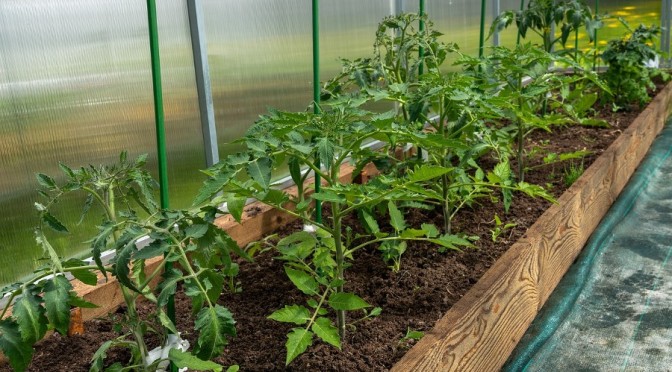
If you have a glasshouse or similar then no problem in getting your first tomato plants started either in the ground or in containers.

If you do not have a glasshouse there is no reason not to plant one or more tomato plants into 20cm containers to grow on for planting out into your garden later on as a well established plant.

You just need to have the containers in a sunny sheltered spot and if the weather turns to custard or looks like a frost then bring them inside (porch, carport, shed, kitchen) they will be ok then till weather improves and back to their spot outside so they get ample sun light.

Firstly lets look at planting your purchased tomato plants, whether in the ground or into a container: make a hole that will be deep enough to bury the plant up to the first leaves.

The reason for this is that the plant will produce roots all the up the trunk making a bigger root system compared planted shallow where the original roots are.

More roots, bigger plant and better results.

Place about half a teaspoon of Wallys Secret Tomato Food with Neem Powder at the base of the hole and just cover with a little of the growing medium.

Also sprinkle Wallys Secret Tomato Food onto the growing medium surface but not against the trunk of the plant.

Not only are you giving your tomato a great food but also the Neem Powder helps prevent insect problems.

In a glasshouse also sprinkle Wallys Neem Tree Granules as the smell of the granules will further disguise the smell of your tomato plants so whitefly will not know they are there.

Hang Wallys White Fly Sticky Traps in the glasshouse near the door and vets as well as above your tomato plants.

These will catch any adult insects pests that find there way into the glasshouse.

The biggest problem that many gardeners had over the last season or longer is the dreaded psyllid.

These little pests lay their eggs on to tomato plants, potatoes, Tamarrilo (these three are the worst affected) but they will also attack chili, capsicum okra and pippino.

The nymphs when they hatch out are very small and you need a magnifying glass to see them.

They are sucking the goodness out of your tomato plant and even worse injecting a toxin into the plant.

The results seen are the plants lower leaves may turn yellow prematurely, be distorted, fruit will become progressively smaller and the end result will be a fungus mold up and down the trunk before the plant dies.

Eggs hatch 3-9 days after being laid and nymphs pass through five scale-like stages in 12-21 days, depending on temperature.

In greenhouses, tomato-potato psyllid development proceeds rapidly between 15-32 C, and the lower temperature threshold for development is about 7 C.

It is the mid range temperatures that are best for the psyllids and for breeding.

Lower and very high temperatures reduce their activity and that is why very early and late in the season, while temperatures are mild they are not much of a problem in open air gardens.

Late self sown tomato plants will do well till winter knocks them out.

From personal experience I found that once you have a psyllid population in your back yard that each season it will be far worse than previous up until growing of tomatoes, potatoes and Tamarrilo is a waste of money and time.

For instance Opiki (between Palmerston North and Levin) was a great commercial potato growing area a few years ago. Now there are none grown as the chemicals needed to control had to be applied so frequently and the costs too high to be economical.

Sprays such as Neem Oil or chemical ones will help control a bit but the populations become so great that they just don’t control sufficiently to be any thing than a waste of money.

Confidor (the bee killer) would be the best to work as a chemical spray but of course now no longer available to the home gardener as it is a bee killer which we do not want that.

About two years ago the psyllid problem in my big glasshouse had got so bad that I went out looking for a safe means of control.

I found the answer in silicon which if used to treat the tomato plants from seedlings to maturity not

only prevented psyllid damage but actually got rid of them completely from my glasshouse and gardens.

So for other gardeners I bottled 3 products the first is Wallys Silicon and Boron Soil Drench which is watered into the soil where your tomato plant is to grow either before planting or after planting.

Another drench is applied 2 weeks later.

Then you mix Wallys Cell Strengthening Spray and Wallys Silicon Super Spreader together.

The Super Spreader forces the Cell Strengthening spray into the plants.

This spray can be started once your tomato plant has foliage and repeated every week as it grows.

Once it gets to flowering and about a metre tall then spray every two weeks.

Once you start harvesting fruit spray once a month.

Add Magic Botanic Liquid (MBL) to the cell strengthening spray.

I make up the spray into a one litre Trigger sprayer and leave by the plants out of direct sunlight to used again till all contents finished as it keeps ok. Just shake the bottle in case of settling.

You will not only have lots of tomatoes as it used to be but also the fruit will be bigger and tastier as the leaves of the plant will love the silicon spray and grow to about double their normal size.

The plant will get more energy from the sun having larger leaves and the plants will be the best tomatoes you have ever grown using the Wallys Secret Tomato Food and the Silicon cell strengthening products. Even if you do not think you have a psyllid problem it is worthwhile to use the cell strengthening products as you will have better tomatoes as a result.

These products also work well on preventing or reducing the damage to garlic from the garlic rust problem.

You could try the cell strengthening spray with MBL added on your favorite plants such as roses and see what happens.

Problems ring me at 0800 466464
Email wallyjr@gardenews.co.nz
Web site www.gardenews.co.nz

Phone 0800 466464
Garden Pages and News at www.gardenews.co.nz
Shar Pei pages at  www.sharpei.co.nz
Mail Order products at www.0800466464.co.nz

New Zealand Bill of Rights Act 1990. Part II of the Act covers a broad range of Civil and Political Rights. As part of the right to life and the security of the person, the Act guarantees everyone:

1 The right not to be deprived of life except in accordance with fundamental justice (Section 8)

2 The right not to be subjected to torture or to cruel, degrading, or disproportionately severe treatment or punishment (Section 9)

3 The right not to be subjected to medical or scientific experimentation without consent (Section 10)

4 The right to refuse to undergo any medical treatment (Section 11)

 Furthermore, the New Zealand Bill of Rights Act 1990 guarantees everyone: Freedom of Thought, Conscience, and Religion.
This includes the right to freedom of thought, conscience, religion, and belief,
INCLUDING THE RIGHT TO ADOPT AND HOLD OPINIONS WITHOUT INTERFERENCE (Section 1)

Photo: pixabay.com

Using Neem in your garden & elsewhere (Wally Richards)

Azadirachta indica, commonly known as Neem, nimtree or Indian lilac, is a tree in the mahogany family Meliaceae.

It is one of two species in the genus Azadirachta, and is native to the Indian subcontinent and most of the countries in Africa. It is typically grown in tropical and semi-tropical regions.

Each year the tree flowers and produces fruit or kernels which are the seeds of the tree.

These are harvested and cold pressed to extract the Neem Oil which is used for many things including as an insecticide and for medical uses.

If the kernels are press only once then the Neem Cake will be dark in colour and have a good Neem smell.

If they are cold pressed more than once to extract more oil then they will be light brown in colour and not have much smell which means they will not any where near effective as the dark Neem Granules/Powder;.

The crushed residue is called Neem Cake in India which my company Garden Enterprises import in container loads into NZ for gardeners to use.

Before it is shipped the Neem cake is dried then screened to obtain to particle sizes which we call Wallys Neem Tree Powder being uniform particles 1-3mm in size.

Then there are the larger particles we call Wallys Neem Tree Granules which vary from 1mm to about 50mm in size.

Both are the same thing it is just the size of the particles that determine what we call them.

Likewise either can be used to do most gardening tasks that Neem Cake can be used for but each has its special tasks for applications.

Firstly lets talk about Neem Tree Powder, lovely to work with, easy to handle and far better to use for some applications than the Neem Tree Granules.

For instance when planting seeds or seedlings a little of the powder can be sprinkled with the seeds or put into a seedling’s planting hole.

It is a must to prevent carrot fly damage; you sprinkle the powder along the furrow with the seeds at sowing time.

Later when the carrots have germinated and have tops of foliage about 3-4cm tall you then side dress the row with the powder.

By doing this most gardeners have found little or no damage to the carrots at harvest time.

The Neem Tree Powder is ideal for treating grass grubs in lawns if used when the grubs are near the soil surface. For most that would be in the autumn after the autumn rains have moistened up the soil.

By cutting out squares of turf and examining the clods will let you see if there are grubs near the surface, if so then treat those areas where there are several grubs per square foot.

Sprinkle the Neem Tree Powder over a freshly mowed lawn and water in to settle the powder onto the soil.

If you have a roller then roll to press the powder into the moist soil.

If not then either lift the height of your rotary mower by a notch or two before you mow again or leave the catcher off so that powder picked up while mowing will be put back onto the lawn. Only applicable for two or three mowings after application of the Neem Powder.

Where you apply the powder on the lawn you may notice after a couple of weeks that those areas are looking better than where it was not used.

This is a good indication that you have root nematodes in the roots of your grasses and they are sucking the vigor out of your lawn. So if this is the case then you know to treat the rest of your lawn.

Neem Tree Powder is also ideal to place a small sprinkling on top of the growing medium of your container plants to eradicate root mealy bugs in the roots. Out side containers it does not matter so much as the powder will get molds when it breaks down which is normal; but indoors it will look unsightly so cover the powder with a little more growing medium.

Wallys Neem Tree Granules being bigger in size means they will last much longer slowly breaking down.

This makes them great to use on the soil of more established plants such as trees, shrubs and roses.

I have had a few gardeners tell me they used them in the root zone of their roses and significantly reduced problems of pests and diseases.

We have found them magic placed on the soil under citrus trees from the trunk to the drip line..

Within a period of about 6-8 weeks all insect pests on or in the tree are gone including whitefly, scale borer and mealy bugs.

At the beginning of the season when you plant up your glasshouse with tomatoes and other plants put some Neem Tree Powder in the planting holes and Neem Tree Granules on top of the growing medium (soil or containers) Many reports have said that in its self has solved most of their problems with whitefly in the glasshouse.

The reason I believe is that the smell of the granules disguises the smell of the plants and hence insects pests flying by don’t know that there are host plants nearby.

Disguising the smell of plants so that insects do not know that they are there is a great easy control.

It is the first line of defense against codlin and guava moth damage. You hide the tree when its fruiting.

The time to use the granules is after the fruit has formed on the tree and is about halfway to maturity.

Sprinkle the Neem Tree Granules under the tree from trunk to drip line.

Next make up some small bags using old curtain netting which you will place some granules in and the hang in the tree about your height. Hang around the tree 4 to 6 bags.

When the moths are flying at night looking for where to lay their eggs from the smell of the fruit they will fly on by as can not smell the fruit because of the Neem Granule’s smell that overrides the fruit smell.

Simple and very effective in greatly reducing the damage to your crop.

In regards to using Neem Tree Granules on the soil under plants you are likely to find they work better on some types if plants than on others.

I found on brassica such as cabbage that powder in the planting hole and granules on the soil meant that caterpillars never got established or caused much damage.

A few months ago a lady gardener from India told me that she soaks Neem Tree Granules in a bucket of water (about a cup full) for a couple of weeks stirring occasionally.

Then she takes the water and sprays or pours over her roses late in the afternoon.

According to her it keeps the pests and diseases under control.

Wallys Neem Tree Powder and Granules are great gardening aids and available in sizes in 1 kilo, 3 kilo and 20 kilo bags.

Problems ring me at 0800 466464
Email wallyjr@gardenews.co.nz
Web site www.gardenews.co.nz

Phone 0800 466464
Garden Pages and News at www.gardenews.co.nz
Shar Pei pages at  www.sharpei.co.nz
Mail Order products at www.0800466464.co.nz

New Zealand Bill of Rights Act 1990. Part II of the Act covers a broad range of Civil and Political Rights. As part of the right to life and the security of the person, the Act guarantees everyone:

1The right not to be deprived of life except in accordance with fundamental justice (Section 8)

2The right not to be subjected to torture or to cruel, degrading, or disproportionately severe treatment or punishment (Section 9)

3The right not to be subjected to medical or scientific experimentation without consent (Section 10)

4The right to refuse to undergo any medical treatment (Section 11)

 Furthermore, the New Zealand Bill of Rights Act 1990 guarantees everyone: Freedom of Thought, Conscience, and Religion.
This includes the right to freedom of thought, conscience, religion, and belief,
INCLUDING THE RIGHT TO ADOPT AND HOLD OPINIONS WITHOUT INTERFERENCE (Section 1)

Image by Alexei from Pixabay

Tips for Planting plants (Wally Richards)

Gardeners are buying and planting plants now for the coming season.

This may range from seedlings of vegetables, annual flowering plants, fruiting plants and ornamental shrubs and trees.

There are a number of traps and tips which if known will make for a more successful growing season and thus more pleasure for yourself.

Lets start off with seedlings which will likely come in cell packs (each plant has its own little growth space with normally 6 cells to a pack.)

Then there is the punnets where a number of seedlings share the same growing area.

The first thing to do when looking for vegetable seedlings to grow is to see how old the plants are?

If they are on the large size in their cell/punnet then give them a miss as more than likely they have been stressed and may go to seed a couple of months after you plant them. A total waste of time and garden space.

This does not apply to flowering/fruiting vegetables such as tomato, capsicum etc as the bigger they are the further advanced they are to maturity the better.

It applies to brassicas, lettuce and such like.

Also don’t be silly enough to buy root crops in punnets such as beetroot, onions, carrots, parsnips, spring onions as they will never be any where near as good as the ones you grow from seed, planted where they will mature.

Big seeds such as beans, pumpkin should also only be grown directly from seed.

The results will be ten times better than transplants which for crops such as carrots are laughable as they will never become a nice specimen if they were grown from transplants.

The secret to seed growing in an area that they will mature in; is that they get their initial tap root or roots out and those roots do not get disturbed by transplanting.

With the likes of carrots either buy the seed that is on a seed tape or later on thin out the crop which gives you some baby carrots for salads.

I look for the younger smaller plants that are likely the freshest ones from the growers nursery.

These will likely have been kept moist in their growing medium and hence stress free.

Even if they are a bit too small to transplant that is ok; you can grow them on outside in a sheltered, sunny spot. While they are getting bigger you do not want to over water them or let them dry out.

Over watering makes them soft, under watering can lead to stress.

If you can pick the time and day that you plant out, best time is before rain or later in the day when the sun is going down.

If you are really smart you spray any plants you are going to transplant a few days before disturbing them with a spray of Vaporgard and Magic Botanic Liquid combined. (Spray for total coverage)

How many of you have planted out seedlings to see them lay down for several days on the soil till they pick them selves up and start to show growth? We have all experienced that I am sure.

Well the few days before transplanting spray of Vaporgard means that moisture loss through the foliage at transplant time is minimal and the seedlings sit up like little soldiers and start growing immediately.

This is very important: Before you try to remove the seedlings from their punnet or cell pack you plunge it into a bucket of water and watch them bubble.

This removes all air from the growing medium and also gives the seedlings a nice drink.

You then carefully tap out the seedlings without damaging the foliage.

They should, being so wet, slide out nicely.

Next we inspect the foliage for any pest insects or eggs.

In some cases you may have several seedlings in a cell pack or punnet that have their roots intertwined with each other.

You have two options you can plant the plug with more than one seedling and in a couple of weeks time cut the smaller ones off at soil level allowing the best fellow to grow to maturity.

Or in your bucket of water you can carefully separate the seedlings and have a lot more to plant out.

Down in; under water, they will tease out and separate nicely with minimal root disturbance.

But now maybe you have more seedlings than you need for one crop and one harvest.

No problem you put all the extra seedlings to]gether in a clump and and plant them it the garden.

Being in a clump they will not grow much but will hold so that in say a couple of weeks you can lift, divide under water and plant a second crop. (An old trick which I have held surplus for several weeks in that manner)

Soil preparation is important unless you do what I do.

Clear the area of weeds and then sprinkle what goodies you like to use over the area such as animal manures, sheep pellets, blood & bone, Ocean Solids, Wallys Unlocking your Soil, BioPhos and Wallys Calcium and Health.

Now spread a layer of purchased compost over the area to the depth of 3-4 cm.

I prefer Daltons compost as it is herbicide free and nice to work with.

Into this layer you can plant your seeds or seedlings.

Spacing is important so you do not have over crowding.

Keep moist with daily light waterings and spray the plants with Magic Botanic Liquid (MBL) each week.

Lets upscale to plants such as shrubs, vines and trees which once again you are either buying in a pot or plastic bag.

Follow the advise as for the seedlings but when you remove the plant from its grow container have a good look at the root system.

If the plant has been in the container for a while the roots will have filled the container and spiraled around the base of it.

If left like that and placed into a planting hole you may wonder months or even years later why has that plant not grown?

Simple the roots can not get out from the clump they formed in the container.

Some gardeners try to tease the roots out and that can help a little but really a waste of effort.

You take your secateurs and at the four cardinal points you cut the root spiral the depth of your blade.

Roots are like branches, you cut the end off a branch and that branch will create new branches back to the trunk.

You cut the roots and the plant makes a lot of new roots and that is what you want for growth.

It is a busy time ahead so get cracking with small plantings now followed by more each month.

Thank you for the many ‘Get Well’ emails I received in regards my virus/cold, getting better now but it does take a while. I saw on the TV channel, Al Jazeera TV News Channel that there is now good evidence that America released the initial Corona virus and have also done the same with the Monkey Pox virus.

Problems ring me at 0800 466464
Email wallyjr@gardenews.co.nz
Web site www.gardenews.co.nz

Phone 0800 466464
Garden Pages and News at www.gardenews.co.nz
Shar Pei pages at  www.sharpei.co.nz
Mail Order products at www.0800466464.co.nz

New Zealand Bill of Rights Act 1990. Part II of the Act covers a broad range of Civil and Political Rights. As part of the right to life and the security of the person, the Act guarantees everyone:

1The right not to be deprived of life except in accordance with fundamental justice (Section 8)

2The right not to be subjected to torture or to cruel, degrading, or disproportionately severe treatment or punishment (Section 9)

3The right not to be subjected to medical or scientific experimentation without consent (Section 10)

4The right to refuse to undergo any medical treatment (Section 11)

 Furthermore, the New Zealand Bill of Rights Act 1990 guarantees everyone: Freedom of Thought, Conscience, and Religion.
This includes the right to freedom of thought, conscience, religion, and belief,
INCLUDING THE RIGHT TO ADOPT AND HOLD OPINIONS WITHOUT INTERFERENCE (Section 1)

GARDENING: THE IMPORTANCE OF CALCIUM IN YOUR SOIL (Wally Richards)

Calcium (garden lime) is a very basic mineral that is often overlooked by gardeners.

Kiwi gardeners in the past would dig over their vegetable garden at the beginning of winter after the last crops had been harvested.

The soil would be turned to the depth of one and a half to two spade depths, bringing the subsoil to the surface and then left in unbroken as mounds for frosts to work on.

Over these clods of soil a good coating of garden lime would be applied making it look like it had snowed after application.

The idea was to bring up from the subsoil minerals to the surface. Weeds would be buried underneath to compost down and the soil would be exposed to the elements as the lime would be washed in.

In spring these clods would break up with a light touch of the hoe turning the garden into a lovely fine tilth of healthy soil. Potatoes, brassicas and other vegetables would be

planted to not only feed the family as they were harvested but also to store and preserve surpluses for the coming winter.

Life was hard but very rewarding; it was a different world.

The principals of liming our vegetable gardens has not changed even if this practice is too often neglected these days.

I was talking to a keen gardener on the phone this week who explained to me that he was gardening naturally (without the use of chemicals) and he had felt that the results were not as good as he would have liked.

So last season he gave the garden a good dose of gypsum (calcium & sulphur) and the improvement of the crops was really noticeable. Even his dad (an old, very experienced gardener) remarked that he had finally got things right.

Getting things right can be as simple as giving your gardens a good dose of a fast acting lime.

I say fast acting because not all limes are equal in the time frame that they can be of benefit to the soil.

Some garden limes come from lime stone that can take up to 10 years to become soluble and useful in the soil.

That is like putting your money in the bank and having to wait 10 years to get any interest.

On the other hand soft limes start working for you immediately on application.

Lime sweetens the soil as we say which means it lifts the pH to be more alkaline.

NZ soils over time become more and more acidic because of our rain fall, these days likely even quicker because of pollution.

All our beneficial friends in the soil require calcium to thrive, as one source explained it; calcium is like the coal that feeds the furnace, calcium feeds the soil life making for great gardening.

Acidic soil becomes anaerobic and breeds the microbes you do not want, called pathogens or diseases.

The soil has the same principals as our own bodies, if we become acidic inside we can become sick and diseases such as cancers can thrive. If we keep our internal body alkaline then we will be much better off.

Soil pathogens can be suppressed by using Terracin followed by applications of Mycorrcin.

There maybe minerals in the soil that plants need but cant take up because of the lack of calcium.

In plants calcium is part of cell walls and membranes; it controls movement in and out of cells, reacts with waste products and neutralizes toxic materials.

Calcium activates many enzyme systems, it improves microbial activity and it enhances uptake of other nutrients.

It is essential for cell division as well as increasing cell density, and improves texture (crunch) of crops.

Calcium is critical for balancing excess nitrogen as well as disease suppression.

Having the correct amount of calcium in the soil will require less nitrogen.

The calcium will loosen the soil and make more nitrogen available.

Lack of sufficient calcium will result in the following plant disorders;

Necrosis at the tips and margins of young leaves, bulb and fruit abnormalities, (such as blossom end rot in tomatoes), deformation of affected leaves, highly branched, short, brown root systems, severe, stunted growth, and general chlorosis.

It must be remembered that these problems are caused by an inadequate supply of calcium to the affected tissues.

These deficiencies can even occur when the soil appears to have an adequate presence of calcium.

A  gardening product is now available called Wallys Calcium And Health which comprises of a fast acting calcium along with important elements for your health and the health of your plants.

Calcium & Health contains fast attacking lime, magnesium, selenium, boron, sulphur, potash and phosphate in a balanced ratio for your gardens.

Using this new product on your food crops is going to help ensure you obtain these essential elements in your diet.

A number of gardeners are concerned about their bodies not obtaining elements such as selenium from the vegetables and fruit they grow.

By applying Calcium & Health to your gardens will help increase the goodness and nutritional values of your home grown diet.

Used at 60 grams per square M (scoop provided is 60 grams) or as I like to do is place a small amount into the planting hole of seedlings.

Avoid using the 60 grams around acid loving plants as it does increase the pH but about 20 grams will be of benefit without interfering with the pH to affect the plants.

I also recommend you using gypsum and dolomite in your gardens as well; these later two can be used around acid loving plants as they are pH neutral.

The important aspect to remember is that calcium is vitally important to the health of your plants and soil.

Every plant needs calcium to grow. Once fixed, calcium is not mobile in the plant.

It is an important constituent of cell walls and can only be supplied in the xylem sap.

Therefore, if the plant runs out of a supply of calcium, it cannot re-mobilize calcium from older tissues.

If transpiration is reduced for any reason, the calcium supply to growing tissues will rapidly become inadequate.

Without adequate amounts of calcium, plants experience a variety of problems as our gardening friend found out at the beginning of this article.

Phone 0800 466464
Garden Pages and News at www.gardenews.co.nz
Shar Pei pages at  www.sharpei.co.nz
Mail Order products at www.0800466464.co.nz

Photo: Goumbik @ pixabay.com

Dealing with ‘wet feet’ in your garden (Wally Richards)

Recently I have been asked why some plants (and in particular citrus trees) are loosing leaves and look like dying?

The problem is root roots and any plants, shrubs or trees that can not have their roots wet for any length of time will likely die unless some remedial action is taken during wet times..

In a few cases I have been told that a citrus tree has been happy where it is for several years and now suddenly it is suffering.

The reason is likely a change in the flow of rain water which has made the root zone much wetter than in the past.

Maybe a shed was build nearby, maybe a concrete path or drive was laid which has changed the course of water and made an area wetter that in the past.

We will talk about citrus though there are a number of other plants which are not happy with wet feet.

Citrus need to be planted on very free draining soil and one way to ensure this is to make a mound of soil about 30cm tall and plant into the mound.

One of the locations I used to live at was so wet in winter that it was a lake a foot deep .

Initially I planted in the back yard some specimens that would take up the excessive water one of which was a twisted willow.

To grow my citrus trees I cut 200 litre plastic drums in half and made some large drainage holes in the base and on the sides near the base.

I then partly buried the container into the soil.

This was to help stabilize the tree in wind so they did not blow over.

Well what happened is the roots found their way out through the holes in the bottom/sides and the citrus really took off.

In winter they were sitting in a lake of water happy as Larry with a good part of their root system above the water.

This could be a method you could use if you have a very wet section.

There is another advantage to this and that is if you move house you can with a bit of effort dig the drums out of the soil cut the extended roots and take them with you to the next location.

I have citrus than have now lived in three different locations.

With the amount of rain in many locations there could be a chance your citrus are suffering so best to check.

Yellow leaves and leaf drop are a good indication it might be wet under foot.

There is an easy way to help over come the wet and allow the soil to dry out quicker.

Take a spade and just beyond the drip line and dig a trench about one and a half spades deep.

This allows the water to flow into the ditch and quickly evaporate with sun and wind.

A big problem this time of the year is mulches over gardens and around plants.

Mulches are for keeping moisture trapped in the dry times.

In wet times they are deadly.

So if you have bark gardens, weedmat or other covers over the soil for moisture retention you need to keep an eye on the plants growing there.

If they are starting to look poorly then you may be best to remove the mulch and let the soil breathe.

You can help speed up the recovery of any plants suffering from wet feet by spraying the foliage with Perkfection at the 7 mil rate.

A month later at the 5 mil rate this will help the plant generate new roots and overcome root rots.

Winter time is also a hard time for indoor plants and losses can occur if the growing medium is too wet.

House plants do not need much water at this time and if they are sitting in a saucer that is full of water you may have a problem.

There is a simple test you can use to determine how wet or dry a container plant is.

Lift the container and if it feels very light then it needs a small drink.

If heavy forget it and check a week later.

There can be a problem also where the mix has become so dry that when you water it does not wet the mix but flows out the drainage holes.

The plant gets only a little drink but not enough.

To overcome this add some dish washing liquid to a container of warm water and water the soapy mix over the growing medium.

This breaks the surface tension and allows the soapy water to penetrate.

Next time you water the water will stay there and not run out.

Another way of doing this in summer (not now) is to plunge the container into a tub of water and watch it bubble.

When it stops bubbling it is soaked thoroughly and you lift to drain.

Watering is an art which takes a lot of thought to get it right all the time.

EARLY BIRD LAST DAYS

Problems ring me at 0800 466464
Email wallyjr@gardenews.co.nz
Web site www.gardenews.co.nz

Phone 0800 466464
Garden Pages and News at www.gardenews.co.nz
Shar Pei pages at  www.sharpei.co.nz
Mail Order products at www.0800466464.co.nz

7 Edible Plants for the Bog: Good Eats That Grow in Wet Soil

Cranberries, taro, day lilies, mint, duck potato and more ….

From onegreenplanet.org

A bog, technically, is a wetland created from freshwater and an abundance of organic matter. Bogs are soft and spongy, characteristically found in cooler climates, with the largest bog being in Siberia. They can be formed in poorly draining basins, from lakes overrun with dense plant growth, or along the flattest floodplains of streams. They can take hundreds of years to form. It’s not these bogs we’ll be growing food in, though they could work.

The bog we are referring to here is that space in a suburban lawn or rural plot where the water tends to stand after rain, the patch that never seems to completely dry out. These spots might seem horrible places for putting in gardens, but with the right plants, it’s possible to make “bogs” productive, beautiful settings. Rather than filling them in, we can take advantage of the moisture and grow some special, and especially delicious, plants.

READ AT THE LINK

ahttps://www.onegreenplanet.org/lifestyle/7-edible-plants-for-the-bog-good-eats-that-grow-in-wet-soil/?utm_medium=social&utm_source=facebook.page&utm_campaign=postfity&utm_content=postfityd34f1

DEALING WITH CURLY LEAF DISEASE IN STONE FRUIT (Wally Richards)

All too often I am asked questions about problems that have already occurred and its to late to prevent them. Its like the old saying, closing the gate after the horse has gone.

Unless you are onto it, you will miss the vital times when your efforts will be worthwhile and make a difference for that season.

We are now into July; the middle of winter and if patterns follow the past few seasons we are likely to see some good weather in August which will mean, (with the extending day light hours) things will start moving.

The following are situations for gardeners that have these problems from the past. Here is what I believe to be the best ways to handle them.

If you read my recent articles about making the soil healthy then apply that also to the following problems because healthy soil will make for healthy plants given time and in most cases.

Plants and trees etc that do not healthy and have a weak constitution, likely through breeding, should after a few seasons of effort be disposed of and replaced with another specimen that can be healthy.

Curly leaf is a disease on stone fruit trees which effects nectarines and peaches.

The spores from the previous season are sitting waiting for the leaves to form and the right conditions to infect. The damage from last spring will lead to even more damage this spring unless you intervene.

If the damage is severe enough, not only will you not have any crop but you can also lose the tree.

I have had a few interesting talks with gardeners that have grown stone fruit directly from stones.

These trees grow on their own root stock, fruit within a couple of years or so and do not have curly leaf disease.

This means that it is the grafted varieties of stone fruit that we have problems with and the very worst ones are those dwarf specimens for curly leaf.

So what to do:

The trees and the ground under them should be sprayed with potassium permanganate at half a teaspoon per litre of water now. Add about a level tablespoon of Ocean Solids to the spray as it increases the effectiveness.

Leave for about two weeks and spray again with potassium permanganate at ¾ a teaspoon into a litre of water with 3 tablespoons of Ocean Solids, dissolved and then added to a further 10 litres of water.

Spray the whole tree and drench the soil underneath from trunk to beyond the drip line.

What we are trying to do here is kill as many spores of the disease as possible that are on the tree and in the soil under the tree.

Some years ago I suggested scattering Ocean Solids under the trees before they start to move in the spring, the information on this came from Sea90 for those familiar with that method.

I have heard some positive feed back from gardeners that have done this and they also said that if any damage starts to appear on the foliage they spread some more Ocean Solids.

Likely the sodium chloride neutralizes the spores as well as increasing the mineral uptake of the tree.

The traditional method of control is to spray the tree, once the leaves start to appear, this is done every 7 to 10 days with Wallys Liquid Copper and Raingard.

The idea here is to keep a film of copper over the leaves as they are growing to kill the spores when they land on the leaves.

‘This spray program is repeated for about 2 months. The Raingard is very important because without it the copper would wash off in rain and that is when the disease spores strike.

I have also suggested the use of Vaporgard to be sprayed over and under the foliage once a good amount of leaves have appeared without damage.

The film is also a barrier to the spores and will assist the tree to produce more energy from sunlight helping to retain a good crop of fruit.

Growing your own fruit and vegetables naturally is the answer to better health.

Codlin moth another annoying pest that spoils apples, walnuts and sometimes pears.

At this time the codlin are in cocoons, pupating waiting for the right time to emerge to mate, lay their eggs and damage your apples.

Where they are hiding is in nooks and crannies on the tree, but mainly in the soil under the tree.

What you could do at this time if you had a few chickens is netting off the area under the tree, rake the soil and put your hens in there to gobble up any cocoons they scratch out.

Next at end of July sprinkle Wally Neem Tree Granules under the tree from trunk to drip line.

What this does is create a smell from the granules breaking down that prevents the moths when they emerge to detect the apple tree above them.

They sit there waiting for the tree to come along and hopefully will be eaten by birds.

The pests are not going to emerge till the apples have set on the tree after flowering and the weather conditions are congenial.

Once the flowering has finished you can put a can with treacle in an onion bag and hang it in the tree.

This will attract the male moths, by monitoring the trap you will know when they are on the wing.

Then you can start spraying with Wallys Neem Tree Oil and Raingard every 10 to 14 days.

You dont need to spray the tree just the apples so they have a coating of oil on them when the grubs take their first bite. Once activity stops in your trap you can stop spraying.

Another alternative I discovered last season was to use crop cover wrapped around the fruiting branches and pegged with clothes pegs.

It can be taped on at the beginning of a branch, one layer only which allows sufficient light to leaves and fruit and I found not only did it keep birds from pecking the fruit it also prevented any codlin moth damage.

Psyllids on potatoes, tomatoes, tamarillos and some other plants.

A real problem pest which ideally with potatoes you plant the seed potatoes as soon as possible, protect them from frost by mounding up over foliage then once this has become impractical then use crop cover over hoops to give frost protection.

Harvest the crop about Labour Weekend or as soon as mature.

In early and out as soon as mature is easy solution. If you want a late planting use the special Quarantine cloth over the crop to prevent the psyllids getting in.

Otherwise use the cell strengthening kit which toughens the foliage so that the nymphs cannot feed.

Tomato plants are ruined by the psyllids much to the dismay of gardeners.

The idea is; to strengthen the plant’s cells so that the weak piercing-sucking mouth parts of the psyllids have difficulties piercing the strong cells of the plant and therefore cant feed and die.

REMINDER  EARLY BIRD SPRING PROMOTION COMING TO AN END

For our Early Bird Promotion till the end of July (July 31st cut off) the following applies. Neem Powder Neem Granules all sizes, 1kg, 3kg 10 kg and 20 kg 20% off the mail order web site price.

All other gardening products 15% off the marked prices but excluding bulk items such as 12.5 kilos Fruit & Flower etc.

Shipping if after discounts and excluding bulk items the order is $150 plus North Island or $200 plus South Island Free shipping for those orders.

Under those order sizes shipping at cost to you.

Often the discounts given means that you can get free shipping as the discount covers the shipping costs.

Orders must be placed on line at www.0800466464.co.nz

You cant pay on the web site and we phone you after receiving the order to give you your discounts.

Please put in the remarks place ‘Early Bird’ so I know to sort out the discounts before I phone you.

We can then take credit card details over the phone safely or email you details to do a bank transfer.

Regards

Wally Richards

Phone 0800 466464

Problems ring me at 0800 466464
Email wallyjr@gardenews.co.nz
Web site www.gardenews.co.nz

Phone 0800 466464
Garden Pages and News at www.gardenews.co.nz
Shar Pei pages at  www.sharpei.co.nz
Mail Order products at www.0800466464.co.nz

Photo: pixabay.com

Growing potatoes (Wally Richards)

Once upon a time when the world was a much better place and people could afford to buy a quarter acre of land and build a house for their family to grow up in and enjoy the benefits of those days 50 to 100 years ago.

(You only have to think back to see how bad things have become in more recent years. )

Well the first thing that a young married man would do with the land would be to plant a crop of potatoes.

This served two purposes it would help break up the earth for future gardens and lawns plus a bounty crop of potatoes to store and use.

Nowadays because of the dread potato psyllid you need to plan and plantings of potatoes and later on tomatoes or use controls to combat the psyllid.

If you had psyllids last season and did not use the Cell Strengthening products you will have worse problems this season.

With potatoes there is a way to get a early crop in and out before the plants are attacked.

Psyllids are temperature controlled and when too hot like over 35 degrees or too cool like under 15 degrees they are slow to reproduce.

When the temperatures are ideal for them they produce in the hundreds and thousands.

When they feed on the foliage they inject a toxin into the potato plants which will prevent the baby tubers from growing bigger than a marble,

or if the tubers have reached a reasonable size then you find in the harvested potatoes dark rings and they taste bad.

Early planting is a way around the problem and the way to do this is:

Dig a trench about one and a half spade depth.

Place your sprouted potato on top of the following at the base of the trench,  about a table spoon of gypsum, quarter a teaspoon of BioPhos a few sheep manure pellets and a sprinkling of Wally Neem Tree Powder.

Sprouts should facing skywards. Use  a little soil to cover the sprouts.

The soil protects against any frosts and possible early emergence of psyllids. 

Now this is most important you need to check frequently the crop and as soon as the new sprouts pop though the cover add a little more soil to re-cover.

You keep doing this till until your trench is filled level with the soil.

Then you start mounding up to keep the sprouts covered.Not only will this be adequate protection from late frosts but will increase the size of your crop.

The new potatoes will form all the way up the haulm of the potatoes you planted as long as you covered the sprouts as they appear.

If you don’t then once the spouts get up a few inches out of the ground you will not obtain any extra potatoes to harvest.

Growing quick maturing potatoes now should have them mature and ready to harvest before the temperatures rise and the psyllids come out to play.

When you stop mounding sprinkle Wallys Neem Tree Powder as a side dressing each side of the row.

When the crop is mature than either lift so the tubers are safe or if you leave them in the ground removed the top foliage and cover the stubble with soil so there is nothing for the psyllids to attack.

Ideally the above could have been done in the middle of winter like in May/June.

The earlier the better.

Any late crop of potatoes planted say about Labour Weekend will likely be doomed to failure once the tops are exposed and before maturity.

To overcome this possibility then you Need to use Wallys Cell Strengthening kit to make the cells of the plants so tough that the nymphs can not piece to feed.

This means about the time of planting the seed potatoes and started covering then a soil drench of Wallys Silicon and Boron soil drench.A send drench can be applied about the time you stop mounding.

Then a weekly spray of the foliage with Wallys Silicon Cell Strengthening Spray with Wallys Super Spreader added which drives the spray into the plants.

Use those products and your should be able to have later crops with no psyllid damage.The same products should be used for your tomatoes, capsicums, chili, garlic and tamarillos. 

I also like to add Magic Botanic Liquid to the cell strengthening spray for greater results.

REMINDER  EARLY BIRD SPRING PROMOTION

For our Early Bird Promotion till the end of July (July 31st cut off) the following applies.Neem Powder Neem Granules all sizes, 1kg, 3kg 10 kg and 20 kg 20% off the mail order web site price.

All other gardening products 15% off the marked prices but excluding bulk items such as 12.5 kilos Fruit & Flower etc.

Shipping if after discounts and excluding bulk items the order is $150 plus North Island or $200 plus South Island Free shipping for those orders.

Under those order sizes shipping at cost to you.

Often the discounts given means that you can get free shipping as the discount covers the shipping costs.

Orders must be placed on line at http://www.0800466464.co.nz

You cant pay on the web site and we phone you after receiving the order to give you your discounts.

Please put in the remarks place ‘Early Bird’ so I know to sort out the discounts before I phone you.

We can then take credit card details over the phone safely or email you details to do a bank transfer.

Regards

Wally Richards
Phone 0800 466464
Garden Pages and News at www.gardenews.co.nz
Shar Pei pages at  www.sharpei.co.nz
Mail Order products at www.0800466464.co.nz

Photo: pixabay.com

Deterring cats from your garden (Wally Richards)

A deterrent is a thing that discourages or is intended to discourage someone or something from doing something.

The word ‘Deterrent’ is not a word that is used much in gardening but it is a means to prevent something that you do not want to happen from actually happening.

For instance; you don’t want cats from digging up seedlings or having their toilets in your gardens.

Many years ago when I was wearing a younger man’s shoes I learnt that cats do not like the smell of naphthalene which was told to me by a older gardener.

Having at the time a garden shop I thought that it would be a good product to sell as many gardeners complained about cats using their gardens as toilets.

Most of the time it was not their cat but cats from around the neighborhood.

I found a company in NZ that imported tons of naphthalene for the tanning industry so it was easy to obtain a 25 kilo bag of the crystals and make it available for gardeners to use.

Back then moth balls were also available and most types of moth balls were naphthalene in a ball shape.

Time past and the tanning industry changed their methods of tanning hides and so my NZ supplier stopped importing naphthalene.

I soon found an Australian company that was importing naphthalene from Belgium.

This meant bringing a pellet every year across the ditch to met the demand.

Over the many years I have found that naphthalene is about 90% effective as a cat deterrent, with only the occasional cat not being affected. (Likely sinus problems)

Then one day a coup[le of years ago there was a news item that some children were putting moth balls (naphthalene) into their mouths thinking any thing round must be a lolly.

This cause quite a commotion and the Govt stepped in and banned the sale of moth balls along with naphthalene.

Not only was it not good to have young children eating mothballs but as the name applies Moth Balls are used as a insecticide against moth damage.

Now any insecticide has to be registered with the Govt and no one had ever done so as it is a very old means of protecting Grannies woollies in storage from moth damage.

So two reasons to ban naphthalene in form of balls or discs.

I was notified by one of my retail outlets that moth balls/ naphthalene were banned.

So I contacted EPA and had a wee chat with them about my product naphthalene flakes sold as Cat Repellent.

Firstly they said they were not aware of my product and as cats are not insects it put a different lighton the situation.

They said they would need to have a think about my Cat Repellent and get back to me.

Fortunately they came back within a few days saying that I could sell naphthalene crystals as Cat Repellent but I had to put it in a child proof container and use the label information that they required.

I told them that I was happy with that and so we found a child proof container that would hold 400 grams of naphthalene tampered down.

So gardeners all over NZ were able to deter cats and not have digested cat food in their gardens.

Next my Australian supplier informed me that because of regulations in Australia and a weak demand for naphthalene they were not importing any more.

I purchased 3 tons of what they had available which was enough to see me through a couple of years or so.

All good things come to an end and as I got down to my last couple 25 kilo bags I went looking for a new supply.

China was the first place as there is a lot of manufactured naphthalene there but being a Dangerous Goods (DG) they were only willing to sell a container load which would be about 10 to 20 tons. Enough to last me many years and a lot of money tied up in stock.

So next place to try was India and my Neem supplier in India found a several manufactures of which I could buy any amount that I required.

I purchased 250 kilos through my Indian contact and had him arrange to send it to NZ in my next container of Neem Granules and Powder.

Seems simple enough but not so as now days shipping lines do not want to come to NZ or Australia.

Why? Apparently it is too expensive now because our ‘without common sense’ Govt makes them sit off shore for weeks before they can come in and disembark their cargoes.

That means they are sitting on their thumbs using up fuel and having to pay the crew while on the beck and call of our authorities.

So no matter how hard we tried, no ship could be found to bring the naphthalene with our Neem Granules in our own container. (any excuse not to come to NZ

We were running out of Neem Granules and powder so we elected to bring the granules and leave the naphthalene behind.

My man in India found a German ship and our container was on the way minus our naphthalene.

Ok how to get 250kilos of a DG to New Zealand.

Aircraft were hungry for money so at a cost of just on $7000 we flew my 250 kilos in.

That made it a expensive product so a few changes had to be made.

Instead of 400 grams we reduced the amount to half, 200 grams and increased the price.

To offset the cost for gardeners I included instructions on how to get the most value and longer use out of the reduced amount.

Naphthalene if applied to a dry area will slowly evaporate over several weeks, months even, but if rained on or watered over its gone straight away.

So I have included instructions on how to take a common 2 litre plastic milk bottle and cut away part of the base to make a nice rain proof place to put a small amount of the naphthalene flakes in to deter cats.

You can simply use one or more of the milk containers to protect gardens, sheds, doors, porches etc from cat urine marking and toilet use.

Another New Normal.

Naphthalene can be used in other ways as a deterrent for other things which I can explain in a future article.

As usual …There are Bits about other things if you email me .

Problems ring me at 0800 466464
Email wallyjr@gardenews.co.nz
Web site www.gardenews.co.nz
Phone 0800 466464
Garden Pages and News at www.gardenews.co.nz
Shar Pei pages at  www.sharpei.co.nz
Mail Order products at www.0800466464.co.nz

ALL OF US CAN GROW FOOD IN CONTAINERS

The Seed Guy

It’s June 12th, and most Families have planted their Gardens by now. Some may have run into issues that are causing them to to plant late. Just to let you know, everyone can grow in containers, even if you live in an apartment or condo. You can also grow vegetables and herbs in containers indoors during the Winter, and have those fresh salads you always crave.

Please Plant a Garden. If you don’t have a big yard, or any yard at all, you can still plant in containers. I feel now more than ever that we will need to grow Home Gardens, and be able to help Feed our Families. We are in a very uncertain time in our Countries history, and we need to be prepared.

There are several types of containers that can be used for growing vegetables including polyethylene plastic bags, clay pots, plastic pots, metallic pots, milk jugs, ice cream containers, bushel baskets, barrels, and planter boxes. It is important to use containers that can accommodate roots of the vegetables you want to grow as the vegetables vary in sizes and rooting depths.

The container needs to have good drainage, and should not contain chemicals that are toxic to plants and human beings. Most vegetables grown in backyard gardens can be grown in containers, although a container’s diameter and depth needs to be considered when selecting what vegetables to grow. The plant density (number of vegetable plants per container) depends on individual plant space requirements, and rooting depth.

It’s best to use one of the potting mixes in vegetable container gardening as they are light, disease-free, weed seed-free, and have good drainage. Some potting mixes have pre-mixed plant nutrients, so read the information on the label about how long the pre-mix will feed your plants before you start applying fertilizers. You can also make your own two bushels of potting mix using the following recipe: Shredded sphagnum peat moss (1 bushel), Vermiculite (1 bushel), Ground limestone (1¼ cups), Phosphate fertilizer either 0-20-0 (½ cup) or 0-45-0 (¼ cup), Slow release granular fertilizer such as 5-10-5 (1 cup).

Container-grown plants require more frequent fertilization than field-grown plants because of the limited space within the container for drawing nutrients. Fertilizers can be mixed with the soil mix before filling the container and can also be applied as a nutrient solution. Nutrient solutions can be made by dissolving soluble fertilizer such as 10-20-10, 12-24-12 or 8-16-8 in water following label directions. The nutrient solution is applied once a day when the plants are watered. How often you water may vary with vegetables, but once a day is adequate.

Leach the unused fertilizer nutrients from the potting mix once a week by applying tap water only. It is also very important to water occasionally with a nutrient solution containing micro nutrients such as copper, zinc, boron, manganese, and iron and follow label directions in order to give plants the right amounts.

Plants grown in containers need frequent watering as the containers dry fast. Watering on a daily basis is necessary to provide adequate moisture for plant growth. Apply enough water to reach the bottom of the container. Allow the excess to drain out through drainage holes. Avoid wetting the leaves when watering as this will encourage development of foliar disease. Try not to allow the containers to dry out completely between watering as this will lead to flower and fruit drop. Do not over water the plants as the container will be waterlogged and the roots will lack oxygen leading to poor growth and eventually, perhaps, the plant’s death.

The size of the containers needed will depend a lot on the vegetable or herbs you are planting. Most Herbs can be planted in 1/2 – 1 gallon containers. Cabbages, Cucumbers, Green Beans, Leaf Lettuce, Spinach, Swiss Chard, and Cherry Tomatoes can be planted in 1 gallon containers. Beets, Carrots, Eggplants, Peppers and Radishes need 2 gallon containers. Your regular tomatoes will need 3 gallon containers. (great info from the University of Illinois Extension).

CONTAINER GARDENING GUIDE (The Seed Guy)

If you LIKE US on our Facebook page, you will be on our list for more great Gardening Articles, new Heirloom Seed Offers, and healthy Juice Recipes. https://www.facebook.com/theseedguy/ Thank you, and God Bless You and Your Family. 🙂

RELATED VIDEO: Homegrown.garden (How to Grow Potatoes in Pots)

Photo: Screenshot Homegrown.garden @ Youtube

Go here for other posts of interest

Use This Companion Planting Chart to Help Your Garden Thrive

From livelovefruit.com

Most people plant their gardens with little thought as to what plants grow well together. The secret to an amazing garden, though? Companion planting! 

Companion planting not only takes nutrient uptake into consideration, but it also brings into account crop protection, pest management and positive hosting (aka. increasing the population of beneficial insects that will help manage your harmful pest population). 

For this very reason I created an interactive companion planting chart that will help you plant the perfect garden (and maybe even make your neighbors a little jealous!). But before we get into that, we need to understand what companion planting is, and why it works so successfully!

Image by congerdesign from Pixabay

An Easy Beginner’s Guide to Growing Kale

From gentleworld.org

Any guide to growing kale will start out by telling you it is a cold weather crop, which tastes best after it has been touched by frost.

While cold weather may be kale’s preference, you can grow it during any season and in most climates. The flavor, output and duration from seed to harvest will change depending on the temperature, weather patterns, variety and soil condition, but kale is a hardy crop that is willing to adapt to our expanding desire for it.

With that said, it can tolerate temperatures as low as 20F degrees, but will start to turn bitter and become tough in temperatures over 80F degrees.

If you plan to plant from seed, you may need up to six weeks before your seedlings are ready to plant.

So… let’s get growing!

READ AT THE LINK

An Easy Beginner’s Guide to Growing Kale

Image by azboomer from Pixabay

More magic for your garden (Wally Richards)

Last week our article was about Magic Botanical Liquid (MBL) and how this natural product made an incredible difference to your plants and gardens.

Then a few weeks back we used information from a reader about how he greatly improved his fruit trees with another natural product ‘Apple Cider Vinegar’.

Lets now add another Magic product that is as common as salt.

In fact it is salt, raw, unrefined salt from the blue waters of the Ocean.

The deep blue water of the ocean is rich in minerals and elements, in fact all the 114 elements known to man. These elements are also in perfect balance for living organisms, health and well being.

Back in the 60’s/70’s a Dr Maynard Murry did a incredible amount of research into ocean solids and wrote the book ‘Sea Energy Agriculture’ Nature’s Ideal Trace Element Blend for Farm, Livestock and Humans. It is currently published by Acres USA.

Maynard dissected hundreds of ocean creatures and never once found tumors or disorders in their organs.

Doing the same to fish from streams and lakes, many were found to have tumors etc.

In one case he dissected a 100 year old whale and found its organs in pristine condition as good as a newly born whale.

Maynard realised it was the ocean water, rich in minerals that allowed the creatures living in it to be so free of the ills that effected land creatures.

We know that at various times, all land masses were for periods of times, under the sea.

When a land mass arises from the sea it is mineral rich and once plant life establishes on the land it too is rich in minerals.

But over time through rain, erosion and leaching a lot of the minerals gained by the land are lost back into the sea. It is interesting to note that in isolated pockets on the planet, where because of the terrain, that leaching does not take place.

People living in these pockets more often than not live to over a 100 years of age, in excellent health.

The reason, Maynard says, is because of the mineral rich diet they have, which allows the cells of the body to replicate perfectly, slowing right down the aging process and maintaining very healthy organs.

Maynard believed that if you give a plant all the possible minerals and elements it may need to grow as it should, then that plant would not be susceptible to diseases common to it.

Trials proved this point by supplying Ocean Solids to say nectarine trees in a row. Every second tree received the solids, the others being the controls. Then curly leaf disease was sprayed over all the trees.

After three years the controls had all died and the Ocean Solid trees never showed any signs of the disease. A number of similar trials were done on various plants with the same results!

Maynard took this a stage further by growing various crops of grains and feeding them to 200 female mice (C3H) that had been bred to always develop breast cancer which causes their demise.

200 more of the same C3H mice were fed conventional foods of whom all died within the normal 9 month period that their condition dictated, during which time they produced the normal two or three litters. (all to die later)

The Ocean Solid fed group were sacrificed at 16 months and a definitive examination revealed no cancerous tissue. This group also produced ten litters and no sign of the cancer in the off spring! The Ocean Solids foods had removed the cancer.

If we take this to the next stage then people that grow their own vegetables and fruit with Ocean Solids will be able to have in their food chain all the minerals that those vegetables are capable of taking up.

Maynard found that vegetables etc were capable of taking up about 20 to 40 odd elements dependent on the type of plant.

On the other hand wheat and barley are capable of taking up all the 114 odd elements if available. This is why wheat grass juice has become a very important plant in our health/ food chain.

Two aspects of this have become very important in my concerns for plant health and people’s health.

If we use Ocean Solids in our gardens along with other natural plant foods, building up the soil life populations, including the worms,

then we will have very healthy plants that will not suffer from diseases unless they become stressed for some reason, or reach the end of their days.

If we grow our own vegetables, fruit and wheat grass with Ocean Solids our health can greatly improve, markedly reducing the possibility of many ills such as cancer.

Think of it, healthy roses, plants and gardens along with better health for you and your family.

WALLYS OCEAN SOLIDS, USE AT: New or existing gardens; 35 grams per square Metre on gardens, sprinkled on and watered in. Use at the above rate for first year and then at half the rate for years 2 to 5.

No further applications then for 5 years. Scoop supplied with product is 70 grams when filled to slightly heaped.

For traysor container plants use at a tablespoon per 4.5 litres of growing medium. (Scoop does 18 Litres Mix)

SPRAY APPLICATION: One tablespoon to 4.5 Litres of water spray over foliage to run off. The Purpose for the spray, is as a natural insecticide, fungicide and foliar feed. Use only Bi-Monthly and late in day when sun is off the plants.

PLANT FOOD: Use at 1 gram per Litre of water. (Also same for adding to Hydroponic solutions)

Wheat Grass For Juicing: A must to be added to a good animal manure based compost, at the table spoon per 4.5 litre rate. Wallys Unlocking your Soil can be added also and watered in with MBL.(Magic Botanic Liquid).

Wallys Ocean Solids are solar dried only, with no further refining, to ensure that as many of the mineral and elements possible, are present in this product.

Bear in mind that the above use rates on to gardens will over time, with other natural products, bring up the health levels of the plants.

Some plants will respond fairly quickly where others may take a season or two to see really good changes. Plants in stress because of lack of moisture etc can still have problems, even with this program.

A reader this week contacted me in regards to Wallys Ocean Solids.

I was told that he has been using the Ocean Solids for a few years now spraying the vegetables every two months and the results have been wonderful.

The same spray can be used on roses, flowers and ornamentals.

MBL can be added to the Ocean Solid Spray.

My goodness you will have gardens so good you will not need my advise anymore.

There are some important BITS if you email especially what is happening to our NZ Health System and Hospitals.

Phone 0800 466464
Garden Pages and News at www.gardenews.co.nz
Shar Pei pages at  www.sharpei.co.nz
Mail Order products at www.0800466464.co.nz

Photo: envirowatchrangitikei

GROW YEAR ROUND WITH AN UNDERGROUND GREENHOUSE

Excellent info thanks to The Seed Guy @ Facebook. Not an idea I’ve ever seen before. Brilliant if you wish to cover your plants. Becoming a necessity now with all the overhead spraying going on. EWR


If eating Fresh Vegetables and Fruits Year Round is important to You and Your Family, you might consider building an Underground Greenhouse. It will keep the temperatures warmer in the Winter and help prevent overheating in the Summer; making it possible to grow your garden vegetables year round.

For the vast majority of the country, 4 feet below the surface will stay between 50° to 60°F even if the weather above the ground gets to 10°F or colder. This is what they call the thermal constant, and what the Underground Greenhouse is based on.

The original design for an Underground Greenhouse was invented in Bolivia, and was called a Walipini, an Aymara Indian word which means “a warm place.” A Walipini is a rectangular shaped Greenhouse that is dug down 6-8 feet deep in the ground. The longest area of the rectangle will face towards the south (in the Northern Hemisphere) to take advantage of the most sunlight.

The design of the Underground Greenhouse isn’t that complicated, as it can be as simple as a hole with plastic sheets laid on top. The roof seals in the heat and insulates the area to keep a warm, moist environment for your fruits and vegetables.

The location of your Walipini will depend on how big you want it to be. You’ll need enough space to grow your plants and have a small area to walk into your greenhouse. The bottom of the Greenhouse will need to be at least 5 feet above the water table in your area. The recommended size for an Underground Greenhouse is 8 x 12 feet.

When planning where your Greenhouse will be located, remember that your roof will need to receive light during the winter, also. This means that you will have to make sure that trees or buildings don’t block it during the winter time when the sun is in the South. In most cases, your Underground Greenhouse should be set up East to West, with the roof facing South to take advantage of the Winter Sun.

Once it’s decided where your Underground Greenhouse will be located, you can start digging. Plot out the area above ground to keep track of where you should be digging. While you’re excavating, dig at least 2 feet deeper than your desired depth. Keep your soil close by to help prop up the roof.

The walls of your Underground Greenhouse should have a minimum 6-inch slope from the roof to the floor. This will greatly reduce the amount of crumbling and caving that will occur with the soil. You can also layer the walls with a clay to prevent erosion, or use bricks to stabilize the walls of the building.

While you’re digging the hole, dig an extra 2 feet below the desired depth. You’ll fill this area with stone or gravel and then 8 inches of soil. Ideally, you’d lay larger stones and gravel on the bottom layer and the gravel would become progressively smaller until you reach the soil.

The bottom of the greenhouse should be slightly sloped from the center to the edges. Along the perimeter, you should leave a space of 2-3 feet just filled with gravel. This is designed to help the water drain more easily. Many people have also created open gravel wells in the corners of the greenhouses that allows them to collect the water. This will allow you to draw a bucket into the hole and pull out water if you find you have too much.

Once the floor is filled in with the drainage system, and the soil required for growing, the doors can be installed. Place the door frame at the base of the ramp and fill in the areas around the door as much as possible with dirt and clay. Filling in these gaps will prevent heat loss in your greenhouse.

Many times, people will use 2-inch door frames that have holes drilled into the top middle and bottom of each side. They will then use wooden stakes, dowels or rebar to secure the door frame into the soil wall.

The angle of the roof will make a big difference on the sun’s ability to heat your greenhouse. Ideally, the roof should be facing directly at the winter solstice at a 90 angle. This angle will maximize the heat during the winter solstice and minimize the heat during the summer solstice.

Now, you can use that extra soil that you have left over to create a berm. The berm is basically an extension of the north wall of the greenhouse. This allows you to control the angle of the roof by adding or taking away dirt. Build up the berm to continue the slope that you used on the wall. If you’re using bricks – continue using them on the berm.

The most economical, durable material for your roof is 4-inch PVC pipe. Using PVC elbow pieces, joiners, etc, you can create a flat roof frame that will cover your Underground Greenhouse.

After you’ve created a PVC frame, lay it in place on the top of your hole. Then lay plastic sheeting across the top of the frame and make sure that it extends past the edge of the frame by at least 1 foot. This flap will prevent run off water from the roof from running back into the greenhouse itself.

Once the plastic material is put on top of the roof frame, move inside and tack another layer of plastic wrap along the inside of the roof frame. This internal plastic sheeting will create a 4-inch barrier between the inside and outside of the roof, and will act as an insulator that will keep the heat in more effectively.

You’ll want to make sure that you leave a few inches of plastic hanging down on the lower (south) end of your roof. This will force moisture that collects on the roof to drip off above the drainage system or on top of your plants instead of at the base of the roof. If you allow the moisture to run to the base of the roof frame, it may affect the soil at that location and break down your wall, etc.

Ventilation is always crucial. You have 3 options, such as: Installing two doors, one at each end; installing a vent roughly the size of the door at the top of the back wall; or installing a chimney at the center of the back wall. Good Luck on your Greenhouse.

If you LIKE US on our Facebook page, you will be able to see more of our great Gardening Articles, New Seed Offerings and healthy Juice Recipes. Thank you and God Bless You and Your Family.

SOURCE

The Seed Guy @ Facebook (follow The Seed Guy to purchase seeds if you’re in the US plus more great info on gardening)

https://www.facebook.com/theseedguy

Photo: The Seed Guy @ Facebook

Go here for other posts

Bring a little Magic to your gardens (Wally Richards)

How would you like to bring a little Magic to your gardens, all plants as well as your house plants?

There is a very simple way which many gardeners have found to their delight; MBL – Magic Botanical Liquid.

You could call it Magic Prehistoric Compost Tea as it is derived from sediment that was formed millions of years ago when the planet was new and bursting with life.

Things grew ginormous back then plants were several times larger than their counter parts of our times and the animals or dinosaurs were in most part monsters as well.

What made them so?

It was the rich minerals of the time along with the highest levels of CO2 the world has ever known.

CO2 varied between 2000 to 4000 ppm 65 million years ago.

We currently are only 387 to 420 ppm which means plants do not grow as big as quickly as they did 65 million years ago.

That is except in commercial glasshouses were we use CO2 generators to pump the gas into the house and speed up growth and size of crops.

It is an interesting cycle as plants absorb CO2 and release oxygen, we need oxygen to breathe and we expel CO2!

So if we use logic to the common denominator and we reduce CO2 we have smaller plants (combine this with massive deforestation) Less OXYGEN for us.

If you want to find out how that feels without having to climb mount Everest where at high altitudes there is much less oxygen then take a paper bag and breath in and out into the bag for several minutes.

Your brain will become deprived of required amounts of oxygen you will feel sleepy, lose concentration and your body functions will start closing down. Organ damage will start to occur as your blood is now not carrying oxygen to the cells only CO2. Not good.

Oceanic plankton which provide about half the worlds oxygen but most of that is used by the marine life.

A problem also lies in the oceans called algae bloom which when it dies it uses more of the ocean produced oxygen than can be replenished at that time.

This can create extremely low oxygen concentrations, or hypoxia which are dead zones as no marine life can live there.

We see algae blooms occurring in NZ as a result of nitrogen and phosphorus run off combine with temperature, sun light and low flow of water makes perfect algae bloom conditions.

So the old saying; breathe out and make a plant happy (and grow) is very true.

Everything in Nature has natural balance we need oxygen and plants need CO2, the more CO2 the bigger the plants, the bigger the plants the more oxygen we have to breathe.

So if you go for a walk in the park where there are lots of trees and plants or better still go for a walk in the bush and you will feel good as a result of higher concentrations of oxygen for you to breath in.

Back to our Magic… My partner has a lot of house plants which she started collecting in the last year or so and recently her friends commented on how really big they had grown and healthy they are.

They want to know her secret which turns out to be MBL that she adds a little to the water every now and then when watering them.

That is why I have been prompted to write again about MBL.

Other interesting comments from gardeners have been: Regular spraying of roses with MBL has reduced considerably leaf diseases and now some roses have perfume never detected previously.

Seedlings produced to sell only take about half the time as they did without MBL.

Seeds germinate far quicker in one case pumpkin plants from seed in one day.

Vegetable crops twice the size in just about half the time.

Combine MBL with Mycorrcin or/and molasses and increase the effectiveness of both growth and less diseases. Why? It is MAGIC.

MBL ( Humate and Fulvic acid ) is a growth booster for plants, it makes for much bigger root systems, stronger and healthier plants.

It is been used with balanced NPK fertilisers to create world record vegetables in America such as 26.7 kg Celery and a 14 kg cauliflower to mention two of many.

If you are into growing record breaking vegetables for shows this could be for you.

Benefits may include; Aids and speeds up germination of seeds.

Helps to release locked up fertilisers from past applications especially phosphates.

Helps increase availability of chemical fertilisers and organic foods for plants.

Helps reduce many common plant disease problems.

Helps clean up many toxic compounds, chemicals and oil spills in soil.

Helps to establish plants in areas where they cant or struggle to establish.

Stimulates growth of soil micro organisms.

Increases root respiration and formation.

Increases availability of micro nutrients.

Can increase permeability of plant membranes, which will enhance nutrient uptake.

Increases vitamin content of plants.

Improves seed germination.

Accelerates root development.

Stimulates plant enzymes.

Contains a number of trace elements such as Si, Mg, S, Mn and more.

Increases ability for photosynthesis.

Contains silica which strengthens cell walls, helps block disease and regulates cell temperature which increases drought and frost tolerance.

Increase pH buffering properties of soil.

Retains and releases water soluble fertilisers for plants when needed.

Increases soil aeration.

Improves soil structure.

Makes soil more friable.

Has a capacity to detoxify chemical residues and heavy metals.

A powerful, natural chelating agent.

Improves taste and shelf-life.

Fulvic acid can promote prolonged production, as it tends to delay the aging process.

Fulvic acid increases the metabolism of proteins.

Used at the rates of 20ml per litre as a soil drench as required and 10ml per litre as a foliar spray once or twice a month.

A must for roses, tomatoes and all vegetable and fruit crops.

Green keepers are using it for better turf so onto the lawn for better healthier lawns.

If you have brown patches on the lawn where dogs have urinated use MBL to help restore or re-establish grass.

MAGIC

There are some bits for inquiring minds if you email me back a request.

Phone 0800 466464
Garden Pages and News at www.gardenews.co.nz
Shar Pei pages at  www.sharpei.co.nz
Mail Order products at www.0800466464.co.nz

New Zealand Bill of Rights Act 1990. Part II of the Act covers a broad range of Civil and Political Rights. As part of the right to life and the security of the person, the Act guarantees everyone:

1The right not to be deprived of life except in accordance with fundamental justice (Section 8)

2The right not to be subjected to torture or to cruel, degrading, or disproportionately severe treatment or punishment (Section 9)

3The right not to be subjected to medical or scientific experimentation without consent (Section 10)

4The right to refuse to undergo any medical treatment (Section 11)

 Furthermore, the New Zealand Bill of Rights Act 1990 guarantees everyone: Freedom of Thought, Conscience, and Religion.
This includes the right to freedom of thought, conscience, religion, and belief,
INCLUDING THE RIGHT TO ADOPT AND HOLD OPINIONS WITHOUT INTERFERENCE (Section 1)

Photo: pixabay.com

STRAWBERRY TIME (Wally Richards)

May is the traditional month when new seasons strawberry plants become available in garden centres.

The nurseries that grow the plants lift them after the autumn rains have moisten the soil sufficiently, then they are distributed to garden centres.

In seasons when the growing beds remain too dry then the plants are not lifted till later, making for late plantings.

I find that the sooner you can get your new strawberry plants into their new beds the better results you have in the first season.

Like all things planted it is root establishment that is so important.

When planting place about a teaspoon of Wallys Unlocking your soil in the planting hole with a pinch of BioPhos for each strawberry plant.

Alternative is broadcast the label amounts over a bed when preparing for planting.

Gardeners with existing beds of strawberries will likely have a number of runners that have rooted in nicely, these can be used for new season plants..

If the existing strawberry bed is not congested with old and new plants and there is ample room still for all the plants to grow and produce,

then you can get away with not lifting the runners or only lifting those that are too close to existing plants.

Strawberries are easy to grow and can be grown in open ground or containers.

In open ground the most practical way is to make a bed with wood surrounds 16 to 20 cm tall and have a hinged frame over the bed that has either

plastic bird netting or wire netting over the lid.

The whole frame needs to only sit on the soil so it can be moved if required.

If using tanalised timber for the surround then after cutting to size; paint all the wood with a couple of coats of acrylic paint to prevent chemicals leeching into the soil.

Strawberries can be grown in troughs about 16 to 20 cm wide and similar depth then as long as required. I like to hang these off the top wooden rail of a fence.

Special strawberry planters made from clay or plastic are not very good and your results are likely to be poor.

(Thats the types where plants are placed in holes around the container as well as on top.)

Polystyrene boxes with holes in the bottom are also ideal containers for good crops if they have a rooting depth of 15cm or more.

The growing medium should be a good compost such as Daltons or Oderings to which you can add untreated sawdust and a little clean top soil or vermicast.

(Worm casts from a worm farm)

A mix of about 75% compost, 20% sawdust and 5% vermicast is good value.

Mix the above in a wheelbarrow then place a layer of the mix 5 cm deep in the base of the trough or container.

Now sprinkle a layer of chicken manure, some potash, BioPhos, Wallys Unlocking your Soil and Ocean Solids. Horse manure is also very good.

If you do not have chicken manure available use sheep manure pellets and blood & bone.

Cover with more compost mix to a depth suitable for planting your new strawberry plants.

A similar process can be applied to a open bed with a frame, though the frame height may need to be taller than previously suggested.

Ensure that the soil at the base of the frame is free of most weeds and then place a layer or two of cardboard over the soil. This will help prevent weeds from coming up in the bed, then fill as suggested.
There are a number of different varieties of strawberry plants available to the home gardener, newer varieties such as Chandler, Pajaro and Seascape and Albion which I especially favour..

The Albion strawberry (Fragaria x ananassa “Albion”) is known for its fruits, which have a uniformly conical shape, bright red color, reliable firmness, and surprisingly sweet taste.

Albion strawberry plants grow quickly to about 12 inches (30.5 cm.)

Different varieties will do better or worse in different climates so choose the ones most suited to your area of the country.

Strawberry types include:

Strawberry Baby Pink ™ Producing stunning beautiful pink flowers followed by small to medium red fruit with sweet traditional flavour. Large bunches of berries ripening over a long period.

Habit – Compact strong growing strawberry. Size – Give these small to medium plants close spacing.

Pollination – Self-fertile. Unknown if short day, neutral or long day type.

Strawberry Camarosa; Large to very large medium dark red fruit. Firm medium red flesh with excellent flavour. Conical shape.

High resistance to wet weather. Habit – Suitable for Northern and Central districts. Vigorous growth habit.Size – Give these vigorous plants wide spacing.

Pollination – Self-fertile. Short day type – flowers are initiated by short day lengths.

Harvest – Fruit ripen 20-35 days from flowering depending on climate, with light crops in early summer, followed by a main crop in December – January. Yield is very good.

Strawberry Chandler; Small to very large medium red fruit. Firm light red flesh with very good flavour. Conical shape. High resistance to wet weather.

Habit – Suitable for Northern and Central districts. Multi-crowned growth habit.

Size – Give these multi crowned plants medium spacing. Pollination – Self-fertile. Short day type – flowers are initiated by short day lengths.

Harvest – Fruit ripen 20-35 days from flowering depending on climate, with light crops in early summer followed by a main crop in December – January. Yield is very good.

Strawberry Sundae ™ Large red fruit with excellent flavour. Firm red flesh in an oval shape.

Habit – Suitable for Northern and Central districts. Vigorous growth habit. Size – Give these vigorous plants wide spacing.Pollination – Self-fertile.

Short day type – flowers are initiated by short day lengths.

Harvest – Fruit ripen 20-35 days from flowering depending on climate, with light crops in early summer followed by a main crop in December – January. Yield is average.

Strawberry Supreme ™ Very large bright red fruit. Very firm red flesh with excellent flavour. Conical shape. Good resistance to wet weather.

Habit – Suitable for Northern and Central districts.

Moderately strong growth habit. Size – Give these small to medium sized plants close spacing.

Pollination – Self-fertile. Short day type – flowers are initiated by short day lengths.

Harvest – Fruit ripen 20-35 days from flowering depending on climate, with light crops in early summer followed by a main crop in December – January. Yield is very good.

Strawberry Temptation™ Medium bright red shiny fruit with excellent flavour. Pale firm flesh.

Habit – Compact strong growing strawberry. Tough and resilient in relation to pest and diseases.

Size – Give these medium plants close spacing.

Pollination – Self-fertile. Only NZ bred Day Neutral strawberry which means they will set fruit regardless of how long or short the days are making this an ideal fruiter national wide.

Will extend the North Island season. Harvest – Consistent high yields of berries ripening over a long period from October to March.

To enhance your strawberries and increase the crop yields by 200 to 400% drench the bed with Wallys Mycorrcin after planting and repeat again in a couple of months time.

Spray the plants with Mycorrcin soon as planted and then every two weeks till end of season. Add Magic Botanic Liquid to the Mycorrcin Spray.

An occasional monthly spray of Wallys Perkfection will help prevent dry berry (Downy Mildew) and other diseases.

For bigger berries you may like to try Wallys Secret Strawberry Food. End

Email me for some interesting Bits of News not available through the Media.

Phone 0800 466464
Garden Pages and News at www.gardenews.co.nz
Shar Pei pages at  www.sharpei.co.nz
Mail Order products at www.0800466464.co.nz

Photo:congerdesign @ pixabay.com

Grow Mushrooms at Home In A 5 Gallon Bucket (Easy – No Sterilization!)

FreshCap Mushrooms

Growing mushrooms can be complicated- but it doesn’t have to be! In this video, I go over one of the simplest methods of growing mushrooms that pretty much anyone can do at home. All you need is: + A 5 Gallon Bucket + Aspen Wood Chips (even from the pet store!) + Oyster Mushroom Grain Spawn Happy growing! Check out the full article here:
https://freshcap.link/bucket-tek-yt
Check out our new growing blog: https://learn.freshcap.com/growing/ Learn About Functional Mushrooms: https://learn.freshcap.com/mushrooms/

WATCH AT THE LINK:

https://www.youtube.com/watch?v=45b2t7fqhjA&t=3s

Photo: congerdesign @ pixabay.com

SOLVING GARDENING PROBLEMS (Wally Richards)

A tip that I was given, which I am going to try myself this spring, is in regards to curly leaf in stone fruit such as nectarines and peaches in the spring.

You simply place a quarter a teaspoon of Condys Crystals (potassium permanganate) per litre of warm water with one mil of Raingard and spray the trees and the soil underneath in spring prior to leaf show and every 10 to 14days later for the couple of months when the disease is active..

The lady gardener that told me swears by it for control.

The potassium permanganate is a oxidizing agent that kills fungi, the Raingard prevents the rain washing it off for up to 14 days.

It is during rain that the disease attacks, lifted up onto new leaves by the splashing water.

Potassium permanganate is locked in the film of Raingard which slowly breaks down under UV.

The potassium permanganate is neutralizing the spores of the curly leaf disease as they come in contact.

You will need to spray to keep the newest leaves protected, as well as the existing ones as they grow larger, so depending on growth rate spray every 7 to 14 days.

If you try this method this year please let me know the results.

Another gardener uses the same on their roses with great results starting with a spray in winter after pruning and a 2 weekly spray during the season of the foliage and soil as required.

A lot of gardeners have glasshouses or tunnel houses to extend the growing season of tomatoes and other plants.

Some grow in the soil in the glasshouses where others will grow in containers.

Soil in a glasshouse can harbor diseases or what we call pathogens. These love a chemical/acidic environment where they can thrive.

Beneficial microbes and fungi love a alkaline, chemical free environment so the use of chlorinated tap water, chemical sprays along with herbicides are going to create problems for your tomatoes and other plants.

Chemical sterilizing the soil with Basamid is no longer an option since the chemical was banned.

I have in the past suggested potassium permanganate with salt as a soil drench but this takes out both the beneficial and the bad.

Some gardeners dig out the soil and replace it with new soil which is not only a lot of hard work but you cannot be sure the new soil will not have its own problems especially weed seeds.

A new product called Terracin is the natural way to clean up soil diseases.

Mix the Terracin at 2ml per litre of water and apply to one SqM of moist soil.

Or mix at 20ml to 10 litre to water over 10 SqM of moist soil.

Terracin uses a combination of a Bacillus amyloliquefaciens BS-1b, a beneficial soil microbe and the enzymes, bacteriocins, secondary Metabolites & signal molecules from the fermentation of Enteroccocus faecium to suppress a broad range of fungal pathogens.

During the next 3 weeks keep the soil moist (not wet) with non-chlorinated water.

After 3 weeks we need to feed and build the populations of beneficial microbes so we apply Mycorrcin to feed them.

Once you have done this its a matter of not using chemicals in the glasshouse including chlorinated water.

A Special filter can be attached to your hose to remove the chlorine which is the same as what I have been using for several years.

The next problem in a glasshouse is the sheltered environment which is very good for insect pests to breed.

During the growing season you have to keep them in control with the following: sticky yellow whitefly traps, Neem Tree Granules, Wallys Neem Tree Oil and Wallys Super Pyrethrum so they will not get completely out of hand.

Fumigating the glasshouse at the end of the season to kill all the pests that are harboring over in cracks and places means a clean start in the new season.

Wallys Sulphur Powder is available for this purpose.

This is ideal for fumigating a glasshouse in winter when there are no crops growing. (May dehydrate and kill plants so empty the house first.)

If you have plants that you are going to pull out anyway then leave them in the house when you burn the sulphur which will kill the pests on them rather than take them outside to affect your other gardens.

To use: Close all vents in the glasshouse.

Place an amount of sulphur onto a steel hearth shovel and light. It is hard to light unless you have a very strong flame.

You can aid this by putting a little mentholated spirits on part of the sulphur and light that.

Once it starts burning it is hard to stop.

Place the burning sulphur in the middle of the house and leave immediately.

Close the door and let the sulphur fumes do their job. Leave house closed for a few days.

The amount of sulphur burnt will depend on size of the glasshouse.

For a house 2.5m x 2.5 m burn about 50 grams of sulphur.

I did this last winter after cleaning all the plants out of my glass houses and once outside it was a sight to see so many whitefly and adult psyllids beating up against the glass trying to escape.

Likely burning sulphur safely in out buildings for cluster flies in winter would be a good way to control them also.

Hen houses for mites when the hens are locked outside then later air the house and dust Sulphur powder over the perches and floor.

   You can make a big difference to your soil, gardens and plants by using Bio Marinus™.

Bio Marinus™ is manufactured by the enzymatic hydrolysis of fish offal, blended with humate, seaweed and biology including Bacillus subtilis, Trichoderma, mycorrhizae fungi etc.

Designed to provide a high quality, cost effective fertiliser.

At only $15.00 a one litre container that includes a range of beneficial microbes…. it is high value at low cost.

Biologically active soils have the ability to retain moisture and release nutrients ensuring greater production, faster rotation and more rapid recovery from stress. To build a healthy biological soil we need products that can feed living organisms.

Biological fertilisers increase nutrient availability and feed important soil organisms, such as earthworms and microorganisms (fungi and bacteria) – all essential for plant and soil health.

Soil health and soil fertility requires much more than NPK fertiliser.

Without the right biology, plants and animals cannot reach their full potential. Biology is essential for the recycling of nutrients and the fixing of atmospheric nitrogen.

Drench your soils now with this great product and see the difference in the health of your gardens this spring.

You can Super Charge Bio Marinus™ by adding some molasses or unrefined sugar to your soil drench mix.

This feeds the microbes and explodes their populations. Caution if adding do not store in a sealed container as the populations will balloon and even explode a plastic container.

Add the molasses dissolved in some hot non chlorinated water then add the Bio Marinus™ and use immediately.

If you have Magic Botanic Liquid (MBL) that can also be added to the brew for even greater results. END

For those that are interested there are BITS ( Items they likely don’t want you to think about)..just email me and ask for them

Phone 0800 466464
Garden Pages and News at www.gardenews.co.nz
Shar Pei pages at  www.sharpei.co.nz
Mail Order products at www.0800466464.co.nz

Photo: pixabay.com

Garlic planting time (Wally Richards)

Garlic cloves are traditionally planted on the shortest day of the year (which is getting close; the 20th June) to be harvested on the longest day 21st December.

Any time from mid-May to mid-July is good for planting your garlic cloves..

There are ample good reasons to grow garlic; from its health benefits to the aromatic flavoring and taste that the gloves give to your meals.

You could not have garlic bread without garlic!

Garlic used to be an easy crop to grow before the dreaded Garlic Rust struck everyone about 3-4 years ago.

The rust has made garlic growing for commercial and home gardeners much more difficult but there is a solution that I developed and used last year called Cell Strengthening which is

achieved by getting good amounts of silica into the plants while they are growing.

More on this soon.

Planting your garlic cloves around this time and what you harvest 6 months later will depend greatly on what you do at planting time and during the growing season.

The best place to plant is in a sunny sheltered spot. Garlic loves frosts so no protection is needed.

Soil preparation: Garlic prefers a friable soil so that its roots can penetrate and the bulbs can swell easily.

I loosen up the top soil with a rake or hoe to make a fine tilth.

Then sprinkle BioPhos, gypsum, Wallys Unlocking the Soil, Blood & Bone, Sheep Manure pellets (Or chicken manure if you have it) and Wallys Ocean Solids over the area and rake it in.

I then place the cloves about 6cm apart into the soil with their points facing the sky.

Then I cover the cloves carefully with purchased compost such as Daltons or Oderings so that the cloves are covered and buried about 25mm under the compost.

I then sprinkle some Unlocking your soil over the compost.

When the first leaves from the cloves appear above the mulch then make up the Silicon and Boron Cell Strengthening Soil Drench mixed with water and give each plant a drench

over the foliage and into the root zone.

You will repeat this again about a month later.

What we are doing is getting a good amount of silicon into the soil which will be taken up by the roots of the garlic because of the boron additive.

With the foliage up you can now start a spray program by mixing the Silicon Cell Strengthening spray with the Silicon Super Spreader together into a trigger spray with water.

I like to add Magic Botanic Liquid (MBL) to this spray for its many benefits.

The spray once made up keeps well and you only need to shake it each time prior to application over the garlic foliage.

Spray regularly while the garlic is growing once or twice a week.

Now is the time you will apply a mulch over garlic.

Garlic loves mulch and mowed leaves are ideal.

There are ample leaves around at this time of the year and these can be run over with a rotary mower and the resultant shredded leaves layered over the compost.

Alternative would be either pea straw, weed free grass clippings or more good compost.

Make a mulch layer about 5cm thick.

After this keep the area between the garlic bulbs free of weeds.

When the foliage pops through the mulch you then spray regularly with the Silicon Cell Strengthening spray with the Silicon Super Spreader.

Once a week or more often it you are passing.

The Silicon and Boron Soil Drench comes in a 500 mil bottle used at 10mils per litre to cover one sqM of area. (Shake well before using)

The Silicon Cell Strengthen spray is in a 250mil bottle mixed at 5mils into one litre of water with one fifth of a mil of the Silicon Super Spreader added per litre.

(1 mil into 5 litres of water with 25 mils of Cell Strengthening spray) A 1mil pipet is supplied for measuring.

Alternative you can obtain a 500 mil bottle of Cell Strengthening Spray with the spreader already added.

Used at 5 mils per litre of water. I make up the spray in a one litre trigger sprayer and leave it where the garlic is growing and give it a shake and spray.

Using the above products last season there was no sign of any rust during the whole growing time and harvested rust free. (Products are available on our Mail Order web site)

The silicon cell strengthening products are ideal for tomatoes, potatoes and other plants affected by the psyllid. The spray can also help control curly leaf disease on stone fruit.

Traditionally harvesting of garlic is on the longest day of the year ( 21st December).

It is better to wait harvesting till after the all leaves start to go yellow, which often happens around mid-January.

Harvesting earlier might mean the bulbs aren’t as big as they could be.

Harvesting later might mean the bulbs split, or in extreme cases start to deteriorate.

To harvest, use a garden fork or something similar to loosen the soil, and just pull up the plant up gently by its base.

After lifting leave the leaves on, because during the drying process the goodness from the leaves goes in to the bulb, increasing its size and making it even more yummy and nutritious.

Clean off the dirt from the bulb and dry it for a few days lying on a dry surface in a dry area such as a carport, then store it by hanging in a dry place out of the sunlight.

Tying clumps of five or ten together by the leaves and hanging under a carport or shed roof works well.

When dry, the plant tissue is very absorbent and will even absorb moisture from damp air and turn mouldy.

Once nice and dry I prefer to store the bulbs indoors in a cardboard box in a dry room or shed where condensation is not a problem.

If you would like to find out the history of garlic there is an excellent web site at:

http://www.ncbi.nlm.nih.gov/pmc/articles/PMC3249897/

Black aphids are about the only pest to have a go at your garlic as these aphids prefer onions, shallots, garlic and lettuces.

As soon as noticed spray with Wallys Super Neem Tree oil with Super Pyrethrum added.
END.

There are some very interesting BITS if you would like to know about what commentators are asking/saying,  then email me and ask for them.
Phone 0800 466464
Garden Pages and News at www.gardenews.co.nz
Shar Pei pages at  www.sharpei.co.nz
Mail Order products at www.0800466464.co.nz

Photo: stevepb @ pixabay.com

12 Perfect Vegetables To Grow in a Shady Garden Space

When we think of vegetable gardening, we’re often convinced that FULL SUN is the only way we’ll be successful. This couldn’t be more wrong! There are plenty of shade friendly plants that will thrive in 2-5 hours of sun. On top of that, there are some plants that won’t LOVE being in shade, but will TOLERATE it, which allows you to squeeze out even more harvests from spaces you might typically ignore in your garden.

WATCH AT THE LINK

Photo: pixabay.com

USING NEEM TREE GRANULES AND POWDER IN THE GARDEN (Wally Richards)

In India the kernels of the Neem Tree are collected and cold pressed to extract the Neem oil which is used to control insect pests in agriculture and our home gardens.

The Neem Oil is not a poison so unlike chemical insecticides it does not poison the pests, the environment or the user.

Instead it acts as a deterrent and has the ability to prevent insect pests from feeding making it an anti-feedent and when a small amount is consumed by pest insects feeding on the plants sprayed with the oil they stop eating and starve to death..

Recently EPA came across an overseas study that suggested that the active ingredient in Neem Oil could be harmful to aquatic life.

Apparently there are other studies that show it is not but EPA has taken the precaution of having all brands of Neem Oil to be re-registered and while the applications are being scrutinised the Neem Oil brands cannot be marketed in NZ.

That is the reason the Wallys Super Neem Tree oil is currently removed from sale while our application is being approved.

Neem Granules and powder which in India are called Neem Cake does not have that problem and is used as a soil conditioner, fertiliser and pest deterrent.

The only difference between Wallys Neem Tree Granules and Wallys Neem Tree Powder is the particle sizes.

The powder is uniform size particles about 1-3mm where the granules is a mix of powder up to lumps about 30mm in size but mostly about 10-15mm.

The powder is ideal for using in the planting hole for seedlings, on the lawn and on smaller containers.

To deter carrot fly you sprinkle the power with the seeds when sowing and later when the tops are up about 4 to 5 cm you side dress the row with Wallys Neem Tree Powder.

It is fast acting, breaking down and needs to be reapplied about every 2-3 months.

The larger particles of Wallys Neem Tree Granules are slower to break down giving a much longer protection period of about 3 to 5 months.

This makes them ideal for placing in the root zone of larger plants, roses, shrubs and trees.

I have been pleased with the effects that have happened when used on the soil surface in the root zone of citrus trees.

An application sprinkled from the trunk to the drip line cleans the tree of all insect pests within a few weeks of application.

I had a Lime growing in a container that was attacked by scale insects with a lot of ants over the plant collecting the honeydew the scale was peeing out.

A handful of Wallys Neem Tree Granules onto the growing medium and within a month no ants and no scale.

A couple of months ago a lady gardener from India living now in NZ told me how she has beautiful roses free of pests and most diseases and looking very healthy.

The secret she told me was to put about a handful of Neem Granules into a bucket of water.

Stir occasionally and then take the water and pour over your roses.

A natural food and deterrent bit like the article I wrote a few weeks back about mixing Apple Cider Vinegar with water and spraying over fruit trees.

If you are going to try the Neem Granules into a bucket of water I would also suggest you make it even better by adding a little Magic Botanic Liquid (MBL).

It has taken us 6 months to get a container load of Wallys Neem Powder/Granules from India to New Zealand because of all the upsets in the supply chains and lock downs.

Normally it would have only taken 6 to 8 weeks.

I asked my India supplier because the delays are so long now to arrange a second container.

I asked for that 3 months ago and they are still trying to find a shipping line to bring it to NZ.

Why is this the case?

Which apparently applies to both New Zealand and Australia, as our Governments make them stand off shore for long periods of time before they can dock into our ports.

While waiting to dock they use up fuel and have to pay their sailors wages for doing nothing.

A few gardeners have told me that using Neem Powder or Granules in their vegetable gardens has deterred cats from fouling the gardens.

Apparently the cats do not like the smell of the Neem.

This may work for some cats and be a deterrent but I have not had sufficient feed back to say it is greatly successful on most cats.

If you find by using it in gardens that cats stop fouling please let me know.

The product Wallys Cat Repellent which is naphthalene flakes works on about 95% of cats.

We are trying to bring a shipment from India but so far not having any success so out of stock.

None of the shipping lines want to handle it so trying to air freight it here if they can find a plane to bring it to NZ.

My advice to all you readers currently is to plant up food crops into any available ground and stock up on essentials as a world wide famine has started and things are not looking good.

Have an ample stock of vegetable seed varieties that you like to grow and store the packets opened or unopened in a glass jar sealed with a lid in your fridge.

Also seeds for growing sprouts which can be grown all year round for good nutrition as not subjected to day light hours like our vegetable crops for growth.

Have on hand a supply of MBL and Ocean Solids which a small amount of both can be added to the water that you use to do your sprouts to increase their mineral content.

There is an old saying ‘Prepare for the Worst and Hope for the Best.’

If you want a ‘Bit more’ information on current happenings email me.

Phone 0800 466464
Garden Pages and News at www.gardenews.co.nz
Shar Pei pages at  www.sharpei.co.nz
Mail Order products at www.0800466464.co.nz

Photo: pixabay.com

Back To Eden Gardening Documentary Film – How to Grow a Regenerative Organic Garden (MUST WATCH!)

A timely and amazing doco that is well worth the watch if you are wanting to grow your own food. A necessity with the current, increasing (& planned) shortages. Little weeding or watering. It will revolutionize your gardening! EWR


Dana & Sarah Films 34.8K subscribers

Back to Eden Gardening Documentary Film – Learn how to grow a regenerative organic vegetable garden the best and easiest way! Grow fruits and veggies with less labor, less watering, fewer weeds, and an extremely abundant harvest! Paul Gautschi, featured in the documentary Back to Eden, has popularized the use of free wood chip mulch from tree trimmings in vegetable gardens and orchards. Discover the regenerative organic gardening movement that has made millions of people worldwide love growing their own food by watching the film, streaming online for free!

OFFICIAL WEBSITE: https://www.backtoedenfilm.com BACK TO EDEN DVD: http://www.backtoedenfilm.com/buyback…

SUBSCRIBE: https://www.youtube.com/user/danasara…

FOLLOW ON INSTAGRAM: https://www.instagram.com/backtoedeng… FOLLOW ON FACEBOOK: https://www.facebook.com/BackToEdenGa… Back to Eden shares the story of Paul Gautschi and his lifelong journey walking with God and learning how to get back to the simple, productive organic gardening methods of sustainable provision that were given to man in the garden of Eden. The food growing system that has resulted from Paul Gautschi’s incredible experiences has garnered the interest of visitors from around the world. Never, until now, have Paul’s organic gardening methods been documented and shared like this! You will walk away from Back to Eden Film with the knowledge of how to plant an organic garden and how to grow your own food. Back to Eden gardening is the best gardening technique!

much more info at the link:

WATCH AT THE LINK

More info on controlling those garden pests (Wally Richards)

I am often asked about how to control populations of slugs and earwigs in gardens without using the usual chemicals.

This is particularly important in food growing gardens as we do not want to have poisons in the food we are eating.

You may not realise it but both earwigs and slugs do provide benefit to your gardens as they prefer decomposing plant material to living plants

so if you are clean and tidy and there are no rotting plants available then they will do damage to your growing plants.

When you are weeding if you leave some weeds on the soil to break down naturally then the two pests will become assets.

Sprinkling lawn mowing clippings onto gardens is another way of using what many consider a waste product to benefit.

One precaution with that is if the lawn grasses are seeding as you would then be putting a lot of new grass weeds into your gardens to germinate later.

If the slugs and earwigs (You can include with them slaters or as some call them wood lice) are a real problem then you could try the following.

I learnt about this method a long time ago and have often suggested to gardeners to use it.

What you need is some strips of 3plywood or similar about 250-300mm long and about 150mm wide.

These are laid down on the soil in areas where you are having problems with the pests.

Now you take a trigger sprayer and mix two parts bleach to one part water.

During the day you fold back the slats of ply onto their far edge and see what is hiding under them.

If you have some of the pests you wish to control simply give them a spray of your bleach and lay the ply back down on top of them.

Repeat the same process regularly until you have the pest population under control.

Slugs and snails cannot tolerate copper as it makes them dehydrate and die.

If either pest comes into contact with copper they will not pass over the barrier it creates.

So this can be used to protect seedlings from being their evening meal.

I suggest placing untreated sawdust around the seedlings you wish to protect then spraying the sawdust and seedlings with Wallys Liquid Copper and Raingard added.

Much safer than using toxic poisons to kill them and better for the safety of your pets and wild life.

There is another slug like pest which is commonly called the Cherry Slug or Pear Slug as it feeds on these trees during the summer period when they are active.

They start about November to December in most areas and can be seen as a small black slimy slug on the foliage which they are eating.

If you do not treat this first generation then in January to February there will be a second large wave of them and damage will correspondingly increase.

The best solution is to spray the foliage with Wallys Liquid Copper with Raingard added as they can not handle copper either.

Another one that can be used for snails and slugs is the mineral iron.

There is a slug and snail bait on the market that uses chelate iron as the killing component which means it fairly save for pets and wild life.

You can make a slug and snail bait yourself by soaking bran in a solution of sulphate of iron and water or if you have available use chelate iron.

Add to this yeast which is what attracts the pests and they will eat the bran which now contains iron and die as a result.

There is one pest that you will never gain complete control of if they are in your area and that is ants.

Many of the ant baits on the market are only effective for a little while as the ants become bait shy to them realising that the bait is what is killing them.

Many years ago I found a very old formula that ants never seem to wake up to the fact it is killing them.

We call it Granny Mins Ant Bait and the container has a combination of Borax and Boric Acid with the recipe on how to make it up.

The product is very inexpensive selling for about $7.00 and you just dissolve the jars contents in hot water and add the required amount of sugar and honey. It makes just about a litre of bait.

Stir well and place the mixture in small jar lids wherever you see ants.

Top up the lids as they empty till there is no more ant activity.

The bait should only be used outdoors and if you have any concern for pets then put a small amount of liquid ant bait into small jars and lay then on their sides on the ground.

The small amount of ant bait used is not likely to be harmful to pets but better safe than sorry.

If ants are inside your home then the easy most effective way is to set up one or more of those insect cans that release pyrethrum spray every few minutes.

As long as that can is operating and even for a few weeks after it has emptied no ants will come into that area.

They detect that there is pyrethrum around and know it is not good for them.

Cockroaches inside your kitchen are a curse for some people and the easy way to control them safely is to sprinkle Borax powder behind the fridge and stove.

Only use in safe places such as these two areas so it is well away from food stuffs and pets.

The cockroaches walk though the borax powder and being very clean insects they clean them elves of the powder which kills them.

Products mention are from Wallys Range of products and can be found in some garden shops or by Mail Order on www.0800466464.co.nz

If there is an interest in some non gardening news email me for the Bits that the media does not like you to know such as 3 waters anti-democracy.

Photo: francok35 @ pixabay.com

How to Grow an Indoor Survival Garden

Growing my own fresh fruits and vegetables is one of my favorite pastimes. I love to harvest the sweet bounty of my labors. Sometimes growing your own food is a requirement for survival and not just a pleasant hobby.

Can I grow food inside of my home? Tomatoes, cucumbers, peppers, herbs, lettuce, and greens can all be grown inside of your home with a little bit of knowledge, the right supplies, and some tender loving care.

My adventure in growing food indoors began this year when the pandemic hit, and I realized that I needed to up my game when it came to growing our own food. I am not new to the home production scene, but suddenly I was driven to make it more than a hobby.

READ MORE

https://theprovidentprepper.org/how-to-grow-an-indoor-survival-garden/?fbclid=IwAR29wk52Y_YQX_1HxdgF0RGPJrEQRuiYbQN91c18iWBtTdioHAOgolpx45s

Photo: jag2020 @ pixabay.com

Dealing with BRYOPHYTES (MOSS AND LIVERWORTS) (Wally Richards

Bryophytes and Embryophytes are the botanical names given to mosses, lichen, liverworts, hornworts, molds, algae and slime.

These are primate plant-like forms which were the first land type plants on the planet, millions of years ago.

It was as a result of these primitive plant forms that began the process of building soils from rocks splitting and powdered by the action of water and ice.

Members of this diverse plant family are found all over the world, many growing in places where no other types of plants could grow, so in a sense they are still creating growing conditions for higher plant forms to grow.

Many bryophytes are very attractive with feather or fern like structures where others look more like something from a alien landscape.

When bryophytes grow in places we do not want them to grow they become a nuisance just like weeds.

Lichen and liverworts appear to be able to grow on most surfaces including glass, public footpaths, fences and roof tiles which are favorite spots for them.

Vertical glass is difficult for them but glass roofs of glasshouses are not.

Algae and mosses growing on paths make for a slippery condition when wet and dangerous to us and can incur serious injury if we slip and fall.

Lichens that colonize on the trunks and branches of plants and trees look unsightly and can lead to rots and losses.

Mosses growing in lawns are another problem, not only making the lawn unsightly but also suffocating our preferred grasses.

More often than not, wherever bryophytes appear, it means a war to eradicate and control.

When action is not taken they prolificate, spreading out to cause more harm.

Bryophytes cannot be controlled easily by scrapping off, as residues will be left that allow them to re-establish.

In lawns many gardeners use sulphate of iron to burn off mosses, which is only a very temporary fix as the acidity of the iron only burns off the top of the moss, allowing it to re-establish again fairly quickly.

There are various products advertised to clean up bryophytes such as ones that are sprayed on, then left for weathering to remove. Many of these are fairly expensive and bryophytes are like ants,

you can never eradicate them as they will always come back .

Bryophytes multiply by spores of which they create vast numbers, carried by water and air they will always return.

Some years back a chemical called benzalkonium chloride, which was used in the medical industry for sterilizing instruments, was discovered to be a boon in the control of bryophytes without harming other plants.

Benzalkonium chloride is an interesting chemical been an aqueous solution and used as a detergent, fungicide, bactericide, and spermicide.

The first product to use benzalkonium for the control of mosses etc was branded, Surrender and the writer picked up on this many years ago and introduced its use to gardeners in Palmerston North though the garden centre I was operating at that time.

It became very popular but was then only available in the commercial pack of one litre.

The product is formulated at 500g / litre benzalkonium chloride in the form of a soluble concentrate and used at the rates of 25 to 50 mls per litres of water.

Many mosses and liverworts need the 50 mls per litre dosage to have effective control where some other bryophytes such as lichen and algae can be controlled successfully at 25 mls per litre.

A product is available from some garden centres or by mail order using the same formulation and called Wallys Moss and Liverwort Control.

Available in both 500 ml and one litre containers making it more affordable in comparison to the previous brands.

When using on moss and liverwort it is very important that you adjust the sprayer’s nozzle so it is a bit of a jet not a spray mist as the product has to be driven into the target plant.

In recent times I have had the thought that as the chemical is used as a fungicide in some commercial preparations then there is an off label use for in for gardeners in helping to control some fungal diseases.

One that comes to mind is the devastating rust that decimated many gardeners garlic crops over the last two seasons.

A spray over the foliage at the very first sign of rust at say 25mls per litre to start with and then upping to 50mils if the lessor rate does not appear to be doing the job adequately.

As we know that the product does not affect plants when sprayed over them while treating lichen and liverworts so I dont see that it would damage the leaves of garlic either. Besides the leaves are being severely damaged by the rust colonies.

In regards to Garlic Rust last season I used Wallys Cell Strengthening products with great success.

The soil drench was applied after the bulbs sprouted and again two weeks later.

When the foliage was showing I did a weekly spray of the Cell silicon Strengthening spray that had the Super Spreader added. I also added some MBL (Magic Botanical Liquid) and molasses to the spray for good measure.

No sign of any rust and a good crop of garlic.

In the meantime with the wet weather times arriving ensure your walkways are kept clear of slippery moss and algae.

I have mentioned several times in past articles about a world wide famine add to that hyper inflation and a energy crisis we have a perfect storm.

My advise is keep the vegetable gardens going and stock up on non perishable food items while you can as they are disappearing from the shelves and replacements are much more expensive.

Happy Gardening and if you email me there are a few bits of other things.

Problems ring me at 0800 466464
Email wallyjr@gardenews.co.nz
Web site www.0800466464.co.nz
Phone 0800 466464
Garden Pages and News at www.gardenews.co.nz
Shar Pei pages at  www.sharpei.co.nz
Mail Order products at www.0800466464.co.nz

Photo: Engel62 @ pixabay.com

Building a Stackable DIY Worm Farm for $30

Epic Gardening 1.66M subscribers

In my last video on vermicomposting, I went through a simple setup of a single-tote worm bin from Uncle Jim’s Worm Farm. Pretty soon, that bin was full and it was time to redesign the system to be more scalable and easier to work with. A 3-tote stackable system has a few advantages: – Bottom tote can be used for drainage of worm juice – Middle and top bins can be swapped out infinitely – Worms will self-separate from castings, making harvesting castings easy – Can hold way more food scraps and worms Overall, a stackable system is simply better than a single-tote system. This video goes through exactly how to build one, with a few modifications that I made note of in the video. There are probably more ways to improve upon this design as well, so let me know in the comments. So far, it’s working wonderfully though! Making a DIY worm bin adds a ton of extra fertility to your garden and is a great way to make use of food scraps 🙂

VIDEO LINK

Photo: screenshot thanks to Epic Gardening

6 Different Ways To Compost, No Matter Where You Live

VIDEO LINK

Epic Gardening 1.66M subscribers

Composting is ESSENTIAL for gardeners, no matter how big or small you’re growing. In today’s video we’ll look at 6 different ways you can compost and their pros and cons. I’ve done every single method and have filmed many in-depth videos on these, so dive deep and up your composting game to EPIC levels.

1. Hot Composting

2. Cold Composting (Passive Composting)

3. Compost Tumblers

4. Worm Composting

5. Bokashi Composting

6. Direct Burying

WATCH AT THE LINK ABOVE

Photo: thanks to jokevanderleij8 @ pixabay.com