THIS DUCK SHOT TODAY (5/5/19) IN NORTHERN SOUTHLAND APPEARS TO HAVE EATEN POISON
By Carol Sawyer
“This photo was sent to me today by a concerned duckshoooter. He shot it today in Northern Southland and discovered the green paste in its digestive tract when he was cleaning it. This is a bisection of its entrails at the tail end.”
[Note: please see this previous post on the dangers of eating duck. Our wild food sources have become endangered with the liberal & frequent spreading of poisons into our environment. A precautionary approach is advisable.]
(Facebook have called it “violent or graphic content… it is a duck prepared for someone’s dinner, for goodness sake!)
It may be 1080, Pindone, or Brodifacoum. We don’t know.
This photo was sent to me today by a concerned duckshoooter. He shot it today in Northern Southland and discovered the green paste in its digestive tract when he was cleaning it. This is a bisection of its entrails at the tail end.
A lot of discussion has ensued behind the scenes. Ducks can have greenish poo, for sure, but that is more a khaki brown/green colour. None of us have ever seen any duck poo this colour (and I used to have about 300 wild ducks arrive in duckshooting season to join the home mob, so am VERY familiar with their ‘deposits’).
Birds can apparently live for quite a while after ingesting 1080 poison and longer with Pindone or Brodifacoum presumably.
During duckshooting season, particularly in this first weekend of the season, they are dispersing widely and flying longer distances to find safe places, too.
A lethally poisoned duck may well survive for many, many hours flying time.
In an article on vertebrate pesticides in ‘Veterinary Toxicology for Australia and New Zealand, 2017’, Rosalind Dalefield BVSc PhD DABVT DABT, states “Birds have survived up to 10 days after dosing with sodium fluoroacetate”. ( 1080 ).
(In the ERMA Review it is stated ““[weka and pukeko] time to death 4-18 [hours]” & “[time to death for blackbirds dosed with 1080] 10.8-30.5 hours”).
DUCKSHOOTERS TAKE NOTE – JUST 200 GMS 1080-POISONED DUCK MEAT MAY KILL A 70KG MAN.
MUCH LESS THAN THAT COULD KILL YOUR KIDS.
By Carol Sawyer
Does it take 24.5kgs of 1080-poisoned duck to kill a man or a mere 200 gms ? Read on.
(Temple and Edwards, 1985) – A 70-kg human must consume 25.4 kg of poisoned duck flesh to receive a lethal dose, as judged by LD50 values of 4.8 mg/kg BW in mallards and 5 mg/kg BW in humans; theoretically, consumption of only two whole ducks poisoned by 1080 may cause transient toxicity.”
HOWEVER, “Based on fatal or near-fatal cases of human poisonings, the dangerous dose for humans is 0.5-2.0 mg/kg BW” (Negherbon 1959)
Even our state-owned factory, Animal Control Products Ltd (Orillion), states 0.7mg to 2 mg per kg of bodyweight is the LD50 for humans.
****************************************
So…. by Negherbon’s reckoning, a 70kg human would have to eat only 2.54 kgs of poisoned ducks to get a lethal dose ( not 25.4 kgs )… …EXCEPT THAT that the lethal dose for a duck ( 4.8mg/kg bodyweight ) is only 1/4 of the amount of pure 1080 contained in a 12gm 1080 bait, and a duck could hoover up a lot of 1080 baits before it dies.
In other words, a duck may have eaten several baits, but even just one 12gm bait containing 0.15% pure 1080 poison is about 4 times the requirement to kill one x 1 kg duck.
So…. by that reckoning, one poisoned duck could kill you ! In other words if it had eaten one whole bait, and you weigh 70 kgs, you would need to eat 600 gms duck to get a lethal dose, but if it had eaten THREE baits you would only need to eat 200 gms duck TO DIE OF POISON. Now that is a possibility. Isn’t it ?!!
If you have an 11-year-old boy, he is likely to weigh around 35 kgs so just 100 gms of poisoned wild duck could kill him !
The other thing to remember is that ducks FLY. So they don’t sit happily around for ever inside 1080 drop zones. They may land on a pond near YOU, many miles from an aerial 1080 drop zone.
Death by ingesting 1080 poison for any creature is not instant, as we know. Even a 1080-poisoned bee has up to two hours flying time back and forth from a hive before it succumbs. A lethally poisoned duck may well survive for many, many hours flying time.
In an article on vertebrate pesticides in ‘Veterinary Toxicology for Australia and New Zealand, 2017’, Rosalind Dalefield BVSc PhD DABVT DABT, states “Birds have survived up to 10 days after dosing with sodium fluoroacetate”. ( 1080 ).
(In the ERMA Review it is stated ““[weka and pukeko] time to death 4-18 [hours]” & “[time to death for blackbirds dosed with 1080] 10.8-30.5 hours”)
Then, of course, there is the possibility that if you eat 1080-poisoned duck and don’t die you will get a nasty sub-lethal dose, which may end up making you ill then and there, or in years to come.
As for children, I would suggest don’t even think about it. Wild duck should be off the menu !
*********************************************
Alan Galletly says “Many years ago as a teenager I came across a number of dead ducks on a pond, some on the edge. As my father had laid 1080 oats for rabbits close by, we guessed they’ed been poisoned. We opened up a couple and they were full of green dyed oats. This was the beginning of my opposition to 1080 as I’d also seen other birds dead in the area.”
Note: as somebody has pointed out already, this poisoning by 1080 is already happening in Australia. However the ‘new’ in the event is the aerial distribution. They’ve taken a note out of NZ’s shameful practice by the looks. How can anybody in their right mind assume that aerially dropping a class 1A Ecotoxin that kills everything that breathes into an environment is only going to kill what the distributor thinks in his/her head only? Like a magic wand? This is fairyland thinking. In NZ one drop alone is estimated to have killed 10,00 birds! Another, close to 600 sheep! Another, over 300 deer! Another, 77% of native species, Kea! This is not conservation! Please wake up people!The deadly poison 1080 kills everything.
So, is it sounding familiar?‘Threatened species’?Joining dots anybody?Remember the article we posted by Jenese James? This is a must read to make sense of all this. The plan to eliminate all non native species is global but they aren’t exactly telling us that. They are simply saying they want to eliminate predators & pests. Not all non native species.
And we in NZ know already that 1080 doesn’t and indeed can’t target pests.And sausages? Kids, pet animals, you name it will be picking these up & tasting them. Pellets are bad enough but tasty looking food?This clearly has not been researched by the authorities. They even claim that the death will be quick (see links in article) which is absolutely untrue. A vet has deemed death by 1080 as akin to two days of electrocution.
This would all ring a little truer if we could see similar concern by the various authorities for the dwindling species we already have. DoC in NZ have seen the Kea close to extinction. Our insect populations have plummeted but do we see any urgent rush to desist from the widespread use of poisons & pesticides in the environment, known to be killing them? No we don’t & we won’t be any time soon knowing the massive profits they generate.
I am very suspicious at this extermination of feral cats. Cull them, sure, but with aerial drops that are not selective in what they kill? And with the cruel poison 1080.
The Australian government wants to kill two million feral cats by next year — and it wants to do it by airdropping poisonous sausages. There are currently an estimated 2 to 6 million free-roaming cats across the country, and officials say they are threatening native wildlife populations.According to the Australian government, the goal is to “reduce the impact of feral predators and increase the resilience of our native species,” because cats “damage the productivity of Australia’s farming sector.” The government wants to kill two million wild cats by 2020, which it says are a major contributor to the extinction of at least 27 mammals since their introduction to the country by Europeans, possibly in the 1700s.Part of the plan to cull the rising cat population is to bait the cats with lethal sausages made of kangaroo meat, chicken fat, herbs, spices and a poison called 1080, which is deadly to animals, according to the New York Times. The sausages are dropped from airplanes into areas with high stray cat populations. The cats allegedly die within 15 minutes of consuming the sausage.”They’ve got to taste good,” Shane Morse told the NYT. “They are the cat’s last meal.” PETA Australia calls the poisonous sausages “horrifically cruel”Along with baiting, the government is also trapping and shooting cats, in some cases. “The scientific evidence is unequivocal that feral cats are one of the greatest threats to Australia’s land-based mammals,” the government said in its “Threatened Species Strategy” plan.
Some parts of Australia are taking the issue a step further, offering rewards for slain cats. The state of Queensland is offering $10 AUS ($7 USD) per feral cat scalp. PETA and other organizations condemned the policies when they were announced, but Australian officials have supported them.
The plan initially received intense backlash when it was first announced in 2015. But now, even PETA Australia “in principle recognized that feral cats hunted wildlife to a point at which species can no longer survive,” according to the NYT.
For further articles on 1080 use the ‘categories’ drop down box at the left of the news page. Check out the 1080 pages at the main menu, particularly the sub tab, ‘suspected 1080 poisoning cases’. Educate yourself on the risks & protect yourselves. Don’t ever touch the baits.
Finally, remember what the retired NZ MD Charlie Baycroft said recently …‘if you die from 1080 poisoning, nobody will know because the Ministry of Health is bullying NZ Doctors into not testing for 1080′.
BLACK DYE IN THE PURE 1080 POISON – “SO IT WILL SHOW UP IN FLOODWATERS AND IN PUBLIC WATER RESERVOIRS”!!!!
“The Nixon administration in 1972 banned the use of 1080 for livestock protection after complaints that it was also killing eagles and other animals”
In the 2004 article below, Charles Wigley, owner of the Tull Chemical Co in Oxford, Alabama, from whence for many years NZ has sourced the pure 1080 poison with which to make its 1080 baits, (and still does), says he :
“…. follows the law and laces his poison with black dye that would show up if the chemical, an organic compound, got into either floodwaters in the neighborhood or – if used by terrorists – a public water reservoir.”
Please note the mention of floodwaters and terrorists! They do know how lethal this stuff is, and it is classified in the USA as a weapon of mass destruction.
However I have received the following today from a reliable source:
“35 or so years ago the 1080 powder came from Japan in 1 lb tins and this contained black nigrosin dye to colour any solution made from the powder. Tull used a similar material but the nigrosin dye was greasy and used to block up the spray jets on the carrot cutters. Thus it was left out and a different black dye was incorporated with solution made up at this end. The idea that the nigrosin dye would help identify 1080 in flood waters is totally ridiculous. The rate of dilution would simply be too high. I doubt that Charles Wigley would have said such a thing.”
According to reporter Jay Reeves, he did.
******************************************
Maker of Lethal Chemical Fights a Ban. December 19, 2004
By JAY REEVES Associated Press Writer
OXFORD, Ala. – The small factory at the end of Burton Street doesn’t look like much from the outside, but its product is getting attention from Washington to the other side of the world.
Virtually unknown outside the neighborhood where it has been operating since the late 1950s, Tull Chemical Co. is the only known producer of Compound 1080, developed as a rat poison in German-occupied territories during World War II. Once banned in the United States, a teaspoonful could kill dozens.
Compound 1080 is now used only sparingly in the United States but more widely in New Zealand to control outdoor predators and pests. Animal welfare groups and other environmentalists say it should again be outlawed because it kills too indiscriminately.
Rep. Peter DeFazio, D-Ore., has asked the Department of Homeland Security to ban production of the odorless, tasteless poison for another reason: the belief by the FBI and others that Compound 1080 – the most toxic pesticide registered by the World Health Organization – could be used by terrorists to poison U.S. water supplies. There’s no known antidote.
Trying to hold on to a business started by his grandfather, Tull Chemical owner Charles Wigley defends his product as safe when used properly. Other chemicals could be just as deadly in the hands of terrorists, he argues, and someone else could start making the poison.
Besides, unknown quantities of the poison could be stored around the United States from decades ago, before production was regulated.
“If they shut me down it’s not like it’s going to just go away,” Wigley said.
Homeland Security spokeswoman Valerie Smith said the agency is reviewing Compound 1080, but it lacks the authority to ban production.
DeFazio previously asked the Environmental Protection Agency to shut down Tull Chemical because of safety problems at the company and the danger of its product, but officials refused. Neighbors of the factory weren’t surprised.
Lea Cheatwood has lived about 150 yards from Tull Chemical for decades, but she didn’t know what the company made until the early ’90s, when a neighbor obtained a copy of an EPA audit that cited numerous safety problems at the small plant, located about 50 miles east of Birmingham.
Since then, Cheatwood has spent hours watching the plant and keeping logs that document truck traffic from the site, located in a city of about 15,000 people. Cheatwood said local, state and federal officials all have ignored complaints that the company transports deadly chemicals in unmarked trucks, has virtually no security and sits on the bank of a creek that regularly floods.
“They all just say it’s not in their jurisdiction,” Cheatwood said. “It’s an extremely dangerous product, and it worries me it’s made in my neighborhood.”
Wigley said he follows the law and laces his poison with black dye that would show up if the chemical, an organic compound, got into either floodwaters in the neighborhood or – if used by terrorists – a public water reservoir.
“I haven’t been contacted by Homeland Security, but EPA visits a couple of times a year,” Wigley said. He accused the Oregon congressman of trying to make a name for himself with environmentalists by seeking the ban on Compound 1080.
“He’s talking about shutting down a plant in Alabama. They’re against outsourcing jobs, but he’s talking about outsourcing mine,” Wigley said.
Tull Allen, Wigley’s grandfather, started Tull Chemical in 1956 after purchasing the process to make Compound 1080 from Monsanto Co., which had made the poison at a nearby plant that later became infamous for polluting Oxford and nearby Anniston with PCBs, or polychlorinated biphenyls.
Compound 1080 originally was developed as a rat poison in Nazi-controlled territory in the 1940s, and some research indicates Nazis considered using it to kill people in Holocaust death camps before deciding it was too dangerous for guards, according to Brooks Fahy of the Oregon-based Predator Defense, which wants the poison outlawed.
The recipe made it to the United States, where the poison was used on rats and then at livestock ranches to kill coyotes and other predators.
Faced with complaints that the chemical was also killing eagles and other animals, the Nixon administration in 1972 banned the use of Compound 1080 for livestock protection. The Reagan administration reversed course in 1981, and the EPA said the poison could be registered for limited domestic use in poison-laced collars worn by sheep.
Government records show Tull Chemical closed for several years in the mid-1980s as the government considered whether to allow continued production of Compound 1080, but Wigley later reopened. He reinforced the buildings and installed a chain-link fence topped by barbed-wire after an EPA review noted inadequate security and other problems.
Wigley said he makes as much as five tons of the poison annually, with most of it being exported to New Zealand. He said his only U.S. customer is the Department of Agriculture, which said it uses less than four tablespoons of Compound 1080 annually in sheep collars. The collars kill coyotes by poisoning them when they bite an animal’s throat.
The poison collars are used in nine states, but the government said they only kill a couple dozen coyotes annually. It was once used in California, but voters there in 1998 approved a ballot resolution banning the use of Compound 1080 and another poison, sodium cyanide.
Environmentalists in New Zealand oppose the use of Compound 1080, which they claim kills slowly and painfully and can poison animals that feed on carcasses of its victims. Their protests are echoed in the United States by groups including the Predator Defense, which got DeFazio involved in the issue.
The head of the Oregon-based organization, Fahy, has twice visited Oxford to gather information about Tull Chemical and Compound 1080.
“It’s so dangerous there’s no legitimate use for it,” he said. “It is beyond belief that this place is operating and operating where it is.”
WHEN IS NEW ZEALAND GOING TO TAKE TOXIC 1080 BAIT STORAGE SERIOUSLY?
By Carol Sawyer
With the recent revelations that a 1080 storage shed at Haast, South Westland, was invaded by floodwaters last month, it is surely well past time to look at this lax situation.
LEVIN, HOROWHENUA :
In Levin, in January, 2018, a building owned by the Horizons Regional Council, and used for 1080 bait storage, caught fire :
“Controversial pest control poison 1080 was stored in a Levin depot that was burgled and torched last week.
The fire tore through the Horizons Regional Council depot on Thursday night, destroying equipment and melting vehicles.”
Horizons Regional Council chief executive, Michael McCartney said “…all run-off associated with putting out the fire was contained onsite and there are no environmental or health concerns”!!!!
Yet the attached letter from Orillion, the NZ government-owned factory in Whanganui that manufactures 1080 baits, states clearly:
“The burning of products containing even low concentrations of sodium fluoroacetate (1080) may release toxic hydrogen fluoride gas of sufficiently high concentration to cause a danger to humans in the vicinity”.
In Whitianga, in 2017, 23.7 tonnes of 1080 baits were stored by the Dept of Conservation at the back of the ‘Liquor King Building’ for 4 1/2 months. pending an aerial 1080 operation in the area. Locals were later informed that the district Fire Chief had been unaware of this. The Thames-Coromandel District Council was also reportedly unaware. The building was surrounded by two supermarkets and next door to a “Placemakers” store. Residential housing was just metres away, over the fence. On the evening of loading up, ( October 17, 2017 ), the air was thick with dust, which would have landed all over people’s lawns and vegetable gardens. The residents were not informed about what was going on.
BLENHEIM, MARLBOROUGH:
At Tua Marina, near Blenheim, up to 200 tonnes of 1080 poison baits are allowed to be stored at any one time at 121 Thomas Road, at Impact Storage Ltd ( appropriate name!), just a few kilometres from the local primary school and beside the Wairau River.
NB: 200 tonnes of 1080 baits contain enough pure 1080 to kill 4 million x 70 kg human beings and make another 4 million very ill indeed!
An old laundry building in Te Anau, 52 Caswell Road, is reportedly used for storing 1080 poison baits before aerial 1080 operations in Fiordland.
JJ Nolan’s Transport Ltd, of Haast has been seen unloading 1080 baits there. The building is at the entrance to Northern Southland Transport’s depot. Northern Southland Transport Ltd deliver 1080 baits to aerial 1080 operations.
I was told “DoC have a lease on the old launderette building in Caswell St. They have stored 1080 in the past. ‘Fiordland Jet’ rent it from DoC when it is not needed.”
On the other side of the building, at 48 Caswell Road is “Safer Parking” !!!
PORT NELSON:
Port Nelson, 45 Vickerman Street, Nelson.
‘JJ Nolan Transport Ltd’ again … unloading 1080 poison baits at Port Nelson, 24 September, 2014. Filmed by Glen Tomlinson :
“DoC spokeswoman Trish Grant said there were 73 tonnes of non-toxic bait and 150 tonnes of toxic bait in storage in the port industrial area.”!
150 tonnes of 1080 baits contain enough pure 1080 poison ( at 0.15% ) to kill over 3 million people, and make another 3 million seriously ill.
(LD50 is 0.5 – 2 mg per kg bodyweight)
Merrick Allan’s eyewitness report on a ‘Solly’s’ freight truck being loaded at lunchtime, 13th October, 2014.
(It is important to note here that Sollys Freight has REFUSED to transport 1080 baits since 2014 ! The big drops in 2016 and 2017 for Kahurangi were carted by T Croft Ltd of Greymouth.) :
“the ‘Anchor Bar and Grill Restaurant’ entrance is only 50 metres away from the loading site.
no barriers or notices, no health warnings, and loading and unloading being done with trucks no more than 10 metres from the public footpath.
no barriers, the gates were open
no police, anyone could just have wandered on in
the truck did have a toxic sign on front
the bags clearly stated on pallet wrap 1080 toxic
the loader-driver was wearing overalls only
stench of cinnamon drifting out on to the road
a DoC worker came out and asked what we were up to, as we had taken photos.
I commented that the practice was despicable, storing 1080 50 metres from a restaraunt/bar and loading it at lunch time. I was told by the female DoC worker, “It’s wrapped and sealed” i commented that must be why I can smell cinnamon, and poison…
I also asked “What is the antidote for 1080 ?” She replied “Water”!”
******************************************
And so it goes on… a disaster just waiting to happen. Or maybe it already has !!!
2. WHITIANGA: The Liquor King Building. 20 Joan Gaskell Drive, in Whitianga’s CBD, where 23.7 tonnes of 1080 baits were stored for months pending an aerial 1080 operation in October, 2017..
3. Coromandel Peninsula : The Liquor King Building. 20 Joan Gaskell Drive, in Whitianga’s CBD, where 23.7 tonnes of 1080 baits were stored in the back for 4.5 months pending an aerial 1080 operation in October, 2017..
4. ORILLION DOCUMENT
5. 1080 bait storage shed belonging to JJ Nolan Transport Ltd, Okuru, Haast, South Westland, in a flood prone area. This shed is approximately 1,100 cu m, according to Richard Healey’s calculations, so can potentially hold hundreds of tonnes of 1080 baits. Photo – Joel Lund
6. OKURU, HAAST, SOUTH WESTLAND: 1080 bait storage shed belonging to JJ Nolan Transport Ltd, affected by floodwaters, March, 2019 – Okuru, Haast, South Westland
7. TUA MARINA, BLENHEIM: 1080 bait storage ( up to 200 tonnes at any one time ) at 121 Thomas Road, Tua Marina, Blenheim. Note proximity of Wairau River. The local primary school is just 3.2 kms away by road.
8. TE ANAU, Firodland – The old laundry building where 1080 poison baits are reportedly stored is 50 Caswell Road, Te Anau, ( with the red roof ). 52 Caswell Road is the Northern Southland Transport truck depot ( you can see the trucks moving around with their familiar brown and cream signature colours.) On the other side, at 48 Caswell Road is “Safer Parking”.
9. The old laundry building in Te Anau where 1080 poison baits are reportedly stored before aerial 1080 operations in Fiordland. When not being used for 1080 storage, DoC have dit out to Fiordland Jet
10. TE ANAU: “Safer Parking”, situated next door to the old laundry building that is reportedly used to store 1080 baits before aerial 1080 operations in Fiordland.
11. TE ANAU : The entrance to Northern Southland Transport Ltd’s yard, beside the old laundry building which is reportedly used to store 1080 baits before aerial 1080 operations
12. The old laundry building in Te Anau ( red roof ) where 1080 poison baits are reportedly stored before aerial 1080 operations in Fiordland. When not being used for 1080 storage, DoC have dit out to Fiordland Jet
13. PORT NELSON
A ‘Sollys’ truck being loaded with 1080 poison baits , 24 September, 2014, at AS Fiskevegn House, a blue-and-white warehouse over the road from the Anchor Restaurant. Photo – Merrick Allan. (NB: Sollys Transport have REFUSED to transport 1080 poison baits since 2014. The he big drops in 2016 and 2017 for Kahurangi were carted by T Croft Ltd.of Greymouth )
1080 STORAGE SHED FLOODED – WHY HAVE WE NOT HEARD ABOUT THIS?
By Carol Sawyer
On 25 and 26 March, 2019, extremely severe rainfall caused extensive flooding on the West Coast of the South Island. The bridge over the Waiho River at Franz Josef was swept away., and the State Highway, the only access road up the Coast, cut in two.
Further south, on the banks of the Okuru River just south of Haast, is Nolan Road, home to members of the Nolan family and JJ Nolan, owner of ‘JJ Nolan’s Transport Ltd’. JJ Nolan’s transport has, for very many years, transported 1080 poison baits south from Whanganui to the South Island, to Haast, Makarora, etc. … to 1080 drop loading zones, or to Northern Southland Transport in Te Anau, who then move it on to 1080 drop loading zones, etc. Nolan trucks are travelling south from Whanganui right now, in fact. They are part of the big 1080 Gravy Train.
On Nolan Road, Okuru, is a shed used for storing 1080 poison baits. This latest flood swept through the properties pictured above in the aerial photograph, including, I am told, the 1080 storage shed. It is rumoured the shed contained at least 25 tonnes of 1080 baits at the time. As you can see (photo slide show below), this four bay shed could hold a large amount of 1080 poison baits. 25 tonnes is only approximately one truck and trailer unit. You can see a truck and trailer curtain-sider beside the storage shed, which gives you some idea. Only half the depth of the storage shed is visible in the street view photos, by the way.
(These photos were taken completely legally from Nolan Road, which is a public road. The ‘Closed area’ sign at Nolan Creek refers to whitebaiting. It says “Nolan Creek – This waterway is closed to whitebait fishing”)
Floods in this area are not new. Here is a video of a massive flood in the Haast area in 1994;
Why, then,would you build a 1080 storage shed in a flood-prone area?! Why did DoC give this contractor permission to store 1080 baits here? The second aerial photo shows old river courses (marked with red dotted lines) ! This is not a place one should even store chook food!!
1080 poison disperses in water quickly and easily, so imagine floodwaters ebbing away and imagine how enormous the concentration of pure 1080 poison in the last water to leach out of fadges of baits would be ! (1) (2)
The first property you come to on Nolan Road, I have been told, belongs to Maurice and Kathleen Nolan. In the Otago Daily Times (8 April, 2019), it is reported of this house:
“Wild weather lashed the West Coast last month, forcing the postponement of the calf sale for a week – and flooding Mr and Mrs Nolan’s house, the water reaching over the top of their dining room chairs”
TVOne News apparently reported a cottage on the next property along ( the one with the storage shed on it ) as being destroyed by the flood, too.
I am told the occupiers of all three of these properties had to move to the local camping ground after the flood.
The photos show the property with the 1080 storage shed and also show you Nolan Creek, a bit further along the road, to give you some idea of flood damage. Nolan Creek runs just metres behind the 1080 storage shed, incidentally, then crosses Nolan Road and runs into the Okuru River.
The high flood level is evident from the grass hanging on the fence and the silage plastic wrapped around the top of the fence in front of the 1080 storage shed.
If it is true, as rumoured, that the shed contained a minimum of 25 tonnes of 1080 baits at the time, I should explain to you how very lethal this is :
25 tonnes of 1080 baits contain 37.5 kgs of pure 1080 poison.
The LD50 for a human being: “Based on fatal or near-fatal cases of human poisonings, the dangerous dose for humans is 0.5-2.0 mg/kg BW (Negherbon 1959)”
If we take the lowest figure that means that 35mgs pure 1080 poison can kill a 70 kg adult human being.
Therefore 25 tonnes of 1080 baits contain enough pure 1080 poison to kill as many as 540,000 people and poison another 540,000!!!
SHOULD ENOUGH 1080 TO KILL 540,000 ADULT HUMANS BE STORED IN A FLOOD-PRONE SHED?!!
Photos :
Streetviews – Joel Lund
Captions and graphics on aerial views – Richard Healey
Photos of flooded fenceposts on drive of first Nolan property – sent to me anonymously.
‘JJ Nolan’ truck at aerial 1080 drop, Makarora – February, 2017 – Carol Sawyer
“Hmmm… that shed is likely to have standard 6m bays, but lets be conservative and say 5m. That makes the height to the top of the doors a bit over 4m. The shed is 70% as deep as it is wide so 14m.
That makes the volume somewhere around 1,100 cubic metres. If you were to fill that to the top with wheat that would be 870 Tonne so 25T would take up about 1/32 of the space. I’m picking that bait doesn’t pack anywhere as well as wheat but it does show just how much 1080 bait you could stack in there.
At 0.15% pure 1080, and assuming that bait is 60% as dense as wheat, that’s a maximum of 783kg of highly water soluble toxin in a tanalised-post farm shed, on a flood plain, with no bunding or other containment measures. Even if it’s near the rumoured 25T that would amount to more than 37kg of pure 1080. Who issued the permit for that storage?!”
*********************************** (1) Studies reported in the ERMA Reassessment of 1080 in 2007 showed that 1080 leached readily out of baits that were made wet by sprinklers:
“rapid decline [in 1080 concentration in cereal baits on turf under sprinklers] (ERMA Agency Appendix C page 380)
“1080 was detected in soil under the baits after 20mm rain, reaching a maximum after 100mm and close to the LOD after 250 mm” (ERMA Agency Appendix C page 381)
Also one of the reasons for its low rate of detection in water samples taken after 1080 drops was rapid loss of 1080 from the baits in water:
“the reason for so many non-detects in water monitoring..may be partly due to..rapid..dilution or loss of 1080 from, and disintegration of..baits within the first 12 hours of deposition..the author [Suren, 2006] recommends sampling within 4-8 hours..frequently resource consents require monitoring one day or more after..the operation” ERMA Agency Appendix E page 473″S
(2) Richard Healey comments again :
“There have been a couple of studies that give some clues about what happens to the 1080 when it comes into contact with water. Ogilvie, in “Uptake of 1080 by Watercress and Puha – Culturally Important plants used for food”, has a couple of observations that give a clue as to how contaminated the land around the Okuru will now be: “A study by Suren (2006) examined the fate of 1080 baits in a controlled laboratory flow tank, and found 50% of the 1080 leached after 5 hours submerged in the water, and >90% leached after 24 hours, thus being very rapid. While the flow rate used in Suren’s (2006) controlled experiment was faster than the flow rates recorded here (0.2 L/sec as opposed to an overall stream flow of 0.042 – 0.044 L/sec in this research), it still indicates the rapid deterioration and leaching of 1080 from baits submerged in flowing water”.
That study also shows that Watercress is particularly good at sucking 1080 out of water and concentrating it in plant material. The authors couldn’t find detectable levels of 1080 in water 14 hours after dropping baits into a very gentle stream, yet toxicity within the plants continued to build for the next seven days to a peak level of 63 ppb. The study methodology and reporting are however woeful.
It doesn’t seem to have occurred to the authors that water velocity is likely to be an important factor and so they give flow rates (for an undefined cross-section) which tells us nothing about how much water passed over each bait. They then confuse the issue by labeling flow rate as velocity.
One thing is absolutely certain however, someone should be checking the inventory log for that shed and sampling the hell out of the surrounding area.”
This is what I have to say about the mega-mast year, and the need to drop more 1080, as profiled in the media recently…
“The Department of Conservation (DOC) is planning its largest predator control programme in response to a ‘mega mast’ event – exceptionally heavy seeding – in New Zealand forests. The $38 million programme will cover about 1 million hectares of conservation land across the country…” (Stuff)
All the following quotes have come from DoC or Landcare Research scientists. If there’s a problem with rats, DoC, OSPRI, regional councils and pest control contractors have no one to blame but themselves for using a pest control method that creates imbalance in the ecosystem and which gives an advantage to the meso-predator that breeds fastest.
It’s nice to see OSPRI – a govt department and poisoning agency – declare that 92% of deer were poisoned in a recent aerial operation across part of Molesworth Station, situated in the South Island.
However, the comment in the news item that states that more deer die in open areas than in the forests following 1080 poison drops, is incorrect. Deer in poisoned forests die in high numbers following the operations, as we have proven over the last 13 years of filming poison drops. The baits are cast all across the forests and waterways, and the deer are more likely to be poisoned in the forests because the baits offer a more easy meal. Deer in more open terrain have more access to grass, their favourite food, so are better nourished. In any case, the poison bait is an attractive cereal food that most animals and many birds love to eat.
Less than 2 x standard sized baits can kill a deer, and just 2 and a half baits can kill a 400 kilo cattle beast (research presented here … https://youtu.be/9EmNIR1iBrk ) And according to our Govt-owned poison factory, just 1 x standard sized bait may kill a child.
When we investigate poison drops in heavy forests, the deer kill rate is estimated to be between 75 – 95%, depending whether the operation is the first – a virgin drop – or a repeated, on-going poisoning program.
Molesworth Station, Sth Island NZ … Photo: Wikipedia
1080 drop wiped out deer on NZ’s largest farm
Officials have confirmed that about 90 percent of deer on a block on New Zealand’s largest farm were killed during a 1080 poison drop targeting possums.
The drop was carried out by TBFree NZ in October 2017 over a 62,000ha block on Department of Conservation-owned Molesworth Station, as part of a nine-year programme to eradicate bovine tuberculosis (TB).
Eight helicopters using GPS dropped toxic bait at 2kg/ha over the station, but the operation was halted when scores of red deer were found to have been killed.
Ospri, the Government-backed company that DoC permits to run pest control operations on public conservation land, later commissioned an aerial survey in February last year to compare deer abundance on a similar-sized block nearby that wasn’t poisoned.
That revealed deer abundance was 88 percent lower in the poisoned area.
Another survey, carried out by Manaaki Whenua-Landcare Research last month, found there had only been a slight increase in deer numbers, and that it could take six to eight years before the population fully recovered.
The mass by-kill horrified opponents to 1080 and deer hunters alike.
Experienced helicopter pilot Bill Hales, who has 40 years’ experience as a wild animal recovery operator, earlier told the Herald the drop was a “crying shame of a wasted resource”.
“Why not let us guys in there for three months before you have a poison drop and harvest the product? Why waste the resource?”
Today, Ospri chief operating officer Matthew Hall maintained the use of 1080 for large scale pest control operations was still currently the most effective tool to achieve the company’s TB eradication goals.
“Our work also has biodiversity benefits by reducing possum, rat and stoat numbers.”
“Recognising that there can sometimes be a significant deer by-kill from pest control operations, Ospri is working with industry partners to develop improved deer repellent baits.”
The company was trialling two new repellents in the hope that they’ll be more effective and available for operations to treat the remaining TB risk areas of the 180,000ha station.
“It is important to note that the by-kill was higher in the open terrain of Molesworth than in a heavily forested region like the West Coast.”
Ospri, which manages the TBfree eradication programme, conducted the possum control operation to interrupt the TB infection cycle on the station.
Despite the successful interventions in the wider region, TB-infected wildlife remains present on Molesworth and adjoining properties, and represented an infection risk for the cattle farmed there.
The station had the longest continuous TB-infected cattle herd in the country.
The project to clear infection on the station was seen as pivotal to eradicating bovine TB and reducing the impact of the disease on New Zealand’s meat and dairy exports.
TB eradication in Molesworth was expected in 2026.
The newly-released figures come after the SPCA initially called for a ban on 1080, saying it was “deeply concerned” over its use, before changing its position and acknowledging there was a “a need for population control of some species”.
Monitoring data by the Department of Conservation has shown that aerial 1080 operations were effective at protecting under-threat native species and restoring forests.
Scientific data collected over more than 60 years had confirmed that, when used in accordance with New Zealand regulations, 1080 presented little risk to humans or the environment, and left no permanent or accumulative residue in water, soil, plants or animals.
However, DoC acknowledged 1080 posed risks to dogs, livestock, deer and pigs if they were in poisoned areas.
3) Orillion/ Animal Control Products Ltd, 408 Heads Road, Whanganui
On 9 April, 2019, Claire Ogilvy sent this OIA request to the state-owned factory in Whanganui that makes 1080 baits, Animal Control Products Ltd, trading as ‘Orillion’:
“Can I please get an official response to the following questions:
Where does Animal Control Products Limited currently source the Compound 1080 used in bait manufacture? Are Connell Brothers Ltd still the distributors? If not, who is?
Does Animal Control Products Limited manufacture Compound 1080 itself, or has it ever manufactured Compound 1080 itself, in New Zealand, or had it manufactured on behalf Animal Control Products Limited by any other manufacturer or entity?
How much contingency stock do you hold?”
The very prompt reply is attached.
(If only government departments were so quick to respond, but they usually make us wait to the limit, 20 working days, and then add some.)
This reply engendered further questions… (see screenshots 5 through 8 below).
To me, some of the most important information to come out of the correspondence is this. Why? Because everyone focuses on the Dept of Conservation and what these figures tell us are that DoC is only half the problem!
Orillion’s sales of 1080 baits comprise :
To DoC – 30 to 50% per annum To Ospri – 20 to 30% per annum To Regional government – Up to 10% per annum
Presumably Predator Free NZ, Zero Invasive Predators (ZIP), and maybe the Island Eradication Group account for the rest.
4) Pest Control Research Ltd, 8 Centrum Lane, Izone Business Park, Rolleston
As well as ACP Ltd/Orillion, there is a factory in Rolleston, near Christchurch, Pest Control Research Ltd/Kiwicare Corporation, that has been manufacturing 1080 baits since mid-2018, when it finally received consent to produce them. Up until that time it had only been making the non-toxic ‘prefeed’ baits.
The Dept of Conservation is now sourcing 50% of its 1080 baits for its ‘Battle For Our Birds’ programme from PCR Ltd, and the other 50% from Orillion.
PCR Ltd (Rolleston) is 49% owned by the West Coast Regional Council and 51% owned by Pest Control Investors Ltd.
Pest Control Investors Ltd has one shareholder, Kumara Trustee Ltd.
Kumara Trustee Ltd has one shareholder, Pest Control Investors Ltd.!
So the investors are well hidden and we do not (at this stage) know who they are.
The attached response from Animal Control Products Ltd (Orillion) is puzzling in one regard. The correspondent, John ?, says:
“1080 technical grade material has never been made on a commercial scale in New Zealand and Orillion has never been involved in the manufacture of the compound in New Zealand or internationally”
How, then, does this tie in with the written answers to questions from former Green Party leader Jeanette Fitzsimons by Jim Sutton, NZ Parliament, November 2002, where he appears to state pure 1080 was made in NZ – at the very least between 1998 and 2002!? (See below).
************************************************
It seems clear that, unlike Orillion, the Rolleston factory, Pest Control Research Ltd, is not sourcing its pure 1080 poison from Tull Chemical Co, Oxford, Alabama.
Not only does John ? (ACP Ltd) say today
“We are unaware as to where the source of 1080 for our competitor PCR originates from although China most likely has capability to manufacture” …
but a reliable source of my own wrote a few days ago” “Rumours suggest China. There is no way to find out. MPI know but won’t tell, despite Orillion’s source having been widely published by government agencies and others. Questions probably need to be asked.”
************************************************
Snippets:
CONNELL BROS INFORMATION
9) Connell Bros information
1) Here FYI is the Connell Brothers website. They import the pure 1080 into New Zealand from Alabama :
1) An aerial photo of the Tull Chemical Co in Oxford, Alabama2) Tull Chemical Co, Oxford, Alabama
2) We know from Mandy Ram, a Kiwi living in the USA, that Tull Chemical Co, Oxford, Alabama, (Orillion’s supplier), sources the chemicals used to manufacture its pure 1080 poison from China, and that the last shipment of chemicals they received was in January, 2019.
1) An aerial photo of the Tull Chemical Co in Oxford, Alabama
2) Tull Chemical Co, Oxford, Alabama
3) Orillion/ Animal Control Products Ltd, 408 Heads Road, Whanganui
4) Pest Control Research Ltd, 8 Centrum Lane, Izone Business Park, Rolleston
5,6,7,8) OIA correspondence with Orillion
9) Connell Bros information
10,11) Answers to written questions to NZ Parliament by former Green Party leader, Jeanette Fitzsimons, re manufacture of 1080 poison in NZ.
PS I am not attaching all the photos in this email – just the screenshots of the correspondence. “Tull 4” was sent after the first reply ( Tull One ), so they are not in order:
There has been a lot of speculation about this in the past six months.
Mandy Ram, a Kiwi living in the USA, rang the factory today ( last night, NZ time ). The owner, Charles Wigley, answered. She asked him if Tull is still supplying NZ with pure 1080. He told her …
“I know they are making baits”. She asked where the chemicals were coming from and he said “I have to go”
… and hung up.
I rang myself just now. I got an answer phone. I realized afterwards that it was 6.00 pm in the evening there, so they will be closed. However the answer phone message was :
“You’ve reached the Tull Chemical Company. We are not able to take your call at this time. If you leave your name, contact number, and a brief message, we’ll be happy to return your call as soon as possible”.
I didn’t bother. Doesn’t sound like a “closed” company to me !
In early August, 2018, No to 1080 Use in NZ received a response to an OIA request to the NZ government. The relevant answer is attached, which says we still source our pure 1080 poison from the USA.
The Google business directory still lists Tull Chemical Co as open. However in mid-August, 2018, I received a screenshot from another friend in the USA which showed it as ” permanently closed”. (I have attached this for your interest).
As well as this, if you go to Tull Chemical Co in the Google business directory and click on photos, one of the photos is of a child in a paddling pool. Someone is playing “silly buggers”.
BUT, Tull Chemical Company, Oxford, Alabama, USA is still open for business it seems. The address is listed as 130 Burton St. The sign on the fence says 327 Burton St.
Burton St is a very short street running off Williams St, and there are no other buildings on it.
I couldn’t get Google Earth to send me screenshots today, but I took photographs myself… looking down Burton St to the factory.
Please note the sign at the start of the street which says “FLOOD AREA” and bear in mind this factory has been producing around 5 tons of pure 1080 per annum. In 2004 and 2015, owner Charles Wigley said he “makes as much as 5 tons of pure poison annually, with most of it being exported to New Zealand.”
In an article by Jay Reeves, 2004, Wigley said :
“….he follows the law and laces his poison with black dye that would show up if the chemical, an organic compound, got into either floodwaters in the neighborhood or – if used by terrorists – a public water reservoir.”
The problem is he doesn’t/didn’t dye the poison scheduled for NZ at all.. it is reportedly white. (Be a bit hard to dye it green if it was already black!)
I have also, for your interest, taken photos to left and right, looking down Williams St from the start of Burton St.
Note Monsanto link : “Tull Allen, Wigley’s grandfather, started Tull Chemical in 1956 after purchasing the process to make Compound 1080 from Monsanto Co., which had made the poison at a nearby plant that later became infamous for polluting Oxford and nearby Anniston with PCBs, or polychlorinated biphenyls.” – Jay Reeves, South Wire, 2004
Yes commonly referred to as the most evil corporation on the planet, recently morphed (not gone really) into Bayer & currently facing law suits about cancer-causing glyphosate found in Roundup. Then into the mix we have the Tull company that bought the patent for 1080 which is known for selling its product to NZ that has been using it to make the Class 1A ecotoxin now slathered all over its forests AND waterways with impunity, to control its pest population … more recently revealed, to expunge all non native species … for nigh on 50+ years and doesn’t appear to be working.
(There’s a further article to come from Carol Sawyer on the curious trail regarding the apparent closure of the Tull factory & subsequent sourcing of the raw product to make 1080 pellets by the two NZ factories).
By Carol Sawyer
THE LINK BETWEEN MONSANTO, TULL CHEMICAL COMPANY, AND 1080 POISON
Anniston, Alabama is only four miles from Oxford, home of the 1080 factory, Tull Chemical Co.
Monsanto transferred the patent for Compound 1080 to Tull Chemical Co in Oxford in 1955.
Tull Chemical Company’s current owner is Charles Wigley. Tull Allen, Wigley’s grandfather, started the Tull Chemical Company in 1956 after purchasing the process to make Compound 1080 from Monsanto.
Anniston was the home of Monsanto’s PCB factory. “People in Anniston didn’t want to accept it but in 1995 soil tests showed PCB levels higher than they had ever been recorded. Pediatricians at the local clinic reported babies with extremely rare birth defects that could not be explained. “We lead the state in birth defects”, reports Dr. Angela Martin. (Hulen, 2003)”.
The Tull Chemical Company in Oxford, Alabama is the only legal producer of Compound 1080 in the U.S.A. It is a small, family-owned business that has been making this toxin for decades. Most of the Compound 1080 is exported to New Zealand.
Read more on the Tull, Monsanto, 1080 link, and further down, an article on the destruction wrought by Monsanto on populations living and working amidst the known risks (by the manufacturers ie) of these deadly poisons. An echo of similar that went on with the Dow factory in NZ’s New Plymouth. And who could forget the Agent Orange carnage? Birth defects are one of the most heinous outcomes for exposure to their poisons, a factor highlighted regarding 1080 in NZ by the late Dr Peter Scanlon who told us there aren’t any studies proving the safety of 1080 in this respect. He said …“It is astounding that no−one has done any research on the effects of sub−lethal doses of 1080 episodic exposures on developing human and non−human brains, given the fact, that 1080 is a known brain or central nervous system toxin!”
You can listen to Dr Scanlon at this link HERE.
The small factory at the end of Burton Street does not look like much from the outside, but its product is getting attention from Washington to the other side of the world.
Virtually unknown outside the neighborhood where it has been operating since the late 1950s, Tull Chemical Co. is the only known producer of Compound 1080, developed as a rat poison in German-occupied territories during World War II. Once banned in the United States, a teaspoonful could kill dozens.
Compound 1080 is used only sparingly in the United States but more widely in New Zealand to control outdoor predators and pests. Animal welfare groups and other environmentalists say it should again be outlawed because it kills too indiscriminately.
Rep. Peter A. DeFazio (D-Ore.) has asked the Department of Homeland Security to ban production of the odorless, tasteless poison for another reason: the belief by the FBI and others that Compound 1080 — the most toxic pesticide registered by the World Health Organization — could be used by terrorists to poison U.S. water supplies. There is no known antidote.
Trying to hold on to a business started by his grandfather, Tull Chemical owner Charles Wigley defends his product as safe when used properly. Other chemicals could be just as deadly in the hands of terrorists, he argues, and someone else could start making the poison.
Besides, unknown quantities of the poison could be stored around the United States from decades ago, before production was regulated.
“If they shut me down, it’s not like it’s going to just go away,” Wigley said.
Homeland Security spokeswoman Valerie Smith said the agency is reviewing Compound 1080, but it lacks the authority to ban production.
DeFazio previously asked the Environmental Protection Agency to shut down Tull Chemical because of safety problems at the company and the danger of its product, but officials refused. Neighbors of the factory were not surprised.
Lea Cheatwood has lived about 150 yards from Tull Chemical for decades, but she did not know what the company made until the early 1990s, when a neighbor obtained a copy of an EPA audit that cited numerous safety problems at the small plant, about 50 miles east of Birmingham.
Since then, Cheatwood has spent hours watching the plant and keeping logs that document truck traffic from the site, located in a city of about 15,000 people. Cheatwood said local, state and federal officials all have ignored complaints that the company transports deadly chemicals in unmarked trucks, has virtually no security and sits on the bank of a creek that regularly floods.
“They all just say it’s not in their jurisdiction,” Cheatwood said. “It’s an extremely dangerous product, and it worries me it’s made in my neighborhood.”
Wigley said he follows the law and laces his poison with black dye that would show up if the chemical, an organic compound, got into floodwaters in the neighborhood or — if used by terrorists — a public water reservoir.
“I haven’t been contacted by Homeland Security, but EPA visits a couple of times a year,” Wigley said. He accused Rep. DeFazio of trying to make a name for himself with environmentalists by seeking the ban on Compound 1080.
“He’s talking about shutting down a plant in Alabama. They’re against outsourcing jobs, but he’s talking about outsourcing mine,” Wigley said.
Tull Allen, Wigley’s grandfather, started Tull Chemical in 1956 after purchasing the process to make Compound 1080 from Monsanto Co., which had made the poison at a nearby plant that later became infamous for polluting Oxford and nearby Anniston with PCBs, or polychlorinated biphenyls.
Compound 1080 originally was developed as a rat poison in Nazi-controlled territory in the 1940s, and some research indicates that the Nazis considered using it to kill people in Holocaust death camps before deciding it was too dangerous for guards, said Brooks Fahy, executive director of the Oregon-based Predator Defense, which wants the poison outlawed.
The recipe made it to the United States, where the poison was used on rats and then at livestock ranches to kill coyotes and other predators.
Faced with complaints that the chemical was also killing eagles and other animals, the Nixon administration in 1972 banned the use of Compound 1080 for livestock protection. The Reagan administration reversed course in 1981, and the EPA said the poison could be registered for limited domestic use in poison-laced collars worn by sheep.
Government records show Tull Chemical closed for several years in the mid-1980s as the government considered whether to allow continued production of Compound 1080, but Wigley later reopened it. He reinforced the buildings and installed a chain-link fence topped by barbed wire after an EPA review noted inadequate security and other problems.
Wigley said he makes as much as five tons of the poison annually, with most of it being exported to New Zealand. He said his only U.S. customer is the Department of Agriculture, which said it uses less than four tablespoons of Compound 1080 annually in sheep collars. The collars kill coyotes by poisoning them when they bite an animal’s throat.
The poison collars are used in nine states, but the government said they only kill a couple dozen coyotes annually. It was once used in California, but voters there in 1998 approved a ballot resolution banning the use of Compound 1080 and another poison, sodium cyanide.
Environmentalists in New Zealand oppose the use of Compound 1080, which they claim kills slowly and painfully and can poison animals that feed on carcasses of its victims. Their protests are echoed in the United States by groups including Predator Defense, which got DeFazio involved in the issue.
Fahy has twice visited Oxford to gather information about Tull Chemical and Compound 1080.
“It’s so dangerous, there’s no legitimate use for it,” he said. “It is beyond belief that this place is operating and operating where it is.”
A locked gate blocks the entrance to Tull Chemical in Oxford, Ala., the only manufacturer of Compound 1080, a deadly poison opponents say poses terrorism and environmental risks.
COMPELLING PHOTOS REVEAL THE LEGACY OF AMERICA’S MOST HATED CORPORATION
For nearly 40 years, while producing the now-banned industrial coolants known as PCBs at a local factory, Monsanto Co. routinely discharged toxic waste into a west Anniston creek and dumped millions of pounds of PCBs into oozing open-pit landfills. Thousands of pages of Monsanto documents – many emblazoned with warnings such as “CONFIDENTIAL: Read and Destroy” – show that for decades, the corporate giant concealed what it did and what it knew.
A must watch also is Poisoning Paradise, the doco made by the GrafBoys (banned from screening on NZ TV, yet a 4x international award winner). Their website is tv-wild.com. Their doco is a very comprehensive overview with the independent science to illustrate the question marks that remain over the use of this poison. There are links also on our1080 resources page to most of the groups, pages, sites etc that will provide you with further information to make your own informed decision on this matter.
If you are pro poisoning of the environment, sorry but EnvirowatchRangitikei is not the place to espouse your opinions. Mainstream would be the place to air those. This is a venue for sharing the independent science you won’t of course find there.
Photos: Wikipedia (military spraying) & screen shot (1080 aerial drop) from GrafBoys’ video
“It is common practice to dump excess 1080 pellets after 1080 drops have finished (Re Stewart Island dump, see article).When 1080 toxin was first discovered in ground water the source of the toxin was traced to a landfill site above. Un-spread 1080 baits had been buried in the landfill and the toxin had leached out of the baits and seeped down into the ground water where it remained as toxic as the day it was dumped. No breakdown of the poison had taken place over all that time” … these are only DoC’s figures … “OSPRI has traditionally dropped more 1080 poison than DoC. Regional Councils account for around 12% of 1080 use too.”
(Something you likely didn’t know – see comments for a video from TVNZ’s Seven Sharp program on how an old West Coast landfill washed out to sea & back to shore again during a flood).
DoC HAS BURIED ENOUGH 1080 POISON IN OUR LANDFILLS TO KILL 4.3 MILLION PEOPLE ( 2016-2018 ) – 100 TONNES OF UNUSED 1080 BAITS!!!
In the past three years, it appears at least 100 tonnes of unused 1080 poison baits have been sent to landfills by the Dept of Conservation! (See OIA results below) That amount of 1080 baits contains enough 1080 poison to possibly kill the whole population of New Zealand. 1080 leaching into our groundwater, never mind the expense of trucking unused baits all round the country again. … read on.
These are only the DoC ” Battering the Birds” * programme’s figures of course. OSPRI has traditionally dropped more 1080 poison than DoC. Regional Councils account for around 12% of 1080 use too.
100 tonnes of 1080 baits contain enough pure 1080 poison ( 150kgs ) to kill between approximately 1 million and 4.3 million X 70 kg humans, and make the same number of people very ill. ( Human LD50 is 0.5 to 2 mg/kg bodyweight )
NB: “Based on fatal or near-fatal cases of human poisonings, the dangerous dose for humans is 0.5-2.0 mg/kg BW” (Negherbon 1959)
I don’t see the 600kgs, stated in the second OIA response attached, included in their latest response, 21.2.2018 ! ( see John Veysey’s letter below )
PLUS THERE ARE ANOTHER 66.6 TONNES THEY HAVEN’T INCLUDED IN THEIR OIA RESPONSE ATTACHED ( see third OIA response, included in body of post below ) – These were baits targeted for the 33,000 ha aerial 1080 drop at Makarora in 2015.
The pre-feed was dropped at Makarora but the poison was not. Bad timing, and initial faulty flight charts, ( by HeliOtago Ltd presumably ), meant the drop was postponed and then foiled by the onset of winter.
DoC Wanaka announced the poisoning would happen the following Spring but this never eventuated. The poison was dumped. They have conveniently left this out of the latest OIA response, and pretended they haven’t kept records.
LETTER TO EDITOR, OTAGO DAILY TIMES, JULY 2018 – NOT PUBLISHED
FB post, August 16, 2018 : John Veysey of Coromandel sent me this letter by email today. It wasn’t published so I will post it here as it is well worth reading.
“Dear Sir,
A pile of 1080 pellets was found dumped on Stewart Island. This evoked shock and horror from the local MP, Sarah Dowie.
Which only goes to show how effectively DOC has covered their tracks in the past.
It is common practice to dump excess 1080 pellets after 1080 drops have finished.
When 1080 toxin was first discovered in ground water the source of the toxin was traced to a landfill site above. Un-spread 1080 baits had been buried in the landfill and the toxin had leached out of the baits and seeped down into the ground water where it remained as toxic as the day it was dumped. No breakdown of the poison had taken place over all that time.
It is understood by contractors that, at the end of every 1080 drop, there will likely be excess toxic baits to be got rid of. You never hear of any baits being returned to the factory. For decades now council-run, public landfill sites have been used to dump unwanted 1080 baits. These dumps are invisible to the naked eye but can be traced through the paper-work.
A 1080 drop in our area ( Coromandel ) last year left nearly a tonne of unused 1080 when it was finished. DOC’s hazardous substance tracking form shows us that not all of this was dumped. 300 kgs was given to a Quenton Potae, a private individual living in Kennedy Bay just over the hill. The left-over 600kgs was dumped in a landfill in Auckland.
Quenton Potae is not the only local private individual to have been given 1080 pellets in our area in the last 12 months. A group of life-style-blockers just up the road from us applied for and were given 100’s of kgs of 1080 pellets to chuck around their properties. Most of them are absentee-landowners whose annual contribution for pest control will be considerably reduced with the free 1080. The cost for those of us living downstream has been life-changing.
During the last 40 years of my life I have managed to enjoy a sub-poverty-line income by sustaining myself on wild meat. To-day my way of life is not possible. Wild meat is no longer safe to eat.
John Veysey
Coromandel “
A large quantity of 1080 found dumped on Stewart Island in 2018 (see link above)Signs like these are common in New Zealand, farmers throw 1080 around with no with-holding periods for stock grazing the paddocks which raises questions about the presence of 1080 in our food chain Photo Credit: Carol Sawyer (not the farm mentioned in the article)
I refer to your official information request dated 22 January 2017, asking the following questions about the 2015 cancelled Makarora 1080 operation:
What was the financial cost of the 1080 baits that were dumped from this abandoned operation?
DOC does periodically need to dispose of 1080 bait because it has chemically or physically broken down and therefore is no longer fit for purpose. Following the cancellation of the Makarora operation, the cost of the toxic bait disposed of in this condition was $82,334. (1)
How much bait in weight was dumped from the abandoned 2015 Makarora poison operation?
Approximately 66,000 kilograms of 1080-laced bait was planned to be used for the Makarora operation…………..
Where was the unused 1080 poisoned baits dumped?
(1) Bulls..t ! At $3.13 per kg the cost is $206,580 !
Disposal of toxic bait is done in accordance with the appropriate HSNO (Hazardous Substances and New Organisms) regulations using landfills consented for this purpose. The toxic bait intended for the Makarora operation was disposed to landfill in the Manawatu- Wanganui region.
EWR Note: Whilst it’s acknowledged there will be landfills that do dispose of the poisonous baits correctly and according to regulations, can we be assured of 100% foolproof protection of our water supplies? Really? In Marton alone which had its landfill size quadrupled (or close to quintupled) in 2015, the leachate was being trucked & disposed of in the WWTP in keeping originally with a gentleman’s agreement at the time of sale by Council to a private owner. Locals noticed that the trips by the trucks to the plant were happening at night time even & far more frequently than was officially claimed, too much for the plant to cope with. See Comment Regarding Leachate Disposal at the link. The consent is to be reconsidered in March 2019 note. A google search reveals little change reported by mainstream since 2015.
*DoC’s Predator Free programme is known as “Battle for the Birds” when in fact they are killing all varieties,natives included, within the drop zones. Remember the incidence documented about the LandCare scientist’s kill estimate of10K birds in a single aerial 1080 drop in 2002.
For further articles on 1080, use categories at left of the news page.
If you are new to the 1080 poisoning program, a must watch is Poisoning Paradise, the doco made by the GrafBoys (banned from screening on NZ TV, yet a 4x international award winner). Their website is tv-wild.com. Their doco is a very comprehensive overview with the independent science to illustrate the question marks that remain over the use of this poison. There are links also on our 1080 resources page to most of the groups, pages, sites etc that will provide you with further information to make your own informed decision on this matter.
If you are pro poisoning of the environment, EnvirowatchRangitikei is not the place to espouse your opinions. Mainstream would be the place to air those. This is a venue for sharing the independent science you won’t of course find there.
DEER ARE NOT POSSUMS! 95% OF THE DEER WERE KILLED BY 1080 POISON AT TIMARU CREEK, LAKE HAWEA
Yesterday, in a Stuff article by Will Harvie, (link at end) we were told:
“At Timaru Creek near Lake Hawea, deer mortality” (from 1080) “was 90-95 per cent.”
On 20 June, 2018, the Timaru Creek area beside Lake Hawea, Central Otago, was aerially poisoned with approximately 10 tonnes of 1080 poison baits, over a 6,825 ha area.
Approximately 40% of the area was to receive poison baits coated in deer repellent, we were told by OSPRI/TBfree at the time. Presumably this happened as Will Harvie goes on to say the deer kill was “50-62 per cent when deer repellent was added to the 1080 bait”
There was NO justification for this 1080 poison drop. It was ostensibly to kill POSSUMS. No pre-drop possum monitoring was done.
OSPRI’s poison “justification” was 5 pigs killed in 2016 near Stodys Hut (the edge of the drop zone) having Tb, and a ferret killed in 2016, 5 kms from the drop zone, and found to have Tb. ( OSPRI said, in its published justifications for the drop, that the ferret was in the drop zone, and then later admitted in response to an OIA request that it was 5 kms from the drop zone.)
NO possums were found to have Tb. Mind you there is absolutely zero empirical scientific evidence to show that possums give bovine Tb to cattle, anyway!!
There are no Tb-infected herds for hundreds of kilometres in any direction.. OSPRI said at the time they don’t have funds to monitor possum numbers before a drop, only money to monitor them afterwards! They said they “assumed” there were enough possums in the drop zone to warrant an aerial 1080 drop !!!!
However despite this, at a recent Upper Clutha Deerstalkers’ Assn meeting, 21 March, 2019, OSPRI Operations Extension officer, Jennifer Lawn stated 97% of the possums in the area had been killed by the 1080 drop. Remember there was NO pre-drop monitoring done ! How, then, can she know this ?
The map of the drop zone, outlined in red. The yellow area was supposed to have had deer-repellent added to the 1080 baits – so it would only kill 60% of the deer ! – Map from OSPRI
The drop zone at Timaru Creek itself, and looking across at the area from the shores of Lake Hawea – Photos Carol Sawyer
A research collaboration is proposing an alternative to Predator Free 2050, calling the current policy “badly designed and unachievable”.
16 July 2018
The research says the Predator Free 2050 policy is based on three flawed assumptions — that predator extermination is the best way to protect biodiversity, that we need to eradicate every stoat, rat and possum to protect biodiversity, and that complete eradication of predators is possible. This research collaboration was undertaken by Associate Professor Wayne Linklater from Victoria University of Wellington’s School of Biological Sciences and ecologist Dr Jamie Steer, who is also a Senior Biodiversity Advisor at the Greater Wellington Regional Council.
“None of these assumptions are true,” says Associate Professor Linklater. “Complete eradication of predators is technologically impossible, and biodiversity is affected more in some places by habitat decline and plant eaters than it is by predators.”
But perhaps one of the biggest issues with Predator Free 2050 is it requires eliminating select predators from complex communities of other plants, animals and humans, he says.
“This will likely lead to negative social and ecological outcomes. Eradicating some predators will cause populations of other introduced animals to erupt. Many people also have valid concerns about the safety and cruelty of predator control methods, and the policy fails to take into account Māori views on predator management as well, particularly on Māori lands.”
Predator Free 2050 could also lead to reduced public and government support for future conservation policies, says Associate Professor Linklater.
A research collaboration is proposing an alternative to Predator Free 2050, calling the current policy “badly designed and unachievable”.
16 July 2018
The research says the Predator Free 2050 policy is based on three flawed assumptions — that predator extermination is the best way to protect biodiversity, that we need to eradicate every stoat, rat and possum to protect biodiversity, and that complete eradication of predators is possible. This research collaboration was undertaken by Associate Professor Wayne Linklater from Victoria University of Wellington’s School of Biological Sciences and ecologist Dr Jamie Steer, who is also a Senior Biodiversity Advisor at the Greater Wellington Regional Council.
“None of these assumptions are true,” says Associate Professor Linklater. “Complete eradication of predators is technologically impossible, and biodiversity is affected more in some places by habitat decline and plant eaters than it is by predators.”
But perhaps one of the biggest issues with Predator Free 2050 is it requires eliminating select predators from complex communities of other plants, animals and humans, he says.
“This will likely lead to negative social and ecological outcomes. Eradicating some predators will cause populations of other introduced animals to erupt. Many people also have valid concerns about the safety and cruelty of predator control methods, and the policy fails to take into account Māori views on predator management as well, particularly on Māori lands.”
Predator Free 2050 could also lead to reduced public and government support for future conservation policies, says Associate Professor Linklater.
Molesworth Station in the South Island, is a publicly owned park managed by NZ’s Department of Conservation…
“…up to 4,000 deer were killed in that one 1080 operation!! …
IT SHOULD BE REMEMBERED THAT THIS AERIAL POISON OPERATION WAS TO KILL POSSUMS – NOT DEER !
It should also be remembered that pigs, goats, and birds were killed in unknown numbers at Molesworth as well. Insects feeding on poisoned carcasses are killed. Birds are killed when they feed on carcasses ( hawks, falcons ), on poisoned insects, (owls and the smaller insectivores) or on the baits themselves.”
By Carol Sawyer
Eight helicopters dropped toxic 1080 bait at 2kg/ha on a 61,200ha area in late October, 2017. This iconic high-country station is owned by the people of New Zealand and is a recreation reserve managed by the Department of Conservation.
Molesworth Station is a massive 180,787 ha and a further two aerial 1080 drops (ca. 60,000 ha each) were planned. These were deferred “after the initial possum control operation [in] 2017 killed more deer than expected” an Ospri spokesman told the NZ Herald, 17 August, 2018
A hunters’ survey at the time, of approx. 10% of the 61,200 ha poisoned area, reported 345 dead deer – whole family groups. As it was Spring (late October) there will have been fawns left to starve.
The Marlborough branch of the New Zealand Deerstalkers Association then commissioned a survey of the whole area aerially 1080 poisoned, “to assess the amount of collateral damage done by 1080 poison” and to “inform the public debate”. They hired helicopters “to methodically sweep 60,000 hectares of the country’s largest high-country farm, Molesworth Station, counting the number of by-kill deer after the toxic poison drop.”
The survey and its results have never appeared.
On Feb 14, 2019, it was announced that the results of the survey, together with a report by Lincoln University PHD student Kaylyn Pinney would be released to the public “within a month”.
Here we are, March 22, 2019, and the report has still not been made public. It is now nearly 18 months since the aerial 1080 poison drop.
HOWEVER – last night, March 21, 2019, there was a meeting of the Upper Clutha branch of the NZ Deerstalkers’ Assn held in Wanaka. Approximately 25 people attended. A representative from OSPRI, Jennifer Lawn, was in attendance to talk about their TBfree programme, and in particular the results of their aerial 1080 poisoning of the Timaru Creek area, Lake Hawea, 20 June, 2018.
Lawn (OSPRI Operations Extension), when giving figures on how many deer are killed by 1080 poison, volunteered the information that 92% of the total deer population on Molesworth Station were killed by the October, 2017 poison drop. (Joel Lund was in attendance and he wrote this appalling figure down.) (1)
If 345 deer were killed in 10% of the station originally surveyed, and the kill rate is 92%, that means that presumably up to 4,000 deer were killed in that one 1080 operation!! No wonder OSPRI “deferred” the remaining two thirds of Molesworth Station.
IT SHOULD BE REMEMBERED THAT THIS POISON OPERATION WAS TO KILL POSSUMS – NOT DEER !
It should also be remembered that pigs, goats, and birds were killed in unknown numbers at Molesworth as well. Insects feeding on poisoned carcasses are killed. Birds are killed when they feed on carcasses ( hawks, falcons ), on poisoned insects, (owls and the smaller insectivores) or on the baits themselves.
(1) James Knapp, who was Health and Safety Manager for OSPRI at the time of this 1080 drop confirmed today that he considered the 92% figure to be correct.
(2) “An admission by the old AHB after a local poison op in 2002 admitted that 85% of the deer in the drop zone would have been poisoned. That admission came only after we persisted in hassling them after we found 18 dead deer.” – Lew Hore, Oamaru
(3) This deer and fawn are not from Molesworth, as NO information has been allowed into the public domain from the Molesworth 1080 drop. The photo is to help illustrate what happened, that’s all.
Header Photo: Screen shot from Taupo 1080 Drop, CGNZ
A must watch also is Poisoning Paradise, the doco made by the GrafBoys (banned from screening on NZ TV, yet a 4x international award winner). Their website is tv-wild.com. Their doco is a very comprehensive overview with the independent science to illustrate the question marks that remain over the use of this poison. There are links also on our 1080 resources page to most of the groups, pages, sites etc that will provide you with further information to make your own informed decision on this matter.
If you are pro poisoning of the environment, EnvirowatchRangitikei is not the place to espouse your opinions. Mainstream would be the place to air those. This is a venue for sharing the independent science you won’t of course find there.
A must watch also is Poisoning Paradise, the doco made by the GrafBoys (banned from screening on NZ TV, yet a 4x international award winner). Their website is tv-wild.com. Their doco is a very comprehensive overview with the independent science to illustrate the question marks that remain over the use of this poison. There are links also on our 1080 resources page to most of the groups, pages, sites etc that will provide you with further information to make your own informed decision on this matter. You can also find further 1080 articles at ‘categories’ (left of the news page) or by using the search box. Other vital info regarding risk to humans can be found on the Suspected 1080 Poisoning page.
If you are pro poisoning of the environment, EnvirowatchRangitikei is not the place to espouse your opinions. Mainstream would be the place to air those. This is a venue for sharing the independent science you won’t of course find there.
Note: We aim to raise awareness by providing independent information on environmental poisons … and we don’t endorse violence.
A beloved rescue dog was dead within hours after ingesting 1080 poison on an afternoon walk in a Taupo forest last week.
Buster’s owners Stacy and John Lewis are angry about the lack of notification about the drop in Motouapa’s Hatepe forest and say signs were not in place warning of the poison danger.
They said it was every dog owners nightmare- to watch them die in pain.
“He started by peeing inside, which was unusual.” Stacy said.
“Then he went outside for another big pee and starts screaming and running around the house in a blind panic.
“We tackled him and took him outside where he has his first seizure.”
NINETEEN Doctors. If nothing else gets your interest about 1080 poison that certainly should.
These medical professionals who are against excessive use of poisons in our environment are neither violent, extreme activists nor conspiracy theorists as DoC and the media would have you believe. To confirm this you simply must read the independent information. To begin with at least, here is a list of 19 Doctors … why would they spend their valuable time warning both yourself & the authorities about the perceived dangers of 1080 in your water supply if there wasn’t any?
In efforts to prevent the last Hunua Ranges drop this was taken to court by Sue Grey, lawyer where it was noted that DoC’s lawyers asked the judge that their scientist NOT be cross examined. The lawyers were granted their request & the drop went ahead. See the Court approval here.
BELOW IS THE LETTER PREPARED BY DOCTORS WHO WERE CONCERNED ABOUT 1080 POISON BEING DEPOSITED IN DRINKING WATER
Open letter to the Government, Friday, 21st September 2018.
As doctors, we are extremely concerned about the health risk of depositing poisoned bait over 22,500 hectares of the Hunua water catchment area. Specifically, we are concerned about Sodium Fluoroacetate (SMFA / 1080), a known deadly poison which is known to cause sub-lethal effects on reproduction and is classified as a teratogen, having potential to contaminate the Auckland water supply.
There is no effective antidote for 1080 poisoning in humans.
We are extremely concerned that public officials are not adopting a far more precautionary approach to the safety of the Auckland water catchment, especially when the effects of 1080, a highly soluble poison, is not quantifiably able to be tested on how it affects the health of humans.
Studies show that 1080 affects the reproductive organs, the cardiac system, and respiratory system in mammals. There is no safe minimal level known and water testing and sampling after aerial 1080 application cannot prudently protect the public from risk of exposure from this poison.
As doctors, we are responsible for the health of individuals and communities. Therefore, we ask the government to immediately stop the usage of sodium fluoroacetate which has potential to contaminate the New Zealand water supply.
Signed,
Dr Ulrich Doering MBChB, Dipl O+G, FRNZCGP
Dr Roger Leitch MBChB, FRNZCGP
Dr Mogens Poppe FRNZCGP FRACGP
Dr Janine Budden MBChB, FRNZCGP
Dr Caroline Wheeler MBChB
Dr Ron Goedeke
Dr Tessa Jones MBChB, Dipl Obs, FRNZCGP, FACNEM, FAARM
Dr. Charles M. Baycroft BSc; MD. FRNZCGP, Dip MSM, QBE.
Dr Donald Palmer MBChB, Dipl O+G, FRNZCGP
Dr Jocelyn Lydford MD
Dr Kamal Karl MBBS, FRNZCGP, FACNEM, FNZCAM, FACCS
Dr Avani Karl
Dr Rick Coleman MB ChB, Dip Obst, FRNZCGP
Dr Helen Proctor
Dr Richard Drexel
Dr Tim Ewer, MB ChB, MMedSci, MRCP, FRACP, FRNZCGP, Dip Occ Med
A must watch also is Poisoning Paradise, the doco made by the GrafBoys (banned from screening on NZ TV, yet a 4x international award winner). Their website is tv-wild.com. Their doco is a very comprehensive overview with the independent science to illustrate the question marks that remain over the use of this poison. There are links also on our 1080 resources page to most of the groups, pages, sites etc that will provide you with further information to make your own informed decision on this matter.
For further 1080 articles on this site use ‘categories’ at the left of the page.
Note: Taranaki is soon to be re 1080’d (2019). See details below the Stuff article on that.
I am noticing in discussions around aerial 1080 drops, folk are saying they’ve not heard of any health effects happening. What you need to know however, is when it comes to testing for 1080 there are parameters around time frames for that (as you will see in the Putaruru family’s ordeal in the links below). A retired NZ Medical Doctor has been concerned enough to inform the public that Doctors are bullied into NOT testing for 1080 poisoning. So in his words last September 2018 “if you die from 1080 poisoning, nobody will know [that it was 1080] …”. You should also read our page on suspected 1080 poisonings to see the foot dragging & cover up that is exhibited by our esteemed authorities.
From stuff.co.nz
A former DOC ranger says he’s concerned about 1080 reaching Taranaki’s water supply following aerial drops of the toxin in Egmont National Park.
Barry Ovenden, who has helped conduct 1080 operations in the park in 2002 and 2010, said there had been a lack of public consultation about the poison reaching rivers which run off the mountain and supply the region with fresh water.
“If the drop goes perfectly then there shouldn’t be any problem, the risk is if someone say drops a bucket of it into a stream,” he said.
“By the time DOC have tested that water 24 hours later, the water is already on the way to the tap.”
Ovenden said there hasn’t been a history of negative effects – like sickness – from people drinking 1080 contaminated water in Taranaki, but cautioned the effects were still relatively unknown.
“DOC test the water supply after the first significant rainfall after the drops, but there’s no long term testing,” he said.
Unlike many stalwart anti-1080 campaigners Ovenden said 1080 was still very effective, but there were other means of controlling pests in the park.
“DOC could conduct that aerial operation on the ground,” he said.
“Sure it would be more expensive, but it wouldn’t be dangerous.
“They (DOC) are dictating to the public of Taranaki that this is the only way.”
However, DOC refutes any claims 1080 poses a danger to our water supply and the government’s environmental watchdog Landcare Research backs up the department’s claims.
According to Landcare’s protocol for sampling and testing water for 1080 there is no evidence water had been contaminated in a study of 76 samples done in 2007.
The report also states that contamination in waterways from 1080 is “highly improbable if current safety procedures are followed”.
The Ministry of Health recommends that water should not be used for drinking if 1080 is found to be above two parts per billion, whereas 70 of the 76 samples done by Landcare were below one part per billion.
DOC spokesperson Herb Christophers said the department simply wouldn’t use 1080 if it was contaminating people’s waterways.
“We base everything we do on the science that supports 1080’s use,” he said.
“There is just no evidence to say it poisons our waterways.”
As for conducting the 1080 operation on the ground, in a more targeted approach to pest control, DOC’s bio-diversity planner Bill Fleury has previously said it would cost 25 times the cost of using 1080 to control pests manually in the park.
Fleury said possums had a small territory and trappers would have to physically trap every hectare in the park to have the same effect as dropping 1080.
“The problem with doing that from the ground is that pests can move back into an area you’ve just baited and nullify any progress you’ve just made,” he said.
1080 is dropped in the the park every six years and this year’s drop is yet to commence as DOC need several fine weather days.
Following this year’s drop DOC will drop 1080 every three years, but at half the dosage.
You’ll note in here that a time period of March-August 2019 is identified. The job is different to 2016, with Kaitake being separate as contributing to a joint project with TRC – Towards a Predator Free Taranaki project. This Kaitake project is intended to start earlier in March (hence the reference to that in the link), with the main cone being later in 2019. This Kaitake timeframe may be what you are hearing, or timings may have changed since the last communication with your friends in November 2018.
Letters are to be sent shortly to more of the community which will include more detail around each part of the job.
Thanks
Sean
NOTE: For further articles on 1080 use categories at left of the news page.
If you are new to the 1080 poisoning program here is a good article to start with …
A must watch also is Poisoning Paradise, the doco made by the GrafBoys (banned from screening on NZ TV, yet a 4x international award winner). Their website is tv-wild.com. Their doco is a very comprehensive overview with the independent science to illustrate the question marks that remain over the use of this poison. There are links also on our 1080 resources page to most of the groups, pages, sites etc that will provide you with further information to make your own informed decision on this matter.
If you are pro poisoning of the environment, EnvirowatchRangitikei is not the place to espouse your opinions. Mainstream would be the place to air those. This is a venue for sharing the independent science you won’t of course find there.
Thanks to the GrafBoys for this video clip which speaks for itself.
For those who are asking how come the bird was still alive? … a comment from the GrafBoys: “The bird most certainly would have died, if not shot. There is a two hour or more, latent period before the effects of the poison are felt by the victim. Some animals, cold blooded, can take even longer before the poison kicks in. This bird would have been feeding on pellets in a drop area and may have flown across a forestry road where 1080 poison wasn’t laid. Often poisoned blocks are right next to unpoisoned ones.”
And were it pre feed, non poisonous pellets as some are suggesting, then that would change precisely nothing. The same bird and others like it are still going to eat the drop of real poison to come aren’t they? That is the purpose of the pre feed drop. So still the question remains for you … do you want to risk eating a bird that may have consumed 1080? You obviously can make up your own mind about that, however I would not touch any game captured in a 1080’d area, period.
So, in my opinion it goes without saying, if you hunt for your food, you should always check the stomach or crop contents for poison. This is the stark reality now as the authorities appear to be throwing all caution raised by health professionals to the wind. They need to be invoking the precautionary principle:
This principle is expressed in the Rio Declaration, which stipulates that, where there are “threats of serious or irreversible damage, lack of full scientific certainty shall not be used as a reason for postponing cost-effective measures to prevent environmental degradation.”
(Note, ‘cost effective’, corporate speak right there).
At any rate, if there’s any doubt … best to err on the side of caution. Remember the Indian family from Putaruru. They would not test for 1080 (until it was too late) which looks to be standard going by the testimony of the retired NZ Medical Doctor.
NOTE: For further articles on 1080 use categories at left of the news page.
If you are new to the 1080 poisoning program, a must watch is Poisoning Paradise, the doco made by the GrafBoys (banned from screening on NZ TV, yet a 4x international award winner). Their website is tv-wild.com. Their doco is a very comprehensive overview with the independent science to illustrate the question marks that remain over the use of this poison. There are links also on our 1080 resources page to most of the groups, pages, sites etc that will provide you with further information to make your own informed decision on this matter.
Note: We aim to raise awareness by providing independent information on environmental poisons … and we don’t endorse violence.
You are entitled of course to accept or reject our information, however if you are pro poisoning of the environment, EnvirowatchRangitikei is not the place to espouse your opinions. Neither do we tolerate trolls. Mainstream would be the place to air your pro-poison thoughts, you already have an accepted platform. This is a venue for sharing the independent science you won’t of course find there.
POSTSCRIPT:
Predictably the damage control trolls have shown up on this post, both FB & in comments here. Many demanding was the bird tested? Time & date please? They don’t of course demand the same of DoC whose own records confirm they kill non target wildlife on an ongoing basis with nary a ripple of discontent from the pro poison people. Whose tracks are also covered by the total reluctance to test for 1080 poisoning (see our suspected 1080 poisoning page). I reiterate this is a warning bell to those who hunt for food. It is clearly becoming very unsafe to do so because of both poisoning and secondary poisoning.
The article clearly does not claim that the stomach contents were tested however, if you hunt for food and find similar gut contents that you sincerely believe are clover as one person suggests, then feel free to go ahead and eat. Bon appetit to you. Remember though, if you get sick like the Putaruru family, you likely won’t be tested for 1080 even if the attending doctors think you should. Good luck with that.
From day one a Doctor attending this family suspected 1080 poisoning & advised testing for it. The tests were not done. For our background information to the story, go to this page: SUSPECTED 1080 POISONING CASES
From Stuff.co.nz
Pleading with the emergency operator to “hurry up, hurry up, hurry up,” Shibu Kochummen’s last thought before he collapsed was of a dead dog.
The local hunter who supplied the wild boar to him had said when Kochummen picked up the meat that his dog had died.
“I remember falling down and saying, oh, that hunter told me his dog died. I asked him how and he said it was poison or something. That’s why I thought the food we ate made us sick.”
It was Kochummen’s last thought for three weeks.
He would wake from a coma strapped to his bed at Waikato Hospital.
“I asked what the date was,” he said. “I was in shock at that. I can’t feel like 20 days had passed. It felt like a dream.”
His wife felt the same when she awoke.
“I thought I had only been hospital for one day,” Babu said. “I thought I had better get to work and why am I still here?”
At 3.30am on November 16, Kochummen woke in pain. His wife, Subi Babu, was vomiting and shaking. He started suffering the same symptoms.
Kochummen found strength and called on his mother in the guest room of their Putaruru home. “I said, ‘Are you okay?’ ” he said. “She said no and fell down. I went to call the ambulance.”
All three had eaten a wild pork curry for dinner about six hours before. Their two children, aged seven and one, didn’t eat the dish.
Doctors and friends filled them in on the details of their illness and symptoms. It was sobering to hear. The three had to be lashed to their beds as they were prone to thrashing around. At other times they would laugh uncontrollably like children.
While this was happening, doctors were at a loss trying to determine the cause of the illness.
Clinical notes obtained by family and written by doctors at 9am on November 16 said the patients had encephalopathy, a general term that means brain disease, damage, or malfunction. The possible causes were listed as “1080 poisoning, botulism, typhoid encephalopathy.”
Botulism was thought to be the cause of the illness, as the family seemed to respond to treatment for that, but on December 15 a test of the food for the food-borne illness came back negative. Waikato DHB said tests for 1080 also came back negative.
A working diagnosis of food poisoning meant the three were ineligible for ACC cover. They also faced a huge medical bill for Kochummen’s mother, 62-year-old Alekutty Daniel, a foreign national.
“Because we are both not working and the hospital bills, we cannot afford to pay it in our lives,” Babu said.
“That’s why our lawyer is helping us with our ACC.”
Progress has been made. The Waikato DHB wrote a letter to ACC after a request from the family’s lawyer, after it was determined botulism was no longer considered the cause of the illness. A copy of that letter was given to the familiy’s lawyer at an urgent meeting with acting DHB chief executive Derek Wright.
The letter was written by Dr Liz Phillips, who wrote: “It is my clinical opinion (backed by medical evidence) that they ingested an unspecified neurotoxin with the meal …. I believe this would meet the criteria required by ACC for accidental poisoning and entitle them to cover of medical expenses and access to physiotherapy.”
The couple hope the ACC claim will be accepted, but they said what they want more than that is to know what caused them to become so sick so fast.
“We worry about our children and our future as we don’t know what is going to happen to us,” Babu, 33, said.
“We still get symptoms. If we go for a walk, we feel uncomfortable and it is like our body is doing tremors.
“The muscles become painful for three to five hours afterwards. If I am holding a phone, I can only do that for 10 minutes or my hand will start shaking. It happens whenever I hold something. That’s why we want to know. We can have a plan.”
They do not accept the “unspecified neurotoxin” may remain unknown and that Waikato DHB says there is no evidence of any public health threat.
“If it happened to us, it could happen to others,” Kochummen, 35, said. “We need all testing to be done.”
Family friend Joji Varghese visited the family every day they were in hospital.
“I was at my son’s baptism and we noticed they were not there,” he said. “We made some calls and found out they were in Hamilton hospital.”
Varghese and other members of the stricken family’s church arranged a support network to look after the two children. Their two youngsters have since gone to India to be cared for by extended family.
Varghese also wants to testing done.
“I wonder in New Zealand, who has such strict border patrols to stop things coming in, that we can accept there is just an unknown neurotoxin out there,” he said. “That’s scary, really. We need to know what’s out there.”
Kochummen and Babu have been cleared to travel back to India for a month to recover with family but before they depart they wanted to express their thanks to the New Zealanders who rallied around them at a time of crisis.
“The community was amazing,” Babu said. “We are very thankful to everyone who helped us and our family.”
So, last weekend came the revelation that DoC hired a firm to spy on certain environmentalists like the Marlborough deerstalkers, Stop Poisoning Coromandel Peninsula, Brook Valley Community group, the Stop 1080 Now Facebook group and the Rangitikei Environmental Health Watch. See the article:
Note the ‘anti’ word? It’s all about repackaging us. They want you to believe we are extremists, terrorists even & they promulgate this by their clever use of terminology. No mention of the more accurate title: ‘environmentalists’. All we want is a clean environment, clean water particularly & an assurance that our health is not being compromised. Not a priority for corporates of course and we are flies in the ointment of ‘progress’ in the form of corporate profiteering interests Predator Free 2050.
If nothing else this all illustrates the surveillance that is going on and the capability of FB & social media generally. We surely all know by now the internet is a handy information gathering tool. We’re in the public arena. The ridiculous thing is, EnvirowatchRangitikei’s information is all public (as are many of the FB pages & sites they’ve trolled for info) nothing secret squirrel about it. Could have accessed it for free. Still, they have the mission of pursuing those dubious and murky claims of threatened violence. Please do read the following on that one:
Do you see mainstream media calling them out on those facts? Of course not & you won’t be any time soon.
Below is the video from the RadioNZ article, which also contains the pdf file with all the conversations had by the security firm… if you can be bothered trawling through it. These are the depths to which a country once considered Godzone has fallen in the post Roger Douglas frenzy for profits.
THE INCREDIBLE LETTER BELOW HAS BEEN PREPARED BY DOCTORS WHO ARE CONCERNED ABOUT 1080 POISON BEING DEPOSITED IN DRINKING WATER
Open letter to the Government, Friday, 21st September 2018.
As doctors, we are extremely concerned about the health risk of depositing poisoned bait over 22,500 hectares of the Hunua water catchment area. Specifically, we are concerned about Sodium Fluoroacetate (SMFA / 1080), a known deadly poison which is known to cause sub-lethal effects on reproduction and is classified as a teratogen, having potential to contaminate the Auckland water supply.
There is no effective antidote for 1080 poisoning in humans.
We are extremely concerned that public officials are not adopting a far more precautionary approach to the safety of the Auckland water catchment, especially when the effects of 1080, a highly soluble poison, is not quantifiably able to be tested on how it affects the health of humans.
Studies show that 1080 affects the reproductive organs, the cardiac system, and respiratory system in mammals. There is no safe minimal level known and water testing and sampling after aerial 1080 application cannot prudently protect the public from risk of exposure from this poison.
As doctors, we are responsible for the health of individuals and communities. Therefore, we ask the government to immediately stop the usage of sodium fluoroacetate which has potential to contaminate the New Zealand water supply.
“Any attack on anything, be it human or animal, is deplorable in NZ society. There’s no need for it”
Snr Sergeant Craig Dinnissen (Dunedin Police, NZ)
This week an article featured in the media about cruelty to a little miniature horse in the South Island that has since died. A loved pet, it was stabbed more than forty times by an unknown person or persons and the matter is under investigation. This event has certainly raised discussion about the disturbing trend NZers are witnessing here of the growing acceptability of cruelty to animals.
Deer killed by 1080 poisoning frequently rip open their stomaches, their organs explode & their eyes pop out
This state of affairs has been especially highlighted (or kicked off?) by NZ’s [some say unrealistic] Predator Free 2050 goal and the official granting of exception to the liberal use of the Class 1A ecotoxin 1080 poison which allows a very cruel death for both target & non target creatures. The Predator Free 2050 goal aims to eradicate all introduced species from NZ soil (although we are not officially being told all) bar of course the lucrative farming animals. Money really matters in the new corporate Kiwiland. Sentient creatures don’t.
The discussion that’s ensued following the cruel attack on & subsequent death of the little horse has centered around the horror of blatant cruelty to innocent animals. Once deemed unthinkable, it has now become acceptable for animals to die a slow torturous death by 1080 poisoning, likened by a veterinarian to two days of slow electrocution.
I remember the bygone era when animal cruelty was a definite no no. It is amazing what can change when dollars get in the way. And to seemingly boost the acceptability of the unthinkable, the proponents of the new paradigm are targeting the very young. Note in an article posted in November 2018 about a biennial critter hunt in rural NZ, a grandmother says her grandchildren…
“…take a little while to get used to killing animals, but once they get into it, they love it”.
Yes children are naturally reticent about killing because it is not in their nature to do so. Yet now they are being urged to & their efforts celebrated even. This ‘hunt’ does not appear to be a basic ‘trap some pests’ excursion. Featured are photos of dead goats, pigs, possums and a magpie. It is celebratory killing of sentient creatures. And what is with killing magpies? Since when were they pests? Unfortunately this propensity for eliminating pests does not stop with the wild animals. There is now a growing movement to eliminate cats from the environment. Well of course they too are an introduced species. Driven for one by economist Gareth Morgan who recently slammed the SPCA for speaking out about the use of 1080 & the cruel death it inflicts. Morgan it appears may have a financial interest in 1080 through his association with Zero Invasive Predators (ZIP), a partnership between NEXT Foundation, and the Department of Conservation.
A child carries a dead magpie at the Whangamomona critter hunt : Photo: screenshot Stuff.co.nz
Further, children’s school textbooks are even stating that the cruel ecotoxin 1080 is ‘not very dangerous to humans’ totally bypassing any commentary on the cruel death it inflicts or on the difficulty in detecting it as the cause of death in humans. This picture painted of the harmlessness of 1080 is a murky one. If you die of it nobody will know a retired Doctor has told us, further adding that the MOH bullies Doctors into not testing for 1080. And stating that it targets certain animals only is blatant untruth … DoC’s own documentation confirms that.
So the Dunedin Police Sergeant in the Stuff article is condemning the cruelty to this little horse, calling it deplorable, and all the while the corporations he serves are openly promoting cruelty to animals, condemning anybody who dares to say otherwise and teaching its ‘acceptability’ to our children. Bob Kerridge who has had a long and distinguished professional career in animal welfare called this propensity towards killing animals weirdly addictive.
So our children are getting mixed messages here. Read the article from the psychology blog. The issues around that for your kids are addressed. The author, PhD Marc Bekoff comments:
“New Zealand’s war on wildlife uses youngsters to reach their shameful goal”.
Clearly from the article & feedback given, not all of Whangamomona’s residents agree with this killing event:
“…other parents agreed … and were at wit’s end because people in power were telling the kids it was perfectly okay to harm and to kill the animals and to parade around with corpses of the animals they slaughtered.”
It’s been said by more than one notable person in history that how a society treats its animals is a tell-tale sign about the state that society is in. Unfortunately NZ appears to be on a very slippery slope. Time to stand up & speak out.
NOTE: For further articles on 1080 use categories at left of the news page.
If you are new to the 1080 poisoning program, a must watch is Poisoning Paradise, the doco made by the GrafBoys (banned from screening on NZ TV, yet a 4x international award winner). Their website is tv-wild.com. Their doco is a very comprehensive overview with the independent science to illustrate the question marks that remain over the use of this poison. There are links also on our 1080 resources page to most of the groups, pages, sites etc that will provide you with further information to make your own informed decision on this matter.
So according to this article from the News Room, Ngāi Tahu have been instrumental in the loss of habitat for the small brown Eyrewell beetle in NZ… and it would appear, DoC almost powerless to stop them? The little beetle, like many insects world wide, is becoming extinct (not that any manufacturers of the lucrative poisons slathered world wide over everything would care).
Whatever you may think about Ngāi Tahu or their part in the demise of this beetle DoC can hardly point fingers at them witness our increasingly silent forests in NZ. They are dropping tonnes of the insecticide 1080 all over our ecosystem like a veritable lolly scramble, with no long term studies to prove to us it is saving our birds as it claims. On top of all that they actually claim it targets pests (& does not kill non target creatures) when clearly by their own documented information & independent science, 1080 kills every living breathing organism period. The little beetle here also began its demise with the ongoing planting & felling of pine forests. So really it’s a bit rich all round to be pointing the finger at Ngāi Tahu. Aside from that, turn the clock back a century and a bit & you’ll find the ongoing cry was that Māori lands that were uncultivated or not farmed were ‘waste’ lands, a good reason why Māori shouldn’t own them. Damned if they do, damned if they don’t.
Search for Eyrewell Forest on Google Maps and you won’t find a forest. In fact, what you see looks similar to surrounding Canterbury farm land.
What was once a forest is now home to 14,000 dairy cows. Satellite photographs show a tell-tale pattern of circles where centre-pivot irrigators are busy creating grass where trees once stood.
The forest was home to a small, dark brown beetle commonly known as the Eyrewell ground beetle. Globally, only 10 have ever been found. All were found amongst trees in Eyrewell Forest, the last in 2005.
The beetles’ home was returned to Ngāi Tahu as part of a treaty settlement in 2000. Since then the 6700 hectares of plantation pines have steadily disappeared and dairy cows have taken over.
“The success and effectiveness of Ngāi Tahu Farming is connected to the health and wellbeing of the lands, waterways, plants and animals under our care which is central to our kaitiakitanga values.”
The march of chainsaws, shredders and pivot irrigators continued despite eight years of effort by the Department of Conservation (DOC) to convince Ngāi Tahu Farming to save some the beetles’ habitat in reserves.
In October 2018 Ngāi Tahu Farming told Stuff the last of the forest would be removed for the intensive dairy conversion. Its CEO Andrew Priest said the organisation turns to Ngāi Tahu values guide their farming.
“The success and effectiveness of Ngāi Tahu Farming is connected to the health and wellbeing of the lands, waterways, plants and animals under our care which is central to our kaitiakitanga values.”
According to him 120 hectares of plantation pine has been retained. From aerial photographs it appears this has been done only in one area where beetles were possibly found. Other areas where beetles were found are treeless, one area has a small amount of scrub.
Priest said Lincoln University has been surveying the likely remaining spots of the beetle since 2013. No beetles have been found. He said search efforts will be abandoned in 2020.
The risk of extinction is so extreme one scientist, Eckehard Brockerhoff, who found five of the 10 collected beetles, is considered penning an obituary.
If he does, the obituary will be scant on detail of the beetle as so little is known about it. It’s a bit over 1cm long, nocturnal, and scientists think it lives for two years.
Wingless and described as a “moderate” runner it has managed to move from the kānuka it inhabited in the 1920s to the plantation pine which replaced it. It could even be called tenacious, as it also survived repeated rounds of removing and replacing areas of plantation pine as areas of forest were progressively logged and replanted.
Whether its tenacity could survive the dairy conversion is another matter according to Brockerhoff who spent thousands of trapping days attempting to find the beetle in the early 2000s. His efforts netted five beetles.
“It [the dairy conversion] involves felling all the trees, ripping out the root stock and then pretty much mulching the coarser woody material which is left behind into small chips. They took like a giant shredder over it. It was a very effective method of not only shredding any plant matter, but any invertebrates that are larger than a pinhead. I didn’t think the beetles would have stood much of a chance to survive in those converted areas.”
In the views of the scientists, setting aside a reserve of plantation pine where beetles were found in the 6700 ha property could have given the beetle a fighting chance.
Eyrewell Forest. Red dots show approximate locations where Eyrewell beetles were found by Brockerhoff. Yellow dots are probable locations of previously found beetles. Image: Google Maps
Failed talks
Brockerhoff sums up Ngāi Tahu Farming’s reception to the idea of establishing a reserve to save the beetles habitat as “a bit reluctant.”
Documents attained under the Official Information Act show repeated efforts were made by DOC between 2005 and 2013 to promote the creation of a reserve.
Emails exchanges started off cheerfully. A 2009 email from DOC to Ngāi Tahu’s rural manager reads: “Just been chatting to [redacted name] here at DOC re the possibility of setting up a reserve at Eyrewell – the same chat we had about two years ago I’m sure you recall!!!”
Once trees started to be cut down and with no formal agreement about the creation of a reserve the tone grew more urgent. In internal DOC emails frustration is clear.
“It’s fine for private landowners to develop their land, however it seems absurd for us a community to be allowing the unplanned clearance of much of the forest when this will knowingly cause the extinction of Holcaspis [Eyrewell ground beetle] …”
A plan by Ngāi Tahu Farming to reserve 150ha of pine forest was called “commendable”, however, the location of the reserve was not in the area where the beetle had been found. Restoration planting Ngāi Tahu Farming was planning to undertake was also not considered to be a solution which would save the beetle.
“… preserving a small amount of their habitat before it is gone will give us a great chance of saving these species from global extinction and regional extinction respectively, and one that is far more effective than some-how recreating their habitat … some minor changes to the location and size of the reserves would effectively save these species from extinction.”
DOC staff listed their attempts at finding a way to save the beetles’ habitat through the district and regional council pathways. A judicial review was suggested, although it was noted this was with some nervousness as there would be several “legal fish hooks”.
There was no judicial review. After 2013, the emails stopped.
DOC Mahaanui operations manager Andy Thompson said he understood Ngāi Tahu Farming commissioned Lincoln University to help with restoration efforts after 2013. Thompson was not aware of what the outcome has been and whether DOC’s eight years campaigning for a reserve had any effect.
“DOC would have loved to have seen a reserve created and an Eyrewell ground beetle population flourishing. The reality is we can only provide advice for managing biodiversity values on private land or advocate through consent processes and district council plans.
“We don’t have the ability to directly manage private land.”
“The fact that most of the forest has gone and now no beetles are being found means they’ve likely already been driven extinct, and a couple more years of trapping will probably confirm that.”
Ngāi Tahu Farming’s response
Priest said the plight of the beetle was an issue of importance to Ngāi Tahu Farming.
“Since 2013, Lincoln University has been surveying the Eyrewell Forest area at the request of Ngāi Tahu and has found no beetles. They have surveyed in the likely remaining sites using the same techniques as the original survey and have not found any beetles after searching for approximately 30,000 trap days. These annual surveys will continue until 2020 at this stage.
“In this area, approximately 120ha of pine forest has been retained and at least another 100ha of land has been set aside for native kānuka shrub land restoration. The pine forest in the central section of the development has not been cleared away, which is important to note because it is in this area that Canterbury Beetles [Eyrewell beetles] were once recorded.”
Ngāi Tahu Farming have been asked to clarify where these areas are on an aerial map but did not respond prior to publishing.
Wikipedian-at-large and keen entomologist Doctor Mike Dickison has expressed concern over the plight of the beetles for several months. He was not impressed by Ngāi Tahu Farming’s efforts.
“The preferred habitat of the beetle is pine forest, and they’ve removed 98.3% of the pine forest, chipped and mulched what’s left, and turned it into dairy pasture.”
With only one of the areas the beetle has been found in left as forest he suspects it will never be seen again.
“The fact that most of the forest has gone and now no beetles are being found means they’ve likely already been driven extinct, and a couple more years of trapping will probably confirm that.”
Mike Dickison visited Eyrewell Forest February 9. Photo: Mike Dickison
He’s not reassured by the claims of restoration efforts. During a recent visit to the area he saw planting in the corners of centre-pivot irrigated paddocks with dead plants.
A Lincoln University website show what it calls a “distributed forest” as being proposed for the farm. Concept drawings show thin rings of native trees surrounding centre-pivot irrigators.
Brockerhoff said when he was in talks with Ngāi Tahu Farming it hoped shelter belts which were going to be established between irrigated paddocks would provide enough habitat for the beetles.
“We suggested a single row of trees in the landscape established after the habitat conversion would probably not do the trick.”
He was unsurprised at the news no beetles have been found since he found the last one in 2005.
“I think the surveys done from 2013 onwards was after the pine forest had been cleared.”
He said while guesswork was involved, it’s probable no beetles have been found because the forests gone: “The shredding and the mulching would not have left a lot of invertebrates behind.”
While 120ha might sound like a large area it’s still a limited habitat according to Brockerhoff.
“Even if there is a population there, there’s no guarantee they can actually survive there.”
“The decision to convert Eyrewell Forest to pasture has been driven by an economic assessment of profitability, with little consideration of biodiversity values.”
Why can’t we save a beetle?
Insects on private land don’t have much protection. The only exception is if they are listed as protected under the Wildlife Act. Despite being on a DOC list of 150 conservation priority species, the Eyrewell ground beetle is not on the list of protected insects.
A draft policy for indigenous biodiversity has been written which could cover insects in the future, however, there’s disagreement about plantation forests. The Forest Owners’ Association and Federated Farmers want a special exclusion stopping any plantation forest from being classed as being worthy of protection, regardless of what threatened species might live there.
While most don’t think of commercial pine forests as hotbeds of biodiversity they’ve become home to a surprising number of New Zealand’s threatened species. A 2010 article published in the New Zealand Journal of Ecology found 118 species listed as threated live in plantation forests. These include birds such as kiwi and falcons, bats, fish, plants, and invertebrates like the Eyrewell ground beetle.
The article makes special mention of the Eyrewell forest:
“However, this forest, along with several others in this area, is currently being converted to pasture, primarily for dairying. The decision to convert Eyrewell Forest to pasture has been driven by an economic assessment of profitability, with little consideration of biodiversity values. If the conversion is implemented without setting aside adequate areas of suitable habitat for H. brevicula [Eyrewell beetle] (i.e. plantation forest or restored kānuka forest) then this species is likely to become extinct in the near future.”
Brockerhoff’s most optimistic view of the likelihood the beetles’ tenacity might help it survive the dairy conversion is far from inspiring.
“The chances aren’t too good but it’s difficult to say.”
In the quiet of New Zealand forests, hidden from public view, tens of thousands of animals are dying. Screaming. Squealing. Writhing. Convulsing. Fluttering. Suffering. These animals have been poisoned by helicopter drops of lethal 1080 (sodium fluoroacetate) poison baits.
These poison baits are dropped by New Zealand government to target rats, stoats and possums. But the poisons are indiscriminate, and can cruelly kill any animals who ingest baits or a poisoned carcass.
Animals killed include *wild deer, bleeding from body orifices, organs engorged, blood vessels bursting. *endangered parrots -kea (77% of monitored kea killed at N. Okarito; 40% at Fox Glacier); birds (morepork owls, flightless weka, kaka, falcons…); bees; intertebrates; wild pigs, goats, rabbits, hares, chamois (goat-antelope), tahr, wallabies. And on farms and rural residences, dogs, cats, sheep, cattle, and even horses succumb as bykill of the aerial poisoning war on ‘pests’.
Forest and Bird states “1080 poisoning is a humane way to kill mammalian pests.”
Do not feed the Kea the sign above advises. Ironic isn’t it? They’ve been fed 1080 unfortunately by the very corporation which purports to protect them. We know 1080 kills every breathing organism (according to Dr Meriel Watts) so what else can we expect? Ten thousand birds in one drop a Landcare scientist has calculated for one of DoC’s drops. This is so not rocket science & yet here we have another sad testimony of the increasingly silent forests. This one is from Carol Sawyer.
HOLLYFORD VALLEY, FIORDLAND NATIONAL PARK, DEVASTATING AERIAL 1080 POISON DROP, OCTOBER 2017 – 18 MONTHS LATER, STILL DISASTROUS RESULTS – NO RECOVERY !
By Carol Sawyer
Yesterday I visited the Hollyford Valley in Fiordland. What a silent place, apart from the cicadas and the tourist traffic. This road is dangerously busy. One rental car passed me on a double yellow line…this is standard.
All of the fantails have gone from around Gunn’s Camp at Hollyford Valley, Fiordland, NZ Photo: Te Ara
A recent survey found this narrow winding road has, on average, 150 buses and 1200 cars on it every day. Knob’s Flat is about to have a $30 million lodge put in by the Milford Development Co, so the influx is going to be even greater.
The toilets are so disgusting that I was told yesterday that some bus tour drivers stop and let their passengers toilet in the forest so they don’t have to deal with the assault on their senses. ( Attached is a photo Shane Wilson took of the toilets at The Divide, on the Hollyford Road, about a year ago. I was going to take a photo myself yesterday but the stench the minute I opened the door truly had me reeling backwards, so I didn’t. )
The 1080 drop in the Lower and Upper Hollyford Valleys in Fiordland, 5-6 October, 2017 has been an unmitigated disaster ! The area had never been 1080 poisoned before.
Read on….
RATS :
For many years, there has been a volunteer trapping programme in place around Gunn’s Camp on the Hollyford Road. Ninety-eight traps are set along approximately 20 kms of the Hollyford Road, back into the bush a bit, from Marian Corner to Humboldt Creek and for a couple of kilometres beyond the end of the road.
These traps are set approximately 200 metres apart, and they are cleared every three weeks, weather permitting. For years, these traps averaged a total of 6 to 12 rats every three weeks, all up.
After the 1080 drop, the next couple of trap clearances yielded very little. This is what one would expect immediately after an aerial 1080 drop.
Five months later, March 2018, the traps were cleared and contained 32 rats. Interestingly, some of the traps had two rats in them, which is apparently unusual.
The following weekend the tally was 24 rats. That equates to 54 rats in a period of 6 weeks, whereas prior to the drop one could have expected, at the most, 12 to 24 rats to be caught in that time.
Rats had NEVER been caught here in these numbers before !
Things have not improved. The latest trap clearance, February, 2019, yielded 19 rats and 7 stoats !!
( These results come from inside the Dept of Conservation itself, but I doubt that they would have seen the light of day if they were not exposed here ! DoC need to understand that not all their employees agree with their poisoning ways.)
BIRDS :
Kaka almost wiped out in Hollyford Valley, Photo: Birding NZ
Gunn’s camp in the Hollyford was a Kaka haven. Twenty to forty Kaka were regularly seen there, and as many as fifty were counted on one occasion.
Moreporks ( Ruru ) abounded. One Morepork used to sit behind a generator shed there, and when the generator was turned off every night it then became very vocal. It was a loved ‘character’ of this special place.
All Kaka disappeared after the drop. Eighteen months later up to 3 Kaka have been seen and a Morepork was heard in the distance one night a while ago, according to regulars ( The “generator” Morepork was obviously killed by the poison. ) Fantails are gone.
I guess the DoC poisoners will be back again this year, for their biennial onslaught
COMMENT AT FACEBOOK ON THIS ARTICLE:
“Yes try finding birdlife in the Lindus Pass now days, it’s pretty much NON existent”
If you’ve noticed the same anywhere in NZ, please add your comments to our ‘Silent Forests’ page. Just let me know if you want anonymity or if I can add your name. Thank you.
This slideshow requires JavaScript.
Photos at Hollyford Valley, Fiordland, NZ (Carol Sawyer)
NOTE: For further articles on 1080 use categories at left of the news page.
If you are new to the 1080 poisoning program, a must watch is Poisoning Paradise, the doco made by the GrafBoys (banned from screening on NZ TV, yet a 4x international award winner). Their website is tv-wild.com. Their doco is a very comprehensive overview with the independent science to illustrate the question marks that remain over the use of this poison. There are links also on our 1080 resources page to most of the groups, pages, sites etc that will provide you with further information to make your own informed decision on this matter.
NZ, like many places globally, is slathered with hundreds of various poisons. No surprises that our insects are dying. Read Dr Meriel Watts’ book The Poisoning of New Zealand.Glyphosate is NZ’s fave. As also is the insecticide 1080, dumped annually over our environment by the tonne.
Insect populations are declining precipitously worldwide due to pesticide use and other factors, with a potentially “catastrophic” effect on the planet, a study has warned.
More than 40% of insect species could become extinct in the next few decades, according to the “Worldwide decline of the entomofauna: A review of its drivers” report, published in the journal Biological Conservation.
Insect biomass is declining by a staggering 2.5% a year, a rate that indicates widespread extinctions within a century, the report found.
In addition to the 40% at risk of dying out, a third of species are endangered — numbers that could cause the collapse of the planet’s ecosystems with a devastating impact on life on Earth.
The report, co-authored by scientists from the universities of Sydney and Queensland and the China Academy of Agricultural Sciences, looked at dozens of existing reports on insect decline published over the past three decades, and examined the reasons behind the falling numbers to produce the alarming global picture.
Its lead author, Francisco Sanchez-Bayo, of the School of Life and Environmental Sciences at the University of Sydney, called the study the first truly global examination of the issue.
While the focus in the past has been on the decline in vertebrate animal biodiversity, this study stressed the importance of insect life on interconnected ecosystems and the food chain. Bugs make up around 70% of all animal species.
The repercussions of insect extinction would be “catastrophic to say the least,” according to the report, as insects have been at “the structural and functional base of many of the world’s ecosystems since their rise … almost 400 million years ago.”
Key causes of the decline included “habitat loss and conversion to intensive agriculture and urbanization,” pollution, particularly from pesticides and fertilizers, as well as biological factors, such as “pathogens and introduced species” and climate change.
While large numbers of specialist insects, which fill a specific ecological niche, and general insects were declining, a small group of adaptable insects were seeing their numbers rise — but nowhere near enough to arrest the decline, the report found.
An excellent and informative interview. Fiona McQueen (MBChB, MD, FRACP) wrote The Quiet Forest, The Case Against Aerial 1080 in 2017. She graduated from the University of Otago in Medicine in 1980 and has worked as a consultant rheumatologist within the NZ public health system for the last 26 years. She completed an MD in Immunology in 1996 and was made Professor of Rheumatology in 2009. She has had a distinguished international academic career and has been active in research and teaching. She has had a life-long passion for tramping and experiencing the NZ bush, especially the alpine regions of the South Island. This has led to a deep interest in conservation. (Information cited from her book).


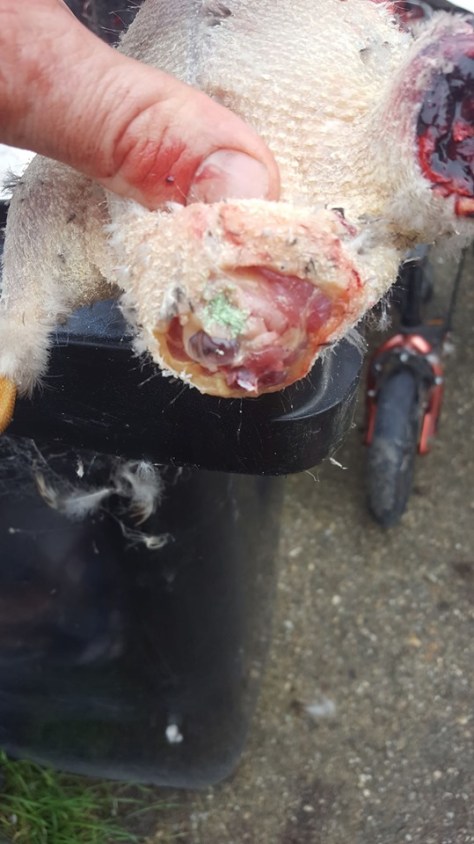



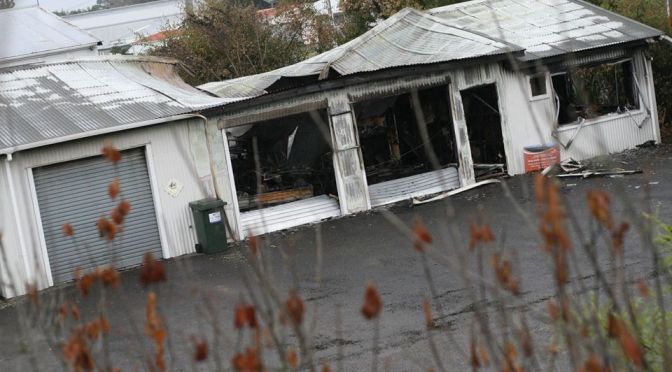
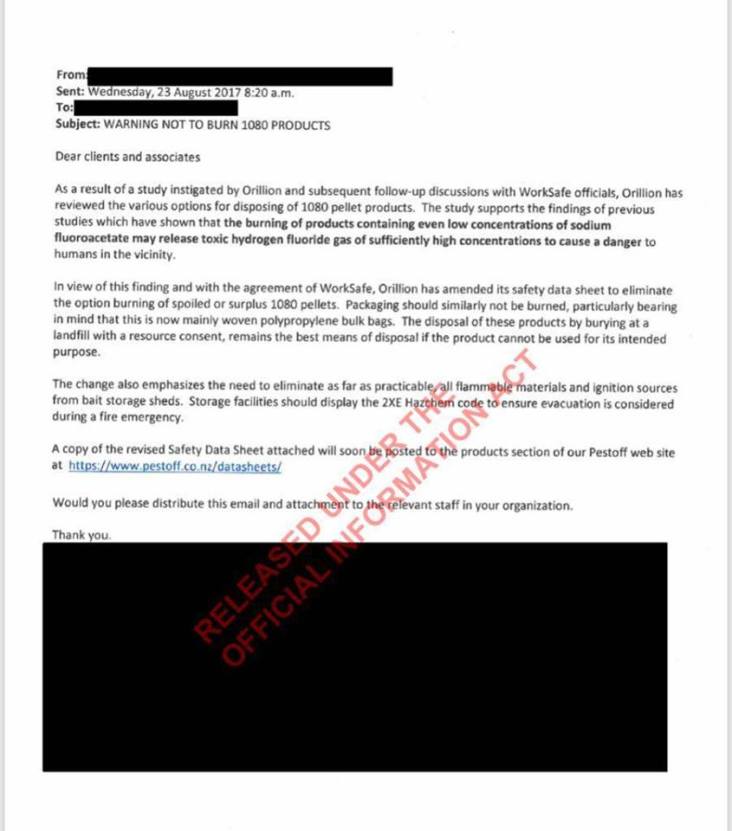
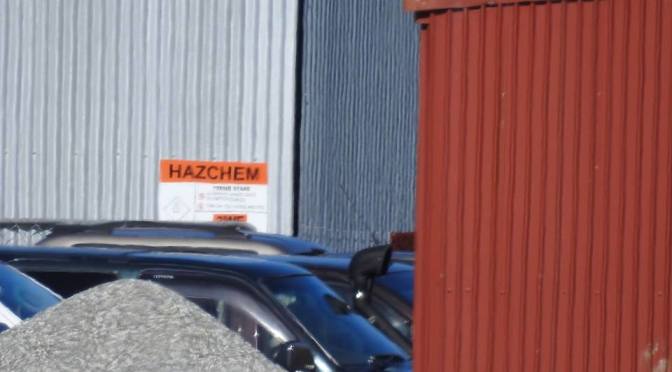
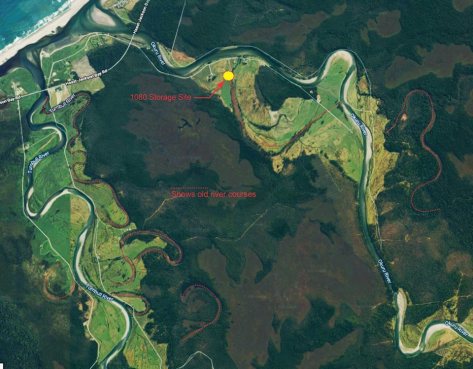


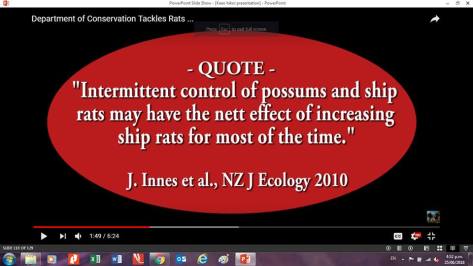


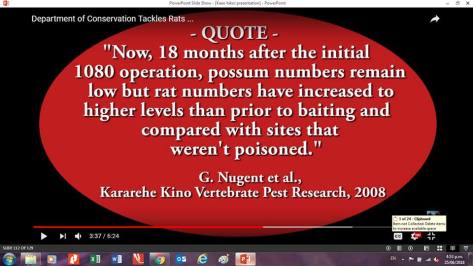

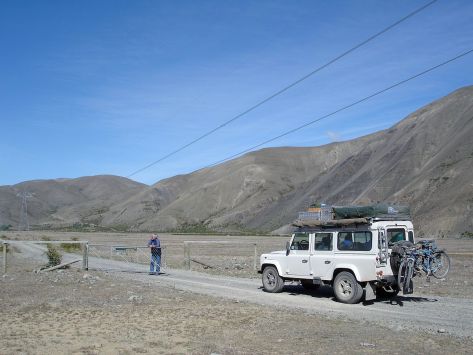




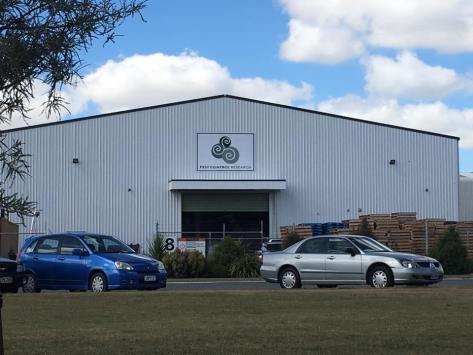
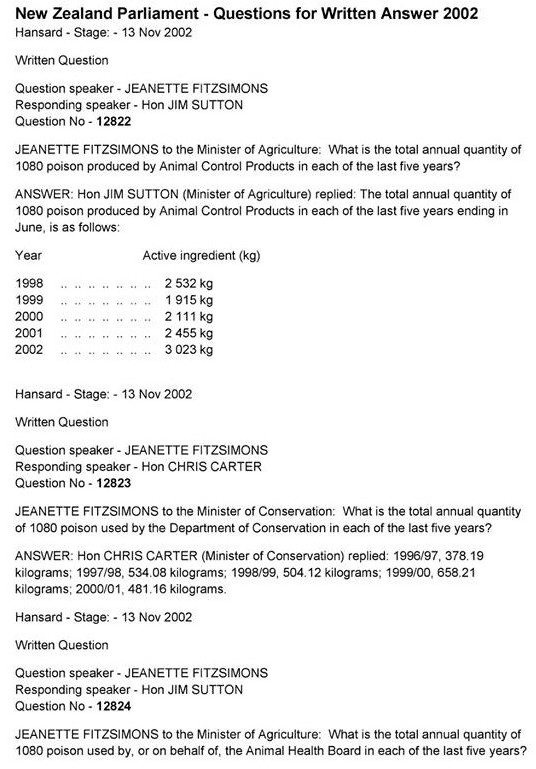


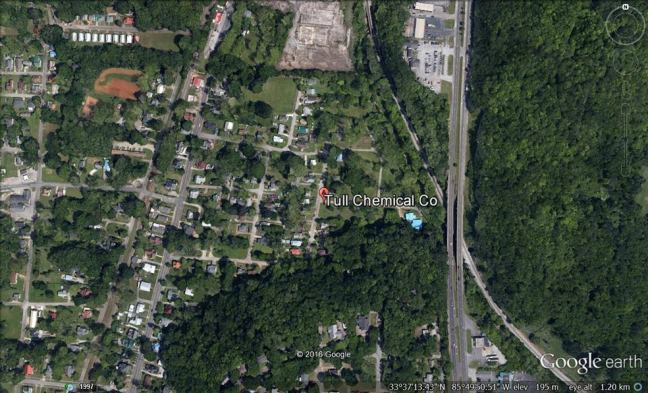


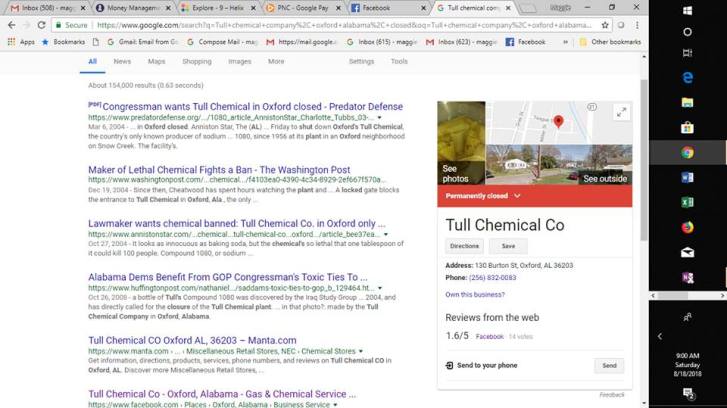


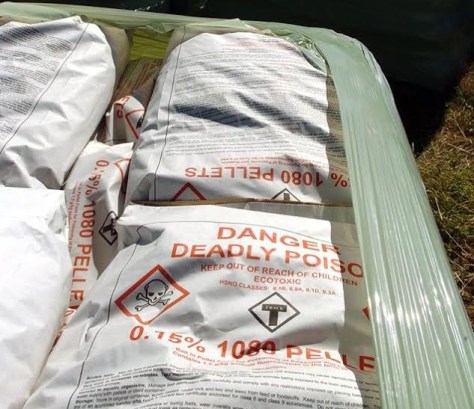
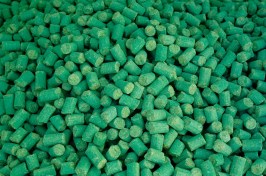 In the past three years, it appears at least 100 tonnes of unused 1080 poison baits have been sent to landfills by the Dept of Conservation! (See OIA results below) That amount of 1080 baits contains enough 1080 poison to possibly kill the whole population of New Zealand. 1080 leaching into our groundwater, never mind the expense of trucking unused baits all round the country again. … read on.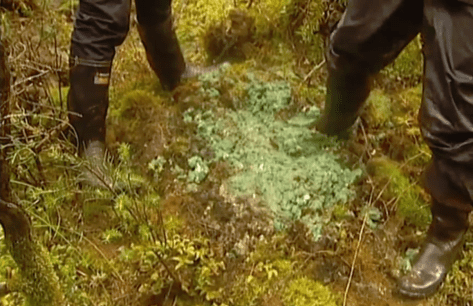
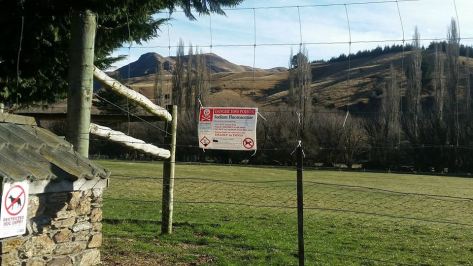

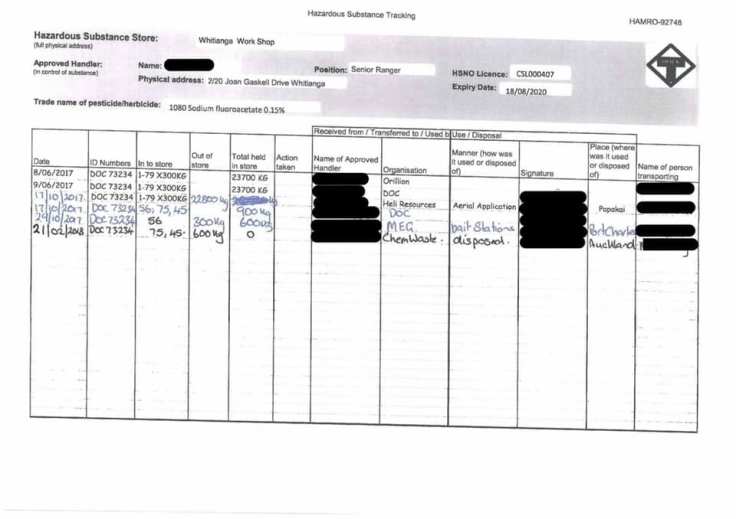

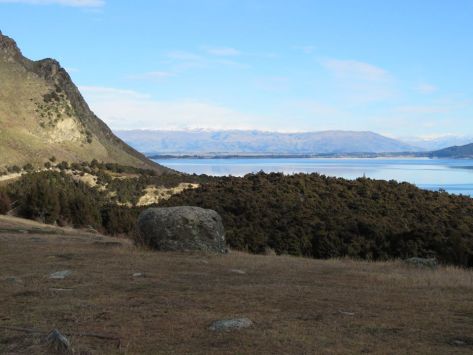
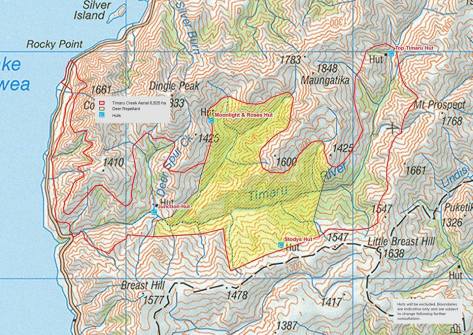


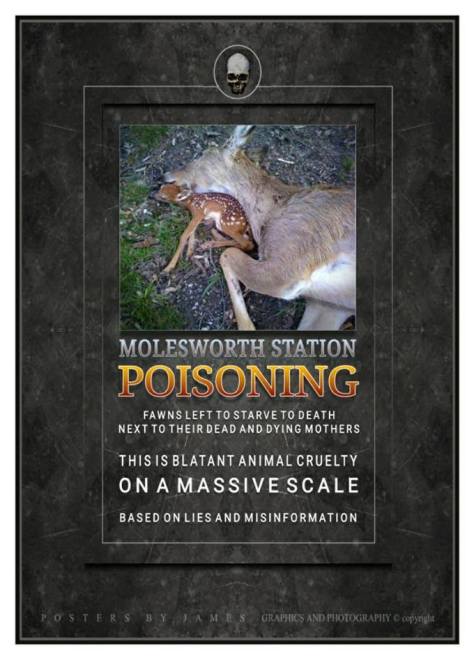







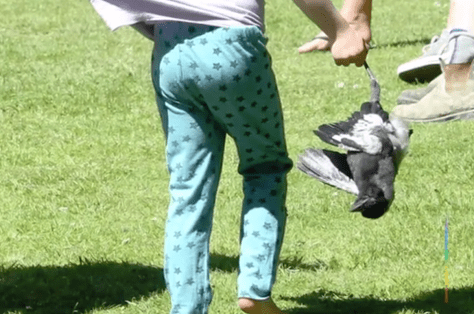


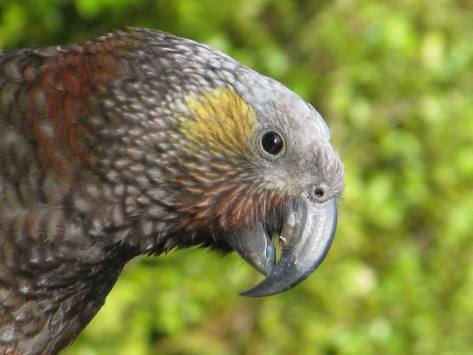


You must be logged in to post a comment.