Staff from New Zealand Dept of Conservation are often employed as ‘consultants’ for overseas ‘pest’ eradication projects. One example of such an eradication attempt comes from Wake Atoll, known as ‘Wake Island’ – which is between Hawaii and Guam in the northern Pacific Ocean. It is made up of Wake, (525 ha), Peale (95 ha), and Wilkes Islands (76 ha).
Wake is an unincorporated U.S. territory that is managed by the Department of Defense, U.S. Air Force. About 70 people reside on Wake (military personnel and contractors). Wake has approximately 19 km of coastline and is an important breeding area for many species of seabirds.Importantly, the coastline is also fished by the local residents for sport and food.
In 2012 an aerial brodifacoum poisoning operation took place over the islands to try to eradicate rats. How long brodifacoum persists in the environment is unclear, but we know it can potentially affect the food chain. These residues may impact on fish that are caught by Wake Island residents for sport and consumption. Three months after the poisoning, 5 out of 48 samples had “detectable levels” of poison – toxicologists therefore recommended a 942 day fishing ban after initial testing was done. But how much longer would the pesticide be in the food chain?
In 2015 – THREE YEARS AFTER this aerial operation of brodifacoum – samples from various marine life were taken. The scientists found that some fish (1 of 8 bluefin trevally, and 4 of 4 blacktail snapper, all from within a lagoon) had low but detectable levels of brodifacoum residues.
The scientists suggest that outcomes from their investigation should provide a comprehensive idea of the risks of contamination in marine life over the longer term from using pesticides aerially. In the article, the authors state “All reasonable efforts should be made to minimize unnecessary environmental and nontarget exposures (e.g., through precise application methods) and all risk assessments must consider the specific context of proposed action [poisoning the environment].”
However, an aerial distribution from helicopter of a lethal poison can NEVER be ‘precise’. The environment and the residents’ health have been put at risk.Reference: Siers, Shane R.; Shiels, Aaron B.; Volker, Steven F.; Rex, Kristen; and Pitt, William C., “Brodifacoum residues in fish three years after an island-wide rat eradication attempt in the tropical Pacific” (2020). USDA National Wildlife Research Center – Staff Publications. 2313.https://digitalcommons.unl.edu/icwdm_usdanwrc/2313
Kathy White says: “Remember the Hauraki Gulf brodifacoum poison drop? The dead dolphins, penguins, dogs and toxic sea-slugs? And the DOC man interviewed on TV, lying about having tested the penguins and them being negative. Fortunately there was an astute journalist who probed and discovered they hadn’t tested them – they had just examined them. Years later, in Penny Fisher’s journal articles, it talked about detecting brodifacoum in the penguins and them thinking the penguins may have died of starvation. They did later studies on anticoagulant rodenticides in penguins and found more than 50% of South Island test subjects had at least one anticoagulant in them.”
Image 1: Wake Island aerial view. Source: Pinterest
Image 2: Brodifacoum baits Source: Wellington Council
Happy New Year and it’s with a sad heart that we provide a ‘heads up’ for some of the forthcoming next round of proposed poisoning operations in Aotearoa New Zealand – planned by Dept of Conservation and/or Ospri. Other poison operations may not be made public. Three examples are shown in images below, taken from the current online Pesticide Summary. The South Island’s West Coast is already heavily poisoned, with deadly diphacinone, brodifacoum, 1080, cyanide and other toxins. The cocktail effect of these multiple chemicals in sublethal amounts is a total unknown in terms of the impact on our public health. But, despite this, a further mixture of a cyanide and 1080 (bait stations and hand laying) is planned near Hokitika. Meanwhile, on the East Coast near Kaikoura, more cyanide will be laid in bait bags near areas already previously poisoned with 1080. What are the effects of a mix of cyanide and 1080? The streams feed the drinking water supplies for residents and stock. The streams all eventually meet the sea, of course. Are the Kiwi tourists paying to be whale-watchers, aware of the invisible toxins those wildlife face? And thirdly (but by no means, finally) aerial 1080 poison is proposed to be spread by helicopter over 7412 hectares adjacent to sacred Aoraki Mt Cook.
Will 2021 bring any relief from these poisons to our land and water?
Well,well, well…..it seems that when people look up HeliOtago Ltd, at least one of the photos they get is this one I took of one of their rescue helicopters, ZK-IME, dropping 1080 poison at Makarora, Mt Aspiring National Park, on February 23, 2017.Google has just congratulated me and told me the photo has had 10,176 views and it appears to be tied to the Google Maps ‘HeliOtago Ltd’ location ID.Google said “10,000Hi Carol,10,000 photo views—that’s something to be proud of!Thanks for adding photos to Google Maps—they are helping others make decisions about the things worth doing and places worth seeing. Keep it up!” Things worth doing ?!!!! Dropping 1080 poison ?! Google is nuts!
“Admin are extremely concerned for public health and safety now that almost the entire West Coast of South Island is currently covered in deadly pesticides – mainly 1080, and also cyanide and others poisons, aerial and distributed by hand. From Kohaihai Bluff, North of Oparara River, all the way down to Wanganui Bluff, near Poerua River, around Hari Hari – there are multiple poison operations in and around the coasts, rivers, estuaries and forests. And astonishingly, even more are planned. This presents a high risk of contamination of drinking water and our food chains. As New Zealanders travel around our country during the Christmas holidays, often for the first time – we URGE people to be aware, to take precautions and to share your knowledge of the pesticide risks with others. Remember: 1080 poison has NO ANTIDOTE. If you have internet coverage where you are – much of the West Coast sadly does not – check Dept of Conservation Pesticide Summary interactive maps, alongside the regional councils and Ospri websites. If you do not have access to the internet, please visit your local council and DoC office (if they are open to the public) and insist that the staff find out whether an area is contaminated. Do NOT rely on signage as this is often missing, unhelpful and/or illegible.” ____________________________________________________________________________
Below is an image of the areas being poisoned. To find the interactive map at DoC’s website go to this link: https://www.doc.govt.nz/nature/pests-and-threats/pesticide-summaries/ (Once you have selected the appropriate area, you will be asked to tick the ‘agree’ box bottom right hand corner before accessing the map).
“It’s a tale that illustrates an important and irrefutable point, the organisations that New Zealanders believe are there to protect them from the sort of dishonest sociopaths who are behind this sordid mess are actually only there to make them THINK that they are protected.
Where in God’s name should you start?
Where were the “democratically” elected councillors when the West Coast District Council ignored their constituents’ widespread and well publicised opposition to the use of 1080 in order to bankroll this commercially, morally and scientifically flawed enterprise?
Where was the office of the auditor general when $272,549 was slipped out the back door as an “impairment” to avoid scrutiny of what would otherwise be very questionable business decision?
Where were ECAN while all of this was taking place under their noses? The site is still not listed on their register of land use information to this day.
Where were Worksafe when this witches’ brew of toxic chemicals was deposited upwind of a densely populated residential zone without even a rudimentary warning sign in place?
Where was ANYONE when the council, in what I can only view as a barefaced attempt to slink out from underneath its responsibilities for site decontamination, sold off its shareholding at a massive loss?
Where were ECANZ, FENZ and WorkSafe when the job of ensuring that the site was made safe in a timely manner was discussed?
Where were the courts when the task of holding the, frankly despicable, perpetrators of these events promptly to task arose?
The only people who come out of this with any credit are the foot soldiers on the ground who went in to clean up this unholy mess, the ESR team, the FENZ fire-fighters and the ambulance crews and medical staff who saved the life of the worker involved in the original explosion.
Outcomes like this don’t happen through laziness or incompetence. They happen by design.”
Email from WorkSafe NZ forwarded by Asst Area Commander, Steve Kennedy, Fire and Emergency NZ (FENZ), to ?, January, 2020.
Here is the text of that email for clearer reading, though I have attached the screenshot too:
“Completed by Steve Kennedy Just a quick follow-up from the operation we mounted with both FENZ and ESR assistance at the Pest Control Research NZ Limited worksite at Unit 1, 56 Wickham Street, Bromley, Christchurch in June last year (Wednesday, 12 June and Thursday, 13 June 2019). The site remains sealed under WorkSafe direction and has not been entered since Thursday, 13 June 2019 the site remains contaminated and the same hazardous substances remain in situ. We continue to work with Pest Control Research for them to developed and produce an adequately robust decontamination and site recovery plan, while there appears to be some reluctance on their part to move this along. I have been ask to confirm our understand that FENZ continues to flag this site/address in your CAD systems as a contaminated hazardous substance location containing quantities of: Sodium Hydroxide [CAS 1310732 ] (solid) Ethyl Fluoroacetate [CAS 459-72-3] (liquid) Ethanol [CAS 64-17-5) (liquid) Sodium Fluoroac by Steve Kennedy”
Also attached is the email that says fire officers must not enter the building. A photo of this email is attached, but for ease of reading I have copied out the text here. It was also sent by Fire Service Asst Area Commander Steve Kennedy, again in January, 2020, and says:
“This message was sent with High Importance.
In June 2019 FENZ, in conjunction with Worksafe, was involved in an incident at Pest Control Research, 1/56 Wickham. The site remains contaminated following an industrial incident involving the manufacture of Sodium Fluoroacetate.
No entry is to be made to this building. The site report and Dispatch Safety Alert have been updated.”
Excellent work by Stuff reporter, Joanne Naish. At last something is starting to come out in the open.
“The company did not dispute official documents from Fenz, but allegations the company was making 1080 at the site had only come from the “anti-1080 brigade”, he said.
“Oh yeah? Here is the text of an email from Fire Service Assistant Area-Commander, Steve Kennedy, January, 2020:
“This message was sent with High Importance.
In June 2019 FENZ, in conjunction with Worksafe, was involved in an incident at Pest Control Research, 1/56 Wickham. The site remains contaminated following an industrial incident involving the manufacture of Sodium Fluoroacetate.
No entry is to be made to this building. The site report and Dispatch Safety Alert have been updated.”
***********************************************
On site are the following chemicals, according to a Work Safe email sent to FENZ and forwarded by Steve Kennedy to ? on 23 January, 2020. (I have a copy and have posted it up previously):
Ethyl fluoroacetate, ethanol, sodium hydroxide, and sodium fluoroacetate (pure 1080).
See the last method in this document… one way to make pure 1080 is to mix ethyl fluoroacetate, methanol and sodium hyroxide. Ethyl fluoroacetate is highly flammable and very dangerous, as dangerous as sodium fluoroacetate (1080). It isn’t used to make Christmas cake.
Ummmm….. why was there no hazardous chemical signage put on this building by Work Safe NZ – until 2020 when a small hazchem sign was put up beside the door?
Why was Unit 2, next door to this one, leased out towards the end of 2019, with the real estate agent who leased it out knowing nothing about what was through the wall, or so he told me? (The accident happened on May 28, 2019).
Here are two articles by Carol Sawyer reporting on DoC bungles that involved health risks to people, in spite of the Department’s assurances of safety. In spite also of the results reported health-wise, still the Department continues to drop the deadly poison by the tonne, every year, like a ‘veritable lolly scramble’ as one expert in the field has described it. These mishaps are not rare isolated incidents either. EWR __________________________________________________________________________
By Carol Sawyer
Further to this post, I received this message in 2017 from the late Lloyd Hanson, to post on my page :
“John Sinclair the Investigator was one of the original owners of Marlborough Helicopters and I believe sold out to Owen Dodson, who conducted this operation. I am not saying that Mr Sinclair’s summation was incorrect but surely considering his conflict of Interest it would seem prudent to declare this and step away – NOT SO!
I went in to the scene of the bucket loss a few days later and observed dozens of broken 1080 pellets amongst the smashed foliage – a poor cleanup !”
************************************************************************ I do note that both the pilots received aviation safety awards, four years prior to this dropped bucket episode :
Fiona Stonehouse, one of the trampers who was rained on with 1080 poison by pilot Simon Moar, commented on the article:
“What the article does not say is that we were assured by a DoC worker that we would be fine walking the track that day before we even started the tramp. There was supposed to be a buffer zone of 20metres on both sides of the track which was a condition of our withdrawing our legal opposition submission. We went through the lengthy and time consuming legal process and made terms that we had no alternative but to accept and DoC failed to deliver to those agreed terms because of the bucket malfunction and their decision to continue with the drop despite the fact that they knew they could not comply with the terms of the agreement. It makes no difference what our political opinions on the subject are, we were told we would be safe and that we were allowed to be there and it turned out that we weren’t safe. No body is around this poison and that is what the knuckle heads who use and endorse 1080 fail to acknowledge,”
and when asked why she didn’t find a lawyer she wrote:
“We did find a lawyer who isn’t afraid to take on the government but she costs money and we have been opposing this bs for a long time now.
“Later she wrote:
” Elliot (Graeme Elliott, Principal Advisory Scientist, Dept of Conservation) admitted that our 2013 drop was an experiment at our hearing; there was a control area not being dropped on and Mt Stanley, which was aerially dusted with 1080. We haven’t seen the data from those experiments despite an initial request for them. How dare they experiment with deadly poisons on such a massive scale on a publicly accessible reserve ! We were also assured that 1080 would not be dropped in the waterways because they had a new trick(le) feeder that could accurately direct the flow of the pellets and the gps accuracy would keep the pellets out of the waterways. Well that was a farce from start to finish. Not only did they make sure 1080 was in every waterway but they also dusted people with 1080 – they had a malfunction with a clip holding the bucket on and dropped a bucket of 1080, people were injured and public were dusted with 1080 because of DoC’s ineptitude, and now while we are trying to get some acknowledgement of what went on nobody wants to know. Civil Aviation who should investigate all traffic accidents don’t want to know, the Medical Officer doesn’t want to know and I think DoC are hoping we will just quietly go away. Some of our group have relocated overseas because they became so disheartened with the bullshit but they weren’t natives to start with.”
Fiona’s parents, Doug and Phemie Stonehouse, were waiting in their boat for their daughter and her friends to finish walking the Nydia Bay Track. One of these helicopters flew straight towards and over them. They tried to duck under cover in the boat but say they were sprayed with dust. They have suffered ill health since.
I was reminded of this just the other day when I read a new article (Greymouth Star, 14 November, 2020) entitled ‘1080 Dust Tests “Inconclusive” ‘, which is about ESR’s experiments to see if 1080 dust travels . It mentions the two women picnicking near Greymouth, who were showered with 1080 fragments, and the article concluded with this short paragraph:
“Retired fisherman Doug Stonehouse also claimed he and his wife have suffered ill health after they were accidentally caught in dust from an aerial 1080 operation in the Marlborough Sounds.”
FIRST A 1080 POISON BUCKET IS DROPPED, AND NEXT PELLETS ARE RAINED ON TRAMPERS, IN A ‘MARLBOROUGH HELICOPTERS LTD’ DOUBLE-WHAMMY COCKUP!
This bungled 1080 drop on Mt Stanley/ Tennyson Inlet, Marlborough Sounds on 2 November 2013, may only be six and a half years ago, but how many people know about it ?
I was sent two reports in the post that give a bit more background.
1 )”Investigation into uncommanded bucket release” by John Sinclair, NZ AAA and NZ Helicopter Assn, Occurrence Investigator
2 ) “Notes on Aerial 1080 drop 2/11/2013, Mt Stanley, Tennyson Inlet” by Phil Clerke, senior biodiversity ranger, Dept of Conservation, Picton.
These two reports make for fascinating reading.
This drop was conducted by Marlborough Heliopters Ltd for the Dept of Conservation. Two pilots were involved, Owen Dodson and Simon Moar, flying two Bell Jetrangers, ZK-HJI and ZK-HZE. The senior of the two pilots, Dodson, was a director of the helicopter company. Simon Moar was completing only his second poison drop, “but he had considerable experience in other aerial agricultural operations and is a competent pilot with sufficient experience to undertake poison drops”, Occurrence Investigator, John Sinclair said.
According to the report by DoC’s Phil Clerke, Owen Dodson left the barge to commence his baiting, but arrived back “somewhat shaken” and minus his bucket. He had ” visibly received an impact above the eye ( I was later to learn it was from the breaking airline leading to the bucket ). I was unsure of the exact details but picked up that the bucket’s airline then struck the rotors as well. I later learned that (Owen Dodson) also lost partial sight in this eye.
“This report differs slightly from the Occurrence Investigator, John Sinclair’s, report which says ” …….Owen Dodson was carrying out a trickle feed of sensitive boundaries when the bucket and its load of 1080 suffered an uncommanded release from the helicopter. In the departure sequence a pneumatic control line severed and flicked up cutting the pilot’s eye”. Also the “pneumatic control line had connected with the OAT and cracked the windscreen”.
Despite this injury, Dodson flew himself to Blenheim and came back in an R22 with a long lifting chain, after which Moar went off ( with the chain presumably ) to recover the dropped bucket ! Once this was done, Dodson returned to Blenheim in the R22.
John Sinclair’s report has a great deal of detail about the bucket release, But he says ” I believe that the most likely cause of the uncommanded release of the cargo hook was the helicopter’s manual cargo hook release being activated, then not properly returned to the safe position before it was next used” ( Human error, in other words ).
Because of all this dropped bucket palavah, this meant that the less experienced pilot, Simon Moar, had to complete the sensitive boundaries – instead of now-injured Owen Dodson, who had been the one supposed to be doing it, being the more experienced pilot. John Sinclair’s report reads : ” In the course of doing this (Simon Moar) misjudged conditions and allowed the wind to carry a small amount of bait onto the Nydia Bay Track. (Moar was under considerable pressure because of the need to do another drop the next day in Golden Bay. While DoC had offered to postpone the operation there would be the logistics of barging all the bait back to Picton if the operation was curtailed. These pressures may have impacted on his subconscious, especially given that the weather windows this spring have been very few and far between.”
The bait falling “onto the Nydia Bay Track” unfortunately appears to have fallen on the trampers mentioned in the article below. In the Occurrence Investigator, John Sinclair’s, report he just refers to it thus: “The dropping of the bucket did however impact on an adverse environmental effect later in the day”. ( The adverse environmental effect presumably being dropping 1080 pellets on trampers.) In the DoC report, Phil Clerke says a DoC worker, Wendy, “radioed in to pass on that she had met trampers that claimed they were rained on, on the track, at the saddle”.
The trampers, incidentally, knew of the 1080 drop but had been told the track itself was SAFE as it had an exclusion zone of 20 metres.
Some questions I have are these :
1 ) Why did Owen Dodson fly a helicopter back to Blenheim and collect another one, when it had a cracked windscreen and he had a cut on his eye ! Not only that but he returned with another helicopter !
2 ) Why was a pilot who had only done one 1080 drop before, allowed to fly the sensitive boundaries, when as well as this the wind had got up – Phil Clerke says ” the wind was noted to increase in velocity, (Simon Moar) and I had a discussion about this. It was still considered workable.” So pellets land on trampers !
3 ) This question should be asked of DoC : Why on earth was 1080 poison loaded onto helicopters off a barge in pristine Tennyson Inlet ? The DoC report says ” A vacuum cleaner, dust brushes/ pans were to be used with the initial barge clean up to reduce wash down contamination. Wash down would only be used when no further bait fragments could be recovered.” ( Meaning 1080 dust would be washed into Tennyson Inlet, presumably ! )
Postscript:
John Sinclair used to own Marlborough Helicopters Ltd, by the way. Oh, and Marlborough Helicopters Ltd got a safety award !!!!
“Tony Orman The Tennyson Inlet drop was a shambles. Toxic carcasses floating in the tide. No animal problem until DOC interfered. All it achieved was a rat population explosion followed by a stoat boom in numbers as proven by research, e.g Ruscoe 2007. And disruption of the ecosystem’s food chain. What is it that these fools in DOC who were responsible, don’t understand?”
Press Release by the Sporting Hunters Outdoor Trust
A West Coast conservationist and spokesman for the Sporting Hunters Outdoor Trust has challenged the justification for a 1080 aerial drop in the Tararua Ranges by OSPRI (former Animal Health Board) saying it is founded on a false belief that possums are responsible for spreading bovine TB.
Laurie Collins of the West Coast said current 1080 aerial drops on public lands in the Tararua Ranges were based on twin fallacies of possums spreading TB and the country had a TB problem. “Neither is true,” he said. “It’s irresponsible of OSPRI to be wasting public funds and damaging the ecology of the Tararua’s public lands with 1080 plus telling fibs.” Laurie Collins said the belief that possum spread bovine TB had been disproven a few years ago when in Parliament the Minister of Primary Industries disclosed that of 9830 possums autopsied, none had TB. Yet in 2020 we have OSPRI carrying out mass aerial 1080 poisoning in several areas including public lands such as the Tararua Ranges,” he said. Laurie Collins said New Zealand was virtually TB free and was probably one of the most TB-free countries in the world. The world standard for a country to declare “TB free” is 0.2% for TB infected herds and 0.1% for infected cattle. New Zealand rates of TB infection in cattle were slight, i.e. 0.0019% average generally over the last decade. “It is so far below that required by world standards for a TB free declaration – that New Zealand must be one of the world’s most TB free countries”, he said. “Of deep concern to New Zealanders who are outdoors people, whether tramping, hunting, trout fishing or seeking any recreation in mountain areas, is the indiscriminate spreading of a poison that kills anything which ingests it.” The poison 1080 knows no “species boundaries -whether an insect, bird or animal, it kills, he said. Laurie Collins now retired has long and extensive experience of 1080 having been involved as a Forest Service trainee in the trials of the toxin’s first use in the late 1950s in the Caples Valley, Lake Wakatipu and in subsequent pest management work. In the past there had been cases of farmers wrongly transporting stock from infected areas with resultant TB outbreaks on farms. OSPRI had ignored the stock transportation factor and proceeded to wrongly blame possums and then aerially spread 1080 over adjoining public lands. Laurie Collins cited such an instance in Marlborough’s Wairau Valley. NZ’s extremely low TB infection rates raised the question whether OSPRI had a continuing role. “Instead of celebrating New Zealand’s Tb-free status, OSPRI remains in denial and states their aim is total eradication of TB,” he said. “
Is it that OSPRI want to continue its existence and jobs, funded for by taxpayers and farmer levies?” Even from the first discovery of TB in possums near Westport in the late 1960s, no-one ever seems to have questioned whether the possum infected cattle, or cattle infected the possum. The default position has always been that it is possums that have infected the cattle. “What probably began as a few civil servants getting some money from the then Ministry of Agriculture slowly morphed over time into a part of a growth program in the ministries bureaucracy,” he added.
Facebook page Ecocide Awareness NZ reports on a 1080 aerial poison drop over Mt Pirongia. This is the second report around consultation (or not) by the authorities recently. EWR
“The dirty deed is done. The poison contractors to NZ Dept of Conservation and Waikato Regional Council – Helia1 and EcoFX Ltd leave the scene of the crime, with a police escort. There was NO consultation for this aerial 1080 poison operation over Mt Pirongia and NO consent from at least 13 of the local marae and Maori tribal groups around the maunga. New Zealand laws have been broken, not least the Treaty of Waitangi Act, which these poisoning agencies try to claim they respect. What an insult to the citizens of New Zealand.”
This is an excerpt from a recent article from coranz.org.nz which deserves its own highlighting I felt. Bribery & targeting of the one or two owners is a time worn tactic of the authorities. EWR
“Private lands, which often have numerous owners, are being targeted for 1080 drops by Ospri, DOC and regional councils. A local area, Mahakirau, with 20 partners, “agreed” to poisoning on the strength of a single signature and a bribe of $10,000. At Kennedy’s Bay a group of land parcels with hundreds of different Maori owners, is to receive a 1080 drop on the say-so of just two members of the community. The lack of consultation in both operations has caused enormous friction in the particular communities. In the case of Tataraakina only one trustee gave consent for their lands to be poisoned. How much longer will these authorities be allowed to get away with this behaviour?”
by John Veysey of Coromandel At present there are eighteen bovine TB-infected herds in Hawkes Bay. Ospri has found a TB-infected pig on private land. The infected pig was taken from the 12,000 ha of Tataraakina C trust land. Ospri tells farmers that this find “confirms that the spread of TB in Hawkes Bay is coming through wild life and not through movement of livestock”. BUT Ospri seems to have no logical explanation of how TB gets into a wild pig. They tell farmers that the pig can not transfer the disease to another pig nor to another animal. Ospri’s supposition is that the possum transfers the disease to cattle but for the possum to get the disease from the pig it must eat the meat from a dead pig which has died from the infection. OSPRI Failure For decades Ospri and its predecessor, TB-Free NZ, have failed to establish how possums gain infection from cattle or how the disease is transferred back again from the possum to the cow. Ospri’s idea of transfer from a pig depends on a “carnivorous” possum. Eh?
“The Department of Conservation has been giving Pirongia landowners a flier that says “1080 does not kill or harm fish.” This is completely misleading and dangerous for those who eat fish, eels, shellfish and koura. See for yourself what scientists have said in an independent summary of research into 1080 and fish. Quotes: “There are indications of sub-lethal effects on fish among the very limited studies that have been done:“significantly greater weight loss occurred in eels exposed to 1080 compared to those that were not”…”the sub-lethal concentrations of 1080 in the water may have been sufficient to inhibit eel metabolism”…”sub-lethal 1080 exposure presented to eels through ingestion of contaminated possum may have been sufficient to temporarily inhibit eel metabolism” (Lyver et al., 2005) “96-hour [exposure of Rainbow trout, half of individuals dead at] 54 mg/l, sub-lethal effects on survivors – not specified” (ERMA Agency, Appendix C)”Fish & Game ranger Lawson Davey said the national safety limit of 1080 in any food was 0.001 milligrams per kilogram, but the Cawthron Institute’s October toxicology results of 22 trout fed the poison showed muscle tissue with 1080 levels up to 4.7mg per kg. https://i.stuff.co.nz/national/64310400/1080-drop-raises-trout-risk-fears Preliminary results of a DoC-commissioned study by the Cawthron Research Institute has shown the flesh of trout that ate mice containing the toxin would have levels of 1080 that exceeded New Zealand Food Safety Authority limits. https://www.nzherald.co.nz/nz/news/article.cfm?c_id=1&objectid=11332357 The maximum concentrations measured in trout tissue (up to 4.7 mg/kg) were observed at 24 h and 48 h after ingestion. The concentration decreased to close to 2 mg/kg after 84 h. An increase in 1080 concentration in the flesh was observed after 120 h, but the number of replicates at this interval was low (n = 2). Cawthron Institute: 1080 UPTAKE AND ELIMINATION IN RAINBOW TROUT For more information, click on the link below. https://1080science.co.nz/is-1080-harmless-to-fish/
1080science.co.nz Is 1080 Harmless to Fish? | 1080 Science The Parliamentary Commissioner for the Environment’s report on 1080 poison (Wright, 2011) claimed that effects of 1080 on populations of eels, koura and bullies had been studied (by Suren & Lambert, 2006) and that no effect on any of the fish was found.
Ex Horowhenua Mayor Michael Feyen speaks about the alternatives proposed by the Advance NZ party that will create job opportunities for the people. (Currently the associated dollars funnel into the 1080 poison state owned gravy train). Michael has always been supportive of alternatives to 1080, during his time as both councilor and mayor with the Horowhenua District Council. Unfortunately it was not a vision shared by enough of his colleagues to have gained any traction. Time for change. EWR
WET JACKET PENINSULAS, FIORDLAND, AERIAL 1080 POISON DROP STARTS – WEEP FOR THE KEA!
By Carol Sawyer
“So, here they are again and this time DoC have done a wee conjuring trick and say it is for stoats (there being no rats). Stoats don’t eat 1080 baits.”
“We have an estimated 1,000 Kea left in the wild in New Zealand….. in the whole world in fact, as they are endemic – i.e.they exist only here! The latest 1080 poison drop in the Matukituki Valley, Mt Aspiring National Park, February 2020, killed 50% of the Kea. More than that will die in the Wet Jacket Peninsulas drop because it is midwinter and the Kea are very hungry.”
Do you know what happens to 1080-poisoned Kea? They stagger around taking hours and hours to die. They bury their heads in the snow to try and get relief from the pain. Dr.Jo Pollard says “The keas’ deaths will be horrific, with extreme muscular spasms going on for many hours.” David Attenborough called them the most intelligent bird in the world. They are the world’s only alpine parrot.
Three BK-117 helicopters – ZK-IME (a.k.a Big Red the Rescue Helicopter), ZK-HJK,(white), and ZK-HEM, (red and white), and a Longranger, all belonging to HeliOtago Ltd, left Dunedin at 6.30 pm this evening heading west to be in place for starting their evil work tomorrow morning. Seven choppers arrived at Monowai tonight… yet to find out if they are all HeliOtago Ltd or if three are from another company. I have been told HeliOtago Ltd flew the prefeed baits from a private farm property at Monowai, last weekend.
This area has never before been poisoned. The drop was planned for last October but there were NO rats so it was postponed and, I am told, the poison that had been brought south for the drop was instead used in the Kepler Mountains drop last March, which was squeezed in just before lockdown…. I’m informed they added on the Princess Mountains to use all the extra poison up. No monitoring done there apparently.
So, here they are again and this time DoC have done a wee conjuring trick and say it is for stoats (there being no rats). Stoats don’t eat 1080 baits.
I can tell you what it WILL kill in large numbers… Kea. As the area has never before been poisoned there are many Kea reported to be in the area. (A while back a pilot sent me a photo of seven Kea that landed beside him when he touched down there.)
We have an estimated 1,000 Kea left in the wild in New Zealand….. in the whole world in fact, as they are endemic – i.e.they exist only here! The latest 1080 poison drop in the Matukituki Valley, Mt Aspiring National Park, February 2020, killed 50% of the Kea. More than that will die in the Wet Jacket Peninsulas drop because it is midwinter and the Kea are very hungry.
The Empire of the Dept of Conservation, greedy helicopter companies, and all their parasitic acolytes WILL fall… but it will be too late for the Kea.
Any of you gutless DoC employees reading this who put your personal livelihoods before your knowledge of this travesty and the horror it entails, and keep your mouths shut pleading “I can’t afford to lose my job”… hang your heads in shame why don’t you! You know who you are!
Ditto the local media who know about this drop and are too scared to touch it and tell the truth. You know who you are too.
Peter Shadie Director, IUCN World Heritage Programme IUCN World Headquarters Rue Mauverney 28 1196 Gland Switzerland email: peter.shadie@iucn.org
11 June 2020
Dear Mr Shadie
Re: Government poisoning of World Heritage sites in New Zealand – Open letter
I am writing to bring your attention to the serious issue of the New Zealand Government’s aerial poisoning of a World Heritage site and hope that you will urgently contact the World Heritage Committee so they may act on this matter. The 40,000 ha Wet Jacket area is to be aerially poisoned this month under contract to the government’s Department of Conservation (DoC). This poisoning is not justified as the appropriate scientific or technical measure necessary for the conservation of this site, and would breach New Zealand’s obligations under the World Heritage Convention.
The contractor’s application to DoC (attached) to poison the Wet Jacket area describes a hotspot of biodiversity, home to at least 17 species of endangered birds as well as 25 other species of birds. Six species of lizard have been recorded including the rare Fiordland skink. The invertebrate fauna is described as “not fully explored” and “distinctive and important” (Contract Wild Animal Control, 2019).
The 1080 poison to be used is broad spectrum, affecting organisms that breathe oxygen (ERMA, 2007). It is added to cereal food baits and distributed from hoppers carried beneath helicopters. The distribution process creates fragments (Morgan et al. 2015) and dust (Wright et al., 2002). Native lizards, birds and invertebrates are all known to feed on the cereal bait (ERMA 2007). The poison is highly toxic, readily contaminates despite stringent precautions, travels rapidly in water and up food chains, causes reproductive defects across a vast range of species and has highly variable effects which remain poorly understood, with studies being sparse and of poor quality (ERMA, 2007).
Due to poor monitoring, effects of 1080 poisoning on populations of most NZ native animals are unknown (ERMA, 2007; Whiting-O’Keefe & Whiting-O’Keefe, 2007). Only six species of birds were reported as reliably monitored through 1080 drops. Of those, fernbirds suffered most with an estimated 9% loss of the local population per poisoning (Fairweather et al., 2015). Kea have also been intensively monitored, with the finding that on average 12% of birds are killed per operation (DoC, 2016).
The Application to poison the Wet Jacket area shows significant shortcomings, as follow.
Benefits
The reason given for poisoning the Wet Jacket area is to “protect the health and integrity of the flora and fauna susceptible to predation by rats, stoats and possums.” It lists animal species it considers particularly in need of protection: bats, kiwi, parakeets, kea and fiordland crested penguins.
These claims of susceptibility are not referenced or supported by scientific observations. In fact, it was concluded twice that predation was not a problem to kea (Jackson, 1969; Elliot & Kemp, 1999). Short-tailed bats were considered relatively safe from predators, being fast and agile, fiercely mobbing intruders and choosing winter roosts that were inaccessible (Lloyd et al., 2005). “Evidence” of predation of long tailed bats was just an observed association between low bat survival and high rat numbers (Pryde et al 2005; O’Donnell et al., 2011). Doc has attributed failures of some of its invasively monitored bird nests to predators, however they are not representative of undisturbed nests (Ellenberg et al., 2015).
Costs
Known costs left out of the Application include negative ecological effects from aerial poisoning. In many cases, rat numbers rebound to vast new heights within months (Innes et al., 1995; 2010; Powlesland et al., 1999; Ruscoe et al. 2008; Sweetapple et al., 2006). This effect can decimate prey such as invertebrates (Sweetapple & Nugent, 2007). Re-poisoning of rats is likely to become less and less effective due to the rats learning and developing physical tolerance (Byrom et al., 2013; Mitel, 2016; Pollard, 2016). Thus the Eglinton Valley (also in World Heritage site Fiordland National Park) has just received its fourth aerial poisoning in five years (2014, 2016, 2019, 2020). Despite increasing the intensity of the poisoning for rats in September 2019 (DoC, 2019a) another poisoning was carried out this May.
Mouse numbers usually increase soon after aerial poisoning (Innes et al., 1995; Sweetapple & Nugent, 2007, Ruscoe et al., 2008). The increases in rodents during the months after poisoning create ideal conditions to for stoats to flourish (Byrom et al., 2013). In addition, stoats that survived aerial poisoning were found to switch from eating rats to eating native birds (Murphy et al., 1988).
The Application contains no discussion of the conservation importance of the loss of kea, with previous studies indicating a 12% loss of local birds is expected. DoC claims that kea in remote areas are unlikely to get poisoned, however 9% of marked birds were killed by 1080 in an area chosen by DoC to represent remoteness (Kemp et al., 2016 unpublished). The total number of wild kea left is unknown and possibly less than 1000 ((Bond & Diamond, 1992; Harper, 2012; Roy, 2016).
Issues not addressed
Important issues left out of the Application include how much bait will enter the marine area; what effects there will be of baits, fragments and dust in the littoral zone (e.g. on penguins) and in the productive areas of shallow, still water; what will the effects be of the predicted “zero grazing ungulates” (being the last large grazing animals left); what are the chances of cold weather killing off rats in winter if they are left unpoisoned; should a highly diverse, unexplored ecological community be poisoned to try to make it better; what will be done if pest animal numbers are low, without poisoning.
DoC has a strong track record in misleading, pro-poisoning behaviour. It intrudes on nesting birds, attaches equipment to them and their nests, blames predators for nesting failures, then uses the poor nesting results to justify predator control (e.g. for kea (Kemp et al., 2014, unpublished), mohua (Elliott 1996), kiwi (Waterworth, 2019) and kaka (Moorhouse et al., 2003)). It quotes increased “nesting success” as an indication of a bird population’s positive response to poisoning, but nesting success is likely to increase if a population is culled (Nilsson 1984; Arcese & Smith 1988). “Five minute bird counts” are used by DoC to assess bird numbers. This method is notoriously unreliable (Westbrooke & Powlesland 2005; ERMA 2007; Green & Pryde 2012; Hartley 2012), due to major problems such as bird calls increasing after poisoning as birds try to find their dead partners and family, or search for new company.
DoC’s pro-poisoning bias and lack of scientific honesty are also apparent in its publications. For example a stoat plague that followed DoC’s aerial poisoning at Okarito (Kemp et al., 2015, unpublished) was truncated from the published graph (Kemp et al., 2017), despite this being an important outcome. In another example, in a study on bats after a 1080 operation, the contents of one bat roost tree had spilled onto open ground. Inspection revealed a baby bat with placenta attached, which tested positive for 1080. Other roosts in the study were inspected for dead and dying bats by roost camera “where practical” (Edmonds & Pryde, 2015). The published paper has a re-worded section of the original report that now insinuates all roosts were searched equally for dead babies (Edmonds et al., 2017).
The claim that some Eglinton Valley birds are prospering due to DoC’s 1080 poisoning (Minister of Conservation’s media release 11/4/20) is impossible to make: poison in bait stations and trapping are used to try to control mammals in the Eglinton Valley and any separate effects of 1080 cannot be assessed. Mohua (including some from the Wet Jacket area) were restocked there in 2010, 2015 and 2017.
Due to low rodent densities the Wet Jacket area poisoning was postponed in October 2019 (DoC, 2019c). The poisoning has since been promoted in the media as being needed to kill stoats, on the unscientific basis that local, heavily monitored kiwi chicks haven’t been surviving (Waterworth, 2020). These locally monitored kiwi weren’t even mentioned in the Application. There may be a very low stoat kill rate if there is a lack of poisoned rats for them to eat. If the poisoning proceeds regardless of low pest numbers, this will not be unusual. Makarora was poisoned in 2017 for rats despite low numbers (data accessed 22/3/17 via Official Information Act request); poisoning of Arthurs Pass in 2019 went ahead with no rats (data accessed 8/10/19) (mice were present but 1080 pellets are not usually eaten by mice (Fisher & Airey, 2009).
A fraction of the resources being used to poison the Wet Jacket area could support careful, scientific studies of the biodiversity and ecology of the area before a management plan is decided upon. Where populations of rare organisms are considered in immediate danger, localised, benign management can be applied, such as tree banding and caging, and protecting nesting kiwi and kea from DoC staff.
I trust you will act to prevent the unfounded wholesale poisoning of this precious site.
Yours sincerely
Dr Joanna Pollard (BSc (Hons), PhD)
See the IUCN reply to Dr Pollard below references.
References
Arcese, P., Smith, J.M., 1988. Effects of population density and supplemental food on reproduction in song sparrows. Journal of Animal Ecology 57: 119-136.
Bond, A., Diamond, J., 1992. Population estimates of Kea in Arthur’s Pass National Park. Notornis 39: 151-160.
Byrom, A., Banks, P., Dickman, C. & Pech, R., 2013. Will reinvasion stymie large-scale eradication of invasive mammals in New Zealand? Kararehe Kino 21: 6-7.
Contract Wild Animal Control, 2019b. Completed DoC Application form for predator control in the Wet Jacket Area. 34 pp.
DoC, 2016. Aerial 1080 in kea habitat. Code of Practice. NZ Department of Conservation Unclassified document. 24 pp.
DoC, 2019a. Application for DoC permission to use vertebrate VTAs assessment report: Clinton and Eglinton catchments. 11 pp.
Edmonds, H., Pryde, M., 2015. Eglinton Valley lesser short-tailed bat monitoring programme 2014/2015. DOCDM 1568082 15 pp.
Edmonds, H., Pryde, M., O’Donnell, C., 2017. Survival of PIT-tagged lesser short-tailed bats (Mystacina tuberculata) through an aerial 1080 pest control. New Zealand Journal of Ecology 17: 186-192.
Ellenberg, U., Edwards, E., Mattern, T., Hiscock, J.A., Wilson, R. & Edmonds, H., 2015. Assessing the impact of nest searches on breeding birds – a case study on Fiordland crested penguins (Eudyptes pachyrhynchus). New Zealand Journal of Ecology 39: 231-244.
Elliott, G., Kemp, J., 1999. Conservation ecology of kea (Nestor notabilis). WWF-NZ Final Report 1 August 1999, 64 pp.
Fairweather, A, Broome, K., Fisher, P., 2015. Sodium fluoroacetate pesticide information review. Department of Conservation Report Docdm-25427. 103 pp.
Fisher, P., Airey, A.T., 2009. Factors affecting 1080 pellet bait acceptance by house mice (Mus musculus). Department of Conservation DOC Research & Development Series Feb-Mar 305-308
Greene, T.C., Pryde, M.A., 2012. Three population estimation methods compared for a known South Island robin population in Fiordland, New Zealand. New Zealand Journal of Ecology 36: 340-252.
Hartley, LJ 2012. Five-minute bird counts in New Zealand. New Zealand Journal of Ecology 36: 268-278.
Innes, J., Kelly, D., Overton, J., Gilles, C. 2010. Predation and other factors currently limiting New Zealand forest birds. New Zealand Journal of Ecology 34: 86-114.
Innes, J., Warburton, B., Williams, D., Speed, H., Bradfield, P. 1995. Large-scale poisoning of ship rats (Rattus rattus) in indigenous forests of the North Island, New Zealand. New Zealand Journal of Ecology 19: 5-17.
Jackson, J.R., 1969. What do keas die of? Notornis 16: 33-44.
Kemp, J., Orr-Walker, T., Elliott, G., Adams, N., Fraser, J., Roberts, L., Mosen, C., Amey, J., Barrett, B., Makan, T., 2014, unpublished. Benefits to kea (Nestor notabilis) populations from invasive mammal control via aerial 1080 baiting. Department of Conservation. 29 pp.
Kemp, J., Cunninghame, F., Barrett, B., Makan, T., Fraser, J., Mosen, C., 2015, unpublished. Effect of an aerial 1080 operation on the productivity of the kea (Nestor notabilis) in a West Coast rimu forest. Department of Conservation report. 15 pp.
Kemp, J., Hunter, C., Mosen, C., Elliott, G., 2016, unpublished. Draft: Kea population responses to aerial 1080 treatment in South Island landscapes. Department of Conservation, 14 pp.
Kemp, J., Mosen, C., Elliott, G., Hunter, C., 2018. Effects of the aerial application of 1080 to control pest mammals on kea reproductive success, New Zealand Journal of Ecology 42: 158-168.
King, 1984. Immigrant Killers. Introduced Predators and the conservation of birds in New Zealand. Oxford University Press.
Moorhouse, R., Greene, T., Dilks, P., Powlesland, R., Moran, L., Taylor, G., Jones, A., Knegtmans, J., Wills, D., Pryde, M., Fraser, I., August, A., August, C. 2003: Control of introduced mammalian predators improves kaka Nestor meridionalis breeding success: reversing the decline of a threatened New Zealand parrot. Biological Conservation 110: 33–44.
Morgan, D., Hickling, G. 2000. Techniques Used for Poisoning Possums, in TL Montague (ed. The brushtail possum: biology, impact and management, Manaaki Whenua Press, Lincoln, pp. 143-153.
Murphy, E., Clapperton, B., Bradfield, P., Speed, H. 1998. Effects of rat-poisoning on abundance and diet of mustelids in New Zealand podocarp forests. NZ J Zoology 25: 315-328.
Nilsson, S.G., 1984. The evolution of nest-site selection among hole-nesting birds: The importance of nest predation and competition. Ornis Scandinavica 15: 167-175.
Pollard. J.C., 2016. Aerial 1080 poisoning in New Zealand: Reasons for concern.
Powlesland, R., Knegtmans, J., Marshall, I. 1999. Costs and benefits of aerial 1080 possum control operations using carrot baits to North Island Robins (Petroica australis longipes), Pureora Forest Park. NZ J Ecology 23: 149-159.
Roy, E.A., 2016. New Zealand kea, the world’s only alpine parrot, faces extinction
Ruscoe, W., Sweetapple, P., Yockney, I., Pech, R., Barron, M., Cave, S., Ramsey, D. 2008. Interactions of mammalian pest populations following control. Kararehe Kino Vertebrate Pest Research 13: 4-6.
Sweetapple, P., Nugent, G., Poutu, N., Horton, P. 2006. Effect of reduced possum density on rodent and stoat abundance in podocarp-hardwood forests. Science for Conservation 231. 25 pp.
Sweetapple, P & Nugent, G 2007 Secondary Effects of Possum Control. Kararehe Kino 11: 9-10.
Westbrooke, I.M., Powlesland, R.G., 2005. Comparison of impact between carrot and cereal 1080 baits on tomtits (Petroica macrocephala). New Zealand Journal of Ecology 29: 143-147.
Whiting O’Keefe, P., Whiting-O’Keefe, Q., Aerial monofluoroactate in New Zealand’s forests. An appraisal of the scientific evidence. 89 pp.
Wright, G., Booth, L., Morriss, G., Potts, M., Brown, L., Eason, C. 2002. Assessing potential environmental contamination from compound 1080 (sodium monofluoroacetate) in bait dust during possum control operations. New Zealand Journal of Agricultural Science 45: 57-65.
JACINDA’S MAGIC MONEY TREE – LIST OF 1080 OPERATIONS BELOW
By Carol Sawyer
Never have I seen so many winter aerial 1080 operations as now!
They barely gave themselves a breathing space.
The Dept of Conservation aerially 1080-poisoned 61,000 hectares of the Waitutu Forest and the Princess Mountains, Fiordland, March 11-12, 2020, two weeks before lockdown.
Then, as soon as we went into Level 2, they poisoned the Eglinton Valley, Fiordland. (Started on 19 May; completed on May 25, 2020).
1) Eglinton Valley, Fiordland, 7,842 hectares (last poisoned September, 2019; poisoned again May, 2020)
2) Waikaia Forest, Northern Southland, 7,000 hectares (fourth poisoning in 5.5 years, scheduled June, 2020)
4) Nelson Lakes National Park, Lake Rotoiti, Mt Robert and the headwaters of Lake Rotoroa, 34,000 hectares (notified by VCS Marlborough, July 1 to August 31, but not yet poisoned)
5) Mt Te Kinga forests, Lake Brunner, West Coast, 3,700 hectares, (notified, RNZ news item 29 May, but not yet poisoned)
6) Punakaiki, West Coast, 43,000 hectares (notified by VCS Greymouth, but not yet poisoned)
7) Buller South, West Coast ( Paparoa Range as well as foothills and Pakihi terraces between the Buller River and Four Mile Road south of Charleston), 18,500 hectares (notified, OSPRI, July 2020)
8) Radiant Range and Mokihinui, West Coast, 72,460 hectares ( notified, OSPRI, July 2020)
TOTAL HECTARES (including Waitutu) = 390,000 hectares and 780 tonnes of 1080 poison baits.
How could I have been so wrong?! I seriously thought a pandemic and its ensuing economic chaos would put an end to aerial 1080 poison. I thought the government might have a last blast but this is something else. Jacinda’s Labour Government has turned 1080 poisoning and trapping into a make-work scheme. The only income this scheme makes is from the TAXPAYER!!!
I think the only thing that will end aerial 1080 poison and this mad desire to kill everything introduced into our forests will be nuclear war.
Photo – Lake Brunner, West Coast, South Island from ‘100% Pure New Zealand’, 🤣,Tourism NZ
Did he see the writing on the wall? Below is a letter I wrote to him a month ago.
May 28, 2020 is the anniversary of the explosion in the Bromley, Christchurch, warehouse leased by PCR Ltd, where PCR Ltd/Kiwicare Corp Ltd was illegally making pure 1080… without a resource consent… inside a shipping container!! The building remains so contaminated that the Fire Service will not allow their officers to enter if there is a fire… yet there is no warning signage on this building in a VERY public place, surrounded by other businesses and next to a privately owned aquatic centre.
Work Safe NZ said it would take them a year to complete their investigations. We await their findings with bated breath. The West Coast Regional Council, (49% owner of the 1080 bait factory) has invested over $2 million of their ratepayers’ money in this factory. There are only 10,000 ratepayers. The building remains highly contaminated and dangerous. Even if the WCRC has public liability insurance, that will not protect them when criminal activities have taken place. I do hope that insurance company has woken up!
The whole story, for anyone who has not seen it, is in the links below. This has all been hidden behind a veil of silence… from FENZ, ESR, Work Safe NZ, Environment Canterbury, Christchurch City Council, West Coast regional Council, Dept of Conservation, and PCR Ltd itself. The media have not touched it.
Meanwhile, Michael Meehan is scampering off to another well-paid job … before the investigation results are announced.
I sent this letter below to him nearly a month ago. I copied in all West Coast Regional councillors. No-one responded or even acknowledged receipt, not even Michael Meehan who was the addressee, but I have since spoken to a councillor and so I know they all received it.
**************************************
“Apr 21, 2020, 8:11 PM
Dear Michael Meehan,
Below is a story that was posted on social media on 21 March, 2020. I would be interested to hear your comments please.
I understand from the real estate agent who arranged the lease on Unit 1, 56 Wickham St, Bromley that it is leased on a month by month basis and, as it would appear it has still not been decontaminated and still contains toxic chemicals, obviously it can not be used. I gather the lease is $21,995 per annum plus GST, which presumably means PCR Ltd has paid out over $22,000 in the past 11 months for an unused building.
What steps has Pest Control Research Ltd taken to start the decontamination process and why are there no hazardous chemical warning signs on the building?
It appears the other tenants have NOT been notified of this state of affairs. Unit 2 was leased out relatively recently to a painter (flammable materials next door, in other words) and I’m told he was not made aware of the situation with regard to Unit 1.
The owner of the joinery business, in Unit 3, was also unaware of the true situation.
I’m told Unit 4 is occupied by XXXXXXX, the son of the building’s owner. I do not know whether he knows the true situation or not.
Do you, in your role as CEO of the 49% shareholder, the West Coast Regional Council, and as a Director of Pest Control Research Ltd, feel you have a duty of care to these innocent people ?
I did a short followup story the other day, as I was sent photos of the Bromley warehouse taken on 17 April, 2020 which made it obvious that still nothing has been done about this building. Link here:
I wonder if all the Councillors are aware just how deadly this stuff is ?
Let’s just take the sodium monofluoroacetate (1080). This is the 100% pure form manufactured without resource consent at Bromley, (not the 0.15% contained in a 1080 bait):
Based on fatal or near-fatal cases of human poisonings, the dangerous dose (LD50) for humans is 0.5-2.0 mg per kg of bodyweight. (Negherbon 1959).
This means that just 35 mg can kill a 70 kg person. That means that ONE STANDARD (5 GM) TEASPOON OF PURE 1080 CAN KILL 70 x 70KG PEOPLE …..and make another 70 people very ill. (The LD50 is the dose required to kill 50% of people who ingest it. It doesn’t mean the other 50% get off scot free!)
Anyway, I would be grateful if you could answer the above two questions about decontamination and duty of care and I am interested in your comments on the Bromley situation. My interest in this is that I am appalled that such a dangerously contaminated building, one that even fire officers are forbidden to enter, has sat there for nearly a year without the neighbours (immediate and otherwise) being informed of the dangers, and with no warning signage on the building at all.
Thanks to the GrafBoys once again for their brilliant research & tireless work in exposing the dangers of 1080 poison. Visit their TV Wild website for more of their work. Particularly, a must watch is their award winning doco called Poisoning Paradise.
Canterbury University toxicologist, Professor Ian Shaw, discusses the toxicity of 1080 poison, and also the mysterious mis-diagnosis of the three family members from Putaruru who were reportedly poisoned by botulism …
I was sent recently a NZ Herald article about NZ’s Dept of Conservation (DoC) teaming up with Ngāti Porou to protect the Raukumara Forest Park:
“Iwi including Ngāti Porou, Te Whānau-ā-Apanui, Te Ehutu, Ngāi Tai, Whakatōhea and Te Aitanga-ā-Mahaki, and affiliated hapū, have occupied and continued to maintain mana whenua on all flanks of the ranges.
DoC, which administers the park, was working on a co-ordinated approach regarding its management.
The last large-scale possum control operation was 20 years ago involving aerial application of 1080 pesticide. The region was free of tuberculosis (TB), which was partly why there had been little 1080 focus. There had also been strong local opposition.”
On reading the article I was reminded of Reihana Robinson’s well researched book on 1080 use in NZ called ‘The Killing Nation’. In brief she describes what she terms DoC’s ‘take a Māori into the bush’ strategy outlined in a Landcare Research paper by Chrys Horn & Margaret Kilvington titled ‘Maori and 1080’. The paper investigates how to gain iwi ‘agreement’ to use 1080. It’s about ‘building trust’ they write as ‘research is, by itself, not sufficient to allay community & iwi concerns.’
They are clearly aware and acknowledge that ‘Iwi concerns are substantial’ citing ‘loss of native birds, poisoning of deer and dogs, the potential effect on water supplies and human health, and how poison disturbs spiritual principles.’
The authors, says Robinson, “focus on mind control. They don’t call it mind control. They use the term ‘perceived control’ and it is this underlying psychological construct that must be communicated to ‘help’ Maori communities adapt to change and adversity”. How to get agreement on the use of 1080? … don’t focus on the merits of 1080, convince them of the “merits of pest control or eradicating Tb”.
Robinson describes Horn & Kilvington’s ‘paternalistic clanger’ … “that ‘it is the element of choice that is important rather than the quality of the options’.” They proceed to cite examples where local iwi agreed to 1080 without public outcry … ie ‘how to sell poison to Maori communities’.
Horn & Kilvington then stoop to the ultimate tactic of LYING by claiming there IS an antidote to 1080 poisoning. Patently untrue says Robinson.
Yes we environmentalists know that there is no antidote to 1080. That’s not rocket science at all.
See page 10 of this government document from the MOH (2015) stating there is no antidote to 1080.
“At a time when communities are increasingly negative about the use of 1080, time and resources must be allowed for consultation processes” say Horn & Kilvington. They are concerned that DoC staff do not “recognise the difference between information and consultation”.
(Note, environmentalists who have attended these consultation meetings will concur that the people with genuine concerns are not heard and the meetings are steered by the person at the front to effectively exclude them & to achieve a predetermined desired outcome. This manipulative method is called the Delphi technique, a method used also by councils when they ‘consult’ with you, see below the article).*
Proceeding to the main point here … Robinson describes “the critical role of Urewera Maori within DoC disclosed in the Landcare paper”… “DoC tried to give ‘all the community groups involved a high level of perceived control over the possibility of aerial drops in the area’.
So DoC transported Maori into the Uruwera bush to show “damage caused by possums” and their effect on “birdlife”. DoC’s ‘take a Maori into the bush’ strategy did not work on Moehau in 2013.’ The lunches and the helicopter tours failed as described …
…then DoC went ahead & dropped the poison anyway.
Are you getting the gist now of DoC’s ‘consultation’ and what it really means?
I am going to add a pdf file here of this particular chapter of Robinson’s book so you can read it for yourself. (She did give me permission to quote and to reproduce the chapter for your perusal). Perhaps you may be interested to purchase her book to read the entire scope of concern environmentalists both Maori & Pakeha alike have about the use of this Class 1A Ecotoxin in NZ’s environment. And about how DoC ‘get around’ Māori opposition and the need to consult.
Here is a link to the pdf of the chapter by Reihana Robinson:
LG’s definition of consultation
“Consultation is a formal statutory process that occurs in response to a decision that has been taken (even if that decision is a draft decision).”
A Massey University post mortem has found six kea in the Matukituki Valley of the Aspiring National Park ”are likely” to have died from 1080 toxin.
The birds were among the 12 kea monitored by the Kea Conservation Trust after the Department of Conservation’s aerial 1080 predator control operation on February 11.
DOC threats director Amber Bill said in a statement today it was ”regretful” to lose any kea to 1080.
”But overall, aerial predator control is proven to benefit kea populations.
”It’s upsetting and disappointing to lose six kea but we are confident with effective control of rats and stoats we will significantly boost nesting success and the number of young birds entering the population.
”We are concerned the tracked kea may have learnt to eat human food around the tramping huts, making them more likely to try 1080 cereal bait.
”DOC’s extensive research of kea through aerial 1080 operations show the risk of 1080 to kea in remote areas is very low but increases markedly with birds that have learnt to scrounge for human food.”
Ms Bill said the Matukituki operation followed DOC’s best practice to mitigate risks to kea from 1080 and ensure they benefited from stoat control after last year’s extreme forest mast or seeding.
”We are constantly working to improve our risk mitigation standards for kea, which are informed by our ongoing research programme.
”In light of this incident, we will be investing more to explore potential additional measures that DOC can take to reduce the risk to kea in future 1080 predator control operations.”
Ms Bill said DOC was considering a campaign to discourage people from feeding kea and prevent kea from learning to scrounge.
“Kea are super smart and present unique conservation challenges.
”We need to continue to learn and assess all options to protect this national taonga from predators and other threats.”
Recent rodent monitoring results from the Matukituki showed rats had been reduced from damaging levels – present in 47% of tracking tunnels – to being undetectable – 0% of tracking tunnels -, following the 1080 operation.
Stoat monitoring was underway.
The Matukituki programme was designed to protect rock wren, kea and whio, as well as kākāriki, kākā, and South Island robin following a beech mast-fueled rat and stoat plague.
Ms Bill said DOC was monitoring whio and rock wren to track how these species were doing.
The dead birds were three adult males, one adult female, one juvenile male and one juvenile female.
In 1979 scientist Eric Spurr warned that wide scale poisoning of New Zealand with compound 1080, intended to kill introduced mammals, was actually killing kea and many other animals. It took decades before NZ’s Department of Conservation (DoC) finally began to monitor kea deaths from 1080 poisoning.
Now, using DoC’s own data, we can estimate that each poisoning operation will kill an average 12% of kea.
During the most horrific example DoC managed to kill 78% of the tracked kea population (7 of 9 kea monitored at North Okarito). Last month, in the Matukituki Valley, 50% of DoC’s monitored kea died after a 1080 drop.
Disturbingly, two myths have again been rolled out in an attempt to soothe public anger over the destruction of these now rare, iconic birds.
Myth 1. Kea are only likely to eat baits if people have conditioned them through providing food previously. DoC’s own research shows that this is not true. 9% of monitored kea (2/22) died at Kahurangi, a site chosen by DoC precisely because of its remoteness.
The fallacy of this claim is clear to anyone with experience of kea. They are curious to examine and pull anything new apart – as motorists will often attest after even the briefest of encounters with these inquisitive creatures. Scientists consider that this trait is likely an adaptation to living in a harsh environment, where food can be very hard to find, especially in winter (when 50% or more of kea juveniles are likely to die of starvation). Before the advent of DoC, helicopters and a toxin designed to kill everything from microbes to mammals, a willingness to try a new food source undoubtedly played a key role in the birds’ survival.
Myth 2. Kea nests need protection from stoats and 1080 poison provides that protection. Two studies have shown that the presence of stoats does not bother kea (in 1969, then again in 1999). Even if stoats were a problem for kea, 1080 would not fix the situation, quite the reverse. Scientists found that stoats became more likely to eat birds after 1080 drops. Why? Because rats, a primary source of food for the stoats, have been almost wiped out.
Mice do not usually eat 1080 baits so, in the absence of hungry rats, their numbers boom in the aftermath of a 1080 drop – a fact easily established by a review of the literature. Rat numbers, usually low immediately after 1080 operations, rebound strongly within months – often peaking at figures far higher than were present pre-drop. The population booms of mice and rats that are caused by 1080 drops are never highlighted by DoC, although they are easily seen in many studies. Those booms are likely to fuel stoat plagues as a new generation of mustelids arrives to find a larder overflowing with rodents.
Journalist Dave Hansford last year made the dubious claim that because of the “benefit” of 1080 to kea breeding, up to 22% of kea could die before there would be a net loss (Spinoff, August 2019). A 50% death rate would surely be tragic then, even to a journalist with an extreme pro-1080 bias!
Nature lovers should be very concerned because the monitoring of kea throughout 1080 drops is unique. No other native species: microbe, plant, insect or bird has been given even a tiny fraction of the attention or resources that have been used to monitor kea. 1080 is broad spectrum, highly toxic, spreads rapidly, travels up food chains, binds to cellulose and has extreme, unexpected effects. What is happening to everything else that lives in our forests, wetlands, grasslands and mountain tarns?
1080 poison may have a dual function for DoC. Not only does it attract an enormous amount of government funding, its use may help divert concern away from other ways in which vital habitat is being lost through poor management and financial interests. Examples are DoC’s approving high quotas for tourist helicopter flights (80 per day were planned for the remote Darran mountains) and the continued mining of conservation land (despite government promises to curb it).
The public needs to wake up to the fact there is no “science” behind DoC’s aerial poisoning. Mast-driven rodent plagues, often used to justify aerial poisoning, have been around since the time of the kiore. They are part of a general, short term increase in productivity including bird breeding. Effects are not something DoC needs to try to control with aerial poison, it should follow the evidence and stop blindly interfering in a process that it is simply not equipped to control.
Healthy populations of native birds, such as mohua and kakariki, lived in many places around the South Island until DoC started “helping” them by interfering with nests and trapping out the main rat predator (stoats). Rat numbers escalated, bird numbers plummeted, then broad spectrum 1080 poison was applied.
DoC’s science-less management shows a complete lack of respect for NZ’s ecological heritage and the legal mandate it holds to conserve it. Kea, much loved and admired, seem destined for the same fate as other species that have suffered from DoC’s “helping hand”. DoC needs to leave them and everything else alone, now.
DoC of course are blaming the feeding of kea, do read the information from Dr Jo Pollardto put that one to rest. EWR
from the Otago Daily Times
There are thought to be between 1,000 and 5,000 of the alpine parrots left in New Zealand, and the Kea Conservation Trust says it’s seen a fall in the population in the South Island’s Hawdon Valley in recent years. “When you go up into the mountains, the numbers are really concerning,” volunteer Mark Brabyn tells Stuff.co.nz. “We don’t want to wait until there is only a couple of hundred left to do something.”
Kea are known for their trusting nature around humans, often approaching passers by and happily gobbling up junk food. But that’s part of the problem. Gorging on ice cream and chips left over by hikers – or sometimes fed directly to the birds – can end up killing them. Stoats are another major threat, destroying all six kea nests in the area last year with no chicks surviving, Mr Brabyn says.
The government has previously admitted that the controversial poison 1080, which is dropped from the air to kill predators, is also responsible for killing some kea. Studies are being carried out to determine whether the poison is an overall help or hindrance to the birds.
The Kea Conservation Trust is now trying to crowdfund a mobile app to track kea with the public’s help. Anyone who encounters a tagged bird would be able to input its tag number to learn more about that individual, log its location, condition and behaviour, and even upload photos. “It would give us such valuable information about numbers and how far they were travelling, and would raise awareness about the bird. People would be connecting and caring,” Mr Brabyn says.
As far as predators go, New Zealand’s government wants to rid the whole country of stoats, rats and possums by 2050, saying these non-native animals kill 25 million native birds each year. But the kea’s inquisitive nature can make even well-meaning pest control efforts difficult.
In February, seven of the birds died after breaking into stoat traps to get at the egg and meat bait inside, prompting the Department of Conservation to modify 700 traps to make them kea-proof. Current research into traps involves stoat anal glands, which presumably won’t attract curious birds.
“Our little piece of paradise was ruined for ever”
Introduction: On yesterday’s ‘AM Show’, the usual garbage about people opposed to 1080 was spouted by Duncan Garner and Mark Richardson. (Go to ‘The AM Show Catch-Up’, 9 March, 2020 – and fast forward to 2 hours, 25 minutes.) According to them, anti-1080 people are a ‘loud, ignorant, uneducated group” of “extremists”. Amanda Gillies said there may be some issues with 1080 but she didn’t think it was “the devil incarnate”. However Amanda was not strident and fixed in her views than the other two, so Jeff Patchett of Brightwater, Nelson wrote her a letter. Here it is:
“Dear Amanda,
I am writing to you specifically because I respect you and your values. You have a compassionate heart.
I have always been a fan of The A.M. Show until Duncan Garner suggested Willie Apiata take some of the anti-1080 people into the bush and deal with them. I was absolutely appalled at these comments. My family here in Blenheim lost five men in the First World War (1914 Blenheim population approx. 2000). My Dad and uncle both served in WW2. Dad had an especially torrid time, as he fought at Monte Casino, one of the War’s most horrific battles. For Garner to say that he wished Willie would use some of his special skill set on fellow Kiwis makes a croc of shit out of the family fighting and dying for the Freedom of Speech. Is that not hate speech?
Anyway I didn’t watch you guys again until recently and nothing’s changed. The A.M. Show had a young speaker.. a man from “Forest and Bird” welcoming the government’s new initiative on Predator Free 2050. He is in a paid job and is only spouting his puppet masters’ views. How long would anyone in Forest and Bird, OSPRI, or DoC last if they had the balls to speak the truth on 1080 ? ‘Forest and Bird’ wrote to the Dept of Conservation in the mid-seventies, telling DoC they were not happy with the number of native birds 1080 was killing each year. Something changed their minds and they are now fully behind its use.
Garner mentioned (former Parliamentary Commissoner for the Environment) Jan Wright and her change of heart with 1080. (Please look up 1080science.co.nz and read for yourself how much the old girl got wrong).
I was 100% for 1080 in 1998 when the ‘powers that be’ came knocking to say we needed 1080 to kill the possums that infected my large cattle herd with bovine TB. (Australia has possums, they are protected natives and they have never been linked to TB. Incidentally bovine TB has been eradicated in Australia since 2002.)
Like most people in 1998, we knew nothing of 1080 and if it got rid of TB we would welcome it. I even suggested they could land the choppers on our lawn if it helped. Well, they completed the drop and buggered off and left us to it. A few days passed and my neighbour told us that he had just found our pet Wekas in the house water supply. I spent the next three weeks dragging dead pigs, deer, and a large assortment of birds from the creek, and its many tributaries, that was our drinking water. I was the only one in our family to get a guts ache from the water.
About a month went by and the full impact of the drop hit us. The bush that normally teemed with birds was quiet. We have never seen a single Tomtit or heard a Ruru, even to this day. Our little piece of paradise was ruined for ever.
Things got worse though. After Christmas dinner we walked to the top of our mountain (Mt.Patriarch) and waited for the Kea to show up. Even their high-pitched screams would have been enough, but not even that happened. My son and I visited the tops several more times and again no Kea. They were gone. Generations of people had witnessed these cheeky birds and DoC had killed the lot – all 23 of them gone.
I then followed up on other Kea colonies that I knew of. They all seemed to disappear after 1080 drops. Mt Robert, the Rainbow, and Ferny Gair all had Kea until 1080 was used. I believe there are now no Kea in Marlborough. These declines in Kea numbers are reflected in DoC’s own census – sixty thousand in the 1970’s, to between one thousand and four thousand now. I personally believe the number to be less than a thousand ( 600?). Rats, stoats, and possums were about in the 1970’s in as big a number as today. The Kea’s habitat has not changed at all, and even redneck Mark Richardson and Duncan Garner would have to agree that DoC’s ‘lead head nail’ story is absolute bullshit. DoC have, with the help of OSPRI, put our alpine clown bird on the endangered list. They will make them extinct in the wild the way they are going.
Contrary to what redneck Mark said about anti-1080 people being a fringe element there are 300,000 people on ‘Ban 1080’ sites. We are bigger than “Forest and Bird”. We are made up of all sorts of folk. We have scientists (two in my family alone), builders, lawyers, doctors, teachers, anyone who can think for themselves and anyone who takes the time to look into the 1080 issue with an open mind. Also there are thousands who, like me, have witnessed the horror of 1080 for themselves. In 2018 a poll of newspaper readers in Blenheim was taken by the Marlborough Express on the banning of 1080. Almost four thousand people responded – 85% against 1080. On the West Coast of the South Island a survey found that figure to be a massive 93% against 1080. Even DoC’s own poll in 2016 had the anti-1080’s at over 60%.
Most anti-1080 people have more then one reason why 1080 should go. Here are mine:
1) It is extremely cruel. I have lost six dogs to it and have witnessed one dog die from it. Not very pleasant.
2) It has entered our food chain. Wild game and some fish with sub-lethal doses. Also what about the cattle and sheep that have eaten it and not died from it ?
3) Tourists are responding negatively to the signage. Trout fishermen are no longer coming.
4) The users of 1080 are not following the guidelines – i.e. keep out of water, bury dead animals, pick up unused bait.
5) It’s killing non-target animals. A survey of 10% of NZ vets in one year put the tally of 1080-poisoned dogs brought to them at 65. (Former PCE Jan Wright knew of only 7 poisoned dogs. There were 18 poisoned dogs in our 1080 drop alone.)
6) It is a teratogen – i.e.causes abnormalities to the unborn. DoC are finding this in baby Kea and other birds.
7) 1080 has ruined a very valuable export market. The wild game and fur industries were huge in the 1970’s – 80’s. Probably worth half a billion in today’s money.
8) Takes natural food away from people who can’t afford to pay for meat. This has a huge impact on families in the far north and on the West Coast.
9) Clean and Green NZ. Yeah right. “Forest and Bird’ and DoC always say “Look at the science”. Their own scientist in the 1960’s told them it would be a disaster to use 1080 ( Dr. Mike Mead). His scientist peers agreed, but it still happened.
Most of DoC’s ‘science’ can be picked to bits with not much trouble. There are dozens of far cleverer people than the underpaid DoC scientists, and if TV3 gave them a chance to speak ,on nationwide TV, 1080 would be gone tomorrow.
All I wish, Amanda, is that you look into 1080 with an open mind. Mark has self-promotion and the National Party on his, so I would never expect any change in his attitude. Duncan Garner acts out of ignorance and I bet he has never for one moment thought an opposing view on 1080. Maori believe the Morepork (Ruru) takes their soul to heaven. Duncan won’t get there because that particular bird will be dead (extinct) long before he is.
Kind regards,
Jeff Patchett
Brightwater
Nelson”
Photos below – Mt Patriarch from Jeff Patchett’s farm – Photo Jeff Patchett; Tomtit (male) Pixabay; Kea feeding chick, Fiordland 1920, DoC files.
Horrific killing contests lead to “dead animals, children and huge smiles.”
Ed Note @ 10/5/25: An interesting recent related link has been added at the end
From psychologytoday.com
“There’s something desperately awful about taking a child out to experience nature by handing them a gun and telling them to kill it. That’s like going to the most beautiful art museum in the world and ripping down canvasses because ‘someone will just make another one.’ It teaches children that killing is a goal, a healthy way to view another life and socially acceptable.“ —Kayla Simon, Hunting perpetuates cruelty, teaches violence
“The effects of imprinting kids to kill animals are bad news.” —Email from a concerned mother in New Zealand
Killing animals in sanctioned school events and family outings is business as usual in parts of New Zealand
In New Zealand, youngsters are trained to kill nonhuman animals (animals) in sanctioned school and family events. While many kids really enjoy them, it’s good that not all of them do. However, those who don’t want to partake often don’t know what to do because they’re told they have to participate or are ridiculed by other students. Two years ago, I received an email from a 9-year-old New Zealander asking me (via a parent), “Why is it wrong to not want to kill animals?” In his note, I could feel his concern and pain—how could anyone think it’s wrong to try to save lives, but okay to kill animals because some people don’t like them and think they’re some sort of “pest.” I agree with Jane Goodall when she says, “I abhor the use of the word pest.”
Most unfortunately, these are not isolated incidents in a country in which many people who take part in their brutal war on wildlife are hell-bent on eliminating all non-native animals by 2050.1,2 For example, possum hunting competitions regularly occur in rural New Zealand schools, and these often involve “dressing up dead possums for competitions, hurling them in throwing competitions and carrying them over obstacle courses” as Dr. Tulloch notes.
Unfortunately, in this reprehensible war on wildlife, a good number of non-target animals also are killed using brutal methods involving the horrific poison 1080 along with trapping, snaring, shooting, and bludgeoning. Numerous references about many different aspects of New Zealand’s assault on wildlife can be found in an essay called “Jane Goodall Says Don’t Use 1080, Jan Wright Says Use More.”
Watching the sickening video “Ōpōtiki youngsters get stuck into hunting competition designed just for them.” isn’t easy, and I want you to know this before you do. It’s said a picture is worth a thousand words, and I’m sure that this film will generate many more. This horrific event was designed by “a group of hunting mums” for youngsters under 16. In the article accompanying the video we read, “Hunting is a big part of life in the eastern Bay of Plenty and the Opotiki Little 3 – that took place over the weekend – encourages kids to get involved by attempting to bag the largest number of possums, magpie and rabbit.” One mother said, “Most of us have full time jobs as well as doing this but we do it for the kids so… it’s worth it to see their smiles!” These are smiles from violently “bagging” sentient beings.
The link between violence toward nonhumans and violence toward humans
There are many things that are very wrong with organized and sanctioned killing contests—it’s really bad news that they exist and it’s worse news that kids smile after “bagging” the animals—and it’s good that not all youngsters want to engage in them. There still are many people who don’t know they occur and it’s essential to inform a wide audience that they are a reality of life—business as usual—in various parts of New Zealand.
Gretchen Wyler since famously said, “Cruelty can’t stand the spotlight,” and I hope that more and more people will strongly oppose these slaughter fests. Nothing “good” comes out of them, and it’s well-known that a lot of “bad” can stem from training youngsters to kill other animals for fun and games. As Dr. Tulloch correctly stresses, “Wake up, New Zealand. It is not rocket science to see the link between the many forms of violence. It’s a one-way street. And it has a dead end.”
Stay tuned for further discussion on how New Zealand youngsters continue to be trained in inhumane education of the most egregious kind. I’m encouraged that I receive numerous emails from New Zealanders—kids and adults—who are deeply concerned about what’s happening and want to know how to put an end to “this most despicable form of schooling,” as one parent put it. Just after I posted this essay I received this email from a woman in New Zealand: “Oh my goodness–I am going to have to read this to my daughter who was so bereft after what should have been a great school field trip turned into a nightmare where a ranger showed them all how to trap a possum and essentially to get used to it as that’s what conservation looks like. She’s been beside herself about it ever since…”
New Zealand continues to have major animal welfare issues. We can only hope that as people learn about what’s happening in parts of New Zealand, they will work hard to be sure that this sort of violent inhumane education doesn’t happen in their own communities. Imprinting kids to kill animals is bad news, can have horrific long-term effects, and should be stopped immediately.
References
Notes:
1) Numerous essays about New Zealand’s brutal slaughter of non-native and native wildlife can be seen here and in the essays below. It’s important to note that scientists and non-scientists alike agree that New Zealand’s war on wildlife in not only unethical, but also unscientific.
New Zealand Continues to Have Major Animal Welfare Issues.
Accusations of “Invasive Species Denialism” Are Flawed.
“Why Is It Wrong to Not Want to Kill Animals?”
What if New Zealand’s War on Wildlife Included Primates?
The “It’s OK to Kill Animals Humanely” Apology Doesn’t Work.
New Zealand Kids Get Into Killing Animals and Love Doing It.
Killing Animals Is “Weirdly Addictive” Says New Zealander.
It’s a Ghastly Time to Be a Bunny in New Zealand.
Teaching New Zealand Kids to Kill Animals Is Very Worrisome.
Youngsters Encouraged to Kill Possum Joeys in New Zealand.
New Zealand Kids Kill Possums for Fun and Games.
Long-Term Effects of Violence Toward Animals by Youngsters.
Violence Toward Animals: “Can You Please Help My Daughter?”
New Zealand’s “Possum Stomp” vs. Compassionate Conservation, Individual Well-Being, and Ethics
Does Everybody Really Hate Possums? The Bandwagon Effect.
Rather Than Kill Animals “Softly,” Don’t Kill Them at All.
Compassionate Conservation Isn’t Seriously or Fatally Flawed. (Contains numerous references about compassionate conservation.)
The Clean Pet Food Revolution Will Change the World. (An interview with the authors of a riveting new book about pet food consumption and its effect on nonhumans and the planet as a whole.)
The Animals’ Agenda: An interview About Animal Well-Being.
Anthropomorphism Favors Coexistence, Not Deadly Domination. (Contains many references about compassionate conservation.)
Eason, C., A. Miller, S. Ogilvie & A. Fairweather. An updated review of the toxicology and ecotoxicology of sodium fluoroacetate (in New Zealand. Journal of Ecology, 35, No. 1, pp. 1-20, 2011.
Flora and Fauna of Aotearoa. New Zealand Government 1080 Poison Tests Flawed. Scoop, 2019.
McQueen, F. M. F. The Quiet Forest: The Case Against Aerial 1080. Tross Publishing, 2017.
Morris, Michael C. Predator Free New Zealand and the ‘War’ on Pests: Is it a just War? Journal of Agricultural and Environmental Ethics, 2019.
O’Callaghan, Jody. Conservationist Jane Goodall says ‘more humane ways’ than 1080 to deal with invasive species. Stuff, May 28, 2019.
Palmer, Scott. What is 1080, and why do people oppose it? Newshub, 2018.
Robinson, Reihana. The Killing Nation: New Zealand’s State-Sponsored Addiction to Poison 1080. Off the Common Books, 2017.
TheGrafBoys. Cows & Endangered Birds Poisoned in Taranaki Aerial Drop. (New Zealand)
Wallach, Arian, et al. Summoning compassion to address the challenges of conservation. Conservation Biology, 2018.
Wallingford, Golde. New Zealand, The Poisoned Nation.
3) For more information on the link between violence toward nonhumans and violence toward humans click here.
HUMAN BEINGS FALL BETWEEN THE CRACKS WHEN IT COMES TO 1080 POISON
by Carol Sawyer
I did a post earlier today about the Ministry of Primary Industries’ Official Information Act response to an OIA request. Their response (see below) quoted the Animal Welfare Act. The AWA said “If a non-target animal is killed despite using 1080 in accordance with the approved controls, then there is no offence committed under the AWA (section 30A (5))”.
With regard to the AWA comment Peter Marshall pointed out, on ‘Upper Clutha Community Notices’ Facebook page, that “… that includes humans then.”
I thought Peter was onto something, (well, wouldn’t you ?) and I wrote a Facebook post about it. However later, when looking at the section regarding “interpretations” in the AWA I found that, for the purposes of the Animal Welfare Act, humans are not classed as animals.
So I deleted my post. Apologies to those who had shared it.
But that is pretty interesting really, isn’t it? The Animal Welfare Act says we are not animals. What are we then?
Also, if as a human being you suspect you have suffered 1080 poisoning you can’t get tested either, despite many ‘Dept of Conservation’ signs at 1080 poison drops saying that if you suspect poisoning you should contact the National Poisons Centre.
See my conversation with the National Poisons Centre here:
“I USED TO HAVE A HUGE FLOCK OF KEA AROUND MY FARM DOWN THE WEST COAST…
..and when they did a big 1080 drop, maybe 12 or 15 years ago, they completely wiped this flock of several hundred, possibly as many as a thousand, Kea out in one fell swoop. They were all dead within days. The tops around the farm were from that point on, until I sold it and left, were silent.
Also all the bush falcons get wiped out in the bush, harrier hawks, etc…
the destruction that it causes is incredible.
Whenever you do a survey in the bush after a big 1080 drop you will find all sorts of dead birds, including the insect-eating birds.”
The said kea will be undergoing post mortems. We wait with baited breath for the outcome, and can likely be sure that they, like the Sth Is North Beach rats, weren’t poisoned by 1080 it being mere coincidence their demise (like the North Beach rats & other various items of marine life) just happened to follow an aerial drop of the deadly Class 1A Ecotoxin. After all 1080 is ‘not very harmful to humans’ even NZ children are taught at school, and let’s remember it only targets pests like stoats, rats and possums. Well, so we are told. And in this case well they say it could be the public’s fault for feeding them in the first place. Doesn’t make sense that does it? If only pests are targeted, then it’s not working. They can’t have it both ways. EWR
Kea part of Conservation Trust study group found dead near Wānaka
‘Six kea have died following an aerial 1080 predator control operation in Otago.
The Department of Conservation (DOC) is awaiting autopsy results to determine the cause of the deaths in the Matukituki Valley near Wānaka.
The birds were among 12 kea being monitored by the Kea Conservation Trust for a study on the impact of predators.
The remaining six birds have been confirmed alive since the DOC operation on February 11.
Trust chairwoman Tamsin Orr-Walker said the team was devastated.
There was always a risk during a 1080 drop that birds would pick up the bait, but she was not aware of any previous incidents where such a large number were affected.
DOC threats director Amber Bill said there was a concern the tracked kea may have been exposed to human food around the tramping huts in the valley, potentially making them more vulnerable to picking up 1080 cereal baits.
“While we are confident that predator control operations benefit kea populations at large, it’s upsetting to lose six birds.”
The 1080 drop followed the biggest forest mast in 40 years, which fuelled rodent plagues and created a spike in stoat numbers that posed a serious threat to ground-nesting kea and other native wildlife, she said.
Previous research found kea had increased survival and nesting success when 1080 was used to control rats and stoats.
While the risk of 1080 to kea in remote areas was low, it increased with birds that had leaned to scavenge for human food.
“Our work to mitigate the risk to kea from 1080 is based on extensive research and the results of 222 monitored kea through 19 aerial 1080 operations at 12 South Island sites,” Bill said.
DOC was looking to launch a campaign discouraging people from feeding kea and interaction that could lead to scrounging behaviour.
Results of the autopsy and toxicology testing on the dead birds are expected later this week.
Orr-Walker asked that people in the area report any kea sightings over the next few months on the kea database website, especially kea that have leg bands.
This would enable the trust to confirm status of their project birds.
MORE THAN 250 DOGS KILLED BY 1080 POISON IN ONE HIT !
( Chatto Creek, Central Otago, NZ – ca. 1957 )
Story by Murray Ellis, via Karen Hore, posted by Carol Sawyer
Murray writes :
“Back in Chatto Creek in about 1957 the local Rabbit Board were dropping carrot slices laced with ‘1080’ poison out of Tiger Moths (aeroplanes) somewhere around Clyde. Stan Lewis was the boss and somehow his daughters gave their pet horse some of these left over carrots. The horse died. Stan, still not knowing what killed the horse, cut it up. He was in control of Rabbiters who had about 300 rabbiting dogs. He dropped some fresh meat off to each Rabbiter over a 50 km radius.
We knew Dan Engstrom and he had about 60 dogs at Chatto Creek. We got back from rabbiting and saw a large slab of fresh meat outside the front door. The dogs had not had fresh meat in a while, so Dan let 60 dogs attack the meat. Some just sniffed and walked away. Over 48 hours most of those dogs went crazy, frothing at the mouth, some strangled themselves on their chains.
We were 10-12 year old kids at the time ,and it left a horrible memory to see those dogs suffer. Only about 8 of those dogs survived . Other Rabbiters lost most of their dogs as well. So a simple accident can kill a horse, and the poison in the horse meat kill over 250 dogs. Even in the 1950’s they didn’t know what they where dealing with, and even now they probably still don’t know what they are playing with.”
“For too long we have seen government, corporate and Big Pharma sponsorship of the very issues against human rights that we are fighting against. New Zealand is promoted as a clean green country, but we all know it is very far from that!”
22 Feb 2020
The Levelling the Playing Field NZ Activist of the Year Awards 2020 season today began with a presentation at Lake Taupo.
Prominent Environmental Lawyer and Co-Leader of the Outdoor Party, Sue Grey was the first recipient of the award for 2020.
Sue is currently touring the country raising awareness of the dangers of 5G technology with councils and has also worked to expose the dangers of 1080 poisoning of the environment by Department of Conservation.
Sue Grey receiving her award in Taupo from the organizer, Nigel Gray
The NZ Activist Awards began last year when Human Rights Activist Nigel Gray saw a need to, as he puts it “level the playing field”.
“For too long we have seen government, corporate and Big Pharma sponsorship of the very issues against human rights that we are fighting against. New Zealand is promoted as a clean green country, but we all know it is very far from that!” Nigel explained.
“This year we have expanded the award from just one presentation last year to twenty four separate presentations so this is just the beginning!” To qualify, Activists must keep within the law when they speak out, but this award applies to activism of all kinds whether environmental, human rights or against some of the more barbaric practices such as electro-convulsive shock or poisoning our forests. It is intended that these awards expand each year to where they will be the most prestigious awards in New Zealand to receive.
Very often Activists have been labelled and slandered however these are out-standing citizens who fight to maintain some level of morality, some decency and some hope for a brighter future for all of us. These are people we should all be proud of, and this award is a validation of their effort to make the country a better place.
The award presented the hardcover book “Freedom Fighter ARTICLES AND ESSAYS” from the L Ron Hubbard Series.
Nigel Gray gained some notoriety for his prediction of the Kaikoura earthquake in November 14th 2016, eight days before it happened.
Lake Taupo, Location of NZ Activist Awards 2020 Presentation


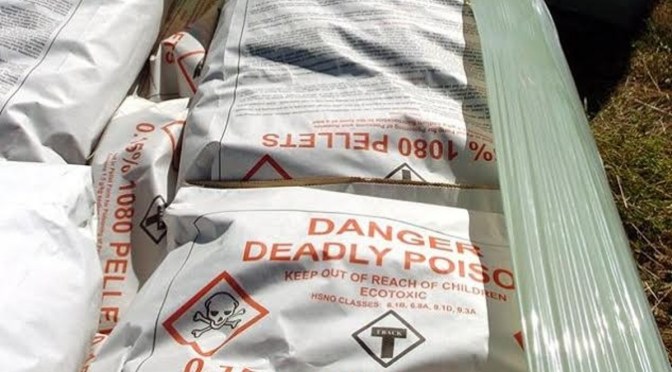
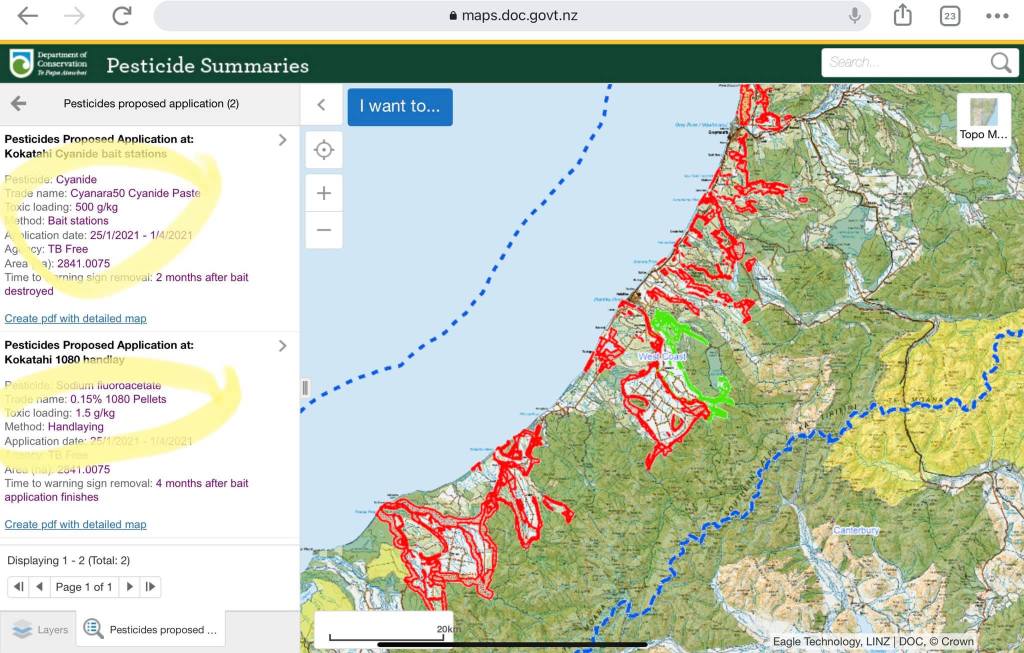
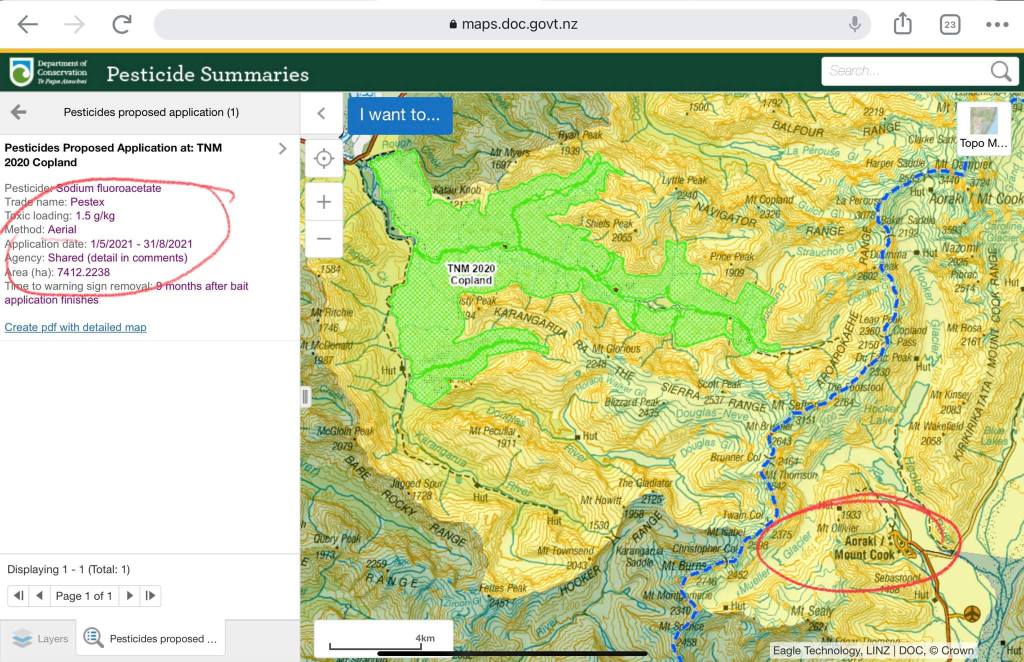


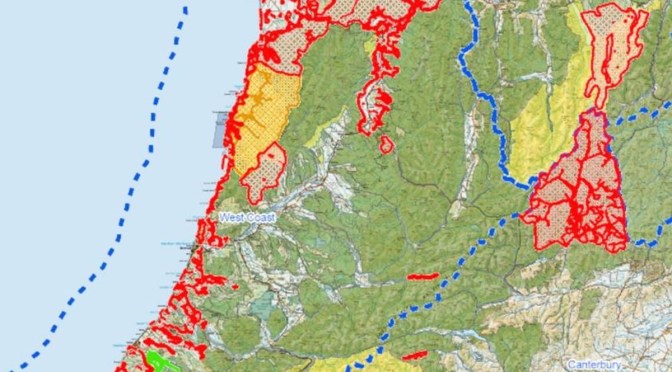



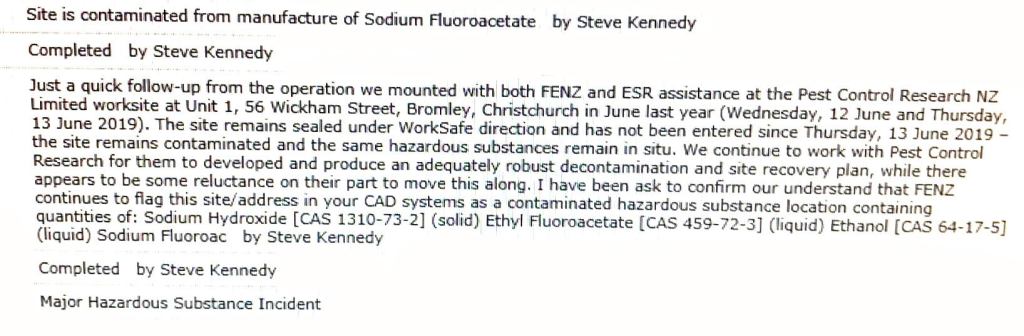


 . It mentions the two women


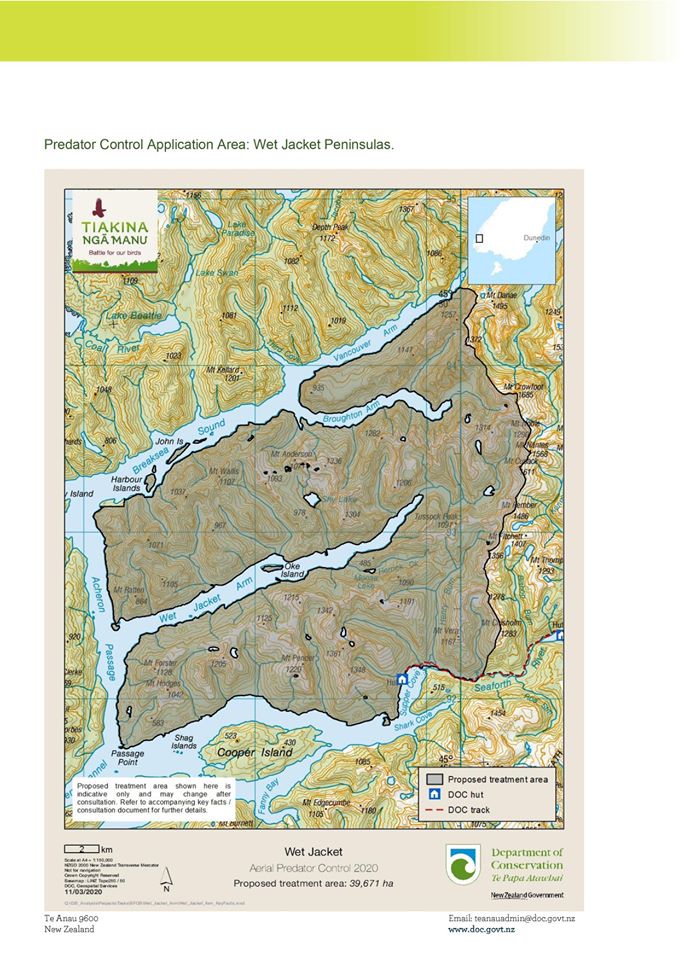
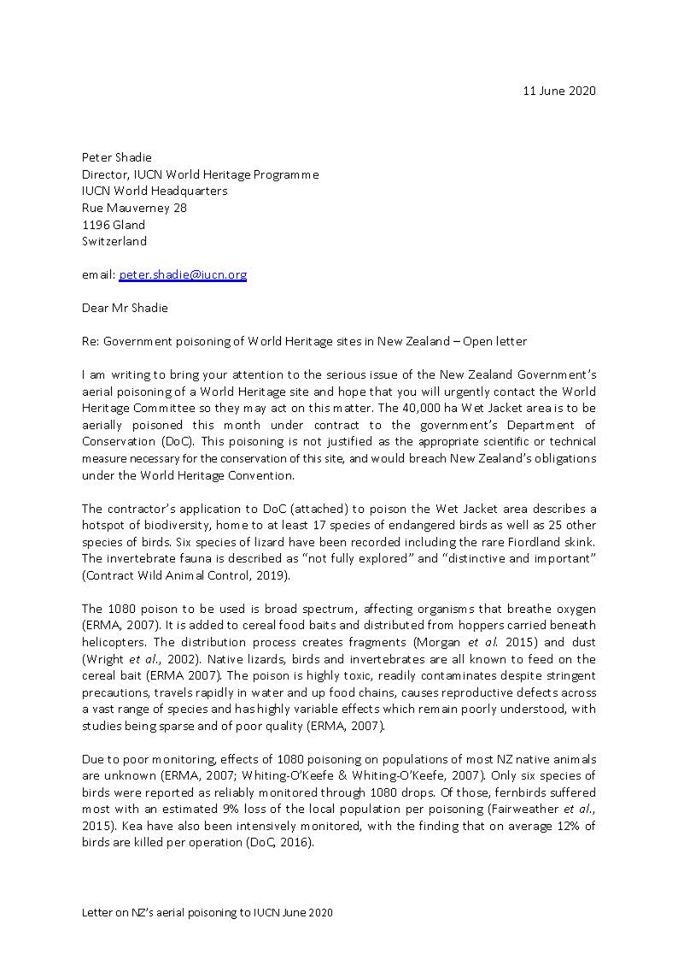


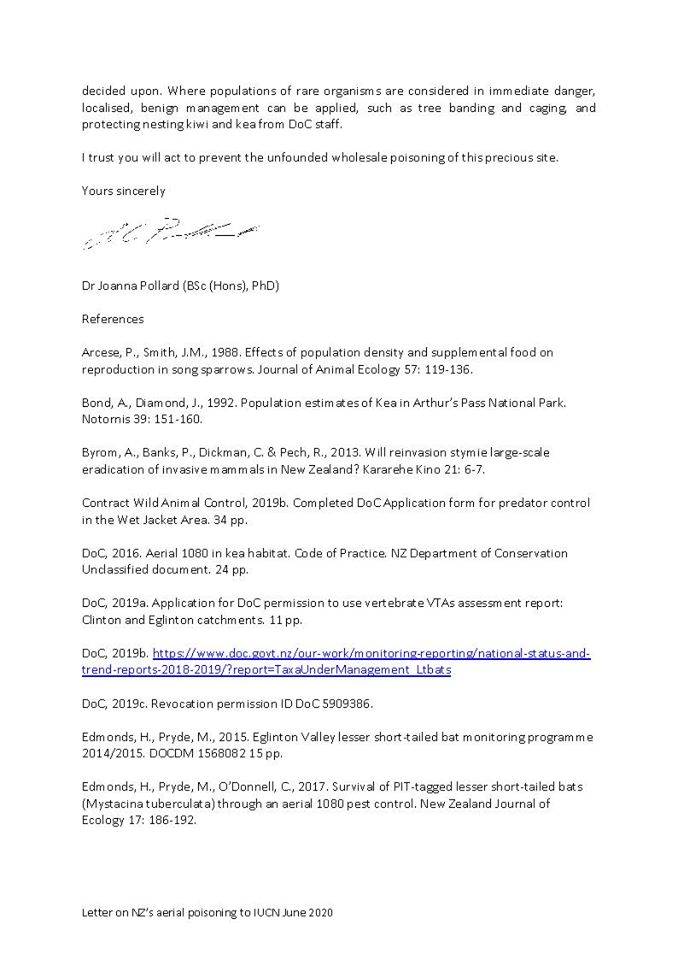
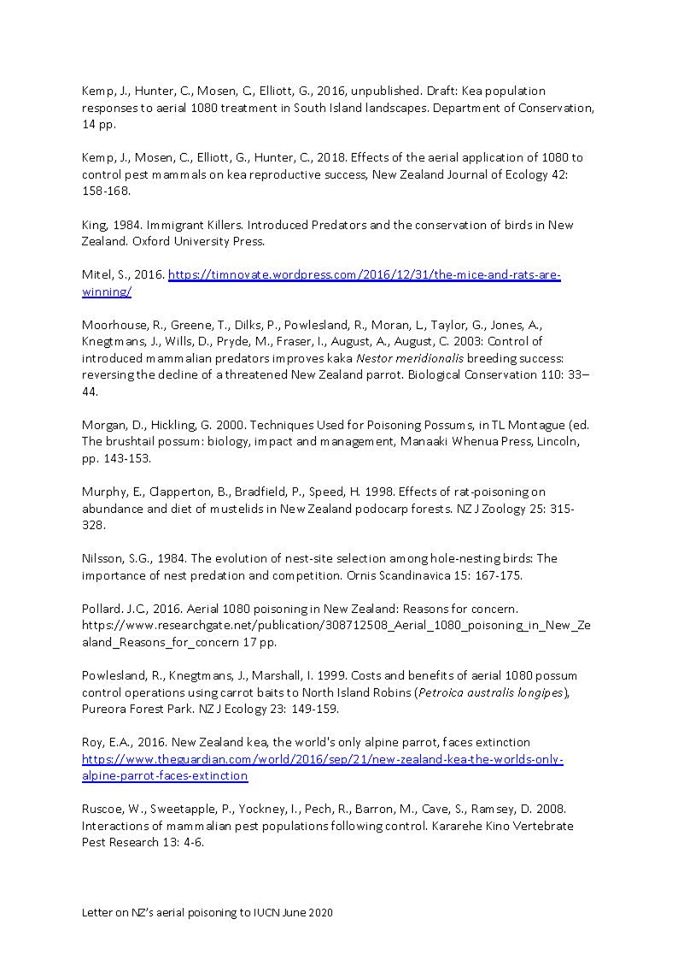

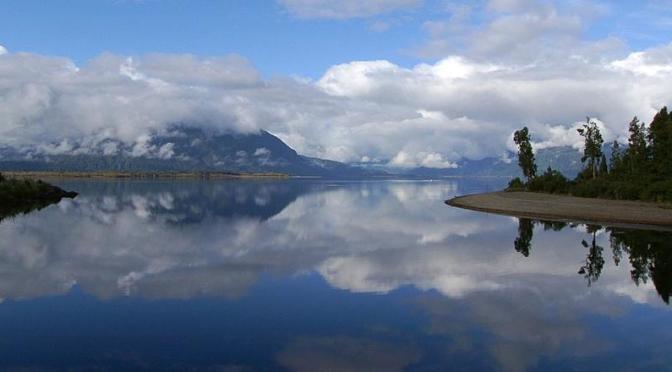


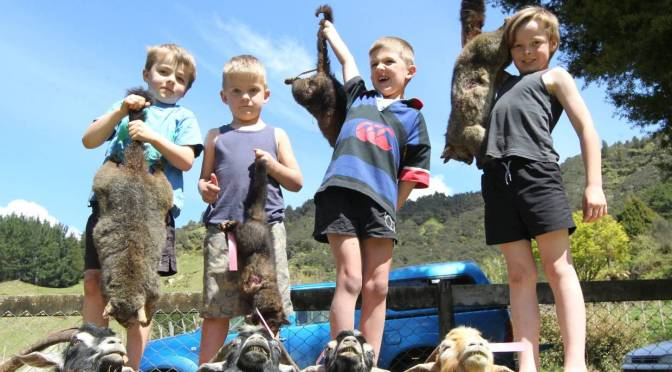


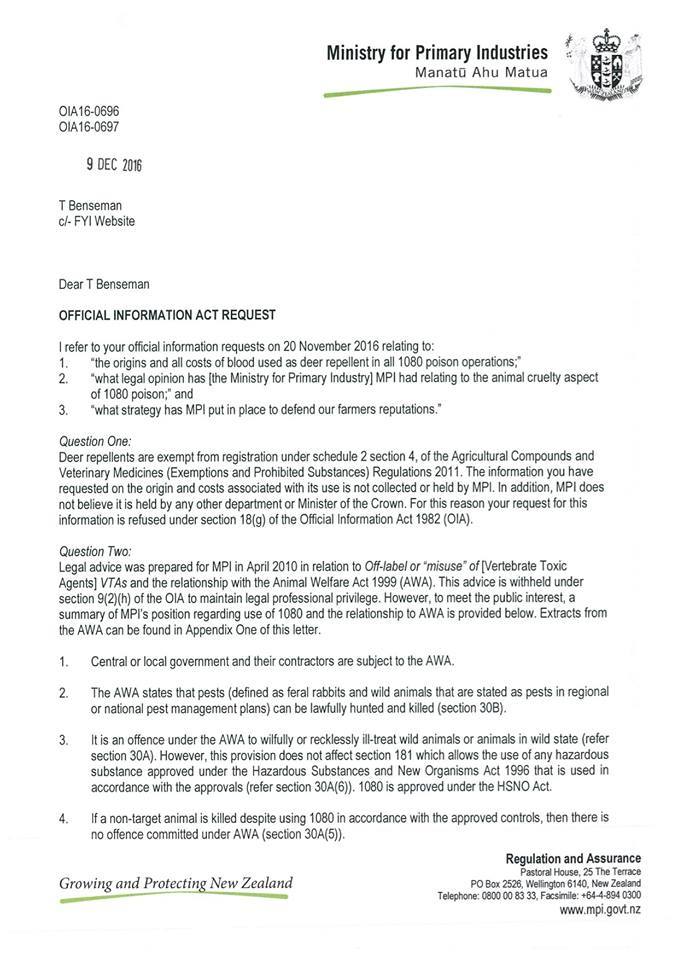
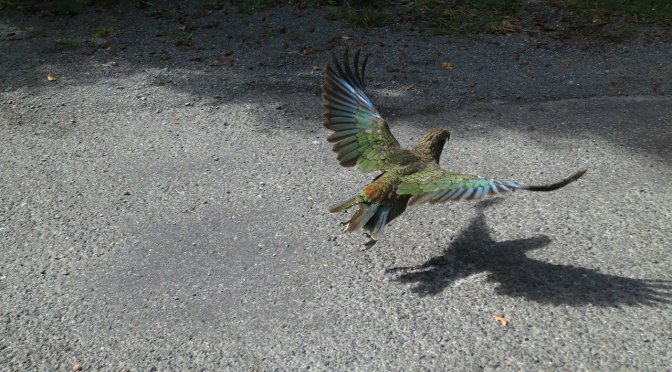

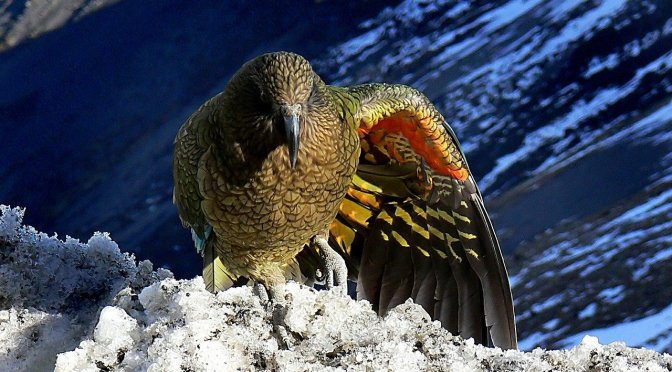



You must be logged in to post a comment.