
Monthly Archives: December 2017
FARM-AGEDDON: No birds. No bees. Our countryside laid waste. And billions of animals that never see a blade of grass – The terrifying threat from today’s mega-farms
Who Owns Puerto Rico’s Debt, Exactly? We’ve Tracked Down Ten of the Biggest Vulture Firms
Report Shows Puerto Rico’s Hurricane Death Toll Likely in Thousands, Far Higher than Official Count

Update from a Neuroscientist on the Waikato family poisoned by wild boar meat .. the anomalies surrounding the official diagnosis
ARTICLE BY Serena Maja* and Michelle Read
“Rehabilitation from sub lethal 1080 poisoning is simple. Time.
Botulism treatment takes a long time, years. Whereas recovery from sub lethal 1080 poisoning is much faster.
This family could have been treated for alzheimers, for mumps, for shellfish poisoning, for botulism, for polio, for meningitis. The results would be the same, they would recover.
The timeline of the recovery is just as diagnostic as the timeline of the illness, and the time line does NOT fit botulism” … Serena Maja, Neuroscientist
The family is facing a massive medical bill after they were made ill following a meal of wild boar.
Officials are still to confirm botulism, but it is the ‘only thing’ they are testing for. And now the report says ‘confirmation will take months’.
ACC has told them they don’t ‘qualify’ for compensation and botulism is not covered by ACC.
We are not making the statement that this is poisoning from pest control operations, but at the same time we find it interesting that the authorities are determined that they have a case of botulism and do not look elsewhere.
The International Society for Infectious Diseases asked on the 18th November for clarification because this is unlikely to be botulism. A number of medical professionals have contacted us within NZ and stated that this family cannot have contracted botulism because of the timing of the onset of symptoms, the symptom of loss of consciousness, and the fact that botulism is not contracted from fresh meat.
However, this family did not receive a lethal dose of poison.
Pig sensitivity to 1080, for example, is estimated at between 0.4mg/kg and 1mg/kg.
Animals rapidly evolve resistance to 1080, and we have used 1080 poison for more than 60 years.
Exposure to sub lethal 1080 doses can lead to protection against 10x the normal LD50.
Therefore, these boar (and we have no real data on boar) may be able to tolerate 4mg/kg and 10mg/kg minimum, before half of them fall over and die.
Human susceptibility is not known. Estimates are between 1mg/kg and 4mg/kg, although we do know that genetic variations in the human glutathione transferase enzyme change sensitivity, i.e. different halotypes/races of humans will experience variations on that sensitivity.
It is not unlikely that the family ate a significant non-lethal dose of fluoroacetate and fluorocitrate (the lethal metabolite of 1080) from poisoned pork.
The onset time of 1080 poisoning is 30 minutes, the symptoms are identical.
Botulism and Botox (botulinum toxin) poisoning do not fit the symptoms at all, either dynamically or by effect.
Tutin poisoning does not fit the observed toxicological profile either.
Why is 1080 not being considered as the primary likely cause? Are we putting our fingers in our ears and refusing to look?
We are dropping ever increasing amounts of the stuff. Two pellets will kill a child. This kind of sub-lethal secondary poisoning is an ever increasing likelihood. We’ve observed it in raptors catching sub-lethally poisoned mammals already.
The test for 1080 poisoning (and fluorocitrate poisoning, 1080 being the delivery mechanism for fluorocitrate) is simple, yet our government insists it is not. NMR spectroscopy is used worldwide to observe either the fluoridated molecules directly, or to assay the metabolic by-products of fluorocitrate poisoning.
Given the amount of 1080 used in NZ, we should have test facilities in every major population centre.
The fact we do not speaks volumes.
“One of the most detailed descriptions of recovery from 1080 poisoning is McTaggart’s (1970) report of a child who ingested rabbit bait: Ten days after ingesting 1080, the boy began to recover during hospitalisation. He was able to keep his eyes open, and to appreciate some movement, but had marked hypertonicity of all limbs with frequent spasms of his arms and legs. At this time he was incapable of spontaneous movement, and remained unable to feed himself for a full two weeks after regaining consciousness. Twenty-four days after he ingested 1080, the boy had regained some range of movement in his arms and was able to recognise familiar people and objects. Ten years later there was evidence of mental retardation with a verbal IQ of 65, he was still unable to walk without crutches, and suffered from tetraplegia, hypertonicity of all limbs, cogwheel rigidity of the wrists, moderate to severe cortical blindness, divergent squint, and epilepsy. It is likely that the mental retardation was the result of brain damage caused by anoxia during periods of fitting (Pridmore 1978), although there is evidence of brain damage resulting directly from fluoroacetate poisoning (Trabes et al 1983). Other patients have experienced a similar prolonged recovery period (5–6 days) (Gajdusek & Luther 1950; Robinson et al 2002) with complete eventual recovery. Pneumonia is a frequent complication of human 1080 poisoning cases (Williams 1948; Brockman et al 1955; Pridmore 1978; Ramirez 1986). While these infec- tions may reflect hospital intervention, it is also possible that infection is promoted because of the increased respi- ratory secretions typical of 1080 exposure (Chenoweth & Gilman 1946; Quin & Clark 1947; Brockman et al 1955; McIlroy 1981, 1982a, 1983, 1984, 1985).”
We are suggesting the cause could be 1080 as the time frame of the symptoms, the symptoms themselves, the time frame of the recovery and the symptoms of the recovery match 1080 poisoning. Doctors didn’t diagnose botulinum toxin, they thought that it might be, and treated as if it was. As yet, the results for the tests which would confirm botulism have not come back, and without those tests, the unusual time frame, unusual symptoms, unusual time of recovery and unusual recovery symptoms, botulism is unlikely. Recovery from non-lethal 1080 poisoning is time – (I’ve quoted the 10 year old boy case which is a perfect exemplar). They could have had limb massage, prayer circles or irrelevant anti-toxin for botox and they would still have recovered in the same way as observed recovery from non-lethal 1080 is normal, it is only if they had had a lethal dose that they wouldn’t have recovered.
*Serena Maja has a Masters degree in Neuroscience from Cambridge University, UK and a background in Analytic Chemistry and Natural Sciences.
COMMENT FROM ADMIN:
As I sometimes add to controversial posts, part of the purpose of this site is to expose lies and corruption and to publish truth that mainstream media will not. If you happen to be pro any topic posted here, there is little point trying to spark up a debate in the attempt to convince myself or others of your view point. I suggest you head to mainstream media where you will find like minds & your posts will almost certainly be published. It also goes without saying, abusive commenters are blocked instantly. The Neuroscientist cited in this particular post wishes to remain anonymous so has used a pseudonym. This is obviously why you will not find the name in a google search however I can assure you that Neuroscientist Serena Maja is real and is a Cambridge Masters. The wish for anonymity is not unusual, and people do contact me from time to time stating the same … for obvious reasons. Recent history has proven that speaking the truth or challenging the status quo these days can incur very unpleasant repercussions. You can accept or reject the information offered in this article as you wish. Nobody is saying it was 1080 that poisoned the family, we are asking the question everybody should be, why is 1080 not being tested for when clearly no firm diagnosis has yet been reached? I have added one response by Serena who I’ve made aware of some of the questions that have come in. And on that note, the questioners clearly have not read the article properly as most of the queries are answered in the article itself anyway. EnvirowatchRangitikei
REFERENCES:
https://academic.oup.com/toxsci/article/69/2/439/1679717
https://www.researchgate.net/profile/Miranda_Sherley/publication/228620466_Is_sodium_fluoroacetate_1080_a_humane_poison/links/0deec53b29369d82a3000000.pdf
This article (now updated) was originally posted on the No to 1080 use in NZ Facebook page

Clean, green New Zealand is a lie – and a warning for Britain’s countryside
If you don’t believe NZ is polluted to the hilt type pollution &/or water into the searchbox. Or go to categories. We are also slathered relentlessly with toxic poisons including 1080 and glyphosate. The headline is correct, clean and green is a complete and utter lie.
EnvirowatchRangitikei
From theguardian.com
Michael Gove plans to cut farmers’ subsidies while enhancing the environment post-Brexit. New Zealand’s cattle-wrecked land shows the folly of his thinking
There can’t be a more successful tourism marketing campaign than “100% Pure New Zealand”. And New Zealand is seen as a world leader in another respect: how its farmers sell their food globally without government subsidies. But the tension between these two successes has been exposed by Sir Tim Smit, the co-founder of the Eden Project in Cornwall.
Smit has sparked a minor international incident by declaring that New Zealand is “so pure the people of Christchurch won’t even swim in the river Avon. Most of the lakes are full of algae. It is like a beautiful person with cancer.” He was speaking to British landowners pondering the New Zealand model for post-Brexit agriculture. British farmers currently receive £3bn in subsidies each year; environment secretary Michael Gove must design a much smaller subsidy system – or scrap it altogether.
Smit argues that New Zealand is no inspiration despite its farmers surviving the removal of subsidies in 1984. Their response has been to intensify, and export milk to China.
Landscapes that George Monbiot might describe as sheep-wrecked are now cattle-wrecked; the cost, argues Smit, is water quality, as nitrates from fertilisers flood into rivers. Smit’s critique has been endorsed not only by Greenpeace New Zealand but also by the chief executive of New Zealand’s fish and game council, Martin Taylor, who calls the country’s clean, green image “a facade”. Brexit marks a crossroads for the British countryside. Gove believes we can boost agricultural productivity while also enhancing the environment. His vision isn’t so dissimilar from some environmentalists’: subsidy-dependent upland farming will cease (and some land even rewilded) while production is intensified on surviving lowland farms.
But the idea that we can have it all – cheap food, pristine environments and profitable farmers – is naive.
READ MORE
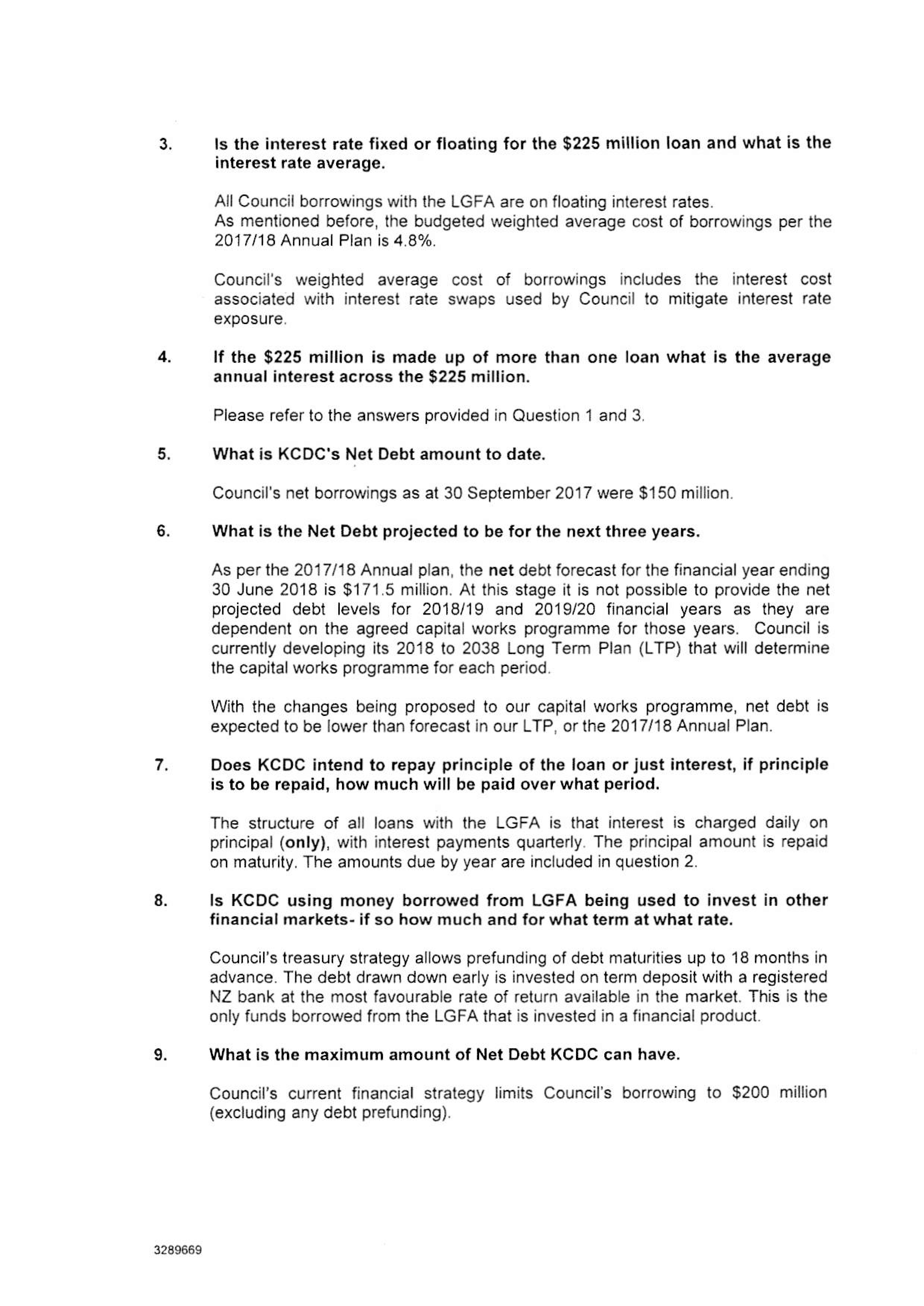
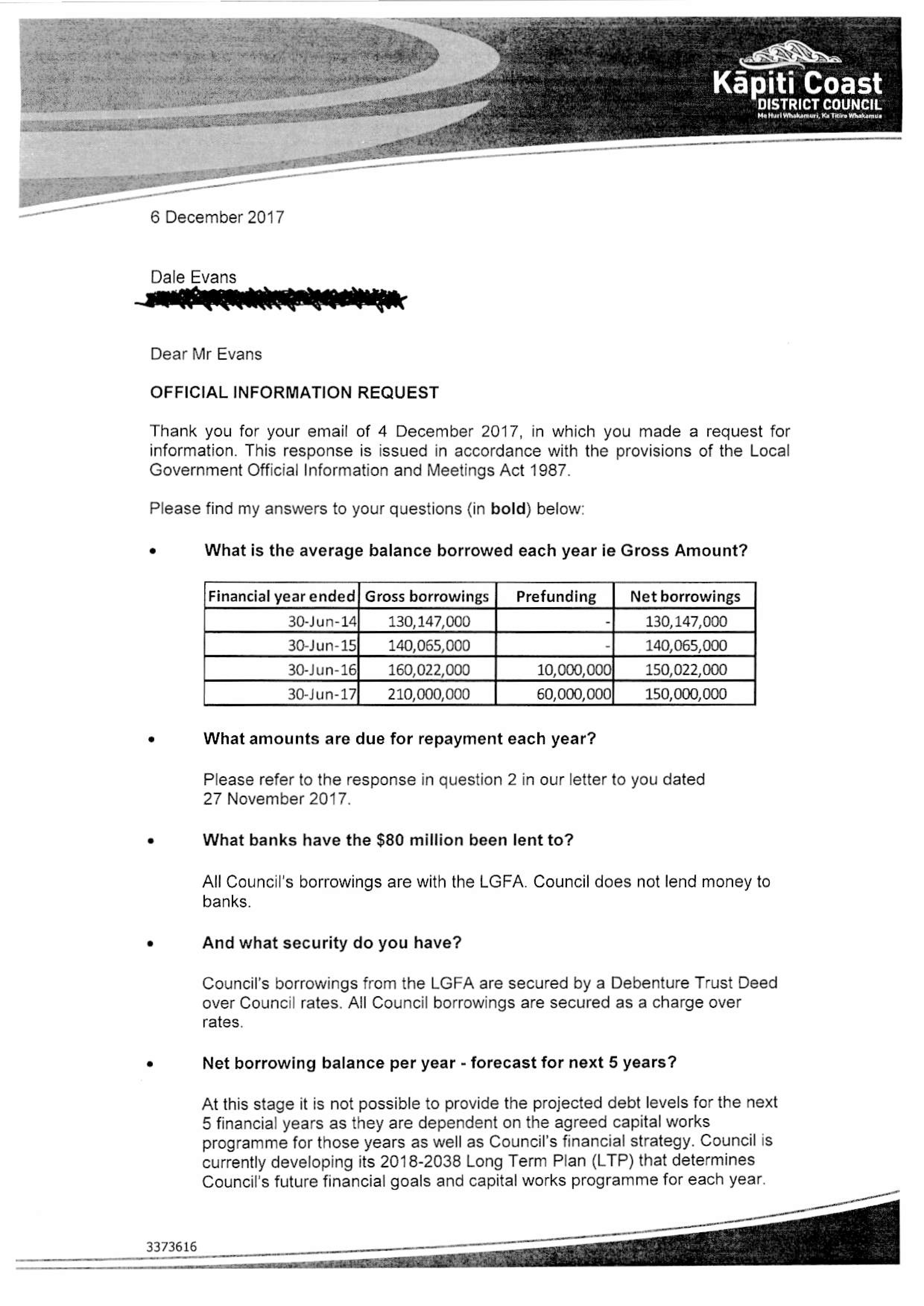
more on Kapiti Coast District Council indebtedness

We can only assume that the ‘net’ figure of $150 million is the $225 million borrowed from the LGFA less $75 million held by the council on deposit somewhere. The sentence “Council does lend money to banks” indicates that it is not with a bank. So, back on deposit with the LGFA then? And if so, at what interest rate? It won’t be more than the average 4.58% quoted that the KCDC is paying.
When this issue was raised on the Kapiti Coast Group FB page a couple of months ago, a defender of the council said it made sense to borrow long term when interest rates are at their historic low. However, this Treasury forecast (pdf) says there is more likely to be economic fall-off by 2020 and accordingly more potential for interest rate drops than increases.



Just How Many Shots are on the CDC Vaccine Schedule?

A pollution problem you probably weren’t aware of – concern expressed by an Akaroa resident, a problem dubbed an “international embarrassment” by Victoria University Law Lecturer
Here is a topic that’s slipped somewhat under the radar and is affecting beautiful Akaroa in the South Island … the pollution from cruise ships. An Akaroa reader affected by this issue to the extent they sometimes wear a mask, contacted me recently saying they’d tried both government and media channels with a largely ‘not interested’ response. Turns out the issue’s been written about by a University lecturer Dr Bevan Marten (link below the reader’s piece) who says:
New Zealand’s lack of action over air pollution from shipping is an international embarrassment… Dr Bevan Marten
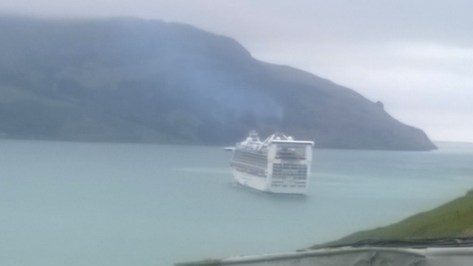
It is with a heavy heart I farewell the winter … cold, clear, cleansing southerly winds blowing through the harbour heads straight from the Antarctic.
Today, as dawn breaks , the onslaught of mighty tourism blows through the heads. Just one of 80 ships to visit this season.
Another season of poisonous sulphurous emissions … 12 hours day … often 2 or 3 ships per day … 7am to 7pm.
The air is sharp … stings the throat … wear a mask outside and keep windows closed.
Because of the shallowness of the harbour these floating cities moor out in the open harbour. The engines are pumping all day, swinging 360 degrees on their mooring to stay facing the prevailing winds.
The sediment disturbance turns the harbour a milky grey.
What does this do to the Hector dolphins, the paua beds?
Atmospheric pollution. Ocean pollution.
Seven pm and the engines ramp up for departure. The smoke spreads, the sediment spreads. The bilge water pumps out into our harbour.
Gone … ’til tomorrow. Here til March 2018…
Our council bans woodburners in Chch for home heating. Our council plans to have electric cars. Why bother?
Six months of poison pumping into our air negates all such clever initiatives.

NZ’s ignoring dark cruise ship undercurrent
Dr Bevan Marten is a Senior Lecturer in Victoria University of Wellington’s School of Law, specialising in maritime and transport law. He is scathing about the damage those gleaming white cruise ships are doing to the environment.
New Zealand’s lack of action over air pollution from shipping is an international embarrassment. This is true of both the country’s commitment to addressing global climate change and the safeguarding of local air quality. Walking along Auckland’s waterfront, that gleaming white cruise ship may look spotless but the fumes coming out of its funnel might be anything but. It’s time to tell the Government to get serious.
Larger ships mostly burn “bunker” fuel, a grade of oil closer to Marmite than anything the local service station will pour you. It’s also a key source of pollutants such as sulphur dioxides, nitrogen oxides and particulate matter.
Sulphur dioxide in particular creates a risk to human health, despite not having the telltale smog we associate with the problems faced in cities like Beijing. And while we have largely removed sulphur dioxide emissions from road vehicles and some industries, shipping remains a major source of this pollutant.
The global community has long acknowledged this issue. In 1997, countries agreed to Annex VI of the International Convention on the Prevention of Pollution from Ships (known as MARPOL, short for marine pollution). In addition to rules improving ship engine efficiency, this included a promise to reduce the maximum sulphur content of ships’ fuel to 3.5 percent in 2012 and 0.5 percent in 2020. Between 2006 and 2014, special emission control areas covering much of Northern Europe and North America entered into force, bringing sulphur content there down to just 0.1 percent.
Although 86 other countries are party to the Annex VI agreement, New Zealand has never signed up. This makes us a real outlier internationally. The only other OECD countries in this position are Iceland, Israel and Mexico. The only other countries in the South Pacific Commission to ignore it are Fiji and the Solomon Islands.
READ MORE
https://www.newsroom.co.nz/@future-learning/2017/03/12/8540/cruise-ships-leave-dark-wake

Shot at, assaulted, arrested, thrown in jail, drugged, car destroyed, home sledgehammered – something is very wrong with NZ’s justice system – (a must read book review)
A Book, “Man of Convictions” by Anne Hunt
Reviewed by Veronica Harrod
This is a book I’ve only part read but will be completing as soon as I have time. The little I’ve read is a shocking eye opener and indicative of the fact that something is terribly wrong with our justice system. Not the country I grew up in that is for sure. EnvirowatchHorowhenua

Documented detail about Taueki’s battles as kaitiaki and the cost he has personally paid including being shot at, assaulted, arrested, thrown in jail; his car was destroyed beyond repair, his home by the lake was sledgehammered until only a shell remained, his much loved dogs were traumatised and he says he was “drugged against my will and without my knowledge.”
By Veronica Harrod
Anne Hunt, published by Potangotango Foundation, PO Box 664, Levin 5540, New Zealand, Man of Convictions: Taueki – a man, his tribe and their lake, http://annehunt.co.nz; 2017. 275pp. ISBN 978-0-473-40314-0 (PDF)
This is journalist Anne Hunt’s fourth non-fiction book and first e-book. “Man of Convictions” is referred to as “first published” and “V1.11” because Hunt will update the content with new information when it’s available. The author states she, “makes no apology for writing this book from the perspective of the Taueki family.” Hunt also makes background information available on her website including court documents and transcripts which supports the book’s content. She also includes information in the book about her own family history and extensive and enduring involvement in assisting Philip Taueki since 2010.
The e-book comprises 24 chapters on Levin resident Philip Taueki’s battles as a kaitiaki of Lake Horowhenua since his return from London in 2004 where he was working as an accountant “…for some time living in the prestigious neighbourhood of WC1 London where members of the Royal Family reside.”
But this isn’t a book about his impressive academic and professional achievements it is a book about how ugly everything can get when there is a lot at stake. Hunt describes in meticulous and documented detail about Taueki’s battles as kaitiaki and the cost he has personally paid including being shot at, assaulted, arrested, thrown in jail; his car was destroyed beyond repair, his home by the lake was sledgehammered until only a shell remained, his much loved dogs were traumatised and he says he was “drugged against my will and without my knowledge.” For the last nine months he has been left with no water supply to his residence after Horowhenua District Council illegally turned it off and he will face a retrial on a charge of trespssing on his own land in January 2018 even though he has been aquitted twice of the same charge in previous court cases.
The opening chapter traverses the history of MuaUpoko and Philip’s whakapapa to “an ariki by the name of Taueki, the renowned paramount chief” who signed “the Treaty of Waitangi” before launching in chapter after gruelling chapter of his numerous arrests, court cases and the role third parties have played including state and government organisations. The, no doubt, long fought for establishment approval he achieved in London stands in stark contrast to the scorn, ridicule and material deprivation he has experienced since returning to the community where he was born and raised. Many people in his home town of Levin refer to renowned paramount chief Taueki’s great great grandson Philip Taueki as “the Mad Maori who lived down by the lake.”
The book presents a disturbing picture of what people in positions of power and authority are prepared to do to maintain control over Lake Horowhenua even if it means lying under oath. At one court trial Judge Harvey asked former Horowhenua District Council mayor Brendan Duffy whether two buildings formerly tenanted by the yachting and rowing clubs had toilets and Mr Duffy answered “correct” even though, “On inspection they confirmed there were no toilets to be found.” Hunt has included quotes from court transcripts at every point in the book where the facts are likely to be disputed. What Mr Duffy said in court on oath is just one such example of her attention to detail. The behaviour of the local police also leaves a lot to be desired. One of many such instances is described when,”Constable Lionel Currie had certainly not picked a good time to claim he had served this trespass notice on Phil down at the lake. At that precise time, a whole team of councillors and candidates were erecting election hoardings in Levin, all prepared to testify that Phil was with us, hard at work digging holes in the stony ground.”
I would have liked to see Lake Horowhenua ownership information included as a separate paragraph in its own right because who the legal owners of Lake Horowhenua are is the crux of the issue Hunt writes about. Instead some of this important information is buried in other references. We know the lake is privately owned because Hunt writes, “A British certificate of title for the lake partition had been issued on 19 March 1899” but annoyingly doesn’t say who it was issued to except that “Mua-Upoko’s vast ancestral estate had therefore shrivelled from 52,000 acres in the whole Horowhenua Block to little more than a lake and some sandy acres along the shoreline.”
Also I would have liked to see mentioned in the book that of the 43 charges laid by Levin police against Phil Taueki 33 have been quashed, dropped or he was found not guilty of. That fact alone suggests something else apart from maintaining law and order was motivating the local police force.
That aside this e-book is essential reading for everyone who lives in Horowhenua, especially Levin, and those interested in reading about history, police injustices, legal cases and precedents, Maori, European/colonial world views and the long and convoluted history of the fight for control over Lake Horowhenua not least because it challenges long held assumptions. Horowhenua District Council officers, elected officials, journalists and media should also read this book.
The e-book is written in a straight-forward and easy to read style and the layout is easy to navigate. At the end of each chapter are notes which include a glossary of terms, names of relevant people, Maori to English translation of certain words, maps and points of interest that help to provide context and understanding. The way the information has been presented makes the timeline of events easy to follow which is important because there were so many arrests, so many charges, so many court cases against Philip Taueki which is why the book is called “Man of Convictions” available for free download at http://annehunt.co.nz/#
NOTE: for further articles by Veronica use the search box.
Veronica Harrod is a qualified journalist with a Master of Communications specialising in traditional and new media content. Investigating and reporting on political, economic and legislative trends that negatively impact on the day to day lives of people is one of her main areas of interest. Lifestyle content she is interested in includes celebrating our own especially the tireless work community advocates do as civil citizens participating in democracy to keep those in power on their toes. In a media age dominated by a multi billion dollar communications and public relations industry paid to manipulate information to protect and advance the interests of the few over the many there have to be journalists who are impervious to the all pervasive influencial role they have over local and central government and corporate interests.
For more information on Veronica’s professional qualifications see her Facebook page.

Guest Post: 5 Ingenious Ways to Grow Vegetables and Herbs Indoors
Mr English: Where are National’s secret coalition negotiation papers?

.

.
Bill English has been kicking up a shit-storm, demanding that Labour release what they have been describing as a “secret coalition agreement” between Labour and NZ First.
.

.
English complained;
“This is a government that said it would be more transparent and more open. The document is clearly there somewhere, it must be important because it’s 38 pages and it’s come out of the agreement – people deserve to see it.
It sounds like there might be quite a lot more in this other piece of paper. If it’s at the core of how the Government’s going to run, it’s in the public interest.”
English defended his insistence that the coalition notes be made public by comparing the Coalition with his own previous administration “transparency”;
.
 “By any international standard the last government was open and transparent, and this government, as with many other things, has…
View original post 1,953 more words
Christchurch people are right to be angry about the CTV disaster decision…

No accountability for those involved. 115 people died in the collapse of the CTV building:


Dr Bryce Edwards
Dr Bryce Edwards is a political commentator and a Research Associate in the Institute of Governance and Policy Studies at Victoria University of Wellington.
People are right to be angry about the CTV disaster
Political scientist Bryce Edwards argues that the whole aftermath of the CTV building collapse, including the decision made by police not to prosecute anyone, should reduce public confidence in both New Zealand’s buildings and political system.
There is a protest planned this weekend in Christchurch over the police decision not to prosecute over the CTV building collapse that killed 115 people. It’s hard not to have sympathy for those who will assemble on Sunday near the site of the tragedy…
View original post 236 more words

The Science of Autism – Dr Moulden Part 1

Published on Oct 27, 2009

“We are not in the land development game” …an intriguing tale of land and property interests owned by Horowhenua District Council chief executive David Clapperton
by Veronica Harrod
“We are not in the land development game,” said Horowhenua District Council chief executive David Clapperton in response to why he and his wife Catherine Whitehouse have their company Kai Tipu Ora Ltd listed under a “Land development or subdivision (excluding construction)” industry code.
He made the declaration in an exclusive interview after the company Mr Clapperton and his wife are sole directors of was publicly revealed for the first time in the commentary Horowhenua Horror Bout that appeared on the Kapiti Independent News media site recently.
Mr Clapperton said the reason why the company was classified under the land development/sub-division code was because he and his wife intended to set up an office on the property, and they were also going to subdivide the property to build accommodation for a family member.
“However the land is not going to be subdivided to build accommodation for a family member any longer,” he said.
In response to whether it was appropriate to have a company with an industry classification that bears little relevance to the services being provided by the company Mr Clapperton said, “In hindsight we wish we hadn’t but it was a mistake that can’t be changed. We have asked to change the classification” rather than de-register the company.
In answer to why the company structure was still necessary if the reason for establishing it was no longer being pursued he said, “We were advised to set up a company for tax requirements,” he said.
A Companies Office spokesperson refuted the statement that business industry classifications could not be changed. He said, “Business Industry Codes (BIC) are provided on a voluntary basis by the company, and are not verified by the Companies Office. A company is able to change its BIC without having to re-register as a company.”
The Horowhenua District Council rating database had no information on the address Mr Clapperton and his wife Catherine Whitehouse included in the director address details for their company Kai Tipu Ora Ltd listed with the Companies Office. A physical check for the correct address reveals that only an indent of the number listed as the directors’ and shareholders’ residential address remains on the letterbox outside the property, but not the number itself because the number has been removed from the letterbox.
The Companies Office spokesperson said, “The onus is on the board of directors of a company to ensure that all information provided to the Registrar of Companies is accurate. This includes a company’s address for service and a director’s (or shareholder’s) residential address. Providing false or misleading information to the Registrar is an offence under section 377 of the Companies Act 1993. The maximum penalty on conviction for this offence is a fine of $50,000 or imprisonment for a term of two years. You can find out more about our enforcement approach on our website, where you can also make a complaint if you have information concerning inaccurate information.”
Instead at the property number listed as the directors’ and shareholders’ address is a second letterbox which has been added to the north side of the driveway which has another street number. Increasing the layers of intrigue is the involvement of Horowhenua District Council which has listed the property in its rating database under the letterbox number that was added at a later date. A google earth map picture taken of the property clearly shows only one letterbox, the correct one, and now there are two letterboxes.
The Fairfield property information held on the local council’s rating database also conflicts with the Fairfield Road property information held on the Quotable Values (QV) database. Under the QV database the address for the same Fairfield Road property is listed under another street number again. Yes, keep up readers we now have three different street numbers for the same property. Suffice to say, if confusion is the aim, then Mr Clapperton and his wife have hit a home run.
Also refuting the statement made by Mr Clapperton that he and his wife were “not in the land development game” is the fact that both he and his wife own four land lots in total, three in the Horowhenua and one outside the district.
Mr Clapperton and his wife’s company Kai Tipu Ora Ltd are listed as the owners of the 1.4973 hectare residential property in Fairfield Road which has an RV of $750,000 yet sold for $1.3 million on 26 Oct 2016. Mr Clapperton and his wife are also listed as the owners of three other land lots including (a) a 4200 m2 (almost half a hectare) of vacant residential land in Ohau Terrace with a registered valuation (RV) of $226,000 where deputy mayor and land developer Wayne Bishop has his Ohau land development project (b) a 847 m2 lot at Himatangi Beach with a RV of $100,000 which was purchased for $32,000 on 24 October 2002 and, outside the district, 12.9 hectares in Rongotea Road, Kairanga which has a RV of $880,000 and was purchased on 12 Jun 2008 for $700,000.
Fairfield Road has seen an explosion in land development that corresponds with land development projects outlined in the Levin section of the 2008 Horowhenua Development Plan. It is also where one of the biggest upgrades to the Levin stormwater system is taking place costing Horowhenua ratepayers a conservatively estimated $4.1 million.
According to the Ohau section of the 2008 Horowhenua Development Plan (Part 9), Mr Clapperton’s 4200 hectare of bare land is situated in area 7 – Bishops Vineyard (Muhunoa East Road – south side) green belt residential zone. “This area is to the east of Ohau and has been an area experiencing a high degree of recent rural-residential development. The area is bordered by rural land to the north and east, Railway Terrace (residential development) to the west, and Muhunoa West Road (rural land) to the south. In the short term, new development would be serviced on-site, and in the long term connected to the Levin reticulated infrastructure networks.”
There have been 6 sales of residential vacant sites of land in Muhunoa East Road in the last 3 months including two others in Ohau Terraces on 25 September and 20 April.
Veronica Harrod is a qualified journalist with a Master of Communications specialising in traditional and new media content. Investigating and reporting on political, economic and legislative trends that negatively impact on the day to day lives of people is one of her main areas of interest. Lifestyle content she is interested in includes celebrating our own especially the tireless work community advocates do as civil citizens participating in democracy to keep those in power on their toes. In a media age dominated by a multi billion dollar communications and public relations industry paid to manipulate information to protect and advance the interests of the few over the many there have to be journalists who are impervious to the all pervasive influencial role they have over local and central government and corporate interests.
For more information on Veronica’s professional qualifications see her Facebook page.

The great Southland flax massacre
Photo: John Hawkins Stuff
Thanks to a reader this came to my attention. It had slipped under my radar. I’ve followed the spraying carry on that all of our councils do, fixated on tidy roadsides they spray everything to the hilt, hence the yellow ditches all along the way when you travel. I think they look untidier than long grass quite frankly but spray they must it seems. Small wonder most of our populations now test positive for glyphosate in their bloodstreams. What was sprayed in Southland here in the article was metsulfuron methyl. Spraying everything with chemical poisonous herbicides is standard practice in NZ even though there are non toxic alternatives. You can read up on glyphosate on our Glyphosate pages. The properties of the chemical used in Southland is referred to in the article. To read more PANANZ is a good site.
Anyway it appears in Southland the roadside harakeke (flax) bushes got sprayed, now they’re a ‘nice’ yellow colour instead of green. Southlanders got up in arms and good on them. Have a read about the Southland massacre:
Southlanders protest the great flax massacre
stuff.co.nz
31 Oct 2017
It’s been described as the great flax massacre, and dozens of Southlanders have packed into the Orepuki Tavern to protest against it.
Members of the public filled the tavern for a public meeting on Tuesday, opposed to the long stretches of the Southern Scenic Route which are now lined with browning dead flax bushes.
Attendees expressed concerns about the aesthetic impact on the Southern Scenic Route and tourism, the possibility of the herbicidal spray entering the public water supply, and dangers to animal life and biodiversity.
Resident Louise O’Callaghan said she understood the need to keep drainage channels clear but was concerned about the amount of chemicals being used to kill flax, after driving past the spraying vehicle in April.
“I was flabbergasted, my friend and I stopped, did a U-turn and drove back,” she said.
“The time spent on one flax bush was just incredible, as was the volume of spray.”
She was also worried about chemicals escaping into the water supply, saying manufacturers of herbicidal treatments with metsulfuron methyl warn that it is very toxic to aquatic organisms and to soil.
READ MORE
https://www.stuff.co.nz/southland-times/news/98411648/southlanders-protest-the-great-flax-massacre
Clutha-Southland MP Hamish Walker says NZ Transport Agency to act on whacked flax
stuff.co.nz
13 Nov 2017
Southern scenic route motorists will once again be able to enjoy the green, green grass of home after the NZ Transport Agency agreed to clean up the aftermath of the great flax massacre.
Clutha-Southland MP Hamish Walker said he had received confirmation that the transport agency would be removing dead flax between Riverton and Clifden.
He was pleased with the decision, saying “It’s been an emotive issue in the community, so this is a great result”.
“I’m thrilled the NZTA has come to the party and agreed to remove the majority of dead flax in their area of responsibility.”
Walker was also pleased the agency would work with local iwi to protect flax on the Southern Scenic Route, saying “The Southern Scenic Route is our shopfront window for tourists”.
“Flax is not a weed, it’s an important part of the cultural and economic history of our country.”
Flax bushes past the Clifden suspension bridge were the responsibility of the Southland District Council.
READ MORE
RELATED:
Letters: After flax poisoners come the frackers

vaccine trials use poor black babies as test subjects
Photo: ghostshipmedia
From ghostshipmedia.com
By Celeste McGovern
It is very rare for the mainstream media to critically report on questionable activity by the pharmaceutical industry and especially by vaccine manufacturers, so the recent rash of news stories about a “shady” and “patently unethical” offshore vaccine trial funded by billionaire entrepreneur Peter Thiel is intriguing.
Twenty patients on the quiet Caribbean island of St. Kitts were reportedly given an experimental genital herpes virus vaccine by a small private vaccine manufacturing company called Rational Vaccines in 2016.
A maverick scientist had developed his own risky genital herpes vaccine to inject into unwitting subjects on the secluded paradise island which has pockets of poverty, the story goes. The “weakened but not dead” virus vaccine was particularly concerning to doctors. Unwilling to be fettered by the bother of Food and Drug Administration bureaucratic tangles and impatient to get his drug to market, the scientist had enlisted a ring of “libertarian” tycoons to help him buy his way past the FDA and other regulatory bodies. The headlines zeroed in on the funding role of PayPal founder and venture capitalist Peter Thiel.
“What they’re doing is patently unethical,” Jonathan Zenilman, chief of Johns Hopkins Bayview Medical Center’s Infectious Diseases Division told Kaiser Health which broke the story. “There’s a reason why researchers rely on these protections. People can die.”
The comment ricocheted from CNBC and the New York Post to Newsweek and Salon. It’s an admission you rarely hear from the Pharma-controlled press: vaccines can kill. People can die. Live virus vaccines are dangerous, even though we are told they are safe and effective for our babies. The story carried the inference that FDA oversight makes studies so much more trustworthy and ethical. And the implication that anyone, like Thiel, who would step outside that government lifejacket of protection must be reckless and greedy.
That is the mainstream version of the story – a mix and match yarn that capitalizes on certain truths while ignoring others. The media has polished the art of paltering – or lying while telling the truth.
READ MORE
http://www.ghostshipmedia.com/2017/11/18/wait-msm-just-say-shady-vaccine-trial/

Important notice re TPPA ‘consultation’ meetings by MFAT
If you want to slide something under the public radar, do it just before Christmas, a time worn tactic. Important info here on meetings being conducted around NZ on TPPA which by my recollection was a no go for the new government/corporation that let’s face it isn’t really new… please share this info from It’s Our Future EnvirowatchRangitikei
|

Most cancer drugs make it to the market without any proof they’re safe or effective
(Natural News) As if suffering from cancer weren’t bad enough on its own, a new study has found that nearly two-thirds of the cancer drugs that gained authorization from the European Medicines Agency (EMA) from 2009 to 2013 did not offer any clear proof that they would extend or improve patients’ lives.
The study, which was carried out by researchers from King’s College London and the London School of Economics and Political Science, revealed that most of the cancer drugs approved by the body rely on surrogate measures, which are not reliable predictors of a patient’s quality of life or survival.
Lead author Dr. Courtney Davis commented: “When expensive drugs that lack robust evidence of clinical benefit are approved and reimbursed within publicly funded healthcare systems, individual patients may be harmed and public funds wasted.”
In other words, cancer patients and the population, in general, suffer as Big Pharma watches its profits pile up.
The study also carried out follow-ups at a median of five years, at which point nearly half of the drugs continued to show no benefits in terms of quantity or quality of life. Among those that did show an improvement, the benefits were considered clinically insignificant in half of the cases.
These very disturbing findings have prompted the researchers to call on the EMA to raise the evidence bar when it comes to authorizing new drugs, and rightfully so.
LSE Department of Health Policy Assistant Professor and study author Huseyin Naci said it was “remarkable” that such a small number of new cancer drugs entering the European market had clear data showing positive outcomes.
Another problem is that some of the cancer drugs that have been touted as being a “breakthrough therapy” do not have any real advantage over simply doing nothing or opting for the existing treatments. This creates false hope for patients and their families, and in some cases, it causes them to pass up other treatment options that might have made a real difference in their condition.
Pricey cancer drugs repeatedly shown to be ineffective
Earlier this year, it emerged that a fund set up to help patients access cancer drugs not covered by the National Health Service in England was a spectacular failure. After spending the equivalent of $1.64 billion, only around 18 percent of the 100,000 patients studied noted any benefits from treatments provided by the Cancer Drugs Fund. Just think of how many people were given ineffective treatments and how much they and their loved ones likely suffered as a result.
READ MORE
Vaccines: Dr. Paul Offit’s aluminum deceptions and academic misconduct
“Parents can be reassured that the trace quantities of aluminum in vaccines can’t possibly do harm.”
-Dr Paul Offit: Vaccine promoter, vaccine patent licensor, and autism pundit, 2015
Photo: heavymetals.news
From heavymetals.news
November 02, 2017 by News Editors
NOTE: Since this article as written (in 2015), CHOP and Offit removed some of their statements quoted here. I suppose they realized their statements were indefensible. This article is not maintained to track the latest nonsense from CHOP/Offit about aluminum adjuvant.
(Article republished from VaccinePapers.org)
Dr Paul Offit is a well-known vaccine advocate and doctor at the Childrens Hospital of Philadelphia (CHOP), where he is director of the Vaccine Information Center. The rotavirus vaccine he developed made Offit very rich. He vigorously defends vaccines in the media, often with half-truths and outright lies.
In order to defend vaccines and vaccine safety claims, Dr. Offit must also defend the practice of injecting children with aluminum adjuvant, despite the absence of evidence for safety, and substantial evidence of harm. On the CHOP website here (CHOP – Vaccines and Aluminum), Dr Offit states the following:
Aluminum and pregnancy
Aluminum quantities fluctuate naturally during normal cellular activity. It is found in all tissues and is also believed to play an important role in the development of a healthy fetus. This is supported by several findings:
*During healthy pregnancies the amount of aluminum in a woman’s blood increases.
*The amount of aluminum in the blood of the fetus increases between four and a half and six months gestation and again at eight months gestation.
*At delivery, the blood of full-term infants contains more aluminum than the mother’s, but it decreases shortly after delivery.
*The blood of premature infants has more aluminum than that of full-term infants.
*The concentrations of aluminum in brain tissue are high during gestation and highest immediately after birth.
*The breast milk of moms with premature infants contains more aluminum than that of moms who carried their babies to term.”
The CHOP page on aluminum is here: CHOP/Offit Statement on Aluminum
In these statements Dr Offit is asserting that aluminum is a nutrient, i.e. a mineral with healthful functions in the human body. This is absolutely false. Aluminum has no healthful function in the body or any living thing. It is a toxin and a toxin only, to all life forms.
The fact that aluminum concentrations increase in the blood and change in some tissues does not in any way mean or suggest that aluminum is doing good or necessary functions. Its just moving around the body as all substances are known to do. Blood lead levels can also increase during pregnancy. Of course, this doesn’t mean that lead is a nutrient or has “an important role” in the development of a healthy fetus. The only “role” lead plays in a fetus is damaging the fetus. It is the same with aluminum.
These statements by Dr Offit are deceptive and unscientific. Dr Offit is deceiving those that are not well educated in nutrition or medicine. This behavior by Dr Offit is shameful.
What is actually happening with aluminum blood levels during pregnancy is that aluminum is being mobilized from the bone. The bone is a storage site for aluminum, just as it is for lead. Toxic metals in bone tend to cause less damage than other places, like the brain. So putting toxic metals in bone minimizes the harm they cause. During pregnancy, minerals are drawn out of bones to be used by the developing fetus. This is well known. Consequently, toxic metals stored in the bone are released as well. Both aluminum and lead are released by bone de-mineralization during pregnancy.
Consider this case report of a woman that experienced a 3-fold rise in blood lead levels during pregnancy, caused by lead being mobilized from the bone. The same thing happens with aluminum. Its ridiculous to say that this means aluminum or lead “plays an important role” in the fetus.
“We report the case of an adult female who had last been exposed to lead 7 years earlier but now presented with symptoms and findings of acute lead poisoning which we treated with chelation therapy. In the absence of an acute lead exposure, her increased lead levels were likely due to increased mobilization and redistribution from mineralized tissues during and after a recent pregnancy.”
Full paper: Lead Poisoning in an Adult: Lead Mobilization by Pregnancy
Increase in blood levels during pregnancy does not mean that aluminum is “playing an important role in the development of a healthy fetus”.
Offit the Illogical
Dr Offit seems to think that the following observations are evidence that aluminum is a nutrient with beneficial, healthful functions in a fetus. Offit says the following on the CHOP website:
*The blood of premature infants has more aluminum than that of full-term infants.”
*The breast milk of moms with premature infants contains more aluminum than that of moms who carried their babies to term.“
In view of the well known and proven toxic effects of aluminum, its exactly the opposite.
READ MORE
http://heavymetals.news/2017-11-02-dr-paul-offits-aluminum-deceptions-and-academic-misconduct.html
Southern Illinois University Researcher Caught Injecting Herpes Virus To People In US Hotels


According to a new investigation by Kaiser Health News, William Halford, associate professor at Southern Illinois University, conducted illegal trials to develop a herpes vaccine during which he injected herpes virus to people in hotel rooms and at a house on the island of St. Kitts.
Halford, who died of cancer in June, administered his experimental shots to at least eight herpes patients on four different occasions in the summer and fall of 2013. He ran a clinical trial out of a house on St. Kitts in 2016 to test the experimental vaccine.
SIU claimed it had no role, responsibility, or knowledge of the 2016 trial on St. Kitts, because Halford pursued it through Rational Vaccines, a company he co-founded in 2015 to market and research the herpes vaccine.
However, the university shared a patent on the herpes injection with Rational Vaccines, and promoted Halford’s research on its website. Moreover, when
View original post 234 more words

Can we feed the world organically? With some changes to the system, researchers say yes
(Natural News) It’s hard to find fault with consuming organic food, but those who are against it for whatever reason – like synthetic pesticide manufacturers – often claim it is not sustainable and would require too much land to pull off. Now, new research shows just how flawed that particular argument is. Indeed, a worldwide conversion to organic farming could be remarkably sustainable as long as some changes to current food production and consumption habits are made at the same time.
There are a lot of ways that industrial agriculture has increased the availability of food, but this has come at a significant cost to our environment. For example, it has led to an oversupply of reactive nitrogen that pollutes our water and soil, losses in biodiversity, and greenhouse gas emissions. This is in addition to the effects that pesticides and herbicides have on human and animal health.
Organic agriculture, on the other hand, eschews the use of synthetic pesticides and fertilizers. With its focus on crop rotations, closed nutrient cycles, and soil fertility, it is certainly a better choice for the environment, but it tends to have lower yields, thereby requiring more land in order to produce the same amount of food.
Now, researchers from the University of Aberdeen in Scotland, Alpen-Adria University in Austria, ETH Zurich in Switzerland and the Research Institute of Organic Agriculture have written an open-access article in Nature Communications that shows just how organic agriculture could feasibly feed the world after all.
They say that accomplishing this worthwhile endeavor requires just a few complementary changes in our global food system. For example, reducing the amount of arable land that is used to grow animal feed and the drop in livestock and animal-based products that goes along with it could help quite a bit as people consume less meat – something that would also have positive effects on human health.Reducing food waste could also help make this transition a reality. According to the United Nations Food and Agriculture Organization, as much as 40 percent of the food that is produced is wasted around the planet. Taking measures to try to stem this problem could go a long way toward a more efficient use of resources.
READ MORE

In 1984 the entire western weka population on NZ’s Tawhitinui Island was exterminated in a brodifacoum poison drop (important info here for hunters & fishermen)
Note: Brodifacoum is a serious rat poison, an anti-coagulant which kills the things that eat it over a long period of time. It has secondary by-kill on animals / things that eat things that have been killed by it. Instead of slathering poison everywhere it’s time surely that NZ considered eco friendly extermination of pests, given our clean green classification is long gone. So also is our edible wild food. And not only were all the wekas exterminated at Tawhitinui Island, but the following also:
- Nearly 60% of the Tawharanui Regional Park dotterel population died through eating brodifacoum baits and poisoned sand-hoppers (2004)
- Brodifacoum residues continued to be found in wildlife more than 24 months after the brodifacoum poison drop in and around the Rotoiti Nature Recovery Project in Nelson (2005)
- The Rangitoto and Motutapu Island eradication by-kill included dolphins, penguins, fish, numerous dogs and birds
- Vast numbers of dead mussels washed up on Waiheke Island up to five months after the poison drop
- Hundreds of dead birds also washed up on Coromandel Peninsula beaches in the months following (2009)
- More than 10,000 seagulls were killed in Shakespear Regional Park (2011)
EnvirowatchRangitikei
Photo: Wikipedia
Huge by-kill of brodifacoum poison
I don’t live in Nelson so dropping 26.5 tonnes of brodifacoum poison into the Brook Waimarama Sanctuary won’t affect me directly, but I care a lot about New Zealand wildlife. I’m the Waikato Regional Councillor for Taupo-Rotorua, and the current Chair of the Environmental and Services Performance Committee.
ACRE, a group that advises Waikato Regional Council, asked councillors to look into our use of brodifacoum during our last Long Term Plan. They were concerned about the bio-accumulation and persistence of brodifacoum in wildlife, and the implications for our food chain. Our EPC Chair at the time, Clyde Graf, agreed to a review.
We invited Penny Fisher, a scientist at Landcare Research to give us readings about brodifacoum and other second-generation anticoagulant rodenticide residues in wildlife. She did a teleconference with our committee; We gathered information from other councils and government agencies and we looked at what’s happening overseas.
A lot of the New Zealand data about brodifacoum by-kill concerned me:
The entire western weka population was exterminated in a brodifacoum drop on Tawhitinui Island (1984); Nearly 60% of the Tawharanui Regional Park dotterel population died through eating brodifacoum baits and poisoned sand-hoppers (2004); Brodifacoum residues continued to be found in wildlife more than 24 months after the brodifacoum poison drop in and around the Rotoiti Nature Recovery Project in Nelson (2005); The Rangitoto and Motutapu Island eradication by-kill included dolphins, penguins, fish, numerous dogs and birds. Vast numbers of dead mussels washed up on Waiheke Island up to five months after the poison drop. Hundreds of dead birds also washed up on Coromandel Peninsula beaches in the months following (2009); More than 10,000 seagulls were killed in Shakespear Regional Park (2011);
Blue cod, mussels, limpets and birds had brodifacoum residues in them after the Ulva Island drop, prompting restrictions on harvesting. Dead robin nestlings on the island were found to have brodifacoum residues, indicating that poisoned invertebrates had been fed to the young birds. Nearly 90% of the weka population was also killed (2011); Brodifacoum and other anticoagulant residues were found in freshwater fish, eels and sediment in Southland (2012); After Great Mercury Island was poisoned, 16 dead seals and a multitude of birds and fish washed up dead on Coromandel beaches (2014); A Landcare Research study of road-killed harrier hawks revealed 78% of those tested had at least one anticoagulant rodenticide in them. Some had as many as four different types. Brodifacoum was common.
It’s dangerous stuff, no doubt.
I asked Auckland Council for the results of their monitoring of feral pigs on islands in the Hauraki Gulf. The reply stated that 13 out of 14 pigs tested positive for brodifacoum residues. Brodifacoum has now been confirmed in fish, shellfish, pigs, bats, deer, eels and birds across New Zealand, which is a concern for those who hunt and fish. There’s also concern for those who commercially harvest wildlife. MPI notified a restricted procurement area for feral pigs in Marlborough due to high levels of brodifacoum residues in pig livers in 2004.
Why would we use brodifacoum when our own scientists have expressed concern about residues persisting in the environment?
Penny Fisher said in 2013 in her Overview/Summary – Environmental Residues of Anticoagulants Used for Pest Control, 10 June 2013.
“There is increasing evidence that uses of anticoagulants for both household rodent control and field pest management are resulting in widespread contamination of both terrestrial and aquatic wildlife. The latter is presumably through carcasses of poisoned animals entering waterways ….”
According to MPI, brodifacoum is the most inhumane toxin we’ve got, causing pain and suffering for days to weeks before an animal succumbs to internal haemorrhaging. Apart from the lethal effects, brodifacoum also causes sub-lethal reproductive and developmental damage. Would you choose to use brodifacoum if you knew it was also going to harm and kill the native species you’re trying to protect?
Personally, I’d prefer to find another method of pest control that’s acceptable to the Nelson community. There are plenty of alternatives.
Kathy White is the Waikato Regional Councillor for Taupo-Rotorua and the current Chair of the Environmental and Services Performance Committee. This is her personal view.
READ MORE
http://www.scoop.co.nz/stories/PO1709/S00012/huge-by-kill-of-brodifacoum-poison.htm

Jehovah’s Witnesses Exposed! Jordan Maxwell and Santos Bonacci
Thanks to Vinny Eastwood for this exposé on the Jehovah’s Witness religion (not the people in it & no offense to them) … an excellent listen…

Published on Jan 8, 2015
Photo: Wikimedia
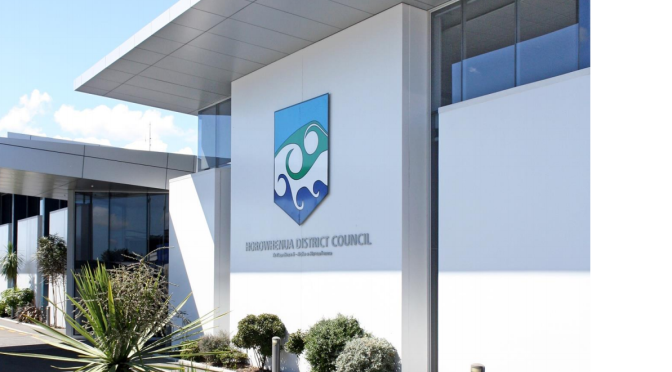
Horowhenua Council considers selling off large amounts of Council property by way of public private partnerships
EWR Note:
Public Private Partnerships “…the players with the most money control the partnership…. the bottom line of Public Private Partnerships is to take control of the assets of Government”… Joan Veon
Watch Joan Veon’s video explaining this at the link.
From the NZ Herald
Horowhenua District Council is preparing to possibly sell off large amounts of council property or shift it into an independent trust.
A proposed work programme has a project to be developed before July to sell property or transfer it to a yet-to-be-established economic development trust. The trust would be independent of HDC.
The work programme comes as part of an HDC report released last week that proposes establishing the trust. The trust’s creation is likely to be ratified by HDC next week
According to the report, from HDC’s economic development manager Shanon Grainger, HDC should only hold property required to deliver core services.
That report follows another from Mr Grainger in July saying HDC owned 40 percent too much property and should look to sell.
Excess property would fund the trust, HDC has said. It saw the trust as a move to boost the district’s economic performance.
The trust would look at setting up public private partnerships using private money and HDC assets transferred into the trust.
Last week’s report said the trust would invest mostly in areas where the market had not. It gave a truck park facility as an example.
READ MORE
RELATED:
The Horowhenua DC’s Economic Development Committee that Looks Not Unlike Insider Trading

DoC thugs attack senior citizens
from fishingandoutdoorsnewspaper
“The sinister side of DoC is starting to emerge as it appears DoC were caught off guard while illegally storing and handling 1080 poison …
(see our previous post on this also)
READ MORE

The hypocrisy of the British Royals’ call for depopulation in the name of conservation
In a recent post citing NaturalNews’ article on Prince William’s call for urgent depopulation of Africa, William had expressed that:
“the population growth in Africa is putting a tremendous amount of pressure on the natural world and driving many species of animals to extinction.”
Not widely known however, is the fact that the Royal family are avid hunters of animals, including both Africa’s and their own, to an extraordinarily extent.
EnvirowatchRangitikei
This article is from the mirror.uk
Prince Philip proudly poses with tiger he slaughtered 50 years before Cecil the Lion outrage

The Duke of Edinburgh also killed a crocodile and six mountain sheep on the three-day hunt in 1961 despite protests from British and Indian politicians
At the start of the 20th century India was home to 100,000 tigers, but numbers crashed in the years following independence in 1947.
Over the past 30 years Prince Philip has killed many kinds of animals.
Figures compiled from press reports by the anti-bloodsports lobby suggest that in Britain alone he has shot at least 30,000 pheasants.
He has also killed deer, rabbit, hare, wild duck, snipe, woodcock, teal, pigeon and partridge in the UK. Prince Philip used to shoot wild boar in Germany.
Dressed in a safari suit, the Duke of Edinburgh stands next to the 8ft tiger he shot on a three-day hunt.
The Queen looks rather less pleased with herself as she poses with the Maharajah of Jaipur, family and friends in Ranthambhore, India in 1961.
Prince Philip had gone ahead with the hunt, despite protests from British and Indian politicians.
The Duke also shot a crocodile and six mountain sheep on that trip.
At the start of the 20th century India was home to 100,000 tigers, but numbers crashed in the years following independence in 1947.
Over the past 30 years Prince Philip has killed many kinds of animals.
Figures compiled from press reports by the anti-bloodsports lobby suggest that in Britain alone he has shot at least 30,000 pheasants.
He has also killed deer, rabbit, hare, wild duck, snipe, woodcock, teal, pigeon and partridge in the UK. He and Prince Charles are said to have killed 50 in one day.
READ MORE
http://www.mirror.co.uk/news/uk-news/prince-philip-proudly-poses-tiger-6174056

Public Private Partnerships are an arm of the world’s growing corporatocracy & their bottom line is to take control of the assets of Government … Joan Veon
This must watch 15 min video is from the late Joan Veon who provides valuable insight into the workings we are seeing today in our Local Councils and Government as they continue to sell off our country’s assets. In a less visible way than outright sales because they know the public would be outraged if they knew what was really going on. Partnerships that look benign enough however they are the thin end of the proverbial wedge that is prising away your nation’s valuable assets, gone never to be returned. EnvirowatchRangitikei
Published on Aug 29, 2012

Top 5 reasons the USA Medical Industrial Complex does NOT want you to understand the importance of Vitamin D!
Vitamin D makes many conventional drugs and treatments obsolete. Very few people know this or find proper organic Vitamin D levels their body wants and needs. You CAN actually increase your life span with Vitamin D.
Plenty of people who eat organic food their whole lives live well past 100 years young, and they still have their minds and bodies fully functional, not ridden with cancer or Alzheimer’s – which are both preventable diseases.
Letting the truth reach the masses is the goal here. Some people are actually afraid of supplementing because certain MDs will scare them off of nutrition as medicine. This is sickening and ridiculous, but AMA enforced for nearly 100 years now.
READ MORE (at the link, follow the arrows)

Seattle Plans to Erect Miles of Razor-Topped Fencing To Prevent Homeless From Camping

By Claire Bernish, The Mind Unleashed
Seattle, the city with the dubious distinction of the nation’s third largest population of homeless people, plans to fight that fire of a crisis with gasoline, allotting more than $1.1 million — not toward services, shelters, and programs to help people find shelter — but to erect miles of razor-topped fencing to block underpasses, highway access, and other areas commonly used as transitory encampments.
View original post 828 more words

You must be logged in to post a comment.