

Since the tragic landslip at Mt Maunganui some folk have been blaming iwi for the tree felling and possible cause of the subsequent slip. Iwi however are simply partnering (as invited) with councils in implementing a UN biodiversity plan NZ signed up to in 2022. (Agenda 2030) The plan intends for the elimination of all non natives including animals. (Be sure to read Jenese James’ article, last link).
Continue reading Why Councils are Felling Non-Native TreesTag Archives: Trees

About plant diseases & how to control them (Wally Richards)
Plant diseases appear when a plant is lacking in one or more elements or the plant is in stress for what ever reason.
Normally we spray a fungicide to prevent or control a plant disease which sits on the surface of the leaves and branches.
Dependent on the disease we use a copper fungicide or a sulphur fungicide alternatively the compound potassium permanganate and in some cases a combination of two or the whole three sprayed together.
It some diseases such as curly leaf on stone fruit trees (nectarine & peach) we apply a fungicide copper every 7 to 10 days; or again after rain, if we have not used Raingard in the spray.
With curly leaf in stone fruit the disease often strikes when it rains because the spores are splashed up from the soil below but if the rain has washed off the copper fungicide then there is no protection.
Curly leaf in stone fruit is a difficult disease to prevent and dependent on how bad the leaves are damaged means a loss of some or even all the crop.
In severe cases the tree may die also.
Now this is interesting and extracted from an article I received recently…
People misunderstand the use of copper as a fungicide. They drench the plant and often create excesses of this mineral in the soil.
75% of the copper response comes from within the plant, rather than on the leaf.
(Dr Don Huber)
Dr. Don Huber is a retired professor of plant pathology from Purdue University in Indiana, USA.
He has over 50 years of experience in researching plant diseases and soil-borne pathogens, as well as their relationships with microbial ecology, nutrient availability, and crop productivity.
Dr. Huber has published numerous peer-reviewed articles and book chapters on these topics and has received many awards for his contributions to the field of plant pathology.
He is also a recognized authority on the potential risks associated with genetically modified organisms (GMOs) and the use of glyphosate herbicides.
However, excessive use of copper-based fungicides can lead to copper accumulation in soil and water, which can have negative environmental impacts and they are proving to be less effective than some alternative forms of copper. As a result, there has been increasing interest in the use of copper nutrition products as an alternative approach to controlling plant diseases.
Comparative studies between Copper nutritional products and Copper Fungicide have consistently shown that the preventive and curative efficacy of the former is often significantly higher, and in the worst case, similar to that of the Copper Fungicide.
Copper Nutritional products demonstrated exceptional performance in terms of their long-lasting efficacy, compared to Copper Fungicides.
They maintained significant levels of control for up to 90 days, whereas Copper Fungicides showed a notable decline in control after just 7-14 days.
The difference in their mode of action explains this contrast; Copper Nutritional products are systemic and designed to increase the plant’s copper levels, whereas Copper Fungicides are contact-based and remain mostly on the leaf surface, making them susceptible to weather-induced degradation and physical removal.
Copper nutrition products work by providing plants with a source of copper, which is an essential micro nutrient required for plant growth and development.
Copper helps to activate enzymes involved in several physiological processes in plants, including photosynthesis and respiration. Additionally, copper has been shown to have anti-fungal properties, which makes it effective in controlling plant diseases.
Studies have shown that copper can enhance plant immune responses by regulating gene expression and enzyme activity involved in defense mechanisms.
For example, a study by R. Mehari et al. (2015) in the journal Plant Physiology and Biochemistry found that copper enhanced the activity of enzymes involved in the synthesis of lignin, which is a component of plant cell walls that plays a crucial role in plant defense against pathogens.
I am pleased to say that we now have a copper nutrient which I have called Wallys Super Copper Nutrient and is available from our mail order web site in 250 ml bottles.
Or you can ask your local garden centre to order the product in for you.
I was told of a trial that was done on a stone fruit tree to prevent curly leaf.
Only one part of the tree was treated and that part had no curly leaf and even the following season still no curly leaf where the rest of the tree suffered from the disease.
Used at the rate of 10 mils per litre for initial application and then at 5mils per litre of water for maintenance.
If you have a stone fruit tree that suffers from curly leaf then spray the tree now before spring movement at 10mils over the branches where the leaf buds are. Coverage should be as good as able all over the tree.
When there is a show of leaves later on spray again at the 5 mil rate.
If the tree is flowering only spray the foliage at the end of the day when pollination has finished for the day.
Another spray of foliage at 5 mils per litre of water can be done after fruit has set.
Trials that I have read about diseases on other plants have also being very good at controlling various disease problems.
Thus where you have problem diseases such as on roses and other plants this copper nutrient maybe the answer you them also.
Dr. Don Huber also commented that the only reason copper fungicides helped in control of various diseases is that some of the copper would get into the plant which would then help the plant as written above.
But applying Wallys Super Copper Nutrient cuts to the chase reducing or eliminating the need for copper fungicide sprays.
Order from www.0800466464.co.nz link at plant diseases
Phone 0800 466464
Garden Pages and News at www.gardenews.co.nz
Shar Pei pages at www.sharpei.co.nz
Mail Order products at www.0800466464.co.nz
New Zealand Bill of Rights Act 1990. Part II of the Act covers a broad range of Civil and Political Rights. As part of the right to life and the security of the person, the Act guarantees everyone:
1The right not to be deprived of life except in accordance with fundamental justice (Section 8)
2The right not to be subjected to torture or to cruel, degrading, or disproportionately severe treatment or punishment (Section 9)
3The right not to be subjected to medical or scientific experimentation without consent (Section 10)
4The right to refuse to undergo any medical treatment (Section 11)
Furthermore, the New Zealand Bill of Rights Act 1990 guarantees everyone: Freedom of Thought, Conscience, and Religion.
This includes the right to freedom of thought, conscience, religion, and belief,
INCLUDING THE RIGHT TO ADOPT AND HOLD OPINIONS WITHOUT INTERFERENCE (Section 1)

WET FEET IN THE GARDEN (Wally Richards)
With some areas experiencing a lot of rain lately it is a good time to look at how to prevent damage and losses in your gardens.
There is a range of plants we call bog plants and they just love living in wet soil and even in water which makes many of them suitable to use in aquariums for your fish to enjoy.
But even in an aquarium oxygen is needed so we place an air stone connected to an air pump to bubble away under water and aerate the water.
If we did not do this the oxygen in the water would be used up and then the fish would suffocate and likely even the plants would die as the water became stagnant.
By the way if you want to remove the chlorine from a bucket of chlorinated water simply put an air stone connected to an air pump and let it bubble away and within about 12 hours or less the water will be free of the poisonous chlorine.
Very wet soil loses the oxygen and that becomes deadly for the roots of plants.
Some plants are fairly hardy against wet feet where others soon have root rot happen and when enough roots are damaged the plant dies.
It does not matter if some of the roots are in very wet soil or water as long as there are more roots that are above the wet area.
I can give a good example of this as one place I lived in years ago would be a lake of water in the back section during wet winters.
Many attempts of growing ornamentals were hopeless so I planted a twisted willow in the corner which was the wettest area and it very quickly grew.
Then I also planted a couple of cabbage trees both of which took off and as these and the willow grew they helped greatly in taking up the surface water.
After a season I was able to plant a few other native plants that were able to survive as the area was less wet.
My citrus were a problem so I cut some 200 litre drums in half, drilled some large 4-5cm holes in the sides about 10cm above the base.
This meant in dry times there would be a nice reservoir of water to keep the citrus happy.
I then dug a hole so the bottom third of the drum would be buried in the surrounding soil.
This made them stable in windy times when the citrus gained some height.
It also allowed the roots later on to venture out of the drum and into the surrounding soil.
The result of this was that in the middle of winter when the back yard was a a lake of water the citrus were happy as Larry.
When I came to move to another place I lifted the drums (with a lot of effort) and was surprised at the large roots that had grown out of the holes on the sides.
As a good part of the root system was above water the citrus was not affected by wet feet.
The alternative to this would have been to make mounds about half a metre tall and plant citrus trees in these.
Years later after another move to where we are now in Marton the same citrus trees are happily living in the same drums sitting either on soil in the lawn or on concrete.
Of course every few years I need to take them out of the containers and root prune them.
That would not be needed if you had the roots venturing out into surrounding soil.
The very worst thing that you can have in wet winters is any type of mulch around any plants that don’t like wet feet.
Mulches are great in dry summers to conserve soil moisture but deadly in winter as the soil can not breathe and too much wetness is retained.
I remember a few years ago having a phone call from a lady who wanted to know why her very expensive ornamental trees were dying.
She planted then in the spring and in summer she had a pile of old carpet after re-carpeting the home.
So she put that on the soil under her precious ornamentals to suppress weeds and retain moisture.
Worked a treat till the wet times came and the soil became saturated and the expensive plants started to die.
I told her that she had to quickly do two things which was firstly remove the carpets and then spray the foliage with Wallys PerKfection at the high rate 9 mils per litre of water and then at 4mils per litre a month later and repeat once a month till into spring making a total of 6, once a month sprays.
Perkfection assists in recovery from/or prevention of, the following problems, Black spot, Downy Mildew, Phytophthora Root rot, Canker, heart rot, damping off, crown rot, leaf blight, silver leaf, late blight, collar rot, pink rot, brown rot, Armillaria, and gummy stem rot.
It is magic on Buxus for the dreaded Buxus disease that kills the plants.
It has brought back Buxus from near dead to their formal glory and after which I would suggest a maintenance spray bi-monthly at 5 mils per litre of water.
Perkfection is systemic so you dont need full coverage of foliage just a good amount of it.
Another way of improving drainage is like we used to do in days gone by when gardeners would in winter dig their vegetable garden over, mounding up the clods as they went leaving a ditch around the garden about one and a half spade deep.
They would then sprinkle garden lime over the clods for the frosts to take in and break the clods down.
In spring when it was time to plant, the clods would break up into a fine tilth with little effort using a rake.
Now days we dont dig but the idea of a trench around the garden or around a citrus tree just about 12 cm out from the drip line is very practical.
This allows excess water to drain into the ditch were sunlight and wind will evaporate it quickly.
An interesting thing happens sometimes where a water sensitive plant like a citrus, years old suddenly one season shows signs of wet feet.
The reason is often a result of a change of direction with surface water flows which maybe caused by some construction or even a new concrete path or driveway.
The previous flow place is changed to where the citrus is growing and the soil is much wetter than previously.
Remember to frost protect sensitive plants with spray on frost protection, Vaporgard.
I read an interesting article on the Net which you may also find interesting; whether its true or not is up to you to determine.
This weeks special is Perkfection 250ml bottle $18.00 or a 1litre container $38.00 free shipping on either size, no discount on either size. Shipping to your home no PO Boxes or outer Islands like Stewart or Waiheke
Offer ends next Sunday.
Problems ring me at 0800 466464
Email wallyjr@gardenews.co.nz
Web site www.gardenews.co.nz
Phone 0800 466464
Garden Pages and News at www.gardenews.co.nz
Shar Pei pages at www.sharpei.co.nz
Mail Order products at www.0800466464.co.nz
New Zealand Bill of Rights Act 1990. Part II of the Act covers a broad range of Civil and Political Rights. As part of the right to life and the security of the person, the Act guarantees everyone:
1The right not to be deprived of life except in accordance with fundamental justice (Section 8)
2The right not to be subjected to torture or to cruel, degrading, or disproportionately severe treatment or punishment (Section 9)
3The right not to be subjected to medical or scientific experimentation without consent (Section 10)
4The right to refuse to undergo any medical treatment (Section 11)
Furthermore, the New Zealand Bill of Rights Act 1990 guarantees everyone: Freedom of Thought, Conscience, and Religion.
This includes the right to freedom of thought, conscience, religion, and belief,
INCLUDING THE RIGHT TO ADOPT AND HOLD OPINIONS WITHOUT INTERFERENCE (Section 1)
HOUSEHOLD ITEMS THAT ARE USEFUL IN THE GARDEN (Wally Richards)
There are a number of items that can be used in your garden to the benefit of plants.
For instance a year ago I wrote the article about using Apple Cider Vinegar on fruit trees to increase their performance and to reduce disease problems.
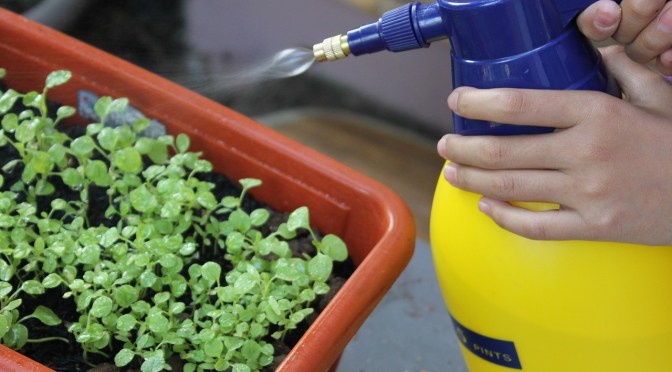
The formula is 250mil Apple Cider Vinegar (ACV) mixed with 5 litres water in a 5 litre sprayer.
Spray the mix in the evening when the sun has just gone off your trees or plants, so the sun isn’t heating/burning leaves through the liquid spray droplets on them, and there’s time for the spray to dry before nightfall..
Spray the whole tree, vine or plant.. under and over leaves, the trunk, branches, twigs, fruit everything..
This will also feed the tree through the leaves (when they are there for deciduous trees) as a foliage food.
Baking Soda applied at a tablespoon per litre of water with Raingard added is good to prevent some fungus diseases such as black spot. (Don’t use on calcium sensitive plants)
Baking Soda can be sprayed over the foliage of oxalis to dehydrate the leaves. Oxalis to sensitive to calcium.
It does not affect the bulbs below but regular spraying of baking soda will keep the garden free of the oxalis foliage without affecting other plants.
To deal to the bulbs in the soil, mix Wallys Super Compost Accelerator at 200 grams per litre of water and water liberally over the foliage down into the soil to compost the bulb and bulblets.
Then there is table salt which can be sprinkled on weeds to kill them which is ideal on pavers and where you dont have other plants growing.
Cooking oils and vinegar can also be sprayed onto weeds in full sun light to dehydrate the foliage and kill annual weeds.
Condys Crystals, (potassium permanganate) a quarter tea spoon per litre of water with or without Raingard to control leaf diseases such as black spot, rust and curly leaf.
Sunlight Bar Soap (big yellow bar) lathered up in water to spray over aphids and soft body insects to kill them. (The fatty acids breaks down their soft bodies)
Dish washing liquid lathered up in warm water to break surface tension to allow water to penetrate.
Aspirin: in plants, just like in mammals, salicylic acid helps them cope with stress and disease. By adding Aspirin to the water, gardeners are hoping to help their plants cope with problems and grow faster and stronger.
The acid is effective on plants because many plants produce it themselves in tiny amounts. Plants produce this acid when stressed or fighting disease. Feeding them a greater supply of the acid proves beneficial. Giving the plant too much aspirin can have a negative effect as it can burn its leaves.
Dissolve 250mg to 500mg of aspirin in 4.5 liters of non chlorinated water and spray plants two to three times per month.
Similarly soak the leaves of willow trees in water for a week or more and use that as a spray as you would the aspirin. Willow water is ideal also for putting cuttings in to help them form roots quicker.
All great uses and here is the most interesting one of all:
Hydrogen peroxide 3%.
I read about this some years ago and it was again brought to my attention recently.
Hydrogen peroxide, well known as an ingredient in disinfectant products, is now also approved for controlling microbial pests on crops growing indoors and outdoors, and on certain crops after harvest.
This active ingredient prevents and controls bacteria and fungi that cause serious plant diseases.
Adding hydrogen peroxide to water promotes better growth in plants and boosts roots ability to absorb nutrients from the soil.
Diluted 3% peroxide adds needed aeration to the soil of plants and helps control fungus in the soil.
It acts as an insect pest deterrent and kills their eggs.
Ideal on brassica leaves for white butterfly eggs this time of the year.
I used 3% Hydrogen peroxide with Magic Botanic Liquid added on tomato and chili plants in my glasshouse and there was reduced actively within a couple of days.
A spray every 2-3 days is ideal for control or once a week or 2 weekly as a preventive.
I see on the Internet that the 3% should be further reduced with water such as 1:1 so if using 3% strength it would pay to do a test spray on a small area of foliage on each type of plant and see if there was any adverse reactions before using at 3% over whole crop or plant.
Ideal this time of the year to reduce pest number going into the winter.
I see the best use is in glasshouses where the product does not get washed away with rain.
Use out doors over and under foliage and you may need to reapply after rain.
Happy Gardening.
For your information I have the 3% hydrogen peroxide available to order thought our mail order web site at www.0800466464.co.nz
It is in the Pest Control section. (Listing will be on the web site with pictures later on today (Sunday 19th April.)
We have a one litre Trigger Spray Bottle Ready to Use with 3% Hydrogen Peroxide and Magic Botanic Liquid spray for $12.50
A one litre refill for the above for $8.00
and a 5 litre ready to use for $40.00
Of course you being subscribed to these Newsletters have a 10% discount off the above as with most of our gardening products.
If you have not used the Mail Order web site previously please tell me when I phone you to sort out payment method and freight that you have 10% off
Regards
Wally
Phone 0800 466464
Garden Pages and News at www.gardenews.co.nz
Shar Pei pages at www.sharpei.co.nz
Mail Order products at www.0800466464.co.nz
New Zealand Bill of Rights Act 1990. Part II of the Act covers a broad range of Civil and Political Rights. As part of the right to life and the security of the person, the Act guarantees everyone:
1The right not to be deprived of life except in accordance with fundamental justice (Section 8)
2The right not to be subjected to torture or to cruel, degrading, or disproportionately severe treatment or punishment (Section 9)
3The right not to be subjected to medical or scientific experimentation without consent (Section 10)
4The right to refuse to undergo any medical treatment (Section 11)
Furthermore, the New Zealand Bill of Rights Act 1990 guarantees everyone: Freedom of Thought, Conscience, and Religion.
This includes the right to freedom of thought, conscience, religion, and belief,
INCLUDING THE RIGHT TO ADOPT AND HOLD OPINIONS WITHOUT INTERFERENCE (Section 1)

December Gardening (Wally Richards)
This week I received two emails which maybe of interest to some gardeners. The first was from a gardening couple, which read:
Hi Wally, Your advice and weekly email’s worked great. I got first in the Veggie Section and my wife won in the Rose categories. Jerry.
What can I say? If you use natural products that enhance the soil, giving the plants all the possible minerals that they may need to be healthy and stop using chemicals that are harmful to both soil, plants and yourself.
Over the years I have received a few similar stories about how gardeners have turned their gardens into award winners by simply observing and using the above information.
The second email is of concern this time of the year and it read;
Hi Wally, I have a problem with a brown beetle infestation. I was finding the leaves of my newly planted plum trees and almond tree were getting stripped bare almost. I wasn’t sure what it was but think the culprit is this brown beetle.
I have since found hundreds (literally) in one of my raised beds and quite a few wherever I have placed the garden mix I bought a month ago.
Is there something I can do to get rid of these beasties? They are now attacking my raspberry plants and feijoa trees. Because they are in the soil – and potentially quite deep (some of them were 20cm deep) – I’m not sure how to fight them. Please help!
The writer sent me an amazing photograph which shows hundreds of these brown beetles drowning in a container of water, along with photos of her plants badly damaged.
The beetle is the Grass Grub beetle and this is the time of the year that they emerge from pupating deep in the soil to feast on the foliage of a number of plants, mate and lay eggs back in lawns for future generations.
In my first book, Wally’s Down to Earth Gardening Guide, I suggest a trap to aid control of these pests.
Here is an extract from the book:
‘Grass grub adults emerge in October, and are active until about mid-December, depending on weather conditions and exactly where they are in New Zealand. The cooler the temperature, the later they emerge.
The adults will start to emerge in mild conditions, when the soil temperature reaches about 10 degrees they then mate, fly, eat and lay eggs in the short space of time between dusk and early evening.
As they tend to fly towards light, you are most likely to know they’re there when the flying beetles hit your lighted window panes.
This very attraction for the light has become one of our best weapons in controlling the pest in its adult stage. You can set up a grass grub beetle trap by placing a trough, such as the one used when wall-papering, directly underneath a window near a grassed area.
Fill the trough with water to about two-thirds of its capacity, then place a film of kerosene on top of the water. Put a bright light in the window, the beetles fly towards the lit window, hit the glass and fall into the trough.
The kerosene acts as a trap, preventing the fallen beetles from climbing out.
You can extend this method to areas away from the house by using a glass tank, such as might be used for an aquarium.
Place the empty tank into a tray containing several inches of water (and the kerosene), and position a light inside the glass tank.
By adding a sheet of ply or something similar over the top of the tank, you will ensure that the light shines only through the sides of the tank above the waiting water and kerosene.
It is better to use a dome-shaped battery-powered light rather than an ordinary torch for this job as the bigger light makes the trap more effective.
If the tray and tank are raised off the ground and placed on something like a table, you will get an even better result.
However you set up your beetle trap, this is a very good method to dispose of the pests. Simply get rid of all the beetles caught the next morning.
Run this system (call it Wally’s Grass Grub Beetle Catcher, if you like) from just before dusk to about 2 or 3 hours after sunset.’
Spraying the plants that are been attacked with Wallys Super Neem Tree Oil will help to also control the populations.
This should be done late in the day after the sun is off the plants. When a beetle chews on a leaf they get some Neem into their gut and that shuts off their ability to eat.
Problem arises, if there are hundreds of beetles then there needs to be hundreds of bites.
With the likelihood of more beetles emerging every day it is an on going battle over the next month or two.
Another way is to go outside just after dark with a torch and check your plants for beetles.
If you see a good number on any plant then a spray at that time with Wallys Super Neem Tree Oil and Wallys Super Pyrethrum added, sprayed to hit the beetles rather than the plant itself.
Another very good natural spray to use late in the day is a solution of Wallys 3 in 1 for Lawns.
This is a combination of Eucalyptus oil and Tea Tree oil, nice to use and deadly on pests.
If you repeat your nightly spraying and use a light trap also, then you will make a big dent in the grass grub beetle populations and thus suffer less damage to your plants and lawns.
The season is still poor weather wise which helps keep insect populations lower than normal but care should be taken with your potatoes and tomatoes by placing Neem Tree Granules on the soil in the root zone and spraying the plants occasionally with Wallys Super Neem tree Oil.
Visit your local garden center to obtain some good ideas for Xmas Presents.
Phone 0800 466464
Garden Pages and News at www.gardenews.co.nz
Shar Pei pages at www.sharpei.co.nz
Mail Order products at www.0800466464.co.nz
New Zealand Bill of Rights Act 1990. Part II of the Act covers a broad range of Civil and Political Rights. As part of the right to life and the security of the person, the Act guarantees everyone:
1 The right not to be deprived of life except in accordance with fundamental justice (Section 8)
2 The right not to be subjected to torture or to cruel, degrading, or disproportionately severe treatment or punishment (Section 9)
3 The right not to be subjected to medical or scientific experimentation without consent (Section 10)
4 The right to refuse to undergo any medical treatment (Section 11)
Furthermore, the New Zealand Bill of Rights Act 1990 guarantees everyone: Freedom of Thought, Conscience, and Religion.
This includes the right to freedom of thought, conscience, religion, and belief,
INCLUDING THE RIGHT TO ADOPT AND HOLD OPINIONS WITHOUT INTERFERENCE (Section 1)

A Biologist Believes That Trees Speak A Language We Can Learn
From QZ.com via wakeupkiwi.com
I’m in a redwood forest in Santa Cruz, California, taking dictation for the trees outside my cabin. They speak constantly, even if quietly, communicating above – and underground using sound, scents, signals, and vibes.
They’re naturally networking, connected with everything that exists, including you.
Related: The Health of Trees and The Natural World Is Closely Linked To Our Own State of Health
Biologists, ecologists, foresters, and naturalists increasingly argue that trees speak, and that humans can learn to hear this language.
Many people struggle with this concept because they can’t perceive that trees are interconnected, argues biologist George David Haskell in his 2017 book The Songs of Trees. Connection in a network, Haskell says, necessitates communication and breeds languages; understanding that nature is a network is the first step in hearing trees talk.
For the average global citizen, living far from the forest, that probably seems abstract to the point of absurdity. Haskell points readers to the Amazon rainforest in Ecuador for practical guidance.
To the Waorani people living there, nature’s networked character and the idea of communication among all living things seems obvious. In fact, the relationships between trees and other lifeforms are reflected in Waorani language.
In Waorani, things are described not only by their general type, but also by the other beings surrounding them. So, for example, any one ceibo tree isn’t a “ceibo tree” but is “the ivy-wrapped ceibo,” and another is “the mossy ceibo with black mushrooms.”
READ AT THE LINK
http://www.wakeupkiwi.com/news-articles-94.shtml#Trees
Image by jplenio @ pixabay.com
SOLVING GARDENING PROBLEMS (Wally Richards)
A tip that I was given, which I am going to try myself this spring, is in regards to curly leaf in stone fruit such as nectarines and peaches in the spring.
You simply place a quarter a teaspoon of Condys Crystals (potassium permanganate) per litre of warm water with one mil of Raingard and spray the trees and the soil underneath in spring prior to leaf show and every 10 to 14days later for the couple of months when the disease is active..
The lady gardener that told me swears by it for control.
The potassium permanganate is a oxidizing agent that kills fungi, the Raingard prevents the rain washing it off for up to 14 days.
It is during rain that the disease attacks, lifted up onto new leaves by the splashing water.
Potassium permanganate is locked in the film of Raingard which slowly breaks down under UV.
The potassium permanganate is neutralizing the spores of the curly leaf disease as they come in contact.
You will need to spray to keep the newest leaves protected, as well as the existing ones as they grow larger, so depending on growth rate spray every 7 to 14 days.
If you try this method this year please let me know the results.
Another gardener uses the same on their roses with great results starting with a spray in winter after pruning and a 2 weekly spray during the season of the foliage and soil as required.
A lot of gardeners have glasshouses or tunnel houses to extend the growing season of tomatoes and other plants.
Some grow in the soil in the glasshouses where others will grow in containers.
Soil in a glasshouse can harbor diseases or what we call pathogens. These love a chemical/acidic environment where they can thrive.
Beneficial microbes and fungi love a alkaline, chemical free environment so the use of chlorinated tap water, chemical sprays along with herbicides are going to create problems for your tomatoes and other plants.
Chemical sterilizing the soil with Basamid is no longer an option since the chemical was banned.
I have in the past suggested potassium permanganate with salt as a soil drench but this takes out both the beneficial and the bad.
Some gardeners dig out the soil and replace it with new soil which is not only a lot of hard work but you cannot be sure the new soil will not have its own problems especially weed seeds.
A new product called Terracin is the natural way to clean up soil diseases.
Mix the Terracin at 2ml per litre of water and apply to one SqM of moist soil.
Or mix at 20ml to 10 litre to water over 10 SqM of moist soil.
Terracin uses a combination of a Bacillus amyloliquefaciens BS-1b, a beneficial soil microbe and the enzymes, bacteriocins, secondary Metabolites & signal molecules from the fermentation of Enteroccocus faecium to suppress a broad range of fungal pathogens.
During the next 3 weeks keep the soil moist (not wet) with non-chlorinated water.
After 3 weeks we need to feed and build the populations of beneficial microbes so we apply Mycorrcin to feed them.
Once you have done this its a matter of not using chemicals in the glasshouse including chlorinated water.
A Special filter can be attached to your hose to remove the chlorine which is the same as what I have been using for several years.
The next problem in a glasshouse is the sheltered environment which is very good for insect pests to breed.
During the growing season you have to keep them in control with the following: sticky yellow whitefly traps, Neem Tree Granules, Wallys Neem Tree Oil and Wallys Super Pyrethrum so they will not get completely out of hand.
Fumigating the glasshouse at the end of the season to kill all the pests that are harboring over in cracks and places means a clean start in the new season.
Wallys Sulphur Powder is available for this purpose.
This is ideal for fumigating a glasshouse in winter when there are no crops growing. (May dehydrate and kill plants so empty the house first.)
If you have plants that you are going to pull out anyway then leave them in the house when you burn the sulphur which will kill the pests on them rather than take them outside to affect your other gardens.
To use: Close all vents in the glasshouse.
Place an amount of sulphur onto a steel hearth shovel and light. It is hard to light unless you have a very strong flame.
You can aid this by putting a little mentholated spirits on part of the sulphur and light that.
Once it starts burning it is hard to stop.
Place the burning sulphur in the middle of the house and leave immediately.
Close the door and let the sulphur fumes do their job. Leave house closed for a few days.
The amount of sulphur burnt will depend on size of the glasshouse.
For a house 2.5m x 2.5 m burn about 50 grams of sulphur.
I did this last winter after cleaning all the plants out of my glass houses and once outside it was a sight to see so many whitefly and adult psyllids beating up against the glass trying to escape.
Likely burning sulphur safely in out buildings for cluster flies in winter would be a good way to control them also.
Hen houses for mites when the hens are locked outside then later air the house and dust Sulphur powder over the perches and floor.
You can make a big difference to your soil, gardens and plants by using Bio Marinus™.
Bio Marinus™ is manufactured by the enzymatic hydrolysis of fish offal, blended with humate, seaweed and biology including Bacillus subtilis, Trichoderma, mycorrhizae fungi etc.
Designed to provide a high quality, cost effective fertiliser.
At only $15.00 a one litre container that includes a range of beneficial microbes…. it is high value at low cost.
Biologically active soils have the ability to retain moisture and release nutrients ensuring greater production, faster rotation and more rapid recovery from stress. To build a healthy biological soil we need products that can feed living organisms.
Biological fertilisers increase nutrient availability and feed important soil organisms, such as earthworms and microorganisms (fungi and bacteria) – all essential for plant and soil health.
Soil health and soil fertility requires much more than NPK fertiliser.
Without the right biology, plants and animals cannot reach their full potential. Biology is essential for the recycling of nutrients and the fixing of atmospheric nitrogen.
Drench your soils now with this great product and see the difference in the health of your gardens this spring.
You can Super Charge Bio Marinus™ by adding some molasses or unrefined sugar to your soil drench mix.
This feeds the microbes and explodes their populations. Caution if adding do not store in a sealed container as the populations will balloon and even explode a plastic container.
Add the molasses dissolved in some hot non chlorinated water then add the Bio Marinus™ and use immediately.
If you have Magic Botanic Liquid (MBL) that can also be added to the brew for even greater results. END
For those that are interested there are BITS ( Items they likely don’t want you to think about)..just email me and ask for them
Phone 0800 466464
Garden Pages and News at www.gardenews.co.nz
Shar Pei pages at www.sharpei.co.nz
Mail Order products at www.0800466464.co.nz
Photo: pixabay.com

APPLE CIDER VINEGAR FOR FUNGAL DISEASES IN THE GARDEN (WALLY RICHARDS)
A reader and keen gardener sent me an email recently about using apple cider vinegar in your garden to prevent and control fungus diseases.
Someone shared it with him and so now I will share it will all my readers.
“Hi Everyone.
I use Apple Cider Vinegar to keep fungal diseases away, including brown rot, curly leaf, black spot, powdery mildew, bladder plum, sooty mould, scab, allium rust (for garlic, onions, shallots), etc..
For fruit trees, vines, and plants..Vegetables and herbs, including garlic..Also for roses and other ornamentals
I’ve been doing this since 2009 for my stone and pip fruit trees, berry and grape vines, citrus, garlic, shallot and vegetable plants throughout my large Garden.. and including for roses..
Vinegar kills mould – which fungal species are.
It also prevents mould growing back in places that are prone to having fungal problems, so helps avoid ongoing fungal problems.
I use 250mil Apple Cider Vinegar (ACV) mixed with 5 litres water in a 5 litre sprayer I keep just for ACV..
I spray the mix when fruit tree buds are only just beginning to show in Spring as small bumps.
I don’t spray when blossoms are showing, leaving them to bees, bumblebees and other little critters for pollination..
Once blossoms have finished, I spray fortnightly on the fruit trees and plants which are prone to fungal problems.. ie, brown rot on stone fruit, sooty mould on citrus,
black spot on roses, rust on aliums, etc.
I stop once all the fruit on each tree are harvested, ie: Billington Plums finish in early January here in the Eastern Bay of Plenty, so I stop then..
Boysenberries finish late January here, stopping then.. Niagara Grapes, finish mid February here, stopping then..
Omega Plums finish late February here, stopping then.
Spray the mix in the evening when the sun has just gone off your trees or plants, so the sun isn’t heating/burning leaves through the liquid spray droplets on them, and there’s time for the spray to dry before nightfall..
Spray the whole tree, vine or plant.. under and over leaves, the trunk, branches, twigs, fruit everything..
This will also feed the tree through the leaves (when they are there for deciduous trees) as a foliage food.
I do this for all my fruit trees, vines and plants.. stone and pip fruit, citrus, grapes, berries, including strawberries, plus for garlic, shallots, onions, courgettes, cucumbers, pumpkins, tomatoes, roses, etc..
No need for gloves or coverings as it’s good for us too..
I keep a 5 litre sprayer filled with the ACV and water mix, so I can pick it up, pump it to build pressure, and I’m ready to spray this mixture that is good for my Garden..
(Thats a good tip as you can leave in the sprayer what is not used for next time and if you are going to follow this advise, using apple cider vinegar a separate sprayer for this purpose is a good investment)
The ACV mix works as a foliage food through the leaves.. with that feeding them, plus fungal problems not being an issue, the trees, vines and plants grow strongly..
a healthy, strong tree or plant will repel disease.. maybe repel insects like whitefly and vine hoppers, etc, etc, too..
It’s interesting.. I’m continuing to observe.. This is why I use ACV throughout my Garden, and have continued since trialing with it in 2009..
Decided to try ACV due to the goodness of the apples that it’s made with, had excellent results and have continued since for brown rot,
black spot, curly leaf, allium rust, sooty mould, powdery mildew, etc… all the fungal problems that occur often in our NZ gardens..
When my trees were producing well, I contacted the head tutor of the horticulture course at the local polytech, asking if I could swap a box of freshly picked Golden Queen Peaches in exchange for him showing me how to Summer prune. He also has a 6 acre home orchard.
I showed him around my garden.. he kept saying, how have you got your trees so healthy.
I told him about using the ACV mix and why.
As he left, he picked a Golden Queen Peach out of the box, bit into it, said, now that’s how a Golden Queen should taste and I’m off home to start using Apple Cider Vinegar throughout my garden.
Also – ACV for cats: I add 1/4 teaspoon of ACV to our cats food each morning – have done this since March 2019 – no fleas, and they have shiny soft fur..
None of the awful monthly flea treatment that distressed them every time and sent them running from the house to try to get away from it. ” END
Sometimes it is the simple things that we forget about or more likely do not know about and can be very surprised when found to work.
I have now added a 2 litre Apple Cider Vinegar to our mail order web site in the Disease control section so that when you are ordering your other garden bits you can add in this well priced product.
(No point in paying for the expensive stuff as this will do the job.)
Happy Gardening…..
Not wanting to be a Doom sayer but warnings and preparations can save a lot of grief in time to come.
A link that maybe of interest.. https://usawatchdog.com/going-to-get-bad-really-bad-david-morgan/
Phone 0800 466464
Garden Pages and News at www.gardenews.co.nz
Shar Pei pages at www.sharpei.co.nz
Mail Order products at www.0800466464.co.nz

Other headlines
Peru: young doctor dead three weeks after Sinopharm COVID-19 “vaccine”
https://thecovidblog.com/2021/03/29/peru-young-doctor-dead-three-weeks-after-sinopharm-covid-19-vaccine/
Texas Doctor Exposes Dangers of COVID-19 Vaccine (bitchute.com)
(NZ) Fears euthanasia training will just be online course
https://www.rnz.co.nz/news/national/439361/fears-euthanasia-training-will-just-be-online-course?fbclid=IwAR2C_bt6WPhaf0vmFRGdu–hVdtw5bzzC_cmN6IiuxifQ354wTgOis8gjMk
Is Bill Gates Internationally Immune From Prosecution? (bitchute.com)
Report: Sports Cheat Philosophy Professor Lives With A Pedophile – Gender Heretics.org
Canal Road tree protesters in court facing trespassing charges | New Zealand Geographic (nzgeo.com)

The REAL reasons for Australia’s drought – what you aren’t being told

185K subscribers
#ArrestScottMorrisonForTreason The Drought and accompanying firestorm currently gripping Australia has been brought about, and is being managed, very deliberately, and the treasonous criminal racketeers masquerading as the Australian Government are using this drought they have purposely manufactured to push Agenda 21 onto the people of Australia. If you are an Australian, or you care about Australia and its people, please share this everywhere and help make this video viral. Please Share – Mirror – Reupload and repost this video Everywhere you can. Please folks, I implore you to help because we are getting hammered here in Australia and this is no joke. The creek out the front has stopped flowing. Ive been in this area 52 years and these creeks have never been dry. Hideous droughts Ive seen, all the grass dead, but I have never seen the creeks stop flowing because they are all spring fed from aquifers below ground. But now they have harvested the water from the flood plains, they are draining the artesian basin and they have felled trees on the mountains and exposed the well springs to the sun and the springs have stopped flowing. And this NOT from “climate change”. This is Deliberate! And its not just in the valley where I live. It is all the creeks around here on both sides of the ranges… the springs have stopped…. the sky is full of smoke outside and the sunlight is red…. it looks surreal… they are killing us, they are killing everything, all the wild life, everything, and they are driving the people into the cities. This is agenda 21 in full swing. http://thecrowhouse.com Support The Crowhouse: https://www.patreon.com/maxigan Bitcoin: 1F6bEEsJHZZhHeT4fmN9iQCwF1Yqu5UZSD S100: Flood Plain Harvesting: https://www.youtube.com/watch?v=i9prJ… “Private” Dams Are Being Built in Australia: https://theconversation.com/dams-are-… Water Corruption Fraud Australian Government: https://www.youtube.com/watch?v=c5B42… Olam Selling Permanent “Water Rights” in Australia for $452.7m: https://www.straitstimes.com/business… NSW Considering Evacuating Up to 90 Towns if They “Run Out of Water”: https://www.thefifthestate.com.au/art… Bringing the Defence Force into Australia’s “Climate-Change Fight”: https://www.aspistrategist.org.au/bri… Scott Morrison Says Australian Drought is a “Necessary Evil”: https://www.dailymail.co.uk/news/arti… LiabilityMate YouTube Channel: https://www.youtube.com/user/liabilit… Section 100: The Commonwealth shall NOT BY ANY LAW, or REGULATION of TRADE or COMMERCE , ABRIDGE THE RIGHT of a STATE or of THE RESIDENTS to the REASONABLE USE OF WATERS of RIVERS for CONSERVATION or IRRIGATION… Share – Mirror – Reupload and repost this video Everywhere

How to Heal with Raw Foods – Featuring a Raw Food, Stage 4 Lung Cancer Survivor
Matt Monarch has a live raw food show in the US that features on Youtube (his channel at the links here) … I just recently discovered him. The info looks fantastic, especially given all the amazing testimonies I see of all the illnesses cured. At his channel just click on ‘videos’ and you will see them all … MS, cancer, and many more. What also appeals is the use of cooked whole foods as well. It is all about detox he says. Note also, in the cancer testimony, there is mention of the healing power of trees! A very interesting & worthwhile watch.
EnvirowatchRangitikei
http://news.therawfoodworld… If you want to know exactly how to heal yourself naturally or if you simply just want to feel healthy with more energy and a higher quality of life, I created a step-by-step video below covering exactly how to do all this. If you watch this 27 minute video, you will have all the information you require at your fingertips, so you can do this for yourself and feel 100% empowered. Don’t worry, this is not an “extreme raw food” approach. This can be achieved by anyone, no matter what you eat.
The next video is a short intro with the woman who healed from Stage 4 lung cancer using Matt’s raw food protocol.
And below is the longer interview with her describing her diagnosis and road to healing

From the Chronicle … Softening the blow … More tree planting for Bonny Glen
Midwest Disposals has added further planting to its plans for the proposed Bonny Glen landfill expansion.
The minor changes are in response to concerns highlighted by commissioners considering the company’s resource consent application.
Midwest has applied for resource consents with Horizons Regional Council and Rangitikei District Council to extend the life and size of the landfill near Marton. More trees will be planted along the edge of the site to mitigate the effects the landfill will have on the landscape and views…. read article HERE
