Tag Archives: tomatoes

More tomato growing tips (Wally Richards)

I wrote a bit about tomato growing recently and since then I have realized there are more things worth knowing to be successful and have a great crop.

There hundreds of different tomato types available world wide, red fruit, black fruit, even green fruit that are green when fully ripe.

Sizes vary from the size of a marble up to fruit weighing over one kilo.

All tomatoes can be brought down to two growth types, Indeterminate which are a vine and they continue to grow and produce tomatoes till winter ends their lives.

Grown in a glasshouse hydroponically I have seen a plant about 10 meters long with the last meter or so flowering and fruiting.

Indeterminate tomatoes need support of stakes or wires to keep them upright otherwise they tend to end up growing along the ground.

Examples would be Early Girl, Big Beef, Grosse Lisse and Money Maker.

Determinate tomato varieties grow to a predetermined height which is about a meter tall.

They need less support and are often referred to as ‘Bush Tomatoes’ as they form a bush about a meter tall and wide.

Laterals can be removed or left. They are not as long lived as the Indeterminate in most types.

Examples would be Russian Red and Scoresby Dwarf.

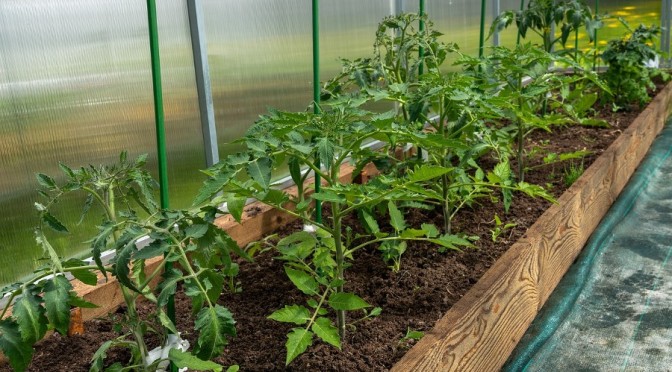
If you do not have a glasshouse then choose a spot where it is very sunny most of the day and sheltered from wind.

Against a wall facing north is ideal.

If you only have less favorable spots then grow Russian Red or Scoresby Dwarf.

I some times hear people say that you should not grow tomatoes in the same spot every year in case of disease build up in the soil.

Yes and no; as I know of gardeners growing their tomato plants in the same spot for over 25 years and outside of seasonal conditions no problems.

I think a problem can occur when chemicals are used along with chlorinated water to water the plants which kills the soil life and leads to the build up of pathogens in the soil.

The normal problems that occur are the following:

Collar rot which is when a rot sets in some where on the trunk of the plant cutting off the roots from the foliage which progressively wilts as the disease takes hold.

Caused by removing laterals, leaves and even fruit when the air is humid.

The moisture in the air carries the disease to the wound, where it enters the plants and sets up shop somewhere on the trunk.

More likely to happen in a glasshouse where the air is moist for a while after watering.

Only remove laterals etc when its sunny and the air is drier. It is also good practice to have some copper spray made up in a trigger sprayer and spray the wound as soon as it is created.

Blossom end Rot is another problem that often occurs to tomatoes that are grown in containers.

It is seen as the fruit heads to maturity as a black patch on the base of the fruit.

It is caused by lack of moisture at the time the fruit are setting.

Sometimes it can also be a lack of calcium so if you give the plants a little Dolomite that will ensure the calcium is present.

Then its a matter of ensuring the growing medium has sufficient moisture.

That may mean in container plants watering three times on a hot sunny day.

In a glasshouse when the temperatures are high you can see that the top foliage of the tomatoes are drooping.

This can happen even when the growing medium has sufficient moisture.

The plants are perspiring more moisture out through the foliage than the roots can take up fast enough to make up the loss of moisture.

The foliage like us perspire to help cool us down in hot conditions.

You can spray the foliage over and under with Wallys Vaporgard to reduce moisture loss by about 30-40%.

In the area of the tomato where the foliage is drooping can be also where there are flowers wanting to set their fruit which also leads to Blossom End Rot.

Setting of fruit is not done by bees although Bumble Bees flying near tomato flowers on a sunny day can set fruit caused by the vibration of their wings.

If you had a tuning fork you could make it vibrate and hold it near the flowers on a sunny day to set the fruit.

Normally out doors there is a bit of air movement on a sunny day which allows the pollination to take place.

In a glasshouse there may not be the same air movement so best on a sunny day when the flowers are open you tap the plant or the stake to make the plant vibrate and thus set all the fruit.

Split fruit on plants is caused by uneven watering.

Papery brown patches on the fruit is caused by strong sun effectively cooking the fruit. Thus you need to provide some shade cloth if that is happening.

Blotchy ripening and also lack of flavour is caused by insufficient potash which means you have not applied Wallys Secret Tomato Food with Neem to the plants.

This brand of food has a good amount of potash and gardeners that use it remark on how great their tomatoes are.

White fly are a big problem with tomato plants both in a glasshouse and outside.

Using Wallys Secret Tomato food with Neem Granules mix will help not only good growth but the Neem smell helps to disguise the smell of the tomato plants.

Wallys Neem Granules also on the soil, adds to that smell disguise aspect.

This season in my glasshouse as well as having Neem Granules on top of the growing medium I am going to hang some little bags of naphthalene crystals (From Wallys Cat Repellent) in the glasshouse to create an even greater smell.

Wallys Yellow Sticky White Fly traps are also another means of catching the adult white fly that may approach the tomatoes to lay their eggs.

Hanging off the stake above the plant is ideal and lifted higher as the tomato plants grow upwards.

In a glasshouse some hanging near door and vents can catch a lot of pest insects.

The tomato psyllid we have written about in the past can be easily controlled by using Wallys Cell Strengthening products. For more information on that just email me..

Phone 0800 466464
Garden Pages and News at www.gardenews.co.nz
Shar Pei pages at  www.sharpei.co.nz
Mail Order products at www.0800466464.co.nz

New Zealand Bill of Rights Act 1990. Part II of the Act covers a broad range of Civil and Political Rights. As part of the right to life and the security of the person, the Act guarantees everyone:

1The right not to be deprived of life except in accordance with fundamental justice (Section 8)

2The right not to be subjected to torture or to cruel, degrading, or disproportionately severe treatment or punishment (Section 9)

3The right not to be subjected to medical or scientific experimentation without consent (Section 10)

4The right to refuse to undergo any medical treatment (Section 11)

 Furthermore, the New Zealand Bill of Rights Act 1990 guarantees everyone: Freedom of Thought, Conscience, and Religion.
This includes the right to freedom of thought, conscience, religion, and belief,
INCLUDING THE RIGHT TO ADOPT AND HOLD OPINIONS WITHOUT INTERFERENCE (Section 1)

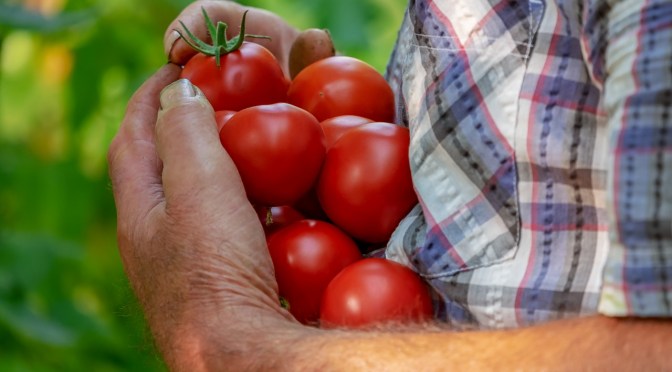
Photo: pixabay.com
Tomato Psyllid problems in your garden (Wally Richards)

True to form spring started on the 1st September across New Zealand and with it a surge in gardeners visiting gardening shops and buying up plants and stuff to get under way in their gardens.

Now at the beginning of the season is a good time to review previous articles on the Tomato/potato psyllid that has ruined many a crop in the past few years as the pests have spread across most of New Zealand from humble beginnings (from Australia) in 2006.

My first realization of a problem was about 2009 when a crop of late potatoes was harvested to find that the tubers were only as big as marbles and re-shooting.

At the time I suspected it was too much nitrogen in the growing medium as the tops were big and the crop surprisingly little.

The tomatoes growing near by showed some yellowing and up curling leaves but other than that a reasonable crop.

I then moved to another location in Palmerston North which was a good sized warehouse with accommodation above it.

The outside was mainly concrete with a high concrete block wall on the boundary of the warehouse next door.

This created a micro-climate trapping heat between the two story warehouse and the two storey concrete block wall with a tennis court size area of concrete in between.  An ideal area for psyllids to thrive in.

I dont know if I brought them (Psyllids) from my previous location or they came in on seedlings I purchased but they were there and thriving.

Tomato plants started out ok but soon lower leaves were curling up and going yellow.

Later these plants would get a fungus growth up and down the trunks and die.

A Tamarillo I planted grew up to about 6 foot tall in the container I planted it in and then leaves started going yellow from the bottom up, then falling off till there were no leaves.

New sprouts appeared at the place the leaves had been then they too frizzled up and the whole plant died all in one season.

Using Neem products helped but did not eliminate the pests so I tried quarantine cloth which the mesh is to small for the adult psyllid to pass through.

That helped a lot but did not solve the problem as the pests carried on feeding on my capsicum, chili, okra and pepino plants where the damage was smaller than usual size fruit.

I see on the Internet suggestions of various chemical insecticides along with natural ones for control but as far as I can see and from feed back;

they help but do not control or eradicate.

Quarantine cloth helped but was awkward.

So I consulted my friend from the Australian company, NutriTech and he told me that by making the cells in the plant walls so tough with silica it would prevent the young nymphs from feeding after they hatch out of their eggs.

The program involved given the young plants a drink of the Wallys Silicon and Boron Soil drench done at planting time and again two weeks later.

That’s it for that product as too much boron can cause toxicity. The boron is used to ensure the uptake of the silica by the plant’s roots.

At the same time as planting the seedlings you spray them with Wallys Silicon Cell Strengthening Spray with Wallys Silicon Super Spreader added which drives the previous spray into the plant.

This I made up in a handy trigger sprayer to which I added Magic Botanic Liquid as well for the many benefits MBL provides.

The products keep well in the Trigger so you use weekly until all is used up then make a fresh lot.

Spray the plants weekly till they get to over a metre tall then you can drop back to a two weekly spray.

Once the plants are taller than you then a monthly spray is all that you need to do.

Now what happened was this; hundreds of eggs were laid by the many adult females that started off in the new season.

The eggs hatched but the nymphs could not feed on the tough walls of the leaves and branches/trunk so their lives were short and they starved to death.

The adults lived their life span but also could not feed on the tough plants so they also died early and within about a month there were no more Psyllids in my glasshouses or outside.

Completely wiped them out of my property.

I also noticed a strange thing, the leaves of the tomato plants were double if not triple the size of what they normally would be.

The reason is that silica helps the plant gather more energy from the sun and as a result of that the plant grows larger leaves and bigger, better flavored fruit.

So a double win situation no psyllids and really big tomato plants with the best crop of tomatoes that I can recall. (Of course I was also applying my, Wallys Secret Tomato Food).

It also meant once again after a period of not having many tomatoes because of the psyllids I then had tomatoes of the best type to give away again.

I used the same products on a young Tamarillo plant I purchased and it grew and produced a small crop first season.

To be sure I also treated the capsicum and chili plants with the cell strengthening products and they did splendidly also.

The following year I did not need to use the products as there was no psyllids in my neck of the woods.

One thing you have to watch out for is plants you purchase, tomatoes etc that they do not have any adult psyllids or eggs on them as that is the most likely way you will start a psyllid problem in your back yard.

They could come from next door also but as insects are lazy they dont travel far unless they have to.

It has always been white fly that is a curse on tomato plants as well as many other plants.

If you are putting Wallys Neem Tree Powder in the planting hole and Wallys Neem Tree Granules on top of the growing medium/soil that helps a lot with controlling white fly.

Also the Wally Yellow Sticky White Fly traps should be used tied to the stake above each tomato plant and raised as the plant gets taller.

It is amazing how many hundreds of insect pests get lured to the traps and come to a sticky end.

The traps are available in packs of five, double sided so you can peel the cover off one side and when that is covered in insects use the other side.

The Silicon cell strengthening spray can be used on other plants to increase leaf sizes and I would add molasses to the spray as well which also helps make for larger leaves on plants.

Like the bigger the Solar Panel the more electricity and with plants the bigger the leaves the more energy is produced so the plant grows much better.

It can help over come the dimming of the skies that prevent us from growing food crops.

Phone 0800 466464
Garden Pages and News at www.gardenews.co.nz
Shar Pei pages at  www.sharpei.co.nz
Mail Order products at www.0800466464.co.nz


New Zealand Bill of Rights Act 1990. Part II of the Act covers a broad range of Civil and Political Rights. As part of the right to life and the security of the person, the Act guarantees everyone:

1The right not to be deprived of life except in accordance with fundamental justice (Section 8)

2The right not to be subjected to torture or to cruel, degrading, or disproportionately severe treatment or punishment (Section 9)

3The right not to be subjected to medical or scientific experimentation without consent (Section 10)

4The right to refuse to undergo any medical treatment (Section 11)

 Furthermore, the New Zealand Bill of Rights Act 1990 guarantees everyone: Freedom of Thought, Conscience, and Religion.
This includes the right to freedom of thought, conscience, religion, and belief,
INCLUDING THE RIGHT TO ADOPT AND HOLD OPINIONS WITHOUT INTERFERENCE (Section 1)

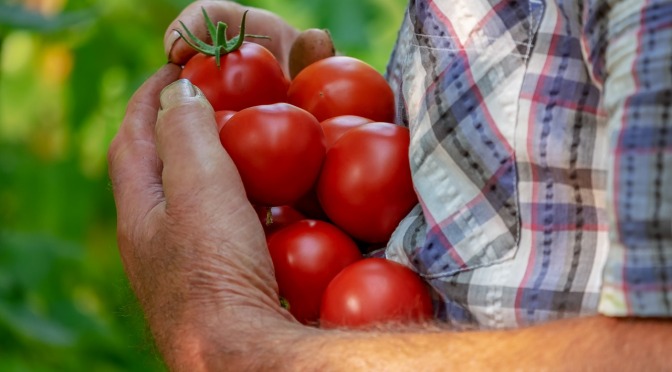
Photo: pixabay.com
GM purple tomatoes may soon appear in your local grocery store (without human safety testing)

From gmwatch.org
Dr Ray Seidler explains why caution is needed

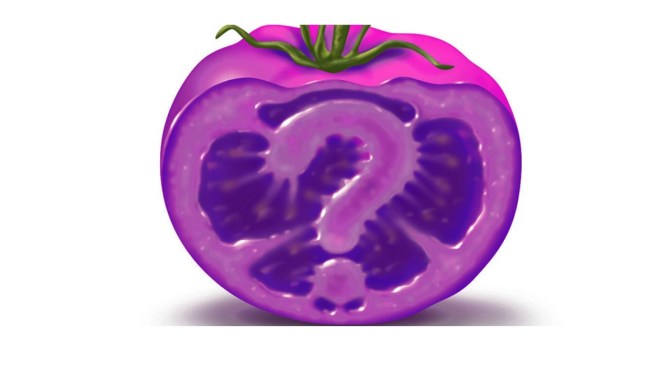
Recently the US Department of Agriculture (USDA) approved the commercial production and sale of a new purple coloured genetically modified (GM) tomato, known as the “purple tomato”. The US Food and Drug Administration, which is responsible for food safety, has yet to approve it.[1] Here, once again, we have an unnecessary food product, genetically engineered for patent protection – a financially motivated concept – and without human safety testing.

Anthocyanins are a group of water-soluble phenolic pigments that give the tomato its purple colour. It is not a dominant group of compounds in red tomatoes. The purple tomato is genetically engineered to cause over-expression of this particular group of polyphenolic anthocyanin pigments.

There are already numerous (heritage) varieties of natural purple tomatoes, so why would we need another one that is genetically engineered? The heritage varieties have anthocyanins mostly concentrated in their skin, whereas the GM variety has them all the way through the fruit – hence the unusually high levels.

The producers of the purple tomato are quoted as saying, “The tomatoes may… mark a turning point for genetically modified foods nationwide. The engineered trait is meant to entice the shopper, not the farmer.” The inventors, Professors Cathie Martin and Jonathan Jones, have formed a private spinout company, Norfolk Plant Sciences, to sell the GM tomato seeds.  
 
The USDA Animal and Plant Health Inspection Service (APHIS), “has determined that Norfolk Plant Sciences’ “modified tomato is unlikely to pose an increased plant pest risk relative to its [non-GM] comparator”. Increased risk of being a plant pest is the wrong issue to evaluate risk assessments of GM foods and doesn’t come close to representing the whole spectrum of risks from cultivated GM crops, but that is what the USDA regulation requires. If they are not a plant pest, the USDA thinks they must be OK for environmental release and can be grown commercially.

When consumed in moderation, anti-inflammatory compounds like anthocyanins can have health benefits. But too much of a good thing may not be good. It has been demonstrated that over-consumption of anthocyanins (e.g. when taken as pill supplements) may cause kidney, liver, and thyroid hormone health effects. Anthocyanins are part of a group of compounds called polyphenols, which may also limit or interfere with iron absorption.      

The average American consumes around 12.5 milligrams of these antioxidants per day. The anthocyanin content from the GM tomato averages about 500mg/100gm of fresh fruit, some 40 times more than the daily average consumption.  One hundred grams of tomato is less than half a cup. Other naturally purple coloured fruits (sweet cherries, blackberries, strawberries, red raspberries, black grapes) contain anthocyanins in the range of 3-143mg/100gm, up to 160-fold less than the GM purple tomato.

A mini-review from Harvard University and University of Melbourne scientists asserts the need for increased regulation and guidelines for polyphenol consumption and supplementation in order to ensure that consumers remain safe and informed about polyphenols (like anthocyanins). When taken in pill form it may be easily possible to exceed safe levels, potentially causing serious ailments. For example, one commercial pill formulation prepared from sour cherries recommends two pills, with a resulting daily dose of 40mg of anthocyanins. This 40mg per day might be a concern to the Harvard scientists, but it represents only 8% of the 500mg level found in 0.4 cups of the fresh GM tomato.

The US Food and Drug Administration allows health claims for antioxidant nutrients with an established Recommended Daily Intake (RDI) – for example, vitamins A and C. But polyphenols are not a vitamin and nor do they have an RDI. Polyphenols are often sold as nutritional supplements (pills), which are minimally regulated in the US, meaning a greater number of functional claims can be made. There are currently no regulatory recommendations for the quantity of consumption of polyphenols in foods.

The potential for the consumption of deleterious levels of polyphenols is especially of concern with supplements (pills) and may happen through over-indulgence in certain foods. Some manufacturers recommend pill intakes over 100-fold higher than those currently associated with a Western diet. In some cases, supplementation trials of antioxidants have been associated with adverse effects, including increased mortality or stroke. The current lack of “nutritional supplement” regulations in the US may contribute to overhyped claims, potentially resulting in over consumption of pills or overconsumption of a fad food like the new GM purple tomato at potentially harmful levels.

In the US, stickers are placed on many foods, especially fresh vegetables and fruits, indicating how they were produced. If it is labelled with 5 digits beginning with an 8, it ain’t great: It’s genetically engineered and likely contains pesticides. If it is labelled with 4 digits beginning with a 3 or 4, close the door and walk away (it’s conventionally grown and probably contains pesticides). If it is labelled with  5 digits beginning with a 9, it should be fine (it’s organic).[2] A non-GMO label means it’s been tested and found not to contain genetically engineered genes.

Lastly, we should not forget that Jackson County, Oregon, where I live, is one of eight GMO-free counties in the United States. Despite a challenge to the original 2014 ordinance that prohibits the planting of GM seeds and passed by County voters by a margin of 2:1, subsequent legal challenges failed and the ordinance stands. This means no GM purple tomato seeds can be legally planted in Jackson County, Oregon. However, we should also not forget that the purple tomato can be sold in local stores. Limited distribution in the US is expected in 2023.

I advise shoppers to treat GM purple tomatoes with caution.

GMWatch editor’s notes

1. In the FDA’s mind, it does “approve” foods for sale. However, with GM foods, the FDA doesn’t approve these foods as safe in its own estimation. It only undertakes a voluntary (voluntary to the company applicant) review of a GM food and sends a “no questions” letter to the company applying to sell the GM food if it has no further questions. In the letter, it reminds the company that it is the company’s responsibility, not that of the FDA, to only to put safe foods on the market.

2. According to US-based Jeffrey Smith of the Institute for Responsible Technology, the numbers system is “a voluntary system created by a produce marketing association to help with inventory control, in case any company wants to label products as GMOs. It hasn’t ever been used, to my knowledge. In an interview with the association, they said it was never designed for consumer identification.” CBAN also notes on their website: “There is no code for GMOs. The code number ‘8’ is NO LONGER USED FOR GMOS: The International Federation for Produce Standards set aside a number (8) for identifying GM foods but it was not being used and was changed in 2015 to identify conventionally produce (not organic) food. The code number ‘9’ denotes organic produce: This code distinguish between organic and conventionally produced fresh fruits and vegetables. Organic food is produced without the use of any genetically modified organisms. Organic produce is identified with a number that begins with ‘9’: for example, 4011 identifies a conventionally grown papaya and 94011 identifies an organically grown papaya. But organic food is already identified with the national Canada Organic standard logo.”

Dr Ray Seidler has taught and conducted research at five major US universities. He spent half his career as a professor of microbiology at Oregon State University and another 16 years as a senior research scientist at the US Environmental Protection Agency (EPA). While at the EPA he headed the US’s first genetically engineered organism risk assessment program. He has published over 150 peer reviewed articles on various aspects of environmental microbiology. He is currently retired.

https://www.gmwatch.org/en/106-news/latest-news/20126-gm-purple-tomatoes-may-soon-appear-in-your-local-grocery-store

Photo: gmwatch.org

Tomato Time (Wally Richards)

If you are like me, your fingers are itching to get the new seasons tomato plants under way.

The earlier you start the sooner you will have ripe tomatoes to eat.

I think most garden centres will have a few early varieties already to buy and grow on.

This last week after the cold spell the weather has been fairly warm in most areas.

This is likely because of the rain brought down from the tropics which caused so much damage also brought with it, warm air.

As I write this in Marton at 10am on Saturday the temperature outside is 18 degrees and starting to feel a bit more like some spring weather.

If you have a glasshouse or similar then no problem in getting your first tomato plants started either in the ground or in containers.

If you do not have a glasshouse there is no reason not to plant one or more tomato plants into 20cm containers to grow on for planting out into your garden later on as a well established plant.

You just need to have the containers in a sunny sheltered spot and if the weather turns to custard or looks like a frost then bring them inside (porch, carport, shed, kitchen) they will be ok then till weather improves and back to their spot outside so they get ample sun light.

Firstly lets look at planting your purchased tomato plants, whether in the ground or into a container: make a hole that will be deep enough to bury the plant up to the first leaves.

The reason for this is that the plant will produce roots all the up the trunk making a bigger root system compared planted shallow where the original roots are.

More roots, bigger plant and better results.

Place about half a teaspoon of Wallys Secret Tomato Food with Neem Powder at the base of the hole and just cover with a little of the growing medium.

Also sprinkle Wallys Secret Tomato Food onto the growing medium surface but not against the trunk of the plant.

Not only are you giving your tomato a great food but also the Neem Powder helps prevent insect problems.

In a glasshouse also sprinkle Wallys Neem Tree Granules as the smell of the granules will further disguise the smell of your tomato plants so whitefly will not know they are there.

Hang Wallys White Fly Sticky Traps in the glasshouse near the door and vets as well as above your tomato plants.

These will catch any adult insects pests that find there way into the glasshouse.

The biggest problem that many gardeners had over the last season or longer is the dreaded psyllid.

These little pests lay their eggs on to tomato plants, potatoes, Tamarrilo (these three are the worst affected) but they will also attack chili, capsicum okra and pippino.

The nymphs when they hatch out are very small and you need a magnifying glass to see them.

They are sucking the goodness out of your tomato plant and even worse injecting a toxin into the plant.

The results seen are the plants lower leaves may turn yellow prematurely, be distorted, fruit will become progressively smaller and the end result will be a fungus mold up and down the trunk before the plant dies.

Eggs hatch 3-9 days after being laid and nymphs pass through five scale-like stages in 12-21 days, depending on temperature.

In greenhouses, tomato-potato psyllid development proceeds rapidly between 15-32 C, and the lower temperature threshold for development is about 7 C.

It is the mid range temperatures that are best for the psyllids and for breeding.

Lower and very high temperatures reduce their activity and that is why very early and late in the season, while temperatures are mild they are not much of a problem in open air gardens.

Late self sown tomato plants will do well till winter knocks them out.

From personal experience I found that once you have a psyllid population in your back yard that each season it will be far worse than previous up until growing of tomatoes, potatoes and Tamarrilo is a waste of money and time.

For instance Opiki (between Palmerston North and Levin) was a great commercial potato growing area a few years ago. Now there are none grown as the chemicals needed to control had to be applied so frequently and the costs too high to be economical.

Sprays such as Neem Oil or chemical ones will help control a bit but the populations become so great that they just don’t control sufficiently to be any thing than a waste of money.

Confidor (the bee killer) would be the best to work as a chemical spray but of course now no longer available to the home gardener as it is a bee killer which we do not want that.

About two years ago the psyllid problem in my big glasshouse had got so bad that I went out looking for a safe means of control.

I found the answer in silicon which if used to treat the tomato plants from seedlings to maturity not

only prevented psyllid damage but actually got rid of them completely from my glasshouse and gardens.

So for other gardeners I bottled 3 products the first is Wallys Silicon and Boron Soil Drench which is watered into the soil where your tomato plant is to grow either before planting or after planting.

Another drench is applied 2 weeks later.

Then you mix Wallys Cell Strengthening Spray and Wallys Silicon Super Spreader together.

The Super Spreader forces the Cell Strengthening spray into the plants.

This spray can be started once your tomato plant has foliage and repeated every week as it grows.

Once it gets to flowering and about a metre tall then spray every two weeks.

Once you start harvesting fruit spray once a month.

Add Magic Botanic Liquid (MBL) to the cell strengthening spray.

I make up the spray into a one litre Trigger sprayer and leave by the plants out of direct sunlight to used again till all contents finished as it keeps ok. Just shake the bottle in case of settling.

You will not only have lots of tomatoes as it used to be but also the fruit will be bigger and tastier as the leaves of the plant will love the silicon spray and grow to about double their normal size.

The plant will get more energy from the sun having larger leaves and the plants will be the best tomatoes you have ever grown using the Wallys Secret Tomato Food and the Silicon cell strengthening products. Even if you do not think you have a psyllid problem it is worthwhile to use the cell strengthening products as you will have better tomatoes as a result.

These products also work well on preventing or reducing the damage to garlic from the garlic rust problem.

You could try the cell strengthening spray with MBL added on your favorite plants such as roses and see what happens.

Problems ring me at 0800 466464
Email wallyjr@gardenews.co.nz
Web site www.gardenews.co.nz

Phone 0800 466464
Garden Pages and News at www.gardenews.co.nz
Shar Pei pages at  www.sharpei.co.nz
Mail Order products at www.0800466464.co.nz

New Zealand Bill of Rights Act 1990. Part II of the Act covers a broad range of Civil and Political Rights. As part of the right to life and the security of the person, the Act guarantees everyone:

1 The right not to be deprived of life except in accordance with fundamental justice (Section 8)

2 The right not to be subjected to torture or to cruel, degrading, or disproportionately severe treatment or punishment (Section 9)

3 The right not to be subjected to medical or scientific experimentation without consent (Section 10)

4 The right to refuse to undergo any medical treatment (Section 11)

 Furthermore, the New Zealand Bill of Rights Act 1990 guarantees everyone: Freedom of Thought, Conscience, and Religion.
This includes the right to freedom of thought, conscience, religion, and belief,
INCLUDING THE RIGHT TO ADOPT AND HOLD OPINIONS WITHOUT INTERFERENCE (Section 1)

Photo: pixabay.com