Tag Archives: Taranaki

A Land Grab You Probably Didn’t Hear About

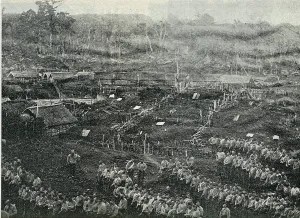
parihaka invasion by govt troops nz

While Kiwis celebrate on November 5th a personage few even really know about now (Guy Fawkes) others remember the long concealed invasion of peaceful Parihaka in the Taranaki. GF has been replaced it would appear, by Halloween going by more recent hype. Here is a post on topic by historian, Vincent O’Malley focusing on the South Island’s involvement in this particular government land grabbing operation ..

SEE ALSO … Art Exhibition ‘The Art of Passive Resistance’ (Wgtn 2001). Click on the various links to see the individual art works and read the commentaries. It was this exhibition that awoke me to the govt land grabbing of the 19th Century. It’s happening now you may have noticed?.. EWNZ


Parihaka & Waipounamu: Remembering the Anniversary of the Invasion of Peaceful Parihaka

The invasion of the pacifist settlement at Parihaka on this day in 1881 is a pivotal moment in Taranaki history. What’s less well known are the southern connections to the conflict, as historian Vincent O’Malley explains.

It’s often assumed that the 19th-century New Zealand Wars fought between the Crown and various groups of Māori were exclusively a Te Ika-a-Māui (North Island) story. But, in addition to the violent clash that took place at Wairau, Marlborough, in June 1843, there is a much deeper, if largely unknown, history of southern engagement with these conflicts.

Military settlers were recruited from Te Waipounamu (South Island) goldfields to fight in the Waikato and elsewhere during the 1860s in return for a share of the confiscated lands. And Ōtautahi (Christchurch) politicians such as Henry Sewell and James Edward FitzGerald were members of colonial governments that were responsible for directing the later military campaigns and land takings, even while they expressed doubts about the justice of what was unfolding.

There is another aspect to this story with a particular focus on Taranaki. Beginning at Waitara in March 1860, Taranaki Māori were subjected to a relentless series of invasions and attacks that continued to play out more than two decades later.

As successive governments sought to implement a policy of “creeping confiscation”, it was, at different points, considered useful to remove Māori from the area. The Chatham Islands had previously been used to imprison Māori from the Tairāwhiti (East Coast) region. When it came to Taranaki Māori, Te Waipounamu was selected instead.

In November 1869, a group of 74 men from the Pakakohi tribe in Taranaki, convicted of treason for resisting the confiscation of their lands under the leadership of the prophet Riwha Tītokowaru, were sent to Ōtepoti (Dunedin).

They were sentenced to hard labour and put to work constructing roads, school playing fields, and even improvements to the Octagon. But in the harsh and unfamiliar climate, many of the group became ill; 18 men had died during their captivity in the south before the government finally agreed to commute the sentences of the survivors in 1872.

Returning north again aboard the government steamer Luna in March of that year, the party of survivors made a stopover at Ōhinehau (Lyttelton). More than 50 of their number travelled by train to Christchurch, where their appearance was said to have startled several shopkeepers and “caused considerable speculation amongst the citizens”, despite their “modern civilian attire”.

Seven years later, another group of Māori political prisoners from Taranaki was sent south.

In 1879, the government pushed through with a survey of lands that had been nominally subject to confiscation 14 years earlier, but were in practice occupied and used by Māori. That May, the people of Parihaka began ploughing up surveyed lands in the area, in an act of non-violent resistance led by prophets Te Whiti-o-Rongomai and Tohu Kākahi.

They had founded the settlement of Parihaka in the 1860s as a place of refuge for all those affected by war and confiscation and soon attracted supporters from Taranaki and beyond. But the actions of the Parihaka ploughmen drew an angry response from settlers in the area, and, by June, the government began arresting them. Denied trials, the prisoners were instead sent to Dunedin.

The people of Parihaka remained undeterred. By June 1880, the ploughmen had been replaced by fencers. They, too, were promptly arrested and imprisoned in the South Island without trial. This time, there were too many to send to Dunedin alone. While some were taken south to Otago, around 40 were imprisoned at Hokitika.

An aerial view of Ripapa Island. (Photo: V.C. Browne & Son, undated.)

And, in September 1880, approximately 160 of the prisoners were taken to Whakaraupō (Lyttelton Harbour) and imprisoned on the small island of Ripapa. In December, it was reported that many of the prisoners had been punished for being “unruly and defiant” by having their daily rations reduced to bread and water.

Meanwhile, within weeks of their arrival, at least one local firm was advertising special excursion trips down the harbour designed to “afford persons an excellent opportunity of viewing the Maori prisoners at Ripa Island”. Māori misery had become a Pākehā spectator sport. The price was 1 shilling and 6 pence per passenger.

It’s not known exactly how many Taranaki prisoners died during their captivity on Ripapa Island. Buried on Ōtamahua (Quail Island), where there were hospital facilities, they were later reinterred at Rāpaki by members of local Ngāi Tahu hapū Ngāti Wheke.

For them, Ripapa Island (which had been used by the government as a quarantine station since 1873) was a wāhi tapu because of the many people killed there during the Musket Wars of the 1830s. In January 1881, the remaining 149 prisoners were moved from Ripapa to Lyttelton Gaol in order to “subject them to more rigid restriction”.

Small groups of prisoners were released in batches over the following months, and by June, the last of them had been freed.

Images of Tohu and Te Whiti by John Patrick Ward in 1883. (Alexander Turnbull Library)

Back home at Parihaka, prophets Te Whiti and Tohu were no more willing to end their campaign of non-violent resistance to the confiscation of 1.2 million acres of Taranaki lands.

The Crown’s response came on November 5, 1881, when, led by Native Minister John Bryce riding a white charger, nearly 1,600 members of the armed constabulary and volunteers (including some from Christchurch) invaded the settlement.

One journalist who witnessed proceedings reported that: “The whole spectacle was saddening in the extreme; it was an industrious, law-abiding, moral and hospitable community calmly awaiting the approach of the men sent to rob them of everything dear to them.”

Te Whiti, Tohu and several others were seized without resistance and the remainder of the population forcibly dispersed. Many women were raped, and the settlement was pillaged and destroyed.

After an inconclusive trial in Ngāmotu (New Plymouth), where Te Whiti and Tohu were accused of “wickedly, maliciously, and seditiously contriving and intending to disturb the peace”, it was decided to send the prophets south to Christchurch.

They arrived at Lyttelton on April 26, 1882, to a large crowd of spectators, and were immediately transferred to Addington Gaol, where they were held in the women’s section. Plans to put the prophets on trial again in Christchurch were soon jettisoned. Instead, the pair were held under what one historian describes as “a form of honourable restraint” and another as “a gentlemanly kind of house arrest”.

An Australian-born Irishman named John P Ward, who’d served in some of the most brutal campaigns in Taranaki and picked up some ability in te reo Māori during his time in the north, was appointed as interpreter and personal jailer to Te Whiti and Tohu (though he never told them of his military service). Ward subsequently wrote Wanderings with the Maori Prophets, a colourful, if unreliable, narrative of the 11 months he spent accompanying the two men before they were finally permitted to return home to Taranaki in March 1883.

Accompanied by Ward, Te Whiti and Tohu were taken to multiple sites across Christchurch and Canterbury, each designed to impress upon them the wonders of western civilisation. One of the first places visited was Canterbury Museum, where the prophets were met by curator Julius von Haast. From there, they travelled across to Christ Church Cathedral, ascending the tower as far as the bells to take in a panoramic view of the settlement below them.

Both men were said to have gazed longingly towards the sea, visible at a distance. Visits to the Kaiapoi woollen factory, to the theatre, Addington railway workshops, Hagley Park, and elsewhere, followed. Later asked to name a favourite place visited, Te Whiti opted for somewhere simpler, calling the Ōtākaro (Avon River) the highlight of his stay.

Te Whiti and Tohu happened to be in Christchurch during the International Exhibition, a three-month-long showcase of science, technology, commerce, art and civilisation that attracted an estimated 226,000 visitors.

There, and elsewhere in their travels, the pair attracted a large and often admiring crowd of their own, many following the men as they inspected the art gallery, waxworks, “Ladies Court”, “Maori Court” and other exhibits. At least one report noted that some of those who had turned out to see the rangatira were Māori. The warm reception they were receiving prompted the New Zealand Herald to complain that “Christchurch people are having the gratification of lionising Te Whiti and Tohu, all at the Government expense”.

The two Māori prophets travelled much further afield during their stay in the South Island — including journeys to Hakatere (Ashburton), Temuka, Timaru, Oamaru, Dunedin, Tāhuna (Queenstown), Waihōpai (Invercargill), and around to Te Tai o Poutini (the West Coast) on steamer, followed by six months housed in Whakatū (Nelson). But it seems doubtful that Te Whiti and Tohu came away from their extended stay in Te Waipounamu with any sense of the supposed superiority of Pākehā culture.

On their return to Parihaka, the two men immediately threw themselves into rebuilding the settlement into the vibrant and thriving place it had once been, before te rā o te pāhua (“the day of the plunder”) in November 1881.

Te Whiti and Tohu had never rejected western technology or ideas — Parihaka went on to become one of the first settlements in New Zealand with electricity and street lighting — and in this respect their detention in Christchurch and elsewhere in the South Island had not fundamentally altered their outlooks. But it was a compelling chapter in the story of the New Zealand Wars in Te Waipounamu.

The Parihaka monument at Rāpaki urupā, Te Whaea Whakamomori – The suffering of mothers. The southern connections to Parihaka are acknowledged by Ngāti Wheke and the wider community with annual remembrance services at Rāpaki each November 5 — near this memorial to those who were held and imprisoned on nearby Ripapa. The memorial was unveiled in March 2000, when a 300-strong hīkoi from Taranaki travelled to the settlement.

This is a lightly edited version of a piece which was first published in Bulletin by Te Puna o Waiwhetū Christchurch Art Gallery. The original, fully-referenced version can be read here.

Vincent O’Malley is a Te Whanganui-a-Tara Wellington writer and historian, born and raised in Ōtautahi Christchurch.


Thank you for reading E-Tangata. If you like our focus on Māori and Pasifika stories, interviews, and commentary, we need your help. Our content takes skill, long hours and hard work. But we’re a small team and not-for-profit, so we need the support of our readers to keep going.

If you support our kaupapa and want to see us continue, please consider making a one-off donation or contributing $5 or $10 a month.


RELATED

In 2024, The National Library site featured a blog post on topic titled ‘Remembering Parihaka’, by Dylan Owen.

“For Taranaki Māori, 5 November 1881 is known as ‘Te Rā o te Pāhua’ or the ‘Day of Plunder’. The invasion of Parihaka — te pāhuatanga — involved 1500 armed constabulary and volunteers led by the Native Affairs Minister, John Bryce.”

Read at the link

https://natlib.govt.nz/blog/posts/remembering-parihaka


To educate yourself, I would also recommend reading ‘Ask that Mountain’ by Dick Scott, and ‘Days of Darkness’ by Hazel Riseborough.

Photo: By James Cowan – The New Zealand Wars, Public Domain, https://commons.wikimedia.org/w/index.php?curid=8050240
Cows & Endangered Birds Poisoned in Taranaki Aerial Drop

Thanks to the Graf brothers for this video. It is fact not fiction note. For all those who deny the by kill and particularly the endangered birds. Go figure. Scatter a Class 1A Ecotoxin around like lollies and what do you expect? It kills everything that breathes & cannot target specific pests as we’re told. See Dr Meriel Watts‘ info on that.  EWR

21.7K subscribers
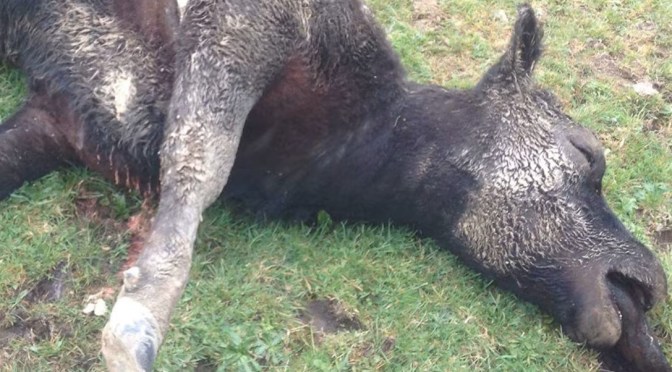
Farm manager discovered poisoned cows following the second aerial poisoning operation within 6 months …

ANOTHER Environmental Catastrophe caused by CORRUPTION (right here in NZ)

Another Agenda 21 land grab? Stand over tactics, bullying, night visits with flashlights … disturbing … 

‘This video proves that New Zealand’s “Clean, Green” status is nothing more than a HOAX.’

Sign the petition today to save this pristine valley. Thank you.
https://www.toko.org.nz/petitions/no-mt-messenger-bypass-save-mangapepeke-valley

Driven by Greedy, Corrupt Corporations:

“This is truly an inspiring documentary which highlights how greed and monetary value can destroy, not only the lives of others, but entire ecosystems filled with life. As a society we have taken far too much from our planet, and this documentary proves that New Zealand’s “Clean, Green” image is nothing more than a hoax.

Humans rely on the natural environment for everything we have. Without it, we WILL die. New Zealand’s unique, endemic species are depopulating by the second, with extinction just around the corner. How much must we destroy until we come to this realisation?

Do we want our children, and our children’s children to hear the birdsong, explore native bush, and to continue generations on our planet?
It is ‘developments’ like these which make this future impossible.

It takes 30 seconds to sign the petition.
If you love our beautiful nation, support this cause and make a difference!

Ki te kahore he whakakitenga ka ngaro te iwi.
Without foresight or vision the people will be lost.”

-Anastasia Collier

Could this be your cat? … the two-day- long cruel & agonizing route to death by the govt-funded Class 1A Ecotoxin 1080 poison

A recent aerial 1080 drop in the Taranaki region has left somebody’s pet cat dead. Two weeks ago Cindy McArthur captured the image of this unfortunate animal in the Kaitake Ranges just as she found it & soon after the drop … in a position characteristic of any animal that dies this way … spine arched over and backwards. Other animals that died from 1080 can be seen below in a similar position.  Safe.org has an eye witness description on their site:

A witness to a possum poisoning commented:


”From about four hours after poisoning until death all lethally dosed possums exhibited spasms involving the limbs or body. Possums vocalised during spasms, tremors or seizures. Vocalisation was loud and prolonged. (Squeaking, gasping and gagging noises were also frequently heard during retching and terminal breathing.) Seizures included stiffening of limbs with hunching of the shoulders; jerks in limbs, head, abdomen or shoulder; leg paddling; rolling onto the back with a stiffened body; continuous body rolling; trembling; and rigidity of the entire body. Possums were sometimes propelled into the air by these movements…”

[Note: please do not ask has the cat been tested for 1080. This is not rocket science. Along with this unfortunate cat were other dead target & non-target animals also that Cindy photographed. Although the aim of your authorities dropping 1080 is to kill pests, in spite of their claims to the contrary they can’t target one species of animal over another.]  

1080 is not a humane way to kill any animal … death is painful, torturous and slow

Note some of the following photos link to videos of the animals dying. You may not want to watch them, but please don’t start up about the cruelty of the photographer not putting the animal out of its misery. The owner did not poison their own loved pet. Complain instead to your authorities for mandating this poison in the first place and educate yourself on the numbers dying in this cruel manner, all with their ‘blessing’. No owner likes to see this but the footage may at least wake people up to what is really happening to non-target animals, let alone target animals.

There is no arguing 1080 is cruel beyond imagination.

dog aussie vid.png
A 4 month old pup dying from 1080 poisoning (video by clairebetz77)

Copy of dog.png
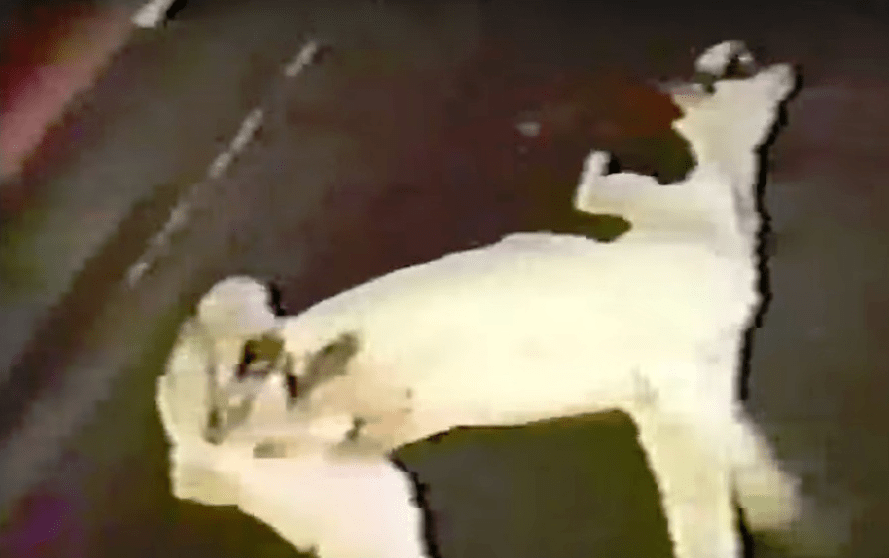
An unfortunate dog filmed during 1950s experimentation with the effects of 1080 poison (from 6min in the GrafBoys video)

Do these look like animals that died a quick, peaceful & merciful death?
For a further description of the agonizing progression to death they experienced see the GrafBoys’ video at 6 mins … you can hear Australia’s Dr Miranda Shirley (BSc PhD, MBBS RSPCA) speak.

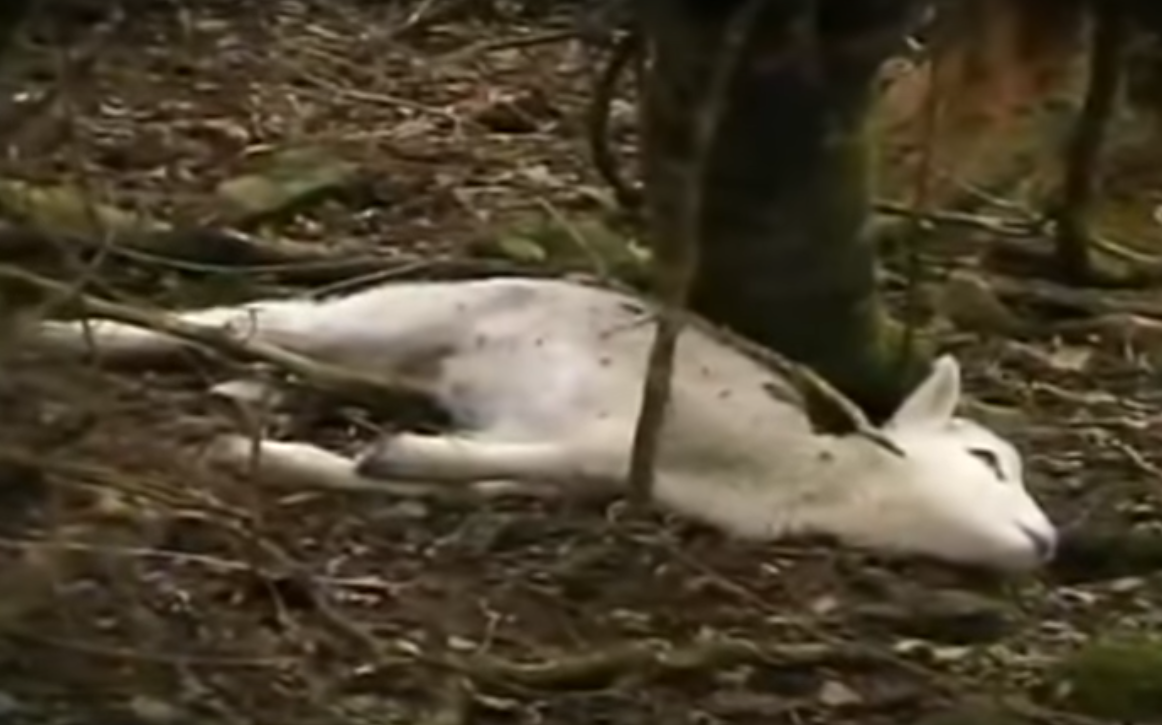
In addition mothers die with their young or sometimes their surviving young are left to die from starvation. The dead lamb in the image below had drunk its mother’s poisoned milk & succumbed.

In a bungled Turangi aerial drop, four horses died, one of which had coughed up its own lungs reports Reihana Robinson in her book The Killing Nation! The Animal Welfare Act was tweaked to allow this kind of animal death from 1080 poisoning.

DoC would have you believe, in spite of their own documentation stating otherwise, that non-target animals do not die in 1080 drops.

lambs
This lamb died from drinking its mother’s poisoned milk (see GrafBoys’ video at 3.35 mins)

large 4 1080

deer10

A Veterinarian has likened death by 1080 to two days of slow electrocution

A vet who is prepared to speak out is Dr Howard Ralph BVSc (Hons). MBBS (Hons), MVS (Wildlife Medicine), JCCA Accred (Anaesthesia), Dip TESL, A/D Fine Arts, Cert Ed NSW, Clinical Forensic M O, Manly Sydney, NSW, Australia

The following video is by Torvald Nagelhjelm of Clean Green NZ a voluntary organization. He cites images from the GrafBoys’ Poisoning Paradise.

Comparing death by 1080 to death by shooting

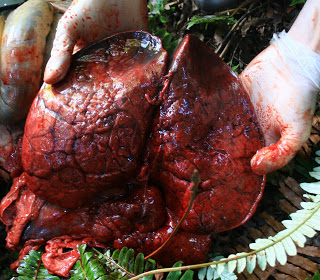
At the Poisoning Paradise blogspot by the GrafBoys you will see photos comparing the internal organs & other features, of two deer, one killed by 1080 poison and one that has been shot. There is a vast difference.

Here are two images from the site (see at the link for more):

autopsy deer lung 2 low
lungs of the shot deer

AUTOPSY LUNGS TRIM LOW
lungs of the 1080 poisoned deer

RELATED: DEER POISONED WITH 1080 CAN EXPERIENCE EXPLODED INTERNAL ORGANS, THEY TEAR OPEN THEIR OWN STOMACHS WITH THEIR ANTLERS, BLOOD OOZES FROM EYES & NOSE & THEIR EYES POP OUT

What does the SPCA say?

For a long time environmentalists have asked why is the Society for the Prevention of Cruelty to Animals (SPCA) (my emphasis) not speaking out about this? Well they did recently emerge from the shadows to emit a warning that 1080 indeed inflicted a cruel death. However, the society was straight away roundly censured by Gareth Morgan who it appears does have a financial interest in 1080 through his association with Zero Invasive Predators (ZIP), a partnership between NEXT Foundation, and the Department of Conservation. Gareth’s particularly well known for his inclination to exterminate NZ’s cat population.

Thousands of non-target animals & birds suffer with every drop. Scientists (Dr Charles Eason, Dr Hugh Barr) estimate over 20,000 deer are killed every year in New Zealand by 1080, plus tens of thousands of native birds, and many pets and farm animals. See this link regarding a LandCare scientist’s estimate of 10K bird deaths in one drop, and this link for the loss of 570+ sheep in a bungled 1080 drop.

deer7

deer2

cattle.png
Watch video re cattle deaths in Waikato (the GrafBoys video)

What NZ’s authorities say about death by 1080 poison

Stuff reports (incredibly):

“In a 2011 report on 1080, Parliamentary Commissioner for the Environment Dr Jan Wright said a report for the National Animal Welfare Advisory Committee rated 1080 as “relatively humane”.”

The strategic use of the word ‘relatively’ of course leaves an unknown imaginary scope doesn’t it?

“1080 is classed by the World Health Organisation as an Extremely Hazardous pesticide (Class 1a WHO). You may not be aware that as such it falls within the category of Highly Hazardous Pesticides for which the Food and Agriculture Organisation of the United Nations (FAO) is seeking a global phase out.

RELATED: AS OUTRAGED FORESTRY WORKERS ARE EXPOSED TO DEADLY AERIALLY DROPPED 1080 POISON PELLETS, EPRO OPERATOR ADVISES THEY ARE SAFE TO EAT!

In Conclusion

The lesson here people, considering your authorities think 1080 is fine & even propose it is not very dangerous for humans & (incredibly) can even be eaten …  is to be vigilant and watch the newspapers &/or check DoC’s website for 1080 drops in your area. If there’s one imminent, keep your pets indoors. Don’t walk them on leashes either. Dogs are particularly sensitive to it & a lick of by kill animals is enough from what I’m hearing, to cause fatal poisoning.

It isn’t safe any more people & the warning systems in place are not that thorough. Over & over we hear stories of people caught unawares.  It is being dumped into waterways and over the land from which water runs when it rains as we know.

Your safety & that of your animals can only really be guaranteed by your own vigilance.

EWR


If you are new to the 1080 poisoning program, here is a good article to start with …WHY ARE PEOPLE SO CONCERNED ABOUT 1080?

A must watch also is Poisoning Paradise, the doco made by the GrafBoys (banned from screening on NZ TV, yet a 4x international award winner). Their website is tv-wild.com. Their doco is a very comprehensive overview with the independent science to illustrate the question marks that remain over the use of this poison. There are links also on our 1080 resources page to most of the groups, pages, sites etc that will provide you with further information.

Check out the 1080 pages at the main menu, particularly the sub tab, ‘suspected 1080 poisoning cases’. Finally, remember what the retired MD Charlie Baycroft said recently …‘if you die from 1080 poisoning, nobody will know  because the Ministry of Health is bullying NZ Doctors into not testing for 1080′. 

Note we don’t condone or advocate violence, & unlike those who support the use of 1080 poison we do not support cruelty to animals. As you have read in this article it can take up to two days for animals to die an agonizing death from 1080.

Now THAT is violence.

In 2016 a former DOC ranger expressed concerned with 1080 getting into Taranaki’s waterways

Note: Taranaki is soon to be re 1080’d (2019). See details below the Stuff article on that.
I am noticing in discussions around aerial 1080 drops, folk are saying they’ve not heard of any health effects happening. What you need to know however, is when it comes to testing for 1080 there are parameters around time frames for that (as you will see in the Putaruru family’s ordeal in the links below). A retired NZ Medical Doctor has been concerned enough to inform the public that Doctors are bullied into NOT testing for 1080 poisoning. So in his words last September  2018 “if you die from 1080 poisoning, nobody will know [that it was 1080] …”. You should also read our page on suspected 1080 poisonings to see the foot dragging & cover up that is exhibited by our esteemed authorities.

From stuff.co.nz

A former DOC ranger says he’s concerned about 1080 reaching Taranaki’s water supply following aerial drops of the toxin in Egmont National Park.

Barry Ovenden, who has helped conduct 1080 operations in the park in 2002 and 2010, said there had been a lack of public consultation about the poison reaching rivers which run off the mountain and supply the region with fresh water.

“If the drop goes perfectly then there shouldn’t be any problem, the risk is if someone say drops a bucket of it into a stream,” he said.

“By the time DOC have tested that water 24 hours later, the water is already on the way to the tap.”

Ovenden said there hasn’t been a history of negative effects – like sickness – from people drinking 1080 contaminated water in Taranaki, but cautioned the effects were still relatively unknown.

 “DOC test the water supply after the first significant rainfall after the drops, but there’s no long term testing,” he said.

Unlike many stalwart anti-1080 campaigners Ovenden said 1080 was still very effective, but there were other means of controlling pests in the park.

“DOC could conduct that aerial operation on the ground,” he said.

“Sure it would be more expensive, but it wouldn’t be dangerous.

“They (DOC) are dictating to the public of Taranaki that this is the only way.”

However, DOC refutes any claims 1080 poses a danger to our water supply and the government’s environmental watchdog Landcare Research backs up the department’s claims.

According to Landcare’s protocol for sampling and testing water for 1080 there is no evidence water had been contaminated in a study of 76 samples done in 2007.

The report also states that contamination in waterways from 1080 is “highly improbable if current safety procedures are followed”.

The Ministry of Health recommends that water should not be used for drinking if 1080 is found to be above two parts per billion, whereas 70 of the 76 samples done by Landcare were below one part per billion.

DOC spokesperson Herb Christophers said the department simply wouldn’t use 1080 if it was contaminating people’s waterways.

“We base everything we do on the science that supports 1080’s use,” he said.

“There is just no evidence to say it poisons our waterways.”

As for conducting the 1080 operation on the ground, in a more targeted approach to pest control, DOC’s bio-diversity planner Bill Fleury has previously said it would cost 25 times the cost of using 1080 to control pests manually in the park.

Fleury said possums had a small territory and trappers would have to physically trap every hectare in the park to have the same effect as dropping 1080.

“The problem with doing that from the ground is that pests can move back into an area you’ve just baited and nullify any progress you’ve just made,” he said.

1080 is dropped in the the park every six years and this year’s drop is yet to commence as DOC need several fine weather days.

Following this year’s drop DOC will drop 1080 every three years, but at half the dosage.

SOURCE

https://www.stuff.co.nz/taranaki-daily-news/news/83473784/former-doc-ranger-concerned-with-1080-getting-into-taranakis-waterways

RELATED:

POST 1080-DROP WATER MONITORING: A FORMER GREENS MP SAYS THERE IS GROSS MISREPRESENTATION AROUND THE OFFICIAL FIGURES PRESENTED BY DOC


DETAILS ON THE TARANAKI 1080 AERIAL DROP

EMAIL supplied, dated 18 Feb 2019 from New Plymouth DoC

Hi xxxx

Thank you for your email below. Information regarding Mt Taranaki can be found here – http://taranakimounga.nz/restoration/our-predators/2019-predator-control-operation/.

You’ll note in here that a time period of March-August 2019 is identified. The job is different to 2016, with Kaitake being separate as contributing to a joint project with TRC – Towards a Predator Free Taranaki project. This Kaitake project is intended to start earlier in March (hence the reference to that in the link), with the main cone being later in 2019. This Kaitake timeframe may be what you are hearing, or timings may have changed since the last communication with your friends in November 2018.

Letters are to be sent shortly to more of the community which will include more detail around each part of the job.

Thanks

Sean


NOTE: For further articles on 1080 use categories at left of the news page.

If you are new to the 1080 poisoning program here is a good article to start with …

WHY ARE PEOPLE SO CONCERNED ABOUT 1080?

A must watch also is Poisoning Paradise, the doco made by the GrafBoys (banned from screening on NZ TV, yet a 4x international award winner). Their website is tv-wild.com. Their doco is a very comprehensive overview with the independent science to illustrate the question marks that remain over the use of this poison. There are links also on our 1080 resources page to most of the groups, pages, sites etc that will provide you with further information to make your own informed decision on this matter.

If you are pro poisoning of the environment, EnvirowatchRangitikei is not the place to espouse your opinions. Mainstream would be the place to air those. This is a venue for sharing the independent science you won’t of course find there.


Why would social media censor a video about the silence of our forests?

Doesn’t make sense does it? If 1080 was actually as effective as the authorities tell us it is then videos about the replenished forests would surely be welcome wouldn’t they?

Recently I posted an article featuring a video by Brett Power that gave us a glimpse of the silence of the forest around Mt Taranaki. It had already been removed more than once from social media before I featured it. Then it disappeared (as in no longer functional) from my article. I’ve actually re uploaded it now via a different platform but the question still remains, why remove it in the first place?

It may also interest you to know that the FB share buttons frequently disappear from my 1080 articles. I have to regularly review and reinstate missing share buttons, particularly on very popular 1080 posts. If you spot any please give me a heads up via comments.

Anyway, to the thinking amongst us, it isn’t really rocket science why they are removing articles. With damage control in full swing now with the less palatable facts coming out, the authorities are racing about stamping out the evidence.

RELATED:
TWO SCIENTISTS WHO REVIEWED MORE THAN 100 OF DOC’S SCIENTIFIC PAPERS SAY: “THERE’S NO CREDIBLE SCIENTIFIC EVIDENCE SHOWING ANY SPECIES OF NATIVE BIRD BENEFITS FROM 1080 DROPS”

NEARLY 70% OF DOC’S STUDIES JUSTIFYING AERIAL 1080 OPERATIONS WERE CONDUCTED IN-HOUSE

DOC’S DUBIOUS ‘SUCCESS’ RATE WITH 1080 – $3.5 BILLION, A DECADE LATER AND NOT A SINGLE ENDANGERED BIRD SPECIES IN RECOVERY

Search ‘categories’ here (left of page) for other articles on 1080 and see the evidence that 1080 does not appear to be working.

See also our new sub page (under the 1080 page) called ‘NZ’s Silent Forests – Where Have the Birds Gone?’ featuring video footage & social media comments as they become available. Feel free to comment at the bottom of that page yourself in the comments section, or submit a piece via the contact page for me to add. Send me your videos also if you wish. Random evidence by itself is more easily dismissed by the authorities but all together as a collective is far harder to dismiss.

Finally, if you are new to the 1080 poisoning program, a must watch is Poisoning Paradise, the doco made by the GrafBoys (banned from screening on NZ TV, yet a 4x international award winner). Their website is tv-wild.com. Their doco is a very comprehensive overview with the independent science to illustrate the question marks that remain over the use of this poison. There are links also on our 1080 resources page to most of the groups, pages, sites etc that will provide you with further information to make your own informed decision on this matter.

The Taranaki forest is silent … “eerie, no birds” … observation from a local

Apologies for the video in this article being removed. Facebook removed it from circulation so I have uploaded it via Youtube instead. Hopefully this will solve the problem.

A common observation now, particularly from the older generation who know how things used to sound in the bush. You can hear that in Te Urewera here at this link.  Botanist Joseph Banks who came with Cook to NZ described the loudness of the bush in the late 1700s …

‘This morn I was awakd by the singing of the birds ashore from whence we are distant not a quarter of a mile, the numbers of them were certainly very great who seemd to strain their throats with emulation perhaps; their voices were certainly the most melodious wild musick I have ever heard, almost imitating small bells but with the most tuneable silver sound imaginable to which maybe the distance was no small addition. On enquiring of our people I was told that they have had observd them ever since we have been here, and that they begin to sing at about 1 or 2 in the morn and continue till sunrise, after which they are silent all day like our nightingales.’ 

We are now told this has stopped because of the pest population, however, if you listened at the link above you’d know Te Urewera still has this very loud chorus & it has not been poisoned  with 1080.

Taranaki on the other hand has been well bombarded with the poison … 27 years worth.  It seems to not be working then?

Just the other day one of our readers commented below one of our 1080 articles:

“As a retired Hunter & photographer who has always lived in the bush, I can say that I have always known that DoC’s Scientific reports are false, People in the city know nothing about the Great outdoors & the Animals & people who live within the forest. I am 74 years old this year, I have never seen such a decline in birds as there is now.”

Here is another comment:

I myself love photographing Birds, I have been doing it all my life, I did extensive Travel in South Is. when I was young, I have just returned from a Photography trip in Fiordland, So Sad the 1080 Poison has killed so many of the Birds, I only got 3 Good photos of Birds, compared with 50 odd in the 1970s, What I did see a lot of, was 1080 Poison Signs.

And another:

Me and my sister used to take trips out to Kinloch to take our kids for ice creams and just enjoy the scenery. That was until we noticed warning signs for 1080 being dumped in the area and seeing multiple dead birds no way we were going to let our small children play there anymore!

Anyway, listen to the commentary here from Brett Power in the Taranaki:

Finally remember the recent revelation from a LandCare Scientist that one of DoC’s South Island aerial 1080 drops would have killed an estimated 10,000 birds. And we’re supposed to believe 1080 only kills targeted pests?

11. question-mark-3245622_1280


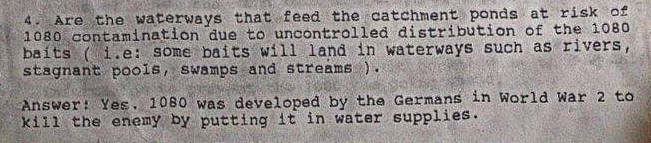
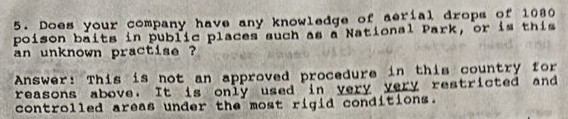
1080 was added to water supplies by Germany in WW2 as a chemical weapon says a US manufacturer – & the NZ authorities are dropping it aerially into NZ’s waterways

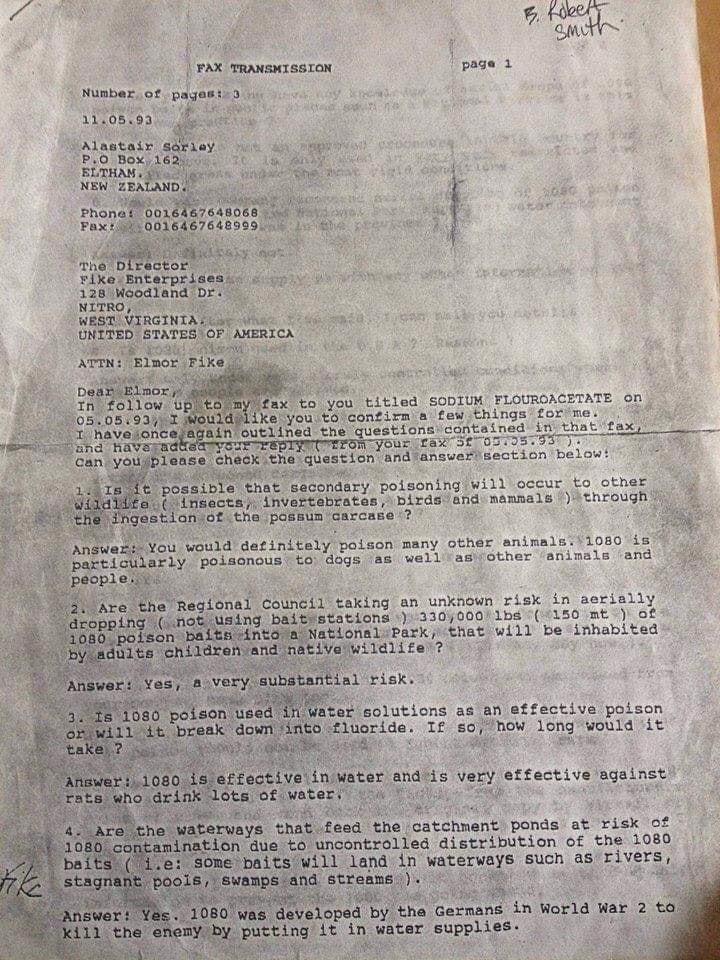
This statement is made within correspondence in 1994 by an Eltham resident (NZ) to a US manufacturer of 1080 (details supplied in the document at the end of the article). The person was trying to ascertain the level of risk to environment and health regarding an imminent drop of 1080 poison into a Taranaki National Park.

It is interesting to note that the replies to all the risks the person raises in their questions are risks that are now deemed quite safe & have become normalized (to the authorities at least that is – many people are now very concerned, witness the recent hikoi & continual NZ wide protests going on).

Here are the questions and answers enlarged for reading:

1. sec poisoning

Nowadays we are told that 1080 targets pests and we are given the impression that little if any other form of wildlife is affected. In fact nothing could be further from the truth.  A person told me recently in the Manawatu that she was told no birds would die in the bush nearby when it was 1080ed however to her surprise she found a dead bird after the area was treated.  Of course we now know that this is a common occurrence by the testimony of many people who find multiple dead birds after drops, photograph them & post them online. And of course we have the various documentations that we’ve published here of multiple finds, with latterly the estimate by a Landcare scientist of 10,000 birds in a South Island drop. Just search ‘birds, 1080’ in our search box to find more.

2. Risks

Again we have multiple examples of people finding themselves in drop zones without realizing it, some bombarded with pellets. We also have examples of families with children finding baits on the walking tracks. According to the above they are at substantial risk but DoC doesn’t seem to think so. They tell us “1080 presents little risk to humans or the environment”. 

3 in water

We are regularly told that 1080 breaks down to harmlessness in water. A scientist told me the other day it is so diluted it isn’t a problem, repeating the cup of tea mantra we hear so regularly.  We also learned recently it was added to water to poison ships rats and we heard from the former Greens co-leader that there are question marks over the official testing on 1080 concentrations in water.

4 Germans

This is very enlightening. No wonder the data sheets tell us not to allow it into waterways. However NZ it seems makes up their own rules on that one. No research to prove their point, they just tweaked the rules.  Here is a link to the information regarding the development of 1080 by Germany for use as a chemical weapon in water supplies.

5 aerial drops

Not approved in the US! “Very very restricted & controlled areas” only. And here it is chucked around like a veritable lolly scramble. The baits aren’t picked up off public walkways & neither are the poisoned animals collected & disposed off,  frequently left to rot in the water where eels and other meat eaters can feed off them (Watch Poisoning Paradise on that one).

6 national park

Remember the Hunua Ranges drop recently? A Court injunction to stop that one failed & during the proceedings DoC lawyers asked (and were granted) that the opposing lawyers not be allowed to question the DoC scientist. Now doesn’t that say something? Let’s not forget Bill Benfield’s revelation either that a drop in the Hunuas in the ’90s left the water filters packed with 1080 pellets. Good one DoC. And none of the public ever got to hear about it.

8 USA

Previously I’ve noted the frequent discovery of pellets on tracks, drops going on around tourists, pellets dumped near people fishing, on it goes. The veritable lolly scramble again.

10 quarantine

Water & wildlife contamination. Something we are repeatedly told does not happen. The manufacturer’s data sheet warns users not to drop into waterways. NZ has tweaked the rules of course so they can.

You may need to make your own decisions on all of that & make your own plans for non-contamination if necessary. It does not look like anybody else is going to.

Here are the whole pages of the documents with addresses & contact details:

1. Letter to Fike Ent.


2. Letter to Fike Ent.


3. Letter to Fike Ent.

Taranaki Regional council Wastes $85,000 fighting Media’s Exposure of their Polluting Practices

Fairly obvious who is in bed with whom here … it’s becoming such a regular occurrence with Local Government. Corporate control, corporations cooperating with corporations, duping the people that they are democracies. Democracy is a long gone mythical illusion. Check out our Local Govt Watch pages for more corruption. It’s rife now.
EnvirowatchRangitikei


8:36 am on 15 July 2016

Taranaki Regional Council spent $85,000 unsuccessfully contesting RNZ’s coverage of its oil industry waste farms – known as landfarms.

In 2013 RNZ began investigating the controversial practice of landfarming – where oil industry waste, including fracking waste, was being spread on farms in Taranaki.

Within hours of the first story airing, the council announced it was no longer allowing fracking waste to be disposed of on landfarms.

RES.Copy of 20081013_IMG-New Plymouth_0570

However, the council laid several complaints with the Broadcasting Standards Authority contesting many aspects of RNZ’s coverage of landfarming.

Documents obtained under the Local Government Official Information and Meetings Act reveal the council incurred $85,000 in legal costs to challenge the stories.

The council argued the coverage amounted to “misinformation” in “attack-style journalism” which was “of grave concern and… no service to the public”.

However, the authority found the coverage was fair and accurate and the council was “disingenuous” in claiming fracking waste had only been disposed of historically on the landfarms.

READ MORE


For more related info & links, search categories for further  articles (at left of any page). 

Please also consider liking our FB page &/or following our blog, and do spread the word on all the untruths we have been told! Use the share buttons! Speak up … your silence becomes consent.

Thank you!


EnvirowatchRangitikei

Fracking awareness raised in Whanganui meeting … “The drilling companies just seem to be able to do pretty much as they wish…”

Back in Sept/Oct 2014 our local newspaper mentioned a proposed report on fracking here in the Rangitikei, in the event consents were sought in the future. You can read that article HERE

The Green Party recently organized a meeting in Whanganui on the same issue, presenting the facts on what can be expected with fracking.

“….permission was being sought to drill up to eight wells 600 metres from Norfolk School in Inglewood.

There were also wells near Ngaere and Tikorangi schools, and well and flare pits could be within 200m to 300m of houses…”

We in the Rangitikei also need to be keeping an eye on this one. Bring yourself up to speed on fracking at the Fracking page here and follow the links to other sources.

There is a Frack Free Whanganui page HERE: https://www.facebook.com/FrackFreeWhanganui

And Manawatu Whanganui page HERE: https://www.facebook.com/groups/1714960352062798/

Read the Wanganui Chronicle article HERE: http://www.nzherald.co.nz/wanganui-chronicle/news/article.cfm?c_id=1503426&objectid=11318813

Raw milk gives a child relief and healing from chronic eczema

“Eight months ago, Shaylin Downs struggled to make it to school. Her chronic eczema saw her spend days in a wheelchair, travelling to Taranaki Base Hospital three times a week for treatment, unable to enjoy many of the opportunities her school friends did…”

This little girl spent some days wheelchair bound & up to three days a week getting hospital treatment for her eczema. Any parent knows the agony such a child goes through … the itching … unable to scratch and sleepless nights. Yet after a recommendation to try drinking raw milk she is now able to enjoy a normal life. What a wonderful story.

And there are other stories out there like this one. I know personally of kids who suffer eczema if drinking treated milk, but don’t with raw.

Raw milk can still be obtained in NZ, although in some countries it is banned because of health scares. The need to be super sterilized went to the other end of the spectrum and much of the goodness contained in raw is destroyed. Modern equipment and the production of organic raw however means the product’s quality is stringently controlled. Like any food item, you treat it with respect and heed all the requirements regarding cleanliness and refrigeration. I personally buy organic raw, have done for nearly ten years and I seldom ever drink the treated product now.

Read the Taranaki article from the Stratford Press below:

Hello Dolly, Farewell Eczema

RJURIF57BSJLISRQA5MYHSAYC4

Stratford Press
By Ilona Hanne

Eight months ago, Shaylin Downs struggled to make it to school. Her chronic eczema saw her spend days in a wheelchair, travelling to Taranaki Base Hospital three times a week for treatment, unable to enjoy many of the opportunities her school friends did.

With her sheets and pyjamas needing soaking off her in the morning, Shaylin’s life was dominated by her illness.

This summer however, Shaylin is looking forward to being able to join in with her friends, and even going to the beach, something that used to be impossible for her with the salt and sand aggravating her skin.

The difference, says Shaylin’s mum Nikki Hall, is down to a change in diet. “Since Shaylin has been drinking Dolly’s Milk every day we have seen such an amazing difference in her skin and it has impacted her whole life.”

Dolly’s Milk is a raw milk business run by Peter and Margaret Dalziel in Stratford, and they say they aren’t surprised by Shaylin’s story.

“We have heard from lots of people that raw milk can make a real difference in conditions such as asthma and eczema, as well as a range of other ailments which is why we suggested Shaylin try introducing it to her diet.”

With the dramatic improvements in Shaylin’s health, she and her family were able to enjoy a family holiday to Auckland for Shaylin’s 11th birthday. The trip was funded by members of the community who worked hard to raise $2085.17 through various events and auctions.

“I just can’t thank people enough, Shaylin’s life has been completely changed over the past year, and it has been really amazing having the community be so supportive of her.” Nikki adds that her church have also been “amazing, they have supported me emotionally throughout this, as it has been so draining, trying to manage Shaylin’s eczema and keep going every day”.

Nikki says that while Shaylin’s eczema still needs careful management, “and we certainly don’t go anywhere without making sure we have plenty of Dolly’s Milk with us”, their entire family life has changed. “I can now look for more regular work. Before I was limited because I was often at home with Shaylin when she was too unwell to go to school.”

Moana Hancock, one of the fundraising co-ordinators, says that they are “so very grateful” to all the businesses who helped by donating goods and services. These include: Nix Dungeon, Romayse Tutus, Eternal Essence, Dolly’s Milk, Verdigris, Studio 88, Institches, Lara Fay Hairdressing, Egmont Beauty, Ink Pot Cafe, Dane Carr Personal Trainer, Bite Me Cakes, Suede Hair by Design, Ann Coles Photography, Ashleigh Tippet Make Up Artistry, TET Stadium Restaurant and Bar, Robertson Eczema Relief and the Stratford Press.

Shaylin herself thanks everyone in the community who have helped her, adding a special thank you to all her friends, “who have stuck by me even when I was in a wheelchair”.

SOURCE: https://www.nzherald.co.nz/stratford-press/news/hello-dolly-farewell-eczema/XDIQKDTKSB53DGSPCLNDL5S6CQ/?c_id=1503390&objectid=11371946


Read about the general health benefits of raw milk HERE

Read (from one MD) about the controversy over raw versus treated HERE 

And from another MD on the benefits of raw HERE


Do your own research and make an informed decision. If you opt for raw, you can buy it from the farm gate in many districts throughout NZ. You will need to ask around your area locally. There is now a world wide trend to shut such sources down in favour of processed milk which again, contains little nutrients compared to the raw counterpart. Even organic supermarket milk is heated according to standards so again, the nutrients are diminished. Very sad all around. Our forbears drank milk straight from the cow as did I as a child before it suddenly became a health risk. Interestingly nobody I knew of back then ever got sick or died from drinking raw milk. It was delivered daily, free, to children at school to drink during break, and we purchased it raw from the dairy, baled by the dairy owner into our own billy (or small milk can). That was in the era before we needed recycling. The bottles were washed & refilled. Who had the healthier, more cost effective and (that Agenda 21 word) sustainable system?

Doctors even prescribed it for health. Gone are the days. EWR

RELATED:

Dr Sam Bailey has posted an article and subsequent video on topic:

Why I Switched To Raw Milk For Good (Video)

Report on Fracking to be Scoped

Fracking