Tag Archives: predators

Predators Are Not Evil But are Mostly Part of Healthy Ecosystems

Opinion by Tony Orman

New Zealand has for many decades waged a war against predators. Currently there are a number of anti-predator campaigns, often using public money in big spend-ups on futile aerial poisoning exercises. In addition, in the end, the blanket operations run counter to the impassioned aim of exterminating predators (e.g. rats) and instead cause major disruption to food chains and serious damage to the ecosystem. For example there is Predator Free 2050, and Zero Invasive Predators, the latter jazzily known by the acronym of ZIP. The zealous programmes have earned international recognition.“Time” magazine which proclaimed “Rats, Possums and Stoats Beware! New Zealand Goes to War Against Invasive Pests.” But the programmes are like the 1837 Hans Christian Andersen fairy tale “The Emperor’s New Clothes”. At one stage in the fable, the wise man serving the Emperor thinks “What!” “Is it possible that I am a fool? I have never thought so myself. No one must know it now if I am so. Can it be, that I am unfit for my job?”Those questions should be asked of those who champion Predator Free 2050 and ZIP – people from Prime Ministers to central and local government politicians, local bodies, naive unquestioning media whoop as investigative journalists, extreme green groups and even unprincipled “scientists” following the money trail of funding all pursuing the dream of exterminating New Zealand’s predators. However the reality is the dreams are running against the way Nature behaves.

Predator Role
Wildlife mangers overseas are increasingly regarding predators as an important part of a healthy ecosystem. In 2014 Al S Glen of New Zealand’s Landcare Research and Christopher Dickman of Sydney University co-authored a book on “Carnivores of Australia” and in a chapter “The Importance of Predators” said “to maintain or restore functioning ecosystems, wildlife managers must consider the ecological importance of predators.” This is hardly a new idea. Charles Elton, an Oxford ecologist, first conceptualised food webs in the 1920s, speculating that wolf removal would result in over-population of deer on which wolves preyed. The notion was taken up by others such as highly respected conservationist and author Aldo Leopold. Predators tend to remove vulnerable prey, such as the old, injured, sick, or very young, leaving more food for the survival and success of healthy prey animals. Also, by controlling the size of prey populations, predators help slow down the spread of disease. Predators will catch healthy prey when they can, but catching sick or injured animals is more likely and helps in the formation of healthier prey populations because only the fittest animals survive and are able to reproduce. In addition, predators help to reduce the negative impacts that their prey may have on the ecosystem if they become too abundant or it they stayed in one area for too long. Biologists have recognised predators like cheetahs prey on grazing animals like antelope, it keeps the prey population moving around (in fear) and prevents overgrazing in any one area. As a result, more trees, shrubs, bushes, and grasses can grow, which then provides habitat for many other species.

Predator Removal Dangers
If carnivores were removed from an ecosystem, what would happen? Herds of grazing animals, such as antelope, would grow and grow and result, in large herds overgrazing their food source, and as the food disappeared, the whole herd would begin to starve. Caroline Fraser writing for the US’s Yale School of the Environment  said experts “beginning with aquatic experiments, have amassed considerable evidence of damage done to food chains by predator removal and have extended such studies to land.” Predators are simply a part of any ecosystem’s food chain. New Zealand’s native falcon prey on other native birds such as tuis and bellbirds. Blue duck (whio) prey almost entirely on aquatic invertebrates, mostly caddisfly larvae. Kiwi prey on worms. When animals of a predatory nature are introduced such as rats and stoats were to New Zealand, they go through a “boom and bust” phase before their populations settle down to a relatively static state.  Unfortunately, native prey species can become drastically reduced or even extinct as a result of the predator “boom”.  The critical aspect of managing this situation is avoiding predator “booms”.  Consequently,the fervour and haste which the Department of Conservation and local councils applies with toxins is reckless and fraught with ecological danger.

Disastrous Outcomes
Large scale poisoning with eco-toxins such as 1080 and brodifacoum may heavily reduce predator numbers initially but with a few short years, the outcome is disastrous. The science is there to show the resurgence in predator numbers and subsequent wrecking of the food chain.  Wendy Ruscoe in a study published in Landcare Research’s publication 2008 showed aerial dropping of 1080 will temporarily knock back a rat population but due to the rodent’s amazing reproductive capacity, the surviving rats recover rapidly and within 18 months, are two to three times greater than before poisoning began. A 2007 study by Landcare scientists Graham Nugent and Peter Sweetapple showed rat numbers recovered within 18 months and at the two year mark, rat abundance could be four times greater than before poisoning.

Stoat Prey
The disruption to the naive ecosystem ripples further.  A major prey for stoats is rats.  When rat numbers are reduced by 80% – 90%, the stoat deprived of its major food source, invariably switches prey to birds. But later as rat numbers surge and boom and pass original numbers, stoats enjoy a virtual banquet of rats, breeding increases and surges and then explodes.The well intentioned but ignorant predator extermination programme usually using 1080, has merely stimulated, within a few short years, major population explosions of rats and stoats. Attempting to poison-away rodent surges in beech-mast years is the ecological equivalent of farting against thunder. All this does (if anything) is delay the inevitable, as the fast-breeding ability of rodents will eventually allow population growth to match the food source. Rather than benefiting the birds and overall ecological health, there is massive ecological disruption by the man-induced mega rat and stoat plagues.

Ecological Damage
That is not counting the birds and insects and other invertebrate organisms killed by 1080 as research demonstrated, by DSIR scientist Mike Meads, in the 1980’s.  1080 was originally patented as an insecticide in 1927. Examples are many of human interference directly or indirectly into Nature’s food chains resulting in profound consequences. In a classic 1966 experiment, biologist Robert Paine removed the purple seastar, Pisaster ochraceus — a voracious mussel-feeder — from an area of coastline in Washington state. Their predator gone, mussels exploded in numbers, crowding out biodiverse kelp communities with monoculture. Less than a decade after Pisaster, marine ecologists James Estes and John Palmisano reached the astonishing and widely reported conclusion that hunting of sea otters had caused the collapse of kelp forests around the Aleutian Islands. With otters reduced to low levels, the prey (sea urchins) stripped the kelp forests. When otters eventually returned, they regulated urchins, allowing “luxuriant” regrowth of biodiverse kelp communities.

Toheroa Decline
In New Zealand, the decline of the toheroa shellfish was attributed unofficially to heavy over-fishing of snapper which preyed on paddle crabs which in turn preyed on toheroa. With the heavy decline in snapper, paddle crabs proliferated and almost obliterated toheroas. New Zealand has a long history of an obsession with attempted extermination of predators. In the 1950s acclimatisation societies managing trout fisheries blamed freshwater eels and shags for perceived declines in trout numbers. Bounties were paid out on eels. It had little effect. Ironically the best trout fishing rivers had healthy populations of both trout and eels. Eels simply removed the sick, the old or the unwary thus making for a quality trout population. The concept of being ”predator free” or “zero predators” has no ecological justification, except in limited circumstances on smaller offshore islands and “mainland islands”. Even in islands where predators may have been eliminated e.g. Secretary Island in Fiordland, the success is short-lived and temporary as animals can and do swim from the mainland to recolonise.

Playing God
It seem incomprehensible that an agency such as the Department of Conservation and the Predator Free 2050 and ZIP concepts should go unquestioned in the light of the understanding internationally of the dangers of playing God with predators..But the ‘fly in the ointment’ is human nature.  For example a scientist in DOC arguably has a vested interest by way of employment and a handsome salary. Similarly with any consulting scientist attached to Predator Free 2050 and ZIP. For others of zealous nature, as some humans are wont to be, it becomes the pursuit of “The Impossible Dream.”  For politicians it’s good P.R. to declare war on the baddies, no matter how pointless and damaging that might be. The sad outcomes are the gross misuse of public funds and more tragically the profound ecological damage that often occurs in the pursuit of that “Impossible Dream.”

DOWNLOAD THIS ARTICLE AS A PDF FILE


Footnote:
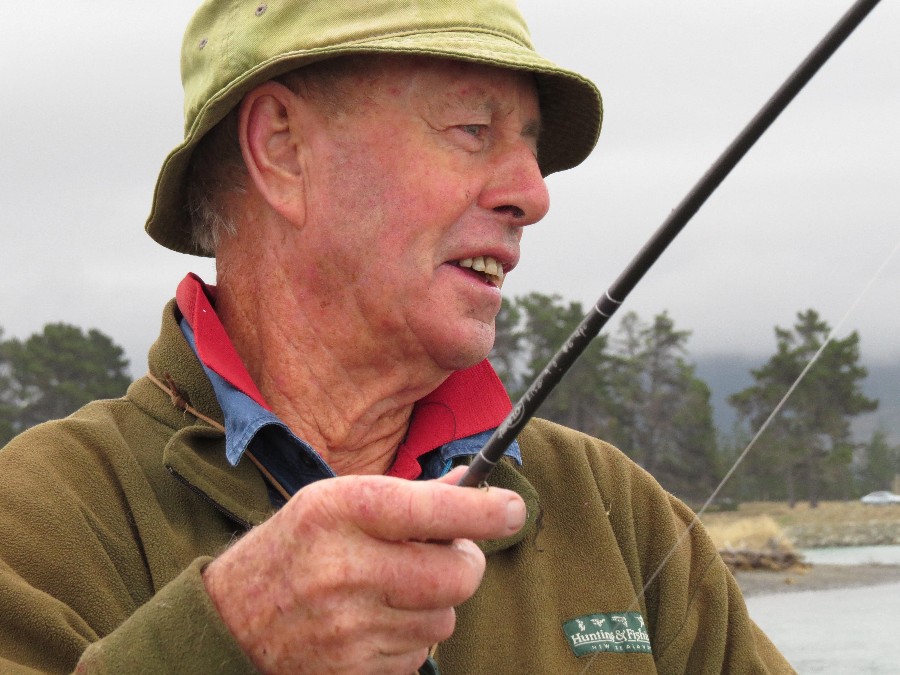
Tony Orman has spent a lifetime in the outdoors observing and reading about it and Nature. He has had some two dozen books published, mainly on fishing, deerstalking, conservation and rural life.


Kea likely killed by 1080 – DoC

From the Otago Daily Times

A Massey University post mortem has found six kea in the Matukituki Valley of the Aspiring National Park ”are likely” to have died from 1080 toxin.

The birds were among the 12 kea monitored by the Kea Conservation Trust after the Department of Conservation’s aerial 1080 predator control operation on February 11.

DOC threats director Amber Bill said in a statement today it was ”regretful” to lose any kea to 1080.

”But overall, aerial predator control is proven to benefit kea populations.

”It’s upsetting and disappointing to lose six kea but we are confident with effective control of rats and stoats we will significantly boost nesting success and the number of young birds entering the population.

”We are concerned the tracked kea may have learnt to eat human food around the tramping huts, making them more likely to try 1080 cereal bait.

”DOC’s extensive research of kea through aerial 1080 operations show the risk of 1080 to kea in remote areas is very low but increases markedly with birds that have learnt to scrounge for human food.”

Ms Bill said the Matukituki operation followed DOC’s best practice to mitigate risks to kea from 1080 and ensure they benefited from stoat control after last year’s extreme forest mast or seeding.

”We are constantly working to improve our risk mitigation standards for kea, which are informed by our ongoing research programme.

”In light of this incident, we will be investing more to explore potential additional measures that DOC can take to reduce the risk to kea in future 1080 predator control operations.”

Ms Bill said DOC was considering a campaign to discourage people from feeding kea and prevent kea from learning to scrounge.

“Kea are super smart and present unique conservation challenges.

”We need to continue to learn and assess all options to protect this national taonga from predators and other threats.”

Recent rodent monitoring results from the Matukituki showed rats had been reduced from damaging levels – present in 47% of tracking tunnels – to being undetectable – 0% of tracking tunnels -, following the 1080 operation.

Stoat monitoring was underway.

The Matukituki programme was designed to protect rock wren, kea and whio, as well as kākāriki, kākā, and South Island robin following a beech mast-fueled rat and stoat plague.

Ms Bill said DOC was monitoring whio and rock wren to track how these species were doing.

The dead birds were three adult males, one adult female, one juvenile male and one juvenile female.

SOURCE

https://www.odt.co.nz/regions/wanaka/kea-likely-killed-1080-doc?fbclid=IwAR22SOHfIvTohLfC_Dg_L5AFdd9tiBy2ZS66dgCdO5I5TOH8pnUTjh9odOY

1080 to be used by Aussie govt to kill 2 million feral cats using aerially dropped 1080-laced sausages

Note: as somebody has pointed out already, this poisoning by 1080 is already happening in Australia. However the ‘new’ in the event is the aerial distribution. They’ve taken a note out of NZ’s shameful practice by the looks. How can anybody in their right mind assume that aerially dropping a class 1A Ecotoxin that kills everything that breathes into an environment is only going to kill what the distributor thinks in his/her head only? Like a magic wand? This is fairyland thinking. In NZ one drop alone is estimated to have killed 10,00 birds! Another, close to 600 sheep! Another, over 300 deer!   Another, 77% of native species, Kea! This is not conservation! Please wake up people!
The deadly poison 1080 kills everything.
So, is it sounding familiar?
‘Threatened species’?
Joining dots anybody?
Remember the article we posted by Jenese James? This is a must read to make sense of all this. The plan to eliminate all non native species is global but they aren’t exactly telling us that. They are simply saying they want to eliminate predators & pests. Not all non native species.
And we in NZ know already that 1080 doesn’t and indeed can’t target pests.
And sausages? Kids, pet animals, you name it will be picking these up & tasting them. Pellets are bad enough but tasty looking food?
This clearly has not been researched by the authorities. They even claim that the death will be quick (see links in article) which is absolutely untrue. A vet has deemed death by 1080 as akin to two days of electrocution.
This would all ring a little truer if we could see similar concern by the various authorities for the dwindling species we already have. DoC in NZ have seen the Kea close to extinction. Our insect populations have plummeted but do we see any urgent rush to desist from the widespread use of poisons & pesticides in the environment, known to be killing them? No we don’t & we won’t be any time soon knowing the massive profits they generate.
I am very suspicious at this extermination of feral cats. Cull them, sure, but with aerial drops that are not selective in what they kill? And with the cruel poison 1080.
If you are unsure about 1080 watch Poisoning Paradise & read ‘Why are People So Concerned About 1080?’


The Australian government wants to kill two million feral cats by next year — and it wants to do it by airdropping poisonous sausages. There are currently an estimated 2 to 6 million free-roaming cats across the country, and officials say they are threatening native wildlife populations.According to the Australian government, the goal is to “reduce the impact of feral predators and increase the resilience of our native species,” because cats “damage the productivity of Australia’s farming sector.” The government wants to kill two million wild cats by 2020, which it says are a major contributor to the extinction of at least 27 mammals since their introduction to the country by Europeans, possibly in the 1700s.
Part of the plan to cull the rising cat population is to bait the cats with lethal sausages made of kangaroo meat, chicken fat, herbs, spices and a poison called 1080, which is deadly to animals, according to the New York Times. The sausages are dropped from airplanes into areas with high stray cat populations. The cats allegedly die within 15 minutes of consuming the sausage.”They’ve got to taste good,” Shane Morse told the NYT. “They are the cat’s last meal.” PETA Australia calls the poisonous sausages “horrifically cruel”Along with baiting, the government is also trapping and shooting cats, in some cases. “The scientific evidence is unequivocal that feral cats are one of the greatest threats to Australia’s land-based mammals,” the government said in its “Threatened Species Strategy” plan

Some parts of Australia are taking the issue a step further, offering rewards for slain cats. The state of Queensland is offering $10 AUS ($7 USD) per feral cat scalp. PETA and other organizations condemned the policies when they were announced, but Australian officials have supported them.

The plan initially received intense backlash when it was first announced in 2015. But now, even PETA Australia “in principle recognized that feral cats hunted wildlife to a point at which species can no longer survive,” according to the NYT.

SOURCE:

https://www.cbsnews.com/news/australia-is-trying-to-kill-millions-of-stray-cats-by-airdropping-poisoned-sausages-2019-04-26/?fbclid=IwAR2VYDmV_0FpLCylpK00_sFs5wU5kTzIlmwgjHmindHvCHq-2ICPMKb0FMg


For further articles on 1080 use the ‘categories’ drop down box at the left of the news page. Check out the 1080 pages at the main menu, particularly the sub tab, ‘suspected 1080 poisoning cases’. Educate yourself on the risks & protect yourselves. Don’t ever touch the baits.

Finally, remember what the retired NZ MD Charlie Baycroft said recently …‘if you die from 1080 poisoning, nobody will know  because the Ministry of Health is bullying NZ Doctors into not testing for 1080′.


RESEARCH: An Ecologist & a Biological Sciences Professor propose an alternative to Predator Free 2050: “based on 3 flawed assumptions … it is badly designed & unachievable” they say

A research collaboration is proposing an alternative to Predator Free 2050, calling the current policy “badly designed and unachievable”.

16 July 2018

The research says the Predator Free 2050 policy is based on three flawed assumptions — that predator extermination is the best way to protect biodiversity, that we need to eradicate every stoat, rat and possum to protect biodiversity, and that complete eradication of predators is possible. This research collaboration was undertaken by Associate Professor Wayne Linklater from Victoria University of Wellington’s School of Biological Sciences and ecologist Dr Jamie Steer, who is also a Senior Biodiversity Advisor at the Greater Wellington Regional Council.

“None of these assumptions are true,” says Associate Professor Linklater. “Complete eradication of predators is technologically impossible, and biodiversity is affected more in some places by habitat decline and plant eaters than it is by predators.”

But perhaps one of the biggest issues with Predator Free 2050 is it requires eliminating select predators from complex communities of other plants, animals and humans, he says.

“This will likely lead to negative social and ecological outcomes. Eradicating some predators will cause populations of other introduced animals to erupt. Many people also have valid concerns about the safety and cruelty of predator control methods, and the policy fails to take into account Māori views on predator management as well, particularly on Māori lands.”

Predator Free 2050 could also lead to reduced public and government support for future conservation policies, says Associate Professor Linklater.

READ MORE AT THE SOURCE:


https://www.victoria.ac.nz/news/2018/07/researchers-propose-alternative-to-unachievable-predator-free-2050

PHOTO credit: Image by TeroVesalainen from Pixabay


NZ’s Predator Free 2050 goal, “based on 3 flawed assumptions … is badly designed & unachievable” say both an Ecologist & a Biological Sciences Professor

A research collaboration is proposing an alternative to Predator Free 2050, calling the current policy “badly designed and unachievable”.

16 July 2018

The research says the Predator Free 2050 policy is based on three flawed assumptions — that predator extermination is the best way to protect biodiversity, that we need to eradicate every stoat, rat and possum to protect biodiversity, and that complete eradication of predators is possible. This research collaboration was undertaken by Associate Professor Wayne Linklater from Victoria University of Wellington’s School of Biological Sciences and ecologist Dr Jamie Steer, who is also a Senior Biodiversity Advisor at the Greater Wellington Regional Council.

“None of these assumptions are true,” says Associate Professor Linklater. “Complete eradication of predators is technologically impossible, and biodiversity is affected more in some places by habitat decline and plant eaters than it is by predators.”

But perhaps one of the biggest issues with Predator Free 2050 is it requires eliminating select predators from complex communities of other plants, animals and humans, he says.

“This will likely lead to negative social and ecological outcomes. Eradicating some predators will cause populations of other introduced animals to erupt. Many people also have valid concerns about the safety and cruelty of predator control methods, and the policy fails to take into account Māori views on predator management as well, particularly on Māori lands.”

Predator Free 2050 could also lead to reduced public and government support for future conservation policies, says Associate Professor Linklater.

READ MORE AT THE SOURCE:


https://www.victoria.ac.nz/news/2018/07/researchers-propose-alternative-to-unachievable-predator-free-2050

PHOTO credit: Image by TeroVesalainen from Pixabay


Dr Neil Hayes, Royal Chartered Environmentalist says “DoC’s aerial 1080 program has absolutely nothing whatever to do with the elimination of predators … it is a billion dollar business”

A CHARTERED ENVIRONMENTALIST SPEAKS OUT ON 1080 POISON

“I have just received this summary of DoC’s 1080 poison programme from Dr.Neil Hayes, who was awarded a QSM in recognition of his thirty-four years of continuous involvement in attempting to save the rare and critically endangered NZ Brown Teal (Anas chlorotis) from extinction, and is a Royal Chartered Environmentalist (CEnv).

dr neil hayes.jpg

The photo shows the beautiful Taumata Lagoon, of which Neil Hayes is a part-owner. The lagoon was classified by the Greater Wellington Regional Council as a Wetland of National Importance. The lagoon and its environs are some 30-hectares in size, with around 200 mature Kahikatea and 100 mature Totara.

Dr. Hayes says :

“The Department Of Conservation’s aerial bombardment of 1080 is a very serious environmental disaster and is by far the most successful propaganda campaign ever to take place in New Zealand (and possibly the WORLD!). The DOC program has absolutely nothing whatever to do with the elimination of predators. It is simply a billion dollar business, for these reasons:

  • There are now very few possums & only 0.004% carry Bovine TB … 1080 has little effect on feral cats, ferret, stoat or weasel numbers – all of which carry Bovine TB
  • 1080 has little effect on rat numbers (DOC’s mythical annual ‘explosion’ of rat numbers in areas that have been aerially bombarded with 1080 on numerous occasions confirms that the DOC 1080 program is all about money, because there is still an abundance of rats!)
  • 1080 has little effect of hedgehog numbers
  • The movement of domestic cattle is mainly responsible for the spread of Bovine TB!
  • It is a billion dollar industry that is now totally out of control !

The DOC program has so far:

  • Eliminated over 10,000 domestic animals
  • Pushed already endangered birds closer towards extinction, with over 10,000 Kea being killed by 1080 in the past five years!
  • Pushed two of the world’s rarest species of frogs closer towards extinction
  • Contaminated rivers, lakes and town water supplies
  • Eliminated invertebrates in creeks, streams and rivers
  • Poisoned fresh-water trout, thereby destroying a major part of our tourism industry
  • Cost New Zealand tax-payers several billion dollars!
  • Eliminated millions of endemic bush birds and in areas where here the poison has been dropped the BUSH IS SILENT

DOC’s 1080 program has nothing whatever to do with eliminating predators – all of which are readily eliminated by trapping and reside only in the forest fringes.

Neil Hayes QSM CEnv (Chartered Environmentalist)
RD 2
Carterton
19 January, 2017