

Birth defects documented by a local midwife… NZ was the last country in the world to manufacture this dangerous substance 245T…
Continue reading Censored from NZ Television – Ivon Watkins Dow’s release of deadly 245T from 1962-81 in New PlymouthTag Archives: New Plymouth
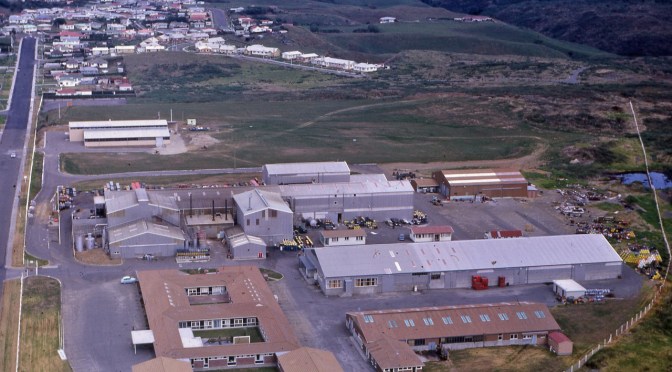
Chemically poisoning you isn’t new: Witness Ivon Watkins Dow & Dioxin in NZ
A repost and update of this old article from 2017. The video was censored from NZ television.
“Also disturbing are the birth defects documented by a local midwife, and the fact that Ivon Watkins Dow continued to manufacture 2-4-5-T in New Zealand until 1987, making us the last country in the world to manufacture the dangerous substance.”
The Green Party NZ“Outbreaks of rare diseases and tumours are appearing in clusters around New Zealand, close to chemical factories. Why doesn’t the Government want to investigate? Simon Jones discovers what the authorities don’t want you to know…“
Dioxin is featuring right now with the train spill in the US and the town of Palestine in Ohio. It has all the appearances of cover up of course. Listen to this young woman speaking out on that. (Isn’t it curious that these folks were supplied with a free digital health tracking device a week prior to the spill?)
I’ve also added an article on Dioxin from NZ’s Dr Sam Bailey.
Here is a link to our original article:
CENSORED FROM NZ TELEVISION – IVON WATKINS DOW’S RELEASE OF DEADLY 245T FROM 1962-81 IN NEW PLYMOUTH
(Note: alternative video link here)
In preparing this I spent some considerable hours finding a copy of the doco and one that would allow me to upload to an alternative platform. Also to locate the original info as most of the links were either faulty (wrong info) or dead. It’s advisable now to keep entire copies of material rather than just links. If you have related info now missing from the article do please let me know in comments or via the contact form. Be sure to read to the end, there’s interesting NZ info now also deleted from the net. EWR
RELATED:
What You Need To Know About Dioxin
URGENT: For Everyone East of the Mississippi
What’s happening in Ohio “is so much worse than what the media is telling us!” (Sound familiar?)
TV3’s toxin avenger vows she will never give up
BSA upholds complaint against TV3’s documentary
Additional Historical Info:
This piece copied from disarmsecure.org back in 2013 is now absent from the net. The new website (if you follow the source link at the end) does not appear to have the original pdf I’ve quoted from. Hopefully it can still be located …. somewhere. Let me know if you have a link. There are some unfinished sentences unfortunately but you will get the gist of the information which concerns the alleged production of Agent Orange at the New Plymouth plant …. EWR ….
“In November 1990 NZ undertook a ‘national trial inspection’ to determine the feasibility of a small country inspecting a chemical plant to verify non-production of CW agents and compliance with a CWC. The mock inspection was carried out at the Ivon Watkins-Dow (now Dow-Elanco) herbicide plant suspected of producing defoliant for the Vietnam war in 1967. The ‘inspection’ was said to be successful in that the ‘inspectors’ were able to satisfy themselves that no CWE agents were being produced.
252
Ironically this inspection took place within a few months of the Select Committee announcing that it was unable to determine whether military defoliant production had taken place at that very same plant in the ’60s. The trial inspection report was presented to the Committee on Disarmament in Geneva in February 1991 by the NZ permanent representative to the CD. In the course of his speech the representative, a professional diplomat, made the following astonishing Statement New Zealand does not have, and has never had chemical weapons. We do not allow chemical weapons to be stationed on our territory.
253
More untruths could hardly be squeezed into two such small sentences. New Zealand does have chemical weapons – on board RNZN ships, if nowhere else. New Zealand has had chemical weapons – in both World Wars. New Zealand has taken no steps to prevent stationing of CW agents, and the NZ Nuclear Free Zone, disarmament and Arms Control Act makes no reference to CW at all. There is no agreement with the US to prevent it bringing chemical weapons into its Deepfreeze base at Christchurch airport, and New Zealand has relinquished any inspection rights over those facilities
New Zealand and the CWC
New Zealand is now a signatory to the CWC, one of several arms control agreements which New Zealand is realistically capable of violating. New Zealand has both owned and used chemical weapons of the sort soon to be banned by the CWC, as summarized below, and for all we know could still ageing stocks of such weapons in the future. The facts about the history of New Zealand’s ownership and use of chemical weapons are still not clear. However research undertaken in the NZ National Archives over the past 12 months `and already summarized in this report
discloses the following CWC-relevant activities as a minimum:
1 New Zealand forces used chemical weapons in Belgium and France during World War I on about the same scale, relatively speaking, as did British forces, and about as indiscriminately. Toxic phosgene and non-toxic tear gas seem to have been the main agents used. In at least one instance NZ artillery seems to have bombarded a town containing civilians.
2 New Zealand apparently first became interested in acquiring its own reserve stocks of gas shell about the time the Geneva Protocol on gas warfare was signed in 1925. Whether such stocks were then actually acquired I
3 New Zealand actively supported retention of the ‘right’ of chemical retaliation when the question of banning CW entirely was raised at the 1932 Disarmament Conference.
4 During World War 2 New Zealand was involved in research, development and production of CW weaponry.
5 During World War II New Zealand acquired a considerable quantity of chemical weapons. Some may have accompanied the 3rd Division to the Pacific. The main stockpile was stored at Belmont between 1942 and 1946, and included l 12770 rounds of 25-pounder mustard shell 15 300 gas bombs for’4.2-inch mortar.
6 The ultimate fate of this CW arsenal is not clear. Some may have been transferred to US forces, in the Pacific. In 1946 some 1500 tons of 25 pounder shells and 20 tons of mortar bombs were dumped off Cape Palliser. This would be equal to about 135 000 shells and 2200 gas bombs. A further 200 tons were dumped in Hauraki Gulf. Other gas munitions may have been dumped as late as 1957.
7 RNZN ships apparently continue to carry tear gas munitions for riot control operations ‘in aid of the civil power’. A cursory examination of the text of the CWC indicates that the following obligations are possibly pertinent with respect to New Zealand, given that New Zealand has been involved in CW and preparations for CW to at least the extent described above.
Pasted from <http://www.disarmsecure.org/A%20History%20of%20New%20Zealand%20Chemical%20Warfare.pdf>
Note: interesting info and feedback also on the Paritutu site at the image credit link below.
Photo: with thanks, Phillip Capper @ https://www.flickr.com/photos/flissphil/129209518
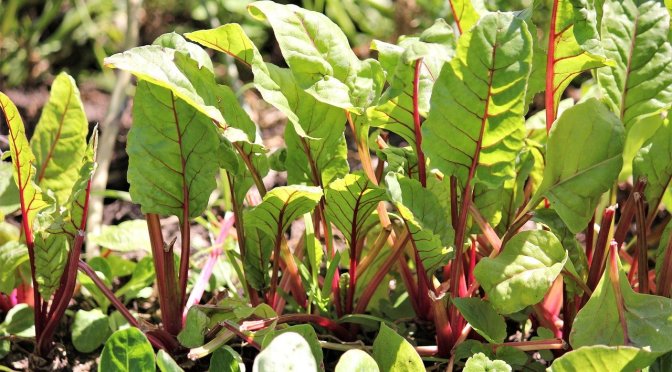
A NZ gardener living her self-sufficient dream in central New Plymouth
Here’s a great post I found today in mainstream, Stuff to be exact. It features a short video & many images. I’d had a quick search for easy ideas on composting/disposal etc of kitchen waste & found some fantastic info on growing your own food etc which I used to do but not so much now for many reasons. For people struggling to buy food you can grow it, even in small apartments or with very little or no ground. Search on YT you’ll find heaps of ideas. Anyway it may interest you this one, about a gardener in New Plymouth. I’ll post the composting one shortly. EWR
Meet the gardener living her self-sufficient dream in central New Plymouth
The first time Dee Turner visited the central New Plymouth property on which she now lives, it was very nearly the end of an open home.
With no time to spare, she ran past the real estate agent standing at the door with a clipboard and headed straight into the garden. After a quick turn around the one-acre space out back – which included plenty of flat areas, a few gentle slopes, a small stream and even a remnant of native forest – Dee was convinced it was the right property for her.
“So I rang the real estate agent I’d been working with and said I’d found the place I wanted to buy,” says Dee, who had been looking for the right property for more than a year by then. “And she said, ‘What do you think of the house?’ and I said, ‘Oh I haven’t been inside yet’.”
READ MORE

Public remain in the dark about plans by Horowhenua District Council to transfer up to 40 percent of public assets to the yet to be legally registered property trust called Horowhenua NZ Trust
More excellent investigative reporting from Veronica Harrod
Is it a bird, is it a plane, is it superman? No, it’s a giant wrecking ball and its coming near you soon.
The public remain in the dark about plans by Horowhenua District Council to transfer up to 40 percent of public assets to the recently established property investment trust called Horowhenua NZ Trust.
The only item on the 6 June agenda to be discussed in a publicly excluded part of the meeting refers to “Legal Matters: Settlement Options – Historic Dispute” which, if this refers to the transfer of public assets, appears to be deliberately worded to hide council’s intention.
Council will discuss and vote on this item in a publicly excluded part of the meeting on the grounds, “The withholding of the information is necessary to enable the local authority to carry on, without prejudice or disadvantage, negotiations (including commercial and industrial negotiations).”
One of the big problems residents have is how the commercial confidential clauses of the Local Government Act deny the public opportunities to be a part of discussions in the public interest. Also, the public don’t know how councillors vote on publicly excluded matters or whether councillors have undeclared conflicts of interest.
It is the only clause of the Local Government Act available to council’s, who may be motivated by self and vested interest rather than public interest, because it allows council’s to side-step obligations to be transparent and accountable.
But when council’s get into bed with land and property developers to the extent this council has then serious concerns about how the commercial confidentiality clause of the Local Government Act is being used are justified.
The most glaring example of this was the sale of the former council owned pensioner housing portfolio to one of the biggest land and property developers in the country Willis Bond for a firesale price of $5.2 million resulting in a loss of $1.86 million.
The Office of the Auditor General is making a determination on this matter and conflicts of interest but, to put it mildly, residents aren’t holding their breathe that an investigation of any real merit will be pursued.
In a report on supporting the establishment of the Horowhenua NZ Trust economic development manager Shanon Grainger stated, “The Trust operates through a Trust Deed in standard fashion. That Deed holds trustees to account, trustees operate under the standard legislation and case law applying to trustees. This is a high level of accountability with sanctions and remedies.”
But the public don’t know how the Trust will operate because the Trust has not been legally registered, there is no Trust deed to refer to and who the specific directors are still has not been announced.
Mr Grainger also said the Trust model was, “explicitly detached from local government so that local government politicians are not compromised, and investors are not compromised.”
Yet members of council’s in-house economic development board are Trust directors in the first instance and three councillors are on the board including deputy chair of the economic development board councillor Wayne Bishop who is also the deputy mayor.
Compounding concerns is the fact Cr Bishop has three land and property development companies, and an extensive and growing number of Horowhenua land and property development projects, and the Trust is being assisted by the council’s chief executive David Clapperton who established a company classified under the land development/subdivision category in November 2016.
These facts alone appear to contradict Mr Grainger’s comment the Trust is “explicitly detached from local government.”
Not only has the council publicly stated it intends on transferring up to 40 percent of assets to the Trust but an unknown amount of ratepayer funds that council spends on “economic development” will also be funnelled to the Trust.
The only public comment made about how much council spends on “economic development” was a vague statement made by Mr Clapperton the dollar amount was unknown because it is within the Representation and Community Leadership budget of $4.1 million annually!
Plans by the council and the yet-to-be legally registered Horowhenua NZ Trust move relentlessly forward even though the public are being consulted on a myriad of plans and strategies that, if adopted in their present form, will unleash an explosive number of land and development, demolition and construction projects across the district.
Clearly though this trend of council’s getting into bed with land and property developers is undergoing a 21st Century renaissance. Listen to what is happening at New Plymouth District Council: “The council wants to sell part of Peringa Reserve – including half of a public golf course – to housing developers for $35 million. Opponents say it is protected recreational space and should be kept. RNZ Taranaki reporter Robin Martin has more.

The New Plymouth district council has come under fire for describing a proposal to sell part of a coastal reserve as “land recycling”. The council wants to sell part of…
RADIONZ.CO.NZ
Note: As the additional link on New Plymouth shows, councils up & down the land are using the tried & true method of relieving you of your public assets your forbears worked to provide for succeeding generations. Public Private Partnerships. Listen to Joan Veon on that topic (see our Agenda 21/30 pages). Buying your assets for a song literally via the back door. This link will take you to related examples of this in NZ including Joan Veon’s information. Let’s not forget these transfer of assets seem to be happening with no rhyme or reason as to their value, witness the transfer of Horowhenua’s pensioner flats to Willis & Bond property developers with front company Compassion Housing formed a week before the sale, at a loss of $1.86 million (ie sold that much below their true value, a right royal gift for W&B. Enjoy (if you can). EnvirowatchRangitikei
Censored from NZ Television – Ivon Watkins Dow’s release of deadly 245T from 1962-81 in New Plymouth
“Also disturbing are the birth defects documented by a local midwife, and the fact that Ivon Watkins Dow continued to manufacture 2-4-5-T in New Zealand until 1987, making us the last country in the world to manufacture the dangerous substance.”
The Green Party NZ
[Photo Credit: Creative Commons]
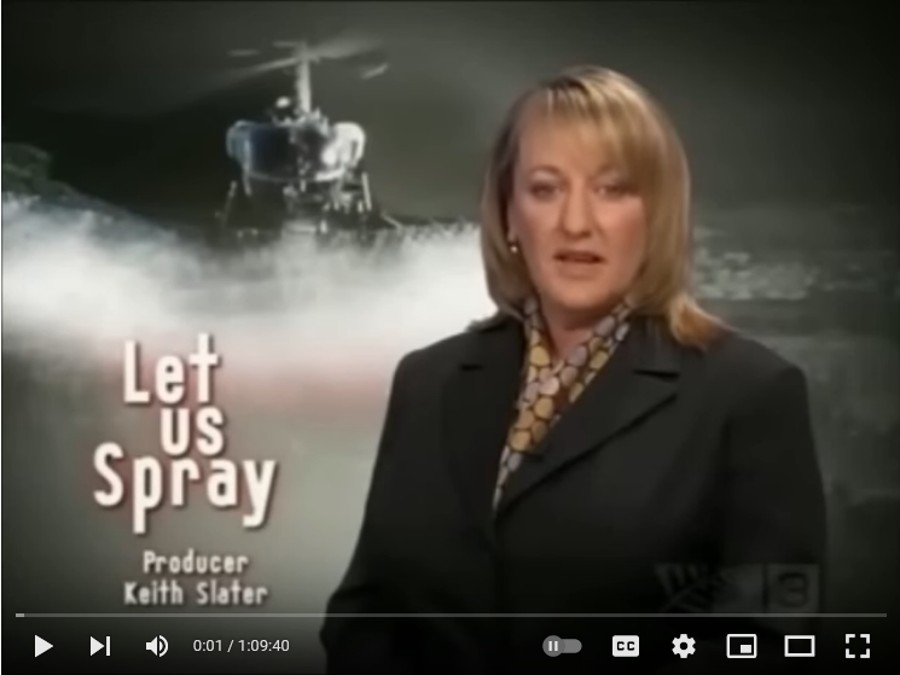
LINK TO VIDEO HERE
Archived here also: https://archive.org/details/let-us-spray_201901
Published on Apr 8, 2013
The TV 3 Exposé, initially broadcast then censored from NZ TV. A must see for any member of the public, this doco covers the exposure of the Paritutu and New Zealand community at large to the chemical 2-4-5-T, manufactured at Ivon Watkins Dow in New Plymouth between 1962-1981, and the disastrous effects it had on those exposed.
Further coverage was made by the Investigate magazine:
THE POISONING OF NEW ZEALAND
From Investigate
THE ‘ERIN BROKOVICH’-STYLE SCANDAL IN NEW ZEALAND’S BACKYARD
Outbreaks of rare diseases and tumours are appearing in clusters around New Zealand, close to chemical factories. Why doesn’t the Government want to investigate? Simon Jones discovers what the authorities don’t want you to know:
Walk down any street in New Plymouth and you will probably hear a mixture of coughing and spluttering. Look inside any school and there appears to be more special needs children than is the norm for a city the size of New Plymouth. It’s often been said that everyone knows someone with a serious disease, whether it be cancer or multiple sclerosis.
Bad luck? Possibly, but for the last 15 years a group of residents have turned scientists to uncover what they say is a national health scandal – and one which, despite the government and media’s persistent attempts to ignore, won’t go away.
They may sound like conspiracy theorists in overdrive – and there is little in the way of official evidence and health statistics to back up what they say. But here is the frightening thing: If, in this real-life game of Fact or Fiction?, only 10 percent of what the residents say is true, we have a huge health scandal on our hands – the magnitude and implications of which are unimaginable.
The story centres around one of the city’s major employers, the Ivon Watkins Dow Plant.
Since the early 1960s, and up until 1987, it manufactured the 2,4,5T herbicide – which contains the deadly dioxin also used to form Agent Orange – a weapon of huge destruction in the Vietnam War.
In New Zealand and around the world 2,4,5T is used to kill scrub, gorse and blackberry. In Vietnam, with concentrations of dioxin much higher, it had the same effect – to the extent where it devastated the country’s crops and caused major health problems amongst veterans, including cancer, multiple sclerosis, while creating learning difficulties amongst the vets’ children.
Is it just coincidence that many in New Plymouth – and in areas around New Zealand, where this herbicide was extensively sprayed, complain about the same health problems?
For years governments, both here and overseas, turned a blind eye to the damaging effects of dioxin, refusing to admit that there was any link between Agent Orange and health problems suffered by vets.
Yet recently, in a draft report leaked to the Washington Post, the US government upgraded dioxin to a ‘human carcinogen’ – in other words a substance which is a major cause of cancer, as well as birth defects and infertility.
Only a pending lawsuit by New York restaurant owners, who claim the link to cancer will scare away customers, has blocked publication of the report.
The US Environmental Protection Agency notes that emissions of dioxin have plummeted from peak levels in the 1970s, but still pose a significant threat to some who ingest it – mostly in food, especially food of animal origin.
John Moller, the president of the Vietnam Veterans Association, says it is ironic that some of the 3,800 Kiwi vets who served during the war came home to find that they were still partly exposed to chemicals associated with Agent Orange either by living in New Plymouth or areas where the herbicide was sprayed.
“The New Zealand government says that because of the few figures involved and the time span it is not worth running tests on veterans now.
“That’s rubbish because the government has given $200,000 to the nuclear test veterans association for research and legal fees. Their exposure happened before Vietnam and their figures are much smaller.
“The government has buried its head in the sand for too long,” he says. “For example, when an enquiry was finally instigated, they took samples from native forest but not the Pine forest where 2,4,5-T was heavily used.
“The problem with dioxin exposure is that there is a 30-year envelope. The historical effects are only beginning to come through now.”
The US government invented 2,4,5T in 1941 to be used as a weapon of war against Japan. Later, with concentrations lower, it is intended to control unwanted vegetation, most of which is found in Taranaki, Northland and Gisborne.
The manufacture of 2,4,5-T is said to have started in New Zealand around 1962 and by 1970 the number of birth defects in New Plymouth doubled and the number of cases nationwide started to rise.
Because of international health concerns 2,4,5-T production was halted around the world – with the exception of one factory, the Ivon Watkins Dow Plant in New Plymouth which persevered until 1987. The plant is still in operation today but only produces pesticides.
Levels of dioxin found in 2,4,5-T were reduced through the late 70s and 80s as Ivon Watkins responded to health concerns, yet residents say the effects of intense manufacture in the 1960s are etched on the faces and, more importantly, the glands and
livers of local people now.
Time for some statistics. The average level of dioxin in Agent Orange was around 198 parts per million. In New Plymouth, at the peak of production, the average level in the manufactured product was around 95 parts per million – around half that of Agent Orange. By 1987 the level of dioxin was down to 0.1 or 0.05ppm following heightened awareness about the potential health problems.
Initially residents and workers were happy with health assurances from company bosses, particularly with the way waste was disposed through burning. But only recently have secret dumps been found around the city, dumps which residents say have infected soil and water.
In 1986 the Ministry of Environment held an official inquiry into dioxin contamination after 300kg of vapour accidentally leaked from the plant. Yet, interestingly, company bosses admitted that over 250kg of vapour was normally discharged as a result of the normal process anyway.
The enquiry team concluded that there was no evidence of major contamination in New Plymouth or of any major health risk Yet residents say that part of the information used in that research was based on American studies which have since found to be fraudulent. This is where the issue becomes more complicated. In 1949 an explosion at the Monsanto chemical plant in Nitro, West Virginia, exposed many workers to effects of 2,4,5-T. Thirty years later Monsanto scientists and an independent researcher, Dr Raymond Sunkind, compared death rates amongst workers exposed to 2,4,5-T to those who hadn’t been exposed. When no differences between the two groups were found, Monsanto claimed that dioxin did not cause cancer. Evidence of inaccuracies were only exposed in the late 1980s when a group of Missouri citizens sued Monsanto for alleged injuries suffered during a chemical spill caused by a train derailment in 1979. While reviewing documents obtained from Monsanto, it was held in court that during the early studies, scientists omitted five deaths from the dioxin-exposed and put them in the unexposed group. Given that, and the leaked report to the Washington Post, it’s small wonder that the residents are now calling for a new inquiry.
It’s easy in stories like this to get bogged down with statistics and hearsay. But it’s only when confronted with the truth about health problems in New Plymouth that people start listening.
Take, for example, the case of Ross Lawrence, 43, who lived within a stone’s throw of the plant and worked there as a storeman between 1980 and 1985. He contracted non-hodgkins lymphona and Hepatitis C in 1998 – one year after his wife, Patricia, 41, was diagnosed with breast cancer. To add salt into the wounds, the 17-year-old family dog, Ena, died of cancer last year and both Ross’s children suffer from a mixture of skin complaints and bleeding noses.
It’s only when you hear stories like Lawrence’s that the word “coincidence” becomes a little bit too stretched.
“I came home from Pakistan where I was working on an oil rig in 1997 to look after my wife,” said Ross. “Shortly after I went to the doctor after complaining about flu-type symptoms only to be told that I had cancer and Hepatitis C. Isn’t it strange how three of us could get cancer in one household?”
An extensive course of chemotherapy seems to have thankfully cleared the cancer, and after having her glands removed, his wife managed to keep both breasts. But the trauma also brought its psychological toll. The stress and strain of illness coupled with the loss of his $100,000-a-year job effectively ended their marriage.
“This could have cost my life,” says Lawrence, “and it probably will in the end because Hep. C never goes away. They should be made accountable. How many other people have died of cancer without knowing the cause? How many other people are going to die?”
Ross Lawrence, like other employees, had few concerns at the time of working at the Ivon Watkins Plant. “We knew about the dangers of 2,4,5-T, but it was such a safety orientated company. They held regular safety meetings and did everything by the book.
“We were told that the waste was incinerated at temperatures which were so high that there would be no residue because everything would be dissolved. It was only when dumps containing the waste were found that I really started to worry,” he adds.
“There is still a cover-up going on. If you walk the streets of New Plymouth people wouldn’t know. Most didn’t know what the factory made. The local paper, the Daily News prints little on the subject. And the local MP doesn’t want to know.”
Now Lawrence is actively working on the local rigs but campaigns with others to lift what they say is a veil of secrecy over this health scandal.
Another leading the campaign is Andrew Gibbs, who helped set up the Dioxin Investigation Network. Recently Gibbs sent one sample of blood and a sample of breast milk to America to check for traces of dioxin, the particular type of which is called 2378 TCDD which is the most toxic type known to man. Gibbs claims previous blood tests have been worthless because 2,4,5-T passes through the system so quickly it leaves no trace. The difference here is that they would also be testing for its residual, 2378 TCCD.
When they sent the samples to the US, taken from his partner, Iris, and her sister, Lesley, they went missing for four days. Despite being clearly marked for an Atlanta laboratory, they ended up in Los Angeles. More than 160 days later, they are still waiting for the results.
“In Vietnam they have found levels of 30 to 108 parts per trillion in blood,” he said. “Levels in Maori women around the Bay of Plenty, where the herbicide was extensively sprayed, have already been found to be up around 26.7ppt. As of yet we still don’t know what the blood levels are in New Plymouth.”
Gibbs says even burning the waste didn’t destroy it. Instead waste streams left residue in the soil, on washing hanging out to dry and on barbecues. “We ate it, breathed it and wore it. When the Yanks burnt it off after Vietnam they burnt it off 80-90 miles down wind from Johnson Island.
“We burnt ours downwind on the whole town of New Plymouth. In the 1987 enquiry they said they found no evidence of dioxin in people or soil. But what they had was a 1,500 ppt safe level. The highest recorded in Vietnam was 808 ppt. In New Plymouth we’ve already levels up to 310 ppt.” His views may be ignored by health officials in New Zealand, but they have found credence in America. George Lucier, director of the National Toxicology Programme, and author of the Environmental Protection Agency report, says there is no avoiding dioxin.
“Even penguins in Antarctica have dioxin in them. No-one sets out purposely to make dioxin. It is an unwanted side-product that you get from burning. Anytime you combine heat, chlorine and organic material, there is the possibility of making dioxins.”
Lucier says scientists did not quite understand how dioxin damaged the body, but did know it acted on a universal mechanism controlling cell functions.
Dioxin attaches, or binds tightly, to the AII receptor – a kind of cellular doorway found in virtually all cells in the body. Once there, it changes the function of hundreds of genes. It will either stimulate gene expression of suppress it.
Dioxin exposure has been linked to many different tumours, especially non-Hodgkin’s lymphoma, respiratory cancers, soft tissue sarcoma and prostate cancer. One Italian study of dioxin in children found hormonal changes.
“When they have children, most or all their kids are girls, not boys,” says Lucier. “Dioxin affects pathways that are involved in normal growth and differentiation, so it can cause birth defects,” he adds. “It can effect sperm counts.”
Regional comparisons for cases of multiple sclerosis and non-hodgkins lymphoma are hard to find, if not impossible to get. The Ministry of Health says there are too few cases nationwide to offer a meaningful regional breakdown. The only figures are available are from the Cancer Mortality Atlas published as far back as 1982 which says that lymphosarcoma is ‘particularly severe’ in New Plymouth, while the number of male deaths from Hodgkin’s disease was ‘particularly high’.
Yet, there are regional disparities in other areas too. While New Plymouth is almost three times the national average for Hodgkins Disease, Waipawa is five times. While New Plymouth has three times the national average for lymphosarcoma, Strathallan in South Canterbury has seven times.
There are 14 known cases of multiple sclerosis in New Plymouth suburb of Paritutu, where the plant is based. The figure may sound small, but compare that to Australia where the rate is 40 per 100,000. That should give Paritutu just 2.4 cases.
During the 1986 governmental enquiry, Ministry of Health principal toxicologist Michael Bates defended the higher rates.
“It’s normal to get quite a variation everywhere for all cancers. One area might have a predominantly old group of people for example. But in many cases no-one is exactly sure why.” Yet since 1980 the birth defects rate in Taranaki has been about 50 per cent higher than the average for the rest of the country. While it’s fair to say regional disparities also occur in other areas for different types of diseases and abnormalities, Taranaki usually falls victim to all of them.
50-year-old Roy Drake also lives close to the plant.
In 1988 he was diagnosed with multiple sclero
sis. He now finds it almost impossible to walk
and is close to blind.
Being homebound has meant that Drake has spent a lot of his time studying the effects of Dioxin, looking at international studies from around the world.
“If you look at any major chemical plant anywhere in the world you will find massive rates of the same sorts of diseases. Here in New Plymouth, Down’s Syndrome and Spina Bifida are going through the roof.
“Our local school has 1200 kids and in 1999 they advertised for ten special needs teachers. I’ve found out in one Kindergarten alone there are four kids with cancer.
“People of New Plymouth are very illiterate to it all. That’s because there has been a huge cover up. Imagine the legal implications of this. The damages would run into billions.
“Half of my friends are dead or have brain tumours. Not many people live to a ripe old age round here. They all die five or ten years short of their time. I am very angry and cannot understand why this has been ignored for such a long time.”
Drake says even his caregivers are riddled with disease. “I’ve had one who had sugar diabetes, two with strokes. The girl currently looking after me has cervical cancer.
“For years we have been wearing clothes with dioxin on them. When we put a plate in the cupboard it is there, although you can’t see it. There’s no getting away from it around here.”
Drake thought the new Labour government, with its Green allies, would order a fresh enquiry following new American evidence on the damaging effects of dioxin. Instead, he says, they are happy to sweep the issue under the carpet. In June of this year Health Minister Annette King refused calls for a new enquiry, relying on conclusions found in 1986 – interestingly a report delivered under the previous Labour Government.
“While I appreciate the ongoing concerns about the health of people living around New Plymouth, from the advice I have received from Ministry officials, I am satisfied that the monitoring and investigation carried out around IWD previously were adequate to show that significant exposure of the local population did not occur.”
King went on to say that a study of targeted groups who believe they have been exposed would be too expensive and difficult.
“The residents present prior to that time may have moved and would need to be traced for testing to be meaningful,” she said.
“A detailed analysis of the health data relating to the Taranaki region would be needed before any conclusions relating to the relative rates of cancer, birth defects, or other diseases such as MS, could be meaningfully compared. I understand such a process could be carried out but it is difficult to see what would be gained by doing so now.”
Not surprisingly, Andrew Gibbs disagrees. He says they are looking for recognition and help. He points that areas like Gisborne, where 2,4,5T was sprayed has almost identical ratios of motor neurone disease as Vietnam – isn’t it time we were at least prepared to look at the situation again?
Yet it seems the government is blinded by issues on the grounds of cost. The residents of New Plymouth say they have already paid a high enough price for dioxin contamination, including many lives. Their search for truth and a sympathetic ear goes on – but so far, few people are willing to listen.
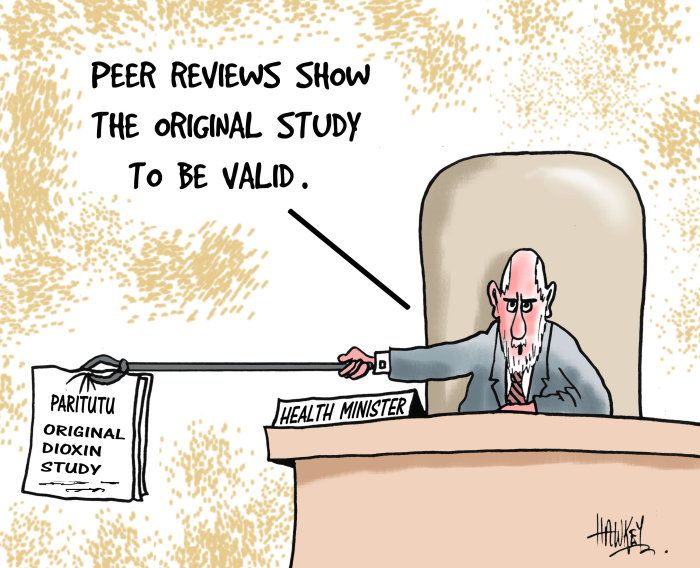
Paritutu Original Dioxin Study. Peer reviews show the original study to be valid. 26 January, 2007 [Image credit at link]
https://natlib.govt.nz/records/23164028?search%5Bpath%5D=items&search%5Btext%5D=70068
MORE ON IVON WATKINS DOW:
MP’s Agent Orange claim triggers inquiry 10/01/05
Officials will investigate a Government minister’s reported claim that Ivon Watkins Dow exported the components of the defoliant Agent Orange for use in the Vietnam War.
MP’s Agent Orange claim triggers inquiry
/cloudfront-ap-southeast-2.images.arcpublishing.com/nzme/FNMG5HFOSRQNF52F77VTYKWEKE.jpg)
John Moller
Officials will investigate a Government minister’s reported claim that Ivor Watkins Dow exported the components of the defoliant Agent Orange for use in the Vietnam War.
Transport Safety Minister and New Plymouth MP Harry Duynhoven has given the long-standing claims that New Zealand made and exported Agent Orange new weight with comments to a Sunday newspaper.
It has also raised questions about whether the Government will face lawsuits at home and overseas.
He told the Sunday News he had information the products used to make Agent Orange – 2,4,5-T and 2,4-D – were shipped from the Taranaki wharves in the 1960s to the American base at Subic Bay in the Philippines for use in the Vietnam War.
This contradicts denials by Ivon Watkins Dow – now Dow AgroSciences – that it supplied Agent Orange or its ingredients to the US military from its Paritutu, New Plymouth, plant.
The newspaper quoted Mr Duynhoven as saying the export of the products under the National Government of Sir Keith Holyoake “should be in the public arena”. The claim has come mainly from environmentalists and the Green Party.
In 1990, during the fourth Labour Government’s final days, a parliamentary committee reported that evidence for the claim was inconclusive.
Mr Duynhoven was overseas yesterday and could not be contacted.
But Government duty minister Rick Barker said officials would look afresh at the claim.
National deputy leader Gerry Brownlee asked if Mr Duynhoven had hidden his information from last year’s health select committee inquiry into the health effects of the agent on veterans and their children.
“Surely Mr Duynhoven wasn’t the only member of Cabinet to have this information?”
He said Prime Minister Helen Clark must tell what she knew, how long she knew and how long she intended sitting on the information.
But Green Party co-leader Rod Donald said Mr Brownlee should “look in the mirror”, as National was in power at the time during the war and for most of the time since.
He said Mr Duynhoven’s reported revelations were breathtaking. They vindicated his party’s view and showed the Government should take IWD to court.
“Being sprayed with New Zealand-made Agent Orange is equivalent to being bombed by New Zealand-made bombs.
“The revelation strengthens our call for the families of Kiwi soldiers in Vietnam to get the full medical treatment they deserve and the monitoring that they’ve been calling for.”
John Moller, former president of the now-defunct Vietnam Veterans Association set up in the 1980s to research the effects of Agent Orange, said he was shocked by Mr Duynhoven’s statement.
The only documents Mr Moller had seen relating to such claims were two books, one of which said ICI New Zealand had supplied Agent Orange.
“But being a member of Parliament I suppose he’s got the knowledge and evidence to back it up.”
Mr Moller said that at the parliamentary probe into the claims, an IWD official was asked if Agent Orange was made at New Plymouth.
“His reply was ‘not at that site’.”
No politicians had bothered to ask whether it was made at another site.
Mr Moller said the irony was not lost on veterans that they could have been poisoned by their own country.
He said veterans and their widows and families should be compensated. About 600 veterans, of more than 3000 who served there, were now dead.
Dow NZ general manager Peter Dryden was overseas and could not be contacted yesterday.
Greenpeace toxics campaigner Mere Takoko said up to 15 per cent of the product made in New Zealand was exported during the Vietnam War period.
She said the Government breached the Geneva Protocol prohibiting the use and supply of chemicals for waging war.
Former Taranaki port watersider Norm Quinlan said it was well-known in the 1960s that Ivor Watkins Dow exported some chemicals to the Philippines.
Now 85, Mr Quinlan said a drum containing liquid from the plant broke while loading one day and another worker got covered in the “juice”.
He was in hospital for months and a few years ago died of cancer.
“There was three in that hold that day and they all later died of cancer.”
Mr Quinlan did not know exactly what substances they were exposed to, but “it was stuff from Ivor Watkins Dow going up to the Philippines … going up that way anyway.
“The only thing I can tell you is that I worked on the ship that sent that stuff away. I’ve got an idea that it was in 66 or 67.”
He said few watersiders from that era were still alive.
Deadly mix
* Agent Orange is a mixture of the herbicides 2,4,5-T and 2,4-D, and was used as a defoliant by the US military in the Vietnam War.
* Ivon Watkins Dow made both herbicides at its Paritutu, New Plymouth, plant but denies producing Agent Orange or selling its components to the US military.
From the Green Party NZ:
Dioxin disaster
TV3’s Melanie Reid has spent the last year investigating dioxin contamination from the herbicide 2-4-5-T, especially in the New Plymouth suburb of Paritutu, where Ivon Watkins Dow manufactured the chemical for more than 20 years. The result, a 90-min documentary called Let us Spray went to air last night. If you missed it, you can watch it online here. (Video displayed above).
The documentary is extremely disturbing. Most notably, a forensic accountant hired by TV3 went through an earlier Ministry of Health report into dioxin contamination in New Plymouth and found that ill-defined parameters, muddled reporting of facts and inconsistencies in drawing conclusions masked the true extent of the dioxin contamination problem. READ MORE
NOTE: DEAD blog.greens LINK NOW
Read more on chemicals and how they poison us on our ‘chemicals’ pages.
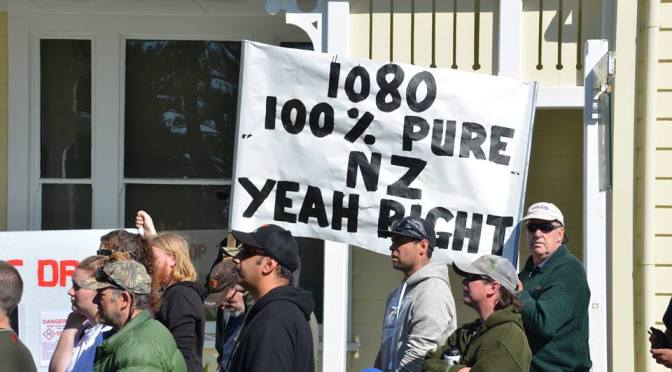
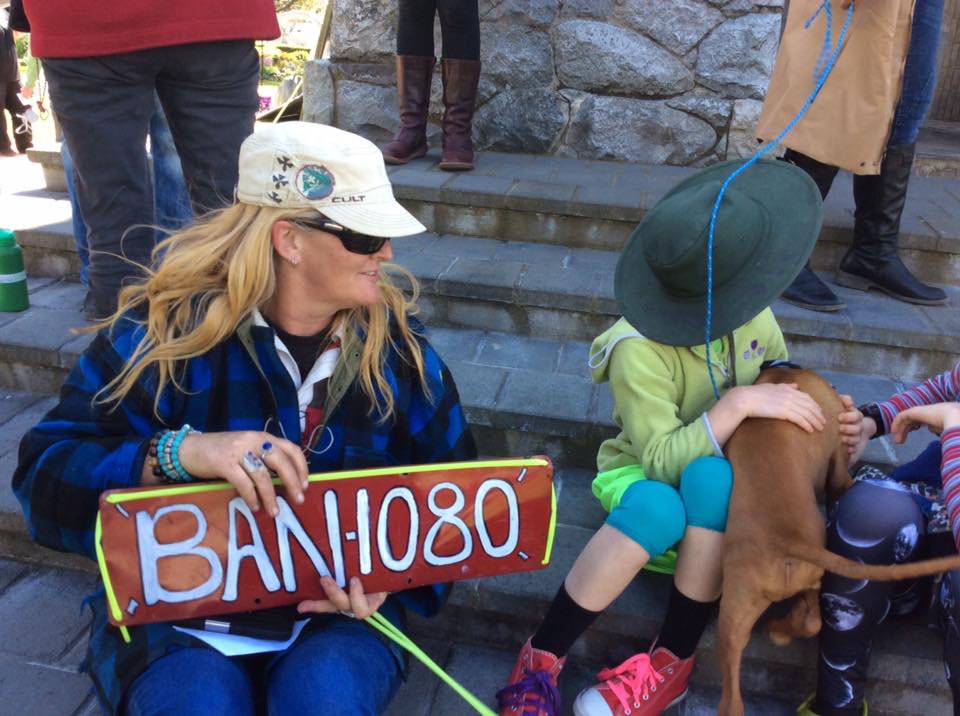
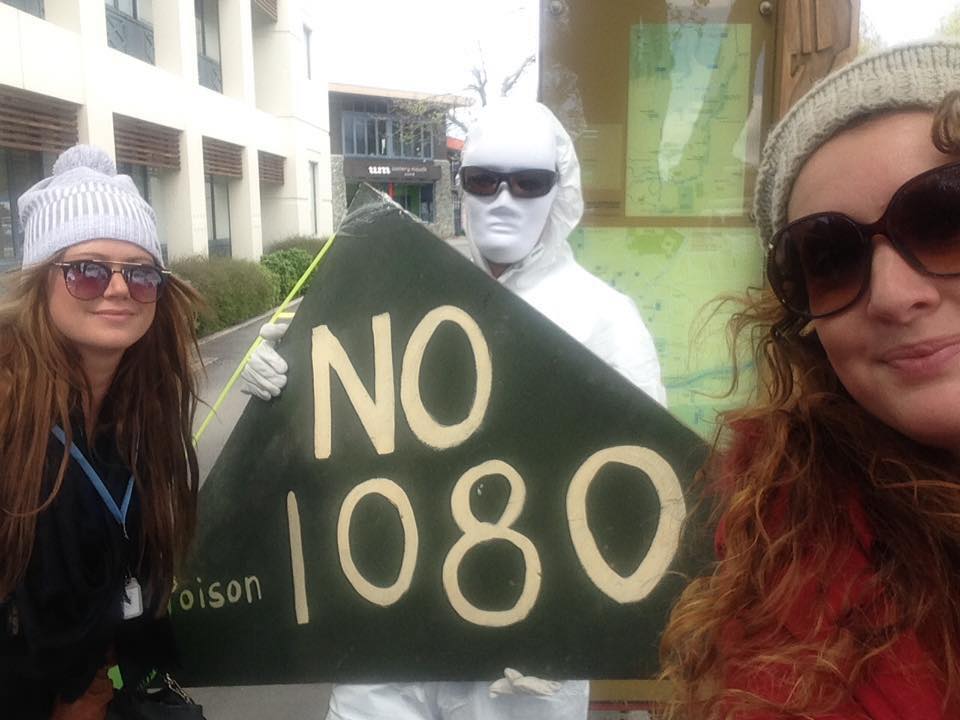
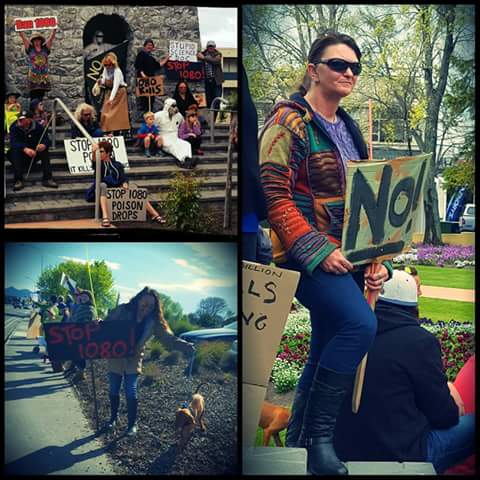
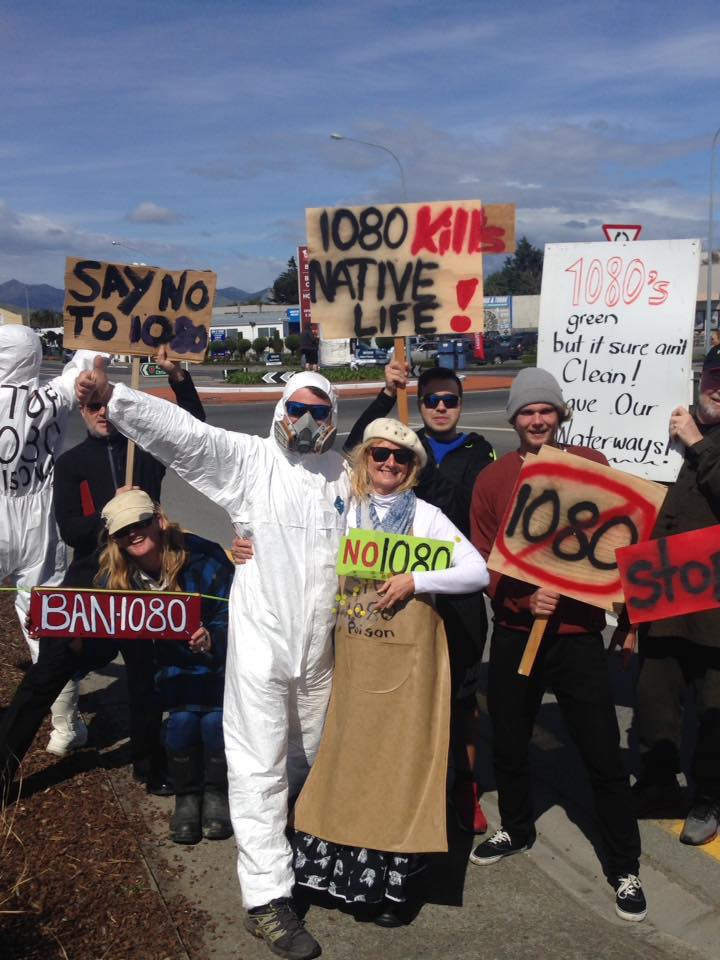
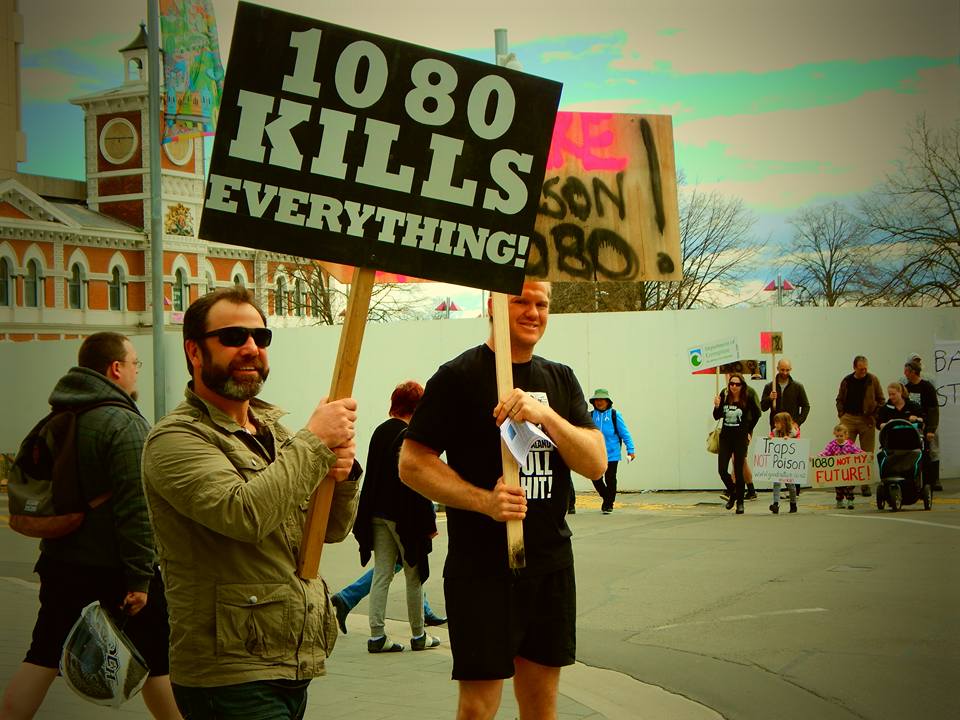
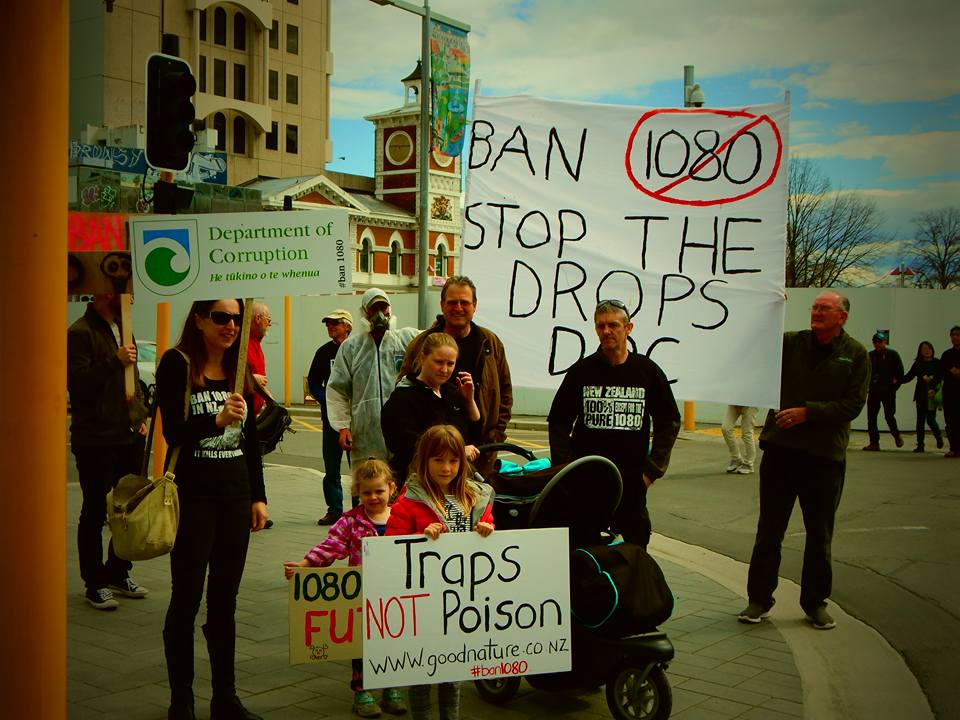
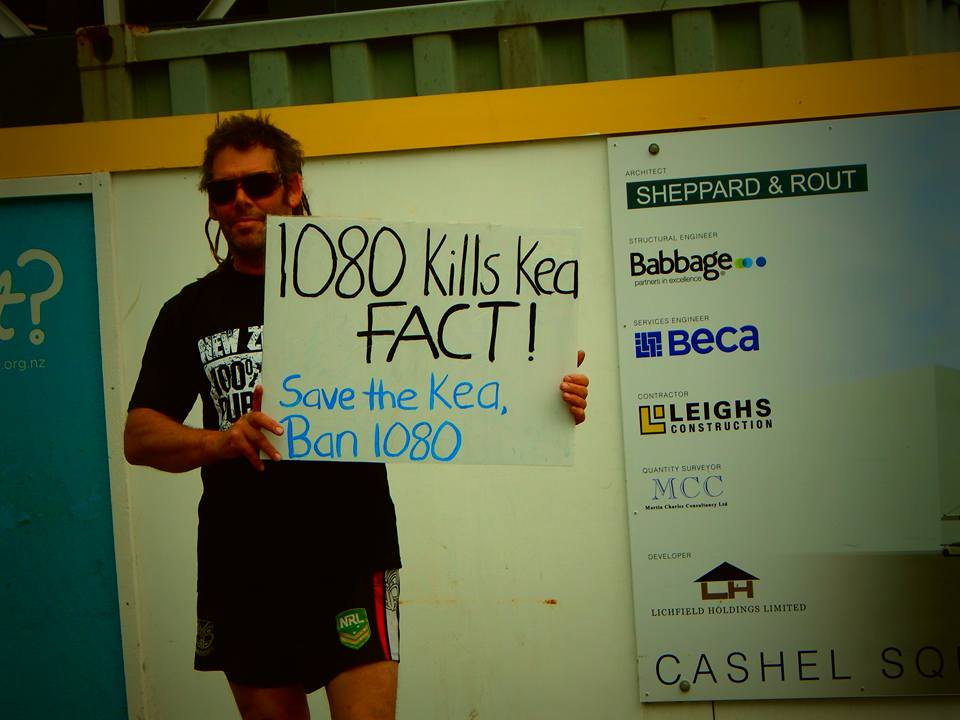
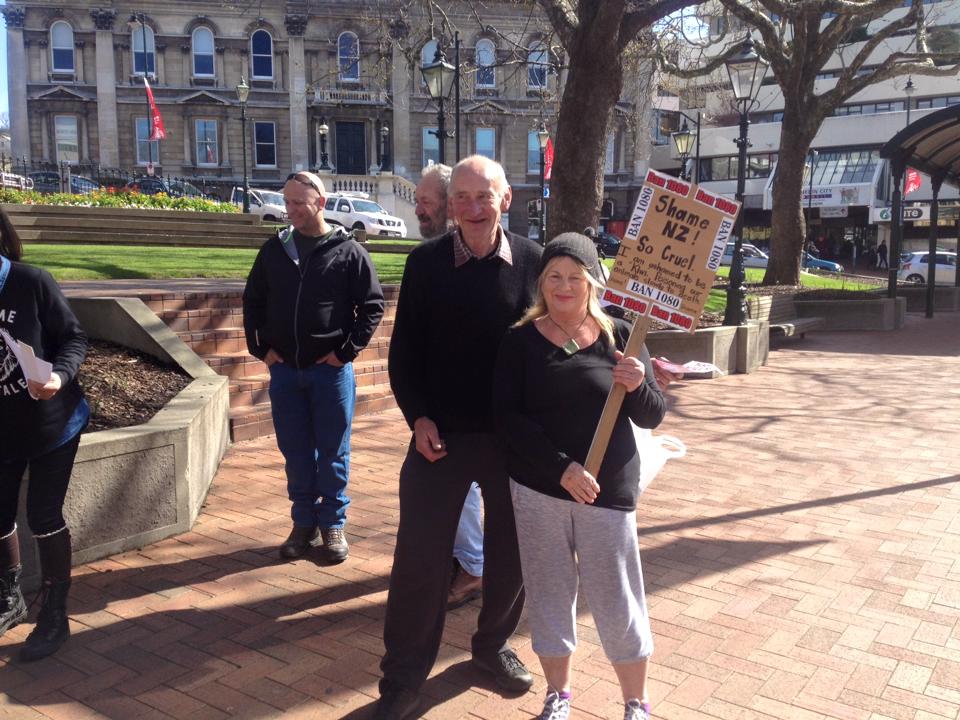
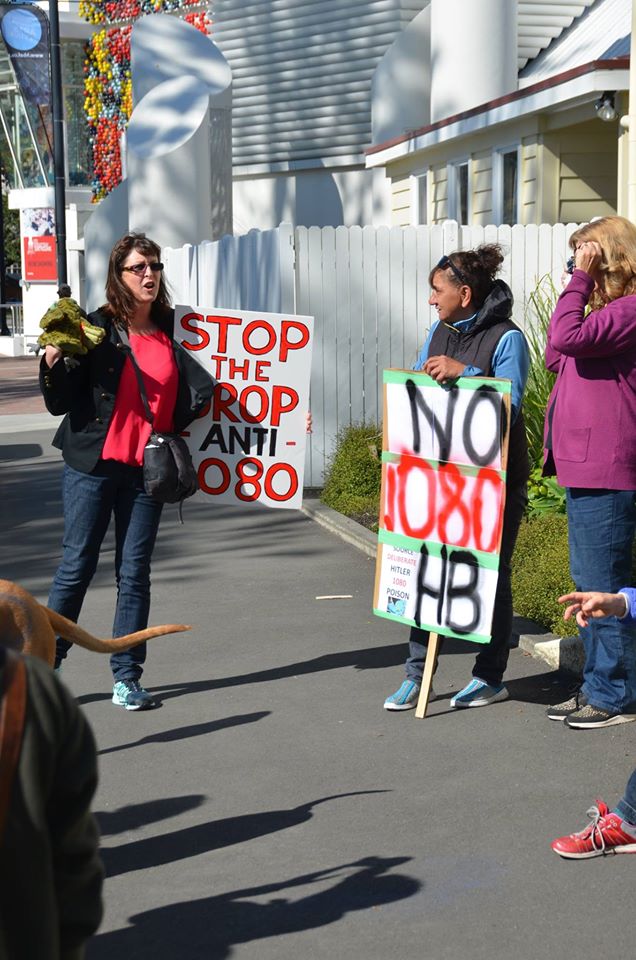
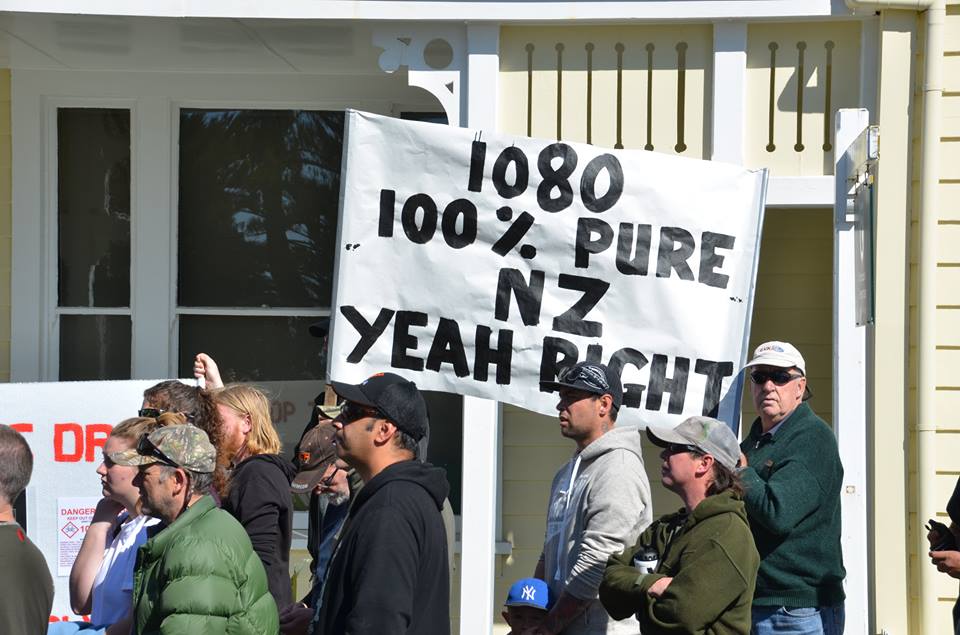
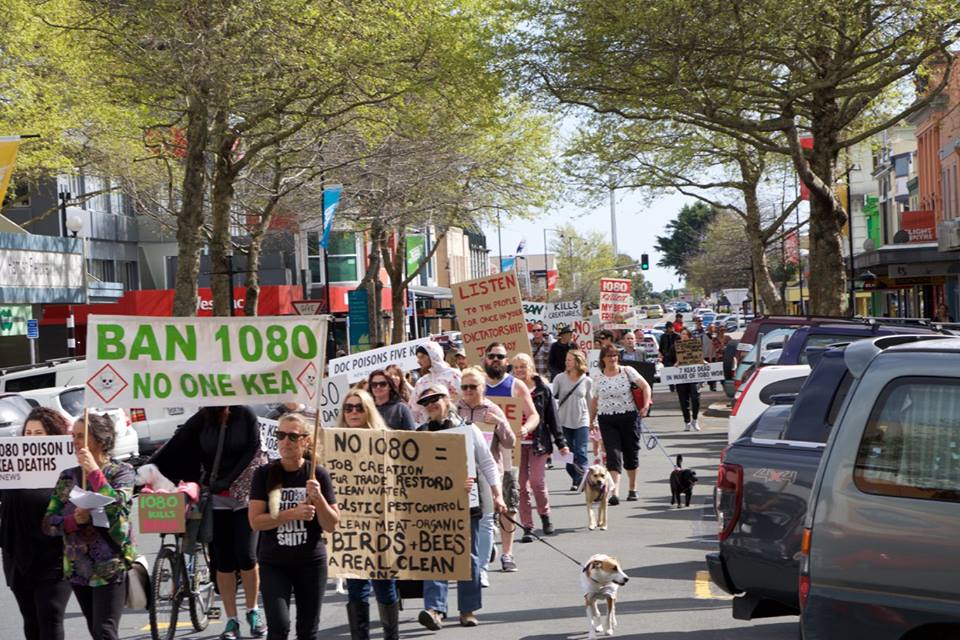
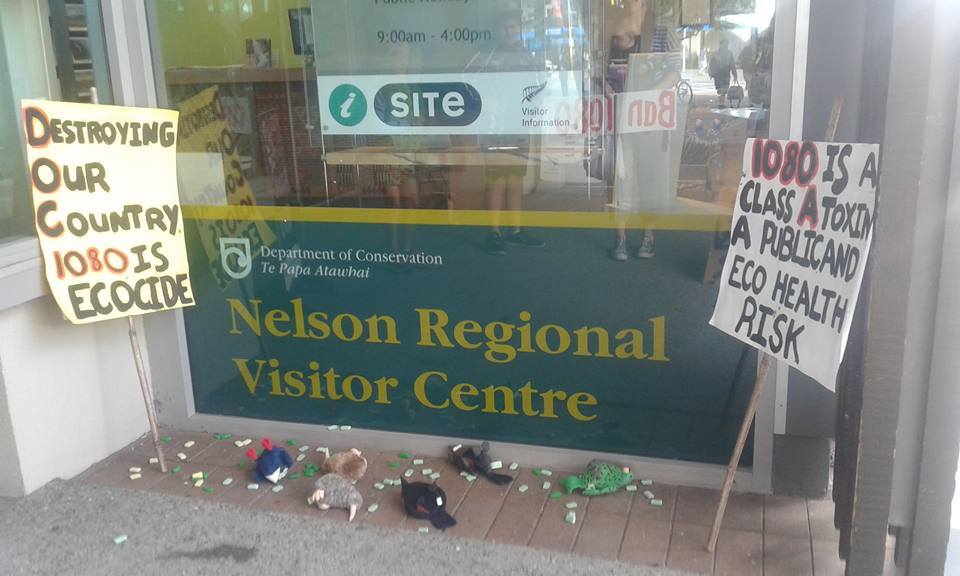
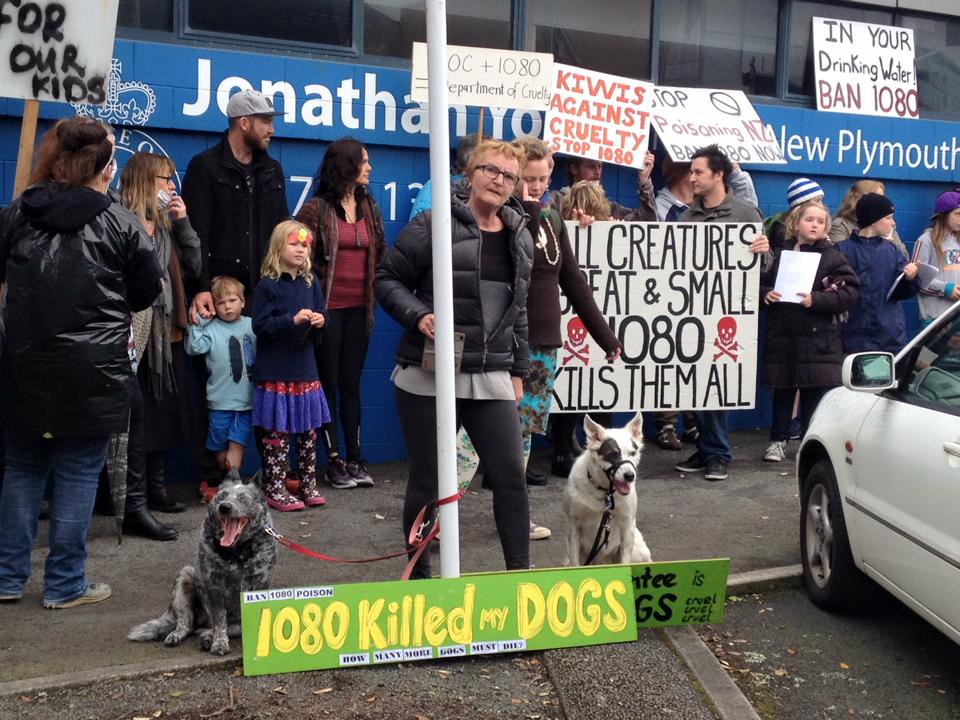
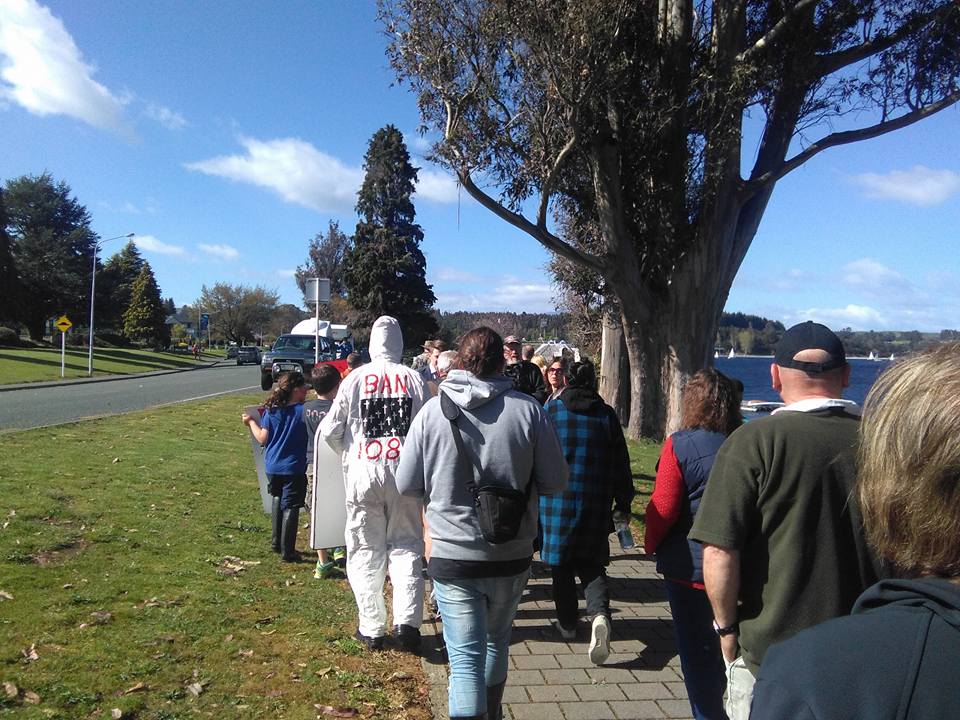
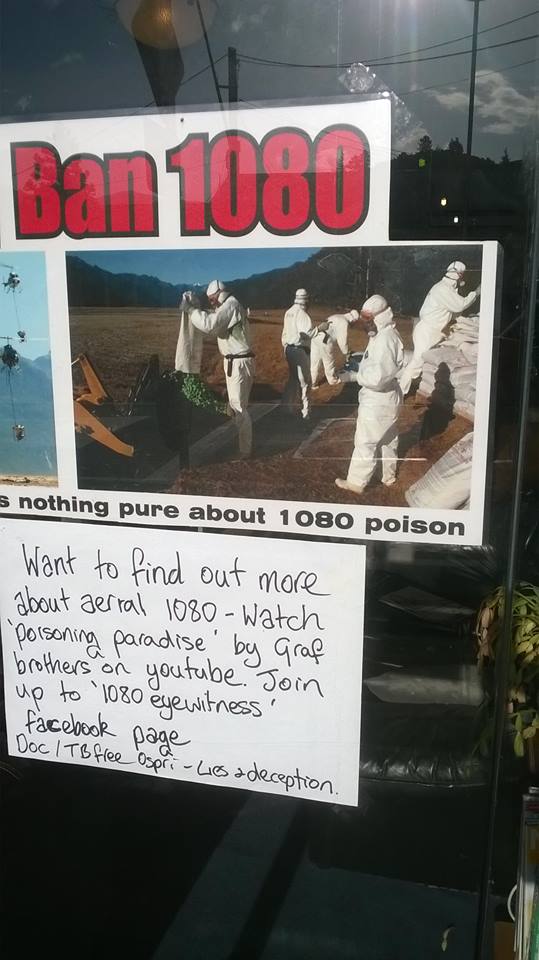
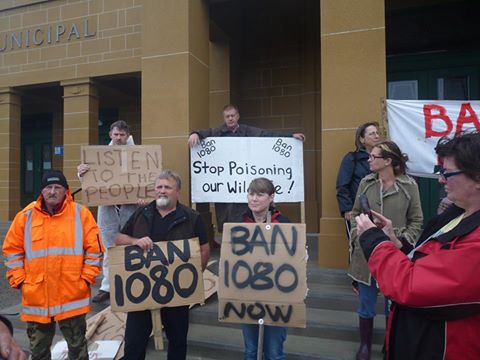
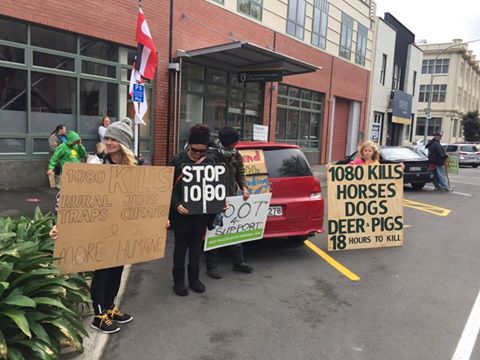
This Weekend Saw a Huge Turnout NZ Wide of People Protesting Against the Govt’s Extensive Use of 1080 – Go Kiwis! (updated photos)
For over 15 years the New Zealand Government has been systematically dropping massive amounts of food, laced with a cruel and universally toxic poison into its forest ecosystems. Enough poison every year to kill the entire population of NZ four times over. No other country is doing, or ever has done, anything remotely similar on such a scale.
1080 is an alias for Monofluoroacetate, a chemical. Monofluoroacetate was originally developed and marketed as an insecticide. READ MORE
This weekend peaceful protesters NZ wide took to the streets to let the Government know they are not impressed with this slathering of our paradise with toxic poison. They want it to STOP.
Note: If you have any instances of 1080 poisoning of livestock or of being required to cover up details, contact me at the contact page and I will direct you to a person who is considering taking legal action. Or simply go to 1080 Eyewitness on FB for the post. You would need to join.
[These images are from the FB page 1080 Eyewitness. If your photo is on here & you do not want it to be please contact me & I will take it down.]

Blenheim

Christchurch
Dunedin
Greymouth
Napier
Nelson
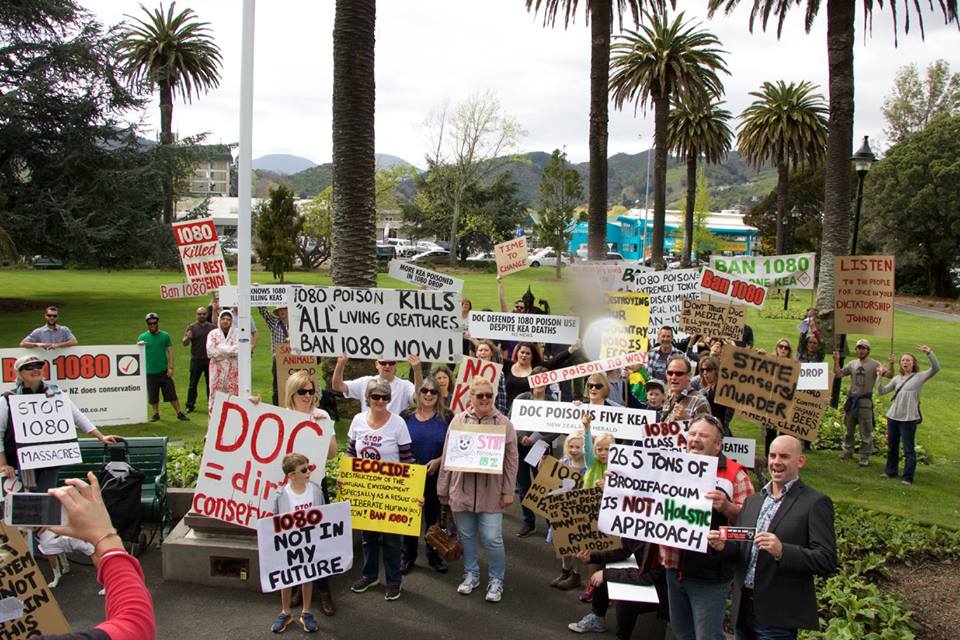
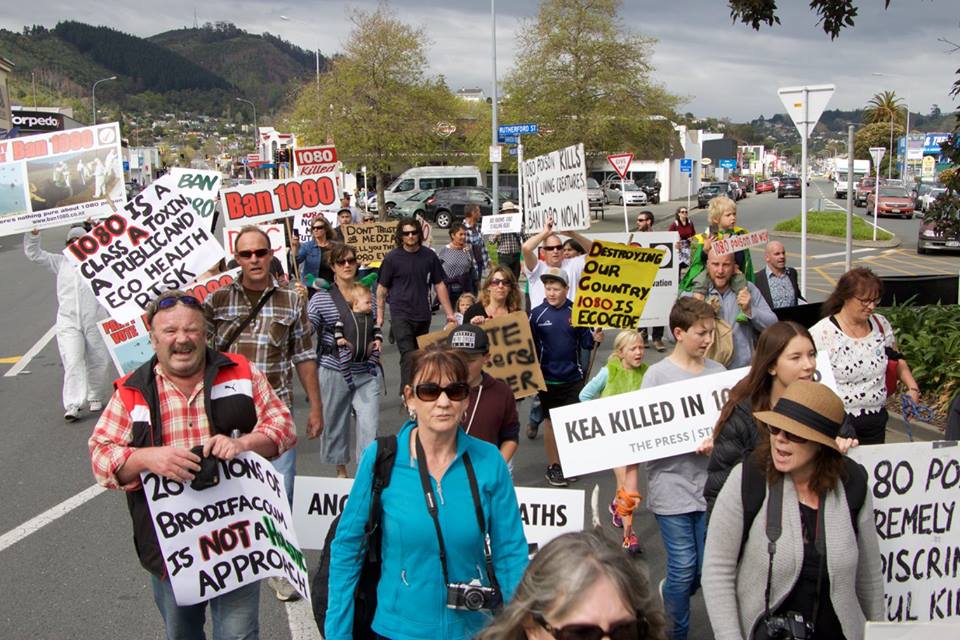
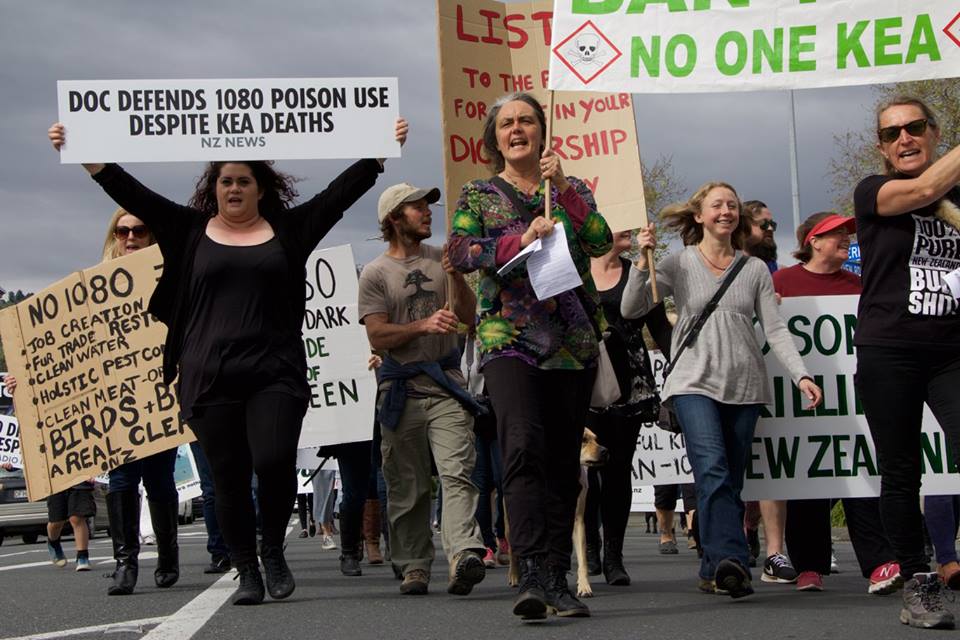

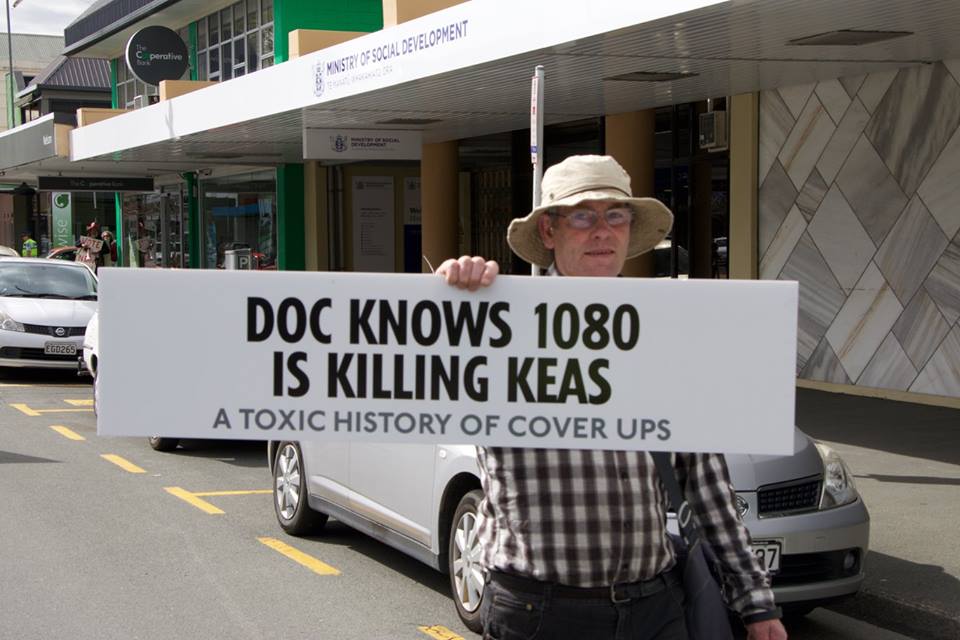
New Plymouth
Reefton


Taupo
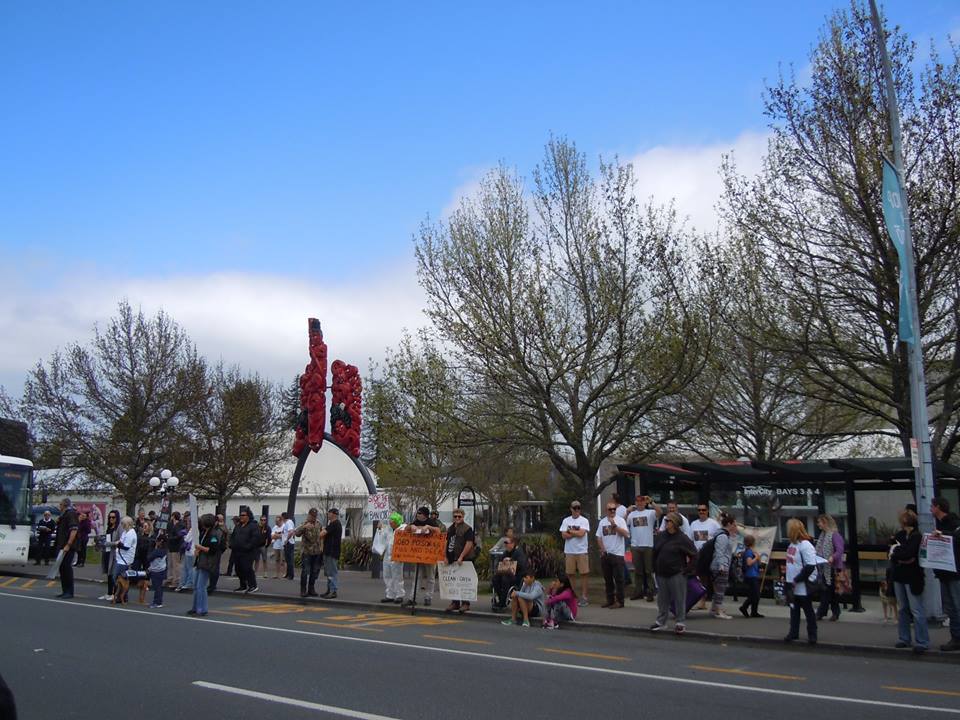
Te Anau
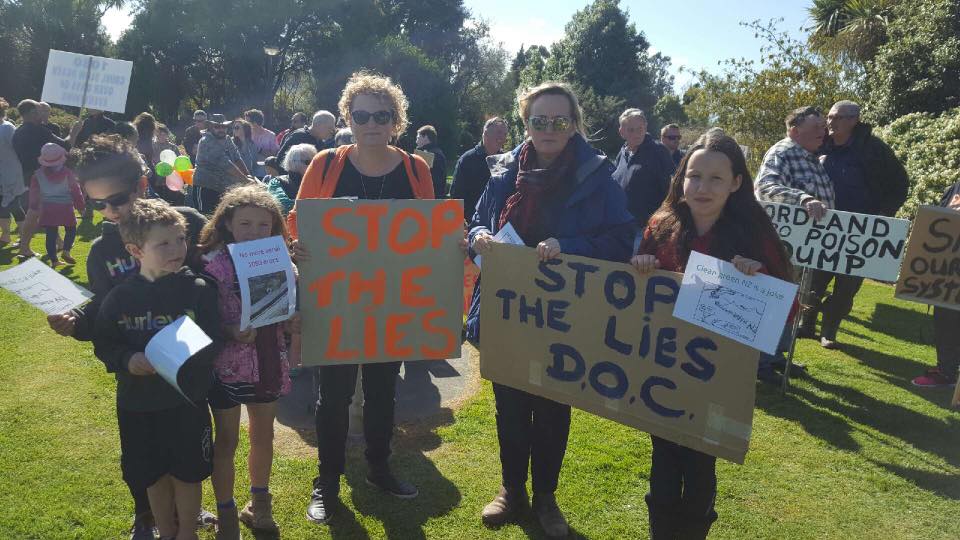
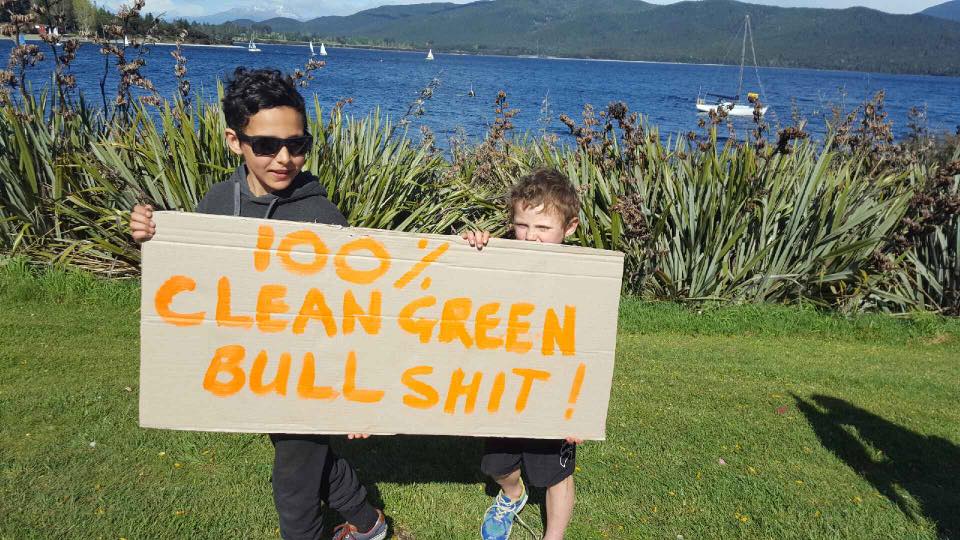
Thames
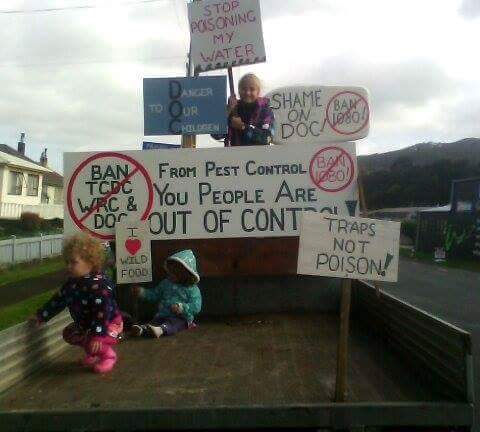
Wainuiomata
Westport
Whanganui

‘Let Us Spray’ – Censored from NZ Television – See what Your Govt Allowed Kiwis
A timely reminder here as we ponder on the extensive slathering of chemicals over our once clean green land happening now. Historically it was going on as well, we were just less privy to the info being minus the internet and social media. The fact it has been censored from NZ television speaks volumes. People suffered and died from this insanity. Again, follow the money. It will pay you to research this well because the powers that be, being corporately controlled, will not be warning you any time soon of the dangers of the wares they peddle to the unsuspecting public. Check our our related pages or search articles under ‘categories’.
Above all, watch ‘The Corporation’ doco to see why the cover ups.
EnvirowatchRangitikei
Published on Apr 8, 2013
The TV 3 Expose censored from NZ TV. A must see for any member of the public, this doco covers the exposure of the Paritutu and New Zealand community at large to the chemical 2-4-5-T, manufactured at Ivan Watkins Dow in New Plymouth between 1962-1981, and the disastrous effects it had on those exposed.
For further info visit our post on this earlier in the year. It includes other articles and links that are related.

Tens of thousands of people turn out to protest against the TPPA
With failed talks in Hawaii recently with regards to the free trade agreement, Kiwis turned out en masse today in many parts of the country to protest the whole deal that has thus far been carried out in secret. Ostensibly a free trade deal, it is a doorway that will give corporations open slather to sue us if we threaten their profit making margins … something they are already doing in other countries. Educate yourself on this issue … it is important. Here are links to various news reports throughout the country.
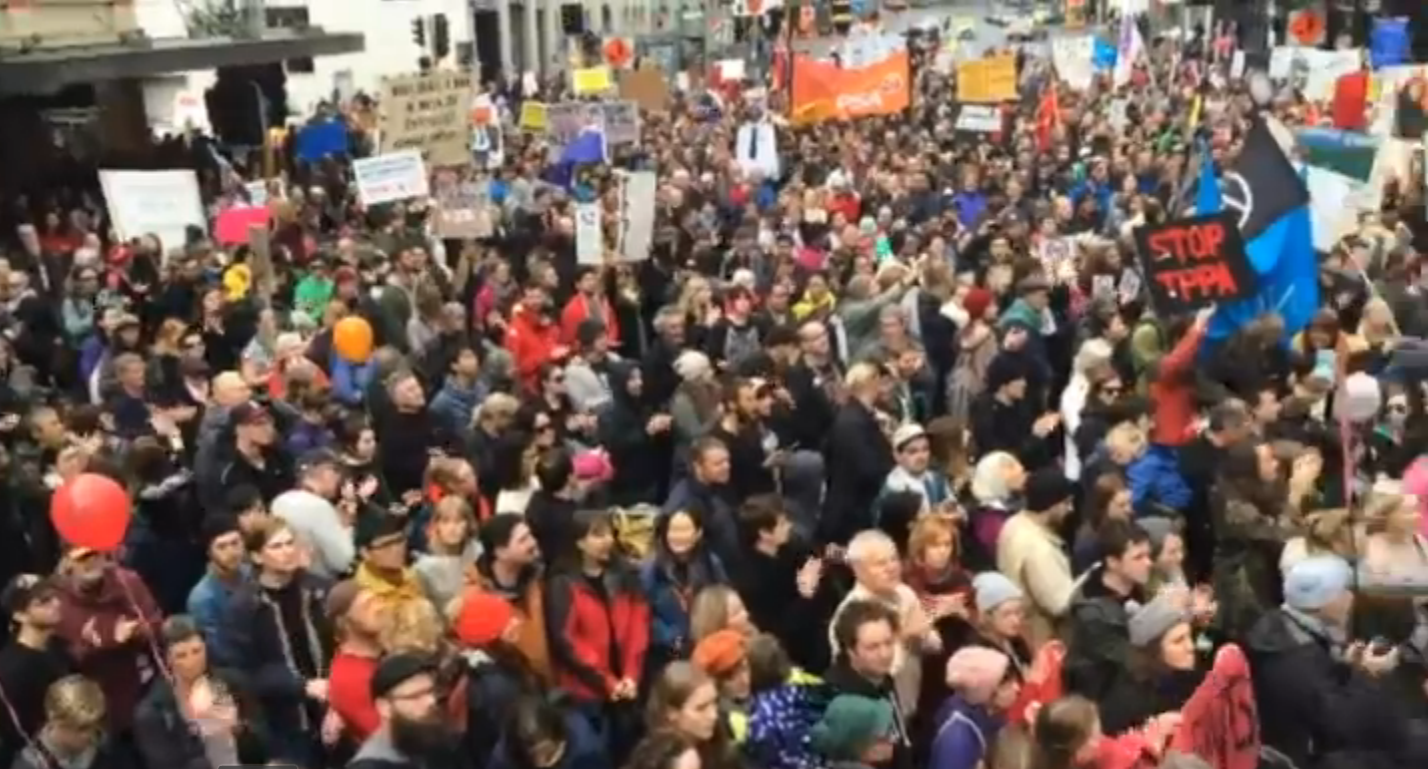
“The thing about this crowd is there’s children, there’s babies, there’s Maori there’s people from India, there’s trade unionists, there’s health professional, politicians, there’s professors, singers. It’s amazing. All of New Zealand is represented here. There’s no group you could say didn’t turn up today.” NZ Herald
“Documentary filmmaker Bryan Bruce sent a clear message to Tim Groser and the National Party today on the grounds of Parliament: ‘If they sign this deal they will be gone in the next election. We will not forget and we will not forgive them… ‘ ” SOURCE
Source: ONE News
In Auckland thousands of protesters turned out in the rain to march from Aotea Square down Queen Street.
Further south in Christchurch thousands of people turned out in the wet at Hagley Park to march up Riccarton Road, medical students, teachers and marketing executives among the crowd.
In Otago a large group of protesters marched through Dunedin’s CBD.
Protests today end an action week by those opposed to the proposed deal.
Rallies were also planned in Wellington, Kataia, Hokianga, Whangarei, Hamilton, Colville, Tauranga, Whakatane, Napier, New Plymouth, Featherston, Nelson, Timaru, Little River and Invercargill.
In Nelson, some of the protesters formed a choir to sing their message…”
Read more & watch related videos: https://www.tvnz.co.nz/one-news/new-zealand/tpp-protesters-push-through-barriers-at-parliament-q05743?post_id=10204858404079493_10205039977458714#_=_
Sign up and stay informed at It’s Our Future website here: http://itsourfuture.org.nz
And/or at our TPPA page here: https://envirowatchrangitikei.wordpress.com/tppa/
Fracking awareness raised in Whanganui meeting … “The drilling companies just seem to be able to do pretty much as they wish…”
Back in Sept/Oct 2014 our local newspaper mentioned a proposed report on fracking here in the Rangitikei, in the event consents were sought in the future. You can read that article HERE
The Green Party recently organized a meeting in Whanganui on the same issue, presenting the facts on what can be expected with fracking.
“….permission was being sought to drill up to eight wells 600 metres from Norfolk School in Inglewood.
There were also wells near Ngaere and Tikorangi schools, and well and flare pits could be within 200m to 300m of houses…”
We in the Rangitikei also need to be keeping an eye on this one. Bring yourself up to speed on fracking at the Fracking page here and follow the links to other sources.
There is a Frack Free Whanganui page HERE: https://www.facebook.com/FrackFreeWhanganui
And Manawatu Whanganui page HERE: https://www.facebook.com/groups/1714960352062798/
Read the Wanganui Chronicle article HERE: http://www.nzherald.co.nz/wanganui-chronicle/news/article.cfm?c_id=1503426&objectid=11318813

You must be logged in to post a comment.