From Dr Mercola @ mercola.com
Note: Due to heavy censorship Dr Mercola’s articles are archived to paid sub within 48 hours so the link below may no longer lead to the actual article
Story at-a-glance
- Paraquat is an herbicide and registered desiccant that has been used on American farms since 1964. A desiccant is a chemical that speeds up the ripening of the crop and dries it out, which facilitates harvesting and allows it to be harvested sooner than were the crop left to dry naturally
- Fifty countries have banned paraquat due to its extreme toxicity and adverse effects on health. A single sip is lethal to a human. A considerable body of evidence also links paraquat to Parkinson’s disease
- As of mid-March 2023, 2,998 lawsuits filed by farmers with Parkinson’s disease had been consolidated in Illinois federal court. The first bellwether trial is scheduled to begin in October 2023. Class actions have also been filed with state courts in California, Florida, Pennsylvania and Washington. The first state court trial is scheduled to begin in September 2023 in California
- The discovery process has unearthed a trove of documents showing Syngenta knew as early as the 1960s that paraquat posed neurological risks and kept the evidence from regulators
- Research shows paraquat becomes exponentially more hazardous in combination with plant lectins, as the lectins help shuttle paraquat into your brain, where it induces the neuronal degeneration seen in Parkinson’s disease. Many of the foods treated with paraquat are high-lectin foods, such as peas, beans and potatoes, so strive to buy organic whenever possible
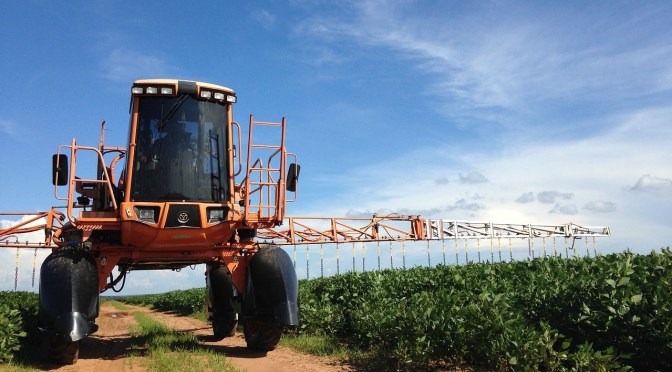
Paraquat is an herbicide and registered desiccant that has been used on American farms since 1964. A desiccant is a chemical that speeds up the ripening of the crop and dries it out, which facilitates harvesting and allows it to be harvested sooner than were the crop left to dry naturally.
Desiccation is also used to improve profits, as farmers are penalized when the grain contains moisture. The greater the moisture content of the grain at sale, the lower the price they get.
While 50 countries have banned paraquat due to its extreme toxicity and adverse effects on health (a single sip is lethal to a human1), the chemical remains legal in the U.S., provided farmers receive training on its application. Proper application doesn’t ensure its safety, however, as recent lawsuits by thousands of farmers make clear.
Paraquat Linked to Parkinson’s Disease
A considerable body of evidence2 links paraquat to Parkinson’s disease and, as of mid-March 2023, 2,998 lawsuits filed by farmers with Parkinson’s disease had been consolidated in Illinois federal court. The first bellwether trial is scheduled to begin in October 2023.3
The farmers are suing Syngenta, the lead manufacturer, and Chevron, a key distributor, arguing the herbicide caused their disease, and that the manufacturer was aware of this risk and concealed it from the public.
The discovery process has unearthed a trove of documents4 showing Syngenta has indeed known that paraquat poses neurological risks and feared the possibility of lawsuits for decades.
Most of the paraquat lawsuits are taking place in Illinois federal court, but class actions have also been filed with state courts in California, Florida, Pennsylvania, and Washington. The first state court trial is scheduled to begin in September 2023 in California.5 As reported by the Miller & Zois law firm, which is handling paraquat cases in all 50 U.S. states:6
“Parkinson’s disease is a progressive neurodegenerative disorder of the brain that affects primarily the motor system, the part of the central nervous system that controls movement.
The characteristic symptoms of Parkinson’s disease are its ‘primary’ motor symptoms: resting tremor; bradykinesia (slowness in voluntary movement and reflexes); rigidity; and postural instability. There is currently no cure for Parkinson’s disease.
Existing treatments do not slow or stop their progression; such treatments are capable only of temporarily and partially relieving motor symptoms. These treatments also have unwelcome side effects the longer they are used.
Paraquat is a toxic chemical that is a highly effective plant killer. Unfortunately, the same properties that make paraquat toxic to plant cells also make it highly damaging to human nerve cells and create a substantial risk to anyone who uses it.
Oxidative stress is a major factor in — if not the precipitating cause of — the degeneration and death of dopaminergic neurons which is the primary pathophysiological cause of Parkinson’s disease.
Paraquat is designed to injure and kill plants by creating oxidative stress, which causes or contributes to causing the degeneration and death of plant cells. Similarly, Paraquat injures and kills animals by creating oxidative stress, which causes the degeneration and death of animal cells.
The causal link between Paraquat and Parkinson’s disease is well established. Hundreds of animal studies involving various routes of exposure have found that paraquat creates oxidative stress that results in pathophysiology consistent with that seen in human Parkinson’s disease.
Many epidemiological studies have also found an association between Paraquat exposure and Parkinson’s disease, including multiple studies finding a two- to five-fold or greater increase in the risk of Parkinson’s disease in populations with occupational exposure to paraquat compared to populations without such exposure.”
Attorneys working on these cases have also highlighted recent research7 linking paraquat exposure to end stage renal disease,8 so it’s possible that the litigation effort against Syngenta might expand even further.
Syngenta Obfuscated the Evidence
In a June 2, 2023, article9 in The Guardian, journalist and author Carey Gillam reviews evidence from the paraquat lawsuits showing Syngenta has known about the chemical’s risk to human health for decades, and went out of its way to bury that evidence.
Some of the research10 out there suggests lifetime exposure to paraquat raises your risk of Parkinson’s by as much as 250% (odds ratio 2.5), primarily through oxidative stress. In the 2020 book, “Ending Parkinson’s Disease: A Prescription for Action,” four leading neurologists also cite paraquat as a causative factor for the condition.11
Not surprisingly, Syngenta relied on the same strategies developed and perfected by the tobacco industry in years past. While independent researchers kept linking paraquat to Parkinson’s disease, Syngenta sowed doubt by maintaining the evidence was “fragmentary” and “inconclusive,” even though it wasn’t.
Indeed, internal documents obtained during the discovery process reveals Syngenta knew that paraquat accumulated in the human brain and could permanently impair the central nervous system.12,13,14 As reported by Gillam:15
“Though it worked to publicize research that supported paraquat safety, Syngenta kept quiet about a series of in-house animal experiments that analyzed paraquat impacts in the brains of mice, according to company records and deposition testimony.
Scientists who study Parkinson’s disease have established that symptoms develop when dopamine-producing neurons in a specific area of the brain called the substantia nigra pars compacta (SNpc) are lost or otherwise degenerate. Without sufficient dopamine production, the brain is not capable of transmitting signals between cells to control movement and balance.
The Syngenta scientist Louise Marks did a series of mouse studies between 2003 and 2007 that confirmed the same type of brain impacts from paraquat exposure that outside researchers had found. She concluded that paraquat injections in the laboratory mice resulted in a ‘statistically significant’ loss of dopamine levels in the substantia nigra pars compacta.”

Download this Article Before it Disappears
Jeopardizing Human Health for Profit
The company withheld these and other internal research results from regulators and denounced the validity of independent science showing neurological effects.
Worse, when Syngenta met with U.S. Environmental Protection Agency (EPA) officials in 2013 to update the agency on its internal research, the company claimed studies showed paraquat, even at high doses, did NOT reduce dopamine-producing neurons, directly contradicting Marks’ findings.16
Similarly, in a follow-up presentation to the EPA in 2017,17 Syngenta claimed that paraquat had “no effect” in the brain and that a “causal relationship between paraquat and Parkinson’s was not supported.”
During a recent deposition, Dana Dixon, lead for product safety operations at Syngenta, was asked point blank if the information presented to the EPA was a lie. Dixon claimed they were “not hiding” Marks’ results, but rather chose to “focus on other studies” that refuted it.18
Syngenta ‘Swat Team’ Beat Down Negative Reports
At one point, Syngenta also worked behind the scenes to keep a highly regarded scientist involved in the study of Parkinson’s off the EPA’s advisory panel, and internal documents show company officials wanted to make sure the effort could not be traced back to them.19
As reported by Gillam, Syngenta also had a special “swat team” tasked with the immediate rebuttal of any new reports of adverse effects:20
“… files reveal an array of tactics, including enlisting a prominent UK scientist and other outside researchers who authored scientific literature that did not disclose any involvement with Syngenta …
[M]isleading regulators about the existence of unfavorable research conducted by its own scientists; and engaging lawyers to review and suggest edits for scientific reports in ways that downplayed worrisome findings.
The files also show that Syngenta created what officials called a ‘Swat team’ to be ready to respond to new independent scientific reports that could interfere with Syngenta’s ‘freedom to sell’ paraquat.
The group, also referred to as ‘Paraquat Communications Management Team,’ was to convene ‘immediately on notification’ of the publication of a new study, ‘triage the situation’ and plan a response, including commissioning a ‘scientific critique.’
A key goal was to ‘create an international scientific consensus against the hypothesis that paraquat is a risk factor for Parkinson’s disease,’ the documents state.”
In internal company documents from 2003, Syngenta officials discussed the need for a “coherent strategy across all disciplines focusing on external influencing, that proactively diffuses the potential threats that we face,” including influencing the future work by external researchers.
They also hired external scientists to write papers in support of paraquat without disclosing their relationship with the company. Ghostwriting scientific studies was also a tactic employed by Monsanto, to hide known dangers associated with its Roundup herbicide.
Lawyers Played Central Role in Obfuscation of Evidence
As detailed by Gillam, corporate defense lawyer Jeffrey Wolff also appears to have played a central role in the obfuscation of evidence. He instructed Syngenta scientists on how to take notes and manage communications to ensure the company would be able to claim attorney-client privilege in the case of litigation.
For example, action notes taken were to be labeled “Work Product Doctrine Material Confidential” and carry an attorney-client privilege statement.21 Wolff also had an active role in editing various scientific statements, reports and presentations to hide or downplay negative internal findings.
For example, a 2009 internal presentation by a company scientist on paraquat and Parkinson’s disease was reviewed by Wolff, who objected to a statement that said a majority of cases were related to environmental causes. Instead, Wolff suggested the presentation state that the “great majority of PD cases are idiopathic or of unknown cause.”
In another case, Wolff recommended removing the written admission that paraquat caused loss of neurons in the substantia nigra pars compacta from a scientific slide show, and instead only mention it verbally during the presentation. As reported by Gillam, the heavy involvement of lawyers is also straight out of the tobacco industry’s dirty playbook:22
“The involvement of lawyers with the scientists at Syngenta appears similar to highly criticized practices by the tobacco industry in the 1970s and ’80s that downplayed the dangers of smoking, said Thomas McGarity, former EPA legal adviser and co-author of the 2008 book titled ‘Bending Science: How Special Interests Corrupt Public Health Research.’
‘It looks like the paraquat maker has adopted nearly every strategy we outlined in our book about bending science,’ McGarity said. ‘Science matters. We have to be able to depend on science,’ he said.
‘When it is perverted, when it is manipulated, then we get bad results. And one result is that pesticides that cause terrible things like Parkinson’s remain on the market.’”
Lectins in Food Shuttle Paraquat Into the Brain
Disturbingly, animal research shows paraquat becomes exponentially more hazardous in combination with plant lectins. The cruel irony here is that paraquat is widely used as an herbicide and desiccant on lectin-rich crops in particular, including wheat, soybeans, potatoes, cereal grains and beans.
“Plant lectins help shuttle paraquat into your brain, where it induces the neuronal degeneration seen in Parkinson’s disease.“
According to the study23 in question, published in the journal NPJ Parkinson’s Disease in 2018, plant lectins help shuttle paraquat into your brain, where it does the most damage. As reported by the authors:
“Increasing evidence suggests that environmental neurotoxicants or misfolded α-synuclein generated by such neurotoxicants are transported from the gastrointestinal tract to the central nervous system via the vagus nerve, triggering degeneration of dopaminergic neurons in the substantia nigra pars compacta (SNpc) and causing Parkinson’s disease (PD).
We tested the hypothesis that gastric co-administration of subthreshold doses of lectins and paraquat can recreate the pathology and behavioral manifestations of PD in rats …
These data demonstrate that co-administration of subthreshold doses of paraquat and lectin induces progressive, L-dopa-responsive parkinsonism that is preceded by gastric dysmotility. This novel preclinical model of environmentally triggered PD provides functional support for Braak’s staging hypothesis of idiopathic PD.”
Here again, we see the central role of the substantia nigra pars compacta, the very area of the brain that Syngenta scientist Marks found to be adversely impacted by paraquat. What’s more, the combination of paraquat and lectins could well be the underlying mechanism behind “idiopathic” Parkinson’s, which Wolff wanted listed as the primary “cause.”
Paraquat in Food Supply Puts Your Health at Risk
This also means that farmers aren’t the only ones at risk. Direct exposure is only one way by which paraquat can cause harm. Ingestion through food is the other, and oftentimes, that food is also high in lectins, which multiplies the danger. Reporting on the 2018 findings, Medical News Today wrote:24
“[P]araquat, once in the stomach, causes alpha-synuclein to be misfolded and then helps it travel to the brain. Scientists believe that alpha-synuclein runs along the vagus nerve, which itself runs between the stomach and the brain.
In fact, recent studies have shown that the vagus nerve has a direct connection with the substantia nigra, making it a prime suspect in Parkinson’s disease. This direct link also helps explain why digestive problems often precede the motor symptoms of Parkinson’s by several years.
To investigate, the researchers fed rats small doses of paraquat for 7 days. They also fed them lectins … As expected, they identified Parkinson’s-related changes … As study co-author Prof. Thyagarajan Subramanian explains:
‘We were able to demonstrate that if you have oral paraquat exposure, even at very low levels, and you also consume lectins … then it could potentially trigger the formation of this protein — alpha-synuclein — in the gut. Once it’s formed, it can travel up the vagus nerve and to the part of the brain that triggers the onset of Parkinson’s disease.’
This series of experiments demonstrates how the interplay between two ingested compounds can conspire to create and then transport toxic protein structures from the gut to the brain.”
Take-Home Message
The take-home message here is that foods treated with paraquat may be just as hazardous as direct exposure on a farm. Paraquat is considered one of the “best” drying options for legumes in particular, which are also particularly high in lectins.
As a result, many foods that vegetarians and vegans rely on may pose significant health hazards — and in more ways than one, as lectins are also problematic in and of themselves. In February 2022, I posted an interview with Dr. Steven Gundry, author of “The Plant Paradox,” in which we reviewed the health hazards of lectins.
As explained by Gundry, plant lectins can wreak havoc on your health by attaching to your cell membranes, causing inflammation, damage to your nerves and cell death. Some can also interfere with gene expression and disrupt endocrine function.
So, while lectins can cause severe health problems in and of themselves, by spraying paraquat on lectin-rich crops, those crops are made exponentially more hazardous, as the lectins act as transport vehicles for the toxic herbicide.
You can reduce lectin concentration by pressure cooking, for example, but if you’re starting out with contaminated food, you’re dealing with extra-toxic kinds of lectins. To avoid or at least minimize these hazards, it’s important to buy organic beans, peas, potatoes and other high-lectin foods from a reputable source, ideally a local farmer you can trust.
The other take-home message from all this is that chemical companies are among the least trustworthy sources out there. Like Monsanto before them, Syngenta officials have spent decades hiding the dangers of paraquat, while untold numbers of people got sick, suffered and died.
As noted by Bruce Blumberg, professor of developmental and cell biology at the University of California, Irvine, in response to the revelations about Syngenta’s obfuscation of evidence:25
“It is highly unethical for a company not to reveal data they have that could indicate that their product is more toxic than had been believed. [These companies are] trying to maximize profits and they jeopardize public health, and it shouldn’t be allowed. That is the scandal.”
Sources and References
- 1 EPA Paraquat Risk Message
- 2 NIH February 11, 2011
- 3, 5 Drug Watch April 18, 2023
- 4, 13 The New Lede Paraquat Papers Media Library
- 6, 8 Lawsuit Information Center Paraquat Lawsuit June 1, 2023
- 7 Environmental Health December 12, 2022; 21 Article number 127
- 9, 11, 12, 15, 16, 18, 20, 21, 22 The Guardian June 2, 2023
- 10 Environmental Health Perspectives June 2011; 119(6): 866-872
- 14 The New Lede Paraquat Papers October 20, 2022
- 17 Paraquat Research Program Update February 6, 2017
- 19, 25 The Guardian October 20, 2022
- 23 NPJ Parkinsons Disease 2018; 4: 30
- 24 Medical News Today December 10, 2018
Image by emersonbegnini from Pixabay