Tag Archives: insects

About sprayers and spraying in your garden (Wally Richards)

Gardeners and horticulturists can at times take things for granted as we are often doing certain chores and don’t stop to realise that what we do and why we do it, is not common knowledge with everyone who gardens or are attempting to garden.

One of these is spraying plants for whatever reason we spray; whether it be for pest control, disease control, weed control or other reasons.

Lets start off with sprayers of which there are many types and I have four types that I use for different reasons and times.

Firstly I have a Back Pack sprayer which is hand pumped and holds about 16 litres of spray.

This one is only used for weed killing and the compound I use in it is Ammonium sulphamate that I dissolve into water at the rate of 200 grams per litre of water.

I add to this Raingard at the rate of 1mil per litre of water.

The best time to spray weeds is on a nice sunny day in full sun light and ideally when the soil is on the dry side.

If you are using any other non chemical weed killers then a sunny day with dry soil is a must for success.

If you are using chemical herbicides you should add Raingard to the spray as it will increase the effectiveness of the herbicide by 50% and apply it also ideally on a sunny day and drier soil.

The reason is that when soil is dry plants are moisture seeking and will take the spray more readily into their foliage.

The sprayer that you use for weed killers should be clearly written on ‘WEED KILLERS ONLY’

failure to do this will often lead to tragic loses in your gardens.

I have had many instances when someone else has used a sprayer that had been used to kill weeds and used the sprayer on plants for insect problems. (It works you kill the plants and the insects disappear, not so nice for your cherished plants)

This is particularly so with chemical herbicides because rinsing the sprayer out after use will not remove all the chemical as they impregnate into the plastic and if you were to use the same sprayer with say an insecticide in it and spray roses,

tomatoes, beans and various other plants, it will cause herbicide damage to the foliage and in some cases kill the plants.

If you have small weed killing jobs to do then what ever you are going to use, put it into a Trigger Sprayer that you mark ‘WEED KILLERS ONLY’

I actually have several 1 litre Trigger Sprayers that I use for different applications and as I do not use Raingard in the Trigger Sprayers I can store what spray has not been used in a shed out of direct sun light for future use..

If Raingard or VaporGard has been used in a sprayer then any spray not used should be either discarded or put into a container for future use so that you can wash out the sprayer immediately and run some clean water though it to make sure filters and jets are cleared of any residue.

So discard the contents, part fill with clean water and give a good shake.

Tip this water out and again part fill the sprayer with clean water and open the nozzle of the sprayer to make a jet and jet spray some of the water through the nozzle.

This will help ensure that the sprayer will be ready for use next time you want to use it.

Failure to do some often means time wasted as you try to clean residues from the sprayer so it will work.

Many products that have been diluted with water will keep for a time if stored out of sunlight, they may slump which means they fall to the bottom and there is more water above the product. A good shake normally remixes the product with the water.

Sometime I will add a little more of the product to the sprayer and also more water as to label instructions to top up the sprayer and overcome any possibility of the product deterioration while stored.

Besides the Back Pack Sprayer and several trigger spray bottles I also have two other pump up sprayers for spraying.

One is a 2 litre pump up sprayer the other is a 5 litre sit on the ground pump up sprayer.

Those are for the jobs that are bigger than what a Trigger sprayer would be used for and yet not enough to use the pack pack size.

Most spraying of any product except weed killers should be done at the end of the day when the sun is going down towards dusk and direct sunlight off the plant’s foliage.

This is particularly important if using any oil products such as Wallys Neem Tree Oil.

Also if using Super Pyrethrum on its own or with the Neem Oil as pyrethrum has a short life when exposed to UV which is in fact about two hours.

Also pyrethrum can affect honey bees and by dusk most of them should be back home in their hives.

Next morning when the sun comes up the Pyrethrum will be gone within a couple of hours.

Now here is a very important point which many do not realise when spraying chemical herbicides.

NEVER spray on a still calm day. Many people think that is the best time to spray when in fact it is the worst.

I learnt that when I obtained my Chemical Handlers certificate years ago and here is the reason why;

When it is calm tiny spray droplets are lifted up in to the air from conventional air currents (warm air rises) and these deadly droplets rise up and will at sometime drop onto what ever is below, your place? Down the road? Who knows but very damaging to what ever plant they land on.

The ideal time to spray is when there is a nice mild breeze, this will force the spray droplets down onto the target weeds.

Another good idea if your sprayer has a wand you can make a spray shield out of a two litre plastic ice cream container.

In the centre of the container make a hole that is big enough to fit over your wand when the nozzle is removed.

Place the end of the wand through the hole and put the nozzle back on.

You place this over the weeds you want to spray and pull the trigger. All the spray will stay inside the ice cream container.

So even on a windy day or calm day you can spray your weed killers safely.

We have now listed on our mail order web site at www.0800466464.co.nz One Litre Trigger Spray bottles for $6.00 each

(See under Disease Control top of first page)

If you are ordering other gardening items from the web site then add a Trigger or two to your order.

On their own the freight cost does not make them a good buy but when freight (if applicable) is on other products the  trigger sprays can hitch a ride on that freight.

You get 10% off the price so that makes them only $5.40 each a good buy at that price.

Problems ring me at 0800 466464
Phone 0800 466464
Garden Pages and News at www.gardenews.co.nz
Shar Pei pages at  www.sharpei.co.nz
Mail Order products at www.0800466464.co.nz


New Zealand Bill of Rights Act 1990. Part II of the Act covers a broad range of Civil and Political Rights. As part of the right to life and the security of the person, the Act guarantees everyone:

1The right not to be deprived of life except in accordance with fundamental justice (Section 8)

2The right not to be subjected to torture or to cruel, degrading, or disproportionately severe treatment or punishment (Section 9)

3The right not to be subjected to medical or scientific experimentation without consent (Section 10)

4The right to refuse to undergo any medical treatment (Section 11)

 Furthermore, the New Zealand Bill of Rights Act 1990 guarantees everyone: Freedom of Thought, Conscience, and Religion.
This includes the right to freedom of thought, conscience, religion, and belief,
INCLUDING THE RIGHT TO ADOPT AND HOLD OPINIONS WITHOUT INTERFERENCE (Section 1)

Image by Renate Köppel from Pixabay
Pollination in your garden (Wally Richards)

Most plants flower to produce seeds so their line will continue through their off spring.

When it comes to our gardening efforts we want plants such as tomatoes, zucchini and pumpkins to produce fruit which in every case contain the seeds for the next generation of those plants.

When pollination does not happen then the fruit will only develop a little and then rot.

Pollination is the act of transferring pollen grains from the male anther of a flower to the female stigma.

The goal of every living organism, including plants, is to create offspring for the next generation. One of the ways that plants can produce offspring is by making seeds.

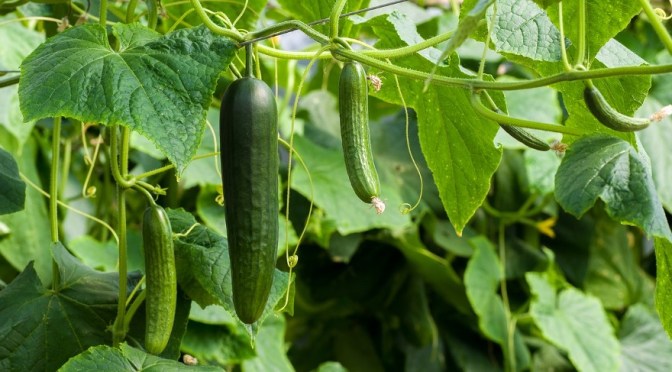
Every year I receive enquiries about what is wrong with my zucchini/pumpkin/melon/cucumber?

They flower and the fruit appears and then it goes yellow and rots?

The reason is that the female stigma did not receive a few grains of pollen from the male flower anther.

When it comes to the likes of pumpkins, melons and zucchini I always hand pollinate to be sure of a fruit set.

Best done in the morning where you check your plants for female flowers.

That is the flower that has the embryo fruit behind the petals.

When you find one or more then you look for a young male flower (which does not have the embryo fruit) but has anther that is covered with pollen.

I prefer to pick the male flower and remove the petals exposing the anther.

Then I rub the anther against the stigma and thus pollinating it and setting the fruit.

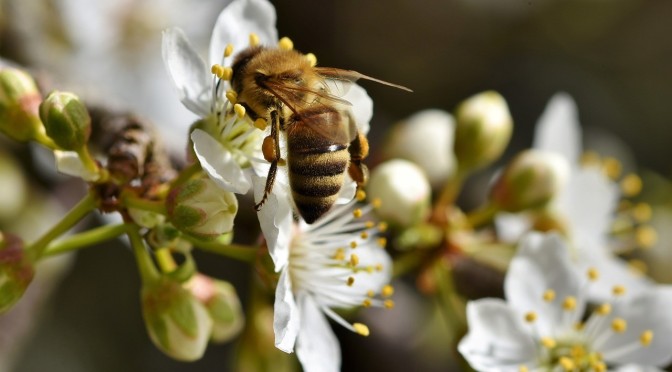
Bees, bumble bees and some other flying insects may do this for you as there is a little nectar that the flowers produce to encourage the flying insects to visit and move pollen from flower to flower.

Now things don’t always work as you would like them to work and sometimes a fruiting plant does not produce any flowers.

This can happen if the plant does not get enough direct sunlight, there is not sufficient energy to produce flowers,

It can also happen if the plant is well fed and well watered instead of flowering it will vegetate producing lots of new foliage minus any flowers.

I call them Fat Cats, well fed and very lazy.

If this is the case with any Curcubitaceae family member which is a large family that includes melons, cucumbers, zucchini and squashes you can take male pollen from say a pumpkin flower and fertilize a female zucchini flower to set the fruit.

It could also mean that there is a lack of potash so it pays to sprinkle some Wally’s Fruit and Flower Power onto the soil at the time flowering should start.

Then we have Self-pollinating, self-fertile and self-fruitful all mean the same thing.

You can plant a self-fertile tree and expect it to pollinate itself and set fruit alone (for example, peaches, pie cherries, apricots).

Self-fertilization, fusion of male and female gametes (sex cells) produced by the same individual.

Self-fertilization occurs in bisexual organisms, including most flowering plants, numerous protozoans, and many invertebrates.

Tomatoes are not pollinated by bees instead it is air movement on a sunny day that will do the job.

In a glasshouse or even outdoors its a good idea in the middle of a sunny day give the plants a gentle shake to set the fruit.

To grow tomatoes in the cooler months or though winter you need types that will produce pollen in the colder times to have fruit set. Summer growing tomatoes will survive with protect but may not produce fruit.

Winter ones are Russian Red and Sub Arctic Plenty (from Kings Seeds) World’s earliest tomato. Bred for the U.S. Greenland military bases to endure extremely cold climates.

Producing concentrated clusters of medium, good flavored, red fruit that ripen almost simultaneously. A very small plant with compact habit so excellent for anyone interested in growing in pots. Determinate.

Blossom end Rot on tomatoes is the dark patch under the fruit that is the result of lack of moisture to move the calcium at fruit set time.

The fruit sets but the bottom has the dark patch.

After picking the bottom part can be cut off and the rest of the tomato eaten.

If not done the whole tomato will rot on vine or in a container after picking.

Tomatoes grown in containers are prone to this problem as they dry out quickly in hot weather and need watering like two or three times a day. Alarge saucer under the container that is full of water will help.

Corn is another one that depends on lots of sun and a bit of a breeze to move the pollen from the male stalks at the top down onto the ‘silks’ of the female cobs.

Planting lots of sweet corn plants near but not too close to each other will help.

On a still sunny day you can shale the plants to allow the pollen to drift down onto the silks.

Corn varieties will easy cross pollinate if grown near to each other so keep your pop corn, ornamental corn and maize types well away from your sweet corn.

To sum up with fruiting vegetables and fruit we want them to be pollinated and set fruit for our food chain.

But in our flower garden the reverse applies we don’t want the flowers to be pollinated because once that happens the petals fall off and a seed pod forms.

If like on lilies you were to carefully cut off the male anthers to prevent pollination then your flowers would last a lot longer.

Once the flowers on a plant have set then if you cut them off the plant (we call it dead heading) then the plant is likely to produce more flowers as it wants to produce seeds.

We do that with roses to encourage a second flush and not only do we cut off the dead flower and rose hip (that is the seed pod) we cut back the stem a little to encourage new growth which can also produce new flowers.

Some gardeners use a small soft brush to collect pollen from male flowers to Fertilise the females and that is a nice way of achieving fruit set.

Fruit trees that flower but produce no mature fruit because of a lack of pollinators such as honey bees or bumble bees it pays to use a brush between some of the flowers on a sunny day to set some fruit on the lower branches.

Idea of planting flowering plants to attract honey bees may bring then to your bee loving plants but not to your fruit tree as bees are selective and generally speaking will work one type of flower only at any given time.

Bumble Bees are not so discrmitant and will work several different types of flowers as available.

Figs are very different: The crunchy little things that you notice when eating a fig are the seeds, each corresponding to one flower. Such a unique flower requires a unique pollinator. All fig trees are pollinated by very small wasps of the family Agaonidae.

The pollinators of fig tree flowers are tiny gall wasps belonging to several genera of the hymenopteran family Agaonidae. Gravid female gall wasps enter a developing syconium through a minute pore (the ostiole) at the end opposite the stem)

The wasp is long gone by the time the fig crosses your lips. Figs produce a chemical called “ficin” that breaks down the wasp bodies.

Nature is so resourceful.


Phone 0800 466464
Garden Pages and News at http://www.gardenews.co.nz
Shar Pei pages at http://www.sharpei.co.nz
Mail Order products at http://www.0800466464.co.nz

New Zealand Bill of Rights Act 1990. Part II of the Act covers a broad range of Civil and Political Rights. As part of the right to life and the security of the person, the Act guarantees everyone:

1The right not to be deprived of life except in accordance with fundamental justice (Section 8)

2The right not to be subjected to torture or to cruel, degrading, or disproportionately severe treatment or punishment (Section 9)

3The right not to be subjected to medical or scientific experimentation without consent (Section 10)

4The right to refuse to undergo any medical treatment (Section 11)

Furthermore, the New Zealand Bill of Rights Act 1990 guarantees everyone: Freedom of Thought, Conscience, and Religion.
This includes the right to freedom of thought, conscience, religion, and belief,
INCLUDING THE RIGHT TO ADOPT AND HOLD OPINIONS WITHOUT INTERFERENCE (Section 1)

Photo: pixabay.com

How Government Regulation of Therapeutic Products Will Work in Practice …it is designed to unleash a tsunami of biotechnology and synthetic food (Hatchard)

The New Zealand government is introducing the Therapeutic Products Bill, which is an omnibus piece of legislation controlling, among many other things, the availability of Natural Health Products and the introduction of biotech medical interventions. Given our experience of the last three pandemic years, we should be doubting the capacity of governments to protect our interests. Let’s look at what is already happening:

Do we really need legislation facilitating the further implementation of biotechnology in medicine, or do we rather need legislation outlawing its use?

An article in Mother Jones is raising the alarm. Mother Jones is actually a very pro-vaccine publication, so why is it alarmed? A clue is in the title “The DNA of Deadly Pathogens Is Easy to Obtain”. A virologist David Evans has created a close relative of smallpox, a devastating disease that was thankfully eradicated 36 years ago. He was able to do so because he was simply able to order long stretches of the virus’s DNA in the mail from GeneArt, a subsidiary of Thermo Fisher Scientific. Mother Jones summarises:

“Today there are dozens, perhaps hundreds, of companies selling genes, offering DNA at increasingly low prices. (If DNA resembles a long piece of text, rates today are often lower than 10 cents per letter; at this rate, the genetic material necessary to begin constructing an influenza virus would cost less than $1,500.) And new benchtop technologies—essentially, portable gene printers—promise to make synthetic DNA even more widely available.”

An Unregulated Multinational Biotech Industry

The dangers of the wide availability of deadly pathogens is not too hard to figure out for the average citizen, but it is apparently very hard for governments. The United States imposes few security regulations on synthetic DNA providers. In the USA it is perfectly legal to make a batch of genes from Ebola or smallpox and ship it to a US address, no questions asked. A number of nonprofits pushing for regulation are finding it hard to gain traction in the spiralling multinational biotech industry.

The most prominent scientist sounding warnings about the danger of unchecked DNA synthesis is Kevin Esvelt, a biotechnologist at MIT. He explains the problem is that even a recent graduate level biotechnologist would have no problem assembling a bioweapon from readily available synthetic gene sequences. A bioterror attack is only a short time away, according to Esvelt.

Others disagree. Milton Leitenberg, a biosecurity expert at the Center for International and Security Studies at the University of Maryland, concedes that making a virus might be easy, but carrying out a bioattack would be difficult(???). Now correct me if I am wrong, but aren’t we in the middle of a global pandemic which was likely started very simply by a lab in China which says it wasn’t even trying to start a bioattack? It seemed to manage it quite simply by accident (???).

Governments Are Covering Up or Ignoring Safety Signals

The main problem is that nobody appears concerned about biosecurity. Most governments, including ours, have been ignoring pandemic safety signals and even covering them up. This article points out that the regulation of gain of function research is vague, secretive, opaque, lacks accountability, and captures very little that’s risky in the life sciences. You could be forgiven for thinking the US government wants to encourage it.

Surely not? In any case, it wouldn’t happen here. We have an honest government, right? It seems not. Dr. Vinay Prasad is an American hematologist-oncologist and health researcher. He is a professor of Epidemiology and Biostatistics at the University of California, San Francisco (UCSF). He is the author of the books Ending Medical Reversal (2015) and Malignant (2020).

He is a highly published author known for examining drug trial reliability. Vinay rates a preprint paper authored by our Ministry of Health (MoH) claiming satisfactory Covid mRNA vaccine health outcomes as really bad followed by a LOL emoji (that is about as low as you can go), because it uses misleading statistical methods in order to downgrade the safety signal for myocarditis.

Prominent Drug Safety Expert Criticises the Ministry of Health Methodology – Not!

I can see the headline in our papers “Prominent drug safety expert criticises the Ministry of Health methodology”, no wait a minute I can’t see that headline anywhere in New Zealand. I wonder why not?

It is papers like these put out by our Ministry of Health that are enabling Albert Boula, CEO of Pfizer, to falsely claim he hasn’t seen a single safety signal. He might try a new eyeglass prescription and look at this recent paper analysing the results of 29 studies of post-vaccine myocarditis indicating a significant safety signal.

Moderna has a similar disregard for safety issues, see here, and a close relationship with US government regulators. Unbelievably Moderna was busy developing a Covid vaccine even before the pandemic (!!!) based on information it received from the government (yes, they knew what was coming, but no one told us). You can’t read about this in MSM either.

Was this an isolated connection between biotech vaccine researchers and the US government? Apparently not. There is a history of US involvement with Ebola that is very worrying indeed.

Natural is Undoubtedly a Misused Term

So OK, it seems that governments can’t be trusted to regulate biotechnology, but will they be able to regulate Natural Health Products as they intend to do post pandemic here in New Zealand and elsewhere? ‘Natural’ is undoubtedly a misused term around the world. The EU has agreed to allow ‘acheta domesticus’ aka natural common house crickets to be added to:

“multigrain bread and rolls, crackers and breadsticks, cereal bars, dry pre-mixes for baked products, biscuits, dry stuffed and non-stuffed pasta-based products, sauces, processed potato products, legume- and vegetable- based dishes, pizza, pasta-based products, whey powder, meat analogues, soups and soup concentrates or powders, maize flour-based snacks, beer-like beverages, chocolate confectionary, nuts and oilseeds, snacks other than chips, and meat preparations, intended for the general population.”

Only the “defatted powder of house crickets” will be used. Whew!

Just in case you are worried that an ugly inch long bug will crawl out of your loaf or be found floating in your beer, be assured that only “defatted powder of house cricket” will be used. If you want to know how to turn house crickets into defatted powder, forget it. This is protected proprietary information, nor are details of its digestibility to be released. You may have to find out for yourself by eating it.

It is not all bad news though. Insect protein from house crickets is, in fact, already known to be allergenic, so you won’t be in for too much of a shock when you turn purple and swell up unexpectedly. The EU is a bit worried about that, but never mind; the regulator is planning to design some allergenic tests for some unspecified time in the future.

Insect Powder is the Way Ahead to Combat Climate Change

In the meantime, the EU has ruled that no advice on the label will have to warn unsuspecting recipients of defatted house cricket powder. In other words, the EU has looked into their crystal balls, realised that insect powder is the way ahead to combat climate change, and passed the paste. Regulators are wonderful, aren’t they, and they even get paid.

It makes you wonder what the independent (???) New Zealand regulator will do when they are appointed as the high wizard of New Zealand breakfast, lunch, and dinner with the ability to do whatever they like as long as they check with, yes you guessed it, our dear Ministry of Health.

Here’s a clue from the UK Express. Apparently, people in the UK have inexplicably been suffering from blood clots, strokes, heart attacks, and circulatory problems. No one can figure out why (???) The Express has figured it out with the help of the Cleveland Clinic and reports, Blood clots: Compound found in eggs linked to an enhanced risk of blood clotting…which can lead to death. No worries for us then. There aren’t any eggs on our supermarket shelves. Let’s hope the regulator keeps it that way, and it is a big break for chickens. Funny though, we have been eating eggs for millennia and suddenly they are a big problem in 2023. Must be climate change again, something to do with gestation egg temperatures no doubt.

The Therapeutic Products Bill: Version 3

Joking apart, the New Zealand government has drafted an omnibus Therapeutic Products Bill, and it has passed its first reading in Parliament with the support of all parties (except the Maori Party, which might just be concerned about its effect on their traditional medicine). This Bill enables the government to facilitate biotechnology and gives a blank cheque to a regulator to tell us what herbs and supplements we can use and in what quantity. They are also allowed to tell us what herbs we can’t use.

This is the third attempt over recent years to pass a Bill like this. The last two failed because of public opposition. No one is being harmed by Natural Products, so why is our government doing this? You tell me because I can’t see any reason for this at all. It is good news for wannabe well paid government employees and multinational pharma-owned supplement suppliers. It is bad news for kiwi businesses.

Be Silent No More!

  • Ask your MP to reject the regulation of Natural Products and the facilitation of biotech medicine proposed by this Bill.
  • Write to Chris Hipkins (contact details) and let him know what you think.
  • Go to this link to make a submission before February 15th.

At first glance, it may not seem to affect you personally, because not much is actually specified in the Bill, just a little clause allowing one government employee to decide what we can consume.

If you want more details, this short video on YouTube explains what is likely to happen to the availability of our favourite Natural Health Products. It’s not pretty. If you want more information on the risks of biotechnology visit GLOBE.GLOBAL.

Related links

Press release Therapeutic Products Bill introduced.
The Therapeutic Products Bill
Related Documents and Downloads


Guy Hatchard, Ph.D., was formerly a senior manager at Genetic ID, a food testing and certification company (now known as FoodChain ID).

Guy is the author of Your DNA Diet: Leveraging the Power of Consciousness To Heal Ourselves and Our World. An Ayurvedic Blueprint For Health and Wellness.

SOURCE

https://hatchardreport.com/how-government-regulation-of-therapeutic-products-will-work-in-practice/

Photo: hatchardreport.com

What are ‘They’ Intending for the Future of Food?

Note: Grow your own! ‘They’ won’t be eating GM food, bugs and so on. The fake food is just for you. Note also, Bill is planning on other additions to your food supply. EWR


by James Corbett
corbettreport.com

If “you are what you eat,” as the old adage has it, then what does that make us?

As consumers of heavily processed, chemically treated, GMO-infested gunk, we in the modern, developed world have “solved” the problem of hunger that plagued our forebears since time immemorial by handing our food sovereignty over to a handful of corporate conglomerates. The result of this handover has been the creation of a factory farming system in which genetically engineered crops are doused in glyphosate and livestock are herded into tiny pens where they live their entire lives in fetid squalor, pumped up with antibiotics and growth hormones until they are slaughtered and shipped off to the supermarkets and fast food chains.

There have been any number of documentaries and exposés produced in recent decades detailing the dangers of this industrial farming system that we find ourselves beholden to, any number of activists ringing the alarm about these problems, any number of campaigns and marches organized to raise awareness about these issues. Yet still, nation after nation gets fatter and sicker as traditional diets based on fresh produce sourced from local farmers are displaced by the fast food pink slime sourced from the industrial farms of the Big Food oligopoly.

But as bad as things may be, they’re about to get even worse. As crisis after crisis disrupts the food supply, the “solution” to these problems has already been prepared. New technologies are coming online that threaten to upend our understanding of food altogether. Technologies that could, ultimately, begin altering the human species itself.

This is an exploration of The Future of Food.

READ AT THE LINK

Image by Ryan McGuire from Pixabay

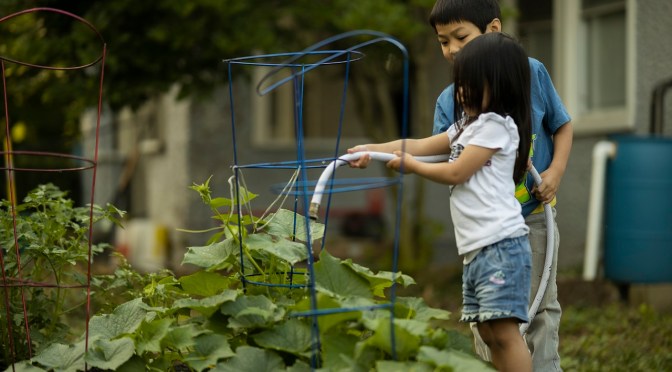
ENCOURAGING CHILDREN TO GARDEN

We need to encourage our children and grandchildren to appreciate Nature by including them in some gardening activities.

I believe that young children have a natural infinity with plants and insects when they are allowed to explore our gardens.

Children learn many things by mimicking their parents and are often keen at a young age to assist in various gardening activities.

I remember as a toddler spending many hours in the garden collecting caterpillars off the cabbages and feeding them to our chooks.

I also can still remember how good it felt to be part of Nature back then and the same feeling pertains today when I work or wander around gardens.

Plants that ‘move’ have a fascination for children and a great one for this is Mimosa pudica, the Sensitive Plant, which folds up its leaves when touched.

They are easy to germinate from seed, grown as a pot plant for a windowsill. (Available Kings Seeds)

Nice pink flowers also. As the plant matures it has thorns on the branches which incidentally are another attraction for children.

Cacti with their prickles often appeal to young boys and I had a small collection when I was young and still keep a few.

Two awesome plants for children to grow are Giant sunflowers and Giant pumpkins.

Giant Sunflowers; these extra tall sunflowers will grow up to 5 metres tall.(17 odd feet) Grown in full sun in soil that has excellent drainage and lots of manure.

The giant pumpkins can be monsters which in some cases will weigh over 1000 pounds at maturity. (Half a ton)

If I was going to grow giant pumpkin, here is what I would do:

Obtain the Giant pumpkin seeds from a seed supplier. (Atlantic Giant is the type of seed you need again Kings Seeds)

Pick an all-day-sunny area, then dig a hole about a spade depth and width, chop up the bottom of the hole, so the soil is loose, then fill the hole with chook manure to about two thirds full.

(Other manure could be used if chook manure is not obtainable, but chook is best)

Fill the rest of the hole with a good compost and soil mix, 50/50 making a small mound about 12cm tall above the filled in hole.

Place three seeds in the mound and wet them down with Magic Botanic Liquid (MBL), (20 ml of MBL to 1 litre of water.)

Water the mount to keep moist with plain water and then every 2 weeks with the MBL.

Overseas the biggest record vegetables have been achieved with products very similar or the same as MBL. Spraying the foliage of your Giants every 2 weeks with MBL (10 ml to a litre) will also assist in a bigger healthier plant.

When the seeds germinate select the two smaller ones and carefully remove letting the best one grow on.

After your pumpkin is established and growing well, give them a drink using Wallys Cucumber Booster, once a week.

This is a high nitrogen product that is a combination of sulphate of ammonia and potassium nitrate, which you dissolve in water.

Cucumber Booster is excellent for any plants that enjoys a boost of nitrogen after establishment. It is used for growing cucumbers, pumpkins, zucchini and gourds.

The MBL and Cucumber Booster can be combined for watering into the soil near the base of the plant.

Because of the weather patterns we are experiencing, after you plant your seed, cut off the base of a 2 to3 litre plastic fruit juice bottle and place this over the mound, with the cap removed.

This will give your seed and seedling its own little glasshouse. This is removed once the seedlings germinate prior to culling out the two.

With the Giant Sunflower a tall strong stake should be put in the ground at seed planting time on the edge of a mound as described previously..

This will be needed later to give extra support to the plant.

Another interesting thing to do is once the sunflower gets up about a metre tall, plant 3 or 4 climbing bean seeds at the base of the plant.

These will grow up the sunflower and also provide extra nitrogen for the sunflower.

It is a lot of fun plus a great way to get the children away from the TV and video games, showing them there is more to life than a screen.

Some garden centres run competitions for the tallest sunflower and the biggest pumpkin with various prizes for the winners.

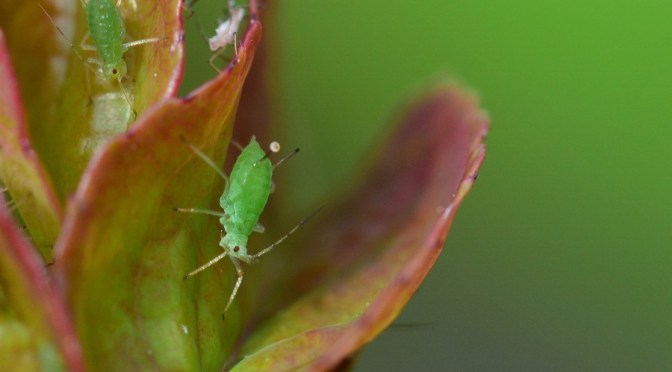
Aphids are likely to be found on your roses at this time and they can easily be controlled with a safe spray of Wallys Super Pyrethrum. Spray very late in the day just before dusk to obtain the best results.

Stone fruit trees that had the curly leaf disease will now be producing new leaves free of the problem. The damaged leaves will fall off over time.

You can if you like, spray the newer leaves a couple of times with potassium permanganate and Raingard just to be sure, but if the disease has finished for the season the sprays will not make much difference.

A spray of Vaporgard without the potassium permanganate would be more effective in allowing the tree’s remaining leaves to gain more energy from the sun, which is needed to produce a good crop.

Codlin Moths will start to be on the wing about now so obtain a pheromone trap from your garden centre so you can monitor the best time to spray.

A number of gardeners have found that a spray of Super Neem Tree Oil and Raingard over the young apples, applied about 5-7 days after an influx of moths into the traps, has resulted in only a very small scar on the mature apple, where the grub took its first and only bite.

(Note Wallys Super Neem Tree Oil has been cleared by EPA to sell again, just waiting on the new approved labels to arrive later this month)

Repeat spray 7 days later and then wait for another influx of moths before repeating.

Add Raingard or MBL to the spray to assist and extend the control period.

Tomatoes should be doing well if in a sunny, sheltered spot. Only remove laterals on a sunny day when it is not humid or moist.

Spray the wound immediately with Liquid Copper to prevent disease entering the wound resulting in the possible loss of the plant.

Ensure that the tomato plants are well supported on stakes during windy times. If you are concerned about blights spray the plants with Perkfection as a preventative, once a month. The same applies for your potatoes.

For general health of any plants, especially roses and food crops, a two weekly spray of MBL and Mycorrcin works wonders. Spray both the soil and the foliage.

Avoiding the use of chemical sprays and fertilisers is a must for healthy gardens and plants.

Phone 0800 466464
Garden Pages and News at www.gardenews.co.nz
Shar Pei pages at  www.sharpei.co.nz
Mail Order products at www.0800466464.co.nz


New Zealand Bill of Rights Act 1990. Part II of the Act covers a broad range of Civil and Political Rights. As part of the right to life and the security of the person, the Act guarantees everyone:

1The right not to be deprived of life except in accordance with fundamental justice (Section 8)

2The right not to be subjected to torture or to cruel, degrading, or disproportionately severe treatment or punishment (Section 9)

3The right not to be subjected to medical or scientific experimentation without consent (Section 10)

4The right to refuse to undergo any medical treatment (Section 11)

 Furthermore, the New Zealand Bill of Rights Act 1990 guarantees everyone: Freedom of Thought, Conscience, and Religion.
This includes the right to freedom of thought, conscience, religion, and belief,
INCLUDING THE RIGHT TO ADOPT AND HOLD OPINIONS WITHOUT INTERFERENCE (Section 1)

Image by Raksa R85mm from Pixabay

Using Neem in your garden & elsewhere (Wally Richards)

Azadirachta indica, commonly known as Neem, nimtree or Indian lilac, is a tree in the mahogany family Meliaceae.

It is one of two species in the genus Azadirachta, and is native to the Indian subcontinent and most of the countries in Africa. It is typically grown in tropical and semi-tropical regions.

Each year the tree flowers and produces fruit or kernels which are the seeds of the tree.

These are harvested and cold pressed to extract the Neem Oil which is used for many things including as an insecticide and for medical uses.

If the kernels are press only once then the Neem Cake will be dark in colour and have a good Neem smell.

If they are cold pressed more than once to extract more oil then they will be light brown in colour and not have much smell which means they will not any where near effective as the dark Neem Granules/Powder;.

The crushed residue is called Neem Cake in India which my company Garden Enterprises import in container loads into NZ for gardeners to use.

Before it is shipped the Neem cake is dried then screened to obtain to particle sizes which we call Wallys Neem Tree Powder being uniform particles 1-3mm in size.

Then there are the larger particles we call Wallys Neem Tree Granules which vary from 1mm to about 50mm in size.

Both are the same thing it is just the size of the particles that determine what we call them.

Likewise either can be used to do most gardening tasks that Neem Cake can be used for but each has its special tasks for applications.

Firstly lets talk about Neem Tree Powder, lovely to work with, easy to handle and far better to use for some applications than the Neem Tree Granules.

For instance when planting seeds or seedlings a little of the powder can be sprinkled with the seeds or put into a seedling’s planting hole.

It is a must to prevent carrot fly damage; you sprinkle the powder along the furrow with the seeds at sowing time.

Later when the carrots have germinated and have tops of foliage about 3-4cm tall you then side dress the row with the powder.

By doing this most gardeners have found little or no damage to the carrots at harvest time.

The Neem Tree Powder is ideal for treating grass grubs in lawns if used when the grubs are near the soil surface. For most that would be in the autumn after the autumn rains have moistened up the soil.

By cutting out squares of turf and examining the clods will let you see if there are grubs near the surface, if so then treat those areas where there are several grubs per square foot.

Sprinkle the Neem Tree Powder over a freshly mowed lawn and water in to settle the powder onto the soil.

If you have a roller then roll to press the powder into the moist soil.

If not then either lift the height of your rotary mower by a notch or two before you mow again or leave the catcher off so that powder picked up while mowing will be put back onto the lawn. Only applicable for two or three mowings after application of the Neem Powder.

Where you apply the powder on the lawn you may notice after a couple of weeks that those areas are looking better than where it was not used.

This is a good indication that you have root nematodes in the roots of your grasses and they are sucking the vigor out of your lawn. So if this is the case then you know to treat the rest of your lawn.

Neem Tree Powder is also ideal to place a small sprinkling on top of the growing medium of your container plants to eradicate root mealy bugs in the roots. Out side containers it does not matter so much as the powder will get molds when it breaks down which is normal; but indoors it will look unsightly so cover the powder with a little more growing medium.

Wallys Neem Tree Granules being bigger in size means they will last much longer slowly breaking down.

This makes them great to use on the soil of more established plants such as trees, shrubs and roses.

I have had a few gardeners tell me they used them in the root zone of their roses and significantly reduced problems of pests and diseases.

We have found them magic placed on the soil under citrus trees from the trunk to the drip line..

Within a period of about 6-8 weeks all insect pests on or in the tree are gone including whitefly, scale borer and mealy bugs.

At the beginning of the season when you plant up your glasshouse with tomatoes and other plants put some Neem Tree Powder in the planting holes and Neem Tree Granules on top of the growing medium (soil or containers) Many reports have said that in its self has solved most of their problems with whitefly in the glasshouse.

The reason I believe is that the smell of the granules disguises the smell of the plants and hence insects pests flying by don’t know that there are host plants nearby.

Disguising the smell of plants so that insects do not know that they are there is a great easy control.

It is the first line of defense against codlin and guava moth damage. You hide the tree when its fruiting.

The time to use the granules is after the fruit has formed on the tree and is about halfway to maturity.

Sprinkle the Neem Tree Granules under the tree from trunk to drip line.

Next make up some small bags using old curtain netting which you will place some granules in and the hang in the tree about your height. Hang around the tree 4 to 6 bags.

When the moths are flying at night looking for where to lay their eggs from the smell of the fruit they will fly on by as can not smell the fruit because of the Neem Granule’s smell that overrides the fruit smell.

Simple and very effective in greatly reducing the damage to your crop.

In regards to using Neem Tree Granules on the soil under plants you are likely to find they work better on some types if plants than on others.

I found on brassica such as cabbage that powder in the planting hole and granules on the soil meant that caterpillars never got established or caused much damage.

A few months ago a lady gardener from India told me that she soaks Neem Tree Granules in a bucket of water (about a cup full) for a couple of weeks stirring occasionally.

Then she takes the water and sprays or pours over her roses late in the afternoon.

According to her it keeps the pests and diseases under control.

Wallys Neem Tree Powder and Granules are great gardening aids and available in sizes in 1 kilo, 3 kilo and 20 kilo bags.

Problems ring me at 0800 466464
Email wallyjr@gardenews.co.nz
Web site www.gardenews.co.nz

Phone 0800 466464
Garden Pages and News at www.gardenews.co.nz
Shar Pei pages at  www.sharpei.co.nz
Mail Order products at www.0800466464.co.nz

New Zealand Bill of Rights Act 1990. Part II of the Act covers a broad range of Civil and Political Rights. As part of the right to life and the security of the person, the Act guarantees everyone:

1The right not to be deprived of life except in accordance with fundamental justice (Section 8)

2The right not to be subjected to torture or to cruel, degrading, or disproportionately severe treatment or punishment (Section 9)

3The right not to be subjected to medical or scientific experimentation without consent (Section 10)

4The right to refuse to undergo any medical treatment (Section 11)

 Furthermore, the New Zealand Bill of Rights Act 1990 guarantees everyone: Freedom of Thought, Conscience, and Religion.
This includes the right to freedom of thought, conscience, religion, and belief,
INCLUDING THE RIGHT TO ADOPT AND HOLD OPINIONS WITHOUT INTERFERENCE (Section 1)

Image by Alexei from Pixabay

How to deal with powdery mildew and other diseases in your garden (Wally Richards)

This is the time of the year that the disease called Powdery Mildew will attack a number of plants in your garden.

Powdery mildew is a common fungus that affects a wide variety of plants. It is easily identified and appears as light grey or white powdery spots usually found on infected leaves, but can also be found underneath, or on stems, flowers, fruit or vegetables.

Powdery mildew, mainly caused by the fungus Podosphaera xanthii, infects all cucurbits, including zucchini, squash, cucumbers, gourds, watermelons and pumpkins.

Powdery mildew infections favor humid conditions with temperatures around 20-27° C so recent rains and warm temperatures have been the cause of what we now see in our gardens.

A little early this season as it more often appears with the autumn rains in March and April. Being early means a problem in obtaining the maturity of some crops such as pumpkins.

Unlike some other diseases, powdery mildew spores do not live in the soil, but rather are transferred from plant to plant by the wind …

If possible, plant cultivars that are resistant to powdery mildew and be sure to rotate crops in your vegetable garden.

I always describe diseases and insect pests as the cleaners of Nature, helping to take out the weak plants and contributing to their demise at the end of the season.

But when a disease such as powdery mildew strikes before the end of the season it means you may not get the best out of infected plants before they fail completely.

Pumpkins and zucchini will stop growing as they cannot gather energy from the sun when their leaves are covered with the powder.

That means their fruit may not mature and thus be wasted.

My easy solution is to spray the affected foliage with Wallys Super Neem Tree Oil; it instantly turns the leaf back to green and allows the plants to carry on for a while longer.

Only spray at the end of the day when the sun is off the plants as oil and sun/UV become a weed killer and you would burn the leaves.

One reader this week from up Auckland way asked about when he could spray his peaches for brown rot as he has been spraying the fruit every week with Wallys Super Neem Oil and Raingard for preventing the guava moth maggots from entering the fruit. An interesting dilemma as the oil will have an adverse reaction with the sprays needed to control brown rot in stone fruit.

My recipe for brown rot is a combination of Wallys Liquid Copper, potassium permanganate, spray-able sulphur with Raingard added.

If you have brown rot problems then that spray program should be started after the fruit have formed and reached about half their full size.

No need to spray the tree just the fruit to protect them as they head to maturity. Spray two-weekly till harvest.

One gardener that reported back to me about 2 years ago said that he was able to obtain about 90% of his crop from using the program.

He also thought that because he missed one 2 weekly spray in the middle because he had to go away, it may otherwise have been 100% successful.

The previous season all his fruit was lost which is a good indication how successful the combined sprays are.

Another disease that could be appearing on the trunks of your tomato plants at this time is a fungus growth, grayish in colour, that is going to kill your plants.

The cause of the disease is the insect pest, tomato/potato psyllid.

The nymphs when feeding on the foliage inject a toxin into the plant which will cause the fruit to be smaller, the leaves to turn yellow and drop and the death of the plants.

There is only one solution that is 100% effective for all plants which are hosts to the psyllid and that is Wallys Cell Strengthening spray/drench program.

Three components ; Wallys Silicon and Boron soil drench which is applied prior to or at planting time and again two weeks later.

By the way some gardeners have told me that they have use the drench on other plants which has resulted in very healthy strong plants.

This is likely due to the boron aspect as well as the silicon and boron deficient soils will prevent some plants from preforming as well as they could. Avocados and cauliflowers are two that come to mind.

There is on our mail order website a natural slow release boron you can use in your gardens every couple of years or so. The Cell Strengthening spray with the Super Spreader that drives the former into the plant should be applied weekly while the plants are growing.

If your tomatoes are failing and you can get some Russian Red seedlings plant them out with the strengthening products as it is not too late to get them going for some late cropping.

Feed them with Wallys Secret Tomato food with Neem granules and add the Magic Botanic Liquid to the Cell Strengthening sprays.

Happy Gardening.

Photo: Sweetaholic @ pixabay.com

Dealing with bugs and pests in the garden

This is the time of the year some of a gardener’s bug enemies get out and cause damage. I have had my first phone call this week in regards to grass grub beetles eating the foliage of plants. The beetles are nocturnal, they will come out at dusk to mate and feed, lay eggs during their short life span. One beetle might consume a few leaves but hundreds and even thousands start to become a biblical plague.

I remember a few years ago about this time a lady phoned me with a sad story. She had purchased a horticultural block of land with hundreds of blueberry plants which she had figured out; that the income from the harvest would cover her mortgage repayments. What she had not calculated on was the block being surrounded by paddocks which were full of grass grubs. The beetles were out in their thousands feeding on the blueberry foliage and shredding the plants.

What to do?

When this happens in towns; plants get eaten at night and there is no sign of any culprits in daylight hours then it is beetles that are doing the damage. Take a torch after dusk and go check the plants that are being eaten for the beetles. When you see them then spray them directly with Wallys Super Pyrethrum at commercial strength. That is 2.5 mils per litre of water. It is a strong knock down affecting the pest’s nervous system and killing them.

You need to go out each night to check and spray till after a few nights there are no more beetles. If you are not able to go out then just before dusk, spray any target plants with Wallys Super Neem Tree Oil with the Super Pyrethrum added. When the beetles arrive later on they will get a dose of Neem when they feed and also have contact with the pyrethrum so a double whammy.

There is another way to control the beetles because they are attracted to light. This is an old method where you set up a strong light inside a window facing out to the area you want to control. Under the window you place a wall paper trough or similar against the bottom of the window pane. The trough is half filled with water and a little kerosene added to float on top of the water. The beetles fly at the light hit their heads on the window pane and they drop down into the trough below. The kerosene prevents them from climbing out and next day you can either feed the beetles to the chickens or flush them down the toilet. Have your light trap working every night until there is no more activity.

A more modern way is what butchers in days gone by used to have to zap flies; but a modern compact version of those zappers. I purchased one recently to use indoors for flies. It is a Sansai Insect Killer SK-120C. Put that into Google and you will find a number of suppliers in NZ around the $50 price. Plug into the power and the UV tubes light up which are the light that attracts flies etc and the grid is electrified static electricity. Any pest coming towards the grid gets executed.

Now this could be used outside in a weather proof situation as you do not want to mix electricity with water/rain. Also ideal to use for mosquitoes and sand flies if outside having a BBQ. It will also incinerate untold moths and any other flying night insects. Likely it will be zapping away most of the night so next day you can unplug and clean up the burnt bodies.

Another pest that will appear about now is the pear-slug or cherry slug. It is a black slimy looking slug that feeds on the foliage of cherry and pear trees and is the larva of the sawfly. The first infestation is often not noticed because the numbers are often few but the second infestation later in January/February period is large and damage to the foliage is certainly seen. Being a slug like pest they are controlled by sprays of Wallys Liquid Copper with Raingard added

So check your trees for them and if seen spray. If you can eradicate the first wave of them then there will be few to cause damage later on.

For other pest insects now is the time to get on top of them before they can breed masses of their offspring. Whitefly, leaf hoppers, scale, thrips, mites, caterpillars, etc. Fill up your sprayer with Wallys Super Neem Tree Oil combined with Wallys Super Pyrethrum to spray any and all target plants just before dusk. You can add to this spray Magic Botanic Liquid if you want to also promote healthier plants.

If you do this say every two weeks before problems start to arise or if already a problem them once a week till you have control. Settled weather means population explosions.

Happy Gardening.

Phone 0800 466464
Garden Pages and News at www.gardenews.co.nz
Shar Pei pages at  www.sharpei.co.nz
Mail Order products at www.0800466464.co.nz

Photo: pixabay.com

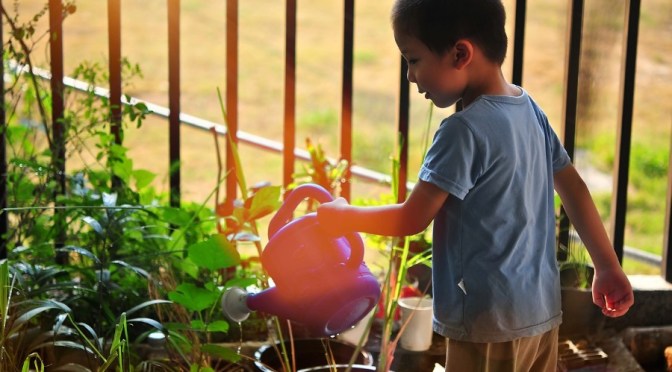
Encourage your children to garden (Wally Richards)

We need to encourage our children and grandchildren to appreciate Nature by including them in some gardening activities.

I believe that young children have a natural affinity with plants and insects when they are allowed to explore our gardens.

Children learn many things by mimicking their parents and are often keen at a young age to assist in various gardening activities.

I remember as a toddler spending many hours in the garden collecting caterpillars off the cabbages and feeding them to our chickens.

I was given my own little spade and wheelbarrow when I was about three and had a lot of fun moving the weeds my mum cleared from gardens to the compost bin or to feed them to the chickens.

I can still remember how good it felt to be part of Nature back then and the same feeling pertains today when I work or wander around gardens.

It was about that time, when I was given my own little plot of ground to grow plants in.

Seeds would be planted and I would be taught which seedlings were weeds and which were plants.

My own little watering can would nurture the baby plants till maturity. A great ado would be made when one of my cabbages, silverbeet or lettuces was harvested for the evening meal.

Even though I hated eating silverbeet back then, I had to enjoy my own grown silverbeet, because I grew it!

It was the fuss that the adults made, that gave me a feeling of importance and likely kept me gardening for the rest of my life.

Plants that move have a fascination for children and a great one for this is Mimosa pudica, the Sensitive Plant, which folds up its leaves when touched. They are easy to grow from seed, as a pot plant for a windowsill.

Nice pink flowers also. As the plant matures it has thorns on the branches which incidentally are another attraction for children.

Cacti with their prickles often appeal to young boys and I had a small collection when young and still keep a few.

Two awesome plants for children to grow are the super giant sunflowers and pumpkins.

Called ‘My Giant Sunflower’ these extra tall sunflowers will grow up to 5 metres tall.(17 odd feet) Grown in full sun in soil that has excellent drainage and lots of manure.

The giant pumpkin is called ‘My Giant Pumpkin’ and these monsters can weigh over 1000 pounds at maturity. (Half a ton)

Another interesting aspect is to encourage the children to give their giant plant a personal name after it is established.

Naming the plant makes the giant more personal and helps the children to have respect for plants and nature.

If I was going to grow either of these giants, here is what I would do: In an all-day-sunny area, I would dig a hole about a spade depth and width,

chop up the bottom of the hole, so the soil is loose, then fill the hole with chook manure to about two thirds full.

(Other manure could be used if chook manure is not obtainable, but chook is best).

Fill the rest of the hole with a good compost and soil mix, 50/50 making a small mound about 12cm tall above the filled in hole.

Place one seed in the middle of the mound and wet it down with Magic Botanic Liquid (MBL), (20 ml of MBL to 1 litre of water.)

Water the mount to keep moist with plain water and then every 2 weeks with the MBL.

Overseas the biggest record vegetables have been achieved with products very similar or the same as MBL. Spraying the foliage of your Giants every 2 weeks with MBL

(10 ml to a litre) will also assist in a bigger healthier plant.

After your pumpkins are established and growing well, give them a drink using Cucumber Booster, once a week.

This is a high nitrogen product that is a combination of sulphate of ammonia and potassium nitrate, which you diluted in water.

Cucumber Booster is excellent for any plants that enjoys a boost of nitrogen after establishment. It is used for growing cucumbers, pumpkins, zucchini and gourds.

The MBL and Cucumber Booster can be combined for watering into the soil near the base of the plant.

Because of the weather patterns we are experiencing, after you plant your seed, cut off the base of a 2 to3 litre plastic fruit juice bottle and place this over the mound,

with the cap removed. This will give your seed and seedling its own little glasshouse.

This is removed once the seedling starts to fill the bottle and needs more room. With the Giant Sunflower a tall strong stake should be put in the ground at seed planting time on the edge of the mound.

This will be needed later to give extra support to the plant.

Another interesting thing to do is once the sunflower gets up about a metre tall, plant 3 or 4 climbing bean seeds at the base of the plant.

These will grow up the sunflower and also provide extra nitrogen for the sunflower.

It is a lot of fun plus a great way to get the children way from the TV and video games, showing them there is more to life than a screen.

Some garden centres run competitions for the tallest sunflower and the biggest pumpkin with various prizes for the winners.

AROUND THE GARDEN

Aphids are likely to be found on your roses at this time and they can easily be controlled with a safe spray of Super Pyrethrum and Wallys Neem Tree Oil combined.

Spray very late in the day just before dusk to obtain the best results.

Stone fruit trees that had the curly leaf disease will now be producing new leaves free of the problem.

The damaged leaves will fall off over time. You can if you like, spray the newer leaves weekly with molasses at rate of a tablespoon per litre of water with

Magic Botanic Liquid Added.

This can help save some or all of the crop.

Codlin Moths will start to be on the wing about now so obtain a pheromone trap from your garden centre so you can monitor the best time to spray.

A number of gardeners have found that a spray of Neem Tree Oil with Raingard added over the young apples, applied about 5-7 days after an influx of moths into the traps,

has resulted in only a very small scar on the mature apple, where the grub took its first and only bite. The same can be used on all fruit that guava moths attack.

Tomatoes should be doing well if in a sunny, sheltered spot. Only remove laterals on a sunny day when it is not humid or moist.

Spray the wound immediately with Liquid Copper to prevent disease entering the wound resulting in the possible loss of the plant.

Ensure that the tomato plants are well supported on stakes during windy times.

If you are concerned about blights spray the plants with Perkfection as a preventative, once a month. The same applies for your potatoes.

For general health of any plants, especially roses and food crops, a two weekly spray of MBL and Mycorrcin works wonders. Spray both the soil and the foliage.

Avoiding the use of chemical sprays and fertilisers is a must for healthy plants.

I have a saying that if you work with Nature, you will have great gardens, if you try to work against nature, you have chemical warfare.

Happy, Healthy Gardening.

Photo: pixabay.com

Insects not meat; about your future food supply as current ones are destroyed by fire (plus other updates from the Ice Age Farmer)

Frequent fires burning down food production sites, eggs, grain etc. ‘Coincidental’ fires? IAF has a map to let you see visually what’s going down. They want an end to the wild animal farming & have literally shut it down in China. Just like that. See the pattern folk? Food is going. (It’s about carbon wink wink). And here in NZ we’ve been watching our wild food ruined for food with poisons. I have a post coming on glyphosate spraying in Canada all over wild places killing animals & wild plants. All with the govt’s blessing it appears. And with the shutting down of food production ‘they’ in various countries are dishing out millions to start up bug/insect farms. Slater burgers anybody? IAF suggests you get growing your own food fast. It’s all happening at lightening speed. Remember Bill Gates’ has promised another lockdown?

Ice Age Farmer 162K subscribers

The Ice Age Farmer discord server was deleted for “spreading misinformation,” as big tech censorship ramps up. Canada is building isolation camps as speculation about a COVID21 fueled lockdown grows. China bans farming of most wild animals, as Walmart forces its suppliers to “decarbonize” — both of which aim to end animal agriculture. Christian breaks it down. FULL SHOW NOTES: http://www.iceagefarmer.com/2020/10/1… SUBSCRIBE on bitchute: http://bitchute.com/iceagefarmer THANK YOU FOR YOUR SUPPORT: http://patreon.com/iceagefarmer – other methods/PO box: http://iceagefarmer.com/support The ICE AGE FARMER broadcast JOIN THE CONVERSATION: http://iceagefarmer.com/discord IAF RESOURCES: ⇒ GDD: Growing Degree Days tool: how much colder has 2019 been for you? http://iceagefarmer.com/gdd ⇒ IAF Wiki – read history, understand cycles, know what’s coming: http://wiki.iceagefarmer.com/wiki/His… ⇒ Maps from previous cycles: http://wiki.iceagefarmer.com/wiki/Str… ⇒ Crop Loss Map http://map.iceagefarmer.com ⇒ Join the email list – stay connected: http://iceagefarmer.com/mail *** SUPPORTERS – I recommend (because I use personally) *** STORED FOOD (+ more) @ MyPatriotSupply: http://iceagefarmer.com/prep FREEZE DRY YOUR OWN FOOD (like printing money, but food): http://iceagefarmer.com/harvestright BUY SEEDS @ TRUE LEAF MARKET: http://iceagefarmer.com/trueleaf EMP-proof Solar: mention IAF save $250 http://Sol-ark.com BEST CBD: http://bignuggetfarm.com 10% code: IAF2018 ⇒ More books: http://amazon.com/shop/iceagefarmer ⇒ Stored food: http://iceagefarmer.com/prep ___

Workers report that nothing is alive now … no birds, no insects, nothing! … at recently 1080’d Wilkin River Vlly, Mt Aspiring Ntl Park

This is truly disturbing, especially on the heels of a recent post on topic and the revelations from the Taupo area where a hunter reports the same after SIXTY PLUS YEARS of 1080 treatment. The poison simply is not working, and worse it is decimating our native birds. Kea are nearing extinction (here also) and remember this post also about the 10K birds killed in one drop? When is this madness going to be looked at with independent eyes, independent research and an eye for alternatives. They are aerially treating areas that could be easily trapped while saying they only aerially treat inaccessible places.

Note: this post since published has had 40K shares on FB (14K initially in one week … at which point the pro poisoners were responding with comments it is not true. The person who provided the info is 100% bonafide & reliable I can assure you). The truth is coming out. I encourage you, if you have similar ‘silent’ stories do contact me using the contact form…. the accumulation of other sightings provides more evidence that 1080 is not conserving our natives & is also killing our non natives. This is by design of course although DoC is not outright telling us that. The plan is to totally eliminate all non natives, part of the UN biodiversity goals.

RELATED: NZ’s Silent Forests – Where have the Birds Gone? 
also: https://envirowatchrangitikei.wordpress.com/?s=birds+1080


MAKARORA – THE AFTERMATH

By Carol Sawyer

The Makarora area of Mt Aspiring National Park was aerially 1080-poisoned on 15 October, 2019 – the Wilkin, Fish, Blue, Cameron, Makarora and Young Valleys.

Yesterday I was told that the old six-bunk forestry hut at Top Forks, Wilkin River Valley, is being restored, and the workers restoring it are living there while it is restored. They say there is absolutely nothing left alive up there. It is as silent as the grave…. no birds, no insects, NOTHING !

Extraordinarily, even though the area was poisoned only two weeks ago there are NO warning signs on any of the DoC online track information on the Young Valley Track, Cameron Valley Track, Blue-Young Valley Track, etc! There will be dead carcasses and baits in the streams and rivers. Innocent tourist trampers from overseas will drink from the streams.

https://www.doc.govt.nz/…/thin…/tracks/wilkin-valley-tracks/

https://www.doc.govt.nz/…/thi…/tracks/blue-young-link-track/

https://www.doc.govt.nz/…/thin…/tracks/cameron-valley-track/

*******************************************

‘Way-to-Go” helicopter crossing Makarora River during 1080 poison operation – Photo Carol Sawyer

Find further posts on 1080 by using ‘categories’, the drop down box to the left of the page.

PENTAGON MAY HAVE RELEASED WEAPONIZED TICKS THAT HELPED SPREAD OF LYME DISEASE: INVESTIGATION ORDERED

Thanks to reader futuret for this link…
And don’t think for one minute your govt wouldn’t do this sort of thing. Search biological warfare … history is replete with biological experiments on you the public without your consent or knowledge of course. Porton Down is a good place to start your search. EWR

From newsweek.com

Last week, the U.S. House of Representatives quietly passed a bill requiring the Inspector General of the Department of Defense (DoD) to conduct a review into whether the Pentagon experimented with ticks and other blood-sucking insects for use as biological weapons between 1950 and 1975.

If the Inspector General finds that such experiments occurred, then, according to the bill, they must provide the House and Senate Armed Services committees with a report on the scope of the research and “whether any ticks or insects used in such experiments were released outside of any laboratory by accident or experiment design,” potentially leading to the spread of diseases such as Lyme.

The amendment was put forward by Rep. Chris Smith, a Republican from New Jersey, who was “inspired” by several books and articles claiming that the U.S. government had conducted research at facilities such as Fort Detrick, Maryland, and Plum Island, New York, for this purpose.

However, some Lyme disease experts are warning that Smith’s claims should be viewed with plenty of caution. They include Phillip Baker, Executive Director of the American Lyme Disease Foundation (ALDF), who says Smith has been “terribly misinformed” with “false and misleading information.”

One of the books that Smith refers to—called Bitten: The Secret History of Lyme Disease and Biological Weapons—was published earlier this year, authored by Stanford University science writer and former Lyme suffer Kris Newby. It features interviews with late Swiss-born scientist Willy Burgdorfer—the man credited with discovering the bacterial pathogen that causes Lyme disease—who once worked for the DoD as a bioweapons specialist.

“Those interviews combined with access to Dr. Burgdorfer’s lab files suggest that he and other bioweapons specialists stuffed ticks with pathogens to cause severe disability, disease—even death—to potential enemies,” Smith said during the debate on the House floor.

“With Lyme disease and other tick-borne diseases exploding in the United States—with an estimated 300,000 to 437,000 new cases diagnosed each year and 10-20 percent of all patients suffering from chronic Lyme disease—Americans have a right to know whether any of this is true,” he said. “And have these experiments caused Lyme disease and other tick-borne diseases to mutate and to spread?” Smith asked.

Bitten suggests that military scientists dropped weaponized insects which had been deliberately infected from the air during tests. It also claims that uninfected bugs were released into residential areas in the U.S. to see how they spread, The Guardian reported.

Newby contends that these experiments could have—accidentally or deliberately—led to the spread of Lyme disease in the 1960s. And even though Richard Nixon banned biological weapons research in 1969, such experiments may have continued, Roll Callreported.

According to Smith, the investigation into the claims should attempt to address several questions:

“What were the parameters of the program? Who ordered it? Was there ever any accidental release anywhere or at any time of any diseased ticks? Were any ticks released by design? Did the program contribute to the disease burden? Can any of this information help current-day researchers find a way to mitigate these diseases?”

Despite the passing of the recent bill by the House, the American Lyme Disease Foundation’s (ALDF) Phillip Baker says Smith’s claims are unfounded.

“I think that Rep. Chris Smith is terribly misinformed by the Lyme disease activists and by the false and misleading information contained in the book written by Newby,” Baker told Newsweek. “He would be well advised to check the facts by consulting the experts on Lyme disease at the National Institutes of Health or the Centers for Disease Control and Prevention [CDC] for accurate and reliable information before proposing such legislation.”

In a piece for the ALDF website, Baker noted that some people claim Lyme disease was introduced into the northeastern region of the U.S. after a strain of Borrelia burgdorferi—the bacterium that causes Lyme disease—escaped from the Plum Island biological warfare facility.

“However, there is ample evidence to indicate that both Ixodes ticks and B. burgdorferiwere present in the U.S. well before the Plum Island facility was ever established,” he wrote, adding that the center says it has never researched Lyme disease.

The symptoms of what is now known as Lyme disease were potentially first described in Scotland in 1764. Recent research has indicated that the Lyme disease bacterium was present in America in pre-Columbian times, many thousands of years before Europeans arrived on the continent.

Furthermore, Baker says the rationale for believing that Lyme disease was used as an agent of biowarfare is “flawed.”

“Note that about 95 percent of cases of Lyme disease reported to the CDC occur in 12 states,” he told Newsweek. “Based on what we know concerning the pathology of Lyme disease—and we know a lot—does anyone seriously think that people living in those 12 states are any more vulnerable to an enemy attack because of the high incidence of Lyme disease than those living in the remaining areas of the U.S.? That would be ‘quite a stretch’ to say the least.”

“The main reason for considering a given pathogen for possible use as an agent of biowarfare is its ability to create terror and or havoc by causing serious incapacitating illness and/or death within a short time interval after its release,” he said. “The bacterium that causes Lyme disease is not such an agent. If one were to prioritize a list of agents to be considered for use as biowarfare agents, the organisms that cause smallpox, plague, Ebola and anthrax would be at the top of the list. Only a fool would ever consider adding Borrelia burgdorferi, the bacterium that causes Lyme disease, to such a list. If it ever was given any consideration, and I have no knowledge that it ever was, it would not have been for more than a nanosecond!”

https://www.newsweek.com/pentagon-weaponized-ticks-lyme-disease-investigation-1449737

DoC is calling the kettle black don’t you think?

So according to this article from the News Room, Ngāi Tahu have been instrumental in the loss of habitat for the small brown Eyrewell beetle in NZ… and it would appear, DoC almost powerless to stop them? The little beetle, like many insects world wide, is becoming extinct (not that any manufacturers of the lucrative poisons slathered world wide over everything would care).

Whatever you may think about Ngāi Tahu or their part in the demise of this beetle DoC can hardly point fingers at them witness our increasingly silent forests in NZ. They are dropping tonnes of the insecticide 1080 all over our ecosystem like a veritable lolly scramble, with no long term studies to prove to us it is saving our birds as it claims. On top of all that they actually claim it targets pests (& does not kill non target creatures) when clearly by their own documented information & independent science, 1080 kills every living breathing organism period. The little beetle here also began its demise with the ongoing planting & felling of pine forests. So really it’s a bit rich all round to be pointing the finger at Ngāi Tahu. Aside from that, turn the clock back a century and a bit & you’ll find the ongoing cry was that Māori lands that were uncultivated or not farmed were ‘waste’ lands, a good reason why Māori shouldn’t own them. Damned if they do, damned if they don’t.

RELATED LINKS:
THE DECIMATION OF OUR NATIVE KEA – WE ARE WATCHING ONE OF NEW ZEALAND’S GREATEST ENVIRONMENTAL TRAGEDIES TAKING PLACE!

“TWENTY YEARS OF 1080 IN THE HAAST VALLEY HAS KILLED OUR KEA POPULATION”

THE 1080 INSECTICIDE IS NOT KILLING 50% OF OUR INSECTS SAYS DOC – AND NO LONG TERM MONITORING IN SIGHT


From thenewsroom.co.nz

Search for Eyrewell Forest on Google Maps and you won’t find a forest. In fact, what you see looks similar to surrounding Canterbury farm land.

What was once a forest is now home to 14,000 dairy cows. Satellite photographs show a tell-tale pattern of circles where centre-pivot irrigators are busy creating grass where trees once stood.

The forest was home to a small, dark brown beetle commonly known as the Eyrewell ground beetle. Globally, only 10 have ever been found. All were found amongst trees in Eyrewell Forest, the last in 2005.

The beetles’ home was returned to Ngāi Tahu as part of a treaty settlement in 2000. Since then the 6700 hectares of plantation pines have steadily disappeared and dairy cows have taken over.

“The success and effectiveness of Ngāi Tahu Farming is connected to the health and wellbeing of the lands, waterways, plants and animals under our care which is central to our kaitiakitanga values.”

The march of chainsaws, shredders and pivot irrigators continued despite eight years of effort by the Department of Conservation (DOC) to convince Ngāi Tahu Farming to save some the beetles’ habitat in reserves.

In October 2018 Ngāi Tahu Farming told Stuff  the last of the forest would be removed for the intensive dairy conversion. Its CEO Andrew Priest said the organisation turns to Ngāi Tahu values guide their farming.

“The success and effectiveness of Ngāi Tahu Farming is connected to the health and wellbeing of the lands, waterways, plants and animals under our care which is central to our kaitiakitanga values.”

According to him 120 hectares of plantation pine has been retained. From aerial photographs it appears this has been done only in one area where beetles were possibly found. Other areas where beetles were found are treeless, one area has a small amount of scrub.

Priest said Lincoln University has been surveying the likely remaining spots of the beetle since 2013. No beetles have been found. He said search efforts will be abandoned in 2020.

The risk of extinction is so extreme one scientist, Eckehard Brockerhoff, who found five of the 10 collected beetles, is considered penning an obituary.

If he does, the obituary will be scant on detail of the beetle as so little is known about it. It’s a bit over 1cm long, nocturnal, and scientists think it lives for two years.

Wingless and described as a “moderate” runner it has managed to move from the kānuka it inhabited in the 1920s to the plantation pine which replaced it. It could even be called tenacious, as it also survived repeated rounds of removing and replacing areas of plantation pine as areas of forest were progressively logged and replanted.

Whether its tenacity could survive the dairy conversion is another matter according to Brockerhoff who spent thousands of trapping days attempting to find the beetle in the early 2000s. His efforts netted five beetles.

“It [the dairy conversion] involves felling all the trees, ripping out the root stock and then pretty much mulching the coarser woody material which is left behind into small chips. They took like a giant shredder over it. It was a very effective method of not only shredding any plant matter, but any invertebrates that are larger than a pinhead. I didn’t think the beetles would have stood much of a chance to survive in those converted areas.”

In the views of the scientists, setting aside a reserve of plantation pine where beetles were found in the 6700 ha property could have given the beetle a fighting chance.

Eyrewell Forest. Red dots show approximate locations where Eyrewell beetles were found by Brockerhoff. Yellow dots are probable locations of previously found beetles. Image: Google Maps

Failed talks

Brockerhoff sums up Ngāi Tahu Farming’s reception to the idea of establishing a reserve to save the beetles habitat as “a bit reluctant.”

Documents attained under the Official Information Act show repeated efforts were made by DOC between 2005 and 2013 to promote the creation of a reserve.

Emails exchanges started off cheerfully. A 2009 email from DOC to Ngāi Tahu’s rural manager reads: “Just been chatting to [redacted name] here at DOC re the possibility of setting up a reserve at Eyrewell – the same chat we had about two years ago I’m sure you recall!!!”

Once trees started to be cut down and with no formal agreement about the creation of a reserve the tone grew more urgent. In internal DOC emails frustration is clear.

“It’s fine for private landowners to develop their land, however it seems absurd for us a community to be allowing the unplanned clearance of much of the forest when this will knowingly cause the extinction of Holcaspis [Eyrewell ground beetle] …”

A plan by Ngāi Tahu Farming to reserve 150ha of pine forest was called “commendable”, however, the location of the reserve was not in the area where the beetle had been found. Restoration planting Ngāi Tahu Farming was planning to undertake was also not considered to be a solution which would save the beetle.

“… preserving a small amount of their habitat before it is gone will give us a great chance of saving these species from global extinction and regional extinction respectively, and one that is far more effective than some-how recreating their habitat … some minor changes to the location and size of the reserves would effectively save these species from extinction.”

DOC staff listed their attempts at finding a way to save the beetles’ habitat through the district and regional council pathways. A judicial review was suggested, although it was noted this was with some nervousness as there would be several “legal fish hooks”.

There was no judicial review. After 2013, the emails stopped.

DOC Mahaanui operations manager Andy Thompson said he understood Ngāi Tahu Farming commissioned Lincoln University to help with restoration efforts after 2013. Thompson was not aware of what the outcome has been and whether DOC’s eight years campaigning for a reserve had any effect.

“DOC would have loved to have seen a reserve created and an Eyrewell ground beetle population flourishing. The reality is we can only provide advice for managing biodiversity values on private land or advocate through consent processes and district council plans.

“We don’t have the ability to directly manage private land.”

“The fact that most of the forest has gone and now no beetles are being found means they’ve likely already been driven extinct, and a couple more years of trapping will probably confirm that.”

Ngāi Tahu Farming’s response

Priest said the plight of the beetle was an issue of importance to Ngāi Tahu Farming.

“Since 2013, Lincoln University has been surveying the Eyrewell Forest area at the request of Ngāi Tahu and has found no beetles. They have surveyed in the likely remaining sites using the same techniques as the original survey and have not found any beetles after searching for approximately 30,000 trap days. These annual surveys will continue until 2020 at this stage.

“In this area, approximately 120ha of pine forest has been retained and at least another 100ha of land has been set aside for native kānuka shrub land restoration. The pine forest in the central section of the development has not been cleared away, which is important to note because it is in this area that Canterbury Beetles [Eyrewell beetles] were once recorded.”

Ngāi Tahu Farming have been asked to clarify where these areas are on an aerial map but did not respond prior to publishing.

Wikipedian-at-large and keen entomologist Doctor Mike Dickison has expressed concern over the plight of the beetles for several months. He was not impressed by Ngāi Tahu Farming’s efforts.

“The preferred habitat of the beetle is pine forest, and they’ve removed 98.3% of the pine forest, chipped and mulched what’s left, and turned it into dairy pasture.”

With only one of the areas the beetle has been found in left as forest he suspects it will never be seen again.

“The fact that most of the forest has gone and now no beetles are being found means they’ve likely already been driven extinct, and a couple more years of trapping will probably confirm that.”

Mike Dickison visited Eyrewell Forest February 9. Photo: Mike Dickison

He’s not reassured by the claims of restoration efforts. During a recent visit to the area he saw planting in the corners of centre-pivot irrigated paddocks with dead plants.

A Lincoln University website show what it calls a “distributed forest” as being proposed for the farm. Concept drawings show thin rings of native trees surrounding centre-pivot irrigators.

Brockerhoff said when he was in talks with Ngāi Tahu Farming it hoped shelter belts which were going to be established between irrigated paddocks would provide enough habitat for the beetles.

“We suggested a single row of trees in the landscape established after the habitat conversion would probably not do the trick.”

He was unsurprised at the news no beetles have been found since he found the last one in 2005.

“I think the surveys done from 2013 onwards was after the pine forest had been cleared.”

He said while guesswork was involved, it’s probable no beetles have been found because the forests gone: “The shredding and the mulching would not have left a lot of invertebrates behind.”

While 120ha might sound like a large area it’s still a limited habitat according to Brockerhoff.

“Even if there is a population there, there’s no guarantee they can actually survive there.”

“The decision to convert Eyrewell Forest to pasture has been driven by an economic assessment of profitability, with little consideration of biodiversity values.”

Why can’t we save a beetle?

Insects on private land don’t have much protection. The only exception is if they are listed as protected under the Wildlife Act. Despite being on a DOC list of 150 conservation priority species, the Eyrewell ground beetle is not on the list of protected insects.

draft policy for indigenous biodiversity has been written which could cover insects in the future, however, there’s disagreement about plantation forests. The Forest Owners’ Association and Federated Farmers want a special exclusion stopping any plantation forest from being classed as being worthy of protection, regardless of what threatened species might live there.

While most don’t think of commercial pine forests as hotbeds of biodiversity they’ve become home to a surprising number of New Zealand’s threatened species. A 2010 article published in the New Zealand Journal of Ecology found 118 species listed as threated live in plantation forests. These include birds such as kiwi and falcons, bats, fish, plants, and invertebrates like the Eyrewell ground beetle.

The article makes special mention of the Eyrewell forest:

“However, this forest, along with several others in this area, is currently being converted to pasture, primarily for dairying. The decision to convert Eyrewell Forest to pasture has been driven by an economic assessment of profitability, with little consideration of biodiversity values. If the conversion is implemented without setting aside adequate areas of suitable habitat for H. brevicula [Eyrewell beetle] (i.e. plantation forest or restored kānuka forest) then this species is likely to become extinct in the near future.”

Brockerhoff’s most optimistic view of the likelihood the beetles’ tenacity might help it survive the dairy conversion is far from inspiring.

“The chances aren’t too good but it’s difficult to say.”

https://www.newsroom.co.nz/2019/02/12/440614/hello-cows-bye-bye-rare-beetle?preview=1&fbclid=IwAR0dLISjIFB1tTMSvB46RPzTEWOYLuMSmwiC7q_o4GWOkFMCh5jhMPZ04hs

In 2004 the authorities killed almost 60% of an already endangered resident dotterel population with brodifacoum poison

Bill Benfield writes in his book The Third Wave (pp 76-77), on the use of brodifacoum poison, an anti-coagulant used by the Department of Conservation in NZ to kill pests. It is seen under the trade names of Talon and Havoc. An animal may get a small sub-lethal dose of brodifacoum, and later more doses until a critical poison level is reached & the victim dies. A single sub lethal dose however can remain with an animal for its whole life. Brodifacoum has a half life of 157 days in the soil. Some insects can consume brodifacoum baits and have no ill effect but of course if they are part of a bird’s diet they can be catastrophic.

As DoC do not monitor insects before and after brodifacoum operations, the consequences of their activities on endangered species is unknown.

This is how it was that the Auckland Regional Council poisoned nearly 60% of the resident population of endangered North Island dotterel at Tawharanui Regional Park in 2004: through eating brodifacoum baits and poisoned sand-hoppers!

When I read of these incidents I’m always left pondering as to whether the NZ agencies that purport to be saving our native birds are actually being truthful?

Connect the dots here…
1) DoC doesn’t monitor insects before & after poisoning operations
2) Insects eat brodifacoum
3) Dotterel EAT insects
4) 60%, in this instance, of the already endangered dotteral population dies

Is this really rocket science people?


PHOTO: Wikimedia

REFERENCES: All references to Bill Benfield’s information are listed in his book The Third Wave.

RELATED: http://www.scoop.co.nz/stories/PO1709/S00012/huge-by-kill-of-brodifacoum-poison.htm