Nothing to do with the S&E of course… nothing at all…note they include autism & infertility as possible outcomes … folk have been raising alarms on this for years while now it’s a handy go to for letting the aforesaid ‘treatment’ off the hook…
Startling new report finds hormone-warping chemicals in 99 PERCENT of food sold in American stores – which may raise risk of cancer, autism and infertility
Forever chemicals’ linked to cancer are found in virtually every food product sold in American stores, a shocking report suggests.
It comes amid growing fears about the massive amounts of chemicals being ingested by Americans every year – and whether it is related to a mystery spike in cancers among young people.
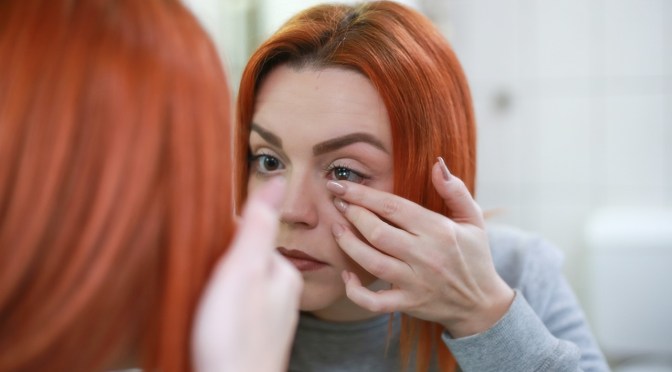
Mamavation, in partnership with Environmental Health News, had 18 different brands of contact lenses tested for organic fluorine, a marker for PFAS
All the contact lenses tested positive for fluorine, at levels ranging from 105 to 20,700 parts per million (ppm)
While 44% of the contact lenses tested contained fluorine at a level over 4,000 ppm, 22% contained more than 18,000 ppm
A large population-based study conducted in China found exposure to PFAS increased the risk of visual impairment
PFAS is likely used in contact lenses to make them soft and allow oxygen to flow through, but the chemicals are linked to reproductive and developmental problems, cancer, liver disease and more
Toxic polyfluoroalkyl or perfluoroalkyl chemicals, collectively known as PFAS, may be lurking in your contact lenses. The compounds, which have been dubbed “forever chemicals” because they break down so slowly, have been linked to reproductive and developmental problems,1 cancer, obesity,2 nonalcoholic fatty liver disease (NAFLD)3 and more.
PFAS is known for making surfaces slippery, hence their widespread use in nonstick cookware. They’re also found in many other consumer products, however, including food takeout containers, food packaging, stain- and grease-resistant products, furniture and personal care products. Many people are unaware these chemicals are in products they use daily, including contact lenses, which may spend up to 16 hours next to your eye each day.
Contact Lenses ‘Almost Pure PFAS’
Mamavation, in partnership with Environmental Health News, has been investigating PFAS in everyday products such as clothes, food and makeup.4 Many social media users had asked the wellness blog if soft contact lenses contain PFAS, so they sent 18 different brands to a laboratory certified by the U.S. Environmental Protection Agency to test for organic fluorine, a marker for PFAS.
All the contact lenses tested positive for fluorine, at levels ranging from 105 to 20,700 parts per million (ppm). While 44% of the contact lenses tested contained fluorine at a level over 4,000 ppm, 22% contained more than 18,000 ppm.5 The contact lenses with the highest organic fluorine levels were:6
Alcon Air Optix Colors with Smartshield Technology (20,700 ppm)
Alcon Total30 Contact Lenses for Daily Wear (20,400 ppm)
Alcon Air Optix (No Hydraglide) for Astigmatism (20,000 ppm)
What does this mean in terms of your health? Pete Myers, chief scientist for Environmental Health Sciences, said:7
“The presumption that these organic fluorine levels measured in contact lenses are safe is laughable. Last summer the EPA issued health advisories in drinking for four common PFAS, ranging from 0.004 parts per trillion (ppt) to 2000 ppt. EPA considers exposure beneath these thresholds to be safe for drinking water.
While comparing drinking levels in water to concentrations in contact lenses is like comparing apples to oranges, it’s worth noting that all of the contact lenses tested exceeded 100 ppm, which is equivalent to 100,000,000 ppt, or 50,000 times higher than the highest level deemed safe in drinking water by the EPA.”
Manufacturers don’t have to disclose when PFAS are used in their products. It’s legal to claim the contents are a “trade secret.”8 But according to Scott Belcher, a North Carolina State University researcher and scientific adviser on the testing, fluoropolymers are likely.
He told The Guardian fluoropolymer PFAS “have the properties that your eyes want … It wants to get oxygen and doesn’t want bacteria to grow like crazy, and it wants lenses to be smooth and comfortable.”9 Fluoropolymers likely make contact lenses soft and allow oxygen to flow through them,10 but the convenience of having smooth contact lenses comes at a price.
A 2020 review into the chemicals found “their production and uses should be curtailed except in cases of essential uses,” given their extreme persistence in the environment, toxic emissions associated with their production and use, and a high likelihood that they contribute to human exposure to PFAS.11
PFAS Exposure May Harm Your Vision
Little is known about how the eyes may absorb PFAS, but the chemicals are known to be absorbed via the skin, leading to immunotoxicity.12 Further, The Guardian reported, “PFAS also break down into different types of PFAS once in the environment, so it is possible that the polymers turn into dangerous forms of the chemicals once in the eye or contact packaging, but no studies have been done.”13
Linda Birnbaum, scientist emeritus and former director of the National Institute of Environmental Health Sciences and National Toxicology Program, further told Mamavation:14
“Your eyes are one of the most sensitive parts of your body. Therefore, it’s concerning to see the presence of organic fluorine, which is likely a type of PFAS, found in all soft contact lens products tested. What about the idea of doing no harm? Do we have proof these products are safe? A lack of safety studies does not qualify as ‘safety,’ which is what is happening here.”
Research that has been done on PFAS and vision is cause for concern. A large population-based study conducted in China found exposure to PFAS increased the risk of visual impairment.15 The researchers suggested PFAS may induce oxidative stress, with a detrimental effect on the eyes.
“PFASs are proven pro-oxidants and exposure to these emerging pollutants elicits DNA damage, lipid peroxidation, generation of reactive of species (ROS), and inhibition of anti-oxidant enzymes, as well as triggers signaling cascades like apoptosis,” they explained.16 Military members who were exposed to PFAS on military bases have also suffered from a number of eye conditions, including myopia, hyperopia, astigmatism and presbyopia.17
Using PFAS Contacts May Leave You ‘Permanently Contaminated’
More than 98% of Americans have PFAS in their blood.18 But using contacts made from the material daily could leave you permanently contaminated. According to Terrence Collins, director of the Institute for Green Sciences at Carnegie Mellon University:19
“Fluoropolymers improve the technical performance of contact lenses at attractive price performances and customers are naturally attracted. But the other key performances for safe and sustainable chemical products, the health, environmental and fairness performances, are not given adequate attention by manufacturers, legislators, or regulators.
If you use fluoropolymer-containing contact lenses, you are likely to become permanently contaminated. No one today can tell you that fluoropolymer exposures are safe because no jurisdiction has been demanding the development and scrutiny of appropriate safety testing.
Your body cannot process fluoropolymers to safe products to protect you and nature is just as helpless when you throw the lenses away. But we know enough about PFAS chemicals to guess and fear that fluoropolymers in human cells or in the environment are anything but a pretty safety picture. I advise that such contact lenses be rigorously avoided.”
The environmental ramifications are also cause for alarm, considering more than 45 million Americans wear contact lenses — and up to 46% of them wear disposable varieties that are trashed daily. Every year, 2.5 billion contact lenses — about 44,000 pounds’ worth — are thrown away or end up in wastewater treatment plants after they’re flushed down a toilet or sink.20
In the environment, PFAS have devastating effects, to the extent that consuming a single serving of freshwater fish annually equates to a month of drinking water contaminated with PFOS — one type of PFAS — at a concentration of 48 parts per trillion.21
PFAS does not break down in water or soil and can be carried over great distances by wind or rain, according to the U.S. Department of Health and Human Services’ Agency for Toxic Substances and Disease Registry (ATSDR).22
PFAS Exposure Linked to Significant Health Risks
If your contact lenses contain PFAS, you may want to reconsider using them. Exposure to high levels of PFAS is also known to affect the immune system, and evidence from both human and animal studies shows that such exposure may reduce your resistance to infectious disease.23 The EPA also acknowledges that PFAS exposure is harmful and states that peer-reviewed scientific studies have shown exposure to PFAS may cause:24
Reproductive effects such as decreased fertility or increased high blood pressure in pregnant women
Developmental effects or delays in children, including low birth weight, accelerated puberty, bone variations or behavioral changes
Increased risk of some cancers, including prostate, kidney and testicular cancers
Reduced ability of the body’s immune system to fight infections, including reduced vaccine response
Interference with the body’s natural hormones
Increased cholesterol levels and/or risk of obesity
Liver disease is another known risk. PFAS are endocrine-disrupting chemicals that accumulate in body tissues, such as the liver, and are known to accelerate metabolic changes that lead to fatty liver.
“This bioaccumulation,” researchers wrote in Environmental Health Perspectives, “coupled with the long half-lives of many PFAS, leads to concern about the potential for PFAS to disrupt liver homeostasis should they continue to accumulate in human tissue even if industrial use is abated.”25
How Else Can You Be Exposed to PFAS?
In addition to contact lenses, PFAS can be found in water, soil, air and food. It’s in your home, including in household products like stain- and water-repellant fabrics, cleaning products, nonstick cookware and paint — and likely in your drinking water.26
Fast food containers and wrappers, microwave popcorn bags, pizza boxes and candy wrappers27 are also common PFAS sources. One study released by consumer watchdog groups Safer Chemicals, Healthy Families and Toxic-Free Future even revealed high levels of fluorine in five of 17 paper products that come in contact with food at Whole Foods Market — four of which were containers in the salad and hot food bar.28
Testing by Mamavation has also found evidence of PFAS in pasta and tomato sauces, sports bras, tampons and dental floss.29 Since the chemicals migrate into food and contaminate compost piles and landfills after disposal, the use of PFAS leads to unnecessary long-term exposure to harmful chemicals for humans, wildlife and the environment, especially since PFAS-free packaging options are widely available.
Tips for Avoiding PFAS
PFAS has no taste or smell but is widespread in the environment and in consumer products. You’ll want to filter your drinking water to avoid this common route of exposure. Also avoid products that are stain-resistant, waterproof or nonstick, as most contain PFAS.
Regarding contact lenses, you can avoid PFAS exposure by using glasses instead. To further reduce your exposure, the Environmental Working Group recommends avoiding:30
Items that have been pretreated with stain repellants and opt out of such treatments when buying new furniture and carpets.
Water- and/or stain-repellant clothing. One tipoff is when an item made with artificial fibers is described as “breathable.” These are typically treated with PTFE.
Items treated with flame retardant chemicals, which includes a wide variety of baby items, padded furniture, mattresses and pillows. Instead, opt for naturally less flammable materials such as leather, wool and cotton.
Fast food and carry out foods, as the wrappers are typically treated with PFAS.
Microwave popcorn. PFAS may not only be present in the inner coating of the bag, it also may migrate to the oil from the packaging during heating. Instead, use “old-fashioned” stovetop popcorn.
Nonstick cookware and other treated kitchen utensils. Healthier options include ceramic and enameled cast iron cookware, both of which are durable, easy to clean and completely inert, which means they won’t release any harmful chemicals into your home. A newer type of nonstick cookware called Duralon uses a nonfluoridated nylon polymer for its nonstick coating. While this appears to be safe, your safest bet is still ceramic and enameled cast iron.
Oral-B Glide floss and any other personal care products containing PTFE or “fluoro” or “perfluoro” ingredients.
This article is by Chris Wheeler, former head of New Zealand’s foremost organic farm lobby group, the Soil & Health Association. From 2000, the article was in my own archives. I could find little to anything of this author’s material now although I note he did co author a book.
“Forever chemicals are synthetic chemicals commonly used in consumer and industrial products. There are many types of these chemicals, known as per- and polyfluoroalkyl substances (PFAS). Perfluooctane sulfate (PFOS) is just one type of PFAS…Researchers found that study participants with high levels of PFOS in their blood were four and a half times as likely to develop liver cancer“
(NaturalHealth365) Your liver is a vital organ with hundreds of important functions. For instance, your liver works hard to cleanse your blood of poisons and toxins.
Now, a recent study published in JHEP Reports shows a disturbing link between a synthetic “forever chemical” and deadly liver cancer. The report suggests that the higher the exposure to forever chemicals, the higher the chance of developing liver cancer.
Man-made forever chemicals linked to deadly form of liver cancer
Forever chemicals are synthetic chemicals commonly used in consumer and industrial products. There are many types of these chemicals, known as per- and polyfluoroalkyl substances (PFAS). Perfluooctane sulfate (PFOS) is just one type of PFAS.
For the JHEP study, researchers analyzed human blood and tissue samples previously collected for an epidemiological study. Researchers looked at the samples of people who did or did not develop liver cancer.
They evaluated samples taken before cancer diagnosis, comparing them to samples from those who didn’t develop cancer. Researchers found that study participants with high levels of PFOS in their blood were four and a half times as likely to develop liver cancer.
The participants who developed cancer all had high levels of multiple types of PFAS in their blood. But the strongest link was between PFOS and liver cancer. Although other studies involving animals have suggested correlations between PFAS and cancer, this is the first human study to prove it.
Here is why PFAS are bad news for your health
Forever chemicals earned their nickname because they are extremely long-lasting. They take a long time to break down, accumulating in our environment and our bodily tissues over time. Unfortunately, the use of these dangerous chemicals is still widespread, although some manufacturers have stopped using them altogether amid growing health concerns.
PFAS are present in drinking water, food, food packaging, and even cosmetics. This is bad news for your health. Besides being carcinogenic, PFAS are associated with liver damage, kidney disease, neurological damage, and autoimmune problems. And once these toxic chemicals get into your bloodstream, they’re there for the long haul.
How does PFOS lead to liver cancer?
Researchers speculate that forever chemicals impede natural liver function. For instance, PFOS may interfere with glucose metabolism, bile acid metabolism, and amino acid metabolism. When the liver can’t function normally because of metabolic disruption, fat buildup can occur within the liver. This results in a condition called nonalcoholic fatty liver disease (NAFLD).
Those with NAFLD have a much higher risk of liver cancer. Shockingly, there has been a global uptick in the number of people diagnosed with NAFLD – with scientists estimating that a whopping 30% of the global population will have NAFLD by the year 2030.
How to minimize intake of PFAS
What can you do to keep your liver healthy and reduce your PFAS exposure? It may be hard to avoid PFAS altogether. But you may be able to minimize exposure by minimizing packaged and processed foods.
Choose organic, whole, or locally grown foods whenever possible. This will ensure you’re avoiding as many harmful chemicals as possible and help you feel your best.
At a time of course, that world wide governments move in on water supplies. Milked to the max, in NZ councils have been selling water off at fire sale prices to corporate conglomerates. Nestle and others have robbed countries of their supplies for pennies on the dollar. Councils in NZ set to centralize the control to government instead of the people. NZ has just mandated fluoride to 14 of its water supplies … adding fluoride, wanted or not. We surely were warned by author Maude Barlow of the new Blue Gold years ago. No mention in this article though of geoengineering (oh yes, it’s a conspiracy theory) … that contamination has been going on for decades. I always distill my water and always there’s a teaspoon or so of white powdery stuff at the end of each cycle … imagine how hard worked your kidneys are filtering that out. Chlorine, a known carcinogen… among other things present in our modern water supplies. EWR
Rainwater almost everywhere on Earth has unsafe levels of ‘forever chemicals’, according to new research.
Per- and poly-fluoroalkyl substances (PFAS) are a large family of human-made chemicals that don’t occur in nature. They are known as ‘forever chemicals’ because they don’t break down in the environment.
They have non-stick or stain repellent properties so can be found in household items like food packaging, electronics, cosmetics and cookware.
But now researchers at the University of Stockholm have found them in rainwater in most locations on the planet – including Antarctica. There is no safe space to escape them.
Nitrates and nitrites are in some of the healthiest and unhealthiest foods around. So what’s the deal? Are nitrates bad? Should we avoid nitrates and nitrites whenever possible? Does the source matter? This article summarizes what you need to know to get the good out of these compounds while avoiding the bad.
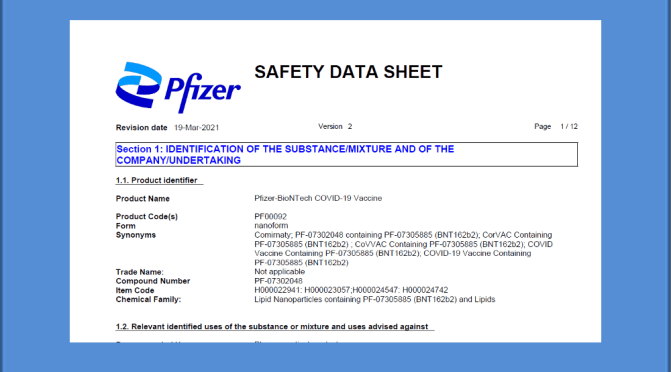
Below is a link to the Pfizer Safety Data sheet, sent to me by a reader. A fascinating document to say the least. There are three statements that feature prolifically:
“no data”,
“no information available”
and “not listed” …
There are also warnings for those handling the vaccine such as:
“Ingredient(s) indicated as hazardous have been assessed under standards for workplace safety. In accordance with 29 CFR 1910.1200, the exact percentage composition of this mixture has been withheld as a trade secret.” (p 3)
“Wear safety glasses as minimum protection (goggles recommended).” (p 6)
“Wear impervious disposable protective clothing when handling this compound. Full body protection is recommended” (p 6)
“Environmental properties have not been investigated. Releases to the environment should be avoided” (p 9)
“No safety data for oral, dermal or inhalation exposure of any ingredient”
“Most important symptoms and effects (of accidental exposure) – No data”
“Fine particles or mists (of the contents of the vaccine vial) may fuel explosions and fires “
“All handling of the vaccine or responders to a breakage or spillage must wear PPE “ “Release to the environment must be avoided…use of dust collectors and HEPA filters recommended “
“Endocrine Disrupting Properties” – no information (endocrine is the human hormonal system)”
“The best available technology should be used to prevent environmental release”
“Preventing environmental release may including destructive techniques for waste and wastewater“
The above are warnings to those handling the injection vials … so it becomes “safe and effective” presumably, once it’s actually injected into a human! _____________________________________________________________________
Go to the link below and follow the “agree” process to move through to the Safety data sheet. The product is called Comirnaty: https://safetydatasheets.pfizer.com/
NOTE: The so-called vaccine has only been approved for provisional use in NZ and Australia, provisional because “people will die otherwise.” ____________________________________________________________________
FINALLY in conclusion, from Pfizer (p12):
“Pfizer Inc believes that the information contained in this Safety Data Sheet is accurate, and while it is provided in good faith, it is without warranty of any kind, expressed or implied. If data for a hazard are not included in this document there is no known information at this time.“
Good luck people. Please do your own due diligence!
Clean Green NZ (not) … the only green thing about NZ these days is the 1080 pellets DoC is ‘conserving’ our environment with. We’ve had chlorine in our water for years, a known carcinogen. No noises made about that one. Now they are planning on mandatory Fluoride. No choice. … EWR
From rnz.co.nz
Between 300,000 and 800,000 New Zealanders may be exposed to potentially harmful levels of nitrates in their drinking water, which may increase their chances of developing bowel cancer.
The study, overseen by Victoria and Otago universities, used overseas research including a major Danish study that found a link with bowel cancer when levels were as low as 0.87mg/L of water.
The current safe level in New Zealand, as mandated by the World Health Organisation was 11mg/L of water.
Victoria University ecologist Mike Joy said it was a wake up call for councils which had been far too permissive in allowing high stocking rates on dairy farms.
As the world has been dominated for the past year by the fake threat that the Globalists want us to believe COVID-19 presents, a much greater risk to human health and the very life that exists on this planet has been covered up, until now.
In a very well documented and brilliantly produced explosive new film just released, The Dimming, by Dane Wigington of GeoengineeringWatch.org, conclusive evidence is presented to show that the planet earth is not being destroyed by global warming as defined by the Globalists, but it is being destroyed by the Globalists themselves through their weather modification efforts to dim the sun by spraying nanoparticles into the atmosphere and then using microwave transmissions such as 5G to weaponize the weather.
These documentaries detail just a small part of the history of military and government testing against American citizens. This should be a wake-up call for those on the fence about chemtrails. And yes, this is legal.