Tag Archives: bees

FROM WALLY RICHARDS

As we close the door on the year 2023 and look to a new year in front of us and interesting times that lay ahead.

Let us hope that people are not so naive as they now know better; the world is not like we thought it was; from our comfort zone and it has been a bit of a rude awaking for many.

Readers that have followed my gardening articles for sometime will have seen how I encourage people to grow as much of their food, vegetables and fruit as able and to do so naturally with all the minerals and elements available and without harmful chemicals. Why? Good for your health and pocket.

By growing as much of your own healthy food as possible you are upsetting the pharmaceutical companies as well as the companies that make harmful chemicals and fertilisers.

I have also suggested that fertiliser companies, chemical companies and pharmaceutical companies appear to work hand in hand.

A food chain that has little goodness but ample chemical poisons is a money earner for the health sector and the pharmaceutical companies.

A book has recently been released which goes into detail about how this is done. Title is:

Sickening Profits: The Global Food System’s Poisoned Food and Toxic Wealth by Colin Todhunter.

Want some interesting New Year reading then go to https://www.globalresearch.ca/sickening-profits-global-food-system-poisoned-food-toxic-wealth/5844502

This new e-book begins by examining how the modern food system is being shaped by the capitalist imperative for profit, with specific focus on the situation in Ukraine, and discusses the role of the world’s most powerful investment management firm, BlackRock.

It then goes on to describe how people (not least children) are being sickened by corporations and a system that thrives on the promotion of ‘junk’ (ultra-processed) food laced with harmful chemicals and the use of toxic agrochemicals.

It’s a highly profitable situation for investment firms like BlackRock, Vanguard, State Street, Fidelity and Capital Group and the food conglomerates they invest in.

But BlackRock and others are not just heavily invested in the food industry. They also profit from illnesses and diseases resulting from the food system by having stakes in the pharmaceuticals sector as well. A win-win situation.

The book goes on to describe how lobbying by agri-food corporations and their well-placed, well-funded front groups ensures this situation prevails.

They continue to capture policy-making and regulatory space at international and national levels and promote the notion that without their products the world would starve.

Moreover, they are now pushing a fake-green, ecomodernist narrative in an attempt to roll out their new proprietary technologies in order to further entrench their grip on a global food system that produces poor food, illness, environmental degradation, the eradication of smallholder farming, the undermining of rural communities, dependency and dispossession.

The final chapter looks at the broader geopolitical aspects of food and agriculture in a post-COVID world characterised by food inflation, hardship and multi-trillion-dollar global debt. End.

My comment is ‘Forewarned is Forearmed’

Radiation the effects on all life forms which is another worry in regards to bees and other insects pollinating our plants and food crops… Here is an interesting study….

On December 19, 2023, in the journal New Phytologist, French researchers published a study on yet another aspect of the decline of life on Earth. The study link is:

See https://nph.onlinelibrary.wiley.com/doi/full/10.1111/nph.19422

The populations of bees and other pollinators have declined so much that flowering plants that required insects in order to reproduce efficiently have evolved in less than 25 years to become better self-pollinators and to not need insects to reproduce.

Field pansies from seeds collected in the late 1990s and early 2000s were grown next to pansies from seeds collected in 2021.

Self-pollination rates were 27% higher in the plants grown from the newer seeds. The flowers were smaller.

The petals were shorter. The labella — the landing platforms that attract insects — were smaller. The flowering time was shorter. Fewer flowers opened per day.

The nectar spurs were shorter, there were fewer nectar guides, and the flowers produced less nectar.

More bumblebees visited the flowers that grew from the old seeds than from the new seeds.

The authors warned of cascading effects on insect populations:

“These decreases in nectar production may then reinforce pollinator declines if nectar levels fall below those necessary to sustain wild bee populations. Environmental changes may thus present a double jeopardy to pollinator populations, as they become victims of both the changes themselves and of plant trait evolution.”

The authors listed only pollution, habitat destruction, and alien species as causes of pollinator collapse.

I (Arthur Firstenberg) have sent the authors a letter, with links to literature reviews, informing them that RF radiation is the biggest cause of insect decline.

I have invited them to join the coalition of scientists, organizations and individuals that we are forming to address the global radiation emergency.

From Arthur Firstenberg

President, Cellular Phone Task Force

Author of The Invisible Rainbow: A History of Electricity and Life

Which is a book well worth reading.


All the best for the New Year


Wally Richards

Phone 0800 466464
Garden Pages and News at www.gardenews.co.nz
Shar Pei pages at  www.sharpei.co.nz
Mail Order products at www.0800466464.co.nz


New Zealand Bill of Rights Act 1990. Part II of the Act covers a broad range of Civil and Political Rights. As part of the right to life and the security of the person, the Act guarantees everyone:

1The right not to be deprived of life except in accordance with fundamental justice (Section 8)

2The right not to be subjected to torture or to cruel, degrading, or disproportionately severe treatment or punishment (Section 9)

3The right not to be subjected to medical or scientific experimentation without consent (Section 10)

4The right to refuse to undergo any medical treatment (Section 11)

 Furthermore, the New Zealand Bill of Rights Act 1990 guarantees everyone: Freedom of Thought, Conscience, and Religion.
This includes the right to freedom of thought, conscience, religion, and belief,
INCLUDING THE RIGHT TO ADOPT AND HOLD OPINIONS WITHOUT INTERFERENCE (Section 1)

Image by Lubos Houska from Pixabay
Pollinating your plants (Wally Richards)

I wrote an article on pollination and published in February this year as a number of gardeners were concerned that fruit was not setting and in particular zucchini and pumpkins and now we have a new season in front of us it would be a good time to repeat the subject.

Besides there are a lot more new subscribers to my weekly email due I think to the gardening sessions I do with Rodney Hide on Radio Reality Check through the Internet. https://realitycheck.radio/

So here we go……..

Most plants flower to produce seeds so their line will continue through their off-spring.

When it comes to our gardening efforts we want plants such as tomatoes, zucchini and pumpkins to produce fruit which in every case contain the seeds for the next generation of those plants.

When pollination does not happen then the fruit will only develop a little and then rot.

Pollination is the act of transferring pollen grains from the male anther of a flower to the female stigma.

The goal of every living organism, including plants, is to create offspring for the next generation.

One of the ways that plants can produce offspring is by making seeds.

Every year I receive enquiries about what is wrong with my zucchini/pumpkin/melon/cucumber?

They flower and the fruit appears and then it goes yellow and rots?

The reason is that the female stigma did not receive a few grains of pollen from the male flower anther.

When it comes to the likes of pumpkins, melons and zucchini I always hand pollinate to be sure of a fruit set.

Best done in the morning where you check your plants for female flowers.

That is the flower that has the embryo fruit behind the petals.

When you find one or more then you look for a young male flower (which does not have the embryo fruit) but has anther that is covered with pollen.

I prefer to pick the male flower and remove the petals exposing the anther.

Then I rub the anther against the stigma and thus pollinating it and setting the fruit.

Bees, bumble bees and some other flying insects may do this for you as there is a little nectar that the flowers produce to encourage the flying insects to visit and move pollen from flower to flower.

Now things don’t always work as you would like them to work and sometimes a fruiting plant does not produce any flowers.

This can happen if the plant does not get enough direct sunlight, there is not sufficient energy to produce flowers.

It can also happen if the plant is well feed and well watered instead of flowering it will vegetate producing lots of new foliage minus any flowers.

I call them Fat Cats, well feed and very lazy.

It could also mean that there is a lack of potash so it pays to sprinkle some Wallys Fruit and Flower Power onto the soil at the time flowering should start.

NOTE This… any Curcubitaceae family member which is a large family that includes melons, cucumbers, zucchini and squashes you can take male pollen from say a pumpkin flower and fertilize a female zucchini flower to set the fruit.

Then we have Self-pollinating, self-fertile and self-fruitful all mean the same thing.

You can plant a self-fertile tree and expect it to pollinate itself and set fruit alone (for example, peaches, cherries, apricots).

Self-fertilization, fusion of male and female gametes (sex cells) produced by the same individual.

Self-fertilization occurs in bisexual organisms, including most flowering plants, numerous protozoans, and many invertebrates.

Tomatoes are not pollinated by bees instead it is air movement on a sunny day that will do the job.

In a glasshouse or even outdoors its a good idea in the middle of a sunny day give the plants a gentle shake to set the fruit.

To grow tomatoes in the cooler months or though winter you need types that will produce pollen in the colder times to have fruit set.

Summer growing tomatoes will survive with protection but may not produce fruit.

Winter ones are Russian Red and Sub Arctic Plenty (from Kings Seeds) World’s earliest tomato.

Bred for the U.S. Greenland military bases to endure extremely cold climates.

 Producing concentrated clusters of medium, good flavored, red fruit that ripen almost simultaneously.

A very small plant with compact habit so excellent for anyone interested in growing in pots. Determinate.

Blossom end Rot on tomatoes is the dark patch under the fruit that is the result of lack of moisture to move the calcium at fruit set time.

The fruit sets but the bottom has the dark patch.

After picking the bottom part can be cut off and the rest of the tomato eaten.

If not done the whole tomato will rot on vine or in a container after picking.

Tomatoes grown in containers are prone to this problem as they dry out quickly in hot weather and need watering like two or three times a day.

A large saucer under the container that is full of water will help.

Corn is another one that depends on lots of sun and a bit of a breeze to move the pollen from the male stalks at the top down onto the ‘silks’ of the female cobs.

Planting lots of sweet corn plants in groups but not too close to each other will help.

On a still sunny day you can shake the plants to allow the pollen to drift down onto the silks.

Corn varieties will easily cross pollinate if grown near to each other so keep your pop corn, ornamental corn and maize types well away from your sweet corn.

To sum up with fruiting vegetables and fruit we want them to be pollinated and set fruit for our food chain.

But in our flower garden the reverse applies we don’t want the flowers to be pollinated because once that happens the petals fall off and a seed pod forms.

If like on lilies, you were to carefully cut off the male anthers to prevent pollination then your flowers would last a lot longer.

Once the flowers on a plant have set then if you cut them off the plant (we call it dead heading) then the plant is likely to produce more flowers as it wants to produce seeds.

We do that with roses to encourage a second flush and not only do we cut off the dead flowers and the rose hips (that’s the seed pod) we cut back the stem a little to encourage new growth which can also produce new flowers.

Some gardeners use a small soft brush to collect pollen from male flowers to fertilise the females and that is a nice way of achieving fruit set.

Fruit trees that flower but produce no mature fruit maybe because of a lack of pollinators such as honey bees or bumble bees it pays to use a brush between some of the flowers on a sunny day to set some fruit on the lower branches.

Idea of planting flowering plants to attract honey bees may bring then to your bee loving plants but not to your fruit tree as bees are selective and generally speaking will work one type of flower only at any given time.

Bumble Bees are not so selective and will work several different types of flowers as available.

Figs are very different: The crunchy little things that you notice when eating a fig are the seeds, each corresponding to one flower.

Such a unique flower requires a unique pollinator. All fig trees are pollinated by very small wasps of the family Agaonidae.

The pollinators of fig tree flowers are tiny gall wasps belonging to several genera of the hymenopteran family Agaonidae.

Gravid female gall wasps enter a developing syconium through a minute pore (the ostiole) at the end, opposite the stem.

The wasp is long gone by the time the fig crosses your lips. Figs produce a chemical called “ficin” that breaks down the wasp bodies.

Nature is so resourceful.

Phone 0800 466464
Garden Pages and News at www.gardenews.co.nz
Shar Pei pages at  www.sharpei.co.nz
Mail Order products at www.0800466464.co.nz

New Zealand Bill of Rights Act 1990. Part II of the Act covers a broad range of Civil and Political Rights. As part of the right to life and the security of the person, the Act guarantees everyone:

1The right not to be deprived of life except in accordance with fundamental justice (Section 8)

2The right not to be subjected to torture or to cruel, degrading, or disproportionately severe treatment or punishment (Section 9)

3The right not to be subjected to medical or scientific experimentation without consent (Section 10)

4The right to refuse to undergo any medical treatment (Section 11)

 Furthermore, the New Zealand Bill of Rights Act 1990 guarantees everyone: Freedom of Thought, Conscience, and Religion.
This includes the right to freedom of thought, conscience, religion, and belief,
INCLUDING THE RIGHT TO ADOPT AND HOLD OPINIONS WITHOUT INTERFERENCE (Section 1)

The Dirty Dozen & Clean Fifteen: The Most & Least Pesticide-Contaminated Fruits and Vegetables

From foodrevolution.org

Summary

Organic fruits and vegetables cost more than conventional ones — sometimes a lot more. But if you want to avoid pesticide exposure, is it always necessary to choose organic? Or are some conventional fruits and veggies less contaminated? In this article, we go in depth into the Environmental Working Group’s US-based report on the 12 dirtiest and 15 “cleanest” items of produce, to help you make smart decisions to protect yourself and your loved ones from harmful pesticides.

The agricultural industry is addicted to pesticides, and the entire world is paying the price. The US Environmental Protection Agency (EPA) reports that global pesticide use in 2012 amounted to approximately six billion pounds. Unfortunately, they haven’t published a report since then, but the number likely hasn’t improved and may have gotten worse.

While the term “pesticide” implies that these chemicals target and kill “pests,” a better name would be “biocides” (destroyers of life) because they do a lot more than poison pests.

Pesticides poison insects and pollinators; contaminate soil, water, and air; and can cause harm to farmworkers, agricultural communities, and people who eat produce sprayed with pesticides.

[Read More: Pesticides in Food: What You Should Know and Why it Matters

How common is it for US produce to have pesticide contamination? “Nearly 75% of nonorganic fresh produce sold in the US contains residues of potentially harmful pesticides,” according to the Environmental Working Group (EWG).

In this article, we’re going to review the most and least pesticide-contaminated produce, so you can make more informed fruit and vegetable purchases.

READ AT THE LINK

The Aussie govt is killing millions of healthy bees under guise of controlling Varroa Mite

A Maria Zeee interview

This week we are joined by James Evans to discuss how the government is currently on a killing spree of bees under the guise of controlling Varroa Mite, destroying millions of healthy bees who do not have the mite which will cause devastating losses to Australia’s food supply.

Former Senator Rodney Culleton also joins us to discuss his newest campaign – a tour to organise the Australian people in a way that he believes will secure our freedom.

ZEROTIME was born out of a desperate need for the truth in Aussie news. For too long, the mainstream media has been lying to the Australian people. Zeee Media commits to bringing you the truth every Wednesday night at 8PM, highlighting key issues the world is facing, how it affects our country and the dangers to our democracy.

If you would like to support Zeee Media to continue getting the truth out, you can donate here.

WATCH AT THE LINK BELOW:

For more articles & with a health focus go here

About sprayers and spraying in your garden (Wally Richards)

Gardeners and horticulturists can at times take things for granted as we are often doing certain chores and don’t stop to realise that what we do and why we do it, is not common knowledge with everyone who gardens or are attempting to garden.

One of these is spraying plants for whatever reason we spray; whether it be for pest control, disease control, weed control or other reasons.

Lets start off with sprayers of which there are many types and I have four types that I use for different reasons and times.

Firstly I have a Back Pack sprayer which is hand pumped and holds about 16 litres of spray.

This one is only used for weed killing and the compound I use in it is Ammonium sulphamate that I dissolve into water at the rate of 200 grams per litre of water.

I add to this Raingard at the rate of 1mil per litre of water.

The best time to spray weeds is on a nice sunny day in full sun light and ideally when the soil is on the dry side.

If you are using any other non chemical weed killers then a sunny day with dry soil is a must for success.

If you are using chemical herbicides you should add Raingard to the spray as it will increase the effectiveness of the herbicide by 50% and apply it also ideally on a sunny day and drier soil.

The reason is that when soil is dry plants are moisture seeking and will take the spray more readily into their foliage.

The sprayer that you use for weed killers should be clearly written on ‘WEED KILLERS ONLY’

failure to do this will often lead to tragic loses in your gardens.

I have had many instances when someone else has used a sprayer that had been used to kill weeds and used the sprayer on plants for insect problems. (It works you kill the plants and the insects disappear, not so nice for your cherished plants)

This is particularly so with chemical herbicides because rinsing the sprayer out after use will not remove all the chemical as they impregnate into the plastic and if you were to use the same sprayer with say an insecticide in it and spray roses,

tomatoes, beans and various other plants, it will cause herbicide damage to the foliage and in some cases kill the plants.

If you have small weed killing jobs to do then what ever you are going to use, put it into a Trigger Sprayer that you mark ‘WEED KILLERS ONLY’

I actually have several 1 litre Trigger Sprayers that I use for different applications and as I do not use Raingard in the Trigger Sprayers I can store what spray has not been used in a shed out of direct sun light for future use..

If Raingard or VaporGard has been used in a sprayer then any spray not used should be either discarded or put into a container for future use so that you can wash out the sprayer immediately and run some clean water though it to make sure filters and jets are cleared of any residue.

So discard the contents, part fill with clean water and give a good shake.

Tip this water out and again part fill the sprayer with clean water and open the nozzle of the sprayer to make a jet and jet spray some of the water through the nozzle.

This will help ensure that the sprayer will be ready for use next time you want to use it.

Failure to do some often means time wasted as you try to clean residues from the sprayer so it will work.

Many products that have been diluted with water will keep for a time if stored out of sunlight, they may slump which means they fall to the bottom and there is more water above the product. A good shake normally remixes the product with the water.

Sometime I will add a little more of the product to the sprayer and also more water as to label instructions to top up the sprayer and overcome any possibility of the product deterioration while stored.

Besides the Back Pack Sprayer and several trigger spray bottles I also have two other pump up sprayers for spraying.

One is a 2 litre pump up sprayer the other is a 5 litre sit on the ground pump up sprayer.

Those are for the jobs that are bigger than what a Trigger sprayer would be used for and yet not enough to use the pack pack size.

Most spraying of any product except weed killers should be done at the end of the day when the sun is going down towards dusk and direct sunlight off the plant’s foliage.

This is particularly important if using any oil products such as Wallys Neem Tree Oil.

Also if using Super Pyrethrum on its own or with the Neem Oil as pyrethrum has a short life when exposed to UV which is in fact about two hours.

Also pyrethrum can affect honey bees and by dusk most of them should be back home in their hives.

Next morning when the sun comes up the Pyrethrum will be gone within a couple of hours.

Now here is a very important point which many do not realise when spraying chemical herbicides.

NEVER spray on a still calm day. Many people think that is the best time to spray when in fact it is the worst.

I learnt that when I obtained my Chemical Handlers certificate years ago and here is the reason why;

When it is calm tiny spray droplets are lifted up in to the air from conventional air currents (warm air rises) and these deadly droplets rise up and will at sometime drop onto what ever is below, your place? Down the road? Who knows but very damaging to what ever plant they land on.

The ideal time to spray is when there is a nice mild breeze, this will force the spray droplets down onto the target weeds.

Another good idea if your sprayer has a wand you can make a spray shield out of a two litre plastic ice cream container.

In the centre of the container make a hole that is big enough to fit over your wand when the nozzle is removed.

Place the end of the wand through the hole and put the nozzle back on.

You place this over the weeds you want to spray and pull the trigger. All the spray will stay inside the ice cream container.

So even on a windy day or calm day you can spray your weed killers safely.

We have now listed on our mail order web site at www.0800466464.co.nz One Litre Trigger Spray bottles for $6.00 each

(See under Disease Control top of first page)

If you are ordering other gardening items from the web site then add a Trigger or two to your order.

On their own the freight cost does not make them a good buy but when freight (if applicable) is on other products the  trigger sprays can hitch a ride on that freight.

You get 10% off the price so that makes them only $5.40 each a good buy at that price.

Problems ring me at 0800 466464
Phone 0800 466464
Garden Pages and News at www.gardenews.co.nz
Shar Pei pages at  www.sharpei.co.nz
Mail Order products at www.0800466464.co.nz


New Zealand Bill of Rights Act 1990. Part II of the Act covers a broad range of Civil and Political Rights. As part of the right to life and the security of the person, the Act guarantees everyone:

1The right not to be deprived of life except in accordance with fundamental justice (Section 8)

2The right not to be subjected to torture or to cruel, degrading, or disproportionately severe treatment or punishment (Section 9)

3The right not to be subjected to medical or scientific experimentation without consent (Section 10)

4The right to refuse to undergo any medical treatment (Section 11)

 Furthermore, the New Zealand Bill of Rights Act 1990 guarantees everyone: Freedom of Thought, Conscience, and Religion.
This includes the right to freedom of thought, conscience, religion, and belief,
INCLUDING THE RIGHT TO ADOPT AND HOLD OPINIONS WITHOUT INTERFERENCE (Section 1)

Image by Renate Köppel from Pixabay

Pollination in your garden (Wally Richards)

Most plants flower to produce seeds so their line will continue through their off spring.

When it comes to our gardening efforts we want plants such as tomatoes, zucchini and pumpkins to produce fruit which in every case contain the seeds for the next generation of those plants.

When pollination does not happen then the fruit will only develop a little and then rot.

Pollination is the act of transferring pollen grains from the male anther of a flower to the female stigma.

The goal of every living organism, including plants, is to create offspring for the next generation. One of the ways that plants can produce offspring is by making seeds.

Every year I receive enquiries about what is wrong with my zucchini/pumpkin/melon/cucumber?

They flower and the fruit appears and then it goes yellow and rots?

The reason is that the female stigma did not receive a few grains of pollen from the male flower anther.

When it comes to the likes of pumpkins, melons and zucchini I always hand pollinate to be sure of a fruit set.

Best done in the morning where you check your plants for female flowers.

That is the flower that has the embryo fruit behind the petals.

When you find one or more then you look for a young male flower (which does not have the embryo fruit) but has anther that is covered with pollen.

I prefer to pick the male flower and remove the petals exposing the anther.

Then I rub the anther against the stigma and thus pollinating it and setting the fruit.

Bees, bumble bees and some other flying insects may do this for you as there is a little nectar that the flowers produce to encourage the flying insects to visit and move pollen from flower to flower.

Now things don’t always work as you would like them to work and sometimes a fruiting plant does not produce any flowers.

This can happen if the plant does not get enough direct sunlight, there is not sufficient energy to produce flowers,

It can also happen if the plant is well fed and well watered instead of flowering it will vegetate producing lots of new foliage minus any flowers.

I call them Fat Cats, well fed and very lazy.

If this is the case with any Curcubitaceae family member which is a large family that includes melons, cucumbers, zucchini and squashes you can take male pollen from say a pumpkin flower and fertilize a female zucchini flower to set the fruit.

It could also mean that there is a lack of potash so it pays to sprinkle some Wally’s Fruit and Flower Power onto the soil at the time flowering should start.

Then we have Self-pollinating, self-fertile and self-fruitful all mean the same thing.

You can plant a self-fertile tree and expect it to pollinate itself and set fruit alone (for example, peaches, pie cherries, apricots).

Self-fertilization, fusion of male and female gametes (sex cells) produced by the same individual.

Self-fertilization occurs in bisexual organisms, including most flowering plants, numerous protozoans, and many invertebrates.

Tomatoes are not pollinated by bees instead it is air movement on a sunny day that will do the job.

In a glasshouse or even outdoors its a good idea in the middle of a sunny day give the plants a gentle shake to set the fruit.

To grow tomatoes in the cooler months or though winter you need types that will produce pollen in the colder times to have fruit set. Summer growing tomatoes will survive with protect but may not produce fruit.

Winter ones are Russian Red and Sub Arctic Plenty (from Kings Seeds) World’s earliest tomato. Bred for the U.S. Greenland military bases to endure extremely cold climates.

Producing concentrated clusters of medium, good flavored, red fruit that ripen almost simultaneously. A very small plant with compact habit so excellent for anyone interested in growing in pots. Determinate.

Blossom end Rot on tomatoes is the dark patch under the fruit that is the result of lack of moisture to move the calcium at fruit set time.

The fruit sets but the bottom has the dark patch.

After picking the bottom part can be cut off and the rest of the tomato eaten.

If not done the whole tomato will rot on vine or in a container after picking.

Tomatoes grown in containers are prone to this problem as they dry out quickly in hot weather and need watering like two or three times a day. Alarge saucer under the container that is full of water will help.

Corn is another one that depends on lots of sun and a bit of a breeze to move the pollen from the male stalks at the top down onto the ‘silks’ of the female cobs.

Planting lots of sweet corn plants near but not too close to each other will help.

On a still sunny day you can shale the plants to allow the pollen to drift down onto the silks.

Corn varieties will easy cross pollinate if grown near to each other so keep your pop corn, ornamental corn and maize types well away from your sweet corn.

To sum up with fruiting vegetables and fruit we want them to be pollinated and set fruit for our food chain.

But in our flower garden the reverse applies we don’t want the flowers to be pollinated because once that happens the petals fall off and a seed pod forms.

If like on lilies you were to carefully cut off the male anthers to prevent pollination then your flowers would last a lot longer.

Once the flowers on a plant have set then if you cut them off the plant (we call it dead heading) then the plant is likely to produce more flowers as it wants to produce seeds.

We do that with roses to encourage a second flush and not only do we cut off the dead flower and rose hip (that is the seed pod) we cut back the stem a little to encourage new growth which can also produce new flowers.

Some gardeners use a small soft brush to collect pollen from male flowers to Fertilise the females and that is a nice way of achieving fruit set.

Fruit trees that flower but produce no mature fruit because of a lack of pollinators such as honey bees or bumble bees it pays to use a brush between some of the flowers on a sunny day to set some fruit on the lower branches.

Idea of planting flowering plants to attract honey bees may bring then to your bee loving plants but not to your fruit tree as bees are selective and generally speaking will work one type of flower only at any given time.

Bumble Bees are not so discrmitant and will work several different types of flowers as available.

Figs are very different: The crunchy little things that you notice when eating a fig are the seeds, each corresponding to one flower. Such a unique flower requires a unique pollinator. All fig trees are pollinated by very small wasps of the family Agaonidae.

The pollinators of fig tree flowers are tiny gall wasps belonging to several genera of the hymenopteran family Agaonidae. Gravid female gall wasps enter a developing syconium through a minute pore (the ostiole) at the end opposite the stem)

The wasp is long gone by the time the fig crosses your lips. Figs produce a chemical called “ficin” that breaks down the wasp bodies.

Nature is so resourceful.


Phone 0800 466464
Garden Pages and News at http://www.gardenews.co.nz
Shar Pei pages at http://www.sharpei.co.nz
Mail Order products at http://www.0800466464.co.nz

New Zealand Bill of Rights Act 1990. Part II of the Act covers a broad range of Civil and Political Rights. As part of the right to life and the security of the person, the Act guarantees everyone:

1The right not to be deprived of life except in accordance with fundamental justice (Section 8)

2The right not to be subjected to torture or to cruel, degrading, or disproportionately severe treatment or punishment (Section 9)

3The right not to be subjected to medical or scientific experimentation without consent (Section 10)

4The right to refuse to undergo any medical treatment (Section 11)

Furthermore, the New Zealand Bill of Rights Act 1990 guarantees everyone: Freedom of Thought, Conscience, and Religion.
This includes the right to freedom of thought, conscience, religion, and belief,
INCLUDING THE RIGHT TO ADOPT AND HOLD OPINIONS WITHOUT INTERFERENCE (Section 1)

Photo: pixabay.com

POLLINATING FLOWERS OF FRUITING PLANTS (Wally Richards)

Pollination can be a problem for gardeners when it does not occur naturally.

Various plants use different modes of pollination from attracting insects such as bees to move the pollen to air movement or vibration.

Often we think of the honey bees as the main pollinators, which for a number of plants and crops they surely are, but then there are bumble bees, native bees, flies, moths, butterflies and other insects which can all assist in the pollination process.

A number of native plants have white flowers to attract the moths at night as New Zealand did not originally have other pollinators other than our native bees.

The wind, or more to the point, breezes are also responsible for moving the pollen in some plants to complete the fertilisation process.

A good example of this in the vegetable garden is sweet corn, the pollen is formed on the male flowering heads at the top of the plant with the female corn tassels below, given a light breeze and the pollen dust falls to the tassels below or to the corn plant next door.

This is the reason we plant corn in clumps, fairly close to each other to ensure that a good set is achieved and the cobs are full.

Each one of those fine tassels that form on the ears of corn are connected individually to a embryo corn seed and each tassel needs to receive pollen to fill the cob completely.

Those cobs that only have a number of mature seeds with misses means that those misses did not receive pollen from the tassel.

When I grow corn I like to do a bit of hand pollination on a sunny day when the tops are laden with pollen. This is simply done by running your hand up the male flowers and dumping the contents on the female tassels below.

It helps ensure fuller cobs at harvest time. Also 2 weekly sprays of Magic Botanic Liquid makes for better, bigger sets on the cobs.

When nature and elements don’t do the pollination for you, then this is where you the gardener, can step in and do the job yourself.

Some plants are what we call ‘self fertile ‘which means that the plant will ensure that it will set seed without the need of another plant of the same species being anywhere near. Many of these are breeze pollinated.

The rest of the plants of various types are likely to need another similar plant nearby to ensure a good fruit or seed set.

These other plants are often referred to as pollinators and without one you will still get some fruit setting, but no where as good as if you had a pollinator also. Many of these will be pollinated by bees or other insects.

Then again in some plants such as with Kiwi Fruit you have a situation where some plants are male and some are female and then you need at least one male in close proximity to about 1 to 5 females.

Where room is limited we have overcome the problem of having to plant two separate kiwi fruit vines by grafting a male and female onto the same root stock.

Even then there is no guarantee that you are going to achieve a good fruit set as it requires bees to visit both the male and female flowers to move the pollen.

Because of the varroa mite, which has destroyed most if not all the feral bee colonies there may not be any honey bees around your gardens any more.

Then it comes down to the bumble bee and native bees along with other insects to do the job.

Chemical Insecticides such as Confidor also has caused all pollinators populations to decline.

Another problem may occur where the possible pollinators are elsewhere in the garden collecting nectar and leaving your tree alone even though its in full flower.

You can help to attract the possible pollinators to your target tree by dissolving raw sugar in hot water and adding more water and then spraying the sweet liquid over your target tree.

Another problem can occur if a plant is in a too shady situation where it does not get sufficient sunlight directly on the plant to initiate flower buds or if the buds form, they buds don’t open into flowers.

We often see this on roses in the shade which don’t flower well and also on flowering house plants that are too far from natural light to flower properly, such as flowering begonias.

Cold conditions can mean a plant such as a tomato will flower but not produce pollen, thus the flowers fall off after a few days. Cold setting types are best for those colder times.

Also if it gets too hot then tomatoes will not set fruit and that can be seen at times in glasshouses.

Tomatoes are not pollinated by honey bees, but the vibration from a bumble bees wings does the trick as they fly near the plant.

A light breeze on a sunny day when the flowers are pollen laden does the job and generally speaking tomato plants outdoors will set fruit well.

In glasshouses and similar sheltered areas the plants may fail to set and this can be overcome on a sunny day by simply tapping the stake or trunk of the plant to cause a vibration.

A very important aspect in the flowering fruiting cycle is to have ample potash available to any flowering/fruiting plant.

A monthly sprinkle of Fruit and Flower Power on the soil in the root zone will greatly assist.

Pumpkins, zucchini and melons have both male and female flowers on the same plant and the pollen needs to be moved from the male to the female.

If you have good populations of bumble bees around then they normally do the job for you otherwise you will not have a crop.

The female flower is easy to determine as they have the embryo fruit behind the flower, the male does not.

To ensure a good fruit set I like to, on a nice sunny day, pluck a male flower off the vine that has ample pollen and after removing the petals rub some of the pollen onto the centre part of the female flowers.

If the fruit is not pollinated it will still grow for a time but then rot off.

Passion fruit can be another one that a bit of hand pollination will help ensure a good crop.

Too much nitrogen in the form of man made fertilisers or animal manures can cause plants to vegetate which means they produce lots of growth but little or no flowers.

If this is happening then apply Fruit and Flower power to kick in the flowering cycle and stem the rapid growth.

Some plants such as bougainvillea need a bit of stress to give a great show of flowers.

If you feed them well and supply ample water they tend to grow all over the place and not flower.

Instead let them dry out for a time to kick in the flowering cycle and don’t feed them much either.

As a gardener you need to remember that most plants only flower to reproduce themselves by seed.

When their lives are threatened then they quickly go into a flowering cycle.

The best example of this is a number of annual weeds that grow lushly in the spring when there is ample rain but as soon as the soil starts to dry they start to flower.

On our vegetables such as cabbages and silverbeet we need to keep the soil moist because if we allow it to dry out too much the plants will bolt or in other words, go to seed prematurely.

One last aspect is potatoes, early types will be mature and ready to harvest when the tops start to flower.

Late types will be ready when they have flowered and the tops start to die back.

Often you may see that fruit not unlike tomatoes form on the potato tops, these are the fruit which are not to be eaten as they are poisonous, these fruit contain potato seed


Phone 0800 466464
Garden Pages and News at www.gardenews.co.nz
Shar Pei pages at  www.sharpei.co.nz
Mail Order products at www.0800466464.co.nz


New Zealand Bill of Rights Act 1990. Part II of the Act covers a broad range of Civil and Political Rights. As part of the right to life and the security of the person, the Act guarantees everyone:

1The right not to be deprived of life except in accordance with fundamental justice (Section 8)

2The right not to be subjected to torture or to cruel, degrading, or disproportionately severe treatment or punishment (Section 9)

3The right not to be subjected to medical or scientific experimentation without consent (Section 10)

4The right to refuse to undergo any medical treatment (Section 11)

 Furthermore, the New Zealand Bill of Rights Act 1990 guarantees everyone: Freedom of Thought, Conscience, and Religion.
This includes the right to freedom of thought, conscience, religion, and belief,
INCLUDING THE RIGHT TO ADOPT AND HOLD OPINIONS WITHOUT INTERFERENCE (Section 1)

Image by Ralph from Pixabay

7 Health Benefits of Bee Propolis

Written By: GreenMedInfo Research Group

Bees make more than honey. They also make a waxy substance called propolis. And this “bee glue” is a powerful health balm. In fact, studies show it has anti-cancer properties

Dr. Seema Patel of the Bioinformatics and Medical Informatics Research Center, San Diego State University conducted a comprehensive review of the literature on propolis and cancer. Dr. Patel found laboratory and animal studies supporting propolis efficacy against cancers of the:

  • Brain
  • Pancreas
  • Head and neck
  • Kidney and bladder
  • Skin
  • Prostate
  • Breast
  • Colon
  • Liver
  • Blood

READ MORE

https://www.greenmedinfo.com/blog/7-health-benefits-bee-propolis

We haven’t seen a quarter of known bee species since the 1990s

(A sad reflection of the state of our world… seriously trashed EWR)

From lbfromlv.wordpress.com

Bees feed us. Many of the 20,000 species pollinate 85 percent of food crops and fruits around the world—everything from garlic and grapefruits to coffee and kale.

But, it seems, these crucial insects aren’t doing very well. A study published today in the journal One Earth reveals that in recent decades, the number of bee species reported in the wild has declined globally. The sharpest decrease occurred between 2006 and 2015, with roughly 25 percent fewer species spotted—even as sightings by citizen scientists were increasing rapidly.

Halictid bees—also called sweat bees for their attraction to our perspiration—pollinate important crops such as alfalfa, sunflowers, and cherries. Observations of these tiny metallic fliers have fallen by 17 percent since the 1990s, the study found. Bees in the rare Melittidae family, which provide us with blueberries, cranberries, and orchids, have plummeted by as much as 41 percent. (The world’s bees are divided among seven families.)

Though lesser known, such wild bees supplement the work of honeybees in managed hives.

READ MORE

https://lbfromlv.wordpress.com/2021/01/24/we-havent-seen-a-quarter-of-known-bee-species-since-the-1990s/

Image by Terri Sharp from Pixabay

Beekeepers traumatised and counselled after hearing animals screaming in pain after bushfires

Beekeepers checking on hives are some of the first people into fire-ravaged forests, and are not prepared for the traumatic sights and sounds of wounded and suffering animals.

NSW Apiarists Association president Stephen Targett said the situation in north-eastern NSW was “truly devastating” to beekeepers and extremely traumatic.

“It’s doing their heads in, the screaming animals, the animals that are in pain, that are crying out in the forest, it’s absolutely horrific,” Mr Targett said.

“One beekeeper employs some young people and it has really traumatised them.

“So the beekeeper has arranged counselling for these young beekeepers who went into the forest and he won’t allow them back into the forest for a period of time.

Concern for mental health

The impact of the drought and now bushfires has worn beekeepers down.

More than a million hectares has burnt in NSW since the start of this year’s bushfire season, with hives and key foraging country for bees burnt out.

Peter Matthison from Elands, south-west of Port Macquarie, estimated he had lost 70 per cent of his hives and 90 per cent of the sites he used for his bees.

READ MORE

https://www.abc.net.au/news/2019-11-20/beekeepers-traumatised-by-screaming-animals-after-bushfires/11721756?

Photo: Countless hives and millions of bees have been lost in NSW bushfires. (Supplied: Australia’s Manuka)

The other never mentioned cause of insect die off

Chemtrail Artifacts: Real Cause of Global Insect Die-Off Covered Up By Media

From globalskywatch.com

I’ve seen it with my own eyes.

A year ago, there were easily 1,000 insects hanging around my porch light at night. Now, you are lucky to find 100. This change occurred in the past 12 months.

I personally witnessed the bee die-off in two separate locations. Both die-offs occurred within 12 months of dramatic increases in chemtrail spray activity. I also witnessed a ladybug colony die during a historic 3-day peak in chemtrail spraying. The spraying was so intense, that it finally prompted me to contact the Maine Department of Environmental Protection.

Let me clear. All 3 sudden insect die-offs I witnessed occurred in direct correlation with the chemical aerosol spray program.

Related: Chemtrails Killed The Bees
Related: The Dead Ladybugs (The Die-off)

The Telegraph came out with a story 2 days ago that attempts to explain away the dramatic decrease in insect-splat on cars. They suggest that it may be due to an increase in the number of cars, or to new, more aerodynamic shapes of cars.

Related: Why Does Improbable Propaganda Work Better?
Related: NEW STUDY: Academics Now Recognize Aluminum as Key Potential Cause of Bee Decline

Our world is in huge trouble, and it is the direct result of chemical aerosol (“chemtrail”) spraying. Propagandic journalism is certainly do it’s part to cover up the largest crime against humanity in human history.

READ MORE

http://globalskywatch.com/chemtrails/ubbthreads.php?ubb=showflat&Number=19051&fbclid=IwAR3cYW-CMSx7boFjinnqGhx2eovHuokbpJnXPy4jfI2PI9OlGWpqUBZ1Lgk#Post19051

France Becomes The First Country To Ban All Five Pesticides Linked To Bee Deaths

From herbs-info.com

In May 2018 the EU banned three of the significant pesticides implicated in the collapse of bee populations. Clothianidin, imidacloprid and thiamethoxam are now prohibited for use on crops.

However France has gone a step further and set the high bar in the effort to save the bees. Given the importance of pollinators to nature and the survival of the biosphere, this could not happen too soon!

Studies have reported that the neonicotinoid pesticides attack the central nervous system of insects, leading to loss of memory and homing skills, in addition to reduced fertility. Bees that cannot find their way back to the hive quickly die. However the pesticides have also been shown to affect butterflies, birds and other pollinating insects.

There is a reason why France is ahead of the field in this regard: The “bee killing” pesticides were tested first on French fields in the 1990’s – and the French farmers witnessed first-hand the catastrophic effects that occurred in 1994; describing “a carpet of dead bees”. 400,000 bee colonies died within days – yet the story was buried under a layer of corruption and distorted science.

Since that time, activists and manufacturers have battled to control the situation. We covered this story in full in a previous post: Overwhelming Evidence Linking Neonicotinoid Insecticides To Massive Die-off Of Bees And Songbirds

The new move is certain to be celebrated by ecologists and sets an example of protection of nature that the rest of the world needs to follow.

SOURCE:

http://www.herbs-info.com/blog/france-becomes-the-first-country-to-ban-all-five-pesticides-linked-to-bee-deaths/?fbclid=IwAR1-iCNXiAAfp1GEE0sbmb8_eSYpesnz_MHcnCbv1lS1SBDZW-4sUwrTWjA

Is this honey giant telling the truth?

More miracles here from the corporates: this time it isn’t DoC … getting really hard to believe anything they say these days isn’t it? …

businessmen-1050343_1280.jpg

IS HONEY GIANT “COMVITA” TELLING THE TRUTH?

By Carol Sawyer

On September 21, 2018, Benita Martin sent a question to Comvita:

“Please advise what tests for 1080 are undertaken on your honey? I’m worried about the bees that were found on the 1080 poisoned cows and your hives are closest to the location.”

*****************************************************************

A Comvita representative responded :

“Comvita uses Analytica Laboratories to undertake Sodium monofluoroacetate (1080) testing. Analytica are an IANZ accredited laboratory who perform a wide variety of bee product testing on behalf of the Apiculture industry.

Comvita undertook 1080 testing on a range of honey samples which were taken from honey harvested between September 2017 – March 2018 including honey from 1080 drop zones. No traces of 1080 were detected in any samples which is inline with all scientific literature which suggests the risk of contamination to bees and their products appeared to be negligible.

‘Low risk’ is a category we assign to this residue in our testing schedule, and best reflects where no verified evidence of cross contamination is known to occur. This is consistent with research we have seen elsewhere which indicated 1080 is not attractive to bees and poses no threat.”

******************************************************************

However the Executive Director of Analytica Laboratories said on 20 June, 2018, in an email to beekeeper Roy Arbon :

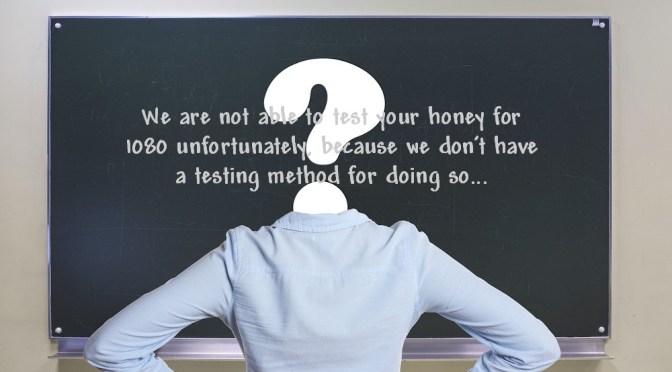
“… we are not able to test your honey for 1080 unfortunately, because we don’t have a testing method for doing so…”

******************************************************************

What happened between March 2018 and June 2018? Did Analytica lose their testing equipment?! Is Comvita telling the truth?


pinocchio-2917652_1280


If you still imagine a corporation or it’s representatives wouldn’t lie to you you need to watch The Corporation movie. You’ll find it if you scroll down our ‘Corporations’ page at the main menu. An excellent exposé of the way of corporations that will not only surprize you but will explain an awful lot of things that are going on today. When you’ve done that, do explore our 1080 pages at the main menu. There have been other posts about the contamination of honey by 1080. Use the search box or the categories drop down box at the left of the news page.


This Raw Honey Kills Every Kind of Bacteria Scientists Could Throw At It (Even the Superbugs!)

From healthyfoodhouse.com

Honey is one of Nature’s miracles, and despite the incredibly delicious taste, it offers countless health benefits.  Honey offers powerful antibacterial properties, but one of the most powerful types of honey is Manuka honey.

It is a product from the honey bees that feed on the manuka tree and has a unique, dark brown color and stronger medicinal properties than regular honey. Raw honey has been used by all ancient civilizations, especially in the treatment of wounds and infections, due to the strong disinfectant properties.

According to Dr. Josh Axe, DC, DMN, CNS:

“Manuka honey benefits have been touted in the natural health world for a long time and even more in recent years because a growing body of research is starting to support thousands of years of folk medicine use. Some of the top Manuka honey uses are and benefits include:

  • Helps with SIBO, Low Stomach Acid, Acid Reflux
  • May Help Treat Acne and Eczema
  • Combats Staph Infections (MRSA)
  • Treats Burns, Wounds, and Ulcers
  • Prevents Tooth Decay and Gingivitis
  • Aids IBS and IBD Treatment
  • Improves Sore Throats and Immunity
  • Helps Allergies
  • Beauty Treatment and Health Booster
  • Improves Sleep”

Manuka honey has been found to inhibit more than 60 different species of bacteria, viruses, and fungus, and it is high in antioxidants and natural compounds like peptides, phenolics, organic acids and enzymes.

The potent antibacterial qualities of Manuka honey are also a result of the high acidity level, due to the significant amounts of naturally occurring hydrogen peroxide. Manuka honey has been found to destroy Staphylococcus aureus, or staph infections, as well as Helicobacter pylori, a stomach bacteria linked to stomach cancer.

Scientists are growingly concerned about antimicrobial resistance, as the repeated process of coming up with new antibiotic drugs to destroy previously drug-resistant microbial strains will result in “superbugs”. These superbugs will eventually become resistant to all antibiotics, so they need to be fought off with the help of natural antibiotics.

Manuka honey is believed to be the possible alternative. Experts emphasize its antibacterial, antiviral, and antifungal properties, and studies have shown that these strains do not become resistant to manuka honey over time.

Therefore, Manuka honey can be used as a natural topical and oral antibiotic. It can be applied to scrapes, wounds, scratches, and infected areas, and is also effective if taken orally in the treatment of stomach and bowel infections.

Source: theheartysoul.com

https://www.healthyfoodhouse.com/this-raw-honey-kills-every-kind-of-bacteria-scientists-could-throw-at-it-even-the-superbugs/

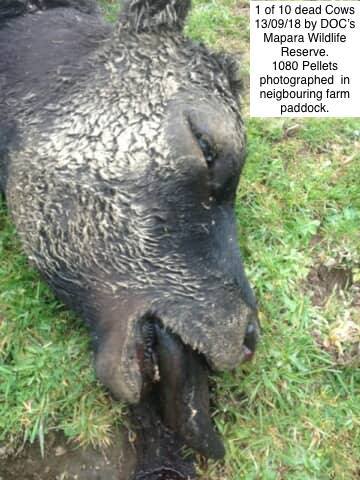
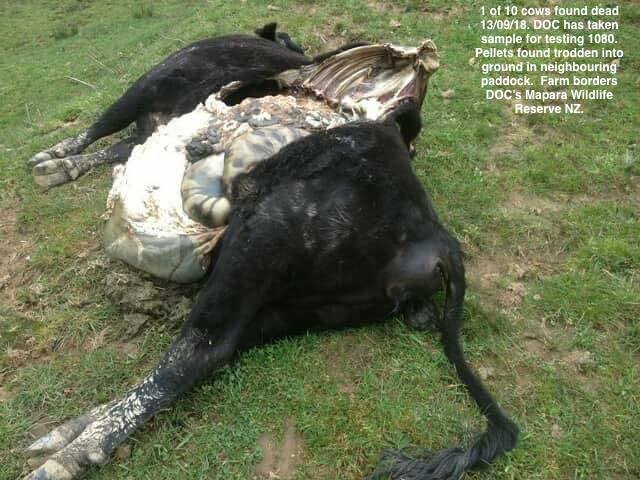
DoC’s latest by-kill – 10 cows poisoned by 1080, 13 Sept, 2018, bees feeding on carcasses

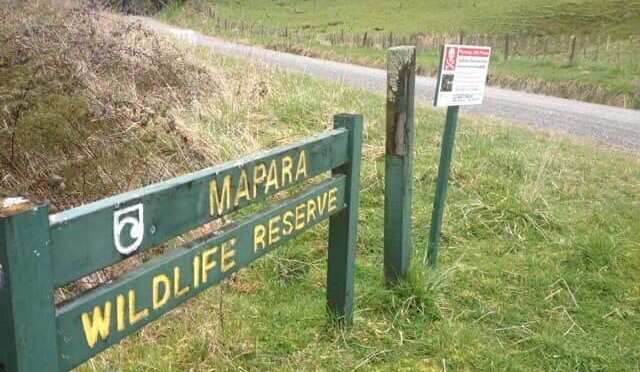
The farm with the cow deaths adjoins Mapara Wildlife Reserve, administered by the NZ Department of Conservation. 1080 baits were photographed in the neighbouring farm paddock. Bees could be seen feeding on the poisoned carcasses…  so 1080 is potentially going into our NZ honey!!!

This is not an irregular occurrence folks, remember the news hitherto hidden from the ’90s of 570+ dead sheep, reported by Dr Meriel Watts! See the working document on poisoning by 1080 being compiled still as we speak. Since publishing some of these farm deaths it’s become very apparent by feedback from farmers that we are only seeing the tip of the iceberg. Remember, the incidents are hidden by DoC in the paper work.

41674980_10156031239383732_8273555833413959680_n (1)41663768_10156031249873732_8951582559288950784_n41616361_10156031257528732_3153278642700681216_n41572290_10156030812918732_1609354710014230528_n

This slideshow requires JavaScript.

10 cows POISONED by 1080 13/09/2018.  Video at the source shows a bee feeding on the poisoned protein/salt on the poisoned carcass. DOC is out of control. Photos & Videos- Lefur Dan

Australia and New Zealand to be test sites for GM insect trials courtesy of DARPA!

I’ve heard a few nay sayers on the authenticity of this claim which set me to reading more of the links and particularly the synbiowatch site. It does indeed appear that discussions are ongoing with this. I was not aware that the gene drive proposal was all over the media during this year 2017 & prior (been a busy year). Have a search & you will see, preferably a non google search, you will find more. There’s indeed been a media drive to capture public ‘consent’ sugar coated with all the pluses. I will add some of those links but really it deserves another whole post. Then I see on some of their conference papers, ads etc. (synbiowatch)  the familiar names Monsanto, DuPont, Rockefeller Bill & Melinda Gates and more. Those names alone are cause for caution. The emphasis on the drive seems more on animals at this point although the trials for insects have (?) been in Hawaii & are proposed (?) for Africa. I’m sure I saw reference to release of GM insects in Christchurch this year but cannot find a link anywhere. Could be wrong on that, unfortunately I didn’t keep the link. Overall anyway, it is tied in very much with NZ’s predator free 2050 plan basically. So that’s government & will Jacinda oppose it? I doubt it personally as she is globalist isn’t she? Even if she did personally oppose it I doubt she would be able to reverse this tide. Interesting timing wasn’t it? Right on the year of election & we know who was steering the ship prior to that. I’ve ceased to be amazed now at the arrogance of these people to imagine they can improve on the ecosystem. As if it has not survived perfectly well for thousands of years without the help of GM. Seems to me the biggest pestilent threat to the survival of the ecosystem is them. Humankind. The original polluters of the planet.
EnvirowatchRangitikei


Sent to me by Warren Woodward via emfacts.com
In order to make sense of the title of this posting read down to where it is stated where the proposed test sites for this GM technology will be.
The files reveal how far along the two leading gene drive teams (Target Malaria for the UK and GBIRD, based in North Carolina) have proceeded towards building gene drive organisms and are preparing for open field trials, including steps to select test sites in Australia, New Zealand, Burkina Faso, Uganda, Mali and Ghana, and to create government and community acceptance of the use of gene drives in key testing sites. SOURCE
No sites in the US obviously.
After all, if there are any unexpected consequences of releasing GM altered insects in the environment better do it well away from America – and there’s lots of water between America and the Antipodes.

But don’t worry, they are also preparing a PR package aimed to “create government and community acceptance”. The main funder of gene drive technology is the US Defense Advanced Research Projects Agency (DARPA). With virtually unlimited funding imagine what the folks at DARPA can come up with. For the betterment of humanity, as Bill Gates would like us to believe, or for America’s military/corporate complex with global dominance as the real goal?

Perhaps this will not be such an easy sell in Australia because virtually all Australians know of the ongoing tragedy of the introduction of cane toads, introduced to Australia from Hawaii in 1935 by the Bureau of Sugar Experiment Stations as an amazing new technique to control the native grey-backed cane beetle. It didn’t work and now the toad is slowly invading much of Northern Australia with great destruction of native species.
The coming gene drive PR spin by “Emerging Ag” will claim benefits such as controlling mosquito diseases but other not mentioned “benefits” will be to try to develop a Monsanto pesticide resistant bee which will be used to pollinate crops sprayed with the chemicals without dying. After the GM bee has done its job, it’s programmed “termator gene’ will ensure all the GM bees die without leaving offspring, so each year farmers have to purchase a new batch of GM bees if they want to have pollinating dependent crop. Such a development would go a long way to assure global US military and corporate dominance over the world’s food resources.
The logic being why remove a profitable chemical which happens to be killing bees and other pollinating insects when you can change nature itself, at huge profit but with an unknown long-term cost to humanity. (Keep scrolling)
Read on…

Gene Drive Inheritance

Gates Foundation paid $1.6 million to influence UN on gene drives

Over 1,200 emails released under open records requests reveal that the US military is now the top funder and influencer behind a controversial genetic extinction technology known as “gene drives” – pumping $100 million into the field. The trove of emails, obtained via open records requests, also shed light on a $1.6 million dollar UN gene drive lobbying operation paid for by the Bill and Melinda Gates Foundation.

“Emerging Ag,” a private PR firm funded by the Gates Foundation, is working behind the scenes to stack key UN advisory processes with gene drive-friendly scientists, and has recruited ostensibly independent academics and public officials into a private collaboration to counteract proposed regulations and to resist calls by scientists and conservationists for an international moratorium. Some of those recruited entered into the UN discussions without divulging their conflicts of interest or the role that paid political consultants played in shaping their inputs.

The files, dubbed “The Gene Drive Files,” additionally cast a spotlight on the central role of the shadowy US Defense Advanced Research Projects Agency (DARPA) as the key funder now accelerating gene drive development. For example, DARPA is now revealed as the major financial backer of efforts to develop gene drive mammals (mice) that are led by a US environmental NGO, although DARPA has no biodiversity conservation mission, raising questions about the defence agency’s intent. These revelations come on the heels of a public warning issued by a leading gene drive researcher Dr Kevin Esvelt that current gene drives are too powerful to be used in conservation.

“Gene drives are a powerful and dangerous new technology and potential biological weapons that could have disastrous impacts on peace, food security and the environment, especially if misused,” said Jim Thomas of ETC Group. “The fact that gene drive development is now being primarily funded and structured by the US military raises alarming questions about this entire field.”

“Gene drives could have profound global impacts, and these emails reveal a secretive attempt to game the system by gene drive proponents aiming to minimize essential regulations and oversight,” said Dana Perls of Friends of the Earth US. “We need more transparency about who is influencing critical decisions about the future of global ecosystems, people’s livelihoods, or our food system.”

“In response to this news that the integrity of technical processes under the Convention on Biological Diversity (CBD) may have been compromised, civil society groups will urgently raise the need for better disclosure of interests within a framework for addressing conflict of interest at the CBD,” said Lim Li Ching of Third World Network.

“Mosquitoes containing gene drives are being proposed for malaria control in Africa. While claiming potential health benefits, any application of such powerful technologies should be subject to the highest standards of transparency and disclosure. Sadly, this doesn’t appear to be the case. Releasing risky GM organisms into the environments of these African countries is outrageous and deeply worrying,” said Mariam Mayet, Executive Director of The African Centre for Biodiversity.

Information revealed in the Gene Drive files includes:

● The US Defense Advanced Research Projects Agency (DARPA) is reported to have given approximately $100 million for gene drive research, $35 million more than previously reported. If confirmed, DARPA appears to be the largest single funder of gene drive research on the planet.

● Emerging Ag, a privately-held public relations firm, received over $1.6 million from the Bill and Melinda Gates Foundation to work on gene drive topics and to focus on exerting influence on the United Nations Convention on Biological Diversity (CBD), the key body for gene drive governance. Following calls in 2016 for a global moratorium on the use of gene drive technology, the CBD sought input from scientists and experts in an online forum. According to the Gene Drive Files, Emerging Ag recruited and coordinated over 65 experts, including a Gates Foundation senior official, a DARPA (Defense Advanced Research Project Agency) official, and government and university scientists, in an undercover attempt to flood the official UN process with their coordinated inputs.

● The attempt to covertly influence the UN process online centrally involved three members of an associated UN expert committee (The Ad Hoc Technical Expert Group on Synthetic Biology). Two of them are from institutions that together received over $100 million in U.S. military and other funds expressly to develop and test gene drive systems. One served as “stakeholder engagement lead” for a Gene Drive development project. The Expert committee meets this week in Montreal Canada.

● The secretive JASON group of military advisors have undertaken two classified studies on genome editing and gene drives at the request of the US government. The gene drive study, which included input by a Monsanto executive, focuses on hostile use of gene drives and use of gene drives in agriculture.

● DARPA is revealed to be funding a high profile UK team of researchers targeting African communities with gene drive mosquitos. This funding was not previously made public.

● The files reveal how far along the two leading gene drive teams (Target Malaria for the UK and GBIRD, based in North Carolina) have proceeded towards building gene drive organisms and are preparing for open field trials, including steps to select test sites in Australia, New Zealand, Burkina Faso, Uganda, Mali and Ghana, and to create government and community acceptance of the use of gene drives in key testing sites.

ABOUT THE RECORDS

The Gene Drive Files can be accessed at: http://genedrivefiles.synbiowatch.org

The Gene Drive Files consist of records recently released in response to U.S. and Canadian open records requests. The bulk of the files are from North Carolina State University, and were released on 27 October 2017 under a request by Edward Hammond/Third World Network. The files also include records from Texas A&M University, also requested by Edward Hammond/Third World Network and released on 21 August 2017 (Request TAMU R001428). Additional records from an Access to Information request filed in Canada by ETC Group are also included at the same site.

Please take note of the information provided (readme file) on proper citation of the records.

Source: ETC Group

SOURCE: https://www.emfacts.com/2017/12/australia-and-new-zealand-to-be-test-sites-for-gm-insect-trials-courtesy-of-darpa-re-posted/


RELATED

http://journals.plos.org/plospathogens/article/file?id=10.1371/journal.ppat.1005830&type=printable

http://genedrivefiles.synbiowatch.org/2017/12/01/us-military-gene-drive-development/

MEDIA ON GENE DRIVE

What Is Stopping the Use of Genetically Modified Insects for Disease Control?

Behind New Zealand’s wild plan to purge all pests

First Gene Drive in Mammals Could Aid Vast New Zealand Eradication Plan

Warning Against Gene-Drive Hype Provided by AgResearch Gene Experiment

Search this topic for yourself, there are many more links. Little opposition published there by mainstream except GE Free NZ.


NZ GOVERNMENT’S STANCE ON GE

https://www.parliament.nz/resource/mi-nz/00PLEcoRP02031/9b9daa9d3d61f962d81d99629eb02357fb73ba0f


Pesticides Linked to Declining Bee Populations Also Threaten Birds and Small Mammals

From organicconsumers.org

The Environmental Protection Agency (EPA) has determined that popular pesticides linked to declining bee populations also pose a threat to birds and, in some cases, small mammals and insects.

The EPA released preliminary scientific assessments of four chemicals from the neonicotinoid or “neonic” class of insecticides on Friday as part of an ongoing review that environmentalists and farmers are watching closely. Previous EPA assessments echoed research showing that neonics can harm the bees we rely on to pollinate crops when sprayed on cotton and certain fruits and vegetables.

“The EPA’s assessments confirm neonicotinoid pesticides are extremely harmful to birds and aquatic life at the very center of our ecosystems,” said Lori Ann Burd, director of the Center for Biological Diversity’s environmental health program, in a statement.

Environmentalists blame all four of the neonic pesticides under review at the EPA — clothianidin, thiamethoxam, dinotefuran and imidacloprid — for declining populations of honey bees, butterflies and other pollinators, including several endangered species. Of the four, imidacloprid is probably the most widely used and controversial.

In their most recent assessment, EPA scientists determined that imidacloprid poses an “acute risk” to birds when sprayed on crops. Birds, small mammals and insects could also be harmed if they eat crop seeds treated with the pesticide.

The findings echo a report published earlier this year that found imidacloprid and the controversial organophosphate pesticide chlorpyrifos can impair songbirds’ ability to find their way while migrating. Environmentalists are also concerned that the chemical may pose health risks to humans, including cancer and increased rates of autism in young children.

In 2016, the EPA also found that imidacloprid “potentially poses risk to [bee] hives when the pesticide comes in contact with certain crops that attract pollinators,” according to a preliminary assessment released at the time.


Latest news on pesticides, herbicides, Monsanto & more

From Food Democracy Now:

French Court Confirms Monsanto Guilty of Chemical Poisoning

A French court upheld on Thursday a 2012 ruling in which Monsanto was found guilty of chemical poisoning of a French farmer, who says he suffered neurological problems after… read more

U.S. Court Finds EPA was Wrong to Approve Dow Pesticide Harmful to Bees

By: Carey Gillam (Reuters) – A U.S. appeals court ruled on Thursday that federal regulators erred in allowing an insecticide developed by Dow AgroSciences onto the market,… read more

New Study Finds Low Doses of Roundup Might be Tied to Liver and Kidney Damage

The study, published in the journal Enviornmental Health, found that continuous exposure to very low doses of the herbicide Roundup might be linked to liver and kidney damage… read more


Other:

Montgomery plan to ban lawn pesticides headed for council showdown

Washington Post: Montgomery County’s debate over where and how to ban cosmetic lawn pesticides heats up again next week as Council President George Leventhal (D-At Large) defends his far-reaching bill against a more narrowly drawn alternative.

Leventhal’s bill, scheduled for a committee mark-up on Sept. 17, bars what he calls “non-essential” pesticides from private lawns and most county-owned land, including parks and athletic fields. He cites the body of research linking pesticide exposure to childhood cancer and other health issues. read more (VIDEO)


For further information on glyphosate, Roundup, links to the WHO report and Rangitikei’s stance with pesticides, go here.

For the research to date on glyphosate go here


Bees and Glyphosate

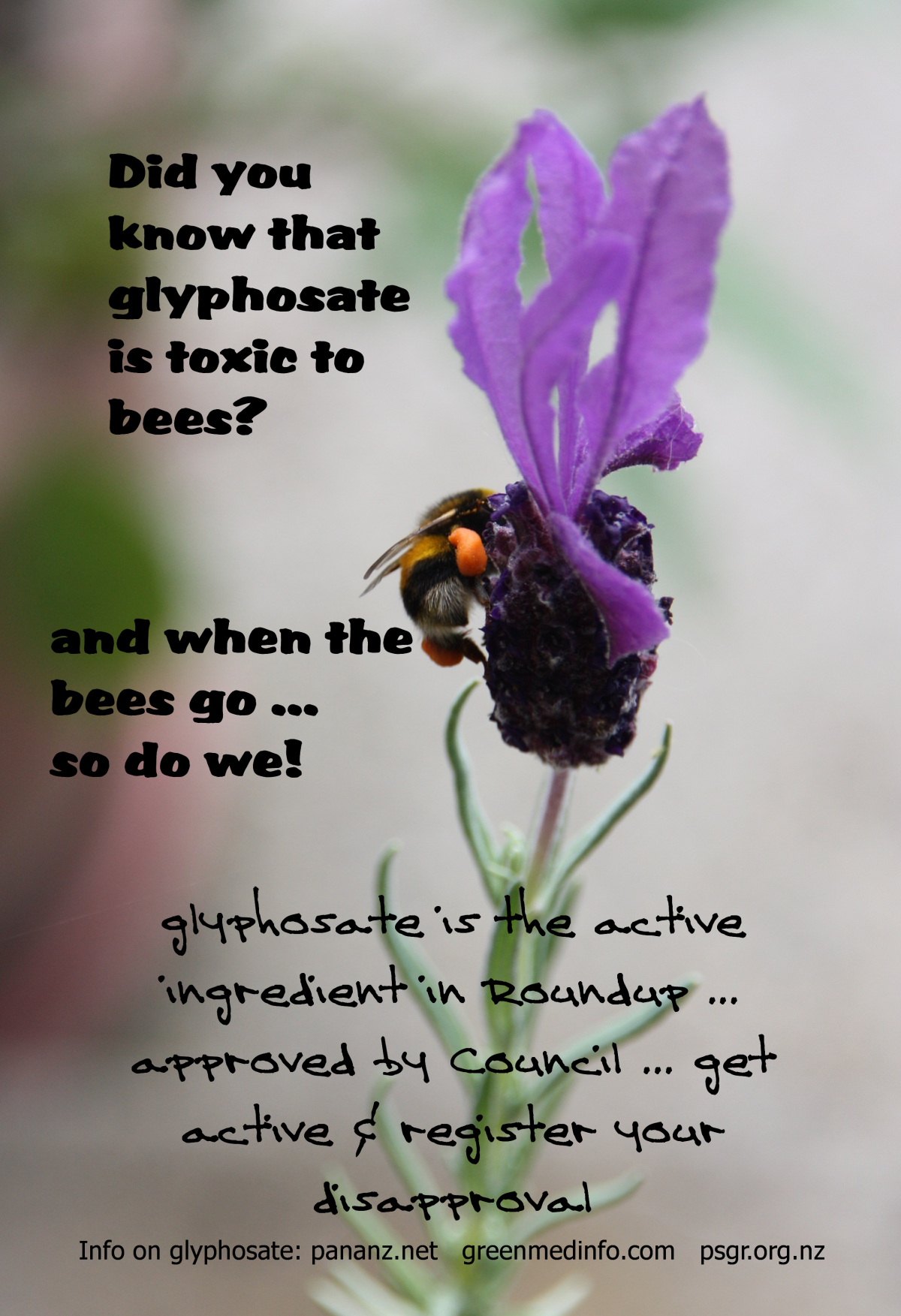
Bee Poster

Currently in the Rangitikei, as in many other places, Roundup is the herbicide of choice for cleaning up weeds. Recently however, the World Health Organization (WHO) has taken recognition of the decades of independent research that warns of its health risk. WHO is warning people of the fact that it probably causes cancer. Check out the Glyphosate page on this site for further information on that.

pesticides_roundup_herbicide_735_250
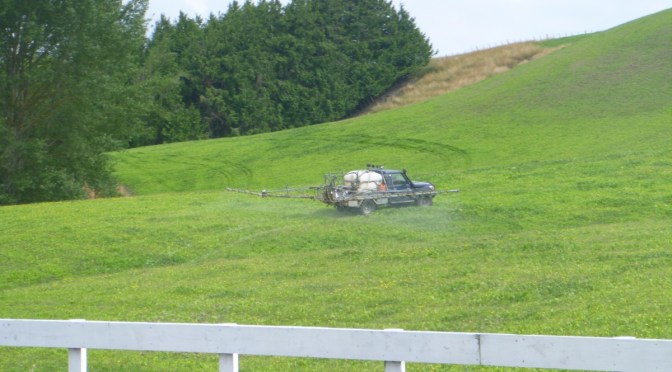
Roundup, the herbicide of choice that contains glyphosate and is toxic to our bees

Personally I approached the Rangitikei District Council (RDC) twelve months ago to warn them of these dangers and make known to them the vast amount of research that exists linking it with not only cancer but many other illnesses including birth defects. Now, add to this another damning factor … its toxicity to bees. Bees are essential for pollinating our plants. As the poster above conveys,experts confirm that if the bees die off, we humans could well follow. Our toxic environments are destroying the very organisms that ensure the continuation of life on planet earth.

That said, the RDC is not convinced by either the extensive research or any announcements by WHO. Currently in fact, going by the last time I heard them discuss this (March 2015) they are of the opinion that I am the only person in the Rangitikei who is concerned about this. We now have a petition that indicates there are in fact another 97 who are. Good news. If you are connected with the Rangitikei, spend any time visiting, live here or intend to, please consider signing the petition.

Watch for further updates and information on the role of bees in our food chain.

~ Envirowatchrangitikei ~

Wally Richards’ Weekly Article: For your garden plus updates on Glyphosate, the Bees & Smart Meters

Here is Wally’s latest updates from his Weekly Newsletter page. Check out his website for lots of information & advice on local gardening plus recommended products. This week he’s commented on Big Tobacco, Germany, the bees and Bayer, and on the WHO and glyphosate….
WINTER IS COMING

Now that day light savings has finished we realise that winter is coming and in a number of areas light frosts have already occurred.

From my own experience in Palmerston North and talking to gardeners in other areas including Invercargill, the winters now days are very mild to what we experienced when we were young.

Heavy frosty mornings with frost lasting well into midday but nice sunny blue skies except when we had what we called a black frost.

That was when the frost did not disappear because the day would have heavy clouds, which did not allow the sun to warm the ground. Not nice.

These days in Palmerston North at least we do not have too many frosts in winter and usually the ones we have are light and soon disappear. Outside of the city you do not have to go far to find a good frosting when the conditions are right.

What has changed besides ‘climate change’ is the warmth that a city generates from houses, vehicles and street lighting. Pollution in the air also acts the same as cloud cover trapping heat and preventing frosts to settle. We are more likely to see fogs than frosts.

This bodes well for the more tender plants which would be damaged or killed by a good frost.

It does not help with control of pest insects and plant diseases which a good heavy frost will knock them for a six.

For us gardeners we still need to give more tender plants some protection and later in winter use methods to reduce disease and insect pests.

Now is the time to take action to help your plants survive the winter chills.

Apply Fruit & Flower Power to the root zone of plants that could be damaged, your preferred plants and any tender plants. The potash and magnesium in this product hardens up the foliage, strengthens the root system and helps to maintain nice green foliage.

Apply this month and again monthly for the next two months on evergreen plants but only once on deciduous plants and trees.

Wet weather diseases are caused by lots of rain and insufficient drainage.

The root systems need oxygen and if there is too much water then there is insufficient oxygen, the roots can hold their breath (so to speak) for a while but then they will start rotting.

You will see leaves turning yellow, curling and dropping followed by the plant’s death.

You can assist the plants to withstand wet weather diseases by spraying them with Perkfection Supa once a month for the next 3 months on evergreens such as citrus. One spray on your roses and deciduous trees at this time.

If you can; ensure that the drainage around plants that hate wet feet is improved where possible.

One easy way on established plants such as citrus or around the edge of vegetable gardens is to dig a trench one or two spades deep. On citrus and similar just out beyond the drip line.

Excess water will drain into the trench where wind and sun will evaporate it away quicker.

This is only needed where you know that ponding takes place during rainy times, good free draining areas are not so prone to the problems.

For our final protection of tender plants we can use the ‘spray on frost protection’ called Vaporgard.

Mixed at 15mls per litre in warm water and sprayed over the foliage of tender plants it will give them down to minus 3 degrees frost protection for 3 months within 3 days of application.

This works very well on the first frost but if there are several frosts in a row, night after night then additional protection such as frost cloth will be needed.

The reason for this is the damage to the cells does not have a chance to repair before they are frozen again.

Tender plants that are in containers can be moved to places where they are protected such as under the eaves or under evergreen trees. I now can keep impatiens and petunias in containers going year after year by using all the above suggestions and having them in sheltered areas.

Plants such as capsicums and peppers growing in open ground can be sprayed with Vaporgard under and over foliage and a couple of days later carefully lifted and placed into containers.

Then moved to a glasshouse or protected area like a porch where they will continue to produce for you slowly over winter as long as you keep them a little on the dry side.

Now that the soil is cooler and rains have starting to moisten the gardens; means you can plant your spring bulbs in sunny areas. Container grown bulbs are likely planted already.

Let your strawberries run and root in for a fresh lot of plants later in May.


LATEST NEWS:

Monsanto & Bayer

The latest news is very interesting as chemical company giants, Monsanto and Bayer are taking a hammering as reports about the harm some of their main products are doing to our health and the environment.

The World Health Organisation (WHO) recently placed glyphosate on level 4 meaning its a very probable cause of cancer. (Level 5 means it does definitely cause cancer.)

Monsanto’s cause was not helped by the video of pro-GMO Patrick Moore claiming Monsanto’s glyphosate is “safe to drink,” then walking out of an interview when asked to prove it, has been making the cyber-rounds. But perhaps no one has framed it better than Jeffrey Jaxen, a writer for Before It’s News.

Jaxen calls the Moore interview a “Big Tobacco Moment,” comparing it to the publicly televised statement in 1994, by William Campbell, then-CEO of tobacco giant Phillip Morris, who told Congress, “I believe nicotine is not addictive.”

Jaxen wrote: “When paradigms shift, tyrants fall, or corporations lose their market it is often not from some spectacular event, but by a single, humanizing display.”

If you have not seen it go to:  https://www.organicconsumers.org/news/gmos-big-tobacco-moment-shocks-public-awake

Bayer is loosing its battle; saying their toxic neonicotinoids such as Confidor are safe. Study after study show neonicotinoids are a key culprit in bee declines and are harming other organisms, from earthworms to birds.

Bayer filed a lawsuit against Friends of the Earth Germany in an
effort to shut down their campaign to save the bees. Thanks to the work
of concerned people across Europe, Bayer lost and Friends of the Earth
Germany won. This demonstrates the importance and power of organizing and
when the truth is revealed, people can push back against corporate power,
and win.

On the home front it was reported that Lloyds of London are not covering events
of smart meter fires or health risks associated with wireless devices. 

Likely soon most insurance companies will follow suit as they normally do
when Lloyds makes exclusions..

Are Smart Metres causing fires? According to TV3 news yes; within the
last five months there have been 67 call outs in Canterbury to
malfunctions involving power boxes, and 422 throughout the country.

Smart Meters & Power Surges Causing Fires

Your power company installs a smart meter and then when there is a power surge it can blow up appliances and possibly set your home on fire, which has happened in NZ and overseas.

Then you could find your Insurance company has wavered damage cause by Smart Metres.

Not only that but health problems cause by High Intensity Radio Frequencies are not going to be covered either. See:  https://www.youtube.com/watch?v=dF-djNIb5Oc

People and children sensitive to this radiation can have problems of head aches, nose bleeds, emotional problems and sleeplessness. Makes for more interesting times.

Wally Richards