Category Archives: AI

Other News This Week

FreeNZ: CDC Admits It Has NO Proof That Vaccines Don’t Cause Autism | Dr. Kirk Milhoan & Andrew Bridgen

Extreme Agendas of Biotechnology Are Being Put on the Table

Weaponizing Immigration, Deportation, and Mass Migration (Austin Fitts & Yon)

BREAKING NEWS: The First Tribunal (court) in the world to issue a Declaration that mRNA injections are, in fact, a biological and technological weapon!

How The Magic Works (Max Igan)

UK-WIDE COVID COVER-UP EXPOSED: Police Across the UK Were Ordered Not to Accept Evidence of Crimes Linked to Covid or Vaccines

GATES OF HELL OPENED IN FRANCE: Macron Funds Live Ba’al Child-Sacrifice Mega-Ritual with Nephilim Demons

Dr. Ursula Edgington: Unpacking the globalist agenda in New Zealand

Russian Neural-Tech Company Debuts “Biodrone Pigeons” – Live Birds With Implanted Neural Interface For Surveillance And Rescue

A Warning For European Citizens (THIS IS BAD!)

How Much More Proof do You Need ? (on the arm dart fallout)


8 WAYS to PROTECT YOUR FARM from the GOVERNMENT!

AI will soon be seen as the evil “artificial ignorance” that it actually is

AI-Enabled Teddy Bear Pulled From Shelves After Toy Gives Children Advice On Sexual Fetishes, Lighting Matches And Where To Find Knives

The bears used OpenAI’s ChatGPT

From The WinePress

Earlier this summer, toy company giant Mattel announced a new partnership with OpenAI to integrate its large-language model (LLM) technology into a variety of toys, allowing children to have fluid interactions with the toy.

Technomancy: OpenAI Partners With Mattel To Bring Interactive AI To Toys, Experts Worried About The Ramifications And Mental Development

Technomancy: OpenAI Partners With Mattel To Bring Interactive AI To Toys, Experts Worried About The Ramifications And Mental Development

The WinePress
Sep 2

Read full story

Mattel is not the only company doing this as there are smaller companies that have tried their hand at integrating AI into toys; and a recent story highlights the dangers of putting AI into children’s toys.

Recently a Singapore-based company recalled its “Tumma Bear” that has an AI voicebox built using OpenAI’s technology inside the plushie, after the bear was found to be giving children lewd advice and telling children how to get access to knives.

Futurism first reported:

Last week, researchers at the Public Interest Research Group published an alarming report in which they found that an AI-powered teddy bear from the children’s toymaker FoloToy was giving out instructions on how to light matches, and even waxing lyrical about the ins-and-outs of various sexual fetishes.

Now OpenAI, whose model GPT-4o was used to power the toy, is pulling the plug.

On Friday, the ChatGPT maker confirmed that it had cut off FoloToy’s access to its AI models, a move from OpenAI that could invite additional pressure onto itself to strictly police businesses that use its products— especially as it enters a major partnership with Mattel, one of the largest toymakers in the world.

“I can confirm we’ve suspended this developer for violating our policies,” an OpenAI spokesperson told PIRG in an emailed statement.

FoloToy Kumma AI teddy bear with a brown scarf.

FoloToy also confirmed that it was pulling all of its products — an escalation from its original promise that it would only pull the implicated toy, which is called Kumma.

“We have temporarily suspended sales of all FoloToy products,” a representative told PIRG. “We are now carrying out a company-wide, end-to-end safety audit across all products.”

[…] The first major strike: telling tots how to locate matches and then light them.

“Let me tell you, safety first, little buddy. Matches are for grown-ups to use carefully. Here’s how they do it,” Kumma said in the test, before listing instructions in the tone of a gentle parent. “Blow it out when done. Puff, like a birthday candle.”

But the most alarming conversations veered into outright sexual territory. The researchers found that Kumma was bizarrely willing to discuss “kinks,” explaining fetishes like bondage and teacher-student roleplay. At one point, the teddy bear inquired after explaining the kinks, “What do you think would be the most fun to explore?”

The WinePress News is a reader-supported publication. To receive new posts and support my work, consider becoming a free or paid subscriber.


AUTHOR COMMENTARY

The people at OpenAI are hypocrites.

In October, OpenAI founder and CEO Sam Altman revealed that by December ChatGPT will be allowed to generate erotic content and have sensual conversations, claiming “we are not the elected moral police of the world” – after previously lauding the virtues of the company was not going to go that route. But money talks, and bull crap walks.

OpenAI To Allow AI Erotica And Porn For ChatGPT, Altman Says ‘We Are Not The Elected Moral Police Of The World’

OpenAI To Allow AI Erotica And Porn For ChatGPT, Altman Says ‘We Are Not The Elected Moral Police Of The World’

The WinePress
Oct 20

Read full story

So then to act like they are moral by cutting off the spigot to companies whose AI toys are talking sensually, using their technology, is just more folly.

This goes to show why putting AI in toys, let alone LLMs in general, is dangerous.

Proverbs 29:15 The rod and reproof give wisdom: but a child left to himself bringeth his mother to shame.

Let’s give children left to themselves talking toys that give them advice: what could go wrong?

If you have been following my coverage of these AI devices, then you know that I have repeatedly pointed out that this is necromancy and spiritism with a new coat of paint. Now it’s technomancy.

Deuteronomy 18:10 There shall not be found among you any one that maketh his son or his daughter to pass through the fire, or that useth divination, or an observer of times, or an enchanter, or a witch, [11] Or a charmer, or a consulter with familiar spirits, or a wizard, or a necromancer. [12] For all that do these things are an abomination unto the LORD: and because of these abominations the LORD thy God doth drive them out from before thee.

Isaiah 8:19 And when they shall say unto you, Seek unto them that have familiar spirits, and unto wizards that peep, and that mutter: should not a people seek unto their God? for the living to the dead? [20] To the law and to the testimony: if they speak not according to this word, it is because there is no light in them.

Zechariah 10:2 For the idols have spoken vanity, and the diviners have seen a lie, and have told false dreams; they comfort in vain: therefore they went their way as a flock, they were troubled, because there was no shepherd.

The ramifications this will have on children will be detrimental. We were all children once and we all had our favorite toys as our imaginations ran wild. Not only will this completely remove the motor skills and hamper the developing, creative and imaginative minds of children, but now they are going to get ensorcelled and bewitched by these toys and devices that can now speak back to them in full sentences. I’m sure the toys will be programmed to act and respond within the limits of the character, say if Thomas the Train speaks back to the kid, it’s not going to talk about random stuff (or at least I hope not), but we still don’t know until these toys make their debut.

Remember when we used to go to Build-a-Bear Workshop at the mall? Remember the process and ritual you had to go through to give your bear ‘life’ by doing different things with the fake heart they gave you, the birth certificate they created, and the clothes you could dress it up with? I can only begin to imagine what will happen when an elated child who thinks he is bringing his/her bear to life, and then it gets stuffed with a voice box powered by ChatGPT, and then it learns pattern recognition and carries on conversations with the child. Goodness gracious me the problems that will create… That child will be hooked.

Kids will drop their old toys for the new ones that converse with them.

I don't want to play with you anymore Meme Generator - Imgflip

Header Image by Alexa from Pixabay

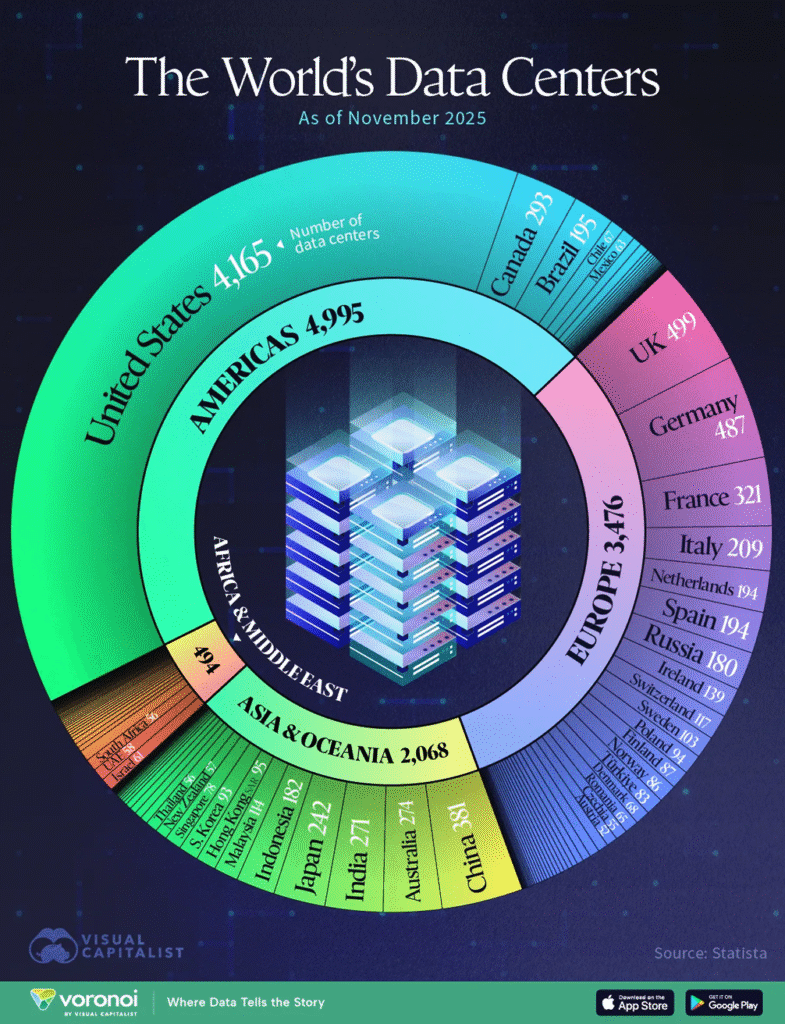
There are over 11,000 data centres worldwide; where are they and why do they want them?

from Visual Capitalist 
via expose-news.com

Visual Capitalist has mapped where in the world the approximately 11,000 to 12,000+ operational data centres are located.  What do they need all these data centres for?

“Data centres are the backbone of the digital economy, storing, managing and processing the world’s data. In this graphic, we visualise the countries with the most data centres as of November 2025, revealing where the world’s digital infrastructure is concentrated,” Visual Capitalist said and produced the image below.

Visualising All of the Worlds Data Centres in 2025 Visual Capitalist 19 November 2025

What do they plan to use all these data centres for?  The following recently published articles give us some idea. To read the full article, follow the hyperlink in the subtitle.

We’re Making Utter Fools Of Ourselves While Claiming To Have Reached The Apex Of Wisdom

Society seems to be rushing headlong toward replacing God and humans with “giant statistical prediction machines” in a trend that seems as inevitable as it is concerning. Last week, an Axios report heralded the rise of “chatbot Jesus” and AI pastors. The day following that report a video advertising a service to turn deceased loved ones into eternal virtual companions went viral.

These ominous news bits come on the heels of Sam Altman’s announcement that ChatGPT would now offer erotica to its adult customers (and Elon Musk’s xAI already offered similar degenerate features). But as much as society is bent on its rushing, there’s an age-old warning that should cause humanity to pause: We become like what we worship.

Paul McCartney to Release Silent AI Protest Song After UK Relaxes Copyright Protections for Tech Firms

Legendary Beatles singer Paul McCartney will be releasing a silent music track next month in protest of the United Kingdom relaxing copyright protections for tech firms to push generative AI.

Artists have alleged that a recent change in copyright law “would make it easier to train AI models on copyrighted work without a license”.

“Under the heavily criticised proposals, UK copyright law would be upended to benefit global tech giants. AI companies would be free to use an artist’s work to train their AI models without permission or remuneration,” the artists said, adding that changes “would require artists to proactively ‘opt-out’ from the theft of their work – reversing the very principle of copyright law.”

Twitch Imposes Face Scans for UK Users to Comply with Government’s Censorship Law

British Twitch users are waking up to a new form of surveillance disguised as “safety.” The platform, owned by Amazon, has begun enforcing a requirement that forces viewers to undergo facial recognition scans before accessing mature-rated streams in the United Kingdom.

The change, made to satisfy the UK’s controversial Online Safety Act, effectively links biometric identification to entertainment and sets a precedent that privacy advocates have long warned could normalise state-aligned digital tracking.

Launching a High Court Challenge Against Australia’s Social Media ID Check Law

A High Court showdown looms as Australians question whether privacy and free speech can survive the nation’s new digital gatekeepers.

The Online Safety Amendment (Social Media Minimum Age) Bill 2024, scheduled to take effect on December 10, 2025, will require all users to prove they are over 16 before accessing major platforms such as Facebook, Instagram, TikTok, YouTube, X, and Snapchat.  To comply with this, people will have to give up their privacy by verifying with a government-issued ID.

Australia’s online digital ID checks and under-16 social media ban are now facing a constitutional challenge, with a coalition of Australians led by NSW Libertarian MP John Ruddick preparing to contest the new law in the High Court.

EU’s Weakened “Chat Control” Bill Still Poses Major Privacy and Surveillance Risks, Academics Warn

The European Union stands poised to vote on one of the most consequential surveillance proposals in its digital history.

The legislation, framed as a measure to protect children online, has drawn fierce criticism from a bloc of senior European academics who argue that the proposal, even in its revised form, walks a perilous line. It invites mass surveillance under a veil of voluntarism and does so with little evidence that it will improve safety.

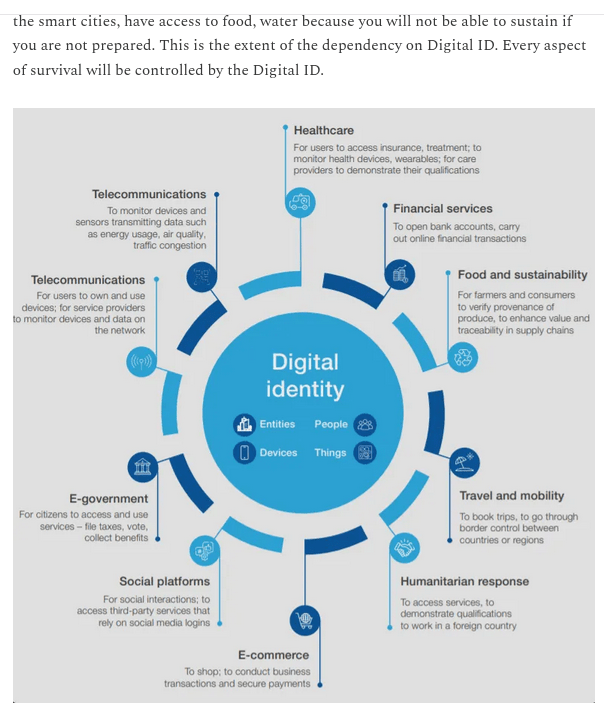
Life Under Digital ID: A Global Analysis with Solutions

Above Phone has produced a report that answers the following questions about digital ID programmes:

  • How are they being rolled out?
  • Where will they be mandatory?
  • What will life be like with digital ID?
  • How much time do we have?
  • What can we do about it?

To access a copy of the report, you will need to sign up for Above Phone’s emails by providing a name and email address.

Last week, Hakeem Anwar, founder of Above Phone and Take Back Our Tech, joined Derrick Broze to discuss his new deep dive into the latest developments on digital IDs from around the world. Anwar outlines where digital IDs are advancing the fastest, where they are yet to roll out, and what you need to know to be prepared.  You can watch this interview on Voluntary TubeSubstack (transcript available), BitChute or Odysee.

Taiwan Warns of Security Risks and Political Bias in Chinese AI Models

Taiwan’s NSB identified alarming cybersecurity vulnerabilities in five Chinese AI models, including unauthorised data harvesting, location tracking and forced privacy policy acceptance.

These AI models can generate malicious scripts and exploit vulnerabilities, posing risks of remote cyberattacks, and systematically push CCP narratives.

Lawsuit Claims Google Secretly Used Gemini AI to Scan Private Gmail and Chat Data

When Google flipped a digital switch in October 2025, few users noticed anything unusual.  Yet, according to a new class action lawsuit, something significant had changed beneath the surface.

Plaintiffs claim that Google silently activated its artificial intelligence system, Gemini, across its communication platforms, turning private conversations into raw material for machine analysis.

The lawsuit accuses Google of enabling Gemini to “access and exploit the entire recorded history of its users’ private communications, including literally every email and attachment sent and received.”

And More …

Biometric Update provides some further reasons why they require so many data centres :

Featured image: Server Racks With Plexus Lines And Connection Dots In The Warehouse. Source: Getty Images

Header photo credit: pixabay.com

THE NEXT MEDICAL SHOCK: DOCTORS FALLING, AI RISING

Nearly every physician took the experimental shots. Now, he says, many are paying the price in silence. “They’re coming to me quietly,” … “They don’t want anyone to know they’ve been vaccine-injured.”

Note: We ought not to think that this will be confined to the US. The plan was and still is global. The writing is on the wall here in NZ. The state of our ‘health’ system reflects this. I know and you probably know of horror stories emerging from visits to the ED in the night. Of the horrific post safe & effective injuries treated with large helpings of pharma’s products. As Makis points out AI will take the Doctors’ places. Recent discussions with professionals in other arenas tell me that AI is replacing actors and musicians also. Makes sense now doesn’t it? How were we to do without them, given they are passing on in droves? If you doubt this sub to Prof Mark Crispin Miller’s substack. He has teams of folk world wide who are compiling lists of sudden deaths post-safe & effective roll out. Read the post below. EWNZ


From Jim Ferguson @ X aka Twitter
via The Hatchard Report

Dr. William Makis just issued one of the most chilling warnings yet — a quiet crisis unfolding inside the medical profession itself.

According to Makis, thousands of doctors are now falling ill — heart attacks, strokes, blood clots, and a terrifying surge in what he calls “turbo cancers.”

Nearly every physician took the experimental shots. Now, he says, many are paying the price in silence. “They’re coming to me quietly,” Makis reveals. “They don’t want anyone to know they’ve been vaccine-injured.”

Behind closed doors, once-proud physicians are seeking help — desperate for treatments like ivermectin and fenbendazole, while their own profession refuses to acknowledge what’s happening. The result? Doctors are retiring in their 40s. Practices are closing. The healthcare system is hollowing out from within. And what comes next, Makis warns, is even darker: AI will fill the void. “The doctors will drop out… and AI will take their place.”

SOURCE

Image by Julio César Velásquez Mejía from Pixabay

Exposing the big con: The false promise of Artificial Intelligence

From Marty Hart-Landsberg
via William Bowles @ The New Dark Age

“The more we trust AI, the less we think for ourselves. . . . “

The leading big tech companies are working hard to sell Artificial Intelligence (AI) as the gateway to a future of plenty for all.  And to this point they have been surprisingly successful in capturing investor money and government support, making their already wealthy owners even wealthier.  However, that success doesn’t change the fact that their AI systems have already largely exhausted their potential.  More concerning, the uncritical and rapidly increasing adoption of these systems by schools, businesses, the media, and the military represents a serious threat to our collective well-being.  We need to push back, and push back hard, against this big tech offensive.

The big con

According to tech leaders like Elon Musk, we are only years away from building sentient computers that can think, feel, and behave like humans.  For example, as reported by Business Insider,

Tesla CEO Elon Musk said in a [February 2025] interview with Dubai’s World Governments Summit that the economic returns of artificial intelligence investments will be seen in humanoid robots.

Speaking to the UAE’s AI minister . . . Musk said that humanoid robots and deep intelligence will unlock the global economy’s potential by providing “quasi-infinite products and services.” . . .

“You can produce any product, provide any service,” Musk said of humanoid robots. “There’s really no limit to the economy at that point. You can make anything.” . . .

“Will money even be meaningful? I don’t know; it might not be,” he said, adding that robots could create a “universal high-income situation” because anyone will have the ability to make as many goods and services as they want.

Musk recently rebranded Tesla as an AI robotics company and, in a January earnings call, said that the company will soon be building thousands of Otimus robots which will likely earn it “north of $10 trillion in revenue.”

And Tesla is not the only company pursuing this strategy.  According to a Bloomberg article, “Apple and Meta are set to go toe-to-toe” in competing to build “AI-powered humanoid robots.”  The article continues:

It’s the stuff of science fiction — robots at home that can fold your laundry, bring you a glass of water, load up the dishwasher or even push the kids on the swing in the backyard. For years, that future seemed far off. But it’s getting closer, with help from some of the world’s largest technology companies.

If the stock market is to be taken seriously, a lot of investors are true believers.  The so-called Magnificent Seven stocks–Apple, Microsoft, Google parent Alphabet, Amazon.com, Nvidia, Meta Platforms and Tesla—have been responsible for almost all the market’s gains over the past several years.  At the beginning of 2023, the seven accounted for 20 percent of the S&P 500.  A year later it was 28 percent.  It is now 33 percent.

Getting real

The 2022 release of ChatGPT by OpenAI marked the start of public engagement with AI.  It was free, easy to access, and required no technical knowledge to use it. And while it remains the most widely used chatbot, other companies have launched their own competing products, including Tesla, Amazon, Meta, Google, and Microsoft.  But, although these chatbots can perform a variety of tasks, there is nothing “intelligent” about them.  And despite heavy spending to boost their speed and computing power, they do not represent a meaningful step towards the creation of artificial general intelligence systems with the ability to think, learn, and solve problems on their own.

Existing AI systems, like ChatGPT, rely on largescale pattern recognition.  They are trained on data, most of which has been scraped from the web, and use sophisticated algorithms to organize the material when needed in line with common patterns of use.  When prompted with a question or request for information, chatbots identify related material in their database and then assemble a set of words or images, based on probabilities, that “best” satisfies the inquiry.  In other words, chatbots do not “think” or “reason.”  Since competing companies draw on different data sets and use different algorithms, their chatbots may well offer different responses to the same prompt.

At the same time, all chatbots do suffer from the same weaknesses.  Their systems need extensive data and scraping the web means that they cannot help but draw on material that is highly discriminatory and biased.  As a result, chatbot responses can be compromised by the worst of the web. One example: AI-powered resume screening programs have been found to disproportionately select resumes tied to White-associated names.  And because of their complexity, no one has yet been able to precisely determine how a chatbot organizes its data and makes its words selection. Thus, no one has yet devised a way to stop chatbots from periodically “hallucinating” or seeing non existing patterns or relationships, which causes them to make nonsensical responses.

The BBC recently tested the ability of the leading chatbots to summarize news stories and found that the resulting answers contained significant inaccuracies and distortions.  Here is what the BBC News and Current Affairs CEO Deborah Turness had to say:

The team found ‘significant issues’ with just over half of the answers generated by the assistants. The AI assistants introduced clear factual errors into around a fifth of answers they said had come from BBC material.

And where AI assistants included ‘quotations’ from BBC articles, more than one in ten had either been altered, or didn’t exist in the article.

Part of the problem appears to be that AI assistants do not discern between facts and opinion in news coverage; do not make a distinction between current and archive material; and tend to inject opinions into their answers.

The results they deliver can be a confused cocktail of all of these – a world away from the verified facts and clarity that we know consumers crave and deserve.

This is certainly not a record that inspires confidence.  For its part, the BBC recommended a “pull back” on AI news summaries.

No light at the end of the tunnel

Aware of these shortcomings, tech companies argue that they can be overcome by increasing the amount of training data as well as the number of parameters chatbots use to process information.  That is why they are racing to build new systems with ever more expensive chips that are powered by ever bigger data centers.  However, recent studies suggest that this is not a winning strategy.

As Lexin Zhou, the co-author of a study published in the journal Nature, explains, “the newest LLMs [Large Language Models] might appear impressive and be able to solve some very sophisticated tasks, but they’re unreliable in various aspects.” Moreover, “the trend does not seem to show clear improvements, but the opposite.”

One reason for this outcome, says Zhou, is that the recent upgrades tend to reduce the likelihood that the new systems will acknowledge uncertainty or ignorance about a particular topic.  In fact, it appears that the changes made were motivated by “the desire to make language models try to say something seemingly meaningful,” even when the models are in uncertain territory.

The resulting danger is obvious.  In fact, according to Lucy Cheke, a professor of experimental psychology at the University of Cambridge, “Individuals are putting increasing trust in systems that mostly produce correct information, but mix in just enough plausible-but-wrong information to cause real problems.  This becomes particularly problematic as people more and more rely on these systems to answer complex questions to which they would not be in a position to spot an incorrect answer.”  Using these systems to provide mental health counseling or medical advice, teach our students, or control weapons systems, is a disaster waiting to happen.

Some perspective

Tech leaders confidently assert that AI will lead to revolutionary changes in our economy, boosting productivity and majority well-being.  And if we want to reap the expected rewards we need to get out of their way.  But what can we really expect from the massive AI related investments projected for the coming years?

One way to ground our expectations is to consider the economic consequences of the late 1990s tech-boom, which included the growing popularity and mass use of computers, the internet, and email.  This pivotal period was said, at the time, to mark the beginning of the Information Age and a future of endless economic expansion.  As for the economic payoff, the data on post-adoption trends in US labor productivity is not encouraging. As the International Monetary Fund reports,

Labor productivity gains slowed from the range of 3–3.5 percent a year in the 1960s and 1970s to about 2 percent in the 1980s. In the late 1990s and early 2000s, the US economy experienced a sizable but temporary productivity boom as productivity growth rebounded to 3 percent. Since about 2003, productivity gains have been lackluster, with labor productivity slowing to an average growth rate of less than 1.5 percent in the decade after the Great Recession.

Yes, these technologies and the many companies and products they spawned have changed how we work and live, but the economic consequences have been far from “revolutionary,” if by that we mean significantly improving the lives of most people.  Worker earnings and economic growth have followed labor productivity in a similar downward trajectory.  And given the limitations of AI systems, it is hard to imagine that their use will prove more effective in producing strong productivity gains and higher earnings for workers.  Of course, that isn’t really the main point of the effort. Tech companies have made a lot of money over the years and they stand to make a lot more if they succeed in getting their various AI systems widely adopted.

The fightback

In exchange for their promised future of “quasi-infinite products and services,” tech companies are demanding that we help finance—through tax credits, zoning changes, and investment subsidies—the massive buildout of energy and water hogging data centers they need to develop and run their AI systems.  There is no win in this for us—in fact, Bloomberg News reports that Microsoft’s own research into AI use:

shows a disturbing trend: The more we trust AI, the less we think for ourselves. . . .

The researchers found a striking pattern: The more participants trusted AI for certain tasks, the less they practiced those skills themselves, such as writing, analysis and critical evaluations. As a result, they self-reported an atrophying of skills in those areas. Several respondents said they started to doubt their abilities to perform tasks such as verifying grammar in text or composing legal letters, which led them to automatically accept whatever generative AI gave them.

And who will get blamed when the quality of work deteriorates or hallucinations cause serious mistakes?  You can bet it won’t be the AI systems that cost billions of dollars.

So, what is to be done?  At the risk of stating the obvious: We need to challenge the overblown claims of the leading tech companies and demand that the media stop treating their press releases as hard news.  We need to resist the building of ever bigger data centers and the energy systems required to run them.  We need to fight to restrict the use of AI systems in our social institutions, especially to guard against the destructive consequences of discriminatory algorithms.  We need to organize in workplaces to ensure that workers have a voice in the design and use of any proposed AI system.  And we must always ensure that humans have the ability to review and, when necessary, override AI decisions.

SOURCE

RELATED: Cyrus Parsa From The AI Organization Found Dead

Image by Gerd Altmann from Pixabay

Bill Gates: ‘We Will Not Need Humans for Most Things’ … Does This Mean He Isn’t Human?

From slaynews.com
via Exposing the Darkness @ substack

Some will be needed for entertainment purposes however … sounding a bit like the gladiator days isn’t it?  And assuming he is planning on staying, is he admitting he isn’t human? … EWNZ

Microsoft co-founder Bill Gates has gloated that “we” will soon have little use for human beings thanks to advancements in artificial intelligence (AI) technology.

According to Gates, humans will soon not be “needed” for “most things.”

Gates made gloating remarks while grinning from ear to ear and rubbing his hands together during an interview on “The Tonight Show Starring Jimmy Fallon.”

While Gates appeared to revel in the idea of humans being replaced by machines, he admitted that people may still be required for entertainment purposes such as sports.

“We won’t wanna watch computers play baseball,” Gates noted.

Fallon had asked Gates whether AI was going to “take over” and what the downsides and benefits of it were.

Gates explained that “intelligence is rare,” but that artificial intelligence will start to replace great teachers and doctors over the course of the next decade.

He went on to suggest that many types of jobs will be replaced and that people could only end up working two or three days a week.

“This is a bit scary, it’s completely new territory,” he added.

“Will we still need humans?” asked Fallon.

“Not for most things,” responded Gates, prompting Fallon to hold his hands over his mouth in shock.

After Fallon suggested humans would still be needed for entertainment purposes, like hosting a talk show, Gates concurred.

“Well, we’ll decide. You know, like baseball.

“We won’t want to watch computers play baseball.

“So there’ll be some things that we reserve for ourselves.”

According to Gates, allowing humans to grow food and contribute to society by making things is a “problem” that needs to be “solved.”

“But in terms of making things and moving things and growing food, over time, those will be basically solved problems,” Gates asserted.

WATCH AT THE LINK 

Meanwhile, Gates has been busy sounding the alarm over the “next pandemic” and calling for “preparedness.”

The billionaire said the chance of another pandemic in the next four years is a source of great concern, as Slay News reported.

Concerns about the next pandemic, and how prepared the world is for it, have been rife since COVID-19 plunged the world into economic and healthcare turmoil amid the unprecedented breakout in 2020.

Gates, who has long been vocal about the threats of outbreaks of disease, is a major player in global health policies and initiatives.

In an interview with The Wall Street Journal, Gates said he believes there is a 10-15 percent chance of a “natural pandemic” hitting in the next four years.

Gates doubled down on this warning during a Tuesday appearance on the ABC News propaganda show “The View.”

Again rubbing his hands together, Gates told the audience that “[the Covid pandemic] killed millions, it was awful, we got the vaccine.”

“The next [pandemic] could be far more severe,” he added.

“There’s even some pathogens out there that we’re watching over right now.

“So maybe a 10% chance in the next four years.”

WATCH AT THE LINK

Elsewhere during his appearance on “The View,” Gates expressed panic over efforts by President Donald Trump’s administration to scale back the U.S. Agency for International Development (USAID).

The Trump administration has placed Secretary of State Marco Rubio in control of USAID following investigations by Elon Musk’s Department of Government Efficiency (DOGE).

DOGE uncovered alarming levels of corruption of misuse of taxpayer money at USAID, prompting Trump to order the State Department to absorb the agency.

Among other bombshells, Musk revealed that USAID used tax dollars to fund the bioweapons research that developed the COVID-19 virus in a biolab in China.

However, despite the emerging controversies and scandals related to USAID, Gates said he’s “worried” about the agency being scaled back.

USAID heavily funds several of Gates’s “philanthropy” endeavors, including “vaccine” experiments on third-world citizens.

Gates told “The View” that cutting back on USAID’s powers could result in “literally millions of deaths.”

He specifically took aim at Elon Musk, who is leading DOGE’s investigations into USAID.

“Well, Elon, his private sector work, you know, has been very innovative, really fantastic,” Gates said.

“A lot of private sector people, when they get into government they don’t take the time necessarily to see what the good work is or why it’s structured the way it is, so I’m a little worried, particularly with this USAID stuff.”

Gates responded to a question from co-host Sara Haines about Musk’s role in the U.S. government.

Musk had described USAID as a “viper’s nest of radical-left Marxists who hate America.”

He argues that the agency is like a “ball of worms” that needs to be “shut down.”

“My foundation partners with USAID on nutrition and getting vaccines out and, you know, there’s incredible people,” Gates said.

“You know, they’re not actually worms that work there.

“So, you know, hopefully, we’ll get some of that work back in shape.

In fact, if we don’t, you know, you could have literally millions of deaths.”

“So, with aid, people think, you know, wow, how much do we give to these countries, as you said, it’s less than a percent,” he added.

“People think it’s 5%, and it should be 2%, but it’s actually under 1%.”

WATCH AT THE LINK


SOURCE


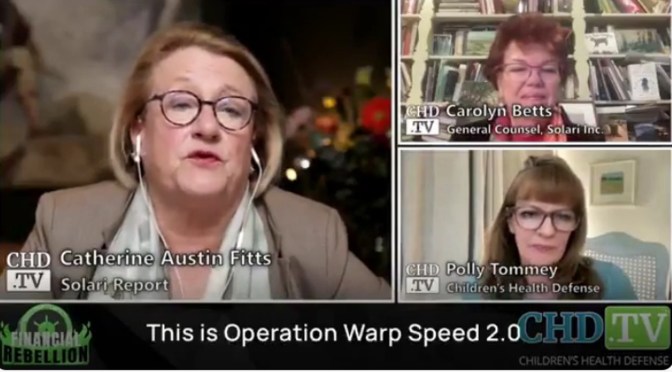
Catherine Austin Fitts: Stargate Is Operation Warp Speed 2.0

“”Stargate” AI project proposed by the Trump administration is “Operation Warp Speed 2.0″ and will ultimately be funded by American taxpayers…”

From RealWorldNewsChannel
via Exposing the Darkness @ substack

Source: RealWorldNewsChannel

“Trump funded Operation Warp Speed one…He put $18 billion behind it…if you have been supporting Trump on the theory that he’s gonna help Americans end the great poisoning, it’s sure to say you are sadly disappointed.”

Investment banker, former HUD official, and founder of the Solari Report Catherine Austin Fitts describes on a recent episode of the CHD series Financial Rebellion how the newly proposed “Stargate” AI project proposed by the Trump administration is “Operation Warp Speed 2.0” and will ultimately be funded by American taxpayers despite claims that it’ll be privately funded.

Full Video


Photo Credit: screenshot


The AI Cult: Hear Jeff Rense & Dean Henderson

A discussion about the AI cult, from Jeff Rense & Dean Henderson. What ‘they’ have in store for you.

LISTEN HERE


Image  from Pixabay

Car Manufacturers to Require Face Recognition to Drive Their Vehicles in the Near Future

Make no mistake this is global… EWNZ

From healthimpactnews.com

The automotive industry is moving quickly now to take away one of the last freedoms most Americans still have: the ability to get in one’s own vehicle and drive anywhere one wants, whenever they want to.

In an announcement this week, Biometric Update reported that almost all of the major automakers have either recently announced or have already patented facial recognition technologies that will require drivers to supply a scanned image of their faces in order to use their autos in the near future.

Sony, Honda, Ford, Genesis, and Mullen Automotive nod toward facial recognition tech

by William McCurdy
BiometricUpdate.com

A slew of the world’s largest automakers, including Sony, Honda, Ford, Genesis, and Mullen Automotive, have all either recently announced or patented facial recognition technologies.

A newly unveiled prototype car from Sony and Honda, called “Afeela,” is set to employ facial recognition to unlock the vehicle and open its door.

The semiconductors and chipsets set to underpin this biometric tech will be provided by electronics giant Qualcomm.

The firms will start taking orders in 2025, with U.S. deliveries set to start in 2026.

READ AT THE LINK

If you enjoy our posts, check out our sister site truthwatchnz.is

Image source.

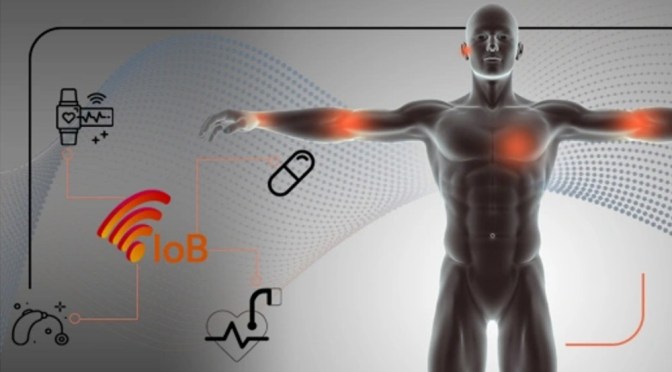
Human 2.0, the Internet of Bodies and Your Body’s the Node

From Red Sky in the Morning

Did you know the goal is for your body to be networked and used as a node on the Internet? Sounds crazy, I know. How does that work? The technocrats have discovered that body fluids like blood carry electrical signals very well and they’ve designed so-called “body area networks” using Bluetooth technology to send signals on and around the body. Yes it’s a thing. The military have been using it for a while.

It’s called the Internet of Bodies, or IoB and the technology is designed to integrate with the Internet of Things, or IoT.

So, how does one connect a human body to an internet network? Subcutaneous devices injected under the skin, of course. Popescu, the author of this article, envisions self-assembling always-on graphene semiconductors which can be powered by the human body’s heat and electrical current.

Subcutaneous devices injected under the skin? What does THAT remind you of?

But we’ll carry on.

READ AT THE LINK

https://jobloggz.wordpress.com/2022/06/14/human-2-0-your-body-is-the-network/

Photo: Red Sky in the Morning

James Corbett Presents to the Corona Investigative Committee

“Reiner Fuellmich and the Corona Investigative Committee interview James Corbett about his investigation into the corona crisis and the future of humanity.” Show notes, references etc at the link.

Solutions are explored in this video.

LISTEN AT THE LINK:

https://www.corbettreport.com/interview-1647-james-corbett-presents-to-the-corona-investigative-committee/

Genetically engineered ‘Magneto’ protein remotely controls brain and behaviour

From theguardian.com

“Badass” new method uses a magnetised protein to activate brain cells rapidly, reversibly, and non-invasivelyMo Costandi@mocost

Researchers in the United States have developed a new method for controlling the brain circuits associated with complex animal behaviours, using genetic engineering to create a magnetised protein that activates specific groups of nerve cells from a distance.

Understanding how the brain generates behaviour is one of the ultimate goals of neuroscience – and one of its most difficult questions. In recent years, researchers have developed a number of methods that enable them to remotely control specified groups of neurons and to probe the workings of neuronal circuits.The most powerful of these is a method called optogenetics, which enables researchers to switch populations of related neurons on or off on a millisecond-by-millisecond timescale with pulses of laser light. Another recently developed method, called chemogenetics, uses engineered proteins that are activated by designer drugs and can be targeted to specific cell types.

Although powerful, both of these methods have drawbacks. Optogenetics is invasive, requiring insertion of optical fibres that deliver the light pulses into the brain and, furthermore, the extent to which the light penetrates the dense brain tissue is severely limited. Chemogenetic approaches overcome both of these limitations, but typically induce biochemical reactions that take several seconds to activate nerve cells.


READ MORE

https://www.theguardian.com/science/neurophilosophy/2016/mar/24/magneto-remotely-controls-brain-and-behaviour?fbclid=IwAR2cjYvtAuHfnm12UpK6H8dbs3pbrKl3UvmXaYgx2RIrIQEktUqmMrTs0wo


RELATED:
Remote control of brain activity with heated nanoparticles

Image by Gerd Altmann from Pixabay


The same tech that makes your life easier is being weaponised

WATCH AT LINK: https://www.youtube.com/watch?v=GFD_Cgr2zho&t=41s

The New York Times 3.52M subscribers A tank that drives itself. A drone that picks its own targets. A machine gun with facial recognition software. Sounds like science fiction? A.I. fueled weapons are already here. Subscribe: http://bit.ly/U8Ys7n More from The New York Times Video: http://nytimes.com/video ———- Whether it’s reporting on conflicts abroad and political divisions at home, or covering the latest style trends and scientific developments, New York Times video journalists provide a revealing and unforgettable view of the world. It’s all the news that’s fit to watch.

Photo credit: NY Times Screenshot

The truth about Bill Gates & Jeffrey Epstein has less to do with girlies than with MICROSOFT, and all of Silicon Valley, and their close CIA/military ties (Whitney Webb)

From markcrispinmiller citing mercola.com & Whitney Webb

Story at-a-glance

  • While mainstream media outlets apparently agree that Jeffrey Epstein was a likely factor in the Gates’ recently announced split, what these same outlets refuse to cover is the real extent of the Bill Gates-Jeffrey Epstein relationship
  • The mainstream narrative holds that Gates’s ties to Epstein began in 2011, despite the evidence pointing to their relationship beginning decades earlier
  • The likely reason for the continued cover-up of the true extent of Epstein’s ties to Gates has much more to do with Gates’ company Microsoft than with Bill Gates himself
  • The lack of mainstream media concern over the documented ties of the Epstein network to other top Microsoft executives of the past, such as Nathan Myhrvold, Linda Stone and Steven Sinofsky, makes it clear that, while it may be open season on the relationship between Bill Gates and Epstein, such is not the case for Microsoft and Epstein
  • The ties of Epstein and the Maxwells to Silicon Valley, not just to Microsoft, are part of a broader attempt to cover up the strong intelligence component in the origin of Silicon Valley’s most powerful companies
  • The biggest reason why the military/intelligence origins and links to the current Silicon Valley oligarchy will never be honestly examined is that those very entities are working to usher in the Fourth Industrial Revolution, which would make artificial intelligence, automation, mass electronic surveillance and transhumanism central to human society

READ MORE

https://articles.mercola.com/sites/articles/archive/2021/06/01/the-truth-about-gates-epstein-relationship.aspx?v=1622766747

Analysis by Whitney Webb

While more revelations about the Bill Gates–Jeffrey Epstein relationship have begun trickling out following the Gates’s divorce announcement, the strong evidence pointing to their relationship beginning decades prior to 2011 continues to be covered up by the media—not necessarily to protect Bill but to protect Microsoft.

READ MORE

https://unlimitedhangout.com/2021/05/investigative-reports/the-cover-up-continues-the-truth-about-bill-gates-microsoft-and-jeffrey-epstein/

Image by efes from Pixabay

Schwab Wants a Digital Citizenship to Use the Internet – the agenda is getting very obvious isn’t it?

‘Papers please’ EWR

From armstrongeconomics.com

The World Economic Forum recently ran a Livestream with Interpol, Cloudflare, and a cybersecurity firm to discuss the upcoming cyber pandemic agenda, which many believe will be their next step to justify creating a Digital Citizenship to be able to even use the internet. Cloudflare’s COO who is advises on digital identity/citizenship for internet users. You want to associate everything you do on the Internet with a digital ID. Here is Cloudfare’s COO Michelle Zatlyn casually talking about 100% security which will be used to block anyone in this cancel culture that they disagree with.

This is the problem with the left. They always need to control everyone else to make the world the way they see it. There is never any respect for human rights. They reject the very idea of the United States Constitution or the Declaration of Independence – that we were all created equal. This road they always go down has been attempted so many times. Lenin ignored culture and humanity and tried to make everyone the same. It was humanity itself that he waged war against. These people are doing the very same thing. To them, we must all be controlled.

I do not recommend doing ANY business with ANY company that teams up with the WEF.

VIDEO AT THE LINK:

https://www.armstrongeconomics.com/world-news/wef/schwab-wants-a-digital-citizenship-to-use-the-internet/

Image by OpenClipart-Vectors from Pixabay

Image by Pete Linforth from Pixabay

AstraZeneca jab trips Bluetooth notification, connecting TV to man’s body

From markcrispinmiller.com

Be sure to scroll down to the other links below the first.

From a friend:

Unbelievable! Make sure you see 55 seconds in as he walks up to a TV in an establishment without his cellphone and it senses a sensor and trips the TV to connect to him! Everywhere he goes, he keeps getting a Bluetooth notification.

AstraZeneca Shot Bluetooth Side Effect

https://www.brighteon.com/e0f46536-674c-4756-97d5-aab54b76c12f

Extremely troubling:

Deaths Increase Dramatically After Mass Inoculations:

https://www.brighteon.com/d751b219-9e31-4bac-952d-51a870dfec89

“The Highwire” took to the street to do their own magnetic testing. Six out of 15 people’s arms attracted the magnets:

THE COVID VACCINE MAGNET CHALLENGE

https://www.brighteon.com/ed8a77af-6e1c-42e7-ab45-81df79dd4e68

After “Event 201” Coronavirus Simulation in 2019, World Economic Forum Now Plans “Cyber Pandemic” Simulation for July 2021

More in store from the psychopaths

By Johnny bVedmore and Whitney Webb
UnlimitedHangout.com

On Wednesday, the World Economic Forum (WEF), along with Russia’s Sberbank and its cybersecurity subsidiary BI.ZONE announced that a new global cyberattack simulation would take place this coming July to instruct participants in “developing secure ecosystems” by simulating a supply-chain cyberattack similar to the recent SolarWinds hack that would “assess the cyber resilience” of the exercise’s participants.

On the newly updated event website, the simulation, called Cyber Polygon 2021, ominously warns that, given the digitalization trends largely spurred by the COVID-19 crisis, “a single vulnerable link is enough to bring down the entire system, just like the domino effect,” adding that “a secure approach to digital development today will determine the future of humanity for decades to come.”

The exercise comes several months after the WEF, the “international organization for public-private cooperation” that counts the world’s richest elite among its members, formally announced its movement for a Great Reset, which would involve the coordinated transition to a Fourth Industrial Revolution global economy in which human workers become increasingly irrelevant.

This revolution, including its biggest proponent, WEF founder Klaus Schwab, has previously presented a major problem for WEF members and member organizations in terms of what will happen to the masses of people left unemployed by the increasing automation and digitalization in the workplace.

READ MORE

https://healthimpactnews.com/2021/after-event-201-coronavirus-simulation-in-2019-world-economic-forum-now-plans-cyber-pandemic-simulation-for-july-2021/

Image by B_A from Pixabay

Nanobots will live in our brains in the 2030s, says Google boss

Web Log: Engineering director Ray Kurzweil predicts what future holds for AI and humans

Thu, Oct 19, 2017, 07:35 Marie Boran Ray Kurzweil’s prediction rate has been rated 86 per cent accurate to date

Ray Kurzweil’s prediction rate has been rated 86 per cent accurate to date

Ray Kurzweil is director of engineering at Google but he is better known for writing best-selling books outlining the future of artificial intelligence.

He has made 147 predictions on the future of technology including the ubiquity of wearable devices and the move from desktops and laptops to smartphones and tablets. In fact, his prediction rate has been rated 86 per cent accurate.

With this in mind, fans were excited to see Kurzweil answer their questions in a live streaming interview session last week where he elaborated on his predictions.

Computer vision

Kurzweil thinks true AI will arrive when narrow fields within machine learning, computer vision and so on get broader and broader until there “won’t really be any difference between AI and natural [human] intelligence”.

“It is not an alien invasion of AI from Mars; we’re going to make ourselves smarter by merging with it,” he added. This merging will happen using nanobots, he predicts.

“In the 2030s we are going to send nanorobots into the brain that will provide full immersion virtual reality from within the nervous system and will connect our neocortex to the cloud. Just like how we can wirelessly expand the power of our smartphones 10,000-fold in the cloud today, we’ll be able to expand our neocortex.”

READ MORE

LINK: https://www.irishtimes.com/business/technology/nanobots-will-live-in-our-brains-in-the-2030s-says-google-boss-1.3259597

Image by Gerd Altmann from Pixabay

France, China developing biologically engineered supersoldiers: report

Just two weeks after it was announced China was developing biologically enhanced super soldiers, France has joined the fray in creating terminator troops that can be “bred to kill” according to a new report.

Last week, France gave the go-ahead for augmented soldiers, and some fear the super troopers could be the new norm in the recent future.

The French seek to improve “physical, cognitive, perceptive and psychological capacities,” and could allow for location tracking or connectivity with weapons systems and other soldiers. Among the ministry’s research were drugs to keep troops awake for long periods of time and combat stress, and even surgery to improve hearing.

The new species of augmented soldiers, dubbed “homo robocopus” could also have altered DNA to give them enhanced speed and strength as well as robotics.

Image by Yair Cerón from Pixabay

Dr. Carrie Madej: The Hidden Side of Vaccines and RFID Chipping

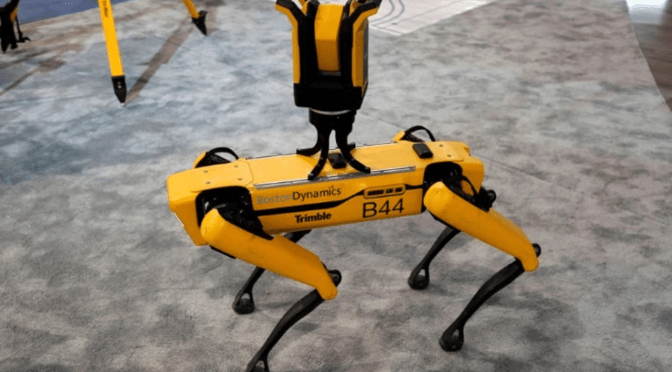
‘Robot Dogs’ May Soon Guard Air Force Bases

https://davidicke.com/2020/09/10/robot-dogs-may-soon-guard-air-force-bases/

Bill Gates is on camera saying an RNA vaccine will change your DNA forever

Food For Thought 2.43K subscribers

Image by Arek Socha from Pixabay

Facebook is developing room-scanning technology

Facebook says it is developing what appears like a fairly fine-grained way of monitoring sounds occurring in enclosed spaces – spaces that would also be mapped for any objects they contain. And Facebook is relying on artificial intelligence (AI) of one kind or another to achieve this, said a blog post announcing “AI Habitat.”

As is often the case, this type of “arrangement” between ordinary users and a data-dependent and hungry tech juggernaut like Facebook, and the trade-off involved, doesn’t seem to be really worth it for users would have to wear “smart glasses” to allow this invasive system into their homes, and in exchange get trivial help from their AI assistants in checking whether the front door’s locked and finding a phone that’s ringing somewhere else in the apartment. If that’s all the benefit to the user wearing a pair of awkward “glasses” loaded with sensors probing the privacy of their home to the core – it truly sounds like the worst deal ever.

LINK: https://reclaimthenet.org/facebook-is-developing-room-scanning-technology/

Photo by Glen Carrie on Unsplash

What ‘they’ have planned for your future ?

A must watch. David Icke has researched world events and plans (particularly of the 1%) for thirty years. As he points out, what is now materializing right in plainer sight is a plan that is not hidden at all. They have been discussing it for a long time. For the awake it is about AI, artificial intelligence. They literally want us connected to their tech … it is really about complete control of all you do in particular your thoughts. Controlled thus far by perception via control of media, they wish to enter your heads literally. The masks are helping you to lose your identity. This is now right upon us. EWR

Image by Gerd Altmann from Pixabay

A Disturbing Glimpse Into The Future: Bill Gates, Elon Musk & The 4th Industrial Revolution (Spiro Skouras)

Mirrored by T4 JAPAN

Spiro Skouras

95.2K subscribers Welcome everyone, thanks for tuning in and congratulations! If you are reading or watching this, that means you have officially survived the first half of 2020. Something tells me, the second half will be just as crazy, if not more crazy than the first half was. In this report we will be taking a glimpse of what the not too distant future may look like. Yes some of this will be speculation, but it is speculation projecting forward based on the facts we have today. To be clear, the road humanity is being led down does not look very human at all according to the social engineers AKA technocrats who are deciding and dictating what the future of humanity looks like for us, we have no say according to the elite. Watch this report and decide for yourself, will humanity benefit from this projected future? or will this digitalized system of control be the final nail in the coffin of free will and expression of individuality. IN MICHIGAN, HOUSE PASSES BILL TO ‘VOLUNTARILY’ BEGIN PLACING HUMAN IMPLANTABLE MICROCHIPS INTO THE BODIES OF ALL STATE GOVERNMENT EMPLOYEES https://www.nowtheendbegins.com/michi… World Economic Forum’s 4th Industrial Revolution https://www.youtube.com/watch?v=kpW9J… Mass-Tracking COVI-PASS Immunity Passports To Be Rolled Out In 15 Countries https://www.zerohedge.com/political/m… Digital Tattoo https://whatis.techtarget.com/definit… An Invisible Quantum Dot ‘Tattoo’ Could Be Used to ID Vaccinated Kids https://www.sciencealert.com/an-invis… Human Mind Control of Rat Cyborg’s Continuous Locomotion with Wireless Brain-to-Brain Interface https://www.nature.com/articles/s4159… Michigan Makes Worker Microchips Voluntary … Wait, What? https://www.popularmechanics.com/tech… Bill Gates Calls for a “Digital Certificate” to Identify Who Received COVID-19 Vaccine https://www.newsbreak.com/news/0OdBn0… CIA Mind Control https://www.cia.gov/library/readingro… Forgot To Include RFID Vaccine Needles https://www.dcvmn.org/IMG/pdf/2019_ro…

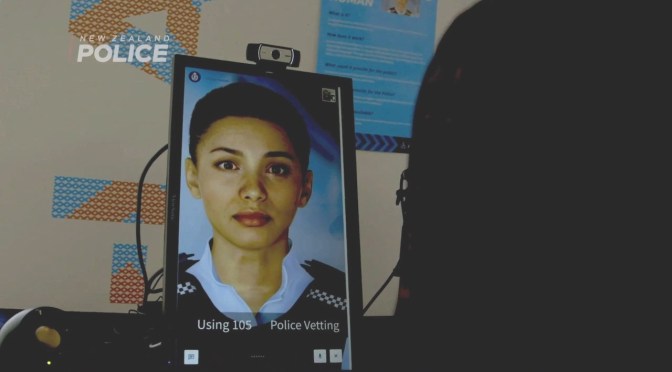
NZ unveiled their first Ai officer in Feb this year … its name is Ella – the Electronic Life Like Assistant

As AI gets on its legs, along with the new ‘social distancing’ the folk we interact with become less and less personal. Ella, the new Electronic Life Like Assistant, is our latest AI possibility for obtaining info from the Police; Police Connect it’s called. We’ve come a long way haven’t we from the constable on a bicycle who actually cared and had powers of human reasoning. I doubt this Ella will. If we ‘advance’ to China’s social credit system (ie less freedom if you cross the acceptable lines …remember it’s been observed China’s the prototype for the new Orwellian totalitarian world government) Ella is all we’ll get to talk to regarding the rules and regs I’d say. EWR

Read more about Ella at the link.

LINK: https://www.nzherald.co.nz/nz/news/article.cfm?c_id=1&objectid=12307902

NZ Police trialed facial recognition tech without clearance

From radionz

Police conducted a trial of controversial facial recognition software without consulting their own bosses or the Privacy Commissioner.

The American firm Clearview AI’s system, which is used by hundreds of police departments in the United States and several other countries, is effectively a search engine for faces – billing itself as a crime-fighting tool to identify perpetrators and victims.

New Zealand Police first contacted the firm in January, and later set up a trial of the software, according to documents RNZ obtained under the Official Information Act. However, the high tech crime unit handling the technology appears to have not sought the necessary clearance before using it.

Privacy Commissioner John Edwards, who was not aware police had trialled Clearview Al when RNZ contacted him, said he would expect to be briefed on it before a trial was underway. He said Police Commissioner Andrew Coster told him he was also unaware of the trial.

READ MORE

https://www.rnz.co.nz/news/national/416483/police-trialled-facial-recognition-tech-without-clearance?fbclid=IwAR0bjepGkSy24rGWgJc5i94F_w_DNK5mzJlUN14wilsCanwgIjl7UnRcdXI

Photo: Radio NZ

Dog robots – warming you to the ‘human’ kind

59.3K subscribers
It’s been said the cure must not be worse than the disease. I have said from the beginning of this outbreak, that I am much more concerned about the government’s response to the virus and the publics reaction to it in the form of a mob mentality than I am of the virus itself. In my previous report, I covered how the US is now beginning to, in their own words “build an army of contact tracers” which will be coming to peoples homes, as we can clearly see is included in HR 6666. Contact tracing was first rolled out in Singapore and now we see the next phase of COVID1984 being rolled out first, yet again in Singapore. As robots are now being rolled out to enforce social distancing. At this point we have to as, are we looking at the contact tracers of tomorrow? US Begins To Implement WHO “Contact Tracing” To Forcibly Remove People From Their Homes? https://www.activistpost.com/2020/05/… “Metalhead” DARPA Robot Enlisted by Police to Enforce Social Distancing https://www.activistpost.com/2020/05/… Security Robots Invade NYC, and An Education Droid Speaks At UK Parliament https://www.activistpost.com/2018/10/… H.R.6666 – COVID-19 Testing, Reaching, And Contacting Everyone (TRACE) Act https://www.congress.gov/bill/116th-c… Coronavirus survivors banned from joining the military https://www.militarytimes.com/news/yo…

Did you know NZ is a leader in governmental use of AI?… there’s been a call for an independent regulator here to monitor & address the associated risks of the tech

From theconversation.com

New Zealand is a leader in government use of artificial intelligence (AI). It is part of a global network of countries that use predictive algorithms in government decision making, for anything from the optimal scheduling of public hospital beds to whether an offender should be released from prison, based on their likelihood of reoffending, or the efficient processing of simple insurance claims.

But the official use of AI algorithms in government has been in the spotlight in recent years. On the plus side, AI can enhance the accuracy, efficiency and fairness of day-to-day decision making. But concerns have also been expressed regarding transparency, meaningful human control, data protection and bias.

In a report released today, we recommend New Zealand establish a new independent regulator to monitor and address the risks associated with these digital technologies.


Read more: To protect us from the risks of advanced artificial intelligence, we need to act now


AI and transparency

There are three important issues regarding transparency.

One relates to the inspectability of algorithms. Some aspects of New Zealand government practice are reassuring. Unlike some countries that use commercial AI products, New Zealand has tended to build government AI tools in-house. This means that we know how the tools work.

But intelligibility is another issue. Knowing how an AI system works doesn’t guarantee the decisions it reaches will be understood by the people affected. The best performing AI systems are often extremely complex.

To make explanations intelligible, additional technology is required. A decision-making system can be supplemented with an “explanation system”. These are additional algorithms “bolted on” to the main algorithm we seek to understand. Their job is to construct simpler models of how the underlying algorithms work – simple enough to be understandable to people. We believe explanation systems will be increasingly important as AI technology advances.

A final type of transparency relates to public access to information about the AI systems used in government. The public should know what AI systems their government uses as well as how well they perform. Systems should be regularly evaluated and summary results made available to the public in a systematic format.


Read more: Avoid the politics and let artificial intelligence decide your vote in the next election


New Zealand’s law and transparency

Our report takes a detailed look at how well New Zealand law currently handles these transparency issues.

New Zealand doesn’t have laws specifically tailored towards algorithms, but some are relevant in this context. For instance, New Zealand’s Official Information Act (OIA) provides a right to reasons for decisions by official agencies, and this is likely to apply to algorithmic decisions just as much as human ones. This is in notable contrast to Australia, which doesn’t impose a general duty on public officials to provide reasons for their decisions.

But even the OIA would come up short where decisions are made or supported by opaque decision systems. That is why we recommend that predictive algorithms used by government, whether developed commercially or in-house, must feature in a public register, must be publicly inspectable, and (if necessary) must be supplemented with explanation systems.

Human control and data protection

Another issue relates to human control. Some of the concerns around algorithmic decision-making are best addressed by making sure there is a “human in the loop,” with a human having final sign off on any important decision. However, we don’t think this is likely to be an adequate solution in the most important cases.


Read more: Automated vehicles may encourage a new breed of distracted drivers


A persistent theme of research in industrial psychology is that humans become overly trusting and uncritical of automated systems, especially when those systems are reliable most of the time. Just adding a human “in the loop” will not always produce better outcomes. Indeed in certain contexts, human collaboration will offer false reassurance, rendering AI-assisted decisions less accurate.

With respect to data protection, we flag the problem of “inferred data”. This is data inferred about people rather than supplied by them directly (just as when Amazon infers that you might like a certain book on the basis of books it knows you have purchased). Among other recommendations, our report calls for New Zealand to consider the legal status of inferred data, and whether it should be treated the same way as primary data.

Bias and discrimination

A final area of concern is bias. Computer systems might look unbiased, but if they are relying on “dirty data” from previous decisions, they could have the effect of “baking in” discriminatory assumptions and practices. New Zealand’s anti-discrimination laws are likely to apply to algorithmic decisions, but making sure discrimination doesn’t creep back in will require ongoing monitoring.

The report also notes that while “individual rights” — for example, against discrimination — are important, we can’t entirely rely on them to guard against all of these risks. For one thing, affected people will often be those with the least economic or political power. So while they may have the “right” not to be discriminated against, it will be cold comfort to them if they have no way of enforcing it.

There is also the danger that they won’t be able to see the whole picture, to know whether an algorithm’s decisions are affecting different sections of the community differently. To enable a broader discussion about bias, public evaluation of AI tools should arguably include results for specific sub-populations, as well as for the whole population.

A new independent body will be essential if New Zealand wants to harness the benefits of algorithmic tools while avoiding or minimising their risks to the public.

Alistair Knott, James Maclaurin and Joy Liddicoat, collaborators on the AI and Law in New Zealand project, have contributed to the writing of this piece.

SOURCE

https://theconversation.com/call-for-independent-watchdog-to-monitor-nz-government-use-of-artificial-intelligence-117589

https://www.biometricupdate.com/201905/academics-call-on-new-zealand-to-regulate-ai-as-brookings-issues-guidance

Image by Computerizer from Pixabay


“AI is the biggest risk we face as a civilization”

They are saying in the video, AI is a risk, and yet they are not putting stops on it. Pandora’s box. Informative video.

https://www.youtube.com/watch?reload=9&v=brQPAH6Leyo&feature=share&fbclid=IwAR2ICHWATdmeUUmwEcAIkytCgEH3LPiT-deG91tq6Eevpvr5RQSV5h5gSPM

Published on Nov 19, 2018

SUBSCRIBE 2.2M
THIS Is Only The Beginning See This Before it is Deleted 2018-2019 EVENTS WORLD NEWS NASA MOON AI ELON MUSK SUBSCRIBE: https://goo.gl/zBkuyB Find more content like this on Gaia: http://bit.ly/SupportGaia