
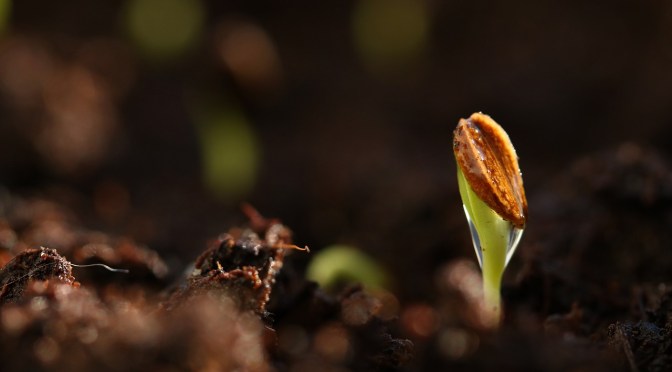
There are big savings to be made in growing your own plants from seed, if you go about it in the right manner. With flowers and vegetables you have a far greater range from seed selection than you do when compared to buying seedlings.
This is especially so when you go online and view mail order catalogues such as Egmont Seeds and Kings Seeds.
I browsed the seed stands recently in a store which had two brands of seeds and was surprised about how expensive some seeds had become.
The expensive seeds were mainly hybrid types and the reasonably priced seeds were open pollinated.
The difference between the two types is that the hybrid seeds have been specially bred for certain characteristics in the mature plant where open pollinated are seeds that have been collected from mature plants that have pollinated naturally.
Hybrid seed grown plants tend to be uniform in growth, all mature about the same time and very similar in appearance and attributes.
These are the seeds most commercial growers use in vegetable and flower production. They are great for the market gardener that requires a field of cabbages all of which are ready to harvest at the same time.
For the home gardener they are a waste of time and space as most of us can’t eat a dozen cabbages in a week or so.
We gardeners want our cabbages to reach maturity many days apart so we obtain the full benefit of our efforts and not have lots of waste.
The cheaper seeds give us this as they are open pollinated and will be staggered in their maturity.
Besides when it comes to vegetables the open pollinated will likely have far better flavour when grown naturally and have less disease problems.
It is from these plants you can allow one to go to seed and collect your own seeds for future plantings.
For the more unusual plants that you would like to grow you can expect to pay a little more whether they are open pollinated or hybrids.
For common vegetables and flowers you are best to choose the less expensive seed packets.
When you buy some types of seeds such as lettuce, you will not want to sow all the seeds, in fact you may only sow a dozen seeds each time.
The remaining seeds should be then stored in their original packet and put inside a seal-able glass jar and placed in the fridge.
There they will keep for many months and even years with little loss of vitality.
The fridge storage of even unopened packets is a good move as this gives the seeds a false winter so when you bring them out to germinate they will think its spring and strike quicker.
Use either old punnets or seedling trays to germinate your seeds in dependent on the number of seeds you wish to strike.
In saying that the best results and thus plants are ones that are germinating where they will mature. You will notice how self sown seeds are superior plants.
Don’t worry about the fancy seed raising mixes as a reasonable potting mix or compost is far better and cheaper.
Fill the tray to about two thirds full with the potting mix and then with a kitchen sieve sprinkle a layer of the finer particles of the mix over this.
Next evenly as possible sprinkle the number of seeds you wish to germinate. If you want 6 plants to plant out then sow 12 seeds.
You can later on select the 6 best plants for growing on. The other seedlings can be discarded or kept in the tray to grow on for a future planting.
Next with the aid of the sieve, sprinkle a little more of the mix to just about cover the seeds. Many seeds prefer a little light to germinate well, so don’t cover too much.
Next take a trigger sprayer and place a 10 mils of Magic Botanic Liquid into it with 1 litre of water. Spray this over the mix and seeds to wet the mix.
The tray then should be placed on a heat pad or in a warm situation to aid germination. Ensure that the mix is kept moist and not allowed to dry out, misting with the sprayer two or more times a day.
The tray should be in good light but not strong direct sunlight.
Germination time varies from plant to plant and often the packet may give an indication of the number of days required. On germination the embryo leaves and growing stem will appear.
This is the time that many gardeners stuff up and losses occur. Embryo seedlings need overhead light as soon as they appear or within at least 12 hours.
If not, the seedlings will stretch to the natural light and become weak making them vulnerable to dampening off and diseases.
The tray should be moved to a glasshouse bench where it is lightly shaded from strong direct sun.
If you do not have a glasshouse then with either an old drawer or a polystyrene box and a sheet of glass you have an excellent propagation unit.
Place the trays of freshly germinated seedlings in the box with the sheet of glass over it but slightly raised off the box with ice cream sticks or similar at each corner, to allow heat and moisture to escape.
The raised glass should not be too high so as to leave an easy entrance for slugs or snails. The box should be in an area that only gets early or late sun.
Not direct sun from say 10 am to 2 pm. Ensure the mix is kept moist by misting. In the box or glasshouse the plants will grow straight up with sturdy growth.
If there is any danger of slugs or snails getting to the seedlings then spray them and the surrounding area with Liquid Copper and Raingard.
The pests will not go over a film of copper without dying. (If your hostas or other plants in the garden are being attacked use this method, its safer and better than poison baits).
Once your seedlings have reached the first true leaf stage and are big enough, they should be carefully pricked out and planted into small pots or spaced apart in punnets or cell packs.
Water the tray by plunging into a container of water and watch the air bubbles escape.
This will saturate the growing medium and means there will be less root disturbance when you lift the seedlings out.
The seedlings can be transplanted into pots or trays with potting mix. Keep the mix moist and weekly water in a good plant food such as Mycorrcin.
When the plants are of suitable size to plant out then spray them with Vaporgard and leave them for three days before planting out.
This spray will harden the plants off and protect them from the cold and late frosts.
When buying seedlings of plants in punnets or cell packs it is a good idea to spray them with Vaporgard when you get them home and then leave them for three days before disturbing them and planting out.
It greatly reduces transplant shock and increases the success rate while establishing.
If cats in gardens are a problem then after planting out your seedlings sprinkle Wallys Cat Repellent around the area.
A spray over the area including the seedlings using Liquid Copper and Raingard will stop slug and snail damage.
Seeds of plants such as pumpkin, cucumber etc should be sown into jiffy pots so there is no root disturbance when you plant out.
There are a number of vegetable seeds that need to be direct sown such as peas, beans, corn, carrots, parsnips and sweet peas. They resent root disturbance and it is silly to buy them as seedlings.
The soil temperature needs to be 10 degrees or better for good germination.
It is a lot of fun growing your own plants from seed and a big savings to boot.
Just follow the guide lines above and don’t attempt any expensive seeds till you are proficient with the common seeds.
Even gardeners like me can have failures with hard to grow seeds where very special techniques need to be employed.
The secrets are a heat pad, good moisture without been wet and overhead natural light.
ooooo
Phone 0800 466464
Garden Pages and News at www.gardenews.co.nz
Shar Pei pages at www.sharpei.co.nz
Mail Order products at www.0800466464.co.nz
New Zealand Bill of Rights Act 1990. Part II of the Act covers a broad range of Civil and Political Rights. As part of the right to life and the security of the person, the Act guarantees everyone:
1The right not to be deprived of life except in accordance with fundamental justice (Section 8)
2The right not to be subjected to torture or to cruel, degrading, or disproportionately severe treatment or punishment (Section 9)
3The right not to be subjected to medical or scientific experimentation without consent (Section 10)
4The right to refuse to undergo any medical treatment (Section 11)
Furthermore, the New Zealand Bill of Rights Act 1990 guarantees everyone: Freedom of Thought, Conscience, and Religion.
This includes the right to freedom of thought, conscience, religion, and belief,
INCLUDING THE RIGHT TO ADOPT AND HOLD OPINIONS WITHOUT INTERFERENCE (Section 1)
Seize the moments of happiness, love and be loved! That is the only reality in the world, all else is folly.
Image by katerinavulcova from Pixabay
Discover more from Environmental Health Watch NZ
Subscribe to get the latest posts sent to your email.
