Tag Archives: Weeds

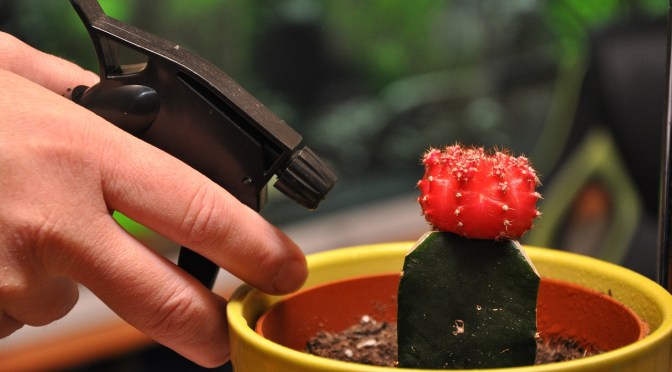
About sprayers and spraying in your garden (Wally Richards)

Gardeners and horticulturists can at times take things for granted as we are often doing certain chores and don’t stop to realise that what we do and why we do it, is not common knowledge with everyone who gardens or are attempting to garden.

One of these is spraying plants for whatever reason we spray; whether it be for pest control, disease control, weed control or other reasons.

Lets start off with sprayers of which there are many types and I have four types that I use for different reasons and times.

Firstly I have a Back Pack sprayer which is hand pumped and holds about 16 litres of spray.

This one is only used for weed killing and the compound I use in it is Ammonium sulphamate that I dissolve into water at the rate of 200 grams per litre of water.

I add to this Raingard at the rate of 1mil per litre of water.

The best time to spray weeds is on a nice sunny day in full sun light and ideally when the soil is on the dry side.

If you are using any other non chemical weed killers then a sunny day with dry soil is a must for success.

If you are using chemical herbicides you should add Raingard to the spray as it will increase the effectiveness of the herbicide by 50% and apply it also ideally on a sunny day and drier soil.

The reason is that when soil is dry plants are moisture seeking and will take the spray more readily into their foliage.

The sprayer that you use for weed killers should be clearly written on ‘WEED KILLERS ONLY’

failure to do this will often lead to tragic loses in your gardens.

I have had many instances when someone else has used a sprayer that had been used to kill weeds and used the sprayer on plants for insect problems. (It works you kill the plants and the insects disappear, not so nice for your cherished plants)

This is particularly so with chemical herbicides because rinsing the sprayer out after use will not remove all the chemical as they impregnate into the plastic and if you were to use the same sprayer with say an insecticide in it and spray roses,

tomatoes, beans and various other plants, it will cause herbicide damage to the foliage and in some cases kill the plants.

If you have small weed killing jobs to do then what ever you are going to use, put it into a Trigger Sprayer that you mark ‘WEED KILLERS ONLY’

I actually have several 1 litre Trigger Sprayers that I use for different applications and as I do not use Raingard in the Trigger Sprayers I can store what spray has not been used in a shed out of direct sun light for future use..

If Raingard or VaporGard has been used in a sprayer then any spray not used should be either discarded or put into a container for future use so that you can wash out the sprayer immediately and run some clean water though it to make sure filters and jets are cleared of any residue.

So discard the contents, part fill with clean water and give a good shake.

Tip this water out and again part fill the sprayer with clean water and open the nozzle of the sprayer to make a jet and jet spray some of the water through the nozzle.

This will help ensure that the sprayer will be ready for use next time you want to use it.

Failure to do some often means time wasted as you try to clean residues from the sprayer so it will work.

Many products that have been diluted with water will keep for a time if stored out of sunlight, they may slump which means they fall to the bottom and there is more water above the product. A good shake normally remixes the product with the water.

Sometime I will add a little more of the product to the sprayer and also more water as to label instructions to top up the sprayer and overcome any possibility of the product deterioration while stored.

Besides the Back Pack Sprayer and several trigger spray bottles I also have two other pump up sprayers for spraying.

One is a 2 litre pump up sprayer the other is a 5 litre sit on the ground pump up sprayer.

Those are for the jobs that are bigger than what a Trigger sprayer would be used for and yet not enough to use the pack pack size.

Most spraying of any product except weed killers should be done at the end of the day when the sun is going down towards dusk and direct sunlight off the plant’s foliage.

This is particularly important if using any oil products such as Wallys Neem Tree Oil.

Also if using Super Pyrethrum on its own or with the Neem Oil as pyrethrum has a short life when exposed to UV which is in fact about two hours.

Also pyrethrum can affect honey bees and by dusk most of them should be back home in their hives.

Next morning when the sun comes up the Pyrethrum will be gone within a couple of hours.

Now here is a very important point which many do not realise when spraying chemical herbicides.

NEVER spray on a still calm day. Many people think that is the best time to spray when in fact it is the worst.

I learnt that when I obtained my Chemical Handlers certificate years ago and here is the reason why;

When it is calm tiny spray droplets are lifted up in to the air from conventional air currents (warm air rises) and these deadly droplets rise up and will at sometime drop onto what ever is below, your place? Down the road? Who knows but very damaging to what ever plant they land on.

The ideal time to spray is when there is a nice mild breeze, this will force the spray droplets down onto the target weeds.

Another good idea if your sprayer has a wand you can make a spray shield out of a two litre plastic ice cream container.

In the centre of the container make a hole that is big enough to fit over your wand when the nozzle is removed.

Place the end of the wand through the hole and put the nozzle back on.

You place this over the weeds you want to spray and pull the trigger. All the spray will stay inside the ice cream container.

So even on a windy day or calm day you can spray your weed killers safely.

We have now listed on our mail order web site at www.0800466464.co.nz One Litre Trigger Spray bottles for $6.00 each

(See under Disease Control top of first page)

If you are ordering other gardening items from the web site then add a Trigger or two to your order.

On their own the freight cost does not make them a good buy but when freight (if applicable) is on other products the  trigger sprays can hitch a ride on that freight.

You get 10% off the price so that makes them only $5.40 each a good buy at that price.

Problems ring me at 0800 466464
Phone 0800 466464
Garden Pages and News at www.gardenews.co.nz
Shar Pei pages at  www.sharpei.co.nz
Mail Order products at www.0800466464.co.nz


New Zealand Bill of Rights Act 1990. Part II of the Act covers a broad range of Civil and Political Rights. As part of the right to life and the security of the person, the Act guarantees everyone:

1The right not to be deprived of life except in accordance with fundamental justice (Section 8)

2The right not to be subjected to torture or to cruel, degrading, or disproportionately severe treatment or punishment (Section 9)

3The right not to be subjected to medical or scientific experimentation without consent (Section 10)

4The right to refuse to undergo any medical treatment (Section 11)

 Furthermore, the New Zealand Bill of Rights Act 1990 guarantees everyone: Freedom of Thought, Conscience, and Religion.
This includes the right to freedom of thought, conscience, religion, and belief,
INCLUDING THE RIGHT TO ADOPT AND HOLD OPINIONS WITHOUT INTERFERENCE (Section 1)

Image by Renate Köppel from Pixabay

WEEDS – A NEW WAY TO DEAL TO THEM (Wally Richards)

This week I received a book from an old friend of mine, Julia Sich which she has written and called ‘Julia’s Guide to Edible weeds and Wild Green Smoothies’.

Many of you will know the ‘Weed Lady’ through her previous book and workshops.

In your gardens you will likely have a number of plants we call ‘weeds’ which are of benefit to your diet and health.

The definition of a ‘weed’ is simply ‘a plant that is growing where we do not want it to grow’.

Many of the plants we grow for food or for their flowers; when allowed to self seed they become weeds.

I recommend that you obtain a copy of Julia’s book and learn to your benefit, many of the plants you pull out, kill and compost which could be better off been cultivated and consumed.

The book is available in two formats as a down load E Book or as a printed publication.

The web site is https://www.juliasedibleweeds.com/

and the book is available for NZ$19.95 for the Ebook OR $34.95 plus postage for the printed version.

The book gives you both the common names and the Botanical names as well as coloured pictures to assist in identification.

Each weed has a written description along with its nutritional values and how to use them for your benefit.

Mind you if the Government had its way it would ban the use of these natural plants and their ancient uses if favour of Big Pharma’s bottom line. (Therapeutic Products Bill)

Pharmaceutical companies hate natural remedies even though many of their concoctions were originally derived from plant’s properties.

If you have the knowledge such as given in Julia’s book then you can look after your own well being as our fore fathers did from all races on the planet. (And at no expense if out of the weeds in your gardens)

We have to read and learn about the advantages of these plants but in Nature animals know what is best for them as far as their well being is concerned.

For instance if you place cattle into a paddock that has a wide range of plants including weeds, the cattle will consume the ones that they need for better health beside eating a lot of grass.

Which is an interesting point in so much as grass is also very good for your health and in particular, wheat grass and barley grass.

That is if you apply all the known minerals and element to the growing medium.

Reason is that grasses will take up all the minerals available where other plants such as tomatoes only require 56 of the known 114 mineral and elements.

That is why some farmers will apply what we sell as Ocean Solids to their paddocks to the great benefit of their stock’s health.

I remember a farmer telling me one time about his practice of spraying diluted sea water over his paddocks which was much to the annoyance of his farming neighbour,

because a certain amount of the sea spray would fall onto the neighbors side of the fence and when the neighbour let his stock into that paddock they would rush over to the  area by the fence line and demolish the mineral rich grasses growing there.

Julia mentions ‘your’s truly’ in her book and in particular in regards to ‘Smoothies’

I presume many of you have or still do on occasions, if not regularly, go out and pick a range of greens and put them into a high speed blender with a banana and wizz up a very beneficial brew.

The banana addition takes away some of the unpleasant taste of some plants and makes your drink very palatable.

Julia tells the story of how smoothies solved health issues that she once had as I found the same many years ago when I first started making smoothies from as many different plants as I could get my hands on.

Some plants are nice to eat raw and have flavors that make them appealing such as salad crops.

The rest including grasses are better taken raw in a smoothie.

Besides being of great benefit to your health another very good reason to find out what weeds you can eat is the unusual weather that has affected New Zealand recently.

Here is a update from a Food Producer in the Hawke’s Bay: ‘Hi everyone, food producer here. Just wanted to write an easily digestible post so people can understand how severe the destruction in H.B is for the whole of N.Z

The media aren’t really discussing it fully and people I speak to can’t seem to wrap their heads around how serious this is for us as a country.

What’s been lost: It’s called the fruit bowl for a reason, not just grapes and apples but also pears, onions, corn, carrots, blueberries, strawberries, honey, dairy, beef, sheep products including wool and also apiaries, nurseries and seed banks.

Wineries and orchards have had heritage trees and vines utterly wiped out. We’re talking 30-40-year-old plants gone. Countless bee hives and fields of crops buried under a metre of silt.

These aren’t just for fresh produce but also wine, vinegar, honey, bread and processed fruit and vegetables for things from muesli bars to ice cream and condiments.

The layer of silt now covering the once fertile land has been completely smothered. There’s so much cleaning up to be done before people can replant and fertilize it will take years to get back even close to normal.

In that time we’ll see massive shortages of all the above, affecting almost all food items you can think of.

A very apt warning and not only in NZ but also in many major food producing areas of the world, either through Floods or Droughts millions of acres of crops have been lost..

Think about that. You might want to start cultivating a few weeds for a ‘Rainy Day’.

Of course as we have seen this spring and summer a lack of blue skies with nice fluffy white clouds which has also greatly affected us home gardens as well as commercial growers.

Direct sun shine is what all plants use to create carbohydrates which is the energy that makes them grow, flower and produce seeds.

Hazy skies and cloud cover that prevents direct sunlight being available for plants and solar panels is a very big concern.

In 2006 this matter was brought up at the United Nations and the speech about it can be heard here

VIDEO LINK

Well worth 18 minuets of your time to be better informed. (Now days they talk about ‘Planet Shading’ which would be a bit like a ‘Nuclear Winter’ no sun plants don’t grow.

Playing with weather or the ability to produce or prevent weather patterns is a fact and now days it is harder to determine what is natural and what is man made.

If severe weather events we have experienced are not natural then a lot of people that have been badly affected would not be very happy for sure.

Phone 0800 466464
Garden Pages and News at www.gardenews.co.nz
Shar Pei pages at  www.sharpei.co.nz
Mail Order products at www.0800466464.co.nz


New Zealand Bill of Rights Act 1990. Part II of the Act covers a broad range of Civil and Political Rights. As part of the right to life and the security of the person, the Act guarantees everyone:

1The right not to be deprived of life except in accordance with fundamental justice (Section 8)

2The right not to be subjected to torture or to cruel, degrading, or disproportionately severe treatment or punishment (Section 9)

3The right not to be subjected to medical or scientific experimentation without consent (Section 10)

4The right to refuse to undergo any medical treatment (Section 11)

 Furthermore, the New Zealand Bill of Rights Act 1990 guarantees everyone: Freedom of Thought, Conscience, and Religion.
This includes the right to freedom of thought, conscience, religion, and belief,
INCLUDING THE RIGHT TO ADOPT AND HOLD OPINIONS WITHOUT INTERFERENCE (Section 1)

September gardening in NZ (Wally Richards)

There are plenty of chores to attend to at this time of the year as the day light hours increase and plants emerging from their winter rest.

Hardy plants will be showing very good growth now including the plants you do not want commonly referred to as weeds.

Unwanted plants are very valuable if you make use of them and treat them as a fodder crop.

Smaller unwanted plants should be cut off just below soil level with a sharp carving knife or sharp Dutch Hoe.

This removes the root system from the foliage leaving the roots to rot off in the soil providing a rich source of food for the soil life.

The foliage falls onto the bare soil where it is quickly broken down by the soil life providing them with more substance to nurture your preferred plants.

Taller weeds can be cut down with a weed eater such as using the Pivotrim Pro attachment which are available from Mitre10 Mega stores.

(This are far superior to using the roll of weed eater plastic tape which I always found a problem using.)

After cutting down the weeds with the above you can leave the stubble unless you want to clear the ground which means cutting off the weeds below soil level with a sharp carving knife.

Real tough root systems I have used a box cutter on which makes the job a breeze as long as you are careful not to cut yourself.

These methods of weeding enhances your soil or growing medium where chemical herbicides greatly harm the soil life and your plants suffer.

If you have waste areas or cobbles/cracks where weeds flourish then sprinkle salt over the area and lightly water. The weeds are killed and stay weed free for a time.

Another safe to use is mixing Ammonium sulphamate at 200 grams per litre of water and spraying on a sunny day when the soil is on the dry side. Give those conditions weeds are likely to be dead within an hour or two.

Spring temperatures and moisture brings out diseases to attack your plants so sprays of potassium permanganate (Condys Crystals at a quarter teaspoon to a litre of water)

with Raingard added sprayed onto the soil and plants controls a wide range of diseases and fungi nicely.

Note it will stain things like your house & fences if you are not careful, but will wash off over time.

An interesting bit of information you can purify drinking water of harmful bacteria by placing 3 or 4 grains into a litre of water, agitate to make water a light pink and leave for 24 hours before drinking.

Using this method means a large quantity of water can be treated saving the need to boil.

Spray the above potassium permanganate adding Wallys Liquid Copper for protection of curly leaf on stone fruit about every week till disease time is past.

Spray also your roses and other deciduous trees and plants to protect the new spring growth from diseases.

Sprinkle Wallys Neem Tree Granules under your apple trees, roses and citrus trees to reduce pest insect problems.

Use the Cell Strengthening products we wrote about a few weeks ago to strengthen your tomato plants, potatoes and tamarillo so the dreaded psyllid nymphs cant feed and ruin your crops.

If you have concerns about build up of diseases in your soil where you grow tomatoes year after year such as it your glasshouse then treat the soil with Terracin and 3 weeks later with Mycorrcin.

Ensure you store the unused bottle contents in a cool situation out of sunlight as it has live beneficial bacteria which would die if exposed to too much heat such as in a hot shed.

If you do not have any plants in your glasshouse so far, then you can burn sulphur powder inside the house to fumigate it of insect pests that maybe hiding away.

Wet times allows slimes to grow on paths which can be dangerous to walk on causing one to slip and fall. Spray with Wallys Moss & Liverwort Control to kill the slime.

Also ideal to use for moss in lawns and liverwort growing all over the place. To obtain best results adjust the nozzle of the sprayer so it is a bit of a jet which forces the product into the target area.

Does not harm plants if they are sprayed at the same time.

Start spraying strawberry plants 2 weekly with Mycorrcin which will increase your harvests by 200 to 400 %. They will fruit earlier, more fruit, larger berries and a longer cropping season.

Dont forget to also use Wallys Secret Strawberry Food for bigger strawberries.

When planting seedlings place a little Wallys Unlocking Your Soil into the planting along with a little Neem Powder to give your seedlings a good start and some protection from pests.

I favor crop cover (also so sold as Bug Mesh), which is 4 metres wide. By using wire or piping to form hoops place the cover over the hoops to give protection to the young plants or seeds from weather, pests, cats and birds.

Great stuff and reusable season after season.

If you want great gardens this season then use only natural products that will not harm the soil life and earth worms.

This includes putting a 10 micron carbon bonded filter/housing onto your water tap if you have chlorine in your water supply.

I have received many reports from gardeners about how their gardens have greatly improved in health after removing the chlorine from the water they use on the gardens.

It is just common sense, a chemical poison that is added to water to kill microbes is going to do the same to the beneficial microbes in your soil and effect the valuable earth worms.

I even wonder what harm it does to our gut bacteria when people drink chlorinated tap water.

If anyone has any data on this I would be interested.

Phone 0800 466464
Garden Pages and News at www.gardenews.co.nz
Shar Pei pages at  www.sharpei.co.nz
Mail Order products at www.0800466464.co.nz


New Zealand Bill of Rights Act 1990. Part II of the Act covers a broad range of Civil and Political Rights. As part of the right to life and the security of the person, the Act guarantees everyone:

1The right not to be deprived of life except in accordance with fundamental justice (Section 8)

2The right not to be subjected to torture or to cruel, degrading, or disproportionately severe treatment or punishment (Section 9)

3The right not to be subjected to medical or scientific experimentation without consent (Section 10)

4The right to refuse to undergo any medical treatment (Section 11)

 Furthermore, the New Zealand Bill of Rights Act 1990 guarantees everyone: Freedom of Thought, Conscience, and Religion.
This includes the right to freedom of thought, conscience, religion, and belief,
INCLUDING THE RIGHT TO ADOPT AND HOLD OPINIONS WITHOUT INTERFERENCE (Section 1)


In response to Wally’s question on chlorine, search ‘chlorine’ in the search box for our articles here on topic. It is a carcinogen for starters. EWR


Learning about edible weeds

ediblewildfood.com

Are you concerned about the quality of today’s food choices? Does the increasing cost of food leave you with no choice but to buy more processed food? Or are you concerned that the next storm is going to take down the grid for a period of time? Foraging for food is your answer!

Welcome to EdibleWildFood.com. Here you will learn about edible weeds (including aquatic plants), mushrooms, trees and shrubs, flowers, wild food recipes, and valuable information about herbal remedies and other related information.

EdibleWildFood.com offers courses, plant walks, workshops and other unique experiences tailored to the needs of your group. Learn the wonders of natural foods, the tastes of wild plants and the delights in our forests.

READ AT THE LINK

https://www.ediblewildfood.com/

Photo: pixel2013 @ pixabay.com

Sunshine Coast Council Follows France’s Lead in Phasing out Weedkiller

Here is good news … another group opting out of Glyphosate use, this time Australia:

“Spraying weeds with synthetic chemicals could be a thing of the past in a few years if the Sunshine Coast Council has its way.

Via Source: http://www.abc.net.au/local/stories/2015/06/22/4259440.htm

It is phasing out the use of controversial pesticide glyphosate – the active ingredient in Round Up – and introducing natural ways to control weeds, even though regulators from the State Government and CSIRO do not require them to.

Parks manager Mark Presswell says council is concerned that research has shown glyphosate is a health hazard and harmful to the environment….”

Read More: http://feedtheworld.info/sunshine-coast-council-follows-frances-lead-in-phasing-out-weedkiller/: