Tag Archives: USDA

The USDA Wants Americans To Register Their Gardens In A National Database, Including Your Windowsill Or Balcony (2022)

“As the world teeters on the verge of nuclear war and economic collapse, remember that in times of war and economic downturns, food is more valuable than gold.”

EWNZ Note: Remember Kissinger’s statement:

If you control the food, you control a nation. If you control the energy, you control a region. If you control the money, you control the world.


From The WinePress @ substack

The following report was first published on October 10th, 2022, on winepressnews.com.

The United States Department of Agriculture (USDA) is encouraging people to legally register their community and backyard gardens into a national registry, where anyone can join.

The initiative is called the People’s Garden Initiative, which was created to build a “more diverse and resilient local food system to empower communities to address issues like nutrition access and climate change,” the USDA says.

“The simple act of planting a garden can have big impacts – from building a more diverse and resilient local food system to empowering communities to address issues like nutrition access and climate change.”

The USDA says there are 5 types of gardens that qualify for this project:

  • Food – indoor and outdoor gardens, “to increase access and consumption of fresh fruits and vegetables in urban and rural areas.”
  • Wildlife Habitat – Areas designed to increase the number of animals and insects, namely pollinators such as bees.
  • Conservation – preservation of natural resources like soil, water, air, and so on.
  • Beautification – an objectively pretty garden, by “rethink[ing] the planting of seasonal annuals and instead design a space with native species of flowering plants to enhance the biodiversity of your community and build a healthier ecosystem.”
  • Education and Training – gardens can fall under on the previously mentioned 4, but solely created for teaching and internship.

The USDA clarifies that these gardens can be any shape or size.

“You can plant a home garden in your yard or in a small space like a windowsill or balcony.”

Every garden registered can currently be publicly viewed online, per an interactive map that displays all gardens around the nation.
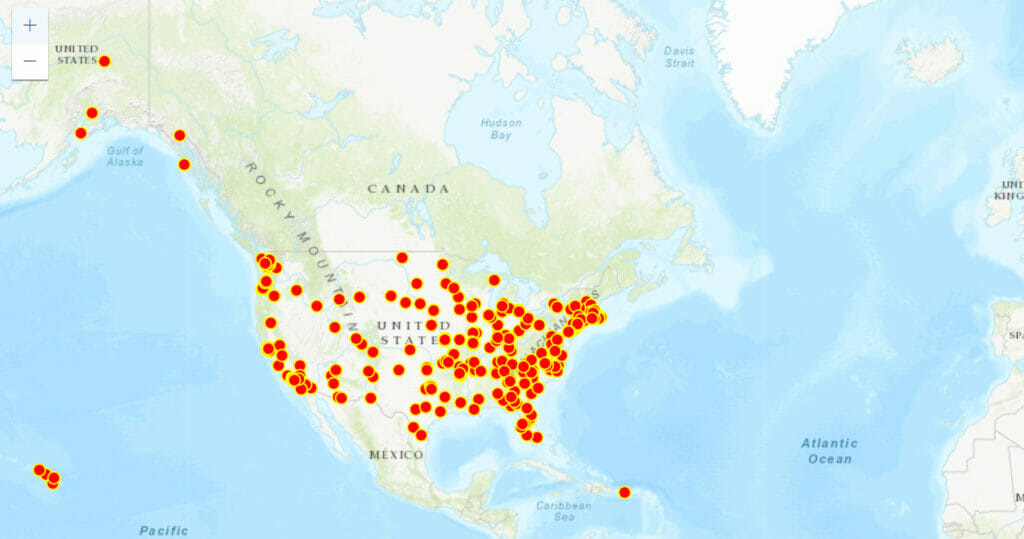
Each dot can be clicked on to learn more specifics about a registered garden, such as the type and pictures of the garden.

According to a press release from the USDA published on September 9th, those who register will also be featured in USDA communications, and sent a swanky sign showing their registration.

Secretary of Agriculture Tom Vilsack said:

“We welcome gardens nationwide to join us in the People’s Garden effort and all it represents.

“Local gardens across the country share USDA’s goals of building more diversified and resilient local food systems, empowering communities to come together around expanding access to healthy food, addressing climate change and advancing equity.

“We encourage existing gardens and new gardens to join the movement. Growing local food benefits local communities in so many ways, and we offer technical resources to help. Also, it’s a great way to connect with your local USDA team members.”

The press release notes that this project actually began in 2009. So, it would appear the USDA is attempting to make a renewed effort for this project. “It’s named for the “People’s Department,” former President Abraham Lincoln’s nickname for USDA, which was established during his presidency in 1862,” the USDA added.

But not everyone is on board with this idea.

Matt Agorist of The Free Thought Project is pessimistic about this initiative, explaining that the USDA has never been in favor of people’s health. He cites an example of a group of physicians in 2020 who sent a whopping myriad of evidence to the USDA in a bid to reduce their recommended levels of sugar intake – levels these doctors thought was too high already, but settled on a reduced rate. In short, the USDA did not consider it and rejected the plea.

Agorist wrote,

“Now, this same organization is claiming that it wants you to register your vegetable garden so it can place you in a database and put your healthy food source on a map — for your health, of course. You also get a cool sign for your front yard too.

“While a handful of folks inside the USDA may have well-meaning intentions behind this program, the behemoth organization’s track record and history clearly indicate that the overwhelming majority of them do not care about your health. Not only do they not care about your health but most of their farm and food budget goes toward subsidizing products that directly harm your health.

“So, skepticism over a national garden database run by this organization is entirely warranted. As the world teeters on the verge of nuclear war and economic collapse, remember that in times of war and economic downturns, food is more valuable than gold.”

The WinePress News is a reader-supported publication. To receive new posts and support my work, consider becoming a free or paid subscriber.


AUTHOR COMMENTARY

Please don’t do this. I, like Agorist, am quite pessimistic about initiatives such as this.

WinePress readers already know that the government and tech giants love to database our info already, and now registering your garden – even down to your windowsill plants (!) – they want to have on record. Absolutely not. But this type of thing certainly fits right in line with the coming CBDCs, social credit scores, carbon calculators, food IDs, and so forth. Right now it’s optional. But how long before it becomes mandatory?

IMF Chief Kristalina Georgieva Urges Governments To Implement Carbon Tax To Reduce Emissions

IMF Chief Kristalina Georgieva Urges Governments To Implement Carbon Tax To Reduce Emissions

The WinePress

Read full story

United Nations Advocates Tracking Food With Tokenization, Blockchain And AI Databases To Reduce 'Food Fraud'

United Nations Advocates Tracking Food With Tokenization, Blockchain And AI Databases To Reduce ‘Food Fraud’

The WinePress

Read full story

With the food shortage narrative in play, it certainly could present an opportunity for the government to try and craft a narrative as to why Americans need to register their gardens, as to know who is buying what, what food crops are which, whose hogging up too much water, who is impoverished in nearby towns, how much excess you have, and on and on.

In the early days of the Russia-Ukraine conflict, many nations were already racing to get these very same types of agendas in place for the time they wish to roll them out. I suspect that when the famine gets to be a legitimate and obvious problem to the broad masses, coupled with a grand economic collapse – something I have been warning about for some time – that is when they might roll this type of thing out. Admittedly, some of this is speculative on my end.

Do you realize that most states still to this day still ban the commercial sale of raw milk and dairy products? I cannot go to the store and eat and drink what I want: I need the government’s approval, as they are “all-knowing.” And those that do want to sell raw milk and dairy, for example, if they are allowed to do it, have to have their practices registered, inspected, and datalogged, but still cannot sell it on the grocery store shelves in most states, but through these convoluted backdoor channels and red tape, most consumers will never notice and realize. And the states that do allow the commercial sale of raw milk and dairy, had to lobby and plead with the government to be allowed to do it!

North Carolina Tries To Pass Law To Make It Illegal For "Independent Owners" To Consume Raw Milk From Their Own Cows To Prevent Spread Of Bird Flu

North Carolina Tries To Pass Law To Make It Illegal For “Independent Owners” To Consume Raw Milk From Their Own Cows To Prevent Spread Of Bird Flu

Read full story

So, lest anyone think that I am not a “patriot” and whining about nothing, then I suggest you chew on that apple and think about what I just said… And that is just one example. If you cannot eat and drink what you want, and plant and pasture whatever you want, without the government’s permission, then you do not have freedom. PERIOD. No president, governor, politician, or media tell-a-vision prophet will admit this truth to you, on either side.

Ecclesiastes 5:18 Behold that which I have seen: it is good and comely for one to eat and to drink, and to enjoy the good of all his labour that he taketh under the sun all the days of his life, which God giveth him: for it is his portion. [19] Every man also to whom God hath given riches and wealth, and hath given him power to eat thereof, and to take his portion, and to rejoice in his labour; this is the gift of God. [20] For he shall not much remember the days of his life; because God answereth him in the joy of his heart.

But you see, that is not part of the new paradigm. America has an odd fusion of communism and fascism for a puppet government. This will be the framework for this “Great Reset.” “You’ll own nothing, and be happy” – as the masses live in these smart cities, packed in like sardines, physically connected to the grid; where everything is serviced and run through by the major corporations working in tandem with the government.

The bottom line is this: do NOT EVER register your garden with the government. Simple as that.

‘Money Faileth:’ A Repeat Of Biblical History Forecasting The Collapse Of World Economies Forcing Societies Into Deeper Enslavement

‘Money Faileth:’ A Repeat Of Biblical History Forecasting The Collapse Of World Economies Forcing Societies Into Deeper Enslavement

The WinePress

Read full story

Thanks for reading The WinePress News! This post is public so feel free to share it.

Photo credit: pixabay.com

Genetic Vaccines in Animals/Food Supply

From Sasha Latypova @ substack

RNA particle swine vaccine approved by USDA in 2021

Vaccines based on synthetic nucleic acid materials (DNA/RNA) are already widely used in animals, most of them either recombinant protein or viral vector based products.

Review (Frontiers) of 6 types of animal vaccines containing nucleic acid materials. Notice that all these types start from plasmid DNA either as raw material or the only manufacturing step. This is very significant in the context of “scale up” and what it means for having all sorts of plasmids floating everywhere, and how open this process to weaponization with “stealth” components (aka “contaminants”) like we have seen with Pfizer’s SV40 fiasco.

READ AT THE LINK

Photo: pixabay.com

GM purple tomatoes may soon appear in your local grocery store (without human safety testing)

From gmwatch.org
Dr Ray Seidler explains why caution is needed

Recently the US Department of Agriculture (USDA) approved the commercial production and sale of a new purple coloured genetically modified (GM) tomato, known as the “purple tomato”. The US Food and Drug Administration, which is responsible for food safety, has yet to approve it.[1] Here, once again, we have an unnecessary food product, genetically engineered for patent protection – a financially motivated concept – and without human safety testing.

Anthocyanins are a group of water-soluble phenolic pigments that give the tomato its purple colour. It is not a dominant group of compounds in red tomatoes. The purple tomato is genetically engineered to cause over-expression of this particular group of polyphenolic anthocyanin pigments.

There are already numerous (heritage) varieties of natural purple tomatoes, so why would we need another one that is genetically engineered? The heritage varieties have anthocyanins mostly concentrated in their skin, whereas the GM variety has them all the way through the fruit – hence the unusually high levels.

The producers of the purple tomato are quoted as saying, “The tomatoes may… mark a turning point for genetically modified foods nationwide. The engineered trait is meant to entice the shopper, not the farmer.” The inventors, Professors Cathie Martin and Jonathan Jones, have formed a private spinout company, Norfolk Plant Sciences, to sell the GM tomato seeds.  
 
The USDA Animal and Plant Health Inspection Service (APHIS), “has determined that Norfolk Plant Sciences’ “modified tomato is unlikely to pose an increased plant pest risk relative to its [non-GM] comparator”. Increased risk of being a plant pest is the wrong issue to evaluate risk assessments of GM foods and doesn’t come close to representing the whole spectrum of risks from cultivated GM crops, but that is what the USDA regulation requires. If they are not a plant pest, the USDA thinks they must be OK for environmental release and can be grown commercially.

When consumed in moderation, anti-inflammatory compounds like anthocyanins can have health benefits. But too much of a good thing may not be good. It has been demonstrated that over-consumption of anthocyanins (e.g. when taken as pill supplements) may cause kidney, liver, and thyroid hormone health effects. Anthocyanins are part of a group of compounds called polyphenols, which may also limit or interfere with iron absorption.      

The average American consumes around 12.5 milligrams of these antioxidants per day. The anthocyanin content from the GM tomato averages about 500mg/100gm of fresh fruit, some 40 times more than the daily average consumption.  One hundred grams of tomato is less than half a cup. Other naturally purple coloured fruits (sweet cherries, blackberries, strawberries, red raspberries, black grapes) contain anthocyanins in the range of 3-143mg/100gm, up to 160-fold less than the GM purple tomato.

A mini-review from Harvard University and University of Melbourne scientists asserts the need for increased regulation and guidelines for polyphenol consumption and supplementation in order to ensure that consumers remain safe and informed about polyphenols (like anthocyanins). When taken in pill form it may be easily possible to exceed safe levels, potentially causing serious ailments. For example, one commercial pill formulation prepared from sour cherries recommends two pills, with a resulting daily dose of 40mg of anthocyanins. This 40mg per day might be a concern to the Harvard scientists, but it represents only 8% of the 500mg level found in 0.4 cups of the fresh GM tomato.

The US Food and Drug Administration allows health claims for antioxidant nutrients with an established Recommended Daily Intake (RDI) – for example, vitamins A and C. But polyphenols are not a vitamin and nor do they have an RDI. Polyphenols are often sold as nutritional supplements (pills), which are minimally regulated in the US, meaning a greater number of functional claims can be made. There are currently no regulatory recommendations for the quantity of consumption of polyphenols in foods.

The potential for the consumption of deleterious levels of polyphenols is especially of concern with supplements (pills) and may happen through over-indulgence in certain foods. Some manufacturers recommend pill intakes over 100-fold higher than those currently associated with a Western diet. In some cases, supplementation trials of antioxidants have been associated with adverse effects, including increased mortality or stroke. The current lack of “nutritional supplement” regulations in the US may contribute to overhyped claims, potentially resulting in over consumption of pills or overconsumption of a fad food like the new GM purple tomato at potentially harmful levels.

In the US, stickers are placed on many foods, especially fresh vegetables and fruits, indicating how they were produced. If it is labelled with 5 digits beginning with an 8, it ain’t great: It’s genetically engineered and likely contains pesticides. If it is labelled with 4 digits beginning with a 3 or 4, close the door and walk away (it’s conventionally grown and probably contains pesticides). If it is labelled with  5 digits beginning with a 9, it should be fine (it’s organic).[2] A non-GMO label means it’s been tested and found not to contain genetically engineered genes.

Lastly, we should not forget that Jackson County, Oregon, where I live, is one of eight GMO-free counties in the United States. Despite a challenge to the original 2014 ordinance that prohibits the planting of GM seeds and passed by County voters by a margin of 2:1, subsequent legal challenges failed and the ordinance stands. This means no GM purple tomato seeds can be legally planted in Jackson County, Oregon. However, we should also not forget that the purple tomato can be sold in local stores. Limited distribution in the US is expected in 2023.

I advise shoppers to treat GM purple tomatoes with caution.

GMWatch editor’s notes

1. In the FDA’s mind, it does “approve” foods for sale. However, with GM foods, the FDA doesn’t approve these foods as safe in its own estimation. It only undertakes a voluntary (voluntary to the company applicant) review of a GM food and sends a “no questions” letter to the company applying to sell the GM food if it has no further questions. In the letter, it reminds the company that it is the company’s responsibility, not that of the FDA, to only to put safe foods on the market.

2. According to US-based Jeffrey Smith of the Institute for Responsible Technology, the numbers system is “a voluntary system created by a produce marketing association to help with inventory control, in case any company wants to label products as GMOs. It hasn’t ever been used, to my knowledge. In an interview with the association, they said it was never designed for consumer identification.” CBAN also notes on their website: “There is no code for GMOs. The code number ‘8’ is NO LONGER USED FOR GMOS: The International Federation for Produce Standards set aside a number (8) for identifying GM foods but it was not being used and was changed in 2015 to identify conventionally produce (not organic) food. The code number ‘9’ denotes organic produce: This code distinguish between organic and conventionally produced fresh fruits and vegetables. Organic food is produced without the use of any genetically modified organisms. Organic produce is identified with a number that begins with ‘9’: for example, 4011 identifies a conventionally grown papaya and 94011 identifies an organically grown papaya. But organic food is already identified with the national Canada Organic standard logo.”

Dr Ray Seidler has taught and conducted research at five major US universities. He spent half his career as a professor of microbiology at Oregon State University and another 16 years as a senior research scientist at the US Environmental Protection Agency (EPA). While at the EPA he headed the US’s first genetically engineered organism risk assessment program. He has published over 150 peer reviewed articles on various aspects of environmental microbiology. He is currently retired.

https://www.gmwatch.org/en/106-news/latest-news/20126-gm-purple-tomatoes-may-soon-appear-in-your-local-grocery-store

Photo: gmwatch.org