According to such Great Reset luminaries as Bill Gates, Prince Charles, Michael Bloomberg, Mark Carney and Klaus Schwab, humanity is expected to solve the dual threat of Covid and global warming in one revolutionary sweeping reform.
Since the tragic landslip at Mt Maunganui some folk have been blaming iwi for the tree felling and possible cause of the subsequent slip. Iwi however are simply partnering (as invited) with councils in implementing a UN biodiversity plan NZ signed up to in 2022. (Agenda 2030) The plan intends for the elimination of all non natives including animals. (Be sure to read Jenese James’ article, last link).
In September 2025, the United Nations Educational, Scientific and Cultural Organisation (“UNESCO”) released a report titled ‘Homeschooling through a Human Rights Lens’, which sparked significant debate regarding parental rights and educational freedom.
Alex Newman joined The New American’s podcast last year to discuss this report and what it means for parental rights and educational freedom.
Sounding familiar? Trump’s solving the last batch right now. If you’re feeling disinclined to read this, skip to para 5 or 6 especially. Dean’s been writing on topic for a long time sharing valuable insight on the workings of those who wish to maintain rule over us. Witness his many books listed below… EWNZ
In 1979, as Iranian revolutionaries were taking charge in Tehran, Carter National Security Adviser, Afghan Frankenstein godfather and Trilateral Commission co-founder Zbigniew Brzezinski was in Kuwait City meeting with Kuwaiti Emir Sheik Jaber Ahmed al Sabah, House of Saud envoys and Iraqi President Saddam Hussein. The group decided that Saddam’s Republican Guard would seize the oil-rich Iranian province of Khuzistan.
In 1980 Iraq invaded Iran. That same year Kuwait’s Ambassador to the United Nations shed light on the forces which had used Brzezinski to goad Hussein into his attempt to partition Iran’s oil fields. He informed the UN General Assembly of, “a cabal which controls and manipulates and exploits the rest of humanity by controlling the money and wealth of the world”.
The cabal which Kuwait’s UN Ambassador was referring to controls the JASON Society which, according to author William Cooper’s book Behold a Pale Horse, emerged from a 1952 alliance between Europe’s Black Nobility, the Illuminati and the Vatican. The JASON Society is also known as The Order of the Quest, the exact name of the Afghan Roshaniya “all-seeing ones”. The power structure for JASON is recruited from Skull & Bones, Scroll & Key, Britain’s Group of Oxford and the German Thule Society. JASON has close ties to the Trilateral Commission and the CFR. Its name comes from the story of Jason and the Golden Fleece, which denotes a search for truth.
President Eisenhower commissioned JASON to investigate the UFO question. Many of the group’s top scientists came from the Manhattan Project which developed the atomic bomb. The group was behind the advent of submarine warfare and President Reagan’s Star Wars initiative. JASON is the driving force behind secret US military technology being developed at places like Area 51 near Groom Lake, Nevada.
Cooper, a former Naval Intelligence officer, states that JASON scientists have come to the conclusion that the greenhouse effect may actually lead to a new Ice Age. The Pentagon Papers revealed that JASON was behind an electromagnetic barrier placed over the DMZ (demilitarized zone) during the Vietnam War. JASON, through the Black Nobility, serves the Bilderberger Group, whose Policy Committee, at its first known meeting in 1954, endorsed a JASON document titled, Silent Weapons for Quiet Wars. Research for the document was done at the Rockefeller Foundation’s Harvard Economic Research Project. What follows are excerpts of the document, which Cooper claims to have had in his possession:
“This publication marks the 25th anniversary of the Third World War, called the ‘Quiet War’, being conducted using subjective biological warfare…implying extensive objectives of social control and destruction of human life, i.e., slavery and genocide…dominance revolved around the subject of energy sciences…bookkeeping can be made king if the public can be kept ignorant of the methodology…it was agreed that a nation or world of people who will not use their intelligence are no better than animals…Such people are beasts of burden and steaks on the table by choice and consent…consequently …it was decided to privately wage a quiet war…shifting the natural and social energy of the undisciplined and irresponsible many into the hands of the self-disciplined, responsible and worthy few.
In order to achieve a totally predictable economy, the low-class elements of the society must be brought under total control, i.e., must be housebroken, trained and assigned a yoke…the lower class family unit must be disintegrated by the process of increasing preoccupation of the parents…The quality of education given to the lower class must be of the poorest sort…with such an initial handicap, even the bright lower class individuals have little hope of extricating themselves from their assigned lot in life. This form of slavery is essential to maintaining some measure of social order, peace and tranquility for the ruling upper class.
The public cannot comprehend this weapon, and therefore cannot believe they are being attacked and subdued. The general public…has become a herd of proliferating barbarians…a blight upon the face of the earth…it is possible to program computers…(to) bring about the complete control and subjugation of the public…the simplest form of economic amplifier is advertising. If a person is spoken to by a TV advertiser as if he were a 12-year-old, then…he will reach into his economic reservoir to buy that product…achieved by disengaging their minds…engaging their emotions…the more confusion, the more profit. Create problems, then offer solutions…keep the public entertainment below the 6th grade level…keep the public busy…back on the farm with the other animals…silent weapons technology is an outgrowth of a simple idea discovered, succinctly expressed and effectively applied by…
Mr. Mayer Amschel Rothschild…Rothschild discovered the missing passive component of economic theory known as economic inductance…That principle is ‘when you assume the appearance of power, people soon give it to you’…Rothschild discovered that currency or deposit loan accounts had the required appearance of power that could be used to induce people into surrendering their real wealth in exchange for a loan of promissory notes (paper money).
Mr. Rothschild loaned his promissory notes to individuals and governments. Then he would make money scarce, tighten control of the system, and collect collateral through the obligation of contracts (debt)…The pressures could be used to ignite war. Then he would control the availability of currency to determine who would win the war. That government which gave him control of its economic system got his support…balanced by the negation of population (genocide)…war is therefore the balancing of the system by killing the true creditors…the politicians are publicly hired hit men that justify the act (of war)…take control of the world by the use of economic silent weapons in the form of ‘quiet warfare’ and reduce economic inductance of the world to a safe level by the process of benevolent slavery and genocide…if the lower classes can be postponed long enough, the elite can achieve energy dominance… the ‘Presidential’ level of commander-in-chief is shared by the international bankers.”
Several links on the weaponization topic from Deborah Tavares and Mark Steele (weapons expert) here. Be sure to watch Deb Tavares’ one titled Mass Slaughter. Crucial info.
The Origins of the NZ Government’s Covid Elimination Strategy, Lockdown Laws and Mass Vaccination Drive
The origins of the New Zealand Government’s elimination strategy is traced, as well as its aspiration for high vaccination uptake and the nation’s embroilment in the World Health Organization’s pandemic trigger mechanisms — back to a 2002 Ministry of Health discussion paper published, as the SARS-Cov-1 outbreak began.
As far back as 2005, the United Nations’ World Health Organisation gained the power to construct trigger mechanisms to declare pandemics, that would eventually lead to the health departments across the 196 members nations being reoriented for an over-hyped health crisis.
Former news and current affairs editorSteve Snoopman finds that New Zealand’s Government gained for itself invasive powers to lockdown, search, seize and detain with amendments to the Public Health in 2006. Yet, the Government has exploited the over-hyped Covid-19 hysteria to expand its Medical Martial Law powers.
New Zealand’s Stealthy Pivot to Police State Status — Part 2
Lying by Numbers, Hyped Fear-Porn News and the U.N.’s 2nd Global Pandemic Exercise, starring ❛Covid-19❜
New Zealand’s response to the Covid-19 pandemic was (and remains) disproportionate to the threat because the Government failed to model for the United Nation’s Second Global Pandemic Exercise being taken ‘live’ — amid a planned media hype strategy. This failure was ‘too stupid to be stupid’.
The latest Covid-19 lockdown of the entire nation — which was announced on August 17 and was initially justified on the basis of just one suspected Delta variant case — actually followed a government commissioned report released the previous week that warned of the impacts of the Delta variant spreading from other countries, including Australia.
However, this investigation finds that despite the media hype of the Delta variant mortality, the figures from overseas do not wear the fear.
In 1996, Henry Lamb exposed the UN’s plan to take over the world using a book the UN had published the year before. The title of the book is ‘Our Global Neighbourhood’.
Written by 28 “experts” the book describes a global taxation scheme to fund the UN’s operations; a standing UN army; an Economic Security Council; UN authority over the global commons, expanded authority for the Secretary-General and much more. By 1996, some of the plans had already been implemented. As the years have gone by, more and more of the plan has been and is being rolled out.
In 1996, Lamb gave a t talk on the Convention on Biological Diversity and the Wildlands Project at the Granada Forum.
“All of the conspiracy theories that you’ve ever heard about ‘One World Government’, about the UN takeover of the world, all of those conspiracies have now been laid to rest,” he said. “There’s nothing conspiratorial about it. It’s all published!”
“The UN-funded Commission on Global Governance began meeting in 1992, in earnest … and last fall released their final report. It is entitled ‘Our Global Neighbourhood’,” he said.
After briefly describing the 1995 document, he goes on to talk about Agenda 21, the Biodiversity Treaty, The Wildlands Project and the Global Biodiversity Assessment.
If the video above is removed from YouTube, you can watch it on Rumble HERE and BitChute HERE. Hyperlinks to some of the documents referred to above can be found HERE.
In the video above, Lamb also mentioned topics on which we have previously published articles: Agenda 21, the Biodiversity Treaty, The Wildlands Project, Global Biodiversity Assessment and the 30×30 plan. See our articles HERE, HERE, HERE, HERE, HERE and HERE.
For this article, we are focusing on the first document Lamb mentioned: ‘Our Global Neighbourhood’.
Our Global Neighbourhood is the report of the Commission on Global Governance issued in 1995. The Commission on Global Governance, an international commission of 28 people, was established in 1992 to suggest new ways in which the international community might cooperate to further an agenda of global security.
The report presented the Commission’s conclusions and recommendations for discussion at the General Assembly of the United Nations’ 50th-anniversary session. Divided into seven chapters, the report served as “a call to action,” encouraging world leaders and non-governmental actors to work together toward achieving the goals expressed by the commission.
In 1996, Henry Lamb published ‘A Summary Analysis’ which is 22 pages. The following is a summary of Lamb’s analysis. You can read his full analysis HERE.
A Summary of Henry Lamb’s Analysis of Our Global Neighbourhood
The Commission on Global Governance released its recommendations in preparation for a World Conference on Global Governance, scheduled for 1998, where official world governance treaties were expected to be adopted for implementation by the year 2000.
The Commission’s proposals included expanding the authority of the United Nations (“UN”) to provide global taxation, a standing UN army, an Economic Security Council, UN authority over the global commons and an end to the veto power of permanent members of the Security Council.
Other proposals include the establishment of a new parliamentary body of “civil society” representatives (“NGOs”), a new “Petitions Council”, a new Court of Criminal Justice, binding verdicts of the International Court of Justice and expanded authority for the UN Secretary-General.
The Commission consisted of 28 people, carefully selected for their prominence, influence, and ability to effect the implementation of the recommendations. It was endorsed by the UN Secretary-General and funded through various trust funds and foundations.
The Commission on Global Governance has released its recommendations in preparation for a World Conference on Global Governance, scheduled for 1998, where official world governance treaties are expected to be adopted for implementation by the year 2000.
‘Our Global Neighbourhood’, was published by Oxford University Press in 1995 and reflects the work of dozens of different agencies and commissions over several years.
Background and Formation of the Commission
The Commission on Global Governance was established in 1992 with 28 members and funding from the UNDP, nine national governments and private foundations.
The Commission was formed after a report on global governance opportunities was presented in April 1991, in Stockholm, by Ingvar Carlsson, then Prime Minister of Sweden, and Shirdath Ramphal, Secretary General of the Commonwealth.
The report was initially requested by former West German Chancellor Willy Brandt, who called a group of international leaders to Konigswinter, Germany in January 1990.
The Commission’s co-chairmen, Ingvar Carlsson and Shirdath Ramphal, met with UN Secretary-General Boutros Boutros-Ghali in April 1992 to secure his endorsement of the effort.
Members of the Commission
1. Ingvar Carlsson, Sweden Prime Minister of Sweden 1986-91, and Leader of the Social Democratic Party in Sweden.
2.Shirdath Ramphal, Guyana Secretary-General of the Commonwealth from 1975 to 1990, President of the IUCN, Chairman of the Steering Committee of the Leadership in Environment and Development Program; Chairman, Advisory Committee, Future Generations Alliance Foundation, Chancellor, University of the West Indies, and the University of Warwick in Britain, member of five international commissions in the 1980s, and author of Our Country, The Planet, written especially for the Earth Summit.
3. Ali Alatas, Indonesia Minister for Foreign Affairs of the Republic of Indonesia since 1988; permanent representative to the United Nations.
4. Abdlatif Al-Hamad, Kuwait Director-General and Chairman of the Arab Fund for Economic and Social Development in Kuwait. Former Minister of Finance and Minister of Planning; member of the Independent Commission on International Development Issues; Board member of the Stockholm Environment Institute.
5. Oscar Arias, Costa Rica President of Costa Rica from 1986 to 1990; drafted the Arias Peace Plan which was awarded the Nobel Peace Prize; founded the Arias Foundation for Peace and Human Progress.
6. Anna Balletbo i Puig, Spain Member of the Spanish Parliament since 1979; member of the Committee on Foreign Affairs and on Radio and Television; Executive Committee of the Socialist Party in Catalonia; General Secretary of the Olof Palme International Foundation; President of Spain’s United Nations Association; and activist on women’s issues since 1975.
7. Kurt Biedenkopf, Germany Minister-President of Saxony since 1990; member of the Federal Parliament; Secretary General of the Christian Democratic Union of Germany.
8. Allan Boesak, South Africa Minister for Economic Affairs for the Western Cape Region; Director of the Foundation for Peace and Justice; Chairman of the African National Congress (ANC); President of the World Alliance of Reformed Churches and a Patron of the United Democratic Front.
9. Manuel Camacho Solis, Mexico Former Minister of Foreign Affairs and Mayor of Mexico City; Mexico’s Secretary of Urban Development and Ecology.
10. Bernard Chidzero, Zimbabwe Minister of Finance; Deputy Secretary-General of UNCTAD; Chairman of the Development Committee of the World Bank and the IMF; and member of the World Commission on Environment and Development.
11. Barber Conable, a former United States President of the World Bank, is mentioned alongside his roles as Chairman of the Committee on US-China Relations and Senior Advisor to the Global Environment Facility.
12. Jacques Delors, President of the European Commission since 1985, is noted for his positions as Minister for Economics, Finance and Budget, and Mayor of Clichy.
13. Jiri Dienstbier, Chairman of the Free Democrats Party in the Czech Republic, also served as Deputy Prime Minister of Foreign Affairs.
14. Enrique Iglesias, President of the Inter-American Development Bank since 1988, held various positions including Minister of External Relations and Executive Secretary of the UN Economic Commission for Latin America.
15. Frank Judd, a member of the House of Lords in the United Kingdom, served as Under-Secretary of State for Defence, Minister for Overseas Development, and Director of Oxfam.
16. Hongkoo Lee, Deputy Prime Minister of the Republic of Korea, held positions as Minister of National Unification, Ambassador to the United Kingdom, and Professor of Political Science at Seoul National University.
17. Wangari Maathai, founder of the Green Belt Movement in Kenya, also served as Chair of the National Council of Women of Kenya and spokesperson for non-government organizations at the 1992 Earth Summit in Rio.
18. Sadako Ogata, United Nations High Commissioner for Refugees since 1991, held positions as Director of the International Relations Institute and Chairman of the Executive Board of UNICEF.
19. Olara Otunnu, President of the International Peace Academy in New York, served as Foreign Minister of Uganda and Chaired the UN Commission on Human Rights.
20. I.G. Patel, Chairman of the Aga Khan Rural Support Programme, held various positions including Governor of the Reserve Bank of India, Chief Economic Adviser to the Indian Government, and Deputy Administrator of the United Nations Development Program.
21. Celina Vargas do Amaral Peixoto, Director of the Getulio Vargas Foundation, also served as Director-General of the Brazilian National Archives and Director of the Centre of Research and Documentation on Brazilian History.
22. Jan Pronk, Minister for Development Co-operation in the Netherlands, held positions as Vice Chairman of the Labor Party, Member of Parliament, and Deputy Secretary-General of UNCTAD.
23. Qian Jiadong, Deputy Director-General of the China Centre for International Studies, served as Ambassador and Permanent Representative in Geneva to the United Nations and Ambassador for Disarmament Affairs.
24. Marie-Angelique Savane, Director of the Africa Division of the UN Population Fund, held positions as Director of the UNFPA in Dakar, Advisor to the UN High Commissioner for Refugees, and President of the Association of African Women for Research and Development.
25. Adele Simmons, President of the John D. and Catherine T. MacArthur Foundation, served as a member of the Council on Foreign Relations, the UN High Level Advisory Board on Sustainable Development, and President Carter’s Commission on World Hunger.
26. Maurice Strong is a prominent figure from Canada, holding multiple positions including Chairman and CEO of Ontario Hydro, Chairman of the Earth Council, and Secretary-General of Earth Summits I and II. He is also a member of the World Commission on Environment and Development, and his work is featured in the November/December 1995 issue of Ecologic.
27. Brian Urquhart, from the United Kingdom, is a Scholar-in-Residence at the Ford Foundation’s International Affairs Program and has served as the United Nations Under-Secretary-General for Special Political Affairs from 1972 to 1986. Urquhart is also a member of the Independent Commission on Disarmament and Security Issues.
28. Yuli Vorontsov, from Russia, has held various diplomatic positions including Ambassador to the United States, Ambassador to the United Nations, and Advisor to President Boris Yeltsin on Foreign Affairs. Vorontsov has also served as Ambassador to Afghanistan, France and India.
The Reasoning for Global Governance
The Commission believed that world events, advances in technology and global awareness of environmental catastrophe create a climate in which the people of the world would recognise the need for global governance.
According to the report, global governance “does not imply world government or world federalism,” but rather a new system of governance that employs a variety of methods, without giving the governed an opportunity to vote on the outcome.
The foundation for global governance is based on the belief that the world is ready to accept a “global civic ethic” based on core values such as respect for life, liberty, justice and equity, and that governance should be underpinned by democracy and the rule of enforceable law.
However, the report’s definition of “respect for life” is not limited to human life, but rather means equal respect for all life, consistent with the biocentric view that all life has equal intrinsic value.
[We have previously published articles to explain that “equity” is not the same as “equality.” In fact, the two concepts are fundamentally different. See HERE and HERE.]
Core Values and Principles
The Commission’s proposals were based on a set of core values that prioritise human security, environmental protection and global governance. These core values have been emerging in UN documents since the late 1980s and have dominated international conferences, agreements and treaties since 1992, including Agenda 21 adopted in Rio de Janeiro.
The Commission on Global Governance emphasised the importance of extending respect for life to all living beings, not just humans, and noted that the impulse to possess territory is a powerful one that must be overcome.
It also highlighted the need to balance national sovereignty with international responsibility, stating that although states are sovereign, they are not free to do whatever they want and that global rules of custom constrain their freedom.
Maurice Strong, a member of the Commission, suggests that sovereignty cannot be exercised unilaterally by individual nation-states and that it will yield to the imperatives of global environmental cooperation.
The Commission proposed sweeping changes to the UN based on the core value of “justice and equity,” which aims to reduce disparities and bring about a more balanced distribution of opportunities around the world.
It also emphasised the importance of “mutual respect,” defined as “tolerance,” and noted that individual achievement and personal responsibility may be counter to this value.
The UN’s World Core Curriculum, authored by former Assistant Secretary-General of the United Nations Robert Muller, aims to promote a global approach to education and encourage students to become “true planetary citizens.”
The Commission’s proposals also institutionalised the value of “caring,” which aims to encourage cooperation to help those in need and defines “integrity” as the adoption and practice of core values and the absence of corruption. It believed that as the world adopts these core values, a “global ethic” will emerge, which will embody a set of common rights and responsibilities and provide a framework for effective global governance.
A Global Ethic and Human Security
The proposed global ethic would bestow upon all people certain rights, including a secure life, an opportunity to earn a fair living and equal access to the global commons.
The Commission noted that the effectiveness of this global ethic will depend on the ability of people and governments to transcend narrow self-interests and agree on a set of common rights and responsibilities.
The Commission on Global Governance emphasised that the right to a “secure life” encompasses not only freedom from war but also protection from chronic threats such as hunger, disease and repression, as well as sudden disruptions in daily life.
Human security was considered a goal as important as state security, marking a significant expansion of the United Nations’ responsibilities, which would now include the security of individuals within member states.
The Commission also highlighted the importance of environmental security, emphasising the need to control human activities that harm the planet’s life support systems and applying the “precautionary principle” to mitigate these risks.
Economic Security and Global Governance
The right to earn a “fair living” has far-reaching implications, including the need for fair distribution of natural resources, elimination of extreme income disparities, and the creation of job opportunities for all people.
The Commission proposed the establishment of an Economic Security Council to oversee global economic governance and ensure that all people have the opportunity to earn a fair living.
The Trusteeship Council would be given the mandate to exercise trusteeship over the global commons, including the administration of environmental treaties and the levying of user fees, taxes and royalties for permits to use the global commons.
The global commons are defined as the atmosphere, outer space, the oceans and related environment and life-support systems that contribute to the support of human life.
Restructuring the UN System and UN Army
The Commission’s recommendations for achieving global governance involved enforcing core values through a global bureaucracy, which would be established through a revitalised and restructured United Nations system.
The UN Security Council, the supreme organ of the United Nations system, would be reformed to have 23 members, with the permanent members’ veto power phased out and the remaining members serving as “standing members” until a full review of member status can be conducted.
New principles for the Security Council’s actions would be established, including the right to a secure existence for all people, the prevention of conflict and war and the elimination of conditions that generate security threats.
The Security Council would be empowered to intervene in the affairs of sovereign states when the security of individuals is in jeopardy, including military intervention as a last resort, and would be authorised to raise a standing army, known as the United Nations Volunteer Force.
The United Nations Volunteer Force would be a small, highly trained, well-equipped force of 10,000 troops, available for rapid deployment anywhere in the world, under the exclusive authority of the UN Security Council and the day-to-day command of the UN Secretary-General.
The Trusteeship Council, an original principal organ of the United Nations system, would be reconstituted to have authority over the global commons, with a fixed number of members, including qualified members from “civil society,” such as accredited NGOs.
The Commission proposed a significant shift in the UN system, giving unelected, self-appointed environmental activists a position of governmental authority on the governing board of the agency controlling the use of the atmosphere, outer space, the oceans and biodiversity.
The Economic and Social Council (“ECOSOC”) would be retired, and its agencies and programmes would be shifted to the Trusteeship Council, which would ultimately be governed by a special body of environmental activists chosen from accredited NGOs appointed by delegates to the General Assembly.
The United Nations Environment Programme (“UNEP”), along with all environmental treaties under its jurisdiction, would be governed by this special body, and the environmental work programme of the entire UN system would be authorised and coordinated by it.
Enforcement would come from an upgraded Security Council and the new Economic Security Council (“ESC”), described as an “Apex Body,” that would have the standing concerning international economic matters that the Security Council has in peace and security matters.
The ESC would be a deliberative, policy body that works by consensus without veto power by any member, and its responsibilities would include continuously assessing the overall state of the world economy, providing a long-term strategic policy framework to promote sustainable development and securing consistency between the policy goals of international economic institutions.
The ESC would also study proposals for financing public goods by international revenue raising, address long-term threats to security and promote sustainable development, with a focus on issues such as shared ecological crises, economic instability, rising unemployment, mass poverty and environmental sustainability.
The Commission recommended that the ESC have no more than 23 members, be headed by a new Deputy Secretary-General for Economic Co-operation and Development, and use Purchase Power Parity (“PPP”) to measure the gross domestic product (“GDP”) of all member nations.
The ESC would have authority over telecommunications and multimedia, and businesses that use the airwaves and satellites would be subject to its policies, to provide a measure of global public service broadcasting not linked to commercial interests.
The World Trade Organisation (“WTO”) and the International Labour Organisation (“ILO”) would be brought under the authority of the new ESC, which would aim to promote open and stable trade based on multilaterally agreed rules to raise the living standards of the poor and achieve environmental sustainability.
Global Governance of Trade, Development and Migration
The Commission on Global Governance emphasised the need for a system of global governance to oversee the global information society through a common regulatory approach, with the World Trade Organisation (“WTO”) giving preferential treatment to poor countries in license allocations and creating rules to counter national monopolies.
The Economic Security Council (“ESC”) is expected to address various global issues, including tariffs and quotas, technical and product standards, social provision and labour markets, competition policy, environmental control, investment incentives, corporate taxation and intellectual property law.
The ESC aims to centralise and consolidate policymaking for world trade, the international monetary system and world development, with a broad consensus on elements such as environmental sustainability, financial stability and a strong social dimension to policy.
To deal with third-world debt, the Commission recommended establishing a system similar to corporate bankruptcy, where a state’s affairs are managed by the international community, allowing for a fresh start.
The ESC is expected to facilitate technology transfer, crucial for development in developing countries, and establish immigration policies to address the inconsistency in government treatment of migration.
Environmental policies will be under the authority of the Trusteeship Council, with implementation and enforcement coordinated through UN organisations and non-governmental organisations (“NGOs”) such as the World Conservation Union (“IUCN”), the World Resources Institute (“WRI)” and the World Wide Fund for Nature (“WWF”).
The Role of NGOs
The Commission on Sustainable Development (“CSD”), created as a result of the 1992 United Nations Conference on Environment and Development, would serve as the focal point for coherence and coordination of UN programmes, providing political leadership in implementing Agenda 21 and achieving sustainable development.
The Commission recognised the importance of NGOs and institutions as partners with government and businesses in achieving economic progress and sustainable development, citing the contributions of organisations such as the IUCN, WRI, and WWF.
The Commission emphasised the importance of involving civil society in global governance, leading to more people-focused and productive programmes and projects. To achieve this, the Commission proposed the creation of two new bodies: the Assembly of the People and the Forum of Civil Society, which would provide a platform for representatives of NGOs to participate in global governance.
The Assembly of the People would consist of representatives elected by national legislatures, with the possibility of direct election by the people in the future.
The Forum of Civil Society would comprise 300-600 representatives of accredited NGOs, meeting annually before the UN General Assembly to provide considered views on global governance.
The Commission recognised the essential role of NGOs in global governance, which is a demonstrated fact of life, and sought to institutionalise their participation through legal status.
The idea of NGO participation in global governance dates back to the founding of the UN, with Julius Huxley playing a key role in establishing the International Union for Conservation of Nature (“IUCN”) in 1948.
The IUCN has been instrumental in promoting NGO participation in global governance, with 980 accredited NGOs as of 1994, and has created influential organisations such as the WWF and the WRI.
These NGOs have been involved in shaping major environmental documents and have a significant presence in global and regional conferences, including the UN Conference on Environment and Development (“UNCED”).
The Commission noted that there are 28,900 known international NGOs, many of which are directly involved in advancing the agenda of global governance, and have significant resources and national constituencies.
The participation of NGOs in global governance is not limited to international conferences but is also being applied to domestic policy, with national NGOs playing a key role in shaping the domestic agenda on global issues.
The structure of “civil society” participation in global governance is revealed in various documents from UN organisations, the IUCN, WWF and the WRI, often described as “Public-Private Partnerships.”
These partnerships involve the creation of “boards” or “councils” representing the interests of all “stakeholders,” but are often dominated by well-prepared NGOs.
At the local level in the USA, NGOs are frequently full-time professionals, funded through the Environmental Grantmakers Association or the federal government, and coordinate with regional and national NGOs.
The NGOs that set the US national agenda are often the same ones accredited to the UN or members of the IUCN and ultimately aim to establish a “Bioregional Council” with authority over local land and resource use decisions.
The Commission recommended the creation of a “Right of Petition” available to international civil society, which would allow NGOs to petition the UN directly through a Council for Petitions.
This Council would be a high-level panel of five to seven persons, independent of governments, appointed by the Secretary-General with approval of the General Assembly, and would make recommendations to the Secretary-General, the Security Council and the General Assembly.
Although this mechanism had not been formally incorporated into the UN system in 1996, it was being used, as seen in the example of the Greater Yellowstone Coalition petitioning the World Heritage Committee of UNESCO to intervene in a private company’s plans to mine gold near Yellowstone Park.
International Law and Global Governance
The Commission aimed to remedy the historical limitations of international law by developing and drafting proposed international law through the UN International Law Commission and the IUCN’s Environmental Law Centre.
The Commission recommended that treaties and agreements include binding adjudication by the World Court and that all nations accept compulsory jurisdiction of the World Court, with the WTO being a step in this direction.
Even in 1996, the WTO had a system where members agreed to accept WTO decisions and not seek bilateral resolution of disputes, ensuring compliance with global rules.
Also by 1996, the International Law Commission (“ILC”) had developed statutes for a new International Criminal Court, which would have an independent prosecutor to investigate alleged crimes, acting independently without instructions from governments or other sources.
The Commission recognised that implementing international standards could face opposition from internal political processes within nation-states and populist action, citing the example of the Biodiversity Treaty that was not ratified by the US Senate due to grassroots opposition.
The Commission noted that accredited NGOs and their affiliates are seen as “expanding democracy” through civil society participation, while non-accredited civil society activity is viewed as “political pressure” and “populist action.”
Financing Global Governance Through Global Taxation Schemes
The Commission proposed a fresh look at globally redistributive tax principles to finance global governance, suggesting a more sustainable approach to managing the global commons, particularly environmental issues.
The UN’s annual expenditures in 1996 were around $11 billion, with the cost of implementing Agenda 21 estimated at $600 billion per year, which in a Globalist’s mind highlights the need for a more robust financing system.
The Commission proposed establishing practical, small-scale schemes of global financing to support specific UN operations while avoiding giving the UN direct taxing power and instead relying on member nations’ assessments and voluntary contributions.
The Commission noted that the United States had often withheld payment to influence UN policy and that the UN has no power to enforce payment of assessments or voluntary contributions, constraining the exercise of the General Assembly’s collective authority.
The Commission on Global Governance suggested that user charges, levies and taxes should be agreed upon globally and implemented through a treaty or convention to generate revenue for the United Nations. The Law of the Seas treaty served as an example, authorising a UN organisation to charge application fees and royalties to companies mining the sea bed, despite the United States not having ratified the treaty.
The Commission proposed various global revenue-raising schemes, including charging for the use of common global resources, corporate taxation of multinational companies and a tax on international monetary exchange, as suggested by Nobel Prize winner James Tobin.
The Commission says “It would be appropriate to charge for the use of some common global resources. Another idea would be for corporate taxation of multinational companies.”
The favoured scheme was first advanced by Nobel Prize winner, James Tobin. He has proposed a tax on international monetary exchange which would yield an estimated $1.5 trillion per year.
“Charges for use of the global commons have a broad appeal on grounds of conservation and economic efficiency as well as for political and revenue reasons.”
The Commission supports a $2 per barrel tax on oil, which automatically escalates to $10 per barrel in 10 years.
“A carbon tax introduced across a large number of countries or a system of traded permits for carbon emissions would yield very large revenues indeed.”
As well as charging for the use of the global commons, and taxation on multinational companies, monetary exchange, oil and carbon, other recommended global revenue sources included a surcharge on airline tickets, charges for ocean maritime transport, user fees for ocean fishing and special fees for activities in Antarctica and geostationary satellites.
The Commission supported the concept of global taxation and urged the evolution of a consensus to realise this concept.
Implementation and the Future of Global Governance
By 1996, many of the Commission’s recommendations had already been incorporated into treaties, agreements and proposals, with some already implemented, and the General Assembly was scheduled to hold a World Conference on Governance in 1998.
The Commission called for preparatory work to develop documents on global governance, which will be adopted at the 1998 Conference and ratified for implementation by the year 2000.
Only accredited NGOs would be allowed to participate in the preparatory work, and only delegates appointed by the President of the United States would be able to cast votes on issues affecting Americans. The same would apply to all countries.
The NGO machinery of global governance is active in America, promoting the global governance agenda through various means, including agitation, lobbying and discrediting dissenting voices.
By 1996, the US national media was already portraying dissenting voices as right-wing-extremist, militia-supporting fanatics, leaving many American citizens unaware of the progress of the global governance agenda.
The United States is the only remaining power strong enough to influence the UN, and 1996 may be the last opportunity to avoid or influence the shape of global governance, Lamb said.
Lamb added that the Commission on Global Governance’s recommendations, if implemented, would lead to a dramatic transformation of society, creating a global neighbourhood managed by a worldwide bureaucracy under the authority of a small group of appointed individuals. This bureaucracy would be policed by thousands of individuals paid by accredited NGOs, certified to support a specific belief system that many people find unacceptable.
Through pacts the United Nations is hoping will be adopted in less than two weeks at the ‘Summit of the Future’, the UN is establishing a One World Government through the monopoly of national sovereignty.
However, there is no lawful authorisation for delegates to vote on the ‘Pact for the Future’, ‘Declaration for Future Generations’, ‘Global Digital Compact’ and António Guterres’ ‘Our Common Agenda’.
Serve this notice and declaration on the United Nations, your government representative to the United Nations and your government. Demand that your voice is heard before the exclusive Summit of The Future takes place from 20 to 23 September 2024.
The Summit of the Future is a high-level United Nations (“UN”) event scheduled for 22 and 23 September 2024, with “action days” being held on 20 and 21 September. The Summit will culminate in the adoption of the ‘Pact for the Future’.
Leaders from UN Member States will attend the Summit to reaffirm existing commitments, including the Sustainable Development Goals (“SDGs”) and the UN Charter, and move towards a “reinvigorated multilateral” system.
It is expected that other participants of the Summit will include representatives from various UN agencies, selected non-governmental organisations, selected private sector businesses and industries, selected representatives from universities and research institutions, selected municipalities, regional governments and local authorities, and the dystopian and nefarious sounding “representatives of future generations.”
There are two chapters in the draft Pact of the Future: a chapter on science, technology, innovation and digital cooperation, and a chapter on youth and future generations. The draft chapter on youth and future generations builds on the 1997 ‘UNESCO Declaration on Responsibilities towards Future Generations’ and takes the perspective on future generations further.
Future generations are defined by the ‘Declaration on Future Generations’ – the UN also refers to this document as ‘Declaration for Future Generations’ which is annexed to the Pact for the Future – as “all those generations that do not yet exist, and who will inherit this planet.”
By definition, the future generations will always “not yet exist,” ad infinitum. In 100 years, the future generations at that time will not yet exist. In 1,000 years, the same; future generations will not yet exist. The “future generations” concept is simply a poor excuse for a selected few – “representatives of future generations” – to make rules that they expect billions of people who do exist to obey, ad infinitum.
Who are the “representatives of future generations,” how many of them are there and who selects them? As is usual for the UN and its agencies, the document that member states are expected to adopt is sparse of such important details; perhaps it is because they don’t want member states to know who the few that are selected, or self-selected, to rule the world are.
The only details we’re given who the selected few rulers are is in The Declaration on Future Generations. It merely states that member states agree to the UN Secretary-General’s proposal of the appointment of a “UN Special Envoy for Future Generations,” which we assume may play a crucial role once they have been appointed. But as far as negotiations and representation for future generations at the Summit are concerned, the World Future Council (“WFC”) plays a leading role, or so they claim:
The World Future Council is well placed to play a leading role in the Summit of the Future, having focussed on the rights of futures [sic] generations as its main task since its launch 15 years ago.
The WFC has long pleaded for Representatives/ Guardians of Future Generations to be installed at international, national and local levels, with authority to scrutinise and propose policies to uphold their interests, including the right to peace, intergenerational justice, and a healthy, sustainable environment.
It’s almost irrelevant who and how many are involved in the small clique dictating what people who do exist should do for people who do “not yet exist.” The concept of “future generations” dictating our lives alone, as with the entire Pact for the Future, is enough to outright reject it before it even gets to the stage of the UN appointing a “Special Envoy for Future Generations.”
To this end, Shabnam Palesa Mohamed has prepared a notice for anyone from any country to serve on their country’s UN representative ahead of the Summit. She has also included a list of permanent country representatives and observers to the United Nations so citizens can easily find who the notice should be served on. AS Mohamed recommends, don’t forget to copy in your Member of Parliament or government representative. And since some local municipality and government representatives may be attending the Summit, or so it is claimed, perhaps copy them in too.
Break The Silence: UN Notice and Declaration on Public Participation
The following is summarised and paraphrased from the notice for serving on the UN representative and/or observers from your country. You can read and download the full notice either in the file attached above or on Mohamed’s Substack page HERE.
Mohamed’s document contains three notices in one:
Notice of Urgent Declaration of Invalidity on the Summit of the Future, Pact for the Future, And Annexes due to lack of public knowledge, participation, and informed consent
Notice of Urgent Statement of Dispute on the standing authority the United Nations is unlawfully appropriating to manage real or engineered emergencies, outlined in its ‘Common Agenda’
Notice of Urgent Objection to a United Nations Declaration, a political declaration on pandemics, announced at the UNGA 78, which ignored the 11+ countries that broke the silence, in writing
She has organised the document into five sections:
Rule of Law + International Law
Summary and Call to Action
Public Participation
Dispute Resolution (This section includes the three notices mentioned above: the ‘Declaration of Invalidity’, the ‘Statement of Dispute’ and the ‘Objection to political declaration on pandemics’)
Conclusion with Appeal
The UN system is intended to operate on the principle of the Rule of Law, as outlined in the UN’s own official documentation. The intention of this principle is to ensure transparency, accountability and respect for human rights in all UN activities and decision-making processes. Yet, during the covid event, the UN was fully aware of human rights abuses around the world. This includes draconian lockdowns, state violence, poverty and destructive social crisis.
Additionally, before any government can declare a state of emergency, it must show that the alleged public health crisis “threatens the life of the nation” according to specific criteria. These criteria were not met for covid; international law was knowingly violated.
Deepening the distrust in the UN is its inaction and silence against those who intimidated delegates at the 77th World Health Assembly into agreeing with amendments to the International Health Regulations 2005.
Due to a lack of comprehensive public participation relating to the UN Secretary-General’s ‘Our Common Agenda’ document and the ‘Pact for the Future’ – with its annexes the ‘Global Digital Compact’ and the ‘Declaration on Future Generations’ – We The People insist that the following are included in the discussions of and report on the Summit of the Future:
our Declaration of Invalidity,
our Statement of Dispute, and
our Urgent Objection
We demand that both the Pact for the Future and Our Common Agenda be withdrawn at the upcoming Summit for the Future. Should this not happen, member state delegates, who answer to the people of the countries they represent, must reject these documents outright. They must not be intimidated for doing so, as was the case at the WHO’s World Health Assembly in May this year about International Health Regulations 2005.
Explainer: The UN operates a “silence procedure.” This is when a proposal or text is circulated among participants, often with a deadline for comments or amendments. If no objections are raised before the deadline, the text is considered adopted by all participants. If a participant still has fundamental issues with the text, they can “break the silence” by raising an objection before the deadline. This allows for further negotiations or revisions.
The notice prepared by Mohamed notes that the silence procedure on the Declaration on Future Generations has been broken. However, the UN has withheld which countries voiced objections to this Declaration. “Civil society has a right to know which countries have objected,” Mohamed’s notice states.
The United Nations faces legitimate criticism for consistently falling far short of legitimate expectations and demands that the UN documents and its staff have proclaimed. This includes ongoing secretive negotiations on the Pact for the Future and Our Common Agenda. There has been little to no meaningful public participation at the UN and member state level. There is therefore growing international resistance.
The UN also faces criticism for, inter alia, top-down approaches and political and economic influences.
In 2020, UN Secretary-General, António Guterres, issued a vision for human rights, titled ‘The Highest Aspiration: A Call to Action for Human Rights’. In it, “The ‘three P’s’: participation, protection and promotion” were highlighted. These undertakings have not been achieved by the UN. The UN has failed to uphold its commitments in general, and in particular, in relation to the Pact for the Future, the Declaration on Future Generations, the Global Digital Compact and Our Common Agenda.
The UN is fully aware that it is only a select group of civil society organisations that interact with the UN or that have a seat at the table. Even these organisations continue to complain about the lack of inclusion, transparency and respect afforded to them by the UN and its agencies, including the World Health Organisation (“WHO”) and the IMF.
Civil society non-governmental organisations (“NGOs”) have expressed discontent with the UN’s transparency and lack of inclusion, particularly in the accreditation process for NGOs seeking consultative status with the UN. Key issues include bias in the ECOSOC Committee, lack of transparency in decision-making, restrictive criteria and limited representation.
In September 2023 a letter was sent by 11 member state delegates UN GA president Dennis Francis and UN Secretary-General Antonio Guterres. The member states were objecting to unilateral coercive measures and violations of human rights and international law relating to the adoption of a high level political declaration on pandemic prevention, preparedness, and response.
The political declaration was being adopted using the “silence procedure.” Both WHO Director-General Adhanom Tedros Ghebreyesus and UN Secretary-General Antonio Guterres ignored this letter from the 11 member states and declared that all 193 member states of the United Nations had approved the political declaration on pandemic prevention, preparedness and response.
Through the Pact for the Future, Our Common Agenda and Emergency Platform, the UN is establishing a One World Government through the monopoly of national sovereignty.
There is no lawful authorisation to vote on the Pact for the Future, Declaration for Future Generations, Global Digital Compact, and Our Common Agenda.
I received a link to download a video this morning that I think needs to be shared widely so if you haven’t seen it please watch it and please share through your networks. It is a large file to I have loaded it to my website. Please click on either photo to be re-directed there.
Having called—repeatedly—for the detention of Americans who wouldn’t get their “COVID” shots (deeming it “their problem” if they had no food), Chomsky is now working full-time at the Ministry of Truth
If you still think the weather isn’t being modified (to your detriment)
April 17, 1976,
SANTA MONICA, Calif.— “From space one could control the earth’s weather, cause drought and floods, change the tides and raise the levels of the sea, make temperate climates frigid,” then‐Senator Lyndon B. Johnson told a joint session of Congress in 1957. Like many other legislators, he accepted Defense Department fantasies that the United States was in race with the Soviet Union to develop environmental weapons.
You have likely heard that 97% of scientists agree on human-driven climate change. The overwhelming majority of scientists take no view on the question of whether climate change is man-made, for it is beyond our present knowledge to answer.
Only 0.3% of science papers state humans are the cause of climate change. And when surveyed, only 18% of scientists believed that a large amount – or all – of additional climate change could be averted.
There is no scientific evidence or method that can determine how much of the temperature change since 1900 was caused by humans. We know that temperature has varied greatly over the millennia. We also know that for virtually all of that time, global warming and cooling were driven entirely by natural forces.
“97% Consensus” — What Consensus?
By Gregory Wrightstone, Executive Director CO2 Coalition
You have likely heard that 97% of scientists agree on human-driven climate change. You may also have heard that those who don’t buy into the climate-apocalypse mantra are “science deniers.” The truth is that a whole lot more than 3% of scientists are sceptical of the party line on climate. A whole lot more.
The many scientists, engineers and energy experts that comprise the CO2 Coalition are often asked something along the lines of: “So you believe in climate change, then?” Our answer? “Yes, of course we do: it has been happening for hundreds of millions of years.” It is important to ask the right questions. The question is not, “Is climate change happening?” The real question of serious importance is, “Is climate change now driven primarily by human actions? That question should be followed up by “is our changing climate beneficial or harmful to ecosystems and humanity?”
“Compulsory cooperation is not debatable with 166 nations, most of whose leaders are irresolute, conditioned by localist “cultures,” and lacking appropriate notions of the New World Order. Debate means delay and forfeiture of our goals and purpose.”
CONFIDENTIAL: COBDEN CLUBS, Secretariat for World Order 814-631-9959, September 20, 1991
INITIATIVE FOR ECO-92 EARTH CHARTER
1. THE PRESSING NEED
a. The time is pressing. The Club of Rome was founded in 1968, Limits to Growth was written in 1971, Global 2000 was written in 1979, but insufficient progress has been made in population reduction.
b. Given global instabilities, including those in the former Soviet bloc, the need for firm control of world technology, weaponry, and natural resources, is now absolutely mandatory. The immediate reduction of world population, according to the mid-1970’s recommendation of the Draper Fund, must be immediately affected.
c. The present vast overpopulation, now far beyond the world carrying capacity, cannot be answered by future reductions in the birth rate due to contraception, sterilization and abortion, but must be met in the present by the reduction of numbers presently existing. This must be done by whatever means necessary.
d. The issue is falsely debated between a political and a cultural approach to population and resources, when in fact, faced with stubborn obstruction and day-to-day political expediency which make most of the leaders of the most populous poor countries unreliable, the issue is compulsory cooperation.
e. Compulsory cooperation is not debatable with 166 nations, most of whose leaders are irresolute, conditioned by localist “cultures,” and lacking appropriate notions of the New World Order. Debate means delay and forfeiture of our goals and purpose.
CONFIDENTIAL
f. The U.N. action against Iraq proves conclusively that resolute action on our part can sway other leaders to go along with the necessary program. The Iraq action proves that the aura of power can be projected and sustained and that the wave of history is sweeping forward.
2. PERILS TO BE HEEDED
There is a two-fold opposition which must be eliminated by quick action. There are rumblings among some of the “South” regions, notably Brazil and Malaysia, to thwart the aims of the UNCED Earth Charter and to thwart the international gathering in Brazil in June 1992. There is also the unfortunate vacillation in our own ranks, an argument that the
UNCED leaders have made the agenda “too political” and that the way must first be prepared on a less abrasive cultural basis. We present only the most recent evidence:
* Gilberto Melio Mourao, the Brazilian writer, warned in the August 4 Folha de Sao Paulo that in Munich in 1938, “it won’t against the current type of ecological epidemic, unleashed against our country, which threatens the structure of our cultural, spiritual and political values, and against our very national sovereignty …. Messrs. Chamberlain and Daladier, heads of the governments of England and France, calmly offered the Brazilian Amazon to the Fuehrer.” Hitler reportedly observed that since the Amazon was in South American, the United States would cite the Monroe Doctrine and reject a German occupation of Brazilian territory. Chamberlain and Daladier responded that the proposal had Washington’s backing.
* The U.N. Conference on Trade and Development (UNCTAD) issued its annual report September 16th, declaring, according to BBC, that the liberal free market is not an appropriate model for developing nations. Finance should serve industry, not the other way around, and government has a key role to play in certain sectors of the economy.
3. WHAT THE WORLDWIDE FUND FOR NATURE IS SAYING
* An official of the World Wide Fund for Nature (WWF) said September 10th that the Geneva UNCED results were “absolutely a serious setback.” There will be no convention on forests by June 1992 for Brazil. The situation has reached a deadlock. This is the first casualty for the UNCED process.
* A senior advisor on ecological affairs to Britain’s Prince Philip said September 15th that Eco-92 organizer Maurice Strong had “over politicized” the issue of environmentalism and had raised “ridiculously messianic expectations.”
CONFIDENTIAL
THEREFORE THE FOLLOWING POLICY MUST BE IMPLEMENTED:
A. The Security Council of the U.N. led by the Anglo-Saxon Major Nation Powers, will decree that henceforth, the Security Council will inform all nations that its suffrance on population has ended, that all nations have quotas for population reduction on a yearly basis, which will be enforced by the Security Council by selective or total embargo of credit, items of trade including food and medicine, or by military force, when required.
B. The Security Council of the U.N. will inform all nations that outmoded notions of national sovereignty will be discarded and that the Security Council has complete legal, military and econonomic jurisdiction in any region in the world and that this will be enforced by the Major Nations of the Security Council.
C. The Security Council of the U.N. will take possession of all natural resources, including the watersheds and great forests, to be used and preserved for the good of the Major Nations of the Security Council.
D. The Security Council of the U.N. will explain that not all races and peoples ara equal, nor should they be. Those races proven superior by superior achievements ought to rule the lesser races, caring for them on suffrance that they cooperate with the Security Council. Decision making, including banking, trade, currency rates and economic development plans, will be made in stewardship by the Major Nations.
E. All of the above constitute the New World Order, in which Order, all nations, regions, and races will cooperate with the decisions of the Major Nations of the Security Council.
The purpose of this document is to demonstrate that action delayed could well be fatal. All could be lost if mere opposition by minor races is tolerated and the unfortunate vacillations of our closest comrades is cause for our hesitations. Open declaration of intent followed by decisive force is the final solution. This must be done before any shock hits our financial markets, tarnishing our credibility and perhaps diminishing our force.
– – – –
END OF DOCUMENT
The above document was passed out at the ECO meeting, and we eventually received a copy after almost two years had transpired. We feel that the above document provides sufficient information as to the design of the NWO relative to world population. The telephone number was attempted and found to be associated with Senator Gephardt.
Meanwhile, in 2023, contrary to decades of indoctrination to the contrary, the WEF is telling us the world isnot overcrowded. Note also, New World Order: we’ve been told for decades this is a conspiracy theory.
Here is the late Rosalind Peterson speaking to the UN about her concerns with geoengineering. Her first alert was she had noticed trees dying … listen at the link below
If you also watch Robert Deutsch’s latest video he speaks about the documented evidence & shows the paper work. Here are two screenshots from the info, beginning at 6:04 mins into the vid. Links etc are in the video.
We knew this was coming. If the ‘powers that be’ have their way there will be no return to normal. EWR
The U.N. Counter Terrorism Executive Directorate (CTED) is now responsible for taking entire privately hosted websites offline, as they seek to take total control of the flow of information and establish their “Great Narrative.” CTED notifies domain registrars of “extremist” sites — i.e., those that promote narratives they don’t approve of — and the sites can no longer be found.
The World Economic Forum does not run the world, but in this time of The Great Reset and The Fourth Industrial Revolution you’d be forgiven for thinking so. Today on The Corbett Report podcast, join James for a wild ride through the murky origins of the WEF’s past into the nightmarish future it is seeking to bring about . . . and how we can use this information to better understand and derail its agenda.
READ FURTHER & LISTEN TO VIDEO OR PODCAST AT THE LINK:
3,544 deaths and 12,619 serious injuries reported between Dec. 14, 2020 and April 23, 2021
One of the world’s most prominent medical doctors with expertise in treating COVID-19 has gone on the record with a scathing rebuke of the U.S. government’s approach to fighting the virus. He says the government’s strategy, carried out in cooperation with the Bill and Melinda Gates Foundation and the United Nations World Health Organization, has resulted in tens of thousands of unnecessary deaths and is now being followed up with thousands more deaths caused by a mass-injection program.
Dr. Peter McCullough, in a 32-minute interview with journalist Alex Newman, said if this were any other vaccine it would have been pulled from the market by now for safety reasons.
McCullough holds the honor of being the most cited medical doctor on COVID-19 treatments at the National Library of Medicine, with more than 600 citations. He has testified before Congress and won numerous awards during his distinguished medical career.
If you can be bothered reading the entire accompanying piece of propaganda from LSM’s Herald, do. However the concluding few paragraphs are enough for you to get the gist of what is being lodged into your cerebral cortex here … I’ve italicized the relevant lines below:
“But the new world was born from the wreckage of the old.
And foreseeing the future of this world isn’t easy.
“I’ve largely been socially isolated since mid-February. But I still get a paycheck,” Hitchcock says. “I bought a new bicycle and a bunch of nice new clothes. I go out with my dogs. I write my articles. We order Uber many nights. The garbage gets collected. So life hasn’t really changed.”
But it’s not that way for everybody.
The world is awash with woes. And, as history teaches us, we’ll likely not recognise the last grain of sand that brings everything tumbling down.
“Maybe it’s time to look at where the economy’s going instead of trying to bring it back to where it was,” Hitchcock says.“
Kiwibank is also acclimatizing you to the new normal
So … as some of us know with the so called reset they’re promoting everywhere to get you used to their idea, rising from the ashes is a script if you like from the phoenix scenario (not the eagle as some think it is) on the US dollar … (covered in Barry Smith’s lectures) it is alluding to the ‘new world order’, rising from the ashes of the old system, and as we’ve learned, this great reset is merely the very old nwo pig with fresh lipstick.
This piece from mainstream is accustoming you to the new normal … no return in other words to what you’ve known for generations past. And Kiwis, don’t believe your PM is ignorant of this. She is right in step with the program, being a socialist globalist herself (for further links on her socialist connection, type ‘Jacinda Adern’ into the search box). Back of all this is Fabian Socialism. Educate yourself on NZ’s involvement here (read Naomi Jacobs’ info in the pdf).
Basically, you’ll own nothing and folks… you WILL be happy. Whether you want to or not. Sounding fascist? That’s because it is. Note: if this info is new to you please visit the One World Government/New World Order page to educate yourself. Further, a recent post by Catherine Austin Fitts is one that summarizes everything quite accurately and succinctly. EWR
The global elites at the United Nations and the World Economic Forum are very upset that you might accidentally stumble across the truth about the Messenger 33 coronavirus vaccine, the mind-numbing side effects and the coming digital identification, so they have launched a site called ‘Verified’ to tell you what your opinion is. Not only that, they have so far recruited over 110,000 ‘information volunteers’ to make sure you don’t stray too far off the official script. In Nazi Germany, it was called the Ministry of Propaganda, in 2020 it’s called the Ministry of Misinformation. “George Orwell, please report to the courtesy counter, George Orwell to the courtesy counter, please.”
The UN is also encouraging social media influencers to help spread real news about the pandemic. There is a cute little hashtag that goes with the ‘Verified’ site, called #PledgeToPause, and what are they actually asking you to do? They are asking you to, when you feel the urge to do some independent, critical thinking, to ‘pledge to pause’ those thoughts until your sanity returns, and return back to the fold of the other mindless drones who think the United Nations has their best interests at heart. You are living in a movie, and everything you are watching is scripted theater, never forget that. Also never forget that all of this is the unfolding of bible prophecy.
Repost Update (4 March 23): hopefully folk now realize that the ‘sustainable’ term really doesn’t add up. I noted recently organic oat milk imported all the way from Italy, and many other products like this. So what’s with the ‘carbon footprint’ carry on? This week in good old (not) clean and green EnZed the sold out media is crowing about the protest for immediate action on the climate change fiasco… they totally ignored all protests that encouraged dialogue with the corporationreps in the ivory beehive. If the Davos boys really cared about the environment they would encourage self reliance, growing your own food, use of all the resources within each country for that country. They would enforce taxes on the corporations and insist they clean up after themselves (witness the recent destruction in the Hawke’s Bay, East Coast flooding where slash has taken out bridges. Taxpayers will pay for those repairs, you watch). But no, they want a global village where we own nothing… and they own everything. EWR
SHOW NOTES MP3 AND VIDEO AT: https://www.corbettreport.com/?p=24543 We’ve all heard of “sustainable development,” but what does it actually mean? Is it really about protecting the earth, or is it just another tool for foisting an agenda of carbon eugenics and technocracy? Join us this week on The Corbett Report as we rip off the green mask of the oiligarchs and expose the 2030 Agenda for what it really is.
The South Pacific archipelago of New Zealand is in the process of being fully absorbed into an emergent technocratic bio-security operating system amid the ‘Great Corona Reset’.
This global reset bears the hallmarks of a sophisticated bio-terrorism plot authorized by a ‘supreme group’ at the head of supranational deep state network that are operating at a level well above the pay-grades of the world’s visible political, military, corporate and religious leaders.
Indeed, the rhetoric emerging from the billionaire-funded World Economic Forum about Covid-19 opening up an opportunity for a ‘Great Reset’ to accelerate the Fourth Industrial Revolution is highly revealing, given that key players seek nothing less than to re-purpose the bio-functionality of all life – including humans.i
The drive to re-code culture with new language, images, and their metaphors by a Global Health Syndicate – which is a subsidiary of the Western Empire Syndicate – is actually critical to the capture of the most valuable frontier: the space between mortal human ears.
The lock-step bio-security mechanisms that have unfolded occurred in accordance with a directive issued in a health emergency preparedness report titled, “A World at Risk”, that was published on September 18th 2019 by a teething one-year-old institution of the United Nations called the Global Policy Monitoring Board (GPMB). This United Nations board – which was convened by the World Bank Group and the World Health Organization at the request of the United Nations Secretary-General – called for two system-wide ‘pandemic exercises’ to be performed by September 2020, including the deliberate release of a lethal respiratory pathogen.ii
In today’s episode of CDC/WHO holds the world hostage and builds a new wing on its mystical temple of lying science, while trance-induced billions stare at their TV sets for the latest fabrications, we begin here—
Author Michael Fumento sets off an explosion in his recent article on the failure of epidemic models: “’The … crisis we face is unparalleled in modern times,’ said the World Health Organization’s assistant director, while its director general proclaimed it ‘likely the greatest peacetime challenge that the United Nations and its agencies have ever faced.’ This was based on a CDC computer model projection predicting as many as 1.4 million deaths from just two countries.”
“So when did they say this about COVID-19? Trick question: It was actually about the Ebola virus in Liberia and Sierra Leone five years ago, and the ultimate death toll was under 8,000.”
Bang.
Well, look, the CDC and WHO have to stay in business, right? They can’t allow a fallow period of no pandemics. They HAVE TO predict dire consequences. Otherwise, some people might start questioning their budgets. It’s a fight for bureaucratic survival, and if millions or billions of people have to lose their jobs and income and freedom in the process, so be it.
Here is a key paragraph from the CDC’s latest brain-twisting definition of a COVID case. As you’ll see, it allows the counting of cases where no confirmatory diagnostic test has been done on a patient at all. Have to inflate those numbers, right? How else can an agency justify its existence?
“As of April 14, 2020, CDC case counts and death counts include both confirmed and probable cases and deaths…A confirmed case or death is defined by meeting confirmatory laboratory evidence for COVID-19. A probable case or death is defined by i) meeting clinical criteria AND epidemiologic evidence with no confirmatory laboratory testing performed for COVID-19; or ii) meeting presumptive laboratory evidence AND either clinical criteria OR epidemiologic evidence; or iii) meeting vital records criteria with no confirmatory laboratory testing performed for COVID19.”
If you spend too long trying to decipher the meaning of every phrase and term in that definition, you might find yourself in the labyrinth of a psych ward. But it IS obvious that a COVID case without a confirming diagnostic test is being welcomed on board. “Sure, why not, join the party.”
Meanwhile, out front, on television, and quietly in the Oval Office, petty bureaucrat, numbers massager, and interim president of the United States of Crackdown Lockdown, Anthony Fauci, can switch case numbers up and down and sideways. He can shovel it high and deep to his heart’s content. All in all, his job is keeping the public health gravy train moving, while covering the caboose (ass) of that train.
Fauci, New England Journal of Medicine, February 28, 2020, “Navigating the Uncharted”:
“If one assumes that the number of asymptomatic or minimally symptomatic cases is several times as high as the number of reported cases, the case fatality rate may be considerably less than 1%. This suggests that the overall clinical consequences of Covid-19 may ultimately be more akin to those of a severe seasonal influenza (which has a case fatality rate of approximately 0.1%) or a pandemic influenza (similar to those in 1957 and 1968)…”
In case there is any doubt, those “pandemic influenza seasons” of 1957 and 1968 did NOT result in any lockdowns. People went outdoors. They mingled. They sat in stadiums. They went to their jobs.
Fauci, March 30, 2020, Reason Magazine: “Jake Tapper asked Fauci how many COVID-19 cases the United States can expect to see, ‘To be honest with you, we don’t really have any firm idea,’ Fauci said. ‘There are things called models. And when someone creates a model, they put in various assumptions. And the model is only as good and as accurate as your assumptions…Looking at what we’re seeing now,’ Fauci said, ‘we’re going to have millions of cases’ in the United States, and it is reasonable to expect ‘between 100,000 and 200,000’ deaths. But he cautioned that ‘I just don’t think that we really need to make a projection, when it’s such a moving target, that you can so easily be wrong and mislead people.’ Deborah Birx, coordinator of the White House’s COVID-19 task force, yesterday cited similar but somewhat less alarming estimates, saying ‘between 80,000 and 160,000, maybe even potentially 200,000 people,’ could be killed by COVID-19 in the United States.”
Uh huh. Right. Sure. Bad flu season. Really bad flu season. Millions of cases. Between 80,000 and 200,000 thousand dead in the US. Depends on the definition of a COVID case and how jacked up the numbers are. Depends on which computer model and projection is used.
Depends on whether the talking heads decide it’s a day for tough love or just plain tough. Either way, some version of fiction is going to run like sewer water out of their mouths.
It’s Christmas and birthday and Thanksgiving all rolled into one for the CDC and WHO. They’ve finally gotten what they wanted, all through the parade of AIDS, West Nile, SARS, bird flu, Swine Flu, Zika, and the terrorist smallpox scare:
MASS IMPRISONMENT OF THE POPULATION.
And as I’ve said from the beginning, the key moment was the Chinese Regime locking down 50 million people overnight. That was the signal and the model and the “breakthrough.” “They did it, so we can do it, too.”
Bush Snr Quote: “… a new era … freer from the threat of terror, stronger in the pursuit of justice, and more secure in the quest for peace. An era in which the nations of the world, east and west, north and south, can prosper and live in harmony. A hundred generations have searched for this elusive path to peace while a thousand wars raged across the span of human endeavour. And today that new world is struggling to be born. A world quite different from the one we’ve known, a world where the rule of law supplants the rule of the jungle, a rule where the nations recognize the shared responsibility for freedom and justice. A world where the strong respect the rights of the weak …. ”
Please do listen to all of these speeches starting from 1991 or thereabouts … & pontificate on what’s really happened since then. They sold us the ‘sustainability’ lies (aka Agenda 21) on the back of this & now we have more wars, more pollution, more poverty, more suicide, more fascist control of the masses & more terror. You cannot believe these liars … they do not walk the talk. EWR
Thank you for exposing this sadistic man and standing up for truth Paul Zentveld. Shame on the NZ government. EWR
The prestigious Leveling The Playing Field awards, an annual award open for New Zealanders speaking out against human rights, corruption and environmental harm has presented it’s second award for the 2020 season to Paul Zentveld for his work in exposing the Lake Alice torture program.
Paul Zentveld took the complaint to the United Nations Committee on Torture after the NZ government sought to ignore complaints. In fact, the NZ Medical Council assisted the torturer-in-charge to flee New Zealand with a clean record to where he now resides in Melbourne, Dr Selwyn Leeks.
The United Nations have condemned the NZ Government for their failure to take action. The torture involved physical and sexual abuse of an extreme nature including use of ECT, electro-shock to parts of the body including genitals on the children held at the torture facility.
On March 9th Paul was presented with the award in Auckland, a high quality hard-cover copy of the L Ron Hubbard biography edition “Freedom Fighter, Articles and Essays,” an account of Hubbard’s personal letters to US Government and other essays on Justice and more.
On being presented, Paul responded “I am honoured to receive this award. I am a trail blazer for the truth and justice, for the first time in Wellington in 2006 and now 2020 at the United Nations. This is to show the world the truth; torturing children is okay by New Zealand government, but not by its citizens. Justice has been served. Thank you to all. How dare they!”
There are a further 22 awards open for this year by Leveling The Playing Field. The organizer, Nigel Gray, stated “The purpose of the award is to provide an incentive and validation to those in our communities around New Zealand who work so hard to expose what is really going on. Moreover this award is for the real people who do their work, unsupported by government or corporate interests but do it because they care for others more than anything else.”
According to the “Leveling the Playing Field” facebook page. the first award for 2020 was to Environmental Lawyer and Co Leader of the Outdoors Party, Sue Grey, for her work in educating New Zealanders about the harm of 5G.


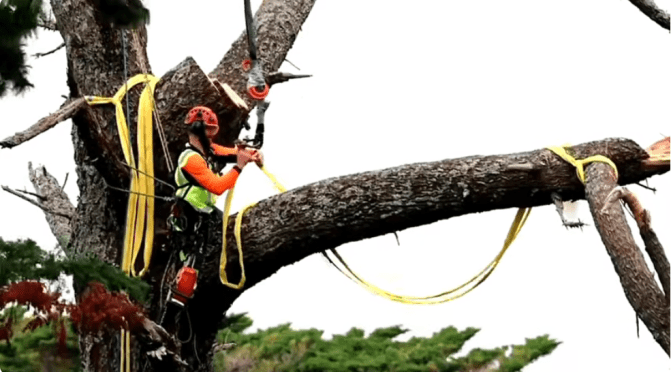




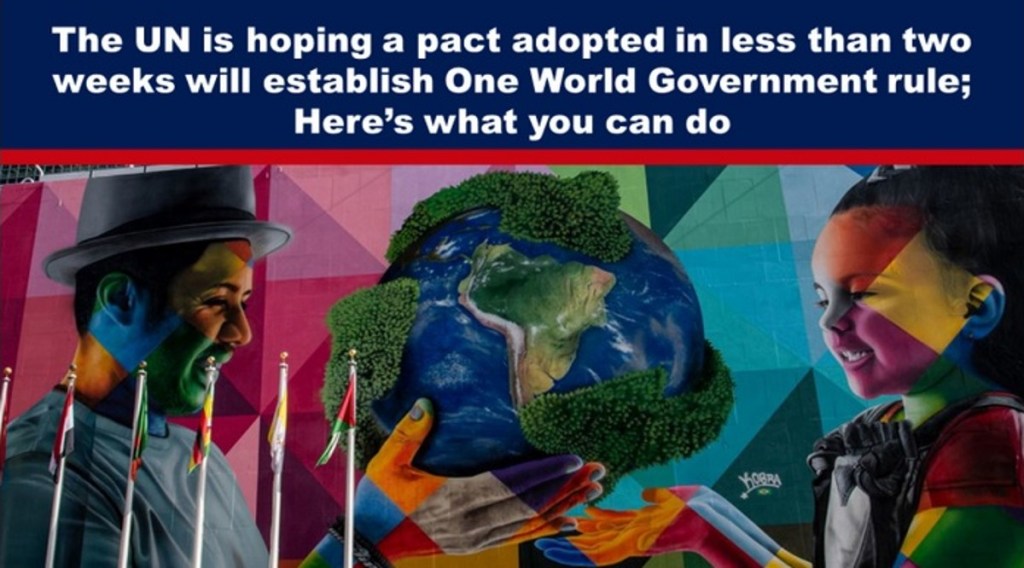











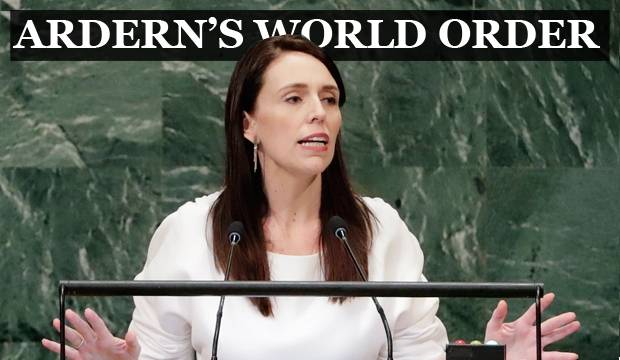

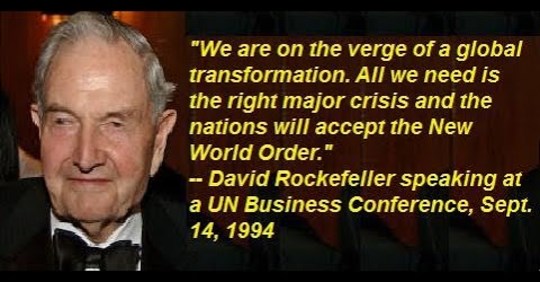

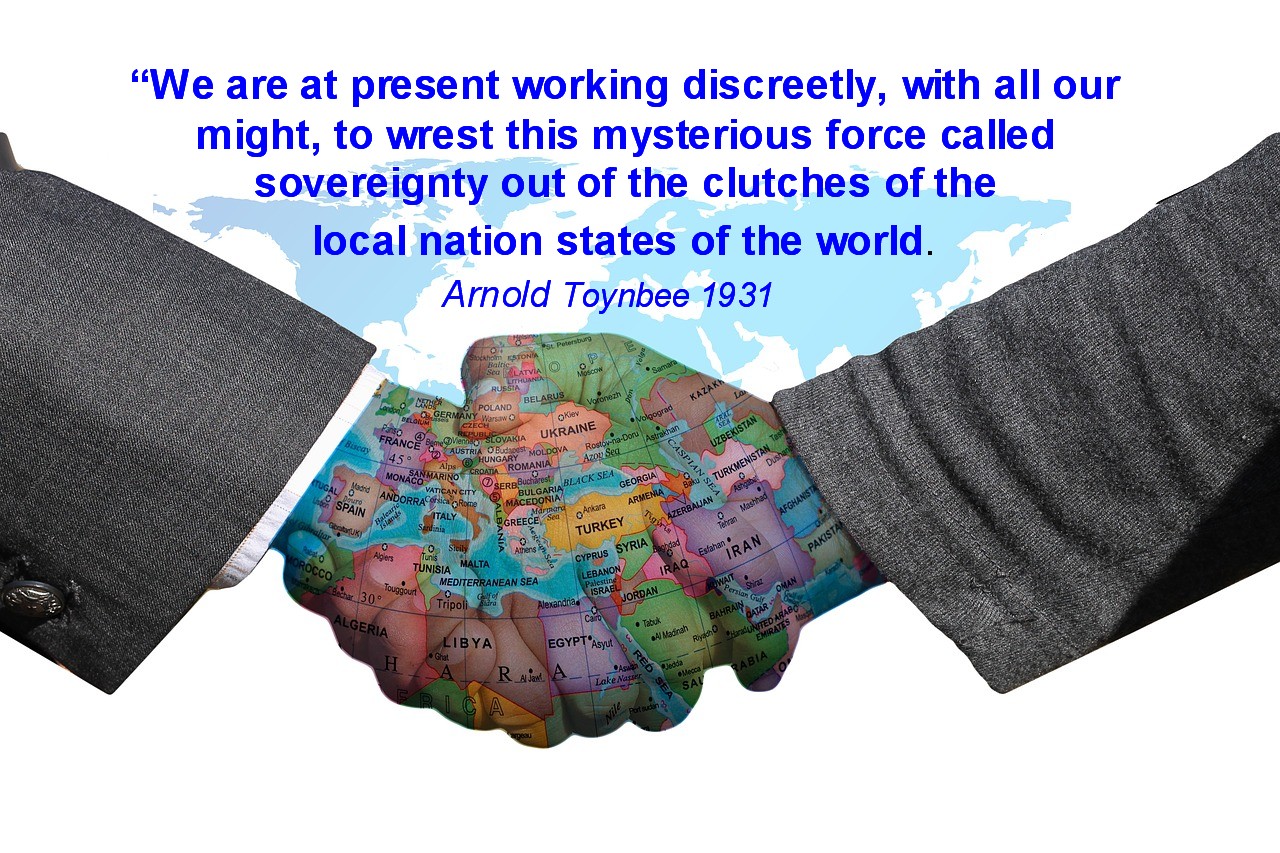
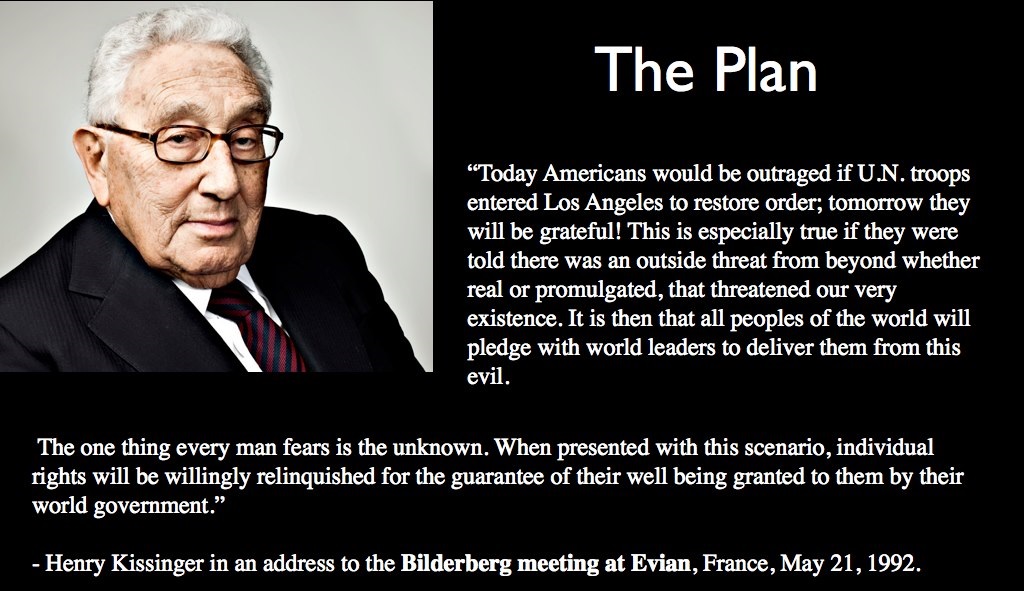


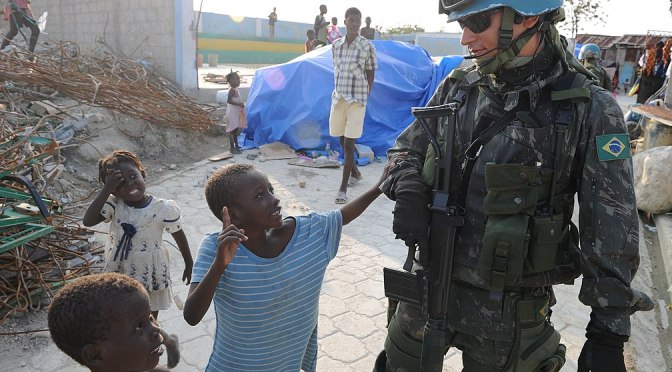

You must be logged in to post a comment.