Calcium (garden lime) is a very basic mineral that is often overlooked by gardeners.
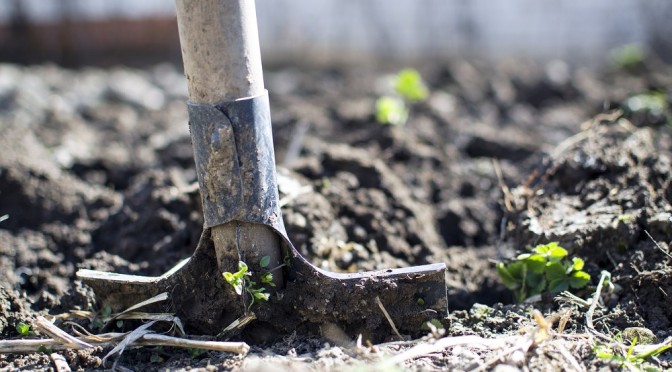
Kiwi gardeners in the past would dig over their vegetable garden at the beginning of winter after the last crops had been harvested.
The soil would be turned to the depth of one and a half to two spade depths, bringing the subsoil to the surface and then left in unbroken as mounds for frosts to work on.
Over these clods of soil a good coating of garden lime would be applied making it look like it had snowed after application.
The idea was to bring up from the subsoil minerals to the surface. Weeds would be buried underneath to compost down and the soil would be exposed to the elements as the lime would be washed in.
In spring these clods would break up with a light touch of the hoe turning the garden into a lovely fine tilth of healthy soil. Potatoes, brassicas and other vegetables would be
planted to not only feed the family as they were harvested but also to store and preserve surpluses for the coming winter.
Life was hard but very rewarding; it was a different world.
The principals of liming our vegetable gardens has not changed even if this practice is too often neglected these days.
I was talking to a keen gardener on the phone this week who explained to me that he was gardening naturally (without the use of chemicals) and he had felt that the results were not as good as he would have liked.
So last season he gave the garden a good dose of gypsum (calcium & sulphur) and the improvement of the crops was really noticeable. Even his dad (an old, very experienced gardener) remarked that he had finally got things right.
Getting things right can be as simple as giving your gardens a good dose of a fast acting lime.
I say fast acting because not all limes are equal in the time frame that they can be of benefit to the soil.
Some garden limes come from lime stone that can take up to 10 years to become soluble and useful in the soil.
That is like putting your money in the bank and having to wait 10 years to get any interest.
On the other hand soft limes start working for you immediately on application.
Lime sweetens the soil as we say which means it lifts the pH to be more alkaline.
NZ soils over time become more and more acidic because of our rain fall, these days likely even quicker because of pollution.
All our beneficial friends in the soil require calcium to thrive, as one source explained it; calcium is like the coal that feeds the furnace, calcium feeds the soil life making for great gardening.
Acidic soil becomes anaerobic and breeds the microbes you do not want, called pathogens or diseases.
The soil has the same principals as our own bodies, if we become acidic inside we can become sick and diseases such as cancers can thrive. If we keep our internal body alkaline then we will be much better off.
Soil pathogens can be suppressed by using Terracin followed by applications of Mycorrcin.
There maybe minerals in the soil that plants need but cant take up because of the lack of calcium.
In plants calcium is part of cell walls and membranes; it controls movement in and out of cells, reacts with waste products and neutralizes toxic materials.
Calcium activates many enzyme systems, it improves microbial activity and it enhances uptake of other nutrients.
It is essential for cell division as well as increasing cell density, and improves texture (crunch) of crops.
Calcium is critical for balancing excess nitrogen as well as disease suppression.
Having the correct amount of calcium in the soil will require less nitrogen.
The calcium will loosen the soil and make more nitrogen available.
Lack of sufficient calcium will result in the following plant disorders;
Necrosis at the tips and margins of young leaves, bulb and fruit abnormalities, (such as blossom end rot in tomatoes), deformation of affected leaves, highly branched, short, brown root systems, severe, stunted growth, and general chlorosis.
It must be remembered that these problems are caused by an inadequate supply of calcium to the affected tissues.
These deficiencies can even occur when the soil appears to have an adequate presence of calcium.
A gardening product is now available called Wallys Calcium And Health which comprises of a fast acting calcium along with important elements for your health and the health of your plants.
Calcium & Health contains fast attacking lime, magnesium, selenium, boron, sulphur, potash and phosphate in a balanced ratio for your gardens.
Using this new product on your food crops is going to help ensure you obtain these essential elements in your diet.
A number of gardeners are concerned about their bodies not obtaining elements such as selenium from the vegetables and fruit they grow.
By applying Calcium & Health to your gardens will help increase the goodness and nutritional values of your home grown diet.
Used at 60 grams per square M (scoop provided is 60 grams) or as I like to do is place a small amount into the planting hole of seedlings.
Avoid using the 60 grams around acid loving plants as it does increase the pH but about 20 grams will be of benefit without interfering with the pH to affect the plants.
I also recommend you using gypsum and dolomite in your gardens as well; these later two can be used around acid loving plants as they are pH neutral.
The important aspect to remember is that calcium is vitally important to the health of your plants and soil.
Every plant needs calcium to grow. Once fixed, calcium is not mobile in the plant.
It is an important constituent of cell walls and can only be supplied in the xylem sap.
Therefore, if the plant runs out of a supply of calcium, it cannot re-mobilize calcium from older tissues.
If transpiration is reduced for any reason, the calcium supply to growing tissues will rapidly become inadequate.
Without adequate amounts of calcium, plants experience a variety of problems as our gardening friend found out at the beginning of this article.
Phone 0800 466464
Garden Pages and News at www.gardenews.co.nz
Shar Pei pages at www.sharpei.co.nz
Mail Order products at www.0800466464.co.nz
Photo: Goumbik @ pixabay.com