
From Unbekoming @ substack
Preface
This essay builds primarily on Eric Dubay’s “Schools = Forced Government Indoctrination Camps,” which synthesizes and presents the historical transformation of American education into a system of control. Dubay’s work itself draws heavily on the pioneering research of John Taylor Gatto and Charlotte Thomson Iserbyt, whose decades of investigation and documentation provide the foundational evidence for understanding how schools became indoctrination centers.
John Taylor Gatto, the award-winning New York teacher who quit because he was “no longer willing to hurt children,” offers an insider’s testimony that validates everything Dubay documents. His “Seven-Lesson Schoolteacher” strips away the veneer of education to reveal the actual curriculum: confusion, class position, indifference, emotional dependency, intellectual dependency, provisional self-esteem, and constant surveillance. These aren’t failures of the system—they are the system.

The Great Dumbing
Charlotte Thomson Iserbyt brings the receipts. As a senior policy advisor in the Reagan administration’s Department of Education, she had access to the documents that prove the deliberate nature of education’s destruction. Her book “The Deliberate Dumbing Down of America” provides the paper trail—the foundation reports, government memos, and policy documents that show this was never about education. It was always about control.

The Deliberate Dumbing Down of America
Together, these three sources paint a picture that many will find difficult to accept: that the schools we trust with our children were designed as factories to produce compliant workers and consumers, not educated citizens capable of self-governance. The evidence they present isn’t theoretical or conspiratorial—it comes from the architects of the system themselves, who wrote quite plainly about their intentions to use schooling to create a manageable society.
Understanding this history matters now more than ever. As we witness populations accepting unprecedented restrictions on their freedom, as we see adults unable to evaluate conflicting claims or think beyond expert pronouncements, as we observe the widespread inability to imagine alternatives to existing systems—we’re seeing the intended outcomes of a century-long project. The dumbing down wasn’t a mistake. The destruction of critical thinking wasn’t accidental. The production of dependent, anxious, controllable populations was the goal.
This essay synthesizes the work of Dubay, Gatto, and Iserbyt to tell the complete story: how American education was captured, transformed, and weaponized against the very people it claims to serve. The truth they reveal is uncomfortable, even painful. But until we understand how thoroughly we’ve been processed by this system, we cannot begin to reclaim our capacity for independent thought and autonomous action. And without that capacity, we remain what the system designed us to be: human resources awaiting instruction.
Introduction: The Uncomfortable Truth About Modern Schooling
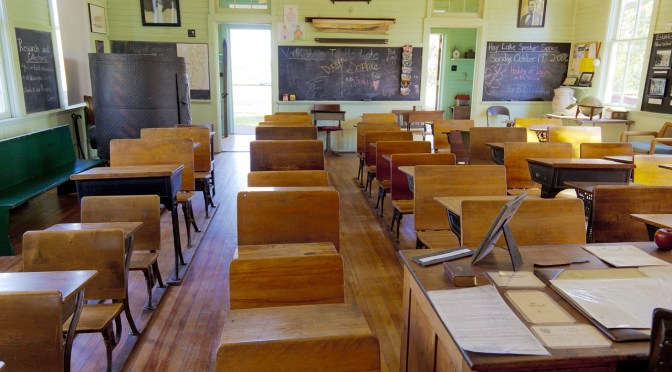
Before 1852, American education consisted of one-room schoolhouses, independent teachers, and students of all ages attending of their own free will. A child in 1840s America might spend a few months learning to read from the Bible, master arithmetic through practical farm calculations, and study rhetoric from books that would challenge today’s college students. The literacy rate in Connecticut showed only one in every 579 people was illiterate. Thomas Paine’s “Common Sense” sold 600,000 copies to a population of just 3 million—of whom twenty percent were slaves and fifty percent indentured servants.
Today’s reality presents a stark contrast. After twelve years of mandatory schooling, one in five American adults is functionally illiterate. Students graduate unable to think critically, emotionally dependent on authority, and conditioned to accept their place in economic hierarchies they don’t understand. This transformation didn’t happen by accident or incompetence. As John Taylor Gatto discovered during his thirty years as a New York City teacher—including three awards as Teacher of the Year—the system works exactly as designed. The problem is that it was never designed to educate.
The architects of modern schooling stated their intentions plainly. In 1906, William Torrey Harris, U.S. Commissioner of Education, declared that ninety-nine students out of one hundred are “automata, careful to walk in prescribed paths, careful to follow the prescribed custom.” This wasn’t a lament but a goal. John D. Rockefeller, whose General Education Board would reshape American schools, was even more explicit in his mission statement: “We shall not try to make these people or any of their children into philosophers or men of science. We have not to raise up from them authors, educators, poets, or men of letters… The task is simple. We will organize children and teach them in a perfect way the things their fathers and mothers are doing in an imperfect way.”
Charlotte Iserbyt, a former senior policy advisor in the Reagan administration’s Department of Education, spent decades documenting how this agenda unfolded through the 20th century. Her research reveals a paper trail of deliberate decisions to transform American education from a system developing individual potential into one producing manageable populations. The methods evolved—from Prussian discipline to Soviet psychology to Silicon Valley algorithms—but the objective remained constant: replacing critical thinking with conditioned responses.
This is not a story of good intentions gone wrong. It’s a documented history of powerful interests using schools to solve what they saw as the problem of too much democracy, too much individual liberty, and too many people capable of questioning authority. Understanding this history isn’t merely academic—it’s essential for recognizing why millions of adults today struggle to evaluate evidence, question experts, or imagine alternatives to the systems that confine them.
The Architecture of Control: From Local to Federal
The transformation of American education from local community schools to a federalized system of control happened through calculated steps spanning seventy years. Between 1852 and 1918, every state adopted compulsory schooling laws—not because communities demanded them, but despite fierce resistance at every turn. As Edward Ross wrote in 1901, plans were underway to “replace community, family, and church with propaganda, education, and mass media.” The state would shake loose from church and reach out to school, making children belong “more to the state and less and less to the parent.”
The initial laws seemed modest. Ten to twelve weeks of attendance for children aged nine to twelve. But incrementally, like a ratchet that only turns one way, the requirements expanded. The school year lengthened from three months to nine. The age range stretched downward to kindergarten and upward through high school. By the 1970s, four-year-olds entered preschool, and by 2000, twenty-six-year-old doctors were still being institutionalized in formal education. Each extension came wrapped in the language of opportunity and progress, never acknowledging that longer schooling meant longer separation from family, community, and meaningful work.
The federalization began in earnest with the 1870 founding of the National Education Association, which immediately announced that science courses nationwide must restructure to teach evolution as fact, not theory. This wasn’t about science—it was about establishing that centralized authorities, not local communities, would determine what children learned. The pattern repeated with each federal intervention: create a crisis, propose a solution requiring centralized control, then never relinquish that control regardless of outcomes.
World War I provided the perfect crisis. The U.S. Army’s intelligence tests revealed that hundreds of thousands of recruits were illiterate—though literacy had been near-universal before compulsory schooling. Rather than question why forced education produced worse results than voluntary learning, reformers demanded more control, more standardization, more years of mandatory attendance. The military’s need for compliant soldiers who followed orders without question became the template for producing compliant workers who would accept industrial discipline without resistance.
The Reece Committee of 1953 and the earlier Walsh Commission both concluded that private foundations—particularly Rockefeller and Carnegie—had essentially purchased control of American education policy. Norman Dodd, the Reece Committee’s research director, reported a chilling conversation with Rowan Gaither, president of the Ford Foundation. Gaither told him bluntly that these foundations operated under White House directives to “use our grant-making power to so alter life in the United States that we can be comfortably merged with the Soviet Union.” When Dodd suggested this investigation might proceed, Gaither warned: “If you proceed with the investigation as you have outlined, you will be killed.”
The creation of the U.S. Department of Education in 1979 completed the architecture of control. What began as local parents teaching their children to read had become a vast bureaucracy employing millions, consuming hundreds of billions of dollars, and producing steadily declining results. Yet the worse the outcomes, the more power and funding the system demanded. Failure became its own justification for expansion.
Gatto observed this paradox firsthand: the system’s failures weren’t bugs but features. Every reform that promised to help struggling students actually extended institutional control over their lives. Every program to close achievement gaps widened them. Every initiative to promote critical thinking produced more passive conformity. The architecture wasn’t broken—it was performing exactly as its architects intended, creating what Iserbyt documented as “the deliberate dumbing down of America.”
The Hidden Curriculum: Seven Lessons of Compliance
John Taylor Gatto’s revelation came after winning his third Teacher of the Year award in 1991. In his acceptance speech—later published as “The Seven-Lesson Schoolteacher”—he exposed what he actually taught, regardless of the subject on his certificate. These seven lessons form the hidden curriculum of every American school, the real content beneath the surface of math, English, and history.
The first lesson is confusion. Nothing connects to anything else. Students jump from mathematics to literature to physical education at the ring of a bell, with no relationship between subjects, no unified understanding of the world. As Gatto explained, children learn “the un-relating of everything,” an infinite fragmentation that prevents them from ever constructing coherent meaning from their experience. A child studying the Revolutionary War at 10:15 must instantly forget it at 11:00 to memorize plant cells, then abandon those at 11:45 for Spanish conjugations. This deliberate incoherence isn’t poor planning—it’s the point. Confused people don’t ask dangerous questions.
The second lesson is class position. Students are numbered, sorted, tracked, and labeled from their first day. They learn to stay where they’re placed, to envy those above them and despise those below. The lesson penetrates so deeply that adults continue competing for position decades after graduation, never questioning why human worth should be ranked and sorted like industrial products. The gifted program teaches arrogance, the remedial class teaches shame, and everyone learns their place in hierarchies they didn’t create and can’t escape.
The third lesson is indifference. Nothing is worth finishing. No project, no thought, no conversation survives the bell. Students learn to invest themselves completely in the moment’s task, then abandon it without hesitation when authority demands. This produces adults who can’t sustain attention, can’t delay gratification, and can’t complete anything without external compulsion. They become perfect consumers, always seeking the next stimulation, never satisfied, never still.
The fourth lesson is emotional dependency. Stars, stickers, grades, and praise teach children that their worth depends on authority’s approval. The teacher’s mood becomes the classroom’s weather. A smile means you’re good; a frown means you’re bad. Decades later, these same students desperately seek validation from bosses, experts, and celebrities, unable to trust their own judgment about their own value. They’ve been taught that self-respect is arrogance and self-knowledge is delusion.
The fifth lesson is intellectual dependency. Good students wait for teachers to tell them what to think. Of the infinite things worth learning, only those assigned matter. Curiosity becomes cheating—looking ahead in the book, asking about topics not on the test, wondering about connections the curriculum doesn’t make. The successful student is one who can suppress their own interests and enthusiastically perform assigned thinking. This produces adults who wait for experts to explain reality, who cannot form opinions without official guidance, who panic when faced with questions that don’t have authorized answers.
The sixth lesson is provisional self-esteem. Report cards teach that worth is always conditional, always measured, always compared. A child who knows they’re loved regardless of performance is impossible to control. So schools ensure that no achievement is ever enough, no status ever secure. The honor student fears the first B, the athlete dreads the faster rival, everyone learns that identity itself is provisional, subject to constant evaluation and revision by authority.
The seventh lesson is that one can’t hide. Surveillance is constant and total. Hall passes, bathroom monitors, homework that invades home life, guidance counselors who demand emotional transparency, standardized tests that measure the psyche as much as knowledge. Students learn that privacy is suspicious, that secrets are dangerous, that authority has the right to know everything. They’re being prepared for a world of credit scores, social media surveillance, and employment monitoring that tracks every keystroke.
These seven lessons explain why school reform always fails. You can’t fix a system that’s working perfectly. The hidden curriculum produces exactly what it was designed to produce: emotionally needy, intellectually dependent, confused and compliant people who will fill the jobs they’re given, buy the products they’re told to want, and never question the structures that confine them.
The Rockefeller Design: Engineering Society Through Schools
The Rockefeller influence on American education represents one of history’s most successful social engineering projects. Through the General Education Board, founded in 1903 with an initial endowment rivaling the entire federal budget for education, John D. Rockefeller didn’t just reform schools—he rebuilt them from the foundation up to serve industrial capitalism’s need for manageable workers and predictable consumers.
The General Education Board’s mission statement deserves careful reading because it states explicitly what critics of education usually only suspect. “In our dreams,” it declared, “people yield themselves with perfect docility to our molding hands. The present education conventions of intellectual and character education fade from their minds, and unhampered by tradition, we work our own goodwill upon a grateful and responsive folk.” This wasn’t educational philosophy—it was industrial production applied to human beings.
Rockefeller’s lieutenants understood that direct control would provoke resistance. Instead, they used grants and gifts to make schools dependent on foundation money, then attached conditions that seemed reasonable but fundamentally altered education’s purpose. Teacher training colleges received millions, but only if they adopted foundation-approved curricula that emphasized classroom management over subject knowledge. School districts got new buildings if they implemented “scientific” tracking systems that sorted students into future roles. Universities expanded with Rockefeller funds, then found their research agendas shaped by what the foundation would finance.
The strategy worked through three mechanisms that Charlotte Iserbyt documents extensively. First, they funded the experts who would define educational problems and solutions. When the National Education Association needed research, Rockefeller foundations provided it. When superintendents wanted training, Rockefeller programs delivered it. Soon, questioning foundation-backed reforms meant questioning science itself.
Second, they created interlocking networks of influence. Foundation trustees sat on education boards, education leaders joined foundation committees, and everyone attended the same conferences, read the same journals, and cited the same research—all funded by the same source. Dissent didn’t need to be suppressed because dissenters couldn’t get hired, published, or promoted within this self-reinforcing system.
Third, they played a long game measured in generations, not election cycles. While politicians came and went, the foundations persisted, accumulating influence like compound interest. A teacher trained in 1920 under Rockefeller-funded programs would still be teaching Rockefeller methods in 1960. A superintendent who implemented foundation reforms in one district would be promoted to spread them to another. Each generation of educators grew up assuming foundation priorities were simply how education worked.
The Rockefeller foundations didn’t work alone. The Carnegie Corporation, established by another industrial titan who understood that controlling education meant controlling society, pursued parallel strategies. Together, they funded the transformation of reading instruction from phonics to “look-say” methods that produced functional illiteracy. They promoted the replacement of classical education with vocational training. They supported the elimination of history in favor of “social studies” that disconnected students from their past.
The brilliance of the Rockefeller design was making teachers and administrators complicit without their knowledge. Well-meaning educators implemented reforms they believed would help children, never realizing these reforms were designed to limit children’s potential. A teacher using foundation-created curricula genuinely wanted students to succeed—success had simply been redefined as accepting your designated role in the economic order.
By the 1950s, the transformation was so complete that Congressional investigations could barely comprehend what had happened. The Reece Committee found evidence of a deliberate agenda to collectivize American society through education, but the findings were dismissed as conspiracy theory. How could philanthropy be subversive? How could gifts have strings attached? The investigators were right but too late. The Rockefeller design had become the only design anyone could imagine.
The foundations’ own archives, which Iserbyt studied extensively, reveal they knew exactly what they were doing. Internal memos discuss “the importance of social control,” the need to “direct human evolution,” and strategies for “managing the dangerous classes.” They weren’t hiding their agenda—they were counting on a populace too well-schooled to recognize it.
From Citizens to Human Resources: The Workforce Pipeline
The transformation of students into “human resources” marks the complete industrialization of education. This shift in language from “children” and “students” to “human capital” and “workforce development” isn’t merely semantic—it represents the fundamental reconception of human beings as economic inputs rather than sovereign individuals. The U.S. Department of Education’s embrace of “lifelong learning” and “21st-century skills” masks a darker reality: the conversion of schools into workforce training centers for a managed economy.
The Secretary’s Commission on Achieving Necessary Skills (SCANS), established in 1990, crystallized this transformation. Its report, “What Work Requires of Schools,” didn’t ask what children need to become fulfilled human beings or engaged citizens. It asked only what employers wanted from their workers. The answer became the new curriculum: compliance, teamwork, acceptance of authority, and just enough literacy to follow instructions but not enough to question them.
School-to-work programs, promoted heavily in the 1990s under both Republican and Democratic administrations, eliminated the pretense that education was about anything other than economic production. Students as young as fourteen were tracked into career paths, their courses determined by workforce projections rather than individual interests or aptitudes. A child who showed mechanical aptitude would be steered toward technical training, regardless of whether they dreamed of writing poetry. One who tested well would be pushed toward college, even if they wanted to work with their hands.
Iserbyt, working inside the Department of Education, watched this transformation accelerate through the 1980s. She documented how Soviet education methods, explicitly designed for a planned economy, were imported wholesale into American schools under the guise of “effective teaching strategies.” The similarities weren’t coincidental—both systems needed to produce predictable outputs for centrally managed economies. The U.S.-Soviet education agreements of 1985, signed by Reagan and Gorbachev, formalized this exchange of “pedagogical techniques” that treated children as products to be molded rather than individuals to be educated.
The language of manufacturing pervaded education reform. Students became “products,” teachers became “delivery systems,” and schools became “production units.” Quality control meant standardized testing. Efficiency meant larger class sizes and scripted curricula. Innovation meant finding cheaper ways to produce the same outcomes. The factory model that reformers claimed to oppose had actually conquered education completely—it just dressed in the language of reform.
Outcome-based education (OBE), promoted by William Spady and implemented nationwide in the 1990s, epitomized this industrial approach. Rather than teaching subjects, schools would produce “outcomes”—predetermined behaviors and attitudes that students must demonstrate. The outcomes always emphasized workplace skills and social attitudes over academic knowledge. A typical OBE goal might require students to “work effectively in diverse teams” or “adapt to changing conditions,” but never to think critically about why they should accept constant workplace surveillance or question who benefits from their adaptation.
The tech industry’s entry into education accelerated this transformation. Companies like IBM and Apple didn’t just sell computers to schools—they shaped curricula to produce the workers they needed. Computer literacy replaced classical literacy. Coding bootcamps replaced shop class. Students learned to interact with machines more fluently than with humans, preparing them for futures in cubicles interfacing with screens rather than communities.
Goals 2000 and America 2000, federal education initiatives that promised to make American students “first in the world in mathematics and science achievement,” actually subordinated all learning to economic competitiveness. The goal wasn’t educated citizens but competitive workers. When students learned science, it wasn’t to understand nature but to staff STEM industries. When they studied mathematics, it wasn’t to develop logical thinking but to fill engineering positions.
This workforce pipeline explains why schools obsess over college attendance rates while ignoring whether students actually learn anything in college. The credential matters more than the education because employers use degrees as sorting mechanisms, not indicators of knowledge. A bachelor’s degree signals that someone can tolerate four more years of institutional processing, making them suitable for cubicle work. Graduate degrees indicate even greater compliance capacity, qualifying holders for management positions where they’ll impose the same system on others.
The conversion of citizens into human resources serves multiple functions for those Gatto calls “the guardians of the system.” It ensures a compliant workforce that won’t organize effectively for better conditions. It creates insecure workers who compete against each other rather than cooperating for mutual benefit. Most importantly, it prevents people from imagining themselves as anything other than economic units, foreclosing possibilities for different ways of living and organizing society.
The Deliberately Dumbed Down: Methods and Outcomes
Charlotte Iserbyt’s meticulous documentation reveals that the dumbing down of America wasn’t accidental decline but deliberate policy, implemented through specific techniques designed to prevent critical thinking while maintaining the appearance of education. Her archive of government documents, foundation reports, and insider communications provides the smoking gun: they knew exactly what they were doing.
The assault on literacy came first and most decisively. The replacement of phonics with “whole word” or “look-say” reading methods in the 1920s and 1930s, funded by Rockefeller and Carnegie foundations, created an epidemic of functional illiteracy. Children who could have learned to read any word by sounding it out instead had to memorize thousands of word shapes like Chinese ideograms. Those who couldn’t—particularly boys and active learners—were labeled dyslexic or learning disabled, then shunted into special education where expectations dropped even lower.
Dr. Samuel Blumenfeld’s research, which Iserbyt cites extensively, showed that prior to these reforms, literacy was nearly universal among non-slave populations. After look-say methods took hold, reading problems exploded. By 1993, the National Adult Literacy Survey found 42 million Americans completely illiterate and another 50 million reading below fifth-grade level. This wasn’t failure—it was the intended outcome. As UNESCO’s “Toward World Understanding” stated explicitly, teaching children to read too well would make them resistant to social engineering.
Mathematics instruction followed a similar pattern. Traditional arithmetic—memorizing multiplication tables, learning algorithms, practicing computation—gave way to “new math” in the 1960s, then “whole math” in the 1990s. Students used calculators before understanding numbers, discussed mathematical concepts without mastering basic operations, and worked in groups where one student’s knowledge masked another’s ignorance. The result: cashiers who can’t make change, engineers who rely entirely on computers, and a population that accepts economic statistics without understanding their manipulation.
History disappeared entirely, replaced by “social studies” that severed children from their heritage. Instead of learning about the American Revolution, students did projects on “conflict resolution.” Rather than studying the Constitution, they participated in “consensus-building exercises.” The timeline of human achievement became a catalog of oppression, teaching children to despise their civilization rather than understand it. How can people defend freedoms they’ve never learned existed? How can they recognize tyranny they’ve been taught to call progress?
The methods for achieving this dumbing down came straight from behavioral psychology. B.F. Skinner’s operant conditioning, imported wholesale into classrooms as “mastery learning,” treated children like laboratory rats. Benjamin Bloom’s taxonomy, which sounds educational but actually derives from psychotherapy, focused on changing attitudes and values rather than transmitting knowledge. Every child became a patient, every classroom a therapy session, every teacher an unwitting psychologist modifying behavior toward predetermined outcomes.
Iserbyt documented how these methods were tested first in inner-city schools on minority populations, refined through experimentation on the powerless, then rolled out nationwide once perfected. Programs with names like “Outcomes-Based Education,” “Mastery Learning,” and “Direct Instruction” all used the same behavioral conditioning techniques: break learning into tiny fragments, reward compliance, punish deviation, never allow students to see the whole picture.
The computer revolution didn’t democratize education—it completed the conditioning process. Educational software tracks every keystroke, records every wrong answer, builds psychological profiles more detailed than any teacher could compile. Algorithms determine what students learn next, how fast they progress, what remediation they receive. The machine becomes the teacher, infinitely patient with compliance, infinitely intolerant of creativity.
The results are visible everywhere. College students who can’t write coherent paragraphs. Employees who can’t solve problems without step-by-step instructions. Citizens who can’t evaluate competing claims without fact-checkers. Voters who respond to emotional manipulation rather than logical argument. A population perfectly prepared for management by experts, incapable of the independent thought required for self-governance.
The most insidious aspect is that the dumbed-down don’t know they’re dumbed-down. They’ve been taught that their limitations are natural, their ignorance inevitable, their dependence necessary. They believe themselves educated because they possess credentials. They think themselves informed because they consume media. They consider themselves free because they can choose between approved options. The deliberate dumbing down succeeded not just in limiting what people know, but in eliminating their awareness that there’s anything else to know.
Conclusion: The Cost of Institutionalized Childhood
After twelve years of compulsory schooling, American children emerge having learned primarily how to respond to bells, how to request permission for bodily functions, and how to accept arbitrary authority. They’ve spent 15,000 hours in preparation for lives of compliance, their natural curiosity systematically extinguished, their capacity for independent thought deliberately atrophied. The cost cannot be measured merely in dollars or test scores but in human potential destroyed, imaginations stunted, and spirits broken.
Gatto calculated that students spend less than 100 hours actually learning to read, write, and compute—skills that motivated children can master in months, not years. The remaining thousands of hours serve no educational purpose. They habituate children to institutionalization, teaching them to depend on experts, to wait for instructions, to seek external validation, to never trust their own judgment. School extends childhood artificially into the twenties and beyond, creating perpetual adolescents who never achieve genuine maturity or independence.
The damage ripples through generations. Parents who were themselves schooled into compliance cannot model independent thinking for their children. Communities stripped of their educational authority lose the capacity for self-governance. Families scheduling their lives around school calendars, homework demands, and extracurricular activities have no time for the conversations, projects, and relationships that once transmitted culture and values. The very idea that parents might be their children’s primary educators seems radical, even irresponsible, to people convinced that only certified experts can teach.
Yet cracks appear in the edifice. The COVID-19 lockdowns of 2020 forced millions of parents to see what their children were actually learning—or not learning. Homeschooling, once considered fringe, gained mainstream acceptance as families discovered that children learn better without schools. The internet, despite its dangers, allows motivated learners to access knowledge that schools would never provide. Some young people are rejecting the college-to-cubicle pipeline entirely, creating their own paths outside institutional frameworks.
The solution isn’t reform—it’s replacement. No amount of tinkering can fix a system functioning exactly as designed. Adding computers won’t democratize education when the software embeds the same behavioral conditioning. Smaller classes won’t help when teachers are trained in the same methods. Higher standards mean nothing when the standard itself is compliance rather than thinking. Every reform extends the system’s reach while claiming to improve it.
Real education looks nothing like school. It happens when a child’s interest meets appropriate resources—books, tools, mentors, experiences. It requires time to think, freedom to fail, and permission to pursue tangents. It involves making real things, solving actual problems, and contributing to communities. It cannot be standardized, measured, or certified because each human being’s potential is unique, irreducible to institutional categories.
The path forward requires courage to reject what we’ve been conditioned to accept. Parents must reclaim their children’s education, even at financial and social cost. Communities must create alternatives to school that nurture rather than process children. Most difficult, adults must unlearn their own schooling, recovering capacities for independent thought and autonomous action that twelve years of institutionalization suppressed.
The architects of compulsory schooling succeeded beyond their dreams, creating a population so thoroughly schooled that they cannot imagine education without school, cannot conceive of children learning without curricula, cannot trust themselves to think without expert guidance. But human nature persists despite institutional processing. Children still wonder, still question, still resist—until school teaches them not to. That resistance, that natural curiosity and independence, is the seed from which genuine education can grow, if we have the courage to nurture it outside the shadow of institutional control.
I appreciate you being here.
If you’ve found the content interesting, useful and maybe even helpful, please consider supporting it through a small paid subscription. While 99% of everything here is free, your paid subscription is important as it helps in covering some of the operational costs and supports the continuation of this independent research and journalism work. It also helps keep it free for those that cannot afford to pay.
Please make full use of the Free Libraries.
Unbekoming Interview Library: Great interviews across a spectrum of important topics.
Unbekoming Book Summary Library: Concise summaries of important books.
Stories
I’m always in search of good stories, people with valuable expertise and helpful books. Please don’t hesitate to get in touch at unbekoming@outlook.com
Baseline Human Health
Watch and share this profound 21-minute video to understand and appreciate what health looks like without vaccination.
Subscribe to Lies are Unbekoming
Hundreds of paid subscribers
This Substack is a freely available, and searchable, public resource. With written interviews, book summaries, and deep dive conversations.











You must be logged in to post a comment.