Tag Archives: rabbits

The real reason they are culling your animals – it’s multi layered

A repost of this important info, introducing an article from Jenese James. It makes some sense of the massive killing sprees of wildlife with poisons, particularly down under in ‘guinea pig’ NZ. Sprees that are inconsistent with the ‘sustainable’ and ‘conservation’ mantras. Read on…


Just this week the UK Telegraph has been warning us of the next possible plandemic, with their eye this time on your pet cat that might be putting us all in danger:

Experts have long regarded pigs as one of the greatest zoonotic threats to public health because their cells allow viruses to mix and mutate, creating new strains capable of causing human pandemics. This is how the 2008/09 H1N1 swine flu pandemic started and it is suspected that pigs in Haskell country, Kansas may have triggered the 1918 Spanish Flu pandemic which is estimated to have killed between 50 and 100 million people. Now a new study suggests that pet cats could be just as dangerous – and could provide the bridge that allows H5N1 bird flu to mutate and jump to humans.

We should be very afraid and be looking to getting rid of our pets, or so they’d have us believe. Meanwhile the Guardian is hyping it up by warning all pregnant women who contract bird flu will die!

They’ve actually been targeting cats in NZ and elsewhere for some time now.

NZ’s Tokoroa is hiring a shooter to cull feral cats – watch out for your cat

1080 to be used by Aussie govt to kill 2 million feral cats using aerially dropped 1080-laced sausages

We’ve also been targeting possums, deer, birds, rabbits, tahr and other animals considered by our conservation authorities to be pests. 

READ AT THE LINK

https://truthwatchnz.is/all-categories/agenda-21-30/drumming-up-bird-flu-targeting-your-pets

DEALING WITH SUMMER PESTS IN THE GARDEN (Wally Richards)

Gardening should be a pleasant pastime and not just another chore that has to be done. If you find it a chore then maybe there are too many things you are doing and the pleasure of working with plants and the soil is lost.

There are things that we gardeners must do to keep everything growing healthy and looking good. I am always are looking for ways to do tasks quickly and simply so more time can be spent doing the gardening things that give satisfaction and gratification. Enjoyment comes from preparing an area and planting it with seeds or seedlings then watching them develop and grow for harvesting to eat or flower to enhance your home.

Summer time temperatures allow pest insects to multiply quickly and infest your plants. If their populations become too great then it is a real chore to try and get them under control. In fact it is better to start control methods as early as possible making life easier in the long term. By spreading Wallys Neem Tree Granules over the soil under trees, shrubs and established plants will greatly help reduce and prevent insect populations building up. There are soil pests that we don’t see which are feeding on the roots of plants, sapping the plant’s energy causing loss of vigor. Mealy bugs, root nematodes, grass grubs and slaters can be controlled and eliminated by scattering the Neem Granules in the plant’s root zone. Gardeners and Landscapers often comment to me that a few weeks after applying the Neem Granules the plants are looking much better. Simple reason is the pests feeding on the roots have gone and the plants are happy. Wallys Neem Granules can be used around your roses, vegetable plants and flowering annuals.

Wallys Neem Tree Powder which is the same as the granules just a smaller, even particle size are ideal to use in the planting hole of seedlings, along with sowing of seeds and in particular with carrot seeds to prevent carrot fly damage. With carrots you side dress to row when the carrot tops are a few centimeters tall as well as when sowing the seeds. Container plants are often a home for mealy bugs which feed on the roots and later come upstairs as adults to feed on the foliage.  The ones on the foliage are easy to control with Wally Super Pyrethrum but you need to place Neem Powder on top of the growing medium. As the powder breaks down it will develop grey mould which is the natural breakdown happening. It is unsightly so after applying the powder cover with a little growing medium. Out of sight, out of mind. If you want a top quality lawn then it is a good idea to sprinkle Wallys Neem Tree Powder over the lawn at a rate of 50 grams per Square Metre.  If your lawn is infected by grass grubs each year then in Autumn when the autumn rains have moistened the soil you spread the Neem powder over the lawn after it has been recently cut. Then lightly water the area to wash the powder down off the grass onto the soil. If you have a roller then its a good idea to roll the lawn to press the powder into the soil.

When you find there are pest insects on any of your plants outdoors you can make up a spray using Wallys Super Neem Tree Oil with Wallys Super Pyrethrum added. Just on dusk when the bees have stopped working for the day you spray the plants under and over the foliage.  The pyrethrum is a quick knock down and it will kill the flying insects such as white fly and leaf hoppers. The Neem Oil will, as an anti-feedent on the foliage, stop the pests feeding on the plants after which they will starve to death in a few days. Often gardeners find that the sprays work, but it is only a short time before the insect pests are back. The reason being is they are on other plants in the area and re-infesting back onto your treated plants. You need to spray the other plants they are coming from. If those plants happen to be over the fence then that is a problem that can only be solved with winter or you getting the ok from the neighbor (who likely is not a gardener) to spray their plants as well.

Gardeners that live in the country and have possums, rabbits and hares to contend with can do the following: plants that are been eaten spray with Wallys Neem Tree Oil just before dark. Wallys Neem Tree oil being the real thing and not some vegetable oil with the Neem properties added, has a horrible taste which with its smell will deter possums and rabbits. Once you find that the varmints have stopped eating your plants then instead of having to respray to keep control and keep them away, simply scatter Wally Neem Tree Granules around and the smell of them should keep your plants safe. A point when using the spray mix of Wallys Neem Oil and Pyrethrum and you have unused spray then you can pour the left over liquid into a container and store in a dark cupboard. Rinse the sprayer out thoroughly jetting some clean water through the nozzle to be sure all the spray has gone. Next time you use you can take the stored spray and if need be add more of the products and water.

To look after the soil and the beneficial microbes plus fungi that live in the soil which help our plants feed and grow, mix Wallys Super Fish Fertiliser with Wallys Mycorrcin in a watering can and water the area around or over your preferred plants such as vegetables, fruit and roses. This will help to greatly increase the soil life (as long as you are not watering with chlorinated tap water). Here is an interesting possibility: as the combination of the fish fertiliser and Mycorrcin has a distinct smell you could try spraying the mix over fruit trees when the birds are attacking the fruit. A product that used to be available years ago from Canada called Alaska Fish Fertiliser which had quite a smell to it did deter birds from ripening fruit. If you find it successful let me know.

TWENTY FIVE PERCENT OFF SALE

Till the end of January we are discounting the following products by 25% to help you gain control of Insect pests and improve your soil quality.

Orders must be placed on www.0800466464.co.nz using the Code 25% in the remarks place.

I will phone you after receiving the order and deduct the 25% off the items below and also give you 10% off most other items except for bulk items.

FREIGHT: shipping charged on orders under $100 (After discounts) North Island In other words order of $100 plus after discount and not bulk items free shipping.

South Island $150.00 plus after discounts for free shipping.

Exception is for Rural delivery a charge of $3.15 on each parcel sent no matter if rest is free shipping or not.

Here are the 25% discount items:

Wallys Neem Tree Granules 1kg normal price $15.00 save $3.75 making it $11.25

Wallys Neem Tree Granules 3kg normal price $28.00 save $7.00 making it $21.00

Wallys Neem Tree Granules 10kg normal price $80.00 save $20.00 making it $60.00

Wallys Neem Tree Granules 20kg normal price $160.00 save $40.00 making it $120.00

Wallys Neem Tree Powder 1kg normal price $15.00 save $3.75 making it $11.25

Wallys Neem Tree Powder 3kg normal price $28.00 save $7.00 making it $21.00

Wallys Neem Tree Powder 10kg normal price $80.00 save $20.00 making it $60.00

Wallys Neem Tree Powder 20kg normal price $160.00 save $40.00 making it $120.00


Wallys Super Neem Tree oil 125 ml normal price $18.00 save $4.50 making it $13.50

Wallys Super Neem Tree oil 250 ml normal price $24.00 save $6.00 making it $18.00

Wallys Super Neem Tree oil 1 litre normal price $60.00 save $15.00 making it $45.00


Wallys Super Pyrethrum 100 ml normal price $28.00 save $4.20 making it $23.80


Wallys Super Fish Fertiliser 1Litre normal price $16.00 save $4.00 making it $12.00

Wallys Mycorrcin 250ml normal price $20.00 save $5.00 making it $15.00

Wallys Mycorrcin 500ml normal price $35.00 save $8.75 making it $26.25

Wallys Mycorrcin 1 Litre normal price $55.00 save $13.75 making it $41.25

Orders must be placed on www.0800466464.co.nz using the Code 25% in the remarks place.

Phone 0800 466464
Garden Pages and News at www.gardenews.co.nz
Shar Pei pages at  www.sharpei.co.nz
Mail Order products at www.0800466464.co.nz

New Zealand Bill of Rights Act 1990. Part II of the Act covers a broad range of Civil and Political Rights. As part of the right to life and the security of the person, the Act guarantees everyone:

1The right not to be deprived of life except in accordance with fundamental justice (Section 8)

2The right not to be subjected to torture or to cruel, degrading, or disproportionately severe treatment or punishment (Section 9)

3The right not to be subjected to medical or scientific experimentation without consent (Section 10)

4The right to refuse to undergo any medical treatment (Section 11)

 Furthermore, the New Zealand Bill of Rights Act 1990 guarantees everyone: Freedom of Thought, Conscience, and Religion.
This includes the right to freedom of thought, conscience, religion, and belief,
INCLUDING THE RIGHT TO ADOPT AND HOLD OPINIONS WITHOUT INTERFERENCE (Section 1)

For other gardening posts see ‘gardening’ in categories (left side of page)

Check out our sister site truthwatchnz.is for other news

Photo: pixabay.com

Shocking revelations on 1080 from a former Horizons employee

Carol Sawyer

OLD 1080 STOCK SOLUTION, DDT, CHEMICALS GO OFF IN A SHIP TO FRANCE?!

When it’s not being sprayed round the Palmerston North Landfill, that is. What happens if the ship sinks?!

George Robinson has worked in the pest control industry all his life. When he left the Manawatu/Wanganui (Horizons) Regional Council he had a gagging order put on him, but the time period is now up.

This is the story he told me, and I first posted it in January, 2017 :

They used to use (up to 2008-2009 that he knows of) 20% 1080 stock solution and dilute it to a field solution to put it on the green-dyed carrots, for rabbits. He said they had back packs and had it running down their arms, legs, backs….. They used to find dead birds everywhere, blackbirds especially. They were told it all dissolved in water and broke down.

They were sent to conferences run by NZ Pest Management Officers’ Institute. George says “I believe it was the Food Safety Authority that policed the regulations then”. He remembers one where Charles Eason (now CEO of the Cawthron Institute, but formerly senior manager with Landcare Research and a Professor at Lincoln University) spoke and told them “three pisses and the 1080 is gone from your system”.

They had a big holding tank and the stock solution could be held for up to 7 or 8 years before it was no good, but a man from a waste removal transport company would come along and pump out the holding tank. He would take it down to the Palmerston North landfill and spread it all over the ground, driving round in a circle. George says this guy was a straight-up sort of chap who was amazed that he was given permission to do it.

There was a facility in France where some of the stuff collected went – old farm chemicals such as DDT, etc. It goes on a ship which “must be a very toxic shipload”, George said. (I have been told recently that that facility in France is no longer used… I’m not sure where it goes now – Note 29 July, 2018).

He said that at present, Horizons are using Brodificoum on pastureland amongst stock, for possum control. He said it has killed stock but that the worst thing is that it accumulates in the liver and remains in the sheeps’ livers for 36 months. He said Horizons are using the High Strength version.

He himself has a CSL (Controlled Substance Licence).

He says Horizons must be one of the biggest users of Brodificoum. He rang Affco to see if they tested and they said they did random testing, and the Ministry of Primary Industries also assured him they did random testing. He said to them ” Why don’t you test the stock from the paddocks where you use Brodificoum?” but they didn’t want to know!

He said the Ministry of Health used to police the regulations but now that duty has gone to the Ministry of Primary Industries.

He said Horizons have a whole lot of operations, all doing the same thing – killing rats and possums. He said they will be killing birds as well and that the sheep and other livestock “hoover it up”. He said the bait stations are 1.8 metres off the ground, but the deer and cattle can reach them, and the possums are messy eaters and get it all over the ground, so the sheep can get it too.

George left Horizons because he was arguing with them about their 10 year plan for Brodifacoum pest control, and says he was forced out because he was against it.

He said the Greater Wellington Council is using Brodifacoum too. They used it on Tawaiti Station (a safari hunting operation on the East Coast). It killed a few deer and as they were going to sell some, they thought they had better test them for Brodifacoum. They found so much Brodifacoum in them that they shot around 70 deer and burnt the carcasses!

Note the photo is not George Robinson.

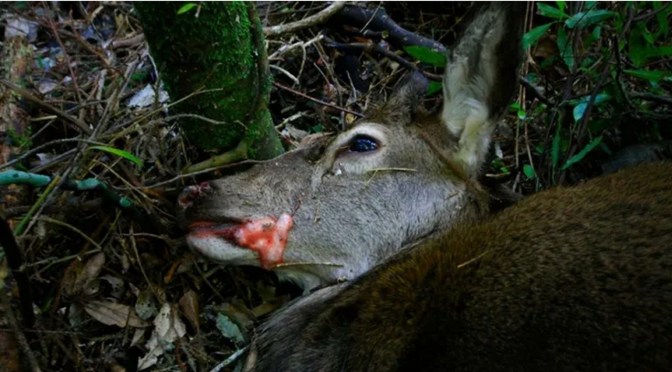
The most disturbing thing to watch is a 1080ed animal die … the pleading in their eyes as they try and drag themselves to shelter

by Stewart Shand via Carol Sawyer

 “I MAY HAVE BEEN THE BRINGER OF DEATH. BUT NOT SUFFERING. ALSO I DIDN’T KILL WHAT I WAS TRYING TO SAVE, AS IN THE BIRDS”

Back in the mid 1990s I was awarded an eradication contract with a forestry administration company in the Wairarapa. My job was to eradicate anything that had four legs, a tail, and a head from 6000 hectares of farm land. This farm land was bought by an overseas investor and was being planted in pines. The original contract ran for two years until the pines had established themselves.

In the contract I could remove from the property any, if not all the dead animals I wanted. This arrangement would give me a fairly good income from possum fur on top of the contract fee. So I thought.

To do the job efficiently I split things up into categories and times. For instance sheep and cattle in daylight. Possums at night. Rabbits and hares at night. Deer at night. Goats in daylight. Pigs in daylight and night. Traps and cyanide laid in daylight, and so on. Then the days and nights were split to target specific animals. If I was targeting rabbits and hares on a particular night, all the deer, sheep, etc were left alone. OK, I did take out the odd deer, pig and possum. No two consecutive nights had the same target.

For those wondering how I can see things at night, not very many nights are pitch black and you do get used to it over time. Also I used to have a small hand torch strapped to my shoulder to help when I was rolling a smoke. The kill light was a million candlepower handheld spotlight hooked into the motorbike. Also a 500 candlepower battery-run backpack spotlight for when I had to leave the bike.

As with most people working days or night shift I had my break times. These break times coincided with me reaching particular parts of the farm. These places were sheltered spots and mostly near native bush. A couple were right on the boundary with a conservation property. Another spot was beside an area of manuka that had been crush-rolled so they could plant in amongst it. It was in these areas when you switched off the lights and engine of the four wheeler that you could lay back on the ground and appreciate the noises made by the night life. Kiwis calling, nightingales flitting around, moreporks calling. The odd hedgehog coming in to see what you have for smoko.

Then the night up by the crushed manuka, two little moreporks landing on the front carrier of the bike with their big eyes sort of asking what’s for dinner. Parent sitting on the fence watching both myself and them.

The next night I returned at about the same time, this time with cut up rabbit. I waited around for a while and they didn’t turn up so I left pieces of rabbit on the ground and on the fence posts. Two nights later I was back in the area and with a bit of possum was going to leave them a feed. The lights picked them up sitting on the fence as I was going down the track. To keep a long story short, over time I could get fairly close to them but not quite hand feed them.

Meanwhile back in the other spots the night life could get rowdy on occasions. I used to take out the odd person with me for a hunt and they loved sitting in these places listening. A lot of them never realised just how much night life was in the bush.

Well all this changed the day the council twats turned up. OK, I won’t go into details about what was said etc, but they ended up hand laying 1080 and I wasn’t leaving. I had a job to do. These guys laid bait on the main tracks in places that thick that if you put your No 11 boot down you stood on at least 3 baits. You couldn’t tell them that where they were laying baits there weren’t any possums, rats, stoats, etc. As far as they were concerned I didn’t know anything or how to catch them. So my 40 odd traps that had been in this particular area along with cyanide baits for last 4 months were all wrong. Only things I got out of that area was 3 deer, 2 pigs, and a goat. I never even found a possum after them either. To me it was a transit gully where animals passed through.

The most disturbing thing to watch is a 1080ed animal die. The pleading in their eyes as they try and drag themselves to shelter can even get to the hardiest of us. It still gets at me. I spent a lot of my time putting bullets into them instead of hunting the ones that had got away.

The birdlife at the rest spots ceased. Everything went deathly quiet. I never saw my three moreporks again. Even the hawks succumbed to 1080. I had to get off my bike and go and put the odd pig deer out of its misery.

They can make an eerie screaming noise when dying from 1080. Riding around that block at night, and in daylight after 1080 was like as if you were in a horror movie. The feeling of death all around. Not only had they eradicated their target, but also what they were supposed to save. I spent a few nights in the conservation area after they did the 1080 to see if there was any life deeper in. …. Nothing.

I may have been the bringer of death. But not suffering. Also I didn’t kill what I was trying to save, as in the birds.”

NOTE: dying from 1080 poison says a Veterinarian, is like being electrocuted for two plus days. Why is DoC allowed to do this? Please ask this question of your governmental authorities. For other articles on 1080 use the categories or search box. Further info on 1080 pages can be found at our 1080 pages at the main menu.

Photo – Morepork and young, Wikipedia

How a Harvard Doctor caused the death rate & medication costs to plummet in a nursing home for the elderly

In my opinion this has always been a no brainer. How are our elderly who have often lived active and happy lives, supposed to ‘rejoice’ when they are suddenly plucked from all things familiar & forced (yes frequently against their will without consultation as to their wishes) to live in a ‘dorm’ of sorts with complete strangers? All activities they enjoyed gone. It is surely a no brainer that they need something to do, not just be expected to sit and stare at the walls? Well this wonderful Doctor had the residents dressing themselves and taking an interest in life. To wake in the morning & wonder if the lettuces you just planted are growing, or if the cats have been and dug them up are all about purpose and a reason to get up. How many folk have I seen after admission to these mausoleums suddenly decline and pass on. Hope is a powerful motivation. Well here we have a working example of the success of providing just that. EnvirowatchRangitikei


from econewsmedia.org

Based on a hunch, he persuaded his staff to stock the facility with two dogs, four cats, several hens and rabbits, and 100 parakeets, along with hundreds of plants, a vegetable and flower garden, and a day-care site for staffers’ kids.

Dr. Bill Thomas, a Harvard trained physician, wants you to know one very important thing about life and aging: “growing older is a good thing.”

He’s been in the news quite a bit regarding his somewhat radical, yet very positive, first-hand perspective of aging. A Washington Post article featured this one man crusade to change negative attitudes about aging and help people to think of “post-adulthood” as a time of enrichment:

“Thomas believes that Americans have bought so willingly into the idea of aging as something to be feared that it has become a self-fulfilling prophecy leading to isolation, loneliness and lack of autonomy,” the article stated. In 1991, Thomas became the medical director of a nursing home in upstate New York. He found the place, as the Post put it, “depressing, a repository for old people whose minds and bodies seemed dull and dispirited.”

In 1991, Dr. Thomas found himself the medical director of a nursing home in upstate New York and in the words of the Washington Post article, he felt the place a: “depressing, a repository for old people whose minds and bodies seemed dull and dispirited.”

So, what did Thomas do to change the resident’s lives forever and spark a movement in aging? The Washington Post explains“[Dr. Thomas] decided to transform the nursing home. Based on a hunch, he persuaded his staff to stock the facility with two dogs, four cats, several hens and rabbits, and 100 parakeets, along with hundreds of plants, a vegetable and flower garden, and a day-care site for staffers’ kids.

READ MORE

http://econewsmedia.org/2017/12/05/harvard-doctor-changing-nursing-homes-forever/

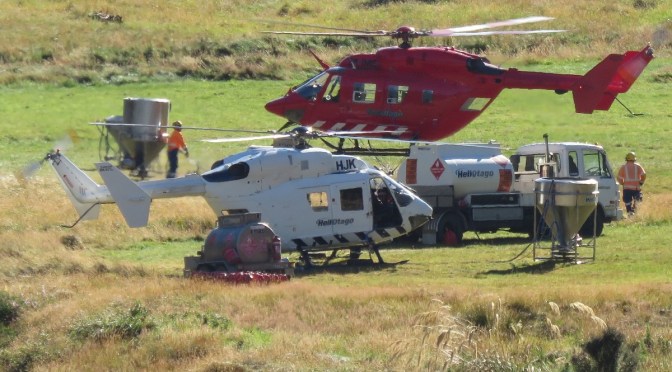
Rescue Helicopters Used to Poison Deer – Tourists Speak Out (the Graf Boys at Mt Aspiring)

Published on Mar 30, 2017

Helicopters used to save human lives are hired to poison deer in the Mt Aspiring National Park.

It’s the peak of the tourism season, and the Department of Conservation aerially spread 1080 poison bait across 38,000 hectares of the waterways the visiting trampers are drinking from. Hear what they have to say … [WATCH VIDEO]


Thank you to the Graf brothers for another excellent record of what is happening with this poison in our once clean green land.

The disturbing thing about this use of the rescue helicopters is, how well cleaned are they before carrying people? I have read from other bloggers of an incident where a plane was left on a grass runway overnight before being cleaned & sheep grazing around it overnight died. Okay this is only anecdotal evidence however enough to ring the warning bells. This surely cannot be a 100% safe practice carrying both deadly poison AND sick people.

In the case of Otago there was controversy in October last year (2016) when concerns about this use of rescue helicopters were raised.

Otago Rescue Helicopter Trust manager Ken Franklin said “the trust had two dedicated rescue helicopters which were used only for rescue missions.

Two back-up helicopters owned by Helicopter Otago, which the trust used when its main two were busy, were being used to drop 1080. “ SOURCE  This was also amidst allegations of alleged threats from 1080 protesters.

On that note, it’s reiterated here, we don’t in any way endorse violence or violent protest. But we do believe that people have a right to the truth. With correct information informed choices can be made. And bear in mind regarding allegations of threats of violence, corporations think nothing of lying as experts explain in the the excellent exposé of corporate behaviour ‘The Corporation’ movie (viewable HERE). Watch it and educate yourself.

Visit our 1080 pages at the main menu for further information on 1080, see especially the sub page for a long and comprehensive list of links and resources. Use ‘Categories’ to find articles on the topic.

See the TheGrafBoys YT channel and website for more videos. Educate yourself on 1080 poisoning. See also http://1080science.co.nz/

Use the share buttons to help spread the word on all the untruths we have been told. Thank you!

EnvirowatchRangitikei

Header image Photo Credit: with thanks, Carol Sawyer

The Aerial Application of 1080 Poison That is Banned in the U.S. Due to the Extreme Hazard to Human Health and Environment, is Practically Open Slather in NZ

possum-667897_1280

 “Aerial application of 1080 poison is banned in the U.S. due to the extreme hazard to human health and to the environment.”

U.S. Environmental Protection Agency.

From safe.org.nz
“There’s controversy In Paradise. New Zealand is proud of its clean, green and pure image. However the use of 1080 poisoning as the main weapon in the war against animals regarded as ‘pests’ is controversial.

A cruel and indiscriminate poison, 1080 is used to kill unwanted animals which include possums, feral cats, rabbits, rats and stoats. Its use in New Zealand has been a contentious issue since it was first employed as a pesticide in 1954. Research has shown that the use of this poison is extremely cruel, and dangerous to non-target animals.”

Find out more about the extensive use of 1080 in New Zealand, including:

What is 1080?
1080 targets
Quick Facts

http://safe.org.nz/issue/1080


Find further articles on 1080 under ‘categories’ top left of any page, &/or check out our 1080 page for links to further info.

EnvirowatchRangitikei