Tag Archives: psyllids

More tips on dealing with pests in the garden (Wally Richards)

The tomato/potato psyllid has caused a few headaches for gardeners when the populations of this relatively new pest build up and they affect not only potatoes and tomatoes but also a number of other host plants such as tamarillo, capsicum,, chili and peppino. The nymphs are so small and you need a magnifying glass to see them clearly, so you may have a small population of psyllids in your back yard and not realise the problem.

To find out if you have psyllids then you can do so by planting a potato either into your vegetable garden or into say a 20cm pot or bucket. Take a potato from the kitchen that has started to sprout and plant it as above. It only has to be into a hole about 8cm deep and covered with soil or growing medium. We are going let the plant grow to maturity and then harvest what tubers have formed underneath. If the tubers are small about the size of a marble and likely re-shooting; that will tell you that you have psyllids and they attacked the potato foliage when it was still young and growing. If on the other hand the tubers harvested are of a good size but when cut them in half, there are dark rings inside or what we call Zebra lines,  then yes you have psyllids and they attacked the plant later after the tubers had grown to a reasonable size.

That means next season when you grow potatoes or tomatoes you need to use controls so that you have a harvest of eatable produce.With potatoes the easy way is to plant very early your seed potatoes like back in July so that the crop is harvested before October. That should allow you to get an ok crop. With tomatoes you need to use Wallys Cell Strengthening kit of products to make the tomato plant cells so tough that the psyllid nymphs can not piece the plant to feed and inject in the toxin that causes all the problems.

Club Root is a disease that affects the brassica family causing the roots to become very distorted and so bad that they cant supply moisture and nutrients to the foliage above. So when you plant your cabbages etc and they grow quite happily at the start, then the growth slows down and comes to a stop normally  before the plant has reached maturity unless it is a miniature, fast growing variety. Its a frustrating disease which is soil born and often it has got into your garden when planting purchased (or given) any seedlings that were grown in club infested soil. Once you have it then I am told it takes up to 25 years to eradicate; that is as long as, during that time, there are no host plants grown in the contaminated area. It does not affect other plants such as silverbeet, beans etc only members of the brassica family which includes swedes. It affects brassicas such as Brussels sprouts, cabbages, cauliflowers, kale, turnips, swedes and radishes, their ornamental relatives such as Cheiranthus (wallflowers), Matthiola (stocks), Aubrieta (aubretia), and cabbage-family weeds such as Capsella bursa-pastoris (shepherd’s purse). In the past steam cleaning the soil was the only known control for it. Other methods can be used such as heavily liming the soil and using a soil drench of potassium permanganate. They can help get quick maturing crops to harvest. If you have the dread disease in the soil then here is a suggestion to maybe help eradicate it.

What you do is plant a cabbage seedling into a 20 litre pot, then in the middle of your vegetable garden you sit the pot on top of some bricks so that it is not in contact with the soil. The idea here is that rain and watering will wash down into the soil below the smell of the cabbage and that will activate the dormant club root spores to swim up  to where the roots of the cabbage are. But as the plant is above the soil and not in contact with the soil then the spores have no where to latch onto and colonise.  So they fizz and die. If you have a big area you may need a few cabbages in pots spread through out the area to try and activate all the spores in the soil. The following season you could test plant a few cabbages into the area and see if they grow and if they are free of the disease.  Otherwise try again the same trick of activating the spores.

Moths are a problem in our gardens because of the eggs they lay and the caterpillars that hatch out to feast on fruit and plants. There are codlin moths which affect apples, pears and walnuts and they are every where in NZ. Then there are Guava Moths which are so far in the more northerly parts of the North Island and they affect all fruit including citrus and nuts. Finally another one called the army worm which is so far mainly in Northland but is likely to build up populations and head south to other gardens. It eats the foliage of just about every thing and is causing a lot of headaches to both commercial and home gardeners. If you can eliminate the three moths before they get to lay their eggs then your plants are fairly safe from damage. Moths are attracted by smell to find their host plants or to feed on nectar for energy. Thus a trap can be used to lure them in and kill them. In my recent book ‘Gardening with Wally Richards’ I have a chapter on moth control and part of that is this simple to make trap to catch and kill them.

Take one litre of hot water add a100 grams of sugar, one teaspoon of marmite, half a tablespoon of Cloudy Ammonia and half a tablespoon of Vanilla essence:

Mix well and divide the mix between two plastic milk or soft drink bottles.

Punch some holes in the side of the bottles just above the level of the mix.

Place on a stand about a couple of metres away from the tree.

At about waist height like on a small folding table.

When a number of moths are caught dispose of them and make up a new solution.

Cloudy Ammonia used to be common once upon a time from a grocery store if not so easy to find try hardware stores, there are two chains in NZ and they may have. (Bunnings and Mitre 10).


TWENTY FIVE PERCENT OFF SALE

Till the end of January we are discounting the following products by 25% to help you gain control of Insect pests and improve your soil quality.

Orders must be placed on www.0800466464.co.nz using the Code 25% in the remarks place.

I will phone you after receiving the order and deduct the 25% off the items below and also give you 10% off most other items except for bulk items.

FREIGHT: shipping charged on orders under $100 (After discounts) North Island In other words order of $100 plus after discount and not bulk items free shipping.

South Island $150.00 plus after discounts for free shipping.

Exception is for Rural delivery a charge of $3.15 on each parcel sent no matter if rest is free shipping or not.

Here are the 25% discount items:

Wallys Neem Tree Granules 1kg normal price $15.00 save $3.75 making it $11.25

Wallys Neem Tree Granules 3kg normal price $28.00 save $7.00 making it $21.00

Wallys Neem Tree Granules 10kg normal price $80.00 save $20.00 making it $60.00

Wallys Neem Tree Granules 20kg normal price $160.00 save $40.00 making it $120.00

Wallys Neem Tree Powder 1kg normal price $15.00 save $3.75 making it $11.25

Wallys Neem Tree Powder 3kg normal price $28.00 save $7.00 making it $21.00

Wallys Neem Tree Powder 10kg normal price $80.00 save $20.00 making it $60.00

Wallys Neem Tree Powder 20kg normal price $160.00 save $40.00 making it $120.00


Wallys Super Neem Tree oil 125 ml normal price $18.00 save $4.50 making it $13.50

Wallys Super Neem Tree oil 250 ml normal price $24.00 save $6.00 making it $18.00

Wallys Super Neem Tree oil 1 litre normal price $60.00 save $15.00 making it $45.00


Wallys Super Pyrethrum 100 ml normal price $28.00 save $4.20 making it $23.80


Wallys Super Fish Fertiliser 1Litre normal price $16.00 save $4.00 making it $12.00

Wallys Mycorrcin 250ml normal price $20.00 save $5.00 making it $15.00

Wallys Mycorrcin 500ml normal price $35.00 save $8.75 making it $26.25

Wallys Mycorrcin 1 Litre normal price $55.00 save $13.75 making it $41.25

Orders must be placed on www.0800466464.co.nz using the Code 25% in the remarks place.

Phone 0800 466464
Garden Pages and News at www.gardenews.co.nz
Shar Pei pages at  www.sharpei.co.nz
Mail Order products at www.0800466464.co.nz

New Zealand Bill of Rights Act 1990. Part II of the Act covers a broad range of Civil and Political Rights. As part of the right to life and the security of the person, the Act guarantees everyone:

1The right not to be deprived of life except in accordance with fundamental justice (Section 8)

2The right not to be subjected to torture or to cruel, degrading, or disproportionately severe treatment or punishment (Section 9)

3The right not to be subjected to medical or scientific experimentation without consent (Section 10)

4The right to refuse to undergo any medical treatment (Section 11)

 Furthermore, the New Zealand Bill of Rights Act 1990 guarantees everyone: Freedom of Thought, Conscience, and Religion.
This includes the right to freedom of thought, conscience, religion, and belief,
INCLUDING THE RIGHT TO ADOPT AND HOLD OPINIONS WITHOUT INTERFERENCE (Section 1)

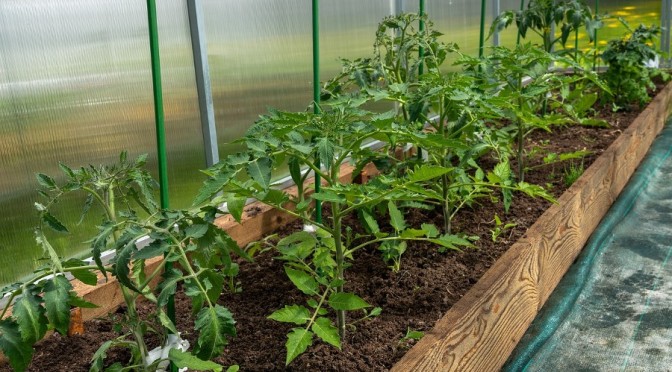
Tomato Psyllid problems in your garden (Wally Richards)

True to form spring started on the 1st September across New Zealand and with it a surge in gardeners visiting gardening shops and buying up plants and stuff to get under way in their gardens.

Now at the beginning of the season is a good time to review previous articles on the Tomato/potato psyllid that has ruined many a crop in the past few years as the pests have spread across most of New Zealand from humble beginnings (from Australia) in 2006.

My first realization of a problem was about 2009 when a crop of late potatoes was harvested to find that the tubers were only as big as marbles and re-shooting.

At the time I suspected it was too much nitrogen in the growing medium as the tops were big and the crop surprisingly little.

The tomatoes growing near by showed some yellowing and up curling leaves but other than that a reasonable crop.

I then moved to another location in Palmerston North which was a good sized warehouse with accommodation above it.

The outside was mainly concrete with a high concrete block wall on the boundary of the warehouse next door.

This created a micro-climate trapping heat between the two story warehouse and the two storey concrete block wall with a tennis court size area of concrete in between.  An ideal area for psyllids to thrive in.

I dont know if I brought them (Psyllids) from my previous location or they came in on seedlings I purchased but they were there and thriving.

Tomato plants started out ok but soon lower leaves were curling up and going yellow.

Later these plants would get a fungus growth up and down the trunks and die.

A Tamarillo I planted grew up to about 6 foot tall in the container I planted it in and then leaves started going yellow from the bottom up, then falling off till there were no leaves.

New sprouts appeared at the place the leaves had been then they too frizzled up and the whole plant died all in one season.

Using Neem products helped but did not eliminate the pests so I tried quarantine cloth which the mesh is to small for the adult psyllid to pass through.

That helped a lot but did not solve the problem as the pests carried on feeding on my capsicum, chili, okra and pepino plants where the damage was smaller than usual size fruit.

I see on the Internet suggestions of various chemical insecticides along with natural ones for control but as far as I can see and from feed back;

they help but do not control or eradicate.

Quarantine cloth helped but was awkward.

So I consulted my friend from the Australian company, NutriTech and he told me that by making the cells in the plant walls so tough with silica it would prevent the young nymphs from feeding after they hatch out of their eggs.

The program involved given the young plants a drink of the Wallys Silicon and Boron Soil drench done at planting time and again two weeks later.

That’s it for that product as too much boron can cause toxicity. The boron is used to ensure the uptake of the silica by the plant’s roots.

At the same time as planting the seedlings you spray them with Wallys Silicon Cell Strengthening Spray with Wallys Silicon Super Spreader added which drives the previous spray into the plant.

This I made up in a handy trigger sprayer to which I added Magic Botanic Liquid as well for the many benefits MBL provides.

The products keep well in the Trigger so you use weekly until all is used up then make a fresh lot.

Spray the plants weekly till they get to over a metre tall then you can drop back to a two weekly spray.

Once the plants are taller than you then a monthly spray is all that you need to do.

Now what happened was this; hundreds of eggs were laid by the many adult females that started off in the new season.

The eggs hatched but the nymphs could not feed on the tough walls of the leaves and branches/trunk so their lives were short and they starved to death.

The adults lived their life span but also could not feed on the tough plants so they also died early and within about a month there were no more Psyllids in my glasshouses or outside.

Completely wiped them out of my property.

I also noticed a strange thing, the leaves of the tomato plants were double if not triple the size of what they normally would be.

The reason is that silica helps the plant gather more energy from the sun and as a result of that the plant grows larger leaves and bigger, better flavored fruit.

So a double win situation no psyllids and really big tomato plants with the best crop of tomatoes that I can recall. (Of course I was also applying my, Wallys Secret Tomato Food).

It also meant once again after a period of not having many tomatoes because of the psyllids I then had tomatoes of the best type to give away again.

I used the same products on a young Tamarillo plant I purchased and it grew and produced a small crop first season.

To be sure I also treated the capsicum and chili plants with the cell strengthening products and they did splendidly also.

The following year I did not need to use the products as there was no psyllids in my neck of the woods.

One thing you have to watch out for is plants you purchase, tomatoes etc that they do not have any adult psyllids or eggs on them as that is the most likely way you will start a psyllid problem in your back yard.

They could come from next door also but as insects are lazy they dont travel far unless they have to.

It has always been white fly that is a curse on tomato plants as well as many other plants.

If you are putting Wallys Neem Tree Powder in the planting hole and Wallys Neem Tree Granules on top of the growing medium/soil that helps a lot with controlling white fly.

Also the Wally Yellow Sticky White Fly traps should be used tied to the stake above each tomato plant and raised as the plant gets taller.

It is amazing how many hundreds of insect pests get lured to the traps and come to a sticky end.

The traps are available in packs of five, double sided so you can peel the cover off one side and when that is covered in insects use the other side.

The Silicon cell strengthening spray can be used on other plants to increase leaf sizes and I would add molasses to the spray as well which also helps make for larger leaves on plants.

Like the bigger the Solar Panel the more electricity and with plants the bigger the leaves the more energy is produced so the plant grows much better.

It can help over come the dimming of the skies that prevent us from growing food crops.

Phone 0800 466464
Garden Pages and News at www.gardenews.co.nz
Shar Pei pages at  www.sharpei.co.nz
Mail Order products at www.0800466464.co.nz


New Zealand Bill of Rights Act 1990. Part II of the Act covers a broad range of Civil and Political Rights. As part of the right to life and the security of the person, the Act guarantees everyone:

1The right not to be deprived of life except in accordance with fundamental justice (Section 8)

2The right not to be subjected to torture or to cruel, degrading, or disproportionately severe treatment or punishment (Section 9)

3The right not to be subjected to medical or scientific experimentation without consent (Section 10)

4The right to refuse to undergo any medical treatment (Section 11)

 Furthermore, the New Zealand Bill of Rights Act 1990 guarantees everyone: Freedom of Thought, Conscience, and Religion.
This includes the right to freedom of thought, conscience, religion, and belief,
INCLUDING THE RIGHT TO ADOPT AND HOLD OPINIONS WITHOUT INTERFERENCE (Section 1)

Photo: pixabay.com

Psyllids in your garden and how to deal with them (Wally Richards)

Psyllidae, called the jumping plant lice or psyllids. (Note much of the following is from Internet research)

They are a family of small plant-feeding insects that tend to be very host-specific, each plant-louse species only feeds on one plant species or feeds on a few closely related plants.

Of current concern to tomato, potato, tamarillo, capsicum and chili gardeners is the new psyllid commonly known as the tomato/potato psyllid.

This psyllid comes from Central and North America where it breeds primarily on potatoes, tomatoes and other plants in the potato family, Solanaceace.

It also breeds on kumara, which is in the bindweed family, Convolvulaceae.

It was first found in New Zealand in 2006 and has spread throughout New Zealand.

This psyllid may transmit a bacterium, Candidatus Liberibacter solanacearum that causes a disease in its host plants.

The tomato potato psyllid occurs on its host plants in gardens, and crops in greenhouses and on farms.

The tomato potato psyllid breeds all year, though the time from egg to adult (generation time) is longer in the winter when it is cold, than in the summer or in a heated greenhouse.

Adult tomato potato psyllids are small insects similar in size to aphids. They have wings and look like small cicadas with a distinctive white band on the abdomen. The two pairs of transparent wings are held over their abdomen.

Tomato potato psyllid eggs are yellow and attached to leaves by a thin short stalk. The eggs may be laid on all parts of the leaf and plant stem, but are often found on the leaf edge where they are most easily seen.

Nymphs hatch from the eggs. They are flat and scale like, and have three pairs of legs and sucking mouthparts.

They settle on young leaves, mainly on the underside. Although they can walk, they spend much of their time motionless with their stylets inserted into the plant feeding on the plant sap.

There are five nymphal stages, each is called an instar. buds. Adults emerge from fifth instar nymphs.

The length of time needed for nymphal development depends on the temperature and is shorter when it is hotter.

The tomato potato psyllid inserts its maxillary stylets into the phloem, (the plant vessels for transmitting sap from the leaves to other parts of the plant.)

The sap has a high volume of water and sugars, more than the insect needs.

It excretes the excess water and sugar, which is called honeydew. The tomato potato psyllid coats the droplet of honeydew with white wax before ejecting it.

Leaves can become covered with these white wax coated droplets that are called psyllid sugars.

Like some other Hemiptera (sucking bugs), the tomato potato psyllid can transmit plant pathogens to plants.

Tomato potato psyllid is the primary vector (transmitter) of a bacterium, Candidatus Liberibacter solanacearum, which causes a disease that may weaken plants and reduce yields and quality of crops.

Plants infested with the psyllid may exhibit symptoms of a disease, psyllid yellows.

The disease symptoms initially appear in response to psyllid feeding and is presumably a physiological reaction to feeding and saliva secretions by the tomato potato psyllid.

On tomatoes, the disease symptoms are the yellowing and stunting of the growing tip and a cupping or curling of the leaves.

Many flowers may fall off the trusses of infected plants and fruit that develop may be small and misshapen.

On potatoes, the foliar symptoms are a stunting and yellowing of the growing tip and the edges of the curled leaves often have a pink blush or purple colour.

After a while infected potatoes develop a scorched appearance and plants may collapse prematurely.

Potato plants that are infected at an early stage, develop numerous small tubers. Tuber quality is also affected when the plants are infected at a later stage.

The disease is referred to as zebra chip because when the affected potatoes are fried they exhibit dark stripes where the areas high in sugar burn.

In New Zealand, the bacterial disease is usually less of a problem on outdoor capsicums, chilli and egg-plant.

Tomato potato psyllid breeds all year, especially in the warmer parts of the country and in greenhouses. In these situations, all life stages may be found all year round. In other areas, non-breeding adults may be found on plants.

Adults feed on leaves and can mate more than once. A female can lay up to 500 eggs over a 21-day period, but in the field it is more likely to be around 200 eggs.

The number of eggs laid also depends upon the host plant. The rate of development of nymphs is dependent on temperature.

The psyllid develops between 15°C and 32°C with optimum development at 27°C.

In a greenhouse with an average temperature of 18°C psyllids takes 33 days to complete their life cycle.

In New Zealand there are to 7-8 generations per year in the Auckland region.

In New Zealand’s winter, the numbers of psyllids are low and development is very slow.

Adults and nymphs can survive short periods of sub-zero temperatures. In New Zealand’s spring numbers on infested plants will begin to build up and reach a peak in late summer/early autumn.

Adult psyllids have wings and in North America can spread long distance by air. In New Zealand, dispersal tends to be more limited, 100 m or more in three days. They will invade new areas and plants, especially in summer.

From my experience its a temperature to numbers game, when given the ideal temperatures.

One adult laying 500 eggs can mean in about a month you have a population of 250,000 adults

Initially sprays will help control but as numbers rapidly increase you would need to spray every day and still lose the battle.

That was the point I reached about 3 years ago and watched my tomato plants and tamarillos die in front of my eyes.

The following season I treated my tomatoes and other host plants with silicon drench and sprays and in one season completely wiped out the psyllids from my glasshouse and gardens.

The silicon treatment which I call the ‘Cell Strengthening Kit’ makes the plant’s cells too tough for the psyllid nymphs to piece and feed and they soon starve to death after hatching.

This breaks the life cycle and there are no new adults to replace the old ones when they die.

Information on the kit is available on our mail order web site at www.0800466464.co.nz

More info on the pest at http://www.gardenews.co.nz/product.html#The%20Potato%20and%20Tomato%20Psyllid%20control%20with%20Cell%20Strengthen%20sprays%20and%20drench

With our Silcon products you can once again grow tomatoes, potatoes and other affected plants.

or phone me for more information.

Phone 0800 466464
Garden Pages and News at www.gardenews.co.nz
Shar Pei pages at  www.sharpei.co.nz
Mail Order products at www.0800466464.co.nz


New Zealand Bill of Rights Act 1990. Part II of the Act covers a broad range of Civil and Political Rights. As part of the right to life and the security of the person, the Act guarantees everyone:

1The right not to be deprived of life except in accordance with fundamental justice (Section 8)

2The right not to be subjected to torture or to cruel, degrading, or disproportionately severe treatment or punishment (Section 9)

3The right not to be subjected to medical or scientific experimentation without consent (Section 10)

4The right to refuse to undergo any medical treatment (Section 11)

 Furthermore, the New Zealand Bill of Rights Act 1990 guarantees everyone: Freedom of Thought, Conscience, and Religion.
This includes the right to freedom of thought, conscience, religion, and belief,
INCLUDING THE RIGHT TO ADOPT AND HOLD OPINIONS WITHOUT INTERFERENCE (Section 1)

Photo: pixabay.com


Growing potatoes (Wally Richards)

Once upon a time when the world was a much better place and people could afford to buy a quarter acre of land and build a house for their family to grow up in and enjoy the benefits of those days 50 to 100 years ago.

(You only have to think back to see how bad things have become in more recent years. )

Well the first thing that a young married man would do with the land would be to plant a crop of potatoes.

This served two purposes it would help break up the earth for future gardens and lawns plus a bounty crop of potatoes to store and use.

Nowadays because of the dread potato psyllid you need to plan and plantings of potatoes and later on tomatoes or use controls to combat the psyllid.

If you had psyllids last season and did not use the Cell Strengthening products you will have worse problems this season.

With potatoes there is a way to get a early crop in and out before the plants are attacked.

Psyllids are temperature controlled and when too hot like over 35 degrees or too cool like under 15 degrees they are slow to reproduce.

When the temperatures are ideal for them they produce in the hundreds and thousands.

When they feed on the foliage they inject a toxin into the potato plants which will prevent the baby tubers from growing bigger than a marble,

or if the tubers have reached a reasonable size then you find in the harvested potatoes dark rings and they taste bad.

Early planting is a way around the problem and the way to do this is:

Dig a trench about one and a half spade depth.

Place your sprouted potato on top of the following at the base of the trench,  about a table spoon of gypsum, quarter a teaspoon of BioPhos a few sheep manure pellets and a sprinkling of Wally Neem Tree Powder.

Sprouts should facing skywards. Use  a little soil to cover the sprouts.

The soil protects against any frosts and possible early emergence of psyllids. 

Now this is most important you need to check frequently the crop and as soon as the new sprouts pop though the cover add a little more soil to re-cover.

You keep doing this till until your trench is filled level with the soil.

Then you start mounding up to keep the sprouts covered.Not only will this be adequate protection from late frosts but will increase the size of your crop.

The new potatoes will form all the way up the haulm of the potatoes you planted as long as you covered the sprouts as they appear.

If you don’t then once the spouts get up a few inches out of the ground you will not obtain any extra potatoes to harvest.

Growing quick maturing potatoes now should have them mature and ready to harvest before the temperatures rise and the psyllids come out to play.

When you stop mounding sprinkle Wallys Neem Tree Powder as a side dressing each side of the row.

When the crop is mature than either lift so the tubers are safe or if you leave them in the ground removed the top foliage and cover the stubble with soil so there is nothing for the psyllids to attack.

Ideally the above could have been done in the middle of winter like in May/June.

The earlier the better.

Any late crop of potatoes planted say about Labour Weekend will likely be doomed to failure once the tops are exposed and before maturity.

To overcome this possibility then you Need to use Wallys Cell Strengthening kit to make the cells of the plants so tough that the nymphs can not piece to feed.

This means about the time of planting the seed potatoes and started covering then a soil drench of Wallys Silicon and Boron soil drench.A send drench can be applied about the time you stop mounding.

Then a weekly spray of the foliage with Wallys Silicon Cell Strengthening Spray with Wallys Super Spreader added which drives the spray into the plants.

Use those products and your should be able to have later crops with no psyllid damage.The same products should be used for your tomatoes, capsicums, chili, garlic and tamarillos. 

I also like to add Magic Botanic Liquid to the cell strengthening spray for greater results.

REMINDER  EARLY BIRD SPRING PROMOTION

For our Early Bird Promotion till the end of July (July 31st cut off) the following applies.Neem Powder Neem Granules all sizes, 1kg, 3kg 10 kg and 20 kg 20% off the mail order web site price.

All other gardening products 15% off the marked prices but excluding bulk items such as 12.5 kilos Fruit & Flower etc.

Shipping if after discounts and excluding bulk items the order is $150 plus North Island or $200 plus South Island Free shipping for those orders.

Under those order sizes shipping at cost to you.

Often the discounts given means that you can get free shipping as the discount covers the shipping costs.

Orders must be placed on line at http://www.0800466464.co.nz

You cant pay on the web site and we phone you after receiving the order to give you your discounts.

Please put in the remarks place ‘Early Bird’ so I know to sort out the discounts before I phone you.

We can then take credit card details over the phone safely or email you details to do a bank transfer.

Regards

Wally Richards
Phone 0800 466464
Garden Pages and News at www.gardenews.co.nz
Shar Pei pages at  www.sharpei.co.nz
Mail Order products at www.0800466464.co.nz

Photo: pixabay.com