Tag Archives: plant_health

Your Plants’ Natural Immunity (Wally Richards)

Plants, just like ourselves, have built in protection against diseases though their immunity systems.

We build up our immunity naturally over the years by surviving disease attacks and by having a healthy nutritionally rich diet.

That is not to say that we are immune to disease attacks but under normal situations we can fend off most health problems when we have very good health.

If we get into stress then our metabolism does not have the same stamina and we catch a cold or worse.

It is said the leading cause of heart disease and cancer is stress. I think its the stress that is the straw that breaks the camels back, after unhealthy living and insufficient nutrient rich food.

The same applies to plants, place them into stress and they will more likely catch a disease.

I have written a lot in the past on how to build the health of plants by building the health of the soil; having soil that is rich in humus, minerals, earth worms and soil life.

Even when we have the best soil on earth, plants can still catch a cold when they are placed into stress and our current spring weather is very stressful to our plants and to us keen gardeners.

Chilly winds, too wet, too dry, only the occasional nice day does not make for great gardening and our plants don’t do so well either.

We can however increase the immune systems of plants by a few monthly sprays of Perkfection Supa for roses and other plants.

The active ingredient of Perkfection is ‘Phosphite ion’ or Phosphonic Acid. (Potassium ions are also present).

Perkfection is very safe to handle and spray and when used on food crops there is no withholding period other than your normal washing of produce before eating.

Perkfection is used extensively by commercial growers of produce and fruit as its safe, effective, in prevention and control while not restrictive on exports of produce.

We have suggested Perkfection Supa for Roses and Other Plants as an alternative to more toxic sprays, for the assistance in recovery from/or prevention of, the following problems:

 Black spot, Downy Mildew, Phytophthora Root rot, botrytis, Canker, heart rot, damping off, crown rot, leaf blight, silver leaf, late blight, collar rot, pink rot, brown rot, Armillaria, and gummy stem rot.

Now that’s a big list of common plant diseases which means that many of your disease related problems can be overcome with applications of this product.

Besides using Perkfection over your roses for the likes of Black spot and Downy mildew you can also use it as a spray over all your fruiting plants and trees including your strawberries.

It can be used also over your potatoes, tomatoes, lettuce, beans, cubits (cucumbers etc) lawns, onions, passion fruit, Cauliflowers, cybidium orchids and ornamental plants and vines.. In fact there is no where you cannot use Perkfection to advantage.

Being ‘Synthetic Organic Phosphates’ what you are doing, is placing this valuable material, onto the foliage of your plants, where it is very readily absorbed and transferred through the whole of the plant.

This fortifies the plant’s cells, increases the plant’s immune system and makes your plants less susceptible to invading pathogens.

There is however a down side, as with any good thing, you can use too much and the recommendation is to use Perkfection at 4 ml per litre of spray once a month for about 6 times in a season.

(Note a season is the normal period of time for that crop or plant. Roses are from Spring till Autumn. Most annuals 5-6 months.)

The reason is that, you can over load your plant with organic phosphates causing a clogging of the cells and halting growth until the system clears.

If a plant has a problem spray the first month with Perkfection at 7 mls per litre.

For plants you wish to fortify use at 4ml per litre for 2 to 3 months.

Prevention is better than cure and by spraying your plants in the spring you give the greatest protection to leaves and fruit, autumn spray will give greatest protection to roots and tubers.

I have suggested that on the 1st of the month to spray your roses and other preferred plants with Perkfection, MBL (Magic Botanic Liquid) and Mycorrcin. Then 14 days later (15th) spray with Mycorrcin and MBL.

What we are doing is boosting the plant’s immune system, supplying a large range of minerals and elements, feeding the beneficial microbes to increase their populations which also work to eliminate diseases.

If insects problems occur then include Wallys Super Pyrethrum as it is a quick knock down control.

Phone 0800 466464
Garden Pages and News at www.gardenews.co.nz
Shar Pei pages at  www.sharpei.co.nz
Mail Order products at www.0800466464.co.nz

New Zealand Bill of Rights Act 1990. Part II of the Act covers a broad range of Civil and Political Rights. As part of the right to life and the security of the person, the Act guarantees everyone:

1The right not to be deprived of life except in accordance with fundamental justice (Section 8)

2The right not to be subjected to torture or to cruel, degrading, or disproportionately severe treatment or punishment (Section 9)

3The right not to be subjected to medical or scientific experimentation without consent (Section 10)

4The right to refuse to undergo any medical treatment (Section 11)

 Furthermore, the New Zealand Bill of Rights Act 1990 guarantees everyone: Freedom of Thought, Conscience, and Religion.
This includes the right to freedom of thought, conscience, religion, and belief,
INCLUDING THE RIGHT TO ADOPT AND HOLD OPINIONS WITHOUT INTERFERENCE (Section 1)
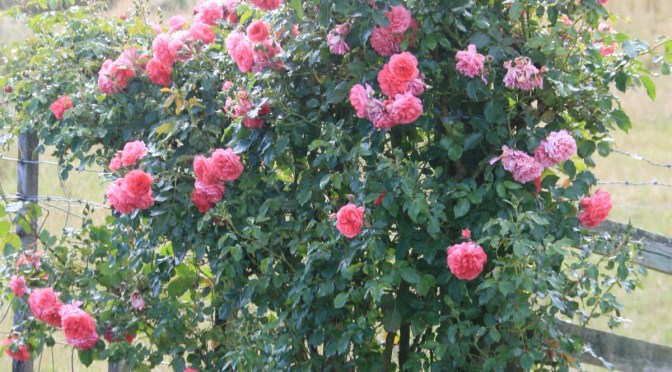
COMING UP ROSES (Wally Richards)

A gardener this week phoned me asking about roses and what should he be doing this time of the year?

He suggested that I should write an article about roses so here is a copy of a past article I wrote over 5 years ago and revised now:

There is something special about roses that gardeners like.

It could be the shape and form of the flowers; it maybe the exotic perfumes some varieties have; or it could be something in our genes, because roses must be the oldest cultivated ornamental plant in the history of the world.

In Nature things such as leaf diseases (black spot, rust etc) and insect pest attacks on plants is part of life but when it comes to the rose enthusiast these natural occurrences are like the end of the world.

Woe betide a blemish to the foliage or an aphid feeding on the newly forming flower buds in spring.

It is war and every chemical of mass destruction will be mixed and used to control and eradicate.

The goal is the perfect bloom (with a tear drop of dew on a petal) framed by perfect foliage of a dark rich green. Picture perfect and hopefully with a divine scent to boot.

For those that show their roses at their annual local rose show or in the national rose shows the perfect specimen is the ultimate challenge.

I remember in days gone by when chemicals; that have since been banned because of the damage they did to the environment and to our health, such as Shield for Roses.

These would be used religiously by gardeners on their beloved roses biweekly.

Alternating with Super Shield and applications of Rose Fertiliser and Nitrophoska Blue.

If the rose sprays did not do what was expected there were other lethal chemicals to use, Captan, Bravo, Orthene, Target and Maldison. (All banned now as far as I am aware)

To say that the health of the roses was compromised would be an understatement and every season instead of the perfect rose the plants would be a very sore sight.

Years ago I recognised the problem that the chemicals were doing to the soil life and the immune systems of the roses and wrote articles on the matter.

I remember a Garden Centre owner in the Taranaki region telling me how she read my articles on roses and followed the advise. Within a couple of seasons she had turned the sickly roses in her home garden into lovely roses.

The local rose society members visited the gardens and were amazed at how healthy her roses were and wanted to know what chemicals she was using to have them looking so great.

Her reply was no chemicals which the members had problems believing because they had been indoctrinated into Shield, Nitrophoska etc as the ultimate tools of rose perfection.

The products made the companies that sold them a lot of money but did nothing for the health of the roses or the health of the users.

Here is a little logic I remember as a boy visiting my uncles farm in Taranaki where my auntie had a few rose bushes between a paddock and the gravel driveway.

Besides the dust on the plants in a dry summer and the occasional cow or possum nibbling the foliage they were very healthy.

They had some horse or cow manure thrown at them from time to time and cut back in the winter along with a bit of a tidy up.

Another aspect was that being in the country the plants were not suffering from chemicals in the water such as Chlorine. Just rain water from the sky or the tank.

I remember another rose enthusiast who also told me that his parents were great collectors of roses and had over the years several hundred specimens on their farm property which he was also involved in their care.

He told me how over the years of growing up how wonderful and healthy the plants had been.

As ‘new’ things were introduced to assist with the rose care, the health of the roses deteriorated so more stronger chemicals were used to no avail.

His parents passed and it was then his sole responsibility to care for the sick inheritance.

No matter what he used, how much he sprayed the roses only got worse and one winter after another poor health season he was seriously considering plowing all the roses into the ground as they were hopelessly sick and some had already died.

He told me he read an article I wrote about rose health and a program to follow and decided to give it a go for one last attempt.

What happened was that season there was a marked improvement in the roses, not up to their former glory but certainly heading in the right direction.

Then in the following season most of the roses turned to their full health state and a phone call to thank me was made. He said that my advise was the best gift to his deceased parents ever.

It is just common sense really, work with Nature not against it.

Chemicals are designed to kill and control; they can kill both the good as well as the bad plus adverse side effects as we commonly see with our own human pharmaceutical concoctions.

Chlorine in water is bad news for soil life so if you have this poison in your tap water then see about removing it with a 10 micron carbon bonded housing and filter. Email me for more info if interested.

Next stick to natural things to feed your roses (and other plants) this includes all animal manures including sheep manure pellets, blood & bone, compost that is not made from green waste.

(I know people that have lost their roses to compost containing herbicides from green waste)

The compost is used to cover over the blood & bone etc.

For extra minerals use Wallys Unlocking your Soil twice a year and Ocean Solids once a year.

Apply a little Fruit and Flower Power once a month during flowering season.

Spray your roses 2 weekly with Magic Botanical Liquid (MBL) This will do more for your roses health than anything that I know of.

Once a month spray them with Perkfection starting in Spring when there is a good show of leaves. Perkfection can be added to every second spray of MBL.

Any sign of aphids spray just before sunset with Wallys Super Pyrethrum, it is a quick knock down control.

During season any sign of leaf diseases spray with potassium permanganate at a quarter teaspoon per litre of water.

Here is something that you may find interesting; a Peer reviewed study about climate change that was released recently

see https://www.aei.org/carpe-diem/there-is-no-climate-emergency-say-500-experts-in-letter-to-the-united-nations/

It confirms my thoughts that adverse weather events have been happening every since weather was recorded.

The difference is the Media coverage now compared to say 50 years ago when you only found out about floods and droughts in the news paper.

Pushing the Fear Button for control and to make us poor.

Phone 0800 466464
Garden Pages and News at www.gardenews.co.nz
Shar Pei pages at  www.sharpei.co.nz
Mail Order products at www.0800466464.co.nz

New Zealand Bill of Rights Act 1990. Part II of the Act covers a broad range of Civil and Political Rights. As part of the right to life and the security of the person, the Act guarantees everyone:

1The right not to be deprived of life except in accordance with fundamental justice (Section 8)

2The right not to be subjected to torture or to cruel, degrading, or disproportionately severe treatment or punishment (Section 9)

3The right not to be subjected to medical or scientific experimentation without consent (Section 10)

4The right to refuse to undergo any medical treatment (Section 11)

 Furthermore, the New Zealand Bill of Rights Act 1990 guarantees everyone: Freedom of Thought, Conscience, and Religion.
This includes the right to freedom of thought, conscience, religion, and belief,
INCLUDING THE RIGHT TO ADOPT AND HOLD OPINIONS WITHOUT INTERFERENCE (Section 1)

Photo: envirowatchrangitikei

Using Neem in your garden & elsewhere (Wally Richards)

Azadirachta indica, commonly known as Neem, nimtree or Indian lilac, is a tree in the mahogany family Meliaceae.

It is one of two species in the genus Azadirachta, and is native to the Indian subcontinent and most of the countries in Africa. It is typically grown in tropical and semi-tropical regions.

Each year the tree flowers and produces fruit or kernels which are the seeds of the tree.

These are harvested and cold pressed to extract the Neem Oil which is used for many things including as an insecticide and for medical uses.

If the kernels are press only once then the Neem Cake will be dark in colour and have a good Neem smell.

If they are cold pressed more than once to extract more oil then they will be light brown in colour and not have much smell which means they will not any where near effective as the dark Neem Granules/Powder;.

The crushed residue is called Neem Cake in India which my company Garden Enterprises import in container loads into NZ for gardeners to use.

Before it is shipped the Neem cake is dried then screened to obtain to particle sizes which we call Wallys Neem Tree Powder being uniform particles 1-3mm in size.

Then there are the larger particles we call Wallys Neem Tree Granules which vary from 1mm to about 50mm in size.

Both are the same thing it is just the size of the particles that determine what we call them.

Likewise either can be used to do most gardening tasks that Neem Cake can be used for but each has its special tasks for applications.

Firstly lets talk about Neem Tree Powder, lovely to work with, easy to handle and far better to use for some applications than the Neem Tree Granules.

For instance when planting seeds or seedlings a little of the powder can be sprinkled with the seeds or put into a seedling’s planting hole.

It is a must to prevent carrot fly damage; you sprinkle the powder along the furrow with the seeds at sowing time.

Later when the carrots have germinated and have tops of foliage about 3-4cm tall you then side dress the row with the powder.

By doing this most gardeners have found little or no damage to the carrots at harvest time.

The Neem Tree Powder is ideal for treating grass grubs in lawns if used when the grubs are near the soil surface. For most that would be in the autumn after the autumn rains have moistened up the soil.

By cutting out squares of turf and examining the clods will let you see if there are grubs near the surface, if so then treat those areas where there are several grubs per square foot.

Sprinkle the Neem Tree Powder over a freshly mowed lawn and water in to settle the powder onto the soil.

If you have a roller then roll to press the powder into the moist soil.

If not then either lift the height of your rotary mower by a notch or two before you mow again or leave the catcher off so that powder picked up while mowing will be put back onto the lawn. Only applicable for two or three mowings after application of the Neem Powder.

Where you apply the powder on the lawn you may notice after a couple of weeks that those areas are looking better than where it was not used.

This is a good indication that you have root nematodes in the roots of your grasses and they are sucking the vigor out of your lawn. So if this is the case then you know to treat the rest of your lawn.

Neem Tree Powder is also ideal to place a small sprinkling on top of the growing medium of your container plants to eradicate root mealy bugs in the roots. Out side containers it does not matter so much as the powder will get molds when it breaks down which is normal; but indoors it will look unsightly so cover the powder with a little more growing medium.

Wallys Neem Tree Granules being bigger in size means they will last much longer slowly breaking down.

This makes them great to use on the soil of more established plants such as trees, shrubs and roses.

I have had a few gardeners tell me they used them in the root zone of their roses and significantly reduced problems of pests and diseases.

We have found them magic placed on the soil under citrus trees from the trunk to the drip line..

Within a period of about 6-8 weeks all insect pests on or in the tree are gone including whitefly, scale borer and mealy bugs.

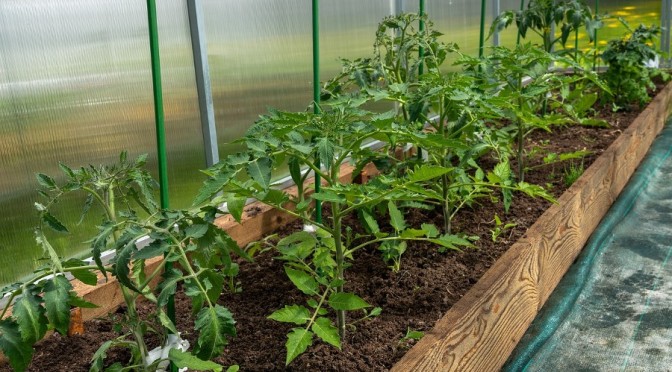
At the beginning of the season when you plant up your glasshouse with tomatoes and other plants put some Neem Tree Powder in the planting holes and Neem Tree Granules on top of the growing medium (soil or containers) Many reports have said that in its self has solved most of their problems with whitefly in the glasshouse.

The reason I believe is that the smell of the granules disguises the smell of the plants and hence insects pests flying by don’t know that there are host plants nearby.

Disguising the smell of plants so that insects do not know that they are there is a great easy control.

It is the first line of defense against codlin and guava moth damage. You hide the tree when its fruiting.

The time to use the granules is after the fruit has formed on the tree and is about halfway to maturity.

Sprinkle the Neem Tree Granules under the tree from trunk to drip line.

Next make up some small bags using old curtain netting which you will place some granules in and the hang in the tree about your height. Hang around the tree 4 to 6 bags.

When the moths are flying at night looking for where to lay their eggs from the smell of the fruit they will fly on by as can not smell the fruit because of the Neem Granule’s smell that overrides the fruit smell.

Simple and very effective in greatly reducing the damage to your crop.

In regards to using Neem Tree Granules on the soil under plants you are likely to find they work better on some types if plants than on others.

I found on brassica such as cabbage that powder in the planting hole and granules on the soil meant that caterpillars never got established or caused much damage.

A few months ago a lady gardener from India told me that she soaks Neem Tree Granules in a bucket of water (about a cup full) for a couple of weeks stirring occasionally.

Then she takes the water and sprays or pours over her roses late in the afternoon.

According to her it keeps the pests and diseases under control.

Wallys Neem Tree Powder and Granules are great gardening aids and available in sizes in 1 kilo, 3 kilo and 20 kilo bags.

Problems ring me at 0800 466464
Email wallyjr@gardenews.co.nz
Web site www.gardenews.co.nz

Phone 0800 466464
Garden Pages and News at www.gardenews.co.nz
Shar Pei pages at  www.sharpei.co.nz
Mail Order products at www.0800466464.co.nz

New Zealand Bill of Rights Act 1990. Part II of the Act covers a broad range of Civil and Political Rights. As part of the right to life and the security of the person, the Act guarantees everyone:

1The right not to be deprived of life except in accordance with fundamental justice (Section 8)

2The right not to be subjected to torture or to cruel, degrading, or disproportionately severe treatment or punishment (Section 9)

3The right not to be subjected to medical or scientific experimentation without consent (Section 10)

4The right to refuse to undergo any medical treatment (Section 11)

 Furthermore, the New Zealand Bill of Rights Act 1990 guarantees everyone: Freedom of Thought, Conscience, and Religion.
This includes the right to freedom of thought, conscience, religion, and belief,
INCLUDING THE RIGHT TO ADOPT AND HOLD OPINIONS WITHOUT INTERFERENCE (Section 1)

Image by Alexei from Pixabay

Gardening for January: Healthy crops, healthy you (Wally Richards)

First column for 2022

Happy New Year (at least hopefully happier than 2021)

The first subject is an important one and one I published 2016 (remember 2016? it was a far better country then and if you had been told back then that you had to wear a muzzle and have a special permit to do many of the things you had freedom to do back then.. You would have laughed yourself silly).

Amazing what humans will do and allow to happen when they have fear shoved down their throats day and night.

Anyway the above comments are another reason for the sensitive readers to unsubscribe.

Maybe those that have unsubscribed in the past year will wake up one day shame faced that they had been fooled without realizing it.

Well on with the year and this article:

HEALTHY CROPS, HEALTHY YOU

I often compare the health of our plants to our own health.

The reason for this is that all life forms have similar requirements to be able to be healthy and are effected by adverse conditions causing stress which leads to health issues.

It is also important to realize that for us humans to be in peak health we need to consume very healthy vegetables and fruit.

With our plants we need to make available to them a very healthy soil (Soil Food Web) full of organic materials along with all the minerals and elements possible.

Add to this sufficient sunlight and water for the optimum growth of the plants. Also protection from elements and a suitable pH and even with all these in place a plant can get into stress through temperature fluctuations, chlorinated water and other chemicals.

We can know, generally speaking, that a healthy plant is less prone to diseases and insect attack (both are Natures Cleaners) but if the plant gets into stress then the chances are it will have pests and diseases attacking with more vigor. If we then treat it with a chemical control the plant may overcome that particular problem but its immune system is further weakened making it more vulnerable to problems.

We are very similar; if we have a home grown diet of vegetables and fruit that are teeming with nutrition we are going to have healthy bodies. Even so if we get into stress for what ever reason then our immune system is compromised and we catch a cold. If our food chain is not really healthy and we are eating chemically laden produce that is low in goodness then our health is in trouble.

Our body is storing up poisons that it can’t clear out which leads to the major health issues we see today, cancers, heart and mental function problems. One simple health example of this is sulphur, our bodies need a daily amount of sulphur to preform several functions because our body does not store sulphur.

It uses what’s available at that time and expels any surplus.

You can ensure your home grown vegetables contain sulphur by spreading Gypsum around about every 3 months. Also my Calcium and Health product contains Sulphur and other important elements such as selenium.

If you take sulphur food supplement which is called MSM for a few weeks you will find out if you are lacking in this mineral or not. Your first signs are usually a detox.

More info if you are interested at http://www.gardenews.co.nz/msm.html

A problem arises for some people in so much as they can’t grow big gardens of vegetables and have a good selection of fruiting plants.

Lack of room can be a problem yet with the smallest amount of space you can grow some really great health beneficial plants.

Wheat Grass is about the healthiest plant you can grow because it will take up all the 114 minerals and elements if they are provided in the growing medium.

That is the minerals from the Ocean (Ocean Solids) the minerals from rocks (Wallys Unlocking Soil) and the minerals from prehistoric times, Magic Botanic Liquid (MBL).

These are used in the growing of your wheat grass so that when you cut and either juice it or use in Green Smoothies then your body is maxing out in goodness.

Just 30 mils a day of the pure juice can make the world of difference to your well being.

A question that I have been asked is the wheat juice gluten free? Yes because it is the wheat seed or more importantly the contents of the seed (Flour) is the gluten bit.

An interesting article I read this week about the gluten condition and it reinforces my thoughts that not all people who appear to suffer from gluten; are actually suffering from the chemical poisons in wheat.

Here is what was said:

Do you consider yourself to be sensitive to gluten? Your problem with wheat, it turns out, may not be a problem with gluten at all. It may, in fact, be a problem with GLYPHOSATE.

Most people don’t realize it, but even though wheat is not yet commercially grown as a genetically engineered crop, farmers saturate wheat crops with very high doses of glyphosate right before harvest, speeding the drying of the wheat stalks and accelerating harvest duration. The result is that toxic, cancer-causing glyphosate herbicide is now found in many wheat products, including pasta, wheat bread, wheat flake breakfast cereals, donuts, bagels, cake mixes, snack crackers and much more.

Glyphosate is known to be toxic at parts per billion concentrations, meaning it only takes a very tiny amount to potentially impact your digestion and metabolism in a dangerous way.

What’s the solution to glyphosate in wheat products? Buy ORGANIC wheat, which isn’t legally allowed to be sprayed with glyphosate.

Once you switch to organic wheat, you may discover your “gluten” problems simply disappear… and that’s because it wasn’t a gluten problem to begin with. It was glyphosate poisoning!

That is likely to be the reason that prior to the 1980’s before glyphosate was discovered, very few people actually had a gluten problem.

It is now just the beginning of January and only 5 months to the shortest day. Planting of vegetables for winter cropping is a do ‘right now’ so you catch the most daylight hours possible before the days start to really close in.

Use Neem Tree Powder with your plantings of vegetables and with your cabbages, cauliflowers etc use hoops and crop cover (bug mesh) over the plants to stop white butterflies from laying their eggs on the leaves.

Leeks, silverbeet, carrots, parsnips should be planted now the later two from seed direct sown where they are going to grow.

Keep planting salad crops so you have ample lettuce, spring onion and radishes.

Winter flowering plants are also coming available and the sooner you get them in the sooner they will establish and start flowering.

Problems ring me at 0800 466464
Email wallyjr@gardenews.co.nz
Web site www.gardenews.co.nz

Phone 0800 466464
Garden Pages and News at www.gardenews.co.nz
Shar Pei pages at  www.sharpei.co.nz
Mail Order products at www.0800466464.co.nz