Tag Archives: phosphorus

VISITING LIFE UNDER GROUND (Wally Richards)

There is a saying which reads as… As Above So Below and with plants and trees what is above the soil level is replicated to what is below the soil level.

With a tree it is the trunk and branches we see and mirrored under the soil is the tap root and the root system about a similar size as above.

It is the root system and the medium that the roots are in that is the focus of this article.

We often refer to ‘The Soil Life’ which is a teeming mass of microbes, fungi, and soil insects including earth worms that we find in a healthy soil or the growing medium.

Virgin soil with its canopy of plants, living naturally for hundreds of years has a wealth of soil life and to have a soil like that is the goal of every keen gardener as it will, with very little effort, produce great healthy plants.

A vital part of the soil life are the fungi family called Mycorrhizae.

From the internet we see: A mycorrhizal network (also known as a common mycorrhizal network or CMN) is an underground network found in forests and other plant communities, created by the hyphae of mycorrhizalfungi joining with plant roots.

This network connects individual plants together and transfers water, carbon, nitrogen, and other nutrients and minerals between participants.

Several studies have demonstrated that mycorrhizal networks can transport carbon, phosphorus, nitrogen, water, defense compounds, and allelochemicals from plant to plant.

The flux of nutrients and water through hyphal networks has been proposed to be driven by a source-sink model where plants growing under conditions of relatively high resource availability (

such as high-light or high-nitrogen environments) transfer carbon or nutrients to plants located in less favorable conditions. (Helping their mates)

A common example is the transfer of carbon from plants with leaves located in high-light conditions in the forest canopy, to plants located in the shaded understory where light availability limits photosynthesis.

In natural ecosystems, plants may be dependent on fungal symbionts for 90% of their phosphorus requirements and 80% of their nitrogen requirements.

Mycorrhizal relationships are most commonly mutualistic, with both partners benefiting, but can be commensal or parasitic, and a single partnership may change between any of the three types of symbiosis at different times.

These networks have existed for over 400 million years, with up to 90% of all land plants participating.

The formation and nature of these networks, is context-dependent, and can be influenced by factors such as soil fertility, resource availability, host or mycosymbiont genotype, disturbance and seasonal variation.

Some plant species, such as buckhorn plantain, a common lawn and agricultural weed, benefit from mycorrhizal relationships in conditions of low soil fertility, but are harmed in higher soil fertility.

Both plants and fungi associate with multiple symbiotic partners at once, and both plants and fungi are capable of preferentially allocating resources to one partner over another. End.

Back to me: You can see from the above what a incredible resource Mycorrhizal fungi is to the well being of your plants and garden and why you should encourage it and not damage it.

The No-Dig garden that we have often talked about over the years is ideal for building and maintaining these beneficial fungi.(Instead of digging your garden you simply put fresh compost over the soil with other natural manures and plant into this new layer.

This is repeated for every crop)

Mycorrhizal fungi can increase a plant’s roots catchment area by up to 800%.

The bigger the root zone the bigger and better the plants.

We can encourage Mycorrhizal fungi to grow by drenching the soil with Wallys Mycorrcin every so often like once a month around preferred plants and crops.

What we should not do is to use chemicals that will kill the Mycorrhizal fungi and beneficial microbes in the soil. Chemical sprays and man-made chemical fertilisers that leach into the soil and the worst one is your chlorinated tap water you use to water the garden with.

A housing and filter that is 10 micron carbon bonded can be snapped onto your hose tap to remove the chlorine. See http://www.0800466464.co.nz/37-water-filters-remove-fluoride-and-chlorine-

Gardeners that have filtered the chlorine out of their garden watering remark on what a difference it makes to the health of their gardens and plants.

The chlorine is added to water to kill bacteria and it is caustic in nature which is not good for soil life.

We see that Mycorrhizal fungi connects plants underground through their roots and by that means can send messages to each other.

An example of this is a forest stand where the outer trees are attacked by a disease or insect pests and the trees send out a message to the fellow trees about what is happening which then allows the other trees to start building their defense systems against possible attack.

Some plants are very hard to establish and the answer to this I learnt many years ago is that you find a mature specimen of the plant you wish to cultivate and you take some of the soil from the mature specimen root zone and you place that in the planting hole of your specimen.

Plant up and then drench the soil with Wallys Mycorrcin to aid growth and that impossible plant to grow is away laughing.

Introduction of beneficial microbes to the soil is another way of improving your gardens and plants health.

Biologically active soils have the ability to retain moisture and release nutrients ensuring greater production, faster rotation and more rapid recovery from stress.

To build a healthy biological soil we need products that can feed living organisms.

Increasing public awareness of the environmental impact of using chemical-based fertiliser has created a demand for a safe, natural and environmentally friendly fertiliser.

Biological fertilisers increase nutrient availability and feed important soil organisms, such as earthworms and microorganisms (fungi and bacteria) – all essential for plant and soil health.

The product we have called Bio Marinus not only does the above but also introduces new beneficial microbes to your gardens.

Readers may recall the British comedian Kenneth Horne’s radio show “Beyond Our Ken” featured a gardener called Arthur Fallowfield, played by Kenneth Williams.

He often said “The Answer Lays in the Soil”.

THIS WEEKS Special is Mycorrcin is either 250mils, 500 mils or 1litre and till next Sunday we will pay the shipping to your home (No PO Boxes or outer Islands)

No discounts on the product sizes so 250mils is $18.00; 500 mils $30.00 and 1 litre is $50 free shipping on one or more of the same product.

Order on our Mail Order Web site at http://www.0800466464.co.nz/15-plant-nutrition?p=2

In Remarks please state This Weeks Special..

After receiving your order I will phone you to sort out payment either by credit card over the phone or a bank transfer..

Phone 0800 466464
Garden Pages and News at www.gardenews.co.nz
Shar Pei pages at  www.sharpei.co.nz
Mail Order products at www.0800466464.co.nz

New Zealand Bill of Rights Act 1990. Part II of the Act covers a broad range of Civil and Political Rights. As part of the right to life and the security of the person, the Act guarantees everyone:

1The right not to be deprived of life except in accordance with fundamental justice (Section 8)

2The right not to be subjected to torture or to cruel, degrading, or disproportionately severe treatment or punishment (Section 9)

3The right not to be subjected to medical or scientific experimentation without consent (Section 10)

4The right to refuse to undergo any medical treatment (Section 11)

 Furthermore, the New Zealand Bill of Rights Act 1990 guarantees everyone: Freedom of Thought, Conscience, and Religion.
This includes the right to freedom of thought, conscience, religion, and belief,
INCLUDING THE RIGHT TO ADOPT AND HOLD OPINIONS WITHOUT INTERFERENCE (Section 1)
Bring a little Magic to your gardens (Wally Richards)

How would you like to bring a little Magic to your gardens, all plants as well as your house plants?

There is a very simple way which many gardeners have found to their delight; MBL – Magic Botanical Liquid.

You could call it Magic Prehistoric Compost Tea as it is derived from sediment that was formed millions of years ago when the planet was new and bursting with life.

Things grew ginormous back then plants were several times larger than their counter parts of our times and the animals or dinosaurs were in most part monsters as well.

What made them so?

It was the rich minerals of the time along with the highest levels of CO2 the world has ever known.

CO2 varied between 2000 to 4000 ppm 65 million years ago.

We currently are only 387 to 420 ppm which means plants do not grow as big as quickly as they did 65 million years ago.

That is except in commercial glasshouses were we use CO2 generators to pump the gas into the house and speed up growth and size of crops.

It is an interesting cycle as plants absorb CO2 and release oxygen, we need oxygen to breathe and we expel CO2!

So if we use logic to the common denominator and we reduce CO2 we have smaller plants (combine this with massive deforestation) Less OXYGEN for us.

If you want to find out how that feels without having to climb mount Everest where at high altitudes there is much less oxygen then take a paper bag and breath in and out into the bag for several minutes.

Your brain will become deprived of required amounts of oxygen you will feel sleepy, lose concentration and your body functions will start closing down. Organ damage will start to occur as your blood is now not carrying oxygen to the cells only CO2. Not good.

Oceanic plankton which provide about half the worlds oxygen but most of that is used by the marine life.

A problem also lies in the oceans called algae bloom which when it dies it uses more of the ocean produced oxygen than can be replenished at that time.

This can create extremely low oxygen concentrations, or hypoxia which are dead zones as no marine life can live there.

We see algae blooms occurring in NZ as a result of nitrogen and phosphorus run off combine with temperature, sun light and low flow of water makes perfect algae bloom conditions.

So the old saying; breathe out and make a plant happy (and grow) is very true.

Everything in Nature has natural balance we need oxygen and plants need CO2, the more CO2 the bigger the plants, the bigger the plants the more oxygen we have to breathe.

So if you go for a walk in the park where there are lots of trees and plants or better still go for a walk in the bush and you will feel good as a result of higher concentrations of oxygen for you to breath in.

Back to our Magic… My partner has a lot of house plants which she started collecting in the last year or so and recently her friends commented on how really big they had grown and healthy they are.

They want to know her secret which turns out to be MBL that she adds a little to the water every now and then when watering them.

That is why I have been prompted to write again about MBL.

Other interesting comments from gardeners have been: Regular spraying of roses with MBL has reduced considerably leaf diseases and now some roses have perfume never detected previously.

Seedlings produced to sell only take about half the time as they did without MBL.

Seeds germinate far quicker in one case pumpkin plants from seed in one day.

Vegetable crops twice the size in just about half the time.

Combine MBL with Mycorrcin or/and molasses and increase the effectiveness of both growth and less diseases. Why? It is MAGIC.

MBL ( Humate and Fulvic acid ) is a growth booster for plants, it makes for much bigger root systems, stronger and healthier plants.

It is been used with balanced NPK fertilisers to create world record vegetables in America such as 26.7 kg Celery and a 14 kg cauliflower to mention two of many.

If you are into growing record breaking vegetables for shows this could be for you.

Benefits may include; Aids and speeds up germination of seeds.

Helps to release locked up fertilisers from past applications especially phosphates.

Helps increase availability of chemical fertilisers and organic foods for plants.

Helps reduce many common plant disease problems.

Helps clean up many toxic compounds, chemicals and oil spills in soil.

Helps to establish plants in areas where they cant or struggle to establish.

Stimulates growth of soil micro organisms.

Increases root respiration and formation.

Increases availability of micro nutrients.

Can increase permeability of plant membranes, which will enhance nutrient uptake.

Increases vitamin content of plants.

Improves seed germination.

Accelerates root development.

Stimulates plant enzymes.

Contains a number of trace elements such as Si, Mg, S, Mn and more.

Increases ability for photosynthesis.

Contains silica which strengthens cell walls, helps block disease and regulates cell temperature which increases drought and frost tolerance.

Increase pH buffering properties of soil.

Retains and releases water soluble fertilisers for plants when needed.

Increases soil aeration.

Improves soil structure.

Makes soil more friable.

Has a capacity to detoxify chemical residues and heavy metals.

A powerful, natural chelating agent.

Improves taste and shelf-life.

Fulvic acid can promote prolonged production, as it tends to delay the aging process.

Fulvic acid increases the metabolism of proteins.

Used at the rates of 20ml per litre as a soil drench as required and 10ml per litre as a foliar spray once or twice a month.

A must for roses, tomatoes and all vegetable and fruit crops.

Green keepers are using it for better turf so onto the lawn for better healthier lawns.

If you have brown patches on the lawn where dogs have urinated use MBL to help restore or re-establish grass.

MAGIC

There are some bits for inquiring minds if you email me back a request.

Phone 0800 466464
Garden Pages and News at www.gardenews.co.nz
Shar Pei pages at  www.sharpei.co.nz
Mail Order products at www.0800466464.co.nz

New Zealand Bill of Rights Act 1990. Part II of the Act covers a broad range of Civil and Political Rights. As part of the right to life and the security of the person, the Act guarantees everyone:

1The right not to be deprived of life except in accordance with fundamental justice (Section 8)

2The right not to be subjected to torture or to cruel, degrading, or disproportionately severe treatment or punishment (Section 9)

3The right not to be subjected to medical or scientific experimentation without consent (Section 10)

4The right to refuse to undergo any medical treatment (Section 11)

 Furthermore, the New Zealand Bill of Rights Act 1990 guarantees everyone: Freedom of Thought, Conscience, and Religion.
This includes the right to freedom of thought, conscience, religion, and belief,
INCLUDING THE RIGHT TO ADOPT AND HOLD OPINIONS WITHOUT INTERFERENCE (Section 1)

Photo: pixabay.com

How do cucumbers benefit your health?

Cucumber is the fourth most widely cultivated “vegetable” in the world,1 related to both the melon and squash families,2 technically making it a fruit because it contains seeds.3 With its mild, refreshing flavor that mixes well with other garden offerings, cucumbers are 96% water,4 but still manage to provide many valuable health benefits.

Like many other plant-based foods, cucumbers originated in India,5 and were brought to the Americas by European explorers in the mid-16th century.6 There are dozens of varieties available, and they thrive best when they have plenty of sunshine and adequate moisture.7

While commercial cucumber-growing operations in Florida keep most of the country stocked with the fresh variety, Michigan is the biggest state producing cucumbers specifically for pickling, while Mexico is the largest  provider for the U.S.A. through the deepest winter months. China, however, is by far the most prolific supplier, with the next two being India and Russia.8

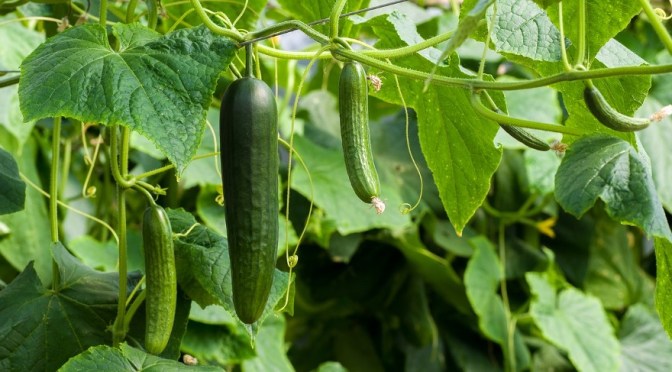
Cucumbers grow on a long, trailing vine,9 and come in two main varieties: slicing cucumbers, which are generally larger and thick-skinned; and pickling cucumbers, which are smaller and thinner-skinned.10 Pickling usually involves slicing and soaking in brine (highly salted water) or vinegar to preserve and ferment the fruit.11 For tips on growing cucumbers, read this guide.

An alternative is the longer, thinner English or gourmet cucumber, also known as “burpless” cucumbers. As the name implies, this variety is specifically bred to minimize burping because of its reduced cucurbitacin content.12 Seedless cucumber varieties are attained through a natural parthenogenesis process, which allows them to produce without pollinization.13

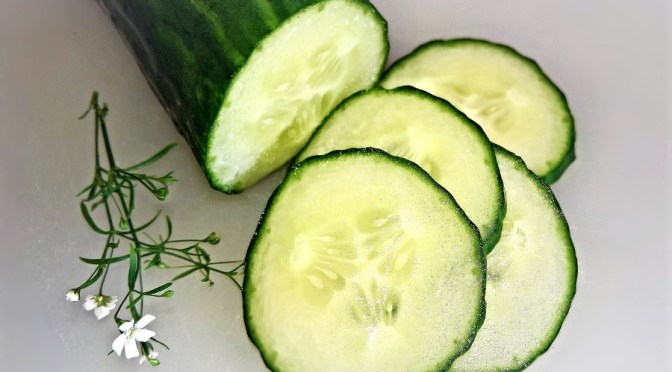
In the kitchen, you have several ways to prepare fresh cucumbers. They’re delicious when sliced and eaten with salt. Combined with chopped sweet onions in apple cider vinegar, salt and pepper, they provide a savory, summery side dish.

Health Benefits of Cucumbers

Grown wild throughout India,14 cucumbers are used as a traditional medicine to manage fever.15 They also have diuretic properties,16 and the juice is used as an acne cream and a soothing remedy for tired, puffy eyes.17 These uses led scientists to investigate cucumber fruit, seeds and extracts as an effective treatment in other areas of medicine.

Cucumbers are known to be an excellent source of vitamins, including anti-inflammatory vitamin K, infection-fighting vitamin C and phosphorus. Body-beneficial minerals include bone-building manganese, as well as calcium and magnesium.18

Lignans, unique polyphenols in crucifers and alliums such as cabbage and onions, are known for containing health benefits, such as possibly lowering the risk of heart disease.19 Moreover, one study showed that cucumbers contain powerful lignans that bind with estrogen-related bacteria in the digestive tract, contributing to a reduced risk of cancer,20 particularly breast cancer.21 The cucurbitacins — compounds that belong to the cucurbitaceae family — have anticancer potential as well.22

CUCUMBER NUTRITION FACTS
Serving Size: 3.5 ounces (100 grams), raw, with peel

 Amt. Per
Serving
 
Calories15 
Calories from Fat0 
Total Fat0.11 g 
Saturated Fat0 g 
Trans Fat  
Cholesterol0 mg 
Sodium2 mg 
Total Carbohydrates3.63 g 
Dietary Fiber0.5 g 
Sugar1.67 g 
Protein0.65 g 
Vitamin A 105 IUVitamin C2.8 mg
Calcium 16 mgIron0.28 mg

Studies Done on Cucumbers

In one study, cucumber extracts were screened for signs of free radical-scavenging and analgesic activities, following the lead of traditional folk uses. Not only were the extracts found to provide phytonutrients with these activities, numerous other valuable compounds were found, including glycosides, steroids, flavonoids, carbohydrates, terpenoids and tannins.23

Cucurbitacins in plants have already been identified as having pharmacological and biological benefits, including anticancer activities. But another study related more recent discoveries showing that cucurbitacin has a strong inhibiting effect on cancer-signaling pathways, which cancer cells require to survive and proliferate. The conclusion discussed the likelihood that cucurbitacin could be used as a future anticancer drug in clinical settings.24

Cucumbers Fun Facts

For those who have noticed that their cucumbers seem to deteriorate soon after refrigerating them, U.C. Davis has reported that cucumbers maintain freshness longer when stored at room temperature.26
Cucumbers are also highly sensitive to ethylene, a natural plant hormone responsible for initiating the ripening process in several fruits and vegetables. Be sure to separate cucumbers from bananas, apples, peaches, peppers and tomatoes because of the natural ethylene they generate.27

Cucumbers are also highly sensitive to ethylene, a natural plant hormone responsible for initiating the ripening process in several fruits and vegetables, so another recommendation is to store cucumbers away from bananas, melons, and tomatoes because of the natural ethylene they generate.

READ MORE & SEE RECIPES AT THE LINK

https://foodfacts.mercola.com/cucumber.html