Tag Archives: phosphate

The importance of phosphate in your garden (Wally Richards)

Phosphorus stimulates budding and blooming. Plants need phosphorus to produce fruits, flowers, and seeds. It also helps make your plants more resistant to disease.

Phosphorus helps plants gain more energy from sunlight and with cloudy, hazy skies we are seeing too often; plants need all the advantages possible to gain energy from sunlight.

Phosphorus doesn’t dissolve like nitrogen. The soil will hang onto phosphorus, not releasing it into water.

Phosphate is needed by all life forms but if taken in too greater quantities it becomes harmful.

In the distant past phosphorus was obtain from manures especially bird or bat droppings called guano.

Phosphorus is also obtained from Reactive Rock Phosphate which is a hard phosphatic rock. In most soils it dissolves very slowly.

To make the rock phosphate more readily available to plants man discovered a process of using sulfuric acid early in the 1900’s, and a new agricultural fertiliser was created called Super or Super Phosphate.

It became a boon to agriculture and farming with tons of Super been spread to cause fast growth in fields and crops.

Unfortunately like a number of discoveries such as DDT and Asbestos, there was a hidden price to pay. Super phosphate kills soil life because its acidic and with their demise leads to unhealthy plants.

Not only that, it was also found that Super laden plants and grasses caused health problems in stock including cancers.

I read a very interesting book years ago called ‘Cancer, Cause and Cure’ written by an Australian farmer, Percy Weston.

Percy observed the results of the introduction of Super on his farm and the Malays that occurred.

For many years now I have not used any chemical fertilisers or chemical sprays including any herbicides anywhere on my property.

For a while I noticed, that even though I obtained good healthy crops and plants, there was some factor that appeared to be missing and the crops are not as lush as I felt they could be.

I often thought that I am not getting sufficient phosphorus in my composts and mulches.

This caused me to do a bit of research on the Internet and found to my delight a company in New Zealand called Sieber Technologies Ltd who make a product called BioPhos.

They take the reactive rock phosphate and break it down naturally with micro organisms making it as readily available to plants as Super is.

The company sent me a email booklet and it showed trials that proved that not only did BioPhos work as well as Super, but actually better as it did not have a ‘peak’ growth on application

 and gave a much longer sustained release of phosphorus to plants.

Instead of killing soil life it actually supplies new micro organisms to the soil which carry on breaking the natural phosphorus down, meaning that only one application is needed per year unless you are cropping during the winter as well.

Some rose growers and rose societies recommend using BioPhos for better, healthier roses.

BioPhos contains phosphate, potassium, sulphur and calcium at the rates of P10:K8:S7:Ca28.

BioPhos is Bio Certified for organic growing.

It is pH neutral and used at the following rates; New beds work in 100 grams per square metre, the same with lawns but water in to settle.

Side dressing plants; seedlings 8 grams (a teaspoon ) around base of the plant or in the planting hole. Same for potatoes (which do well with phosphorus) Sowing beans peas etc sprinkle down row with seeds.

Roses and similar sized plants 18 grams or a tablespoon full around plant or in planting hole.

Established fruit trees etc, spread at the rate of 100 grams per square metre around drip line or where feeder roots are. Apply to vegetable gardens in spring and a further application in autumn if growing winter crops.

Can be applied to container plants also.

Apply to tomatoes when planting or side dress existing plants.

A number of gardeners over the years have obtained BioPhos and applied it around their gardens; then a few weeks later many have phoned me to say what a big difference the product has made to their gardens.

I presume one of two things has happened or maybe both of the following:

The gardens and plants were lacking in phosphate and the introduction of it gave a noticeable difference to the plants.

Or the plants were able to obtain more energy from the sun and hence creating a growth spurt.

BioPhos is a must for root and bulb crops such as potatoes, carrots and garlic.

I have now completed a third session of gardening with Rodney Hide which likely aired this coming week then available after that on replay at…..

https://realitycheck.radio/replays/real-talk-show-replays/

THIS WEEKS SPECIAL:  BIOPHOS  two 1.3kilo pouches for $30.00 free shipping (No PO Boxes or outer Islands) Saving you $8.00 shipping costs Normal one 1.3 pouch is $15.00 plus $8.00 shipping total $23.00

or out big 10kilo bag for $38.00 and free shipping saving you $16.00 shipping North Island or $19.00 shipping South Island (No PO Boxes or outer Islands)
That is into a carton for shipping and you could add a few more non bulk items into the same carton.

Order on our Mail Order Web site at http://www.0800466464.co.nz/

In Plant Nutrition area..


In Remarks please state This Weeks Special..
Phone 0800 466464
Garden Pages and News at www.gardenews.co.nz
Shar Pei pages at  www.sharpei.co.nz
Mail Order products at www.0800466464.co.nz


New Zealand Bill of Rights Act 1990. Part II of the Act covers a broad range of Civil and Political Rights. As part of the right to life and the security of the person, the Act guarantees everyone:

1The right not to be deprived of life except in accordance with fundamental justice (Section 8)

2The right not to be subjected to torture or to cruel, degrading, or disproportionately severe treatment or punishment (Section 9)

3The right not to be subjected to medical or scientific experimentation without consent (Section 10)

4The right to refuse to undergo any medical treatment (Section 11)

 Furthermore, the New Zealand Bill of Rights Act 1990 guarantees everyone: Freedom of Thought, Conscience, and Religion.
This includes the right to freedom of thought, conscience, religion, and belief,
INCLUDING THE RIGHT TO ADOPT AND HOLD OPINIONS WITHOUT INTERFERENCE (Section 1)

For more articles & with a health focus go here

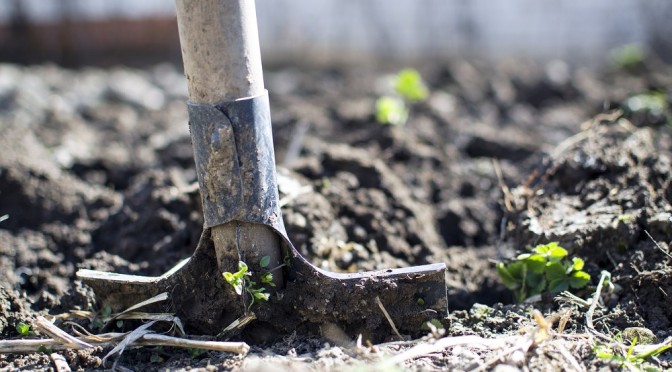
Image by Annette Meyer from Pixabay

GARDENING: THE IMPORTANCE OF CALCIUM IN YOUR SOIL (Wally Richards)

Calcium (garden lime) is a very basic mineral that is often overlooked by gardeners.

Kiwi gardeners in the past would dig over their vegetable garden at the beginning of winter after the last crops had been harvested.

The soil would be turned to the depth of one and a half to two spade depths, bringing the subsoil to the surface and then left in unbroken as mounds for frosts to work on.

Over these clods of soil a good coating of garden lime would be applied making it look like it had snowed after application.

The idea was to bring up from the subsoil minerals to the surface. Weeds would be buried underneath to compost down and the soil would be exposed to the elements as the lime would be washed in.

In spring these clods would break up with a light touch of the hoe turning the garden into a lovely fine tilth of healthy soil. Potatoes, brassicas and other vegetables would be

planted to not only feed the family as they were harvested but also to store and preserve surpluses for the coming winter.

Life was hard but very rewarding; it was a different world.

The principals of liming our vegetable gardens has not changed even if this practice is too often neglected these days.

I was talking to a keen gardener on the phone this week who explained to me that he was gardening naturally (without the use of chemicals) and he had felt that the results were not as good as he would have liked.

So last season he gave the garden a good dose of gypsum (calcium & sulphur) and the improvement of the crops was really noticeable. Even his dad (an old, very experienced gardener) remarked that he had finally got things right.

Getting things right can be as simple as giving your gardens a good dose of a fast acting lime.

I say fast acting because not all limes are equal in the time frame that they can be of benefit to the soil.

Some garden limes come from lime stone that can take up to 10 years to become soluble and useful in the soil.

That is like putting your money in the bank and having to wait 10 years to get any interest.

On the other hand soft limes start working for you immediately on application.

Lime sweetens the soil as we say which means it lifts the pH to be more alkaline.

NZ soils over time become more and more acidic because of our rain fall, these days likely even quicker because of pollution.

All our beneficial friends in the soil require calcium to thrive, as one source explained it; calcium is like the coal that feeds the furnace, calcium feeds the soil life making for great gardening.

Acidic soil becomes anaerobic and breeds the microbes you do not want, called pathogens or diseases.

The soil has the same principals as our own bodies, if we become acidic inside we can become sick and diseases such as cancers can thrive. If we keep our internal body alkaline then we will be much better off.

Soil pathogens can be suppressed by using Terracin followed by applications of Mycorrcin.

There maybe minerals in the soil that plants need but cant take up because of the lack of calcium.

In plants calcium is part of cell walls and membranes; it controls movement in and out of cells, reacts with waste products and neutralizes toxic materials.

Calcium activates many enzyme systems, it improves microbial activity and it enhances uptake of other nutrients.

It is essential for cell division as well as increasing cell density, and improves texture (crunch) of crops.

Calcium is critical for balancing excess nitrogen as well as disease suppression.

Having the correct amount of calcium in the soil will require less nitrogen.

The calcium will loosen the soil and make more nitrogen available.

Lack of sufficient calcium will result in the following plant disorders;

Necrosis at the tips and margins of young leaves, bulb and fruit abnormalities, (such as blossom end rot in tomatoes), deformation of affected leaves, highly branched, short, brown root systems, severe, stunted growth, and general chlorosis.

It must be remembered that these problems are caused by an inadequate supply of calcium to the affected tissues.

These deficiencies can even occur when the soil appears to have an adequate presence of calcium.

A  gardening product is now available called Wallys Calcium And Health which comprises of a fast acting calcium along with important elements for your health and the health of your plants.

Calcium & Health contains fast attacking lime, magnesium, selenium, boron, sulphur, potash and phosphate in a balanced ratio for your gardens.

Using this new product on your food crops is going to help ensure you obtain these essential elements in your diet.

A number of gardeners are concerned about their bodies not obtaining elements such as selenium from the vegetables and fruit they grow.

By applying Calcium & Health to your gardens will help increase the goodness and nutritional values of your home grown diet.

Used at 60 grams per square M (scoop provided is 60 grams) or as I like to do is place a small amount into the planting hole of seedlings.

Avoid using the 60 grams around acid loving plants as it does increase the pH but about 20 grams will be of benefit without interfering with the pH to affect the plants.

I also recommend you using gypsum and dolomite in your gardens as well; these later two can be used around acid loving plants as they are pH neutral.

The important aspect to remember is that calcium is vitally important to the health of your plants and soil.

Every plant needs calcium to grow. Once fixed, calcium is not mobile in the plant.

It is an important constituent of cell walls and can only be supplied in the xylem sap.

Therefore, if the plant runs out of a supply of calcium, it cannot re-mobilize calcium from older tissues.

If transpiration is reduced for any reason, the calcium supply to growing tissues will rapidly become inadequate.

Without adequate amounts of calcium, plants experience a variety of problems as our gardening friend found out at the beginning of this article.

Phone 0800 466464
Garden Pages and News at www.gardenews.co.nz
Shar Pei pages at  www.sharpei.co.nz
Mail Order products at www.0800466464.co.nz

Photo: Goumbik @ pixabay.com