Tag Archives: nitrogen

VISITING LIFE UNDER GROUND (Wally Richards)

There is a saying which reads as… As Above So Below and with plants and trees what is above the soil level is replicated to what is below the soil level.

With a tree it is the trunk and branches we see and mirrored under the soil is the tap root and the root system about a similar size as above.

It is the root system and the medium that the roots are in that is the focus of this article.

We often refer to ‘The Soil Life’ which is a teeming mass of microbes, fungi, and soil insects including earth worms that we find in a healthy soil or the growing medium.

Virgin soil with its canopy of plants, living naturally for hundreds of years has a wealth of soil life and to have a soil like that is the goal of every keen gardener as it will, with very little effort, produce great healthy plants.

A vital part of the soil life are the fungi family called Mycorrhizae.

From the internet we see: A mycorrhizal network (also known as a common mycorrhizal network or CMN) is an underground network found in forests and other plant communities, created by the hyphae of mycorrhizalfungi joining with plant roots.

This network connects individual plants together and transfers water, carbon, nitrogen, and other nutrients and minerals between participants.

Several studies have demonstrated that mycorrhizal networks can transport carbon, phosphorus, nitrogen, water, defense compounds, and allelochemicals from plant to plant.

The flux of nutrients and water through hyphal networks has been proposed to be driven by a source-sink model where plants growing under conditions of relatively high resource availability (

such as high-light or high-nitrogen environments) transfer carbon or nutrients to plants located in less favorable conditions. (Helping their mates)

A common example is the transfer of carbon from plants with leaves located in high-light conditions in the forest canopy, to plants located in the shaded understory where light availability limits photosynthesis.

In natural ecosystems, plants may be dependent on fungal symbionts for 90% of their phosphorus requirements and 80% of their nitrogen requirements.

Mycorrhizal relationships are most commonly mutualistic, with both partners benefiting, but can be commensal or parasitic, and a single partnership may change between any of the three types of symbiosis at different times.

These networks have existed for over 400 million years, with up to 90% of all land plants participating.

The formation and nature of these networks, is context-dependent, and can be influenced by factors such as soil fertility, resource availability, host or mycosymbiont genotype, disturbance and seasonal variation.

Some plant species, such as buckhorn plantain, a common lawn and agricultural weed, benefit from mycorrhizal relationships in conditions of low soil fertility, but are harmed in higher soil fertility.

Both plants and fungi associate with multiple symbiotic partners at once, and both plants and fungi are capable of preferentially allocating resources to one partner over another. End.

Back to me: You can see from the above what a incredible resource Mycorrhizal fungi is to the well being of your plants and garden and why you should encourage it and not damage it.

The No-Dig garden that we have often talked about over the years is ideal for building and maintaining these beneficial fungi.(Instead of digging your garden you simply put fresh compost over the soil with other natural manures and plant into this new layer.

This is repeated for every crop)

Mycorrhizal fungi can increase a plant’s roots catchment area by up to 800%.

The bigger the root zone the bigger and better the plants.

We can encourage Mycorrhizal fungi to grow by drenching the soil with Wallys Mycorrcin every so often like once a month around preferred plants and crops.

What we should not do is to use chemicals that will kill the Mycorrhizal fungi and beneficial microbes in the soil. Chemical sprays and man-made chemical fertilisers that leach into the soil and the worst one is your chlorinated tap water you use to water the garden with.

A housing and filter that is 10 micron carbon bonded can be snapped onto your hose tap to remove the chlorine. See http://www.0800466464.co.nz/37-water-filters-remove-fluoride-and-chlorine-

Gardeners that have filtered the chlorine out of their garden watering remark on what a difference it makes to the health of their gardens and plants.

The chlorine is added to water to kill bacteria and it is caustic in nature which is not good for soil life.

We see that Mycorrhizal fungi connects plants underground through their roots and by that means can send messages to each other.

An example of this is a forest stand where the outer trees are attacked by a disease or insect pests and the trees send out a message to the fellow trees about what is happening which then allows the other trees to start building their defense systems against possible attack.

Some plants are very hard to establish and the answer to this I learnt many years ago is that you find a mature specimen of the plant you wish to cultivate and you take some of the soil from the mature specimen root zone and you place that in the planting hole of your specimen.

Plant up and then drench the soil with Wallys Mycorrcin to aid growth and that impossible plant to grow is away laughing.

Introduction of beneficial microbes to the soil is another way of improving your gardens and plants health.

Biologically active soils have the ability to retain moisture and release nutrients ensuring greater production, faster rotation and more rapid recovery from stress.

To build a healthy biological soil we need products that can feed living organisms.

Increasing public awareness of the environmental impact of using chemical-based fertiliser has created a demand for a safe, natural and environmentally friendly fertiliser.

Biological fertilisers increase nutrient availability and feed important soil organisms, such as earthworms and microorganisms (fungi and bacteria) – all essential for plant and soil health.

The product we have called Bio Marinus not only does the above but also introduces new beneficial microbes to your gardens.

Readers may recall the British comedian Kenneth Horne’s radio show “Beyond Our Ken” featured a gardener called Arthur Fallowfield, played by Kenneth Williams.

He often said “The Answer Lays in the Soil”.

THIS WEEKS Special is Mycorrcin is either 250mils, 500 mils or 1litre and till next Sunday we will pay the shipping to your home (No PO Boxes or outer Islands)

No discounts on the product sizes so 250mils is $18.00; 500 mils $30.00 and 1 litre is $50 free shipping on one or more of the same product.

Order on our Mail Order Web site at http://www.0800466464.co.nz/15-plant-nutrition?p=2

In Remarks please state This Weeks Special..

After receiving your order I will phone you to sort out payment either by credit card over the phone or a bank transfer..

Phone 0800 466464
Garden Pages and News at www.gardenews.co.nz
Shar Pei pages at  www.sharpei.co.nz
Mail Order products at www.0800466464.co.nz

New Zealand Bill of Rights Act 1990. Part II of the Act covers a broad range of Civil and Political Rights. As part of the right to life and the security of the person, the Act guarantees everyone:

1The right not to be deprived of life except in accordance with fundamental justice (Section 8)

2The right not to be subjected to torture or to cruel, degrading, or disproportionately severe treatment or punishment (Section 9)

3The right not to be subjected to medical or scientific experimentation without consent (Section 10)

4The right to refuse to undergo any medical treatment (Section 11)

 Furthermore, the New Zealand Bill of Rights Act 1990 guarantees everyone: Freedom of Thought, Conscience, and Religion.
This includes the right to freedom of thought, conscience, religion, and belief,
INCLUDING THE RIGHT TO ADOPT AND HOLD OPINIONS WITHOUT INTERFERENCE (Section 1)
GARDENING: THE IMPORTANCE OF CALCIUM IN YOUR SOIL (Wally Richards)

Calcium (garden lime) is a very basic mineral that is often overlooked by gardeners.

Kiwi gardeners in the past would dig over their vegetable garden at the beginning of winter after the last crops had been harvested.

The soil would be turned to the depth of one and a half to two spade depths, bringing the subsoil to the surface and then left in unbroken as mounds for frosts to work on.

Over these clods of soil a good coating of garden lime would be applied making it look like it had snowed after application.

The idea was to bring up from the subsoil minerals to the surface. Weeds would be buried underneath to compost down and the soil would be exposed to the elements as the lime would be washed in.

In spring these clods would break up with a light touch of the hoe turning the garden into a lovely fine tilth of healthy soil. Potatoes, brassicas and other vegetables would be

planted to not only feed the family as they were harvested but also to store and preserve surpluses for the coming winter.

Life was hard but very rewarding; it was a different world.

The principals of liming our vegetable gardens has not changed even if this practice is too often neglected these days.

I was talking to a keen gardener on the phone this week who explained to me that he was gardening naturally (without the use of chemicals) and he had felt that the results were not as good as he would have liked.

So last season he gave the garden a good dose of gypsum (calcium & sulphur) and the improvement of the crops was really noticeable. Even his dad (an old, very experienced gardener) remarked that he had finally got things right.

Getting things right can be as simple as giving your gardens a good dose of a fast acting lime.

I say fast acting because not all limes are equal in the time frame that they can be of benefit to the soil.

Some garden limes come from lime stone that can take up to 10 years to become soluble and useful in the soil.

That is like putting your money in the bank and having to wait 10 years to get any interest.

On the other hand soft limes start working for you immediately on application.

Lime sweetens the soil as we say which means it lifts the pH to be more alkaline.

NZ soils over time become more and more acidic because of our rain fall, these days likely even quicker because of pollution.

All our beneficial friends in the soil require calcium to thrive, as one source explained it; calcium is like the coal that feeds the furnace, calcium feeds the soil life making for great gardening.

Acidic soil becomes anaerobic and breeds the microbes you do not want, called pathogens or diseases.

The soil has the same principals as our own bodies, if we become acidic inside we can become sick and diseases such as cancers can thrive. If we keep our internal body alkaline then we will be much better off.

Soil pathogens can be suppressed by using Terracin followed by applications of Mycorrcin.

There maybe minerals in the soil that plants need but cant take up because of the lack of calcium.

In plants calcium is part of cell walls and membranes; it controls movement in and out of cells, reacts with waste products and neutralizes toxic materials.

Calcium activates many enzyme systems, it improves microbial activity and it enhances uptake of other nutrients.

It is essential for cell division as well as increasing cell density, and improves texture (crunch) of crops.

Calcium is critical for balancing excess nitrogen as well as disease suppression.

Having the correct amount of calcium in the soil will require less nitrogen.

The calcium will loosen the soil and make more nitrogen available.

Lack of sufficient calcium will result in the following plant disorders;

Necrosis at the tips and margins of young leaves, bulb and fruit abnormalities, (such as blossom end rot in tomatoes), deformation of affected leaves, highly branched, short, brown root systems, severe, stunted growth, and general chlorosis.

It must be remembered that these problems are caused by an inadequate supply of calcium to the affected tissues.

These deficiencies can even occur when the soil appears to have an adequate presence of calcium.

A  gardening product is now available called Wallys Calcium And Health which comprises of a fast acting calcium along with important elements for your health and the health of your plants.

Calcium & Health contains fast attacking lime, magnesium, selenium, boron, sulphur, potash and phosphate in a balanced ratio for your gardens.

Using this new product on your food crops is going to help ensure you obtain these essential elements in your diet.

A number of gardeners are concerned about their bodies not obtaining elements such as selenium from the vegetables and fruit they grow.

By applying Calcium & Health to your gardens will help increase the goodness and nutritional values of your home grown diet.

Used at 60 grams per square M (scoop provided is 60 grams) or as I like to do is place a small amount into the planting hole of seedlings.

Avoid using the 60 grams around acid loving plants as it does increase the pH but about 20 grams will be of benefit without interfering with the pH to affect the plants.

I also recommend you using gypsum and dolomite in your gardens as well; these later two can be used around acid loving plants as they are pH neutral.

The important aspect to remember is that calcium is vitally important to the health of your plants and soil.

Every plant needs calcium to grow. Once fixed, calcium is not mobile in the plant.

It is an important constituent of cell walls and can only be supplied in the xylem sap.

Therefore, if the plant runs out of a supply of calcium, it cannot re-mobilize calcium from older tissues.

If transpiration is reduced for any reason, the calcium supply to growing tissues will rapidly become inadequate.

Without adequate amounts of calcium, plants experience a variety of problems as our gardening friend found out at the beginning of this article.

Phone 0800 466464
Garden Pages and News at www.gardenews.co.nz
Shar Pei pages at  www.sharpei.co.nz
Mail Order products at www.0800466464.co.nz

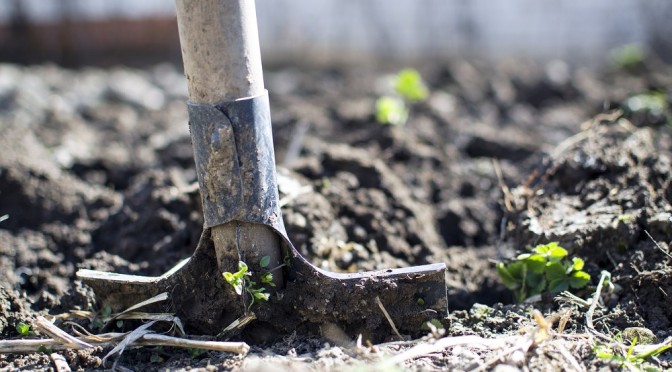
Photo: Goumbik @ pixabay.com

The Manawatu – it’s not dirty dairy – it’s dirty people

From the tasmaniantimes.com

An article by the late Bill Benfield.
See our article on the Manawatu River here.

The Manawatu

The Manawatu is an interesting comparison. Not only is it often cited as one of New Zealand’s dirtiest rivers, research by the Cawthron Institute in Nelson showed it to be one of the dirtiest in the western world. In an item from the Dominion Post of 26/11/2009, it cites Dr Young of Cawthron claiming that a system measuring oxygen changes in water (un-defined) show the Manawatu has a reading of 107, nearly twice that of the next worse, a river near Berlin just below a sewage outfall, where the reading was 59. Dr Young cited leaching farm nutrient and treated town sewerage, with agricultural use, i.e. nitrogen run off, being most of it.

Looking to maps Google Earth, it is obvious that there is a lot of human settlement, hill country farming, some forestry and, in the valleys, long strips of pastoral farming (including dairy). There is just not the weight of dairy to support Dr Young’s claims. As well, there are many significant towns, and they cannot be ignored, this is where the authors of this review exhibit a bias. It starts with the description of the sewerage discharges; they are described as treated. In fact, the city of Palmerston North is operating a non-complying system on a temporary consent till 2020; it is the biggest urban discharge consent and for up to 46,600 cubic metres per day of only partially treated sewerage. Horowhenua District Council has also admitted dumping 5.1 million litres of “partially” treated sewerage into the Manawatu which they also admitted contained tampons, condoms and toilet paper!

Untreated storm-water is not even mentioned. It is all the rubbish from the roads and gutters, fuel spills, dead animals, garden rubbish in the drains, sometimes even raw sewerage from old combined connections. There will also be leachates from landfill rubbish sites – it’s everything.

In all, from the towns, Eketahuna, Pahiatua, Woodville, Dannevirke, Ashurst, Fielding, Shannon, Palmerston North and so on have a combined sewerage discharge consent of 75,600 cubic metres per day. To that, we can add industrial discharges from milk processor Fonterra, New Zealand Pharmaceuticals and Tui Breweries.

By claiming “sediment washing into the river from overgrazed farms or eroding countryside”, the authors ignore some of the bigger generators of silt. Forestry is certainly a major contributor, both in clearing the land for planting and at time of harvest. Another is cross blading and bulldozer work in the river bed. I’m not actually championing dairy farmers, but I think it is reasonable to say that there is a lot more involved in the Manawatu than agricultural runoff – aka “dirty dairy”.

http://tasmaniantimes.com/index.php/article/its-not-dirty-dairy-its-dirty-people

Soil levels of organic carbon & nitrogen have declined following 50 yrs of synthetic nitrogen fertilization – the dark side of nitrogen fertilizers

Published on Mar 2, 2010

This video describes how 50 years of synthetic nitrogen fertilization has decreased soil organic matter in the Morrow Plots, the oldest experiment field in the U.S. Shown speaking is Richard Mulvaney, Professor of Soil Fertility at the University of Illinois. For more information about the study, go to http://jeq.scijournals.org/cgi/reprin… and http://www.nitrogennews.com.